Author: Happy Nagashetti

  • LG L70 Review : Can it beat the Moto G?

    LG L70 Review : Can it beat the Moto G?

    Even though the Android 4.4 Kitkat was released in September last year and praised unanimously, companies have been rather slow in incorporating the advanced OS on their phones. There is an even bigger shortage in the budget phones category, where the 4.2.X Jellybean still rules the game. Moto G created a revolution by bringing a feature packed device into the budget market, giving its competition a run for their money.

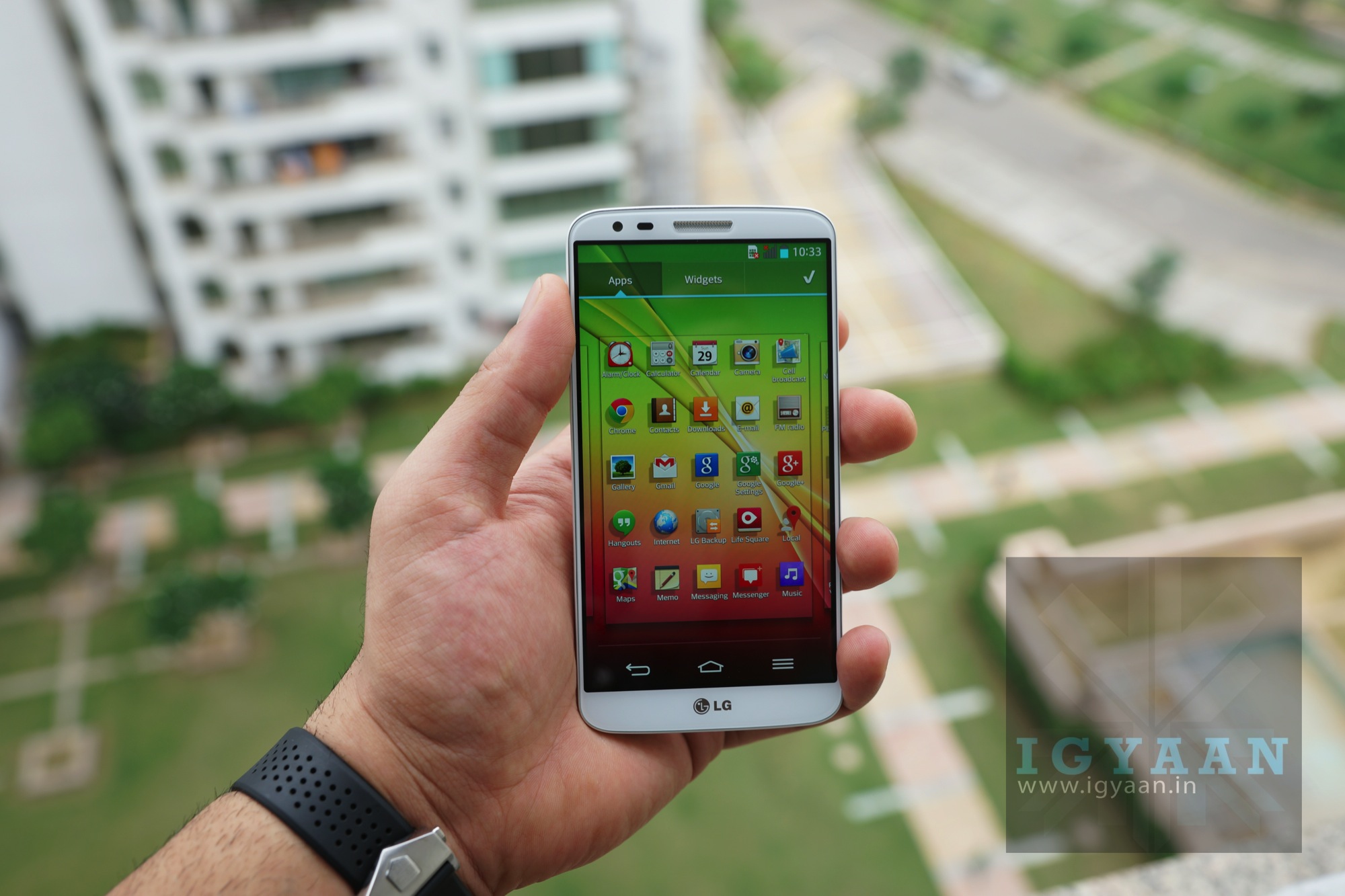
    LG L70 is LG’s answer to the one of a kind Moto G. The phone is in the same price bracket as the Moto G, but the specs create all the difference between these two machines. So we put the L70 to test to see how it fares against the high standards set by Moto G.

    Design and Display

    The overall design is fairly generic and seems like this aspect of the phone wasn’t given too much importance. The perforated back panel is extremely slippery and it is advisable to get a protective case.

    To open the back panel one needs to press down on the micro USB slot. It has a two layered SIM card slots, which are fairly easy to insert the cards in, but a tad bit hard to pull out. The phone adds an addition to the usual fare of three capacitive buttons in the form of a dedicated SIM swapping button. It can easily cause a bit of confusion initially but you can get used to it.

    The display is a 4.5 inch, 480X800 pixel screen with a 207ppi density. It is a Corning Gorilla glass 2 screen with 5 point multi-touch. The screen is a downer in comparison to stunning 720p screen of the Moto G.

    Hardware

    The phone comes with a Qualcomm MSM8210 Snapdragon 200 chipset and a Dual-core 1.2 GHz Cortex-A7 CPU. The internal memory is 4GB which is expandable to 32GB. The CPU tends to get over burdened by large apps.

    Operating System

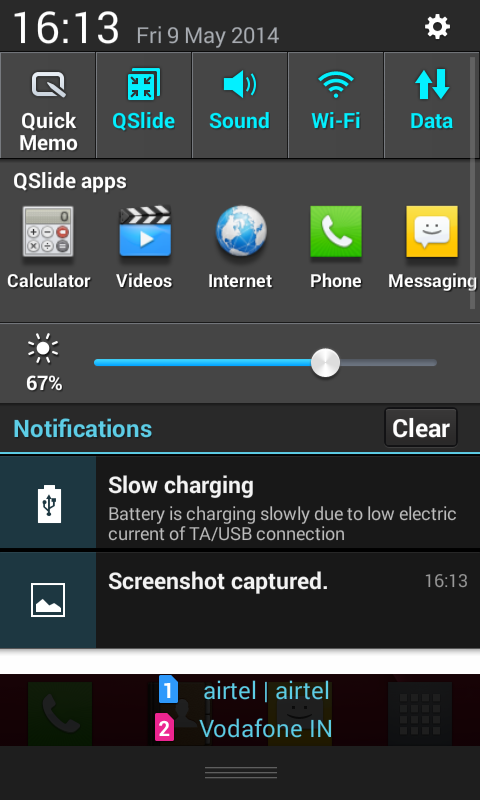
    The device comes with LG’s customized version Kitkat 4.4 right out of the box. It is of course one of the Android OS. The browser on the device was fairly laggy and didn’t give a good browsing experience. In the drop down menu, LG has added an option called Qslide which gives access to all the necessary utilities from the menu itself. Though it lets you customize the apps through Qslide, but you can’t add your own apps onto the menu.

    According to LG, the Knock code is the USP of the device which is basically one of the hundreds of unlock gimmicks being employed by several companies to differentiate themselves in the market. LG has also added some bloatwares which slow the handset down. The dialer of the phone needs to be commended for the most realistic design. For people who enjoy and miss the feel of pressing physical buttons, this is the closest it comes to that experience.

    The Quick Memo option is kind of like the S-note on Samsung devices, but for a fraction of the price it gives good handwriting recognition even when written with the finger. Also, fairly simple to get used to.
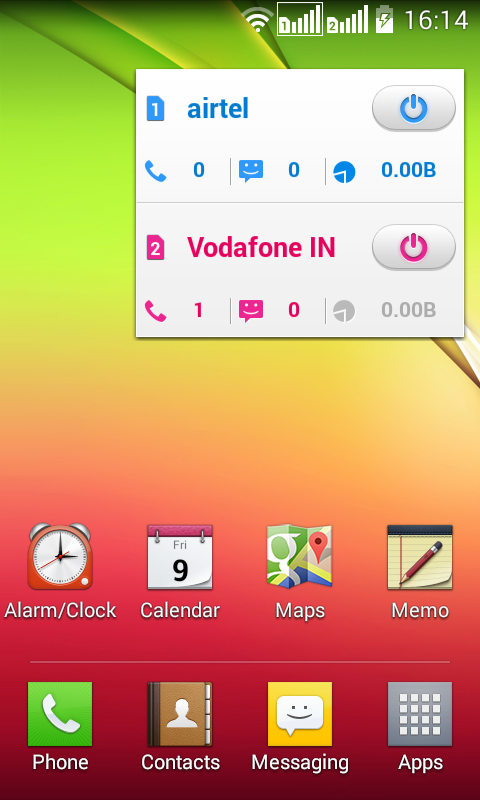
    Screenshot_2014-05-09-16-14-34Screenshot_2014-05-09-16-13-36Screenshot_2014-05-09-16-13-49 Screenshot_2014-05-09-16-12-53

    Camera

    The camera on the L70 is a 5 megapixel autofocus with LED flash. The main camera is capable of good color reproduction, in daylight as well as indoor light. The flash is capable of maintaining details even at close quarters, so it would be great for some Saturday night party shot.

    For a selfie obsessed person, the front VGA cameras would be a bit of a disappointment, but it is still better than other budget phones. The L70 has 9 focus points and gives a good autofocus results. Although, the moving subjects tend to get blurry.

    Conclusion

    The phone is a not at all a competitive effort on the part of LG against the rule of Moto G. The design of the device is dated and doesn’t inspire you to flaunt the device. The UI is capable of great things, but the hardware seems to be a roadblock. Maybe LG will get back on the design board and give the customers a more comprehensive device without the flaws of the present device.

    So to answer the question, Moto G is still the king of Rs10,000 to 15,000 price band.
  • Say Goodbye to the Trial Room with Augmented Reality

    Say Goodbye to the Trial Room with Augmented Reality

    Augmented reality has come a long way. My first experience with the technology was while playing Agent V on the Nokia 3230. It was kind of rudimentary but it got the imagination rolling for a lot of fellow enthusiasts regarding the future of the technology.

    Augmented reality (AR) is a digital overlay onto the real world. It enhances the real world with digital data, and therefore it is much more interesting than a completely fabricated environment of virtual reality systems. It is an ideal Reality-Virtual connect.

    Eyewear-AR
    Try your Accessories right where you are.

    AR presently is used in many different fields, from mobile games to areas of industrial maintenance. Its ease of integration across many mediums give it universal accessibility. One industry is presently experimenting a lot with AR is fashion.

    It can help in literally every field of fashion, right from designing to marketing to retail sales. Some of the biggest names such as Hugo Boss, Burberry, Ebay’s with its “See It On” app have started inducting AR in their business model.

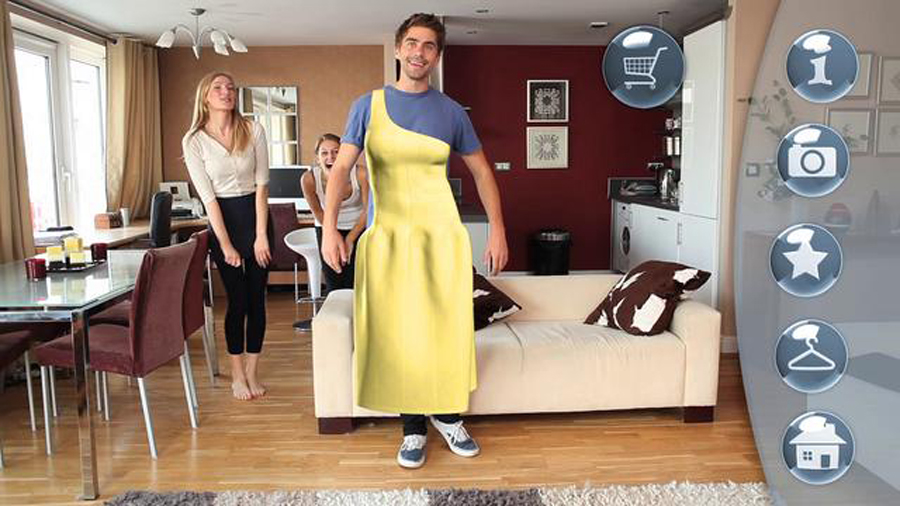
    For example: The Hugo Boss store at Westfield Stratford City, features an 8-meter, media wall that allows customers to “dress” onscreen models who respond to consumers’ movements by looking at them, moving towards them and walking alongside them.

    The coolest and the most advantageous aspect of AR is its flexibility of integration across a multitude of mediums like computers, mobiles, eyeglasses and even contact lenses with AR capabilities are in development. These will give the companies much more innovative ability to reach to the customers.

    Cassete playa
    Cassete Playa makes things interesting with AR

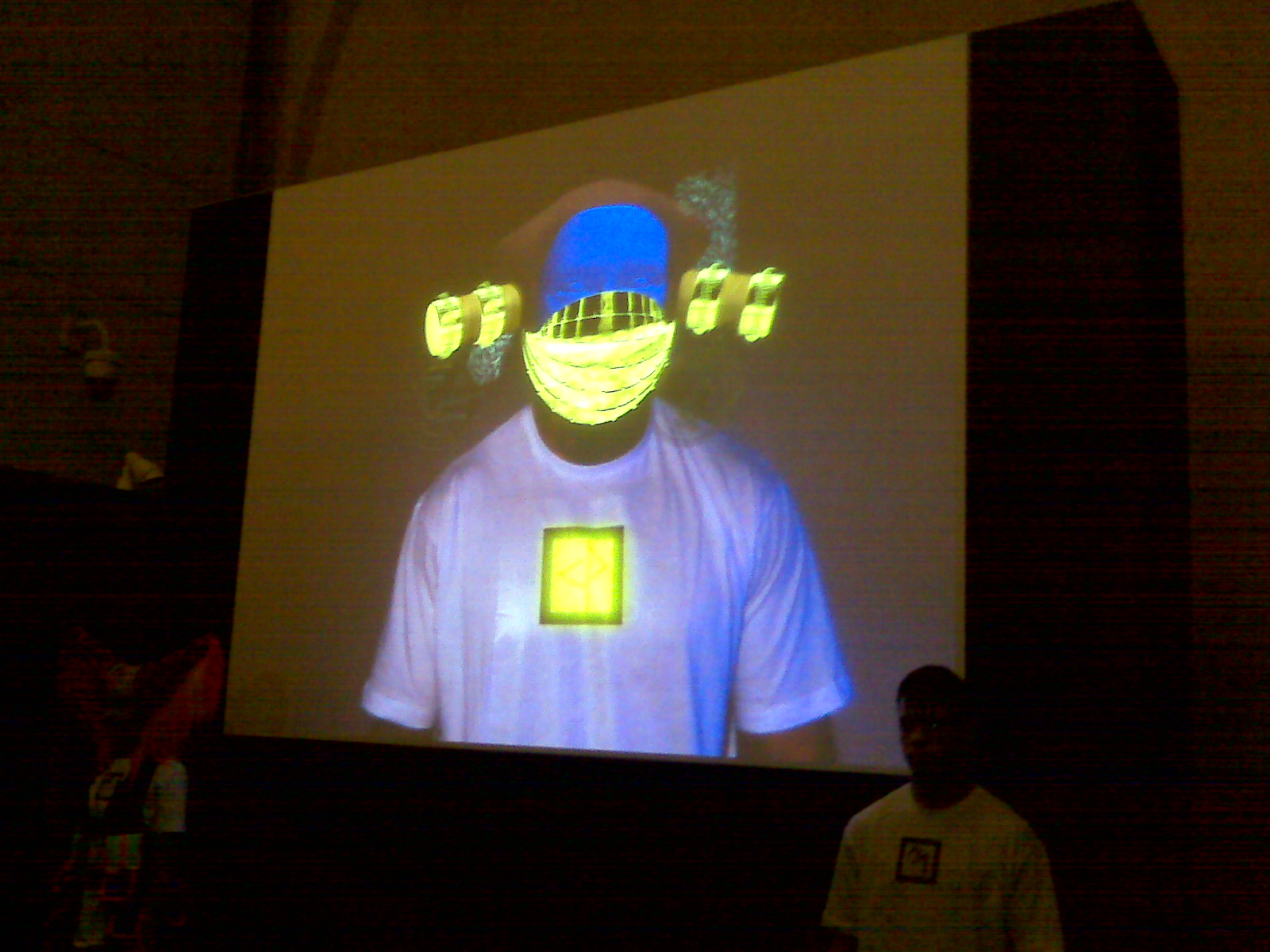
    London fashion label Cassette Playa is making it more interesting with their T-shirts. When seen through a Webcam, an AR code on the T-shirt is activated to reveal, for example, horns growing from the wearer’s head.

    The fact that when people see fashion they imagine it on themselves is what encourages the company’s to give a more physical feel. The race is on towards a virtual changing room and AR is the best way forward.

    If you are a person who hates shopping and the frustrating multiple visits to the changing room this may be a boon. The only issue is that if you have fat thighs like me you won’t be able to do the usual squats to make sure you are not getting choked by your jeans.

    Even Google is getting in the game with its Google Glass.  The company recently hired fashion executive Ivy Ross to market the glass to the general public. Ross has worked with industry giants like Calvin Klein, Swatch, Gap, Coach, and more. Guess we can anticipate a fashion trial app on the Glass too.

    Banana-Flame
    Virtual Trial Room with AR on Banana Flame

    There are of course some dissenting voices who say practical application will take some time and its still in a marketing gimmick phase. But these critics do agree that virtual trial rooms are the more economical way forward and if history teaches us anything it’s that economic decisions always win.

    It would be a wonderful technology to keep our eyes on. Maybe the days of boyfriends and husbands desperately looking for seats while their ladies take their sweet time deciding on their perfect attire is close to being history, hopefully.

  • Quantum Teleportation Finally a Reality

    Quantum Teleportation Finally a Reality

    Physicists at the Kavli Institute of Nanoscience at the Delft University of Technology in the Netherlands were able to move quantum information between two quantum bits separated by about 3 meters without altering the encoded information. This quantum teleportation experminent was done using nitrogen-embedded diamond qubit. The article was published in the journal Science.

    A quantum information known as “qubit” is the smallest unit of physical data or quantum data. It is like a “bit” in terms of digital data. These particles are extremely difficult to contain even in a laboratory setting (called Super position states) and have life spans of a few seconds in room temperatures.

    Though it sounds enticing to the mind and stimulates all forms of speculation, but don’t overestimate the project just yet. The success rate of the experiment currently is at just one in million or if it’s a good day for physicists, once in thousands of attempts.

    But this diamond qubit teleportation attempt is said to be more consistent than its predecessors. This time they were deterministically able to predict the recreation of the qubit on the other side. They will now try to send the data to longer duration, hopefully a kilometer in the approaching future.

    Quantum
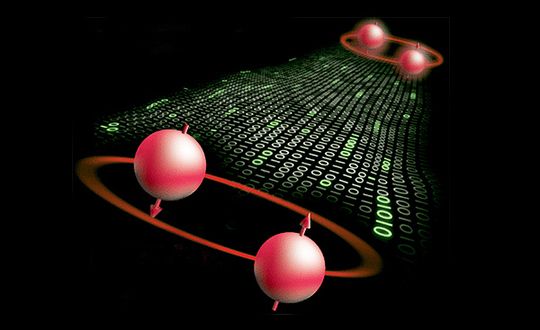
    Quantum teleportation lets a particle travel without coming in contact with physical medium.

    Quantum research is one of the toughest of fields because of the severe uncertainty in the quantum universe apart from humongous apparatus needed to keep them in steady states.

    There are a lot of real world applications when this technology will be fully unlocked. We would be able to achieve faster communication if we learn how to direct it. It will be like rediscovering radio but with a super adrenaline boost. Whole new levels of communication array would be at our disposal which might also help in space communication where we are currently limited by the speed of light radio waves. Think about sending information which recreates itself on the other side without actually passing through a physical medium.

    Quantum computing is stated to be much more efficient and faster than our present computer technology as quantum bits have the ability to be in multiple states at the same time.

    transporter
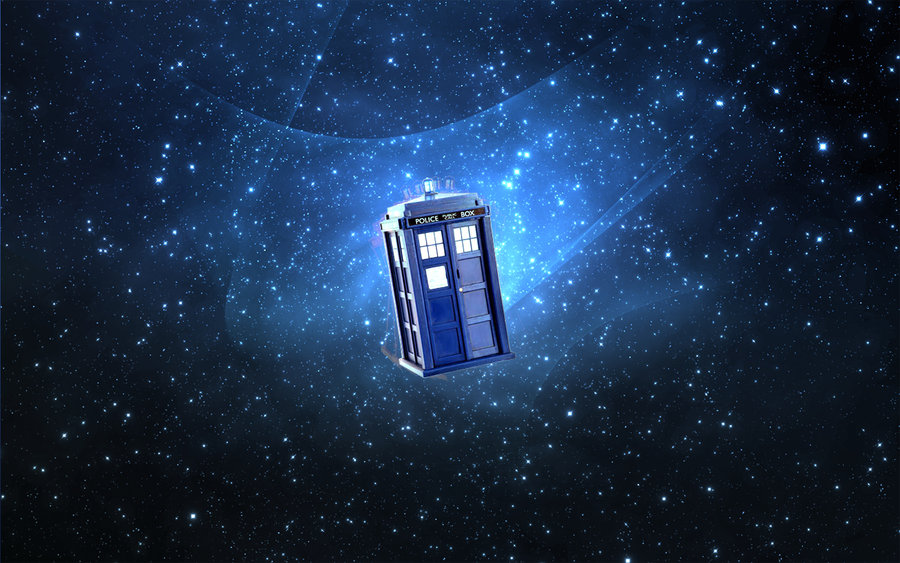
    Unfortunately we aren’t even close to Star Trek’s Transporter

    We won’t be able to achieve Star Trek’s “transporter” level teleportation of humans, but it will surely make our computers a lot faster. This is of course the beginning of the R&D on the project. Google had tried to work on teleportation but it figured out that most of the aspects of teleportation that we expect are against the laws of nature.

    The experiment also has the potential to prove the theory of quantum entanglement right. The theory Quantum entanglement states that quantum states of two particles remain connected even if they appear to have been spatially separated, which even Einstein highly doubted. But with this experiment scientists were able to keep the particles “entangled” even after teleportation.

    Now if you can’t wait to be teleported to new place or a fictional universe, just wait for the virtual reality systems like Oculus Rift and ANTVR to come in the market. Even though they will be simulated universe, but that is the closest we can ever come to teleportation in our lifetime.

  • Unboxed : The Lava Iris X1

    Unboxed : The Lava Iris X1

    The Moto E revolution is evident in the market and looks like its going to be the standard from here on. Like an asteroid it came and devastated the previous generation standard spec sheets of the lower-end smartphone market. Clearly, a new era of the lower-end smartphone evolution has begun and Lava just layed its claim to the throne with the Lava iris X1.

    All major companies including Samsung have stated that they are going to bring in a competition for the Moto E. We feel it’s about time we should start a MOTO watch section to see how close the other folks are coming to touch the towering ceiling set by the Motorola.

    The easy slide out box is pretty standard for a Lava device. The box contains the standard sets of inhabitants. A good sized micro USB wall charger, flat cable earphones, a round cable micro USB to USB cable. The back cover looks extremely flimsy but the branding on the back is pretty classy. It is an effort to hold it up, though the lack of a rubberized back panel makes it slippery.

    Where the X1 wins over the Moto E is the free flip cover provided in the box. The flip cover is functional as the screen locks when it’s closed. Another cool aspect of the cover is that the volume rocker positions are marked on the cover itself so you can access them easily while on move. The only issue though, the white cover can get dirty, very easily.

    The phone comes with the Android 4.4.2 right out of the box. It is powered by a removable 1800 mAh battery, which is slightly smaller than the non-removable 1980 mAh in the Moto E. The processor on the X1 is a Quad core 1.2 Ghz Broadcom chipset. It holds 1 GB of RAM and has an expandable memory upto 32 GB.

    Coming to the handset, at the top it looks blatantly iPhone-ish minus the physical button. The screen is a 4.5 inch IPS display with a resolution of 854 x 480 pixels. The Moto G’s Corning Gorilla glass 3 is more pixel dense but the X1 isn’t that far behind, it has some good color reproduction capabilities.

    Overall, it looks like a decent effort on the part of Lava, the most it could do at the moment in the face of stiff competition. Apart from the Moto E, Lava will also cross swords with Micromax which recently released its Unite 2. The phone has outperformed some of the major flagships in benchmark tests.

    For the moment the phone is exclusively sold on Amazon at a price of Rs 7999. This is an audacious step, considering Lava is no Moto to have the luxury of exclusive marketing tie-ups. The X1’s closest competition, the Unite 2 costs Rs 6999 on flipkart.

    For now, like Lava and others, we’ll wait and see how the market responds to this new era of intelligent evolution in the basic smartphones business.

  • LG G3: Beginning of the 2K Run?

    LG G3: Beginning of the 2K Run?

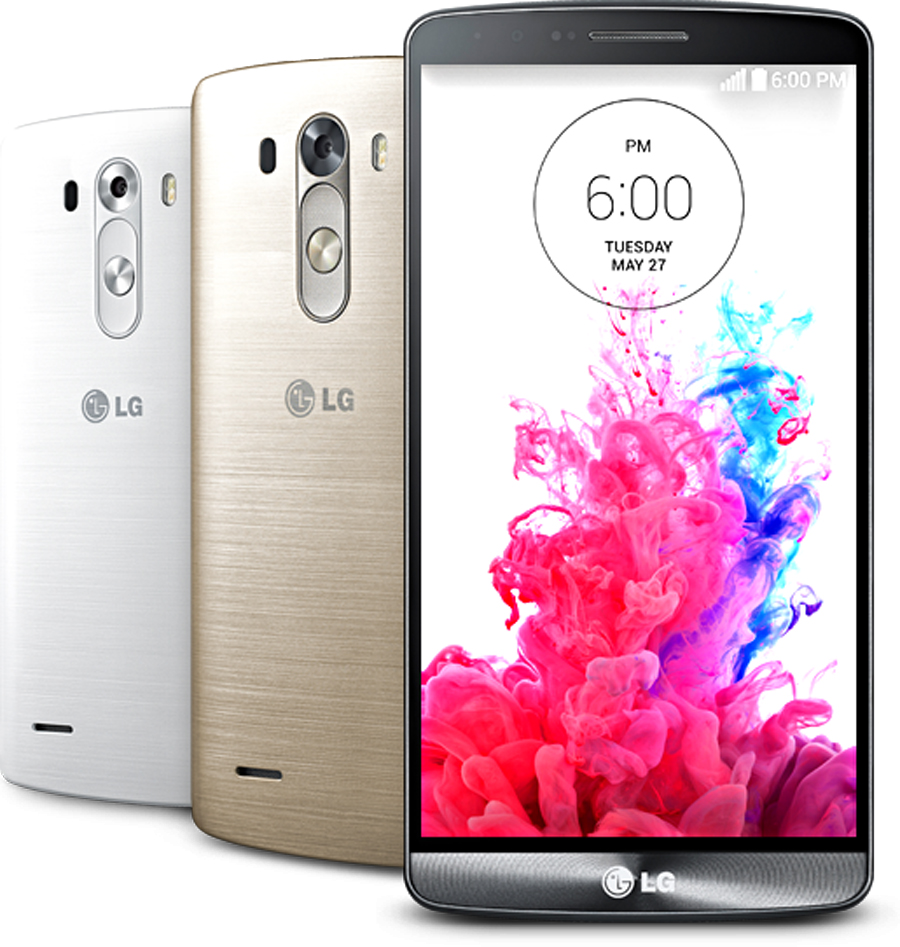
    The Flagships are engaged in some real battles now. LG G3 dropped in and made it a lot more interesting. Packed in with a quad-core Qualcomm Snapdragon 801 processor clocked at 2.46 GHz, expandable memory upto 128 GB and a laser focus support for the camera, the phone sure has some unique features to look forward to.

    lg g3
    The G3 brings the First 2K Display

    The phone’s display is its champion. The G3 has a best in class 5.5 inch Quad HD display with 538 pixel density that gives a resolution of  2560 x 1440 px(2K). With this release LG brought in the first 2K phone in the market.

    Quad HD displays have been promised to the market by several manufacturers. Oppo’s Find 7 and Lenovo’s Vibe Z2 are some of the example. But why haven’t the rest of the manufacturers jumped on board with a 2K display market, we try to see the issues with running a Quad HD screen.

    The screen on the LG G3 is substantially better than most of the screens this article is being read on. It is been said that the human eye cannot distinguish pixel density after 300ppi which Apple terms as its Retina display at 326 ppi in the iPhone 5S. But the images are just so mesmerizing on a Quad HD screen that you  loose the reasons for the debate in the first place.

    One of the major reasons why manufacturers are not encouraged to adopt a Quad HD display is because of the massive power required to run the display. It especially puts a heavy strain on the processor. But on a processor like the one G3 has, this might not be a major issue. A massive battery like the 3000 MaH on the G3 will take care of the excessive resource drain.

    4k_resolution
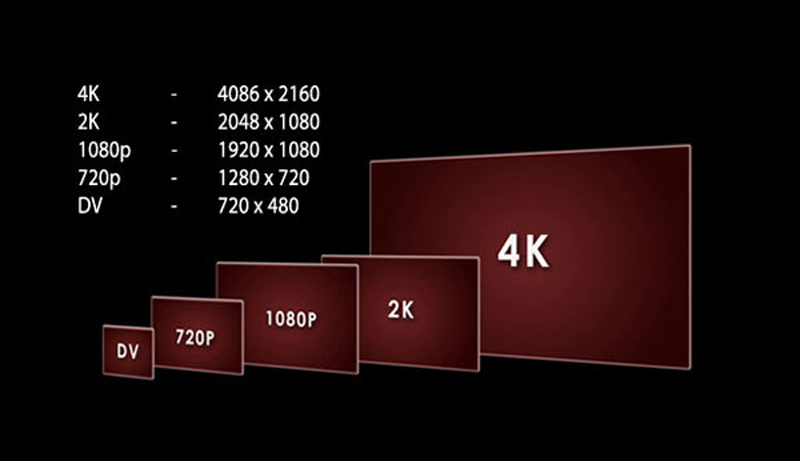
    There isn’t enough content for the 2K and 4K displays.

    There also aren’t a lot of apps that are ready for the 2K display. There is a serious shortage of content at the moment, as it is resource intensive to create the content in the first place. As the technology is still young, the content producers will wait for a while before investing in a heavy process like creating videos or games for such screens. They will wait for the device market to get populated with more products with such high definition displays.

    Since HD is now the norm across many platforms, it is rather easy to create content for it. To create HD content you just need a computer system with decent specifications. The investment for making an HD content is comparatively lower than that for 2K or 4K productions.

    So the question we really need to ask is that, are Quad HD phones worth buying at the moment or maybe we should just shut up, wait for the content to show up and enjoy the insane crispness of a handheld 2K screen.

  • Look Out Oculus! ANTVR Might Steal the Show

    Look Out Oculus! ANTVR Might Steal the Show

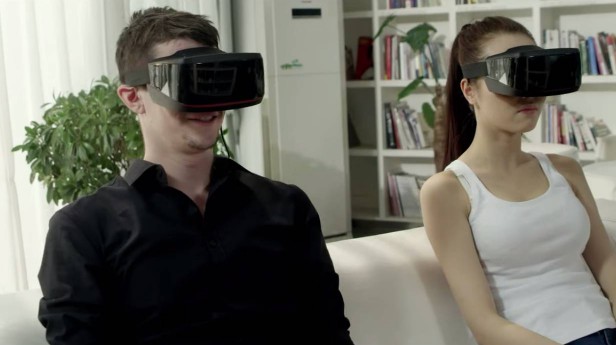
    While the Oculus Rift was setting up the stage for the Virtual Reality(VR) revolution, one Chinese open source project might turtle its way to the finish line. A Chinese company called ANTVR is offering VR headsets which have everything that a proprietary system like Oculus lags. Get ready for a whole new  iOS-Android like battle.

    The shining glory of the ANTVR is it flexibility of integration on multiple platforms. It can be used with Xbox, Playstation, PC, Blu Ray and even the Android. Right now Oculus only plays the games made for its system and Sony’s project Morpheus will only run on the PS4(Lame!).

    It is easy to make games for the ANTVR because of its an Asperical Lens system. The lens also allows proper recreation of the image and takes out any aberrations. This might actually help correct the complaints of vertigo in the likes of the Oculus Rift. Adjustable pupil distance also helps to reduce the strain on the eyes.

    VRThe headset gives a 360 degrees immersive vision. It has a dual 9 axis Inertial Measurement Unit(IMU), which bestows on it better capabilities for sensing the movements of the user. The IMU is integrated in the headset as well as the controller. The headset’s 100 degree straight vision gives a feeling of wearing an entire IMAX screen on your head.

    ANTVR co-founder Qin Zheng quit his PhD to work on the system. He and his entire team look as if they are the members of the fellowship of Nerdliwood. Maybe it is because they themselves are Sci-Fi and gaming nerds that they can perfect a system that other fan boys and girls can enjoy.

    Another key area where the ANTVR succeeds in is its transformable controller that offers multiple functionality. The controller can be used as a standard controller, a steering wheel, a gun or even a simulated hand grenades, can it BE more all-round convenient? There is also an option for standard cables as well as a wireless version of the controller.

    The designs for the ANTVR systems are done by China based industrial designers LKK. They have come up with really ingenious and kickass designs. The transformable controller especially will be a boon to the gamers.The software’s and sensors are designed for a complete immersive experience. The detachable controller makes it extremely simple to use. Easy placement on the head even with spectacles is a welcome development.

    ANTVR’s open source platform opens it up to enormous possiblilities. Qin Zheng has said that he will provide all documentation and libraries to the public. This approach will help increase the rate of upgradation of firmware and rapid feedback and growth for the ANTVR in comparison to its competitors.

    The most respectable part of Zheng’s approach is that he has made it clear that he will not sell the company. The company has already scored $212,344 with its kickstarter campaign whose target was $200,000. The selling price of the individual equipment is around 300$ which will be a direct competition to the Oculus Rift’s consumer version.

    We seriously hope for the ANTVR project to live long and prosper and set a milestone in the VR arena. This will also force big companies like Facebook (owners of Oculus) to try to one up the competition and come up with better products.

  • SOLAR Freaking Roadways: The Solution to Everything

    SOLAR Freaking Roadways: The Solution to Everything

    Picture a future with no street lights, but the road it self lit up. A road that warns you about blockages like fallen trees, giant boulders, crossing animals way in advance. A road that melts snow instantly, thereby no slipping cars. Not just roads but imagine parking stands, sidewalks, airport tarmacs and playgrounds that have programmable lights which work according to your requirement. Oh yes, they can also power themselves and everything around them with the awesome powers of the Sun.  And here is the best part, this can be made possible in the present itself. Prepare yourself because the most freaking amazing invention of all time is about to be unleashed across the world and they are called SOLAR FREAKING ROADWAYS.

    In the last few decades we haven’t seen a single major infrastructural innovation apart from the telecommunication revolution. The fact of the matter remains that neither Facebook, nor twitter nor any other app is ever going to bring real tangible development. We need to create cities which look like the fantasies of people who came before us. We have stopped investing in real world infrastructure. There needs to be massive R&D investment to make the next generation transportation apparatus possible.

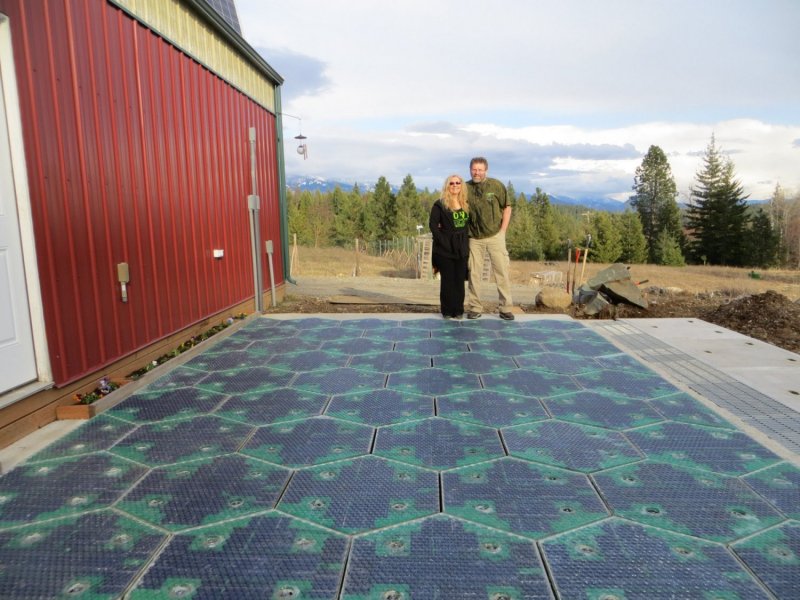
    Julie and Scott Brusaw, inventors of Solar Roadways
    Julie and Scott Brusaw, inventors of Solar Roadways

    Enter into the scene, Julie and Scott Brusaw. They are the mild mannered master builders(Lego movie anyone) and inventors of solar roadways. These guys are real life pioneers who might go unnoticed in a crowd but they have invented something that the future humans will thank us for, instead of blaming us for all the destruction they will face because of our greenhouse emissions.

    The video makes the concept pretty clear. It’s a smart roadway which can practically make our tar roadways extinct. The solar panels are hard and strong. They are imbedded with intelligent circuitry and made almost entirely with recyclable materials. They also produce clean energy, which might put an end to the dirty smog that has taken over major cities around the world. We may actually reach a shortage of garbage when this project reaches full potential.

    Solar roadways are also probably the safest road possible. Their LED infused circuitry and intelligent electronics connected with optical fibers help to monitor their situation constantly.

    This is in fact a revolutionary idea which can be put into place right away with the available technology of the present. Some of the biggest names in the tech world are realizing the importance of infrastructural innovation and have started to invest heavily into such projects. One such person is Elon Musk who offered an audacious idea last year called the Hyperloop. According to Google founder Larry Page, he would rather give his billions to Elon Musk than charity because of his avant garde developmental ideas.

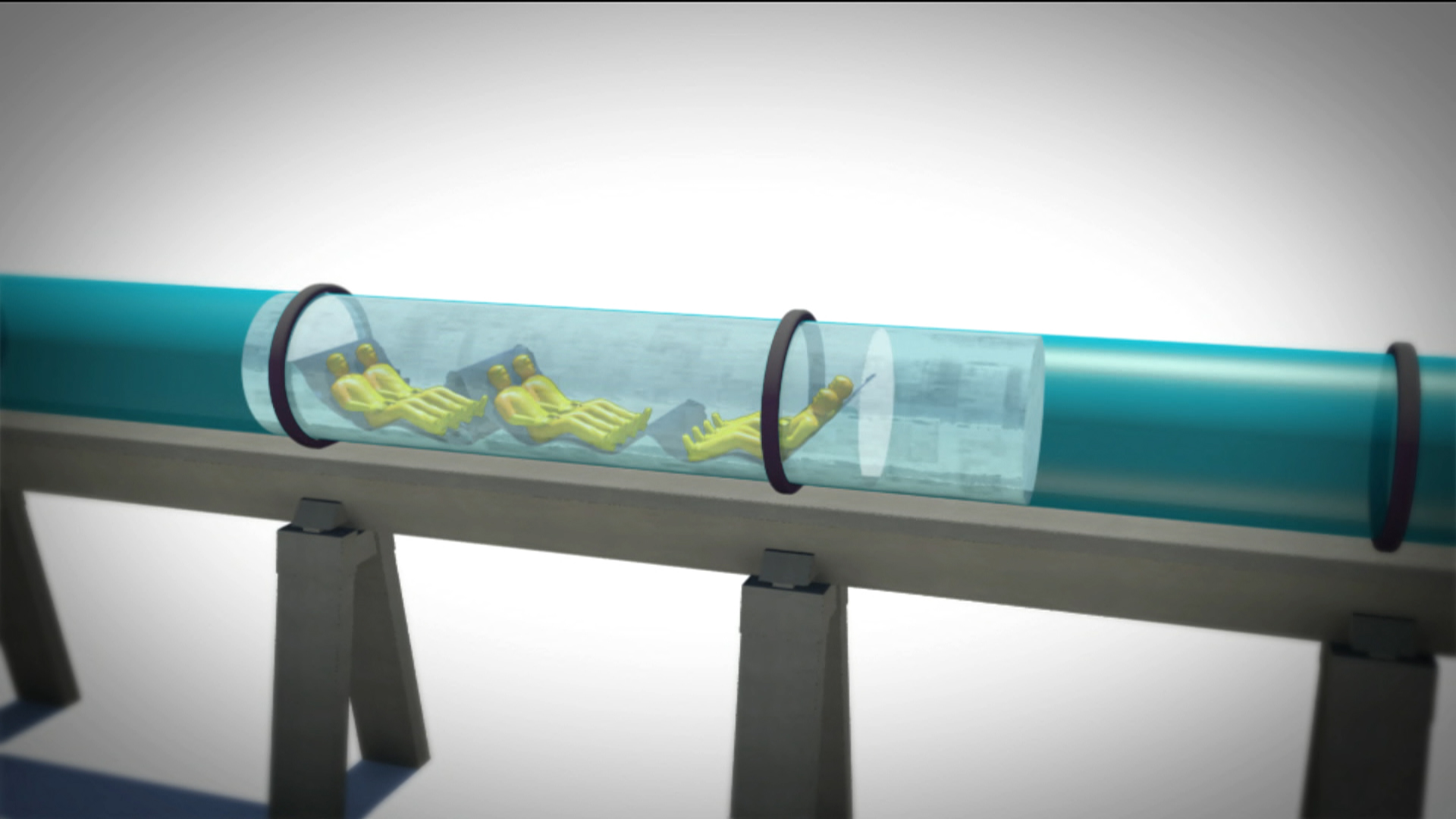
    hyperloop-02
    The Hyperloop can change our existing Railway models

    The Hyperloop is a high-speed transportation system which incorporates reduced-pressure tubes in which pressurized capsules ride on a cushion of air that is driven by a combination of linear induction motors and air compressors.It is a lot cheaper than to install than the conventional intercity railway model and futuristic too.

    Coming back to the star of the moment, the best part about the Solar Roadways is the fact that they pay for themselves. They not just provide the safest mode of transport; they also generate free electricity for all, which will end our addiction to coal and gas forever.  We don’t need those massive transmission lines anymore.

    We have finally unlocked the knowledge that the plants and trees figured out almost 350 million years ago. We can now harvest the energy of the sun for all our purposes.

    The only suggestion we would like to give the inventor is that they should adopt a better marketing strategy. Even though they have a prototype contract with the Federal Highway Administration, there website is not enticing enough for a common man to get excited about the prospects of their  prodigious invention.

    Lets share this incredible revolutions with all and demand our lawmakers to start finding ways to break ground for the induction of Solar Freaking Roadways all across the word. And then maybe we can invent Lightcycles too, and live in a scintillating Tron-like universe.

  • New Smartisan T1: A Fresh Android Feel from China

    New Smartisan T1: A Fresh Android Feel from China

    The Chinese are at it again. No, they didn’t takeover a new part of the South China Sea or any part of the Indian territory. We are talking about the new Smartisan T1. This is an innovative product that promises a fresh Android experience.

    Any Chinese phone whose heart is made of a Snapdragon 801 processor is worth a notice and believe us when we say this, there is a lot to notice about the Smartisan T1. The T1 has Gorilla glass 3 on both sides, giving it a rather iPhone-ish appeal. The phone follows the same obsession with symmetrical design that iPhone has retained for quite a while.

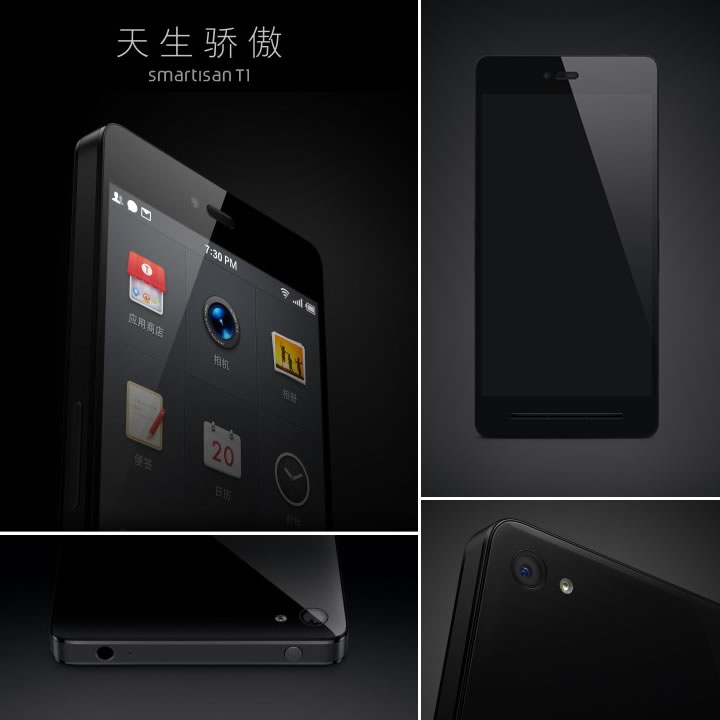
    smartisan-t1-collage

    Folks who appreciate the feel of pressing a real button are in for a treat since this phone has lot many physical buttons. It has three elegantly placed physical buttons under the screen which are a departure from the monotonous capacitive touch panels. It has two sets of rockers on both sides, one for brightness and the other one for volume.

    Not just that, it also lets you change the functions of the physical buttons. For the first time in a phone, you can select the functionality according to your hand inclination (right or left handedness). The USP of this device is its high customizable features.

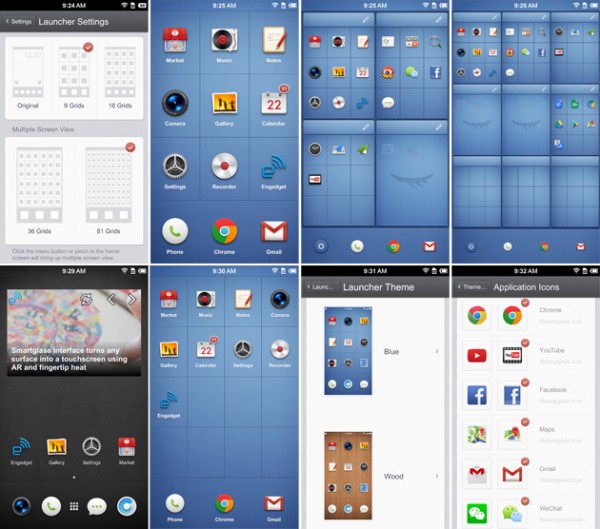
    smartisan-t1-screenshots

    Even with all its unique customizable features, the main screen looks rather clean and crisp. The T1 allows you to click a photo from the standby screen by pressing rockers on both sides together. This is great for people who like to take a lot of pictures and want quick access to the camera to not miss any moment worth capturing.

    Though there is a giant downer, the phone will only be available in China and might release in States after a year. Hopefully, some other low-end Chinese OEM will copy the design and sell it to one of the Indian companies.

    Major phone manufacturers must take notice of this innovative new product. Instead of adding bloatwares, they should focus on making the mobile experience easy for everybody.

  • A French Failure and Other Major Engineering Blunders

    A French Failure and Other Major Engineering Blunders

     The French have given the world a lot of things; photography, parachutes, modern philosophy and fashion snoot-ism. But something they are not known for is their heavy work ethics. The country recently passed a regulation which allows workers to ignore work emails after work hours – even though their work week only consists of 35 hours. No wonder they are good at philosophy, they have a ton of time to sit around and think.

    This gives us an idea about their work culture, which may or may not be responsible for the recent French railway blunder. Which, incidentally, is the inspiration for this article.

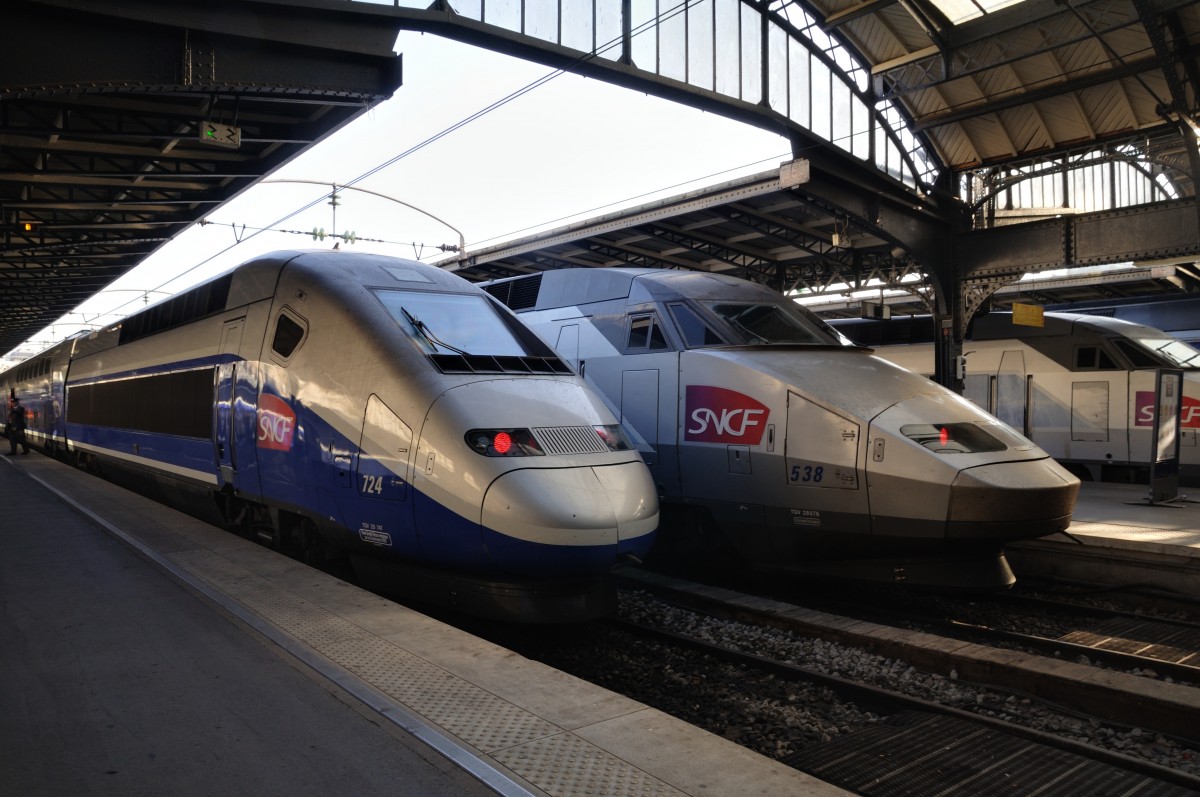
    France recently invested 20 billion dollars on 2000 new trains called TERs (trains express regionaux), which they later found to be too wide to fit in their older platforms. Almost 1 in 6 stations are affected. You can blame the Indian Railways for a lot of things, but they have never shown this level of inefficiency. Now the French rail operators have had to invest an additional 70 million dollars to narrow the affected platforms. The problem occurred when the train manufacturers were handed measurements of stations built in the last 30 years. The platforms older than 30 years were ignored that lead to a situation where two of these new trains can’t even pass on parallel tracks.

    This of course is not one of the major engineering blunders, lets look at some other past examples of institutional failures:

    1. Tacoma Washington Bridge Disaster:

    The Tacoma Narrows Bridge is a pair of mile-long (1600 meter) suspension bridges with main spans of 850m. The first bridge, nicknamed Galloping Gertie, was opened to traffic on July 1, 1940. The bridge became famous four months later after a dramatic wind-induced structural collapse that was caught on film. The only fatality was a poor black Cocker Spaniel. The first replacement bridge opened in 1950, and a parallel bridge opened in 2007.

    2. St. Francis Dam Flooding:

    St_Francis_Dam_cropWilliam Mulholland was a self taught architect whose career came to a crashing halt on March 12, 1928, when his St. Francis Dam failed just hours after being inspected by Mulholland himself. The dam sent 12.5 billion gallons (47,000,000 m³) of water flooding into the Santa Clarita Valley, north of Los Angeles. It laid the town of Santa Paula under 6 meters of mud and debris. Some parts of Ventura County were covered up to 21 m high pile of muck. The final death count has been estimated at 450, including 42 school children.

    3. The Vasa:

    Stockholm_ship_VasaA long time before the Titanic there was The Vasa. It was the biggest ship of its era and it sunk after travelling just 120 meters from the shore. The reason cited was that it was built top-heavy and had low gun doors which let the water in, capsizing the vessel just a few minutes after first setting sail on her maiden voyage on August, 10th, 1628. Surprisingly, even after clearly lacking stability at the port, she was allowed to set sail. Apparently the impatience from King Gustavus Adolphus, was seen as a major reason for the disaster. The death toll reached between 35-50 sailors and crew but no sentences were handed out.

    4. Skylab:

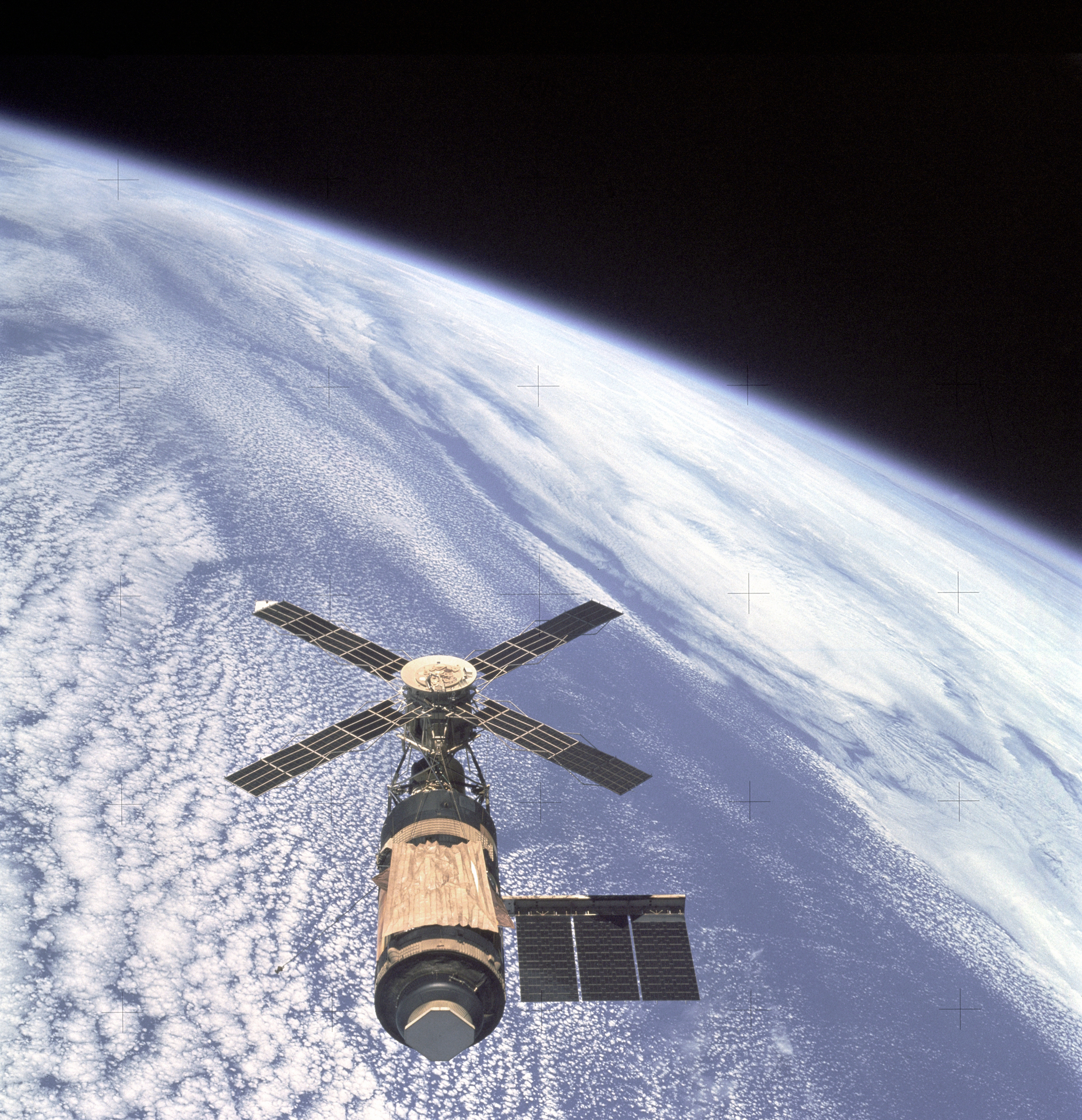
    SkylabDuring the peak of the cold war, America launched its first space station called the Skylab. Weighing 75 Metric tons, Skylab was launched on 14 May 1973 by a Saturn rocket into a 435 km orbit. The launch is sometimes referred to as Skylab 1. There was severe damage to the vehicle during launch. The station lost its micrometeoroid shield, sun shade and one of its main solar panels. Even the debris from the lost micrometeoroid shield prevented the deployment of all solar panels and left the station with a huge power deficit. The first american space station failed miserably and cost the tax payers about $3.6 Billion dollars. There were of course a lot of lessons learned from this disaster which were later corrected on the ISS.

    5. The Leaning tower of Pisa:

    Leaning_tower_of_pisaThis is without a doubt one of the most prominent engineering failures, probably the most photographed blunder too. This bell tower’s tilt began during its construction itself. It was caused by an inadequate foundation on a ground that was too soft on one side to properly support the tower’s weight. The tilt increased gradually in the following decades till the structure was stabilized (and the tilt partially corrected) by efforts in the late 20th and early 21st centuries.
  • The Curious Case of QuickCircle: LG G3 Case unveiled

    The Curious Case of QuickCircle: LG G3 Case unveiled

    Protection is a must. No we are not talking about condoms, we are talking about phone covers. The variety in the market is immense. Not just from the companies itself, but third party cases have flooded the markets all across the world.

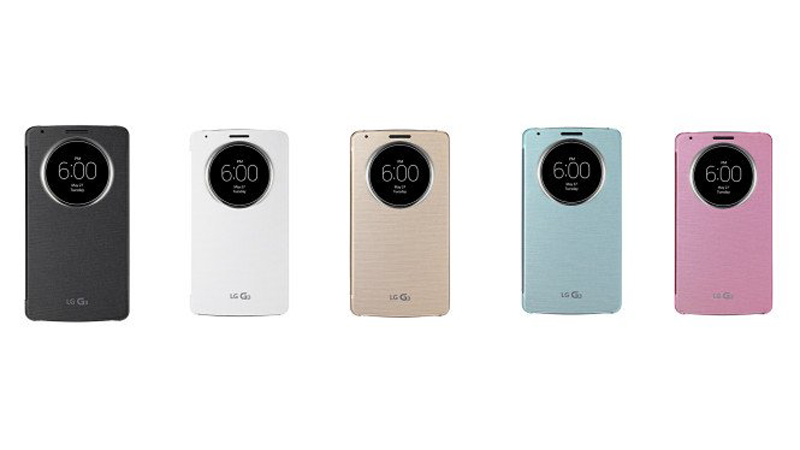
    In a peculiar move, LG has released its cover design before releasing the phone. The prominence being given to this particular cover is well deserved. It looks really functional and is not just a marketing gimmick. The video that has been released shows a customized lock screen which is accessible from the circular opening in the cover. They call it the QuickCircle.


    Samsung had previously introduced the S view covers for their S4’s. They also brought the S view on the Note 3. But till now they were only meant for reading notifications or  to pick a call. Also they were rectangles, not nearly as sexy as LG’s circle.

    LG has taken it a step further by adding more interactive options. The cover design lets you access the customized lock screen where you can check the time, place calls, send text messages, take photos, listen to music or get an update of your health directly from the circular window. The QuickCircle will come in five colors: Metallic Black, Silk White, Shine Gold, Aqua Mint and Indian Pink(the last one sounds a bit naughty).

    Apart from all this, the case also has the ability for wireless charging through its built-in Qi compatibility. LG also made a lot of developers happy when it said it will release an SDK next month. That will ensure that even more customized functionality can be added to the QuickCircle.

    The company also claims that the QuickCircle provides the best “grip-ability” for the massive 5.5 inch QHD screen of the LG G3. The phone itself is claimed to have Android 4.4 out of the box, a 32 GB internal memory and a 3000 MaH battery. More details will come out soon.

    There is a lot of potential here that LG is uncovering. Lock screen accessibility will also help to decrease battery usage. Plus it is perfect for travel as it gives quick access to music and camera – the two most useful functions to use during excursions.

    LG should be commended for this development and the QuickCircle deserves the special mention it has got from the company. Hopefully, other companies will join the game faster and convert the dumb flip cover into useful accessories.

  • MJ’s Resurrection and The Future of Holography

    MJ’s Resurrection and The Future of Holography

    Love him, hate him, but you can’t ignore the grooves of the King of Pop. Michael Jackson continues to get our foot tapping from the other side of the consciousness wall. His latest posthumous album, Xscape, brings back the the classic MJ, the one we 90’s kids were in love with while growing up. It took half a years worth of effort but we saw MJ’s resurrection at this year’s Billboard Music Awards,  showing off his signature moves and making us all slaves to his Rhythm.

    His latest feat at billboard awards was made possible due to the awesome powers of Holography. No, holography is not limited to the “Holodeck” on Star Trek alone. It’s here, it’s real and it’s getting us a lot more nostalgic. This incredible technology helped us witness the man with the golden feet after almost a decade. The experience was nothing short of breathtaking.

    In 2012, Tupac was resurrected at Coachella and recently Indian Prime Minister elect Narendra Modi used the technology to address multiple rallies at the same time. Celine Dion also performed with a 1968 version of Elvis at the American Idol. All these were made possible through the technique called Pepper’s Ghost.

    Holography is a technique which enables three-dimensional images (holograms) to be made. It involves the use of a laser and light measurement for recording visual data. The image changes as the position and orientation of the viewing system changes in exactly the same way as if the object were still present, thus making the image appear three-dimensional. The Holographic principles also states that our own lives must be just projections at a grand scale.

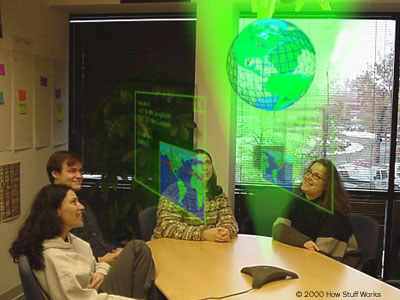
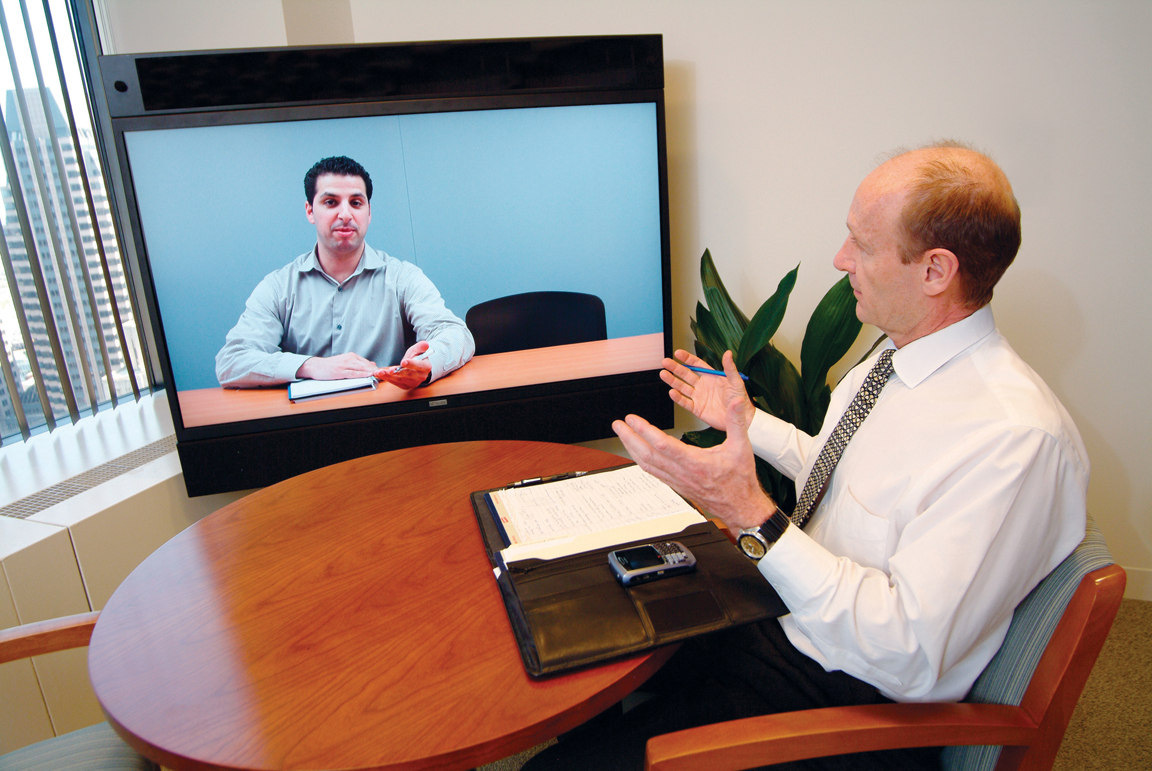
    The technology though is not just restricted to these performances. We can pretty soon have holographic communication capabilities. The research is in progress to allow you and your friends to have a conversations in simulated environments. It will be like video conferencing but you don’t have the distraction of a screen. This is the closest we can come to real life interactions with people thousands of miles away.

    A Teliris telepresence videoconferencing system in 2007.
    A Teliris telepresence videoconferencing system in 2007.

    Tele-Immersion seem to be the future of communication. It gives you a fully simulated environment where you can have complete immersive interactions. The users will feel as if they are  looking, talking, and meeting with each other face-to-face in the same room.

    To achieve this, the computers recognize the presence and movements of individuals and objects. Two or  more cameras are used to capture the objects or people.  They track those individuals and images and reconstruct them onto one stereo-immersive surface.

    Two or more cameras take rapid sequential shots of the same object, continuously performing distance calculations, and projecting them into the computer-simulated environment, as to replicate real-time movement. Tele-immersion presents the greatest technological challenge for Internet2 (The Research Network).

    We are still far away from projections like the one that got Leia’s message to Luke and Obi wan through R2D2. There is though an option for fog projection, in which the fog will act as a three dimensional screen where images can be projected. But that would not be immersive enough for true 3D involvement.

    Holographic Slideshows are so much cooler than present day projectors
    Holographic Slideshows are so much cooler than present day projectors

    Holographic technology will also help in 3D slide shows. It will be the end of  staring at the boring 2D projections on a wall. Imagine interacting with the virtual world with your fingers while presenting a slide show; surely the best way to engage a bored audience. It will be reminiscent of the slide show at rebel ships where they studied the plans of the Death Star. It can also be seen in Big Bang Theory’s episode “The Holographic Excitation”.

    Holographic Theory is a great area of study and we should all be taking interest in its evolution. Maybe if we have more innovative brains working on it, we’ll be closer to a Star War style communication apparatus.

  • New Milestone Unlocked: Creating Matter from Light

    New Milestone Unlocked: Creating Matter from Light

    Physicists at Imperial College London have created a new milestone for Human civilization. They have just proved that light can be molded into matter, something nobody before now thought was possible to recreate in the laboratory. Physicists have for long wondered about the possibilities of creating matter from light and this development brings us a lot closer.

    The experiment is yet to be done, but it has passed peer review as practical and the inventors are in discussions with experimentalists about the equipment to carry it out. These are exciting times because it has been accepted for 80 years that two photons of light could theoretically create matter, but there has never been demonstrable evidence yet.

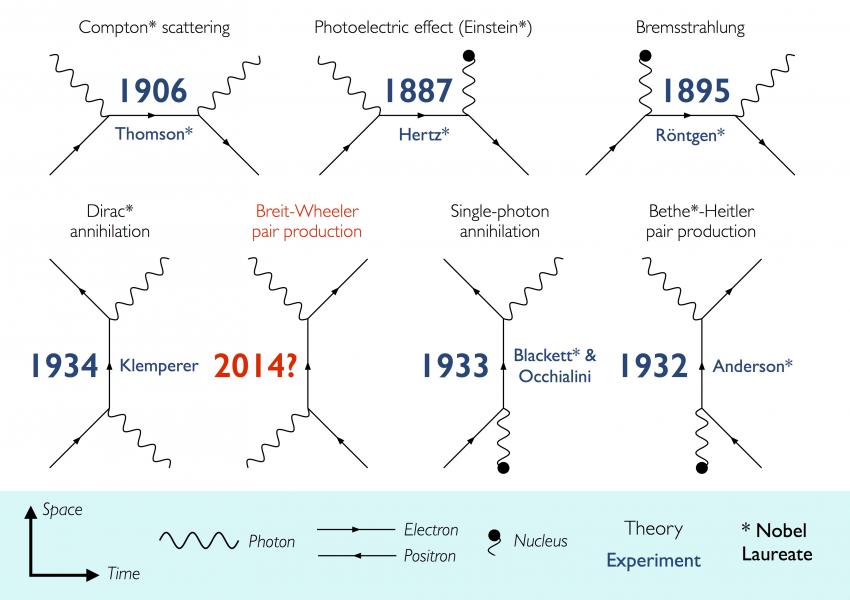
    In 1934 Gregory Breit and John Wheeler proposed that, under the right circumstances, two photons of light would convert into an electron and the positron(the antimatter equivalent).

    Even if this theory was universally accepted by physicists to be true, when Breit and Wheeler first proposed it, they said that they never expected it to be shown in the laboratory. The scientific evolution of today makes it easier to prove the theory now.

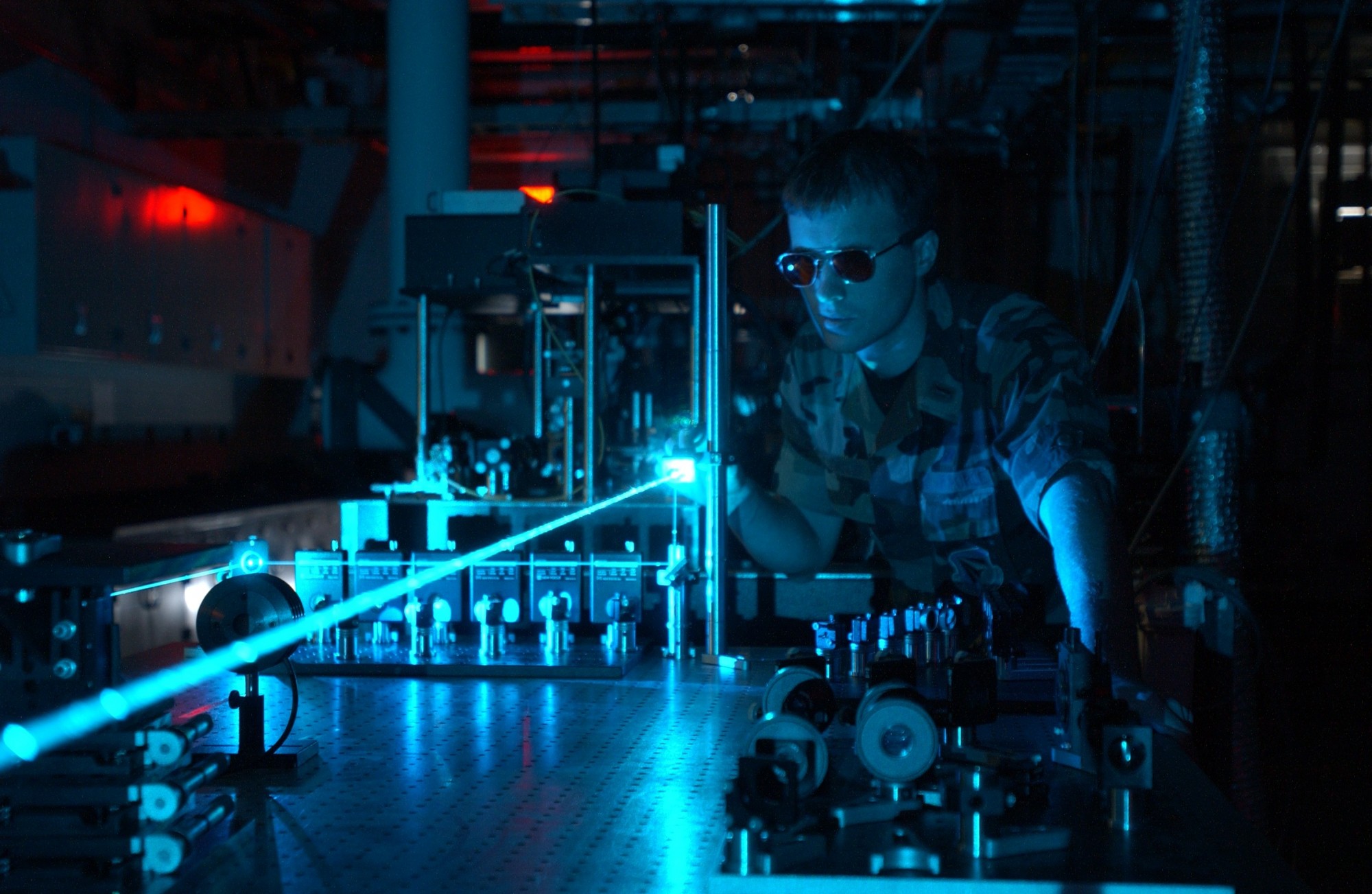
    The proposal is fairly simple in scientific terms. Professor Steve Rose and his Phd student Oliver Pike have designed the model on which the tests can be done. Their paper in Nature Photonics proposes a two-step process. High intensity lasers would be used to push electrons until they are traveling close to the speed of light, directing them towards a slab of gold. The scientists then would fire a high-energy laser at the inner surface of this gold can called hohlraum, to create a thermal radiation field, generating light similar to the light emitted by stars.

    They would then direct the photon beam from the first stage of the experiment through the centre of the can, causing the photons from the two sources to collide and form electrons and positrons. It would then be possible to detect the formation of the electrons and positrons when they exited the can.

    For this, they would require a “Photon-photon collider”. This collider would convert light directly into matter using technology that is already available. Like the Large Hadron Collider, this will be a whole new type of high-energy physics experiment.

    The Seven proposed models of photon collision, all others have got Nobel prizes

    This experiment would also recreate a process that was important in the first 100 seconds of the universe and this is also seen in gamma ray bursts, which are the biggest explosions in the universe but one of physics’ greatest unsolved mysteries.

    Lead researcher Oliver Pike said that although the theory is conceptually simple, it will be very difficult to verify experimentally. But what is good is that the experimental design they propose can be carried out with relative ease and with existing technology.

    Experiments like this bring us closer to understanding our own universe. They allow us to break the secrets of nature and stare in the face of the creation. Also, knowledge of Physics has an added bonus of making The Big Bang Theory episodes more enjoyable.

  • Right to be Forgotten : Can it Really Happen ?

    Right to be Forgotten : Can it Really Happen ?

    EU has just passed a Bill which allows people to get some links removed from search engines like Google. In an unappealable ruling, the EU courts ordered the removal of links to information which can be deemed as inadequate or irrelevant.

    Right to be Forgotten, as its colloquially called, gives EU citizens the right to petition to Google to remove links which have information about their lives. This law only asks the engines to remove the links and not the actual information itself. This law also comes directly in conflict with the Right to Freedom of Expression. Basically it is a fight between information and privacy.

    Google has to delete irrelevant links now
    Google has to delete irrelevant links now

    Google stated that before this law can be brought into effect, careful formulation of the infrastructure needs to take place. The company would have to set up an “army of removal experts” in all 28 EU countries, including those countries where it doesn’t have operations.

    The procedure of how to judge the potential links also needs to be worked out. Yahoo also said that it was taking a step to carefully review how the judgment would affects its business and users.

    It all began when a Spaniard, Mr Mario Costeja Gonzalez, wanted a newspaper link of a story about auction of his repossessed home in 1998 removed from Google. He claimed that the story infringed his privacy.

    The Spanish data protection agency held that search engines should make access to the story impossible. This sets a dangerous precedent as well. The internet is so easy to use because of its search engines; if we have hidden data, then it might become a pseudo deep net with several hidden internet pages. Google appealed and the case was referred to the European Court of Justice, which has now upheld the original decision.

    The other factor about this ruling is that it is practically unenforceable. As John Oliver quipped on his show, “the internet is like a quicksand, the more you try to get out, the more it absorbs you into itself.” Also, as it can be used by anti-social elements like child pornographers, online fraudsters and “politicians” which would not be appreciated by the very same people celebrating the ruling.

    The case is one of 180 similar cases in Spain whose complainants want Google to delete their personal information from the Web. The company says forcing it to remove such data amounts to censorship. Immediately after the ruling, Google received thousands of requests for deletion on links. These included a politician who wanted mentions of “his time in office” removed and a doctor who wanted a negative review removed.

    Another negative? This law may dissuade tech investment in the region. A lot of countries in EU are suffering from heavy unemployment, particularly amongst the youth. This would be a major jolt to them.

    The idea of internet is so simple, its an open communication platform. It is a fluid communication fabric so whatever restriction are placed on it  will always be a way to work around it. Maybe somebody will create a search engine which will only access the deleted links –  the possibilities are endless.

    People should stop messing with the concept altogether.

  • Peace at Last : Apple-Google War is Done for Good

    Peace at Last : Apple-Google War is Done for Good

    Seems like every techie journalists staple source of conflict beat is about to get over. On Friday, Google and Apple decided to call it quits on the incessant exercise of suing and counter suing each other. They have asked the courts to dismiss the remaining patent lawsuits and have decided to settle the matters outside the courts.

    The conflict between the two Silicon Valley giants started in 2010. Steve Jobs’ disdain for Google became evident when he commented on the fact that Google had ripped off the iPhone. In a strong statement, he swore he was going to spend his last dying breath trying to destroy Android since he believed it to be stolen. Words which didn’t suit his stature.

    The company has now made a sensible decision of discontinuing needless pursuit. After all Android is at the top of the charts with 52.5% of the smartphone operating system market. The Android and the iOS have evolved into completely different systems now.

    This gives no indication that the companies are going for a license sharing agreement. They will though use the money they were spending on expensive lawyers on real innovation in the market. A fact that satisfies everyone. The battle will now be on real free market capitalism principles. This advancement also doesn’t put an end to the Apple-Samsung wars which was widely viewed as the Apple’s proxy war on the Android system. Apple had won a compensation of $930 million against Samsung in 2012.

    Motorola Mobility was also waging a patent war with Apple. Google bought Motorola Mobility to access Motorola’s patent library thereby protecting other Android Vendors. With the acquisition Apple and Google directly came face to face. Google later sold the Smartphone businesses of Motorola to Lenovo while keeping a majority of the patents.

    There is also a happy ending to the story. Like in clichéd endings of movies about warring factions, the two super giants also agreed to work together in the field of patent reforms. This can be good for the overall market too. In an era where knowledge is increasingly getting privatized, an initiative by familiar names would help boost the conversation on the concept of patents in our economies.

  • Top 3 Mind-Blowing Superhero Gadgets for the Real World

    Top 3 Mind-Blowing Superhero Gadgets for the Real World

    People have a lot of differences, but one thing everybody can agrees on is that Superheroes are freaking awesome. Of course you have the odd Aquaman who nobody cares about, but overall everybody has fantasized about having superhuman abilities.

    Unfortunately, the laws of nature don’t allow us to possess those abilities. There are gadgets invented by crazy fans that come close to creating real life imitations from the virtual world.

    We look at some of these kickass superhero gadgets that can even make a septuagenarian jump like a seven year old kid.

    1) Colin Furze’s Airpowered Wolverine Claws: Now here is a badass invention. Stainless steel blades activated by a back mounted pressure cylinder. He has also posted the DIY tutorial on youtube, which is dangerous, and quite frankyly would be a stupid move to try and imitate. People might actually get hurt. If you do decide to build one for yourself keep it away from kids UNDER ALL CIRCUMSTANCES.

    2) Yves Rossi’s JetPack: This years best movie without a doubt is Captain America : The Winter Soldier. It turned the Captain from an idealistic dud into an idealistic badass. The biggest revelation of the movie though was Falcon. The insane flight movements definitely deserve the status of “Legen- wait for it -dary”!.
    There is infact a real life Jetman by the name Yves Rossi. Check out the video below to see him in action.

    3) Cyberdyne Inc’s HAL 5: Terminator fans must be squirming right now, but this stuff deserves a mention. HAL 5 is an exoskeleton which catches weak signals from your skin to let you take control of the suit. HAL 5 (Hybrid Assistive Limb) is claimed to augment body movement and increase user strength by up to ten times. Add some flight capabilities, some serious firepower and JARVIS and you got your own Iron Man Suit.
    The best part? It is being used for human welfare purposes, subsequently taking the edge off the negative connotations of its name.

iGyaan Network
Privacy Overview

This website uses cookies so that we can provide you with the best user experience possible. Cookie information is stored in your browser and performs functions such as recognising you when you return to our website and helping our team to understand which sections of the website you find most interesting and useful.