Category: Apple

  • Another leaked “iPhone 5” video surfaces, shows it booting up

    Another leaked “iPhone 5” video surfaces, shows it booting up

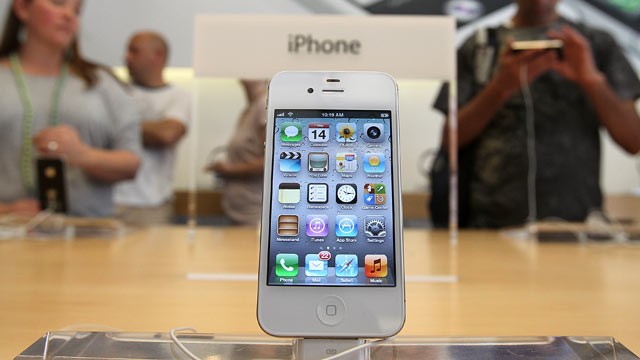
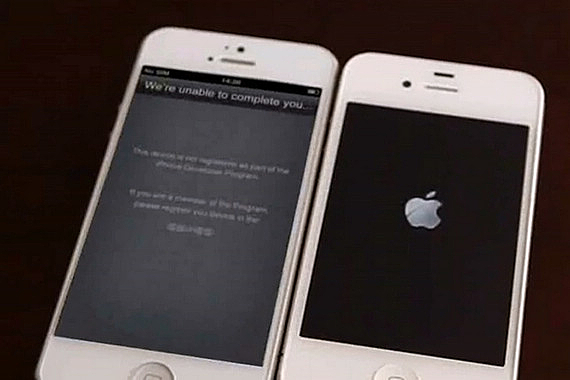
    Yet another video of Apple’s “iPhone 5? has found its way online – this time getting compared to the iPhone 4s from all angles, plus showing the boot up screen attempting to connect to the iPhone developer portal.

    [quote]According to leak on Chinese website Vgooo, they report that it was [translated] “accidentally found just assembled iphone 5 engineering machine, visual inspection, he said that the iPhone 5 becomes long, with a 4-inch screen, feeling thinning. Texture and hold it in the hands of feeling more than 4s, headphone jack also changed in the bottom. Connection port, the iPhone 5 is no longer using the standard 30pin connection, switch to smaller 19pin connection. Hurriedly take a few boot”[/quote]

    Of course, it’s unconfirmed until the real deal gets announced on September 12th. Thoughts? Real or Fakery? More pics and video below.

    [Mobile Syrup]

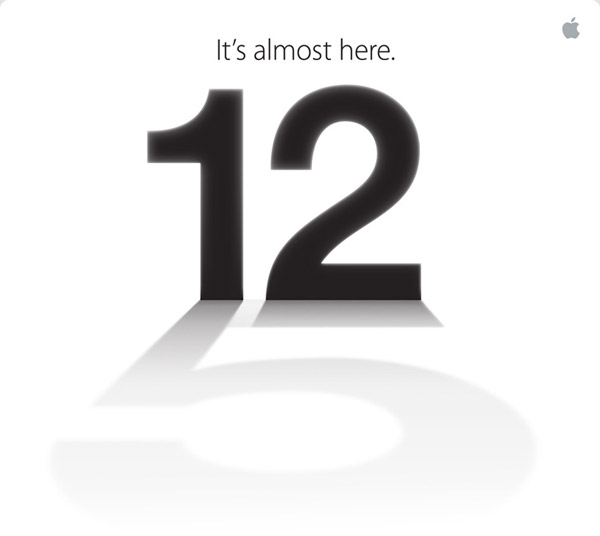
  • Apple Confirms iPhone Event on Sep 12, 10:30 PM IST

    Apple Confirms iPhone Event on Sep 12, 10:30 PM IST

    Apple has invited members of the Press and media to attend, what is supposedly going to be the next iPhone Launch, at San Francisco. Several rumors and leaks despite the lock downs by Apple, seem to have shaken the world of technology. Apple products have by far been the best kept secret, but this time around it just seems everyone knows what to expect. Although rumours of a separate iPad -Mini event seem to be doing rounds, we are still skeptical of any such announcement. 

    The event starts at 10:30:00 PM IST on 12 September 2012 , we will bring you all the dirt and coverage as we can.

  • FBI Used Apple UDID’s To Track 12 mn Users : Hackers

    FBI Used Apple UDID’s To Track 12 mn Users : Hackers

    A hacker group has claimed to have obtained personal data from 12 million Apple iPhone and iPad users by breaching an FBI computer, raising concerns about government tracking.

    The UDIDs were reported to be stolen from FBI special agent Christopher Stangl’s laptop. Earlier this year Stangl was one of the FBI agents participating in a call that was breached by Anonymous hackers.

    According to a Pastebin post, hackers used a then-new Java exploit to get into Stangl’s machine.

    [quote]”During the second week of March 2012, a Dell Vostro notebook, used by Supervisor Special Agent Christopher K. Stangl from FBI Regional Cyber Action Team and New York FBI Office Evidence Response Team was breached using the AtomicReferenceArray vulnerability on Java,” the posting states. “During the shell session some files were downloaded from his Desktop folder one of them with the name of ‘NCFTA_iOS_devices_intel.csv’ turned to be a list of 12,367,232 Apple iOS devices including Unique Device Identifiers (UDID), user names, name of device, type of device, Apple Push Notification Service tokens, zipcodes, cellphone numbers, addresses, etc. the personal details fields referring to people appears many times empty leaving the whole list incompleted on many parts.”[/quote]

    The hackers say that the hacked database included user names, name of device, type of device, Apple Push Notification Service tokens, zipcodes, cellphone numbers and addresses of iPhone and iPad users. According to AntiSec they have stripped personally identifiable information prior to publication.

    It was also added that Apple was looking for alternatives to the UDID system. The post goes on to say, in this case it’s too late for those concerned owners on the list. 


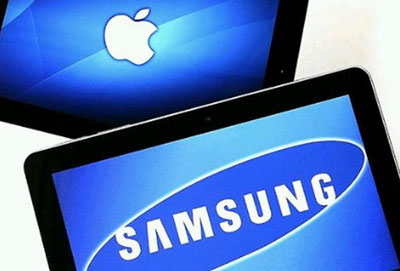
  • Japan court dismisses Apple vs Samsung : Samsung does not infringe on Apple Patents

    Japan court dismisses Apple vs Samsung : Samsung does not infringe on Apple Patents

    Samsung after having paid a billion US Dollars in the United States have caught a break in the Asian counter battle. Reuters and Bloomberg report a judge there decided its Galaxy smartphones and tablets did not infringe on an Apple patent.the Tokyo District Court has ruled Samsung did not violate a patent that covered syncing music and video data with a PC. Presiding judge Tamotsu Shoji dismissed the claim, saying Samsung’s implementation of this specific technology was not covered by the scope of Apple’s patent and has ordered Apple to pay the costs of the lawsuit.

    {Yomiuri Shinbun}

  • Apple win over Samsung won’t affect parts deal

    Apple win over Samsung won’t affect parts deal

    While Samsung Electronics is reeling from a patent pounding by its smartphone rival Apple Inc, this is unlikely to damage the other part of their relationship – where Samsung is the sole supplier of Apple-designed chips that power the iPhone and iPad.

    At an emergency meeting in Seoul early on Sunday following the damning U.S. legal defeat, the South Korean group’s post mortem was led by vice chairman Choi Gee-sung and the head of the mobile business JK Shin, rather than by CEO Kwon Oh-hyun, whose primary role is in charge of the components business.

    The reason that Kwon was reportedly not present, even though he is the CEO of Samsung, is because the company has a “strict internal firewall” between its component supply business and handset operations, according to Reuters.

    Citing an unnamed executive who took part in Sunday’s meeting in Seoul, it was said that Samsung considers its supply contract with Apple a “separate issue from the litigation,” in which Samsung was found to have copied features of Apple’s iPhone and iPad..

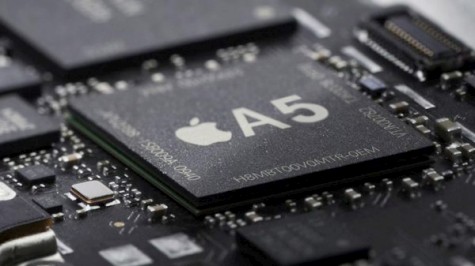
    While Apple and Samsung are fierce competitors in the businesses of smartphones, tablets, computers and more, Samsung is also Apple’s largest supplier of components and parts for its popular devices. Most notably, Samsung is responsible for building the custom processors featured in Apple’s iOS devices, including the iPhone and iPad.

  • Apple wins $1 billion in Samsung patent case

    Apple wins $1 billion in Samsung patent case

    Apple Inc scored a sweeping legal victory over Samsung on Friday as a U.S. jury found the Korean company had copied critical features of the hugely popular iPhone and iPad and awarded the U.S. company $1.05 billion in damages.

    The verdict — which came after less than three days of jury deliberations — could lead to an outright ban on sales of key Samsung products and will likely solidify Apple’s dominance of the exploding mobile computing market.

    The US lawsuit was one of several cases around the world between California-based Apple and South Korean Samsung over technology rights and innovation in the fast-growing mobile computing sector.

    Apple sued Samsung in April 2011, and Samsung countersued. The companies have also sued each other in Britain, Australia and South Korea. The California case was the first to go to a US jury.

    Apple sought $2.75 billion for its claims that Samsung infringed four design patents and three software patents. Samsung demanded as much as $421.8 million in royalties for claims that Apple infringed five patents.

    For the ’381 patent, which covers the “bounce-back” feature in document scrolling, all applicable Samsung products were found to be infringing for Samsung Electronics Ltd, Samsung Electronics America, and Samsung Telecommunications America, with the exception of the Galaxy Tab under Samsung Telecommunications America. This is a total of 21 smartphones and tablets including the Samsung Nexus S 4G, Galaxy s II (AT&T and i9100), Galaxy Tab, and Galaxy Tab 10.1.

    One bit of good news for Samsung: The jurors found that the Galaxy Tab 10.1 tablet did not infringe on any physical iPad design patents, as Apple had claimed.

  • South Korean court bans some Apple, Samsung products

    South Korean court bans some Apple, Samsung products

    Apple and Samsung have been ordered to stop selling some smartphones and tablet computers in South Korea and pay damages after a court ruled they each infringed the other’s patents.

    The South Korean court said that Apple had infringed two of Samsung’s wireless patents, while Samsung had infringed on a fruity firm patent related to a “bounce-back” touchscreen feature, Bloomberg, the Financial Times and others reported.

    The court also awarded damages to both sides, but only enough to cause a momentary fumble in their pockets. Apple only needs to pay 40m won ($35,000, £22,000) and Samsung just has to hand over 25m won ($22,000, £14,000).

    The Seoul Central District Court ruling called for a partial ban on sales of products including iPads and smartphones from both companies, though the verdict did not affect the latest-generation phones — Apple’s iPhone 4S or Samsung’s Galaxy S3.

    The ruling affects only the South Korean market, and is part of a larger, epic struggle over patents and innovation unfolding in nine countries. The biggest stakes are in the U.S., where Apple is suing Samsung for $2.5 billion over allegations it has created illegal knockoffs of iPhones and iPads.

  • ‘Double’ transforms your iPad into a $1999 telepresence robot

    ‘Double’ transforms your iPad into a $1999 telepresence robot

    For the frequent traveller, it could be the perfect way to attend those urgent meetings while staying at home.

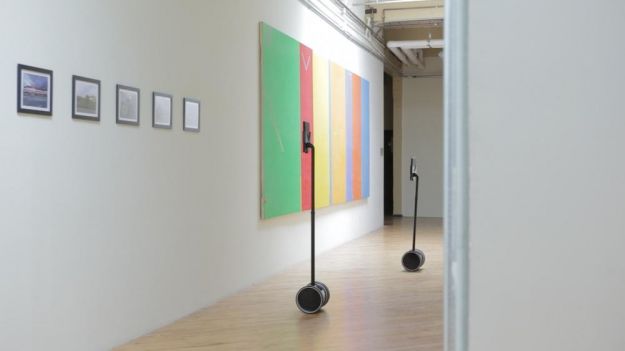
    The Double robot can turn your iPad into a ‘virtual you’ that can be sent anywhere in the world. The $2,000 robot is described as ‘the simplest, most elegant way to be somewhere else in the world without flying there’

    Imagine you’re at your company, seated at your desk, when this iPad perched on a kind of pared-down Segway rolls up beside you. On the screen is the face of one of your co-workers located in another country who today is poking about your office, getting to know the layout, meeting some new people, asking a few questions. After a brief chat, it rolls off to the other side of the office. You look up five minutes later and do a double-take as you notice two of these devices having a conversation with each other by the water cooler.

    Thanks to Double Robotics’ iPad-on-wheels – otherwise known as ‘Double’ – such a scenario could one day become a reality.

    Double, which its maker claims offers the “most elegant way to be somewhere else in the world without flying there,” comprises a pair of wheels, a battery-powered motor, an adjustable pole and an iPad holder.

    The telepresence robot is controlled remotely by someone using Double’s app on another iPad. The app enables the operator to move Double around its location, with its minimalist design helping to ensure it doesn’t get in the way of ‘real’ on-site workers. The length of the pole can also be adjusted using the app, allowing its user to talk face-to-face with co-workers, or peer over partitions to see what others are up to when they think no one’s  looking.

    Weighing a delicate 15 pounds (7 kg), there’s little chance of Double causing any damage to furniture, or humans for that matter, should its operator fail to see upcoming obstacles.

    The California-based firm behind Double believes its creation offers a unique teleconferencing experience, allowing you to move around a location freely, meeting co-workers in any location, although presumably the bathroom will be off-limits.

    Double Robotics suggest its robot could be used by companies who regularly communicate with remote workers, as well as school campuses, “enabling potential students to walk the halls and talk to professors.” Museums and galleries could also use Double, offering tours to those too far away to visit in person.

    While some may consider Double to be an unnecessary luxury, the museum/gallery idea is certainly an appealing one, where anyone on the planet could work their way around such places using simply an iPad and an app.

    Of course, there are already a number of telepresence robots like this in existence, but what makes this one stand out is its reasonable price – $2,499, or just $1,999 if pre-ordered – iPad not included. The firm is set to ship its first batch this December, with orders placed from this week going out early in 2013.

    [Digital Trends]

  • Apple Reaches Record U.S. Market Value on IPhone Expectation

    Apple Reaches Record U.S. Market Value on IPhone Expectation

    Apple Inc. surpassed Microsoft Corp. Monday as the largest U.S. company ever, measured by stock-market value.

    Apple hit the new milestone — $623.52 billion — at a time when its influence on the economy, on the stock market and on popular culture rivals that of some of the most powerful companies in U.S. history: General Motors Co., whose Corvette and Impala typified a confident postwar manufacturing giant; Microsoft, whose technology heralded the arrival of the personal computer and the early Internet age; and International Business Machines Corp., whose buttoned-down rigor inspired rivals to reach for greatness.

    The shares of Cupertino, California-based Apple rose 2.6 percent to $665.15 at the close in New York yesterday, for a market value of $623.5 billion. That overtook Microsoft’s $616.3 billion closing market capitalization on Dec. 27, 1999, according to data compiled by S&P Dow Jones Indices LLC. Apple extended the gains today, advancing as much as 1.5 percent.

    Apple is preparing to introduce the next version of the iPhone on Sept. 12 in what will be a design overhaul of its top- selling product, two people with knowledge of the company’s plans said last month. The next iPhone “could be the most impactful product upgrade in Apple’s history” and the company will probably sell as many as 250 million units over the life of the device, according to analysts at FBR Capital Markets.

     [quote]

    “With the iPhone they have successfully created a strong customer following in an absolutely enormous marketplace,” Toni Sacconaghi, an analyst with Sanford C. Bernstein & Co., said yesterday. “They have captured the hearts and minds of consumers.”

     [/quote]

  • Motorola files biggest complaint against Apple for iOS devices

    Motorola files biggest complaint against Apple for iOS devices

    Motorola’s biggest ever complaint against Apple involves 7 technologies that are now owned by Motorola, such as syncing messages between devices and bookmarking media playback on one device to resume on another. Although Apple has been using these technologies since 2005 in podcasts and Movies from iTunes, Motorola’s complaint only targets the newer iPad, iPhone 4s and other devices in the bottom line of Apple’s retail chain. 

    The complaint may take 6 months to over a year to resolve. By then Apple’s new lineup of technologies should be out. But, the question on everyone’s mind remains whether Apple, with their billions of dollars of corp warfare funds, will let this go easy. 

  • Hacker claims security flaw with iPhone

    Hacker claims security flaw with iPhone

    A French hacker known as pod2g has identified a text-based iOS glitch that allows scammers to spoof their identifies and make it look like text messages are coming from legitimate sources.

    The flaw has existed since iPhone was first launched in 2007, and is still not solved in the beta version of iOS 6, the next operating system for iPhone.

    Under the protocols handling the exchange of SMS (Short Message Service) text between mobile phones, the sender of a message can technically change the reply-to phone number to something different from the original number, Pod2g explained.

    At issue is a section of a text message payload known as User Data Header (UDH), which includes a number of advanced features. One of those features allows the user to change the reply address of the text. You can send a text from your iPhone, for example, but if the person replies, it’ll get sent to your Galaxy S III .

    When the option works correctly, pod2g said, the text message recipient will be able to see that they are responding to a different phone number. The recipient phone should either display the secondary number, or “in a good implementation of this feature,” pod2g wrote, the original phone number and the new phone number.

    [quote]”On iPhone, when you see the message, it seems to come from the reply-to number, and you [lose] track of the origin,” according to pod2g.[/quote]

    This is problematic because it could allow the scammer to send you a text message that appears to be from your bank with a link that asks you to click and verify account information. 

  • Edit : Why I Use An iPhone

    Edit : Why I Use An iPhone

    Ok, so before I begin with this article, let me clarify that I haven’t been paid by Apple to write this, I don’t hate Android phones, and I most certainly am not a “fanboy”. Also, I am not Bharat Nagpal (I know most of you came here expecting Bharat to finally reveal why he uses an iPhone). 

    The question is simple yet one of the most debatable one this side of the century, “Why do you use an iPhone?” 

    Some background details first

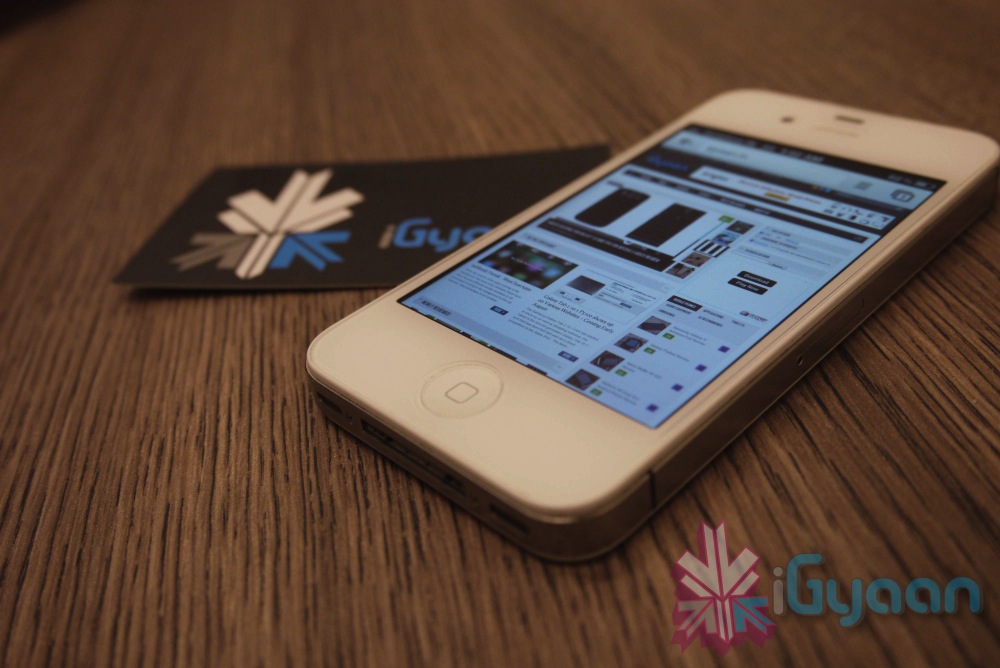
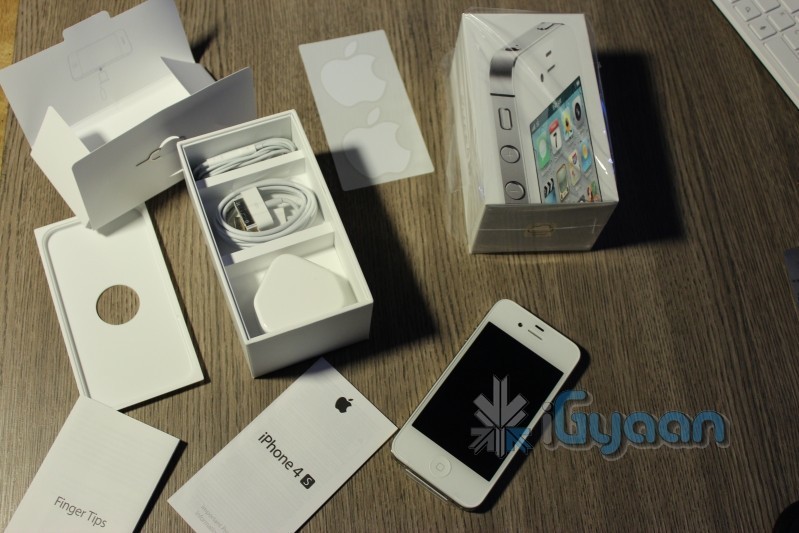
    [pullquote_right]working at iGyaan has its perks![/pullquote_right]I currently use a 16GB iPhone 4s, my first iPhone, which I’ve been using since January, 2012. Before this I had a Nokia 5230 “Express Music”, a Samsung Corby, a Samsung Metro, a Motorola flip phone (don’t remember its name now) and a Nokia 1100 (which I had to crush with a brick and then drown in a bucket full of water to make sure it was dead). Oh, and a couple of Android devices here and there (working at iGyaan has its perks!). 

    iPhone

    Now the Crux

    So, it took me only 1 day to realize that I had a phone in my hand that is perfect for me. Why so? Easy, because it’s is simple and uncomplicated!  I work around technology on a daily basis, but that doesn’t mean I want my products and services to be unnecessarily complex.  In fact, I tend to go the opposite way – I spend a lot of time working with wireless devices, dealing with random issues, playing with settings, and the likes.  In my time off, I’ll always migrate to the solution that’s the easiest.

    I want a device that works the same way every single time.  When I open an app, I expect it to take the same amount of time to open each and every time, when it doesn’t, it aggravates me. [pullquote_left]Having a sluggish phone with a 1.5 GHz dual-core is like having a Pulsar that moves like a Rajdhoot.[/pullquote_left] The iPhone is consistent, fast and ridiculously smooth! While you’ll never have a device that’s 100 percent fail-free, I’ve yet to find another device that performs as fluidly as the iPhone 4S. 

    One of the primary reasons I love the iPhone is the large selection of high quality apps. Even though more apps come to Android every day, I still prefer to buy (cough!) most of my apps and games on the iPhone.

    Not only do most of these apps look better, but i don’t have the same buyer’s (cough again!) remorse as I do with many Android apps I purchase. When given the choice between the same app on Android and on iPhone, I choose the iPhone app. I can’t recall looking at an Android app and complimenting its looks in comparison to its iOS and Windows Phone counterparts. 

    Daily Usage

    iPhoneTyping is a breeze with the auto-correct (though i have suffered some more than embarrassing moments due to it). The phone literally learns as you use it. Overtime Siri picked up on my “Indian Accent”and autocorrect started suggesting Hinglish words. I use dictation on the iPhone 4S to write entire articles with enough accuracy that only minimal editing needed. In fact, I am writing this article through the WordPress app on my phone! The new Voice Actions in Android 4.0 include many of the same features and work just as well as Siri and Dictation on the iPhone, but it is less polished. There is no use of relationships and Voice Actions doesn’t prompt for the message, requiring taps on-screen instead.

    Through iCloud, I have all my emails, contacts, data backed up effortlessly and accessible from anywhere. I don’t have to worry about subscription renewal or periodic updates. All I had to do was create an iCloud account and I was good to go!

    Camera and portability

    iPhoneThe camera is definitely the best I’ve seen on a mobile phone (do not mention the PureView!). It has eliminated the need to carry a separate camera while on a vacation. I am more than satisfied with it!

    One of the biggest feature of a phone for me is the screen, and the iPhone delivers in that aspect! The Retina display is a treat to use! Bright, vivid colours, great viewing angles, outdoor visibility and no pixilation at all! Texts are as crisp as they can be and even though the screen may not be the biggest, it definitely is the best for my needs.


    Jailbreak

    [pullquote_right]For all the things that Apple didn’t include in the iOS, there’s JailBreak![/pullquote_right] You can do anything, literally, once you’ve jailbroken your phone! Be it applying a custom theme (I am using the Windows 8 theme currently), add toggles to the homescreen and download unlimited apps for free!

    Out of all of the smartphones I’ve used, battery life continues to shine on the iPhone 4S in comparison to Android and Windows Phone equivalents.  It has taken a hit for sure with iOS 5 and the 4S’ dual-core processor, but it still outperforms other smartphones I’ve used. It charges ridiculously fast!

    Conclusion (The Only Answer)

    So basically, the iPhone has a smooth and fluid OS (I cannot emphasize this enough!), adequately powerful hardware, and tons of great features! Not to mention it looks great and I don’t have to deal with “minor bug fixes” now and then! So why should I switch to some other phone just because it has ridiculously speedy quad-core processor and an awfully powerful GPU when at the end of the day I have a phone which does what I need perfectly!

    Is it the best phone ever? Nope.  Would I go around recommending it to everyone?  Nope.  I can go off on a tirade of things I don’t like about it.  Email management has been especially bugging me. There’s a ton of features on the Android that I wish I had access to on my iPhone, and there’s no doubt that Android will continue to develop over time, but right now, I just want a phone that pretty much manages itself, so I can enjoy it, without having to worry about if I need to update permissions on my phone.  But for today, it’s the device that allows me to check off the most number of features on my list, so it stays!
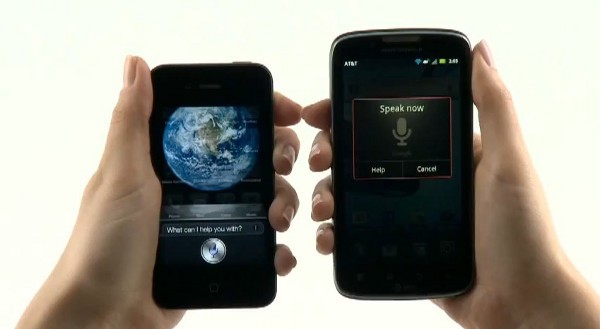
  • Google says voice is the future of web search, introduces Siri-like app for iOS

    Google says voice is the future of web search, introduces Siri-like app for iOS


    Google Inc showed off enhancements to its voice-based search technology for Apple Inc’s iPhone and said it was testing a new service that will combine its Web-based email with its search engine.

    The new version of Google’s search app for the iPhone and iPad, expected to be available within a few days, will let users find information about everything from the weather to nearby movie showings by speaking into the devices, matching some of the capabilities offered by Apple’s own Siri technology.

    Google’s new app recites answers to search results in a human sounding voice, similar to Apple’s Siri, which some analysts and technology observers believe could make iPhone users less reliant on Google’s search service.

    The news comes as the relationship between the two companies grows increasingly competitive. On Monday Apple said it would no longer offer Google’s YouTube app as a pre-loaded app in future versions of its iPhone.

    Google, which unveiled a version of the voice-based search app for its Android software earlier this year, showcased the version for Apple devices at a press event at its San Francisco offices on Wednesday.

    The company also announced a test version of a new service that will integrate users’ personal emails into searches on the Google website. The service, which Google said will initially be available to 1 million users, aims to make it easier for consumers to access information such as flight schedules or shipping orders.

    A truly universal search will “have all the information that humanity has put on the Web and information that’s your information,” Amit Singhal, senior vice president of Google Search.

    The initial “field trial” will work with Google’s Gmail, but Singhal said the company was open to working with other email providers.

    Source : Reuters

  • Apple Patent Envisions a Smart Cover With Built-In Display, Keyboard

    Apple Patent Envisions a Smart Cover With Built-In Display, Keyboard

    If you think the Surface tablet’s Touch Cover and Type Cover are cool, then take a look at what Apple has in the works. The company that’s dominating the tablet industry with the iPad is looking to patent what appears to be next-generation Smart Covers, complete with built-in, flexible AMOLED displays, keyboards, and even solar panels and radio frequency (RF) energy collection antennas.

    Apple’s patent application for a “Cover Attachment With Flexible Display,” was published by the United States Patent and Trademark Office Thursday, and shows a number of possible Smart Cover embodiments, one of which should look particularly familiar to Microsoft watchers.

    When Microsoft first showed off its Surface tablet in June, it spent a significant amount of time touting the benefits of the peripheral Touch Cover, a tablet cover with a flat, built-in keyboard. It was a key features etting the Surface apart from the iPad. But it looks like Apple has been thinking along the same lines for at least a year — the company first filed its patent on Aug. 11, 2011 — and has come up with a flexible Smart Cover that includes a fabric keyboard and potential video or document controls on a back flap.

    “First, this configuration gives the user an experience much closer to the one enjoyed by laptop users. Second, by allowing the user to easily view the screen and by providing a convenient surface to type on, tasks such as word processing and email become much more efficient,” the patent document states.

    This sounds a lot like what Microsoft said about its Touch Cover advantages, but Apple is envisioning much more (though whether any of Apple’s ideas ever reach fruition is a different matter entirely).

    One of the most interesting embodiments in the patent is a Smart Cover with a built-in AMOLED display made of a thin, polyimide substrate that could extend the iPad’s display. The cover would connect to the tablet through a wireless or wired data connection, or could even via other ports such as DisplayPort, mini DisplayPort, DVI, or Thunderbolt.

    “The addition of cover display ameliorates the limited screen area problem and makes a number of tasks significantly easier, in some cases functioning as an extended desktop,” the patent states. It goes on to list a few examples of how the cover display could help with reviewing multiple documents at once. I imagine the scheme might also be helpful for general multitasking — you could keep your e-mail on the cover display and your web browser on the iPad display. The patent adds that the cover’s display could be enhanced with multi-touch gestures.

    Since the cover’s display is flexible and can be used as an iPad stand (just like the current Smart Cover), the patent says that the cover could also recognize when it’s being bent back (with the help of an accelerometer) and activate itself for a specific purpose. For example, the cover display’s panel might display your Facebook status or latest tweet, the current time, or even your name — useful for when in meetings with strangers.

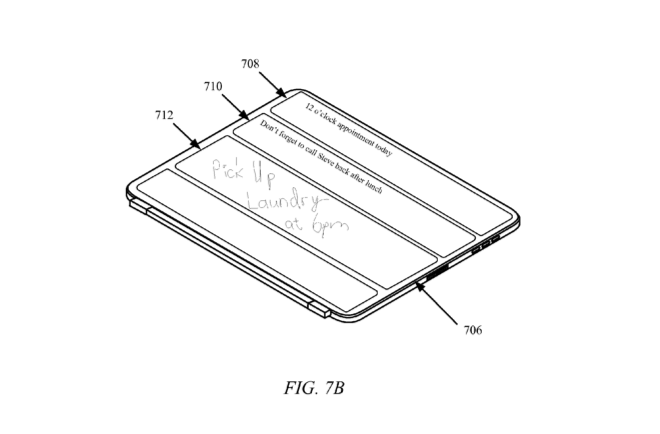
    The display doesn’t have to stay within the confines of the tablet. Apple’s filings also describe another option in which the cover features small displays across the outside panels, allowing you to view information without having to open the cover and turn on the tablet. Instead of AMOLED display technology, the patent describes this embodiment as using electronic paper, which requires no extra power to maintain static images or text. The cover, in this case, could be used to display calendar reminders, tasks, or decorative patterns.

    How does the cover display get power? Apple has thought of a few options. The patent document describes a custom MagSafe connector that would allow the cover to draw power from the iPad itself. Alternatively, the cover could include a small battery, so that it doesn’t drain the tablet’s power. Another interesting option is to include “ambient energy collectors” such as solar panels and RF antennas.

    In one embodiment, the iPad cover has integrated solar panels on the outside of the cover. In this case, the cover doesn’t only power itself, but it could also transfer energy to the tablet. The cover could also include RF antennas, which the filings admit do not yield as much energy. Still, the antennas could power a micro battery or a super capacitor inside the actual cover, to power the low-energy AMOLED or electronic paper display. One advantage of the RF antennas is that they can collect energy whether the cover is open or closed, whereas the solar panels have to face a light source.

    It’s clear that Apple has covered a lot of Smart Cover ground with this patent. It would be amazing to see all of these become actual shipping product features, available for various kinds of user needs. But knowing how Apple functions, it’s more likely that they will come out with one or two options. And if the company is smart, we’ll see a new cover with a built-in keyboard — to ensure nobody opts for a Microsoft Surface just because of the available Touch Cover.

    Source : Wired 
  • Sharp to start shipping iPhone screens to Apple this month

    Sharp to start shipping iPhone screens to Apple this month

    Apple’s component suppliers seem almost eager to stoke iPhone rumor fires, and all the hot, hot consumer anticipation surrounding them.

    On Thursday, Sharp’s new president, Takashi Okuda, said that his company will begin shipping iPhone displays starting this month, according to a report from Reuters. Okuda made the statement at a press event following the release of Sharp’s quarterly earnings report. Sharp’s president didn’t make note of the display’s size, but Reuters reports that the screens are destined for the next version of the iPhone.

    [quote]“People are expecting a new iteration of the iPhone to hit the market sometime in the September-October time frame, so this kind of comment fits in to what we’ve been hearing in the market, generally,” IHS analyst Vinita Jakhanwal told Wired. Sharp, Japan Display, and LG Display are the three likely suppliers for the next iPhone’s display.[/quote]

    The display of the next iPhone is expected to be larger than that of the iPhone 4S, stretching to 4 diagonal inches. The current iPhone has a 3.5-inch display. The new iPhone display will also reportedly be manufactured using in-cell technology, which means it will be thinner, lighter and more power efficient than current displays.

    Okuda didn’t confirm the size or technology used in the production of Apple’s next iPhone display.

    Various sources are reporting the next iPhone will be unveiled on September 12, so we should know soon if Okuda’s Thursday statement bears any weight.

iGyaan Network
Privacy Overview

This website uses cookies so that we can provide you with the best user experience possible. Cookie information is stored in your browser and performs functions such as recognising you when you return to our website and helping our team to understand which sections of the website you find most interesting and useful.