Category: Google

  • YouTube Testing Chromecast support

    YouTube Testing Chromecast support

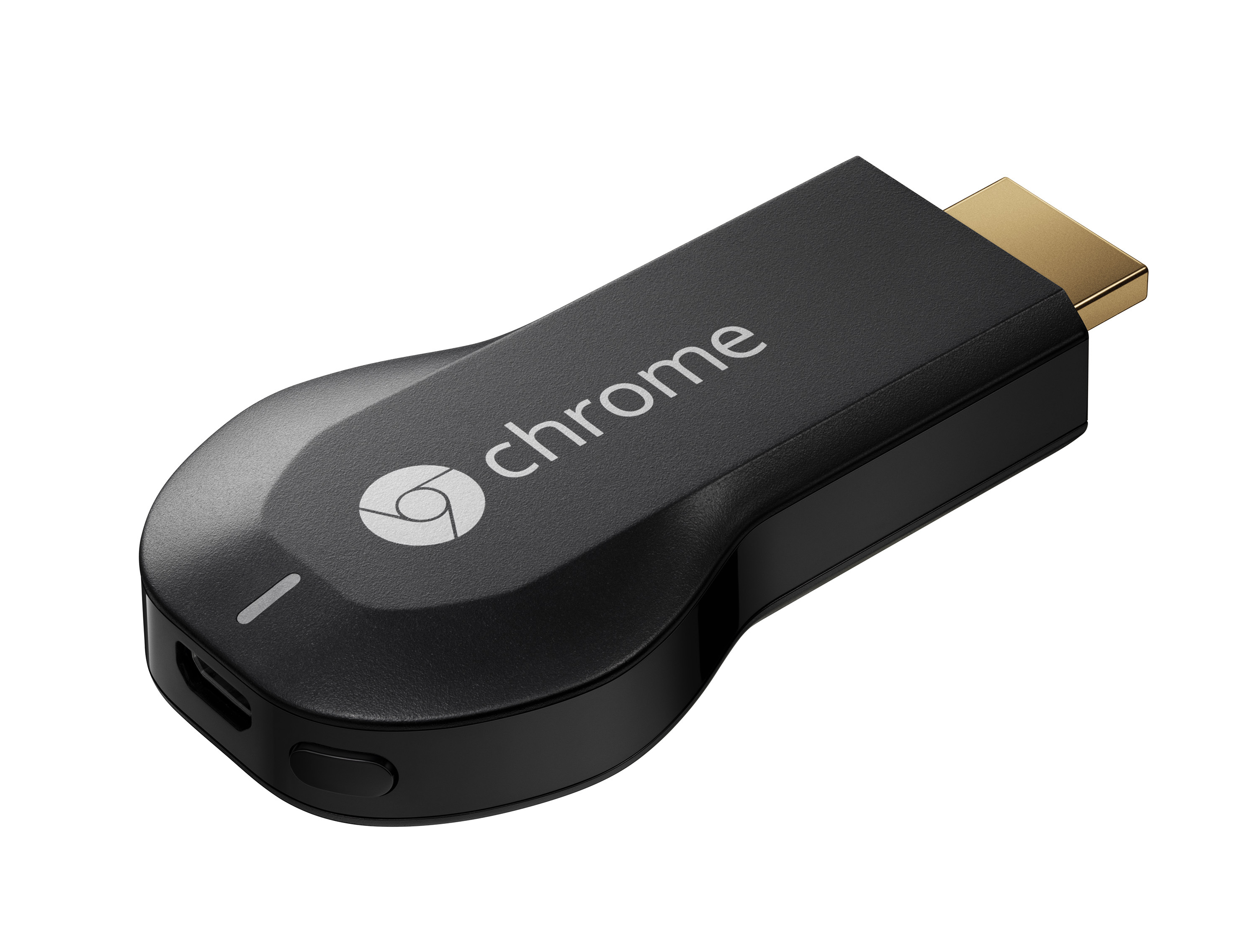
    Anyone wanting to stream YouTube videos through a Chromecast currently has to visit YouTube’s website or run one of its mobile apps. However, YouTube has started to add support for Chromecast to its embedded web player, allowing Chromecast users to beam videos displayed on third-party websites straight from their browser to their TV. 

    Google has confirmed to GigaOM that it is publicly testing Chromecast support for embedded YouTube clips on third-party web pages. Currently, the access to stream YouTube videos is random, as the (send to) button shows up some times, and may not be available for everyone.

    chromecast

    The company says it is monitoring feedback from these experiments and it could offer embedded video support to more Chromecast owners if all goes well. As said by a YouTube spokesperson: 

    With more videos coming to YouTube every minute we’re always experimenting with ways to help people more easily find, watch and share the videos that matter most to them. As always, we’ll consider rolling changes out more broadly based on feedback on these experiments.”


  • Google Acquires Content Sharing App Bump

    Google Acquires Content Sharing App Bump

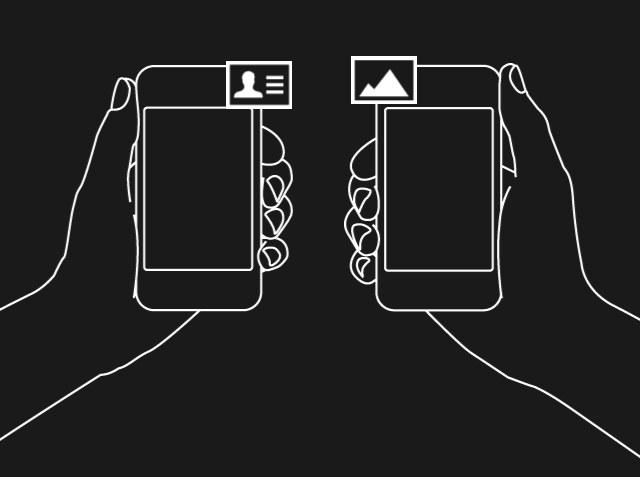
    Bump, the contact and media sharing app for Android and iOS, has been acquired by Google.

    Bump co-founder and chief executive David Lieb said the company was “thrilled” to join Google, citing similar passions for sharing information between people and devices. 

    In September 2011, the company announced it had 50 million downloaders and 10 million active “bumpers.” Just less than a year later, more than 600 million photos were shared by “bumping” phones. Later it released an iPhone-only version photo-sharing app dubbed Flock (not to be confused with the social browser of the same name).

    It’s worth adding here that Bump doesn’t use NFC, merely “whatever Internet connection is available on your device”, be that WiFi or cellular. The mobile app uses the phone’s sensors to “feel” the bump, thus actioning the actual transfer.

    “The Bump team has demonstrated a strong ability to quickly build and develop products that users love, and we think they’ll be a great fit at Google,” said a Google spokesperson. Google declined to comment on what team Bump will be joining.

    The full announcement on the Bump blog is as follows.

    [toggle title=”Announcement”]“We’re excited to announce that the Bump team is joining Google!
    Our mission at Bump has always been to build the simplest tools for sharing the information you care about with other people and devices. We strive to create experiences that feel like magic, enabled behind the scene with innovations in math, data processing, and algorithms. So we couldn’t be more thrilled to join Google, a company that shares our belief that the application of computing to difficult problems can fundamentally change the way that we interact with one another and the world.
    Bump and Flock will continue to work as they always have for now; stay tuned for future updates.
    We’d like to extend a special thank you to all of you who have used our products so far. It continues to be a pleasure to serve you, and your feedback and evangelism inspire us every day.
    David Lieb
    CEO and cofounder
    Bump
    We also want to thank our investors, advisors, and supporters — Marc Andreessen and all of a16z; Greg McAdoo, Tim Lee and all of Sequoia; Paul Graham, Jessica Livingston, and everyone at Y Combinator; Ron Conway and SV Angel; Ram Shriram of Sherpalo; Aydin Senkut of Felicis — and our friends and family who have encouraged us to dream big and push the world forward.”[/toggle]

    [Via]

  • Report: Nexus 5 And Android KitKat Will Launch On October 14th

    Report: Nexus 5 And Android KitKat Will Launch On October 14th

    With the Nexus 4 being sold out at Google Play and it receiving its carrier ‘end of life’ status, rumours are that the leaked ‘Nexus 5 will be officially unveiled in October. The first sign of a potential release date comes with Android-focussed site AusDriod stating that Google and LG will unveil the Nexus 5 on Monday, October 14th – which is 1-month away.

    Documents on the FCC reveal that the phone will have a 4.96-inch diagonal display and will be just 131.9 mm x 68.2 mm.

    In addition to this date, it’s also expected that the Nexus 5 will bring the availability of Android OS 4.4 KitKat to the masses. Little is known about the specific features Google will rollout, but the upgrade is rumoured to bring the following:

    – New notification widgets
    – Firmware availability to older phones
    – Fragmentation changes (screen resizing)
    – Miracast updates
    – New Gallery Visualisation
    – New APIs regarding animations
    – Change android default blue to other preset palette colours

    Of course as we do with all rumours, we suggest you take this one with a healthy grain of salt. At any rate, an October release is sounding more than likely. 

    [Via]

  • Google Glass No Longer Requires Tethering Plan, Gets App-Based Data Sharing

    Google Glass No Longer Requires Tethering Plan, Gets App-Based Data Sharing

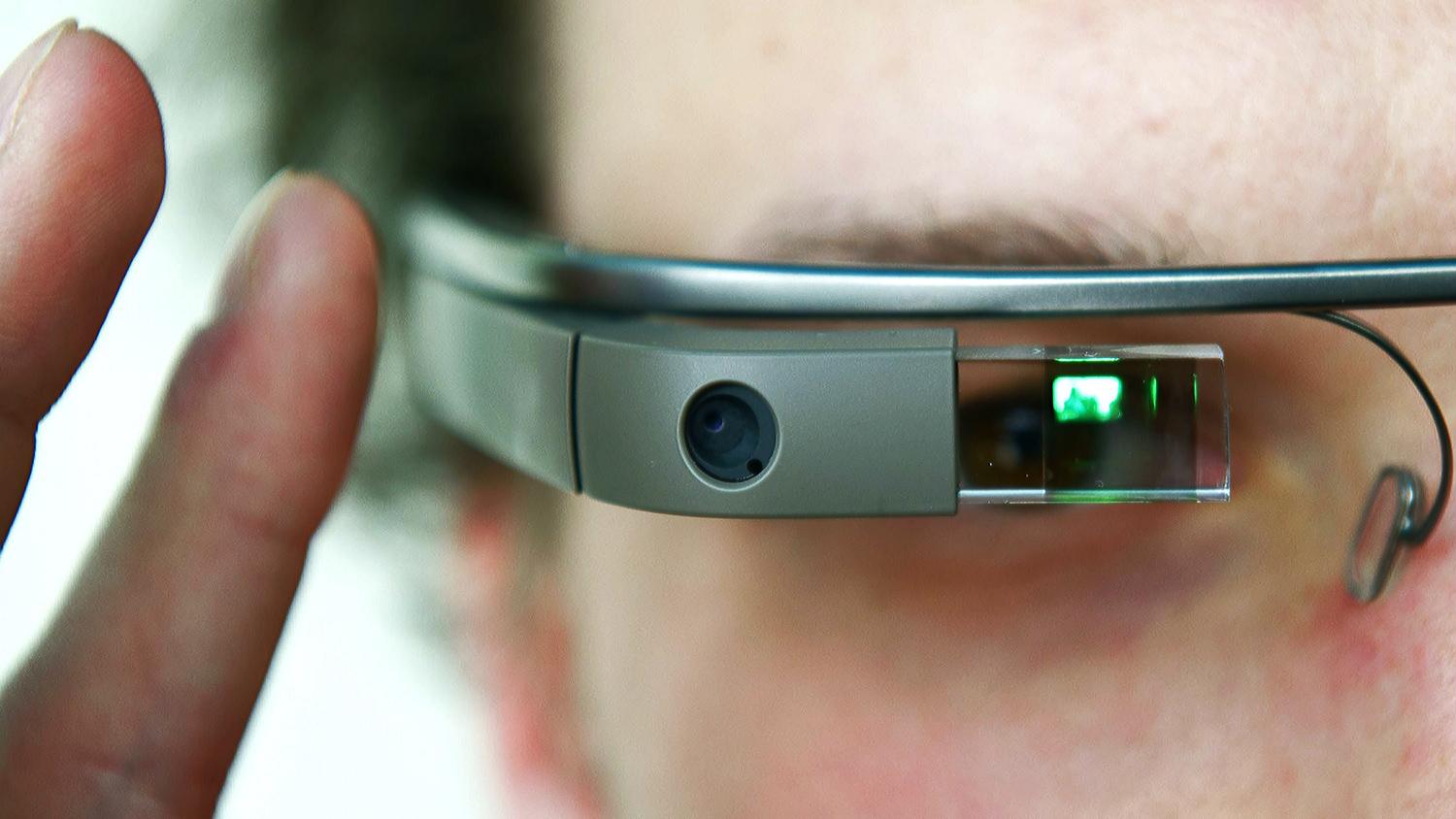
    Explorer Edition of Google Glass is continuously being updated with new tricks, In a normal case scenario to use internet on the Glass, one needs smartphone tethering plans which adds more expense to the ownership of the Glass.

    However, the latest update to the device shows a way to save this additional cost. With XE9 loaded onto the device, the Android app stores data to and from the hardware, overcoming the smartphone’s Bluetooth tethering settings and extra plan needed from some carriers.


    Google Glass is currently only on the faces of a small number of early adopters, so this is not suppose to massively disrupt any carrier incomes. Once the device becomes available to the general public, this firmware update could see some push-back from carriers.

  • Google Maps Updated For Android, Better Navigation

    Google Maps has got a new update (7.2) on Android. Now when you search for directions to a place and there are multiple routes, you will get Google Now card-like options with a new “Start Navigation” button, which saves a tap and a time overall.

    The Android app’s latest update tweaks hotel search results by adding sponsored rate and booking links, which places a tiny “ad” icon next to services that paid for exposure.

    google-maps-logo

    The information for places such as restaurants, retail stores, etc. also has a minor update. The hours a business is open is now displayed right below the category of store it is in bold.


  • Express Yourself with Doodles, Doodly Doo

    Express Yourself with Doodles, Doodly Doo

    Messaging apps have become very popular, specifically applications like WhatsApp. These apps allows one to send and receive not only text messages but also images, videos, locations, audio the recent feature and some songs as well.

    Making up doodles or expressing your self was first spread out by the Samsung’s Note series, using that one could easily sketch anything down and share it seamlessly. But the default S note is limited to certain things only.

    However, for doodling its not necessary that you would need a stylus, as not all phones supports one. We are talking about the app that can help you to express your opinion in a different way, the app is called ‘Doodly Doo’.

    Doodly Doo is an app that allows you to doodle anything that you imagine or to take the artist out of you. You can simply draw anything on the app, there are many brush size options along with a lot of color options. You can also take inputs from the camera, gallery, maps, google images and can also add text, rage faces, smileys and greetings to make your ideas of sketching better.

    You can simply use the map option to direct someone where you exactly are, and give your personal message on it. And the greeting option shows up greetings for occasions like Happy birthday, Anniversary and ‘Alot’ more.

    The app plays back the doodle on the receiver’s screen exactly the same way it is drawn. Users can also post these doodles to their Facebook, WhatsApp and even send links to watch these doodles to the ones who don’t use this app through SMS.

    [youtube id=”pqt6UnKXCbU” width=”100%” height=”300px”]

  • Chrome 29 for iOS Brings Voice Search With Pronoun Support

    Chrome 29 for iOS Brings Voice Search With Pronoun Support

    Google just updated Chrome for iPhone and iPad, this new update Chrome 29.0.1547.11 contains some new features which include:

    • Geting back to your Search Results faster
      • Do a search and click a result. Not what you wanted? Now when you hit back, your search results will instantly appear, ready for you to choose the next one.
    • Data cost savings enhancements
      • View your data savings in Bandwidth Management Settings.  
      • Please Note: This feature is being rolled out incrementally and will be available to all users over time. 
    • Voice search pronoun support
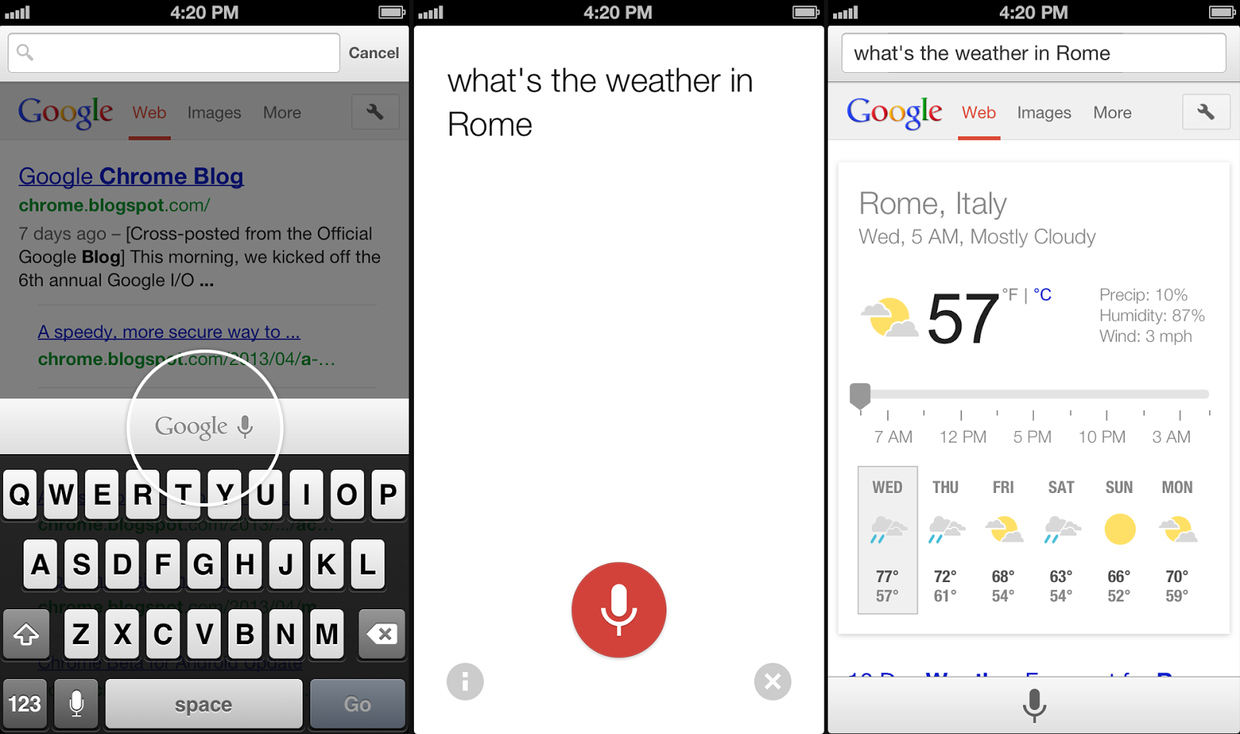
      • Try queries like: “Who is the president of the United States?” followed by “Who is his wife?”
    • Improvements to Single Sign On with other Google Apps 
    • Stability / security improvements and bug fixes


    Which means, the browser’s voice search now supports contextual pronouns like “her” or “them;” ask a question and you can run a follow-up search without mentioning the subject by name. The update also lets you quickly jump back to search results if you visit the wrong result, and it’s now easier to view bandwidth savings.

    All this will come in the new update available at the app store, as shown on the Google blog by Karen Grünberg who is a Technical Project Manager for Google Chrome.  

  • Google and Intel Announce New Haswell Chromebooks

    Google and Intel Announce New Haswell Chromebooks

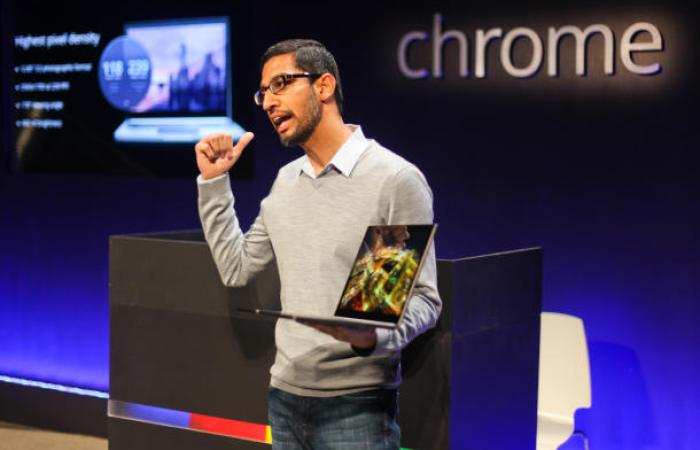
    Google and Intel introduced three new Chromebooks and a Chromebox, each of them running Intel’s Haswell processors. This was announced on Wednesday at Intel Developer Forum keynote in San Francisco, as Intel VP Doug Fisher and Sundar Pichai, the head of Google’s Android and Chrome divisions, showed off the new hardware.

    They revealed two new laptops from existing partners HP and Acer, a Chromebook from Toshiba and a Chromebox from Asus. These devices makes Asus and Toshiba’s first devices into Chrome OS hardware. Doug Fisher promised battery life improvements of up to 50 percent and performance jumps as high as 15 percent for Haswell Chrome devices over their previous generation chipsets.

    There are customers telling us they are interested in new operating systems and in particular Chromebooks,” said Ron Coughlin, senior vice president and general manager, Consumer PCs, Services and Solutions, HP. “We built the HP Chromebook to offer a great experience, choice and affordability, with a design that is truly unique.”

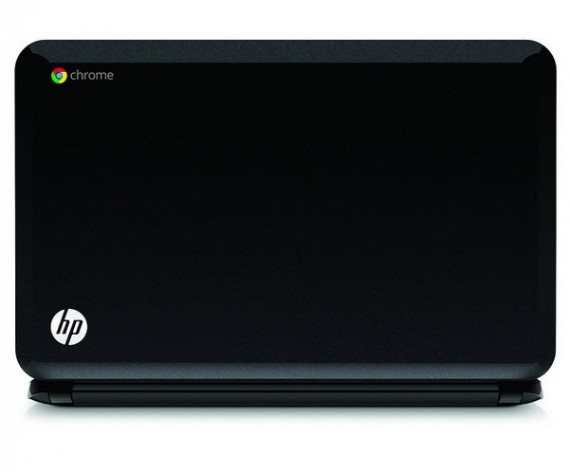
    The HP Chromebook 14 offers a fast and easy way for customers to connect to favorite websites in seconds. It also offers a gateway to the Google experience, including Google Chrome apps like Gmail, YouTube, Google Drive and Google+ Hangouts for users daily routine.

    HP-Pavilion-Chromebook-14-

    Some time back Chrome was just a browser and nothing else. But if Chrome OS is going to grow up and truly take on Microsoft and Apple, it will need both better applications and good hardware.

    The HP Chromebook14 is expected to be available in the US by end of the year, starting at $299.99.


  • MyGlass Update Lets You Control Google Glass UI With Android Devices

    The developers at Google are constantly trying to experiment with the possibilities of Glass. Google Glass has been used to fly drones, broadcast live surgeries from a doctors POV and a lot more. 

    The device is still not available for everyone, but there are some serious questions on the usability of Glass. Google Glass’ ability to understand our gestures and voice  is what has led to this next control based development. In a real world scenario,  in some situations we might not be able to use some simple gestures like nodding, swiping or talking to the Glass.

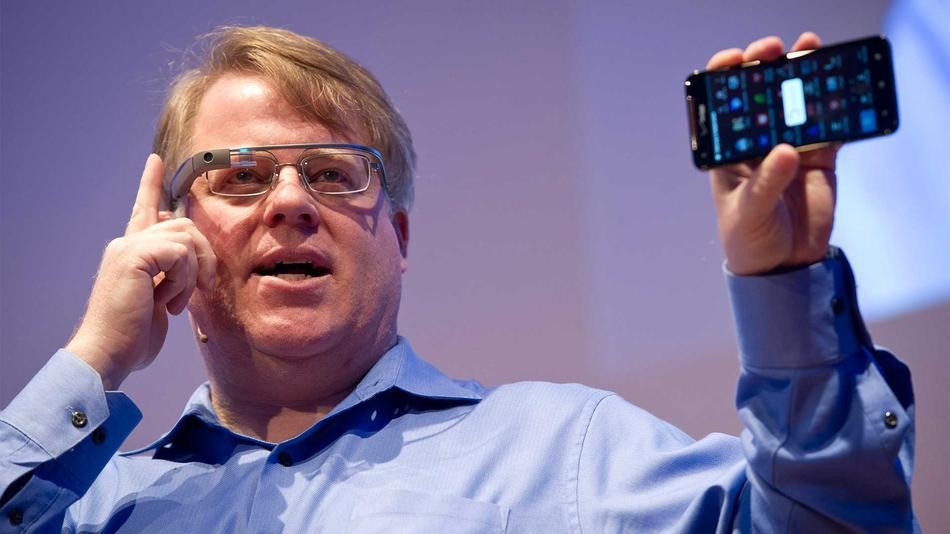
    But, Now you can perform all the controls remotely, all because of an update to the MyGlass companion Android app. It uses Glass’ screencast experience, which is a way of letting other users see what you’re seeing on Glass from their Android device’s screen.

    Now a Glass user can touch, swipe or tap to control the Glass UI through the screencast experience. Some users have noted that the remote control part is not working yet and probably requires a matching Glass update. Google mentioned:

    “If you don’t have Glass, then downloading this(app) will be a waste of time. Sorry about that. But if you swipe the screenshots to the right you’ll see there’s a picture of a puppy in pajamas. So not a total waste of time after all.”

    The UI of the Glass seems to be improving with all necessary updates, and it is possible that soon we might have the Google Glass with many capabilities that can be used for everything!

  • Jelly Bean Now Installed On 45% Of Active Android Devices

    Jelly Bean Now Installed On 45% Of Active Android Devices

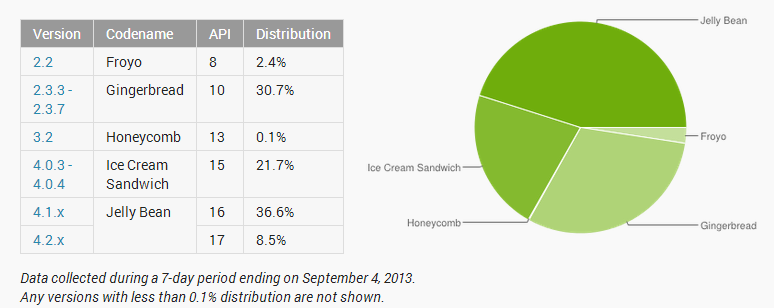
    After a couple years of handing on by a small percentage, both Eclair and Donut (Android 1.6 and 2.1) have both jumped ship from Google’s monthly Android distribution chart. The main reason for this is the new version of Google’s new Play Store app, which only supports devices running OS 2.2 or higher. Google does note that Eclair and Donut accounted for “about 1% of devices that checked in to Google servers.”

    android

    Digging deeper into the the September numbers reveals Jelly Bean is on 45.1% of active devices, up from 40.5% last month. Android 4.0 Ice Cream Sandwich dipped by one percent to 21.7%. Missing from the list is the newly released Android 4.3 Jelly Bean, but since more devices will become available over the next few weeks we’ll certainly see this flavour make itself known.

    Since Honeycomb has all but vanished, with less than 0.1% of devices, it’s safe to say that the remaining festering sore on Android’s record is Gingerbread. Android 2.3 still comprises 30.7% of all active users, with Froyo at a quickly-diminishing 2.4%. Many developers have cut off those pre-ICS Luddites, requiring Android 4.0 and above as a minimum, but until Gingerbread disappears, there will continue to be a division between modern apps — those that take advantage of Android’s newest and most effective APIs, and those that simply cannot. Most devices still running Gingerbread don’t support the newest versions of OpenGL, and lack GPU-based acceleration within apps.  

  • Is this the Nexus 5 ? Google slips up in its own video

    Is this the Nexus 5 ? Google slips up in its own video

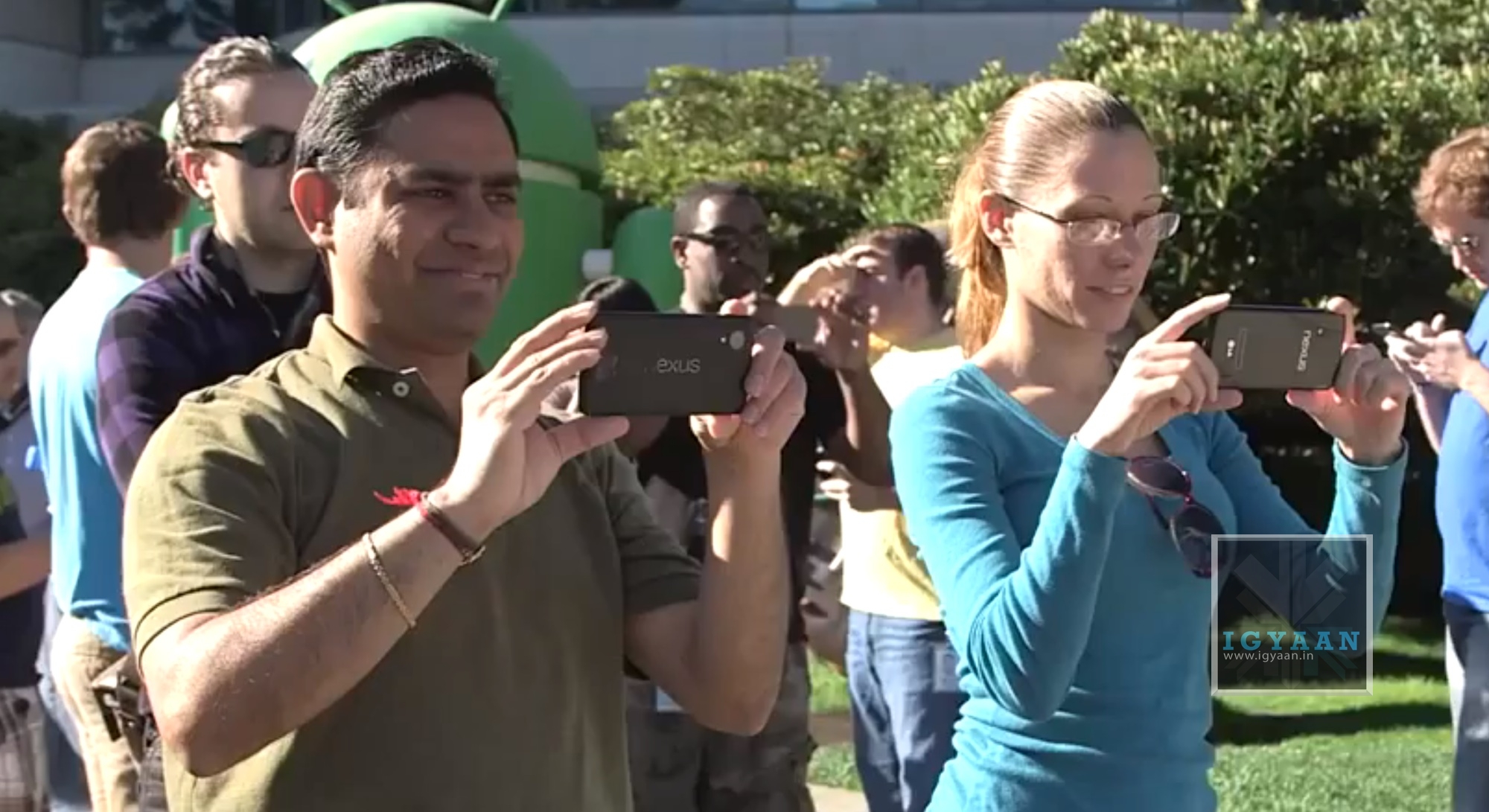
    Earlier today Google Announced the new version of Android 4.4 aka Android KitKat. During the video unveil of the new statue at the campus, a Google employee seen in the green shirt above seems to be hold a unique device which appears to be bigger than the Nexus 4 seen on the right being held by the woman. The word Nexus is spelled out in a different direction, the camera seems different, and it looks bigger than the Nexus 4, but it appears to have an LG logo on the bottom. Could this be the next nexus aka Nexus 5?. Google has stuck its guns for the Nexus 7 and continued production for the Nexus 7 with Asus, so LG may as well be next manufacturer for the Nexus 5.

    Google has removed the official video from the company’s Youtube channel, sort of confirming the misappropriated leak,  but you can see a version of it below and decide for yourself.

    [youtube id=”hn795s9h8n8″ width=”100%” height=”300px”]

  • “KitKat” will be the next version of Google’s OS : Android 4.4

    “KitKat” will be the next version of Google’s OS : Android 4.4

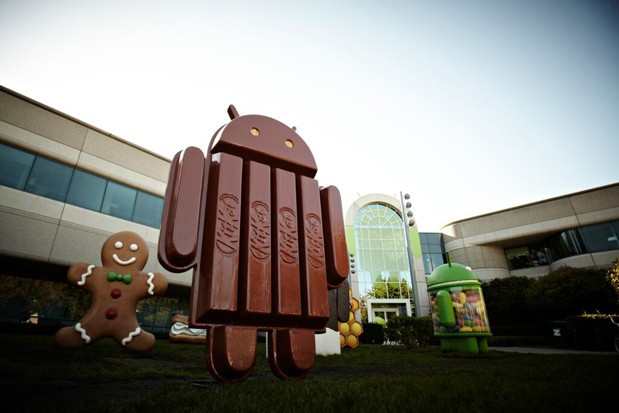
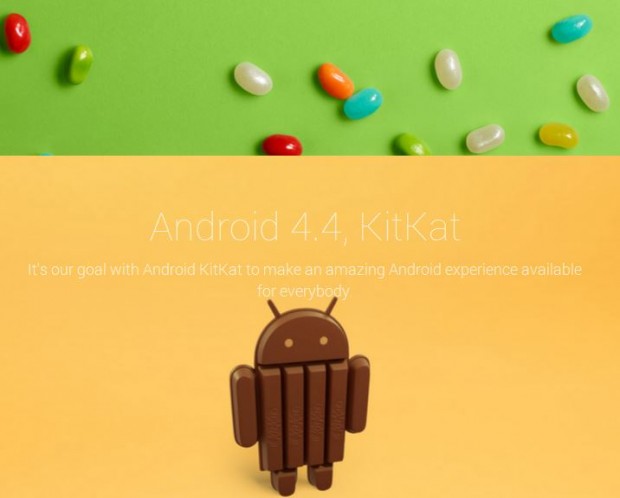
    After the previous minor upgrade retained the “Ice Cream Sandwich” moniker, the next version of Android OS aka Android 4.4 will be called KitKat. Google’s SVP Sundar Pichai has just confirmed by posting the image of the statue across the social networks.
    android kitkat


    “It’s our goal with Android KitKat to make an amazing Android experience available for everybody. :- Google 

    The company is remaining mum on the project and on what new features the new name will bring. Google has also already worked out a no money agreement with Nestle for the name sans a space in the middle, hence, KitKat vs the original Kit Kat. Google SVP Pichai also announced that there are now over one billion Android device activations, surpassing the 900 million mark back in May this year.

    The list of Android versions incase you have not kept up

    1. Cupcake (1.5)
    2. Donut (1.6)
    3. Eclair (2.0)
    4. Froyo (2.2)
    5. Gingerbread (2.3)
    6. Honeycomb (3.0)
    7. Ice Cream Sandwich (4.0)
    8. Jelly Bean (4.1-4.3).
    9. KitKat (4.4)


    The deal between Nestle and Google closed within 24 hours of the first phone call to the confectionary manufacturer.

    John Lagerling, director of Android global partnerships, also confirmed that his team did originally consider “Key Lime Pie” as a potential name for Android after Jelly Bean, but the issue was “very few people actually know the taste of a key lime pie.” The BBC reports that there will be more than 50 million Kit Kats promoting the Android mascot in 19 markets (including Brazil, India, Japan and Russia). 

    Watch a fun video by Nestle below.

    [youtube id=”OKOrkLxOBoY” width=”100%” height=”300px”]

    [toggle title=”Press Release”]Google has ended months of online speculation about the name of the latest version of its Android mobile operating system by revealing it will be called ‘Android KitKat’, after Nestlé’s popular chocolate and wafer confectionery.

    The creators of the world’s most popular mobile platform have teamed up with the world’s biggest food and beverage company to name the next release of the platform ‘Android KitKat’.

    Sweet themes

    Android has been developed by the company’s engineers under sweet-themed names ever since the release of Android Cupcake in 2009 and continuing in alphabetical order until the most recent version, Android Jelly Bean.

    The news that the letter ‘K’ will be dedicated to Nestlé’s KitKat will surprise most technology commentators, who had widely thought the latest version would be ‘Android Key Lime Pie’.

    “We couldn’t imagine a better name for our Android K release than the tasty chocolate that’s been a favourite among the team since the early days of Android,” said Marc Vanlerberghe, Director of Android Marketing.

    Strong digital presence

    “We’re excited to announce this partnership with Android, the world’s most popular mobile platform, which will help us to enable even more KitKat fans to enjoy their break,” said Patrice Bula, Nestlé’s Head of Marketing.

    “KitKat is one of the world’s top ten fast-moving consumer goods brands in social media in terms of fan numbers and engagement,” he continued. “We continue to build on its strong digital presence with interactive, creative branding campaigns.”

    To mark the release of Android KitKat, more than 50 million specially branded KitKat bars will be available in 19 countries including Australia, Brazil, Germany, India, Japan, Dubai, Russia, the United Kingdom and the United States.

    The packs will lead consumers to the website android.com/kitkat where they will have the opportunity to win prizes including a limited number of Google Nexus 7 tablets, and credits to spend in Google Play, Google’s online store for apps, games, music, movies, books and more.

    A small number of Android robot-shaped KitKat bars will also be offered as prizes in selected markets.

    Closer to consumers

    Nestlé’s branding partnership with Google is the company’s latest move in its ambition to leverage digital technology and online content to get closer to its consumers to better understand and cater to their preferences.

    Earlier this year, Nestlé acquired its first-ever piece of online content property, the Petfinder website in the United States. The online database, which links prospective adopters with adoptable pets, is visited by more than 100 million pet-lovers annually.[/toggle]

  • Google Acquires WIMM To Help Its SmartWatch Program

    Google Acquires WIMM To Help Its SmartWatch Program

    Google just purchased a company, WIMM Labs, to give its burgeoning smart watch business a boost.

    The Android creator has been rumoured to be working on a smart watch for at least six months, but it appears that there has been activity within Google’s walls from early 2012.

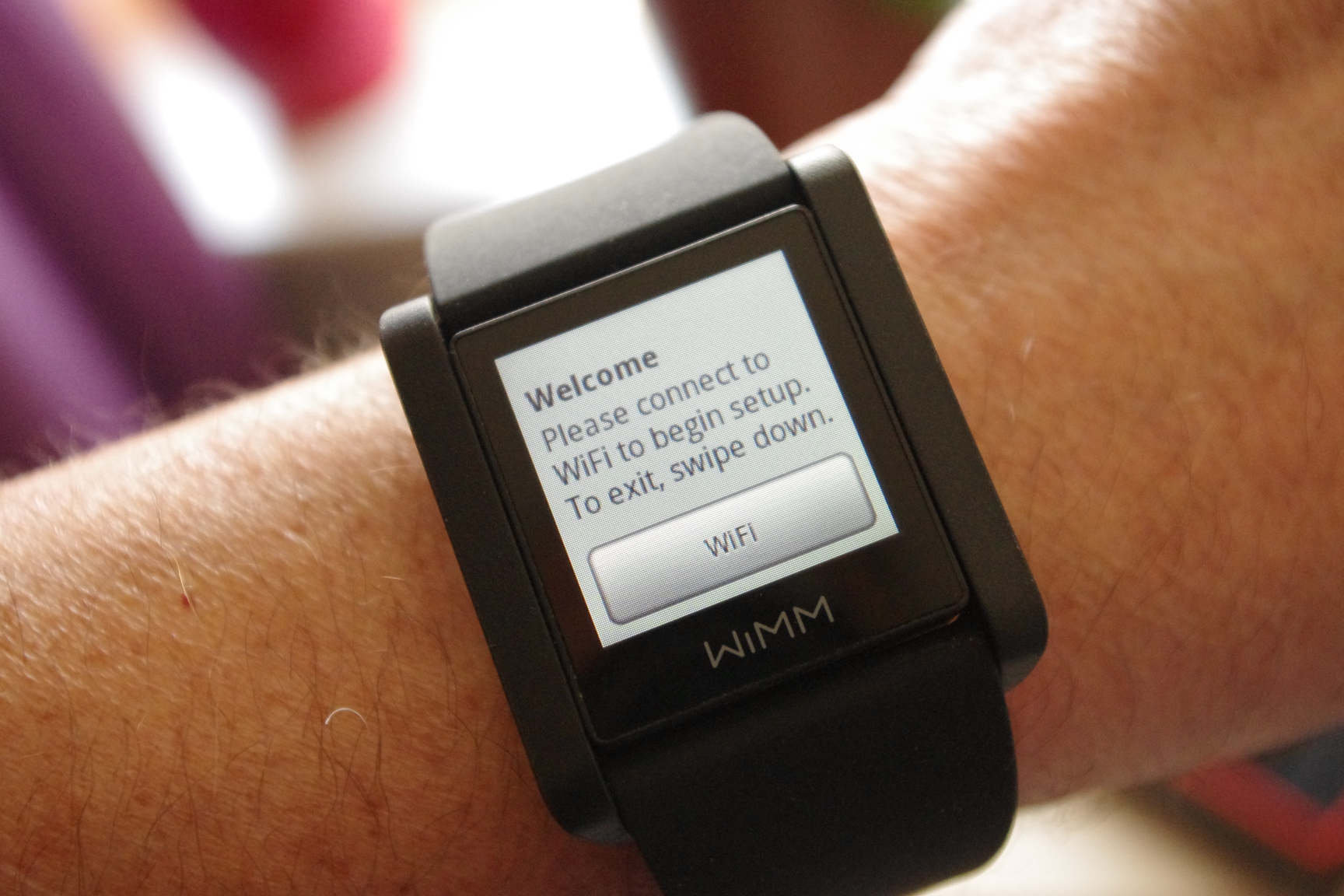
    According to GigaOm, plus a message on their website, WIMM employees were absorbed into Google’s Android team, as the eventual retail product will inevitably run a form of the OS. Sony’s Smart Watch, and Samsung’s upcoming Gear device, run Android as well.

    WIMM had already been working on a smart watch running Android, and had developed a small set of “micro” apps that enhanced functionality between the wrist and smartphone, but worked largely on their own. The company posted a note on their site stating “During the summer of 2012, WIMM Labs entered into an exclusive, confidential relationship for our technology and ceased sales of the Developer Preview Kit.”

    Judging from the WIMM One smartwatch, WIMM’s platform, as neat as it was, still needed work: The watch was thick and ungainly, and its battery struggled to eke out more than a few hours of usage between recharges.

    Whether or not Google intends to release a smartwatch of its own, it certainly would like to see Android running on all sorts of wearable gadgets, which was the big idea behind WIMM in the first place.

  • Google Glass Assists Surgeons and Medical Students at Ohio State University

    Google Glass Assists Surgeons and Medical Students at Ohio State University

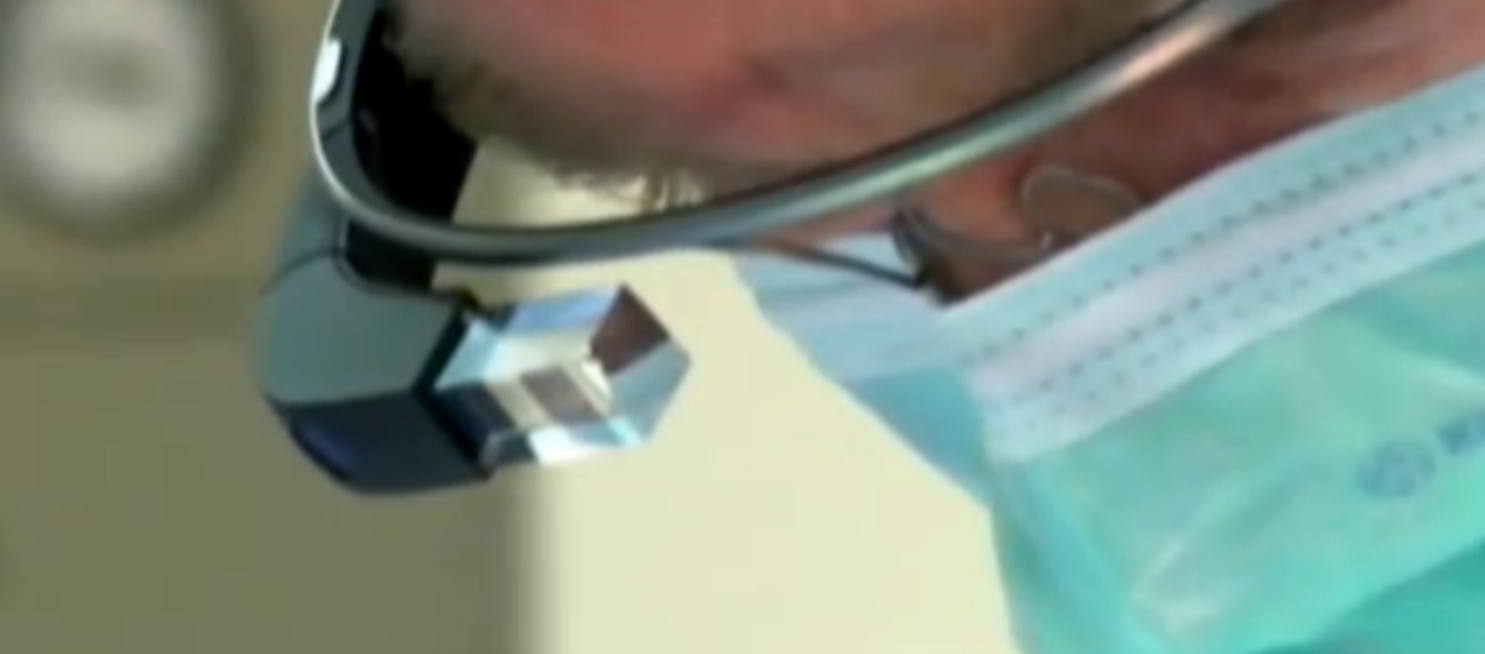
    A group of surgeons at the Ohio State University Wexner Medical Center added to the usage of Google Glass during surgical procedures.

    As reported by ABC news, Christopher Kaeding who is an orthopedic surgeon at OSU, used Glass for a standard surgical procedure.

    When he first put them on, he said that it mildly disrupted his routine. “In surgery, you have a certain feel,” he told ABC News. “But I was surprised how quickly I felt comfortable with it.”

    In this particular case, Glass’s purpose was to allow Christopher to join a Google Hangout,during the surgery. Also in the hangout were Robert Magnussen, an assistant professor of orthopaedics at OSU, as well as few of the medical school’s second year students.

    Ryan Blackwell, one of those students, said that Glass can give students an insider’s perspective.

    “Most students have shadowed a surgeon in the operating room, but you’re often stuck on the outside trying to get a glimpse of whatever you can,” he said. “But with Glass, you get that experience that weren’t able to get before.”

    Magnussen adds that Glass’s filming ability can reach more than just a couple of students at a time. For medical educators, he sees it as a way of making the curriculum more involved. “Say we’re talking about the anatomy of the knee. Watching an actual knee surgery would liven up that lecture,” he said.

    Both Blackwell and Magnussen have a few minor worries about Glass’s video quality and buffering. The location of Glass’s camera also isn’t ideal for surgery, making some of Kaeding’s incisions difficult to see. ” said Blackwell.

    In addition, the short battery life may mean that Glass isn’t suited for certain surgical procedures that take a long time. While other doctors at OSU have said that Glass could also be used to display a patient’s X-rays, as well as both pathology reports and reference materials pertaining to the surgery. Though Glass has potential, it’s important to keep the focus on the patient.

    Kaeding knows that Glass is still a prototype at this point and that there’s room for improvement. But there is one thing that even he can tell is a huge benefit this early on. “Once it’s on, it’s hands free,” he said. “You don’t have to break sterility so you won’t have to regown and reglove.”

    This adds up to the usage of Google Glass, what do you think ?

    [via]

  • Android Vice President Hugo Barra Leaves For Xiaomi

    Android Vice President Hugo Barra Leaves For Xiaomi

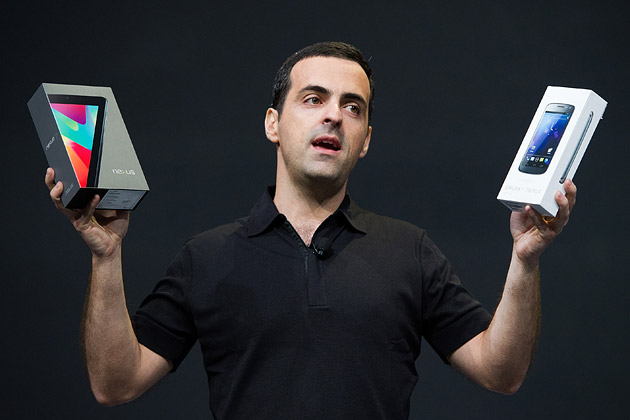
    Hugo Barra, VP of Product Management for Android, is leaving his post at Google and heading to Chinese smartphone manufacturer Xiaomi. This news was first reported by AllThingsD, then later confirmed by Google.

    Hugo Barra confirmed the news himself on his Google+ account.

    “In a few weeks, I’ll be joining the Xiaomi team in China to help them expand their incredible product portfolio and business globally — as Vice President, Xiaomi Global,” he wrote.

    Xiaomi is considered to be the “Apple of China” and makes mobile devices that run off the Android platform, so Barra won’t be completely distant from the OS he helped enthusiastically build. There’s no word yet on what the specific role Barra will play at Xiaomi.

    Android, indisputably one of the most important endeavors at Google, has been undergoing some upheaval. In March, Andy Rubin, who guided the mobile software to be the world’s most popular over Apple, stepped down to “start a new chapter at Google.”

    A Google spokesperson stated that “We wish Hugo Barra the best. We’ll miss him at Google and we’re excited that he is staying within the Android ecosystem.” Hugo Barra has been with Google since March of 2008. That’s a big position Google has to fill.

iGyaan Network
Privacy Overview

This website uses cookies so that we can provide you with the best user experience possible. Cookie information is stored in your browser and performs functions such as recognising you when you return to our website and helping our team to understand which sections of the website you find most interesting and useful.