Category: Xiaomi

  • Xiaomi Mi Mix 2S: Everything We Know So Far

    Xiaomi Mi Mix 2S: Everything We Know So Far

    Xiaomi is expected to launch the Mi Mix 2S at MWC 2018. A few weeks ago, the Mi Mix 2S looked like a fragment of someone’s imagination. Especially with the weird design and how the “notch” was being handled in the renders. However, the past couple of weeks have proved that the Mi Mix 2S is definitely real and could be launched very soon. While it was predicted to be launched before MWC, there has been no indication from the company and the MWC now seems like the ideal event for its launch.

    The Mi Mix 2S seems more than just a revision of the Mi Mix 2. It will have a new design, an upgraded chipset and possibly, an in-display fingerprint sensor. So, with a few days to go for its launch, what do we know about the device so far?

    Price

    One of the mysterious aspects of the device is its price. So far, there has been no information leaked about the pricing of the phone. However, considering Xiaomi’s competitive pricing for all its devices, the Mi Mix 2S could be the cheapest smartphone running on Snapdragon 845 after MWC 2018. Devices like the Galaxy S9 and Sony Xperia XZ2 Pro will be priced much higher. The Mi Mix 2S is expected to be priced slightly higher than Mi Mix 2.
    Mi Mix 2S
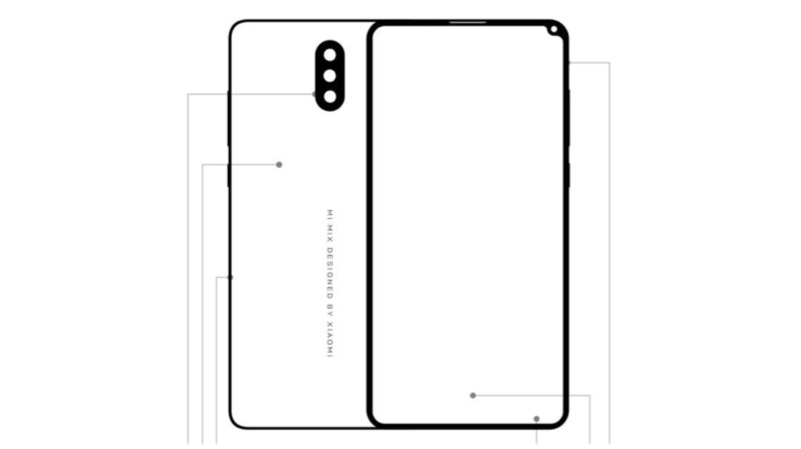
    Mi Mix 2S Design Sketch
    Display

    As bezels get thinner, the average size of smartphone displays has become bigger. In 2016, 5.5 inch displays were the norm, however, tall aspect ratios mean most devices come with a 6 inch display. That is expected to be the case with the Mi Mix 2S as well. The device will have a 6 inch display with a 2160 x 1080 px resolution. However, due to that notch on the top right corner, it might have an unusual resolution.

    Under The Hood

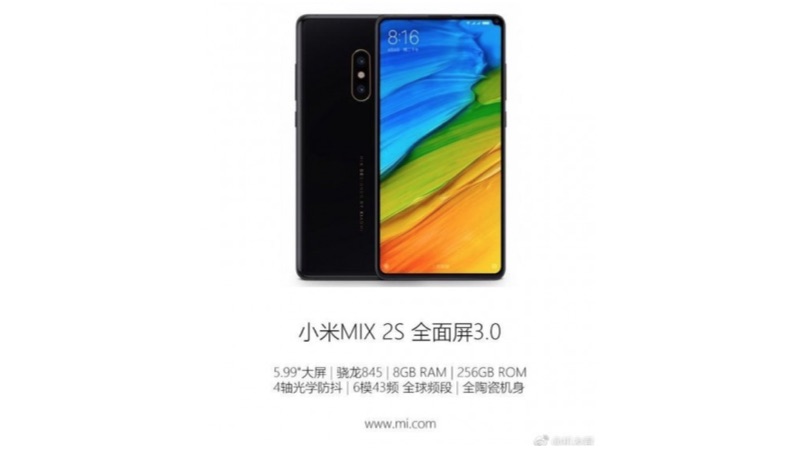
    The Mi Mix 2S was heavily touted to be the first ever Android device running on the Snapdragon 845 chipset. However, that won’t be the case but, it will be one of the first few devices on the market. Recently, an official banner ad of the Mi Mix 2S was leaked, and it revealed that the device will have 8GB of RAM and 256GB storage. In typical Xiaomi fashion, the storage won’t be expandable. This will be an upgrade over the Mi Mix 2, which has 6GB of RAM and 128GB storage in India.
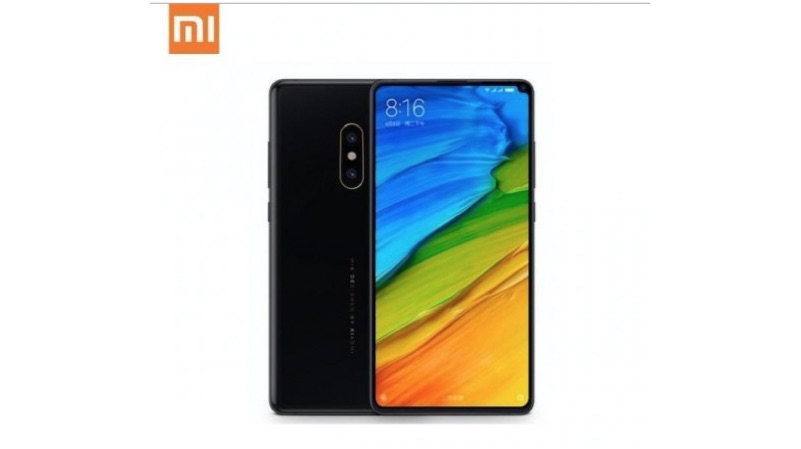
    The fingerprint sensor is largely expected to be placed on the back, however, the banner ad did not show a fingerprint sensor. To assume that the Mi Mix 2S could have an in-display fingerprint sensor might not be stretching it. The Mi Mix 2 did not have a headphone jack, and similarly, the Mi Mix 2S won’t have a headphone jack as well. Powering the device will be a 3400 mAh battery with support for QuickCharge 4.0+.

    OS

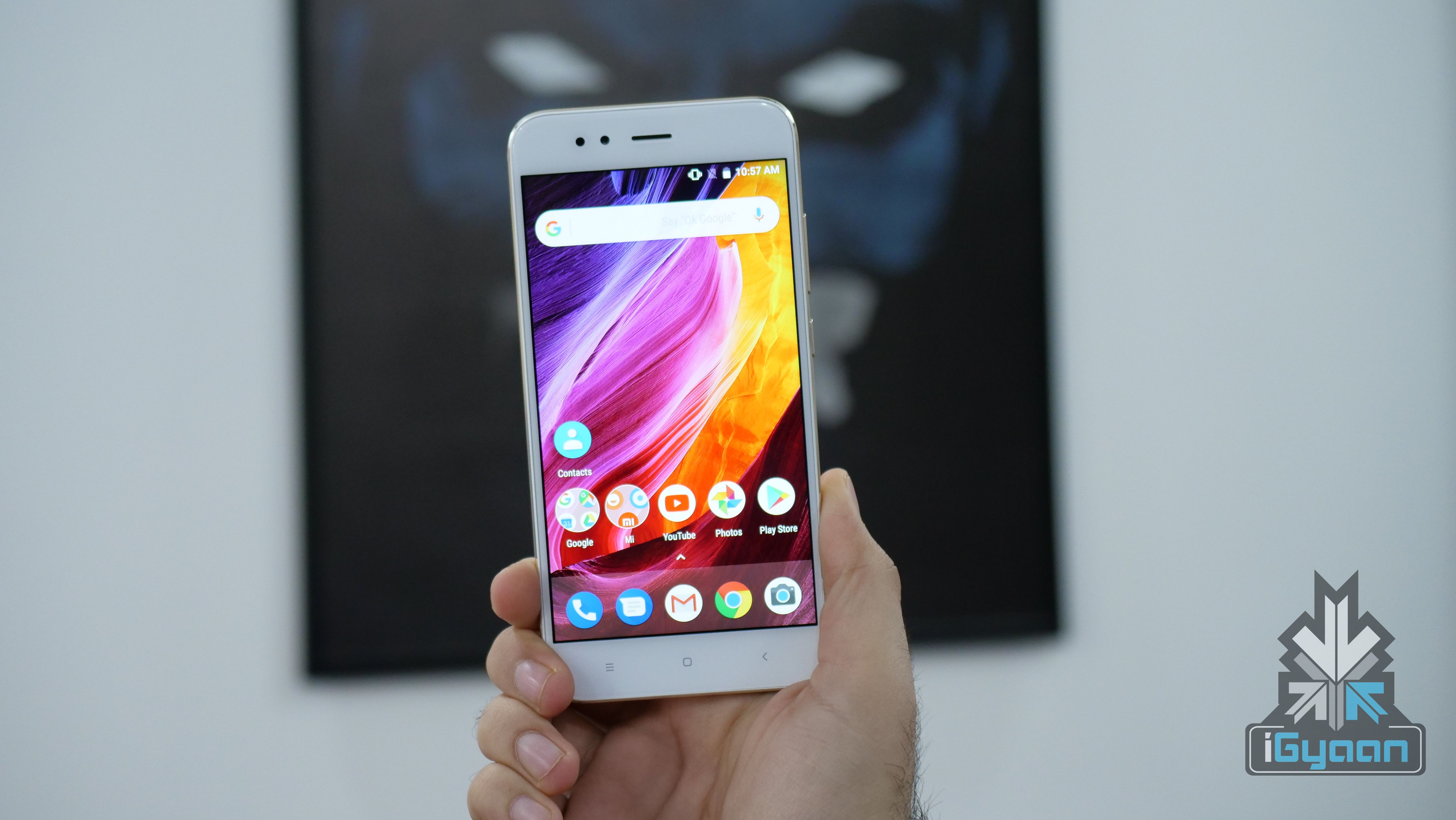
    So far, only the Xiaomi Mi A1 runs Android 8 Oreo. All other Xiaomi phones even the Mi Mix 2 runs Android 7 with MIUI 9 on top. There have been reports that claim the Mi Mix 2S will run Android 8 Oreo out of the box. This does make sense, and maybe after the launch of its 2018 flagship device, the company will start rolling out Android Oreo update for other devices as well.

    Mi Mix 2S
    2016 Mi Mix

    The Mi Mix 2S will run MIUI 9 on top of Android 8 Oreo and will be one of the first in line to receive the MIUI X update. The trend of Face Unlock means the Mi Mix 2S might have a software implemented facial recognition, similar to the OnePlus 5T.

    Camera

    The smartphone cameras have gained importance over the years. Nowadays, camera performance can make or break a device. The Google Pixel and Pixel XL launched in 2016 did not have all the flagship features. However, they did have the best smartphone camera at that point, which papered over their other shortcomings. Xiaomi would want to launch a flagship device with great camera capabilities.

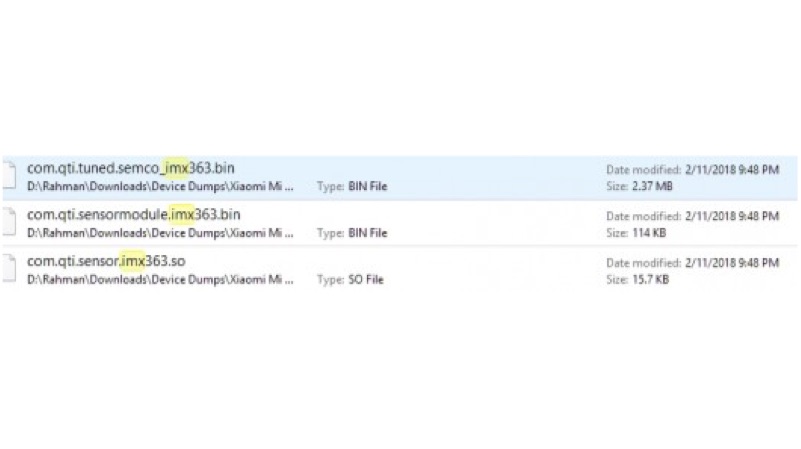
    The Mi Mix 2S is expected to have a dual-camera setup on the back, a first for the Mix series. Leaks suggest that Xiaomi will use a Sony IMX363 sensor.
  • Xiaomi Mi Mix 2S Will Run Android 8 Oreo And Have A 3400 mAh Battery

    Xiaomi Mi Mix 2S Will Run Android 8 Oreo And Have A 3400 mAh Battery

    The certainty of Xiaomi launching the Mi Mix 2S is increasing every second. Every passing day, a new leak reveals more information about the Mi Mix 2S. A little over a month ago, the Mi Mix 2S felt like a fragment of someone’s imagination and now, it is one of the most anticipated devices of MWC 2018.

    Xiaomi won’t launch the Mi 7 right now, which means that the Mi Mix 2S will be launched at MWC 2018. A new leak has revealed further information about the upcoming device. The Mi Mix 2S will be the first device in the Mi Mix series to sport a dual-camera setup. Moreover, Xiaomi will use the Sony IMX363 sensor. Powering the device will be a 3400 mAh battery which should support QuickCharge 4.0+ technology.
    A few days ago, an official-looking banner ad for the Mi Mix 2s was leaked. It revealed further specifications of the Mi Mix 2s which are very believable.

    Mi Mix 2s

    Xiaomi Mi Mix 2s Expectations

    The back of the Mi Mix 2S is expected to be the same as the Mi Mix 2. It will be made of ceramic which means it’ll be a fingerprint magnet. However, that is a price you have to pay for a device that looks as premium as the Mi Mix 2S. The significant change will be in the camera department. This time around, the Mi Mix 2S will have a dual-camera setup, which could be similar to the one found on the Mi A1, albeit of better quality.

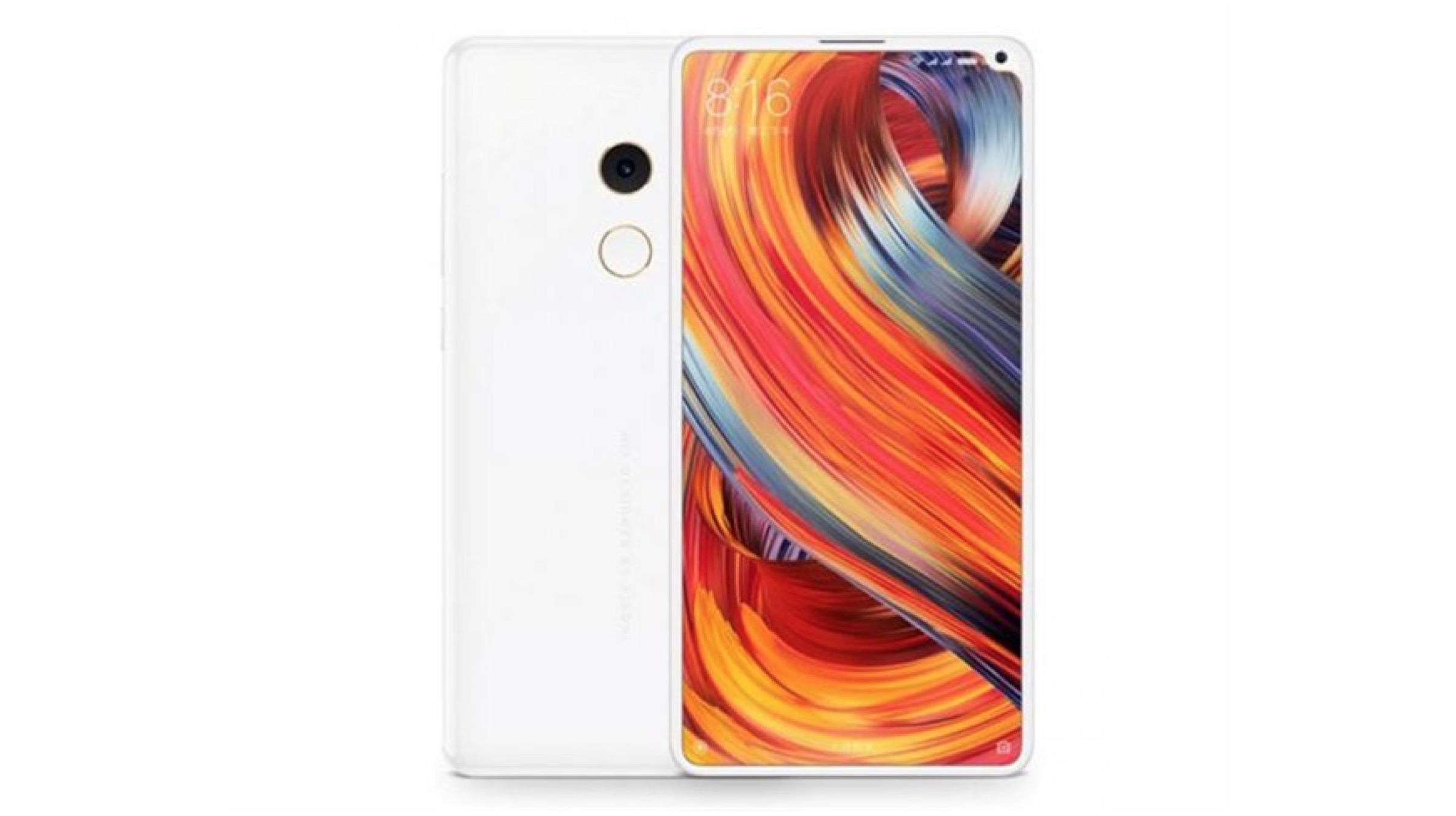
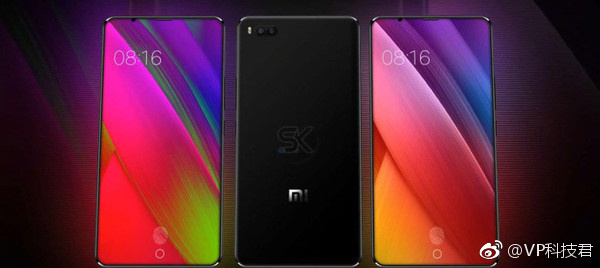
    On the front is where Xiaomi will look to one-up the much-famed Samsung Galaxy S9 and S9+. The leaked image confirms that the smartphone will have a different take on the notch. The bezels all around the display will be uniform but, the top right corner will protrude a bit and that will house the front-facing camera.

    Apart from the design, the image reveals some specifications of the device. It will be powered by the Qualcomm Snapdragon 845 chipset coupled with 8GB of RAM and 256GB onboard storage.

    What’s missing in the render is a fingerprint sensor. This means that Xiaomi could be the second company to launch a smartphone with an in-display fingerprint sensor. This would also mean that Xiaomi will use an OLED panel for the upcoming device as opposed to the IPS LCD panel used on the Mi Mix 2.
    Mi Mix 2s
    Mi Mix 2s Renders
    Conclusion

    As we all know, the Samsung Galaxy S9 and S9+ won’t look very different from their predecessors. This means that design-wise, Samsung won’t have much to show, and that is where the Mi Mix 2S could excel. A lot of smartphone makers will skip MWC because of the popularity of the Galaxy S devices but, Xiaomi could grab a lot of eyeballs with the launch of this smartphone. That being said, this could very well be the Mi 7. Xiaomi will have to move on from the 16:9 aspect ratio for its flagship Mi series. This means that this could be the Mi 7, just like the Mi6 X was the Redmi Note 5 Pro.


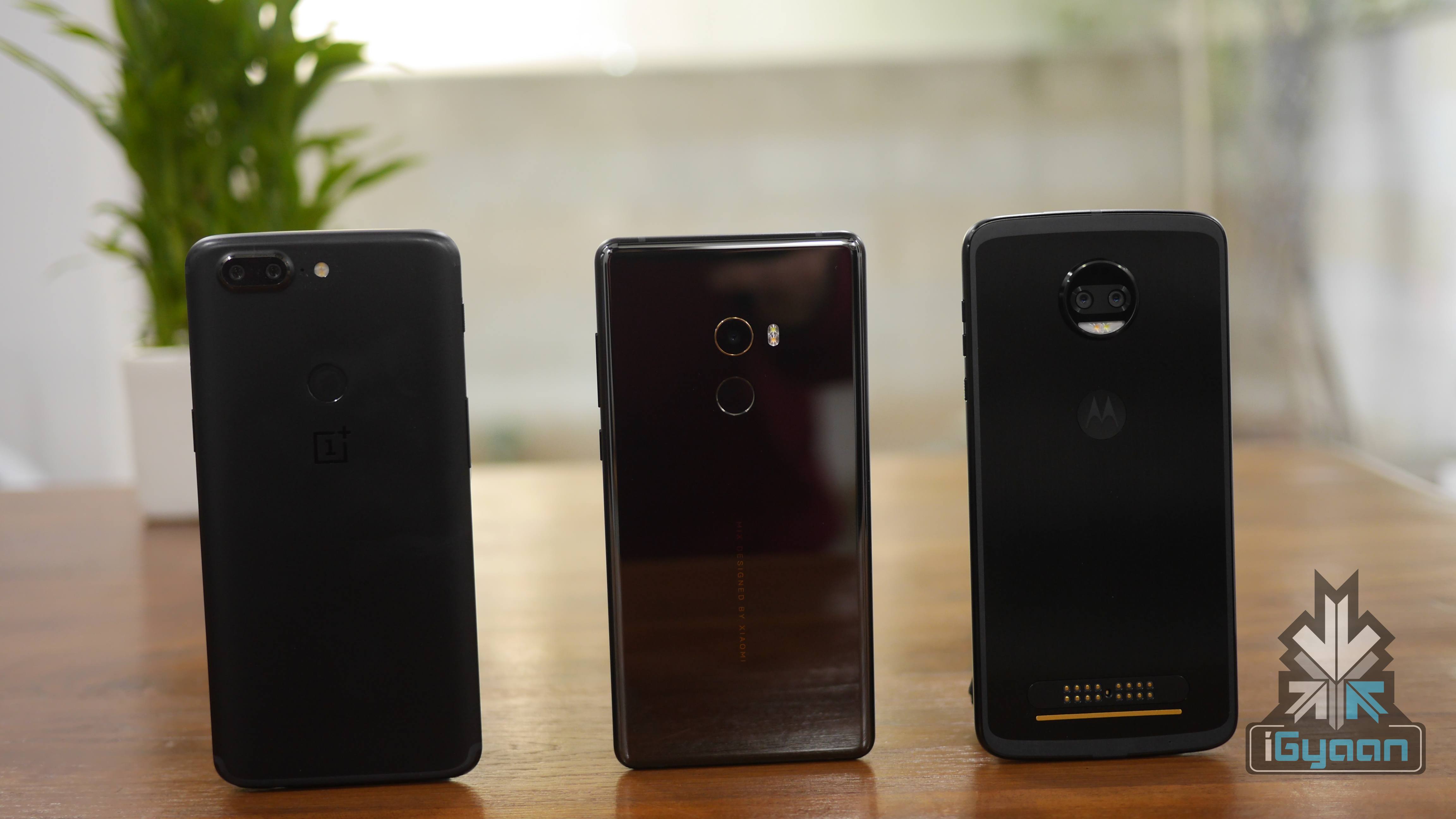
  • Moto Z2 Force Vs OnePlus 5T Vs Xiaomi Mi Mix 2

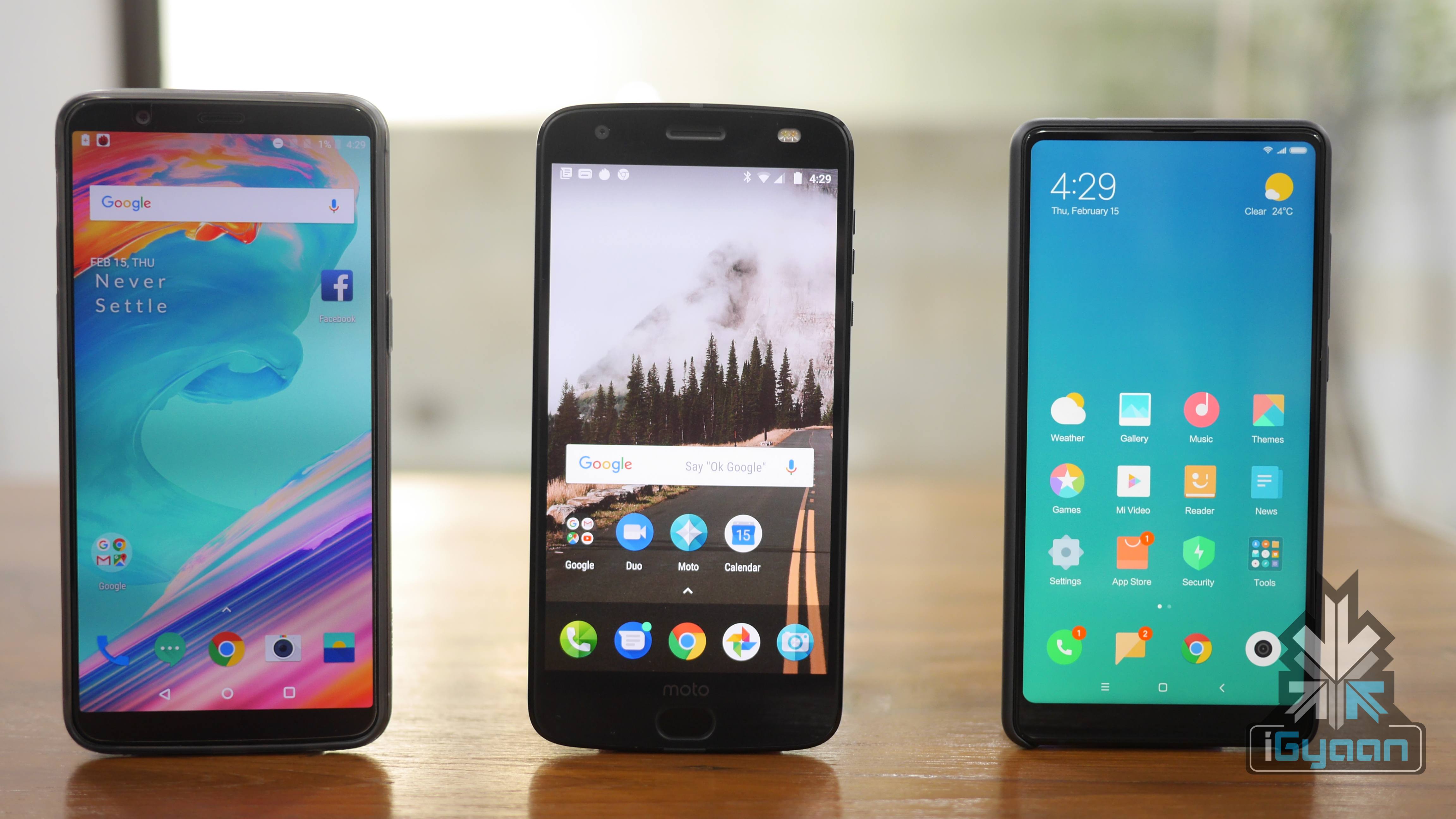
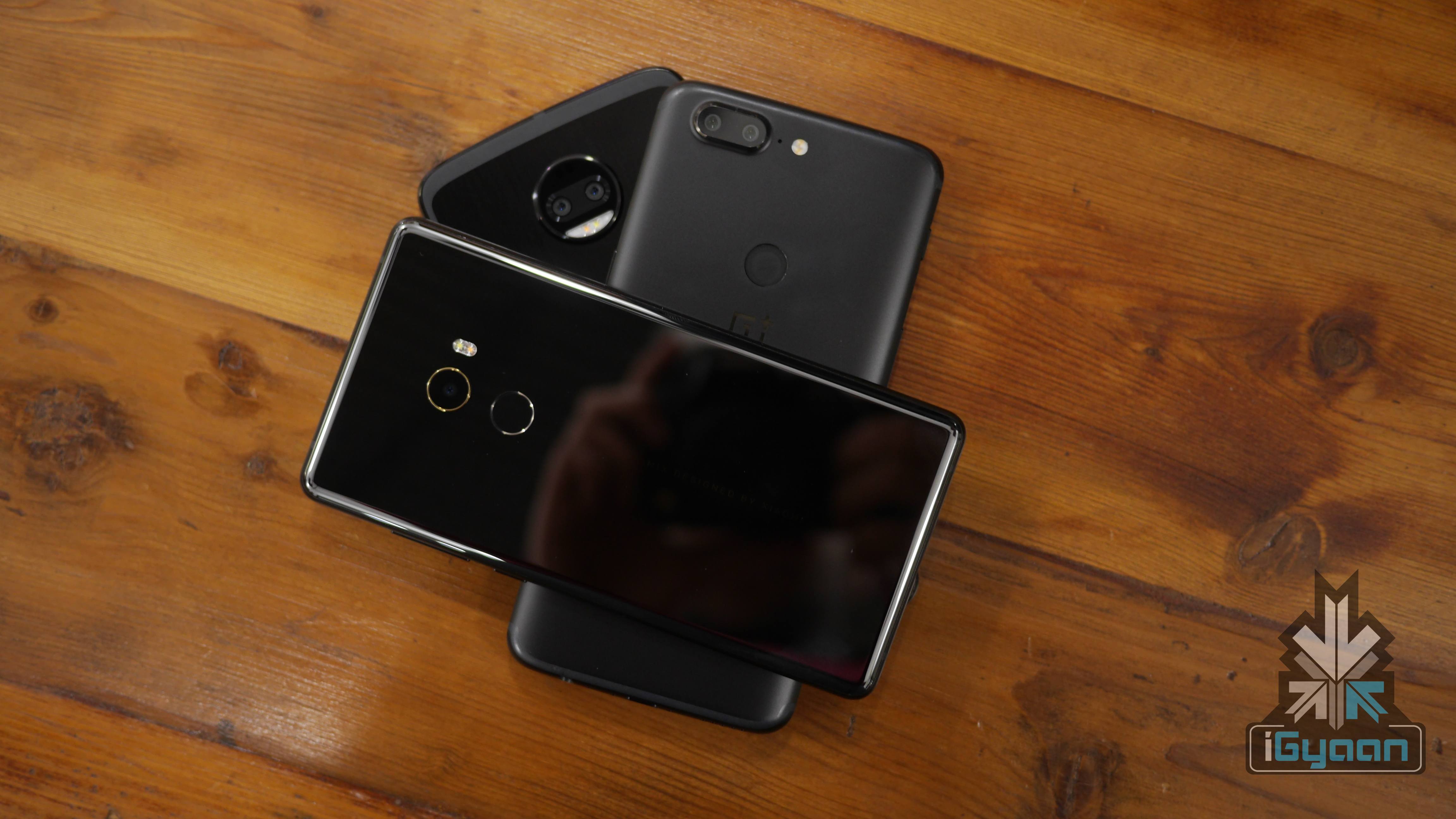
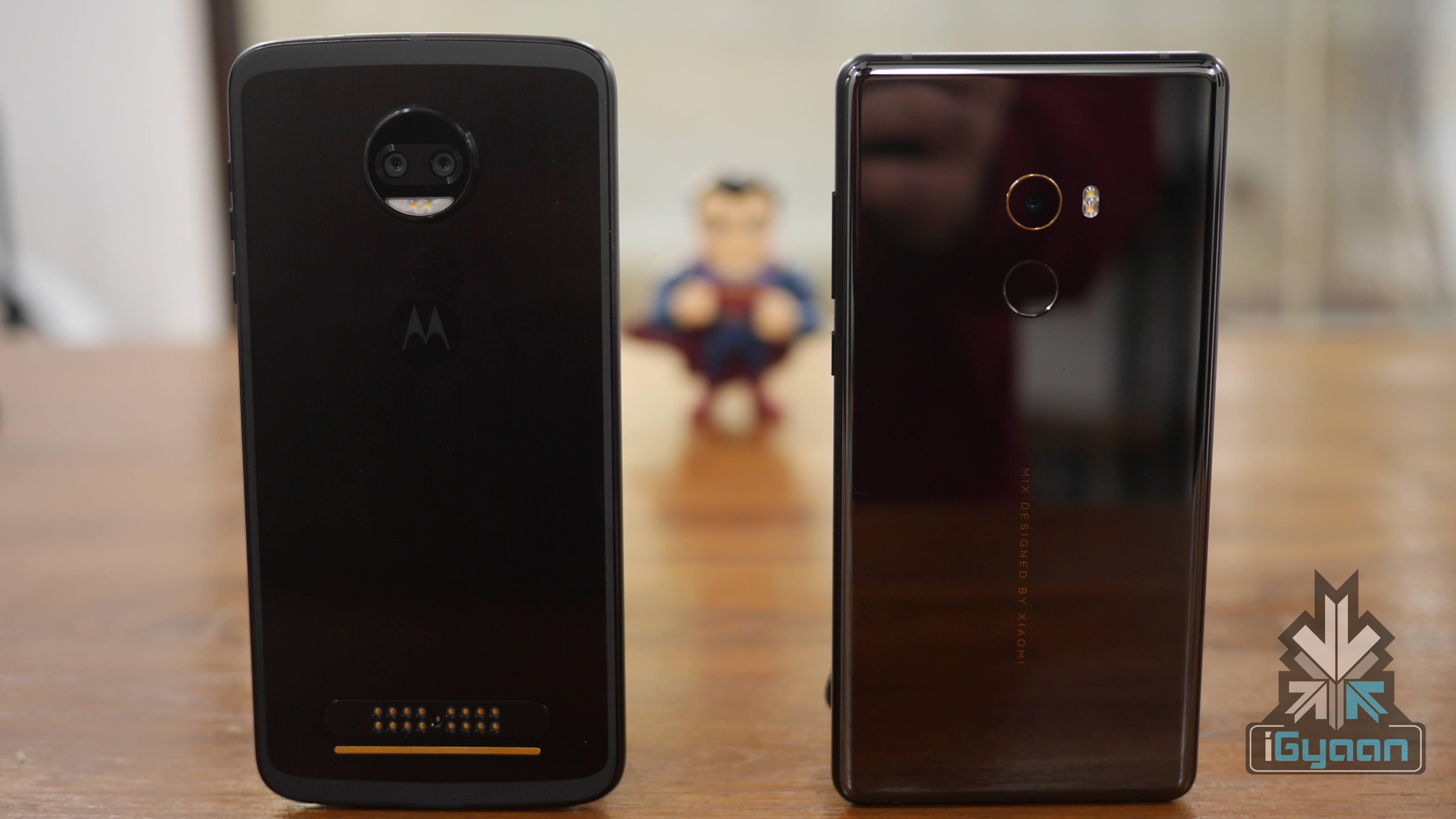
    Moto Z2 Force Vs OnePlus 5T Vs Xiaomi Mi Mix 2

    Motorola has finally launched its flagship smartphone, the Moto Z2 Force in India. It is priced at Rs. 34,999 which took everyone by surprise. It was globally launched for US$ 720 (Rs. 47,000 approx.) which means that it is considerably cheaper than its global price. The pricing makes sense for Motorola as the Z2 Force runs on the Snapdragon 835 chipset, which will soon be outdated.

    At such a price, the Moto Z2 Force will go head-to-head with the likes of Xiaomi Mi Mix 2 and OnePlus 5T. The OnePlus 5T, in particular, has been very successful in the Indian market. The Moto Z2 Force matches with the OnePlus 5T in almost every aspect and then does a bit more. The Moto Z2 Force, apart from being shatterproof, also has modular capabilities. This is something that is missing in the OnePlus 5T and the Mi Mix 2.

    Moto Z2 Force

    Where the Moto Z2 Force might fall behind the design department, it makes it up in functionality. That being said, the Moto Z2 Force still has a stunning design despite the 16:9 aspect ratio.Being a mid-2017 flagship, the Moto Z2 Force has bigger bezels and a 16:9 aspect ratio while the other two devices sport a modern design. The OnePlus 5T and Mi Mix 2 have thin bezels and an 18:9 aspect ratio.

    Under the hood, all the three smartphones run on the same Qualcomm Snapdragon 835 chipset. The base model of the OnePlus 5T, priced at Rs. 32999, has 6GB of RAM and 64GB storage. The Mi Mix 2 is also priced at Rs. 32999 and offers the same RAM with 128GB storage. The Moto Z2 Force also has 6GB RAM and 64GB storage. However, it is the only one to offer expandable storage up to 2TB. That can be a dealmaker for people whose primary media consumption happens through a smartphone. The flexibility of storage matters a great deal for a few.

    The Mot Z2 Force also runs Android 8 Oreo out of the box while the Mi Mix 2 is still stuck at Android 7 Nougat. The OnePlus 5T recently received an update to Android 8 Oreo as well. The Moto Z2 Force and OnePlus 5T run close to stock Android OS while the Mi Mix 2 comes with MIUI 9 on top. As we have said it in the past, preference for stock OS or custom skin is very subjective.

    The OnePlus 5T retains the 3.5mm headphone jack while the Mi Mix 2 and Z2 Force both don’t have a headphone jack. This, again, can be a huge deal for a few consumers. The Moto Z2 Force is also the most durable smartphone thanks to its shattershield display. Due to the plastic coating on top, the Moto Z2 Force will be able to survive a few drops where the other two might crumble.

    Specifications
    Specs Moto Z2 Force OnePlus 5T Xiaomi Mi Mix 2
    Price Rs. 34,999 Starting at Rs. 32999 Rs. 32999
    Display 5.5 inch
    P-OLED
    6 inch
    Optic AMOLED
    5.99 inch
    IPS LCD
    Resolution 2560 x 1440 px
    534ppi
    2160 x 1080 px
    401ppi
    2160 x 1080 px
    403ppi
    Battery 2750 mAh
    TurboCharge
    3300 mAh
    DashCharge
    3400 mAh
    QuickCharge
    Chipset Qualcomm Snapdragon 835 Qualcomm Snapdragon 835 Qualcomm Snapdragon 835
    RAM 6GB 6GB
    8GB
    6GB
    Storage 64GB
    Expandable up to 2TB
    64GB/128GB
    Not expandable
    128GB
    Not expandable
    Primary Camera 12MP RGB+12MP Monochrome
    f/2.0
    16MP+20MP
    f/1.7
    12MP
    f/2.0
    Primary Camera Video 4K @ 30fps 4K @ 30fps 4K @ 30fps
    Secondary Camera 5MP
    LED Flash
    f/2.2
    16MP
    f/2.0
    EIS
    5MP
    f/2.0
    Add-Ons Fingerprint Sensor
    Moto Mods Support
    Fingerprint Sensor
    Face Unlock
    Fingerprint Sensor
  • From Xiaomi Redmi Note 4 To Redmi Note 5 : What Has Changed?

    From Xiaomi Redmi Note 4 To Redmi Note 5 : What Has Changed?

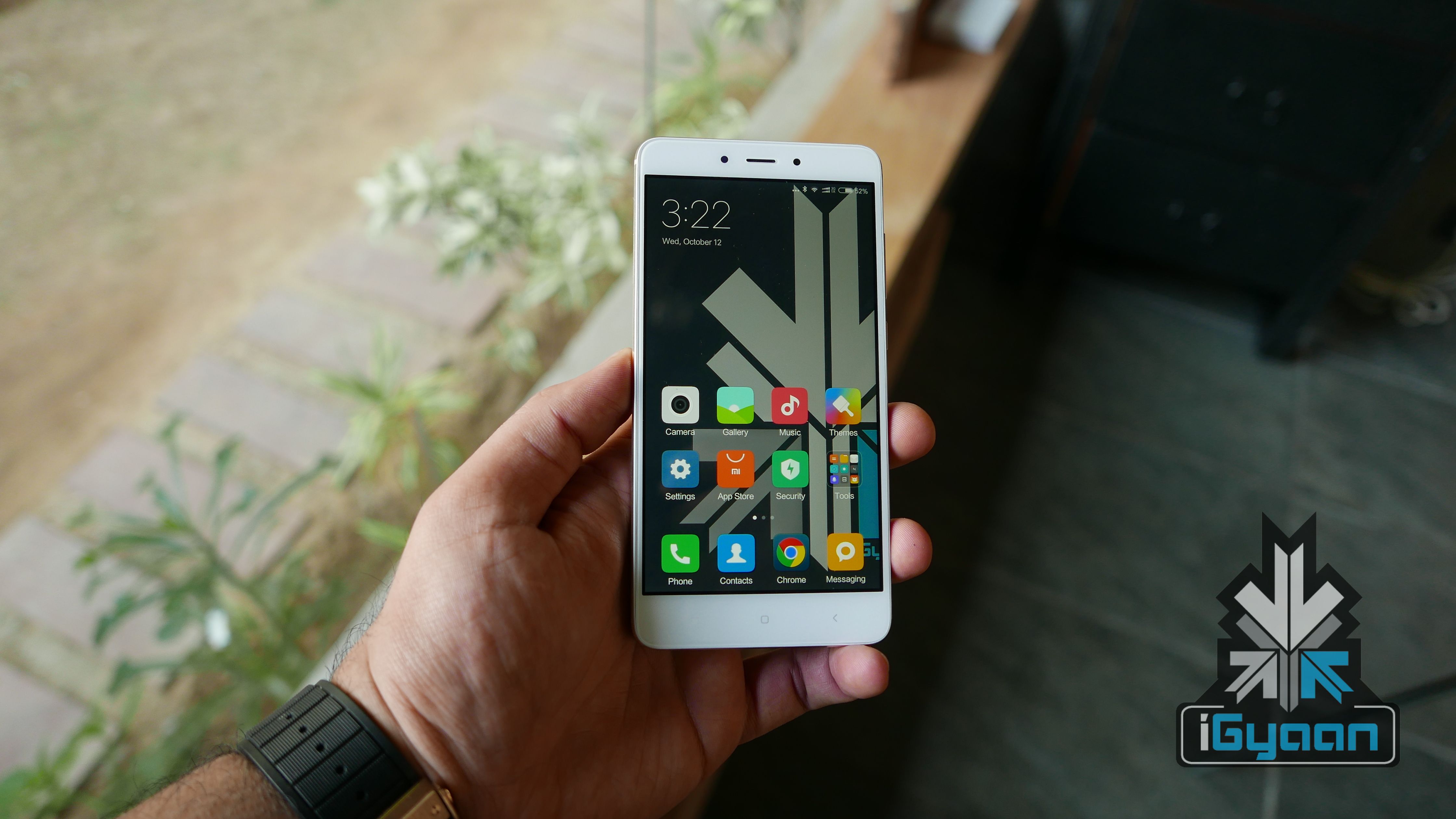
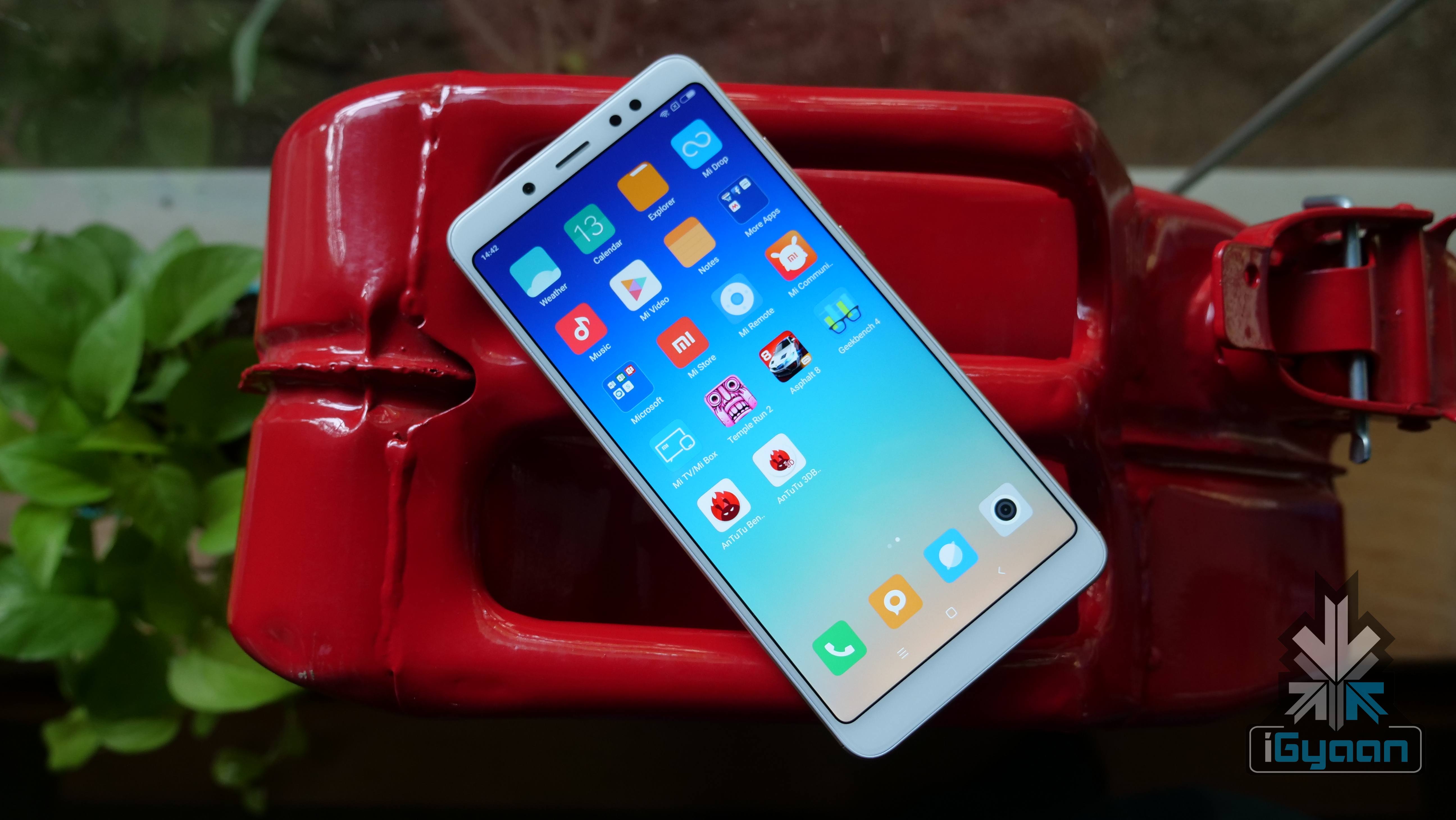
    Xiaomi has launched the Redmi Note 5 in India at a starting price of Rs. 9,999. The device will finally go on sale on the 22nd of February in India. The Redmi Note 5 has huge shoes to fill in, considering the Redmi Note 4 is the bestselling smartphone by Xiaomi.

    Redmi Note 5
    Xiaomi Redmi Note 4

    A few weeks ago, a news from China claimed that Xiaomi won’t launch a Redmi Note 5 in China and instead rename the Redmi 5 Plus as Redmi Note 5 for the Indian market. While many were sceptical about this move, it felt more plausible at that time. Now, it is official that the Redmi 5 Plus is indeed the Redmi Note 5. So, what has changed between the two generations?

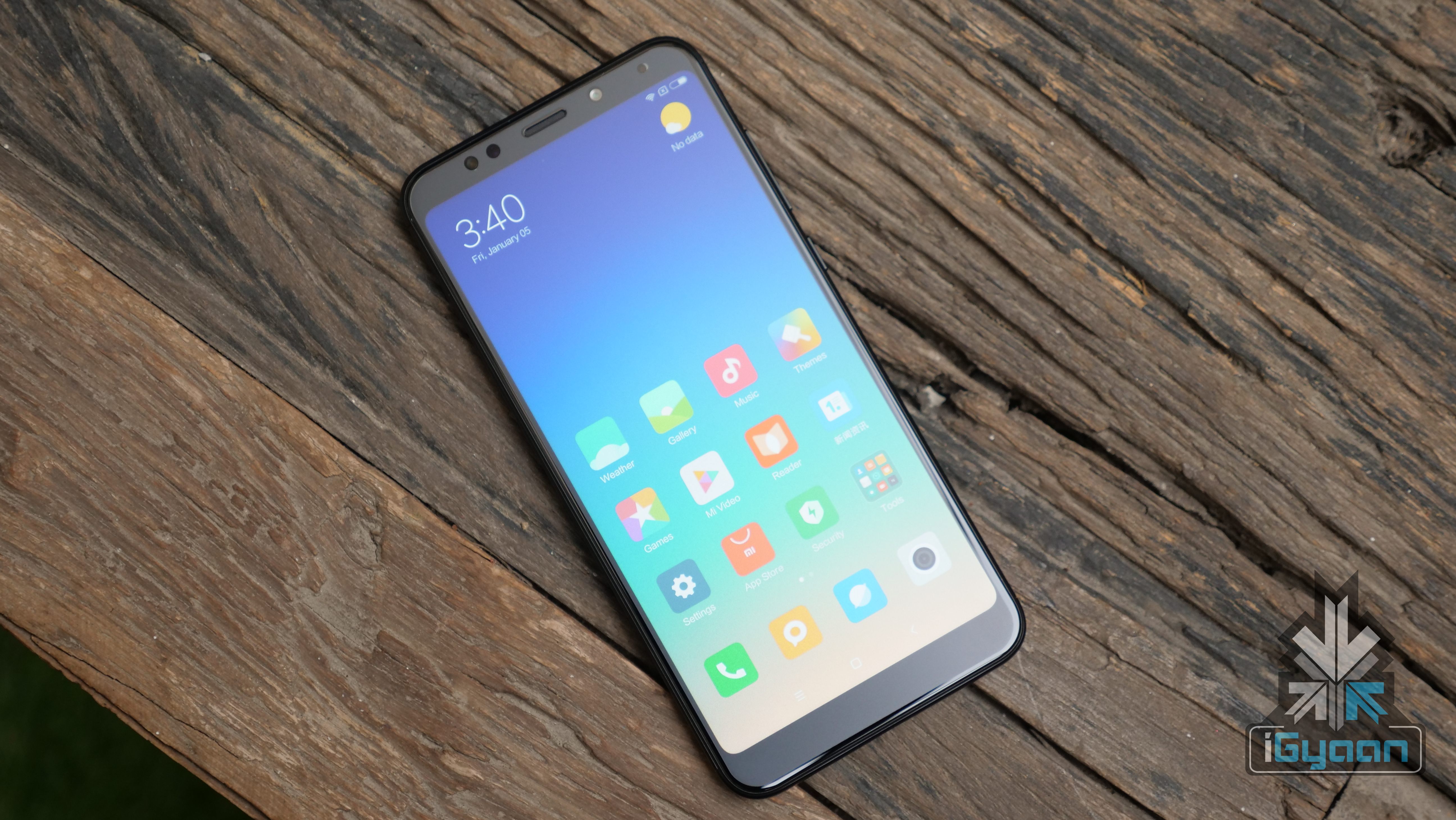
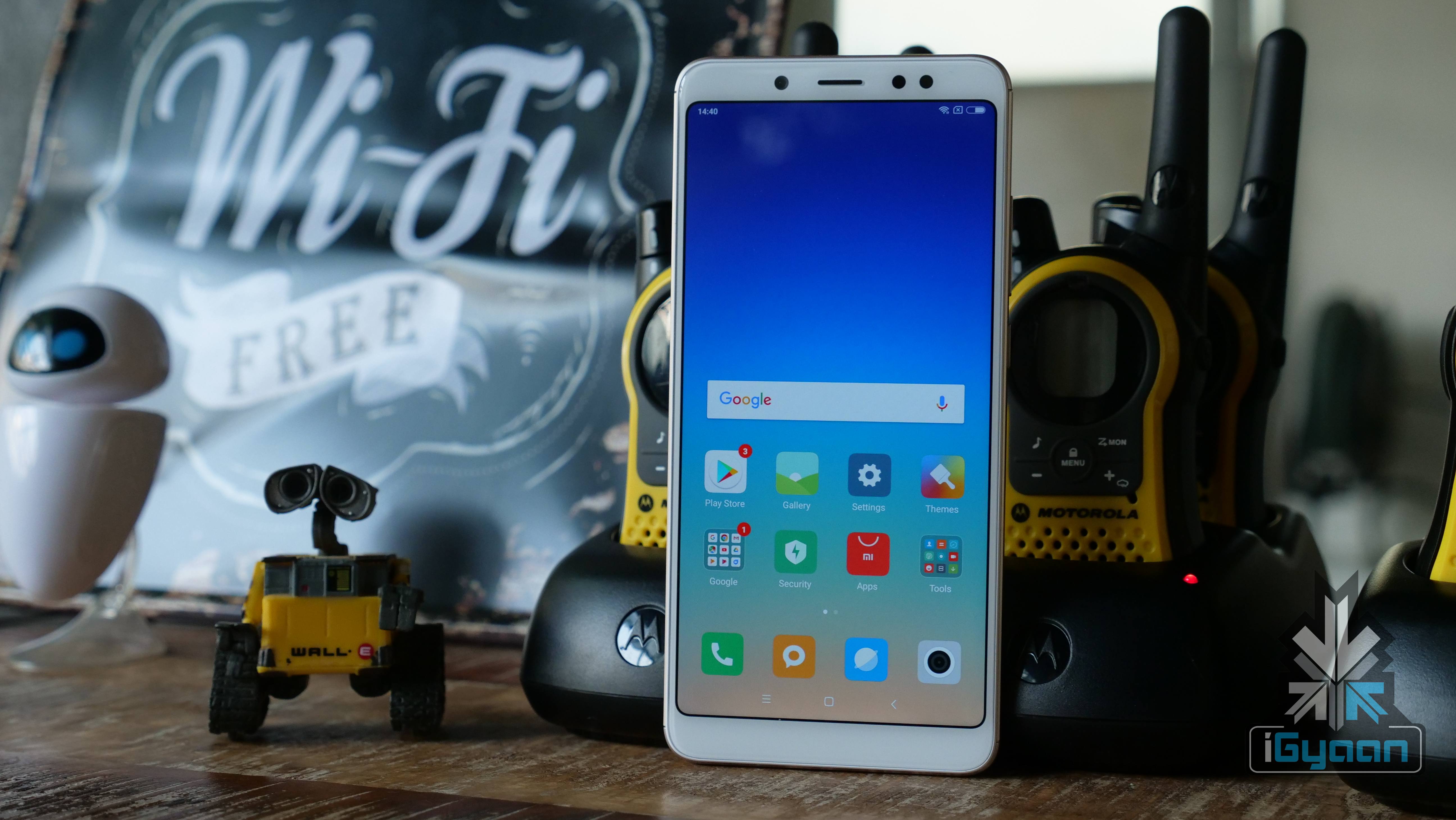
    The first thing you notice when you hold the new Note 5 is the display and its 18:9 aspect ratio. The smartphone industry has moved on from the 16:9 aspect ratio and it made sense for Xiaomi to launch a modern looking device in 2018. The Redmi Note 5 provides that with its relatively thinner bezels. The Redmi Note 5 is not a bezel-less device by any means and the Gold colour makes the presence of the bezels more prominent, thanks to the white colour.

    Redmi Note 5
    Redmi Note 5

    Having said that, the Redmi Note 5, in terms of design, is a definite upgrade over the Redmi Note 4. It is still built very sturdily with an aluminium unibody design.

    Under the hood, the Redmi Note 5 has the same the Qualcomm Snapdragon 625 chipset as the Redmi Note 4. The company claims that the Snapdragon 625 is one of the best budget chipsets and that is one of the reasons the Note 5 has maintained the chipset. When you look at flagship devices, a 2018 flagship phone launching with the Snapdragon 835 would not make sense because the Snapdragon 845 exists. Similarly, the Note 5 should have had a better chipset, like the Redmi Note 5 Pro has the Snapdragon 636 chipset.

    This move might stop a lot of Redmi Note 4 owners from upgrading in 2018. Since, the Redmi Note 4 continues to perform great and its succesor won’t really provide anything better. A lot of customers usually look for hardware upgrade rather than design changes, especially in the budget category. Probably, Redmi Note 4 users could get tempted to update to the Note 5 Pro considering it has a newer and better chipset under the hood.

    Redmi Note 5
    Redmi Note 4

    The Redmi Note 4’s biggest issue was its camera performance. Xiaomi claims that the Redmi Note 5 has much better camera performance than the Redmi Note 4. It has a 12MP primary camera with an f/2.2 aperture. On paper, these aren’t the most flattering numbers but, it performs better than the Redmi Note 4. But again, is that worthy enough for a generational upgrade?

    The Xiaomi Redmi Note 4 had a great battery performance thanks to the Snapdragon 625 chipset and the 4000 mAh battery. In a world where companies are making smartphones slimmer by reducing battery sizes, Xiaomi has done something else. The Redmi Note 5 has the same combination of the Snapdragon 625 chipset and a 4000 mAh battery. But, it also has a bigger display which means that the battery performance might be affected slightly.

    At a price of Rs. 9999, this smartphone is a great prospect for some with a Redmi Note 3 or older phone. However, people who own a Redmi Note 4 would be hard pressed not to take out their wallets for the Redmi Note 5. What are your thoughts? let us know in the comments.

    Buy The Redmi Note 5 here


  • Xiaomi Redmi Note 5 Pro

    Xiaomi Redmi Note 5 Pro

    Xiaomi has launched a ‘Pro’ version of the Redmi Note 5 in India at a launch event in Delhi. The Redmi Note 5 Pro will go on sale in India at a starting price of Rs. via Flipkart. The Redmi Note 5 Pro has better hardware and the company claims that the camera performance of the Redmi Note 5 Pro is its highlight. For context, the Redmi Note 5 is priced at Rs 10999.

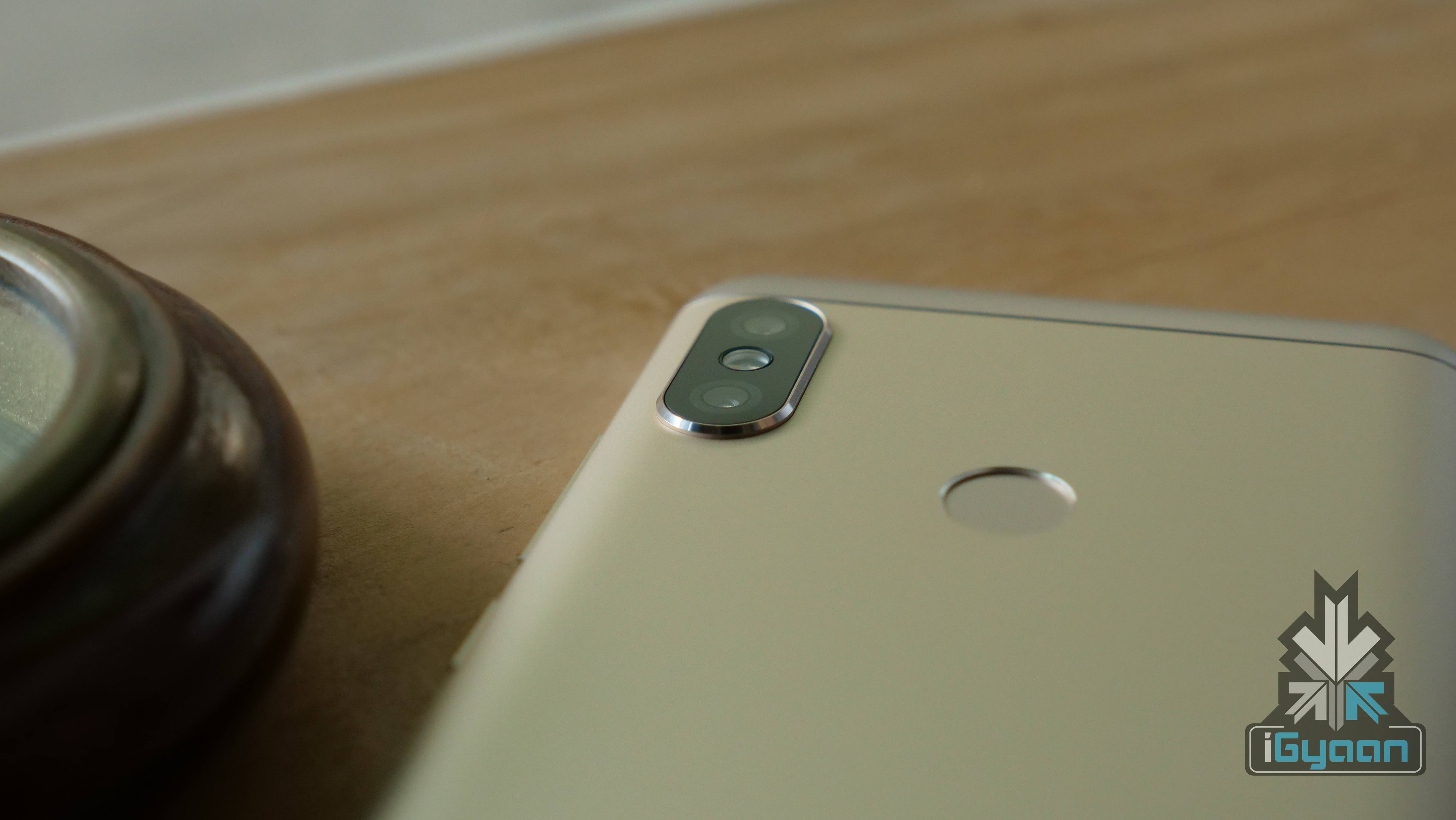
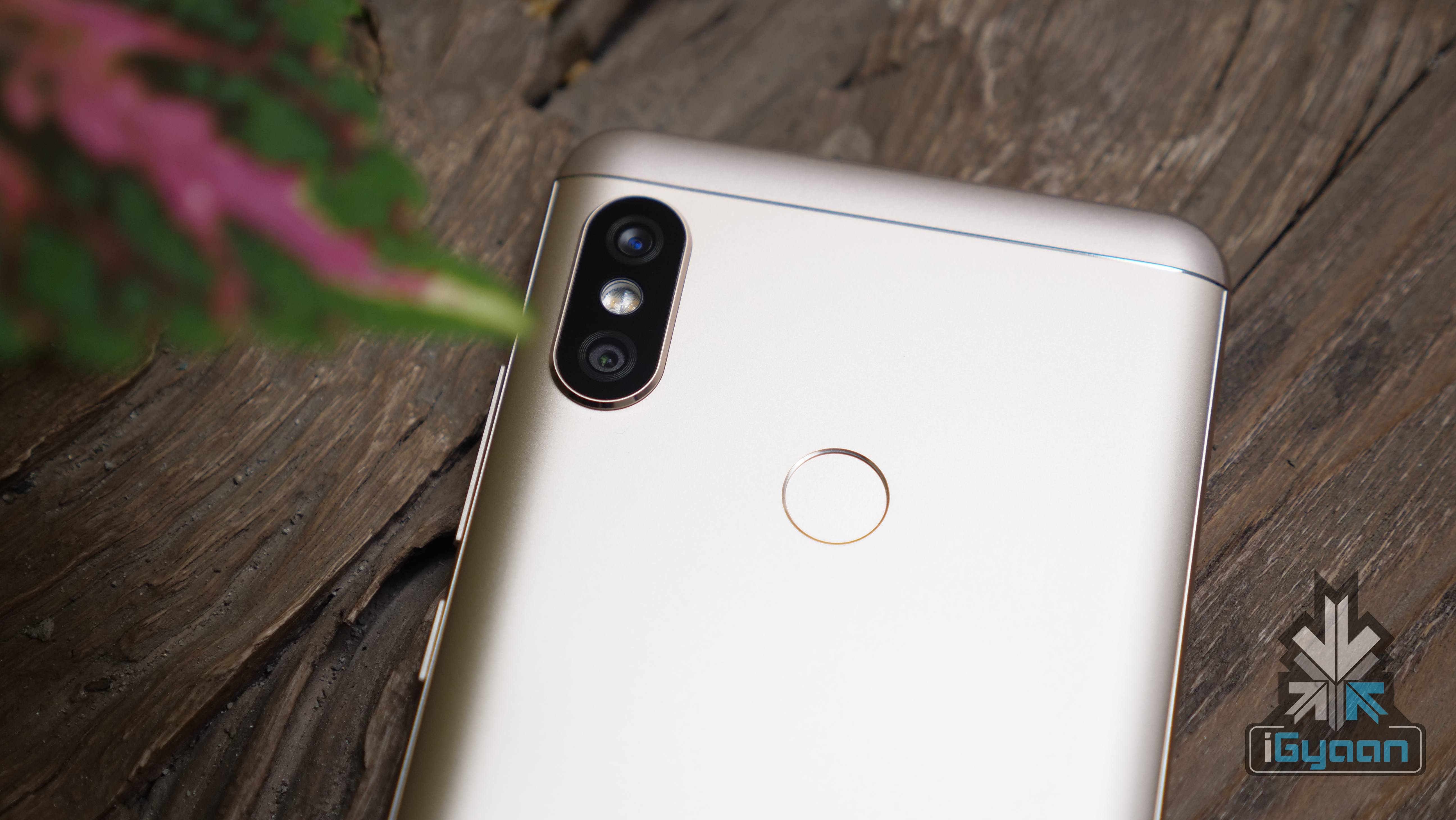
    From the front, the Redmi Note 5 Pro looks very similar to the Redmi Note 5. It has the same display and 18:9 aspect ratio like the Redmi Note 5. Once you flip the device is when you see the difference. In a move that will garner a lot of eyeballs, Xiaomi has gone for a vertically placed dual-camera setup which is positioned uncannily similar to the iPhone X. Even the LED flash is placed between the two sensors, like the iPhone X.

    [section label=”Latest News”]

    Latest News

    [loop included_tags=”40211,39981″ loading=”paged” layout=”f” postsperpage=”6″ disable_ads=”true” disable_excerpt=”true”]

    [section label=”Videos”]

    Videos

    [embedyt] https://www.youtube.com/watch?v=0aFnAF63j2o[/embedyt]

  • Xiaomi Mi LED Smart TV 4 Launched In India At Rs. 39,999

    Xiaomi Mi LED Smart TV 4 Launched In India At Rs. 39,999

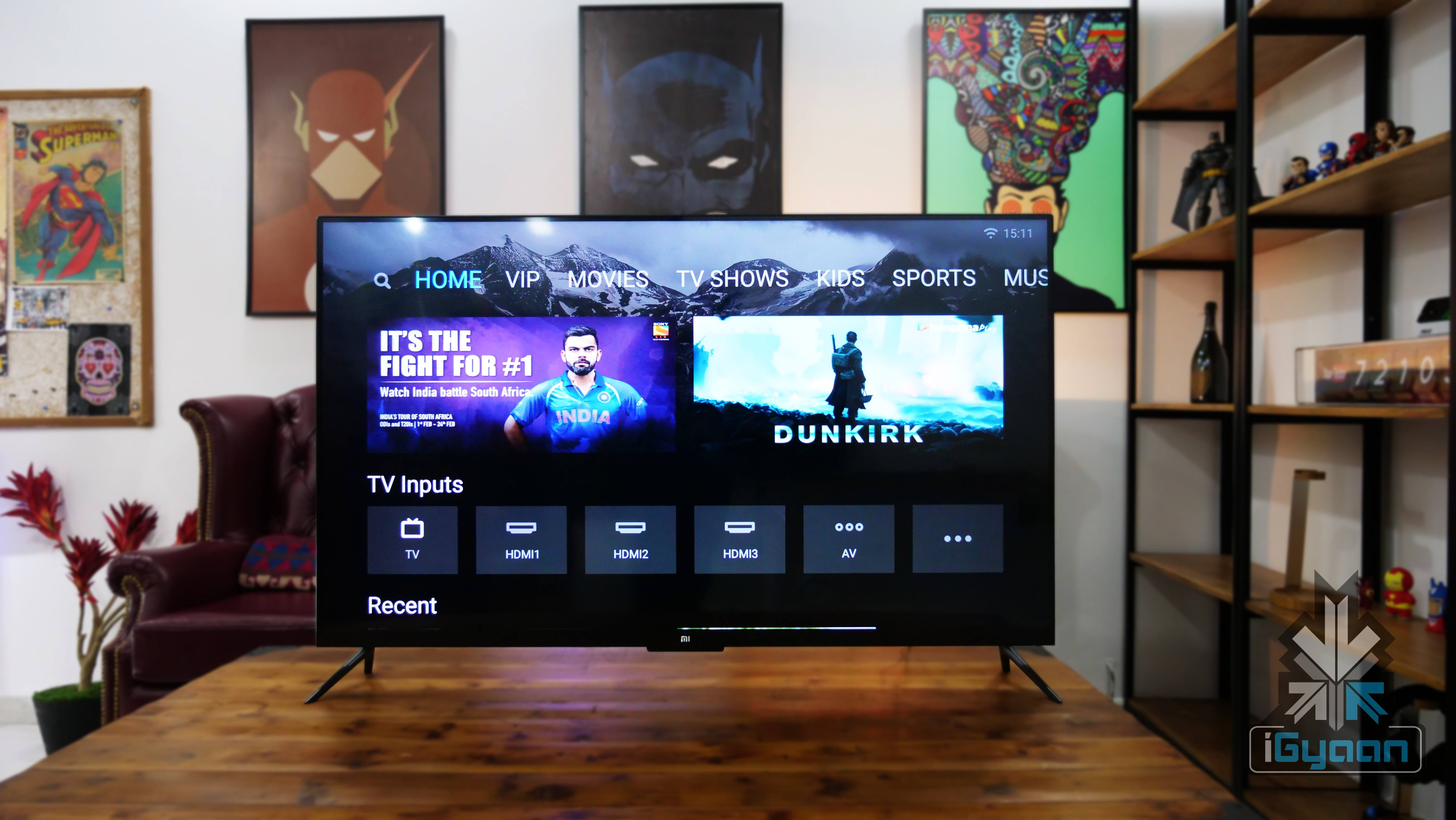
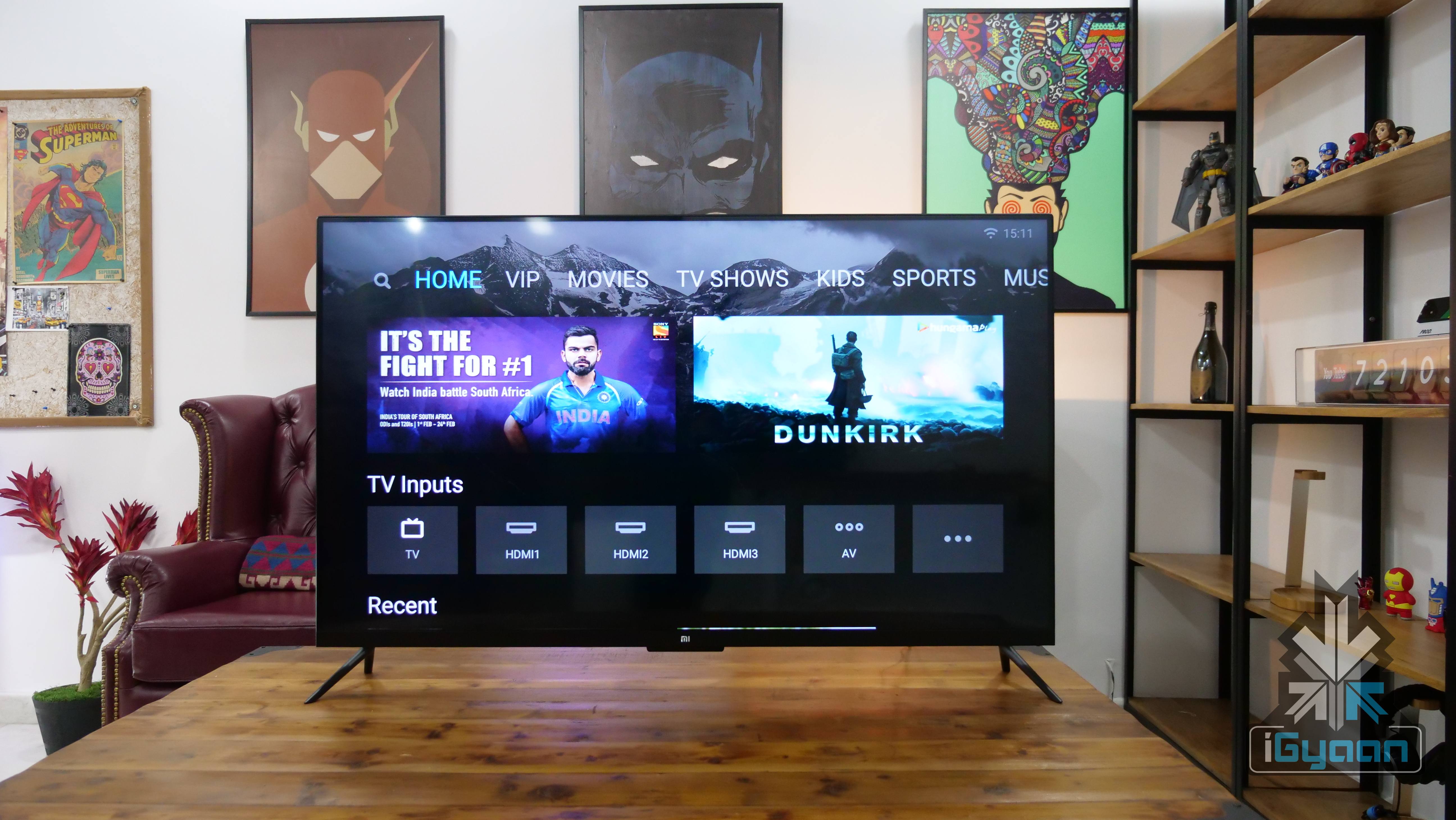
    Along with two smartphones, Xiaomi has launched its first ever smart TV in India. The Xiaomi Mi LED Smart TV 4 will go on sale in India at a price of Rs. 39,999 on the 22nd of February.

    Overview

    The 55 inch Xiaomi Mi TV 4 comes with a 4K UHD display with a 3840 x 2160 resolution and a 178-degree viewing angle. The TV has a refresh rate of 60Hz and it also offers support for HDR10+ HLG. The device has a “frameless design” and also comes with Dolby Atmos audio technology.

    Interestingly, the trend of AI and machine learning is bleeding into the television industry as well, it seems. The Xiaomi Mi LED Smart TV comes with AI support and can make recommendations. It has a UI called PatchWall and is based on Android OS which allows for content curation based on recommendations. The TV also has speech recognition and voice control, but, since it is only available in China as of now, it doesn’t work with the English language.

    Under the hood, the Mi LED Smart TV is powered by a 64-bit Amlogic L962 chipset with four 1.5GHz Cortex-A53 cores along with 2GB of RAM and 8GB of onboard storage. As for connectivity, the Xiaomi Mi TV 4 has Wi-Fi ac, Bluetooth 4.2, three HDMI ports, two USB ports, AV in, Ethernet port, and S/PDIF audio output. There is also the new Xiaomi remote for controlling the TV which has infrared as well Bluetooth connectivity options.

    [embedyt] https://www.youtube.com/watch?v=s0q4V3wwPIs[/embedyt]
  • Xiaomi Redmi Note 5

    Xiaomi Redmi Note 5

    After months of rumours and leaked, Xiaomi has launched the follow up to the Redmi Note 4. The company has launched the Xiaomi Redmi Note 5 in India at a starting price of Rs. 9999. It was speculated that Xiaomi will drop the “Note” moniker altogether and launch the Redmi 5 Plus in India. That speculation has turned out to be true as the Redmi 5 Plus has been renamed Redmi Note 5 for the Indian market.

    The device will have a lot of expectations from fans after the success of the Redmi Note 4. By the company’s own admission, the Redmi Note 4 is the most successful Xiaomi phone in India. That is no mean feat considering the popularity of Xiaomi smartphones in India. However, launching the Redmi 5 Plus as the Redmi Note 5 in India might be a surprise for many.

    Buy it here

    [section label=”Latest News”]

    Latest News

    [loop included_tags=”40092,39981″ loading=”paged” layout=”f” postsperpage=”6″ disable_ads=”true” disable_excerpt=”true”]

    [section label=”Videos”]

  • Xiaomi Redmi Note 5 Vs Honor 9 Lite

    Xiaomi Redmi Note 5 Vs Honor 9 Lite

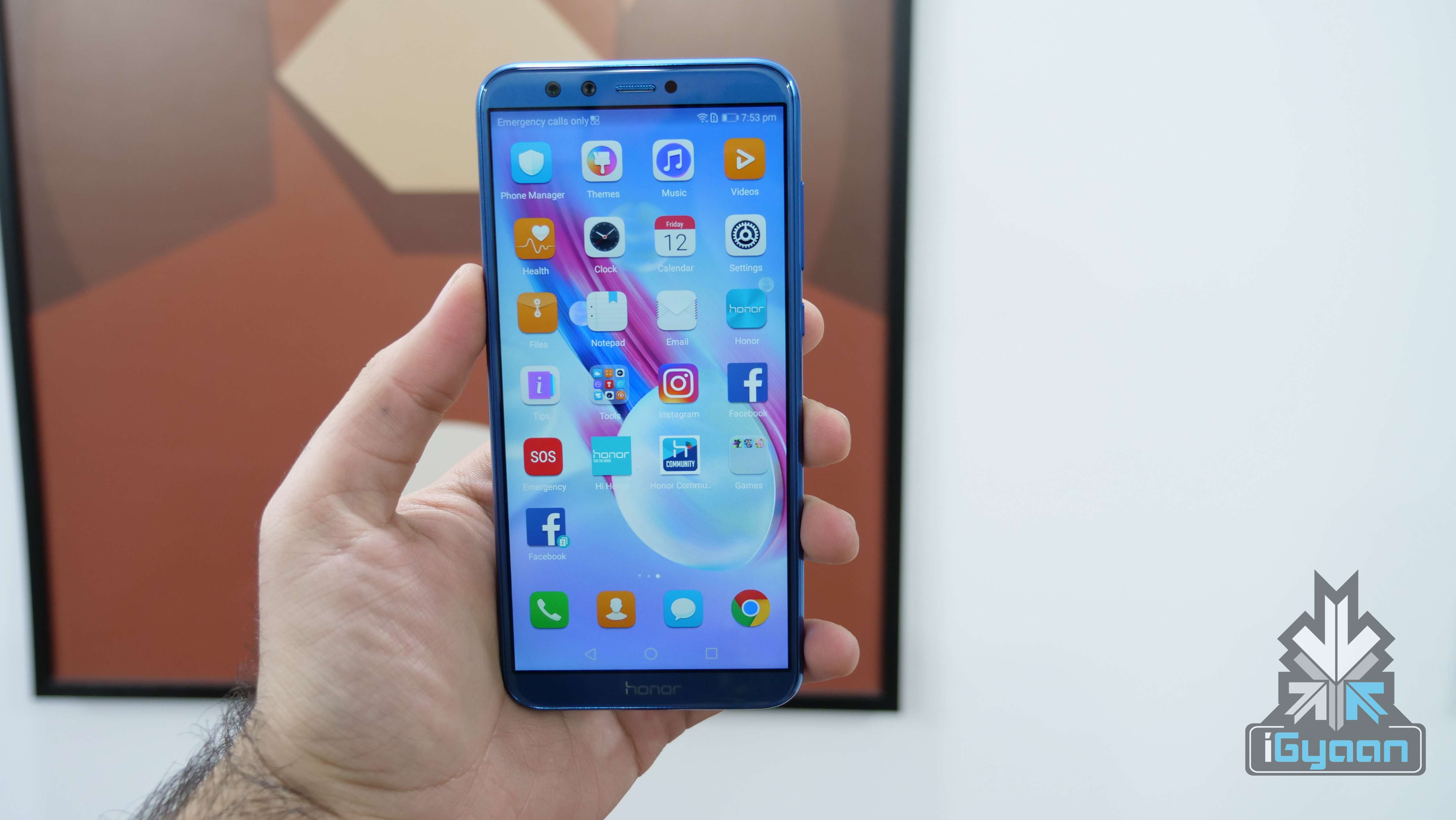
    Xiaomi has launched the Redmi Note 5 in India at a starting price of Rs. 9,999 with a new design but, the same chipset. At this price, the Redmi Note 5 competes directly with the recently launched Honor 9 Lite. Both the smartphones have an 18:9 aspect ratio and very capable respective chipsets.

    Redmi 5
    Redmi Note 5

    The Xiaomi Redmi Note 5 is basically the Redmi 5 Plus which was launched in December in China. The design is much more modern than the previous generation and it comes in four different colour variants. The Honor 9 Lite has much thinner bezels but, also a smaller screen size. The Honor 9 Lite has an all-glass build which gives it a much more premium look when compared to the aluminium unibody design of the Redmi Note 5.

    With a very similar pricing and more or less similar design language, which device comes out on top? Let’s find out!

    Specifications Xiaomi Redmi Note 5 Honor 9 Lite
    Price Rs. 9999
    Rs. 10999
    Rs. 10999
    Rs. 14999
    Display 5.99 inch IPS LCD
    18:9 Aspect Ratio
    5.65 inch IPS LCD
    18:9 Aspect Ratio
    Resolution 2160 x 1080 px
    403ppi
    2160 x 1080 px
    428ppi
    Battery 4000 mAh 3000 mAh
    Chipset Qualcomm Snapdragon 625 HiSilicon Kirin 659
    RAM 3GB
    4GB
    3GB
    4GB
    Storage 32GB
    64GB
    Expandable up to 256GB
    32GB
    64GB
    Expandable up to 256GB
    Primary Camera 12MP
    f/2.2
    13MP
    2MP (depth sensor)
    Primary Camera Video 1920 x 1080 px @ 30fps 1920 x 1080 px @ 30fps
    Secondary Camera 5MP
    LED
    13MP
    2MP (depth sensor)
    Add-ons Fingerprint Sensor Fingerprint Sensor
    Face Unlock (update scheduled)
  • Xiaomi Redmi Note 5 Pro Launched In India At Rs. 13999

    Xiaomi Redmi Note 5 Pro Launched In India At Rs. 13999

    Xiaomi has launched a ‘Pro’ version of the Redmi Note 5 in India at a launch event in Delhi. The Redmi Note 5 Pro will go on sale in India at a starting price of Rs. 13999 via Flipkart, mi.com and offline retail partners. The first sale will take place on the 22nd of February. The company also claims that the Redmi Note 5 Pro has better hardware and camera performance than the Redmi Note 5. For context, the Redmi Note 5 is priced at Rs 9,999.

    Redmi Note 5 Pro

    From the front, the Redmi Note 5 Pro looks very similar to the Redmi Note 5. Hence, it has the same display and 18:9 aspect ratio like the Redmi Note 5. Once you flip the device is when you see the difference. In a move that will garner a lot of eyeballs, Xiaomi has gone for a vertically placed dual-camera setup which is positioned uncannily similar to the iPhone X. Even the LED flash is placed between the two sensors, like the iPhone X.

    After weeks of speculations around the possible Mi 6X, the smartphone has indeed turned out to be the Redmi Note 5 Pro. India is also the first country where this device has been launched by Xiaomi.

    Redmi Note 5 Pro
    Redmi Note 5 Pro Specifications

    Just like the Redmi Note 5, the Note 5 Pro has a 5.99-inch display with a 2160 x 1080px resolution which translates to an 18:9 aspect ratio.

    Under the hood, the device has the Qualcomm Snapdragon 636 chipset and an Adreno 509 GPU to handle the graphics. The Redmi Note 5 Pro will be available in two variants,  4GB RAM/64GB storage and 6GB RAM/64GB storage. The 6GB RAM variant is a great prospect for users who multitask a lot.

    The fingerprint sensor is placed on the back of the phone and it has an aluminium unibody build, similar to the Redmi Note 5. Out of the box, the Redmi Note 5 Pro will also run Android 7 Nougat with MIUI 9 on top.

    The Redmi Note 5 Pro will also have the infamous Face Unlock feature. It won’t be available out of the box but, will be introduced via an OTA update in March.

    Redmi Note 5 Pro

    The Redmi Note 5 Pro has focussed a lot on the front camera. It has a 20MP Sony IMX376 camera on the front with an LED light. Unlike the Redmi Note 5, it has Beautify 4.0 software which will result in better portrait mode photos, the company claims. To the back of the smartphone is a vertically place dual-camera setup. It is a 12MP colour sensor f/2.2 and 5MP f/2.0 colour sensor setup. The smartphone will click portrait mode photos from the front and rear cameras.

    Conclusion

    In conclusion, the Redmi Note 5 Pro is for consumers who want to multitask a lot and prefer portrait mode photos. However, there are other smartphones like the Mi A1 and Honor 7X which have a stronghold in the market. Will you buy the Redmi Note 5 or the Redmi Note 5 Pro? Lets us know in the comments!

    Buy The Redmi Note 5 Pro 4GB/64GB Version Here

  • Xiaomi Redmi Note 5 Launched In India At Rs. 9,999

    Xiaomi Redmi Note 5 Launched In India At Rs. 9,999

    After months of rumours and leaked, Xiaomi has launched the follow up to the Redmi Note 4. The company has launched the Redmi Note 5 in India at a starting price of Rs. 9,999. The first sale starts on the 22nd of February via Flipkart, mi.com and offline retail partners. It was speculated that Xiaomi will drop the “Note” moniker altogether and launch the Redmi 5 Plus in India. That speculation has turned out to be true as the Redmi 5 Plus has been renamed Redmi Note 5 for the Indian market.

    The Redmi Note 5 will have a lot of expectations from fans after the success of the Redmi Note 4. By the company’s own admission, the Redmi Note 4 is the most successful Xiaomi phone in India. That is no mean feat considering the popularity of Xiaomi smartphones in India. However, launching the Redmi 5 Plus as the Redmi Note 5 in India might be a surprise for many.

    Redmi Note 5
    Redmi Note 5
    Xiaomi Redmi Note 5 Specifications

    It has a 5.99-inch display with a 2160 x 1080px resolution which translates to an 18:9 aspect ratio. This is one of the biggest changes in the Redmi Note series. Xiaomi has departed from the archaic 16:9 aspect ratio and moved on to the modern design and kept up with the industry trends.

    Under the hood, the Redmi 5 Plus has the Qualcomm Snapdragon 625 chipset, 2.0GHz octa-core processor, Adreno 506 GPU, 3GB or 4GB of RAM, and 32GB or 64GB of onboard storage which will be expandable via microSD card. Surprisingly, there is not much of an upgrade here, as the Redmi Note 4 also had the Qualcomm Snapdragon 625 chipset. That being said, this chipset is extremely popular in the price segment and won’t disappoint a lot of power users.

    The fingerprint sensor sits at the back of the device which has become a Redmi signature irrespective of thin or thick bezels.

    The Redmi Note 5 Plus is powered by a massive 4000 mAh battery which, according to Xiaomi, has a standby time of up to 17 days. The device has a micro USB port for charging and data syncing along with a 3.5mm headphone jack. One industry trend that Xiaomi avoided was the removal of the headphone jack despite omitting it in its premium Mi Mix 2.

    The device has a 12MP primary camera with an f/2.2 aperture and a 5MP secondary camera with beautify 3.0 software.

    The Redmi Note 5 is a solid offering at the price it is available for, and with a modern design combined with the performance of a Xiaomi phone, the device makes a good case to be a go-to budget smartphone.

    Buy The Redmi Note 5 3GB/32GB Here
    Buy The Redmi Note 5 4GB/64GB Here

  • Xiaomi Mi Mix 2S Could Be Faster Than Apple iPhone X

    Xiaomi Mi Mix 2S Could Be Faster Than Apple iPhone X

    Xiaomi Mi Mix 2S is speculated to be launched at MWC 2018. Apart from its out of the ordinary design, the Mi Mix 2S is expected to be one of the first few smartphones to run on the Qualcomm Snapdragon 845 chipset. If true, some tests have revealed that it could be much faster than the Apple iPhone X.

    Mi Mix 2s
    Mi Mix 2s Renders

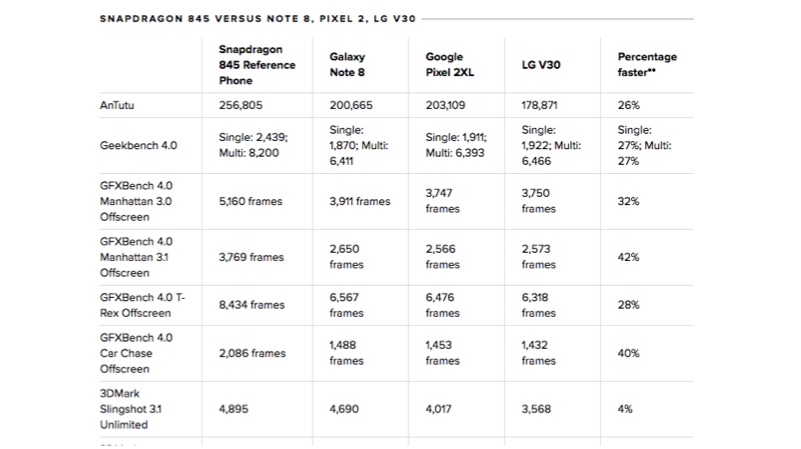
    A recent benchmark test of a reference phone running Snapdragon 845 chipset has revealed that it is much faster than the Snapdragon 835. A reference phone is what Qualcomm relies on, to test new chips in as close to a real-world environment as possible. The test scores were compared with Google Pixel 2, Galaxy Note8, and the LG V30. All smartphones running on the Snapdragon 835 chipset.

    Results:

    Apart from blitzing the Snapdragon 835 chipset, the reference phone has a higher AnTuTu score than the iPhone X. After the launch of the iPhone X, the A11 Bionic chipset was in the news for being much more powerful than the Snapdragon 835. In our Samsung Galaxy Note8 and Apple iPhone X comparison, the A11 chipset fared much better in benchmark results.

    The average score of the iPhone X on AnTuTu is over 202,000. In fact, the highest score record of iPhone X reported to Antutu database is 226,000. For context, Snapdragon 845 running reference phone scored a whopping 256,805. Now, if you are a believer in benchmark scores, then this test should be enough for you.

    However, benchmark scores hardly ever tell the whole story. Companies like OnePlus, Samsung have been accused of optimising their devices in order to score more on benchmark tests. Also, how a chipset fairs over a period of intensive testing varies. After all said and done, the Snapdragon 845 chipset seems ready to rule most of the “speed tests” on the internet for the next year at least.

  • MIUI Vs Android One? Users Choose Stock Android!

    MIUI Vs Android One? Users Choose Stock Android!

    Every Android user is proud of the choices on offer on Android OS. Same cannot be said about iOS and a lot of consumers choose an Android device for this particular reason, we all liked to be spoiled for choices. However, over the years, a lot of people have formed a liking towards stock Android OS, which doesn’t offer as many options as a custom skin.

    Xiaomi, famous for its MIUI running Android smartphones in India, recently held a poll on Twitter. The question asked was whether users prefer MIUI or Android One. Android One means stock Android OS and the majority voted for Android One. The poll was subsequently deleted since users chose stock OS over its proprietary custom skin.

    It is fair to say that this is very subjective. Some people prefer the custom skins like MIUIwhich offers a lot of options to customise smartphones according to one’s personal preferences. While others prefer stock OS which might not provide a lot of customisation options but, it does feel more stable than a lot of skins.

    Xiaomi even launched an Android One device, the Mi A1 back in September 2017. Xiaomi has made some excellent devices over the years with great hardware. While MIUI has not been everyone’s cup of tea, the Mi A1 was the perfect device for such users. The Mi A1 had Xiaomi’s hardware and stock Android OS.

    Redmi Y1

    The poll on Twitter just revealed that while custom skins are great, stock Android OS is probably better. And who knows, maybe this poll will make Xiaomi launch a successor to the Mi A1 as well!

  • Official Image Of Xiaomi Mi Mix 2S Leaked

    Official Image Of Xiaomi Mi Mix 2S Leaked

    Xiaomi is expected to put up an impressive showing at MWC 2018. Along with smartphones, the company could also unveil the Surge S2, its second custom chipset after the Surge S1. The confusion arises when we look at what Xiaomi could unveil and what the rumours point at. A month ago, there was barely any chatter about the Mi Mix 2S to ever be launched.

    But, it is becoming increasingly possible that the Chinese smartphone maker could announce the Mi Mix 2S and not the Mi 7. After a few sketchy leaks, the Mi Mix 2S has shown up in an official Xiaomi banner which states the important specifications and the official design of the device. The first thing that grabs your attention is the design of the Mi Mix 2S and it will surely turn a few heads at its launch.

    Mi Mix 2s

    The back of the Mi Mix 2S is expected to be the same as the Mi Mix 2. It will be made of ceramic which means it’ll be a fingerprint magnet. However, that is a price you have to pay for a device that looks as premium as the Mi Mix 2S. The significant change will be in the camera department. This time around, the Mi Mix 2S will have a dual-camera setup, which could be similar to the one found on the Mi A1, albeit of better quality.

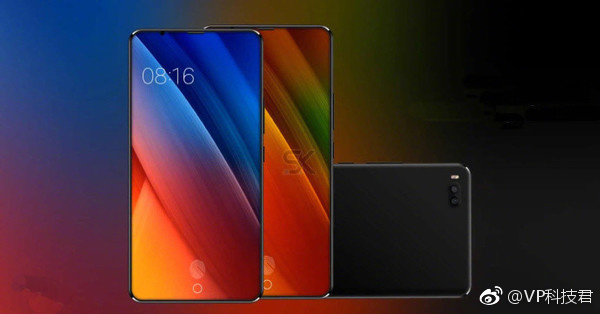
    On the front is where Xiaomi will look to one-up the much-famed Samsung Galaxy S9 and S9+. The leaked image confirms that the Mi Mix 2S will have a different take on the “notch.” The bezels all around the display will be uniform but, the top right corner will protrude a bit and that will house the front-facing camera.

    What’s missing in the render is a fingerprint sensor. This means that Xiaomi could be the second company to launch a smartphone with an in-display fingerprint sensor. This would also mean that Xiaomi will use an OLED panel for the upcoming device as opposed to the IPS LCD panel used on the Mi Mix 2.
    Mi Mix 2s
    Mi Mix 2s Renders

    As we all know, the Samsung Galaxy S9 and S9+won’t look very different from their predecessors. This means that design-wise, Samsung won’t have much to show, and that is where the Mi Mix 2S could excel. A lot of smartphone makers will skip MWC because of the popularity of the Galaxy S devices but, Xiaomi could grab a lot of eyeballs with the launch of this smartphone.

    Apart from the design, the image also reveals that the Mi Mix 2S will be powered by the latest and greatest Qualcomm Snapdragon 845 chipset coupled with 8GB of RAM and 256GB onboard storage.

  • Top 5 Upcoming Smartphones of 2018

    Top 5 Upcoming Smartphones of 2018

    2017 was a great year for smartphones. The bezels shrunk, dual cameras became a norm, and AI gained a few strides. 2018 promises to be another great year for a smartphone enthusiast and the early leaks and rumours are very promising. Let’s take a look at the top five upcoming smartphones of 2018:

    Samsung Galaxy S9/Galaxy S9+

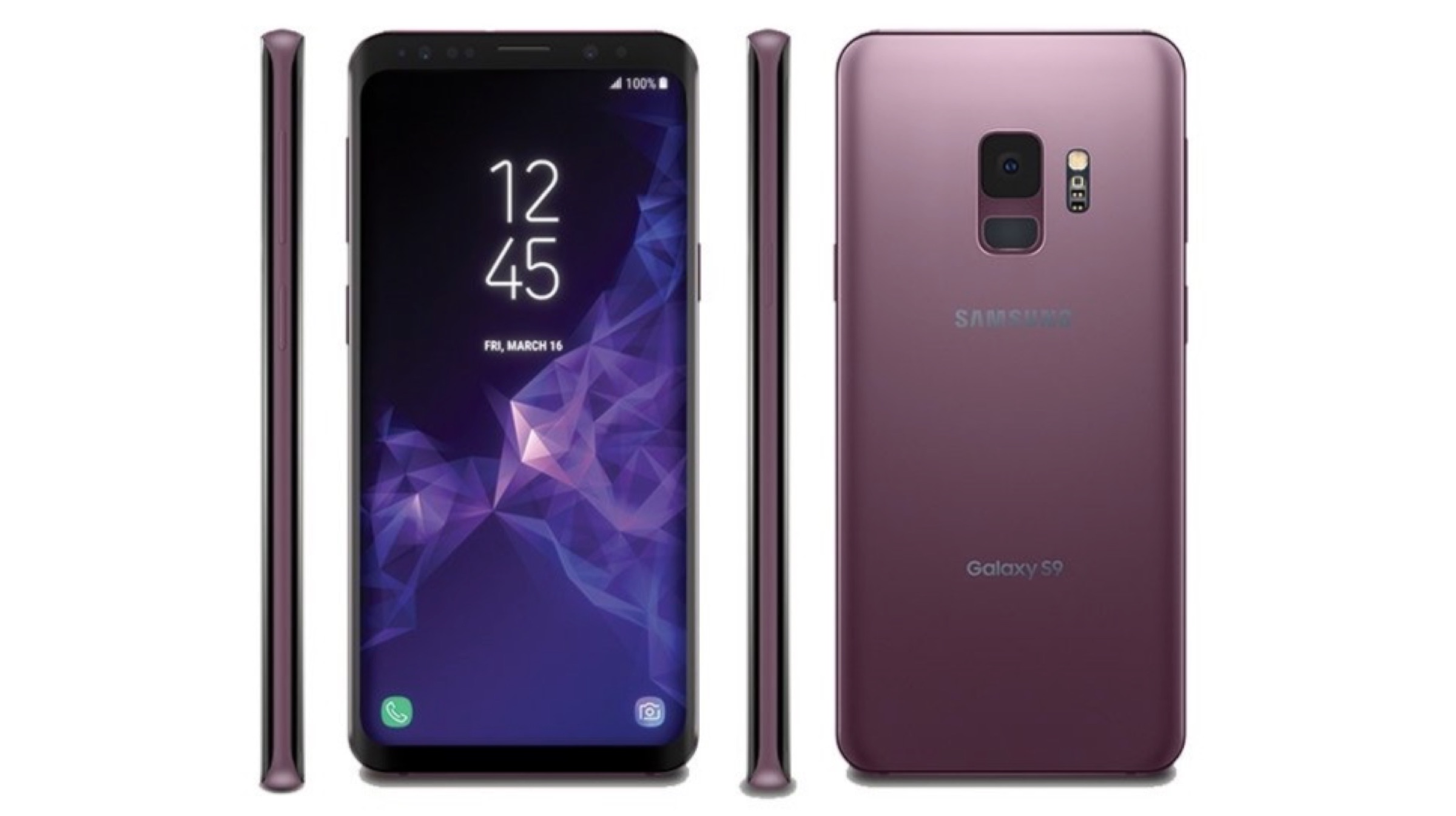
    The first big launch of 2018 will be that of the Galaxy S9 and the Galaxy S9+. The smartphones will be launched at MWC 2018 and will possibly be the first to run on the Snapdragon 845 chipset. After weeks of renders and leaks, Samsung will finally unveil two of the most anticipated smartphones of 2018.

    Design wise, the two phones won’t look different than their predecessors which is not a bad thing. The Galaxy S8 and S8+ are still two of the most stunning devices on the market. The top and bottom bezels will be slightly thinner and the fingerprint sensor will be repositioned. Unlike last year’s, the fingerprint sensor will now be placed below the camera module instead of next to it. That is a great design change which was called for by many Galaxy S8 and Note8 users.

    To compete with Apple’s Face ID, Samsung is rumoured to introduce Smart Scan as well. Apparently, the new feature is a combination of face and iris scanning. This extra layer will improve accuracy and security of the system in extremely dark or lit up environments. These are the situations where iris scanning and facial recognition systems fail. There have been reports that suggest the Samsung Galaxy S9 devices might have a 3D sensor equipped front-camera for improved biometrics.

    Read: Samsung Galaxy S9, Galaxy S9+: Everything We Know So Far

    Xiaomi Mi A2
    Xiaomi Mi 6X
    Mi 6X Could Be Powered By The Snapdragon 670

    There are no rumours or leaks about an upcoming Xiaomi Mi A2 or Mi A1(2018). However, considering the popularity of the Mi A1 in India, the company will be hard-pressed to launch a successor in 2018. The Mi A1 had a more 2016 design with thick bezels but, with budget smartphones also moving on to an 18:9 aspect ratio, the Mi A2 will also have a modern design.

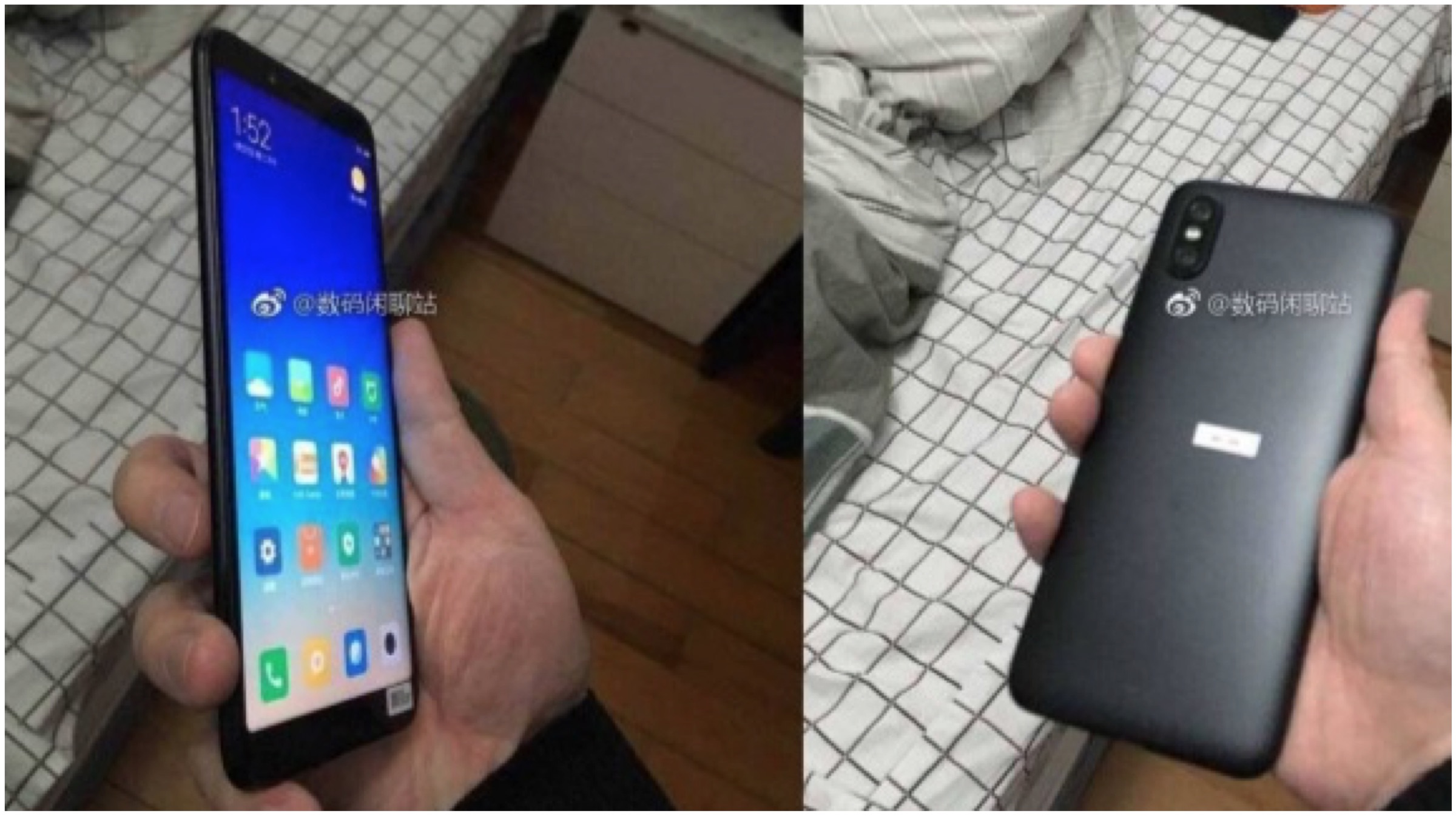
    The Xiaomi Mi A1 was launched as the Mi 5X in China and the Mi 6X could be the Mi A2 in India. So far, there have been a few leaks pertaining to the Xiaomi Mi 6X. According to leaked images, the Mi 6X will have an iPhone X-like vertically placed dual-camera setup along with fingerprint sensor and an aluminium unibody build.

    Up until the Xiaomi Mi A1 was launched, Motorola’s Moto G5 Plus and G5s Plus had the best cameras in the segment. However, the Xiaomi Mi A1 had a great dual-camera setup as well and the Mi A2, in order to sway customers will have to have a great camera performance as well. The Xiaomi Mi A2 is expected to have the same “wide-angle and telephoto lens” combination for the primary cameras. The dual-camera setup on the front is becoming popular as well, meaning the Xiaomi Mi A2 could also have a dual-camera setup on the front as well.

    If Xiaomi does launch the Mi A2 or Mi A1 (2018) in India, it is expected to do well, considering budget smartphones from Honor will have EMUI and a lot of consumers still prefer stock Android OS.

    Read: Xiaomi Mi A2- What To Expect?

    OnePlus 6

    OnePlus 5T

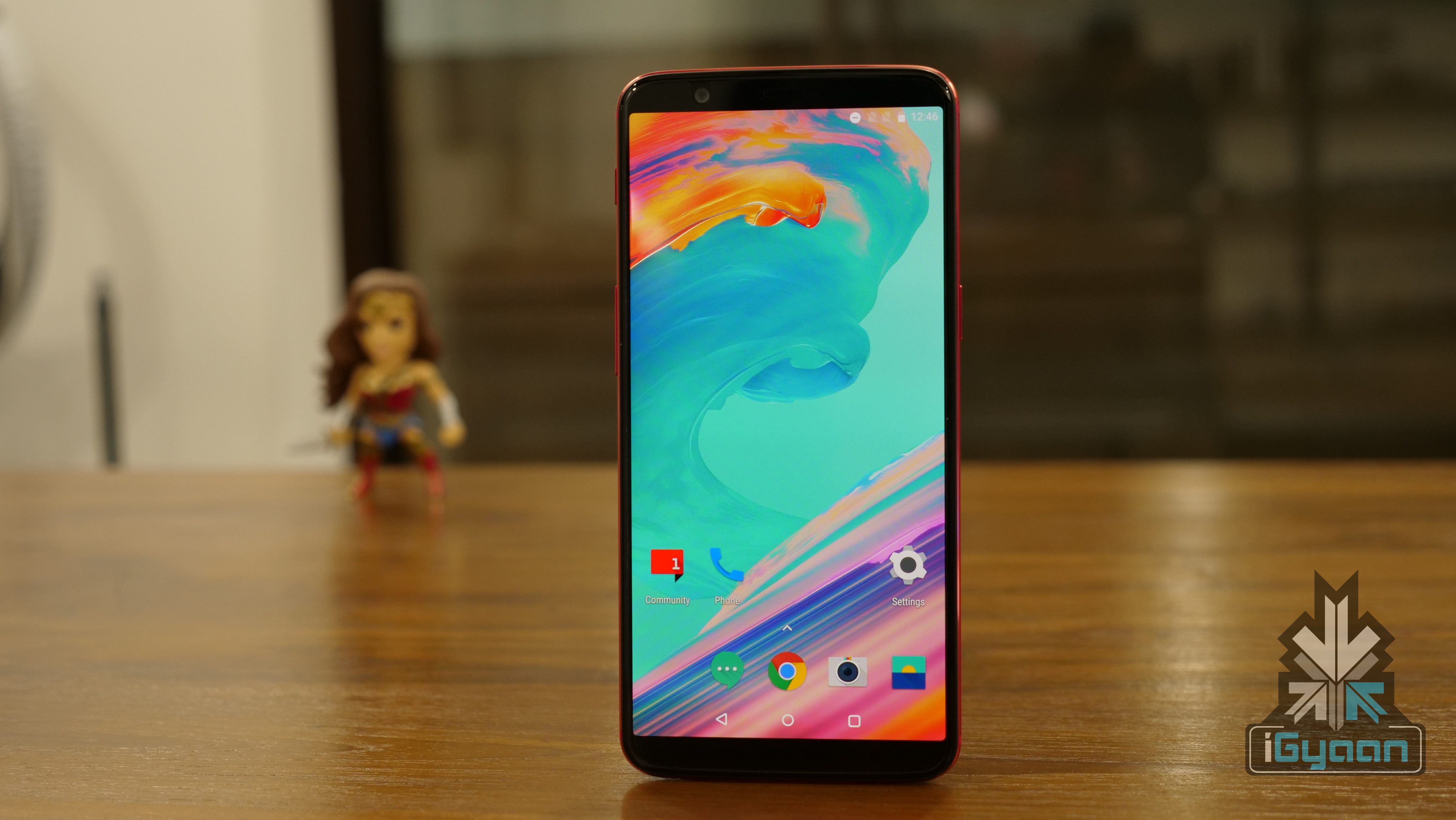
    The OnePlus 5 and OnePlus 5T saw a rise in price which many people weren’t happy about. There was also no water resistance even though OnePlus decided to increase the price of its new flagship considerably. However, early rumours of the OnePlus 6 are in and it appears that the company will be refreshing its smartphone lineup earlier than expected. A report from Android Marvel claims that the OnePlus 6 will be launched in March of 2018 and have a few new features which the OnePlus 5T is missing.

    Inspired by Face ID, the OnePlus 6 will also have its own version of facial recognition. The OnePlus 6 is expected to have a camera hardware setup similar to the iPhone X, complete with a 3D camera module that will use infrared light to measure depth. However, the OnePlus 6 will not have an iPhone X-like notch. Instead, the handset is expected to have a full top bezel where the extra sensors should be found.

    The OnePlus 6 is expected to have the Qualcomm Snapdragon 845 chipset under the hood along with 6GB or 8GB of RAM. Storage options will most probably be the same with 64GB or 128Gb variants of the phone. OnePlus has shown its tendency to launch limited edition variants of its devices and it is fair to assume that the company will do something similar with the OnePlus 6 and possibly, the OnePlus 6T.

    Apple iPhone X Plus
    2018 Apple iPhone lineup

    It’s tentative but, we might see a bigger version of the iPhone X in September of 2018. The iPhone X, launched in September 2017 saw a radical shift from the traditional iPhone design we were accustomed to, since the launch of the iPhone 6. While the iPhone 8 and iPhone 8 Plus were similar to their predecessors, the iPhone X was the special 10th-anniversary device, billed as the true successor to the original iPhone which was launched back in 2007.

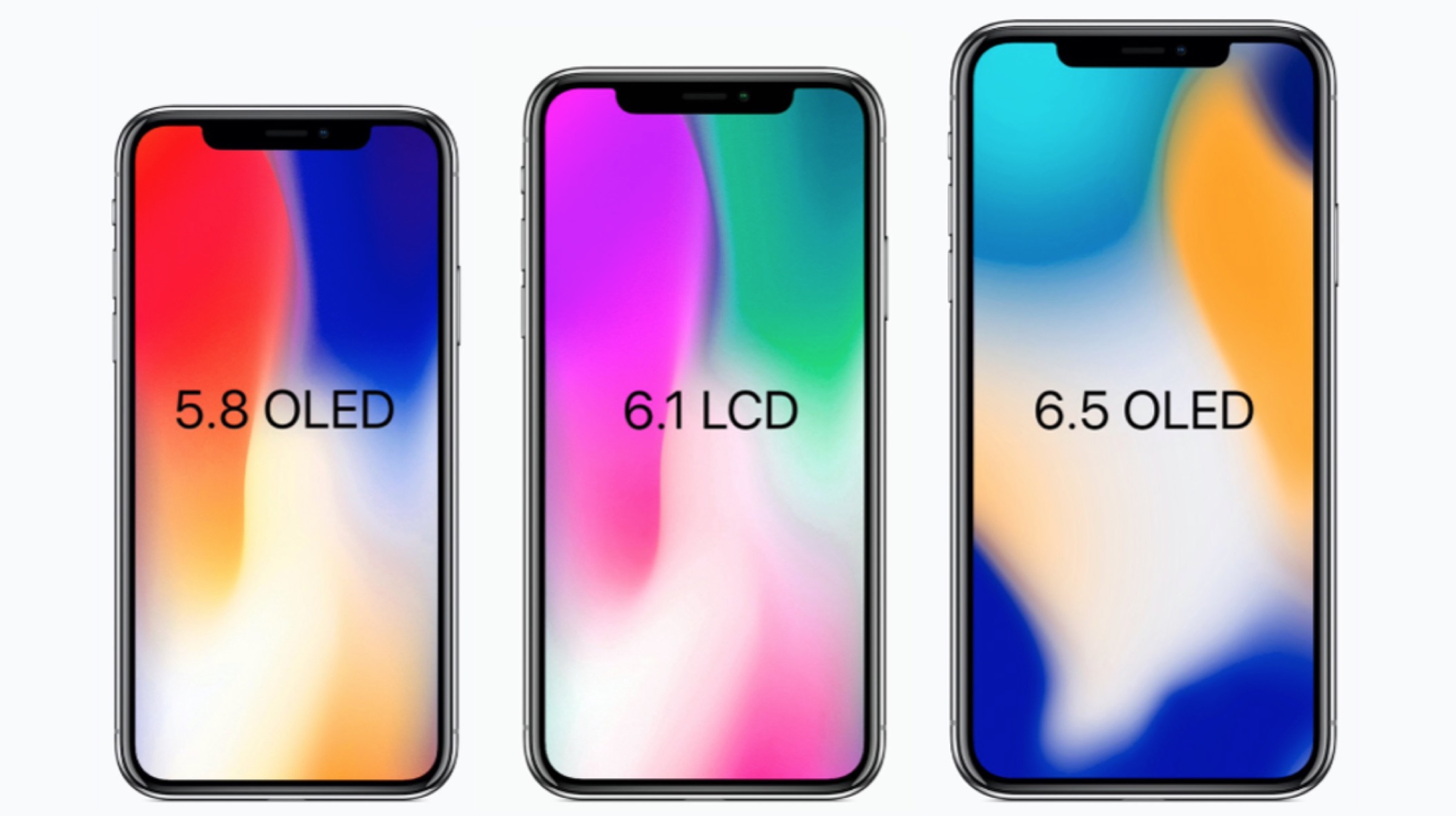
    Early reports claim that Apple will continue the trend and launch three new iPhones in 2018. While two of them will continue to have an OLED display, the smallest of the three iPhones will be cheaper thanks to the LCD display. However, the design of all the three iPhones will be similar to the iPhone X with the notch at the top of the display and vertically placed dual cameras.

    Under the hood, an upgraded A12 (tentatively named) chipset is expected which will, as always, perform better than the previous generation and go toe-to-toe with the Snapdragon 845 chipset.

    Apple made it clear that it will emphasise a lot on the use of AI and machine learning with the introduction of ARKit. This is expected to be taken a notch higher with the next generation iPhones. What will be interesting to see is the nomenclature of all the three iPhones.

    Google Pixel 3/Pixel 3 XL

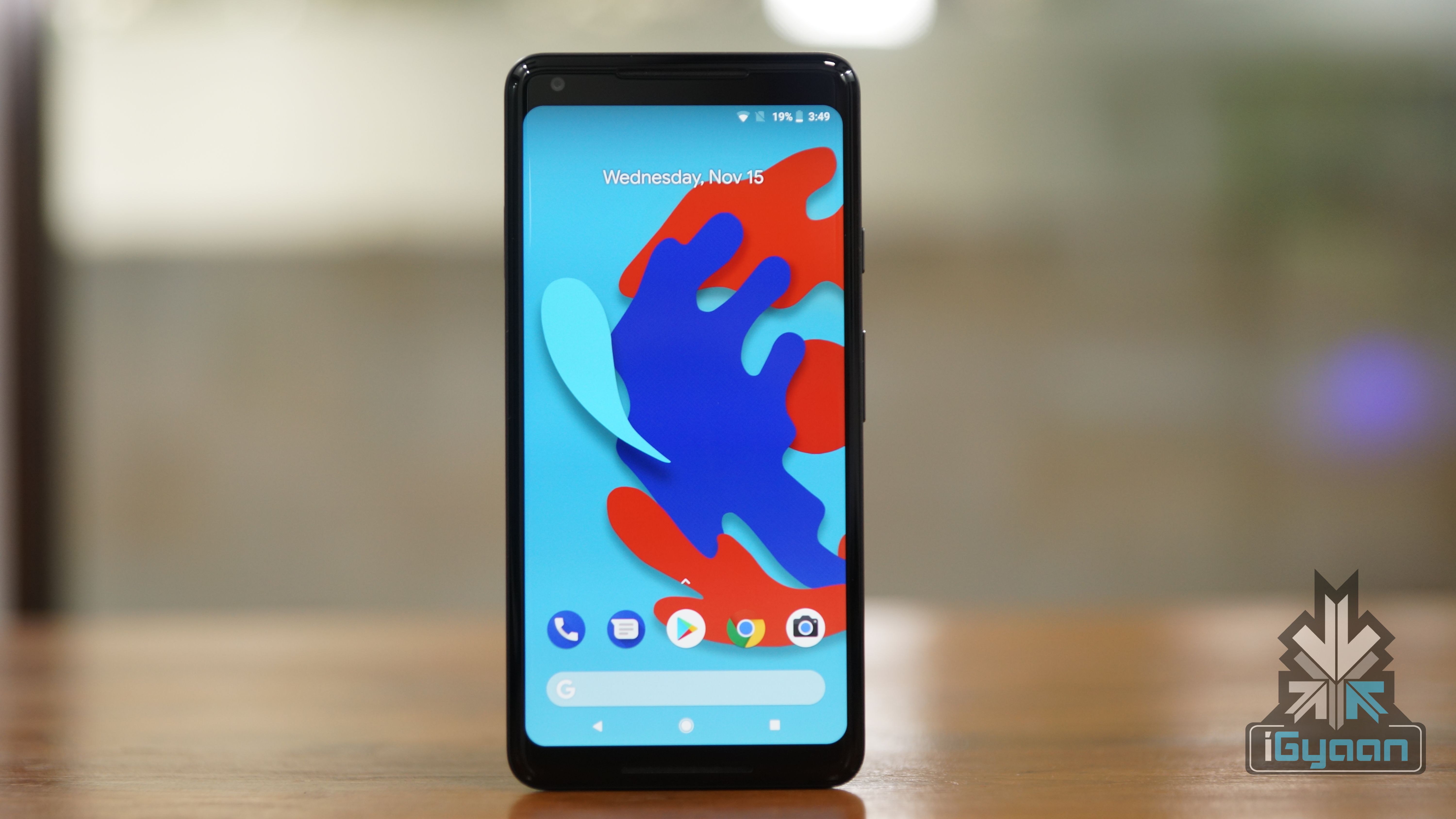
    The Google Pixel 2 and Pixel 2 XL launched amidst a lot of anticipation. Google was expected to deliver two of the best Android phones of the year and while the software and AI integration of the two phones was commendable, Google lost the race in the hardware department.

    In 2018, especially after having the HTC smartphone personnel on board, Google will be expected to rectify those mistakes and deliver great Android devices which will compete with the likes of the Galaxy S9 and the OnePlus 6.

    Similar to the Pixel 2, the Pixel 3 and its bigger sibling will focus a lot on AI and machine learning, and deliver smooth software experience thanks to the stock Android OS. 2018 will see the launch of Android P and the Pixel 3 devices will be the first Android phones on the planet to run o the new Android OS.

    The Pixel 2 smartphones had the best camera on smartphones and achieved dual-camera capable features on their single camera setup thanks to Google’s incredible machine learning and AI implementation. We expect similar results from the Google Pixel 3 and Pixel 3 XL.

    Which smartphone are you most excited about?

  • Xiaomi Mi 7 Specifications Leaked

    Xiaomi Mi 7 Specifications Leaked

    The build-up to Xiaomi’s event at MWC 2018 is very confusing. While companies like Samsung have confirmed the rumours and announced that the Galaxy S9 and S9+ will be launched at MWC, Xiaomi has been rather quiet about it. It was believed that the company would launch the Mi 7 at MWC but, recently, rumours about the Mi Mix 2S have picked up.

    Mi 7

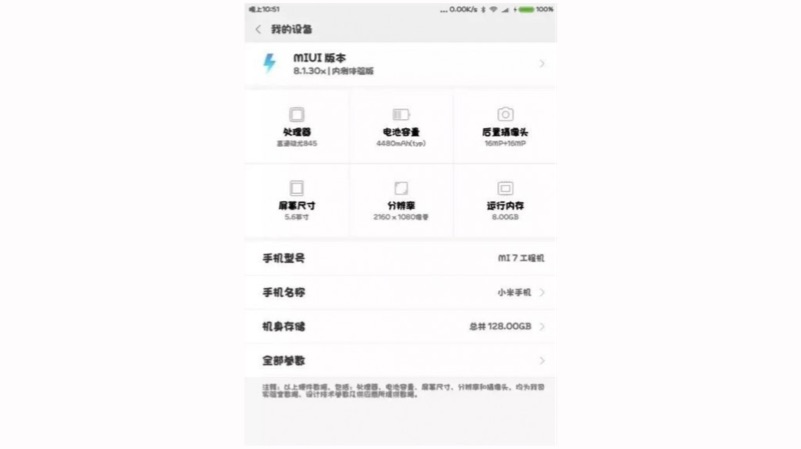
    However, a new leak focuses on the next ‘Mi’ flagship device, the Mi 7. A screenshot, believed to be a Mi 7 device, reveals a few key specifications of the upcoming smartphone. It claims that the smartphone will have 8GB of RAM and 128GB of onboard storage. Powering the device will be a massive 4480 mAh battery, a considerable upgrade over the Mi 6’s 3,350 mAh battery.

    As expected, it runs on the Qualcomm Snapdragon 845 chipset and will have an 18:9 aspect ratio. What is a bit disappointing is that it has a resolution of 2160 x 1080 px instead of 1880 x 1440 px. Considering the fact that it is a flagship phone, the company should be pushing higher resolution for the device.

    Mi 7
    Early Mi 7 Renders

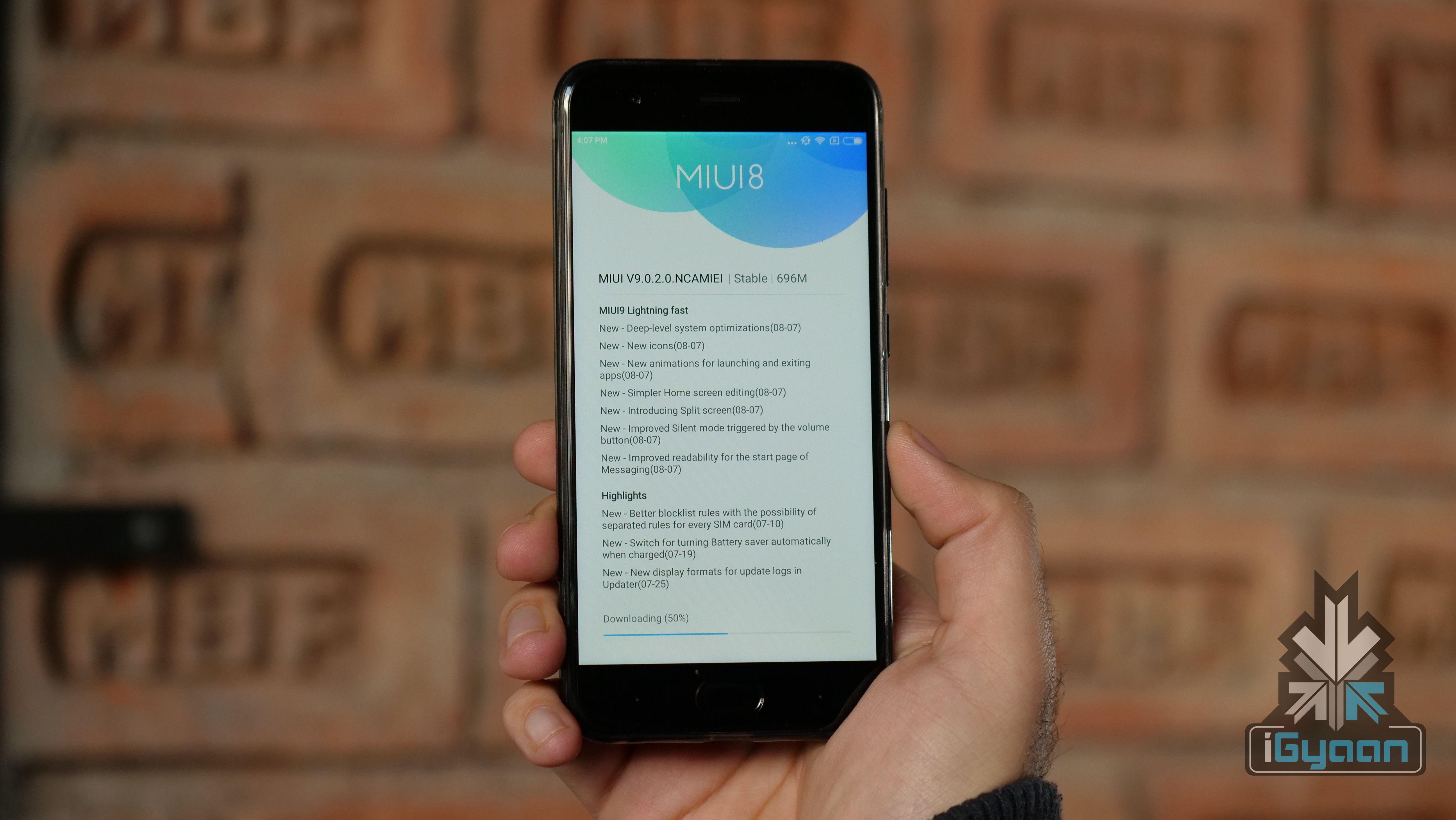
    On the OS front is where the things get a bit sketchy. Xiaomi recently rolled out MIUI 9 for devices that were launched over 4 years ago but, the Mi 7 in this screenshot still runs MIUI 8. While it could be possible that MIUI 8.1.30X means the build is 30th January, and not an old UI, nothing is certain for now. What is certain is that any Xiaomi smartphone launched in 2018 will run MIUI 9 and not an older version.


iGyaan Network
Privacy Overview

This website uses cookies so that we can provide you with the best user experience possible. Cookie information is stored in your browser and performs functions such as recognising you when you return to our website and helping our team to understand which sections of the website you find most interesting and useful.