It looks like the Samsung Galaxy S9 and Galaxy S9+ will have an early access pass to Qualcomm’s next flagship chipset, Snapdragon 845. If Qualcomm decides to go for a similar deal with Samsung like last year’s Snapdragon 835, then Galaxy S9 could b the first device to have the next flagship processor. Samsung manufactured Qualcomm’s Snapdragon 835 chipset and got to keep the initial batch for itself. That’s why early in 2017 there was no other Snapdragon 835-powered handset on the market other than the Galaxy S8.
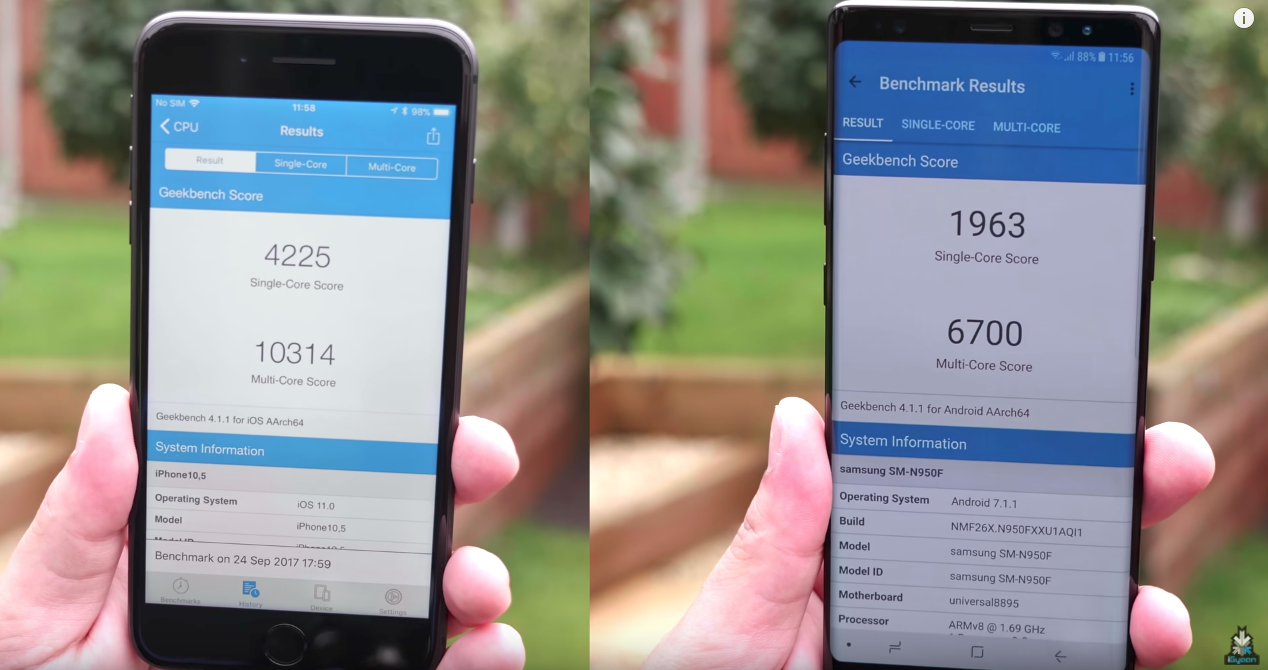
There isn’t a lot known about the Snapdragon 845 but, as the launch of the chipset comes near, there will be a lot more known about it. It is however, rumoured that it is expected to get manufactured through 10nm Low Power Early (LPE) FinFET process. The processor is also said to incorporate a combination of Cortex A75 cores, Adreno 630 graphics and X20 LTE modem. A report suggested that Qualcomm Snapdragon 845 SoC will be clocked at 2.5GHz, suggesting that the upcoming chip may not offer a significant improvement over the Snapdragon 835 as it clocks at 2.45GHz. A recent GeekBench listing of the Snapdragon 845 revealed a single core score of 2600+. In comparison, the Apple A9 scored around 2500 while the new A11 Bionic chipset on iPhone 8+ scored 4200+.
As far as availability is concerned, the Samsung Galaxy S9 and Galaxy S9+ will likely be the first smartphones to have the Qualcomm’s latest chip. This means that rivals like LG would have to go through yet another flagship cycle without access to Qualcomm’s latest chip, just like last year. There were rumours that Xiaomi’s Mi7 will also have the Snapdragon 845 chipset and that the smartphone and chipset manufactures were working together to optimise the chipset for the Mi7 called ‘Snapdragon 845 V2’.
Qualcomm Snapdragon 835 chipset was the incremental update to 2016’s Snapdragon 821 chipset and has largely been excellent in performance. Smartphones like the Samsung Galaxy Note8, OnePlus 5 and Galaxy S8/S8+ have the latest flagship chipset and their performance has been top-notch. On September 12th 2017, Apple announced its three new iPhones and talked a lot about the new chipset inside the iPhones, the A11 Bionic chipset. The first ever chipset from Apple that has six cores, but, still less than the eight cores found in the Snapdragon 835. The iPhone 8 was launched and the customary benchmark tests were performed in which the A11 chipset blew the Snapdragon 835 out of the park on multi-core results.
Founder of Geekbench John Poole, a popular CPU testing portal in a recent interview said:
At this point, you’ve got desktop-class performance in a handset. There’s no way of looking at it any other way. I wouldn’t have thought to use my first-generation iPhone to edit video. I would’ve thought you were crazy. Everybody looks at the A11 scores and they go, ‘Holy crap, this is . . . what does this mean? Are these even comparable? The thing that I don’t fully understand is why performance has seemed to stagnate on the Android side. Where you don’t see these big leaps forward. I don’t understand what’s happening there.
The disparity of scored between the Snapdragon 835 and A11 Bionic is astonishing, considering the A11 has six cores while its counterpart has eight cores. So much is the dominance of the A11 chip that the benchmark results are close to that of a MacBook.
What appears to be an excellent street of horrible luck for the South Korean tech giant, Samsung, the latest news paints a poor picture for the home appliances division .
The US Consumer Product Safety Commission (CPSC) issued a warning that models of Samsung top-loading washing machines have safety issues.
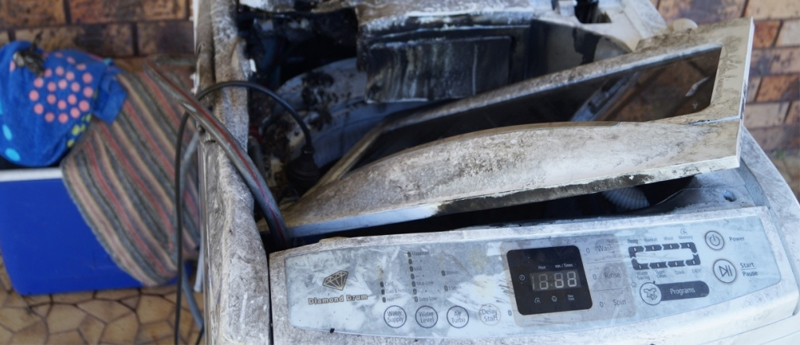
This comes after several disgruntled Samsung Washing machine owners who suffered the “explosion” in their homes, in some cases with parts flying all across the living room, in other ripping the wall of their garage. According to the suit filed by the complainants, Some washing machines, vibrate violently under heavy loads, causing the tub to “become unfastened, resulting in a dramatic centrifugal explosion that destroys the machine and nearby property.”
Three independent women from Texas, Indiana and Georgia have filed the suit, and claim that Samsung has been aware of the problem for many years and has done little or nothing to warn the consumers.
According to the warning by the CPSC people use only the delicate cycle to wash bedding and water-resistant and bulky items because the lower spin speed “lessens the risk of impact injuries or property damage due to the washing machine becoming dislodged.”
An investigation revealed that 21 people have reported to the CPSC that their machine exploded or blew apart since last year, according to ABC News. Samsung and the CPSC are advising consumers to use the delicate cycle only when washing bedding and bulky items.
Samsung’s website offers the following statement:
In rare cases, affected units may experience abnormal vibrations that could pose a risk of personal injury or property damage when washing bedding, bulky or water-resistant items
And also goes on to say, that its consumers of the washing machine “have completed hundreds of millions of loads without incident since 2011.”
This incident comes right after the Note 7 explosion fiasco faced by the company, which has reduced not only the market value of the company but the public morale towards the brand as well.
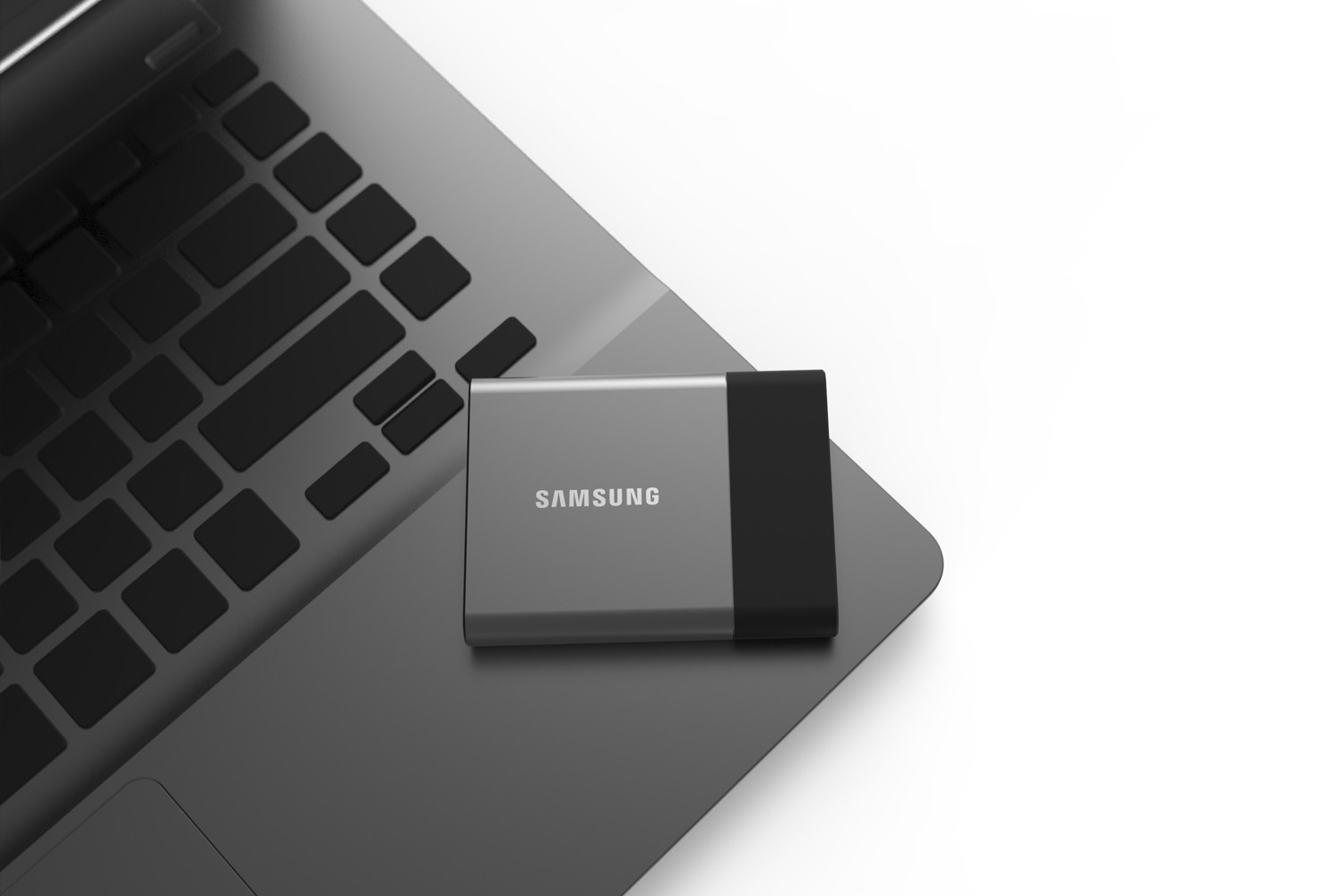
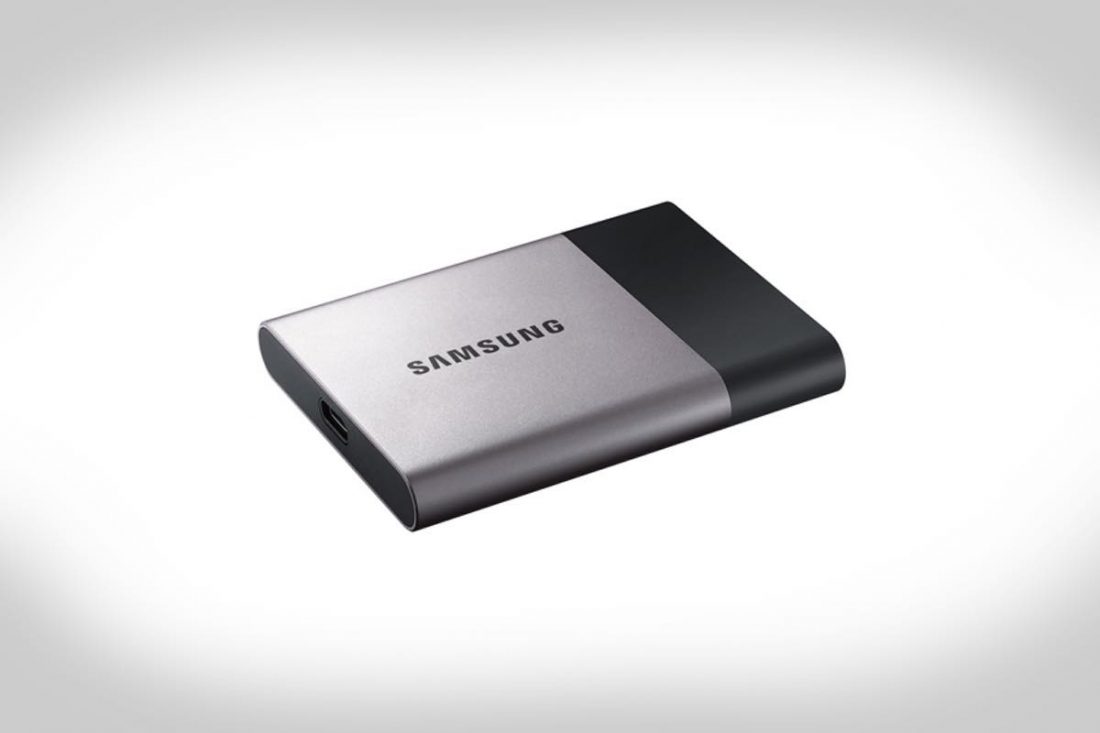
Samsung Electronics India today launched the successor to the T1 ultra portable SSD with the T3. The T1 was a light, thin and fast SSD that was launched last year. The T3 is bigger and offers a lot more storage than its predecessor.
The T3 is available in 250GB, 500GB, 1TB and 2TB options priced at Rs 10,999, Rs 18,999, Rs 37,999 and Rs 74,999, respectively. The T1 sports an all-metal body and will be available for purchase starting March 21 across offline and online stores including Flipkart, Amazon and Snapdeal. The T1 also comes with a 3-year warranty.
Like the T1, the T3 has a credit-card shape and is light and compact, weighing around 51 gms, designed for easy portability. Samsung claims that the SSD can survive a 6 feet drop. The T3 is capable of read/write speeds up to 450 MB/s. With a full AES 256-bit hardware encryption, the T3 guarantees safe and secure data.
The T3 supports both USB 3.1 Type C as well as USB 2.0 and is compatible with laptops, desktops, SmartTVs, tablets and Android devices. The T3 was first unveiled at CES 2016 and Samsung will gradually phase out the T1 after the launch of the successor on the 21st.
MediaTek has announced its latest SoC for budget smartphones called the Helio P20. It will be the direct successor to the company’s Mediatek Helio P10. The new chip is built using SMC’s latest 16nm FinFET Plus (16FF+) process and the company claims, as a result, the Helio P20 will be 25% more energy efficient than its predecessor. It’s also the industry’s first SoC to support LPDDR4X, which is Samsung’s more efficient LPDDR4 RAM.
“MediaTek designed the MediaTek helio P20 to meet today’s consumer demand for sleek, powerful yet highly power efficient mobile devices,” said Jeffrey Ju, Executive Vice President and Co-Chief Operating Officer at MediaTek. “Consumers place increasing importance on the battery life and multimedia capabilities of their smartphones. MediaTek has risen to this challenge with a leading solution,” he added.
The Helio P20 is structured to come with eight Cortex-A53 cores which are the same number of cores as the last generation, but the new SoC is clocked higher at 2.3GHz owing to the move to the new manufacturing process. It also has ARM’s latest Mali-T880 GPU, but unlike the GPUs found on high-end mobiles, the GPU on the particular SoC comes with only two cores which are clocked at 900MHz, quite high for mobile GPUs.
The Helio P20 SoC is also the first SoC to support Samsung’s LPDDR4X, which according to the company provides 70 percent more bandwidth and 50 percent higher efficiency compared to LPDDR3. This is achieved by lowering the supply voltage to a low 0.6v.
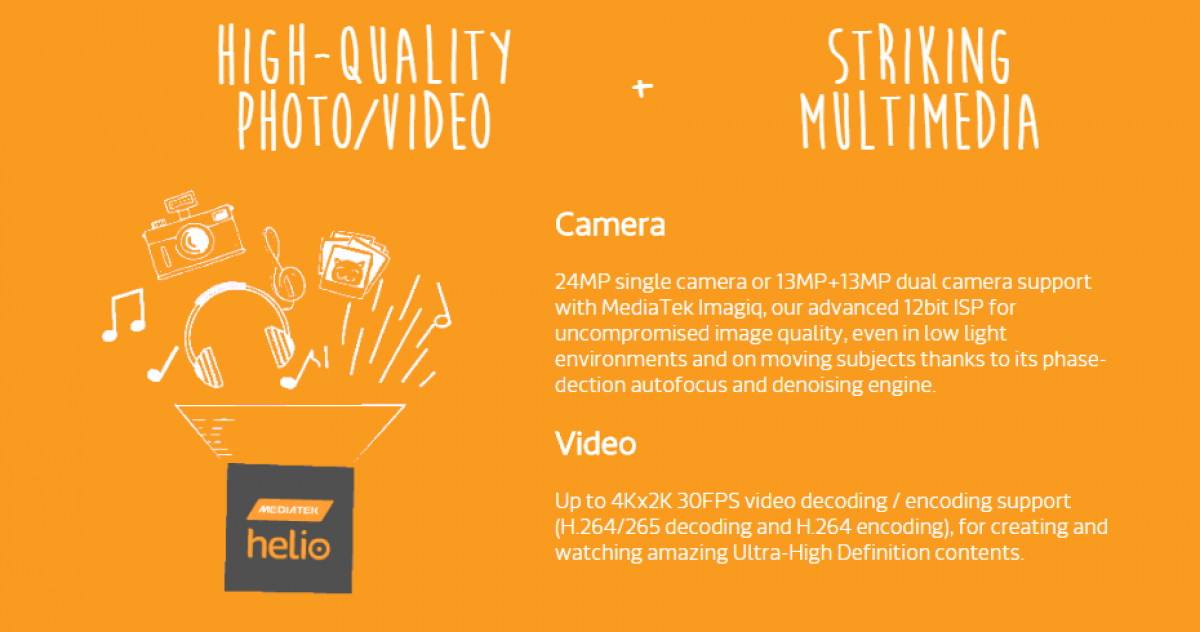
The SoC uses MediaTek’s latest Image Signal Processor (ISP) which adds support for dual-phase detection autofocus significantly improving autofocus performance by upto four times compared to conventional autofocus systems.The company has revealed that phones using the Mediatek P20 could be seen as early as second half of 2016.
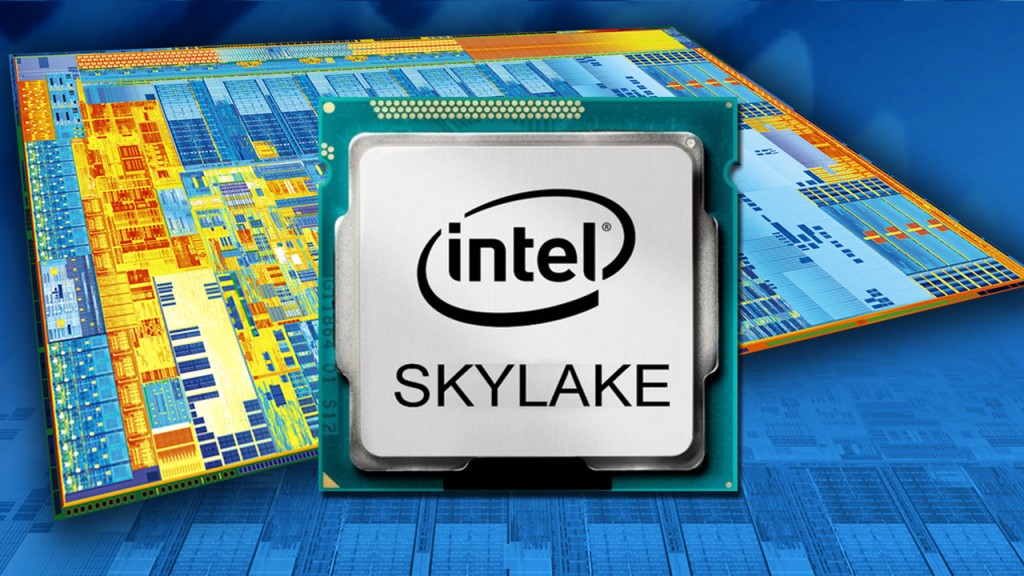
News that is sure to miff overclockers around the globe, Intel has gone ahead and released an update for its Skylake CPUs to stop users from overclocking processors which it believes they shouldn’t. For overclockers searching for an economical way to get a little more juice out of their powerful computing hardware, the skylake generation of processors came as a godsend.
Users with the locked, Non-K skylake processors towards the end of last year, started receiving BIOS updates from ASRock which enabled base clock frequency overclocking. Other motherboard vendors followed with such BIOS updates thus giving users a relatively inexpensive intel processor to overclock.
These Skylake processors that were discovered to be readily overclockable are now having their speeds clocked back down, with Intel shipping a new microcode update for the chips which closes a loophole.
Speaking about this, an Intel spokesperson said,” ”Intel regularly issues updates for our processors which our partners voluntarily incorporate into their BIOS. The latest update provided to partners includes, among other things, code that aligns with the position that we do not recommend overclocking processors that have not been designed to do so. Additionally, Intel does not warranty the operation of the processor beyond its specifications.”
With this, Intel has once again tried to push overclocking enthusiasts to an expensive corner where they have to shell out extra money just to buy unlocked K range processors which are also not covered under warranty for overclocking. Well played, Intel.
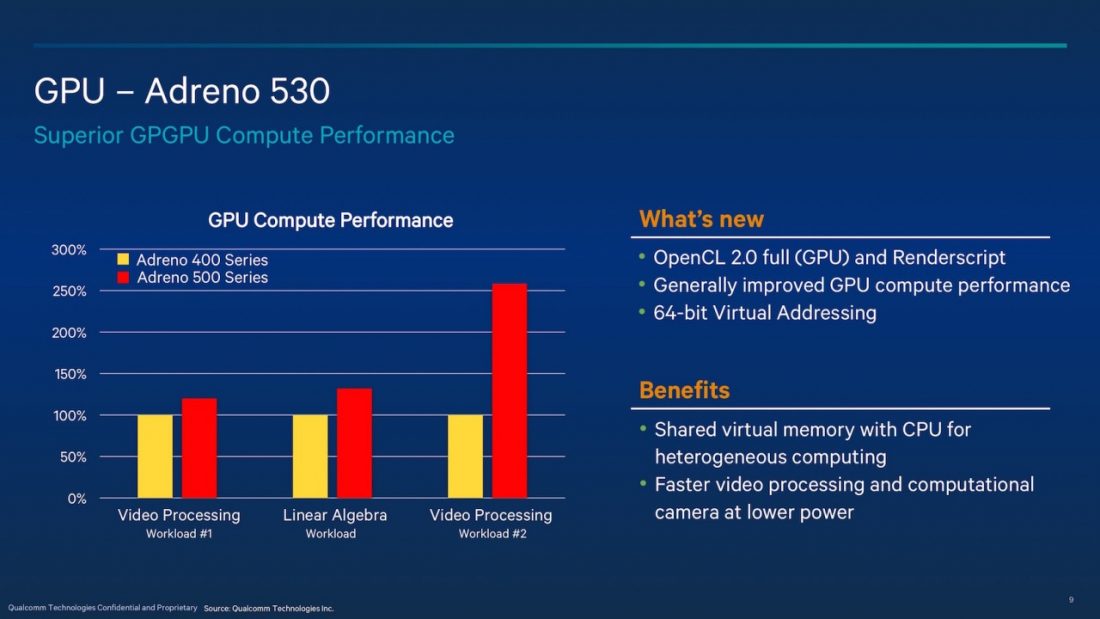
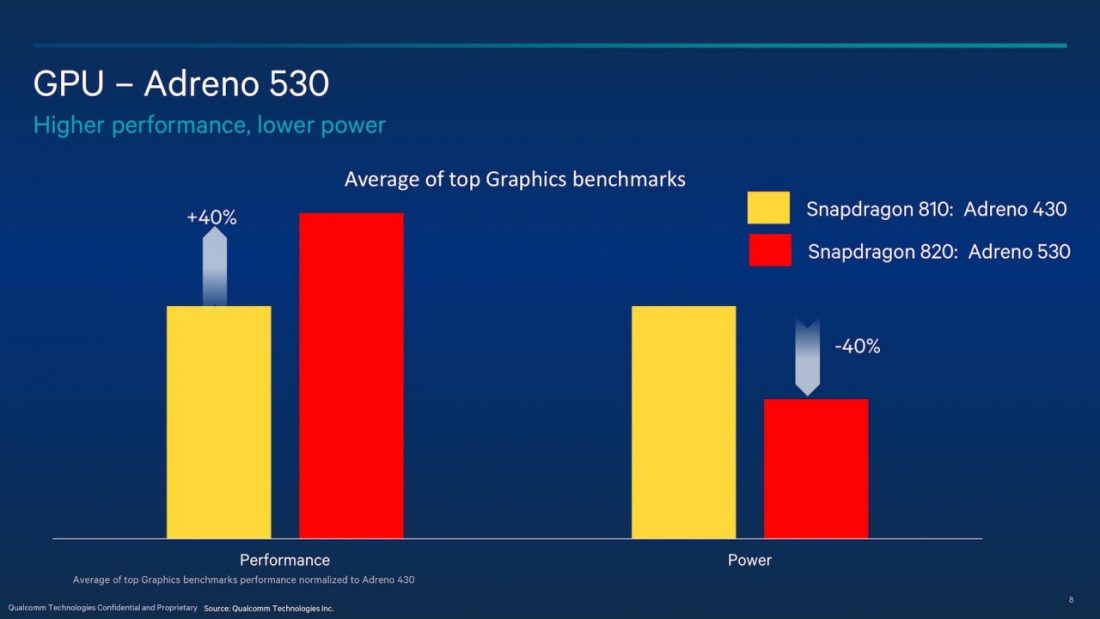
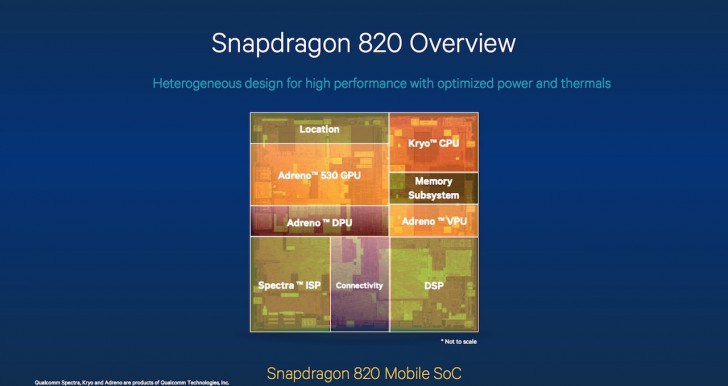
As MWC 2016 nears, news of new smartphones using Qualcomm’s latest 820 SoC is going to start coming in thick and fast. The snapdragon 820 SoC is slated to come with Adreno 530 GPU which is said to give almost 40-50% more performance than last year’s Adreno GPU, and as claimed by Qualcomm is going to be more energy efficient too.
Well, for starters Snapdragon 820 is a chip built from scratch. The CPU cores, the GPU, the DSP, the modem, the image processors. everything has been upgraded after the debacle that the Samsung 810 was. On this new architecture, Qualcomm claims to have upgraded things across the board.
The Adreno 530 will be offering up to 2.5 times an increase in video performance. It will also be coming with full support of OpenCL 2.0, Renderscript, Vulkan, OpenGL ES 3.1 + AEP. Shared Virtual Memory, which comes with OpenCL will now allow data sharing between an Open CL’s host and the device’s GPU.
Last year’s GPU was a nightmare for Android gamers who faced grave heating issues owing to the GPU of the chipset while all the time having to deal with dismal graphics performance. Qualcomm has revealed that a lot of work has gone into the GPU on the 820 SoC to ensure that the 530 can achieve 40-50% performance boost at acceptable energy levels.
Seeing is believing, and as such, early GFXBench tests have also revealed that the Adreno 530 might just really be the beast Qualcomm claims it to be. The 6-Core GPU, PowerVR GT7600 found on the iPhone 6s Plus comes close to the might of the Adreno 530 but loses out to it in the end.
Surprisingly, the only GPU that did beat the 530, and that too by a small margin, was the Nvidia Tegra X1 chipset. Worth a mention is the fact that the Tegra X1 because of its form factor is found on large tablets. Such is the might of the Adreno 530 that other GPUs like the Mali-T760MP8 and the Mali-T880 MP4 couldn’t even come anywhere close to it in the benchmark tests.
This will come as great news especially for those of us who are looking to buy the Galaxy S7 once it arrives. Samsung’s flagship offering from last year, the S6, and S6 Edge, though being heavy on specs did lose out to the iPhone lineup when it came to raw graphics processing power.
The Mali T760MP8 on the Exynos and the Adreno 430 on other Android handsets sporting the Snapdragon 810 were significantly under-powered for graphics tasks. The resurgence of Snapdragon with the 820 could close the huge divide that had been created over the last year.
For gamers and power users who prefer the Android platform this could indeed turn out to be a good year.
It’s close to four years now that graphics chips for our favourite video cards have been manufactured using 28nm process. Back in the day when TSMC moved up from the 40nm process directly to the 28nm process node capable of fitting billions more transistors into their GPUs it marked a monumental leap for the gaming industry.
This leap was what lead to the Xbox One, and PS4 coming to reality, the reason that gave Nvidia and ATI the power to equip us with the hardware to achieve what then was the dream of 1080p/1440p at 60+ frames with a single card. Fast forward to 2016, and thanks largely to the Taiwanese chip maker, TSMC, the industry has been stuck in a limbo struggling to improve the graphics hardware at hand.
1440p and 4K monitor and TVs have made their way to into our homes some time back, but sadly gaming on them at their native resolutions without shelling a fortune has remained a distant dream because of this stagnation that the industry has faced. But worry no more, 2016 comes bearing gifts in the form of the upgrade to the new 14/16nm process nodes.
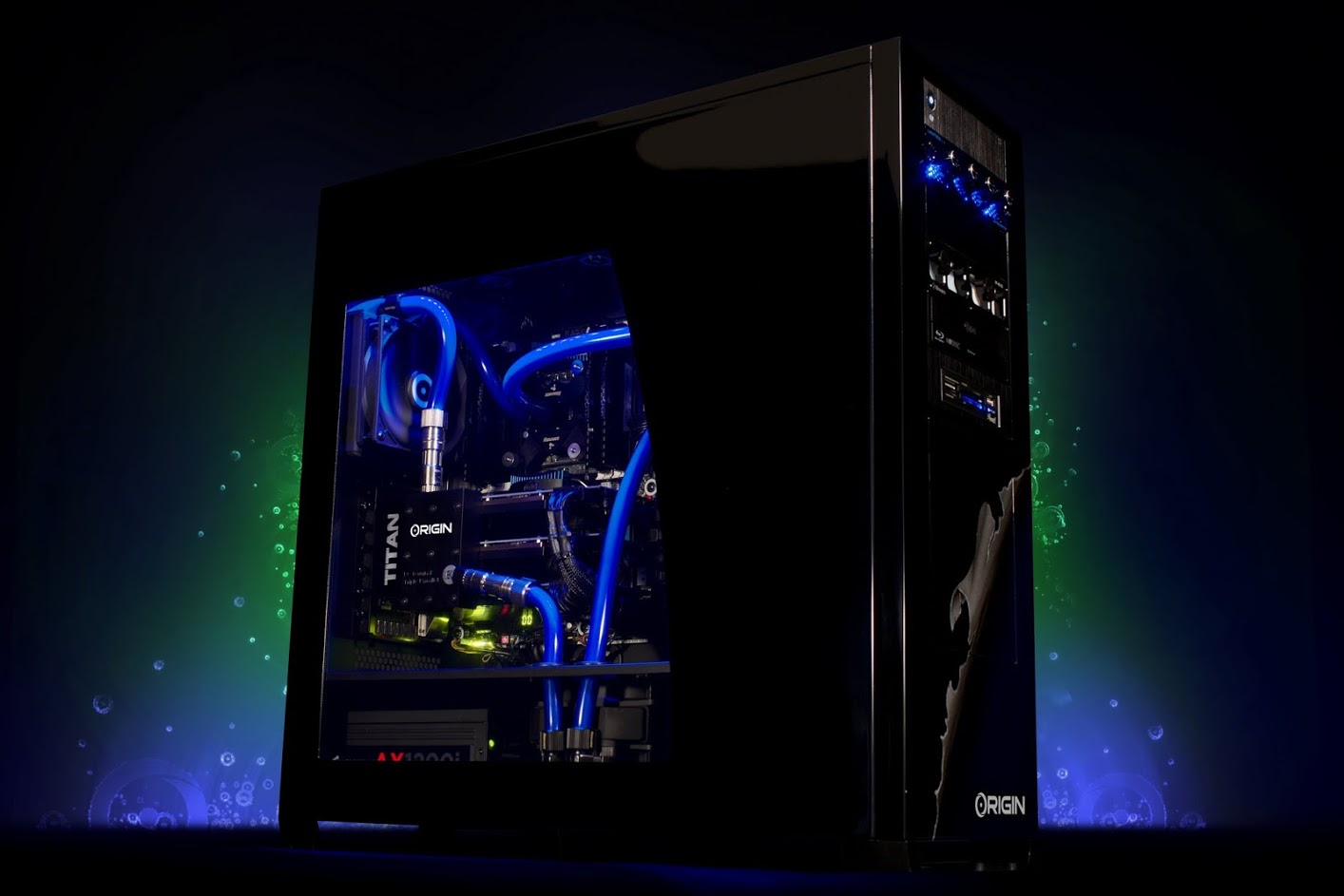
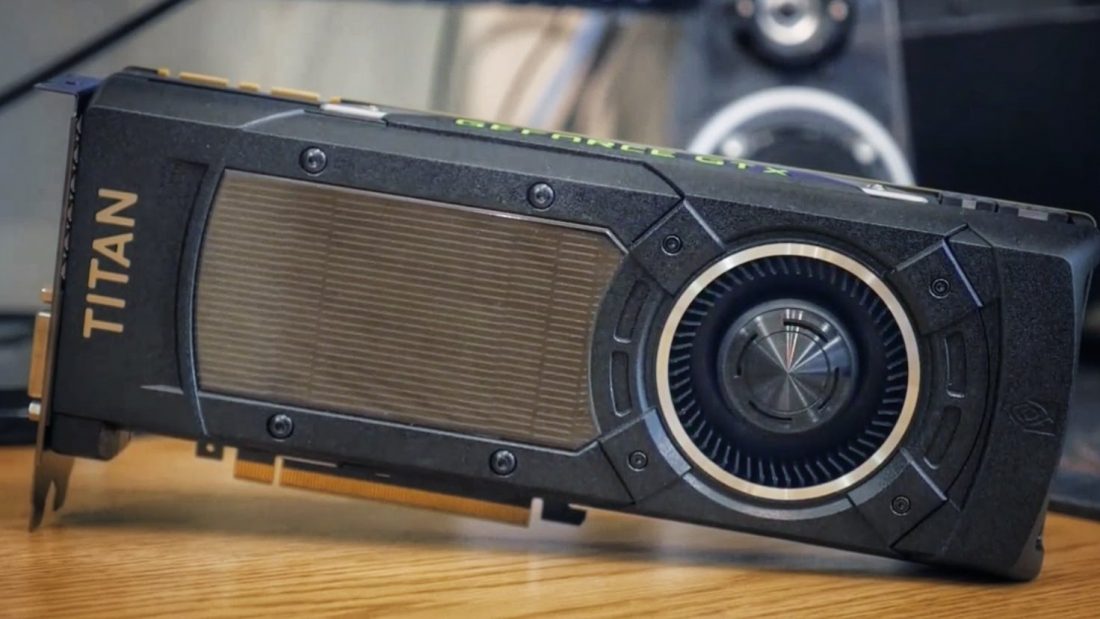
The beast GTX Titan
In simple terms, you will see 2016 come with graphics hardware that would give almost double the performance for the same price point. More importantly for budget conscious users in India building low-cost builds you will get graphic cards that maintain performance but cost almost half as what you would be paying for a card right now.
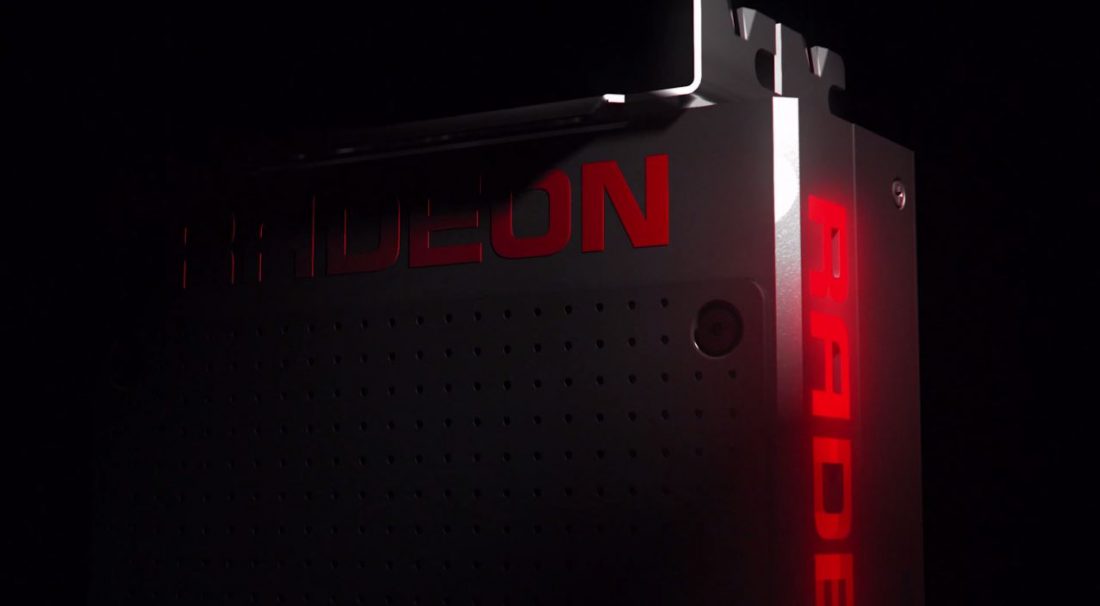
This upgrade on the manufacturing side of things should allow for much, much more complex GPUs. To put things in perspective last year’s high-end cards such as the Gtx Titan X and the Radeon Fury X which maxed out at between 8-9 billion transistors will see their successors using the Pascal, and Arctic architecture house between 16-17 billion transistors, resulting in almost double the power, at the same cost. No amount of stress on this fact could explain how big a leap this will be for the gaming industry in the coming days.
This move up will also enable these new architecture cards to use second-generation stacked HBM (High Bandwith Memory) which will provide better optimization of VRAM(Video card memory) than what previous generation GDDR5 memory provided. First-generation of HBM only allowed 4GB of HBM RAM to be used, but improved bandwidth using the new process node could take this figure easily up to 16/32 GB of RAM.This could be especially useful for managing the high demands of 4K, multiple displays, and VR gaming that the future holds for us.
Add to this the added bonus of highly improved power efficiency leading to low chances of a need for an upgrade to a new expensive PSU, and possibly even decreased power bills, it just makes it more and more obvious as to why the average gamer should be excited about 2016.
With VR making for an increased push into our gaming world, and people looking at 1440 and 4k gaming seriously, these advancements in GPU tech could make all of it well within an average gaming enthusiasts reach in a few months time when the first cards carrying 14/16nm nodes hit the market.
And just to be clear, if VR, and high-resolution PC gaming isn’t your thing, the impact of this switch in process will extend across the market, and into your homes in one way or the other. This ripple effect might take some time but as the whole range of 14/16nm GPUs appears with new chips, we could very well be looking at not far off double the performance at any given price point by year’s end.
This move could also prompt console makers such as Sony, and Microsoft which use iterations of Radeon HD 7870, and 7790 to power their beasts to use the latest in GPU technology for cheaper consoles in a year’s time. So no matter what platform is your choice, 2016 is going to be a good time for all those who like to game.
While the personal computer industry is still trying to make the massive transition from mechanical Hard Drives to Solid State Drives, a new entrant has jumped into the fray to tilt the balance towards the newer technology’s favour.
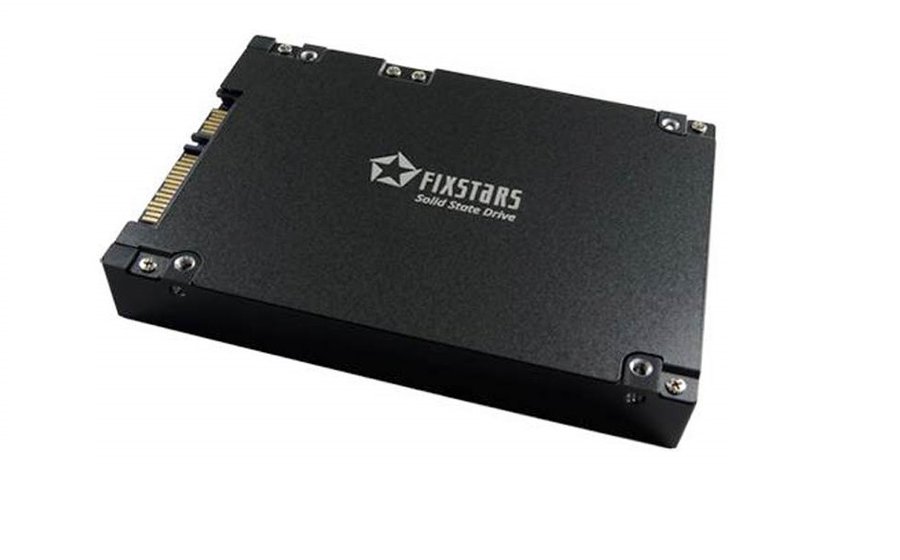
For years now, SSDs have lurked in the shadows, and because of technological constraints have trailed HDD’s in terms of storage space, but all of this is about to change now. Meet Fixstars SSD-13000M.
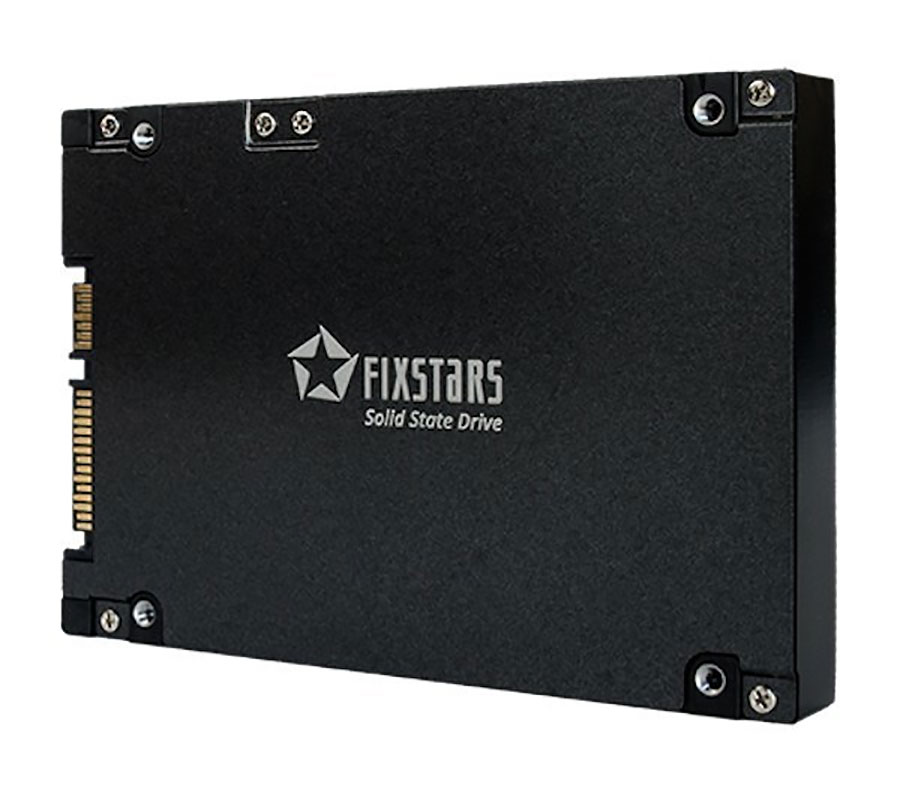
This dull looking SSD from Fixstars comes with a massive 13TB of NAND-based flash memory, and is the biggest SSD so far. Put that in context with the fact that the biggest 2.5 Inch HDD available in the market is a 10 TB storage device by Seagate, you understand how impressive the tech behind this piece of computer hardware is.
But as with most good things, this SSD also comes at a cost, and I’m not talking about the interesting price tag of $13000( approx Rs 8,50,000) that it comes at. According to Fixstars own benchmarks, SSD-13000M because of its size loses out a bit on the speed. The company here has decided to go for steady performance instead of speed.
This device is not focused at home users, and as such the steady performance at the exorbitant price does end up making sense. Considering that it’s no trivial task to combine, and validate so much NAND per drive, such pricing for the device can be considered acceptable.
The Fixstars 13000M uses a specialized disk controller designed by the company and 15nm Toshiba MLC NAND memory. Sequential speed is listed as 580MB/s, sequential write is 540MB/s. Power consumption is listed to be 3W at idle and up to 6.5W under load.
It can be years before NAND Technology becomes cheap enough for such applications to make its way into our homes, but for enterprise users with cash to burn, this offering from Fixstars does make a compelling argument in its favour.
Back in December, we heard that a Chinese company by the name Oukitel was setting out to launch a smartphone with a 10,000mAh battery that could power the device for unto 10 days. The device, named K10000 Pro will start shipping from January 21st.
But that’s not the only device Oukitel is pushing out. Word is that the company also has a smaller K4000 Pro, which, as the name suggests, comes with a 4600mAh battery that promises to give you enough juice for up to 6 days of “normal use” (according to the manufacturer’s standards), and up to 80.5 hours of talk time.
While the main attraction of the device is the massive battery pack, the device also comes with decent specs for a low-priced phone. The K4000 Pro sports a 5-inch, 720p-resolution LCD screen. It is powered by a MediaTek 6735P chipset with a quad-core CPU running at 1GHz. Other features include 2GB of RAM and 16GB of expandable storage memory, which isn’t going to do well under graphic intense games, but that’s also one of the reasons behind the long-lasting battery.
In terms of looks, the K4000 Pro comes with a machined metal frame whose four angles are reinforced to improve its endurance under drops. A 0.4-inch thick tempered glass gives the display device an added protection and durability, so much so that the device substitutes for a hammer, according to the company’s video.
The device will run on Android 5.1 Lollipop and Ouktitel says that it will be upgradable to Android 6.0 Marshmallow later on. The handset supports dual-SIM and comes with basic connectivity features like Wi-Fi, Bluetooth, GPS, and USB OTG.
Oukitel is having a pre-sale event between January 19 to February 1, where it will sell the device for $120. Furthermore, a limited batch of the K4000 Pro will be up for grabs for $90 on Tuesdays.
Qualcomm has struck a deal with Samsung which will see the latter manufacturing the former’s newest Snapdragon 820 chipsets. In a news that is surely going to make the tech world take notice, Qualcomm’s deal could see the two companies handle the chip manufacturing for a majority of flagship devices for the first half of 2016.
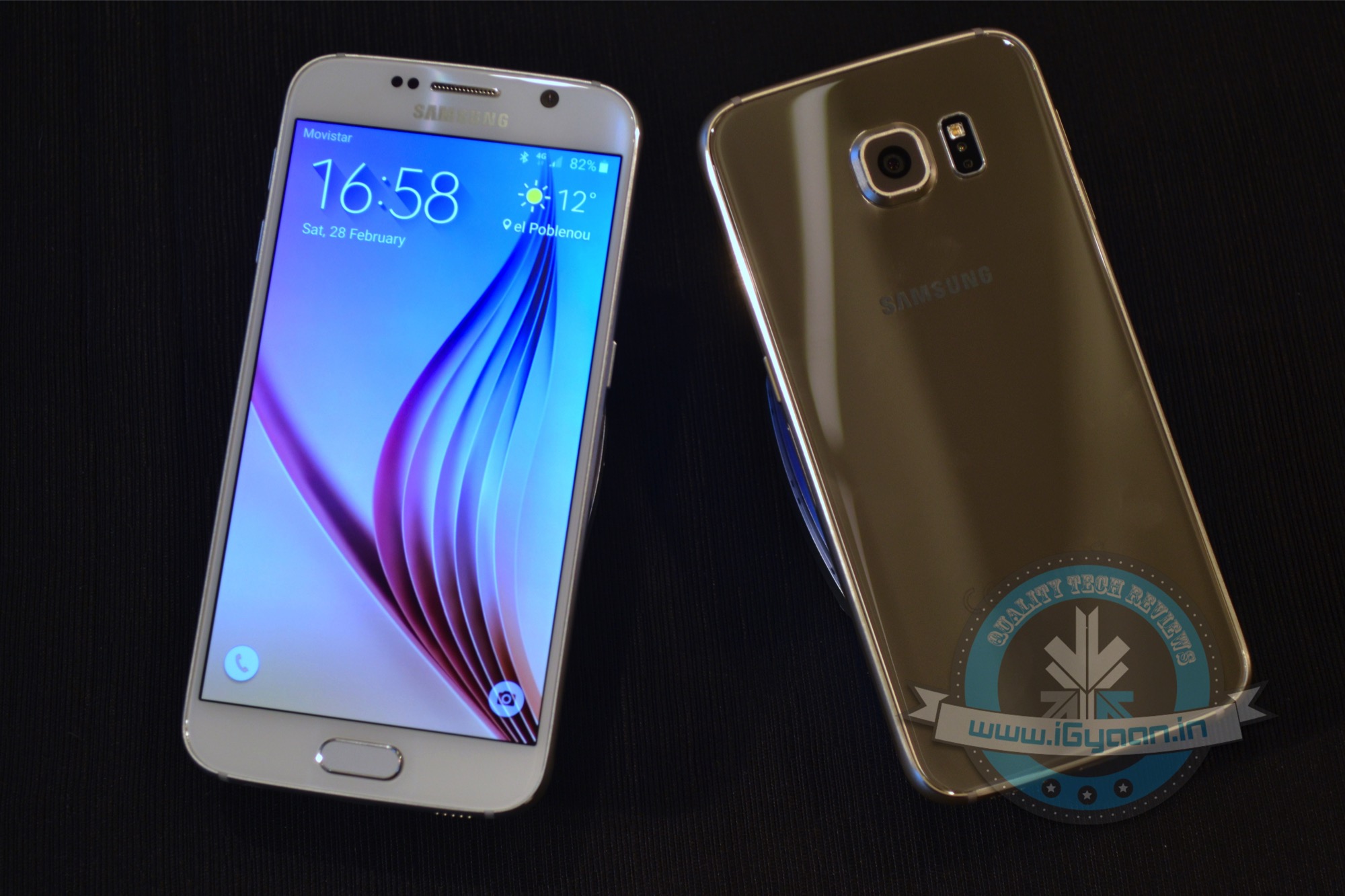
We’ve been hearing a lot of rumors and speculations regarding Samsung’s upcoming Galaxy S7 flagship devices. The general word going around is that at least one variant will be featuring the Snapdragon 820 chip while the others will sport Samsung’s Exynos chipset.
Samsung today announced that it has begin mass production of chips using 2nd generation of its 14-nanometer LPP (Low-Power Plus) process – a technology that will power both Samsung’s Exynos 8 octa processor and Qualcomm’s Snapdragon processor.
Here’s why the Qualcomm-Samsung deal is likely to be a win-win for both companies. Using Samsung’s 14nm process will not only help produce cheaper chipsets that consume less power, but will also help Qualcomm emerge once again as a leader in performance processors, especially after the pubic’s anger over the Snapdragon 810’s heating issues and power consumption. Since the new SD820 is supported by 14nm chips (down from 20nm for the S810), it’s only fitting for Qualcomm to seek Samsung’s technology.
Secondly, the move will benefit Samsung as well because the 820 offers better performance than the Exynos. “I do believe Samsung must use the 820 to be more competitive with Apple. 820 hits performance per watt levels Exynos just can’t hit,” said Patrick Moorhead, president and principal analyst at Moor Insights & Strategy.
Together, Samsung and Qualcomm are likely to produce the bulk of processors for major flagship devices this year. Samsung has claimed that the new 14nm LPP process delivers up to 15 percent higher speed and 15 percent less power consumption over the previous 14nm LPE (Low-Power Early) process.
This news, however, still doesn’t confirm whether Samsung will use the Snapdragon chip for its own S7 flagship devices, and the Korean giant has yet comment on the same. Looks like the two companies are ready to renew their friendship, and we’ll just have to wait and see how the Qualcomm’s new chip in the hands of Samsung will turn out.
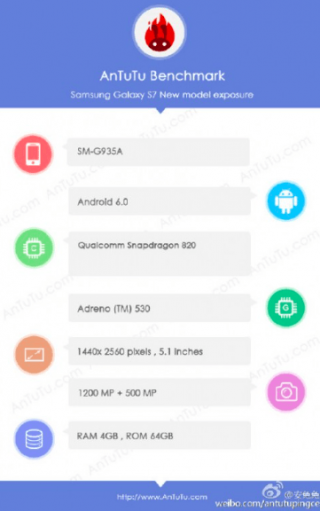
The launch of Samsung’s upcoming flagship Galaxy S7 devices is a month or two away. As is always the case when it comes to big launches such as this, leaks and rumors are always in plenty. Today, we have one that possibly confirms what we have come to know about the S7, at least specification wise. AnTuTu posted on Weibo the specs of the 5.1-inch Galaxy S7 device.
It is already confirmed that the flagship device will sport Qualcomm’s latest Snapdragon 820 chipset, and AnTuTu confirms the same. Other specs listed include 4 GB of RAM, 64 GB internal storage, Adreno 530 GPU. The device will run of Android 6.0 Marshmallow ( no surprises there).
There have been a lot of rumors and speculation around the camera of the S7. The newest rumors suggested that Samsung will in fact downgrade to 12 MP camera and focus more on improving low-light imaging and wider dynamic range. To do this, Samsung is making taking help of the new BRITECELL setup. AnTuTu confirms that the device will sport a 12 MP rear sensor and a 5 MP front. Looks like Samsung is sticking to quality rather than quantity here.
While the specs are pretty much out and about now, there’s still some surprises to expect on the design front. It is also unknown how Samsung plans on distributing the Snapdragon 820 and Exynos chipsets among the 5.1-inch, 5.5-inch, and 6-inch variants.
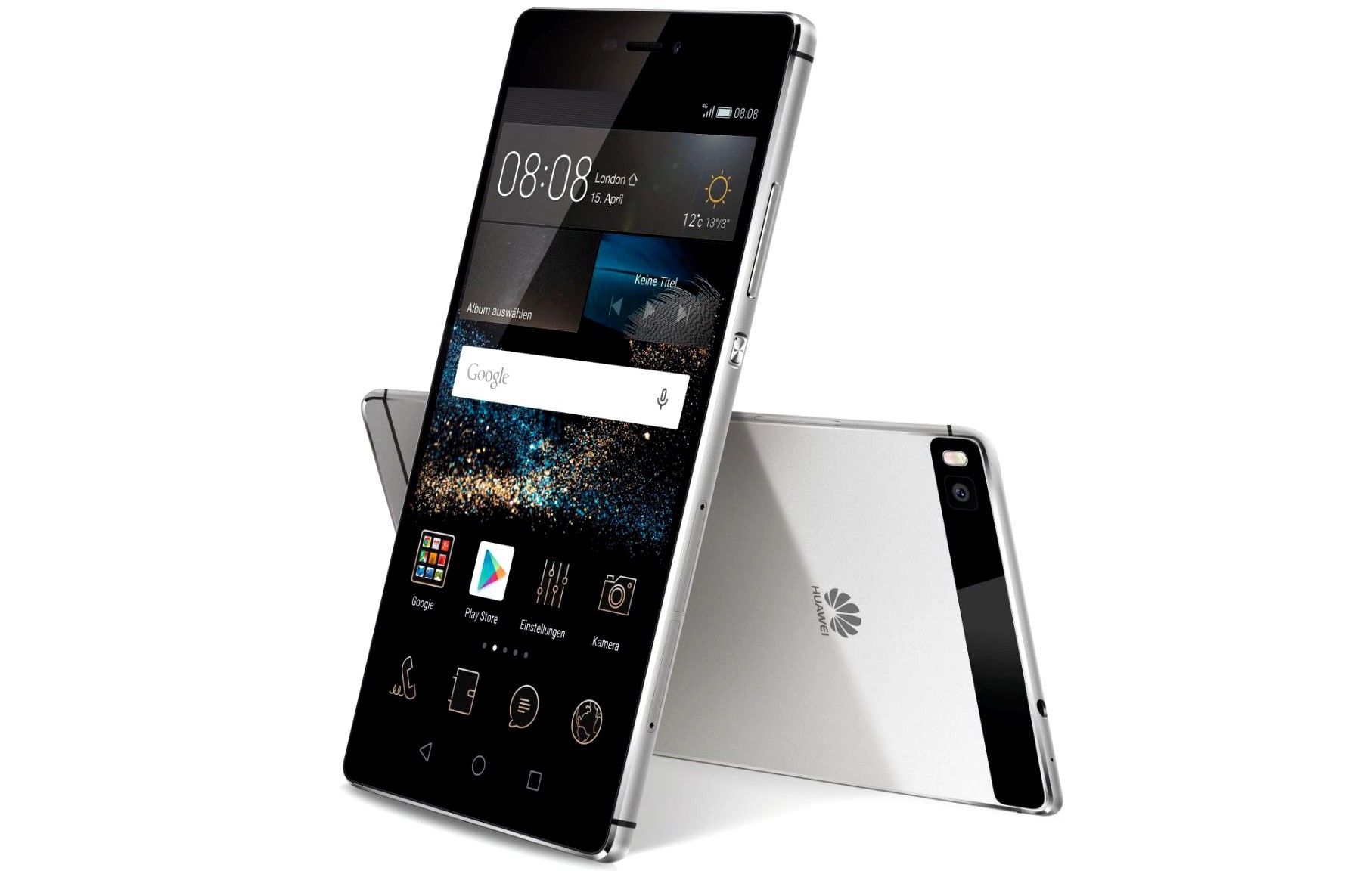
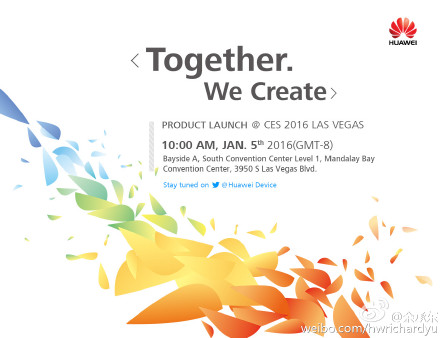
There have been rumours in the past that Huawei was planning to launch the P9 flagship smartphone was set for a March release. However, it looks like Huawei is not planning on waiting that long to unveil the device. Fresh rumours out of China suggest that the Huawei P9 will be made official at the company’s pre-CES event, scheduled to be held tomorrow, January 5.
The specs that’s really grabbing everyone’s attention is the whopping 6 GB RAM inside the device, and a dual rear camera setup. Other rumored specs of the device include 5.2-inch display, Kirin 950 SoC, and a fingerprint sensor.
This along with the Huawei Mate 8 are the two devices Huawei plans on unveiling at CES as of now. Follow this space as we cover CES 2016 starting January 6 – 9.
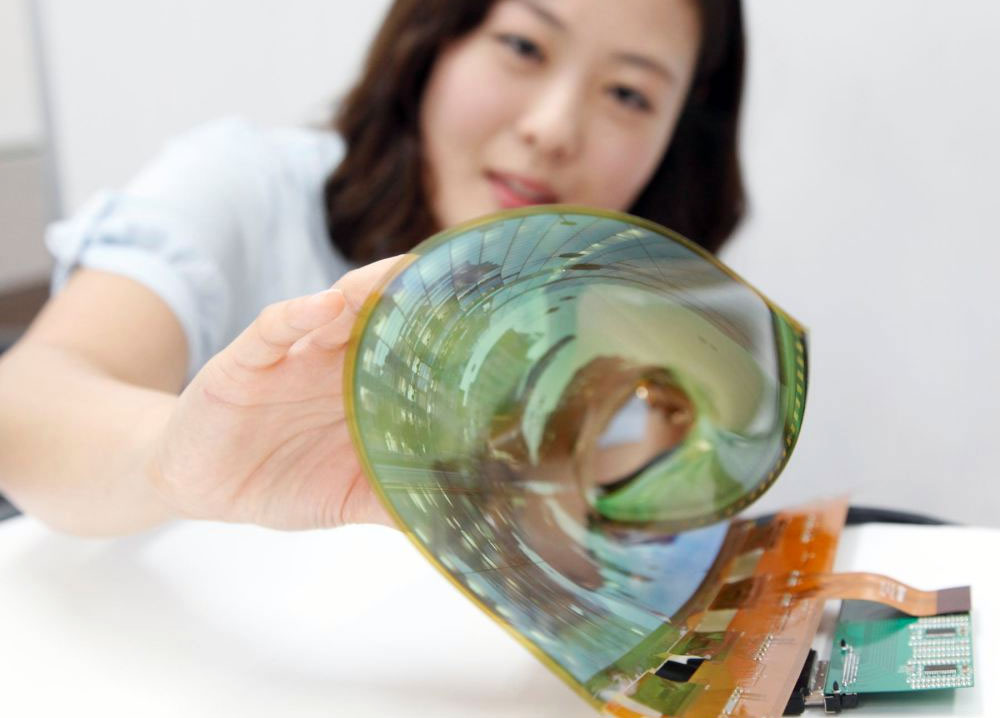
LG has taken foldable and bendable displays a step ahead this year. The company had hinted at similar tech last year at CES but had kept mum the entire year. However, now the company is ready to display a prototype at CES ’16 this time around.
LG is ready with a prototype of an 18-inch rollable screen it will showcase at the Consumer Electronics Show this time around. Similar concept displays have been seen in the past by companies like Samsung, Sony and Sharp. Now LG follows suit and marks an important moment for displays of smartphones, tablets and television sets. It is concentrating on making OLED screens bendable, curvable and rollable.
The company is also expected to unveil a 25 inch curvable screen installed in a car as part of the Auto Zone of CES ’16. We can also expect to see a 55-inch “paper thin” television with all its components installed independently according to LG. Watch this space for more updates.
Over the next few weeks, you can expect a lot of leaked images and specs of Samsung’s upcoming Galaxy S7 flagship devices. Since we’re getting closer and closer to the launch, there’s a lot of hype and expectations surrounding the devices. Recent rumours suggest that Samsung might unveil 4 Galaxy S7 variants – two flat screen, and two with dual-curved displays.
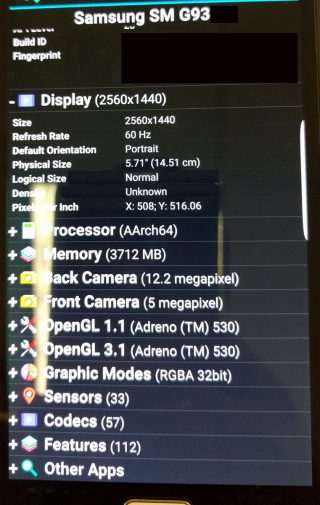
Today, we have a leaked photo that reveals a 5.7-inch Galaxy S7. A Redditor posted an image showing a 5.7-inch screen (with 1440 x 2560 pixels) that’s curved, which suggests it might be the Galaxy S7 Edge Plus.
The photo also reveals some important specs. The 5.7-inch Galaxy S7 features Qualcomm’s Snapdragon 820 chipset and Adreno 530 GPU, 4 GB of RAM, 12 MP primary camera and a 5 MP front. It has been speculated for a while that Samsung is looking to improve its camera quality rather than upgrade its pixels. So a 12 MP camera for the S7 series wouldn’t be all that surprising.
Needless to say, you should take this with a pinch of salt. Samsung is likely to unveil its flagship devices at the MWC in February. Follow this space for more.