Category: Latest

All the Latest, News, Reviews, Updates, How To, Mobile Phone news, Global and International News, From Cameras to Automobiles, from TV To PC and a lot more! Constantly updating!

  • AutoGyaan: Land Rover Defender Update Scrapped

    AutoGyaan: Land Rover Defender Update Scrapped

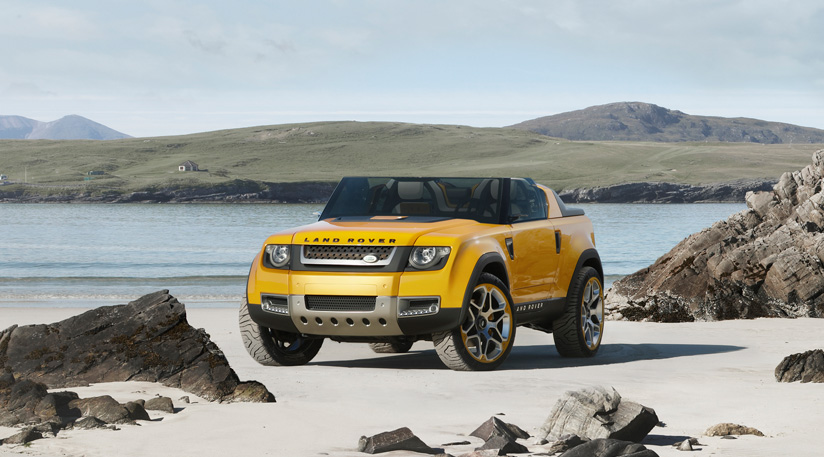
    Land Rover’s exciting new Defender replacement were all the buzz at the India Auto Expo, but it looks like the company may not after all launch the upgrade. Land Rover had earlier announced that it will replace the ancient Defender series, with brand new super rugged Off-Roader. This unit was expected to be built along Tata’s new upcoming SUV at a new plant in India. 

    A Jaguar Land Rover Engine manufacturing unit which was also planned in India, has been put on hold due to the lack of manufacturing requirements. John Edwards, Land Rover’s global brand director said that the company will make the new Defender, but plans for it to go into production in 2015 have been delayed. The current Defender will still be retired in 2015, because of the impossibility of meeting future legislation and environment norms. 

    This major change in plans is due to Tata’s Automobiles’ present financial position, with humiliation in the sales of their recent launches, including Nano, Aria and the new Safari. Tata has suffered huge losses in the automotive sector and continues to undershoot sales throughout the catalogue. The Indian car market has also seen a big depression in the past year, and with this trend, without Tata Motors making significant sales progress, any planned co-operation with Jaguar Land Rover on a back-to-basics Defender is ?not financially viable. 

    According to sources, the product design head for the new Defender has also argued against the use of a new chassis to compete with global cars from the likes of Toyota and Ford on an more lower end platform.

  • Apple iPhone sales boom in India after trade-ins,Discounts and Payment Plan EMI schemes

    Apple iPhone sales boom in India after trade-ins,Discounts and Payment Plan EMI schemes

    Apple is furiously trying to create the brand image, they have worldwide, in India as-well. With the launch of new Student and Trade-in offers Apple presently offers a discount of Rs. 7000 for Trade-ins from non students and a discount of Rs. 7777 for Trade-ins from Students with a valid ID. These trade-ins are valid for any phone in working condition with a charger ( yes your old Nokia with a torch will do ) 

    Another offer for American Express Credit Card holders ensures a 6000 Refund/ Cash back on either the  4, 4S, or 5 before June 10, this requires owners to swipe their AMEX cards and pay the rest of the money in EMI or installments with zero interest. 

    India has usually been one of the last countries on Apple’s radar, but with the iPhone 5, Apple seems to have changed their approach towards India. India was one of the first few countries to get the iPhone 5, which sold out on Launch day. To curb declining sales Apple launched EMI and Installment plans, after which there has been tremendous growth in the overall sales of the company. 

    Apple is also planning to triple its sales operations in India, with the launch of a Apple owned Retail store expected in the 2nd quarter of 2014, Apple will also have over 200 reseller locations by 2015. Apple devices took roughly 15.6 percent of smartphone revenue in India which pegs the company at second place behind Samsung whose total was roughly 38.8 percent share. However till 2011-2012 Apple only has 3-4 % market share, and in terms of growth numbers this is almost a 5 times increase for the company. 


  • Next Xbox comes today, Here is the Roundup!

    Next Xbox comes today, Here is the Roundup!

    The next Microsoft Xbox is going to be announced in a few hours and we know quite a lot of things about it so far (or at least we think).

    The Xbox (next) should carry on Microsoft’s legacy of the gaming industry as it has from the beginning. The Xbox became an icon of the gaming industry the minute it landed, quickly becoming the most popular gaming console, due to the sheer volume of gamer available on it.  Microsoft Studios’ dedication in creating exclusive titles, also had a big role to play here. 

    Price of the Next Xbox

    While most consoles debut around the US $ 499 price mark, we expect the next Xbox to be the same. Microsoft in the U.S., offers the Xbox 360 on subsidy and has tried to work out similar strategies with their sales in India with no real subsidy offers. 

    What real package deals may is unknown, but it appears that Microsoft realizes that the biggest market for games cannot afford Rs. 25000 consoles outright. 


    Release Cycle and Branding

    While many rumored names for the next Xbox are floating around, the Xbox Infinity the Xbox ultimate, etc. The most probable name is going to be Xbox 8 ( due to a trademark filed by Microsoft), which could also tie in with the specs of the hardware below. On the flip side Microsoft could simply call it Xbox or if they were to follow in Apple’s footsteps the “New Xbox” or the “Next Xbox”.

    The new gaming console from Microsoft is expected to clash with Sony’s rivaling Playstation, when both will be available around the Christmas holiday season of 2013.


    Hardware and Specifications

    Apart from major aesthetic changes, the new Xbox will also get a hardware overhaul. Starting with the 64-bit, 8-core, 1.6GHz processor made by AMD with x86 architecture and 8GB of DDR3 RAM vs the existing 3-core 3.6GHz processor and 512 MB or RAM. The previous architecture was based on PowerPC so the GHz change will actually be better. The GPU is an 800 MHz DirectX 11.x, and will be accompanied by custom hardware for Xbox-specific tasks vs the existing 500MHz GPU. The new hardware will also have a traditional ethernet port, an optical Blu-Ray disc drive( even though rumors pointed to diskless systems, this is a way to curb piracy) , a default 500GB SATA 2 HDD, USB 3.0 ports, and HDMI out and in ports for Full HD/ maybe even 4K video.

    New Xbox Controller

    Many are expecting a Kinect overhaul, and some rumors have pointed to a controller less console ( which in all entirety would be a failure). The new controller is expected to be smaller and more ergonomic. It is also rumored that the new Xbox controller will have an additional set of buttons to enhance the gamers experience. The Kinect sensor is expected to come bundled with the hardware, along with a better optical recognition system which would be able to respond more accurately to movements. 

    The Handheld controllers are expected to come with rechargeable and replaceable batteries out of the box, to one up on Playstation’s rechargeable but irreplaceable batteries.

    The new Hardware, along with controllers and Kinect have been with Game developers for a while now, but since each unit is tightly packed, coded and covered in stripes, not a lot has leaked out from design perspective. 


    TV or Gaming Console (or Both?)

    Microsoft’s Nancy Hellens – a former boss at US TV station CBS has been brought on to spearhead new TV-esque entertainment experiences. Uk based, Lift London is working on new gaming experiences, Microsoft Soho Studios has already put out interactive TV-like games based on Sesame Street and Discovery Channel. Now well a lot of heat around different types of TV’s systems is in place, Microsoft could bundle these features into the new Xbox and make the package a lot worth for the owner. Replacing the likes of recoding boxes and streaming accessories. 

    A move along such lines would also replace devices, like Nexus Q or even Apple TV from living rooms. 

    Microsoft has already clarified that the launch will be for the hardware and not for the games, which would be announced possibly at E3, but expect at least a few titles to show up for  a wonderful preview. 

  • Lava Launches Iris 458Q, Quad Core, Dual Sim for Rs. 8999 (PR)

    Lava Launches Iris 458Q, Quad Core, Dual Sim for Rs. 8999 (PR)

    Lava has just launched the new Lava Iris 458Q in India. The Phone comes powered with a Mediatek 6589 chipset which has a 1.2 GHz QuadCore CPU and PowerVR SGX graphics. The Iris 458Q runs on Android 4.2 Jelly Bean with a 512 MB RAM and 4 GB of storage (32 GB expandable). The display is a 4.5 inch 480 x 800 px capacitive touchscreen.

    With an 8 MP main camera and a VGA camera the specs on the Iris 458Q are quite similar to the Micromax Canvas Doodle A111, except for the screen size. The phone runs on juice from a 2000 mAh battery and is capable of Dual Sim Dual Standby.

    [toggle title=”Press Release”]Lava Iris 458 q: Experience the power of Four


    Lava International Ltd, one of the most respected and fastest growing mobile handset companies in India, has announced its entry into the quad-core processor smartphone category by introducing the Iris 458q with a 1.2 Ghz quad core processor.

    The power of four cores enables seamless multitasking that makes it easy for the user to switch between multiple running apps thereby adding to their productivity. Aesthetically designed with a slim form factor that has a curve bend and matte finish, the Iris 458q has an elegant look. It runs on Android 4.2 Jelly bean operating system and sports a crystal clear 4.5-inch capacitive touchscreen with FWVGA resolution.

    In built sensors include Proximity, Light & G Sensor. It also packs in 512MB RAM and 4GB internal memory that is expandable up to 32GB using microSD storage memory cards. Lava has also preloaded various useful apps such asWeChat, Push Mail, Ebook reader etc. on the phone along with HD movies and HD games – making it a smart choice for the smartphone buyers.

    An 8 MP rear auto-focus camera with built-in flash provides multiple camera options and captures stunning photographs. It also carries a front VGA camera for 3G video calling. A large 2,000-mAh battery provides ample back up for multimedia, stand by and talk time.

    Commenting on the launch of their quad core smartphone, Mr. SN Rai, Co – Founder & Director, Lava International Ltd. said, “ Innovation and understanding of consumer needs are a couple of key strengths for LAVA and that helps us introduce powerful smartphones across various price segments for all users. The Iris 458q is our latest offering for users who love to carry a stylish smartphone with the latest technology without burning a hole in the pocket.”

    Priced at Rs 8999/-, the Iris 458q is one of the most affordable quad core smartphones today and will be available across all major retail and online stores.
    [/toggle]

  • Exclusive : Gionee to launch E3 in India – 7.9mm, Quad Core, Android 4.2 & 16 GB Storage

    Exclusive : Gionee to launch E3 in India – 7.9mm, Quad Core, Android 4.2 & 16 GB Storage

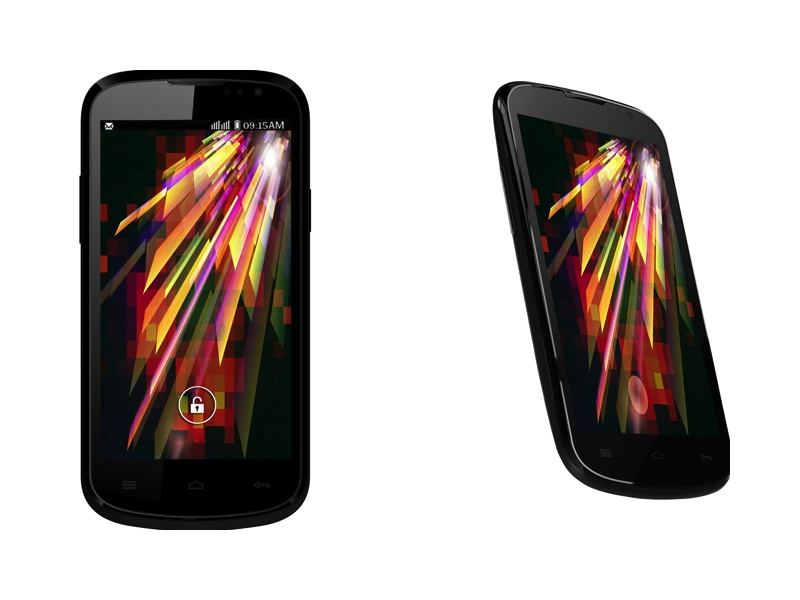
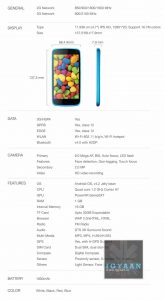
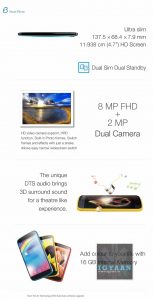
    iGyaan has got hold of exclusive information that, Gionee will launch a 7.9mm slim smartphone in India soon, according to leaked images and specs. Dubbed  “Gionee E3” the phone will be powered by a Mediatek 6589 Quadcore 1.2 GHz CPU and a PowerVR Series 5XT GPU. 

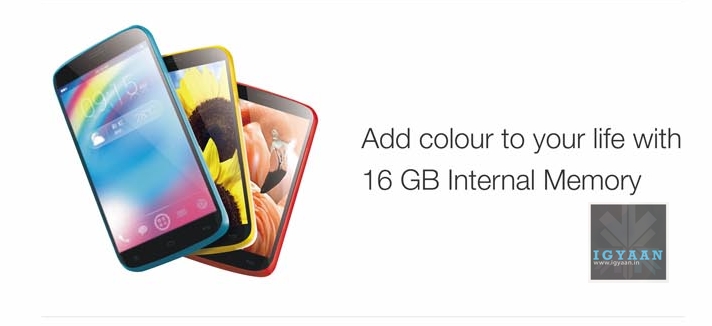
    The Gionee E3 will carry a 4.7 inch 720p display and will be loaded with 16 GB of inbuilt storage along with 1 GB of RAM. Of course you also get MicroSD expansion upto 32 GB. The Gionee E3 will also have traditional Dual Sim, Dual standby capabilities and 850/900/1800/1900 MHz frequencies for 2G and 900/2100 MHz frequencies for 3G. 

    Among the features will also be an 8 megapixel camera at back with full HD video capabilities, a 2.0 MP front facing HD camera ( we are guessing 720p). The specifications are quite similar to another device from competition, apart from the internal storage which is evidently different. WiFi b/g/n and Bluetooth 4.0 will come included in the usual set of connectivity features, with GPS and A-GPS. 

    You can find more details at the companies website link below.


    [source]

  • Jolla Unveils First Sailfish Smartphone, Includes Android App Support

    Jolla Unveils First Sailfish Smartphone, Includes Android App Support

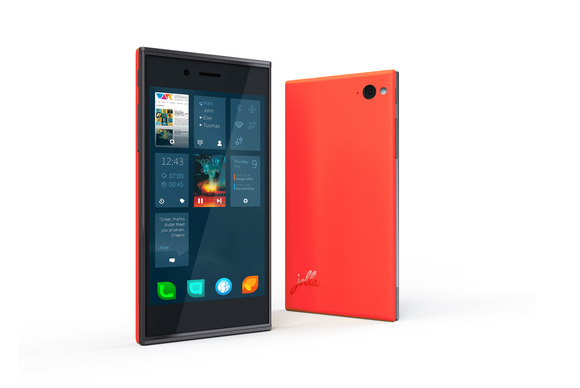
    Finnish startup Jolla has announced its first smartphone, which shows off its Sailfish OS on a 4.5-inch screen.

    Jolla, which was founded by former Nokia employees who wanted to continue the development work the Finnish phone maker had done on the MeeGo OS, is with the introduction one big step closer to entering the ultra-competitive smartphone market.

    “The earliest memories I have of things really crystalizing is from the summer of 2011. I was on holiday and there was a conference call I took on the beach, and the people that became Jolla, the founders and many of the early contributors were on that call. But to me the hard work really started in January 2012,” said Marc Dillon, who recently stepped down as the company’s CEO to focus on developing the first phone.

    The smartphone has a 4.5-inch “Estrade” display, as well as 16GB of internal storage and a microSD slot. There’s an unspecified dual-core processor to handle daily tasks and an 8-megapixel rear-facing camera.

    jolla

    Jolla’s first handset is also 4G-enabled and has a replaceable battery, which will go down a treat with power users who often find themselves in the red at the end of the day.

    Sailfish is a Linux-based operating system that picks up where MeeGo left off… or rather where Nokia left off when the company abandoned MeeGo and jumped on the Windows Phone bandwagon.

    While Sailfish has a unique user interface and supports native apps written for the Linux-based OS, out of the box it will also have support for Android apps.

    jolla

    The heart of the OS consists of thumbnails of opened applications on the homescreen from which users also can access multiple features directly by scrolling from side-to-side or just clicking on them to access the main feature.

    “The true multitasking is working in lots of different applications. You can have a video running in a thumbnail while you are doing something else on the device,” Dillon said.

    The back cover plates are dubbed “The Other Half” and they will actually do a bit more than just give you a new exterior color. Jolla has said these covers will be able to automatically adjust fonts, ringtones, profiles, color themes and more.

    The phone is expected to cost $500 and Indian availability has not been specified yet!

    [youtube id=”K4lWTsqFe6I” width=”100%” height=”300px”]

  • Sony’s New Playstation 4 Teaser Reveals Console Appearance

    Sony’s New Playstation 4 Teaser Reveals Console Appearance

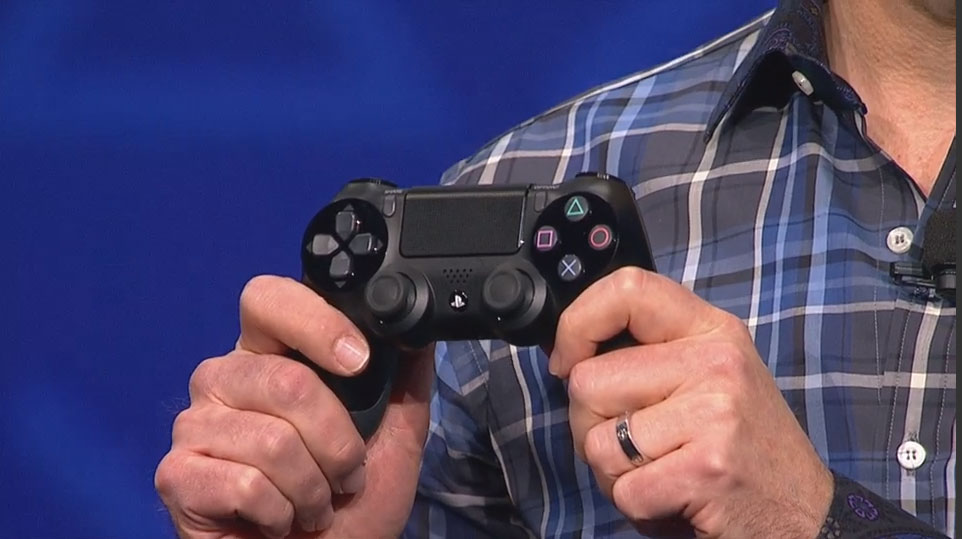
    After the Sony’s Playstation 4 event concluded, questions immediately blew up social media asking what the console actually looks like. We have our first glimpses of the console today, thanks to an officially released teaser by Sony.

    PlayStation 4

    The timing of the tease is no surprise, with Microsoft set to reveal its own next-generation Xbox tomorrow at its campus in Redmond, Washington.

    Sony will present its E3 event on June 10 at 6 p.m. Pacific time. At that point, we will likely see the PlayStation 4 in the flesh along with some new games and features.

    The video, seen below, shows off bits and pieces of the console in quick video cuts. You’re able to see the logo, various ports, and other portions of the device that help you form a general idea of what the Playstation 4 will look like.

    Sony will be shipping the PlayStation 4 with an eight-core 64-bit processor based off AMD’s “Jaguar” processor line. Though x86 cores are the brunt of the new console’s might, Sony stated at its event that another low-power core will be bundled in, as well. The additional processor exists not to help with games directly but instead to process tasks in the background.

    Sony states that the PlayStation 4 graphics chip, which is derived from existing Radeon technology and integrated into the Jaguar processor die, can push 1.84 TFLOPS. That number puts the power of the GPU roughly on par with a Radeon HD 7850 video card.

    Sony has also packed in eight gigabytes of RAM, an absolutely massive increase over the 512MB found in the PlayStation 3. And the RAM is high-speed GDDR5, which will let Sony maximize the system’s data pipe.

    [youtube id=”QjXU1anoC5Y” width=”100%” height=”300px”]

    [DigitalTrends]

  • Samsung To Release 276 PPI Laptop Display Panel, Beats Chromebook Pixel And Retina MacBook

    Samsung To Release 276 PPI Laptop Display Panel, Beats Chromebook Pixel And Retina MacBook

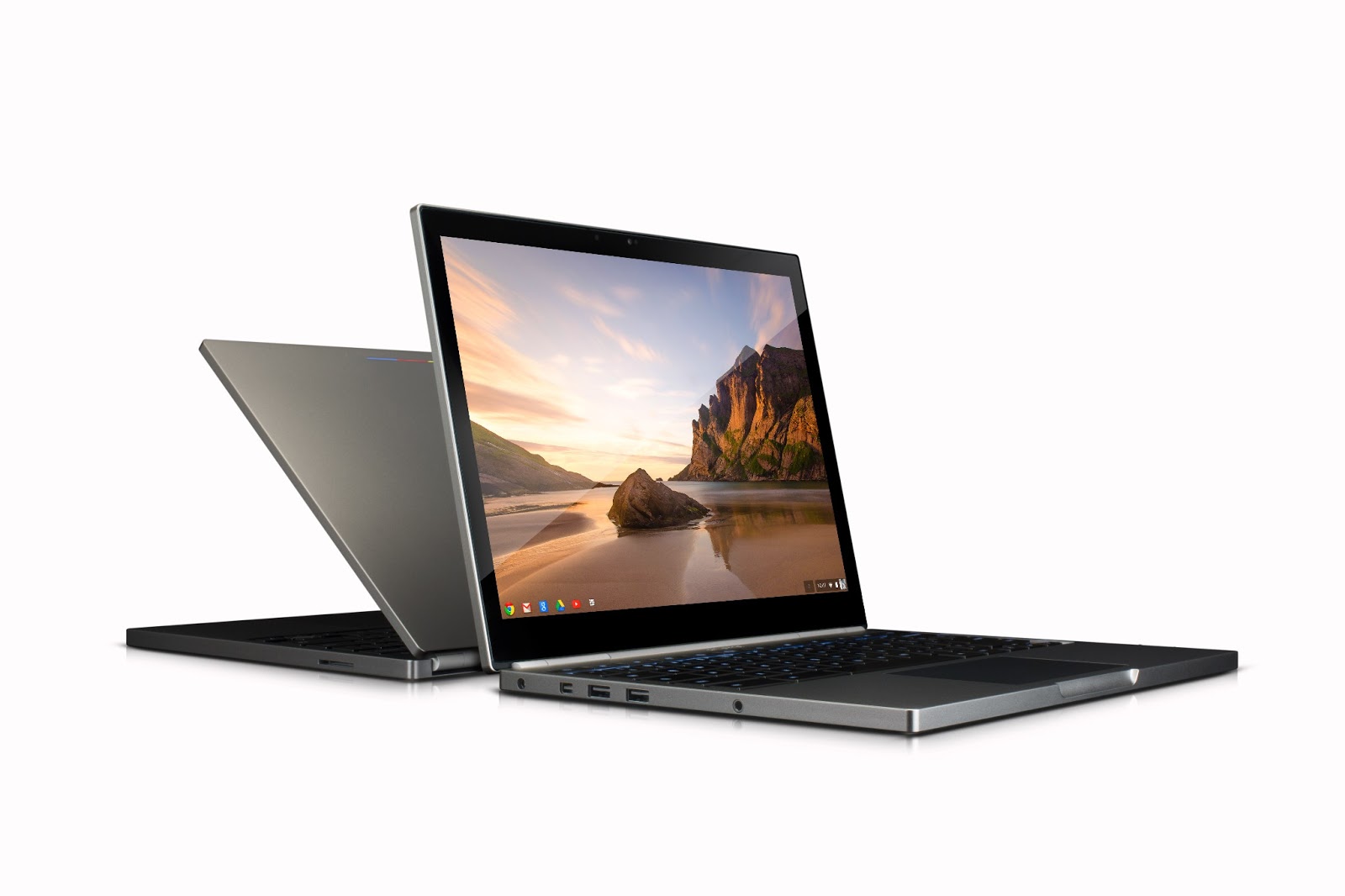
    When Google released their Chromebook Pixel earlier this year, its pixel density topped anything on the market, including Apple’s Retina MacBook. That could be set to change however, as Samsung is working on a display that could best both those devices.

    Samsung is preparing to showcase what could be the sharpest display to ever debut on a 13-inch notebook. At this year’s Display Week 2013, Samsung will flaunt a 13.3-inch notebook display with a 3200 x 1800 pixel resolution and 276 pixels per inch. 

    This beats Apple’s 13-inch Retina MacBook Pro by a decent margin, which comes with a pixel resolution of 2560 x 1600 and 227 ppi. It also outshines Google’s 2560 x 1700- resolution Chromebook Pixel, which comes with a 12-inch display packing 239 ppi.

    samsung

    By utilizing a decreased number of driver circuits and increased LED BLU efficiency, the duo will also deliver up to 30% energy savings compared to the current generation of displays, said Samsung. 

    As Laptop Mag reports, Samsung will also show off a 10.1-inch 2560 x 1600 resolution touch screen for tablets and an 85-inch LCD panel for TVs that enables local-dimming control. This means that color will render more vividly on the 85-inch screen with higher contrast and “80 percent brightness uniformity.”

    It certainly sounds enticing, especially when you consider the quality of the displays on both Retina MacBook Pro’s, and even the Chromebook Pixel. More competition in the laptop display space can only be good news in the long run.

    These newest displays come on the heels of a recent announcement by Sharp, where they unveiled that they will begin producing IGZO panels with UltraHD resolutions for notebooks. It is not yet known if the panels will simply be displayed or will be included as part of actual products, but we should know more in the coming days. 

    [The Verge, LaptopMag]

  • Leaked : Samsung Galaxy S4 Active Photos And Details

    Leaked : Samsung Galaxy S4 Active Photos And Details

    Samsung’s Galaxy S4 Active is expected to launch by the end of this month, so it comes as no surprise that leaks for the phone are starting to become more prevalent. Several photos of the Galaxy S4 Active were spilled by GSMArena on Monday and we can see that, unlike the Galaxy S4, the Galaxy S4 Active will launch in a bright red color and offers a slightly different industrial design.

    Galaxy S4 Active

    The phone will be water-proof and dust-proof which makes it Samsung’s answer to the Sony Xperia Z. The pictures also confirm the GT-i9295 model number, which has been previously associated with the Galaxy S4 Active.

    Galaxy S4 Active

    As GSMArena reports, the specs of the Galaxy S4 Active are expected to be the same and the live pictures below confirm it – the device is running on a quad-core 1.9GHz processor with Adreno 320 GPU, which most definitely means a Snapdragon 600 chipset. The screen supposedly has the same size and resolution as the original Galaxy S4 – a 5.0-inch 1080p unit, though it’s unclear if it’s a Super AMOLED one or not. Strangely enough, the reported pixel density of the phone is 480ppi, so the display might actually be smaller.

    Galaxy S4 Active

    Rumours also suggest the possibility of other Galaxy S4 variants, including both a Mini and a Mega version. Both will have differing screen sizes from the current stock Galaxy S4.

    Also confirmed last week was the Galaxy S4 Google Edition, a vanilla Android packing version of Samsung’s flagship phone available for those who like their Android experience without any tweaks. 

    [GSMArena]

  • Samsung Galaxy S3 Software Update leaks, shows of Galaxy S4 Features

    Samsung Galaxy S3 Software Update leaks, shows of Galaxy S4 Features

    Everyone who said that the Galaxy S4 is just a mere update to the Galaxy S3 might just be right this time around. A test Android 4.2.2 update, discovered by SamMobile, has all the new “amazing and unique” features of the Galaxy S4 for the previous flagship. The new test build includes the lockscreen effects and widgets, enhanced screen modes, updated settings, and new S Voice control features found in Samsung’s new flagship.

    Of course if you were expecting Air View and the Remote feature, you would need to know that those things are hardware dependent and not software dependent. However, in theory you could increase the sensitivity of any capacitive screen to perform Air View sort of gestures, with a considerable amount of power-juice drain on the device. But that remains a theory. 

    The Update was found in Internal testing zones, and may or may not include all the said updates, and may also add some new “unique & amazing” features when it finally rolls out. 

    New enhancements in Android 4.2.2 update

      • – Android 4.2.2 – Build ID: JDQ39
      • – New S4 Lockscreen: Multiple Widgets, two Unlock effects (Ripple and Light), improved ripple effect than Android 4.1.2, ability to change clock size and set a personal message
      • – New Screen modes (From S4): Adapt Display and Professional Photo
      • – Daydream
      • – Driving mode
      • – Actionable notifications
      • – New Additions in Notification Center
      • – Completely revamped Settings UI (Tabbed interface – Exactly like the S4)
      • – Addition of Voice controls (Let’s you control various parts of the phone using voice commands – Galaxy S4 feature)
      • – Gallery modes have white background (When changing gallery modes to 3D the background changes to white)
      • – Full screen Samsung apps
      • – New S-Voice (from S4)
      • – New smart switch widget

    [VIA]

  • Samsung 65 inch and 55 inch 4K TVs launch in June, to hit India around Diwali

    Samsung 65 inch and 55 inch 4K TVs launch in June, to hit India around Diwali

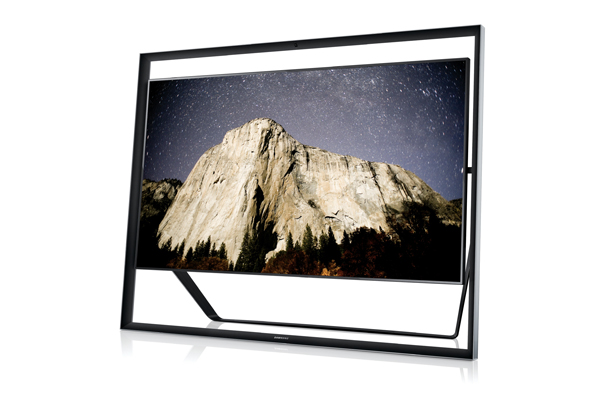
    Samsung has announced that it will launch smaller variants of the 85 inch 4k TV we saw earlier this year. The two variants will bring economies of scale to the 4K TV lineup with a 65 inch and a 55 inch 4K will be launched in June. 

    The Pricing on the smaller variants will ensure that the people stay interested in this technology and it does not become another Blue-Ray fiasco. The new TVs will also have Samsung’s upgradeable Smart TV platform and the “micro dimming ultimate” LED lighting. To the relief of most of the future buyers/owners the horrendous frame was not listed, and may not be included in the smaller, designed for home variants. 

    Read the translated PR below, or head on over to the link for a Korean flavored version. 

    Samsung India has verified that the company will carry the units around Diwali season. Aditya Gupta who is a sales manager at Samsung Electronics, said;

    The company is very excited about the new 4K lineup, and has seen huge response from India for the 85 inch variant. Samsung expects a large number of sales of their smaller 4K TVs especially if launched during Diwali season

    [via]

    [toggle title=”Press Release”]

    Samsung UHD TV and launching a new product type 65, type 55 in June to embark on UHD TV market.

    Samsung plans to strengthen market leadership UHD TV launched in January followed by the 85-UHD TV basing the additional five months in two sizes, the new UHD TV.

    UHD TV, 65 type, 55 type, the newly released Samsung boasts the highest level of quality technology to further enhance the clarity and vividness of the image, of course, the resolution is four times higher than the existing Full HD TV.

    Apply our own quality across the four steps, such as improving the noise of the screen, up-scaling, improved quality detail engine algorithms automatic detection and resolution of the original video signal, standard-definition (SD) and Full HD video all enjoy a clearer picture of the UHD class can

    In addition to share the details of the screen block (Micro Dimming Micro Dimming Ultimate Ultimate) technology presents a clearer picture on the screen handle every detail each block to step 3 for each contrast, detail keolreogam, and maximize the quality and sophisticated analysis. .

    UHD TV UHD TV lineup, expanding world markets, spurring these Samsung TV market in the world for seven consecutive years as one of the leading companies in the best UHD TV technology based on next-generation TV to market preemption me out of a clear commitment expressed.

    UHD broadcasts indefinite standard, especially in situations where Samsung Electronics ‘Evolution kit’ in all the UHD TV future UHD broadcast standards determined fully able to cope.

    ‘Evolution kit’ Samsung TV’s central processing unit (CPU) and graphics processing unit (GPU) hardware to software change to the latest version at the same time, of course, is the only state-of-the-art technology.

    UHD TV lineup more in line with the market trend of increasingly larger televisions in the big screen so you can enjoy a more vivid picture has expanded, “said Lee Sun – Woo, vice president of Samsung Electronics Visual Display Division imaging strategy marketing team as” the world’s # 1 TV makers UHD of a wide range of innovative products, including TV market leader in next-generation TV to realize the ‘the infinite gap’ competitiveness, “he said.

    Is expected to nearly double to 793 million in 2016, more than 60 types, according to market research firm DisplaySearch, the demand for a large TV from 440 million units in 2012.

    In, UHD TV market demand grows increasingly large TV’s, began in earnest this year, from 93 million units in 2013, and is expected to jump 987 million in 2016, more than ten times as

    [/toggle]

  • Yahoo to buy Tumblr for US $ 1.1 billion

    Yahoo to buy Tumblr for US $ 1.1 billion

    Yahoo had its eyes set on Tumblr for quite some time, and it appears as if the deal has been struck. A whopping US $ 1.1 billion is cas will flow from Yahoo’s purse towards the acquisition of Tumblr.  Hopefully with Yahoo’s value degrading by the day, a big, expensive investment like a 1.1 Billion cash deal should be put to excellent use. 

    The acquisition was expected to have happened at Yahoo’s press event scheduled a few hours from now, but it appears that The Wall Street Journal broke the news well in advance. Hopefully the full details of the acquisition should emerge after the press event scheduled just half a day from now. 

  • LG working on Unbreakable and Plastic OLED display, will show at SID

    LG working on Unbreakable and Plastic OLED display, will show at SID

    LG is prototyping Plastic and Unbreakable OLED displays for mobile devices, and a particular 5 inch display has caught the media fancy. Society for Information Display (SID) will be the area for display of this panel. The company says that the OLED display is not only unbreakable but also very- very flexible. 

    Along with the OLED panel for mobile devices will be 5-inch and 7-inch HD LCD panels based on Oxide TFT. These will have a bezel of just 1mm allowing production of borderless smartphones that are lightweight and emit significantly less heat.

    The final products to be showcased include a 14-inch 2560×1440-pixel laptop panel on hand, along with LCDs designed for use in refrigerators and automotive dashboards in various sizes and shapes. We should have more details and images once the show floor is set.


    [toggle title=”Press Release”]LG Display Introduces Next Generation Display Technology at SID 2013

    Curved 55-inch OLED TV and 5-inch plastic OLED panels on exhibit

    Seoul, Korea (May 20, 2013) – LG Display [NYSE: LPL, KRX: 034220], a leading innovator of display technologies, will showcase the latest TV, mobile, and other products representing the future of display technology at the Society for Information Display’s (SID) Display Week 2013. Underscoring its leadership in OLED technology, the company will introduce both a curved 55-inch OLED TV and a 5-inch plastic OLED panel. Also exhibited will be mobile panels applied with Oxide Thin Film Transistor (TFT) which is viewed as the next generation TFT technology.

    “Recent trends indicate that the small- and medium-sized display market is moving towards high resolution and low power consumption, and the large panel market to OLED and Ultra HD,” said Dr. Sang-Deok Yeo, CTO and Executive Vice President of LG Display. “With the resulting rapid need for new display advancements, LG Display, at the forefront of these trends, is well positioned to lead the market with its differentiated and cutting-edge technologies.”

    Industry Leadership in OLED

    LG Display will demonstrate its industry leadership in OLED technology by showcasing a curved 55-inch OLED TV, as well as its award-winning standard 55-inch OLED TV at SID 2013. Based on the same WRGB OLED technology as the standard set, now widely adopted as the most effective OLED application for large-sized panels, the new curved 55-inch OLED TV offers a glimpse into the future of TV design.

    In addition, for the first time to the public, the company will unveil an unbreakable and flexible 5- inch plastic OLED panel for mobile devices. The development comes at a crucial time when smart devices are being used more than ever and at increased risk for damage from drops, hits, and other accidents.

    Next Generation TFT LCD Method

    LG Display will also introduce 5-inch and 7-inch HD LCD panels based on Oxide TFT, seen as the next generation TFT technology as it offers high investment efficiency in producing thin, high transparency, and low power consumption displays. LG Display, which utilized this technology in its large-sized OLED displays for the first time in the world, will expand its expertise to LCD panel development thereby leading the market.
    The 5-inch HD panel will feature 1.0mm bezel allowing production of borderless smartphones that are lightweight and emit significantly less heat. The 7-inch HD LCD panel is equipped with touch function-embedded technology enabling superior touch functionality in thin and lightweight mobile products.

    Superior High Resolution for Monitors and Tablets

    LG Display, which was first to introduce an 84-inch Ultra HD TV, now advances the high-definition trend further with the world’s first Ultra HD panel for 23.8-inch monitors. In addition, the company will showcase a 14-inch Quadruple HD (2,560X1,440) panel for laptops, and the world’s first 7-inch Full HD panel for tablets that exceeds 300 pixels per inch (PPI).

    Other Innovative Advancements on Exhibit

    LG Display will also present a new type of LCD which can depict the highest level of color reproduction ratio for implementation across various industries. Products, on exhibit, applying this technology include a transparent 47-inch LCD panel for refrigerators featuring a 15% increase in transparency while maintaining NTSC 72% or the same as generic HDTVs, a 12.3-inch Full HD LCD panel for automotive dashboards with 800nit high brightness and 85% color reproduction ratio, and a 24-inch Adobe RGB monitor panel for professionals with 100% color reproduction ratio.

    The company will also spotlight it’s commitment to heightened design standards based on borderless technology with a 5-inch HD LCD panel for smartphones with 1.0mm bezel, as well as products boasting the world’s most narrow bezels including a 13.3-inch Full HD LCD Neo Edge panel for laptops with 1.5mm bezel, a 23.8-inch Full HD LCD Neo Blade panel for monitors with 3.5mm bezel, and a 55-inch LCD panel for video walls with 5.3mm bezel.

    SID Display Week 2013

    SID Display Week 2013 will be held in Vancouver, Canada from May 19 to 24. LG Display’s products will be showcased at Booth #1012, and allow visitors to experience the latest offerings from the world’s leading display company.

    In addition to product exhibits, LG Display will also present its distinguished technology with 17 major dissertations on a variety of display topics. Also, Dr. In-Byung Kang, Senior Vice President and Lead Laboratory Chief of LG Display, will be recognized with a special achievement award for his work in FPR 3D and IPS LCD technology.[/toggle]

  • AutoGyaan: Porsche Shows off the 918 Spyder (PR)

    AutoGyaan: Porsche Shows off the 918 Spyder (PR)

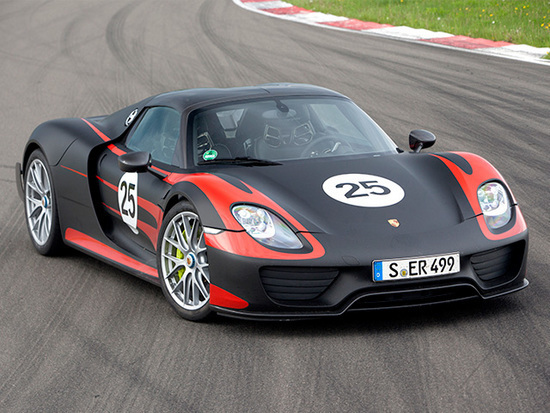
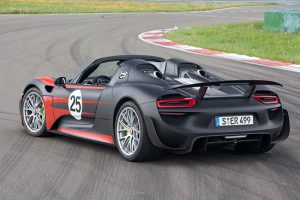
    Posche has unveiled the production model of its 918 Spyder Hybrid, and basically automobile enthusiasts around the world are ready to drool. The engine combination includes a generation of  608 hp at 8,600/min (V8 engine) plus a 154 hp (hybrid module on rear axle), along with an 127 hp (electric motor on front axle), giving the eco sports car a total of 887 hp (combined).
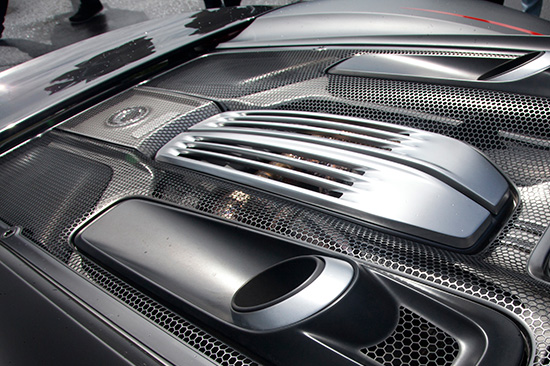
    918 spyder inner

    The entire load-bearing structure is made of carbon fiber reinforced polymer (CFRP).  The car’s unladen weight of approximately 3,715 lbs. is an excellent low weight for a hybrid vehicle of thisperformance class.

    The chassis has also been fitted with PASM adaptive shock-absorber system and rear-axle steering with electro-mechanical adjustment system at each rear wheel, this happens depending on the speed of the car upto three degrees in each direction assisting in overall control and stability. The Porsche 918 Spyder is also equipped with Porsche Active Aerodynamic (PAA), which ensures maximum downforce and is tuned to the operating modes of the hybrid drive system.
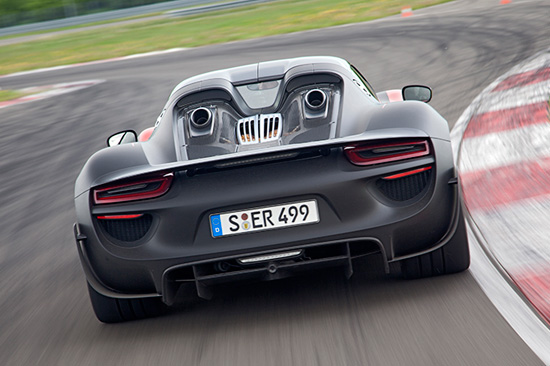
    918 spyder rear

    The Weissach package adds more performance and reduces the weight by 77 pounds, in this the roof, rear wings, rear-view mirrors and frames of the windscreen are made of visible carbon. Parts of the interior are upholstered with Alcantara instead of leather, and visible carbon replaces much of the aluminum.


    Technical Specifications of Porsche 918 Spyder

    Body: Two-seat Spyder; carbon fiber reinforced plastics (CFRP) monocoque interlocked with CFRP unit carrier; two-piece Targa roof; fixed roll-over protection system.
    Drivetrain:

    Parallel full hybrid; 4.6-liter V8 mid-engine with dry-sump lubrication; hybrid module with electric motor and decoupler; electric motor with decoupler and gear unit on front axle; auto start/stop function; electrical system recuperation; four cooling circuits for motors, transmission and battery; thermal management.

    Engine power:

    608 hp at 8,600/min (V8 engine)
    154 hp (hybrid module on rear axle)
    127 hp (electric motor on front axle)
    887 hp (combined)

    Max. torque:

    390 lb.-ft. at 6,600/min (V8 engine)
    940 lb.-ft. (equivalent torque calculated on the crankshaft, complete system in 7th gear)
    787 lb.-ft. (complete system, 3rd gear)
    > 590 lb.-ft. (800/min & 5,000/min)

    Maximum Revs: 9,150 rpm
    Power output per l: 133 hp/l (V8 engine)
    Power transmission:

    Combustion engine with hybrid module and transmission bolted together to form a single drive unit; seven-speed Doppelkupplungsgetriebe (PDK); rear-wheel drive; front electric motor with gearbox for driving the front wheels (decoupled from 146 mph); five pre-selectable operating modes for optimum coordination of all drive units.

    Gear ratios   PDK
    1st gear  3.91
    2nd gear 2.29
    3rd gear  1.58
    4th gear   1.19
    5th gear  0.97
    6th gear  0.83
    7th gear  0.67
    R gear  3.55
    Final drive ratio  3.09
    Clutch diameter  8.7 in. / 6.5 in

    Chassis and Suspension:

    Double-wishbone front axle; optional electro-pneumatic lift system on front axle; electro-mechanical power steering; multilink rear axle with adaptive electro-mechanical system for individual rear wheel steering; electronically controlled twin-tube gas-pressure dampers in the front and rear with Porsche Active Suspension Management (PASM).

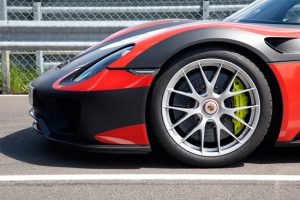
    Brake system: High-performance hybrid brake system with adaptive recuperation; internally ventilated and perforated front ceramic brake discs (PCCB), 16 in. in diameter and 1.4 in. thick; rear discs 15.4 in diameter and 1.3 in. thick.
    Wheels and tires:

    918 Spyder wheels
    (Weissach package: 918 Spyder magnesium wheels)
    front 9.5 J x 20 with  265/35 ZR 20
    rear 12.5 J x 21  with  325/30 ZR 21

    Weights:

    Curb weight 3,715 lbs.
    3,616 lbs. (Weissach package)

    Dimensions:

    Length 182.8 in.
    Width  76.4 in.
    Height 45.9 in.
    Wheelbase  107.5 in.

    Track width

    front 65.5 in.
    rear  63.5 in.

    Luggage compartment capacity, VDA   ~ 110 l
    Fuel tank capacity 18.5 gal

    Energy supply: Lithium-ion battery with 6.8 kWh capacity (BOL nominal), 220 kW maximum power and mains-compatible plug-in charger.
    Performance:

    Top speed > 211 mph
    purely electric 93 mph

    Acceleration:
    0-62 mph   2.8 s
    0-60 mph less than 2.8 s
    0-62 mph (in electric mode)  7.0 s

     0-124 mph (0-200 km/h) 7.9 s

    0-186 mph (0-300 km/h) 23.0 s

    Range: Purely electric: approx. 18 mi.
    Warranty: Vehicle (Battery): 4 years (7 years)

    Charging times:

    AC charging on a household socket (110 V, 10 A):
    less than 7 hours
    AC charging on an industrial socket (240 V, 30 A):
    less than 2 hours
    DC charging on an industrial socket (400 V, 32 A):
    less than 0.5 hours.


    [toggle title=”Press Release”]

    INTRODUCING THE PORSCHE 918 SPYDER

    Atlanta.The 918 Spyder embodies the essence of the Porsche idea: it combines pedigree motor racing technology with excellent everyday utility, and maximum performance with minimum consumption. The task faced by the development team was to create the super sports car for the next decade with a highly efficient and powerful hybrid drive. Developing the car from scratch, appropriately beginning with a sheet of white paper, allowed the team to come up with a no-compromise concept. The entire car was designed around the hybrid drive. The 918 Spyder therefore demonstrates the potential of the hybrid drive to a degree never seen before: the parallel improvement of both efficiency and performance without one being at the cost of the other. This is the idea that has made the Porsche 911 the most successful sports car in the world for 50 years. In short, the 918 Spyder will act as the gene pool for the Porsche sports cars of the future.

    The 918 Spyder reveals its close links to motorsport in a variety of ways. It has been designed, developed and produced by Porsche engineers who build race cars, in cooperation with series production specialists. A great deal of insight gained from the development of Porsche race cars for the 24 hours race in Le Mans in 2014 is thus integrated into the 918 Spyder – and vice versa. The structural concept of the 918 Spyder with a rolling chassis as its basis – a basic vehicle that can be driven even without a body – is race car tradition at Porsche. The concept of the V8 engine originates from the LMP2 RS Spyder race car. The load-bearing structures, the monocoque and subframe, are made of carbon fiber reinforced polymer. Porsche has many years of experience with this high-strength, lightweight construction material and has again achieved top results with the development of the series production 918 Spyder. Many parts of the super sports car come from manufacturers who have a proven record as suppliers for motorsport vehicles.

    Hybrid drive brings advantages in terms of driving dynamics

    A key message of the 918 Spyder is that the hybrid drive from Porsche is a plus for no-compromise driving dynamics. Drivers can experience this thanks to the unique all-wheel drive concept with a combination of combustion engine and electric motor on the rear axle and the second electric motor on the front axle. It is based on knowledge gained by Porsche during motor races with the successful 911 GT3 R Hybrid. Due to the additional, individually controllable front drive, new driving strategies for extremely high, safe cornering speeds can be implemented, especially for bends. Furthermore, the advanced “boost” strategy manages the energy of the electric drive so intelligently that, for every sprint with maximum acceleration, the full power of the 918 Spyder can be tapped into by simply pressing the accelerator down fully. In short, the 918 Spyder allows even drivers without motorsport training to experience the potential of advanced longitudinal and transverse dynamics.

    The Porsche 918 Spyder also has the potential to break many records. The current lap time for the North Loop of the Nürburgring is 7:14 minutes. This time was achieved in the presence of international journalists during test drives in September 2012 – more than a year before start of production. The 918 Spyder prototype was therefore approximately 20 seconds quicker than the Porsche Carrera GT. More test drives on the Nürburgring North Loop will follow. An even more important factor is that the 918 Spyder surpasses previous models and competitors by far in its efficiency as well. As a plug-in hybrid vehicle, it systematically combines the dynamic performance of a racing machine with low fuel consumption. To sum it up: maximum driving fun with minimal fuel consumption.

    Carbon monocoque guarantees lightweight design with a low center of gravity

    The 918 Spyder utilizes the best state-of-the-art technologies, taken straight from motor racing, to achieve its top performance. The entire load-bearing structure is made of carbon fiber reinforced polymer (CFRP) for extreme torsional rigidity. Additional crash elements at the front and rear absorb and reduce the energy of a collision. The car’s unladen weight of approximately 3,715 lbs. (3,616 lbs. with “Weissach” package), an excellent low weight for a hybrid vehicle of this performance class, is largely attributable to this concept.

    The drivetrain components and all components weighing over 110 lbs. are located as low and as centrally as possible within the vehicle. This results in a slightly rear end biased axle load distribution of 57 percent on the rear axle and 43 percent on the front axle, combined with an extremely low center of gravity at approximately the height of the wheel hubs, which is ideal for driving dynamics. The central and low position of the traction battery directly behind the driver not only supports efforts to concentrate masses and lower the center of gravity; it also provides the best temperature conditions for optimum battery power capacity.

    Chassis with race car genes and rear-axle steering

    The multi-link chassis of the Porsche 918 Spyder is inspired by motorsport design, complemented by additional systems such as the PASM adaptive shock-absorber system and rear-axle steering. Basically, this incorporates an electro-mechanical adjustment system at each rear wheel. The adjustment is speed-sensitive and executes steering angles of up to three degrees in each direction. The rear axle can therefore be steered in the same direction as the front wheels or in opposition to them. At low speeds, the system steers the rear wheels in a direction opposite to that of the front wheels. This makes cornering even more direct, faster and more precise, and it reduces the turning circle. At higher speeds, the system steers the rear wheels in the same direction as the front wheels. This significantly improves the stability of the rear end when changing lanes quickly. The result is very secure and stable handling.

    Porsche Active Aerodynamic (PAA) for different driving modes

    Porsche Active Aerodynamic (PAA), a system of adjustable aerodynamic elements, ensures unique and variable aerodynamics; its layout is automatically varied over three modes ranging from optimal efficiency to maximum downforce and is tuned to the operating modes of the hybrid drive system. In “Race” mode, the retractable rear wing is set to a steep angle to generate high downforce at the rear axle. The spoiler positioned between the two wing supports near the trailing edge of the airflow also extends. In addition, two adjustable air flaps are opened in the underfloor in front of the front axle, and they direct a portion of the air into the diffuser channels of the underbody structure. This also produces a “ground effect” at the front axle.

    In “Sport” mode, the aerodynamic control system reduces the attack angle of the rear wing somewhat, which enables a higher top speed. The spoiler remains extended. The aerodynamic flaps in the underfloor area close, which also reduces aerodynamic drag and increases attainable vehicle speeds. In “E” mode, the control is configured entirely for low aerodynamic drag; the rear wing and spoiler are retracted and the underfloor flaps are closed.

    Adjustable air inlets under the main headlights round off the adaptive aerodynamic system. When the vehicle is stationary and in “Race” and “Sport” mode, they are opened for maximum cooling air intake. In “E-Power” and “Hybrid” modes, they close immediately after the car is driven off in order to keep aerodynamic drag to a minimum. They are not opened until the car reaches speeds of approximately 81 mph or when cooling requirements are higher.

    From comfortable to race-ready: five modes for three motors

    The core of the 918 Spyder concept is its distribution of propulsive power among the three power units; their cooperation is controlled by an intelligent management system. To best exploit these different approaches, the Porsche developers defined five operating modes that can be activated via a “map switch” on the steering wheel, just like in motorsport cars. On the basis of this pre-selection, the 918 Spyder applies the most suitable operating and boost strategy without driver intervention, thus allowing the driver to concentrate fully on the road.

    Quiet and elegant: “E-Power”

    When the vehicle is started up, the “E-Power” mode is the default operating mode as long as the battery is sufficiently charged. In ideal conditions, the 918 Spyder can cover approximately 18 miles on purely electric power. Even in pure electric mode, the 918 Spyder accelerates from 0 to 62 mph in seven seconds and can reach speeds of up to 93 mph. In this mode, the combustion engine is only used when needed. If the battery’s charge state drops below a set minimum value, the vehicle automatically switches to hybrid mode.

    Efficient and comfortable: “Hybrid”

    In “Hybrid” mode, the electric motors and combustion engine work alternately with a focus on maximum efficiency and minimum fuel consumption. The use of individual drive components is modified as a function of the current driving situation and the desired performance. The Hybrid mode is typically used for a fuel economy-oriented driving style.

    Sporty and dynamic: “Sport Hybrid”

    In more dynamic situations, the 918 Spyder selects the “Sport Hybrid” mode for its power sources. The combustion engine now operates continuously and provides the main propulsive force. In addition, the electric motors provide support in the form of electric boosting or when the operating point of the combustion engine can be optimized for greater efficiency. The focus of this mode is on performance and a sporty driving style at top speed.

    For fast laps: “Race Hybrid”

    “Race Hybrid” is the mode for maximum performance and an especially sporty driving style. The combustion engine is chiefly used under high load, and charges the battery when the driver is not utilizing its maximum output. Again, the electric motors provide additional support in the form of boosting. Furthermore, the gear-shifting program of the PDK is set up for even sportier driving. The electric motors are used up to the maximum power output limit to deliver the best possible performance for the race track. In this mode, the battery charge state is not kept constant, rather it fluctuates over the entire charge range. In contrast to Sport Hybrid mode, the electric motors run at their maximum power output limit for a short time for better boosting. This increased output is balanced by the combustion engine charging the battery more intensively. Electric power is thus available even with several very fast laps.

    For pole position: “Hot Lap”

    The “Hot Lap” button in the middle of the map switch releases the final reserves of the 918 Spyder and can only be activated in “Race Hybrid” mode. Similar to a qualification mode, this pushes the traction battery to its maximum power output limits for a few fast laps. This mode uses all of the available energy in the battery.

    Main propulsion: the race car’s eight cylinder engine

    The main source of propulsion is the 4.6-liter, eight cylinder engine that produces 608 hp of power. The engine is derived directly from the power unit of the successful RS Spyder, which explains why it can deliver engine speeds of up to 9,150 rpm. Like the race engine of the RS Spyder, the 918 Spyder power unit features dry-sump lubrication with a separate oil tank and oil extraction. To save weight, components such as the oil tank, the air filter box integrated into the subframe and the air induction are made of carbon fiber reinforced polymer. Further extensive lightweight design measures have resulted in such features as titanium connecting rods, thin-wall, low-pressure casting on the crank case and the cylinder heads, a high-strength, lightweight steel crankshaft with 180 degrees crankpin offset and the extremely thin-walled alloy steel/nickel exhaust system. Striking features of the V8 are that it no longer supports any auxiliary systems, there are no external belt drives and the engine is therefore particularly compact. Weight and performance optimizations achieve a power output per liter of approx. 133 hp/l – the highest power output per liter of a Porsche naturally aspirated engine – which is significantly higher than that of the Carrera GT (106 hp/l) and outstanding for a naturally aspirated engine.

    Unique race car design heritage: top pipes

    It isn’t just this engine’s performance but also the sound it makes that stokes the emotionality of the 918 Spyder. This is attributable first and foremost to the so-called top pipes: the tailpipes terminate in the upper part of the rear end immediately above the engine. No other production vehicle uses this solution. The top pipes’ greatest benefit is optimal heat removal, because the hot exhaust gases are released via the shortest possible route, and exhaust gas back pressure remains low. This design requires a new thermodynamic air channeling concept. With the HSI engine, the hot side is located inside the cylinder V, the intake channels are on the outside. There is another benefit as well: the engine compartment remains cooler. This is especially beneficial to the lithium-ion traction battery, as it provides optimum performance at temperatures between 68 and 104 degrees Fahrenheit. Consequently, less energy needs to be used for active cooling of the battery.

    In parallel in the drivetrain: hybrid module

    The V8 engine is coupled to the hybrid module, since the 918 Spyder is designed as a parallel hybrid like the current hybrid models from Porsche. Essentially, the hybrid module comprises a 115 kW electric motor and a decoupler that serves as the connection with the combustion engine. Because of its parallel hybrid configuration, the 918 Spyder can be powered at the rear axle either individually by the combustion engine or electric motor or via both drives jointly. As is typical for a Porsche super sports car, the power pack in the 918 Spyder has been placed in front of the rear axle, and does not have any direct mechanical connection to the front axle.

    Upside-down for a low center of gravity: Doppelkupplung

    A seven-speed Doppelkupplung (PDK) transmission handles power transmission to the rear axle. The high-performance transmission is the sportiest version of the successful PDK; it has undergone a complete redesign for the 918 Spyder and has been further optimized for high performance. To ensure a low mounting position for a low center of gravity of the entire vehicle, the gear unit was turned “upside down” by rotating it 180 degrees about its longitudinal axis, in contrast to other Porsche series. If no power is required on the rear axle, the two motors can be decoupled by opening the decoupler and PDK clutches. This is the action behind the Porsche hybrid drive’s typical “coasting” with the combustion engine switched off.

    Independent all-wheel drive: front axle with electric motor

    On the front axle, there is another independent electric motor with an output of approximately 95 kW. The front electric drive unit drives the wheels at a fixed ratio. A decoupler decouples the electric motor at high speeds to prevent the motor from over-revving. Drive torque is independently controlled for each axle. This makes for very responsive all-wheel drive functionality that offers great potential in terms of traction and driving dynamics.

    Lithium-ion battery with plug-in charging system

    The electric energy for the electric motors is stored by a liquid-cooled lithium-ion battery comprising 312 individual cells with an energy content of about seven kilowatt hours. The battery of the 918 Spyder has a performance-oriented design in terms of both power charging and output, so that it can fulfill the performance requirements of the electric motor. The power capacity and the operating life of the lithium-ion traction battery depend on several factors, including thermal conditions. That is why the battery of the 918 Spyder is liquid-cooled by a dedicated cooling circuit. The global warranty period for the traction battery is seven years.

    To supply it with energy, Porsche developed a new system with a plug-in vehicle charge port and improved recuperation potential. This vehicle charge port in the B-pillar on the front passenger side lets users connect the storage battery to an electrical supply at home to charge it. The charge port is standardized for the country of purchase. The on-board charger is located close to the traction battery. It converts the alternating current of the household electric supply into direct current with a maximum charge output of 3.6 kW. Using the supplied Porsche Universal Charger (AC), the traction battery can be charged with a conventional wall plug in seven hours from a ten ampere rated, fused power socket a US 110 Volt household electrical supply, for example. Furthermore, the Porsche Universal Charger (AC) can be installed at home in the garage using the Charging Dock. It enables rapid and convenient charging within approximately two hours, irrespective of regional conditions. The Porsche Speed Charging Station (DC) is available as an optional extra. It can fully charge the high-voltage battery of the 918 Spyder in just 25 minutes.

    Pioneering control concept: clear organization of the cockpit

    The driver is the focus of all technology in the future Porsche super sports car. A cockpit was created for the driver that is typical of the brand and pioneering in its clarity. It is partitioned into two basic areas. First, there are the controls that are important for driving, which are grouped around the multifunction steering wheel, combined with driver information displayed on three large round instruments. Second, there is the infotainment block that is housed in the lifted center console, which was introduced in the Carrera GT. Control functions, e.g. for the automatic climate control system, wing adjustment, lighting and Porsche Communication Management (PCM), including a Burmester high-end sound system, can be intuitively operated by multitouch with a new type of black panel technology.

    For even higher performance: the Weissach package

    For very performance-oriented customers of the 918 Spyder, Porsche offers the “Weissach” package. These modified super sports cars can be recognized at first glance by special colors and designs that are based on legendary Porsche race cars. The roof, rear wings, rear-view mirrors and frames of the windscreen are made of visible carbon. Parts of the interior are upholstered with Alcantara instead of leather, and visible carbon replaces much of the aluminum. Sound insulation has been reduced. The emphasis on performance is not just visual: very lightweight magnesium wheels reduce unsprung masses; gross weight was reduced by about 77 lbs. The benefits are experienced in further improved dynamic performance. Other references from motorsport are six-point seatbelts for driver and front passenger, optional film-coating instead of body paint, as well as additional aerodynamic body parts in visible carbon.

    Porsche redefined: a new super sports car for a new decade

    The 918 Spyder continues a long tradition of super sports cars at Porsche; as technology platforms, as the driving force behind both car emotion and car evolution and as the ultimate sports cars of their decades: the Carrera GTS, the first Porsche Turbo, the 959, the 911 GT1, the Carrera GT. More than any of its predecessors, the 918 Spyder is providing key impetus for developing technologies for future vehicle concepts. It offers a complete package of components that reflect Porsche DNA – more concentrated than ever before.

    Technical Specifications – Porsche 918 Spyder

    Body: Two-seat Spyder; carbon fiber reinforced plastics (CFRP) monocoque interlocked with CFRP unit carrier; two-piece Targa roof; fixed roll-over protection system.

    Drivetrain: Parallel full hybrid; 4.6-liter V8 mid-engine with dry-sump lubrication; hybrid module with electric motor and decoupler; electric motor with decoupler and gear unit on front axle; auto start/stop function; electrical system recuperation; four cooling circuits for motors, transmission and battery; thermal management.

    Engine power: 608 hp at 8,600/min (V8 engine)

    154 hp (hybrid module on rear axle)

    127 hp (electric motor on front axle)

    887 hp (combined)

    Max. torque: 390 lb.-ft. at 6,600/min (V8 engine)

    940 lb.-ft. (equivalent torque calculated on the crankshaft, complete system in 7th gear)

    787 lb.-ft. (complete system, 3rd gear)

    > 590 lb.-ft. (800/min – 5,000/min)

    Maximum Revs: 9,150 rpm

    Power output per l: 133 hp/l (V8 engine)

    Power transmission: Combustion engine with hybrid module and transmission bolted together to form a single drive unit; seven-speed Doppelkupplungsgetriebe (PDK); rear-wheel drive; front electric motor with gearbox for driving the front wheels (decoupled from 146 mph); five pre-selectable operating modes for optimum coordination of all drive units.

    Gear ratios PDK

    1st gear 3.91

    2nd gear 2.29

    3rd gear 1.58

    4th gear 1.19

    5th gear 0.97

    6th gear 0.83

    7th gear 0.67

    R gear 3.55

    Final drive ratio 3.09

    Clutch diameter 8.7 in. / 6.5 in.

    Chassis and Suspension: Double-wishbone front axle; optional electro-pneumatic lift system on front axle; electro-mechanical power steering; multilink rear axle with adaptive electro-mechanical system for individual rear wheel steering; electronically controlled twin-tube gas-pressure dampers in the front and rear with Porsche Active Suspension Management (PASM).

    Brake system: High-performance hybrid brake system with adaptive recuperation; internally ventilated and perforated front ceramic brake discs (PCCB), 16 in. in diameter and 1.4 in. thick; rear discs 15.4 in diameter and 1.3 in. thick.

    Wheels and tires: 918 Spyder wheels

    (Weissach package: 918 Spyder magnesium wheels)

    front 9.5 J x 20 with 265/35 ZR 20

    rear 12.5 J x 21 with 325/30 ZR 21

    Weights: Curb weight 3,715 lbs.

    3,616 lbs. (Weissach package)

    Dimensions: Length 182.8 in.

    Width 76.4 in.

    Height 45.9 in.

    Wheelbase 107.5 in.

    Track width front 65.5 in.

    rear 63.5 in.

    Luggage compartment capacity, VDA ~ 110 l

    Fuel tank capacity 18.5 gal

    Energy supply: Lithium-ion battery with 6.8 kWh capacity (BOL nominal), 220 kW maximum power and mains-compatible plug-in charger.

    Performance: Top speed > 211 mph

    purely electric 93 mph

    Acceleration:

    0-62 mph 2.8 s

    0-60 mph less than 2.8 s

    0-62 mph (in electric mode) 7.0 s

    0-124 mph (0-200 km/h) 7.9 s

    0-186 mph (0-300 km/h) 23.0 s

    Range: Purely electric approx. 18 mi.

    Warranty: Vehicle (Battery) 4 years (7 years)

    Charging times:

    AC charging on a household socket (110 V, 10 A): less than 7 hours

    AC charging on an industrial socket (240 V, 30 A): less than 2 hours

    DC charging on an industrial socket (400 V, 32 A): less than 0.5 hours.

    [/toggle]
  • Pinterest Now lets you send pins directly to friends.

    Pinterest Now lets you send pins directly to friends.

    The Pinterest app got updated, along with a tiny overhaul of the mainframe, now allowing users to send pins directly to their friends. On the web however you can only email the pins as of now, the send pin option  is currently only available to mobile app users. 

    2013051602


    Have you ever seen a pin you knew a certain friend or family member would love? Now you can send pins directly to your friends and fellow pinners from the web or your phone. You can even include a message to give it a more personal touch!

    Just tap Send from either web or mobile to send a pin. You can send pins to fellow pinners (if you both follow each other), Facebook friends, or email contacts. We’ll show you the most recent people you’ve sent pins to for easy access.


    [Pinterest]

iGyaan Network
Privacy Overview

This website uses cookies so that we can provide you with the best user experience possible. Cookie information is stored in your browser and performs functions such as recognising you when you return to our website and helping our team to understand which sections of the website you find most interesting and useful.