Category: Social Media

  • WhatsApp Group Chats Can Easily Be Infiltrated

    WhatsApp Group Chats Can Easily Be Infiltrated

    Back in early 2016, WhatsApp introduced end-to-end encryption for WhatsApp chats. However, a new report claims that the group chats in WhatsApp can be easily infiltrated. A group of German cryptographers have discovered flaws in WhatsApp’s encryption that makes this possible.

     The cryptographers from Ruhr University Bochum in Germany announced this at the “Real World Crypto Security Conference in Zurich, Switzerland on the 10th of January. The report from Wired says:

    Anyone who controls the app’s servers could insert new people into private group chats without needing admin permission. The confidentiality of the group is compromised as soon as the uninvited member can obtain all the new messages and read them.

    End-to-end encryption is a secure method of communication where only the people communicating can access messages sent. Cyber-criminals and hackers, telecoms and Internet providers or governments cannot read these communications. Even the company that built and runs the service cannot access messages, and hence cannot easily cooperate with authorities who request these exchanges. 

    According to the researchers, only an administrator of a WhatsApp group can invite new members, but WhatsApp doesn’t use any authentication mechanism for that invitation that its own servers can’t spoof. This basically means that a server can add any new member to the group without any interaction with the administrator.

    Once this happens, the phone of every participant in the group then automatically shares secret keys with that new member, giving him or her full access to any future messages.

    A WhatsApp spokesperson confirmed the findings, however, added that “no one can secretly add a new member to a group and a notification does go through that a new, unknown member has joined the group.”

    WhatsApp is now expected to give more power to group administrators in the aftermath of these findings. In the coming days, administrators will be able to block any or all group members from sending any kind of text message, voice message or media files.

  • Facebook Is Working On An Amazon Echo Show Competitor

    Facebook Is Working On An Amazon Echo Show Competitor

    Facebook is more than just a social networking service and has been constantly expanding its business. From buying Instagram to acquiring WhatsApp, the most popular instant messaging service, the company is widening its reach every acquisition. One thing that Facebook has so far failed impress in, is its hardware capabilities. Back in 2013, Facebook launched an HTC-made smartphone that revolved around its social networking services. The smartphone failed to impress the consumers and disappeared in a few months.

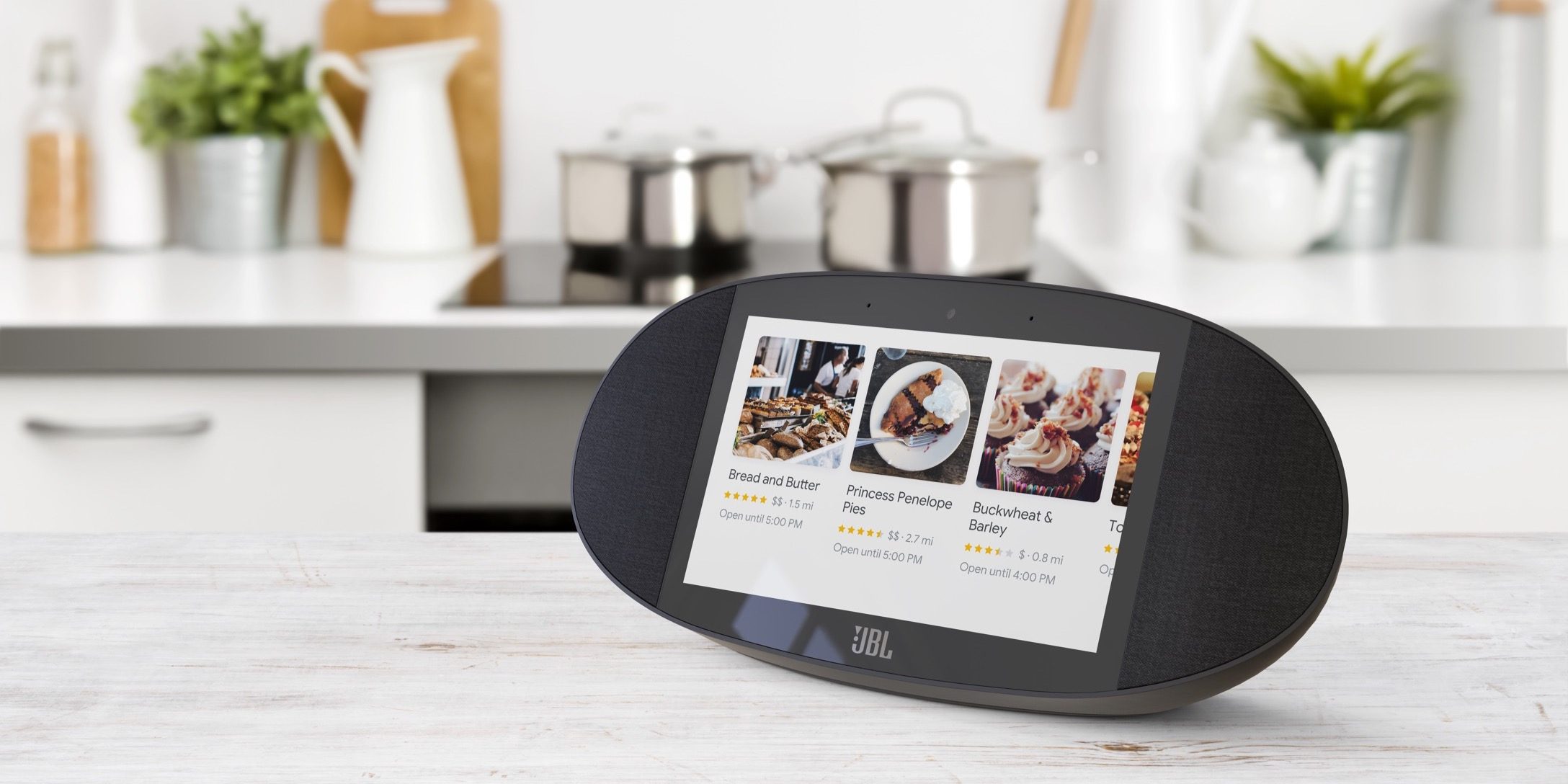
    For a few months, there have been rumours of Facebook working on a smart speaker with a display, much like the Amazon Echo Show, which will have Facebook and its other social networking services at its heart. The device will reportedly be called Portal and is expected to be priced at US $499, which is more than double of what an Alexa-powered Amazon Echo Show costs.

    Facebook is planning to unveil the device in May 2018 at its developer’s conference and start shipping it by the end of the year. It will be interesting to see how Facebook Portal will compete with other smart speakers with a display as Google also announced a slew of companies that will be manufacturing Assistant-powered speakers with a display.

    JBL Link View Powered By Google Assistant

    A previous report claims that it would have a display of between 13 to 15 inches, almost double of what is found on the Echo Show. The tablet-like device will respond to voice commands and use facial recognition technology, something Facebook has been taking very seriously off-late will provide a personalised experience to different people in the house.

    The Facebook Portal could also be a part of Facebook’s plan to become the largest video streaming service in the world. With a huge display and the ease of voice commands, the Portal could become a primary source of video consumption for people active on social media and the company could launch its streaming service with the new smart speaker. You could read everything about Facebook’s new streaming service, Watch here.


  • 75 Billion WhatsApp Messages Were Sent On New Year’s Eve

    75 Billion WhatsApp Messages Were Sent On New Year’s Eve

    Up until a few years ago, SMS packs were a big selling point for holidays and major festivals. However, with the internet becoming more affordable and accessible, users have resorted to instant messaging apps like WhatsApp to communicate on a daily basis. A report claims that on the 31st of December 2017, over 75 billion messages were sent on WhatsApp worldwide. For context, Earth’s population is 7.6 billion.

    In India alone, WhatsApp has over 200 million monthly active users who sent over 20 billion messages on New Year’s Eve. That is a staggering figure for one country which constitutes more than 1/4th of the total messages sent across the world. Incidentally, the last day of the year also turned out to be WhatsApp’s biggest messaging day ever.

    Ever since the internet became cheaper and smartphones became affordable, SMS services have seen a severe decline and active usage. Moreover, instant messaging apps let users send more than just text messages to each other. It allows users to express in a more expansive way through GIFs, videos or emoticons.

    Over the course of 2017, WhatsApp released a few new features which a lot of users had asked for including ‘Delete For All’. Ever since Facebook took over WhatsApp, there have been instances where Facebook features were trickled down to WhatsApp as well. One such feature was ‘Status’. In less than a year, WhatsApp Status feature has garnered over 300 million monthly active users across the globe. To put this statistic into context, Snapchat as whole experiences about 166 million daily active users. And WhatsApp status feature was set out to be a ‘Snapchat Stories’ clone. Instagram stories, another Snapchat clone hit the 250 million daily active users as well.

    In 2017, WhatsApp also hit 1 billion monthly active users. India is WhatsApp’s largest market with 200 million active users. In fact, back in February WhatsApp co-founder Brian Acton visited India in order to gather insights from people on how WhatsApp can contribute to the country in a more prominent way.


  • Facebook And Universal Music Group Deal Will Allow Users To Upload Songs In Videos

    Facebook And Universal Music Group Deal Will Allow Users To Upload Songs In Videos

    Facebook has announced a new multi-year deal with Universal Music Group. The agreement, which also covers Instagram and Oculus, will allow content creators to upload songs by UMG artists in their videos without worrying copyright violations.

    The deal will help address the major copyright infringement issues around music on the social media platform. Facebook says this is the first step in addressing the issue but, noted that it would work with the label to introduce “music-based products” on its platforms as well. UMG is not the last label to sign a licensing deal as multiple reports have claimed that social media platform is in talks with Warner Music Group and Sony Music Group as well.

    Facebook is also creating its own version of Content ID, YouTube’s service to identify rights holders’ content across its network, which would allow music labels and other major rights holders to manage their content on the platform.

    The efforts to integrate music into its services began back in 2015 for Facebook. Facebook did not want to go the traditional route and create an on-demand streaming service. In turn, it has kept pushing for it and with UMG on board, it has addressed the copyright infringement issue on its platform which seems ideal for both creators and the music industry.

  • Facebook To Launch Standalone Video Streaming App Called ‘Watch’

    Facebook To Launch Standalone Video Streaming App Called ‘Watch’

    Most people’s answer to ‘Where do you watch videos on the internet?’ would ‘YouTube, of course!’. Over the years, it has dominated the video consumption space on the internet because it has artists who create content that is only accessible on YouTube and nowhere else. The visual format of content consumption has become so huge that even Apple is planning to launch a subscription-based video streaming service in the coming years. Thanks to the increased accessibility and relatively cheaper fare of the internet over the world, services like Netflix and Amazon Prime Video have become successful as well.

    If you are an avid Facebook user, you come across all kinds of videos on your timeline every few seconds. It can be a funny 15-second 9GAG video or a VICE clip about cooking Christmas dinner in a dumpster. For several years, videos have been a focus for Facebook and the company might be taking an important step towards making videos its one of the most important business aspects.

    Facebook will be launching Watch, a standalone video streaming app which will compete with the likes of YouTube and Netflix.

    What is Watch?

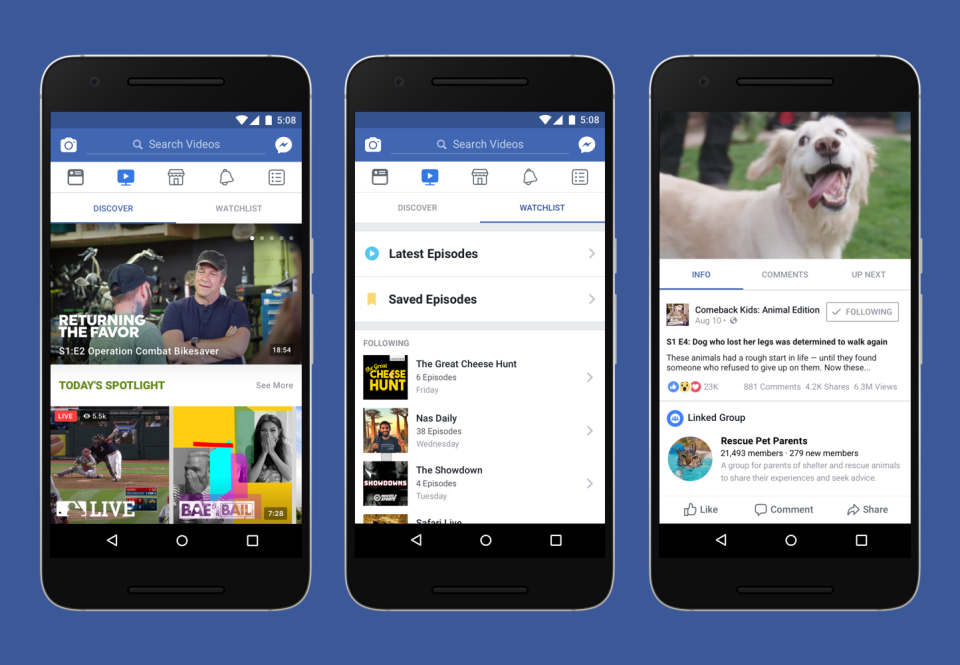
    Facebook Watch is already available as a beta version within the Facebook app in the US and will soon make its global debut. It is a video streaming app which will blend in Facebook’s other services like Messenger and WhatsApp.

    According to our sources, Facebook is working on making Watch a standalone app to launch in Q1-Q2 2018

    Watch includes features like a “discovery” page that recommends new content, a dedicated feed for comments and reactions to videos, show-specific Facebook groups, and new Watch pages. For creators and publishers, Watch is presented as a platform to help them build an audience of passionate fans and make money from their work.
    Any creator that is a part of Facebook Mentions, will be automatically eligible to use the app. Facebook Mentions is a platform that lets all sorts of public personalities to engage with their fans.

    The Facebook Watch app will have a new set of tools which is called Live Creative Kit. These tools will essentially help creators produce more professional streams. To create more fun and engaging content, the Watch app will let users add custom video intros and outros to broadcasts. Even the viewers can feel like a part of fandom by using custom stickers.

    One-fifth of videos on Facebook are live videos, which is one of the important statistics and around which, a lot of the features of Facebook Watch are created. For example, users can add frames to their broadcasts in order to create a thematic experience that’s consistent with their brand perception.

    Why Watch Has The Potential To Surpass YouTube

    As of now, YouTube is the largest video streaming platform in the world and has been for a long time. Many services came and couldn’t survive the magnitude of competition that is required the ruffle the feathers of YouTube. Facebook Watch, however, will be different. It is a common term to hear that ‘Facebook is crushing Snapchat by copying features that Snapchat brought to the fore’. It is true, Snapchat has not been able to deal with Facebook’s constant adaption of Snapchat’s own features because at any given point, Facebook has much more active users than Snapchat. Also, Facebook adapts and responds quickly.

    Making speed a priority has allowed Facebook to build products and features that allow it to outpace competitors and perfect user experiences. This is part of the reason why Facebook-owned properties like Facebook, Messenger, Instagram, and WhatsApp account for 21.8% of the total time that the average consumer spends on their mobile phones.

    To become the biggest video content consumption platform, Facebook needs video content, and reports claim that it has taken a drastic step to ensure that creators jump on board as soon as possible and has started paying for original content. According to The Wall Street Journal, Facebook “is taking the risk out of the content-creation endeavour for many publishers, either by paying to offset their production costs or offering to license or buy their content outright.”

    This means that Facebook will be able to generate exclusive content quicker by allowing creators to work freely without thinking of the monetary repercussions of content creation. Already, many creators on YouTube have had a fall-out with YouTube due to the monetization guidelines and with the lucrative offer from Facebook, famous content creators might be persuaded into changing their allegiance. Evidently, all the famous creators on YouTube have a strong presence on other social media platforms hence, the transition might not be as hard as people might imagine.

    Furthermore, with the creators on board, Facebook will need advertisers to generate the revenue. While Facebook is becoming increasingly profitable, speculators believe YouTube is now barely breaking even on ad revenue. Facebook has even started monetizing videos that are directly uploaded to its platform.

    This focus on video has already resulted in native Facebook video uploads getting 10 times more shares than YouTube uploads. Following Facebook’s initial emphasis on video, there has been a 50 percent increase in uploads to Facebook by brands over the past three years.

    Lastly, there is no denying that Facebook has the audience for pulling off the unthinkable and surpass YouTube as the biggest video streaming platform. In 2016, Zuckerberg disclosed that the average person spent 50 minutes a day on Facebook’s platforms (not counting WhatsApp). Users in the U.S. spent an average of 35 minutes per day on Facebook, compared to YouTube with 17 minutes. In addition to higher time on site, Facebook has more users than YouTube, with more than two billion users vs YouTube’s 1.5 billion.

    Conclusion

    Facebook owns entities like Instagram, WhatsApp and Messenger. Integrating a video streaming platform with other popular social media outlets would mean that a consumer would never leave the ecosystem created by Facebook. After dominating the social media sphere for so many years, Facebook, an internet organisation, has the resources to replicate the same success in the world of video streaming as well. To believe that YouTube will disappear is incredibly naive. Instead, it will likely become marginalised, much in the same way Snapchat and Twitter now have to deal with the popularity of Facebook and survive in its shadow.

    With increasing disdain among creators on YouTube and a lucrative offer from Facebook to all the popular content creators, Facebook has the perfect product to be the biggest video consumption platform in the world.
  • Amazon Is Working On Its Own Version Of YouTube

    Amazon Is Working On Its Own Version Of YouTube

    It is no secret that Google and Amazon are embroiled in a battle of power. It might seem silly to consumers but, it might end up costing the two companies millions of dollars. Amazon has been refusing to sell Google hardware on its platform, and Google has responded by blocking YouTube access on Amazon’s line of Echo and Fire TV products.

    Now, it is fair to assume that Google can’t replicate Amazon’s online presence and Amazon, in turn, can’t make a platform as huge as YouTube right now. But, it appears that Amazon is not willing to give up the ambition of having its own YouTube-like platform. Amazon filed trademarks requests with the US Patent and Trademark Office for products called AmazonTube and OpenTube.

    Interestingly, this happened the same day Google announced that Amazon devices will lose YouTube access from the 1st of January.

    Amazon says Amazon Tube and/or Open Tube would provide “non-downloadable pre-recorded audio, visual and audiovisual works via wireless networks on a variety of topics.”

    In the description, Amazon says the new service would also provide “on-line network services that enable users to share content, photos videos, text, data, images and other electronic works relating to entertainment, including, movies, television, audiovisual works, music, audio works, books, theatre, literary works, sporting events, recreational activities, leisure activities, tournaments, art, dance, musicals, exhibitions, sports instruction, clubs, radio, comedy, contests, visual works, games, gaming, festivals, museums, parks, cultural events, concerts, publishing, animation, current events, fashion, multimedia presentations, history, language, liberal arts, math, business, science, technology, hobbies, culture, sports, arts, psychology, and philosophy.”

    Apart from that, a report claims that Amazon has been registering new domain names including AlexaOpenTube.com, AmazonAlexaTube.com, and AmazonOpenTube.com.

    If these are more than just routine patent filing activities and Amazon goes ahead with its plan of launching a YouTube competitor, it will be interesting to see how the consumers respond and whether it will be available to match up to the vast content that YouTube offers,

    [poll id=”58″]

  • Facebook Will Notify Users if Someone Else Uploads Their Photo

    Facebook Will Notify Users if Someone Else Uploads Their Photo

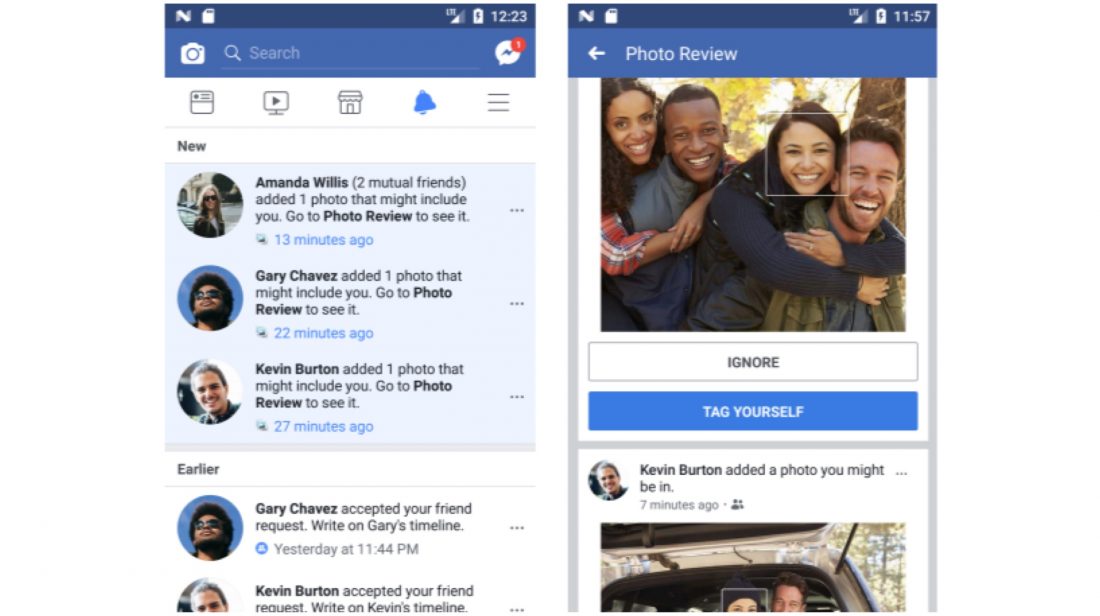
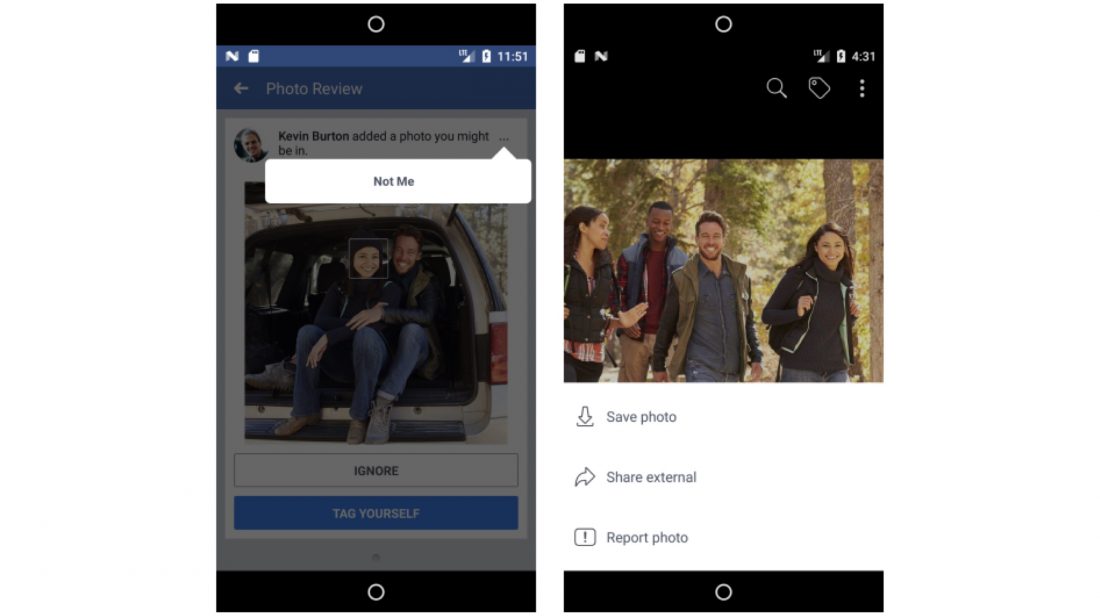
    Facial recognition is a software that Facebook uses to some extent. Now, the social networking company is taking facial recognition to another level with its new feature. Using facial recognition, Facebook will notify a user if someone else uploads of that user.

    According to Facebook’s blog post, the idea behind Photo Review is to give users more control over their online identity by giving them more privacy settings to work with. For the time being, those settings are the only means to work around facial recognition, with users being asked to grant Facebook permission to use facial recognition across the service.

    Powered by the same technology we’ve used to suggest friends you may want to tag in photos or videos, these new features help you find photos that you’re not tagged in and help you detect when others might be attempting to use your image as their profile picture.

    This would allow Facebook to implement more features that use facial recognition, such as account recovery. Facebook has conceded that there will be an easier on-off switch if you find facial recognition to be more trouble than it’s worth.

    Photo Review is powered by the same AI technology that suggests friends you might want to tag in your pictures. The good news here is that the user does not have to be friends with someone for Photo Review to work, as long as the user has friends in common, they will be notified. When you are notified, you then have the choice to add your tag to the photo, leave yourself untagged, or report the photo as inappropriate.

    Facebook says Photo Review is rolling out to most regions, though users in Canada and the EU will not get to use it due to data laws that restrict the use of facial recognition.


  • WhatsApp Ordered To Stop Sharing User Data With Facebook

    WhatsApp Ordered To Stop Sharing User Data With Facebook

    Back in 2014, Facebook bought one of the most famous instant messaging apps in the world, WhatsApp. Over the course of three years, there have been many Facebook features which have trickled down to WhatsApp as well, WhatsApp Status being one of them. Being the parent company, Facebook started using the user data from WhatsApp to develop targeted advertising, security measures, and to gather business intelligence.

    To tackle the free-sharing of personal user data among the two firms, France’s ultra-strict privacy watchdog CNIL has ordered WhatsApp to stop sharing user data with parent company Facebook. WhatsApp has a month to comply with the order, according to a public notice posted to the French website. CNIL ruled that while WhatsApp’s intention of improving security measures was valid, the sharing of data for business intelligence purpose was not acceptable.

    CNIL believes that since WhatsApp never told its users that it was collecting data for business intelligence and there’s no way to opt out without uninstalling the app, it violates the fundamental freedom of users.

    This is a yet another step from European regulators to crack down on the freewheeling data sharing between the two social networking entities. Germany ordered Facebook to stop collecting data from WhatsApp users in September 2016, and in the UK, Facebook agreed to stop collecting WhatsApp user data in November 2016.

    Do you find it uncomfortable that Facebook can use your data to create specific advertisements for you while it claims that the data-sharing is for security purposes only? Let us know in the comments below!

  • YouTube To Launch Music Subscription Service In 2018

    YouTube To Launch Music Subscription Service In 2018

    YouTube is planning to launch a music streaming service in March next year.

    Record label Warner Music Group has already signed up while Sony Music Entertainment, Universal Music Group, and Merlin, a consortium of independent labels, are in talks with YouTube as well. According to the report, the service is internally called Remix as of now and it will be interesting if that turns out to be the official name as well.

    YouTube hired former Warner Music executive Lyor Cohen last year to help oversee its music operations and serve as a liaison to the record business. Google folded much of the staff for Google Play Music into YouTube earlier this year, and Cohen announced plans to create a new paid service.

    The new service could help appease record-industry executives who have pushed for more revenue from YouTube. Warner Music Group, one of the world’s three major record labels, has already signed on, said the people, who asked not to be identified discussing private talks.

    The new service would include Spotify-like on-demand streaming and would incorporate elements from YouTube, such as video clips. YouTube has also reached out to artists to seek their help in promoting the new service.

  • WhatsApp Will Soon Play YouTube Videos Within The App

    WhatsApp Will Soon Play YouTube Videos Within The App

    WhatsApp has been the most successful instant messaging app and right now, it barely has any competition. But, an app needs to keep on evolving and adding new features incentivises  users to come back to your app rather than switching to some other new one.

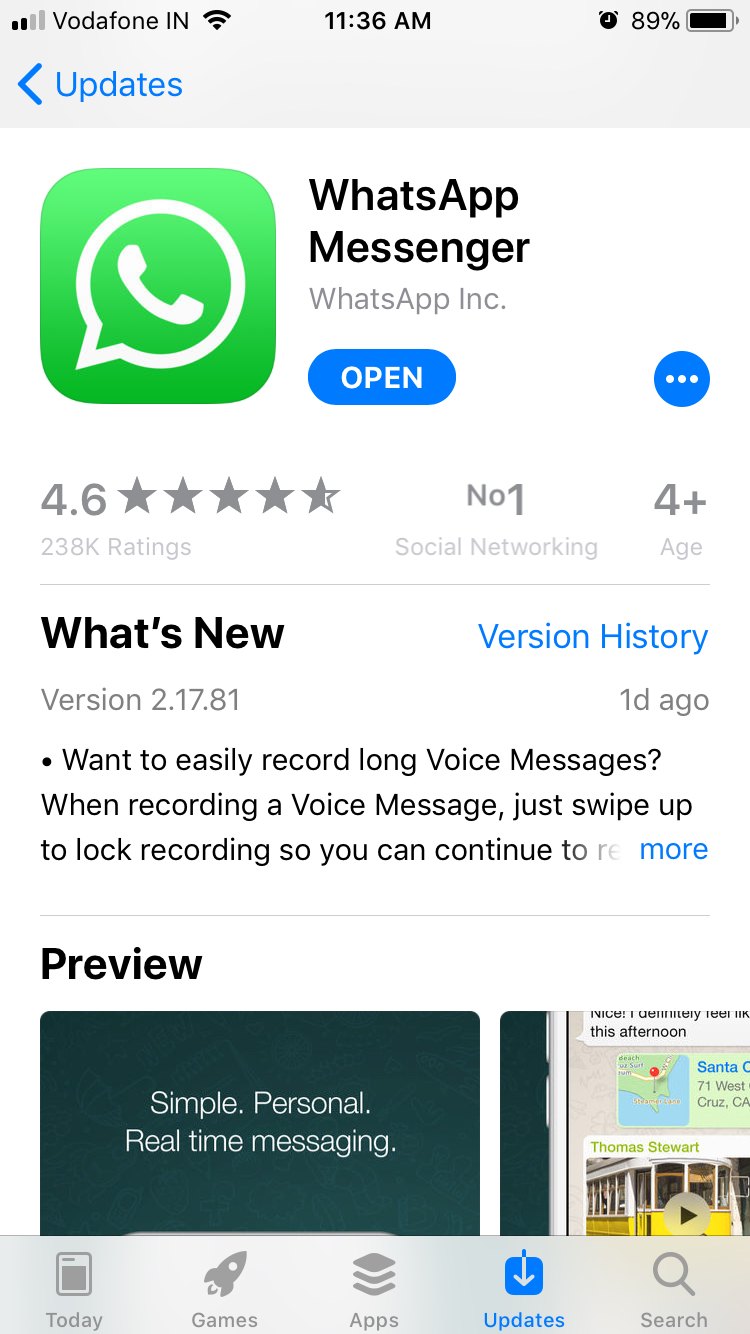
    Keeping that in mind, WhatsApp has recently updated its iOS app to add a new functionality which will enable WhatsApp to play YouTube videos within the app.

    The new update comes with WhatsApp version 2.17.81, which is currently available to download via the App Store. However, the PiP mode is currently not working and the YouTube link in the conversations still takes you to the YouTube app.

    According to WABetaInfo, the YouTube playback feature is not yet enabled from a server side switch, the WhatsApp server. After the update, the app is capable of running PiP mode and it will be functional as soon as WhatsApp enables the switch from its server end.

    For Android users, there is no word on this update yet but, the next app update should bring this feature to Android devices as well.

  • WhatsApp Is Rolling Out The Delete For Everyone (Recall) Feature For All Users

    WhatsApp Is Rolling Out The Delete For Everyone (Recall) Feature For All Users

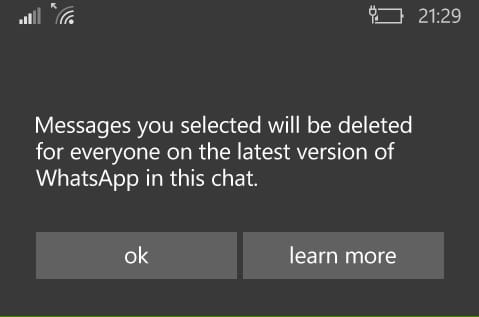
    After months of being in beta testing, it appears that WhatsApp is finally happy with its recall feature. WABetainfo now reports that the new feature called ‘Delete for Everyone’, has started rolling out to some Android, iPhone, and Windows Phone users. It only works if both the recipient and sender have the latest version of WhatsApp installed and it also works on WhatsApp Web version.

    The website notes that the rollout is slow and may take some time to reach out to all the users. The feature is said to work for all kinds of message like texts, images, videos, GIFs, voice messages, contact, files, location, quoted message, and status replies on WhatsApp.

    It is worth noting that the feature works only within 7 minutes of sending the message, after that, the message can’t be recalled. Deleted messages will be replaced by “This message was deleted for everyone.” Once the sent message is deleted by the sender, WhatsApp will remove the message from the chat page as well as from the notifications window.

    One of the most widely requested feature on the most successful instant messaging apps is finally rolling out to all the users. Because the roll out will happen in phases, don’t get anxious if you haven’t received the update yet.

  • WhatsApp Will Now Allow You to Share Your Location Live

    WhatsApp Will Now Allow You to Share Your Location Live

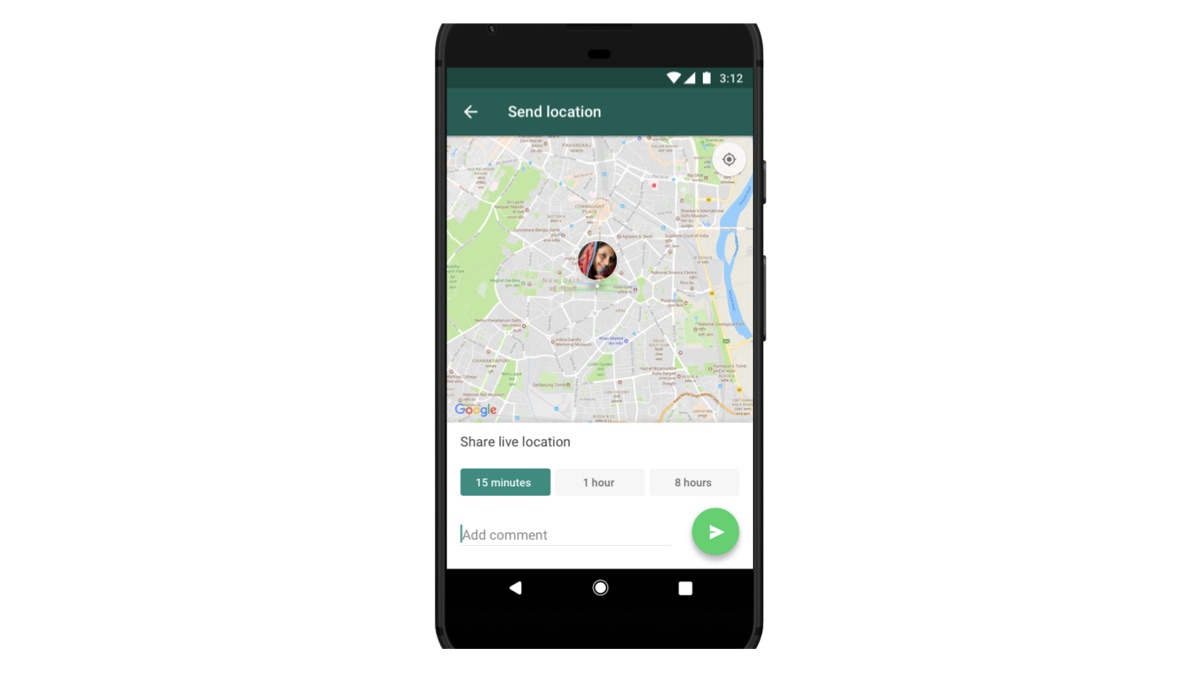
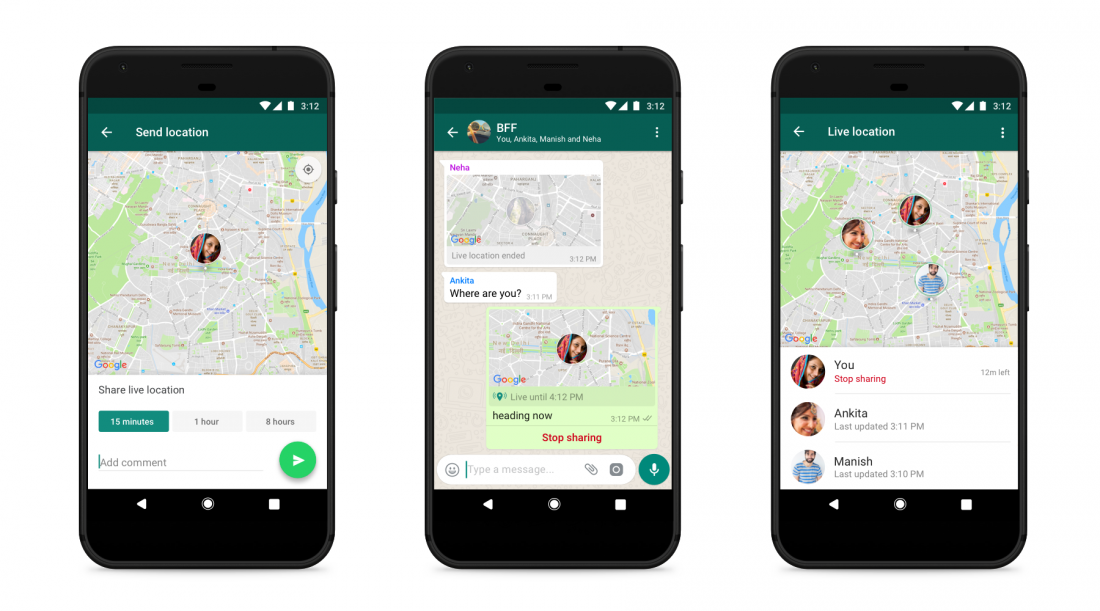
    What many will take as a safety solution, a location sharing feature that will share your location live with anyone you enable this feature with, hits the worlds most popular messaging application, WhatApp. With this new capability users can share their live location via a message help their friends/loved ones track them live.

    Since all communicating between two parties is encrypted, WhatsApp claims this private location sharing will remain secure and encrypted for the privacy protection of the users.

    The feature will go live across platforms whether iOS or Android and users will be able to initiate it though the location shirring menu in their apps. Whats even more interesting is that, if in a group chat, several members share their location, it will be seen in a common map.

    How to Activate Live Location:

    As an incremental update the feature will automatically show up within your app if your hardware ( smartphone) supports this feature.

    How to Share Live Location:

    • Open a chat with the person or group you want to share with.
    • Under “Location” in the attach button, there’s a new option to “Share Live Location.”
    • Choose for how long you want to share and tap send
    • Each person in the chat will be able to see your real-time location on a map
    • And if more than one person shares their Live Location in the group, all locations will be visible on the same map.
    • Once done you can stop sharing the location by tapping the “Stop Sharing” button

    Live Location is available on both Android and iPhone and will be rolling out in the app in the coming weeks.


iGyaan Network
Privacy Overview

This website uses cookies so that we can provide you with the best user experience possible. Cookie information is stored in your browser and performs functions such as recognising you when you return to our website and helping our team to understand which sections of the website you find most interesting and useful.