Lenovo has recently been in the news for all the wrong reasons. Cyber-security experts reported that the a pre-installed adware called on Lenovo computers made them vulnerable to hacking. Lenovo is also facing a class action lawsuit after admitting that it willingly installed the adware on their systems. The company seems to have really touched a nerve as a group of hackers called Lizard Squad have taken over their website.
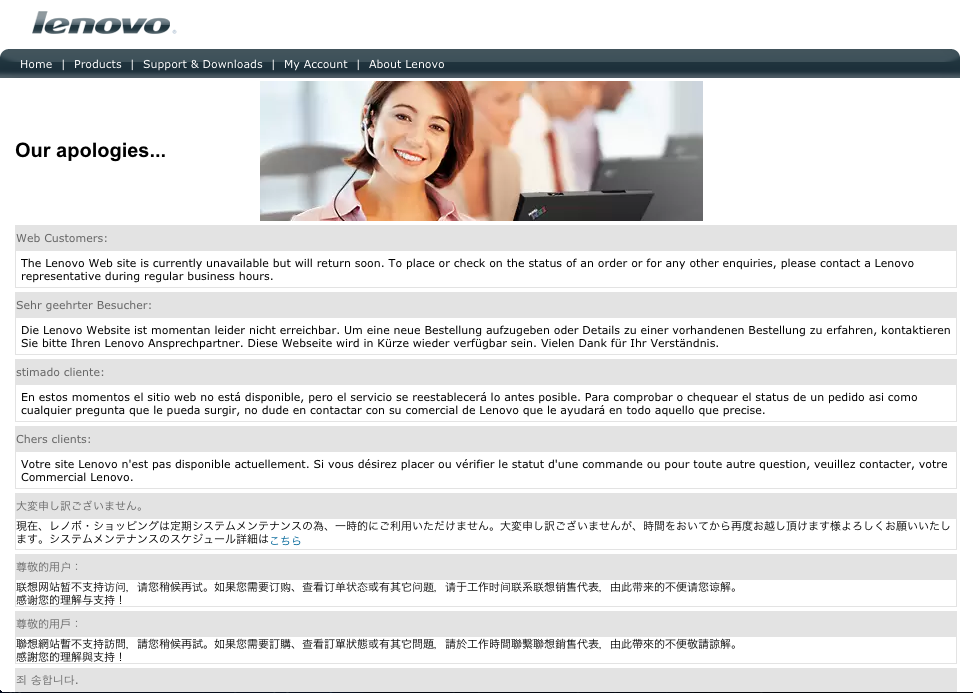
The Message currently showing on Lenovo’s website
When some users went to visit the site in the morning, instead of the usual content they just found a slideshow. The slideshow had webcam pictures of kids with a Twitter link claiming to be members of Lizard Squad. If you visit the website, now all you get is an apology page stating that the website is unavailable and will come online soon.
We’ll comb the Lenovo dump for more interesting things later.
The hackers have also gained access to Lenovo’s emails and data. The group is claiming that it will be combing through all the data that it has captured. We might even anticipate leaks like the previous Sony hack.
The hackers have already released screenshots of emails that say that some devices got bricked when users attempted to remove Superfish adware themselves. Superfish has become a major bone in the throats of Lenovo. The company had till now enjoyed a healthy fan base, but the adware seems to have the potential to severely tarnish the company’s image. Come back to iGyaan for more updates on Lenovo.
If Google is the frontrunner in the smartphone race with Android, Microsoft is the boss of laptops and computers with the power of Windows. The internet search beast wants to take the charge in this segment as well and is geared to release a hybrid 2-in-1 Chromebook that would be working on both Chrome OS and Android.
The yet-untitled device is a detachable machine that runs on Android in the tablet form, and when attached to a keyboard instantly switches to Chrome OS. Google has gone far ahead with the integration of Android ecosystem to Chrome OS.
Meanwhile, it’s not known that how the two operating systems are going to boot or if Android apps will run on Chrome OS. It seems like the 2-in-1 hybrid machine will switch between the two operating systems automatically as per requirement.
The forthcoming Chromebook is said to be designed by Quanta Computer and will launch under Google branding. The product will complete sometime in the first quarter of this year. Many vendors are said to be joining Google’s 2-in-1 Chromebook later this year.
The Chromebooks did tremendously well in 2014 with a worldwide shipment of 6.5 million units. But to retain that number and increase it, Google needs to carry on, on the path of innovation.
Since parting ways with Sony, Vaio has been hinting that are things are going to change. And they possibly could as Vaio has spruced up its flagship Z series with two new hybrid laptops: the Vaio Z and Vaio Z Canvas.
The 13.3-inch Vaio Z goes up for pre-orin Japan today, with a second generation high speed SSD along with an unspecified fifth gen Core i7 Intel chipset on board, all wrapped up in an aluminium carbon outerbody shell.
Vaio executives have also stressed upon the fact that the ‘Z’ also stands for Zero. Courtesy of its aluminium carbon fibre construction, the Z weighs just a mere 1.34 kgs with a thickness of about 16.8mm. Vaio is claiming it can provide a battery backup of 15.5 hours, making it the longest lasting laptop the company has ever made. In addition, they also claim that the keyboard makes substantially lesser noise. The flagship won’t come cheap, as it is estimated to retail around $1,600.
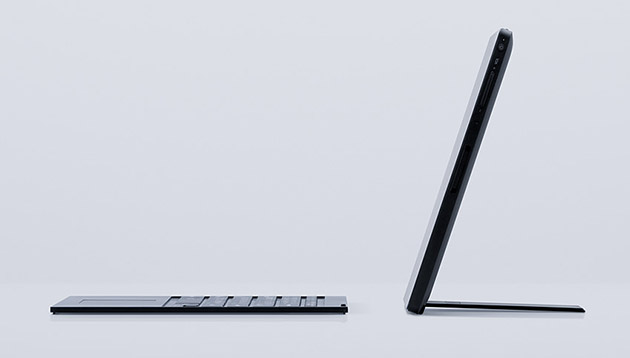
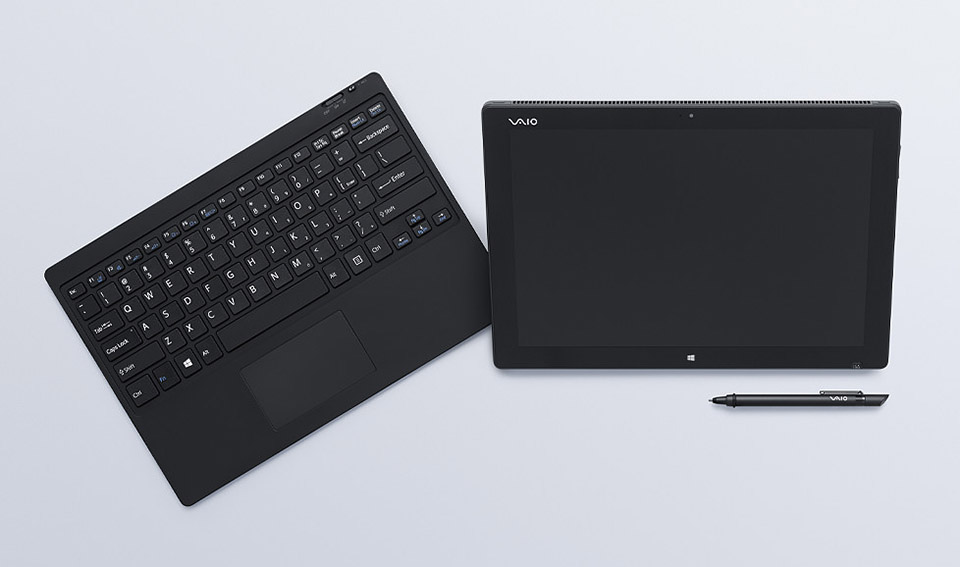
Meanwhile, the Vaio Z Canvas which launches later in May, sports a detachable keyboard, a 12.1-inch display with a staggering resolution of 2560×1704 pixels. Other details remain sparse but there are indications the Vaio Z Canvas gets a digitized stylus as well. Though Vaio has promised that it’ll cram the Vaio Z Canvas with upto 1TB of storage.
Apple will soon be launching the new 12-inch Macbook Air. According to a rumour, these new laptops are expected to be powered by Intel’s Broadwell chipsets.
The rumor was reported by Letemsvetemapplem.eu. It says that Apple might choose from three options; a 2.2GHz Core i5-5250U, a 1.8GHz Core i5 chip or a 2GHz Core i7. These are the ultra-low voltage processors and might feature on the new Macbook Air
Apple is expected to give an official word on the release on February 24th. The company is also expected to hold a media event around that time to showcase its new products.
Macbook Air line of laptops is adored for their lightweight and high power functionalities. Apple last updated the device in April 2014, so it was almost time for a CPU upgrade. Intel on the other hand began offering the new chips for device manufacturers in the month of January. There have also been rumours of Apple bringing out a 12-inch Macbook Air Retina display in this quarter so that it might be one of the surprise unveilings from the company. February 24 is also a special day for Apple as it’s the 60th birth anniversary of its founder Steve Jobs.
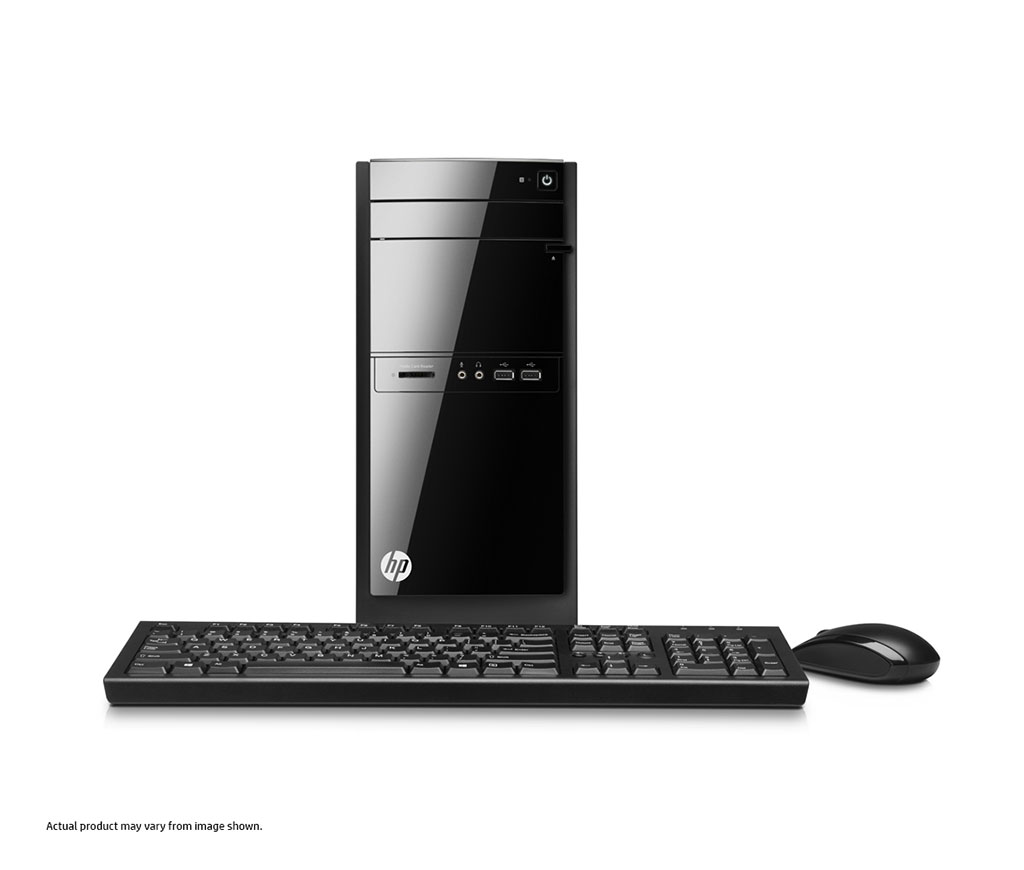
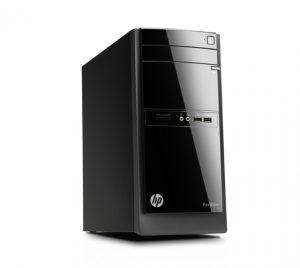
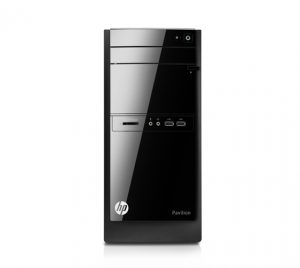
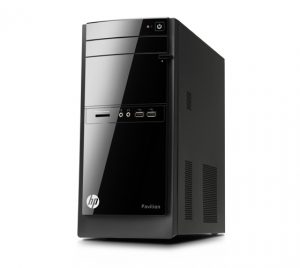
HP has officially launched its new HP 110 and HP 120 desktops PCs for the Indian market. HP says these affordable desktop PCs are designed specially for everyday use for both small businesses and home users.
The HP 120 is powered by a 4th gen 64-bit Intel Core i3 Processor, with a speed clocked at 3.6Ghz. It runs on Microsoft Windows 8.1 and users can customize the system with additional memory and graphics card. It comes bundled with 2GB of SDRAM which can be upgraded to 4GB. The HP 120 desktop features a 500GB HDD and comes with an included keyboard and a mouse.
Meanwhile, the HP 110 desktop PC is powered by a 64-bit Intel Quad-Core processor bundled with 2GB of DDRL3 RAM along with Intel HD graphics. In terms of storage, the HP 110 comes with a 500GB HDD and comes bundled with a mouse and a keyboard.
The HP 110 Desktop is now available in the market at a starting price of Rs. 23,990 (including taxes). It can also be purchased via the HP online store. However, the exact price of the HP 120 is not yet known though it should start at more or less the same price as the HP 110.
In addition, HP is also offering a 3 year on-site warranty option for Rs.1,499.
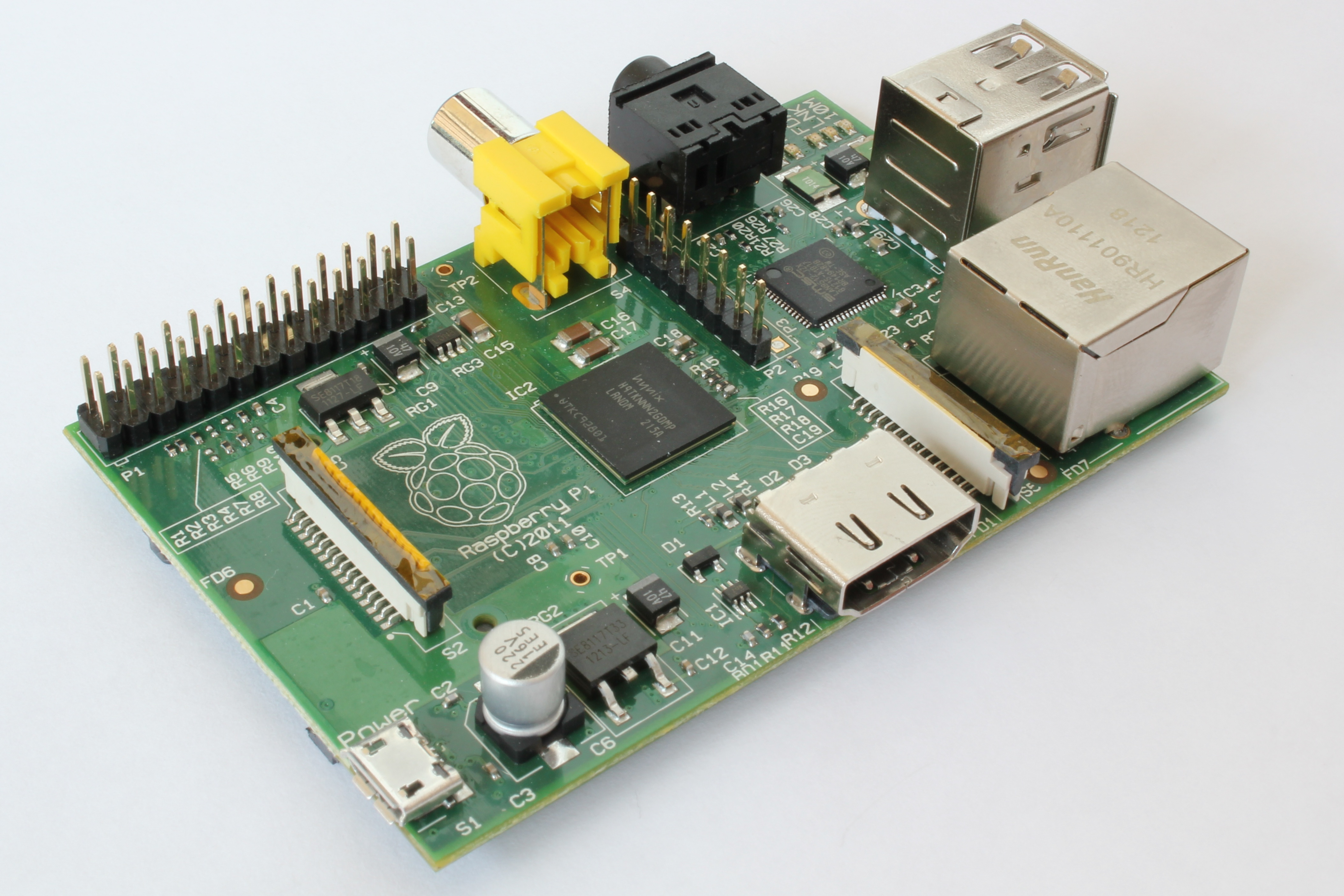
Computers have come a long way in the past couple of decades. From giant machines that took up an entire room, they have shrunk down to fit in the palms of our hands. But there has been a wide disconnect between what a user sees on the screen and what happens in the background. During the early era of computing, people would just tinker around and learn to program with minimal technical skills, but with the passing of time, programming has become more and more specialised. In times like these there is a need for a cheap computer that can take the brunt of a new programmer’s enthusiastic experiments. The answer comes in the form of a credit card-sized computer called the Raspberry Pi.
Raspberry Pi is the brainchild of Eben Upton. He first came up with the idea of the Raspberry Pi back in 2006 while working in the Computer Laboratory of the University of Cambridge. He saw the poor programming skills of students and wanted to make it easier for them to experiment with computers. His intention was to make a computer that was cheap so that budding programmers could easily tinker around with it without worrying about damaging the device.
Raspberry Pi aims to simplify the understanding of computers.
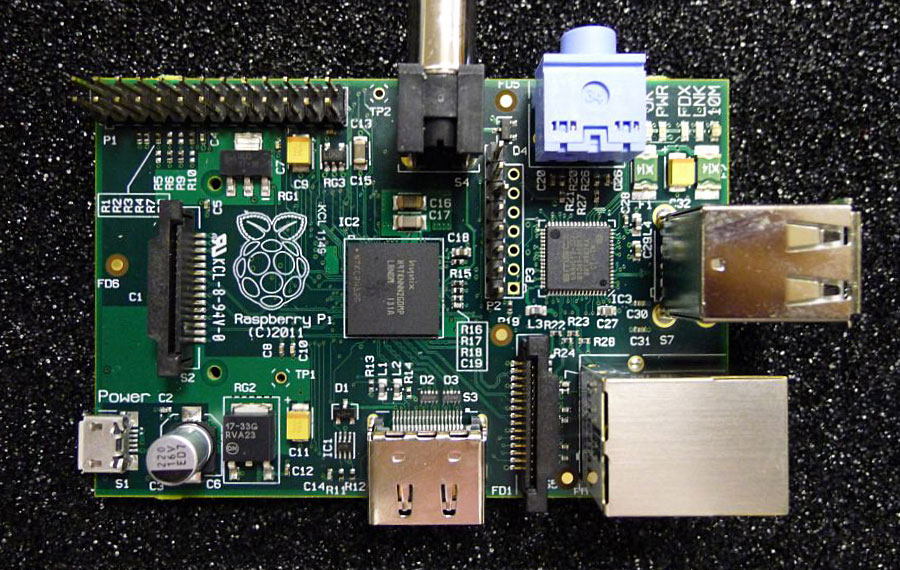
Raspberry Pi is basically a self-contained computer. The Raspberry Pi Foundation was established in 2009 while the first versions was launched in 2012. Model A came with 256 MB of memory and 1 USB port while Model B came with 512 MB of storage and 2 USB ports. Both models were powered by a 700 MHz single core CPU that could be overclocked to 900 MHz. You need to attach a monitor, keyboard and mouse to get the device working. The storage for the user comes in the form of SD cards; the device can handle up to 632 GB of storage.
Getting Started
So now you have your Raspberry Pi board, you need to set it up before you can start with your experimentation. The board requires you to have a computer ready before you can go forward. The foundation page offers a quick start guide that is fairly easy to follow.
First of all you need to get a class 4 SD card with 4 GB or higher storage space. Next you have to format it and install the New Out Of Box Software(aptly abbreviated as NOOBS). Now put the SD card in the Raspberry Pi and it will offer you with a list of operating systems that you can boot into.
Applications
Raspberry Pi can be used as a base to create a lot of hardware. People have fashioned an entire keyboard made out of Beer cans to drones through this humble board. The possibilities with this tiny board are endless.
The official coding language for the Raspberry Pi is Python. You can find varied kinds of codes on the internet along with tutorials that you can follow to make the best out of your board.
Raspberry Pi Supercomputer
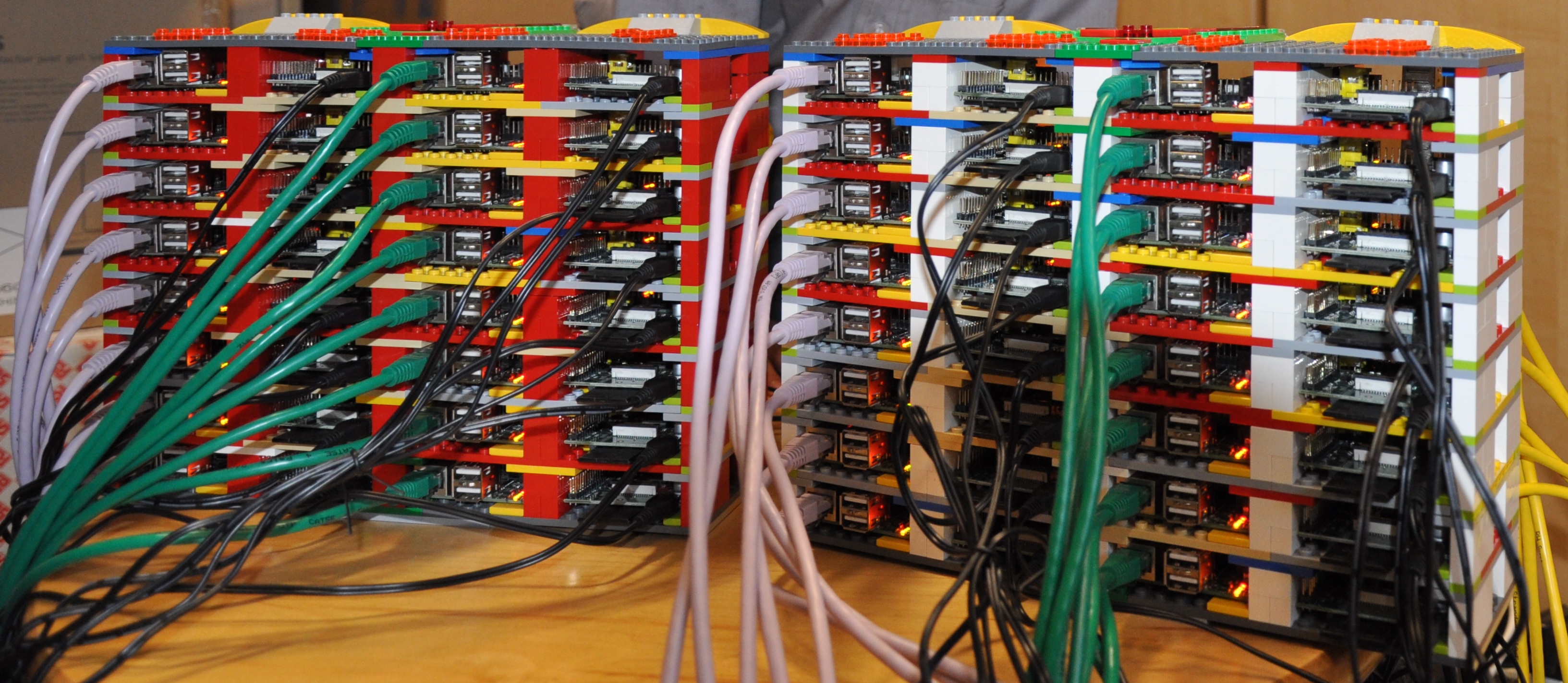
You can write your own game on the board, create your server, and bunch together a lot of boards to create your own supercomputer. You can also place the board on a monitor and have an extra system that takes care of your downloading needs while you concentrate on work on the main system. With a little bit of tweaking you can convert the board into a phone, with that knowledge in hand, you can become the guy who restores communication after an apocalypse.
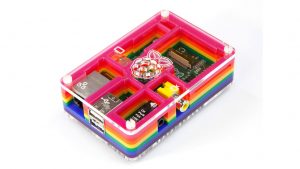
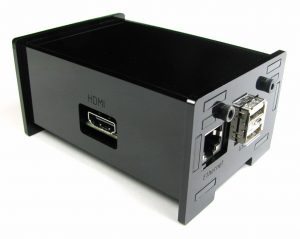
You can beautify your Raspberry Pi Board by creating a case for it. If you are not the arts and crafts type, there are a variety of cases to choose from in the market. Choose the one that matches your personality and get creating.
What’s Next For Raspberry Pi?
The Foundation recently launched Raspberry Pi 2. The Board gets a lot faster over its predecessor and comes at the same affordable price of $35. The device is powered by a 900MHz quad-core ARM Cortex-A7 CPU along with 1 GB LPDDR2 SDRAM. The device will run Windows 10 and Ubuntu and will let the users play around in a known ecosystem. It will also let the users run Windows tablets and PC apps on the Raspberry board.
With all these amazing capabilities that Raspberry Pi has to offer you have to be at least intrigued by the possibilities of the device. If you have the slightest bit of inclination to understand how computers work; then you can start making a unique computer all by yourself with this board. Raspberry Pi is the one of the best things to happen to computers since the advent of desktop computers. So don’t wait up and get tinkering.
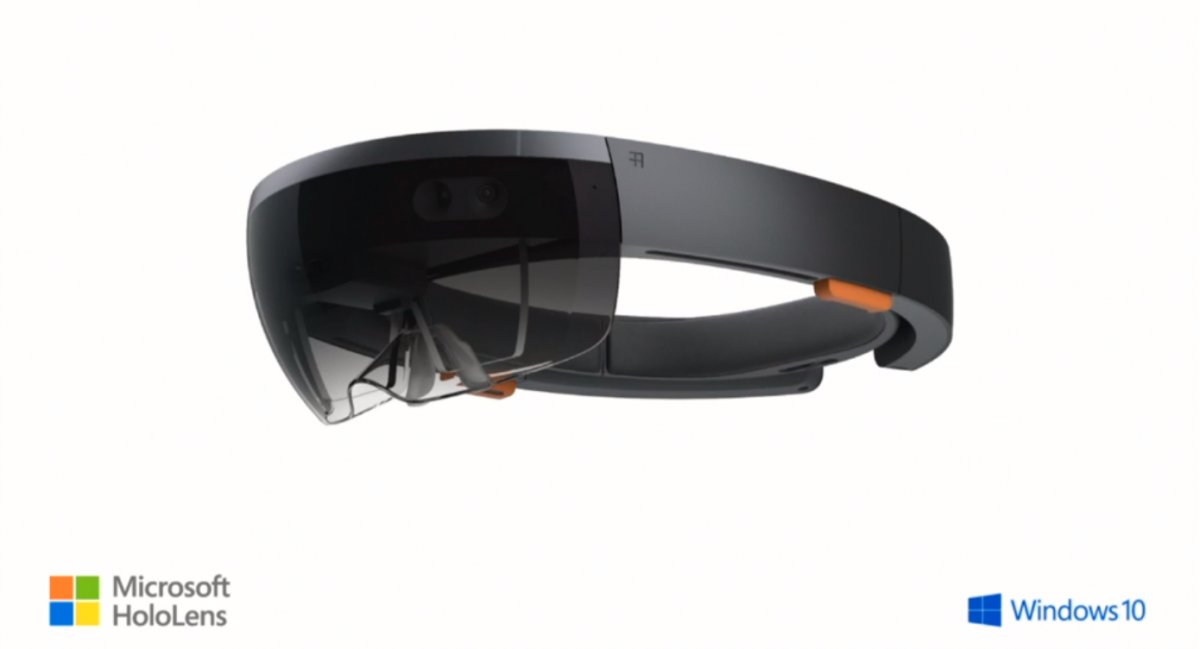
Microsoft is banking big on its new piece of technology which will bring holographic imagery to the end consumer.
Holo Lens is a mere headset which when connected with any PC running Windows 10 will merge and blur the lines between the digital and the physical. The kit will come complete with a set of APIs that enable developers to create holographic experiences in the real world.
With Windows 10, holograms are Windows universal apps and Windows universal apps can work as holograms, making it possible to place three-dimensional holograms in the world around you to communicate, create and explore in a manner that is far more personal and human.
The Holo Lens is wireless and will project the holograms in high definition and allow for a surround sound audio experience. Built directly into the hardware is a dedicated Holographic Processing Unit “HPU” ensuring a smooth transition between the software to the virtual world.
Asus has won a lot of hearts in India over the last year with its ZenFone line of smartphones. The Taiwanese electronics company has a healthy portfolio of devices in India which includes, notebook, tablets, desktops and a lot more. The company is now going to bring the affordable and stylish EeeBook to India for a price of Rs. 20,000.
Asus EeeBook will take a direct aim at Google’s Chromebook-based devices. The EeeBook is a lightweight notebook which is powered by a 1.33 GHz Quad-core Intel Atom processor along with 2 GB RAM. It comes with a-11.6 inch display with a screen resolution of 1366×768.
Just like the Chromebooks, the EeeBook is a cloud based device. In the UK, the device comes with a one-year subscription to Office365 and 1TB of OneDrive storage, which is worth £60. There is also a free two-year subscription to Asus’s WebStorage service with 500GB of space. So in terms of space, the cloud will come to your rescue. The 32 GB internal storage gets used up really fast so you’d have to keep an external storage device on you.
The Asus EeeBook gives more functionality than the average Chromebook, as it runs on the Windows operating system so you can use all your favorite softwares on the device. This bit makes it more practical and a better purchase for a country like India where internet connectivity is limited. The pricing of the EeeBook is also lower than the Chromebooks in the market which gives it an extra edge.
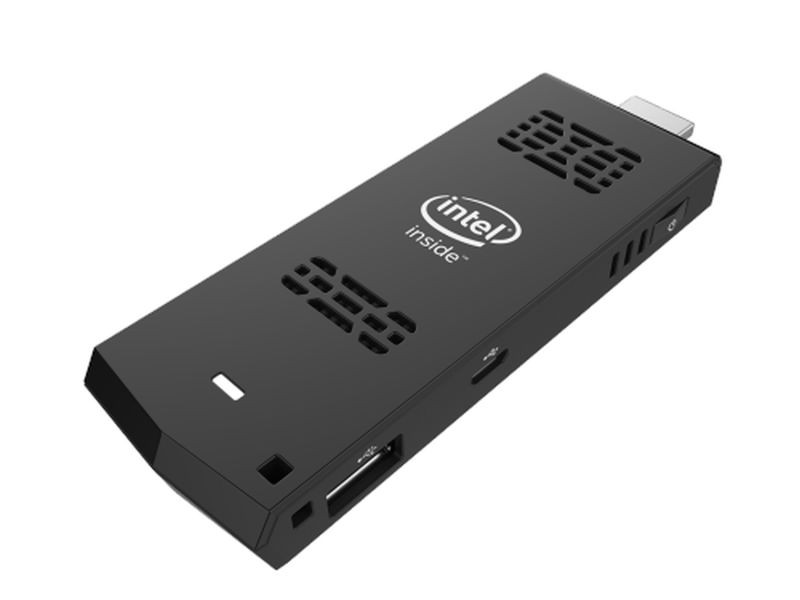
In a time when mobile devices are gaining prominence over computer, its time for the good old computers to stand up and fight back. Intel seems to have a solution, and it’s an entire computer that fits in your hands. Meet Intel’s Compute Stick, a device that can turn your regular TV into a computer and costs just $150.
There are at present many devices such as Google’s Chromecast and Amazon Fire Stick that provide streaming services, but the Compute Stick goes a little further. This device plugs into the HDMI port of your television and transforms it into a computer. It is available in Windows and Linux variants. The Linux variant comes at a price of $89.
The Windows version of the Compute Stick comes with 2 GB RAM and 32 GB Flash storage. On the other hand, the Linux version comes with 1 GB RAM and 8GB storage. Both devices are powered by a quad-core Atom CPU.
The stick sports a USB port, micro USB port, and supports Bluetooth 4.0, and 802.11b/g/n Wi-Fi. You can connect a Bluetooth keyboard and mouse and begin your task where ever you go. The company claims that this will help in bringing low-cost computing to schools, institutions and individuals too.
The device will come to market in March and is a good option if you own an HDMI capable TV and are in need of a low-cost computer. You should, though, know that this is no-frills computing and don’t expect to play any high-quality games on it. Intel plans to bring an upgrade to the device that will feature a Core M processor to increase performance. In our view, what it should really provide is storage expansion through a micro SD card, as 32 GB is comparatively less for modern computing needs. Overall, this looks like a great effort by Intel.
With almost all companies showing off their best innovations in the ongoing Consumer Electronic Show, the Cupertino-based giant Apple is geared to showcase its best product. The company is reportedly working on a prototype of the new MacBook Air, which will be launched in 2015. The upcoming 12-inch Air will be even thinner than its predecessors; believe it if you can!
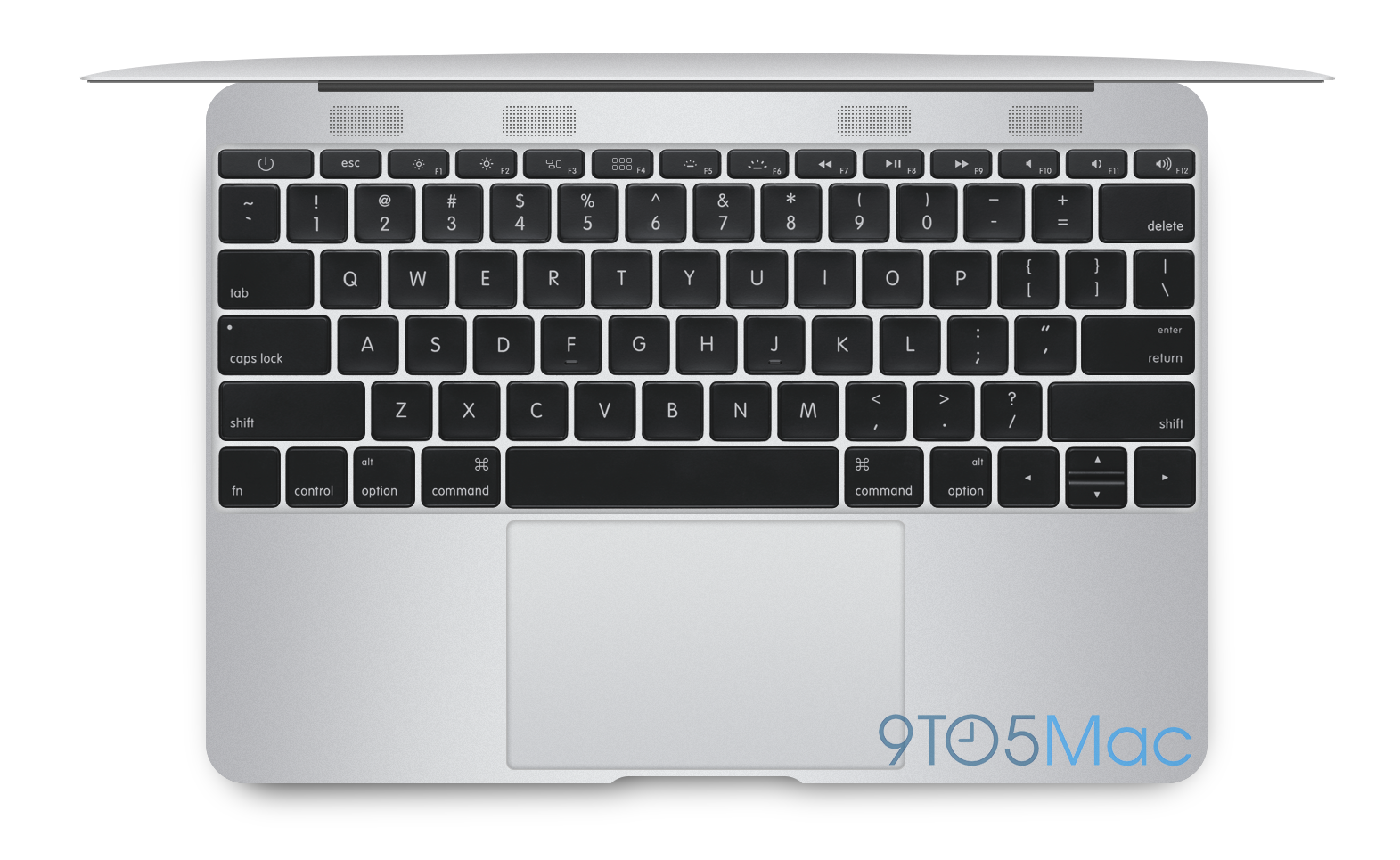
An authentic source 9to5mac has unwrapped some external details of the forthcoming Mac. It said that the new offering from the company will be completely resigned and will feature full-sized USB ports, MagSafe connectors, and SD card slots.
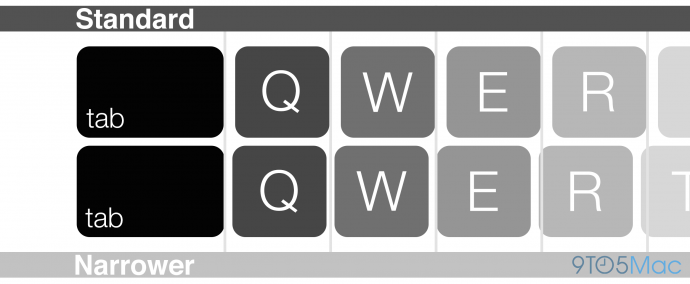
Internally termed as “MacBook Stealth”, the 12-inch MacBook will be entirely revamped. The keypad is modified and the new keypad sits edge-to-edge to the width of the laptop. Each key is relatively closer and some keys are relocated in order to make the laptop narrow. Above the keyboard, there are four speaker grills that are redesigned to act as ventilation holes to help cool the fan-less model. Furthermore, there will be alternations in trackpad and speakers once it reaches the end-consumers.
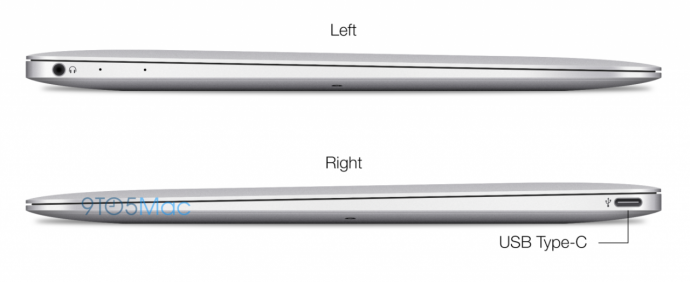
The upcoming Air will house comparatively lesser number of ports than the previous versions. There is just one USB Type-C port at the left and a standard headphone jack along with dual microphones on the right-hand side. The USB Type-C port is said to be smaller, more capable and faster than the USB 2.0 and 3.0 ports embedded on the present models. If the latest specifications from the USB foundation are to be believed, then the USB Type-C port cannot only transfer data but can also charge the device, making the MagSafe plugs unnecessary on the new machine.
According to the source, the 12-inch MacBook Air will be approximately 0.25-inch narrower than the 11-inch model and of course, would be a bit taller. The thickness reduction is to a bare minimum, but it is a nice move to fascinate potential market.
Internal specifications of the laptop are yet not revealed. There are possibilities that Apple may bring out this new version in gray colour as it has done with its recent offerings. However, there is no notification about when the new Air will roll out; although rumours reveal that it will be shipped in mid-2015.
Samsung hasn’t had a good time with its smartphone business in the past couple of years. As the smartphone market gets more saturated by new players, Samsung is looking for a new arena’s to assert its dominance before the other players catch-up. The company says that by 2020, all its devices will connect to the internet and to each other, thereby creating an internet of things ecosystem.
During its presentation at CES, Samsung showed its dedication to the cause of the Internet of Things (IoT). Samsung, of course, is one of the biggest manufacturers of consumer electronics and hence it has a massive research background to play around with the technology. The company wishes to grab a big portion of the IoT market which is estimated to be worth $7.1 trillion by 2020.
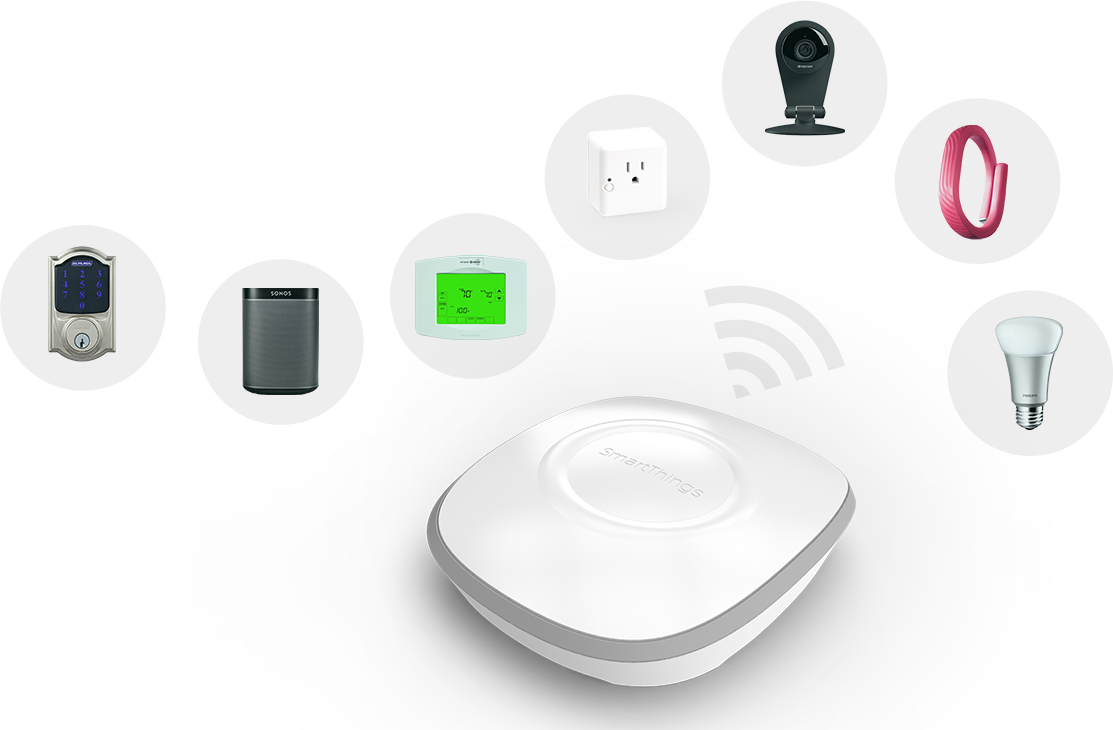
Samsung acquired SmartThings last August which makes hubs that allow various devices to interact with each other.
If you don’t already know, Internet of Things is a concept where all devices are interconnected and provide intuitive functionality and provides immense convenience to the users. For example, if you run out of milk, your refrigerator will recognize it and order milk for you. Another example could be that your keys can recognise when you have left the house and power down the house and when you are coming back it can set the lighting and temperature according to your needs.
Samsung bought a company called SmartThings, last year in August. SmartThings makes hubs that allow internet connected devices to interact with each other. This is what Samsung is banking on for setting up its initial IoT infrastructure. But a proper channel and language for interaction between the various different kinds of devices is still in the process of development. There are some equipments in the market that provide limited experience of IoT, for e.g Google Nest, but a seamless interaction between the devices is still a few years away. Google Nest has an initiative called ‘Work with Nest’ where they are currently working with many companies including LG and Samsung to make the companies devices “smart.”
One good act on the part of Samsung is that it has decided to keep this ecosystem, meaning that the devices will not be locked inside the Samsung infrastructure. This might help the devices to gain more acceptability in the market as people won’t be enthusiastic about investing in Samsung devices only for their houses.
The arena of the Internet of Things is wide open for companies and innovators to plant a flag. This industry is still in the beta stage but once IoT is unleashed to its full potential, it will radically change the way we interact with technology. We hope Samsung does a far better job in this arena than it has done with its popular smartphone arm in the last few years.
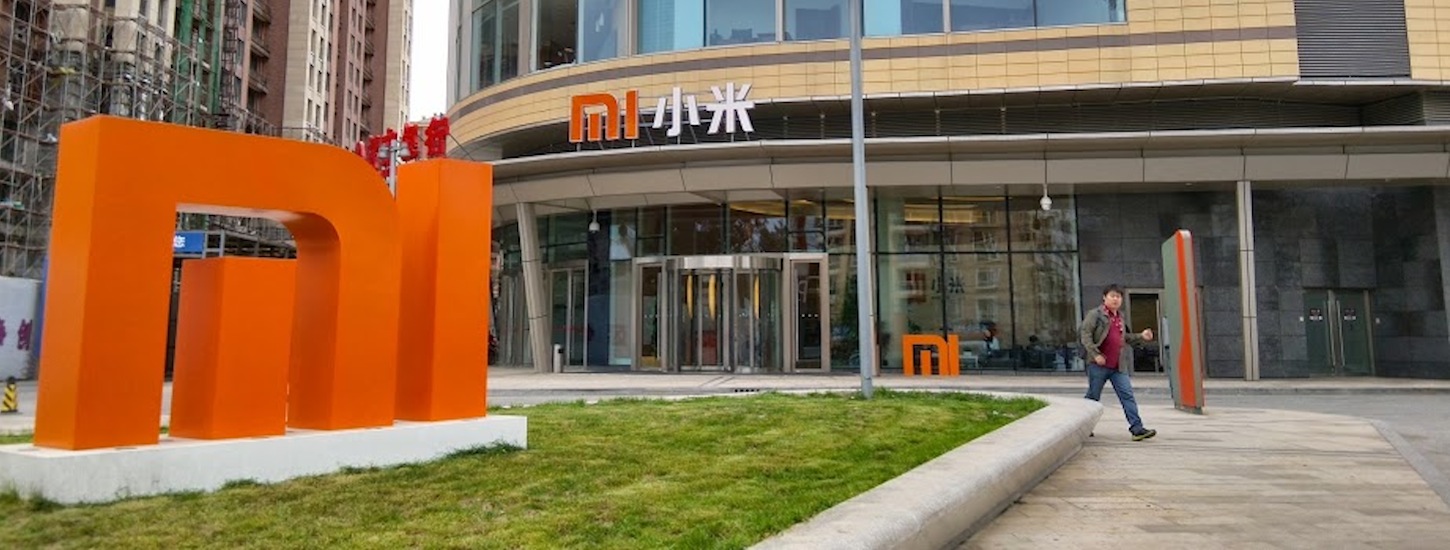
Inspite of recent controversies surrounding the Chinese smartphone giant regarding patent infringement, the company seems undeterred. After raising funding of $1.1 Billion over the last couple of days, Xiaomi seems to be diversifying into the Laptop market as well.
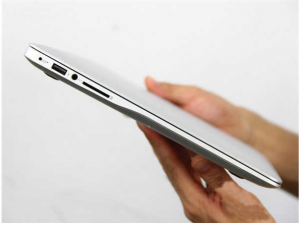
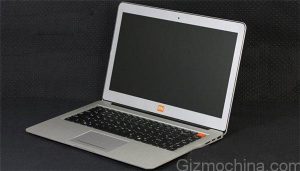
Their latest addition to the portfolio (as leaks online suggest,) may be a Xiaomi MI Laptop. Earlier Xiaomi had already come out with the Mi Power bank (in the 10,400 mAh and 5,200 mAh variant) which was quite a hit. Although there were speculations regarding Xiaomi entering the Computing market however, this is the first time that there have been conclusive pictures as well as some details regarding its configuration.
The leaked specs allegedly reveal that it would have an Intel Haswell i7-4500u processor with 2 x 8GB dual channel memory. Further, it would have a large 15-inch 1080p display up front and would run on a linux OS customized by Xiaomi. Additionally, it is expected to be priced at approximately $480 (Rs. 30,000).
The leaked pictures of this laptop uncannily resemble the Macbook Air. Who knows it may even be called the Xiaomi Air when released.
The leaked pictures of this laptop uncannily resemble the Macbook Air. Who knows it may even be called the Xiaomi Air when released.
The leaked pictures of this laptop uncannily resemble the Macbook Air. Who knows it may even be called the Xiaomi Air when released.
If these specs are anything close to reality, then this seems to be a device worth every Dollar, Yuan or Rupee spent on it; which would make the Chinese a superpower in the Laptop category as well.
In the past, Xiaomi has been quite successful in selling their devices in India through flash sales via Flipkart. Rumours also surround the market that Xiaomi is working on a dual edge smartphone known as the Xiaomi Arch, a device in direct competition with the Samsung Galaxy Note Edge.
Unfortunately nothing has been officially declared by Xiaomi regarding the Notebook and the fans would have to wait a while before the company announces the same. This device, if and when released, could be a game changer destroying many domestic companies which are presently enjoying the benefit of the lower and middle-end consumers.
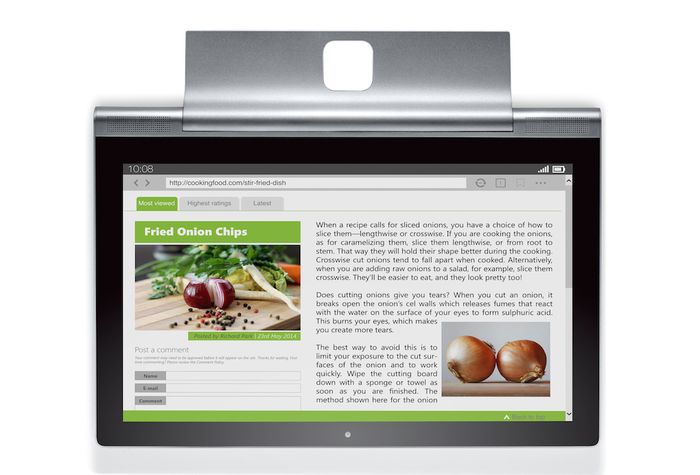
Lenovo has launched a new tablet in its Yoga series, the Yoga Tablet 2 Pro. It is a 13-inch tablet that the company created with special inputs from Ashton Kutcher, who joined Lenovo’s ranks as a product engineer last year.
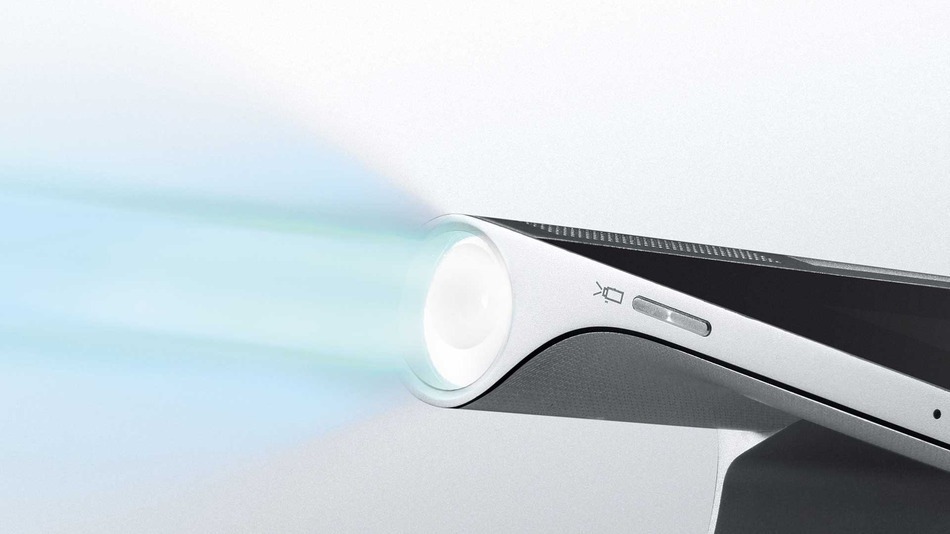
The company said that the tablet has been designed specifically for digitally-hungry consumers. Well, that explains its standout feature: a built-in pico projector.
The 13-inch device offers all the usual features you might expect from a high-end tablet computer: An advanced edition of the Android operating system, a high-speed processor, and high-quality camera. According to the company, Yoga Tablet 2 Pro is able to project a 16:9 image onto any surface for an instant 50-inch theater experience that lasts for up to three hours on full charge.
Watch Ashton Kutcher introduce the new tablet here:
It is said that the new tablet will be an interesting choice for business users. You can also use the Yoga Tablet 2 Pro as a way to easily project presentations during meetings on the go. Other than that, the Yoga Tablet 2 Pro is a typical Atom-powered Android tablet.
It runs on a fourth-generation Intel Atom processor and Android 4.4 KitKat. It comes with 32GB of storage and supports up to 64GB through microSD, houses an 8-megapixel camera, and can optionally be purchased with 4G connectivity.
The company said that when not being used as a projector, the tablet has 15 hours of battery life. The Yoga Tablet 2 Pro will cost $499, while the 8-inch Android version of the Tablet 2 will be priced at $249. The 10-inch Android tablet and the 8-inch Windows 8 slate will both cost $299.
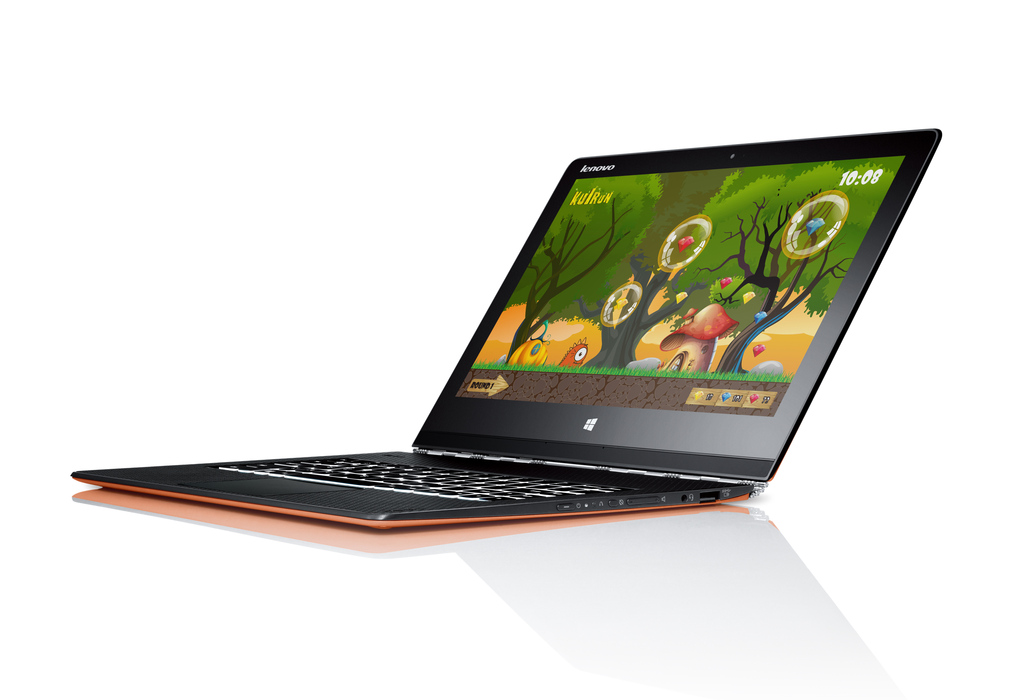
Lenovo announced the Yoga 3 Pro today, a 13-inch super thin-and-light laptop/tablet convertible, sporting a QHD+ 3200×1800 Gorilla Glass Screen. Coming to its dimensions, the Yoga Pro 3 is a mere 12.8 mm in thickness and weighs just 1.19 kg. It is powered by the latest Intel Core M processor, designed to offer maximum battery life that can be compared to the battery life of a smartphone or a tablet.
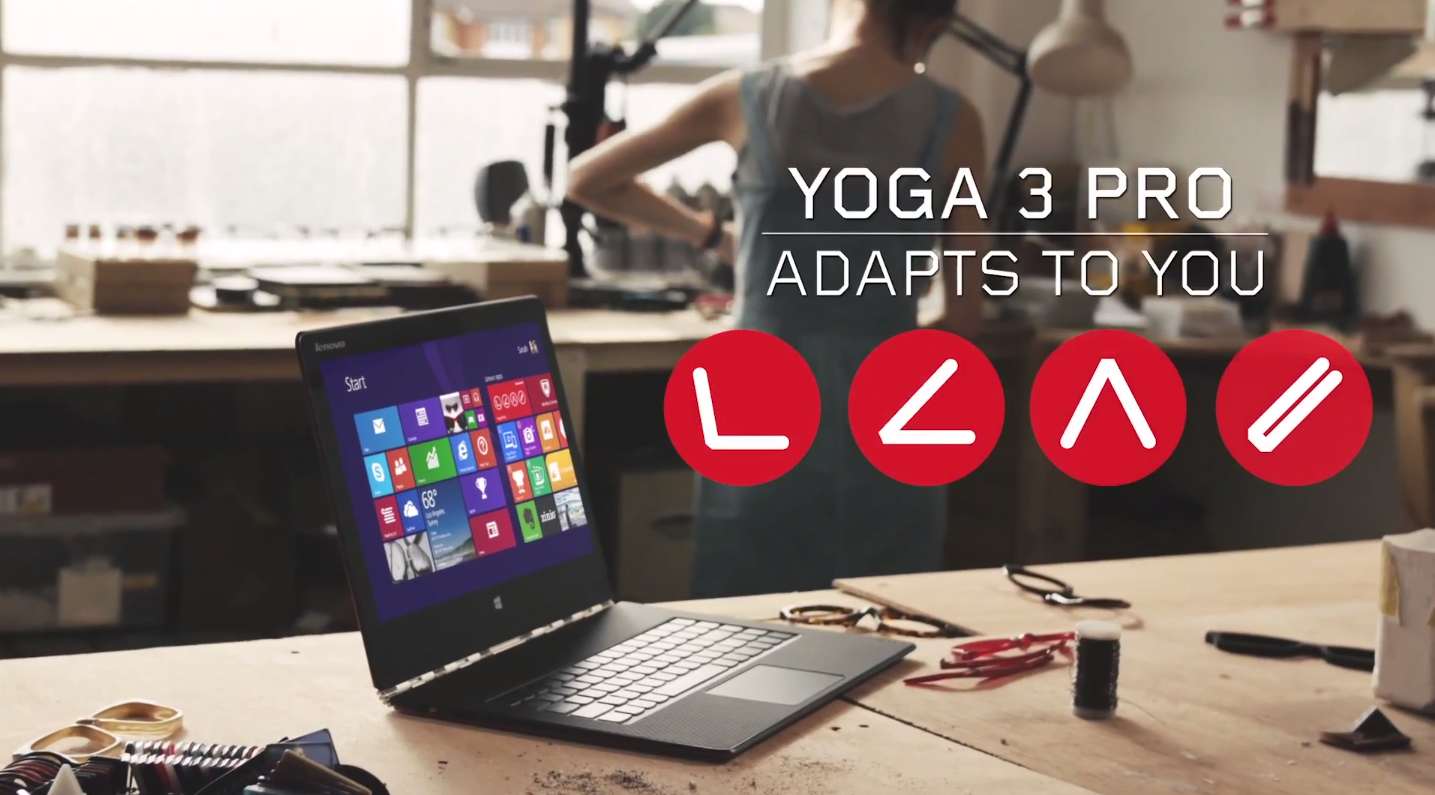
When it comes to specs, the Yoga Pro 3 is not much different from its predecessor – the Yoga Pro 2. It still has the same 3,200×1,800 display resolution, giving it a pixel density of 276 ppi, which is quite good for a laptop. Meanwhile, its design language remains the same, it still has a 360-degree hinge which allows users to fold the screen into tablet mode, stand mode and tent mode. The Yoga Pro 3 will be available in three different colour variants namely ‘Clementine Orange’, ‘Champagne Gold’, and ‘Platinum’.
Lenovo claims that the Yoga Pro 3 has a battery life of 9 hours. In terms of connectivity it has two USB 3.0 ports and one USB 2.0 port. Other connectivity options include a 802.11 A/C Wi-Fi and Bluetooth 4. It will have upto 8GB of RAM and 512 GB of storage capacity, there will also be a 256 GB variant. The Yoga Pro 3 will be available from Lenovo’s Web store starting at $1,349. There is no information regarding its availability and price in India as of now, though we will keep you updated.
Along with that, Lenovo is also announcing a new ThinkPad Yoga 14, a 14-inch convertible featuring a Full HD display with Nvidia Geforce 840M graphics, ITB HDD, Intel Core i5 processor and as claimed by Lenovo, provides battery back up of upto 8 hours.
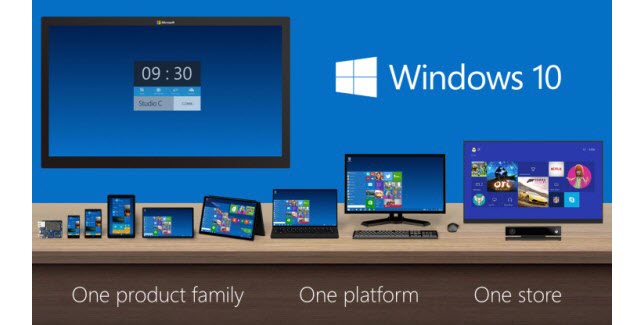
The next big Windows is finally here. Microsoft did what it does best; arbitrarily name its products. First there were Windows 3.1x, then there was Windows 95 followed by the 98 and then the ME. After these came the modern Windows, namely the XP, Vista, 7 and the 8. Now Microsoft has brought out Windows 10, and it seems it wants to challenge Apple with this one.
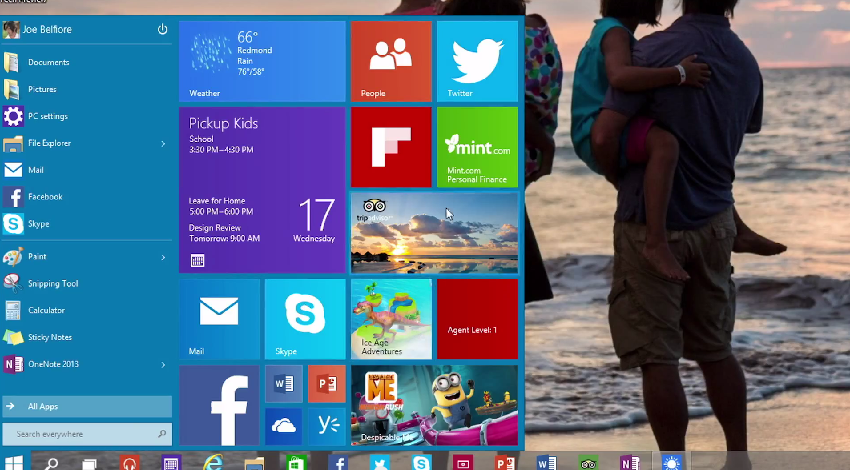
This release will bring back some of the traditional characteristics of Windows that were lost in the Windows 8 transition. Microsoft has said that users from any previous Windows OS can easily switch to Windows 10. The bit that will excite a lot of users is the glorious revival of the Start Menu, which was a characteristic feature of Windows until the 8. It will also be one operating system percolating through desktops to tablets to smartphones.
Windows 10 will work across devices.
The new operating system was unveiled at San Francisco for Business customers. Microsoft will be releasing a technical preview version for selected users. It will be unveiling consumer features early next year. Windows 10 is expected to reach the market by mid-2015. Considering Microsoft nails its flagship operating system in every alternate release, we have a lot of hopes with this one.