Category: World

  • Traffic Cops Might Soon Start Using Marijuana Breathalyzers

    Traffic Cops Might Soon Start Using Marijuana Breathalyzers

    We all know that there is a fair amount of Marijuana consumed by the youth today. But most of us don’t feel threatened enough when someone ‘high’ drives because we feel he/she is in his/her senses. The law and others seem to disagree, though.

    breathalyzer

    In a rather daunting yet intelligent move, it was reported that a Canadian company by the apt name of Cannabix Technologies has now begun to develop a prototype to test the THC levels in a person’s body, using a breathalyser-like device. While the device will be unable to measure the extent to which a person who has consumed pot, is impaired by the substance, it will definitely be able to detect it. Just like the breathalysers used for alcohol detection.

    The breathalyser is yet to come out and will surely tighten the leash on traffic and driving rules. While this may be a brave step in the direction of safe driving and can reduce the risk of accidents, it will be a while before we see the traffic police using this unique breathalyser. Furthermore, it still remains to be seen if there is really a requirement of these kind of breathalysers in the first place as not enough research has been conducted to see the effect of Marijuana on keeping your eyes on the road.

    All said and done though, you’ve been warned.

    [tw-button size=”medium” background=”#07ABE2″ color=”” target=”_blank” link=”http://bgr.com/2015/07/17/marijuana-breathalyzer-development-thc-levels/”]Source[/tw-button]

  • Faster and Smaller, IBM Unveils World’s First 7nm Chip

    Faster and Smaller, IBM Unveils World’s First 7nm Chip

    IBM has just made a breakthrough in chip manufacturing technology. The company, working with GlobalFoundries, Samsung, SUNY, and various equipment suppliers, has created the world’s first 7nm chip with working semiconductors. This would be the first time a chip maker has succeeded to achieve such a feat. Normally, the smaller the transistor gate, the better the performance of the chip. As a result, reducing it to just 7nm will drastically increase the power to performance proportion of the chipset.

    While it should be emphasized that commercial 7nm chips remain at least two years away, this experimental chip from IBM and its partners is remarkably significant for three purposes: it is a functional sub-10nm chip; it is the first commercially viable sub-10nm FinFET logic chip that uses silicon-germanium as the channel material and feasible design produced with extreme ultraviolet (EUV) lithography.

    IBM’s 7nm chips use a FinFET transistor configuration that differs from existing FinFETs in that the transistor’s channel is made from silicon-germanium alloy, rather than plain silicon. This is because silicon by itself has problems with electron mobility below 10nm, which restricts current flow and hampers smooth performance. Adding germanium to the mix has been found to resolve these issues.

    IBM has managed to pack transistors incredibly tightly on their 7nm chips, achieving a conductor pitch of just 30nm. This leads to the surface area reduction of around 50% matched to bleeding-edge 10nm chips, which IBM believes can result in performance and power improvements of “at least” 50%.

    Enabling the first 7nm node transistors is a notable breakthrough for the entire semiconductor industry as we continue to push beyond the limitations of our current capabilities,” said Michael Liehr, the university’s vice president of innovation and research.

    Although the company has succeeded in creating a working transistor using 7nm, although, it is still in the prototype stage, and may take at least a few years for such chips to end up in the market. So, this tech will probably make it to final products only after the 10nm chips have been widely used.

  • Larger Than Life Robots to go on Battle in a US Vs Japan Fight

    Larger Than Life Robots to go on Battle in a US Vs Japan Fight

    This is the real deal for those who always wanted to see a duel between gigantic robots. It may become a reality within a year, it seems. And no, it is not for a new movie. This challenge has been put up by USA to Japan, which has already been accepted.

    MegaBots founders Gui Cavalcanti and Matt Oehrlein, have issued the challenge to Suidobashi Heavy Industries from Japan through a video on YouTube. In true American style, the video is done teeming with full patriotism as the whole message borders on parody, in a hilarious way, of course.

    Suidobashi, we have a giant robot, you have a giant robot. You know what needs to happen. We challenge you to a duel.

    Suidobashi’s response to them is also clever and witty where the video stars the creator and founder, Kogoro Kurata wrapping a Japanese flag as a cape.

    However in a more serious fashion, the Japanese were apparently calm and collected in their response, stating,

    We cannot let another country win this. Giant robots are all about Japanese culture.

    The MegaBots Mark II robot is 15 feet tall, weighs 5.4 tons and carries enormous paintball guns that can shoot projectiles at speeds exceeding 100 mph. Meanwhile, the Kuratas is a 13-foot-tall robot that weighs 4 tons and is decked with diverse weapon systems, including a “smile-activated” BB Gatling gun. Kuratas is guided by one person while the Mark II needs a two-man crew.

    MegaBots’ primary challenge demanded that the battle should happen in one year’s time, and Kuratas replied by recommending that they even forego the cannons and punch it out in an old-fashioned brawl. Although additional specifics for time and location have not been released, let’s all pause for a moment and consider that the world we have been expecting is finally here.

    Let us compare the bots:

    Name: Mk. II

    Mk. II
    Designers:
    Location: San Francisco, California
    Debut: 2015, Bay Area Maker Faire
    Height: 15? (standing)
    Weight: 12,000 lbs
    Cockpit: Dual pilot
    Locomotion: Two tracks, from a CAT 289c skidsteer, one of the largest made. Legs are  A36 plate steel, lasercut and welded at the seams. 13 degrees of freedom across 20 hydraulic actuators
    Power: 24HP honda gas engine spinning a hydraulic gear pump
    Armaments: Arm cannons. The right arm can fire 3lb, 6? paint cannonballs at 130mph. The left arm has a 20x shot missile launcher, firing 2.5? circumference paint missiles 150mph.

    Name: Kuratas

    Kuratas

    Creator: Kogoro Kuratas, Suidobashi Industries
    Location: Tokyo, Japan
    Debut: 2012
    Height: 13.1? (standing)
    Weight: 9,900 lbs
    Cockpit: Single pilot
    Locomotion: Four wheels, each mounted to individual legs. 30 hydraulic actuators
    Power: Diesel engine
    Armaments: BB mini-gun shooting 6000 rounds per minute, water bottles
    Note: You can order your own Kurata mech suit from Amazon.jp for just $1 million.

  • India to Become The Second Largest Smartphone Market By 2017

    India to Become The Second Largest Smartphone Market By 2017

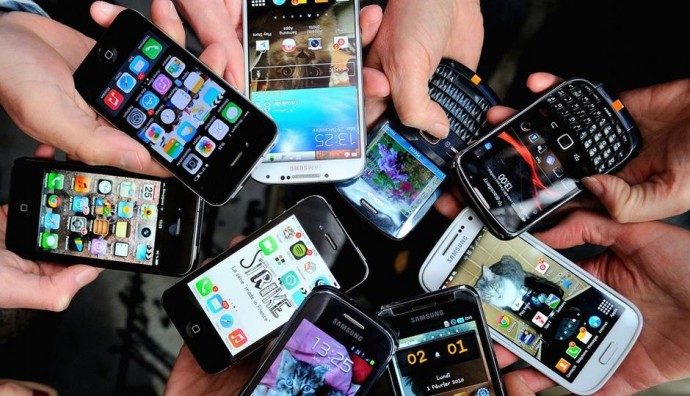
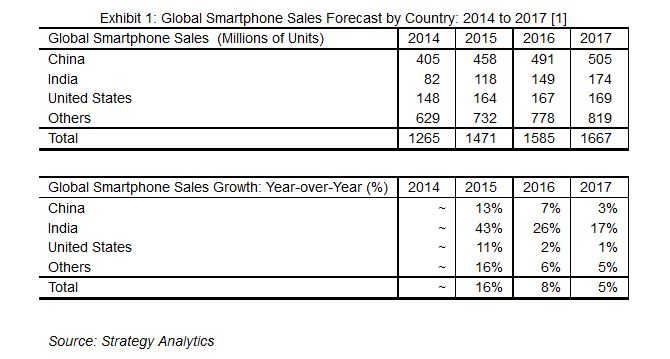
    India, the world’s 7th  largest country and with the second largest population in the world, may soon have one more tag to its name. According to a study conducted by Strategy Analytics, an international research firm, India is on the road to becoming the second largest smartphone market in the world by 2017.

    Capture

    The first position will be held by China, but India will push down USA from the current second place to the third place in the smartphone sector. Linda Sui, director at Strategy Analytics, says

    China has been the engine of global smartphone growth in recent years, but China is now maturing and slowing. India is fast becoming the next major growth wave. We forecast 118 million smartphones will be sold in India in 2015, increasing strongly to 174 million in 2017.

    The rise of the smartphone industry in India has been directly proportional to the Internet growth here. As of 2014, India had 243 million people in the Internet grid, the third largest in the world. The US had 279.8 million online in the same year, putting it in the second place.

    Linda Sui added that India is driven by the growth of low smartphone invasion, expanding retail availability of devices, prosperous middle-class consumers, and dynamic advancements from local smartphone brands like Micromax.

    According to the report, 118 million smartphones will be sold in India this year. About 458 million smartphones will be sold in China in 2015 and will rise steadily to 505 million in 2017. About 164 million smartphones will be sold in the US in 2015, climbing marginally to 169 million in 2017.

    Clearly, we can see that in the past decade, US was in the middle of the tech world. But now, companies are trying to get into different and untouched markets in many ways, since most of them are at a disadvantage to the local brands, anyways.

  • Dubai Plans On Constructing The First 3D Printed Building

    Dubai Plans On Constructing The First 3D Printed Building

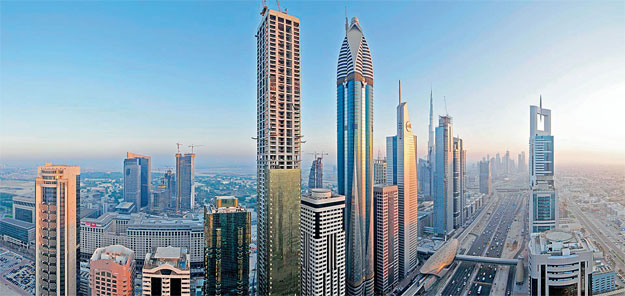
    Dubai, a city where something fresh is always being added to the skyline, may have found a way to make construction move even faster. On Tuesday, the Gulf commercial hub announced plans to construct the world’s first office building using 3D printer technology, adding another marvel to its collection of magnificent buildings.

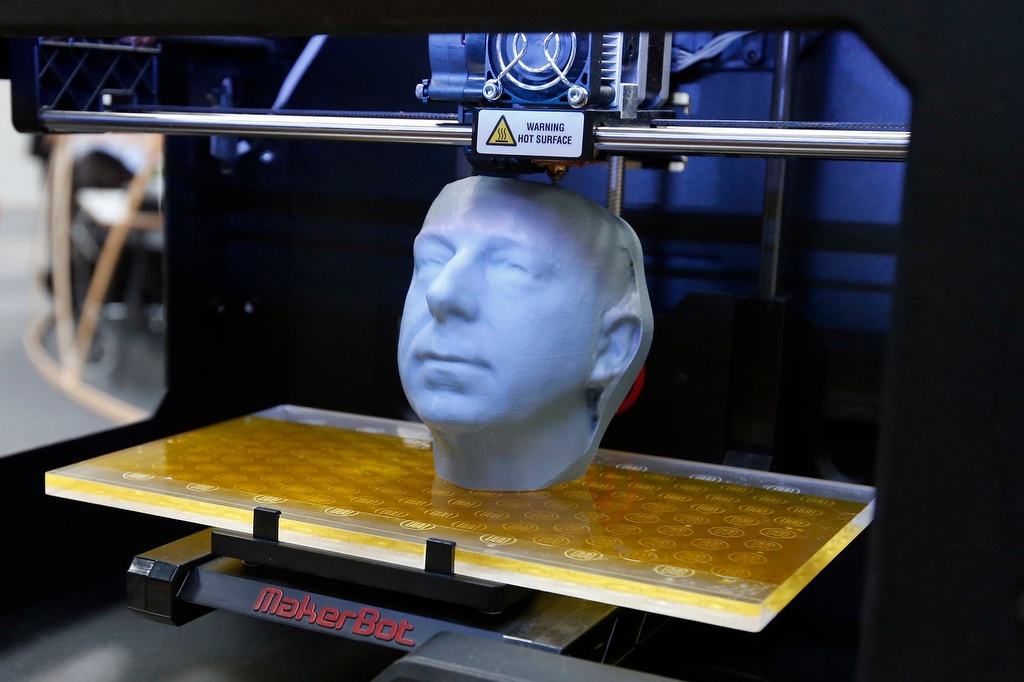
    The 3D printing or additive manufacturing (AM) is a technique by which you can create or recreate a three-dimensional object. The 3D printers are also considered to be industrial robots for their manufacturing aptitude. The technology utilises computer-aided formation of objects by laying successive layers of materials. The materials can vary from plastic to metals like silver, steel, and titanium. Read more about it here.

    3D Printers uses computer aided designs to create printable models.
    3D Printers uses computer aided designs to create printable models.

    Mohammed Al-Gergawi, the UAE’s Minister of Cabinet affairs, said the project is part of a broader plan by the federation to embrace cutting-edge science and technology and make Dubai a global hub for innovation.

    We are keen to use the latest technologies to simplify people’s lives and to serve them better. This project is part of our overall innovation strategy to create new designs and new solutions in education, healthcare and cities. Our goal is to increase the happiness and wellbeing of our residents and to pioneer new solutions for the world.

    The 2,000 square feet of floor space building is planned to be located in the center of the coastal business hub city, where it will be printed, layer-after-layer, using a huge 20-foot tall printer over the course of a few weeks. The entire interior will be 3D printed too. According to the experts, the technology will cut labor costs by 50-80%, and construction time by 50-70%. Other than this, no other details on the timeframe or cost were made public.

    The project is a result of cooperation between Dubai and WinSun, a pioneering Chinese company that has begun constructing houses and buildings made using 3-D printers. Some more partners have joined hands as well, like architectural and engineering firms such as Gensler, Thornton Thomasetti, and Syska Hennessy.

    For more information on what 3D printing is, refer to the video below.

  • Top Tech Geniuses Of Our Generation

    Top Tech Geniuses Of Our Generation

    The world we live in today is based completely on technology. It surrounds us, and we have allowed it to embed itself in our lives today. Living in the 21st century, we simply cannot deny the fact that without science and technology, our lives would not be as half as easy as it is now. For every technology that makes our lives comfortable, we have to thank the tech geniuses behind the idea. We cannot imagine Apple without Steve Jobs or Microsoft without Bill Gates.

    Like ways, we have compiled a list of tech geniuses of our generation below:

    Sergey Brin and Larry Page (Google)

    Sergey Brin and Larry Page

    What is the defining contribution to technology made by Larry Page and Sergey Brin? The answer is Google, the single most important business in Silicon Valley today.

    What fascinated so many early fans was Google’s constant pursuit of refinement and efficiency in its search algorithm. While other search engines’ results tended to be loaded with spam, Google’s were generally on target. The company had lots of other tricks up its sleeve as well: the rapidly growing Google universe now grants handfuls of productivity and entertainment tools – from word processing to video – most of them free, underwritten by the company’s universal ad-serving system.

    Bill Gates (Microsoft)

    billgates

    The world’s richest man is also one of its most outstanding technologists–a guy who dropped out of Harvard to launch Microsoft to find the company that all techies are closely familiar with. No hands-off executive, Bill Gates has been involved with Microsoft product development at an amazingly detailed level over the company’s entire 30-year history.

    Gates left Microsoft in July 2008 to focus full-time on his non-profit endeavor, the Gates Foundation, which he has provided with an eye-popping $29 billion to strengthen global health and learning.

    Steve Jobs (Apple)
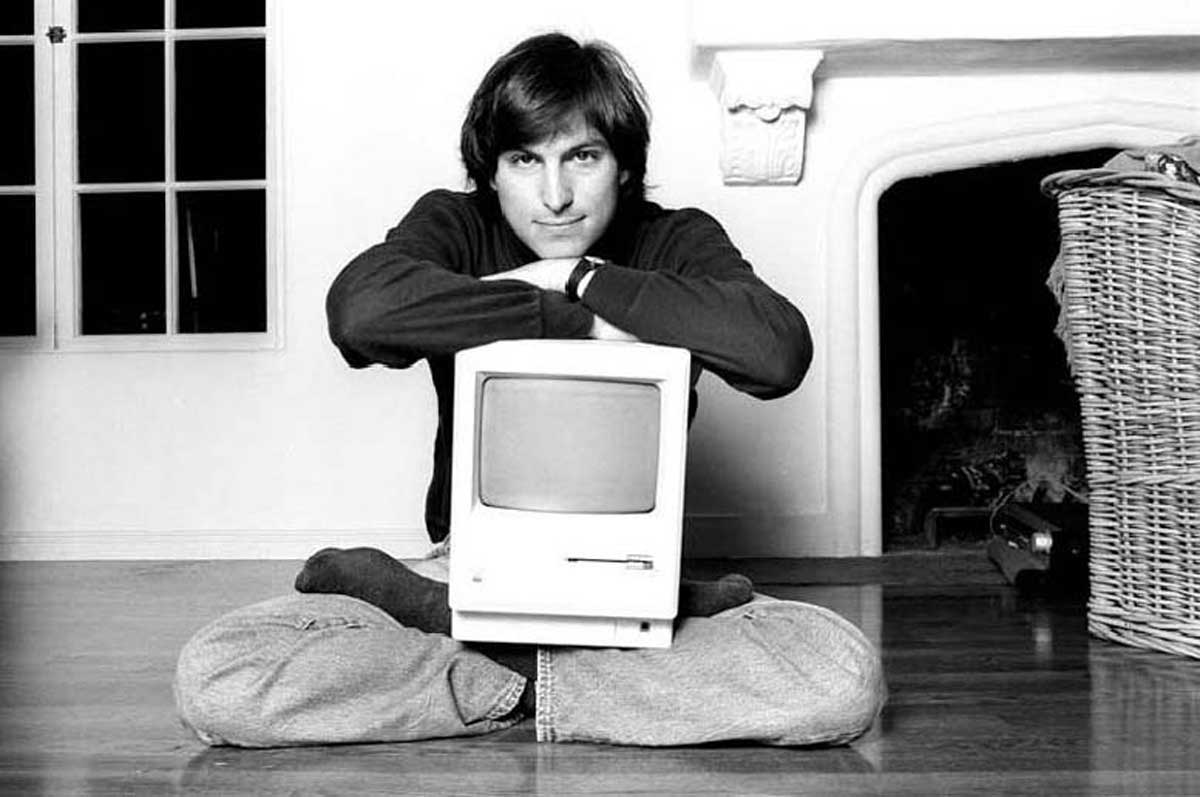
    steve-jobs-apple-macintosh

    The King of Apple, Steve Jobs is familiar to even the most random non-technophile. Jobs lays claim to two critical moments in tech history. First, with the original Apple, he established the idea that computers belong in the home; and then, 20 years down the line, he proved the world that people ought to carry their (digital) music with them wherever they travel.

    Apple may not have developed the PC, and it certainly didn’t make the first MP3 player, but Jobs’ famous “reality distortion field” has shown that who got there first is sometimes less important than what they brought with them. Today, Apple is bigger than ever, owning market share since the company started off.

    Evan Williams, Christopher Isaac Stone and Jack Dorsey (Twitter)

    Evan Williams, Christopher Isaac Stone and Jack Dorsey

    The founders introduced Twitter at South by Southwest in Austin, Texas. Their first tweet? “Inviting co-workers.” Since then, a flood of messages, no greater than 140 characters, has streamed from the site. As of September, Twitter had more than 100 million active users around the world.

    “We got lucky,” says Twitter co-founder Biz Stone. “It doesn’t mean we’re geniuses.”

    It may be luck or genius, but the microblogging site has grown to be one of the most popular websites in the world in the four years since it was first launched. With over 302 million users, Twitter has become popular not only as a social networking site, but as a grassroots news outlet for late-breaking events. The road that came before, however, was not an easy one for the young company.

    Mark Zuckerberg (Facebook)
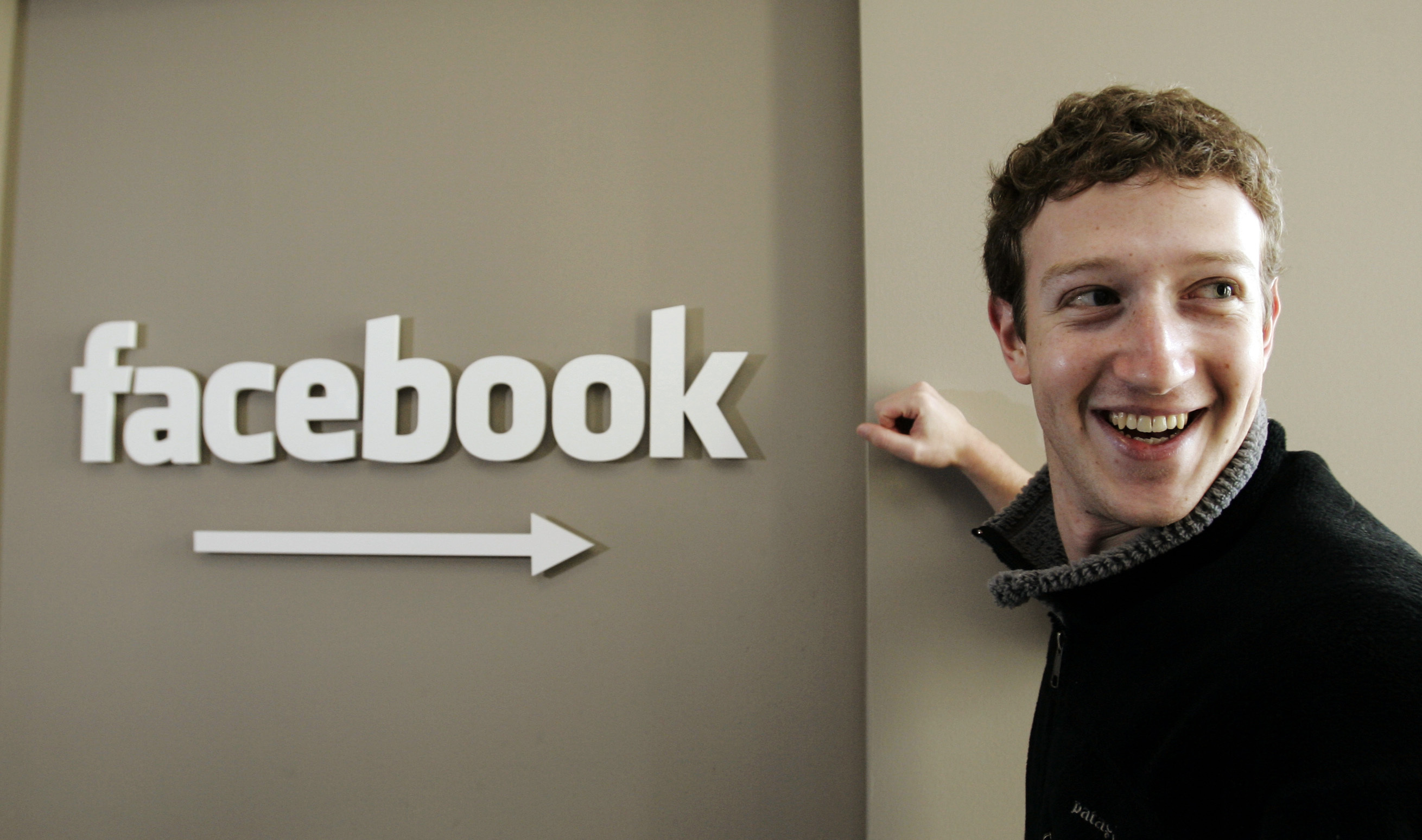
    Mark Zuckerberg , Facebook

    Facebook CEO and Harvard dropout Mark Zuckerberg, 27, has changed the way we communicate, not only online but in other areas of our life. The social network platform that began in a dorm room in 2004 has arguably waived the need for high school yearbooks, greeting cards and reunions. It’s a website that is now used by 300 million people around the world.

    Since then, Zuckerberg has grown into his role as the face of Facebook, which is now valued more than $200 billion.

    Lei Jung (Xiaomi)
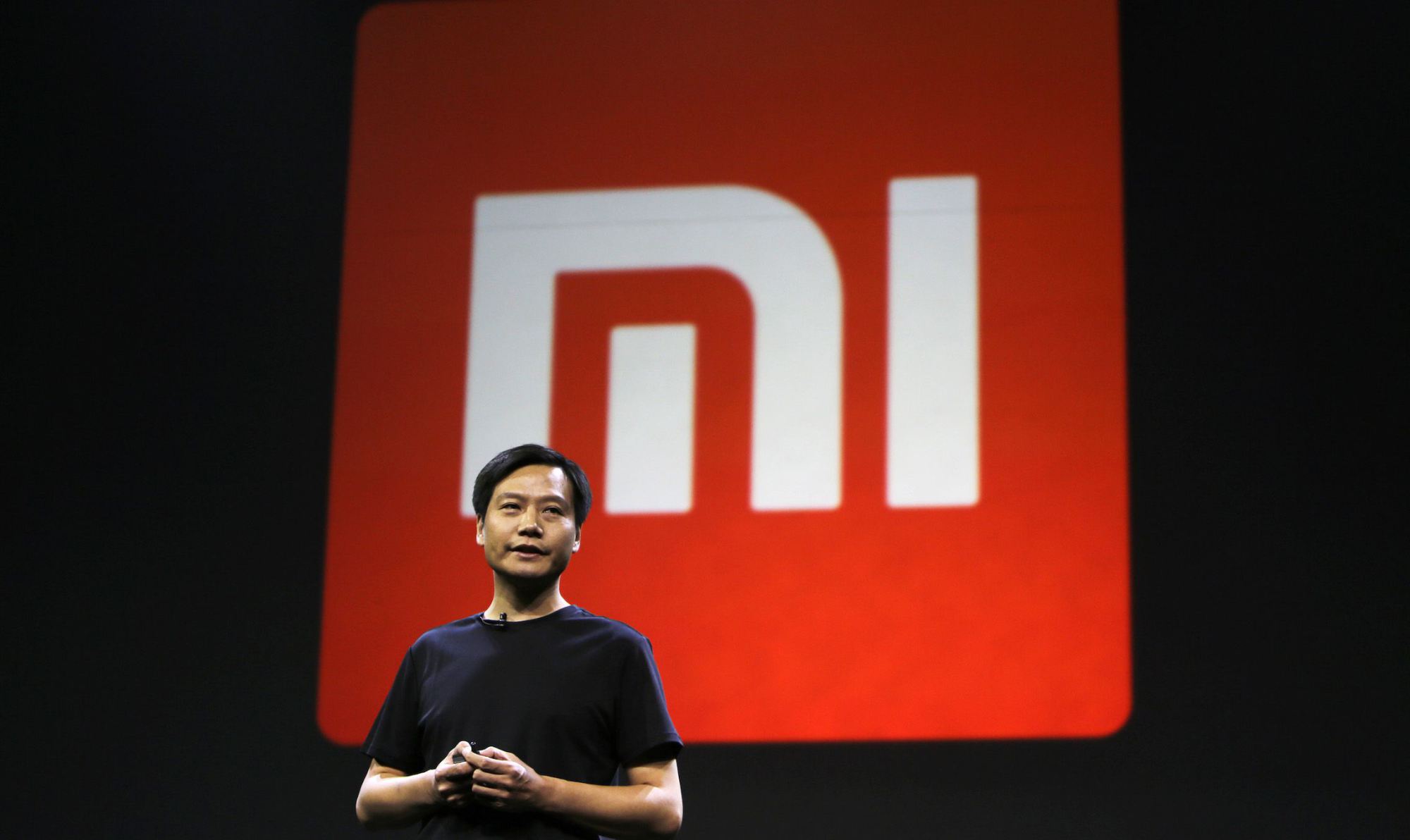
    Lei Jun, founder and CEO of China's mobile company Xiaomi, speaks at launch ceremony of Xiaomi Phone 4 in Beijing

    As a startup CEO, Lei Jun prided himself on out hustling his competitors: 100-hour workweeks were standard. It is his pride that has allowed Xiaomi to quickly emerge as one of the world’s most valuable private tech companies. Today, Lei ranks as the eighth richest person in China.

    Xiaomi is winning by giving the Chinese what they want: Cheap, feature-packed Android phones. Xiaomi will sell 60 million handsets in 2014, doubling 2013’s total; its $5.5 billion in sales in the first half of 2014 surpassed all of 2013, when its phone division netted an estimated $80 million. With Asia accounting for more than half of the 1.5 billion smartphones sold worldwide each year, that feat alone has vaulted Xiaomi to number three in the world, after Samsung and Apple. Lei has been called the Steve Jobs of China, and for good reason.

    Jimmy Wales (Wikipedia)

    jimmy-wales

    In 2001, Wales founded the open-content internet resource Wikipedia, which later became the world’s largest encyclopedia. Wales also founded the for-profit web-hosting company Wikia, and has advised governments and universities. The online encyclopedia also has a co-founder in the form of Larry Sanger, who helped develop the project but left in 2002 shortly after it was launched.

    The origins of Wikipedia began in March 2000, when Wales began Nupedia (“the free encyclopedia”), which was identified by an extensive peer-review process designed to make its articles of a quality similar to that of acknowledged encyclopedias. With the addition of wikis (a collection of web pages designed to allow anyone who accesses it to contribute or modify content), the project was named “Wikipedia.” Mr. Wales laid down the founding principles and content, establishing an Internet-based community of contributors during that year. Wikipedia was initially meant to be a wiki-based site for collaboration on early encyclopedic content for submission to Nupedia, but Wikipedia’s rapid growth quickly overshadowed Nupedia’s development.

    Chad Hurley, Steve Chen and Jawed Karim (YouTube)

    youtube

    YouTube was invented by Steve Chen, Chad Hurley and Jawed Karim out of a garage in Menlo Park. Hurley attended Indiana University of Pennsylvania, where he received his bachelor’s degree in fine art. After graduating, he joined eBay’s PayPal division, primarily focusing on user interface. It was there that he met Steve Chen and Jawed Karim, with whom he founded YouTube.com, a video-sharing website, in 2005.

    YouTube quickly became one of the web’s fastest-growing sites, and was ranked as the 10th most popular website just a year after its launch. There are reportedly 100 million clips viewed daily on YouTube, with an additional 65,000 new videos uploaded every 24 hours.


  • Top 10 New Trailers to Watch this Week

    Top 10 New Trailers to Watch this Week

    This year we have seen a lot of fantastic movies. Especially the sequels which came with new tales, like the Avengers: Age of Ultron and the new Jurassic World.

    Thankfully, we still have half a year left.  Here’s what the other half of the Hollywood calendar has to offer – check out the new trailers:

    Heroes Reborn – The Extraordinary Among Us

    https://www.youtube.com/watch?v=BHClJhC8Wfs

    Releases on: September 24

    Legend

    Releases on: September 11

    Dragon Ball Super

    Releases on: Between July-August

    Amityville: The Awakening

    https://www.youtube.com/watch?v=1aDT7QTQXt4

    Releases on:

    Paranormal Activity: The Ghost Dimension

    Releases on: October 22.

    No Escape

    Releases on: September 2

    Black Mass

    Releases on:September 18

    The Martian

    Releases on: October 2

    Kung Fu Panda 3

    Releases on: Somewhere around December

    Sicario

    Releases on: September 17.

  • How the Tech World is Celebrating the Same-Sex Marriage Decision

    How the Tech World is Celebrating the Same-Sex Marriage Decision

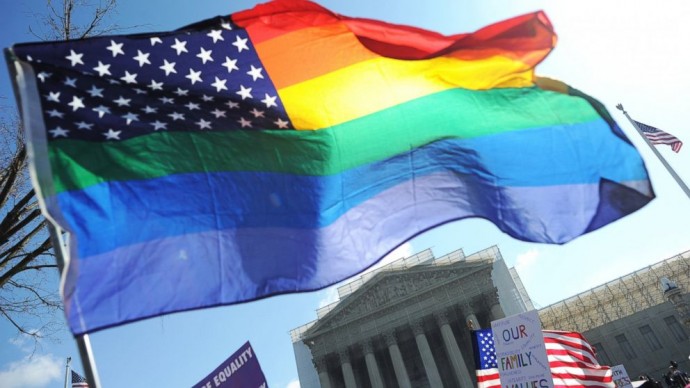
    After a long and tiring struggle, US Supreme Court has finally ruled that same-sex couples can marry nationwide, marking the significant event in the history books. This event took place a little over a decade after Massachusetts became the first state in the US to legalize gay marriage.

    gay marriage US

    The Supreme Court ruled by a 5-to-4 vote on Friday that the American Constitution guarantees a right to same-sex marriage. Along with the rest of the world, tech houses were ecstatic and quickly celebrated the decision by the use of social media. Take a look:

    The White House’s Facebook account now has a profile picture in which the building itself is all the colors of the spectrum.

    the white house facebook

    Let’s start with the leader of the free world, President Barack Obama:

    Apple Chief Executive Tim Cook, who came out to the world recently, tweeted:

    Twitter itself called Friday a “monumental day for equal rights” and encouraged people to use a pair of Twitter emojis that included the rainbow flag, a symbol of the gay community.

    Microsoft chief executive Satya Nadella said the decision marked “a historic moment.”

    Google and YouTube played their part as well in celebrating this historic event. Google included a subdued note reading, “YouTube and Google are proud to celebrate marriage equality. #ProudtoLove.”

    Facebook quickly added a feature super easy way to help its users celebrate gay marriage rights. With this, Facebook-ers can add a gay pride flag filter to their profile picture.  Click here to convert yours.

    While this ruling affects a country half way around the global, we’re happy to join in the celebration of the world taking steps in the right direction.

    India, it’s now your turn.

  • Facebook is Slowly Turning its Independent Messenger App into WhatsApp

    Facebook is Slowly Turning its Independent Messenger App into WhatsApp

    Recently, Facebook came out with a new feature that allows you to log into its Messenger without actually having a Facebook account. The social media giant made this announcement on Wednesday, stating that this move is being done to push Messenger’s count of 700 million users, higher. They said that users in US, Peru, Canada and Venezuela would no longer need a Facebook account to use Messenger.

    Users in the mentioned countries can make an account using their names and their phone number only. They can upload their phone contacts to the app. Yes, we know what you’re thinking, this is quite similar to popular instant messaging apps like WeChat and (Facebook-owned) WhatsApp.

    With Messenger, we’ve been focused on creating the best messaging experience possible by giving people a fun and easy way to connect and express themselves with friends. With this update, more people can enjoy all the features that are available on Messenger – including photos, videos, group chats, voice and video calling, stickers and more.

    Last year in July, when Facebook announced that it will be removing the messaging feature from its mobile app, which will require people to use its standalone Messenger app instead. This forced users to download the Messenger app to chat with their Facebook contacts on their mobiles.

    Just a few months prior to this, Facebook had acquired WhatsApp for $19 Billion. Then why, has Facebook been trying to make Facebook Messenger more and more like WhatsApp? It owns both. What difference would remain between the two, which were once entirely different apps?

    WhatsApp 1

    The math is simple. Currently, WhatsApp has about 800 million active users, and Messenger has about 700 million monthly users. If added up, the number would outweigh any other competitive instant messaging app. Messaging has become a way of life, and there are many users that use Facebook purely for chatting and talking with friends. This group of users will find the change very welcoming.

    Mark Zuckerberg is also on a spree to convert the chat-only app to something more. Messenger has, earlier this year, introduced the payment feature that allows you to make payments through the Messenger interface. He also introduced video calling and location sharing features.

    Needless to say, we’re certainly interested to see where the continuously-evolving Messenger finally lands in the near future.

  • Top 10 Countries With the World’s Fastest Internet

    Top 10 Countries With the World’s Fastest Internet

    The internet is an absolute necessity for our generation. Everything we do, today, is connected to the Internet somehow or the other. For most of us, it is impossible to go through the day without scrolling through our Facebook feed or YouTube. With only a keyboard and mouse, we can access limitless amount of information.

    But, with a slow Internet speed, there is nothing more irritating than waiting for a page to load. For the people living in the countries listed below, we’re guessing that they never have to use the word “buffer”.

    Let us look at some countries with the fastest Internet connections:

    #10 Finland

    This year, Finland had a tremendous growth with a 33% increase in its Internet speed. Undoubtedly, one of the wealthiest countries of Europe, Finland also boasts a high quality of life and education.

    Average Internet Speed: 12.1 Mbps

    #9 Czech Republic

    internet use
    One of the developing countries in Europe, many people would argue that Czech Republic isn’t quite there yet. It’s simply not true. Czech Republic is one of the fastest growing European countries in the terms of economy. Just like its growth rate, the Internet facilities have developed by leaps in the past few years.

    Average Internet Speed: 12.3 Mbps

    #8 Ireland

    internet_users

    Ireland has one of the fastest growing technology sectors in Europe. It has seen a growth of 24% in the last year.

    Average Internet Speed: 12.3 Mbps

    #7 Latvia

    Latvia is perhaps the only country in this list, that many would never have heard of. This region has a rather dark past since was under, both, Nazi Germany, and the Soviet Union rule. But, it has been showing spectacular growth in all sectors. In the terms of Internet speed, Latvia has taken most of the countries by surprise. Internet speeds have grown 25% over the last year.

    Average Internet Speed: 13 Mbps

    #6 Netherlands

    Netherlands is listed with Switzerland in holding the most broadband subscriptions per 100 subscriptions, has no bandwidth caps, and has the most homes passed in Europe in terms of connection speeds of 50 Mbps and higher. Government-mandated Internet censorship is non-existent due to the House of Representatives speaking out against filtering.

    Average Internet Speed: 14.2 Mbps

    #5 Switzerland

    Switzerland, along with its beautiful landscapes, is also known for having one of the fastest Internet connections in the world. This country also boasts one of the highest number of Internet users in the world, with 85.2% of the population accessing the Internet every day.

    Average Internet Speed: 14.5 Mbps

    #4 Sweden

    internet

    Moving up slowly, the Nordic nation of Sweden is also among the countries offering the highest internet speed. Sweden has best Internet speed in the whole of Europe, showing most year-over-year growth with 34 percent growth, 1 percent greater than next-door-neighbor, Finland. European countries surely have all the fun!

    Average Internet Speed: 14.6 Mbps

    #3 Japan

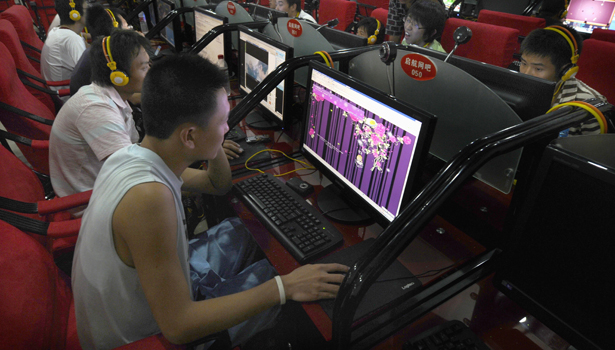
    A customer looks at a web page of Qzone, a Chinese social networking site at an internet cafe in Changzhi, Shanxi province August 28, 2009. From virtual clothes to e-pets, Asians spend an estimated $5 billion a year on virtual purchases via websites such as Qzone, Cyworld in South Korea and mobile-phone based network Gree in Japan, according to Plus Eight Star. That's about 80 percent of the global market for virtual products, it says. To match feature ASIA-SOCIALNETWORKING/   REUTERS/Stringer (CHINA BUSINESS SOCIETY SCI TECH) CHINA OUT. NO COMMERCIAL OR EDITORIAL SALES IN CHINA

    Known to the world as one of the leading digital giants, with companies like Sony, Toshiba, Nintendo, etc., fast Internet connections come naturally to this country. It maintains a reliable Internet speed that hardly seems to dwindle.

    Average Internet Speed: 15.2Mbps

    #2 Hong Kong

    Another Asian country on the list, Hong Kong is first and only country that broke the 60 Mbps barrier back in 2013. This is due to advances in FTTH (Fiber To The Home) infrastructure and aggressive high-speed pricing, which now seems to be paying off.

    Average Internet Speed: 16.8 Mbps

    #1 South Korea

    South Korea is the undisputed champion when it comes to Internet speed. The Internet connection here is so fast that the country is about to unveil its 10Gbps Internet service soon. The Internet has a higher standing for many Koreans than it does in the West, and the government actively encourages this. South Korea’s speed is roughly six times faster than the world average of 3.8 Mbps.

    Average Speed: 22.2 Mbps

    And the State Back Home..

    Sadly, India comes in at number 52nd rank according to AkamaiTechnology in 2014 listing with an average speed of 2Mbps. But as a country, we are progressing at a great speed in the terms of economy and technology. With new businesses sprouting each day, the need for a connected economy has increased considerably. It’s time India should get high speed unlimited data plans.

    Read more about it here.

     [tw-button size=”medium” background=”#07ABE2″ color=”” target=”_self” link=”https://www.change.org/p/telecom-regulatory-authority-of-india-airtel-india-tata-teleservices-remove-the-fair-usage-policy-and-enable-unlimited-internet-dat-plans-ae136b34-8dc4-4a78-a6d1-569f6e25c765″]SIGN OUR PETITION TO END FUP[/tw-button]

  • What We Can Learn From the Taylor Swift-Apple Controversy

    What We Can Learn From the Taylor Swift-Apple Controversy

    Taylor Swift is currently one of the biggest music icons in the world, as evident from the fact that her last album sold more than four million copies worldwide and in all, she has won seven Grammy awards and 22 Billboard awards. So, it matters when one of the most influential music artists in the world says she has a problem with Apple Music, the new streaming service launched by Apple.

    In her recent open letter to Apple, Swift explains why she would hold back her new album, 1989, from Apple Music. She wrote, “Apple Music will be offering a free 3 month trial to anyone who signs up for the service. Apple Music will not be paying writers, producers, or artists for those three months. I find it to be shocking, disappointing, and completely unlike this historically progressive and generous company.”

    Swift’s open letter points to the statement given by Apple executive Robert Kondrk, who said that the company won’t pay the artists during the three month trial period. The company would later make it up to the artists by paying them higher amounts than its rival, Spotify. A few hours after Swift’s open later was published, Apple VP, Eddy Cue tweeted that the artists will be paid during the three month trial period, which Swift positively responded to.

    Swift’s concern is in a right place. Most people nowadays want to access media without paying, which leaves services like Spotify and YouTube with no other option but to provide free streaming with advertisements. As a result, streaming generates less royalties than a CD sale or digital download would’ve generated.

    apple music
    Apple won’t pay the artists during the three month trial period of Apple Music

    Although streaming would not affect the music sales of Swift or the likes, as she points out, it is “about the new artist or band that has just released their first single and will not be paid for its success..about the young songwriter who just got his or her first cut and thought that the royalties from that would get them out of debt.. but will not get paid for a quarter of a year’s worth of plays on his or her songs”.

    Artists depend on the royalties generated from the sale of CDs and downloads. Their only source of income get affected due to the amount of money generated from streaming. Hence, artists and record labels are pushing for subscription based music services, which they believe will be more stable when it comes to generating royalties.

    taylor swift

    This is not the first time artists have spoken out against the streaming services. Recently, rapper Jay-Z launched his own streaming service, Tidal, which is said to be the first artist-owned streaming service. He criticized YouTube and Spotify for not giving enough money to the artists. In November 2014, Swift removed all of her old albums from Spotify over the issue of royalties.

    Apple’s recent move is a temporary resolve, since it is in a position to pay the artists during the trial period. The success of Apple Music will be determined when people actually subscribe. To keep the music industry alive, a model has to be devised which would allow people to pay reasonable rates and at the same time allow artists to earn fair royalties in return. Higher rates can lead to piracy, which would again affect the artists. An effort has to be made to persuade people to subscribe to music services and support the artists. Till such things happen, artists have to speak out.

    We like how Taylor Swift put it  – “We don’t ask you for free iPhones. Please don’t ask us to provide you with our music for no compensation.”

    Source : [tw-button size=”medium” background=”#07ABE2″ color=”” target=”_blank” link=”http://taylorswift.tumblr.com/post/122071902085/to-apple-love-taylor”]Taylor Swift’s Blog [/tw-button]

  • Top 10 Movies to Look Forward to

    Top 10 Movies to Look Forward to

    2015 has been a good year for movie releases. We have seen Avengers: Age of Ultron and Jurassic Park break the box office. But, the year is far from over, and we have listed out some of the A-class films that should be watched in the theatres.

    The list is as follows:

    Terminator: Genisys

    https://www.youtube.com/watch?v=62E4FJTwSuc

    Premiere: 1 July

    Fantastic Four

    Premiere: 7 August

    Star Wars: The Force Awakens

    Premiere: 18 December

    Chappie

    Premiere: 6 March

    Minions

    Premiere: 10 July

    Pixar’s Inside Out

    Premiere: 19 June

    Mission: Impossible – Rogue Nation

    Release Date:  31st July 2015

    Pixels

    Premiere: 24 July

    Ant-Man

    Premiere: 17 July

    Poltergeist

    Premiere: 24 July

    The Secret Life of Pets

    Release Date : 8th July 2016

  • According to ITU, 5G Networks Will Provide Speeds of up to 20Gbps

    According to ITU, 5G Networks Will Provide Speeds of up to 20Gbps

    Faster 5G network, that will boost internet speed exceptionally, is going to be a reality much sooner than expected. Well, the 5G internet network speed that was anticipated to launch until 2020 will now arrive two years before, in 2018.

    The International Telecommunication Union (ITU), United Nations agency for Information and Communications Technologies, made public the speed to be offered with 5G. They also announced that the first demo of its blazing fast internet speed will be done at the 2018 Winter Olympics in Pyeongchang, South Korea.

    As reported by online daily The Korean Times, the transmit speed of 5G will be up to 20 GB per second, while is presently 150MB per second maximum with 4G speed. The purposed 5G enables users to download 20HD movies within seconds.

    The report reads –

    The 5G network will also have capacity to provide more than 100 megabits-per-second average data transmission to over one million Internet of Things devices within 1 square kilometer.

    The United Nations agency will start accepting technologies suitable for the 5G standard before its commercialization plan in 2020. There is still a lot of time for 5G network to become a reality, and to become a standard all around the world, it will take another couple of years.

  • Belgium City Sets Up a Special Lane for Pedestrians Who Can’t Stop Texting

    Belgium City Sets Up a Special Lane for Pedestrians Who Can’t Stop Texting

    It is quite common for people to bump into each other because they are too preoccupied with their smartphones. Another typical scenario, instead of looking left or right before crossing the street, people are steadily studying their mobile screens. Both the cases may lead to unnecessary collisions and can be a cause for serious injury. 

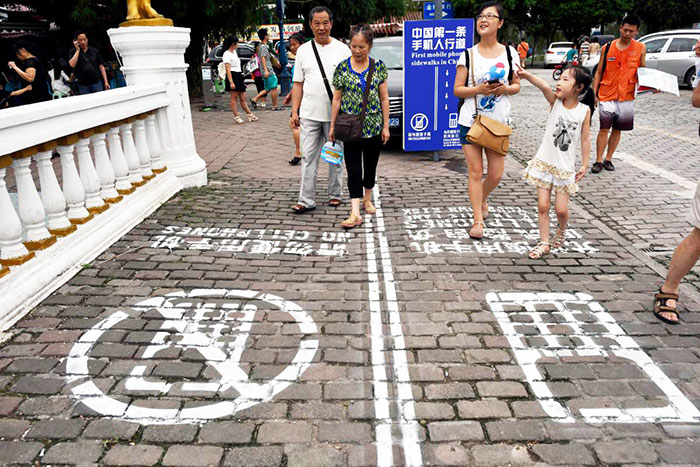
    Following its success in China, the forward-thinking European country, Belgium, has launched the perfect solution for this problem and is already proving a hit among texting fanatics.

    text-lane

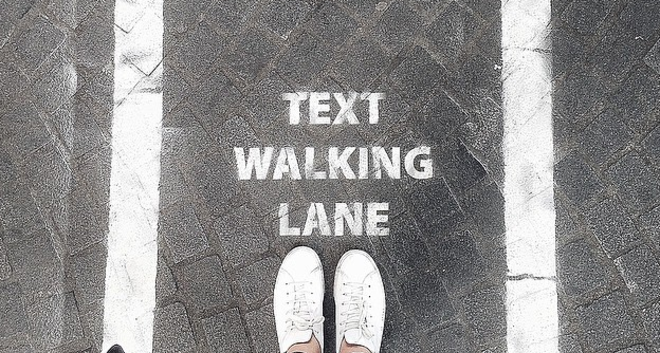
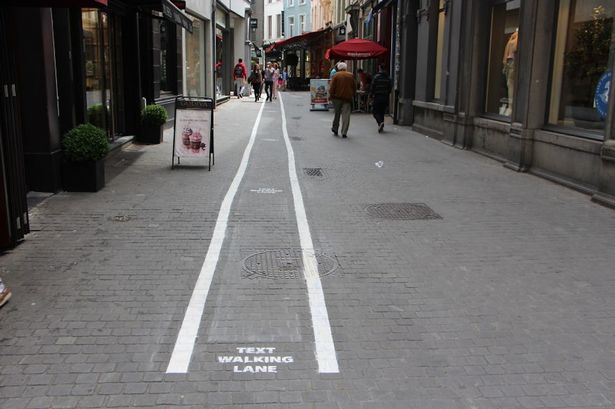
    The solution is Text Walking Lanes. Antwerp, Belgium, has given its smartphone users their own designated lanes, where they can walk while texting or looking at their mobiles, without the risk of bumping into someone and dropping their phones. The path is marked as ‘Text Walking Lane’ and is marked with a bright, highly visible white paint.

    texting lane china

    Dietrich Jehle, professor of emergency medicine at the University at Buffalo, said,

    When texting, you’re not as in control with the complex actions of walking. While talking on the phone is a distraction, texting is much more dangerous because you can’t see the path in front of you.

    This temporary arrangement was the brainchild of a smartphone company based in the city. They say that a significant number of mobile phone breakage is due to ‘text walking’ collisions. This idea received equal criticism, some welcoming the idea while others wonder to what level of dependency has the human race stooped down to.

    Let us try to apply such a change here in India. Our country has the second largest population in the world, and more than half of it owns a mobile phone. Among this is a good amount of people who just duck their heads into their mobile screen. So, yes, the probability of bumping onto another commuter while walking is very high. Because of this reason, Texting Lanes could be welcomed here in India. But, for achieving this, space and infrastructure are imperative factors. With almost 40% of India living in urban cities, is it possible to make space for people to text-and-walk, when there isn’t even enough area demarcated for walking? 

    Comment and let us know about your thoughts on ‘Texting Lanes’. 

  • Make in India:  List of Tech Companies to Start Manufacturing in India

    Make in India: List of Tech Companies to Start Manufacturing in India

    ‘Make in India’ is an initiative that was started back in September 2014 by the Prime Minister of India, Narendra Modi. The primary objective of this initiative is to create manufacturing firms within India to create more job opportunities and enhance the skills of the people of India across different sectors like automobile, aviation, biotechnology, defence manufacturing, mining, oil and gas, ports, railways, textile and much more. With this initiative, the Government of India hopes to bring in high-quality standards and minimise the impact on the environment.

    Many companies are in support of the Make in India campaign. Companies from China like Alibaba and Xiaomi showed their full backing for the project. Alibaba Chairman said, “We are excited about India. We are excited about Make in India and Digital India.” Xiaomi President Lin Bin too, showed his support and stated, “We have some big plans for India. We fully support Make in India.”

    In response to the Make in India call, The United Kingdom announced in January, about its campaign to forge collaborations with Indian companies. Dubbed as the ‘Great Collaboration’, it will be the first partnership between UK’s BP Petroleum company and India’s Reliance Industries Limited for developing and producing energy. The UK and the Indian Prime Ministers have already appreciated the financial ties between the two countries.

    Many companies have started putting up manufacturing houses in India. Celkon, one of the leading cellphone players, is right now in the planning process of setting up its manufacturing firm in Medchal, Telangana. IT Minister, KT Rama Rao, said the manufacturing business unit will be set up within a few days after June and will begin with four production lines, and will eventually increase its capacity to higher levels.

    Celkon-Manufacturing-Facility
    Celkon Plant in Medchal, Telangana

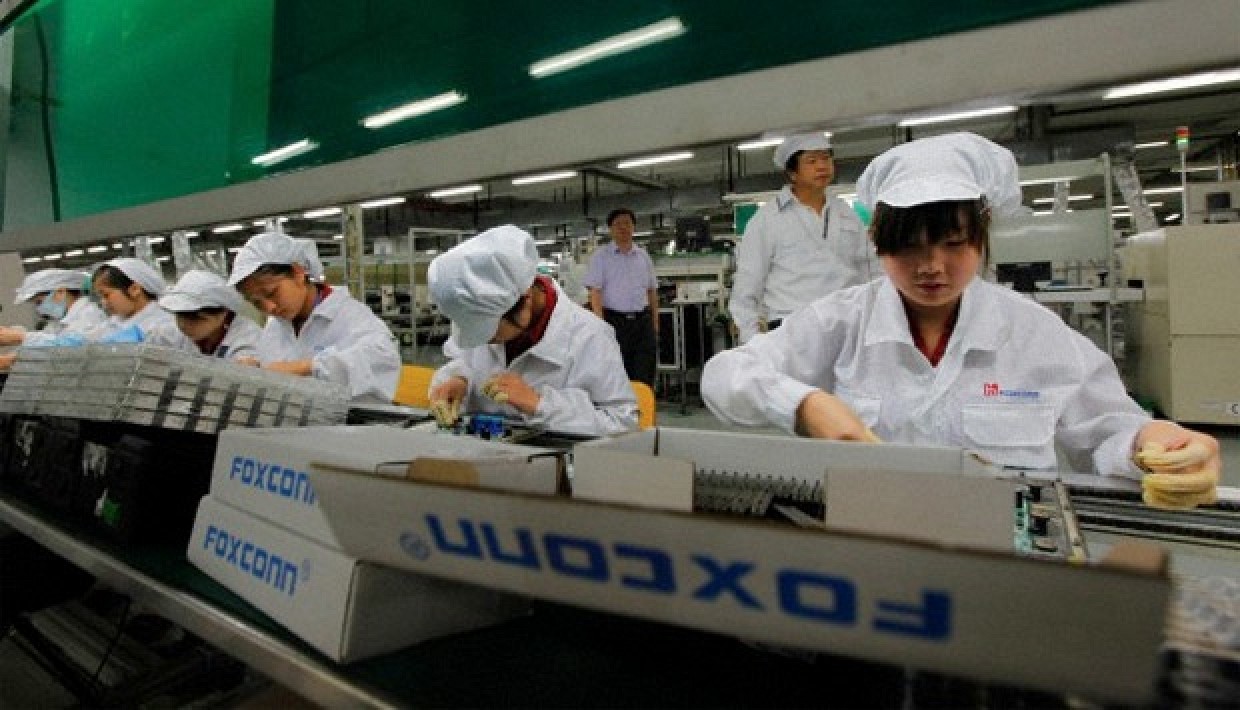
    Similarly, Foxconn Technology, who is one of the world’s largest contract makers of electronic products, is trying to develop 10-12 facilities in India, including factories by 2020. The Taiwan-based tech giant said that the company is in talks to manufacture Apple iPhones in India. This could lower the price on the world’s No.3 smartphone market where the US firm trails Samsung Electronics and local players.

    foxconn_workers_2

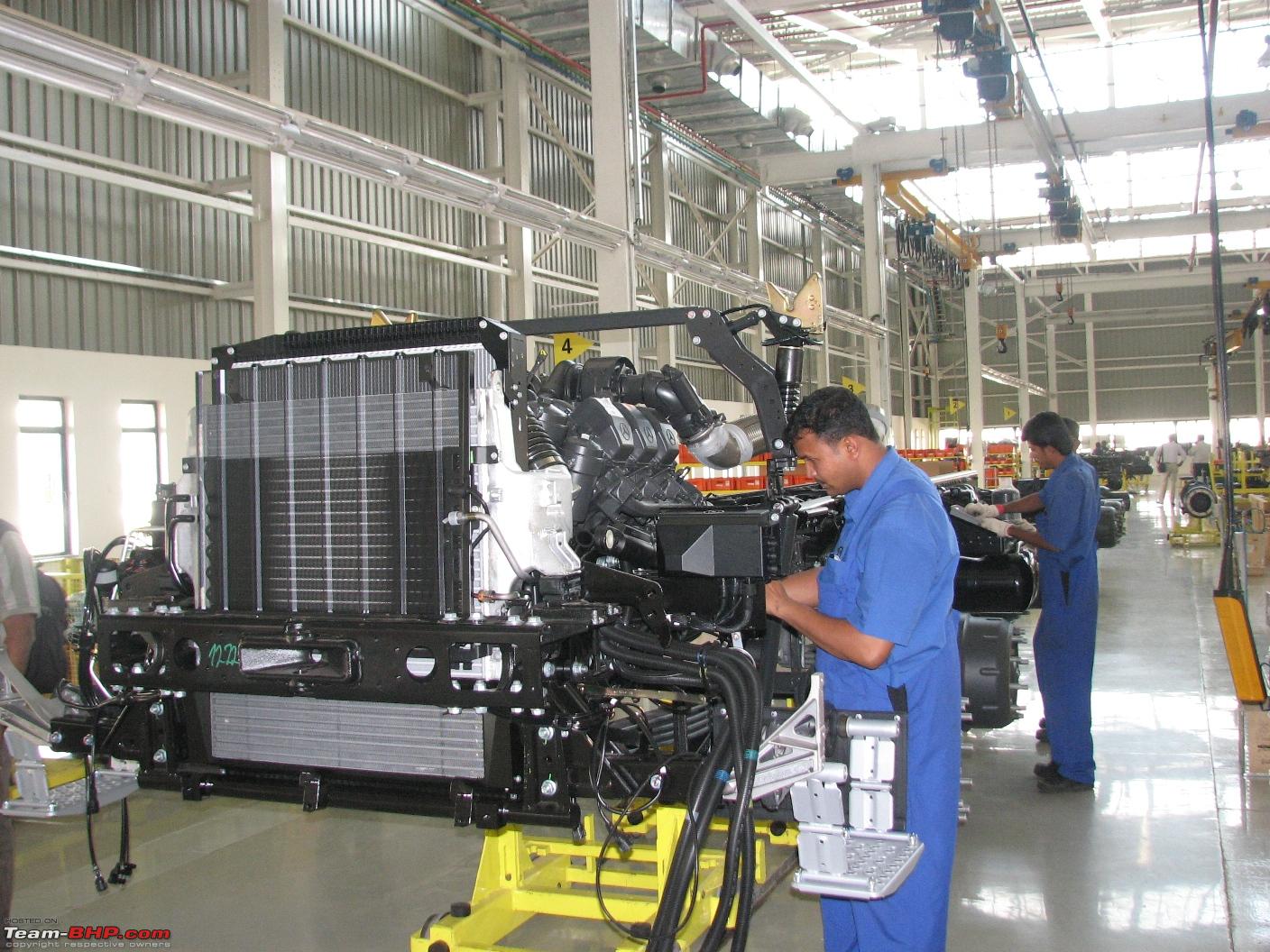
    Mercedes-Benz will be doubling its annual capacity in India to 20,000 units, thanks to the Make in India project. India will also be the first market to receive the GLA entry SUV outside of Germany.
    “India is one of the focus markets for Mercedes-Benz internationally, and with the addition of a new plant, we are getting future ready,” said company India MD & CEO Eberhard Kern. The plant was inaugurated by Maharastra chief minister Devendra Fadnavis and Union environment minister Prakash Javadekar. With the addition of the GLA SUV to the assembly line, the company now makes six models locally which include C-, E-, S-Class sedans and the ML- and GL-Class SUVs. The CLA entry sedan will be added to the local assembly list later this year while the A- and B-Class models come in after that.

    mercedes

    On a smaller scale, Amity scientists have developed a 100% safe, pure and indigenous herbal colours with absolutely no synthetic or harmful additives, in a bid to contribute towards Modi’s ‘Make in India’ initiative. “The herbal colours indigenously produced at Amity, when used extensively in all the industries, will herald a revolution in the country, which is reeling under the pressure of products loaded with synthetic components and chemicals,” said Harsha Kharkwal, faculty at Amity University.

    In February 2015, Huawei opened a new research and development (R&D) campus in Bengaluru. It had invested $170 million to establish the research and development centre. In February 2015, Hitachi said it was committed to the initiative. It said that it would raise its employees in India from 10,000 to 13,000, and it would try to boost its revenues from India from ¥100 billion in 2013 to ¥210 billion. It said that an auto component plant will be set up in Chennai in 2016.

    This initiative looks very promising. It is understandable that many more companies will join in, soon.This can create a lot of job opportunities here in India and improve the economic well-being of its masses.

    Let us see how the campaign shapes up in the future.

    You can also follow Make in India YouTube campaign here.

iGyaan Network
Privacy Overview

This website uses cookies so that we can provide you with the best user experience possible. Cookie information is stored in your browser and performs functions such as recognising you when you return to our website and helping our team to understand which sections of the website you find most interesting and useful.