Blog

  • Samsung On Course For Record $8.33 Billion Profit In Q2

    Samsung On Course For Record $8.33 Billion Profit In Q2

    Samsung has released its estimated earnings for Q2 2013, with a full announcement scheduled for later this month. The company estimates profits of $8.33 billion (9.5 trillion won), up nearly $2 billion over Q1’s $6.4 billion profit.

    This would give the Korean company a 47 percent year-on-year increase in profit from a revised KRW6.46 trillion in Q2 2012 – slowing from the 54 percent growth it posted in Q1 2013 – and a 20 percent year-on-year increase in revenue from KRW47.60 trillion during the same period.

    Analysts had expected a figure of more than 10 trillion won, and Samsung shares lost more than two percent in morning trade.

    “Demand for high-priced, high-end smartphones shows slowing growth, which could hurt Samsung’s profit margin,” IBK Investment and Securities analyst Lee Seung-Woo told the Yonhap news agency.

    Samsung has lost nearly 30 billion dollars in market value since mid-March, before it launched the Galaxy S4 smartphone a month later. Several brokerages have downgraded Samsung and their earnings forecasts for the company on fears that the S4 is not selling as strongly as hoped.

    As Reuters reports, shares in the $185 billion company have dropped 15 percent since early June, hit by a series of brokerages downgrades. The share price reflects concerns about handset margins, with its mobile business generating 70 percent of the tech giant’s total profit.

    Its share price woes equate to a fall in market value of 33 trillion won ($29 billion), almost equal to the combined market capitalisation of Sony Corp and LG Electronics Inc .

    Samsung was expected to post higher earnings in the current quarter, as analysts were expecting strong smartphone sales to revive its growth exponentially.

    [Via]

  • Lava Iris 504Q Full Review

    Lava Iris 504Q Full Review

    Build Quality And Design

    In a segment that is adding devices by the minute, it is imperative to pay attention to the design of your device to make it stand out. With the Lava Iris 504Q, Lava went for a simple and sleek design. No big bezel or funky colours hogwash. 

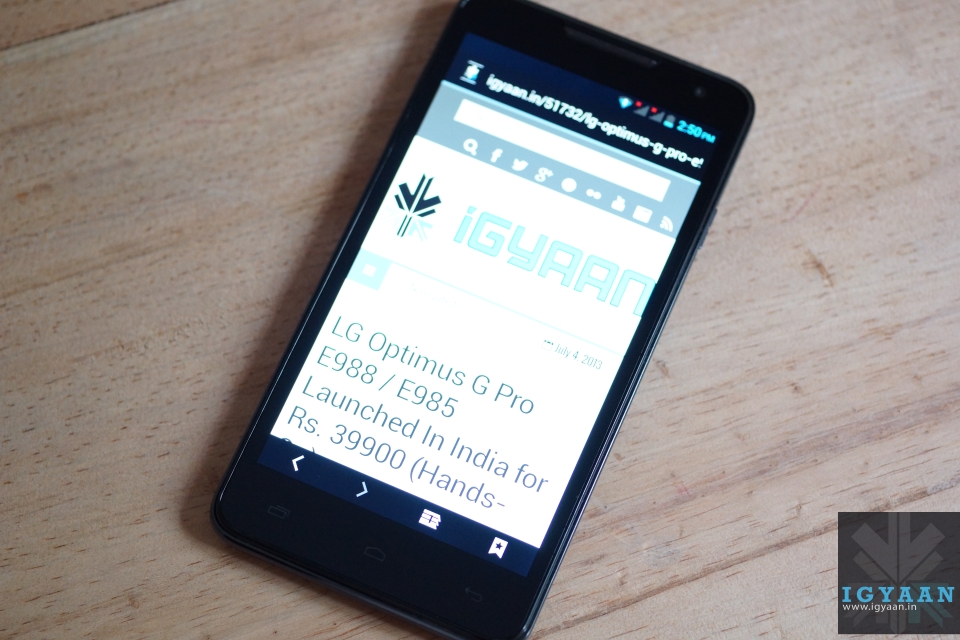
    At first glance, the Lava Iris 504Q is really similar to the HTC Butterfly. At the front there is a 5″ display with a HTC Butterfly like speaker grill at the top, and the proximity sensor, front-facing camera next to it. There are three touch-capacitive buttons under the screen, which are backlit and provide haptic feedback.
    Lava Iris 504Q

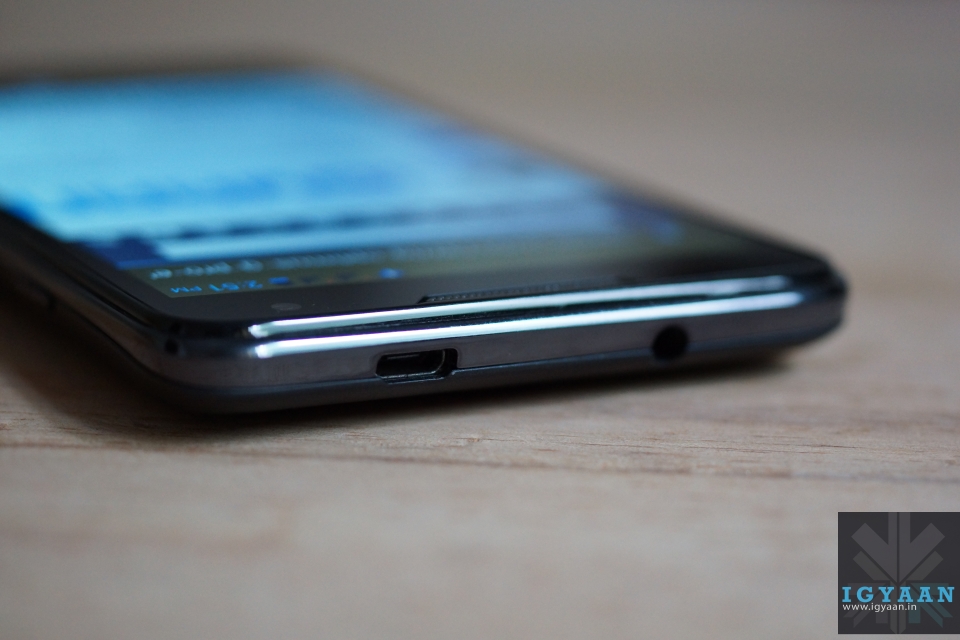
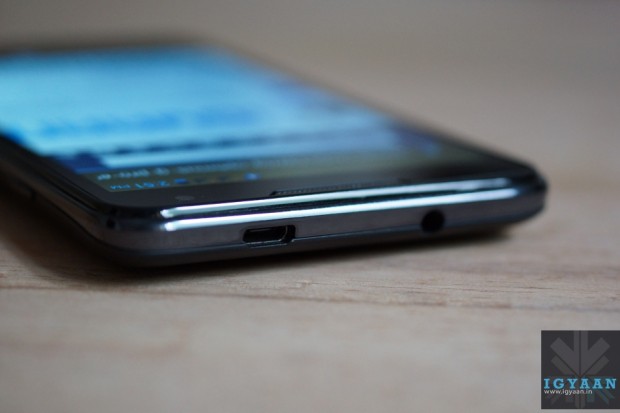
    Towards the right of the device you have a power button, volume rockers towards the left, a microphone at the bottom and your 3.5mm headphone jack along with a micro-USB port at the top.

    The slightly-curved back- cover of the device has a soft rubber like finish, even though it’s made of plastic, which gives it a really premium feel. It also makes it less prone to finger prints and scratches.
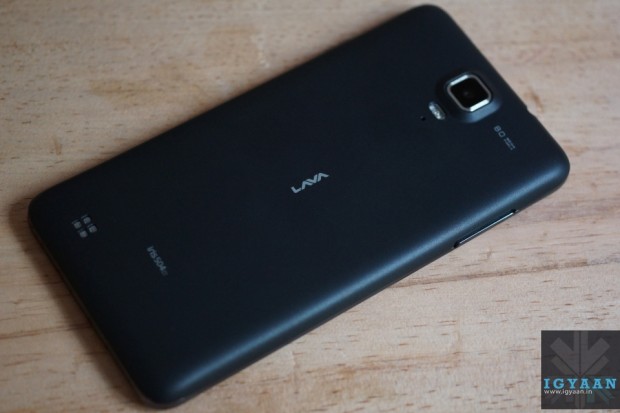
    Lava Iris 504Q

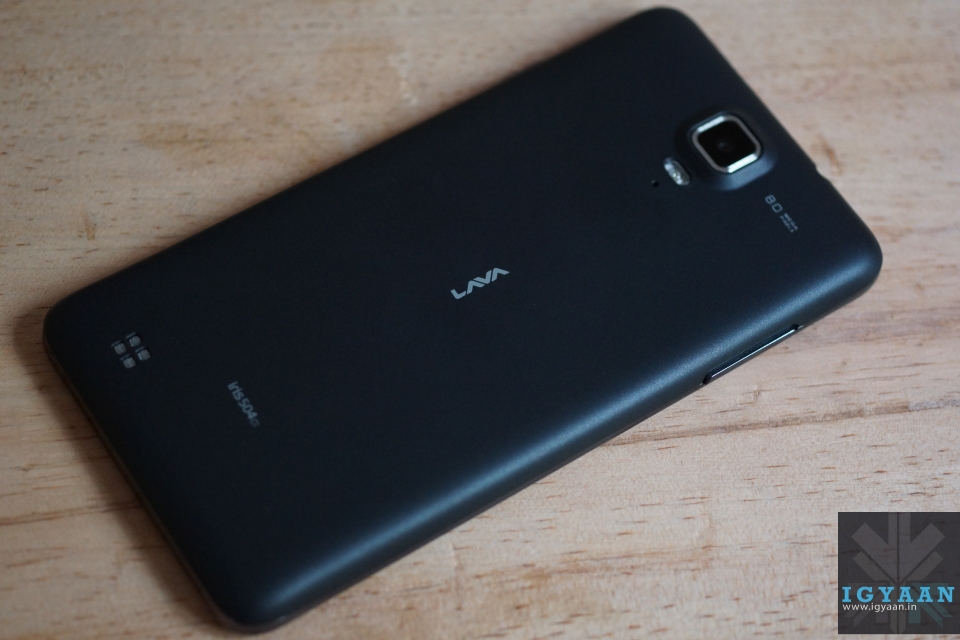
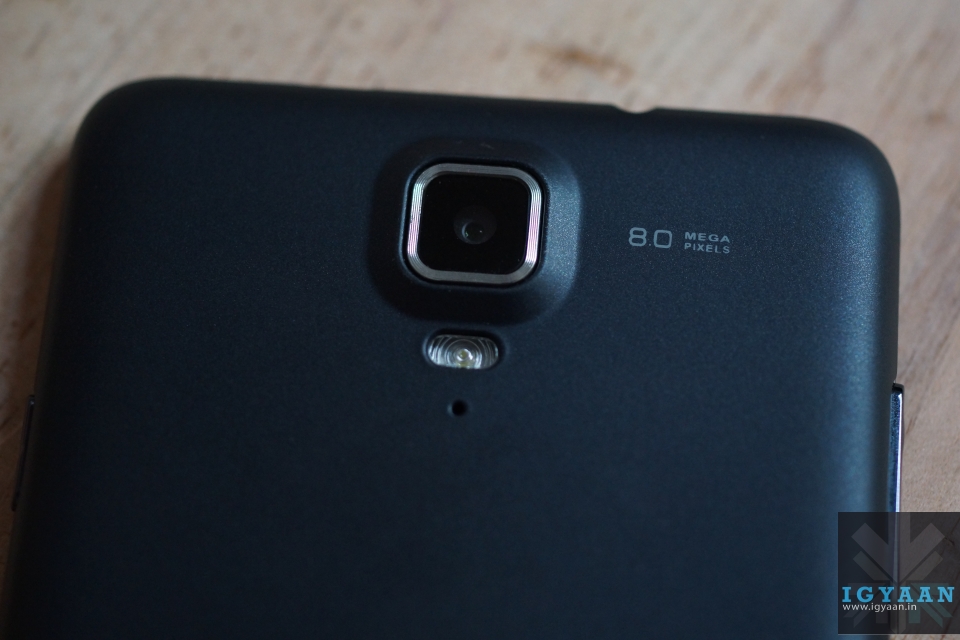
    An 8 MP camera + flash, and a secondary noise-cancelling microphone grace the back of the device, which has its speaker grill towards the bottom left side. A small LAVA logo sits right in the middle of the device. Lava has managed to get a good balance of subtle branding and design to ensure the phone does not look overly flash and cheap.

    With its dimensions of 140 x 73 x 8 mm and 140 Gms weight, it is really comfortable to operate.

    The build quality is splendid as well, no squeaking noise, no loose parts. Everything about the Lava Iris 504Q feels downright solid. So a big thumbs up to Lava as far as build quality and design are concerned.

    Specifications And Hardware

    The hardware list on the Lava iris 504Q is pretty common on the market, a 5 inch 1280 x 720p screen, 1.2 GHz quad core MediaTek MT6589 processor, a mix of 8 MP and 2 MP cameras, 1 Gig of RAM and a 4 GB storage. Lava is trying various software tweaks to appeal to the market like gestures for the image gallery and clicking pictures. It is essentially a Dual-SIM GSM + CDMA smartphone.

    You also get a microSD card slot, Wi-Fi, Bluetooth 3.0, 3G, and 2000 mAh battery. Detailed tech specs are given at the top.

    Display And Multimedia

    The display on the Lava Iris 504Q is definitely one of the most impressive in this segment. It employs OGS (One Glass Solution) technology which basically means that there is zero gap between the screen and the glass on top of it.
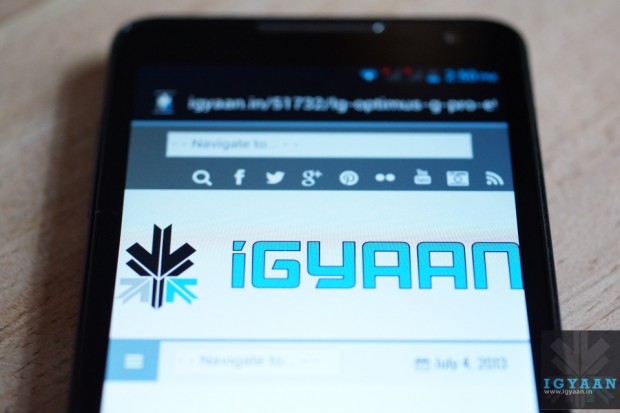
    Lava Iris 504Q

    With it being an iPS display, viewing angles were bound to be decent, but what impressed us most was the colour reproduction of the panel. Bright, vivid colours and deep blacks make the Lava Iris 504Q feel like a device from a segment higher than the one it is aimed for. Outdoor visibility is decent as well but the one thing that left us slightly disappointed was that Lava didn’t opt for a scratch resistant display.

    Moving on to the mutli-media experience of the device, the Lava Iris 504Q has a custom Lava music player bundled along with it. The app, called Fusion, basically is a replacement for your stock music app, and provides a radio streaming option as well. If we talk about the audio quality, it is sufficiently loud and clear, but due the placement of the speakers, more often than not one tends to muffle the speaker while holding the phone. 

    Video playback on the Lava Iris 504Q was bound to be a joy, given its excellent display. Again, colours were rich and the phone can handle most formats including MP4, AVI, MKV and MOV. The screen size aids the multimedia experience by providing more screen real estate.
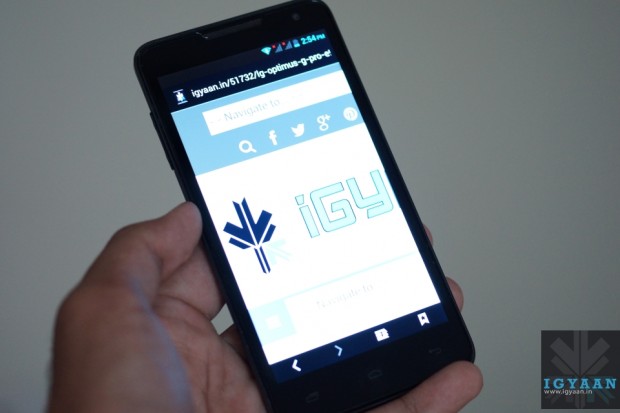
    Lava Iris 504Q

    The stock browser on the Lava Iris 504Q is really impressive. Apart from smooth scrolling and zooming, it provides a host of options like offline reading and searching, which are found in Google Chrome. Text is sharp and easy to read, so overall the browsing experience is quite satisfying.

    The Lava Iris 504Q’s benchmarks scores were decent. It scored above the Canvas HD in our tests. You can watch the benchmarks video below.

    [youtube id=”sf9fu2fLlbg” width=”100%” height=”300px”]

    Gaming on the Lava Iris 504Q was again made better thanks to its screen. It handled games like FIFA 12 and the pre-loaded Modern Combat 2 with ease.

    [youtube id=”3nJHH2BitQg” width=”100%” height=”300px”]

    Camera

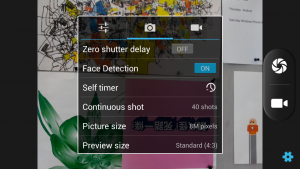
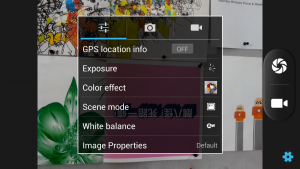
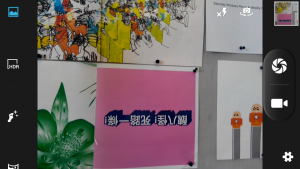
    The Lava Iris 504Q has an 8MP camera with a BSI sensor. The camera app itself is well laid out and provides a bunch of settings and modes including HDR, Panorama, ISO settings, Exposure settings etc.  
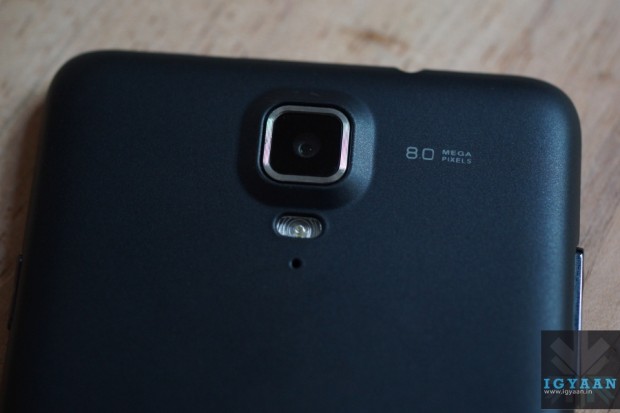
    Lava Iris 504Q

    Starting with outdoor shots, the colours seemed slightly unnatural and overly saturated. The camera tends to over-expose images, and we were expecting slightly more from the Iris 504Q. Macro-shots though seemed much better. Good background blur and sharp detailing. The gesture feature, which we will talk about below, can be used to capture images as well. 

    Indoor shots were a big disappointment however. Even when there was a decent amount of lighting in the room, the Lava Iris 504Q clicked completely unusable images. The flash seemed too weak to aid the process of indoor imaging. So if low-light camera performance is one of your main requirements, you might want to give this one a miss. 

    Video recording is done at 1080p in mp4 format. While we did not find any major flaws with the quality of the video, the Lava Iris 504Q again over-exposed the shots a bit. 

    Network, Phone Call And Messaging

    Phone call quality was very good and we have no complaints with the way the Lava Iris 504Q handles networks. The network holds good throughout the day and you will seldom find the need to wait for a network flash to get over. 

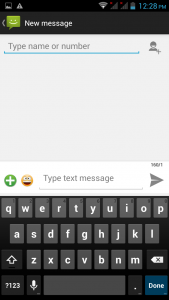
    The keyboard on the Lava Iris 504Q is quite similar to the stock Android keyboard. It is well laid out and can be customized according to your needs via the Google Play store.

    The Lava Iris 504Q provides support for a GSM and a WCDMA SIM card. Network on both was strong throughout our tests.

    Gesture Support

    The Lava Iris 504Q packs in gesture support to separate itself from the herd of devices in this segment.  While it may sound good on paper, we personally feel that it’s more of a gimmick than a useful addition. It does not work with all applications and when tried with the camera app, we were left searching for the option to turn it off. The Lava Iris 504Q kept clicking pictures even when we weren’t ‘swiping’ our hands in front of the display. 

    Conclusion

    Overall, the Lava Iris 504Q is a smartphone that hopes to distinguish itself from the crowded budget smartphone market with its excellent display and simplistic design. While it may not lag behind the others as far as performance is concerned, we feel that Lava could have done a better job with the camera on the device. If you can overlook that, then the price of Rs. 13,499 seems right for the device. 

    Video Review

    [youtube id=”RDtsUujPTAM” width=”100%” height=”300px”]
  • LG Optimus G Pro E988 Unboxing (Video)

    LG Optimus G Pro E988 Unboxing (Video)

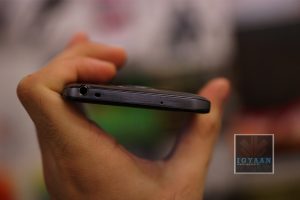
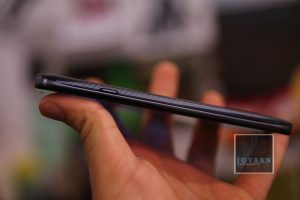
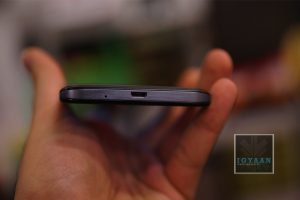
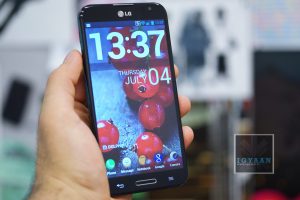
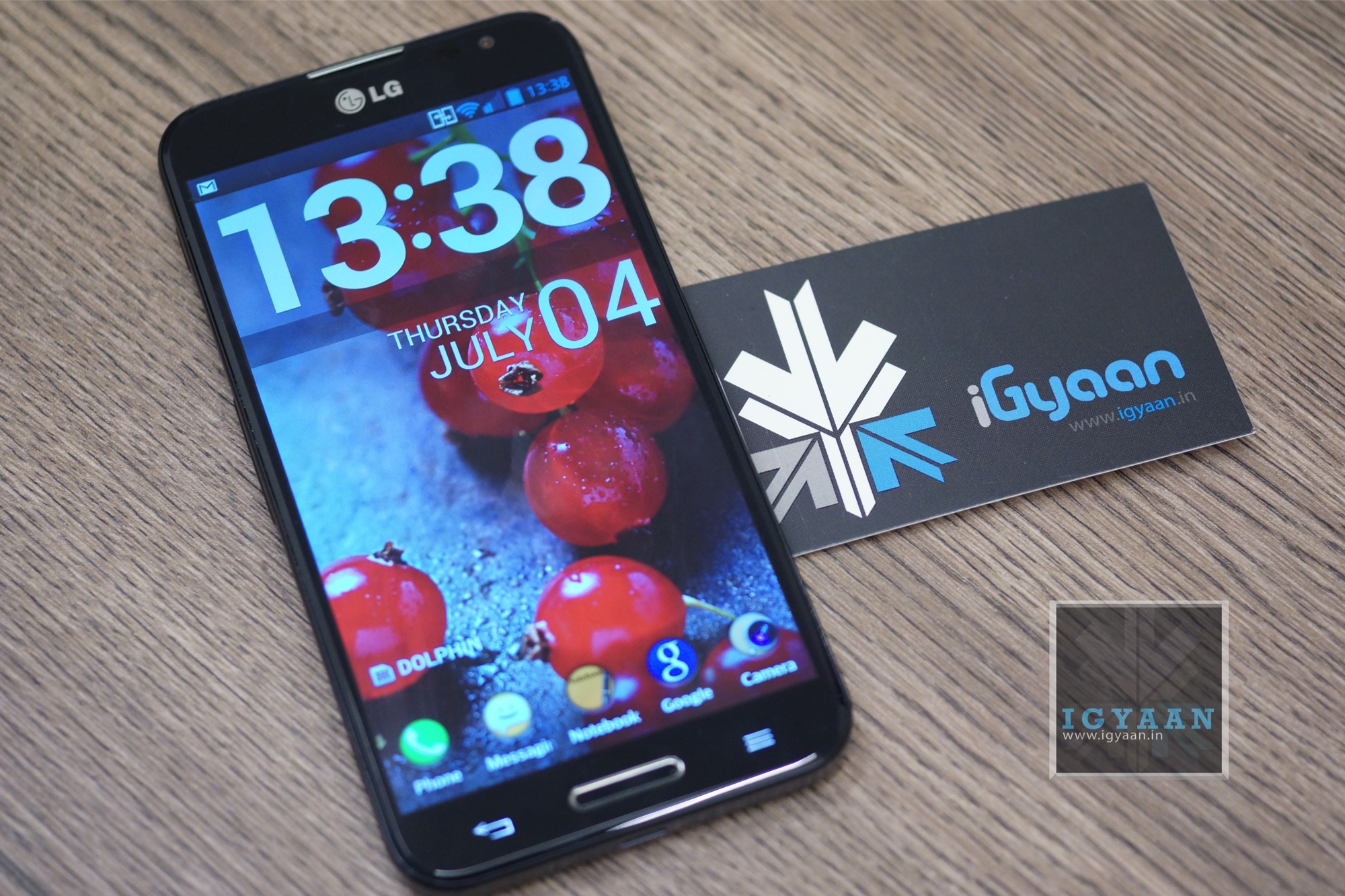
    LG today launched their new flagship device for 2013, the LG Optimus G Pro E988 in India (known globally as the E985). The LG Optimus G Pro has been priced at Rs. 39,900 will compete with the likes of the Samsung Galaxy Note 2, the Galaxy S4 and the HTC One in the Android Market.

    LG Optimus G Pro E988 Hands On12

    In terms of specifications, the LG Optimus G Pro has a  True Full HD IPS Plus LCD capacitive touchscreen with a resolution of 1080 x 1920 pixels. It is powered by a Qualcomm Snapdragon 600 processor, which features a 1.7GHz Quad-Core CPU and Adreno 320 GPU. A massive 3140 mAh battery and 2GB of RAM.

    The LG Optimus G Pro has a 32 GB storage along with 64 GB expandability via microSD card. A 13 MP rear camera and a 2.1 MP front camera enable full HD video recording and LG was also the first to show off dual camera features with the LG Optimus G Pro, right before Samsung launched the S4 into the market. 

    The rear of the Optimus G Pro features a glittery digital cube pattern which is seen on the Nexus 4 and LG also says that the Optimus G Pro features a curved glass at the front, which gives it a 2.5D effect.

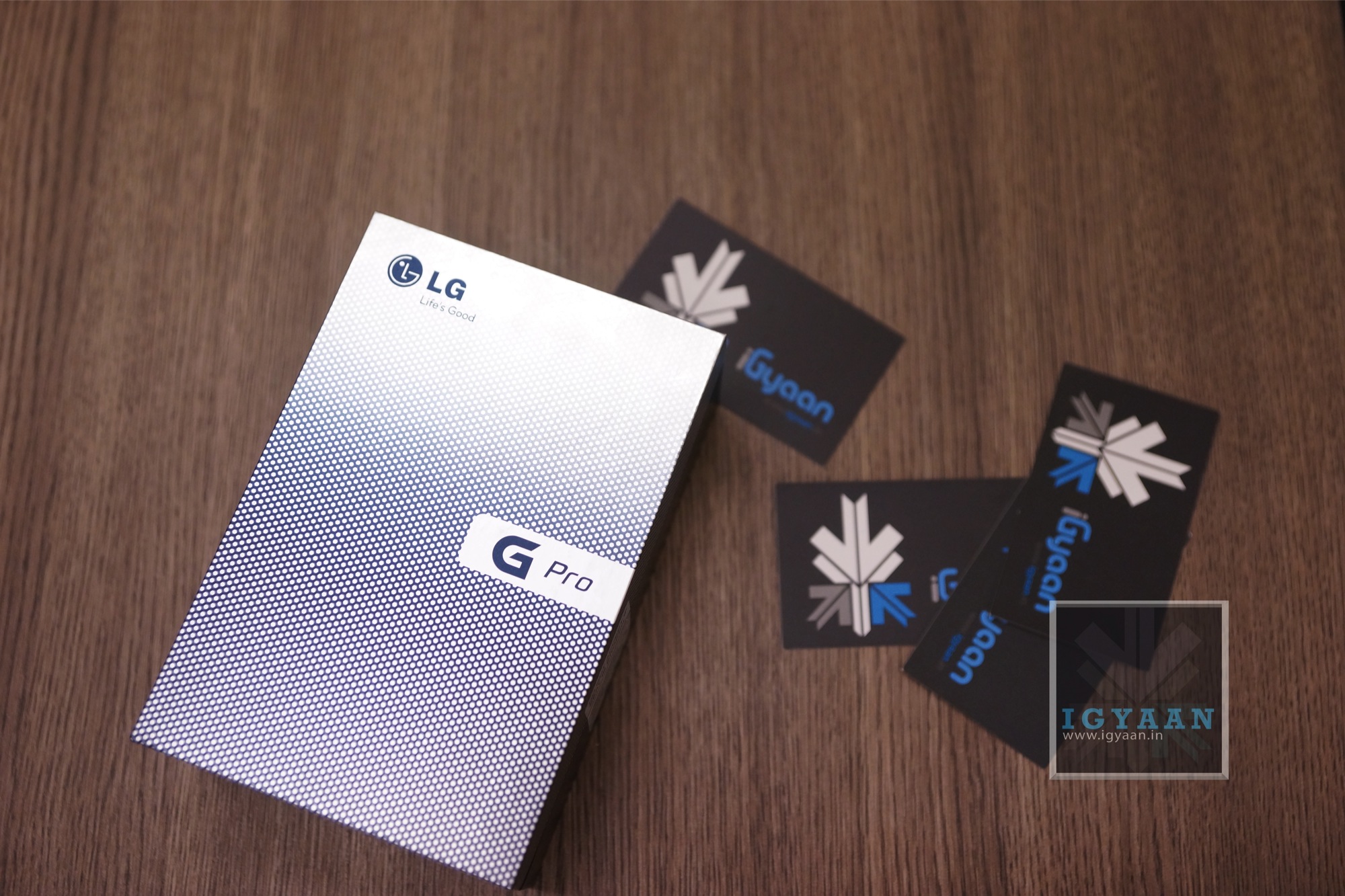
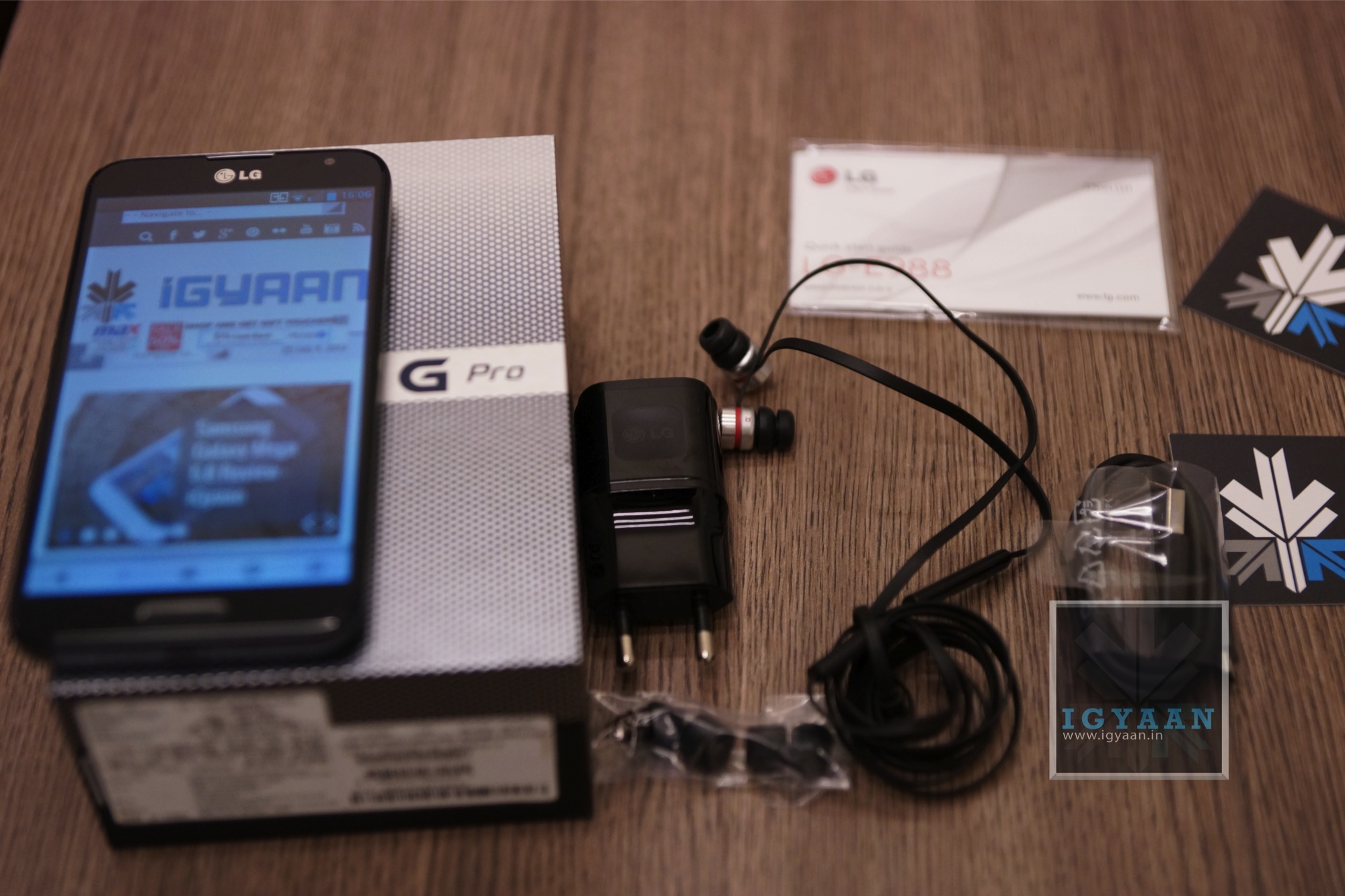
    LG Optimus G Pro E988 Unboxing 6

    Inside the box of the LG Optimus G Pro are,

      • Warranty Guide
      • In-ear earphones with a set of ear-tips
      • USB to microUSB cable
      • 3140 mAh battery 
      • Wall charger 
      • LG Optimus G Pro E988 Handset


    LG had originally decided to launch the Optimus G Pro around the 20th of June 2013, but due to the conflicting price of US Dollar vs Rupee, The Optimus G Pro shipments were delayed. The LG Optimus G Pro is also price considerably higher than what LG had originally decided (around Rs. 35000) making it a tough seller, since the competition can continue selling stocks bought at earlier dollar prices. Samsung and HTC are also set to raise prices of handsets if the Dollar Price does not normalize in the coming days. Considering the price increase of the competitors the LG Optimus G Pro might sell better in the coming months.

    Check out our Unboxing video and Images. 


    Buy Now


    [youtube id=”JAdBnnjaX7s” width=”100%” height=”300px”]

  • LG Optimus G Pro E988 / E985 Launched In India for Rs. 39900 (Hands-On)

    LG Optimus G Pro E988 / E985 Launched In India for Rs. 39900 (Hands-On)

    LG might be enjoying the success of the Nexus 4 in India, and in order to retain that streak the company has launched the new LG Optimus G Pro E988 in India. The 5.5 inch smartphone from LG falls into the Galaxy Note 2 category of phone sans the stylus.The LG Optimus G Pro has a  True Full HD IPS Plus LCD capacitive touchscreen with a resolution of 1080 x 1920 pixels.

    The Optimus G Pro has a Qualcomm Snapdragon 600 processor, which features a 1.7GHz Quad-Core CPU and Adreno 320 GPU, a massive 3140 mAh battery and 2GB of RAM.

    LG Optimus G Pro E988 Hands On0

    The LG Optimus G Pro has 16/32 GB storage options along with 64 GB expandability via microSD card. A 13 MP rear camera and a 2.1 MP front camera enable full HD video recording and LG was also the first to show off dual camera features with the LG Optimus G Pro, right before Samsung launched the S4 into the market. 

    “LG’s Optimus G Pro sets a new benchmark in the over 5-inch display smartphone category which is catching on with consumers everywhere who aren’t interested in owning both a phone and a tablet,” said Dr. Jong-seok Park, president and CEO of LG Electronics Mobile Communications Company. “Asian customers are leading many of today’s technology trends and we’re confident Optimus G Pro will find a large following in this region.”

    LG Optimus G Pro E988 Hands On3

    The MRP of the Optimus G Pro is set at Rs. 42500, but the phone goes on sale in the country for a price of Rs. 39900. At this price the phone competes head to head with the likes of the Galaxy S4, the HTC One and the Galaxy Note 2, the three predominant Smartphones in this price range. The LG Optimus G Pro brings the Note 2 screen size and the S4 comparable performance in a single package. The LG Optimus G Pro also has a IR blaster and quick remote app to control your electronics.

    Watch our old hands on of the LG Optimus Pro E985 below and stay tuned for an Unboxing and Hands on of the LG Optimus Pro E988.


    [youtube id=”B08JYEJDTj0″ width=”100%” height=”300px”]

     

    Buy Now


  • Facebook Brings Stickers To The Web (PR)

    Facebook Brings Stickers To The Web (PR)

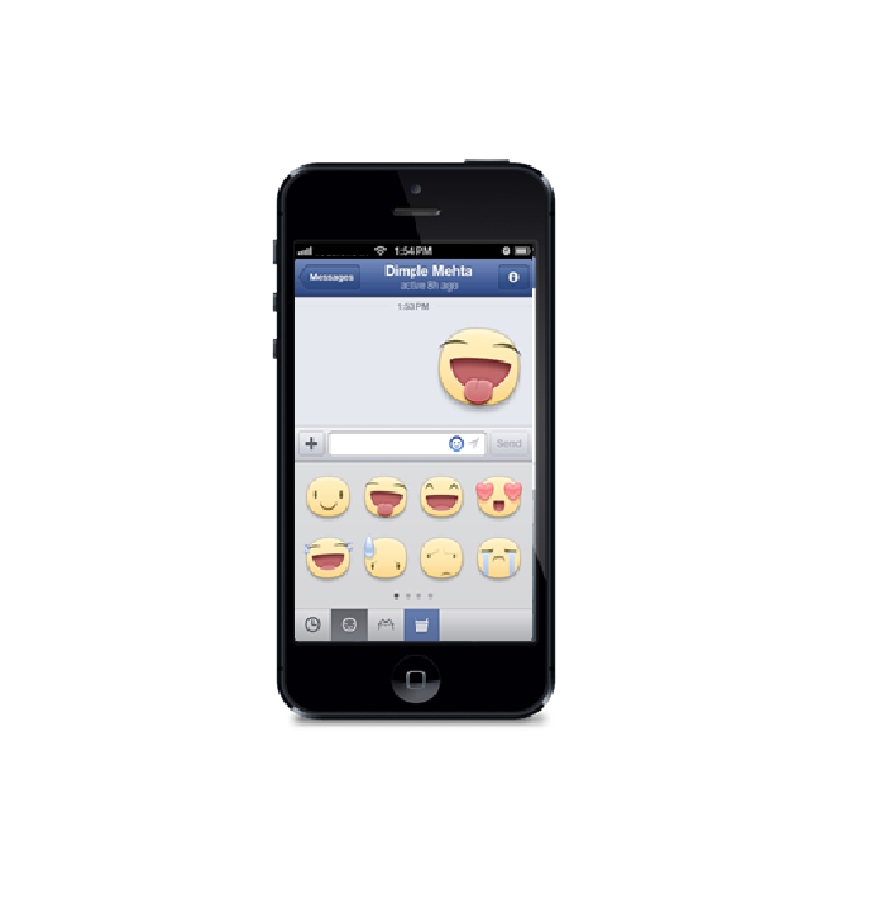
    Earlier this spring Facebook announced Home, a suite of apps for Android meant to make elements of the social site native to the phone. A month later, Facebook pushed out some features of Home to their iOS Messages app, including Chat Heads and stickers. Stickers are now rolling out to desktop users, and these users can choose from a catalog of available images in Facebook’s Sticker Store.

    facebook

    Sending stickers is simple: click on the smiley icon in your message, browse the top of the sticker window to decide on the pack you want, and make a selection. The basket icon takes you to Facebook’s sticker store, where you can find additional packs.

    Though they’re calling the collection a “store,” the stickers are currently free, although Facebook could one day decide to sell sponsored stickers. Though the social network is increasing their push to bring stickers to their messaging platform, (other social networking apps also offer stickers), TechCrunch says their head sticker designer has left the company.

    [toggle title=”Press Release”]Spice up your conversations now with Facebook Messenger
    Facebook Messenger gets updated with Chat Heads and Stickers

    Facebook, one of the largest social networking platforms has announced some upgrades in its instant messaging app Facebook Messenger and has rolled out a few interesting features such as Chat Heads and Stickers.

    Facebook now makes it easy to send private messages. Today, more than 10 billion messages are sent each day in total on Facebook. Private sharing and connecting is a big part of the Facebook experience. No matter what you’re doing or where you are, you want to reach your friends on Facebook – and you’re reaching your friend, not a phone number or a screen name so it’s personal, real and intimate.

    To spice up the conversation and keep your chats at the finger tips Facebook Messenger comes up with features such as Chat Heads and Stickers. Stickers are a way of letting the user free, of the same old smileys and emoticons. The user can use these to spice up the conversations and make them more interesting and fun. Chat heads allows the user to be just one tap away from chatting with his friends. The most frequently connected user on Facebook, appears on the home screen inside a circular shape, and does not go away until and unless, it is double tapped upon. Chat Heads make the texting experience quick and easy; it allows the user to switch between friends without having to go on the friend list again and again.

    Stickers have been available on the Facebook and Facebook Messenger apps for iOS and Android and now users can send them right from messages or chat on their desktop as well.

    Here are some quick tips to show you how to get the most out of Facebook mobile messaging.

    1. Start messages instantly
    From the Facebook app, tap the icon in the top right of your News Feed to get to the messaging sidebar. Just tap the name of a friend and your message will reach them wherever they log in to Facebook – on their smartphone, feature phone or the web. Want to know who will get notified about your message on their phone? Look for the mobile icon.

    2. Message groups of friends
    Making plans to see a movie with a small group of friends? Tap the message bubble icon at the top of the screen. Tap the Group button, then tap the names of the friends you want to message. Once you start a group conversation, you can give it a name like “Movie Crew” so it’s easy to find it again later.

    3. Send a sticker
    Stickers make Facebook messages more fun. Just tap the smiley to send a bunny, a cat or another cute critter. To download more stickers, just tap the basket icon. Stickers are a lightweight way to tell friends how you’re feeling, what you’re up to or to just say hi.

    4. Share a photo
    Sometimes you only want to share a photo with a handful of people. To add photos to a private conversation, tap + and choose from the photos on your phone or take a new one. People in the conversation just tap the photo to see it expand.

    5. Multi-task with chat heads
    With chat heads in Facebook for iPhone, you can keep chatting while you do other things on Facebook like check News Feed or post to a group. If you have Facebook Messenger for Android, you can keep chatting while you use other apps. Just tap the chat head when a new message arrives. Your friend’s message will open on top of your browser app for example so you can send a response without having to switch back and forth. When you’re done, tap the chat head to close the conversation and drag the chat head down to the ‘X’ to dismiss it.


    6. Download the Messenger app
    Want to get to your messages faster? The standalone Facebook Messenger app lets you get right to all your conversations from your Android or iPhone home screen. To download the app, go to: http://bit.ly/fbandroidmessenger or http://bit.ly/fbiosmessenger
    [/toggle]

  • Bluebox Security Reveals That 99% Android Devices Have Major App Vulnerability

    Bluebox Security Reveals That 99% Android Devices Have Major App Vulnerability

    The company Bluebox security, has found a security hole in Android’s operating system. What’s even more scary about this news is the report states that this security hole has been around since Android 1.6 Donut. Apparently what can happen is malicious developers can change the APK of a legitimate company, without any breaks to its cryptographic signature. This basically means that if an app is hacked on Android, the user would not know and could be entering their information and sending it to the malicious hackers unknowingly.

    Android apps (packaged as an “APK”) are signed with an encryption key (just like iOS apps) to prevent a malicious party from changing the code. Signed apps are expressly designed to enable the system to detect any tampering or modification.

    Since verified apps are granted complete access to the Android system and all applications on a phone, the security weakness is potentially huge, although it remains theoretical since it is unclear how malicious apps and updates would be served to users.

    Apps listed on the Google Play store are immune from this tampering, so a hacker would need to lure a user into downloading a malicious version of an app in other ways, perhaps via a third-party app store or fake app links. A phishing email with a link to a fake update for a popular app, for example, might generate some downloads. 

    If Google has not done anything up to this point, it makes you wonder if they taking this security issue as seriously as they should. Smartphone malware is becoming a huge problem and in order to prevent threats, the security companies along with the OS developers must work together, to stop this ongoing threat. 

    As SlashGear reports, according to Bluebox, it informed Google of this Android vulnerability in February of this year. To take care of the issue, every device manufacturer will need to create a patch and roll it out to its users, who will then need to install it. The security firm says it will release “tools/material” and more info about this vulnerability during Blackhat USA 2013, which takes place later this month.

    [Via]

  • Leaked : Rumoured Moto X Back Panels In Different Colours

    Leaked : Rumoured Moto X Back Panels In Different Colours

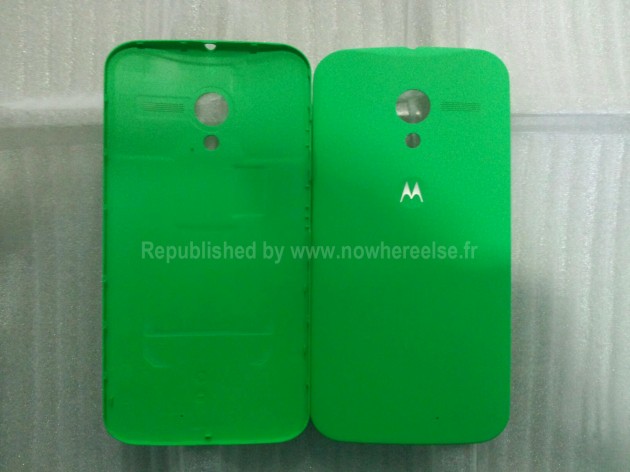
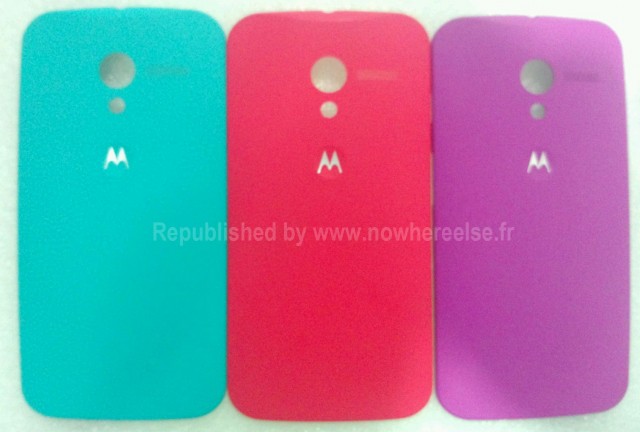
    We now understand what Motorola says when it claims the upcoming Moto X is “designed by you.” The company will fulfill orders within two days from its Texas-based plant, allowing buyers to customize the backplate colour and, presumably, add lettering or even pictures to the polycarbonate body. In total there will reportedly be about 16 different flavours to select, such as blue, purple, green and red.

    moto x

    A leaked photo of what appears to be three backplates in garish neon colours reaffirms the reports we heard this week and earlier today, and lends credence to the idea that Moto X will indeed be a mid-range device with broad appeal, not a barnstormer flagship with enormous gigahertz counts.

    It’s unclear what other colors will be offered, but we’d guess Motorola’s new Google-fied logo is a good indication on what to expect. If that’s the case, we might be saying goodbye to the typical black and white.

    The Moto X is firmly tipped as a mid-range device. Considering the constantly growing buzz surrounding the smartphone, we reckon its launch isn’t too far away.

    Rumoured specs are that we’ll see the new Android run OS 4.2.2 and come with a 4.7-inch full HD screen, NVIDIA Tegra 4i processor, 16MP camera, a 5MP front-facing camera, and some sort of “smart” technology.

    [Via]

  • Motorola : Moto X Phone Will Be Customizable

    Motorola : Moto X Phone Will Be Customizable

    The Motorola Moto X will be released this summer and their early marketing efforts declare it’ll be “designed by you.” Rumoured specs are that we’ll see the new Android run OS 4.2.2 and come with a 4.7-inch full HD screen, NVIDIA Tegra 4i processor, 16MP camera, a 5MP front-facing camera, and some sort of “smart” technology.

    Dennis Woodside, Motorola’s CEO, previously confirmed that the new “hero” device will “know when it’s in your pocket, we know when it’s in your hand, it’s going to know when you want to take a picture and fire up the cameras… The device will know when you’re in the car and it’s moving at 60mph and you’ll interact with it differently, more safely.”

    New details emerged today that reveal deep personalization. According to sources at ABC, the Moto X – which they say is a ‘mid-range phone’ – will be available for sale via a website – similar to Google’s Nexus 4. In addition, “buyers will be able to select from a palette of different colors.

    One color can be used for the back case and another can be selected for the trim of the phone. Users will also be able to engrave a name or message on the back cover as well as upload a personal photo through the site to be used as the wallpaper on the phone’s screen.” The engraving portion is similar to heading to the Apple’s online store where they give you options to laser engrave your iPod or iPad, but the wallpaper will certainly add a personal touch to the device.

    No word yet on whether Motorola will bring the device to the Indian markets.

    [Via]

  • 2014 Chevrolet Camaro to play Bumblebee in Transformers 4

    2014 Chevrolet Camaro to play Bumblebee in Transformers 4

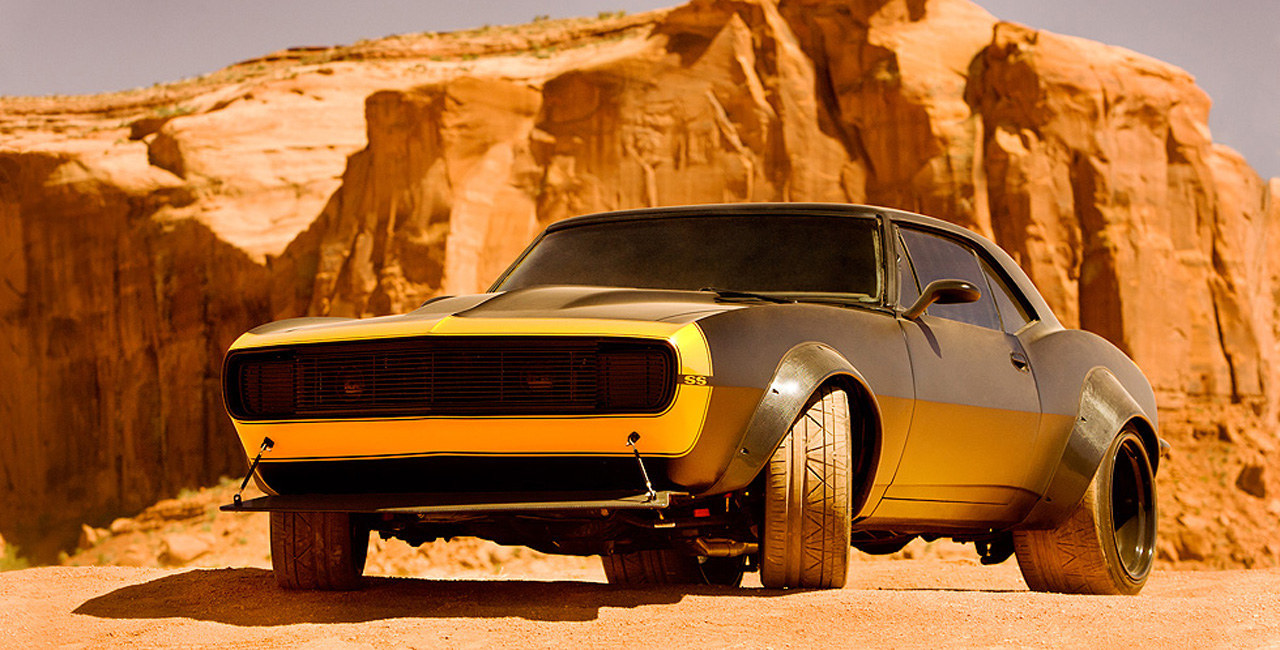
    Almost all cars from Michael Bay’s upcoming edition of the hugely successful Transformers franchise have been confirmed over the last few months, save for the pivotal Bumblebee.

    It looks like the wait may be over now, after shots of the 2014 Camaro Concept at the shooting site were released. The new Camaro is a strong modern equivalent to the Bumblebee of old times which we’ve already been shown earlier. A serious reimagination of the Camaro was done, and the 2014 Concept could surely lead the way for the production model. With a very aggressively sculpted front end and piercing headlamps, the car looks ready to roll for Transformers 4.

    Transformers

    Some of the other vehicles being used in the film include the C7 Corvette Stingray, Bugatti Veyron Grand Sport Vitesse, Lamborghini Aventador, Pagani Huayra and a Chevrolet Sonic Rally Racer.

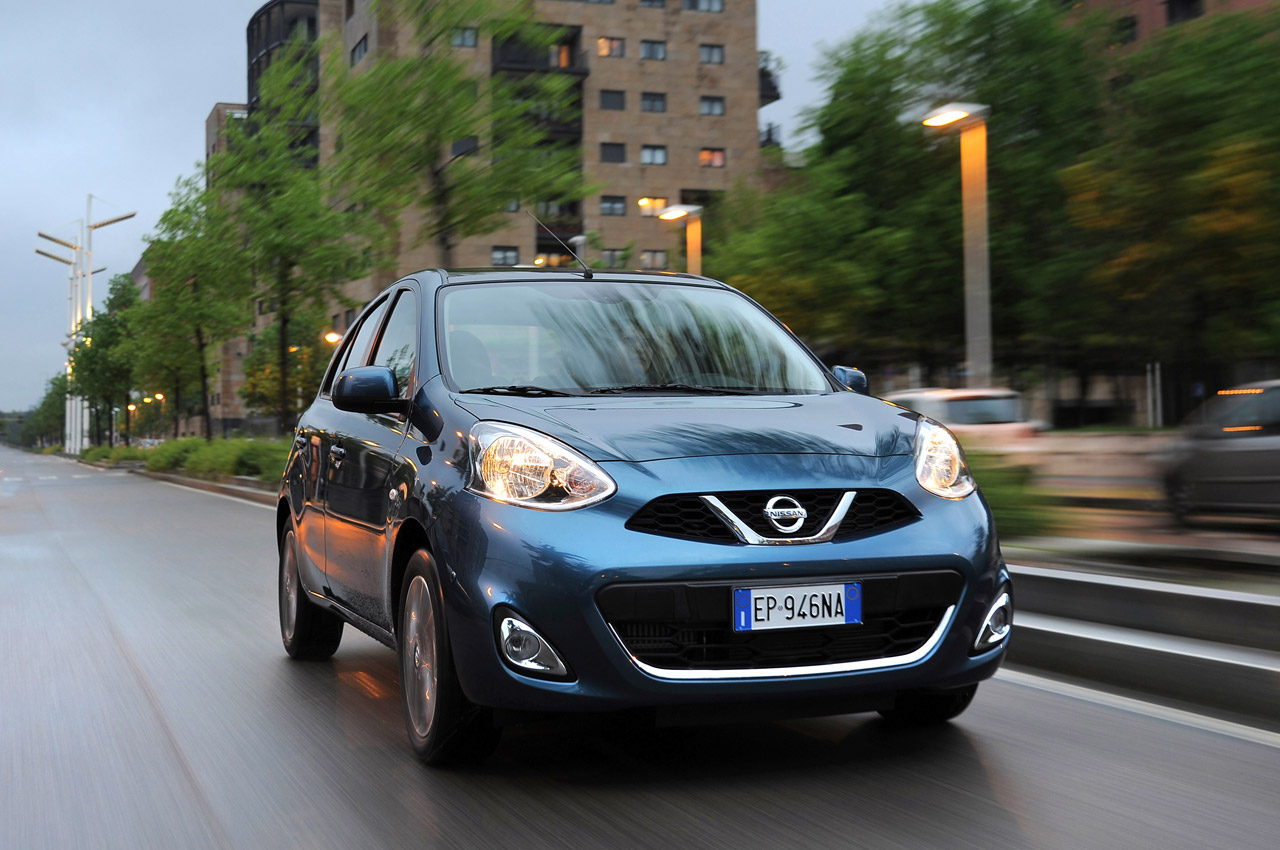
  • Nissan launches facelifted Micra and cheaper variant called Active

    Nissan launches facelifted Micra and cheaper variant called Active

    The facelifted Nissan Micra has been launched in India, and it now comes with the option of a CVT to rid you of any  gear-shifting troubles you may have. For those of you who aren’t aware, a CVT or a continuously variable transmission can shift steplessly through an infinite number of effective gear ratios between specified minimum and maximum values. This rids the car of any sudden gearshifts and eliminates jerky changes which may occur in standard auto gearboxes.

    Anyway, back to Nissan, who will also be offering a low-cost variant of the Micra called the Micra Active henceforth. Prices for the Micra Active start at Rs 3.5 lakh (ex-showroom, Delhi).

    The new Micra has an updated front end with new headlamps, a larger grille and a deeper chin putting forth an aggressive face for the hatchback. The bonnet and front fenders have been played with as well, to accommodate the new headlamps. The overall length of the car is up by 45mm as compared to its predecessor. At the rear, there are LED tail-lamps, a new rear bumper and a plastic add-on for the tail gate lip. The new Micra also gets new alloy wheels.

    Micra

    Step inside and you’ll find new reshaped seats, to provide better support. The centre console is glossy black and plenty of silver highlights catch one’s eyes on the dash and doorpads. Keyless entry and go, climate control, Bluetooth connectivity, USB and aux-in ports and a reversing camera have been added to the features list.

    The CVT ’box is available only with the 1.2-litre petrol engine. The carmaker claims that the new gearbox is very fuel efficient (19.34kpl) and improves upon the standard five-speed manual’s economy (18.44kpl). The sound insulation has also been improved and the suspension has been tweaked. The 1.5-litre diesel delivers 23.08kpl (all fuel economy figures are ARAI claimed).

    Micra

    The 2013 Micra Diesel can be ordered in four trims, but the petrol is available in only three and the CVT ‘box option can be ordered only with the XV petrol variant.

    It’s younger brother, the Micra Active is powered by a 1.2-litre petrol motor which  provides 19.49kpl (ARAI claimed). Three variants are on offer, the XE, XL and XL (Safety). Dual airbags, central locking and EBD, among other features make it onto the car.


    2013 Nissan Micra Prices (Ex-showroom, Delhi)

    Diesel

    XL: Rs 5.9L
    XL (Option): Rs 6.43L
    XV: Rs 6.9L
    XV Premium Rs 7.14L

    Petrol

    XL: Rs 4.79L
    XL (O): Rs 5.42L
    XV CVT (Auto): Rs 6.39L

    Nissan Micra Active Prices (Ex-showroom, Delhi)

    Petrol only

    XE: Rs 3.5L
    XL: Rs 4.01L
    XV: Rs 4.3L
    XV (Safety): Rs 4.71L

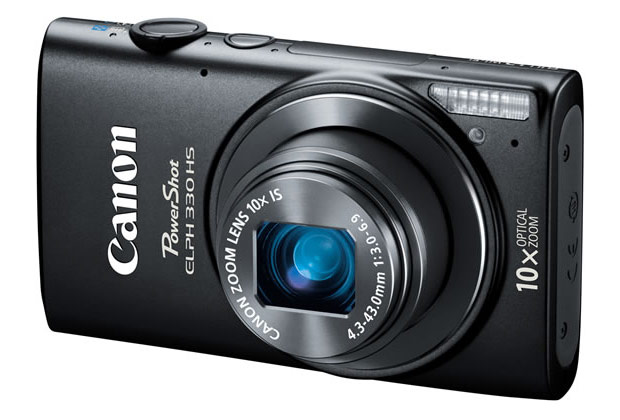
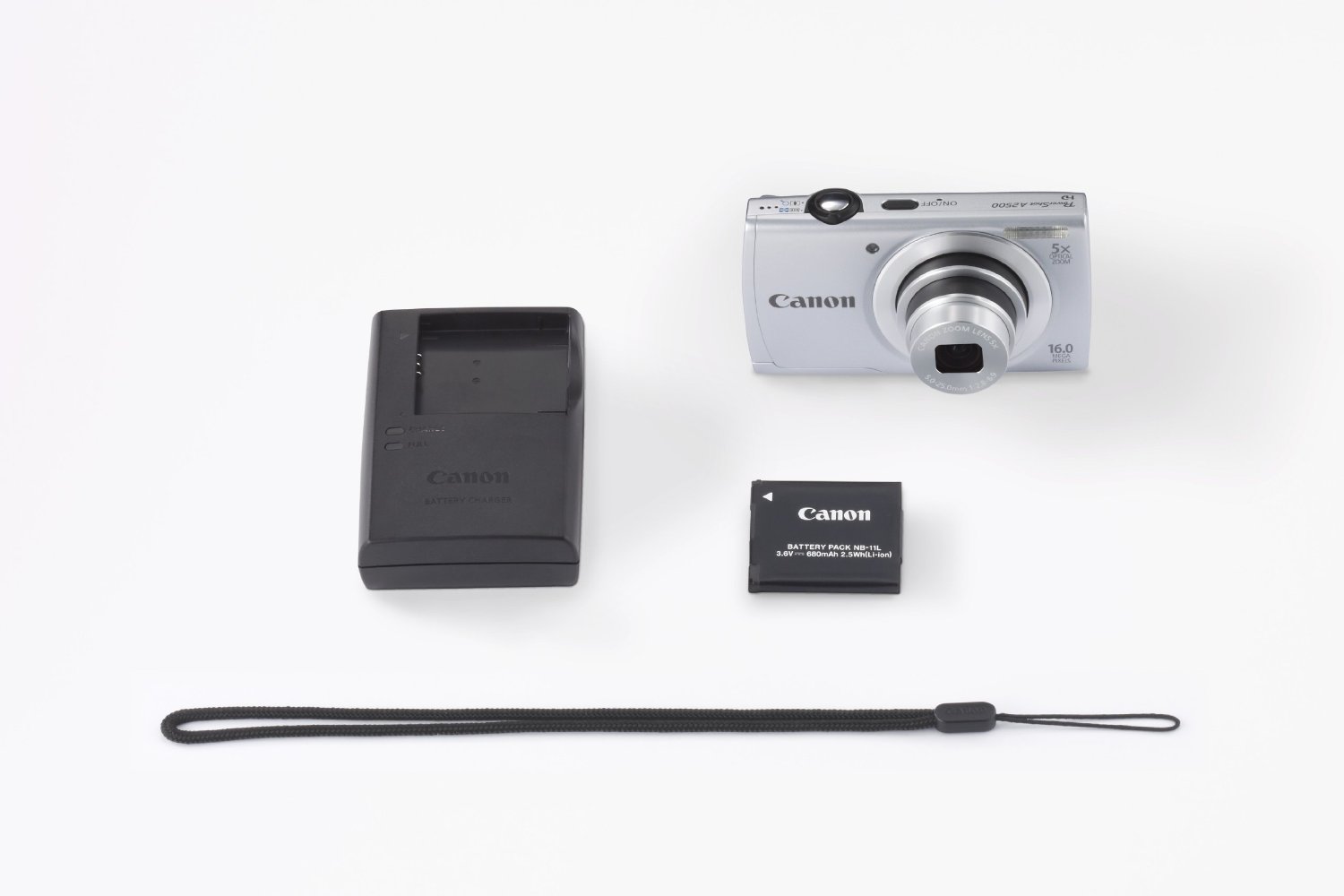
  • Canon PowerShot A2500 Review

    Canon PowerShot A2500 Review

    Canon has revamped one of its entry-level pocket camera, the PowerShot A2300, with the PowerShot A2500.

    The Canon Powershot A2500 employs the same 16-megapixel 1/2.3-inch CCD sensor, the same DiGiC 4 processor, the same 5x optical zoom lens that delivers from 28mm wide angle (max aperture of f/2.8) to 140mm equivalent telephoto (max aperture of f/6.9) range, the same 2.7-inch, 230,000-dot LCD display and the same basic 720p HD video capabilities.

    Build Quality And Design

    At 125 gram weight, Canon PowerShot A2500 is among the lightest cameras around. It is solidly built and has a silver accent towards the front of the camera that separates it from its predecessor. 

    Canon PowerShot A2500

    At the back there is the LCD monitor with a control panel comprising of a 5-way D-pad and buttons for video recording, help, playback and menu.

    Canon PowerShot A2500

    Space for battery and SD card are at the bottom while USB port is located to the right. It uses a li-ion battery pack and the PowerShot A2500 also features Canon’s new ECO Mode which saves power so you can take more pictures on a single charge.

    Performance

    The images we shot from the Canon PowerShot A2500 seemed a little lackluster. The colour reproduction felt slightly unnatural and the images weren’t sharp enough. Outdoor images were decent though. Indoor images however, were not up to the mark. You can check out the sample images and video in our video review below.

    The Canon PowerShot A2500 employs Canon’s Smart AUTO Mode, which recognizes up to 32 different shooting situations and selects the camera settings for no-fuss picture taking. Creative filters available include Fisheye Effect, Toy Camera Effect and Monochrome.

    As the Canon PowerShot A2500 does not feature Optical Image Stabilization, videos were quite shaky and low light imaging as a result was unsatisfactory. There’s digital image stabilization, but that typically works by raising ISO sensitivity and noise levels to increase your shutter speed and reduce blur – not necessarily what most shooters are looking for.

    It records 720p HD video at twenty five frames per second and 640 x 480 VGA video at 30 frames per second. It picked up background audio quite nicely though, and the 5x zoom came in handy.

    Conclusion

    if you’re not picky about your photos, take mostly outside shots and primarily share them with friends and family online, then the price of the Canon PowerShot A2500 at Rs 5,500 is just right.

    [youtube id=”k27CocTgPSE” width=”100%” height=”300px”]
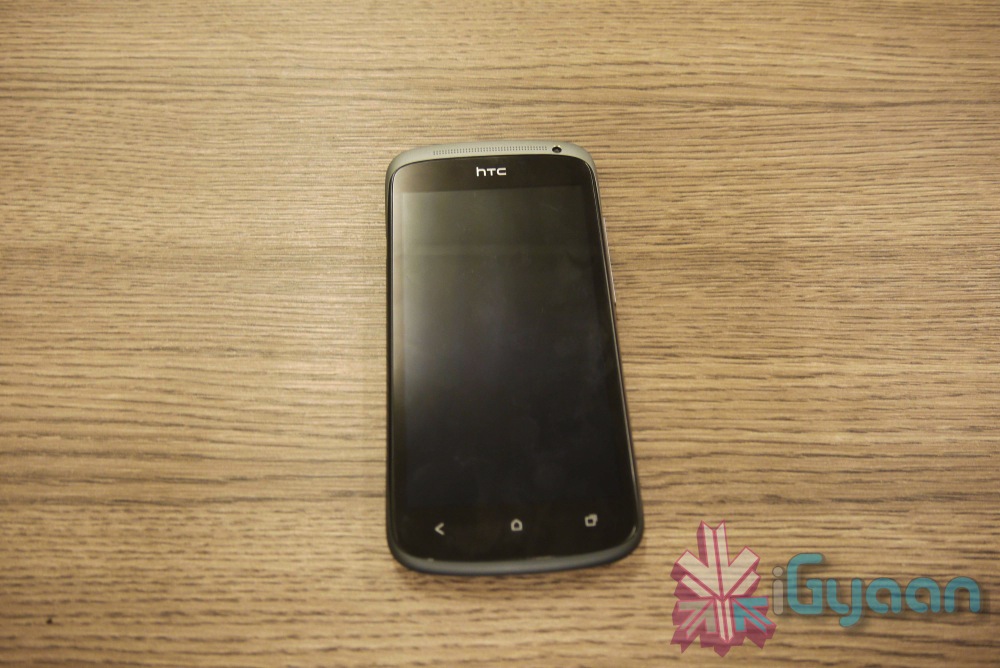
  • HTC One S Will Not Get Android 4.2 Or Sense 5 Update

    HTC One S Will Not Get Android 4.2 Or Sense 5 Update

    The lightweight aluminum construction, distinct design, blazing performance and somewhat affordable price combined to make a mid-range device that was in many ways more desirable and accessible than the One X, the HTC One S didn’t reach the level of success that HTC expected.

    Both the HTC One S and One X began their lives with the same Android 4.0.3 software running Sense 4.0. But, as flagship products tend to, the One X got more love from the Taiwanese manufacturer, while the middle child played second fiddle, receiving sporadic updates that finally petered out.

    While the HTC One S was updated to Android 4.1.2 Jelly Bean beginning in February, the company has decided that it will not be updated to Android 4.2 like its One X counterpart.

    We can confirm that the HTC One S will not receive further Android OS updates and will remain on the current version of Android and HTC Sense.  We realize this news will be met with disappointment by some, but our customers should feel confident that we have designed the HTC One S to be optimized with our amazing camera and audio experiences.

    Yes, HTC, this will be met with disappointment. There is no reason whatsoever the One S should be cast aside while the One X should continue to thrive.

    Not only is the HTC One S still a solid handset in its own right, but we can also imagine that the device will receive further updates going forward via custom ROMs from the developer community. After all, if the HTC G1 can rock Android 4.0 Ice Cream Sandwich in any facet, you can bet that the HTC One S will be in good hands.

    Any HTC One S owners looking to flash a custom ROM going forward or are you happy with it as it is?

  • Unannounced Motorola Droid Ultra Shows Up On Its Website

    Unannounced Motorola Droid Ultra Shows Up On Its Website

    We know something is happening at Motorola, Google’s beleaguered handset manufacturer it purchased in 2011 for $12.5 billion. First, we got confirmation of the rumoured X Phone, Motorola’s foray into next-generation smartphone. Next we saw the redesigned, simplified and be-Googled  Motorola logo.

    And now we’re seeing hints of a device called the Motorola Droid Ultra, leaked briefly on Motorola’s own website. The page provides almost everything you could want to know about the phone, except what it looks like, as the main image is sadly missing. The device is expected to be fairly mid-range, with a 1.5Ghz dual-core processor, a 4.3-inch qHD display, 8GB of internal storage, an 8MP camera and  2000mAh battery.

    motorola droid ultra

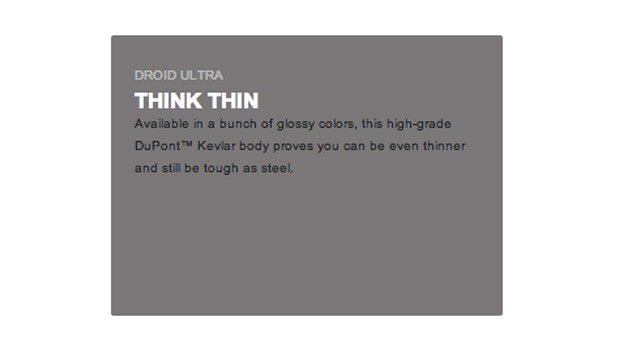
    The landing page paints the Motorola Droid Ultra as “available in a bunch of glossy colours,” with a “high-grade DuPont Kevlar body” that’s “even thinner and…tough as steel.” At 122.5 x 60.9 x 8.3 mm, the Droid Ultra should be a very compact device, seemingly a follow-up to the RAZR M that was released last year.

    Unfortunately, there is little to differentiate the Motorola Droid Ultra from the rest of the market at this point, so unless Motorola pulls something drastic from its hat, this will be just another mid-range Android.

    No release date is mentioned, but an official announcement can’t be far away, seeing as the webpage is almost completely ready to go.

    [Via]

  • 2013 Audi RS5 launched in India, priced at Rs. 96.81 lakh

    2013 Audi RS5 launched in India, priced at Rs. 96.81 lakh

    Audi has launched the 2013 RS5 coupe in India at a price of Rs. 96.81 lakh (ex-showroom, Delhi). The high performance version of the A5 sedan, was unveiled at the 2012 Geneva Motor Show and will replace the current RS5, which has been on sale in the Indian market since 2011. The 2013 model was unveiled by Aditya Patel, Audi racecar driver in the presence of Michael Perschke, head of Audi India in Mumbai. 

    The 2013 RS5 gets its power from the same 4.2-litre V8 motor mated to a 7-speed S-Tronic gearbox, which puts out 444bhp at 8250rpm and 43.82kgm of torque at 4000-6000rpm. It goes from a standstill to 100 kmph in 4.5 seconds. Power is sent to all wheels courtesy of Audi’s legendary ‘quattro’ AWD system.

    The new RS5 has performance upgrades in the form of upgraded dampers and springs in the front suspension, as well as improved throttle response. It rides lower than before helping in reduction of body roll and features a new electric power-steering (EPS) setup which replaces the engine-driven hydraulic assist. Audi has also fitted the RS 5 with its recuperation system fuel saving technologies.

    Cosmetically, the 2013 RS5  puts on a revised front grille, modified bonnet styling and new Daytime Running Lights (DRLs) which are now typical of an Audi. A retractable rear spoiler exclusive to this model and a blacked-out trapezoidal grille with matching lower intakes are present as well, apart from updated LED tail-lamps and new bumpers. The interiors include Bluetooth connectivity for the stereo and minor cosmetic updates. Red cam covers and a carbon-fibre intake manifold find their way onto the new RS5 as well.

    In terms of optional equipment, the RS5 can be equipped with heated and cooled seats, piano black trim, 20-inch graphite-coloured wheels, a sport exhaust system with black finishers, a Bang and Olufsen sound system, a sports suspension with dynamic ride control and variable damping and Audi’s Drive Select driving dynamic system.

    The Audi RS5 will be sold as a CBU costing Rs 95.28 lakh (ex-showroom, Maharashtra) and Rs. 96.81 lakh (ex-showroom, Delhi).

  • Samsung Galaxy Mega 5.8 Review – iGyaan

    Samsung Galaxy Mega 5.8 Review – iGyaan

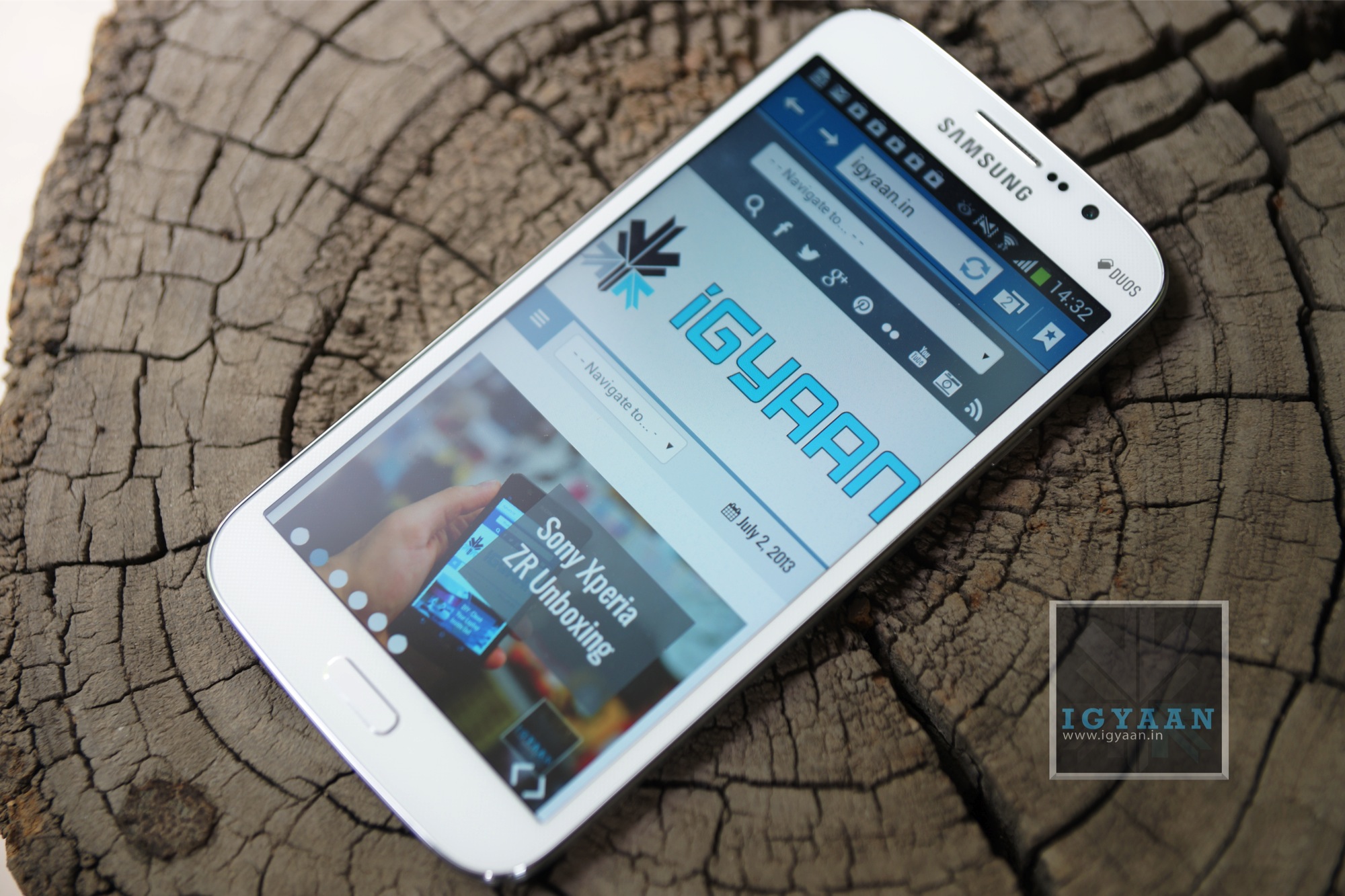
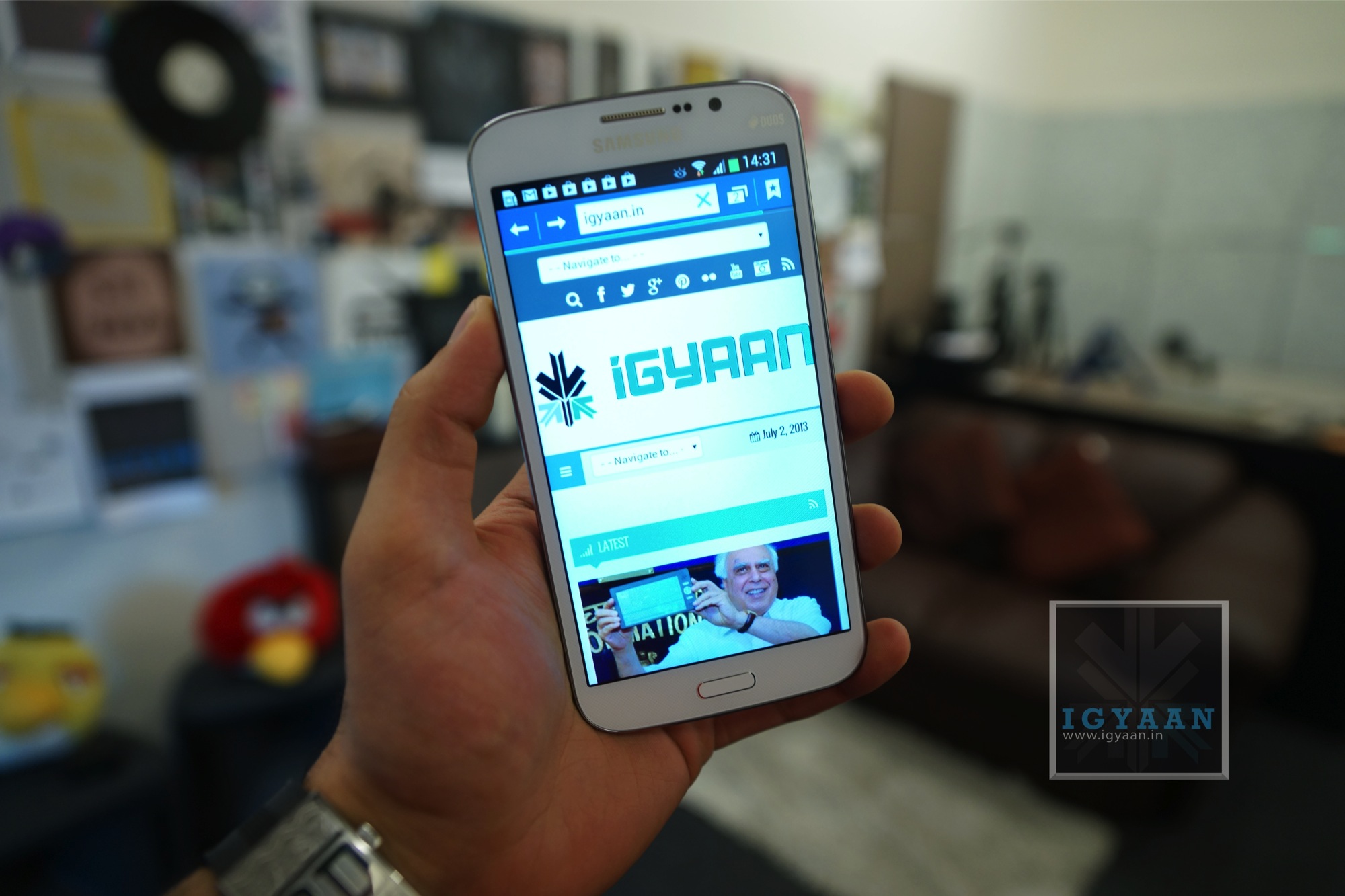
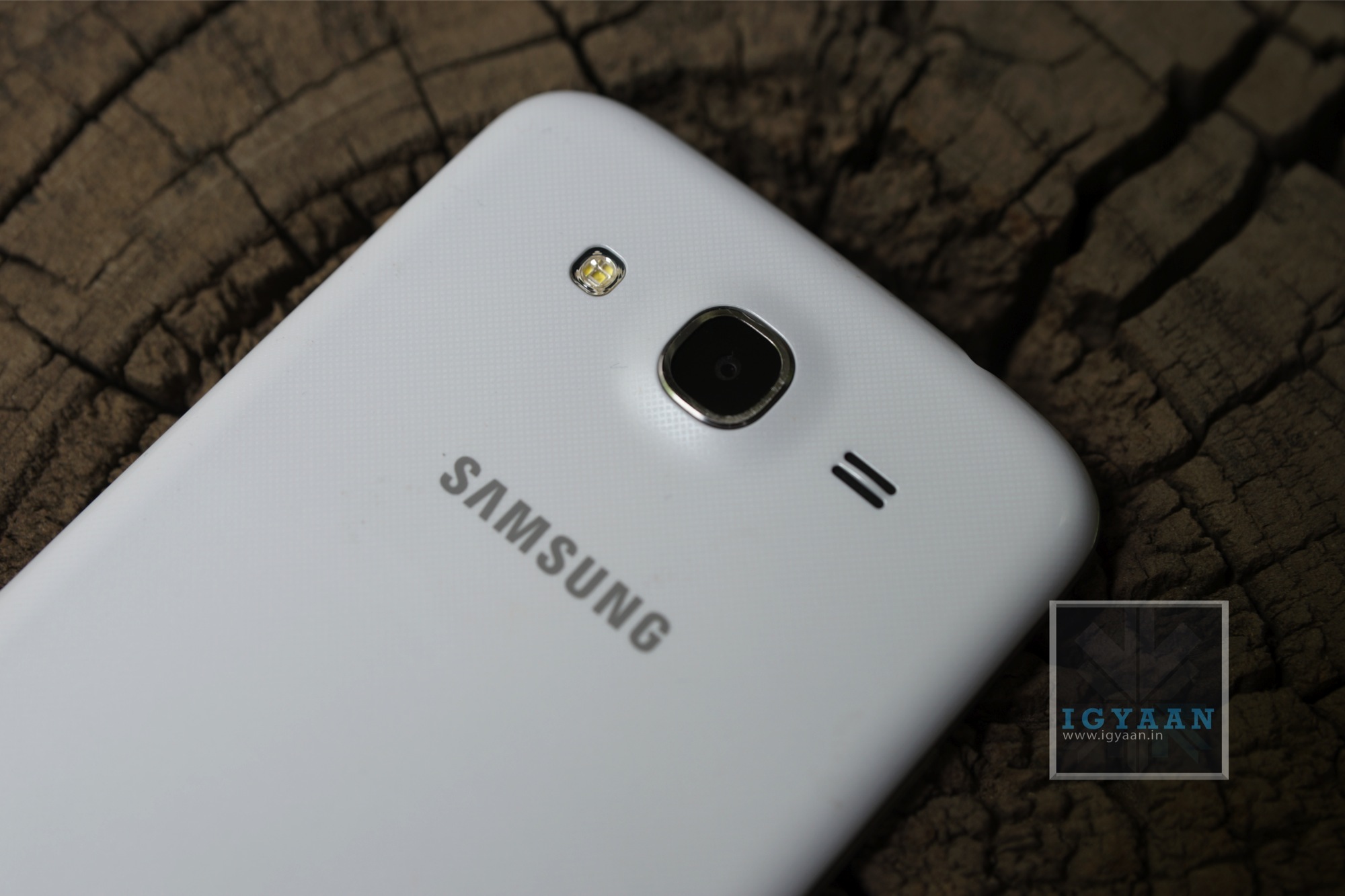
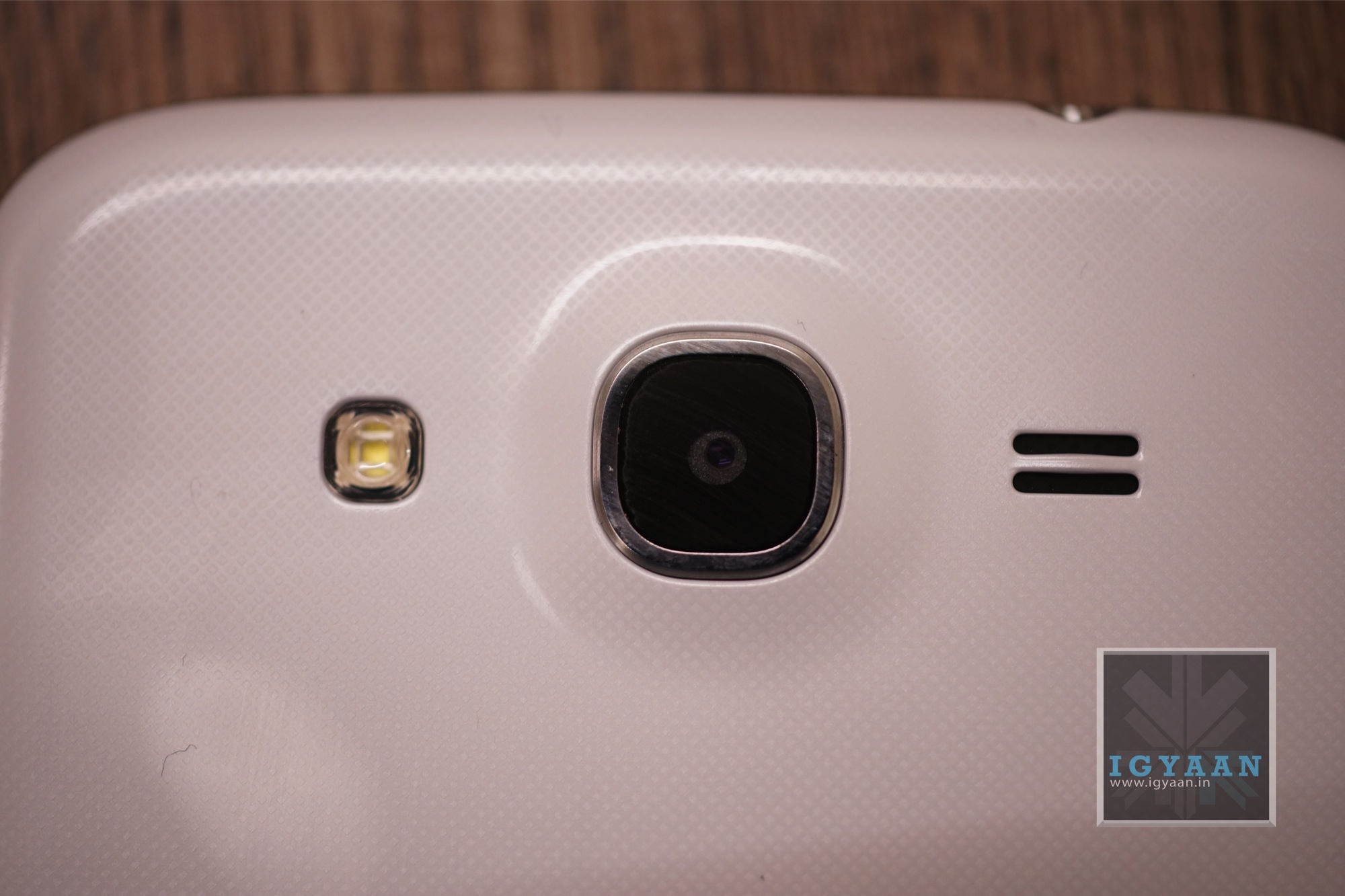
    Samsung in the recent times has bombarded the market with phones of all sizes, but mostly of the same shape. The Galaxy Mega 5.8 is a blown up Galaxy Grand and it appears to behave in a similar manner. Lets see if the Galaxy Mega 5.8 is really the value for money smartphone that Samsung claims it to be. 

    Samsung Galaxy Mega 5.8 7

    Build Quality and Design

    [pullquote_left]It’s the little details that are vital. Little things make big things happen.[/pullquote_left]

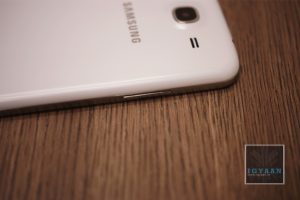
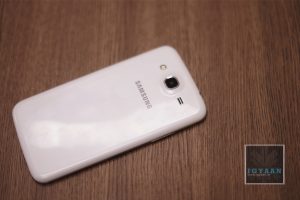
    The Galaxy Mega will remind you of every other Samsung phone till date, maybe even many other Samsung phones to come. Built with the same plastic as seen on many-a-Samsung device, the Galaxy Grand fails to impress. First impression of the Galaxy Mega 5.8 will show you either a larger S4, a Galaxy Grand, or a slightly different Note 2, so for innovative new design points; Samsung gets a big zero.

    The problem with the design is that despite being old, it still works. People still love the shape and the handleability of the phone, and the first look creates a instant connect with the brand, making this design an identifier, or even a statement for some.

    [youtube id=”7AeSLEntqUQ” width=”100%” height=”300px”]
    Hardware

    Samsung has truly disappointed us with the hardware on the Galaxy Mega 5.8, not that it is really old, considering that the Galaxy Grand was launched in February 2013. Today a few months is as good as a year, even more if you compare it to 2 years ago. The Broadcom chipset still holds its ground and the benchmark performance is not all that bad, the CPU is Dual-core clocked at 1.4 GHz. The Galaxy Mega adds a bit of RAM to reach the 1.5 GB mark and retains the 8 GB capacity. The cameras are also a stark reminder with the 8 MP main and the 1.9 MP secondary. What is different is the large 5.8 inch capacitive touch screen, with its 540 x 960 px resolution gives a bare 190 ppi, which on parer sounds really low for today. The display however is great and we will explain that in the next segment. 

    The Battery on the Mega 5.8 is a 2600 mAh cell and for some reason it seems Samsung has managed to manage it quite well, there is a significant improvement in battery life.

     [youtube id=”On9v3b1rdFs” width=”100%” height=”300px”]
     

    Samsung Galaxy Mega 5.8 6

    Display and Multimedia

    The Galaxy Mega 5.8 as the name suggests has a Mega display, a 5.8 inch smartphone is not really a divine though. In the early days the idea was to make phones smaller and more compact. Today as smartphones begin to replace basic forms of computing screens are getting bigger and bigger. The Galaxy Mega’s 5.8 inch display is still smaller than its 6.3 inch sibling, but is quite an interesting display. For one, it does not appear to be much larger than the Note 2 thanks to the design strategy employed by Samsung. The display is also bright and crisp despite its low ppi. This may be because of sheer size of the screen, you tend to hold it further than you would a traditional smartphone, say 3.5-4.5 inch.  The screen however uses what Samsung calls a “display enhancement engine” that reduces the noise and pixellation on the display as it does in their televisions, this seems to work well on the Mega 5.8.

    The speakerphone on the Mega is fantastic, it is really loud, but not in a painfully distorted way, it sounds good through videos, music and even games. It does not however compete with HTC One’s Boomsound which has a more direct sound delivery approach. The sheer size of the screen makes consuming media enjoyable and almost stress free, and the chipset is more than capable of handling HD video playback and streaming. 

     [youtube id=”YldZpBeQwnw” width=”100%” height=”300px”]

     

    Samsung Galaxy Mega 5.8 4

    Camera and Interface

    The camera app on the Samsung Galaxy Mega 5.8 has been brought down from the Galaxy S4 which is initially inspired from the Galaxy Camera. With multiple shooting modes the camera app gives a lot of versatility to the user. Interesting shooting modes like “Best Photo”, “Best Face” and “Sound and Shot” worked really well on the S4, and they work just as great on the Galaxy Mega 5.8 .

    Video is captured at Full HD and employs anti-shake if you need it from the main UI, the front camera however- captures 720p video. You can also add some effects to your pictures in the Auto Mode. 

    The Samsung Galaxy Mega 5.8 runs on Android 4.2.2 and slaps on a large lump of their popular Touchwiz UI. The interface brings many elements to make this device larger than life. For starters you have smart features, Smart Stay : Keeps your display on as long as you stare at the device.  You do have motion gestures ; Screenshots by a palm swipe and muting the device by simply moving your hand on top of the phone. 

    [pullquote_left]E.T. fingers are a must[/pullquote_left]

    The old elements of the TouchWiz UI are intact too, with features like Direct call (lift the phone from within a message to call), Smart Alert, tilting to zoom into pictures or gallery. Pan device to move the Icons or browse a zoomed in Image and even Flipping the device to Mute or pause.

    The One handed use feature borrowed from the Galaxy Note 2, makes it slightly easier to dial on the Galaxy Mega 5.8, and also use the calculator. What we find funnily missing however is this feature in the main keyboard. You simply cannot use the keyboard with the same hand you are holding the phone with, unless you have gigantic E.T. fingers.

    The Touchwiz UI adds more to the experience, a nice notification panel with scrollable toggles, a task manger and even “S-Voice” (Samsung’s long ignored voice assistant). Samsung often ignores required features in these phones, for example a phone of this size would do wonderfully well as a remote, but since the hardware is absent there is really no point.

    Phone, Networks and Battery

    The Samsung Galaxy Mega 5.8 is a dual sim smartphone (micro Sim), while the technology to have two sim cards running in the same device may exist, Samsung chooses to not employ it in their latest iteration of the big phone. Phone call handling is easy and simple, and once you get the hang of it you become a master of the device. 

    The network is solid and we faced almost zero to none dropped calls. We saw a frequent full signal bar, whether in software or in reality the network performance on the Galaxy Mega 5.8 is excellent. Voice is clear through and through, and while both ends of the phone call get clear and crisp audio streams. The speakerphone also keeps up with its name and is sufficiently loud for hands free voice calls. 

    Battery life is great on the Galaxy Mega and despite the fact that it has a mere 200 mAh increase from the Galaxy Grand’s 2400 mAh, and taking into consideration the increase in display size, the battery performance is far superior. 

      • Talk time : 5.5+ hours
      • Internet : 6 hours
      • Music : 10 Hours +
      • Video :  4+ Hours
      • Average battery life : 1 Day +


    Samsung Galaxy Mega 5.8 Unboxing 10

    Conclusion

    The Samsung Galaxy Mega 5.8 is no magical innovation and does not really create a wow statement, except probably “Wow its Big!”, which actually may be good enough for a lot of people. The blown up version of the Galaxy Grand actually improves on many things, including a larger yet better display, an improved battery life and a great camera. The price difference however seems a bit much for these. 

    The Galaxy Mega 5.8 is a phone that might as well be the next big thing, but, the problem here may be that its just too big to be an everyday phone. All size judgements aside Samsung has really managed to increase their portfolio across different price segments, but here a Galaxy S3 for Rs. 27,000 seems a lot more promising and portable. The Galaxy Mega 5.8 also does not have multi-window a feature which now comes out of the box on the Galaxy S3.


    Buy Now 


iGyaan Network
Privacy Overview

This website uses cookies so that we can provide you with the best user experience possible. Cookie information is stored in your browser and performs functions such as recognising you when you return to our website and helping our team to understand which sections of the website you find most interesting and useful.