Tag: android 9

  • What Is Android Fragmentation, And Will Google Be Ever Able To Fix It?

    What Is Android Fragmentation, And Will Google Be Ever Able To Fix It?

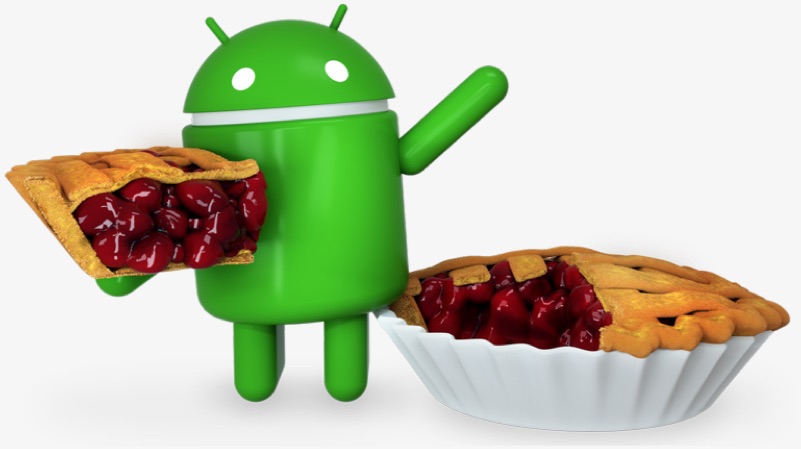
    Google released the latest generation of its Operating System, Android 9 Pie back in August last year for Pixel smartphones. The update marked the ninth major release of the software by the company. But, despite the latest generation of Android out almost seven months ago, many of the modern devices are still stuck at one or more generations older software. What’s even more surprising is that some OEMs are launching new smartphones with old software on purpose.
    This disparity in Android devices makes the mind think about what problems could there be that restrict some manufacturers into providing older versions of the software. The alarming number of different available Android versions in the market is called Android Fragmentation. This inequality of software versions has plagued the Android Platform since its inception. But is there a way for Google to fix it?

    The Current State Of Android Fragmentation
    Google releases a report every year in October highlighting the distribution of different software versions. The data, though a few months old, gives an insight on how things are currently on Android’s side. This is what Google found in their testing:

    Version Name Release Year

    Distribution

    (in %)

    2.3.3 

    2.3.7

    Gingerbread 2010 0.2%

    4.0.3 

    4.0.4

    Ice Cream Sandwich 2011 0.3%

    4.1

    4.2

    4.3

    Jellybean 2012 3.0%
    4.4 KitKat 2013 7.6%

    5.0

    5.1

    Lollipop 2014 17.9%
    6.0 Marshmallow 2015 21.3%

    7.0

    7.1

    Nougat 2016 28.2%

    8.0

    8.1

    Oreo 2017 21.5%


    By looking at the above table, there is no mention of the latest Android 9 Pie, because, at the time of this report in October last year, it was still below 0.1%. The numbers are expected to be significantly higher since then. Despite being released for more than two months, the software still couldn’t make it to the list. The most used version was Android 7 Nougat, which had more than 28% of users. This shows how manufacturers refrain from providing any updates to the devices.

    Besides not providing new features with the lack of Android updates, they also pose a grave security threat. Every month, Google releases security patches for Android, but not every smartphone gets it. But it’s not the company’s fault, because updating a smartphone with the latest firmware is the OEM’s responsibility.

    The Reason For Fragmentation On Android 
    Android Pie Android 9 Google

    The reason that the manufacturers continue to provide older software with newer devices or refuse to update them faster than normal; is that most of them have to optimise Android according to the company’s custom skins. These can range from a lightly customised one, like Oneplus’ OxygenOS or a heavily customised take on Android, like Xiaomi’s MIUI. So the OEMs take their own sweet time to adopt the latest version and release it.

    When Google provides the manufacturers with the latest Android Platform Development Kit (PDK), they have to start developments on the software. The process includes testing out the new version with the device’s hardware. Then the version is added with manufacturer specific software features, like the aforementioned skin and is tested and certified for bugs. For some manufacturers like HMD Global, Essential and OnePlus, the process has been proven to take only a few days or weeks. 

    How Can Google Prevent It Further?
    The only way that Google can prevent Android Fragmentation from happening in future releases is by being strict with OEMs. And it’s not like the company hasn’t tried. Despite warning the manufacturers when they slacked in providing software updates, the results weren’t much different. Google then released Project Treble in 2017 with Android Oreo. This modified how the updates are delivered by bypassing the chip manufacturers’ modifications to it. It was an ambitious step and worked in theory, but unfortunately, the situation didn’t change much.
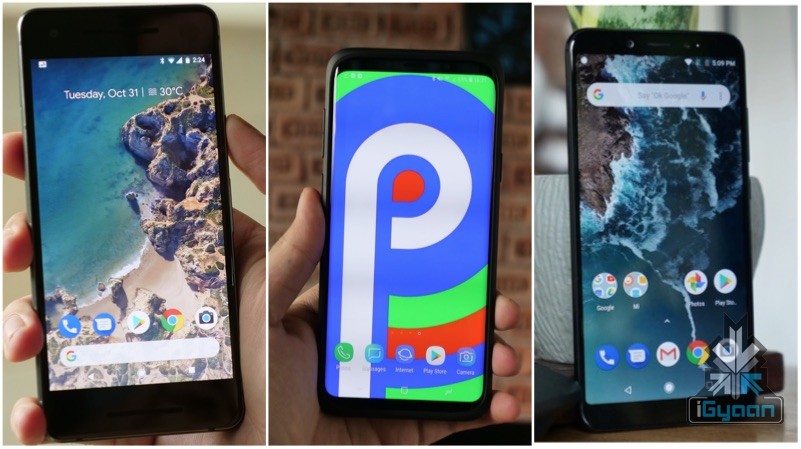
    Android Go Stock Android Android One

    Also read: Tesla Unveils Faster Third Generation Supercharger

    Google tried to fix Android Fragmentation further by signing up more OEMs to the Android Pie Beta Program. This provided them with more time to develop the software according to their own customisations and was a step in the right direction. But, if the company has to fix the problem further, it has to get more manufacturers on board and if possible, then all of them. But this sends out hope that the company is serious about the issue and it may take some more time to fix. If manufacturers are serious about the disparity in updates, the days of Android Fragmentation may be over sooner than later.
     

  • iOS 12 Now On 50% iPhones and iPads

    iOS 12 Now On 50% iPhones and iPads

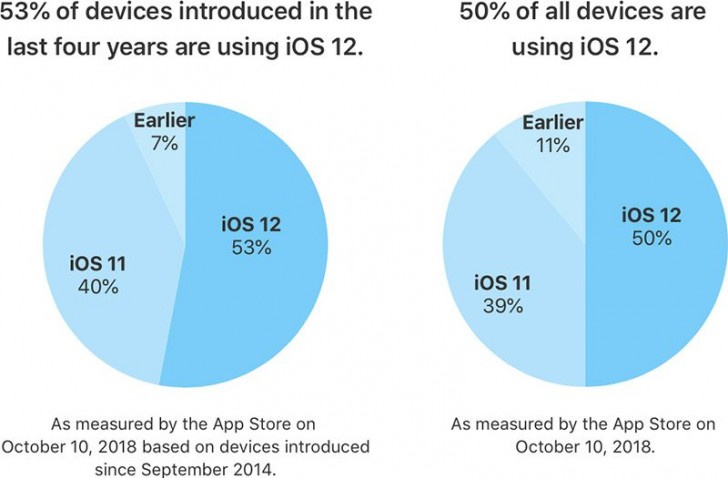
    Apple has revealed that 50% of users are now running iOS 12 on their devices. This is a comparatively good number as opposed to the iOS 11 which had seen a slow start and lesser acceptance. Apple also adds that on only counting the devices launched in the last four years, the number shoots up to 53%.

    Also Read: New Apple iPad Pro And Apple Pencil 2 Set To Launch

    While iOS 12 is running on 50% of the devices, iOS 11 takes the second place with 39% share of all the devices. This is a much faster adoption rate as compared to many of the previous versions of iOS. The ribs because the latest version offers an improvement in performance for older devices, which makes them faster than before. This is seen on the iPhone 6 Plus, for example.  After the update, apps launch upto 40% quicker and the keyboard appears over 50% faster on the iPhone 6 Plus. Along with this, animations are smoother and more responsive, along with scrolling in apps or entering the multitask view.

    iOS 12 does bring along a few minor bugs which were a topic of discussion for many. The ‘charge gate’ and ‘beauty gate’ issue was a problem but a fix was provided by the iOS 12.1 update. However, a few issues have popped up due to the update. Apparently, devices are now sending iMessages to the wrong people, cellular reception is poor and some users are not able to receive calls. Additionally users are also complaining about the lack of Bluetooth and Wi-Fi connectivity. Users are also reporting increasing battery drain with the iOS 12.1 update.

    2018 Apple iPhone new iphoneHowever, iOS 12 is being widely accepted by all its users and is available for almost all the devices released in the past few years. The Android OS on the other hand, is not doing so well in this sphere. As per last months reports, only 0.1 percent of Android Devices are running the latest Android 9 Pie. This means that over 99% of Android devices do not run the latest version of the OS. Only 19.2 percent of the devices are running Android Oreo. The slow spread of Android maybe due to the large number of devices present in the market. Additionally, manufactures continue to launch smartphones that are not running the latest variant of Android.

  • Xiaomi Mi 8 Gets Android 9

    Xiaomi Mi 8 Gets Android 9

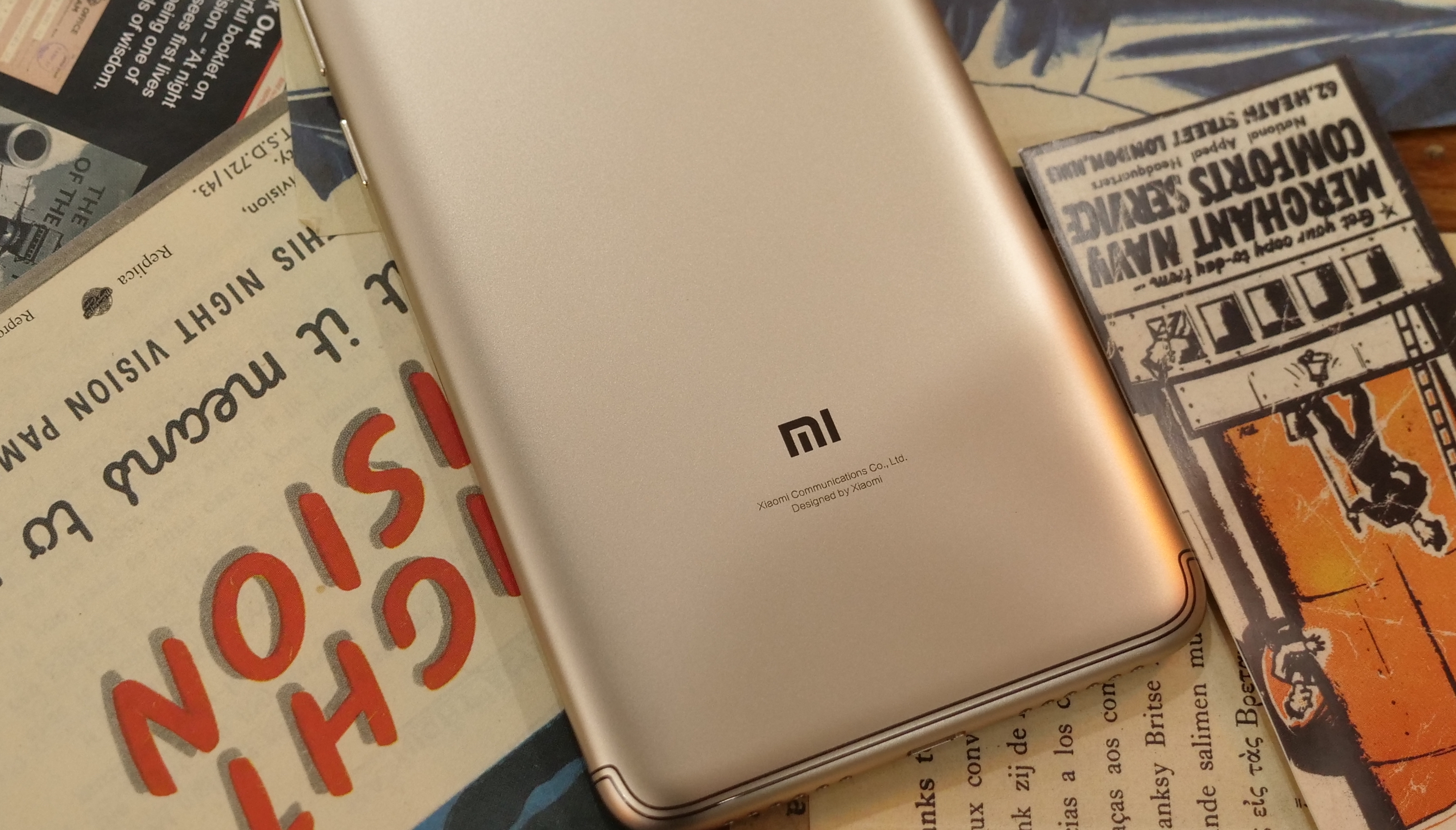
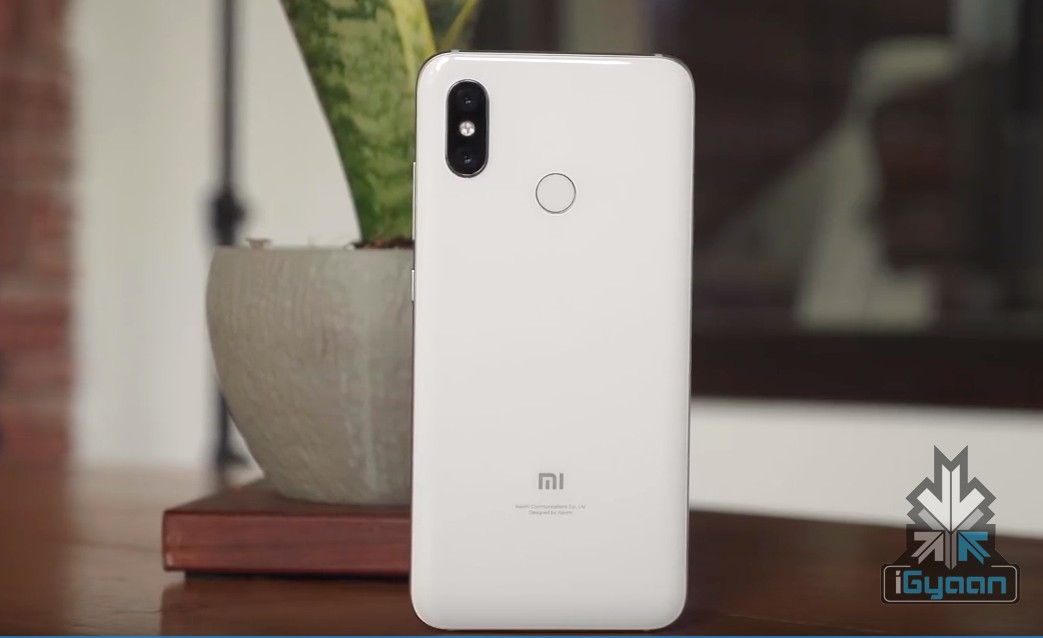
    The Xiaomi Mi 8 has received the much awaited Android 9 Pie based MIUI 10 as an insider beta in China. The MIUI 10 was released way back in May 2018 in China and was released globally in July.

    Xiaomi Mi 8 Android 9 MIUI 10

    The MIUI 10 packs a lot of new features such as full screen gestures, optimised performance of the system, new natural sounds. On 6th September, Xiaomi brought the latest version of Android to its users. The Mi 8 received the Android Pie update on the Mi 8 insider beta.

    Also Read: Google Has Announced The Android 9 Pie Go Edition

    The China version of the ROM can be installed on to your Mi 8 devices. This version, however does not have google play services and only supports Mandarin and English. The update can be found along with the instructions to download it on this website.

    More languages and additional google apps will be available as soon as the global release of the ROM rolls out.

  • It’s Official : Android 9 Is Android Pie : Top 10 Features

    It’s Official : Android 9 Is Android Pie : Top 10 Features

    It was in the year 2007 when Google officially introduced the Android ecosystem to the world. The first commercially available Android smartphone, the HTC Dream released in the September 2008. The smartphone was available globally from 2009 and ran on the version 1.5 (Cupcake) of the OS. Google has followed an alphabetical order of naming convention with each new version of Android. Starting with the first version, Android Cupcake (1.5) debuting with the HTC Dream in 2009, with Donut (1.6) to follow, in the same year. Android has evolved not only in terms of versions but also in terms of its varieties. The latest version of the OS available for all the smartphones is Android 8.0 (Oreo). However, Google has announced the latest version, Android 9 and its official name is Android Pie.

    Also Read: Dual SIM Apple iPhone With A 6.1-inch Display Is Launching But You Can’t Have It

    Our previous speculation was that Android 9 might roll out as the Android Pistachio. However, Google usually uses sweet treats or desserts to name its Android versions. Thus, it makes a lot more sense for Google to call Android 9, Android Pie. Although its official now, Android Pie was already available as a beta preview for many smartphones. In the list of manufacturers who signed up for the beta program, OnePlus, Nokia, and Xiaomi are some of the top brands. This time around, the new version of the OS is bringing some major changes to the way it works. 

    Features
    1. Gesture-Based Navigation

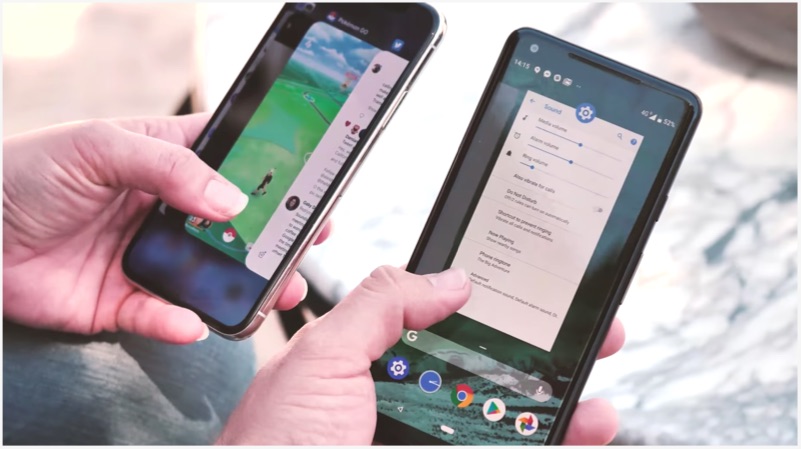
    Image: iPhone X Recent Apps VS Pixel 2 Recent Apps On Android Pie

    With Android 9, the OS has changed aesthetically, along with several major feature additions. The most noticeable of them all is the new gesture-based navigation. Although turned off by default, the gesture-based navigation system allows for a new way to interact with Android. In Android Pie, a simple swipe to the left or right will allow users to switch between the recently opened apps. While swiping up would reveal all the opened apps along with a few suggested apps with the OS thinks the user frequently opens. 

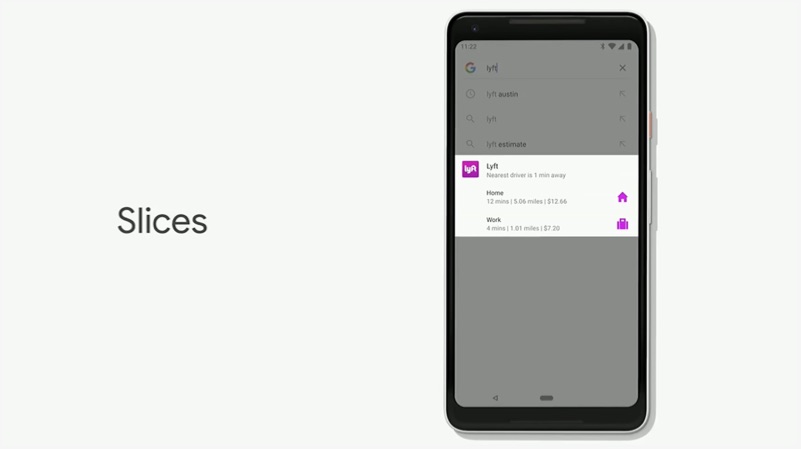
    2. App Slices

    This new Android Pie feature seems very familiar to users who have had experience with Google’s Instant Apps. Instant Apps was Google’s way of allowing users to access an app without needing to download it. However, in the case of Slices, the similar idea of Instant Apps targets a whole different set of problems. For instance, if a user searches for Hawaii on Google, then the OS might show them photos from the time when he or she visited Hawaii.

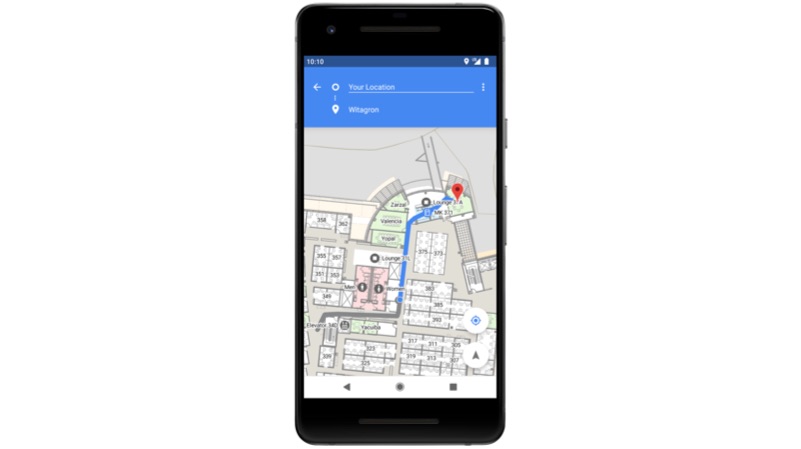
    3. Indoor User Positioning

    Android Pie Android 9 Google

    In previous Android versions, if a user sitting inside a building wants to locate himself on the map, then his or her estimated location using GPS was shown. With Android 9, Googles uses Wi-Fi for indoor positioning with an accuracy of up to 1 or 2 meters.

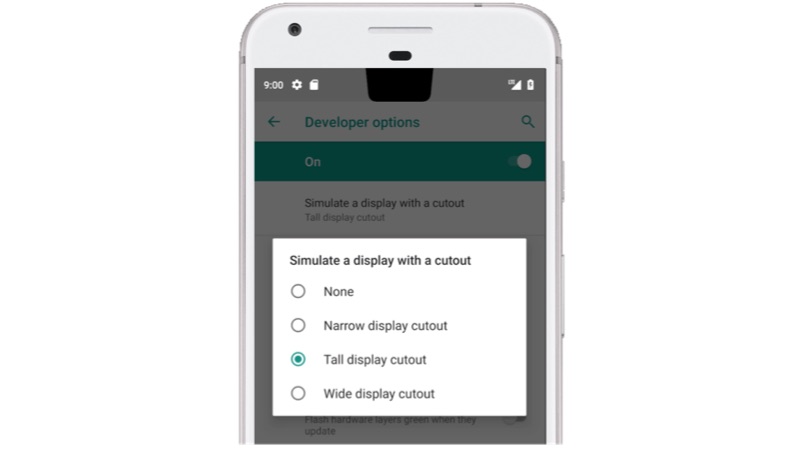
    4.  Support For Notches

    Android Pie Android 9 Google

    With Android 9, users will get content in an edge-to-edge format which also supports the presence of the notch. Android Pie will allow developers to build apps in such a way that their app supports the cut-outs on a smartphone’s display.

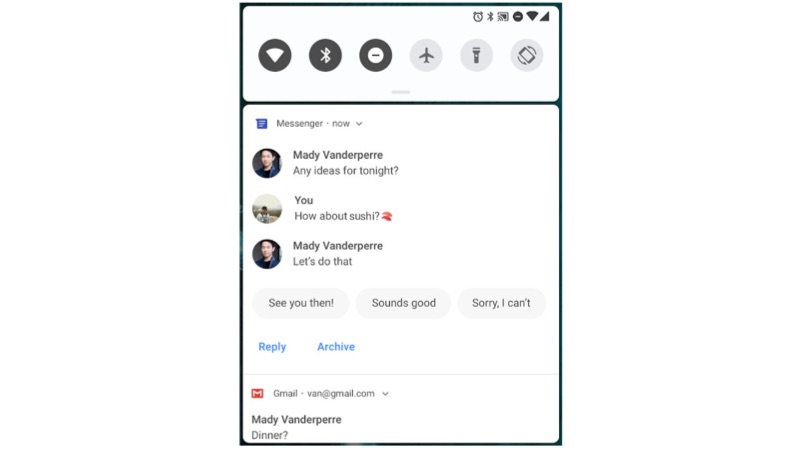
    5. Intuitive Notifications

    Android Pie Android 9 Google

    Google has been focussing on integrating AI deeply with its OS. It is with Android 9 that users see some of the AI functionalities in the foreground. For instance, on Android Pie, a predicted response will be ready for certain message notifications which you receive. You can either choose to respond to the message with the suggested text or write your own directly from the notification tray.

    6. Adaptive Battery & Adaptive Brightness

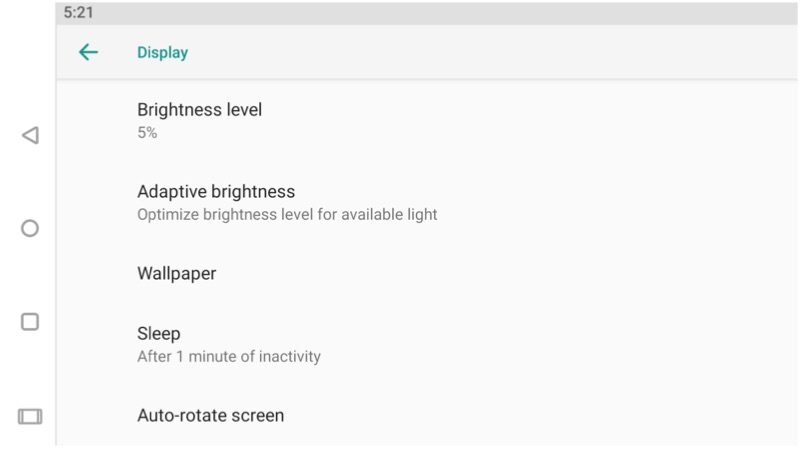
    Another AI-dependent feature which Google has introduced with Android 9 is the Adaptive Battery and Adaptive Brightness. With this feature, the OS will understand the smartphone user’s device usage behaviour and adjust the battery settings accordingly. This adjustment is also dependent on the time of the day or the user’s location.

    7. Digital Wellbeing

    Android Pie Android 9 Google

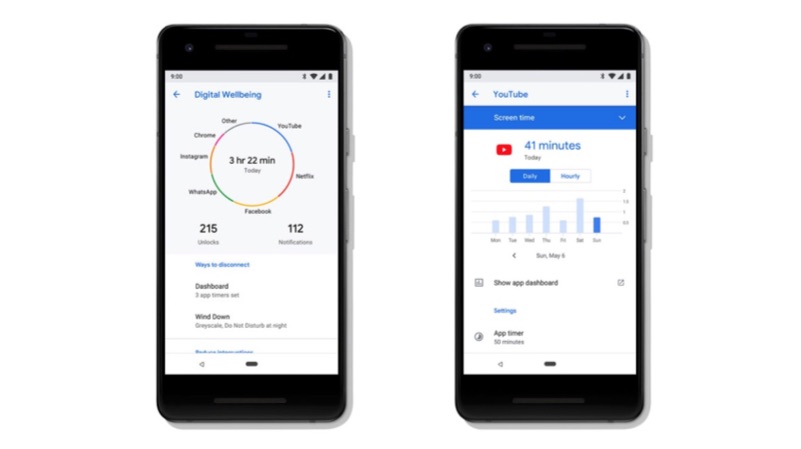
    Android Pie or Android 9 will monitor the user’s daily smartphone usage. Google is calling this feature the “Digital Wellbeing” which will provide an analytical report of the time the user has spent on the device and the number of times the device was unlocked.

    8. The Material Theme

    Along with the new feature, Google has also introduced some subtle changes to the UI with Android 9. In this version of the OS, the most noticeable changes are with the notification tray icons, which are more rounded than the ones on Android Oreo. The materialistic theme also translates to the way the recent apps are shown. One could say Android Pie takes subtle hints from Apple’s iOS.

    9. Rotation Toggle

    Android Pie Android 9 Google

    The rotation toggle is a nifty feature in the Android 9 which tackles the problem of accidental screen rotation. When you turn off auto rotation on the smartphone, an extra icon will appear in the navigation bar, which upon clicking, will change the orientation of the smartphone’s display. This is especially useful for the lazy users who like to use their smartphones in bed.

    10. A Total Of 157 New Emojis

    With a more gender-neutral approach, Android Pie will bring a total of 157 new emojis to the platform. Some of these emojis include lobsters and alpacas.

    Android P is the ninth installation of Google’s Android OS. Many devices including the OnePlus 6 have already received a Developer Preview of the Android P. This new version brings subtle UI changes like the redesigned notification panel when triggered by the volume rockers. The new update also brings better battery optimization, dark and light theme modes, and the ability to toggle between multiple wallpapers. The Android Pie update will initially be available on the Pixel devices first with other manufacturers who signed up for the Beta program to follow. It is safe to say that with every new version, the Android ecosystem keeps evolving, and the trend will continue until either Google runs out of letters in the Alphabet or Android is discontinued.

    Have something to add? Leave a Comment Below!


iGyaan Network
Privacy Overview

This website uses cookies so that we can provide you with the best user experience possible. Cookie information is stored in your browser and performs functions such as recognising you when you return to our website and helping our team to understand which sections of the website you find most interesting and useful.