Tag: car

  • Car Technology That Will Wow You In 2019

    Car Technology That Will Wow You In 2019

    Technology and Automobiles have been inseparable partners since the inception of automotive technology. In 2019, these two will be further integrated to create some amazing and very useful features that will make the driving experience much smoother.

    On Steering Fingerprint Sensor

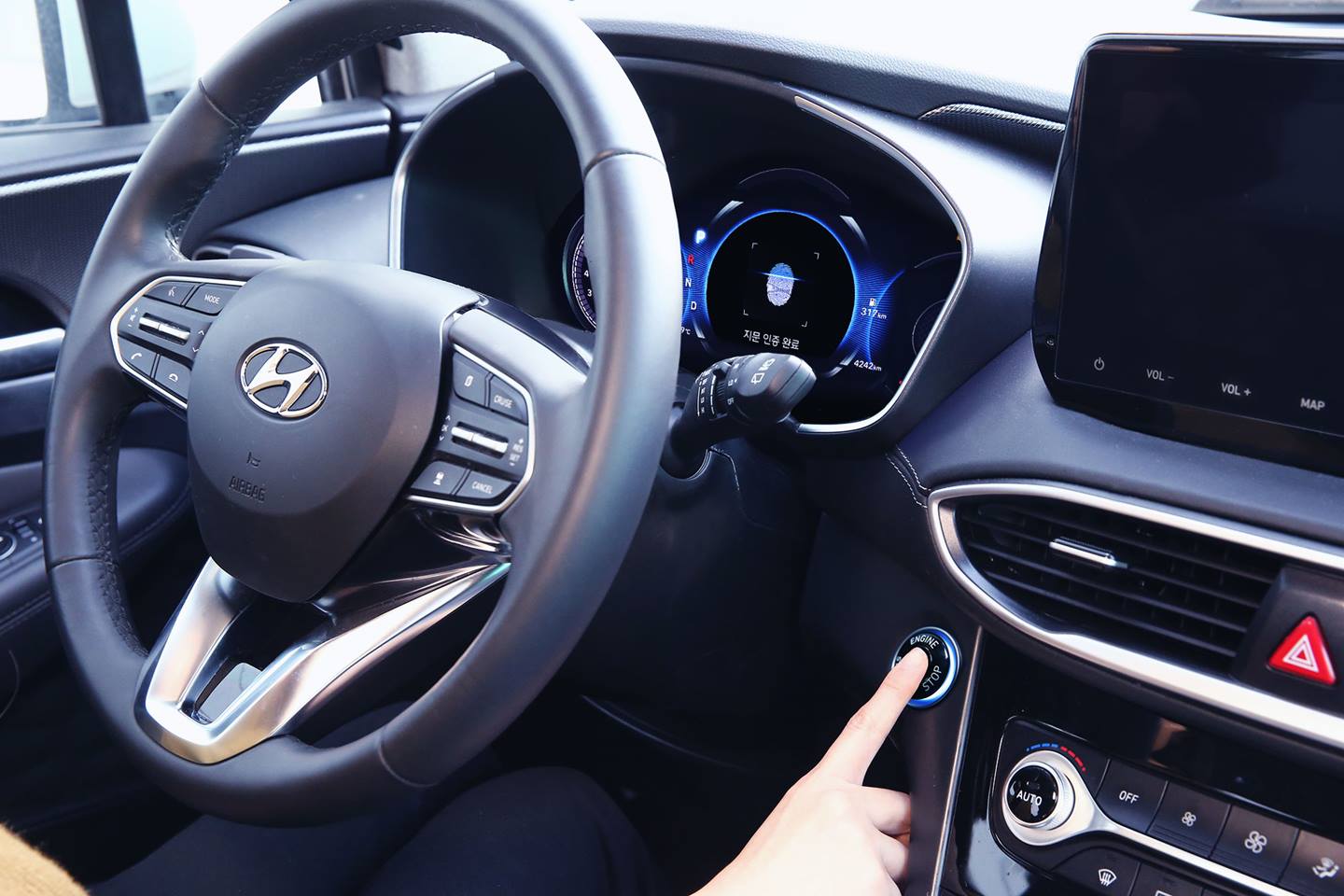
    Hyundai has announced that their SUV Santa Fe will receive a fingerprint sensor that will not only unlock their cars but also start them. There will be fingerprint scanners on the exterior door handle as well as the start button. There are immense possibilities of different use cases. A car that is driven by multiple people in a household can be configured according to the fingerprint. Everything from Air conditioner settings, music playlists to seat settings can be modified according to the user and saved in memory. It has possibilities of getting configured according to different fingerprints of different drivers. However, that is a faraway dream at the moment. Nevertheless, we would love to see some aspects of this car technology in 2019. 

    Smarter Parking Sensors

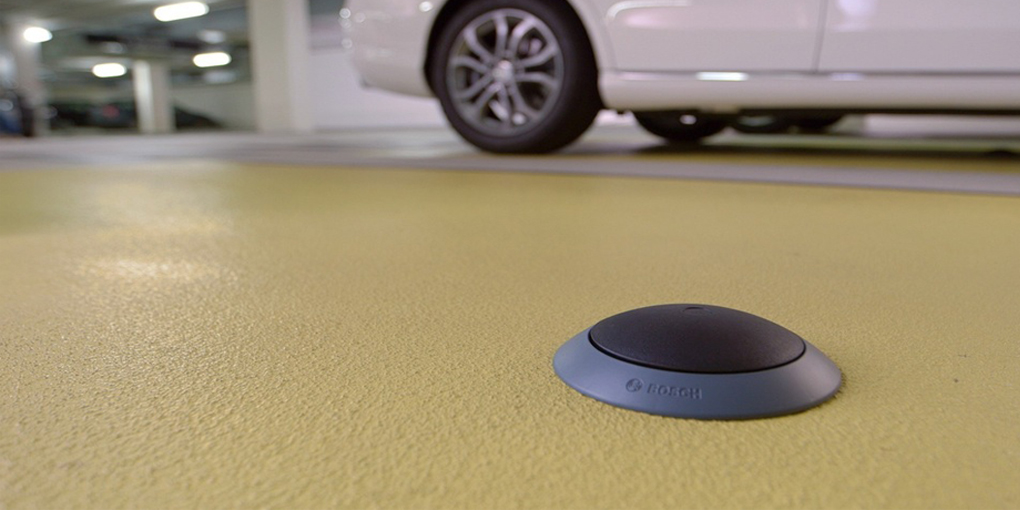
    One of the biggest problems of driving, specially in bigger and more populated cities, is parking your car. From finding a space that would fit your car to parallel parking without scratching others’ or your own car. Parking sensors will definitely become smarter in 2019. German parts supplier Bosch recently showcased a technology that let’s your car measure spaces between cars and finds your parking spot for you as you drive along. Showcased at CES, this technology is being currently tested in Germany and later this year in LA, Miami, Boston and more American cities. 

    Personal Assistants in car

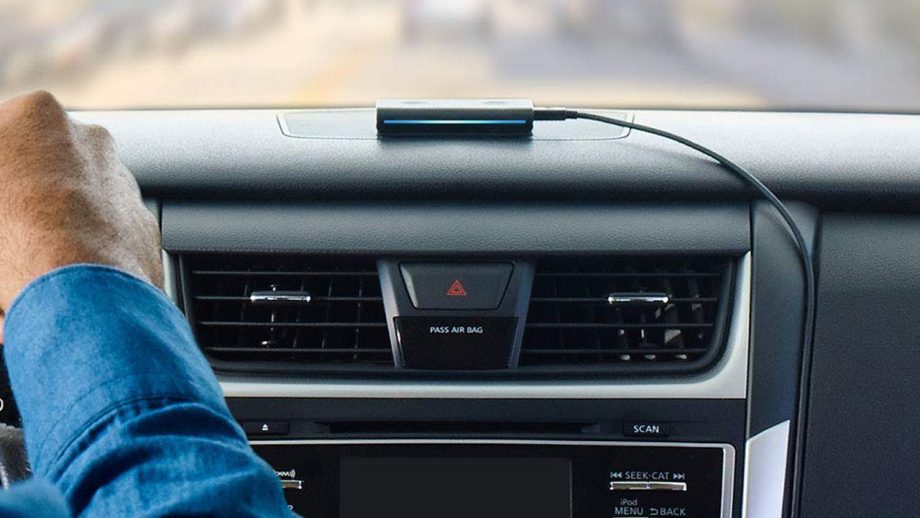
    In 2018, personal assistants invaded our houses and now most of us cannot live without them. Why not have the same for our cars? Amazon Alexa is said to be soon integrated into cars where you can ask Alexa about the weather, make a call on the speakerphone, change music and more. All of this while you keep an eye on the road. Toyota is the latest manufacturer to introduce Amazon’s Alexa cloud-based voice control to some of its vehicles while many others such as Ford, BMW, and Volkswagen have already announced partnerships. This car technology will be great in terms of driver safety and will also be a handful feature for passengers as well. 

    X-Ray Vision and Enhanced HUD’s for your car

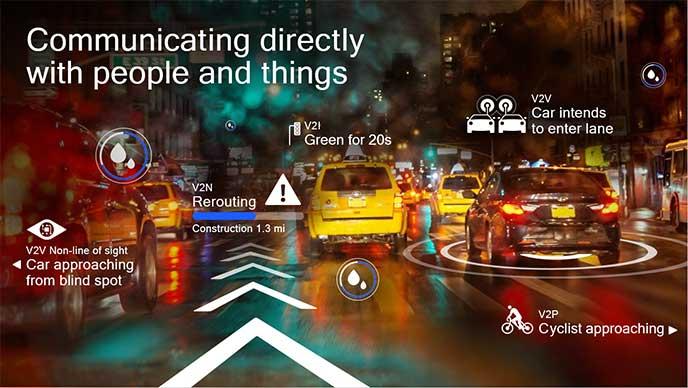
    Well, when we mean X-Ray vision, we don’t mean Batmobile-esque features that will let you see through cars. In-fact if you could see through cars you would crash more often. If anything, this feature helps you prevent crashes. Chip manufacturer Qualcomm recently revealed a concept called “Vehicle to Everything”. This will integrate a chip on every car allowing cars to communicate between one another and avoid crashes. The chip will also be able to communicate with infrastructures such as traffic lights or road signs up ahead warning the driver of incoming dangers or alert the driver in general. Trials of the tech will take place in San Diego and Detroit. 

    Smarter, faster electric cars

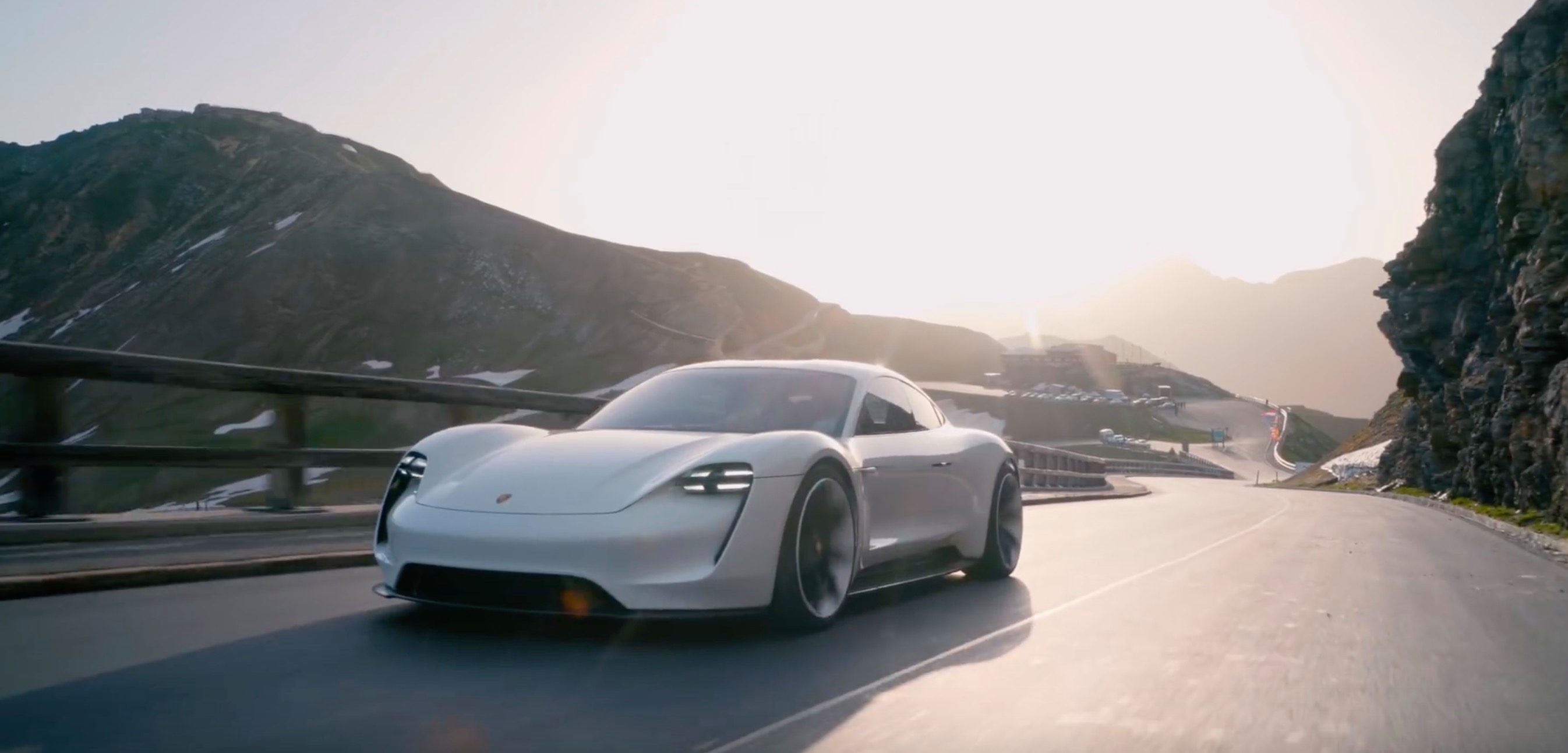
    Tesla fought the hard battle of bringing electric cars and trying to make it mainstream when the entire industry scoffed. Now the power of electric vehicles have become apparent and the technology has evolved substantially. This has led to many manufacturers including luxury car and sports car manufacturers such as Audi, Porsche, Mercedes and even BMW have joined the bandwagon. Cars such as BMW i3, Mercedes-Benz EQC, Audi e-tron and Porsche Taycan are all set to be launched in 2019. These cars and the more number of players in this category will make electric vehicles smarter, faster and better performing.

  • AutoGyaan: Porsche Shows off the 918 Spyder (PR)

    AutoGyaan: Porsche Shows off the 918 Spyder (PR)

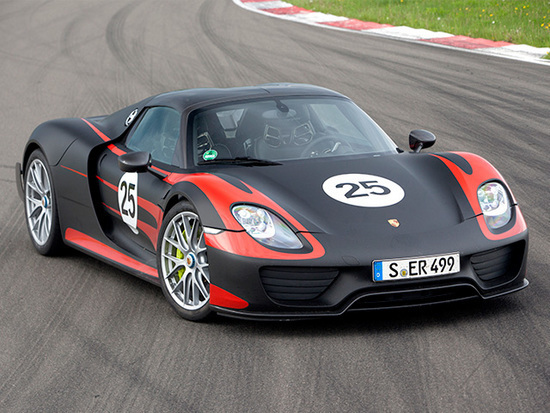
    Posche has unveiled the production model of its 918 Spyder Hybrid, and basically automobile enthusiasts around the world are ready to drool. The engine combination includes a generation of  608 hp at 8,600/min (V8 engine) plus a 154 hp (hybrid module on rear axle), along with an 127 hp (electric motor on front axle), giving the eco sports car a total of 887 hp (combined).
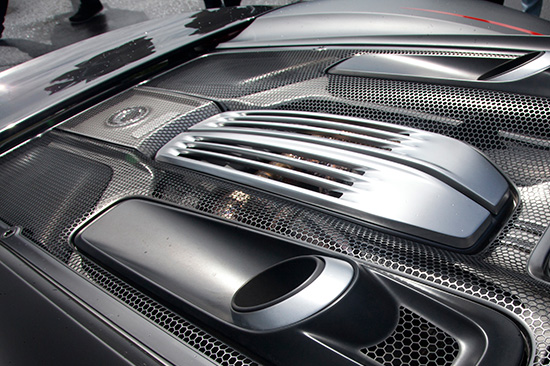
    918 spyder inner

    The entire load-bearing structure is made of carbon fiber reinforced polymer (CFRP).  The car’s unladen weight of approximately 3,715 lbs. is an excellent low weight for a hybrid vehicle of thisperformance class.

    The chassis has also been fitted with PASM adaptive shock-absorber system and rear-axle steering with electro-mechanical adjustment system at each rear wheel, this happens depending on the speed of the car upto three degrees in each direction assisting in overall control and stability. The Porsche 918 Spyder is also equipped with Porsche Active Aerodynamic (PAA), which ensures maximum downforce and is tuned to the operating modes of the hybrid drive system.
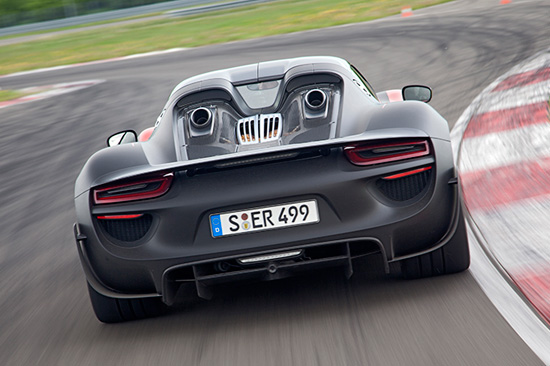
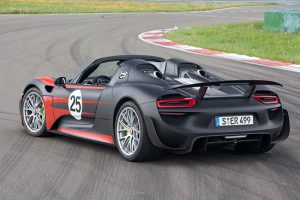
    918 spyder rear

    The Weissach package adds more performance and reduces the weight by 77 pounds, in this the roof, rear wings, rear-view mirrors and frames of the windscreen are made of visible carbon. Parts of the interior are upholstered with Alcantara instead of leather, and visible carbon replaces much of the aluminum.


    Technical Specifications of Porsche 918 Spyder

    Body: Two-seat Spyder; carbon fiber reinforced plastics (CFRP) monocoque interlocked with CFRP unit carrier; two-piece Targa roof; fixed roll-over protection system.
    Drivetrain:

    Parallel full hybrid; 4.6-liter V8 mid-engine with dry-sump lubrication; hybrid module with electric motor and decoupler; electric motor with decoupler and gear unit on front axle; auto start/stop function; electrical system recuperation; four cooling circuits for motors, transmission and battery; thermal management.

    Engine power:

    608 hp at 8,600/min (V8 engine)
    154 hp (hybrid module on rear axle)
    127 hp (electric motor on front axle)
    887 hp (combined)

    Max. torque:

    390 lb.-ft. at 6,600/min (V8 engine)
    940 lb.-ft. (equivalent torque calculated on the crankshaft, complete system in 7th gear)
    787 lb.-ft. (complete system, 3rd gear)
    > 590 lb.-ft. (800/min & 5,000/min)

    Maximum Revs: 9,150 rpm
    Power output per l: 133 hp/l (V8 engine)
    Power transmission:

    Combustion engine with hybrid module and transmission bolted together to form a single drive unit; seven-speed Doppelkupplungsgetriebe (PDK); rear-wheel drive; front electric motor with gearbox for driving the front wheels (decoupled from 146 mph); five pre-selectable operating modes for optimum coordination of all drive units.

    Gear ratios   PDK
    1st gear  3.91
    2nd gear 2.29
    3rd gear  1.58
    4th gear   1.19
    5th gear  0.97
    6th gear  0.83
    7th gear  0.67
    R gear  3.55
    Final drive ratio  3.09
    Clutch diameter  8.7 in. / 6.5 in

    Chassis and Suspension:

    Double-wishbone front axle; optional electro-pneumatic lift system on front axle; electro-mechanical power steering; multilink rear axle with adaptive electro-mechanical system for individual rear wheel steering; electronically controlled twin-tube gas-pressure dampers in the front and rear with Porsche Active Suspension Management (PASM).

    Brake system: High-performance hybrid brake system with adaptive recuperation; internally ventilated and perforated front ceramic brake discs (PCCB), 16 in. in diameter and 1.4 in. thick; rear discs 15.4 in diameter and 1.3 in. thick.
    Wheels and tires:

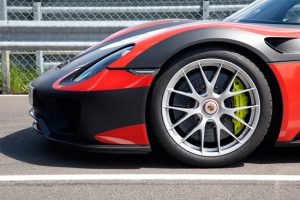
    918 Spyder wheels
    (Weissach package: 918 Spyder magnesium wheels)
    front 9.5 J x 20 with  265/35 ZR 20
    rear 12.5 J x 21  with  325/30 ZR 21

    Weights:

    Curb weight 3,715 lbs.
    3,616 lbs. (Weissach package)

    Dimensions:

    Length 182.8 in.
    Width  76.4 in.
    Height 45.9 in.
    Wheelbase  107.5 in.

    Track width

    front 65.5 in.
    rear  63.5 in.

    Luggage compartment capacity, VDA   ~ 110 l
    Fuel tank capacity 18.5 gal

    Energy supply: Lithium-ion battery with 6.8 kWh capacity (BOL nominal), 220 kW maximum power and mains-compatible plug-in charger.
    Performance:

    Top speed > 211 mph
    purely electric 93 mph

    Acceleration:
    0-62 mph   2.8 s
    0-60 mph less than 2.8 s
    0-62 mph (in electric mode)  7.0 s

     0-124 mph (0-200 km/h) 7.9 s

    0-186 mph (0-300 km/h) 23.0 s

    Range: Purely electric: approx. 18 mi.
    Warranty: Vehicle (Battery): 4 years (7 years)

    Charging times:

    AC charging on a household socket (110 V, 10 A):
    less than 7 hours
    AC charging on an industrial socket (240 V, 30 A):
    less than 2 hours
    DC charging on an industrial socket (400 V, 32 A):
    less than 0.5 hours.


    [toggle title=”Press Release”]

    INTRODUCING THE PORSCHE 918 SPYDER

    Atlanta.The 918 Spyder embodies the essence of the Porsche idea: it combines pedigree motor racing technology with excellent everyday utility, and maximum performance with minimum consumption. The task faced by the development team was to create the super sports car for the next decade with a highly efficient and powerful hybrid drive. Developing the car from scratch, appropriately beginning with a sheet of white paper, allowed the team to come up with a no-compromise concept. The entire car was designed around the hybrid drive. The 918 Spyder therefore demonstrates the potential of the hybrid drive to a degree never seen before: the parallel improvement of both efficiency and performance without one being at the cost of the other. This is the idea that has made the Porsche 911 the most successful sports car in the world for 50 years. In short, the 918 Spyder will act as the gene pool for the Porsche sports cars of the future.

    The 918 Spyder reveals its close links to motorsport in a variety of ways. It has been designed, developed and produced by Porsche engineers who build race cars, in cooperation with series production specialists. A great deal of insight gained from the development of Porsche race cars for the 24 hours race in Le Mans in 2014 is thus integrated into the 918 Spyder – and vice versa. The structural concept of the 918 Spyder with a rolling chassis as its basis – a basic vehicle that can be driven even without a body – is race car tradition at Porsche. The concept of the V8 engine originates from the LMP2 RS Spyder race car. The load-bearing structures, the monocoque and subframe, are made of carbon fiber reinforced polymer. Porsche has many years of experience with this high-strength, lightweight construction material and has again achieved top results with the development of the series production 918 Spyder. Many parts of the super sports car come from manufacturers who have a proven record as suppliers for motorsport vehicles.

    Hybrid drive brings advantages in terms of driving dynamics

    A key message of the 918 Spyder is that the hybrid drive from Porsche is a plus for no-compromise driving dynamics. Drivers can experience this thanks to the unique all-wheel drive concept with a combination of combustion engine and electric motor on the rear axle and the second electric motor on the front axle. It is based on knowledge gained by Porsche during motor races with the successful 911 GT3 R Hybrid. Due to the additional, individually controllable front drive, new driving strategies for extremely high, safe cornering speeds can be implemented, especially for bends. Furthermore, the advanced “boost” strategy manages the energy of the electric drive so intelligently that, for every sprint with maximum acceleration, the full power of the 918 Spyder can be tapped into by simply pressing the accelerator down fully. In short, the 918 Spyder allows even drivers without motorsport training to experience the potential of advanced longitudinal and transverse dynamics.

    The Porsche 918 Spyder also has the potential to break many records. The current lap time for the North Loop of the Nürburgring is 7:14 minutes. This time was achieved in the presence of international journalists during test drives in September 2012 – more than a year before start of production. The 918 Spyder prototype was therefore approximately 20 seconds quicker than the Porsche Carrera GT. More test drives on the Nürburgring North Loop will follow. An even more important factor is that the 918 Spyder surpasses previous models and competitors by far in its efficiency as well. As a plug-in hybrid vehicle, it systematically combines the dynamic performance of a racing machine with low fuel consumption. To sum it up: maximum driving fun with minimal fuel consumption.

    Carbon monocoque guarantees lightweight design with a low center of gravity

    The 918 Spyder utilizes the best state-of-the-art technologies, taken straight from motor racing, to achieve its top performance. The entire load-bearing structure is made of carbon fiber reinforced polymer (CFRP) for extreme torsional rigidity. Additional crash elements at the front and rear absorb and reduce the energy of a collision. The car’s unladen weight of approximately 3,715 lbs. (3,616 lbs. with “Weissach” package), an excellent low weight for a hybrid vehicle of this performance class, is largely attributable to this concept.

    The drivetrain components and all components weighing over 110 lbs. are located as low and as centrally as possible within the vehicle. This results in a slightly rear end biased axle load distribution of 57 percent on the rear axle and 43 percent on the front axle, combined with an extremely low center of gravity at approximately the height of the wheel hubs, which is ideal for driving dynamics. The central and low position of the traction battery directly behind the driver not only supports efforts to concentrate masses and lower the center of gravity; it also provides the best temperature conditions for optimum battery power capacity.

    Chassis with race car genes and rear-axle steering

    The multi-link chassis of the Porsche 918 Spyder is inspired by motorsport design, complemented by additional systems such as the PASM adaptive shock-absorber system and rear-axle steering. Basically, this incorporates an electro-mechanical adjustment system at each rear wheel. The adjustment is speed-sensitive and executes steering angles of up to three degrees in each direction. The rear axle can therefore be steered in the same direction as the front wheels or in opposition to them. At low speeds, the system steers the rear wheels in a direction opposite to that of the front wheels. This makes cornering even more direct, faster and more precise, and it reduces the turning circle. At higher speeds, the system steers the rear wheels in the same direction as the front wheels. This significantly improves the stability of the rear end when changing lanes quickly. The result is very secure and stable handling.

    Porsche Active Aerodynamic (PAA) for different driving modes

    Porsche Active Aerodynamic (PAA), a system of adjustable aerodynamic elements, ensures unique and variable aerodynamics; its layout is automatically varied over three modes ranging from optimal efficiency to maximum downforce and is tuned to the operating modes of the hybrid drive system. In “Race” mode, the retractable rear wing is set to a steep angle to generate high downforce at the rear axle. The spoiler positioned between the two wing supports near the trailing edge of the airflow also extends. In addition, two adjustable air flaps are opened in the underfloor in front of the front axle, and they direct a portion of the air into the diffuser channels of the underbody structure. This also produces a “ground effect” at the front axle.

    In “Sport” mode, the aerodynamic control system reduces the attack angle of the rear wing somewhat, which enables a higher top speed. The spoiler remains extended. The aerodynamic flaps in the underfloor area close, which also reduces aerodynamic drag and increases attainable vehicle speeds. In “E” mode, the control is configured entirely for low aerodynamic drag; the rear wing and spoiler are retracted and the underfloor flaps are closed.

    Adjustable air inlets under the main headlights round off the adaptive aerodynamic system. When the vehicle is stationary and in “Race” and “Sport” mode, they are opened for maximum cooling air intake. In “E-Power” and “Hybrid” modes, they close immediately after the car is driven off in order to keep aerodynamic drag to a minimum. They are not opened until the car reaches speeds of approximately 81 mph or when cooling requirements are higher.

    From comfortable to race-ready: five modes for three motors

    The core of the 918 Spyder concept is its distribution of propulsive power among the three power units; their cooperation is controlled by an intelligent management system. To best exploit these different approaches, the Porsche developers defined five operating modes that can be activated via a “map switch” on the steering wheel, just like in motorsport cars. On the basis of this pre-selection, the 918 Spyder applies the most suitable operating and boost strategy without driver intervention, thus allowing the driver to concentrate fully on the road.

    Quiet and elegant: “E-Power”

    When the vehicle is started up, the “E-Power” mode is the default operating mode as long as the battery is sufficiently charged. In ideal conditions, the 918 Spyder can cover approximately 18 miles on purely electric power. Even in pure electric mode, the 918 Spyder accelerates from 0 to 62 mph in seven seconds and can reach speeds of up to 93 mph. In this mode, the combustion engine is only used when needed. If the battery’s charge state drops below a set minimum value, the vehicle automatically switches to hybrid mode.

    Efficient and comfortable: “Hybrid”

    In “Hybrid” mode, the electric motors and combustion engine work alternately with a focus on maximum efficiency and minimum fuel consumption. The use of individual drive components is modified as a function of the current driving situation and the desired performance. The Hybrid mode is typically used for a fuel economy-oriented driving style.

    Sporty and dynamic: “Sport Hybrid”

    In more dynamic situations, the 918 Spyder selects the “Sport Hybrid” mode for its power sources. The combustion engine now operates continuously and provides the main propulsive force. In addition, the electric motors provide support in the form of electric boosting or when the operating point of the combustion engine can be optimized for greater efficiency. The focus of this mode is on performance and a sporty driving style at top speed.

    For fast laps: “Race Hybrid”

    “Race Hybrid” is the mode for maximum performance and an especially sporty driving style. The combustion engine is chiefly used under high load, and charges the battery when the driver is not utilizing its maximum output. Again, the electric motors provide additional support in the form of boosting. Furthermore, the gear-shifting program of the PDK is set up for even sportier driving. The electric motors are used up to the maximum power output limit to deliver the best possible performance for the race track. In this mode, the battery charge state is not kept constant, rather it fluctuates over the entire charge range. In contrast to Sport Hybrid mode, the electric motors run at their maximum power output limit for a short time for better boosting. This increased output is balanced by the combustion engine charging the battery more intensively. Electric power is thus available even with several very fast laps.

    For pole position: “Hot Lap”

    The “Hot Lap” button in the middle of the map switch releases the final reserves of the 918 Spyder and can only be activated in “Race Hybrid” mode. Similar to a qualification mode, this pushes the traction battery to its maximum power output limits for a few fast laps. This mode uses all of the available energy in the battery.

    Main propulsion: the race car’s eight cylinder engine

    The main source of propulsion is the 4.6-liter, eight cylinder engine that produces 608 hp of power. The engine is derived directly from the power unit of the successful RS Spyder, which explains why it can deliver engine speeds of up to 9,150 rpm. Like the race engine of the RS Spyder, the 918 Spyder power unit features dry-sump lubrication with a separate oil tank and oil extraction. To save weight, components such as the oil tank, the air filter box integrated into the subframe and the air induction are made of carbon fiber reinforced polymer. Further extensive lightweight design measures have resulted in such features as titanium connecting rods, thin-wall, low-pressure casting on the crank case and the cylinder heads, a high-strength, lightweight steel crankshaft with 180 degrees crankpin offset and the extremely thin-walled alloy steel/nickel exhaust system. Striking features of the V8 are that it no longer supports any auxiliary systems, there are no external belt drives and the engine is therefore particularly compact. Weight and performance optimizations achieve a power output per liter of approx. 133 hp/l – the highest power output per liter of a Porsche naturally aspirated engine – which is significantly higher than that of the Carrera GT (106 hp/l) and outstanding for a naturally aspirated engine.

    Unique race car design heritage: top pipes

    It isn’t just this engine’s performance but also the sound it makes that stokes the emotionality of the 918 Spyder. This is attributable first and foremost to the so-called top pipes: the tailpipes terminate in the upper part of the rear end immediately above the engine. No other production vehicle uses this solution. The top pipes’ greatest benefit is optimal heat removal, because the hot exhaust gases are released via the shortest possible route, and exhaust gas back pressure remains low. This design requires a new thermodynamic air channeling concept. With the HSI engine, the hot side is located inside the cylinder V, the intake channels are on the outside. There is another benefit as well: the engine compartment remains cooler. This is especially beneficial to the lithium-ion traction battery, as it provides optimum performance at temperatures between 68 and 104 degrees Fahrenheit. Consequently, less energy needs to be used for active cooling of the battery.

    In parallel in the drivetrain: hybrid module

    The V8 engine is coupled to the hybrid module, since the 918 Spyder is designed as a parallel hybrid like the current hybrid models from Porsche. Essentially, the hybrid module comprises a 115 kW electric motor and a decoupler that serves as the connection with the combustion engine. Because of its parallel hybrid configuration, the 918 Spyder can be powered at the rear axle either individually by the combustion engine or electric motor or via both drives jointly. As is typical for a Porsche super sports car, the power pack in the 918 Spyder has been placed in front of the rear axle, and does not have any direct mechanical connection to the front axle.

    Upside-down for a low center of gravity: Doppelkupplung

    A seven-speed Doppelkupplung (PDK) transmission handles power transmission to the rear axle. The high-performance transmission is the sportiest version of the successful PDK; it has undergone a complete redesign for the 918 Spyder and has been further optimized for high performance. To ensure a low mounting position for a low center of gravity of the entire vehicle, the gear unit was turned “upside down” by rotating it 180 degrees about its longitudinal axis, in contrast to other Porsche series. If no power is required on the rear axle, the two motors can be decoupled by opening the decoupler and PDK clutches. This is the action behind the Porsche hybrid drive’s typical “coasting” with the combustion engine switched off.

    Independent all-wheel drive: front axle with electric motor

    On the front axle, there is another independent electric motor with an output of approximately 95 kW. The front electric drive unit drives the wheels at a fixed ratio. A decoupler decouples the electric motor at high speeds to prevent the motor from over-revving. Drive torque is independently controlled for each axle. This makes for very responsive all-wheel drive functionality that offers great potential in terms of traction and driving dynamics.

    Lithium-ion battery with plug-in charging system

    The electric energy for the electric motors is stored by a liquid-cooled lithium-ion battery comprising 312 individual cells with an energy content of about seven kilowatt hours. The battery of the 918 Spyder has a performance-oriented design in terms of both power charging and output, so that it can fulfill the performance requirements of the electric motor. The power capacity and the operating life of the lithium-ion traction battery depend on several factors, including thermal conditions. That is why the battery of the 918 Spyder is liquid-cooled by a dedicated cooling circuit. The global warranty period for the traction battery is seven years.

    To supply it with energy, Porsche developed a new system with a plug-in vehicle charge port and improved recuperation potential. This vehicle charge port in the B-pillar on the front passenger side lets users connect the storage battery to an electrical supply at home to charge it. The charge port is standardized for the country of purchase. The on-board charger is located close to the traction battery. It converts the alternating current of the household electric supply into direct current with a maximum charge output of 3.6 kW. Using the supplied Porsche Universal Charger (AC), the traction battery can be charged with a conventional wall plug in seven hours from a ten ampere rated, fused power socket a US 110 Volt household electrical supply, for example. Furthermore, the Porsche Universal Charger (AC) can be installed at home in the garage using the Charging Dock. It enables rapid and convenient charging within approximately two hours, irrespective of regional conditions. The Porsche Speed Charging Station (DC) is available as an optional extra. It can fully charge the high-voltage battery of the 918 Spyder in just 25 minutes.

    Pioneering control concept: clear organization of the cockpit

    The driver is the focus of all technology in the future Porsche super sports car. A cockpit was created for the driver that is typical of the brand and pioneering in its clarity. It is partitioned into two basic areas. First, there are the controls that are important for driving, which are grouped around the multifunction steering wheel, combined with driver information displayed on three large round instruments. Second, there is the infotainment block that is housed in the lifted center console, which was introduced in the Carrera GT. Control functions, e.g. for the automatic climate control system, wing adjustment, lighting and Porsche Communication Management (PCM), including a Burmester high-end sound system, can be intuitively operated by multitouch with a new type of black panel technology.

    For even higher performance: the Weissach package

    For very performance-oriented customers of the 918 Spyder, Porsche offers the “Weissach” package. These modified super sports cars can be recognized at first glance by special colors and designs that are based on legendary Porsche race cars. The roof, rear wings, rear-view mirrors and frames of the windscreen are made of visible carbon. Parts of the interior are upholstered with Alcantara instead of leather, and visible carbon replaces much of the aluminum. Sound insulation has been reduced. The emphasis on performance is not just visual: very lightweight magnesium wheels reduce unsprung masses; gross weight was reduced by about 77 lbs. The benefits are experienced in further improved dynamic performance. Other references from motorsport are six-point seatbelts for driver and front passenger, optional film-coating instead of body paint, as well as additional aerodynamic body parts in visible carbon.

    Porsche redefined: a new super sports car for a new decade

    The 918 Spyder continues a long tradition of super sports cars at Porsche; as technology platforms, as the driving force behind both car emotion and car evolution and as the ultimate sports cars of their decades: the Carrera GTS, the first Porsche Turbo, the 959, the 911 GT1, the Carrera GT. More than any of its predecessors, the 918 Spyder is providing key impetus for developing technologies for future vehicle concepts. It offers a complete package of components that reflect Porsche DNA – more concentrated than ever before.

    Technical Specifications – Porsche 918 Spyder

    Body: Two-seat Spyder; carbon fiber reinforced plastics (CFRP) monocoque interlocked with CFRP unit carrier; two-piece Targa roof; fixed roll-over protection system.

    Drivetrain: Parallel full hybrid; 4.6-liter V8 mid-engine with dry-sump lubrication; hybrid module with electric motor and decoupler; electric motor with decoupler and gear unit on front axle; auto start/stop function; electrical system recuperation; four cooling circuits for motors, transmission and battery; thermal management.

    Engine power: 608 hp at 8,600/min (V8 engine)

    154 hp (hybrid module on rear axle)

    127 hp (electric motor on front axle)

    887 hp (combined)

    Max. torque: 390 lb.-ft. at 6,600/min (V8 engine)

    940 lb.-ft. (equivalent torque calculated on the crankshaft, complete system in 7th gear)

    787 lb.-ft. (complete system, 3rd gear)

    > 590 lb.-ft. (800/min – 5,000/min)

    Maximum Revs: 9,150 rpm

    Power output per l: 133 hp/l (V8 engine)

    Power transmission: Combustion engine with hybrid module and transmission bolted together to form a single drive unit; seven-speed Doppelkupplungsgetriebe (PDK); rear-wheel drive; front electric motor with gearbox for driving the front wheels (decoupled from 146 mph); five pre-selectable operating modes for optimum coordination of all drive units.

    Gear ratios PDK

    1st gear 3.91

    2nd gear 2.29

    3rd gear 1.58

    4th gear 1.19

    5th gear 0.97

    6th gear 0.83

    7th gear 0.67

    R gear 3.55

    Final drive ratio 3.09

    Clutch diameter 8.7 in. / 6.5 in.

    Chassis and Suspension: Double-wishbone front axle; optional electro-pneumatic lift system on front axle; electro-mechanical power steering; multilink rear axle with adaptive electro-mechanical system for individual rear wheel steering; electronically controlled twin-tube gas-pressure dampers in the front and rear with Porsche Active Suspension Management (PASM).

    Brake system: High-performance hybrid brake system with adaptive recuperation; internally ventilated and perforated front ceramic brake discs (PCCB), 16 in. in diameter and 1.4 in. thick; rear discs 15.4 in diameter and 1.3 in. thick.

    Wheels and tires: 918 Spyder wheels

    (Weissach package: 918 Spyder magnesium wheels)

    front 9.5 J x 20 with 265/35 ZR 20

    rear 12.5 J x 21 with 325/30 ZR 21

    Weights: Curb weight 3,715 lbs.

    3,616 lbs. (Weissach package)

    Dimensions: Length 182.8 in.

    Width 76.4 in.

    Height 45.9 in.

    Wheelbase 107.5 in.

    Track width front 65.5 in.

    rear 63.5 in.

    Luggage compartment capacity, VDA ~ 110 l

    Fuel tank capacity 18.5 gal

    Energy supply: Lithium-ion battery with 6.8 kWh capacity (BOL nominal), 220 kW maximum power and mains-compatible plug-in charger.

    Performance: Top speed > 211 mph

    purely electric 93 mph

    Acceleration:

    0-62 mph 2.8 s

    0-60 mph less than 2.8 s

    0-62 mph (in electric mode) 7.0 s

    0-124 mph (0-200 km/h) 7.9 s

    0-186 mph (0-300 km/h) 23.0 s

    Range: Purely electric approx. 18 mi.

    Warranty: Vehicle (Battery) 4 years (7 years)

    Charging times:

    AC charging on a household socket (110 V, 10 A): less than 7 hours

    AC charging on an industrial socket (240 V, 30 A): less than 2 hours

    DC charging on an industrial socket (400 V, 32 A): less than 0.5 hours.

    [/toggle]
  • MapmyIndia introduces 3G, Android enabled CarPad 5

    MapmyIndia introduces 3G, Android enabled CarPad 5


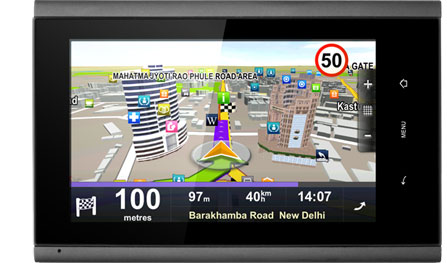
    MapmyIndia, provider of digital maps, navigation and location-based services, has launched CarPad 5, a connected car product. Built on Android OS, CarPad 5 is an all-In-One GPS Navigator, Smart Phone and 3G Tablet. It 5 runs on a 1GHz Samsung processor (Cortex A8, S5PV210) and features a 5 inch capacitive touch screen. It is priced at Rs 19,990 and contains the CarPad windshield mount and Car charger.

    The navigation device has built-in 3G & Wi-Fi and comes preloaded with Aura, MapmyIndia’s fully 3D and connected GPS navigation interface.

    Rakesh Verma, managing director at MapmyIndia said that the CarPad 5 is one of the many in-car productivity gadgets they plan to launch in the near future.

    The company claims Aura maps offers real-time traffic updates, house level search, security (track and trace) and discount offers in the vicinity. It covers over 6.3 million places, 5,79,000 towns and villages, 4000 cities at street-level, house-level data for 36 cities and 3D landmarks and building footprints for 34 major cities. 

    The navigation device is 3G enabled and allows users to call, message, mail and chat, search and browse the web at high speed, and access social networks.

  • AutoGyaan : Porsche 918 Spyder Hybrid gets a polished Matte Black and White look (PR)

    AutoGyaan : Porsche 918 Spyder Hybrid gets a polished Matte Black and White look (PR)

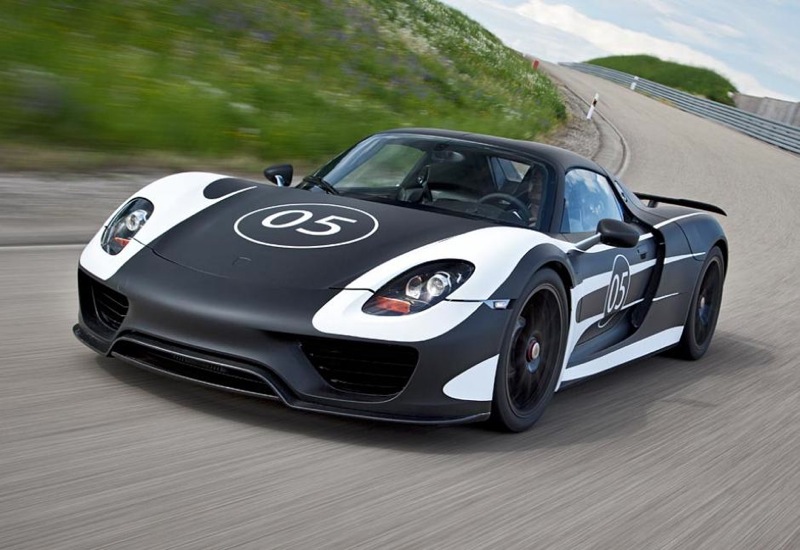
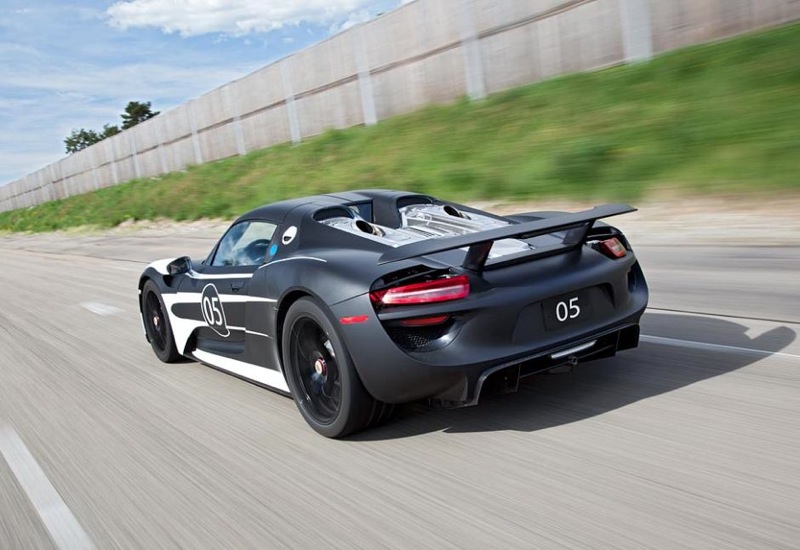
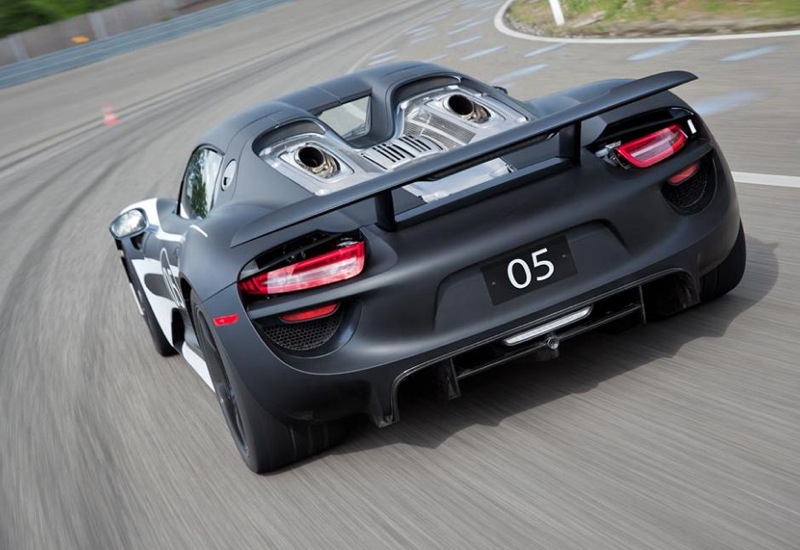
    The Hybrid super car from Porsche, “918 Spyder” has gotten a makeover and a renewed Km/L average. The plugin hybrid is now coated with a polished matte Black and White special coat pain work, and will now deliver 100KM/3 liters of petrol. The price is  $845,000 (Rs. 45,482,125 excluding duty and tax).

    The car has a carbon-fiber reinforced-plastic monocoqueshell, rear-axle steering and  upward-venting exhausted system. A combustion engine along with an electric motor to achieve the high Km/L.

    [toggle_box title=”Press Release” width=”Width of toggle box”]

    Development of the Porsche super sports car enters next phase

    Atlanta. The Porsche 918 Spyder is on the road: Dr. Ing. h.c. F. Porsche AG, Stuttgart, has taken the driving trials of the super sports car of the future a step further with completion of the initial prototypes. The 918 Spyder is planned for production at the end of September 2013, with the first customer deliveries currently scheduled for the United States late in 2013. “What we are doing with the 918 Spyder is redefining driving fun, efficiency and performance,” said Wolfgang Hatz, Member of the Executive Board Research and Development of Porsche AG.

    The prototypes, their camouflage harking back to historical Porsche 917 racing cars, signal the final touches to the 918 Spyder. The focus is on the interplay between the highly sophisticated individual drive components. The combination of combustion engine and two independent electric motors – one on the front axle and one in the drive line, acting on the rear wheels – poses completely new demands on the development of the operating strategies. “They are therefore a critical component in this vehicle into which we have put all of our expertise and capacity for innovation,” said Wolfgang Hatz. These operating strategies and the development of the software to go with them are one of Porsche’s core competences. Both of them have a major influence on the extreme driving fun to be had with the 918 Spyder and they make possible a unique combination of minimal fuel consumption and maximum performance. The initial results of the driving trials are in line with the high expectations placed on the 918 Spyder.

    The super sports car is designed as a plug-in hybrid vehicle combining a high-performance combustion engine with cutting-edge electric motors for extraordinary performance: on the one hand, the dynamics of a racing machine boasting more than 770 hp, on the other hand, fuel consumption in the region of three litres per 100 kilometres. Moreover, Porsche is breaking yet more new ground with the technology demonstrator with spectacular solutions such as the full carbon fibre reinforced plastic (CFRP) monocoque with unit carrier, fully adaptive aerodynamics, adaptive rear-axle steering and the upward-venting “top pipes” exhaust system. In the process, the 918 Spyder is offering a glimpse of what Porsche Intelligent Performance may be capable of in future.

    [/toggle_box]


  • AutoGyaan : Volkswagen E-Bugster Concept shown off

    AutoGyaan : Volkswagen E-Bugster Concept shown off

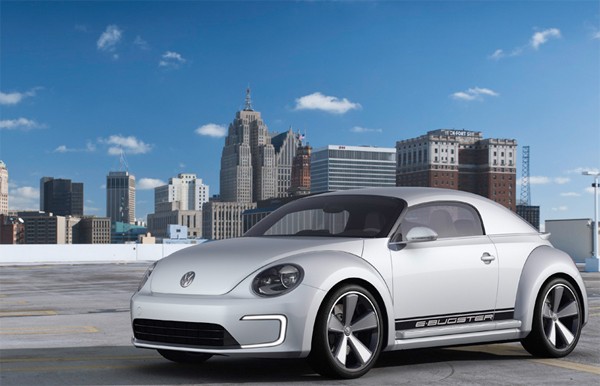
    VW did launch their new Beetle at the Auto Expo 2012, but they forgot to include this batboy in their Indian lineup. The new E-Bugster Concept is a full electric 114 HP motor powered retro styled ride. The vehicle is powered with 315 KG’s worth of lithium-ion batteries, which are placed in the trunk of the new Beetle. It does 0-100 in 11 Seconds and has a 160 KM range on just battery juices. Fancy yourself an E-Bug?

  • Nokia gives free Car Mode for early Belle adopters

    Nokia gives free Car Mode for early Belle adopters

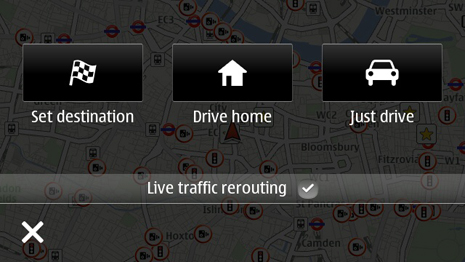
    Nokia’s new Car Mode is the most seamless car connectivity system between a Smartphone and a Head-unit of your vehicle you will ever find. This lets you connect your phone to your car’s infotainment system (if you’ve got one) and control your phone through the car, rather than touching the phone itself. Two apps out of which  One is called Nokia Car Mode that offers Nokia’s leading turn-by-turn navigation, as well as the overall smartphone experience into the car environment, while also bringing Nokia Drive, traffic updates, Nokia Music and voice calls while driving.

    The other is called Nokia Car Mode with MirrorLink that gives additional MirrorLink support and the seamless connectivity of the smartphone within the car at a cost of £17.99 (Rs. 1699).

  • Ford’s Evos concept is the company’s version of the EV tomorrow (PR)

    Ford’s Evos concept is the company’s version of the EV tomorrow (PR)

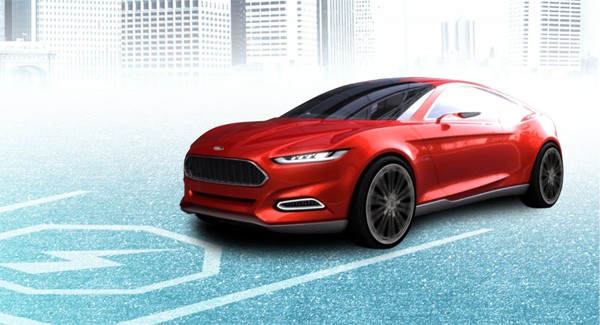
    Ford Evos is a cloud powered Electric Vehicle from tomorrow. The car’s automated and integrated with everything to give you a complete modern experience. The clod powered vehicle is able to sync alarms, meetings , calendars, continue music playback from other devices where you’ve left off and even suggest alternative routes based on your schedule and past driving history. 

    Now is that wonderful or what? Check out the Video Below followed by the full PR.


    [toggle title_open=”PRESS RELEASE” title_closed=”PRESS RELEASE” hide=”yes” border=”yes” style=”default” excerpt_length=”0″ read_more_text=”Read More” read_less_text=”Read Less” include_excerpt_html=”no”]Ford Evos Concept – The Ultimate Expression of Ford’s New Global Design and Technology Vision

    – Ford Evos Concept showcases Ford’s first truly global design language and a new vision for customer-focused and intuitive technologies

    – Dramatic four-door, four-seat fastback concept with state-of-the-art lithium-ion plug-in hybrid powertrain previews Ford’s new global design language with distinctive exterior and interior design cues

    – Driver engagement technologies explore seamless enhancement of the driving experience, driver well-being and smart, electrified powertrain.

    Ford Evos Concept makes global debut at the 2011 Frankfurt Motor Show

    BERLIN, Germany, August 31, 2011 – Making its global debut at the 2011 Frankfurt Motor Show in September, the Ford Evos Concept represents the ultimate expression of Ford’s new global design language, and explores key future powertrain and vehicle technologies.

    Created as a bespoke concept vehicle, the fastback introduces Ford’s first truly global design language as the momentum of the company’s One Ford product plan continues to build.

    “The Ford Evos Concept unites three key elements which are at the core of our One Ford global product strategy: outstanding design, smart technologies and fuel economy leadership,” said Derrick Kuzak, group vice president of Global Product Development.

    “With its compelling design and innovative technology experience, this is a clear demonstration of the exciting vision we have for the Ford brand. While you will never see this car on the road, the next generation of Ford products around the world will display many of the distinctive design ideas and advanced technologies it showcases.”

    Technology vision for enriched customer experience
    Ford Evos Concept is not just a design-led exercise. It also embodies the global Ford product development team’s move to design and develop vehicles as more than just an interior and exterior, or a collection of attributes.

    “Our goal is to focus on enriching a customer’s every experience with their vehicle – by personalizing it, adapting it, and creating unique, unexpected features that surprise and delight them,” said Kuzak. “In the Ford Evos Concept, this objective is explored and extended to the area of connectivity, where the intent is not to convert the vehicle into a smartphone, but rather ?????to provide personalised and safe connection to the outside world in an enriching manner designed totally for the vehicle context.”

    Ford’s global Research and Innovation team, led by Paul Mascarenas, was tasked with building Evos Concept around a technology experience as visionary as the design. The result signals how Ford intends to build on the momentum of innovations like the SYNC in-car connectivity system.

    “At Ford, the future of technology in the car will be defined by the experience that it delivers to the driver and passengers,” said Paul Mascarenas, chief technical officer and vice president of Ford Research and Innovation. “We see technology as more than just an impressive list of microprocessors, sensors and software; it’s about the application of that technology to create an experience that enhances the driver’s time behind the wheel.”

    The concept’s technology experience embraces a new generation of driver interaction and awareness currently under development in the Ford Research and Innovation laboratories. Seamless connectivity between the vehicle and the driver’s „personal cloud? of information is at the heart of the vision for its capabilities.

    “The possibilities are fascinating when we explore how to enable a seamless lifestyle between home, office and car linked by access to the driver’s personal information,” Mascarenas said.

    With information from the cloud, the vehicle can provide the same connected lifestyle the driver experiences at home or office. The car knows the driver, and automatically adapts handling, steering and engine controls to deliver an exceptionally dynamic driving experience.

    Ford researchers are focusing their efforts in this area to deliver on four key customer benefits: personalisation, seamless enhancement of the driving experience, looking after the driver’s well- being and delivering smart electrified powertrain optimisation.

    The personalised, cloud-connected lifestyle
    While today’s Ford products provide drivers with many personalisation options, cloud connectivity will enable future Ford vehicles to take the experience to the next level.

    Drawing from a detailed understanding of the driver’s preferences and driving habits, the Ford Evos Concept combines this personal information with additional data from the cloud, such as the drivers work schedule and local traffic or weather conditions. This information provides a personalised and seamless experience as the driver transitions in and out of the car.

    “We’re researching how we can use patterns or preferences set by the driver to make life simpler,” said Mascarenas. “The car gets to know you and can act as a personal assistant to handle some of the usual routines of a daily commute.”

    It could automatically play the same music or news program that was just streaming at home, or heat or cool the interior to an ideal temperature before the driver gets in without having to be requested by predicting departure time based on his calendar. Wirelessly communicating with devices in the home, it could close the garage door and switch off the lights automatically as it pulls away.
    ????
    “This cloud-connected vision shows the enormous potential of tailoring the driving experience to suit the exact personal tastes and moods of the driver,” said Mascarenas. “From recommending a great driving road from friends on your social networks or resetting your alarm clock to let you sleep in when a morning meeting gets cancelled!”

    Enhanced driving experience
    Ford Evos Concept explores adaptive vehicle technologies to redefine the driving experience.

    Current technology requires vehicle chassis settings to be defined based upon the abilities and tastes of a cross-section of drivers and the topography of typical roads. The concept foresees tuning handling and performance to the road ahead and the specific individual behind the wheel.

    Learning driver habits and capabilities, the technology can overlay map and weather data sourced from the cloud to adjust powertrain, steering, suspension and braking systems for optimum enjoyment, comfort and safety. Because the vehicle is adaptive and honed to maximum performance based on the situation, it takes driving engagement to a new level.

    Driver wellness
    Ford researchers have already developed technologies focused on driver wellness, such as the heart-rate monitoring seat and certified allergy-free interiors. With a seamless connection to the cloud, the Ford Evos Concept monitors the physical state and workload of the driver and adjusts the driving experience accordingly.

    “Our wellness research and technologies are focused on relieving driver stress and enhancing their situational awareness,” said Mascarenas. “Drivers around the world are spending more time behind the wheel, and the car should not be another stress point in their lives.”

    The Ford Evos Concept is also equipped with advanced air quality sensors and filtration systems to help allergy sufferers. Location aware, it can access air quality data from the cloud and proactively suggest a healthier route to the destination.

    In dynamic driving situations, the vehicle may simplify the appearance of the instrument panel to display only necessary gauge information and switch the driver’s connected smartphone to “Do Not Disturb” mode to help keep the focus of attention on the road.

    Cloud-optimised hybrid powertrain
    Completing the vision for the Ford Evos Concept is a state-of-the-art lithium-ion plug-in hybrid (PHEV) powertrain providing the same next-generation performance and fuel economy as the Ford C-MAX Energi scheduled for introduction in North America in 2012 and Europe in 2013.
    Ford „powersplit? hybrid architecture allows the electric motor and petrol engine to work together or separately to maximise efficiency. The advanced powertrain typically runs in all-electric mode before switching to charge-sustaining hybrid mode for continued optimal fuel efficiency.
    Cloud connectivity would provide further opportunities to enhance performance and efficiency by selecting the optimum combination of powertrain modes for any given journey.
    ????
    “Access to historical driver behaviour and travel patterns allows us to calculate the optimal fuel and energy efficiency by predicting the destination,” said Mascarenas. “Our researchers are working to increase understanding of driver behaviour, develop accurate protocols to predict it and enhance the trip by providing the smartest use of fuel or battery for the situation.”

    The cloud-optimised powertrain would automatically „know? when to save energy and switch modes, using information about the vehicle’s predicted travel route, any emission zone restrictions during the journey and current weather conditions.

    In the future, communities may place firm restrictions on the types of vehicles allowed to use certain roads or highway lanes, and some city centres may choose to be open only to full electric vehicles. Helping drivers comply with such regulations could therefore be among the benefits of this technology. For example, the French government is considering creating zones mandating lower emissions, while cities such as London, Berlin, and Stockholm already have them in place.

    This capability would further enhance the performance of Ford?s advanced PHEV technology, which offers an overall driving range of more than 500 miles (800 kilometres) using the battery and engine – more than any other plug-in or extended-range electric vehicle.

    “With its leading-edge „cloud-optimised? PHEV powertrain offering outstanding efficiency and range with supreme driving enjoyment, the Ford Evos Concept highlights our vision for greener, smarter vehicles with outstanding customer appeal,” said Kuzak.

    Ford’s new design direction
    The Ford Evos Concept was specifically developed to introduce the new Ford design direction. Key design elements will be applied to forthcoming Ford vehicles.

    The new global design DNA provides the company?s worldwide design teams with a common framework to guide the creation of new products, enabling them to shape a coherent family of distinctive vehicles sharing the same fundamental design character.

    “We wanted the Ford Evos Concept to give a clear message about where Ford design is heading – shaping vehicles that are fun to drive, have a strong premium visual appeal, and above all, are stunningly beautiful,” said J Mays, group vice president, Design and chief creative officer.

    “Our exciting new design DNA has been developed and refined by an intensive effort by all of our talented global design team,” said Mays. “As a team, we wanted to create a more technical design vocabulary to help communicate the smart technology that is now core to the Ford brand. In addition, we worked particularly hard on meeting the high-expectations of a new generation of buyers – a group of consumers who have grown up surrounded by beautiful, premium design work on even the most affordable products.”

    Dramatic fastback design with unique proportions
    To provide a fitting vehicle to introduce the new design language, the Ford Evos Concept was conceived as a dramatic fastback concept, combining a striking new profile with innovative ?proportions. Attention-grabbing lines conceal a unique new format, with a four-door, four-seat layout which combines dynamic appearance with surprising practicality.

    “This is an exciting new interpretation of the fastback bodystyle, with a really innovative silhouette as well as dramatic and very modern proportions,” Mays said.

    With the length of a typical C-car, but with width of a CD-car, the Ford Evos Concept has a powerful, sporting stance. The forward position of the cowl, the strongly rounded front screen and the A-pillars set further to the rear enabled the designers to create the impression of a classic GT car, but with a very contemporary feel.

    The concept?s spectacular hinged gullwing-style doors, both front and rear, provide outstanding access to the spacious four-seat cabin.

    The concept car measures 4.50m (177in) long, 1.97m (77in) wide and 1.36m (53in) high, with a wheelbase of 2.74m (108in).

    Distinctive evolution
    Shaped as the ultimate expression of the new design DNA, the Ford Evos Concept highlights key elements of Ford?s distinctive new global design language.

    “The new design DNA marks a bold evolution of the kinetic design language featured on existing global Ford products and is characterised by a number of important elements that will contribute to an unmistakable future Ford look,” said Mays.

    From the front, the Ford Evos Concept immediately signals the arrival of something new – a new face for Ford featuring the signature trapezoidal grille mounted higher on the car and creating a confident, more premium look.

    Bold, technical shapes, such as the extremely slim „laser cut? front lamps or the dramatic graphic created by the front and rear screens connected by the thin glazed section of the roof, add a distinctive character to the design. Sculptured flanks highlight attention to detail on the surfacing, which lends a refined quality and a tauter, more muscular character.

    “The Ford Evos Concept embodies the core elements of the new global design language, while capturing the dynamic, fun-to-drive spirit which is central to the Ford DNA,” said executive design director Martin Smith. “Most notable is the brand new „face of Ford?, with its higher mounted trapezoidal grille, and the design is characterised by the use of very bold, technical graphics. We have also created much more refined and precise surfacing, and these elements together give a strong visual sense of premium quality.

    The vehicle was sculpted with the same purity of surface sculpture and attention to detail which characterise premium vehicles. Around the world, a new generation of buyers have come to expect premium design in all products, regardless of the purchase price.

    Built around the driver
    Reflecting the fun-to-drive spirit of its exterior design, the interior of the Ford Evos Concept is built around the driver. A stylish and innovative cockpit promises new levels of driving pleasure and driver interaction.
    ????
    The interior architecture features clean and simple surfaces, with a muscular, athletic character to the slim upper instrument panel, enhanced by bold trapezoidal cut-outs. Contrasting these muscular forms, curvaceous cockpit display surfaces sweep down either side of the driver, providing secondary information about vehicle and infotainment systems.

    The concept features a bold red driver?s seat and the vision of unprecedented driver interaction via an advanced driver interface. The two rear seat passengers get an equally special experience, with dedicated touch-screen displays to interact with the vehicle and individually adjustable sports seats.

    “Both the exterior and interior of the Ford Evos Concept clearly communicate that this is a driver?s car, so that as soon as people see the vehicle, they will immediately want to get in and drive,” said executive design director Moray Callum.

    ###
    About Ford Motor Company
    Ford Motor Company, a global automotive industry leader based in Dearborn, Mich., manufactures or distributes automobiles across six continents. With about 166,000 employees and about 70 plants worldwide, the company’s automotive brands include Ford and Lincoln. The company provides financial services through Ford Motor Credit Company. For more information regarding Ford’s products, please visit www.fordmotorcompany.com.[/toggle]
  • Outrun – The Only Racing Game That Drives As You Play

    Outrun – The Only Racing Game That Drives As You Play

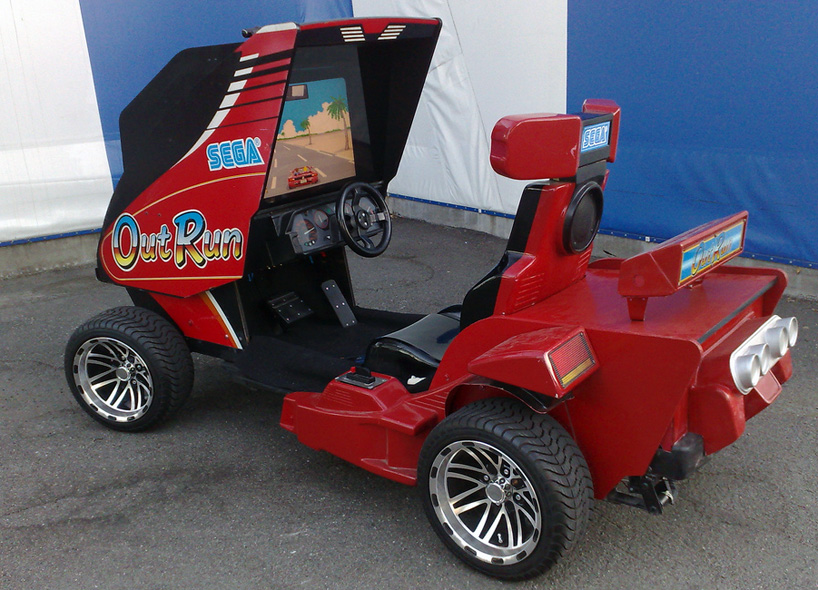
    Game maker SEGA has come up with a very interesting concept video game. The game is called Outrun and it is basically a prototype video-game car that has been designed by artist-scientist Garnet Hertz. It combines a car shaped arcade cabinet with an electric golf cart and some custom software. It all comes together in a video game system that you can actually drive! Creator Garnet Hertz had this to say:

    Outrun [is designed] to de-simulate the driving component of a video game: where game simulations strive to be increasingly realistic (usually focused on graphics), this system pursues ‘real’ driving through the game. Additionally, playing off the game-like experience one can have driving with an automobile navigation system, Outrun explores the consequences of using only a computer model of the world as a navigation tool for driving.

    The windshield of the Outrun vehicle has some custom software which can convert the drivers movements in the video game into movement of the car in real life. It also converts the scenes from real life into an 8-bit style race course in which the driver drives the car.


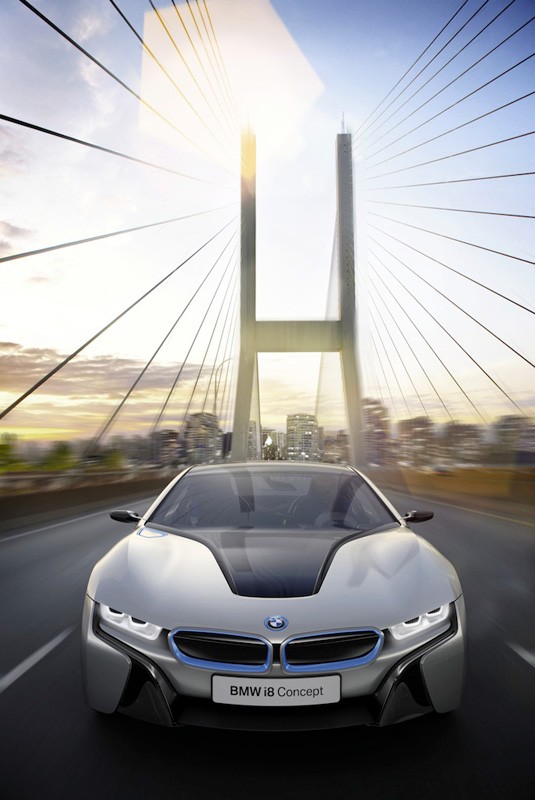
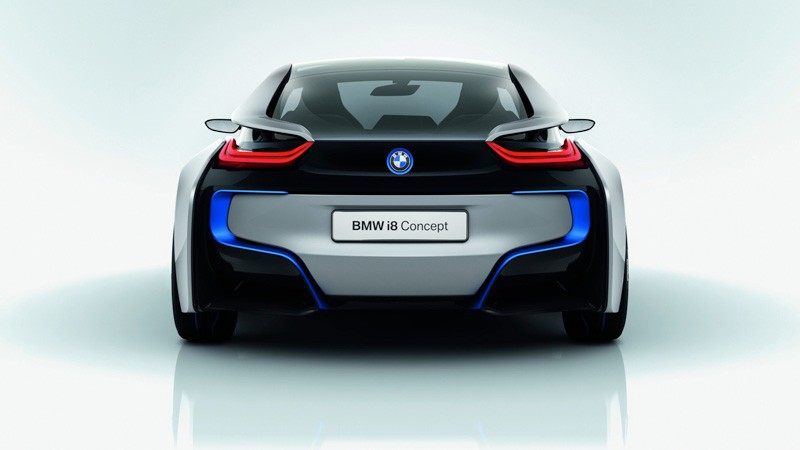
  • BMW showcases the new i3 and i8 Concepts, we drool! (PR)

    BMW showcases the new i3 and i8 Concepts, we drool! (PR)

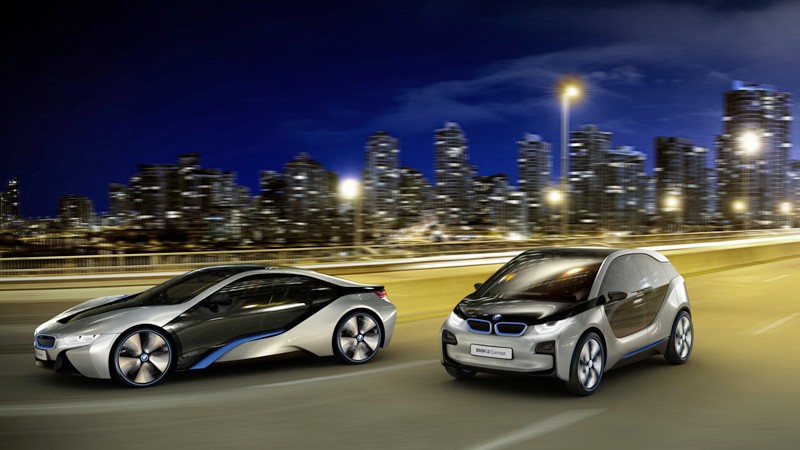
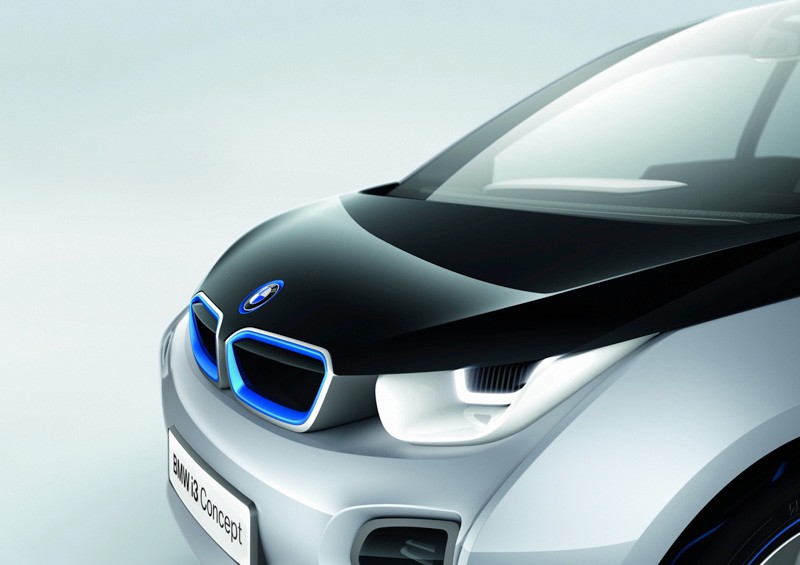
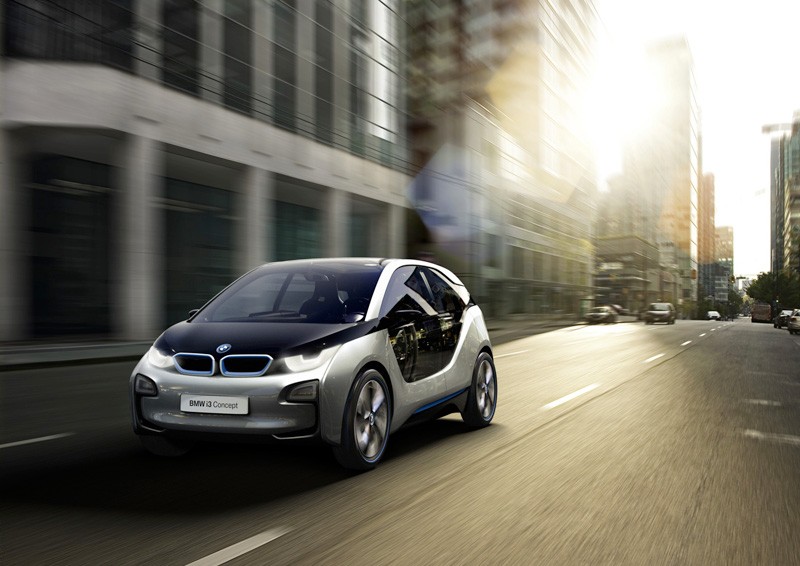
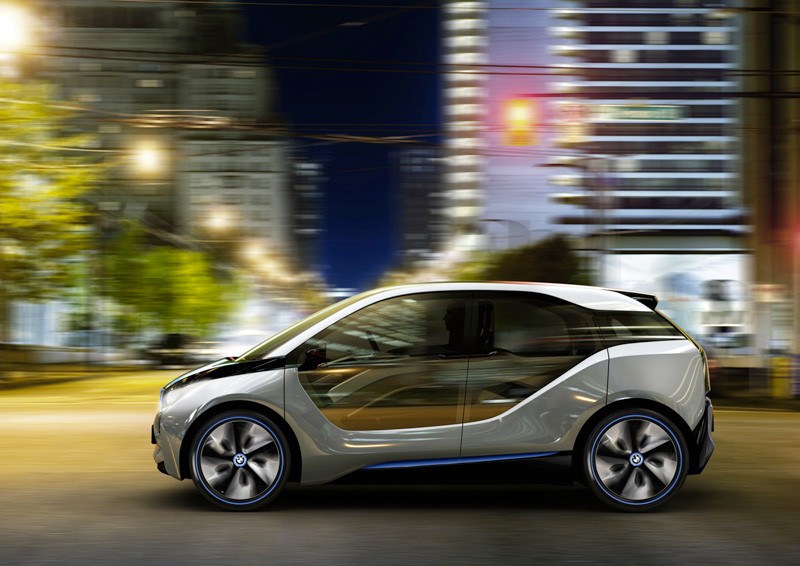
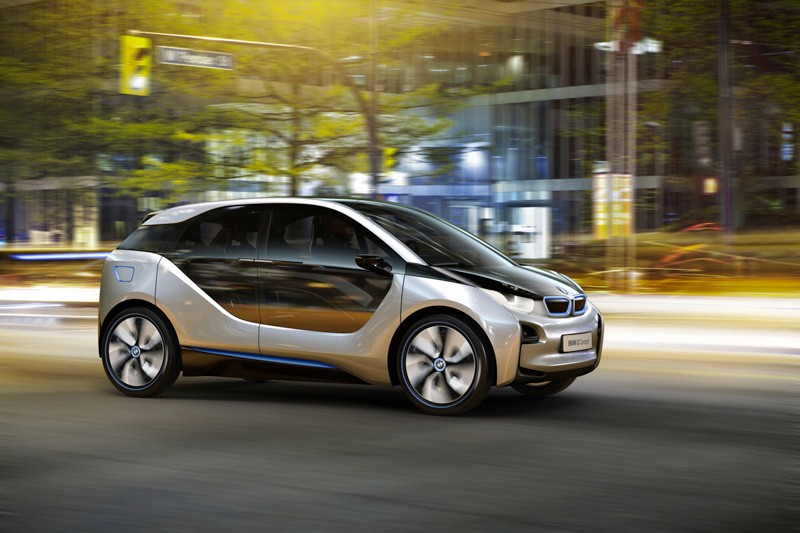
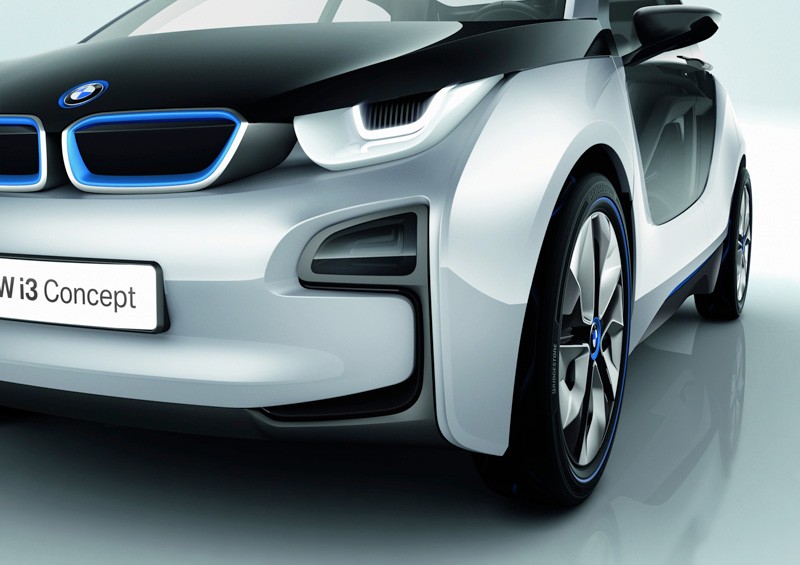
    BMW automobiles is a well known name in the automotive industry, especially when it comes to innovation. The i brand was announced for the electric division of BMW automobiles earlier this year. The launch of the sub brand comes hand in hand with the two concept electric cars. 

    The i3 Concept

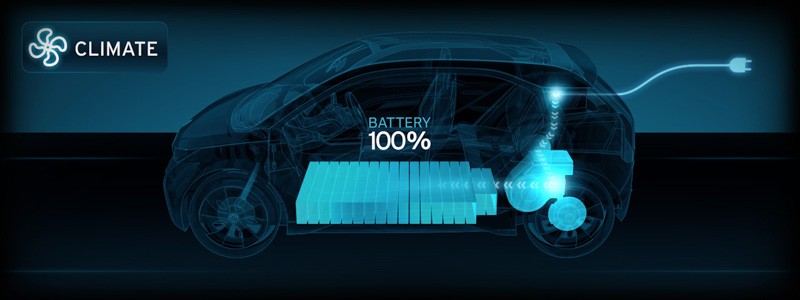
    The i3 will drive 150km on a full charge, acceleration is about 0-60mph in around 8 seconds, while buying the vehicle owners will be able to opt in for the range-extending motor aptly named “REx.” The first consumer model should hit prime markets by as early as 2013. The charger will complete eighty percent charging in an hour, while a full charge could take as long as 6 hours.


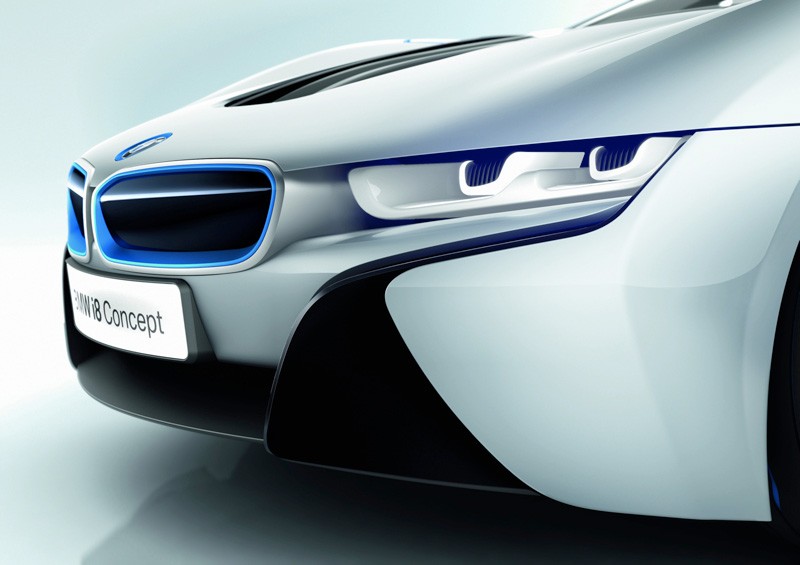
    The i8 Concept


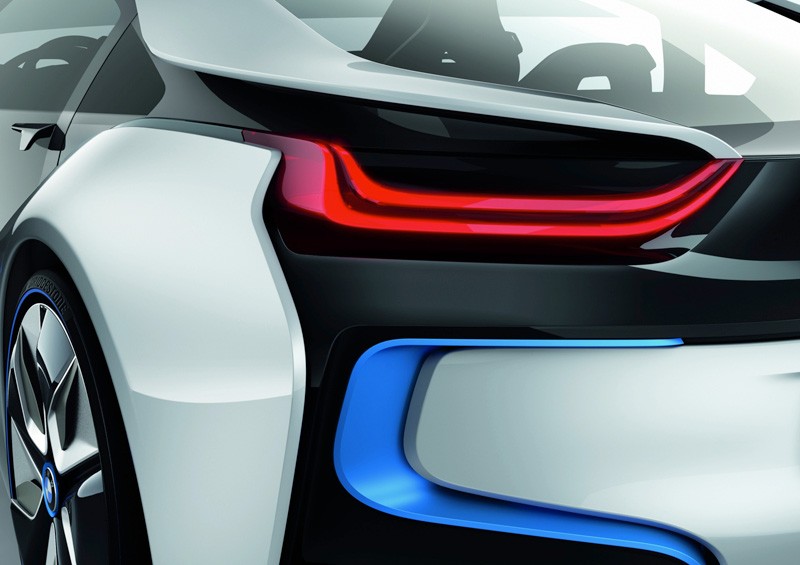
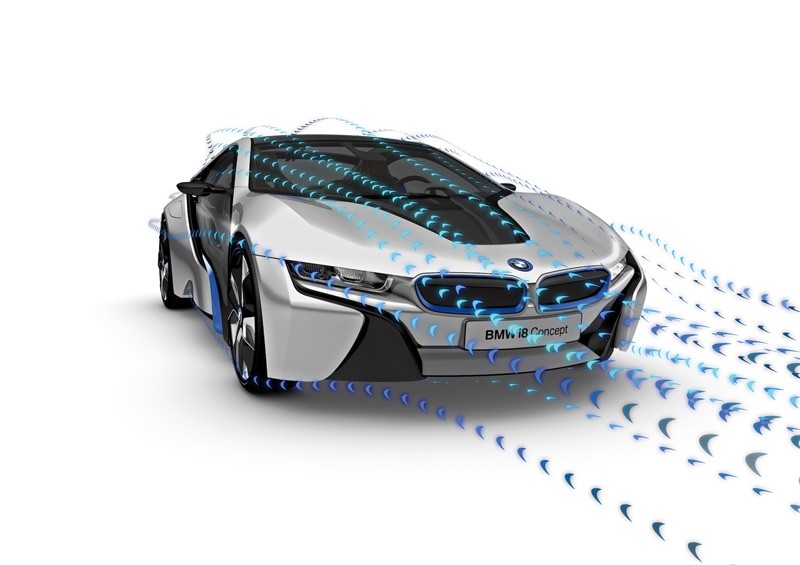
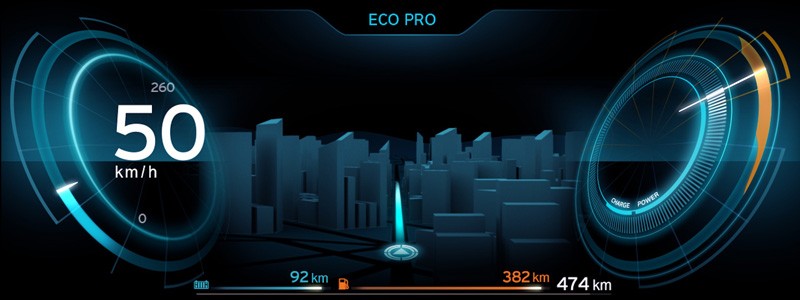
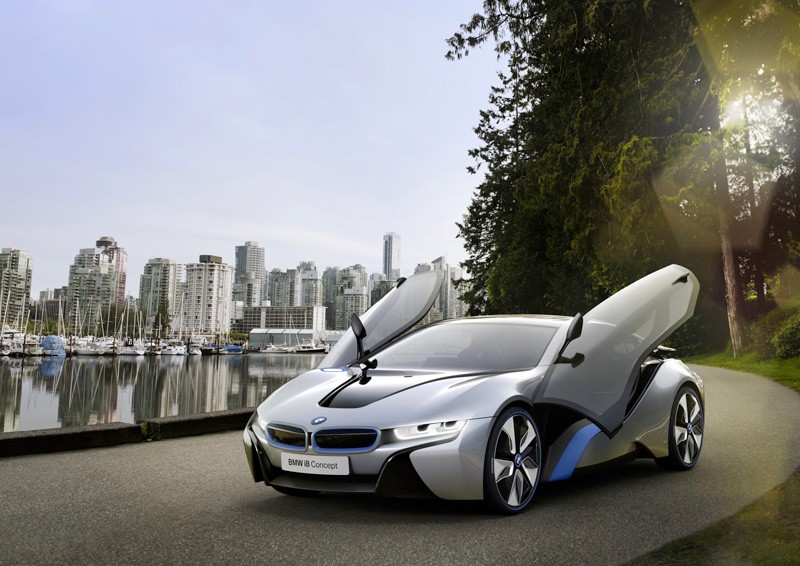
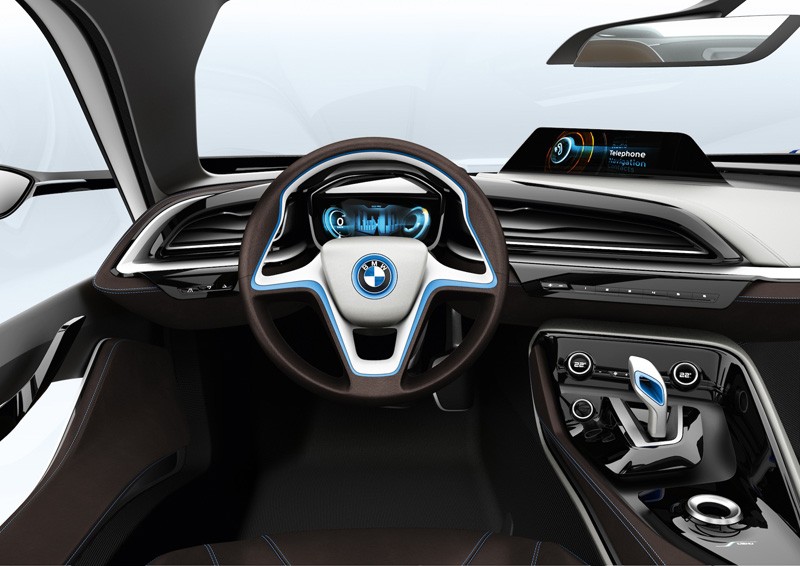
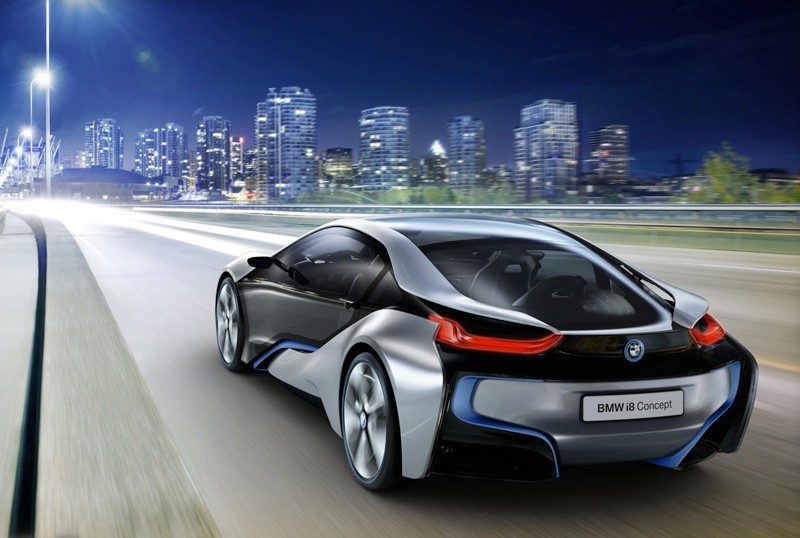
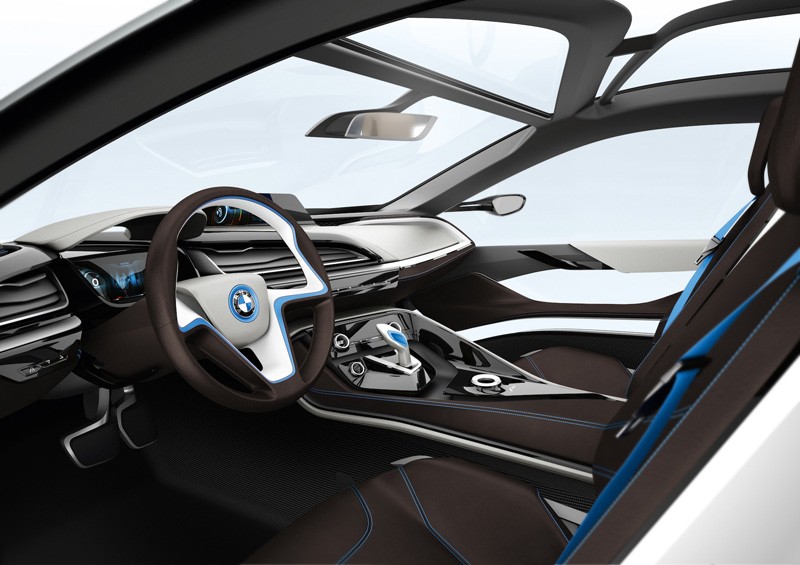
    The i8 on the other hand is highly aerodynamic and has a hybrid diesel-electric drivetrain, while consumption will remain around the region of 2.7 liters per 100km, while it will speed up from 0 to 62mph in 4.6 seconds.


    [toggle title_open=”Collapse” title_closed=”Read The Press Release” hide=”yes” border=”yes” style=”default” excerpt_length=”0″ read_more_text=”Read More” read_less_text=”Read Less” include_excerpt_html=”no”]BMW Group presents mobility of the future +++ World premiere of the BMW i3 Concept and BMW i8 Concept +++ Reithofer: A milestone in the history of the company +++ Sustainability across the entire value added chain

    Frankfurt a.M. / Munich. The BMW Group showcases its visions of future mobility in the shape of the BMW i3 Concept and BMW i8 Concept studies. Unveiled for the first time, these concept vehicles provide a glimpse of the first electrically powered production cars from the new BMW i sub-brand, due to be launched as the BMW i3 in 2013 and the BMW i8 in 2014.

    “We are marking another milestone in the history of the BMW Group. As Chairman of the Board and an engineer myself, I am very proud of this project,” declared Norbert Reithofer, Chairman of the Board of Management of BMW AG, at Friday’s premiere of the two vehicles in Frankfurt. “As the world’s leading premium car manufacturer, our aim is to offer customers purpose-built electric-drive cars as well,” he added.

    With its zero-emission electric drive and a range of approximately 150 kilometres, the BMW i3 Concept has been specifically developed for use in an urban environment, its dynamic 125 kW electric motor and rear-wheel drive ensuring BMW-style dynamic handling. Thanks to its innovative LifeDrive architecture featuring a carbon passenger cell, the BMW i3 Concept combines an extremely low weight of 1,250 kilograms with optimal interior space and the highest crash safety levels. With four seats and a 200-litre luggage compartment, this vehicle is fully suited for everyday use.

    Draeger: a revolution in car design

    “This vehicle will mark the launch of the first volume-produced car featuring bodywork largely made of carbon. It’s a revolution in automotive design,” stressed Klaus Draeger, Member of the Board responsible for Development. The application of this new CFRP technology allows a weight reduction, compared to a conventional electric car, of between 250 and 350 kilos, and that means more dynamic handling coupled with a greater range. The BMW i3 does the 0 to 100 km/h sprint in less than eight seconds, while a high-speed charger achieves an 80% battery charge in just an hour.

    Thanks to the emission-free drivetrain and a value added chain designed to be sustainable all along the line, life cycle emission figures for the BMW i3 are at least a third lower than for a highly efficient combustion-engine car. If the BMW i3 is run on electricity from renewable sources, the figures improve by well over 50%.

    BMW i8 Concept: new-generation sports car

    The BMW i8 Concept goes from 0 to 100 km/h in less than five seconds and boasts fuel consumption of under three litres per 100 km. Its plug-in hybrid drive with a system output of 260 kW allows a range of up to 35 kilometres in electric mode – sufficient for most everyday journeys. For more dynamic driving or out-of-town routes, a high-performance three-cylinder petrol engine also comes into play. The sports car has an electronically governed top speed of 250 km/h and space for up to four occupants. “The BMW i8 Concept is the sports car for a new generation – pure, emotional and sustainable,” Draeger underlined.

    With BMW i, the BMW Group is corroborating its position as the most innovative and sustainable auto manufacturer in the world, as reflected in the fact that it has been the supersector leader in the Dow Jones Sustainability Indexes for the sixth year running. With BMW i, the BMW Group is providing answers to the mobility challenges of the future while pursuing a holistic approach. In addition to purpose-built premium vehicles with electric drive, the company is also offering intelligent mobility services.

    The focus here is on solutions for improved use of parking space, intelligent navigation systems with location-based information, intermodal route planning and car-sharing schemes such as DriveNow. Following MyCityWay, ParkatmyHouse marks the second investment by the recently launched venture capital company BMW i Ventures in a company providing internet-based mobility services. Parkatmyhouse allows private individuals to use the internet or
    smartphone app to rent out their private parking spaces on a short- or long-term basis.

    Both the BMW i3 and the BMW i8 will be built at BMW’s Leipzig plant in Germany. Some 400 million euros are earmarked for investment in new buildings and facilities by 2013, while 800 new jobs are to be created. Vehicle production will be CO2 neutral and will draw on renewable resources. The company is currently investigating the possibility of erecting its own wind turbines on the plant site.

    The BMW Group
    The BMW Group is one of the most successful manufacturers of automobiles and motorcycles in the world with its BMW, MINI and Rolls-Royce brands. As a global company, the BMW Group operates 25 production and assembly facilities in 14 countries and has a global sales network in more than 140 countries.

    During the financial year 2010, the BMW Group sold 1.46 million cars and more than 110,000 motorcycles worldwide. The profit before tax for 2010 was euro 4.8 billion on revenues amounting to euro 60.5 billion. At 31 December 2010, the BMW Group had a workforce of approximately 95,500 employees.

    The success of the BMW Group has always been built on long-term thinking and responsible action. The company has therefore established ecological and social sustainability throughout the value chain, comprehensive product responsibility and a clear commitment to conserving resources as an integral part of its strategy. As a result of its efforts, the BMW Group has been ranked industry leader in the Dow Jones Sustainability Indexes for the last six years.[/toggle]
  • Skypump – The Green Charging Station

    Skypump – The Green Charging Station

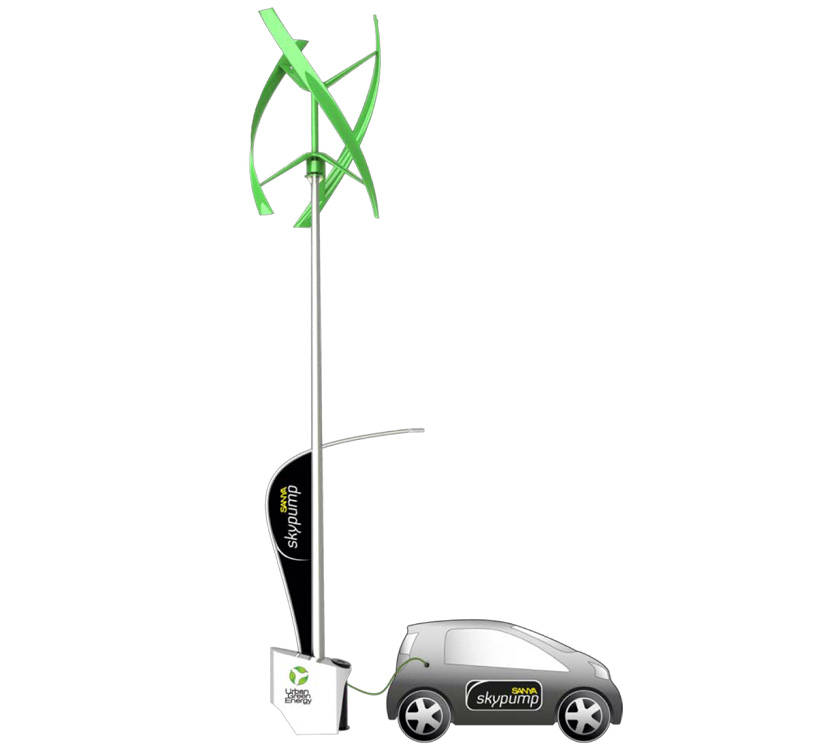
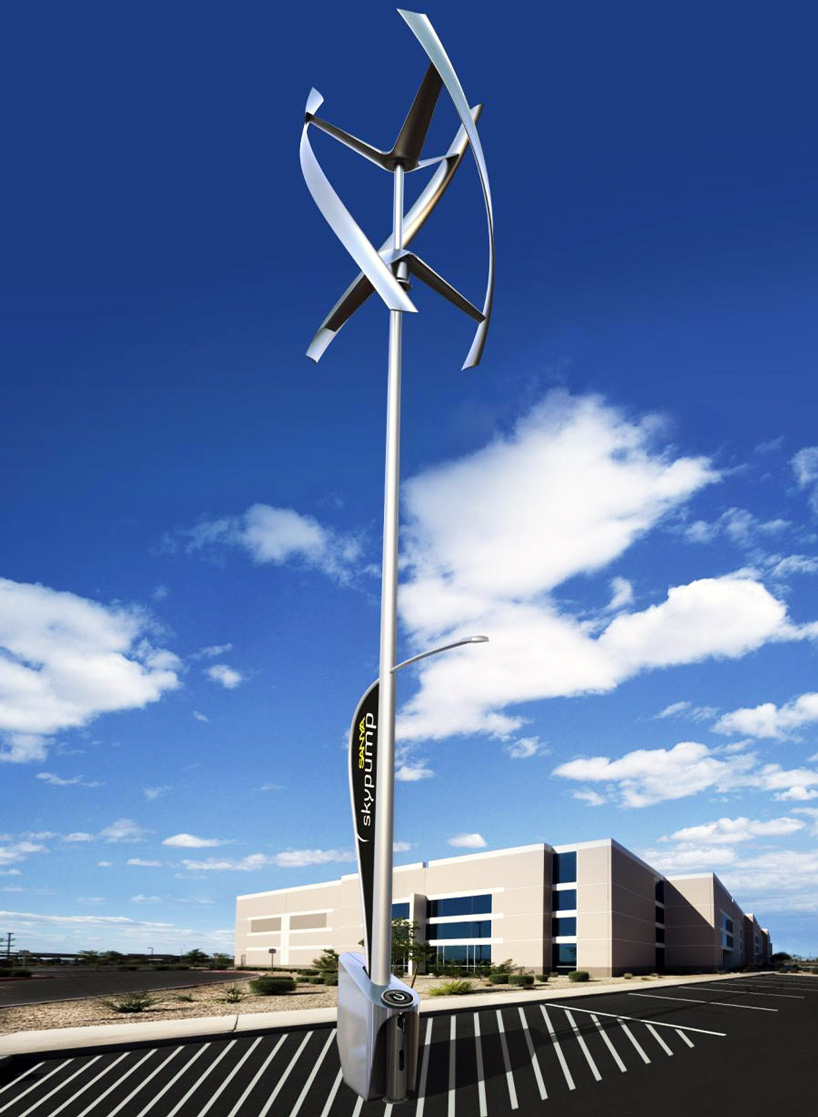
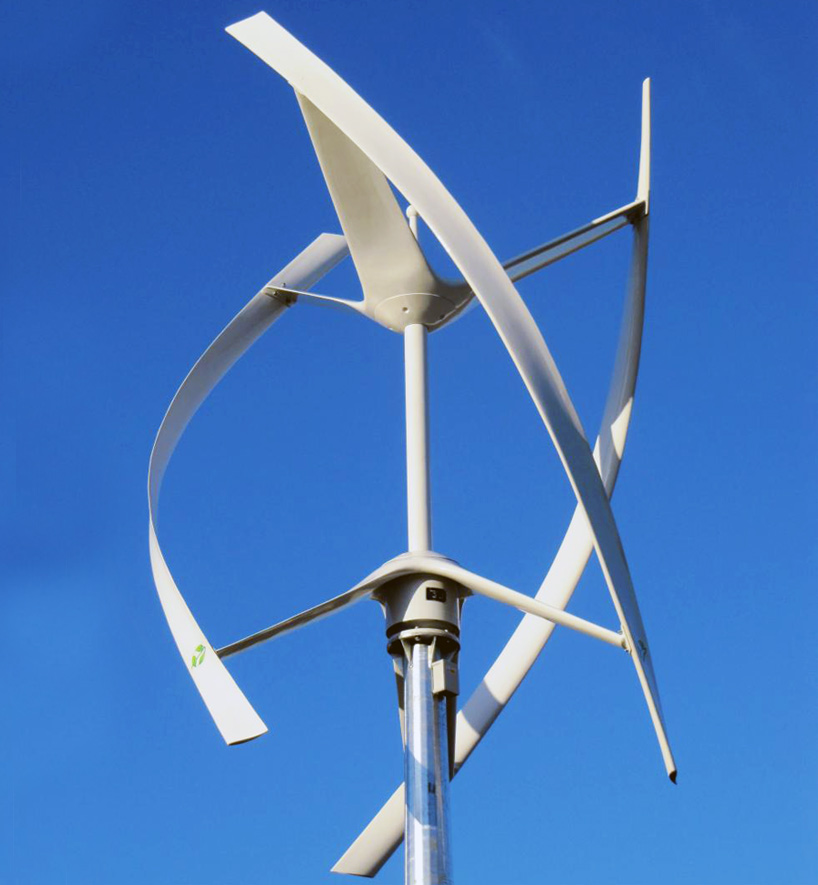
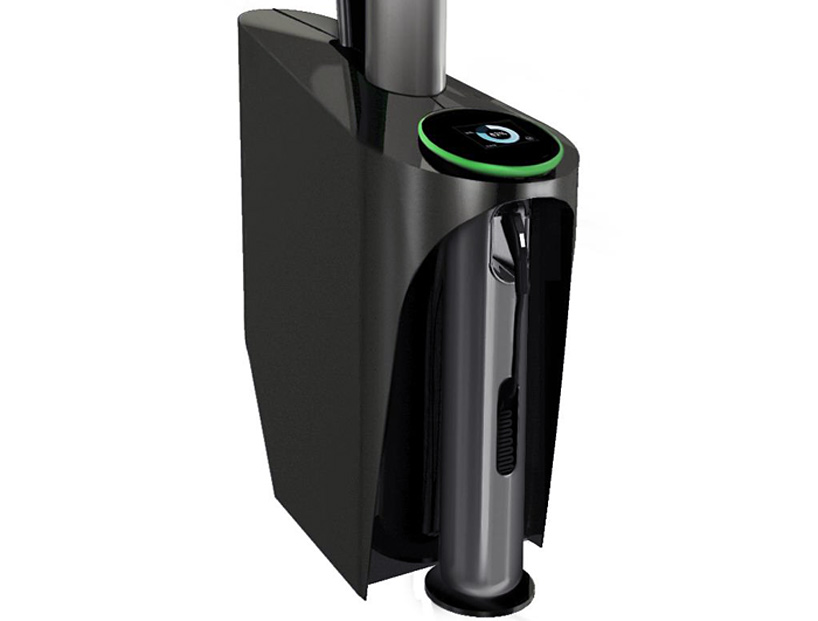
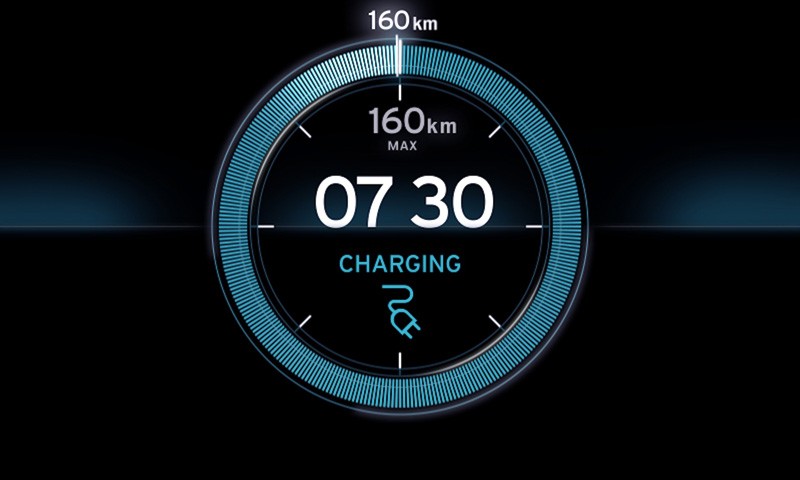
    The Sanya Skypump is a wind powered charging station for electric vehicles and it has been developed by Urban Green Energy in collaboration with General Electric. While still in the conceptual stages, the Skypump combines a GE Wattstation with a urban green wind turbine which can capture up to 4KW of wind energy.

    The turbine is 13m high and can easily be installed in parking lots, rest stops and other areas. As it is attached to the grid, once the station is fully charged and a vehicle is not plugged in, the Skypump will keep pumping electricity back into the grid. The company is also producing a version of the charging station for domestic use. The domestic version will be using a wall mounted GE Wattstation which can charge an electric car in four to eight hours. There is no news on whether the Skypump will offer similar efficiency.


  • Keyless Entry – Keys a Thing of the Past

    Keyless Entry – Keys a Thing of the Past

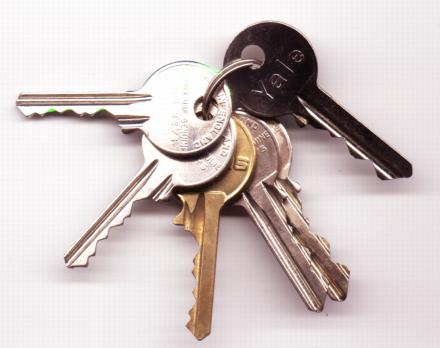
    The key has been one of mankind’s constant companions for ages. Now it is being swallowed by the cellphone. New technology lets phones unlock hotel, office and house doors. The same technology can also be used to provide key-less entry to your car and start it remotely as well. How it works is that the phone sends a data packet over the Internet to a converter box connected to a door or a deadbolt. Other systems use internal company networks, like General Motors’ OnStar system, to unlock car doors.

    Since nearly everyone today has a cellphone, quite a few start-ups, lock companies and car manufacturers are getting on board to provide broad acceptance of the technology. Schlage, a major lock maker, markets a system that lets homeowners use their mobile phones to unlock their doors from miles away, and manage their home heating and air-conditioning, lights and security cameras.

    The public is yet to come to terms with the new technology. It still does not feel safe to start a car with your cellphone. If you have a dead battery or no Internet connection, you might just end up stranded. Keys wont be gone for another few years still but in the future, we may just see a more refined version of this technology that addresses all these issues.

  • The T.27 – World’s Most Efficient Electric Automobile

    The T.27 – World’s Most Efficient Electric Automobile

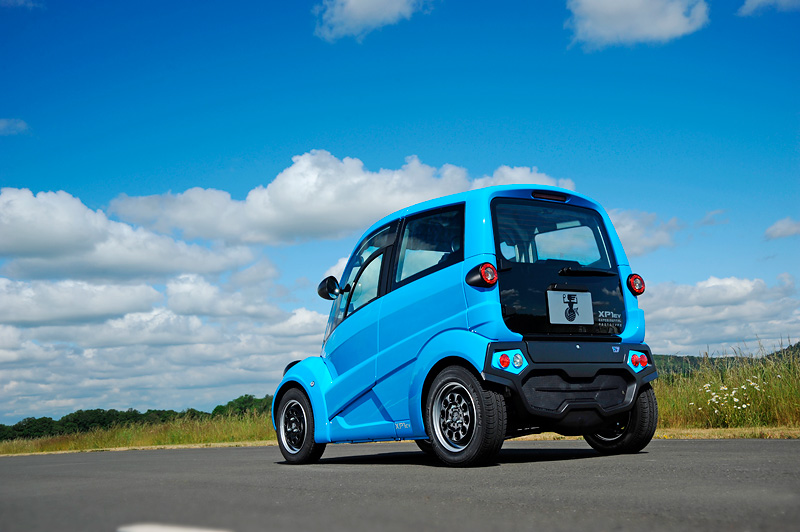
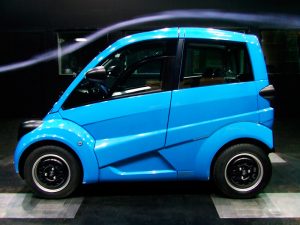
    UK based Gordon Murray Design has unveiled a new car designed for the urban environment which it has dubbed the T.27. The design and development program for the T.27 has cost £9 millionwas made possible through a £4.5 million investment from the government-backed Technology Strategy Board. From design to concept to working prototype, the car has taken just 17 months to come to life, including the design and build of a completely new electric powertrain by Zytek Automotive Ltd.

    T.27 specifically targets the urban city environment via a unique manufacturing process called ‘iStream’ developed Gordon Murray Design. It aims to significantly reduce lifecycle impacts and enable low cost, efficient manufacture within the UK. The electric car sets new standards in weight, footprint, small car dynamics, safety, packaging and efficiency whilst addressing full lifecycle CO2 emissions, congestion, parking and low cost motoring.

    Company CEO, Professor Gordon Murray, said at the unveiling of the car

    [quote]Lightweight is the most powerful tool we have in our armoury in the fight against emissions and fuel consumption.  This is true of all cars and especially so with electric vehicles! A lightweight car means a lightweight battery increasing the levels of safety and reducing the retail price dramatically.”  The T.27 represents a huge step forward in protecting our mobility and our environment.[/quote]
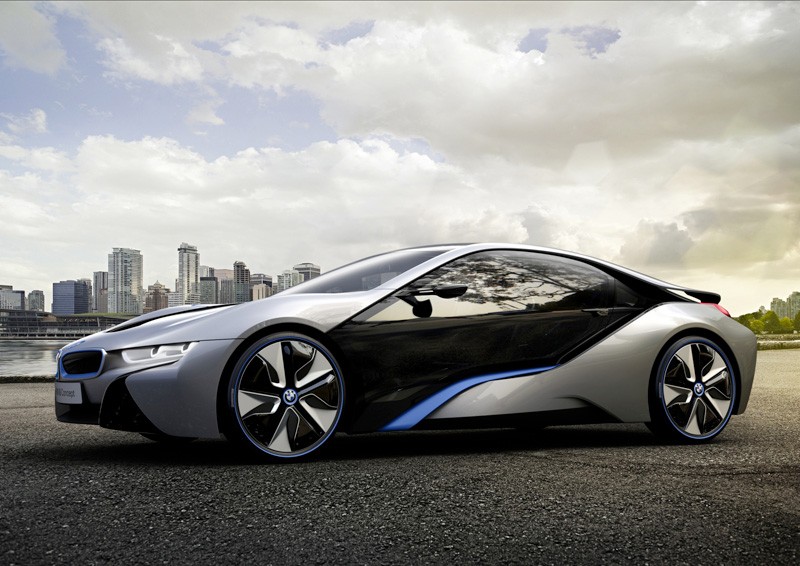
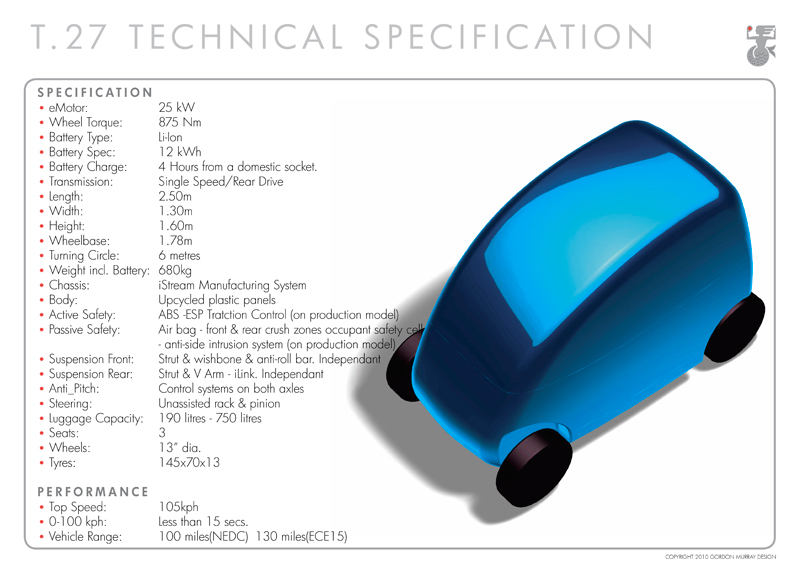
    The tech specs for the T.27 are as follows:

    In comparison to other electric cars the T.27 has much lower energy consumption per mile, the Smart EV uses 29% more energy per km, the Mitsubishi iMiEV uses 36% more energy per km, and the Mini-E uses 86% more energy per km, making the T.27 the most efficient electric car by some margin.

  • BEAT Electric – Coming Soon

    BEAT Electric – Coming Soon


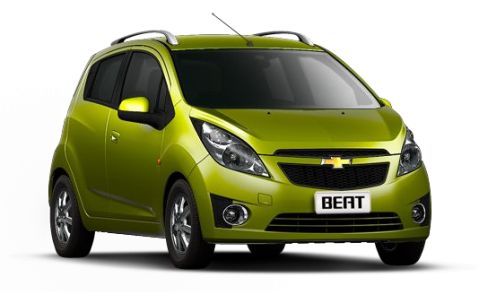
    With the launch of the Chevrolet BEAT Diesel next month, GM plans to unveil an electronic varient of the car. Working alongside Reva for the past year, the auto manufaturer has developed a vehicle with a range of 130Kms on a full charge which taks 8 hours, and a motor that gives 60bhp.

    A GM official said that, “The plan is to just showcase our technology and organise test drives for a few people. The vehicles will be assembled here from parts designed and sourced globally. We are not looking to launch this immediately as we do not have the right charging infrastructure for EVs in this country as yet.”

  • Toyota Kirloskar Motor registers 24% growth in sales

    Toyota Kirloskar Motor registers 24% growth in sales

    Toyota Kirloskar Motor registered sales of 7470 units in May 2011. The company sales grew by 24% when compared to the corresponding period last year. Etios sold 3412 units in May 2011.

    This is great news for the company who saw declining numbers just two years ago.

    Mr. Sandeep Singh, Deputy Managing Director, Marketing, TKM said, “The actual impact of the suspension of production is seen in the drop in sales in May. The production was back to full swing from 20th May onwards, much earlier than expected. We are now back on track and are all set to launch the Etios Liva. With the increase in Etios production, we would like to bring down the waiting period to one month before we launch Liva. The launch will be as per schedule in the last week of June”.

  • Tata Pixel – The Nano’s High-Tech Cousin

    Tata Pixel – The Nano’s High-Tech Cousin

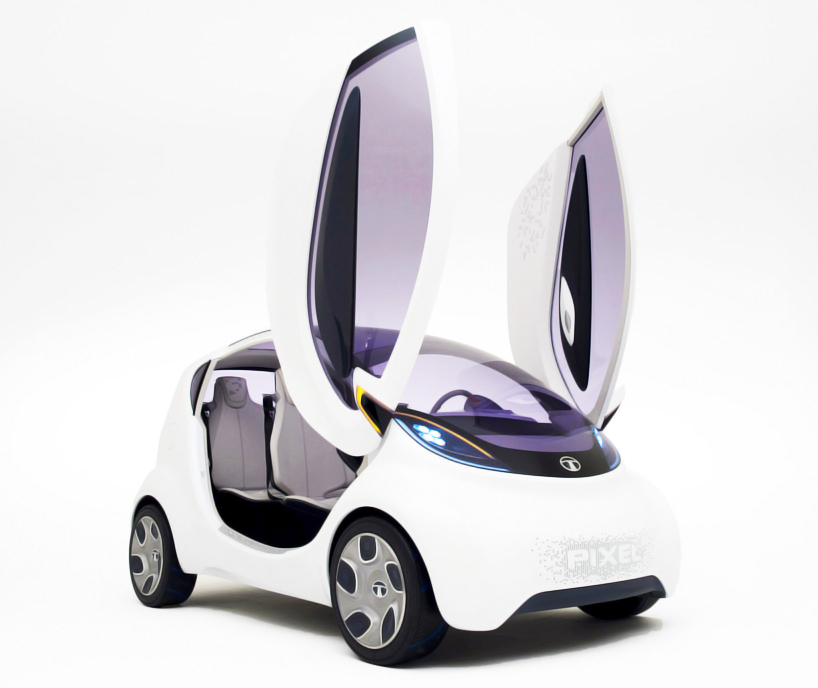
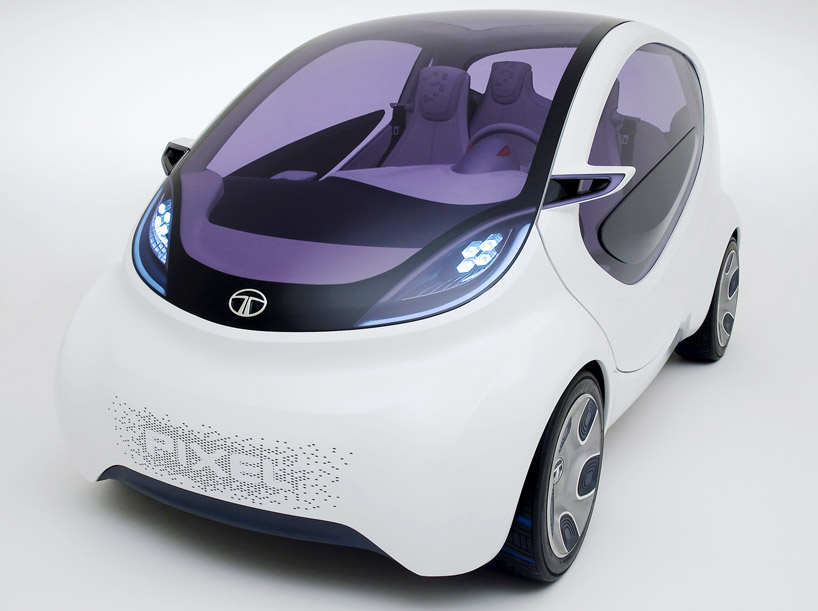
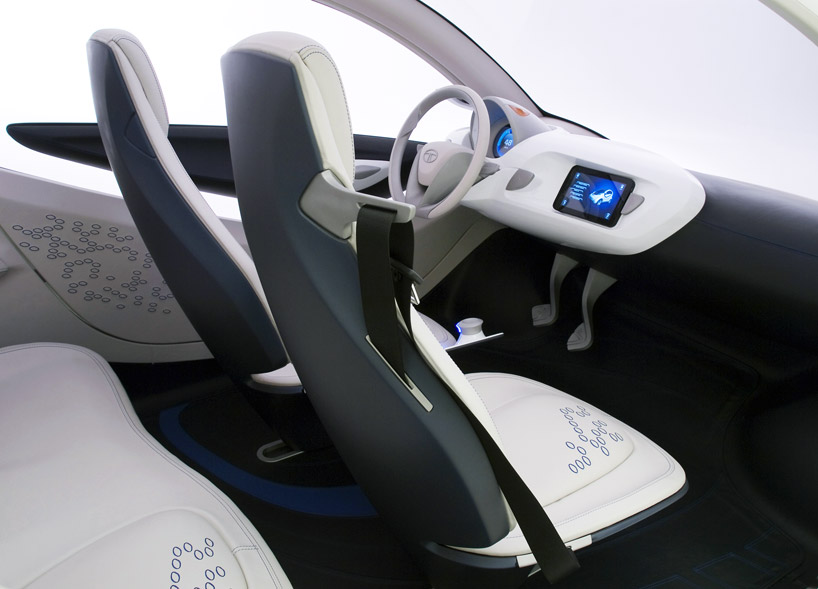
    Everyone must remember the Tata Nano. Well, they’ve come out with a similar high-tech varient for the european market. It boasts high fuel efficiency, ‘zero turn’ technology for minimal turning radius, built-in integration with tablets and smartphones, and an innovative door design. Measuring three meters (9.8 feet) long, the highly efficient ‘pixel’ combines a 1.2L three-cylinder turbocharged diesel engine with stop-start technology and an aerodynamic design to offer a combined cycle fuel economy of 3.4 L/100 km (69mpg), and producing carbon emissions limited to 89 g/km (0.3 lb/mi). ‘Zero turn’ technology makes use of the vehicle’s toroidal infinitely variable transmission to rotate the outer rear wheel forwards and the inner rear wheel backwards as the front wheels turn, producing a turning circle radius of 2.6 meters (8.5 feet).

    We’ll let you decide if they should have launced this in India…

iGyaan Network
Privacy Overview

This website uses cookies so that we can provide you with the best user experience possible. Cookie information is stored in your browser and performs functions such as recognising you when you return to our website and helping our team to understand which sections of the website you find most interesting and useful.