Tag: drones

  • GoPro Reportedly Working on a Line of Consumer Drones

    GoPro Reportedly Working on a Line of Consumer Drones

    According to recent report, GoPro is developing its own line of consumer drones with high-definition cameras that might launch as soon as next year. The company’s core business is to make wearable video cameras popular with surfers and other sports enthusiasts.

    The company plans to start selling multirotor helicopters equipped with high-definition cameras late next year, aiming for a price tag between $500 and $1,000, according to the report. The drone market has been flourishing recently with electronic giants investing money in this lucrative market.

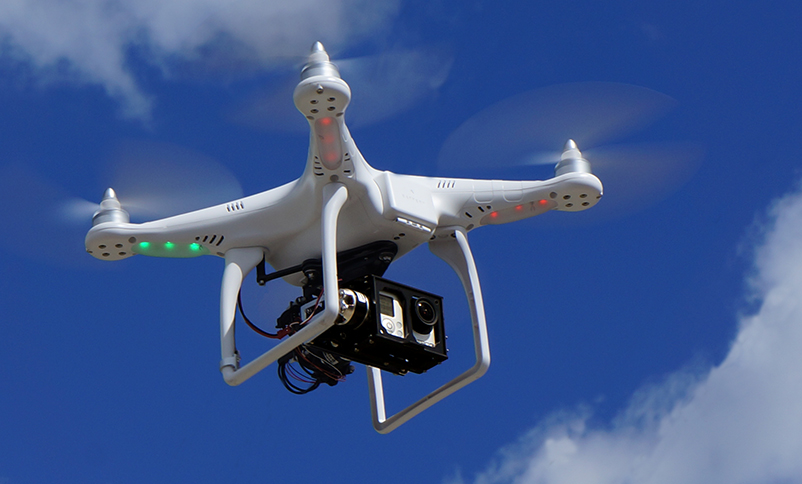
    Drones, which are essentially unmanned aircrafts, are becoming smaller, cheaper and easier to fly with technological advancements. Consumer drones are typically lightweight helicopters with cameras that can be controlled with a tablet or smartphone. However, series of regulations and rules have restricted the use of drones for consumer needs. In the US, regulators allow their use by hobbyists with a long list of rules.

    For the drone industry, the GoPro drone marks a new splash in the quickly expanding market. GoPro needs to offer something that differentiates it from its competition – both Parrot and DJI, two market leaders in consumer aerial drones. These companies have launched next-generation hardware with advanced camera features, including advanced onboard software image stabilisation and 4K recording. GoPro cameras are already compatible with several consumer drones in the market.
  • China Develops a Laser That Can Shoot Down Low Flying Drones

    China Develops a Laser That Can Shoot Down Low Flying Drones

    In the history of weaponry, every new lethal weapon has led to the creation of a weapon that can take the lethal weapon down or at least diminish its effects. Even the most destructive of them all; the nuclear weapons can be defended from by using missile defense systems. One of the pieces of weaponry choice of countries like US is drones. The drones or unmanned aerial vehicles are capable of getting the desired result without putting the pilot’s life in danger. China though seems to have created the counter-measure for a drone offensive and their answer is lasers.

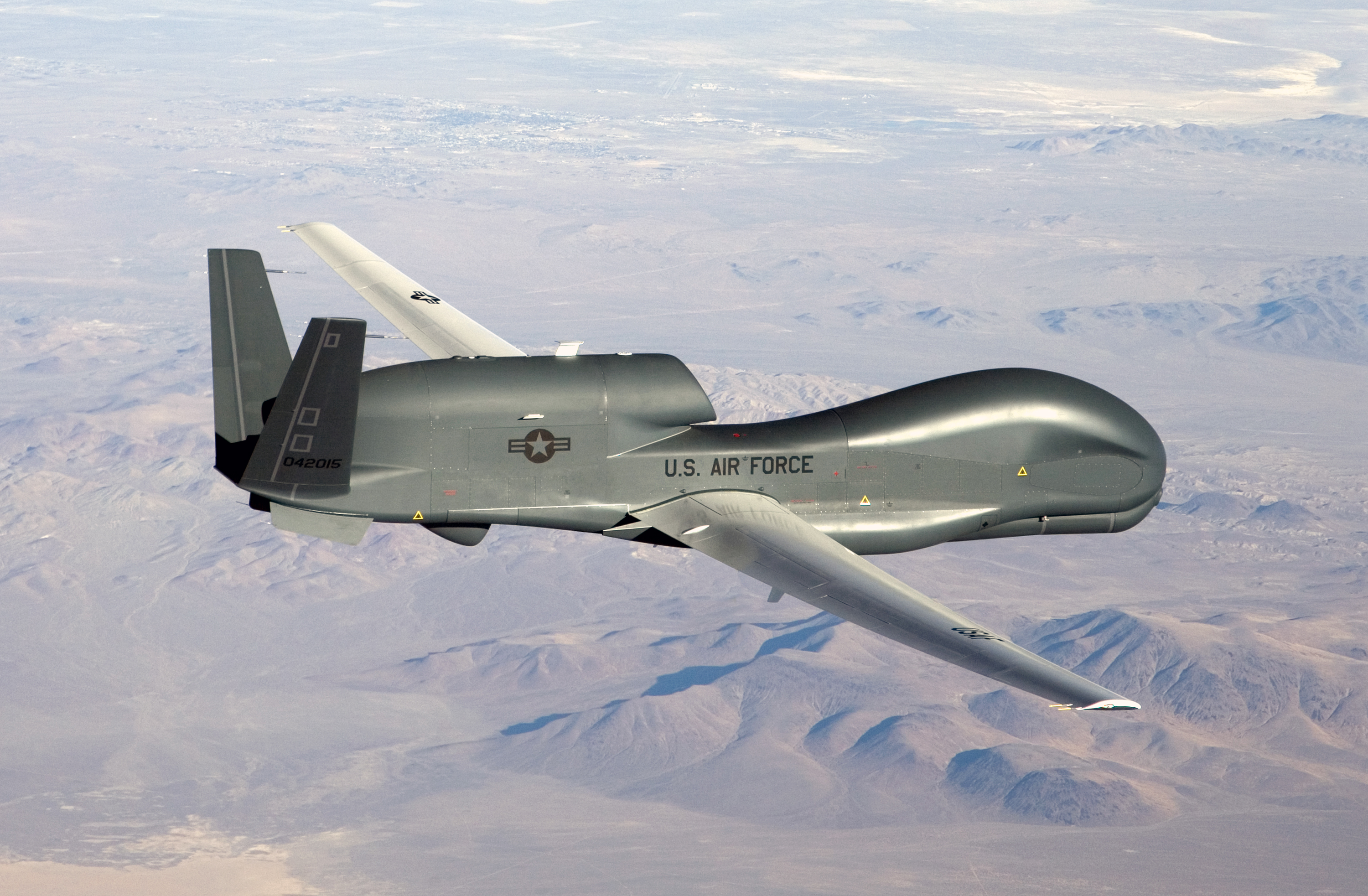
    China’s new anti-drone laser weapon has a range of two kilometers and is capable of taking down low-altitude threats in five seconds of locating the target. The state media said that the technology will be used against “various small aircrafts.” The technology has been developed at the China Academy of Engineering Physics (CAEP).

    Chinese government has been known for taking aggressive stands against almost every country that it sees as a threat. The nation’s President, Xi Jinping, had recently asked the country to be prepared for regional wars. China is already the 2nd biggest spender on defense in the world. It regularly finds itself at odds with its neighbours, especially India and the countries in the South China Sea.

    The anti-drone weapon is one the steps taken by the country as a preventive measure and also to assert its military might. According to Xinhua, the weapon is effective up to a maximum altitude of 500 metres and against an aircraft flying at up to 50 metres per second (112 mph).

    The drone technology has gained tremendous leap in just the recent times. Consumer models are available in departmental stores for really affordable prices. One of the officials has said that terrorists can make use of this easily available technology for their activities, and hence a deterrence is required.

    A statement by CAEP says that shot down more than 30 drones in a recent test with a 100 percent success rate. The academy is also developing the next generation of laser security systems which will be capable of greater power and longer range.

  • Malaysia is Using Drones to Fight Malaria

    Malaysia is Using Drones to Fight Malaria

    Drone technology may have raised some security issues in the past, but they have come a long way from being destructive modes to actually doing good for the society. The recent example of one such application can be seen in the remote areas of Southeast Asia.

    A research team in the Borneo island, Malaysia, is using a flying drone to map out the areas affected by a dangerous parasite called Plasmodium knowlesi, which carries malaria. The malaria parasite usually targets macaque monkeys, which in turn spread it to humans via mosquitoes.

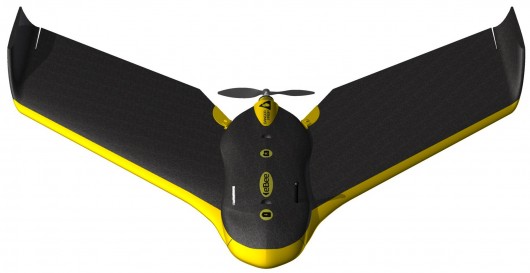
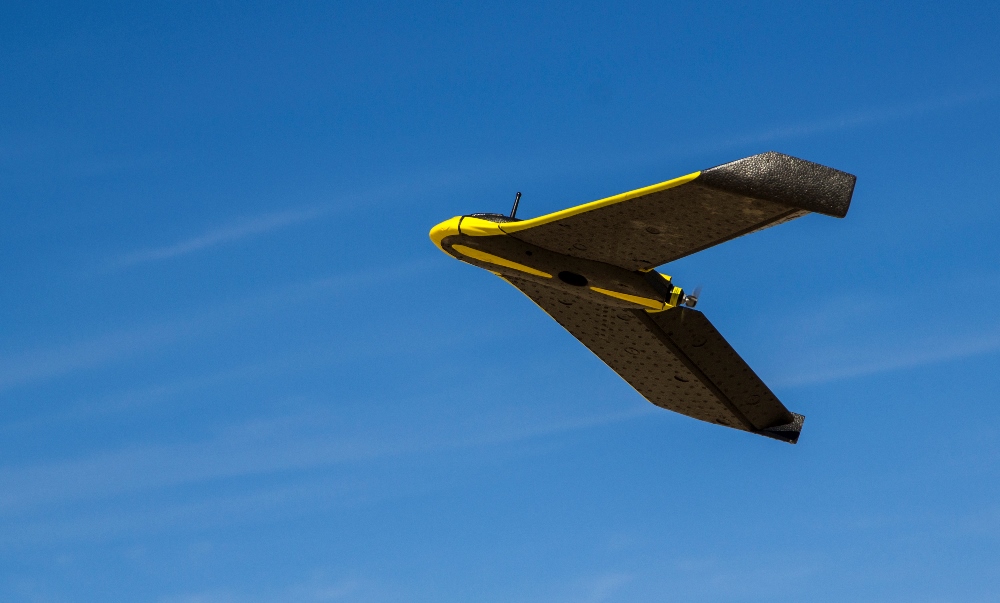
    The researchers are trying to figure out the reason of a rapid increase in such malaria cases. Chris Drakeley, a professor of Infection and Immunity at the London School of Hygiene and Tropical Medicine in the United Kingdom, and one of the researchers involved in the project said that they are using a small camera-equipped drone called senseFly – an eBee to create maps and digital surface models of the land and vegetation surrounding communities where Plasmodium knowlesi has affected humans.

    ebee-1

    “What we’re doing is creating a detailed map, which we can then superimpose or overlay with human and the macaque movement,” Drakeley explained. The locals are asked to carry GPS tracking devices with them while several monkeys were fitted with GPS collars.

    The aim of the project is to identify the contact point between humans and the affected monkeys. Meanwhile, the drones will help researchers figure out what these areas look like and why both species are drawn towards the particular area. “It was thought to be a relatively rare and specific kind of interaction,” Drakeley said. “But what the Malaysians we’ve worked with in the state of Sabah have described us that this actually isn’t always the case.”

    Recently, there have been malaria cases which involve children and sometimes an entire family. The researchers hope to narrow down the contact between the two species and hence, provide a practical solution to avoid spreading of the disease.

  • These Tiny Autonomous Quadcopters Might be the Builders of Tomorrow

    These Tiny Autonomous Quadcopters Might be the Builders of Tomorrow

    Drones are one of the buzzwords of our times. Although the name became associated with the deadly unmanned aerial vehicles operated by the US armed forces, it has quickly lost that. They are now everywhere. They are being used for shooting professional grade videos at low costs, used for making deliveries and are a boon to action sports. Now a research video released by the University of Pennsylvania shows them doing some amazing things.

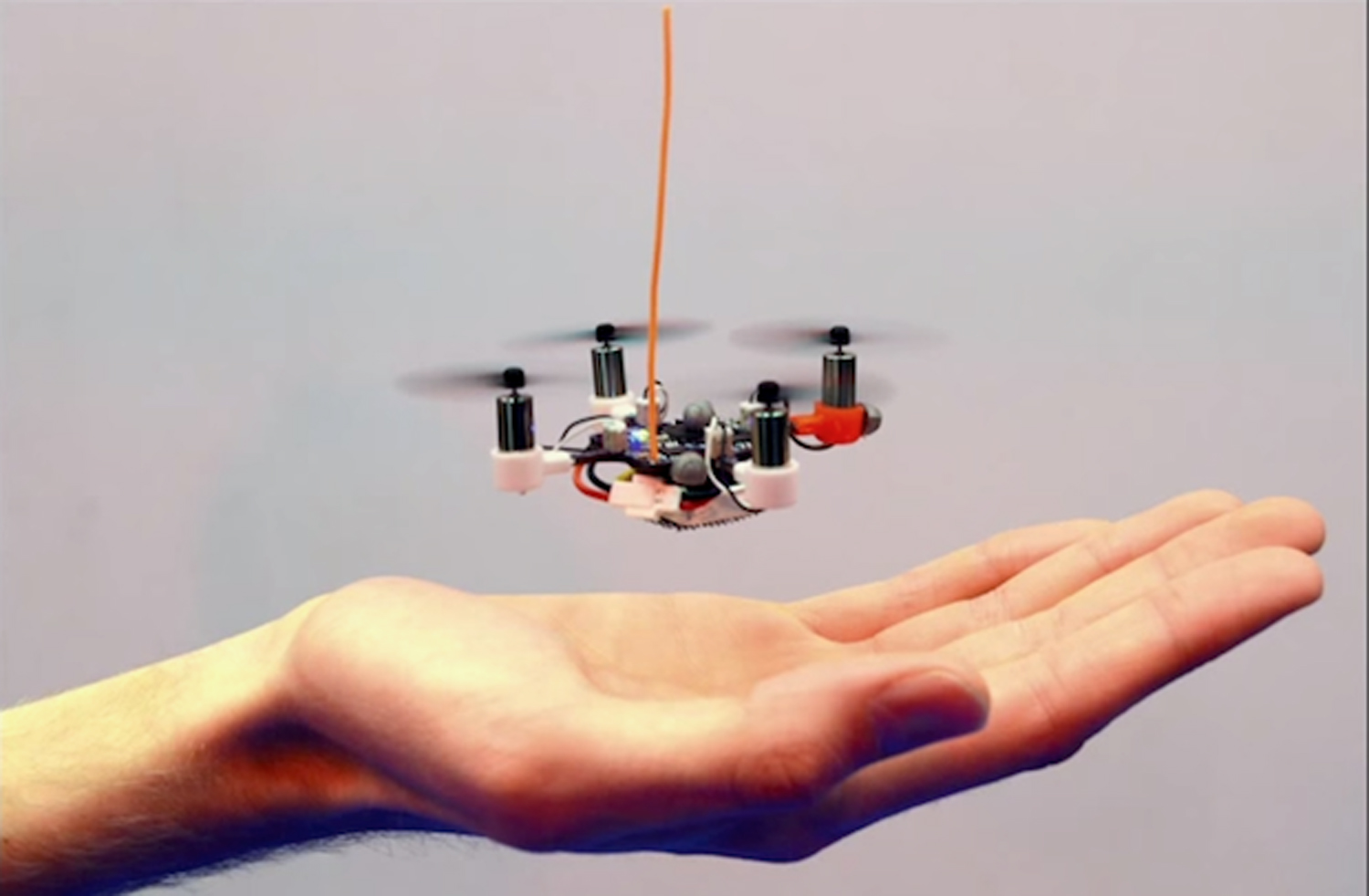
    The quad copters called the Pico quadrotor are developed at University of Pennsylvania’s General Robotics, Automation, Sensing and Perception (GRASP) Laboratory. It integrates computer science, electrical engineering and mechanical engineering to build autonomous vehicles and robots, develop self-configuring humanoids, and making robot swarms.

    It seems that the researchers at the GRASP Lab have already made robot swarms a reality. The quadroter showcased in the video flaunt their strong body, collision aversion systems and flying in a leader-follower formation.

    The pico quadrotor weighs just 25 grams and 11 centimeters long. They are capable of flying up to six meters per second, about half the speed of a hummingbird. The demonstrations of the tiny drones are extremely impressive. The copters can collide with walls and poles and still survive.

    The leader-follower bit of the demonstration blew our minds. These drones might as well inspire the future fighter planes and planets. Each quadrotor robot has its own set of sensors too, which assist it in making direction decisions in real-time, without the need to be connected to a computer. You can almost imagine a precision flying mechanism from any sci-fi movie. These almost feel like the DWARF drones from Agents of Sheild. Looking at experiments like this, it feels like the future is now.

    Yash Mulgaonkar, one of the researchers behind the project told TechCrunch that these drones can assist in search and rescue, first response, law enforcement due to their “ability to fly through unstructured, constrained, 3-D environments.”

    Though it does sound fantastic to look at, it does inspire speculation of a future where these devices can overpower humanity. Films like Terminator and Matrix come to mind. Even in the most basic of stages, the pico quadrotor looks capable of doing things better than a human mind. But these speculations are for a distant future, but it’s important to have a fail-safe plan before they are unleashed in the market.

    Here is a detailed TED talk about this amazing device and the future applications of the Pico quadrotors.

  • Facebook is Gearing Up to Test Wi-Fi Drones for Internet.org Initiative

    Facebook is Gearing Up to Test Wi-Fi Drones for Internet.org Initiative

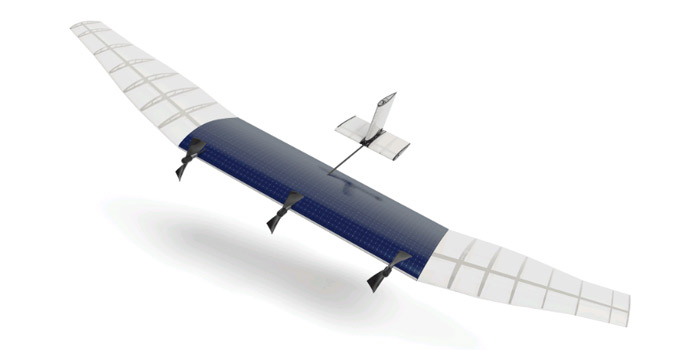
    Facebook has taken steps ahead of Google in the race to provide internet to everyone in the world. Facebook plans to start testing its internet beaming solar-powered drones in 2015, with the ultimate aim of getting two-thirds of the global population online. Mark Zuckerberg has announced it to be part of the efforts of Internet.org.

    Speaking at the Social Good Summit in New York last week, engineering director at Facebook Connectivity Lab, Yael Maguire, detailed the company’s vision of internet-carrying drones, with plans to begin testing in 2015 in a US location which is yet to be determined. “In order for us to fly these planes; unmanned planes that have to fly for months, or perhaps years at a time, we actually have to fly above the weather, above all airspace. That’s between 60,000 and 90,000 feet. Routinely, planes don’t fly there, and certainly not drones” Maguire said.

    internetorg

    Wi-Fi will be beamed using solar-powered drones that are the size of a Boeing 747, announced Facebook. Facebook said that the drones would be powered by the Sun and that it would fly in the air for months or years at a time. Apart from the flying Wi-Fi drones, there will be satellites and infrared lasers too which will be built to provide Internet to all.

    Facebook has also gone on to join hands with Ericsson, Nokia, Qualcomm and Samsung for its effort. A spokesperson from Facebook confirmed that though these companies were helping Facebook with bringing internet connectivity to the developing nations, they weren’t going to be a part of the drone project.

    Google has been working on a similar project with one of the differences being that they have plans of making use of balloons in addition to the drones. Google’s project has been named project Loon. It has only performed a few tests of the ambitious proposal so far.

  • National Geographic Shows Us The Future of Farming

    National Geographic Shows Us The Future of Farming

    In a new animation series by National Geographic show called ‘Food By the Numbers’, they point out that by 2050 we’ll need to feed two billion more people. The special eight-month series explores the possibility of how we can do that—without overwhelming our planet.

    fod

    The episode called ‘Precision in the Fields‘ provides info about how farmers are increasingly using GPS-equipped machinery supported by computers that organize sophisticated data on plants, soil, and weather. Termed “precision agriculture,” same as the episode, this system helps them identify and manage variability within fields. David Schimmelpfennig of the USDA Economic Research Service says that farmers have always made informed choices but that access to more data expands their decision-making toolbox.

    The video talks about the effective use of weather forecasting apps, agriculture drones, soil mapping, GPS guidance and many other technology as a critical tool for modern farming.

  • Meanwhile in Mumbai, Drones Delivered Pizzas

    Meanwhile in Mumbai, Drones Delivered Pizzas

    Picture this: You order a pizza, and as always, 30 minutes later the door bell rings. You’re expecting a cheery delivery guy with the hot cheesy pizza you ordered. But wait, what if instead it’s being delivered by a flying drone?

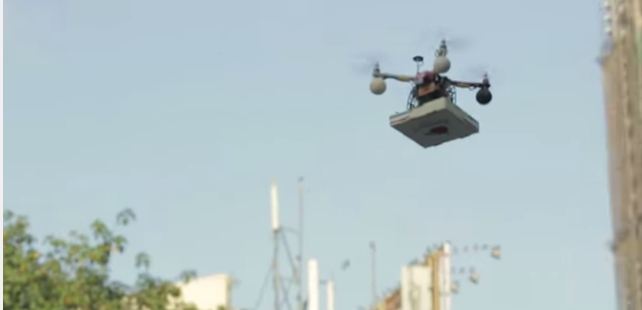
    A lesser-known pizza chain in Mumbai called Francesco’s Pizzeria, did just that last week. It succeeded in making a test-delivery, less than 3km away from its outlet in Lower Parel by using a remote-controlled, GPS-enabled drone. A four-rotor drone took off with the order from its outlet in central Mumbai’s Lower Parel area and delivered it to a high-rise building in adjacent Worli area. It dropped the 13-inch plain margherita pizza, weighing half a kilo, on the 21st floor rooftop before taking off again for the return journey. The speed with which the delivery was made thus beat the record for most leading pizza chains, which manually deliver pizzas within 30 minutes. The company claimed that it was the first time a drone has been used for such a purpose in the country.

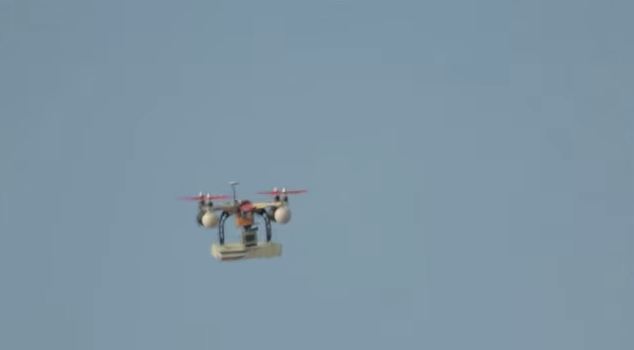
     droneThe drone used  was custom-made, said an official from the pizza chain, adding that an auto engineer friend of his had helped him make the flight possible. The official said the chain had carried out the test-delivery as an experiment because they want to be ready for when regulations in India loosen.

    Since commercial deliveries by drones is not allowed in India, the ‘customer’ was  a friend of the chain’s CEO. It may not be considered an official sale, but in a way, it was a first time for an aerial product delivery.

    Several roadblocks have ensured their limited use  and drones are mainly used in India by filmmakers. Legal restrictions make it clear that they are only allowed to fly between the altitude of 200 to 400 feet. They are also barred from flying over security establishments, and then there are the technical difficulties such as the limited operating radius of 8 km, after which their batteries go dry.

    In the past, Taco Bell and Dominoes USA have attempted similar strategies. An idea called the TacoCopter — an app that would dispatch a drone to deliver a taco to your door — went viral last year, but the service is illegal under U.S. law as well. Dominoes USA tried pizza delivery which help of drone called ‘Domicopter’. Even Amazon has been in the news for testing and planning  an unmanned aerial vehicle delivery system since quite a while.

    It’ll take some time for them to figure out the nitty-gritties, but this seems to be the future of quick-deliveries. Till then, it is working well for the companies as a marketing gimmick.

  • Amazon Launches Prime Air, Packages Delivered In 30 Minutes Through Drones

    Amazon Launches Prime Air, Packages Delivered In 30 Minutes Through Drones

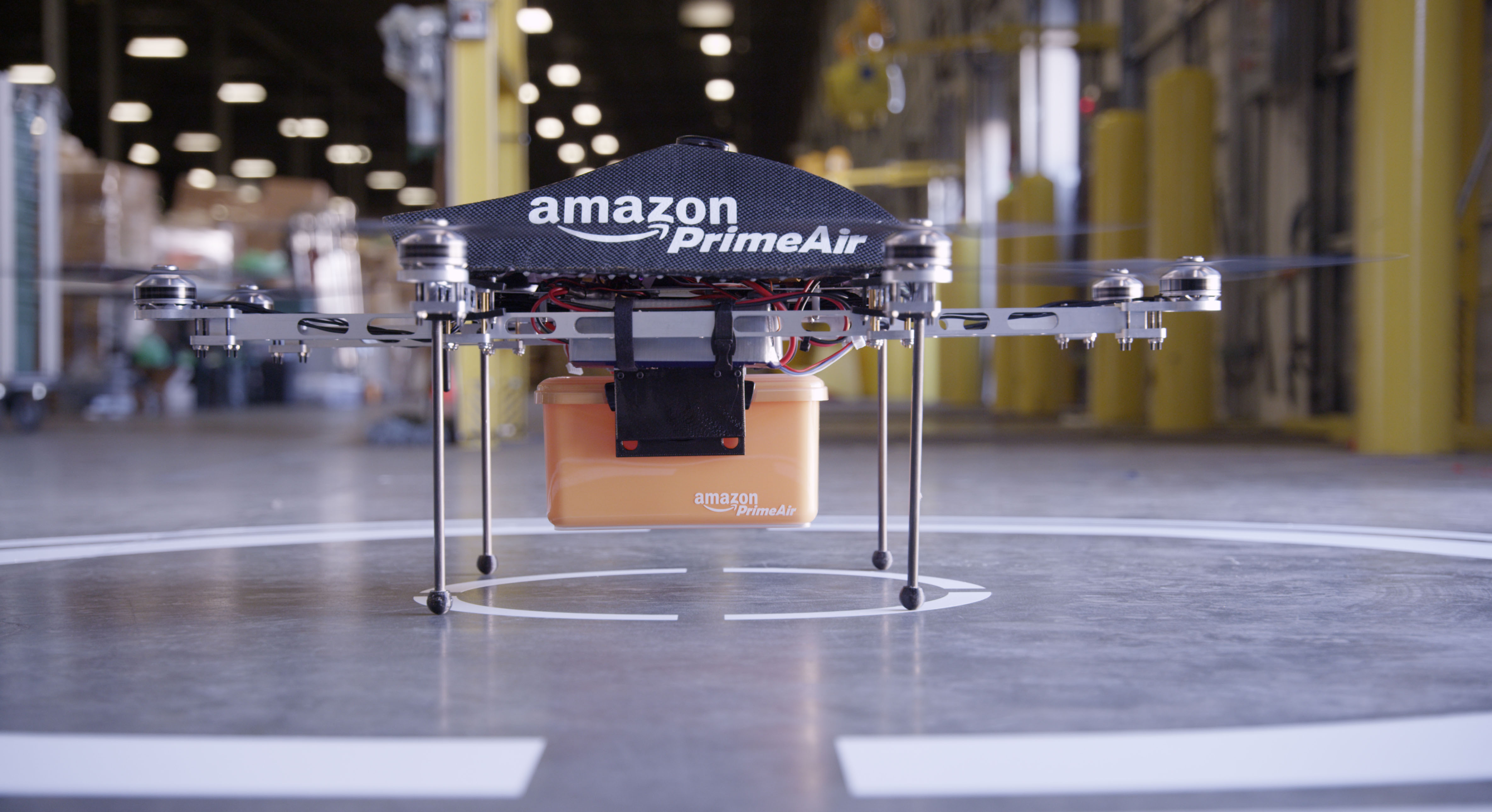
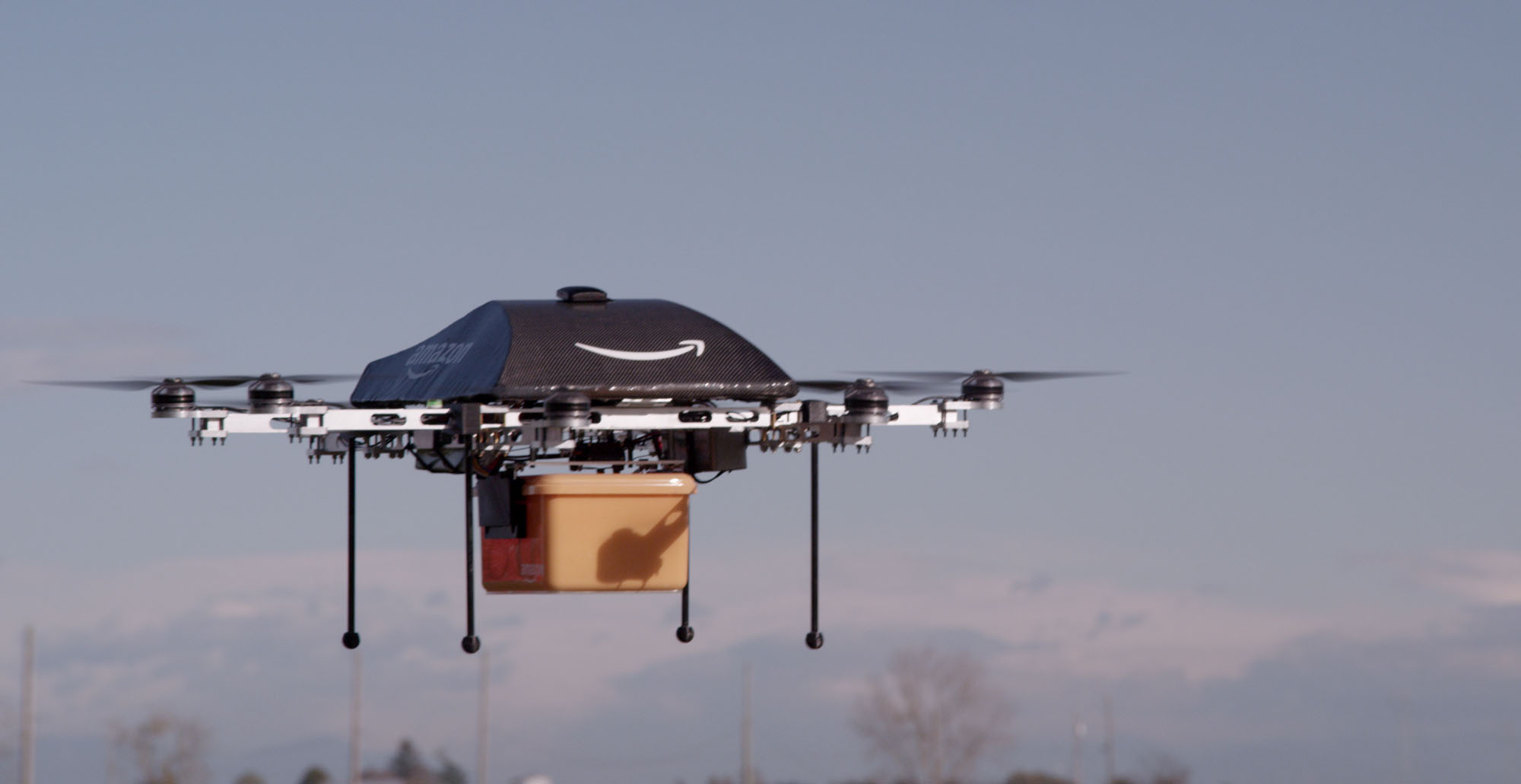
    Amazon is one of the most visited shopping website, and the company has just revealed a next generation delivery system. Amazon’s next generation delivery system is named as Prime Air, which includes shipping of parcels with the help of drones. 

    The company says this is something they have been working upon in the next generation Research and Development lab. This new technology will include Drones that can easily take parcels upto five pounds, and has a range of approximately 16 kilometers.

    However, the company claims that this can take a while, before people can see the drones flying around for delivering parcels. Amazon says that this might happen sometime in the year 2015, as they believe to be ready by that time. 

    prime-air_high-resolution02

    Amazon says that before Prime Air is successfully launched they will take care of all necessary security and privacy measures. As the company says The FAA is actively working on rules and an approach for unmanned aerial vehicles that will prioritize public safety.  

    While, this sure is the next step in technology, but it might take years to be a part of India. What do you think ? To know more check out the source and watch the video below:

    [youtube url=”http://www.youtube.com/watch?v=98BIu9dpwHU”]

    [Amazon]

iGyaan Network
Privacy Overview

This website uses cookies so that we can provide you with the best user experience possible. Cookie information is stored in your browser and performs functions such as recognising you when you return to our website and helping our team to understand which sections of the website you find most interesting and useful.