Tag: DXOmark

  • Samsung Galaxy S10 5G Registers Highest Overall Score In DxOMark

    Samsung Galaxy S10 5G Registers Highest Overall Score In DxOMark

    Samsung unveiled the Galaxy S10 lineup of smartphones at the Galaxy Unpacked event in the month of February. The newly launched devices include the S10e, standard S10, S10+ and the S10 5G. All variants of the S10 lineup are laden with praiseworthy features, especially the high-end S10 5G. To add up to the Galaxy S10 5G’s prowess, DxOMark has ranked the smartphone on top of its charts. 

    Galaxy S10 5G Camera Composition
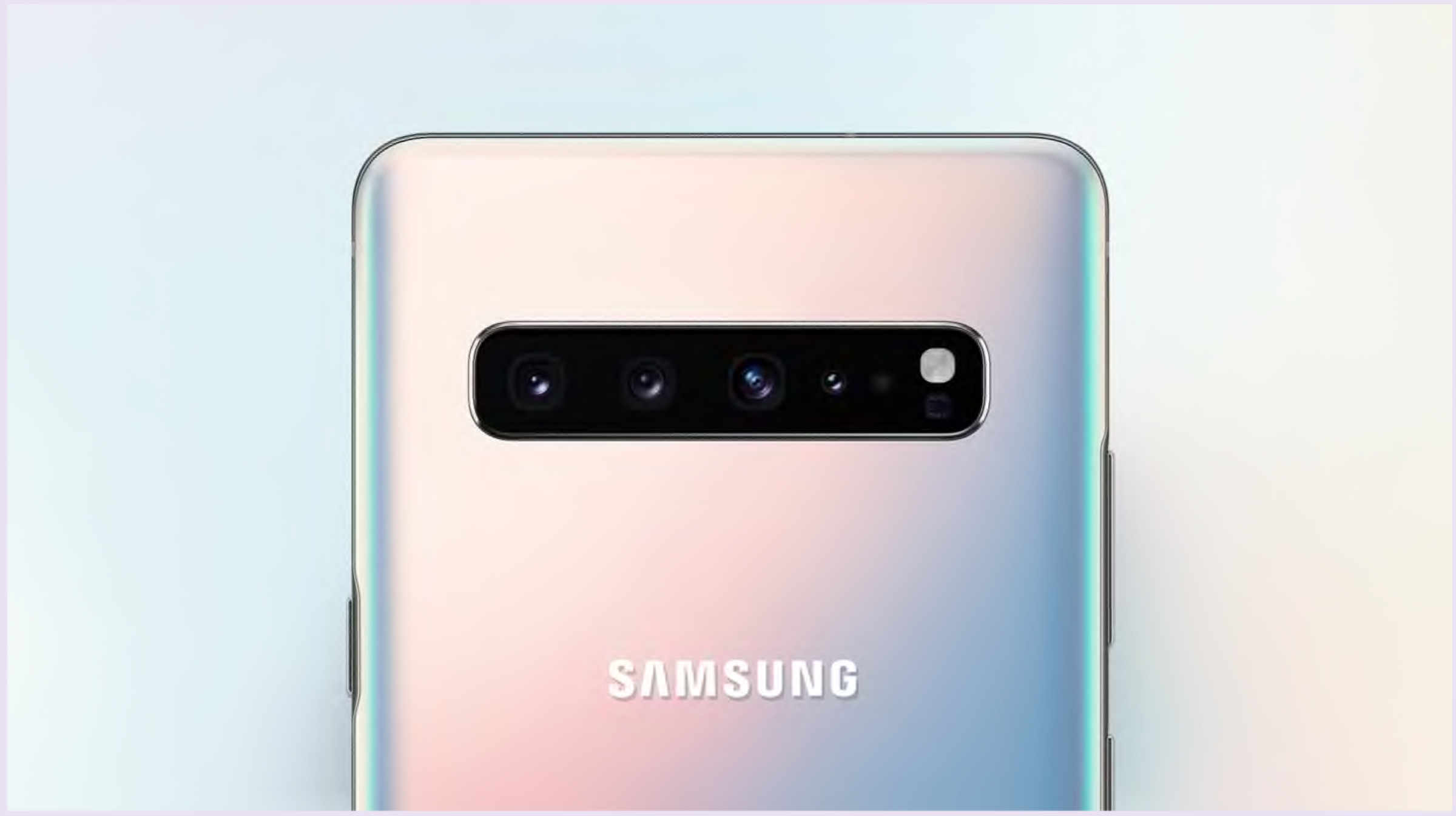
    The Samsung Galaxy S10 5G features an outrageous number of cameras which rounds up to a total of six. Out of the six cameras, four are placed on the rear, while the remaining two are placed in Infinity-O notch on the front of the display. The quad rear camera is comprised of a 12 MP primary sensor, an f/2.2 aperture equipped 16 MP ultra wide sensor, f/2.4 aperture equipped 12 MP telephoto sensor and a TOF (Time Of Flight) sensor which captures depth information. The dual front camera of the Samsung Galaxy S10 5G is comprised of an f/1.9 aperture equipped 10 MP sensor and a TOF camera. 

    Galaxy S10 5G DxOMark Results
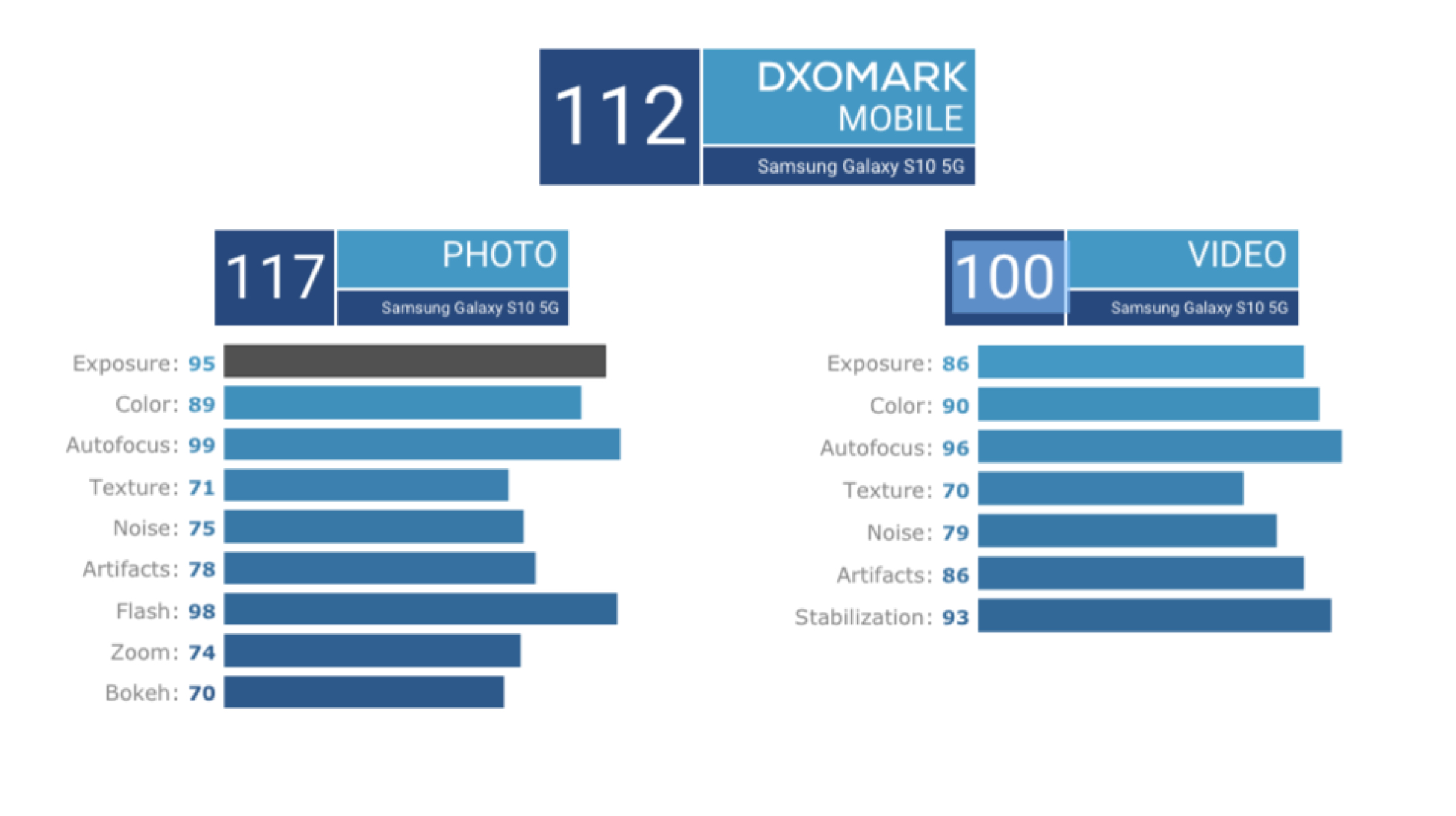
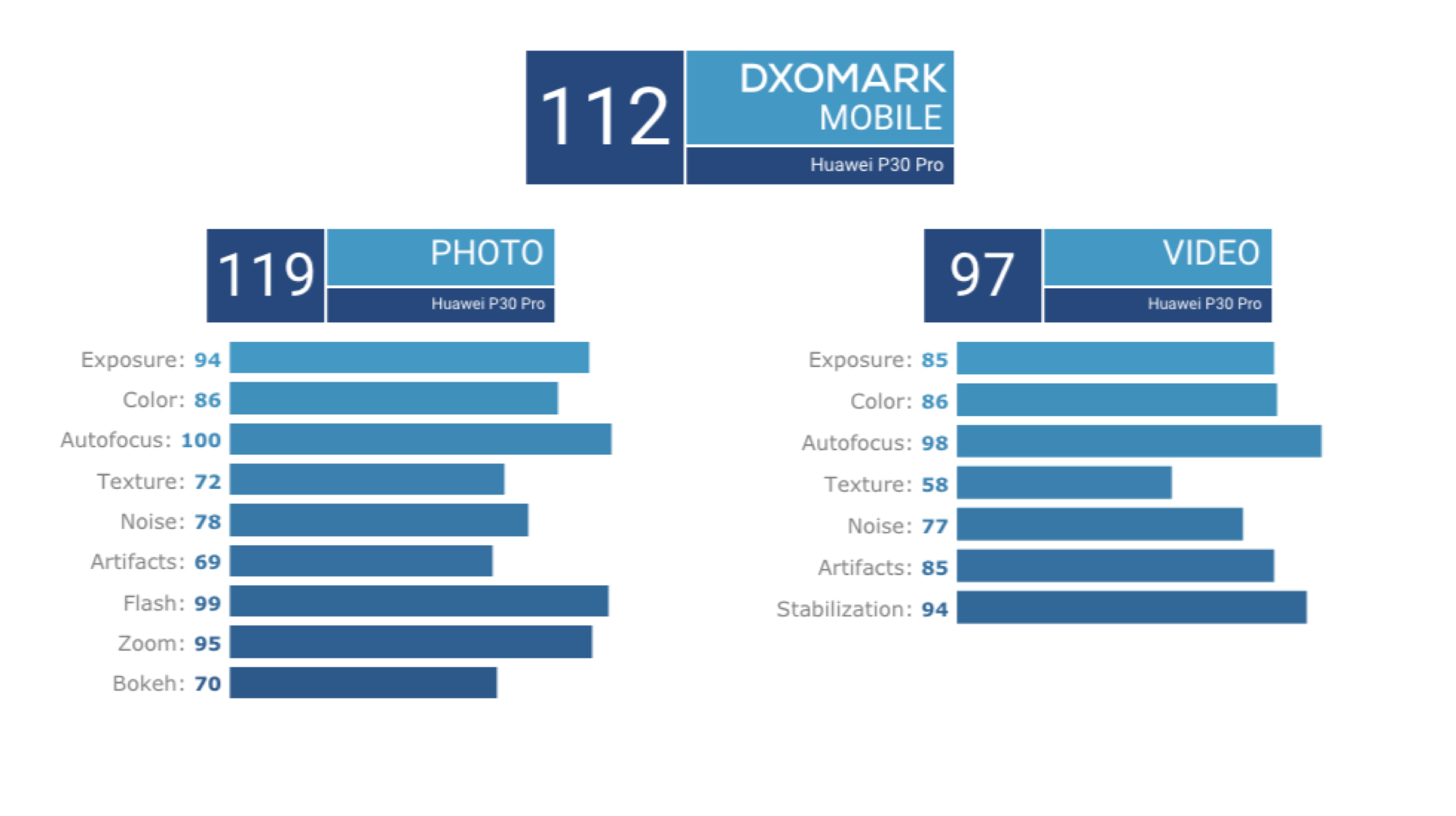
    As previously mentioned, the Samsung Galaxy S10 5G has registered the highest DxOMark overall score of 112 points. Notably, the score is equivalent to the remarkable camera beast, the P30 Pro from Huawei. Though, it lags behind the latter by 2 points in the photo score which is mainly due to 5X optical zoom support on the P30 Pro.
    Also Read: Sony PlayStation 5 With 8K Graphics Teased In An Interview

    However, the S10 5G bounces back in the video department where it surpasses the P30 Pro by 3 points, consecutively balancing the odds. All in all the Galaxy S10 5G is one of the best smartphones currently up for grabs and Samsung has definitely hit a home run with the device. 
     

  • DxOMark Ranks Xiaomi Mi 9 As The Best Video Shooter, Samsung Galaxy S10+ Best For Selfies

    DxOMark Ranks Xiaomi Mi 9 As The Best Video Shooter, Samsung Galaxy S10+ Best For Selfies

    A good camera is a prerequisite for premium smartphones these days. An average smartphone can be deemed as a good smartphone if the camera of the device performs up to the mark. Flagship smartphones such as Google Pixel 3 and the Apple iPhone XS hold the top spots when it’s about camera performance. However, with the release of newer devices which are challenging this niche at a much lower price, improvements in the camera become very necessary. Xiaomi Mi 9 and Samsung Galaxy S10+ are the latest smartphones to get their cameras examined by DxOMark, the pioneers in camera benchmarking.

    Xiaomi Mi 9

    Xiaomi released the Mi 9 in China on February 20, and it has been the talk of the town since its launch. With flagship-level specifications at almost half the price of premium smartphones, there are high expectations from the camera of the Mi 9. DxOMark tested out the camera of the smartphone, and fair enough, the Mi 9 didn’t disappoint.
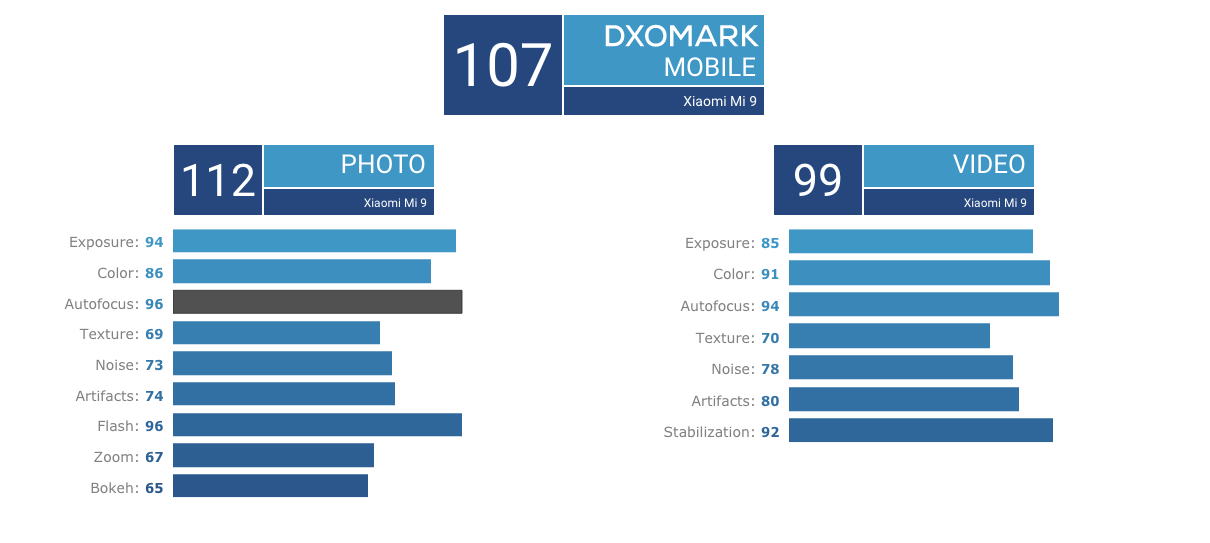
    The Xiaomi Mi 9 sports a triple rear camera setup. The device has a 48MP (f/1.75) Sony IMX586 primary sensor, combined with a 16MP (f/2.2) ultra wide sensor and a third 12MP (f/2.2) telephoto sensor. In terms of the front camera, the Mi 9 has a 20MP selfie shooter. DxOMark’s scores for the smartphone’s camera are as follows

    As per DxOMark, Mi 9 is the best Xiaomi device they have tested to date. It almost secured the top spot in their smartphone camera ranking list. A score of 112 points clearly displayed the camera’s ability to take high-quality images. Also, the Mi 9’s camera scored 99 points when it was tested for video recording, which is the best video score so far.

    Samsung Galaxy S10+

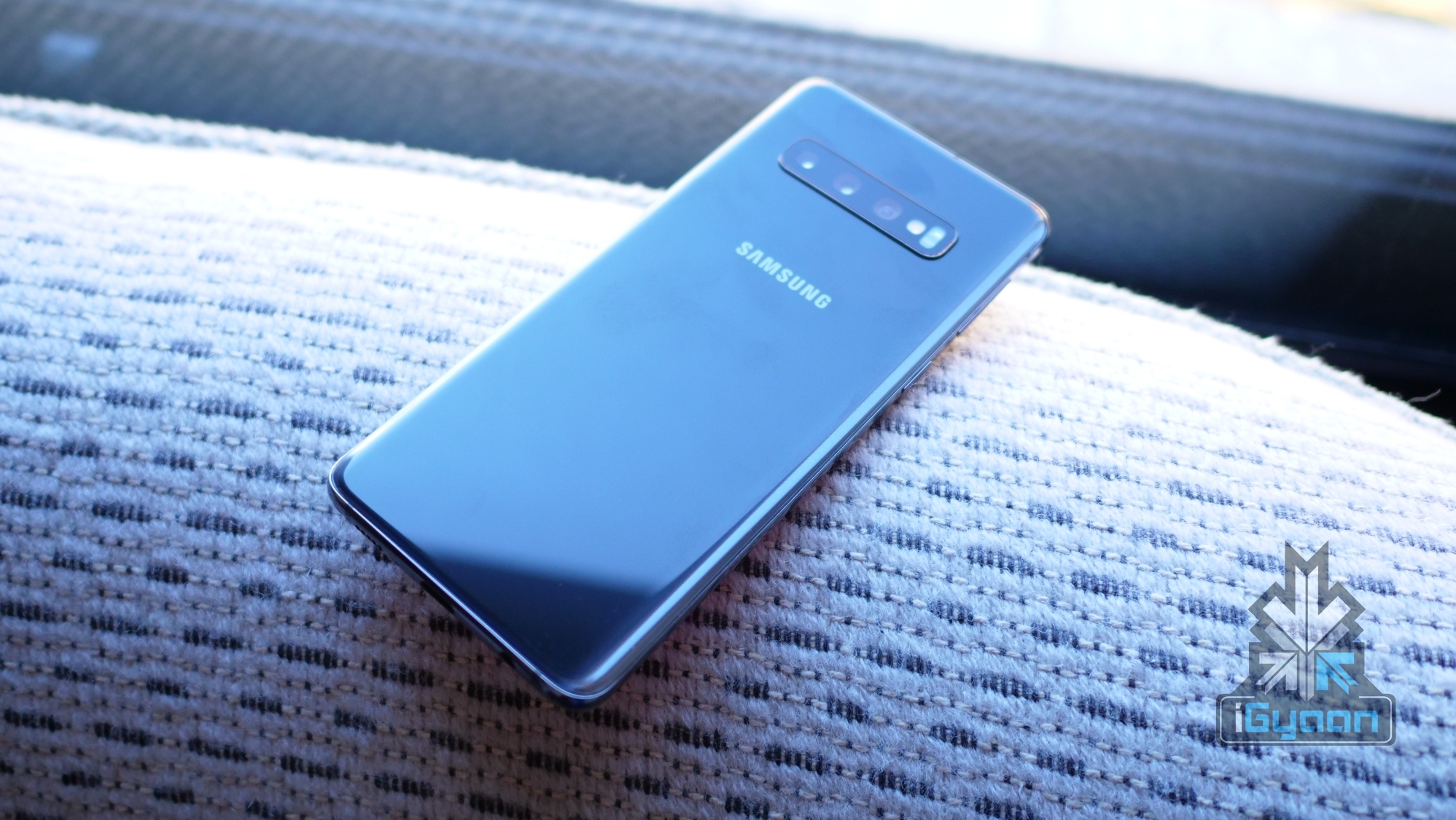
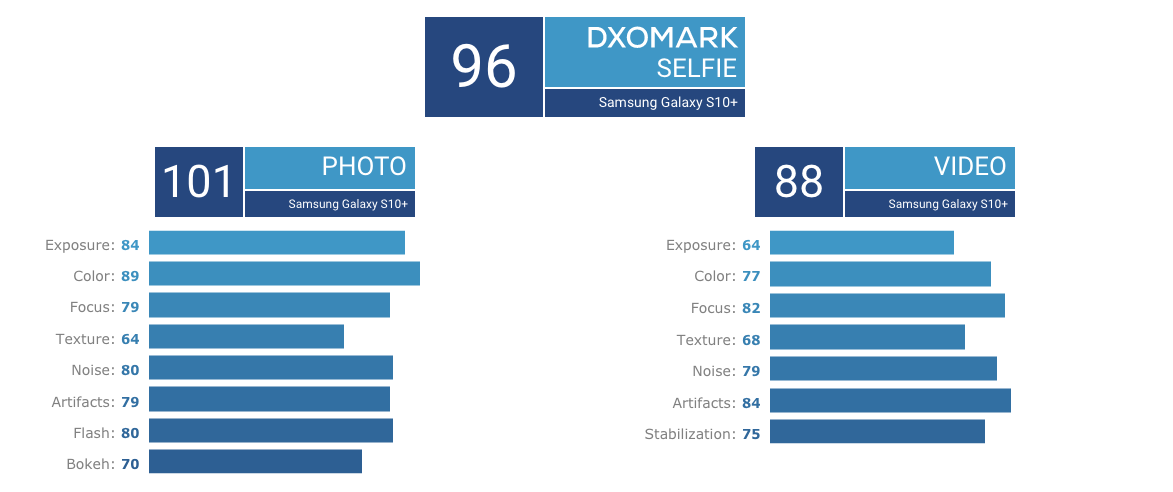
    The Samsung Galaxy S10+ also passed the DxOMark test, and it did so by claiming the first rank next to the Huawei Mate 20 Pro and P20 Pro. The device was launched on February 21 and was given the title of “the best front camera performance for both still images and video” by DxOMark.
    The device sports a triple rear camera setup which consists of a 12MP (f/1.5- f/2.4) primary sensor, 12MP (f/2.4) telephoto sensor and a third 16 MP (f/2.2) ultra-wide sensor. The smartphone also has a dual front camera module, which is a combination of a 10MP (f/1.9) sensor and an 8MP (f/2.2) sensor housed in the punch-hole display.

    Also Read: Xiaomi Launches The Mi 9 In China

    According to DxOMark, The Galaxy S10+ performed really well while capturing skin tones and maintaining exposure at the same time. The portrait mode of the device also got very rave reviews. The handset showed off impressive stabilization and focus while recording videos. In terms of ranking, it surpasses Google Pixel 3 and the Galaxy Note 9, making it the highest ranked smartphone camera in their list.


  • DXOmark Says Google Pixel 2 Has A Better Camera Than The iPhone X

    DXOmark Says Google Pixel 2 Has A Better Camera Than The iPhone X

    The Google Pixel 2 was launched after the iPhone X but, thanks to it being available before the iPhone X the phone was put through its paces all over the internet. DXOmark is a portal that rates the camera of a smartphone on different parameters and the Google Pixel 2 came out to be the highest rated smartphone ever. The recently launched iPhone X was tested by DXOmark and was given an overall rating of 97, which is onepoint less than the Pixel 2.

    In its summary, DXOmark said:

    With a Photo score of 101, the Apple iPhone X achieves the best results so far for still images, edging out the Huawei Mate 10 Pro and the Samsung Galaxy Note 8, the previous joint leaders in the Photo ranking, by one point.

    Its overall score of 97 puts the iPhone X into joint second place with the Huawei Mate 10 in the current DxOMark Mobile overall rankings, just behind the Google Pixel 2 with 98 points.

    It is interesting to note here that despite clicking the best still images, the iPhone X falls short of the overall score of the Pixel 2 because of its video recording capabilities. The iPhone X is the only smartphone that records 3840 x 2160 px videos at 60fps.

    For video, the X doesn’t quite rise to the same high-water mark, achieving a video sub-score of 89 points.

    Photos are an extremely subjective aspect of smartphones, just like sound hence, scores by DXOmark can mean everything or absolutely nothing to a consumer. Still, having the second best smartphone camera in the world is no mean feat.

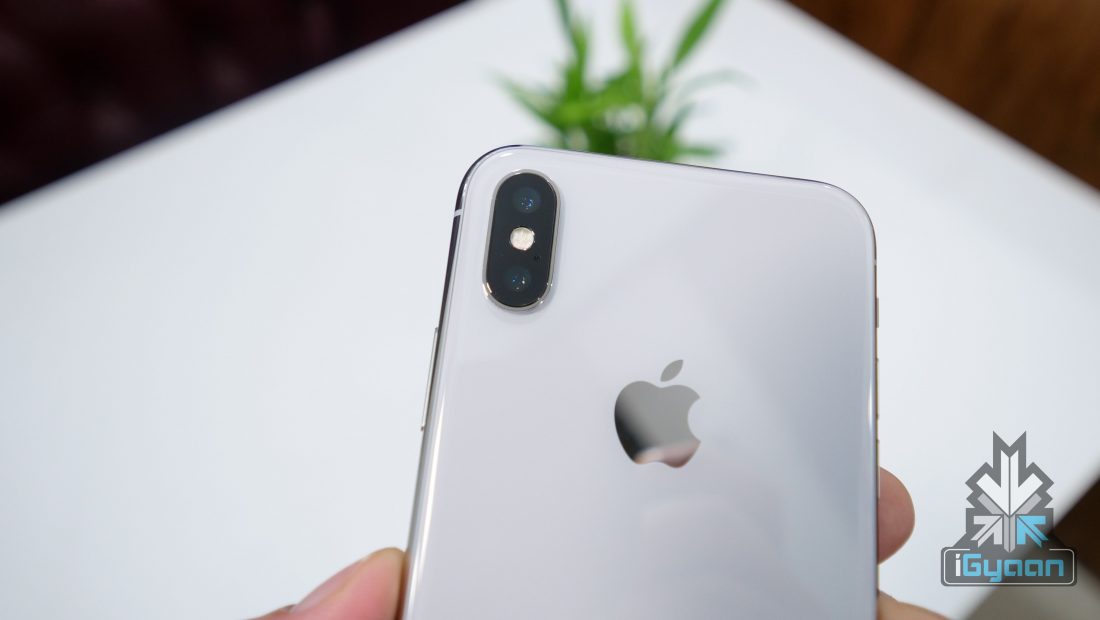
    The iPhone X has dual 12-megapixel rear cameras, and it’s equipped with dual optical image stabilisation. The sensors are both larger and faster, according to Apple, and the main camera is equipped with a wide angle lens and has an f/1.8 aperture while the secondary telephoto lens has an f/2.4 aperture. In between the two cameras is a quad-LED True Tone flash. Both the front and back cameras have the portrait mode. The rear cameras have the portrait lighting feature, just like the iPhone 8 and iPhone 8 Plus.

    Would you prefer the Google Pixel 2 over the iPhoneX on the sole basis of their DXOmark scores? Let us know in the comments below.

  • Google Pixel 2 Has The Best Camera In A Smartphone : DXOmark

    Google Pixel 2 Has The Best Camera In A Smartphone : DXOmark

    On October 4th, Google presented its strategy for the future. Google wants the perfect harmony of AI, software and hardware for its upcoming devices. All eyes were on the announcement of the much awaited Pixel 2 and Pixel 2 XL. The announcement of the two phones was succeeded with their DXOmar scores. DXOmark is a portal that rates the camera of a smartphone on different parameters. The Pixel 2 and Pixel 2 XL have a score of 98 on DXOmark which makes the Pixel 2 camera as the best smartphone camera in the world right now. In September, it was announced that the iPhone 8 has the best smartphone camera in the world.

    Photos are an extremely subjective, just like sound. Hence, scores by DXOmark can mean everything or absolutely nothing to a consumer but, having the best smartphone camera in the market doesn’t hurt.

    The Google Pixel 2 not only takes the DxOMark Mobile scoring crown with a stunning Overall score of 98, but its video performance improves by 5 points over the original Pixel, putting it at 96 and at the top of our video ranking. The Pixel 2’s photo performance is really impressive at 99, and just one point short of the Samsung Galaxy Note 8, which scored an amazing 100 in our photo category.

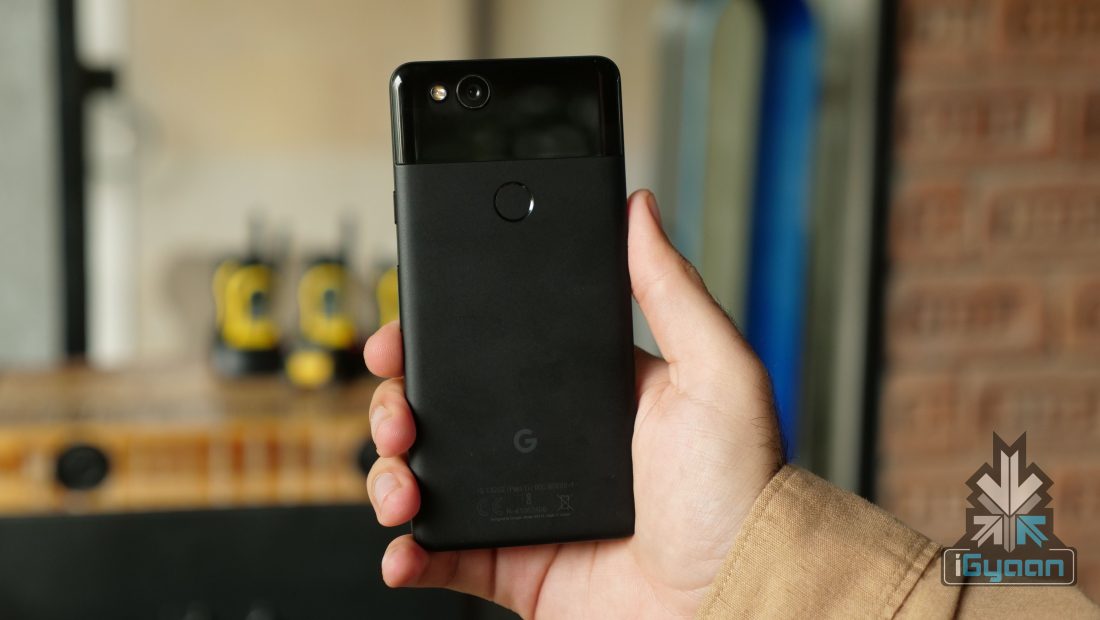
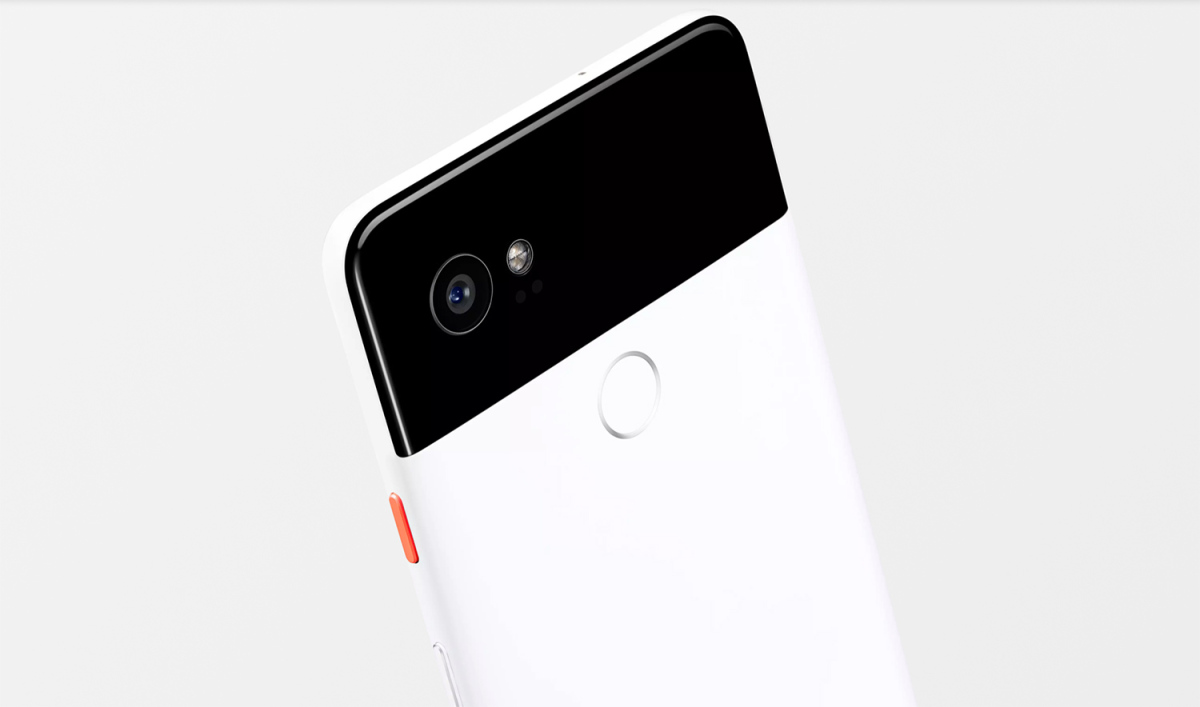
    In terms of optics, Google decided to go with a tried and testing route of a single camera of the back instead of the now-trending dual-cameras. Both the Pixel 2 and Pixel 2 XL have a 12.2MP camera with an f/1.8 aperture and feature a “dual-pixel” technology. What this basically does is that it literally divides every pixel into two. Even though the phones have a single camera, you can still take portrait style photos from both the front and the back camera thanks to Google’s software processing. On the front is an 8MP camera with an f/2.4 aperture. On the video front, the rear-facing camera uses both OIS and EIS for stable videos and records 4K videos at 30FPS.

    Would you consider buying a phone just because of its superior DXOmark scores? Let us know in the comments below.

  • iPhone 8 and iPhone 8 Plus Have The Best Cameras Claims DXOmark

    iPhone 8 and iPhone 8 Plus Have The Best Cameras Claims DXOmark

    The Apple iPhone 8 and iPhone 8 Plus were launched on September 12th along with the highly anticipated iPhone X. In India, the iPhone 8 and 8 Plus became available for pre-orders on September 22nd for a starting price of Rs 64000 for the iPhone 8 64GB storage variant. During their launch, Apple claimed that the camera performance of the iPhone 8 and iPhone 8 Plus is much better than the previous gen iPhones and DXOmark has backed that claim. According to DXOmark, the cameras on the iPhone 8 and iPhone 8 Plus are the best smartphone cameras in the market right now.

    The Apple iPhone 8 Plus is the best-performing mobile device camera we have ever tested. Its overall DxOMark Mobile score of 94 sets a new record, beating out the 90 points for both the Google Pixel and the HTC U11, as well as the 92 that its sibling iPhone 8 just scored.

    In terms of build quality and appearance, both the phones do not deviate too much from the design language of the iPhone 7 and iPhone 7 Plus which were launched back in 2016. The most noticeable difference here is the glass back which enables wireless charging in the iPhone 8 and iPhone 8 Plus. Under the hood, the two new iPhones have the A11 Bionic chipset which, so far has beaten the Qualcomm Snapdragon 835 chipset in benchmark results. The next big difference is the cameras.

    In terms of optics, the new iPhone 8 has the same 12MP sensor with an f/1.8 aperture with a few software upgrades and OIS. On the front is a 7MP camera with an f/2.2 aperture which records 1920 x 1080 px videos at 30fps. The iPhone 8 Plus features a 12MP dual-camera setup. The primary wide-angle lens has an f/1.7 aperture and the secondary telephoto lens has an f/2.8 aperture. The new “Portrait Lighting” feature allows users to adjust the lighting for portrait shots. On the front is a 7MP camera with an f/2.2 aperture which records 1920 x 1080 px videos at 30fps. The dual-cameras at the back record 4K videos at 60fps.

    According to DXOmark, the iPhone 8 Plus also has one of the best video-taking capabilities.

    For Video, its score of 89 is among our highest, but tied with the HTC U11 and slightly below the Pixel’s 91. Of course, the Pixel is nearly a year old now, so it makes sense that Apple’s new flagship is breaking new ground.

    The iPhone 8 and iPhone 8 Plus have definitely suffered because of the attention that the iPhone X has received. This report from DXOmark should spark some interest in the two iPhones and consumers might consider buying either of the phones instead of waiting for the thousand-dollar iPhone X releasing later this year.

iGyaan Network
Privacy Overview

This website uses cookies so that we can provide you with the best user experience possible. Cookie information is stored in your browser and performs functions such as recognising you when you return to our website and helping our team to understand which sections of the website you find most interesting and useful.