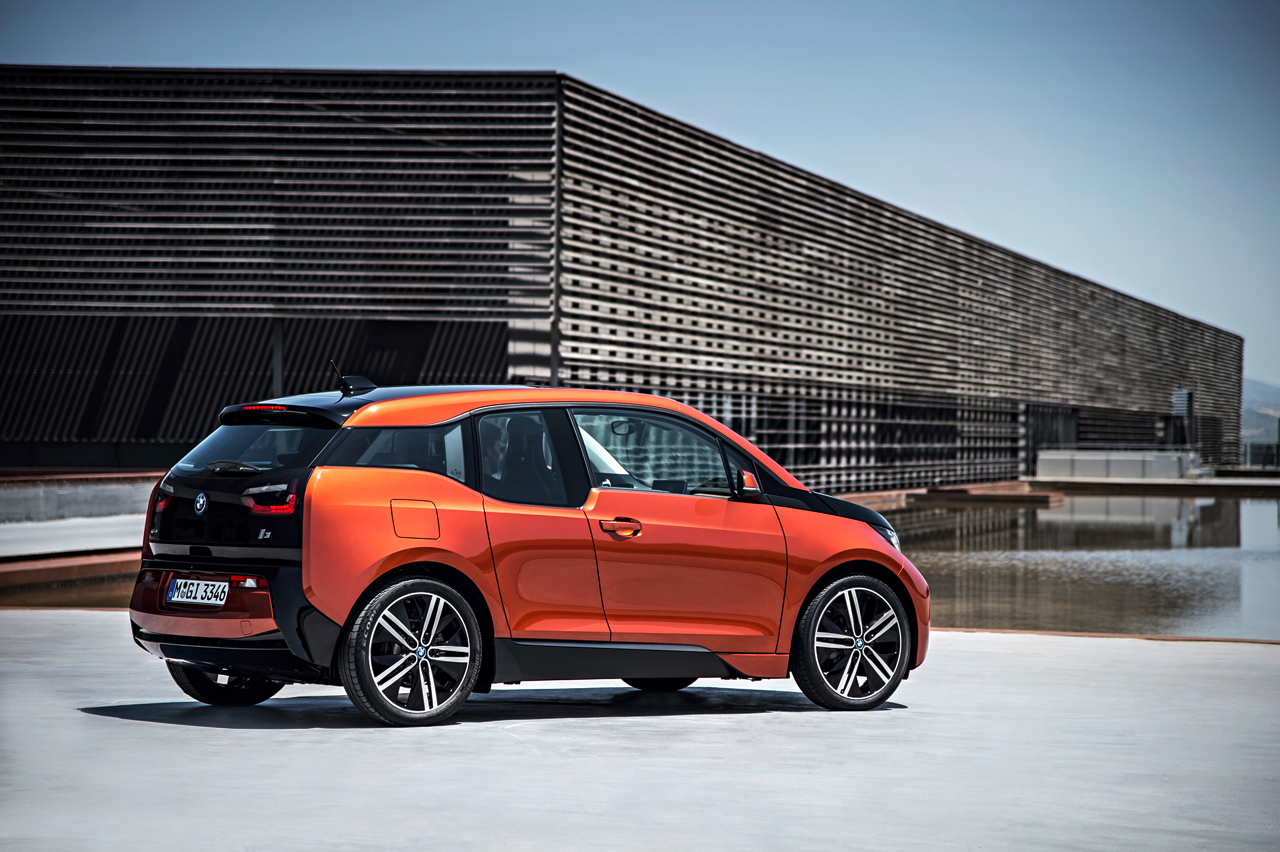
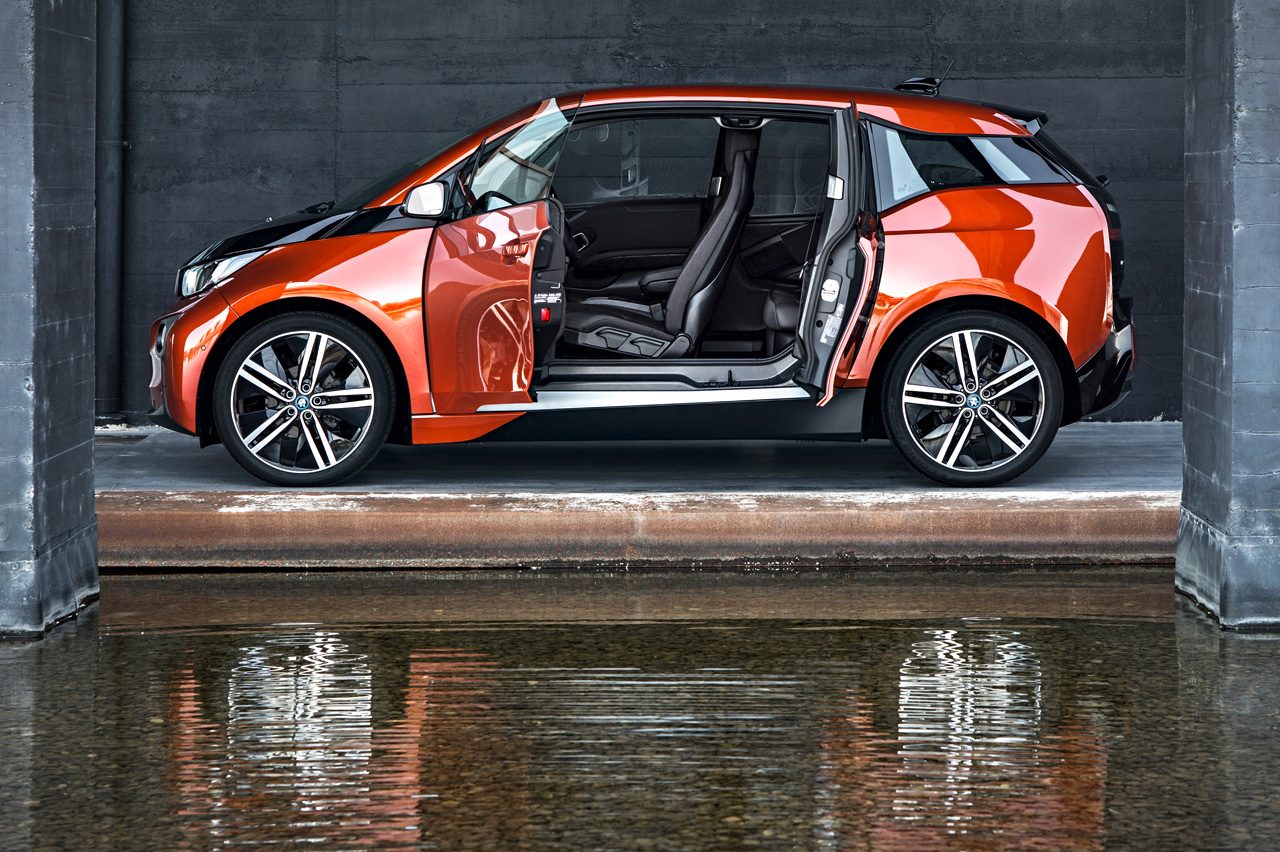
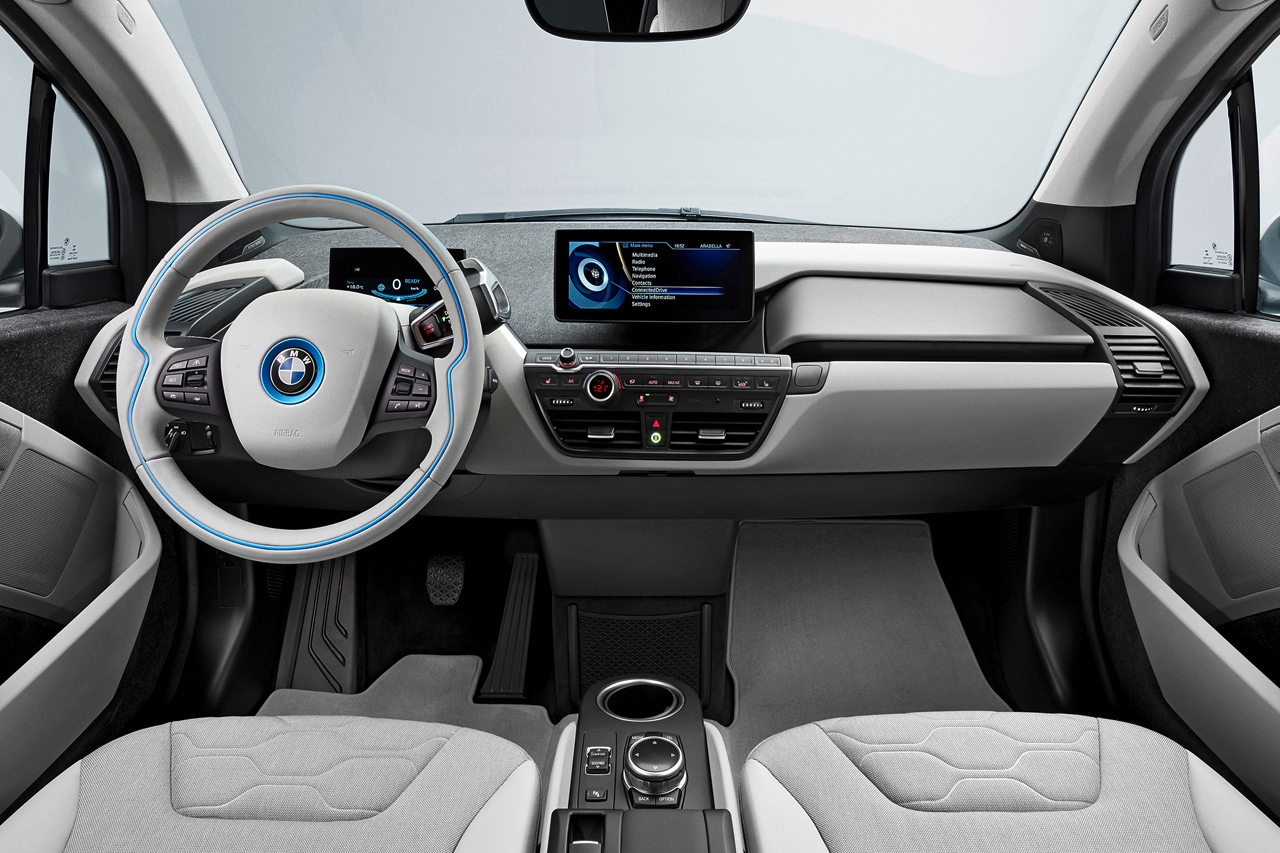
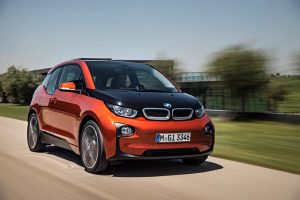
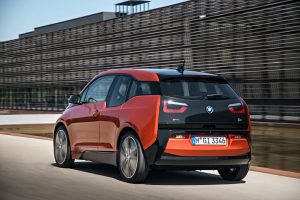
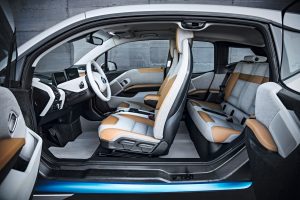
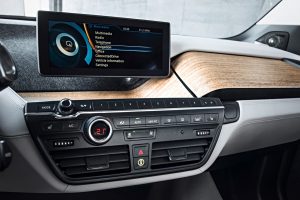
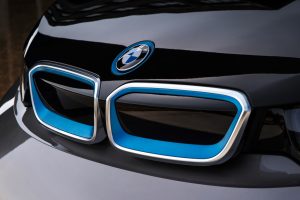
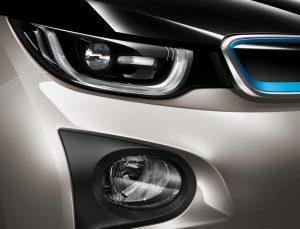
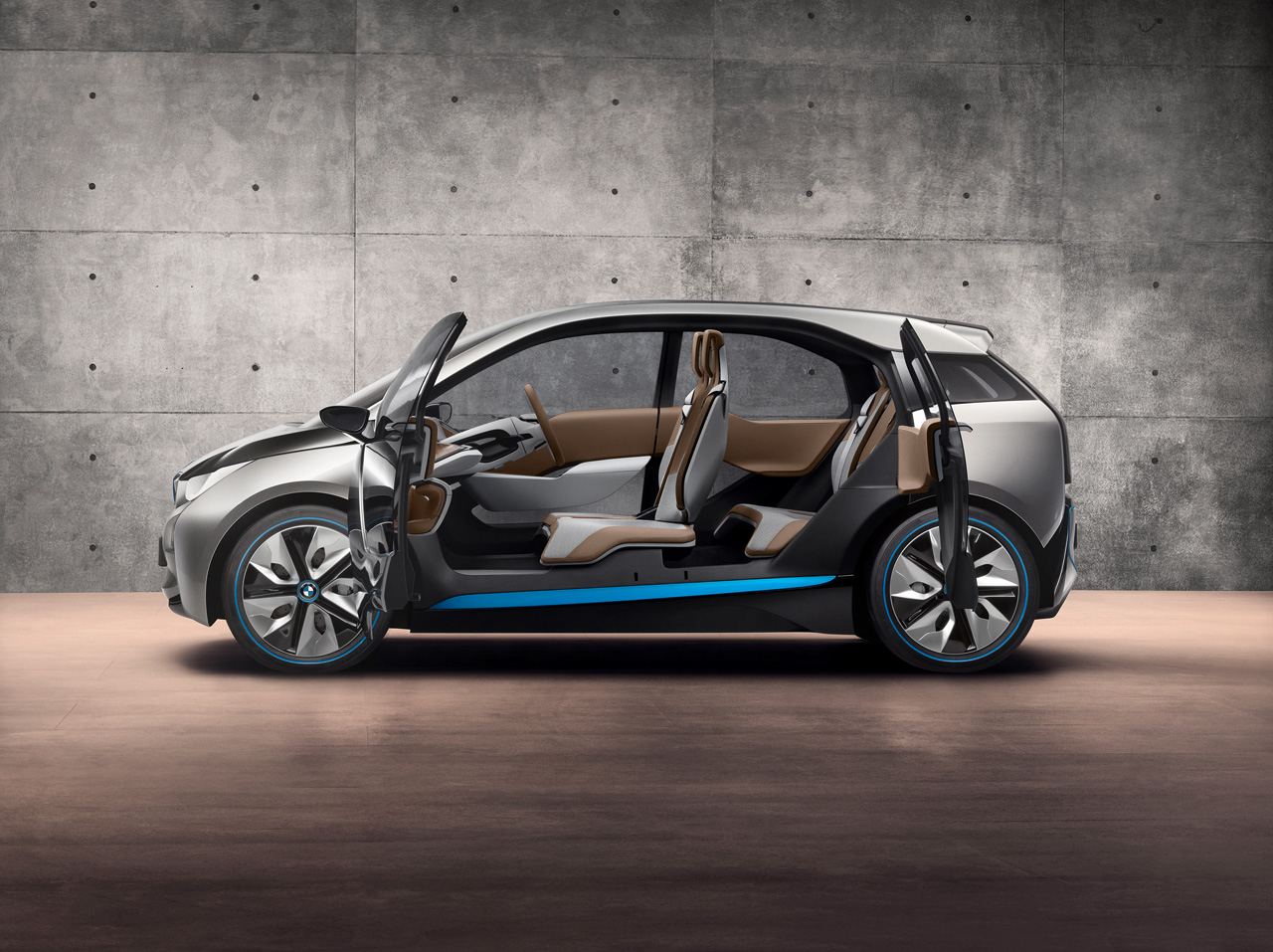
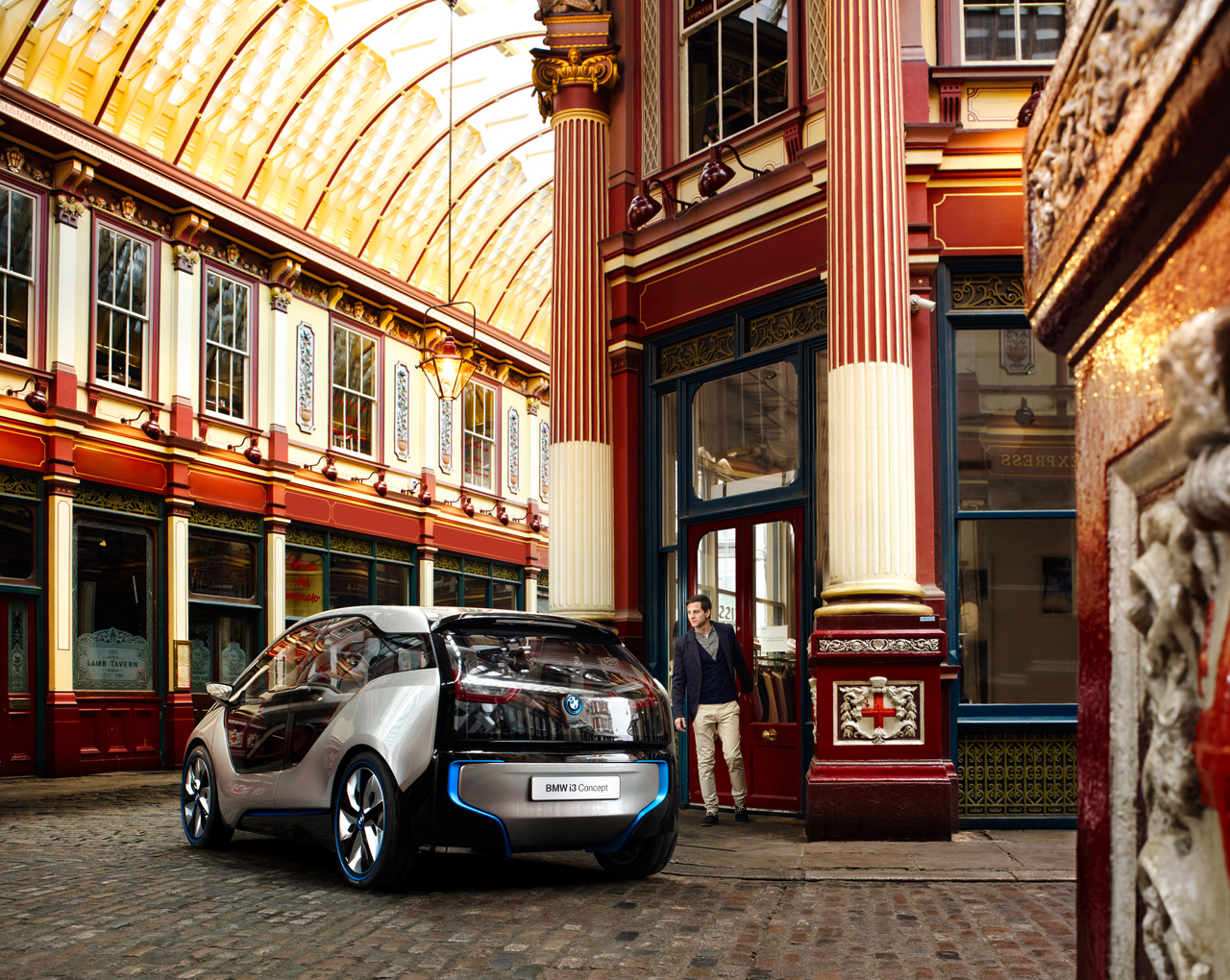
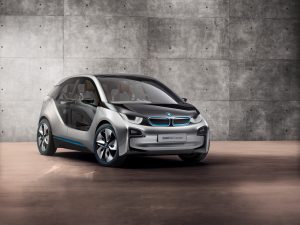
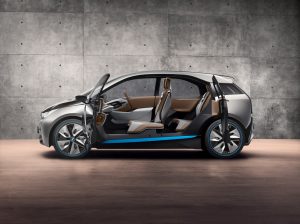
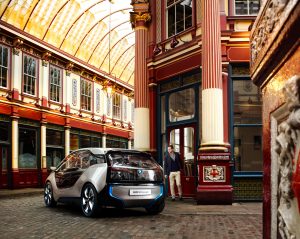
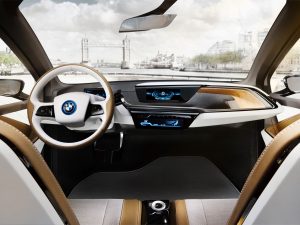
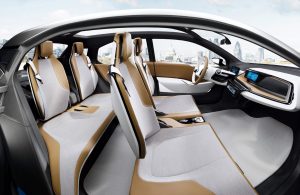
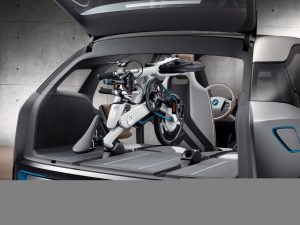
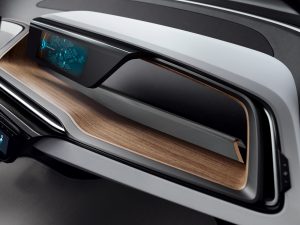
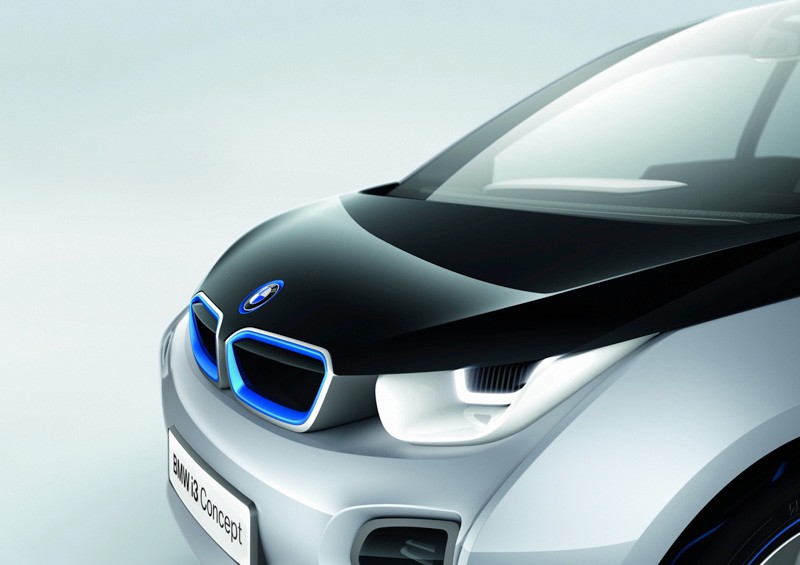
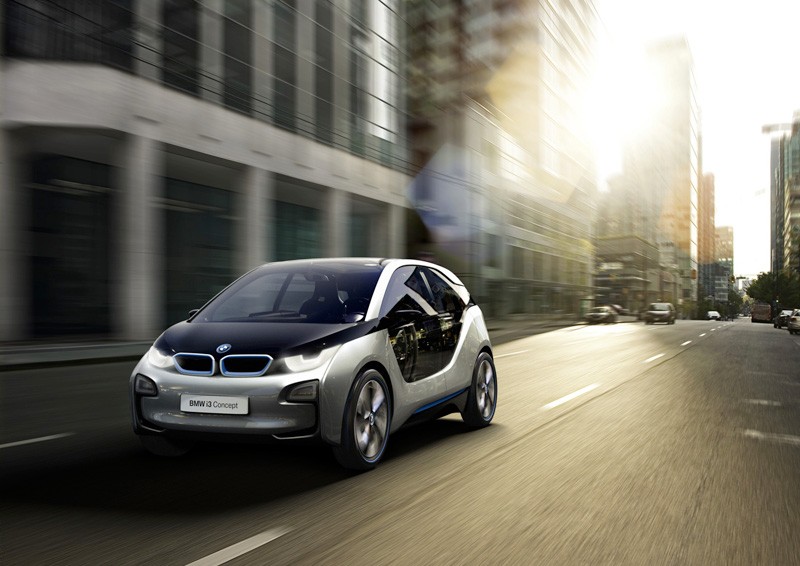
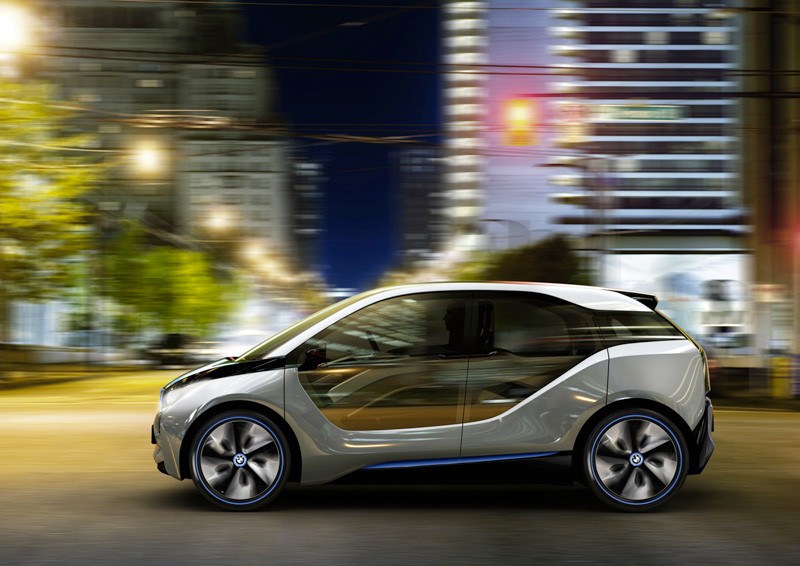
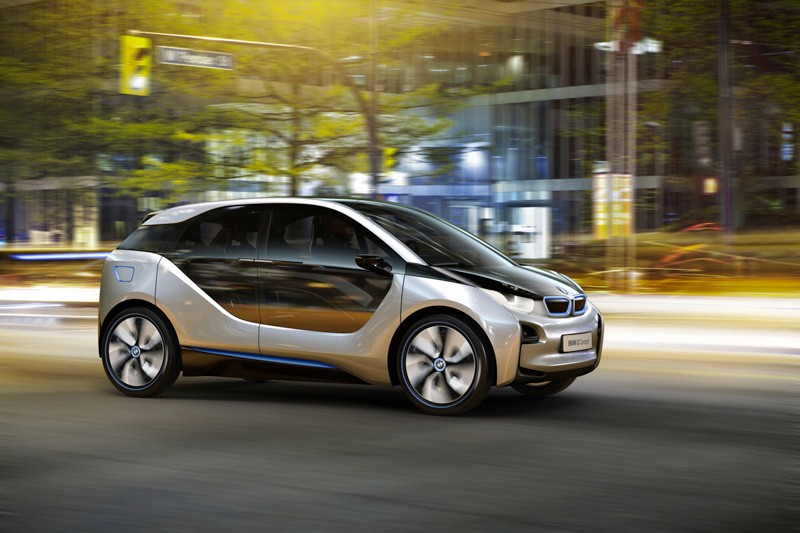
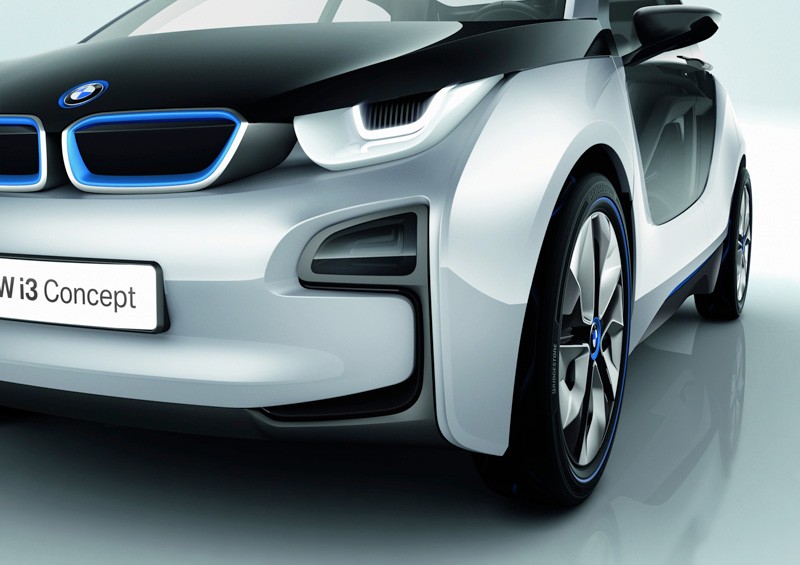
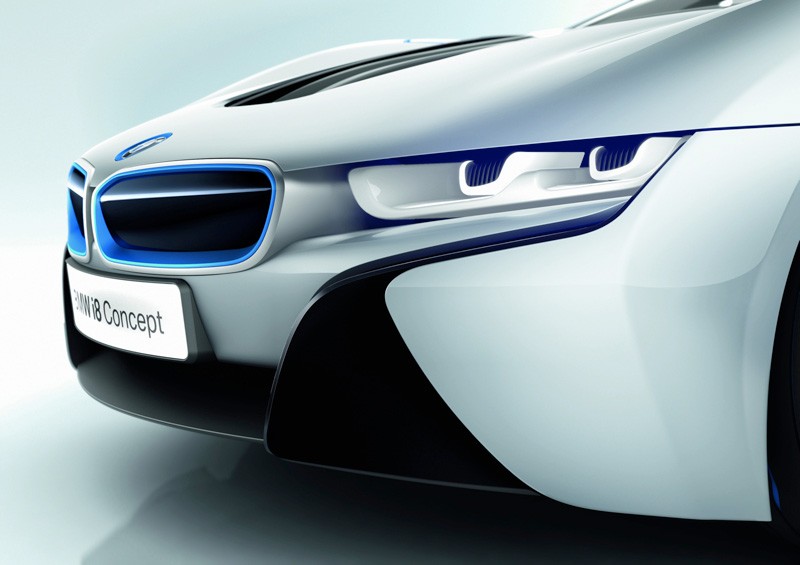
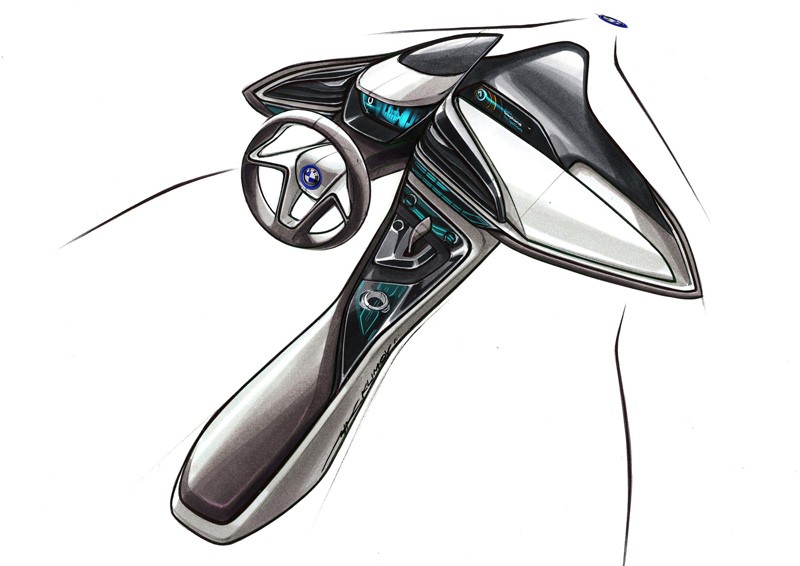
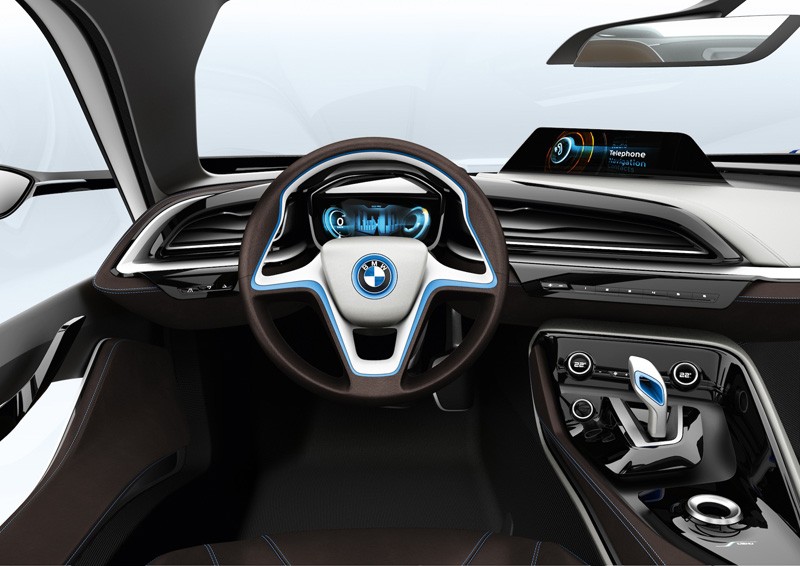
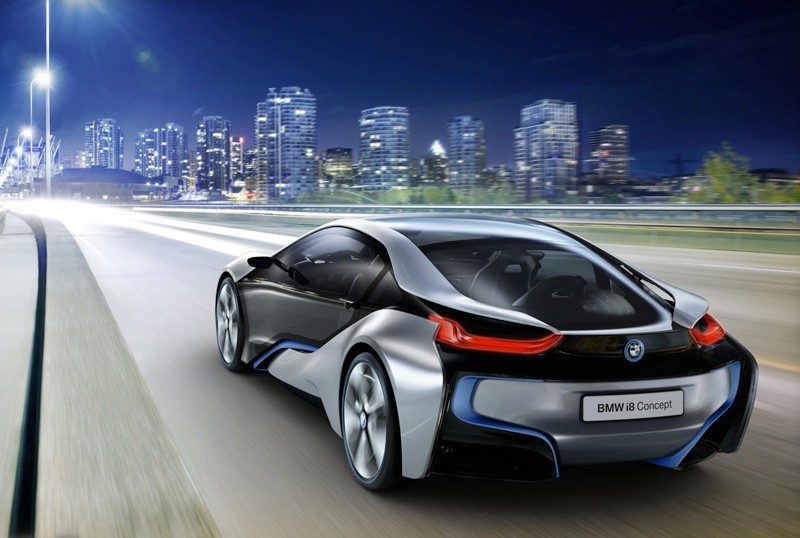
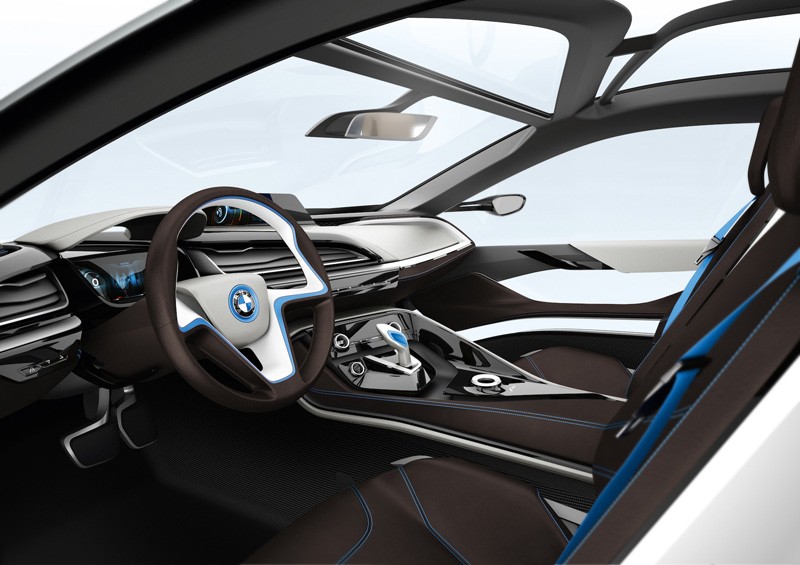
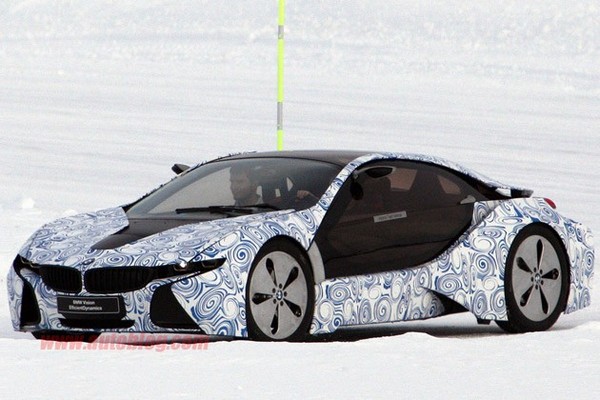
Today marked what BMW hopes was a momentous day in its history, and especially the era of the electric vehicle. In a high stakes bid for electric vehicle supremacy, BMW unveiled the production version of the electric i3 hatchback – the first of what the German automaker promises will be a complete range of alternative drive models to be sold under its new ‘i’ brand. Simultaneous presentations in London, New York and Beijing were witness to the reveal of the innovative and much anticipated electric car. Unlike most cars today, the production version of the contemporary-styled hatchback managed to stay true to the concept displayed at the 2011 Frankfurt Motor Show. The most prominent change from the concept came in way of a five door bodystyle in place of the original three door arrangement, for obvious added practicality and ease of entry to the rear.
The i3 will go on sale in the US for $41,350 in the second quarter of 2014, exclusive of any state or federal incentives that could lower the price or the $925 destination fee. The i3 will be available with three trim levels at launch, which BMW is calling ‘Worlds’: Mega (standard in the US), Giga and Tera.
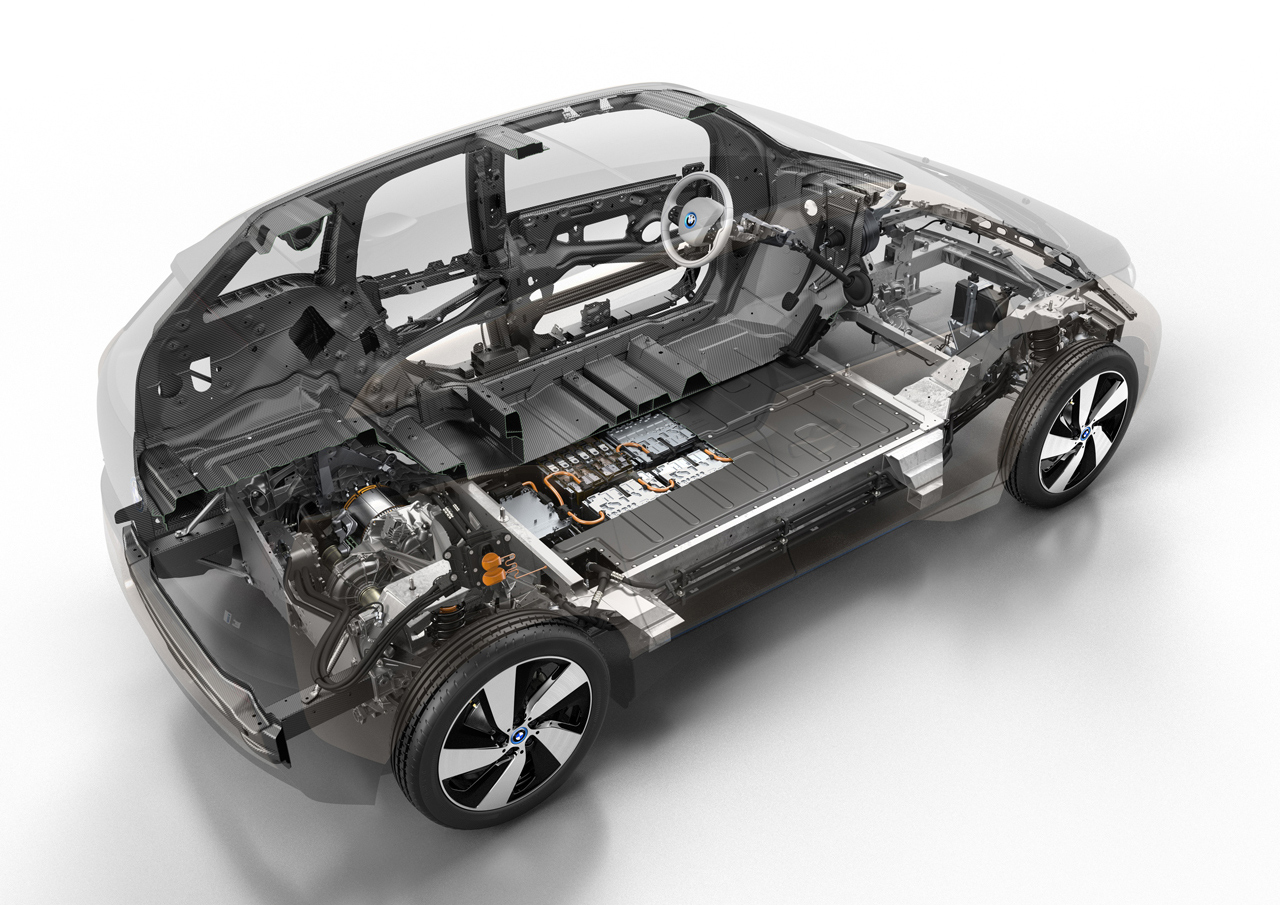
The BMW i3 is truly revolutionary, with tons of new technology, probably because it was designed as an electric vehicle right from its conception. This has resulted in a vehicle layout unique to the i3, which the Bavarian manufacturer calls ‘LifeDrive‘ architecture. It features components called the ‘Life Module’ and the ‘Drive Module’.
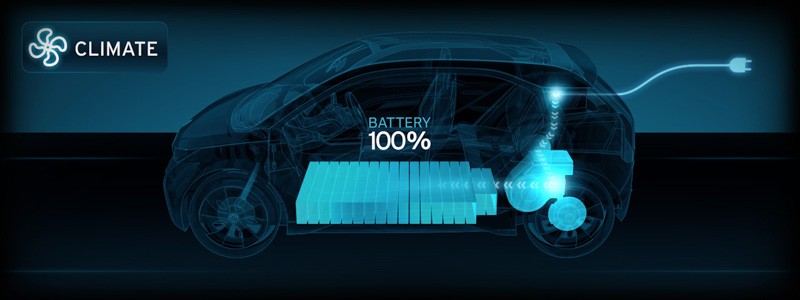
The Life Module is the i3’s pillar-less passenger cell, and is all set to become the first mass-produced monocoque made of carbon fiber reinforced plastic (CFRP). The tougher-than-steel material, usually seen only on very expensive supercars, is 30-percent lighter than aluminum, which results in the i3’s relatively light weight of approximately 1,200 kilograms. The Drive Module is basically a 100-percent aluminum chassis which is mounted under the Life Module and houses the hatchback’s powertrain. The 22-kWh, 250-kilogram lithium ion battery is mounted as centrally as possible to optimise vehicle dynamics, and provides power to a rear-mounted synchronous electric motor which drives the rear wheels.
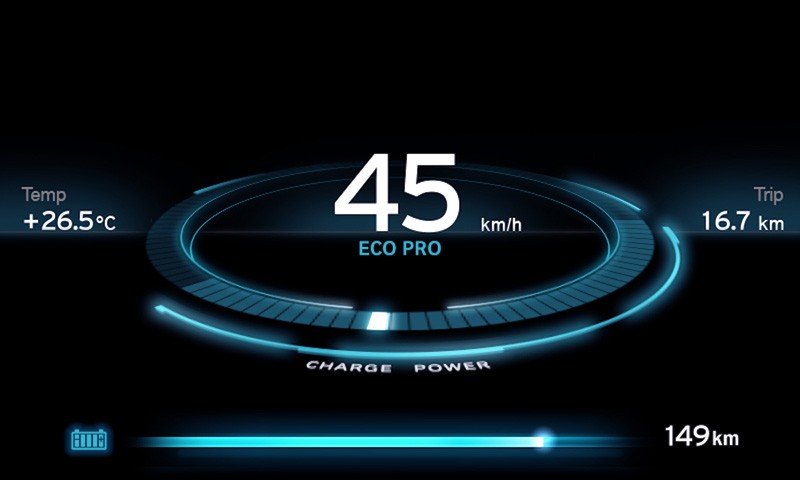
The in-house produced unit, known under the BMW eDrive banner, provides 170 horspower and 25.4 kgm of torque. This translates to a 0-100 km/h time of about 7.0 seconds, but a relatively low top speed of only 150 km/h. Drive is sent through a single ratio gearbox mounted to the end of the electric motor, offering the choice of three driving modes: Comfort, Eco Pro and Eco Pro+.
The lithium ion battery is produced by Samsung and bears a warranty valid for up to six years or 1,60,000 kilometres. It consists of 96 individual cells mounted within the flat floor structure and has been designed to allow the replacement of damaged cells on an individual basis. BMW has mounted the battery as low as possible in the i3’s carbonfibre structure as possible, allowing a claimed centre of gravity lower than that of the BMW X1 compact SUV.
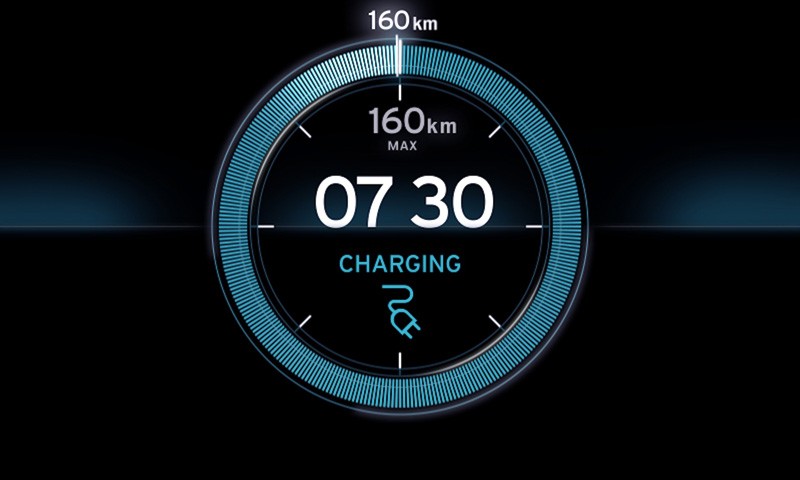
According to BMW, the i3 has a real-world range of 130-160 kilometres, and the standard charger can fill the battery in three hours. However, if you go for the optional SAE DC Combo Fast Charger, you get 80% charge in 20 minutes and a fully charged BMW i3 in half an hour. If the range is an issue for you, BMW provides the option of a 34 horsepower, 650cc two-cylinder generator as a range extender for the electric drive system.
The attractive little car was conceived under the working title of Mega City Vehicle, in order to focus attention on its suitability for urban driving. Reportedly, BMW has spent up to €2 billion (over Rs 15,000 crore) in research, development, testing and production processes for the new four-seater. At first glance, the BMW i3 seems to be properly revolutionary. Technologically marvellous, and visually very appealing, it may become the first real mainstream electric vehicle, in history.
Check out some pictures of BMW’s new electric hatchback, and let us know what you think in the comments below!
BMW’s sales boss, Ian Robertson, has said that there are 1,00,000 people around the world who have made reservations for the BMW i3, and a “significant number” of them have made deposits for the car.
Robertson’s interview with Automotive News Europe reports him as also saying that the i3 differs from many of the EVs on the road today because it was developed as an EV from the start, rather than being conventional car with an electric powertrain dropped in.
We are confident that with the i3 and i8 we will shift the [customer demand] needle because we will shape some of this technology.
– Ian Robertson, Chief, Sales & Marketing, BMW
His stance is in contrast with BMW CEO, Norbert Reithofer’s comments from last year, when he said that governments need to pony up more plug-in vehicle support or EVs just won’t be popular.
When asked for the car’s starting price, Robertson said that it would be in the same range as the 3 series, which in Germany is priced between 28,800 and 38,800 Euros for base versions. We will finally get to see the production version of the i3 at the Frankfurt Motor Show this September, 30 months after the announcement of the ‘i’ subbrand, also including the i8 plug-in hybrid supercar. The BMW i3 goes on sale in Europe at the end of the year.
The Board of Directors of Ferrari S.p.A. reported a very positive first quarter of 2012, revenues rose to 556.1 million euro (+13.2 per cent) and 1,733 cars were delivered to the dealership network, an increase of 11.5 per cent on the same period last year. Trading profit grew by 13.4 per cent to 60.5 million euro, while net profits rose by 17.2 per cent (42.1 million euro).
Ferrari’s industrial net cash position on March 31st was the strongest in its history at 860 million euro.
Sales in Europe in the United Kingdom were up (+31 per cent, 177 cars delivered) and in Germany (up 24 per cent). Italy is the exception to this trend with sales of 121 cars, down 65 compared to the first quarter 2011 as a result of the economic situation and the local government’s recent financial initiatives.
In the Far East, the Greater China market (China, Hong Kong and Taiwan) continued to grow with 154 cars delivered in the first quarter. On May 18th, a major new Ferrari exhibition will open at the Shanghai Expo in China where a 1,000 square metre space will host some of our most iconic road models as well as Formula 1 cars. The display will also feature simulators and interactive points where visitors can learn about Ferrari’s history and the Maranello campus.
The Middle East also delivered extremely significant results with sales this first quarter up by 23 per cent and 81 cars delivered.
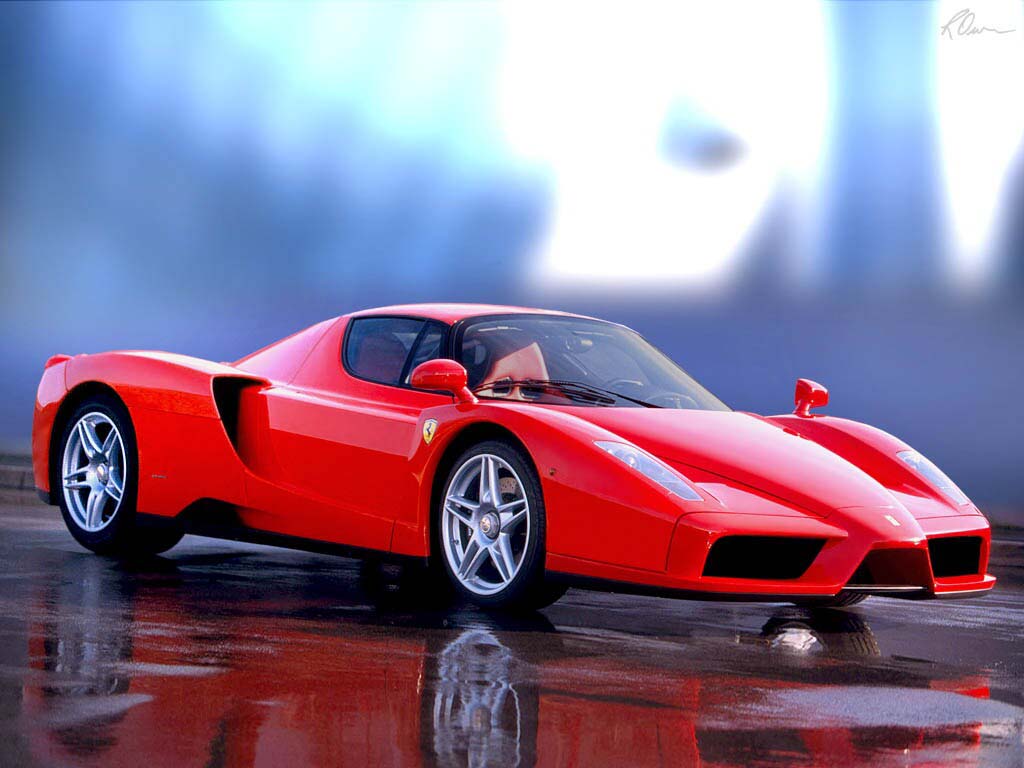
But, the most interesting news of the result came form Ferrari chairman, who declared that the company is working on a Hybrid Enzo which should be out at the end of the year.
[quote]
After an extraordinary 2011, starting the year with all the economic indicators on the rise is very satisfying indeed, We have a complete new model range brimming with technological innovations, and which deliver significant reductions in fuel consumption and emissions, down by 30 per cent on average. At the end of the year, we’ll also be unveiling the new Enzo, a limited series model and our first ever hybrid car.
– Ferrari’s Chairman, Luca di Montezemolo.
[/quote]
[toggle_box title=”Ferrari Press Release” width=”Width of toggle box”]
Very positive Ferrari first quarter growth
– Revenues of 556 Million Euro (+13.2%)
– 1,733 cars delivered (+11.5%)
– Net profits of 42.1 Million Euro (+17.2%)
– Record industrial net cash of 860 Million Euro
Excellent results from the USA (+16%), United Kingdom (+31%), Germany (+24%) and Middle East (+23%)
Maranello, 10th May 2012 – The Board of Directors of Ferrari S.p.A. met today under the chairmanship of Luca di Montezemolo to examine the company’s accounts for the first quarter of 2012.
On March 31st, Ferrari recorded a string of excellent results: revenues rose to 556.1 million euro (+13.2 per cent) and 1,733 cars were delivered to the dealership network, an increase of 11.5 per cent on the same period last year.
These results are the fruit of the success of the 12-cylinder FF and the continuing popularity of the 8-cylinder models, most notably the Ferrari California, which is the company’s best-selling GT, and the coupé and spider versions of the 458 which top the sports car segment.
One hundred per cent of Ferraris are personalised by their owners who, since the start of 2012, have also been able to avail of the innovative Tailor Made programme, which allows each client to tailor their own bespoke car using an extensive variety of unique and exclusive materials, colours and finishes, with the assistance of a specialist team.
The F12berlinetta, the most powerful and high performance Prancing Horse car ever built and the first in a new generation of V12s, made no contribution to these results as deliveries will not commence until the second part of the year.
Trading profit grew by 13.4 per cent to 60.5 million euro, while net profits rose by 17.2 per cent (42.1 million euro).
Ferrari’s industrial net cash position on March 31st was the strongest in its history at 860 million euro. This was achieved despite keeping product investment extremely high and thanks to a net cash flow for the first quarter of 152 million euro.
The one-make series of the Prancing Horse, the Ferrari Challenge, is also proving to be very successful with the 2012 racing season starting with 100 458 Challenge cars on the tracks in North America, Europe and Asia-Pacific.
In terms of sales, the US remains Ferrari’s most important market recording growth of 16 per cent even after the excellent figures recorded in 2011.
Sales in Europe were also very positive with excellent results in the United Kingdom (+31 per cent, 177 cars delivered) and in Germany (up 24 per cent). Italy is the exception to this trend with sales of 121 cars, down 65 compared to the first quarter 2011 as a result of the economic situation and the local government’s recent financial initiatives.
In the Far East, after a record 2011, the Greater China market (China, Hong Kong and Taiwan) continued to grow with 154 cars delivered in the first quarter. On May 18th, a major new Ferrari exhibition will open at the Shanghai Expo in China where a 1,000 square metre space will host some of our most iconic road models as well as Formula 1 cars. The display will also feature simulators and interactive points where visitors can learn about Ferrari’s history and the Maranello campus.
The Middle East also delivered extremely significant results with sales this first quarter up by 23 per cent and 81 cars delivered.
“After an extraordinary 2011, starting the year with all the economic indicators on the rise is very satisfying indeed,” declared Ferrari’s Chairman, Luca di Montezemolo. “We have a complete new model range brimming with technological innovations, and which deliver significant reductions in fuel consumption and emissions, down by 30 per cent on average.” He continued: “At the end of the year, we’ll also be unveiling the new Enzo, a limited series model and our first ever hybrid car.”
Brand activities (retail, wholesale, licensing and e-commerce) are up by 10 per cent overall: there are now 50 Ferrari Stores worldwide, including a new store in Madrid which opens officially at the end of May.
Ferrari also retains its leadership in online activities with over 8 million friends on Facebook and almost one million on Google +.
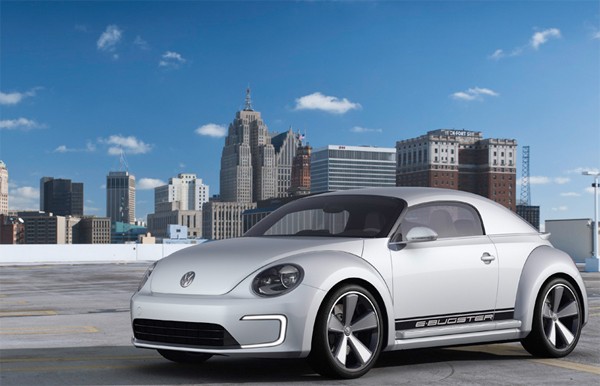
VW did launch their new Beetle at the Auto Expo 2012, but they forgot to include this batboy in their Indian lineup. The new E-Bugster Concept is a full electric 114 HP motor powered retro styled ride. The vehicle is powered with 315 KG’s worth of lithium-ion batteries, which are placed in the trunk of the new Beetle. It does 0-100 in 11 Seconds and has a 160 KM range on just battery juices. Fancy yourself an E-Bug?
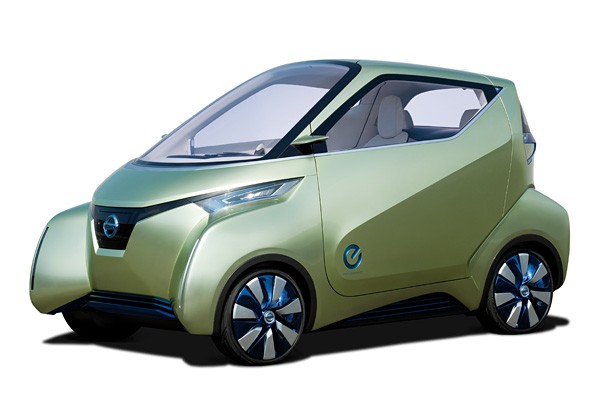
Nissan has been working quite hard in the electronic vehicle market, with the Leaf doing well in various parts of the world. The new EV concept dubbed “Pivo3” has a wonderfully interesting design. It will sit one driver in the front along with 2 passengers at the back. The Pivo 3 has a small four-meter turning circle and automatic parking. Nissan is not sure of productions of this vehicle, not before 2017 anyway. Check out the video below to see whats up- upclose and personal.
[toggle title_open=”Press Release” title_closed=”Press Release” hide=”yes” border=”yes” style=”default” excerpt_length=”0″ read_more_text=”Read More” read_less_text=”Read Less” include_excerpt_html=”no”]PIVO 3 – Smart Urban Commuter is EV of the Near Future
It all started in 2005. Since featuring PIVO 1 at the Tokyo Motor Show, Nissan has introduced six other EV concepts, all demonstrating Nissan’s dedication to creating exciting and innovative zero emission mobility solutions. And at the upcoming 42nd Tokyo Motor Show, Nissan will be revealing the PIVO 3, its eighth EV concept. Yet this is not just a show car – PIVO 3 is what Nissan envisions to be a more “realistic” EV of the near future.
PIVO 3 takes Nissan’s EV portfolio another step forward. Building on the pioneering PIVO 1 and PIVO 2, the new PIVO 3 concept moves from the realm of imagination into a fully-evolved vehicle that envisions life in tomorrow’s cities. Where PIVO 2 was a highly innovative vehicle that stood alone as a concept car, PIVO 3 evolves in the direction of “smart community” with greater feasibility, credibility and an extended scope of mobile performance. Nissan believes PIVO 3 is very close to what the next step in urban mobility will be.
Francois Bancon, Deputy Division General Manager of Product Strategy and Product Planning Division, explains “PIVO is one of the answers for active urbanists living in mature markets. Through the three PIVO proposals, we have gained a deep understanding of their needs in such large, metropolitan areas. Each of the eight concepts that we have created address different needs, different communities, different lifestyles for different markets. That makes zero emission mobility an ambitious statement for the company… At Nissan, we believe that the world is changing and mobility has a role to play to make it better”.
As part of Nissan’s long-term commitment to lead the way in mass-marketed zero-emission mobility, PIVO 3 stands alongside the Nissan LEAF as a practical approach to sustainability for the real world. Nissan LEAF is a compact hatchback; PIVO is an ultra-compact city commuter targeting singles and couples living in and enjoying an urban lifestyle.
Comes when it’s called, with automated parking and automatic charging functions With Automated Valet Parking (AVP), PIVO 3 will revolutionize the parking experience by connecting to and responding to infrastructure. No longer does a driver need to find a parking space, physically park the car, or remember which space the car is parked. PIVO 3 can park automatically in specially-equipped parking lots. While the driver shops or takes care of business, PIVO 3 recharges itself or sells excess power to the grid. Later, the driver can call PIVO 3 and summon it to the driver’s location using a smartphone. This AVP function not only creates more freedom in private life, but it can also contribute to society and benefit the environment by supplying electric power on the regional grid. PIVO 3 points the way to mobility as a service – always on, available and reliable.
U-turn in 4 meters, with zero turn gap PIVO 3 is a remarkably compact package, measuring just under 3m in length and seating three in a 1+2 layout. The compact body and narrow-tread wheels with IWM (in-wheel motors) enable an extremely small turning radius with zero turn gap. PIVO 3 is very agile and can effortlessly park in tight spaces. Such maneuverability also aids the driver who has taken a wrong turn onto a narrow street. Instead of having to back out in reverse gear, PIVO 3 can make a legal U-turn in a road only 4m wide. Considering that most public roads around the world are at least 4m in width, this means that a U-turn is almost always possible because of its 2m minimum turning radius.
Package leverages electric drive, by-wire technology and in-wheel motors Like the previous PIVO 1 and PIVO 2, PIVO 3 uses electric power and by-wire control technology to permit freedom of layout and the downsizing or elimination of many mechanical parts. Again, similar to PIVO 2, PIVO 3 uses in-wheel motors (IWM) to give wheels great freedom of movement, and more space in the vehicle chassis. Moreover, PIVO 3 balances the advantages of IWM with user friendliness by keeping wheel rotation within a range that will maintain a natural steering feel for the typical driver.
Seamless mobility built on friendly innovation Guided by the philosophy of “friendly innovation”, Nissan seeks to ensure that the customer perceives cutting-edge technology as being truly easy to use and understand. In this context, one of the engaging features of PIVO 3 that it inherits from the previous PIVO 2 is the Robotic Agent interface. The car acts as a partner or personal assistant to the driver, with companionship conveyed by the Robotic Agent. Based on this approach, PIVO 3 supports a life of seamless mobility, using cloud computing and infrastructure (e.g. AVP and charging facilities) to connect with the city. A “smart” personal filter selects information relevant to the current driver, location and vehicle.
Mature exterior styling integrates narrow-tread rear tires Externally, PIVO 3 shows mature styling with bold surfaces and a new stance. Front fenders extending out of a crouching chassis with a sculptural front exude a look of agility. Long body lines and angular planes combine in a dynamically active form. Rear styling cues emphasize strong presence within compact dimensions. Trim and stylish mobility is promised by the new stance, which attractively reveals narrow rear track width.
Interior design Inside, PIVO 3 presents a distinctive design centering on driving controls that seamlessly integrate with interior and exterior styling. Side-view monitors take the place of mirrors, using Nissan’s Around View Monitor system to reveal the car’s surroundings and help minimize blind spots. The center console features an ultra-wide display for GPS and other information, and together with a sub-monitor and the Robotic Agent, is positioned to interact discreetly with the driver. Carefully stitched leather and silver-hued trim meld in a “snow white” and “EV blue” color scheme to produce a tasteful, high-quality ambience. Smooth surfaces add to the refined feel within the compact cabin dimensions, rather than emphasizing environmental frugality.
Next stage of urban mobility With its home charging capability, Nissan LEAF liberates the driver from dependence on gasoline. It also has the potential to store renewable energy and even supply the household with electricity. From this “LEAF to HOME” connection, PIVO 3 expands the possibilities to include the entire electrical grid. When EV’s represent a larger percentage of all cars, collectively serving as part of a city’s infrastructure, advanced electric vehicles like PIVO 3 could help balance electric power supply and demand – around the clock and around the town. Such a powerful synergy of smart cities, cloud computing and EVs opens the door to the urban society of tomorrow.
Here, once again, Nissan demonstrates its commitment as a responsible corporate citizen to zero emission mobility with an inspired vision of the way we will live and drive in the near future.[/toggle]
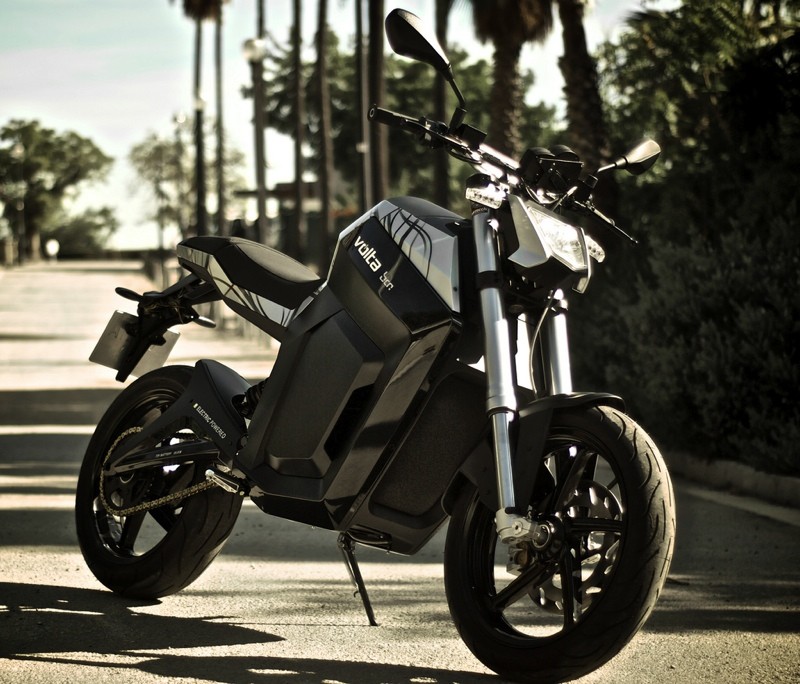
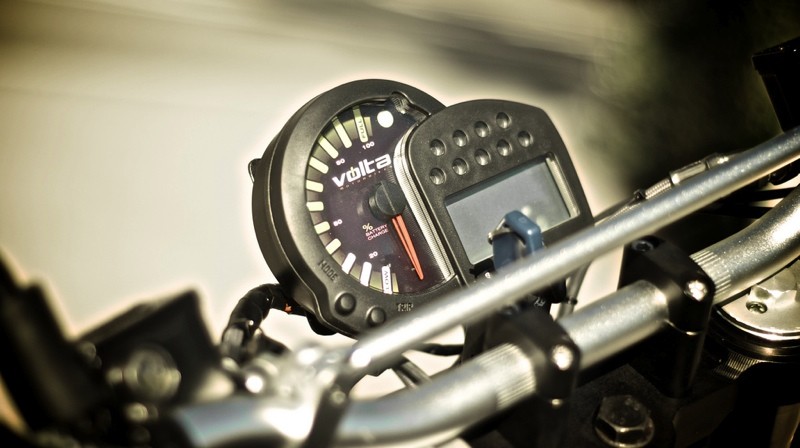
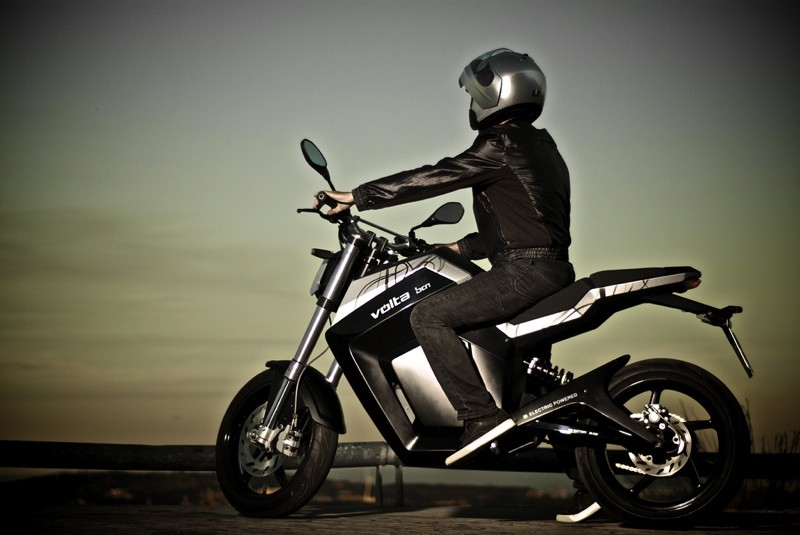
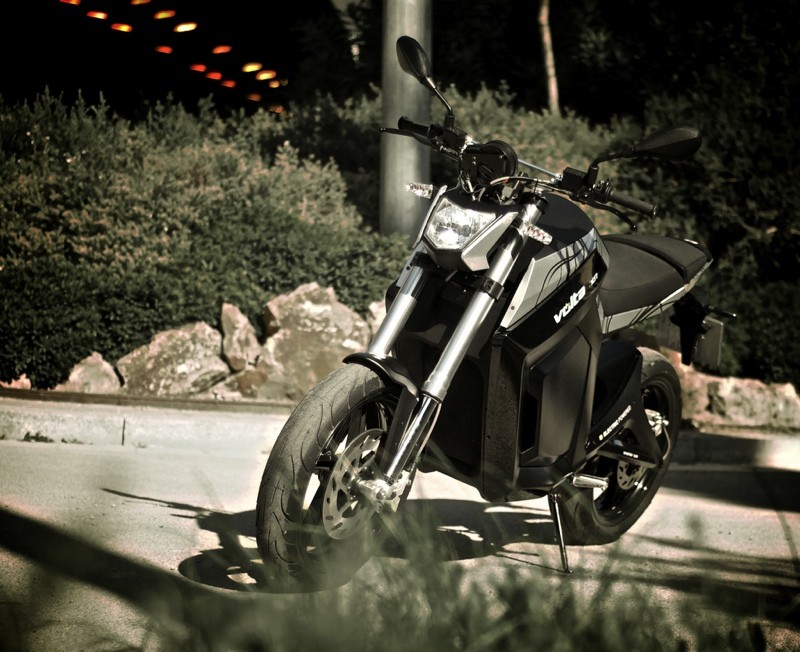
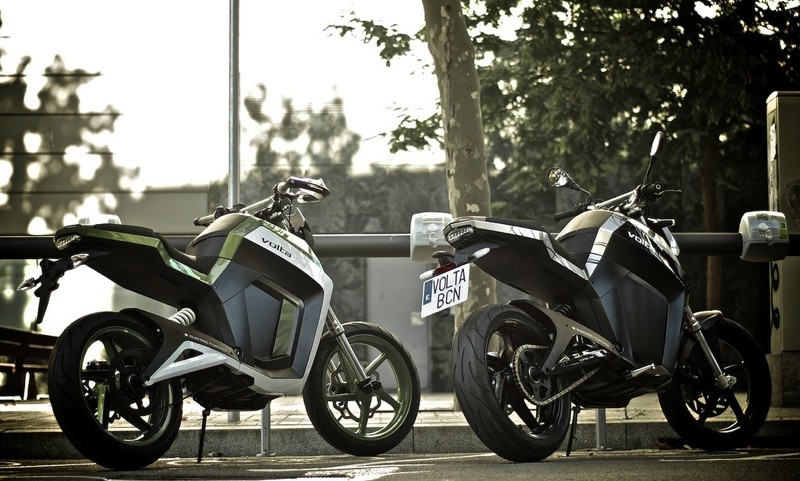
Volta Motorbikes officially announced its new Volta BCN motorcycle this week, with a complete unveiling set for the EICMA Motorshow in Milan next month. The electric motorcycle is one of many to come in the rage of the new eco sports bike era. With a total of three different variants :
BCN Sport
BCN City
BCN My Volta (customizable at order)
All the variants have a 35 horsepower and 70 kilometer range
The price range starts at €7,000 mark (or just around the INR 5 lac mark, before duties and tax),
The bike will start shipping to pre-orderers first half next year with a reservation list first come first serve basis.
[toggle title_open=”Collapse Press Release” title_closed=”Expand Press Release” hide=”yes” border=”yes” style=”default” excerpt_length=”0″ read_more_text=”Read More” read_less_text=”Read Less” include_excerpt_html=”no”]Volta Motorbikes unveils his first electric motorbike, the Volta BCN, in the coming EICMA 2011
The pre-reservation list will be opening at the start of 2012, and the first units will be sold during the second quarter of the year
Between 8th and 13th November, amid the backdrop of the Milan Fair (69th International Motorcycle Exhibition), Volta Motorbikes, an electric motorbike manufacturer created with the mission of providing new solutions for the pollution problems in big cities, will be presenting its star project: the Volta BCN. The first electric motorbike designed entirely in Barcelona has received the name of the Catalan capital thanks to an agreement with the City Council, which hopes to display the city’s aspiration to become a European benchmark in sustainable mobility and environmental respect. The Volta BCN combines design, a sporty feel, innovation and sustainability all in one. This goes to show that a practical and sustainable vehicle can also be dynamic, while boasting an urban image and high performance.
After months of work and perseverance, the Volta Motorbikes project has now come to fruition and is about to begin the production phase. Thus, during the first quarter of the forthcoming year, a pre-reservation list will be opened on the Internet; and in the second quarter, the first units will be released for sale, for an estimated price of €7,000. At the moment, Volta is putting the final touches on the shape of the Volta BCN distribution network and points of sale throughout Europe.
The fact that Volta bears the name of Barcelona forms part of the intention to help forge the image of a city that is capable of converting urban thoroughfares into a pollution-free public space, yet with no sacrifices regarding the mobility-related needs of the people who live there. And so, Barcelona is pushing to become a benchmark for sustainability in Europe, while at the same time reasserting its ambition to be a hub for design and quality.
The Volta BCN is different from other urban electric motorbikes, as it combines technology, design and a sporty feel, to afford users the opportunity to experience motor passion while also being respectful of the environment.
Volta Motorbikes envisages launching its product in Spain first, and will subsequently make the leap over to the international market, with its first appearance at the Milan Fair, the quintessential showcase for any new product in the two-wheel sector. As Volta Motorbikes Manager Marc Barceló says, “the Milan Fair is the ultimate test to assess the entrance of a new brand, and we hope to firm up our first orders with the European market during the days of the show”.
BCN SPORT, BCN CITY AND BCN MY VOLTA
The Volta BCN, with 35 hp, will be available in several different models, yet as Barceló cites, all are founded on the same philosophy: “Volta aims to transmit the DNA of a brand with a sporty nature while also being efficient and environmentally friendly”.
In Milan, the company plans to present three models with the same power yet different aesthetics and finishes. The BCN Sport is an urban motorbike that projects a dynamic image with a personality of its own, without skimping on performance, quality or practical features. The BCN City offers a cosmopolitan design and targets those who wish to combine an elegant look with the spirit of sustainable mobility and practical, comfortable driving. The BCN My Volta is the customisable model, meaning that the motorbike can be adapted to the needs and preferences of the user in terms of the design of its finishes and accessories. The My Volta will offer customised ordering through an online tool that will be implemented with the new Volta website, coinciding with the brand’s presentation at the Milan Fair.
All of these models require the same A2 driving license and are the ideal choice for those who need a means of daily transport to get about in the city, while serving as a road of entry into the two-wheel world for new users.
€0.45 PER RECHARGE
With a full battery recharge cost of €0.45, this bike can recharge completely in just two hours when plugged into a 220-V household socket or at any public charging point. The Volta BCN has a range of approximately 70 kilometres and a lithium-polymer battery. After 1500 charging cycles, which is the equivalent of five years of daily recharges, the battery still has 80 % of its initial capacity.
One thing that we must point out about the Volta BCN is the quality of its components, as all of its parts are supplied by prestigious brands in the sector.
The motorbike comes with a trunk with capacity for a full-face helmet, as well as a mobile phone charger.Particularly worthy of note is the relaxed and comfortable position of this bike, which makes for agility and free movement when driving. Moreover, it includes the added feature of connectivity with mobile telephone devices, as well as a wide range of applications such as programming recharges and power setting limits, among others; a package that will be available when the first Volta BCN bikes reach the market.[/toggle]
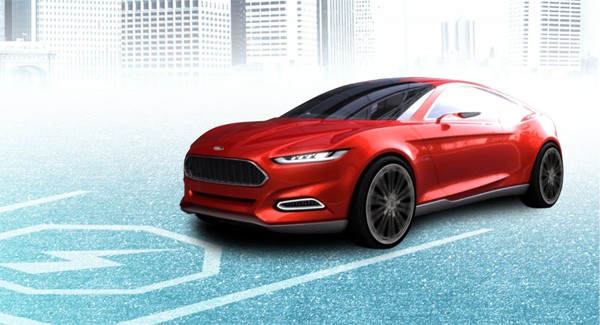
Ford Evos is a cloud powered Electric Vehicle from tomorrow. The car’s automated and integrated with everything to give you a complete modern experience. The clod powered vehicle is able to sync alarms, meetings , calendars, continue music playback from other devices where you’ve left off and even suggest alternative routes based on your schedule and past driving history.
Now is that wonderful or what? Check out the Video Below followed by the full PR.
[toggle title_open=”PRESS RELEASE” title_closed=”PRESS RELEASE” hide=”yes” border=”yes” style=”default” excerpt_length=”0″ read_more_text=”Read More” read_less_text=”Read Less” include_excerpt_html=”no”]Ford Evos Concept – The Ultimate Expression of Ford’s New Global Design and Technology Vision
– Ford Evos Concept showcases Ford’s first truly global design language and a new vision for customer-focused and intuitive technologies
– Dramatic four-door, four-seat fastback concept with state-of-the-art lithium-ion plug-in hybrid powertrain previews Ford’s new global design language with distinctive exterior and interior design cues
– Driver engagement technologies explore seamless enhancement of the driving experience, driver well-being and smart, electrified powertrain.
Ford Evos Concept makes global debut at the 2011 Frankfurt Motor Show
BERLIN, Germany, August 31, 2011 – Making its global debut at the 2011 Frankfurt Motor Show in September, the Ford Evos Concept represents the ultimate expression of Ford’s new global design language, and explores key future powertrain and vehicle technologies.
Created as a bespoke concept vehicle, the fastback introduces Ford’s first truly global design language as the momentum of the company’s One Ford product plan continues to build.
“The Ford Evos Concept unites three key elements which are at the core of our One Ford global product strategy: outstanding design, smart technologies and fuel economy leadership,” said Derrick Kuzak, group vice president of Global Product Development.
“With its compelling design and innovative technology experience, this is a clear demonstration of the exciting vision we have for the Ford brand. While you will never see this car on the road, the next generation of Ford products around the world will display many of the distinctive design ideas and advanced technologies it showcases.”
Technology vision for enriched customer experience Ford Evos Concept is not just a design-led exercise. It also embodies the global Ford product development team’s move to design and develop vehicles as more than just an interior and exterior, or a collection of attributes.
“Our goal is to focus on enriching a customer’s every experience with their vehicle – by personalizing it, adapting it, and creating unique, unexpected features that surprise and delight them,” said Kuzak. “In the Ford Evos Concept, this objective is explored and extended to the area of connectivity, where the intent is not to convert the vehicle into a smartphone, but rather ?????to provide personalised and safe connection to the outside world in an enriching manner designed totally for the vehicle context.”
Ford’s global Research and Innovation team, led by Paul Mascarenas, was tasked with building Evos Concept around a technology experience as visionary as the design. The result signals how Ford intends to build on the momentum of innovations like the SYNC in-car connectivity system.
“At Ford, the future of technology in the car will be defined by the experience that it delivers to the driver and passengers,” said Paul Mascarenas, chief technical officer and vice president of Ford Research and Innovation. “We see technology as more than just an impressive list of microprocessors, sensors and software; it’s about the application of that technology to create an experience that enhances the driver’s time behind the wheel.”
The concept’s technology experience embraces a new generation of driver interaction and awareness currently under development in the Ford Research and Innovation laboratories. Seamless connectivity between the vehicle and the driver’s „personal cloud? of information is at the heart of the vision for its capabilities.
“The possibilities are fascinating when we explore how to enable a seamless lifestyle between home, office and car linked by access to the driver’s personal information,” Mascarenas said.
With information from the cloud, the vehicle can provide the same connected lifestyle the driver experiences at home or office. The car knows the driver, and automatically adapts handling, steering and engine controls to deliver an exceptionally dynamic driving experience.
Ford researchers are focusing their efforts in this area to deliver on four key customer benefits: personalisation, seamless enhancement of the driving experience, looking after the driver’s well- being and delivering smart electrified powertrain optimisation.
The personalised, cloud-connected lifestyle While today’s Ford products provide drivers with many personalisation options, cloud connectivity will enable future Ford vehicles to take the experience to the next level.
Drawing from a detailed understanding of the driver’s preferences and driving habits, the Ford Evos Concept combines this personal information with additional data from the cloud, such as the drivers work schedule and local traffic or weather conditions. This information provides a personalised and seamless experience as the driver transitions in and out of the car.
“We’re researching how we can use patterns or preferences set by the driver to make life simpler,” said Mascarenas. “The car gets to know you and can act as a personal assistant to handle some of the usual routines of a daily commute.”
It could automatically play the same music or news program that was just streaming at home, or heat or cool the interior to an ideal temperature before the driver gets in without having to be requested by predicting departure time based on his calendar. Wirelessly communicating with devices in the home, it could close the garage door and switch off the lights automatically as it pulls away. ???? “This cloud-connected vision shows the enormous potential of tailoring the driving experience to suit the exact personal tastes and moods of the driver,” said Mascarenas. “From recommending a great driving road from friends on your social networks or resetting your alarm clock to let you sleep in when a morning meeting gets cancelled!”
Enhanced driving experience Ford Evos Concept explores adaptive vehicle technologies to redefine the driving experience.
Current technology requires vehicle chassis settings to be defined based upon the abilities and tastes of a cross-section of drivers and the topography of typical roads. The concept foresees tuning handling and performance to the road ahead and the specific individual behind the wheel.
Learning driver habits and capabilities, the technology can overlay map and weather data sourced from the cloud to adjust powertrain, steering, suspension and braking systems for optimum enjoyment, comfort and safety. Because the vehicle is adaptive and honed to maximum performance based on the situation, it takes driving engagement to a new level.
Driver wellness Ford researchers have already developed technologies focused on driver wellness, such as the heart-rate monitoring seat and certified allergy-free interiors. With a seamless connection to the cloud, the Ford Evos Concept monitors the physical state and workload of the driver and adjusts the driving experience accordingly.
“Our wellness research and technologies are focused on relieving driver stress and enhancing their situational awareness,” said Mascarenas. “Drivers around the world are spending more time behind the wheel, and the car should not be another stress point in their lives.”
The Ford Evos Concept is also equipped with advanced air quality sensors and filtration systems to help allergy sufferers. Location aware, it can access air quality data from the cloud and proactively suggest a healthier route to the destination.
In dynamic driving situations, the vehicle may simplify the appearance of the instrument panel to display only necessary gauge information and switch the driver’s connected smartphone to “Do Not Disturb” mode to help keep the focus of attention on the road.
Cloud-optimised hybrid powertrain Completing the vision for the Ford Evos Concept is a state-of-the-art lithium-ion plug-in hybrid (PHEV) powertrain providing the same next-generation performance and fuel economy as the Ford C-MAX Energi scheduled for introduction in North America in 2012 and Europe in 2013. Ford „powersplit? hybrid architecture allows the electric motor and petrol engine to work together or separately to maximise efficiency. The advanced powertrain typically runs in all-electric mode before switching to charge-sustaining hybrid mode for continued optimal fuel efficiency. Cloud connectivity would provide further opportunities to enhance performance and efficiency by selecting the optimum combination of powertrain modes for any given journey. ???? “Access to historical driver behaviour and travel patterns allows us to calculate the optimal fuel and energy efficiency by predicting the destination,” said Mascarenas. “Our researchers are working to increase understanding of driver behaviour, develop accurate protocols to predict it and enhance the trip by providing the smartest use of fuel or battery for the situation.”
The cloud-optimised powertrain would automatically „know? when to save energy and switch modes, using information about the vehicle’s predicted travel route, any emission zone restrictions during the journey and current weather conditions.
In the future, communities may place firm restrictions on the types of vehicles allowed to use certain roads or highway lanes, and some city centres may choose to be open only to full electric vehicles. Helping drivers comply with such regulations could therefore be among the benefits of this technology. For example, the French government is considering creating zones mandating lower emissions, while cities such as London, Berlin, and Stockholm already have them in place.
This capability would further enhance the performance of Ford?s advanced PHEV technology, which offers an overall driving range of more than 500 miles (800 kilometres) using the battery and engine – more than any other plug-in or extended-range electric vehicle.
“With its leading-edge „cloud-optimised? PHEV powertrain offering outstanding efficiency and range with supreme driving enjoyment, the Ford Evos Concept highlights our vision for greener, smarter vehicles with outstanding customer appeal,” said Kuzak.
Ford’s new design direction The Ford Evos Concept was specifically developed to introduce the new Ford design direction. Key design elements will be applied to forthcoming Ford vehicles.
The new global design DNA provides the company?s worldwide design teams with a common framework to guide the creation of new products, enabling them to shape a coherent family of distinctive vehicles sharing the same fundamental design character.
“We wanted the Ford Evos Concept to give a clear message about where Ford design is heading – shaping vehicles that are fun to drive, have a strong premium visual appeal, and above all, are stunningly beautiful,” said J Mays, group vice president, Design and chief creative officer.
“Our exciting new design DNA has been developed and refined by an intensive effort by all of our talented global design team,” said Mays. “As a team, we wanted to create a more technical design vocabulary to help communicate the smart technology that is now core to the Ford brand. In addition, we worked particularly hard on meeting the high-expectations of a new generation of buyers – a group of consumers who have grown up surrounded by beautiful, premium design work on even the most affordable products.”
Dramatic fastback design with unique proportions To provide a fitting vehicle to introduce the new design language, the Ford Evos Concept was conceived as a dramatic fastback concept, combining a striking new profile with innovative ?proportions. Attention-grabbing lines conceal a unique new format, with a four-door, four-seat layout which combines dynamic appearance with surprising practicality.
“This is an exciting new interpretation of the fastback bodystyle, with a really innovative silhouette as well as dramatic and very modern proportions,” Mays said.
With the length of a typical C-car, but with width of a CD-car, the Ford Evos Concept has a powerful, sporting stance. The forward position of the cowl, the strongly rounded front screen and the A-pillars set further to the rear enabled the designers to create the impression of a classic GT car, but with a very contemporary feel.
The concept?s spectacular hinged gullwing-style doors, both front and rear, provide outstanding access to the spacious four-seat cabin.
The concept car measures 4.50m (177in) long, 1.97m (77in) wide and 1.36m (53in) high, with a wheelbase of 2.74m (108in).
Distinctive evolution Shaped as the ultimate expression of the new design DNA, the Ford Evos Concept highlights key elements of Ford?s distinctive new global design language.
“The new design DNA marks a bold evolution of the kinetic design language featured on existing global Ford products and is characterised by a number of important elements that will contribute to an unmistakable future Ford look,” said Mays.
From the front, the Ford Evos Concept immediately signals the arrival of something new – a new face for Ford featuring the signature trapezoidal grille mounted higher on the car and creating a confident, more premium look.
Bold, technical shapes, such as the extremely slim „laser cut? front lamps or the dramatic graphic created by the front and rear screens connected by the thin glazed section of the roof, add a distinctive character to the design. Sculptured flanks highlight attention to detail on the surfacing, which lends a refined quality and a tauter, more muscular character.
“The Ford Evos Concept embodies the core elements of the new global design language, while capturing the dynamic, fun-to-drive spirit which is central to the Ford DNA,” said executive design director Martin Smith. “Most notable is the brand new „face of Ford?, with its higher mounted trapezoidal grille, and the design is characterised by the use of very bold, technical graphics. We have also created much more refined and precise surfacing, and these elements together give a strong visual sense of premium quality.
The vehicle was sculpted with the same purity of surface sculpture and attention to detail which characterise premium vehicles. Around the world, a new generation of buyers have come to expect premium design in all products, regardless of the purchase price.
Built around the driver Reflecting the fun-to-drive spirit of its exterior design, the interior of the Ford Evos Concept is built around the driver. A stylish and innovative cockpit promises new levels of driving pleasure and driver interaction. ???? The interior architecture features clean and simple surfaces, with a muscular, athletic character to the slim upper instrument panel, enhanced by bold trapezoidal cut-outs. Contrasting these muscular forms, curvaceous cockpit display surfaces sweep down either side of the driver, providing secondary information about vehicle and infotainment systems.
The concept features a bold red driver?s seat and the vision of unprecedented driver interaction via an advanced driver interface. The two rear seat passengers get an equally special experience, with dedicated touch-screen displays to interact with the vehicle and individually adjustable sports seats.
“Both the exterior and interior of the Ford Evos Concept clearly communicate that this is a driver?s car, so that as soon as people see the vehicle, they will immediately want to get in and drive,” said executive design director Moray Callum.
### About Ford Motor Company Ford Motor Company, a global automotive industry leader based in Dearborn, Mich., manufactures or distributes automobiles across six continents. With about 166,000 employees and about 70 plants worldwide, the company’s automotive brands include Ford and Lincoln. The company provides financial services through Ford Motor Credit Company. For more information regarding Ford’s products, please visit www.fordmotorcompany.com.[/toggle]
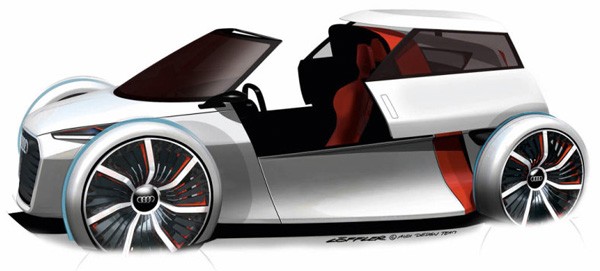
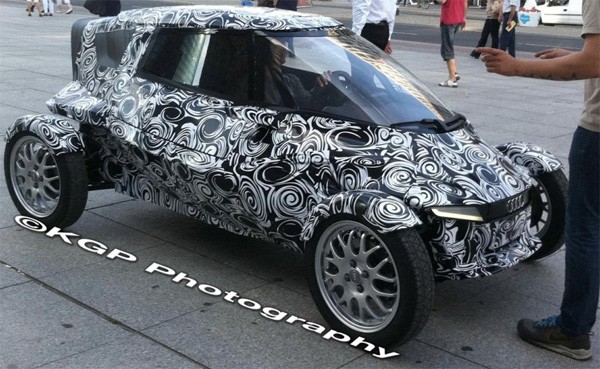
After BMW showed of their concept cars, it is Audi’s time to take center stage with the Urban Vehicle concept. The car meant for the overly crowded urban driving pleasures, was spotted by Autoblog earlier this year. Both the BMW and Audi concept will be displayed at the Internationale Automobil-Ausstellung (IAA) in Frankfurt.
The Urban Concept is made out of a carbon fibre shell, with a pull back door only seen in Sci-Fi movies.
The Audi urban concept – a completely new kind of concept car
An innovative urban concept car with 1+1 seats
Sleek cockpit made from CFRP, free-standing wheels with protective plates
Elaborate suspension, compact electric drive system for sporty performance
Audi is once again opening up new horizons: the Audi urban concept is a 1+1-seat, ultra-light car for congested urban spaces. The technical study does not fit under any of the conventional categories – the Audi urban concept combines elements of a racing car, a fun car and an urban car into one radical new concept.
The Audi urban concept is not based on any previous model – its development is solely oriented on the strict principles of lightweight construction, efficiency and reduction. The result is a concept car with no unnecessary weight, and one that concentrates on the pure essence of sporty motion.
The Audi urban concept has a sleek body. The wheels are free-standing, their surrounding protective plates feature blinking strips of LED lights. The highly concentrated look of the technical study, with its forward-urging lines, is dynamic and emotional – it lends Audi’s design language a completely new impetus. On board there is room for two people, their position slightly staggered and at a sporty, low level. All controls and materials are subject to the dictates of ultra-lightweight construction in order to ensure they convey a completely unique, sensory allure. The driver can adjust the steering wheel and pedals to his own body measurements. Entry to the car is via the tailgate. The roof is designed to be maneuverable and slides to the rear to open.
The technology in the Audi urban concept reflects the full capabilities of the brand, especially when it comes to ultra-lightweight construction. The cockpit consists of carbon fiber-reinforced polymer, which integrates the undercarriage of both seats. The Audi urban concept rolls on wheels with a 21-inch diameter.
Two e-tron electric motors provide the propulsion – providing the ultra-light Audi urban concept with the ability to accelerate powerfully. A lithium-ion battery supplies the energy – ideal for extended city tours.
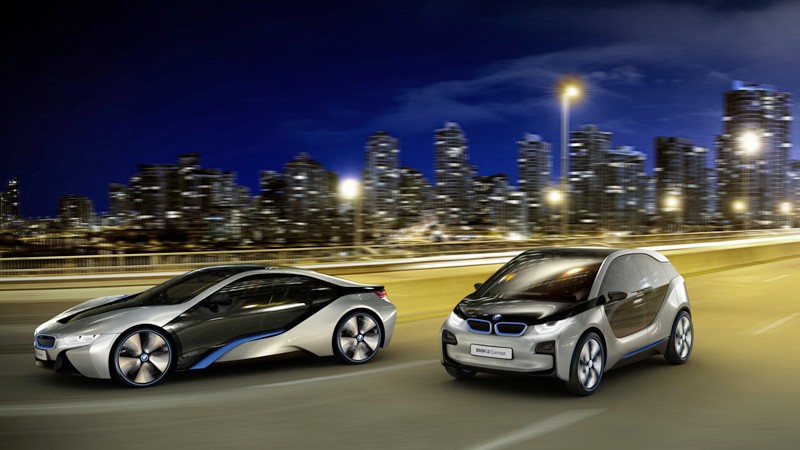
BMW automobiles is a well known name in the automotive industry, especially when it comes to innovation. The i brand was announced for the electric division of BMW automobiles earlier this year. The launch of the sub brand comes hand in hand with the two concept electric cars.
The i3 Concept
The i3 will drive 150km on a full charge, acceleration is about 0-60mph in around 8 seconds, while buying the vehicle owners will be able to opt in for the range-extending motor aptly named “REx.” The first consumer model should hit prime markets by as early as 2013. The charger will complete eighty percent charging in an hour, while a full charge could take as long as 6 hours.
The i8 Concept
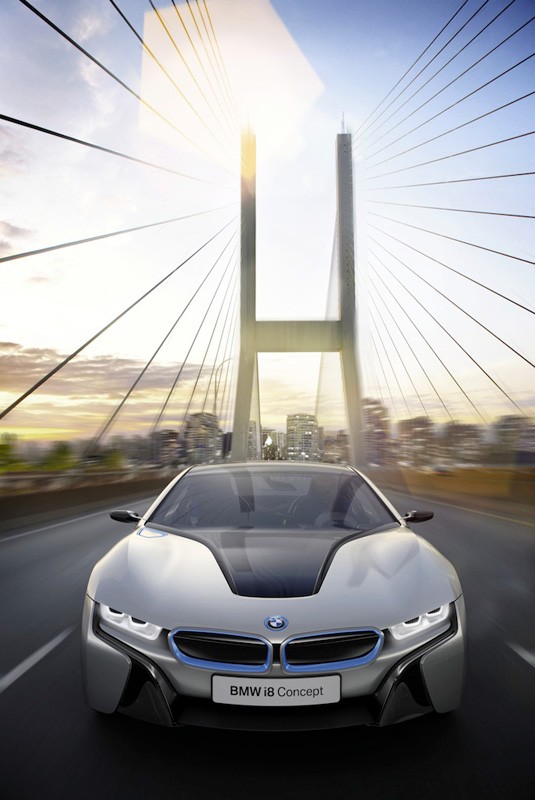
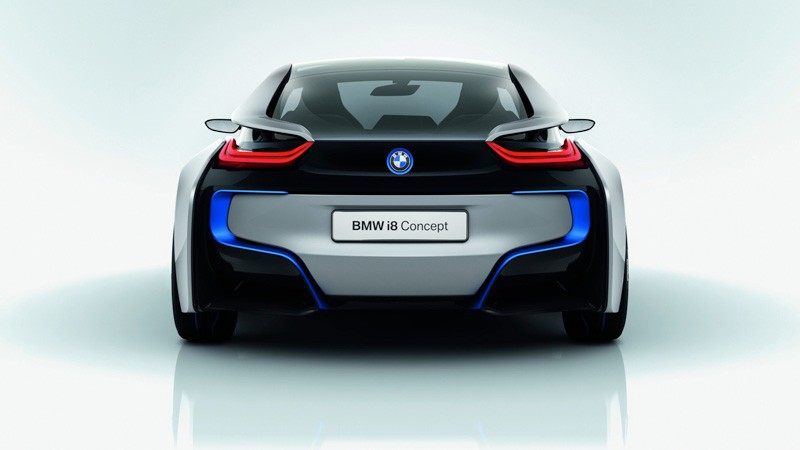
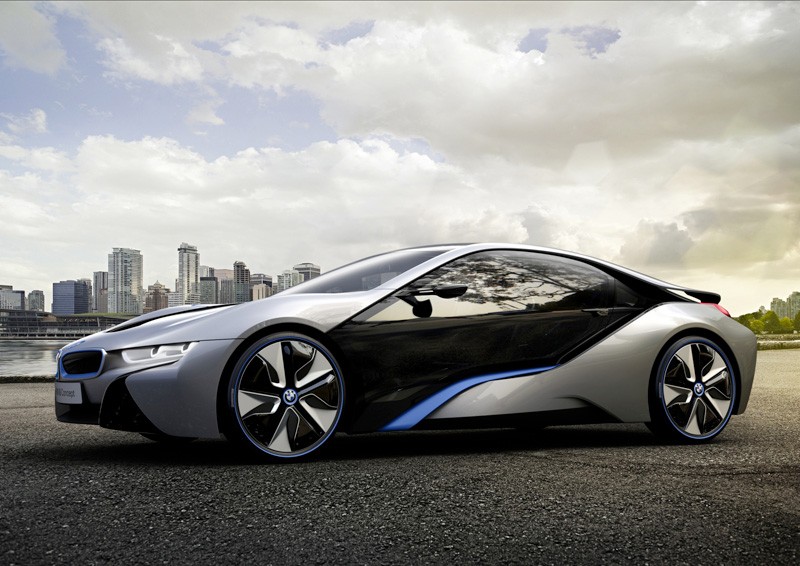
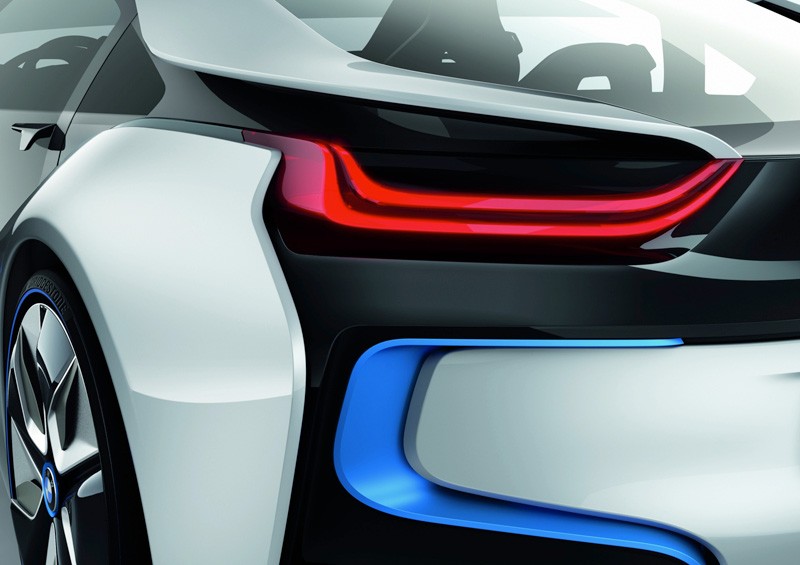
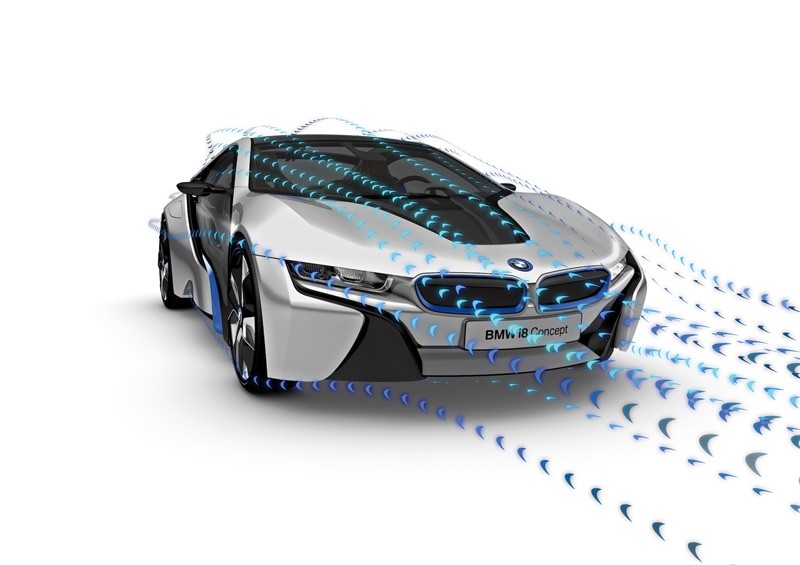
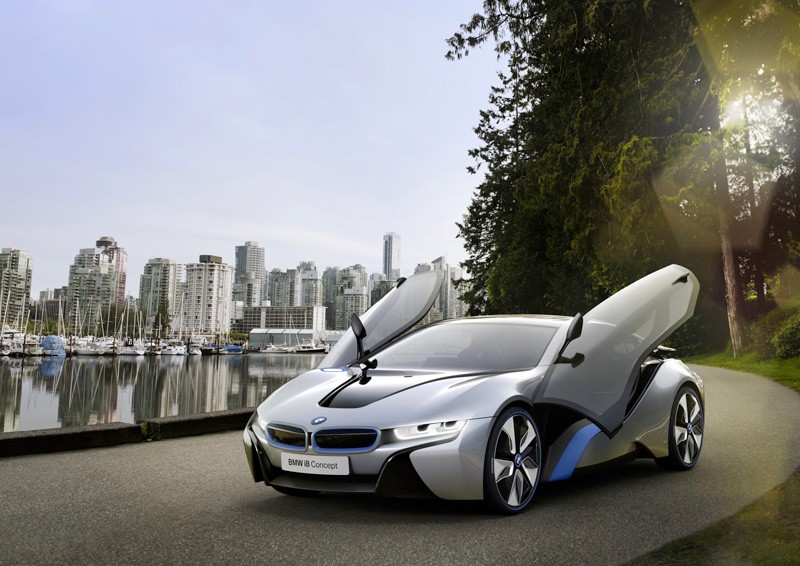
The i8 on the other hand is highly aerodynamic and has a hybrid diesel-electric drivetrain, while consumption will remain around the region of 2.7 liters per 100km, while it will speed up from 0 to 62mph in 4.6 seconds.
[toggle title_open=”Collapse” title_closed=”Read The Press Release” hide=”yes” border=”yes” style=”default” excerpt_length=”0″ read_more_text=”Read More” read_less_text=”Read Less” include_excerpt_html=”no”]BMW Group presents mobility of the future +++ World premiere of the BMW i3 Concept and BMW i8 Concept +++ Reithofer: A milestone in the history of the company +++ Sustainability across the entire value added chain
Frankfurt a.M. / Munich. The BMW Group showcases its visions of future mobility in the shape of the BMW i3 Concept and BMW i8 Concept studies. Unveiled for the first time, these concept vehicles provide a glimpse of the first electrically powered production cars from the new BMW i sub-brand, due to be launched as the BMW i3 in 2013 and the BMW i8 in 2014.
“We are marking another milestone in the history of the BMW Group. As Chairman of the Board and an engineer myself, I am very proud of this project,” declared Norbert Reithofer, Chairman of the Board of Management of BMW AG, at Friday’s premiere of the two vehicles in Frankfurt. “As the world’s leading premium car manufacturer, our aim is to offer customers purpose-built electric-drive cars as well,” he added.
With its zero-emission electric drive and a range of approximately 150 kilometres, the BMW i3 Concept has been specifically developed for use in an urban environment, its dynamic 125 kW electric motor and rear-wheel drive ensuring BMW-style dynamic handling. Thanks to its innovative LifeDrive architecture featuring a carbon passenger cell, the BMW i3 Concept combines an extremely low weight of 1,250 kilograms with optimal interior space and the highest crash safety levels. With four seats and a 200-litre luggage compartment, this vehicle is fully suited for everyday use.
Draeger: a revolution in car design
“This vehicle will mark the launch of the first volume-produced car featuring bodywork largely made of carbon. It’s a revolution in automotive design,” stressed Klaus Draeger, Member of the Board responsible for Development. The application of this new CFRP technology allows a weight reduction, compared to a conventional electric car, of between 250 and 350 kilos, and that means more dynamic handling coupled with a greater range. The BMW i3 does the 0 to 100 km/h sprint in less than eight seconds, while a high-speed charger achieves an 80% battery charge in just an hour.
Thanks to the emission-free drivetrain and a value added chain designed to be sustainable all along the line, life cycle emission figures for the BMW i3 are at least a third lower than for a highly efficient combustion-engine car. If the BMW i3 is run on electricity from renewable sources, the figures improve by well over 50%.
BMW i8 Concept: new-generation sports car
The BMW i8 Concept goes from 0 to 100 km/h in less than five seconds and boasts fuel consumption of under three litres per 100 km. Its plug-in hybrid drive with a system output of 260 kW allows a range of up to 35 kilometres in electric mode – sufficient for most everyday journeys. For more dynamic driving or out-of-town routes, a high-performance three-cylinder petrol engine also comes into play. The sports car has an electronically governed top speed of 250 km/h and space for up to four occupants. “The BMW i8 Concept is the sports car for a new generation – pure, emotional and sustainable,” Draeger underlined.
With BMW i, the BMW Group is corroborating its position as the most innovative and sustainable auto manufacturer in the world, as reflected in the fact that it has been the supersector leader in the Dow Jones Sustainability Indexes for the sixth year running. With BMW i, the BMW Group is providing answers to the mobility challenges of the future while pursuing a holistic approach. In addition to purpose-built premium vehicles with electric drive, the company is also offering intelligent mobility services.
The focus here is on solutions for improved use of parking space, intelligent navigation systems with location-based information, intermodal route planning and car-sharing schemes such as DriveNow. Following MyCityWay, ParkatmyHouse marks the second investment by the recently launched venture capital company BMW i Ventures in a company providing internet-based mobility services. Parkatmyhouse allows private individuals to use the internet or smartphone app to rent out their private parking spaces on a short- or long-term basis.
Both the BMW i3 and the BMW i8 will be built at BMW’s Leipzig plant in Germany. Some 400 million euros are earmarked for investment in new buildings and facilities by 2013, while 800 new jobs are to be created. Vehicle production will be CO2 neutral and will draw on renewable resources. The company is currently investigating the possibility of erecting its own wind turbines on the plant site.
The BMW Group The BMW Group is one of the most successful manufacturers of automobiles and motorcycles in the world with its BMW, MINI and Rolls-Royce brands. As a global company, the BMW Group operates 25 production and assembly facilities in 14 countries and has a global sales network in more than 140 countries.
During the financial year 2010, the BMW Group sold 1.46 million cars and more than 110,000 motorcycles worldwide. The profit before tax for 2010 was euro 4.8 billion on revenues amounting to euro 60.5 billion. At 31 December 2010, the BMW Group had a workforce of approximately 95,500 employees.
The success of the BMW Group has always been built on long-term thinking and responsible action. The company has therefore established ecological and social sustainability throughout the value chain, comprehensive product responsibility and a clear commitment to conserving resources as an integral part of its strategy. As a result of its efforts, the BMW Group has been ranked industry leader in the Dow Jones Sustainability Indexes for the last six years.[/toggle]
Just a few weeks back BMW announced the “i” series cars. This series is meant to be the first full range electric/hybrid vehicles from the automaker. The cars with 62MPG rating and a 0 – 62 time of 4.8 seconds.
Luxury car maker Rolls Royce has just announced an electric prototype of its flagship the “Phantom”. Possibly the best luxury car available today. The car dubbed 102EX is still a prototype and the company along with the CEO want people to join in a global debate to see whether or not they should go into production. Primarily if Luxury and an electric motor can co-exist in harmony without denting the ego of the Phantom owner!
Rolls-Royce Motor Cars Confirms Electric Test Vehicle Project
Goodwood UK
Rolls-Royce Motor Cars today confirmed the development of 102EX, a one-off, fully electric powered Phantom, to debut at the Geneva Motor Show on 1 March 2011. The car will tour during 2011, serving as a test bed to gather a bank of research data which will be crucial in informing future decisions on alternative drive-trains for Rolls-Royce Motor Cars.
“We have engineered the world’s first battery electric vehicle for the ultra-luxury segment,” said CEO Torsten Müller-Ötvös, speaking from the company’s headquarters in Goodwood. “With this vehicle, we begin an exploration into alternative drive-trains, seeking clarity on which alternative technologies may be suitable to drive Rolls-Royce motor cars of the future.”
Rolls-Royce produces cars that represent the pinnacle in luxurious motoring for the world’s most discerning customers. With 102EX, also known as the Phantom Experimental Electric (EE), it is the company’s intention to carefully test the opinions and reactions to alternative drive-train options of a range of stakeholders including owners, enthusiasts, members of the public and the media.
102EX will serve as a working test bed for a global tour that takes in Europe, the Middle East, Asia and North America. Through test drives, owners will be given the opportunity to experience an alternative drive-train technology and to feedback their experiences, thoughts and concerns directly to Rolls-Royce.
While there are no plans to develop a production version, as one of the company’s EX models it will serve to begin a dialogue with existing owners and stakeholders, posing as well as answering questions of its audience.
These include the car’s ability to deliver an acceptable range between re-charges and to operate in extreme weather conditions. But also to benchmark reliability and quality against customer expectations of the world’s pinnacle automotive brand.
“I must be convinced that any alternative drive-train we choose for the future delivers an authentic Rolls-Royce experience,” added Müller-Ötvös. “It must be a technology that is right for our customers, our brand and which sets us on a sound footing for a sustainable future.”
In preparation for the Geneva debut, Rolls-Royce will launch the website www.electricluxury.com this week, a portal to fuel a wider global debate seeking views on the question of electric luxury from media, VIPs and stakeholders. The site will also deliver regular updates of the car’s progress while on tour.
Full technical specifications for 102EX, as well as images and b-roll will be published at 00:01 GMT on 1 March 2011.
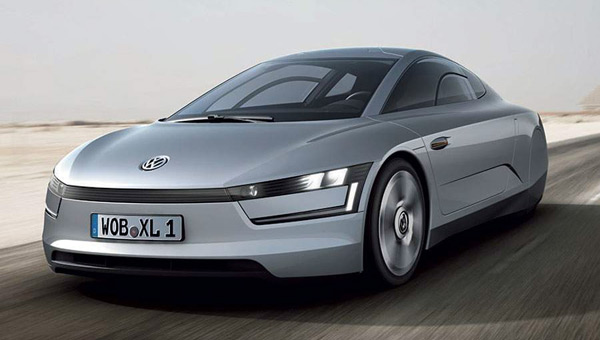
Volkswagen’s XL1 plug in hybrid diesel (futuristic) concept car, is perfect for the Indian Consumer. If we all remember Maruti’s new advertising campaign “Deti kitna hai?”. This car delivers a whopping 133 KPML range – and that too on Diesel. Brilliant, isn’t it? It also, produces only 24g of CO2 per kilometer traveled.
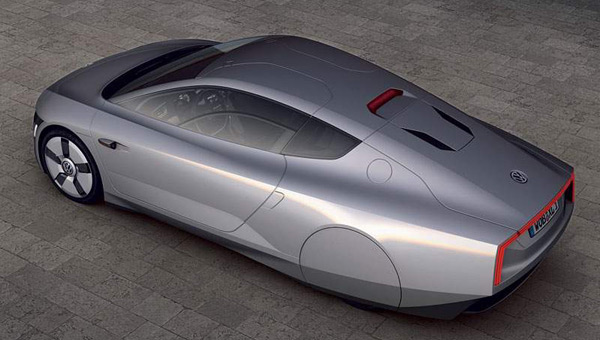
Volkswagen has achieved a 795kg curb weight by using carbon fiber, magnesium, ceramics, and aluminum to shave down any excess weight from the XL1, Testing shows only 0.186 drag coefficient.
Read the PRESS STATEMENT below to get a better feel.
Volkswagen unveils the XL1 Super Efficient Vehicle in Qatar
The new Volkswagen XL1 Super Efficient Vehicle (SEV) has been unveiled at the Qatar Motor Show. Pioneering construction techniques, an advanced plug-in hybrid drivetrain and innovative packaging all play a part in allowing the XL1 to return 313 mpg on the combined cycle while emitting 24 g/km of CO2 to set a new benchmark for vehicle efficiency.
Powering the XL1 is a compact 800 cc TDI two-cylinder common rail diesel engine developing 48 PS. It’s linked to an electric motor producing 27 PS, resulting in a total of 75 PS – a modest output yet more than enough when the low kerb weight (795 kg) of the vehicle is taken into account.
The TDI engine is linked to an electric motor and a seven-speed DSG gearbox with an automatic clutch mounted between each unit. The electric motor can either work independently of the TDI engine or in tandem when accelerating. In pure electric mode the XL1 can travel up to 35 km before the diesel engine cuts in. Accelerating from rest to 62 mph can be achieved in 11.9 seconds; the electronically limited top speed is 99 mph.
In both its styling and packaging the XL1 draws on lessons learned from the 1-Litre car (2002) and the L1 concept (2009). The XL1 has evolved to feature staggered seating with the driver and passenger placed next to each other in a body structure made from advanced new materials providing immense strength yet weighing just 230 kg.
To make such weight savings possible, and yet viable for series production, Volkswagen developed and patented a new system for the manufacture of the Carbon Fibre Reinforced Polymer (CFRP) parts on the car called the Resin Transfer Moulding (RTM) process.
In total the XL1 weighs 795 kg. In addition to the body structure, the weight is accounted for by the drivetrain (227 kg), the running gear (153 kg), the interior including a pair of bucket seats (80 kg) and the electrical system (105 kg). In total just 23.2 per cent of the car (184 kg) is made out of either steel or iron.
Further savings are made through the extensive use of lightweight materials including magnesium (wheels), ceramics (brake discs) and aluminium (dampers, steering system, brake calipers).
The styling of the XL1 is borne out of functional requirements – easy access to the interior is granted via a pair of elegant scissor doors that hinge on the A-pillar while the profile of the car has been honed in the wind tunnel, the result being a remarkable coefficient of drag figure of 0.186. The XL1’s overall length (3,970 mm) and width (1,682 mm) are similar to those of a Volkswagen Polo yet its height (1,184 mm) is more akin to that of a Lamborghini Gallardo Spyder.
Although the XL1 is still very much a concept, its unveiling marks the next step towards the birth of a new class of Super Efficient Vehicles, while the advent of a process such as RTM is a significant milestone.
As part of the company’s partnership with Brilliance China Automotive, BMW Brilliance Automotive is planning to create a pure EV 5-series, and will launch it this year. BMW saw a massive growth in China – 87% – and since the green market is heating up, they probably thought best to release an electric version of their hottest selling sedan.
In 2010, the BMW Group sold 169,000 BMW and Mini vehicles in Chinan, In 2011, the group will introduce at least three new models into China through imports – the new BMW X3, the new BMW 6-series and the Mini Countryman.