Once again, Google impresses us with its world-changing research efforts. The company’s Project Soli, which has been developed at Google’s secretive Advanced Technology and Projects lab in San Francisco, will allow you to interact with gadgets by simple gestures in air.
You may ask, so what is new about controlling your gadgets with hand gestures? For we already have Xbox Kinect, PlayStation Move and of course, JARVIS. What makes Soli unique is that the system can identify subtle finger movements using radar built into tiny microchips.
According to lead researcher Ivan Poupyrev, the team’s breakthrough will be a game changer.
Most sensors are camera-based, such as Kinect and Move. They act only when they capture gestures and require additional hardware. Soli’s microchips can be embedded into anything – from TVs to wearables, and this is the game-changing quality that Poupyrev refers to.
“Using a tiny, microchip-based radar to track hand movements we can now track the minutest movements and twitches of the human hand to interact with computers and wearable devices,” says Poupyrev.
The team has managed to overcome its biggest challenge: to fit a shoe-box sized radar on a tiny microchip. The team worked with German chipmaker Infineon for 10 months, finding new ways to shrink the radar’s components. Now, the chips are ready for mass-production.
‘Soli can pick up hand movements as far as a metre away as in Minority Report. But in reality this is too tiring,’ Poupyrev says. ‘Until now, we lacked the fidelity to capture hand movements in sufficient detail. But now using radar, for the first time in history you can build Minority Report type interfaces.’
Poupyrev recently demonstrated Project Soli in front of developers in California. The project’s open source technology will be handed over to developers later this year.
Google deserves credit for envisioning this project. The company has always pushed the boundaries of knowledge. They need to be appreciated for taking on resource intensive projects without compromising with their quarterly results.
Watch the video below to help understand the project better:
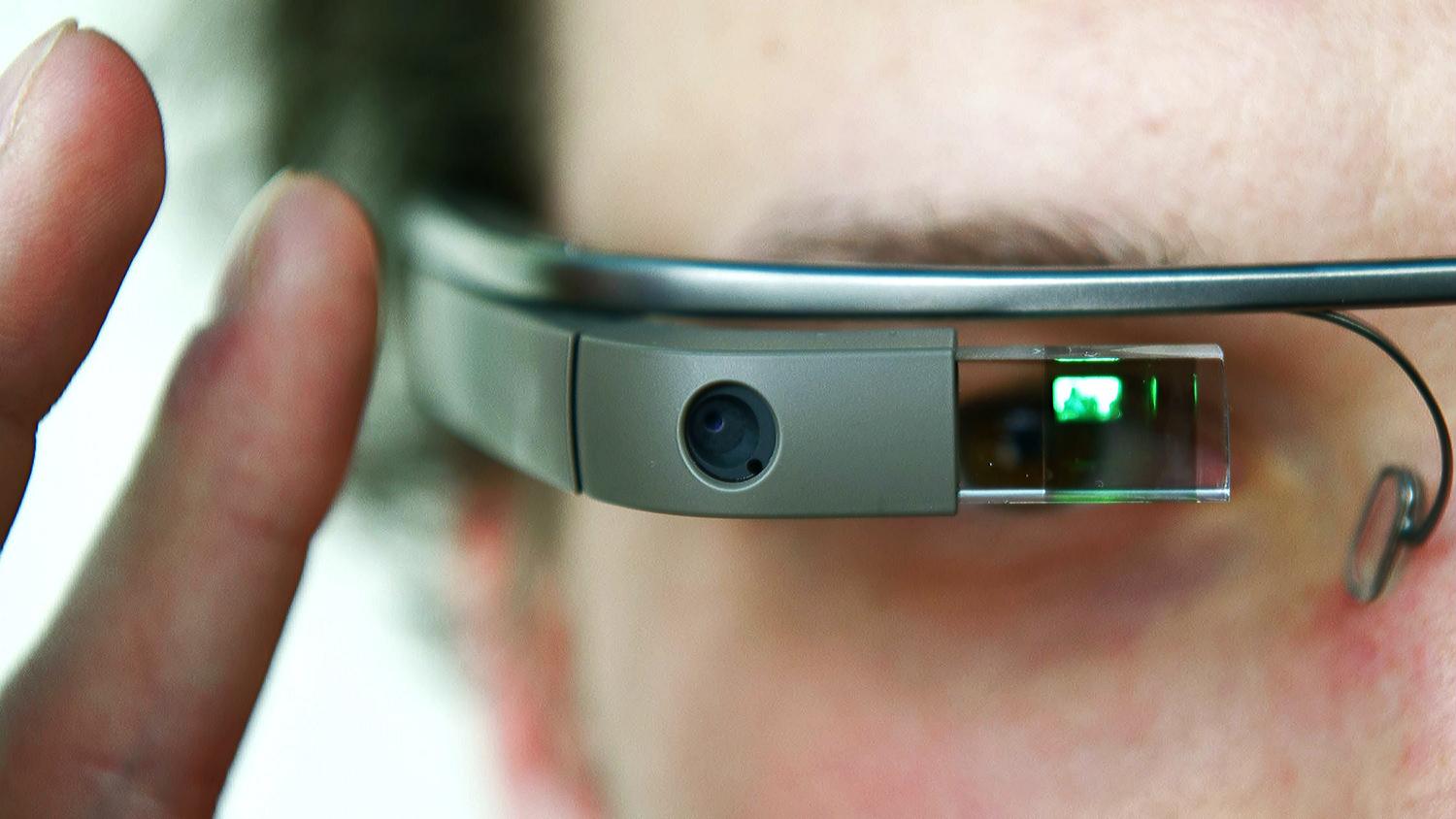
Rumour has it that Google X is currently working on an interesting wearable project. Google’s semi-secret workshop is one of the most innovation oriented institutions in the world. The research facility takes on some of the most fundamental questions on transportation, communication and others. Then, it takes an alternative bottom-up effort to understand them. The facility worked on concepts like Teleportation, Space elevators, and it is also the birthplace of projects like Google Glass, Driverless car and the upcoming Project Loon.
It is now developing a medical-grade wristband which will track health vitals such as heart-rate, pulse and skin-temperature on a “minute-by-minute” basis. The wristband will also measure external conditions such as room temperature and noise levels. The surprising thing is that Google won’t sell the device to general consumers, unlike Fitbit, which focuses on consumer wearables.
“Our intended use is for this to become a medical device that’s prescribed to patients or used for clinical trials,” said Andy Conrad, head of the life sciences team at Google, in an interview to Bloomberg. The device will allow doctors and medical researchers to keep track of a patient’s vitals outside the laboratory. Google wants the device to record accurate data, a function which can’t be expected from consumer-grade fitness wearables. The wristwatch can also make the research process more efficient, since the data collected from the patients can be easily organised and analysed.
Google X, the secret research wing of Google, is developing the wristwatch. The company will invite researchers and drug companies to test the device’s accuracy. The trial will start over summer, the company’s spokeswoman said.
Google has joined forces to develop a more productive battery technology for its line of consumer devices and other hardware projects. The search behemoth reportedly has a small team of researchers who are working on future batteries and is devising measures to advance present batteries for better outcomes.
The report by Wall Street Journal suggests that the team working on future battery technology is headed by Apple’s former battery expert Dr. Ramesh Bhardwaj. The four-member team is a part of Google X research lab, a facility dedicated to making major technological advancements like Project Loon and driver-less cars. Meanwhile, the battery research wing is working on enhancing lithium-ion and the advanced solid-state batteries for a range of consumer products like Google Glass and the contact lens that helps measure glucose level in blood.
Google is not a confined body limiting to consumer manufacturing electronics and offers its services to various industries like transportation, robotics, healthcare, and communications. Being in the hardware business, Google needs efficient batteries that can power their devices for a longer span of time.
Dr. Bhardwaj disclosed ideas in a February presentation of a new-age battery technology that can be equipped to wearables, and smartphones and can also be implanted in the human body. The internet supreme requires such a revolutionary technology that can give new life to its projects that got overshadowed because of shorter battery life, e.g. Google Glass.
The report said that other research teams are working in conjunction with the Chicago-based technology firm that can bring more potent batteries for four bigger projects including Project Loon. The internet-broadcasting plan to beam Internet down the earth is presently using traditional batteries and has to suffer high-temperature issues. The latest innovation is likely to resolve the current complexities along with being cost effective.
Several companies are coming with battery prototypes that can charge mobile devices within half a minute, but there is no certainty if they will be inexpensive if produced in large numbers. If the report turns out to be true and Google succeeds in developing a super slim battery for flexible displays, it will be a landmark of the threshold of a new era. The batteries will make room for a new line of products that will be more compact and powerful.
Facebook recently launched Internet.org initiative in India which offers affordable Internet connectivity and basic services on the Rcom network. It is one of the major initiatives to connect the folks who still don’t have access to the information superhighway. Google’s Project Loon is also one of the major connectivity initiatives, and the company is bringing it to India.
Google has said that it is working with the Government of India to bring its balloon and kite powered internet initiative to India. The company plans to provide the entire planet with internet coverage by the year 2016. This is the brainchild of Google X, the companies secretive research wing.
Project Loon balloons travel 20 kilometers above the surface of the planet and use wind to pilot themselves. From there they offer access to communications at 3G-like speeds. It will be beneficial to empower users in rural parts of the country. This network will also be a boon during emergency situations such as natural disasters.
The communication age demands a population to be connected with the world, in order to grow. Currently, a massive population of 3 Billion people around the world are oblivious to the benefits (and the few misgivings) of the internet. Initiatives like Project Loon, Internet.Org and proposed satellite-based space internet will allow the entire humanity to interconnect.
Science fiction has for long imagined an idea of a wonder pill that takes on all the diseases at once. Now Google is attempting to transform that idea into reality. The project is being undertaken at Google’s secret research facility known as Google X.
The Silicon Valley giant had reported last year that it was working on magnetic nanoparticles that would locate cancer cells in the bloodstream. Once they’ve located the cancerous cells, they’d report back to a wrist-worn wearable. Now to test the technology, Google is also working on creating synthetic human skin.
The nanoparticles can be introduced into the body through a pill. These particles are so tiny that over 2000 of them can be stuffed inside a red blood cell. The nanoparticles will transmit the information they possess to the wristband through light signals, and this is where the need for the skin arises. The scientists at Google will study various types of skin based on color, thickness and other features to resemble real human skin. They have already created a pair of arms that have “the same autofluorescence and biochemical components of real arms.”
The study still has a long way to go. According Andrew Conrad, the head of Google’s Life Sciences department, the path ahead is long and hard but they envision it becoming a reality in years and not decades. If successful, this can be a great step ahead in the field of medicine. The nanoparticles can be later programmed to detect all forms of illnesses before they come to the surface. With this, Google once again impresses us with its world-changing research efforts.
Google’s semi-secret workshop is one of the most innovation oriented institutions in the world. The research facility takes on some of the most fundamental questions on transportation, communication and others. Then, it takes an alternative bottom-up effort to understand them. The facility worked on concepts like Teleportation, Space elevators, and it is also the birthplace of projects like Google Glass, Driverless car and the upcoming Project Loon. Now with Project Baseline, Google plans to understand how a perfectly healthy human should look like and what factors restricts humans from achieving it.
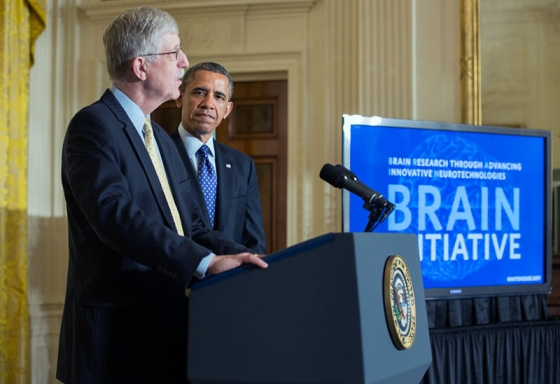
The plan is as audacious as President Obama’s Brain Initiative.
The study will collect anonymous genetic and molecular data beginning with 175 people. They will eventually accumulate data of thousand more individuals. The study is lead by Dr. Andrew Conrad, who is a molecular biologist. He is credited for the development of cheap, high-volume tests for HIV in blood-plasma donations. Dr. Conrad has set up a team of about 70-to-100 experts from fields including physiology, biochemistry, optics, imaging and molecular biology for the study.
The study is a reimagination of the workings of the human body and how diseases can be prevented. This will be a prevention-oriented study which will try to find ways to inhibit naturally occurring diseases like stomach and heart ailments.
The project will collect hundreds of different samples using a wide variety of new diagnostic tools instead of focusing on specific diseases. Then Google will use its massive computing power to find particular biological patterns, or “biomarkers,” buried in the information. The researchers hope to use these biomarkers to see if they can be helpful in detecting diseases at an earlier stage. Google wants data on parameters like contributors’ entire genomes, their parents’ genetic history. Apart from that, information on how they metabolize food, nutrients and drugs, how fast their hearts beat under stress and how chemical reactions change the behavior of their genes will also be assessed.
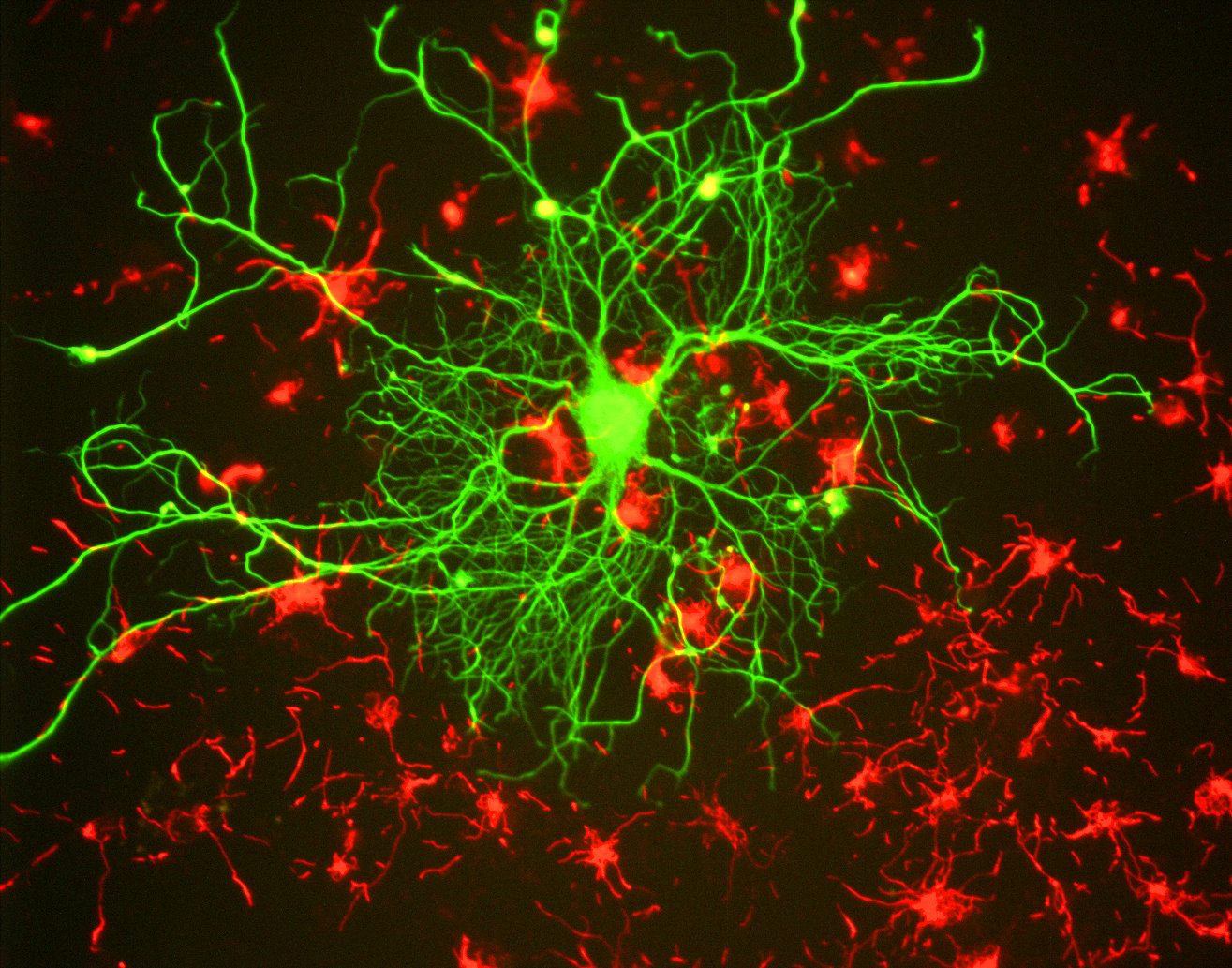
Google has massive computing infrastructure for processing the massive information that will be generated by this project. According to the research team, Baseline, like previous Google X projects will be a look into the unknown. This project can also run in correlation with President Obama’s BRAIN initiative which is one of the most intensive looks into the functioning of the human neurons.
Like other Google X moonshot projects, this project is not time bound. Google’s look into teleportation was seen as scientifically unachievable, whereas a look into a healthy human body will be practical and help some of the fundamental problems with healthcare. Google has also promised that it will not share the data with corporate interests, and this will be anonymous study.
Baseline will try to identify Biomarkers which can be used to identify and prevent diseases earlier
There is of course series oversight as the study tries to peer into the human body at a molecular level. When the study kick starts, it will be monitored by institutional review boards comprising of medical professionals from Duke and Stanford University. The board will also keep a vigilant eye on how the information is being utilized.
This project basically is a massive pattern recognition exercise. It aims to understand in the most fundamental sense as to what makes us human and what makes us tick. Studies like this and the BRAIN initiative will certainly help us gaze into our self and figure out what separates and unites us. Health research should be a priority research and done by the government thereby democratizing the data. As they also involve massive costs; the BRAIN initiative will cost $300 Million a year for ten years; these projects should have public investment to prevent misuse of data for commercial purposes.
Google also deserves credit for envisioning this audacious study, for taking on the research in an open, transparent manner, unlike the healthcare industry which persists on closed patented knowledge. Google has always pushed for free knowledge and its most prominent success in this field has been the Android operating system. Also, they need to be appreciated for taking on resource intensive projects without compromising with their quarterly results. Google has shown that it is not hard for a giant corporation to not be evil.