Tag: gpu

  • AMD 7nm Navi Graphics Cards Will Release In Q3 Of 2019

    AMD 7nm Navi Graphics Cards Will Release In Q3 Of 2019

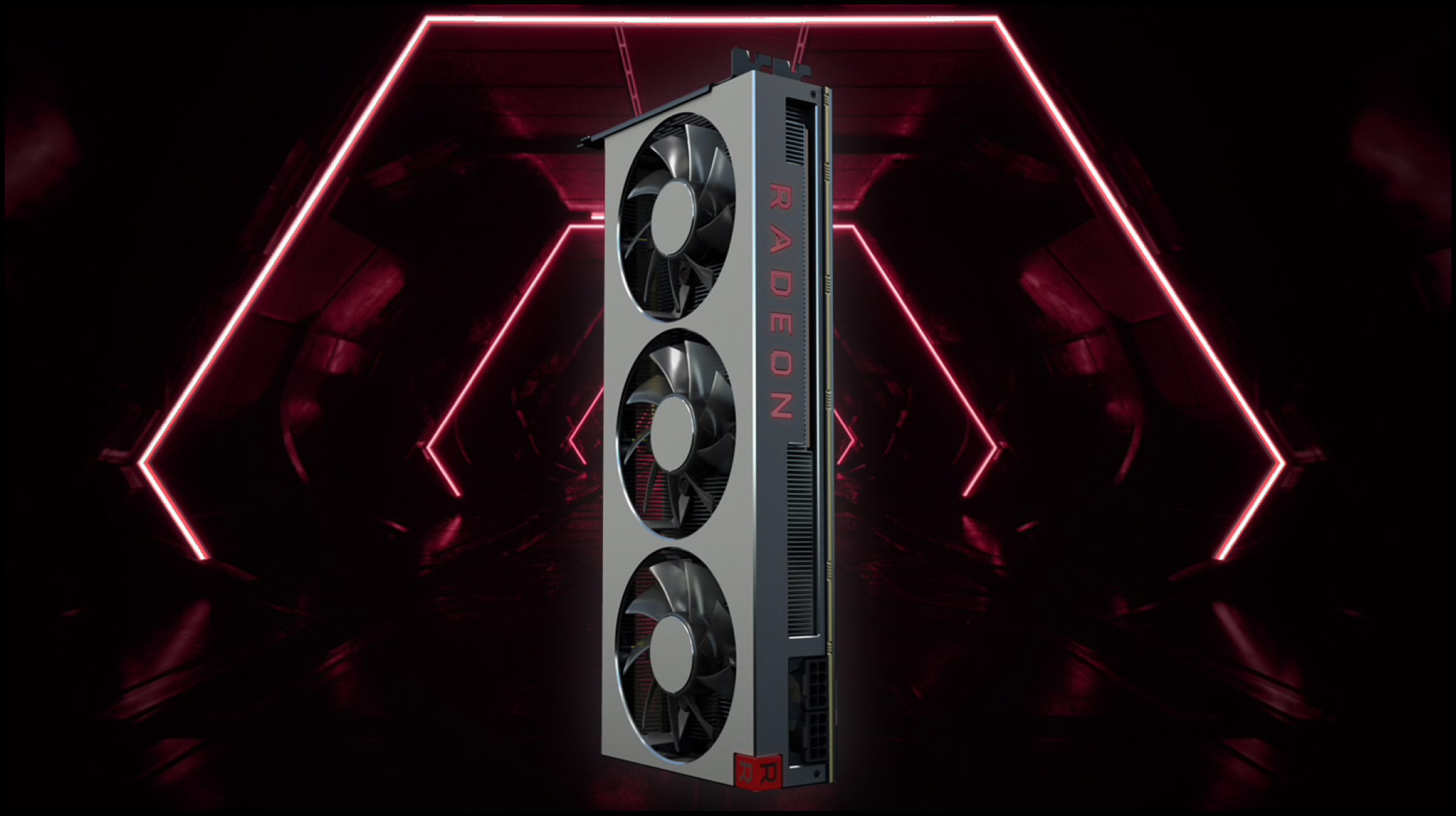
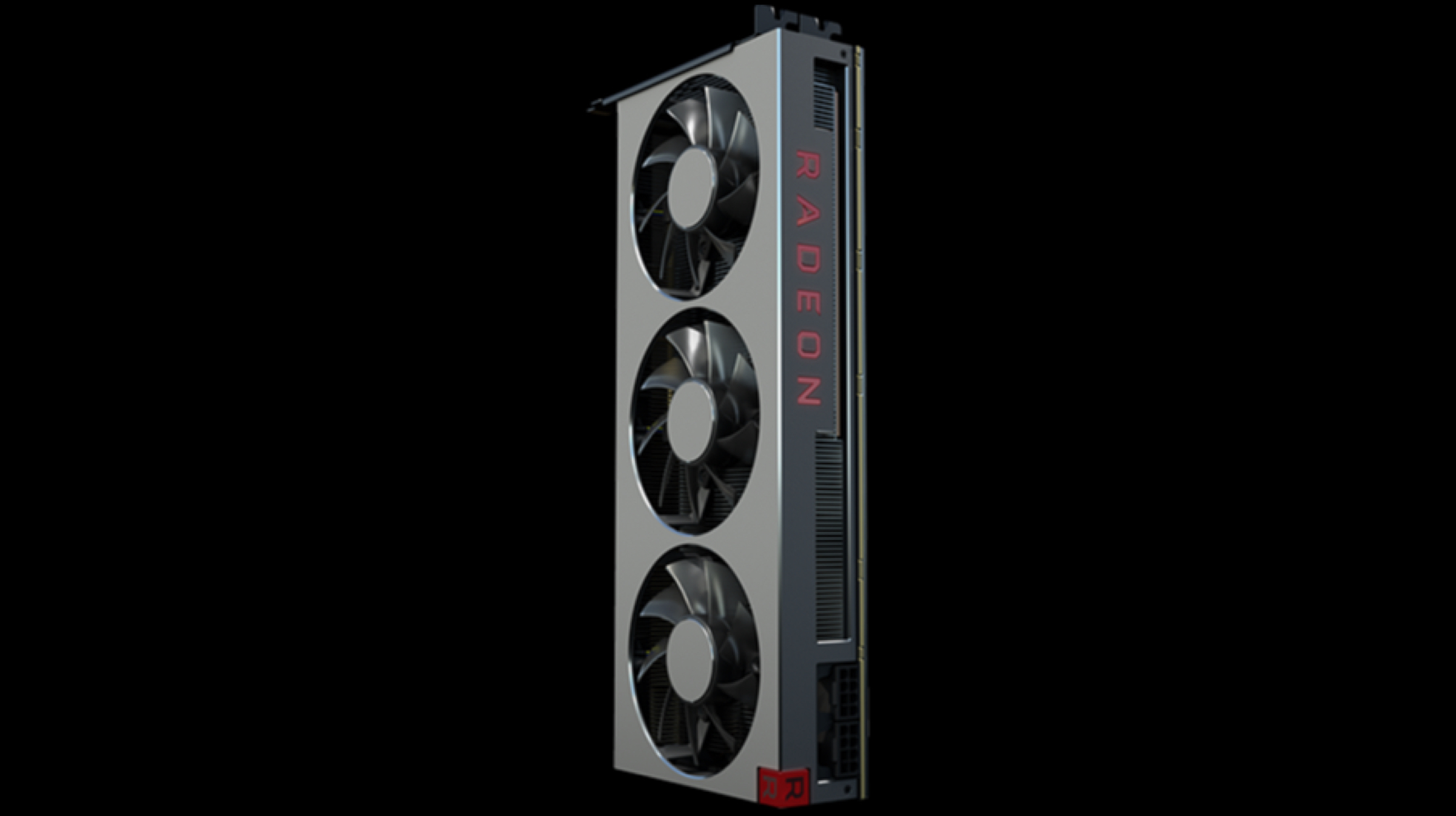
    American Multinational Semiconductor Company, AMD has confirmed that the highly anticipated Navi Graphics Cards will make their way into the market in the third quarter of 2019. Along with upcoming GPUs, the company is also reported to unveil the first Zen 2 architecture based CPUs. The aforementioned information was revealed following AMD’s latest financial figures which were leaked previously.

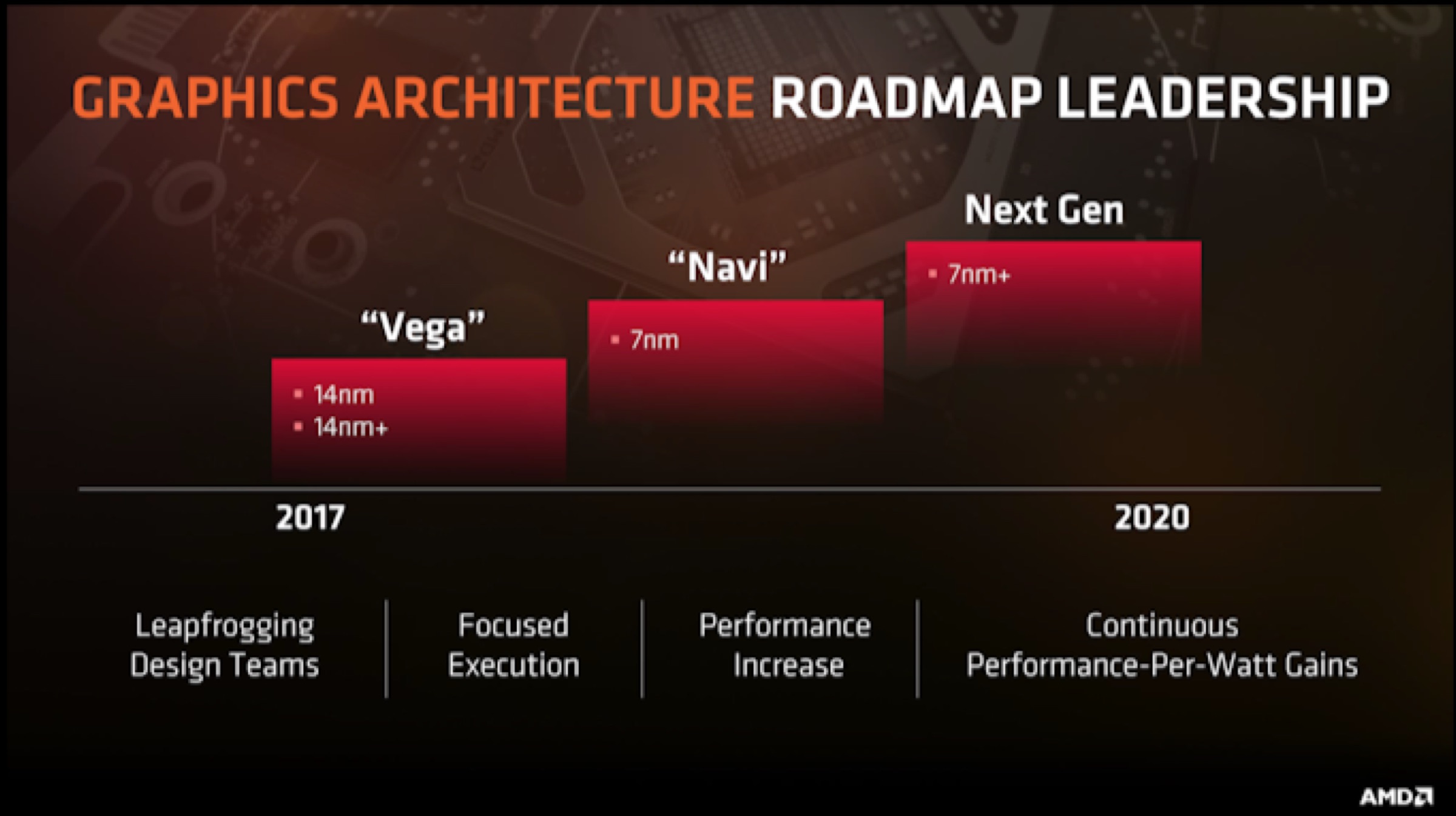
    The Navi GPU chip will be manufactured using 7nm fabrication technology. AMD will initially release mid-range models for the same, which are speculated to be the Navi 10 GPUs. Further iterations, including the more powerful Navi 20 graphics cards will be launched later in the year 2020, reports state. The Navi 20 series graphics cards will go up against NVIDIA’s more powerful GPUs, such as the RTX 2080 and RTX 2070. 

    AMD’s Upcoming Big Revelations

    The company has also hinted towards some big chunks of information regarding the upcoming GPUs that will be revealed at the Computex Keynote in May 2019. However, since rumours are stating that the 7nm Graphics Cards will be launched on 7/7, or the 7th Of July, AMD might just limit the information reveal to a tease regarding the GPUs. This falls in line with their recent announcement of the Navi Cards release in the third quarter. 

    Also Read: Sonic The Hedgehog Trailer Released, Sonic’s Appearance Leaves Fans Disappointed

    As mentioned previously, AMD will also unveil its first Zen 2-based 7nm processor in the same quarter, which is codenamed “Rome”. They will comprise of second-gen EPYC chips, which will be targeted towards heavyweight data handling and server management. AMD’s move towards 7nm based components can be a power-move for the company. Since NVIDIA released the budget-friendly yet powerful GTX 1660 Ti GPU, AMD’s new Navi 10 cards will have to gain ground here in order to go up against the former graphics card. 

  • World’s Most Powerful GPU, Nvidia TITAN RTX Announced

    World’s Most Powerful GPU, Nvidia TITAN RTX Announced

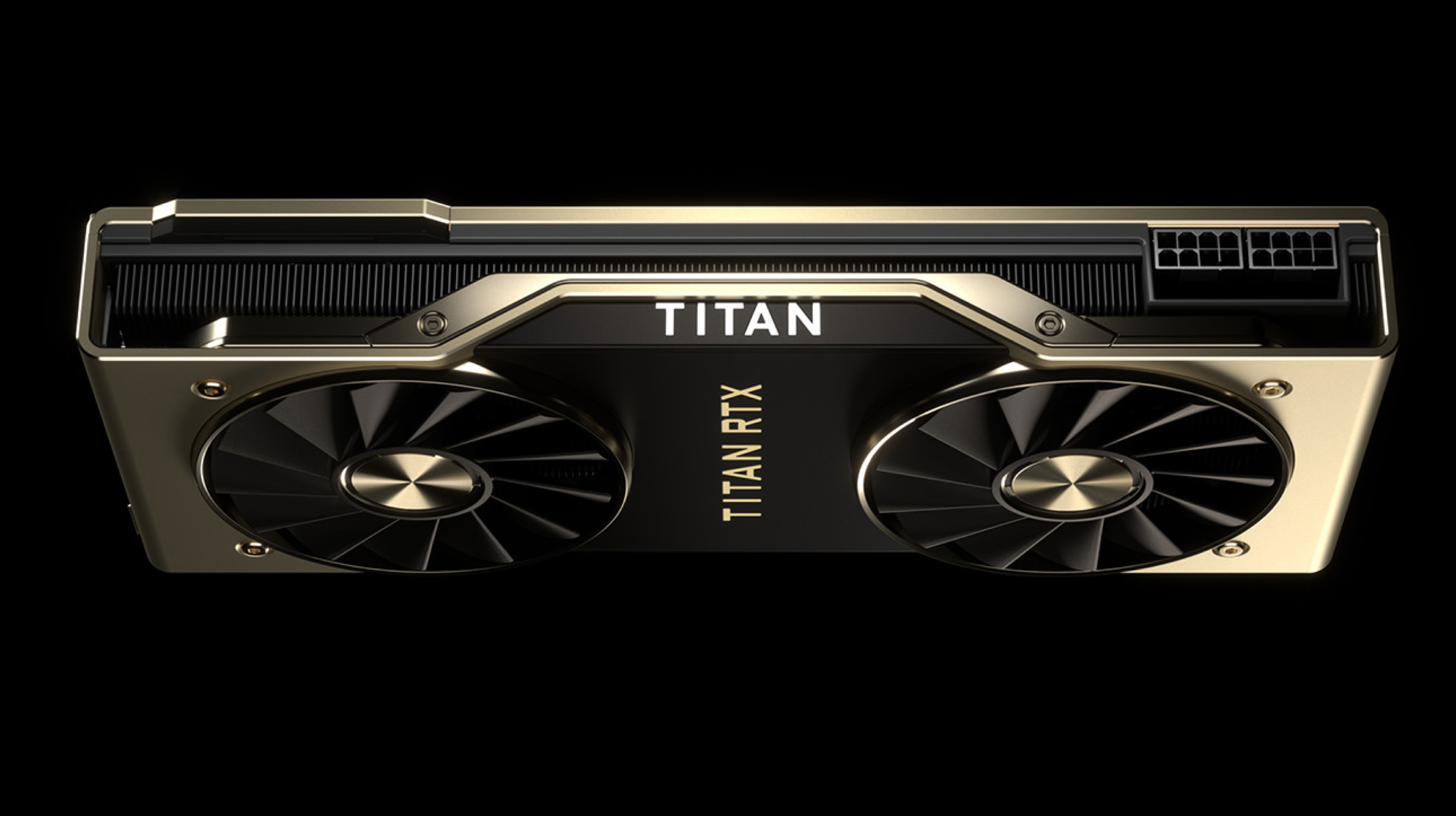
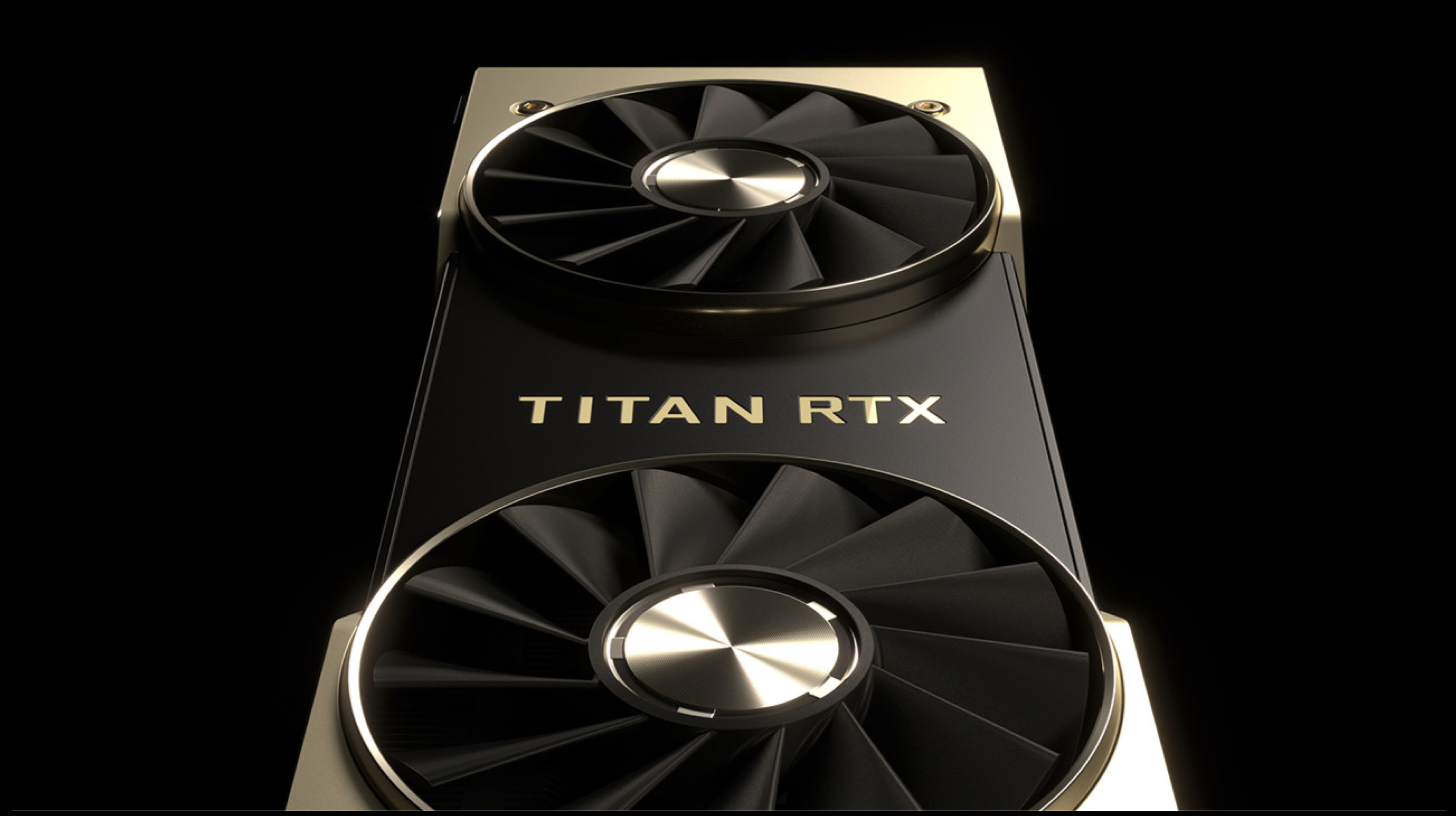
    Nvidia is an American technology company, renowned for their GPUs. The company designs graphics processing units for both gaming and professional markets. GPUs unlike CPUs are mainly used to process image/video files and execute rendering tasks at a rapid pace. Architecturally, the CPU is composed of just a few cores with lots of cache memory that can handle a few software threads at a time. In contrast, a GPU is composed of hundreds of cores that can handle thousands of threads simultaneously. Recently, Nvidia has launched their TITAN RTX graphic card which the company claims is world’s most powerful GPU.

    The Mighty TITAN

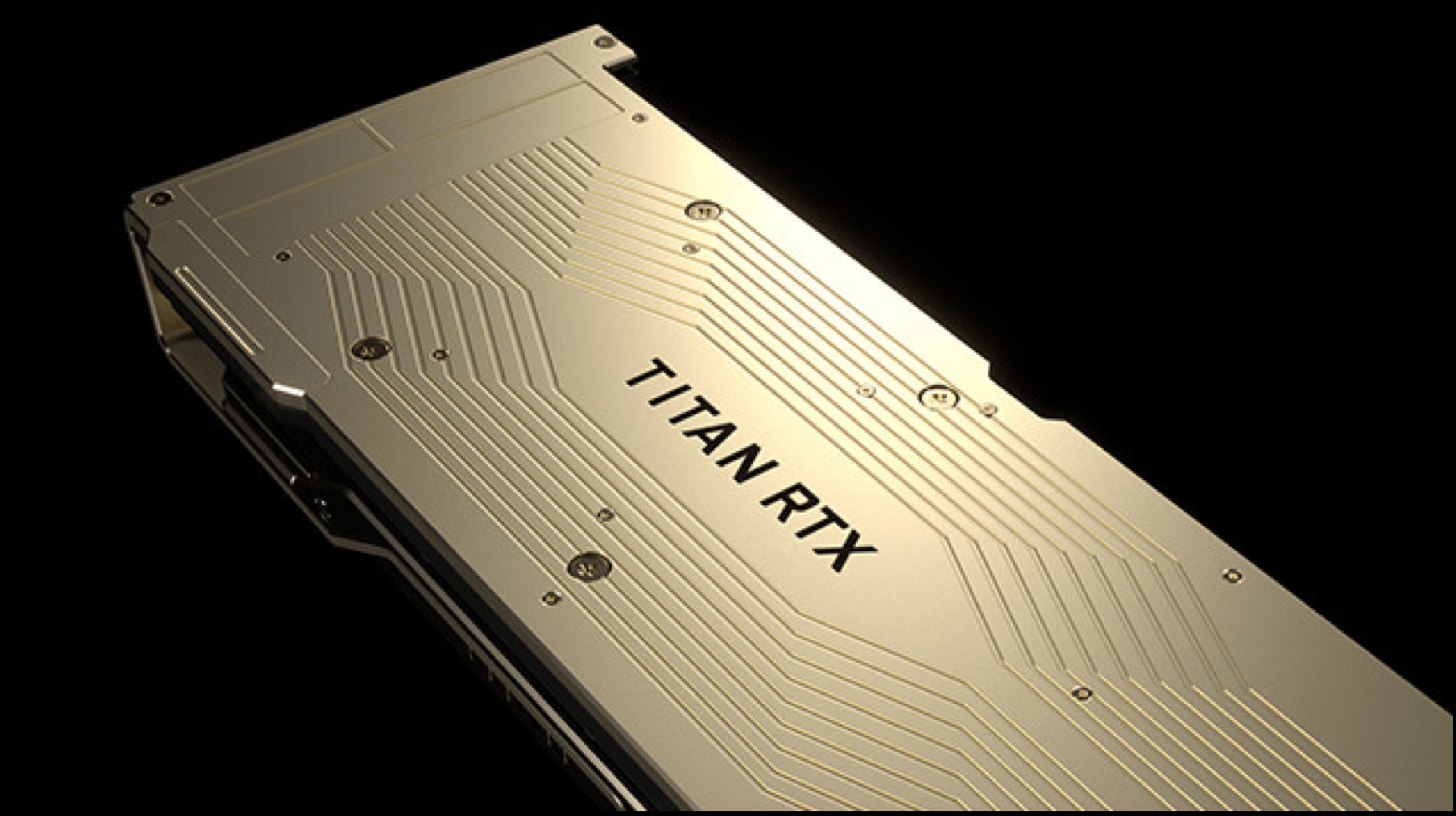
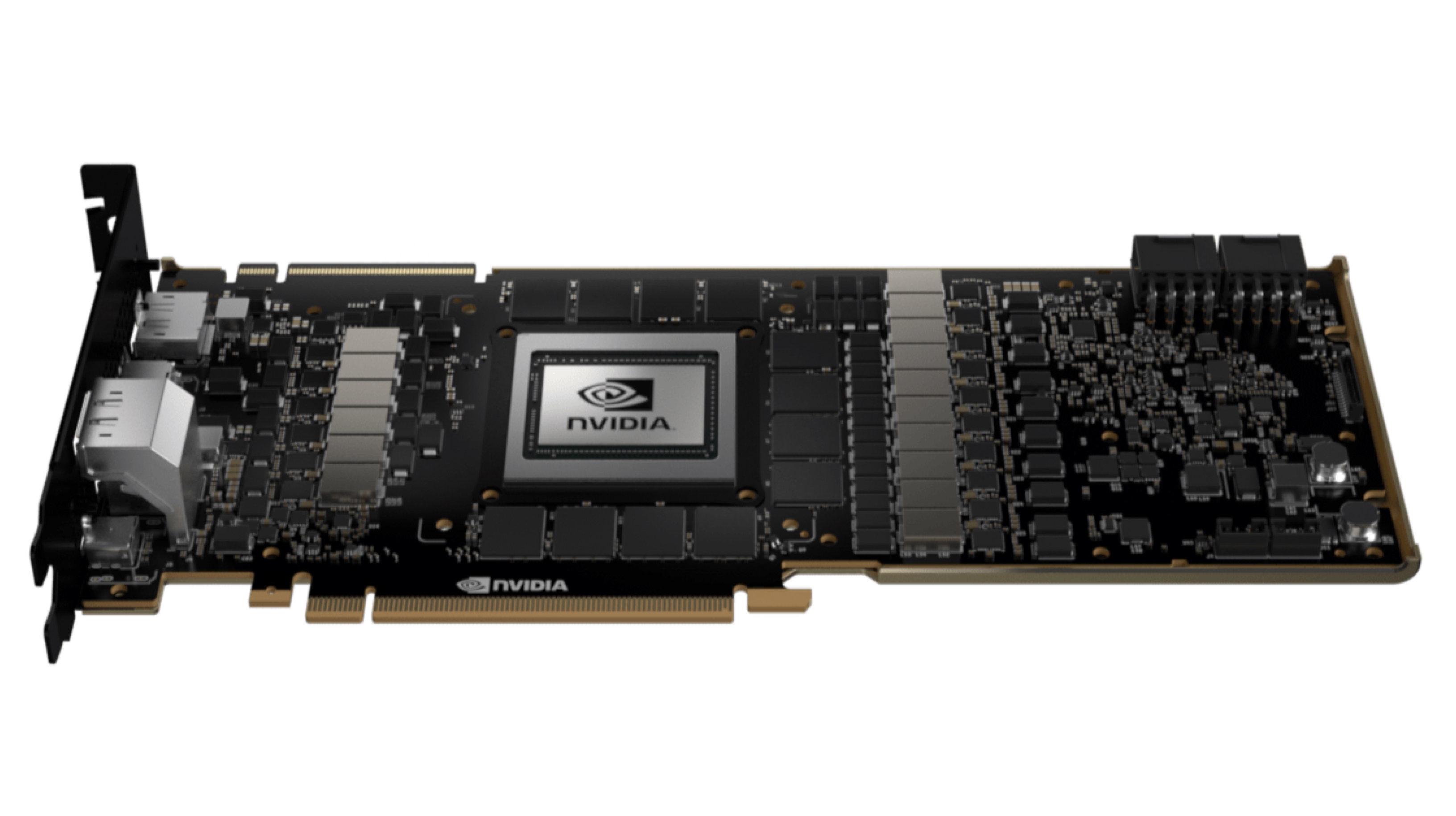
    The Nvidia TITAN RTX has 576 multi-precision Turing Tensor Cores which provide up to 130 teraflops of deep learning performance. It has 72 Turing RT Cores which can deliver up to 11 GigaRays per second of real-time ray-tracing performance. The TITAN RTX has 24 GB of GDDR6 RAM, which according to Nvidia is up to two times faster than previous TITAN GPUs. This high memory storage can be used to fit larger data sets and processing instructions. It has a base clock frequency of 1350 MHz and a boost clock frequency of up to 1770 MHz.

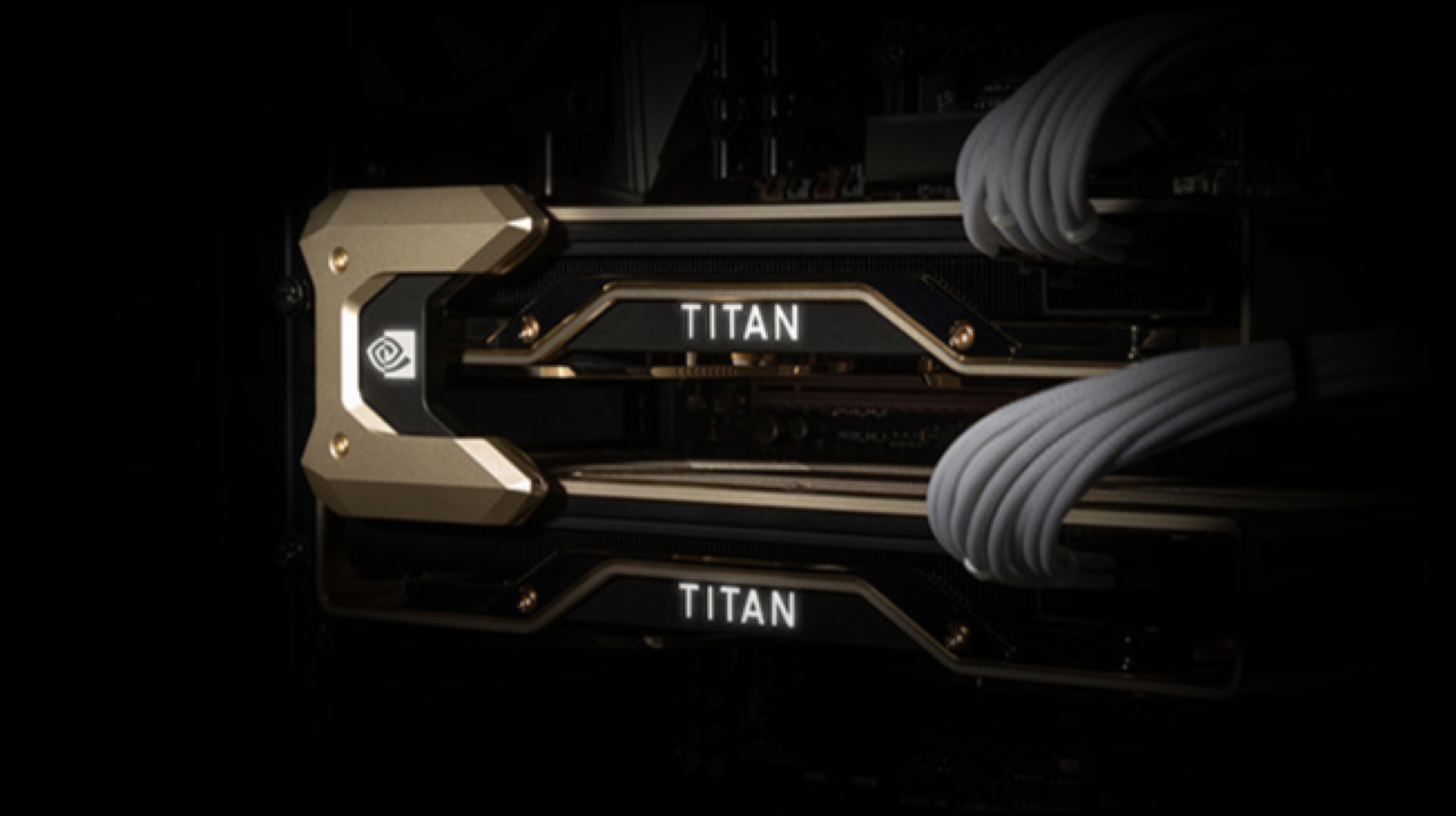
    The new TITAN RTX allows enough power to render 8K video in real time. Additionally, the company has showcased the NVIDIA NVLink that offers 100 GB/s transfer speeds which can be used to pair two RTX GPU’s if the need arises. Out of the box, the GPU also supports Windows 7 (64-bit), Windows 10 (64-bit), and Linux 64-bit. To operate, it requires 650 watts of power supply and has a thermal threshold of 89-degree Celsius.

    Ports, Price And Availability

    Also Read: Meizu C9 To Go on Sale In India On December 5

    • 3 x DisplayPort
    • 1 x HDMI
    • 1 x USB Type-C

    The GPU has a price tag of 2,499 USD (Rs 1,76,000). However, the ‘notify me’ page for the same is already up on the company’s website.

  • Huawei GPU Turbo Update Pushing Out To Select Devices

    Huawei GPU Turbo Update Pushing Out To Select Devices

    The new update which Huawei is calling GPU Turbo will release in August. The company plans to roll out the update only for a few of its smartphones. The Huwaei GPU Turbo will significantly improve the graphical performance of the device without compromising on its battery life.

    The Huawei GPU Turbo is similar to overclocking the CPU of a computer. The update will improve the overall performance of the device by optimizing its resource utilization. This would result in almost 60% improved graphical performance while reducing close to 30% of battery consumption. Which means, not only will you be able to game better, but the battery life of your device will also improve.

    Huawei is closely working with developers to make sure the update is a bug-free experience by the time it releases. The company has placed its bets on software optimization at a time when the competition is focussed on hardware. This is a refreshing change as having the latest GPU does not necessarily mean better performance. A well-optimized smartphone can use the GPU to its full potential.

    Huawei GPU Turbo will provide noticeable improvements in games like PUBG. PUBG is a resource hungry game which eats away at the battery life of a smartphone. With GPU Turbo, the battery life will improve quite significantly.

    Huawei GPU Turbo
    PUBG

    Following is a list of devices, release date, and regions which will receive the Huawei GPU Turbo update.

    Device Release Date Region
    Huawei Mate 10, Mate 10 Pro, Mate RS August 2018 Europe, Russia, Asia Pacific, Middle East, and Africa
    Huawei P20 and P20 Pro August 2018 Europe, Russia, Asia Pacific, Middle East, and Africa
    Huawei P20 Lite September 2018 Europe, Asia Pacific, Middle East, and Africa
    Huawei Nova 2i September 2018 All Markets
    Huawei P Smart September 2018 All Markets
    Huawei Mate 10 Lite September 2018 All Markets
    Huawei Y9 (2018) September 2018 All Markets
    Huawei Mate 9 and Mate 9 Pro November 2018 All Markets
    Huawei Mate 9 and Mate 9 Pro November 2018  All Markets

    Must Read: Huawei P20, P20 Pro To Launch In India On April 24th

    As the list suggests, the Huawei Mate 10, Mate 10 Pro, and Mate RS will be the first devices to receive this update. These devices will be followed by the likes of Huawei P20 and P20 Pro. Although the list isn’t big it contains a list of mostly the high-end device of Huawei.


  • NVIDIA Showcases The Power OF RTX Process Using Star Wars

    NVIDIA Showcases The Power OF RTX Process Using Star Wars

    NVIDIA has released a new video, which showcases the potential of real-time ray tracing (RTX) in Unreal Engine. The video is made in collaboration with Epic Games, NVIDIA, and ILMxLAB. Real-time ray tracing is the next big thing, that has happened to film and game makers. The video is based on the scene adopted from Star Wars: The Last Jedi movie. It has been completely made using Unreal 4 engine. This footage was showcased at Game Developers Conference in San Francisco.

    Epic Games Founder and CEO Tim Sweeney said:

    Ray tracing is a rendering process typically only associated with high-end offline renderers and hours and hours of computer processing time. Film-quality ray tracing in real time is an Unreal Engine first.

    This is an exciting new development for the media and entertainment linear content worlds—and any markets that require photorealistic visualization.

    Findings from the video

    The minute-and-a-half long video showcase the potential of the NVIDIA’s RTX process for a Volta based GPU. The scene begins when two stormtroopers were discussing the elevators condition and how Kylo Ren destroyed an elevator in D-sector using his helmet. Then Captain Plasma (head of stormtroopers) punishes them, by posting them at a discomforting place for speaking about a higher authority.

    For an untrained eye, the video looks completely realistic with real-time shadows and reflections. In fact, it is very difficult to find an element, which can prove otherwise. The level of stunning image quality of highly reflective surfaces and soft shadows looks no different from reality.

    The RTX process is based on the path of light rays and how they bounce off the surface. This method will result in incredible real-life like graphics. It was very intensive to render a scene like this up until now. However, this will change with the NVIDIA RTX.

  • Nvidia Titan V GPU Is Here And It Costs $2999

    Nvidia Titan V GPU Is Here And It Costs $2999

    Nvidia has announced the new Titav V GPU priced at US $2999. The company claims that the Titan V is “the most powerful PC GPU ever created.”

    The Titan V sells for $2,999 and is focused on AI and scientific simulation processing. Nvidia claims 110 teraflops of performance from its 21.1 billion transistors, with 12GB of HBM2 memory, 5120 CUDA cores, and 640 “tensor cores” that are said to offer up to 9x the deep-learning performance of its predecessor.

    Nvidia founder and CEO Jensen Huang said in a statement:

    Our vision for Volta was to push the outer limits of high performance computing and AI. We broke new ground with its new processor architecture, instructions, numerical formats, memory architecture and processor links. With Titan V, we are putting Volta into the hands of researchers and scientists all over the world. I can’t wait to see their breakthrough discoveries.

    Here are all the specs you need to know about the Titan V:

    Graphics Processing Clusters 6
    Streaming Processors 80
    CUDA Cores 5120
    Texture Units 320
    Base Clock 1200 MHz
    Boost Clock 1455 MHz
    Memory Clock 850 MHz
    L2 Cache Size 1.7 Gbps
    Total Video Memory 12288 MB HBM2
    Transistor Count 21.1 Billion
    Connectors 3 x Displayport, 1 x HDMI
    Form Factor Dual Slot

    With lots of big titles expected to be launched in 2018, this new GPU will add to the gamer rush. If you are willing to splash the cash, then you can buy the Titan V here.

  • NVIDIA GeForce GTX 1070 Ti Launched At A Starting Price Of Rs 39000

    NVIDIA GeForce GTX 1070 Ti Launched At A Starting Price Of Rs 39000

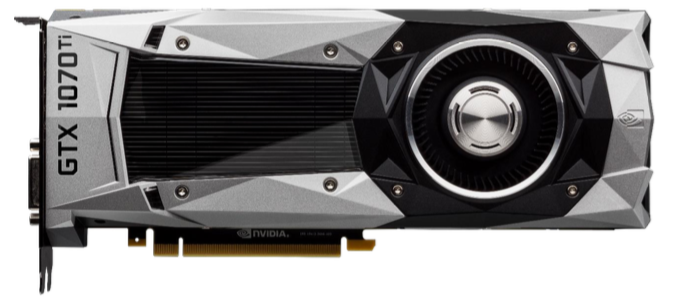
    NVIDIA has launched the new GeForce GTX 1070 Ti in India and will be available worldwide from the 2nd of November. The starting price of the GPU is Rs 39000 in India.

    The GeForce GTX 1070 Ti is packed with 2,432 cores and 8 GB of memory running at 8Gbps for a total bandwidth of 256 GB/s. It delivers double the performance of the famous GeForce GTX 970.

    The base clock speed of the GeForce GTX 1070 Ti is 1607 MHz. The typical Boost Clock speed is 1683 MHz. The Boost Clock speed is based on the average GeForce GTX 1070 Ti card running a wide variety of games and applications. Note that the actual Boost Clock will vary from game-to-game depending on actual system conditions. GeForce GTX 1070 Ti’s memory speed is 8 Gbps data rate. The GeForce GTX 1070 Ti reference board measures 10.5” in length. Display outputs include one HDMI, one DVI and three DisplayPort connectors. One 8-pin PCIe power connector is required for operation.

    GeForce GTX 1070 Ti-based graphics cards will begin shipping November 2 from the NVIDIA GeForce Partner Network, including ASUS, Colorful, EVGA, Gainward, Galaxy, Gigabyte, Innovision 3D, MSI, Palit, PNY and Zotac.

  • Snapdragon 820 Beats Apple A9 in AnTuTu’s Top-10 Performance Smartphone Chips

    Snapdragon 820 Beats Apple A9 in AnTuTu’s Top-10 Performance Smartphone Chips

    This year, we’ve already seen some brand new smartphone launches that are ready to take the crown for 2016. Most flagship devices that you will see this year will feature Qualcomm’s new Snapdragon 820 chipset. Meanwhile, Apple launched the iPhone 6s late last year with the A9 chipset. Consumers are already spoilt for choice with the number of new, beautifully crafted smartphones but what they really want to know is which chipset takes the cake when it comes to performance.

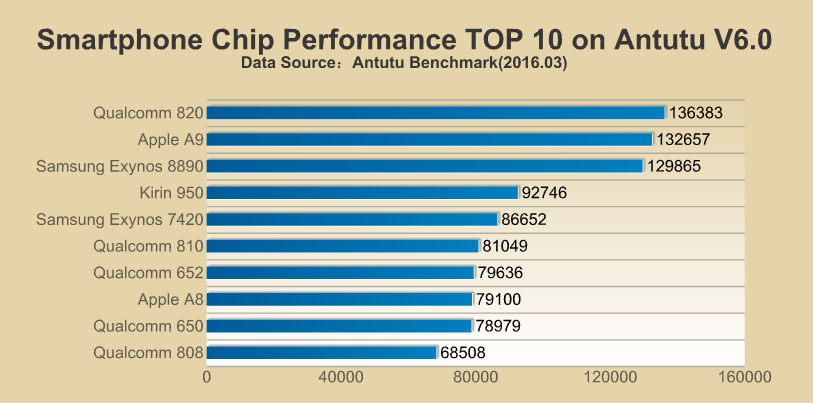
    AnTuTu updated its list of Top-10 performance smartphone chips and it appears that the Snapdragon 820 chip beats all, taking first spot in both performance and GPU tests. The Snapdragon 820 scores 136,383, which is close to 4000 higher than that of Apple A9, while Samsung’s Exynos 8890 chip comes in at third with 129,865. Note that these scores are based on averages and actual running results will be different.

    Antutu chip 01

    Qualcomm Snapdragon 820-powered smartphones include Samsung Galaxy S7, LeEco Max Pro, Xiaomi Mi5, LG G5, Sony Xperia X Performance, among others.

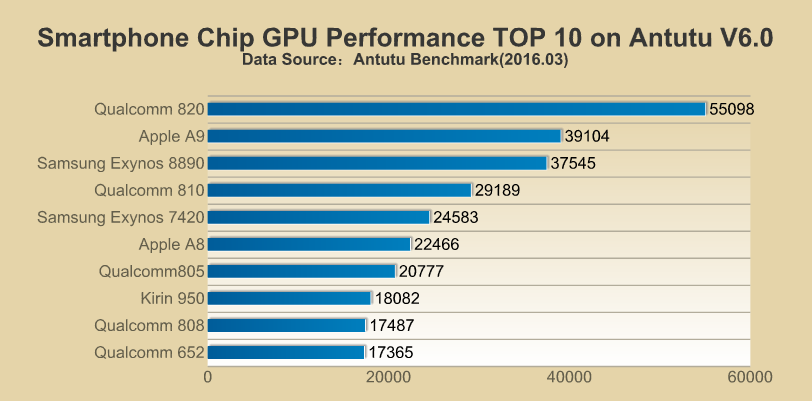
    In GPU performance as well, the Snapdragon 820 chipset rules the lot, scoring an impressive 55098 which is miles ahead of Apple A9’s 39104. The Exynos 8890, again, comes in at third with a score of 37545. Over the past few years, smartphone makers have been paying a lot of importance to GPU performance. After all, mobile gaming is a huge market of its own and has slowly become an important aspect when consumers consider purchasing a smartphone.

    Antutu chip

    The Snapdragon 820 chip currently has the highest-performing GPU (Adreno 530). While Apple’s A9 (PowerVR GT7600) and Samsung’s Exynos 8890 (Mali-T880 MP12) battle for the second place, HiSilicon Kirin 950 (Mali-T880 MP4) doesn’t fare too well and stays low alongside Qualcomm Snapdragon 808 (Adreno418) and Snapdragon 652 (Adreno510).

    It’s also important to note that the GPU directly relates to screen resolution. Since most phones these days offer 1080p, and 2K resolution, it requires a powerful GPU to allow users to get the most experience out of their smartphone’s display. But GPU and CPU alone aren’t enough to tell you about how a smartphone will perform.

    In hand use is the best way to judge what the phone offers the user. Apple may have scored low with the A9 chip, but it still gives a terrific performance. Similarly, the Exynos 8890 also performs impressively, which is probably why Samsung may launch both it and Snapdragon 820 variants in the Indian market when the Galaxy S7 and S7 Edge launch tomorrow.

  • Adreno 530 GPU to be Good News for Gaming on Android

    Adreno 530 GPU to be Good News for Gaming on Android

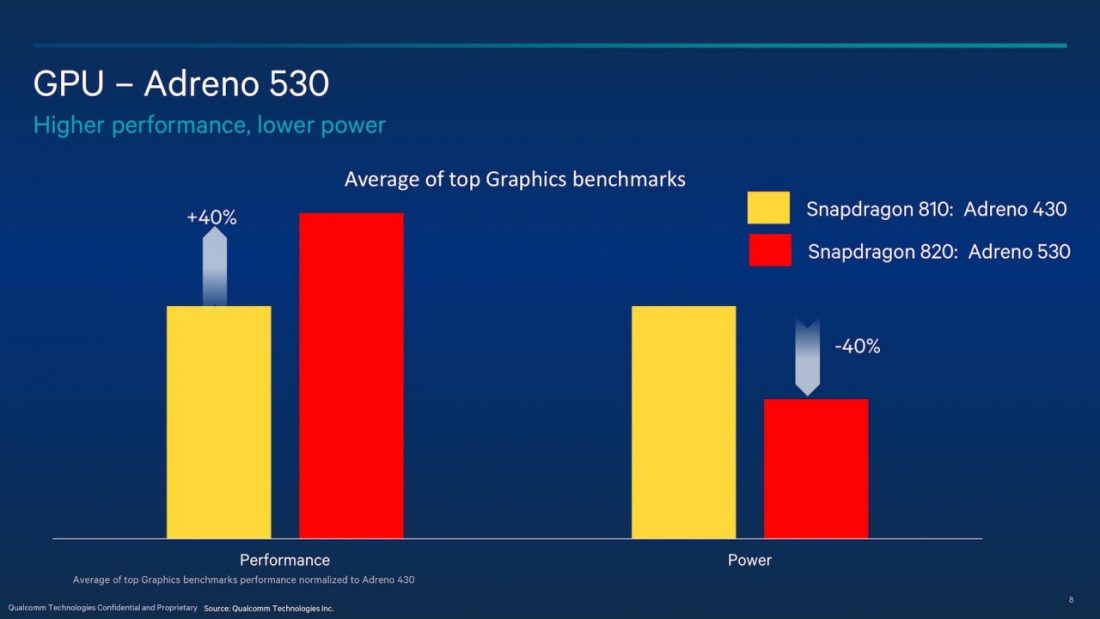
    As MWC 2016 nears, news of new smartphones using Qualcomm’s latest  820 SoC is going to start coming in thick and fast. The snapdragon 820 SoC is slated to come with Adreno 530 GPU which is said to give almost 40-50% more performance than last year’s Adreno GPU, and as claimed by Qualcomm is going to be more energy efficient too.

    asphalt 8

    Well, for starters Snapdragon 820 is a chip built from scratch. The CPU cores, the GPU, the DSP, the modem, the image processors. everything has been upgraded after the debacle that the Samsung 810 was. On this new architecture, Qualcomm claims to have upgraded things across the board.

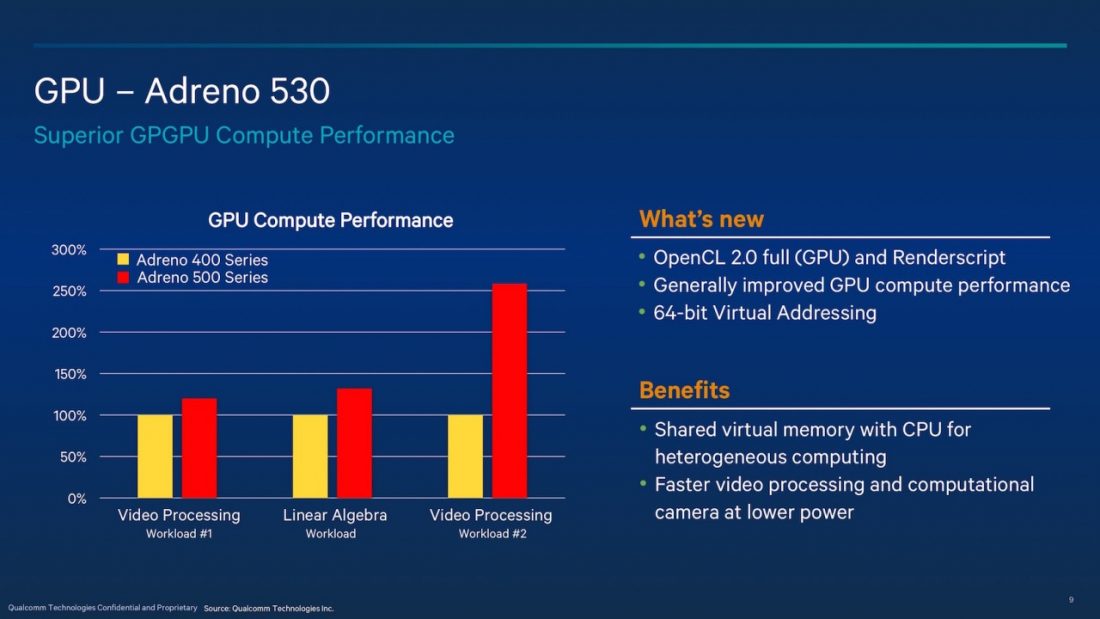
    The Adreno 530 will be offering up to 2.5 times an increase in video performance. It will also be coming with full support of OpenCL 2.0, Renderscript, Vulkan, OpenGL ES 3.1 + AEP. Shared Virtual Memory, which comes with OpenCL will now allow data sharing between an Open CL’s host and the device’s GPU.

    Last year’s GPU was a nightmare for Android gamers who faced grave heating issues owing to the GPU of the chipset while all the time having to deal with dismal graphics performance. Qualcomm has revealed that a lot of work has gone into the GPU on the 820 SoC to ensure that the 530 can achieve 40-50% performance boost at acceptable energy levels.

    Snapdragon-820-Siggraph_rev4-25-1280x720

    Seeing is believing, and as such, early GFXBench tests have also revealed that the Adreno 530 might just really be the beast Qualcomm claims it to be. The 6-Core GPU, PowerVR GT7600 found on the iPhone 6s Plus comes close to the might of the Adreno 530 but loses out to it in the end.

    Surprisingly, the only GPU that did beat the 530, and that too by a small margin, was the Nvidia Tegra X1 chipset. Worth a mention is the fact that the Tegra X1 because of its form factor is found on large tablets. Such is the might of the Adreno 530 that other GPUs like the Mali-T760MP8 and the Mali-T880 MP4 couldn’t even come anywhere close to it in the benchmark tests.

    Snapdragon-820-Siggraph_rev4-24-1280x720

    This will come as great news especially for those of us who are looking to buy the Galaxy S7 once it arrives. Samsung’s flagship offering from last year, the S6, and S6 Edge, though being heavy on specs did lose out to the iPhone lineup when it came to raw graphics processing power.

    kv

    The Mali T760MP8 on the Exynos and the Adreno 430 on other Android handsets sporting the Snapdragon 810 were significantly under-powered for graphics tasks. The resurgence of Snapdragon with the 820 could close the huge divide that had been created over the last year.

    For gamers and power users who prefer the Android platform this could indeed turn out to be a good year.

  • Apple Rumoured to be Working on a Customised GPU

    Apple Rumoured to be Working on a Customised GPU

    After working on its own own processors since the iPhone 5 (Apple A6 chip) and 64-bit CPU, Apple is now rumoured to be working on a customised GPU. The company is exploring in-house solutions for coprocessors and sensors.

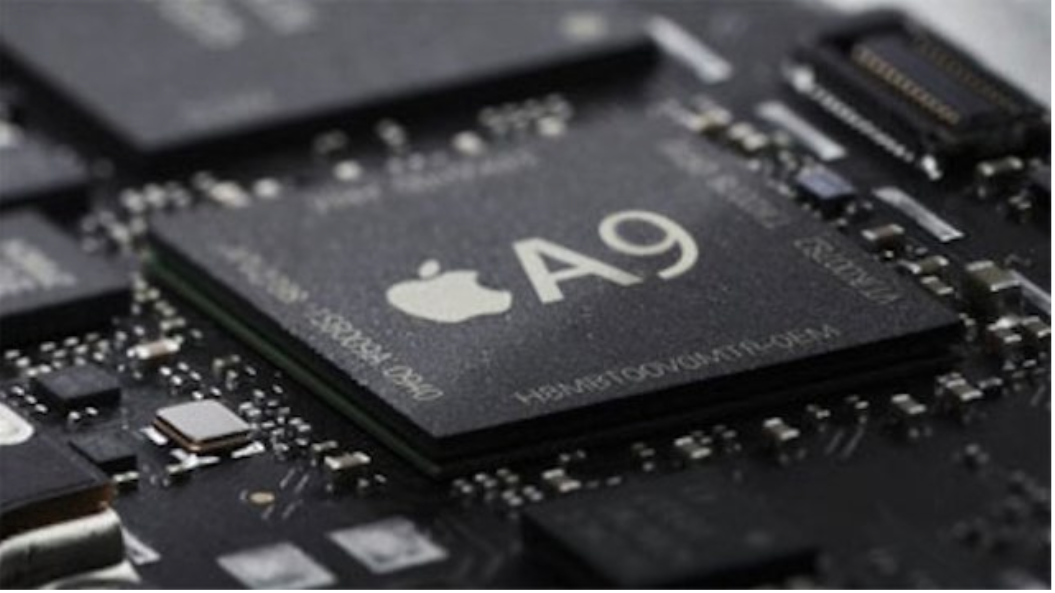
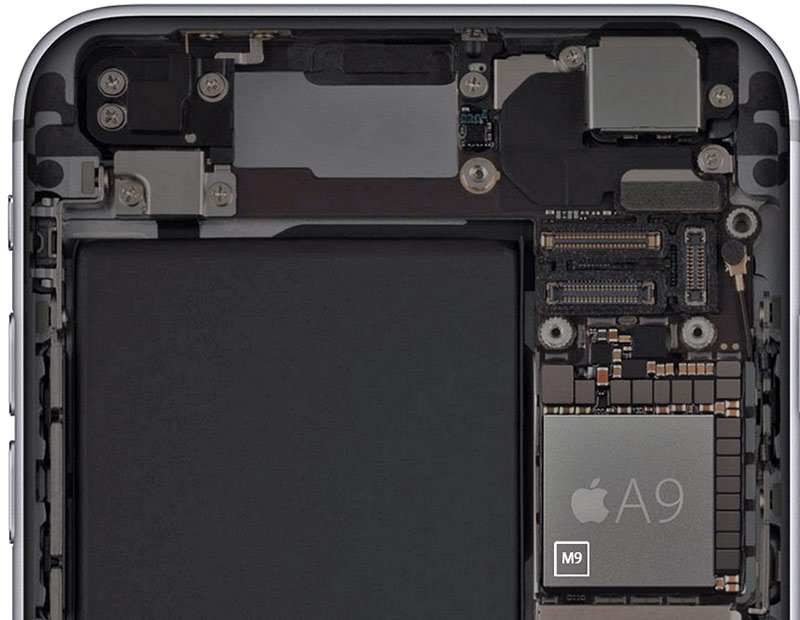
    In order to get rid of its dependency on PowerVR graphic units, Apple has been working on a proprietary GPU for a while now.Apple A9 system on chip

    The company’s Korean counterpart, Samsung, is also developing similar tech. Samsung is expected to reveal its first in-house processors and Exynos 8 chipset  in the Galaxy S7 early next year.

    Even if everything goes smoothly, we cannot expect to see Apple’s new custom-GPU in iPhone 7 in 2016. It’ll probably be a few years before Apple is ready to take this leap. Let’s see how these plans pan out for the company.

  • AMD Brings Out FirePro W9100 and W8100 GPUs for 4K Workstations

    AMD Brings Out FirePro W9100 and W8100 GPUs for 4K Workstations

    The Indian entertainment industry is massive. India is known for making the most number of movies in the world, and this industry is constantly updating itself. The buzzword around the industry is currently 4K. Creating content for 4K requires high power components such as storage, processors and GPU’s. As the content creators are making major strides to create more visual content in 4K resolution, the demand for high power equipment is also increasing. To address this demand AMD has launched its flagship AMD FirePro W9100 and W8100 professional graphics card in India.

    The prominent global chipmakers introduced the cards targeted for 4K content production. While the FirePro W9100 is the flagship product, the W8100 is a lower variant of the product. The major target of these units is the massive VFX industry in India who often work for big-budget Hollywood blockbusters.

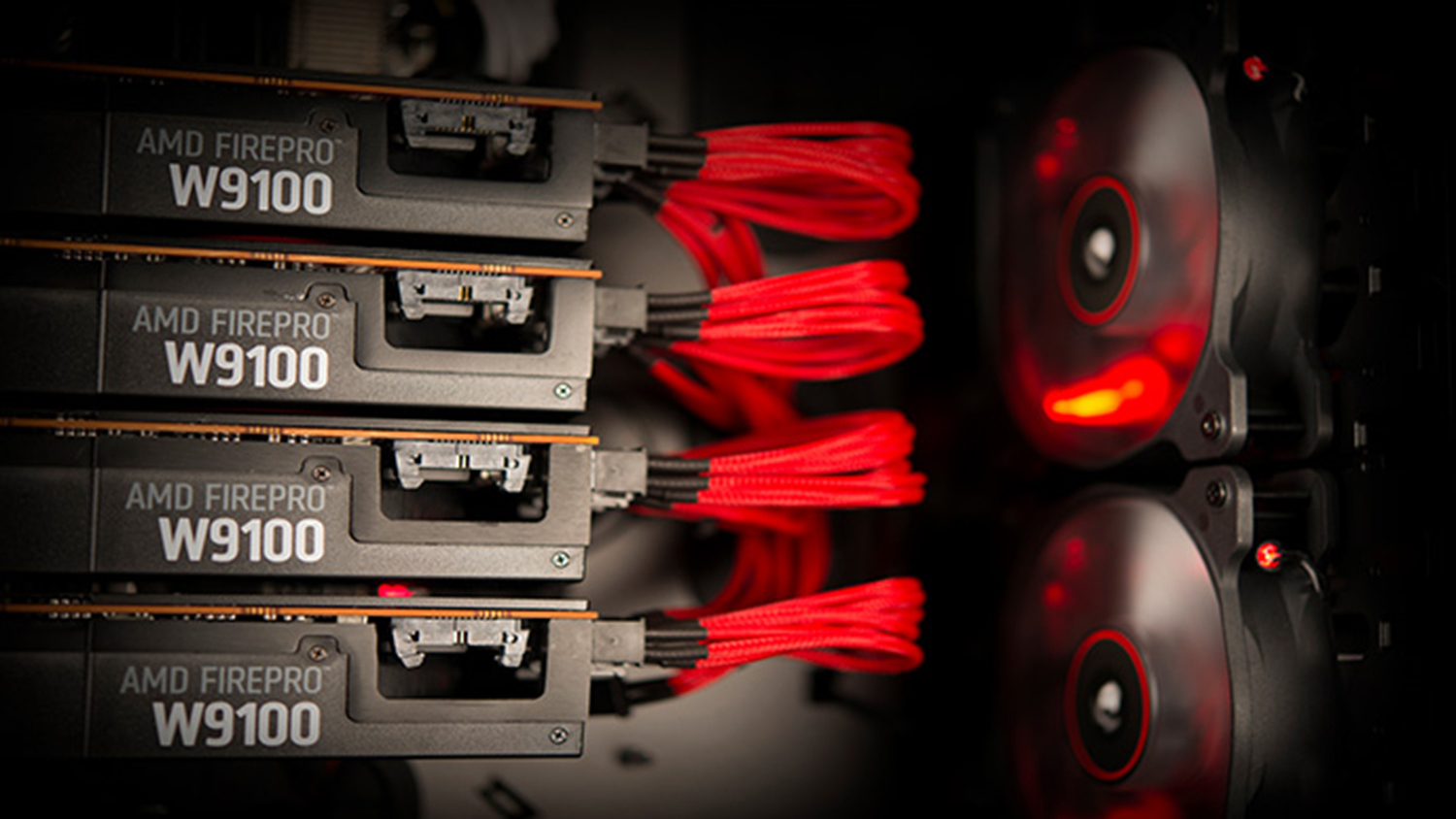
    The GPU’s are accelerated by OpenCL. The FirePro W9100 delivers up to 2.62 TFLOPS peak double precision and 5.24 TFLOPS peak single precision in terms of GPU compute power. The W9100 workstations comes with 16 GB GDDR5 memory and users can multi-task across up to six 4K displays.

    The FirePro's are some Heavy duty GPU's.
    The FirePro’s are some Heavy duty GPU’s.

    AMD FirePro 8100, on the other hand, is aimed at 4K CAD and Media workflows, engineering analysis and supercomputing applications. It offers 8GB of GDDR5 memory and 4.2 TFLOPS peak single precision and 2.1 TFLOPS peak double precision.

    Raja Koduri, corporate vice president of visual computing at AMD said, “With an increase in accessibility of 4K displays, there has been a rise in the applications demanding increased memory support while pushing the limits of real-time 4K video production and rendering. The addition of W8100 is a significant step towards expanding our product portfolio for enabling professionals with the best kind of workstation performance for next generation 4K workflows.”

    AMD also brought out the Radeon R9 285 graphics card. It features a clock speed of 918 MHz and is capable of delivering 3.29 TFlops of computing performance. AMD also announced they are getting involved with Indian filmmakers in providing them superior visual effects support for their graphics needs in a more cost-effective manner.

    The FirePro W9100 has been priced at $4500 or Rs. 2,75,000 INR whereas the FirePro W8100 has been priced at $2499 or about Rs.1,60,00. The technology is here now, and we can only hope that the Indian entertainment industry starts to make content worthy of 4K resolution.

  • Intel road map with Bay Trail-based Atom for tablets leaked

    Intel road map with Bay Trail-based Atom for tablets leaked

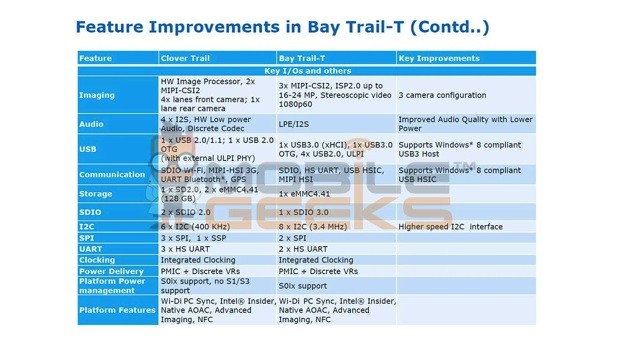
    Intel’s roadmap for bay trail processors for future tablets has been leaked, just like their previous details of bay trail processors. A roadmap uncovered by Mobile Geeks has shown off the details of the tablet-oriented Bay View-T and its Valleyview-T processors. Intel hardware can output to as much as a 2,560 x 1,600 display and record stereoscopic, 1080p 3D video to include support for 3D camera laden Tablets. 

    We are also seeing details for less power consumption in the same sort of performance factor, adding an additional 2 hours of video playback for at least some of the 1.6GHz to 2.1GHz processors in the lineup.

    Dont stop your tablet purchase just as yet, because unlike previous generation of processors these wont be available until 2014, so you still have one year to enjoy what you invest in, before the processors are announced and another few months before they are implemented into hardware.

  • NVIDIA Launches GeForce GTX 680 and 600M GPUs on Next-Generation Kepler Architecture (PR)

    NVIDIA Launches GeForce GTX 680 and 600M GPUs on Next-Generation Kepler Architecture (PR)

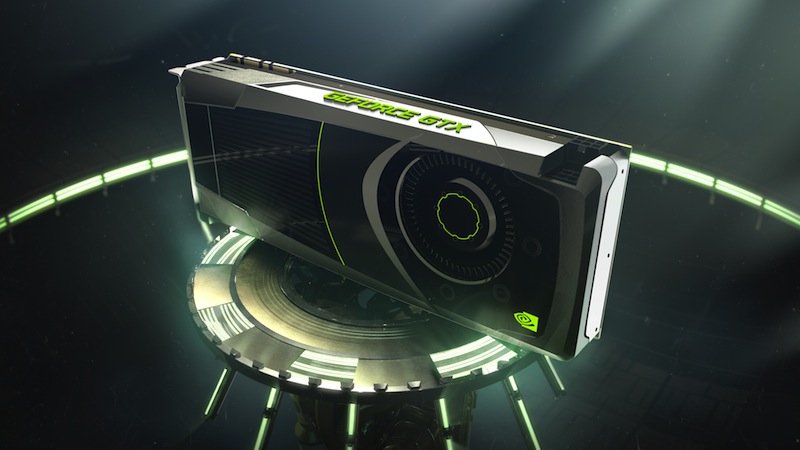
    NVIDIA has launched several cards based on their new GPUs which are made on the next-gen Kepler Architecture. The new GPU’s are supposedly less power hungry by upto 28% and emit less heat, therefore running cooler. 

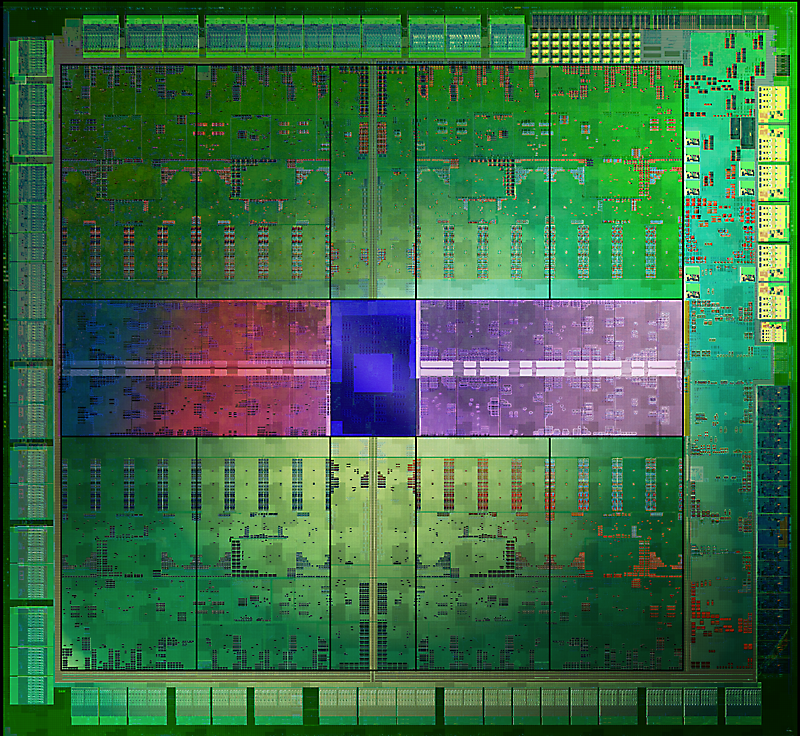
    The NVIDIA® GeForce® GTX 680 GPU is designed to work in desktops and the  GeForce 600M GPUs are designed specifically for ultrabooks. Kepler is based on 28-nanometer (nm) process technology and succeeds the 40-nm NVIDIA Fermi architecture, which was first introduced into the market in March 2010.
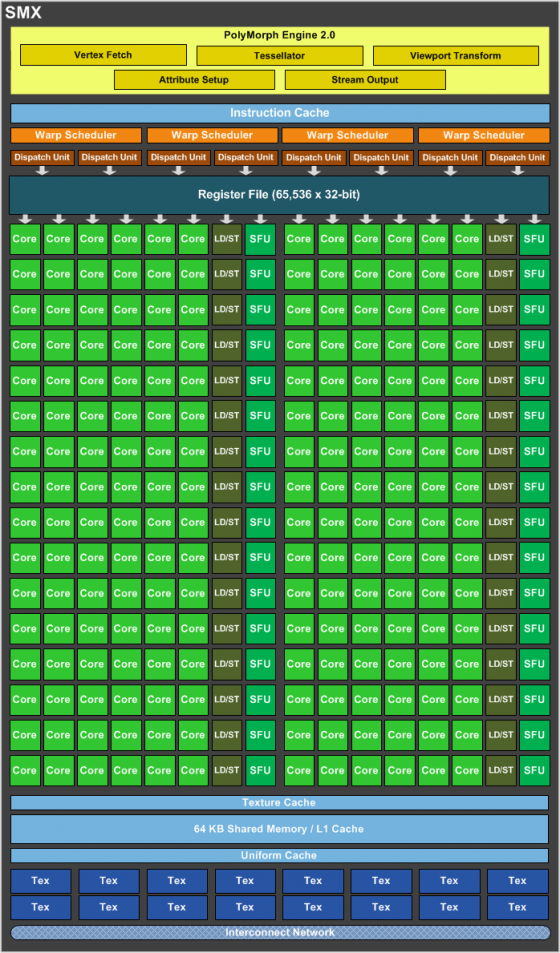
    Compared with the closest competitive product, the GeForce GTX 680 GPU is more than 300 percent faster in DirectX 11 tessellation performanceand up to 43 percent faster in cutting-edge games such as Elder Scrolls V: Skyrim, yet consumes 28 percent less power. It also provides twice the performance per watt of the GeForce GTX 580, the flagship Fermi-based processor that it replaces.
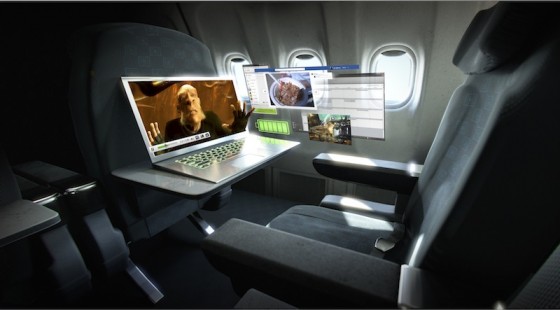
    The GeForce GTX 640m is designed to run alongside the next gen Intel Ultrabook processors to allow for thinner designs and faster performance, claims Nvidia. Read on the full press release below.
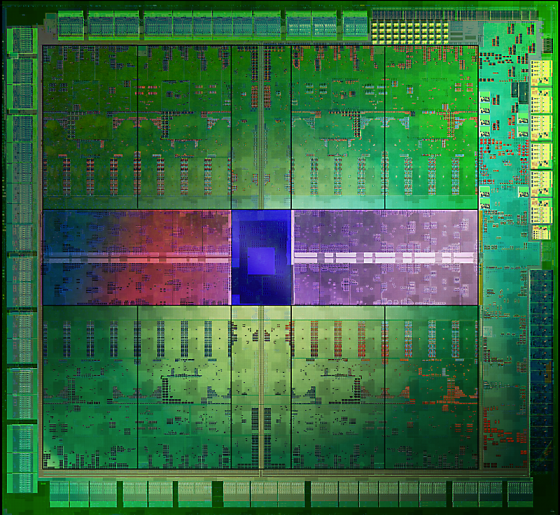
    In India, the NVIDIA GeForce GTX 680 GPU is now available from card suppliers, including ASUS, Gainward, Galaxy, MSI, Palit, POV, Sparkle and Zotac. Ultrabooks and notebooks based on the GeForce 600M family of GPUs: Acer, Asus, Dell, HP, Lenovo, LG, Samsung, Sony and Toshiba.

    [toggle title_open=”Press Release” title_closed=”Press Release” hide=”yes” border=”yes” style=”default” excerpt_length=”0″ read_more_text=”Read More” read_less_text=”Read Less” include_excerpt_html=”no”]


    NVIDIA Launches First GeForce GPUs Based on Next-Generation


    Kepler Architecture


    GeForce GTX 680for PC Gamers is Fastest, Most Efficient GPU Ever Built; 
    GeForce GT640M for Notebooks Puts the “Ultra” in Ultrabooks


    MUMBAI, India. — March 22, 2012 — NVIDIA today launched the first GPUs based on its next-generation Kepler™ graphics architecture, which deliver dramatic gaming performance and exceptional levels of power efficiency.


    The result of some 1.8 million man-hours of work over five years, the Kepler architecture’s first offerings bring unprecedented technical capabilities to both gaming desktops and Ultrabooks.


    For desktop gaming, the NVIDIA® GeForce® GTX 680 GPU provides a faster, smoother and richer experience. For notebooks, the new lineup of GeForce 600M GPUs puts the “ultra” in Ultrabooks, enabling smaller, more powerful designs than were previously possible. Both are available immediately.


    “The Kepler architecture stands as NVIDIA’s greatest technical achievement to date,” said Brian Kelleher, senior vice president of GPU engineering at NVIDIA. “It brings enormous performance and exceptional efficiency. Gamers will love the GTX680’s performance, as well as the fact that it doesn’t require loud fans or exotic power supplies. Ultrabook users will love the GT600M family for its performance and power efficiency.”


    Kepler is based on 28-nanometer (nm) process technology and succeeds the 40-nm NVIDIA Fermi architecture, which was first introduced into the market in March 2010.


    GeForce GTX680:  A Marriage of Speed and Extreme Efficiency 


    The GeForce GTX 680 GPU brings impressive performance and extreme efficiency to the desktop gaming market, delivering a quiet, smooth, extremely fast experience.


    Compared with the closest competitive product, the GeForce GTX 680 GPU is more than 300 percent faster in DirectX 11 tessellation performance(1) and up to 43 percent faster in cutting-edge games such as Elder Scrolls V: Skyrim(2), yet consumes 28 percent less power(3). It also provides twice the performance per watt of the GeForce GTX 580, the flagship Fermi-based processor that it replaces.


    Setting the standard for future enthusiast-class GPUs, the GeForce GTX 680 is built on an array of new technologies, including:


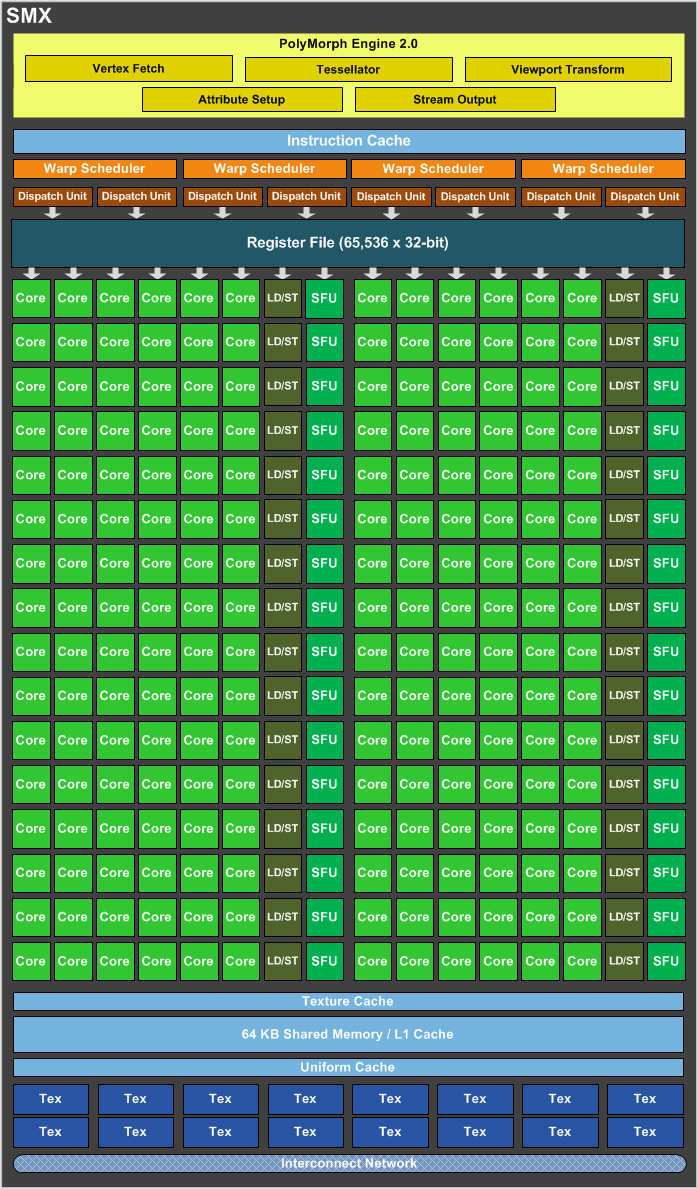
      • A new streaming multiprocessor block, known as SMX, that delivers twice the performance per watt of previous-generation products


      • Special board components, including acoustic dampeners, high-efficiency heat pipes and custom fins, that create a quiet gaming experience


      • NVIDIA GPU Boost technology, which dynamically adjusts GPU speeds  to maximize gaming performance


      • New FXAA and TXAA antialiasing and Adaptive VSync technologies to enrich visual quality without compromising gaming performance


      • Support for up to four separate displays– three of them in 3D –off a single card for a massive 3D gaming experience


      • Manufactured on TSMC’s new 28-nm process, with support for PCI-E Gen 3 and DX11.1


    Kelt Reeves, president of Falcon Northwest, a leading producer of high-end gaming systems, said: “The GTX 680 lays down what should be whiplash-inducing speed at the sound of a whisper. Even at full throttle, it doesn’t heat up. In the immortal words of Obi-Wan describing a lightsaber, it’s ‘an elegant weapon for a more civilized age.’”


    Mark Rein, vice president of Epic Games, creators of the award-winning Unreal Engine and billion-dollar “Gears of War” franchise, said: “The GTX 680 is amazing and completely redefines what an enthusiast-class GPU is. We have already shown outstanding success with the GTX 680, recently presenting our real-time Samaritan demonstration running on it along with a special preview of Unreal Engine 4 for select developers.”


    GeForce 600M GPU Family: Putting the “Ultra” In Ultrabooks


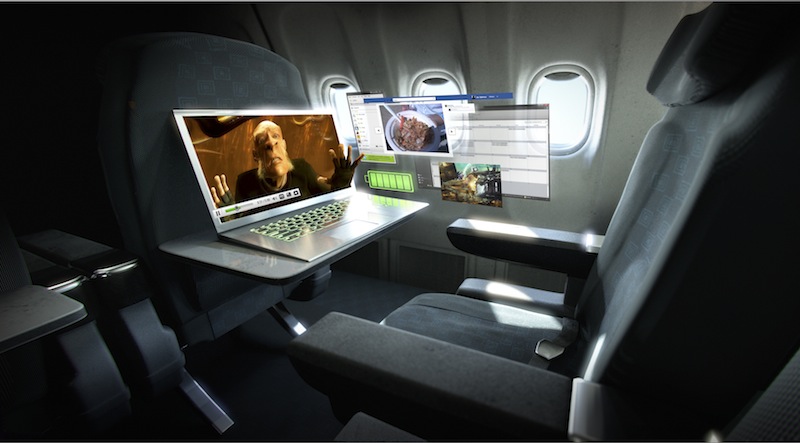
    The NVIDIA GeForce 600M family of GPUs, when paired with the latest processor technology from Intel, enables Ultrabook and notebook PC designs that are thin, light and fast. Technological advances that set them apart from the competition include:


      • NVIDIA Optimus™ technology enables extra-long battery life by automatically switching the GPU on and off so it runs only when needed


      • NVIDIA Verde™ notebook drivers provide frequent performance improvements and rock-solid stability


      • NVIDIA PhysX® engine support brings games to life with realistic physics


      • Optional NVIDIA 3D Vision™ technology automatically converts more than 650 titles into immersive 3D


      • Optional NVIDIA 3DTV Play™ software connects 3D Vision-based notebooks to 3D TVs


      • NVIDIA SLI® technology links two NVIDIA GTX GPUs up to double gaming performance


    “The Acer Aspire Timeline Ultra M3 brings a superior level of performance to the Ultrabook category,” said Sumit Agnihotry, vice president of product marketing at Acer America. “With a GeForce GPU onboard, our thin and light Ultrabook does everything our customers want it to do, with no compromises.”


    Rene Haas, general manager of notebook products at NVIDIA, said: “Customers are about to see notebook manufacturers unveil a host of Ultrabooks that are truly worthy of the ‘ultra’ moniker. The more efficient and powerful GeForce 600M GPUs will raise performance from the Ultrabook segment all the way up to gaming notebooks. And they will be the most popular discrete GPUs used with Intel’s upcoming Ivy Bridge processor.”


    India Availability


    The NVIDIA GeForce GTX 680 GPU is now available from the world’s leading add-in card suppliers, including ASUS, Gainward, Galaxy, MSI, Palit, POV, Sparkle and Zotac.


    The following manufacturers will be shipping Ultrabooks and notebooks based on the GeForce 600M family of GPUs: Acer, Asus, Dell, HP, Lenovo, LG, Samsung, Sony and Toshiba.


    [/toggle]
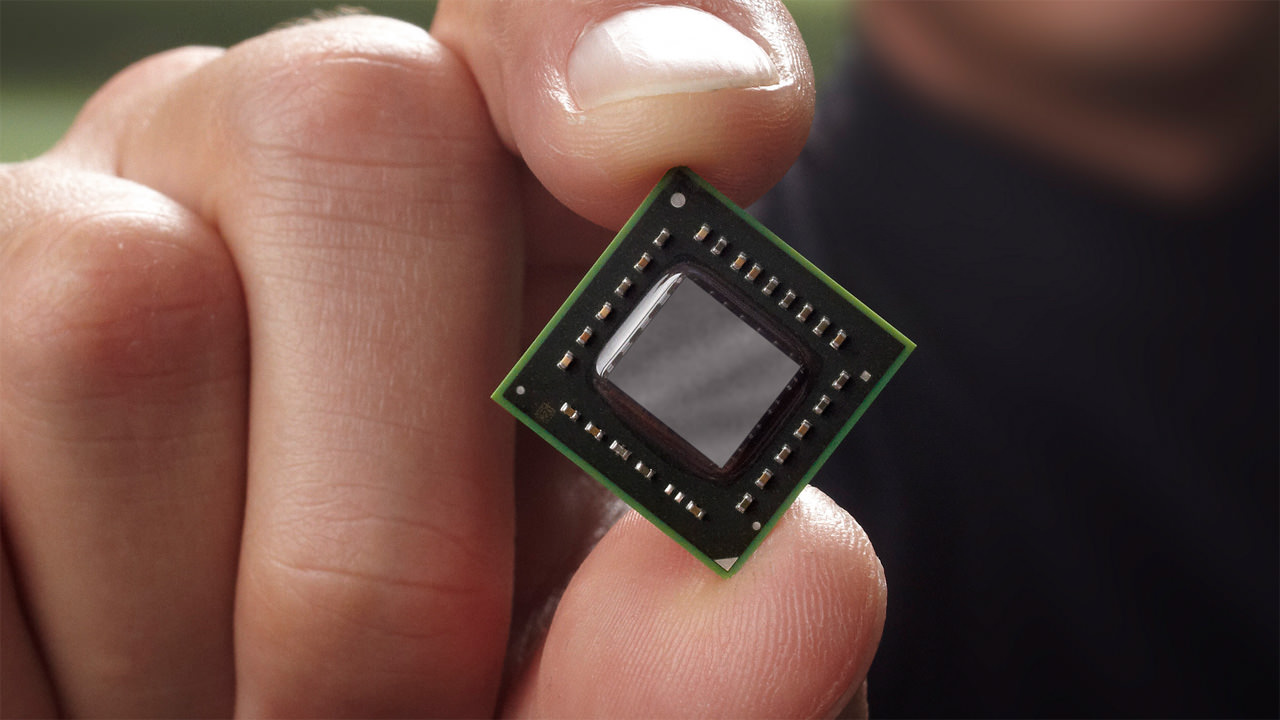
  • MSI launches new  two new R7950/R7970-2PMD3GD5 over-voltage capable Graphics cards on AMD HD 7000 GPU

    MSI launches new two new R7950/R7970-2PMD3GD5 over-voltage capable Graphics cards on AMD HD 7000 GPU

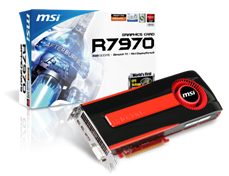
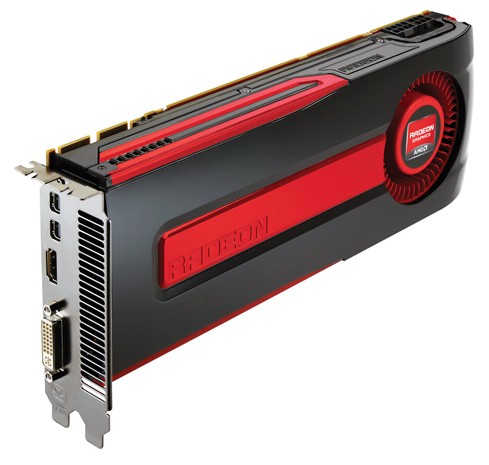
    MSI has launched two new GPUs based on the new AMD 7000 HD platform, the R7970-2PMD3GD5 supports over voltage support through MSI’s Afterburner utility. The card comes with  3GB GDDR5 and supports all  DirectX 11 titles on extremely high resolutions. Accorrding to MSI both the  R7970-2PMD3GD5 and R7950-2PMD3GD5 have an ultra-long lifespan and are made with  All Solid Capacitors.

    Ports include DisplayPort 1.2 and HDMI 1.4a connector along with Blu-ray 3D Stereo, “Deep Color” (for true natural color representation) and 7.1 High Bitrate audio to be presented on up-to six displays through AMD’s Eyefinity Technology.
     

    Corp Highlights

    1. World’s 1st  HD 7000 graphics card supporting GPU Overvoltage by MSI Afterburner.
    2. 3GB GDDR5 Memory provides better gaming and visual experience.
    3. All Solid Capacitors have 10 years ultra-long lifetime under full load.
    4. Up to 6 Displays is able to build multi-display surroundings easily.
    5. DisplayPort 1.2 and HDMI 1.4a output support Blu-ray 3D stereo transmission format.

    Specs

    Model Name

    V803 (MBA Board)

    GPU

    AMD Radeon HD 7970

    Codename

    Tahiti XT

    Stream Processors

    2048 units

    Core Clock

    925 MHz

    Memory Clock

    5500 MHz

    Memory Size

    3072MB GDDR5

    Memory Bus

    384 bits

    Output

    Mini DisplayPort x2 / HDMI / DVI-I

    TDP

    275 W

    Card Dimension

    280x110x38mm

    Form Factor

    ATX

    DirectX

    11

    OpenGL

    4.2

    CrossFire

    Y

    Eyefinity

    Y

    AVIVO HD

    Y

    PowerPlay

    Y

    HDCP

    Y


  • AMD announces Radeon HD 7970 Available in India January starting 35,999/- (PR)

    AMD announces Radeon HD 7970 Available in India January starting 35,999/- (PR)


    AMD yesterday announced their first 28nm GPU, the Radeon HD 7970. It is scheduled to arrive in the US on January 9th, priced at $549 (about Rs. 27,000). But looks like AMD is adding the fun to the Indian market in 2012 by planning to release it within another few weeks of the US release. The new Rig boosting GPU has a  925MHz engine clock overclock-able to 1.1GHz, 2,048 stream processors , a 384-bit memory bus with 3GB of GDDR5.


    [toggle title_open=”Press Release” title_closed=”Press Release” hide=”yes” border=”yes” style=”default” excerpt_length=”0″ read_more_text=”Read More” read_less_text=”Read Less” include_excerpt_html=”no”]MD Launches World’s Fastest Single-GPU Graphics Card – the AMD RadeonTM HD 7970
    – The AMD RadeonTM HD 7970 graphics card is first to market with 28nm process technology and PCI Express 3.0; harnesses AMD GCN Architecture, AMD ZeroCore Power and AMD Eyefinity 2.0 technologies –
    SUNNYVALE, Calif. – Dec. 22, 2011 – AMD (NYSE: AMD) today launched the AMD RadeonTM HD 7970 graphics card for desktop PCs, introducing the world’s fastest single GPU graphics card and the only GPU based on 28nm production technology. With the arrival of the AMD Radeon HD 7970, AMD has unleashed its revolutionary new Graphics Core Next Architecture that enables new levels of gaming and compute capabilities – realizing an improvement of over 150% in performance/sq mm over the prior generation. Engineered with support for PCI Express 3.0 and AMD CrossFireTM technology, the AMD Radeon HD 7970 graphics card arrives prepared for the next generation of gaming.

    “True to the adage, “never settle,” AMD is once again aggressively advancing the state of the graphics industry – this time with the arrival of the world’s fastest single GPU graphics card, the AMD Radeon HD 7970,? said Matt Skynner, corporate vice president and general manager, GPU Division, AMD. ?This graphics card represents a revolution in the graphics industry. To put it bluntly, at 28 nm the AMD RadeonTM HD 7970 changes everything!”

    AMD further extends its GPU leadership with the AMD Radeon HD 7970 through AMD App Acceleration, which enables exquisite high-definition video images and exceptional performance improvements for everyday applications. Ground-breaking advancements with AMD Eyefinity technology enable gamers and desktop enthusiasts to connect up to six displays to one graphics card, delivering immersive stereoscopic 3D experiences and astonishing 16k x 16k display resolutions. It’s also armed with the latest PCI Express 3.0 standard to enable uncompromised image quality, and is additionally equipped with GDDR5 memory, enabling accelerated GPU performance. Through its intelligent AMD PowerTune and AMD ZeroCore Power technologies, the AMD Radeon HD 7970 enables higher performance levels while maximizing power efficiencies.
    “The AMD Radeon HD 7970 is an awesome tool in any gamer’s arsenal,? said Johan Andersson, Rendering Architect at DICE. ?We have worked closely with AMD during the development of the Frostbite 2 game engine to take full advantage of AMD Eyefinity multi-display technology and DirectX® 11 for a more realistic, entertaining and visceral gaming experience in Battlefield 3.”
    Efficient Architecture for Leading DirectX® 11 Performance
    – New architecture for greater performance: AMD has further enhanced its GPU design efficiency through the introduction of the 28nm process technology and Graphics Core Next Architecture, realizing an improvement of over 150% in performance/sq mm over the prior generation.
    – Refined AMD PowerTune technology: Designed with the most advanced power management features, the AMD Radeon HD 7970 is equipped with the intelligence to convert unused power headroom into extra performance by dynamically controlling clock speeds, allowing gamers advanced performance inside of the power envelope they specify.
    – AMD ZeroCore Power Technology: Gamers asked, AMD delivered – the AMD ZeroCore Power technology found in the AMD Radeon HD 7970 ensures that no power is wasted when the graphics card is not in use, enabling lower idle power than any other currently available graphics card. With support for AMD CrossFire technology, AMD ZeroCore Power eliminates wasted power, as well as additional heat and noise from extra cards when you are not using them.
    – PCI Express 3.0: The AMD Radeon HD 7970 comes natively equipped with support for PCI Express 3.0. With world-class performance scaling, enthusiasts’ GPU experience is maximized when paired with the latest platforms.
    – Discrete Digital Multi-Point (DDM) Audio: DDM Audio provides multiple independent audio streams for audio-capable displays via DisplayPort or HDMI signals. DDM Audio delivers unique experiences in cases where multi-display video conferencing, directional audio or multi-room entertainment hubs are being used.
    – Enhanced Multi-GPU Capabilities: AMD CrossFire technology is the ultimate multi-GPU performance gaming platform. Unlocking game-dominating power, AMD CrossFire technology, coupled with PCI Express 3.0, will allow for unprecedented bandwidth in TriFire and QuadFire configurations.

    The Ultimate Immersive Gaming Experience and Innovative AMD Eyefinity 2.0 Technology
    – Next Generation AMD Eyefinity technology: AMD Eyefinity 2.0 features all-new support for stereo 3D, universal bezel compensation, brand new display configurations and an expanded and more immersive field of view. This allows users with 2560×1600 monitors in an AMD Eyefinity 5×1 landscape configuration to achieve a horizontal resolution of 12,800 pixels, driving more than 20 million pixels of screen real estate. More than 70 game titles have been AMD Eyefinity- validated, while many are AMD Eyefinity-ready, and hundreds more are AMD Eyefinity-compatible.
    – DisplayPort 1.2 and HDMI 1.4a: With full support for 3GHz HDMI 1.4a and DisplayPort 1.2 HBR2, the AMD Radeon HD 7970 is set to drive next generation displays at up to 4K resolution.
    – 3D entertainment choices with AMD HD3D technology: With the arrival of the latest in stereo 3D technology, AMD continues to deliver an enhanced visual experience on stereo 3D-capable desktops and notebooks powered by AMD Radeon graphics. The AMD Radeon HD 7970 is backed by AMD’s open 3D initiative for stereo 3D gaming and Blu-ray 3D movies.
    Better Performance through AMD App Acceleration
    – AMD App Acceleration lets you do more, faster: Enthusiasts will enjoy improved GPGPU performance and new features in many top media, entertainment and everyday productivity applications with AMD App Acceleration.
    – Extensive support of industry standards: AMD Radeon HD 7970 fully supports DirectCompute® and OpenCLTM technologies, enabling broad application support today and tomorrow.

    The AMD Radeon HD 7970 is available January 9, 2012 from retailers worldwide, with select models starting at $549 US SEP.[/toggle]

  • Nvidia call Tegra 3 PC class chip, displays with comparatives

    Nvidia call Tegra 3 PC class chip, displays with comparatives

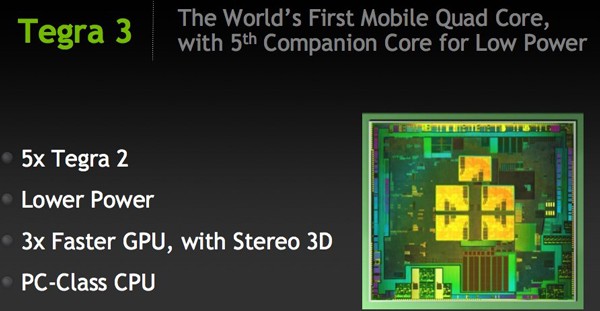
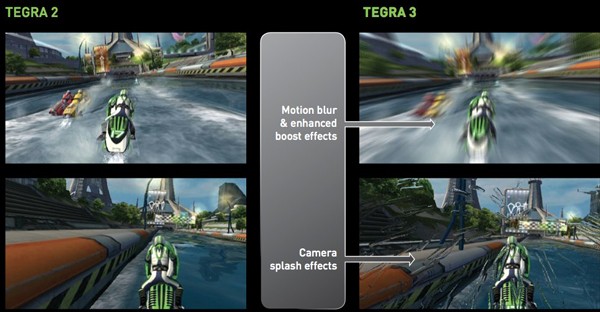
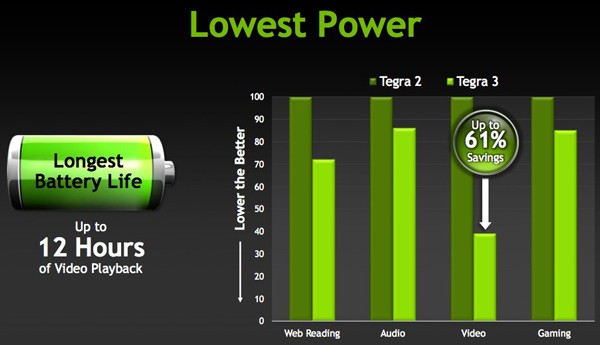
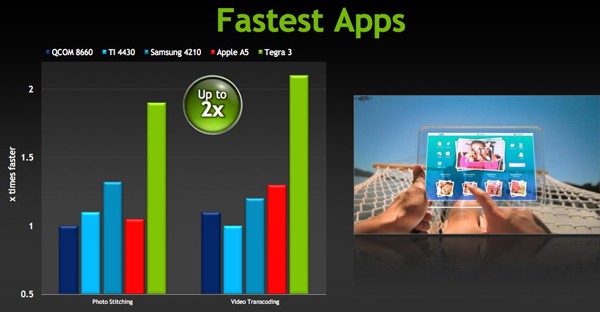
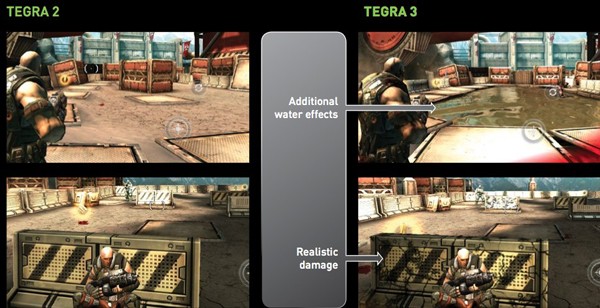
    Nvidia’s new and upcoming Tegra 3 is the chip to look out for, says the industry. A confirmed chip which is upto five times faster than existing Tegra 2, offers 4 cores of 1.5 GHz madness and a perforce and graphics boost unknown to phone/tablet kind prior to this.The new Tegra 3 four times faster for web browsing, three times faster for graphics(12-core GeForce GPU). This GPU has total support for stereoscopic  3D.

    The ASUS Transformer Prime is going to be the first tablet, with the Tegra 3. checkout the comparative images from Nvidia putting all questions to rest.

    Claiming better performance and all round improved battery life, this chipset should be found in most tablets to be released in 2012.

iGyaan Network
Privacy Overview

This website uses cookies so that we can provide you with the best user experience possible. Cookie information is stored in your browser and performs functions such as recognising you when you return to our website and helping our team to understand which sections of the website you find most interesting and useful.