Tag: indian government

  • Indian Government Implements cVIGIL App To Prevent Devious Voting

    Indian Government Implements cVIGIL App To Prevent Devious Voting

    For a long time, the Indian government has been stressing on the importance of digital technologies for the betterment of society. It had previously launched several applications that intend to achieve the same. An application called, cVIGIL which was launched last year has now been implemented on pan India level. The cVIGIL app is dedicated to maintaining the Model Code of Conduct of the voting process. In simpler words, it is a digital tool that can be used to desist devious practices which can be used to manipulate voting. The application has begun services before the Lok Sabha Elections 2019 which will be conducted from the 11th of April to 19th of May. 

    About and Purpose Of cVIGIL Application

    According to the Government of India, the cVIGIL application has been developed to act as a medium that can be used to transmit and track complaints on MCC (Model Code of Conduct) violations. Due to the delay in the reporting of these violations, culprits in the past have escaped detection from the squads of election commission which are entrusted to ensure enforcement of the code of conduct.  Additionally, the lack of evidence in the form of pictures or video has been a major hurdle in investigating a reported complaint.
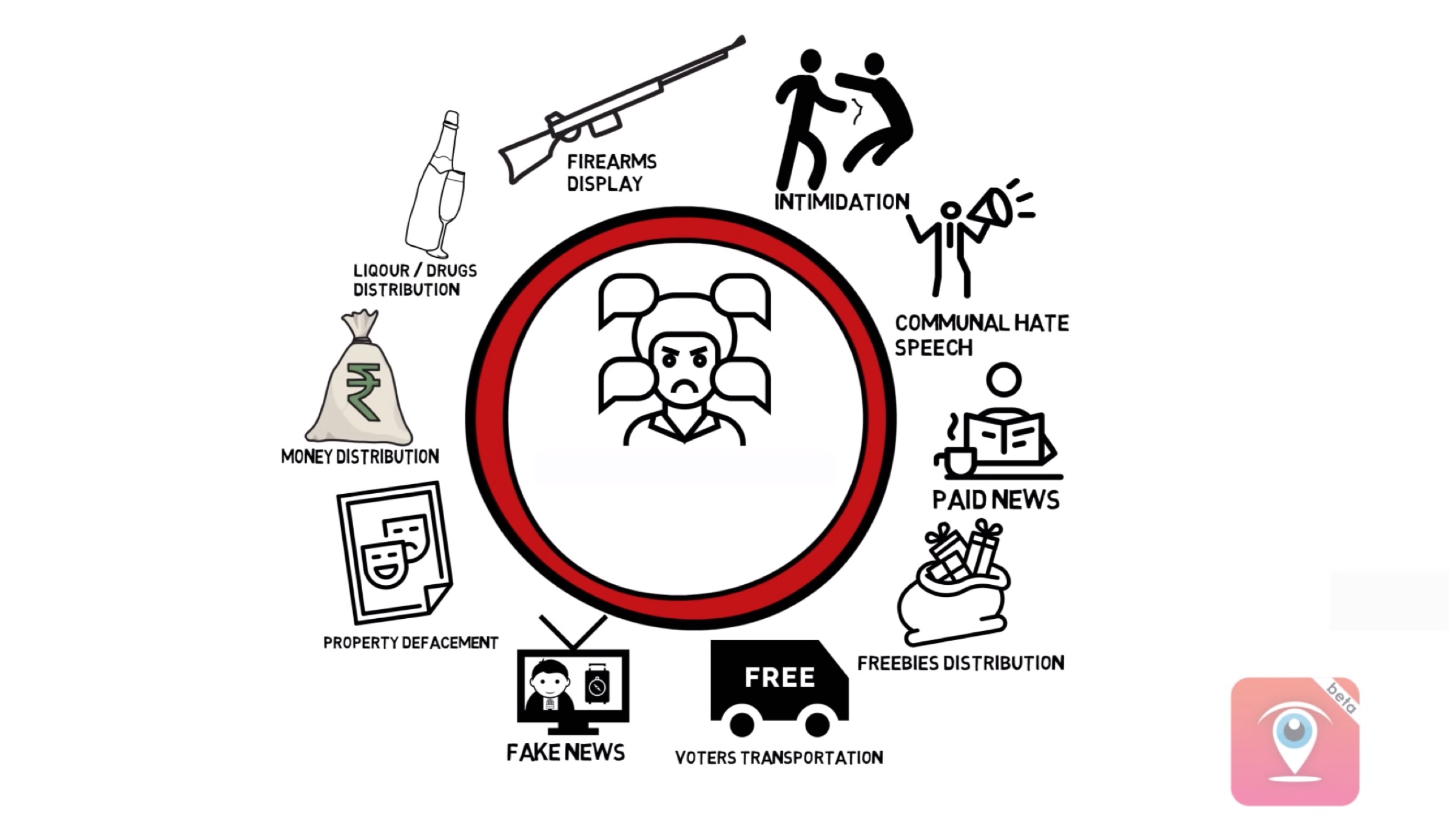
    The purpose of the cVIGIL application is to curb or desist the unfair practices that the affiliates of an organisation use to alter the voting patterns of the voters. Some methods that are used to manipulate the voter behaviours are as follows:

    • Money/Liquor/Drugs Distribution
    • Firearms Display
    • Fake News
    • Communally Hateful Speeches
    • Intimidation
    How Does cVIGIL Application Work?
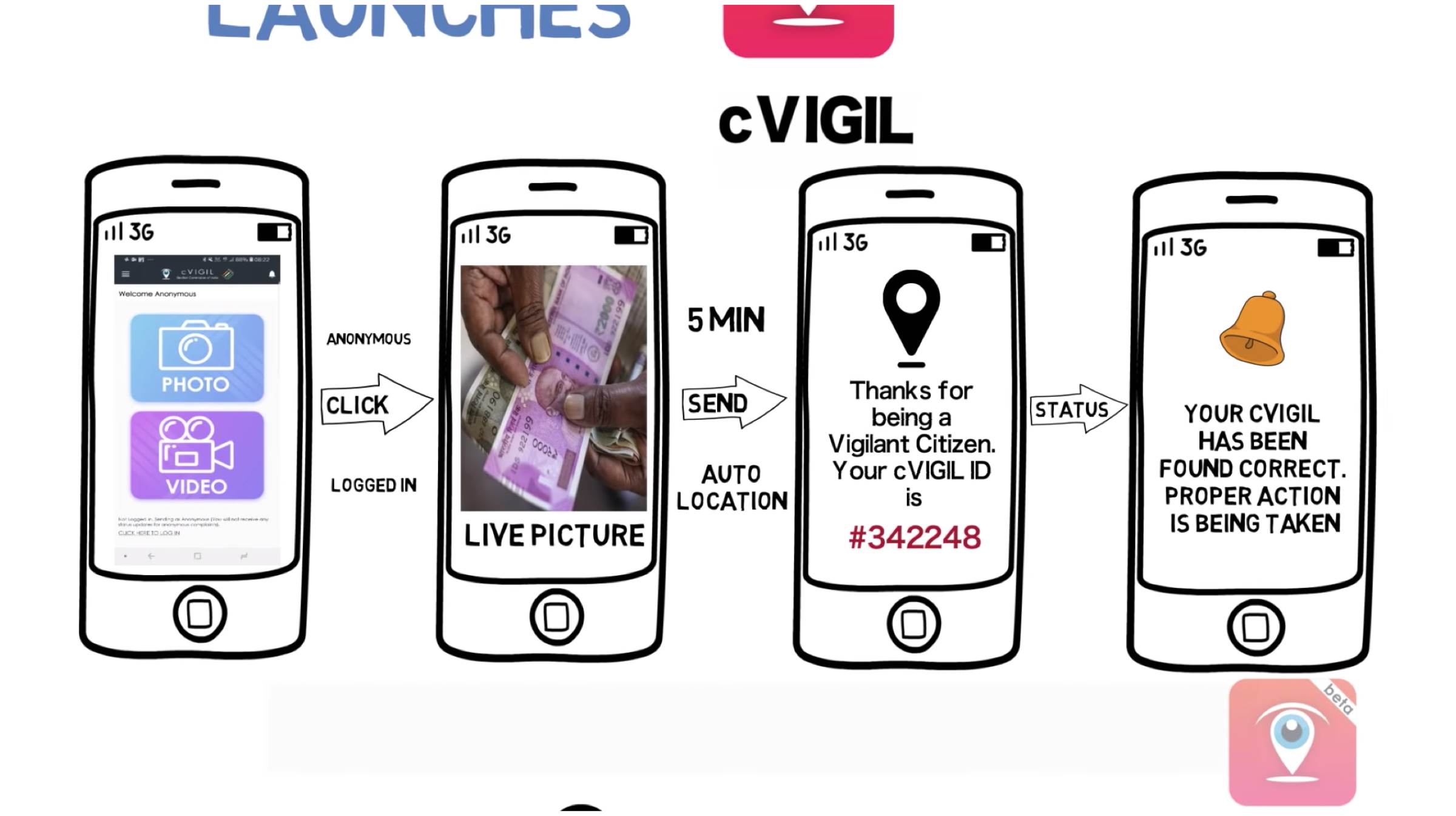
    The cVIGIL application has a sophisticated mechanism which with the help of both digital devices and media intends to prevent the aforementioned methods used to influence voting. Users of the application can capture photo or video evidence of an MCC violation. The application uses the inbuilt GPS module of the smartphone to stitch the location of the crime with digital evidence. The location and digital evidence is anonymously sent to the government headquarters from where the officials can take necessary actions. Noteworthy, the application also provides a cVIGIL ID which can be used to track the status of the complaint. All in all, it seems to be a great move by the Indian government which has been pestered by these issues for a long period.  

    Also Read: Google To Add More Smartphones To The Android Q Beta List In 2019

    The application is currently available only for Android smartphones that run the version Jellybean 4.1 to 4.3 or above. 

    Click here to download the cVIGIL Application

  • Apple Is Providing User Data To The Indian Government

    Apple Is Providing User Data To The Indian Government

    Apple is the preferred choice for many consumers since privacy is something the company boasts of in their ecosystem. But Apple also abides by the rules and regulations of the respective countries it sells its phones to and according to their latest transparency report, they seem to be providing user’s data to the government. Transparency reports are reports that are published in regular intervals by tech giants such as Facebook and Twitter. These are available for customers to see and includes data such as Government requests, Account Restriction / Account Deletion and Account Preservation.

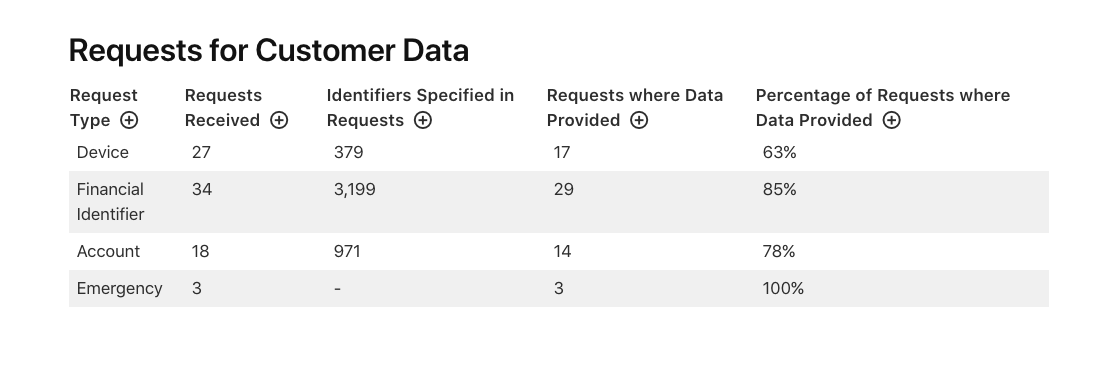
    It must be noted that the government does not ask for every Apple user’s data and these requests go through a rigorous screening process. These include the government asking for information on a particular user through subpoenas, court orders, warrants etc. According to Apple, government and private entities are required to follow applicable laws and statutes when requesting customer information and data from Apple. The reports from January – June 2018 suggest that the total Device requests in that time period were 27. Out of that, 17 requests were granted by Apple which is a 63% request approval. Device requests include information of a particular device that a particular person is using such as IMEI or Serial Numbers.

    Financial Identifier Requests

    Requests on financial identifiers from the Indian government amounted to 34 in total. Out of that Apple granted information on 29 which is an 85% request approval. Financial Identifiers are requests received from a government agency seeking customer data such as credit card or gift card. This is in light of the iTunes gift card fraud that has been prevalent for a while now. Requests for Account details such as Apple ID and emails were also made by the Indian Government. These amounted to a total of 18 in the half-yearly period. Apple gave information on 14 of those requests.

    Also ReadOnePlus 5 And OnePlus 5T Start Receiving Android Pie Stable Update

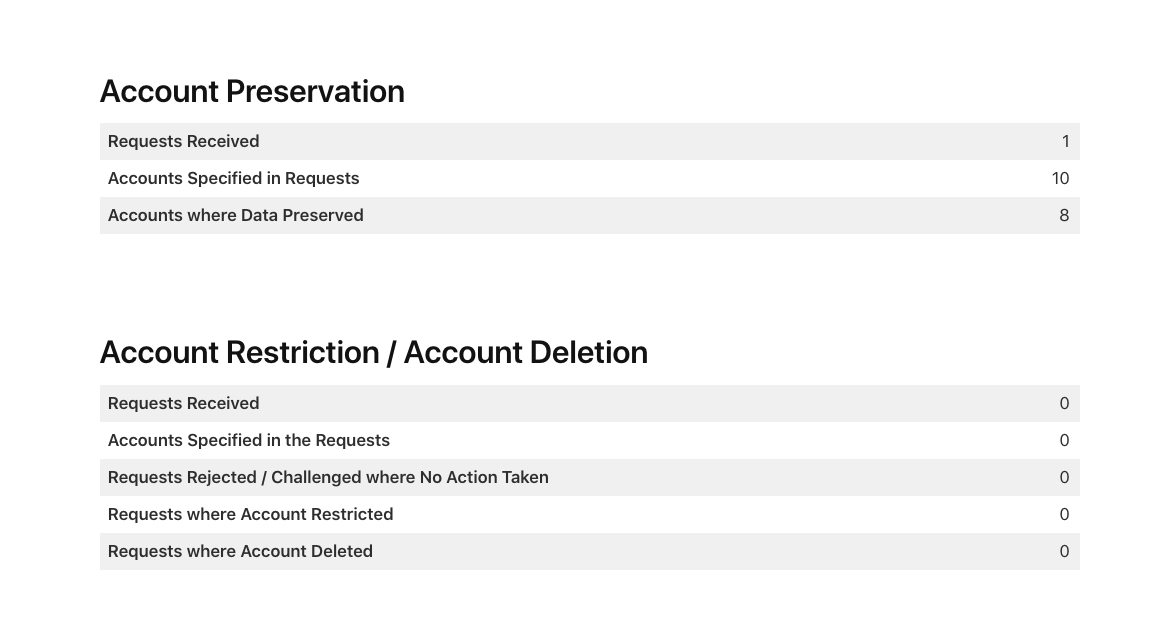
    Apart from these, 3 emergency requests were also made by the government and Apple followed through on all of them. These requests are made when the government requires user’s data on an emergency matter. There were no Account restriction or deletion requests made in the 6 month time period by the government.


  • Upcoming iPhones Will Be A Lot More Expensive

    Upcoming iPhones Will Be A Lot More Expensive

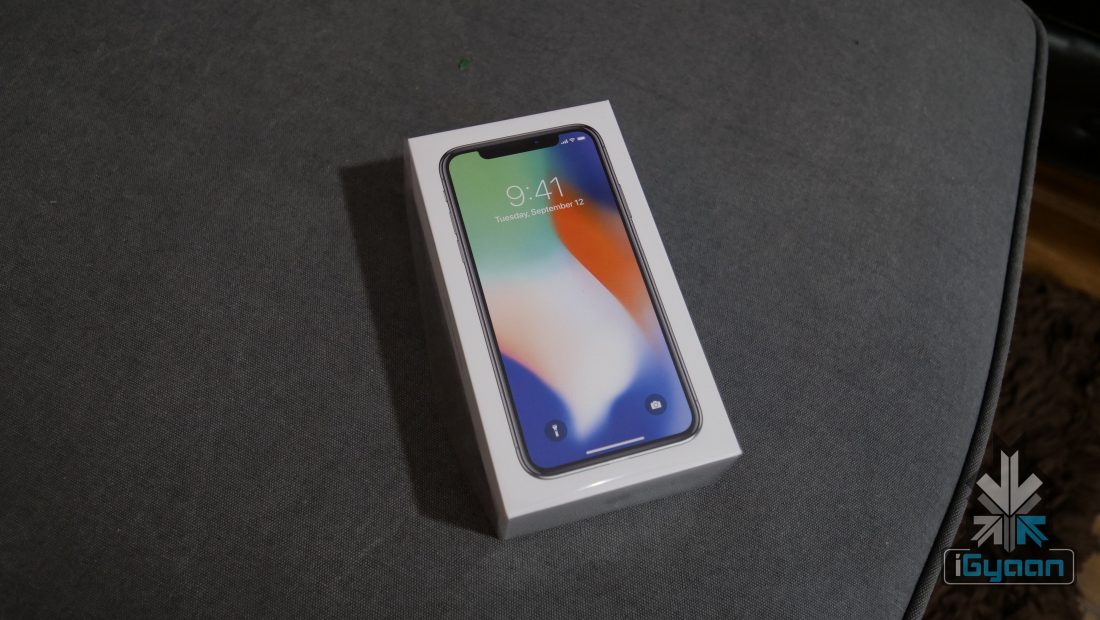
    Apple recently broke the thousand dollar barrier in the US and the 1 lakh barrier in India with the iPhone X. Over the years, every iteration of the iPhone has launched in India pricier than its predecessor, which has become a norm for every other smartphone maker. However, comparing the price of iPhones in the US and India brings out the image of how inflated the price of an iPhone in India is.

    This news might not be good for future iPhone aspirants. With the implementation of GST this year, it was obvious that all mobile phones will become expensive even if they’re made in India. But, the government’s duties on phones and their components imported into India will result in higher price tags compared to those made in India. Now, the government has hiked the import tax on various electronic products including mobile phones and TVs.

    The import tax was initially 10% but, the latest hike pushes the limit to 15%. This might not be good news for Apple itself especially after it recorded a slow growth in revenue for the 2016-17 year in India.

    Tarun Pathak, an associate director at Counterpoint Research said:

    It will impact Apple the most as the company imports 88 percent of its devices into India. Either this will lead to increase in iPhone prices or force Apple to start assembling more in India.

    According to Counterpoint Research, eight out of ten phones sold in India were made in India.

  • Indian Government Lists 42 Chinese Apps That Are Dangerous To National Security

    Indian Government Lists 42 Chinese Apps That Are Dangerous To National Security

    The Indian government has continued its effort in curbing the danger that some apps on the internet might possess. The Indian intelligence agencies have listed about 42 mobile applications that have the potential to carry out a cyber-attack against the country. The agencies have reportedly issued a warning to the Indian Army and paramilitary against their usage.

    As per reliable inputs, a number of Android/IOS apps developed by Chinese developers or having Chinese links are reportedly either spyware or other malicious ware. Use of these apps by our force personnel can be detrimental to data security having implications on the force and national security.

    Army personnel have been asked to immediately uninstall the 42 mobile apps as well as format their smartphones. This is not the first time that the government has issued warnings against Chinese apps. Recently, UC Browser came under the scanner as well.

    Xiaomi in a statement has said:

    At Xiaomi, we take security and privacy very seriously. Our global e-commerce platforms and user data for all international users is located on Amazon AWS data centers in California and Singapore.

    We are currently investigating the advisory and would like to assure Mi Fans that we are fully committed to storing and transferring our users’ data securely at all times

    Following is the list of all the apps that have been deemed unsafe by the advisory:

    Weibo, WeChat, SHAREit, Truecaller, UC News, UC Browser, BeautyPlus, NewsDog, VivaVideo- QU Video Inc, Parallel Space, APUS Browser, Perfect Corp, Virus Cleaner (Hi Security Lab), CM Browser, Mi Community, DU recorder, Vault-Hide, YouCam Makeup, Mi Store, CacheClear DU apps studio, DU Battery Saver, DU Cleaner, DU Privacy, 360 Security, DU Browser, Clean Master – Cheetah Mobile, Baidu Translate, Baidu Map, Wonder Camera, ES File Explorer, Photo Wonder, QQ International, QQ Music, QQ Mail, QQ Player, QQ NewsFeed, WeSync, QQ Security Centre, SelfieCity, Mail Master, Mi Video call-Xiaomi, and QQ Launcher.

    Truecaller has responded to the allegations:

    In response to certain reports, we would like to clarify that we are a Sweden based company. We are not sure why the app is on this list, but we’re investigating. Truecaller is not a malware, and all our features are permission based and are disabled by default.

    This is not the first time that Chinese apps have come under the scanner. The fact that even Xiaomi’s apps, one of the most successful brands in India, have come under the scanner is shocking as well as alarming. Xiaomi was previously accused of sharing personal data of Indian users with the Chinese.

  • India To Roll Out 5G Internet By 2020

    India To Roll Out 5G Internet By 2020

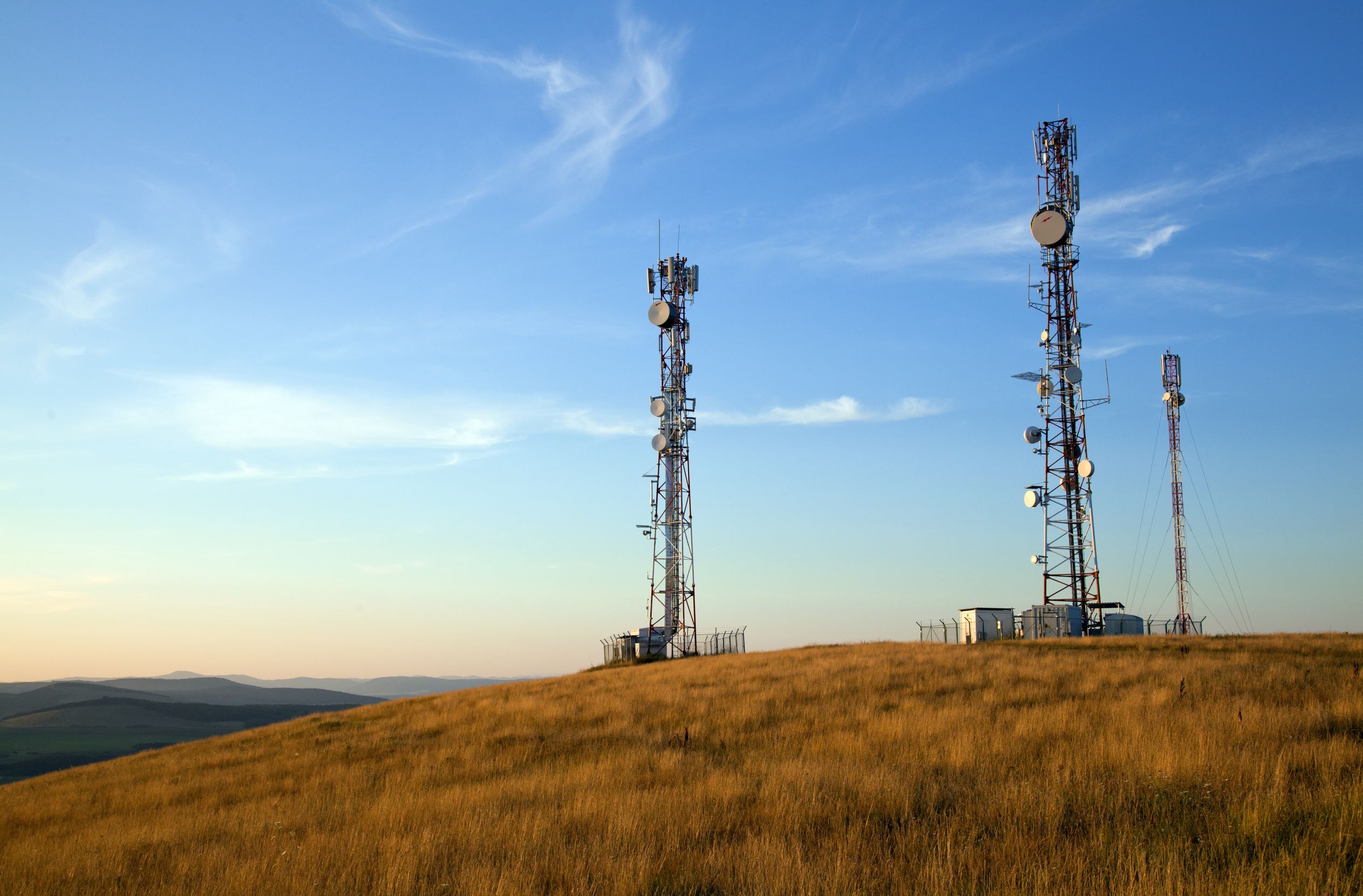
    India is planning to roll out 5G internet services by the year 2020. In order to complete this task successfully, the government has set up a high-level forum which will evaluate all possible roadmaps to make sure that 5G internet becomes prominent in the country. For the said objective, the ministries of telecom, information and technology, and science and technology have been included in the forum. A budget of Rs 500 crore is set aside for research and development of 5G technology by the government.

    The minister of State for Communications Manoj Sinha said:

    We missed the opportunity to participate when the standards were being set for 3G and 4G, but don’t want to miss the 5G opportunity. Now when the standards are being set for 5G across the world, India will also participate in the process. As per the OECD Committee on Digital Economic Policy, it has been stated that 5G technologies rollout will help in increasing GDP, creating employment, and digitising the economy.

    Apart from the government, Indian telcos such as Airtel are also actively taking initiatives toward the 5G technology. Airtel on 26th September launched a mimo, a pre-5G technology, producing internet browsing speeds three times higher than the current levels. State-run Bharat Sanchar Nigam Ltd. along with Airtel have also signed initial pacts with smartphone makers such as Nokia for the development of 5G and its applications which are relevant to India.

    India was slow to jump aboard the 3G and 4G train. Even currently, the 4G technology adoption is at a nascent stage whereas a lot of countries have adopted 4G and even 3G has become a secondary internet technology. In order not to lose out on the 5G hype, India is planning to hold auction for 5G spectrums. While a part of the government back an early sale of 5G airwaves, the telecom industry wants it to be sold only post 2018, citing the lack advanced ecosystem around the technology as the main reason. The industry also believes that India will get 5G only around 2021-2022.

    The International Telecommunication Union (ITU), which will finalise the standards for 5G mobile technology proposed the downlink peak rate for 5G at 20 gigabits (or 20,000 megabits) per second. These speeds however, cannot be ascertained yet since the technology is yet to be deployed.

    A country where even 4G speeds at the moment are underwhelming and network speed throttling is a major issue, 5G technology becoming a regular for consumers seem like an overkill or a distant dream. But, the forum setup by the government includes all the important bodies necessary to make 5G technology a relevant dream in the future. The high-level forum will work towards accelerated deployment of 5G for specific use cases in India, and these will include development of roadmap related to emerging technologies, testing, and trials.

    Manoj Sinha has said that India is “We are open to collaboration” with countries who have set up a similar forum. This early resilience shown by the government is definitely a positive sign and a step in the right direction.

  • Telecom Operators Might Compensate Us for Dropped Calls

    Telecom Operators Might Compensate Us for Dropped Calls

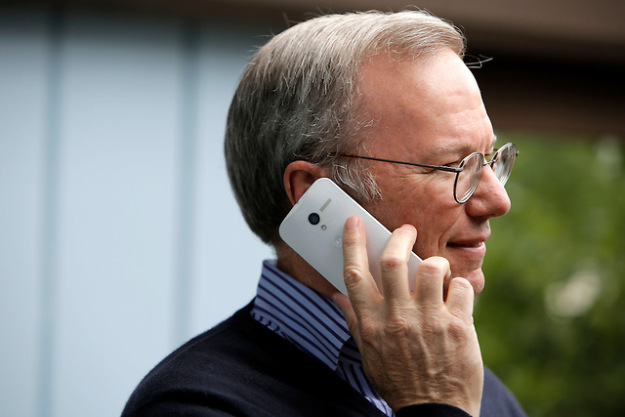
    Frequent call drops in the middle of the conversation must have caused anguish within customers, and telecom operators are accountable for this. The Indian Government is taking notice of the inconvenience caused to its people and has cautioned telcos to minimize call drops and strengthen its mechanism.

    Telecom Minister Ravi Shankar Prasad stated in a press conference –

    Call drops need to be minimized. Private operators need to reinforce their mechanism. I have directed officials in the telecom department to work on a disincentive architecture (for the operators) to address the issue.

    Prasad further said that The Department of Telecom (DoT) will settle on penalty clauses and measures to reduce call drops by year-end. Telecom Regulator Authority of India (TRAI) has set the maximum permissible call drop limit to 2% calls, and there is no mention of reimbursement of any sort by the independent regulator. The panel is considering re-evaluation and chances are that it may fix a lower threshold for call drops in the wake of numerous complaints. According to an official, it may be as early as the next six months.

    07/11/2013 Sun Valley Allen and Company Conference

    The choked network in metros and poor broadband connectivity have always been an issue with service providers. Despite that, customers are bound to pay through their noses as the services remain unsatisfactory. It is nice to see that the government is taking notice of public grievances and is considering taking action by the end of this year. However late, the news is certain to bring a big smile on everyone’s face.

    There are a few telecom companies such as Reliance and Uninor that are compensating for the glitch on their part, but other mobile operators like Vodafone, Airtel, that have a larger consumer base are still to make a move in this direction. It would not be easy for the government to make telcos agree to its conditions as it will stir their revenue, but the government seems determined in its aim. The next few months will be the deciding point that will finally put an end to call drops.

  • According to BJP, ‘The Internet Must be Governed’

    According to BJP, ‘The Internet Must be Governed’

    BJP said the internet is a crucial part of one’s life, and should be governed very carefully without the need to compromise the freedom of speech and expression.

    Speaking at an Internet governance event organised by industry chamber Assocham, BJP National Spokesman, Sambit Patra said,

    Internet is extremely important and since it is extremely important for governance also, because every person is within the ambit of government, Internet has to be governed in a way that does not take away basic essence of Internet which is freedom of speech and expression.

    He also stated that the government had formed a community along with TRAI on Net Neutrality. He said,

    Once the TRAI submits its recommendation to the Telecom Commission and then after the commission approaches the government, the government will take the decision in favour of people.

    On March, the Supreme Court deemed Section 66A of the IT Act as unconstitutional. This Act granted police the power to arrest anyone for sending out offensive messages from computers, mobiles or any other communication portals with a maximum penalty of 3 years in jail. Sambit Patra stated this Act had been misused in the past, due to vagueness of words.

    On the contrary, Congress leader and former Union Minister, Manish Tewari, challenged Patra’s discussion by stating that the Internet should not be governed and must be left the way it is to develop. He supported his statement by saying,

    Difficulty is where do you draw the line? Someone may be liberal and may draw the line on the left and someone may conservative may draw the line on the extreme left.

    A few days back, the Indian Government came out in support of Net Neutrality. The government hasn’t been issued with a final verdict on the same but is committed to keeping the Intenet open and evenly accessible to everyone. Standing up in support of free internet, Telecom and IT minister Ravi Shankar Prasad in a firm voice said that the practices of blocking and deliberately slowing down or speeding up of lawful content on web should not be allowed. Read more about it here.

  • Indian Government Comes Out in Support of Net Neutrality

    Indian Government Comes Out in Support of Net Neutrality

    The much heated issue of Net Neutrality now has the Centre’s support. The government hasn’t come out with a final verdict on the same, but is committed to keeping the Intenet open and evenly accessible to everyone. Standing up in support of free internet, Telecom and IT minister Ravi Shankar Prasad in a firm voice said that the practices of blocking and deliberately slowing down or speeding up of lawful content on web should not be allowed.

    While responding to a discussion on Net Neutrality in Rajya Sabha, Prasad commented –

    Government stands for ensuring non-discriminatory access to Internet for all citizens of the country. The government agrees with the viewpoint that blocking and deliberately slowing down/speeding up of lawful content on the Internet should not be allowed, and customers should have unrestricted access to all lawful content on the Internet.

    Prasad stressed on the fact that the Government has all powers to direct Telecom Regulatory Authority of India (TRAI) on public policy. “However, TRAI’s powers to regulate tariff and quality of service are subject to overall public policy of the government and the government has sufficient powers under the Trai Act to invoke its national policy objectives to give directions to Trai,” stated Prasad.

    ravi shankar prasad
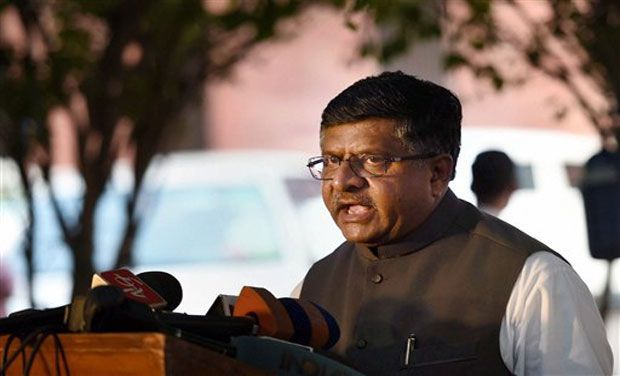
    Telecom and IT minister Ravi Shankar Prasad spoke up about keeping the Internet an open platform.

    He further mentioned that a detailed examination on topics like traffic management, national security, integrity of network and infrastructure investment is needed by experts on Net Neutrality.

    It should be kept in mind that government hasn’t laid down the structured guidelines on net neutrality principles. Once the government frame rules for the content flow on web, telecom operators wouldn’t be able to adopt illegitimate pratices to earn more money.

    A while back, TRAI’s consultation paper on its official website gathered millions of emails in support of Net Neutrality.  From the comments of the Telecom minister, it seems like the final verdict would slay the Airtel Zero plan, once and for all.

  • Report : Government to Intervene on Airtel’s Net Neutrality Violation

    Report : Government to Intervene on Airtel’s Net Neutrality Violation

    Net Neutrality is currently a heated issue amongst the people of India. Recently, Bharti Airtel has received a lot of flak for its contentious “Airtel Zero” plan from social media users. Following the reports of Airtel’s preferential treatment for websites, the government has reportedly decided to intervene and has said that it plans to keep a close watch on the company’s developments.

    According to a report by the Times of India, the Department of Telecom (DoT) is looking into the Airtel’s Zero plan to give special privileges to some websites and confined access to the others. A high-rank official stated about the government will take on the Zero plan, “DoT is looking into finer details and whether it goes against the spirit of net neutrality.”

    airtel net neutrality

    Meanwhile, the Telecomm Regulatory Authority of India (TRAI) has also started an online protest against net neutrality, which has received a tremendous response from users. Last Saturday, government uploaded a consultation paper called “Regulatory Framework for Over-the-Top (OTT) Services” where stakeholders were asked to comment. Within two days, the government received over 1.5 lakh e-mails asking to protect network neutrality in the country. A vast group of people are in support of net neutrality and want Internet to be a free space – where everyone can access anything at the same speed.

    The inspection by DoT will be in conjunction with TRAI’s OTT program and will also bring to light Airtel’s previous attempts to assault net neutrality. The national telecom operator tried to induce differential charges for various online services like Skype, Viber, WhatsApp, but received an aggressive backlash resulting it to withdraw the proposed plan.

    The source also stated that the government might not take any immediate action against Airtel and will scrutinize the matter initially. Meanwhile, Airtel has denied allegations and said that the Zero plan is “non-discriminatory” and doesn’t give undue preference to any company.

    The net neutrality campaign has gained momentum over social media, and people of diverse streams are joining hands to make Internet a free and fair space. Various campaigns are trending on Facebook and Twitter like #SavetheInternet, #NetNeutrality  in an attempt to make sure that the internet doesn’t get dragged into a class system.

  • Indian Government Puts Greater Stress On Using Open Source Software

    Indian Government Puts Greater Stress On Using Open Source Software

    The software markets around the world are dominated by US based products. With the revelation of the NSA snooping on the data of major companies like Google, Microsoft and other players, the governments around the world have become vary of using such products. The Indian government too is taking measures to reduce the dominance of US based products in its workflow and hence has introduced a new Open Source Software(OSS) Policy.

    With the use of open source software, the government intends to bring greater transparency. It is also looking to invest in propriety software for official functions. The development costs of OSS’s are also lower than the big brand software.

    An official statement said that the new policy will be applicable to the central government institutions, and state governments will have to induct the policy when they upgrade their e-governance systems. It also added that under the Digital India program, the government intends to bring low-cost, but high-quality services to the citizens and OSS are an optimal way of going about with the plans.

    All government institutions, under this policy, would have to consider OSS for implementing the E-governance model. The source code of these softwares will be available to community/adopter/end-user to study and modify the software. These softwares will also be “royalty-free.”

    India’s stand for open source software is appreciable and will lead to greater transparency. The governments of US, UK, Germany and many European nations have stressed on OSS platforms too. India’s crowdsourcing platform, MyGov.in has already been built on open source platforms.

  • Delhi Government Asks IT Ministry to Block Uber, Meru Genie and Ola Mobile Apps

    Delhi Government Asks IT Ministry to Block Uber, Meru Genie and Ola Mobile Apps

    The app-based taxi services have made it possible for us to travel with ease. What more can one expect than a car waiting at your doorstep? But the question still hovers around their registration issues.

    Recent news points out that the Union Information Technology Ministry has been asked by the Delhi Government to block the mobile applications of Ola, Uber and Meru Genie taxi-hailing companies. That means soon these taxi service providers are going to cease their operations, unless they receive their licence in time.

    This nationwide ban was issued for all unregistered web-based taxi companies in December last year because of a knee-jerk reaction to the rape of a female in the capital by a Uber driver. In spite of this ban, Uber the US-based taxi service company brought out UberX, a low-cost option with a new revised fare charts to operate in January. Ola, backed by Japan’s SoftBank Corp also applied for a radio taxi license, and they continued to contravene the December order.

    As of now, license has been provided to Easy Cab, Yo Cab, Mega Cab, Meru Cab, Chanson Cab and Air Cab by the Delhi Transport Authority.

    The government opines that they are not against these public convenient services. But they’d like them to follow proper guidelines by installing a GPS tracking system and an emergency button in the cabs for the sake of their smooth operation.

    By Ritam Talukdar

  • Indian Govt Collaborates with Twitter for the Digital India Initiative, Launches ‘Twitter Samvad’

    Indian Govt Collaborates with Twitter for the Digital India Initiative, Launches ‘Twitter Samvad’

    Twitter today inaugurated a tweet-powered digital media service called ‘Twitter Samvad’ in India in association with the Narendra Modi government. The new service allows users to get daily updates via tweets and SMS on their handsets.

    Through Twitter Samvad, anybody who is registered for the service can get updates on government policy, services, and activities from the government and national leaders’ Twitter handles. Anyone who owns a mobile phone can sign up for Twitter Samvad with each of the 16 launch partners. The signup process is easy and doesn’t rely on internet. Anyone with or without a net pack can register by giving a missed call to the phone numbers allotted to each of the partners.

    The Prime Minister of India, Mr. Narendra Modi, put forward a vision to digitize India, and Twitter Samvad is a step towards the right direction. Moreover, it will help government bodies to connect directly with the citizens.

    The CEO of Twitter Dick Costolo talked about the launch –

    Based on Indian technological innovation, Twitter Samvad is dedicated and specially built for the largest democracy of the world. The Lok Sabha election of 2014 was the first-ever Twitter Election in India and we want to continue contributing to the development of digital governance in India. As part of the Prime Minister’s Digital India initiative, this Tweet-powered service enables citizens to be the first to know about the government’s actions by receiving political content in real-time on their mobile devices anywhere in the country.

    This is another major announcement of the day after the decision of Supreme Court to cease Section 66 A of the Information Technology Act, 2000. Today, the Supreme Court of India made the judgment in favour of internet freedom, saying that it has been guaranteed by the constitution.

    The list of 16 government partners contributing in Twitter Samvad, along with their phone numbers, is given below:

    Accounts Phone Number
    @NarendraModi 011 3006 3006
    @PMOIndia 011 3006 3007
    @adgpi 011 3049 6116
    @RailMinIndia 011 3049 6222
    @anandibenpatel 011 3049 6050
    @CMofKarnataka 011 3049 4737
    @CPBLR 011 3049 5141
    @BlrCityPolice 011 3049 5242
    @blrcitytraffic 011 3049 5464
    @ncbn 011 3049 5767
    @TelanganaCMO 011 3049 5868
    @YadavAkhilesh 011 3008 3380
    @UPGovt 011 3049 6353
    @NitishKumarJDU 011 3008 2828
    @MamataOfficial 011 3008 3333
    @MeaIndia 011 3049 5969
  • Supreme Court of India Junks Section 66 A, Upholds Freedom of Speech

    Supreme Court of India Junks Section 66 A, Upholds Freedom of Speech

    Starting the day on the right note, the Supreme Court today deemed Section 66A of the Information and Technological Act as unconstitutional. This Act granted police the power to arrest anyone for sending out offensives messages from computers, mobiles or any other communication portals. The law had a maximum penalty of 3 years for the offenders. The Court stated that freedom of expression was directly affected by the Section 66 A of the IT Act and hence the law needed to be quashed.

    Commenting on its decision, Supreme court said that such law hampers with the freedom of expression which is one of the pillars of a democratic nation like India. The court ordered the section to be removed from the law books, as there have been several cases where Section 66A was misused by the authorities.

    The first PIL was filed after two girls in Maharashtra were arrested for a post on Facebook relating to a famous political figure. Several other cases soon came to light which led to mass protest against the draconian law. Below are some of the examples were the section was misused by the authorities to suppress descenting voices:

    1. Jadavpur University professor Ambikesh Mahapatra was arrested for forwarding comic strips on Trinamool Congress chief Mamata Banerjee on Facebook in 2012.

    2. A tourism officer in Varanasi was arrested for uploading “objectionable” pictures of Samajwadi Party chief Mulayam Singh Yadav, Uttar Pradesh Chief Minister Akhilesh Yadav and senior SP leader Azam Khan on Facebook.

    3.  Activist Aseem Trivedi was arrested in 2012 for drawing cartoons of Parliament and the Constitution to portray their ineffectiveness. He was arrested on charges of sedition, leading to an array of huge protests.

    4. Recently, a class 11 student was arrested for making a Facebook post about UP minister Azam Khan.

    Petitioners, including several NGOs and civil right groups, argued that the law interferes with the fundamental right of a citizen, Freedom of Speech. The activists as well as the common public applauded the decision of the court.

    The Government though had asked the court to uphold the law. They were against the removing the Act and warned that the removal of the same could incite the people into uploading grossly offensive material which could trigger lawlessness, public anger or violence. The Government stated that the Act cannot be declared unconstitutional, merely because of the possibility of ‘abuse’.

    Lastly, the court said that terms like ‘illegal’, ‘grossly offensive’, ‘menacing characters’ are vague and empty expressions which are more likely to be misunderstood and abused. It also added that ‘what may be offensive to some, may not be offensive to others.’

    After weeks of protesting against the tyranny of the Indian Government banning Beef, the AIB Roast and the documentary India’s Daughter; this news provides much-needed relief. It reassures and reminds us that we have a strong judicial system which protects us from our ruling government; if and when the need arises.

  • According to Study Only 20 Percent Indians Have Access to the Internet

    According to Study Only 20 Percent Indians Have Access to the Internet

    The present Indian government has put stress on connecting India to pave the path for the country to become a powerful force in the digital age. But there are major hindrances in that path. The backbone of the infrastructure, the cables that connect the country together are in poor shape. Along with that, 26 percent of India’s population is illiterate. A new study by The Pew Research Center says that only 20 percent of Indians have access to Internet. This report takes the government’s target of connecting all Indians even further away.

    The study says that 20 percent of Indians had occasional access to the internet while only 14 percent of folks own a smartphone. This comes a few days after the country’s telecom minister stated that the country has 95.5 crore mobile subscribers. He also said that there are over 30 crore internet subscribers in the country which means that there is still a mammoth task of connecting 90 crore Indians.

    The Pew study had some interesting insights about the internet usage by Indians. It found that 65 percent of respondents used internet for social media while 55 percent used it for job hunting.

    digital india

    There were some questions in the study related to internet’s influence on the lives of people. It reported that 64 percent found internet to be beneficial for education while 53 percent found it to be useful for personal relationships. The recent elections created a vitriolic atmosphere on the internet, but even then 36 percent Indians thought internet’s influence has been good for Indian politics while 30 percent said it had a bad influence. A 42 percent also said that internet had a bad influence on personal morality while 29 percent saw it as good for morality.

    The study was conducted in 32 developing nation and surveyed 36,619 people. It found that countries like India, Indonesia, Pakistan and Bangladesh who make up for a quarter of the global population have a dismal access to the internet. Only 24 percent of Indonesians, 11 percent of Bangladeshis and 8 percent of Pakistanis are connected to the internet.

    The study also indicated that internet use was more prominent amongst educated; English speaking population, which is a given considering the massive amount of content on the web is in English. There is now a movement towards local languages which will definitely enable more people to join the information revolution. But one thing is sure that if the Indian government wants to create a Digital India, it not only has to invest resources in developing infrastructure but also invest in creating a digitally literate population.

  • Telecom Minister : India to Play an Important Role in the Future of the Internet

    Telecom Minister : India to Play an Important Role in the Future of the Internet

    The internet is in a process of updating itself. ICANN (Internet Corporation for Assigned Names and Numbers) is the non-profit organization that is responsible for overseeing the growth of the internet. Its primary mission is to make sure that every domain has a unique identifier or URL, and that each domain has a unique IP address. The organisation was under the influence of the US government but considering the importance of the internet, it is now shifting to model where it will be answerable to multiple stakeholders and not just the US government. The CEO of ICANN recently said that India’s role is central in the conversation about the future of the internet.

    ICANN CEO Fadi Chehade made the comments during an event in New Delhi where he said:

    [quote text_size=”small” author=”Fadi Chehade” author_title=”CEO, ICANN”]

    I know everyone speaks about Digital India, but the digital world without Digital India simply loses its digital way. India is not simply getting into the digital world; India is already an incumbent, a driver in the Digital world in every sense of the word.

    [/quote]

    The US government decided to let go of the stewardship of ICANN last year in the month of March. ICANN’s contract with the US government expires in September of this year. The organization is looking at multiple transitional plans for the future. It has welcomed governments, civil societies, and other internet organizations to discuss the future of the internet architecture.

    The Minister of Communication, Mr. Ravi Shanker Prasad was also at the event. He said that the future architecture of the web isn’t a prerogative of a few and should be open to all. He also added that the Internet must be equitable, effective, open-for-all, and no one should be able to claim an early arrival benefit.

    At present, the official policy of the government of India on the future of the internet is yet not clear. The various ministries of the government have varied views the matter that has lead to a delay in talks. Industry experts and activists have stressed that it’s high time India makes its stand clear at global platforms. Mr. Chehade said that India has to engage now to have a greater say in the future. The government should take his suggestion and work towards making India an important decision maker in the future working of the global internet.

iGyaan Network
Privacy Overview

This website uses cookies so that we can provide you with the best user experience possible. Cookie information is stored in your browser and performs functions such as recognising you when you return to our website and helping our team to understand which sections of the website you find most interesting and useful.