The Indian Space Research Organisation or ISRO for short is the official space agency of the Government of India. It was expected to launch the much-awaited Chandrayaan 2 mission to the Moon on Monday, that is the 15th if July. However, in an unprecedented move, ISRO has postponed the space mission due to some unforeseen technical problems.
Chandrayaan 2
A technical snag was observed in launch vehicle system at 1 hour before the launch. As a measure of abundant precaution, #Chandrayaan2 launch has been called off for today. Revised launch date will be announced later.
The Chandrayaan 2 mission from ISRO is the successor to the extremely successful Chandrayaan-1 mission from the year 2008. According to the official Twitter handle of the organisation, a technical snag was observed in the launch vehicle around 1 hour before the launch. To make sure the mission goes as smoothly as planned, It has thus cancelled its flight. The new launch date is expected to be announced in the following days. Interestingly, the President of India, Ram Nath Kovind, along with many international journalists were present at Sriharikota to witness the launch of the Chandrayaan 2 mission. This is also the second time the launch date of the mission has been pushed back. Earlier in the month of April, ISRO postponed it due to the failure of Israel’s Beresheet mission.
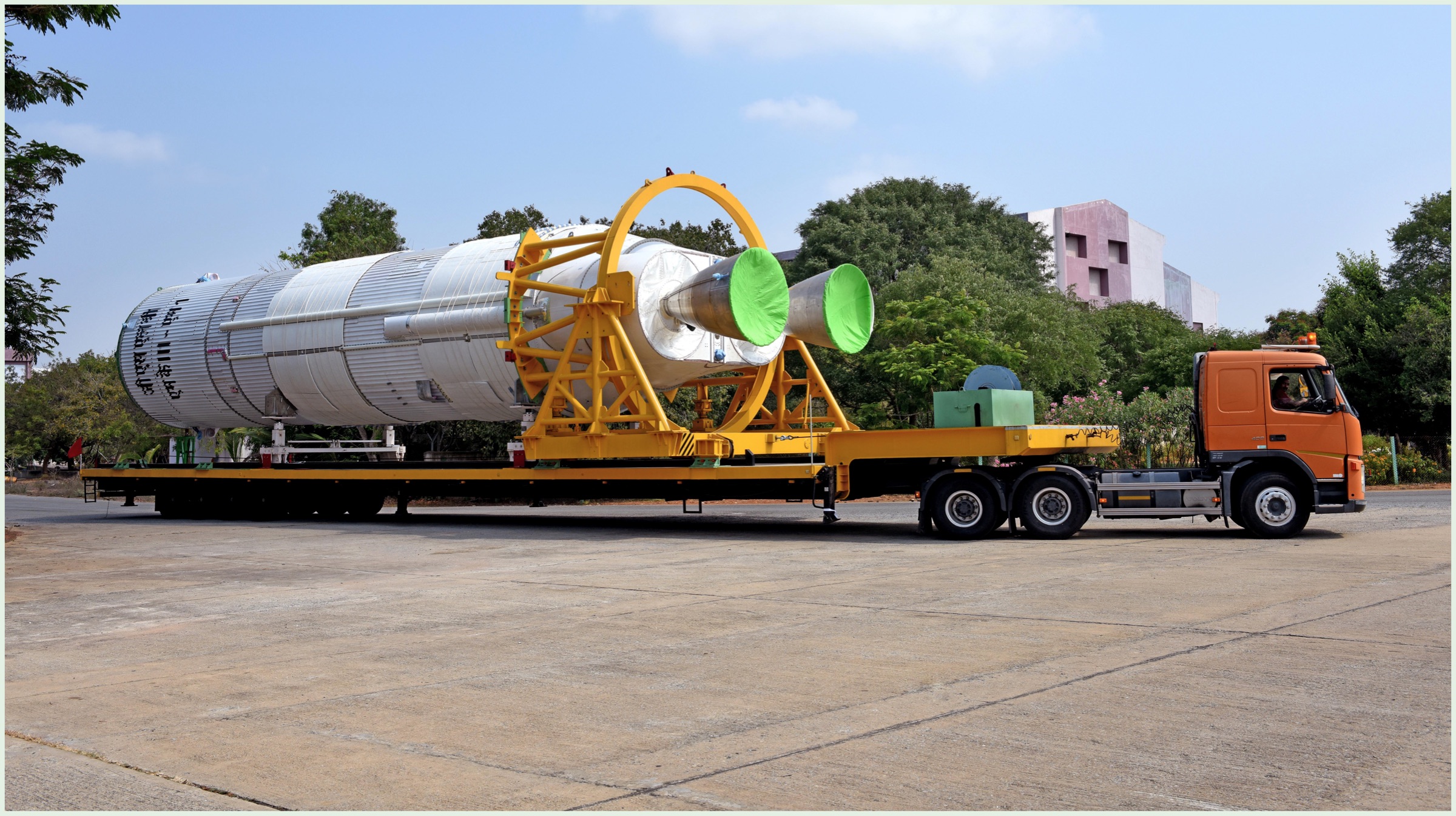
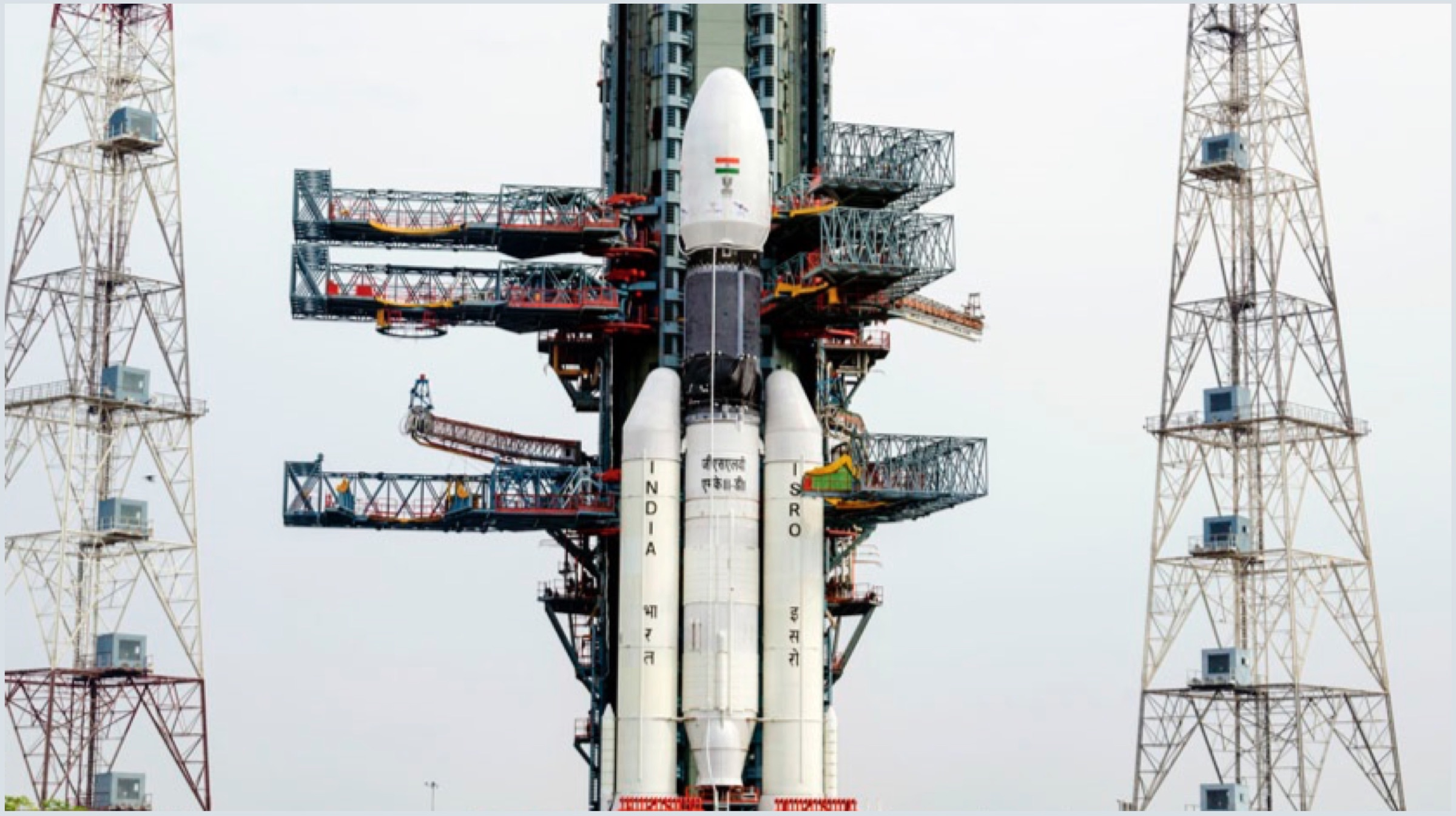
ISRO’s Chandrayaan 2 mission has been its biggest one since its inception in 1969. It is set to make India the first country to attempt a soft landing on the South Polar region on the Moon. The total duration of the Chandrayaan 2 mission is one year, the time in which the rover will collect all the necessary data required from the Moon’s surface. The aforementioned problem has allegedly occurred in the GSLV Mk III launch vehicle, which is nicknamed “Bahubali”. Notably, the launch vehicle used by ISRO for the mission will be a GSLV (Geosynchronous Satellite Launch Vehicle) Mk III. It is a three-stage heavy-lift launch vehicle developed by the space organisation. The GSLV Mk III is India’s most powerful launcher to date and has been completely designed and fabricated from within the country.
The Indian Space Research Organisation or ISRO for short is the official space agency of the Government of India. It has been credited for developing space exploration missions at an extremely low budget. ISRO announced a while ago that its next mission, the Chandrayaan 2 will be launched on the 15th of July. The successor to the extremely successful Chandrayaan-1 mission from the year 2008, the upcoming launch has a lot to be excited about. Here is everything you need to know about the Chandrayaan 2 before its flight to outer space.
It is the first Indian space campaign to attempt a soft landing on the surface of the Moon.
If the launch is successful, India will become the fourth country ever in the world to do a soft landing on the Moon. The ISRO performed a controlled crash landing from the Moon Impact Probe that was a part of the Chandrayaan-1 mission in the year 2008.
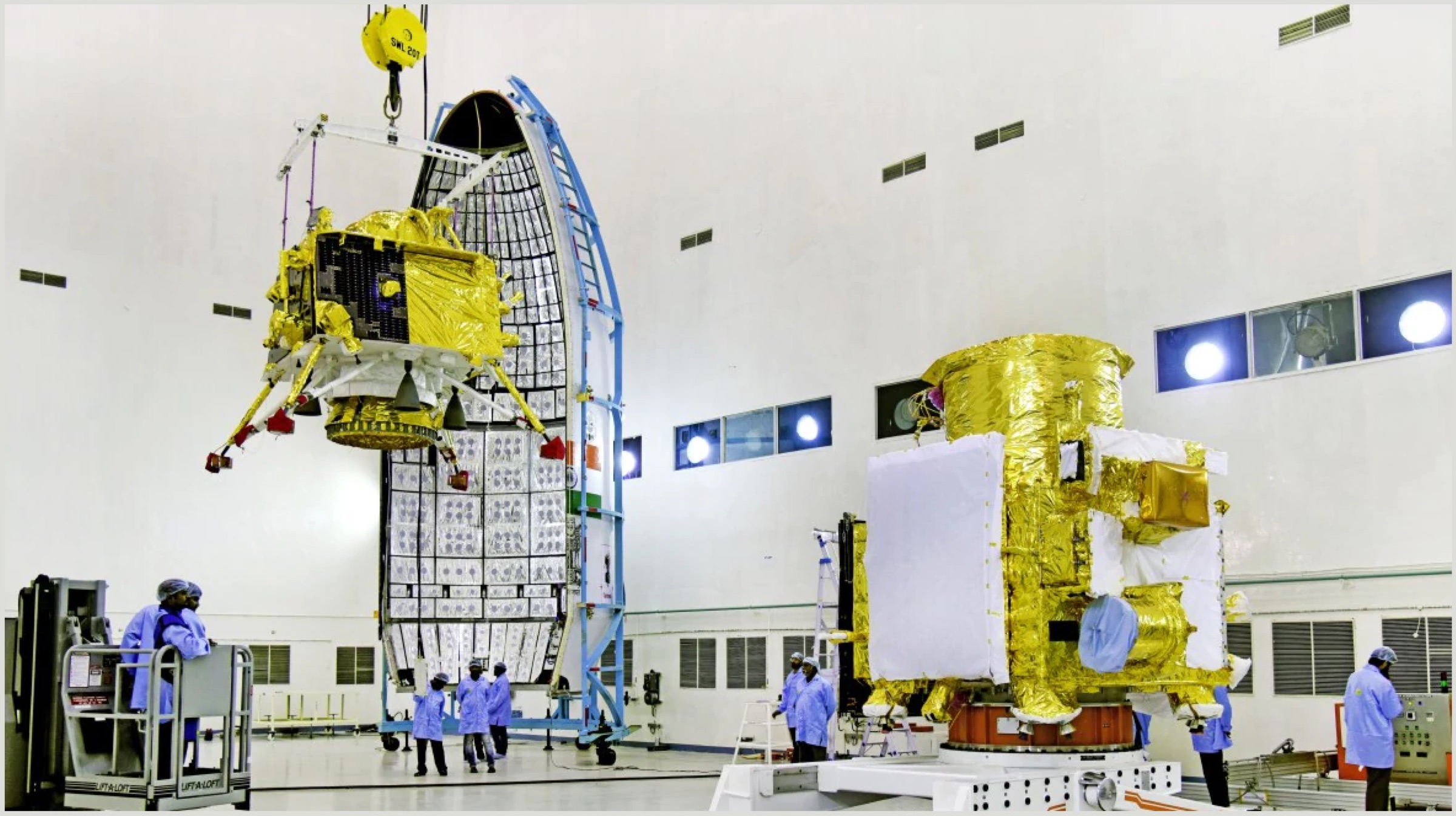
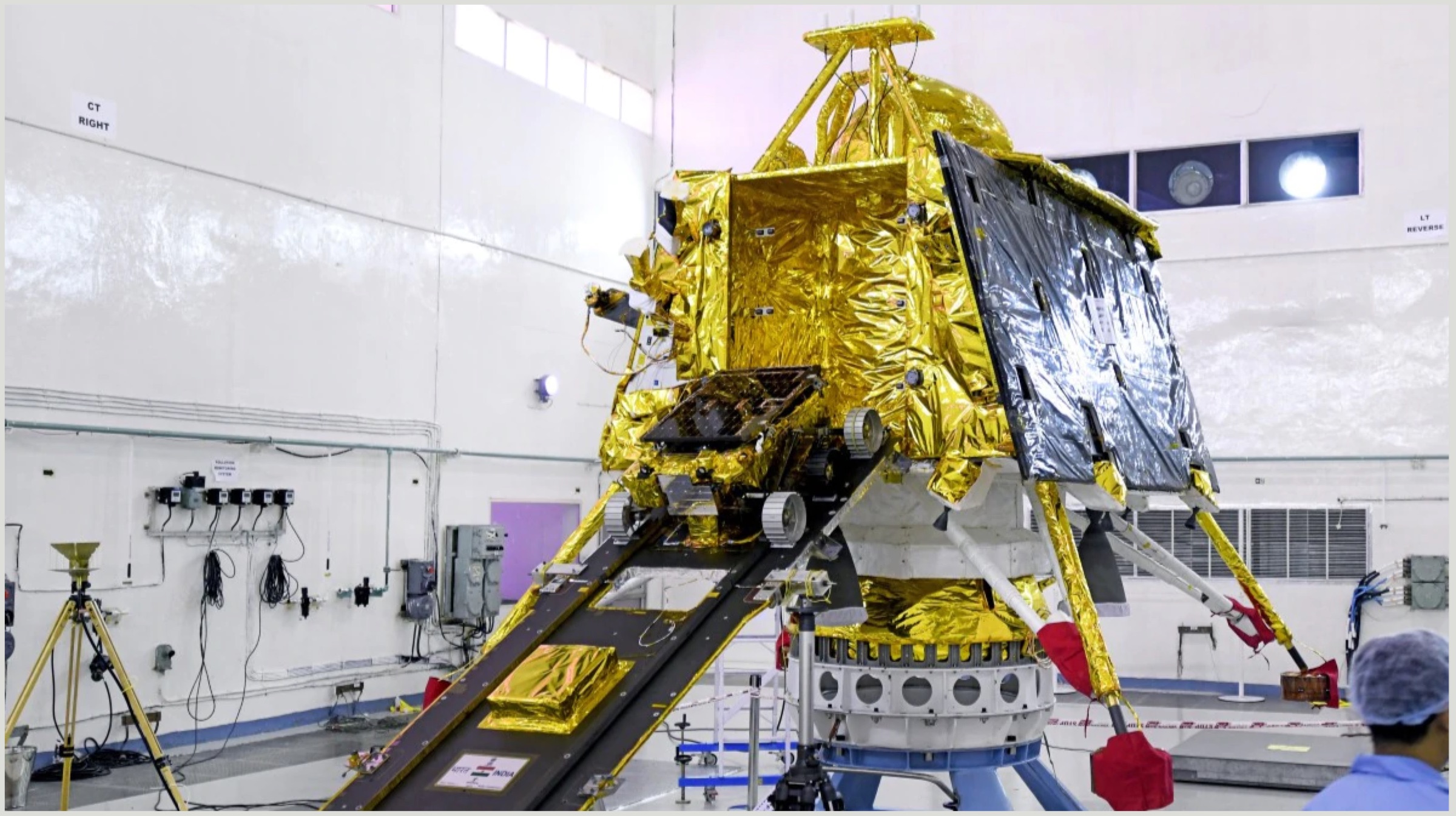
The Chandrayaan 2 mission will carry a lander, a rover and several other payloads to the surface of the Moon.
The mission will be India’s first rover based space mission. This means it is the first time the country is sending a vehicle to explore and collect data from the surface of the Moon.
The Chandrayaan 2 will be the world’s first attempt at reaching the south polar region of the Moon. Talk about setting records in space!
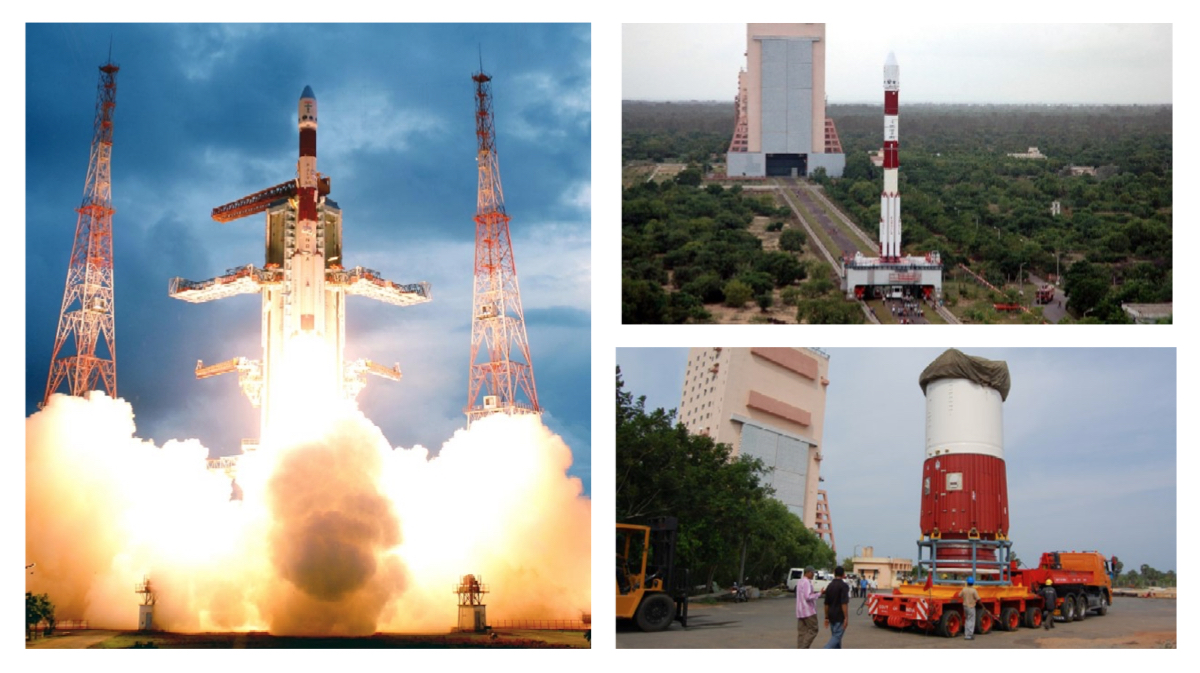
The launch vehicle used by ISRO for the mission will be a GSLV (Geosynchronous Satellite Launch Vehicle) Mk III. It is a three-stage heavy-lift launch vehicle developed by the space organisation. The GSLV Mk III is India’s most powerful launcher to date and has been completely designed and fabricated from within the country.
The lander of Chandrayaan 2 is called Vikram and has been named after the father of the Indian Space Programme Dr Vikram Sarabhai. The lander is developed to function for a duration of 1 lunar day. A day on Moon is roughly equivalent to 14 days on Earth.
The star of the mission, the Pragyan rover is an AI-powered, robotic vehicle with a total of six wheels. The name translates to wisdom in Sanskrit.
Chandrayaan 2 will make a soft landing on the surface of the Moon on the 6th of September this year.
The total duration of the Chandrayaan 2 mission is one year, the time in which the rover will collect all the necessary data required from the Moon’s surface.
How to watch the launch:
The Chandrayaan 2 mission will launch on the 15th of July at 2:51am at the ISRO’s Satish Dhawan Space Centre, Sriharikota. Unfortunately, registrations for watching the event live from the centre have been closed. however, interested people can still watch the event live, which is expected to be telecasted from ISRO’s social media channels.
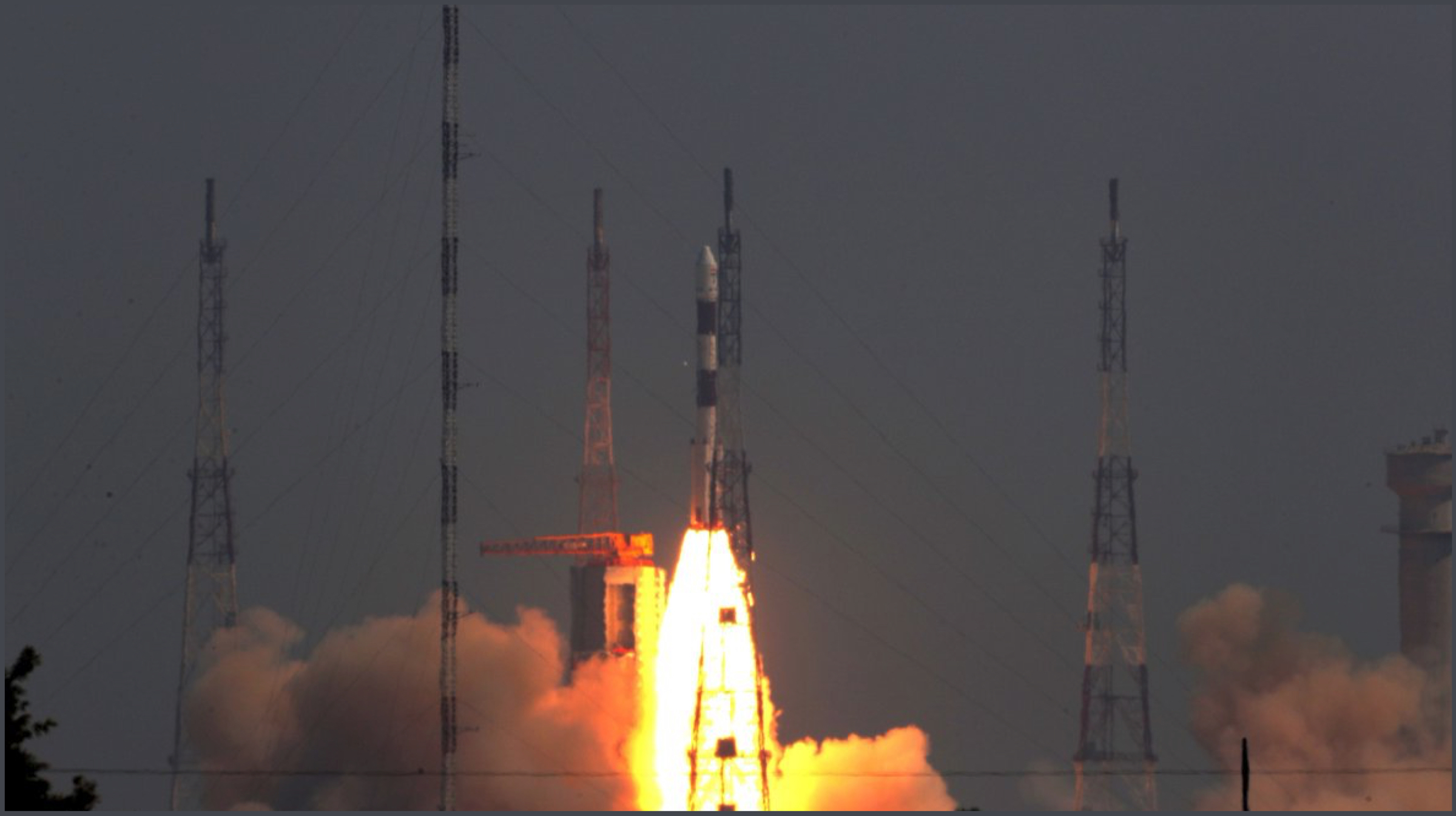
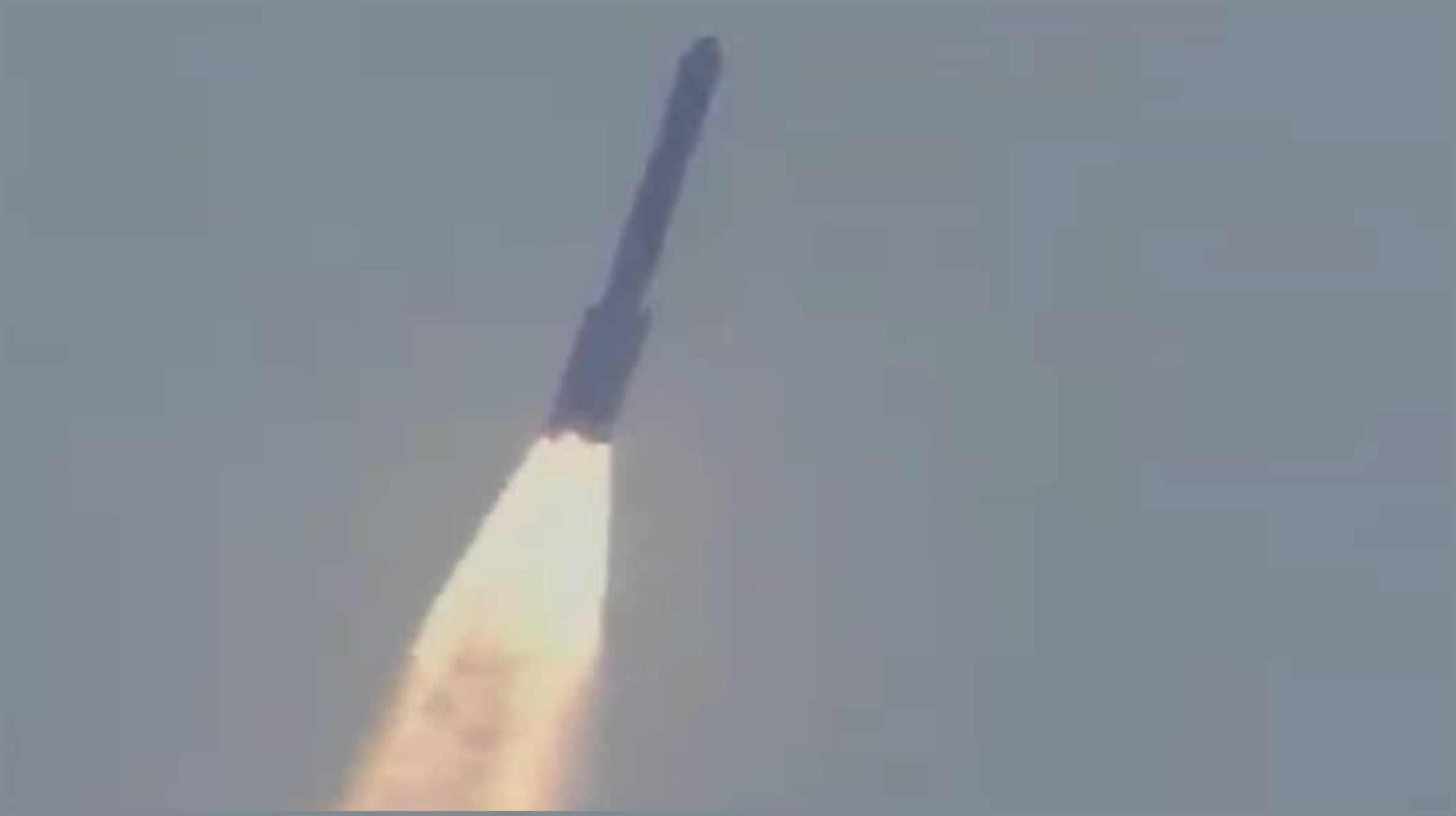
The Indian Space Research Organization or ISRO has successfully launched India’s Polar Satellite Launch Vehicle (PSLV) rocket on Monday morning. The freshly launched rocket carries the EMISAT, which is an electronics intelligence satellite for the Defence Research and Development Organisation (DRDO). It also had 28 third-party satellites onboard.
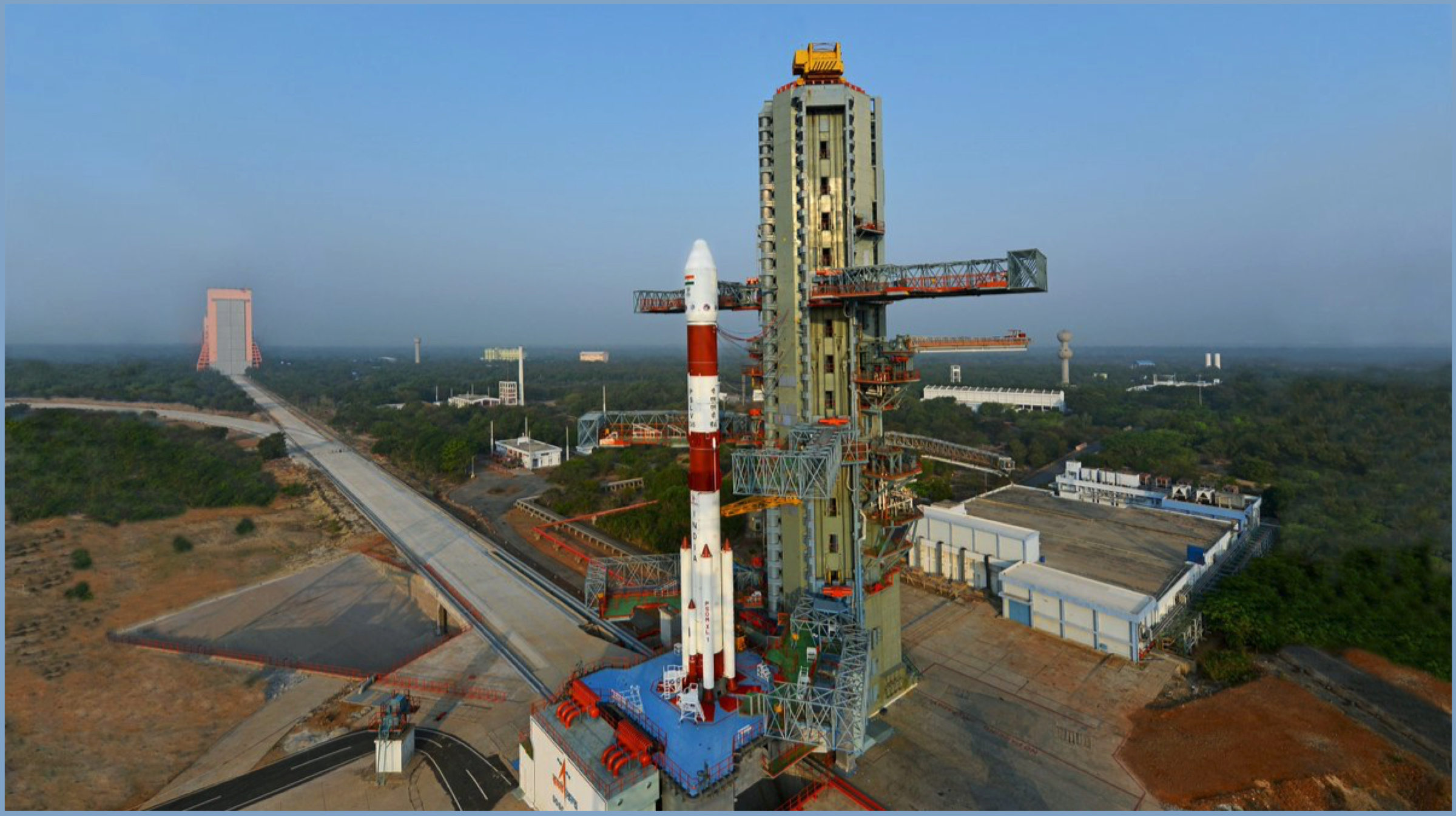
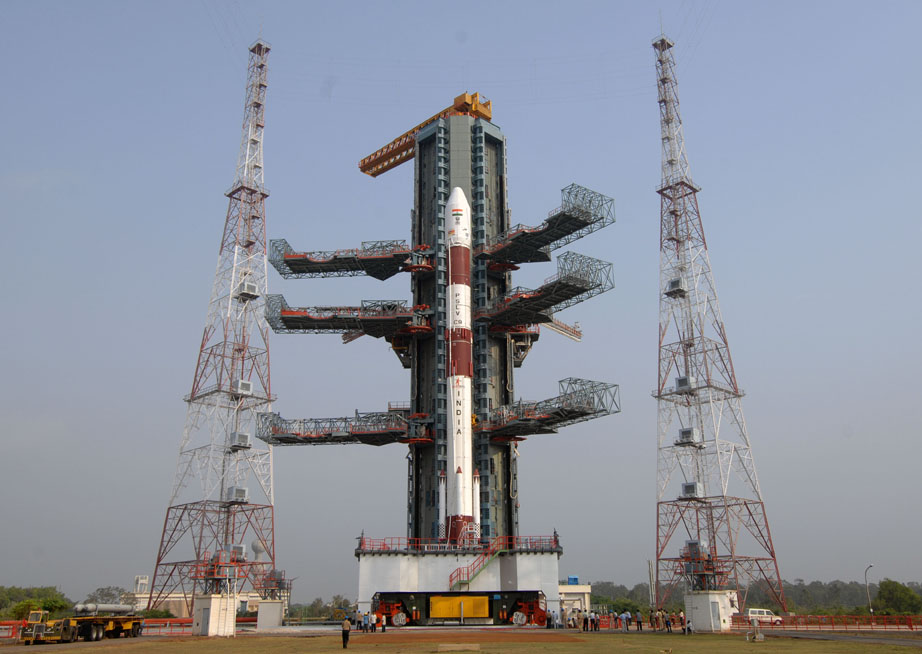
PSLV-QL Rocket
The PSLV-C45 rocket was launched by the ISRO from its launch base in Sriharikota. It is the first time that India has put satellites in three different orbits. The EMISAT satellite, which is developed by the DRDO, is intended for the measurement of electromagnetic spectrums. It was released into an orbit 749 km above the surface at 17 minutes after the launch. The other 28 third party satellites had a different country of origin. While 24 of them were from the US, two belonged to Lituania and one each from Spain and Switzerland. All of them had a combined curb weight of 220 kg.
The Polar Satellite Launch Vehicle (PSLV) is the third generation launch vehicle of India. It is the first launch vehicle of the country to be equipped with liquid stages. After its first successful launch in October 1994, PSLV emerged as the reliable and versatile workhorse launch vehicle of India with 39 consecutively successful missions by the June of 2017. During the period from the year 1994 to the year 2017, the vehicle has launched 48 Indian satellites and 209 satellites for customers from abroad. It is recognised for launching two spacecraft named Chandrayaan-1 in 2008 and Mangalyaan in 2013 – that later travelled to Moon and Mars respectively.
With this launch, the ISRO will now be able to manoeuvre satellites placed in different orbits. It can also conduct various experiments which are expected to assist in future launches. The organization inaugurated a new viewing gallery a few days ago. This would help space aficionados watch future launches with a proper view. The gallery hosted around 1200 spectators at the launch on Monday.
India has made much headway in space exploration as well as space research in general. From Space Capsule Recovery Experiment Mission SRE-1 in 2007 to Mars Orbiter Spacecraft launch in 2013, ‘Chandrayaan-1’ launch in 2008 and many more achievements have left a mark on space exploration as a whole. When the entire world is opposing space exploration, citing budget problems, ISRO has remained one of the most budget efficient space research organisation.
[blockquote]ISRO’s budget was just three per cent of that of NASA’s Budget in 2010[/blockquote]
Chandrayaan-1
Almost ten years after the Chandrayan-1, ISRO has decided on a window for the date of Chandrayan-2 launch. They had earlier set the date at January 3rd but were forced to change as they missed the deadline. ISRO has also set a target for two unmanned missions to space in December 2020 and July 2021, and the target for a manned mission to space in December 2021.
What ISRO Said
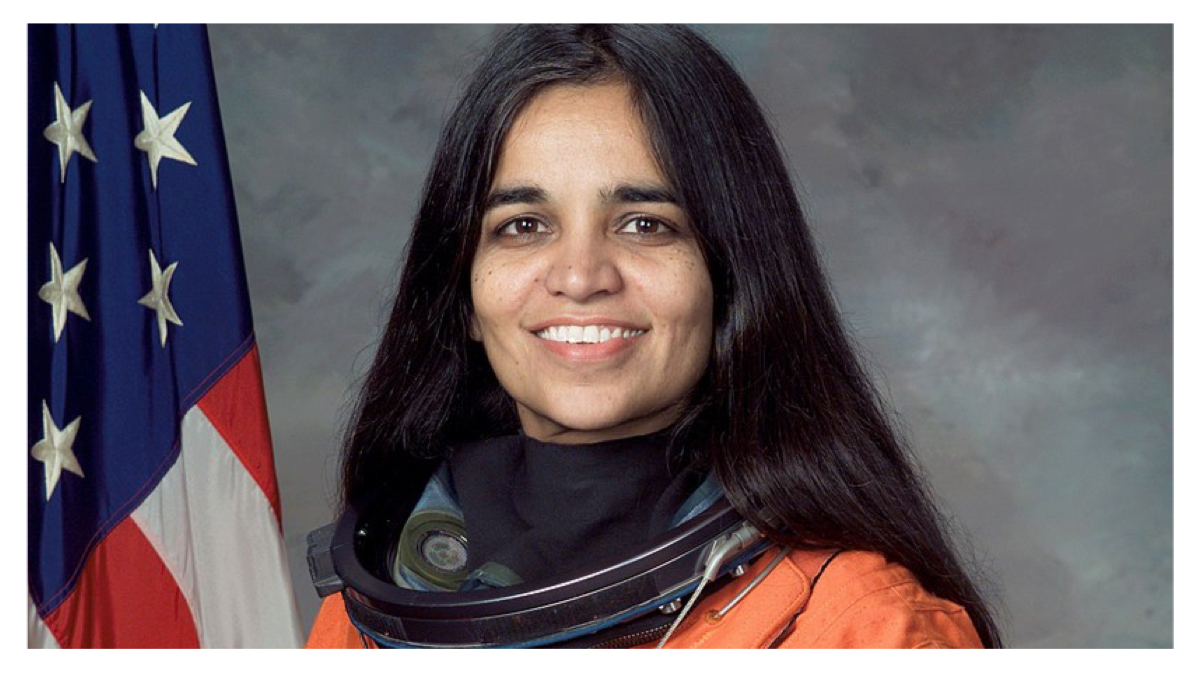
ISRO recently also stated that a woman astronaut could be a part of the first manned spacecraft that India sends to space. The ISRO chief also stated that the initial training for Gaganyaan will be done in India. Further advanced training maybe conducted in Russia. The prospect of Gangayan carrying women astronauts is extremely forward and can become an inspiration for many women in India. Kalpana Chawla was the first female of Indian origin to go to space. She was one of the seven crew members who died in the Space Shuttle Columbia disaster. In that disaster the aircraft disintegrated during its re-entry into the Earth’s atmosphere in 2003.
[blockquote]I would say if you have a dream, follow it. It doesn’t really matter whether you are a woman or from India or from wherever. – Kalpana Chawla [/blockquote]
The Gaganyaan will carry a three-member crew for a minimum of seven days in space. The total cost of India’s indigenous human spaceflight will be Rs 10,000 crore. ISRO has also said that the option for civilian inclusion in the mission will also be open. They further added that the selection will be stringent for the first mission but it might be relaxed for the second and third. It is also worth noting that the Union cabinet has already approved the Gaganyaan programme.
Till the month of April 2015, Indian Space Research Organisation (ISRO) has launched a total of 74 satellites, out of which seven failed to reach the orbit due to launch failures and three failed in the orbit. Now it has been announced that India will be launching six more satellites during 2015-16. Out of the six, two will be communication satellites, three navigation satellites and one space science satellite, ASTROSAT. Jitendra Singh, Minister of State in the Prime Minister’s office, writes down:
Six more satellites are planned to be launched during 2015-16. These are two communication satellites GSAT-6 and GSAT-15; three navigation satellites IRNSS-1E, IRNSS-1F & IRNSS-1G; and one space science satellite ASTROSAT.
Furthermore, ISRO has successfully launched 40 foreign satellites belonging to 19 countries, that include four micro and nano satellites built by Indian students using the Indian Polar Satellite Launch Vehicle (PSLV) rocket. India has also planned to launch 13 more satellites that belong to four other countries using the PSLV.
ISRO said it was to include the technology of ion propulsion system to power the future satellites. Presently, satellite fuel occupies space and makes it heavy, according to Liquid Propulsion Systems Centre Director, K.Sivan. According to Sivan, the projected technology would be tried, tested and analysed in a communications satellite.
Meanwhile, ISRO is working on another alternative known as the semi-cryogen engine. It is still under development and will be used to power India’s Geosynchronous Satellite Launch Vehicle-MkIII Rocket in the near future.
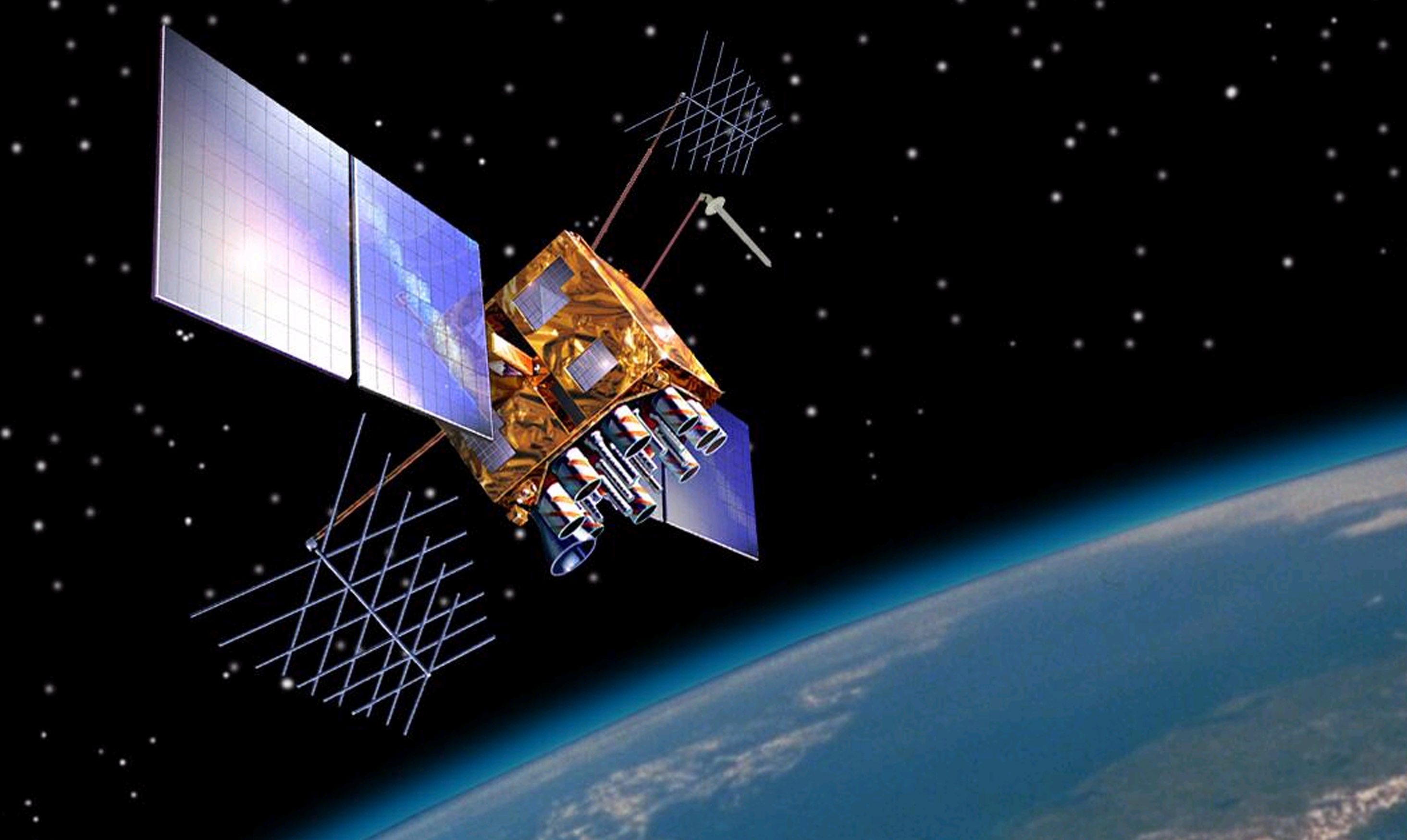
We have known for a while that India is working on its satellite-based positioning system called Indian Regional Navigation Satellite System (IRNSS.) This will be a competitor to the US-operated GPS system which is the most prominent navigation system around the world. ISRO has launched PSLV-C27, which carries in itself the IRNSS-1D, which is the fourth satellite in the constellation of seven satellites which will make up for India’s own operating system.
Today’s launch was previously supposed to be held March 9th, but it was postponed due to technical issues in one of the sub-systems. IRNSS-1D has a mission lifespan of 10 years. It will provide navigation, tracking and mapping services. This is the fourth satellite in the constellation of seven satellites. The four satellite will be capable of offering navigational assistance on their own, but the other three satellites will add more accuracy to the system. Once completed, the IRNSS would be on par with US-based GPS system.
IRNSS will be made of a constellation of seven satellites.
IRNSS will be accessible from mobile devices and navigational systems, just like GPS. It will offer terrestrial and marine navigation, assist in disaster management, help track vehicles and will also provide visual and voice navigation for drivers. The system will be established this year and cost the taxpayers a sum of Rs. 1420 crores. IRNSS will focus on South Asia so India’s neighbours can also benefit from it.
The Kargil War of 1999 had incited a need for an in-country navigation system. The US government back then had refused the request of the Indian government to use the navigation system to keep track of enemy movement. This led to the inception of the IRNSS, and now it has reached the half way mark to completion. India is not the only country which wants to break the dominance of GPS and US influence in the navigational front. Russia with its GLONASS system is already in the market while European Union’s Galileo positioning system and China’s Beidou Navigation Satellite System are in the planning stages.
The resurgence of the space age seems to be right around the corner. This year saw two orbiters reaching Mars from earth, one of them being India’s Mangalyaan or Mars Orbiter Mission. The Rosetta mission set new horizons for humanity by being the first man-made object to reach a comet. Nasa successfully tested the Orion capsule that might someday take astronauts to Mars. The Indian Space Research Organization (ISRO), which is still on a high of success of the Mangalyaan, today hit another milestone when they launched the GSLV Mark III.
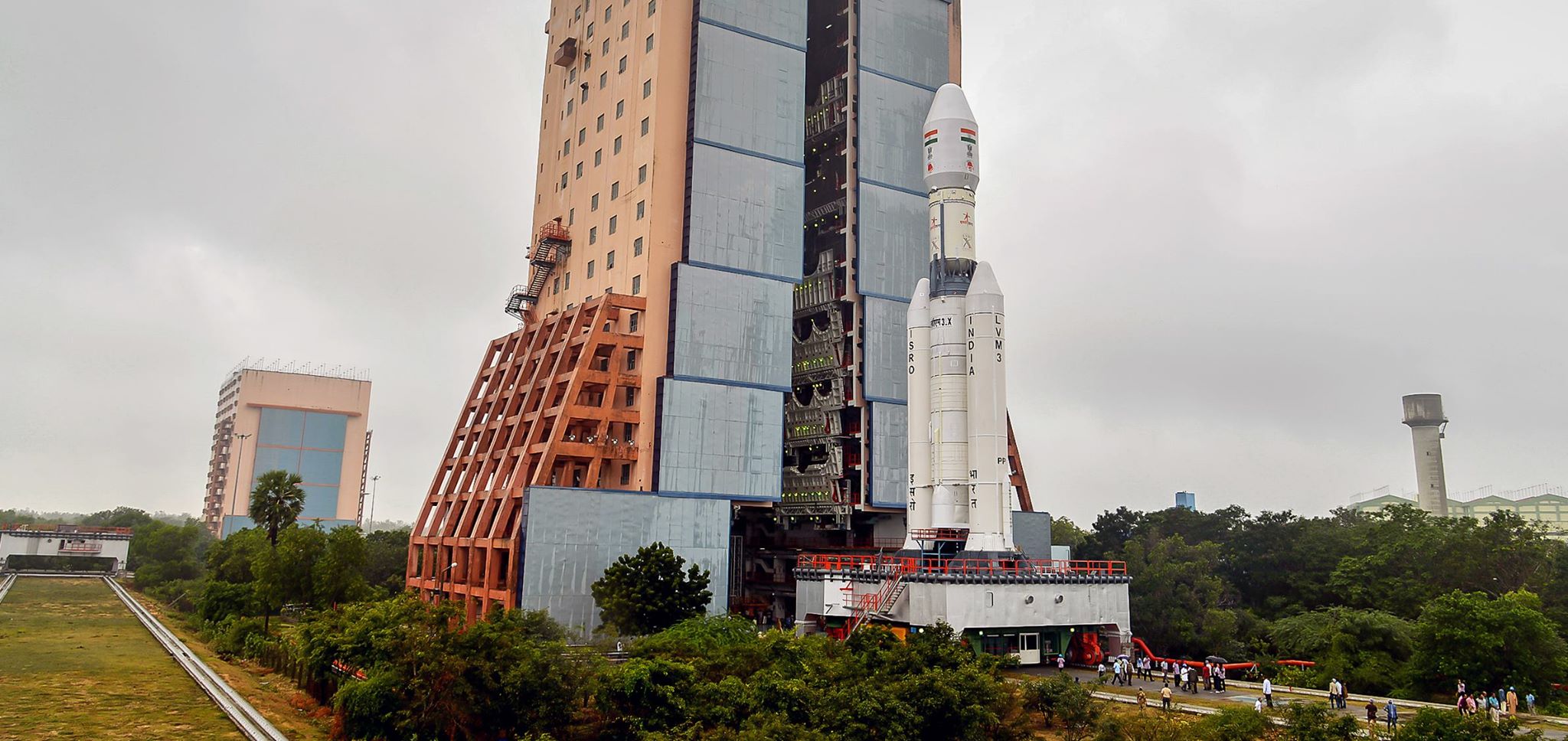
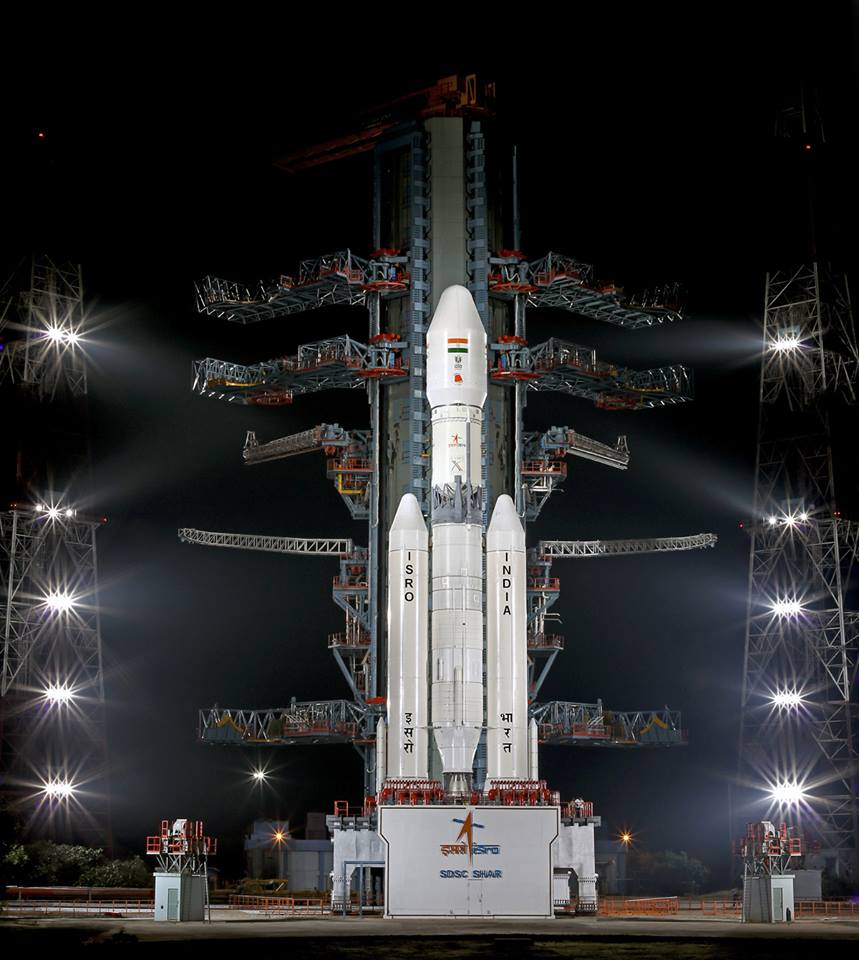
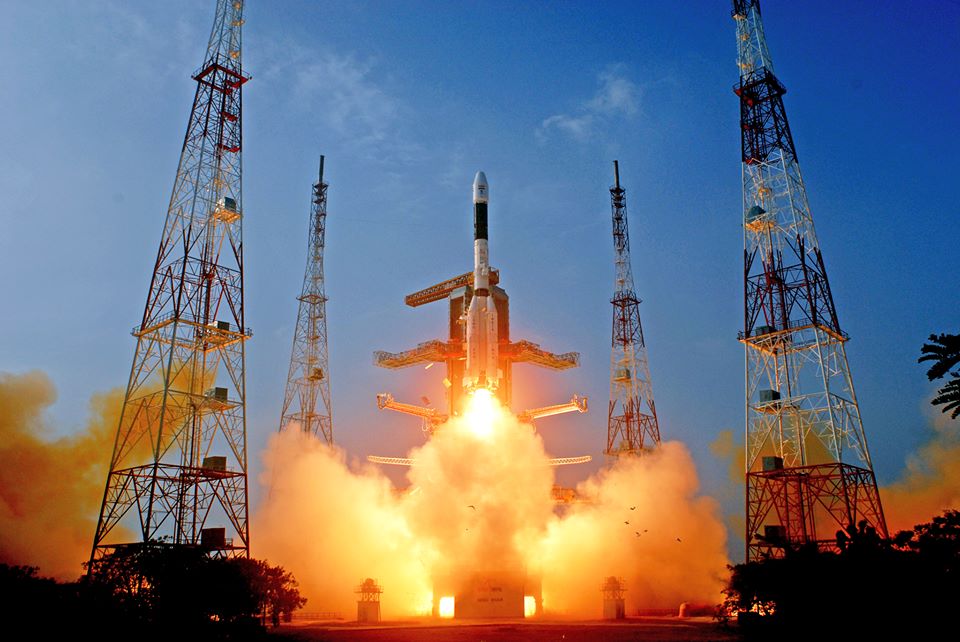
GSLV mark iii at the launch pad.
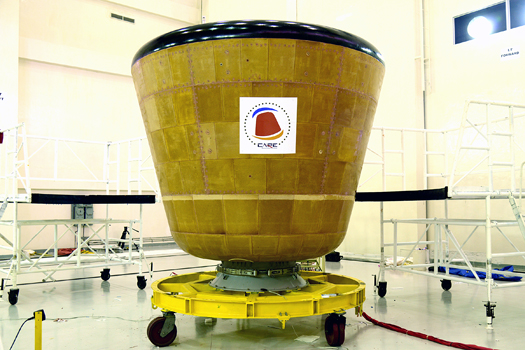
It is the heaviest rocket in India’s space arsenal with a mass of 630,000 Kilograms. The rocket today carried an unmanned prototype crew capsule (CARE) which will someday, hopefully soon, carry astronauts into space. This might be the ride of the next generation.
GSLV Mark III or LMV3 shot off into space at 9.10 AM from the Satish Dhawan Space Centre. The rocket is a part of the third generation of Indian rockets and is a completely new vehicle. The first stage of the rocket called L110 is powered by two Vikas engines which are derived France’s Viking series used on Ariane rockets. The second stage of the rocket was loaded with liquid nitrogen to stimulate propellant instead of real fuel. Today’s launch was conducted to test the flight validation of the launch vehicle and its new telemetric systems along with the crew module.
CARE was an unmanned crew module that tested India’s capability of sending astronauts in space.
This was the first attempt by India to send a crew module up in space. The module is called the Crew Module Atmospheric Reentry Experiment (CARE). The module separated at an altitude of 126 KM and began its descent towards the surface. The parachute successfully deployed and brought the module safely down in the Bay of Bengal about 180 km off the Andaman Nicobar Islands where it will be retrieved by the coast guards.
Today’s launch is one significant bookmark in the pages of ISRO’s history. Amongst the developing states, India’s space organization holds special mentions for its achievements despite low budgets. Space research involves all sciences and it results in the invention of technologies that improve the way of our existence. A country can achieve a great deal if it invests in its scientific infrastructure and it is encouraging to see India’s proactive engagement with the space outside the atmosphere. We certainly wish to see the Indian flag on the moon someday!
The day India reached Mars was one of the proudest moment for the country in recent years. The spacecraft, also known as Mangalyaan took an epic voyage of close to ten months to reach the red planet. A feat that is achieved by only 50% of the space crafts and the Mars Orbiter Mission (MOM) achieved it in its first try. Now it seems that the scientists, while riding in the thrill of their phenomenal achievement, have begun toying with the idea of a second rendezvous with the neighboring planet.
S.K Sivakumar, Director of the ISRO Satellite Centre said that the Indian MOM of 2013-14 should have a successor, but as of now it is not an active thought, neither is it in the realm of any planning yet.
The director also added that his organization has achieved much maturity ever since the success of MOM. But any proposal for a second Mars mission will have to be first passed by the Advisory Committee for Space Science (ADCOS,) a think-tank that advises the government on its missions.
The Oppurtunity to reach Mars arrives every 26 months, so ISRO may send a craft by 2018.
MOM was especially lauded for being a cheap project. But considering the massive waiting period and uncertainties involved, ISRO should dig deeper into its pockets for more audacious plans for a sequel. A lander would ideal to launch, and if successful, it will again make India, the first developing country to land a rover on Mars.
The window of opportunity to reach Mars efficiently arrives every 26 months. The next window opens in 2016 which would too early for a launch. Hence, the scientists are contemplating a 2018 launch if at all it is sanctioned. We hope ISRO does plan this and it sparks scientific interests amongst the population, especially the youth and push a science-oriented culture.
India is the official king of jugaad (innovative fixes). The country made the cheapest mars mission ever; it costs less than the budget of the movie Gravity. The best part, it made its way to mars in the first attempt. The Mars Orbiter Mission (MOM) aka Mangalyaan now is the crowning glory of the Indian Space Research Organisation (ISRO).
Established in 1969, ISRO works under the Department of Space, Government of India. It was entrusted with the responsibility of using space science for the betterment of the country. ISRO has tremendous achievements under its belt; from launching satellites for other nations to being one of the few nations to send a mission to the moon and now to Mars, ISRO has exhibited a feat unlike anyone in the developing nations except China.
The spacecraft was launched on 5th November 2013
Information about the status of MOM mission was proactively posted on social media and led to a great interest in the mission from the world over. This spacecraft was significant not only because of the low success rate for Mars missions, but also because it was a great feat by a developing economy.
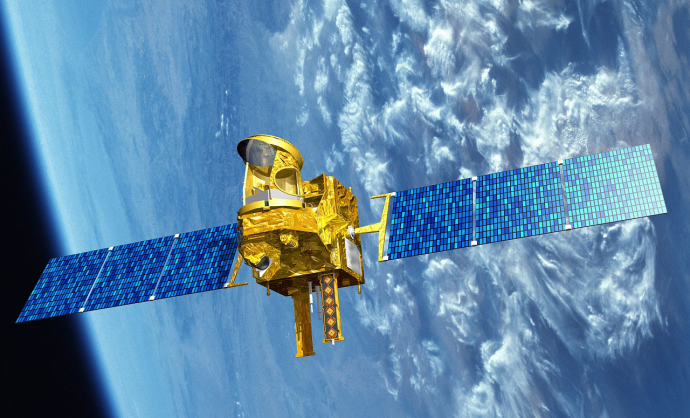
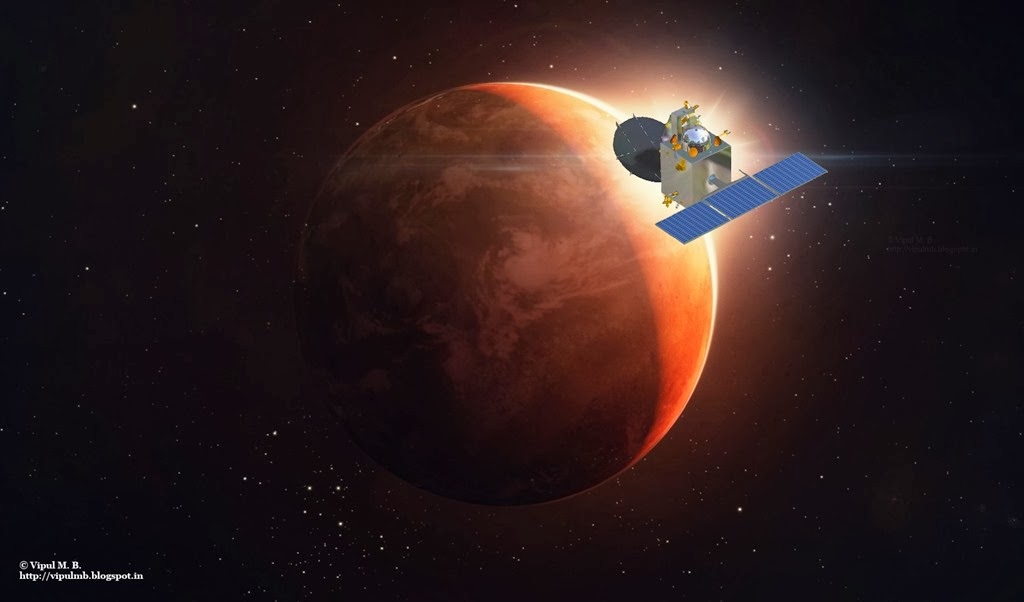
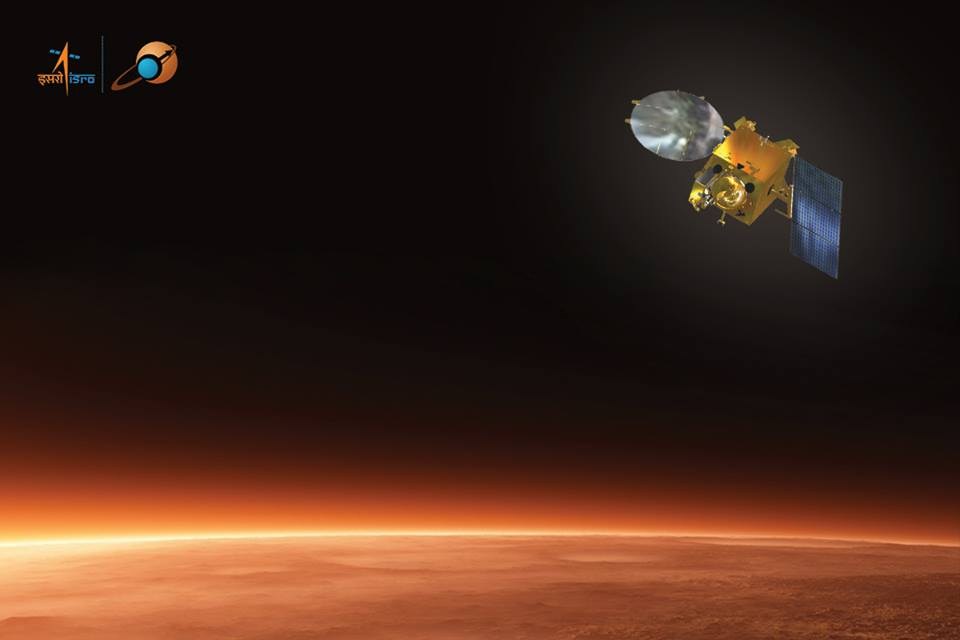
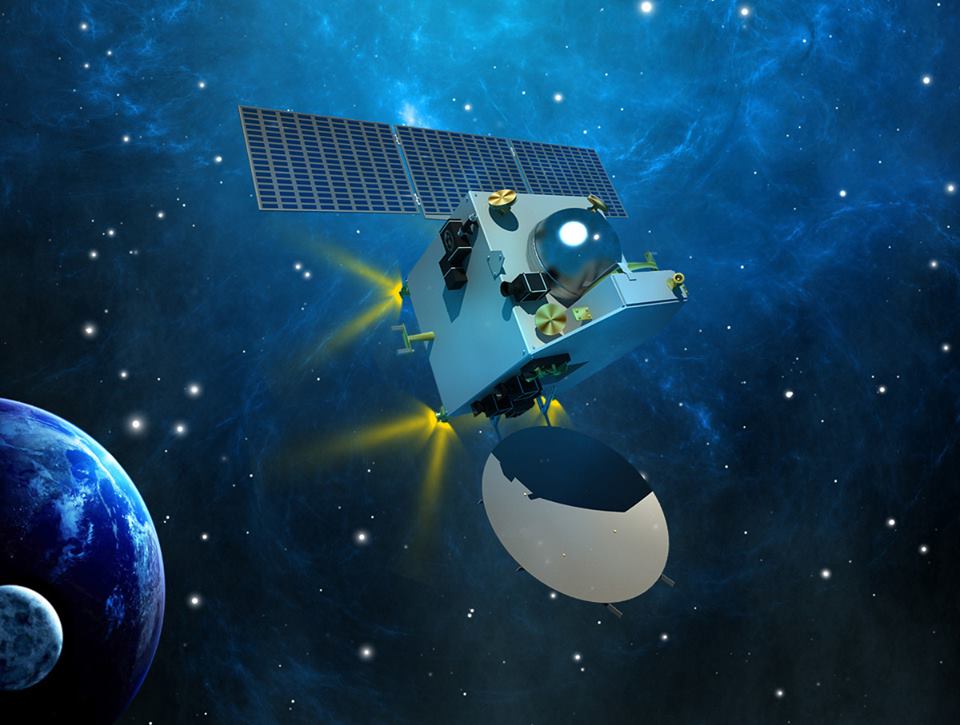
The spacecraft made the 680 million km in under a year. The star of the show is a 1,350kg unmanned robotic satellite about the size of a nano. Its task is to map the red planet for methane, which can help to find the existence of life on the planet. It is equipped with the Mars Colour Camera which will capture images and information about the surface features and composition of Mars.
The Mission achieved its elliptical orbit spanning 423 km X 80,000 km around Mars. At 8.10 AM it was confirmed that MOM has achieved orbital insertion with the engine imparting the required thrust of 1098 metres/second during its 24-minute burst. This led to massive celebrations at the mission control.
The spacecraft carries a Tata Nano sized satellite which will try to look for methane on Mars
The mission was launched on 5 November 2013 using a PSLV rocket, and it took over 300 days for the mission to reach Mars. The total cost of the mission was Rs. 450 crores or about $74m. The costs include Rs.125 crores (US$21 million) of required studies of the orbiter and the cost of satellite, that is Rs. 153 crores (US$25 million). The mission was announced on 3rd August 2012 former Prime Minister Dr Manmohan Singh and was ready for launch just 15 months later. The mission utilized more than 500 engineers and scientists.
Following the success of the mission, Prime Minister Narendra Modi said “We have gone beyond the boundaries of human enterprise and innovation. If our national cricket team wins a tournament the whole country celebrates. What our scientists have done is far greater.” It is indeed a great feat. With the success of the Mangalyaan mission, India joins the elite league of a handful of countries who have made their way to the fourth rock from the sun. It is also the only country to have a successful mission to mars in the first try where the success rate stands at just 42%.
The mission was basically a test of ISRO’s capabilities for interplanetary missions. Dr. S Radhakrishnan, the Chairman of ISRO called it “technology demonstrator.” ISRO is the highest rated organization for real world applications of its missions as it’s a people oriented organization.
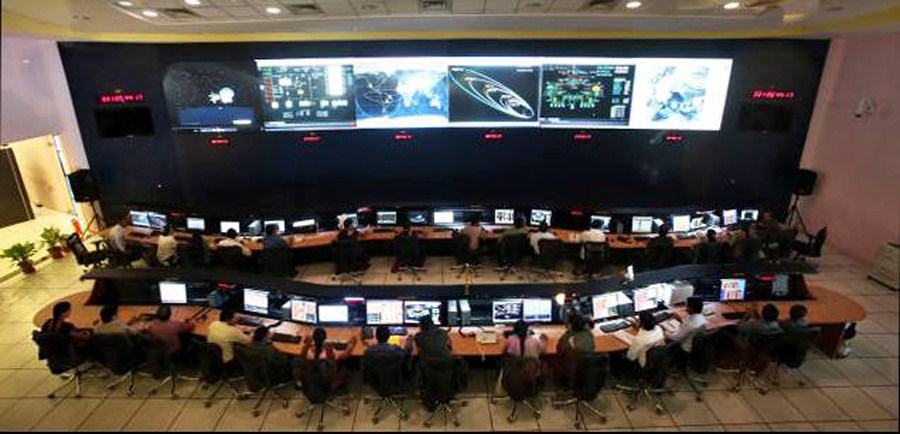
Mission control kept a vigilant eye on the progress of the spacecraft
This is just the beginning of India’s space adventures. Soon ISRO plans to launch the Geosynchronous Satellite Launch Vehicle Mark III (GSLV Mark III) which is the heaviest rocket in its arsenal weighing at about 630 tonnes. It will also carry a dummy astronaut module with it. By sending astronauts to space, India can be on the path to match up to China, which currently is setting up the Tiangong space station that will become operational in 2023. ISRO also plans to send a follow-up mission with a greater scientific payload to Mars in the 2017-2020 timeframe
Space missions are extremely important, especially for growing economies. They provide an aspirational frontier that invigorates a whole new generation to achieve the next step in the evolution of humanity. Space sciences tell us a lot about who we are and where we came from. It requires the collaboration of smart brains from varied fields of research and is a celebration of human intellect that has been gained through millennia’s of curiosity.
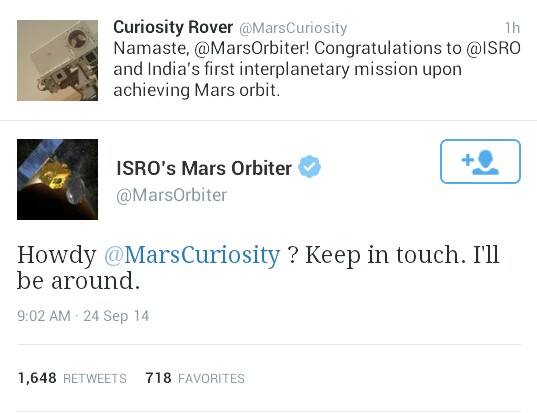
Looks like Mangalyaan already made a friend on arrival at Mars
We heartily congratulate the Indian Space Research Organization for taking this great step for the entire developing world. They have proved that crossing frontiers doesn’t require huge pockets but right intentions and firm determination. Today is a good day.