Tag: market

  • Apple and Lenovo Biggest Winners in India, BlackBerry, Sony, and LG Biggest losers

    Apple and Lenovo Biggest Winners in India, BlackBerry, Sony, and LG Biggest losers


    In a recent report for India Smartphone market, Apple and Lenovo have come out on top in the list of fastest gaining Smartphone vendors. While the positions at the top have not changed much, with the top being Samsung followed by Micromax, Intex, Lenovo, and Lava.

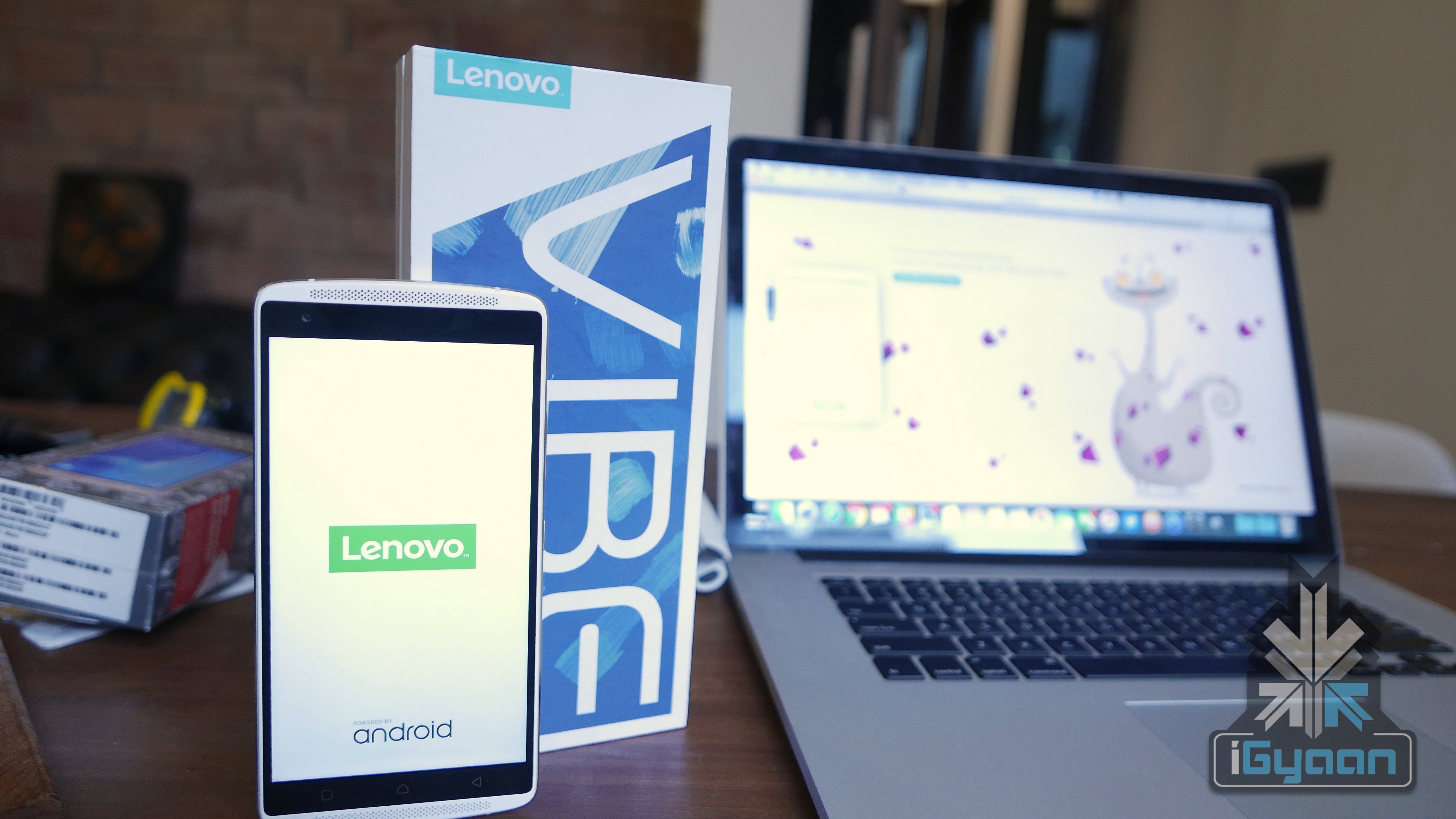
    Lenovo Vibe X3 0

    Lenovo’s shipments increased 63 percent year-on-year while Apple experienced a shipments increase by 56 percent. The report also mentions the fact the Apple is the most aggressive in terms of growth and also has the largest growth potential.

    Apple is outperforming the overall market in India, and still has great growth potentia

    Apple recently took a lot of flak for a poor performance in the year on year results for Apple. While their revenue lowered to 10 billion from 13 billion, Apple still had double the sales of any other competition brand. Apple is agressively changing its strategies in India to ensure great results and it appears to be showing. Apple Also recently launched the iPhone SE which despite a huge price difference from global markets is doing well for the brand in India.

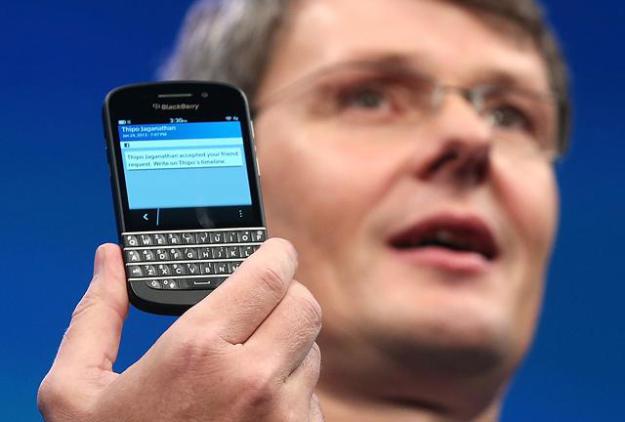
    blackberry-q10-heins

    Microsoft, BlackBerry, Sony, and LG lost the maximum market share with respect to shipments. Troubled by a market that is trending towards low-cost yet high spec handsets. Micromax on the other hand experienced a slight drop in market share from the year ago quarter to 16.7 percent.

    The report mentions that Micromax, in particular, has been through tough times, with key executives leaving. Now the company is aiming to revamp its strategy to incorporate an ecosystem of services around payments and content. Micromax’s market share fell by a couple of percentage points to 16.7% in Q1 2016.

    Source

  • HTC to Discontinue Several Phone Models in Order to Keep Up Numbers

    HTC to Discontinue Several Phone Models in Order to Keep Up Numbers

    HTC Corp. has come under a lot of slack, for the past couple of years for being “confused, unoriginal and uncompetitive”. With their shares having fallen by 51 percent so far, the Taiwanese smartphone makers have reportedly announced, that they would be cutting jobs and discontinuing models so that they can focus on high-end devices, which they hope will enable them to compete with Apple Inc. and Samsung.

    “The cuts will be across the board,” said Chief Financial Officer Chialin Chang, “they will be significant.”

    He also mentioned that the cost reductions would extend up to the first quarter of the following year, but no further information has been reported.

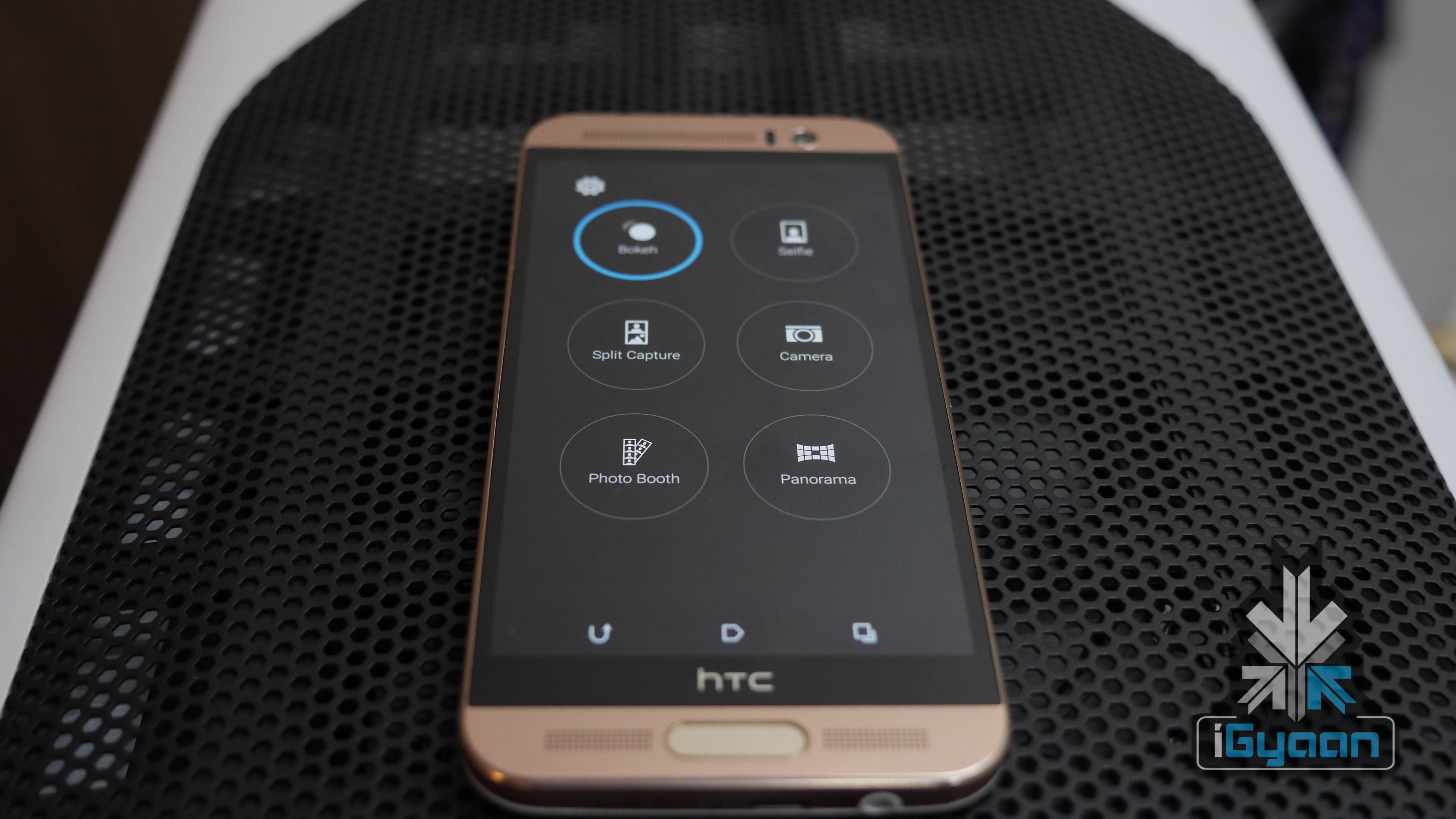
    HTC One ME 14

    The company seems to have been losing its market share both in the high-end as well as the low ranged sectors, with Apple and Samsung electronics in the former and Chinese rivals at the latter range, taking over rapidly.

    HTC One ME 4

    Reports suggest that Chang also mentioned HTC’s strategy for the coming quarter would be – to bank on selling high-end smartphones in India where the company is said to have 20 percent market share of phone priced between approximately Rs.15,946 and Rs.25,514.

    However, while most analysts are still skeptical of HTC’s stable continuance, it is to be seen whether this strategy will work for them or not.

  • India to Become The Second Largest Smartphone Market By 2017

    India to Become The Second Largest Smartphone Market By 2017

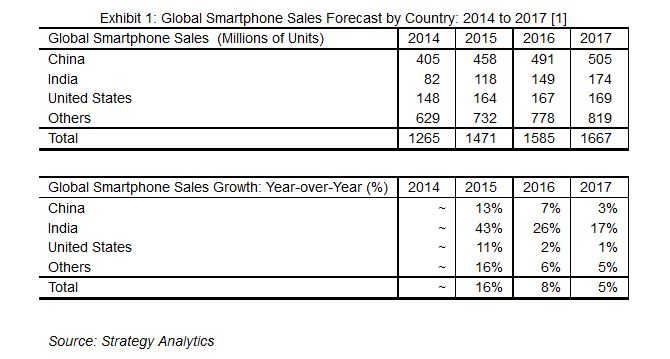
    India, the world’s 7th  largest country and with the second largest population in the world, may soon have one more tag to its name. According to a study conducted by Strategy Analytics, an international research firm, India is on the road to becoming the second largest smartphone market in the world by 2017.

    Capture

    The first position will be held by China, but India will push down USA from the current second place to the third place in the smartphone sector. Linda Sui, director at Strategy Analytics, says

    China has been the engine of global smartphone growth in recent years, but China is now maturing and slowing. India is fast becoming the next major growth wave. We forecast 118 million smartphones will be sold in India in 2015, increasing strongly to 174 million in 2017.

    The rise of the smartphone industry in India has been directly proportional to the Internet growth here. As of 2014, India had 243 million people in the Internet grid, the third largest in the world. The US had 279.8 million online in the same year, putting it in the second place.

    Linda Sui added that India is driven by the growth of low smartphone invasion, expanding retail availability of devices, prosperous middle-class consumers, and dynamic advancements from local smartphone brands like Micromax.

    According to the report, 118 million smartphones will be sold in India this year. About 458 million smartphones will be sold in China in 2015 and will rise steadily to 505 million in 2017. About 164 million smartphones will be sold in the US in 2015, climbing marginally to 169 million in 2017.

    Clearly, we can see that in the past decade, US was in the middle of the tech world. But now, companies are trying to get into different and untouched markets in many ways, since most of them are at a disadvantage to the local brands, anyways.

  • Counterpoint : Samsung Stays Steady on Top in India; Micromax Faces a Steep Decline

    Counterpoint : Samsung Stays Steady on Top in India; Micromax Faces a Steep Decline

    According to the Q1 2015 reports by Counterpoint Technology Market Research, Samsung remained the the lead as India’s  champion in terms of growth and market share. The company has recently faced absurd challenges, in Asia particularly, but its condition improved enough to win over the Indian market from Apple and Micromax.

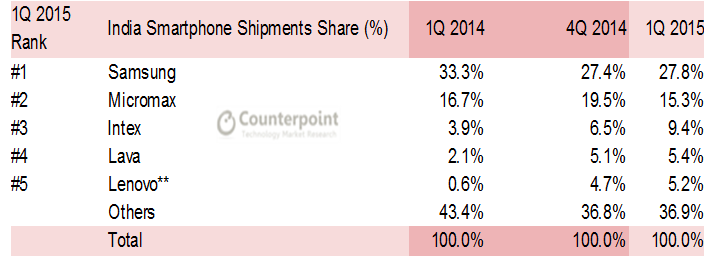
    Reports of the Q1 2015 showed Samsung India grew 2.1% over the last year. Samsung led the overall mobile phone market and the smartphone segment during the quarter with market shares of 18.2% and 27.8% respectively. This figure is still below the 33% growth from the previous year. But, with a sale of 82.4 million handsets within the first three months of the quarter, Samsung captured 24.5% of the market share.

    According to the report, Samsung has used its distribution prowess to sell-in during the quarter as it executed aggressive smartphone launches during the quarter including the Tizen-based Z1.

    India Smartphone shipment counterpoint

    One of the reasons why Samsung boomed is that the Korean company launched its flagship Galaxy S6 and Galaxy S6 Edge at the end of the quarter in April.

    Micromax ended their quarter with 15.3% market share that served as a decline on the yearly basis as well as on sequential basis. Although, it still managed to secure the second place, the report commented that Micromax’s new brand Yureka with the launch of its first Cyanogen powered LTE smartphone Yu started off well, but will need more models across different price brackets to match the scale of Xiaomi and Motorola.

  • Samsung Reports Major Drop in First-Quarter Profits

    Samsung Reports Major Drop in First-Quarter Profits

    The latest flagships by Samsung Electronics, Galaxy S6 and S6 Edge, were supposed to bring the company back on track. The company has been rapidly losing ground to other smartphone manufacturers like Apple, OnePlus, and Xiaomi. The escalating demand for its flagships speaks of Samsung’s decent performance this time around, but the latest announcement says otherwise.

    Samsung, who has been relying on the buoyant sales of the high-end devices, recorded significant slide in profit for the sixth consecutive time. It is the sixth consecutive quarter-on-quarter (QOQ) drop reported by Samsung. The company today declared that Q1 2015 net profit was 4.63 trillion won ($4.35 billion). This was lower than the 7.49 trillion won gained the previous year. The company also mentioned that the quarterly revenue tripped by 11 percent to 47.12 trillion won, while the operating profit increased to 5.98 trillion won.

    The latest statistics is higher than the previous quarter and less than half of what was reported in Q1 2014.

    Samsung Galaxy S6 and S6 Edge 0
    Samsung is banking on the Galaxy S6 and S6 Edge to help boost its numbers.

    Samsung’s latest S series was outdone by Apple’s iPhone 6 and its bigger sibling. According to numbers, people preferred the bigger iPhones over the curvy Galaxy S6 Edge. Alongside, Samsung has been unable to cope up with the supply demands of Samsung S6 Edge, which is likely to have an adverse effect on its business.

    Apple has again become the world’s most valuable company and disclosed the iPhones sales of the first quarter. According to Apple, a total of 61 million iPhones were retailed in Q1 this year and the maximum numbers were sold in China.

    Samsung expects a better sales figure in the second quarter, and said that the Galaxy S6 and S6 Edge will boost the numbers up in the next couple of months. OLED and LCD panel sales are further anticipated to lift the overall sales. The Consumer Electronics (CE) Division also sees an improved sale of air conditioners and the flagship SUHD TV.

    With many premium products in its kitty, Samsung expects to recover its revenue figures in the next quarter. However, it wouldn’t be that easy as many tech start-ups, as well as established companies, have secured a niche in almost every segment. Xiaomi has become a customer favourite and Apple fans are rapidly multiplying all over the world. It would be interesting to see what tactics Samsung adopts to catch up with these present titans.

  • Chinese Vendors Trouble Samsung and Apple for Smartphone Market Share

    Chinese Vendors Trouble Samsung and Apple for Smartphone Market Share

    We all know that Samsung is losing market internationally as well as in India, now we have exact numbers to believe it. Over the past years, Apple and Samsung slugging it out at the top of the phone and tablet markets. But it seems that the recent boom in Chinese smartphone market has taken a toll on both companies.

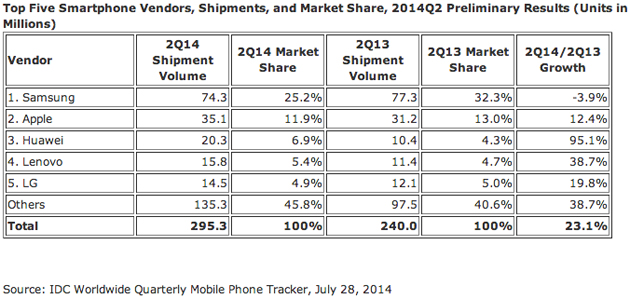
    IDC (International Data Corporation) estimates that Samsung’s smartphone shipments saw a rare year-over-year drop in the second quarter, taking it from a lofty 32.3 percent market share down to 25.2 percent. This week’s news that Apple suffered a slump in iPad sales would normally be accompanied by news of Samsung taking customers from Apple as it has done in the past. But not this time round.

    idc-smartphone-share-q2-2014

    The cause, analysts say, is the rapid rise of Chinese brands that cuts directly into Samsung’s low-end business. Huawei claimed 6.9 percent of the smartphone space after doubling its shipments, thanks in part to heavy discounts on phones; Lenovo too jumped to 5.4 percent on the back of both budget phones at home as well as rapid expansion abroad.

    The worldwide smartphone market grew 23.1% year-over-year in 2014 setting a record of 295.3 million shipments, reported IDC. The market grew 2.6% sequentially due to strong demand and low-cost smartphones. Next quarter is forecasted to be the first to surpass shipments of 300 million smartphone units worldwide.

    [quote text_size=”medium” author=”Melissa Chau” author_title=”Senior Research Manager with IDC’s Worldwide Quarterly Mobile Phone Tracker.”]

    As the death of the feature phone approaches more rapidly than ever before, it is the Chinese vendors that are ready to usher emerging market consumers into smartphones. The offer of smartphones at a much better value than the top global players but with a stronger build quality and larger scale than local competitors gives these vendors a precarious competitive advantage,

    [/quote]

    Samsung’s fall is especially troubling given that the measured quarter included the release of the company’s new flagship Galaxy S5. Despite the high-profile launch, Samsung shipped 3 million fewer handsets this year than last year. Chinese brands were the big winners in the second quarter, helped along by the still-significant growth from the domestic market. By far the most impressive was Huawei, nearly doubling its shipments from a year ago, followed by another strong performance from Lenovo.

  • Ubuntu’s First Bug Report

    Ubuntu’s First Bug Report

    Let it not be said that the open source community does not have a sense of humor. As many of you may know, all bugs that are found in Ubuntu are reported to launchpad’s bug tracker. We were quite surprised to find this nugget as the first ever Ubuntu bug report:


    [box border=”full”]

    Bug Description

    Microsoft has a majority market share in the new desktop PC marketplace.
    This is a bug, which Ubuntu is designed to fix.

    Non-free software is holding back innovation in the IT industry, restricting access to IT to a small part of the world’s population and limiting the ability of software developers to reach their full potential, globally. This bug is widely evident in the PC industry.

    Steps to repeat:

    1. Visit a local PC store.

    What happens:
    2. Observe that a majority of PCs for sale have non-free software pre-installed.
    3. Observe very few PCs with Ubuntu and free software pre-installed.

    What should happen:
    1. A majority of the PCs for sale should include only free software like Ubuntu.
    2. Ubuntu should be marketed in a way such that its amazing features and benefits would be apparent and known by all.
    3. The system shall become more and more user friendly as time passes.

    [/box]

  • Windows Phone Marketplace crosses 50,000 Apps mark

    Windows Phone Marketplace crosses 50,000 Apps mark

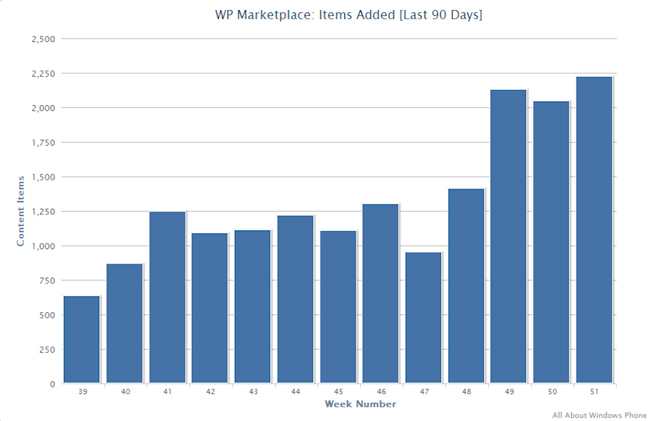
    Microsoft’s Windows Phone Marketplace has hit another milestone of 50,000 in just less than a couple of weeks of the 40,000 Apps mark. Over 17,000 apps have been submitted to the Marketplace in the last 90-days from over 13,000 different publishers (265 per day). The iOS AppStore and the Android Market are still way ahead in the lead for the Redmond Mobile OS, but the gap seems to be diminishing soon. 

    [All About Windows Phone]

  • McAfee Shares Vision for Bringing Mobile Devices into the Security Infrastructure (PR)

    McAfee Shares Vision for Bringing Mobile Devices into the Security Infrastructure (PR)

    McAfee has developed a three sided plan to ensure the future of mobile devices in the corporate environment. This plan was developed to help users secure their devices as the mobile malware market has seen an exponential growth in the last quarter. Read the Press Release for more details.


    [toggle title_open=”Collapse Press Release” title_closed=”Expand Press Release” hide=”yes” border=”yes” style=”default” excerpt_length=”0″ read_more_text=”Read More” read_less_text=”Read Less” include_excerpt_html=”no”]

    McAfee, today shared its vision for securing mobile devices in corporate environments. The three-pronged approach for protecting mobile devices, mobile data, and mobile applications, is designed to help businesses and consumers manage their devices securely, as the threat environment quickly evolves.

     Attacks on smartphones are becoming more common, and according to McAfee Labs, new malware targeting Android devices jumped 76 percent in the last quarter. The need to secure mobile devices from attacks has never been more important. IT security operations that were once smooth-running have recently come under intense pressure to adopt new technologies and fully support completely new platforms, operating systems, and architectures.  McAfee is developing products and strategies to allow businesses to bring these consumer devices securely into the IT infrastructure.

     “Mobile device adoption is exploding, and unfortunately, so are the threats targeting mobile platforms. If McAfee’s historical experience analyzing threats on numerous platforms is any indication, we believe that the emerging mobile malware we are seeing today is just the beginning,” said John Dasher, senior director, mobile security for McAfee. “It’s a whole new world, and a challenge for IT to craft security policies that make sense while updating their infrastructure. At McAfee, we’re working hard to create new technology to help enterprises address the challenge of securely incorporating these new mobile platforms into their environment.”

    New Endpoints, New Challenges

    Traditional endpoints relied mostly on email and web for application framework. Mobile has a whole new freedom in custom applications. But each new application – either public or private – introduces new threats and risks to corporate IT. Today, challenges include the consumerization of IT, mobile platform diversity that includes iOS, Android, BlackBerry and Windows Phone, and an explosion of applications. Additionally, most Android-based devices have a slightly different implementation of the OS making software development and support that much harder.

    McAfee is unique in being able to bring mobile devices into the security infrastructure. With a broad portfolio of security technologies including anti-malware, data loss prevention, application security, web protection, and more, McAfee has the technology needed to securely welcome these new endpoints. McAfee® ePolicy Orchestrator® security management software, which covers more than 30 million endpoints today, and McAfee Global Threat Intelligence, support and work across these integrations.

    McAfee’s Three-Pronged Approach to Mobile Security

    • Protecting Mobile Devices — With data and device protection for today’s most popular mobile devices, McAfee provides a complete security solution that embraces mobile device diversity. To meet this challenge, McAfee offers the following:
      • Anti-malware protection from the growing number of threats targeted at mobile devices through McAfee® VirusScan® Mobile software.
      • Web protection that alerts mobile devices users when they are accessing malicious sites, such as phishing sites is offered through McAfee SiteAdvisor technology.
    • Protecting Mobile Data — Protecting sensitive corporate data is a requirement. McAfee can ensure that only those devices with encryption access the corporate network and data.  McAfee offers
      • Data protection when using the McAfee EMM product, including the prevention of data leakage from Jailbroken and Rooted devices.
      • Anti-theft and loss features allow for remote backup, lock and wipe to make sure that sensitive data does not get into the wrong hands.
      • Additional data protection technologies are under development including the separation of business and personal data.
    • Protecting Mobile Apps – Beyond traditional email and web, mobile apps are readily available and proliferating by the millions. McAfee sees this as potentially the biggest threat vector of the future.
      • McAfee has released in beta McAfee® App Alert™ software to inform users how apps access their personal data.
      • McAfee is expanding the scope of its Global Threat Intelligence to include mobile app reputation services to identify apps that are malicious or put privacy at risk.
      • McAfee also has app-scanning technologies that have been successfully deployed in app stores, adding a crucial layer of application security that helps vendors provide customers a safe app experience.

    [/toggle]

  • Google Updates Android Market to add Movies and Books tabs

    Google Updates Android Market to add Movies and Books tabs

    Google is updating the marketplace app in their Android OS to include a easy tab for Books and Movies being sold and rented on the Android Marketplace. At movie titles starting at just US$ 1.99 or IN Rs. 84/-  it makes it a highly worthwhile option for Android device owners who had to earlier toss around looking to download rich media content to their devices. The Update is said to roll out within the coming weeks but a pre-release build is already doing the rounds and can be found here(download )

    Watch the video below to get a quick overview of the design.


    [Google Mobile Blog]

  • Mcafee Mobile Security and WaveSecure for Android

    Mcafee Mobile Security and WaveSecure for Android

    McAfee has issued a Press Release regarding its Mobile Security and WaveSecure security softwares for smartphones and tablets on the Android Platform. Read the full PR for more information.


    [toggle title_open=”Collapse Press Release” title_closed=”Expand Press Release” hide=”yes” border=”yes” style=”default” excerpt_length=”0″ read_more_text=”Read More” read_less_text=”Read Less” include_excerpt_html=”no”]

    McAfee today announced the it is extending its mobile device portfolio for consumers with McAfee Mobile Security and McAfee WaveSecure Tablet Edition.  These mobile device offerings change the mobile security landscape by offering security safeguards that help consumers secure their mobile devices for personal use, commerce and work.

                    According to a mobile security report released last week by McAfee and Carnegie Mellon University titled, “Mobility and Security: Dazzling Opportunities, Profound Challenges,” respondents named their top three security concerns to be the loss of personal or work data through the accidental loss of a device, physical theft of the device, or loss of their data due to their device “crashing.” In addition, close to half of all respondents said they were using their smartphones both for personal use and work, demonstrating that consumers want more than just personal device security. 

    McAfee Mobile Security software, available for both smartphones and tablets, provides a comprehensive mobile security solution by combining three leading McAfee mobile security products:  WaveSecure, VirusScan Mobile and SiteAdvisor® for Android. It is ideal for users who want protection for their data and privacy in the event of loss or theft, protection against the growing threats of viruses and spyware targeting mobile devices as well as protection from Web based threats, such as phishing sites that probe for personal and sensitive information.

    With McAfee Mobile Security, consumers can now access the following features and functionality in a single download:

    • Back-up and restore data to help protect sensitive information and irreplaceable photos. Even if the device is missing, it can be backed up before it is wiped clean of information. 
    • Protection against misuse (such as excessive phone charges) as well as safeguarding personal data with remote locking capabilities
    • An audible alarm to help users find the device or disrupt a thief, and or pop-up a notification with instructions for returning the device
    • Remotely remove data from a lost or stolen device via the McAfee Web portal, mobile Web portal or via a SMS message from a buddy device
    • 24/7 real-time anti-malware protection against viruses, worms and spyware, Trojan horses and battery sapping malware
      • Protection from malicious Web sites, phishing, identity theft, and credit card fraud when shopping online. SiteAdvisor software for Android provides color coded site ratings appear right next to the search results, allowing Android users to confidently browse and search the mobile Web.
      • Management of mobile device protection allows consumers to quickly execute needed security tasks, backup, locate, wipe, etc. via the McAfee Web portal and simple device interface
      • All backed by McAfee Labs with its 24/7 global presence and dedicated team of threat researchers


    The WaveSecure Tablet Edition offers Android users with WiFi the ability to find their missing device with alarm and location tracking, prevent misuse with remote lock and wipe and preserve important memories and personal data with remote backup, even from a lost or misplaced device. Users can also trigger an audible alarm to help them find the device or disrupt a thief, and send a brief SMS message with instructions for returning it.

     “With device growth eclipsing PCs, consumers need tools to not only protect their personal information, but also to provide safeguards for business data should they decide to use that device for work,” said Todd Gebhart, senior vice president and general manager of consumer, small business and mobile, McAfee. “It’s far too easy to leave a mobile device in a cab or at the airport, which can mean lost photos, contacts and other important content. Also, the threats to mobile devices are in many ways the same as in the online world.  Beyond device lost or theft, users can be hacked, infected or phished on a mobile device just as easily as they can online.”


    Availability and Pricing:

    McAfee Mobile Security and WaveSecure software are available in the following languages; Chinese (Simplified and Traditional), Dutch, English, French (European and Canadian), German, Indonesian, Italian, Japanese, Korean, Portuguese (European and Brazilian), Swedish, Spanish (European and Mexican) and Russian. McAfee Mobile Security software is available as an annual subscription of $29.99 USD per year from McAfee and the Android Market. McAfee WaveSecure software is available as an annual subscription of $19.99 USD from McAfee and the Android Market.

    [/toggle]
     

  • iPad Responsible For One Percent Of All Internet Browsing

    iPad Responsible For One Percent Of All Internet Browsing

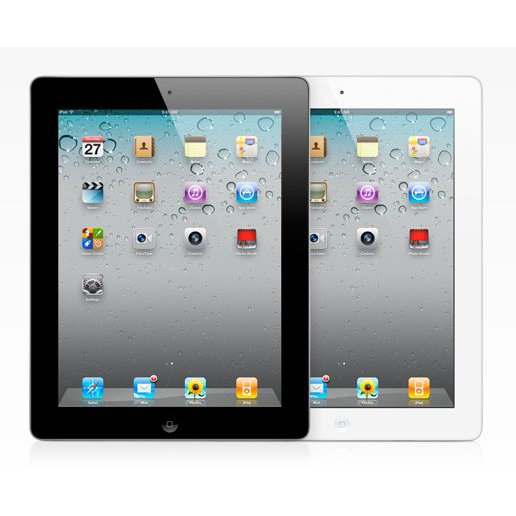
    Within a year of its launch, Apple’s iPad now holds over 1% share of global web browsing and a 2% share of all browsing in the US. Reports from analytics firm Net Applications’ NetMarketShare Report show that the iPad had 53 times the usage share of its nearest competitor, Samsung’s Galaxy Tab and 76 times the usage share of the Motorola Xoom. When compared with the Research In Motion’s PlayBook, the iPad leaves it in the dust with a 306 times greater market share.

    In the US mobile browser market, the iPad takes has a moderate 25.5% share, only trailing Android, which has a 31.6% share, and the iPhone, which has a 35.2% share. When you combine the share of the iPhone and the iPad, they come in with a 60.7% share of the US mobile browsing market. That’s almost twice the market share of Android. Blackberry came in at 6.9 percent, while Symbian, Windows Mobile and webOS are left far behind, accounting for less than 0.5 percent.

    With the launch of iOS 5 and the addition of tabbed browsing in Mobile Safari, the user’s browsing experience will be brought closer to that of the Mac. This should help the iPad become more acceptable as a mobile browsing platform and gain it higher market share than it holds today.

iGyaan Network
Privacy Overview

This website uses cookies so that we can provide you with the best user experience possible. Cookie information is stored in your browser and performs functions such as recognising you when you return to our website and helping our team to understand which sections of the website you find most interesting and useful.