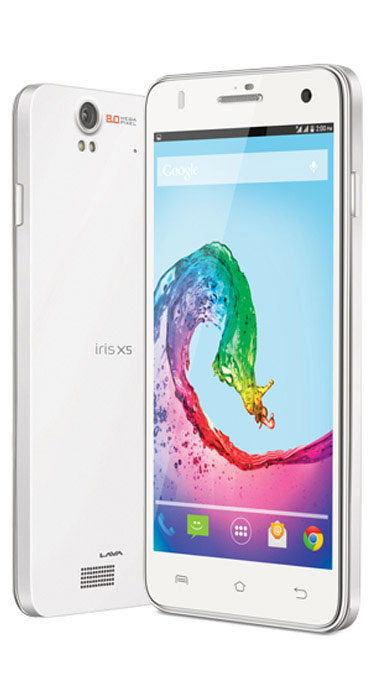
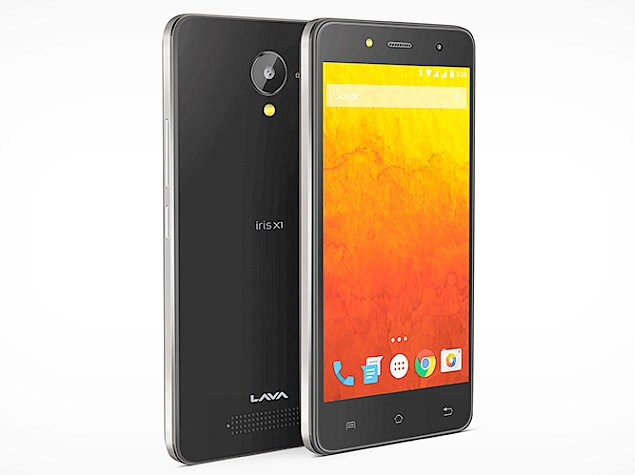
Yesterday, Lava announced the release of its new smartphone – Lava Iris X1 Selfie. The company has priced the smartphone at Rs. 6,777. The device will be available for purchase next week on online retail stores and other multi-brand outlets.
The Iris X1 come with selfie-focusing features such as a 5MP front camera with LED flash supported by the Beaty-Fi Software for further editing. It also has an 8MP f/2.0 aperture, LED flash, rear camera. The camera comes along with various camera modes such as Panorama, HRD Mode, Video Mode, Capture Mode (Smile, Gesture, Voice, Touch), and Burst Mode.
The OS is Android 5.0 Lollipop based and the device comes with a dual-SIM with a 4.5-inch FWVGA (854×480 pixels) resolution IPS display, powered by a quad-core MediaTek MT6580 processor clocked at 1.3GHz,and 1GB of DDR3 RAM.
The device also has 8GB of inbuilt storage that can be expanded up to 32GB by a microSD card. Other features include, 3G, Wi-Fi, USB 2.0, GPS, and Bluetooth. It weighs 140 grams and comes with a 2000mAh Li-Po battery which is said to have up to 13 hours of talk time in 2G and 8 hours 30 minutes of talk time in 3G.
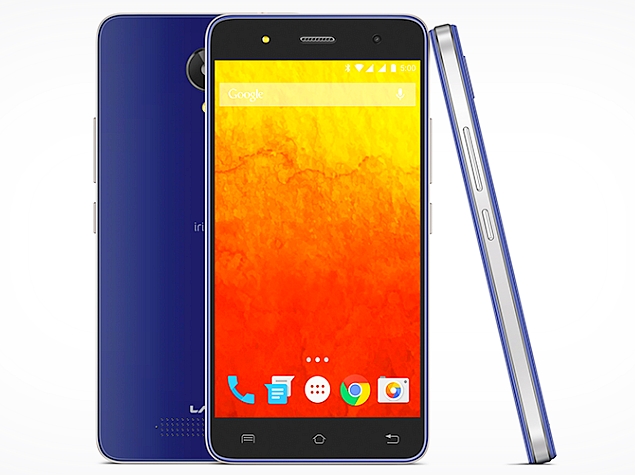
The Iris X1 Selfie comes in various colours, such as, Icy White, Royal Black, and Purple colour variants.
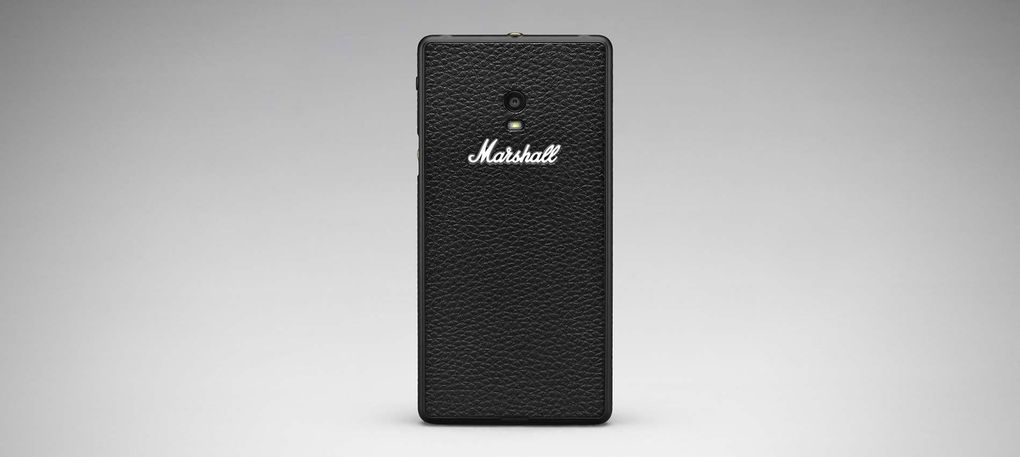
Yesterday, Music gear and accessory company Marshall audio released information about their upcoming smartphone called the London. While the news made waves, the phone specifications itself are not that appealing.
[pullquote_left]What Android Needs Today is More Personality Not More Performance[/pullquote_left]
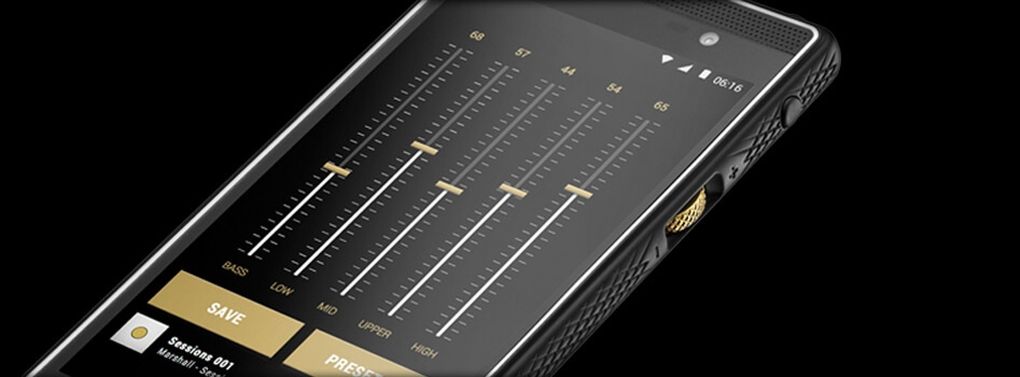
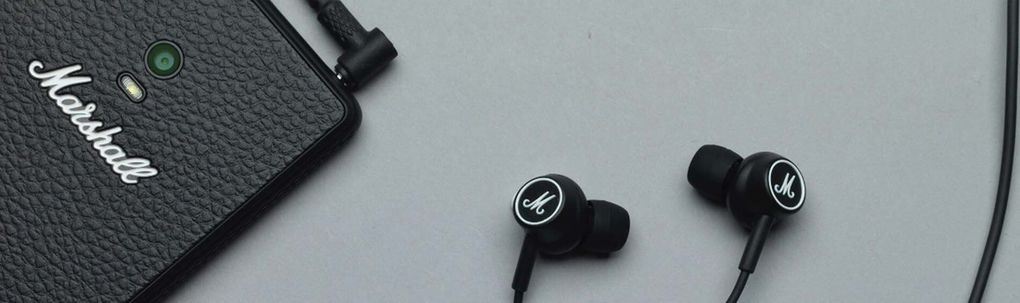
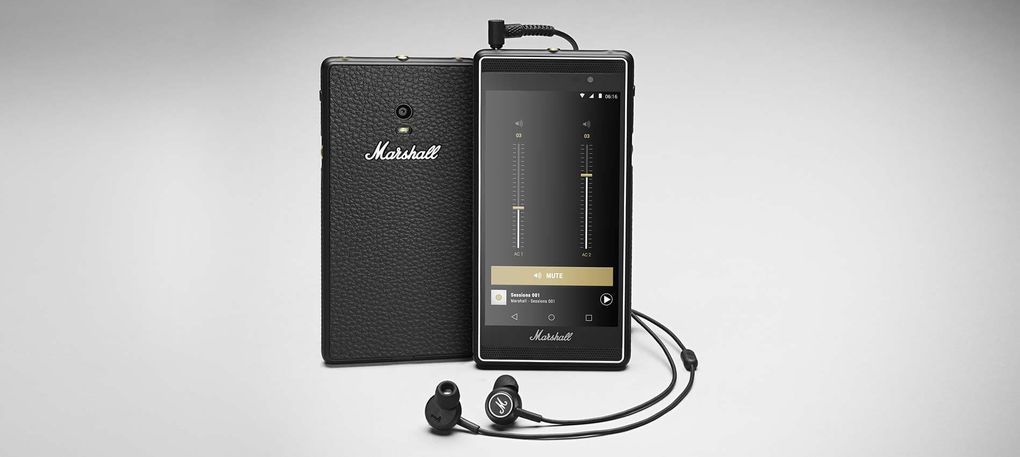
However the Marshall London is designed not to impress the spec-hungry but more the music hungry. The company claims that Android today needs more personality, and not more performance. The phone is relatively low end with a 4.7-inch, 720p display. Dependant on 2GB of RAM, a 2500 mAh (removable) battery, and a Snapdragon 410 processor which is seen in some of the most popular low end phones.
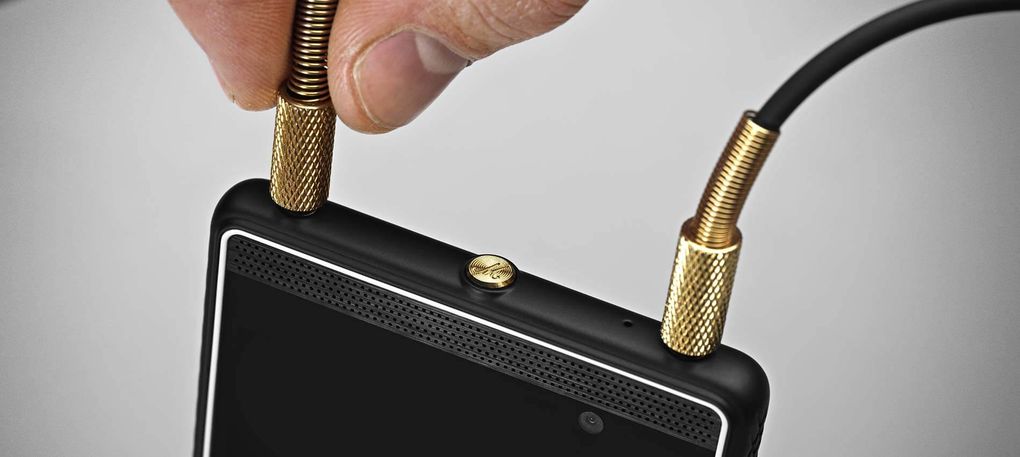
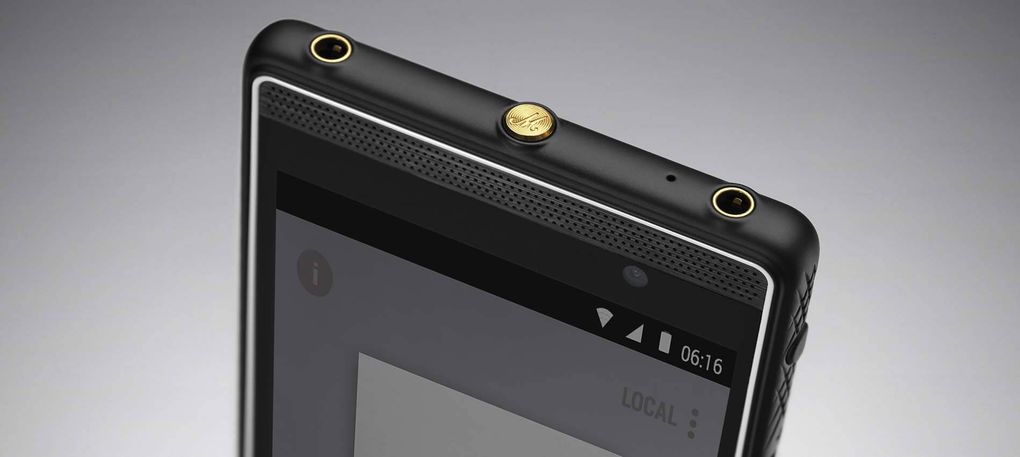
The London has been priced higher than expected for roughly US $ 549 or Rs. 35000. But, the intention that the phone serves is different. Apart from being completely brilliant to look at, the music centric London has excellent audio processing. Dual headphone outputs, Dual front speakers and a jog dial for precise controls. There is a dedicated “M” button on the top for easy access to music.
There, However, seems to be various implications of the dual headphone jacks. Thick of multi track mixing or recording. Dual independent outputs to separate devices, and dual monitoring when mixing tracks on a DJ app. From a use case point of view, it eliminates quite a few hurdles. The phone won’t be available till late Aug, in the meanwhile however, you can check out the pictures of the beautiful Marshall London below.
India, the world’s 7th largest country and with the second largest population in the world, may soon have one more tag to its name. According to a study conducted by Strategy Analytics, an international research firm, India is on the road to becoming the second largest smartphone market in the world by 2017.
The first position will be held by China, but India will push down USA from the current second place to the third place in the smartphone sector. Linda Sui, director at Strategy Analytics, says
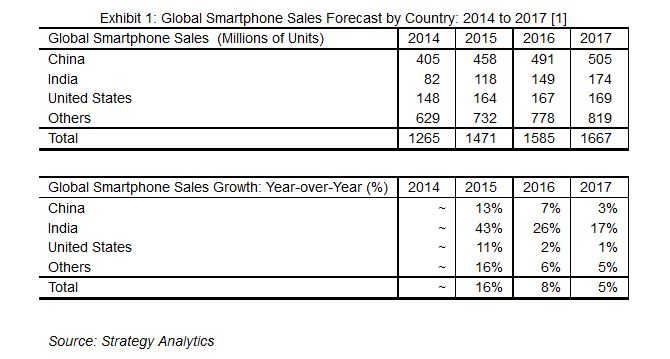
China has been the engine of global smartphone growth in recent years, but China is now maturing and slowing. India is fast becoming the next major growth wave. We forecast 118 million smartphones will be sold in India in 2015, increasing strongly to 174 million in 2017.
The rise of the smartphone industry in India has been directly proportional to the Internet growth here. As of 2014, India had 243 million people in the Internet grid, the third largest in the world. The US had 279.8 million online in the same year, putting it in the second place.
Linda Sui added that India is driven by the growth of low smartphone invasion, expanding retail availability of devices, prosperous middle-class consumers, and dynamic advancements from local smartphone brands like Micromax.
According to the report, 118 million smartphones will be sold in India this year. About 458 million smartphones will be sold in China in 2015 and will rise steadily to 505 million in 2017. About 164 million smartphones will be sold in the US in 2015, climbing marginally to 169 million in 2017.
Clearly, we can see that in the past decade, US was in the middle of the tech world. But now, companies are trying to get into different and untouched markets in many ways, since most of them are at a disadvantage to the local brands, anyways.
Once again, Samsung has become the top smartphone manufacturer, beating Micromax in its home ground. The Korean electronics firm has retained its position with an increase in market share from the last quarter. This shuffling is due of change in duty structure and restricted supply of mobile devices from Chinese brands like Xiaomi, OnePlus due to Chinese New Year festivities.
According to CyberMedia Research, Samsung’s share increased from 23.7% in fourth-quarter 2014 to 27.9% in Q1 2015 (January to March). The firm also saw a boast in market share in feature phone during this quarter that was lower in the previous one. The major factor to contribute to its growth in India is the availability of various models in different segments. Samsung has variety of smartphones from entry-level to high-range that led to its success this year.
Micromax remained at the second spot with a decline in market share in the smartphone segment. The India-based equipment firm registered a decline in share from 17.8% in the previous quarter to 16.2% in the first quarter of 2015. Microsoft rolled to the third spot with 9.6% share in overall mobile handsets.
Lead Analyst, Telecoms Research at CMR, Faisal Kawoosa commented, “With major announcements of new handsets and entry of some new brands happening in a big way in 4Q CY 2014, there wasn’t really something very exciting in the market for customers that could push up sales in 1Q CY 2015. At the same time, change in duty structure and the consequent impact on the supply chain due to the Chinese New Year festivities contributed to the market contraction.”
This quarter has seen contracted overall shipment from the Q4 2014. The mobile handset sale in the country declined by 15% to 53 million mobile handsets, out of which 37% were smartphones i.e. 19.5 million and 18% were feature phones.
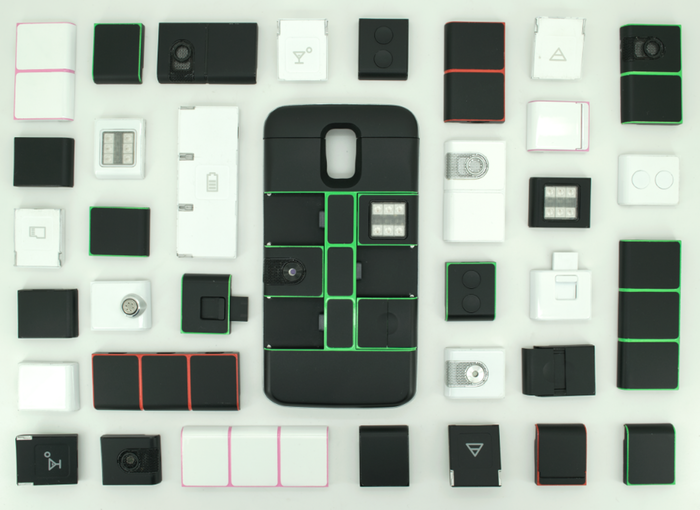
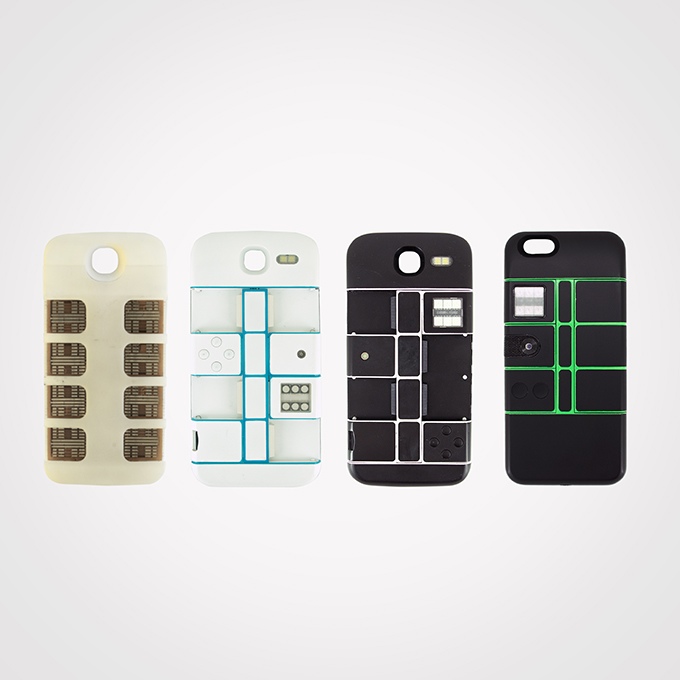
Now is the age of customization. Smartphones today offer options to tweak the customary set-up and mould it to your convenience. Google’s latest Project Ara is the ultimate form of customization that is set to transform the present smartphone industry. But seems like there’s another advanced technology like Project Ara that can modify your present handsets. Nexpaq, a California-based start-up, has developed a modular case that has the power to add additional features to your device, that you have always wished for.
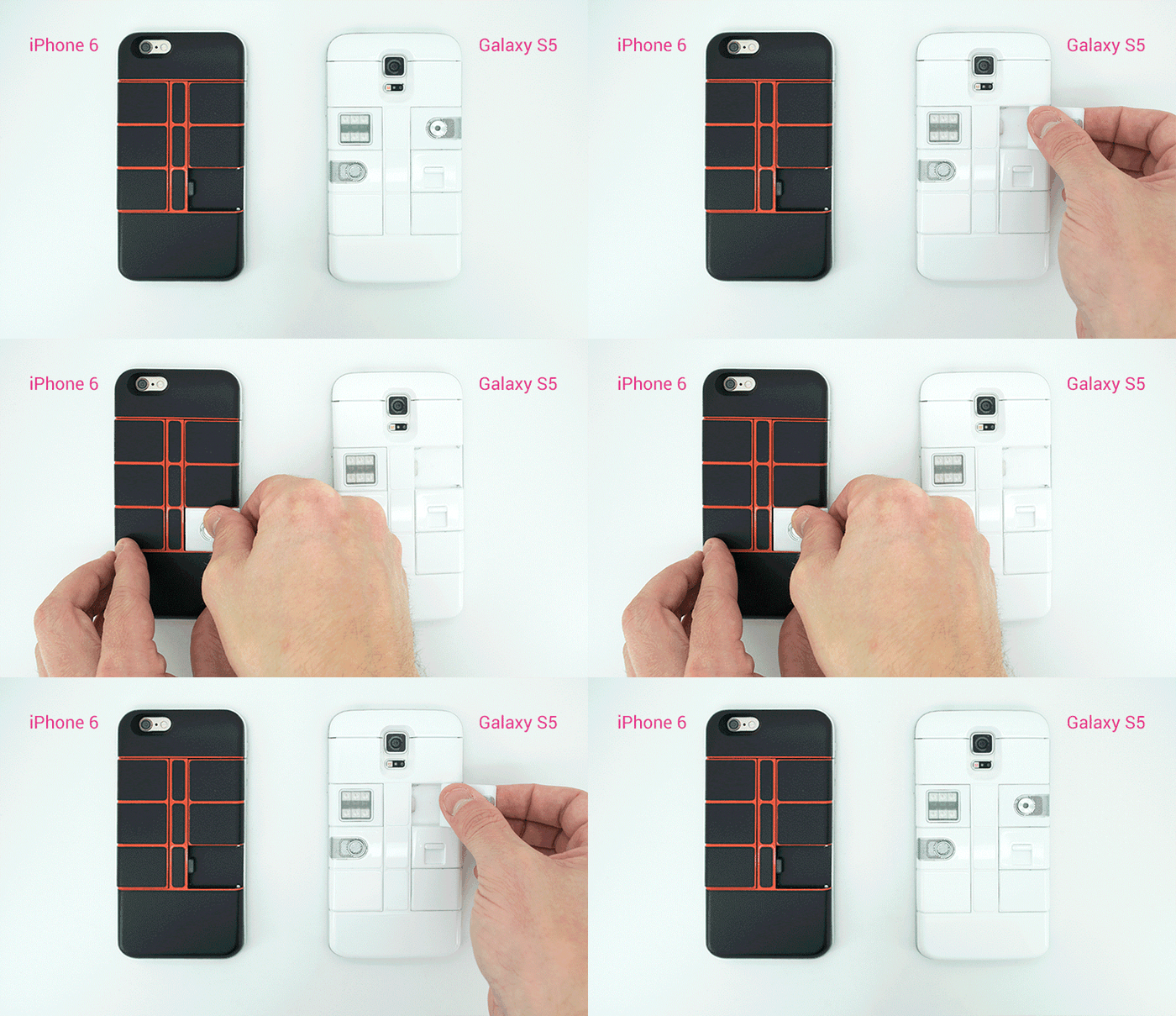
The case is said to be “the first truly modular smartphone case” and comes with 12 different modules. These include Laser, Battery Power, Super LED Flashlight, SD Card Reader, Amplified Speaker, and a few more. Nexpaq says that there are more to come. Simply put, it provides external support to upgrade the device in terms of memory, sound quality even if your phone has restricted capacity. The company claims that it is the first hardware to switch between iOS and Android devices. Which basically means, users of the two operating systems can switch modules to experience each other’s modules.
At one time, six different modules can fit in the case. The case coming in two different colours – black and white – is compatible with smartphones like Samsung Galaxy S5, iPhone 6 and Samsung Galaxy S6 Edge. The project is still under development and one can pre-order it for $109 to get a Nexpaq case and four different modules. The product will be shipped to the backers by January 2016. There are different deals at different prices which offer two Nexpaq cases, module development kits and more.
As the shipping date suggests, the project will launch by January next year. It is highly likely that Google may come up with Project Ara before then.
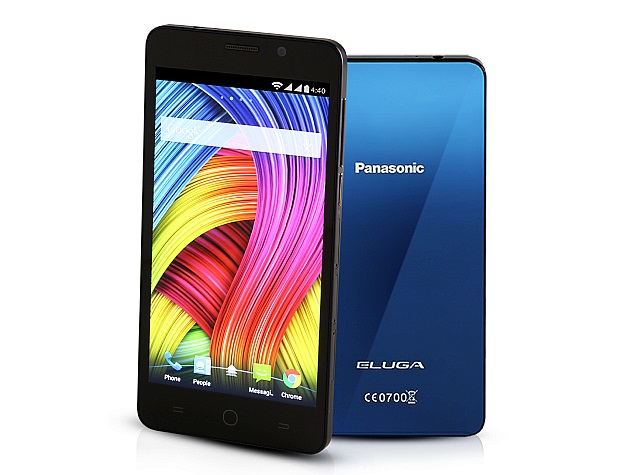
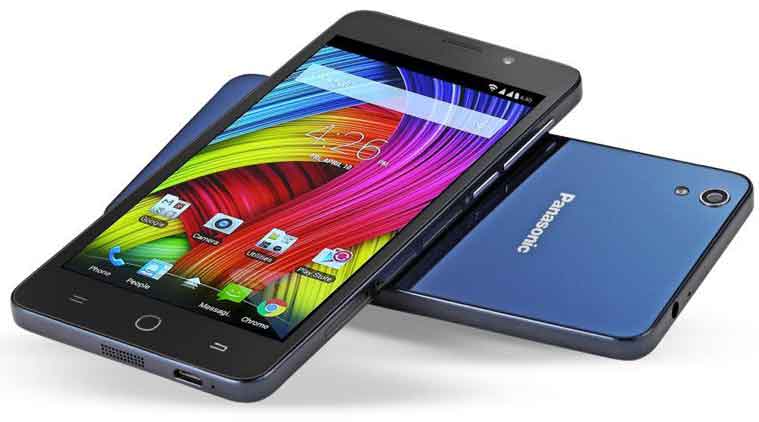
Catching up with the emerging smartphone market, Panasonic has today launched its first 4G smartphone in India. The Eluga L 4G will be available at all major online and offline stores at a price of Rs. 12,999.
The Managing Director of Panasonic India Manish Sharma said –
Panasonic India has now signaled a big leap in its product portfolio by bringing better specifications and features in the newly launched Eluga L which not only caters to the fast developing technological needs in the market but is also priced reasonably. With the company’s recent success in the smartphones category and the mobility landscape rapidly evolving today, the new device will surely match the needs of our fast evolving consumers in the country.
The new Eluga series handset holds a thickness of 6.1mm and features a uni-body design. It is light at 131 grams. The 5-inch (1280×720 pixels) HD IPS display is protected by Corning Gorilla Glass from back and front. The processor powering the phone is a 64-bit quad Quad-core Snapdragon 410 clocked at 1.2GHz. The Adreno 306 GPU caters to the graphic quality, along with 1GB RAM. The Eluga L 4G runs on Android 4.4 KitKat. The onboard storage space of the device is 8GB, which can be extended up to 32GB via Micro SD card.
On the camera front, the phone has an 8MP primary camera with autofocus and LED flash. A 5MP secondary shooter sits on the front for capturing selfies. For now, there is no details about its battery capacity. The dual-SIM device supports 4G and 3G network. Connectivity options include Wi-Fi, Bluetooth, and GPS. There is just one colour option available in the smartphone – Radiant Blue.
The smartphone has to compete with Xiaomi Mi 4i and ZenFone 2 ZE550ML in the similar price range.
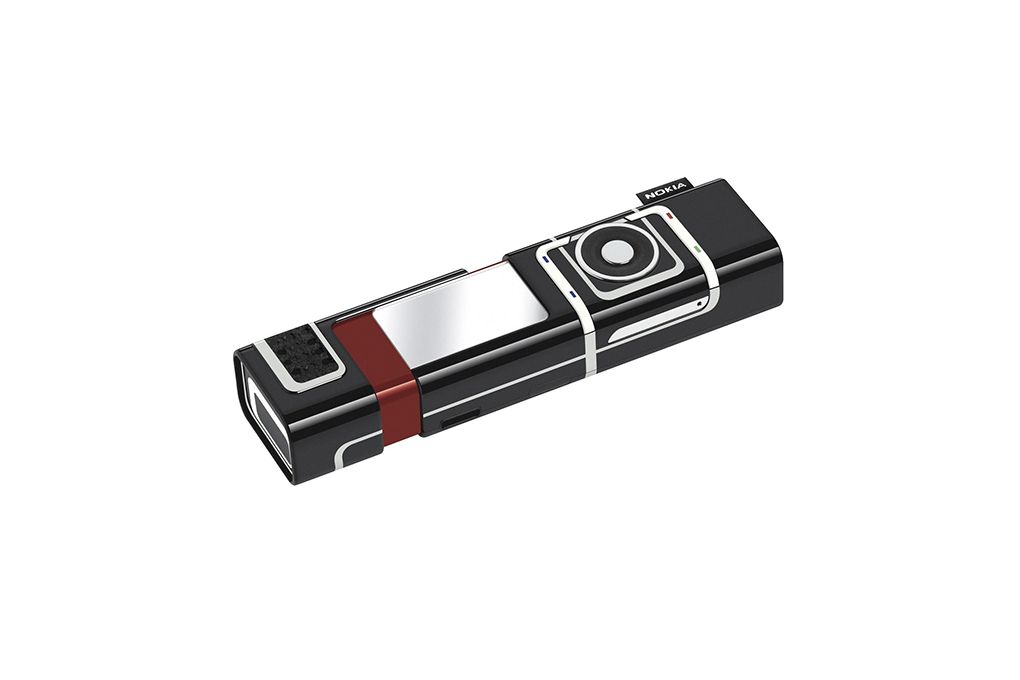
In the early days of the mobile phone revolution, designing a phone required equal consideration for the insides as well as the outsides. Most of us have lived through the era of mobile phones and seen the ecosystem transition into smartphones. During the early developmental stages, we were offered amazing form factors by companies. But since the arrival of the first smartphone (the Apple iPhone), things have gone vanilla. Now we have a massive market for smartphones but apart from a few tweaks and touch-ups, the base form factor has remained the same for the past eight years.
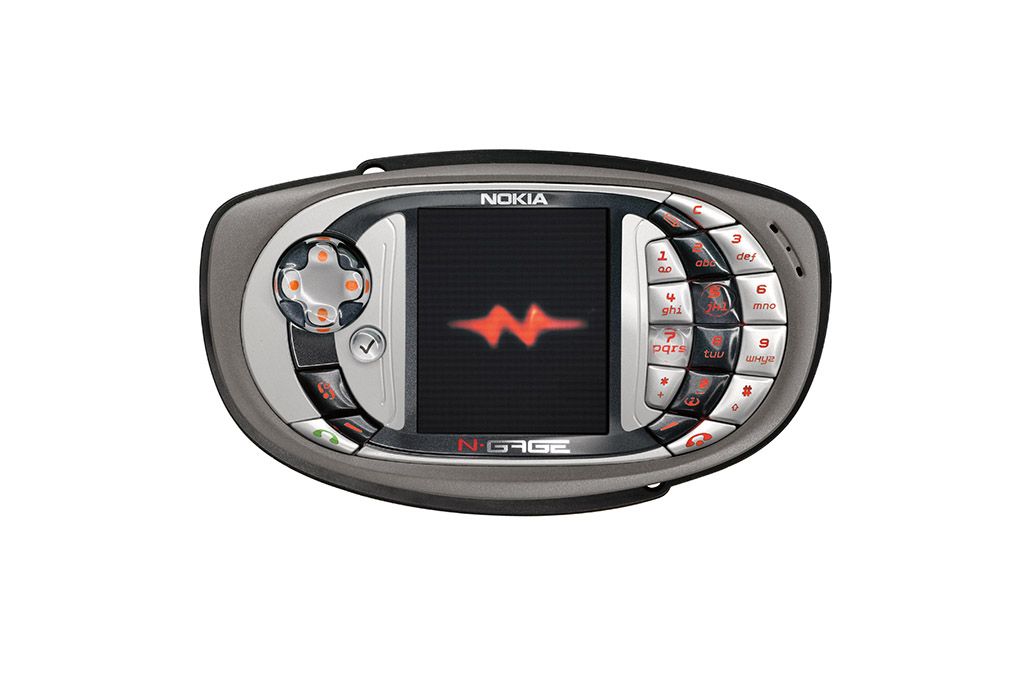
The Nokia N-Gage
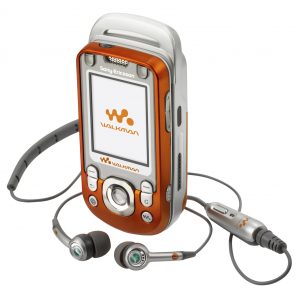
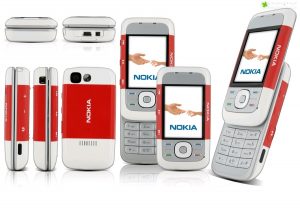
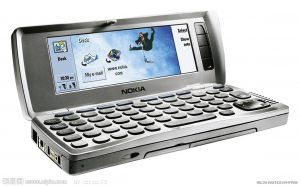
One of the most prominent examples of the awe-inspiring design innovations were the Nokia N-series of devices. These devices came in all shapes and sizes, and their maneuverable designs made them a treat worth flaunting. Sony is also remembered for bringing some innovative and audacious form factors in the market, and their Walkman series is remembered for some unique design features. One of the first Android phones, the HTC G1 or the HTC Dream that came out in 2008 had an amazing form factor.
Sony Ericsson W550i
Nokia 5300 Xpressmusic
Nokia E Series
Communicator
The arrival of the first iPhone in 2007 and its success revolutionised as well as standardised the smartphone form factor. Now every company was running to replicate the bar shaped device as the industry had found a direction. Apple still leads the design innovations for the industry which became evident when the Samsung Galaxy S6 was introduced with iPhone 6-esqe speakerphone design. Samsung announced a focus on design for its new flagship and unveiled a glass and metal based bar design. The unique offering in this flagship launch was the S6 Edge which had dual curved edges. The curved edges don’t have any specific utility as of now and it’s there just because Samsung could do it.
For the moment, the device makers seem content with their offerings and haven’t pushed any major boundaries in terms of designer form factors. The rectangular bar shape has now become boring and uninspired in all its present iterations across the varied handsets.
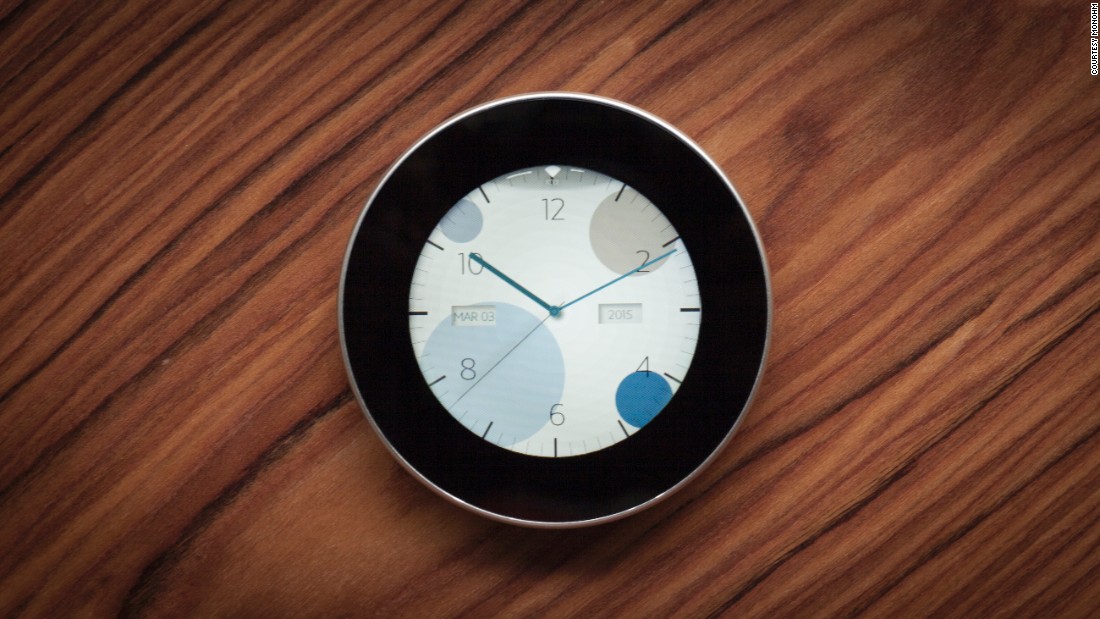
Monohn Runcible prototype is the most unique smartphone form factor currently.
We have seen some audacious concept devices, most of which usually arrive around the time a new iPhone is about to be launched. As of now, the only notable smartphone that is not bar-snapped is the Monohm Runcible, which was showcased at the MWC 2015. The round shape device runs of Firefox OS and is expected to come out by late this year. The device is also unique as it is designed as a lifelong device; you can easily update the specs and pass it on to the next generation as a family heirloom. This kind of device will be valued more than the device that are meant to become outdated in a few months.
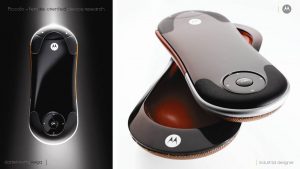
motorola piccolo
LG Traveler Concept Phone
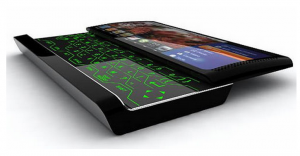
Jakub Lekeš Multimedia Concept Phone
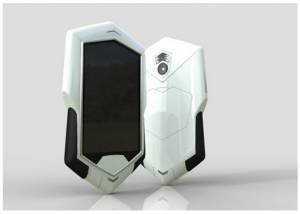
Some interesting concept design includes Motorola’s Piccolo Concept, Designer Jakub Lekeš Multimedia Concept Phone, and the LG Traveler Concept Phone. Samsung tried to introduce a new form factor with the Galaxy Golden, but its steep price ensured that it won’t have a long stint at the stores.
There is a space in the market for something unique. As the specifications across the various devices are reaching a point of plateau, some eye-catching design elements can help the companies to reinvigorate the competition in the segment. LG’S Traveller concept looks like something that can be implemented right away.
Innovative new designs will definitely be appreciated amongst the young. Hopefully smartphone makers will take this into account and take up the challenge to introduce something different. While we get flaunt-worthy devices, the companies will get to rake in the profits; a renewed focus on design is a definite win-win for all.
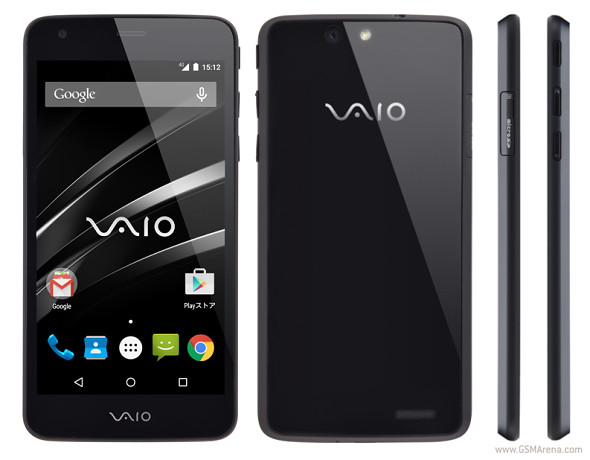
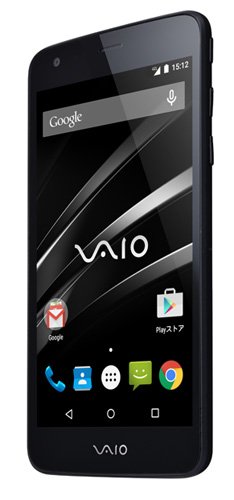
No longer a part of Sony, VAIO Corporation is aiming at the smartphone market. The Japanese manufacturer of personal computer is geared to launch its series of smartphone and has unveiled its first handset called the VAIO Phone. The new device is Android-based and falls in the mid-range smartphone category.
The device sports a 5-inch IPS display of 720p resolution. It is equipped with a 1.2 GHz quad-core (unknown) processor bundled with 2GB RAM for multi-tasking. The onboard storage space is adequate at 16GB, which can be expanded up to 64 GB via microSD slot. The device gets pepped up through the 2500 mAh battery at the back of the phone.
The camera specifications of VAIO Phone are pretty impressive. A 13MP rear camera along with 5MP front snapper sits on the phone. The device runs on Android 5.0 Lollipop.
SPECS
VAIO Phone
Display
5-inch IPS display, 720p resolution
Processor
1.2 GHz Quad-core processor
RAM
2 GB
Storage
16 GB
Expandable Upto
64 GB
Main Camera
13 MP
Front Camera
5 MP
Battery
2500 mAh
Operating System
Android 5.0 Lollipop
The VAIO Phone was announced through Japanese MVNO B-mobile today. It will land in Japan on Friday i.e. on March 13 for $420. The company hasn’t stated if the phone will launch in other countries or not.
The Best High End smart phone is one that looks aesthetically appealing, But, It must be a flagship with the latest software, a brilliant camera, unparalleled display, long lasting battery, the latest OS and the Best specifications.
Which do you think is the Best Premium “Feel Good” Smartphone of the year in the 30,000 to 40,000 price bracket.
Voting is now Closed! The Winner for the Best High End Phone in the iGyaan Tech Awards 2014 is HTC One (M8).
Who says electronics and water don’t mix? This is a list of the Best Water Resistant and Dust Resistant rugged smart phone which are capable of handling the rain or taking a dunk in the bath or a tumble in the puddle or even shower with you in the morning.
This is a list of the most rugged weatherproof phone which survives through all climates.
Voting is now Closed! The Winner for the Best Weatherproof Phone in the iGyaan Tech Awards 2014 is Sony Xperia Z3.
Looking for an amazing smartphone with the best features within the price range of 10,000 and 20,000? This smartphone packs more than modest specifications and latest features all within an affordable budget.
Voting is now Closed! The Winner for the Best Affordable Phone in the iGyaan Tech Awards 2014 is Xiaomi Mi 3.
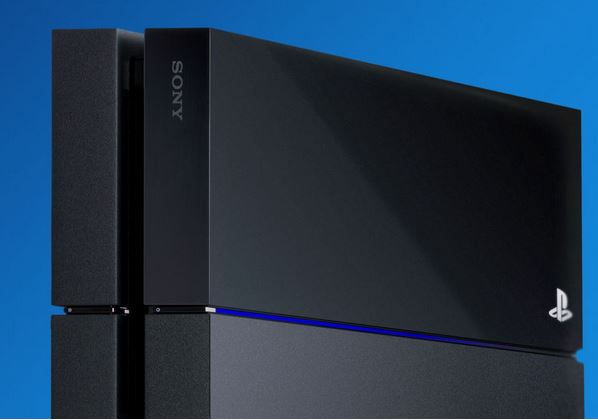
According to recent reports, Sony is in the process of shrinking down its TV and smartphone business to focus more on gaming consoles. With PS4 sales reaching a 13.5 million milestone, it’s apparently the only division that is generating profits for the company. Following a recent forecast that predicts 30 percent downfall in Sony’s mobile division by next spring, the Japanese giant is now making the PlayStation brand its utmost priority.
A recent report from Reuters revealed that Sony has devised a 3-year plan for a shift that will focus primarily to boost the sales of PlayStation division by 25 percent, while reducing support for its mobile and television divisions. Thanks to the PS4, the company has generated a $265 million profit which compensated for the loss from its television and mobile business.
The Japanese electronics giant has been posting yearly losses that have eventually resulted in the fall of its share price. The PlayStation 4 sales have been so strong that despite facing losses in other divisions, the company’s revenue grew by 7.2 percent. Let’s see how beneficial will this step be for the company.
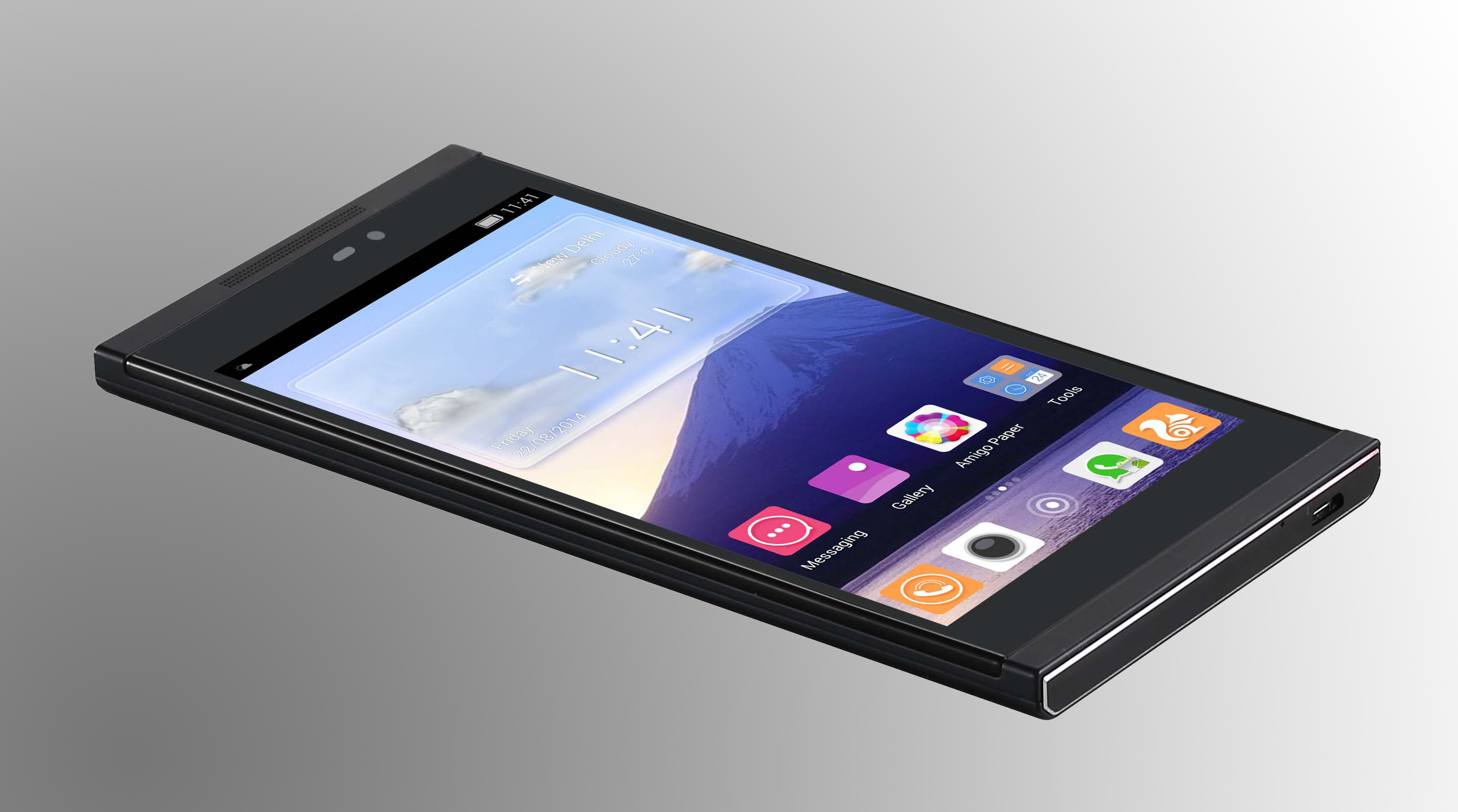
Chinese phone makers Gionee today brought the GPAD G5 to India. The phone follows an edgy design pattern and is quite a looker. Gionee sure knows how to make their phones look good.
The GPAD G5 gets its processing might from a 1.5 GHz Hexa Core processor. It is running on Android 4.4. The device comes with 1 GB RAM and 8 GB internal memory which is expandable up to 32 GB. The device has a 5.5 inch IPS HD display with a Dragontrail screen. Dragontails are made of thin glass without the fragility and have high scratch resistance.
The phone’s edgy design sure is appealing to look at.
The camera on the back of the device is an 8MP shooter while the front sports 2 MP selfie camera. Considering Gionee’s history, the camera should have great clarity and feature which we’ll confirm when we get our hands on the device.
The device gets its juice from a 2400 mAh battery which sounds less when considering the 5.5 Inch screen and the Hexa core processor. But Gionee has managed some good OS optimization which leads to a good battery back-up, we’ll check out how the phone manages its juice later.
The GPAD G5 has some decent mid segment specs and is priced at Rs. 14,999 which is a good price when compared to every brand except Gionee’s compatriot, Xiaomi.
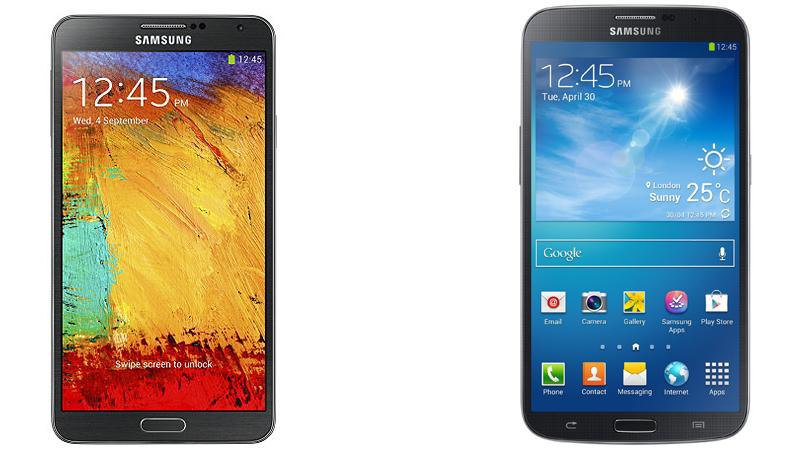
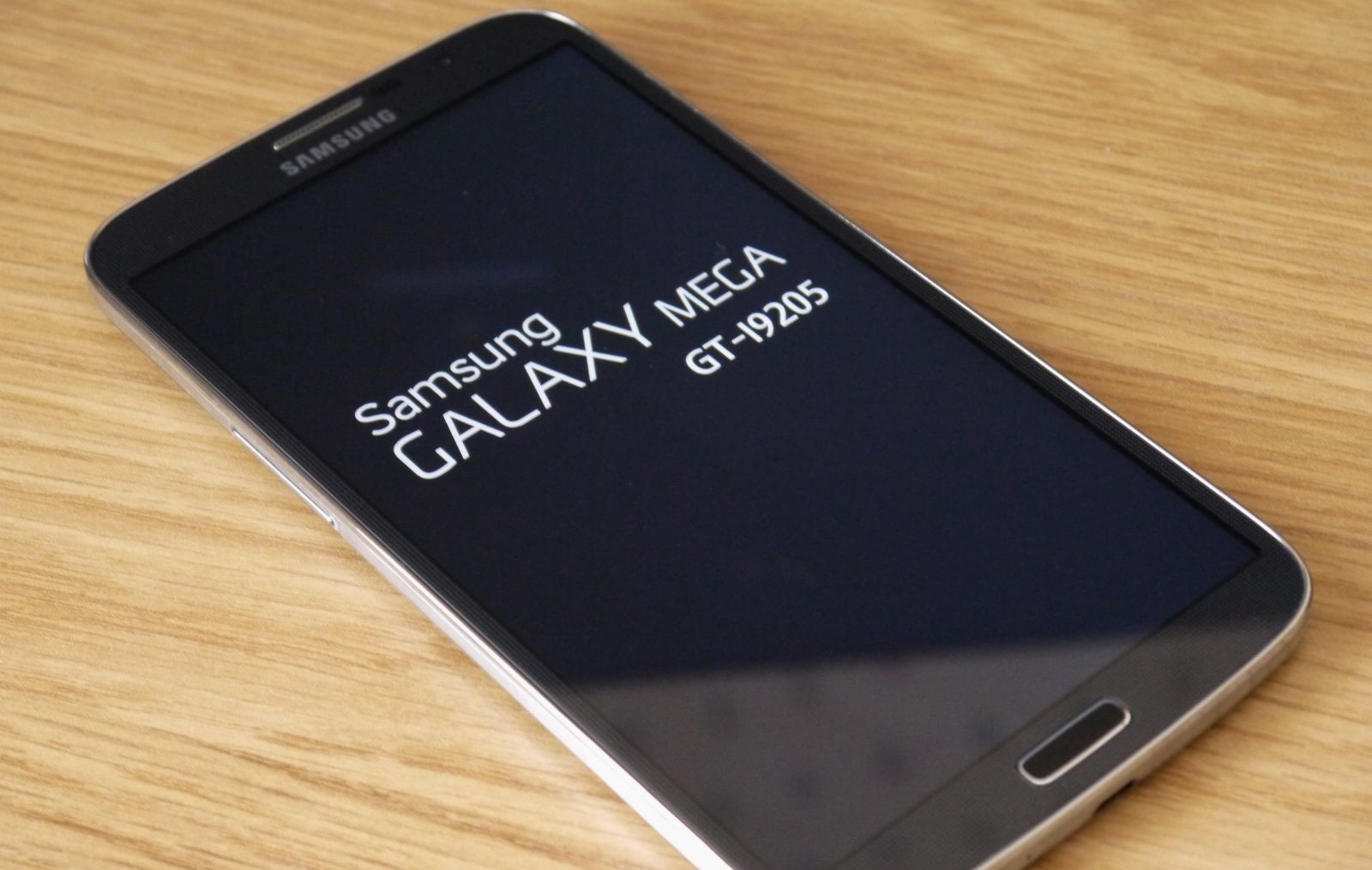
We have been hearing rumors about the new successor of the Samsung Mega series for quite some time, and now it seems like Samsung is finally pulling up its sleeves and getting ready to launch.
Recently, the Galaxy Mega 2 has had most of its important specs leaked because a pre-production unit has been put through the paces of a well known graphics benchmark. It is said that the handset maker might offer a plus-size device with a budget-friendly price tag.
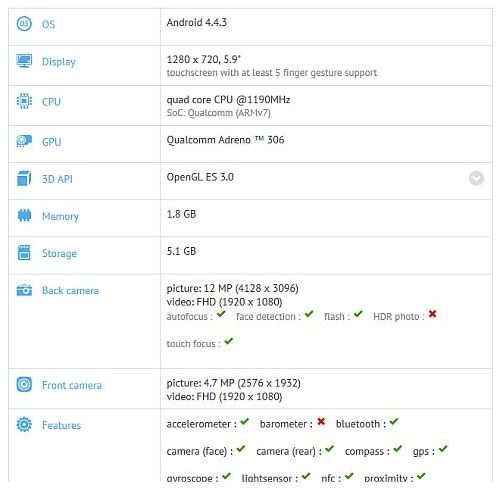
Specs of Samsung Galaxy Mega 2 as per the GFXbench
Benchmarks on GFXbench disclosed a 5.9-inch display that targets a low to mid-range market, though earlier rumors suggested that the new device will sport a 6″ display (a slight difference). However, Samsung has maintained the same resolution as its predecessor at 1,280 x 720 pixels.
It is likely that the new Mega 2 will be Samsung’s first smartphone to run on 64-bit processor with a Qualcomm Snapdragon 410 quad-core chipset. There are also rumors floating that the new Samsung Mega 2 may run on Android L. Galaxy Mega 2 will have 720p HD resolution, 2GB of RAM, 8GB of internal storage, a 12 MP rear camera, and a 5 MP front shooter for selfies.
Samsung Galaxy Mega 6.3, released last year
Other Galaxy Mega 2 features listed on GFXbench includes accelerometer, barometer, Bluetooth, gyroscope, compass, GPS, light sensor, NFC, proximity sensor and Wi-Fi. Apart from these features not much is known about the phone’s specs or when it will be released. It is said that with the Mega 2, Samsung is trying to introduce low-end Note-like phones in the mid-range segment.
Amazon is said to be releasing its first ever Smartphone today at an event in Seattle, where it will finally show off what it’s been working on for past year. The event will see a new addition in Amazon’s gadget family, which currently consists of Kindle Fire Android-based tablets, Kindle line of e-readers and the very recent set-top box called Fire TV. This new Smartphone will be the latest component of the retailer’s hardware family.
Rumors have been insisting that the Amazon Smartphone has been in the works for quite a while. They’ve also talked about its unusual features such as the multi-camera gesture-tracking system and a pseudo-3D eye-tracking interface.
Some of the earlier rumors suggested that Amazon would team up with HTC in order to produce a joint-effort smartphone. It had been said that talks between the two had been ongoing since June 2013 and that anything could change at any given moment. While more recent rumors also suggest Amazon has built its phone in-house, the HTC partnership still remains a possibility.
Amazon released a teaser video two weeks back that doesn’t show the device in question, but it does depict users interacting with a device. They talk about how it “moves with them” and there are shots of them tilting their heads back and forth to see how the product responds. It gave us a basic understanding of how its 3D effect might work.
The Wall Street Journal reported that Amazon is building a phone with a 3D screen back in May 2013. This report said that the device will use a retina-tracking camera, and 3D hologram-esque imagery would appear to float above the device’s display. But, we’re not entirely sure how it would look and work when used physically.
The device is said to be equipped with Qualcomm Snapdragon 801 SoC, with the display being a 4.7-inch 720p panel and 13MP rear-facing camera, a 2MP front-facer which seems unequipped to compensate with 3D technology.
Amazon is also said to be expanding its hardware family with its secretive think tank called Lab126. This is apparently where Amazon engineers come up with innovative gear that leads to features like the Amazon smartphone’s expected multi-camera gesture-tracking and parallax pseudo-3D system.
Some rumors suggested that the phone may be given away for free to current Amazon Prime subscribers, but Amazon shot those down pretty quickly. We don’t know if or when we’ll see the device launched, but one thing we know for sure is that Amazon will always have it in stock.
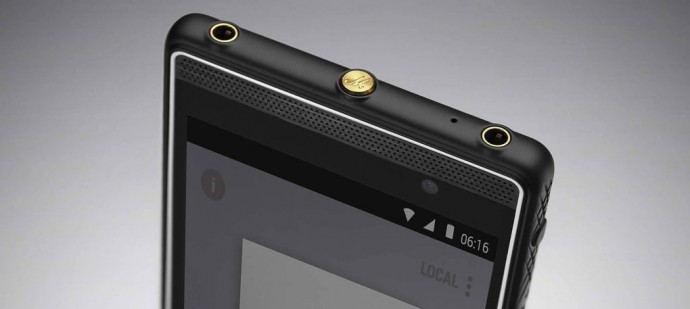 [pullquote_left]What Android Needs Today is More Personality Not More Performance[/pullquote_left]
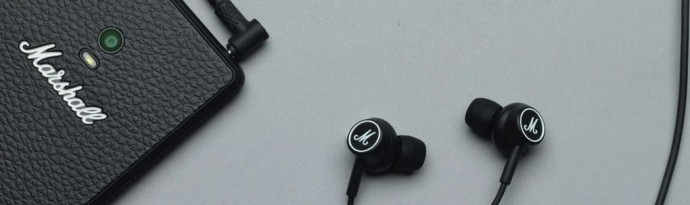 The London has been priced higher than expected for roughly US $ 549 or Rs. 35000. But, the intention that the phone serves is different. Apart from being completely brilliant to look at, the music centric London has excellent audio processing. Dual headphone outputs, Dual front speakers and a jog dial for precise controls. There is a dedicated “M” button on the top for easy access to music.