Engineers Break the Speed Limit for Fiber-Optic Transmissions

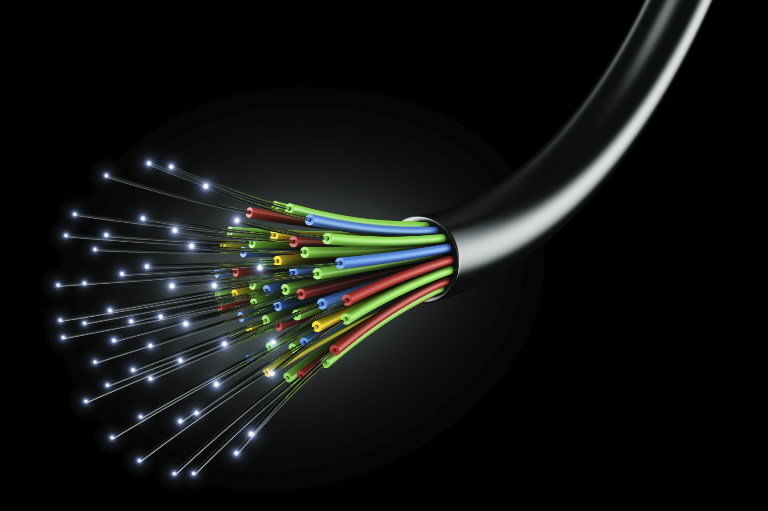
Fiber optic networks are already the preferred choice for Internet connections in countries like USA and UK and following the trend, companies like MTNL and Airtel are offering fiber optic services to Indian consumers. Fiber-optics based Internet can usually transmit Internet speed ranging from 15 Mbps upto 100 Mbps in some countries.

Of late, there is a discussion going on among scientists and researchers on what will happen when fiber-optic cables reach their physical limits. In a matter of few years, the physical barrier of 100 TBps could be reached in five years and could easily break if services like 8K streaming and others become the standard.

It may look like that the Internet Apocalypse may soon end our days of trolling and killing time on 9GAG, but thankfully, it will not happen.

Engineers at UC San Diego’s Qualcomm Institute have successfully tested the limit of fiber-optic transmissions by increasing the power of optical signals almost twenty times the base level. To send the data faster, engineers usually increase the speed by adding more power, which can interfere with the data, scramble it and lead to a state where data is not being delivered at all.

Engineers used wideband “frequency combs” that conditioned streams of information before they were sent out, so that any interference that occurred along the way would be predicted. At the receiving end of the fiber, the information was unscrambled and fully restored.

As Nikola Alic of the Qualcomm Institute, a lead author on the paper, under which the experiment was carried out, puts it, “Today’s fiber optic systems are a little like quicksand. With quicksand, the more you struggle, the faster you sink. With fiber optics, after a certain point, the more power you add to the signal, the more distortion you get, in effect preventing a longer reach.” The team’s use of “frequency combs” will not only keep the signal going but will also allow distortion-free signal.

Internet will live on, after all.

Comments

15 responses to “Engineers Break the Speed Limit for Fiber-Optic Transmissions”

  1. Swarim Khan Avatar
    Swarim Khan

    Yet I am stuck with 4mbps :3

  2. Ankur Khankhoje Avatar
    Ankur Khankhoje

    Hope they could implement it in india without any political drama!

  3. Bikash Shrestha Avatar
    Bikash Shrestha

    Tushar Thorat

  4. Zuhaib Javed Avatar
    Zuhaib Javed

    Yha to KB per aafat he aur aap GB ki baat karte he. Mene Aapka petition sign kiya tha, kya hua bai.

  5. Tarun Yadav Avatar
    Tarun Yadav

    India me itna hi milega bhai, chahe piche tak ka jor laga lo, modi bolega or bolta hi rahega n hum log sunte. Sunte fir inhi kisi me se kisi ko vote de denge

  6. Amit Prasad Ultimatesapien Avatar
    Amit Prasad Ultimatesapien

    google optical fiber in recent times gone speed more then 1 tb/sec nd some researchers are hoping for speed upto 6tb/sec

  7. Suraj Muralee Avatar
    Suraj Muralee

    Present? Yes. Available? Nop

  8. Abhishek Rajbhar Avatar
    Abhishek Rajbhar

    Mayuresh Awalegaonkar

  9. Garry Sidhu Avatar
    Garry Sidhu

    What is the use? Airtel and other companies are chor.

  10. Gaurav Pandey Avatar
    Gaurav Pandey

    haan, kal dusare website pe padh liya tah.

  11. Vishal Goodwin Avatar
    Vishal Goodwin

    kya fayda ham log to garib hai ham to use he nhi kar paye ge to hame unane se kya fayda

  12. Aditya Chaudhary Avatar
    Aditya Chaudhary

    Yha to KB per aafat he aur aap GB ki baat karte he. Mene Aapka petition sign kiya tha, kya hua bai.

  13. Simon William Avatar
    Simon William

    Maya Rajput

  14. Amit Prasad Ultimatesapien Avatar
    Amit Prasad Ultimatesapien

    speed of more then 1tb/sec will be good otherwise its present ryt now…

Leave a Reply

Your email address will not be published. Required fields are marked *

iGyaan Network
Privacy Overview

This website uses cookies so that we can provide you with the best user experience possible. Cookie information is stored in your browser and performs functions such as recognising you when you return to our website and helping our team to understand which sections of the website you find most interesting and useful.

Share via