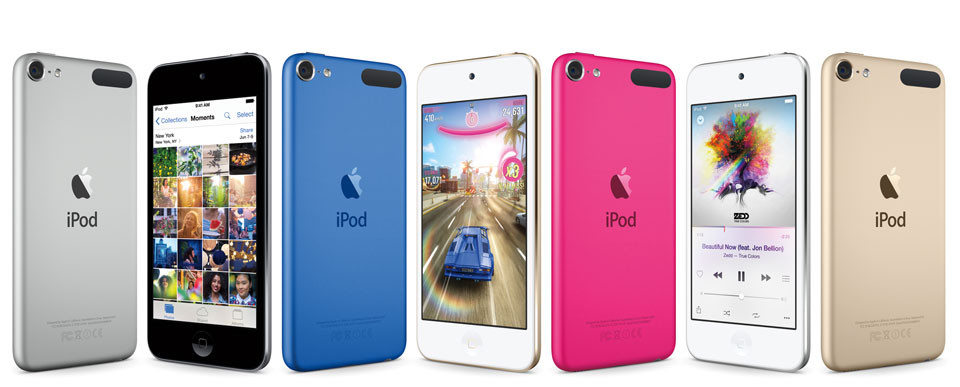
Apple’s iPod was once their hero product, now however, the story is completely different. Apple has ignored the iPod for two cycles of the iPhone. This time around the iPod gets an internal overhaul, with the new chipsets form the iPhone 6.
The new iPod also gets new colours along with some noticeable upgrades as well. The camera has been upgraded to a new 8 megapixel iSight camera. The new iPod Touch will also get an improved FaceTime HD camera, because who doesn’t want selfies on an iPod.
Apple’s A8 chip found in the iPhone 6 is used in the iPod Touch 2015, along with the old 4-inch Retina display. The new iPod touch starts at INR 18,900 for the 16GB model, INR 22,900 for 32GB and INR 26,900 for 64GB.
If you are in the US, 16GB edition will cost you back $199, you can get a 32GB option for $249, a 64GB variant priced at $299 and a first time 128GB model for $399.
HTC has had a tough year, tough decisions and a lot of devices. The company has had the slowest quarter yet and the stock prices have dropped to an all time low. The company also reported a net loss of $258 Million, which points to the fact that the company is not doing well.
However that has not stopped HTC from making new handsets, and in countries like India, the HTC market share is growing considerably.
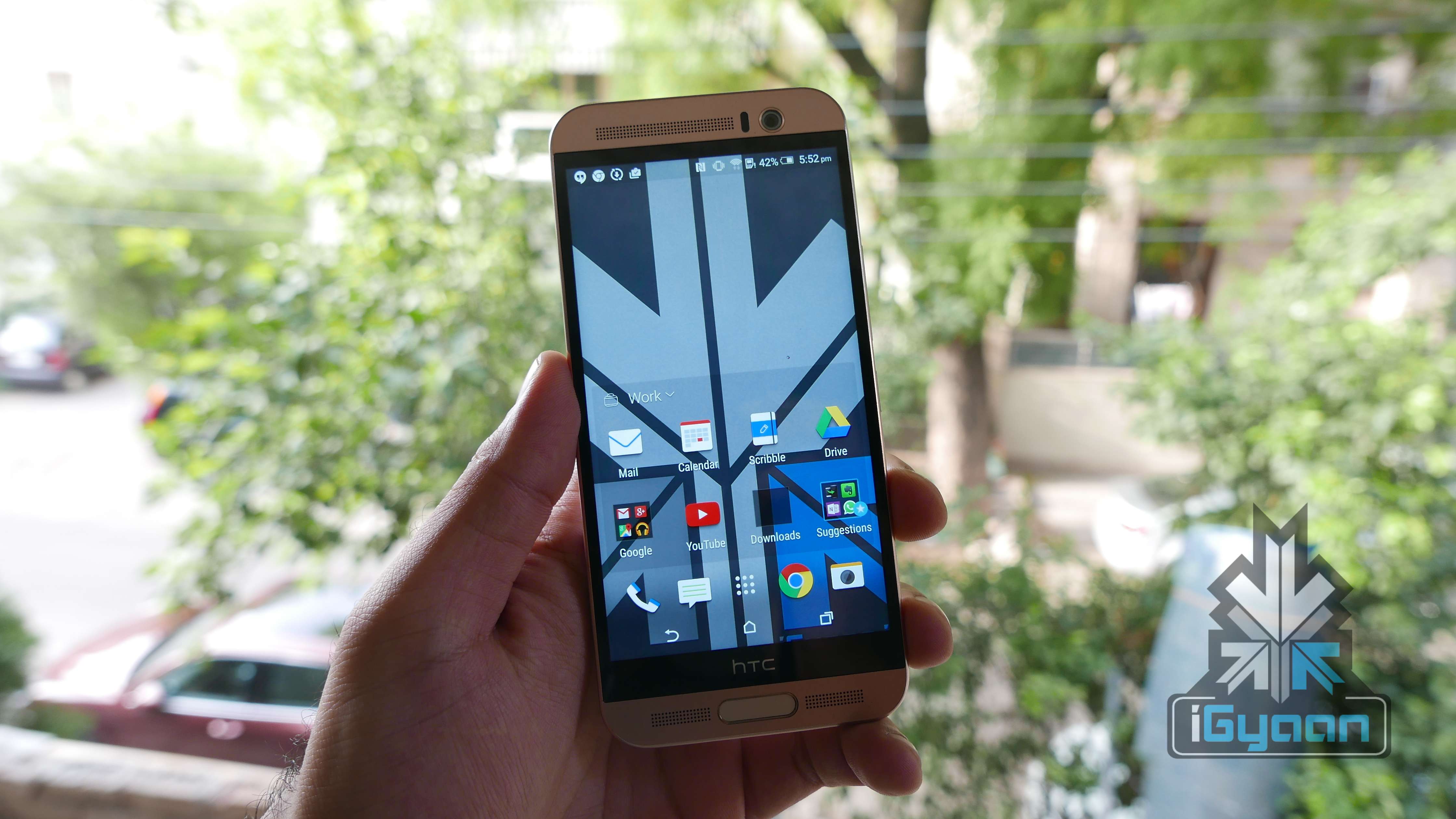
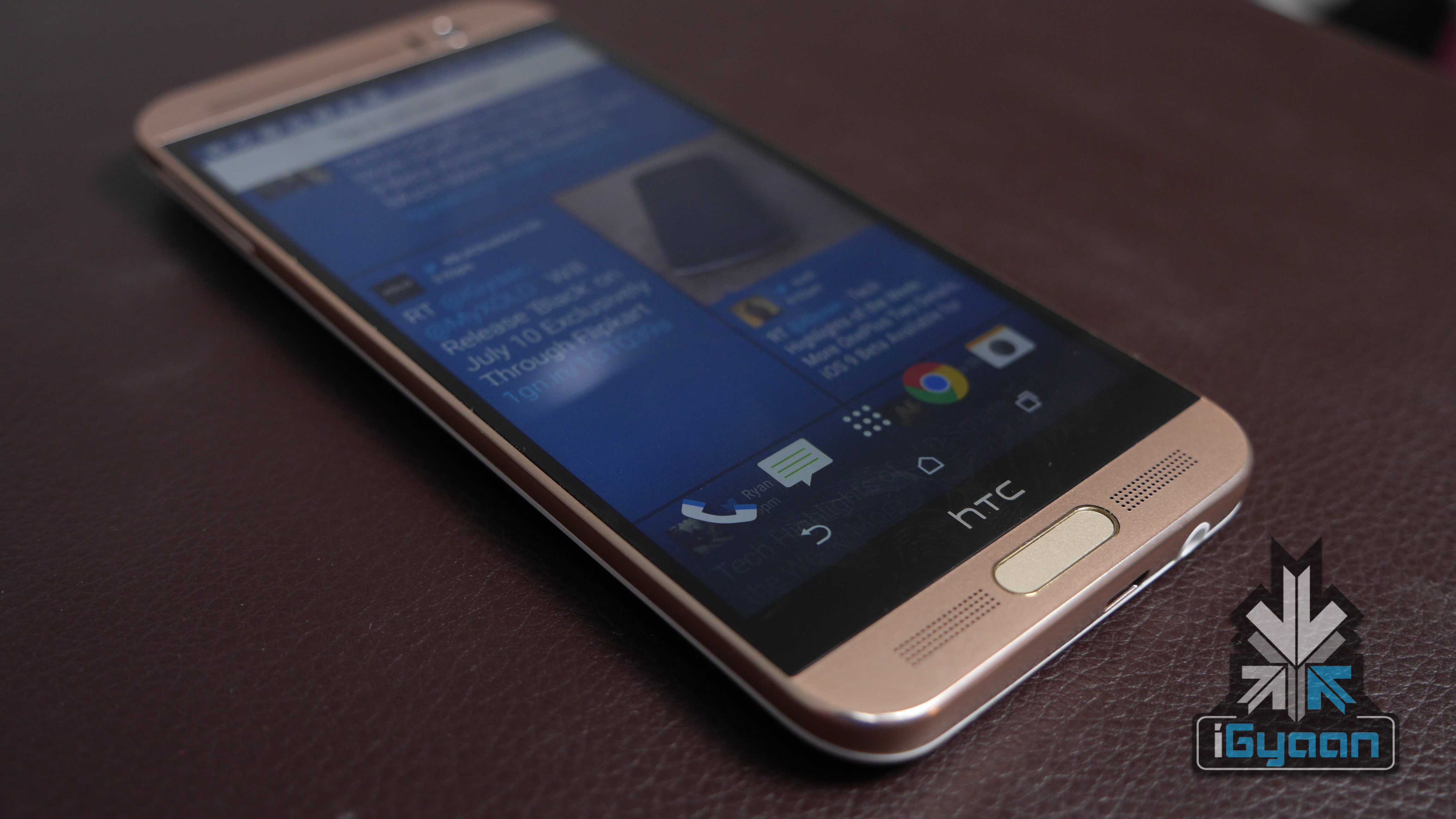
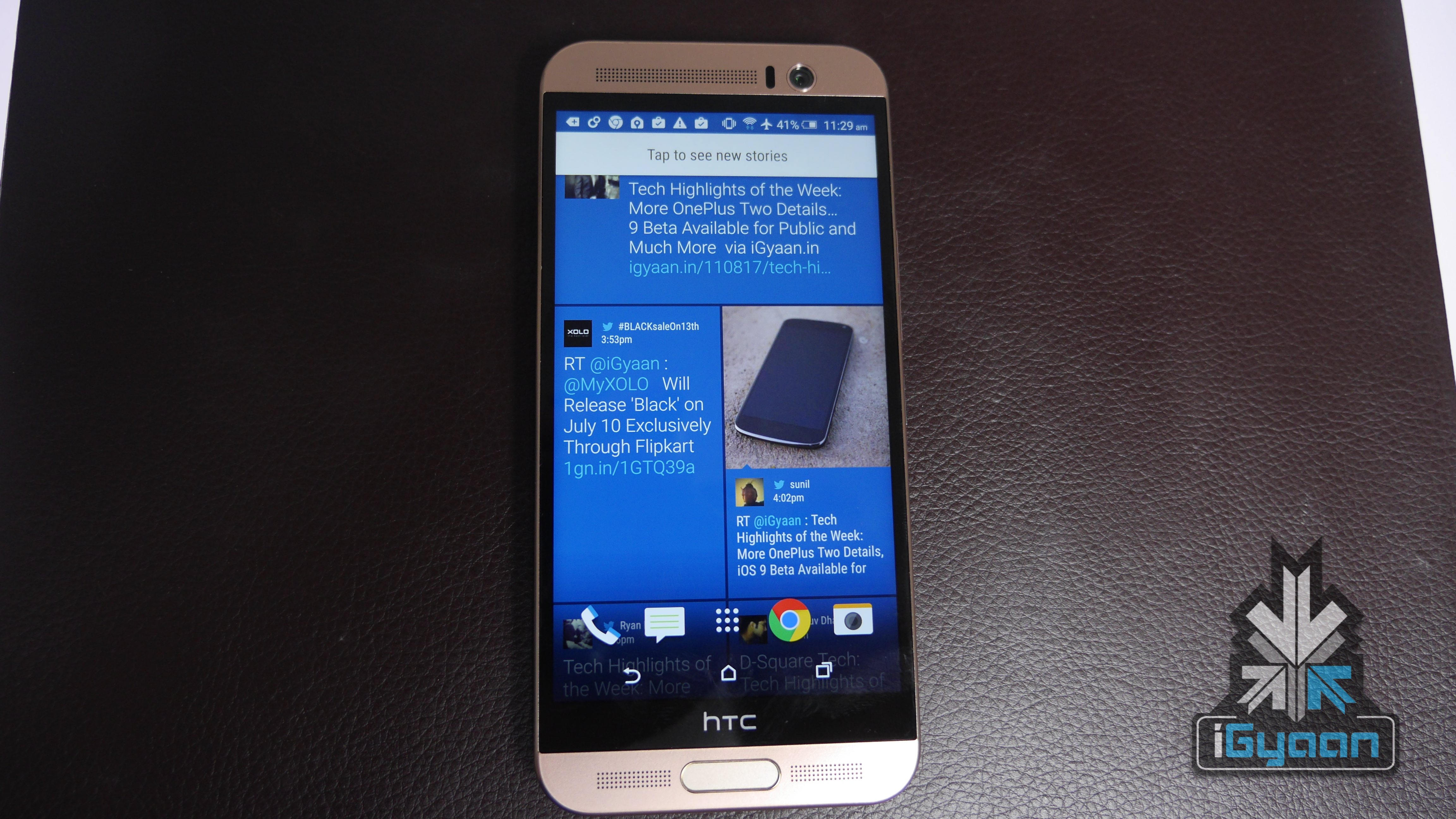
The HTC One ME, adds fuel to the HTC fire in India, a handset that brings the best of the flagship world at a relatively lower cost.
Overview
The HTC One ME is a good mix of things from HTC. Priced at Rs. 40000 or US $ 630 (outright) the phone makes a lot of sense to people. However the use of mediate is slightly bothersome to the tech crowd, especially at such high prices.
Hardware
The HTC One ME has almost everything from the HTC One M9+ including most of the hardware. What differs is the chipset. The One ME uses the new MediaTek Helio X10 and is also the first phone with the said chipset. This enables devices to utilise full octal-cores at 2.2 GHz in 64 bit and also shoots high quality videos at upto 480 frames/sec. It allows a 120 Hz video display rate too.
Apart from that you will get 3 GB of RAM, a brilliant 2k display with 5.2 inch size, a 2560×1440 px resolution and 565 ppi.
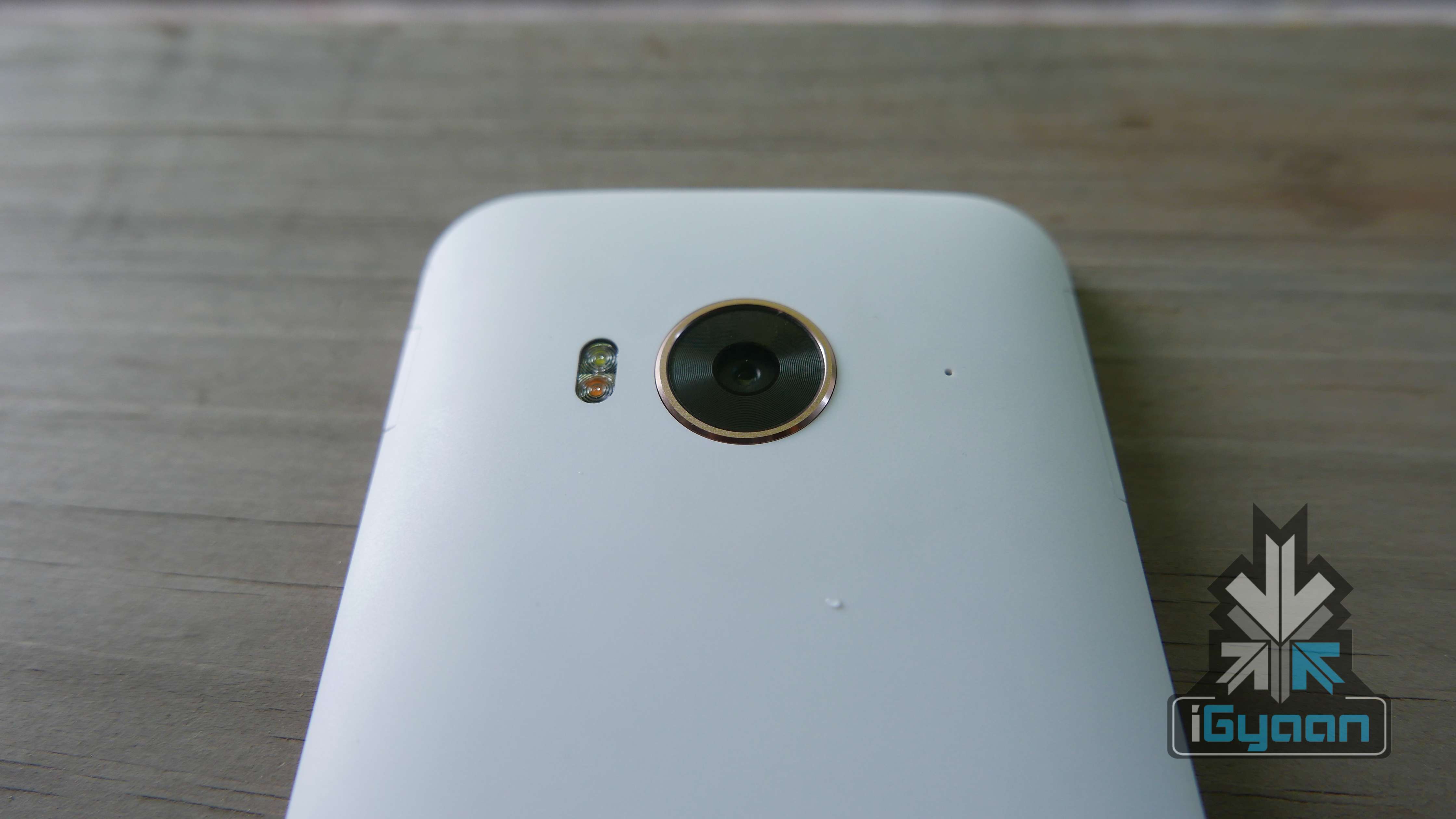
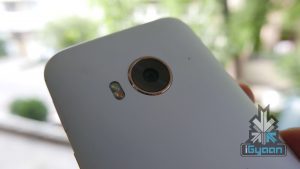
The same camera as the One M9, a 20 MP f2.2 lens equipped sensor, and an HTC ultra pixel sensor for the front.
Specifications
HTC One ME
Display
5.2-inch Super LCD3
Resolution
WQHD 1440×2560 pixels : 565 ppi pixel density
Chipset
MediaTek Helio X10
Processor
Octa-Cora 2.2 GHz
GPU
PowerVR G6200
RAM
3 GB
Storage
32 GB
MicroSD Support
Yes, Upto 2TB
Rear Camera
20MP, f2.2, BSI Sensor, 4K Video Recording
Front Camera
HTC Ultrapixel, f2.0
Battery
2,840mAh
Operating System
Android Lollipop 5.0.2 with HTC Sense 7.0
Misc
Boom Sound Speakers / Fingerprint Scanner
Price
Rs. 40,500
Display, Multimedia and Camera
The display on the new ME is the same as the M9+, excellent colours, deep blacks and great outdoor visibility. The touch is highly sensitive and even works when there is water on the display or if your fingers are wet. You will also get features like double tap to turn on. The display is great for all sorts of usage like watching movies, playing games or even browsing the internet. The high resolution makes content optimized for this look, great and the strain on the eyes is reduced considerably.
Boomsound speakers have always had this ability to be better than the remaining devices in the price segment and that continues with the new One ME. Sound is excellent in the headphones, out speakers or via bluetooth. Volumes are kept high and bass levels deep, almost as if the profile is the same as the old ones when HTC handsets would ship with “Beats Audio,” however, only better.
The camera lens and sensor are relatively large, hence a lot of light passes through to get a really high detail image. The images have excellent contrast and sharpness, shallow depth of field on close ups and a large zoom ratio thanks to the large 20.1 MP size of the rear camera.
4k video can be captured in 5 minute bursts, which gets annoying for those looking for a seamless solution. There are alternatives, devices which do not have said limits including the one we chose for our project here. Video is jitter free and captured at 30fps and it looks good, as the colour is deep and light is aptly adjusted.
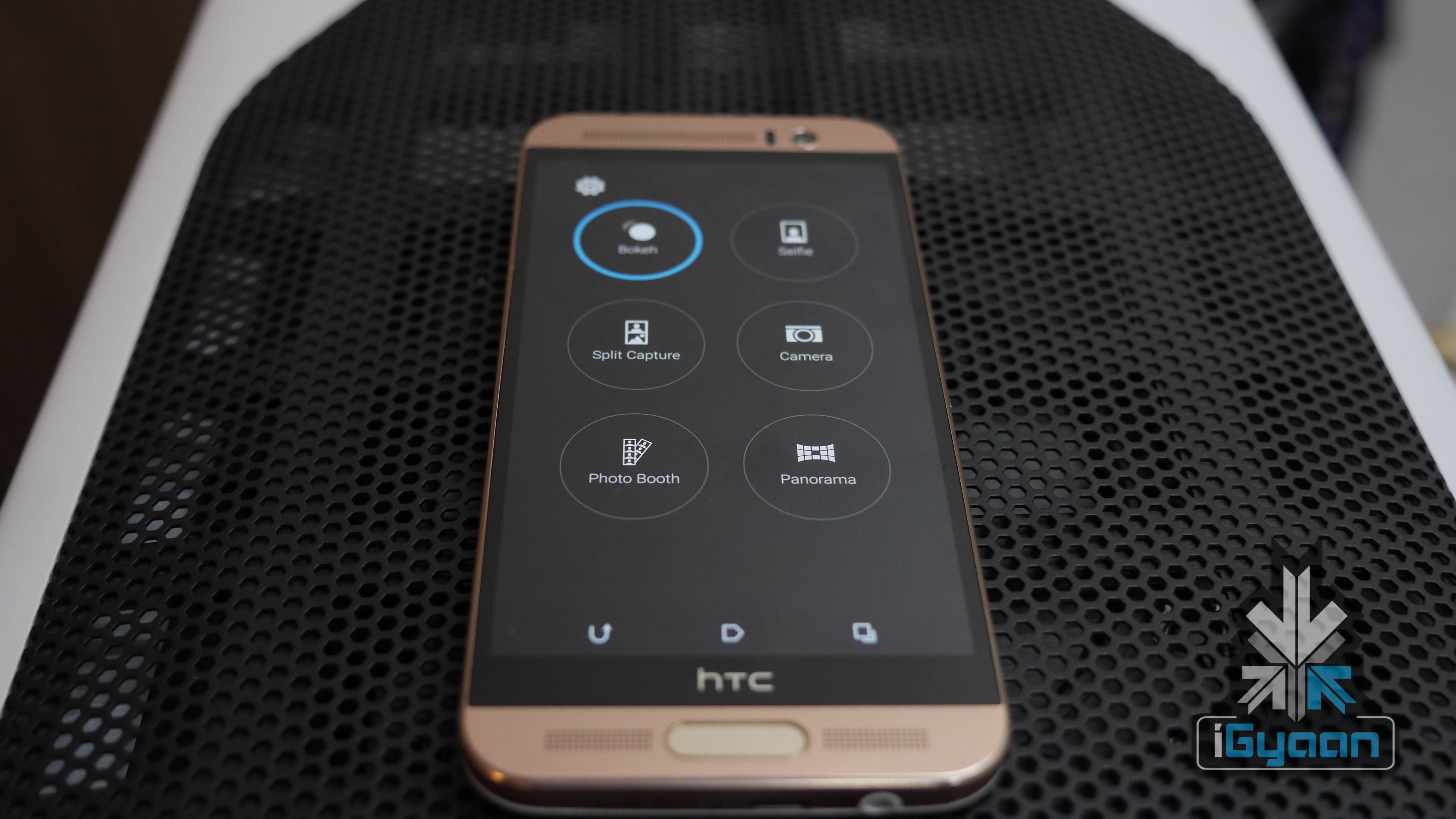
Camera App
The Camera App is in-depth and features a lot of the capabilities of HTC devices seen in the past, galleries and Zoe are now independent apps with independent cloud storages. This complicates things for first time users, but in the longer run, makes sense. You also get the usual filters and effects along with post capture edits, which were all a part of HTC’s Sense.
Rear Camera Bokeh Effect
Rear Camera Indoor
Wide Front Camera
Front Ultrapixel Camera
Performance and Gaming
The handset scores roughly 46-48k on Antutu 64 Bit benchmark, which is impressive taking into consideration, the price. However, most of the performance which may not appear on benchmarks can been seen in real time usage.
The handset will almost never lag. In the 2 weeks of usage, the handset has not slowed down and transitions remain smooth, despite consuming large parts of the storage and or RAM.
Gaming remains impressive, the 120 Hz refresh rate of the display helps tremendously. Boom sound adds to the experience and so does the impressive touch screen. The good thing is that the device does not heat up despite increased usage, or high periods of gaming.
Phone Networks and Battery
The HTC One ME accepts dual LTE sim cards, both of which need to be nano sim cards. Network strength is great and so is the audio on both sides. Both sim cards can run LTE data packs and can be switched, depending on your convenience or usage scenarios.
Battery life was impressive due to high levels of optimizations and range point locks. Despite several rumours of poor battery life, we did not face any such issues with the handset. On our handset, the battery life was rather impressive. We got an average of One day plus use. Another thing to brag about is the quick charge capability of the handset. The One ME reaches a full charge in just over an hour, 50% recharge can be achieved in about 15 minutes of time.
Type of Usage
Battery Life Expectancy
Phone Calls
5 Hours
Standby
3 Days
Gaming
3.5 Hours
Music Playback
11 Hours
Internet
7.5 Hours
Fingerprint, Blinkfeed and New Sense 7
The new style fingerprint scanner utilised by HTC is better by leaps and bounds. Versus the previous ten scanners, which required you to slide your finger across, the new “Apple Touch ID” style scanners are efficient and very usable. This makes your phone private and safe. You can easily unlock your device in the presence of others, without revealing your passwords or unlock patterns.
Fingerprint Sensor
The new Blinkfeed is far more seamless and smooth. The UI is easy and very pleasing to the eye, HTC has improved the layout of the content and things like fonts and colours have been tweaked to appear easy to the eye. You can now simplify content and chose what feeds you want, within your Blinkfeed. You can also set up custom channels for the same, to allow you to reach directly to your favourite feeds.
Sense 7 is a mega improvement over previous Sense UIs, more because of the way pure android is available to the consumer. The UI is far more simplified and streamlined, less invasive and does not come loaded with bloatware. Essentials like the “Zoe” feature and the “One Gallery” are cloud-only apps that serve a simple purpose.
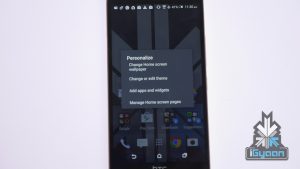
Customisation has been HTC’s forté and it remains so, in the new Sense 7 on the new HTC One ME. The UI is extensively modifiable, and if you don’t like the BlinkFeed on the left you can simply use a third party launcher and replace it all.
Conclusion
HTC may not have gotten a lot of things right this year, but their devices in the Indian market show that the company has chosen the right things at the right time.
The HTC One ME is one such example. With Snapdragon not performing well on their current lineup of chipsets, HTC went with MediaTek and their latest “premium” chipsets. This has made the devices a lot more stable. However, this has also made one handset considerably vary from another. Some report of lag and battery drain while others, like us, appreciate the long battery life on our handset.
MediaTek aside, the HTC One ME is the plastic equivalent of the all round phone. The impressive display, great camera, excellent battery and seamless performance on our handset, makes us want to like it a lot. Just like any other scenario alternates do exist and with the S6 becoming cheap, a fixed storage and single sim is something that may make you pick the HTC One ME with its Dual Sim and 2TB expandability. However the S6 performs better and looks damn good.
LG in the past years has emerged as a true Android champion. A South Korean counter brand to the kingship of Samsung, especially in the Android smartphone market.
LG came into light after their partnership with Google on building the Nexus 4 and then the Nexus 5 along with LG’s own iterations of the handsets for the global consumer markets. All four of the devices by LG led them into a high stake position in the Android rat race.
Last year however, LG fell off the map with the LG G3, it also had a fall out with Google, who then decided to go with Motorola to manufacture the Nexus 6.
This year LG is back and they want vengeance, pitting up points in almost all areas, LG tried to reach the top of the ladder with their new flagship, the LG G4. But, just as the relevance of Mr. Amitabh Bachchan, on the stage at the time of launch, LG didn’t seem to think this through.
Hardware
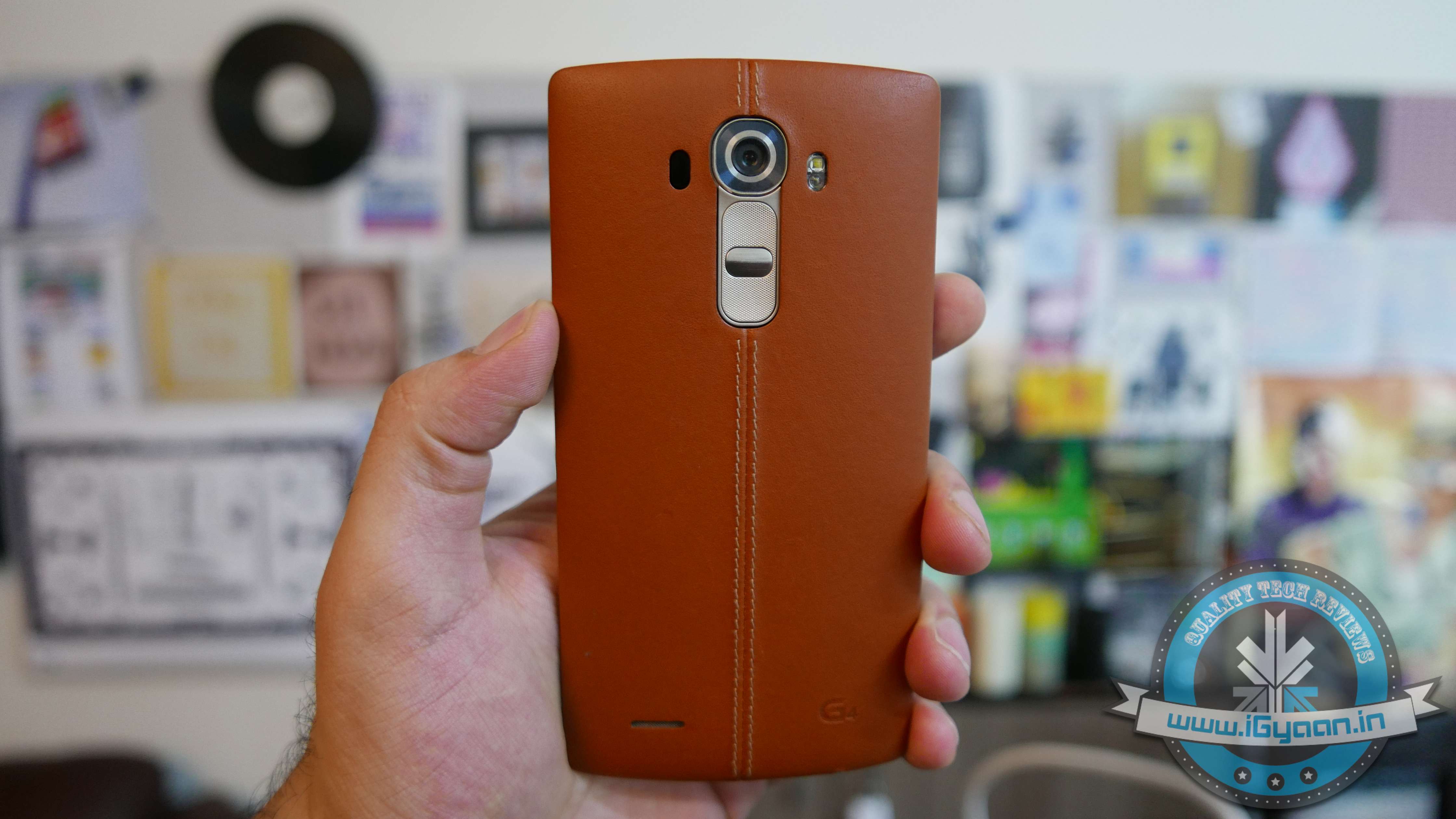
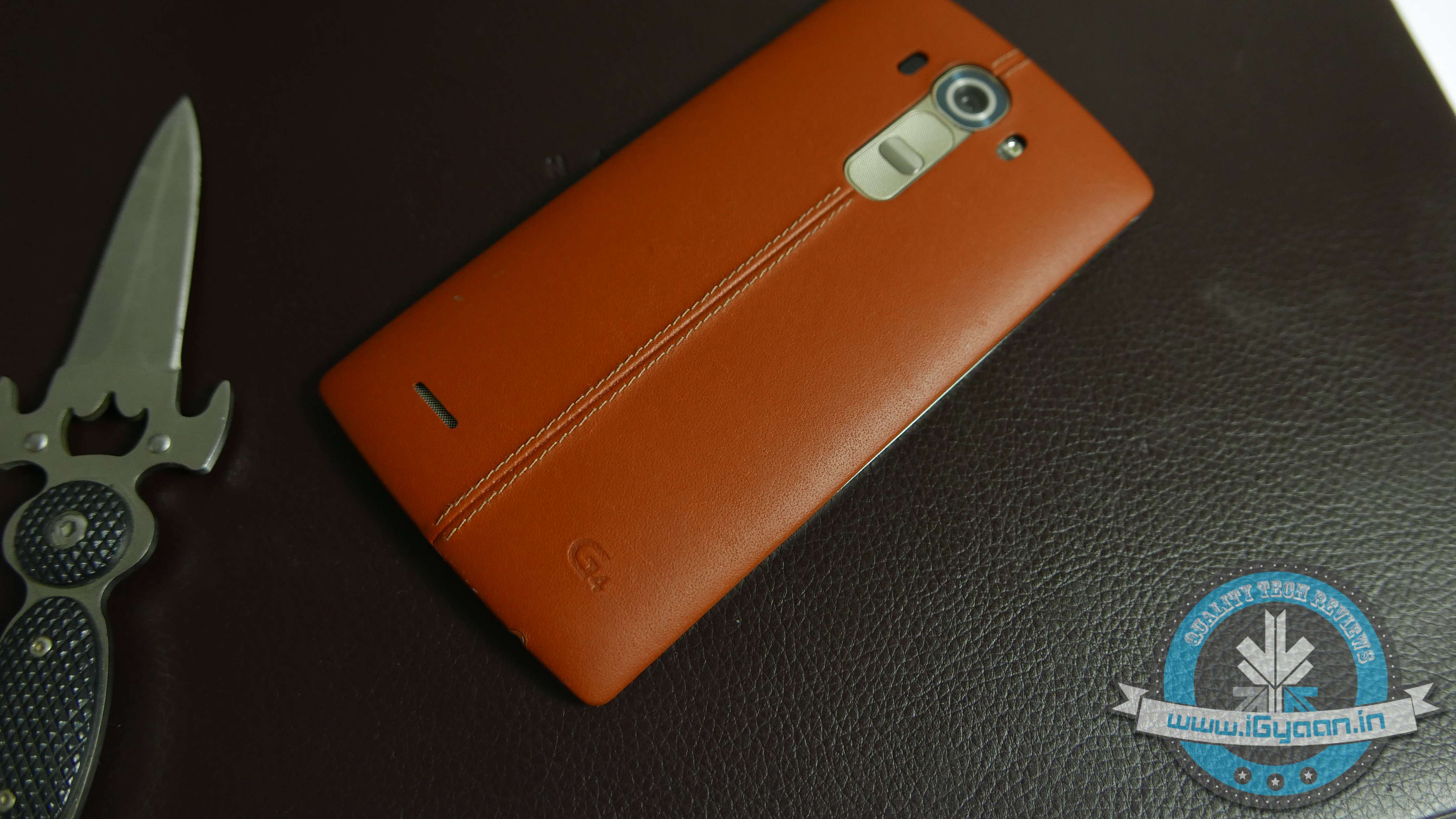
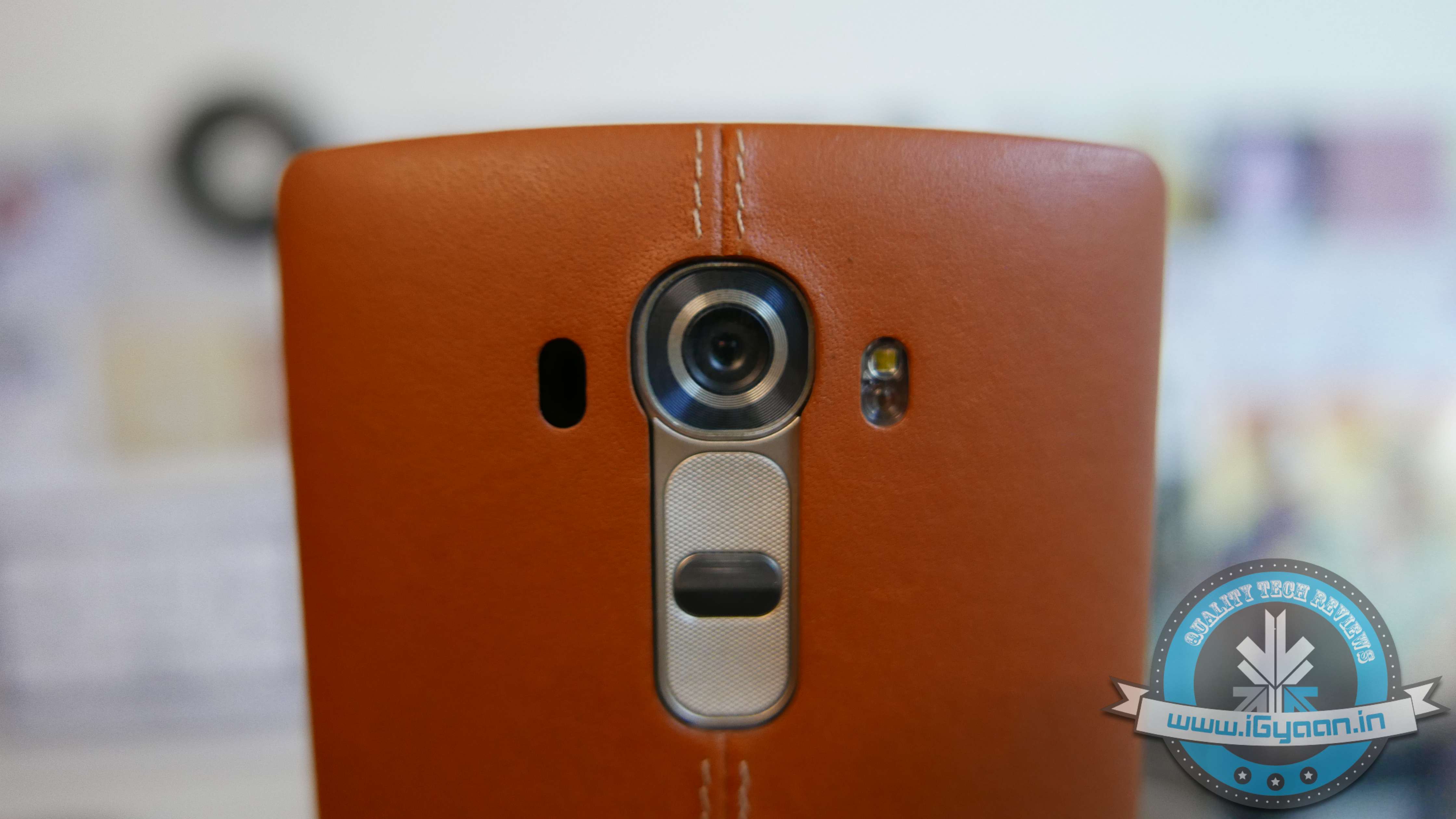
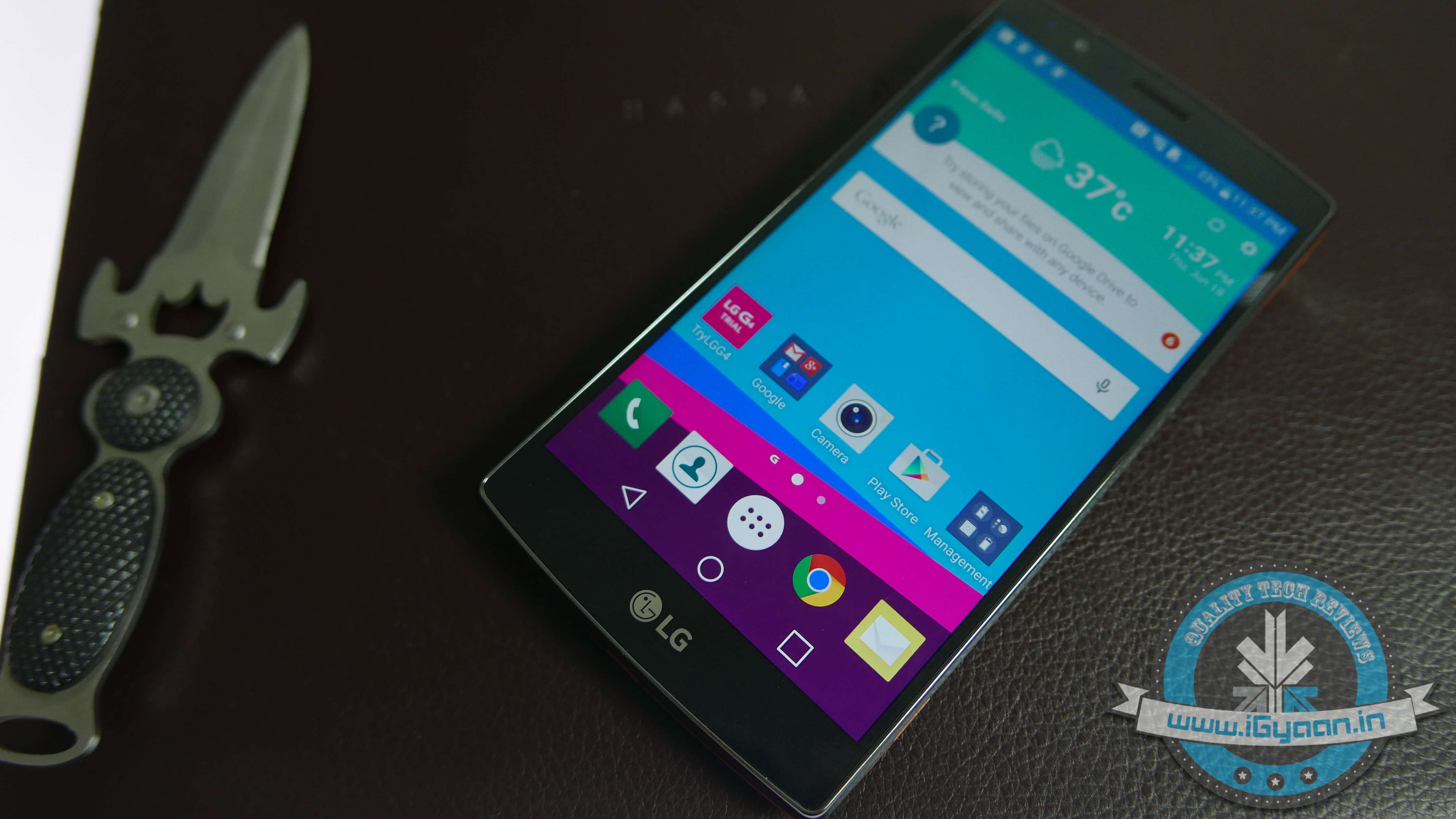
The LG G4 is an iconic design from LG, while many companies have attempted to make leather looking handsets (Note 3 and Galaxy S5), LG actually made a smartphone with a genuine leather back panel.
LG also one upped Samsung with their interesting fast aperture camera and lens, with 16 MP and a f1.8 lens setup vs the f1.9 on the Galaxy S6 and Edge.
The LG G4 also has dual sim (certain regions) and a removable and replaceable battery along with micro-SD expansion all of which is lacking in the Galaxy S6 and S6 Edge.
Hardware Specs
LG G4
Display
5.5-inch Quad HD LCD
Resolution
2560 x 1440 PX
Chipset
Qualcomm Snapdragon 808 with X10 LTE
Processor
1.8GHz Hexa-core
GPU
Adreno 418
RAM
3GB
Primary Camera
16MP f/1.8 aperture
Front Camera
8MP f/1.8 aperture
Storage
32GB
Expandable Up to
2 TB
Battery
3,000 mAh
Operating System
Android 5.1 Lollipop with LG UX 4.0
Bluetooth
4.1 LE (APT-x)
Design, Build and Aesthetics
The LG G4 is designed in a new way, the introduction of a genuine leather back panel may have mixed reactions in certain religious countries. For example in India, LG has refrained from mentioning that the leather back panel is made from cow hide, which may prevent some people from buying the handset. The use of leather however is done in a brilliant way. The back panel takes 12 weeks to manufacture and uses a new technology for a process which normally takes a few days.
Leather Back Panel
Made from only the top layer (epidermis) of high quality cow leather, the back features tiny 0.001 micrometer pores for breathability. The end result is a smooth, soft touch back that should feel unlike any other smartphone on the market, while still allowing heat to dissipate.
Although some have mixed opinions about the design and use of leather, LG has done it rather tastefully and not only does is look impressive, but also feels great in the hand. There is also a Ceramic white which might become the preferred option, also because it is about 100$ cheaper (Rs. 6000 approx)
The front houses a LG G3-esque minimal bezel design from LG which is highly applauded on their previous smartphones, and the LG G4 is expected to have the same outlook.
The construction, however seems a lot less sturdy compared to previous generation G phones from LG. Gorilla Glass 3 has been used in place of Gorilla Glass 4 found on the Galaxy S6 and Edge.
The back panel is removable and replaceable, which means that it can be swapped out if damaged. Also reports of the leather weathering faster than ever, however we faced no such nuisance.
The buttons remain on the back, volume rockers and the main power button, which can also be used as a selfie mirror, sort of.
The phone also lacks premium materials, made mostly from plastics. In an age where Samsung’s flagship is a premium metal and glass device the LG G4 is sub-standard, and less premium.
Performance, Gaming and Display
Here is where the leather laden phone from LG, faces the first from the competition. The underpowered Hexa Core Snapdragon 808 is far inferior than expected. LG’s optimizations to improve battery have further reduced the performance output of this chipset.
In our Benchmark test the G4 stood last with the poorest score. when compared to HTC’s devices and Samsung devices.
The GPU works overtime to deliver high resolution to the 2K display, therefore reducing the graphics quality displayed during gaming.
Although the affect is minimum, but if have been playing on other devices like the HTC M9+ and the S6 you will notice the considerable amount of difference.
The UI is fast and snappy, transitions are quicker and lag is virtually non existent. We still find LG’s UI a little cluttered, and non easy to navigate.
Phone and Battery
The LG G4 in India comes with Dual Sim LTE, which means that both cards can run LTE networks. Networks speeds are weak, due to network strength issues, but we got 14 Mbps downloads in health network areas.
The dual sim setup is handy for a lot of people and on the LG G4 works well. However battery life is adversely affected by the G4 SIM usage, mostly from network searches.
LG is offering a spare battery with an external charger in many countries, this is justified thanks to the poor battery performance. The battery will barely last you a day, and the drain is massive due to the display and the network searches.
Talk Time : 3 Hours
Standby : 24 Hours
Internet : 3.5 Hours
Music : 9 Hours
Gaming : 2 Hours.
Honestly, the battery is a big let down for us. You cannot have a flagship, running lower spec hardware, with a poorly performing battery.
16MP f/1.8 aperture
Camera
The highlight of LG’s new-gen smartphones, and especially the G series smartphones has been the camera and optics. With the new G4, LG continues to use laser autofocus, but improves the camera considerably. Low light performance is excellent, thanks to a f1.8 lens, whereas the Galaxy S6 only manages a f1.9. The front camera however is not as wide on the G4 as on the S6/edge, but seems to have great capture capability.
Dynamic range is much improved, however we feel that indoor image quality needs to be better. The way the software is processing the images, they feel a lot more digital. Outdoor images are high in detail and contrast.
Images will almost always be in focus and sharp, thanks to the laser sensor, which is accurate and super fast.
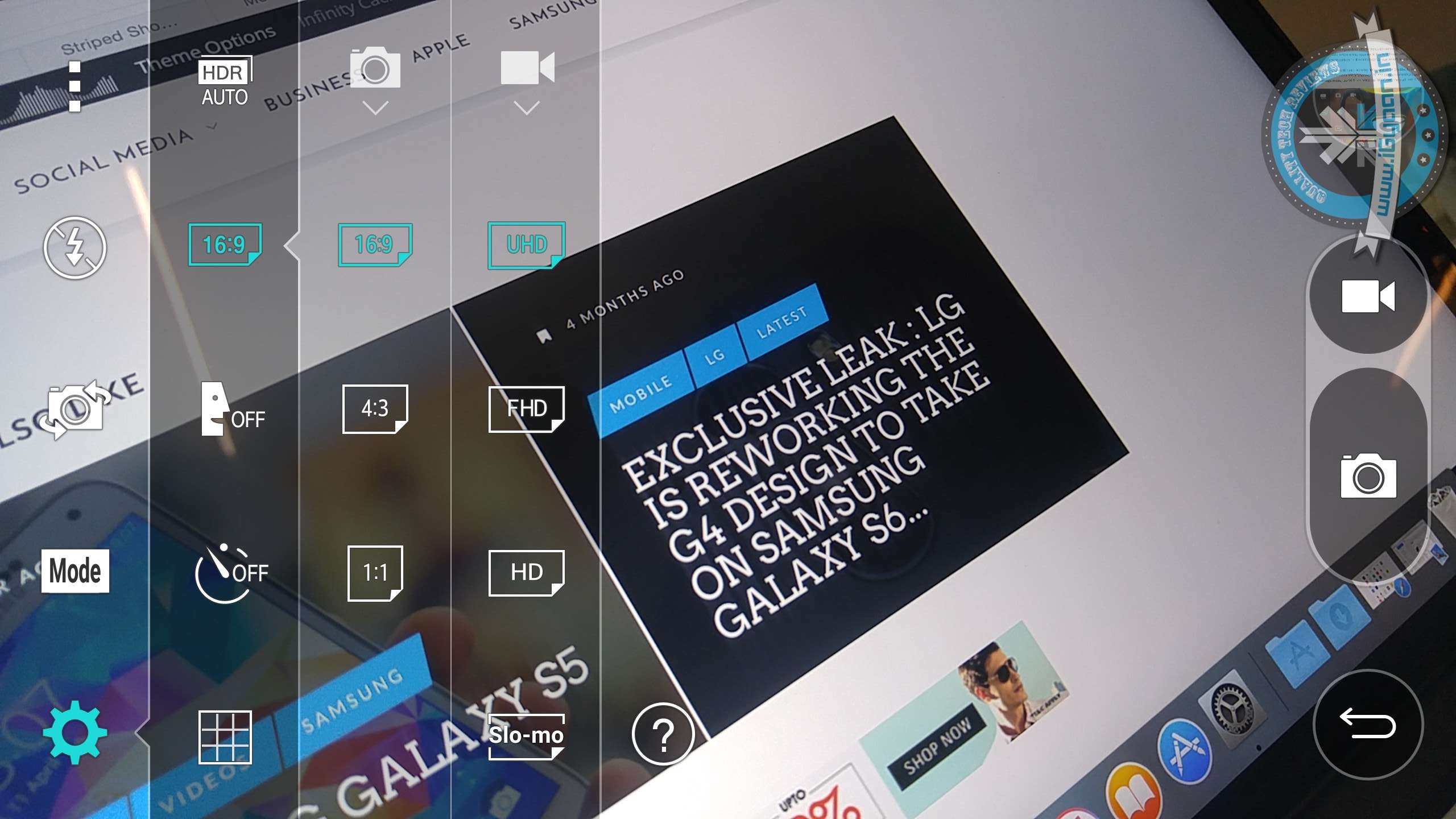
Video is captured at 4k but to limits of 5 minutes to prevent the chipset from overheating. Finding the 4k option is slightly difficult for the first time around, as the phone records 1080p out the box.
4k Video Option
The front camera has a brilliant image quality and works well for “selfies” in low light conditions. The gesture shot allows you to click a picture by making a fist in front of the camera. This allows for a better image, which is less shaky.
Android and UI
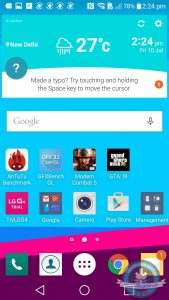
With a lot of things built in as smart features, the usability of the LG G4 as a daily driver is easy. Android 5.1 comes out of the box and the UI is highly customizable.
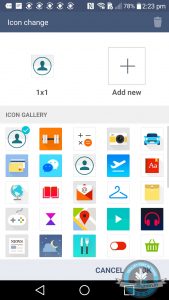
Lg also allows you to customize individual icons, using inbuilt set of icons or your own images can be converted into an icon for any App.
Smart features also allow you to auto-magically enable or disable features as per your usage requirements. For eg. “When at Home turn on Wi-Fi” will automatically enable Wi-Fi on the G4 when you arrive at your’s home’s geolocation. While these features can be really handy, they are an added drain on the battery.
There is still a lot of clutter on the UI as LG is trying to do a lot. Qslide Apps sit in the notification panel, along with quick toggles. There is just so much happening on the G4, that you really want to simplify the usage.
LG’s included apps are also handy, like LG Health for fitness enthusiasts and LG Backup for security of data. Qremote lets you use the inbuilt IR blaster on the top of the phone to control your electronics and appliances, like a TV, Dish box, Air-Con etc. The Qremote turns out to be more useful than mentioned.
Conclusion
Just like each year before this, LG has maintained high quality and managed to make the phone good looking. However, the leather back restricts buyers and the phone may be too any for the female audience.There is a pink leather back cover as well as a red one, which also are more easily handled by men than women. The ceramic white drops the leather for a more LG plastic (they call it polycarbonate) approach.
It is distinctively a man phone, with features which are slightly lower than the competition. A price tag which is higher than the competition and a not so impressive performance and battery life. It does excel in the camera department, only if you are an outdoorsy kind of person. The UI is much more refined than seen in the past and the array of customizations is extensive. But, our money is well spent elsewhere.
With Apple’s recent and successful launch of Apple Music, the Music streaming space has gotten really crowded. With companies like Spotify and Pandora already eating the pie, Facebook wants now a big chink of this space.
According to reports the social networking website has already tied up with various music labels and has already started showing music videos which are ad supported.
With reports of a Youtube-esque video service for Facebook already in the works, an all audio variant is expected to roll out later this year. It would be rather easy for Facebook to just acquire an already running service, say Spotify.
However, the folks over at Facebook are mum on the conversation and fail to add any new insight.
With a lot of smartphones now showcasing their 4K video recording capabilities, we decided to evaluate the best for 4k video. After extensive testing, we chose the Motorola Moto Turbo for our video.
The Moto Turbo has a high speed 64 GB inbuilt storage which lets you capture 4K footage non stop vs most of the other devices which have a maximum peak of 5 minutes or so and are prone to over heating.
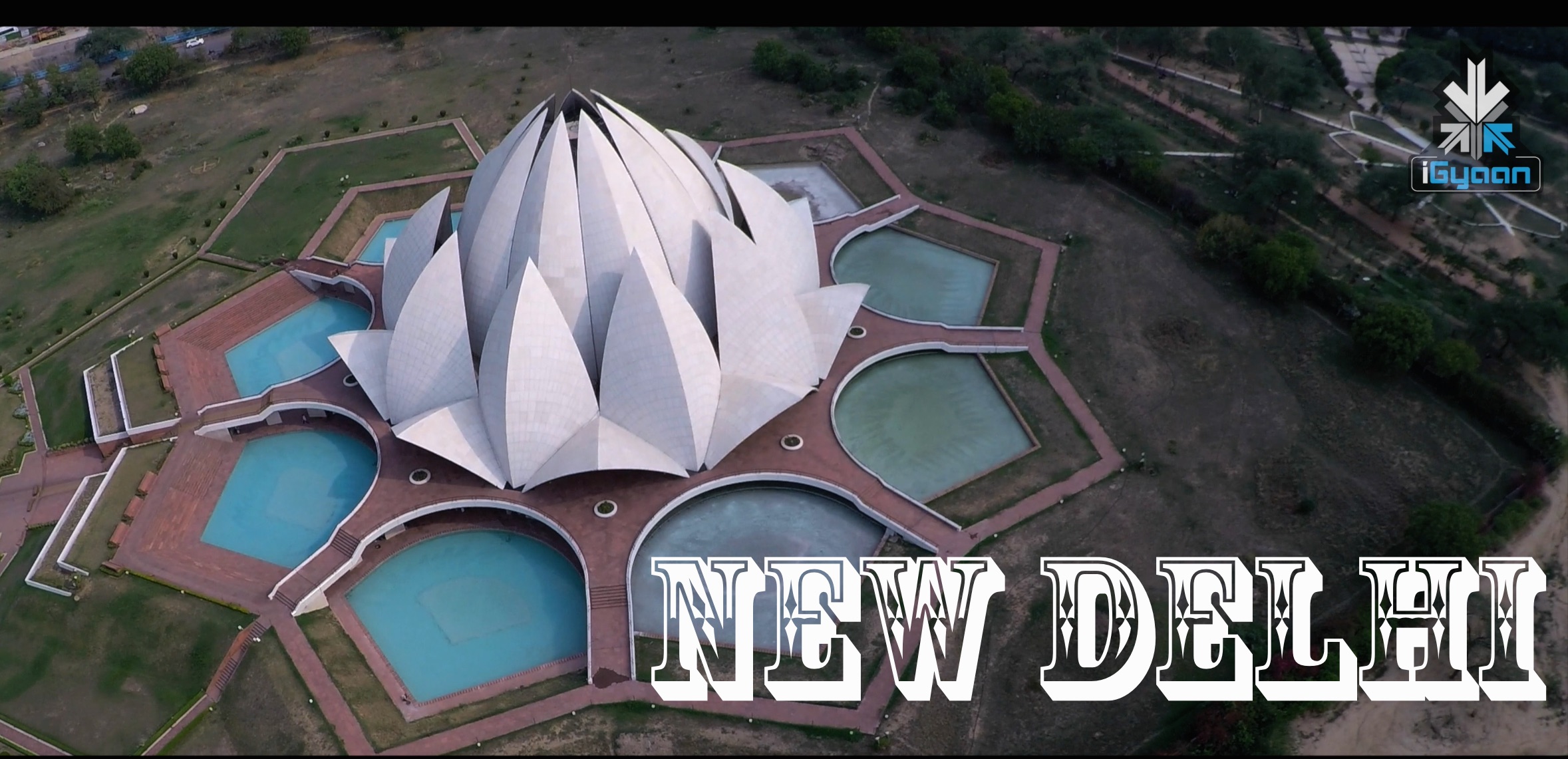
We took the Moto Turbo and retro fitted it on to a drone , a DIY hack of massive proportions. Before we proceed with the details further, Flying a Drone in India without permissions is punishable by law and get you jail time or large fines. Now that we have the disclaimers out of the way, We took the drone out in New Delhi and took it to the Sky.
The Ballistic Nylon back of the Moto Turbo gave us a hope that if the phone did fall from our Zip-tie DIY hack, it would land on the back and be safe (although, that did not happen). What happened next simply blew us away. Check the video below.
Note: The Video has been post-processed, sped up, stabilized in certain places and the night shots have been enhanced.
Also if you liked this project, leave your feedback below and share.
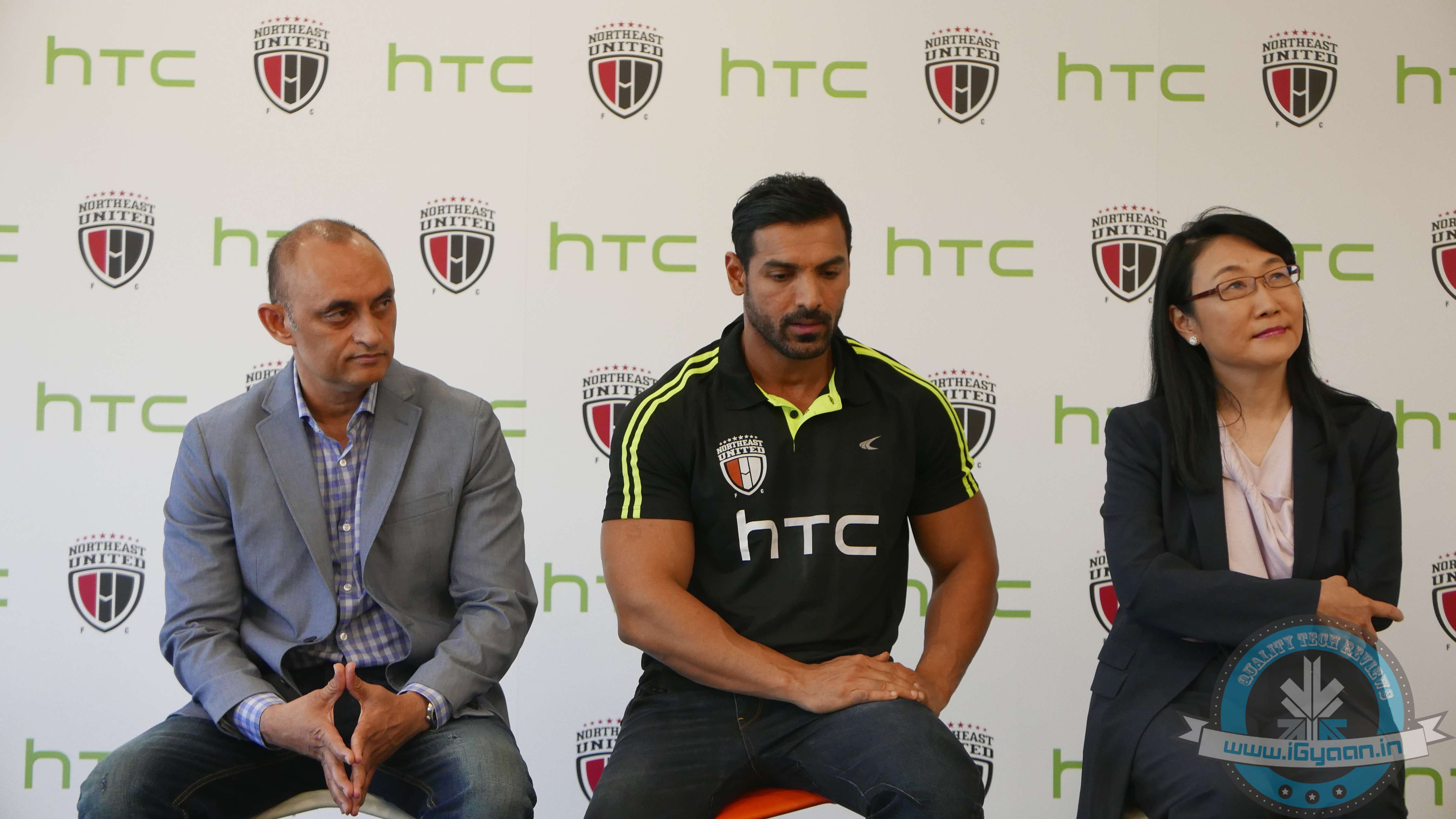
HTC has been following the brand evangelist story for a couple of years. With Robert Downey Jr. taking the reins of the title globally, the new look and brand direction for HTC was formed. This was also a first step in their “Here’s to Change” campaign.
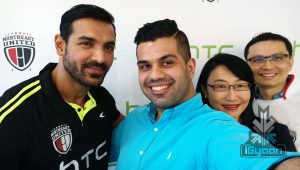
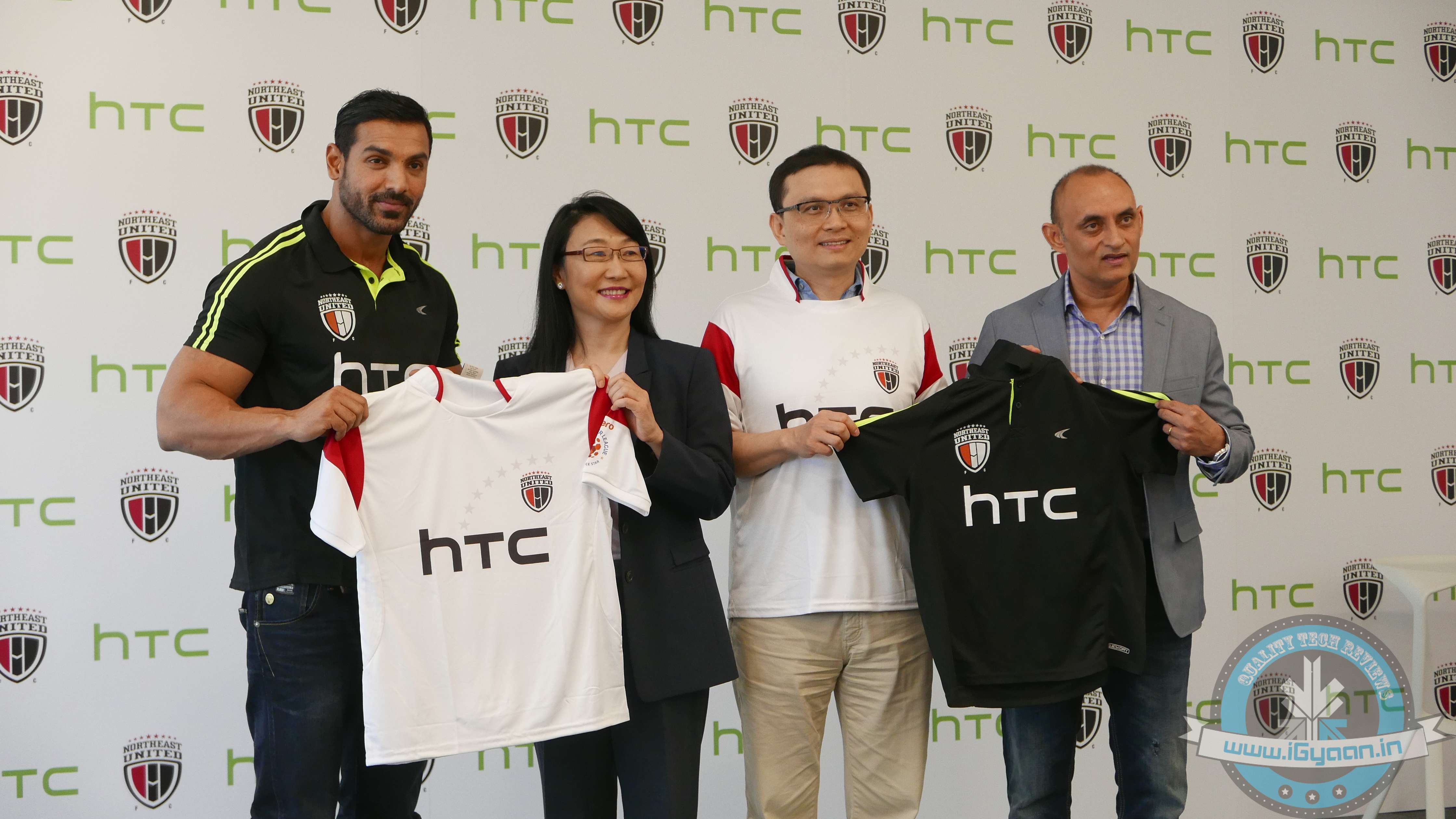
HTC yesterday unveiled its new jersey in partnership with Northeast United Football Club, which is a team owned by John Abraham. The Partnership goes into its second year as HTC remains the title sponsor for the team.
HTC stands for substance and elegance, it and has a strong connection with the youth; traits which are amply reflected in my own life. We are delighted that HTC will be supporting us again this season and I look forward to further strengthening our relationship over the next two years.
-John Abraham
John will also lead the Taiwanese company’s brand operations in the Indian market. With experience in marketing prior to his stint as a full time celebrity John claims that he has a right balance in and is the correct person for the position.
The Indian Super League kicks off on 3rd October and will last through December 2015. However, HTC and John Abraham will continue building ideas for the brand for the next two years.
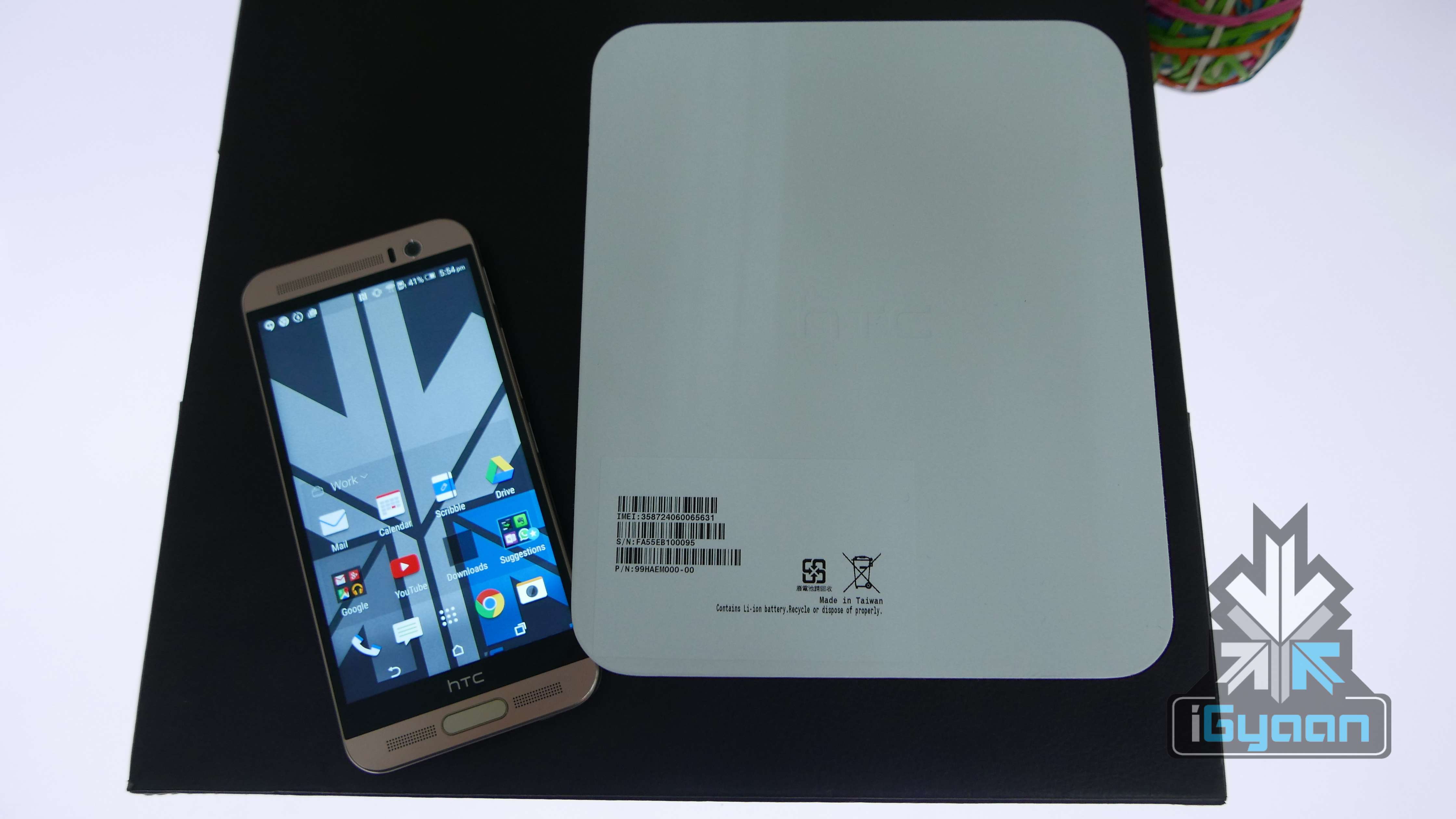
HTC has a new handset on the block and it is called the One ME. With improvements in terms of hardware and software all around, the One Me also features a matte finish back, 2 TB micro SD support and the latest Sense 7.0.
In the box :
A HTC One ME Handset
USB power Cable
USB Wall Charger
In Ear Phones
Ear Tips
Documentation
HTC has taken the new design philosophy of the One M9 and tricked it down to the One ME. With the Notorious new chipset in there, many will ask why HTC decided to go with Mediatek.
The Helio X10 chipset has promising capabilities, it supports display refresh rates of up to 120Hz and slow-motion video recording at up to 480fps at an undisclosed resolution. The Helio X10, which is a 64-bit chipset with eight Cortex-A53 cores clocked at 2.2GHz also has the PowerVR G6200 GPU.
Hardware wise the One Me packs a good set, a 2K display, 3 GB of RAM and 32 GB of storage which can go upto 2TB with the use of an external microSD. However only recently a 200GB card was released, 2TBmight be further away than expected.
Specifications
HTC One ME
Display
5.2-inch Super LCD3
Resolution
WQHD 1440×2560 pixels : 565 ppi pixel density
Chipset
MediaTek Helio X10
Processor
Octa-Cora 2.2 GHz
GPU
PowerVR G6200
RAM
3 GB
Storage
32 GB
MicroSD Support
Yes, Upto 2TB
Rear Camera
20MP, f2.2, BSI Sensor, 4K Video Recording
Front Camera
HTC Ultrapixel, f2.0
Battery
2,840mAh
Operating System
Android Lollipop 5.0.2 with HTC Sense 7.0
Price
Rs. 40,500
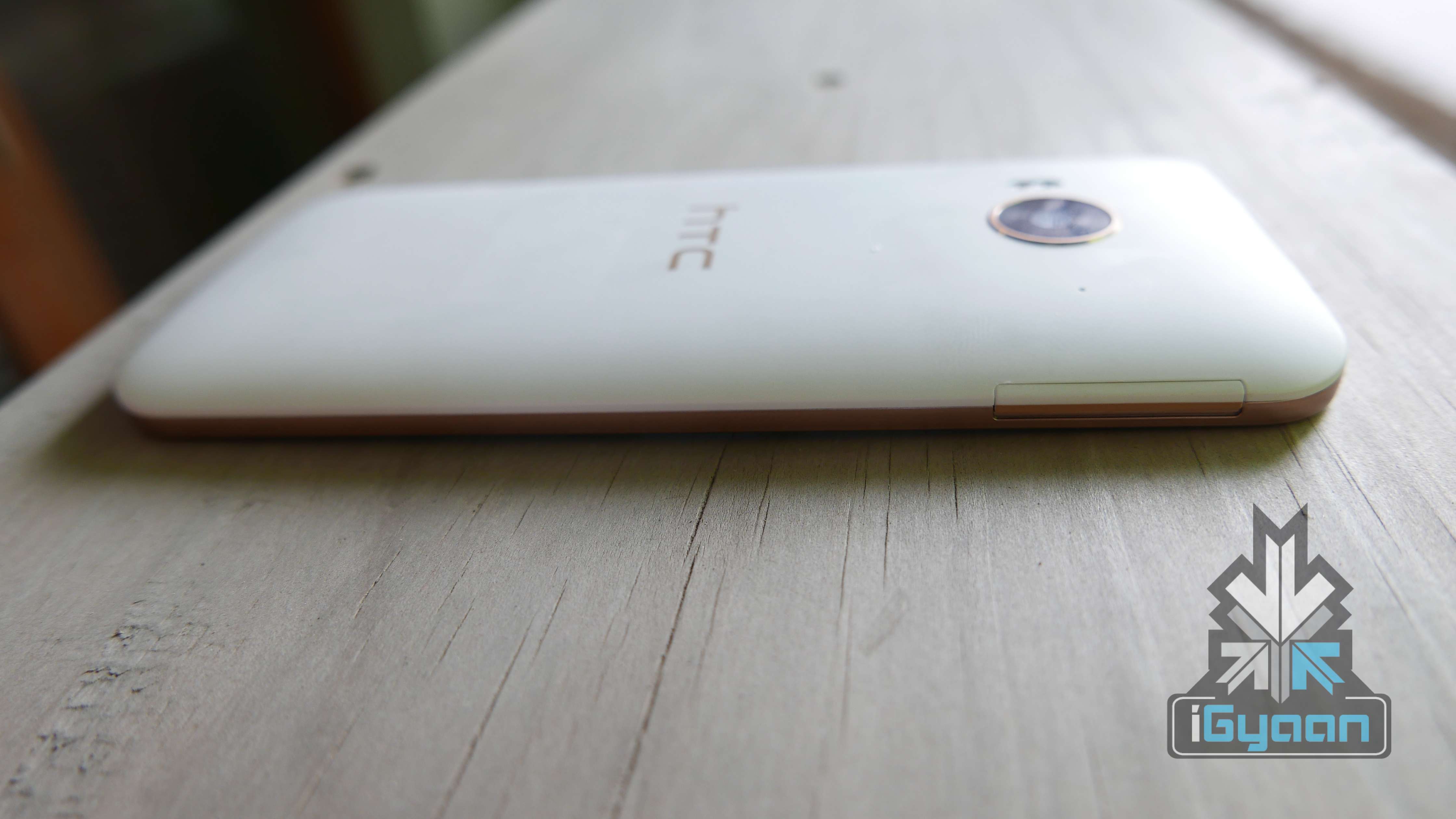
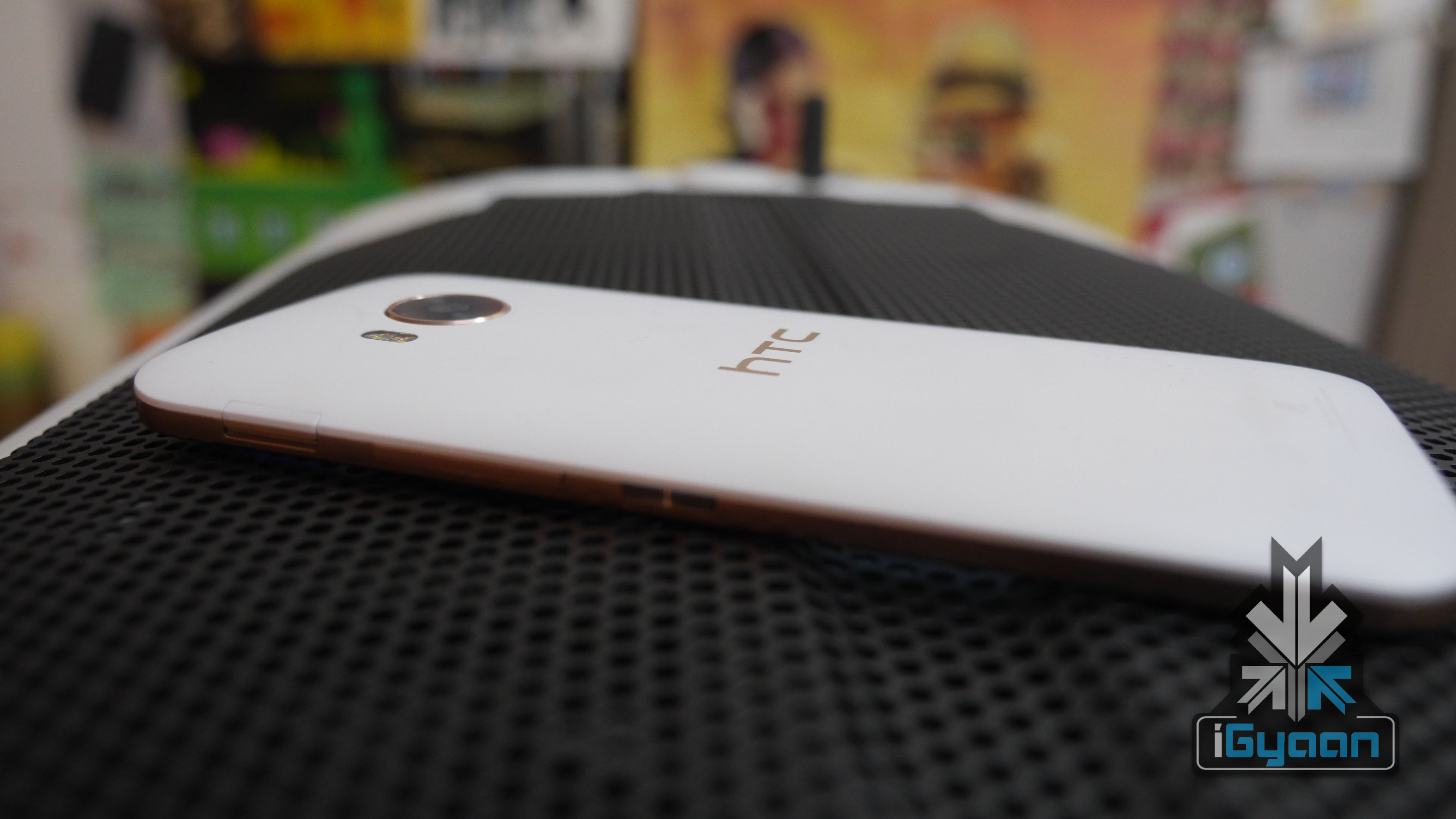
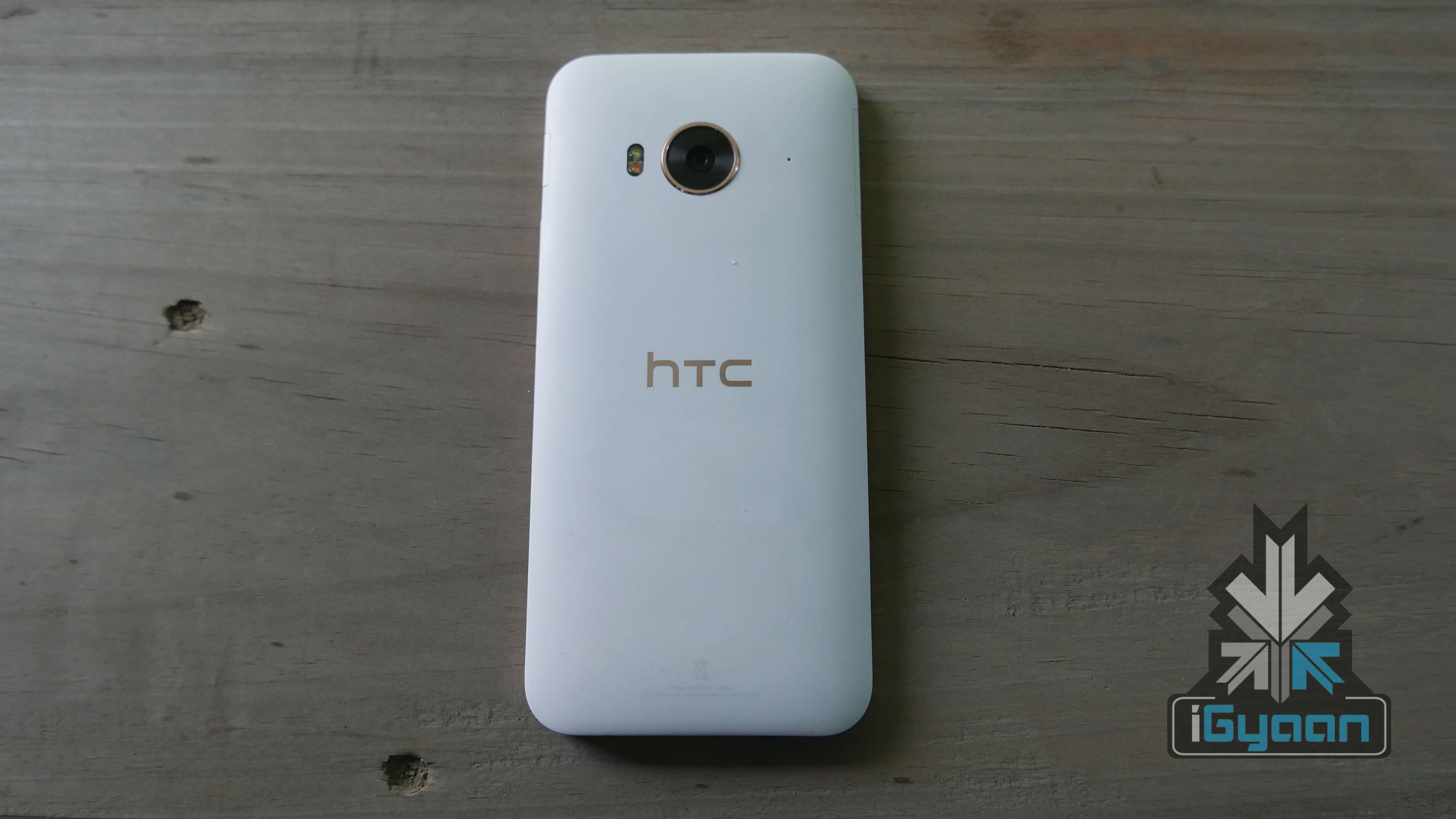
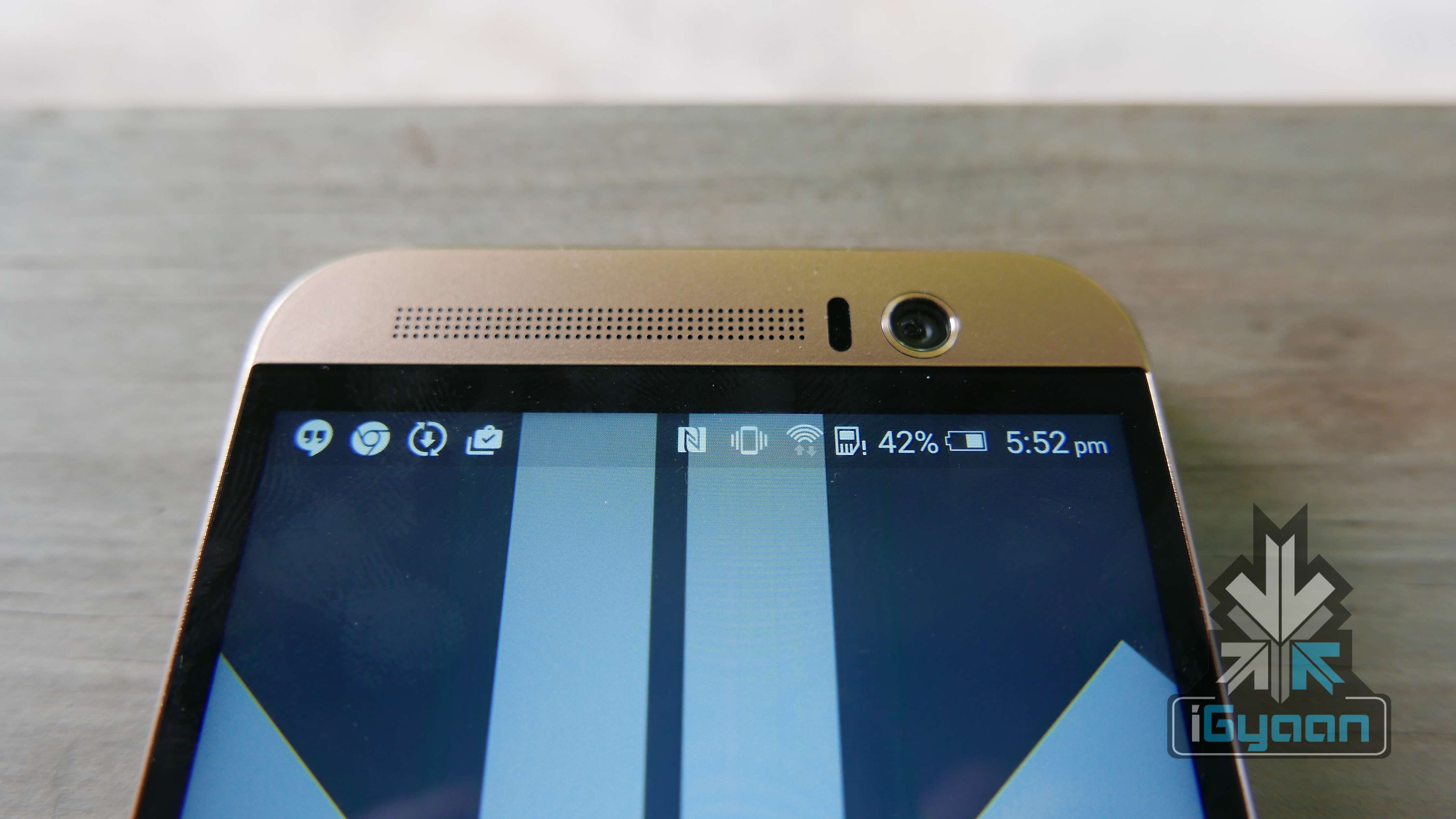
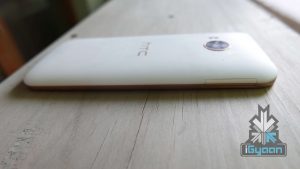
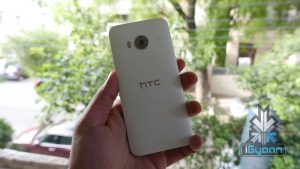
The handset feels greta in the hand, this White with gold colour is synonymous with the HTC One E9+, however the One ME has a matte white back as opposed to the glossy white on the E9+ . The accents are polished in a rose gold and look fantastic. Rose gold is also used in the front metal parts and the bezel along with the frame which is one single unit, and again looks elegant.
With our initial usage the phone has not heated up, despite rumours, however we are testing further.
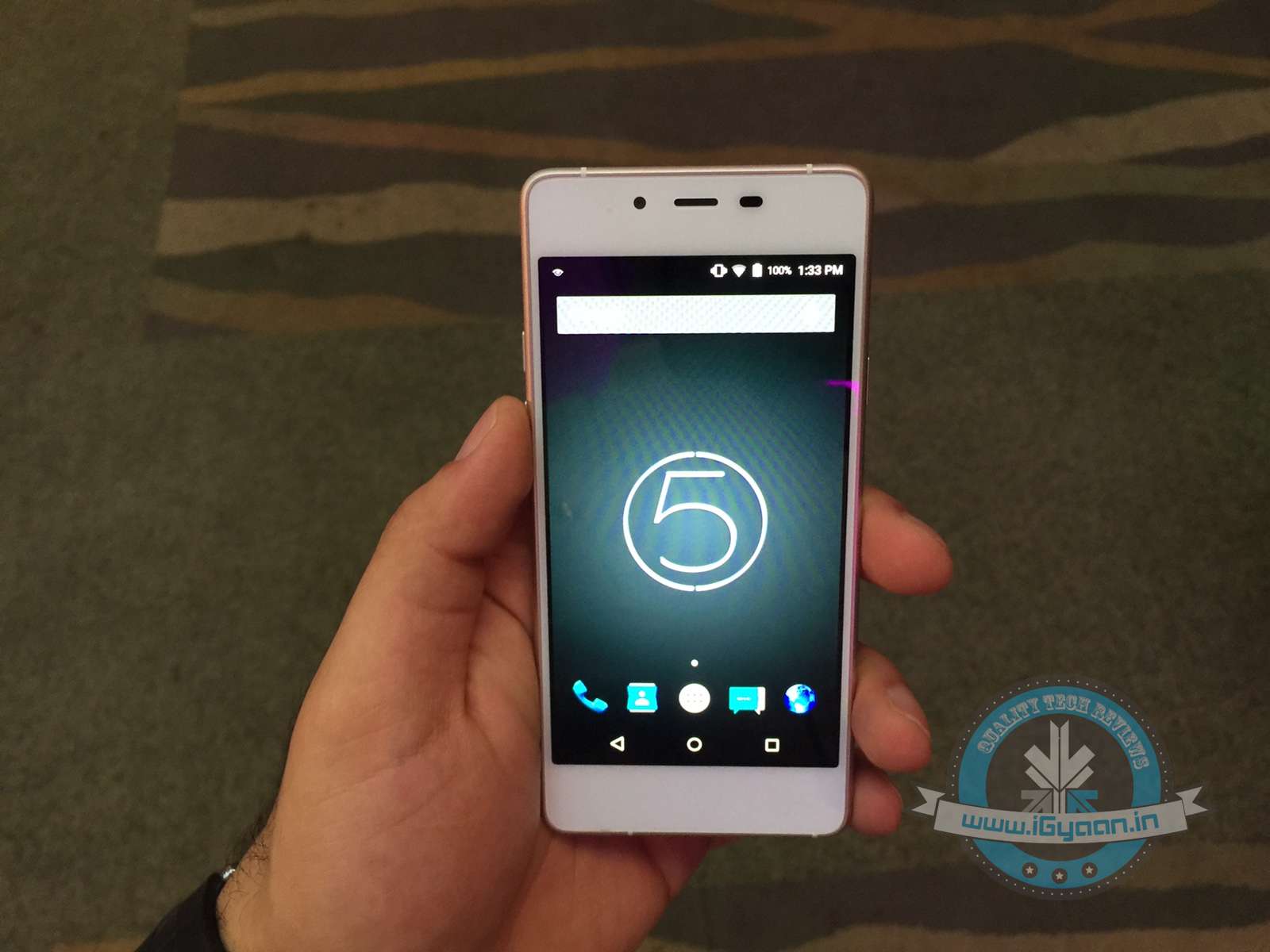
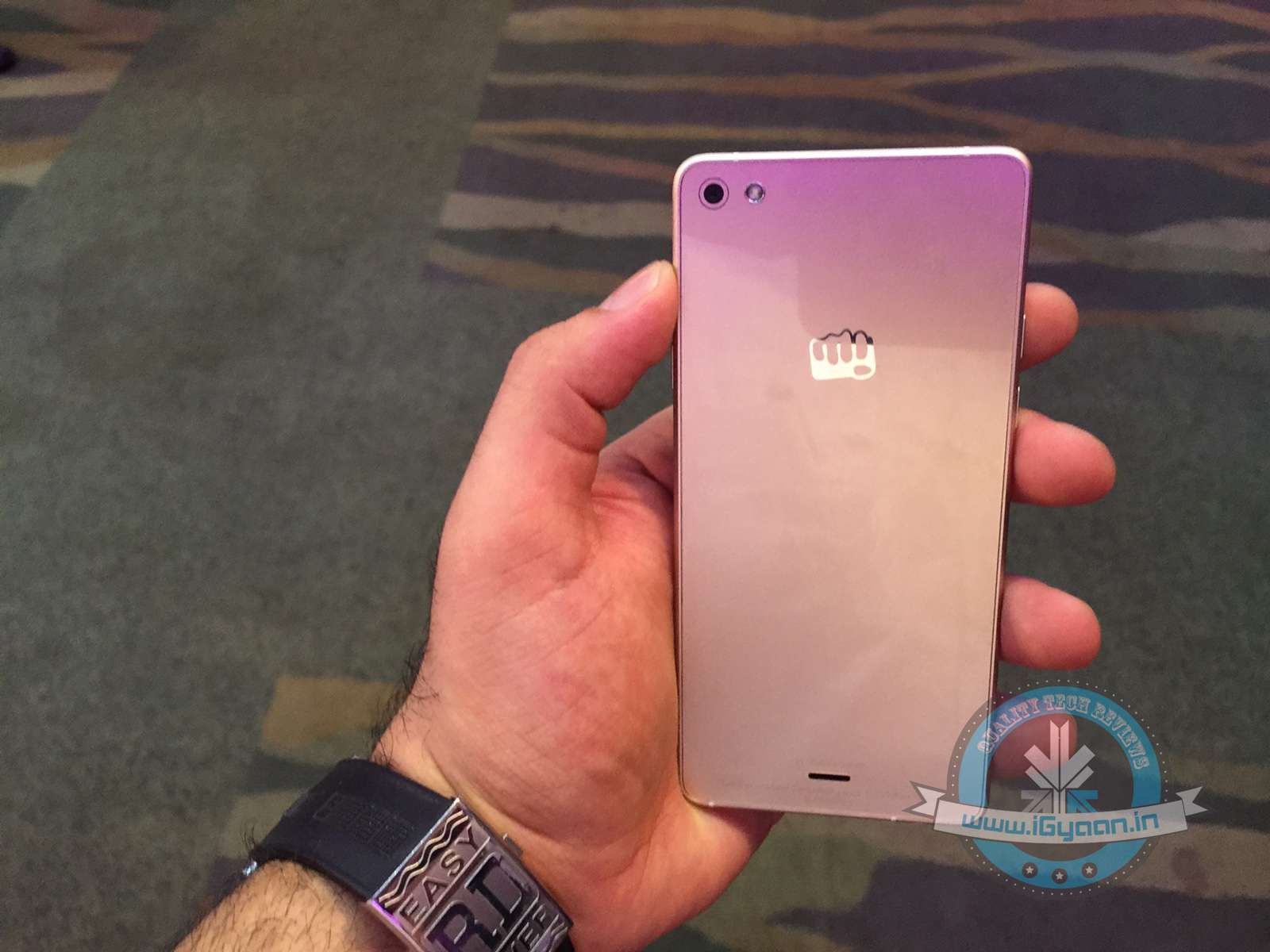
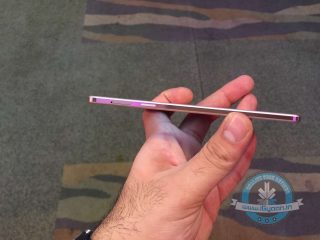
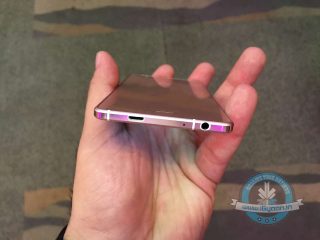
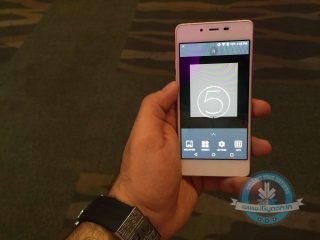
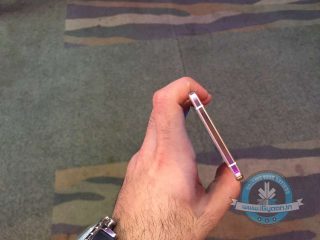
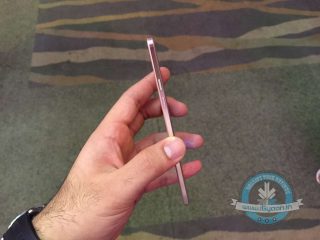
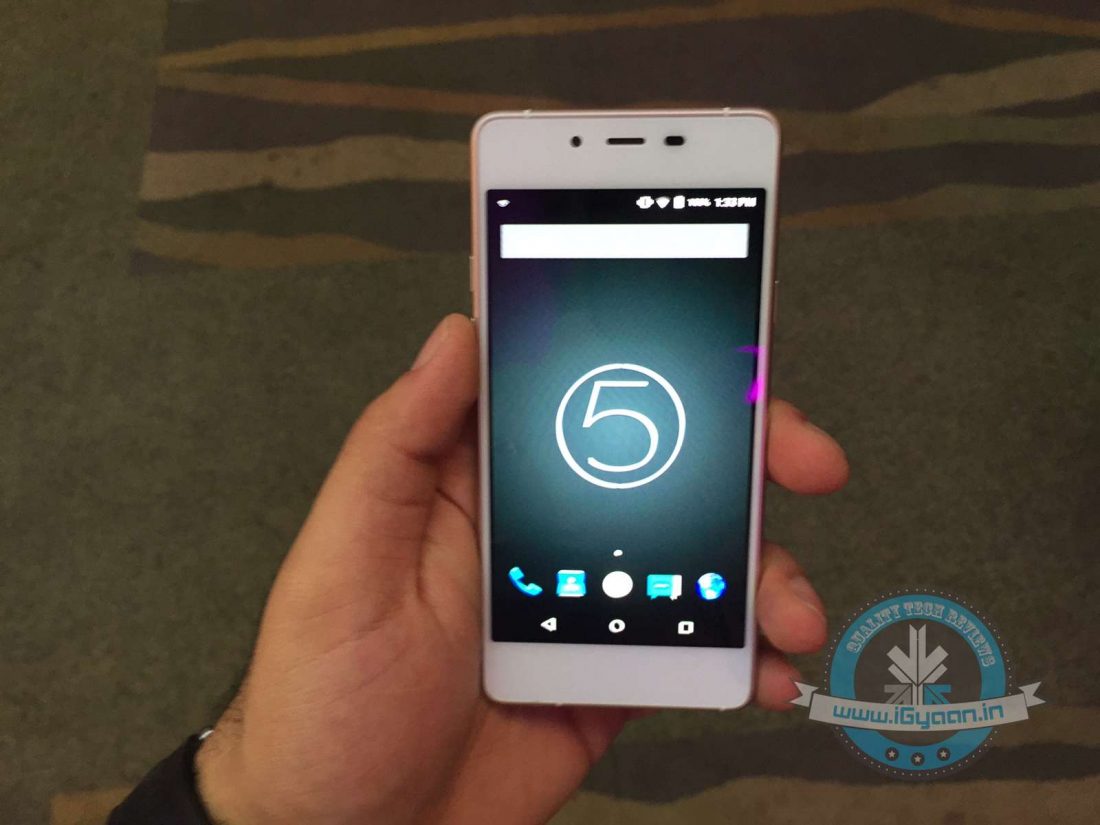
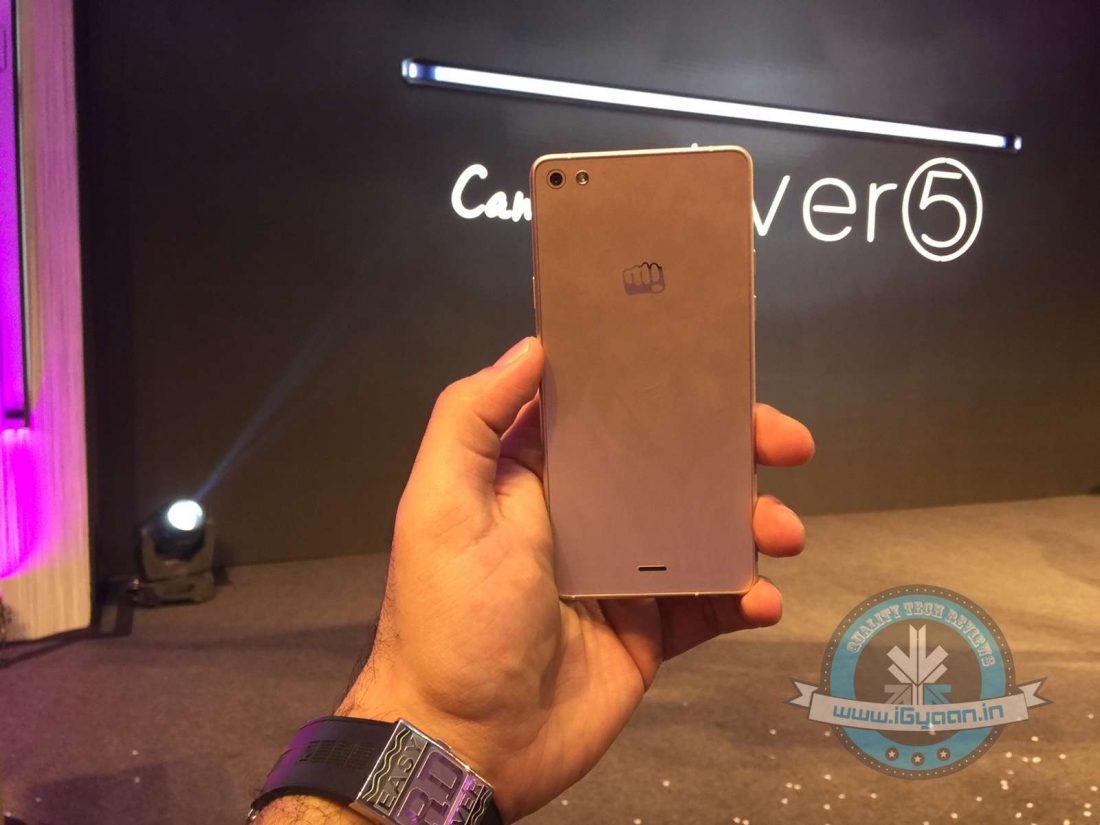
Micromax’s new entrant into the smartphone rat race, is not really new. The Micromax Canvas Sliver 5 is the Indian manufacturer’s slim device to take on the other slim phones. The upside, the Canvas Sliver 5 is 5.1mm end to end with no bumps or depressions. The frame is made from Aircraft grade aluminium and the front as well as the back is glass.
Specs wise, a few disappointments can be made out easy. For the price of Rs. 17,999, Micromax has included a Snapdragon 410 chipset, 2 GB RAM, 16 GB non-expandable storage and an 8 MP camera.
The front has a paltry 720p display along with Gorilla Glass 3, the battery is a mere 2000mAh. There is not a lot on offer here apart from the slim profile and the lightweight design.
The software is mostly stock Android 5.0.2 with some installed software, most of it is easily uninstalled. A flagship was expected from Micromax today, but the Rs. 17,999 price is might be the reason Canvas Sliver 5 remains on shelves. At a time where the world’s smartphone makers are battling to offer maximum at minimum rates, the Canvas Sliver 5 seems to fall short with average specifications. Besides, users have the choice to spend Rs. 2,000 extra and buy the OnePlus One (64GB) at Rs. 19,998. For that small amount, you would get a better camera, processor and a massive (multimedia-friendly) display.
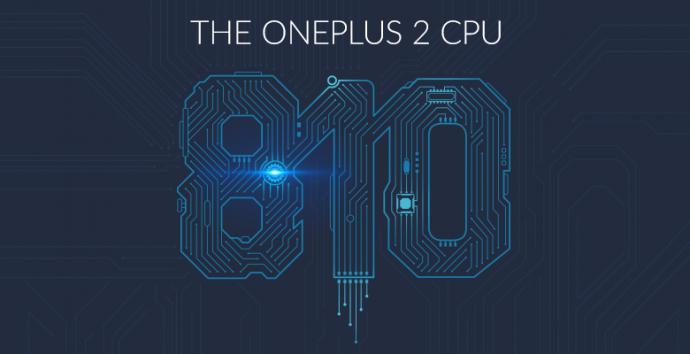
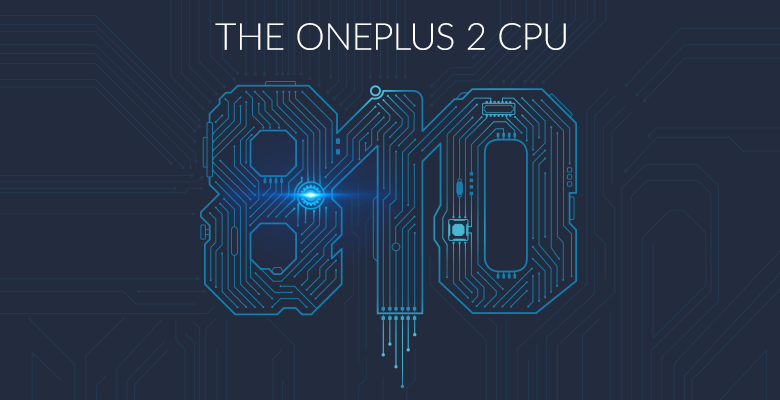
In a post on OnePlus forums, Pete Lau (CEO, OnePlus) has confirmed that the OnePlus 2 will come with the Qualcomm Snapdragon 810 v2.1 processor. OnePlus stresses that key reasons that this particular chipset was selected include the capability of streaming 4K Ultra HD video, impressive image processing and more.
OnePlus also claims that they have taken all the necessary steps to make sure that the chipset, which otherwise is known to heat up considerably, will not mimic this behaviour on the OnePlus 2. They have done this by adding both thermal gel and graphite paste on top of the CPUs as well as in key areas inside the phone to dissipate heat.
According to the Chinese manufacturer, they have optimised OxygenOS to run in sync with the Snapdragon 810 v2.1. The newly designed OS will take advantage of the chipsets advanced architecture using the large cores for performance intensive tasks like gaming, while using the smaller cores for basic usage like texting.
Pete Lau claims in his post that the company has spent a long time in building the handset and is very excited about the OnePlus 2. In India, however, launch details are sketchy at best. With no signs of OnePlus One price drop in India, One can only expect the launch of the OnePlus 2 to be delayed.
Read Up Here : [tw-button size=”medium” background=”” color=”blue” target=”_blank” link=”https://forums.oneplus.net/threads/oneplus-2-cpu-qualcomm-snapdragon-810-v2-1.316786/”]OnePlus Forum[/tw-button]
India has been stuck in the internet revolution for many a years. And while the country is progressing at a rapid speed, infrastructure is not growing fast enough. With new businesses sprouting each day, the need for a connected economy has increased considerably.
India’s Massive Market
India is one of the largest consumers of mobile phones in the world. Enough so, that many manufacturers have put India in the first list of launch countries. According to the TRAI Performance Indicator Report, India has 414.18 million wireless GSM connected users as of March 2015. But this is just in the rural sector, the all India number is at 705.21 928 Million according to the COAI report of May 2015 and Others report of Dec 2014. This number also receives staggering growth of 2.5% month on month in the Rural sector and a growth of 0.90% month on month nationwide.
What appears to be a small growth percentage, 2.5% growth means that the industry is adding approximately 10.2 million rural subscribers a month at the current trend. This additional user base earns the industry approximately Rs. 1200 crore each quarter. This large number is only a dip in an industry that moved around Rs. 26781 crore in revenue in Q4 2014.
The large revenue for the telecom operators is driven largely by the large number of users and large user base additions each month. But how much has the industry progressed since the begining of the internet age.
[pullquote_left] By the End of 2014 the World was Consuming 3000 PetaBytes of Data [/pullquote_left]
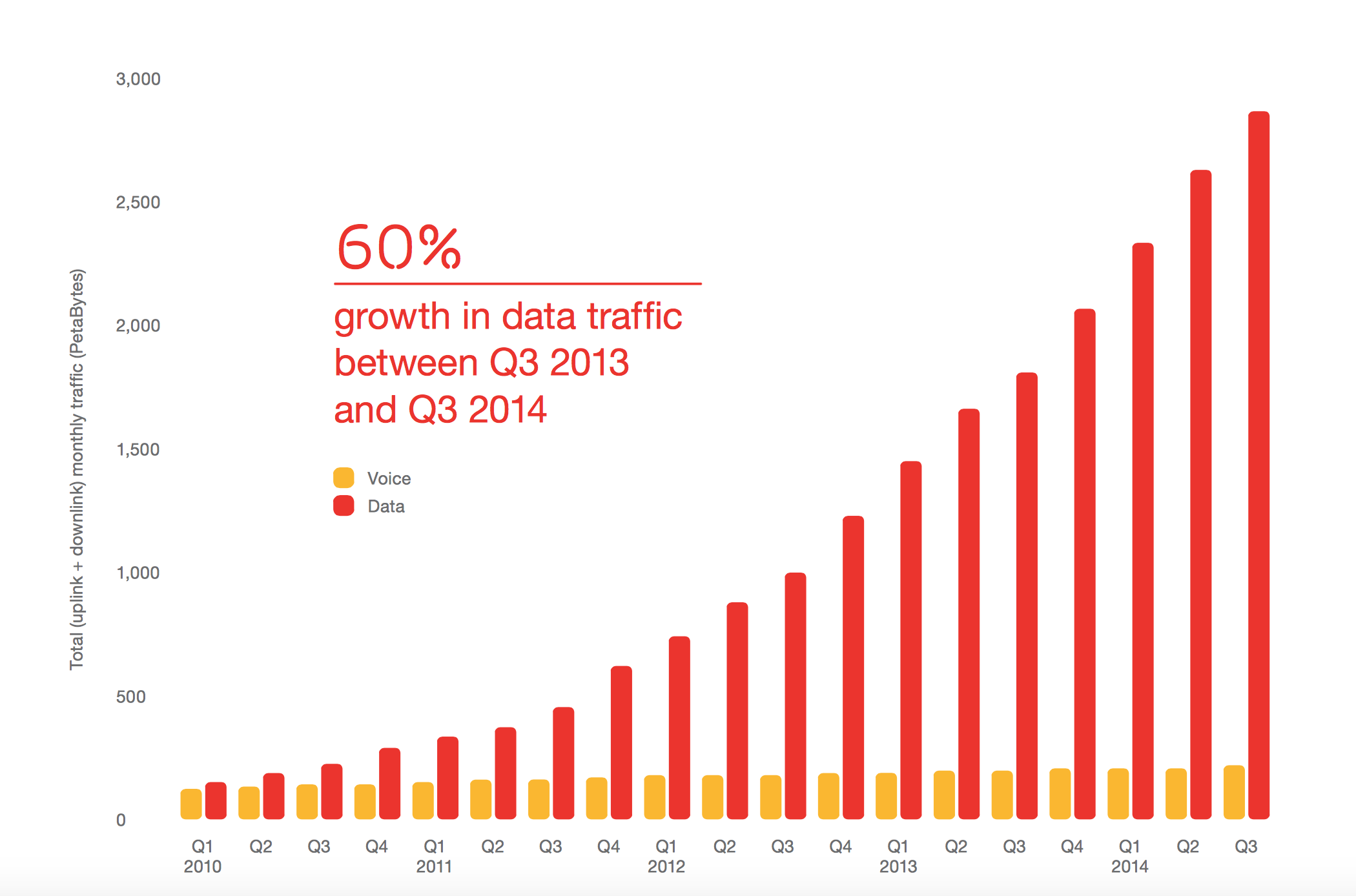
Global consumption of mobile data is through the roof. By Q4 2010 the world was only getting acquainted to mobile data and consumption of data on a portable phone was at 400 PetaBytes (mobile data traffic Up+Down). However, by the end of 2014 the world was consuming 3000 PetaBytes of Data. The industry estimates that the growth with continue by 60-70% each month.
Global Launch Trends
HSPA 42 Mbps networks have been commercially launched in 86 countries, while LTE networks have been commercially launched in 112 countries. So far, 40 LTE TDD networks have been made commercially available in 27 countries, with 27 operators launching LTE services using only the TDD mode, and 13 deploying both TDD and FDD modes together. 6 In a mixed LTE FDD/TDD network, the use of FDD for the uplink can improve the effective coverage area of the TDD band, and can also make TDD more efficient on the downlink.
On the other side mobile operators in 75 countries have now launched HD voice commercially. VoLTE or “voice on LTE” provides users with telecom-grade HD voice, video calling and other new, richer communication services on LTE smartphones.
State of Indian Networks
Despite all the launches mentioned above, India remains as a part of none of them. While India contributes to a large percentage of global mobile data usage, it all somehow comes from poor data connections.
It is estimated that if connection quality and speeds were to improve in India, the present data consumption would increase by 400%. A number that the industry should play close attention to. Over 60% of the data consumption in India was mobile data by the end of 2014.
Mobile Data Drivers
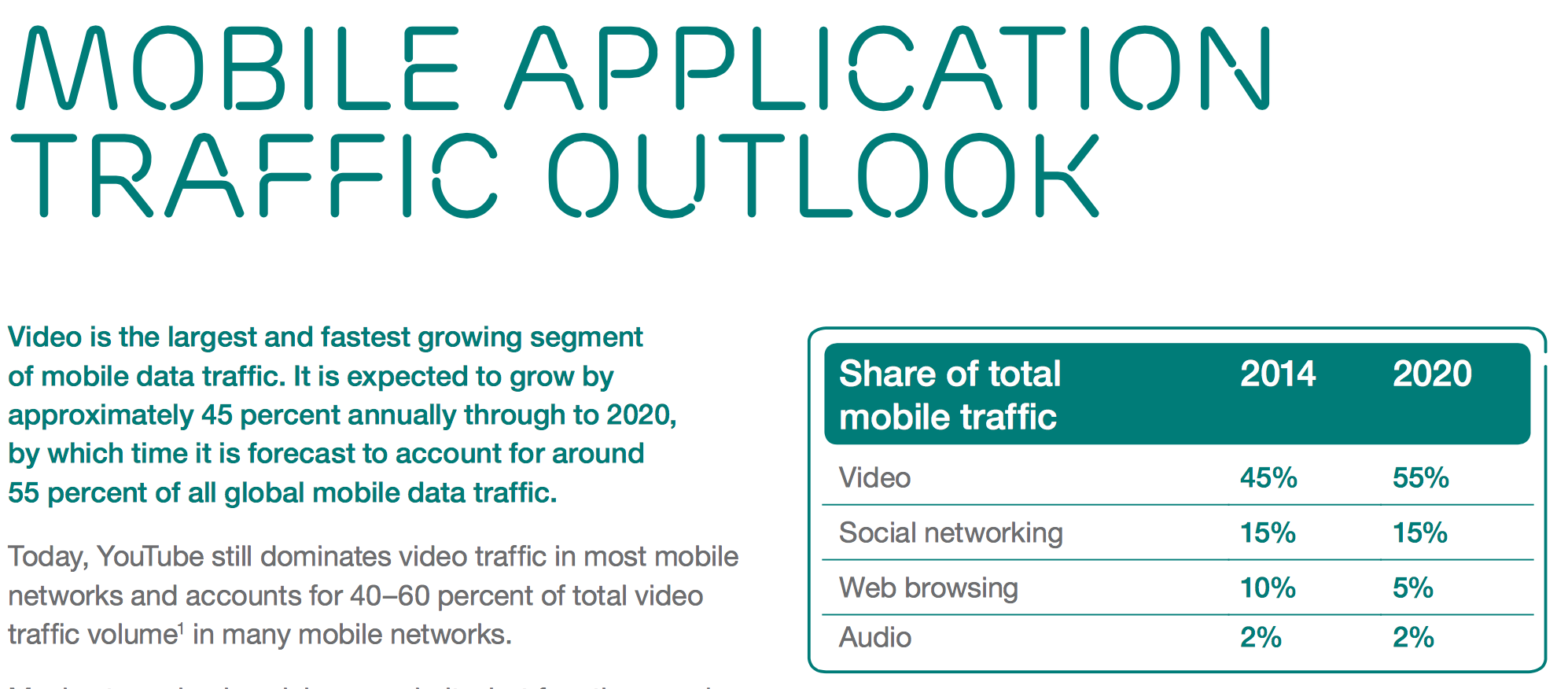
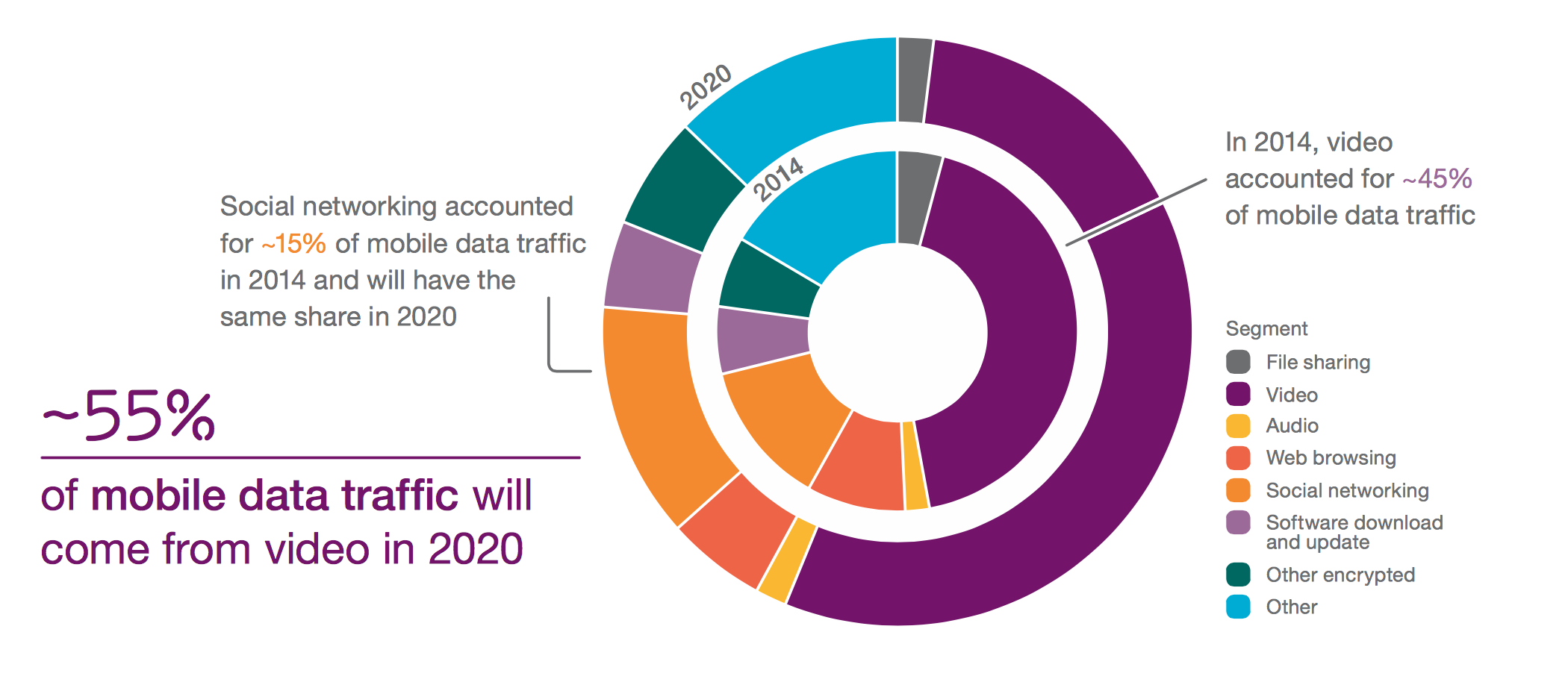
Out of the total mobile data consumed in India, 45% comes from video playback from websites like YouTube. A large chunk of music streaming services are also responsible for driving mobile data in the country.
Mobile Data Usage
[pullquote_left]55% of mobile data will be consumed for Video services[/pullquote_left]
Globally, YouTube is responsible for consumption of 40-60% of mobile data, a number which is relatively lower at 17% in India due to mobile data connectivity and speed limitations.
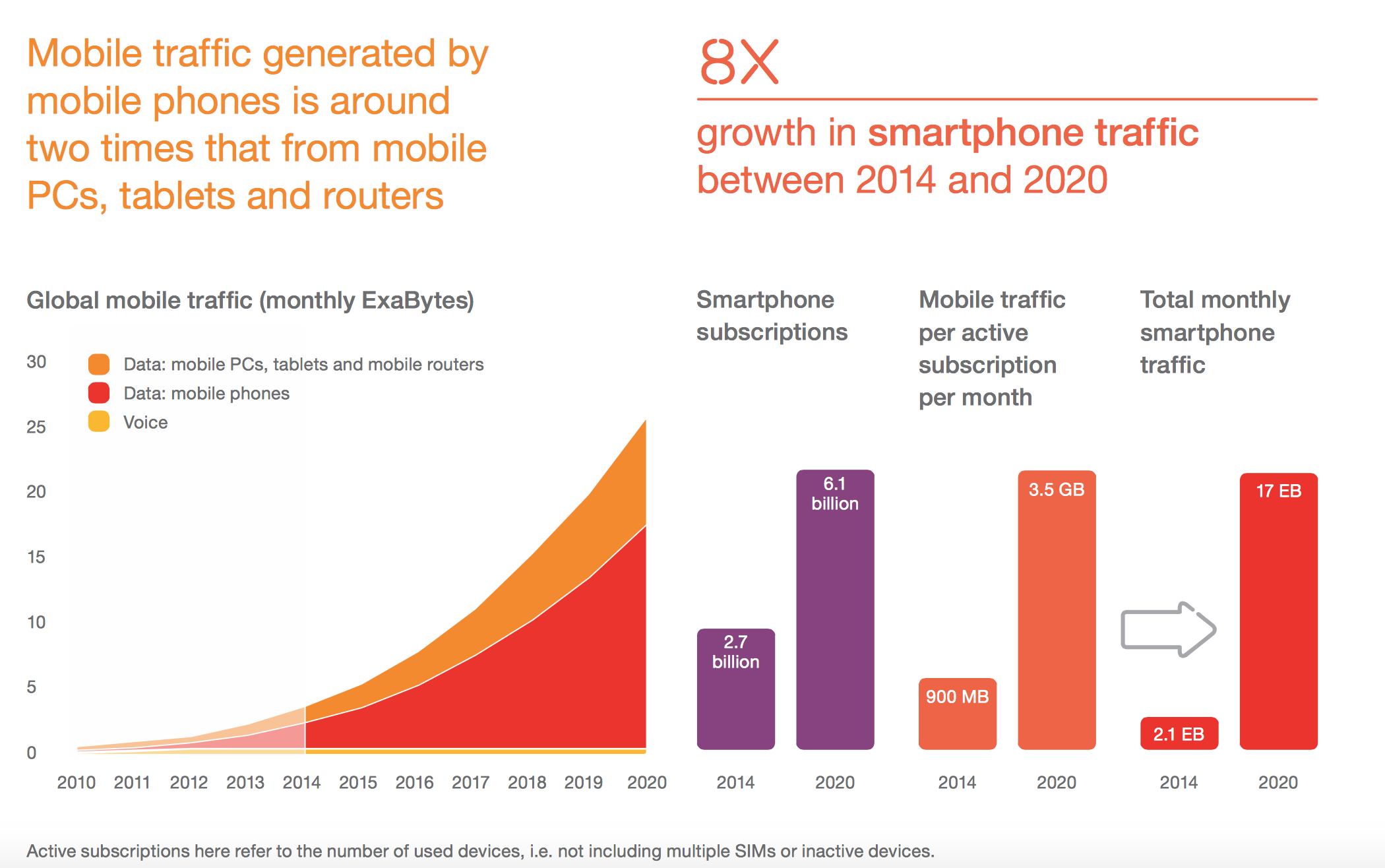
It is estimated that by the year 2020, 55% of mobile data will be consumed for Video services. Reaching this percentage will be possible by the implementation of 5G mobile data globally. 5G services are being tested in over 8 countries as we read this, while implementation for global markets is kept at 2019. India (and some other markets) are not a part of this implementation list.
India is about 5 years behind the 4G rollout targets (Dec 2010) and 2 years behind LTE 2.0. HD Voice and Video are not being talked about by the Indian industry leaders, despite the fact that India is one of the largest contributors to the overall revenue for the mobile industry.
Data and Future
India needs fast internet access, as a developing nation, its metropolitan cities need to be connected to the world. With a boom in startup culture and high paying jobs with international markets, most suffer due to lack of internet access. Video consumption and video calling with services like Skype, Google Hangouts and even FaceTime are at an all time high and consumers end up paying large sums of money just to say connected.
[pullquote_right]FUP has slowed down growth[/pullquote_right]
The biggest limiting factor in the whole telecom industry is the limited usage policies implemented by the companies. The limited usage policy or fair usage policy (FUP) was first implemented by Airtel and Tata Teleservices to prevent users for exploiting their internet connection speeds and downloading illegal materials from the internet.
The FUP has since not been removed and with no pressure from TRAI (Telecom Regulatory Authority of India) this antiquated method continues to haunt each user.
Airtel is one of the biggest users of this aged method of policing the usage of high speed data and is also one who exploits its use the most to benefit in the long run. Airtel has annoying auto redirects (Smart Bytes) that transfer you to a buy page insisting that you buy additional data packs to continue on the fast speed. These packs are usually 4-5 times the cost of the bundled data and tend to really hurt consumers financially.
The world is getting connected, using a highway of data which is not only fast but also super efficient and budget friendly.
However, we are no where near that future. Most operators globally offer the ability to choose a plan that suits the customers needs. The United States and countries like United Kingdom, Australia, South Korea, Japan, New Zealand, Spain, Canada and many others are not familiar with the term FUP. In fact, any form of throttling is against the law in many of these countries. Terming the so called limiting plans as “marketing gimmicks” countries have ensured that the consumer gets what he pays for, no more and especially no less.
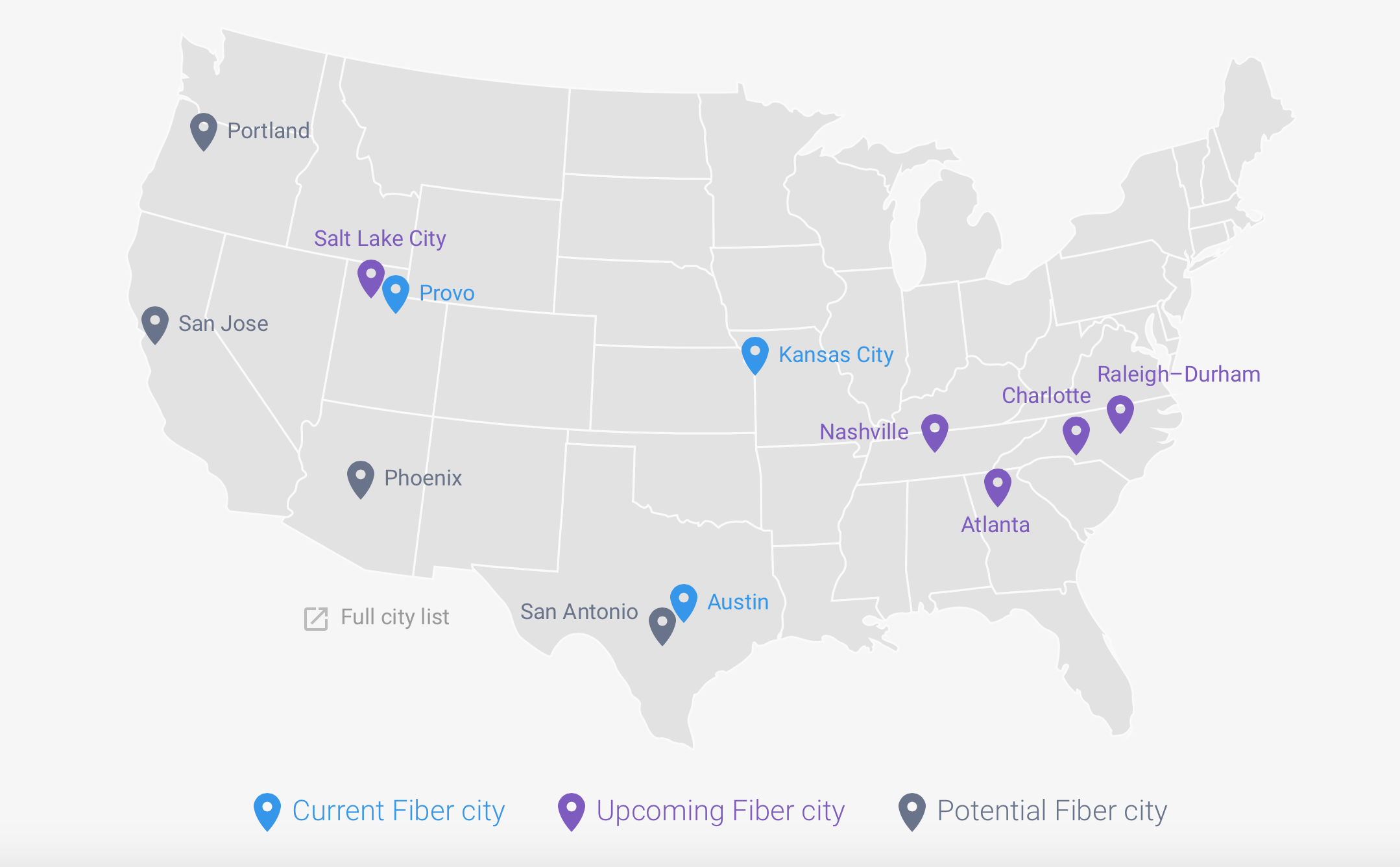
Google Fibre Deployment Map
Then there are packages from the likes of Google Fibre limited in reach and availability, Google has made possible speeds of upto 1000 Mbps for as little as US $ 70/month (chump change compared to what iGyaan spends for Internet) available at residences across the United States. They also offer a “Basic Plan” which is at 5 Mbps downloads and 1 Mbps uploads (unlimited) for a price of US $0 if you pay the installation fee. Free Internet! If that does not help the startup economy, then what else will?
Something needs to change
India and Indians deserve the ability to get unlimited internet, the users seem to be paying for it, but nobody seems to be getting it. Riddled by hidden corporate talk and contracts that fool the customers into believing that they are getting the best possible deal. Everybody has the right to stay connected, and a fast internet connection is more like a lifeline today.
Many sectors in the country do offer high speed data connections for a higher price. However, these too are controlled by limits, and speed drops are often too high. A 100 Mbps connection from Airtel Fibrenet drops to a mere 512 Kbps post a 100GB download. A simple math calculation will tell you that it takes just 2 Hours, 23 Minutes and 9.93 Seconds to download 100 GB on such a connection. Post the download you either have to pay heavy sums of money to get data packs or live with a devastatingly slow 512 Kbps which would take 19 Days, 10 Hours, 2 Minutes and 1.6 Seconds to download the same 100 GB. Airtel charges INR 5,999 + tax for this plan , making it well over US $100. Now compare this to Google’s 1000 Mbps line with no limits whatsoever, which costs US $ 70 /month.
Something needs to change and fast! Sign our petition below and be part of the voice of change. #StopFUP #EndFUP
On the 7th of June 2015, iGyaan turned five years old. But what also reached five years, is our love for technology. We have constantly strived to serve a purpose in the online space. With our visual introductions and our fun cues, we have often set the ball rolling. The last few years have taught us a lot, about the internet, about technology, about people and hostility and most importantly about survival.
However, we stand here at five, young and proud, stronger than ever and even more resilient than when we started. How do we do it? We don’t know. But, with the amount of love and support we get from you;
WE ARE NOT STOPPING ANYTIME SOON
Happy Birthday to iGyaan and to each and everyone of our readers. See you for another five.
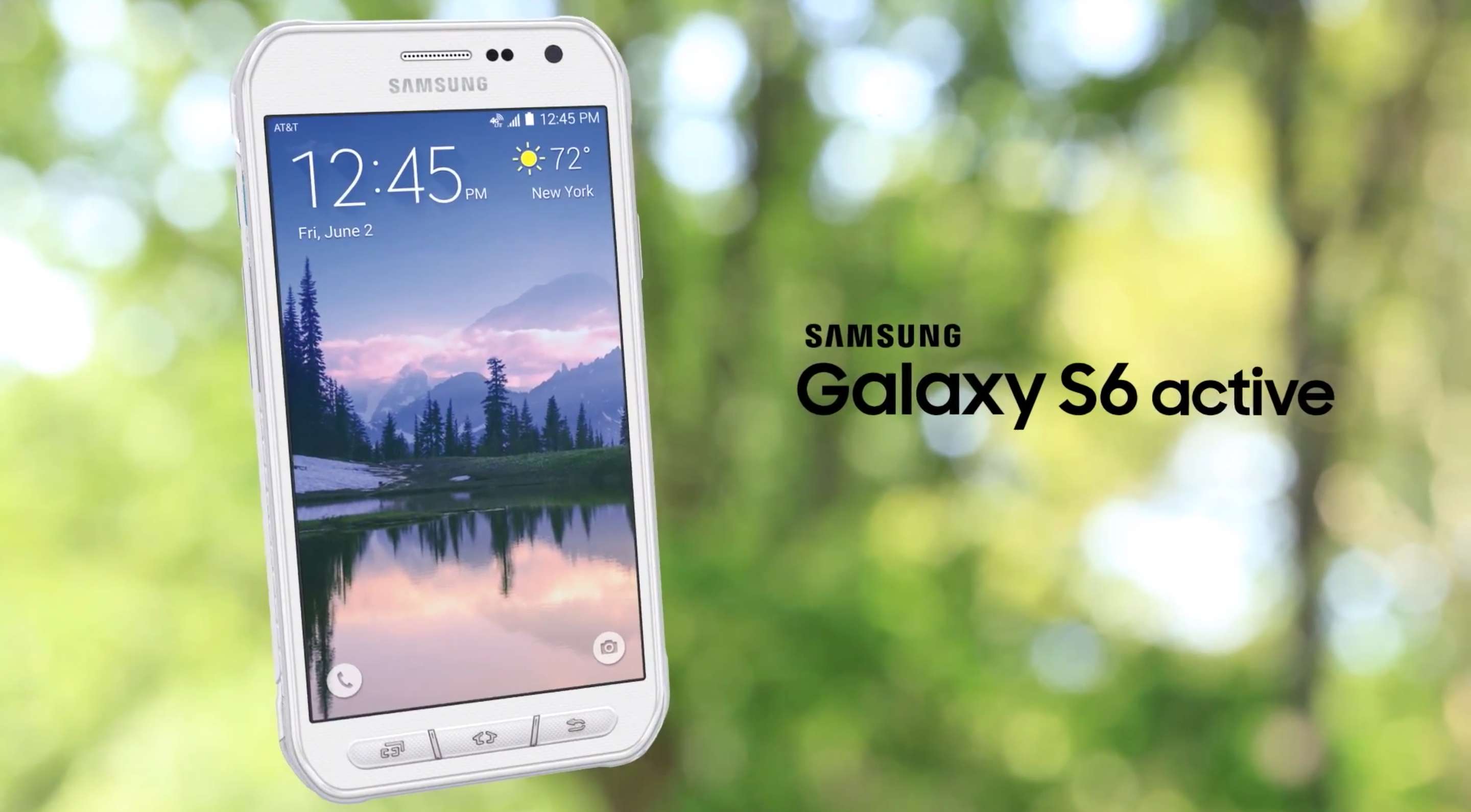
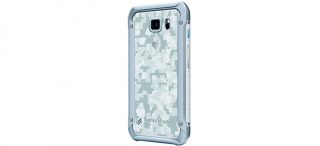
Samsung’s Galaxy S6 when launched earlier this year lacked a few features that people actually liked about the Galaxy S5. The S6 is not water resistant nor did it have a replaceable battery. Samsung had also left out a microSD card slot aiming for a more Apple-like approach towards storage.
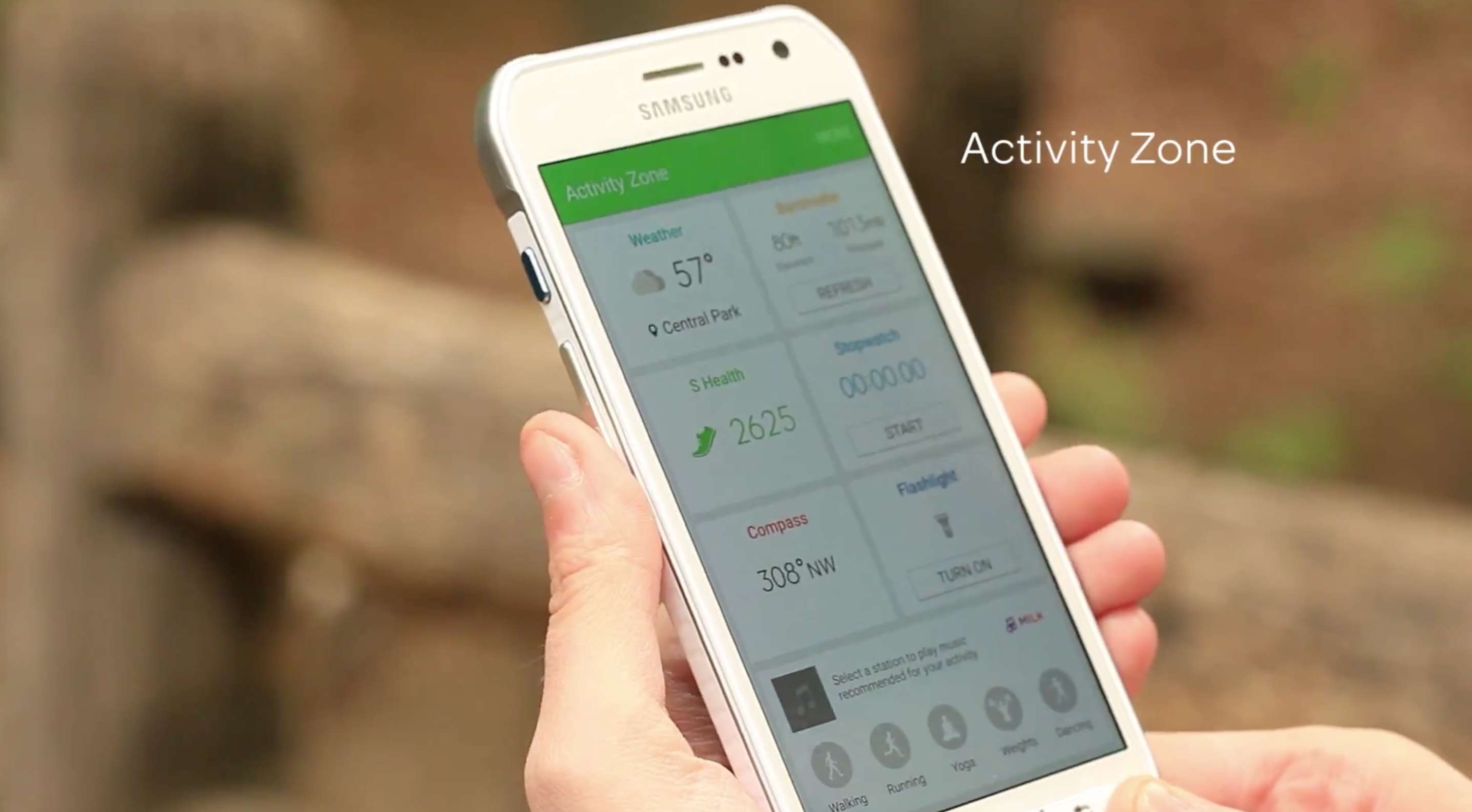
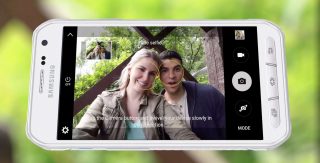
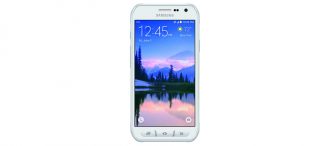
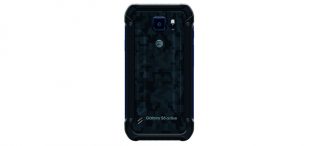
The Galaxy S6 Active is a more rugged version of the Galaxy S6 from Samsung and it has been presently launched in the US exclusively for AT&T. The S6 Active is an IP-68 rated dustproof and water and shock resistant handset from Samsung.
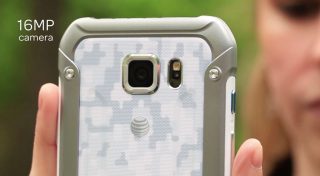
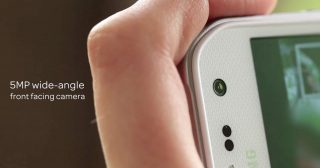
AT&T confirms the phone has a 5.1-inch Quad HD Super AMOLED screen, a 16-megapixel camera and a 5-megapixel wide-angle front-facing camera. It also packs a large 3,500mAh battery, an Exynos 7420 processor and Android 5.0.2 Lollipop.
Like many other handsets in the US the galaxy S6 Active will go on sale starting this Friday for a price of US $ 199 on a two year contract. The handset will be available in two colours : Black and Camouflage white.
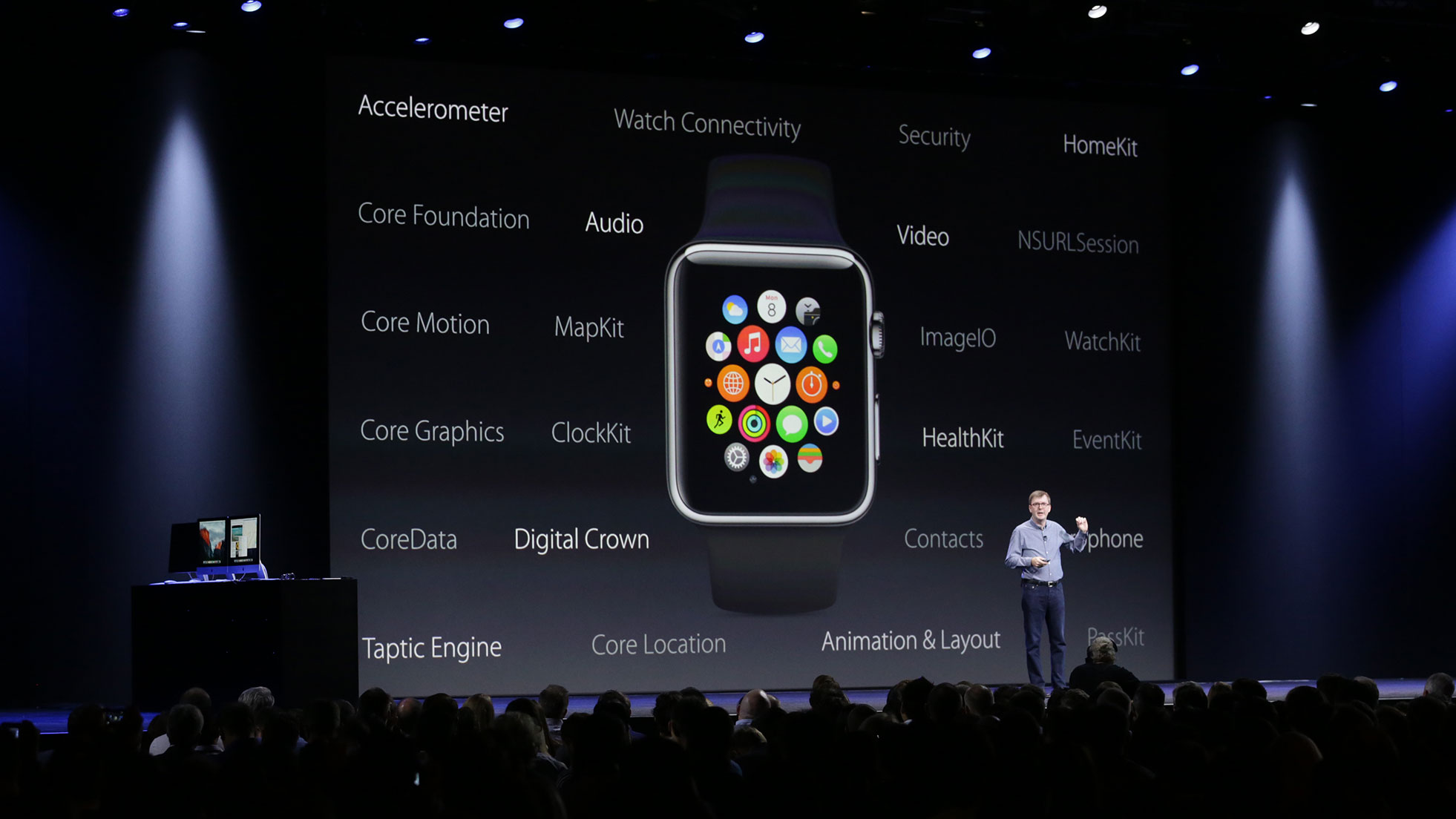
Apple’s new Watch OS 2 has added new features to Apple Watch, including many of those that were suggested by current owners and app developers.
Apple has now allowed moving the logic and processing directly to the Apple Watch improving the long and nagging load times everyone has been complaining about.
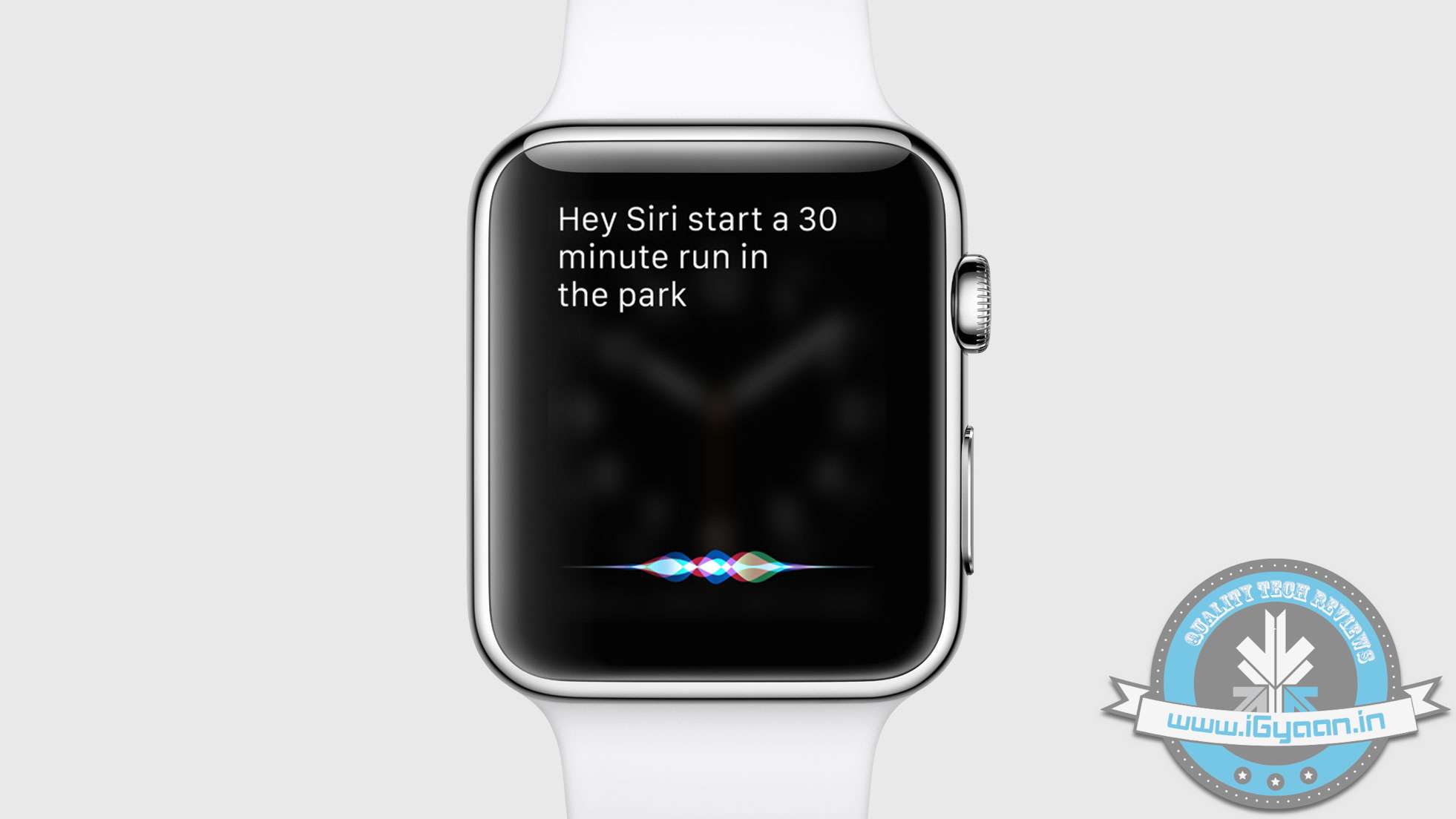
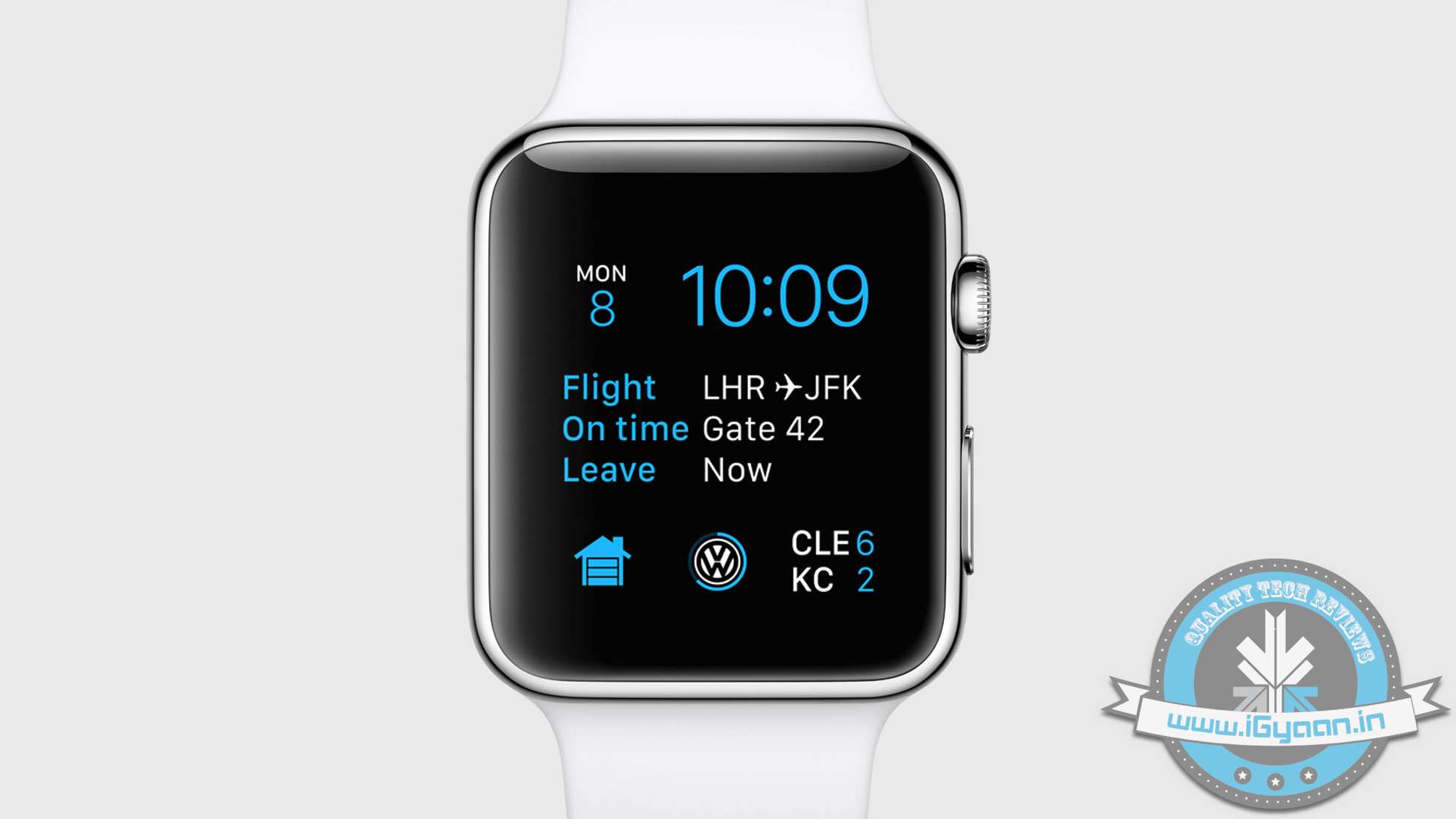
All the new features from Siri are going to be available on Apple Watch. Apple claims that only 6 weeks from launch thousands of apps are already available on Apple Watch. The new Apple Watch OS 2 allows for third party apps to display their information on the watch face.
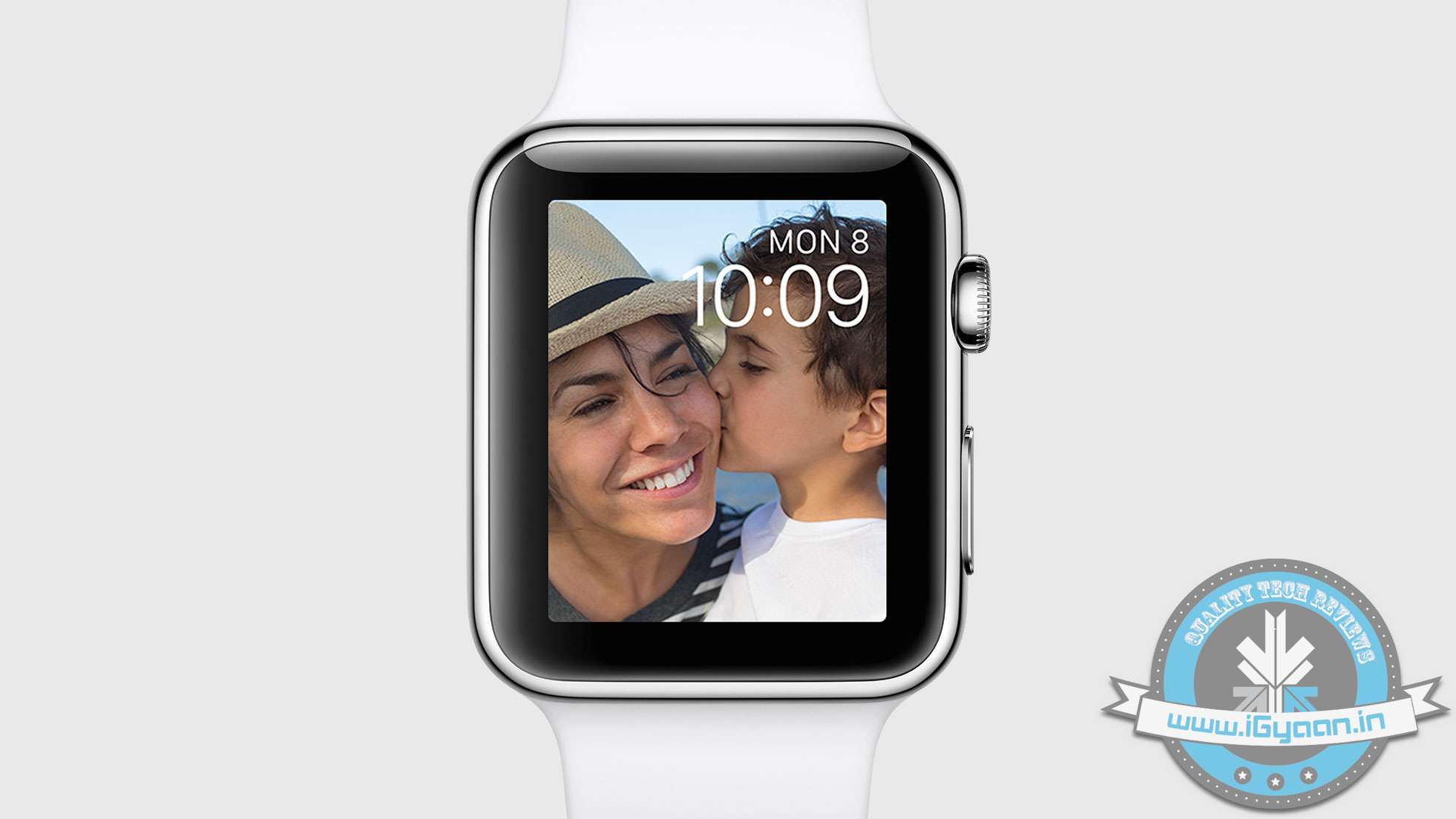
The new Watch OS 2 also allows for custom watch faces, use your own photos and art to make your own watch dials.
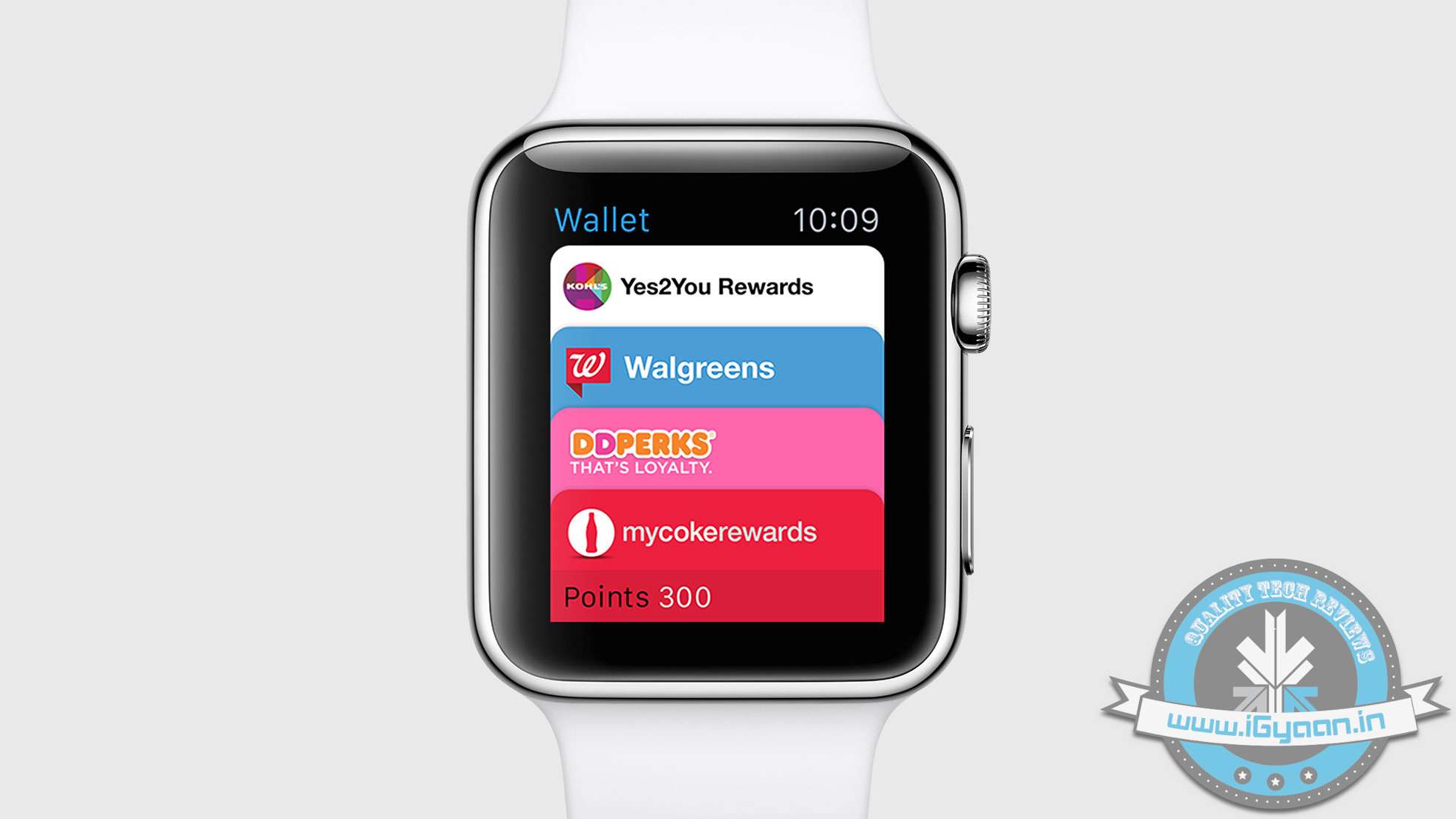
The new Apple Pay features will be coming to Watch OS 2, including the new Wallet app, previously called Passbook. This app holds all financial and loyalty cards along with tickets and passes and is available directly on your Apple Watch.
Other features include addition of more favourites in the quick dial, multi coloured sketches and enhancements in the performance of the UI.
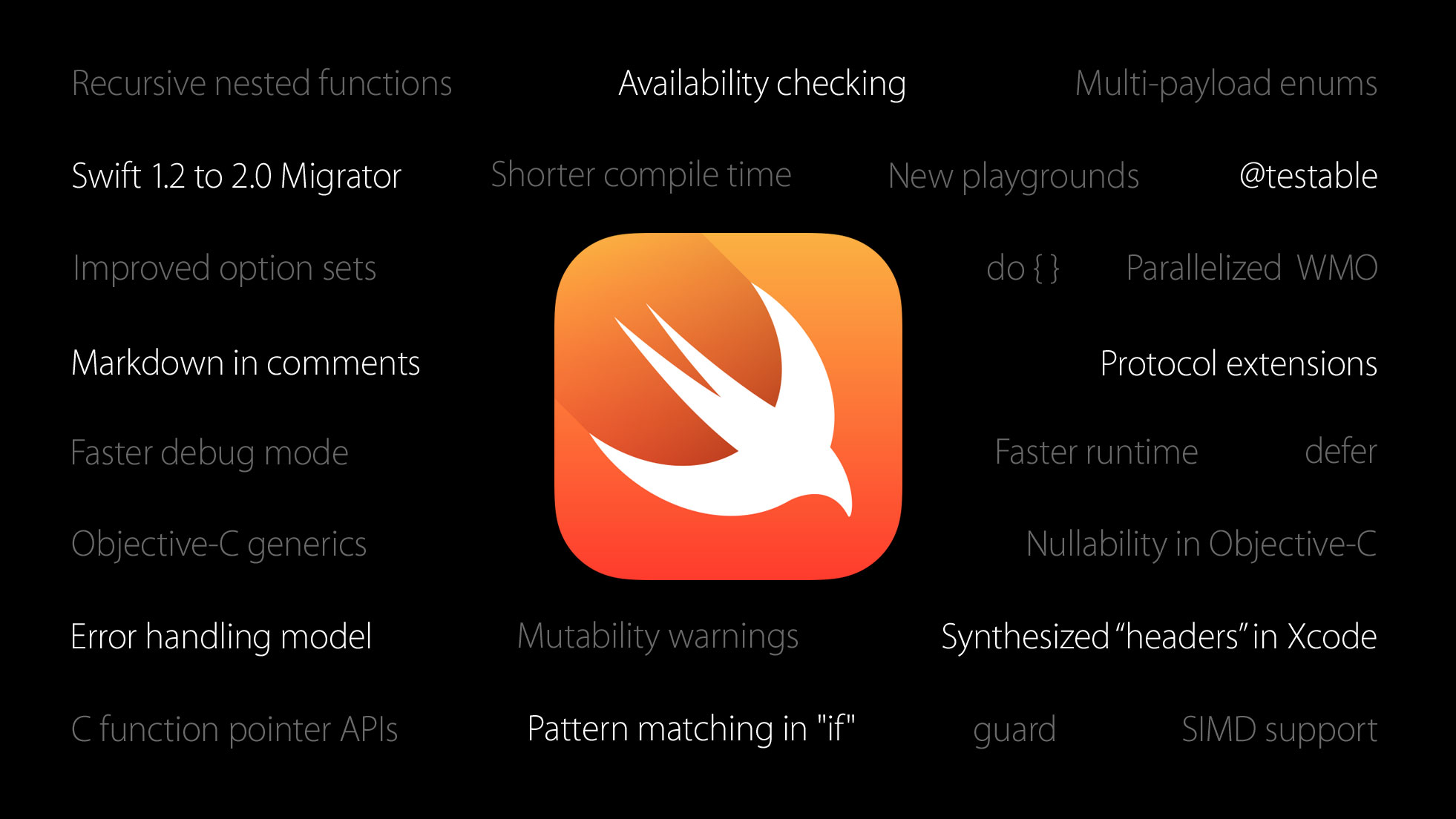
Apple’s new launches at WWDC 2015 showed off many new features and capabilities of both the new iOS 9 and OS X El Capitan. However, the highlight of the evening was when Craig Federighi announced on the stage today that one of the most powerful coding languages, Swift, would become “Open Source”
Swift 2.0 adds a bunch of features that developers have been asking for, to ensure that apps written in Swift are faster and can do more.
“Open source” means that any developer, anywhere in the world, can contribute new features and updates to a software project — totally for free.
Google’s popular Android mobile OS, for example, is open source, which is how smartphone manufacturers can release devices with versions of Android that are slightly different from each other.
Does this mean other manufacturers will be able to make iOS devices – probably not. However with the code becoming open-source, bug fixes and features would develop faster. Swift becoming Open Source will also allow other operating system manufacturers including Google and Microsoft to utilise the features and apply them to their code if they so choose to.
This will allow Android forks like Cyanogen and MiUi to add enhancements to their performance and capability. However, this will also depend on inclination and need to do so from others.
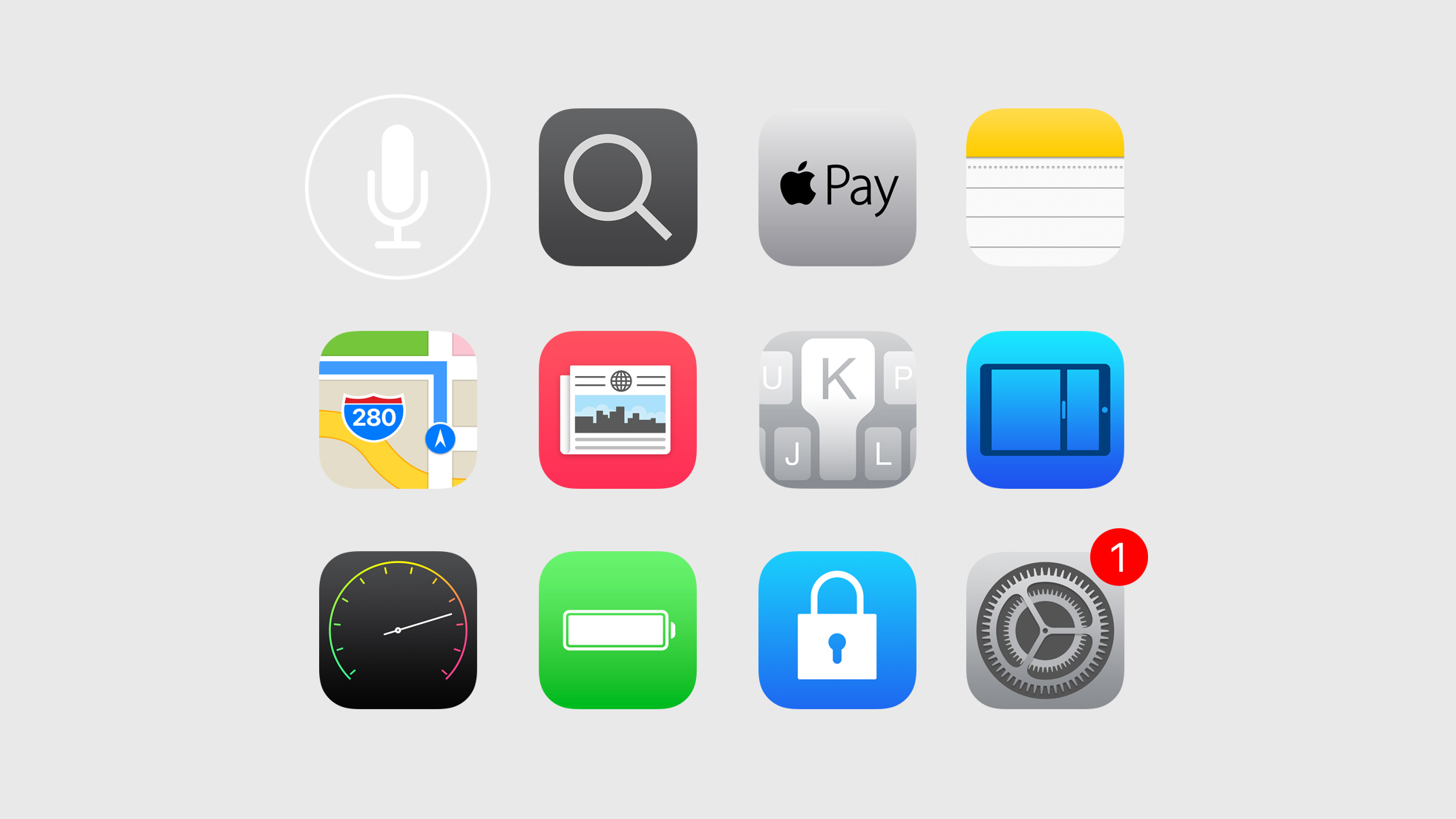
Apple at the WWDC 2015 has just announced the new iOS 9, with many new enhancements to the OS and new apps including the new News App. One of the most important issues addressed at the launch was the battery life of iPhone devices.
Apple claims that the new iOS 9 will reduce overheads and improve battery life in general by upto 1 hour. A new low power mode will allow for devices to reduce power consumption and restrict to only phone call capability, hence improving the last few minutes of battery to as much 3 hours of usage.