Smartphones with touchscreen displays were first launched in the late last decade. Brands across the globe have launched innumerable smartphones with this rectangular form factor. Although the size, thickness, weight of these devices vary from company to company; the overall design has not seen any radical changes. However, it is expected to change soon as manufacturers are developing smartphones with all new form factors. One notable form factor is smartphones with foldable displays that are about to launch soon. An LG patent reveals yet another type of smartphone form factor. According to WIPO (World Intellectual Property Office), LG has been granted a patent for a smartphone that has a rollable display.
Possibilities and Advantages Of A Rollable Display
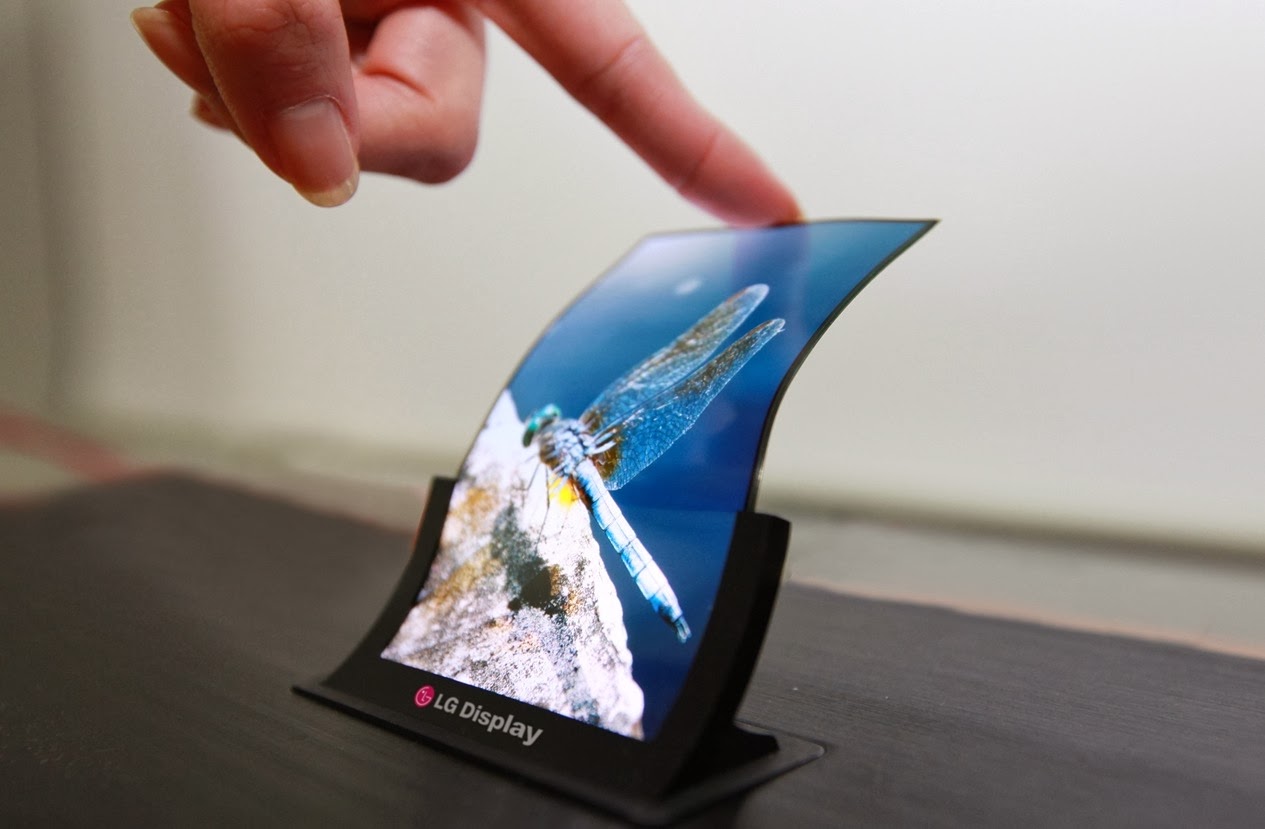
LG’s patent provides a small pointer about the form factor of the future smartphones. It can open a whole new world of possibilities for a portable device. The concept smartphone from LG when in its rolled state will be small enough to easily fit inside a pocket which can be easily rolled out to reveal the main display. Although the LG device is quite small, due to its rollable form factor it can offer a similar experience to that of a large screen tablet. This type of device from LG will further blur the lines between a smartphone and a tablet as it will be capable to serve the purpose of both.
LG Patent Revelations
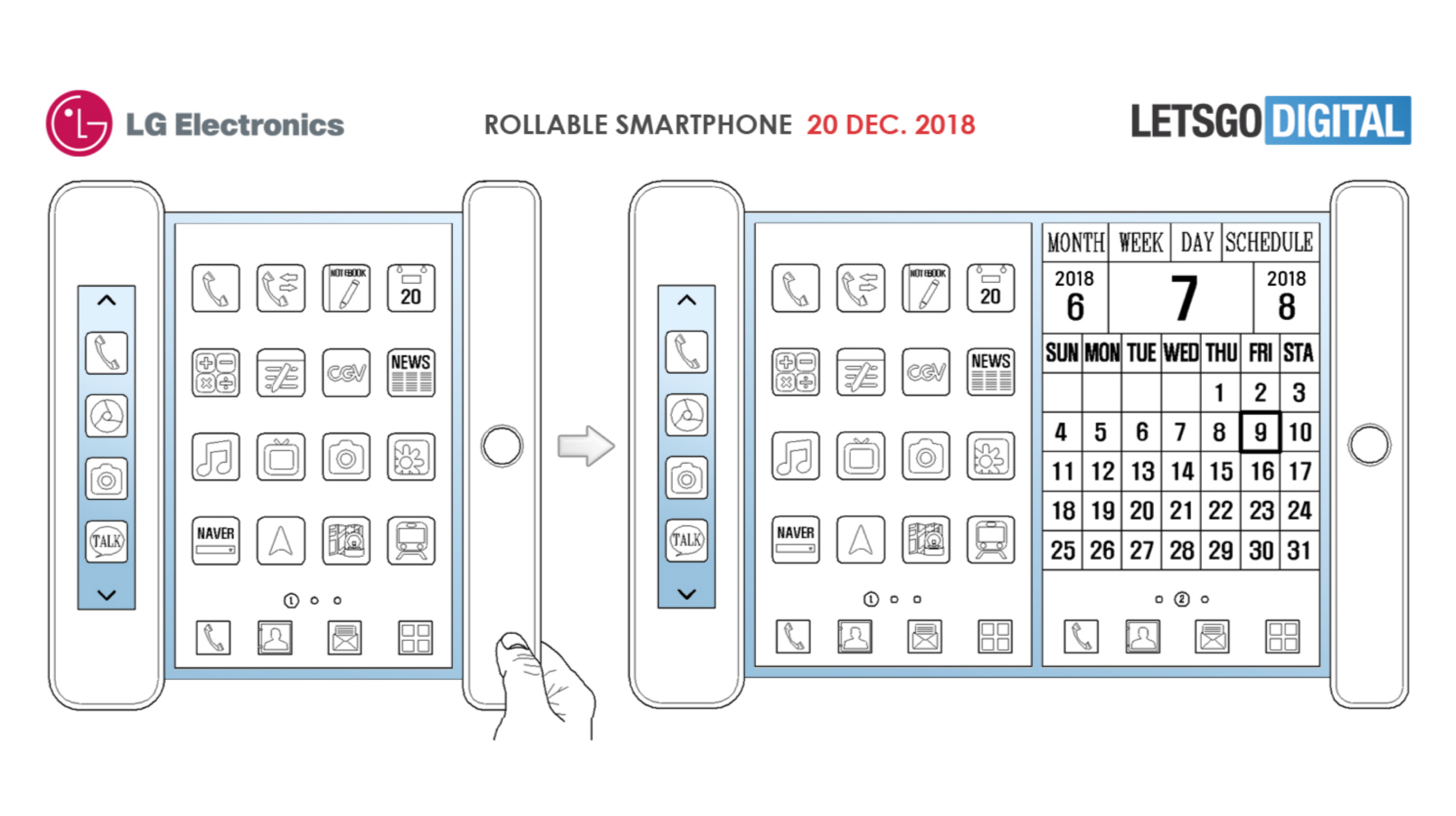
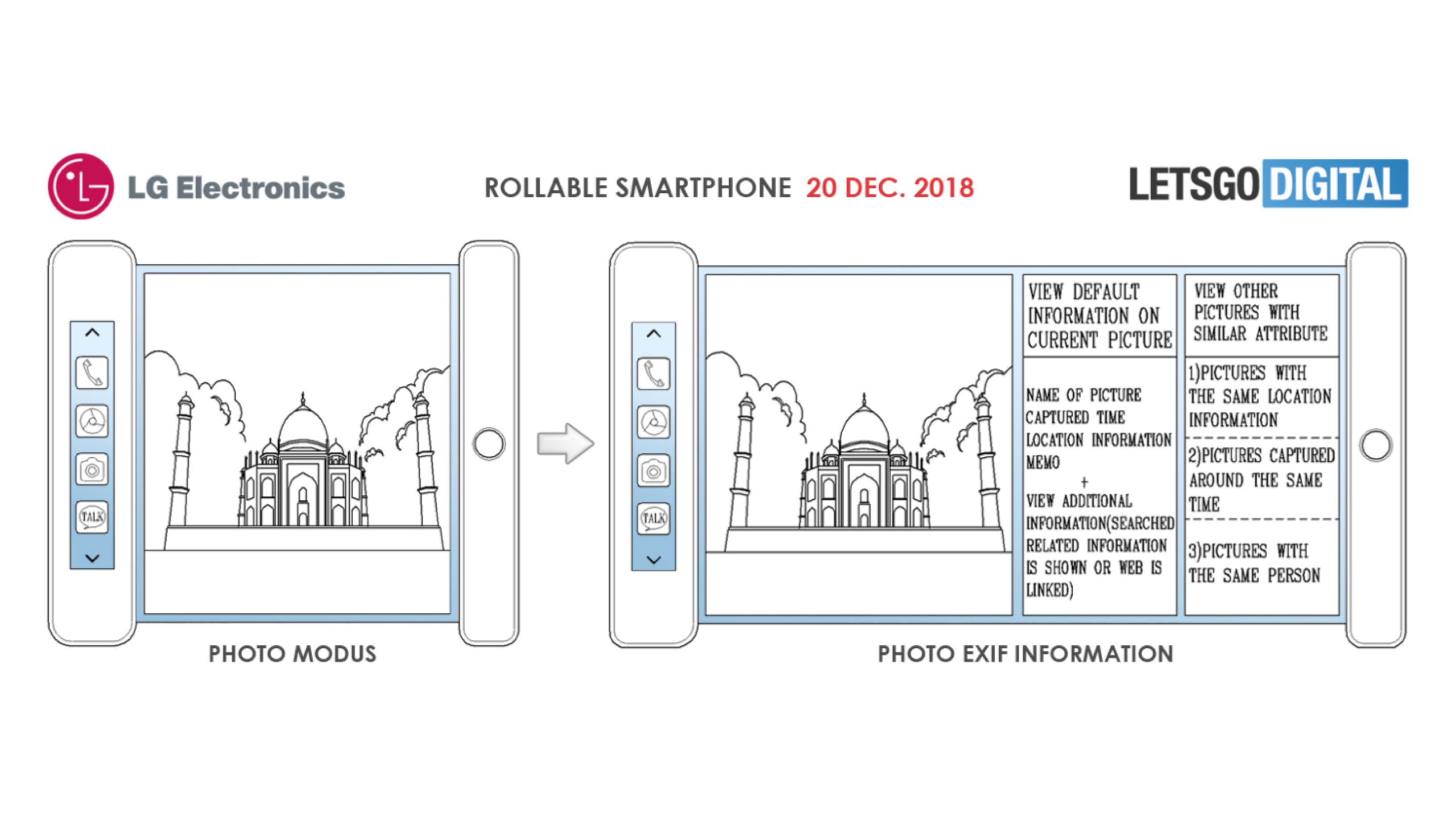
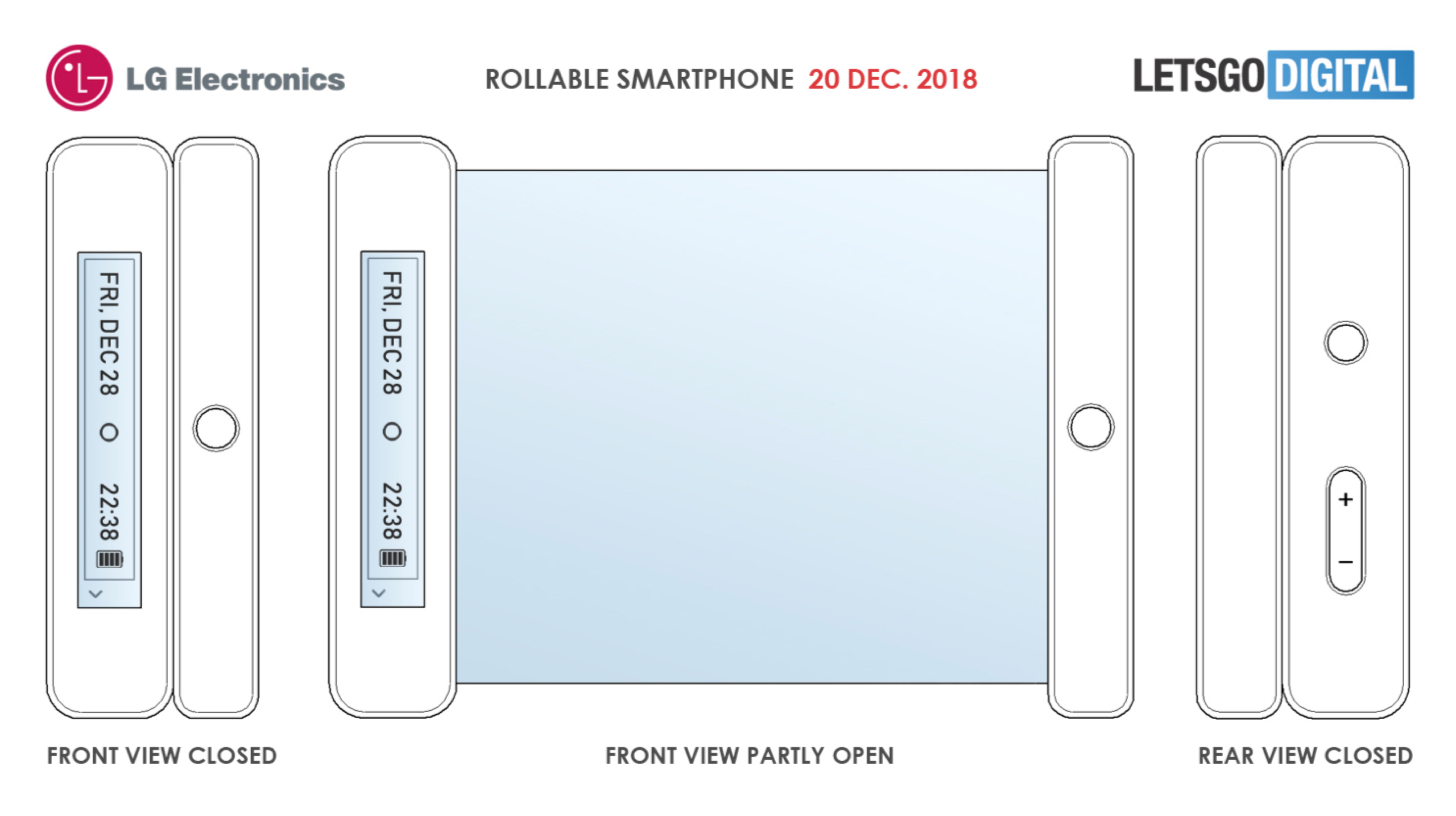
The patent for the LG smartphone with a rollable display was spotted by a Dutch website, Letsgodigital. The patent is detailed enough to reveal the functioning of the conceptual smartphone. LG has previously demonstrated a 77-inch transparent flexible OLED display which indicates that the company surely has the know-how of this technology. The patent reveals an intriguing device with two halves that are conjoined with a rollable display panel.
The left half of smartphone from the patent has a tall and narrow display which shows date, time and battery details. On the other hand, the right half seems to have a small circular button in the middle which might function as the home button. According to the patent, the rollable display can be stretched to multiple lengths. Each length showing a separate set of controls and icons. The left rear view of the device is completely free from any controls or buttons while the right half houses the volume controllers and another small circular button.
The patents are just an indistinct description of how LG conceptualises a smartphone with a rollable display. Therefore, it is hard to guess when such devices can make their way to the real world. However, LG can surprise the world by showcasing such a device at upcoming tech events like MWC, Design Thinking and Innovation Week.
Foxconn is a Taiwanese multinational electronics manufacturing company. The company is the largest contract manufacturer for Apple Inc. Apart from Apple, Foxconn also manufactures smartphones for companies like Xiaomi, Nokia and Gionee. The company has two manufacturing plants in India which are located in Chennai and Tamil Nadu. Out of the two, the Chennai plant was dedicated to manufacturing Nokia smartphones. But, that plant has remained shut since 2015 after Nokia’s acquisition by Microsoft. The Chennai plant was left out of this deal due to some tax disputes with the Indian government. However, the company plans to revive operations at this location which will be used to manufacture Apple iPhones.
Foxconn Chennai Plant Revival
The asset’s at the Chennai Foxconn plant were frozen by the Indian government due to the alleged outstanding taxes. However, in April 2018 Nokia agreed to pay the pending taxes in the form of provisional payments which has resulted in resolution of the dispute. Therefore, the operations at the manufacturing facility can be restarted. Foxconn officials at a Tamil Nadu state cabinet meeting announced that plant will be utilised to manufacture the Apple iPhone flagships including iPhone X , XS and XR in India. The company will reportedly invest Rs 25 billion to upgrade the plant to manufacture Apple iPhones. Additionally, the restart of operations will create 25000 jobs for the city locals. It is the first time that the iPhone X will be manufactured in India. As of now, Wistron, another Taiwanese company has manufactured the lower end variants of the iPhone including the iPhone SE and the iPhone 6 in Bengaluru.
An official announcement with precise details is expected to be made at the upcoming Global Investors Meet which is scheduled in Chennai in January 2019.
Instagram is one of the largest photo and video sharing platform. The application was first launched in 2010 and due to its simplicity, it soon became a sensational hit. Back in 2014, Facebook took over Instagram and a lot of changes have been made to the application since then. Instagram now even allows users to share videos. One key feature that contributed to the success of Instagram is its dedicated feed tab. It allows users to scroll through photos and videos vertically which is very handy. Before the end of the year, the company rolled out an update of the application which received a global backlash.
Changes Made With The Update
The Instagram feed is a collection of picture and video content that the user can easily swipe through. Originally, the feed scrolled in a vertical direction but the update completely changed this swipe motion. After the update, the user needs to scroll left to right instead of the top to bottom scroll that the users are accustomed to. With the horizontal feed, each photo is given the spotlight at any given time but after the update, this has changed. The user can now view a single post, and the comments are much more prominent now. This update received a backlash from users around the globe.
Instagram soon realised their mistake and have halted the rollout for both Android and iOS devices. Additionally, the Instagram head commented on twitter that it was merely a small test to check the feasibility of the feature which did not work out as intended. Most notably, a few minutes after the horizontal feed went live, the vertical feed seems to have reappeared for most of the users.
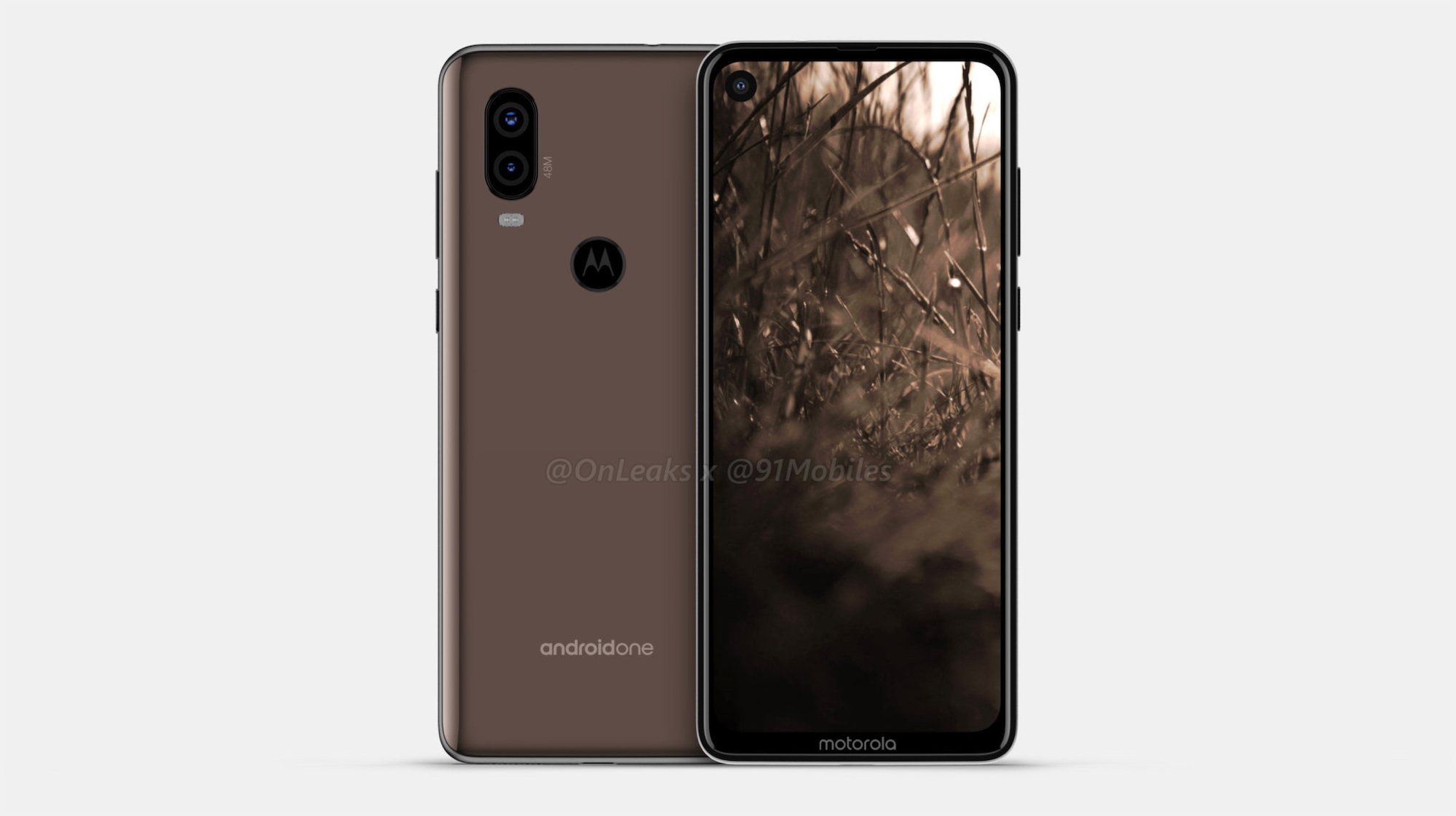
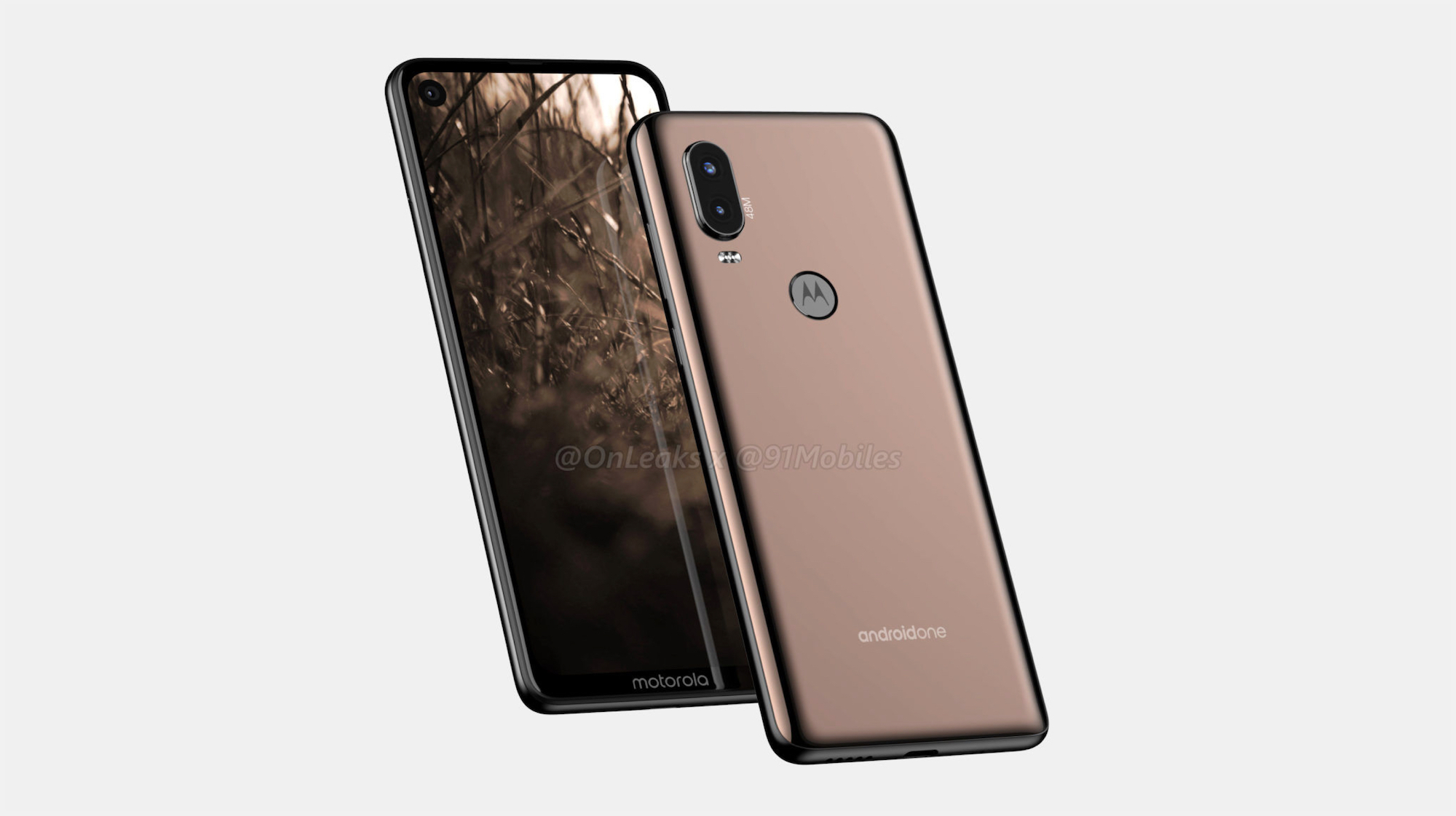
Motorola launched the Moto P30 smartphone earlier this year which was exclusively available in China. A latest leak of the Moto P40 has now leaked before its official launch. Like the Samsung Galaxy A8s, the renders of the Moto P40 reveal that it also has an In-Display selfie camera.
4K Renders And Video
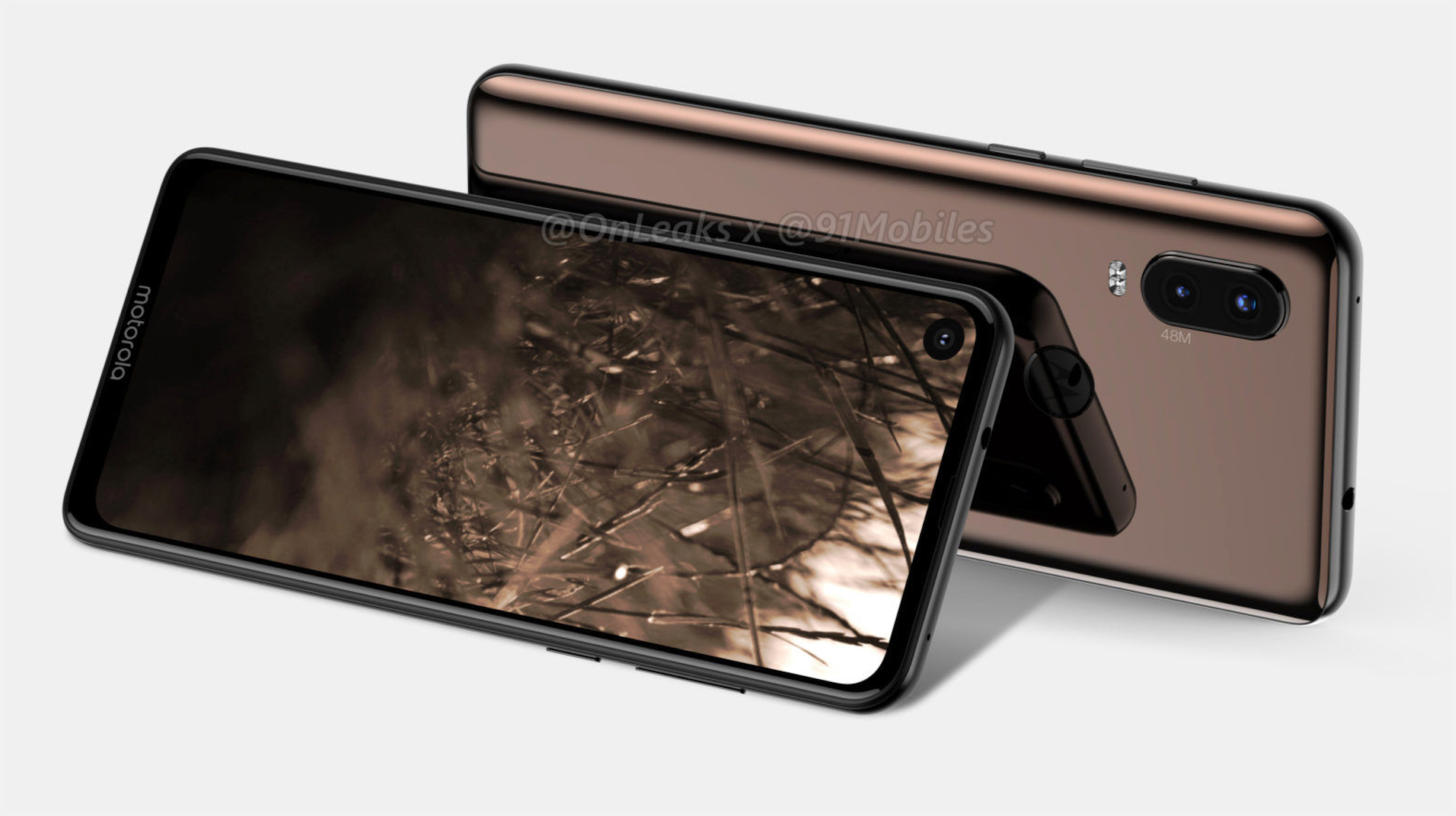
The renders and video of the Moto P40 were leaked on Twitter by the users OnLeaks and 91Mobiles. The renders of the Moto P40 are sufficiently detailed and reveal the 360-degree view of the smartphone. The front of the smartphone has an edge-to-edge display with a circular cutout for the front-facing camera. The top, left and right bezels of the smartphone are quite thin. In comparison, the bottom chin is considerably thick which carries the Motorola branding.
The renders of the Moto P40 reveal that the right side of the device is occupied by the power button and volume rockers while the left side houses the SIM card slot. The top of the smartphone accommodates the 3.5 mm audio jack and the secondary microphone pinhole. The speaker grille and the USB Type-C port are placed on the bottom of the device.
The rear of the Moto P40 seems to be made out of glass which tapers towards the edges. The rear of the device houses the dual camera setup, fingerprint sensor, and android one branding. Intriguingly, the back of the device reads 48 MP which indicates that out of the two cameras, one sensor has a 48 MP resolution. The circular sharped fingerprint sensor at the back of the device is slightly indented which makes it easy to find. The back of the Moto P40 also carries the android one logo which states that the device will be assured for long-term Android updates.
The launch date of the Moto P40 is currently unknown but the company might showcase the device at the upcoming MWC which is scheduled for 25-29 February 2019.
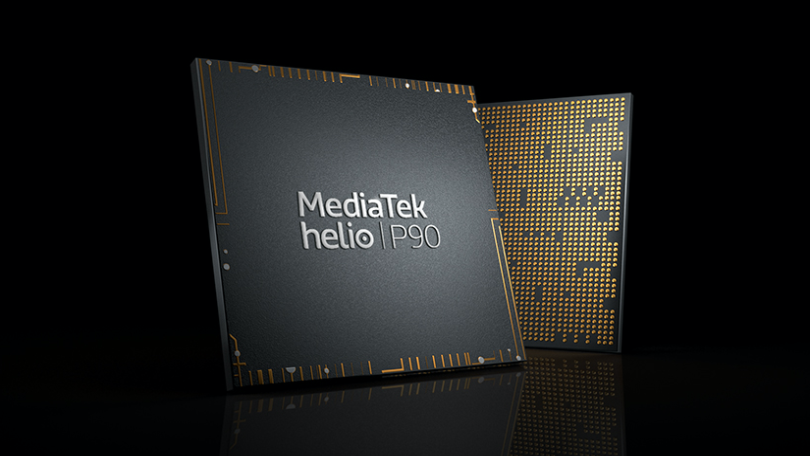
Taiwanese chip maker, MediaTek launched the Helio P90 chipset earlier this year. It is the most powerful SoC that the company has designed till date. The chip is intended for high-end flagship level smartphones. The company boasts that the Helio P90 chipset is extremely power efficient and has Groundbreaking AI performance. The claims, however, cannot be verified as no smartphone manufacturer has yet launched a device featuring this chipset. But, an AnTuTu benchmark leak provides some insight into the performance capability of the Helio 90.
The AnTuTu benchmarks of the MediaTek Helio P90 were shared by an Indonesian leaker, Bang Gogo. The source of the leak is trustworthy as most of the leaks provided by him in the past have turned out real. The user shared a screenshot which reveals both the benchmark result and the hardware details of the device it was captured on. The device from the listing features the Octa-Core Helio P90 processor along with the IMG PowerVR GM 9446 GPU. The display of test smartphone has a resolution of 2160px x 1080 px.
The test device runs on the latest Android 9 Pie OS with 6 GB of RAM and 128 GB ROM. Most notably, the device with the Helio P90 SoC registers a score of 162861. In comparison, the smartphones with the Snapdragon 845 get a much higher AnTuTu score which ranges from 250000-290000 depending on the make of the device. However, it is possible that the smartphone in the listing is not optimised leading to the unimpressive score. Therefore, until a real-world smartphone with the P90 SoC is launched, it is hard to decide what the chipset has on offer.
Specifications
The MediaTek Helio P90 is an Octa-Core chipset that is manufactured using 12 NM TSMC technology. Other relevant information of the chipset is as follows:
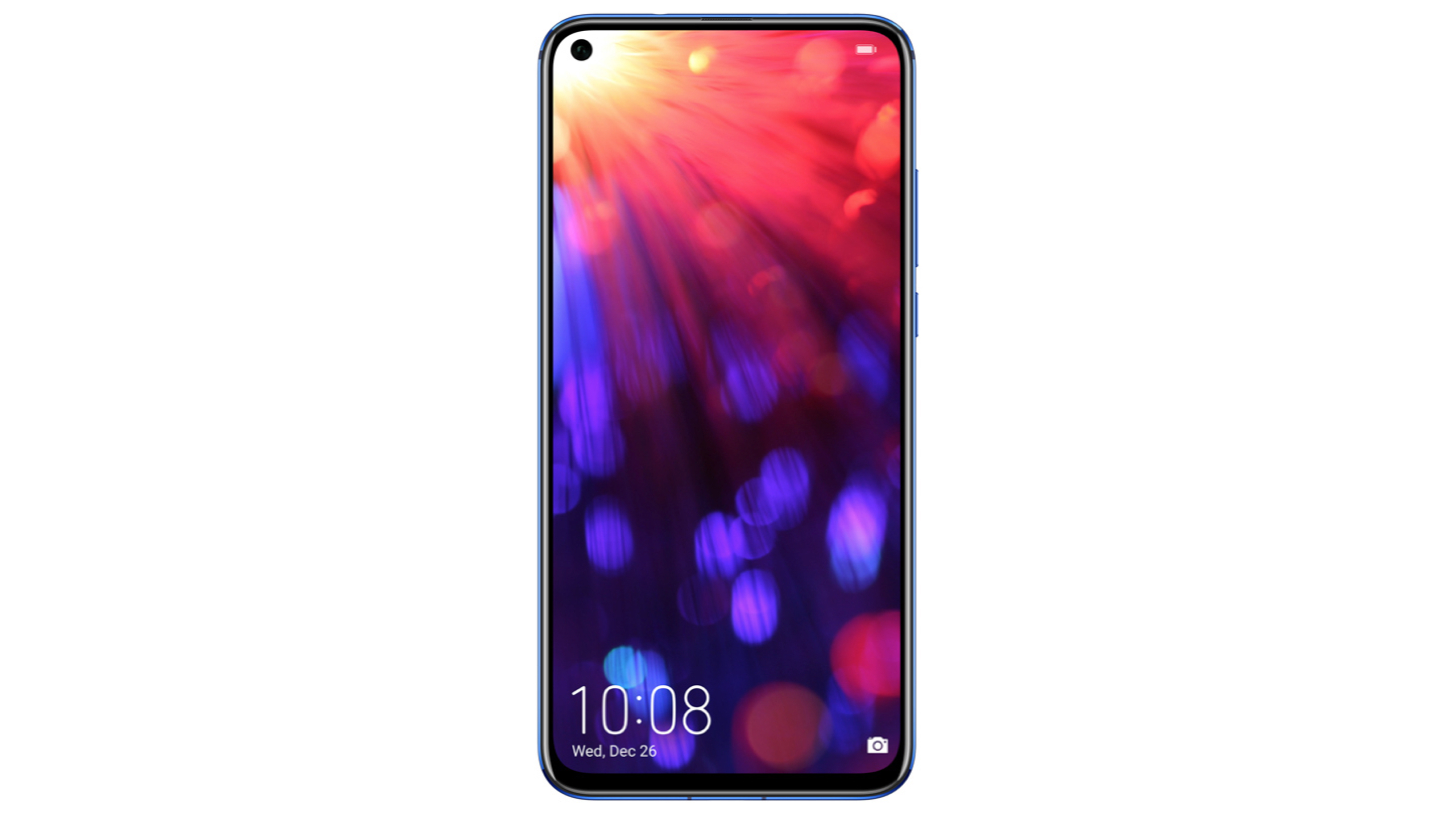
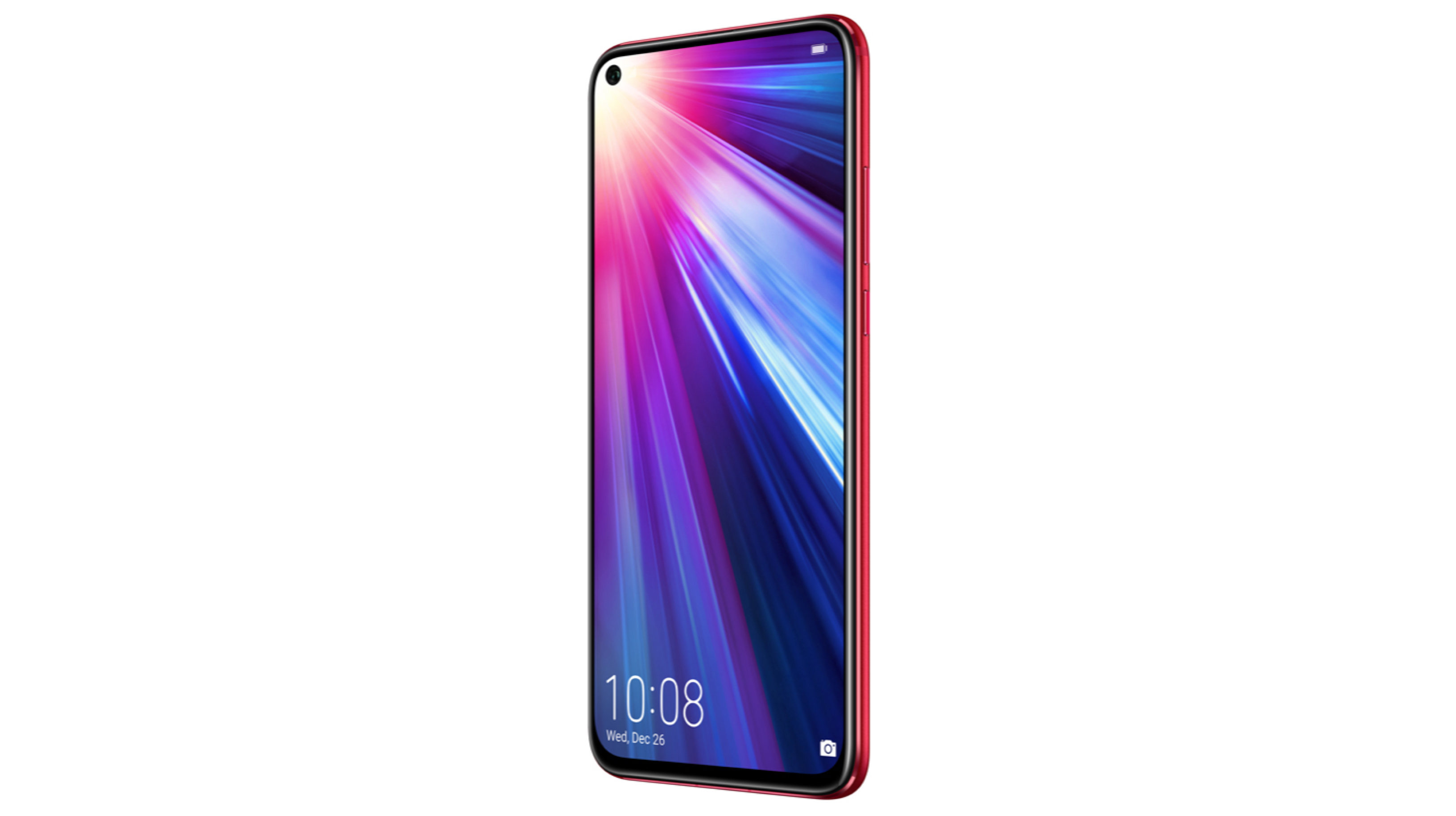
Honor, a sub-brand of Huwaei has launched the Honor View 20 smartphone with In-Screen front camera, in China. Following the Samsung Galaxy A8s and the Huawei Nova 4, it is the third smartphone to have this feature. A latest tweet shared on Honor India’s Twitter account states that the View 20 will soon launch in India. Most notably, the smartphone will be exclusively available on Amazon.
Design And Features
The Honor View 20 has a distinctive design with a front and rear glass build. The front of the smartphone accommodates a Full HD 6.4-inch display with a resolution of 2310 x 1080 px. The display panel has a pixel density of 398 ppi and screen-to-body ratio of 85.7 %. The top left side of the display has a small circular cutout which houses the 25 MP In-Display front camera. The earpiece for receiving phone calls is built into the top bezel of the smartphone.
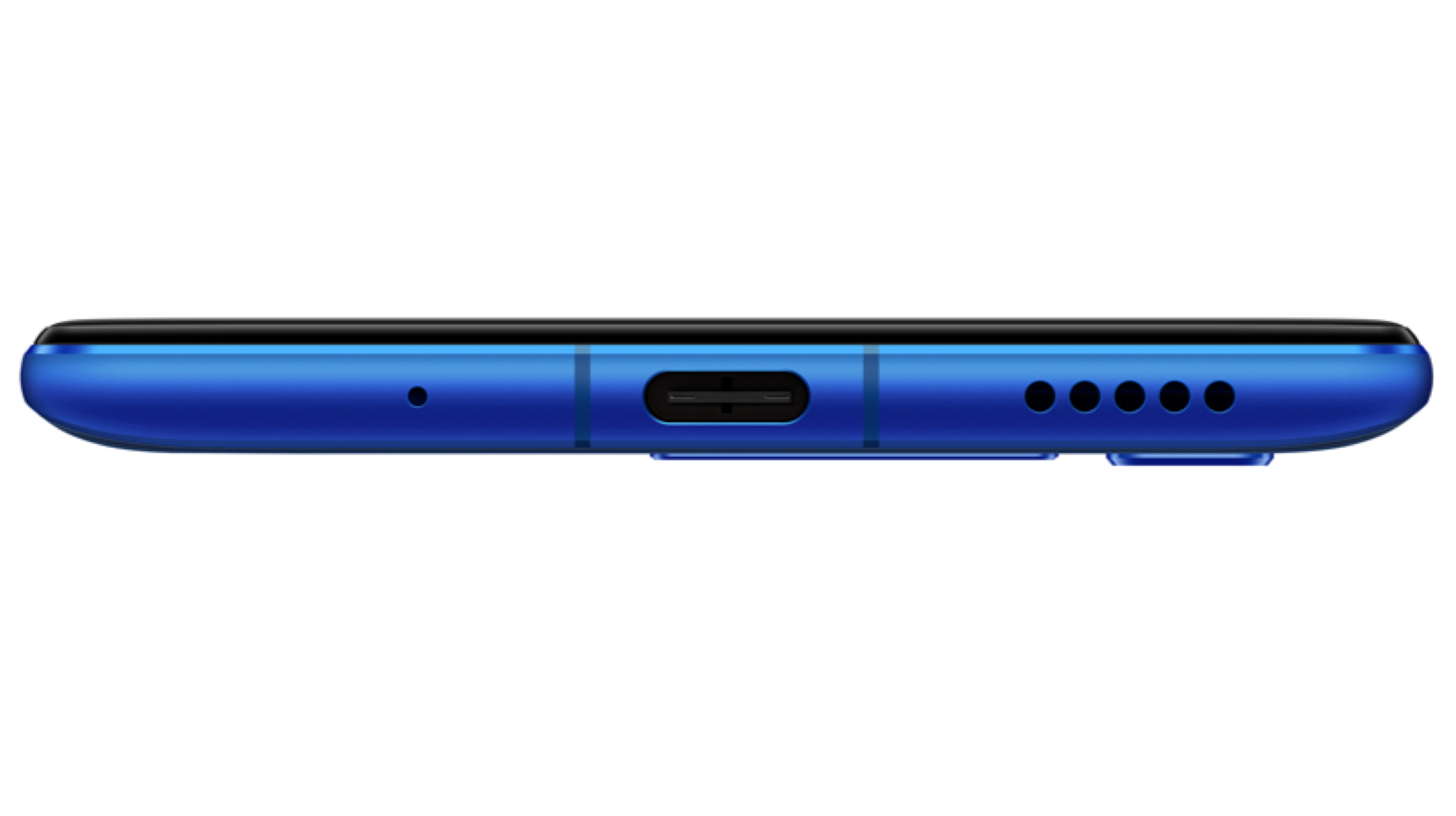
The power button and the volume controllers are placed on the right of the device while the SIM card slot is placed on the left. The top of the smartphone accommodates the 3.5 mm audio jack, IR blaster and the secondary microphone pinhole. The bottom of the smartphone is occupied by the USB Type-C port and the loudspeaker grille.
The rear of the Honor View 20 has a glossy gradient finish and it harbors the fingerprint sensor and an unconventional dual camera setup. The dual rear camera set up along with an LED Flash is divided into two separate modules. The first circular module in this horizontal alignment houses the 48 MP camera and the second capsule shaped module houses the TOF 3D camera and the LED flash.
Under the hood, the Honor View 20 boasts the Octa-Core Kirin 980 CPU along with Mali-G76 GPU. In terms of connectivity, the device supports 802.11 ac Wi-Fi, Bluetooth 5.0, GPS, NFC, and 4G VoLTE. The handset runs on Magic UI 2.0 which is built on top of the latest Android 9.0 Pie and is powered by a 4,000 mAh battery. It is available in three colour options which include Blue, Black, and Red.
The tweet shared by Honor does not reveal any launch date but the tweet indicates that the launch of the Honor View 20 is imminent. Even though the India specific pricing of the smartphone is unavailable, it is expected to have similar pricing as the Chinese variant. The Chinese variant of the Honor View 20 is available in three RAM + ROM configurations for which the price is as follows:
Consumer Electronics Show (CES) is one of the largest annual trade shows that is held in the month of January. The show is organised by the Consumer Technology Association (CTA) in Las Vegas, United States. During the event, several companies from around the globe showcase the latest innovations and developments. In the past decade, smartphones have taken centre stage at CES and the same is expected from the 2019 event which is scheduled for 8 January-12 January. ETNews, a Korean news agency claims that LG and Samsung will showcase smartphones with an in-display earpiece speaker.
What Is An In-display Speaker?
Conventional speakers on smartphones make use of a diaphragm which is connected to a voice coil. The voice coil, when charged with a magnetic field, causes the diaphragm to vibrate up and down to produce sound. However, smartphones with an in-display earpiece speaker are reported to use a piezo sensor. It is a disc-like component which also produces sound. In comparison to normal speakers, the piezo sensor is very thin and sleek therefore they can easily be mounted behind the surface of a display panel.
Advantages of In-Display Speaker
It is apparent that smartphone manufacturers are trying to pack in as many components as possible in a small form factor smartphone. Hence, the use of an In-Display piezo sensor speaker will allow companies to save up on valuable space inside of a smartphone. This extra space can be utilised for other important components like a larger battery and powerful processor. Furthermore, a smartphone with this technology can significantly reduce the noise that is emitted outside the call. It can be promoted as a feature that is vital for confidential phone calls.
LG has previously showcased CSO (Crystal Sound OLED) panels for monitors and televisions. As the name suggests, Crystal Sound OLED is a type of display panel that can emit sound waves and this display can be seen on the smartphones at CES 2019. Samsung has also showcased a similar type of SoD technology panel. The Sound on Display (SoD) panel has an under panel sound sensor.
The Flipkart Mobiles Bonanza sale is here and this is likely the best time to buy or upgrade to a new smartphone. The shopping festival will commence on December 26 and will last till 29 December. Here is a list of top smartphones that are currently being offered at heavy discounts. Click here for Flipkart Mobiles Bonanza Deals Part-1.
The POCO F1 is one device of 2018 that completely disrupted the mid-range smartphone segment. Due to its flagship features and an under $300 aggressive pricing, it gathered a lot of attention globally. The smartphone is offered in three RAM + ROM configuration and two different back panel finish.
(Offer: Regular Price/MRP – 21,999, Sale Price- 19,999)
The Nokia 6.1 Plus has an all-glass front and rear build with an aluminum chassis. The front of the smartphone has a thick chin at the bottom and a small notch at the top of the display. The rear dual camera dual setup along with an LED flash is vertically aligned and it slightly protrudes out of the back.
(Offer: Regular Price/MRP – 17,600, Sale Price- 14,999)
The Nokia 5.1 Plus like its elder sibling, 6.1 Plus is an Android One smartphone. Therefore, it can receive the latest Android updates soon after they are rolled out by Google. In terms of design, it also has a glass front and rear build and a similar shaped rear camera setup.
(Offer: Regular Price/MRP – 13,199, Sale Price- 9,499)
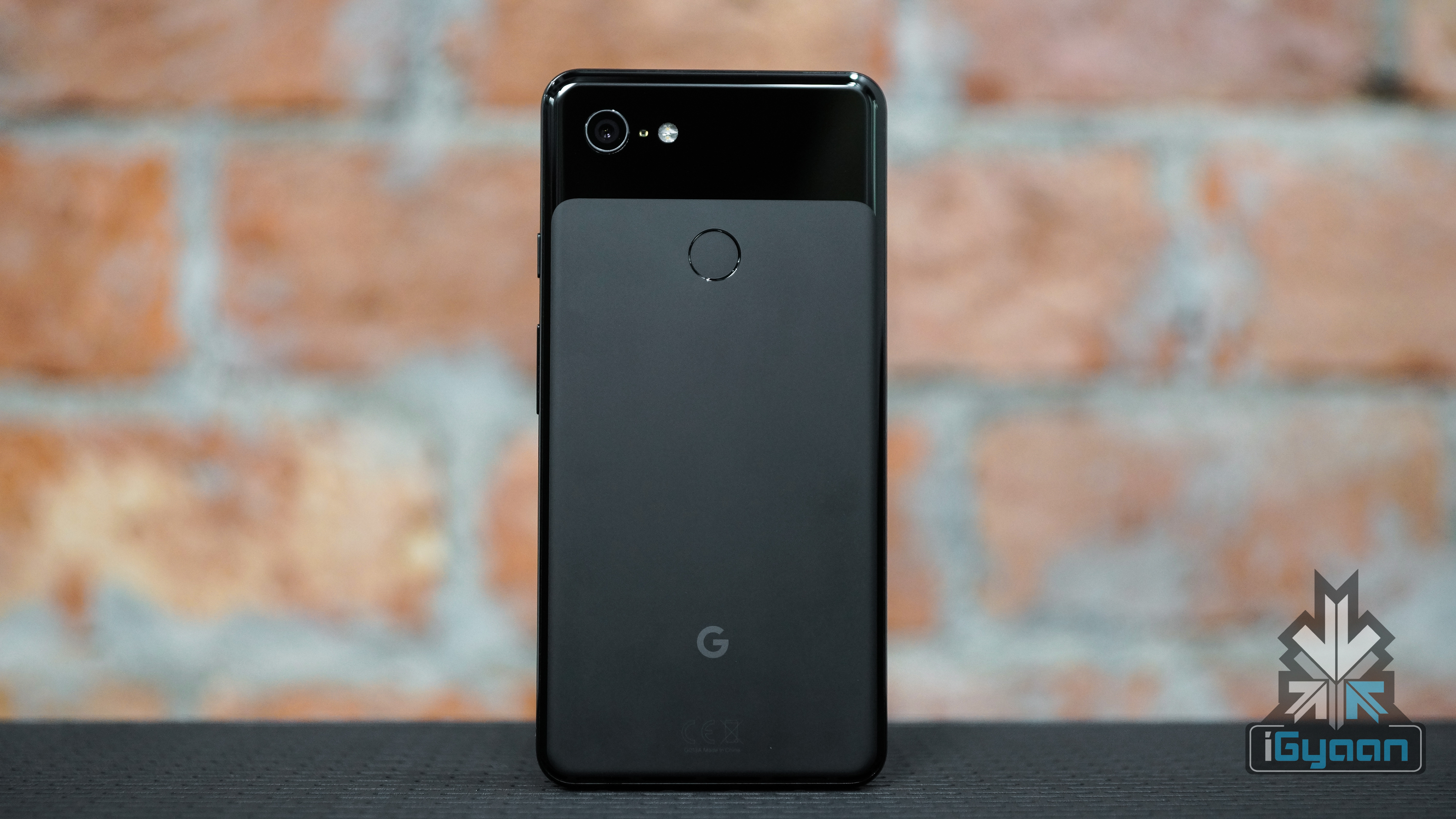
The Pixel 2XL was the Google’s flagship smartphone from the year 2017. The standout feature of the smartphone is it unrivaled camera performance. Although the device has a single rear camera, its camera performance is by far better than most flagships that have two or even more rear camera sensors.
(Offer: Regular Price/MRP – 45,499, Sale Price- 39,999)
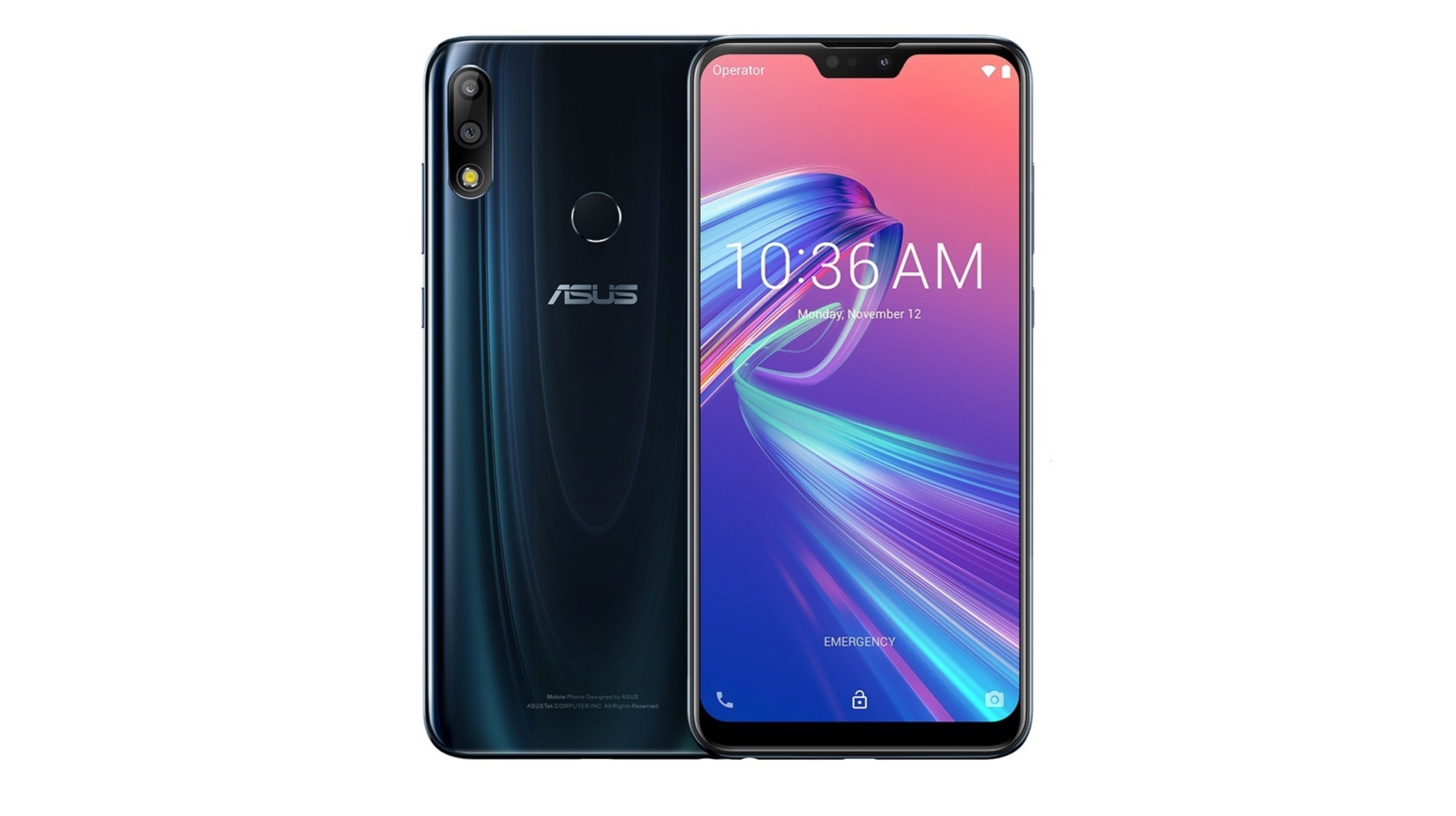
The Asus ZenFone 5Z was launched earlier this year and the company touted as the budget flagship smartphone. The device has a modern looking design with front and rear glass build. The smartphone features an Octa-Core processor and a rear-mounted fingerprint sensor.
The ZenFone Max M2 is the successor to the ZenFone Max M1 which due to its stellar features shook the sub 15k smartphone segment. It also features a Corning Glass 6 protected display and a jumbo battery. Additionally, the new device also has a glass rear build. The smartphone runs on latest Android 9.0 Pie operating system with very little customisation.
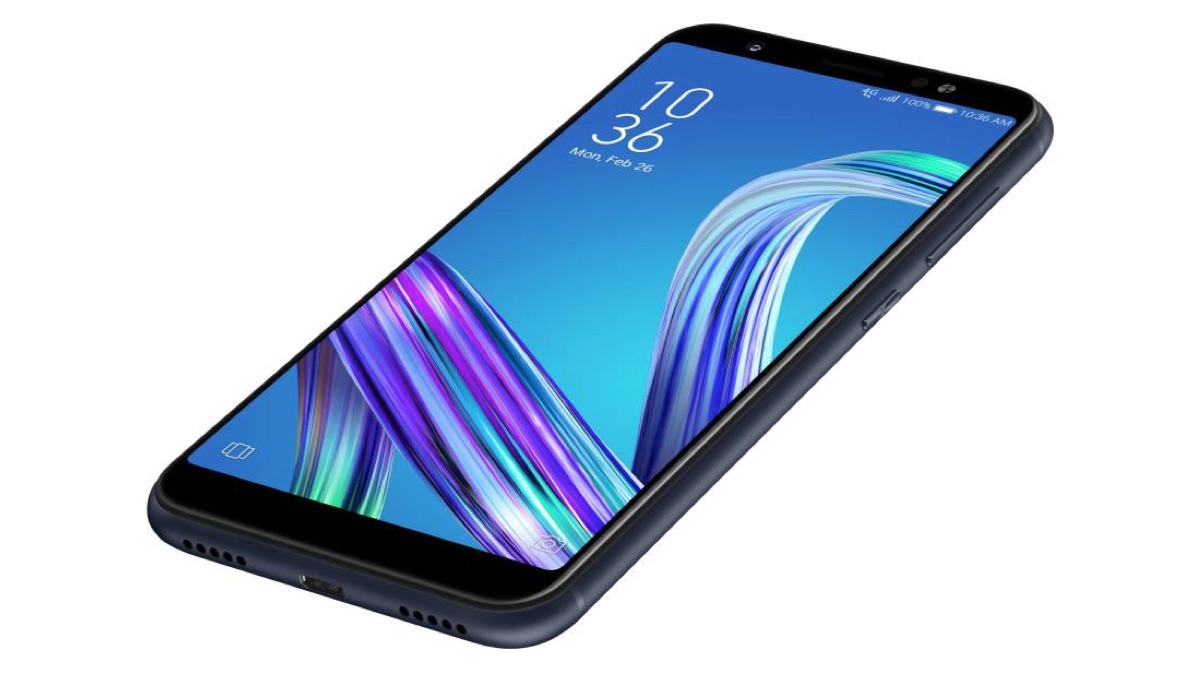
The Asus ZenFone Lite L1 is focused as an entry-level Android smartphone. The price at which it is being offered makes it a considerable option. The smartphone has an Octa-Core processor, 4G VoLTE support, and even memory expandability via a microSD card.
(Offer: Regular Price/MRP – 6,999, Sale Price- 4,999)
The Honor 9N was also launched at a much higher price tag than what it is currently available. The front of the smartphone has a thin notch at the top of the display and a wide chin at the bottom. The device has a 2.5d curved glass with a 19:9 aspect ratio. For safely and securely unlocking the handset, it has both a fingerprint sensor and facial recognition support.
(Offer: Regular Price/MRP – 13,999 Sale Price- 8,999)
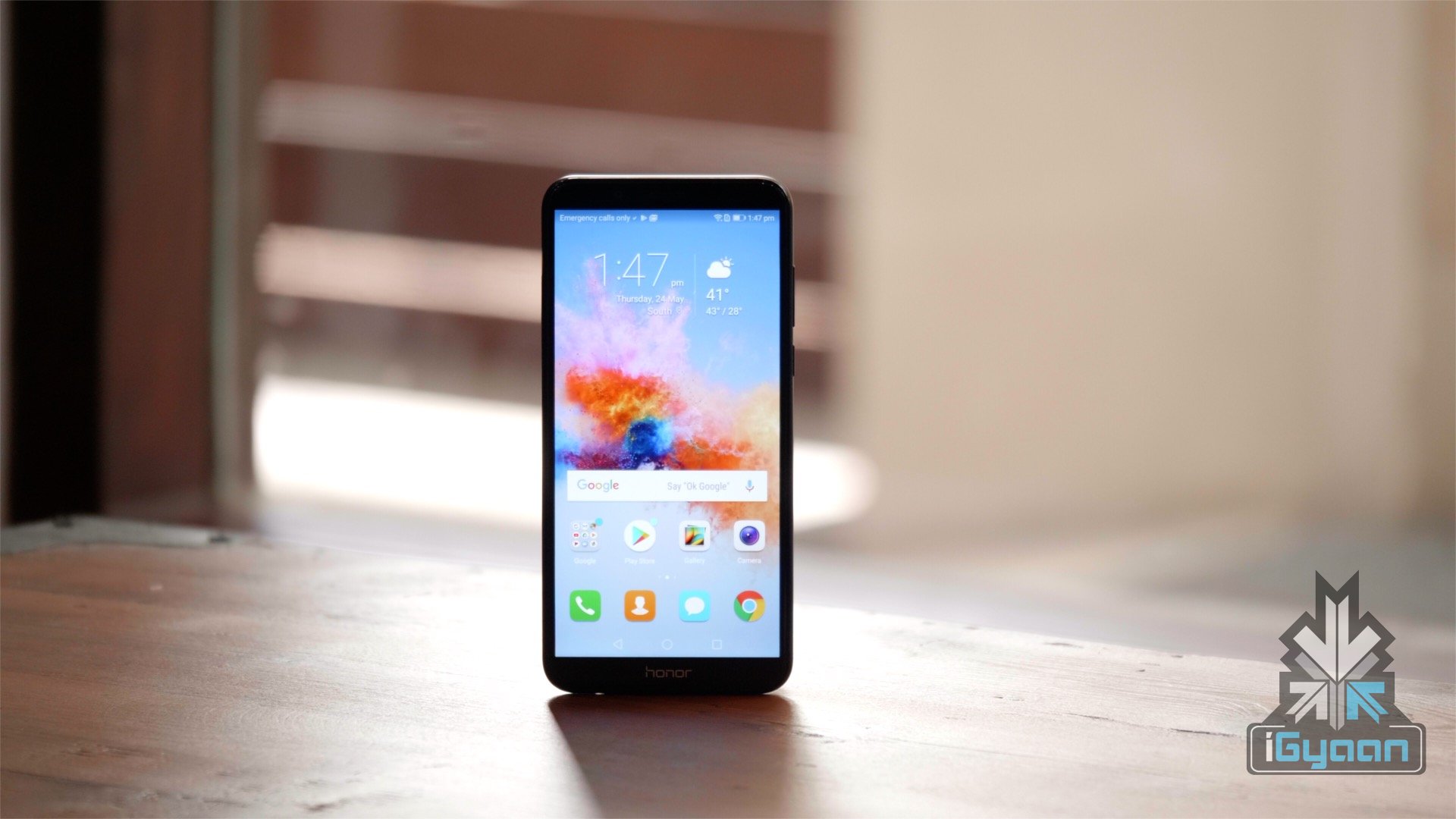
The Honor 7A was initially launched at a price upwards of 10k but is now available a much lower price than the original price. The device has a large screen HD+ display and an Octa-Core processor. The smartphone has a dedicated slot for memory expansion and 4G VoLTE support.
(Offer: Regular Price/MRP – 10,999, Sale Price- 7,499)
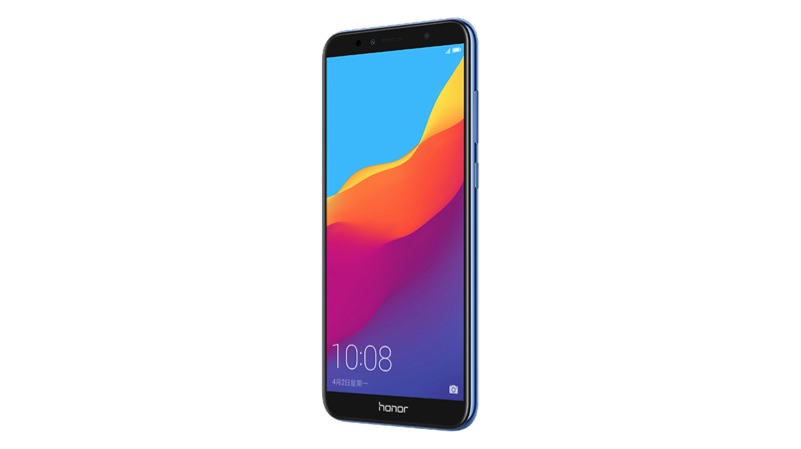
The Honor 7S is an entry-level Android smartphone that offers high value for money. The smartphone has thin left/right bezels and while the top and bottom chin are quite prominent. The device features a MediaTek processor and has an HD+ display.
(Offer: Regular Price/MRP – 8,999, Sale Price- 5,999)
This might be the best time for the consumers who wish to buy a new smartphone as the Flipkart Mobiles Bonanza festival is here. The festival will commence on 26th December and last till 29th December. During the festival, various smartphones from several companies will available at huge discounts. Here is a list of top smartphone deals that will see a temporary price cut. Click here for part-2 of this list.
The Redmi Note 6 Pro is the successor to the Redmi Note 5 Pro. Although, the device has similar specifications to its predecessor. The Redmi Note 6 Pro has dual front and dual rear cameras. The device is highly optimised and it has nano P2i coating which makes it liquid repellent.
(Offer: Regular Price/MRP- 15,999, Sale Price-13,999)
The Redmi Note 5 Pro was one of the first budget smartphones to have dual rear cameras. The device has an attractive design and is available in two different colours which are White and Black.
(Offer: Regular Price/MRP- 14,999. Sale Price- 12,999)
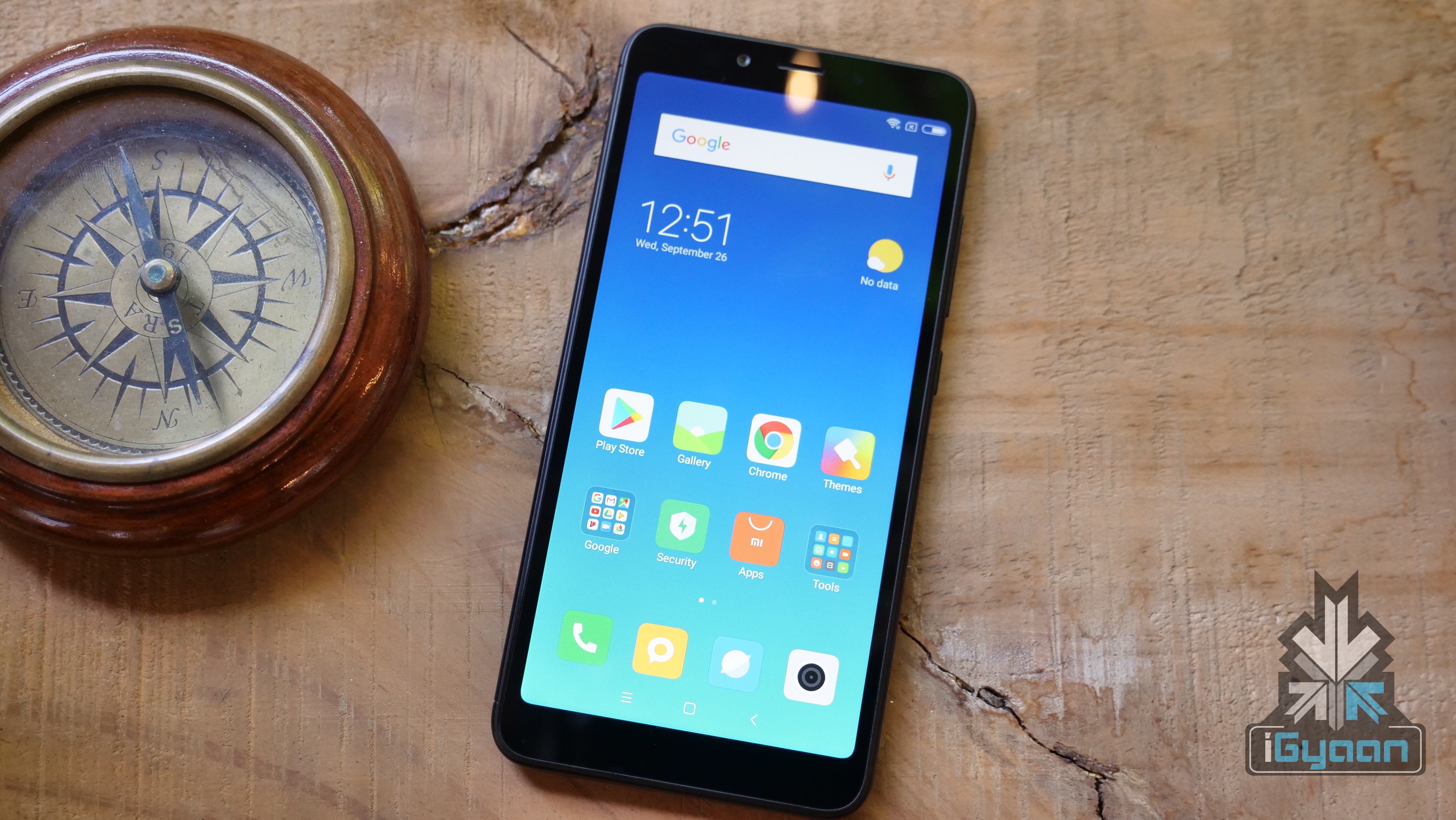
The Redmi 6 is one of the best smartphones which are priced under 10K. It packs an octa-core processor and an HD+ display. The smartphone has dual rear cameras and single front camera. It also has a rear-mounted fingerprint sensor.
(Offer: Regular Price/MRP-8,999, Sale Price- 8,999)
The Samsung Galaxy A9 is the world’s first mainstream smartphone that features quad rear cameras. Except for its camera prowess, the device has an AMOLED display panel and a gradient colour back. It also has a dedicated Bixby button which is Samsung’s take on a voice-guided virtual assistant.
(Offer: Regular Price/MRP-42,000, Sale Price- 39,900)
After a long streak of smartphones with mediocre specifications, the Motorola launched the Moto One Power. The smartphone has a mammoth battery which allows for 2-day backup on light usage. It has a very solid construction with a metal rear build. For photography, the smartphone has single front and dual rear cameras.
(Offer: Regular Price/MRP- 18,999 , Sale Price- 14,999)
The Realme 2 Pro is a handsome looking device with narrow bezels on all four sides. The front of the smartphone also has a small waterdrop notch which houses the front-facing camera. The rear of the has a clear glass like build and which harbours the fingerprint sensor and the dual camera setup.
(Offer: Regular Price/MRP- 14,990, Sale Price- 12,990(Prepaid Orders))
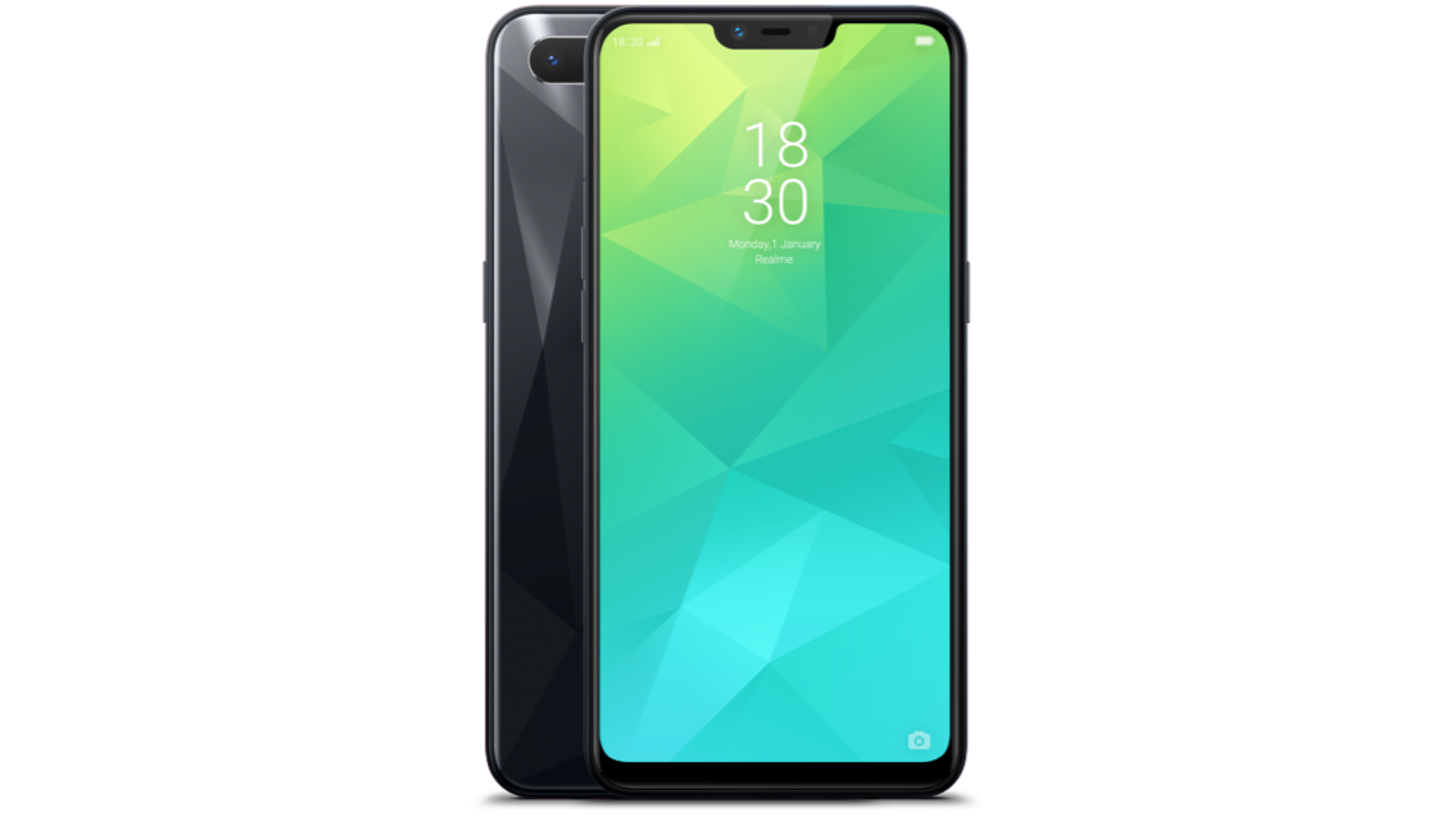
The Realme 2 is the successor to the Realme 1 which took the budget smartphone segment by storm. The Realme 2 has a wide notch at the top of the display and thin bezels. The rear panel of the smartphone is made out of a clear glass-like material with a diamond pattern which looks very striking.
(Offer: Regular Price/MRP- 9,990, Sale Price- 9,499)
The Realme C1 is priced aggressively and it competes in the entry-level smartphone segment. In comparison to other devices in its segment, it has a massive battery and a powerful octa-core SoC. To safely and securely unlock the device, it has facial recognition software.
(Offer: Regular Price/MRP – 8,990, Sale Price- 7,499)
ZTE is a Chinese company that manufactures smartphones and telecommunication equipment. The company has filed a patent for a smartphone with a foldable style display. The smartphone in the patent unfolds into a large screen tablet. The patent clearly explains how the folding hinge of the smartphone will operate.
The Patent
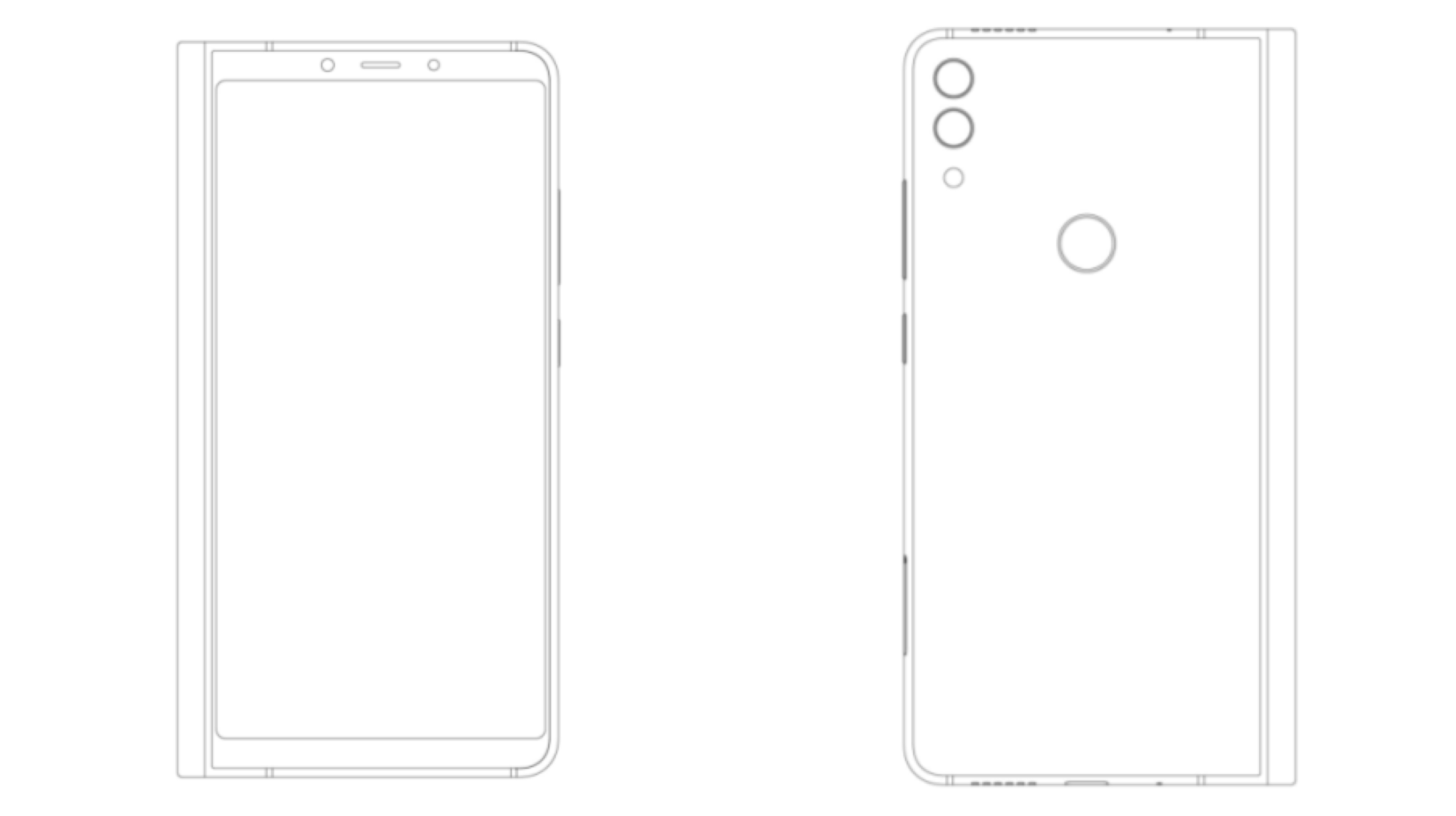
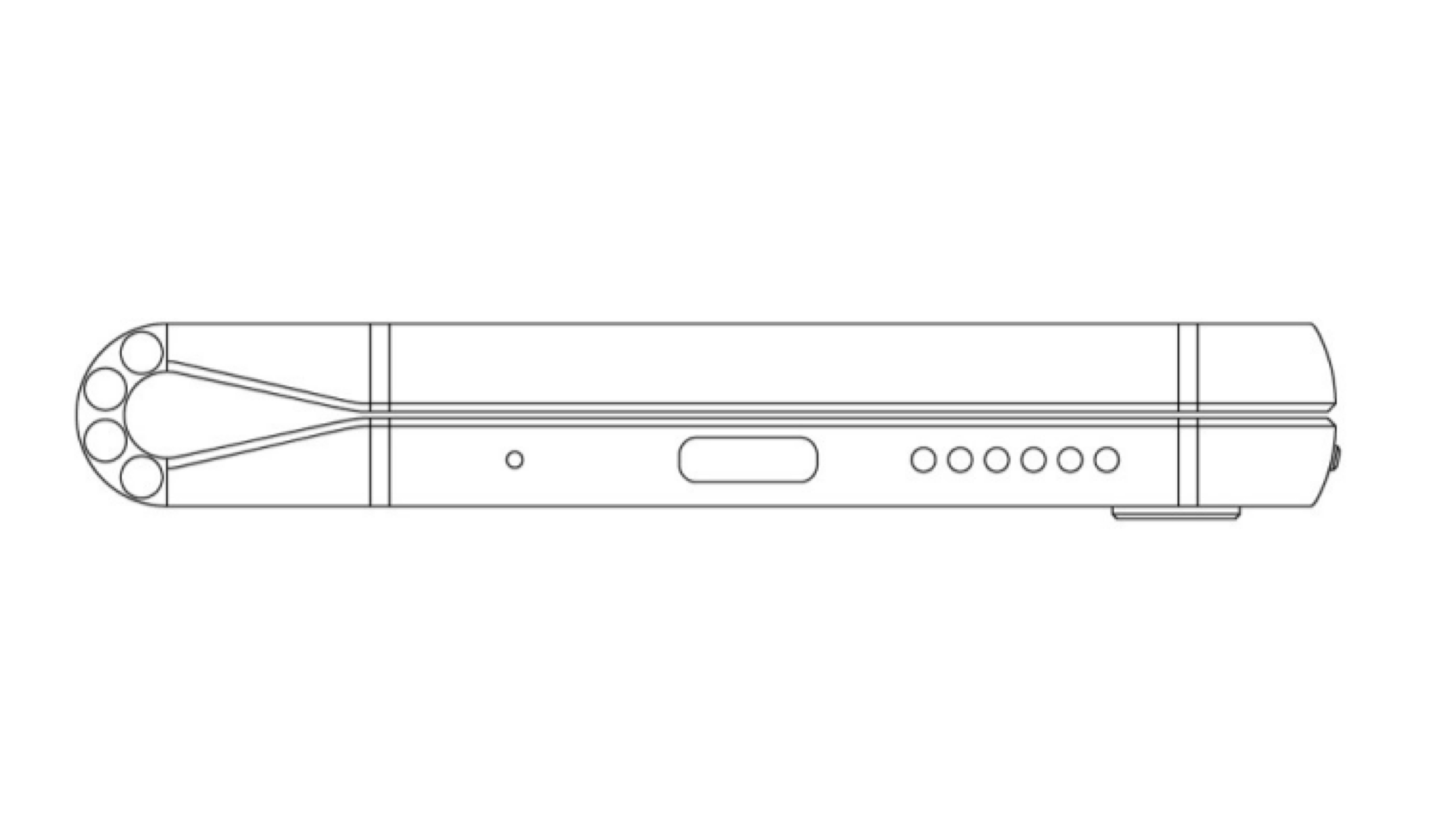
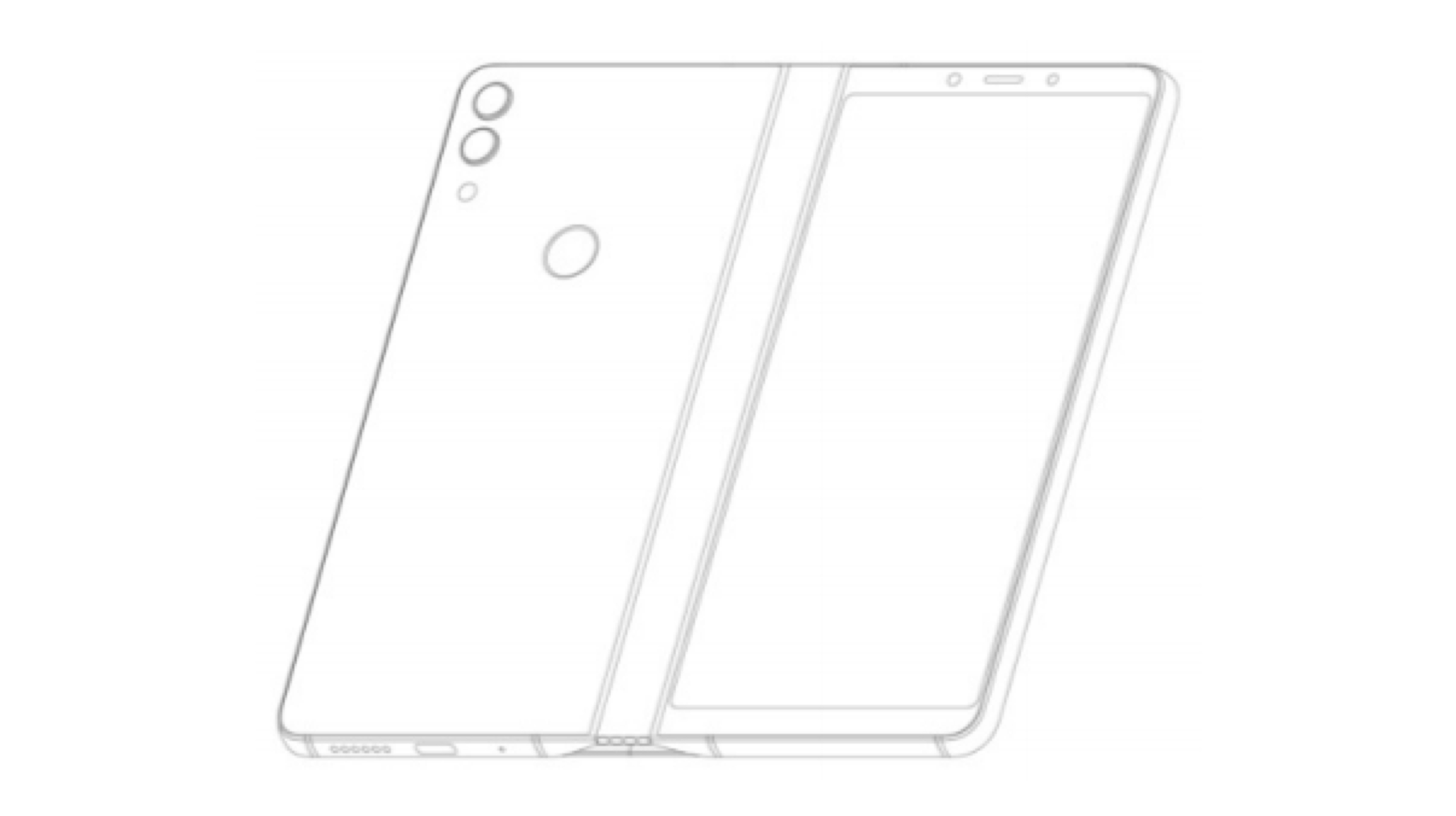
The ZTE device in the patent serves the functionality of both a smartphone and a tablet. The front of the ZTE device has a high-screen-to-body ratio display with thin bezels on the left and right side. However, the top and bottom bezels are quite prominent. The top bezel of the smartphone houses the earpiece speaker, front-facing camera and an additional hole which will most likely house the ambient light sensor. The top and bottom sides of the smartphone also have two lines for the antenna bands. The right side of the ZTE device houses the power button and the volume rockers
The rear of the ZTE device has dual rear cameras along with LED flash and a fingerprint sensor for securely unlocking the device. The bottom of the smartphone has a microphone pinhole, USB Type-C slot and bottom firing speakers. Additionally, the top of the device also has the speaker grille. The ZTE device has a curved hinge which seems to have circular magnetic strips. Most notably, the hinge on the device when unfolded lays completely flat on a surface. The device when unfolded transforms into a tablet which will allow the users to enjoy video content on a larger screen.
Launch Date
ZTE has not announced the launch date of this device. But, the sheer number of details suggest that the company is working on something serious. The company might showcase such a device at the upcoming MWC 2019 which is scheduled for 25-29 February.
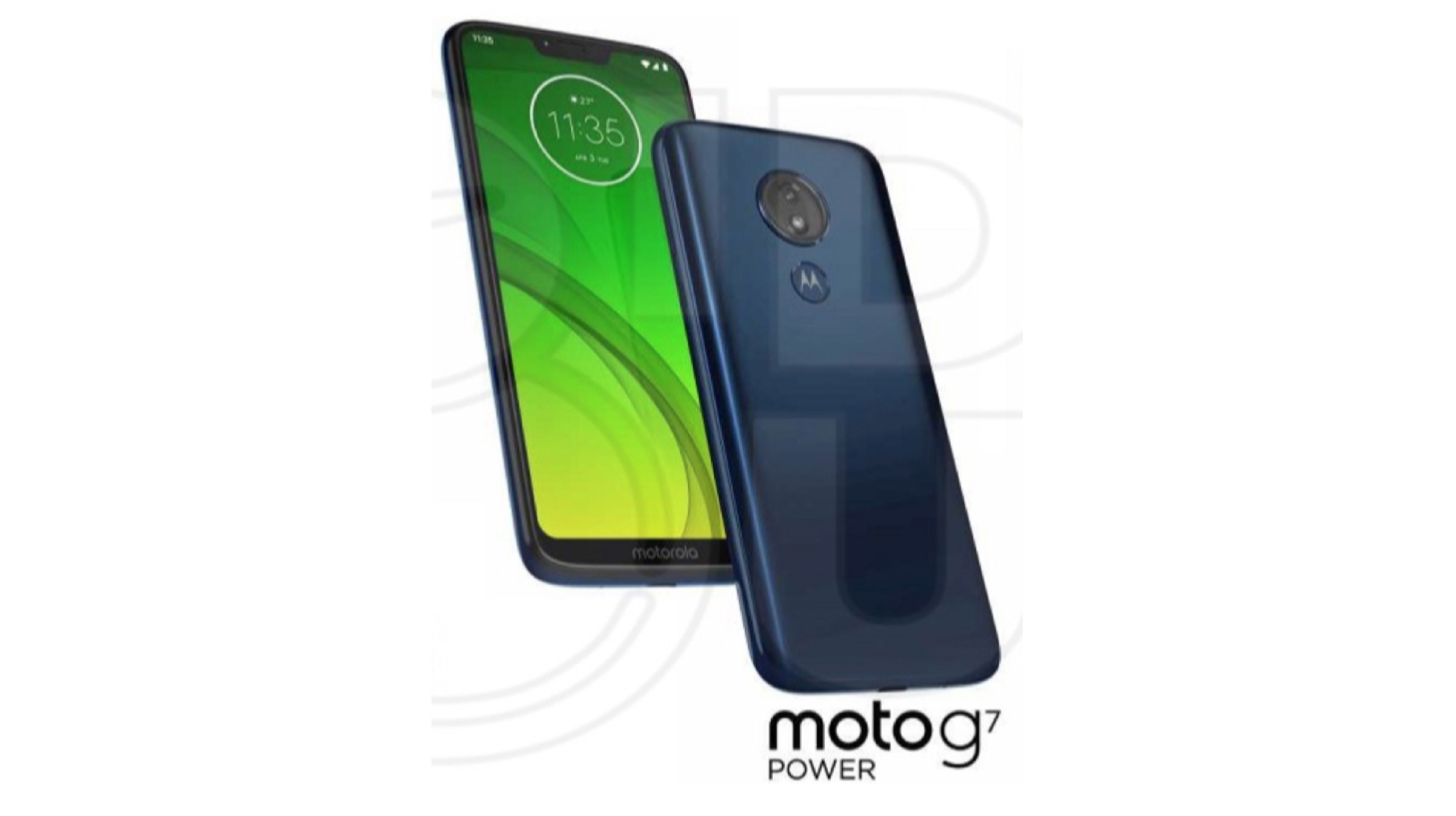
Motorola will soon refresh the Moto G6 series of smartphones. Its successors are expected to launch in April 2019 as the current Moto G6 smartphones were also unveiled in the month of April. The upcoming series of smartphones will carry the Moto G7 moniker. The renders of the Moto G7 devices were previously leaked online (read here). The mid-range Moto G7 Power has been spotted on Geekbench which reveals its key specifications.
Geekbench Results
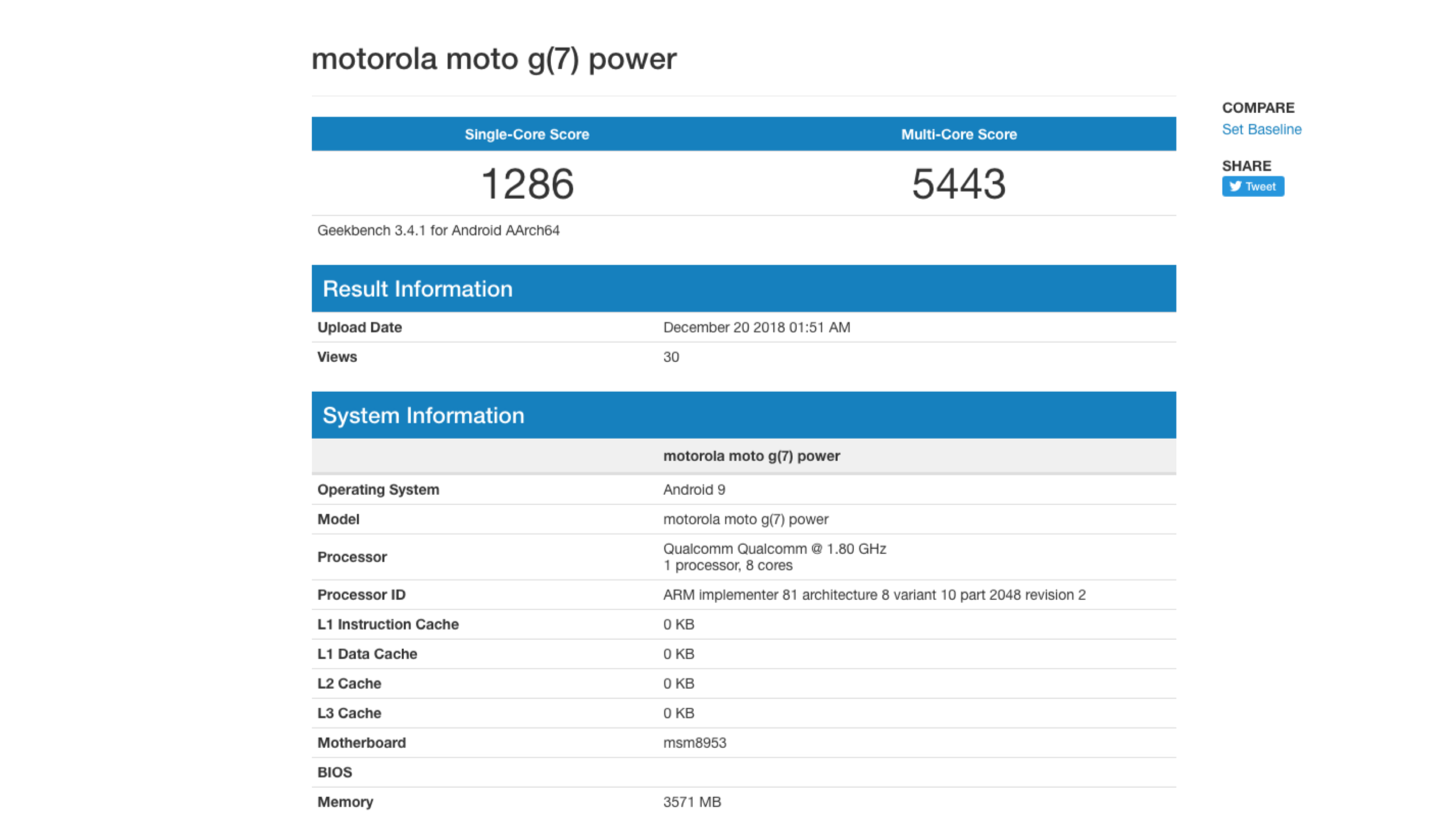
The Geekbench results of the Moto G7 Power were first uploaded on 20th December. The listing clearly mentions the model name ‘Moto G7 Power’. The smartphone registers a single-core score of 1286 points and a multi-core score of 5443 points. The Moto G7 Power features the msm8953 SoC which is the model number for Snapdragon 625. It is an Octa-Core SoC which is manufactured using the 14 nm FinFET technology.
The Snapdragon 625 consists of eight Cortex A53 cores which have a base frequency of 1.8 GHz and a turbo frequency of 2.0 GHz. According to Geekbench, the Moto G7 Power has 4 GB of LPDR3 RAM but the company might also launch a 6 GB variant of the device. The smartphone runs on latest Android 9.0 Pie operating sytem.
Moto G7 Power Design
The front of the Moto G7 has a high screen-to-body ratio display with a wide notch up top. The device has thin left and right bezels and a thick bottom chin which carries the Motorola branding. The notch at the top of the display houses the earpiece speaker and a front facing camera with an LED flash.
The rear of the Moto G7 seems to have a glass back which tapers towards the sides. The rear of the device houses the single rear camera setup and an indentation for the fingerprint sensor. The leaked renders of the Moto G7 Power are available in Blue colour but Moto will also launch the device in other colours.
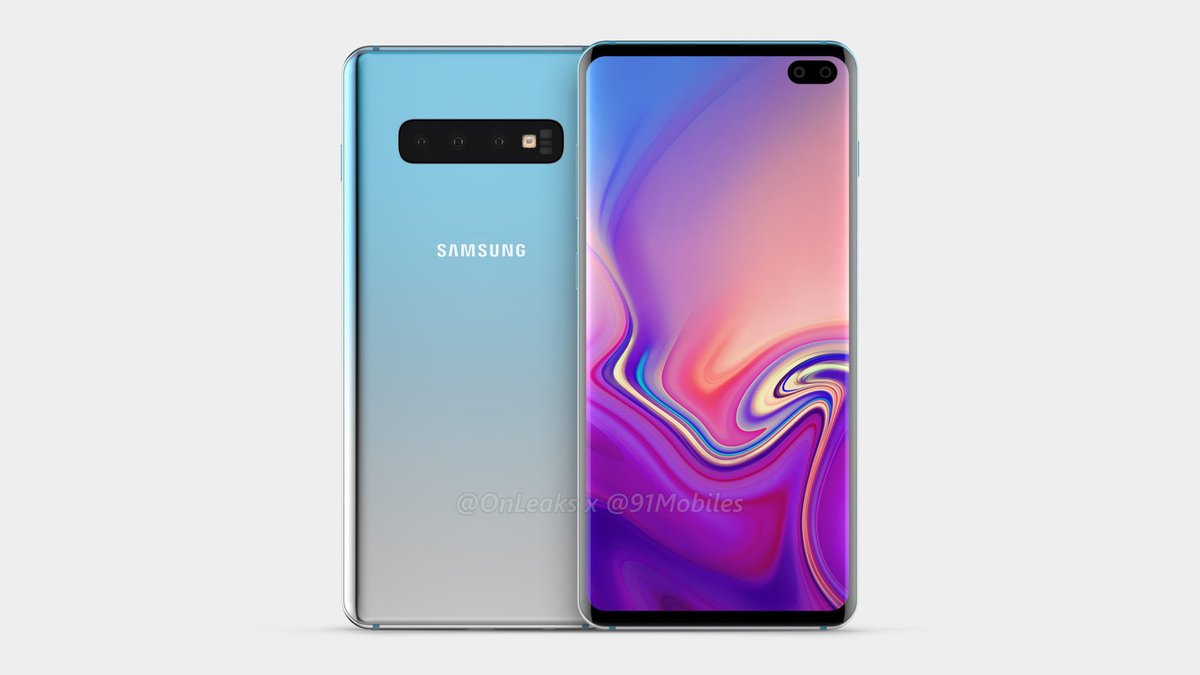
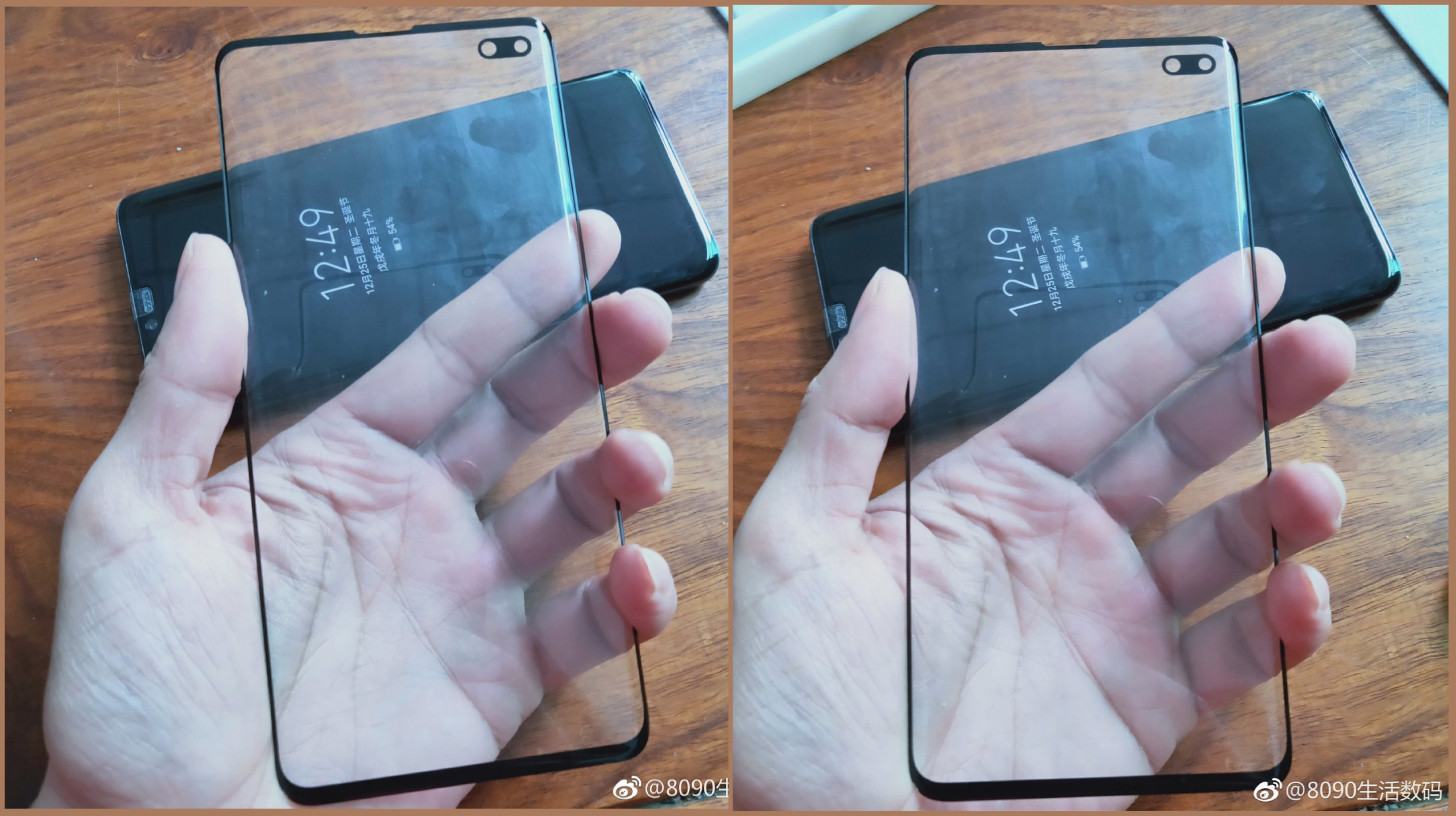
Samsung is expected to launch the Galaxy S10 series of smartphones in Q1 of 2019. The Galaxy S10 series include the S10 Lite, the S10, and the S10+. The upcoming devices are believed to have a radical design change in comparison to their predecessor. The design and renders of the Galaxy S10 smartphones have leaked out on several instances. Reportedly the smartphones will have a high-screen-to body ratio with a hole in the display for the front camera. A leak on Twitter reveals the screen size of all the upcoming S10 smartphones. Furthermore, the same user has shared pictures of the Galaxy S10’s screen guard which provides key details about the design of the handset.
Twitter Leak
The exact size of the future Galaxy phone screen: S10 Lite: 5.75 inches S10: 6.11 inches S10+: 6.44 inches S10 5G version: 6.66 inches Note10: 6.75 inches
The tweet was posted by a Chinese leaker who goes by the username Ice universe. The leaker happens to be a trustworthy source as previous leaks from him have mostly turned out true. The tweet reveals that the different variants of the Samsung Galaxy S10 will have the following screen sizes:
Samsung Galaxy S10 Lite: 5.75 inch
Samsung Galaxy S10: 6.11 inches
Galaxy S10+: 6.44 inches
Galaxy S10 5G version: 6.66 inches
Additionally, the tweet reveals that the Note 10 will have a massive 6.75-inch display. The display on the upcoming Galaxy smartphones will most likely have an Infinity-O notch. The Infinity-O notch has a small hole for the camera in the display. The previously launched Galaxy A8s with Infinity-O notch suggests what to expect in terms of design from future Samsung smartphones.
Screen Protector
The screen protector of the Samsung Galaxy S10+ supports the claim that the smartphone will have dual front cameras. The dual front cameras are laterally mounted on the right of the smartphone. Most notably, the camera holes on the Galaxy S10+ will be smaller than that of the Galaxy A8s.
Additionally, the leaked screen guard has a curve which tapers towards the sides. This indicates that the Galaxy S10+ will have a 2.5d glass front.
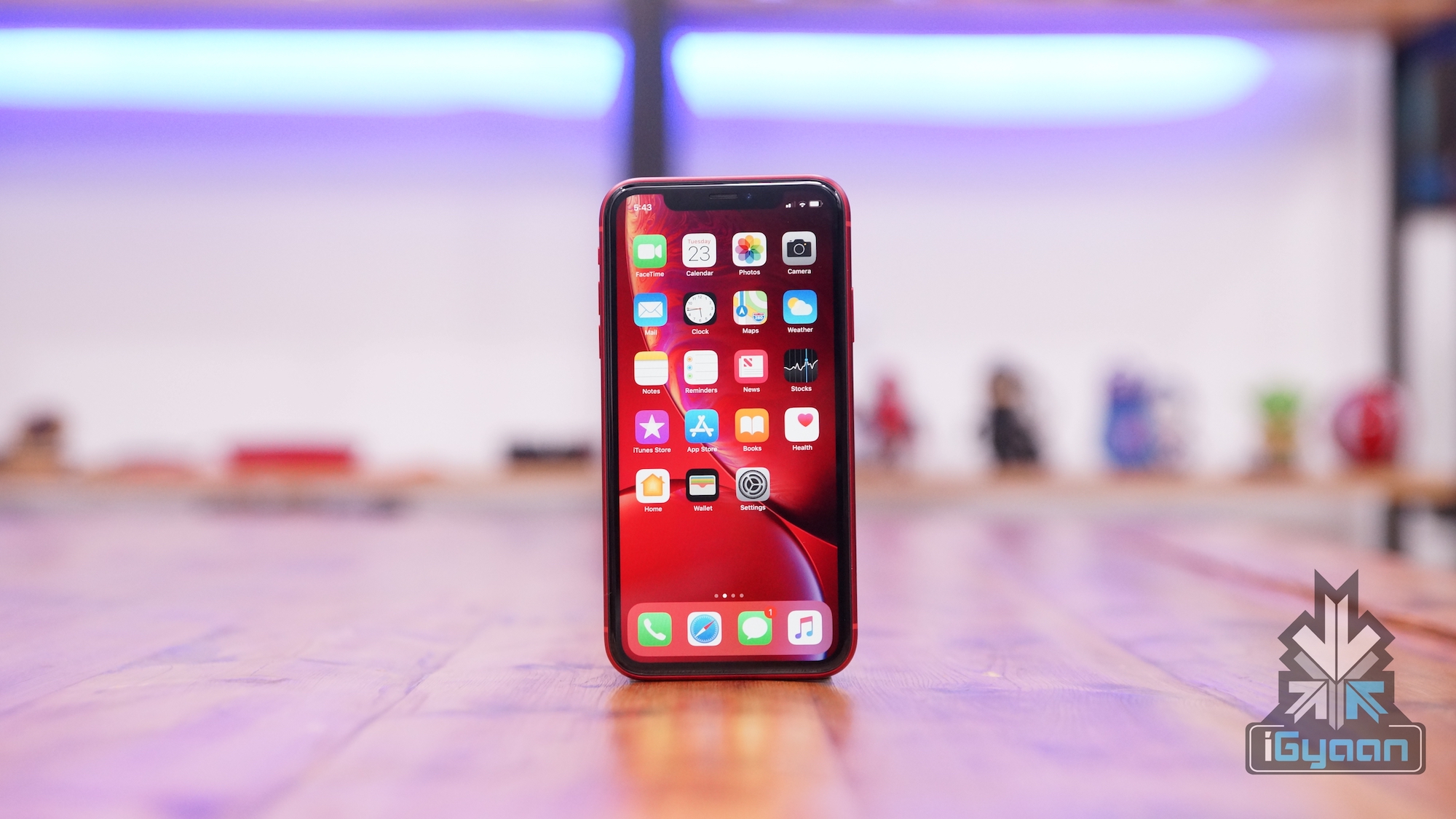
Apple was one of the first companies to launch a smartphone with a display notch. The notch was first seen on the iPhone X which was launched in the year 2017. This year Apple launched three new devices, the iPhone XS, the iPhone XS Max, and the iPhone XR; all of which have a notch display. Although Apple’s notch raised a few eyebrows initially, a lot of Android OEMs have incorporated it on their smartphones. Several Android smartphone manufacturers are experimenting with different shapes and sizes of the notch.
The Future Of The Notch
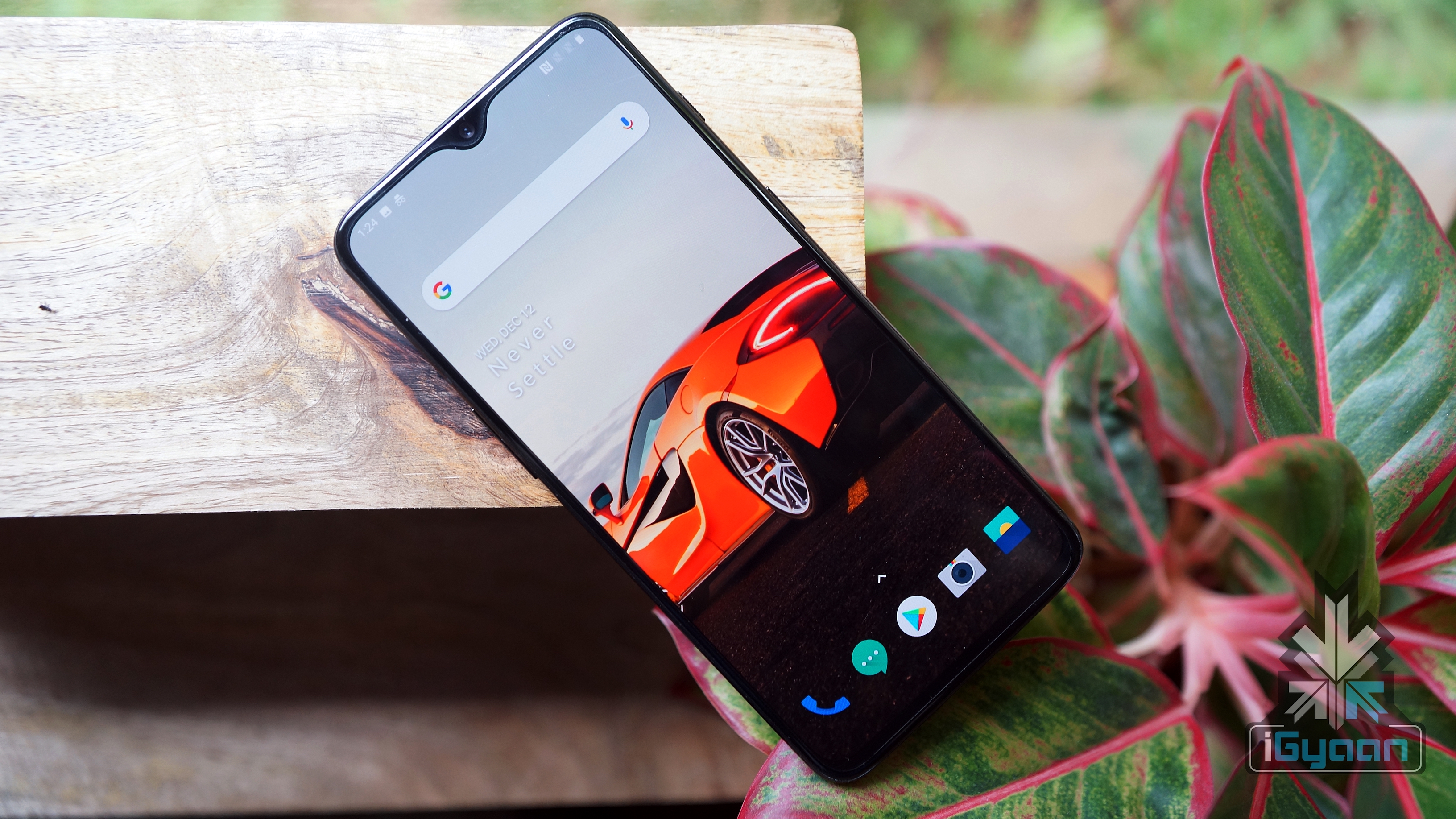
OnePlus, another leader in the smartphone industry launched the OnePlus 6with a narrow notch in the display. Its successor, the OnePlus 6T has a smaller waterdrop notch which translates into an even higher screen-to-body ratio. The future smartphones from the company are expected to push the screen-to-body ratio even further.
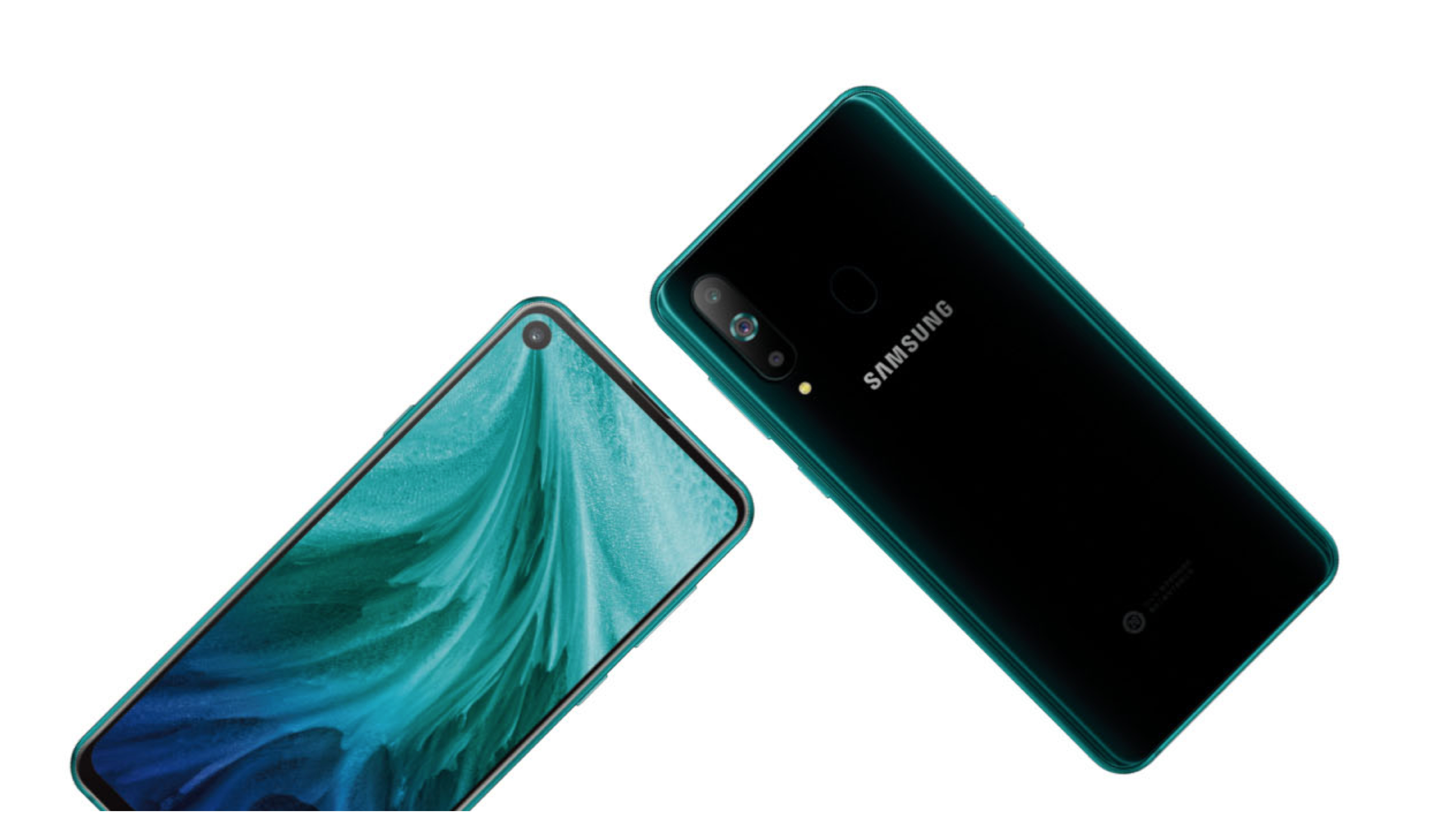
Samsung, the number one global smartphone manufacturer, has refrained from incorporating the notch on their smartphones. However, the company had launched the Galaxy A8s smartphone which has a punch hole in the display for the front-facing camera. Furthermore, the company is expected to launch the Galaxy S10 in Q1 of 2019 which is believed to have a non-circular cutout in the display which will accommodate multiple front-facing cameras. Other companies including Huawei, Honor, and Lenovo have either launched smartphones with this type of camera cutout or are about to do so which indicates this type of notches are the future.
When Will iPhones Get Punch-Hole Cameras?
As far as I know, the 2019 iPhone still uses Notch, and in 2020 will use hole in display.
A Chinese leaker, Ice universe claims that the Apple iPhone’s that will launch in 2019 will have a similar wide notch as their predecessor. However, he claims the 2020 Apple iPhones will do away with the notch and incorporate the punch hole cameras in the display. These claims can be agreed with due to various reasons.
Unlike Samsung, Apple does not manufacture displays for their smartphones. The company sources them from 3rd party manufacturers like LG and Samsung. Therefore, Apple needs to collaborate with these 3rd party vendors to design and develop displays with this feature. Apparently, the development and mass production of all this will take time.
Another hindrance that limits Apple from using this type of display is their complex Face ID recognition mechanism. Apple iPhone’s have one of the most secure facial recognition on any smartphone. To achieve this level of security the company makes use of an IR camera which is combined with the regular camera sensor. All these components are housed in the notch of current iPhone models. To launch iPhone’s with a punch-hole camera, Apple will have to first resolve this issue.
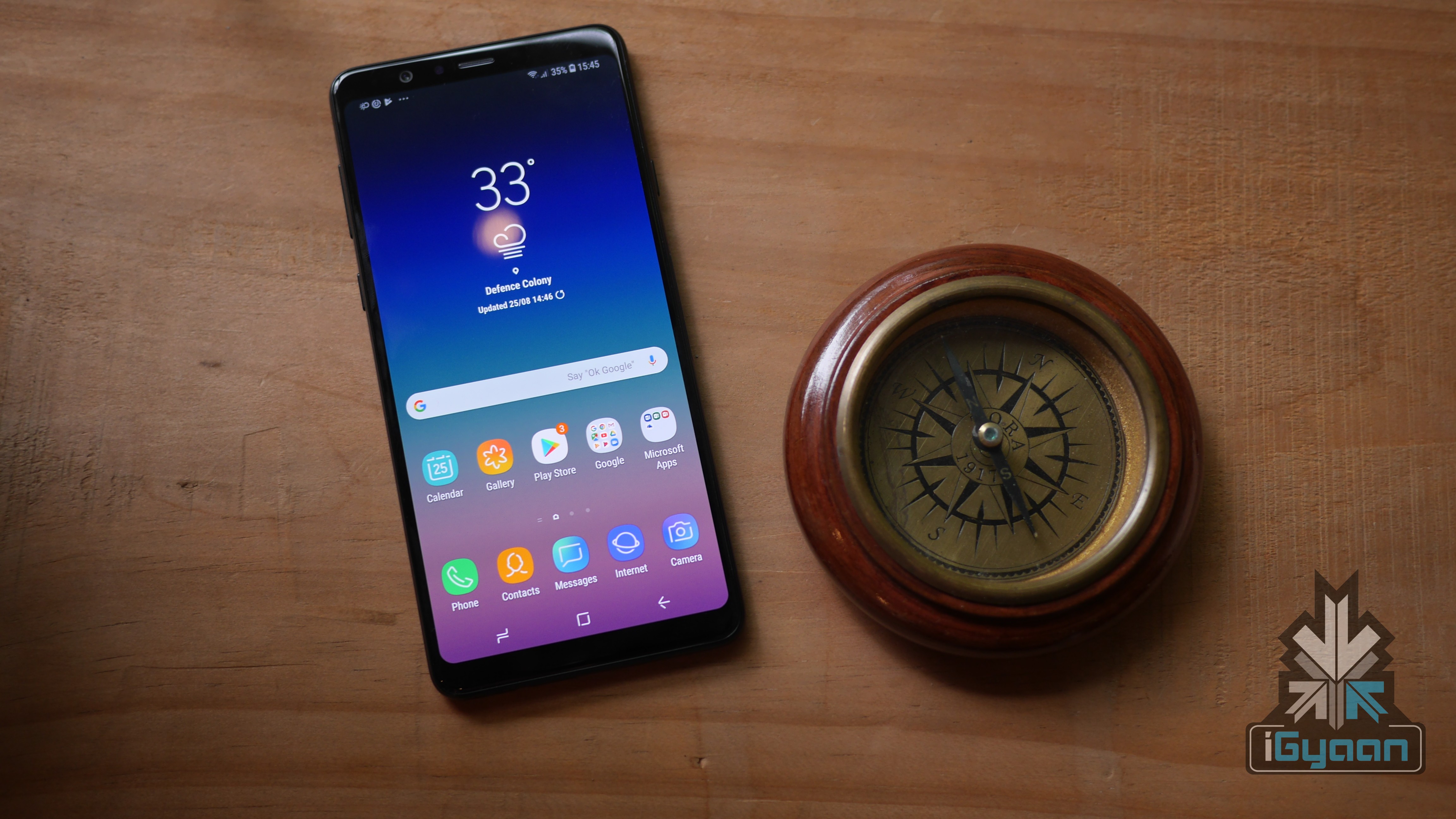
Samsung is about to launch an all-new series of smartphones which will carry the ‘M’ prefix. Reportedly the new series is targeted towards developing markets. The Galaxy M20 sporting a 5,000 mAh battery was previously leaked on Geekbench. A latest leak of the Samsung Galaxy M30 has now been spotted on Geekbench. The Geekbench listing reveals a lot of information about the specifications of the Galaxy M30.
Geekbench Revelations
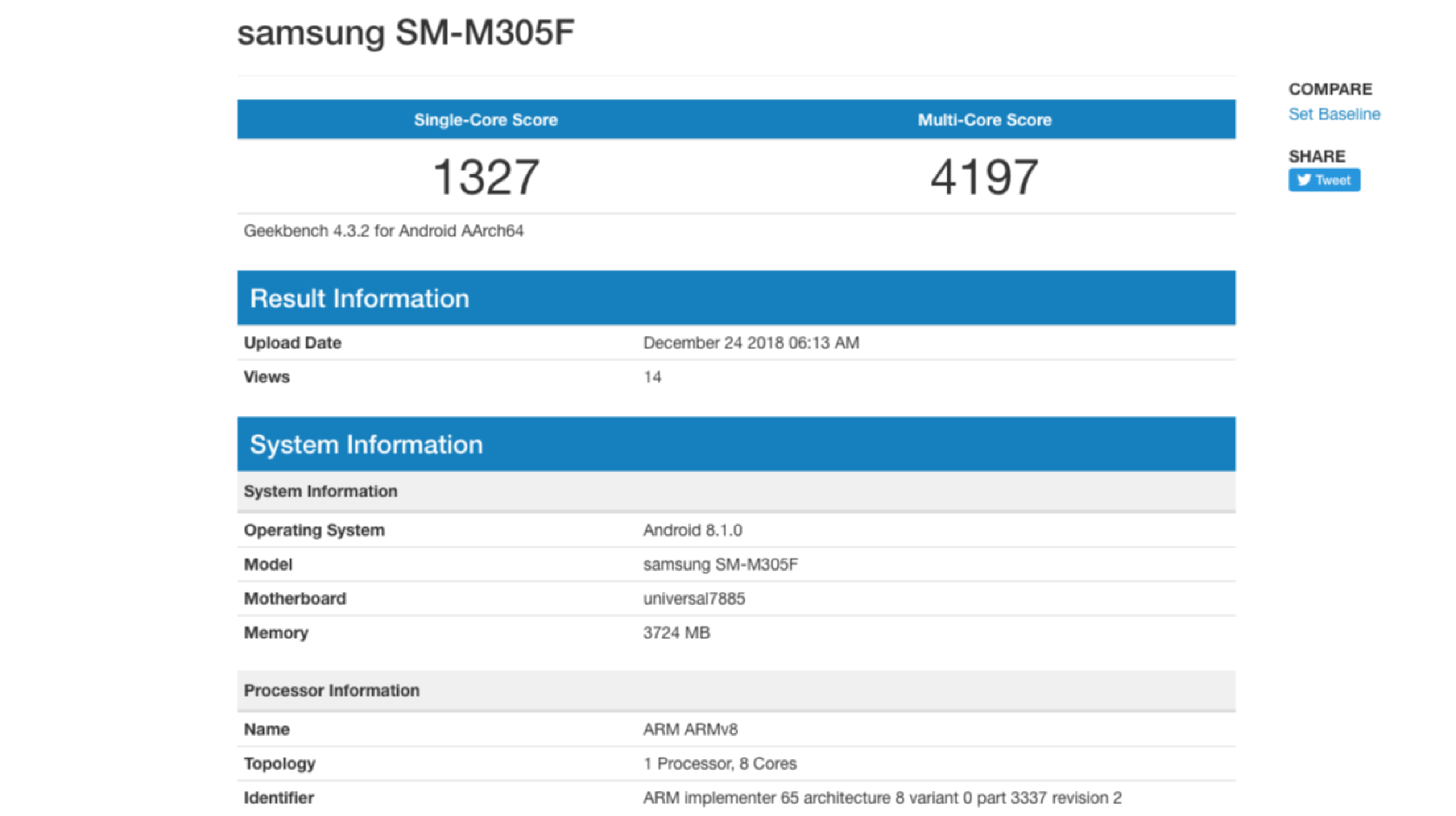
The Geekbench listing was first uploaded on December 24th and the smartphone is listed as model number SM-M305F. Going by the past naming scheme from Samsung, it is the Galaxy M3o smartphone. The Galaxy M30 registers a single-core score of 1327 points and a multi-core score of 4197 points. This score puts it in the category of devices like the Redmi Note 6 Pro.
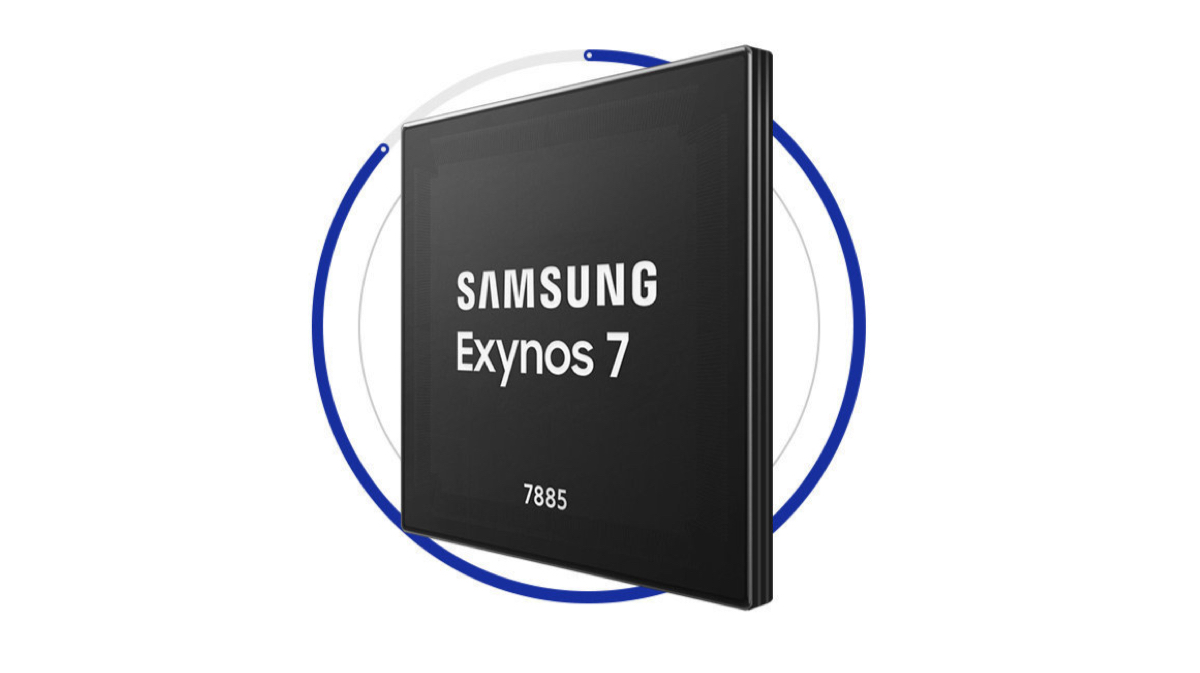
The Galaxy M30 features the Octa-Core Exynos 7885 SoC which has a base frequency of 1.59 GHz. The smartphone runs on Android 8.1 Oreo and is expected to have Samsung’s One UI. Additionally, the smartphone has 4 GB of LPDDR4x RAM. Although the listing does not talk about the LPDDR4x RAM, Samsung’s website provides this information. Other specifications like the screen size and camera resolution are unavailable but Exynos 7885’s website reveals the supported specifications.
Exynos 7885
The Samsung Exynos 7885 is an Octa-Core SoC which is manufactured using 14 nm FinFET technology. The chipset has Mali G71 MP2 graphics and it supports SD 3.0 or eMMC 5.1 storage. The chipset has two Cortex A73 cores and six Cortex A53 cores. The Cortex A73 cores are clocked at 2.2 GHz frequency while the Cortex A53 cores are clocked at 1.6 GHz. In terms of connectivity, the chipset supports dual 4G VoLTE, 802.11 ac Wi-Fi and Bluetooth 5.0 and GPS. For photography, it supports dual rear cameras of 21.7 MP maximum resolution and 16 MP max resolution for the front cameras.
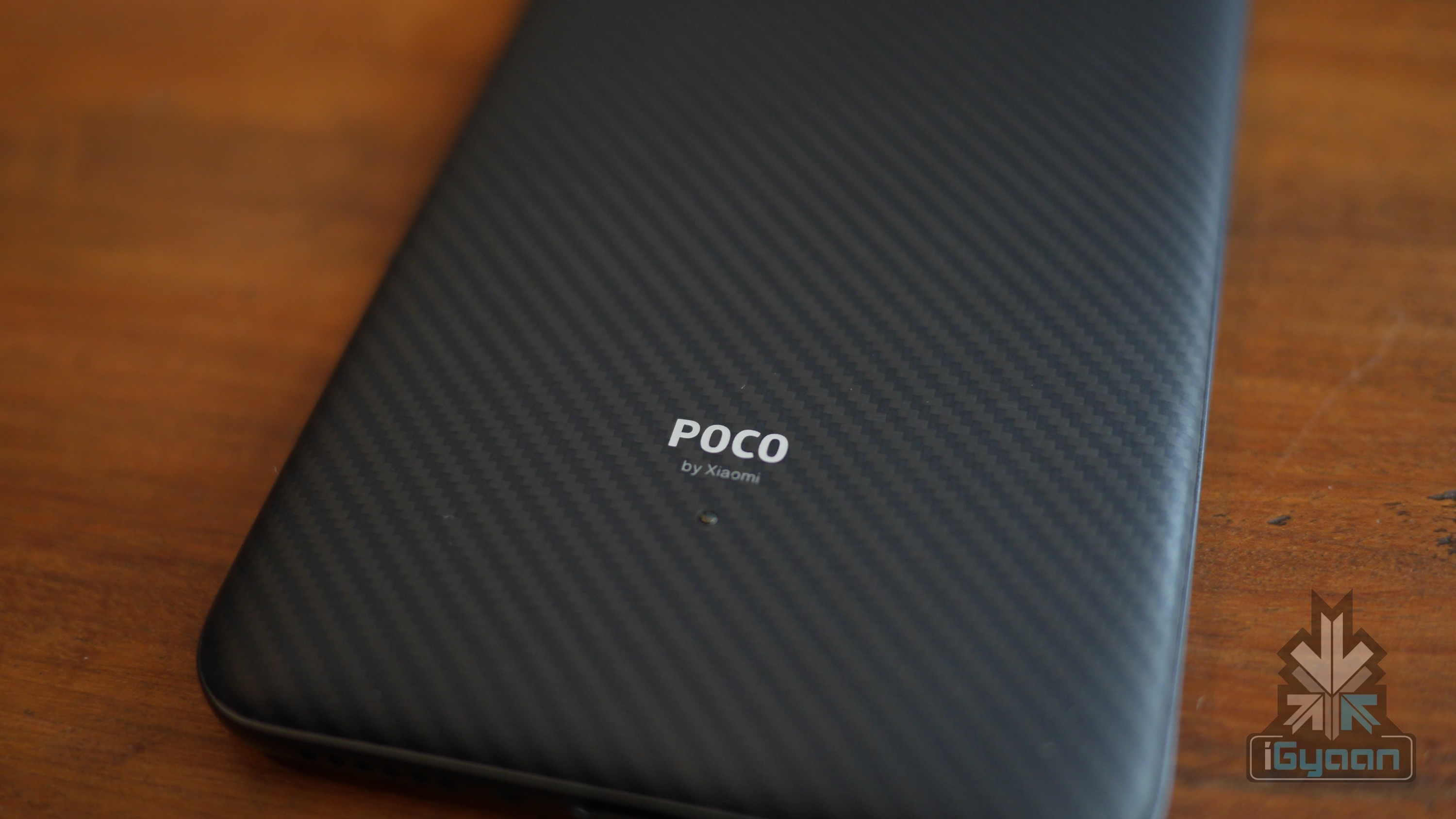
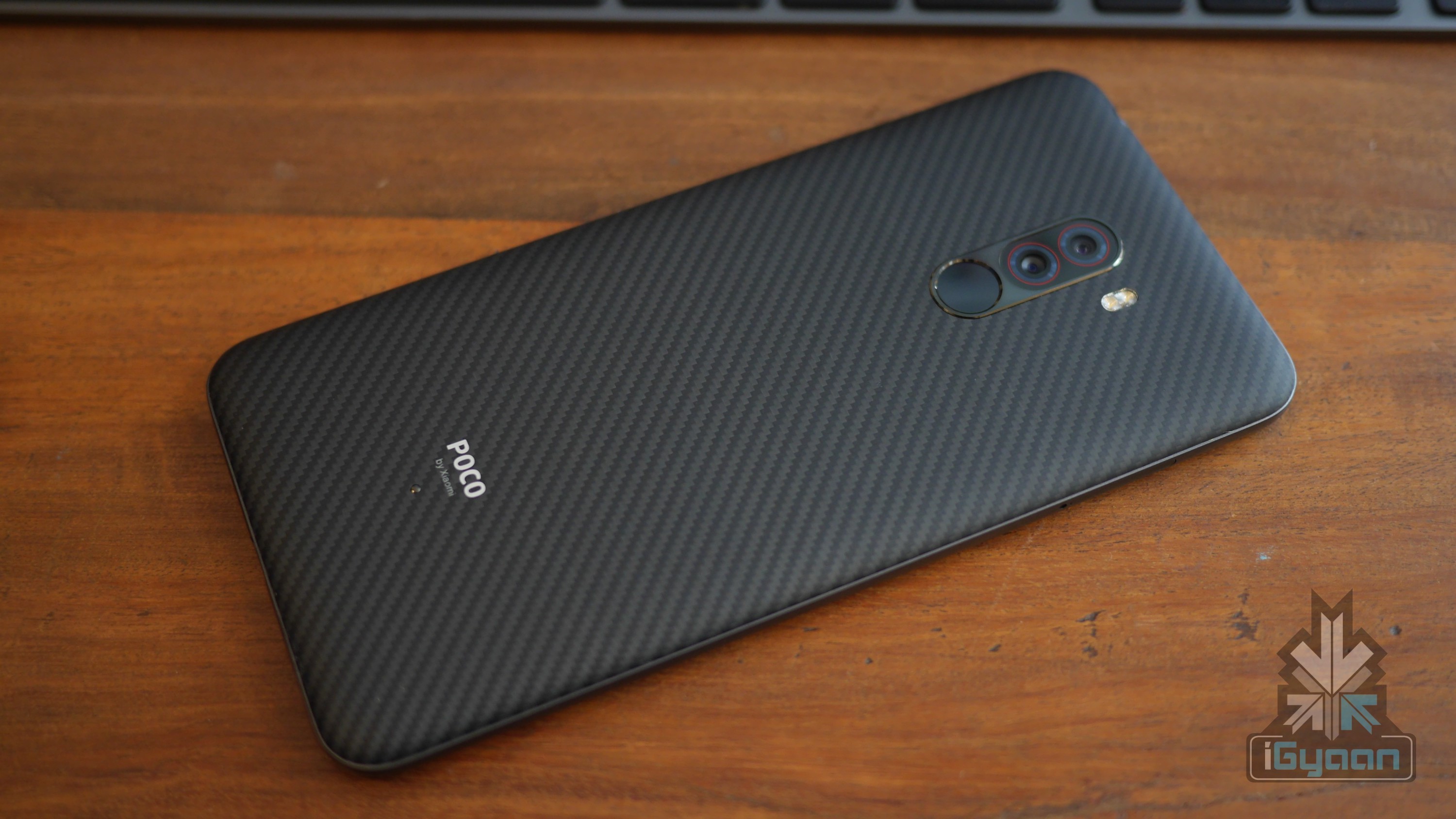
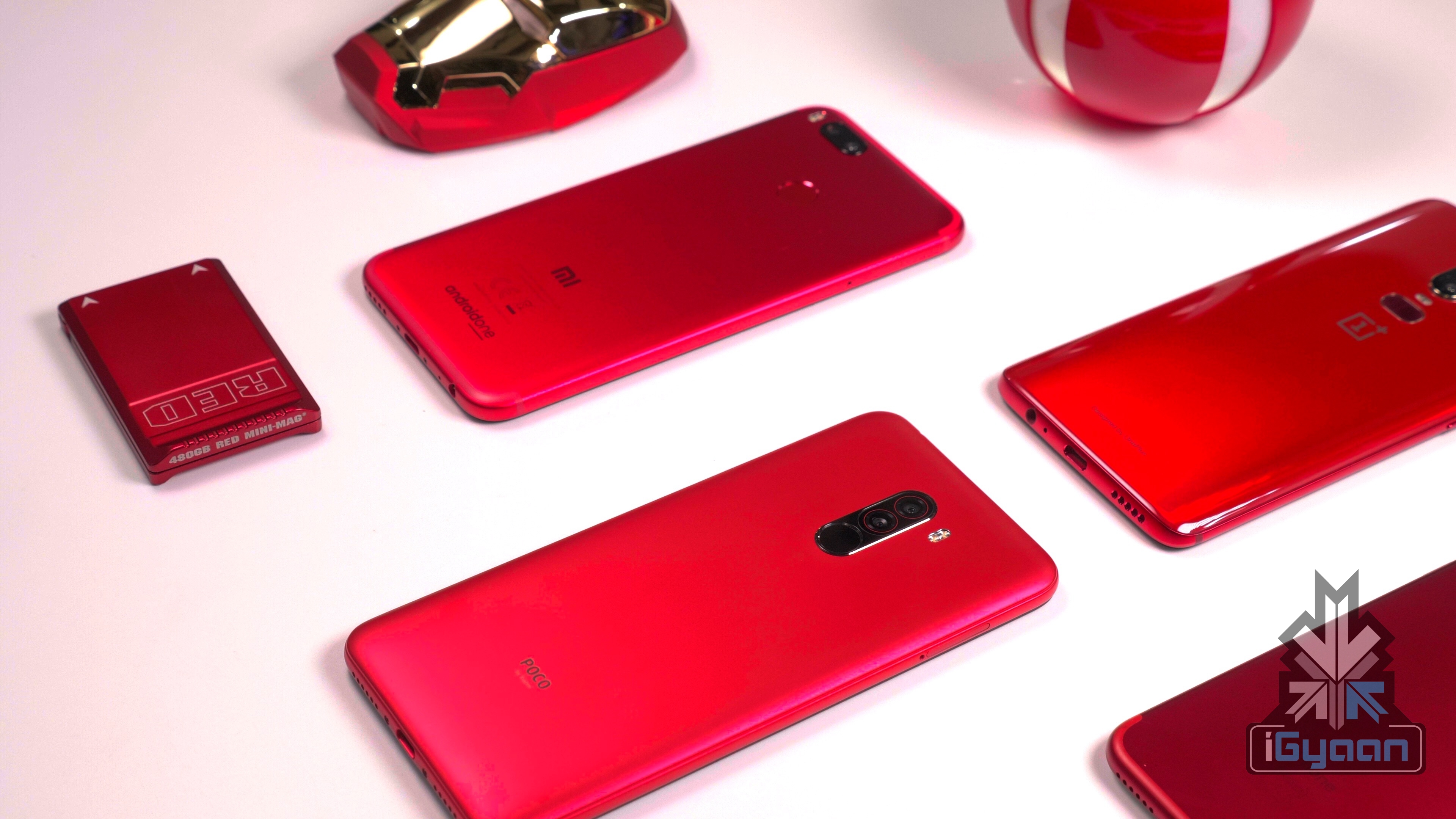
Xiaomi launched the Poco F1 smartphone earlier this year in India which, was later followed by a lot of other markets. The smartphone shook the world due to its stellar features and killer pricing. It is the world’s first sub $ 300 smartphone to feature the Octa-Core Snapdragon 845 SoC. In comparison, other phones that feature the Snapdragon 845 chipset cost 2 – 3x the price of the Poco F1. As of now, the smartphone has received both positive and negative reviews. But, there is not much to complain because of its price. The company has posted a tweet which talks of a NewPOCO smartphone.
The tweet was posted on the company’s official Twitter account, therefore the piece of information is trustworthy. It indicates that POCO will soon launch a new smartphone in India. However, the tweet does not provide any information about which device the company will launch. Allegedly it could be the POCO F2 or even a revised variant of the currently available POCO F1.
Yes! They are probably launching a new Gradient colour at the same price as normal variants and Kevlar (Armoured) Edition for the other lower variants at 1K more. :) https://t.co/BaTecSvgyj
A famous leaker, Ishan Agarwal claims that the upcoming device is in fact just a Gradient colour Edition of the POCO F1. Additionally, the company will now offer the 6 GB + 64 GB and 6 GB + 128 GB variants with Kevlar back at a premium of Rs 1000.
Poco F1 Specifications
Display: 6.18-inch LCD Full HD+ 2246 × 1080 pixels, 18.7:9 aspect ratio
Operating System: MIUI 10 Android 8.1 Oreo
Processor: Snapdragon 845
RAM: 6 GB/8 GB
Storage: 64 GB/128GB/256GB
Rear Cameras: 12 MP + 5 MP, Dual-LED Flash
Selfie Camera: 20 MP
Security: Rear Mounted Fingerprint Sensor, Infrared Face Unlock
Connectivity: Dual 4G VoLTE, Wi-Fi 802.11 ac, Bluetooth 5 .0 , GPS, USB Type-C
The upcoming POCO smartphone is set to launch on 25th December. The company will officially lift the covers off the device then, which will clear up whether it is a brand new device or just a new variant of the current smartphone.
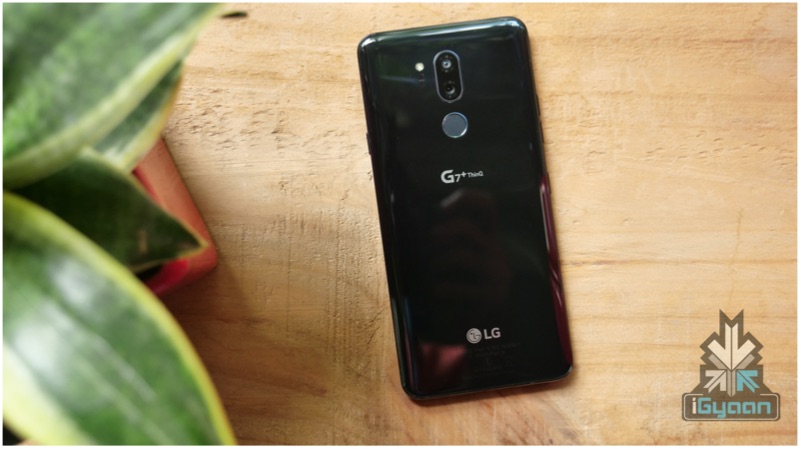
 The patent for the LG smartphone with a rollable display was spotted by a Dutch website, Letsgodigital. The patent is detailed enough to reveal the functioning of the conceptual smartphone. LG has previously demonstrated a 77-inch transparent flexible OLED display which indicates that the company surely has the know-how of this technology. The patent reveals an intriguing device with two halves that are conjoined with a rollable display panel.