Author: Vipul Vij

  • Meizu M6 Note Spotted On Geekbench

    Meizu M6 Note Spotted On Geekbench

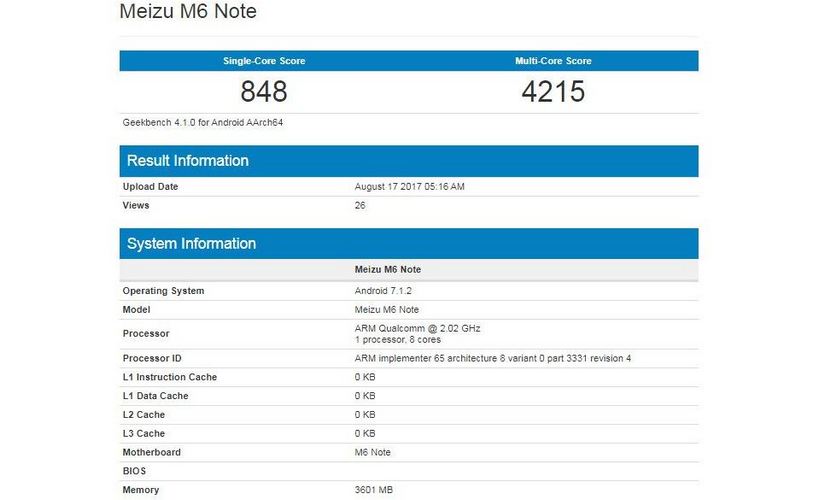
    The Meizu M6 Note has been spotted on benchmark app Geekbench’s website ahead of its August 23 launch. Earlier leaks suggested that the device might come with the Helio P25 chipset, however, the new listings on Geekbench hint at the Qualcomm Snapdragon 625 chipset.

    The device has an octa-core processor clocked at 2.02 GHz and 4GB of RAM. The smartphone will run Android 7.1.2 Nougat out of the box. For a single-core test, the device managed to score 848 points and for a multi-core test, it had a score of 4215.

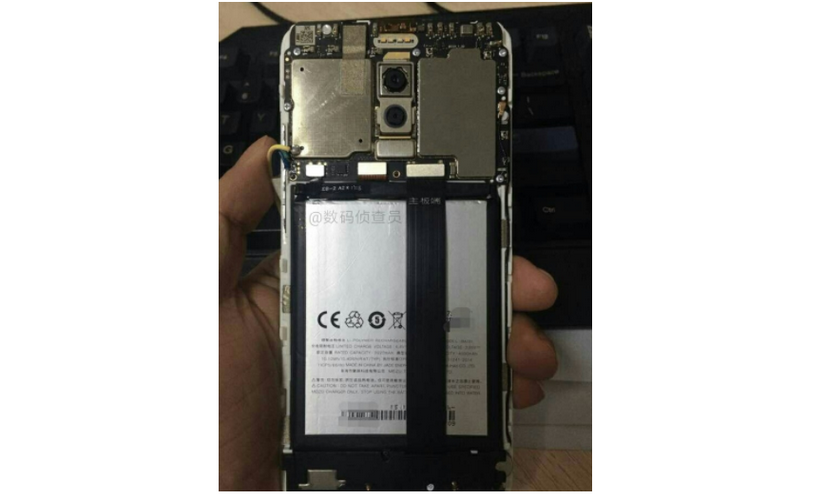
    The Meizu M6 Note is expected to sport a dual-camera module and a quad-LED flash. The leaked photo which revealed this information also showed the battery module, which according to earlier leaks has a 4000 mAh capacity.

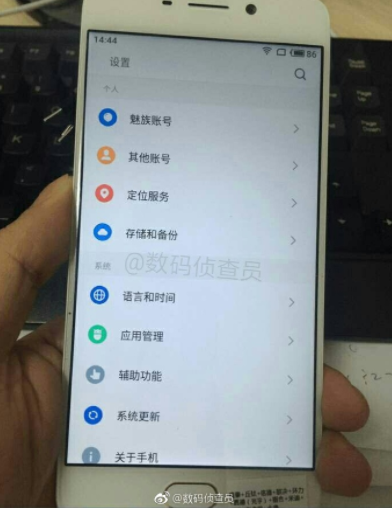
    A leaked image of the front of the device also surfaced a few days ago. The M6 Note will feature a 5.5 inch 1920 x 1080 px display and the fingerprint will sit below the display. The image also confirms that the phone will have a considerable amount of bezel around the display. This is justified since the device will enter the mid-range category and bezel-less phone costs more to make, even the LG Q6 though advertised as bezel-less mid-ranger, it has thicker bezels than its flagship sibling.

    The phone is expected to be priced at CNY 1599 which comes to around Rs 16,000.


  • Xbox One X Project Scorpio Edition Launched

    Xbox One X Project Scorpio Edition Launched

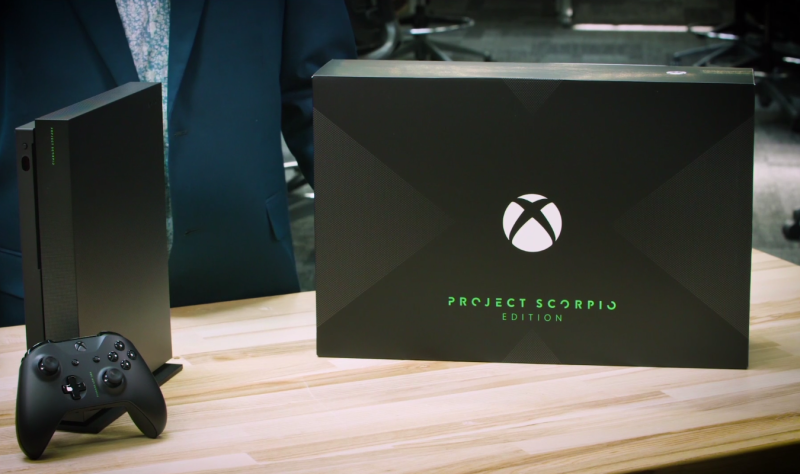
    Microsoft has launched its new gaming console, the Xbox One X in June 2017 at the Entertainment Expo. The Xbox One X, Microsoft’s much awaited Project Scorpio is touted to be the world’s first true 4K gaming console. The console will be available to buy in the US from November 7 for $499 (Rs 32,000). At the same time, the company announced a limited period Xbox One X Project Scorpio Edition for consumers who’d prefer a more cosmetically enhanced version of the Xbox One Day One Edition.

    The limited edition console, as mentioned earlier, features a slightly more gradient design, and the Project Scorpio code name etched on both the console as well on the controller. Microsoft confirmed that all initial Xbox One X units up for grabs will be a Project Scorpio Edition, and will sell for the same price as the Xbox One Day One Edition.

    The Xbox One X is a mid-cycle Xbox refresh from Microsoft but, has enough horsepower under the hood to grant it the label of being the most powerful gaming console in the world when it arrives in November.

    Since the new console runs on the Scorpio engine, it is backward compatible to run all 900px and 1080px Xbox one and 360 titles at upscaled 4K. Which means all existing Xbox One titles should look better on the Xbox One X due to enhanced visual fidelity, anisotropic filtering, and faster loading times. The new console will also work with all current Xbox One accessories, Microsoft has confirmed.

    4K will largely be the buzzword, all Scorpio-exclusive games will super sample down to 1080p and all Scorpio-exclusive game modes will be available for all users regardless of their display. Technically, players will not require a 4K-ready monitor to use the Xbox One X. The console will use supersampling to improve visuals on 1080p screens while offering true 4K UHD playback on 4K screens.

  • Top 5 Free Android Keyboard Replacements

    Top 5 Free Android Keyboard Replacements

    If you are like us and use your phones a lot, a better keyboard may be out there for you. A simple ‘keyboard’ search on the Google Play Store brings up thousands of options for you to choose from, but, which ones are worth your time and effort?

    SwiftKey
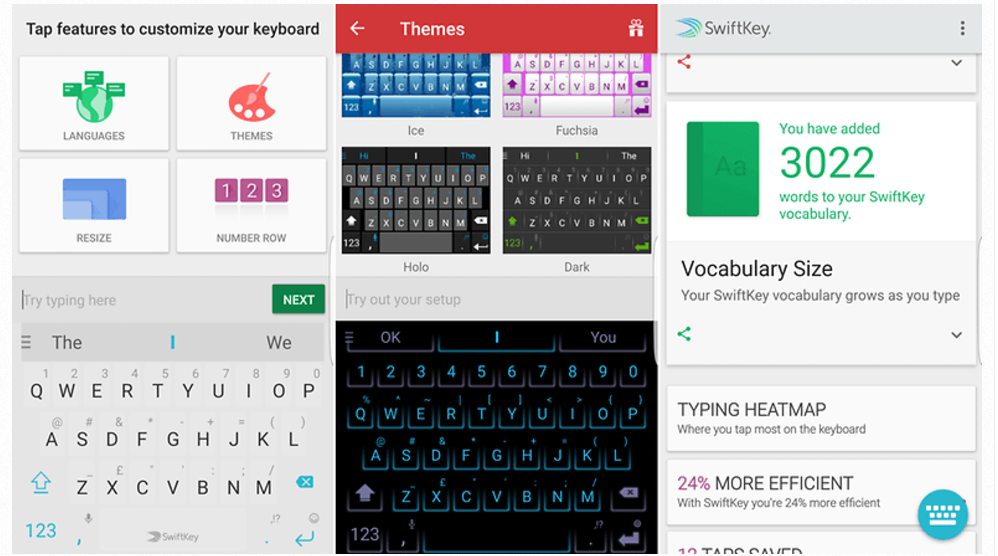
    You’ve either used or at least heard about this keyboard. One of the most downloaded keyboards in the Play Store. SwiftKey supports a host of different themes which can be downloaded free of cost once you sign in with your Google account. The SwiftKey-board also has multi-language support from Zulu to Hindi to even ‘Hinglish’ and also has a host of emojis while it can also access the inbuilt emojis in your device. You can even resize the keyboard according to your reachability.

    The best thing about the keyboard, apart from all the customisations, is the accuracy of its prediction. It learns your typing pattern over time, and can literally have a generic conversation on your behalf. It also has an interesting stats for you, like the typing heat map, the time you’ve saved by using the SwiftKey keyboard.

    Download SwiftKey

    Fleksy
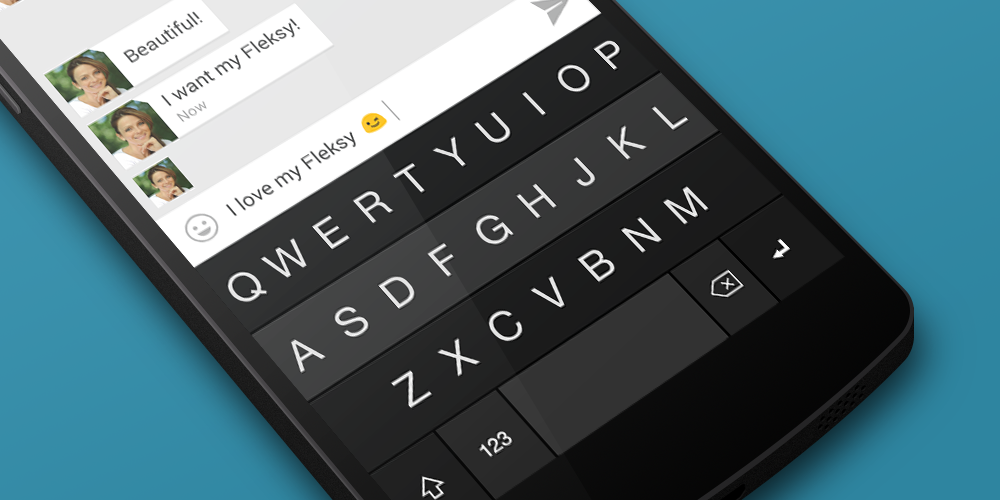
    Forget using the backspace key and discover a whole new way of ‘swiping’ on your keyboard. Fleksy is colourful, customisable and a lot of fun to use. It takes you a while to get used to the style of operating the keyboard but, its hard to give that up once you’re accustomed to it. With Fleksy, you can type fast and inaccurately and let the keyboard to do the correction, and more often than not, it does the job well.

    You can choose from a host of themes, and even use a personal image as the background for the keyboard. Just like SwiftKey, it also has support for multiple languages. Fleksy also allows you to send emoji, stickers and GIFs directly from the keyboard. You can also select predicted words as you type or customize the size of the spacebar to suit your needs. You can also swipe on the keyboard to perform actions such swiping right to left on the keyboard deletes the current word.

    Download Fleksy

    Gboard
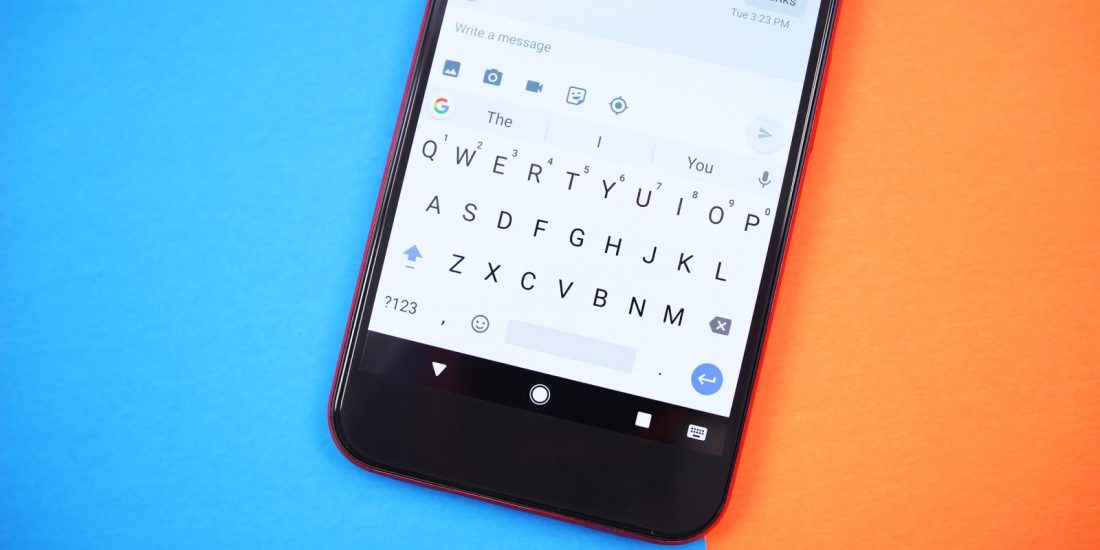
    The Google Keyboard offers a clean interface and quite a few smart features. Just like the previous two keyboards, it has support for themes and multiple languages. The auto predict is accurate and so is the swipe feature. All you need to do is swipe over the letters and it predicts the words accurately more often than not.

    One standout feature is the speech-to-text feature which is pretty accurate as well and doesn’t confuse the accents. Just like Swiftkey, Google’s keyboard remembers everything you type and is able to optimise its suggestions.

    Download Gboard

    Chrooma Keyboard
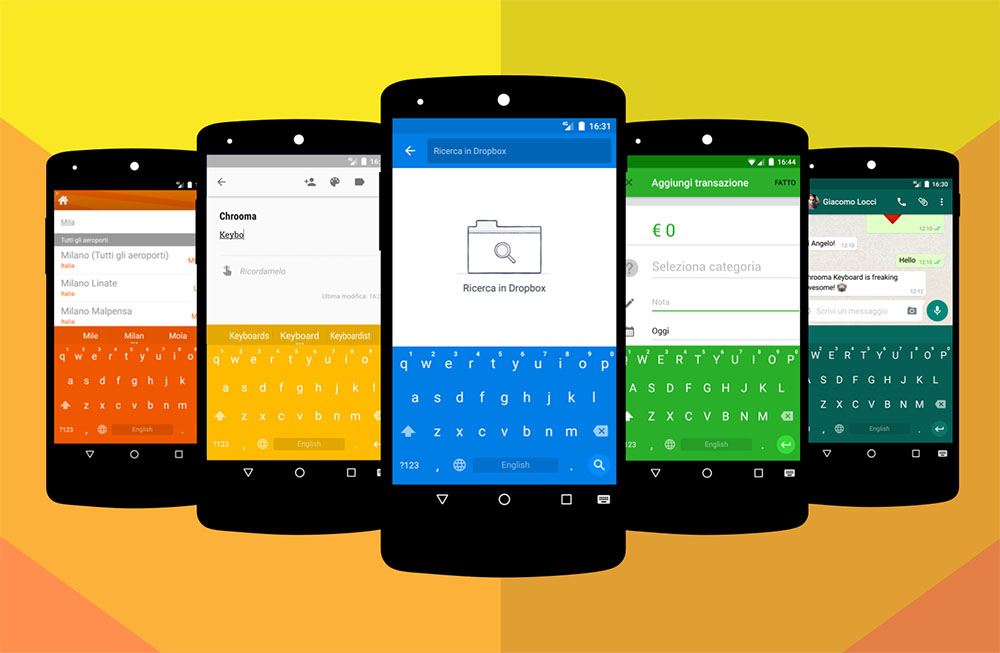
    Chrooma keyboard has a standout feature for all the people who like to mix it up with the themes on their run-of-the-mill keyboards. It has an adaptive theme feature in which it changes its colour according to the application you’re using. For example, while typing in the Facebook Messenger, the keyboard will have a blue accent and will change to green if you switch to WhatsApp.

    Other than the customisations, it has support for multiple languages and you can send emojis and GIFs right from the keyboard. The top row of the keyboard can be swiped right or left to display the number pad or predictive words/emojis.

    Download Chrooma Keyboard

    GIF Keyboard by Tenor

    Arguably the most fun keyboard on this list, the GIF keyboard lets you send tons of GIFs (as the name suggests) to friends across platforms. It doesn’t become your default keyboard, but you can integrate it with your keyboard of choice and send GIFs by simply typing ‘#’ followed by the theme you’re looking for.

    Among other features, you can also record a snippet from a video on your phone and create a custom GIF or use your device’s camera to record and create a GIF of your own. This keyboard is all about that perfect GIF!

    Download GIF Keyboard by Tenor


  • Android Oreo Is What Google Wants to Call Android O 8.0

    Android Oreo Is What Google Wants to Call Android O 8.0

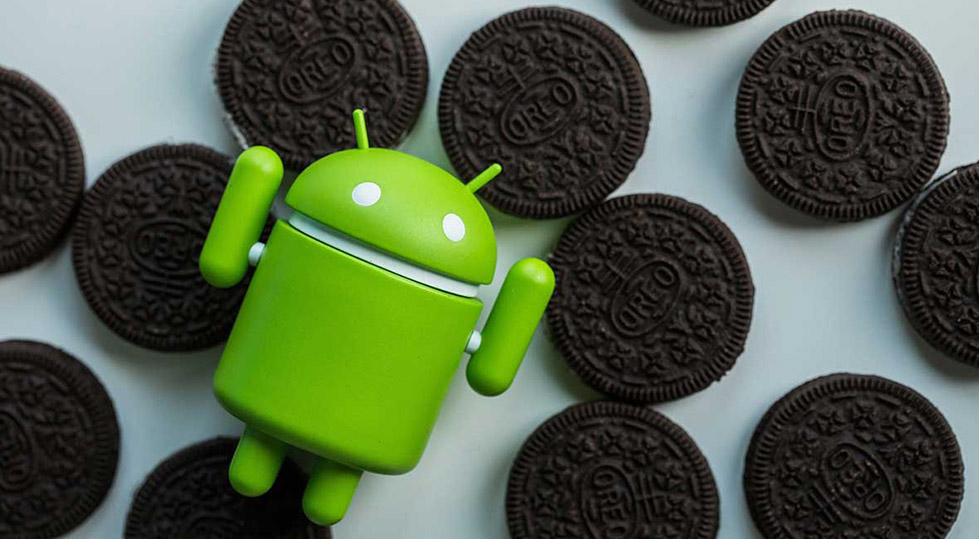
    After a lot of speculation surrounding the official name for the next Android OS, it seems that Google itself may have just spilled the (jelly) beans on the name of Android O, and it’s not Oatmeal Cookie, it’s Oreo.

    Google put out a teaser on Google+ to promote the August 21 event where the Android O and its official name will be unveiled. The teaser video for the launch reveal was named ‘GoogleOreo_Teaser_0817_noDroids (1).mp4‘. If that doesn’t confirm the name, we don’t know what will.

    But, in an attempt to right the wrong, Google took down the teaser and uploaded it again with the name ‘OctopusTeaser.mp4′, which just reassured what we have all been speculating. Google’s decision to go with Oreo makes sense since the famous cookies are known worldwide.

    Android 8.0 brings new features such as Notification Dots, Autofill, Smart text selection and Picture-In-Picture. Google has also said to improve the security and increased the booting speed in the new OS. Notification Dots show the notification of an app after a long press.

    A small notification bar pops up at the top right corner of the app and shows the notification of the particular app. The Autofill feature helps in filling forms inside an app. Smart Selection feature is a machine learning based features that select only important text to be copied. Android O also comes with a multitude of back-end improvements such as better battery management algorithms, app optimisations, audio enhancements like improved Bluetooth audio and more.

    As is with every Google launch event, it will be live streamed to the world and there is a lot of mention of the ‘eclipse’ on the launch website. The website and the teaser s in-line with the rumours that Google is planning a spectacle this time around rather than “hey. this is the official name of Android 8.0.” The reveal event is scheduled for 21 August in New York, which coincides with the Solar Eclipse and from the looks of it, Google will take full advantage of it.

  • Toyota Has Patented A ‘Cloaking Device’

    Toyota Has Patented A ‘Cloaking Device’

    From the One Ring to conceal the wearer’s identity to Harry Potter’s disappearing blanket, invisibility has been a fascinating feature of Science Fiction. Scientists have been hard at work to make this technology see the light of day for many years now. Joining the research is Toyota, the Japenese carmaker which has patented a “cloaking device.”

    The company recently acquired a patent from the United States Patent and Trademark Office (USPTO) for “Apparatuses and methods for making an object appear transparent,” which Toyota filed on June 17. The company has forayed into the invisibility tech, not to make its cars invisible, but, a part of it at least.

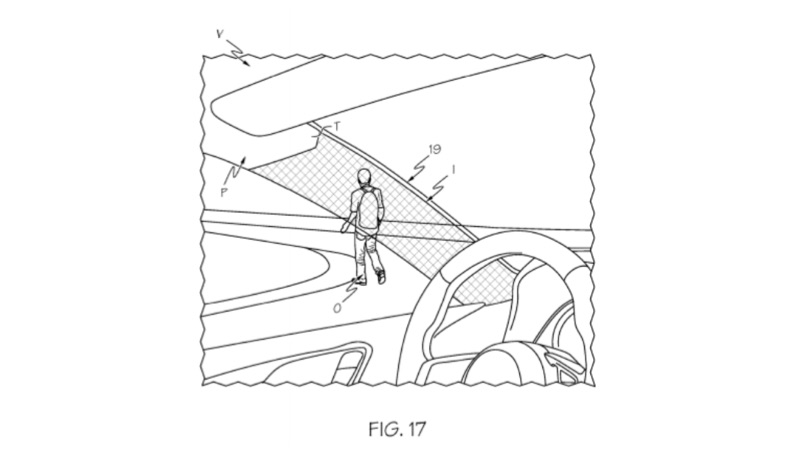
    The patent describes the cloaking device designed to turn the A-pillars on the right and left side of the car’s dashboard invisible. The aim to make the pillar invisible is to improve the on-road visibility for the driver. Ironic how making something invisible will improve the visibility on the road, isn’t it? Toyota has said that this is the way to move forward since the A-pillars have become broader to follow crash-safety standards. It’s logical since the wider these pillars are, the more they’ll obstruct the driver’s vision. The cloaking device would use mirrors to bend visible light around the A-pillars to allow the driver to “see” through them. This would give drivers a wider view of the road and their surroundings. It also benefits pedestrians, as drivers would see them better.

    Light from an object on an object-side of the cloaking device [i.e., facing the road] is directed around an article [the A-pillars] ]within the cloaking region and forms an image on an image-side of the cloaking device [i.e., facing the driver’s seat] such the article appears transparent to an observer looking towards the object

    The way to make things transparent or “invisible” is by manipulating light. Studies around the world currently working on some variant or the other of a possible cloaking device are also trying to do the same. For example, researchers from the Max Planck Institute are working on mimicking the biology of moths’ eyes to turn lenses and glass invisible. All these researches are working on bringing us closer to a technology that can make objects invisible, or at least transparent and Toyota’s venture into the same is proof that a “cloaking device” may just be a few years away from existence.


  • Amazon Echo Dot, Prime Music Might Be Arriving In India This Diwali

    Amazon Echo Dot, Prime Music Might Be Arriving In India This Diwali

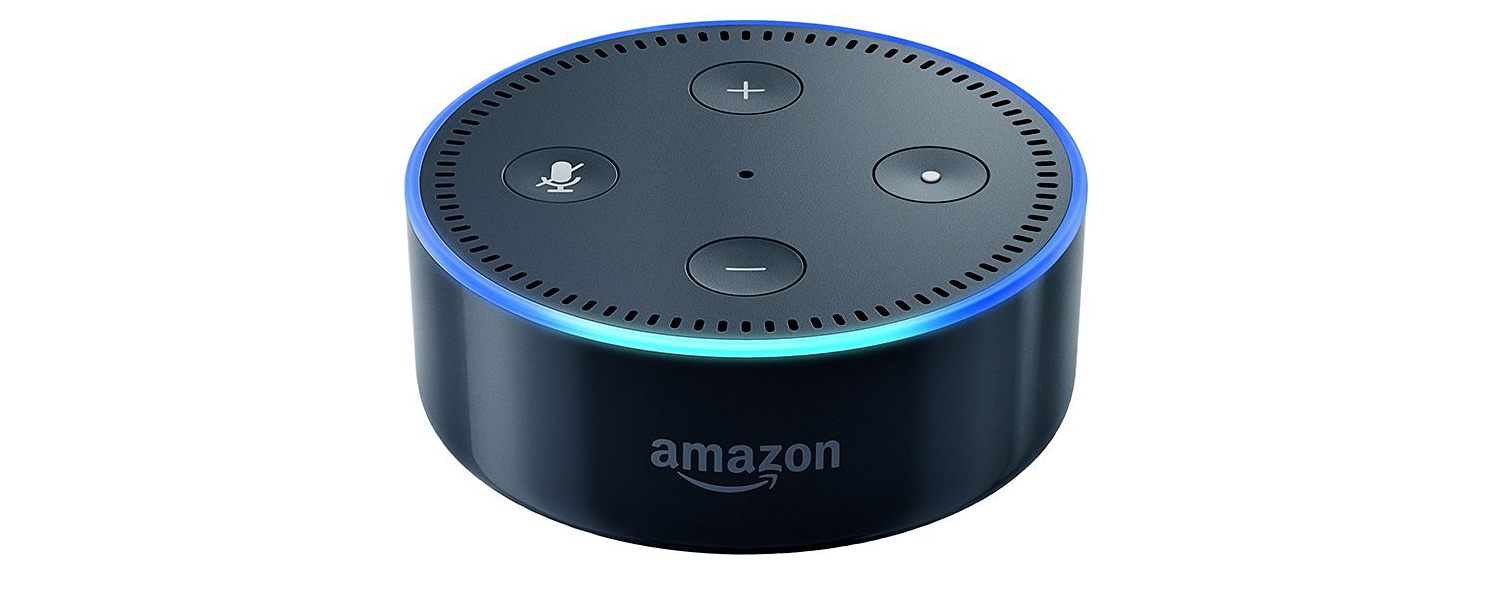
    Looks like Amazon’s Echo Dot will be there to share the workload this Diwali. From placing online orders for sweets and firecrackers to selecting outlets for Diwali shopping, the smart speaker will do it all.

    According to latest reports, Amazon’s much famed Echo Dot may go on sale in India this Diwali, along with the Prime Music service. The Alexa powered smart speaker does a host of things on the tip of your command such as, ordering pizza, booking Uber rides, etc . The Amazon Echo Dot, which costs $50 in the USA, might be priced at Rs 3,000 in India, whereas, its bigger sibling, Amazon Echo may not arrive in India due to its heftier price tag.

    Amazon’s Prime Music services will rival Apple Music and Google Play Music in India with a library of over 2 million songs available to all the Amazon Prime customers. The Amazon Prime subscription is available in India at Rs 450 per year, but, there are reports that the subscription fee will go up in the coming months. The Echo Dot, currently available in the United States and several other markets, supports a range of music integrations and other skills. Though most of the music services supported by Amazon, including Spotify and Pandoro are not yet available in India, but the soon to be arriving Echo Dot will support services like Prime Music and Gaana.

    Aside from the basic features, Amazon Echo Dot will enable users to control the smart lights in their home/office via voice commands. With the help of Alexa, Amazon’s AI assistant, users can get answers to trivia questions, play music, order food, book cab rides, check your calendar and much more by just calling out “Alexa.”

    Jan Dawson of Jackdaw research says, “The big challenge with Echo will be language support since it’s basically only worked in English so far, and they’ll need to localize for Indian pronunciations and idioms (not to mention other local languages eventually too).” Amazon began hiring people in India for Alexa and Echo device late last year, according to job postings on the website. Furthermore, the company has been offering  several incentives to the developers such as free t-shirts and other goodies for writing Alexa-enabled skills.

    Meanwhile, Google Home, the smart speaker from Google has been unofficially available on Amazon India for Rs 17,999 and so is the Amazon Echo Dot eBay for Rs 3,000. With smart home systems not prominent in India right now, time will tell how the Echo Dot is received by the consumers. A majority of the consumers in India still shy away from paying for media consumption, hence the arrival of Prime Music with Echo Dot to rival Apple Music and Google Play Music will be an interesting battle.

  • Asus Zenfone 4, Zenfone 4 Pro , Zenfone Selfie and Selfie Pro Launched

    Asus Zenfone 4, Zenfone 4 Pro , Zenfone Selfie and Selfie Pro Launched

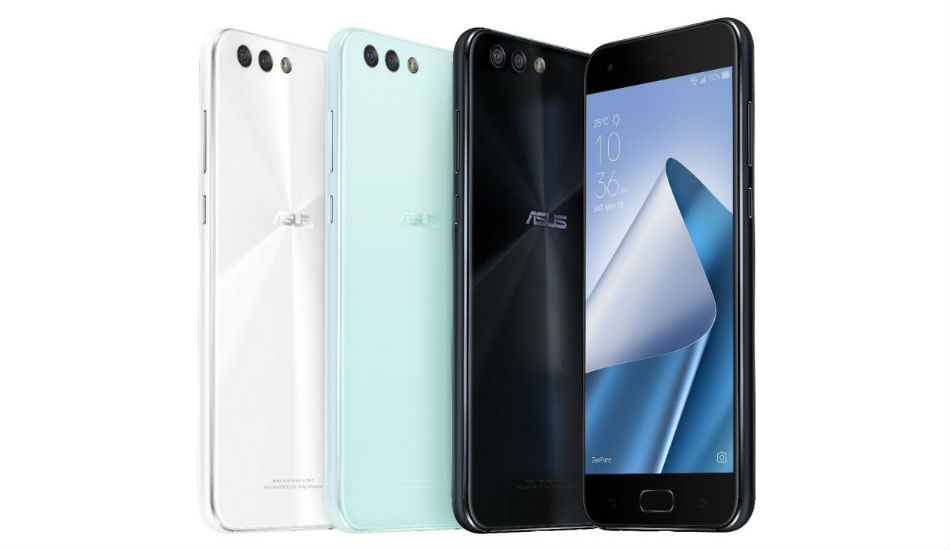
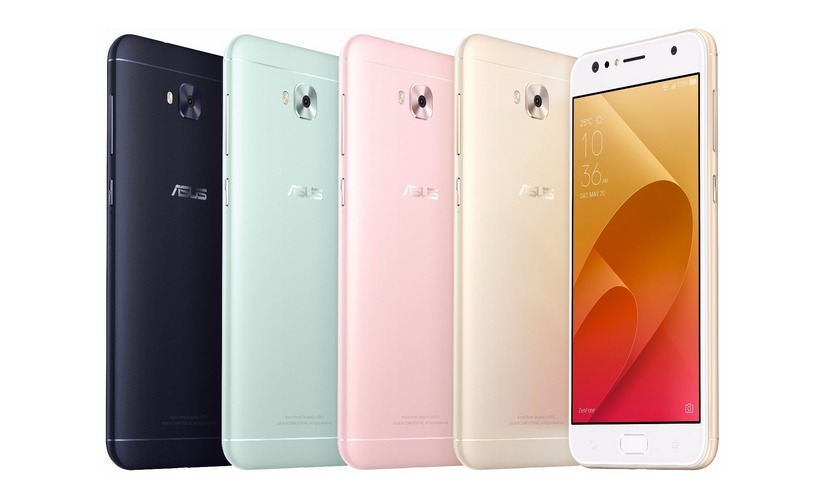
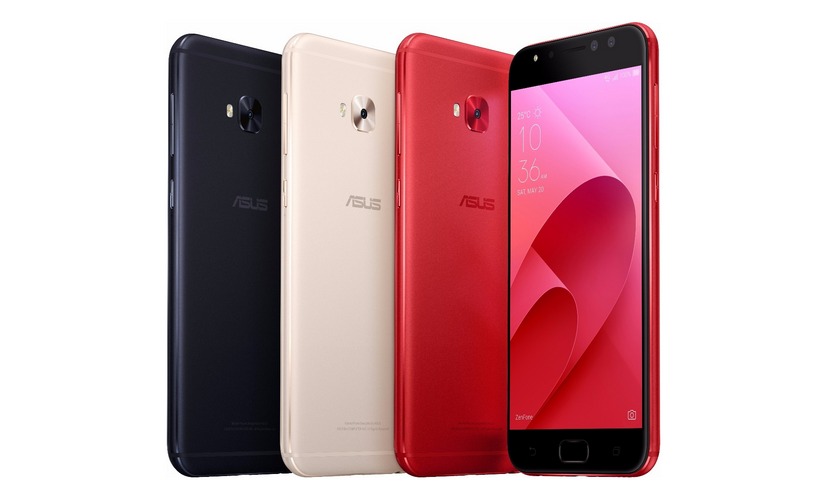
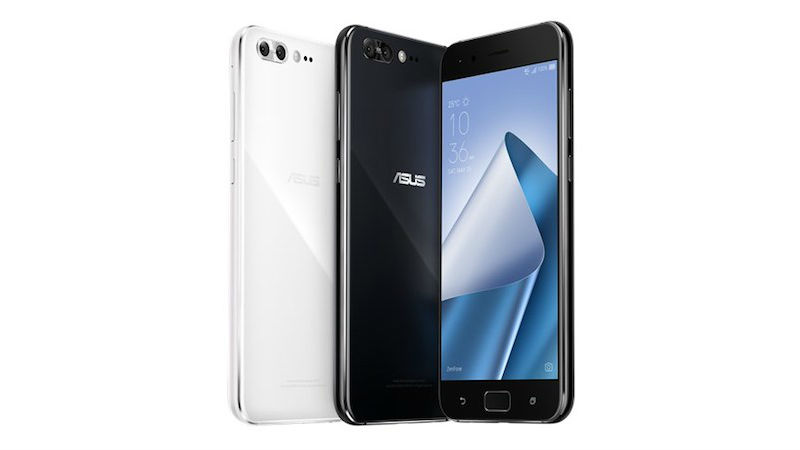
    The Taiwanese smartphone maker has announced the ZenFone 4 lineup consisting of 4 devices – the ZenFone 4, ZenFone 4 Pro, ZenFone 4 Selfie and the ZenFone 4 Selfie Pro. Asus also announced that the ZenFone Zoom S will be available in India for Rs 26,999. The pro variants have similar hardware with higher-end chipsets and a few other upgrades over the base variants.

    Asus ZenFone 4 Selfie

    Designed with a focus on front facing pictures, the smartphone sports a 5.5 inch 1280 x 720 px IPS LCD display and a 3,000 mAh battery. The ZenFone 4 Selfie runs Android 7.0 Nougat with Asus’s ZenUI 4.0 on top. Powering the device is a Qualcomm Snapdragon 430 chipset with 4GB RAM and 64GB of onboard storage which is expandable via a microSD card of up to 256GB. As the name suggests, the smartphone’s USP is its selfie-taking capabilities. The device sports a 20MP + 8MP dual-camera setup on the front along with an a LED flash. The rear of the phone houses a 16MP camera with PDAF and a LED flash. The fingerprint sensor is housed in the home button which sits below the screen and between two touch capacitive navigation buttons.

    Asus ZenFone 4 Selfie Pro

    The ZenFone 4 Selfie Pro is an upgraded variant of the ZenFone 4 Selfie with a 5.5 inch 1920 x 1080 px full HD IPS LCD display and the same 3,000 mAh battery. Under the hood is the Qualcomm Snapdragon 625 chipset with 4GB RAM and 64GB of onboard storage which is expandable via a microSD card of up to 256GB. The fingerprint sensor is housed in the home button which sits below the screen and between two touch capacitive navigation buttons. As with the base variant, selfies are the highlight here, with a front-facing 12MP Sony IMX362 sensor and a 5MP secondary camera for wide-angle selfies, which the company calls “welfies”. It features the same 16MP camera with PDAF and a LED flash at the back.

    Asus ZenFone 4

    The Asus ZenFone 4 sports a 5.5 inch 1920 x 1080 px fullHD display and runs on a 3,300 mAh battery. The fingerprint sensor is housed in the home button which sits below the screen and between two touch capacitive navigation buttons. The ZenFone 4 has a Qualcomm Snapdragon 660 chipset and will be available in two variants- one with 4GB RAM and 64GB storage and the other with 6GB RAM and 64GB storage. The onboard storage can be expanded up to an additional 2TB via microSD card. The device sports a dual camera setup with a 12MP primary camera with an f/1.8 aperture and an 8MP wide angle lens and can record videos in 4K at 30 FPS. On the front is an 8MP camera with an f/2.0 aperture.

    Asu ZenFone 4 Pro

    The new flagship features a 5.5 inch 1920 x 1080 px full HD AMOLED display and a 3,600 mAh battery. The Zenfone 4 Pro has a Qualcomm Snapdragon 835 with 6GB RAM and storage options of 64GB or 128GB. Much like the Zenfone 4 there is a dual camera set up at the rear with the main 12 MP camera with an f/1.7 aperture, OIS and laser autofocus and a secondary camera with a 16 MP sensor which enables 2X lossless optical zoom. The rear-facing dual camera setup records videos in 4K at 30 FPS. On the front is an 8MP camera with an 87.4-degree wide field of view. The fingerprint sensor is housed in the home button which sits below the screen and between two touch capacitive navigation buttons. You get the standard flagship connectivity options including the Wi-Fi 802.11b/g/n/ac, Bluetooth v5.0, NFC and USB 2.0 with Type-C port and there are dual speakers as well.

    All the phones currently run Android 7.0 Nougat with Asus’s custom ZenUI 4.0 skin on top.

    Specifications ZenFone 4 Pro ZenFone 4 Selfie ZenFone 4 Selfie Pro
    Price $599 $279 $379
    Dimensions  156.9 x 75.6 x 7.6 mm 155.7 x 75.9 x 7.9 mm  154 x 74.8 x 7 mm
    Weight 175 grams 144 grams 145 grams
    Display Size and Type 5.5 inch AMOLED 5.5 inch IPS LCD 5.5 inch IPS LCD
    Display Resolution 1920 x 1080 px 1080 x 720 px 1920 x 1080 px
    OS Android 7.0 Nougat with ZenUI 4.0  Android 7.0 Nougat with ZenUI 4.0  Android 7.0 Nougat with ZenUI 4.0
    Battery 3,600mAh 3,000mAh 3,000mAh
    Chipset Qualcomm Snapdragon 835 Qualcomm Snapdragon 430 Qualcomm Snapdragon 625
    Processor 2.4GHz octa-core 1.4GHz octa-core 2GHz octa-core
    RAM 6GB 4GB 4GB
    Storage 64GB/128GB 64GB 64GB
    Expandability microSD card

    up to 2TB

    microSD card

    up to 256GB

     microSD cardup to 256GB
    Rear Camera 12MP primary sensor with an f/1.7 aperture
    16MP secondary telephoto lens for 2X lossless optical zoom
    16MP with PDAF 16MP with PDAF
    Rear Camera Video 4K at 30 FPS 1080P at 30FPS 1080P at 30FPS
    Front Camera 8MP with an 87.4-degree field of view  20MP + 8MP  12-megapixel Sony IMX362 sensor and 5MP secondary wide angle lens
     Other features Fingerprint sensor  Fingerprint sensor  Fingerprint sensor
    Colour variants Pure Black

    Moonlight While

     Pure Black

    Mint Green

    Gold

    Pink

    Black

    Gold

    Red

  • USB 3.2 : Double The Speed Using Existing USB Type C Connectors

    USB 3.2 : Double The Speed Using Existing USB Type C Connectors

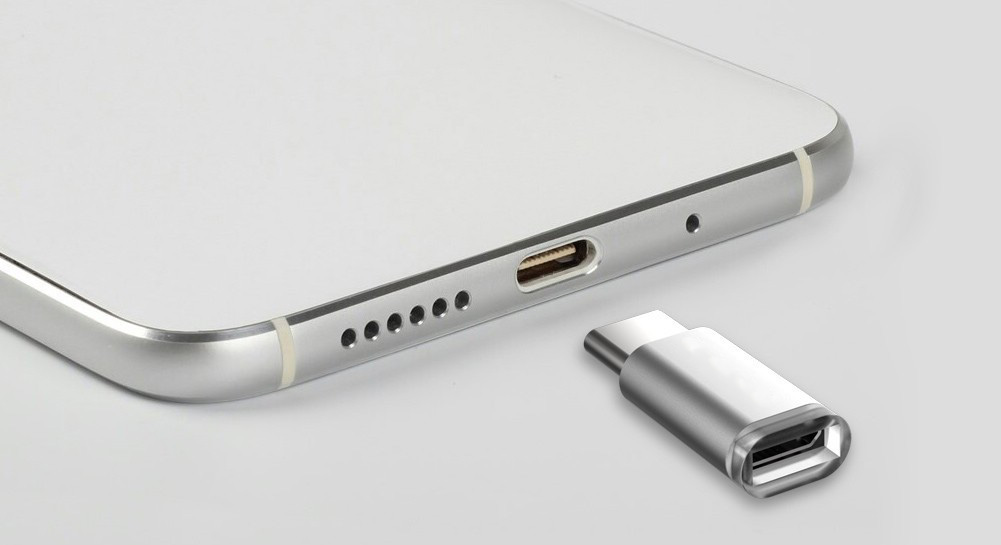
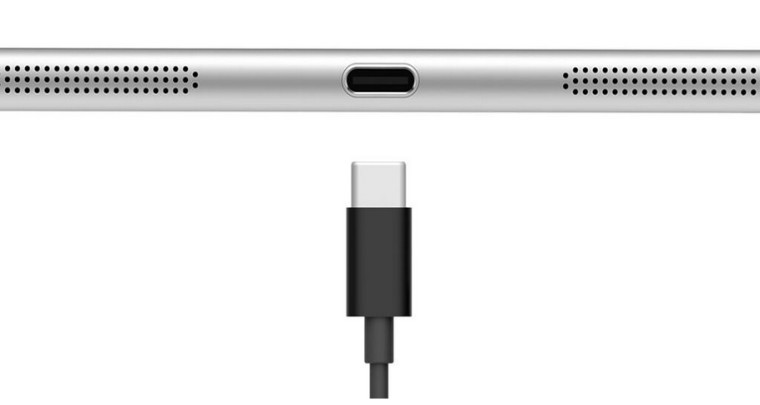
    When Apple removed all the ports in its new MacBook and replaced them with USB Type-C ports, the world anticipated that we’re moving towards devices with a universal port for everything. However, with different voltage requirements, specifications for data transfer and power, and more make it complicated to ensure that one port will satisfy all needs in any part of the world.

    The USB 3.0 Promoter Group, which consists of Apple, HP, Intel, Microsoft, Texas Instruments, and others of its members has announced a new USB Type C specification, the USB 3.2. USB 3.1 or, to be accurate, USB 3.1 Gen 2 Superspeed+ sports up to 10Gbps. This is made possible by combining two individual 5Gbps lanes. USB 3.2 will now double these two lanes to 10Gbps each, resulting in a whopping 20Gbps transfer speed. Assuming the host and recipient devices are compatible with USB 3.2, even older USB 3.0 cables will see faster speeds of up to 2oGbps. So, even if you don’t upgrade all your tech from USB 3.0 to 3.2, you may see an increase in transfer speeds if the manufacturers start to support it.

    It is also worth noting that not every USB Type C cable is capable of transferring these 2 lanes of 10Gbps, so even though different USB Type C cables might look the same, it doesn’t necessarily mean that they are the same. In order for it to support these new transfer speeds, the cable needs to be Superspeed+ certified.

    The USB 3.2 is not expected to be finalised until later this year, which means it’ll probably be a while before we see a standard roll out to devices. The USB Developer Days event is scheduled for September 2017 and a lot of other announcements are anticipated to happen in Vancouver, Canada.

  • Solar Red HTC U11 Launched In India

    Solar Red HTC U11 Launched In India

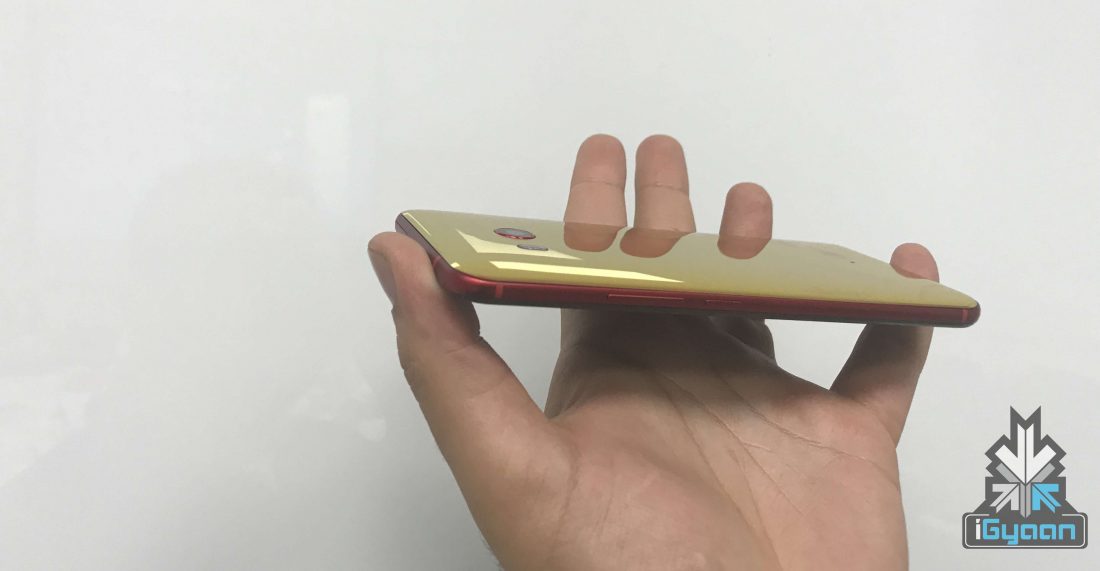
    HTC has launched the Solar Red colour variant of the HTC U11 in India. Previously, HTC had launched the U11 in India in the Blue Sapphire and Amazing Silver variants. The Solar Red colour was launched globally to great reviews for its reflective back panel finish. The smartphone is available on the company’s e-commerce website for Rs 51,990. The USP of this variant is that its rear shell shows different shades of colours – yellow, pink and several tones of orange when looked from different angles. It also comes with a distinctly darker shade of red frame around the corners.

    The Solar Red HTC U11 comes in as a breath of fresh air among the same old black, blue and gold coloured smartphones. The design on the HTC U11 is thanks to the liquid glass surface, which is crafted using Optical Spectrum Hybrid Deposition tech which HTC has designed or mastered for use with the U11.

    The U11 features a 5.5 inch 2560 x 1440 px Super LCD5 display with a pixel density of 534ppi. Powering the smartphone is a 3,000 mAh battery with QuickCharge 3.0 via the USB Type-C port. It runs on Android 7.1.1 with HTC’s SenseUI on top. Running all of it under the hood is the Qualcomm Snapdragon 835 chipset, a 2.45GHz octa-core processor, the Adreno 540, 4GB RAM and 64GB onboard storage which is expandable via microSD card.

    Another distinction for the HTC U11 apart from the colour changing rear panel is the Edge Sense technology. It basically allows you to squeeze the frame of your device to launch an action/app. For example, you can set the squeeze to open WhatsApp or take a picture. In the camera department, the U11 is also the first smartphone to score  90 on the DXOmark test, and all of it with a 2016-like single camera setup. It features a 12MP rear-facing camera with an f/1.7 aperture and optical image stabilisation and a 16MP front0facing camera with an f/2.0 aperture.


  • HMD Global Officially Launches The Nokia 8

    HMD Global Officially Launches The Nokia 8

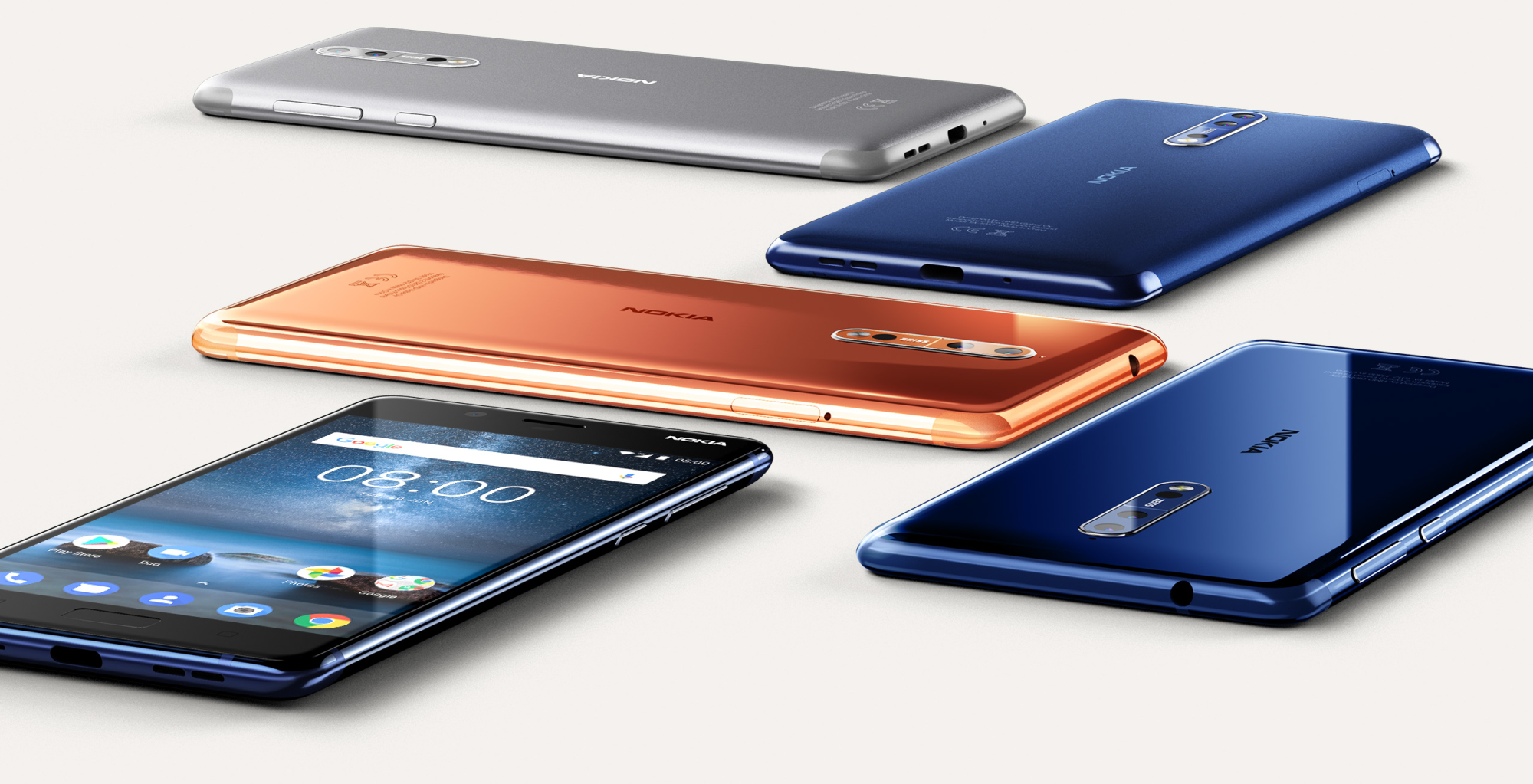
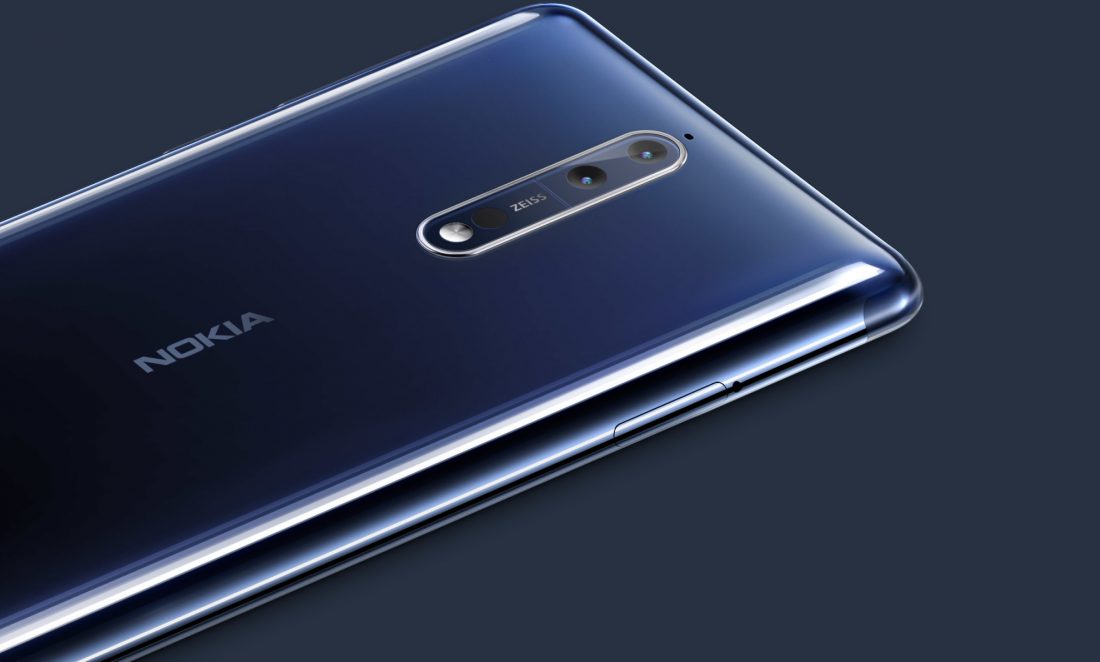
    HMD Global has unveiled the first ever Nokia branded Android flagship, the Nokia 8 at an event in London on August 16th. The premium smartphone with an all metal design, dual cameras and more 2017 specifications will go on sale in early September for 599 Euros (Rs. 45,000 approx.). After a string of mid-range Android smartphones, the Nokia 8 was highly anticipated for not just being a Nokia flagship, but the first flagship device since the Finnish company’s Windows Phone days.

    The Nokia 8 has an IP54 rating for splash resistance. Although,  the smartphone does not look like a 2017 flagship with big bezels around the edges unlike the LG G6 or the Samsung Galaxy S8/S8+. The Nokia 8 sports a 5.3 inch 2560 x 1440 px display and 2.5D Corning Gorilla Glass 5 for protection. Powering the device is a 3,090mAh battery with QuickCharge 3.0 support via USB Type-C port. Under the hood is the Qualcomm Snapdragon 835 chipset and a 2.45GHz octa-core processor, the Adreno 540 GPU, 4GB of RAM and 64GB of onboard storage which is expandable via microSD card. The Nokia 8 runs on stock Android 7.1.1 OS and the company has promised monthly security updates and yearly Android updates. The fingerprint sensor is housed inside the home button below the screen.

    The new flagship is also the first Nokia Android device to feature Carl Zeiss optics. In a very 2017 move, the Nokia 8 boasts a Zeiss powered dual camera setup at the rear – a primary 13MP RGB (colour) sensor with optical image stabilisation paired with a 13MP secondary monochrome (black and white) sensor and an f/2.0 aperture. The dual-camera setup is capable of recording videos in 4K at 30 FPS and has a portrait mode for bokeh effect. On the front is a 13MP camera which can also record 4K videos at 30FPS.

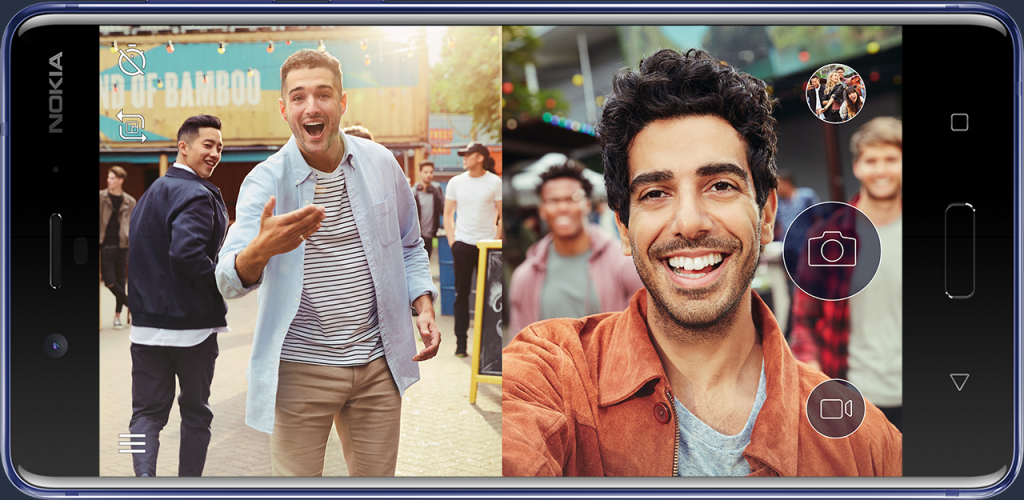
    The Nokia 8 comes with a feature called Bothie. It is the first smartphone in the world which allows ‘Dual-Sight’ video to be live streamed natively and in real-time to social feeds such as YouTube and Facebook. Dual-Sight allows you to use the front and rear camera at the same time in a split screen view. Another feature that the smartphone boasts is called OZO Audio in which the smartphone’s three microphones and Nokia’s acoustic algorithms allow you to capture 360-degree spatial surround sound. You can also share 4K videos with OZO audio with anyone – binaural codecs ensure high fidelity playback even on devices without OZO Audio.

    There is no official word on the Nokia 8’s availability in India as of yet. The Finnish brands’ foray into Android smartphones has s far been through mid-rangers, but, with this flagship device, Nokia is ready to compete with the big boys of the smartphone industry.

    Nokia Recently launched the Nokia 5 in India, available exclusively in the offline market.

  • Google Pixel 2 Details Leaked In FCC Filing

    Google Pixel 2 Details Leaked In FCC Filing

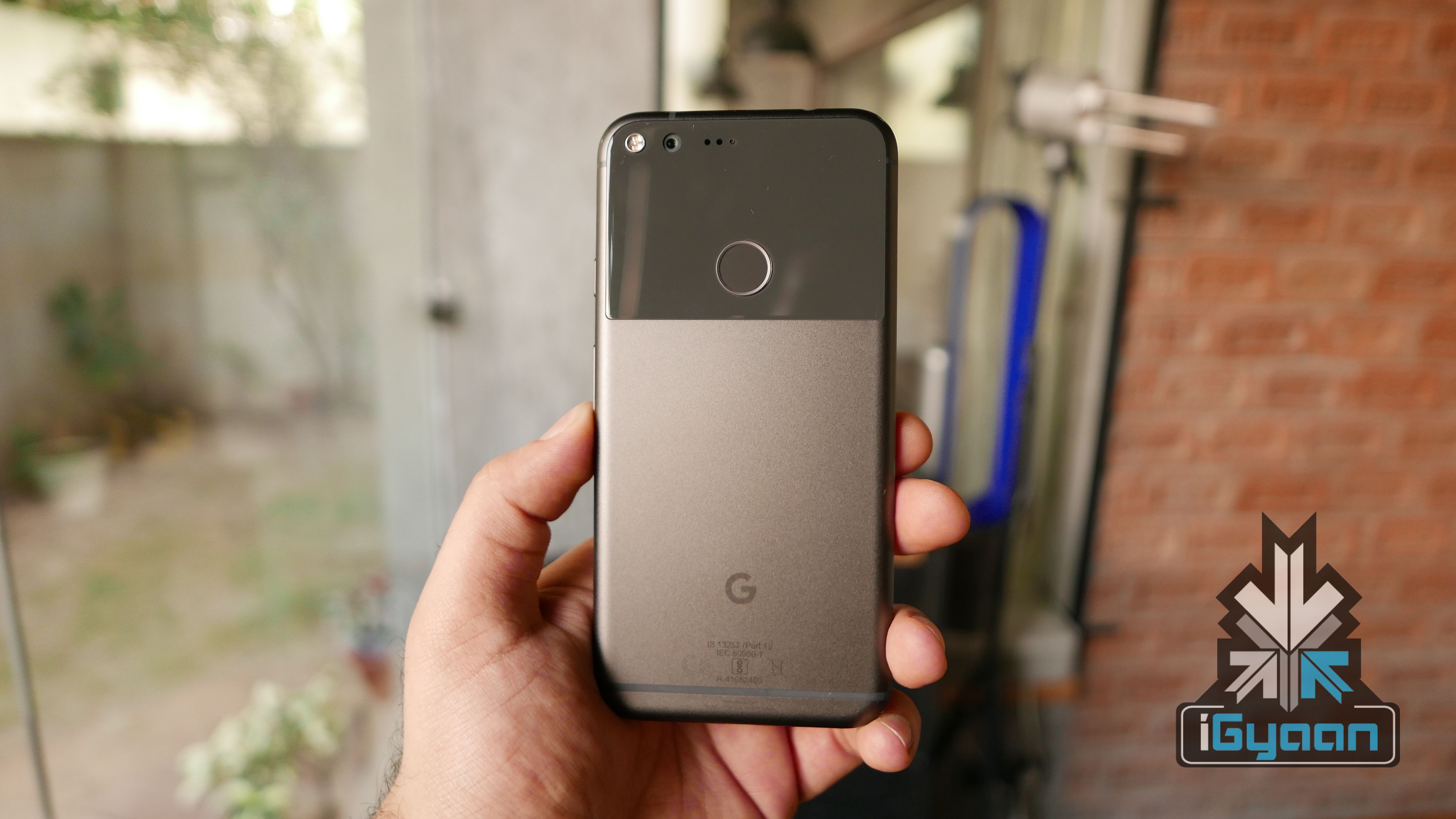
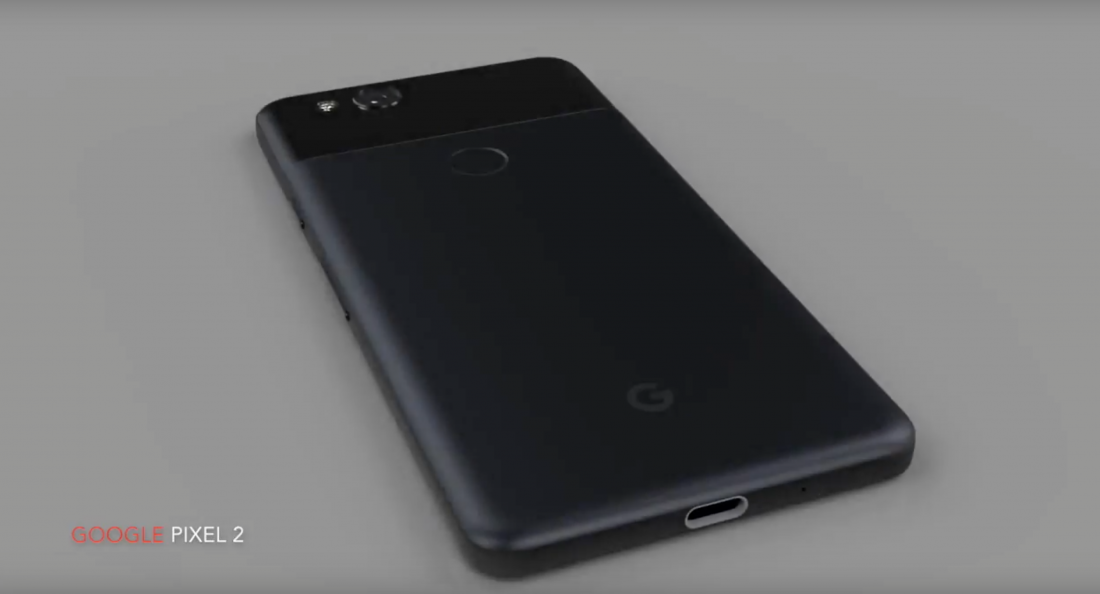
    New details leaked through an FCC filing by HTC, all but confirm that HTC will indeed be the maker of at least one of the new Pixel smartphones, while LG will be handling the larger variant, the Pixel XL 2. It is also worth noting that the FCC filing comes exactly a year after the commission received similar documentation for the Pixel and Pixel XL phones suggesting that the new smartphones will indeed launch in or around October.

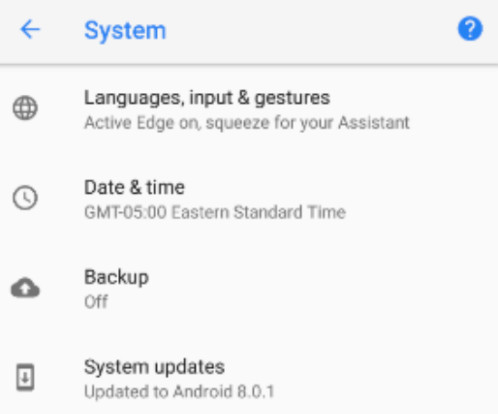
    An interesting detail revealed by the filing is a feature called “Active Edge”, which is similar to the squeezable frame feature on the HTC U11. The difference here is that the squeeze will be programmed to launch the Google Assistant. The filing has also revealed that the Pixel 2 will be powered by the Qualcomm Snapdragon 835 Chipset and have 64GB of onboard storage. As expected, the smartphone will run on Android 8.0.1 which is rumoured to be officially unveiled on August 21.

    There have been renders of the Google Pixel 2 suggesting that the 2017 flagship will ditch the headphone jack. The device will also sport a design similar to its predecessor’s with big bezels around the screen and a smaller glass window at the back.

    The first-gen Pixel smartphones were launched at a premium price and the Pixel 2 and Pixel XL 2 will be no different. The main difference between the two variants apart from the screen and battery size will be the design. The smaller Pixel 2 will reportedly sport a 5 inch 2560 x 1440 px AMOLED display and still have large bezels around the screen, unlike many flagships of 2017. The Pixel XL 2, on the other hand, will feature a more “2017 flagship design” with thin bezels around a 6 inch 2560 x 1440 px AMOLED display. The devices will run on 3,ooo mAh battery and 3,500 mAh battery respectively.

    Although, the Google Pixel and Pixel XL received a lot of flak for their design, the software and camera performance was appreciated by a lot of people. The new Pixel lineup seems to be following the same design pattern and will have to up their camera game and software performance to compete with the likes of the Apple iPhone 8, Samsung Galaxy Note 8 and the LG V30, all slated to be launched around the same time as the Pixel 2 and Pixel XL 2.

  • Google To Pay Apple US $3 Billion to Remain Default Search Engine on iOS

    Google To Pay Apple US $3 Billion to Remain Default Search Engine on iOS

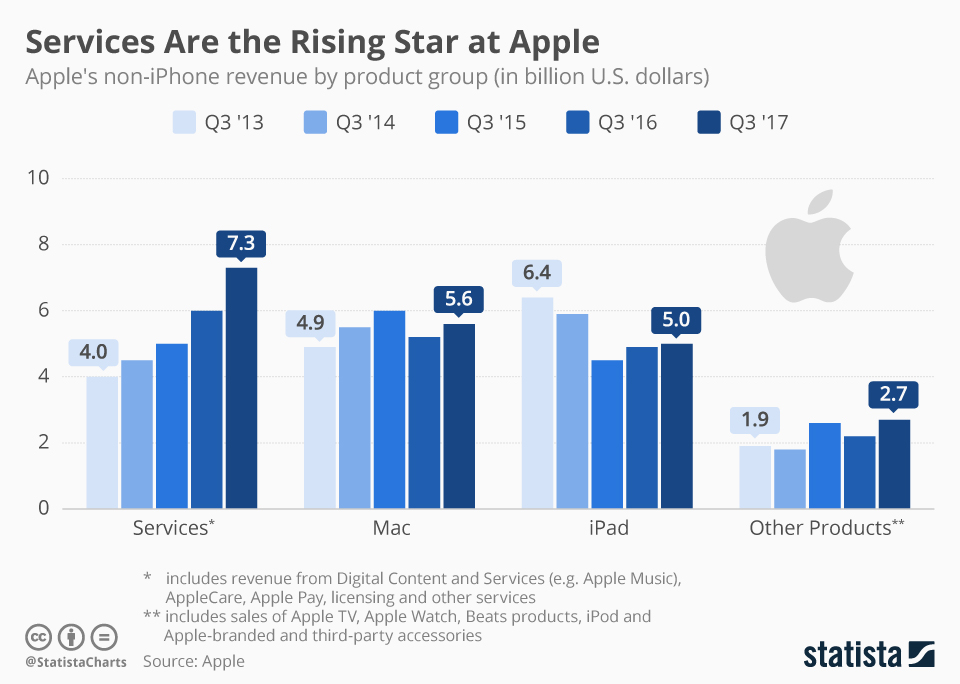
    A US-based research and brokerage firm, Bernstein has said that Google will pay Apple USD 3 billion to remain the default search engine on iOS devices. According to a note to investors, Google has increased the payment from $1 billion three years ago to $3 billion for 2017. Google’s licensing fee makes up a large bulk of Apple’s service business. In fact, this license fee from Google comprises about 5% of Apple’s total operations profit.

    Apple has stated that its services business is growing at a fast pace and that the profit from the services sector will help the company get listed in the Fortune 500 companies. An analyst from Bernstein also says that iOS devices also contribute 50% profit to Google’s mobile search revenues. This shows that Google will pay any amount to get unfettered access to all iOS devices. Thus, both the companies are dependent on each other for revenue. Since Google is earning a lot of profit from this arrangement, it has decided to increase the payment from $1 billion to $3 billion this year so that the license is not cancelled.

    Revenue of Services sector

    Apple has identified the services sector as an important source of profit, which a lot of investors believe is because of Apple Music and iTunes. But, a look at the revenue model shows that this licensing fee will become the largest revenue source in this sector. Mobile Ad revenue is central to Google’s revenue model and the growing importance of the mobile internet has now shifted the ad revenue focus from desktop to mobile devices. In fact, Google is expected to generate nearly $50 billion in revenue from mobile ads in CY 2017.

    Although lucrative, the mutually beneficial deal between Apple and Google may be numbered. According to some estimates, if Google can retain 80% of their iOS search volume, then it would be financially more viable for them to break off this deal with Apple.


  • Nokia 5 Goes On Sale In India On 15th August Exclusively At Offline Retail Stores

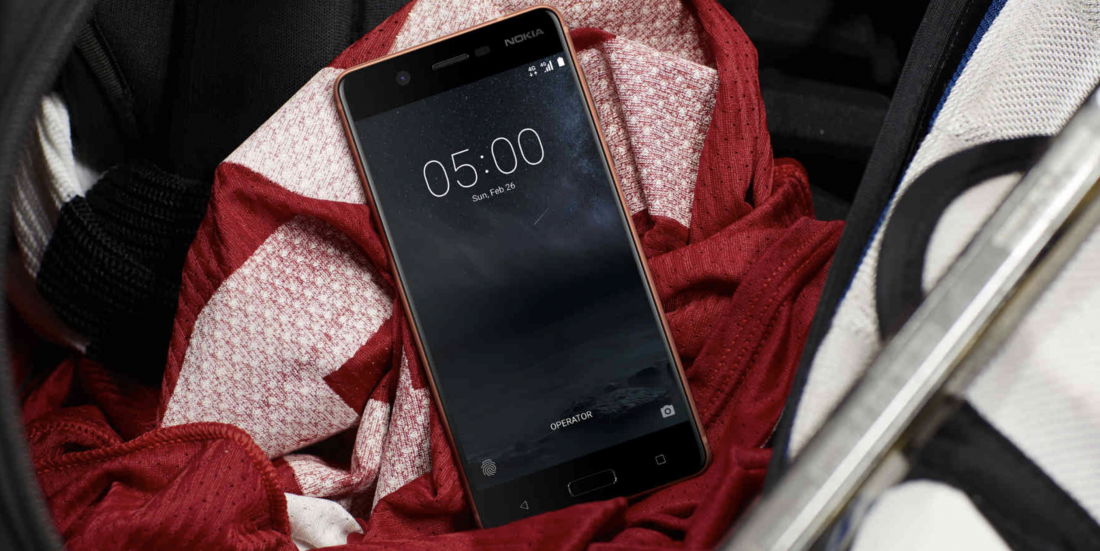
    HMD Global has announced that the Nokia 5 will go on sale in India from August 15 in offline retails stores exclusively unlike other Nokia devices which are available online as well. From 15th of August, the Nokia 5 will be available across more than 10 cities in India at select retail outlets.

    The Nokia 5 has been launched in 4 colour variants Matte Black, Silver, Tempered Blue and Copper, however, at the start of the sale it’ll only be available in the Matte Black variant. The list of cities where the Nokia 5 will be available starting Tuesday, August 15 in Delhi NCR, Mumbai, Bengaluru, Chennai, Chandigarh, Jaipur, Kolkata, Lucknow, Indore, Hyderabad, Pune, Ahmedabad, and Calicut while more cities will be added to the list eventually.

    The Nokia 5 is priced at Rs 12,499 and sports a 5.5 inch 1080 x 720 px IPS LCD display. The Nokia 5 runs Android 7.1.1 Nougat and houses a 3,000 mAh battery. It is runs on the Snapdragon 430 chipset with a 1.4GHz octa-core processor  and the Adreno 505 GPU along with 2 gigabyte of RAM and 16 gigabyte of onboard storage. The onboard storage is expandable via microSD card up to 128 gigabyte. The Nokia 5 features a aluminium 6000 series back shell that wraps around the edges for a smooth, rounded shape, which the company says is a “perfect fit for those who need great design, specs at its price.”

    In terms of the optics, the Nokia 5 features a 13MP rear-facing camera with an f/2.0 aperture, 1.2-micron pixel size and a dual LED flash. On the front is an 8MP camera with an f/2.0 aperture and 1.2-micron pixel size. The rear-facing camera records video in 1920 x 1080 px at 30 FPS. The fingerprint sensor is housed inside the home button which sits under the screen and in between two back-lit capacitive touch navigation buttons. The presence of Gorilla Glass on the screen has not been specified.

    The Nokia 5 is another entrant to the crowded budget-friendly Rs. 10,000 – 14,000 category. It will be interesting to see how well the Nokia 5 is received by a country which at one point in time swore by the Finnish brand.

  • LG Confirms The V30 Will Feature Floating Bar And Facial Recognition

    LG Confirms The V30 Will Feature Floating Bar And Facial Recognition

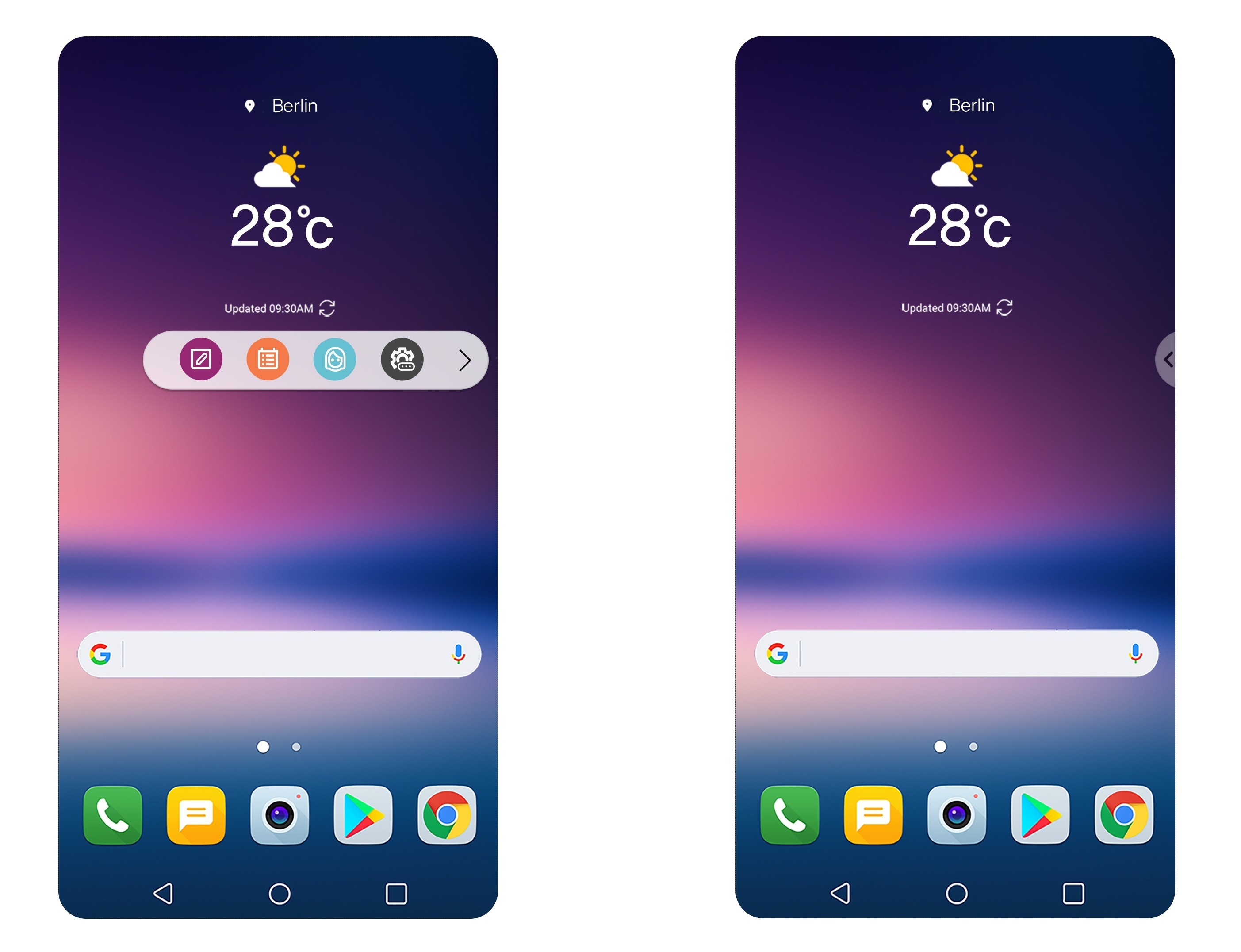
    LG continues the trend of announcing new features of the upcoming V30 on the company’s blog posts. After revealing that the V30 will feature an OLED display, LG showed off new features including a Floating Bar, Facial and Voice Recognition along with various customisation options.

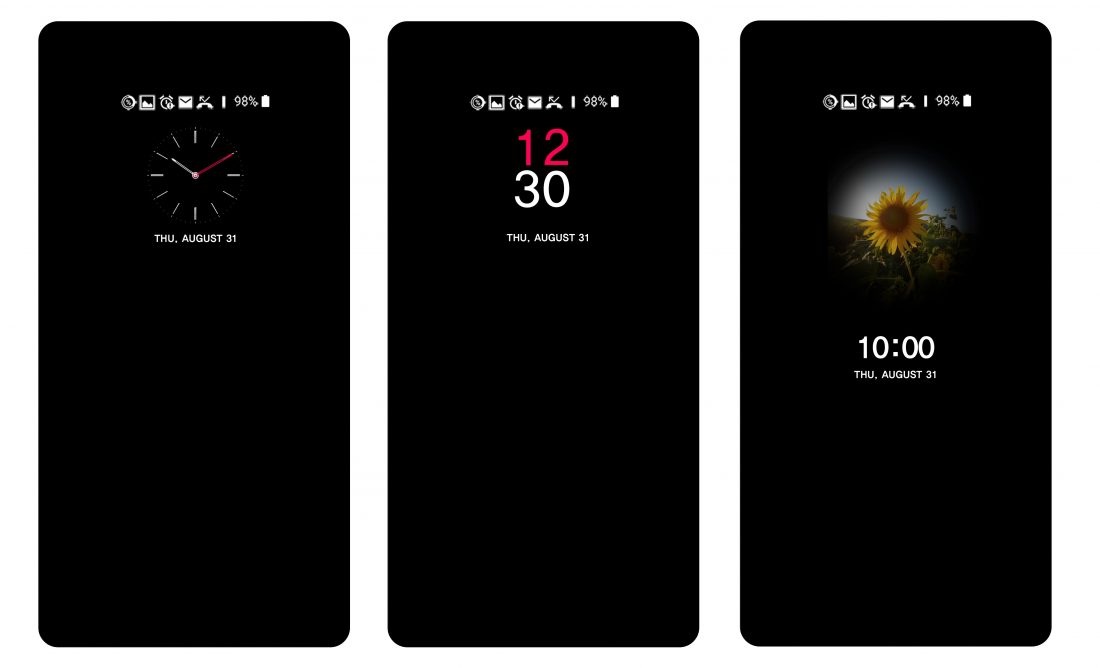
    Earlier this month, LG announced that the V30 will sport a 6 inch OLED display, all but confirming that it is dropping the secondary ticker display which was found on the V10 and V20. The new smartphone will also feature LG’s UX 6.0+ which will offer a lot of personalisation options for a more intuitive user experience. The semi-transparent Floating Bar allows for quick access to frequently used functions and can be dragged completely off the display when not needed. The new Always On Display offers more customisations, it not only shows the clock, but can also be set to display Quick Tools, Music Player or a personal photograph as well.

    The UX 6.0+ also features new security updates such as facial and voice recognition. LG has stated that the user can unlock the phone by just looking at it, without pressing the lock button. The voice recognition feature uses Qualcomm’s Aqstic voice UI technology that is always listening for a passphrase consisting of three to five syllables. Lastly, LG touches on the V30’s haptic feedback, which can be customised with various included vibration combinations that can be matched to the phone’s ringtone.

    LG has spilled the beans on a lot of features of the V30 just a couple of weeks before its launch leaving little to one’s imagination. Till we get our hands on the flagship device, let’s take a look at what we know about it so far-

    • Launch: August 31
    • Price : $700 (Rs 45,000 approx.)
    • Display: 6-inch POLED
    • Display features- Floating bar for quick access, Always On Display mode
    • OS: Android Nougat 7.1.1 with UX 6.0+ on top
    • Chipset: Qualcomm Snapdragon 835
    • RAM: 4GB or 6GB
    • Storage: 32GB/64GB/128GB
    • Battery: 3,300 mAh battery
    • Fingerprint sensor, Facial and Voice Recognition
    • Camera: 13-megapixel dual-camera
    • Wireless charging
    • ESS Quad DAC
  • Google Might Announce The Official Name For Android O On 21 August

    Google Might Announce The Official Name For Android O On 21 August

    The official name of Google’s latest version of Android OS may be unveiled on 21 August. Android O was announced during Google I/O 2017 and the developer’s preview started rolling out after that. According to a series of tweets by David Ruddock from Android Police, Android O will receive its official name on the day of the Solar Eclipse. Last year, Google officially announced Android 7.0 Nougat on August 22, so based on continuity alone, the August 21 date seems quite likely.

    https://twitter.com/RDR0b11/status/895720628426166273

    The tweets also suggest that Google will make a big deal out of the unveiling and is “planning a spectacle.” He also mentioned that the name won’t be random and publishing the name right now would be a spoiler.

    https://twitter.com/RDR0b11/status/895720859070898176

    Android 8.0 brings new features such as Notification Dots, Autofill, Smart text selection and Picture-In-Picture. Google has also said to improve the security and increased the booting speed in the new OS. Notification Dots show the notification of an app after a long press.

    A small notification bar pops up at the top right corner of the app and shows the notification of the particular app. The Autofill feature helps in filling forms inside an app. Smart Selection feature is a machine learning based features that select only important text to be copied. Android O also comes with a multitude of back-end improvements such as better battery management algorithms, app optimisations, audio enhancements like improved Bluetooth audio and more.

    Earlier rumours claimed that Android O will be named after the popular cookies, Oreo. A few weeks ago, developers found references to the term “oatmeal_cookie” in a sample code that was used in a presentation slide at Google I/O indicating that ‘Oatmeal Cookie’ could very well be Android O’s name.

    With the soon-to-be-launched Google Pixel 2 and Pixel XL 2 tipped to be the first smartphones running the new Android O, it seems highly likely that these reports are true and that Google will indeed announce the official name of the new operating system. When Android O officially starts to roll out, it is likely that the Pixel and Nexus devices will be first in line to receive the update and other smartphones will follow suit.

iGyaan Network
Privacy Overview

This website uses cookies so that we can provide you with the best user experience possible. Cookie information is stored in your browser and performs functions such as recognising you when you return to our website and helping our team to understand which sections of the website you find most interesting and useful.