Category: Facebook

  • Facebook Brings Out a ‘Lite’ App For Low-End Android Devices

    Facebook Brings Out a ‘Lite’ App For Low-End Android Devices

    Facebook launched a handful of standalone apps last year including the newest offerings called Rooms. Facebook’s strategy to monopolize and drive funds from its already established multi-billion user base is quite clear. Now, another app, called Facebook Lite has been launched by the company for emerging markets.

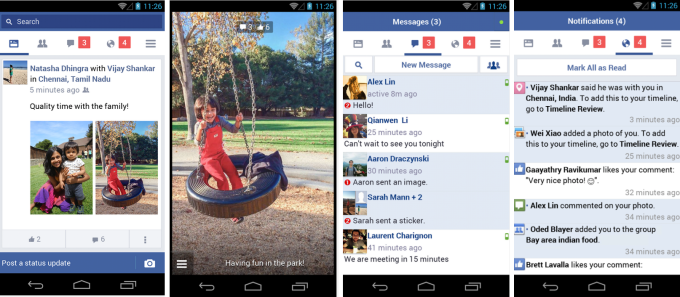
    Technically, Facebook Lite is specifically designed for low-end Android devices in emerging markets. The app has been quietly rolled out in a handful of countries such as Asia and Africa over the weekend (Bangladesh, Nepal, Nigeria, South Africa, Sudan, Sri Lanka, Vietnam and Zimbabwe to be precise) where it is being tested with the aim to further expand.

    Facebook Lite is only 252k in size and look quite similar to the simplified version of the mobile website launched in 2009. The smaller size will accommodate low-end and dated Android devices and those on 2G/poor quality internet connections.

    fb-lite

    The app is based on Snaptu, Facebook’s feature phone client, however, it includes some familiar Android features such as  push notifications and camera integration, to make the experience a more sophisticated one.

    Primary focus of the app will be tapping soaring sales of low-end smartphones in Asia. A stand alone app seems to be a perfect way out and taking advantage of the emerging markets. Apparently, the move has seen fruitful results already. It has already crossed 10,000 downloads, with a 4.6 rating from an initial 693 reviewers.

  • Facebook is Testing a Voice Transcription Feature for its Messenger App

    Facebook is Testing a Voice Transcription Feature for its Messenger App

    Facebook’s standalone Messenger app is an important part of the company’s offering with 500 million Messenger users sending billions of messages everyday. The company has been focusing a lot on stickers lately, even releasing an app solely dedicated to applying stickers to your photos.

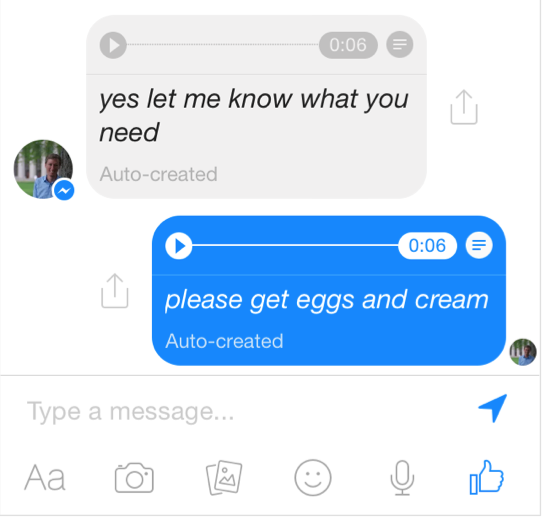
    However, now it seems like Facebook is shaking things up. The company is planning to add a new voice transcription feature for its Facebook Messenger. As announced by David Marcus, Head of Facebook’s Messenger team, this feature allows users of the Facebook Messenger app to read transcripts of voice messages instead of listening to them.

    voice transcript facebook

    So, now when you send or receive a voice clip, you’ll see a text preview of the message. Both sender and receiver can see the text, unless you decide to turn it off.

    Unfortunately, most of us won’t see the feature any time soon. Marcus wrote on the Facebook Post :

    Today we are starting to roll out a small test that helps people read the voice clips they receive instead of having to play them out loud. Our plan is to test this feature at a tiny scale for now and we’re looking forward to seeing what you think of it before making the experience more widely available.

    The transcription is automatic, and will hopefully become a more widely available feature in the future, though that isn’t guaranteed at this point.

  • Facebook Jumps into Business Social Networking With ‘Facebook at Work’

    Facebook Jumps into Business Social Networking With ‘Facebook at Work’

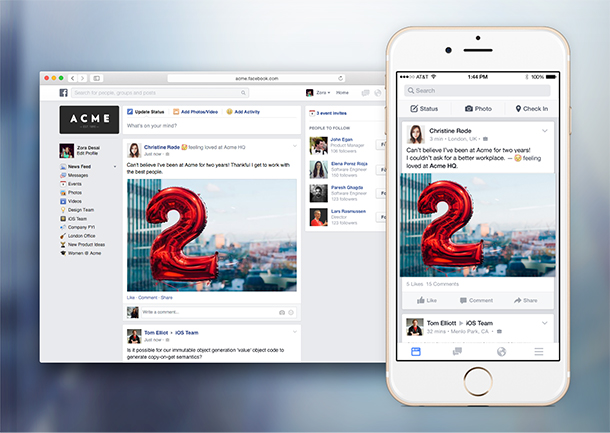
    Facebook’s previously rumored enterprise-focused social app, Facebook at Work, has been released for public. The company is launching new iOS and Android apps called “Facebook At Work,” along with a web version accessible via its main website.

    The app lets companies create their own social networks amongst their employees that are built to look and act like Facebook itself. The main purpose of the app and web tool is to eliminate the presence of E-mails as the primary communication medium and provide a collaboration tool that lets colleagues communicate with a more familiar interface. However, there are handful of differences between the two social apps.

    facebook work

    There are zero advertisements and the company doesn’t track users or hold their data. Facebook says a key feature of the app is Groups, which the company believes could replace email lists that appear never-ending and seem to grow larger with time. Employers can create separate log-ins for employees to use with their Work accounts, or users can link these up with their other profiles to access everything in one place.

    Facebook is jumping into this existing market with all of its social media knowledge and attempting to make a smooth transition to a business product. The workplace app puts Facebook head-to-head with the likes of Microsoft’s Yammer, Slack, LinkedIn, Convo, Socialcast, and a huge number of others who are trying to tackle this space.

    ‘Facebook at Work’ is currently free, while most of the other apps offer tiers of pricing. By making this free, Facebook could potentially drive a lot more users to its wider network. Facebook At Work is now available for download on iOS, and we’ll update with link to the Android version once it’s live, though both are usable via a limited access at present.

  • Get an Organised Facebook Page With These 7 Tips And Tricks

    Get an Organised Facebook Page With These 7 Tips And Tricks

    Social platform Facebook is widely used by people of all groups. Though, it’s an amazing means to share updates, pictures and more with your friends and family, it sometimes pesters users through advertisements, invitations popping up to play games, posts sharing on your behalf and many more.

    Have you ever been in such circumstances where your mum scolded you on Facebook and likes of that post multiplied in minutes with people having a good laugh at it? Well, we all must have come across one or the other issues in the gigantic service, but fret not as the below-listed tips and tricks will keep awkward situations at bay.

    1. Remove Facebook Advertisements
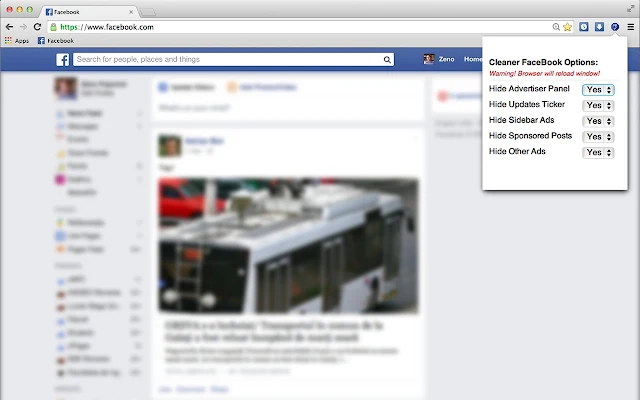
    Advertisements are the most annoying part of any web page and same is the case with Facebook. Whenever we login to our account, a plethora of ads force us to leave the page. However, you would no longer be frustrated opening up your Facebook account as ‘Cleaner’ will keep your page tidy. Download Facebook Cleaner and avoid ads and updates on your account.

    2. Keep parents off Facebook
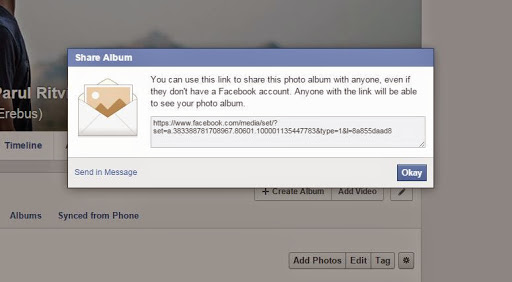
    facebook album link share

    Many a times it is seen that mums are interested in the activities of their grown-up kids. In spite of your mums’ continuous threats to join Facebook, you can sit back and relax as she would no longer complain. Now show her the pictures of your choice and be at the best of your behaviour. All you need to do is open the desired album, tap settings and copy the link. You can send this album as an email or via ‘Send in Message’ option, as per your liking.

    3. Discontinue auto-playing Facebook videos
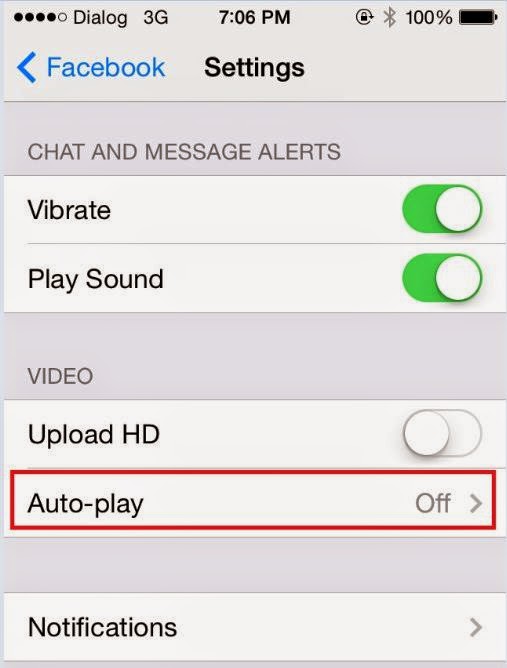
    facebook video autoplay

    ‘This video is completely ridiculous. Why the hell people update such stuff.’ You must have said similar lines for disgusting videos auto-playing on your Facebook page as you scroll down the recent activities of your friends. Many a times we don’t bother and pause the videos individually, but seldom when we’re in a hurry to sneak onto our account for a few minutes, the videos automatically start playing. Well, this can be avoided by making some slight changes. Click on Settings -> App settings and choose Off on the Video AutoPlay option on the Android phone. iOS users can turn it off by choosing Settings on the phone and then clicking Facebook>Settings>Off under Video Auto-play option.

    4. Restrict apps’ requests and notifications
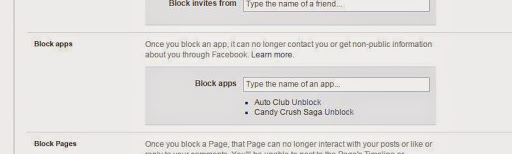
    facebook block apps

    With advancements in technology, games are no more the same as they used to be. You can now connect to Facebook and can ask your friends for help in case you’re stuck in the middle of some game and a lot more. Usually, these games send notifications to your friends or ask you to join it, which is quite pestering. However, you can easily get rid of the irritating updates by clicking the downward triangle icon. Then in your Setting options; click to customise your blocking options. Then enter the name of the apps you no longer want to get notifications of.

    5. Stop apps posting on your behalf
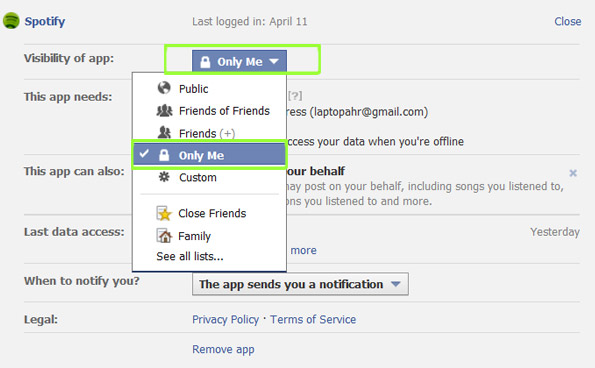
    facebook

    Some of us involve ourselves in Candy Crush or Subway Surfer to beat the boredom, but at the same time we don’t want our boss or teachers get record of  our gaming achievements. Many apps insist on posting the recent record break or achievements on the wall, but preventing them is much easier than one would have thought. Go to downward triangle and choose Settings and then Apps. Edit the list of offending apps and set ‘Visibility of app field to ‘Only me’. Your achievements will be updated on the wall but only you will be able to see them.

    6. Unfollow People

    facebook unfollow

    You may be friends with some people, but you no longer desire to receive or share News Feeds with them. It can be your ex-boyfriend or an irritating friend. Removing them from your friends’ list may hurt them but there’s a way to ignore them without even letting them know.

    The easiest way to hide the activities is by going to the status of the unwanted person and choose ‘Unfollow [friend’s name]’. You can also remove a particular uninteresting post from appearing on your page. Also, confine status updates to your close friends by choosing a list in the Friends drop-down option before hitting post.

    7. Select Display Pictures Only on Facebook Profile Page
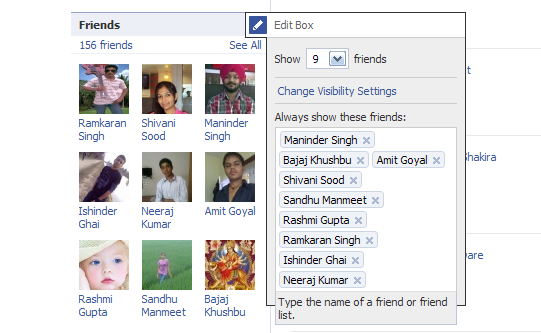
    Facebook Friends box

    On the left-hand corner of the page, there is a Friends box with tiny pictures of your friends. However, you don’t get in touch with them often and they still appear shamelessly on your page (not your friends, but Facebook is to be blamed for this). But there’s a way you can decide what all friends you want to see on your page. Go to the Edit option on your Friends box and list the names of your friends. The chosen friends will now appear in your Friends box.
  • Facebook Makes Groups More Fun With the New App

    Facebook Makes Groups More Fun With the New App

    Facebook has been a medium to bring together people within India and overseas and now, the online social networking service has taken a step further to team up different groups on a project.

    The California-based giant has come up with a new app called ‘Facebook Groups’. This application allows people share information easily and quickly. Although, it is aimed at enterprise collaboration, it can prove useful for student and friends who want to coordinate on assignments. The company stated that the stand alone app will provide a much easier way for Facebook members to access and manage groups from their phones.

    The company is not forcing users to migrate to this new app as it did for Messenger. Users can use this new service through the main Facebook site itself. The company has said that it would not sell advertising on the app, at least for now.

    The app allows users to create a new group and also discover the already existing groups. The ‘Discover’ tab comes with an added advantage. It gives recommendation based on the user’s page likes history, the groups that their friends follow, and also the city the user belongs to. These groups can also be brought to the home screen for easy access.

    The app is available on all iOS and Android devices.

  • Here is What You Should Know About Facebook’s Sneaky Privacy Policy

    Here is What You Should Know About Facebook’s Sneaky Privacy Policy

    Social networking giant Facebook is trying to simplify its privacy policy, making it more understandable for the average users with legal jargon. Now, there are a new set of pages called Privacy Basics, which are clickable and laid out with illustrations. Facebook says that the new policy tries to simplify what kind of information Facebook collects and how it uses the data. The new policy is compressed in 2,700 words compared to its old one, which was 9,000 words. In its attempt to simplify things, the new Privacy Basics has introduced three sections: ‘What Others See About You,’ ‘How Others Interact With You’ and ‘What You See.’

    There’s also a Facebook page for users where they can submit their comments as what kind of changes they would want to see. Users have until 20th November to post their feedback, after which the finalised version shall be implemented.

    Along with that, there’s also a Data Policy page, which is a cause of concern here as the new policy does not take into consideration how much personal data Facebook collects from its users.

    For instance, the one paragraph in its Data Policy is worth noting that says, “We share your information with third parties when we believe the sharing is permitted by you, reasonably necessary to offer our services, or when legally required to do so. Even though, users have an option whether they want to share information with third-party apps, they don’t have the option to select what kind of information is shared. As the new Data Policy still clearly mentions that Facebook has the right to use information people share on Facebook to target ads, whether you are logged in or not.

    Along with that, Facebook has also allowed businesses to advertise to users based on their specific location. Unlike earlier, when ads were targeted based on the current city mentioned in the profile. The new policy still specifies that they can access user information based on their smartphone’s GPS location. Additionally, Bluetooth and Wi-Fi signals can also be used to reveal user’s exact location.

    Another excerpt from its Privacy Policy which makes everything sound reasonable for Facebook, “We may provide information to service providers that help us bring you the services we offer. For example, we may use third parties to help host our website, send out email updates about Facebook, remove repetitive information from our user lists, process payments, or provide search results or links (including sponsored links). These service providers may have access to your personal information for use”.

    In addition, Facebook is also testing a tool that lets users buy directly through its site. This tool gives Facebook information about the transaction, including the credit card number, billing, as well as shipping address.

    Gone are the days of the good old Facebook, which was just a place to connect with your friends and loved ones. It’s becoming more of a business model as the networking giant wants its users to make the platform a more powerful tool for advertisers. The current state of the World Wide Web is such that it is intensely driven by the ad targeting technologies. The sad fact is that most of the users will not even read the policy, even if they do and express discontent to the way Facebook collects all their information; they are likely to continue using this new ad-driven business model.

  • New Facebook Tool Offers a Quick Silence Option for Annoying Posts

    New Facebook Tool Offers a Quick Silence Option for Annoying Posts

    Popular social networks have spent years trying to write a perfect algorithm to suggest who to follow, even if it attenuates our feeds. That’s because News Feed, a self-regulating system that responds to your actions, is largely what you make of it. Facebook has rolled out some tools to help you personalise it even more.

    News Feed works on an algorithm rather than just a chronological stream of updates from all your friends and the pages you follow. It’s never been completely clear how to change what you see there. “The goal is to show content that matters and facilitate conversations,” says Adam Mosseri, Facebook’s Product Management Director for News Feed. “We want to give people more control over the News Feed experience. The idea is that if people have the right preferences settings, it’s good for everyone.”

    news-feed-hide-flow

    News Feed Settings will now show a list of the top people, pages and groups that you’ve been seeing in your News Feed over the past few weeks. You can choose to sort by People, Pages or Groups posts, or see an overall summary. Unfollow any friend, page or group if you don’t want to see their stories in your News Feed. You can also see who you’ve unfollowed in the past and can choose to re-follow them anytime.

    Now, you can decide on from whom you want to see lesser updates, rather than completely unfollowing them. It means, you won’t be inundated with updates from your friends, but you’ll still get major announcement posts, like the arrival of a new baby and so on. Also if you see a story you’re not interested in or don’t want to see, you can tap the arrow in the top right of that story to hide it. So, when you hide a story, you’ll have the option to see less from that person or page.

    News Feed Settings are already available on desktop and mobile. The new options for giving feedback about your News Feed is live on the desktop, and it is coming to mobile in the coming weeks.

  • Facebook Plans to Take on Apple’s Monopoly Over the App Business

    Facebook Plans to Take on Apple’s Monopoly Over the App Business

    It is no secret that Apple has dominated the $45 billion market with its App Store. Even though Android ecosystem has proliferated to almost 80% of the market globally, iOS has taken over the major chunk of the app store revenue on its side.

    The main reason being iOS users are more than ready to spend money on apps than Android users. Android being an open source OS comprises of users that may or may not like to spend money on apps, hence, the revenue differs. So the best apps are developed first for Apple’s iOS mobile operating system. Only if they are successful do companies produce an Android version, often months or years later. However, Facebook is planning to change this game.

    According to the folks at Facebook Europe, the dominance of Apple is about to weaken soon. Facebook’s Europe, Middle East, and Africa platform director Julien Codorniou while talking to Business Insider suggested that the new trend he is seeing is going to favour Android. According to him, Android is very rapidly catching up iOS in terms of revenue generation. He also mentioned that there days, many developers, especially game developers, are going for Android first in the European market.

    Parse
    Facebook is planning to tap into situation with its own Parse app development platform, and favour Android big time.

    “There is a pattern coming from Eastern Europe. The Russian developers develop on Android first because of a big audience, and it maybe being easier to develop. They liked the fact that they could submit a new version of the app every day. [With Apple, you have to get each new version of the app approved before it hits the App Store. There is no version approval for Android.] This is a trend that I see and I think it is going to accelerate.”

    Facebook is planning to tap into the situation with its own Parse app development platform and favour Android big time. Codorniou believes that Parse virtually erases the two-step iOS/Android development process, letting companies release new apps on both platforms at the same time. If apps are released at the same time on Android, it erases one of the key selling points of the iPhone, which is users who want the cool new apps must be Apple users in order to get them.

    Codorniou has a team of promoters for spreading the word: “As of today, I have four guys from my team in Paris talking to Android developers about the greatness of Parse, Facebook login, app links, app events, all of these things we introduced at f8. It’s a very important bet for us.”

  • Zuckerberg Reveals Why We Were Forced to Download the Facebook Messenger App

    Zuckerberg Reveals Why We Were Forced to Download the Facebook Messenger App

    Back in July, Facebook announced that it will be removing the messaging feature from its mobile app, and requiring people to use its standalone Messenger app instead. Hence, forcing users to download the Messenger app to chat with their Facebook contacts on their mobiles.

    The change followed through a plan which was announced in April and for now, affects Facebook mobile app on iOS and Android. According to the company, the plan had seen ‘positive results’ in Europe in terms of user engagement, and so decided to move ahead with rolling out of the standalone app to everyone. However, they never explained why this plan came into effect at the first place, until now.

    In a live Q&A conversation yesterday, Mark Zuckerberg finally explained why Facebook moved messaging out of its main app and made it into a separate, standalone app that needs to be downloaded.

    I’m grateful for hard questions. It keeps us honest. We need to be able to explain clearly why what we’re thinking is good. Asking everyone in our community to install a new app is a big ask. I appreciate that was work and required friction. We wanted to do this because we believe that this is a better experience. Messaging is becoming increasingly important. On mobile, each app can only focus on doing one thing well, we think.

    The primary purpose of the Facebook app is News Feed. Messaging was this behavior people were doing more and more. 10 billion messages are sent per day, but in order to get to it you had to wait for the app to load and go to a separate tab. We saw that the top messaging apps people were using were their own app. These apps that are fast and just focused on messaging. You’re probably messaging people 15 times per day. Having to go into an app and take a bunch of steps to get to messaging is a lot of friction.

    Messaging is one of the few things people do more than social networking. In some countries 85 percent of people are on Facebook, but 95 percent of people use SMS or messaging. Asking folks to install another app is a short term painful thing, but if we wanted to focus on serving this [use case] well, we had to build a dedicated and focused experience. We build for the whole community. Why wouldn’t we let people choose to install the app on their own at their own pace? The reason is that what we’re trying to do is build a service that’s good for everyone. Because Messenger is faster and more focused, if you’re using it, you respond to messages faster, we’ve found. If your friends are slower to respond, we might not have been able to meet up.

    This is some of the hardest stuff we do, is making these choices. We realize that we have a lot to earn in terms of trust and proving that this standalone messenger experience will be really good. We have some of our most talented people working on this.

  • Facebook-Owned WhatsApp Lost Close to $200 Million in 2 Years

    Facebook-Owned WhatsApp Lost Close to $200 Million in 2 Years

    As a result of the official closing of Facebook’s acquisition of cross-platform instant messaging application WhatsApp, the first clear picture of WhatsApp’s financial results emerged. A Form 8-K/A filed with the Securities and Exchange Commission has revealed that in 2014, WhatsApp lost $140 million and generated just $10 million in revenue. And in 2012 and 2013, the app lost a total of $192.8 million.

    In the six months ending June 30, 2014, WhatsApp brought in $15.921 million in revenue but suffered a net loss of $232.5 million. However, $206.5 million of the net loss was for share-based compensation expenses and issuance of common stock below fair value. Its net cash used in operating expenses during the first half of 2014 was $13.5 million, which sounds much more reasonable.

    “We’re the most atypical Silicon Valley company you’ll come across,” Brian Acton, a WhatsApp co-founder, once said in an interview. “We were founded by thirty-somethings, we focused on business sustainability and revenue rather than getting big fast, we’ve been incognito almost all the time, we’re mobile first and we’re global first.”

    mark zuckerberg

    Essentially, due to WhatsApp’s quickly rising valuation, it used share-based compensation to attract top talent. Eventually, the $22 billion acquisition by Facebook largely made the ‘expenses’ of issuing that stock moot. This is standard for growing companies hiring new talent, and shouldn’t convey that WhatsApp was burning money irresponsibly. $148 million is a lot to lose for a small company, but the company seems to have been doing it wisely. Fewer than $10 million was burned in 2013 in actual operating expenses.

    Overall, Facebook broke down the money it spent on WhatsApp as $2.026 billion for the user base, $448 million for the brand, $288 million for technology, and $21 million for the rest. That left it to chalk up the $15.314 billion difference as “good will” aka the value “from future growth, from potential monetization opportunities, from strategic advantages provided in the mobile ecosystem from expansion of our mobile messaging offerings.”

  • Here’s How Facebook’s News Algorithms are Controlling the Way We Consume News

    Here’s How Facebook’s News Algorithms are Controlling the Way We Consume News

    Ever wondered how Facebook gets your interest and keeps your news feed updated? It is all a result of the heavy lifting done by an algorithm written by 26-year old Greg Marra and his 16 member team. With this algorithm at helm, Facebook is fast becoming the favored news source for the public in general. Tied to Facebook now are the fortunes of the news publications. A report on The New York Times digs into show how ‘Facebook Is Changing the Way Its Users Consume Journalism’.

    It is not a shocker that news publications are catching up with internet-only publication with the “listworthyness” and “You-won’t-believe-what-happens-next” genre of presentation. This is happening because they all want to please the great Facebook algorithm which is the most powerful news aggregation system in the world. Its closest competition, Twitter and Google News still lag far behind it. According to analytics company SimpleReach, Facebook is responsible for 20% traffic on news sites.

    Tailored News only gives us perspectives that we agree with creates a mental bubble.
    Tailored News only gives us perspectives that we agree with creates a mental bubble.

    The algorithm takes a lot of factors to decide which stories it delivers in the news feeds. It seeks patterns such as interests showcased by the user and what pages are frequently visited. It also takes in consideration the device a user is on, how many comments or likes a story has received and how long readers spend on an article. This ‘tailoring’ of news has led to a weird phase in time where people decide what to read based upon how the algorithm understands their needs. This can also lead to the creation of a bubble around a person wherein he/she is limited to the things they agree with. This is what leads to the creation of conspiracy theories, says Sean Munson, an assistant professor at the University of Washington who studies the intersection of technology and behavior.

    The news, even political stories are being presented in an entertainment format to engage the audience and increase ad revenue. This kills a lot of objective facts in the middle. Luckily new forces like John Oliver are emerging who are using the same method of entertainment reporting of News in an objective manner. This can be seen as a balancing act in an unsure time. Written media is still where most of the original journalism happens, and it’s sad to see it sway towards trend-worthy news stories. The television media’s 24 hour shouting quotient even dwarfs a fish market and is losing credibility for a lot of folks.

    There will always be a fight between editorial and the marketing and sales division of any publication. But now the addition of the social option has put more pressure on the writer’s side to come up with stories that can attract more clicks. This may be a fad or folks might actually get used to it in the long run like they get used to new Facebook formats. What is worrying though is that the move towards social can harm an industry that is crucial for a civil society. Journalism is often called the fourth pillar of democracy which keeps a check on the other stakeholders of the society. If this pillar gets hollowed out by senseless noise and selective picking of information, it will be a terrible loss to society. Hopefully, the art of humour induced reporting of facts that matter which is perfected by people like Jon Stewart, Stephen Colbert and John Oliver will stand in defense for quality, objective reporting of news.

  • Facebook Brings Out an App for Anonymous Chatting Called ‘Rooms’

    Facebook Brings Out an App for Anonymous Chatting Called ‘Rooms’

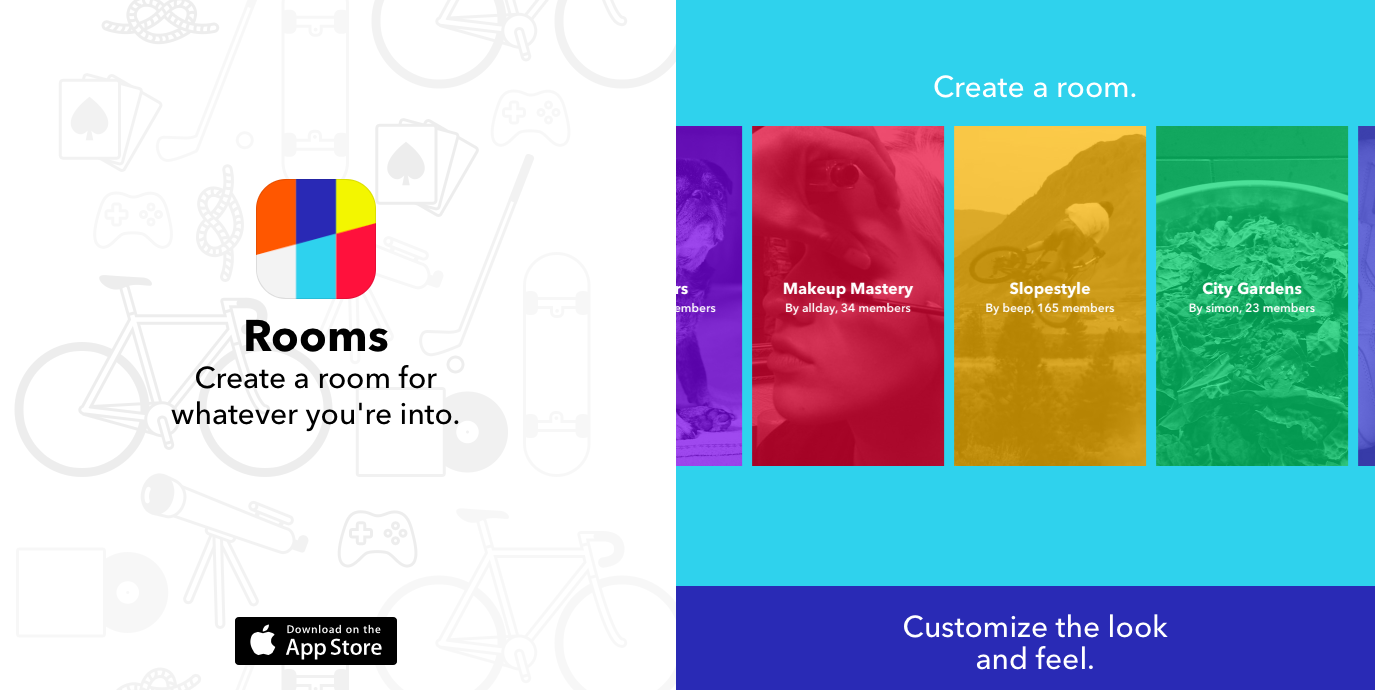
    Facebook seems to be in the mood for experimenting with mobile applications. After bringing out Mentions, Slingshot, Paper and most recently, their independent messaging app, they’ve now brought out ‘Rooms’. Although they’re sticking to their key philosophy of connecting people, this time they’re going to be keeping their identities discreet.

    We had earlier reported that Facebook was working on building a standalone app that will let its users interact and communicate under the cloak of anonymity. This was said to be the outcome of recent criticism for Facebook’s stance on real names. Facebook’s policies require verified email addresses. Those policies clashed with drag queens, some of whom had their profiles removed from Facebook by algorithms.

    Facebook Rooms

    On the other hand, Rooms doesn’t require the user to reveal any personal information and allows them to create chat rooms based of common interests (think fashion, photography, automobiles, gardering etc.)  These chat rooms can be made public or private. The private chat rooms are then made invite only, requiring a QR code that can be scanned with a smartphone. These Codes can also be shared on social media or via e-mail. Facebook’s new app doesn’t even allow you to import your contacts, it is entirely independant. Chat room creators or chosen moderators can customize the look, ban people from the room or set the room to be 18+.

    Currently the app is free and available on the app store, you can download it here.

  • Facebook Announces New ‘Safety Check’ Feature to Help Communicate During Disasters

    Facebook Announces New ‘Safety Check’ Feature to Help Communicate During Disasters

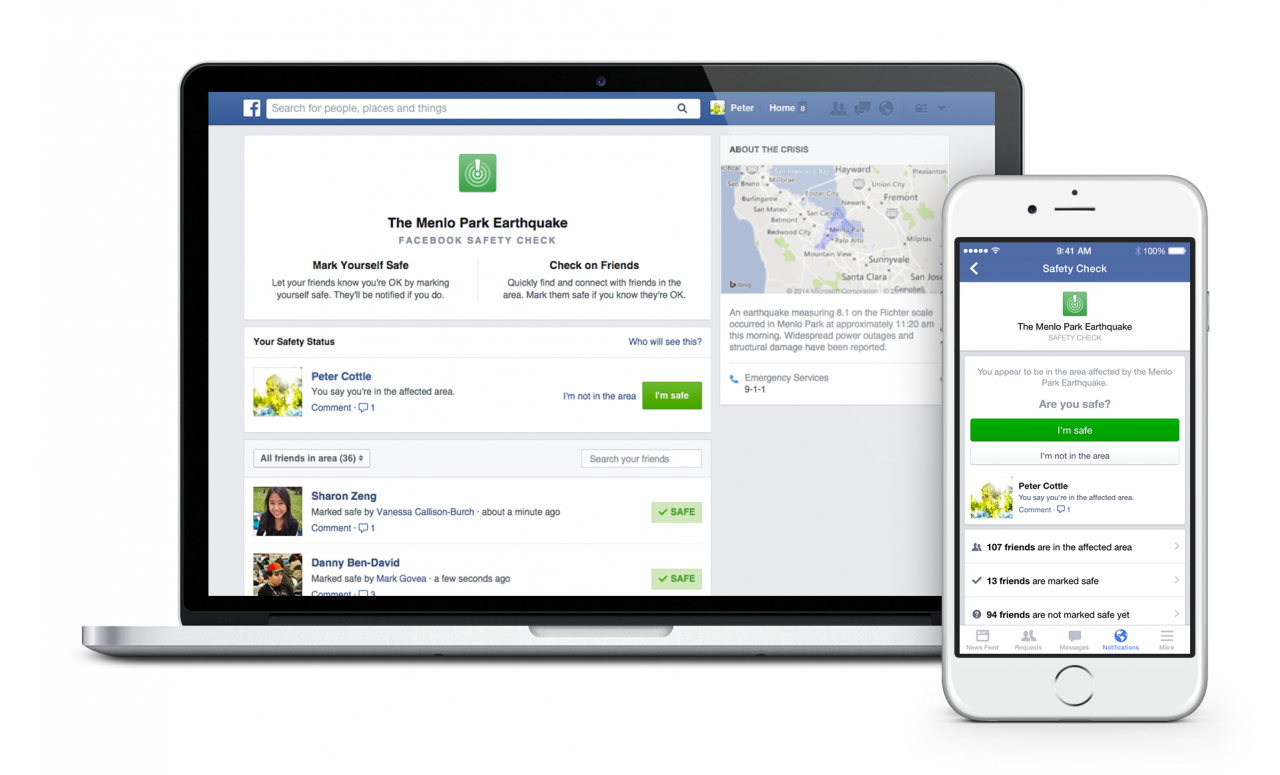
    Facebook has introduced Safety Check, a brand new feature that people can use when major disasters occur, a simple and effective way to say you’re safe and check on others during times when communication becomes a necessity. Facebook CEO Mark Zuckerberg announced this feature in Tokyo, in lieu of the great earthquake and Tsunami that hit Japan a few years ago. The calamity inspired Facebook to build the first version of this feature for Japan, and now this feature is available worldwide.

    During a disaster, the Safety Check feature helps users to inform their friends and family that they are safe, users can also check on others in the affected region and can even mark their friends as safe.

    facebook-fans

    How does it work?

    The safety feature works when it is activated after a natural disaster has occurred and if a user is in the vicinity of the affected area, he/she will receive a Facebook notification asking if they’re safe. Facebook will then automatically determine their location by the user’s last location and the city where the user is using the Internet.

    If Facebook determines the wrong location, users can mark that they are outside the vicinity of the affected area. Meanwhile if they are safe, they can select ‘I am safe’ and a notification and a News Feed story will generate automatically with the user’s friends. Even friends can mark a user as safe.

    Even if users have friends in the affected area and the tool has been activated, they will receive a notification about those friends that have marked themselves as safe. To understand the features better, check out the video below:

  • Facebook and Samsung Reportedly Collaborating to Develop a Smartphone

    Facebook and Samsung Reportedly Collaborating to Develop a Smartphone

    Facebook founder and CEO Mark Zuckerberg’s meeting with Samsung Electronics Vice Chairman Lee Jay-yong has triggered rumours that the two firms are discussing the possibility of a new Facebook phone. According to sources, the two parties met at Samsung’s headquarters, they were joined by Facebook COO Sheryl Sandberg, along with Samsung’s mobile chief Shin Jong-kyun along with other top level executives from both companies.

    This raised speculations that Facebook and Samsung are planning a Facebook phone. As we saw in the past, Facebook’s last phone the HTC First, which had Facebook Home software layer with Android UI on top was discontinued, same goes with HTC ChaCha, another Facebook phone which had a physical Facebook button for quick posting to the social network. Though, both devices couldn’t succeed and did not take off.

    It’s not the first time these power houses are working together, the much hyped Samsung Gear VR has been launched in partnership with Oculus last month, which is now owned by Facebook. If rumours are true, it will interesting to see what this device can offer to users and if it can it be a competitor to Google’s Android One Project.

  • Indian Govt and Facebook to Work Together on an App for ‘Clean India’

    Indian Govt and Facebook to Work Together on an App for ‘Clean India’

    Facebook founder Mark Zuckerberg on Friday met Prime Minister Narendra Modi. One of the highlights of the meeting was the prospect of launching a mobile application devoted to Clean India, while they also discussed the PM’s pet projects such as Digital India and his hopes to use the networking site’s use for social causes and prevent its misuse by terror outfits. Facebook will help in the creation of the Clean India Mobile App and it would be launched soon. This would give a strong impetus to the Swachh Bharat Mission, the Facebook boss told Modi.

    “Connecting more than a billion people with internet is not only going to improve lives of people in India but will help the innovation and imagination of Indian people to help turn around the world and we are very excited in opportunities in India,” Zuckerberg said after his meeting with the telecom minister.

    “About 2.7 billion people have access to the internet. But that’s only one-third of humanity. Almost 4.5 billion people don’t use the internet,” pointed out Zuckerberg, in Delhi on a two-day visit to India. “Connectivity cannot just be a privilege of the rich and powerful. It is a human right.”

    mark-modi
    Facebook CEO, Mark Zuckerberg in conversation with PM Narendra Modi

    According to The Economic Times report, Zuckerberg told the Prime Minister that he is extremely excited about the government’s Digital India initiative. Modi, a prolific user of social media platforms with nearly 7 million followers on Twitter and around 23 million people following him on Facebook, has asked Zuckerberg to identify domains of the program that it can get involved in and work with the government.

    In the conversation, the Prime Minister also expressed some concerns about social media, especially the use of such platforms by terrorist elements to recruit new members. “This is unfortunate and we need to think of the role social media can play to stop terror,” the PM said.  He also urged Facebook to promote India’s rich tourism potential and look at how to enhance internet literacy along with connectivity.

iGyaan Network
Privacy Overview

This website uses cookies so that we can provide you with the best user experience possible. Cookie information is stored in your browser and performs functions such as recognising you when you return to our website and helping our team to understand which sections of the website you find most interesting and useful.