Category: Facebook

  • Facebook CEO Mark Zuckerberg to Meet PM Narendra Modi Today

    Facebook CEO Mark Zuckerberg to Meet PM Narendra Modi Today

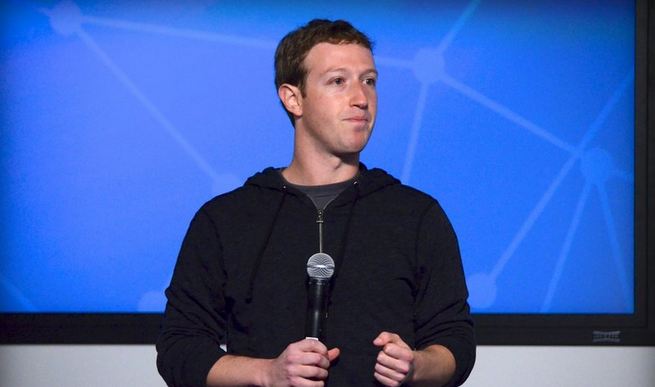
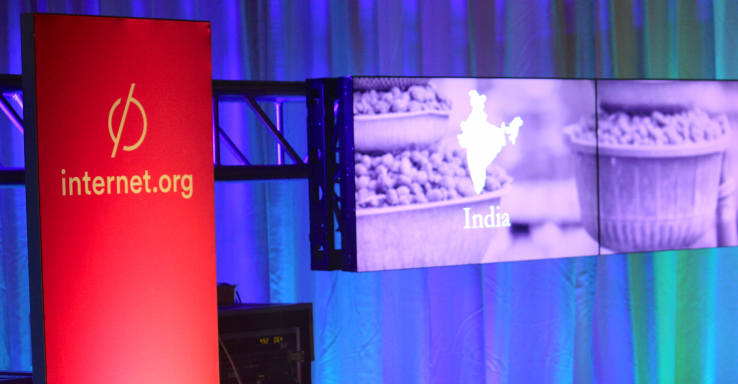
    After Facebook COO Sheryl Sandberg’s successful meeting with Prime Minister Narendra Modi, it’s now founder Mark Zuckerberg’s turn. He will be in India to address the first Internet.org summit taking place from October 9-10 in the capital city.

    His visit comes three months after the visit of Sheryl Sandberg (July 2014), Chief Operating Officer of the social networking giant, to the country, which is the second biggest market for Facebook. Zuckerberg is the third high profile CEO of a US-based corporation, after Amazon’s Jeff Bezos and Microsoft’s Satya Nadella, to visit India in last few days.

    Modi famously utilised social media effectively during his Lok Sabha campaign, and has been open about his desire to spread government and civic messages via social media.

    facebook-fans

    While Zuckerberg’s meeting with Modi is likely to dwell on how the Indian government can collaborate on Internet.org, which aims to make internet access affordable for people across the globe, he could end up receiving a small briefing on the Prime Minister’s ‘Digital India’ plan which has rather similar goals.

    When Modi met Sandberg, he had suggested the use of Facebook for improving governance, better interaction between people and the government, and to attract more tourists to India. India is an important market for the social networking company. With over one billion users globally, the company gets over 100 million users from India. Many of these users log onto the website from their mobile devices.

    Zuckerberg is also expected to meet with Communications Minister Ravi Shankar Prasad as well as some other ministers, who had also met Sandberg when she visited.

  • Facebook is Reportedly Working on an App for Anonymous Sharing

    Facebook is Reportedly Working on an App for Anonymous Sharing

    Facebook is reportedly building a standalone app that will let its users interact and communicate under the cloak of anonymity. This is said to be the outcome of recent criticism for Facebook’s stance on real names. Sources within the company told the New York Times that Facebook plans to release an app that would let people talk anonymously.

    Facebook’s long held policies require verified email addresses, and originally required college-specific email address logins per its collegiate origins. Those policies clashed recently with drag queens, some of whom had their profiles outright removed from Facebook by algorithms.

    Earlier this year, Mark Zuckerberg said that Facebook would branch out from real-name apps. “I definitely think we’re at the point where we don’t need to keep on only doing real identity things,” he said in an interview. “If you’re always under the pressure of real identity, I think that is somewhat of a burden.”

    facebook

    Little else about the software is known at this stage. We don’t know what it will be called, or whether it’s indeed meant to be a direct competitor to apps like Secret and Whisper, which are built entirely around the idea of staying anonymous. Facebook is also widely criticized for its use of user information. When Facebook made its Messenger app standalone and required more access to users’ information, many decided to drop the service entirely.

    Obviously this new app wouldn’t change Facebook’s overall strategy, but it could be an interesting experiment for both the company and its billion-plus users.

  • Facebook is Gearing Up to Test Wi-Fi Drones for Internet.org Initiative

    Facebook is Gearing Up to Test Wi-Fi Drones for Internet.org Initiative

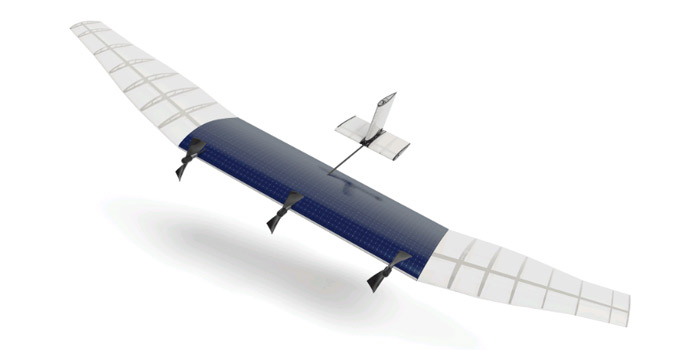
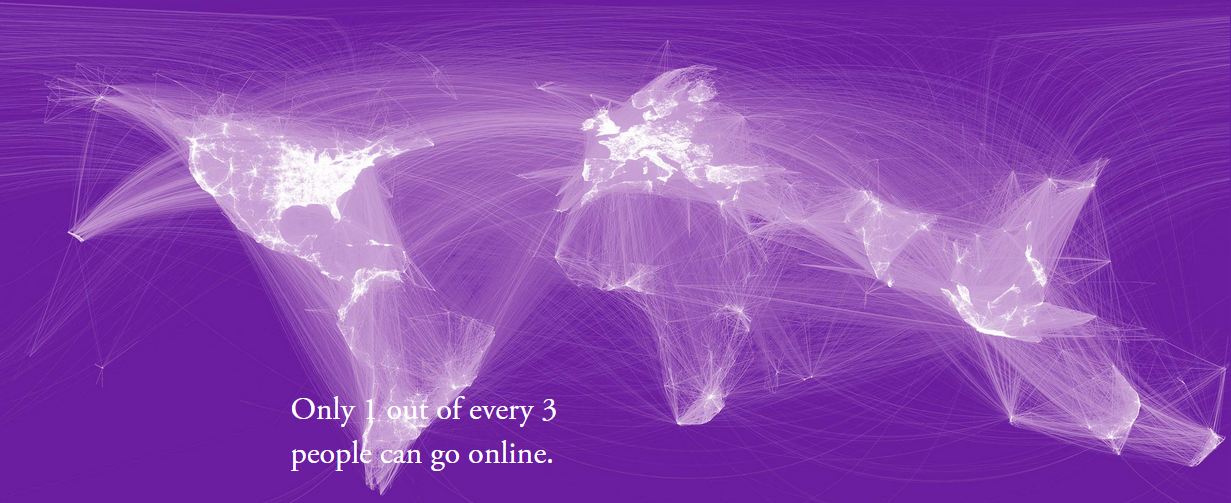
    Facebook has taken steps ahead of Google in the race to provide internet to everyone in the world. Facebook plans to start testing its internet beaming solar-powered drones in 2015, with the ultimate aim of getting two-thirds of the global population online. Mark Zuckerberg has announced it to be part of the efforts of Internet.org.

    Speaking at the Social Good Summit in New York last week, engineering director at Facebook Connectivity Lab, Yael Maguire, detailed the company’s vision of internet-carrying drones, with plans to begin testing in 2015 in a US location which is yet to be determined. “In order for us to fly these planes; unmanned planes that have to fly for months, or perhaps years at a time, we actually have to fly above the weather, above all airspace. That’s between 60,000 and 90,000 feet. Routinely, planes don’t fly there, and certainly not drones” Maguire said.

    internetorg

    Wi-Fi will be beamed using solar-powered drones that are the size of a Boeing 747, announced Facebook. Facebook said that the drones would be powered by the Sun and that it would fly in the air for months or years at a time. Apart from the flying Wi-Fi drones, there will be satellites and infrared lasers too which will be built to provide Internet to all.

    Facebook has also gone on to join hands with Ericsson, Nokia, Qualcomm and Samsung for its effort. A spokesperson from Facebook confirmed that though these companies were helping Facebook with bringing internet connectivity to the developing nations, they weren’t going to be a part of the drone project.

    Google has been working on a similar project with one of the differences being that they have plans of making use of balloons in addition to the drones. Google’s project has been named project Loon. It has only performed a few tests of the ambitious proposal so far.

  • Facebook Updated its Messenger App With Android Wear Support

    Facebook Updated its Messenger App With Android Wear Support

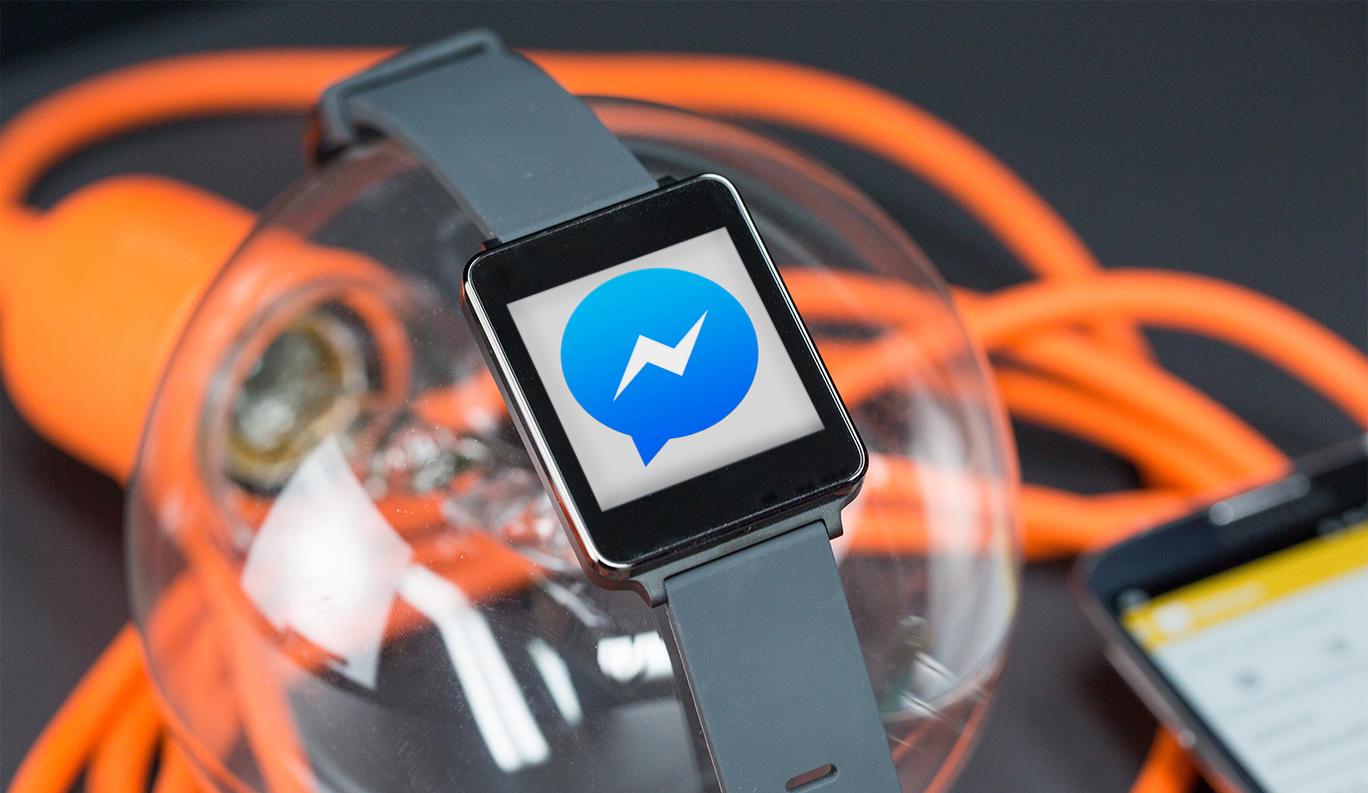
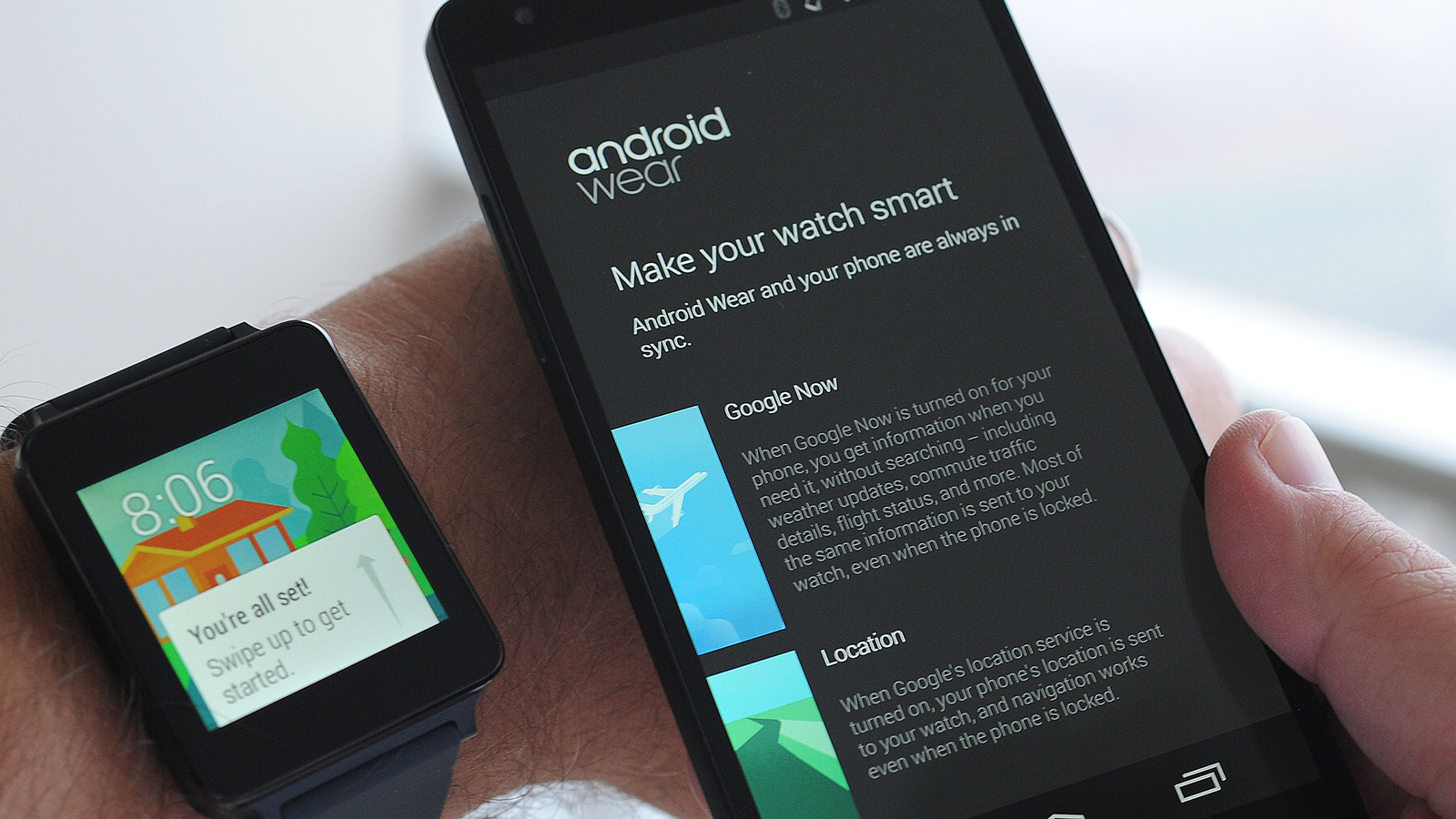
    Android Wear is the platform of choice for many, and Facebook recently added itself in the list. They’ve updated their popular Messenger app to work with Android Wear, leaving your phone to rest in your pocket.

    Facebook recently had pulled out the chat option from its app, making Facebook Messenger a standalone app. Mark Zuckerberg is”The reason why we’re doing that is we found that having it as a second-class thing inside the Facebook app makes it so there’s more friction to replying to messages, so we would rather have people be using a more focused experience for that,” Zuckerberg said.

    In an announcement by Facebook’s Ian Lake, an updated version of the Messenger, version 9, will include lots of new Android Wear focused improvements. First on the list is voice replies. The update includes the ability to tap the reply button when a message comes in, and speak what you want to say. Also included is the ability to mute a conversation directly from the Android Wear device.

    android-wear-setup

    Lake also mentioned that users will be able to reply to messages with the ‘thumbs up’ icon. No word on whether or not Facebook will follow suit and expand the selectable replies beyond just a ‘thumbs up’, but with Wear support constantly growing, we can’t help but imagine that new features are just around the corner.

    Even with the shortcomings wearables can bring, this is still a major app supporting Android Wear. These are still early days for Android Wear, and Facebook Messenger support is pretty impressive

  • Facebook Launches Internet.org App for Free Internet Access in Zambia

    Facebook Launches Internet.org App for Free Internet Access in Zambia

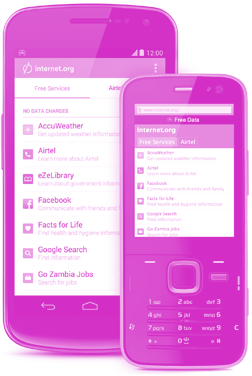
    Facebook’s internet accessibility initiative Internet.org today launched its Android and web app for the developing world with free data access to a limited set of services including Facebook, Messenger, Wikipedia, and Google Search. It also provides local health, employment, weather, and women’s rights resources.

    Internet.org_ (1)

    Internet.org’s app is just launched in Zambia before coming to other developing countries which is in partnership with local carrier Airtel who provides the free access in hopes that Zambians see the web’s value and buy pre-paid data through the app to explore the rest of the Internet.

    10574702_344525639029305_1278593965_n

    The Facebook Zero has been giving the developing world access to a stripped down version of Facebook since 2010. But this new Internet.org app with other services will be available as a compact, standalone Android app, baked into the Facebook for Android app, or freely available as a mobile website that the feature phones carried by the vast majority of Zambians can access.

    Online services accessible through the app range from AccuWeather to Google search, Wikipedia, a job search site as well as a breadth of health information. Facebook’s own app, along with its Messenger service, is also included. The app will work on Android phones as well as the simple “feature phones” that are used by the majority of people in Zambia.

    If users click on a link that takes them outside of the 13 predetermined services, they will get a warning that they may incur data charges. One thing missing from the features is email. Many people who are new to the Internet in developing nations don’t use email, opting to use messaging apps or social media sites instead.

    The company said Zambia is a country with 15 percent Internet penetration, it is a huge amount of people that can be connected. Zambia’s population is about 15 million according to the CIA World Factbook. The app will spread to additional countries down the line, but there is no word on which ones.

    The move comes as Facebook steps up investments in its Internet.org project, which seeks to connect the “next 5 billion” users to the Internet, many of whom lives in places like Africa and India. In March Facebook announced plans to use drones and satellites to deliver Internet connectivity to people in certain parts of the world.

    The initiative also has the potential to boost the size of Facebook’s audience, which currently totals 1.32 billion monthly users.

  • Facebook is Forcing Android Users To Download the Messenger App

    Facebook is Forcing Android Users To Download the Messenger App

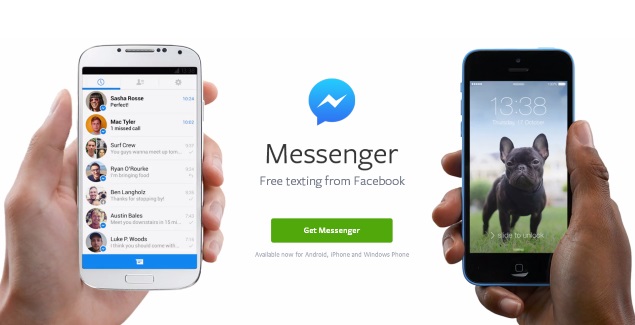
    Facebook announced on Monday that it will be removing the messaging feature from its mobile app over the next few days, and requiring people to use its standalone Messenger app instead. Hence, forcing users to download the Messenger app to chat with Facebook contacts on their mobiles.

    “In the next few days, we’re continuing to notify more people that if they want to send and receive Facebook messages, they’ll need to download the Messenger app,” a Facebook spokeswoman said.

    facebook_messenger_app_officialpage

    The change follows through on a plan announced in April and for now affects Facebook’s mobile app on iOS and Android. You’ll be able to send and receive messages on the desktop as before. The social networking giant told TechCrunch that it had seen “positive results” in Europe in terms of user engagement, and so decided to move ahead with rolling-out the standalone app to everyone.

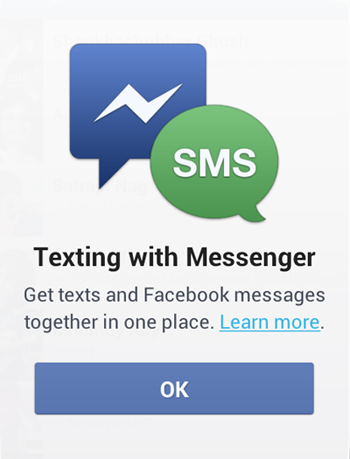
    Facebook-messenger-sms-integrationThe company notes that users can continue to chat via the main Facebook app on iPad tablets, feature phones, Windows Phone devices, via Paper app, and the Web-based desktop interface. The company said that this move is to make the Facebook messenger, the best app for messaging. It is also an effort to avoid any confusion that might arise from having two mobile products for the same thing.

    The move will also greatly increase the number of people who use Facebook Messenger. CEO Mark Zuckerberg said on the company’s earnings call last week that Facebook was looking to turn Messenger into an important business. Messenger currently has more than 200 million monthly active users—just under a fifth of Facebook’s total user base. It can handle Internet-based voice calls, group chats, and exchanging photos and short videos, as well as sending text messages.

    Facebook says the change will help improve the performance of both the apps over time. It’s already working to improve Messenger; the company recently hired the former PayPal President David Marcus as part of a push to build new capabilities for Messenger, possibly including payments.

    Earlier this year, Facebook had announced an agreement to acquire WhatsApp, which also handles Internet-based messaging. Along with that the company also launched its own Snapchat-like app called Slingshot which is not well received.

    Slingshot may not have performed to the company’s expectations, but when you have a billion plus subscribers, you have the freedom to force them to use an additional app which only performs a part of the function that the current app does. But we are ourselves are so addicted to this man’s creation that we will do as he commands and give some more of our phone storage and RAM to conquer.

  • New Facebook ‘Save’ Feature Helps Bookmark Content For Later Viewing

    New Facebook ‘Save’ Feature Helps Bookmark Content For Later Viewing

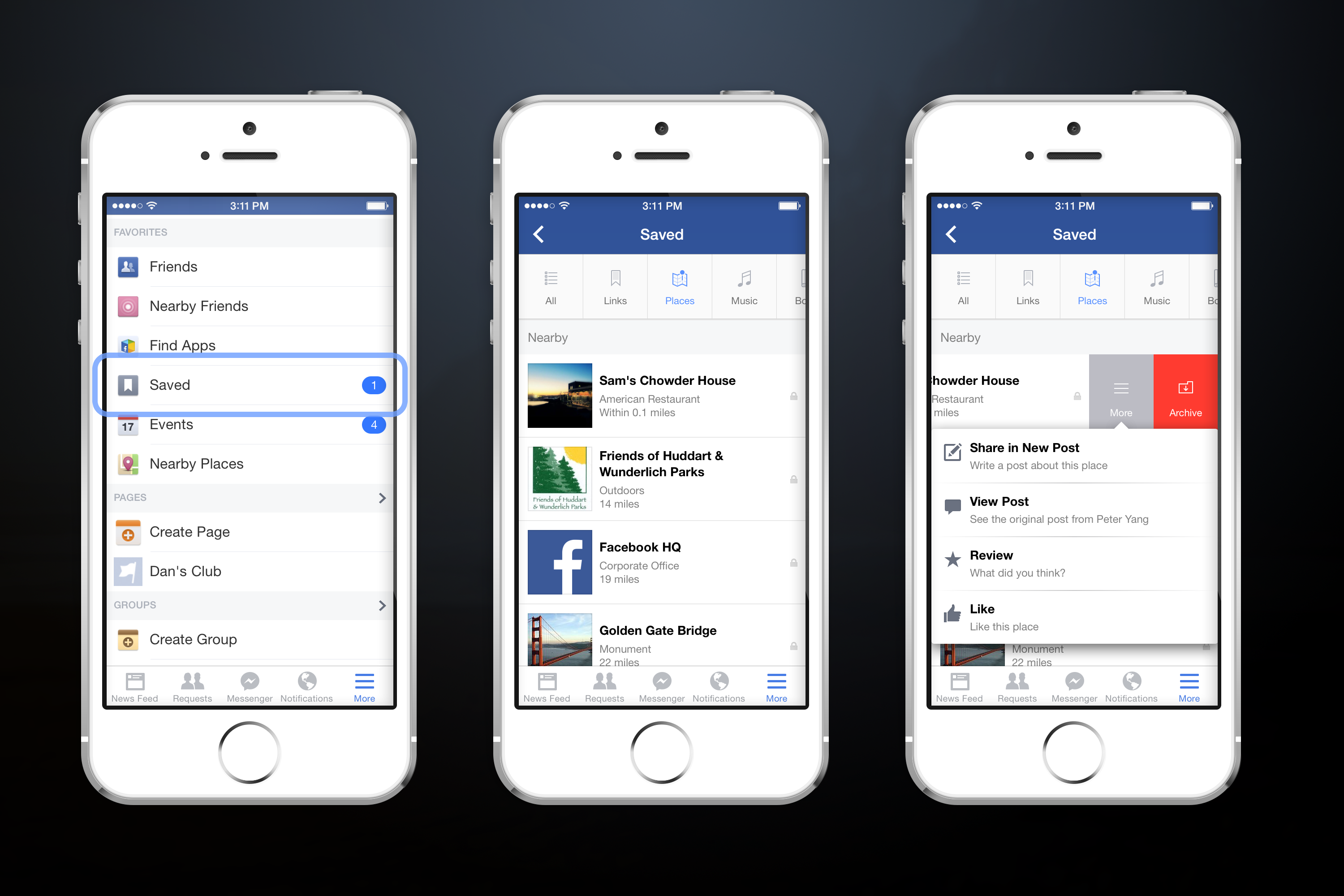
    Well Facebook updates usually take time to get accustomed to but this new feature seems to solve a huge problem for the people who use Facebook on the go regularly. The new ‘Save’ feature, as it is called, lets you save links, pictures, places, music etc. to go through later when you have time.

    “Every day, people find all sorts of interesting items on Facebook that they don’t have time to explore right away,” said Daniel Giambalvo, software engineer at Facebook, in a blog post. “Now you can save items you find on Facebook to check out later when you have more time.”

    facebook save

    Facebook’s Save feature rolls out to all iOS, Android, and web users over the next few days. You’ll notice the option in your newsfeed either as a button on the bottom of some posts or in the drop-down menu beside each post. Users can then re-visit their saved items using the “More” tab on mobile, or by hitting the “Saved” link on lefthand rail of the desktop version. The save option can only be seen by you on your your phone or web browser.

    The new feature, like almost all components of the social network is to keep you inside Facebook. Instead of saving items to Pinterest, Instapaper, Pocket, or other read-it-later services, you can use Facebook as a bookmarking service. It’s also a good way to keep track of restaurants and stores you may want to visit.

    screen-shot-2014-07-21-at-10-13-46-am

    There’s a very good reason Facebook may not be caching content: it would rob its publisher partners of ad views. If Facebook simply scraped the destinations of links for their text, images, and videos, and let you view them on a stripped down page in Save, why would you go to the actual Page? It seems Facebook likely doesn’t want to offend these publishers since they contribute content to its service through Pages, and buy Facebook ads to grow their audience.

  • Facebook Mentions: An Exclusive App for Celebrities

    Facebook Mentions: An Exclusive App for Celebrities

    Celebrities get to live a good life. Once in public view, they get loads of cool stuff or in words of Ricky Gervais, “Once you get rich, people start giving you stuff for free.” Now Facebook is coming out with an exclusive app called “Facebook Mentions” that is accessible only to public figures.

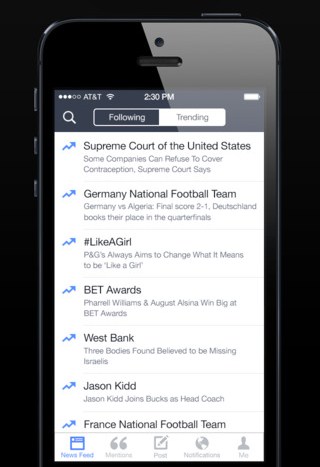
    Users can follow others and keep a track of trending topics easily
    Users can follow others and keep a track of trending topics easily

    Twitter has become a medium for prominent personalities to connect with their admirers. From Movie Stars, Musicians, Politicians to even Scientists and Astronauts have used the website to connect to their followers. With this exclusive app, Facebook will try to make itself more attractive to the celebrity clientele.

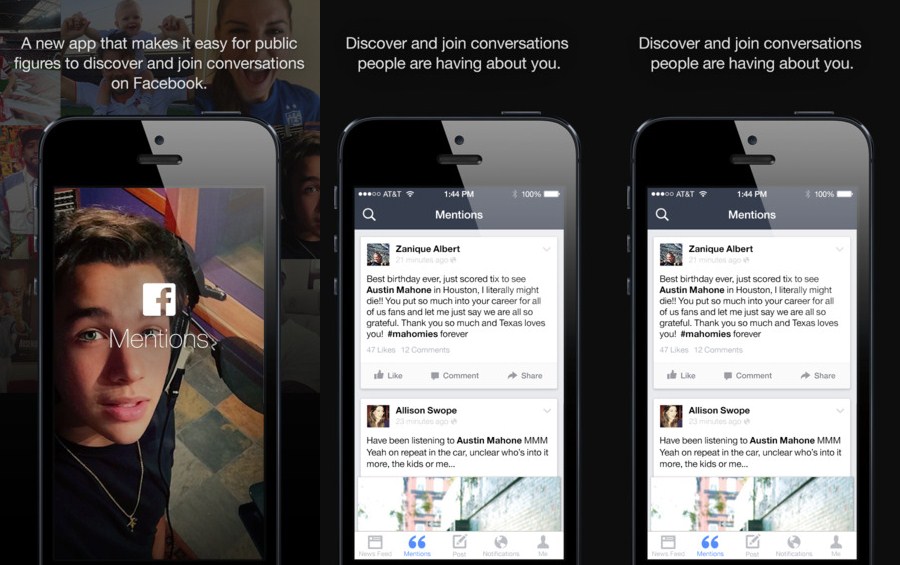
    To get access to this app one needs to have a verified page on Facebook. Currently, the app runs only on iOS 7 or higher versions (well that’s going a bit too exclusive.) The app lets users host Q&A with their followers, discover and join conversations relating to them. It also makes the users follow others and shows them what is trending on Facebook so they can share their thoughts on the matter.

    Facebook Mentions makes it easier for these personalities to share multimedia content with their followers. It is speculated that the Beats-Apple deal celebration video will be posted through this application.

    This app makes life a lot easier for social media managers of celebrities to keep in touch with the perception of their bosses in the public. Ever since social media came into existence, celebrities have had a direct communication channels with their fans and followers. Facebook Mentions hopes to be the exclusive medium for this interaction.

  • Facebook Bought The World’s Third Biggest Video Ad Seller, LiveRail

    Facebook Bought The World’s Third Biggest Video Ad Seller, LiveRail

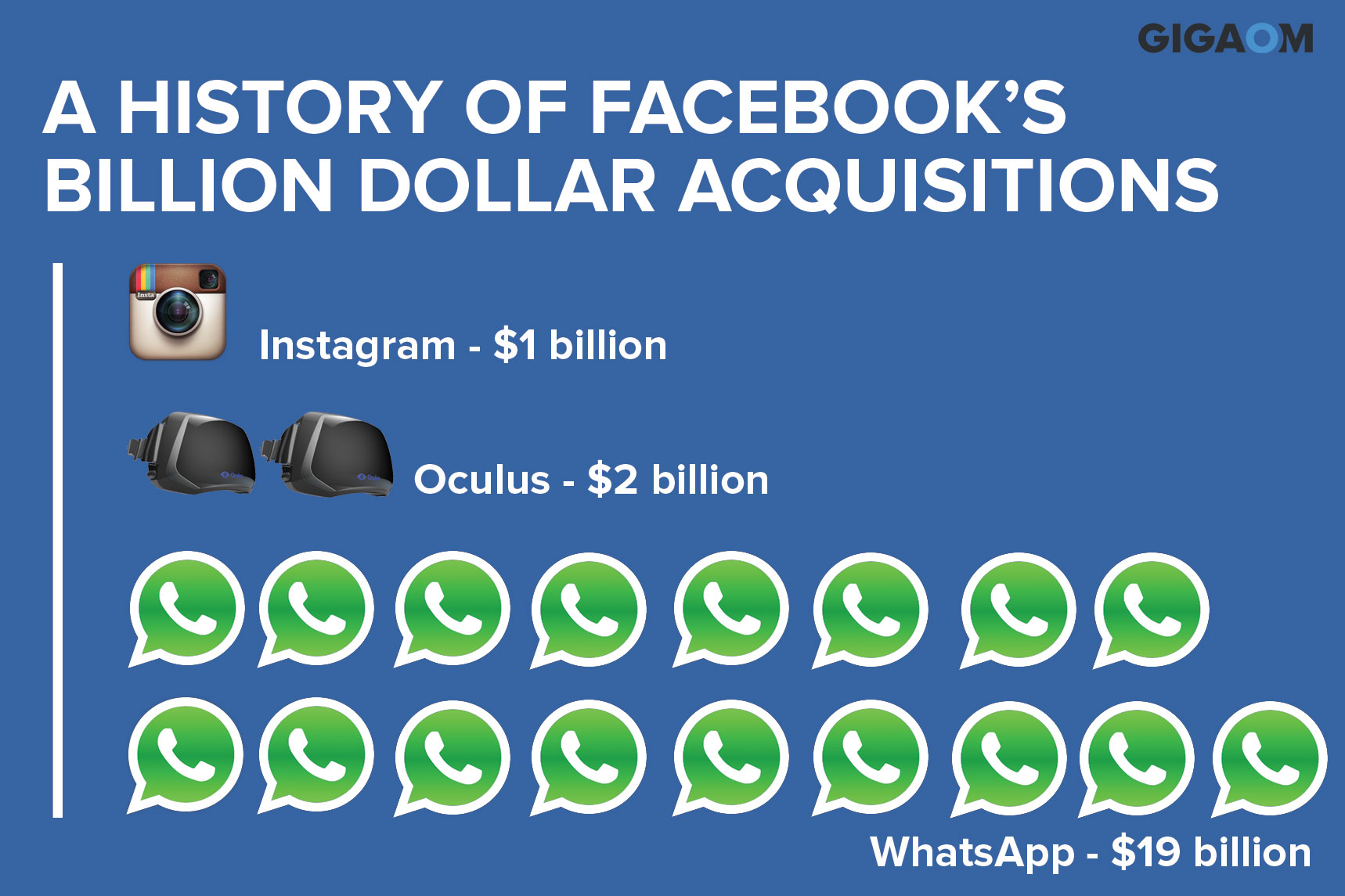
    Facebook, in what has become an almost monthly affair, announced yesterday that it has the bought video ad tech startup LiveRail.  Facebook seems to be on a roll. It has acquired close to 45 companies, with its largest acquisition being the purchase of WhatsApp, Oculus and Instagram. It had acquired WhatsApp for $19 billion, Instagram for $1 billion and Oculus for $2billion.

    Now the social networking giant, keeping up the pace, has acquired LiveRail on Wednesday, with no terms of the deal disclosed. Though according to the grapevine, Facebook might have paid between $400 million and $500 million for LiveRail.

    Liverail connects marketers to publishers on web and mobile. It automates the sale of video ads for publishers including Major League Baseball, ABC Family and Dailymotion. The start-up, which was founded in 2007, helps companies ranging from sports to entertainment optimize delivery of video ads on mobile and the web through real-time bidding and its proprietary market data. The company claims it delivers 7 billion video ads a month. Rather than negotiating deals over the phone or in person, publishers can upload their video inventory to LiveRail’s system, which provides buyers via real-time auctions. Publishers can also use LiveRail’s ad technology to process upfront deals without all the paperwork that can delay a campaign from airing at the right time and fashion.

    liverail

    [quote text_size=”small” author=”Brian Boland” link=”http://newsroom.fb.com/news/2014/07/facebook-to-acquire-liverail/” author_title=”VP, Ads Product Marketing, Facebook”]

    We believe that LiveRail, Facebook and the premium publishers it serves have an opportunity to make video ads better and more relevant for the hundreds of millions of people who watch digital videos every month. More relevant ads will be more interesting and engaging to people watching online video, and more effective for marketers too.

    [/quote]

    Facebook plans to keep LiveRail’s existing business of selling ads for non-Facebook publishers in operation. Though the company declined to comment on any plans to sell Facebook’s own video ad inventory through LiveRail.

    Facebook undoubtedly is the biggest social media platforms. It has a base of 1.28 billion daily active users worldwide and so it offers a greater reach than TV. It launched its Premium Video Ads service with a test last December for Summit Entertainment’s ‘Divergent’ and opened it up to a select group of marketers this spring. In May, NBC became the first TV network to use the Facebook autoplay video ads to promote their shows.

    Facebook has around 5.8% share of all global digital ad revenues in 2013, up from 4.1% the year prior. While, in the U.S., the social networking giant held 18.4% market share of digital display advertising in 2013, overtaking Google for the first time, according the statistics.

    Of all the purchases made by Facebook recently, the Livewire purchase seems like the safest bet as it already have a bustling user base and profitable business model. After some hefty money spending, this ones a more crafty investment by Mr. Zuckerberg.

  • 10 Things You Don’t Know About Facebook (But You Should)

    10 Things You Don’t Know About Facebook (But You Should)

    Long long ago, there was Orkut, Hi5 and MySpace. Somehow, none of them stuck quite the way Facebook did. In fact, Mark Zuckerberg’s brainchild has done way more than just stick around, it changed the way we connect with people.

    It’s not only for frivolous stalking. Even if you’d like to quit the website, you can’t. How else would you log onto your Soundcloud, Pinterest, Tumblr or Spotify? Facebook’s made sure its got us entwined in a tight web.

    Even though we’ve being using it for years, there are certain facts about Facebook none of us know. Here is the list of things you should know about Facebook, which you probably don’t:

    1. You Can Calculate the Time You’ve Wasted on Facebook.
    fb

    Yes, it’s addictive. And yes, most of the time you’re wasting hours checking out who your ex-girlfriend is hanging out with these days. I think we all can agree that we can survive without the information Facebook gives us. But since we’ve already established that quitting is not an option, you can check out this tool, developed by Time magazine, which counts the days of your life you’ve wasted on Facebook. A perfect reminder to restrict your time on the site.

    2. Facebook has 1.28 billion Active Users

    For most, it’s become a daily addiction. You’ve just woken up, sleepy and bleary eyed, you’re already checking your notifications or you click on your browser to check your emails, but before you know it, you’re scanning your news feed to see if anyone has done anything exciting. Sounds familiar? Clicking on the blue icon has become a reflex action.

    3. Facebook has a 100 million active users in India

    And 84 percent of those users access the site via their smart phones. These numbers were announced on 31st March 2014. Facebook’s biggest competitor is its very own WhatsApp, which has more than 40 million registered users in the subcontinent.

    4. There is a Reason Facebook is Blue
    8.1

    A lot of you may already know this one, but the reason is that Mark Zuckerberg, the Founder and CEO of Facebook, is colorblind. Zuckerberg sees the color blue best, because of his red–green color blindness.

    5. Facebook is  currently blocked in 4 countries

    There are bouts of the site being blocked off and on in several countries. North Korea, China, Iran, Syria, Vietnam have held on to the blockage for a long time.

    6.Despite being blocked, China has about 63.5 million Facebook users

    When there is a will, there is a way. Although, Facebook is very much blocked by the Great China Firewall, formally known as the Golden Shield Project, a surprising report gave whopping number of registered users in China.

    7. You Can Schedule Status Updates on Facebook

    hootsuite

    Download Hootsuite and it will allow you to schedule posts ahead of time. So you could be sharing content even while you’re relaxing or if you’re busy with some other activity.

    8. Viacom, MySpace,Yahoo and NBC Have All Tried to Buy Facebook

    In the past ten years, according to David Kirkpatrick’s book The Facebook Effect, 11 companies have tried to acquire this social media giant. Makes us wonder, where would the website be if Mark Zuckerberg had given in and handed it over?

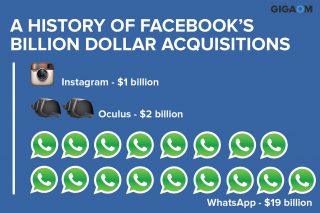
    9. Facebook Has Spent a Total of 22billion on Acquisitions
    facebook-acquistion-comparison-2 (1)

    Instagram, WhatsApp and now, Oculus are only three of the 45 companies that Facebook owns. Facebook has spent a total of 22billion on acquisitions. Some of the other acquired companies include Snaptu, Little Eye Labs, Face.com and Friendster Patents.

    10. Mark Zuckerberg is the Youngest Self-Made Billionaire

    Mark-Zuckerberg (1)

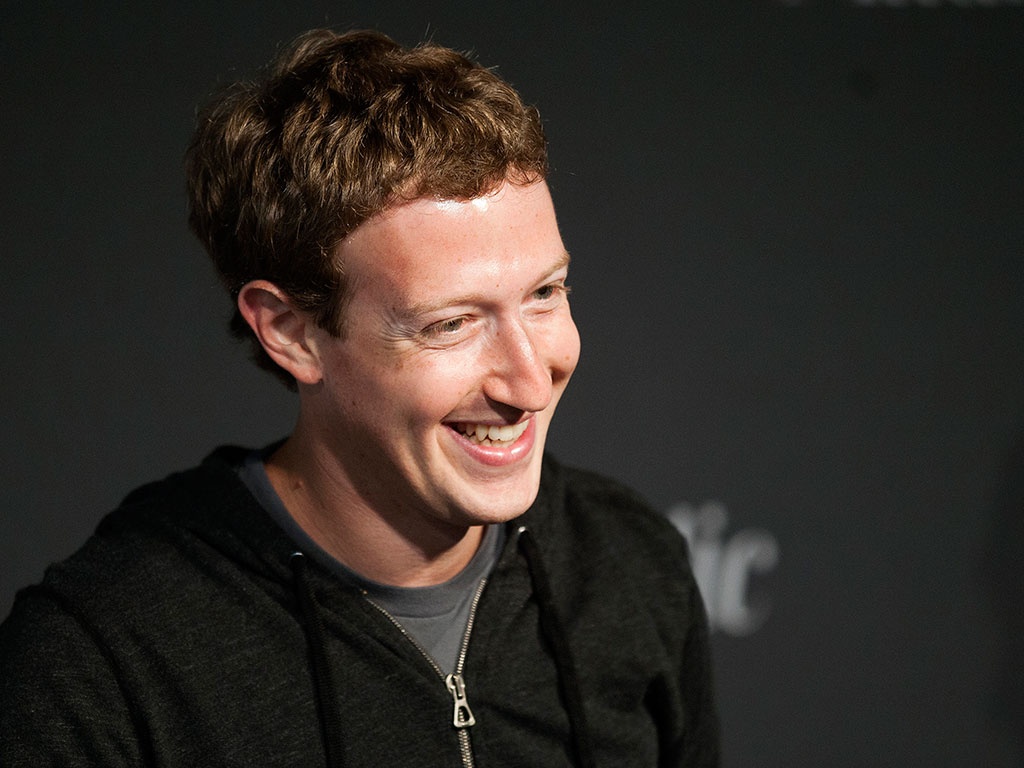
    Mark Zuckerberg dropped out of Harvard shortly after he came up with the idea of Facebook and now his net worth is 28.5 billion dollars. According to Forbes, Facebook’s shares are up more than 130% over the past year. That’s caused Zuck’s net worth to more than double over the same period, even after he gave away 18 million shares in late December. 
  • The 5 Major Differences Between Slingshot and Snapchat

    The 5 Major Differences Between Slingshot and Snapchat

    We’ve known that Facebook has been working on Slingshot for the last six months. The app has just went live on Google Play. Along with that, they officially announced it on their Facebook page and also released a new promo video announcing availability of Slingshot for both Android and iOS. 

    If there were any doubt that Facebook will be taking on Snapchat, the public launch and availability of its new Slingshot app has now confirmed it.

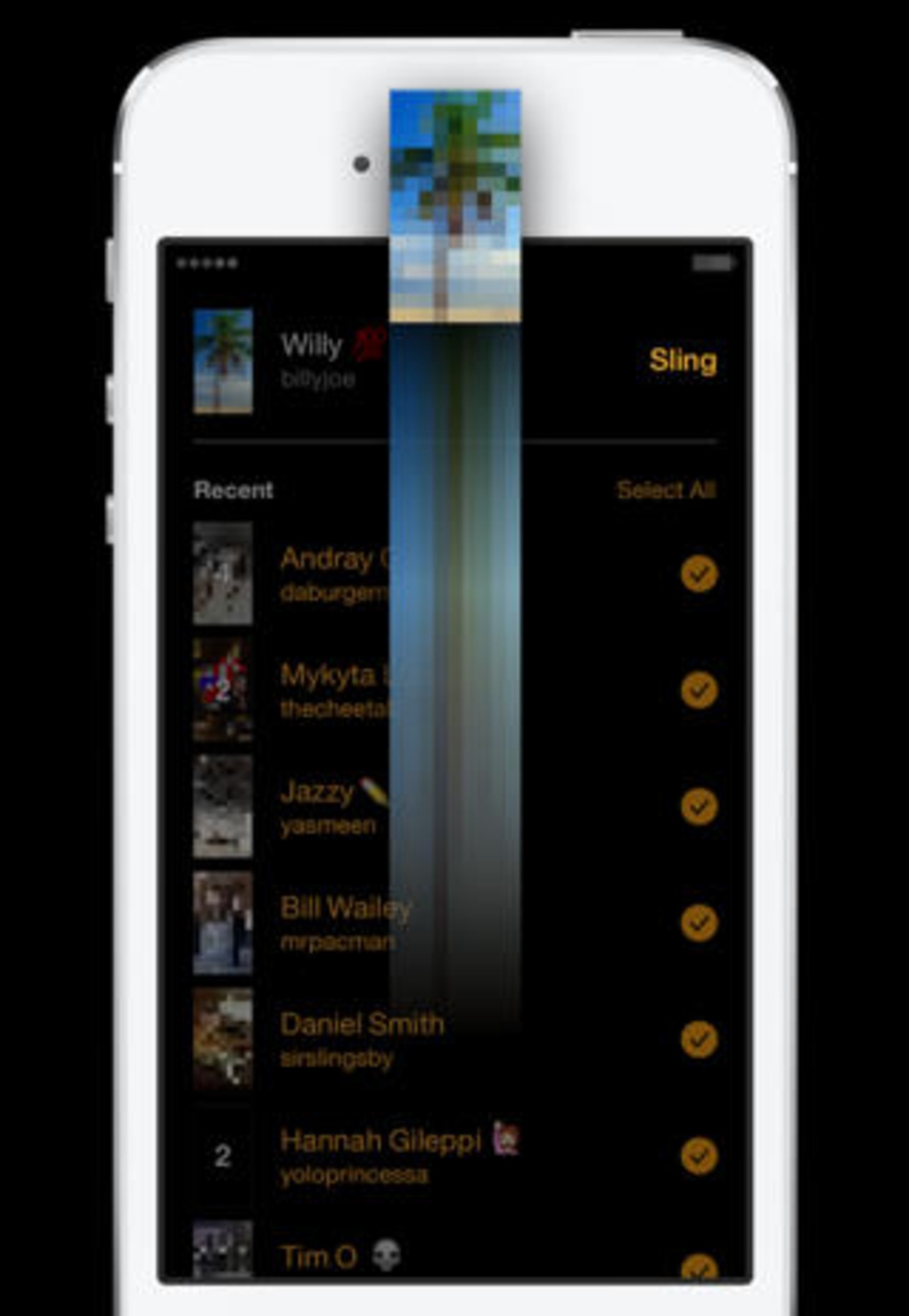
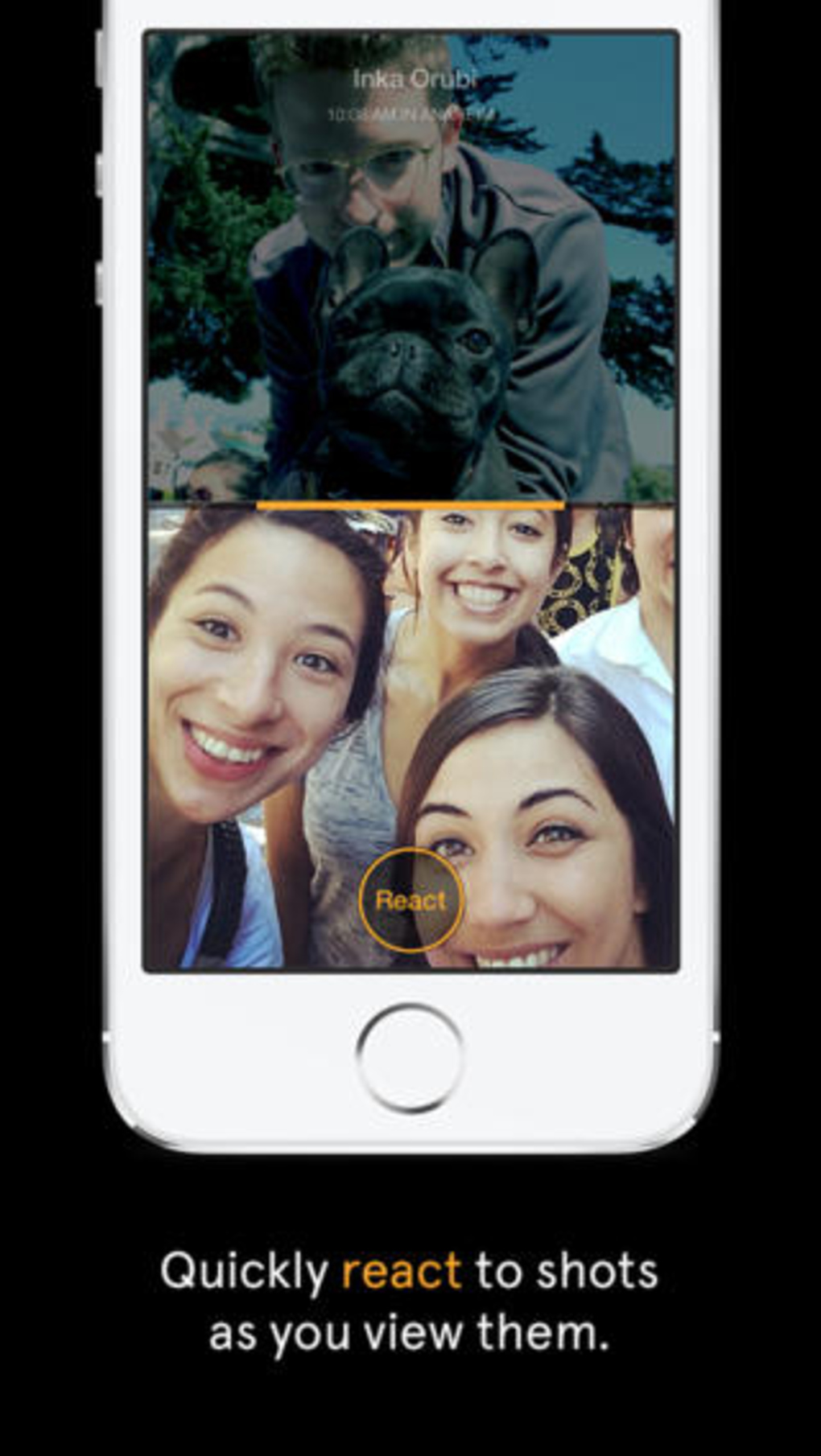
    The free app lets you take a quick photo or video, mark it up with colorful drawings, caption it with big white text, and then send it off to your chosen contacts. But when you receive your first message, you realize that this app is something completely different. Rather than just copying Snapchat feature by feature, Facebook is putting in a rather intriguing twist to the messaging trend by focusing on a more social aspect. So, we decided to list 5 things that make Slingshot different from Snapchat.

    1. The Social Factor

    screen568x568-5_verge_super_wide

    When an app comes out of the Facebook oven, there is not even a slight chance that there can be anything lacking in its social media element.  Slingshot does not solely rely on your Facebook friends list for contacts. Accounts are tied to your phone number, which you must verify before you can start using the app. Once you have verified your account, you can search for friends from your contacts list, Facebook or look up individuals by user name.

    2. No Approval Needed

    facebook-

    Slingshot allows you to search for people you know and there isn’t one central contacts menu where you can easily view all your connections. And, unlike Snapchat, there is no approval process for adding connections. Anyone can send messages to anyone whose information they might have. Facebook says an approval process is necessary because users can simply choose to ignore the message they don’t want to see. You can also choose to ignore all messages from individual users by hiding them.

    3. No One-Sided Sharing

    screen568x568-7_verge_super_wide

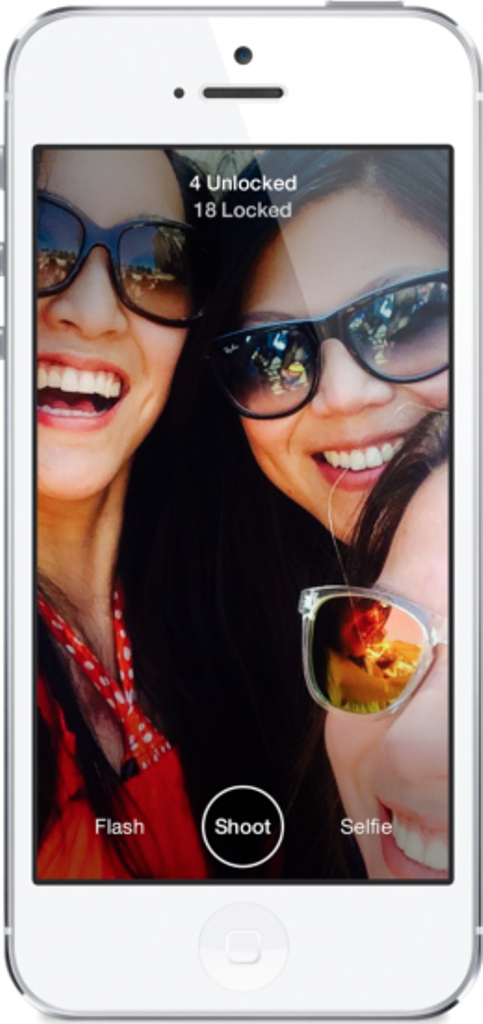
    One noteworthy aspect of the app is that it won’t allow you to see a new picture messages unless you send one of your own back. Facebook says the reason behind this is to take the pressure off users to constantly read and send messages. With so many mobile apps competing for people’s attention, Slingshot’s ability to self-perpetuate engagement could be the key to traction. One friend doesn’t have to do all the work to entertain others, who consume without creating, breaking the chain. With Slingshot, the conversation never dies because the last message is always waiting to be unlocked.

    4. Better Camera quality

    screen568x568-6_verge_super_wide

    Launching Slingshot immediately takes you to the app’s camera. The selfie button toggles between the device’s front and rear-facing cameras, and holding down the shutter button allows you to record a video. Slingshot’s overall camera quality is better than Snapchat’s, even when you zoom in. As with Snapchat, you can add drawings and text to the photos and videos you send in Slingshot but both features feel far more elegant and give you much more control in the latter.
    5. Customized Text

    screen568x568-4_verge_super_wide

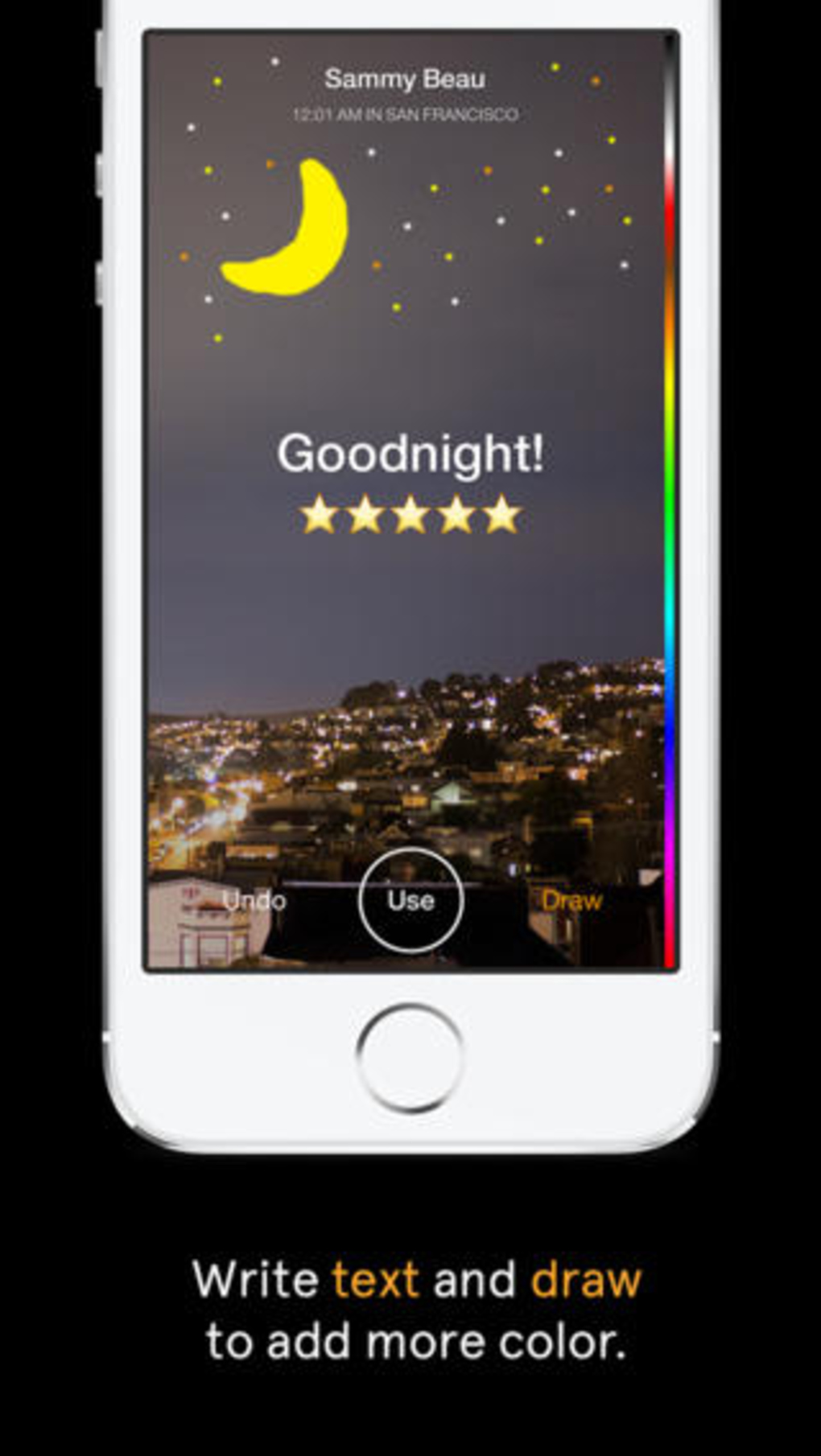
     Text is limited to 140 characters, but can be repositioned on the image. Unlike Snapchat’s text, which always remains the same size and at the same place, Slingshot’s text will get bigger when you drag it down from the top of the screen. The drawing tool is also far more advanced than Snapchat’s — you can adjust both the color and the size of the brush. Dragging along the color bar selects a color, dragging left or right changes the brush size, moving the tool right makes the brush smaller and moving it left makes it larger.
  • Look Out Oculus! ANTVR Might Steal the Show

    Look Out Oculus! ANTVR Might Steal the Show

    While the Oculus Rift was setting up the stage for the Virtual Reality(VR) revolution, one Chinese open source project might turtle its way to the finish line. A Chinese company called ANTVR is offering VR headsets which have everything that a proprietary system like Oculus lags. Get ready for a whole new  iOS-Android like battle.
    The shining glory of the ANTVR is it flexibility of integration on multiple platforms. It can be used with Xbox, Playstation, PC, Blu Ray and even the Android. Right now Oculus only plays the games made for its system and Sony’s project Morpheus will only run on the PS4(Lame!).

    It is easy to make games for the ANTVR because of its an Asperical Lens system. The lens also allows proper recreation of the image and takes out any aberrations. This might actually help correct the complaints of vertigo in the likes of the Oculus Rift. Adjustable pupil distance also helps to reduce the strain on the eyes.

    VRThe headset gives a 360 degrees immersive vision. It has a dual 9 axis Inertial Measurement Unit(IMU), which bestows on it better capabilities for sensing the movements of the user. The IMU is integrated in the headset as well as the controller. The headset’s 100 degree straight vision gives a feeling of wearing an entire IMAX screen on your head.

    ANTVR co-founder Qin Zheng quit his PhD to work on the system. He and his entire team look as if they are the members of the fellowship of Nerdliwood. Maybe it is because they themselves are Sci-Fi and gaming nerds that they can perfect a system that other fan boys and girls can enjoy.

    Another key area where the ANTVR succeeds in is its transformable controller that offers multiple functionality. The controller can be used as a standard controller, a steering wheel, a gun or even a simulated hand grenades, can it BE more all-round convenient? There is also an option for standard cables as well as a wireless version of the controller.

    The designs for the ANTVR systems are done by China based industrial designers LKK. They have come up with really ingenious and kickass designs. The transformable controller especially will be a boon to the gamers.The software’s and sensors are designed for a complete immersive experience. The detachable controller makes it extremely simple to use. Easy placement on the head even with spectacles is a welcome development.

    ANTVR’s open source platform opens it up to enormous possiblilities. Qin Zheng has said that he will provide all documentation and libraries to the public. This approach will help increase the rate of upgradation of firmware and rapid feedback and growth for the ANTVR in comparison to its competitors.

    The most respectable part of Zheng’s approach is that he has made it clear that he will not sell the company. The company has already scored $212,344 with its kickstarter campaign whose target was $200,000. The selling price of the individual equipment is around 300$ which will be a direct competition to the Oculus Rift’s consumer version.

    We seriously hope for the ANTVR project to live long and prosper and set a milestone in the VR arena. This will also force big companies like Facebook (owners of Oculus) to try to one up the competition and come up with better products.

  • Look Out, Snapchat : Facebook Plans its Own Snap Service

    Look Out, Snapchat : Facebook Plans its Own Snap Service

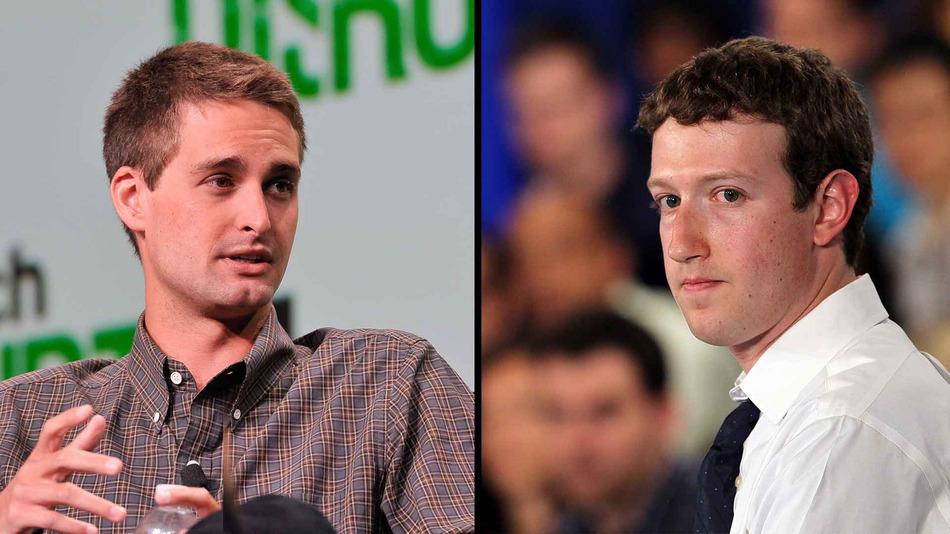
    Mark Zuckerberg, Facebook’s chief, has been supervising a top-secret project after failing to woe Snapchat’s creators Evan Spiegel and Bobby Murphy to sell. Facebook knew Snapchat had an edge and wanted to pick up the startup last year for a reported $3 billion. But that number didn’t affect Snapchat as it continued adding features to the app that made people want it more.

    Last month, it updated the app (with wild success) to include video chatting and text-based messaging as well, thereby fully deploying its messaging store without losing its core feature – all communication from Snapchat still get deleted after a short period.

    Facebook is now working on its own private sharing app called “SlingShot”, which would primarily be a video-based service. But can it dethrone Snapchat, which already has a big user base, longer market exposure and exciting features?

    poke-v-snap-icons1

    The one area where Facebook can truly capitalize is by going after Snapchat’s weaknesses. One of them is that the app had to pay a large settlement in a lawsuit which alleged messages don’t get destroyed permanently or immediately. Snapchat agreed to the charges and decided to settle with the FTC. Currently it’s credibility is lost and there’s definitely a bit of stink attached to the app at the moment. Facebook has this moment’s window to make their play, by releasing a completely secure, self-destructing chat service.

    Facebook’s supposed SlingShot app will upset Snapchat’s growth course, but to what degree is presently unknown. Facebook could do maximum damage by bundling it with its Messenger, rather than releasing it as a standalone app.  This added feature would go a long way towards ensuring more engaged users.

    3Snapchat_Facebook

    Slingshot takes a different approach. It is said to resemble TapTalk, a new video-messaging app from Berlin-based Wit Dot Media released last month, in which users tap or hold a contact’s profile picture to instantly send a photo or short video, which can be viewed only once by the recipient.

    Private messaging is a big portion of all smartphone usage. One thing is certain: Facebook will have a enormous user base to tap into with SlingShot and the numbers dwarfs Snapchat’s active user base. So if SlingShot is any good at all, it may be worrying days for Snapchat.


  • Facebook Acquires Oculus VR For $2 Billion

    Facebook Acquires Oculus VR For $2 Billion

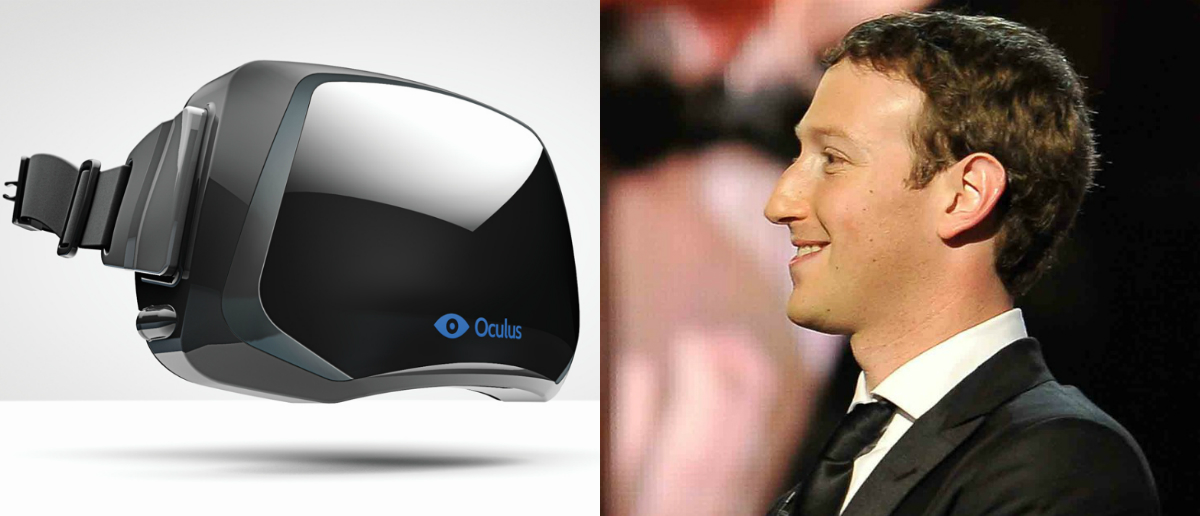
    Mark Zuckerberg and his team are following up their Whatsapp acquisition with another big acquisition of the virtual reality company Oculus VR for $2 billion in stock and cash.

    Confirming this through a Facebook post, Mark Zuckerberg said “I’m excited to announce that we’ve agreed to acquire Oculus VR, the leader in virtual reality technology.

    Our mission is to make the world more open and connected. For the past few years, this has mostly meant building mobile apps that help you share with the people you care about. We have a lot more to do on mobile, but at this point we feel we’re in a position where we can start focusing on what platforms will come next to enable even more useful, entertaining and personal experiences.

    This is where Oculus comes in. They build virtual reality technology, like the Oculus Rift headset. When you put it on, you enter a completely immersive computer-generated environment, like a game or a movie scene or a place far away. The incredible thing about the technology is that you feel like you’re actually present in another place with other people. People who try it say it’s different from anything they’ve ever experienced in their lives.

    Oculus’s mission is to enable you to experience the impossible. Their technology opens up the possibility of completely new kinds of experiences. 

    Immersive gaming will be the first, and Oculus already has big plans here that won’t be changing and we hope to accelerate. The Rift is highly anticipated by the gaming community, and there’s a lot of interest from developers in building for this platform. We’re going to focus on helping Oculus build out their product and develop partnerships to support more games. Oculus will continue operating independently within Facebook to achieve this.

    But this is just the start. After games, we’re going to make Oculus a platform for many other experiences. Imagine enjoying a court side seat at a game, studying in a classroom of students and teachers all over the world or consulting with a doctor face-to-face — just by putting on goggles in your home.

    This is really a new communication platform. By feeling truly present, you can share unbounded spaces and experiences with the people in your life. Imagine sharing not just moments with your friends online, but entire experiences and adventures. 

    These are just some of the potential uses. By working with developers and partners across the industry, together we can build many more. One day, we believe this kind of immersive, augmented reality will become a part of daily life for billions of people.

    Virtual reality was once the dream of science fiction. But the internet was also once a dream, and so were computers and smartphones. The future is coming and we have a chance to build it together. I can’t wait to start working with the whole team at Oculus to bring this future to the world, and to unlock new worlds for all of us.”

    It is clear that Facebook will run Oculus as a seprate entity all together after the Acquisition.  Zuckerberg called out virtual reality as one of the computing platforms of the future following desktops and mobile. Stay tuned for more information on this acquisition! 

iGyaan Network
Privacy Overview

This website uses cookies so that we can provide you with the best user experience possible. Cookie information is stored in your browser and performs functions such as recognising you when you return to our website and helping our team to understand which sections of the website you find most interesting and useful.