Category: Google

  • Google Helps You Visit The Mount Everest Region Without Moving a Muscle

    Google Helps You Visit The Mount Everest Region Without Moving a Muscle

    Users can now glide along the trees, mountains and even visit remote villages, thanks to Google’s Street View. Teaming up with Apa Sherpa, who holds the record for reaching the peak of Mount Everest 21 times, and Nepalese non-profit organization, Story Cycle, Google has managed to scale and photograph the Khumbu region of Nepal for ten days. This created the new Street View images and has helped in improving the maps of the area the Sherpa people have called home for centuries.

    Street View

    Gorak Shep is the closest one can get in this virtual trek. Also, indoor imagery of the Everest Summiteer Lodge, which was built by Apa Sherpa in 1996, can be accessed to. Apart from these, other interesting sights includes lodges, schools, monasteries, clinics, etc.

    ht_google_pic

    “My hope is that when people see this imagery online, they’ll have a deeper understanding of the region and the Sherpa people that live there,” Apa Sherpa said in a blog post. “The region has much more to offer than just the mountains.”

    The Mount Everest is not the only wonder to come to Google Street View. Users can take a virtual trip to the South American Amazon rainforests, visit the pyramids in Egypt, France’s Bordeaux region, etc.

  • Google Nexus 5 is No Longer Available for Purchase

    Google Nexus 5 is No Longer Available for Purchase

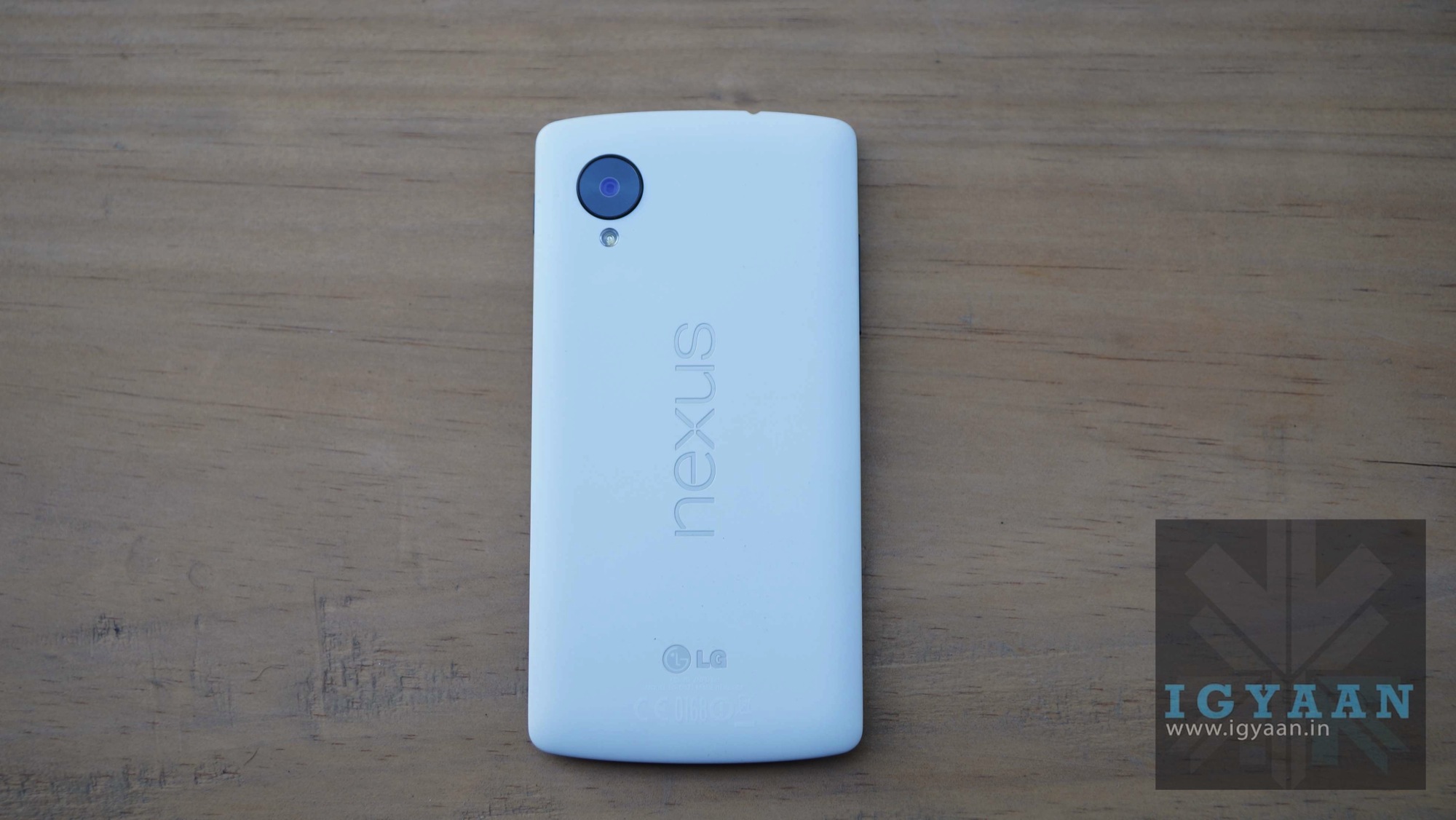
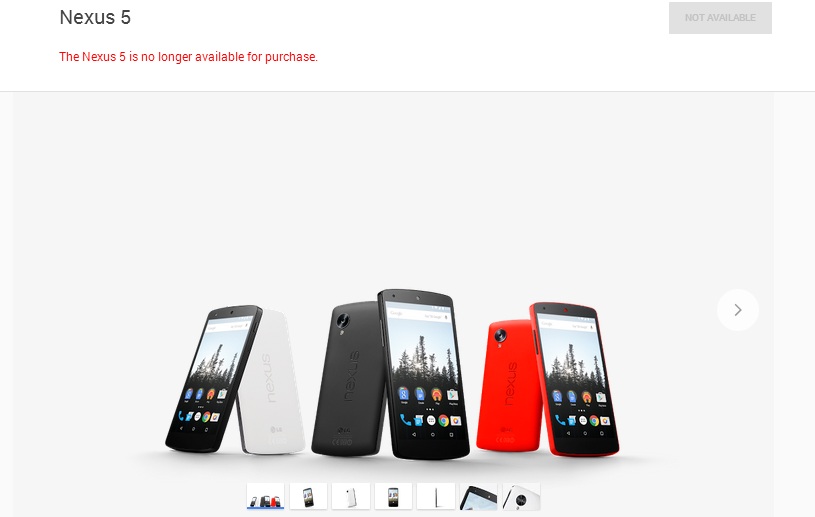
    Google’s 2013 flagship smartphone, the Nexus 5, which debuted alongside the second generation Chromebook Pixel, will no longer be available for purchase. As promised by the search giant, the flagship remained up for sale during the first quarter of 2015, but now, its MIA in Google’s Play Store and the newly formed non-Play store.

    The phone’s page reads ‘The Nexus 5 is no longer available for sale.’ It implies that users who are interested in a pure Google smartphone will have to opt for the expensive Motorola Nexus 6.

    Specs of this smartphone included 5-inch display in Full HD (1920 x 1080), the modern Qualcomm Snapdragon 800 quad-core processor,  2GB of RAM and either 16GB or 32GB of non-expandable internal memory. With this processor and 2GB of RAM running pure vanilla Android, the device was smooth as butter.

    The Nexus 5 is not the only product that Google has stopped. The very first Chromebook Pixel, a high-end laptop that is powered by Chrome OS, is unavailable for purchase too. It seems like Google is on a clean-up spree, which could have something to do with the introduction of the new Chromebook Pixel with two USB Type-C connector.

    Nexus 6 is Google’s flagship phone and can be purchased from the Play Store.

  • New Chromebook Pixel Takes On MacBook With Two USB-C Ports And Fast Charging Feature

    New Chromebook Pixel Takes On MacBook With Two USB-C Ports And Fast Charging Feature

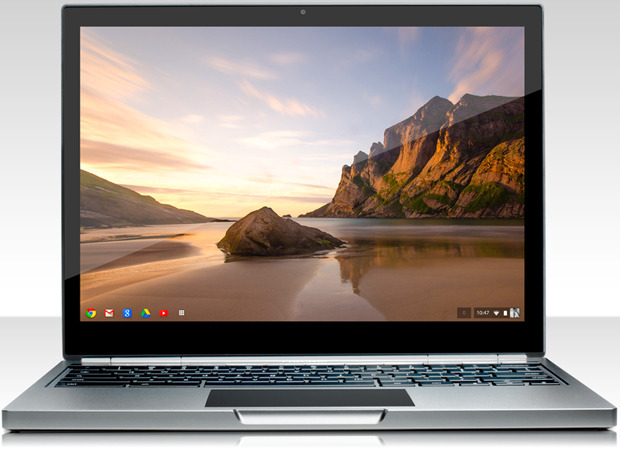
    Google has something in store that may give Apple a shiver; well, to some extent. The Mountain View based tech giant discreetly expanded its web store the previous day with the addition of an updated Chromebook Pixel. Priced at $999, the Google’s new netbook resembles the original edition but overcomes the glitches reported in the 2013 version of the Chromebook Pixel.

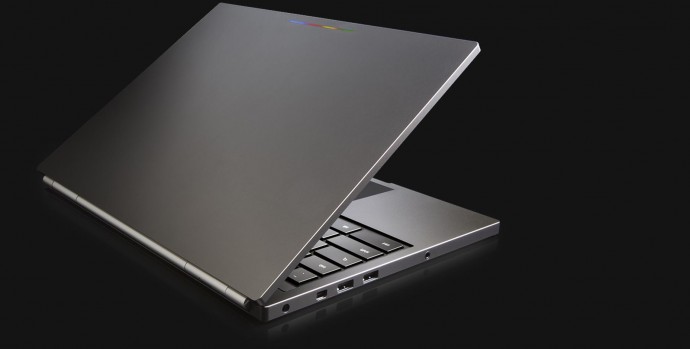
    The sturdy machine has an aluminium finish and packs some top features equipped in the new MacBook. The latest Chromebook Pixel sports two USB-C ports, first introduced by Apple just a few days back. The new Pixel sports two multi-functional USB C-Type ports, while Apple’s 12-inch MacBook offers just one. Google has an upper hand in here as users have two connectivity options rather than one. One port can charge the device and at the same time connect the laptop to another external device like a phone or hard disk. Apple has been heavily criticized for offering just one port.

    chromebook-pixel-2

    Furthermore, Google claims that the upgraded Chromebook Pixel has a 12-hour battery life, another advantage over the lightweight Mac that lasts for 10 hours at most. Google has provided a fast charging option with the new Chromebook, which can pep up the laptop for 2 hours of usage in just 15 minutes. Now, that’s what Google can tap on to topple Apple’s fresh mean machine.

    Google-Chromebook-Pixel-2

    The Chrome OS-powered Pixel, comes in two variants. The first variant, priced at $999  is powered by Intel’s Core i5 processor (2.2 GHz Broadwell-U). It features 8GB RAM along with 32GB onboard storage capacity. The other version costing $1,299 is a bit high on specs and equips an Intel Core i7 processor. It offers 16GB of RAM and 64GB SSD storage.

    Rest of the specs of the device are similar. Both the versions have 12.95-inch (2560x1700p resolution) touchscreen display and weight 3.3 pounds (1.5kg). The Wi-Fi only models house a conventional 3.5mm headphone jack. The netbook also features many Android apps.

    The laptops are completely revamped, and the inclusion of battery indicator in the form of LED strip is entirely original. The new Chromebook Pixel seems to be a worthy contender to the new Macbook.

  • Google Rolls Out Android 5.1; Here are the New Features and Improvements

    Google Rolls Out Android 5.1; Here are the New Features and Improvements

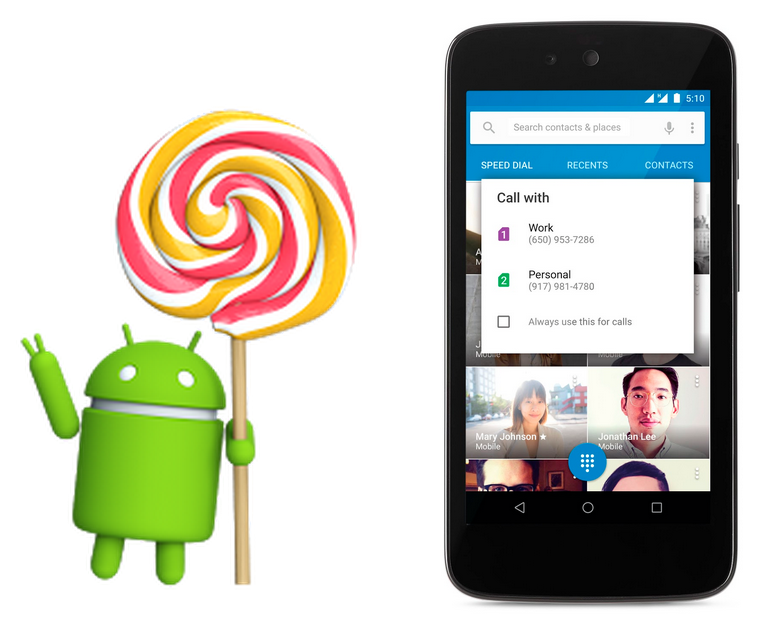
    It was learnt a few days back that Google is working on an improved version of Android Lollipop with bug fixes and new features. The internet search giant has officially released an update to Lollipop – the Android 5.1. The new software is currently rolling out to compatible devices.

    The confirmation came from the official blog post of Android that talks about improved stability and performance. However, the company forgot to mention the inevitable bug fixes, which the users were desperately looking forward to in the upgrade.

    New Features of Android 5.1

    The new Android 5.1 looks promising and packs a bunch of new features. The top of the list is the multiple SIM slot. This tool helps users share the phone with family and colleagues. The upgrade can manage multiple SIMs on a device at a time.

    android 5.1

    Device Protection falls second in the list and is an essential feature for the security of your precious smartphone. The tool locks your device and it remains locked until signed in with the user’s Gmail account. Not only that, the phone will not function even if the factory settings are reset.

    android 5.1 lollipop

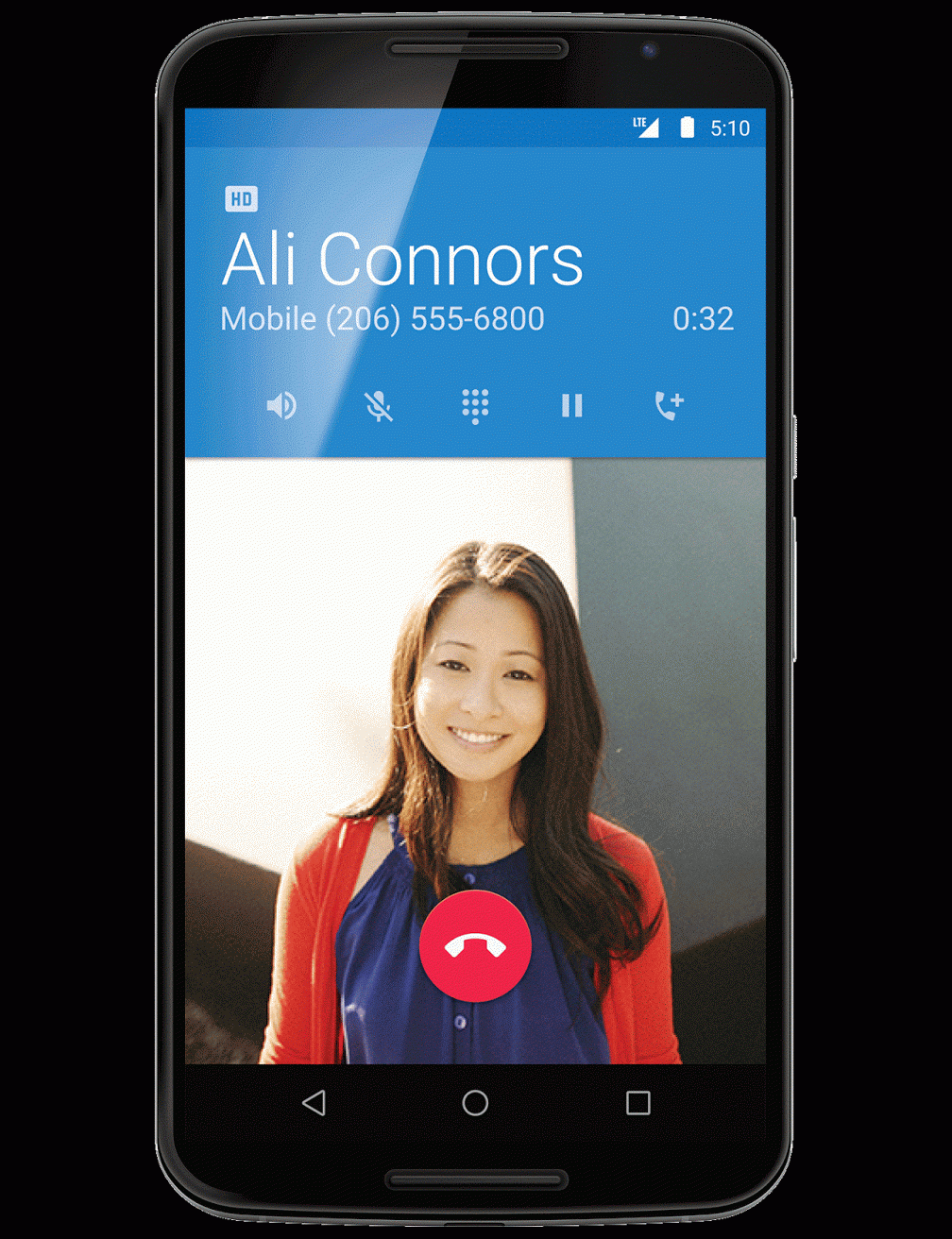
    HD Voice calling is another feature Google is rolling out with Android 5.1 Lollipop. Compatible devices like Nexus 6 and other Android devices associated with T-Mobile or Verizon can avail this facility.

    The Quick Settings menu has been redesigned to connect and control Bluetooth devices and join Wi-Fi connection directly from the menu.

    Wondering when you’ll get the update? Google Nexus 6 and HTC Nexus 9 will be the first ones to see the update, others should follow shortly. Keep checking back, we’ll keep you updated about the same.

  • Google Eyes Virtual Reality to Expand its Android Ecosystem

    Google Eyes Virtual Reality to Expand its Android Ecosystem

    Google has been proactively expanding the reach and utility of the Android ecosystem. It is now on smartphones, tablets, TVs, smartwatches and even in cars (with Android Auto). Now the tech giant is looking at a whole new arena to establish its dominance, and they have chosen the field of virtual reality.

    Virtual reality as a new device ecosystem is growing rapidly. Major brands such as Samsung, HTC, Sony and others have unveiled their VR headsets that will be arriving in the market soon. In our first person experience with these headsets, we have found them to be promising, and it had tremendous potential as a new consumer medium. It is, therefore, obvious that Google wishes to be a frontrunner in the game.

    HTC Vive Heads On2
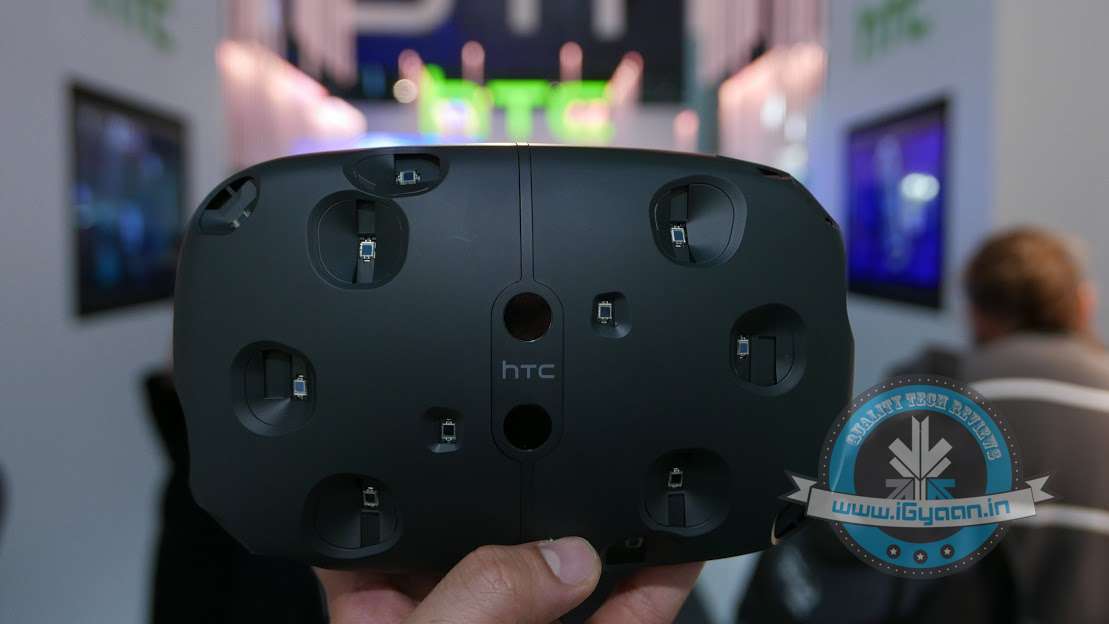
    HTC recently forayed into Virtual Reality with the HTC Vive

    The report was published in the Wall Street Journal, but Google hasn’t confirmed it as of yet. The report says that the Silicon Valley powerhouse has engaged tons of engineers to create a version of Android for the VR devices. This version will also be given out for free just like all the other Android counterparts.

    Google has already ventured in the VR game with its low-cost cardboard project. Users can get the affordable glasses, install the cardboard app, and they are ready for the VR experience. But the professional VR headsets offer more features than the cardboard contraption. A VR version of Android might include functionalities for touch controls and improved features. As of now it is not clear how the VR version of Android would look like, but with the right partners, Google might end up at the top of one more segment of the electronic market. Also, as it is a free offering, it might encourage other brands to step in the VR game to increase competition. This will also lead to an increase in the number of apps, games and other content for the VR headsets. It seems the age of virtual reality is finally upon us.

  • Report: Google Might Partner With LG and Huawei for Two New Nexus Devices

    Report: Google Might Partner With LG and Huawei for Two New Nexus Devices

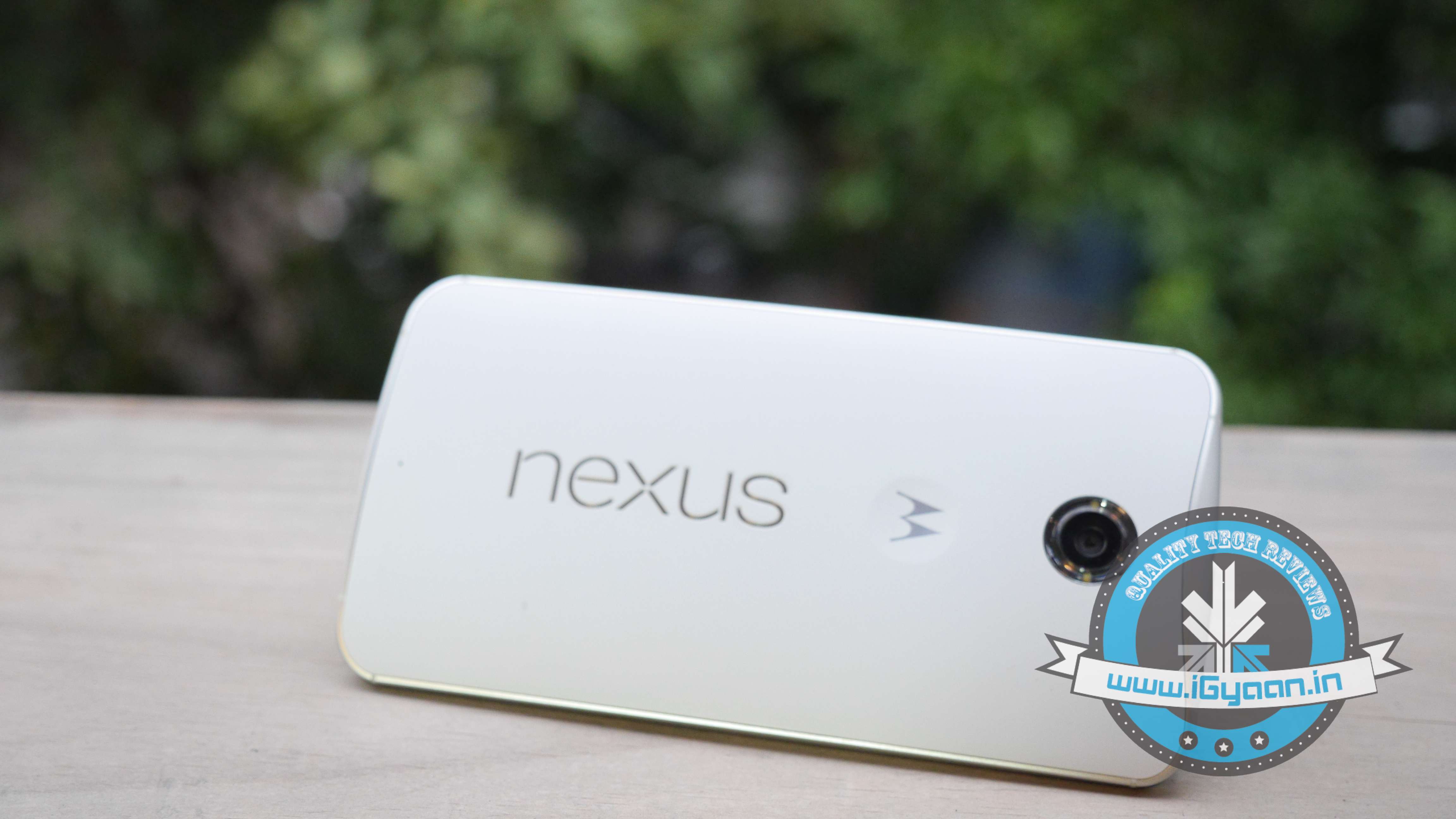
    Google Nexus 6 from Motorola is one of the best Android devices in the market. The phone’s spec sheet consists of the top notch specs of its time of launch. This year around, it seems like Google has bigger plans for its Nexus and might involve its past partner, LG and join hands with Huawei for its new generation products.

    The story is still a rumor so its authenticity cannot be established. A Weibo user who claims to have information on the next Nexus brought the story to light. According to him, LG would be bringing out a refreshed version of the Nexus 6 whereas Huawei might bring a Nexus 5-like product into the market.

    Nexus 6 was designed by Motorola and looked like a bigger sibling of the 2nd generation Moto X. The handset is a monstrosity with its 5.9 inch Quad HD display. It also features a ring flash for the main camera and a top of the charts spec listing.

    No other details have been furnished as of now. Google might be trying to populate its Nexus product line-up and hence is on a lookout for new partners. Nexus 6 was appreciated, but its size was just too massive for the phablet. With its partnership with LG, Google might try to bring down the size of the device to a more comfortable size like the LG G3, which has a 5.5 inch Quad HD display. We’ll get to know more in the coming months, as the launch of the new generation Nexus draws near.

    Till then, watch our hands on with the Google Nexus 6:

  • Android YouTube App Now Lets You Easily Trim Your Videos Before Uploading

    Android YouTube App Now Lets You Easily Trim Your Videos Before Uploading

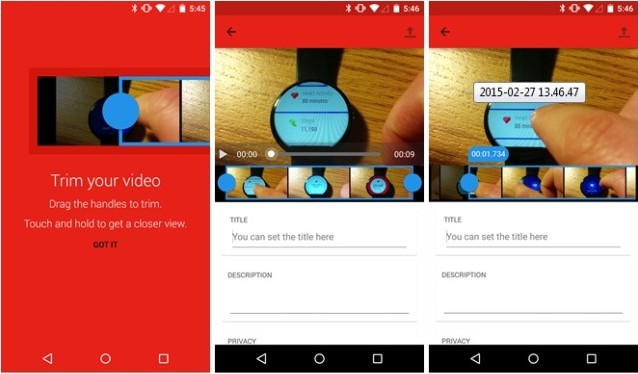
    Uploading videos on YouTube have always been super easy. Just make a selection, and the video-sharing service will do the rest. However, now you can even choose which part of the video you wish to crop and how much your subscribers can see. YouTube recently added a new feature for Android phones that allows you to trim videos before uploading them.

    From now on, before you upload a new video to your channel, a timeline will appear at the bottom of the video. It will come with two control points that can be moved to fix the starting point and end point of any clip. Not only this, but also YouTube has given users the freedom of precision. One can crop the clip frame by frame and can exhibit exactly what they want.

    Youtube-trim on-Android

    Once the video is trimmed, the YouTube app offers a preview option where you can see the content before making it live. This is a pretty appreciable and long awaited feature, which has now landed on the Android platform. The company has started rolling out the same, but it may take some time for the feature to reach all the users across the globe. As earlier said, it has arrived for Android ecosystem only; iOS users can expect to receive it soon after.

    The company recently launched YouTube Kids app where children can watch the entertainment as well as educational content for free. Along with that, Offline viewing service was also initiated a few weeks back that permits viewers to watch their favourite chips within 48 hours timeframe once they have downloaded it.

    Meanwhile, it is learnt that YouTube has further plans to introduce Instagram-styled filters and licensed music to replace audio. The company is working on embedding it onto the app.

  • Google is Working on Revolutionary Ideas for its New Office Space 

    Google is Working on Revolutionary Ideas for its New Office Space 

    Google has been known to be a revolutionary company. It can be credited with establishing the information age by giving people access to the power of the internet. The Silicon Valley giant invests a massive amount of its resources in research that can change the way we live. Google is in the process of re-imagining the office space for its new office in Mountain View, California. It wants to create a building that meets the needs of tomorrow and is also close to nature.

    Google has enlisted the help of two architecture firms Heatherwick Studio and Denmark-based Bjarke Ingels Group. This is no small time project as it covers an area of 3.4 million square feet across the four sites. Google’s arch rival Apple has already showcased a spaceship-like design that is already in the construction phase.

    The major focus on the building is to give an experience of living as close to nature as possible. The building design makes use of natural light to light up the office spaces and cut down on the use of energy. It has green spaces inside the building who get natural light from the vast open, transparent fabric that engulfs the sites. The building uses flexible manipulable elements that give the ability to shape the offices as per the requirement.

    In its feature video, Google is vague about the specifics but the buildings are expected to be constructed by 2020. When completed, they will be an urban space in themselves. There is a definite need for rethinking construction in terms of residential, official and urban spaces. With an increase in population, there is an absolute need to make the buildings energy efficient and eco-friendly. We hope Google succeeds in its efforts to re-create building spaces and brings a revolutionary change in terms of construction with this massive project.

  • Google Collaborates With SolarCity To Make It Easier To Install Solar Panels In Residence

    Google Collaborates With SolarCity To Make It Easier To Install Solar Panels In Residence

    If we want a safe planet for the future, Solar energy is the way to go. Solar power has the potential to completely replace all of the contemporary fossil fuel based energy sources. There are many initiatives underway to make access to solar panels more affordable and accessible. Google has been known for its affection for renewable energy research and now the company is partnering with SolarCity to make it easier for people to install solar panels in their homes.

    SolarCity is a company founded by Tesla chief Elon Musk. The company assists people in installing solar power in their residence or place of business. It designs, finances and installs solar energy systems, performs energy efficiency audits and retrofits and even builds charging stations for electric vehicles. SolarCity at present has over 1,90,000 customers and the facilities created by them have generated about one gigawatt of power.

    Google will collaborate with SolarCity to make it easier for folks to install Solar panels.
    Google will collaborate with SolarCity to make it easier for folks to install Solar panels.

    Google will be setting up a fund worth $300 million for the residential side of SolarCity’s business. This coupled with SolarCity’s new financing structure will raise the company’s funds to $750 million. This fund will boost efforts to assist homeowners to install rooftop solar panels.

    Homeowners can get in touch with SolarCity, who will create a customized design for the house. SolarCity then looks at the electricity bills paid by the owner and offers them a rate much lower than the power company. The user just has to pay a monthly solar rental along with the electricity charge as agreed. The maintenance costs of the solar panels will also be taken care by Google and SolarCity. The companies earn an income from the excess electricity sold to the grid by the house.

    The arrangement between the consumer and the companies will be rent based. The rental term is usually set for 20 years after which the consumer would have the option to buy the system or give it back to the company. Presently the initial price tag for installation is $10,000, so it is still out of  reach of an average consumer. But as more players come to the market, the rates are bound to drop down.

    Google and Elon have shared a rather friendly camaraderie. Google has recently placed a massive bet on Elon’s plan of setting up space internet. In fact, Google’s founder Larry Page has said that he’d rather give his billions to Elon than give it to charity. SolarCity is a unique initiative that will not just be beneficial to the buyers and companies but will also set-up a profitable business model that others can emulate and help create the solar revolution.

  • Google Spends a Whopping $25 Million to Seize .app Web Domain

    Google Spends a Whopping $25 Million to Seize .app Web Domain

    Google, today, added one more domain to its list of top-level domains (TLDs). The internet search giant paid a hefty sum of $25 million to procure a whole web domain.

    As per Business Insider, Google made the highest bid of $25 million for .app, a top-level domain. Following this, ICANN, an organisation that holds a control over world’s domain names, declared Google as the winner of the domain. Google applied for .docs, .android, .free, .fyi, .foo, and .app; only managing to acquire the last one. The company presently owns four more web domains namely .soy, .minna, .foo and .how.

    Google Messenger 0

    This isn’t a first, there have been several companies throwing millions on web domains. In fall 2014, Amazon spent nearly $5 million to purchase ‘.buy’, and $2.2 million for ‘.spot’. For now, users can register for ‘.how,’ ‘.soy,’ and ‘.minna’ domains under Google’s own domain registry service licensed by ICANN, which is still in beta version.

    The company hasn’t revealed what it expects from this purchase, but it is likely that it may use the domain to promote apps in its mobile division.

  • BlackBerry and Google Collaborate to Bolster Android Device Security

    BlackBerry and Google Collaborate to Bolster Android Device Security

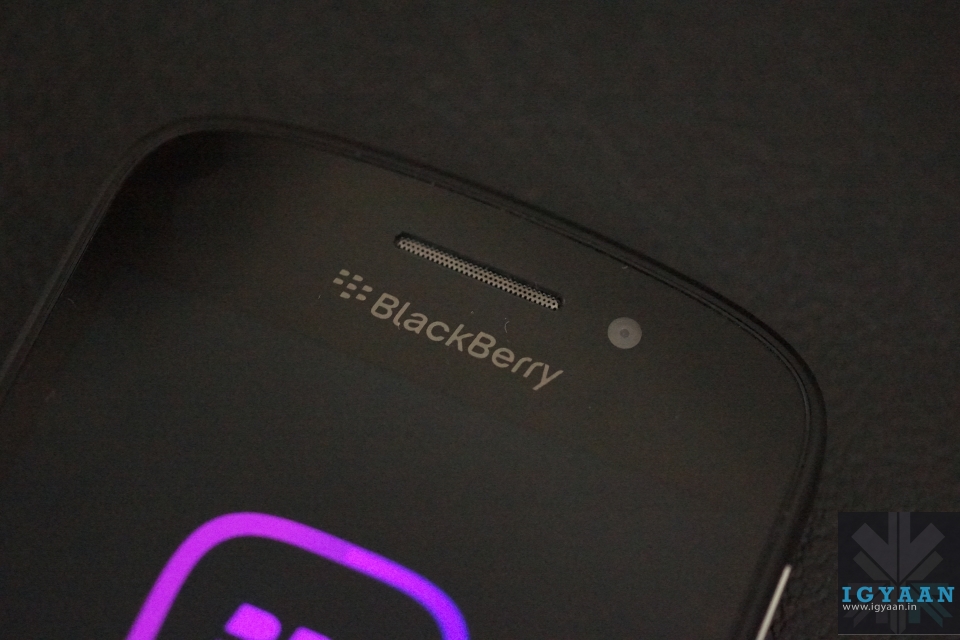
    Canadian manufacturer BlackBerry has joined hands with Google to bring its security based expertise to the Android platform, a move that follows BlackBerry’s recent partnership with Samsung. The move will allow Google’s suite of mobile productivity tools to run on BlackBerry’s device management system.

    Back in November, BlackBerry announced its partnership with Samsung and other top tech companies to expand its security based services beyond its own platform. The collaboration with Google is aimed at managing devices that come with Android for Work – an initiative from Google to securely classify and separate business from personal data and apps.

    [quote text_size=”small” author=” Kevin Stadtler” author_title=”President of Stadtler Capital Management Llc. “”]

    The partnership shows BlackBerry’s reputation for security is still strong. One shortcoming of the Android platform is security. They’re partnering with BlackBerry in order to directly address that.

    [/quote]

    The Canadian manufacturer has years of expertise in dealing with devices for corporations and entreprises. This move could strategically position the Android platform as a more prominent solution in the business sector.

    Meanwhile, Google also announced partnerships on Android for Work with top companies including SAP SE, Samsung and SOTI Inc.

  • With ‘Android for Work’, Google Wants to Make Android Devices Office-Friendly

    With ‘Android for Work’, Google Wants to Make Android Devices Office-Friendly

    Google’s Android OS is the only operating system that has touched almost every part of the globe. It has topped over all the other major softwares such as BlackBerry OS, Windows, and iOS. The search giant now intends to strengthen its stand in the enterprise environment by introducing a initiative called “Android for Work”.

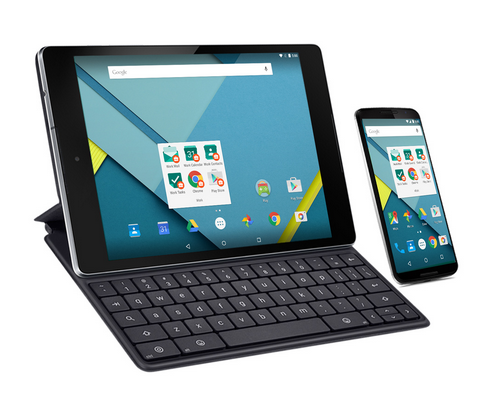
    Today, Google introduced “Android for Work” that focuses on making Android devices more office-friendly. Through this, users can manage their content and can keep their professional data separate in silos, without merging it up with personal content.
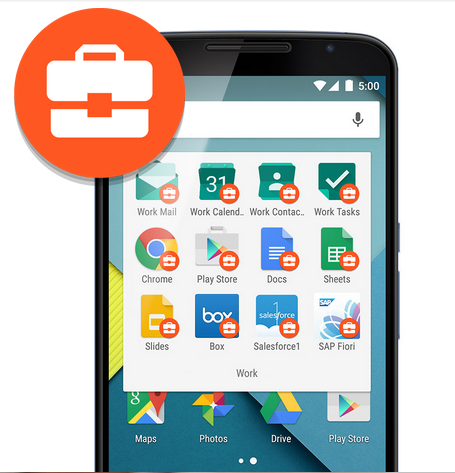
    android for work1

    Android OS lags in the business segment. However, smartphones and tablets running on Android sell like hot cakes, but they are underutilized in the workplace. Google’s mobile ecosystem was missing out on apps and features that users can bank upon for the security of their business content. The company might be able to bridge that gap with the introduction of new business centric features.

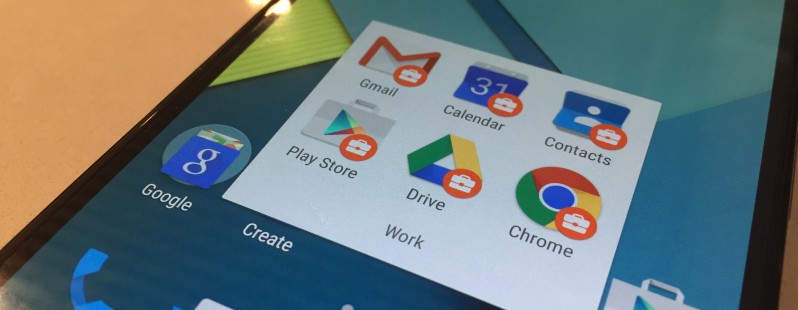
    ‘Android for Work’, works on four primary components. The gadgets running on Android Lollipop will be able to make the most of this service. IT team of a company can create profiles of the individual and can install apps to isolate their work data from the personal content. Next in the list is the Android for Work app which is built for devices running on Android 4.0 and above. The app delivers secure mail, calendar, contacts, documents, browsing and access to deployed work apps.
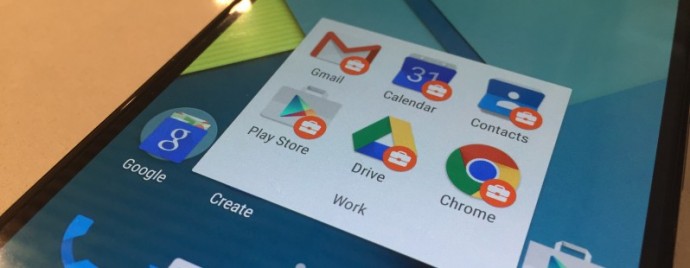
    android for work2

    The third component, Google Play for Work, allows IT professionals to install and manage recommended apps on the handsets of the users running Android for Work. The company has created a suite of business apps for email, contacts and calendar, which offers both Exchange and Notes and provides document editing capabilities.

    The internet search giant has partnered with well-known names like Box Citrix, VMware, HTC, LG and Sony, who are helping them in bringing out a more secure, manageable and innovative Android platform. BlackBerry has extended support through providing a cross-platform EMM (Enterprise Mobility Management) solution to manage devices.

    Google has an extensive user base, which can be used to reach out to more audience through their software. The company announced the project eight months back and has launched it now after testing it thoroughly. Google  is trying to make Android devices simple and essential for people to use at work and there will definitely be more updates coming to this initiative as enterprises are a profitable market for any tech company.

  • Indian Government Collaborates with Google to Launch an Internet Safety Program

    Indian Government Collaborates with Google to Launch an Internet Safety Program

    Google has been expanding its SafeBrowsing initiative. The search engine giant recently added a new feature to its Chrome browser, that pops up a red flag in case users accidentally visit a site that prompts them to download malicious malware.

    Now the Indian Government has joined hands with Google to launch an internet safety campaign, primarily aimed at young adults and children on sensitive issues like identity theft and online harassment. Government plans to involve various departments and ministries for consultation and dissemination of information on internet and data security as a part of this initiative.

    [quote text_size=”small” author=”Chetan Krishnaswamy” author_title=” Google’s Public Policy India Head “]

    To enable this and ensure that families and young people across India are safe, we’re working with CERT- In and MyGov to get the word out about good Internet practices and how to keep users safe online.

    [/quote]

    According to a PIB release, the campaign will be carried out by Department of Electronics and Information Technology, which comes under union ministry of Communications and Information Technology, in partnership with Google and the Indian Computer Emergency Resposne Team (CERT).

    Meanwhile, Department of Electronics and Information Technology (DEITY) Additional Secretary suggested an annual programme to raise awareness of key policy makers on matters concerning cyber safety. The initiative would include roundtables, workshops, Security Cafes, contests for young adults, policymakers and NGOs. However, an exact date of launch has not been specified yet.

  • Google Chrome Now Offering Added Protection From Malicious Sofware

    Google Chrome Now Offering Added Protection From Malicious Sofware

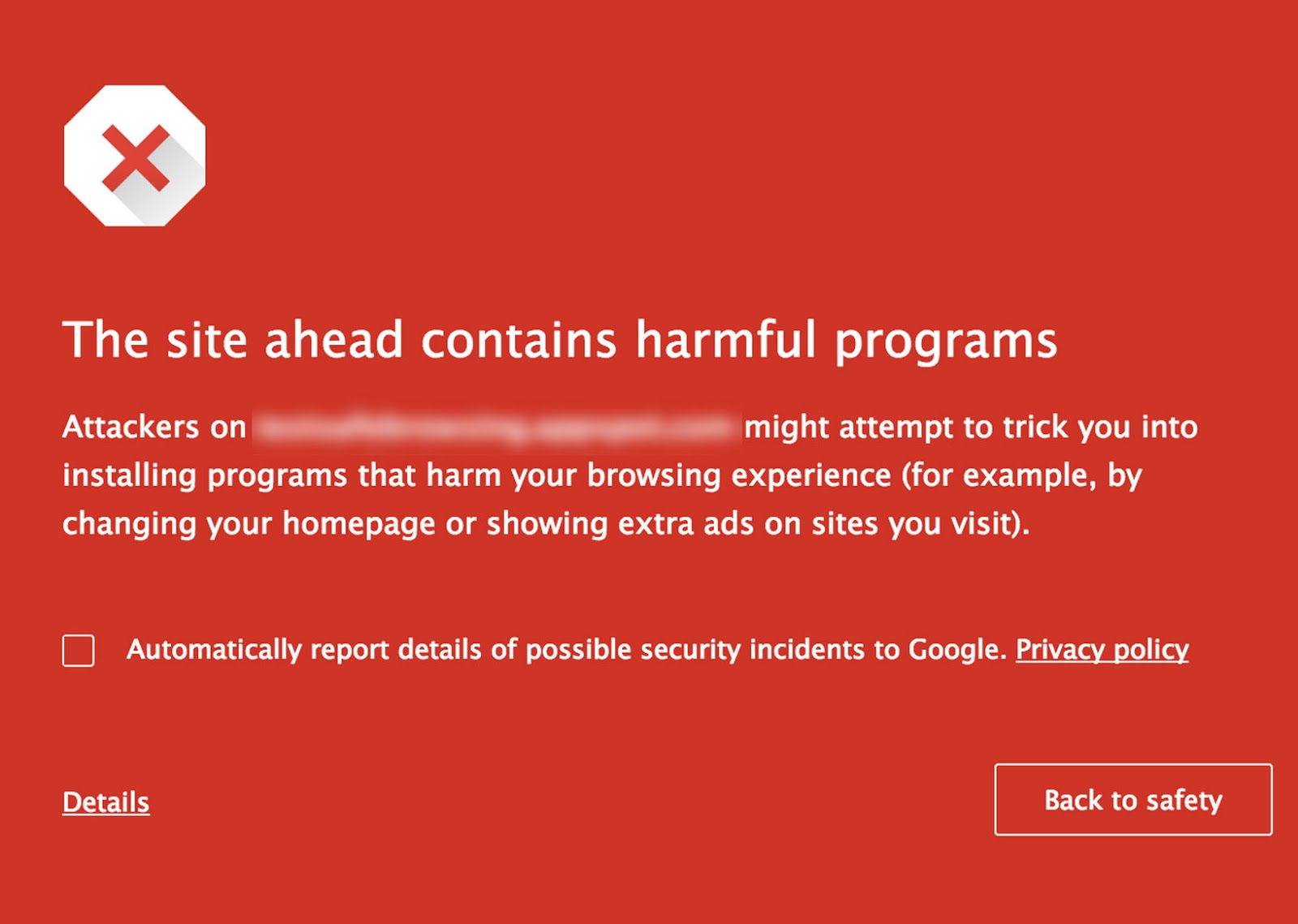
    Search engine giant Google is expanding its SafeBrowsing initiative to make sure its users accidentally don’t download malware while browsing. Apart from the warnings prior to downloading, the Chrome browser from now on will pop up a red flag (like the one below) in case users visit a site that may encourage them to download malware.

    safe browsing

    Google is also asking site owners install its Webmaster Tools to help them tackle any threats and stay on top of any possible issues. Google will in return provide technical support to resolve any issues that may be caused by sites that encourage people to download malicious programs.

    Even Google search now incorporates signals that identify such deceptive sites. This change reduces the chances you’ll visit these sites via search results. In addition, Google is actively disabling Google Ads that lead to sites with unwanted software.

    Google has been criticized in the past, though it’s nice to see the company living up its motto “Don’t be evil”, trying to make the cyberspace a safer place for everyone.

  • Gmail’s Auto-Complete Glitch Results in Emails Being Sent to Unintended Recipients

    Gmail’s Auto-Complete Glitch Results in Emails Being Sent to Unintended Recipients

    Have you ever mistakenly sent an email to the wrong person? Usually it’s our fault for not double-checking before hitting the send button, but right now there is a glitch in Gmail which isn’t helping the cause. A bug is spotted that might, if you’re careless, help you send emails to unintended recipients.

    The ‘To’ section of Google’s Gmail is facing an auto-complete glitch because of which, it is prioritising the names of people that are less frequently mailed. The auto-complete feature is designed to suggest addresses regularly used. A number of people have reported on Twitter about being troubled because of the bug.

    Google itself confirmed and apologised about the malfunctioned auto-complete feature.

    We’re aware of an issue with Gmail and auto-complete and currently investigating. Apologies for any inconvenience.

    Google has been working aggressively to make its services better for its users, and this bug being in notice of the company, we can expect them to fix it soon. Until then, make sure to triple check the recipients bar before sending out that confidential email.

iGyaan Network
Privacy Overview

This website uses cookies so that we can provide you with the best user experience possible. Cookie information is stored in your browser and performs functions such as recognising you when you return to our website and helping our team to understand which sections of the website you find most interesting and useful.