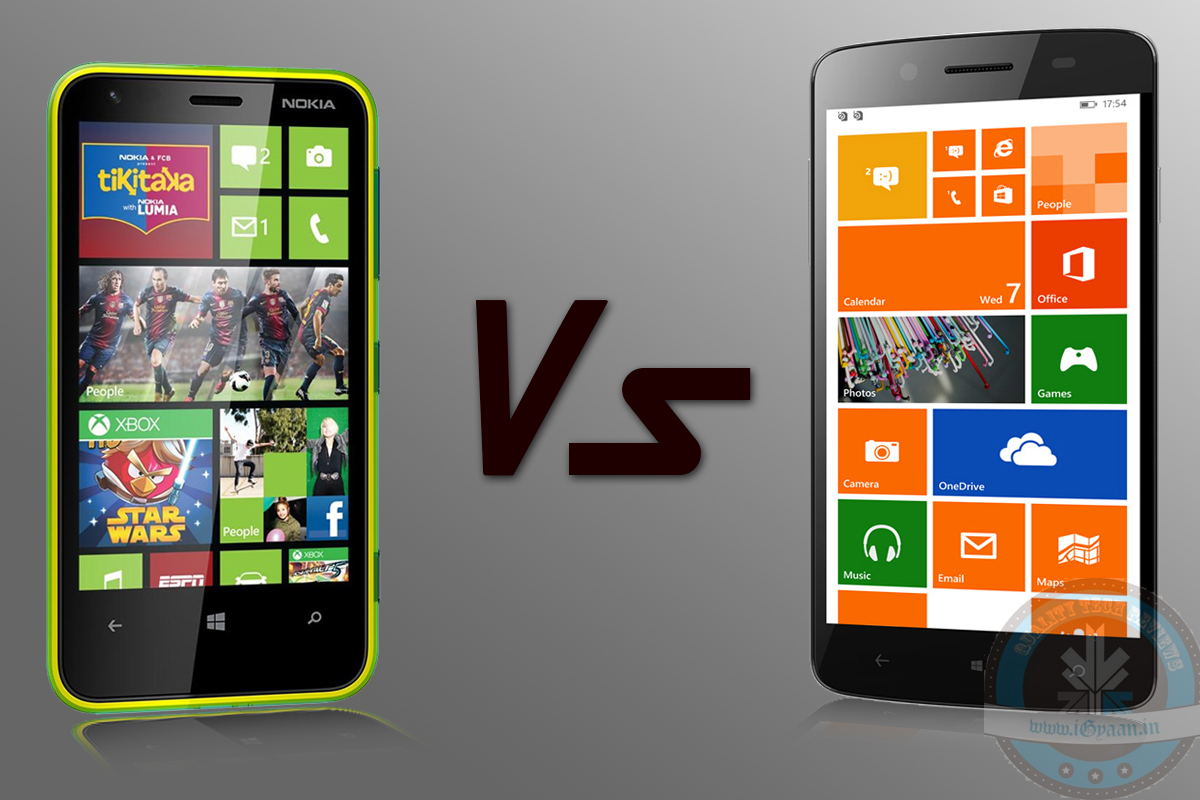
Micromax’s much talked about association with Microsoft took a huge leap with the launch of two new phones in its Canvas Win series; W092 and W121. Considering W121’s price tag (INR 9,500) and Windows phone 8.1 OS, it is expected to give a hard time to Nokia’s newly launched Lumia 630.
Lumia 630 is equipped with impressive quad-core Snapdragon 400 processor clocked at 1.2GHz in comparison to W121’s mediocre 1.2GHz quad-core Snapdragon 200. People who love to use apps on their phones may have some problems with Lumia 630’s 512MB RAM against W121’s 1GB.
Canvas Win W121 fashions an 8MP rear snapper with LED flash and also a front-facing 2MP front-camera for selfies and video conferencing while in Lumia 630 front camera is missing, and it has a 5MP rear camera with auto-focus but no flash.
Considering the present state of the company, I personally won’t recommend Nokia Lumia 630. Furthermore, Canvas Win121 is a better option while comparing both. Canvas Win121 definitely provides you with better feature and performance
Specifications
Nokia Lumia 630
Micromax Canvas Win W121
General
Battery capacity (mAh): 1830
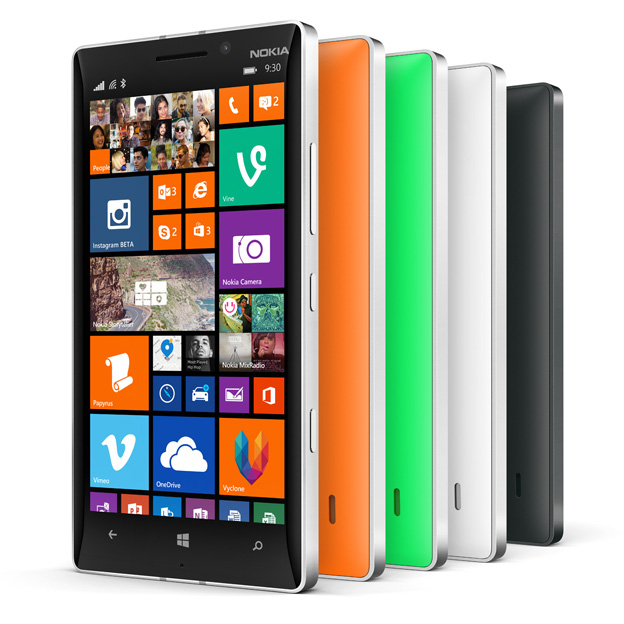
Colours: Bright Green, Bright Orange, Black, White
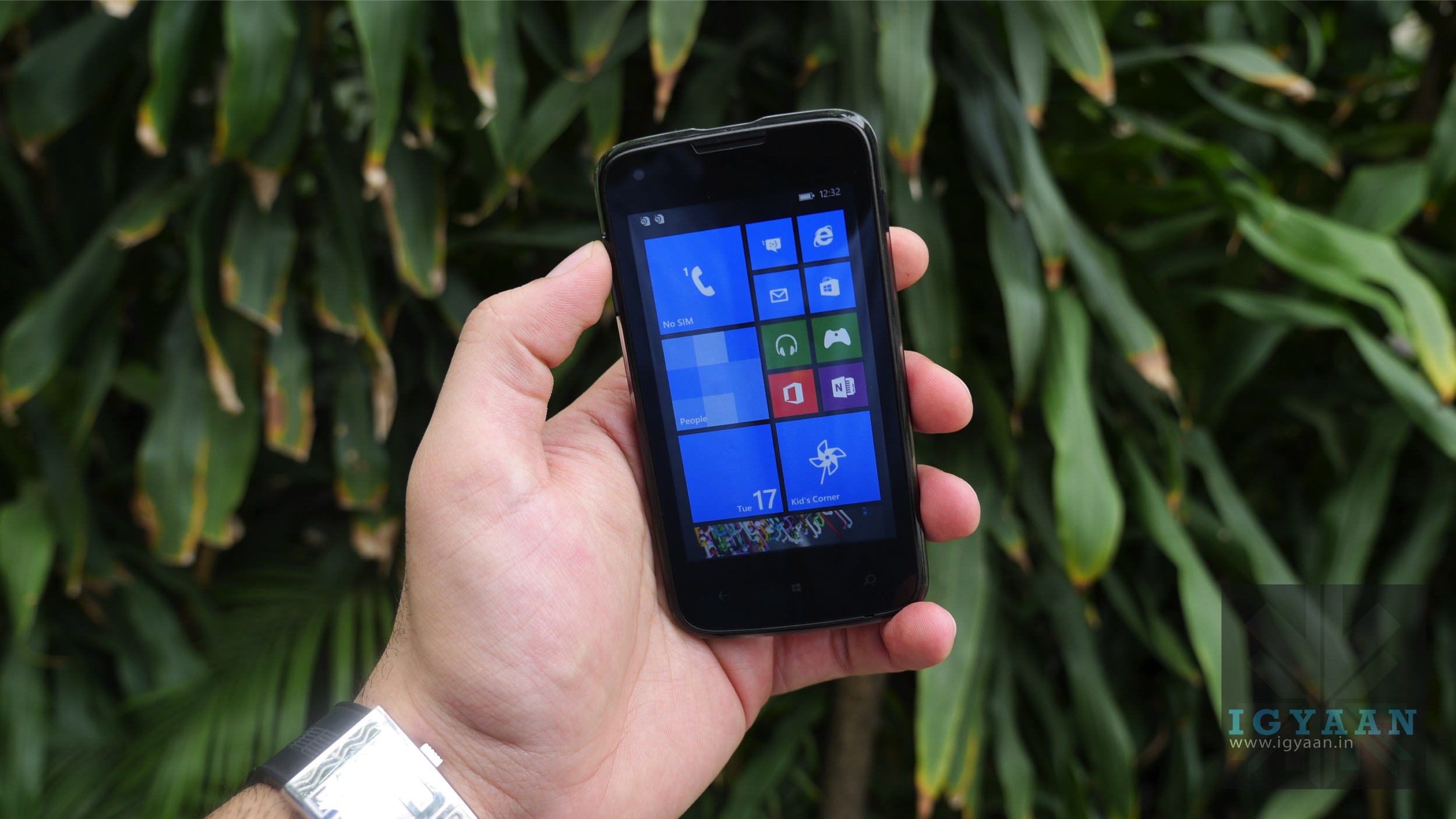
There have been a serious shortage of Windows phones in the market. Micromax is the latest entrant in the segment. The Micromax Windows phones (Canvas Win W121 and W092) look like a good effort on the part of Micromax. The two phones have managed to create some buzz around and have been appreciated by tech enthusiasts. Micromax’s lower end offering – The Canvas Win W092 also looks like a promising Windows device.
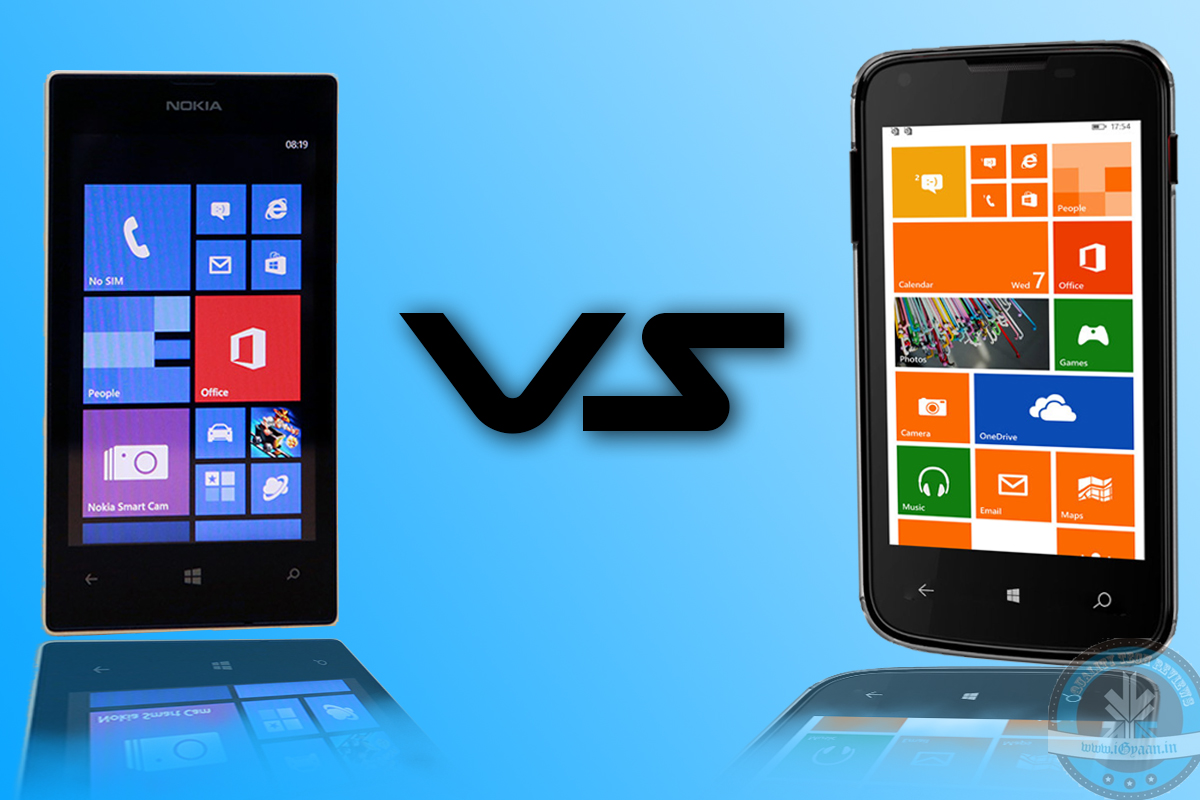
This phone will directly compete with the Nokia Lumia 525, let’s see how the Win W092 scores up against the fallen legends offering.
First up, Win 092 runs Windows OS 8.1 out of the box, while the Lumia 525 runs on the Windows 8 Black. While the Nokia possesses a 1 Ghz Snapdragon s4 processor, the Canvas Win W092 flaunts a Snapdragon 200 processor with 1.2 GHz Quad Core CPU. Both phones have 1 GB RAM’s and 8 GB ROM.
Canvas Win 092 seems like an updated Lumia 525
The Micromax phone offers a dual SIM option whereas the Nokia is a Single- Micro SIM device.
Nokia has been known for its camera capabilities. The Lumia 525 has a 5 megapixel shooter and is capable of shooting 720p HD videos. The Win W092 also has a 5 Megapixel camera with LED flash but if the past experiences with Micromax camera at this price range are considered, the camera probably would not be comparable to the Nokia quality.
Looking at the specs it is evident that Lumia 525 must have been the inspiration behind the Win W092. Micromax has tried to one up the Lumia 525 in almost departments, while giving a competitive pricing. The Win W095 has the ability to challenge the Lumia and only time will tell if this would be the last usurping of the Nokia brand name.
The Lumia 525 is available on Flipkart at Rs. 8550 while the Win 092 is priced at 6500. This war just got serious. A Windows phone enthusiast now has to some serious option to choose from. XOLO has already geared up to release a new devices based on Windows OS 8.1. With Windows releasing the OS free for licensing purposes for screen size below 9 inches, many more companies might want to join the Windows OS ecosystem.
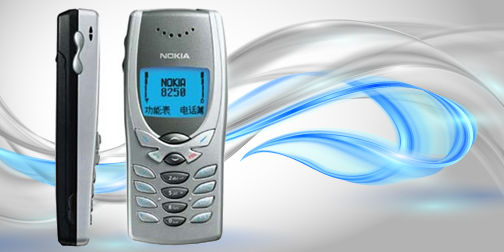
It was the year 2001, and Nokia had just rolled out its best phones yet, the 8250 was a super success right after the launch of the 8210 which was one of the best selling “high end” cellular phones available at the time. But, the year also marked the end of monochrome displays, as Nokia the only big name in mobile telephony would transition to color displays for their next generation of phones.
Nokia 8250 Print Ad Title : Walk on the Blue Side!
The Nokia 9210 communicator became the phone of choice of many professionals, the first color screen clamshell to revolutionize the Mobile industry. Nokia had everything working for them, they had the right markets, the right products and they were rich, rich enough to explore the future.
It was also the year when Nokia secretly developed 2 world changing products, a Color Screen touch phone set above one single hardware button, and a ten-inch tablet computer both of which had features like video playback, internet access and navigation capabilities. These two world changing devices could also securely order products online and create online accounts and keep data safe within the internet (Now known as Cloud Storage).
Nokia was innovating and how, but these products never came out, the consumers never saw them and the corporate marketing heads shut down the research claiming that the ideas were far fetched. Ironically, Nokia had never been so wrong in the many years of leading the wireless revolution and becoming stronger than ever in the 1990’s.
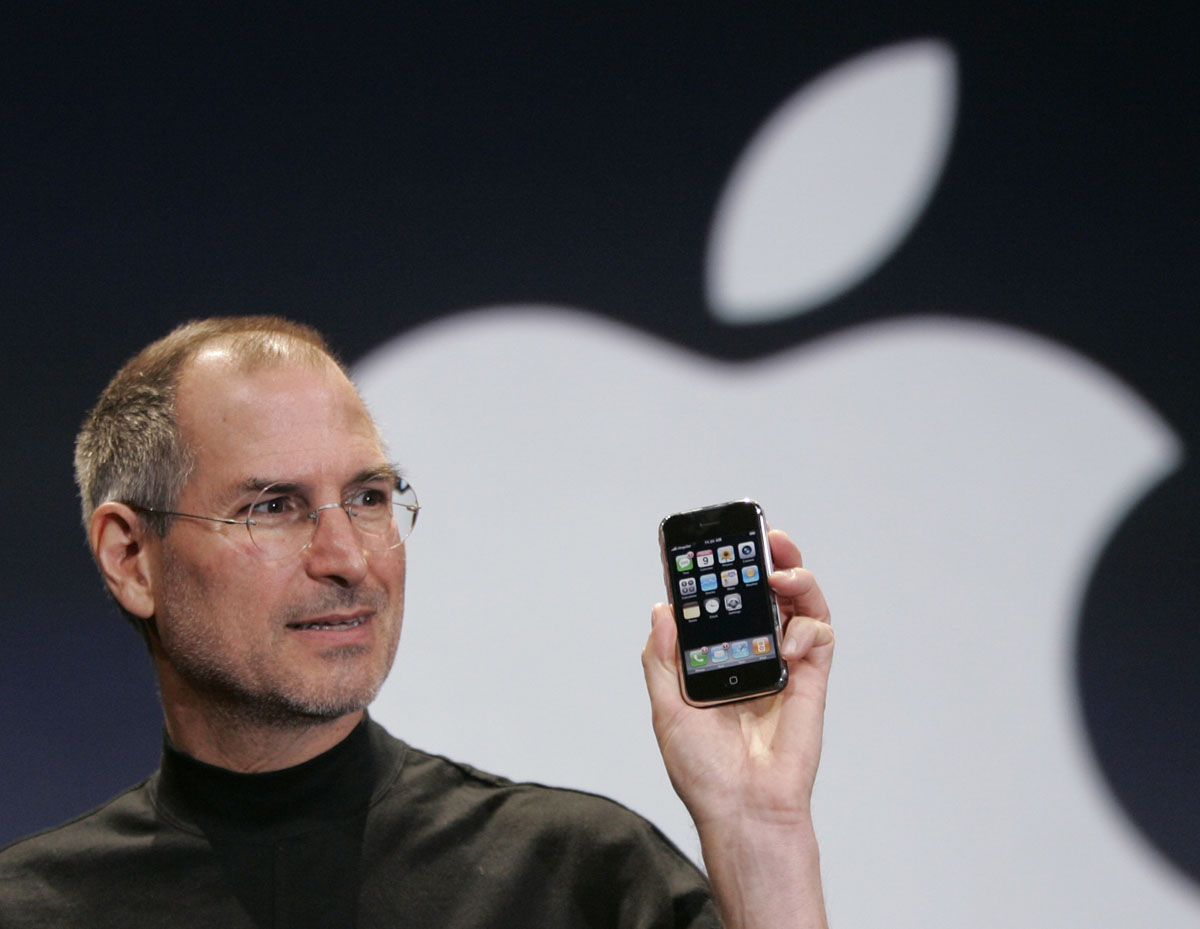
Steve Jobs Announces the First Apple iPhone in 2007
Seven years later, Steve Jobs got on stage and announced the first Apple iPhone, and all hell broke loose in the world. Nokia execs were scrambling left right and center to now re energize their seven year old product research. But the world had matured beyond Nokia’s internal understanding, while people now wanted Capacitive Touch Phones, because they were easy to use and type on, Nokia still confident of its seven year old tech wanted to hold on to their N series and E series which they continued to develop for quite a while.
In 2012, Apple had already announced the iPhone 4 and had taken a major chunk of the Smartphone sales under its banner, a new enemy loomed for Nokia: Android. This Google made OS, was revolutionizing the Smartphone and bringing it to the masses. This year Android Powered handsets were available for as low as 200 $ and Nokia ended its 14 year streak as the world’s largest mobile phone manufacturer. Nokia’s Stock crashed and thousands of employees lost their jobs.
Nokia had another big opportunity lost around the time when they started a cold war with Google and decided never to make Android Phones, and shift focus completely towards making Windows Phones, bringing gradual cancerous death Meego and Symbian in the process.
But there was a name that is mostly believed to be the root cause of the above decisions. In September of 2010, ex-Microsoft Exec Stephen Elop was the first non-Finn to be named CEO of Nokia. During the 3 years Elop was Nokia CEO, Nokia revenues fell 40%, Nokia profits fell 95%, Nokia market share collapsed in smartphones from 34% to 3.4%.
In one of my meetings with a Product Design manager at Nokia during IFA 2012, it became apparent that Nokia was still the same, shutting down ideas and killing innovation. In fact, most of those who worked at the Finnish HQ already assumed that Nokia would collapse under Elop and Windows Phone.
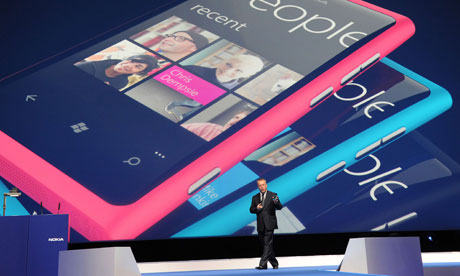
Stephen Elop at a Launch
A company that was easily valued for upwards of $150 billion 14 years ago, when they secretly developed the first “iPhone” and “iPad” (Smartphone and Tablet) was sold in 2013 to Microsoft for a mere $ 7 Billion. For context, that’s less than half of what Facebook paid for Whatsapp. Stephen Elop who would then join back Microsoft as Executive Vice President, later to be made head of XBOX, Games and Hardware division. Conspiracy theorists have called Elop the Trojan Horse who led Nokia to its demise simply because Microsoft eyed a takeover.
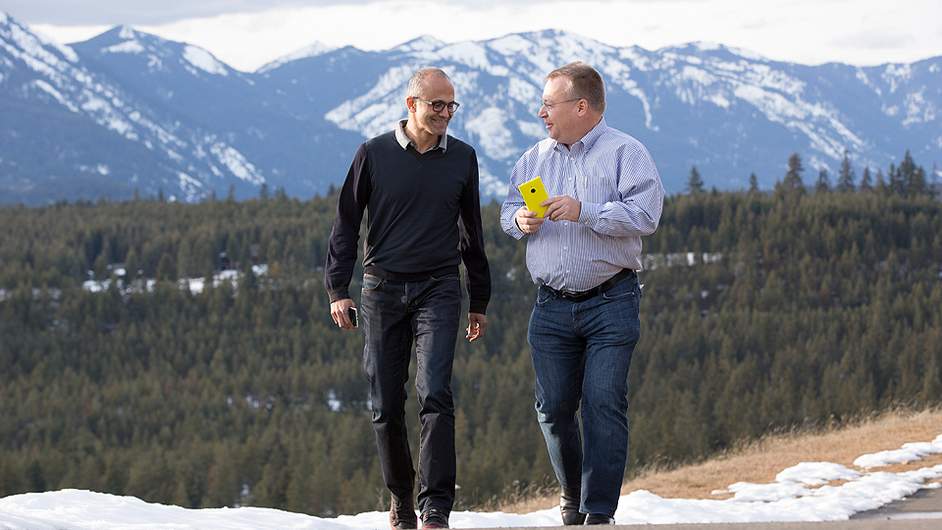
Elop and Nadella
Microsoft has confirmed that they will kill the “Nokia” branding and start building a new line of smartphones internally called “Microsoft Mobile Oy”. The final name may simply be Microsoft Mobile or Microsoft Surface Phone even Microsoft Lumia. This may not be the smartest move on Microsofts part, A long legacy of Nokia also would have brought among the loyalty of Nokia users. But, as Elop mentioned, “Nokia is not a Brand placement” that Microsoft would like for their lineup of Smartphones, especially if one was to consider the bad press we have seen lately. “Nokia” as a name is now considered “old school” and maybe a new name might just do wonders.
After the announcement of the acquisition Nokia shares jumped 35% on the news, whereas Microsoft’s fell more than 5%, either way the only company to benefit is Microsoft, and Nokia truly lost, thanks to a corporate culture that lavished funds on research but squandered opportunities to bring innovations.
Nokia’s line of Lumia Phones have seen some success in the recent past, only to measure their success in non percentages compared to the world. Nokia is finally dead, and most of the world will and should shy away from investing in the brand. At least up until the Microsoft version comes out.
The Legend has fallen, sounds like a Transformers title, but in Nokia’s case it’s true.
After an indomitable hegemony in the mobile phones market for more than a decade, the company sold its mobile phone division to Microsoft corporation in a $7.2 billion takeover. The takeover happened because of continued losses during the last 3 years, so much so that the company was forced to sell their headquarters and lease the premises. Now the company has decided to put strong efforts in hopes for a turnaround. It has decided to concentrate on its Network, Softwares and Maps divisions. Nokia also has a huge patents division which might help it reclaim its lost throne, unfortunately though they don’t have any dragons.
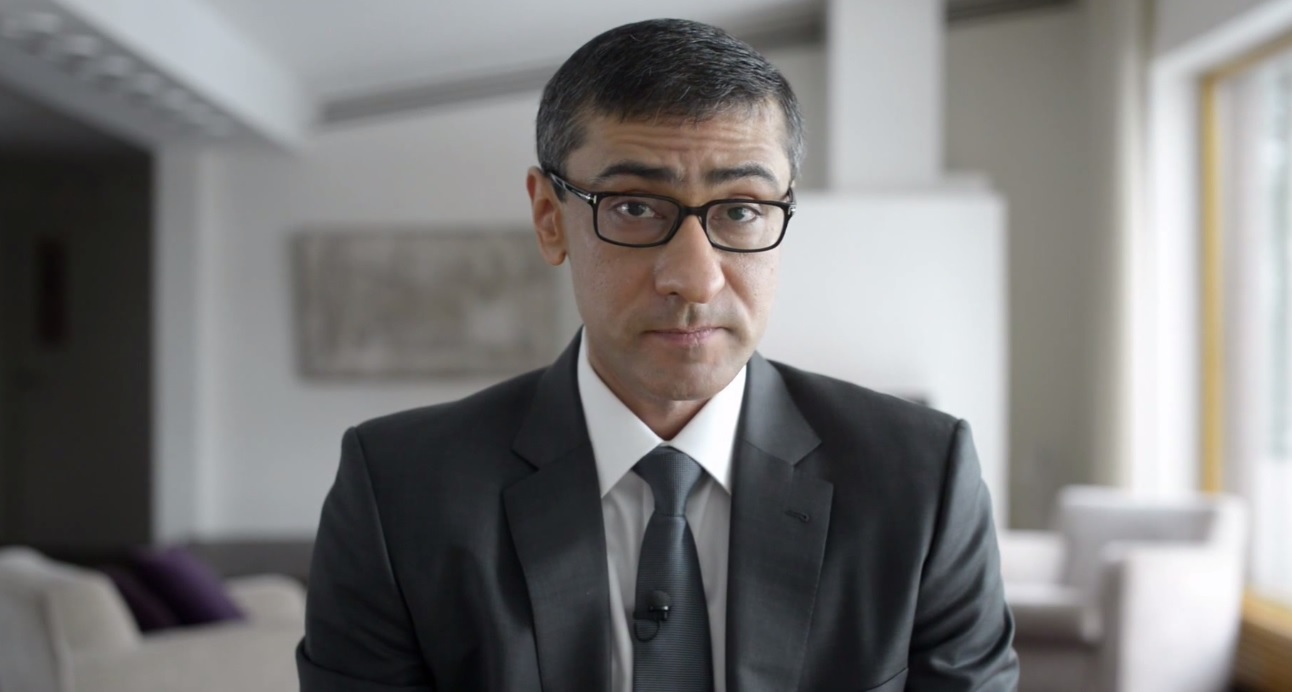
For this task they have recruited the Indian born, Singaporean Citizen Rajeev Suri as Nokia’s CEO. In the past couple of years, Suri was responsible for the turnaround of Nokia’s main telecoms network business. He took his chair on the 1st of May replacing their Ex-CEO Stephen Elop who is directly blamed for Nokia Mobile’s demise.
Rajeev Suri did his graduation in Electronics and Telecommunications Engineering from Manipal Institute of Technology, India (class of 1989). This school’s other famous alumni includes Microsoft’s present CEO, Satya Nadella. This must be a proud moment for the institution’s history.
Mr. Suri who joined Nokia in 1995, previously headed the networks division and it proved to be profitable for the company under his leadership. He has extensive experience in the fields of strategy, mergers & acquisitions, product marketing, sales, major account leadership, regional and business unit leadership and has lived all across the northern hemisphere except the America.
Suri also stands apart from the others because he is one of the rare few to reach such great career heights without an MBA or PG degree under his belt. So if your parents are pressuring you to get another diploma in higher education, you now know whose example you should quote.
He is definitely going to face some challenges as the CEO. Even though Nokia’s networks division accounted for about 90 percent of sales from the group’s continuing businesses last year, it faces tough challenges from companies who still have deep pockets in game like Ericson and Huawei. Also he will have to take some tough decisions to bring down the debt by 2 billion.
The entire world will have their eye on this guy to see if he can recreate the magic he showcased as the head of the networks division. We at iGyaan, wish him the best and hope he will be the savior that Nokia desperately needs.
They were once the Titans of the industry. They made more cell phones than all the other companies combined and even now, having shipped around 250 million phones in 2013, they’re the second biggest manufacturer of mobile phones . From 1998 to 2011 this company was the undefeated champion. Nokia was a brand name trusted by all. This Finnish giant now sold its legendary (now struggling) mobile phones unit to the Microsoft Corporation in a $7.2 billion takeover.
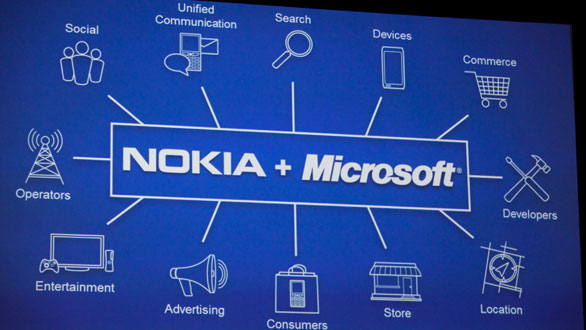
As of 25th April 2014, Microsoft’s acquisition of Nokia has been approved by Nokia shareholders and by governmental regulatory agencies around the world. Under the Nokia-Microsoft deal, Microsoft will take possession of the Lumia smartphone brand, along with the company’s lower-end Asha phone line and the new Android-based Nokia X phones. With this, they will also inherited 25,000 new employees.
Windows Phone is the fastest-growing ecosystem in the smartphone market, and its portfolio of award-winning devices continues to expand. In the fourth quarter of 2013, according to IDC, Windows Phone reinforced its position as a top three smartphone operating system and was the fastest-growing platform among the leading operating systems with 91 percent year-over-year gain. Furthermore, Microsoft intends to target the affordable mobile devices market, a $50 billion annual opportunity.
This deal marks the death of a brand which had become synonymous with mobile phones in India. Even in the smallest villages, people took pride in owning a Nokia. To us, it sounds rather counter intuitive to get rid of a brand with such a strong identity. Now, everybody will have an eye set on how the Microsoft CEO, Mr. Nadella, and Vice President Mr Elop decide to take it forward.
The tech world is abuzz with all kinds of speculations about the proceedings of this deal. One of the most common assumptions is of a Machiavellian takeover by Microsoft, after the talks of Windows OS for Nokia broke down in 2009. Nokia intended to improve the functionality of the Symbian and were also working on the MeeGo OS. Nokia had made its disinterest in the Windows OS clear and that’s when Stephen Elop, a former Microsoft employee, went on to become the CEO of Nokia. Many critics, especially in Finland, started to speculate that Elop could be a Trojan horse, whose mission was to prepare Nokia for a future acquisition by Microsoft.
As seen from the graph above the company was on an incline throughout the last decade. Stephen Elop took the Chair of CEO Nokia on September 2010. The 3 years Elop was Nokia CEO, its revenues fell 40%, its profits fell 95%, its market share collapsed in smartphones from 34% to 3.4%, Nokia’s credit rating went from A to junk, it’s share price dropped 60% in value and Nokia’s market capitalization lost 13 billion dollars in value. For this exemplary work he was featured in the Worst CEO list. Not just that, towards the end Nokia was so strapped for cash that they had to sell their HQ in Finland and lease the premises. It seems like Elop came with a mission and accomplished it too.
It has also been observed by many that the Microsoft strategy of acquisition was almost similar to the 1.2 billion US dollarsHP–Palm deal. Palm were smartphone manufacturers who were the creators of the cutting-edge webOS. The webOS was a mobile operating system which HP abandoned merely months after acquisition and a couple months after launching the WebOS based Mobile devices including Touchpad and Pre 3. LG later bought the OS in 2013 and is now inducting it into its Smart+ TV’s. This was a clear example of how multibillion takeovers are not always done for the best of reasons.
The most disappointing aspect of the demise of Nokia and several other major brands such as Motorola is the effective centralization of majority of innovation in the hands of a few large multinational corporations that lock knowledge in a safe. Competition is necessary for innovation. Accumulation of progressive ideas in the hands of the few would lead to monopolization and will be a major hindrance to development.
In terms of India, this deal is not good news for the employees of the Nokia facility in Chennai. This facility couldn’t be transferred because of the tax liens on Nokia property. According to the Nokia India Employees union, there are around 8,000 direct and over 20,000 indirect employees working for the manufacturing facility. The facility will work on contract basis for a limited period, without specifying any time frame, under present deal. Many of the higher level employees have decided to jump ships, while around 730 trainees have accepted the VRS scheme provided by Nokia. The VRS is opposed by the Union.
As Nokia loyalists, you wouldn’t have a lot to worry about. As a part of the transaction, Microsoft will honor all existing Nokia customer warranties for existing devices, beginning April 25, 2014. As the plans for the new brand are still in progress, we do hope that Microsoft builds upon the massive Nokia stable and give the users the same sturdy and trustworthy experience.
Hopefully, the second fiddle brands such as Micromax, Gionee and others will take charge of bringing quality innovation in the hands of the next billion before the hording multinationals get to it.
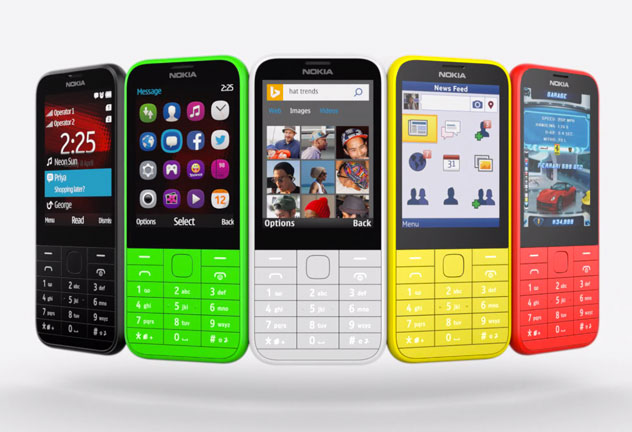
Nokia has gone across the marks to announce that their latest Nokia 225 is the slimmest and most affordable internet capable phone at 10.4mm thin and priced at approximately Rs 3,200. The Nokia 225 runs on Series 30 and will have access to the internet and preloaded Facebook and Twitter.
Specification details are scarce but what we do know is that the device has :
2.8-inch QVGA display
2-megapixel rear camera
microSD card slot
36 day battery for single-SIM variant
27 day battery fordual-SIM variant
1,200mAh battery
21 hours of talk time
Series 30 Software
Colors black, white, green, red and yellow
The handset will be available in Summer in European and Asian regions.
Nokia’s First Android Handset Targets the Budget Audience with Dual Sim Capabilities
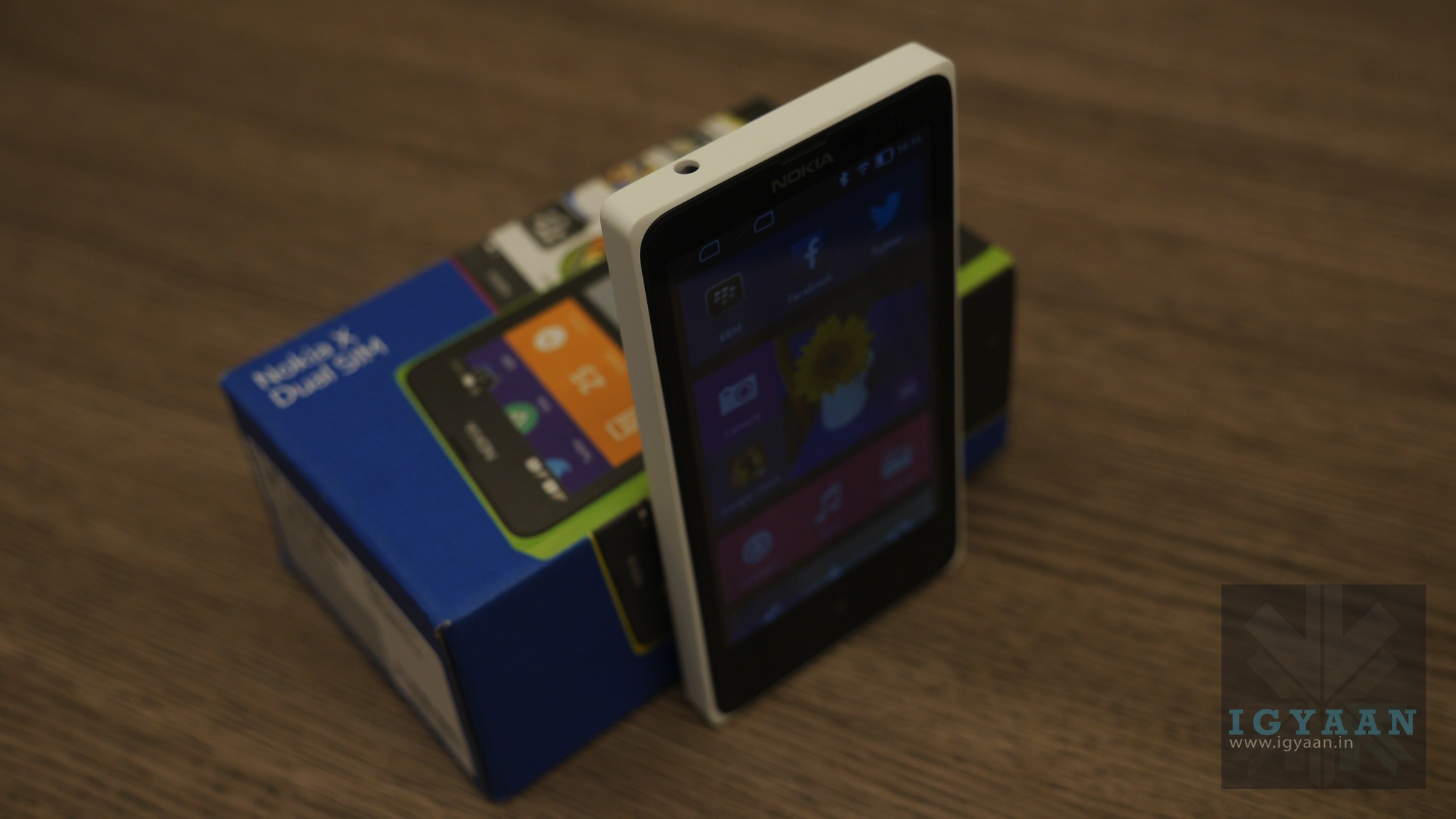
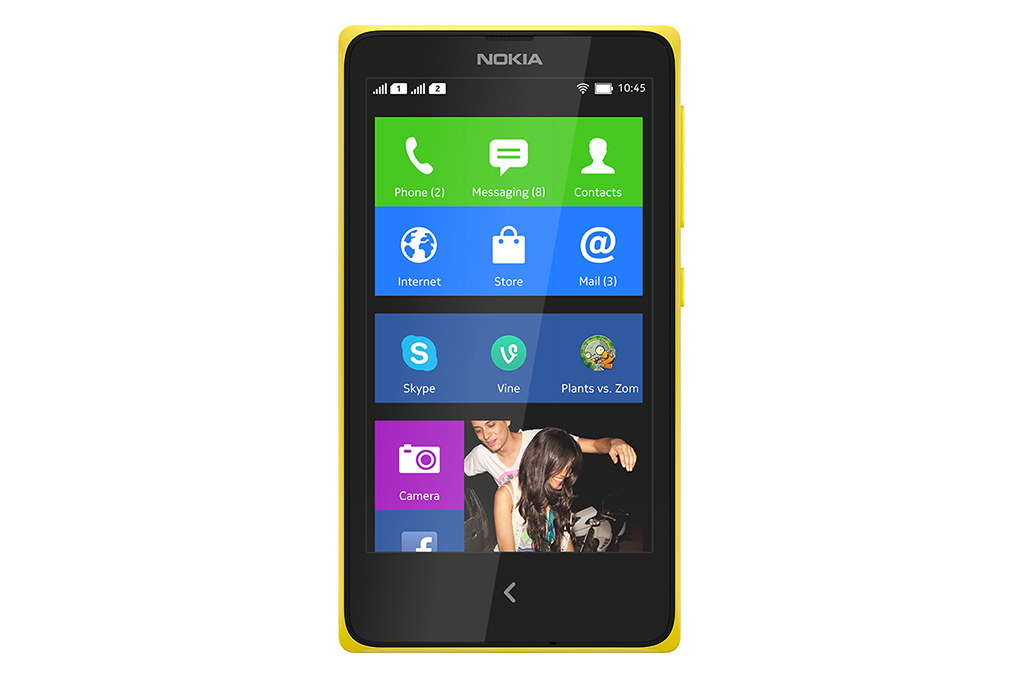
Nokia launched the Nokia X (aka Normandy) earlier this year at Mobile World Congress 2014. The handset was a first of a kind for a company which basically started off by purely thrashing Android as an OS and now embracing it in their products.
The Nokia X has a very basic strategy, it is a cheap android phone with build and promise of Nokia, without the actual support of Google.
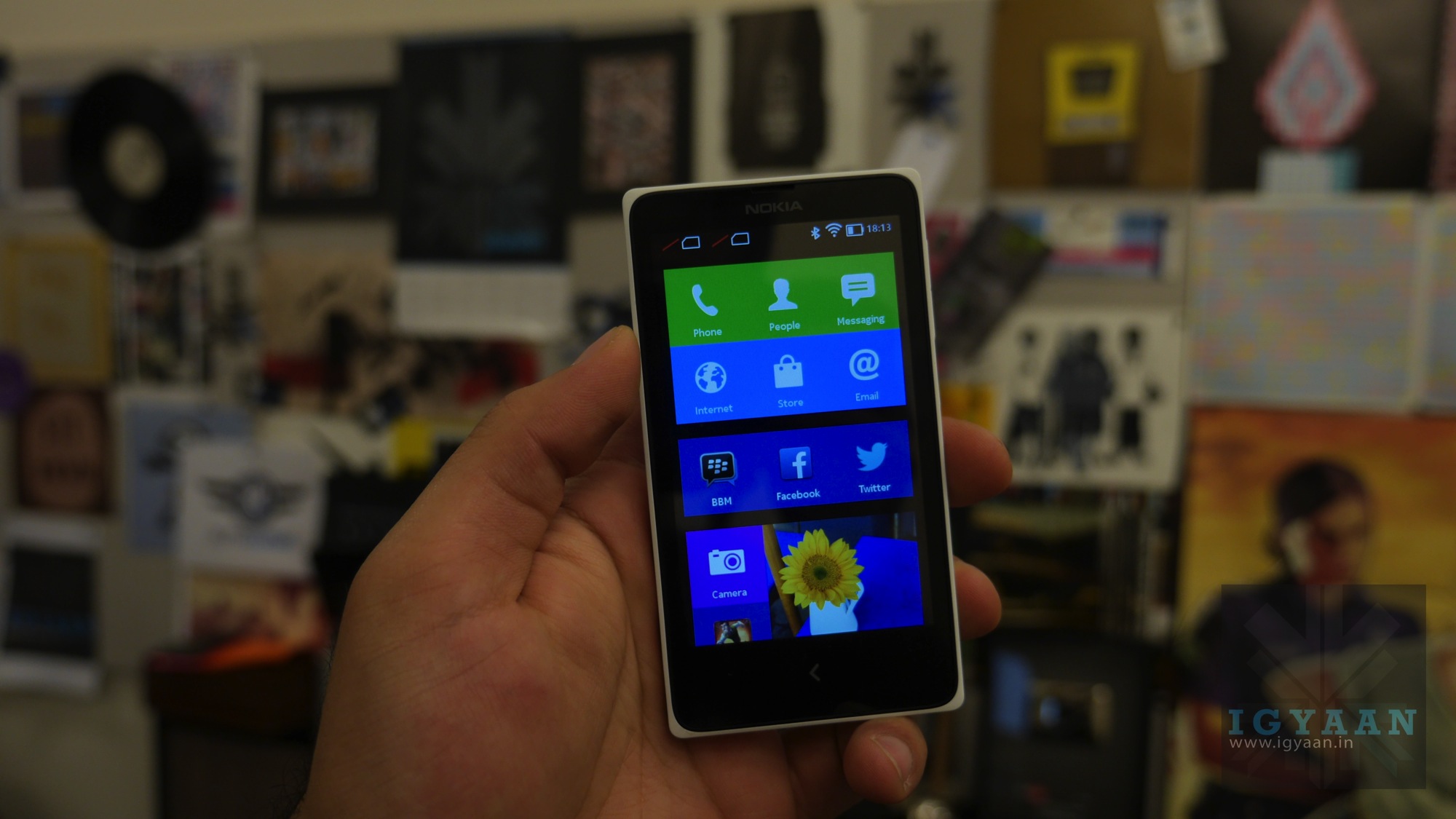
The Nokia X runs a Hybrid OS, An Unlicensed Android 4.1.2 alongside Nokia’s own Fastlane UI from the Asha lineup of devices. What that means is, you get the Android experience but you don’t get Google Apps, including the Play Store, Gmail etc. But there are always workarounds considering that the whole UI is essentially built on Android.
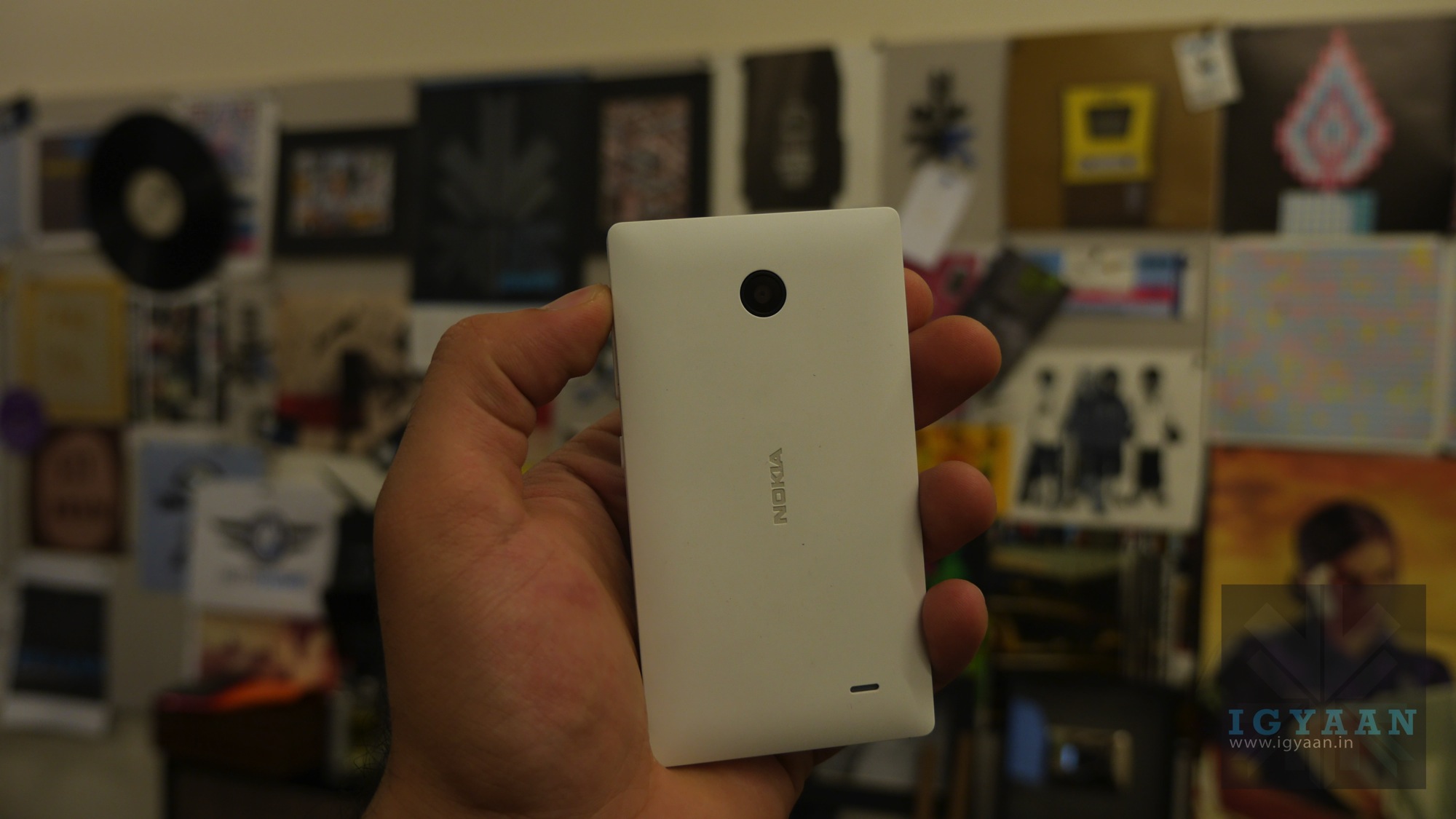
Build is impressive, the Nokia X has a sturdy matte finished back, with replaceable panels. Its like a better built version of the Nokia Asha 502/503 lineup almost as good as high end Lumia phones. The back is smooth and fits well in the hand thanks to its polished off round edges. The layout of the buttons and ports is also very identical to the Asha 503 so it looks like a design lift.
On the hardware front the Nokia X is loaded with a Qualcomm MSM8225 Snapdragon S4 Play with a Dual-core 1 GHz Cortex-A5 CPU. You also get an Adreno 203 GPU all of this is supported by a 1500 mAh battery. On the memory front you have 4 GB Storage and 512 MB RAM along with microSD card expandability up to 32 GB.
The handset runs Nokia X platform 1.0 UI essentially Android 4.1.2, on a 4 inch 480 x 800 px IPS LCD capacitive display with 2 point multitouch. There is no front camera and the main 3.15 MP camera only does 480p video and lacks a LED flash.
Check out our hands on images and the Video Unboxing Up Top. Stay tuned for a final review.
Nokia is excited about the new Nokia Lumia 630 and so are we.
Nokia just announced a flurry of devices to go along with Microsoft’s new Windows Phone 8.1 update. The new Nokia Lumia 630 is one such device which will be available in India soon within a price bracket that will satisfy many a buyers.
India will be amongst the first countries in the world to get the first ever Windows Phone 8.1 device, when it launches this May for a price that may be well under the Rs. 13000 price bracket.
First Impressions
[quote text_size=”small”]Think Nokia Lumia 520 meets Nokia X and iPhone 5c[/quote]
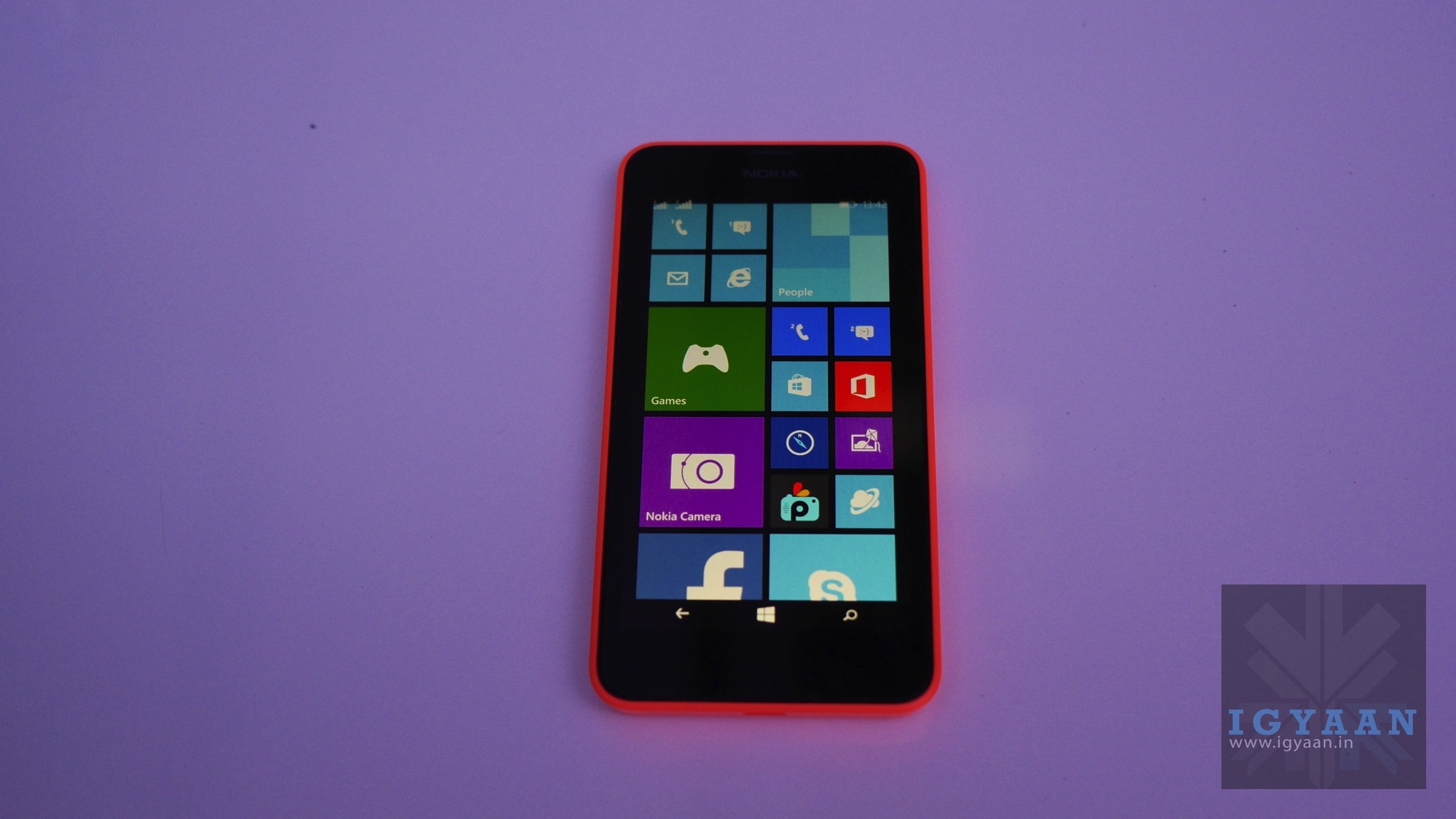
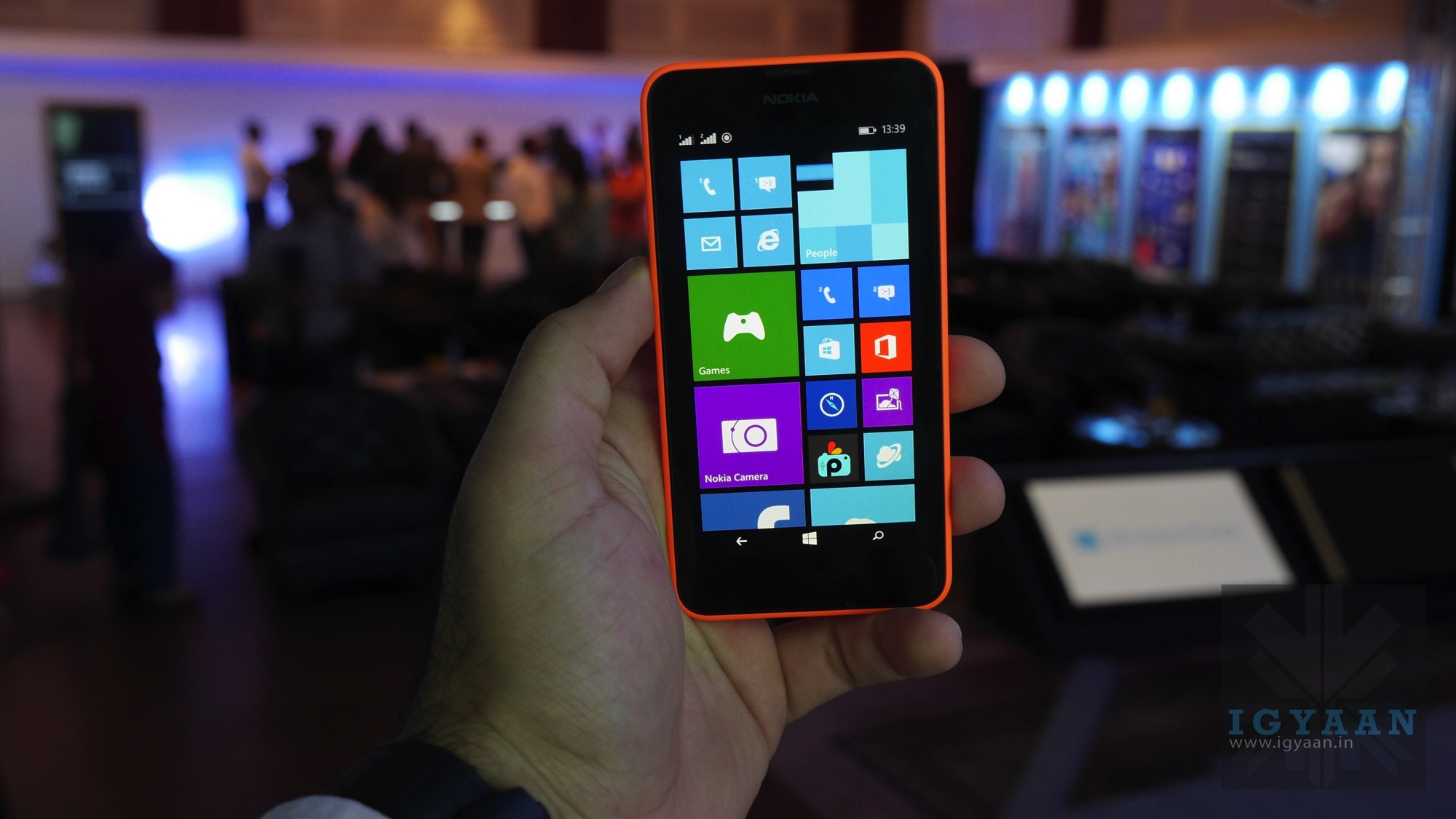
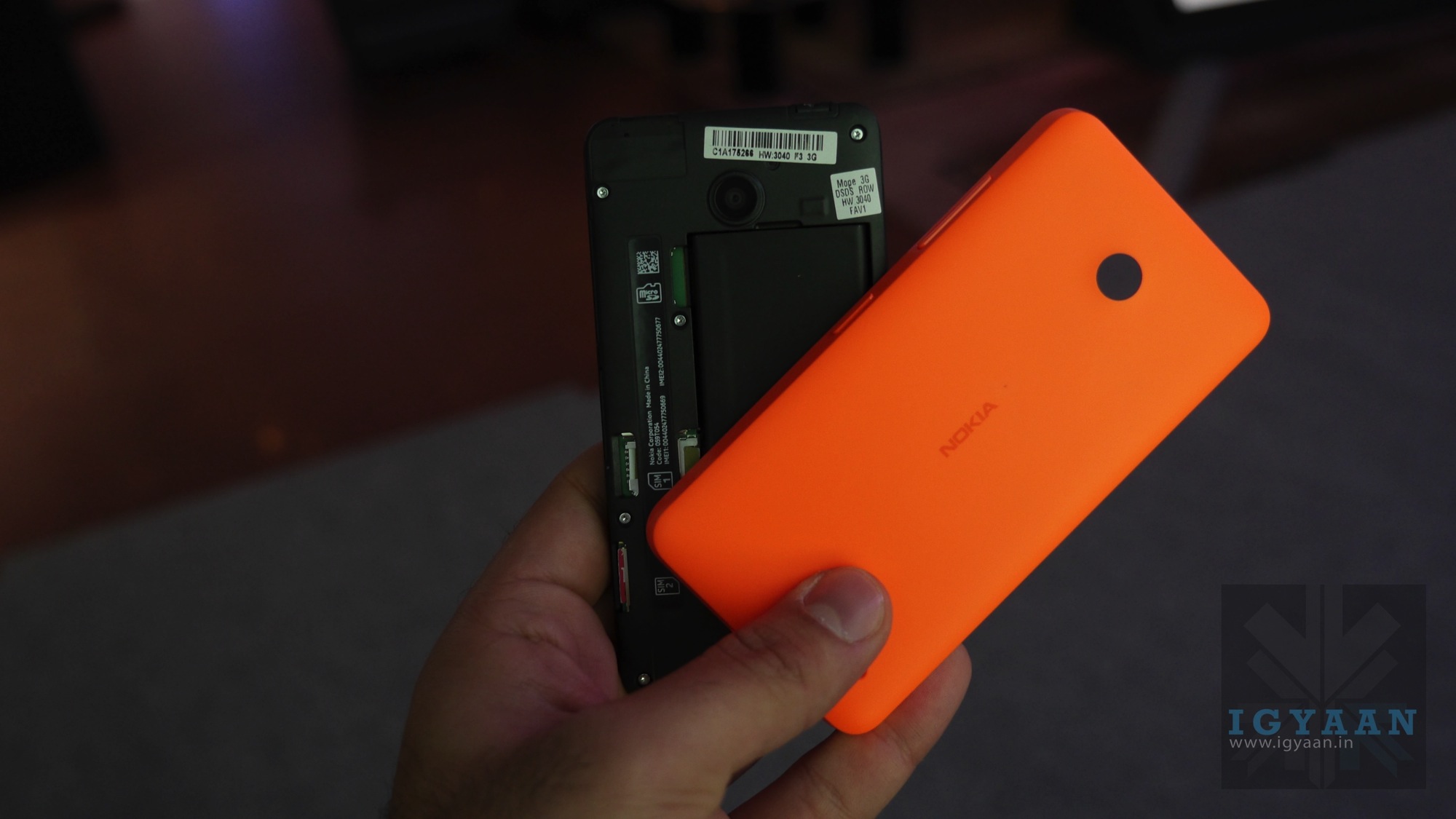
Think Nokia Lumia 520 meets Nokia X and iPhone 5c this is what the resultant is: A big bright phone with swappable color back panels, a great build quality and impressive OS handling.
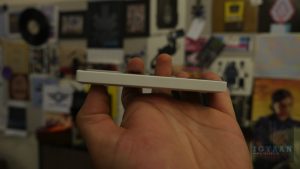
Right Side
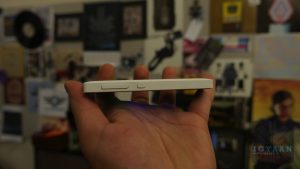
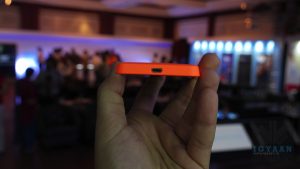
Bottom
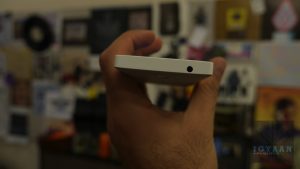
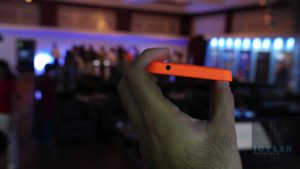
Top
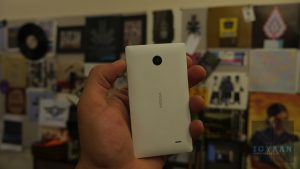
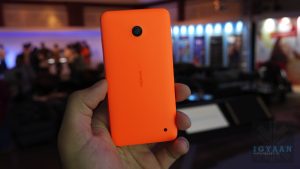
Rear Camera
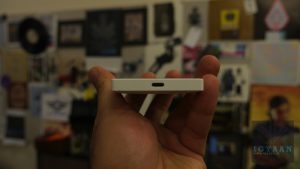
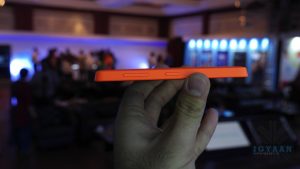
Running Microsoft’s recently announced Windows Phone 8.1 out of the box we were quite impressed by this device’s performance on the pre-build OS. The handset has been tastefully pastured with matte finish on the back which is flatter on the sides and slightly rounded at the back.
This is also the first Windows Phone handset to ditch the hardware touch keys for on screen buttons, and it may take a while to get used to especially if you are coming from a previous Lumia. You also end up losing a lil bit of the screen real estate.
On Screen Buttons
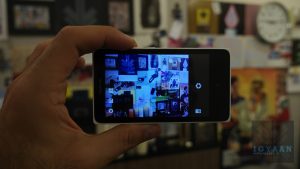
The Nokia Lumia 630 may as well be an entry level handset if you look at the hardware. The front poses a 4.5-inch IPS ClearBlack display with a 854 x 480 px resolution Corning Gorilla Glass 3 but no front camera, the rear has a 5 Mp camera but lacks any flash or lighting.
2 Sim Cards and 128Gb micro SD Support
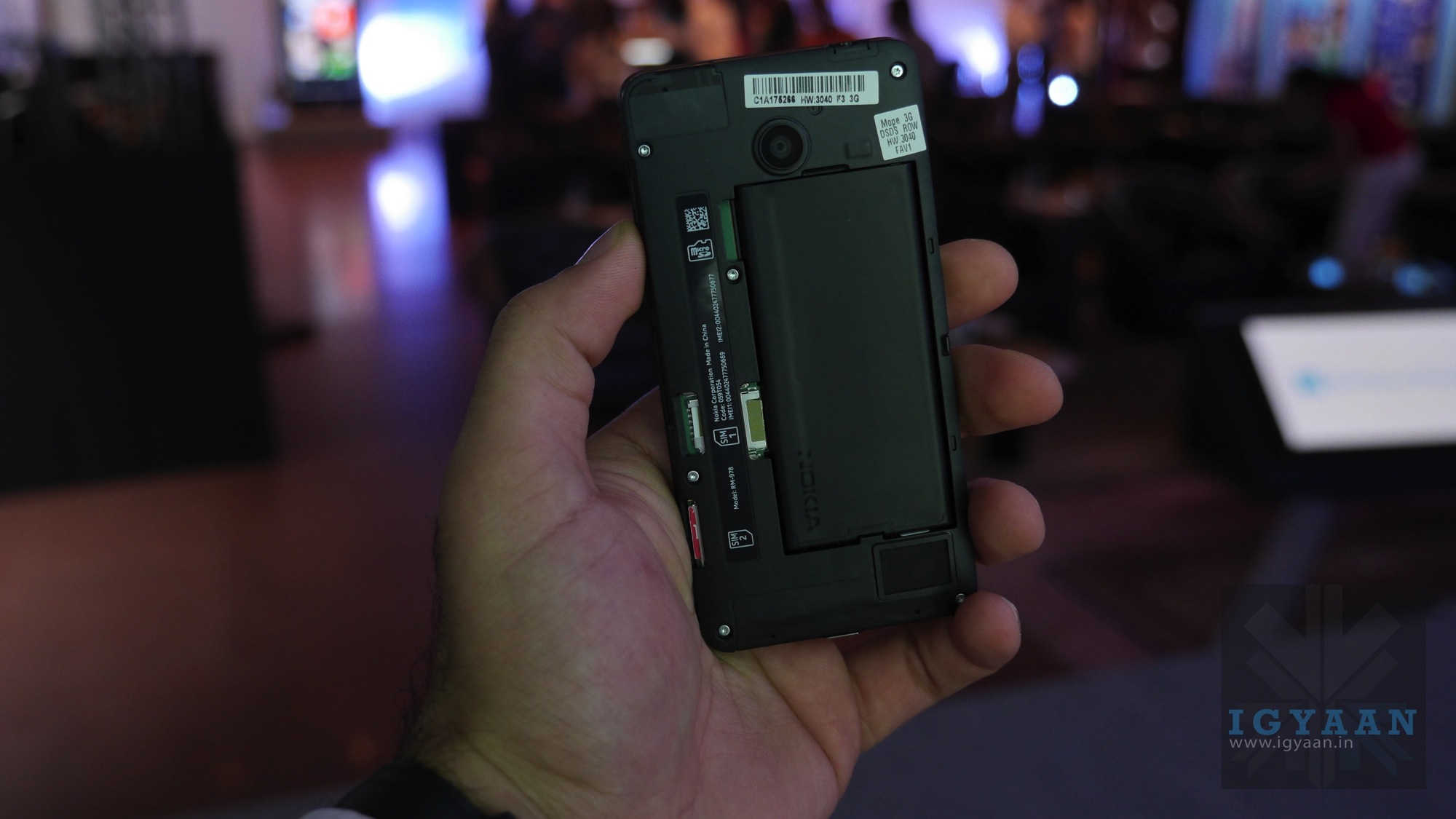
It takes in two Micro Sim cards, only the first one handles 3G data while the other holds on to 2G. Smart call forwarding forwards the call from the second sim to the first sim or vice versa if you are on a call so both sim cards are sort of active.
The battery is bigger than previous versions of the Lumia family with an 1850 mAh battery in the back.
RAM may be the one thing that brings down the Lumia 630, with just 512 MB under its hood, the hardware level disappointment will create a major withdrawal. Especially considering that previous “budget” Lumias have been shipping with 1 GB.
Main camera sensor: 5 MP
Display size: 4.5”
Display resolution: FWVGA (854 x 480)
Processor name: Snapdragon 400
Battery capacity: 1830mAh
RAM: 512 MB
Mass memory: 8 GB
Smart Sim Management
Action Center
Lock Screen
Thanks to Windows Phone 8.1 out of the box, you get smart sim management, various in built sense options including WiFi Sense, Battery Sense and Storage Sense. You will also get the new boxy notification panel dubbed “Action Center” which was long anticipated.
Stay Tuned for our hands on review video followed by a full review.
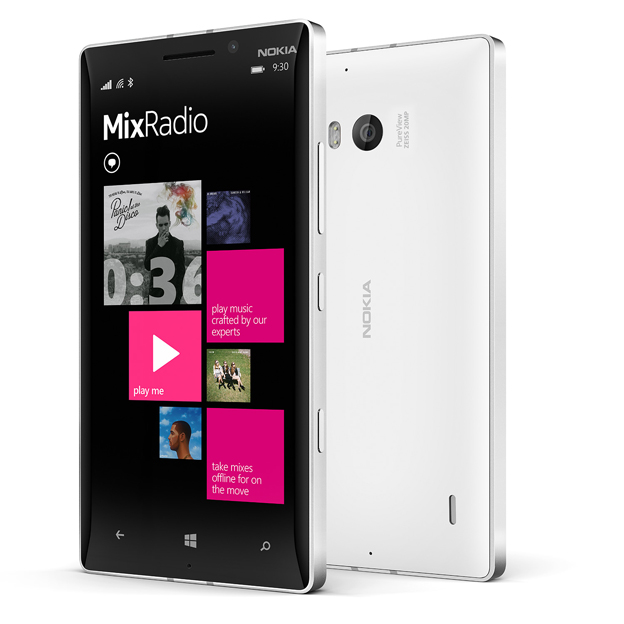
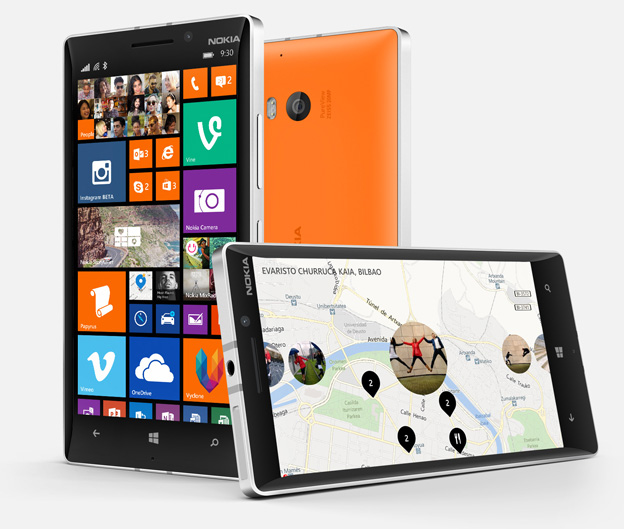
The Nokia icon was the envy of the global audience, well no more! The new Lumia 930 is essentially the global version of the Nokia Icon and it features a 5-inch full HD display and a 20-megapixel PureView camera with a Zeiss lens. The phone also ships with a Creative Studio app that’ll let you add Instagram-style filters to your snapshots. A 1.2 MP wide-angle camera adorns the front
The Front of the Lumia 930 has a 5-inch, 1080p Full HD display (1920×1080; 441ppi), with Gorilla Glass 3, Super Sensitive Touch and a near 180-degree viewing angle. The handset features Integrated Dolby Surround Sound. Hardware wise a 2.2 GHz quad-core Qualcomm Snapdragon 800 processor, 32GB of internal storage (7GB free OneDrive cloud storage) and 2GB of RAM finish it up with a 2420 mAh battery.
The handsets will ship with Windows Phone 8.1 out of the box and contain apps like Nokia Camera, Nokia Storyteller, Nokia Creative Studio and Nokia Refocus. A new new Living Images feature will even turn statics pictures in movie styles.
With Windows Phone 8.1 the handset will finally get a notification center and the all new “Cortana” Microsoft’s answer to Siri and Google Now. The Nokia Lumia 930 is roughly priced at US $ 599 and is expected to hit Europe first and then Asian countries starting June.
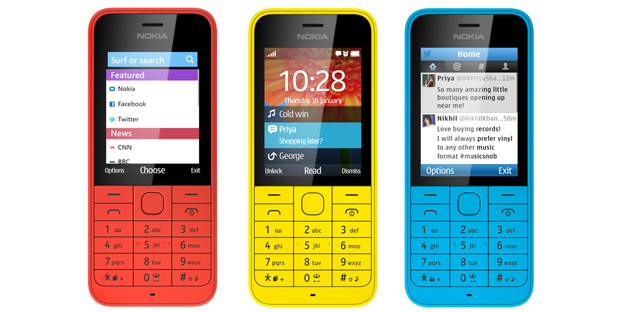
The Nokia 220 Dual SIM phone was launched at the MWC 2014 along with the Nokia X series, and is now available in India at Rs. 2749.
The Nokia 220 features a 2.4 inch QVGA LCD display and sports a 2 MP camera. This feature phone supports expandable storage up to 32 GB via a microSD card, has Bluetooth and supports Micro USB charging. This dual-SIM phone allows users to take advantage of the pre-loaded Twitter and Facebook applications. Nokia proudly says that the new Nokia 220 has been built after seeing the success of the Nokia 110 budget phone.
The Nokia 220 Dual SIM is packed with an 1100 mAh battery, which should deliver up to 15 hours of talktime and up to 24 days of standby time. This device measures 116.4 x 50.3 x 13.2 mm, while weighing 83.4 grams. The Nokia 220 is available in five color variants; Black, Yellow, Red, White and Cyan.
It seems that Nokia has no plans to launch the single SIM variant in India, which was also launched at MWC alongside this Dual SIM variant.
Own a Nokia Lumia phone running Windows Phone 8? Its time to hit the App store and download the Nokia Refocus app. The app was earlier thought to be reliant on the Pure View Camera tech. But it appears that Nokia has made the App available to all.
How the picture can be refocused is reliant on the apps ability to scan the area, a Focus Sweep while you hold the camera steady. The phone camera and app will then capture multiple images at various focal lengths and combine into one dynamic image which can then be refocused later. Sort of like the Lytro camera.
In other news it looks like the new HTC One (aka M8) will also have this functionality inbuilt.
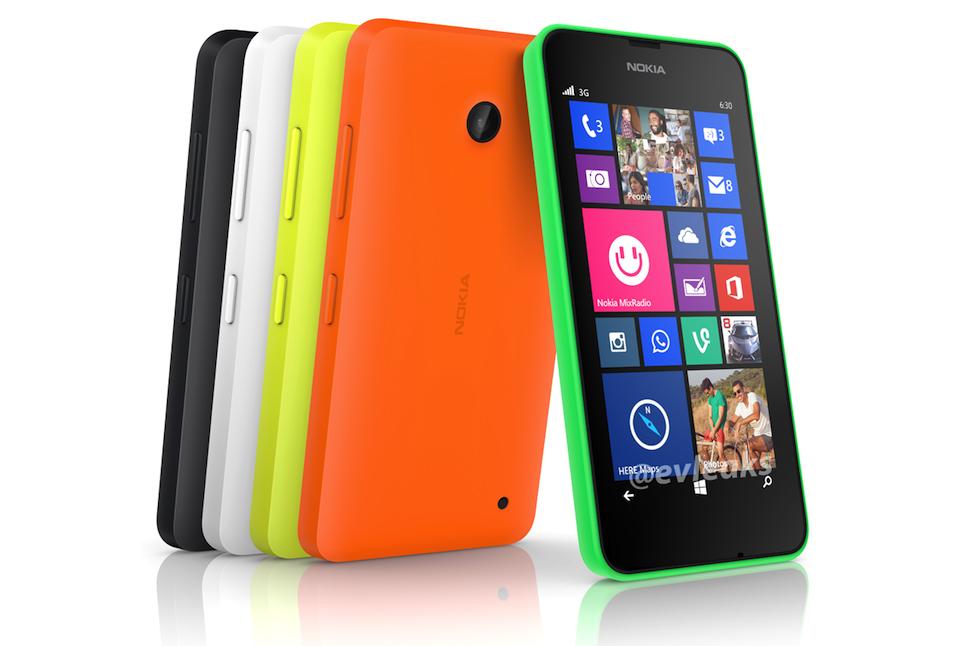
The rumored Nokia Lumia 630 is thought to be one of the first handsets to run Microsoft’s incoming Windows Phone 8.1 OS and it was shown off today in a leaked press render.
The phone has been leaked through the @evleaks Twitter account, and is a traditional press-style glamor shot of a phone apparently named the Lumia 630. Pictured in five different colors, it’s shown running Windows Phone 8.
Some of the notable feature here include a lack of fixed hardware controls on the front of the device. Rather, the new version of Windows Phone will allow for the inclusion of on-screen prompts for the usual back, Windows, and search commands.
The leaked shot also shows that the Nokia Lumia 630 lacks a camera flash and, in a first for a Windows Phone, a physical camera shutter button.
Not much is known about the handset at this point, but according to one of the images posted on Baidu, the Lumia 630 will feature a 4.5-inch display with a decent enough resolution of 854 x 480 pixels. Under the hood with be the mid-range Snapdragon 400 processor accompanied by 1GB of RAM.
The recently launched Nokia X, the Android powered device that is intended to promote Microsoft’s services via Android, has been hacked to run Google’s services instead. Basically, you will now be able to run any Google Mobile Services – PlayStore, Gmail, Maps, Notes, etc, on the device.
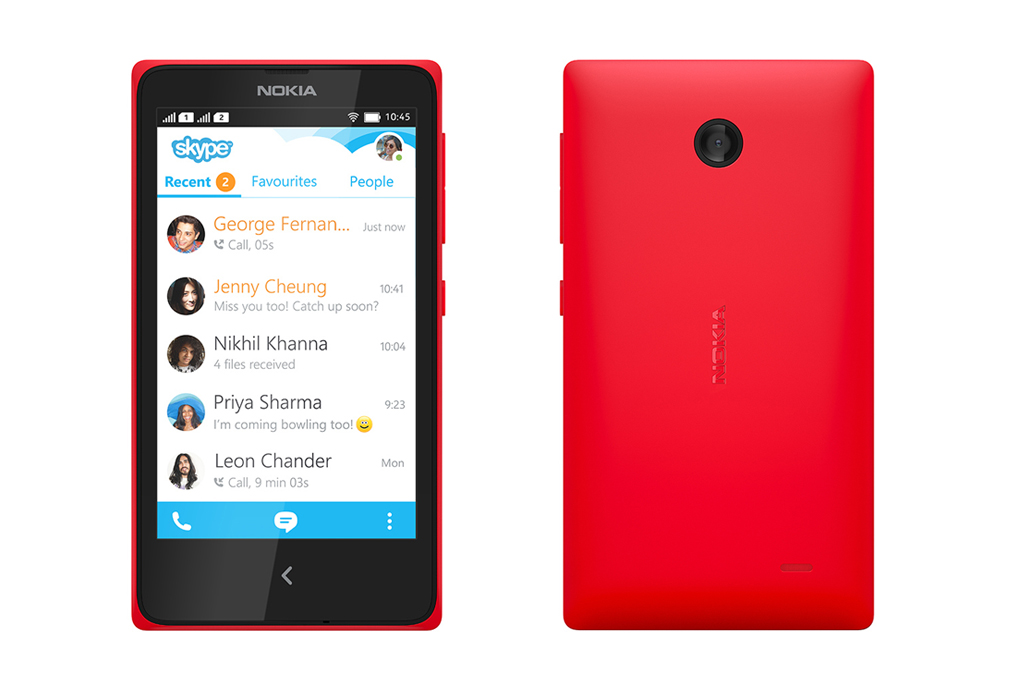
The forked version of Android will not include Play Store or any Google App, like Chrome, Maps etc, however, it can still manage to run the Android applications you want. These X smartphones from Nokia will instead include, Skype, Here maps, Outlook and more services.
The first thing to remember about running Android is that any attempt to release a feature or app exclusively for one device family will only result in the hack/mod-minded Android community extracting and sharing said treasure with those running other Android-based devices.
The hack is pretty simple and we could see a good number of Nokia X models running Google services in the future. A developer named KashaMalaga, by using the popular rooting application, FramaRoot, which lets you avail admin privileges in just one-click, found a quick way to bypass the Nokia X’s bootloader and make it fit for installing a modified version of the operating system (custom ROM).
After the launch of Android Smartphones from Nokia, if you are still interested in feature phones the company will not disappoint you. As Nokia 220 and Asha 230 were also launched besides of the new X family from Nokia.
The Nokia 220 features a 2.4 inch QVGA LCD display and sports a 2 MP. This feature phone supports expandable storage up to 32 GB via microSD card. Has Bluetooth and supports Micro USB. Available in single or dual-SIM versions, users can take advantage of the pre-loaded Twitter and Facebook applications. The company proudly says that the new Nokia 220 has been built after seeing the success of the Nokia 110 budget phone.
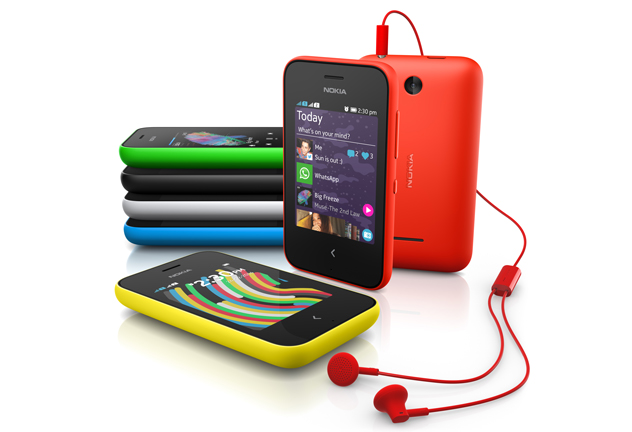
On the other hand, the Asha 203 features the Fastlane UI, which is seen on Asha devices and now also on the X family. The phone comes preloaded with apps such as WhatsApp, Facebook, Twitter, LINE and WeChat. Keeping the name of Asha phones it will be available in Red, Green, Black, Cyan, White, and Yellow.
The Nokia 220 feature phone is priced at 29 euros and the Nokia Asha 230 has been priced at 45 euros. More information to be out soon.
Ever since the birth of Android operating system, mostly all companies have opted this OS for their smartphones. Android can do better things than what Symbian did; but, Nokia as a company has never believed in the Android platform lately. However, the rumored Nokia X is now official and is the first ever Android smartphone for Nokia.
Talking about the specifications, the Nokia X and X+ sports a 4 inch IPS LCD WVGA display with a resolution of 800 x 480 pixels. The Nokia X series is powered by a 1 GHz Dual-Core Snapdragon processor and runs on a forked version of Android 4.1.2. The device is packed with a 512 MB RAM and 4 GB of internal storage, a microSD support of up to 32 GB. The Nokia X+ is packed with a 768 MB RAM and all other specs remains the same.
The Nokia X and X+ are equipped with a 3 MP fixed focus camera, with no secondary camera. Both devices have a 1500 mAh battery which should work well considering the specs they offer.
Nokia XL comes with a 5-inch 480 x 800 display, a 5 MP camera, a 2 MP front camera, 768 MB RAM and a 2000 mAh battery, all other specifications are same as on the X and X+.
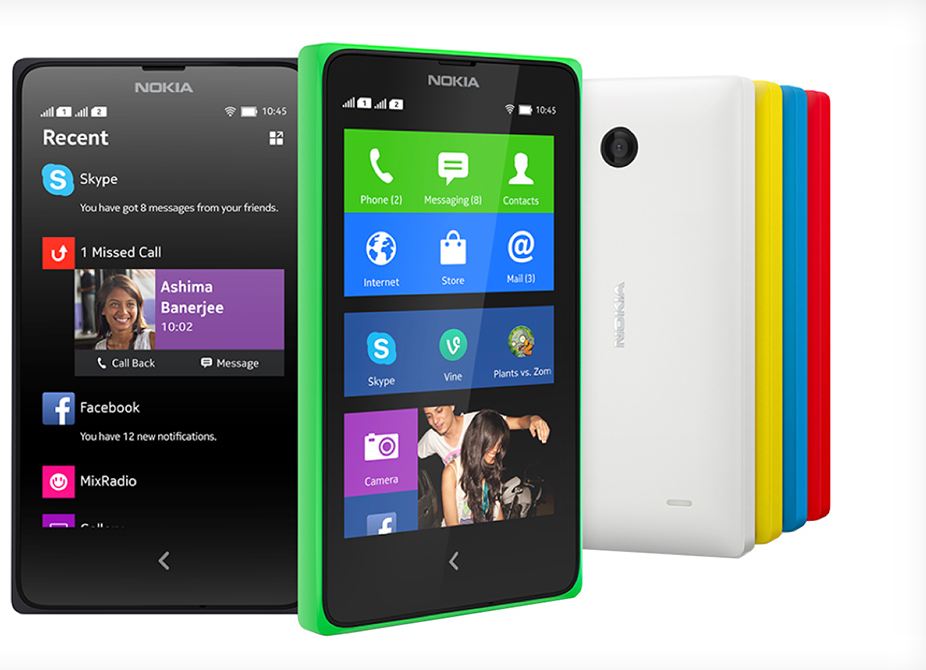
Only one touch button is seen, which can be pressed once to go back and hold it down to return to the home screen. Software customization on the home screen and in the forked OS makes the Nokia X different. This forked version of Android looks like the Windows Phone tiles we are used to see on Nokia Devices.
This forked version of Android will not include Play Store or any Google App, like Chrome, Maps etc, however, it can still manage to run the Android applications you want. These X smartphones from Nokia will instead include, Skype, Here maps, Outlook and more services.
The Nokia X and X+ both shares the same look and are 10.4 mm thick, which is probably not the thinnest device we have known. While the XL keeping up to its name is 10.8 mm thick device. While Nokia and Microsoft deal is about to come in the picture soon, we doubt if Microsoft will continue the X family that Nokia has just started today.
The Nokia X will go on sale immediately, priced at EUR 89 in Asia-Pacific, Europe, India, Latin America, the Middle East and Africa. The Nokia X+ and Nokia XL are expected to be available soon, priced at EUR 99 and EUR 109, respectively.
Swiping across reveals the Fastlane feature, an option that is forwarded from Nokia’s Asha devices. However, it is disappointing to see these phone running on forked version of Android 4.1.2 which was launched in 2012.
Many of us have been waiting for an Android smartphone from Nokia, and today Nokia has ended the wait by launching 3 new Android running smartphones. While you wait for our hands on video do let us know what you think of these devices.

 As of 25th April 2014, Microsoft’s acquisition of Nokia has been approved by Nokia shareholders and by governmental regulatory agencies around the world. Under the Nokia-Microsoft deal, Microsoft will take possession of the Lumia smartphone brand, along with the company’s lower-end Asha phone line and the new Android-based Nokia X phones. With this, they will also inherited 25,000 new employees.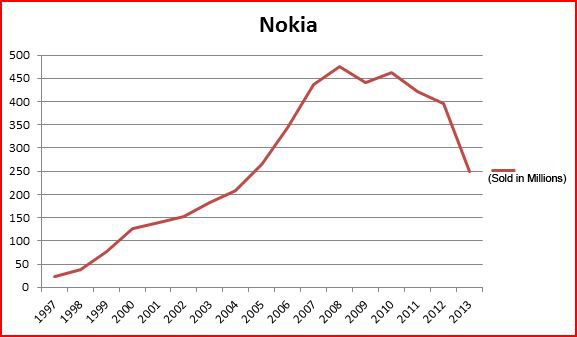
 The most disappointing aspect of the demise of Nokia and several other major brands such as Motorola is the effective centralization of majority of innovation in the hands of a few large multinational corporations that lock knowledge in a safe. Competition is necessary for innovation. Accumulation of progressive ideas in the hands of the few would lead to monopolization and will be a major hindrance to development.