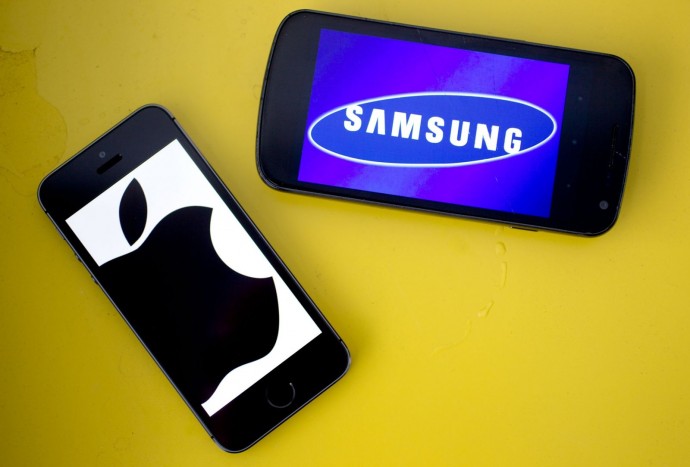
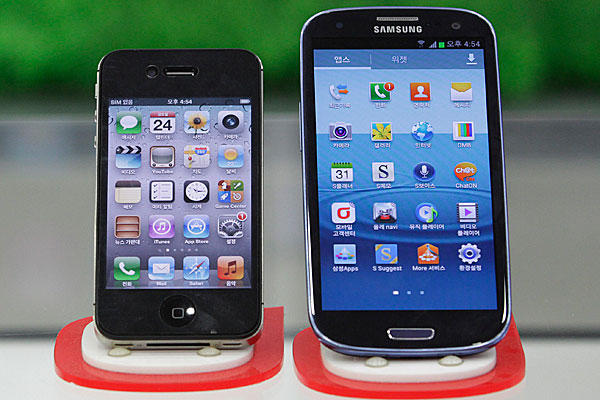
Apple Inc. and Samsung Electronics Co. are starting to wind down their global patent dispute. Smartphone giants announced in a joint statement that they will drop all patent lawsuits outside the U.S. However, the two companies still haven’t settled their patent disputes within the U.S.
The two companies have sued each other in Australia, Japan, South Korea, Germany, Netherlands, the UK, France, and Italy, and all these cases are being dropped, without being settled and without any cross-licensing agreements being negotiated. The companies disclosed the change in legal strategy in a joint e-mail. Apple and Samsung said they would push ahead with the most high-profile cases taking place in the U.S.
Apple first sued Samsung in the U.S. for copying features of the iPhone in 2011. Samsung then sued Apple for patent infringement in South Korea, Japan, Australia, the Netherlands, Germany, France, Italy and the U.K. Apple filed countersuits in five of those countries.
“Apple and Samsung have agreed to drop all litigation between the two companies outside the United States,” the companies said in a joint statement. “This agreement does not involve any licensing arrangements, and the companies are continuing to pursue the existing cases in U.S. courts.”
Earlier, Apple and Samsung agreed in June to drop their appeals of a patent-infringement case at the U.S. International Trade Commission that resulted in an import ban on some older Samsung phones. In the U.S., Apple had two victories against Samsung: $930 million in 2012 and $120 million in May of this year. The case is still unresolved though.
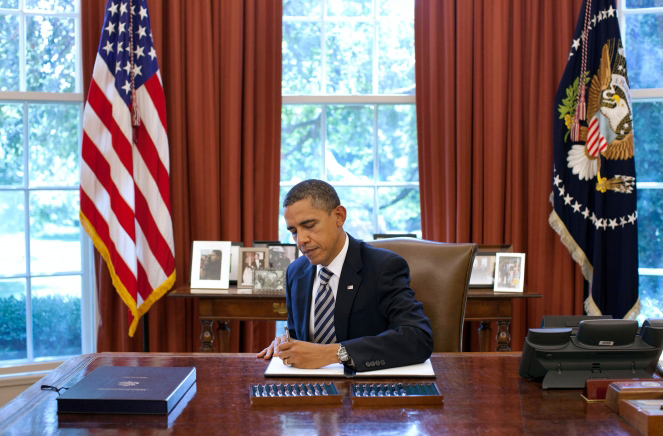
Remember when the first generation iPhones arrived in India, they had to be jailbroken (unlocked) to make them accessible to the networks here. Till recently this process was illegal. But yesterday President Obama made it legal by signing the “Unlocking Consumer Choice and Wireless Competition Act” (S.517) into law.
This will make it a lot easier for consumers who want to change their service providers while keeping their own phones. It will also be beneficial for folks who travel abroad and would want to switch to local services. Wireless providers install software barriers to prevent users from using the phones on other network.
President Obama Signed the Consumer centric law on Friday.
Usually the users in America buy their phones under a contract program which usually extends to 2 years or more and after which they have the option for changing operators or upgrading to a better plan. With this law people who want to change their plans while still keeping their phones can do as they please.
The Law also passed because the wireless providers association CTIA supported the decision. They have stated that they laud the decision. CTIA affiliated service providers had agreed in a deal brokered by FCC last December to allow users to unlock phones.
FCC’s chairman Tom Wheeler welcomed the decision in a statement saying “This new law is a positive development that addresses the issues that triggered unlocking concerns in the first place. When the wireless industry worked with the FCC on a voluntary agreement to unlock devices when consumers’ contracts have been fulfilled, they took an important step forward. The president’s signature today makes greater consumer choice the law of the land.”
The US legislation is currently infamous for severe partisanship which has caused a severe gridlock which has prevented them from passing any law. So it is rather welcome to see that some new law, especially a consumer oriented law getting the presidential accord. It can also be seen as a signal that laws supported by corporate interest will be the only ones that will surely pass in America.
Russia is in a weird place right now. After months of unfavorable international gaze on the geographically giant nation and ex-superpower the country intends to crack down on dissenting opinions. With the incursion into Ukrainian territory and supporting separatist group in that country who recently shot down the Malaysian Airline MH 17, the country has constantly been under negative light.
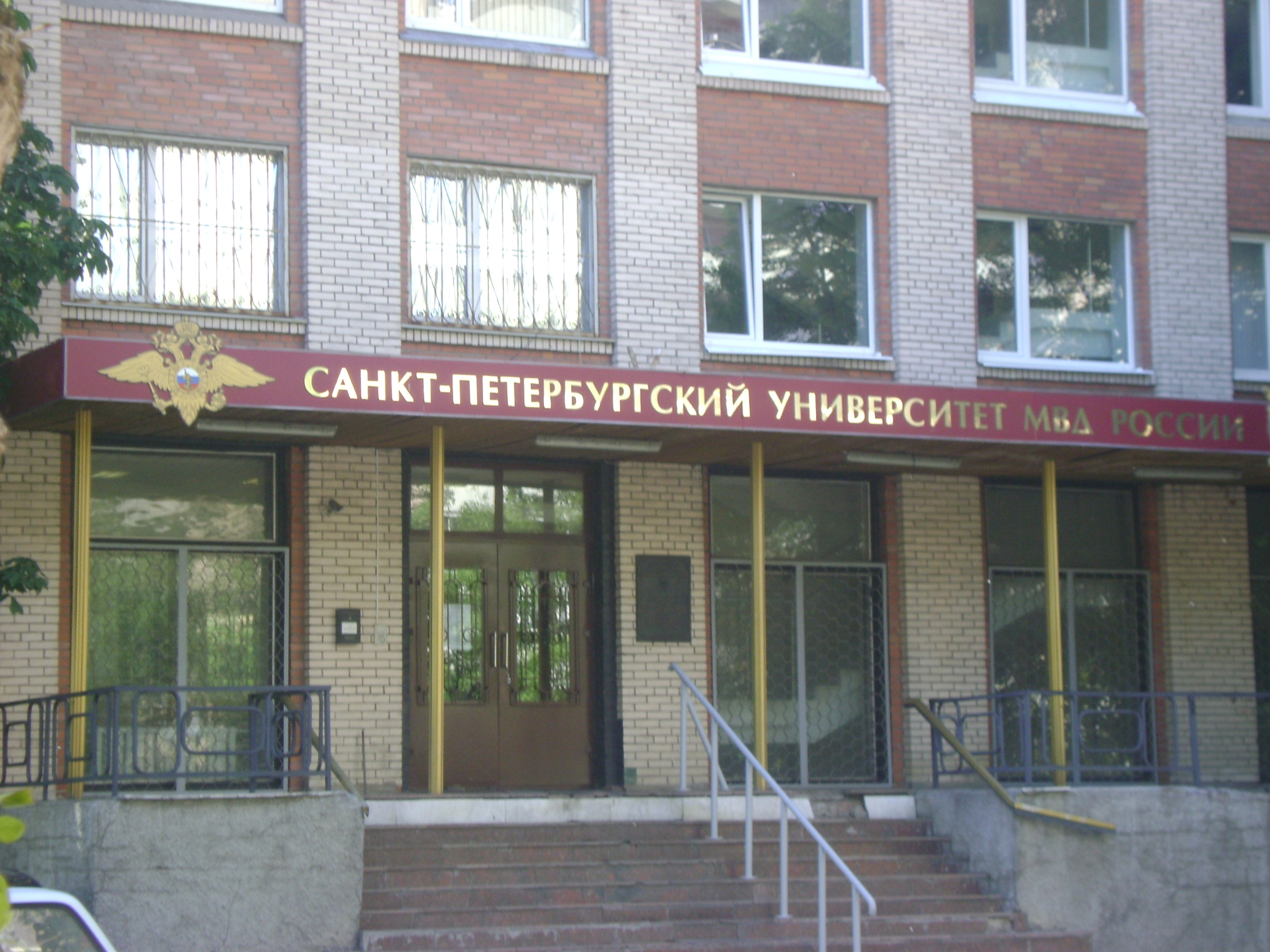
The country’s Interior ministry has taken out a tender to 3.9 Million Rubles ($111,290) to try to identify the anonymous users of the TOR network. The decision came to light when a group of human rights activist began protesting against the tender.
The Russian Interior ministry issued a tender to unlock TOR network which will be announced on August 20
TOR network hides the identity of the user by encrypting the data and sending user information through thousands of random pathways, therefore, making it harder to trace. This pathway is also used to access the unarchived Dark Net. Though the system has been used by anti-social elements too, but the anonymous features have helped information activists to reach their audience without being identified for persecution.
Russia has enacted some major regressive laws to contain unfavorable opinions within territories. The nations new blogging law ask all bloggers with a daily audience of over 3000 have to register their identity. The ones protected by the decision are those bloggers who use the TOR network, and this is the government’s way of uncovering such hidden bloggers.
The fact is that only a small number of internet users in Russia use the TOR network, but their burgeoning number has the Kremlin worried. It is estimated by Apparat.cc magazine that the number has grown from 80,000 in May to 200,000 by the month of July. Russian contemporary politics seems as a decisive factor that is encouraging people to opt an anonymous route to address their displeasure with their government.
It is not the first time that there have been steps taken by the government to track anonymous service users. The world’s gossipy aunty who always wants to overhear every conversation, A.K.A the NSA has invested resources to uncover the network, but that involves a lot of time and expense. The anonymous network stands quite resilient in the face of opposition.
This whole scenario is also a reminder that internet needs to be protected from prying eyes and its independence needs to stand. Information and dissent go hand in hand. A free internet has the potential to change the world of tomorrow.
Government of India had recently allowed CDMA service providers the option to use EVDO technology to provide high speed internet access. But now a CAG report states that as this facility was provided without an auction, it cost the government treasury a sum of Rs 41,000 Crore.
The CAG seeking a reply from the Department of Telecommunication (DoT) stated in a note, ‘‘The non-auctioning of the spectrum in 800 Mhz (CDMA spectrum) for EVDO services resulted in non-realisation of upfront one time charge of Rs 4,187.65 crore.”
The Department of Telecommunication(DoT) though stated that the CAG’s claims of losses are “presumptive and hypothetical”. They replied that the CDMA providers were well within their license limits when they provided the EVDO based internet access. DoT holds the view that EVDO is to CDMA as EDGE is to GSM services and hence don’t require a new auction.
This is still a developing story in which multiple stakeholders will clear their stance on the matters. The trade association representing telecom companies, Telecom Service Providers India (AUSPI) Association of Unified Telecom Service, has cleared that in their opinion EVDO is an alternative form of CDMA and so companies are in their limits to use the technology.
In the recent times the Compotroller and Auditor General (CAG) has been proactively watching India’s accounts and have uncovered some glaring scams in the process. Lets just hope in times of severe corruption scandals, a new scandal doesn’t come and act as a dampner to our inflation-prone economy.
You probably know what happens to your house, assets or family heirloom on your death. Of course, because it’s all there in your will. But have you ever wondered what happens to your your e-mail accounts once you’ve reached the Pearly Gates?
Mourning kith and kin may want to access these accounts for sentimental reasons, inspite of your your personal messages and online dating profiles.
The Uniform Law Commission (Washington), appointed by the state on 16th July, 2014 endorsed a program whereby the loved ones could access but not control the deceased’s digital accounts. This however is yet to be adopted by the legislature; once is it however, a persons online life would also become an integral part of his will.
“This is something most people don’t think of until they are faced with it. They have no idea what is about to be lost,” said Karen Williams of Beaverton, Oregon, who sued Facebook for access to her 22-year-old son Loren’s account after he died in a 2005 motorcycle accident.
Presently most tech-providers have their own solutions. Facebook, for example, “memorializes” the accounts, allowing the close ones to view the profile whenever they desire; however for others, presently, once a will becomes public, anti-hacking laws becomes applicable on them. The courts aren’t convinced that a company supplying the technology should decide what happens to the deceased’s online accounts.
Uniform Law Commission to the rescue! According to the proposal the executor of the deceased would get access to, however not control the digital files, unless prohibited in his will. This would imply that the widow may access her late husbands e-mail accounts, however would not have permission to view any videos or send any e-mails.
This is a great initiative as every family/representative should have the right to access the departed’s digital data. Had this still been a generation of “Letters in the Shoebox”, that would have automatically fallen to the family of the deceased. Then why not the online profiles, for its sentimental value, if nothing else?
The Outernet is a global networking project currently under development by the Media Development Investment Fund, a United States-based non-profit organization established in 1995. The Outernet team claim that only 60% of the world’s population currently have access to the wealth of knowledge that can be found on the Internet. This is because, despite a wide spread of Wi-Fi devices across the globe, many countries are unable or unwilling to provide people with the infrastructure needed to access the web.
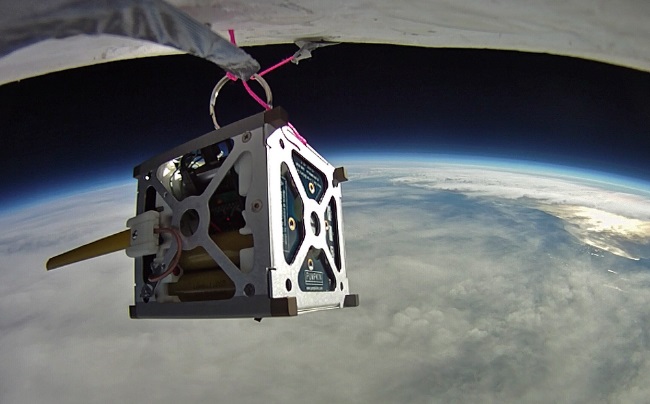
The company’s plan is to launch hundreds of low-cost miniature satellites, known as cubesats, into low Earth orbit. Here, each satellite will receive data from a network of ground stations across the globe. Using a technique known as User Datagram Protocol (UDP) multitasking, which is the sharing of data between users on a network, Outernet will broadcast information to users. Much like how you receive a signal on your television and flick through channels, Outernet will broadcast the Internet to you and allow you to flick through certain websites. This service sounds too good to be true.
To understand Outernet better, check out their self-explanatory infographic:
India is in a major energy crisis. With the population multiplying on a daily basis the need for cheap forms of electricity have become a must. India has large plans, whether politically invoked or not; we might be one of the first few nations with a large chunk of renewable electricity sources.
About five years ago large parts of the Thar desert in Rajasthan and surrounding areas was sanctioned for subsidised privately run solar farms. The land was practically given for free, and an energy reclaim of Rs. 5/ KW (8 cents approximately) was promised to the solar energy companies that were supposed to be set up.
The project is yet to see the light of day. However, sources tell us that the work is still underway.
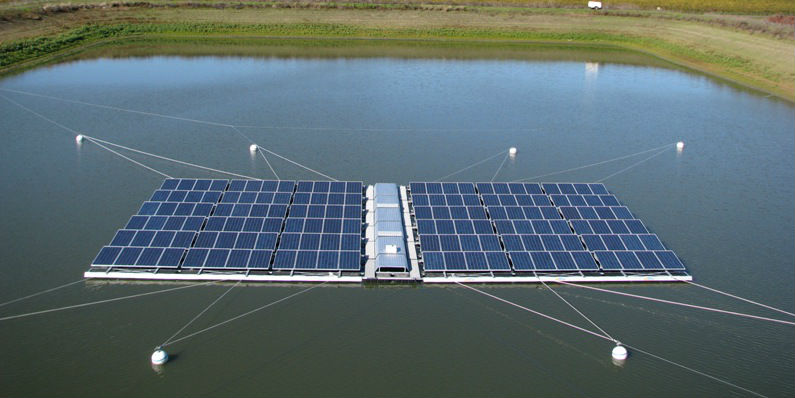
Meanwhile, a new project in the southern state of Kerala is said to lead the Solar energy revolution in India, thanks to the abundance of sun and large water bodies. A new 50MW plant built entirely on 1.27 million square meter floating platform in Kerala is said already to be in the works. The plant has been approved by the NHPC and will get commissioned in October of 2014. (Yes this year).
This Solar Farm project will provide cheap and renewable electricity to about 18,000 homes. After the states announcement on building two lakh megawatt of solar power generation capacity, the price of barren solar usable land rose this quarter by tenfold, building a plant on water will be cheap for the government as well as the people enjoying the electricity.
[quote text_size=”small” author=”SP Gon Choudhury” author_title=”chairman of the Renewable Energy College”]
Each station would require around 3,000 square feet of space to generate 20 kilowatt of power. There are many water bodies that could be used for this
[/quote]
The total project is estimated to cost between Rs 350 crore and Rs 400 crore, the Renewable Energy College will assist in sourcing material till commissioning of the plant.
The first phase of this Solar Farm, estimated to cost Rs 35 lakh, has been fully funded by the ministry of new and renewable energy and is expected to generate around 12 kilowatt of power to begin with by October 2014.
[quote text_size=”small” author=”SP Gon Choudhury” author_title=”Chairman of the Renewable Energy College”]
The ecology of the water body is not likely to be affected much, and it will also reduce evaporation, thus helping preserve water levels during extreme summer. Solar panels installed on land, face reduction of yield as the ground heats up. When such panels are installed on a floating platform, the heating problem is solved to a great extent
[/quote]
The yield on these panels is expected to be 20% higher than land based solar power plants. The overall capital cost for such solar projects will be around Rs 6.5 crores per megawatt, which will bring down costs of electricity to Rs 7 / unit. This price will then be further regularised by the state electricity board.
With the large availability of Sun energy in the country, the future may finally hold a strong supply of electricity for everyone, everywhere!
The Government of India (GOI) is going to auction 184MHz of spectrum in 900MHz band through the Department of Telecom(DOT). The auction will be done as 29 licences will be up for renewal in 18 telecom zones in 2015-16.
The spectrum GOI intends to auction is mostly used for 3G services. The auction will be for the 900 MHz, 1800 MHz and 2100 MHz. Based on the memorandum of understanding between DOT and the Defense Ministry, the Defense Ministry will vacate about 25 MHz in the 2100MHz spectrum. Out of the agreed upon 25 MHz, the Defense ministry has already vacated 20 MHz.
DoT is also planning to sell spectrum in the 2300 MHz and 2500 MHz bands to be used for LTE (4G) services. In 2010, the government had auctioned 2300 MHz spectrum to the operators such as Reliance Jio Infocomm, Bharti Airtel and Tikona for long-term evolution (LTE) services. But now they are at freedom to use the spectrum to their discretion as they are not bound to the technology.
The government has 104 MHz of spectrum on it for auctioning. This will include the 26 MHz of spectrum freed after license renewals from Idea Cellular, Bharti Airtel and Vodafone India. Along with these the 78 MHz of spectrum which was left unsold in February will be up for auction.
The spectrum base prices will be set by TRAI for the 900 and 1800 MHZ spectrum. In the previous auction, the Mumbai, Delhi and Kolkata circles were sold for double the base price, earning the government 610 billion Rupees.
This auction will give the companies a chance to expand their spectrum thereby expanding services like better 3G and 4G connection. But the heavy cost of the auction will definitely percolate down to the consumers. We have to wait and see if more spectrums mean better services from the companies or just higher phone bills.
Flying saucers were an integral part of our 20th century pop culture. Movies like “The Day the Earth Stood Still” initiated our obsession with the rounded spaceships of unknown visitors. They also inspired a million hoaxes and countless imaginative tales of anal probes. But now NASA has made its own version of this Science Fictional travel medium to further transport capabilities to Mars.
The test program, called the Low-Density Supersonic Decelerator (LDSD), was put into an evaluation phase over the last weekend and it came out with flying colors. The test was done at the U.S. Navy’s Pacific Missile Range Facility in Kauai, Hawaii.
Retrieving the craft from the Ocean
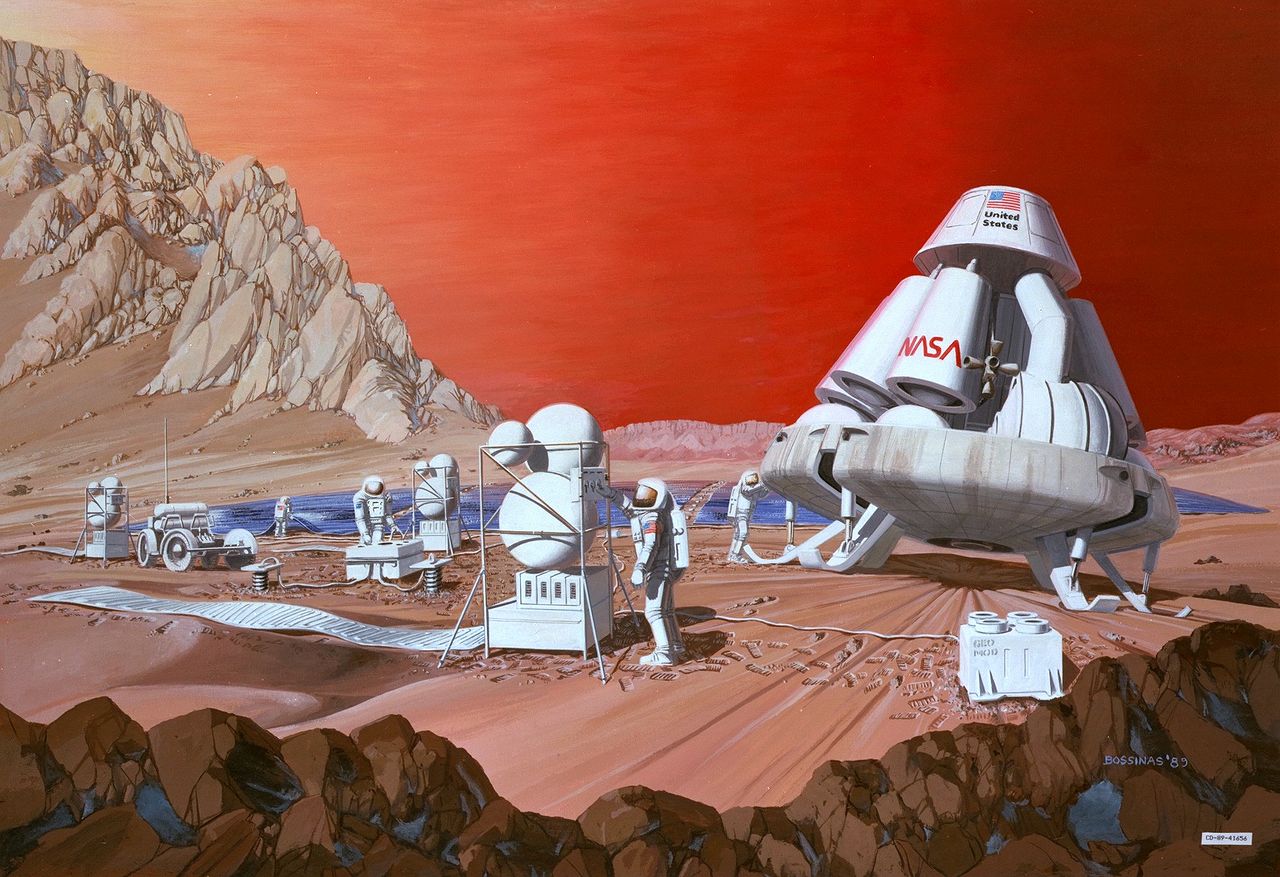
The LDSD is an important technology to look forward to. The successful landing of the one tonne Curiosity rover using the rocket powered Sky crane set the precedence for this craft. NASA realized that the future missions will try to get even bulkier equipment on board and if the current plans of forming a human settlement on Mars have to succeed, they need to find a way to deliver payload efficiently and cost effectively.
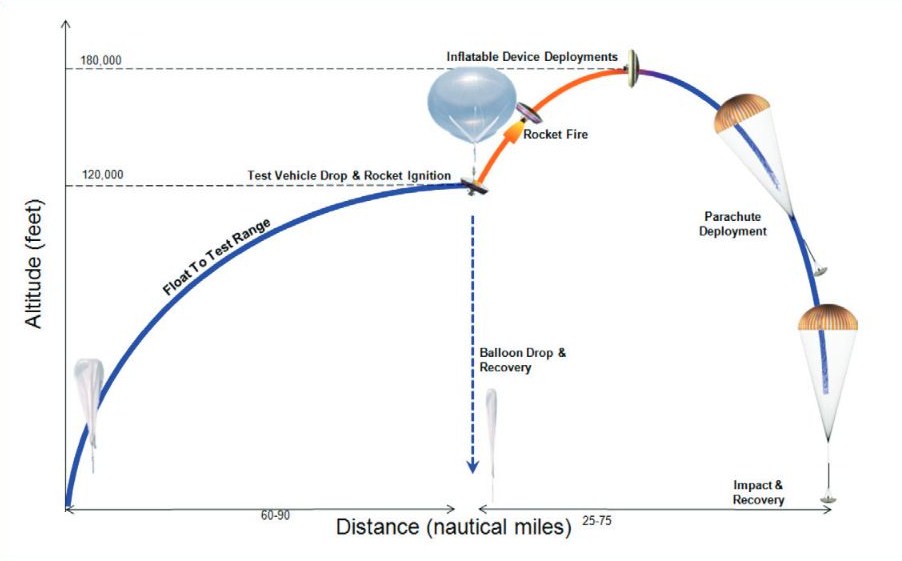
The LDSD, along with the Supersonic Inflatable Aerodynamic Decelerator (SIAD) was tested in the Stratosphere at the heights 36.58 KM above the earth surface where the winds are as thin as Mars. In the stratosphere, the LDSD payload underwent a rocket-powered trajectory to reach supersonic speeds. After this the deployment and optimum functioning of the inflatable decelerators were tested. This was followed by the recovery of the balloon and test vehicle in the ocean.
The Test Plan
NASA intends to use atmospheric drag as a landing solution, thereby saving rocket engines and fuel for final maneuvers and landing procedures. The technology for bigger spaceships will be bulkier to assist the massive crafts with landing capabilities. As the name suggests the craft is deployable at supersonic speeds and can bring the speed down for safe landing.
Mars is a complicated environment for landing spacecraft’s. As it has a thin atmosphere, the parachutes need to be massive. Airbags and rockets have been used for past missions, but they would not be that efficient with larger payloads.
The Dream of Human Mars mission got a bit closer to reality with this LDSD test
This was the first of the three tests for the LDSD technology. There will be two other devices which will be tested later. As the mission dates for the audacious plans for landing humans on Mars is drawing closer, NASA intends to attain flight level maturity in the coming two-three years.
Alternative fuel is the talk of the town. With the environment degrading with each passing day and more and more people joining the sane club of those who accept the climate change reality. The race to find the next best fuel is intense. Ethanol seems to be the immediate answer to the issue.
Now is the time for Alternative fuels
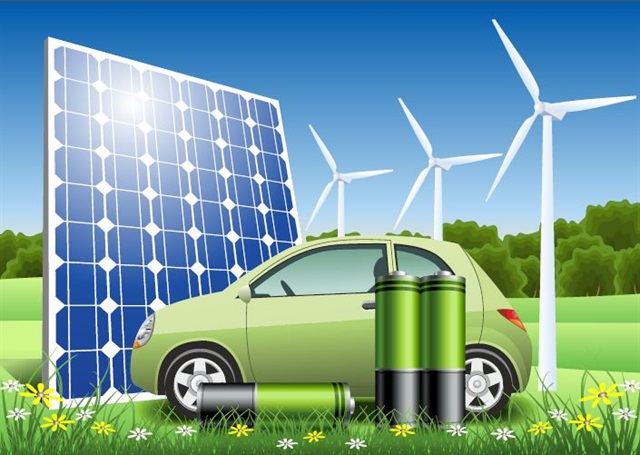
There are many contenders for the title of the best alternative fuel. There is everyone’s favorite; Solar energy. This is in fact the cleanest and the best fuel for our civilization. There have been massive investments around the world to substitute solar power as an alternative to coal based power.
There are Wind and Geothermal energy options which are also seen as good long term solutions for the global energy crisis. These options are great for electricity solutions but we still have major issue of pollution from automobiles around the world. These gas based monsters will take forever to replace to electric car systems which are still in developmental phase. The alternatives are not yet efficient enough as their internal combustion engine counterparts.
So how do we take on the menace of fossil fuel powered, greenhouse gas emitting vehicles which have become so essential for our lives that it’s hard to imagine a life without them. As India imports around 70% of its petroleum needs, the need to find alternatives is extremely important. The immediate solution can be found in Ethanol.
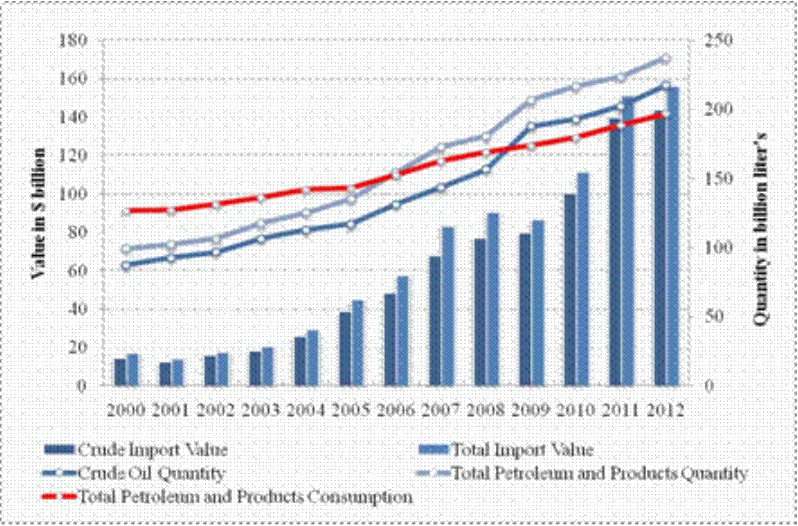
Source: Petroleum Planning and Analysis Cell, Government of India (GOI)
As seen by the official Government of India figures, India’s fuel bill has been rising yearly. The sector that consumes the most fuel is transportation. Urgent steps need to be taken to reduce the massive expenditure on fuel or else we would have shortage of funds for developmental initiatives for education, healthcare and social improvements.
Ethanol is an organic compound that can be made with corn starch, sugar cane, sugar beet, grain, barley, hemp, potatoes, sweet potatoes, cassava, sunflower, fruit, grain, wheat, straw, cotton, other biomass and many more. It can also be made from the by-products of sugar processing plants. Considering the amount of sugar that is in our food today, it seems there is a lot of sugar waste (molasses) out there. Currently most of it goes into the production of alcohol (Hail Old Monk).
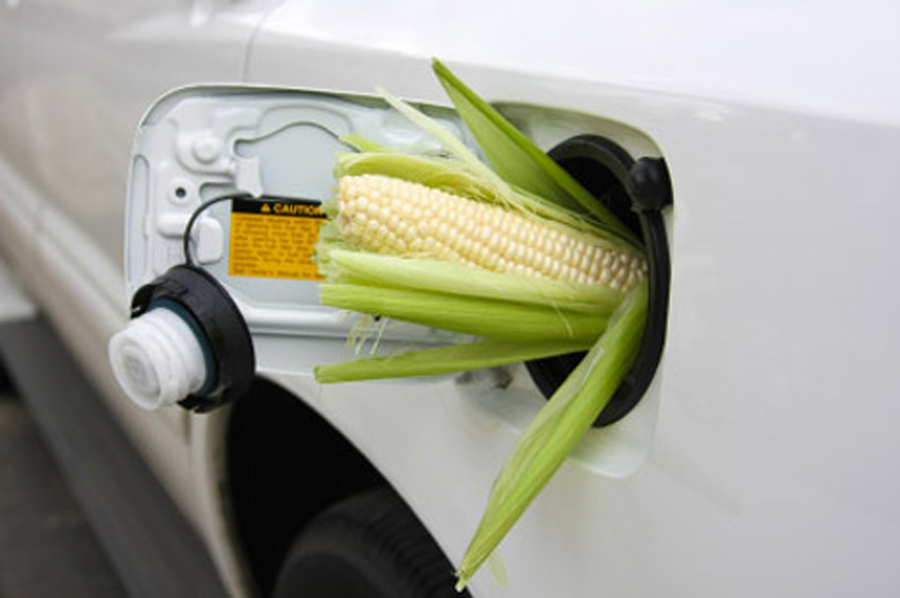
Ethanol can be blended in with the petrol to make it more environmental friendly. Not just that, it can help to battle the meteoric rise in fuel prices. It needs an extra step in the distillation process and for this sugar plants can be retrofitted for an Ethanol treatment facility.
There are many blending options. There is e10 with 10% blend to e85 which is an 85% blend of Ethanol to petrol. The e10 can work in any vehical that was made after 1980 and e85 works with flexible fuel cars. Ethanol has about 35% oxygen which helps burn up completely thereby emitting less toxic gases.
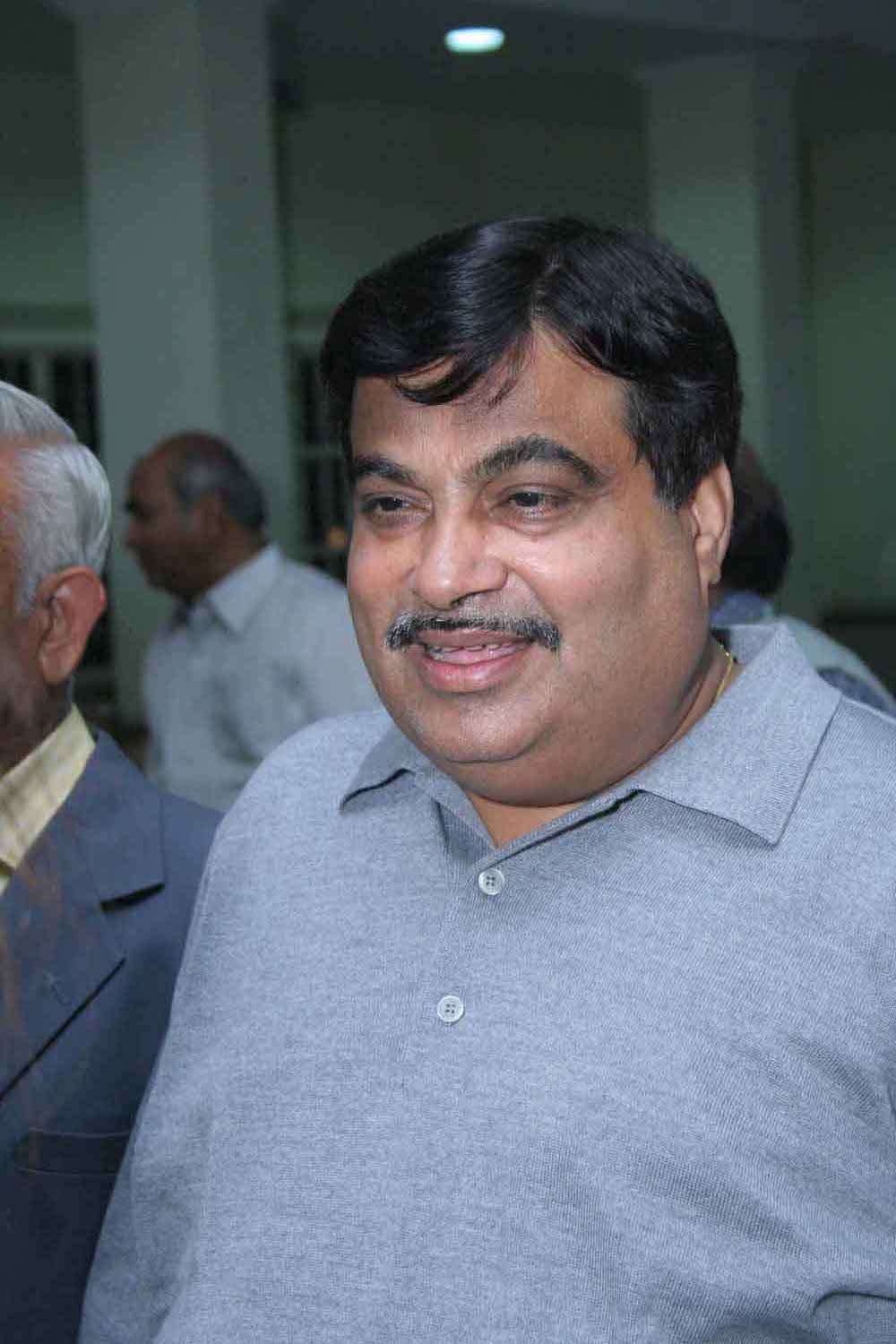
Indian Transport and Shipping minister wants to encourage Ethanol blending
Recently the new Transport Minister of India, Nitin Gadkari declared an initiative to blend ethanol to save foreign exchange. Indian oil companies have expressed a desire to buy ethanol but they can’t find enough supply here. One of the prime reasons for this is that alcohol companies give higher prices for molasses than Ethanol producers.
According to Nitin Gadkari’s company Purti group; which is a producer of Ethanol, if 140 crore litre of ethanol can be procured in an year, it can save about Rs. 63000 Crores of precious foreign exchange on petrol.
This action, while commended for being an economically directed initiative is also being berated for its short sightedness. India has been facing the wrath of food inflation for a while. If there is a shift in the agricultural sector from food crops to fuel crops it can severely increase food prices. Also as there is an acute shortage of talented agricultural scientists, educating the farmers on increasing the efficiency will be an issue.
Currently in the world market US and Brazil are the top manufacturers of ethanol. They produce around 90% of the world’s ethanol. While US’s production is more grain based, Brazil opts for Sugarcane. As India is the second highest producer of the sugarcane, it can easily exploit that statistic in its favor. India has a biofuel policy but what is really required is long term commitments from the top brass. Investment in education of farmers to manage sustainability between food and fuel crops should also be a parallel priority.
There is also a major issue with Ethanol, if a sustainable plan isn’t worked out, farmers will dedicate a lot of land and may even clear forests for its production. This will negate whatever benefit is gained from blending it with petrol. In fact, cutting down forests adds more greenhouse gases than any other source.
Recently a group of Stanford University scientists have discovered a process by which Ethanol can be harvested without using plant agricultural resources. The process involves passing Carbon monoxide through an “oxide-derived” copper electrode. The team is now looking into making the process more efficient so that land resources can remain just for food instead of being pressurized into fueling stomachs as well as fuel tanks. This kind of developmental research and innovation should be encouraged by the governments everywhere.
Solar Powered Electric Cars are our best bet for a sustainable future
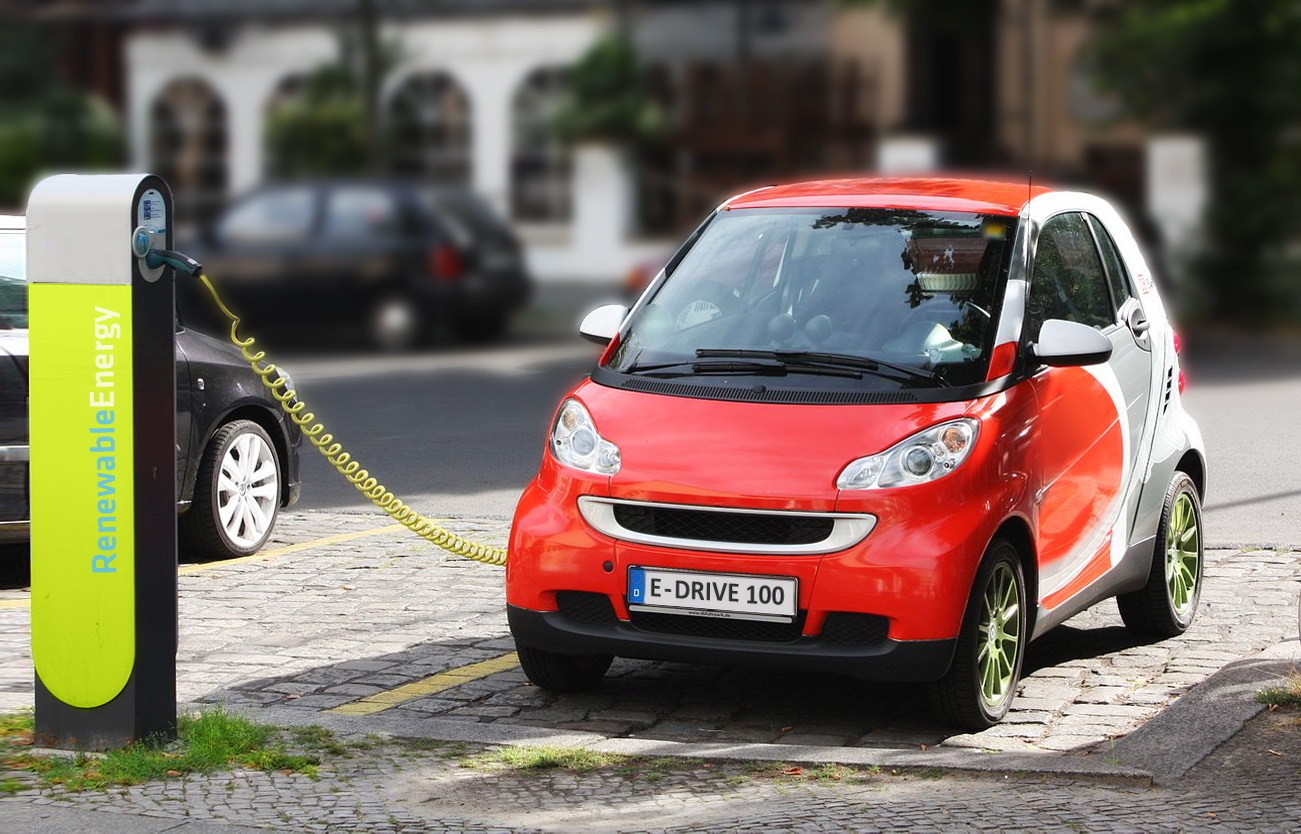
Overall the major issue with Ethanol still is that it is a short term action plan and we have to focus on long term solutions. One sure shot solution that comes to mind is Electric Vehicles. EV’s technology unknown to many is about a 100 years old. They were abandoned because of malicious campaigns against it and the cheap availability of fossil fuels in that era.
We are now close to exhausting accessible fossil fuels reserves. Exploring new places to extract oil from earth comes at a cost like the incident with BP’s Deep Water Horizon. The need for alternative transportation investment is extremely crucial right now. The time for inaction is long past gone.
If only farts could power vehicles, we Indians would have had free energy for life.
Lack of internet connectivity sounds may be a problem of the past for a few. Well, that’s certainly not the case for most of the German villages around the Danish border. Small towns and villages with population of mere 600 people can’t connect to the internet. But for the Germans, this sounded more like a challenge than a problem. The people of a small village called Löwenstedt have come up with a solution; building their own network. History of innovation and development triggers with the absence of it, this German village proved it right.
The village’s Mayor said that they never found a company willing to supply the necessary fibre-optics, which will be around 22km of stretch. Some 58 other communities in Northern Friesland face similar difficulties and so the idea was born of clubbing together businesses, individuals and villages to secure access to a modern technology that is taken for granted in most German towns and cities.
This network will work wonders not only the youth to get connected to the outer world easily, the network will also be used to establish more business, effective trade and help in the agriculture sector which is biggest part of economy in the village.
The firm working with the village people has collected more than €2.5 million ($3.4 million) in funds with the help of 925 shareholders who each contributed a minimum of €1,000. 94% of household from the village already signed up to the network for two years even before it started functioning.
Peter Kock, who runs an agricultural technology supply firm in the village, couldn’t be happier with this initiative. “It’s brilliant. There’s no comparison,” he said. Now data files that used to take two hours to load onto his computer screen now appear in just 30 seconds. This not only helped his business growing but also benefited his customers who can now easily check the availability spare parts online.
For now, however, it is only the village of Löwenstedt that has succeeded in mobilizing the solidarity of its inhabitants to build a high-speed Internet network. Other villages have been slower and have found it more difficult to follow Löwenstedt’s lead.
What villagers of Löwenstedt has done, this has been done earlier around the world. Companies don’t want to do the “last mile/km” because they will not get the money back in subscriptions. Even now after putting in the system, only 68% of the population is subscribed; to most companies that is unacceptable. Especially if your young population is leaving in droves and the majority of the local population is over 50.
As Mr. Narendra Modi got sworn in as the 15th Prime Minister of India, the new website for the elected representative went live. PMIndia.nic.in was updated with new images and new government policies, along with a way to greet the man himself.
This small move which may not be important to many, shows a major difference of opinion between the past and new government, towards the new digital generation. To put things in perspective the last time our Prime Minister was elected the website took over a month to get updated.
The new Government of India, led by Mr. Narendra Modi as Prime Minister has a brilliant agenda towards the technological improvements in India, should they get implemented. For one that stands out is seemingly the need of the hour, for India to become a truly broadband enabled state.
The new government promises severe improvements in telecom and internet access in the country making broadband high speed, and no not speeds of 512 kbps, but actual high speed internet available to all. While major metropolitans will see fibre networks within the next 6 months, low connectivity states will get access to ADSL.
[quote text_size=”small” author=”Narendra Modi” link=”http://pmindia.nic.in/pmmessage.php” author_title=”Prime Minister of India”]
I envision this website as a very important medium of direct communication between us. I am a firm believer in the power of technology and social media to communicate with people across the world. I hope this platform creates opportunities to listen, learn and share one’s views.
[/quote]
For India, this might be one of the crucial blockades, that might be on the eve of removal. Many of the business leaders and active online (dare we say) Netizens have seen great hope in this new government and its forward policies towards a better connected India.
The new Government will also discuss the existing duty rates on the import of various forms of technology, this might result in decrease in prices of various daily use tech like smartphones and cameras.
However, India seriously lacks behind in the deployment of connected hardware in the country. Many manufacturers have started bringing the latest tech to India in a timely manner, but we are yet to see infrastructure to support it. Again, for perspective the United States had a fully deployed 4G/LTE network by the end of 2012 and India is still in the testing phase, all this despite the fact that urban India will continue to account for a large percentage of mobile internet users across the country and is expected to reach 126 million by March 2014 and touch 153 million users by June 2014. Significantly, a drastic growth was witnessed in the number of users of mobile internet in rural India and will register an impressive 50% growth to reach 32 million by June 2014.
Once we have stable networks and high speed internet access we can then possibly discuss the next major issue; Street TRAFFIC!
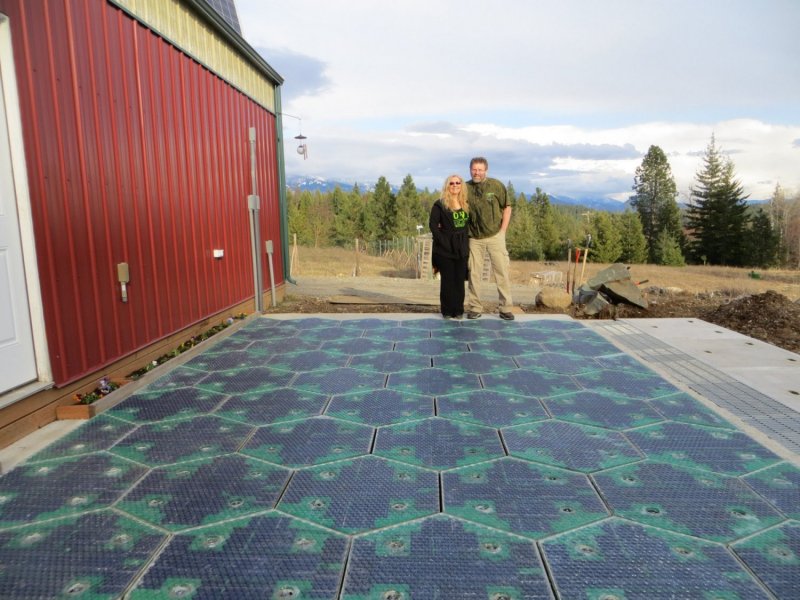
Picture a future with no street lights, but the road it self lit up. A road that warns you about blockages like fallen trees, giant boulders, crossing animals way in advance. A road that melts snow instantly, thereby no slipping cars. Not just roads but imagine parking stands, sidewalks, airport tarmacs and playgrounds that have programmable lights which work according to your requirement. Oh yes, they can also power themselves and everything around them with the awesome powers of the Sun. And here is the best part, this can be made possible in the present itself. Prepare yourself because the most freaking amazing invention of all time is about to be unleashed across the world and they are called SOLAR FREAKING ROADWAYS.
In the last few decades we haven’t seen a single major infrastructural innovation apart from the telecommunication revolution. The fact of the matter remains that neither Facebook, nor twitter nor any other app is ever going to bring real tangible development. We need to create cities which look like the fantasies of people who came before us. We have stopped investing in real world infrastructure. There needs to be massive R&D investment to make the next generation transportation apparatus possible.
Julie and Scott Brusaw, inventors of Solar Roadways
Enter into the scene, Julie and Scott Brusaw. They are the mild mannered master builders(Lego movie anyone) and inventors of solar roadways. These guys are real life pioneers who might go unnoticed in a crowd but they have invented something that the future humans will thank us for, instead of blaming us for all the destruction they will face because of our greenhouse emissions.
The video makes the concept pretty clear. It’s a smart roadway which can practically make our tar roadways extinct. The solar panels are hard and strong. They are imbedded with intelligent circuitry and made almost entirely with recyclable materials. They also produce clean energy, which might put an end to the dirty smog that has taken over major cities around the world. We may actually reach a shortage of garbage when this project reaches full potential.
Solar roadways are also probably the safest road possible. Their LED infused circuitry and intelligent electronics connected with optical fibers help to monitor their situation constantly.
This is in fact a revolutionary idea which can be put into place right away with the available technology of the present. Some of the biggest names in the tech world are realizing the importance of infrastructural innovation and have started to invest heavily into such projects. One such person is Elon Musk who offered an audacious idea last year called the Hyperloop. According to Google founder Larry Page, he would rather give his billions to Elon Musk than charity because of his avant garde developmental ideas.
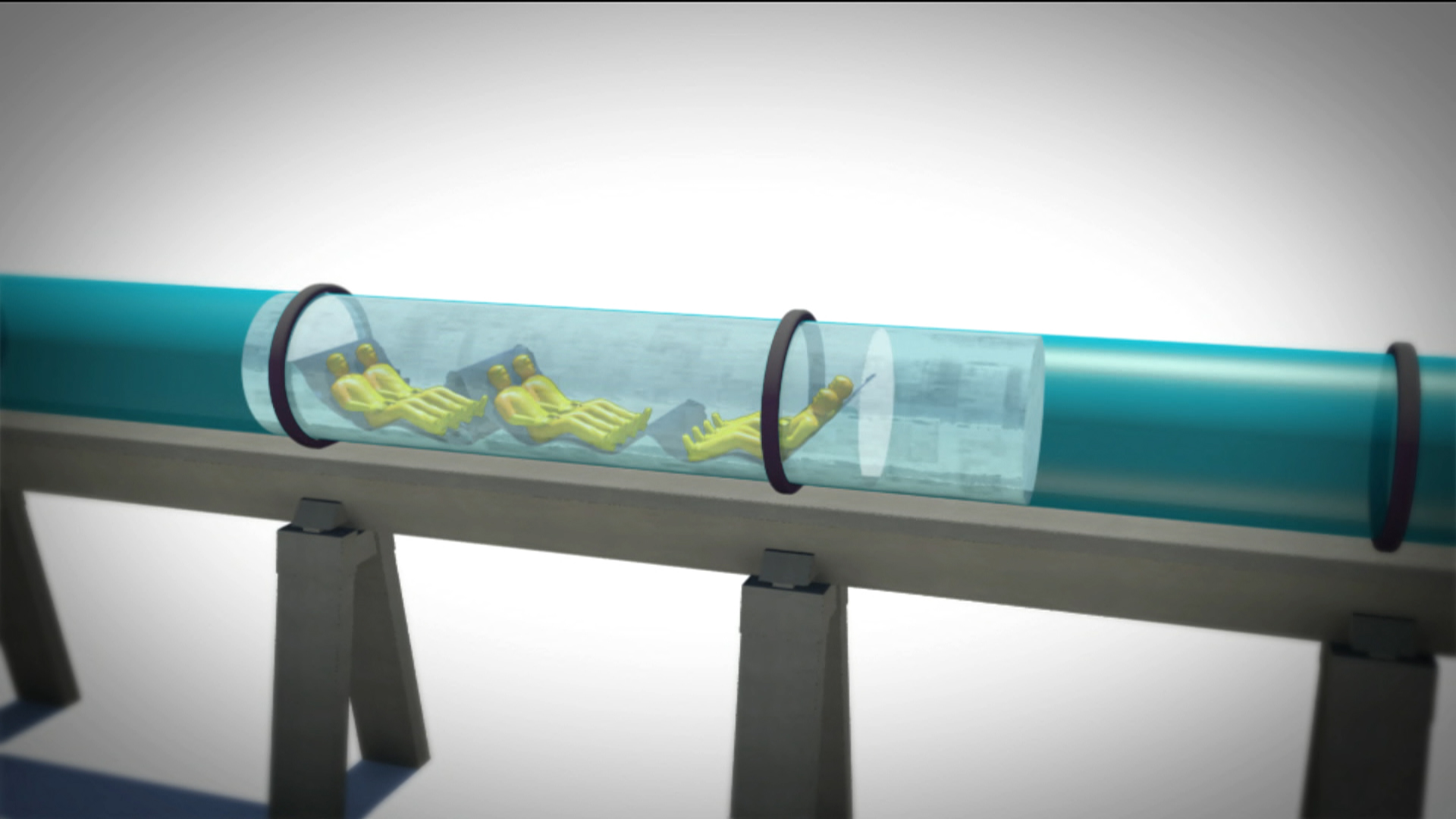
The Hyperloop can change our existing Railway models
The Hyperloop is a high-speed transportation system which incorporates reduced-pressure tubes in which pressurized capsules ride on a cushion of air that is driven by a combination of linear induction motors and air compressors.It is a lot cheaper than to install than the conventional intercity railway model and futuristic too.
Coming back to the star of the moment, the best part about the Solar Roadways is the fact that they pay for themselves. They not just provide the safest mode of transport; they also generate free electricity for all, which will end our addiction to coal and gas forever. We don’t need those massive transmission lines anymore.
We have finally unlocked the knowledge that the plants and trees figured out almost 350 million years ago. We can now harvest the energy of the sun for all our purposes.
The only suggestion we would like to give the inventor is that they should adopt a better marketing strategy. Even though they have a prototype contract with the Federal Highway Administration, there website is not enticing enough for a common man to get excited about the prospects of their prodigious invention.
Lets share this incredible revolutions with all and demand our lawmakers to start finding ways to break ground for the induction of Solar Freaking Roadways all across the word. And then maybe we can invent Lightcycles too, and live in a scintillating Tron-like universe.
The French have given the world a lot of things; photography, parachutes, modern philosophy and fashion snoot-ism. But something they are not known for is their heavy work ethics. The country recently passed a regulation which allows workers to ignore work emails after work hours – even though their work week only consists of 35 hours. No wonder they are good at philosophy, they have a ton of time to sit around and think.
This gives us an idea about their work culture, which may or may not be responsible for the recent French railway blunder. Which, incidentally, is the inspiration for this article.
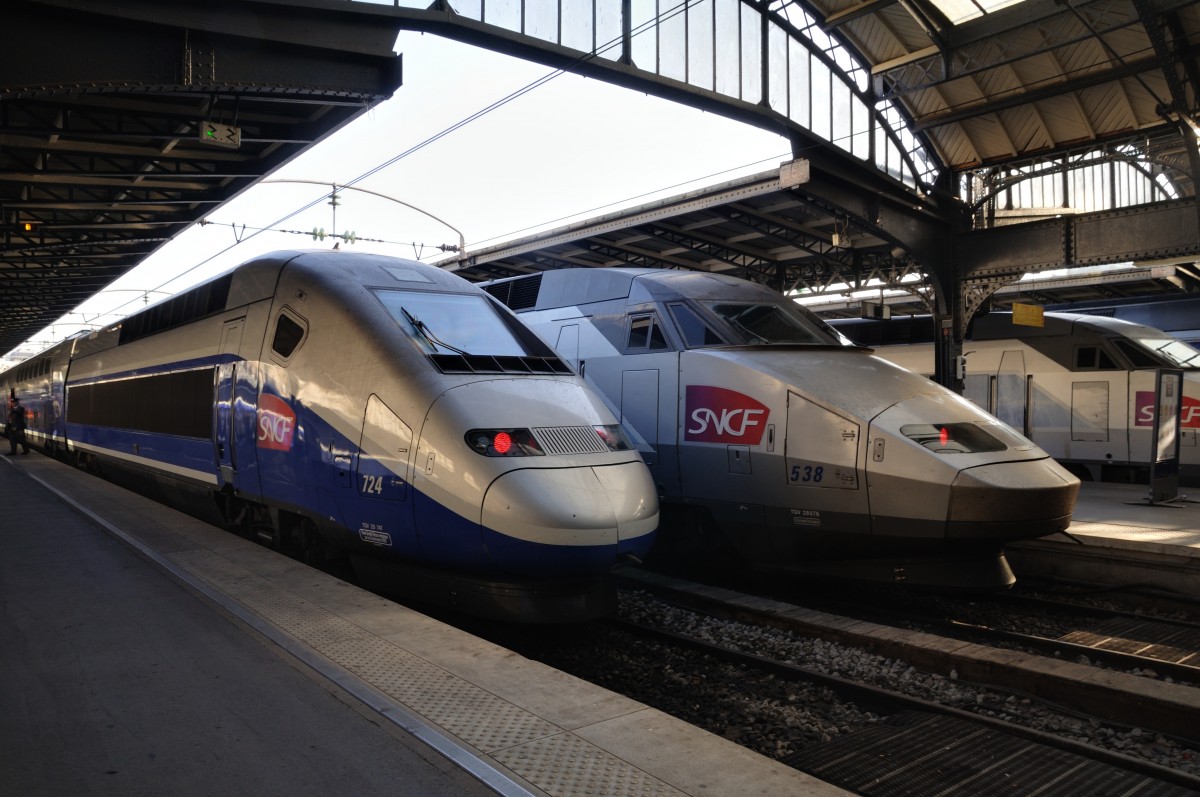
France recently invested 20 billion dollars on 2000 new trains called TERs (trains express regionaux), which they later found to be too wide to fit in their older platforms. Almost 1 in 6 stations are affected. You can blame the Indian Railways for a lot of things, but they have never shown this level of inefficiency. Now the French rail operators have had to invest an additional 70 million dollars to narrow the affected platforms. The problem occurred when the train manufacturers were handed measurements of stations built in the last 30 years. The platforms older than 30 years were ignored that lead to a situation where two of these new trains can’t even pass on parallel tracks.
This of course is not one of the major engineering blunders, lets look at some other past examples of institutional failures:
1. Tacoma Washington Bridge Disaster:
The Tacoma Narrows Bridge is a pair of mile-long (1600 meter) suspension bridges with main spans of 850m. The first bridge, nicknamed Galloping Gertie, was opened to traffic on July 1, 1940. The bridge became famous four months later after a dramatic wind-induced structural collapse that was caught on film. The only fatality was a poor black Cocker Spaniel. The first replacement bridge opened in 1950, and a parallel bridge opened in 2007.
2. St. Francis Dam Flooding:
William Mulholland was a self taught architect whose career came to a crashing halt on March 12, 1928, when his St. Francis Dam failed just hours after being inspected by Mulholland himself. The dam sent 12.5 billion gallons (47,000,000 m³) of water flooding into the Santa Clarita Valley, north of Los Angeles. It laid the town of Santa Paula under 6 meters of mud and debris. Some parts of Ventura County were covered up to 21 m high pile of muck. The final death count has been estimated at 450, including 42 school children.
3. The Vasa:
A long time before the Titanic there was The Vasa. It was the biggest ship of its era and it sunk after travelling just 120 meters from the shore. The reason cited was that it was built top-heavy and had low gun doors which let the water in, capsizing the vessel just a few minutes after first setting sail on her maiden voyage on August, 10th, 1628. Surprisingly, even after clearly lacking stability at the port, she was allowed to set sail. Apparently the impatience from King Gustavus Adolphus, was seen as a major reason for the disaster. The death toll reached between 35-50 sailors and crew but no sentences were handed out.
4. Skylab:
During the peak of the cold war, America launched its first space station called the Skylab. Weighing 75 Metric tons, Skylab was launched on 14 May 1973 by a Saturn rocket into a 435 km orbit. The launch is sometimes referred to as Skylab 1. There was severe damage to the vehicle during launch. The station lost its micrometeoroid shield, sun shade and one of its main solar panels. Even the debris from the lost micrometeoroid shield prevented the deployment of all solar panels and left the station with a huge power deficit. The first american space station failed miserably and cost the tax payers about $3.6 Billion dollars. There were of course a lot of lessons learned from this disaster which were later corrected on the ISS.
5. The Leaning tower of Pisa:
This is without a doubt one of the most prominent engineering failures, probably the most photographed blunder too. This bell tower’s tilt began during its construction itself. It was caused by an inadequate foundation on a ground that was too soft on one side to properly support the tower’s weight. The tilt increased gradually in the following decades till the structure was stabilized (and the tilt partially corrected) by efforts in the late 20th and early 21st centuries.
EU has just passed a Bill which allows people to get some links removed from search engines like Google. In an unappealable ruling, the EU courts ordered the removal of links to information which can be deemed as inadequate or irrelevant.
Right to be Forgotten, as its colloquially called, gives EU citizens the right to petition to Google to remove links which have information about their lives. This law only asks the engines to remove the links and not the actual information itself. This law also comes directly in conflict with the Right to Freedom of Expression. Basically it is a fight between information and privacy.
Google has to delete irrelevant links now
Google stated that before this law can be brought into effect, careful formulation of the infrastructure needs to take place. The company would have to set up an “army of removal experts” in all 28 EU countries, including those countries where it doesn’t have operations.
The procedure of how to judge the potential links also needs to be worked out. Yahoo also said that it was taking a step to carefully review how the judgment would affects its business and users.
It all began when a Spaniard, Mr Mario Costeja Gonzalez, wanted a newspaper link of a story about auction of his repossessed home in 1998 removed from Google. He claimed that the story infringed his privacy.
The Spanish data protection agency held that search engines should make access to the story impossible. This sets a dangerous precedent as well. The internet is so easy to use because of its search engines; if we have hidden data, then it might become a pseudo deep net with several hidden internet pages. Google appealed and the case was referred to the European Court of Justice, which has now upheld the original decision.
The other factor about this ruling is that it is practically unenforceable. As John Oliver quipped on his show, “the internet is like a quicksand, the more you try to get out, the more it absorbs you into itself.” Also, as it can be used by anti-social elements like child pornographers, online fraudsters and “politicians” which would not be appreciated by the very same people celebrating the ruling.
The case is one of 180 similar cases in Spain whose complainants want Google to delete their personal information from the Web. The company says forcing it to remove such data amounts to censorship. Immediately after the ruling, Google received thousands of requests for deletion on links. These included a politician who wanted mentions of “his time in office” removed and a doctor who wanted a negative review removed.
Another negative? This law may dissuade tech investment in the region. A lot of countries in EU are suffering from heavy unemployment, particularly amongst the youth. This would be a major jolt to them.
The idea of internet is so simple, its an open communication platform. It is a fluid communication fabric so whatever restriction are placed on it will always be a way to work around it. Maybe somebody will create a search engine which will only access the deleted links – the possibilities are endless.
People should stop messing with the concept altogether.








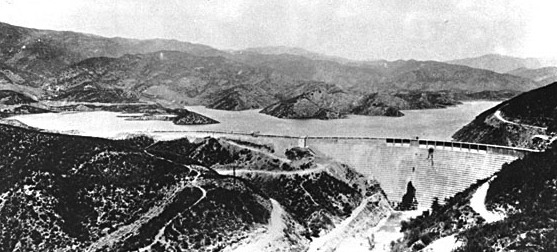 William Mulholland was a self taught architect whose career came to a crashing halt on March 12, 1928, when his St. Francis Dam failed just hours after being inspected by Mulholland himself. The dam sent 12.5 billion gallons (47,000,000 m³) of water flooding into the Santa Clarita Valley, north of Los Angeles. It laid the town of Santa Paula under 6 meters of mud and debris. Some parts of Ventura County were covered up to 21 m high pile of muck. The final death count has been estimated at 450, including 42 school children.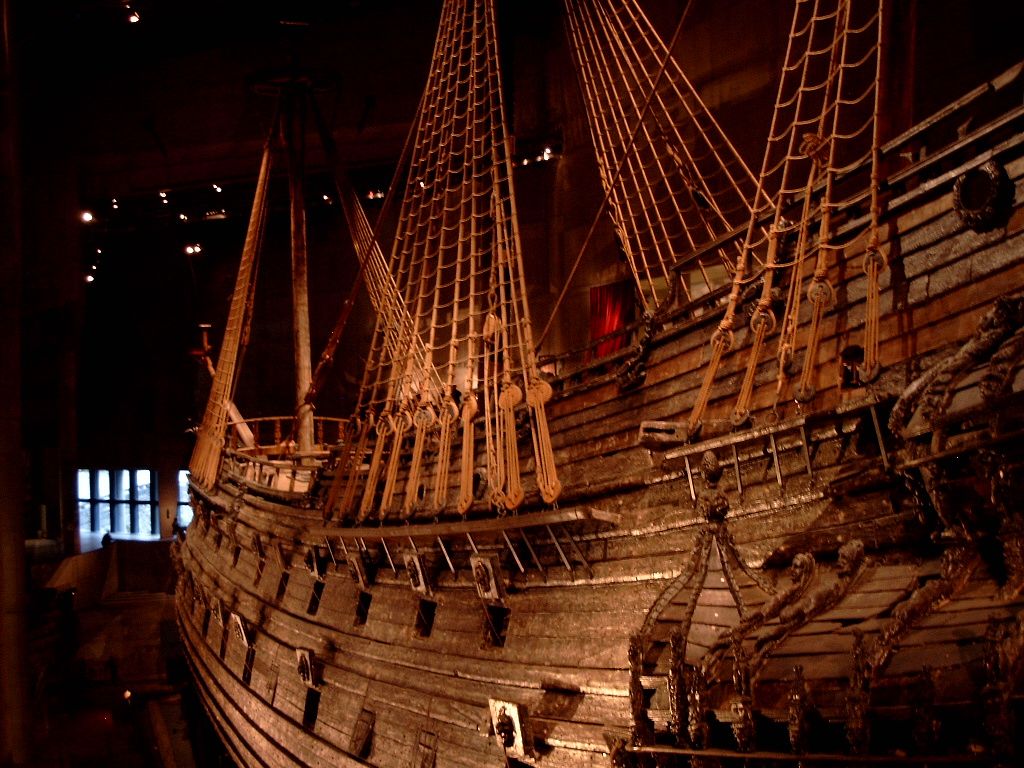
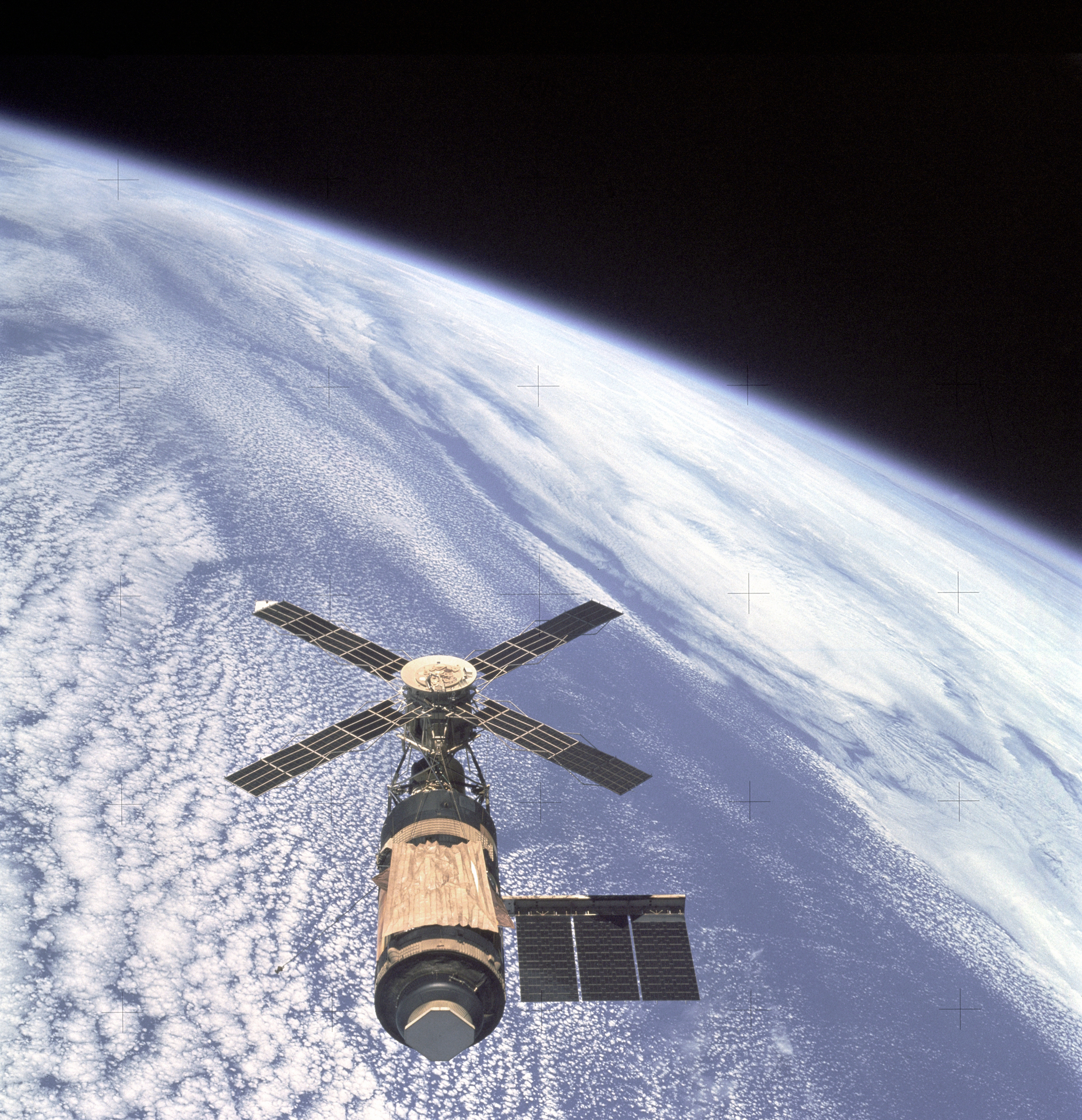 During the peak of the cold war, America launched its first space station called the Skylab. Weighing 75 Metric tons, Skylab was launched on 14 May 1973 by a Saturn rocket into a 435 km orbit. The launch is sometimes referred to as Skylab 1. There was severe damage to the vehicle during launch. The station lost its micrometeoroid shield, sun shade and one of its main solar panels. Even the debris from the lost micrometeoroid shield prevented the deployment of all solar panels and left the station with a huge power deficit. The first american space station failed miserably and cost the tax payers about $3.6 Billion dollars. There were of course a lot of lessons learned from this disaster which were later corrected on the ISS.
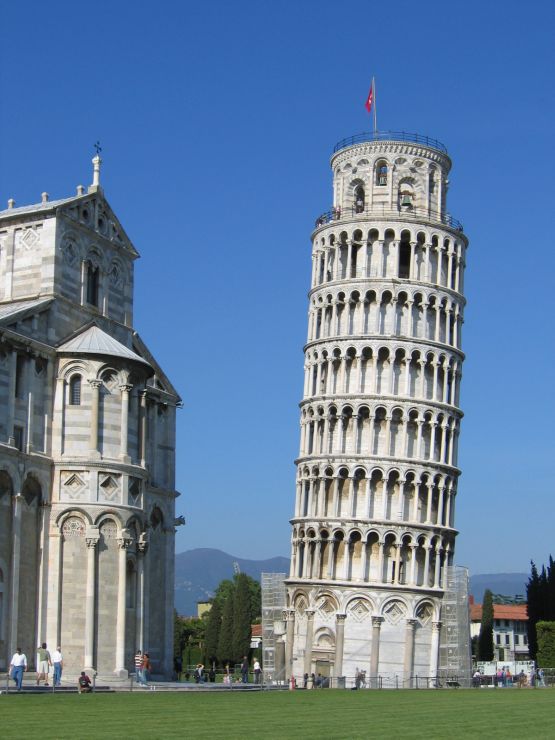 This is without a doubt one of the most prominent engineering failures, probably the most photographed blunder too. This bell tower’s tilt began during its construction itself. It was caused by an inadequate foundation on a ground that was too soft on one side to properly support the tower’s weight. The tilt increased gradually in the following decades till the structure was stabilized (and the tilt partially corrected) by efforts in the late 20th and early 21st centuries.