According to a recent report published by Time Magazine, Indian Prime Minister, Narendra Modi, is among the 30 most influential people on the Internet. Can’t say we’re surprised. This list also includes US president, Barack Obama.
The list analyses social media followings, site traffic and the overall ability to drive news. According to the data, Narendra Modi has nearly around 38 million followers on Facebook and Twitter. It is more than any other political world leader, with the exception of President Obama.
Modi is an enthusiastic user of social media and uses this method to communicate with the people. According to Time magazine, “Unlike many of his contemporaries, Modi recognises that social media can be invaluable when trying to reach India’s 200 million-plus online population directly,”
The number one world leader on this list is US President, Barack Obama, who is the most liked leader on Facebook and the most number of followers on Twitter. According to the report, the reason is that Obama doesn’t mind making a meme out of himself for pushing an agenda. A video showed Obama using a selfie stick and many other props to drive people to sign up for heath insurance under the Affordable Care Act. This video was viewed by more than 50 million people within days.
Among the others included in the list are reality star Kim Kardashian, singer Justin Beiber, actress Gwyneth Paltrow, Actress Yao Chen, singer Shakira, founder of the blog ‘Humans of New York’ Brandon Stanton and TV personality, Jimmy Fallon.
In a bid to stay informed about the callers’ identity, an intelligence agency has asked the Department of Telecommunications (DoT) to block the use of WePhone app. The tool allows you to conceal the identity of the caller.
Mr. Ravi Shankar Prasad, Minister of Communications and IT, enlightened members of Lok Sabha about the issue –
A reference from an intelligence agency was received by the Department of Telecommunications to block the ‘WePhone App’ which facilitates its subscriber to spoof the Calling Line Identification (CLI) through Voice over Internet Protocol (VoIP) platform.
The WePhone app works on the simple mechanism of transferring the call to the server abroad, which marks for the original location of the caller. This makes it really difficult for the intelligence agency to track the location of the call.
DoT formed a technical committee who found out that a number of computer or mobile applications can be skipped from the getting identified. Mr. Prasad talked about the committee report saying, “Based on the recommendations of the committee, the matter was taken up with the Group Coordinator, Department of Electronics & Information Technology, who issues the direction for blocking such identified websites.”
The statement depicts the intentions of the intelligence agency in clear light, but it is yet not confirmed if the government has carried out the request.
The Finance Minister of India, Arun Jaitley, today unveiled the Union Budget for the year 2015-16. This budget was even called the make or break budget for India. There were a slew of initiatives offered to boost the growth of the tech sector in India and to promote job creation amongst the youth. The present government is known to be tech savvy, and so we look at how the budget affects the tech sector.
For the Consumer market
Mobile tariff’s may increase following increase in service taxes.
The budget decreased custom duties on a variety of consumer goods including refrigerator parts, telecommunication grade optical fiber cables and LCD/LED TV panels. Duties on components of solar water heaters, tablets, and LED lights have also been slashed.
On the other hand, the mobile phone rates will see an upwards trajectory as the government has raised the service tax from 12.36% to 14%.
Fuel For Startups
The Indian IT sector employees a massive number of people. In his speech, the finance minister stated that the sector employs 40 lakh people and has garnered revenues worth US$119 Billion. The sector has seen a proactive growth in new startup companies that are formed by young entrepreneurs. The government has recognized the potential of this market to transform young people from job seekers to job creators, and so it has allotted Rs.1000 crores to boost startups. According to the Economic survey of India, has become the fourth largest force in the startup market and is home to 3100 of such budding companies.
The 1000 crore will go towards establishing a mechanism called Self Employment and Talent Utilisation(SETU). It will be a techno-financial, Incubation and Facilitation Program to support all aspects of start-up businesses and encourage cutting-edge innovation.
To get India’s massive youth population ready for 21st century economy, the government will be launching National Skill Mission.
Boost for Hardware Manufacturers
Indian hardware makers appreciated the removal of Special Additional Duty (SAD)
The Finance Minister’s announcement of the removal of Special Additional Duty (SAD) on IT products was well appreciated by the industry. This move will benefit the Indian hardware makers. There has also been a decrease in the tax for technical services that will also help the manufacturing industry in the country.
Renewable Energy
There is a proactive approach in the budget towards renewable energy.
The government also stressed on green renewable energy and has set a target of 1,75,000 MW from green sources by 2022. Out of this, a massive share of 1,00,000 MW will be derived from solar power from the current 3,000 MW. At present renewable energy sources contribute 5.6 percent of all the electricity, which will be raised to 12 percent in the coming three years. The boost in investment in renewable sector will also lead to a lot of jobs in the green energy space in India.
Digital India Governance
The Digital India program that was unveiled last year got a mention this time around. It is 1.13 lakh crore project to make India a connected nation. This project will make it easier for the citizens and their government to connect and get access to various services. The project is expected to attract massive investments and create a massive amount of jobs in the country. The Finance Minister said in clear words that
Overall the budget is said to be a progressive one that is expected to give a push to manufacturing and growth in India. It will be making many consumer goods a bit expensive, but the growth in the tech and other major sectors can create the revenues that can bring the costs down, in the long run. Let’s hope it’s the year of growth for India, Jai Ho!
There is some good piece of news for those who live away from home and are connected to their loved ones only through their smartphones. The Telecom Regulatory Authority of India (TRAI) has proposed to trim down roaming rates by minimum 35 percent to maximum 80 percent on call and SMS.
A draft amendment was filed by TRAI on Friday to the Telecommunication Tariff Order, 1999, seeking comments and suggestions from the stakeholders. The organization aims to slash the high prices on incoming and outgoing calls while on roaming, along with SMS charges.
Home network is comparatively cheaper than the roaming connection. Whenever a person moves out of his/her home network, the network latches on to the visited connection. For now, the outgoing local call rate on roaming is at Re. 1 per minute, and as per TRAI’s proposal, it would cut down to 65 paise per minute.
The proposed draft amendment speaks of Re. 1 per minute charge on STD calls on roaming, which is presently static at Rs. 1.5 per minute. If the draft comes into effect, the roaming rates on incoming calls will fall down to 45 paise per minute from 75 paise, which is a straight 60% drop on the current charges.
Speaking of SMS rates, TRAI has proposed that on roaming, a local SMS should be charged 20 paise rather than Re. 1. An STD SMS should cost no more than 25 paise for which Rs. 1.50 is deducted.
Meanwhile, the proposal is under consideration from the stakeholders, who will give their final take on the same by 13th March. Later, after a discussion between the two parties, the final order will be passed.
Google has been expanding its SafeBrowsing initiative. The search engine giant recently added a new feature to its Chrome browser, that pops up a red flag in case users accidentally visit a site that prompts them to download malicious malware.
Now the Indian Government has joined hands with Google to launch an internet safety campaign, primarily aimed at young adults and children on sensitive issues like identity theft and online harassment. Government plans to involve various departments and ministries for consultation and dissemination of information on internet and data security as a part of this initiative.
[quote text_size=”small” author=”Chetan Krishnaswamy” author_title=” Google’s Public Policy India Head “]
To enable this and ensure that families and young people across India are safe, we’re working with CERT- In and MyGov to get the word out about good Internet practices and how to keep users safe online.
[/quote]
According to a PIB release, the campaign will be carried out by Department of Electronics and Information Technology, which comes under union ministry of Communications and Information Technology, in partnership with Google and the Indian Computer Emergency Resposne Team (CERT).
Meanwhile, Department of Electronics and Information Technology (DEITY) Additional Secretary suggested an annual programme to raise awareness of key policy makers on matters concerning cyber safety. The initiative would include roundtables, workshops, Security Cafes, contests for young adults, policymakers and NGOs. However, an exact date of launch has not been specified yet.
Over the past few years, it has gotten easier and easier to gain access to a mobile phone. Indians currently own over 94,40 crore mobile handsets. The government has now made it easier for Indians to travel across India, with one number across the nation.
Starting May 3, you would be able to port your number to any mobile circle of India and also change your mobile operator. The change came into effect after TRAI changed the regulations on the matter.
As of now users can use the facility of Mobile Number Portability (MNP) to change telecom operators within a telecom circle, which is usually a state.
This action is a follow-up to the amendments issued by the Department of Telecom (DoT) on the 3rd of November 2014. It stated that MNP is to be implemented within six months from the date of passing of amendments.
This will come handy to folks who have to change their place of residence at regular intervals. It will also let users keep their numbers while on long trips without incurring massive roaming charges. A consumer friendly decision will be welcomed by people across the nation.
The Telecom Regulatory Authority of India (TRAI) has some good news for Indians today. The people of India will soon see a dip in the figures of their telephone bill. The regulatory agency has decided to slash or cancel the interconnectivity charges between various networks.
Telecom companies have to pay the inter-connectivity charges when one of their subscribers calls a person on a different network. These charges are defined as FTC (Fixed Termination Charge) and MTC (Mobile Termination Charge) for wireline to wireless calls.
This move will bring considerable relief to the landline subscribers. TRAI has decided to drop landline to landline and landline to wireless termination charges from 20 paisa to zero. On the other hand, wireless to wireless charges have been decreased from 20 Paisa to 14 paise that will also result in a decrease in mobile tariff.
Mobile telephony has reached the masses really fast since the arrival of affordable devices and connections. While there are over 94.40 crore mobile subscribers in India, there are just 2.7 crore landline subscribers in the country. BSNL told Times of India, that this move will pass on the benefits to the consumers by bringing the tariff down “substantially”.
Uninor, which is a tiny player in the mobile market, has also said that they will be slashing prices. The big trio of Indian mobile arena; Airtel, Vodafone and Idea are currently studying the developments. But when smaller companies will start slashing rates, the bigger players will be forced to follow.
This move will be a slight relief to the country whose cost of living has gone up significantly in the past couple of years.
As per a recent revelation, American and British spy agencies have hacked the internal computer system of the world’s largest SIM manufacturer, causing a threat to the privacy of global communications. The spies have nabbed the encryption keys that protect the privacy of mobile communications.
Intercept, the source, has gained information from whistleblower Edward Snowden who was a former system administrator at the National Security Agency (NSA) of USA. He confirmed that the American Agency and British Government’s Communications Headquarter (GCHQ) have jointly managed to breach the privacy. They now have the ability to access and monitor both voice calls and data usage.
The report says that Gemalto, a multinational firm in the Netherlands, is the target of the intelligence agencies. Gemalto is the largest producer of chips embedded on smartphones and next-gen credit cards. The company provides services to 85 countries and has more 40 manufacturing facilities. Gemalto’s services are spread all over the world, and its clients are Verizon, AT&T, T-Mobile, Sprint and some 450 wireless network providers.
Executive Vice President at Gemalto Paul Beverly expressed concern over the mishap –
I’m disturbed, quite concerned that this has happened. The most important thing for me is to understand exactly how this was done, so we can take every measure to ensure that it doesn’t happen again, and also to make sure that there’s no impact on the telecom operators that we have served in a very trusted manner for many years. What I want to understand is what sort of ramifications it has, or could have, on any of our customers.
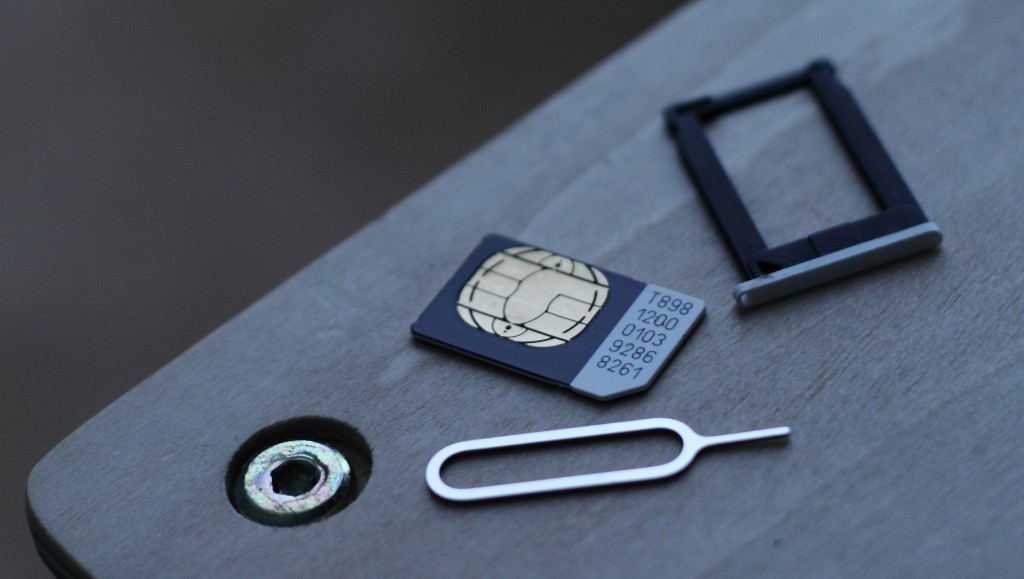
SIM card is a component that is prone to such attacks. It is not designed to protect the conversations. Any SIM card works with an encryption key called “Ki.” A Ki is burned on the SIM once it’s made, and a copy of the key is sent to the network provider. The spies just have to steal the Ki, and they can monitor all the activities.
The infringement will have an adverse effect on global communications and security firms that claim to be protecting the rights of the citizen. Gemalto produces around 2 billion SIMs every year and with this report, there’s a big question mark on the solitude of the conversations. This also turns out that other nations too are vulnerable to this encroachment.
The only way to keep you protected is to use secure communications softwares. These software guard mails and many other apps that hold your personal conversions.
In a democracy, you get to see something like the Delhi elections only once in a blue moon. A landslide victory that totally decimated the competition. In the 70 seat Delhi assembly, the Arvind Kejriwal led Aam Aadmi Party grabbed 67 seats leaving the opposition with a paltry three seats. This led to a barrage of comments on social media. Twitter has become a major political tool in the past few years and played a major role in campaigning in this election too. After the elections, there were many congratulatory messages for the party along with the usual jokes were out to troll the losing side.
Let’s look all what all transpired on Twitter following AAP’s epic victory.
Prime Minister Narendra Damodar Modi Congratulates Arvind Kejriwal
Spoke to @ArvindKejriwal & congratulated him on the win. Assured him Centre’s complete support in the development of Delhi.
Twitter Hashtags; #AAPSweep, #AAPStorm reached the top of the trends for India and were still the top two hashtags on Twitter. It shows that the celebratory mood of the volunteers hasn’t jaded off yet. Here are a few funny ones to tickle your funny bone.
Delhi is like a bride at Swayamwar, planning to ditch the rich successful guy for the nice one promising her undivided attention #Delhi2015
Net Neutrality has become one of the major issues over the last year. The fear of telecom companies establishing a fast lane for folks who pay more and breaking down of internet services have enraged the public, and they have been demanding answers from their authorities. The Department of Telecom (DoT) in India has also said that it will be holding a committee hearing on net neutrality policies for India on February 12th.
The DoT is a part of the Ministry of Communications and Information Technology. The Department formulates developmental policies for the accelerated growth of the telecommunication service and is responsible for granting licenses for various telecom services.
An internal committee of the DoT headed by Mr.AK Bhargava is looking into the prospects of net neutrality. It is examining the advantages, disadvantages, and its economic implications for the telecom sector as well as the content creators. The committee will also come with a proper legal definition of the term too.
Recently the Federal Communication Commission of America had asked for comments from the citizens on the issue. They received overwhelming responses in favor of protecting net neutrality protections. The responses led to the commission opting for classifying the internet as a telecom service that will give FCC the right to regulate it. This was seen as a victory for the open internet advocates, but the telecom companies can still challenge it in court.
Net Neutrality is essential to the survival of the Internet as an open, creative space for expression of ideas and innovations. We hope the Indian government upholds this fundamental value of the internet for the benefit of the people of India.
The telecom industry is looking forward to the spectrum auction with bated breath. While the government expects to make massive profits, telecom companies will be battling each other to gain spectrum to stay in business. The competition became a little easy today as state telecom companies BSNL and MTNL have backed out of the auction.
The Indian government plans to earn about Rs.1 lakh crore. Both BSNL and MTNL have said that they would now be engaging in the auction as they have no use for any additional spectrum.
The Indian government has been criticized for the high base price for the spectrum; even TRAI had suggested lower base pricing for the spectrum. The association of GSM operators COAI and GSMA have said that the auction might end up being a dull affair because of the low availability of spectrum and high price tag.
During the previous auction too, the telecom operators had to borrow heavy sums of money from the bank to buy spectrum that led to a staggering debt for the industry worth Rs. 2.5 lakh crores. COAI has also said that the high spectrum prices will also act as a major hindrance in the audacious Digital India Project of the present government. The auction will be held on February 25.
Startups are the foundation of a developing nation and such businesses need to be encouraged. Indian Government has taken a praise-worthy step and is ready to extend support to the India-based startup companies. The Union Government is planning to exempt the budding firms from service tax and exercise duty for a specific period, so that they don’t fail because of money issues.
As per a report by Economic Times, an inter-ministerial group is considering a one-stop registration scheme that will make them eligible for government grants. The group includes Ministry of Science and Technology, Corporate Affairs and the Department of Electronics and IT, and was chaired by Jayant Sinha, Minister of State for Finance. Meanwhile, the proposal is under consideration.
Under this scheme, the startups that are registered under Department of Science and Technology and the ones certified as ‘bonafide’ will be exempted from the above said taxes. This tax waiver will be applicable until they reach certain revenue. Meanwhile, these tech startups pay service tax at the rate of 12.36% along with exercise duty and income tax. Also, if the proposal is enacted, the startups will become eligible for grants up to Rs. 10 crore from the government’s science and technology department.
Nasscom has proposed a three-year moratorium on quarterly regulatory filings and taxes to the government. This will give a boost to the India’s young companies. “Service tax exemption is a much needed proposition. But sops should be more broad-based as majority of successful start-ups are not registered with DST affiliated incubators,” commented Nasscom Product Council Chairman Ravi Gururaj.
The startups in India are burdened by bad regulations and the pattern needs to be altered. The new proposal will have flexible regulations for budding as well as failed start-ups. The failed ones can shut down in a day with just a single page submission. Moreover, it would be a big step in favour of low-budget budding firms to grow and flourish in their respective industries without any pressure.
India’s Agni 5 is the star of the nuclear-capable missile arsenal. With a claimed range of 5000km, the missile is capable of hitting targets across China and parts of Europe. Agni 5 has been tested successfully two times before and today it again took to the skies.
At 8.06 am today, Agni 5 lifted off from Wheeler Island, off the coast of Odisha. The 17-meter tall rocket that weighs 50 tons witnessed a flawless ‘auto launch’ from its mobile launcher. All three stages performed optimally. The missile can carry a nuclear bomb weighing 1000 kilograms and can travel faster than a bullet. It can be launched from anywhere on land.
The missile is capable of launching MIRV’s (Multiple Independent Re-entry Vehicles) through which it can drop 2-10 nuclear bombs at multiple locations. This will strengthen India’s second strike capability in case of a nuclear attack on its soil. India hopes to make the Agni 5 a weapon of peace and act as a deterrent for nations considering a nuclear attack on the country.
The development of the Agni 5 began in 2009 followed by tests in 2012 and 2013. Now with the third test, this intercontinental ballistic missile(ICBM) is expected to get inducted into the military by later this year.
Telecom Regulatory Authority of India (TRAI) has issued draft regulations to implement full nationwide mobile number portability (MNP) which starts from 3rd May. This would allow users to change their mobile service provider in any location within the country, while retaining their existing mobile number.
Currently, mobile number portability allows users to change their service provider within a specific telecom circle, mostly limited to states, which will change with the implementation of new regulations. On November 3 2014, the Department of Telecom issued an amendment to the current MNP License Agreement and asked telecom service providers to implement full MNP within a period of six months.
[quote text_size=”small” author=”TRAI”]
In view of implementation of full MNP some changes will be required in the MNP Regulations 2009 (as amended). Accordingly, draft amendment to the Telecommunication Mobile Number Portability Regulation, 2009, has been prepared.
[/quote]
With the new amendment, TRAI wants to introduce a clause to safeguard interest of post paid mobile users. As these users are deprived of services while switching to a new network even after clearing all their earlier dues. The regulator has a fixed timeline about dues cleared by the subscriber to ensure consumers get continuity of service.
WikiLeaks, an open information group, has criticized Google for handing out personal data and emails belonging to three of its employees to the US government.
Google had given away the digital data in response for investigation concerning espionage against three WikiLeaks staff members; Sarah Harrison, Kristinn Hrafnsson and Joseph Farrell to the Justice Department order. This data included emails, IP addresses, metadata and other content. According to Google, the company was unable to say anything as a ‘gag order’ had been imposed which restricts them to reveal information.
Google also stated that it has a policy of informing the users about government requests, “except in limited cases like when a gag order is issued by the court, which sadly happens frequently.”
A letter, written by WikiLeak’s New York based lawyer, Michael Ratner, to Eric Schmidt, executive chairman of Google, to protest that the search engine revealed this scam only a month ago. WikiLeaks says they are ‘astonished and disturbed’ by the fact that Google waited for almost three years to notify its subscribers, possibly robbing them of their rights to privacy.
The letter asks Google to list everything they have provided to the FBI and whether it has yet to reveal any other data demands and as to why Google waited for more than two and a half years to provide any notice.
WikiLeaks was formed by Julian Assange. It came to the public view in 2010 when they published a pile of classified government information, including leaked US diplomatic links.