Category: iGyaan

Everything Exclusive to iGyaan

  • Modbook Launches a Campaign for the New ‘Modbook Pro X’

    Modbook Launches a Campaign for the New ‘Modbook Pro X’

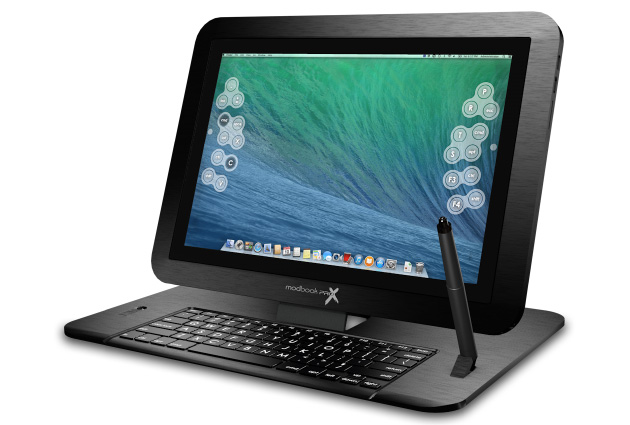
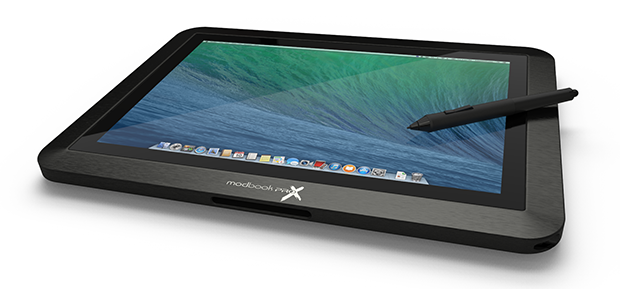
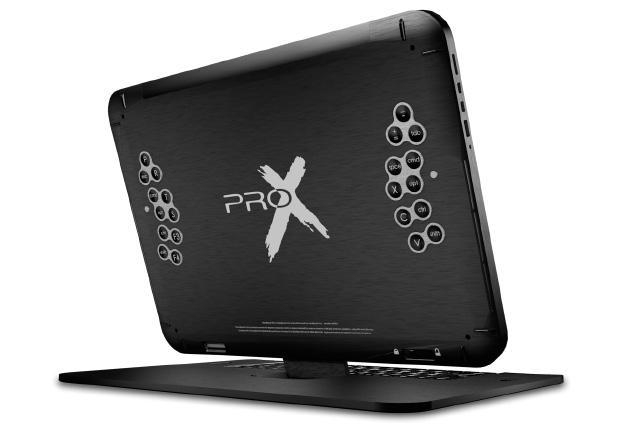
    Custom Mac tablet-maker, Modbook is back in news with a new spiced up with 15.4-inch display and the latest Mac hardware under the hood. The company, famous for turning Apple’s MacBook Pro into an iPad-like tablet, launched a Kickstarter campaign to fund its latest project – the Modbook Pro X.

    The Modbook has been around for about seven years, when Axiotron and Other World Computing teamed up to deliver the first Mac tablet at Macworld. Three years later in 2010, however, Apple released the first iPad, a much smaller tablet powered by Apple’s iOS. Subsequent upgrades yielded the Modbook Pro.

    modbook3

    The Kickstart backers will be able to convert their own Retina MacBook Pros into a tablet beginning early next year. The conversion incorporates the laptop’s original hardware, with components shifted from the lower half of the computer to just behind the 15.4-inch 2,880 x 1,800-pixel LCD.

    Unfortunately, the modification doesn’t come cheap. You’ll have to provide your own 15-inch Retina MacBook Pro, which starts at $2,000. And to get the modification, you’ll have to pledge at least $1,999 to the Kickstarter project. A Modbook Pro X with a keyboard stand or with rear Keybars that allow one-handed text entry cost extra.

    Like other Modbooks, it ships with a stylus with 2048 levels of pressure. The tablet preserves the connectivity options of the MacBook Pro: Bluetooth, Wi-Fi, two USB 3.0 ports, one SDXC slot, one HDMI port and two Thunderbolt 2 ports. It will run OS X Yosemite when that OS becomes available in fall.

    modbook2

    Users can also select optional KeyBars—macro keys that can save time while the user is working with the stylus. An optional keyboard stand serves as an easel, keyboard, and screen protector. Another downer is that the modification voids Apple’s own warranty. But Modbook does provide a one-year guarantee for the device.

    And also, the project will need to surpass its $150,000 goal to be funded. If that does happen, it will be early next year before any rewards are shipped to backers.

  • Facebook Launches Internet.org App for Free Internet Access in Zambia

    Facebook Launches Internet.org App for Free Internet Access in Zambia

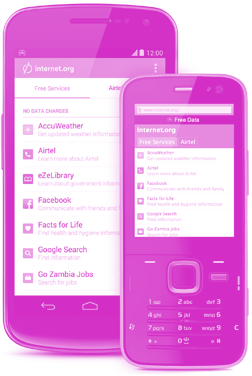
    Facebook’s internet accessibility initiative Internet.org today launched its Android and web app for the developing world with free data access to a limited set of services including Facebook, Messenger, Wikipedia, and Google Search. It also provides local health, employment, weather, and women’s rights resources.

    Internet.org_ (1)

    Internet.org’s app is just launched in Zambia before coming to other developing countries which is in partnership with local carrier Airtel who provides the free access in hopes that Zambians see the web’s value and buy pre-paid data through the app to explore the rest of the Internet.

    10574702_344525639029305_1278593965_n

    The Facebook Zero has been giving the developing world access to a stripped down version of Facebook since 2010. But this new Internet.org app with other services will be available as a compact, standalone Android app, baked into the Facebook for Android app, or freely available as a mobile website that the feature phones carried by the vast majority of Zambians can access.

    Online services accessible through the app range from AccuWeather to Google search, Wikipedia, a job search site as well as a breadth of health information. Facebook’s own app, along with its Messenger service, is also included. The app will work on Android phones as well as the simple “feature phones” that are used by the majority of people in Zambia.

    If users click on a link that takes them outside of the 13 predetermined services, they will get a warning that they may incur data charges. One thing missing from the features is email. Many people who are new to the Internet in developing nations don’t use email, opting to use messaging apps or social media sites instead.

    The company said Zambia is a country with 15 percent Internet penetration, it is a huge amount of people that can be connected. Zambia’s population is about 15 million according to the CIA World Factbook. The app will spread to additional countries down the line, but there is no word on which ones.

    The move comes as Facebook steps up investments in its Internet.org project, which seeks to connect the “next 5 billion” users to the Internet, many of whom lives in places like Africa and India. In March Facebook announced plans to use drones and satellites to deliver Internet connectivity to people in certain parts of the world.

    The initiative also has the potential to boost the size of Facebook’s audience, which currently totals 1.32 billion monthly users.

  • Chinese Vendors Trouble Samsung and Apple for Smartphone Market Share

    Chinese Vendors Trouble Samsung and Apple for Smartphone Market Share

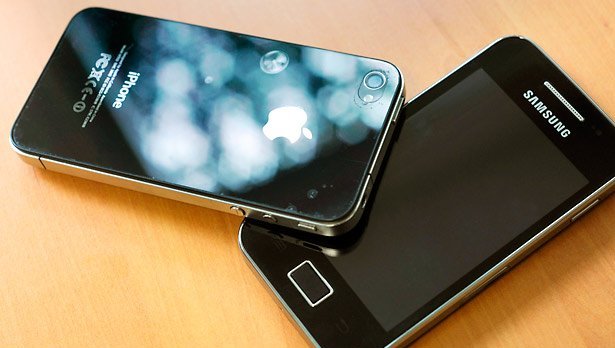
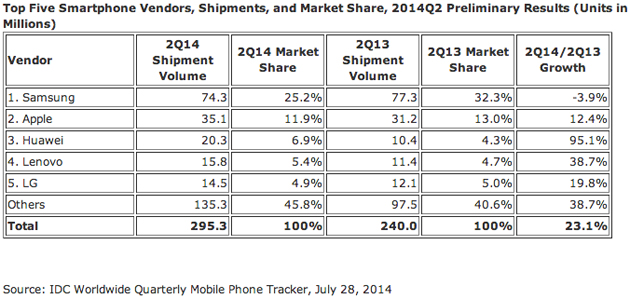
    We all know that Samsung is losing market internationally as well as in India, now we have exact numbers to believe it. Over the past years, Apple and Samsung slugging it out at the top of the phone and tablet markets. But it seems that the recent boom in Chinese smartphone market has taken a toll on both companies.

    IDC (International Data Corporation) estimates that Samsung’s smartphone shipments saw a rare year-over-year drop in the second quarter, taking it from a lofty 32.3 percent market share down to 25.2 percent. This week’s news that Apple suffered a slump in iPad sales would normally be accompanied by news of Samsung taking customers from Apple as it has done in the past. But not this time round.

    idc-smartphone-share-q2-2014

    The cause, analysts say, is the rapid rise of Chinese brands that cuts directly into Samsung’s low-end business. Huawei claimed 6.9 percent of the smartphone space after doubling its shipments, thanks in part to heavy discounts on phones; Lenovo too jumped to 5.4 percent on the back of both budget phones at home as well as rapid expansion abroad.

    The worldwide smartphone market grew 23.1% year-over-year in 2014 setting a record of 295.3 million shipments, reported IDC. The market grew 2.6% sequentially due to strong demand and low-cost smartphones. Next quarter is forecasted to be the first to surpass shipments of 300 million smartphone units worldwide.

    [quote text_size=”medium” author=”Melissa Chau” author_title=”Senior Research Manager with IDC’s Worldwide Quarterly Mobile Phone Tracker.”]

    As the death of the feature phone approaches more rapidly than ever before, it is the Chinese vendors that are ready to usher emerging market consumers into smartphones. The offer of smartphones at a much better value than the top global players but with a stronger build quality and larger scale than local competitors gives these vendors a precarious competitive advantage,

    [/quote]

    Samsung’s fall is especially troubling given that the measured quarter included the release of the company’s new flagship Galaxy S5. Despite the high-profile launch, Samsung shipped 3 million fewer handsets this year than last year. Chinese brands were the big winners in the second quarter, helped along by the still-significant growth from the domestic market. By far the most impressive was Huawei, nearly doubling its shipments from a year ago, followed by another strong performance from Lenovo.

  • Panasonic Officially Launched its Flagship Device in India

    Panasonic Officially Launched its Flagship Device in India

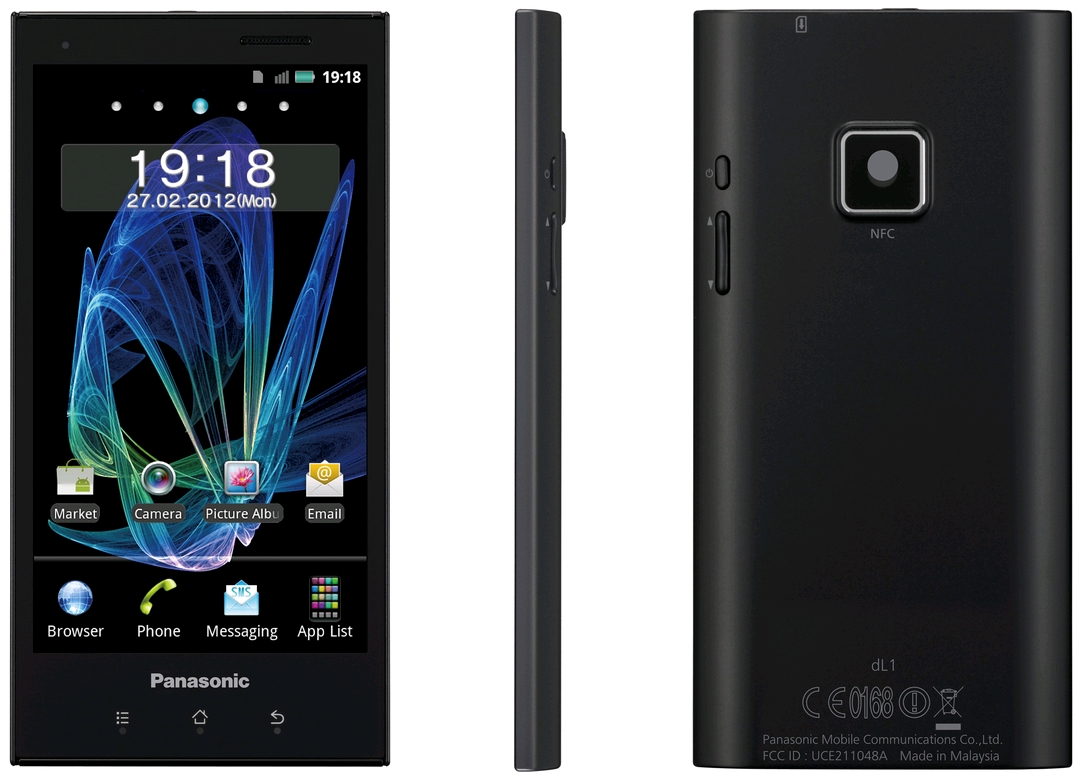
    Panasonic has recently introduced its new Eluga U flagship in India at an event in New Delhi. The smartphone has been priced at Rs. 18,990. Competing against the likes of the Xiaomi Mi 3 and the Micromax Canvas Knight, who also belong in this price range.

    The phone sports a 5-inch OGS IPS display(720x1280p) with Gorilla Glass 3 protection. That immediately puts it a peg lower than competing handsets in the price range. It features a unibody design and a glass back panel that has a mirror printed texture. It weighs 141gram and is 7.95mm thick.

    The Eluga U fashions a 1.2GHz quad-core Qualcomm Snapdragon 400 processor coupled with 2GB of RAM. With crowded market space of octa-core SoCs, and the launch of Xiaomi Mi3; a Snapdragon 800 smartphone for under Rs 15,000, Eluga U might struggle to catch the attention of a market spoiled with options

    panasonic_eluga_power_

    The Eluga U will come with a 13-megapixel autofocus rear camera with LED flash, and a 2-megapixel front shooter, which is standard nowadays. It has 16GB of internal storage with a microSD card for expansion up to 32GB. In terms of battery life, the 2500 mAh Li-ion unit is decent enough if compared to the other specs. It doesn’t look especially distinct and the patterned back reminds us of the Google Nexus 4. Connectivity options include Wi-Fi, Wi-Fi Direct, Wi-Fi Hotspot, Bluetooth 4.0, and GPS/ A-GPS.

    It also comes with Kwik Lock double tap on the home screen to lock the phone, Fit Home UI for single Hand operation, Pop i player, Music Cafe and Gesture Play.

    So far Panasonic has been actively launching the P and T series of smartphones in India. The company had launched three dual-SIM smartphones Panasonic T41, Panasonic P41 and Panasonic P61 running Android 4.4.2 KitKat OS. The devices are priced at Rs. 7,990, Rs. 11,990 and Rs. 14,990 respectively.

  • Xiaomi Mi Power Banks Review

    Xiaomi Mi Power Banks Review

    They were promised and here they are, the latest offering from the ferocious Chinese brand Xiaomi. The company has brought out their two Mi power banks in India which will make other power bank manufacturers really restless. With massive capacity and modest pricing, the devices, might indeed sell like hot cakes in the world of juice thirsty smartphone batteries.

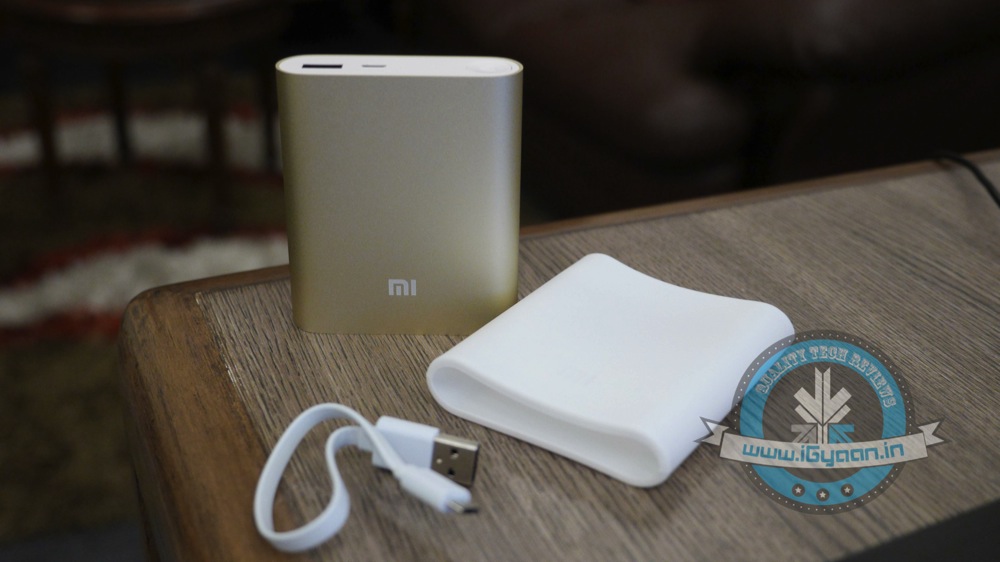
    The device comes with a rubber case and charging cable.
    The device comes with a rubber case and charging cable.

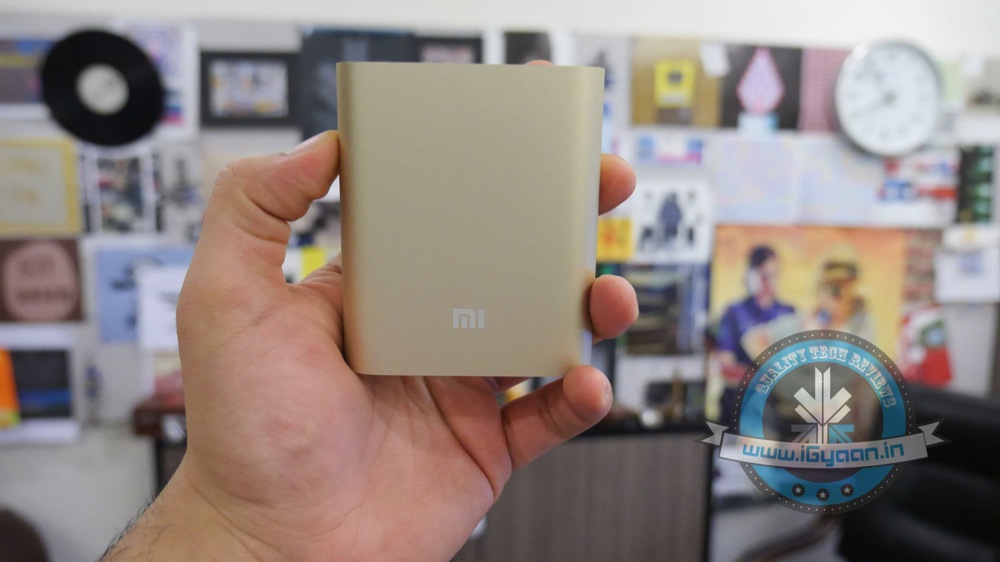
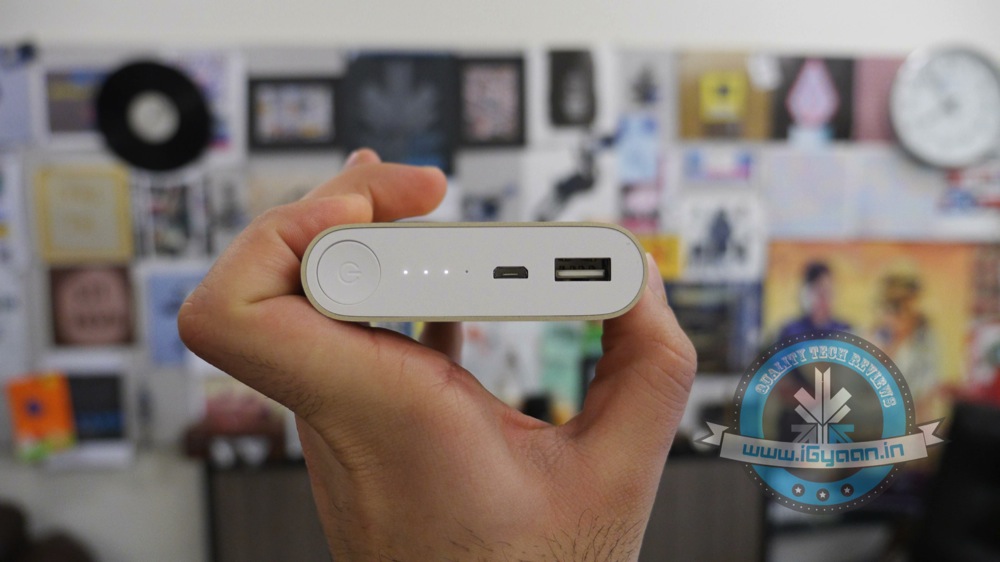
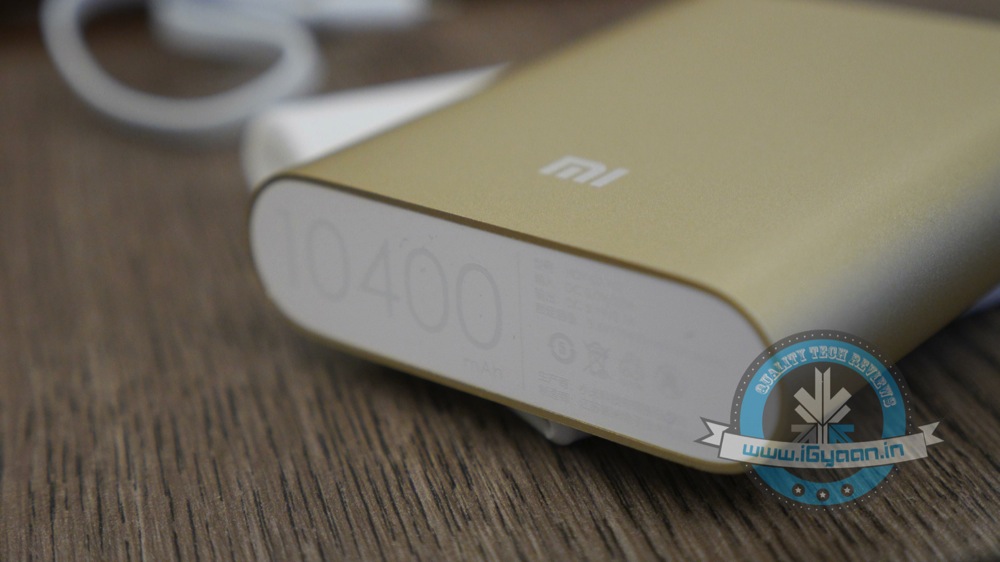
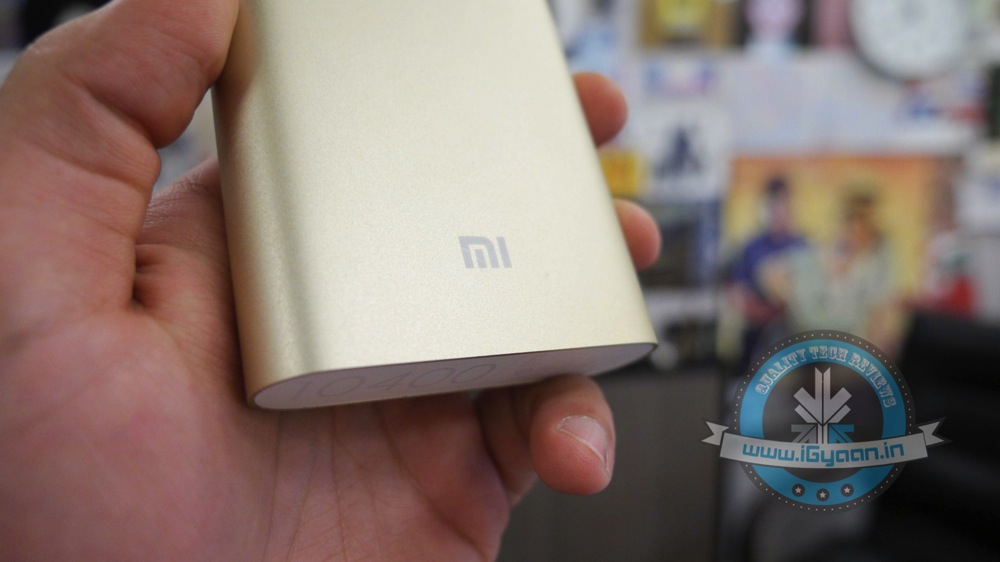
    Now these devices look sure look impressive. This is what you get when you take inspiration from Apple products. The soap bar sized Mi power banks are quite the convenience to have. We tested out the 10400mAh version for you, and it is available in a 5200 mAh variant. The Mi power bank has a textured anodized aluminum casing that covers the entire battery and has a smooth metallic finish and fits in your hand. It is claimed to be water and corrosion resistant. The surface is a bit slippery but that can be easily addressed by using the rubber case provided with it.

    Though it’s a slight bit heavy, about 250 grams, but with its massive capacity, the owners won’t mind lugging around some extra weight. The LED indicators for battery level especially stand out against the unadorned surface.

    The LED indicators stand out on the device.
    The LED battery level indicators stand out on the device.

    The company claims that the Mi power bank is capable of charging the MI3 for about 2.5 times, an iPhone for 4.5 times and an iPad 1.5 times to full capacity which is quite impressive. With these power banks, you can worry free throughout your weekend trip.

    The Mi power banks have been designed by the famous Texas instruments. Xiaomi claims that their technology was developed with safety and efficiency in mind. The power banks use chipsets to stabilizes the discharge voltage and make the device safer, durable and efficient. The devices are said to be 93% charging conversion rate for each device, which lets it charge different devices at their output levels.

    Its massive capacity can handle all your charging needs for the weekend
    Its massive capacity can handle all your charging needs for the weekend

    Xiaomi has done extensive testing before bringing the portable chargers to the consumers. The USB port on the Mi power banks have been tested for 1500 removal cycles, and the MicroUSB port have faced 5000 removal cycles. Apart from these tests, the Mi power banks were tested for extreme temperature conditions; 70 degrees, 96 hours for high temperatures, -40 degrees, 96 hours for lower temperatures. These might make them for comfortable use all around India. Though we will not advocate you testing these parameters without proper scientific guidance, this is to prevent you from blowing your face off.

    Coming to the issue of the moolah. How much does a chipset based Mi power banks cost? Here’s for your eyebrows to do some work- the 10400 mAh comes at a price of Rs. 999/- and the 5200 mAh comes at 799/-. Yes, that’s how it is, and No we did not miss an extra figure or a zero in the middle. At this price, the whole Xiaomi Mi3 disappearing act will be reenacted with these power banks.

    Get it, it sure  has got some style points.
    Get it, it sure has got some style points.

    Overall we charged a couple of our devices to full charge, and we had two LED’s still asking for more devices to juice up. The only concern with these is the absence of a second USB port which would have let us use its massive capacity to charge two devices at once. We will keep a vigilant eye on the device for now and keep you updated if the power bank fails to perform as it is advised. For now, go ahead and get in line for the Xiaomi Mi power banks.

    Tech Specs:

    Model NDY-02-AD
    Battery Type Lithium-ion rechargeable cell
    Power Source DC 5V
    Input Voltage DC 5.1V
    Input Current 2.0A (TYP)
    Output Current 2.1A(TYP)
    Rated capacity 3.6V/10400mAh(TYP)
    Charging time 5.5 hrs with 5V/2A plug and standard cable12 hrs with 5V/1A plug and standard cable
    Size 90.5*77*21.6mm
    Load detection Auto-detect the plug-in and plug-out of devices
    Safety Input OVP, OCP, Output OCP OVP, short protectioncell protection including OVP OCP, thermal protection during charge and discharge stage
    Out of power protection Awake once plugged to the charger
    Charging temperature 0°C-45°C (TYP)
    Discharging temperature Initial – 10°C~+50°C(TYP)Continous -20°C~+60°C(TYP)
    Weight 250g
  • Lenovo is Working on a Google Glass Competitor

    Lenovo is Working on a Google Glass Competitor

    Lenovo recently confirmed that it is working on a device similar to Google Glass. The device is said to a five-megapixel camera, voice recognition and gesture control, and around 12GB of internal storage.

    The Google-Glass look alike will have a battery attached down at the neck of the user. The Chinese computing giant said that more information will be revealed in October. However the company said that they are looking for partners to foray into the wearable market. It has reportedly created the “NBD” platform, which is Chinese for “new bench”.

    nbd
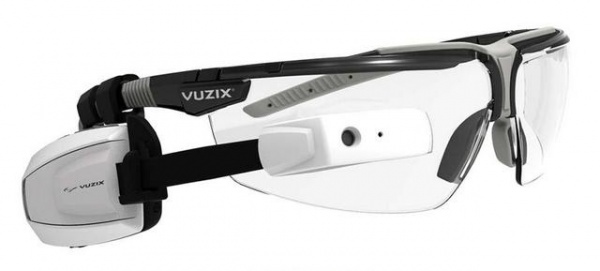
    Vuzix M100

    “Right now there are too many devices you can develop for the Internet of Things. It is too rich. Not a single company can do it all,” Chen Xudong, senior vice-president of Lenovo was quoted saying. The NBD platform is geared towards the Chinese market, but it may soon turn its attention to the rest of the world. “We hope to use Lenovo’s advantages to combine with innovators,” Chen added. “This platform can help them quickly start selling products, and create a supply chain for the market.”

    In a bid to achieve its goal, the company has launched the NBD platform. With NBD, Lenovo wants to “offer funding, manufacturing, hardware research and other logistical support to partners”, the report added.

    lenovo-smartglasses-
    Prototype of Lenovo C1

     The device, called C1, will support NBD platform that aims to make connected devices like web-enabled air purifiers more inter-compatible, by providing a framework, R&D, manufacturing support and will even provide funding to third-party firms.

    Lenovo has also partnered with German company called Luftmed which manufactures an affordable air purifier that can be controlled with a smartphone. Lenovo also announced that the company has partnered with Vuzix to launch M100 smart glasses in China.

    Lenovo now has two smart glasses in production, the M100 and the Google Glass-like C1. According to the report, the M100 uses Android 4.0.4 and is powered by a 1GHz dual-core processor. It will first go on sale to developers for 8,000 yuan ($1298) in August or September 2014, but its ultimate target is the business market.

  • Facebook is Forcing Android Users To Download the Messenger App

    Facebook is Forcing Android Users To Download the Messenger App

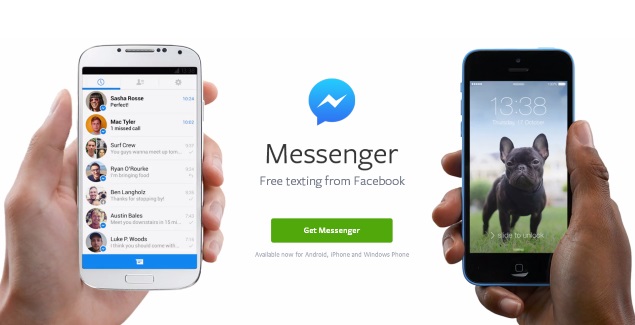
    Facebook announced on Monday that it will be removing the messaging feature from its mobile app over the next few days, and requiring people to use its standalone Messenger app instead. Hence, forcing users to download the Messenger app to chat with Facebook contacts on their mobiles.

    “In the next few days, we’re continuing to notify more people that if they want to send and receive Facebook messages, they’ll need to download the Messenger app,” a Facebook spokeswoman said.

    facebook_messenger_app_officialpage

    The change follows through on a plan announced in April and for now affects Facebook’s mobile app on iOS and Android. You’ll be able to send and receive messages on the desktop as before. The social networking giant told TechCrunch that it had seen “positive results” in Europe in terms of user engagement, and so decided to move ahead with rolling-out the standalone app to everyone.

    Facebook-messenger-sms-integrationThe company notes that users can continue to chat via the main Facebook app on iPad tablets, feature phones, Windows Phone devices, via Paper app, and the Web-based desktop interface. The company said that this move is to make the Facebook messenger, the best app for messaging. It is also an effort to avoid any confusion that might arise from having two mobile products for the same thing.

    The move will also greatly increase the number of people who use Facebook Messenger. CEO Mark Zuckerberg said on the company’s earnings call last week that Facebook was looking to turn Messenger into an important business. Messenger currently has more than 200 million monthly active users—just under a fifth of Facebook’s total user base. It can handle Internet-based voice calls, group chats, and exchanging photos and short videos, as well as sending text messages.

    Facebook says the change will help improve the performance of both the apps over time. It’s already working to improve Messenger; the company recently hired the former PayPal President David Marcus as part of a push to build new capabilities for Messenger, possibly including payments.

    Earlier this year, Facebook had announced an agreement to acquire WhatsApp, which also handles Internet-based messaging. Along with that the company also launched its own Snapchat-like app called Slingshot which is not well received.

    Slingshot may not have performed to the company’s expectations, but when you have a billion plus subscribers, you have the freedom to force them to use an additional app which only performs a part of the function that the current app does. But we are ourselves are so addicted to this man’s creation that we will do as he commands and give some more of our phone storage and RAM to conquer.

  • Apple Acquires BookLamp, The ‘Pandora For Books’

    Apple Acquires BookLamp, The ‘Pandora For Books’

    After making a giant purchase of Beats for $3 billion, Apple has now acquired BookLamp, a book recommendation maker. Apple confirmed reports that it recently acquired book analytics firm BookLamp which is dubbed the “Pandora for Books”. The acquisition happened in April to bolster Apple’s fight in the e-book sales market, bringing better discovery and analytics to its digital storefront.

    BookLamp’s most well-known product was the Book Genome Project, a platform that lets users find suggestions for books to read based on natural language analysis of other titles. BookLamp’s tech and talent could help Apple improve its iBooks service with better recommendations, search, and categorization.

    booklamp-apple-feature

    The report also states that Apple has bought BookLamp’s employees and technology for a price somewhere between $10 and $15 million. Meanwhile, the BookLamp website now states it will no longer be available as “the company evolves its mission.” It hasn’t mentioned any details about being acquired by Apple.

    Apple is thought to have acquired the start-up for the iBooks store, which offers e-books to iOS and OS X device owners but does not yet have an effective recommendations system for content discovery. Like the iOS App Store, Apple is likely looking to improve generated suggestions through BookLamp’s specialized software that can parse words and sentences to look for various metrics like genre, themes and even pacing.

    booklamp

    There are several big ways Apple could be using BookLamp to bolster its own e-book platform. One option would be to use BookLamp to build a competitor to Amazon X-Ray, which lets readers see where and how often terms or characters pop up in a book. That could be useful for classifying books into categories or flagging ones with sexual or violent content as being unsuitable for kids — or simply providing feature parity with Amazon’s Kindle app, which offers X-Ray on iOS.

    Considering Amazon’s headway into self publishing, it’s enticing to wonder whether BookLamp’s technology for screening manuscripts to figure out their market fit, or the other tools they were developing and using, may end up getting implemented under their new owner to determine what it should promote. BookLamp’s algorithms could augment Apple’s human editors who choose what’s highlighted on the iBooks homescreen.

    The most obvious way, though, would be to use BookLamp’s content and style analysis to power individualized iBooks recommendations. Before it was snapped by Apple, BookLamp had raised around $900,000 from local backers.

    With the WWDC release of the new Spotlight power upgrade and the acquisition of Swell, the radio curation app along with several other secret acquisition, it seems Apple is trying to give its best in class search boost to its ecosystem. Good curated content will simplify the life of many people and will attract them to the Apple ecosystem.

  • Gunnar Optiks Review : Do You Want Or Need It?

    Gunnar Optiks Review : Do You Want Or Need It?

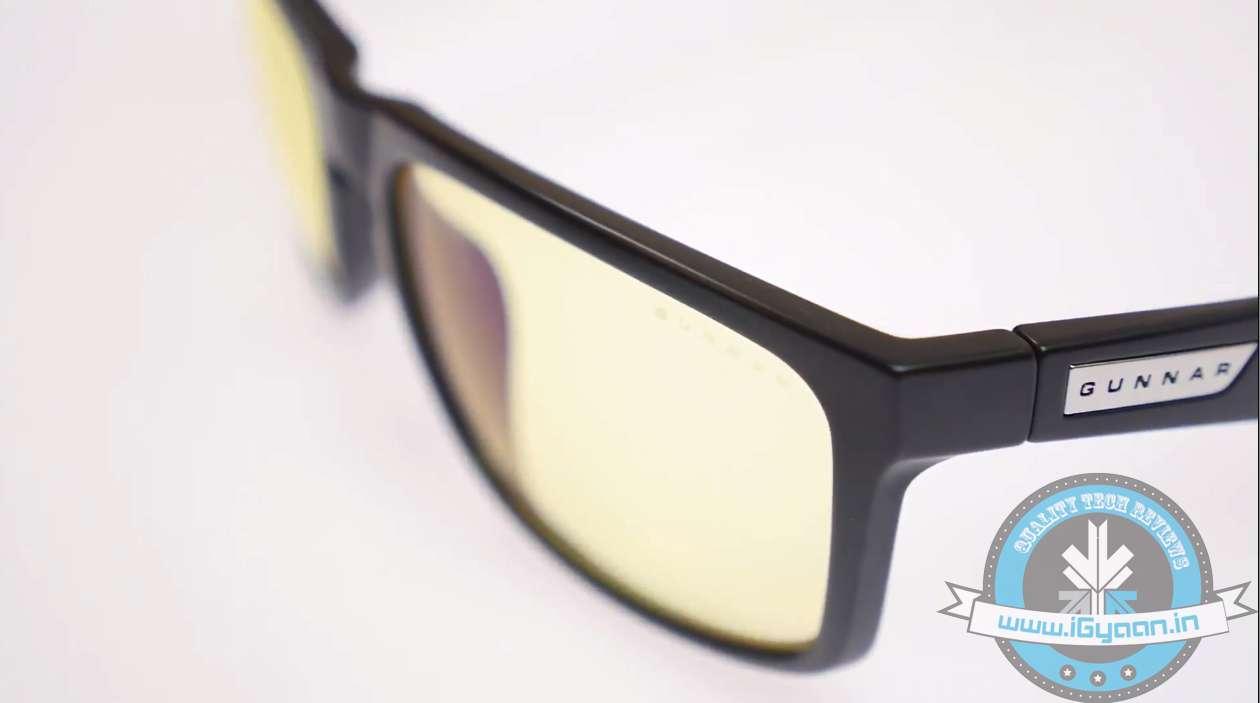
    Today’s scenario do not let you escape the eye strain of screens, displays, LCD, AMOLED and what not. Result is, all that gaming, cellphone and television takes a toll on your eyes. Issues like dry and itchy eyes, headaches among others are becoming a common complain from tech related workforce. Gunnar Optiks hopes that you’re willing to drop some bank on making your eyes more comfortable. The company says their glasses can save the stress on your eyes caused by constantly looking at the screen and possibly save you some eye life. 

    gunnar3

    Gunnar offers you a variety of glasses, ranging from usual display glasses to 3D and gaming glasses too. The gaming and display glasses are almost identical. They come in various designs to suite your frame and taste. The downside is that you can’t really try them before you buy the glasses. But you do get to choose from a variety of styles and sizes they offer.

    gunnar
    Intercept Computer Eyewear

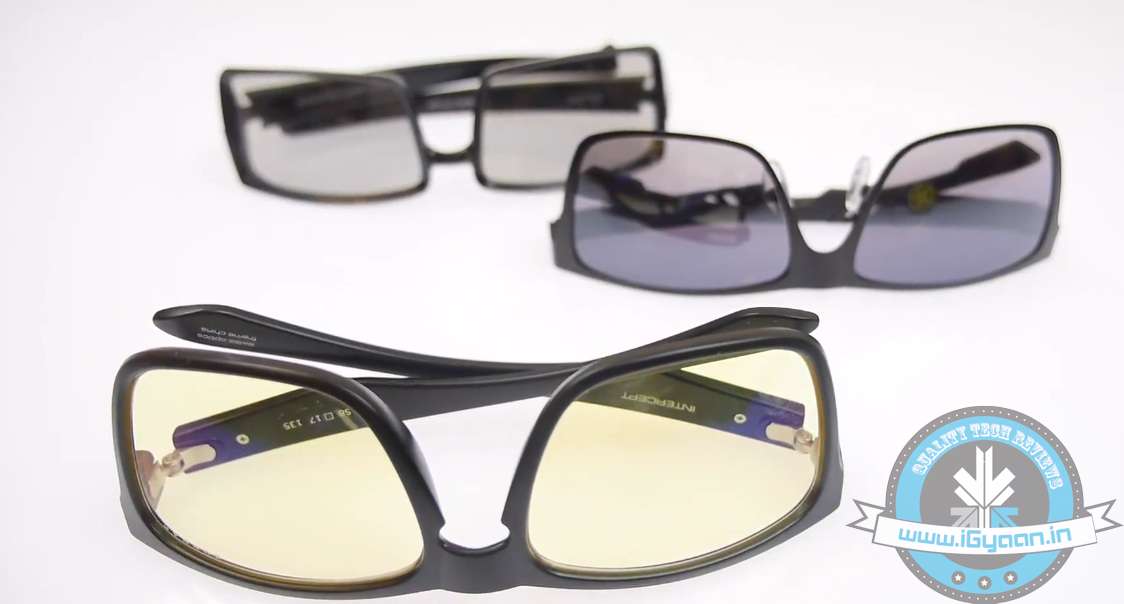
    The glasses range roughly from Rs. 2000 to Rs. 5000 in Indian market. The one we got for review are Regent and Intercept computer eyewear and Gliff 3d glasses. These are very comfy glasses and have a metal frame and the strain reduction glasses have yellow tint on them. The yellow tint do hinder with the your surroundings as well as the overall white balance of your view. 

    gunnar2

    So, if you’ve been viewing TV or playing your PlayStation a lot lately, wearing these glasses will, give a completely different hue that sort of tends to take away from original experience initially. After you have worn them for a while, you will go oblivious to its their existence on your head. Although again, the yellow tint may not be liked by some folks, but the glasses do reduce the strain on your eyes to quite an extent. If you are on screen for more hours than you sleep, these glasses will certainly help you reduce the effect on your eyes and help gi your eyes an extended shelf life.

    As far as the 3D glasses are concerned, they are very impressive. 3D glasses by Gunnar are much better than the ones you get at the movie theaters. They don’t darken up the whole view, they are light weight, and are really comfortable when compared to the usual 3D glasses. They give an actual 3D experience with better depth and clarity without compromising the picture quality.

    gunnar1
    Gunnar Intercept Gaming Eyewear

    Futhermore, there is not a big market for these product right now. In a normal day scenario, if you are not spending a lot of time on screen, you may not require these products. But, as we said earlier, if you spend more time on screen than you sleep, these might be worth a try. Honestly, the only downside here is that you will end up spending a couple or more thousand bucks for these glasses. But if you do get to save your eyes, it will be an automatic payback in long run.

    The end decision is obvious, need vs want. We can’t tell your accurate efficiency as there is no way we can measure it. But, it is surely a good bet if you are looking for a product that helps counter the heavy strain you subject our eyes to.

  • Xiaomi Mi3 Sells Out for the Second Time Within Minutes on Flipkart

    Xiaomi Mi3 Sells Out for the Second Time Within Minutes on Flipkart

    Xiaomi has created a huge wave in the Indian smartphone market by bringing in a high-end handset at a low-end price. Xiaomi is the top smartphone manufacturer in China which went from zero to the fifth position in just four years. After creating a success story back home, they have launched their devices in the Indian market, which have stirred up a storm, even before the users could get a unit in their hands.

    The first time, when Mi3 went on sale last week, it was sold out within 40 minutes of its availability.  A reported 100,000 people registered for the phone before the day of sale on July 22. On the day of sale, Flipkart ran out of their entire inventory within a record 39 minutes and also managed to get the website to its knees.

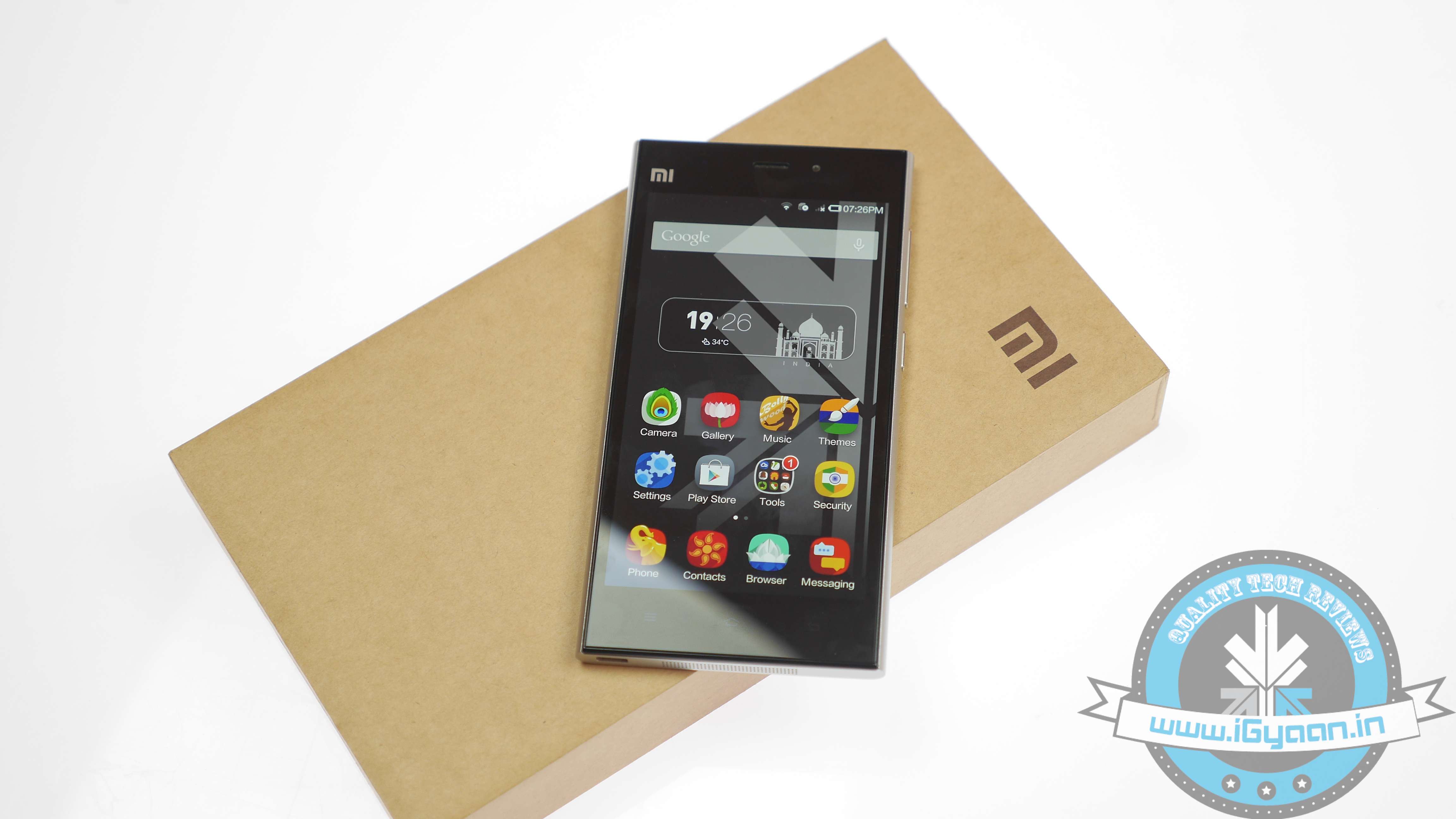
    mi3

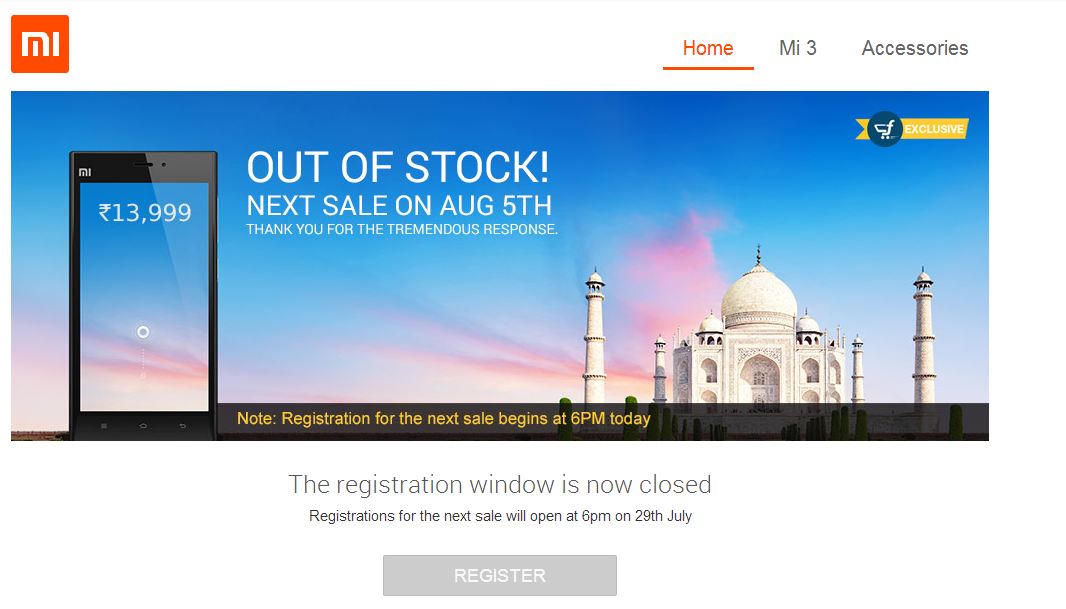
    The Xiaomi Mi 3 went on sale again via the website today at 2PM IST. However, same as the last time it sold reported 10,000 units within half an hour, 23 mins to be exact. The Flipkart page of the Xaiomi Mi3 thanked buyers for ‘tremendous response’ and also notified that next date for sale will be on 5 August while the registration for the next sale will start at 6PM IST today.

    The Xiaomi Mi 3 runs a highly tweaked version of Android 4.4 KitKat, with MIUI version 5 on top. It comes with a 5-inch full-HD LCD display (1080×1920 pixels) offering a pixel density of 441ppi; a 2.3GHz quad-core Qualcomm Snapdragon 800 (MSM8274AB) processor; 2GB of RAM; Adreno 330 GPU; 16GB of inbuilt storage; 13-megapixel rear camera; 2-megapixel camera, and 3050mAh battery.

    Xiaomi also launched its latest flagship smartphone, called the Mi 4, at the company’s “The Journey of a Piece of Steel” launch event along with the Mi Band, a budget fitness tracker priced at just $13 (roughly Rs. 790).

  • 5 Cool Messaging Apps You Could Use Other Than Whatsapp

    5 Cool Messaging Apps You Could Use Other Than Whatsapp

    Staying connected in a meaningful way makes us happy and sharing our thoughts, emotions and stories is what makes these connections rich and real. In a world where everything is moving too fast, messaging services offer you a way to connect and express yourself instantaneously.

    We are listing 5 messaging apps that might change the way you stay connected with your loved ones:

    1. Path Talk

    The new app includes a handful of features that are not available on most of the popular messaging apps, including one called ‘Ambient Status’ that automatically detects what you’re doing and shares that with others in your network. For example, the app uses geo-location on your phone to determine when you’re nearby another friend, in transit, or even working out. The app will also alert friends if you’re listening to music and what song you’re playing. All of these Ambient Status updates happen automatically, and can be altered in settings if users don’t feel comfortable with the app sharing on their behalf.

    2. Telegram

    unnamed

    Telegram is a messaging service combining the speed of WhatsApp with Snapchat’s ephemerality and advanced new security measures. Telegram feels in many ways like a straight-up clone of WhatsApp, from its green double-checkmark read receipts to its cartoonish wallpapers. There’s also the usual gamut of messaging app features including the ability to see a friend’s online status and attach photos, videos, your location, contacts, and documents to messages. But where it lacks in originality, Telegram makes up for it in speed and security features.

    3. MessageMe

    MessageMeLogo

    Message Me is a mobile free messaging app with a lot of visual features and personalization. It allows people to send SMS text messages and make voice calls to their friends for free, same as most instant messaging apps. One of its more popular features is the ability to draw or “doodle” on photos, making it easy to annotate and share images. When someone shares an image with you, you can draw right on top of it, dashing off a hand-scrawled comment or caption before passing it along to your own pals. That feature, plus the ability to grab images and other media from the Web and quickly share them in an SMS message to your friends and family, has made MessageMe a popular download since its launch.

    4. Mezy

    Mezy-Icon

     Mezy is a new social messaging app where friends post messages (photos/videos/text) to a location on a map. When a user’s followers go to the location chosen by the user, the message is unlocked and able to be seen and commented on by others who have discovered it.  Users can post a mezy anywhere in the world – not just their current location. When a follower enters the geographic location, the mezy then appears in their feed. No one else can see a mezy unless they have been granted access.

    5. Voxer

    Voxer-logo

    Voxer is commonly known as a “walkie-talkie” or “push-to-talk” app because when you click on its little talk button, you can send an instant voice message or multimedia message to a pal. The message is either instantly played through your friend’s phone speakers if their phone is turned on and the app is running, or it is received as a recorded message like voicemail. Voxer also enables text and photo messaging, like most mobile messaging apps do. It also enables VOIP voice calling like Skype does, and group messaging. Voxer is free for individuals and works with Android and iOS devices. A business version also is available with extra features for a fee.

  • Rumor : Motorola is Working on a New Nexus Device

    Rumor : Motorola is Working on a New Nexus Device

    Motorola and Google parted ways last January, but if rumors are to be believed, Motorola is working on a new Nexus device, codenamed “Shamu”, that is set to launch sometime this fall. A number of other reports have indicated that HTC has also been working on an 8.9 inch Nexus tablet for Google. It’s code-named “Volantis,” and probably has an NVIDIA Tegra K1 processor and a high-resolution display, among other things.

    Now it looks like a new Nexus smartphone by Motorola is also on the way, although it is said to have a near tablet-sized screen.

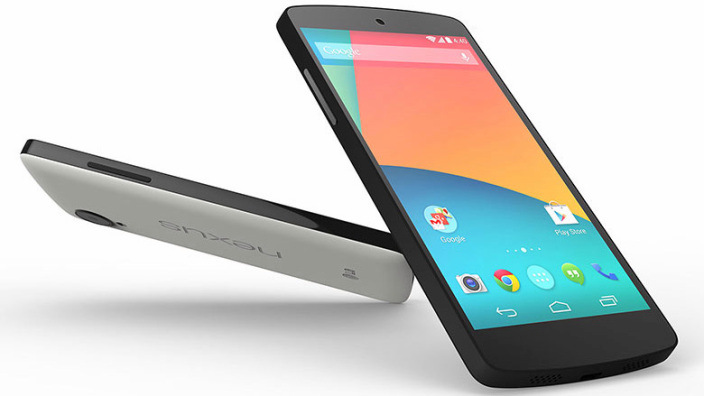
    54910-nexus5

    The reports leaked by Android Police hint that the Nexus device is a 5.9-inch device with a fingerprint sensor.

    Android Police seem confident that the rumor is true. “Point are deducted simply because hardware plans can change very quickly, even when a prototype device already exists,” Android Police writes. “We are confident that Shamu is a real device under active development, and fairly confident that it is a contender for the Nexus program.”

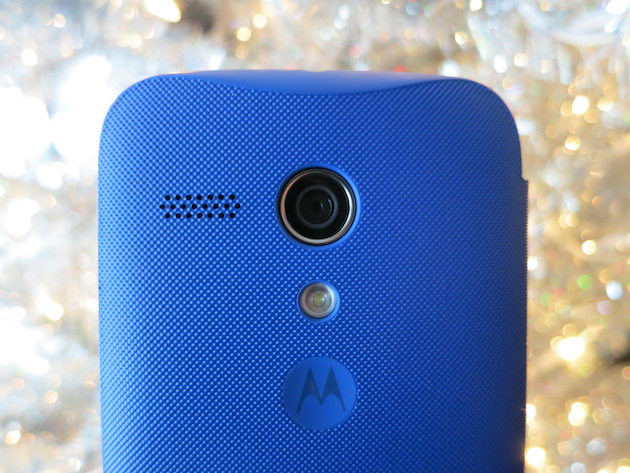
    Moto-G-featured

    Being that it’s a Nexus contender doesn’t mean it’ll be the device consumers will be able to buy later this year. But Motorola is apparently working on a device, which is supposed to be “targeted at major U.S. carriers, and unspecified carriers in other parts of the world,” Android Police said.

    It seems unlikely that a new Nexus device would appear before this fall, which is far enough away for the plans to change. But this report somewhere takes the sword off the Nexus program, which seems to be doomed. Not only is it still in play, looks like it may have a few great devices coming down the line.

  • Xiaomi Mi3 vs Moto G : Lets Fight!

    Xiaomi Mi3 vs Moto G : Lets Fight!

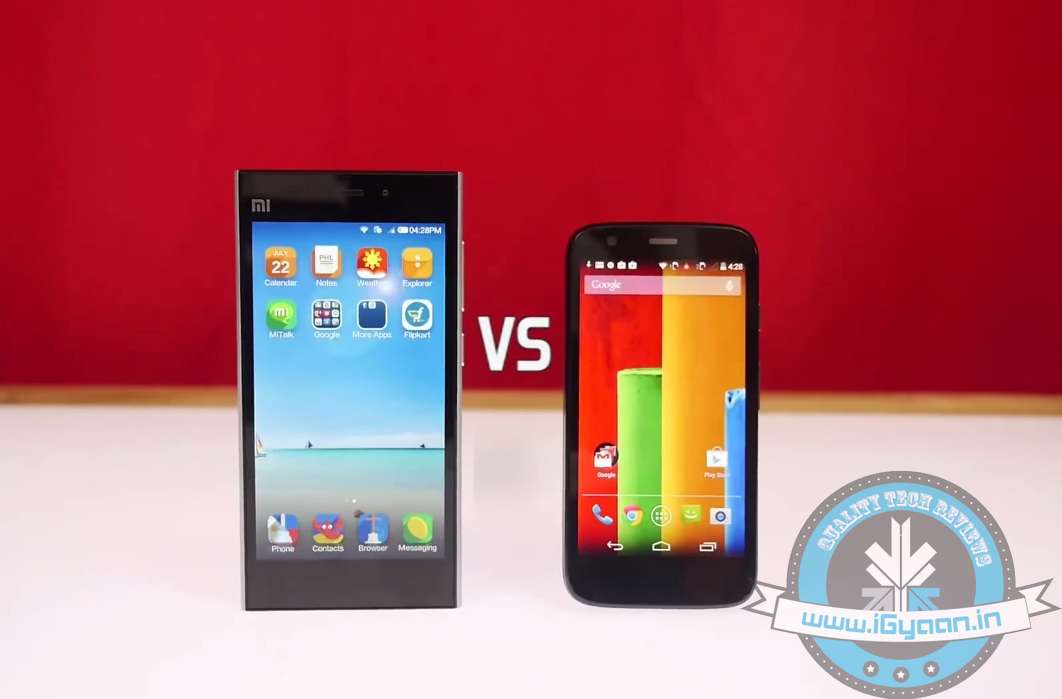
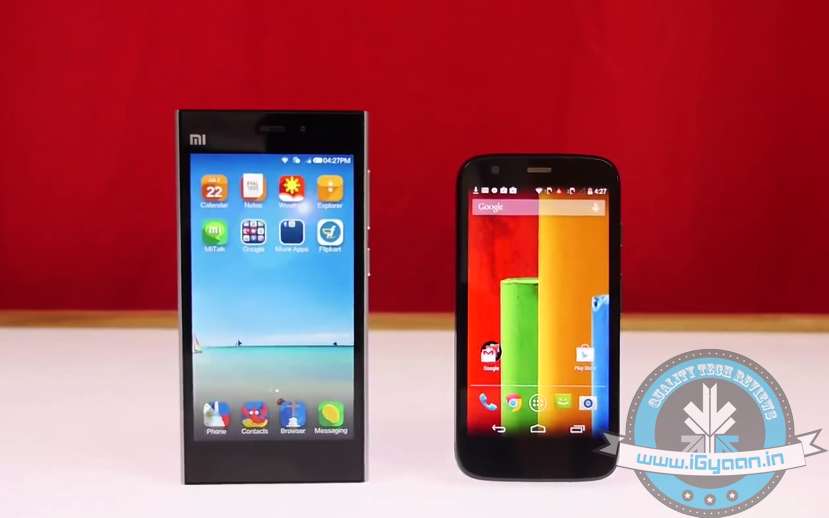
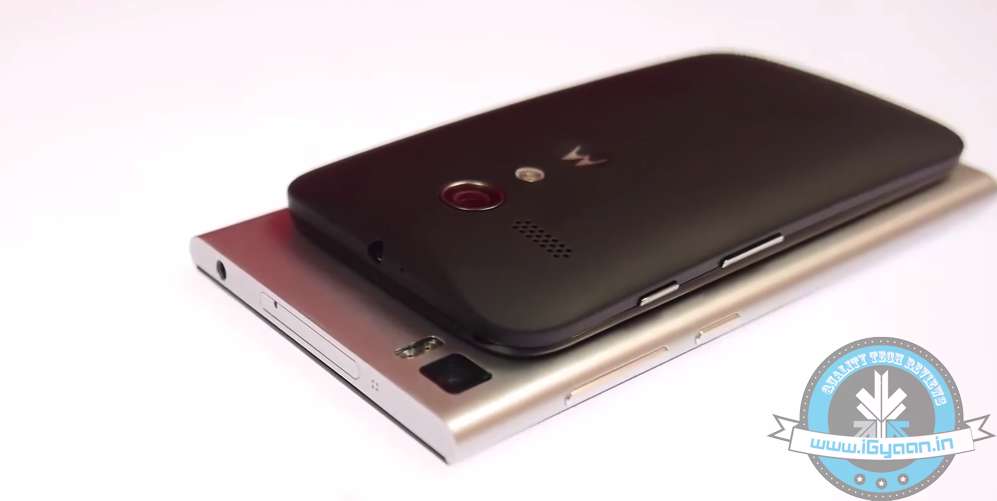
    Both Motorola and Xiaomi aimed big with the launch of these amazing devices. Xiaomi Mi3 is elegant with amazing specs and attractive pricing, while Motorola provided a great deal with the Moto G, which broke all sales records when it launched. We understand that Xiaomi Mi3 offers way betters specs, but since both the devices come within the same price range, we thought it was important for them to battle it out.

    Xiaomi is expected to take on most of the market with the launch of Mi3 because of the simple fact that the newly launched flagship device runs Snapdragon 800 and available at the price Rs. 13,999.

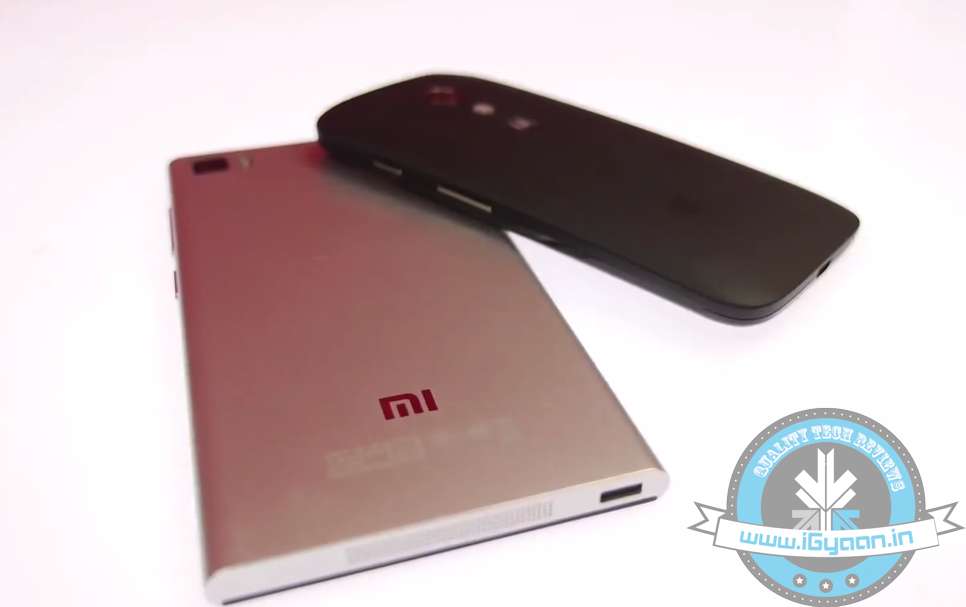
    Xiaomi Mi3, as a solid unibody product looks fantastic and the built quality is admittedly amazing. Overall feeling of the device is great. On the other hand we have the Moto G with its replaceable back panel and an array of color options for back panels.

    Xiaomi Mi3 India3

    Talking about specifications, Mi3 is equipped with a 1920X1080 px 5.0 inch display. While, the Moto G has a 720X1280 px which is at 4.5 inches. On the inside of Xiaomi Mi3 Qualcomm Snapdragon 800 quad-core chipset at 2.3 GHz. It also get Adreno 330 GPU where as with the Moto G, from the same price bracket, you get a quite a different set of specification. You get a Qualcomm Snapdragon 400 at 1.2 GHz with the Adreno 305 GPU, which is comparatively a disappointment.

    In terms of RAM, the device comes with 2 GB, where as the Moto G has a 1 GB. While the internal storage of both the devices is  16 GB. What’s interesting in Mi3 is the powerful 3050 mAh battery while the Moto G sports a 2070 mAh one. We know Moto G has a phenomenal battery life, but we are yet to test out the Mi3 battery life which is expected to be pretty impressive as well.

    Xiaomi Mi3 India1

    In terms of camera, the rear of Xiaomi Mi3 fashions a 13MP camera with a 28mm lens which also a wide-agle lens camera. It has dual LED flash and 1080p recording capability. Whereas Moto G is again dwarfed with its 5MP camera and its 720p video recording capabilities with no fancy camera features.

    The game changer is the OS both of the devices run on. The Mi3 runs on Android 4.4.2 which has been customized with MiUi5 which actually very different from what you see in Moto G. Moto G’s Android version is almost a stock Android interface with a couple of things added by Motorola. Motorola will also be fast enough to give you updates. It comes with Android KitKat out-of-the-box, nowadays. It is a possibility that it will get the Android L update as soon as Google launches it.

    Xiaomi Mi3 India2

    The Mi3 is 8.1mm in thickness, where as Moto G is a little hefty at 11.6mm. Moto G weighs 140 g where as the Mi3 comes at 145 g. The look, the feel, impressive specs and of course the attractive pricing, definitely puts Xiaomi a step above Moto G. If you were planning on  getting the Moto G, you might want to reconsider.

  • Lava Rolls Out Android 4.4.2 KitKat Update for Iris 504Q+

    Lava Rolls Out Android 4.4.2 KitKat Update for Iris 504Q+

    Domestic smartphone maker, Lava International Limited, has just announced an Android 4.4.2 Kitkat update for LAVA Iris 504Q+.

    The new update, as company said , will improve user experience through an enhanced user interface, superior battery life and software performance. The update also comes with new dialer app which will automatically prioritize contacts according to the most frequently dialed numbers in the phone book. Also the dialer will offer a true-caller like service which will match unknown number from businesses with a local listing on Google Maps.

    The users of Lava Iris 504Q+ will soon get the upgrade notification; on tapping the notification, the user will be guided through the upgrade download and installation process.  Alternatively, the users can download and install manually through “Check Update” functionality that can be found in Settings.

    The update will be downloaded on the memory card only and the user needs to have the memory card inserted in the smartphone while installing. After installation, the Android KitKat software can run with or without memory card in smartphone.

    unnamed

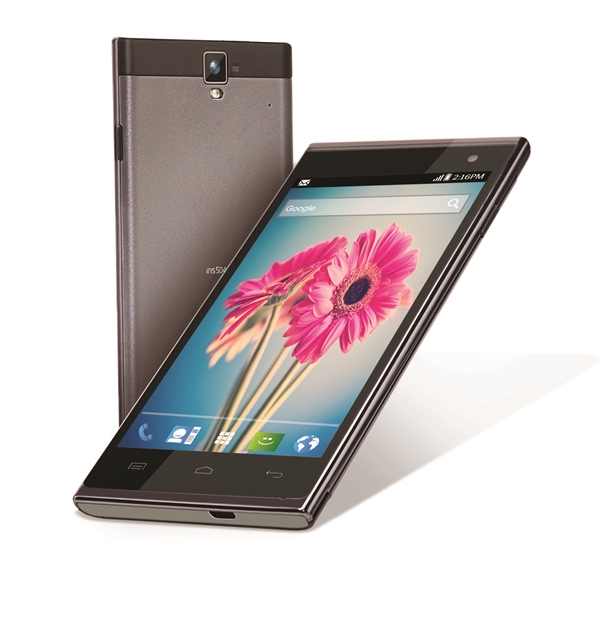
    The new upgrade is said to increase the performance of the device. The Lava Iris 504Q+ packs in 1GB RAM and an internal memory of 8GB, which is expandable up to 32GB via micro-SD card, giving users enough space for applications and multimedia content. It is powered by a 1.3 GHz quad-core processor and Mali 400 MP2 at 500MHz Graphics Unit.

    Another noteworthy feature of the devices is its 10 MP rear auto-focus camera that is powered by Sony Exmor RS Sensor having sensor size of 1/3.2 inch allowing enhanced lowlight performance. Through its unique gesture control and voice command functionality, a user can click a picture by saying just “Cheese” or “Capture” or with a swipe of the hand in air. Lava Iris is available in Grey and Silver colors at the price of  Rs. 11,900.

  • Xiaomi Mi3 Review : Get it Now!

    Xiaomi Mi3 Review : Get it Now!

    The era of saying, “that’s a Chinese phone” in a negative manner may have finally ended, and that will be purely thanks to the fact that a lot of Chinese manufacturers are ready to put that norm to rest.

    With Gionee taking the market horses by the reins last year, Xiaomi is the latest player and is ready to play in the heated battle zone with the right approach for India.
    Xiaomi mi3 Review 12

    OVERVIEW

    India is the most price sensitive market in the world, one of the largest markets for Mobile Phone users, even those who switch handsets frequently. The country is flooded with manufacturers and brands trying to reach a level of excitement in the mobile space. With the Xiaomi Mi3, the Chinese manufacturer hit the right note with Indian buyers, by simply launching the product. There was a huge demand for a good budget phone; However Xiaomi dissolved their overheads by launching the product at a marvellous price of Rs 13999/- for the 16 GB variant.

    The stocks are very limited, and only those who preregister can buy the phone. Every few days the phone will go on sale on shopping website Flipkart, making it excruciatingly difficult to own one right now. What makes it more painful is the long list of dealers who have multiple accounts on Flipkart, waiting to snatch this phone, just so that they can sell for a markup.

    Is the handset really worth all that worship? Let’s find out.

    BUILD QUALITY AND HARDWARE

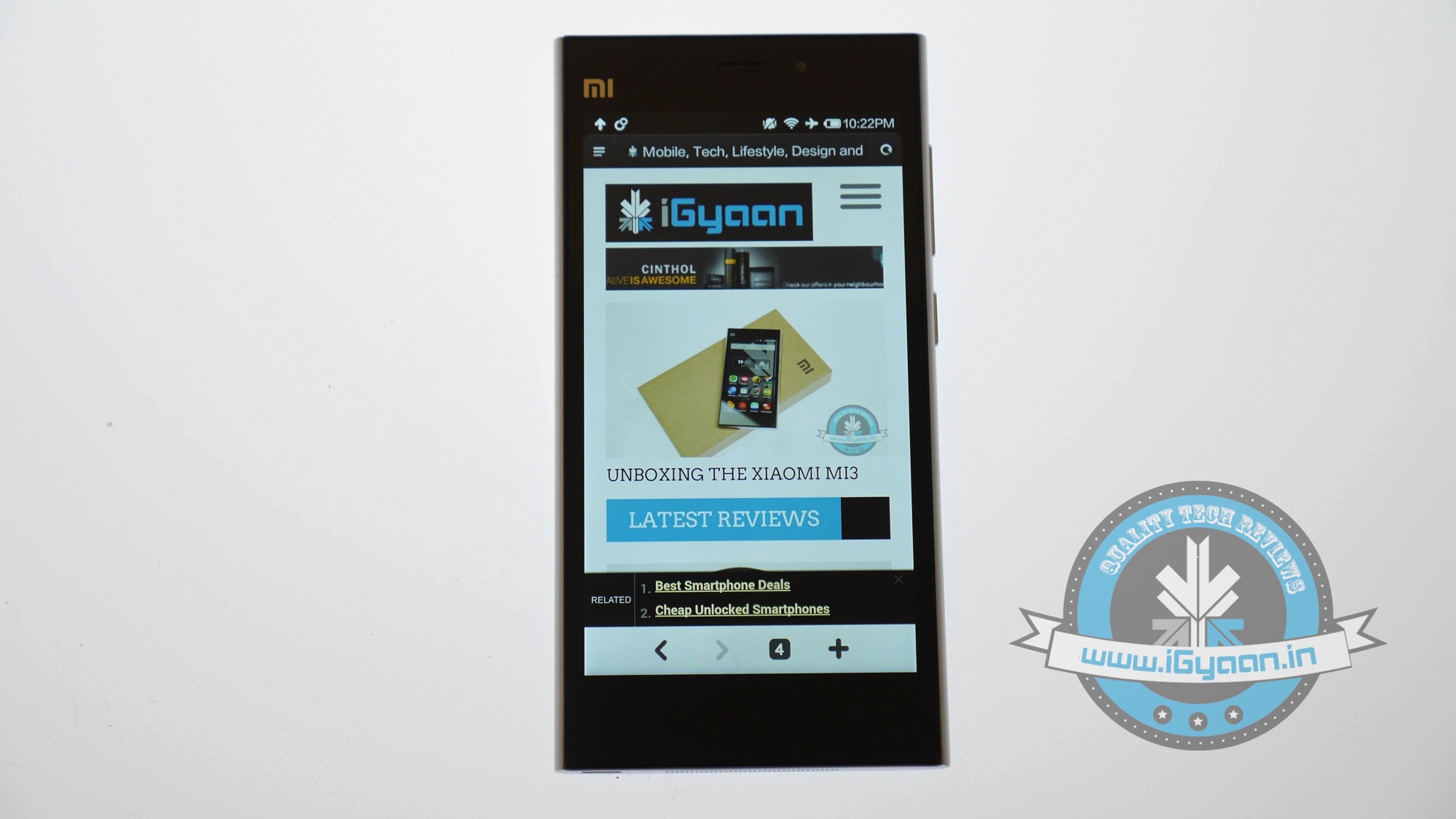
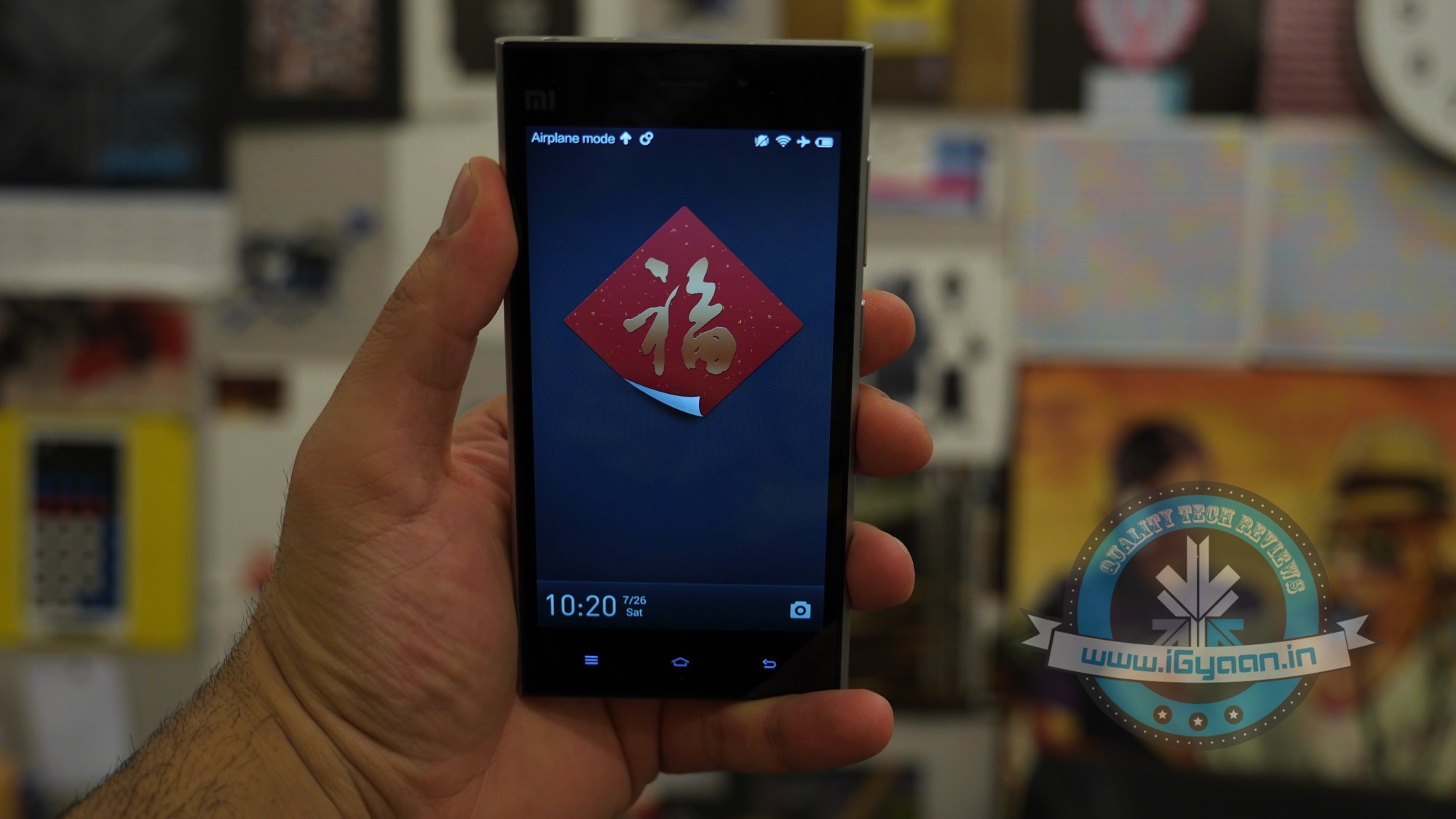
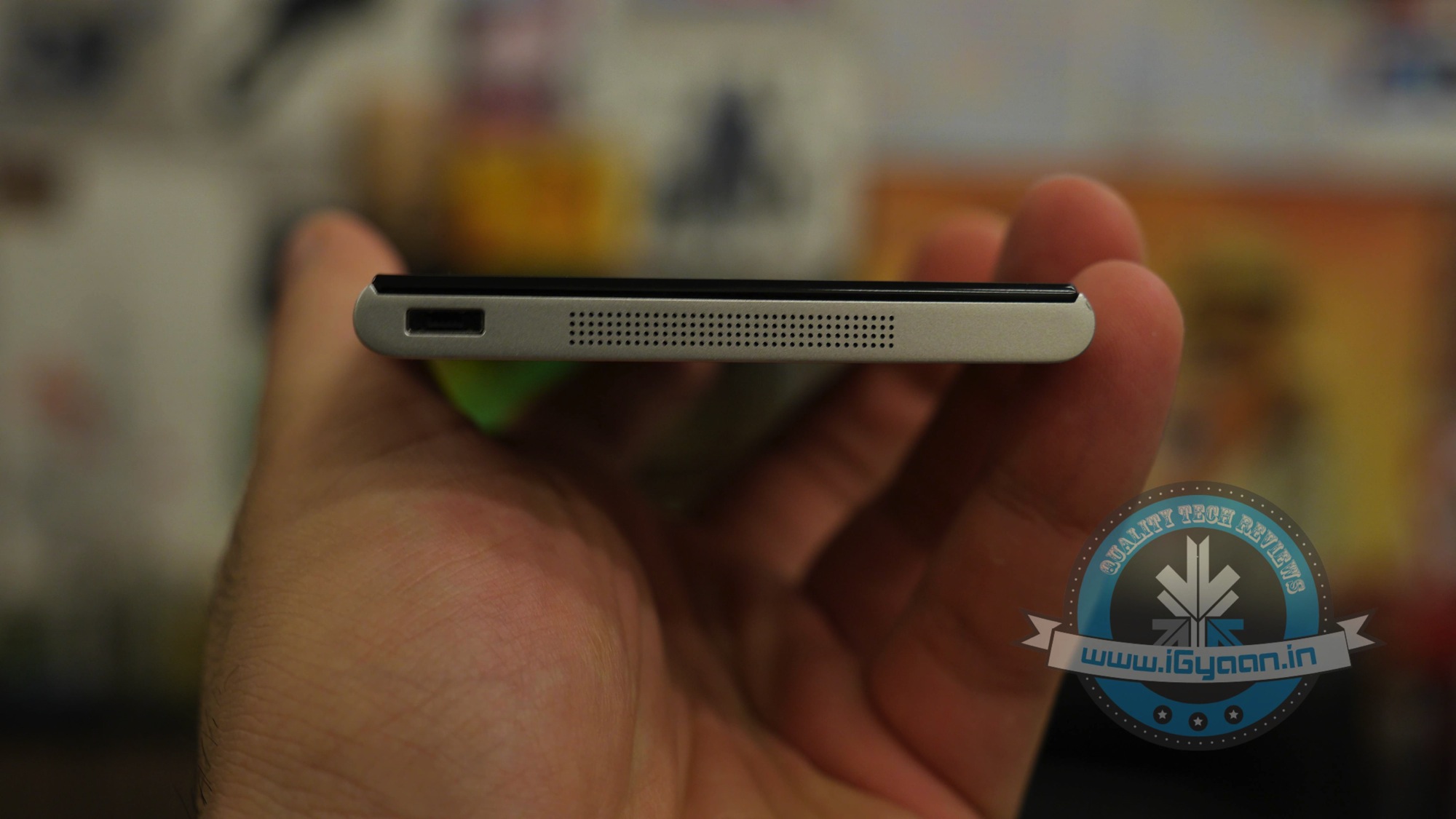
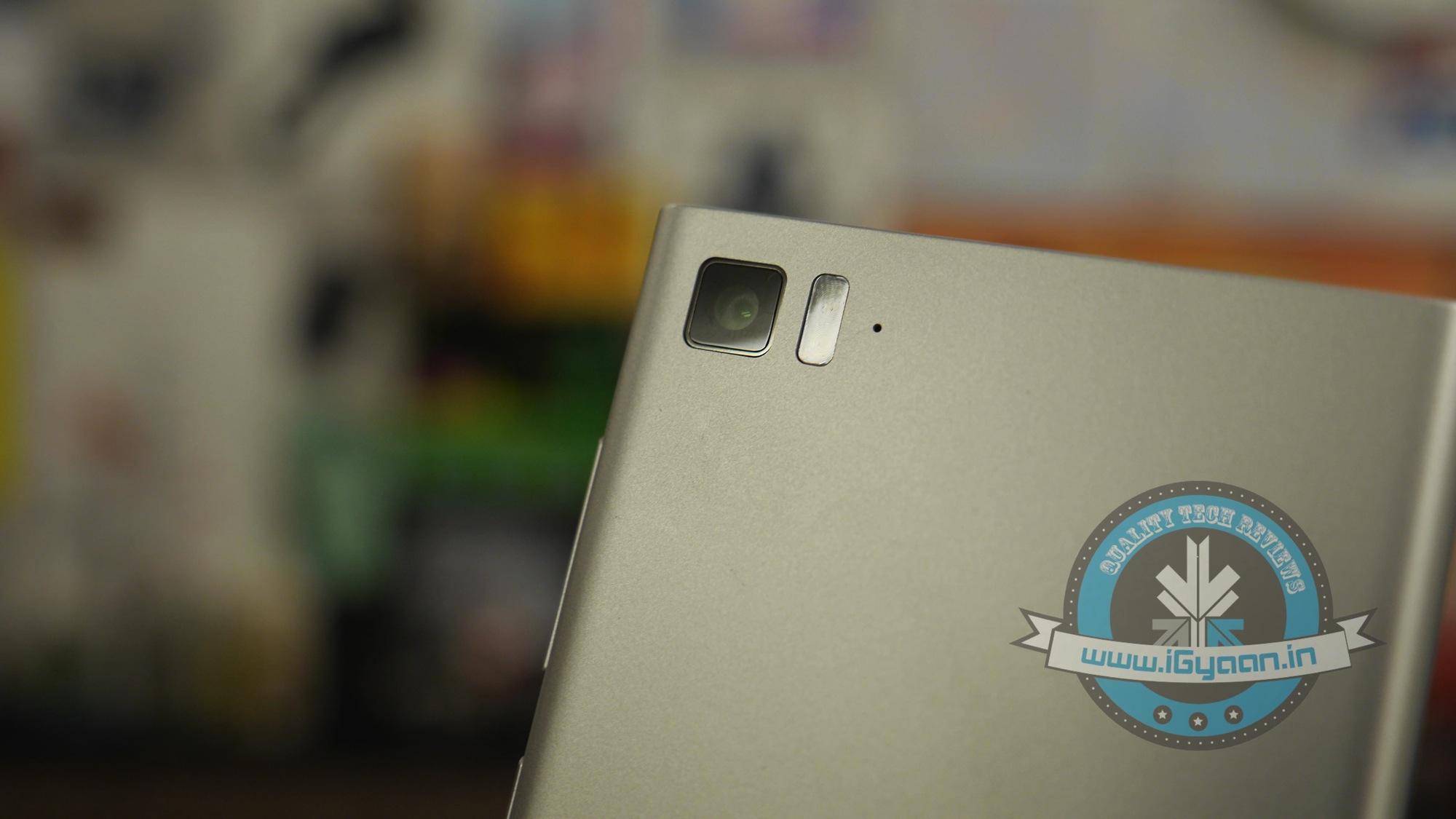
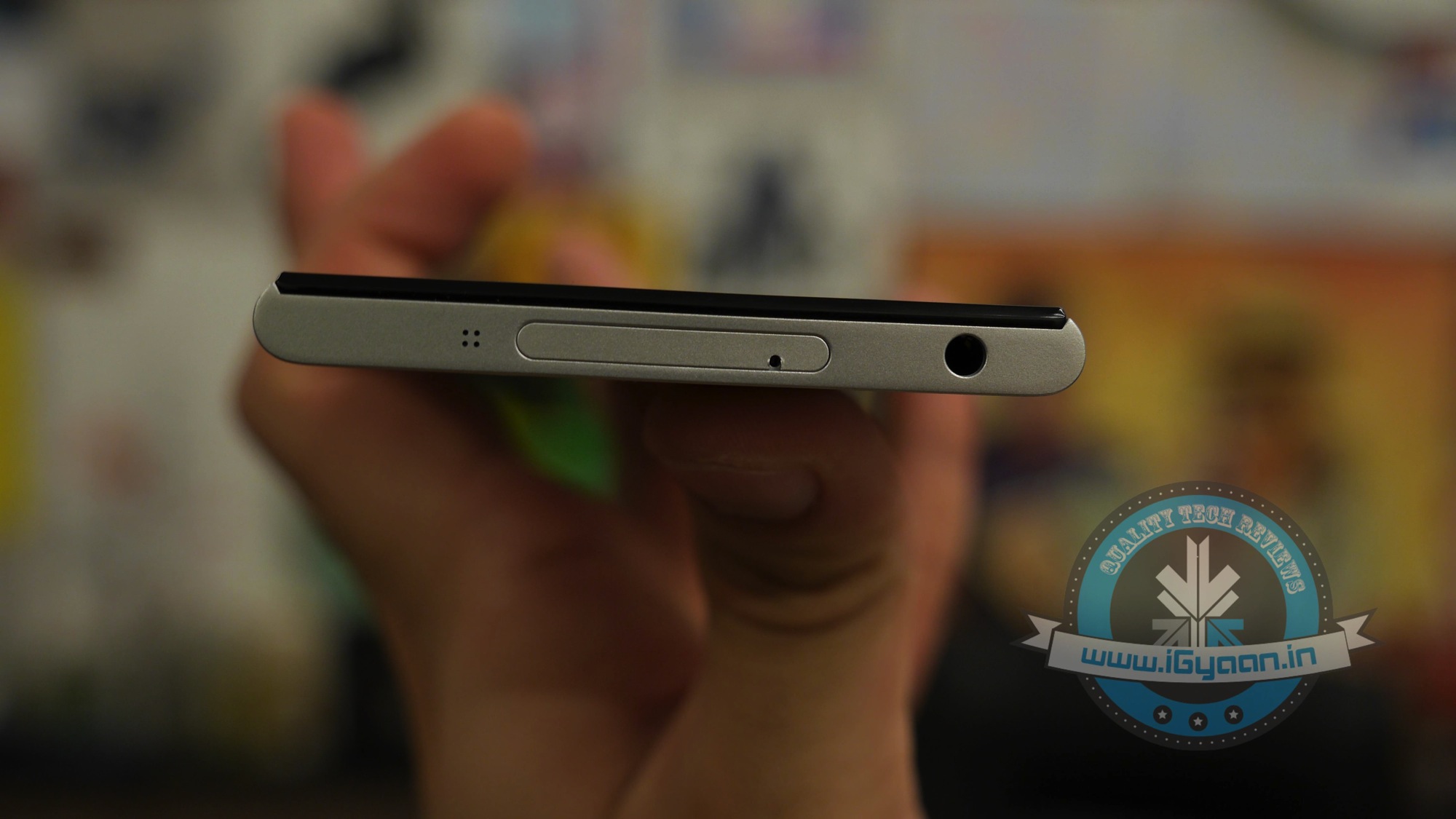
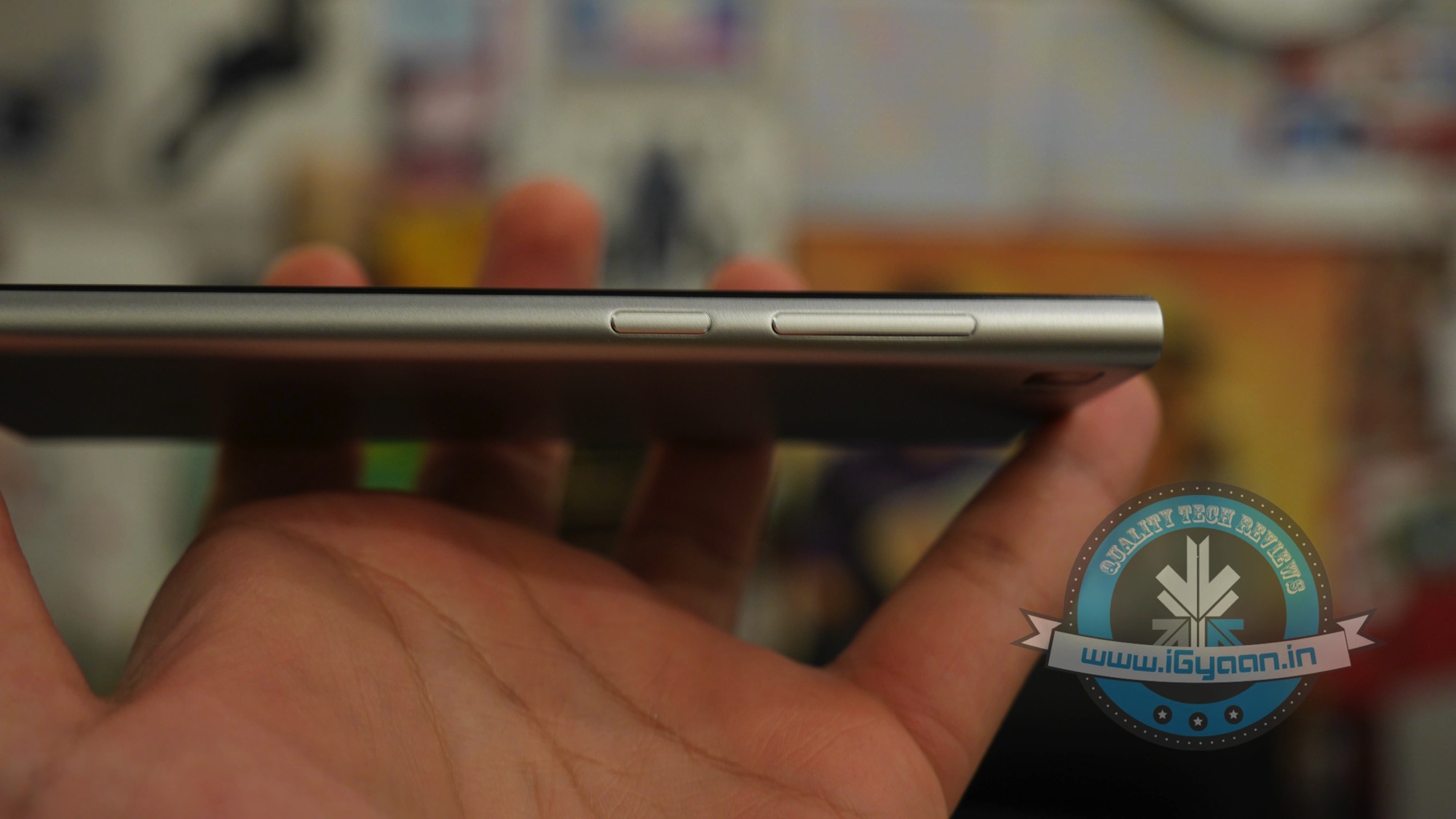
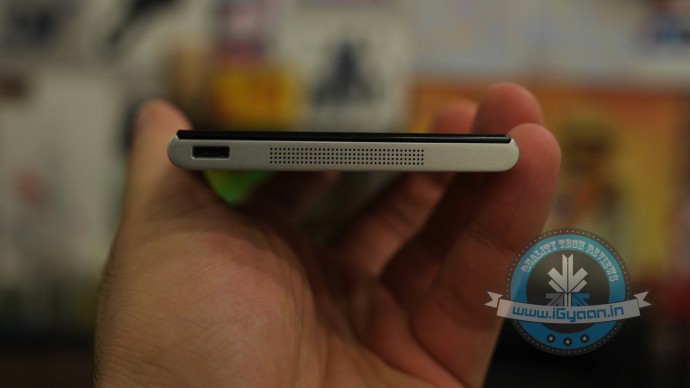
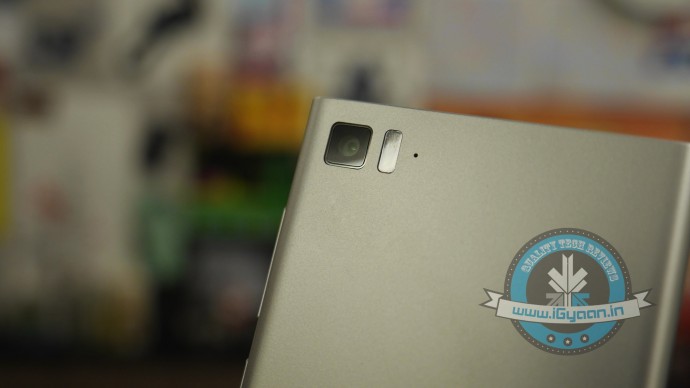
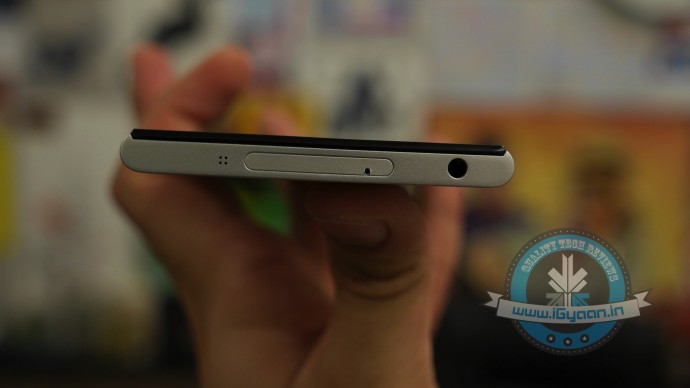
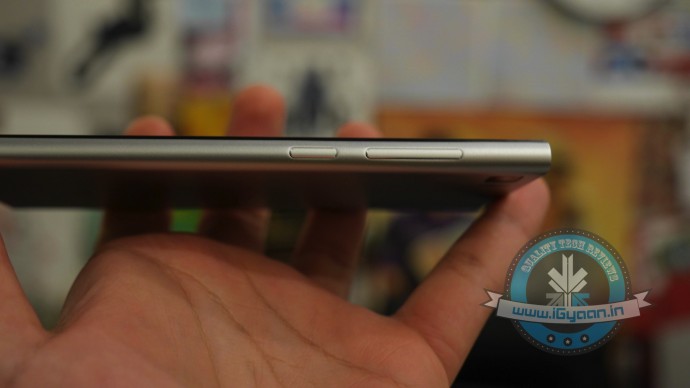
    Let’s say this, finding a phone this well made, for this price, is practically impossible. The Xiaomi Mi3 is encased in a solid brushed aluminium shell and laden with Gorilla Glass 3 in the front. Possibly one of the only phones with a reinforced micro USB port, the Xiaomi Mi3 has held no bars in design and build quality.

    The rigid frame also gives it fantastic looks and the rounded sides and edges relate to the fit in the hand, and it all feels great. Each time you pickup the Mi3 the first words out of your mind would be “No way this costs only Rs. 13999?.
    Xiaomi mi3 Review 9

    Hardware wise, the Xiaomi Mi3 is pretty top notch, unlike its latest version; the Mi4, the Mi3 carries a Snapdragon 800 chipset with quad cores clocked at 2.3 GHz, a full HD 1920 x 1080p IPS LCD display made by Sharp or LG, 2 GB of RAM, 16GB of storage and a whopping 3050 mAh battery. Apart from that you get the Adreno 330 GPU and Bluetooth 4.0 LE along with Wi-Fi 802.11 a/b/g/n/ac.

    Just putting the parts together will cost you more than a phone. However someone at Xiaomi has the right contacts with suppliers.
    Xiaomi mi3 Review 10

    ANDROID AND MIUI

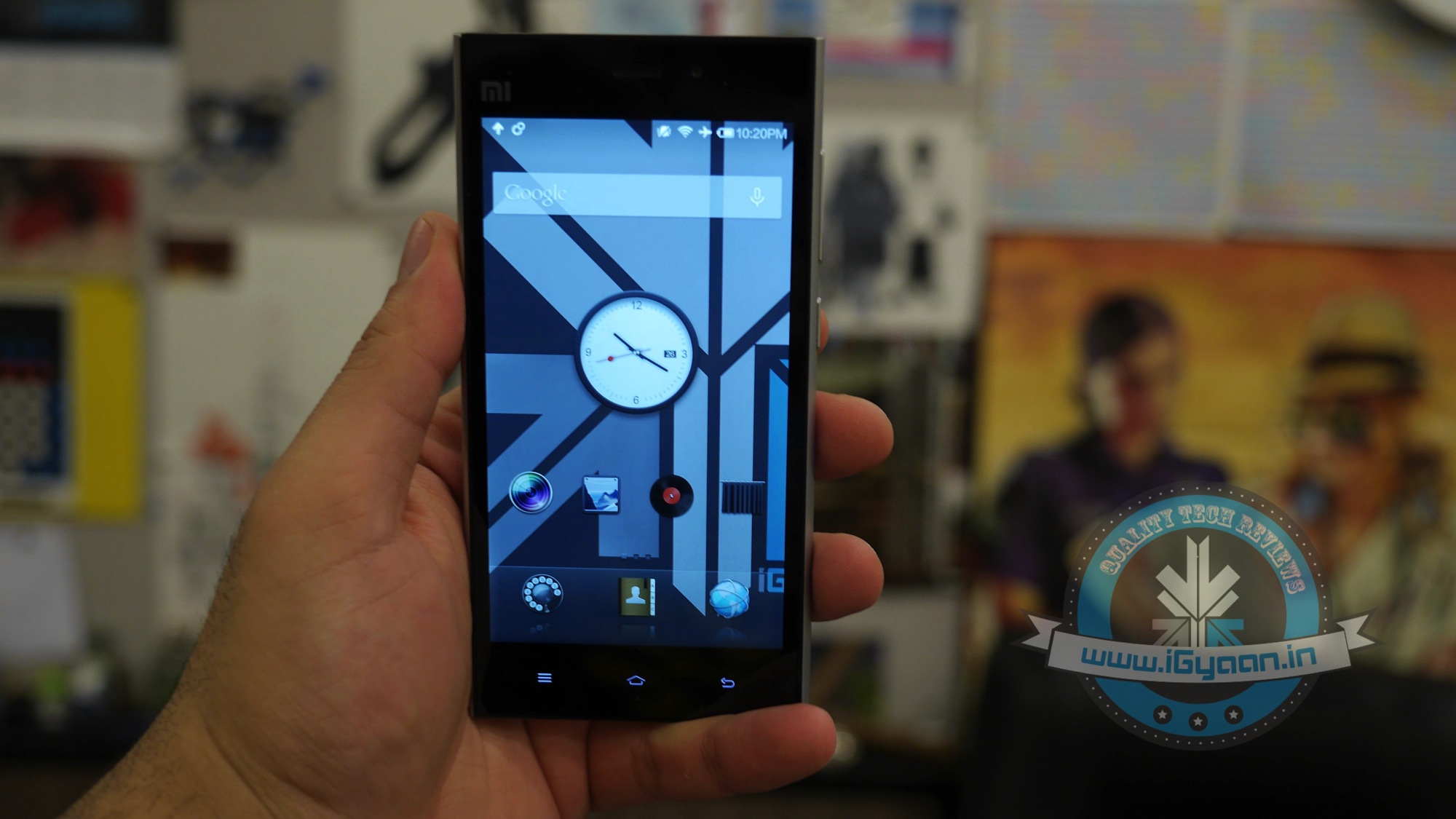
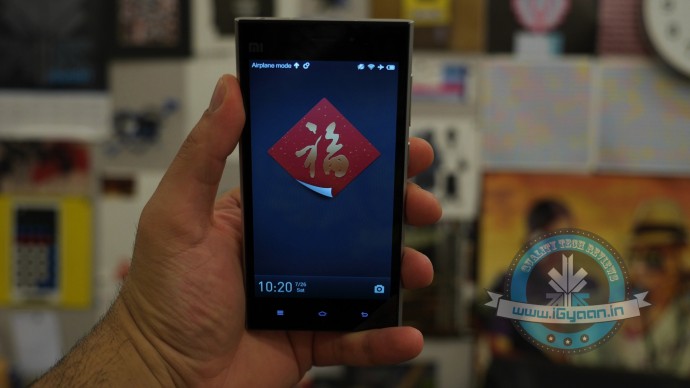
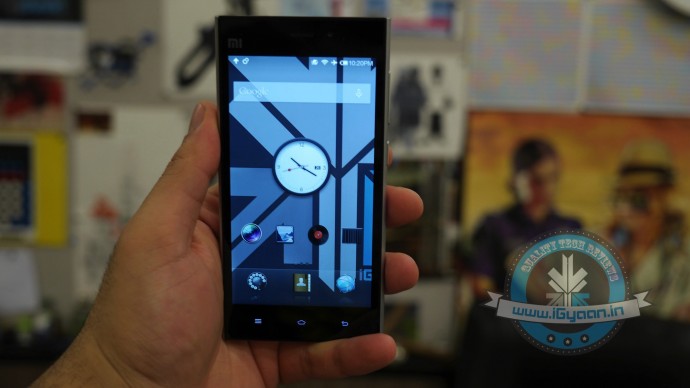
    The Xiaomi Mi3 in India comes preloaded with Android 4.4.2 out the box, which is skinned with MiUi, a very iOS like skin which does not contain an application drawer. The UI is fast and snappy and offers a lot of customisations including themes which can be downloaded from the Mi Store. The Mi3 will give full access to the Play Store and allow for launcher downloads as well as launcher replacement if so be the case.

    The UI is snappy and not laggy at all, the phone has good multitasking capabilities and will blaze through the live applications, despite few software glitches, that may often cause slowdowns and crashes.

    PERFORMANCE AND GAMING

    The phone is a beast for the price range. It does not break any records as per say, but is truly top notch in its price bracket, in fact pretty much compares to phones in double the price bracket. The phone runs through mostly all our tests and scores good results in our benchmark tests.

    Test

    Score

    Quadrant Benchmark 20376
    Antutu Benchmark 30537
    Nenamark 60.0 FPS

    As far as gaming is concerned, the Mi3 can handle anything that is thrown at it, basically, any game that exists on Android will run on the Mi3, which is mostly thanks to the heart of the handset being a Snapdragon 800 – one of the most stable chipsets when it comes to apps and software.

    We gamed on the Mi3 extensively and found it to be seamless and smooth, although the 16 GB runs out, and it runs out fast. You would be better waiting for the 64 GB variant if gaming is your bit because space is tight.

    The Xiaomi Mi3 is excellent in day to day use and offers excellent performance, whether its running apps or multitasking, you will not be disappointed.

    MULTIMEDIA AND CAMERA

    The Xiaomi Mi3 has a beautiful display with excellent viewing angles and a full HD resolution. Xiaomi has gone as far as calling it a “retina” display, because the panels are made either by LG or Sharp, both of which supply to Apple for the iPhone.

    The display is big and bright, and you will enjoy consuming media on this phone, the audio is excellent out of the 3.5mm jack, and you will be happy with the overall experience. The onboard speaker is not overly loud, but can be adequate, of course, which could be different for different folks, we would have liked a better speaker though.
    Xiaomi mi3 Review 6

    The camera is the best in class, with a 5 element lens and f2.2 aperture, the 13 MP shots are right on the money. The colours are accurate, and images are perfectly sharp. Low-light performance is excellent, and video is good. The front camera is good for 2
    MP shots which will more than suffice for the selfie nerd in you.
    Xiaomi mi3 Review 8

    PHONE AND BATTERY LIFE

    Phone networks are strong, and network performance is good where we tested (Delhi/NCR and Mumbai), the phone supports 3G networks mostly globally and without issues in India. There is no 4G/LTE and expecting it would be inappropriate.

    Battery life is impressive thanks to a well balanced chipset, which helped us get through almost two days without a recharge on the 3050 mAh battery pack.

    Talk Time 6-7 hours
    Music 19 hours
    Internet 10+ Hours

    CONCLUSION

    Just a few months ago, Motorola broke the bank in India by launching the Moto G in this price bracket using a similar sale strategy (the Flipkart way). Now Xiaomi seems to have this in their pocket for the Xiaomi Mi3 and possibly for the Mi4 in the near future. There are several complaints, already of handsets with faulty Sim card trays, heating issues and handsets that refuse to boot or get charged.

    Around 35-service centres will offer, support and Flipkart has a brilliant reverse pickup for faulty and dead on arrival products. So device and support “should not be” a problem. However, there is no clarity on who is behind the sales, an Indian partner or the company itself? How dedicated are they and how serious do the consider one of the larger mobile markets?
    Xiaomi mi3 Review 7

    With confirmed news of the new Mi4 coming soon, and OnePlus showing interest in India, the Mi3 may be a miss for some. However for those who need a phone now, it doesn’t get any better than this. If you were considering a last generation Nexus 5, this overthrows that with half the price. Get the drift? Now get the phone!

    Buy Now

    [tw-column width=”one-half”]

    GOOD THINGS

    • Excellent Build
    • Uber Hardware
    • Stunning Looks
    • Android 4.4 and MiUi
    • Excellent Performer
    • Great Battery

    [/tw-column]

    [tw-column width=”one-half” position=”last”]

    BAD THINGS

    • No Official Company to find
    • Flipkart only Sales
    • Limited Units
    • Faulty on Arrival Units

    [/tw-column]
iGyaan Network
Privacy Overview

This website uses cookies so that we can provide you with the best user experience possible. Cookie information is stored in your browser and performs functions such as recognising you when you return to our website and helping our team to understand which sections of the website you find most interesting and useful.