Category: Facebook

  • Mark Zuckerberg Wants a Jarvis of His Own

    Mark Zuckerberg Wants a Jarvis of His Own

    Mark Zuckerberg revealed yesterday that he will be working on an AI butler for his home this year. He hopes to make it efficient enough to be able to recognise his friends’s faces and let them in, to keep an eye on his baby daughter’s room and take care of other basic controls of the house like music, temperature and light.

    Zuckerberg put up a status update on his Facebook page stating,

    My personal challenge for 2016 is to build a simple AI to run my home and help me with my work. You can think of it kind of like Jarvis in Iron Man.

    He intends to use his work on the AI to also help him with research in VR as he says, “On the work side, it’ll help me visualize data in VR to help me build better services and lead my organizations more effectively.”

    This won’t be the first time, however, when someone is going the Tony Stark way. Tesla’s Elon Musk already has a lab which is heavily inspired by the snazzy Avenger character.

    Looks like things on the tech-front are going to get quite interesting as real-life tech geniuses borrow from popular culture to add that extra edge to their lifestyle.

    Every year, I take on a personal challenge to learn new things and grow outside my work at Facebook. My challenges in…

    Posted by Mark Zuckerberg on Sunday, January 3, 2016


  • Facebook’s “Free Internet” TRAI Email Scam Explained

    Facebook’s “Free Internet” TRAI Email Scam Explained

    Internet.org was announced globally in August, 2013 and it arrived in India in February 2015. The initiative aims to provide free internet services on the Reliance network in the states of Tamil Nadu, Maharashtra, Andhra Pradesh, Gujarat, Kerala and Telangana. The users would have free data access to more than three dozen services.

    The idea of thousands and millions being included within the ambit of the virtual world sounds brilliant and one everyone is up for. But before that, those endorsing this initiative need to understand all that it entails.

    Internet.org:

    internet.orgInternet.org refers to a collaboration between Facebook and six other companies, namely, Samsung, Qualcomm, Nokia, Ericsson, MediaTek and Opera Software. The aim of this collaboration is to bring easily accessible internet to developing countries, especially in remote rural areas. However since it includes only selected services and online operators, it is seen not only as a direct threat to net neutrality but also as rampant publicizing of Facebook. It would be a single company, or a small group of them, which would decide what services are made available and which ones are excluded, a right earlier extended only to the user of the internet, not the service providers.

    The Digital India Display Picture Controversy:Mark Zuckerberg
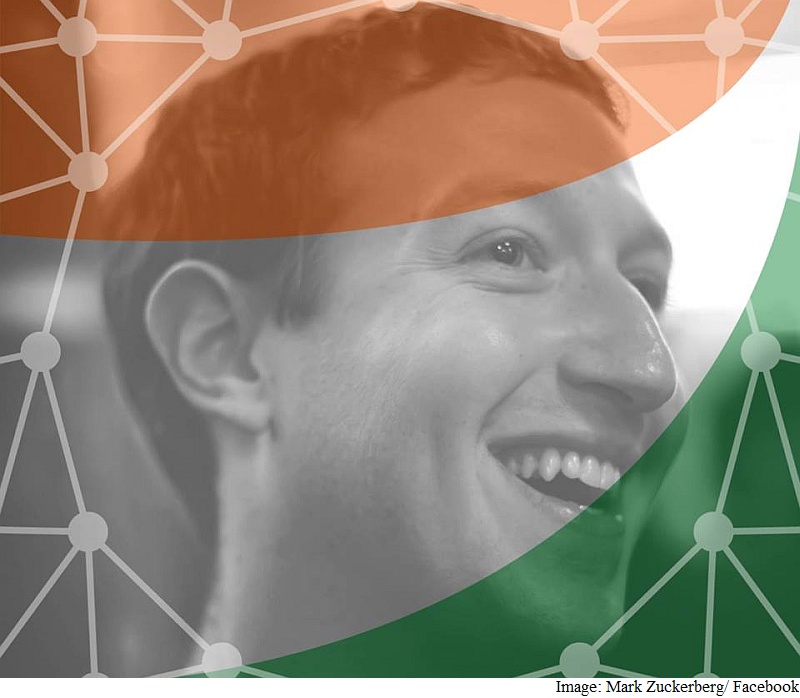
    This controversy surfaced during Prime Minister Narendra Modi’s trip to Silicon Valley to promote Digital India. When Mark Zuckerberg changed his display picture on Facebook to one with an overlay of the Indian flag, the Prime Minister followed suit and did the same with his display picture. Facebook also introduced a feature which allowed users everywhere to make the tri-colour part of their display pictures. Post this, people, as we know them to be, switched their profile pictures left and right and centre. All of a sudden, we woke up to find unanimous, enthusiastic support for Digital India. Utopia, could it be?Narendra Modi
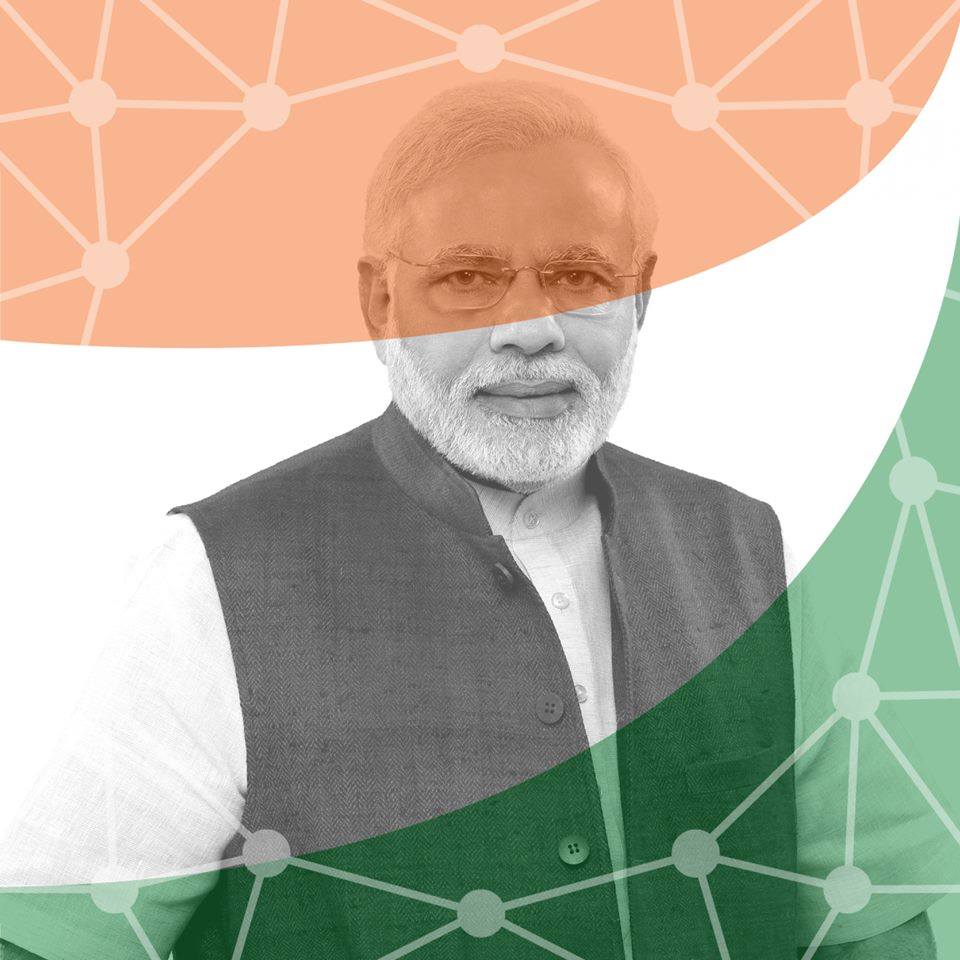
    A lot of netizens took to social media platforms to express their dismay at the new feature, which was allegedly directly connected with Facebook’s Internet.org. It was assumed that these pictures had a source code which would automatically link them to Internet.org, inadvertently making them support the initiative. However, the confusion was soon cleared up -the tri-coloured display pictures had nothing to do with Internet.org and that was the end of this controversy.

    Free Basics:Free Basics Internet.orgFree Basics is part of Internet.org and lets users access the services of the initiative by downloading an app. It became available in India last month and allowed users access to Facebook and Facebook messenger, Wikipedia, BBC News and health services, among others. The app was initially made available on Reliance Communications Network, Facebook’s partner in Internet.org.
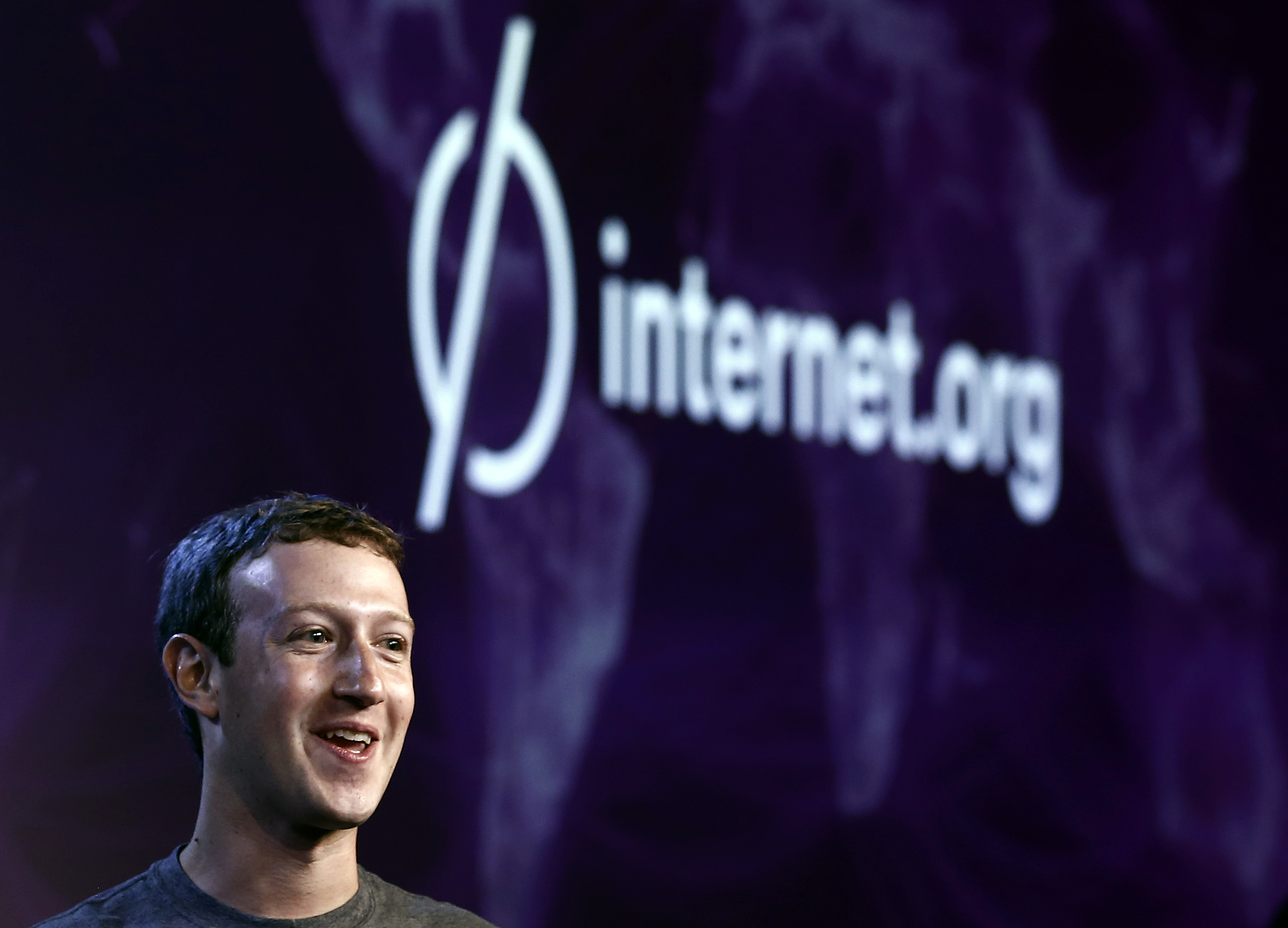
    The app and the initiative has received flak from the word go for its alleged preferential treatment, and thereby being in direct contradiction with net neutrality. Mark Zuckerberg defended this, however, and said Free Basics provides not only internet services for free but plans to include more services and developers within its reach.

    Current Scenario:internet.org-facebookjpg
    A little after its release in the country, Free Basics ran into turbulent waters. Reliance Communications had to withhold the service after it received a request from the Telecom Regulatory Authority of India (TRAI) to do so.

    “As directed by TRAI, the commercial launch of Freebasics has been kept in abeyance, till they consider all details and convey a specific approval,” said a Reliance representative.

    This was soon followed by a Facebook campaign -users were flooded with notifications of their Facebook contacts having ‘voiced their opinion’ on Free Basics. Clicking on the notification directs the user to a page which automates reply to TRAI in appeal in favour of the same. Users were also presented with this pre-filled form as they logged in which would be sent to TRAI in support of Free Basics. Though this feature was meant only for Indian users, it was sent to many American users as well. Facebook claims it was a mistake which has been corrected. The fate of Free Basics is uncertain until a verdict is passed post TRAI’s hearing on net neutrality next month.

    India is one of the 36 countries where Free Basics has been launched and is the second largest user of Facebook in the world.

    Free Basics and Internet.org are the Same but Not Many Remember it:Facebook Free Basics Free Basics is an extension of Internet.org but quite a lot of seem to have forgotten that. There had been a lot of hue and cry only a couple of weeks ago over Internet.org and its ‘altruistic’ intentions behind the initiative. However, the clamour died down quiet magically as large number of people have stepped forward declaring their support for Free Basics on Facebook, without even realising it in many cases.
    Facebook notification windows have their hands full all over the country with updates about users voicing their opinions about Free Basics (read: declaring support for Internet.org, which they had opposed only a little while ago).

    Times of India aptly commented on the whole topic recently and said, “Facebook is just trying to play on the fact that most of us click the like button on its platform without reading or understanding the complete picture.”

    Nothing would be better on the tech front than to have a country where internet is available in every household. But any policy that endangers net neutrality, and therefore, the freedom of expression, needs to be reconsidered.

    Equal internet is important for the virtual space, for future Facebooks and platforms like iGyaan itself. It enforces net neutrality and makes sure consumers don’t end up paying with every click online. However, concepts like ‘free internet’, what the Facebook-based app aims to provide under its Internet.org campaign, tends to complicate things, and endangers net neutrality.

    Have you signed your TRAI-email petition yet on Facebook, if not would be willing to or would you rather steer clear from it? Let us know in the comments below.

  • Facebook Would Soon Allow You to Post Comments Even When Offline

    Facebook Would Soon Allow You to Post Comments Even When Offline

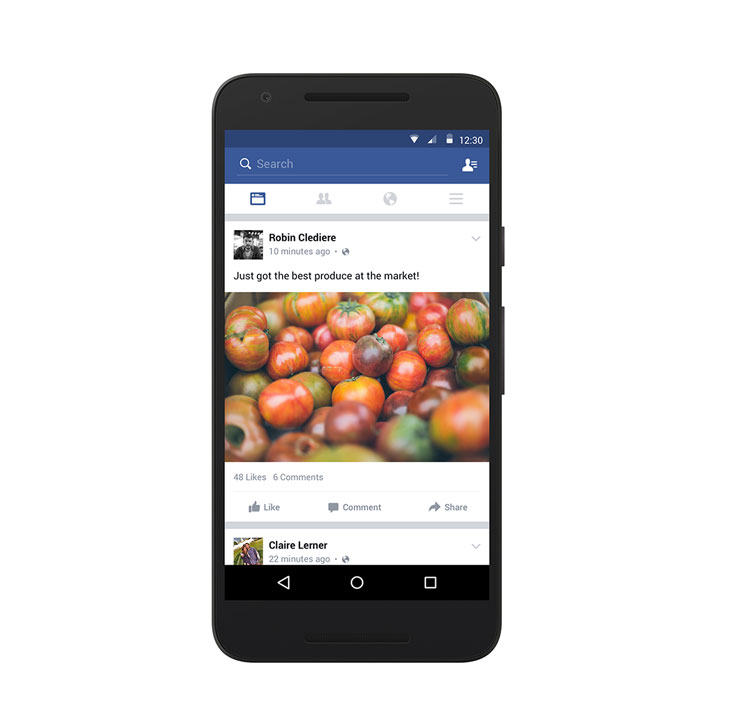
    Facebook has announced that they are currently testing an update for its News Feed on Android devices for those with slow internet connection. They plan to enhance their efficiency even on slow connections by taking previously downloaded and unread items and pushing them to the top of all the posts.

    Facebook Android

    The cached items will still be displayed by relevance and will replace the spinning icon that appears at the top of the page when you are waiting for the new posts to load. This will help you view stories that you might have missed, while new posts load in the background.

    Furthermore, this update will extend to your interactions with friends on Facebook. Users will now be allowed to post comments on posts even when offline. Obviously, there’s a catch here, your comment will be posted as soon as a connection is detected next. But, you’ll be able to like and share posts without a connection.

    Facebook is expected to test and roll out this update soon. It also mentions that users in developed markets will be able to benefit from this especially when they’re stuck in a place with bad connectivity.

    Facebook has decided on bringing this update especially to Android devices as stats show that Facebook’s growing user base is emerging in markets within Asia, where the online connectivity in most places is rather slow. Facebook had also previously launched Facebook Lite which is basically a lightweight Android version of the Facebook app to eight countries – Bangladesh, Nepal, Nigeria, South Africa, Sudan, Sri Lanka, Vietnam and Zimbabwe.

    Recently, Facebook seems to be responsibly realising the impact it has made around the world and playing an important part in communication and information access. So, if this successfully works out all we can do is reap the benefits of it.

    Source

  • Facebook’s ‘Safety Check’ and Hashtags to Help Chennai Flood Victims

    Facebook’s ‘Safety Check’ and Hashtags to Help Chennai Flood Victims

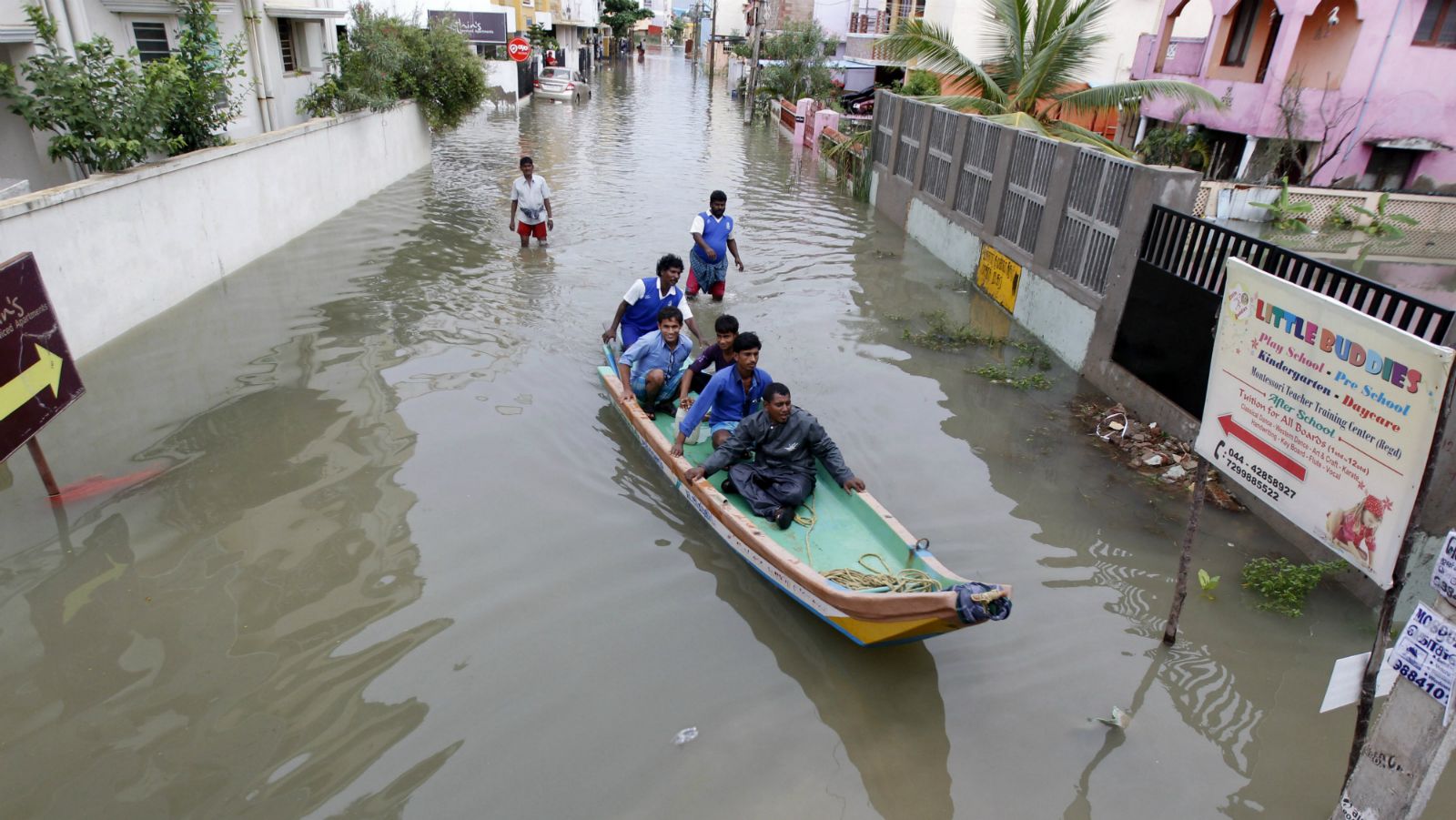
    Chennai has been battling its worst rains in a century with 188 people confirmed dead and thousands having to evacuate their homes due to the flooding. Tamil Nadu Chief Minister J.Jayalalitha said that –

    “State police, fire and rescue services, state and national disaster response forces and coast guard are ready to rescue people using boats, and adequate precautionary measures are being taken to protect people.”

    But, in our country we have grown used to not relying on the government and taking things into our hands during dire times. So, ordinary citizens have come together on social media to send or seek help. This instance reminds us of the time when a similar online effort was made in March 2015 when Jammu & Kashmir was hit by massive floods and people who wanted to help used #KashmirFloods to connect on Twitter and Facebook.

    Chennai Rains

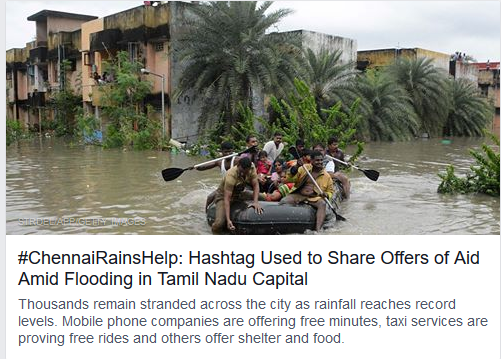
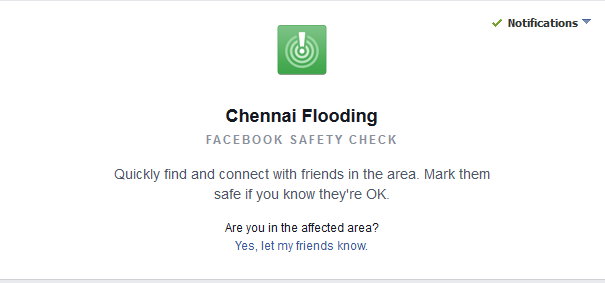
    Likewise for the Chennai floods we have #ChennaiRainsHelp and #ChennaiFloods among the most used hashtags on Twitter and Facebook. These hashtags are beings used to offer shelter, food, transport and even mobile recharges. Meanwhile Facebook has also put out its safety check feature where you can mark yourself safe if you are in Chennai.

    Facebook Chennai

    All the online efforts put together have more often than not been successful in meting out necessary help during times of need. Maybe governments should really start prioritizing people instead of shunning them and letting them fend for themselves.

  • Zuckerberg Donates Twenty Million Dollars To Provide High-Speed Internet In Public Schools

    Zuckerberg Donates Twenty Million Dollars To Provide High-Speed Internet In Public Schools

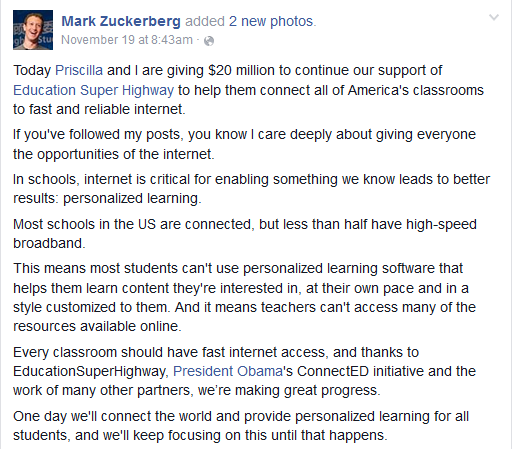
    Facebook founder Mark Zuckerberg announced that he and his wife would be giving twenty million dollars to the non-profit organization called EducationSuperHighway. This NGO helps provide high-speed internet to public schools in the United States of America.

    Facebook

    Research suggest that there are more than a bunch of schools in the country that have access to internet connection, but not high-speed broadband. Therefore, most teachers and students don’t use the computer in their classroom for personalized teaching during the instructional hours because it is counterproductive.

    “In schools, Internet is critical for enabling something we know leads to better results: personalized learning,”- says Mr.Zuckerberg.

    Contributing towards educational endeavors is not something new for the couple; they had previously also donated three million dollars to the same foundation in 2013, and plan to start their own educational endeavour called The Primary School by August next year. The new project will be spearheaded by Priscilla Chan and strives towards bringing together education, quality, youth, and family health care for the people involved.


  • Facebook To Start Their Own Crowdfunding Platform

    Facebook To Start Their Own Crowdfunding Platform

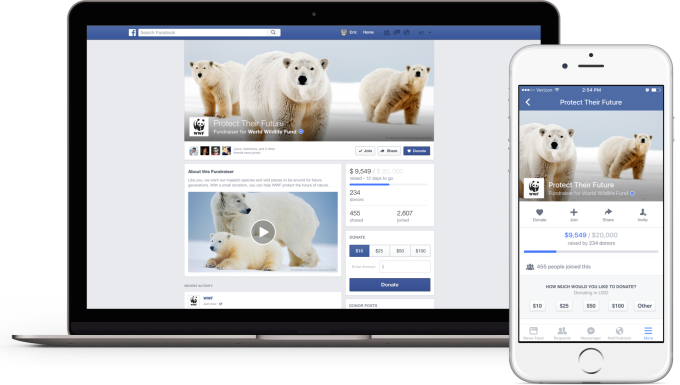
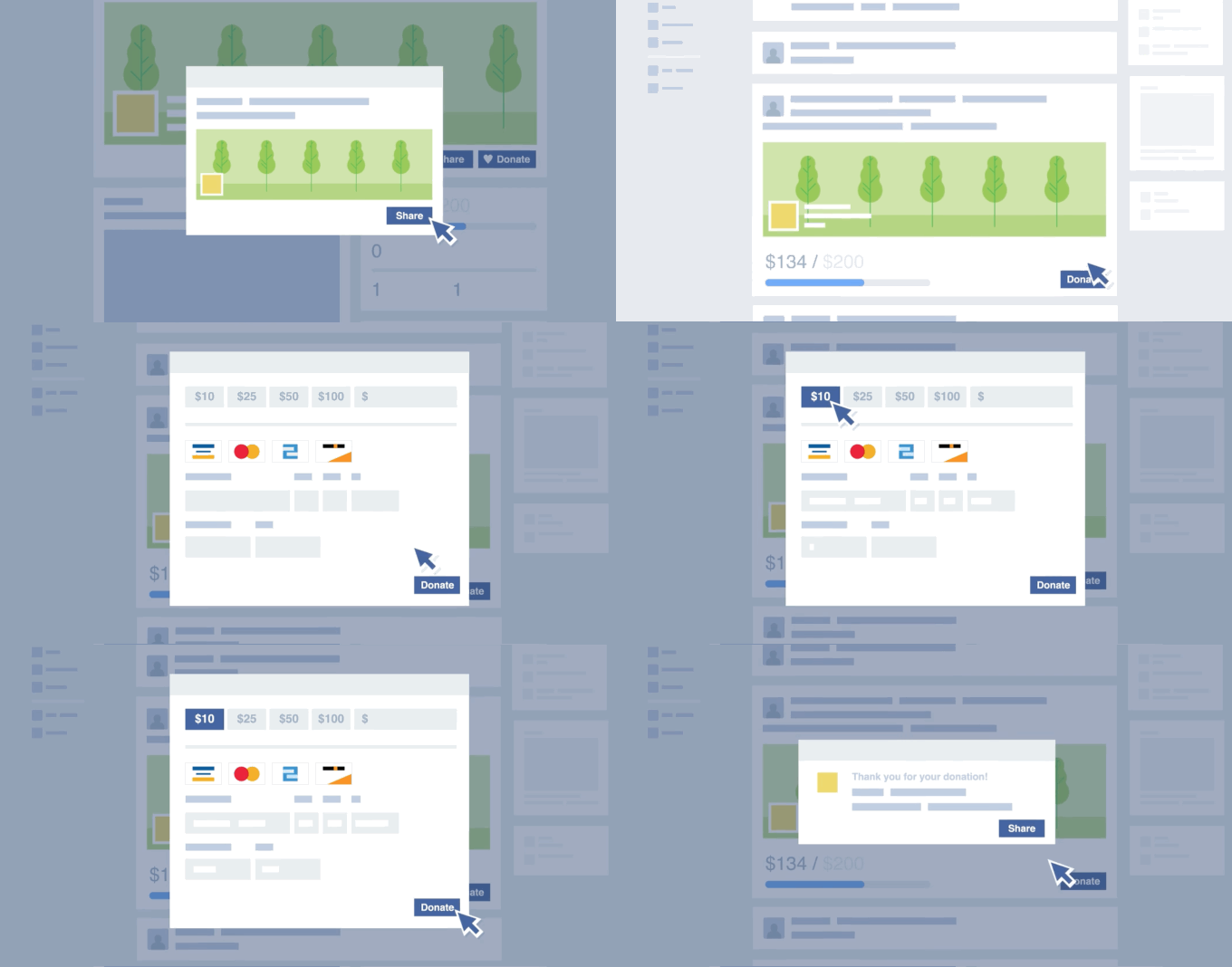
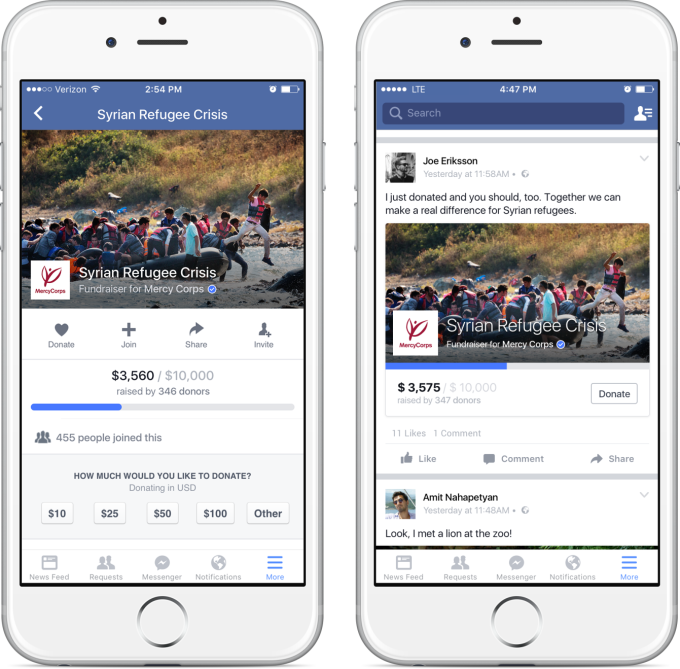
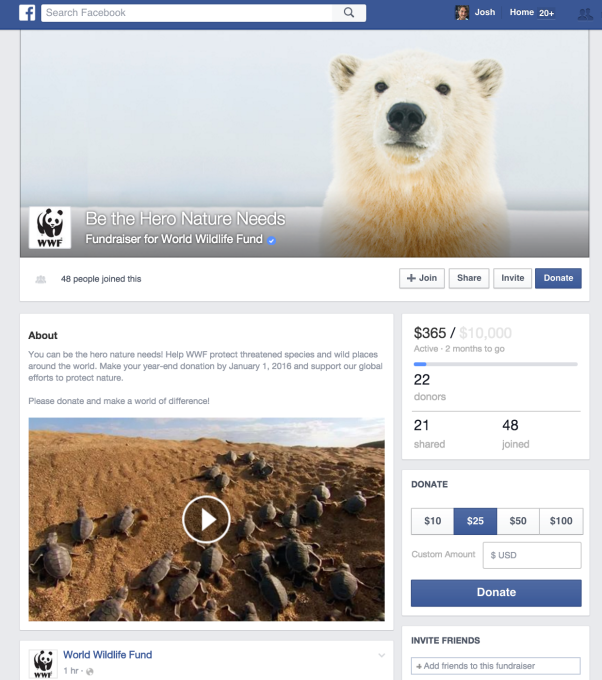
    Facebook is really trying to spread itself, in order to reach every corner of the Internet. It’s latest addition to the internet take-over is a new crowdfunding feature. The company released a new Fundraiser product that allows non-profit organizations to set up a campaign page to raise funds. They can share a video portraying their goals, they can collect the money and let people share News Feed posts with buttons so that their friends can contribute without clicking on a new page.

    Facebook Fundraiser

    Facebook has been focused on non-profit organizations for some time now, starting with the introduction of their ‘Donate’ button in 2013 and then later on launched a ‘Buy’ button for shopping. However, Facebook could probably also use this same idea of catering to the non-profits and build on a profitable future. Crowdfunding does seem to be the new in-thing in the social media circle especially with Kickstarter and Indigogo rising. However, these companies rely mainly on the re-sharing statistics on sites like Facebook for their own social graphs.

    Facebook Fundraiser

    Apart from the fact that they rely heavily on exterior websites for their popularity and reach, it is also a very time consuming process for the pledger to support or fund any particular project. One usually has to leave Facebook to visit the campaign’s page, maybe enter another exterior credit card and billing window, and then sharing the campaign back on Facebook. Therefore, Facebook is basically trying to save peoples’ time by creating their own crowdfunding platform.

    Facebook Fundraiser

    The platform on Facebook will allow users to discover new projects, make payments all within the same platform. The Fundraiser feature also allows people who would like to show their support towards a project without having to make monetary payments via a “Join” button. This button will allow the supporter to receive updates about the project; they’ll also be able to post on the page and invite friends to join the campaign.

    This project could also lure people into a more one-time set-up flow payment system and thereby attract more pledges. Apart from this advertisements for the website’s own pages could contribute to socializing and browsing within their own website, since these ads will only lead you to another page within the website.

    Facebook Fundraiser

    Facebook seems to have really caught on to a major consumer attraction concept of how to save time. This new project does seem like it has a lot of potential and with Facebook’s already vast expanse, nothing seems impossible for the social networking website.

  • Facebook Activates ‘Safety Check’ Feature Amid Paris Terror Attacks

    Facebook Activates ‘Safety Check’ Feature Amid Paris Terror Attacks

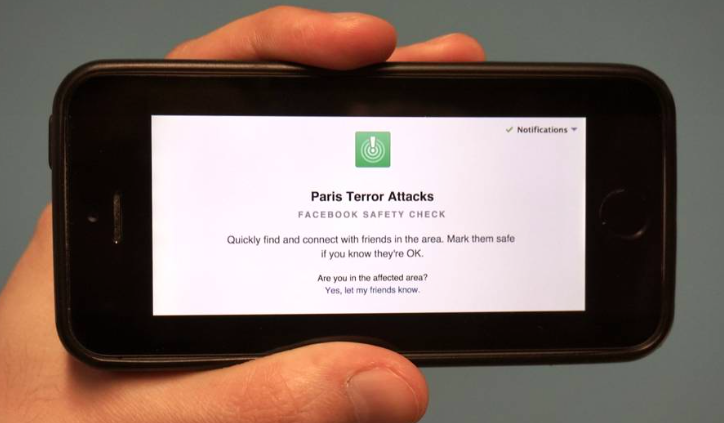
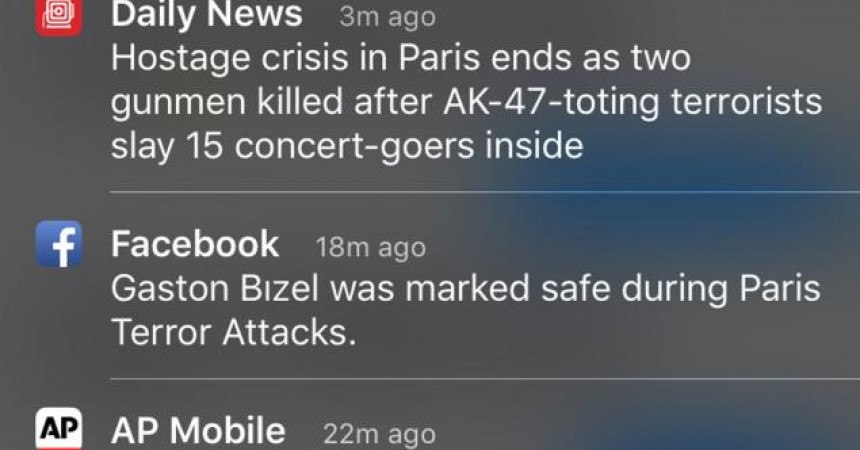
    Today, the world woke up to one of the worst terror attacks in recent times. The Paris massacre last night killed dozens of people and left many more severely injured. In times of such crisis one needs to stay connected to those closest to them, especially if they happen to be near the crisis zone, and Facebook lets you do that with its ‘Safety Check’ feature.

    On Friday, Facebook activated its safety check feature during the Paris crisis to allow users to notify friends and family that they were safe through the site’s ‘Safety Check’ tool. Users began getting notifications telling them that their friends who were in Paris during the attacks were safe.

    Safety check

    The ‘Safety Check’ feature was launched in 2014 and has been activated five times so far. This is the first time the feature has been used in a non-natural disaster setting. in the wake of the attacks, Facebook promptly activated the feature and also released a statement:

    “We are shocked and saddened by the events unfolding in Paris. Communication is critical in these moments both for people there and for their friends and families anxious for news. People turn to Facebook to check on loved ones and get updates which is why we created Safety Check and why we have activated it today for people in Paris.”

    Facebook hasn’t yet shared how many people were marked safe. According to its site, Facebook determines the location of a user by “looking at the city you have listed in your profile, your last location if you’ve opted in to the Nearby Friends product, and the city where you are using the internet.”


  • ‘Quit Facebook, Stay Happy,’ Says Happiness Research Institute

    ‘Quit Facebook, Stay Happy,’ Says Happiness Research Institute

    Facebook, like smoking or drinking, can be regarded as an addiction for the digital age. Well, maybe not as harmful to the body as the latter, but according to a study conducted by the Happiness Research Institute (yes, it’s a real place), Facebook can be quite harmful, mentally.

    A study was conducted by the Happiness Research Institute on 1,095 Facebook users in Denmark to see how the social media might be affecting their mood. The researchers first discovered that over 94% of the participants visited Facebook on a daily basis.

    The subjects were them split into two groups – one group continued their daily use of Facebook while the other were made to stay off the site completely. One week later, the Happiness Research Institute found that 88% of the quitters said that they felt “happy,” while 81% of Facebook users felt the same. According to the results, Facebook users reported greater rates of anger, worry, sadness, depression and loneliness; while the quitters reported higher rates of happiness and enthusiasm, better social lives, fewer problems with unproved concentration.

    Social Media

    Let it be known that this study is far from being scientifically accurate as the subjects basically wrote down what they felt, which cannot be all taken at face value. But the study itself revels a growing concern over our dependance on scrolling through timelines and news feed every chance we get, worrying about our status updates and the number of likes, among other things.

    Let’s be honest, we’ve all felt like giving up Facebook at some point in our lives. We’ve also deactivated our accounts only to return to it the next day. The potential effects of Facebook and other social media addiction cannot be properly quantifiable, which is what makes this form of addiction silently scarier than others. Let us know what you think about the effects of social media on you in the comments below.
  • Facebook’s New Message System Takes On SnapChat’s Self-Destruct Messages

    Facebook’s New Message System Takes On SnapChat’s Self-Destruct Messages

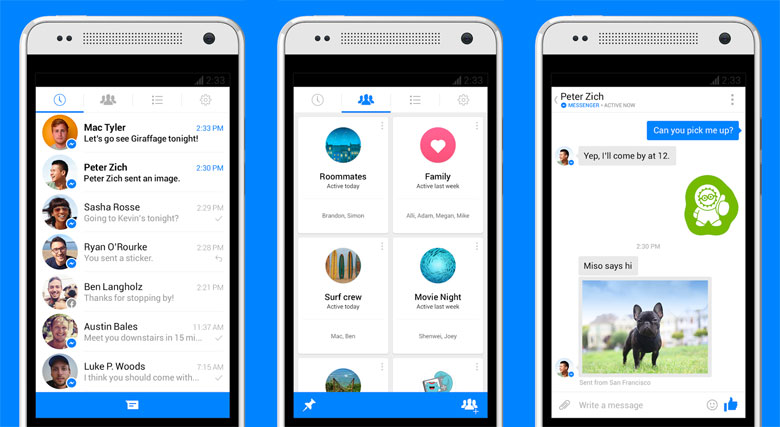
    Facebook is currently testing a new feature on their messaging app in France to introduce a self-destruct option within the Messenger app. This is not too difficult to operate, since one just has to click on a hourglass button at the top of the screen to activate it. The activation of this button will allow messages to be destroyed after one hour. In order to deactivate the feature, you’ll just have to click on the button again. In a public statement, Facebook said:

    “We’re excited to announce the latest in an engaging line of optional product features geared towards making Messenger the best way to communicate with the people that matter most.

    This is not the first time that Facebook has tried to introduce the idea of ephemeral messaging. It had previously introduced “Poke” in 2012 that was almost a copy of SnapChat, which had to be discontinued because it did not perform well. Eventually, they came out with another app called “Slingshot”, which was once again a take on SnapChat along with a couple of personalized features such as the fact that it required a photo in return before a message could be viewed.

    Facebook Messenger

    Anyway, what’s done is done, let’s just hope this feature doesn’t tank too. And for all those  wishing to erase a message already sent, or wishing you never sent them out and hoping it would get lost in the universe and never come up again – this could be your dream come true.

  • Barack Obama Launches Facebook Page, Gains 200,000 followers in 3 Hours

    Barack Obama Launches Facebook Page, Gains 200,000 followers in 3 Hours

    When American president Barack Obama joined Twitter in May, 2015 he broke Robert Downey Jr.’s record of reaching one million followers in the fastest time ever according to Guinness Book of World Records. Obama reached the number in under five hours, while it took Downey Jr. over 23 hours to achieve the same.

    The Prez has now taken to Facebook and seems to be setting new bench-marks of popularity on the social media platform already. Within hours of announcing the account, he has over 600,000 followers on his Facebook page.

    The inaugural post of the page is a video of President Obama walking across the White House grounds, also a national park.

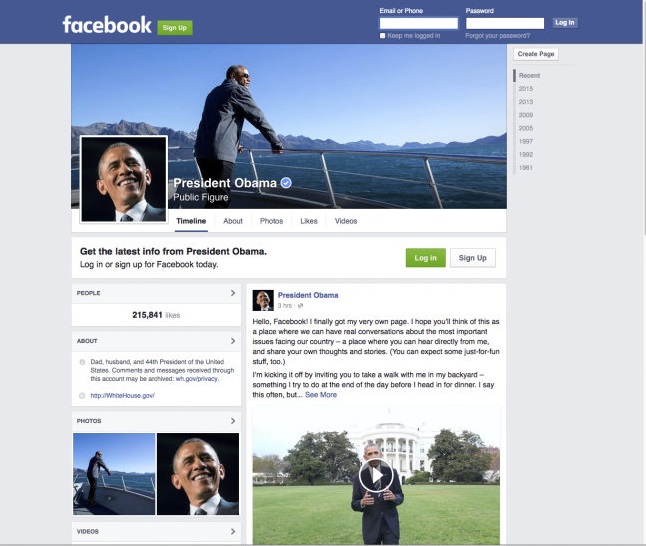
    Hello, Facebook! I finally got my very own page. I hope you’ll think of this as a place where we can have real conversations about the most important issues facing our country – a place where you can hear directly from me, and share your own thoughts and stories. (You can expect some just-for-fun stuff, too.)I’m kicking it off by inviting you to take a walk with me in my backyard – something I try to do at the end of the day before I head in for dinner. I say this often, but that’s because it’s always at the front of my mind: We’ve got to preserve this beautiful planet of ours for our kids and grandkids. And that means taking serious steps to address climate change once and for all. Now, we've made a lot of progress to cut carbon pollution here at home, and we're leading the world to take action as well. But we’ve got to do more. In a few weeks, I’m heading to Paris to meet with world leaders about a global agreement to meet this challenge.I hope you'll join me in speaking out on climate change and educating your friends about why this issue is so important. At a time when nearly three in four adults online use Facebook, this feels like a great place to do it. Share your thoughts in the comments, and pass this message on to folks you think need to see it.If we're all in this together, I'm confident we can solve this and do right by future generations. Posted by President Obama on Monday, November 9, 2015
    Needless, to say, like of the President's social media activity, this Facebook account is also taken care of by an entire team of tech-professionals. He is known to have roughly 20 techies to take care of his various social media accounts across Twitter, Facebook, Instagram and YouTube. Here's a screenshot of the page. Obama Official Facebook Page    

  • Facebook and Alphabet Team Up For New Drone Project to Provide Internet

    Facebook and Alphabet Team Up For New Drone Project to Provide Internet

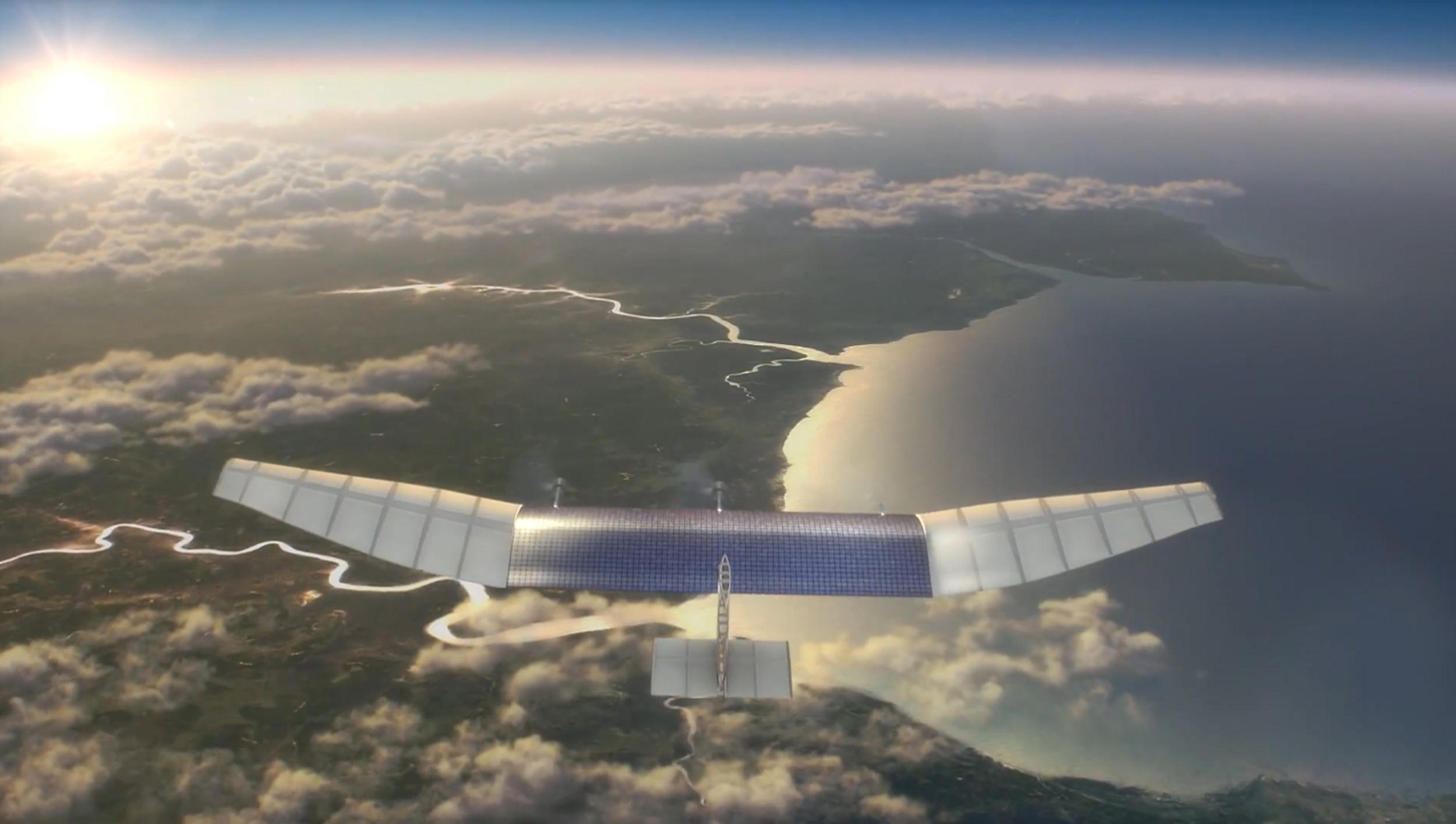
    Alphabet (Google’s parent company) and Facebook have brought their forces together to develop drones that can provide broadband internet access from above the Earth. Both companies have reportedly registered new drone designs with the US Federal Aviation Administration.

    Military Drone

    Apart from this, Alphabet is currently planning a secret operation at the Spaceport America allegedly creating a solar-powered drone. With smaller drones gaining the attention of big business firms like Alphabet and Amazon with their project Wing and Prime Air respectively, Google and Facebook are working on a larger drone that will be able to operate even as high as 90,000 feet above ground level.

    If their assessments are to be trusted, we can safely assume that these drones could possible be flying for weeks or months, thereby could also potentially provide cities and towns with high-speed internet in underdeveloped countries.

    “We’re working on ways to use drones and satellites to connect the billion people who don’t live in range of existing wireless networks,” said Facebook’s CEO, Mark Zuckerberg, in July.

    This project was preceded by Facebook last year, setting up an initiative with Nokia, Samsung and others to provide online access to two-thirds of the world via internet.org. However, that was a lone project, this one on the other hand, is a collaboration with Alphabet which would in turn help both companies reach new users in their advertising market. All we can hope for is that this initiative churns out something good. What do you think of this collaboration? Feel free to post your comments in the comment section below.
  • Here is How Facebook Might Be Invading Your Privacy With Its New Ad Products

    Here is How Facebook Might Be Invading Your Privacy With Its New Ad Products

    Facebook has reportedly decided to roll out two new advertisement products aimed at small businesses. This new advertisement scheme is to encourage smaller firms and companies, who have previously been reluctant to be a part of prime placement on the social networking website.Facebook Ads

    The first ad product focuses on what Facebook is calling “local awareness ads”. This will allow businesses to target customers according to their location. This feature will especially be helpful to smaller businesses which have multiple chain stores to target their specific audience more personally.

    Giving us an example of what the advertisements will look like, Facebook says, “a cafe with multiple locations …could choose to automatically populate the city name in their ad copy, depending on where the people seeing the ad are. So, people in Glasgow would see ‘join us for lunch in Glasgow’, while people in Bristol would see ‘join us for lunch in Bristol’.”

    The second ad product will be mainly for the use of the company. It will allow businesses to mark the demographics of their page and locate facts and information about potential customers, that will facilitate documenting and analyzing of data by these businesses. This product will also help them differentiate between people who are passing by their page and potential customers or users.

    This feature, however helpful it might sounds to the business, is in fact just one more way that Facebook might be trying to access our private information in order to facilitate another survey more accurately. This has sparked off a debate on Facebook between privacy vs. accuracy. Internet privacy

    Facebook had initially started off as a social networking site, where you logged into your profile to contact friends or simply like their profile picture. However, today it has turned into a mega business company and has stretched its arms over almost every sphere of life possible. As of now, the results of it are positive, so let us keep hoping that Facebook continues the way it does.

  • ‘Notify’ -Facebook’s Standalone News-Only App to Launch Next Week

    ‘Notify’ -Facebook’s Standalone News-Only App to Launch Next Week

    Following its announcement of serving over a billion users, Facebook is once again in news -this time for a standalone app for delivering news to readers. According to reports, the app is called Notify and it will put together news from different sources which include The Washington Post, Comedy Central and Vogue, among others. Facebook-app

    Rumours of Facebook working on a news-only app has been milling since August. This app aims to standout from others in the league by giving alerts to the reader as and when the story they are following develops. The reader would not have to visit specific stories or categories again to view the updates and changes.

    Notify is expected to follow in the footsteps of Apple’s pre-installed News app for iOS 9 which boasts of over 40 million users now since its launch in mid-September. Let’s see how users take to this newest update by Facebook. Do you think it will simply add to the fray of many other similar news-related apps or will it be a change as refreshing and useful as reports are making it sound to be? We’ll keep you updated as and when we get more on this.

  • Facebook Wants Some Employees to Switch from iPhone to Android

    Facebook Wants Some Employees to Switch from iPhone to Android

    According to reports, Facebook employees simply have too much love for the iPhone. So much so that the company’s chief product officer Chris Cox is forcing some employees to shift to Android. The reason behind this is that Facebook needs to know how its social networking site is doing across all platforms and not just on high-end iOS devices.

    According to Cox, Facebook workers need to be “reporting bugs and living in the same experience that most Facebook users experience today,”

    Facebook’s primary goal is to enter as many markets as it can. This means that the company has to tailor its software for every platform emerging across devices both advanced and old. Facebook is also keen on entering markets in developing nations where internet speeds are slow and older devices are still commonplace.

    “I am mandating a switch of a whole bunch of my team over to Android, just because people, when left up to their own devices, will often prefer an iPhone.”

    iPhone might be popular in some countries like the U.S., U.K .,and China but Android still dominates globally with around 82% of smartphones on Android’s operating system. Furthermore, the Android devices range from low-end to high-end. Thus, in order to study how Facebook functions in Android, employees will need to have a hand-on experience with it.

    Facebook iOS

    The seriousness of Facebook’s aspirations is also understood when this news is clubbed with last week’s decision to have ‘2G Tuesdays’. The new initiative will see employees work for one hour ever Tuesday on 2G connections. This will give employees an “opportunity to experience for themselves the slow mobile Internet speeds found in developing countries.”


iGyaan Network
Privacy Overview

This website uses cookies so that we can provide you with the best user experience possible. Cookie information is stored in your browser and performs functions such as recognising you when you return to our website and helping our team to understand which sections of the website you find most interesting and useful.