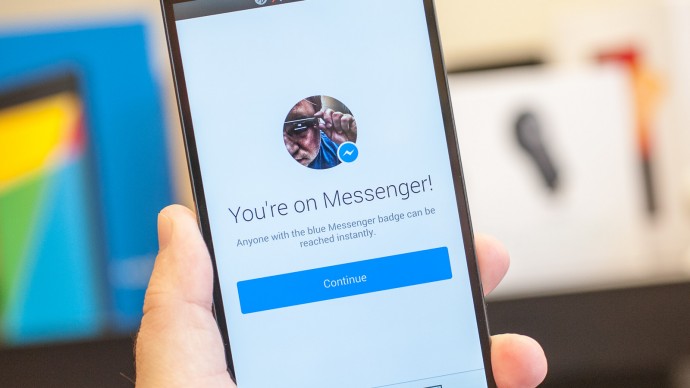
At the Facebook F8 developers conference recently, the social media powerhouse announced a slew of new updates for the Messenger app to make it a formidable messaging tool. The addition of third party apps to the ecosystem is the most prominent upgrade to the new Messenger platform. But Apple might prove a major hindrance to Facebook’s plans.
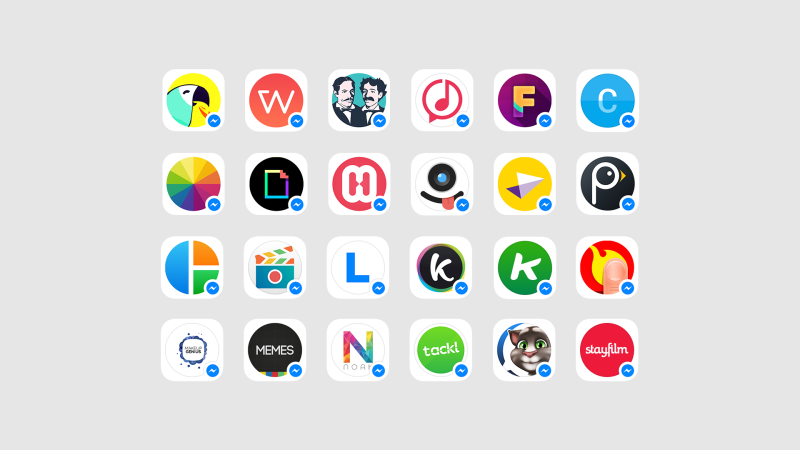
Facebook inducted third party apps on its Messenger platform to make it a more powerful messaging tool.
Apple, the makers of iOS devices, have strict policies in place for apps on its App Store. Section 2.25 of the App Store Review Guidelines, states, “Apps that display Apps other than your own for purchase or promotion in a manner similar to or confusing with the App Store will be rejected.” The addition of support for third party apps on the Messenger platform puts it directly in conflict with the above app store policy.
The gist of the policy is that Apple doesn’t allow apps to set up their own app store on their ecosystem. If the policy is enforced against the Messenger platform, it will be a major downer for Facebook. As of now Apple has given no indication about its policy towards the new messaging platform. But we might get to hear something soon as Apple might still be studying the situation. Considering the massive market for Apple devices, Facebook is likely to get a deal sorted out to prevent a rejection from the App store.
At Facebook’s F8 Developer conference yesterday, the CEO of the company Mark Zuckerberg took the stage to announce the future of its Messenger Platform. The company recently spun off Messenger into its own independent app. Messenger will now become a superpowered messaging app that can become the most formidable competitor in the market.
Mark Zuckerberg spoke about the new service at the conference –
It’s a new platform that developers can use to build apps that help people connect.
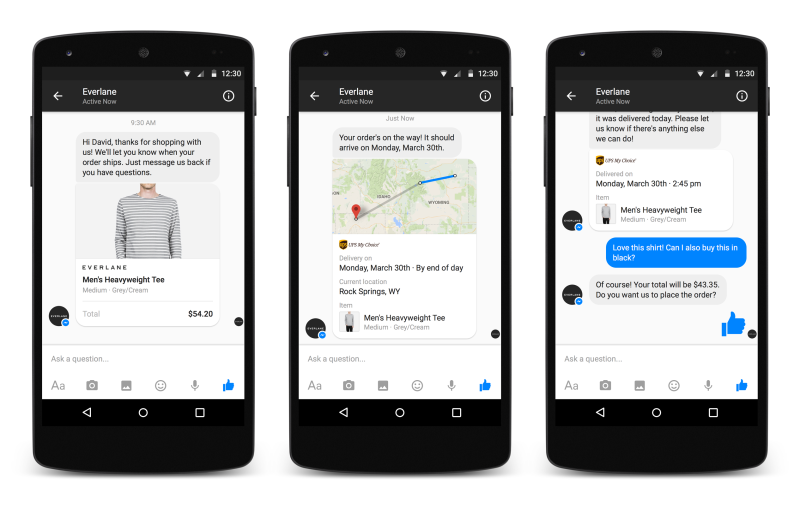
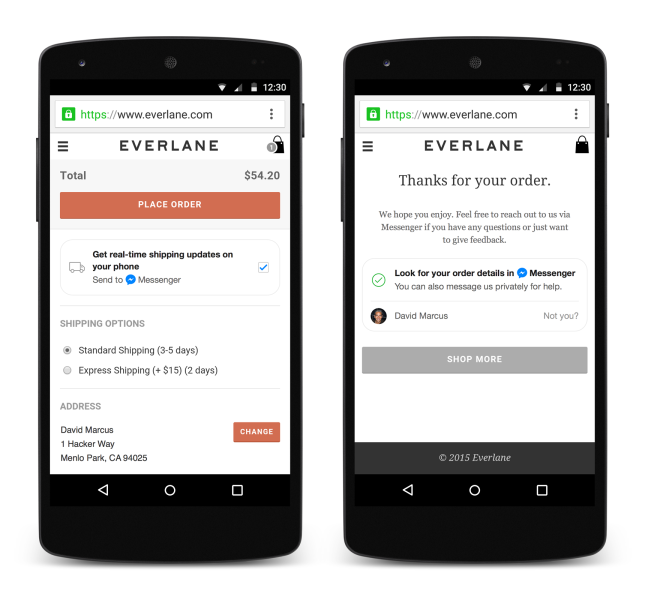
Facebook introduced 40 new apps for the Messenger Platform. These apps come within the Messenger service and adds up to the vast ecosystem of apps on Android and iOS. The newly developed tools allow users to interact with businesses like online retail brands, where they can place their order directly and get details about the order through chat. Also, you would be able to send messages to the Messenger app store to download an application. Facebook can use its reach and introduce a Messenger tab on major websites to speak directly with businesses or content creators. By opening up Facebook Messenger platform, the social networking platform has given the third-party apps access to the millions of Facebook users. Besides, it has made Facebook Messenger a strong contender among other messaging platforms like WeChat and Line, who are all-round services that offer for gaming, e-commerce, and of course, communication. The new platform is said to be open for all the developers, but the company has already finalised 40 launch partners. Some of them includes ESPN, Imgur, The Weather Channel, and Giphy.
A while back, Facebook detached Messenger from its smartphone app and asked the users to install the new independent app. The decision by the social networking giant led to mass disapproval at that time, but it has now begun to make sense. Facebook was preparing its user-base to explore the new developments of the Messenger store and its scope for business communication.
Th company has been continuously building up its Messenger platform. Few days back, Facebook announced a new payment feature that allows you to send money via instant message. Messaging app will soon become the center of future communication and might replace tools like e-mails and become our primary mode of communication. Facebook also said that Messengers new features can act as a model for WhatsApp in the future. The future of messaging apps looks great.
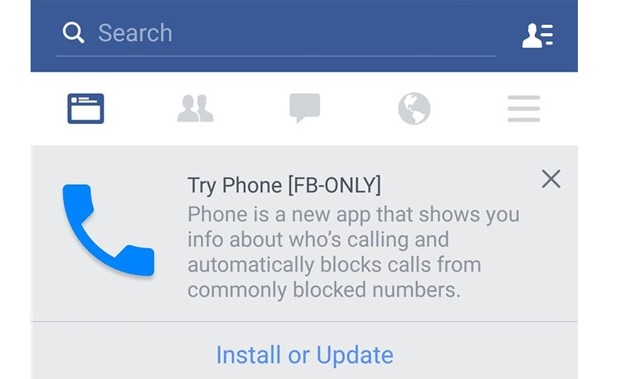
Facebook might have accidentally popped a small glance at the next major app coming from its stable. A message popped up on the Android app of some Facebook users which gave an indication that the social media giant is working on a new app called “Phone.”
The feature popped out with a FB-only tag and showed a dialer icon. However, on tapping the icon, it led to a ‘no page found’ error. It is said that the feature is still in works and the link might have accidentally showed up in the users feed. A report from Android Police stated that the Phone button seems like a replacement for a dialer and will automatically block spam calls and show detailed information about the incoming calls.
Whatsapp, which was acquired by Facebook last year, has also rolled out their version of the calling feature that allows you to make voice calls to one another using data connection or WiFi data. As of now, the only problem Whatsapp may be facing regarding the calling feature is the lag-time in between a call.
Facebook has already rolled out voice calling feature on Messenger. Android and iOS users in can call anyone through this app, consuming only cellular or WiFi data. The feature came to India last year. Now we hope Facebook doesn’t force us to download a whole new app to clutter our devices again. Instead they can include the feature in their existing app like Whatsapp did with their latest update.
The world’s largest social network Facebook is a powerful tool to connect with billions of people across the globe at any given time. With an active user base of 1.39 billion users, the responsibility for establishing the proper code of conduct for the website gets really tough for Facebook. This is why the biggest social network in the world has to constantly update its community policies. Facebook has now clearly spelt out what kind of actions are likely to get a user suspended from using their service.
The social networking giant has set a standard to make sure no nuisance befalls on the website and today the company has updated its community standards section to make clear what all is prohibited on the site. The company didn’t change the policy and instead provided details ‘on what is and is not allowed’.
Gratuitous nudity and violence will definitely get you banned from the website
Without seizing the freedom to share and freedom of free expression from the users, Facebook gave a detailed policy description for nudity and hate speech; “We remove photographs of people displaying genitals or focusing in on fully exposed buttocks.” It said that “images of female breasts if they include the nipple” is unacceptable “but we always allow photos of women actively engaged in breast-feeding or showing breasts with post-mastectomy scarring.”
Facebook banned the terrorist organisations like ISIS a while back, and they also made clear that encouraging groups that show violent, criminal or hateful behaviour is also prohibited on their platform.
These measures have been taken to put an end to online bullying. Posting tailored images to degrade a person, and threatening someone for financial or physical harm is illegal and banned. The company has also opted strict rules for revenge porn videos where intimate images or videos of women are shared online without their consent to degrade them in public.
Meanwhile, it should also be taken into account that there is no set method to scan the image automatically and remove the offensive content once posted on Facebook. The previous method of reporting abuse still follows, and once a user reports about an abusive post, it will take about 48 hours to eradicate the content from the website. Monika Bickert from Facebook talked about the rules saying:
Sometimes the best way to share information about atrocities in the world is Facebook. We recognize that is a very challenging issue.
Along with updating its rule book, the company also released its ‘transparency report’, which had requests by governments of each country for user data. The overall governmental applications were 34,946 in the first half of 2014 and 35,051 in the second half. The government of India, Turkey and Russia made most of the request, while the western countries including UK and the US, showed a decline in applications.
Overall, the new announcement shows the kind intentions of Facebook. With a medium like Facebook where videos go viral in a matter of minutes, 48 hours is too long skip a prohibited content from eyes of the 1.4 billion users. Facebook wouldn’t be able to stop the content from being posted as its a matter of freedom of speech. Also as it has a massive varied user-base raging from different regions of the world, it would be difficult to have a one size fits all policy. So as of now, the user complaint based feedback model seems like the best way let Facebook know of your discomfort with the content on their website.
Facebook’s non-profit initiative to connect the world, Internet.org, is successfully running in six countries. The company’s CEO Mark Zuckerberg is quite happy with providing limited free internet to remote areas and is planning to expand the service to 100 more countries by the end of this year.
Chris Daniels, VP of Internet.org at Facebook said in a statement –
The ambitious goal this year is to roll it out to 100 [countries]. We don’t want to focus so much on the number, but we want this to spread to additional countries, operator groups and… see more people coming online, buying data and voice and SMS bundles. The number is indicative of our ambitious goal.
Internet.org is a Facebook-led free internet program that works with data suppliers to provide free internet to people who can’t get online. It allows users to access basic sites like Wikipedia, job and health sites, and Facebook, of course. The service was launched back in 2013 and now it connects 7 million people of six nations across the globe – Zambia, Ghana, Kenya, Tanzania, Colombia and India.
Zuckerberg thought ahead and his idea really worked. Countries provided with free internet have seen a sudden jump of 40% in the internet data demand. People are willing to get associated with the world around seeing the power of internet via little demo, that is Internet.org.
Facebook’s step will draw more nations closer to each other and is a way to transform the developing nations into developed ones. Meanwhile, Facebook has teamed up with Google for Project Loon in establishing high-altitude balloons, a satellite-based network, to connect to connect people in rural and remote areas.
Gender rights and equality issues is one of the major conversational topics today. There has been more interest than ever to give equal representations to all members of society. Facebook has been one of the most prominent tech companies that has tried to engage on this issue. The company last year unveiled a huge list of new sexual identities for users to choose from but now the company has gone further. It now allows users to specify it for themselves.
The new feature lets user define their gender and select how they choose to be referred to on Facebook.
Facebook had unveiled another feature where users could select from options like cisgender, transgender or intersex. But some users found the move not inclusive enough. So now the social media superpower has gone ahead to let the users themselves choose how they want to be addressed by the service. Users can select how they define their gender and can select from options like her/him/them, as to how they want to be referred to as on Facebook. It will also let users select who they want to share their gender information with through privacy settings.
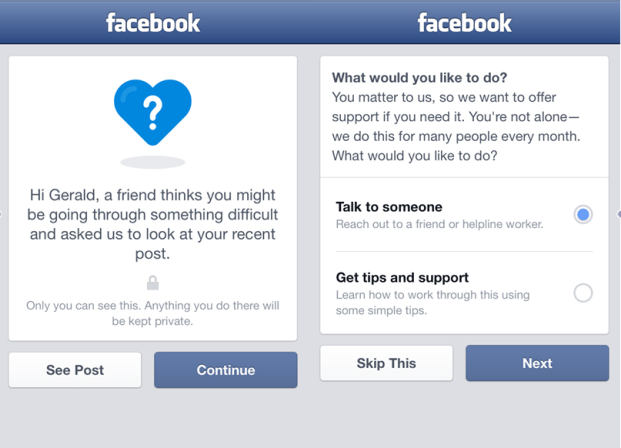
Suicide prevention features from Facebook.
Facebook’s use of its platform for socially responsible causes doesn’t end here, the company also unveiled a new suicide prevention feature. This is an applaudable move because we are getting limited to social networking for human interaction, and this will help troubled individuals to get support from concerned friends. The feature lets users report to Facebook if they see troubling content that would define suicidal thoughts in an individual. Facebook’s professionals will go through the reports and decide on providing help to the individual. Facebook has worked with various agencies who specialize in suicide prevention to come up with this new feature.
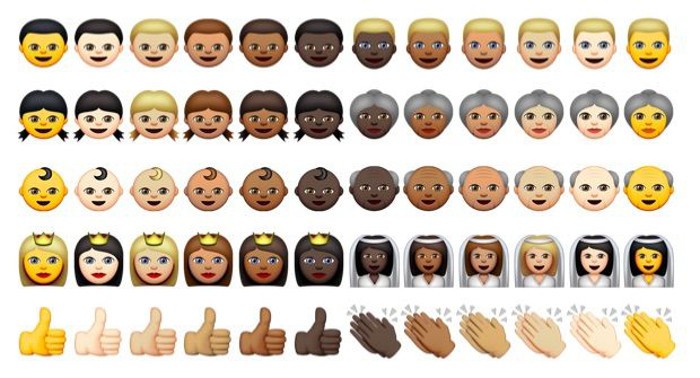
Apple’s new all inclusive emoji’s.
Another Silicon Valley powerhouse, Apple announced new emoji’s in order to address diversity issues. The makers of iPhone have unveiled new emoji line up that will represent people of all races. This feature is added in the iOS 8.3 beta and will probably arrive later this year.
It’s encouraging to see the tech industry standing up for the values of equality. Social media and messaging apps are the most important communication tools and it’s good to see them have more utility than just telling us what our random high school acquaintance had for lunch.
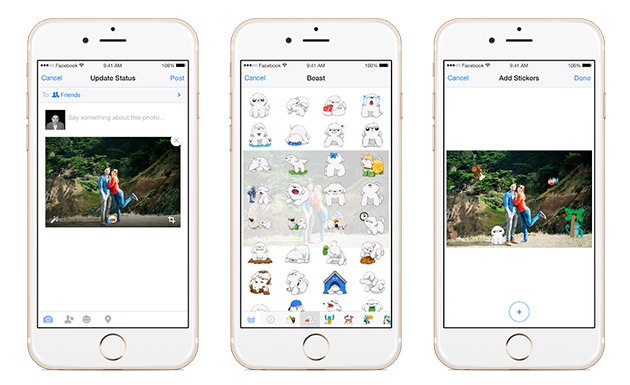
From Thursday onwards, Facebook will be introducing updates that would allow you to add stickers to your photos from Facebook’s mobile app on iOS and Android devices.
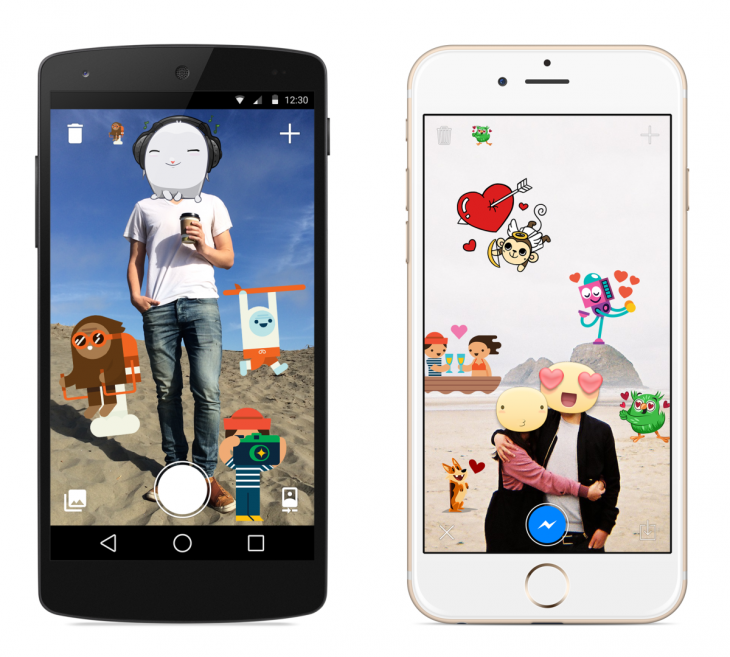
While uploading a new photo, you will be able to access the new sticker icon with the updated Facebook app. This icon will offer a huge variety of stickers. Once the sticker (or multiple stickers) is added, you are free to choose as to where to position the sticker, resize it or rotate it. You of course have the option to delete the stickers before the photo is finally uploaded.
You can also add captions, and even apply the stickers before the shot is taken with the app’s built-in camera access feature. Images already present in your image gallery can be decorated as well, and there is no limit to how many stickers can be applied to one image.
Facebook had launched the sticker app called ‘Stickers for Messenger’ in December for Android and iOS devices. However, this app required the Facebook Messenger app to send images to Facebook friends.
This new feature may suggest that Facebook is now targeting mobile users more than desktop users. 85% of its users access the website via mobile, and one-third of its total users access the site exclusively on mobiles. Facebook’s revenue rose to $2.5 billion last quarter, thanks, in part, to mobile advertising. Stickers for photos look like an enjoyable feature and will be really appreciated by the users.
Last March, Facebook acquired virtual reality (VR) headset maker Oculus with a vision of introducing the world to futuristic social media experience. The social media giant hasn’t taken a break since then and is coming up with one or the other breakthrough. Lately, Facebook has confirmed that it is working on virtual reality apps that will assist users in creating and viewing VR content.
In a conference today, Chris Cox, Chief Product Officer of Facebook, stamped the news saying that they’re working on apps for VR.
You realize, when you’re in it, that you’re looking at the future, and it’s going to be awesome. When you’re in Facebook, you’re just sending around these bits of experience — a photo, a video, a thought, whereas with VR, you could be sending a fuller picture.
According to Cox, the users will be able to create VR content of their own and share the surrounding environment with other app users. Though, he didn’t elaborate what all apps are in the progression and how are they going to work.
Facebook exhibited a small demo of the boundless platform at Sundance Film Festival this year. The company stepped forward and premiered its first short piece titled ‘Lost‘. It also confirmed to release five more flicks this year.
This step by Facebook is commendable. It would be exciting to see the apps that would give users freedom to create VR content of their choice and share it. This will give social media whole new space to grow.
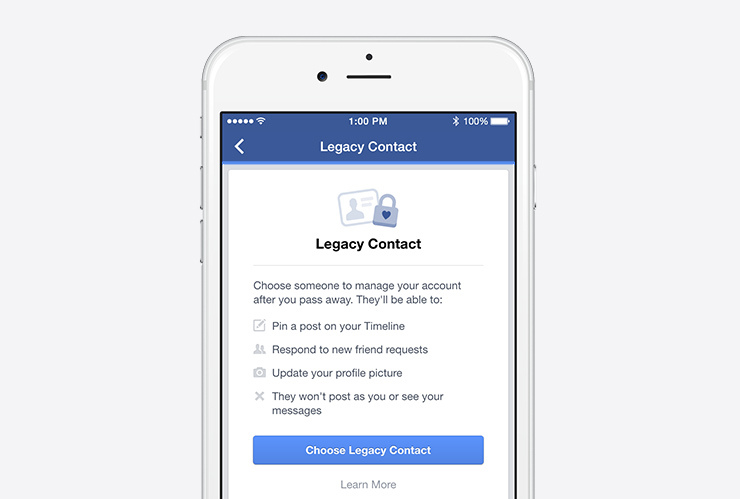
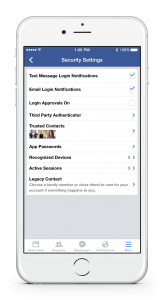
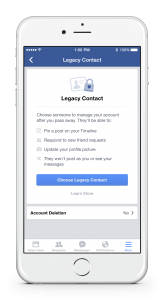
Facebook has announced a ‘Legacy Contact’ feature for its social network, signifying a person can be entitled full control to the user’s account after his death. The addition of this new feature allows a user to take control of his legacy contact, who will be able to mange their account when he/she dies.
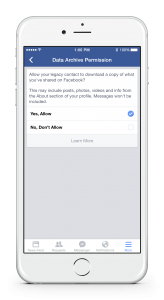
The Legacy Contact can post on your Timeline, update your profile picture, respond to friend requests, though won’t be allowed to access your messages. They can also choose to delete the account permanently from Facebook. In addition, the Legacy Contact will be allowed to take control of someone’s account, only after they inform Facebook about the concerned user’s death.
Earlier, Facebook had offered something similar with the memorialized account feature, though did not allow family or friends of the deceased user to manage their account.
Here’s how you can activate the Legacy Contact feature on Facebook – Go to Settings, then Security and click on Legacy Contact.
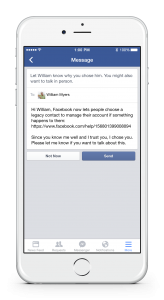
You’ll be allowed to further customise the kind of access you want to give your legacy contact, and even contact them to let them know you chose them. In an event that an account remains active, a “Remembering” mention will be added above the deceased person’s name on Facebook.
Cybersecurity has fast become a major concern for all the nations since last years massive attacks. The biggest one that got everyone scared was the alleged attack by North Korea on Sony Pictures. Governments and corporations are proactively investing in resources towards strengthening the protection of their data and facilities. US President has allocated $14 billion in his 2016 budget to boost cybersecurity efforts. This new age war requires new age soldiers, people who battle with codes instead of guns. To facilitate the exchange of professional data and ideas between these cybersecurity professionals, Facebook has launched a new social network called ThreatExchange.
The website aims to connect experts, professionals and even companies to come together to find solutions to potential threats. At ThreatExchage, they can share information about the threats they see online like a malicious software or bugs that can be used to infiltrate an institution’s security.
Facebook has involved many partners in its beta testing stage. They include names like Yahoo, Twitter, Bitly, Dropbox, Facebook, Pinterest, and Tumblr. Facebook wanted to give space for security professionals where they can interact and can choose with whom to share their information. Facebook hopes that by sharing regular and up-to-date information on various threats, companies can be better equipped to take on the attacks.
This could be a great tool for the betterment of cybersecurity standards. But one major issue is that how can they assess the credentials of people who have access to the information. A bedroom hacker can gain access and get the solutions to threats being shared and use it to their benefit. This new age war will be costly and would take the best and brightest minds to task.
Social media has taken over our daily lives; we all now live a second life as a digital creature. We control this side of our lives with regular updates, images and interests. With the proliferation of these accounts, employers are finding it a lot easier to screen their potential employees. But a research paper claims that using computer assessment models, employers can find exactly who they are looking for and they claim it is better than human judgement.
The paper is published in Proceedings of the National Academy of Sciences and is presented by Wu Youyou, Michal Kosinski and David Stillwell. They used a computer model to judge a person’s personality based on their Facebook likes. They claim that the results are even better than a human assessment of personalities.
Many companies have taken the social media route to find the suitable candidate for the job. Some have even shown the audacity to ask for social media passwords. The researchers claim that their ‘likes’ based model can be used as a recruitment tool that will be almost like a dating website. Here the employers can immediately be given options of potential employees based on the job requirement and personality models.
There are, of course, severe privacy concerns. The model uses the activities of the users who don’t put a lot of thought before hitting the like button. It is true that our service providers and companies alike store information of the websites visited by you, but it doesn’t effect your chances at a new job, at present. Who is to say that your various online activities won’t be used against you during a future job interview.
All of these leads to the question, how do I prevent my innocent ‘Like’ on Facebook from influencing my next job search? Well, the answer cannot be to ‘think before liking something on social media’, because that will take all the fun out of your life. That will turn us into a paranoid bunch who’ll be scared to voice our opinion. The control in your hands is to keep your images and posts in a private setting. Also only add ‘friends’ on social networks whom you know in real life, it’s not a race to see who can get more people to click a button on their profile. If you share your innermost thoughts and pictures on social media, it’s a good idea to keep them away from random ‘friends’.
As our dependence on the internet increases, our digital footprint is bound to get more visible. Marketing companies, search engines and government institutions will store more of the personal data. And it will stay there till eternity. So in the end, one way, to react to this issue, is being extremely paranoid and monitor each and all your online activity. While the easier thing to do, is just to make your peace with it and live on doing whatever you do. You may actually be better off than working at a company that judges you based on random online likes before meeting you.
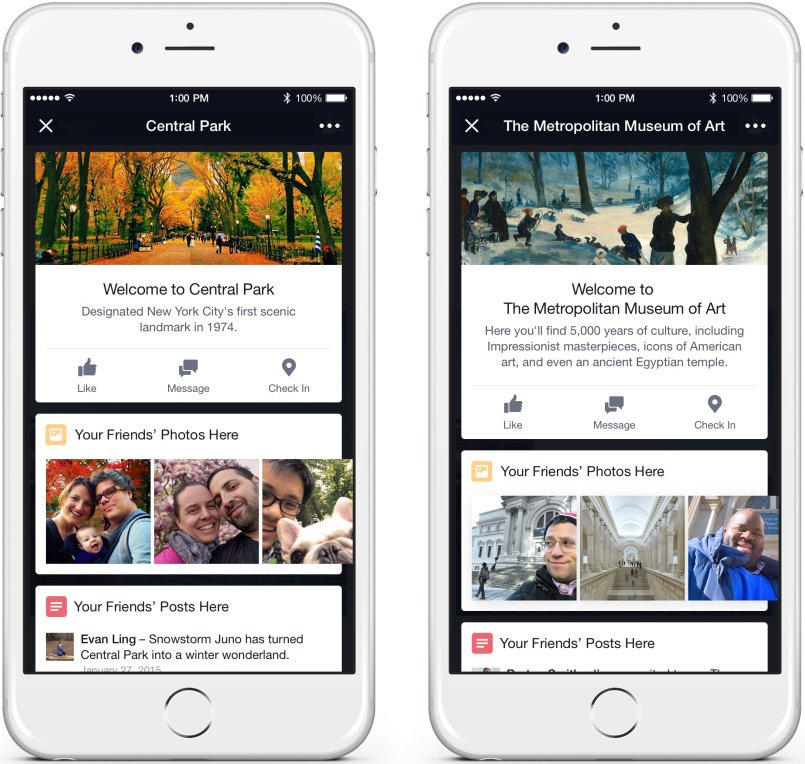
Facebook has introduced a cool new feature to keep things exciting for its massive user base. Recently, the social networking site announced a new tool called Place Tips which will give location-based suggestions to the user posted by friends like Photos, Notes and Status Updates.
The feature designed for the mobile app uses the location of your phone. When you move around with your internet connection on, the Facebook Place Tips will draw on the posts by your friends and will keep them at the top of your homepage. So, when you enter a famous place next time, you will see the posted photos by your friends.
The best part is that it’s optional, and one can disable it anytime by denying Facebook access to your location. The feature is currently in testing mode and is only available for iPhone users as of now.
The company said that however it uses your location to provide information,but doesn’t share it publicly. The company wrote in its official blog post –
Place tips will show you fun, useful and relevant info about the place you’re at.
Nailing down the exact location of a person in a densely packed city is not easy, and Facebook has found out a solution to that problem as well. The company say that it is developing Facebook Bluetooth Beacons (a type of transmitter). These beacons will be deployed at seven places in the New York – Dominique Ansel Bakery, Strand Book Store, The Burger Joint at Le Parker Meridien Hotel, Brooklyn Bowl, Pianos, the Big Gay Ice Cream Shop, and Veselka. So, when any person using Facebook reaches any of these stores, the company will be able to identify the exact location.
The app works for restaurants as well. If you visit a restaurant, the new tool will eliminate the need of looking at the menu card and will showcase all the popular menu items and upcoming events, along with your friends’ posts. That’s something for which we can consider it a bit useful. Other than that, it will also give building recommendations, making Yelp and Foursquare less functional. It would be interesting to see how users respond to the new initiative.
Facebook reported fourth-quarter profits of $701m (£462m), a 34% increase on the same period a year ago. It seems to have taken over the small screen in the last quarter.
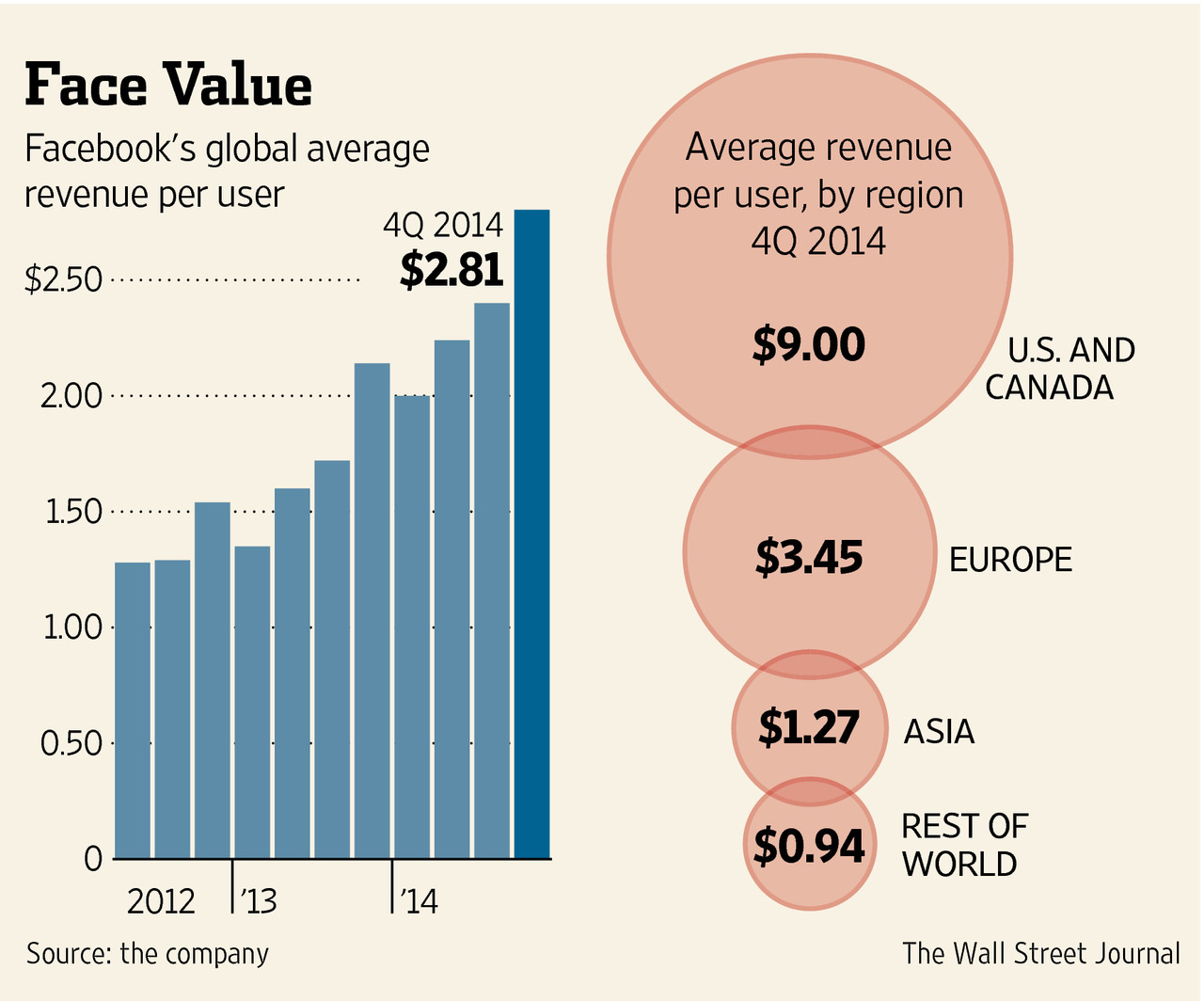
What’s interesting is that more than half the billion Facebook users access the site from mobile devices. The company also noted a 13% percent increase in active users since previous months, which means almost 1.39 billion people use Facebook actively every month on an average.
The social media giant isn’t signing up new users the way it once did, but the social network is generating a lot more revenue from each user. Facebook generated $3.59 billion from advertising overall in the fourth quarter of 2014, and 69% of that came from mobile ads rather than their desktop version.
Also, the company has invested a lot of money on R&D, precisely triple the amount the company spent in the previous quarter. That includes several high profile acquisitions such as Instagram, WhatsApp and virtual-reality headset maker Oculus Rift, as well as its own in-house messaging products and video services.
Major part of Facebook research and development is said to focus on mobile ads. Facebook and companies like it have been working hard to figure out how to adjust and make mobile ads that will click better with the audience. Internet users are increasingly flocking from browsing on PCs, where banner ads have long reigned, to using mobile browsers and apps, where traditional online ads haven’t worked as well.
The latest of Facebook’s mobile experiments is a platform called Audience network launched in October that lets brands tap into the social giant’s enormous user data to advertise to Facebook users while they’re in other apps.
The independent cinema fair of 2015, Sundance Film Festival, showcased some top-notch films. The one that left the world awestruck was the first virtual-reality film by Facebook-acquired Oculus. Facebook premiered its first short piece titled ‘Lost’. It is the first of five short animated flicks the company will be making this year.
Oculus has built in-house studio called Story Studio, where the company will be creating virtual reality films and research on the story telling.
By developing content for virtual reality, Oculus aims to attract more filmmakers to invest in the new technology. To start with, the company has tapped the highest talents from both the film industry and video gaming world. Veteran of Pixar Animation Studios and Lucasfilm Ltd., who were responsible for films like Toy Story and Monsters Inc., will be attached to the upcoming five-film project.
The premiered movie Lost is helmed by former Pixar artist Saschka Unseld, who is now the creative director of Story Studios. The film takes the viewers to the middle of the forest where a mechanical creature bounds into the scene. The Chief Executive of Oculus Brendan Iribe described the flick as ‘a real-time version of a Pixar experience that you’re inside of.’
Iribe further added to his statement –
This is really tuning into what a lot of people who are extending 360-degree film into VR cannot do yet. It’s getting into the heart and soul and magic of VR.
Virtual Reality films are the real-time cinema where you can not only see, but also feel your presence in the space. However, the concept of experiencing 360-degree panoramic view using a gadget that fixes at the head has not reached the masses as of yet. In spite, Samsung and Google have developed products like Galaxy Gear VR headset and Google’s Cardboard VR device, the journey of it to be available mainstream will take some time.
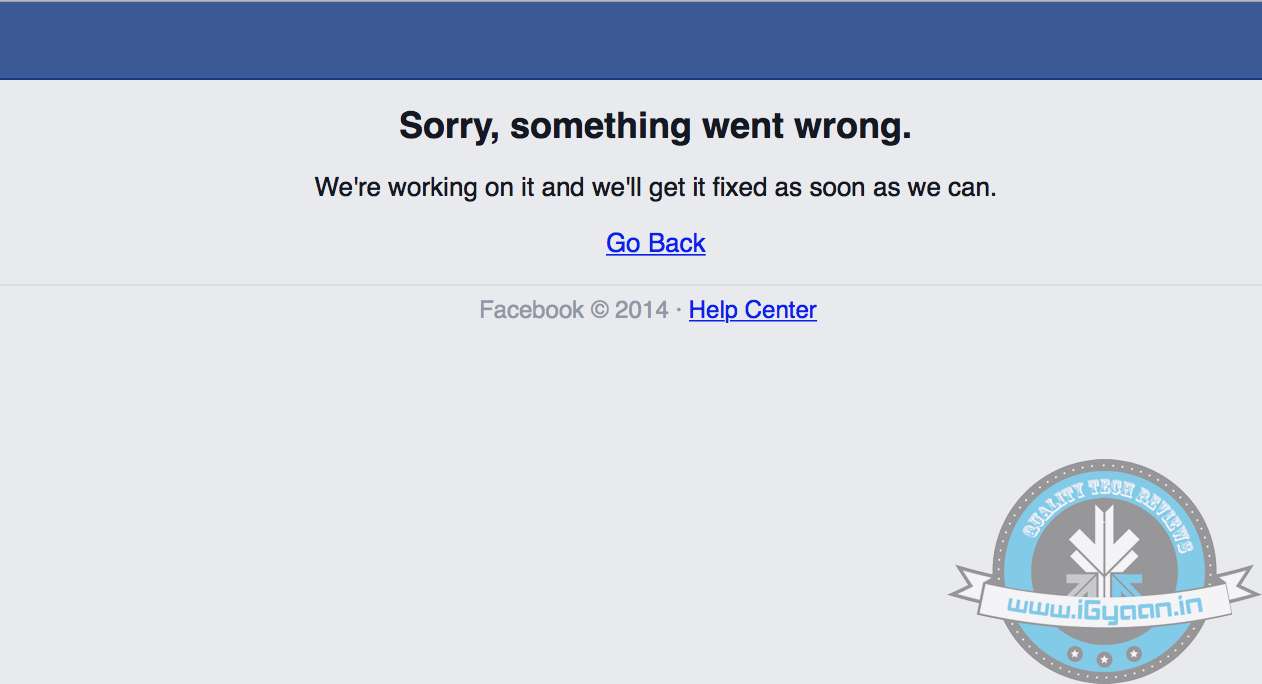
Facebook server seems to be having some trouble. At the time of writing, the Facebook page showed the standard error text ‘ “Sorry, something went wrong,” if you tried to open the website. The error was reported in Europe and the United States, stating that both Facebook and Instagram appeared to be down.
Facebook brought up an error message telling users that “something went wrong” and the problem would be fixed as soon as possible. Meanwhile, Instagram – a photo uploading site that is owned by Facebook – went to a blank page on the desktop while the mobile application failed to load new data.
There were also some reports that Tinder, a popular dating app was hit by an outage. Facebook and Instagram are now back online after shutting out users for just under an hour. The reason for the outage is unknown as yet.