Category: Social Media

  • Facebook Gets Socially Responsible, Allows Users to Define Their Gender

    Facebook Gets Socially Responsible, Allows Users to Define Their Gender

    Gender rights and equality issues is one of the major conversational topics today. There has been more interest than ever to give equal representations to all members of society. Facebook has been one of the most prominent tech companies that has tried to engage on this issue. The company last year unveiled a huge list of new sexual identities for users to choose from but now the company has gone further. It now allows users to specify it for themselves.

    The new feature lets user define their gender and select how they choose to be referred to on Facebook.
    The new feature lets user define their gender and select how they choose to be referred to on Facebook.

    Facebook had unveiled another feature where users could select from options like cisgender, transgender or intersex. But some users found the move not inclusive enough. So now the social media superpower has gone ahead to let the users themselves choose how they want to be addressed by the service. Users can select how they define their gender and can select from options like her/him/them, as to how they want to be referred to as on Facebook. It will also let users select who they want to share their gender information with through privacy settings.
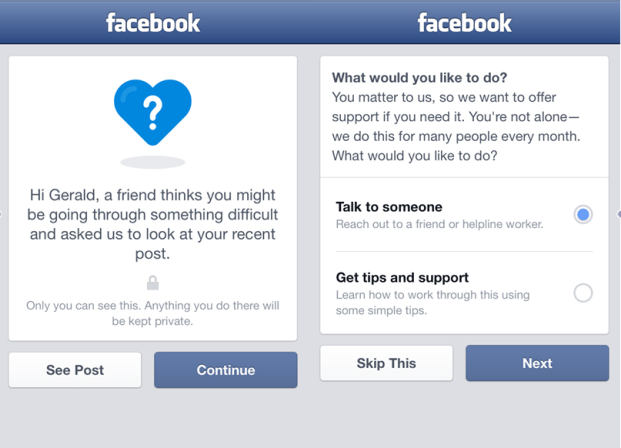
    Suicide prevention features from Facebook.
    Suicide prevention features from Facebook.

    Facebook’s use of its platform for socially responsible causes doesn’t end here, the company also unveiled a new suicide prevention feature. This is an applaudable move because we are getting limited to social networking for human interaction, and this will help troubled individuals to get support from concerned friends. The feature lets users report to Facebook if they see troubling content that would define suicidal thoughts in an individual. Facebook’s professionals will go through the reports and decide on providing help to the individual. Facebook has worked with various agencies who specialize in suicide prevention to come up with this new feature.
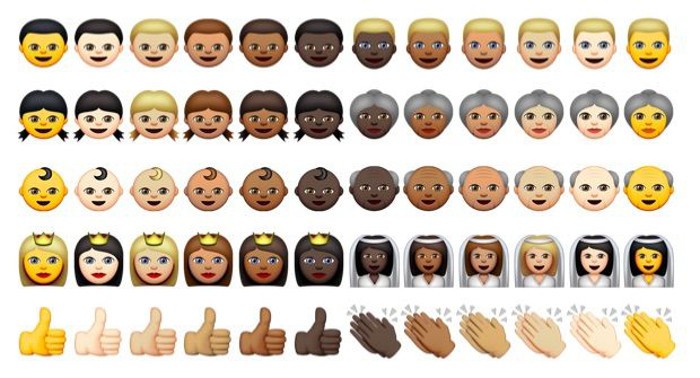
    Apple's new all inclusive emoji's.
    Apple’s new all inclusive emoji’s.

    Another Silicon Valley powerhouse, Apple announced new emoji’s in order to address diversity issues. The makers of iPhone have unveiled new emoji line up that will represent people of all races. This feature is added in the iOS 8.3 beta and will probably arrive later this year.

    It’s encouraging to see the tech industry standing up for the values of equality. Social media and messaging apps are the most important communication tools and it’s good to see them have more utility than just telling us what our random high school acquaintance had for lunch.
  • Facebook’s New Update Lets You To Put Stickers On Pictures From Your Phone

    Facebook’s New Update Lets You To Put Stickers On Pictures From Your Phone

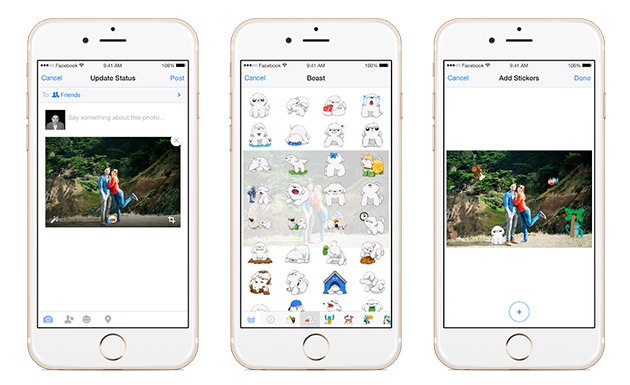
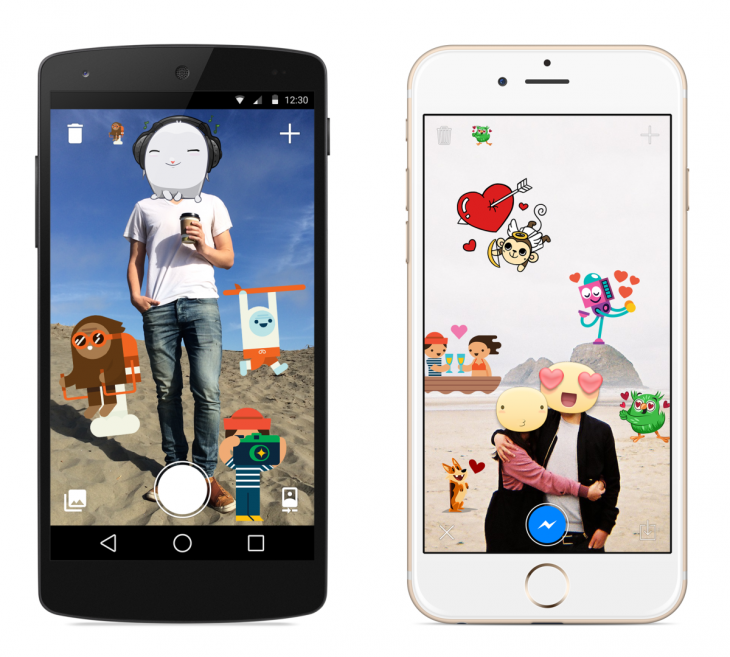
    From Thursday onwards, Facebook will be introducing updates that would allow you to add stickers to your photos from Facebook’s mobile app on iOS and Android devices.

    stickered_press_011-730x657

    While uploading a new photo, you will be able to access the new sticker icon with the updated Facebook app. This icon will offer a huge variety of stickers. Once the sticker (or multiple stickers) is added, you are free to choose as to where to position the sticker, resize it or rotate it. You of course have the option to delete the stickers before the photo is finally uploaded.

    You can also add captions, and even apply the stickers before the shot is taken with the app’s built-in camera access feature. Images already present in your image gallery can be decorated as well, and there is no limit to how many stickers can be applied to one image.

    Facebook had launched the sticker app called ‘Stickers for Messenger’ in December for Android and iOS devices. However, this app required the Facebook Messenger app to send images to Facebook friends.

    This new feature may suggest that Facebook is now targeting mobile users more than desktop users. 85% of its users access the website via mobile, and one-third of its total users access the site exclusively on mobiles. Facebook’s revenue rose to $2.5 billion last quarter, thanks, in part, to mobile advertising. Stickers for photos look like an enjoyable feature and will be really appreciated by the users.

  • YouTube’s New Kid-Friendly App is Coming to Android Devices on 23 February

    YouTube’s New Kid-Friendly App is Coming to Android Devices on 23 February

    Google’s video-sharing service, YouTube is attempting to expand its user base by including the tech generation kids to its audience. The company announced in a statement that it would launch an app for kids called YouTube Kids app, which will have children specific content to create a safer environment for kids.

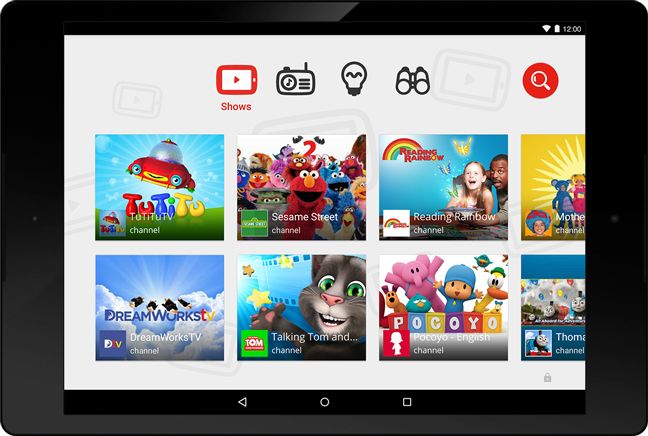
    The new app will be an entirely separate division of the main YouTube service and will include age-appropriate content (videos, channels and playlists). YouTube Kids will feature a homescreen and will have eight options including kids TV shows and more. Kids can search for videos by typing in the standard search bar and can even browse through their voice.

    youtube kids1

    Richard Goldsmith, Executive Vice President, Global Distribution and International Consumer Products at Jim Henson Co. said –

    The app is extremely kid-friendly and features a variety of content, including several of our series such as Sid the Science Kid, Pajanimals, and Fraggle Rock.

    Google has partnered with many content providers like DreamWorks TV, National Geographic and The Jim Henson Co. to provide content. Earlier this month, it acquired mobile application maker Launchpad Toys Inc., the developer responsible for building Toontastic storytelling tool, to help provide kids with more games and services.

    YouTube Kids allow parents to have a control over the content and for how long will your child be watching a particular channel. The free app will be available on Android devices through Play Store from February 23, and meanwhile, it’s limited to just US kids. The company  is expected to extend the service to other nations as well. The app would be appreciated by the parents who wanted to keep their kids away from the massive inventory of non-kids friendly content on Youtube.

  • Facebook Confirms of Designing Virtual Reality Apps

    Facebook Confirms of Designing Virtual Reality Apps

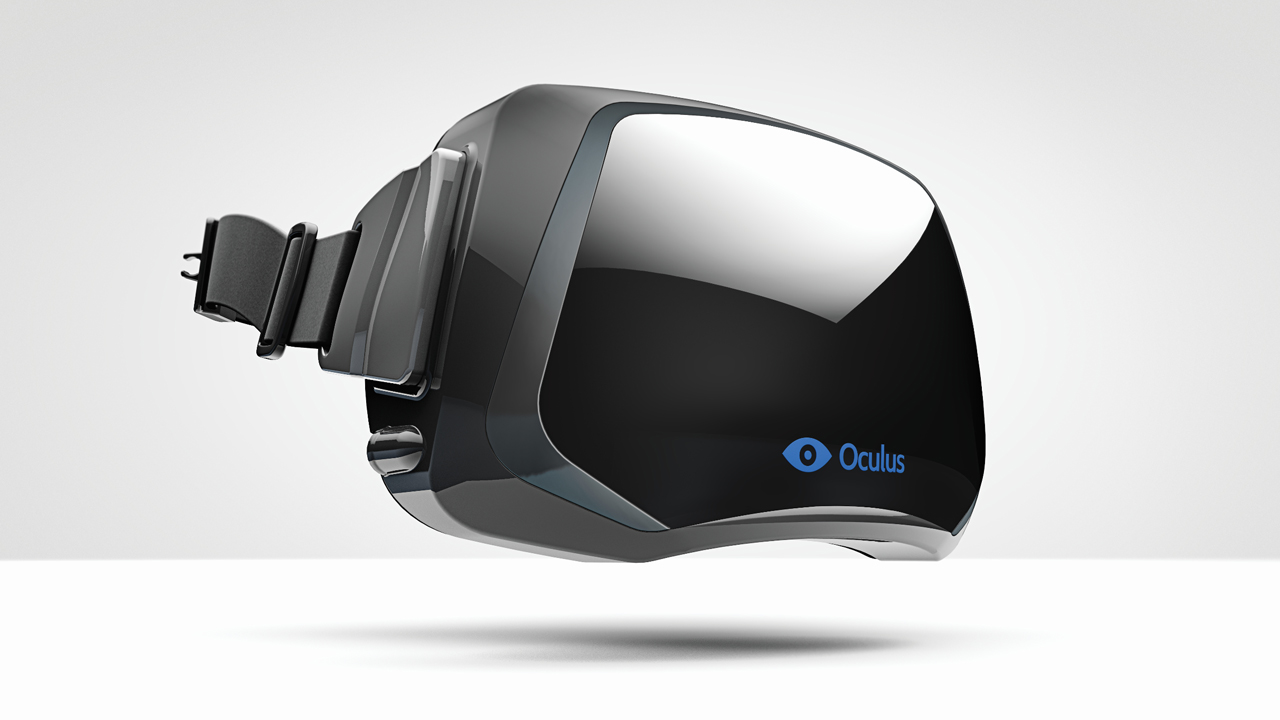
    Last March, Facebook acquired virtual reality (VR) headset maker Oculus with a vision of introducing the world to futuristic social media experience. The social media giant hasn’t taken a break since then and is coming up with one or the other breakthrough. Lately, Facebook has confirmed that it is working on virtual reality apps that will assist users in creating and viewing VR content.

    The Oculus Rift headset is tested by attendees at the Eurogamer Expo at Earls Court in London.

    In a conference today, Chris Cox, Chief Product Officer of Facebook, stamped the news saying that they’re working on apps for VR.

    You realize, when you’re in it, that you’re looking at the future, and it’s going to be awesome. When you’re in Facebook, you’re just sending around these bits of experience — a photo, a video, a thought, whereas with VR, you could be sending a fuller picture.

    According to Cox, the users will be able to create VR content of their own and share the surrounding environment with other app users. Though, he didn’t elaborate what all apps are in the progression and how are they going to work.

    Facebook exhibited a small demo of the boundless platform at Sundance Film Festival this year. The company stepped forward and premiered its first short piece titled ‘Lost‘. It also confirmed to release five more flicks this year.

    This step by Facebook is commendable. It would be exciting to see the apps that would give users freedom to create VR content of their choice and share it. This will give social media  whole new space to grow.

  • New Facebook Feature Allows You to Pick Who Manages Your Account After You Die

    New Facebook Feature Allows You to Pick Who Manages Your Account After You Die

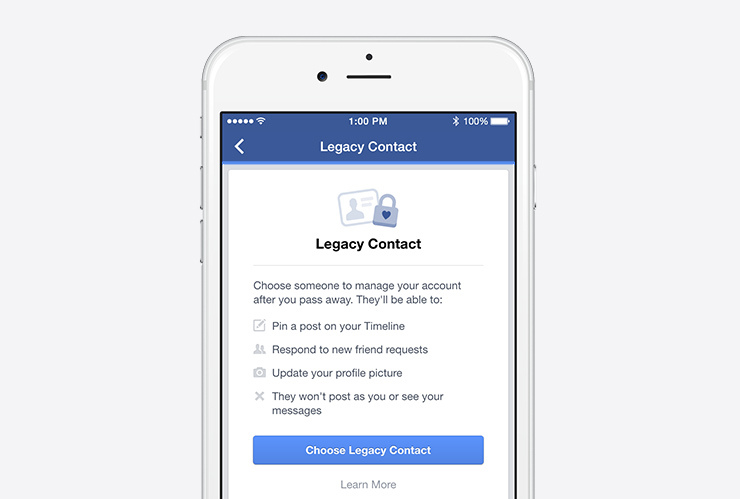
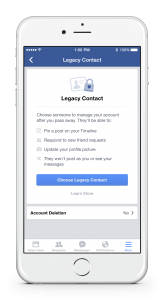
    Facebook has announced a ‘Legacy Contact’ feature for its social network, signifying a person can be entitled full control to the user’s account after his death. The addition of this new feature allows a user to take control of his legacy contact, who will be able to mange their account when he/she dies.

    The Legacy Contact can post on your Timeline, update your profile picture, respond to friend requests, though won’t be allowed to access your messages. They can also choose to delete the account permanently from Facebook. In addition, the Legacy Contact will be allowed to take control of someone’s account, only after they inform Facebook about the concerned user’s death.

    Earlier, Facebook had offered something similar with the memorialized account feature, though did not allow family or friends of the deceased user to manage their account.

    Here’s how you can activate the Legacy Contact feature on Facebook – Go to Settings, then Security and click on Legacy Contact.

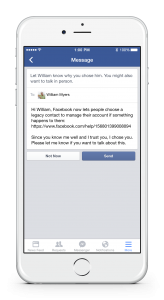
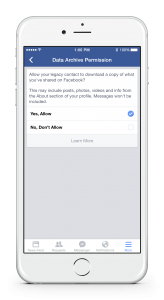
    You’ll be allowed to further customise the kind of access you want to give your legacy contact, and even contact them to let them know you chose them. In an event that an account remains active, a “Remembering” mention will be added above the deceased person’s name on Facebook.

  • Facebook Gives Cybersecurity Professionals a New Social Network

    Facebook Gives Cybersecurity Professionals a New Social Network

    Cybersecurity has fast become a major concern for all the nations since last years massive attacks. The biggest one that got everyone scared was the alleged attack by North Korea on Sony Pictures. Governments and corporations are proactively investing in resources towards strengthening the protection of their data and facilities. US President has allocated $14 billion in his 2016 budget to boost cybersecurity efforts. This new age war requires new age soldiers, people who battle with codes instead of guns. To facilitate the exchange of professional data and ideas between these cybersecurity professionals, Facebook has launched a new social network called ThreatExchange.

    The website aims to connect experts, professionals and even companies to come together to find solutions to potential threats. At ThreatExchage, they can share information about the threats they see online like a malicious software or bugs that can be used to infiltrate an institution’s security.

    Threatexchange

    Facebook has involved many partners in its beta testing stage. They include names like Yahoo, Twitter, Bitly, Dropbox, Facebook, Pinterest, and Tumblr. Facebook wanted to give space for security professionals where they can interact and can choose with whom to share their information. Facebook hopes that by sharing regular and up-to-date information on various threats, companies can be better equipped to take on the attacks.

    This could be a great tool for the betterment of cybersecurity standards. But one major issue is that how can they assess the credentials of people who have access to the information. A bedroom hacker can gain access and get the solutions to threats being shared and use it to their benefit. This new age war will be costly and would take the best and brightest minds to task.

  • How the Twitterverse Reacted to AAP’s Historic Win

    How the Twitterverse Reacted to AAP’s Historic Win

    In a democracy, you get to see something like the Delhi elections only once in a blue moon. A landslide victory that totally decimated the competition. In the 70 seat Delhi assembly, the Arvind Kejriwal led Aam Aadmi Party grabbed 67 seats leaving the opposition with a paltry three seats. This led to a barrage of comments on social media. Twitter has become a major political tool in the past few years and played a major role in campaigning in this election too. After the elections, there were many congratulatory messages for the party along with the usual jokes were out to troll the losing side.

    Let’s look all what all transpired on Twitter following AAP’s epic victory.

    Prime Minister Narendra Damodar Modi Congratulates Arvind Kejriwal

    Mr. Kejriwal thanked his wife Sunita for her support with a hug.

    Shashi Tharoor from Congress also was amongst the first to send out his congratulations.

    Journalist Rajdeep Sardesai sent out a series of quick analysis of the election.

    Twitter Hashtags; #AAPSweep, #AAPStorm reached the top of the trends for India and were still the top two hashtags on Twitter. It shows that the celebratory mood of the volunteers hasn’t jaded off yet. Here are a few funny ones to tickle your funny bone.

    Congress drew a duck in the election, and it had to receive some attention for that.

  • Here’s How Your Facebook Likes Can Make You Lose Your Next Job

    Here’s How Your Facebook Likes Can Make You Lose Your Next Job

    Social media has taken over our daily lives; we all now live a second life as a digital creature. We control this side of our lives with regular updates, images and interests. With the proliferation of these accounts, employers are finding it a lot easier to screen their potential employees. But a research paper claims that using computer assessment models, employers can find exactly who they are looking for and they claim it is better than human judgement.

    The paper is published in Proceedings of the National Academy of Sciences and is presented by Wu Youyou, Michal Kosinski and David Stillwell. They used a computer model to judge a person’s personality based on their Facebook likes. They claim that the results are even better than a human assessment of personalities.

    Many companies have taken the social media route to find the suitable candidate for the job. Some have even shown the audacity to ask for social media passwords. The researchers claim that their ‘likes’ based model can be used as a recruitment tool that will be almost like a dating website. Here the employers can immediately be given options of potential employees based on the job requirement and personality models.

    There are, of course, severe privacy concerns. The model uses the activities of the users who don’t put a lot of thought before hitting the like button. It is true that our service providers and companies alike store information of the websites visited by you, but it doesn’t effect your chances at a new job, at present. Who is to say that your various online activities won’t be used against you during a future job interview.

    All of these leads to the question, how do I prevent my innocent ‘Like’ on Facebook from influencing my next job search? Well, the answer cannot be to ‘think before liking something on social media’, because that will take all the fun out of your life. That will turn us into a paranoid bunch who’ll be scared to voice our opinion. The control in your hands is to keep your images and posts in a private setting. Also only add ‘friends’ on social networks whom you know in real life, it’s not a race to see who can get more people to click a button on their profile. If you share your innermost thoughts and pictures on social media, it’s a good idea to keep them away from random ‘friends’.

    As our dependence on the internet increases, our digital footprint is bound to get more visible. Marketing companies, search engines and government institutions will store more of the personal data. And it will stay there till eternity. So in the end, one way, to react to this issue, is being extremely paranoid and monitor each and all your online activity. While the easier thing to do, is just to make your peace with it and live on doing whatever you do. You may actually be better off than working at a company that judges you based on random online likes before meeting you.

  • Multiple Angle Viewing Feature For YouTube Is Now Under Trial

    Multiple Angle Viewing Feature For YouTube Is Now Under Trial

    Viewing videos on YouTube is now going to be more entertaining and dynamic. YouTube is now working on a feature that allows the viewers to switch between different camera angles while watching a video. This feature is in its experimental mode right now and there is only one video which showcases this feature.

    YouTube-multiangle-videos

    The video is of a live artist performance by Madilyn Bailey, a popular indie artist. The YouTube team took her performance and turned it to a multi angle video. The views show up with thumbnails and disappear once it commences. Angles can be switched using keyboard shortcuts. Though while switching, it may cause slight lags during playback. YouTube is allowing a selected few users to help in the testing of this feature.

    This feature would be very gladly welcomed by sports, entertainment and concert viewers. Multiple angles would enhance the viewing experience. YouTube spokesperson told to Mashable

    We want to give artists as many ways to connect with their fans as possible, and this experimental feature brings fans even further into creating the experience they want.

    YouTube says the process of making these videos are automatic on the user’s side, though the technology is not yet ready to be scaled by everyone. Making of these kind of videos would involve additional production cost for the video-makers.

    YouTube had also announced in January a 360-degree video viewing as well and an offline viewing mode for its mobile app, which would allow users to watch a video without any data plan of Wi-Fi connection for 48 hours.

  • To Gain A Wider Audience, Twitter to Show Tweets on Google Search

    To Gain A Wider Audience, Twitter to Show Tweets on Google Search

    Twitter, the tool that lets people unleash the smart-ass within them has been phenomenally successful with the who’s who of the pop culture. Folks from varied fields such as politicians, actors, intellectuals and even the common man come together on the platform to have an equitable discussion on varied topics. But this great tool has been a bit slow in gathering new users and so they have now joined hands with Google to further their reach.

    Twitter and Google have signed an agreement through which Google will show tweets of Twitter users in its search results. Twitter previously had this arrangement with Google between 2009 and 2011, but it lapsed. With this new agreement instead of just the Twitter profile of a person, you would be able to see their tweets right from the google search engine itself. This will be beneficial for Google too as people would find it easier to see the latest tweets without logging into twitter.

    Twitter currently has 284 Million users that is way lower in comparison to Facebook’s 1.4 Billion and Instagram’s 300 Million. The microblogging site had released its IPO in 2013, over the last year the stocks have dropped by 37 percent because of slowing user growth. With the agreement, Twitter might hope to engage folks who just view the tweets and don’t actually reply to them or those who don’t tweet on their own. Twitter had also previously launched a ‘While You Were Away’ feature on iOS that shows a snapshot of popular tweets that the user missed when they were not logged in. It will be interesting to see what kind of effects these initiatives have on user base of Twitter.

  • Facebook’s New ‘Place Tips’ Feature Gives Location-Based Recommendations

    Facebook’s New ‘Place Tips’ Feature Gives Location-Based Recommendations

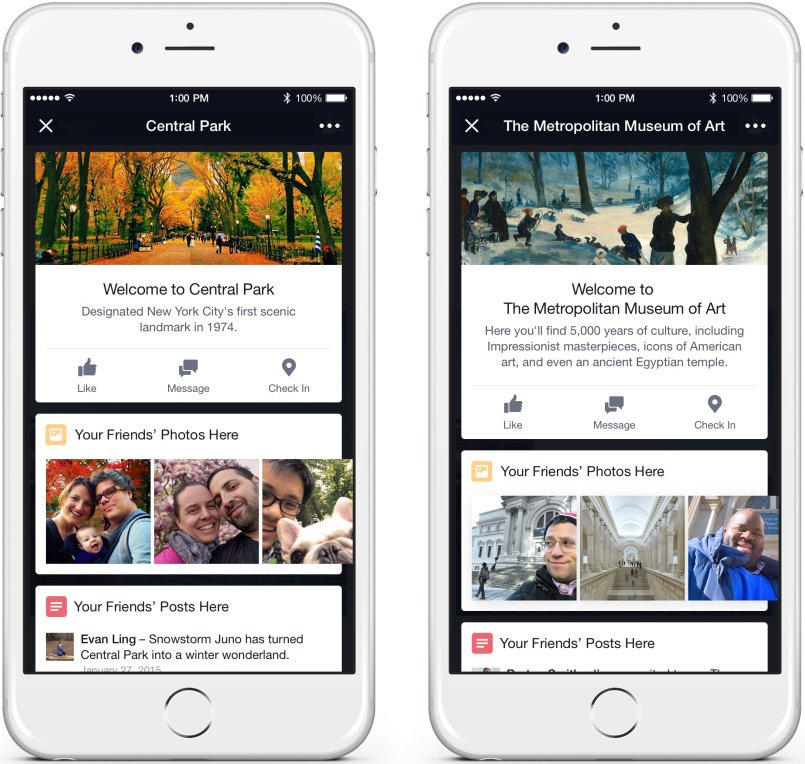
    Facebook has introduced a cool new feature to keep things exciting for its massive user base. Recently, the social networking site announced a new tool called Place Tips which will give location-based suggestions to the user posted by friends like Photos, Notes and Status Updates.

    The feature designed for the mobile app uses the location of your phone. When you move around with your internet connection on, the Facebook Place Tips will draw on the posts by your friends and will keep them at the top of your homepage. So, when you enter a famous place next time, you will see the posted photos by your friends.

    facebook place tips

    The best part is that it’s optional, and one can disable it anytime by denying Facebook access to your location. The feature is currently in testing mode and is only available for iPhone users as of now.

    The company said that however it uses your location to provide information,but doesn’t share it publicly. The company wrote in its official blog post –

    Place tips will show you fun, useful and relevant info about the place you’re at.

    Nailing down the exact location of a person in a densely packed city is not easy, and Facebook has found out a solution to that problem as well. The company say that it is developing Facebook Bluetooth Beacons (a type of transmitter). These beacons will be deployed at seven places in the New York – Dominique Ansel Bakery, Strand Book Store, The Burger Joint at Le Parker Meridien Hotel, Brooklyn Bowl, Pianos, the Big Gay Ice Cream Shop, and Veselka. So, when any person using Facebook reaches any of these stores, the company will be able to identify the exact location.

    The app works for restaurants as well. If you visit a restaurant, the new tool will eliminate the need of looking at the menu card and will showcase all the popular menu items and upcoming events, along with your friends’ posts. That’s something for which we can consider it a bit useful. Other than that, it will also give building recommendations, making Yelp and Foursquare less functional. It would be interesting to see how users respond to the new initiative.

  • A Quick Guide on How to Use Snapchat’s New Features

    A Quick Guide on How to Use Snapchat’s New Features

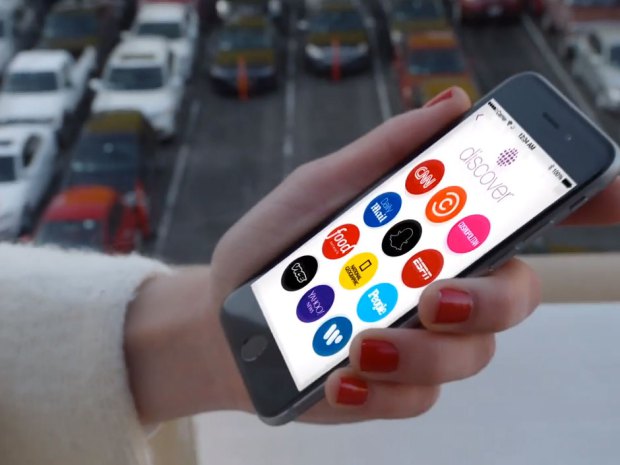
    Snapchat revamped its whole interface with a massive new update.  Well, many are heartbroken after the update removed the ‘Best Friend’ feature. However, there is much more to it than that. Snapchat has added a new ‘Discover’ tool which seems like the beginning of a whole new chapter in the way we consume content online.

    We are listing all the changes and new features of the updated Snapchat.

    1. Discover Tool

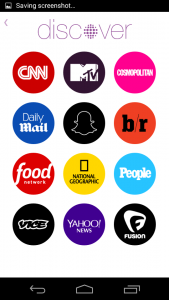
    This is the most major change in the app, affecting both the users as well as companies directly. The Discover tool is more like an online magazine than a social media platform. It is intended to feed Snapchat’s young audience a daily flow of content from major media companies. Imagine Flipboard combined with Snapchat.

    The discover tool features full screen photos and videos, awesome long form layouts, and gorgeous advertising. Discover seems like it will act as an always-on Snapchat “channel guide,” focused on delivering users advertising.

    How to Use it: To open the tool, swipe left to open the story page, on the top right side of this page there is a small purple dot. Clicking on it will take you to the Discover homepage and users can select the outlet they wish to view with a simple click. From here you are taken to the available content and swiping left or right allows you to check out everything they have to offer. If you like what you see, it is as simple as swiping up to view extended content such as videos, text and photos. Once you have finished exploring, all you have to is swipe down to return to the homepage of Discover.

    2. The Absence of the Best Friends feature

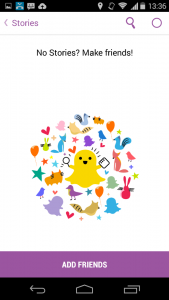
    This one caused teens everywhere to flip out of disappointment. The update quietly removed everyone’s Best Friends list.  The Best Friends feature was simply a list of people who a user interacted with the most frequently on the app. It’s similar to Myspace’s Top 8 friends, except users can’t control who shows up on their list. Best Friends lists were previously public, so that anyone in a user’s Snapchat contact list could see who they were sending the most snaps to. With this new upgrade, this list became private.

    Another new addition, instead of the long list of friends, there are only the recent updates visible, reminiscent of Blackberry’s BBM messenger updates.


    3. QR Snaptags

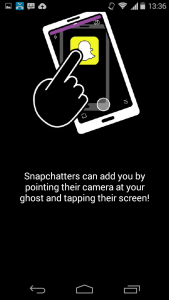
    One more BlackBerry-like feature is the new ‘Snaptags’. This creates a unique QR code for every Snapchat user. When someone points their Snapchat camera at a Snaptag, the app adds the corresponding person as a friend. All you have to do is swipe down on the landing screen and it will show your QR Snaptag. This not only easy but also a great way to fetch more followers. There is a whole community of creators who use Snapchat Stories to entertain millions of fans. They can easily toss their Snaptag up on Instagram, Twitter or Facebook to score more followers.


  • More Than 500 Million Users Access Facebook Only on Mobile Devices

    More Than 500 Million Users Access Facebook Only on Mobile Devices

    Facebook reported fourth-quarter profits of $701m (£462m), a 34% increase on the same period a year ago. It seems to have taken over the small screen in the last quarter.

    What’s interesting is that more than half the billion Facebook users access the site from mobile devices. The company also noted a 13% percent increase in active users since previous months, which means almost 1.39 billion people use Facebook actively every month on an average.

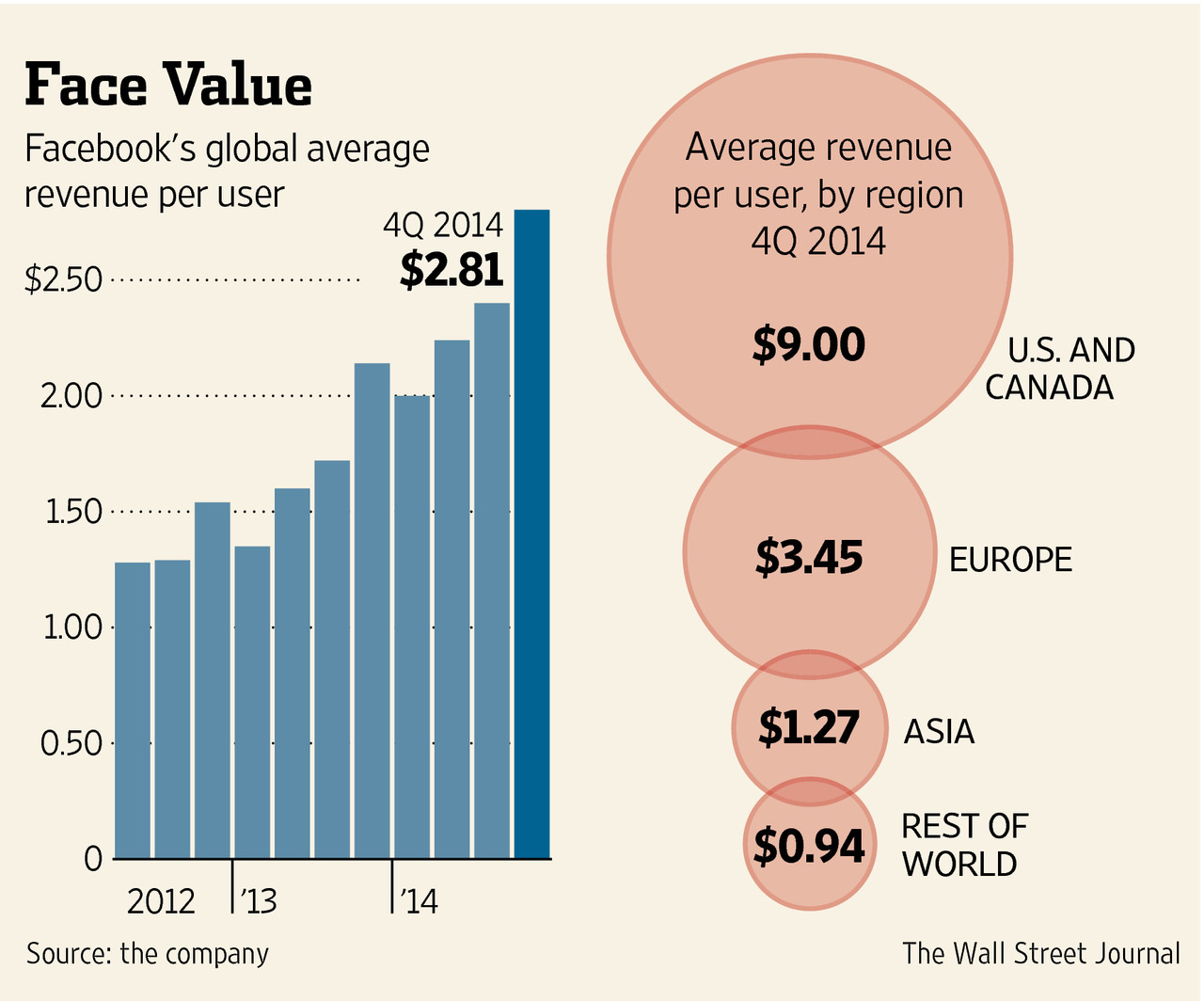
    The social media giant isn’t signing up new users the way it once did, but the social network is generating a lot more revenue from each user. Facebook generated $3.59 billion from advertising overall in the fourth quarter of 2014, and 69% of that came from mobile ads rather than their desktop version.

    Also, the company has invested a lot of money on R&D, precisely triple the amount the company spent in the previous quarter. That includes several high profile acquisitions such as Instagram, WhatsApp and virtual-reality headset maker Oculus Rift, as well as its own in-house messaging products and video services.

    facebook earnings q4 2014

    Major part of Facebook research and development is said to focus on mobile ads. Facebook and companies like it have been working hard to figure out how to adjust and make mobile ads that will click better with the audience. Internet users are increasingly flocking from browsing on PCs, where banner ads have long reigned, to using mobile browsers and apps, where traditional online ads haven’t worked as well.

    The latest of Facebook’s mobile experiments is a platform called Audience network launched in October that lets brands tap into the social giant’s enormous user data to advertise to Facebook users while they’re in other apps.

  • Facebook’s Oculus Forms a Dedicated In-House Studio for Virtual Reality Movies

    Facebook’s Oculus Forms a Dedicated In-House Studio for Virtual Reality Movies

    The independent cinema fair of 2015, Sundance Film Festival, showcased some top-notch films. The one that left the world awestruck was the first virtual-reality film by Facebook-acquired Oculus. Facebook premiered its first short piece titled ‘Lost’. It is the first of five short animated flicks the company will be making this year.

    oculus lost

    Oculus has built in-house studio called Story Studio, where the company will be creating virtual reality films and research on the story telling.

    By developing content for virtual reality, Oculus aims to attract more filmmakers to invest in the new technology. To start with, the company has tapped the highest talents from both the film industry and video gaming world. Veteran of Pixar Animation Studios and Lucasfilm Ltd., who were responsible for films like Toy Story and Monsters Inc., will be attached to the upcoming five-film project.

    oculusrift1

    The premiered movie Lost is helmed by former Pixar artist Saschka Unseld, who is now the creative director of Story Studios. The film takes the viewers to the middle of the forest where a mechanical creature bounds into the scene. The Chief Executive of Oculus Brendan Iribe described the flick as ‘a real-time version of a Pixar experience that you’re inside of.’

    Iribe further added to his statement –

    This is really tuning into what a lot of people who are extending 360-degree film into VR cannot do yet. It’s getting into the heart and soul and magic of VR.

    Virtual Reality films are the real-time cinema where you can not only see, but also feel your presence in the space. However, the concept of experiencing 360-degree panoramic view using a gadget that fixes at the head has not reached the masses as of yet. In spite, Samsung and Google have developed products like Galaxy Gear VR headset and Google’s Cardboard VR device, the journey of it to be available mainstream will take some time.

iGyaan Network
Privacy Overview

This website uses cookies so that we can provide you with the best user experience possible. Cookie information is stored in your browser and performs functions such as recognising you when you return to our website and helping our team to understand which sections of the website you find most interesting and useful.