Category: Social Media

  • IBM Verse Integrates with Social Media to Declutter Your Inbox

    IBM Verse Integrates with Social Media to Declutter Your Inbox

    IBM has launched a new e-mail application, for its enterprise customers, that integrates social media, file sharing and analytics to learn a user’s behavior and predict interactions with co-workers.

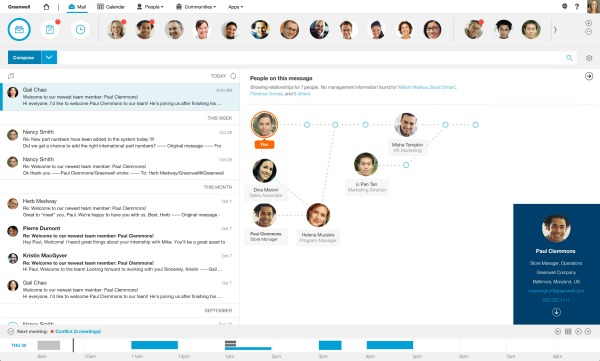
    Verse e-mail application is built to eliminate as much clutter as possible. The app learns your habits and puts the highest priority people and tasks at the top level. You’ll know if a key team member e-mails you during lunch hours, or that you have a meeting in 10 minutes.

    In fact, IBM Verse is said to have a certain level of sentience. Since it is capable of picking up your e-mail habits, and at the same time sends the highest priority people and tasks right to the very top, it minimizes the chance of you missing out on an important e-mail.

    2014-18-November-IBM Mail Verse

    It also allows users to transform e-mail content into a list of blogs and social media, view the relationships between different employees in an e-mail, mute a chain and search through attachments. The e-mail’s interface pins a user’s most frequent contacts, schedule and lists of assignments to a dashboard for easy access.

    “We came at this from the perspective that this is about changing the game, not just incremental improvements in e-mail,” said Jeff Schick, IBM’s General Manager of Social Solutions. “Guided by analytics, IBM Verse learns your behaviors to adapt to the way you work, wherever you work. And because it’s built for business, it understands you have special security and privacy needs, too.”

    IBM Verse runs on IBM’s SoftLayer cloud with the company’s enterprise-grade security. IBM officials say that a beta release will be available to select clients and partners this month. A freemium version delivered via the IBM Cloud marketplace will be available in the first quarter of 2015. IBM Verse will also be offered as an app for both iOS and Android.

  • Goofy New App ‘Super’ is the Perfect Place to Make Bold Statements

    Goofy New App ‘Super’ is the Perfect Place to Make Bold Statements

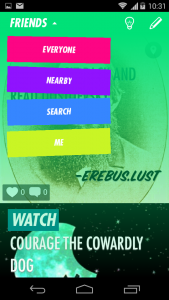
    After failing at its recent project Q&A app Jelly, Twitter co-founder Biz Stone has come up with another light-hearted app called Super. As simply as it can be put, Super is Twitter with the style of Jersey Shore. Yes, Super lets you share statements starting with ‘The Best’, ‘The Worst’, ‘I Wish’, ‘Check Out’, ‘Don’t Ever’, or a few other prompts. You can sign your name if you wish, and people will be able to see your declaration in ‘Friends’, ‘Everyone’, and ‘Nearby’ feeds.

    1416287050822Creating a new Super post gives you a template ‘sentence starter’ word for your thought on the top left, like ‘we should’ or ‘I love’ before an area for typing your thought. On the lower right, you can add a further message, attribution or quip. Then, you are required to add an image; either from your own camera/library or from a library of art that’s built-in. Users can also add location data to their images so that it can be discovered by those in the area using the nearby feed.

    Like Twitter, it offers you limited words, letting people use witty words and clever wordplay. However, this app is just not about words, pictures are equally an important part of the app. Hence, making it feel equally interesting as Instagram. So, what’s special about Super? The app scans what you write, and then automatically adds a background image and offers a few alternates based on your keywords.

    Super also has an anonymous element like Secret called ‘anonymish’ where you can throw a switch when posting. This removes your username from the post. The company pointed out that people could figure out who you are though, as ‘it isn’t designed as an anonymous sharing platform.’

    Even though Biz’s last app flopped miserably, Stone doesn’t want to stress this launch that much. “I’ve decided not to come up with some slick and pithy marketing description for Super,” he wrote in a blog post. “I’m also not going to proclaim that it’s the most innovative thing ever or that it’s going to save the world. It’s not, it’s just fun.”

  • Snapchat Will Now Let You Send Money That Won’t Self-Destruct

    Snapchat Will Now Let You Send Money That Won’t Self-Destruct

    Snapchat has recently unveiled a new feature that will let users send money to other users through the self-destructive messaging app. To send money to friends, users need to connect their debit cards to their Snapchat accounts through a partnership with Square Cash.

    The service will only be available to Snapchat users in the United States who are above 18. None of the user’s personal financial information will be stored on Snapchat’s server. However, the company’s privacy is almost the first concern. The question arises – Would you trust Snapchat for your financial details? We won’t.

    demo_02_sendcash-298610262In May, Snapchat settled with the US Federal Trade Commission (FTC) over allegations that it misled users over data collection and failed to inform them that their messages could be saved. The company agreed to be monitored by the FTC for 20 years. And in January, at least 4.6m user accounts were compromised by hackers, who posted usernames and phone numbers on the web.

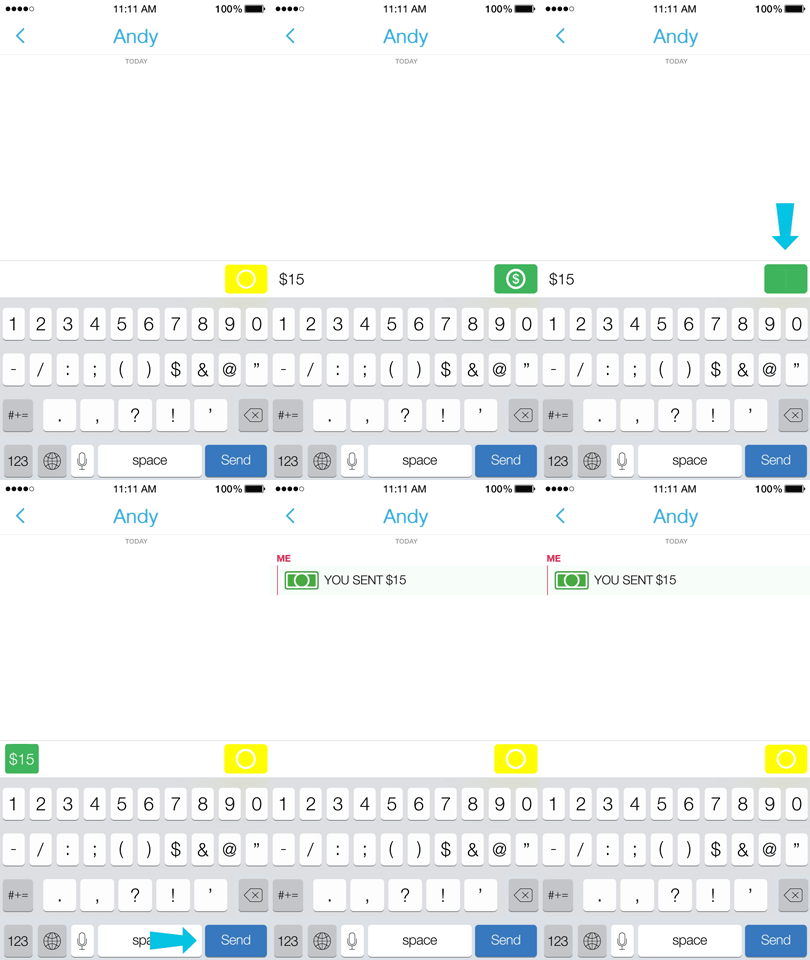
    To send a payment, all what a Snapchat user needs to do is type in the amount they’d like to send in a private message. The app then recognises the dollar amount – say $10 – and eventually, a green payment button appears. The tapping of this button sends the amount to the other user. The payment system is similar to other mobile payment services, such as Venmo and PayPal. It is a part of Snapchat’s broader push to expand beyond its core messaging business, by both adding advertising and branching out into live events.

    The company announced last month that users will start receiving ads from brands under the ‘Recent Updates’ section of the app. This is the same portion of the Snapchat inbox where you find ‘Stories’, a product that threads together multiple snaps (both video or photo) into one, long snap.

    However, the problem is that the app doesn’t know much about its users beyond their made-up username, IP location, volunteered age, phone number, and who they watch on Snapchat Stories. Although it does get some name info from contact books, but without the targeting prowess of apps like Facebook and Twitter, it may be forced to stick with ads for things with broad appeal, like films and top 40 music.

  • How YouTube’s New Music Key Service Can Revolutionise the Music Streaming Industry

    How YouTube’s New Music Key Service Can Revolutionise the Music Streaming Industry

    YouTube has launched its long-awaited music subscription service called Music Key in beta version. The new service comes with a $7.99 price tag for an initial promotional period, with a standard rate of $9.99 per month. YouTube Music Key offers access to Google Play Music’s entire library, as well as providing ads-free music videos, background playback capabilities, and offline caching for viewing without a connection.

    To kick off the service, YouTube opens with a private invite-only beta, offered just to the heaviest music consumers on the site. However, if you are desperate to try the new service, you can sign up for Google’s other music series Google Play Music commit to $10 monthly, and you get to be a YouTube Music Key subscriber as well (and yes, you get 2 months free subscription for Music Key with it).
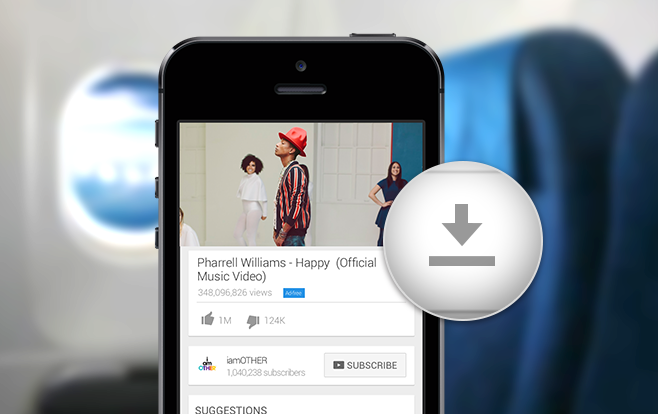
    youtubemusickeybeta-offline

    YouTube is the No. 1 place for folks to discover new music. Also, music videos don’t air on MTV anymore, but all of the latest pop acts release their videos on YouTube. Justin Bieber launched his career on YouTube, Harlem Shake became the song of the decade here. Top 40 doesn’t define the music scene anymore. This makes YouTube new subscription service a big deal. The video-sharing website has become a one-stop website for music videos, cover songs, lyric videos, reality shows, ‘Soldier coming home’ videos and pretty much everything. YouTube knows well that the lines between music and everything else are more blurred than before.

    The company is going to make most of it with this new service. “Overall, we rely on the information that we get from our partners, or from the video uploader,” explained the YouTube spokesperson Matt McLernon in an interview. “So there are very specific cases like members of the music community, say a label or a publisher, where it’s very clear that it’s music, but the thing that makes YouTube so unique in the music space is, not only is there the traditional music side that everyone knows and loves, but with 300 hours of music and video coming to YouTube every minute, and much of that being music, there’s this whole spectrum of what people call music, or consider music, or share as music.”
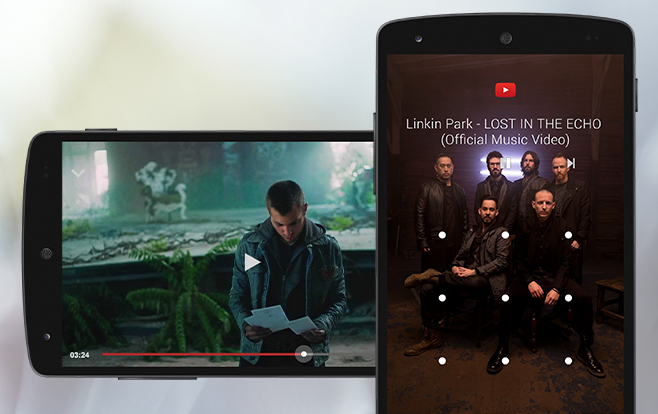
    youtubemusickeybeta-background

    The strategy YouTube has adopted is feedback-based, which is a good sign. The beta version is designed to help Google define music not just by its own standards, but by the standards of using the service for listening and watching. The aim of the beta version is to attract the most dedicated YouTube music fans, who will then offer up feedback including “why isn’t channel x included,” or “why is this here when it doesn’t seem like it should be?”

    “We want it to be from both sides – we rely on the information the uploader puts in their YouTube video, but we also want to be an active part in that,” McLernon stated. “This is the same concept of what we use to determine recommended or related videos. All the different signals that we’re aware of that would tell us people are playing these videos in the same way that they would play these types of music videos.”
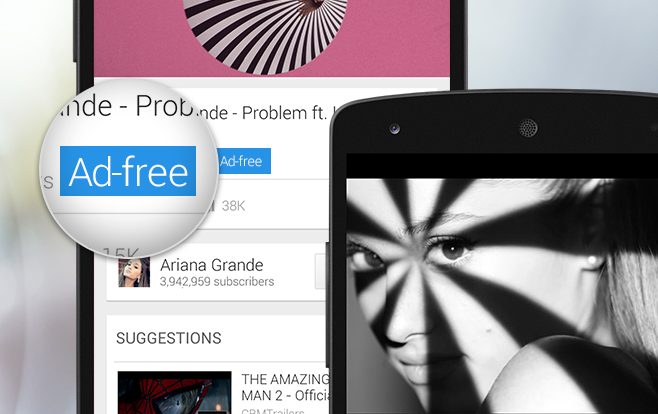
    youtubemusickeybeta-adfree

    The company’s goal is to develop the service in the same way they developed their advertising partnership program, which started as something the company chose you out to participate in. It was complete with iterated agreements, and eventually opened its doors to all YouTube creators and uploaders to opt into.

    Music downloads on iTunes are not selling the way they used to, CDs have become almost non-existent in stores, and streaming music sales keep rising. Matt admits that based on how well the beta version is received by the early users, it’s definitely possible that we’ll see the model applied in one way or another to other categories within the streaming video site too. However, Google has a big task ahead to figure out how they want to proceed with the Music Key.

  • Here is What You Should Know About Facebook’s Sneaky Privacy Policy

    Here is What You Should Know About Facebook’s Sneaky Privacy Policy

    Social networking giant Facebook is trying to simplify its privacy policy, making it more understandable for the average users with legal jargon. Now, there are a new set of pages called Privacy Basics, which are clickable and laid out with illustrations. Facebook says that the new policy tries to simplify what kind of information Facebook collects and how it uses the data. The new policy is compressed in 2,700 words compared to its old one, which was 9,000 words. In its attempt to simplify things, the new Privacy Basics has introduced three sections: ‘What Others See About You,’ ‘How Others Interact With You’ and ‘What You See.’

    There’s also a Facebook page for users where they can submit their comments as what kind of changes they would want to see. Users have until 20th November to post their feedback, after which the finalised version shall be implemented.

    Along with that, there’s also a Data Policy page, which is a cause of concern here as the new policy does not take into consideration how much personal data Facebook collects from its users.

    For instance, the one paragraph in its Data Policy is worth noting that says, “We share your information with third parties when we believe the sharing is permitted by you, reasonably necessary to offer our services, or when legally required to do so. Even though, users have an option whether they want to share information with third-party apps, they don’t have the option to select what kind of information is shared. As the new Data Policy still clearly mentions that Facebook has the right to use information people share on Facebook to target ads, whether you are logged in or not.

    Along with that, Facebook has also allowed businesses to advertise to users based on their specific location. Unlike earlier, when ads were targeted based on the current city mentioned in the profile. The new policy still specifies that they can access user information based on their smartphone’s GPS location. Additionally, Bluetooth and Wi-Fi signals can also be used to reveal user’s exact location.

    Another excerpt from its Privacy Policy which makes everything sound reasonable for Facebook, “We may provide information to service providers that help us bring you the services we offer. For example, we may use third parties to help host our website, send out email updates about Facebook, remove repetitive information from our user lists, process payments, or provide search results or links (including sponsored links). These service providers may have access to your personal information for use”.

    In addition, Facebook is also testing a tool that lets users buy directly through its site. This tool gives Facebook information about the transaction, including the credit card number, billing, as well as shipping address.

    Gone are the days of the good old Facebook, which was just a place to connect with your friends and loved ones. It’s becoming more of a business model as the networking giant wants its users to make the platform a more powerful tool for advertisers. The current state of the World Wide Web is such that it is intensely driven by the ad targeting technologies. The sad fact is that most of the users will not even read the policy, even if they do and express discontent to the way Facebook collects all their information; they are likely to continue using this new ad-driven business model.

  • Next WhatsApp Update Adds the Option to Disable the Blue Tick

    Next WhatsApp Update Adds the Option to Disable the Blue Tick

    WhatsApp’s last update included a new, controversial, ‘blue tick’ feature which indicated that the recipient had read the message you sent. The addition of the blue check marks was utterly unwanted in our opinion, given that it brought with it the social pressure to reply – which most users considered as an interruption of privacy.

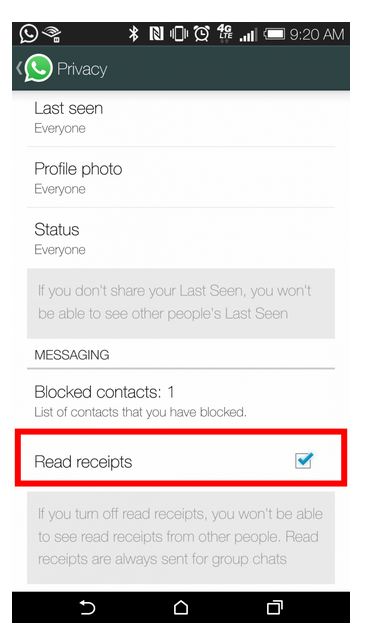
    Earlier, in the interest of privacy, WhatsApp added the choice to conceal the ‘last seen’ notification that informs the other party when that person was last available on the messaging platform. Same has happened with the new ‘blue tick’ feature. The instant messaging app has quickly done some damage-control and added the option to hide ‘Read Receipts’ feature.

    whatsapp

    Once enabled, the ‘blue ticks’ will not show up on the sender’s window. One needs to simply go to the ‘Privacy Settings’ and enable/disable the feature. Obviously, this is a huge sigh of relief for many users.

    We still haven’t received this update on our smartphones as yet. But from what we hear, it’s on its way. Stay tuned for more.

  • Microsoft to Bring Out a Web Version of Skype in the Coming Months

    Microsoft to Bring Out a Web Version of Skype in the Coming Months

    Microsoft seems to focus on Skype a lot these days. A few days ago, the company announced that it will rebrand Lync, enterprise video conferencing software, as Skype For Business. Now, Microsoft announced on Friday that it will soon launch a web-based version of the video-conferencing platform.

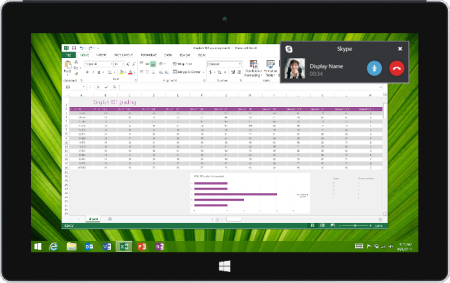
    Microsoft has gradually started to bring Skype to the web through its Outlook.com service, however, this web-version will work across latest versions of Internet Explorer, Chrome, Firefox, and Safari without the need to use Outlook.com. The new version of Skype, which is still in beta, allows users to log in to their existing accounts from Skype’s website.

    The official blogpost reads: “Skype for Web makes it quicker and easier than ever before to connect with friends, family and colleagues around the world, for free – directly from Skype.com. It’s perfect if you prefer using the web rather than an app: perhaps you’re sitting at a computer that doesn’t already have Skype downloaded. Or maybe you’re on the go and using an internet café or hotel computer whilst on vacation where you can’t download Skype at all. Using Skype for Web makes it more convenient to get to your conversations.”

    sfw1.0

    Microsoft is planning to take advantage of Web Real-Time Communication (WebRTC) APIs to enable browser-to-browser voice calling, video chat, and instant messaging in the future. However, for now, you need a small plug-in to enable the service until WebRTC version is ready.

     The Skype for Web is still in beta stage, the company acknowledged some glitches with Skype’s current web-based version. Microsoft said that Mac users may experience an “issue with battery consumption,” and outgoing video calls may take longer than normal to connect for all web users.

    According to the blog, the company is rolling out the services to limited people at first with a larger rollout to follow in coming months. It is not clear how many users would be a part of the initial process,  however, the selected ones will see an invitation when they log in to their Skype account from Skype.com.

  • Yahoo Acquires Video Ad Giant BrightRoll for $640 Million in Cash

    Yahoo Acquires Video Ad Giant BrightRoll for $640 Million in Cash

    The American multinational Internet corporation Yahoo recently acquired video advertising company BrightRoll for $640 million. The acquisition is the second-biggest purchase under CEO Marissa Mayer and was carried out in cash. The company is struggling hard to keep up with its competitors Google and Facebook in ad revenues.

    BrightRoll will continue to operate independently ‘with Yahoo’s additional investment and global support.’ The deal is expected to close in the first quarter of 2015. In turn, Yahoo is hoping to revive its share in the US digital marketing industry, which fell to 5.8% in 2013, according to analyst eMarketer, and is expected to dip again this year.

    brightroll-sf

    According to Yahoo Chief Marissa Mayer, this deal will turn Yahoo into the largest video advertising platform in the US. Mayer talked that BrightRoll is ‘expected to exceed $100 million this year’ in net revenues. “Acquiring BrightRoll will dramatically strengthen Yahoo’s video advertising platform, making it the largest in the US. BrightRoll is the industry’s leading programmatic video advertising platform for reaching audiences across web, mobile and connected TV. Video is display 2.0. It’s what brand advertisers love. It’s a format that elegantly and easily transitions from broadcast television to PC to mobile and even to wearables. This is why video is a key part of our strategy,” Mayer said in a blogpost.

    She said that she thought video could reinvent and replace banner advertising, a mainstay of online ads. Once the market leader, Yahoo is expected to fall on to fourth place this year, according to eMarketer. It was reported in July that the Internet corporation collected less than 3% of online ad revenue last year. Google was on top with nearly 32% ad revenue, while Facebook accounted for about 6%. Microsoft is projected to exceed Yahoo this year.

    Yahoo hopes to counter Google’s sheer volume of user-generated videos with professional video content produced by journalist Katie Couric and tech reviewer David Pogue among others. Yahoo was able to buy BrightRoll with cash after it sold shares worth close to $9 billion in the initial public offering of Chinese e-commerce powerhouse Alibaba this year.

  • Microsoft’s Lync to be Reintroduced as ‘Skype For Business’ in Early 2015

    Microsoft’s Lync to be Reintroduced as ‘Skype For Business’ in Early 2015

    Microsoft recently announced that the company is converging Lync, professional video conferencing service with Skype which will be called Skype for Business. The company lately announced the name change as well as some target dates for the next versions of the offering.

    The move comes as a part of Microsoft’s strategy to ‘re-invent productivity’ for all, not just business. Hence, offering a unified experience across services so consumers and businesses have similar experiences.

    “Large enterprises know Lync, and consumers all know Skype,” said Gurdeep Pall, Corporate Vice President, Lync and Skype, Microsoft. “If you’re a small or medium business, you’re kind of lost. You feel, ‘Is Lync for me? Is it too heavy duty? But Skype definitely feels too light for me.’ We think that by having this one consistent brand, we are able to reach all the constituents in that spectrum.”

    sfb3

    The company promised that Skype for Business will remain an Office 365 exclusive service when it replaces Lync sometime in the first half of 2015. Microsoft Lync, earlier known as Microsoft Office Communicator, uses Microsoft Lync Server, the software infrastructure for enterprise instant messaging, Presence, VoIP, Video Conferencing, and so on. Microsoft said Skype for Business will offer a new client experience as well as a new server release.

    “We thought the most important convergence path was to feel familiar,” said Pall. “We have not yet landed on the right model for when you have two identities, and you’re trying to juggle them on the same experience. We are finding our path.”

    Skype for Business essentially uses all of the capabilities of Lync, including content sharing and telephony. Microsoft said that transferring a call now takes only one touch or click instead of three. In other words, Skype for Business will essentially be Skype with Lync’s enterprise security, compliance, and control feature.

    Back in 2011, when Microsoft bought Skype, the long-term goals of the company were unclear behind having two separate services that could do video chat. Now that the company is converging both of them, it makes a lot more sense as Skype has already become a household name in the field of video conferencing.

  • Here’s How You Can Deceive WhatsApp’s Blue Tick

    Here’s How You Can Deceive WhatsApp’s Blue Tick

    In a recent attempt to intrude our private lives, WhatsApp added another layer of unnecessary information in the form of blue check marks, indicating that the recipient has indeed read the message.

    The addition of the blue check marks is utterly unwanted in our opinion, given that this brings back the social pressure to reply – what most users consider an interruption of privacy. In the interest of privacy, WhatsApp earlier added the choice to conceal the ‘last seen’ notification that informs the other party when that person was last available on the messaging platform.

    Well, there is a way around to avoid this new feature. Rahul Banker, a blogger and head of India’s Google Developers Group, has revealed the method to avoid this feature in a blogpost.

    whatsapp-convo

    Basically, when you read the message you received on WhatsApp, the app uses your Wi-Fi or Data connection to notify the sender that the message has been read via blue tick marks. So, if you read the message offline, the app won’t be able to send the information to the sender.

    So, if you don’t want the sender to know whether you have read the message or not, you just need to switch off your internet and Wi-Fi connections, then open WhatsApp and read the message. Close the app, reconnect to your data or Wi-Fi, and the check marks remain grey.

  • Twitter Joins Hands With Women Advocacy Group to Fight Online Harassment

    Twitter Joins Hands With Women Advocacy Group to Fight Online Harassment

    We all know the depreciational quality of any online conversation with another human being. There’s something about the mode of online communication that leaves us shielded from other person’s emotions, leading us to create a lot of nasty content over the internet. The information super highway was meant for the world to unite and share ideas, instead, we have turned it into a septic tank of human nastiness. One of the worst issues online is the issue of online harassment. It is especially a common occurrence on social media. Now Twitter will be taking steps to prevent harassment on its pages.

    Twitter has joined hands with a non-profit advocacy organization Women, Action, and the Media (WAM) to take on online harassment. It is reported through a PEW survey that as many as 25% of women aged between 18-24 have been stalked online, while 26% have been on the receiving end of online sexual harassment.

    Using an online form you can report specifics of the harassment, you're facing.
    Twitter said that it works with multiple partners to take on online harassment.

    These are troubling figures as it creates a malignant atmosphere for women online. In the garb of anonymity, insensitive elements create a havoc on the person they are targeting. WAM will work towards making it easier for Twitter to take actions against these unscrupulous troublemakers.

    WAM has created an online form which can be used to report abuses. It is an anti-gender harassment campaign, and so the form can be used by women and men both. WAM has made it clear that they will use the complaints received to direct Twitter to take action, but ultimate authority lies with Twitter.

    Recently, a major Twitter scandal unfolded in the Tech world with the exposure of #gamergate, where certain female gamers were being harassed by gamers. They were forced to speak out against gender discrimination against females in gaming. After facing tremendous pushback from mainstream attention, the gamergate movement is now dying a silent death.

    The safety features might come in handy for reporting abuses, but what is really necessary to end this menace is accountability. The people who indulge in harassment of others leads to more controls on expression, which just spoils the fun for everyone. It’s important that the abusers face the consequences of their actions. But most importantly, we need to have an online culture conversation. The online world is an ecosystem of its own, and it is still discovering itself, constantly evolving. We need to create a civilisational grammar for this new society and make it a place to have real developmental interactions.

  • New Facebook Tool Offers a Quick Silence Option for Annoying Posts

    New Facebook Tool Offers a Quick Silence Option for Annoying Posts

    Popular social networks have spent years trying to write a perfect algorithm to suggest who to follow, even if it attenuates our feeds. That’s because News Feed, a self-regulating system that responds to your actions, is largely what you make of it. Facebook has rolled out some tools to help you personalise it even more.

    News Feed works on an algorithm rather than just a chronological stream of updates from all your friends and the pages you follow. It’s never been completely clear how to change what you see there. “The goal is to show content that matters and facilitate conversations,” says Adam Mosseri, Facebook’s Product Management Director for News Feed. “We want to give people more control over the News Feed experience. The idea is that if people have the right preferences settings, it’s good for everyone.”

    news-feed-hide-flow

    News Feed Settings will now show a list of the top people, pages and groups that you’ve been seeing in your News Feed over the past few weeks. You can choose to sort by People, Pages or Groups posts, or see an overall summary. Unfollow any friend, page or group if you don’t want to see their stories in your News Feed. You can also see who you’ve unfollowed in the past and can choose to re-follow them anytime.

    Now, you can decide on from whom you want to see lesser updates, rather than completely unfollowing them. It means, you won’t be inundated with updates from your friends, but you’ll still get major announcement posts, like the arrival of a new baby and so on. Also if you see a story you’re not interested in or don’t want to see, you can tap the arrow in the top right of that story to hide it. So, when you hide a story, you’ll have the option to see less from that person or page.

    News Feed Settings are already available on desktop and mobile. The new options for giving feedback about your News Feed is live on the desktop, and it is coming to mobile in the coming weeks.

  • Facebook Plans to Take on Apple’s Monopoly Over the App Business

    Facebook Plans to Take on Apple’s Monopoly Over the App Business

    It is no secret that Apple has dominated the $45 billion market with its App Store. Even though Android ecosystem has proliferated to almost 80% of the market globally, iOS has taken over the major chunk of the app store revenue on its side.

    The main reason being iOS users are more than ready to spend money on apps than Android users. Android being an open source OS comprises of users that may or may not like to spend money on apps, hence, the revenue differs. So the best apps are developed first for Apple’s iOS mobile operating system. Only if they are successful do companies produce an Android version, often months or years later. However, Facebook is planning to change this game.

    According to the folks at Facebook Europe, the dominance of Apple is about to weaken soon. Facebook’s Europe, Middle East, and Africa platform director Julien Codorniou while talking to Business Insider suggested that the new trend he is seeing is going to favour Android. According to him, Android is very rapidly catching up iOS in terms of revenue generation. He also mentioned that there days, many developers, especially game developers, are going for Android first in the European market.

    Parse
    Facebook is planning to tap into situation with its own Parse app development platform, and favour Android big time.

    “There is a pattern coming from Eastern Europe. The Russian developers develop on Android first because of a big audience, and it maybe being easier to develop. They liked the fact that they could submit a new version of the app every day. [With Apple, you have to get each new version of the app approved before it hits the App Store. There is no version approval for Android.] This is a trend that I see and I think it is going to accelerate.”

    Facebook is planning to tap into the situation with its own Parse app development platform and favour Android big time. Codorniou believes that Parse virtually erases the two-step iOS/Android development process, letting companies release new apps on both platforms at the same time. If apps are released at the same time on Android, it erases one of the key selling points of the iPhone, which is users who want the cool new apps must be Apple users in order to get them.

    Codorniou has a team of promoters for spreading the word: “As of today, I have four guys from my team in Paris talking to Android developers about the greatness of Parse, Facebook login, app links, app events, all of these things we introduced at f8. It’s a very important bet for us.”

  • Zuckerberg Reveals Why We Were Forced to Download the Facebook Messenger App

    Zuckerberg Reveals Why We Were Forced to Download the Facebook Messenger App

    Back in July, Facebook announced that it will be removing the messaging feature from its mobile app, and requiring people to use its standalone Messenger app instead. Hence, forcing users to download the Messenger app to chat with their Facebook contacts on their mobiles.

    The change followed through a plan which was announced in April and for now, affects Facebook mobile app on iOS and Android. According to the company, the plan had seen ‘positive results’ in Europe in terms of user engagement, and so decided to move ahead with rolling out of the standalone app to everyone. However, they never explained why this plan came into effect at the first place, until now.

    In a live Q&A conversation yesterday, Mark Zuckerberg finally explained why Facebook moved messaging out of its main app and made it into a separate, standalone app that needs to be downloaded.

    I’m grateful for hard questions. It keeps us honest. We need to be able to explain clearly why what we’re thinking is good. Asking everyone in our community to install a new app is a big ask. I appreciate that was work and required friction. We wanted to do this because we believe that this is a better experience. Messaging is becoming increasingly important. On mobile, each app can only focus on doing one thing well, we think.

    The primary purpose of the Facebook app is News Feed. Messaging was this behavior people were doing more and more. 10 billion messages are sent per day, but in order to get to it you had to wait for the app to load and go to a separate tab. We saw that the top messaging apps people were using were their own app. These apps that are fast and just focused on messaging. You’re probably messaging people 15 times per day. Having to go into an app and take a bunch of steps to get to messaging is a lot of friction.

    Messaging is one of the few things people do more than social networking. In some countries 85 percent of people are on Facebook, but 95 percent of people use SMS or messaging. Asking folks to install another app is a short term painful thing, but if we wanted to focus on serving this [use case] well, we had to build a dedicated and focused experience. We build for the whole community. Why wouldn’t we let people choose to install the app on their own at their own pace? The reason is that what we’re trying to do is build a service that’s good for everyone. Because Messenger is faster and more focused, if you’re using it, you respond to messages faster, we’ve found. If your friends are slower to respond, we might not have been able to meet up.

    This is some of the hardest stuff we do, is making these choices. We realize that we have a lot to earn in terms of trust and proving that this standalone messenger experience will be really good. We have some of our most talented people working on this.

iGyaan Network
Privacy Overview

This website uses cookies so that we can provide you with the best user experience possible. Cookie information is stored in your browser and performs functions such as recognising you when you return to our website and helping our team to understand which sections of the website you find most interesting and useful.