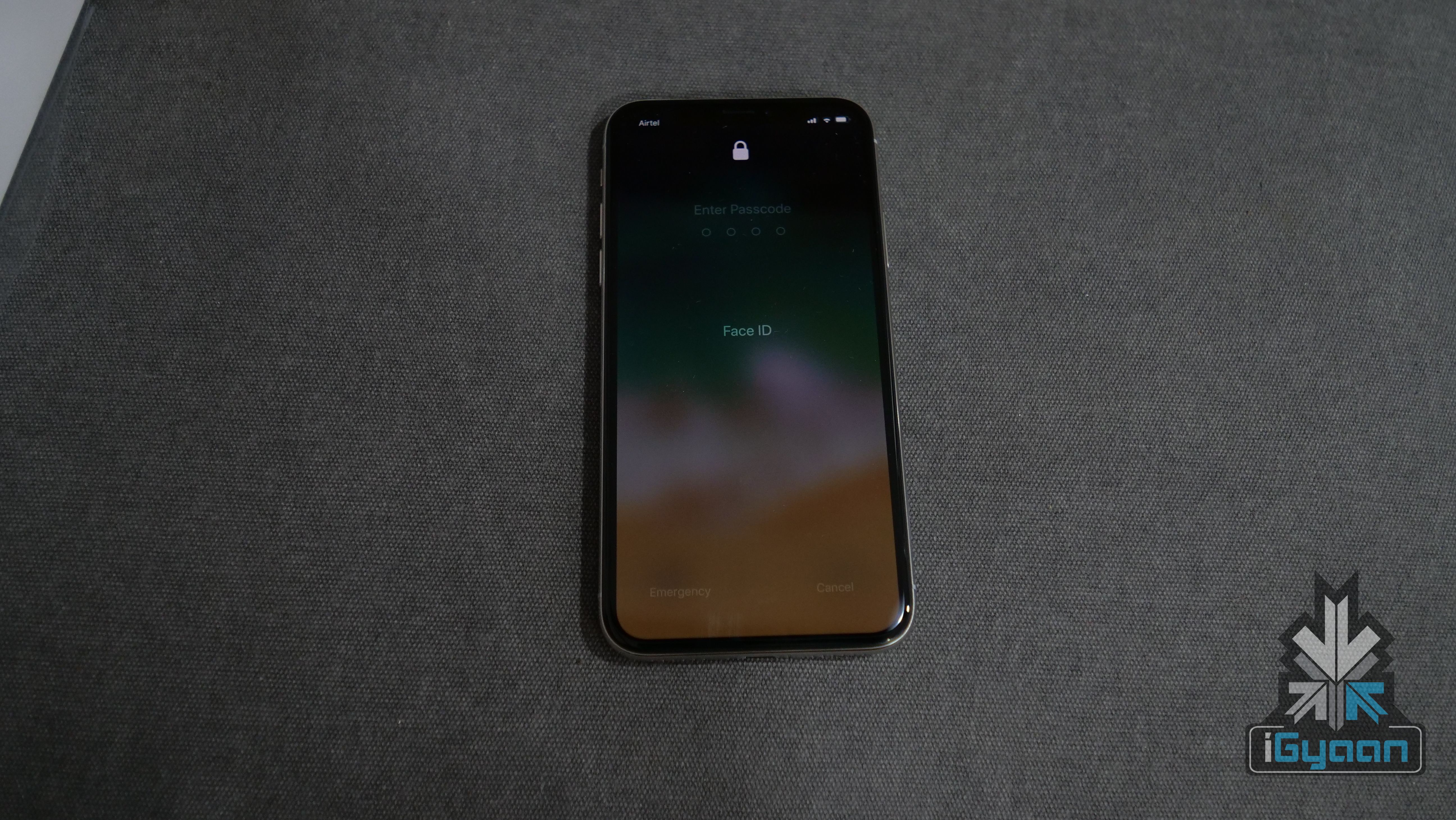
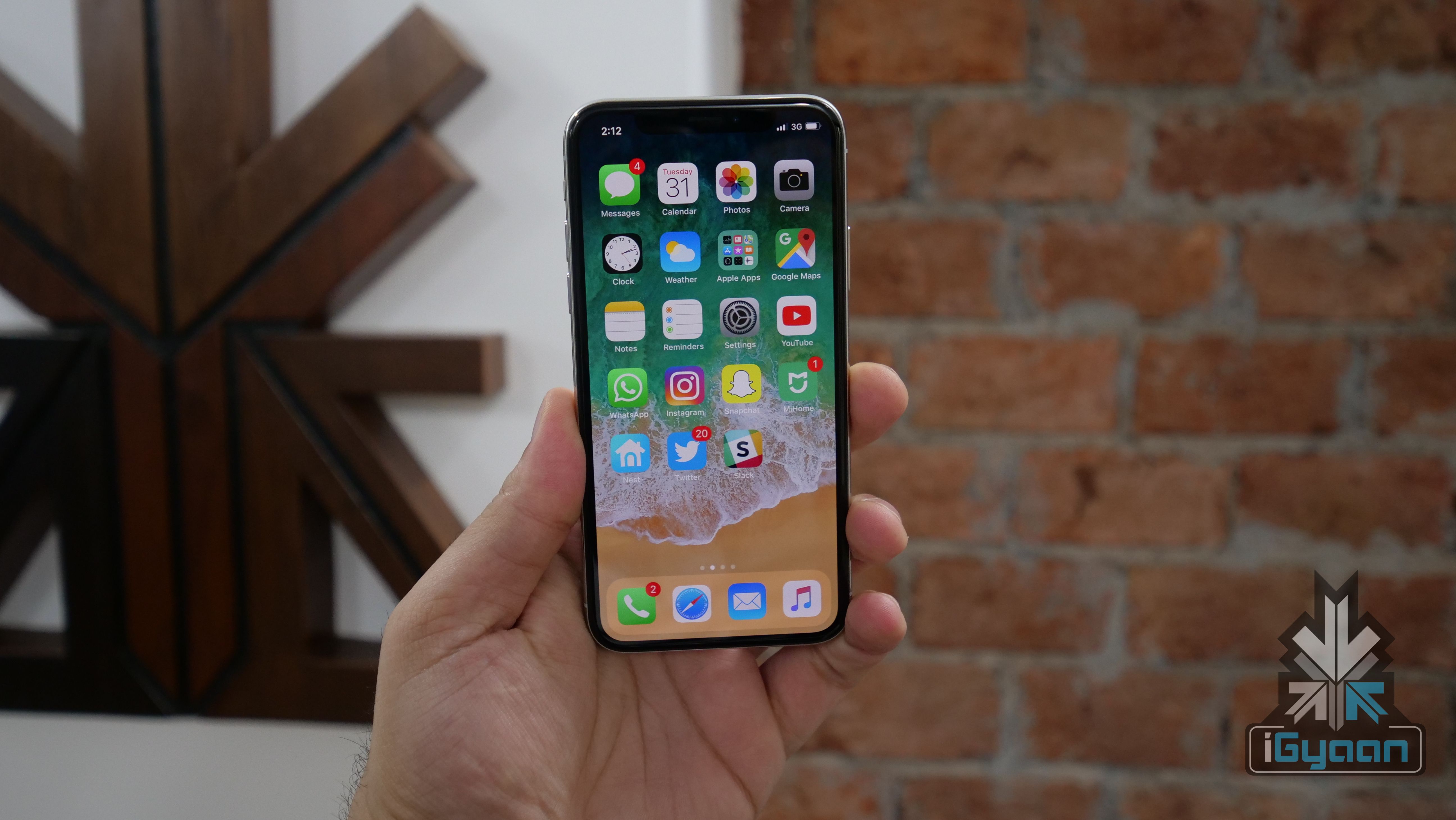
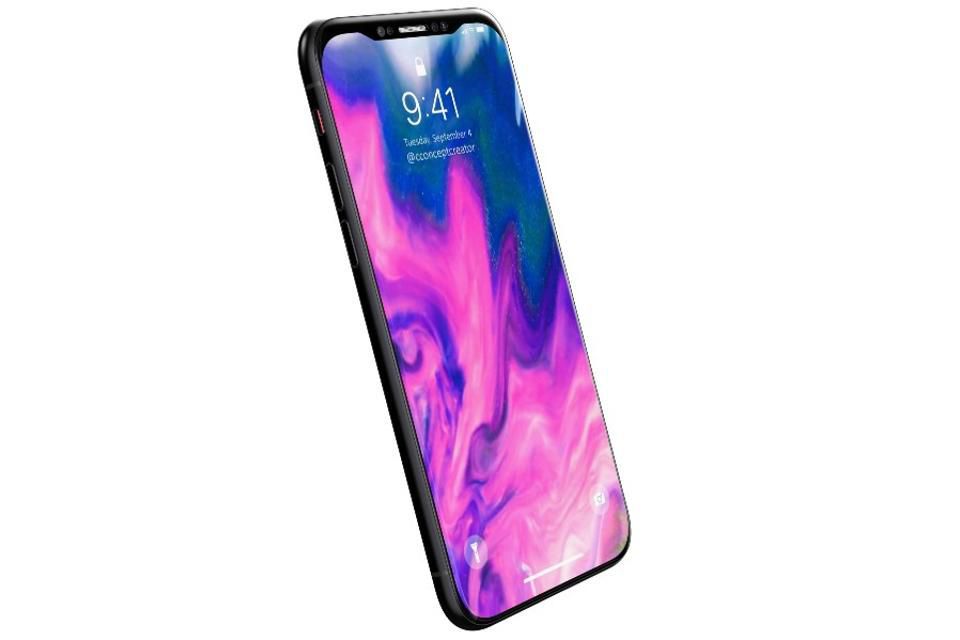
In September of 2017, Apple launched the iPhone X without the beloved Touch ID. In came Apple’s spin on facial recognition, called Face ID. Even though the facial recognition technology has been present in Android smartphones for a number of years, it has gained mainstream attention ever since the launch of the iPhone X.
More smartphone makers have announced their plans to introduce facial recognition technology in upcoming smartphones. The OnePlus 5T, launched in November 2017 has one of the fastest Face Unlock right now albeit, not the most secure. MediaTek, one of the biggest smartphone chipmaker after Qualcomm has announced plans to introduce the coveted facial recognition technology in entry-level smartphones.
MediaTek claims that the facial data is stored on its chipset natively. Which means the facial data collected for authentication does not get stored in the cloud, thereby keeping it secure. The company also claims that its facial recognition system is fast and can unlock a smartphone in 0.5 seconds. It has a 30º angle unlock which makes it possible for one to unlock the smartphone while facing sideways as well.
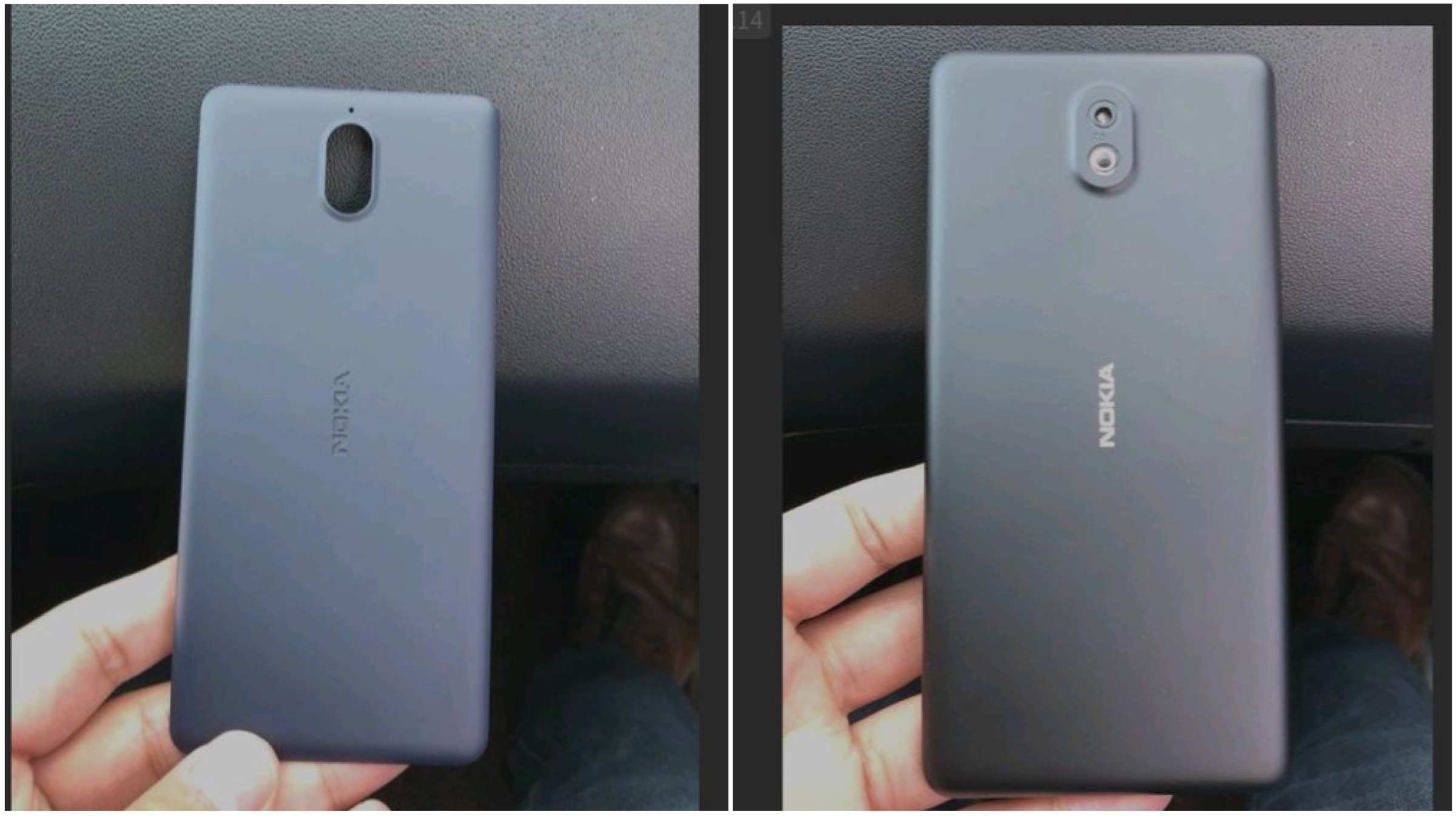
Expected Nokia 1 Design
The MT6739 chipset has features like Dual 4G VoLTE support, 18:9 HD+ display, and 13MP+2MP dual camera setup with bokeh effect.
The chipset from MediaTek will be optimised to work with Android Go smartphones.It is already working with Reliance Jio on an Android Go device, as reported earlier. Also, this chipset will power entry-level smartphones which are expected to be priced below Rs 5,000. The first Android Go smartphone with MT6739 chipsets will be available starting March this year.
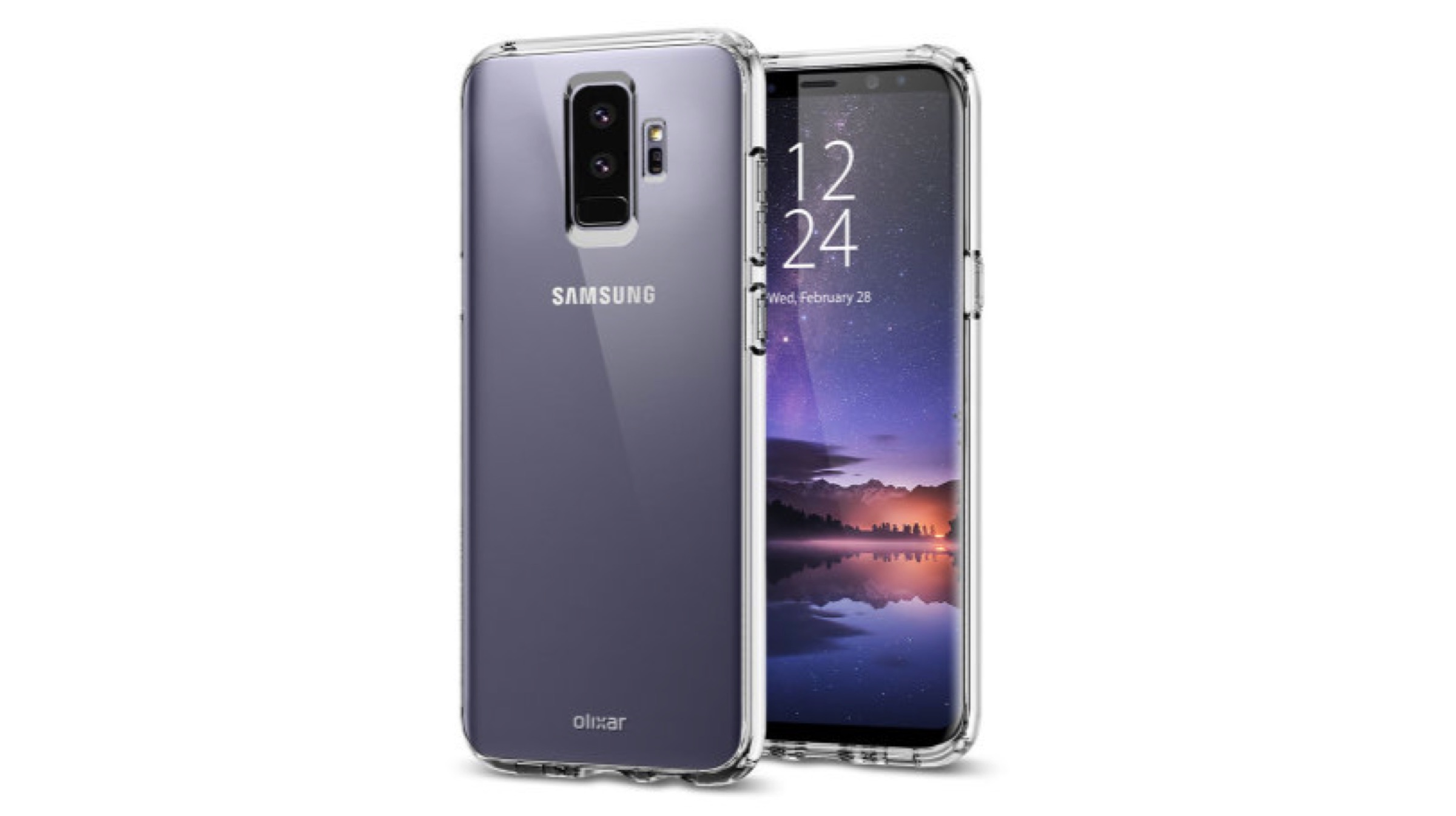
Updated: A report claims that the Samsung Galaxy S9+ and its smaller sibling will have the ability to make 3D emoticons using the front-facing camera, similar to Apple’s Animojis. This does seem plausible as Samsung is expected to have an advanced facial recognition system as well. Also, both the devices will have dual speakers, one at the top and one at the bottom of the phone.
Samsung will launch the Galaxy S9 and Galaxy S9+ on the 25th of February in Barcelona. Two of the most anticipated flagship devices of 2018 are expected to go on sale in the first week of March. Samsung is expected to announce the release schedule as well as the first batch of countries that will receive the two devices.
The Samsung Galaxy S8 and S8+ became extremely popular for their infinity display, sleek design and terrific camera performance. Even though the camera was not much of an upgrade over the Galaxy S7, it was enough to be one of the best in class in early-2017. The quad HD resolution coupled with Samsung’s Super AMOLED panel meant that even today, the Galaxy S8 has one of the best smartphone displays on the market.
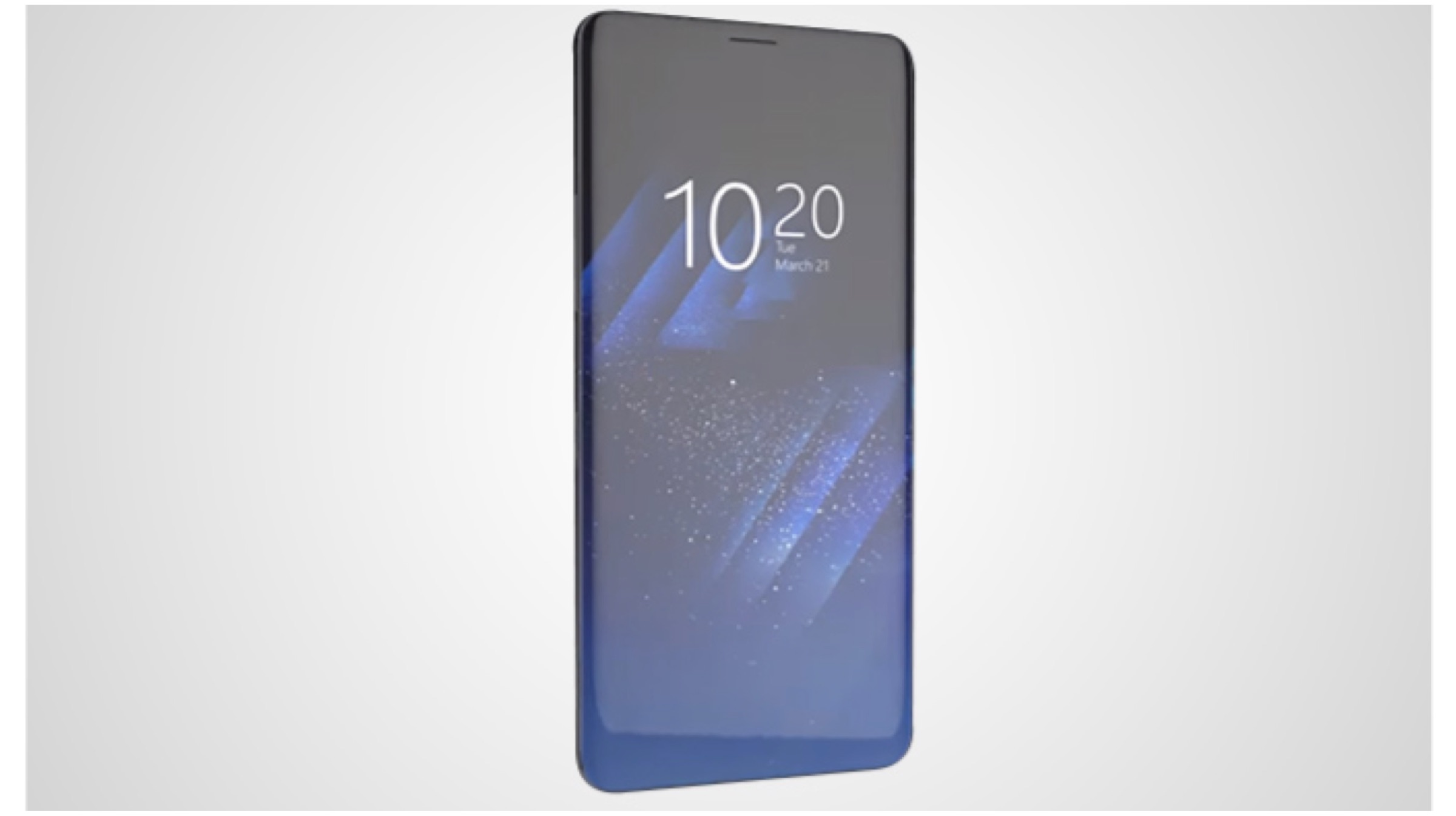
Early Galaxy S9 Concept
A similar level of superiority is expected from the Galaxy S9 and its bigger sibling. This time around, even though it looks like the design won’t see much of a change, the camera department is expected to see a vast upgrade. With enough leaks out on the internet so far, here’s what we know about the 2018 flagship devices from Samsung so far:
Price
Surprisingly, one of the least talked about aspect of the Galaxy S9 and S9+ has been the price. With the price of flagship smartphones touching new heights in 2017, this year doesn’t seem to be any different. However, if the latest reports from South Korea are anything to go by, Samsung could nail the pricing of the Galaxy S9 and S9+.
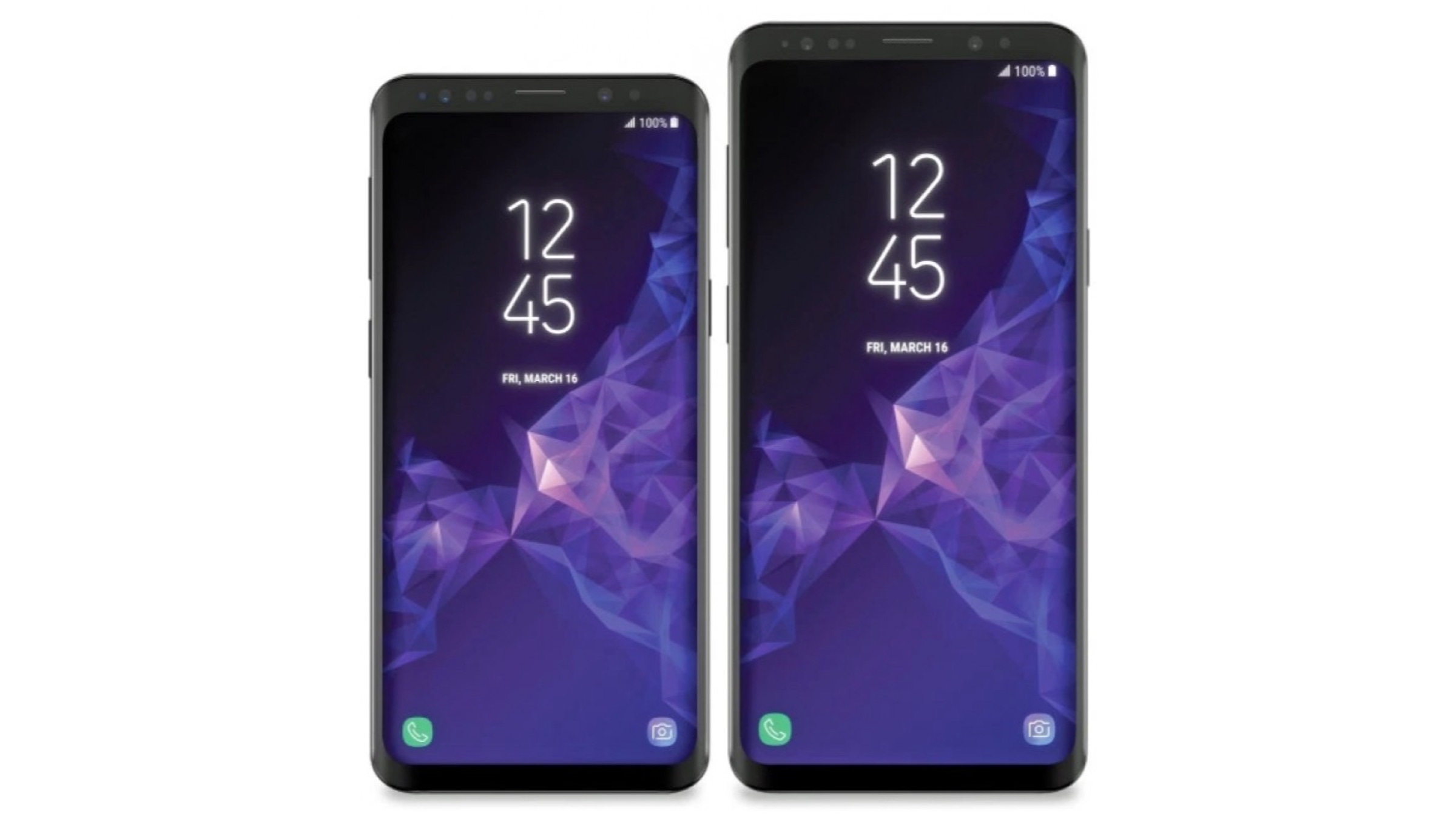
Press Renders
In South Korea, Samsung’s native market, the Galaxy S9 will cost KRW950,000, while the S9+ will be KRW990,000. This amounts to about US$ 883 for the S9 and US$ 920 for the Galaxy S9+. It is worth noting that Samsung always prices its smartphones higher in South Korea.
This means that the company will launch the two phones at a price similar or same as that of their predecessors. For context, the Galaxy S8 was priced at KRW935,000 (around $875) in South Korea. Its global price was US$ 720.
Design
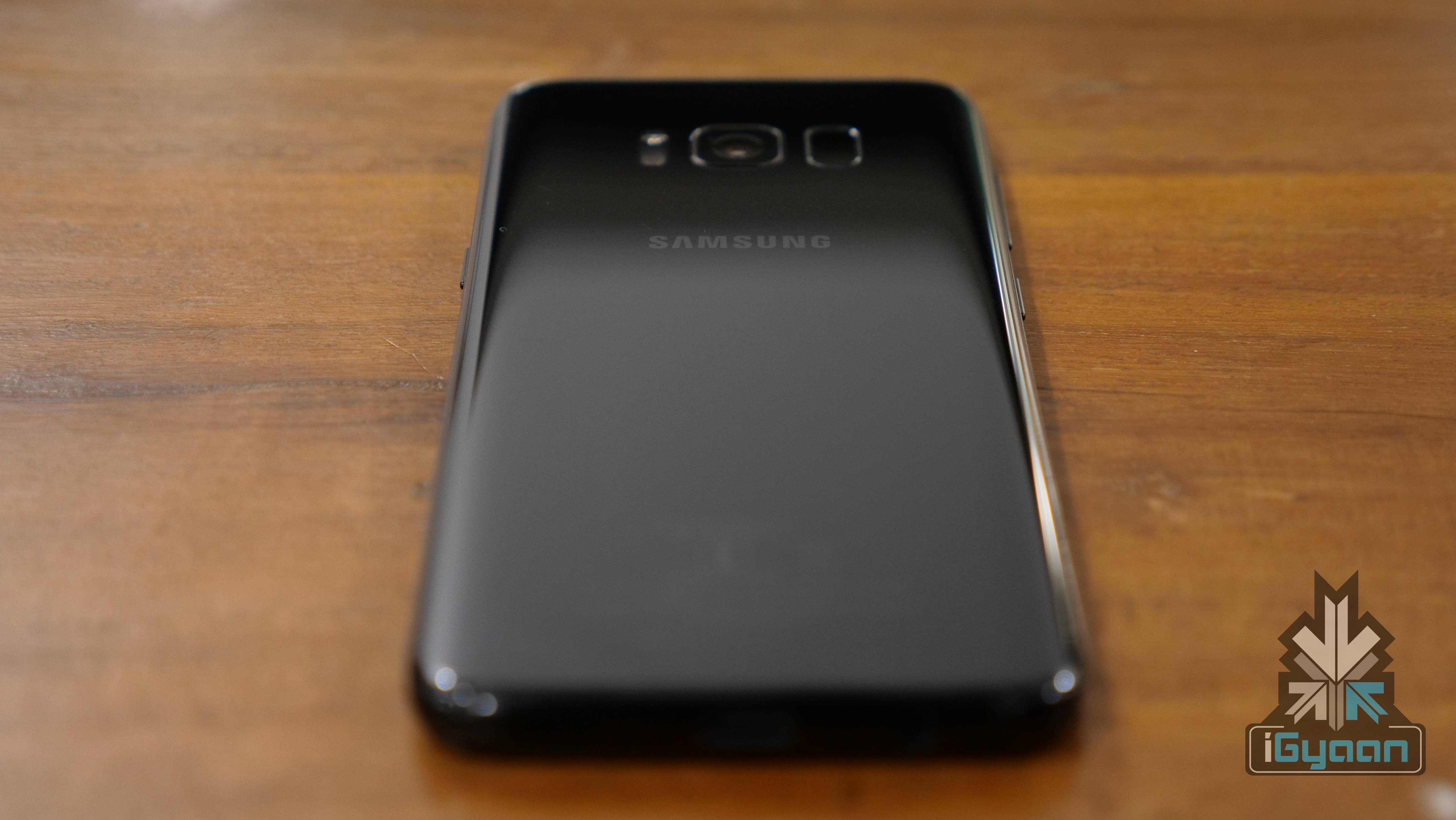
Even a year later, the Galaxy S8 and S8+ are still two of the best-looking smartphones in the market right now. All the renders and leaks have suggested that Samsung will retain the design for the upcoming Galaxy S9 and S9+. This should not be disappointing, owing to the superior design of the 2017 flagship phones. The new smartphones will have a glass back with an aluminium frame.
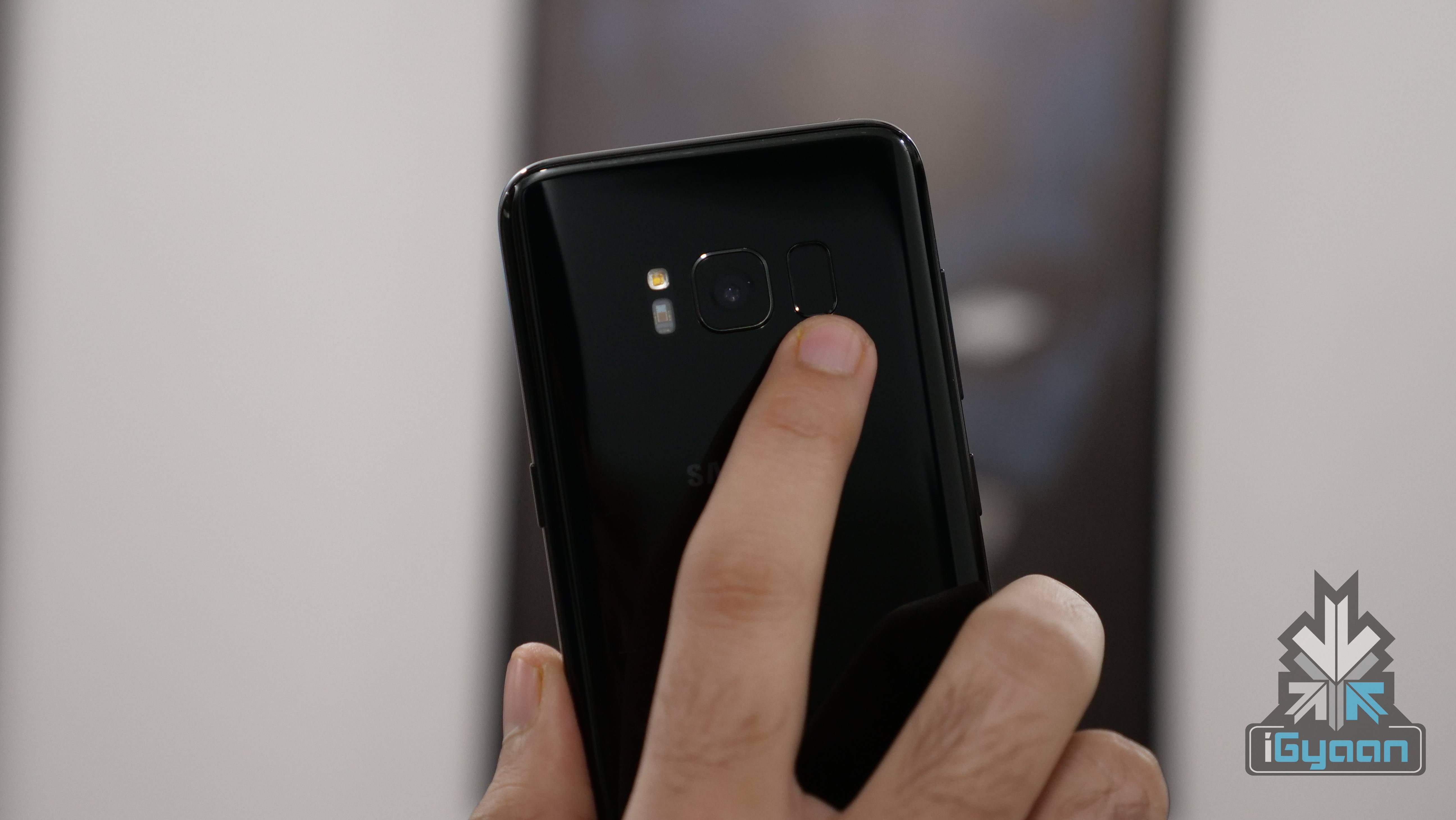
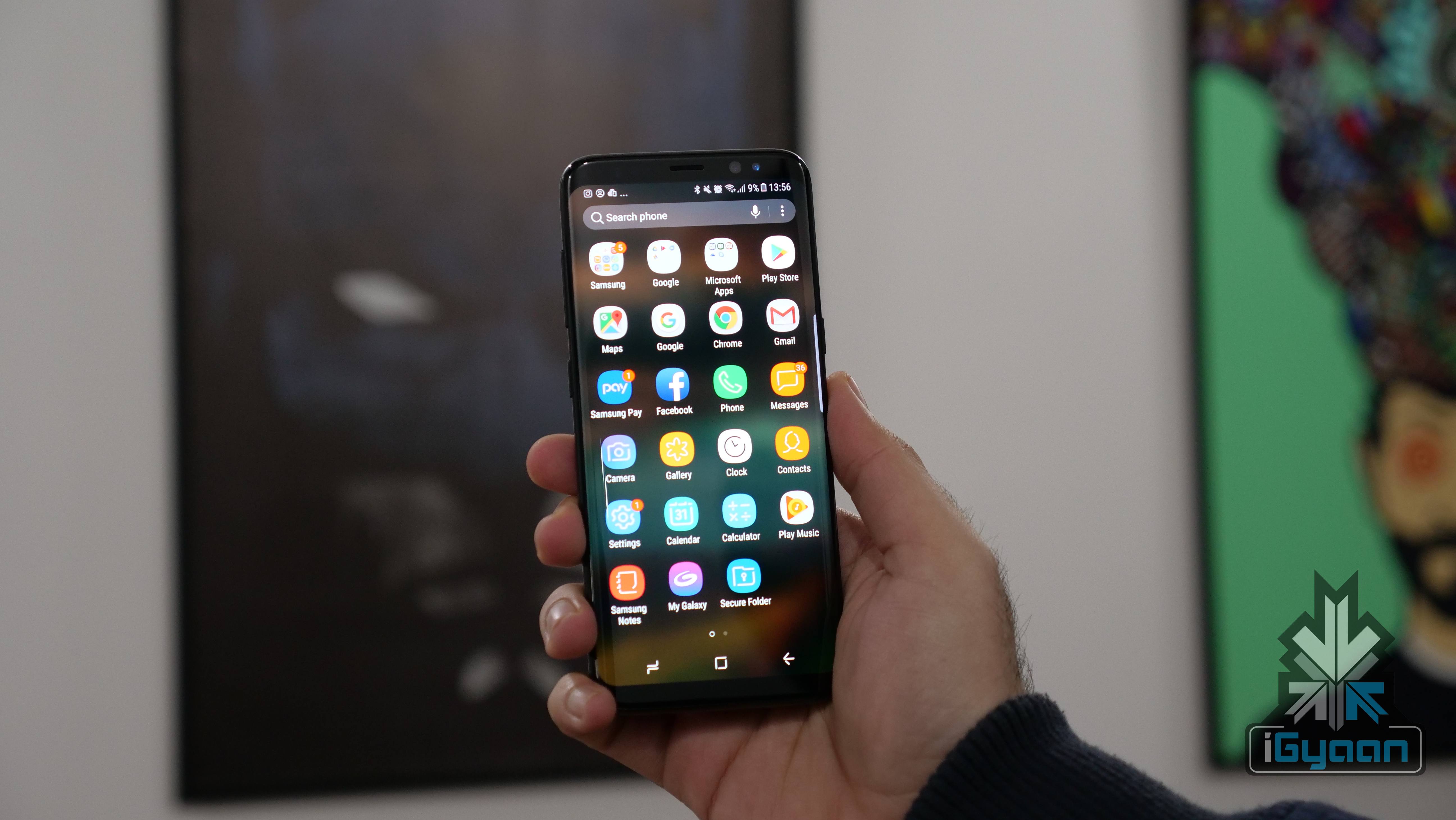
Fingerprint sensor placement on the Galaxy S8
The top and bottom bezels will be slightly smaller while the edge-to-edge infinity display will be present as well. The fingerprint sensor will now be placed below the camera module, a much better position than the one on the Galaxy S8 and the Galaxy Note8. Interestingly enough, Samsung will also retain the Bixby button on the left-hand side.
Display
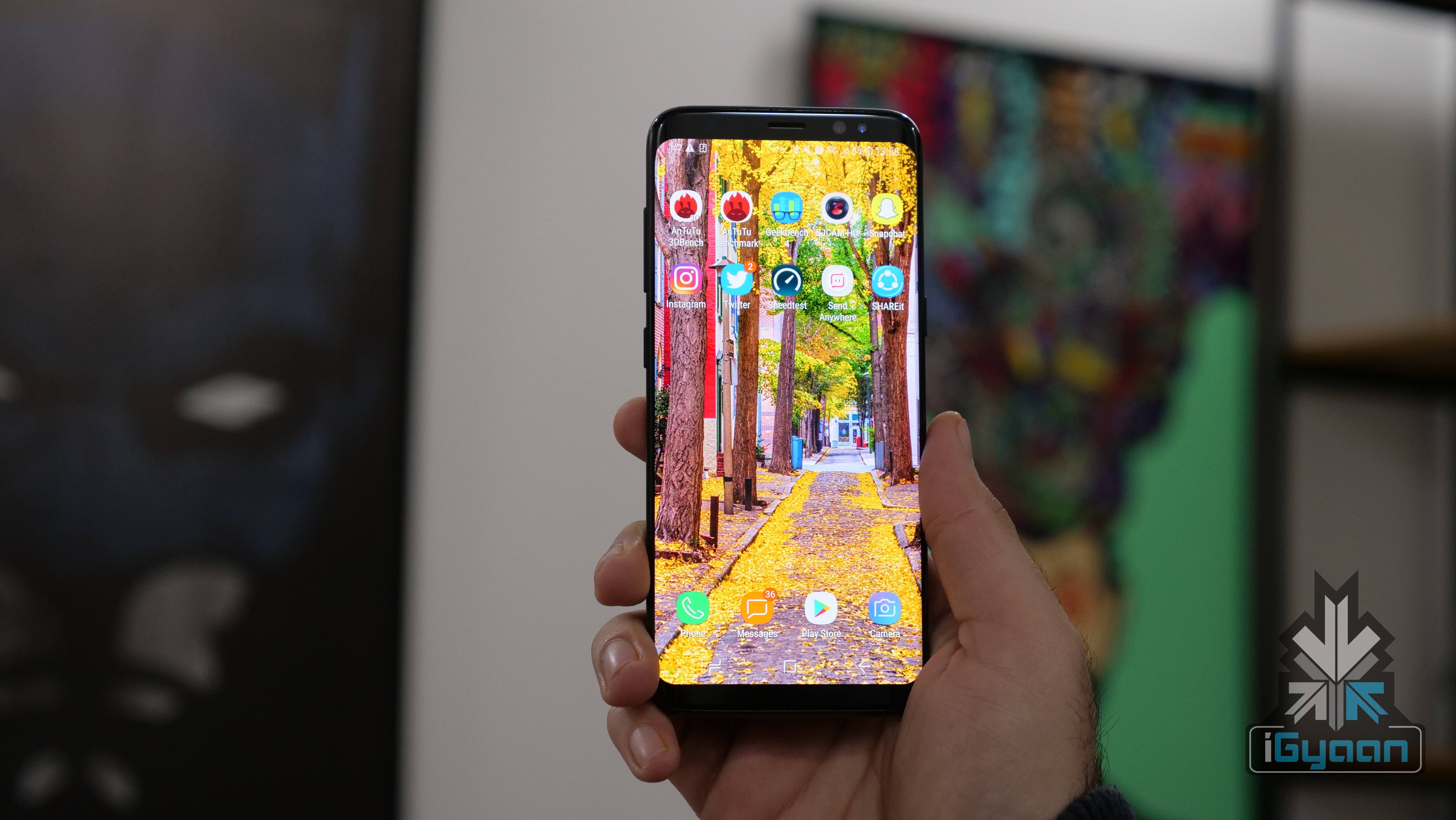
As mentioned before, the Galaxy S8 and S8+ had two of the best displays of 2017 and it won’t be different with the S9 and S9+. Unlike the majority of “bezel-less” smartphones of 2017, the Galaxy S8 devices had an 18.5:9 aspect ratio and the Galaxy S9 and S9+ are expected to retain that. The Galaxy S9 is expected to have a 5.8 inch Super AMOLED display with a 2960 x 1440 px resolution. The Galaxy S9+ might have a 6.2 inch Super AMOLED display with a 2960 x 1440 px resolution.
Galaxy S8
On top of the display will be Corning Gorilla Glass 5 for protection. The same glass will also be used on the back.
What’s Under The Hood?
The Samsung Galaxy S9 and S9+ will run on the latest Qualcomm Snapdragon 845 chipset in the US and South Korea. As is with other Galaxy devices, rest of the markets will receive the Exynos 9810 chipset running Galaxy S9 and S9+.
According to a leak, Galaxy S9 will be offered in two options, 4GB RAM/64GB storage and 4GB RAM/128GB storage. The bigger sibling of the two, the Samsung Galaxy S9+ will be available in 6GB RAM/64GB storage, 6GB RAM/128GB storage and 6GB RAM/256GB models in major markets across the world. The same tipster also claims that Samsung will launch a special edition Samsung Galaxy S9+ with 512GB of storage.
Unless Xiaomi beats Samsung to it, the Galaxy S9 and S9+ will be the first smartphones ever to run on the Snapdragon 845 chipset.
Camera
The camera department is expected to see the most noticeable upgrade this time. Unlike what happened in 2017, the Galaxy S9 and S9+ are expected to have much more superior cameras than their predecessors. In a recent leak of the retail box of the Galaxy S9, it was revealed that it would have a 12MP camera with an f/1.5 aperture. Interestingly, the camera would support a variable aperture.
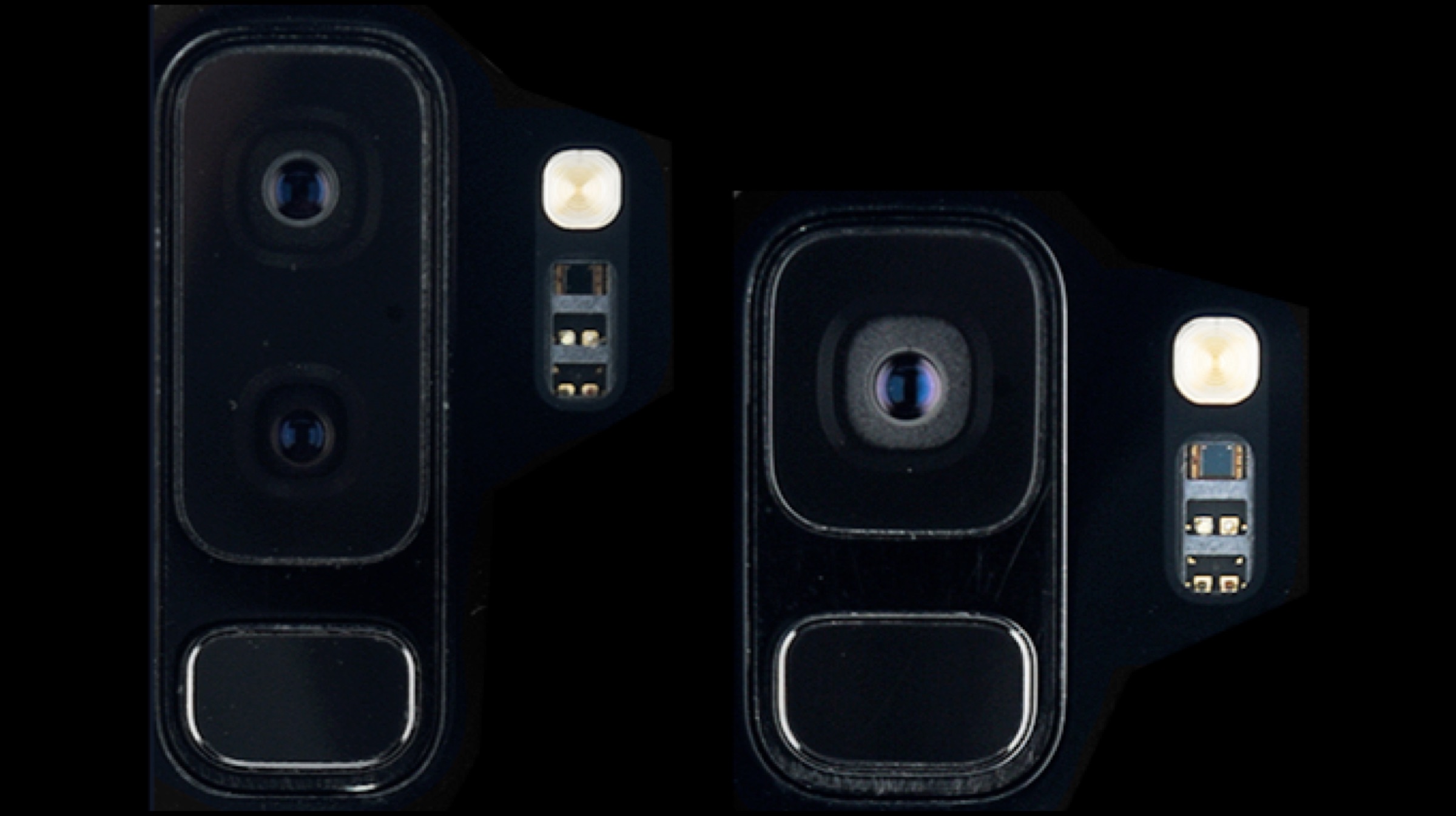
Galaxy S9+, S9 rear components layout
Taking a route Apple has tread so far, the ‘Plus’ model of the new flagship will have a dual-camera setup. In order to justify a higher price tag, Samsung Galaxy S9+ will now offer something substantial that the regular S9 doesn’t.
OS
The Samsung Galaxy S9 and S9+ are expected to run Android 8 Oreo out of the box. While so many OEMs have already rolled out Android 8 Oreo update for their existing flagship phones, Samsung’s Galaxy S8 and Note8still run Android 7.1 Nougat. This will change once the Galaxy S9 phones are launched.
Experience UI
As is with every other Samsung smartphone, the Galaxy S9 and S9+ will have the Experience UI on top. Samsung’s Experience UI has come a long way since its inception and is miles ahead of the TouchWiz UI. As every custom skin does, Experience UI has a divided opinion as well. But, you can always use a launcher if you want a stock OS look.
Bells And Whistles
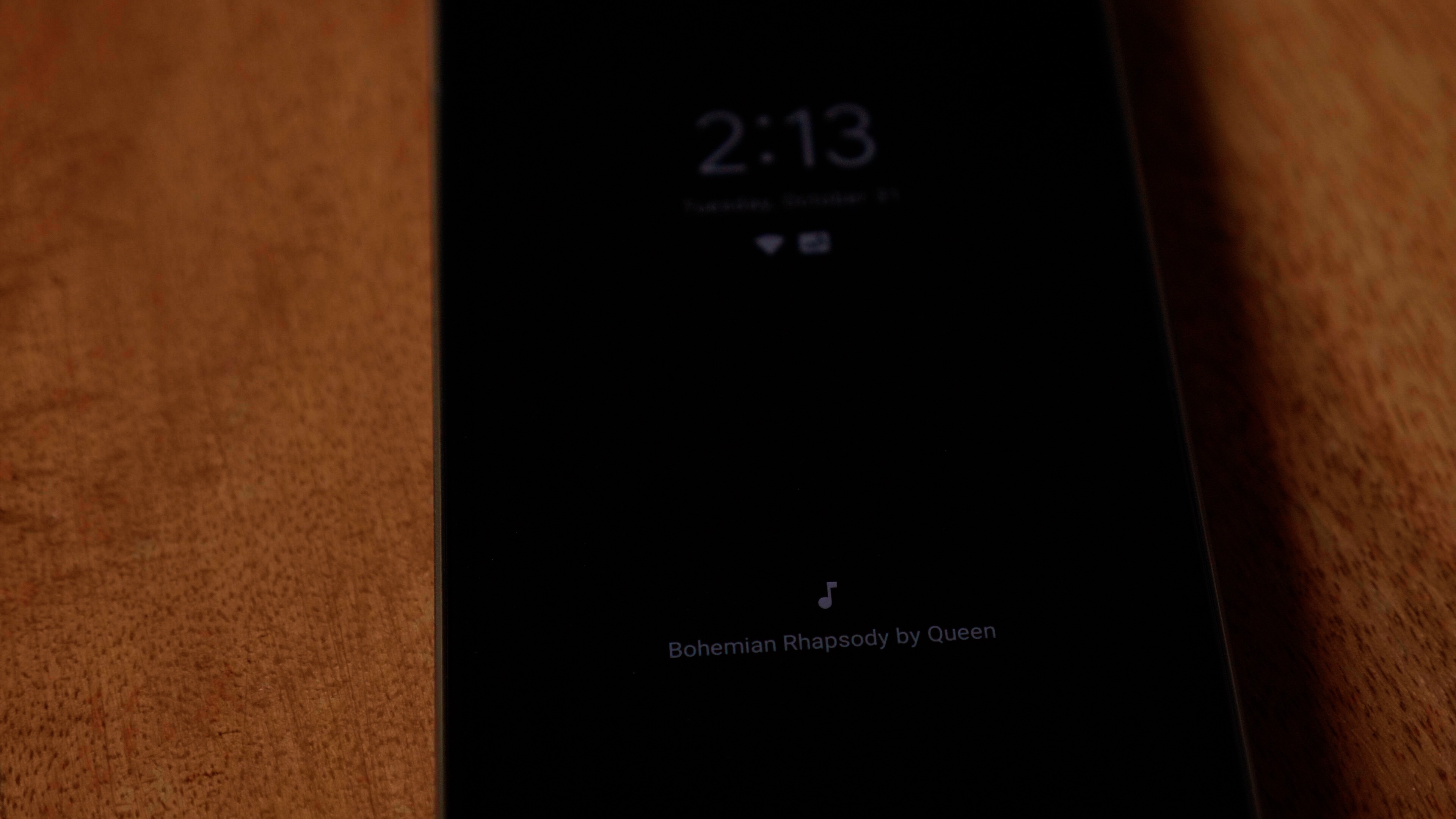
The Essential Ph-1 was probably the most stock Android phone when it was launched. No whimsical features of any sort, just pure stock Android OS. Even Google’s own Pixel 2 and Pixel 2 XL had features like Active Edge and Now Playing that came in handy at times. The Samsung Galaxy S9 and Galaxy S9+ will be nowhere near to what the Essential Ph-1 was.
Pixel 2 Now Playing
A recent leak suggested that the upcoming flagship devices will have a ‘Smart Scan’ feature. This will basically combine iris and face scanning for a more accurate authentication system. However, since this will use Samsung’s API, the Smart Scan won’t be utilised for activites like banking. Face ID on the iPhone X has replaced Touch ID which means it is used for storing sensitive data and even banking.
Smart Scan
The smartphones will also have an IP68 rating for water and dust resistance. Thanks to a glass back, wireless charging will again be a feature on the new devices.
Conclusion
On the 25th of February, the Samsung Galaxy S9 and Galaxy S9+ will be launched. As two of the most high-profile smartphones of early-2018, a lot will be riding on the success of the devices for Samsung. Even though the design is similar to their predecessors, it, by no means, a bad decision. If the renders turn out to be true, the Galaxy S9 and S9+ will again be two great looking devices with top-notch specifications.
With the Galaxy S9 sporting a single camera and the Galaxy S9+ with a dual-camera setup, consumers might be drawn towards the bigger sibling. It will be interesting to see how big of a difference the camera performances will make.
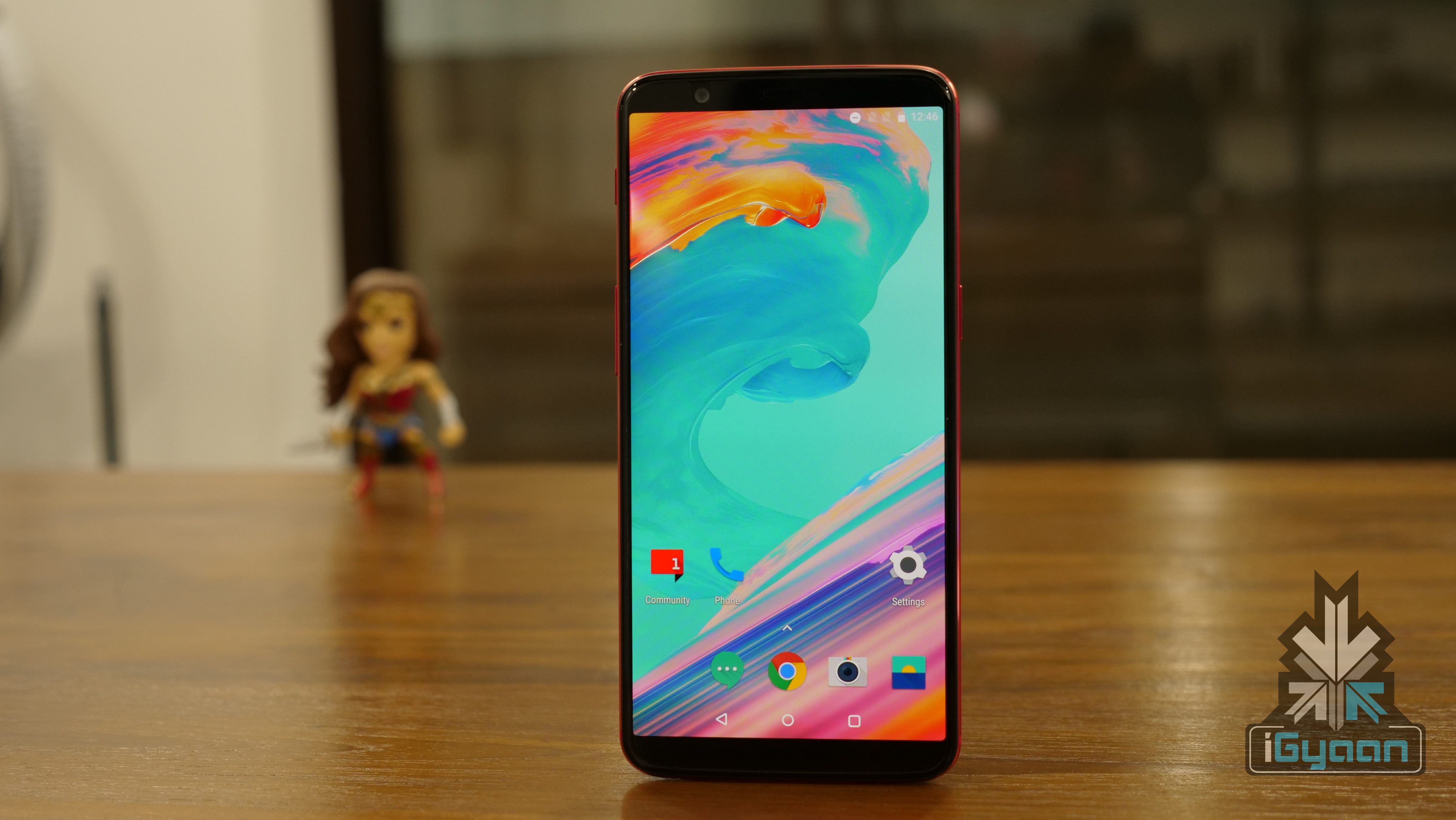
OnePlus has started rolling out a new beta update to all the testers of the OnePlus 5T. The Oxygen OS Open Beta 3 arrives a couple of weeks after the previous update started seeding. The new update, however, will be noted for two noticeable changes. The first one is the removal of the controversial Clipboard app. The other one is the entry of gesture support.
The Clipboard app was introduced in the previous Beta build that started seeding on the 16th of January. It was reported on the OnePlus forums by a user named v1nc. The user found this out by accident when NetGuard blocked the Clipboard app from accessing the network. Clipboard app basically stores all the copy-pasted data on your phone. Further investigation revealed that the app was trying to ping a server that was an Alibaba owned property.
Although OnePlus came out and quashed these reports, it has now removed the app from the latest beta build.
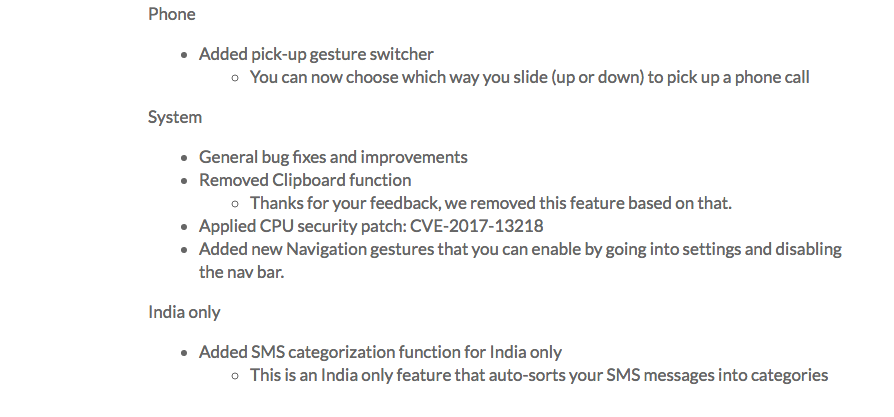
The other notable change is the addition of iPhone X-like gestures for navigation. Users now have the option of disabling on-screen navigation buttons. Once disabled, users have to use gestures to navigate through the UI. The gestures are not exactly like the ones found on the iPhone X but, are somewhat similar.
Homebar On The iPhone X
Another change is in the incoming call screen. Users can now choose to slide up or down to answer or ignore an incoming call. Here is a list of all the new changes:
The introduction of gestures is an interesting move by OnePlus. With smartphones moving to an all-screen design, wasting that little space on navigation buttons seem counterproductive. Although traditionally, Android OS has had navigation buttons, a slow introduction of gestures can go a long way in helping consumers get acclimatised with the new way of navigation.
A few reports have claimed that Reliance Jio is making an Android Go device. It is expected to be launched in Q1 of 2018 which means it might be announced in the next couple of months. Recently, Google announced the Android Go platform for entry-level smartphones. It is a way to make capable entry-level smartphones at the price of feature phones.
Apparently, the information was provided by TL Lee, Business unit Head of Wireless Communication Product at MediaTek at a MediaTek press conference. So far, there are no details about the upcoming device. It is hard to tell whether this Android Go device is an actual project right now or just an option on the table.
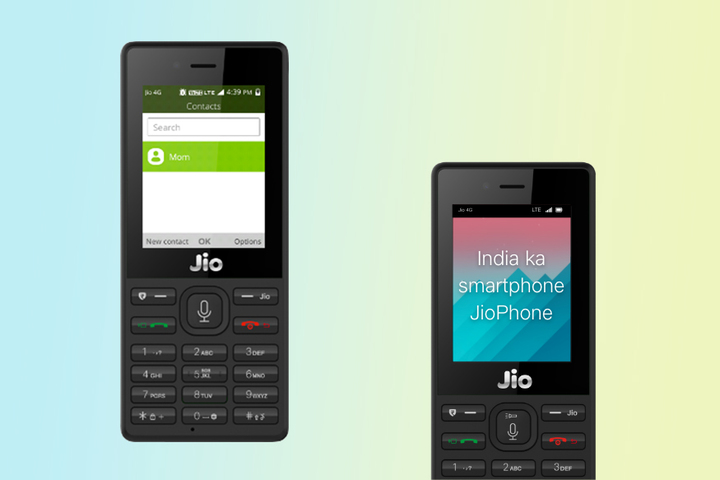
JioPhone
Thankfully, there are certain aspects of the smartphone that can be incurred from the provided information. Since it will be an Android Go device, the device will have entry-level specifications. Android Go is specifically designed to work on phones that have less than 1GB of RAM and 8GB of onboard storage. With such specifications, Reliance Jio could launch a smartphone at an extremely minimal price.
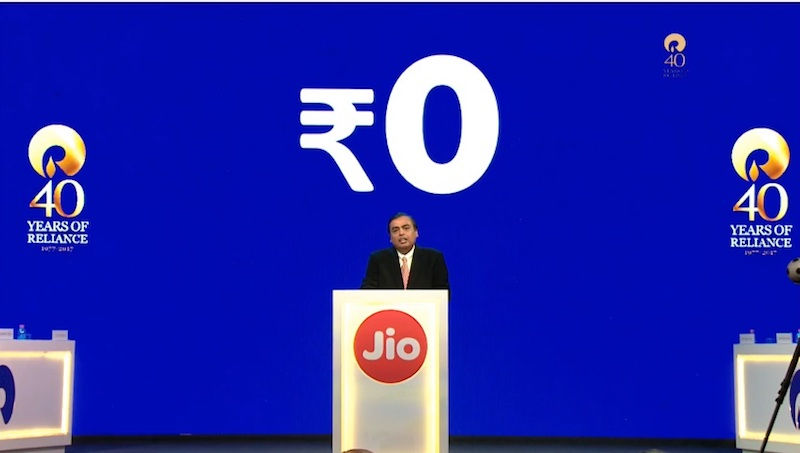
Currently, the telecom company has the JioPhone in the market. With an essential price Rs. 0, the feature phone was sold out within minutes of going up for preorders.
Android Go
Google has claimed that Android Go’s Oreo edition will be a variant of Android Oreo that a manufacturer can just set by ticking off a configuration flag. What this basically does is that it sets up the phone to use the “Go” versions of a handful of Google apps such as the main Google app, Google Assistant, Google Maps, Gmail, and others. Google claims that the smaller apps and slimmer OS can as much as halve the amount of storage that’s taken up by default on a new phone running default OS.
Google will also introduce a few other data saving features on Android Go. For example, in Chrome, everything will get run through a Google server that reduces file sizes before it gets delivered to the user’s phone. The new Datally app will also be pre-installed to keep a track of cellular data.
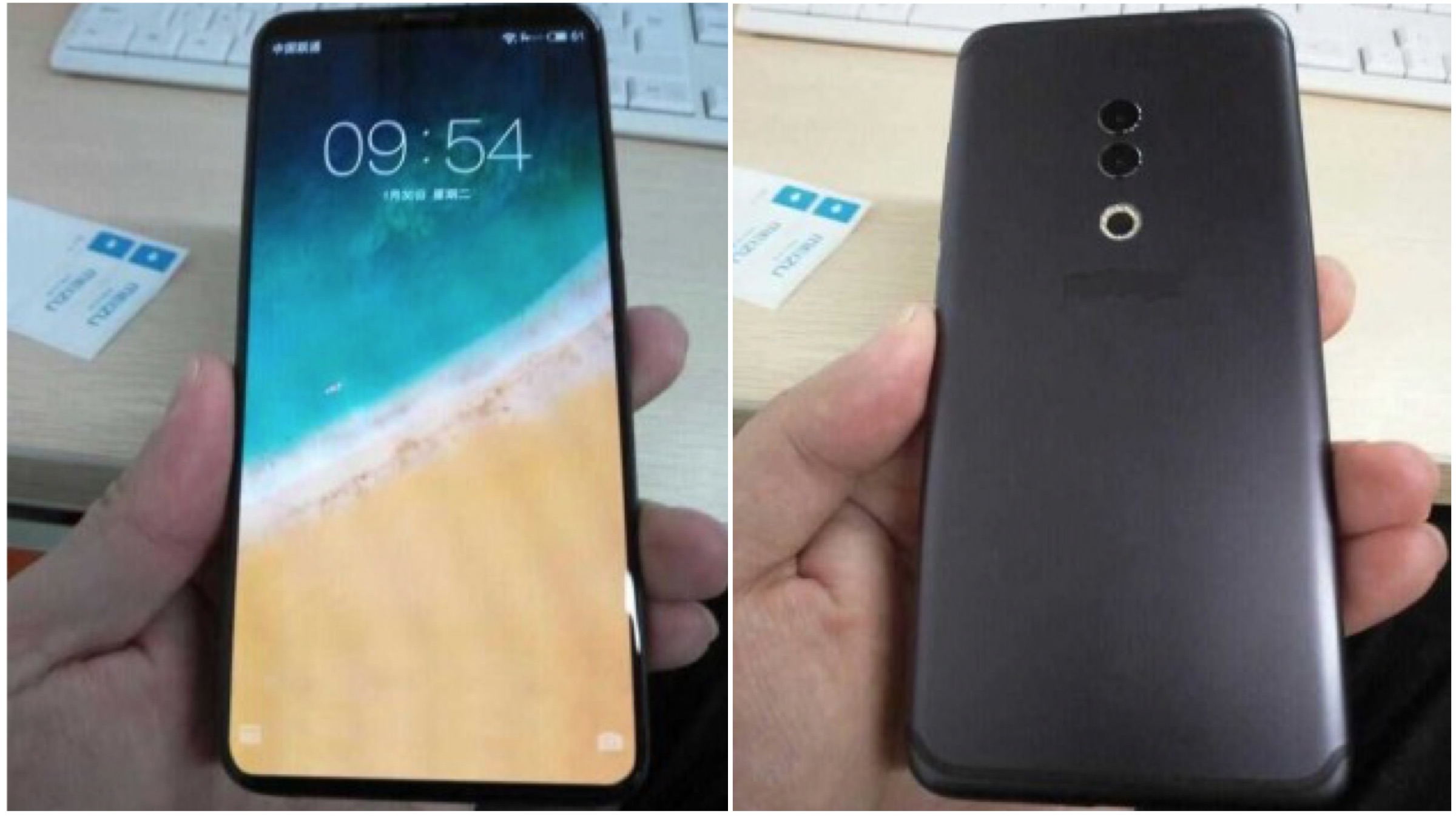
Live images of the upcoming Meizu 15 Plus reveals a bezel-less design that could be the best one yet. The device will have narrow bezels on the three sides with a slightly thicker upper bezel to house the camera and sensors. Noticeably, there appears to be no fingerprint sensor on the back of the smartphone.
Smartphones in 2017 saw an increase in the average screen size and a decline in the average bezel size. Samsung launched the Galaxy S8 and S8+ with the infinity display in 2017. Apple launched the iPhone X with thin bezels and a notch which raised a few eyebrows. Similarly, OnePlus had to refresh its OnePlus 5 as the OnePlus 5T to keep up with the changing industry trends. In 2018, we can expect smartphones to reduce the size of bezels even more.
There have already been leaks about Motorola introducing the new design in its budget category while the Xiaomi Mi 6Xis expected to take the design a notch higher with a vertically placed dual-camera on the back. While a lot was expected from the design of the Galaxy S9 and S9+, it looks more and more likely that they will look very similar to their predecessors with minor changes.
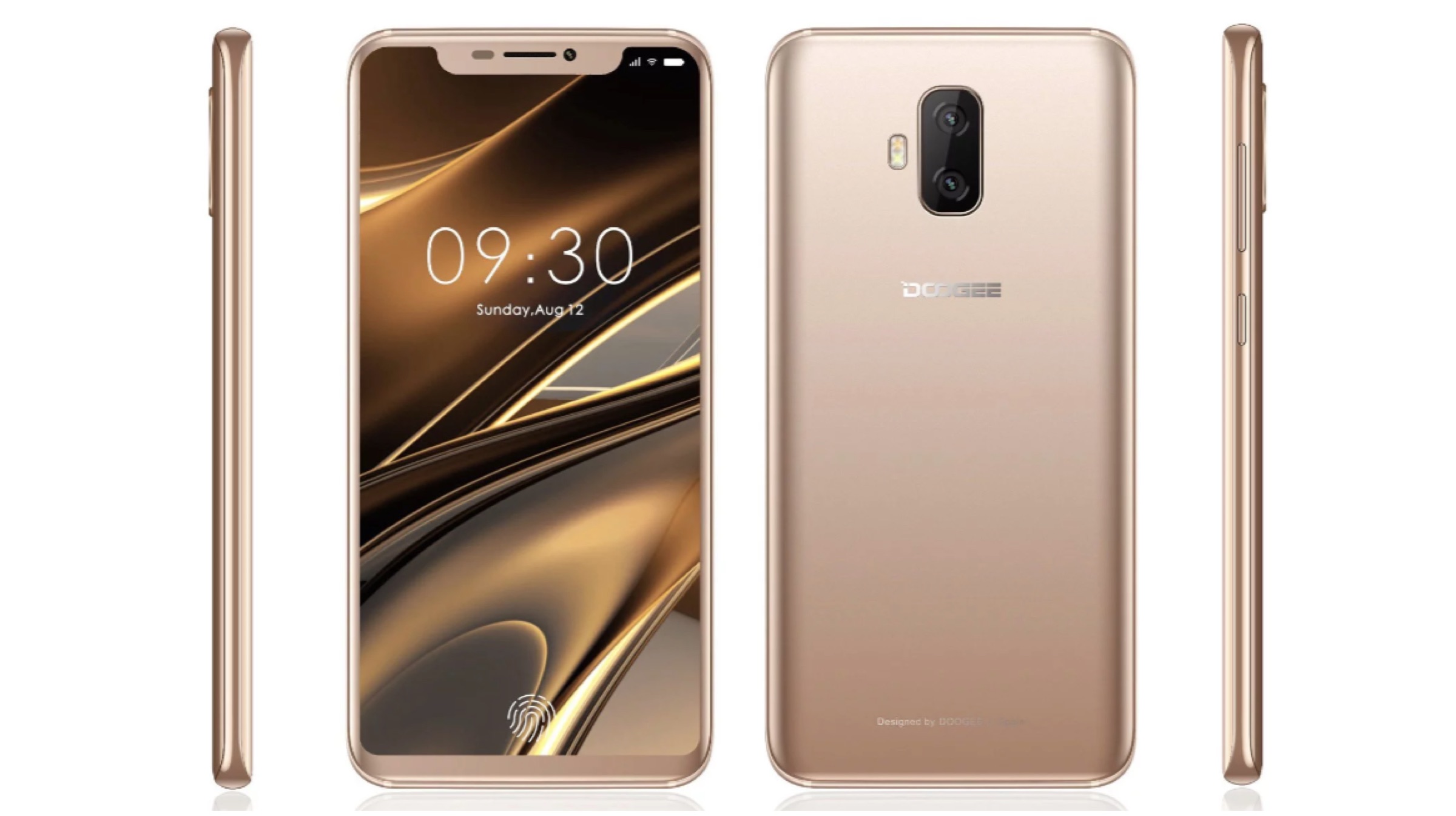
Doogee V With In-Display Fingerprint Sensor
What Do We Know About The Meizu 15 Plus So Far?
The leak also reveals that the Meizu 15 Plus will be either powered by the Qualcomm Snapdragon 845 or Exynos 8895. The smartphone will definitely be an affordable flagship Android phone with a price tag of CNY 3599 (Rs. 36000 approx.).
It will have a dual-camera setup on the back along with a 10-LED flash.
One interesting aspect here is that there is no fingerprint sensor on the back of the phone and with such thin bezels, there is a place for a front facing fingerprint sensor. This means that following the footsteps in Vivo, the company could embed a fingerprint sensor inside the display. Vivo recently unveiled the V20 Plus UD with the Clear ID technology. This technology only works with OLED displays.
Or, the Chinese smartphone maker could go all the way and introduce Face ID on the new device. Facial recognition gained a lot more attention after Apple introduced Face ID in the iPhone X. The company could implement a facial recognition system and do away with a fingerprint sensor.
There is still a lot that is unknown about the device such as its other specifications. Founder of Meizu has claimed that the phone is scheduled for March in China.
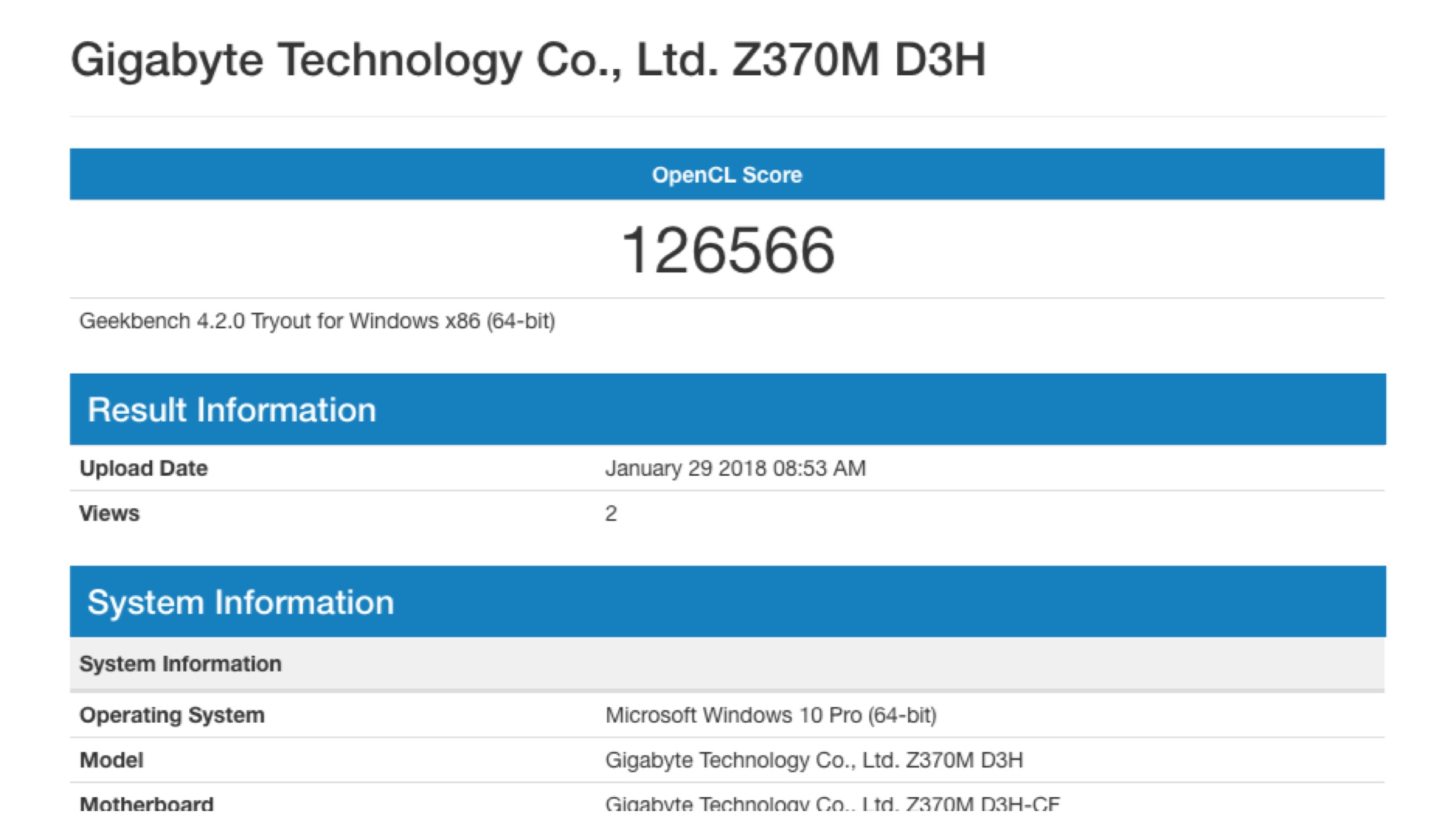
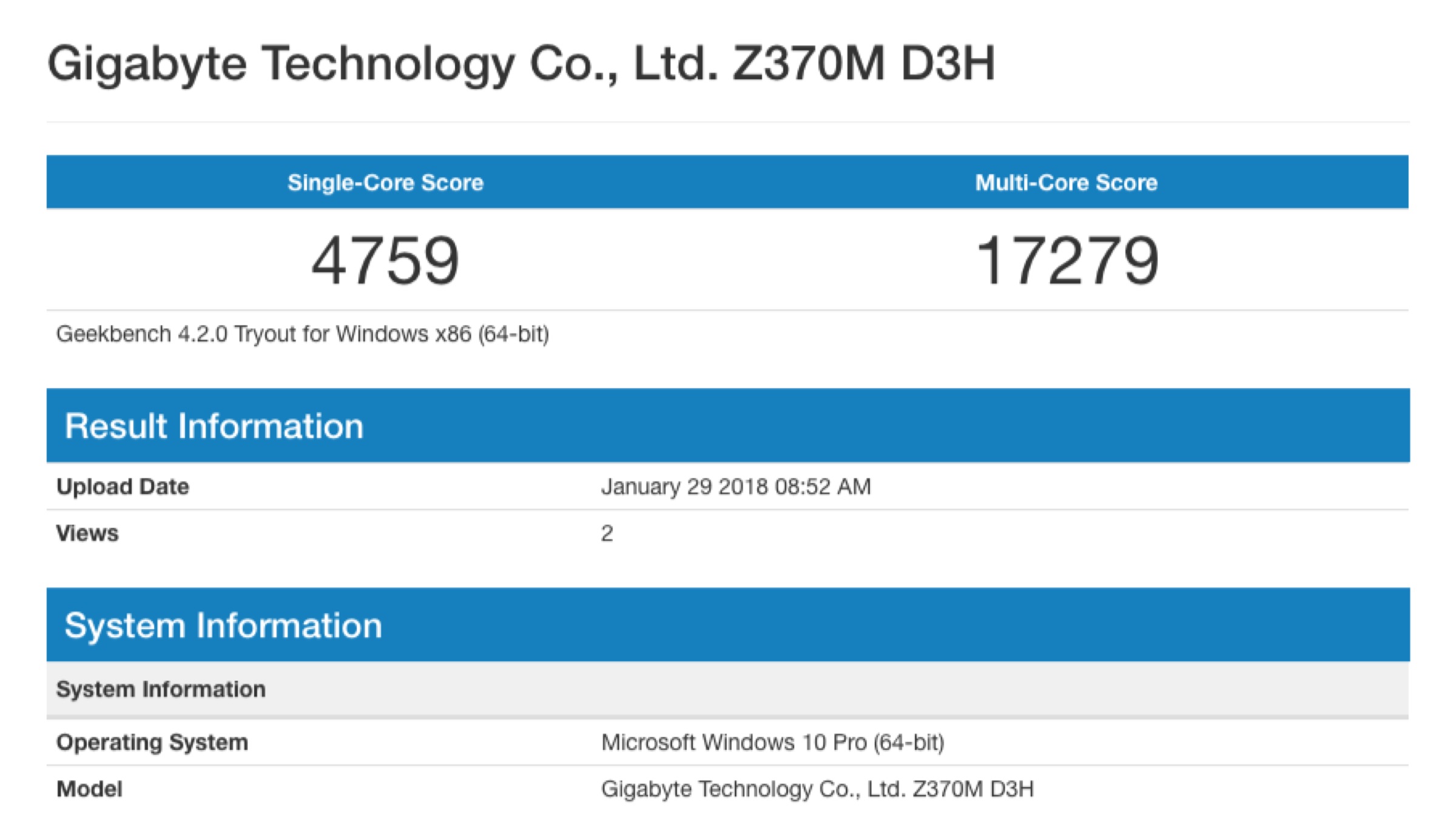
After kicking off our PC builds with a budget of Rs. 30,000, we decided to take things up a notch. We chose a budget of Rs. 70000 and set out to build a machine worthy of being our Gaming PC. If you have been gaming for a while and looking to up the ante, then this build is right up your alley!
Just like budget PC, we put our 70K gaming PC through its paces and following are the results!
The budget segment of smartphones in India saw a plethora of releases in 2017. Even the flagship segment and affordable flagship segment saw the release of some great devices by Samsung, Apple, OnePlus and Honor. However, the Rs. 20,000-25,000 price category is right now full of old devices that were great at one point. In November 2017, Lenovo-owned Motorola launched the Moto X4 that entered this price segment.
Recently, Motorola launched the 6GB RAM variant of the Moto X4 in India at a price of Rs. 24999. At this price, the Moto X4 has competition from the bygone flagship devices OnePlus 3T and Honor 8 Pro. It is worth noting that only a certified refurbished OnePlus 3T is available on Amazon anymore.
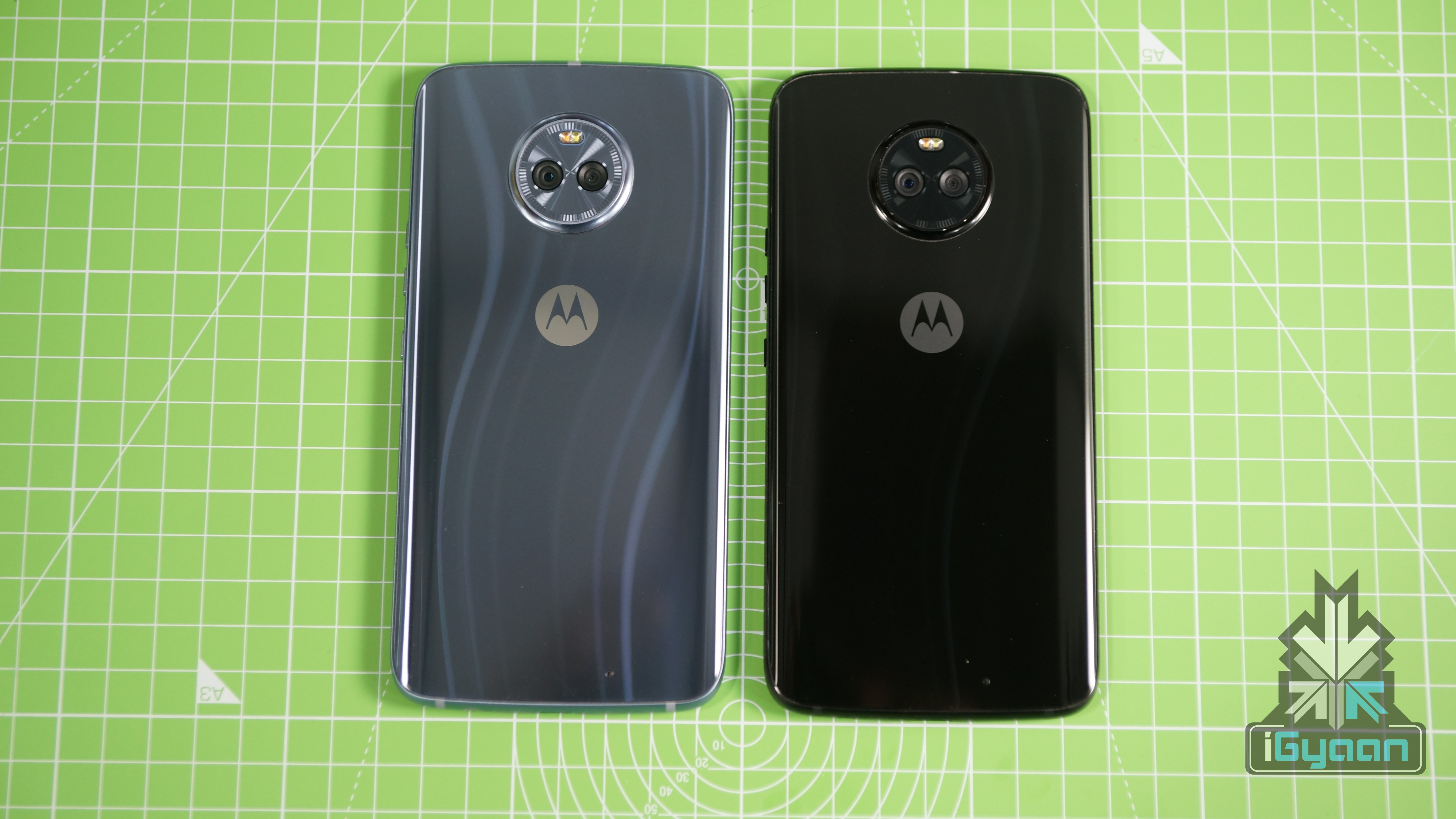
While how people perceive a phone is subjective, the Moto X4 does exude a premium feel. The OnePlus 3T and Honor 8 Pro offer great build quality as well but, the contoured glass back of the Moto X4 feels more premium. The Sterling Blue colour of the Moto X4, thanks to a different hue of blue stands out between the three phones.
Both the Moto X4 and OnePlus 3T run Android 8 Oreo out of the box. The Honor 8 Pro, launched after the OnePlus 3T runs Android 7 Nougat right now with no confirmation from the company regarding an Android 8 Oreo update. OnePlus has confirmed that Android 8 Oreo will be the last major software upgrade for the OnePlus 3T. Since the new Moto X4 runs Android 8 Oreo out of the box, there is a high possibility that it will receive an update to Android P as well.
Under the hood, the OnePlus 3T has the 2016 flagship chipset, Snapdragon 821. The Honor 8 Pro has the Kirin 960 while the Moto X4 has the Snapdragon 630 under the hood. OnePlus 3T has a very capable chipset under the hood which is almost two years old now. Add no software support to that, and the OnePlus 3T doesn’t look like a future-proof phone.
The Honor 8 Pro is already lagging in the software department but, it does offer a customisable skin which a lot of people prefer over stock OS.
One of the USPs of the Moto X4 is its ruggedness. While 2017 flagship phones like the Pixel 2 and OnePlus 5T skipped an IP rating, the Moto X4 has an IP68 rating for water and dust resistance. The Moto X4 is the only device in this price range that has a dual-camera setup and provides an IP68 rating.
Let’s compare the specifications and see which smartphone provides the most in this price range.
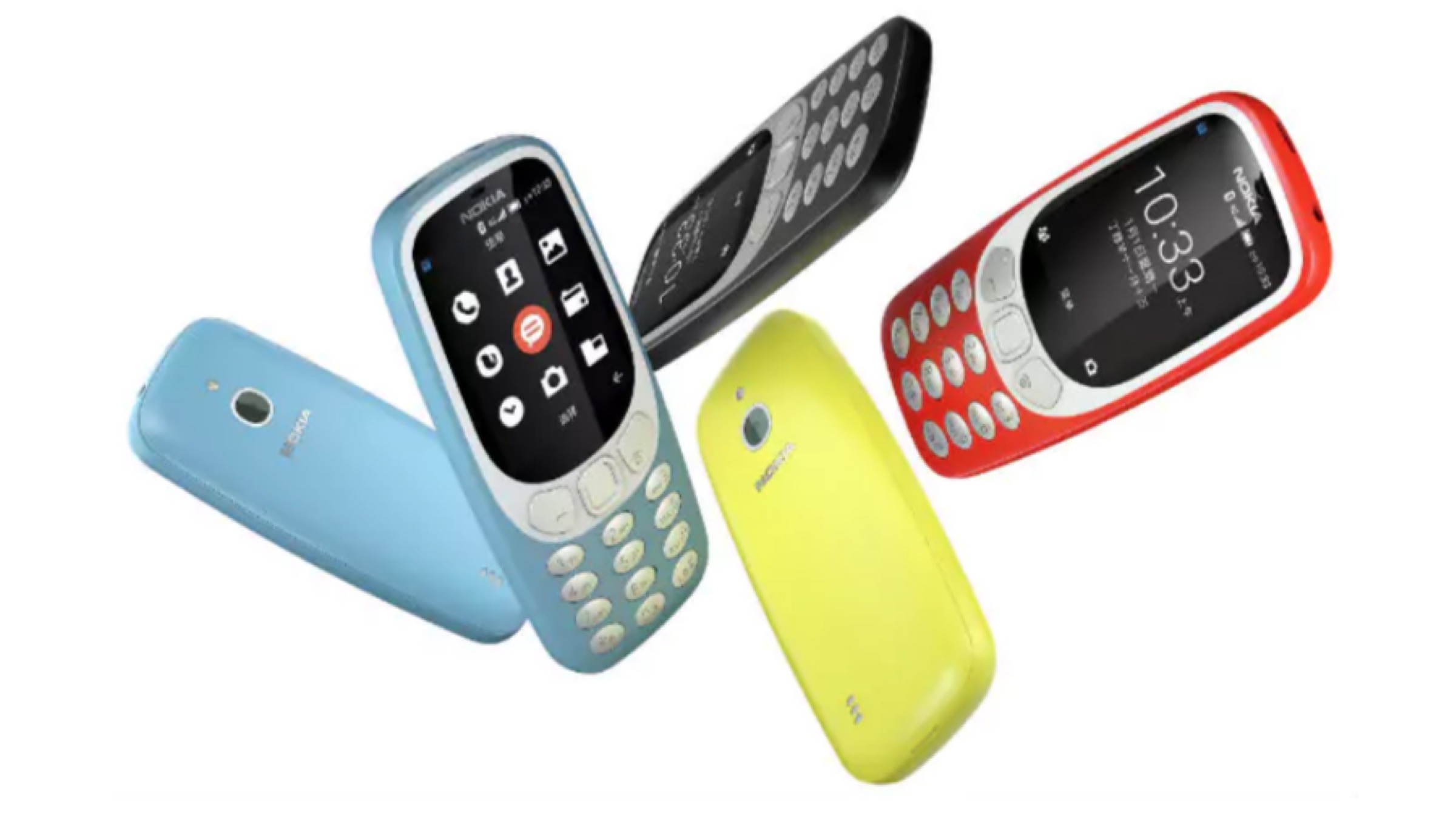
Nokia 3310 4G variant has been launched in China after weeks of speculations. HMD Global has listed the device on official Nokia website and has partnered with China Mobile. The global availability and price of the phone are likely to be announced at MWC 2018.
New Nokia 3310
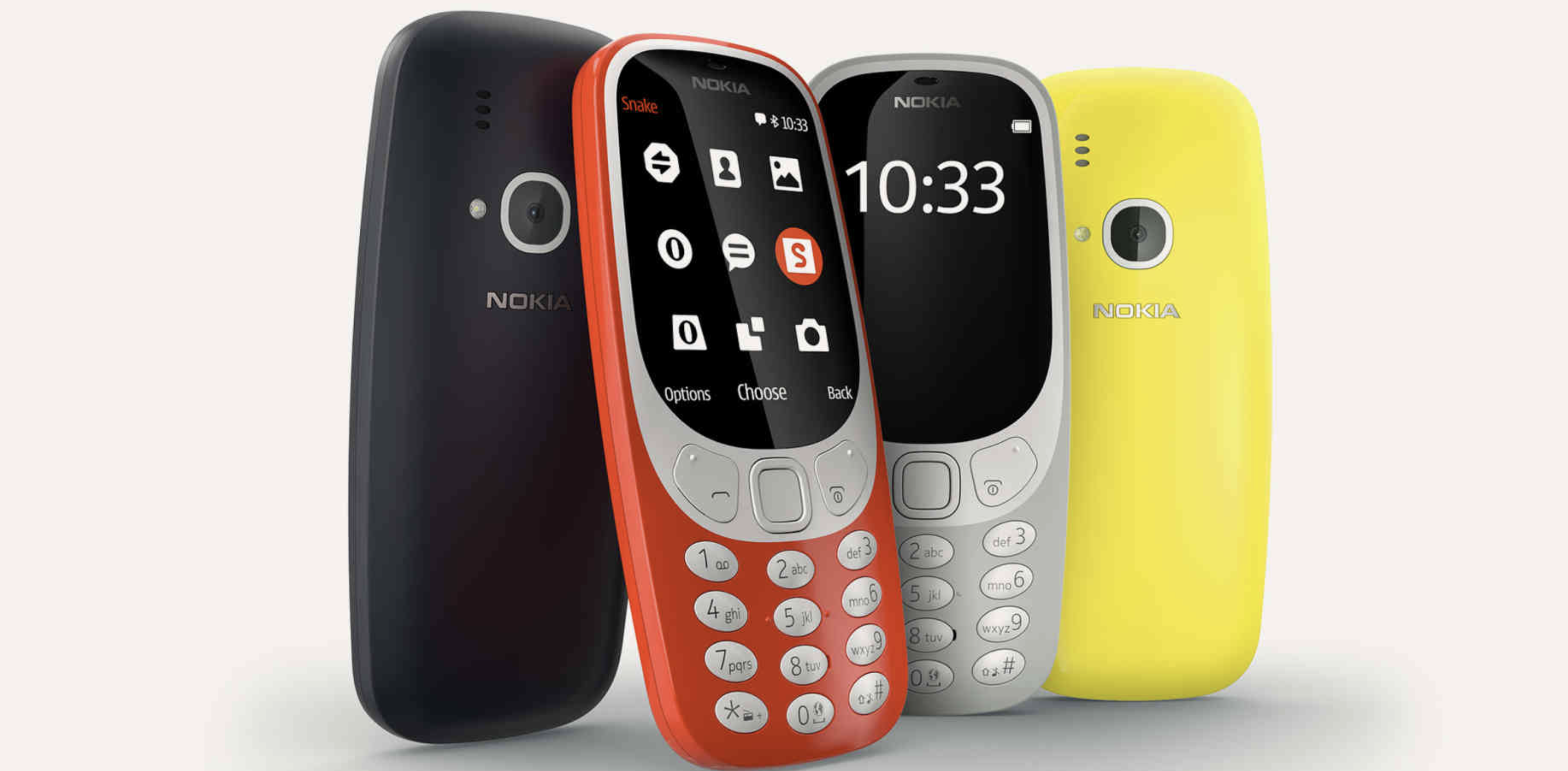
The new 3310 4G will be available in two colour variants, Fresh Blue and Deep Black. The previous variant of the phone was launched in four colours, Warm Red and Yellow (both with a gloss finish), and Dark Blue and Grey (both with a matte finish). The other difference between the 2G version and the new one is the OS. The new one runs YunOS, which is a forked Android version built by China’s Alibaba. The older variant runs Nokia Series 30+ OS and its 3G variant runs Java-based Feature OS. The feature phone also comes preloaded with an MP3 player.
Specifications
The new Nokia 3310 has a 2.4 inch QVGA colour display with a 320 x 240 px resolution.
Compared to 16MB storage available on its original 2G version, the new 4G variant has 256MB of RAM and 512MB of onboard storage. The storage is expandable up to 64GB via a microSD card. These specifications seem archaic in today’s world where we might witness a smartphone with 10GB of RAM.
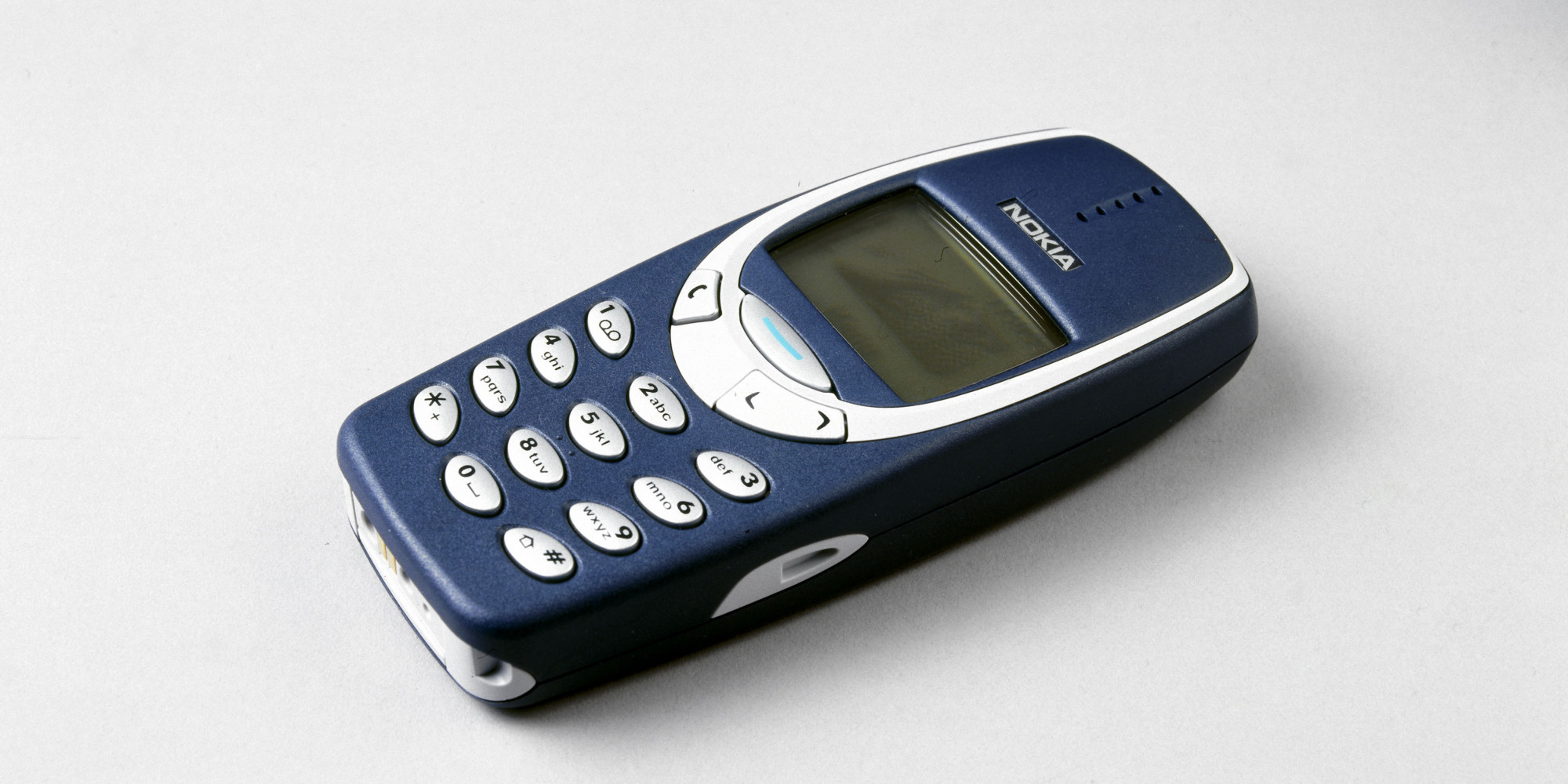
Original Nokia 3310
The original Nokia 3310 was launched in 2000 and over the years, has gained a cult status. Not just tech enthusiasts but, people all over the internet have made the Nokia 3310 famous, owing to its “indestructible” build quality.
Up until a few days ago, Xiaomi looked certain to launch the Mi 7 at MWC 2018. However, that seems to have fallen off the rail recently and the Mi Mix 2S is gaining more impetus by the day. To be launched as a refresh of the Mi Mix 2, the Mi Mix 2S could be announced before MWC 2018 commences.
This means that with the correct specs, the Mi Mix 2S could steal the limelight from the Samsung Galaxy S9 and S9+. If a new report is to be believed, the Xiaomi Mi Mix 2S could be the first ever smartphone to run on the Qualcomm Snapdragon 845. Something that the Galaxy S9 and S9+ were touted to be. At first, it looked like the Mi 7 will be the first Xiaomi phone to feature the flagship chipset.
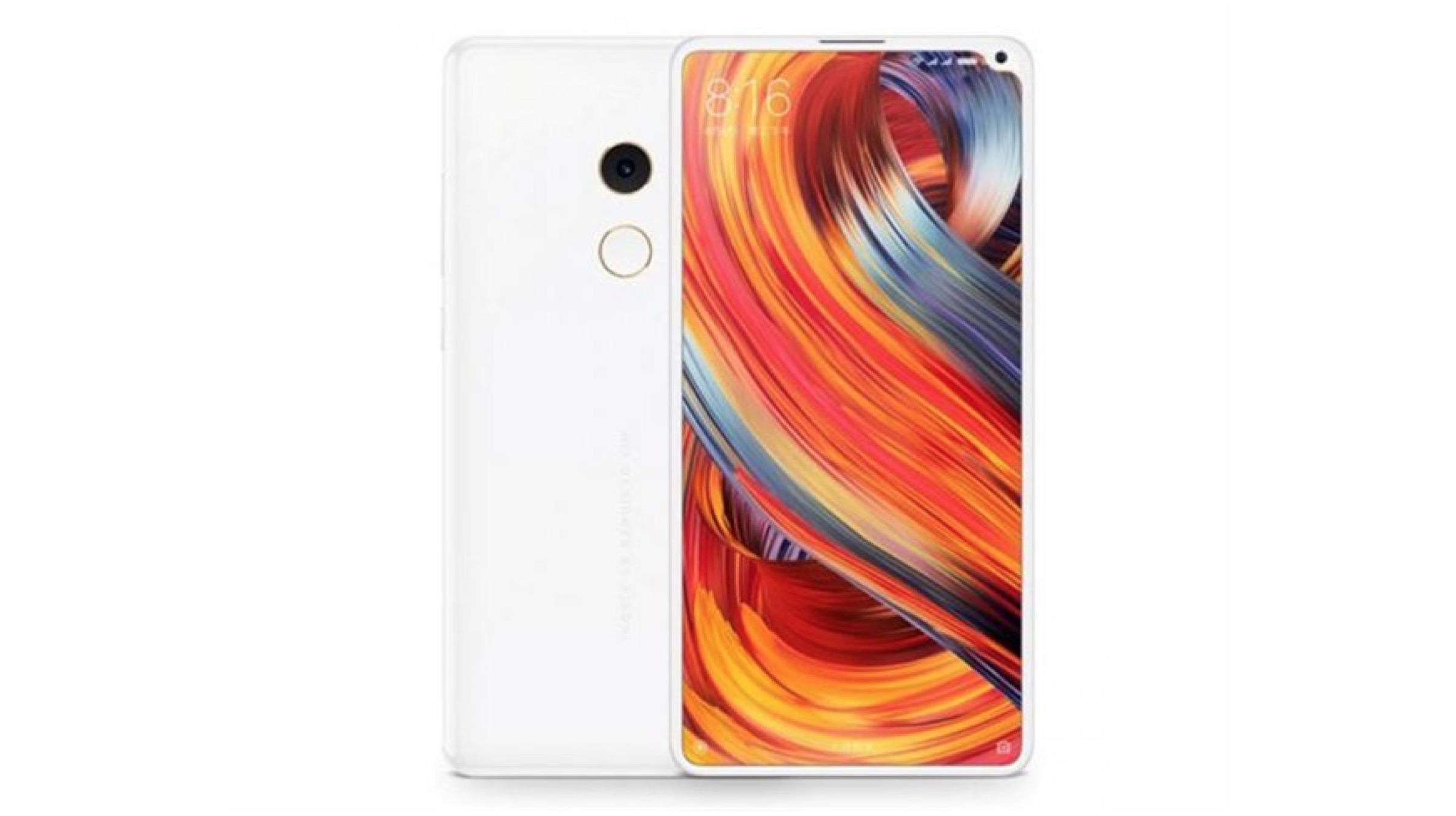
Mi Mix 2s Render
Xiaomi will be present at MWC 2018 but, will refrain from making a huge announcement. Announcing the Mi Mix 2S before the Galaxy S9 launch that too with the latest chipset in the market could be a huge coup by the Chinese smartphone maker.
Xiaomi Mi Mix 2S
So far, there has barely been any chatter about a possible Mi Mix 2 refresh. The Mi Mix 2 was launched back in September and Xiaomi doesn’t really launch new variants of flagship devices like OnePlus does. So, a possible Mi Mix 2s launch seems improbable. However, that hasn’t stopped people to post renders of the phone.
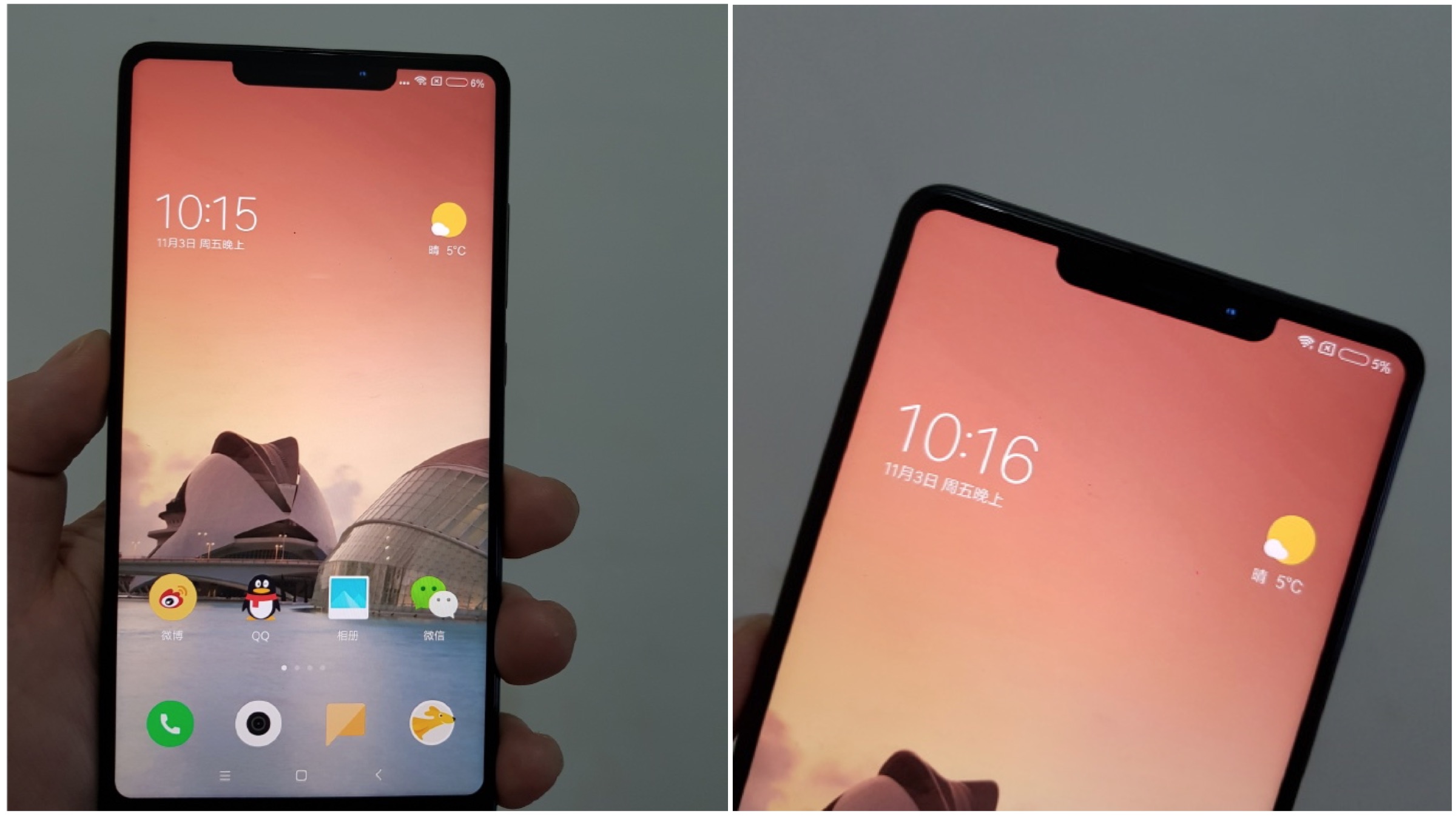
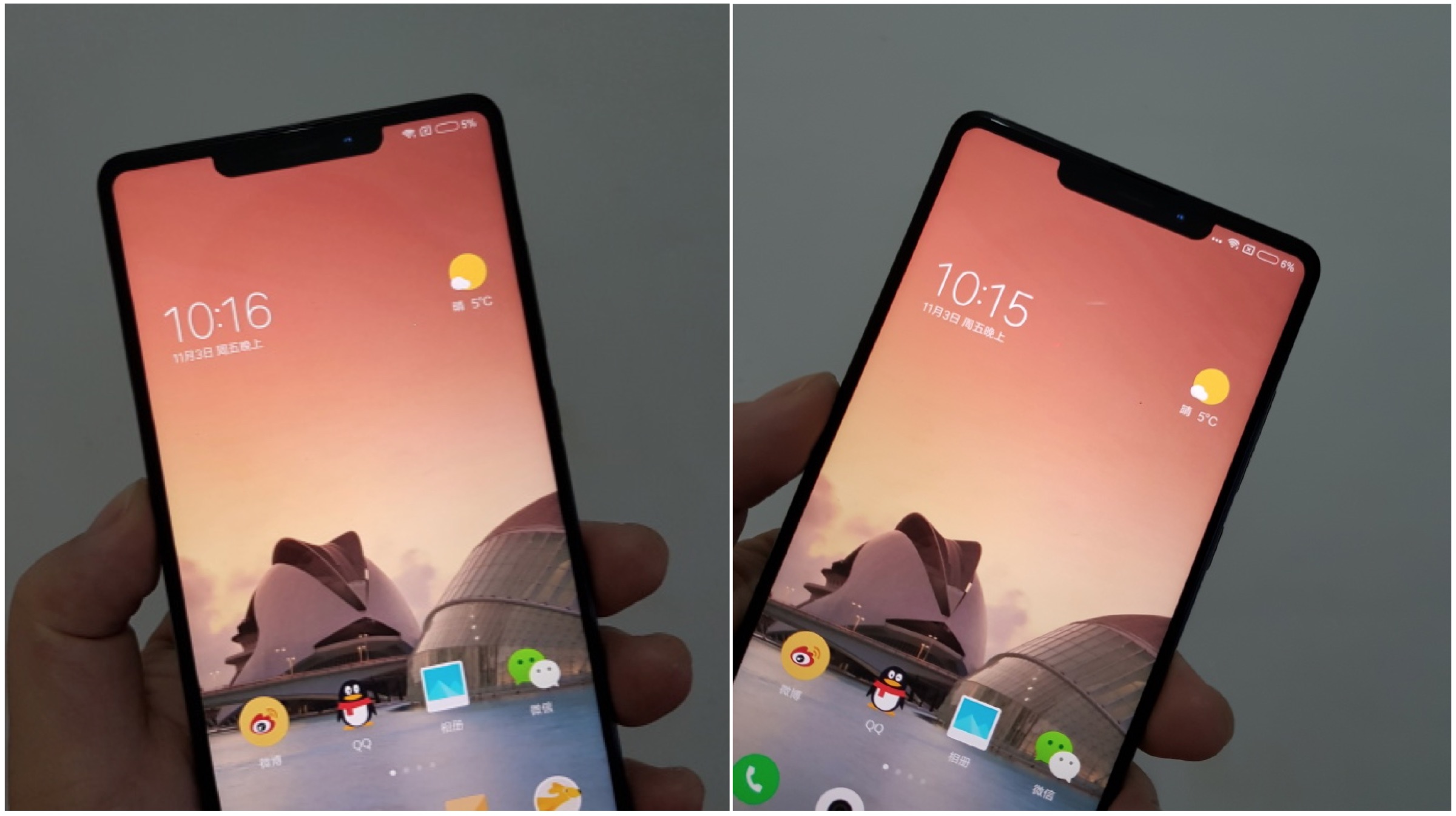
An earlier render of the Mi Mix 2s showing a notch on the display looked a photoshopped iPhone X photo. Recently though, a new render has emerged which reveals a design worthy of a new variant.
Mi Mix 2s Early Renders
The image shows evenly trimmed bezels all around the display. The Mi Mix 2 had a small chin which housed the front-facing camera. The front facing camera here is placed in the top right corner. It is fitted awkwardly which results in a weird notch on the top right corner. Although this looks like a design prototype that would’ve been buried in the back burner, the design does look like new and different.
It appears that the Xiaomi Mi Mix 2S could be a reality soon. Skipping the MWC launch means that Xiaomi would have been left behind in the flagship race but, the Mi Mix 2S could change that.
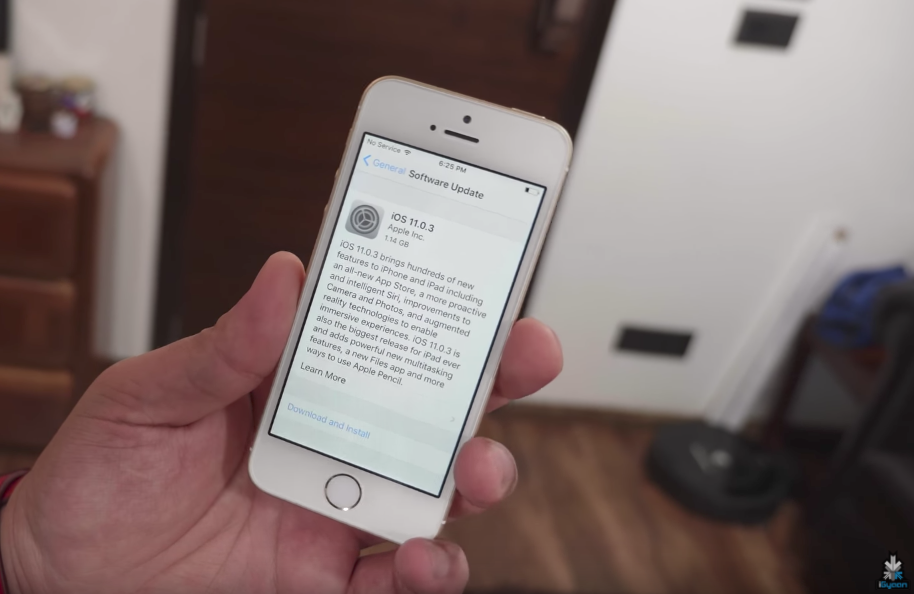
Back in 2016, Apple launched the iPhone SE as a smaller variant of the iPhone 6s. It was missing a few features like 3D Touch but, it was intended for people who preferred the smaller form factor and wanted the latest specifications. While many expected the iPhone SE 2 to be launched in early-2017, Apple decided to skip the launch. There have been plenty of rumours about the upcoming iPhone SE 2 but, they all might in vain.
Trusted Apple analyst Ming-Chi Kuo has cast a shadow of doubt over the prospect of an iPhone SE 2 launch in 2018. He believes that the company “may have used up its development resources” on the flagship trio it’s prepping for this fall. In his research note, he says:
The announcement of three new iPhone models in the same quarter in the second half of 2017 was the first time Apple made such a major endeavor, and we believe the delay of iPhone X, which had the most complicated design yet, shows that Apple doesn’t have enough resources available for development.
With three new models in the pipeline for the second half of 2018, we believe Apple may have used up its development resources. Also, we think the firm will do all it can to avoid repeating the mistake of a shipment delay for the three new models.
Kuo believes that Apple doesn’t have enough resources to pull off a year with four iPhone launches. He uses the 2017 launch of three iPhones as an example. And with all the three iPhones now with a design like the iPhone X, the process of manufacturing might be even more cumbersome.
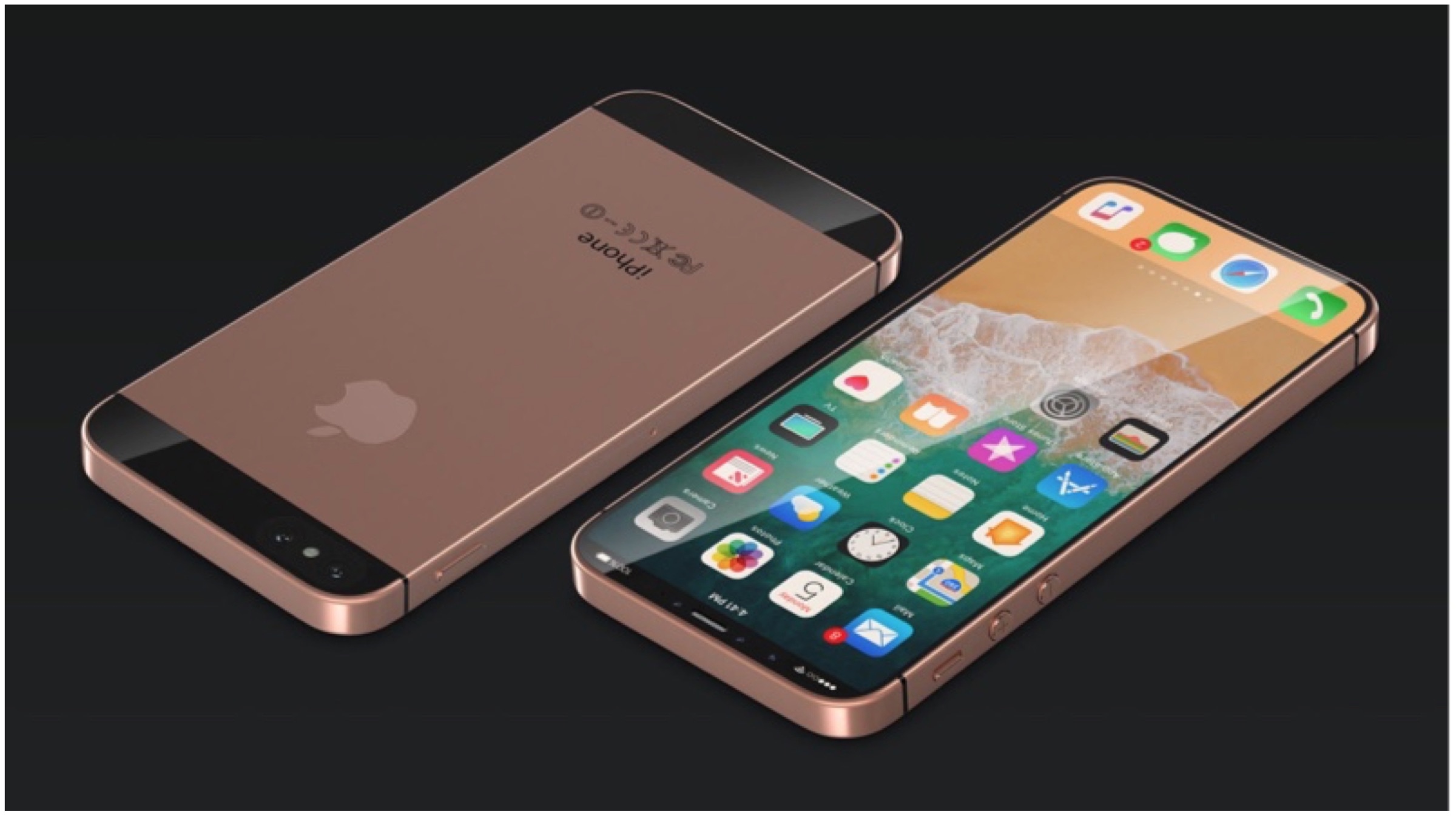
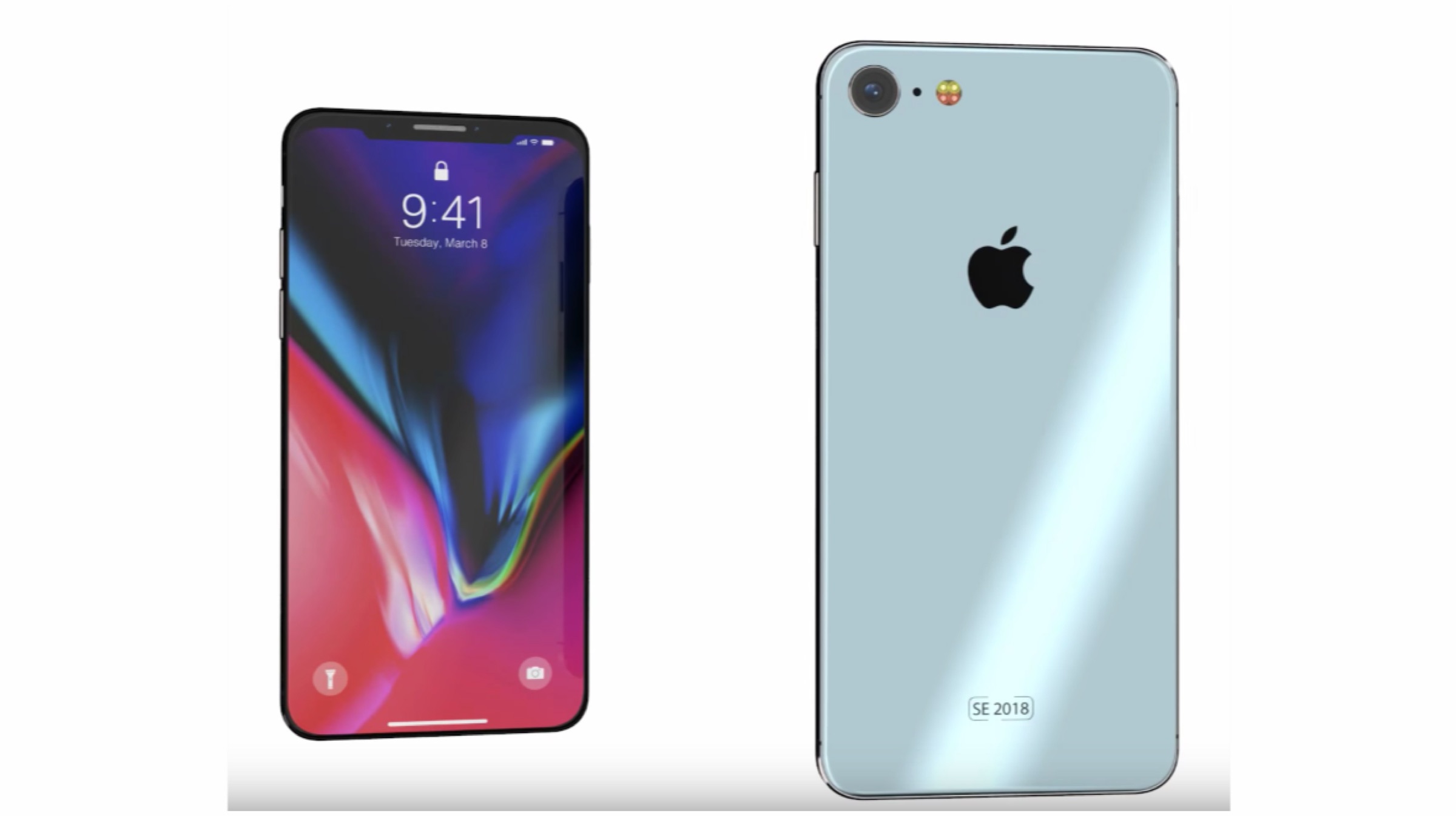
However, he hasn’t completely quashed the idea of an iPhone SE 2 launch in 2018. He says that if Apple does decide to launch a successor in 2018, it will be a minor refresh. This means that no bezel-less design or wireless charging. It might end up looking a lot like its predecessor with hardware upgrades like the A11 chipset and a bigger battery.
iPhone SE 2 Concept
Recently, Kuo revealed a few key details about the upcoming 2018 iPhone lineup.
2018 Apple iPhone
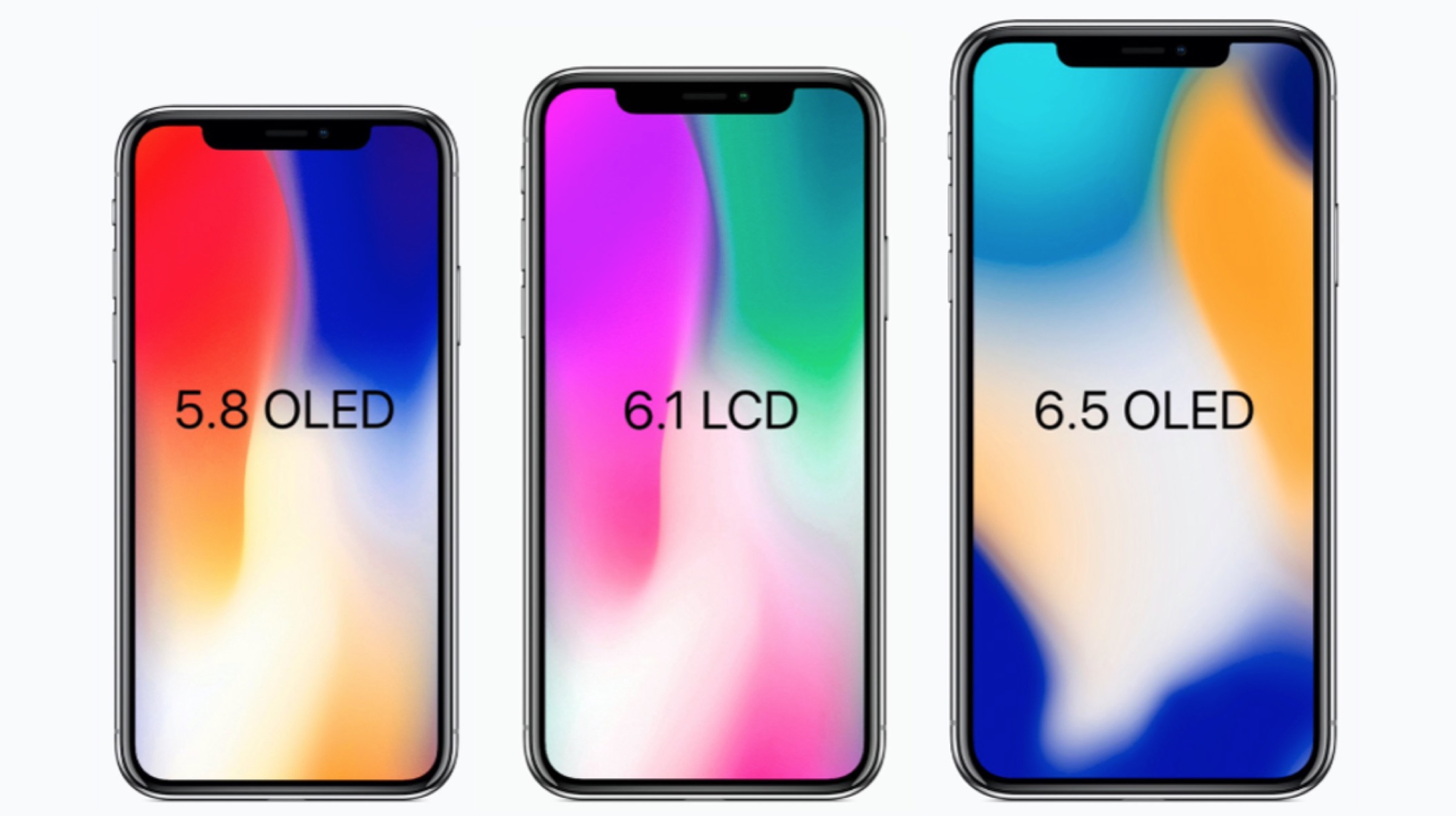
Kuo claims the 2018 iPhone X will again start at US$ 1000, the iPhone X Plus will be priced higher (likely US$ 1200-US$ 1350) while the iPhone X SE will be priced at around US$ 700-US$ 800.
The iPhone X 2018 (tentative name) will have the same 5.8 inch OLED display found on the current iPhone X. It will have a 2,700 to 2,800mAh battery, supplied primarily by Unimicron. The 2018 iPhone X will also be powered by a new chipset and is expected to feature advanced Face ID.
The iPhone X Plus will have a 6.5-inch OLED display in a body that might not be much bigger than the iPhone 8 Plus’. It is expected to have a 3,400 to 3,500 mAh battery supplied Unimicron.
2018 Apple iPhone lineup
The cheapest iPhone of the lot will be the iPhone X SE. It will be the successor to the iPhone SE and feature considerable upgrades over the predecessor. Although, these updates might end up costing the essence of the ‘SE’ series. The iPhone X SE will have a 6.1 inch LCD display with a design similar to the iPhone X. This means that Face ID will be introduced in this smartphone as well.
The Samsung Galaxy S9 and Galaxy S9+ will be announced on the 25th of February. At the event, Samsung is expected to unveil the global price of the devices along with the first batch of countries where the two phones will go on sale. While there hasn’t been much said about the price of the two phones, the latest news from South Korea sheds some much-needed light on it.
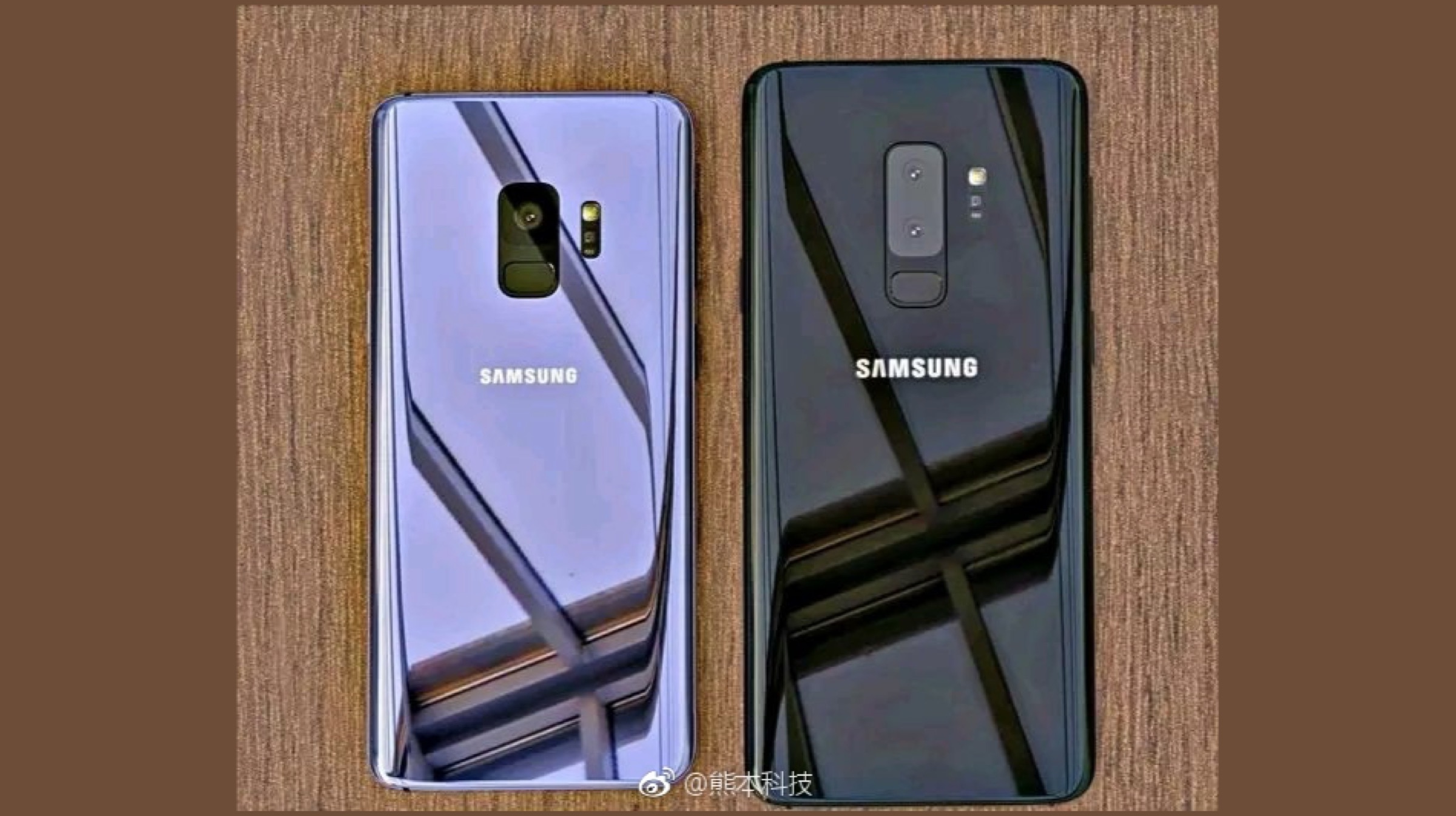
Galaxy S9, S9+ Expected Design
In South Korea, Samsung’s native market, the Galaxy S9 will cost KRW950,000, while the S9+ will be KRW990,000. This amounts to about US$ 883 for the S9 and US$ 920 for the Galaxy S9+. It is worth noting that Samsung always prices its smartphones higher in South Korea. This means that the company will launch the two phones at a price similar or same as that of their predecessors.
For context, the Galaxy S8 was priced at KRW935,000 (around $875) in South Korea. Its global price was US$ 720.
Pre-orders in South Korea will commence on the 2nd of March, five days after the official launch. The phones will be shipped six days later, on March 8th, with market availability expected in the following days. The waiting period this time around is much shorter. The Galaxy S8 started shipping two to three weeks after the pre-orders began.
Rumour Roundup:
The Galaxy S9 will have a 5.8 inch Super AMOLED display while the Galaxy S9+ will have a 6.2 inch display. Both the devices will have a 2960 x 1440 px resolution.
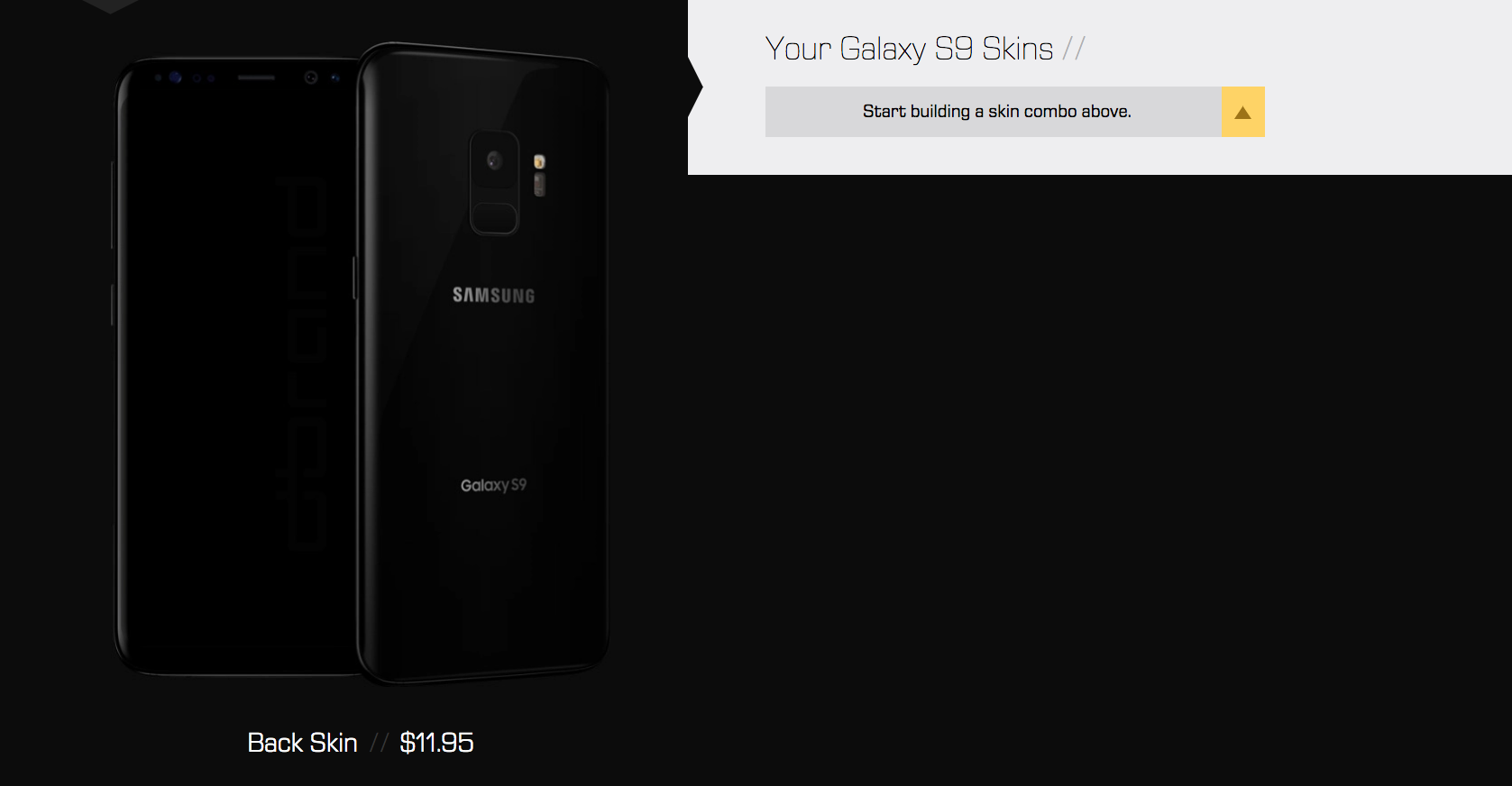
dbrand listing for Galaxy S9 skins
Similar to its predecessor, the Galaxy S9 will have a single 12MP SuperSpeed Dual Pixel camera. This time around, however, the camera will have an f/1.5 aperture and record super slow motion videos, probably at 960fps. The Samsung Galaxy S9+ will become the second phone from Samsung to feature a dual-camera setup on the back after the Galaxy Note8. Similar to the Samsung Galaxy Note8, the Galaxy S9+ will have a wide-angle and a telephoto lens setup.
Press Renders
Owing to the launch of the Samsung flagship phones, a lot of companies have restrained from making significant announcements. It was recently revealed that Xiaomi could skip the Mi 7 launch at MWC as well, similar to what Huawei and HTC will do. The new devices from Samsung are expected to be priced similarly to the original price of the Galaxy S8 and S8+. More details are expected to follow until the official release of the phones.
There is no denying that 2017 was the year of bezel-less smartphones. In 2018, machine learning and AI are expected to be the trend-setters in flagship smartphone at least. A trend that hasn’t caught on is that of beefy RAM and storage options which would be an overkill for a smartphone. When the OnePlus 3T was launched with 6GB of RAM in 2016, many expected smartphone makers to take this figure and ride with it. That, however, did not happen.
Even the Razer Phone, a smartphone designed for gamers had 8GB of RAM. The OnePlus 5Talso has an 8GB RAM variant which is priced at Rs. 37999 in India. However, it appears that a smartphone maker is ready to take the RAM/storage configuration up a notch. Vivo, the first company to embed a fingerprint sensor inside a smartphone’s display could soon launch an Android smartphone with 10GB of RAM.
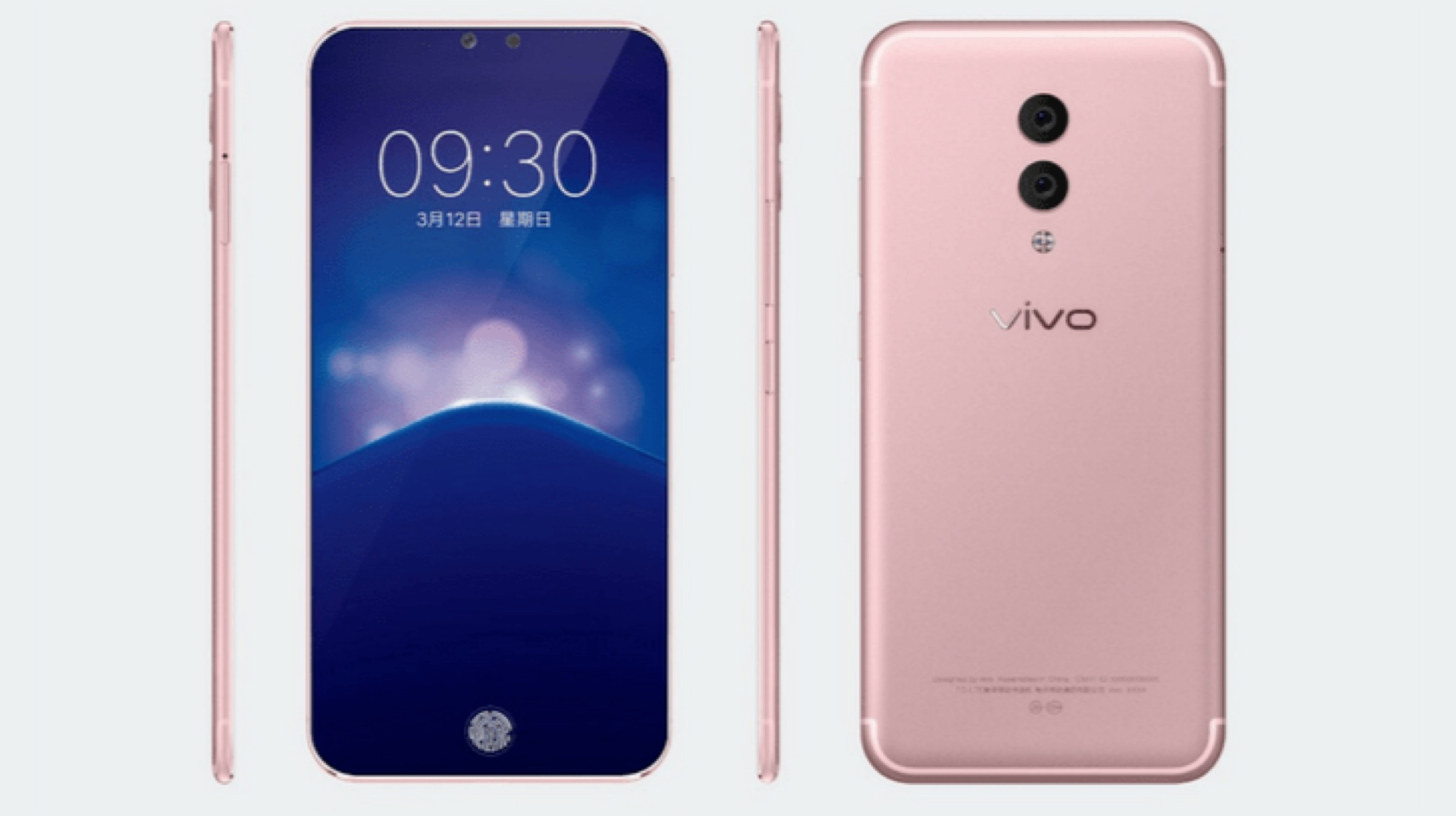
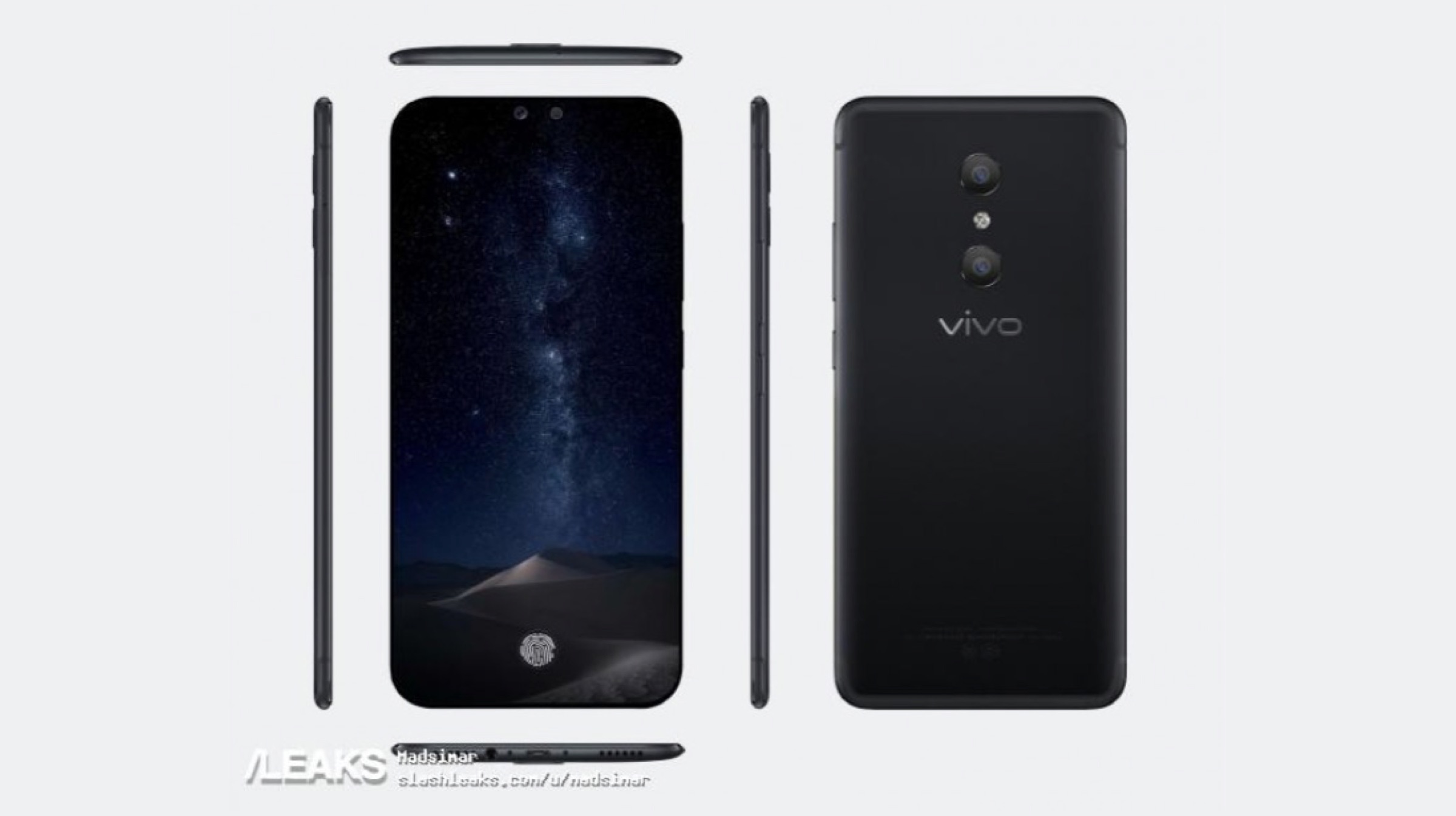
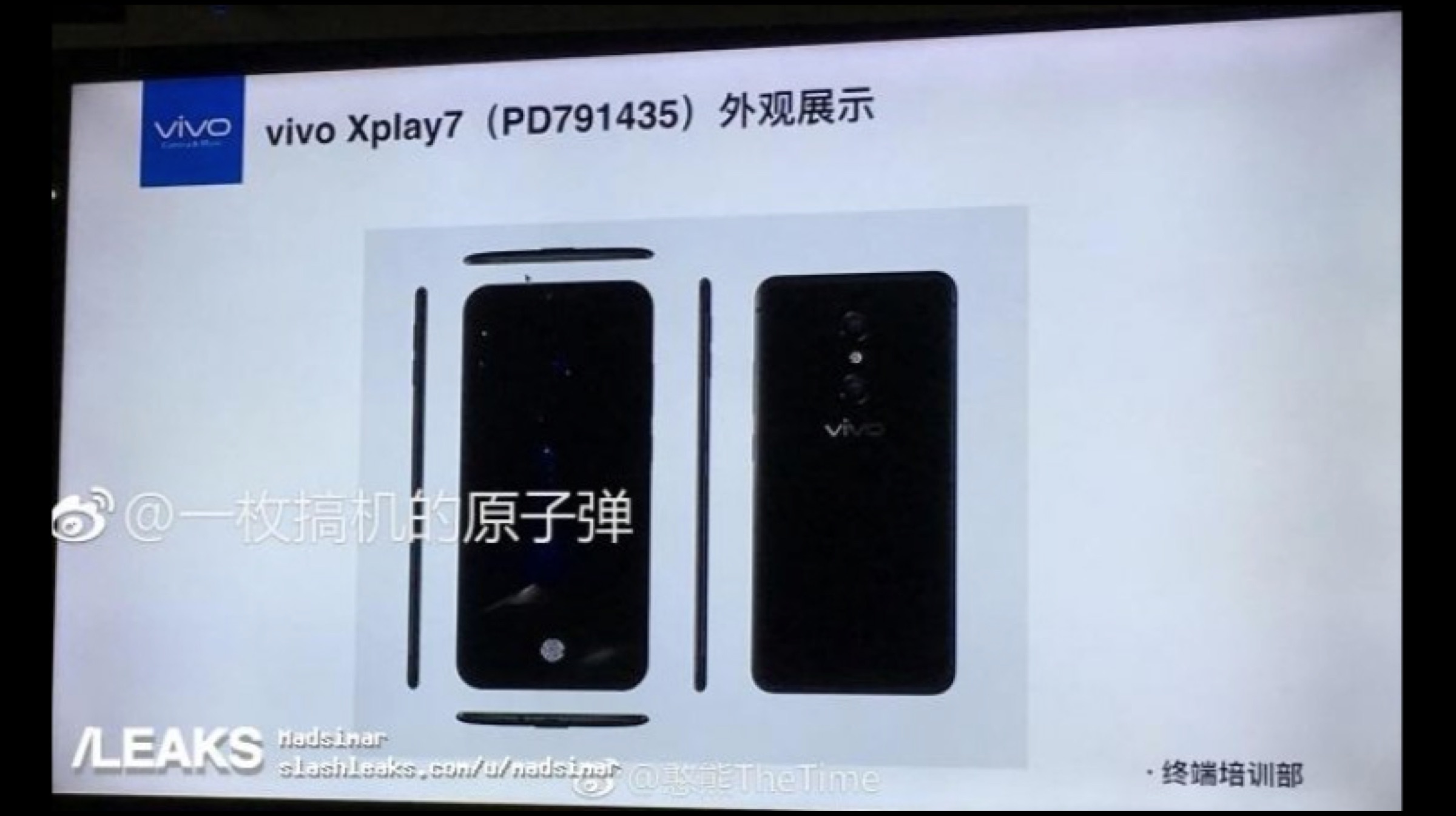
Vivo Xplay 7
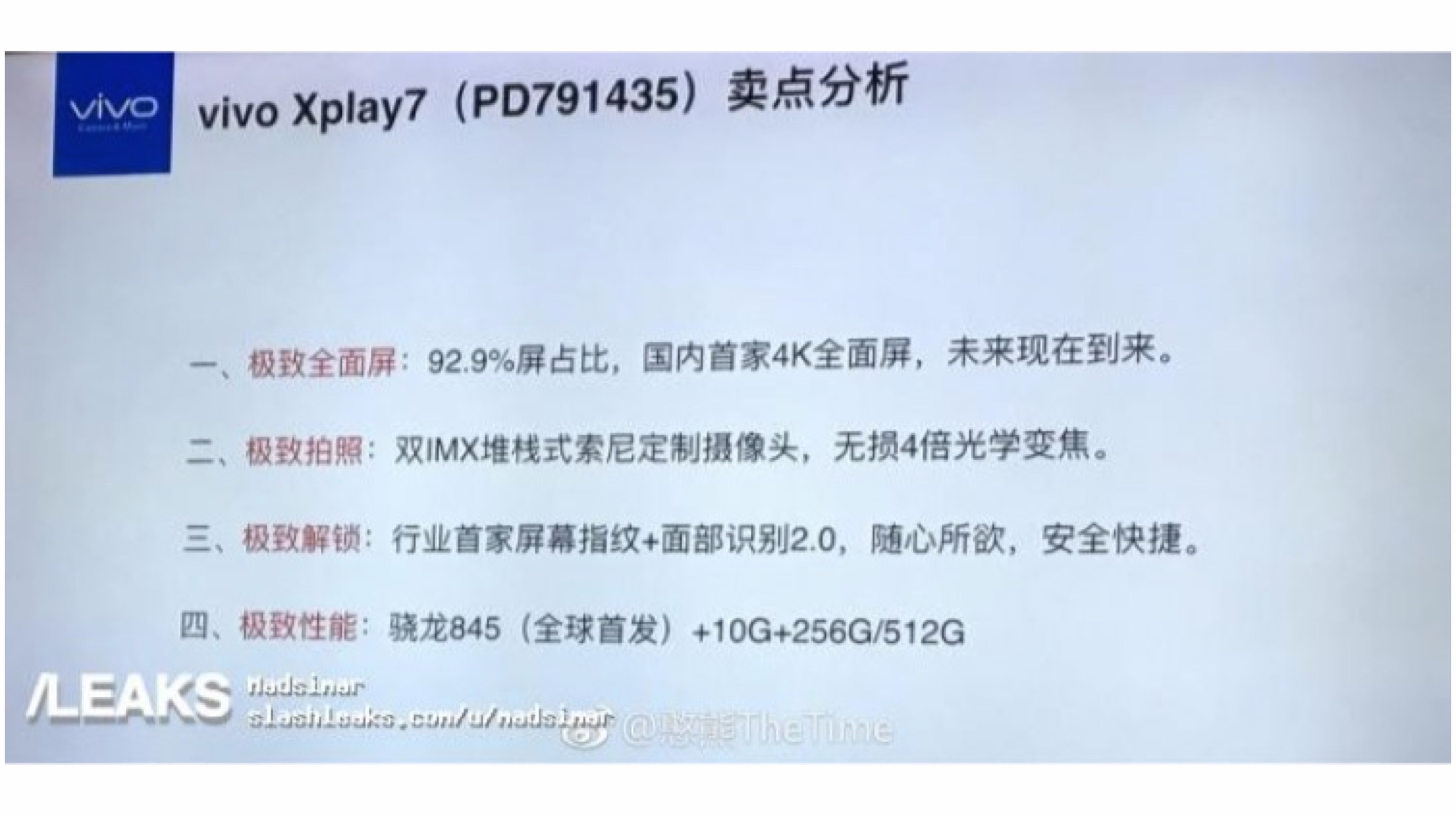
The Vivo Xplay 7 is expected to be the next high-end offering from the Chinese smartphone maker. While previous reports claimed it will have a completely bezel-less design, the new images reveal a different story. According to the latest leak, the Vivo Xplay 7 will have a 4K display panel. It will also sport an impressive 92.9% screen-to-body ratio.
Under the hood, the Xplay 7 will have the Qualcomm Snapdragon 845 chipset. It will also have a whopping 10GB RAM which seems like an overkill for any smartphone right now. For storage, Vivo will offer two variants, one with 256GB onboard storage while the other one will have 512GB of storage. There were reports that even Samsung will launch a special edition Galaxy S9+ variant with 512GB of onboard storage.
Making sure that it is up-to-date with all industry trends, the Xplay 7 will also feature facial recognition. Reportedly, it will have the Face Unlock 2.0 which is the next generation of Vivo’s facial recognition technology. The smartphone will also come equipped with a dual-camera setup on the back which will be capable of 4X lossless zoom.
Thanks to its nearly bezel-less design, the fingerprint sensor will be embedded inside the display. This essentially means that the Vivo Xplay 7 will have a 4K AMOLED display panel. Vivo will use the Clear ID technology which was first introduced in the Vivo X20 Plus UD.
The Vivo Xplay 7 will be announced in spring similar to its predecessor.
It is hard to imagine that the iPhone X only went on sale about three months ago. There have been plenty of rumours regarding the 2018 iPhone lineup and it appears that there might be some clarity now. Ever since a report claimed that Apple will discontinue the iPhone X before the next launch event, the speculations surrounding its successors have been soaring high.
iPhone X
Ming-Chi Kuo, one of the most trusted Apple analysts has released new information about the 2018 iPhone lineup.
The Tale Of Three iPhones
2018 will see three new iPhones being launched at the Apple annual launch event. One of them will be the 2018 iPhone X, iPhone X Plus and an iPhone X SE. Interestingly, the naming of the upcoming smartphones suggests that the successor to the iPhone SE will indeed be a large iPhone that has design elements similar to the iPhone X.
iPhone X Plus Concept
Kuo claims the 2018 iPhone X will again start at US$ 1000, the iPhone X Plus will be priced higher (likely US$ 1200-US$ 1350) while the iPhone X SE will be priced at around US$ 700-US$ 800.
The iPhone X 2018 (tentative name) will have the same 5.8 inch OLED display found on the current iPhone X. It will have a 2,700 to 2,800mAh battery, supplied primarily by Unimicron. The 2018 iPhone X will also be powered by a new chipset and is expected to feature advanced Face ID.
The iPhone X Plus will have a 6.5-inch OLED display in a body that might not be much bigger than the iPhone 8 Plus’. It is expected to have a 3,400 to 3,500 mAh battery supplied Unimicron.
iPhone X SE?
The cheapest iPhone of the lot will be the iPhone X SE. It will be the successor to the iPhone SE and feature considerable upgrades over the predecessor. Although, these updates might end up costing the essence of the ‘SE’ series. The iPhone X SE will have a 6.1 inch LCD display with a design similar to the iPhone X. This means that Face ID will be introduced in this smartphone as well.
The iPhone X SE will be powered by the latest chipset, just like the iPhone SE was. However, unlike the 2018 iPhone X and iPhone X Plus, it won’t feature wireless charging. It will also miss out on 3D Touch.
As for investor reaction to the 2018 iPhone lineup, Kuo says that there is an air of “conservative sentiments due to concerns about a lack of major spec upgrades.” However, Kuo predicts the market will appreciate the 6.1 inch iPhone X SE, which he says will account for around 50% of the new iPhones sold in the second half of 2018.
It still feels very early to predict what Apple will do in September. Pricing the iPhone X SE at such a price will only make sense if Apple does indeed discontinue the iPhone X. If not, then an iPhone X at a price of around US$ 800 will eat up the potential iPhone X SE sales since it provides an OLED display, and the A11 Bionic chipset is still very capable.
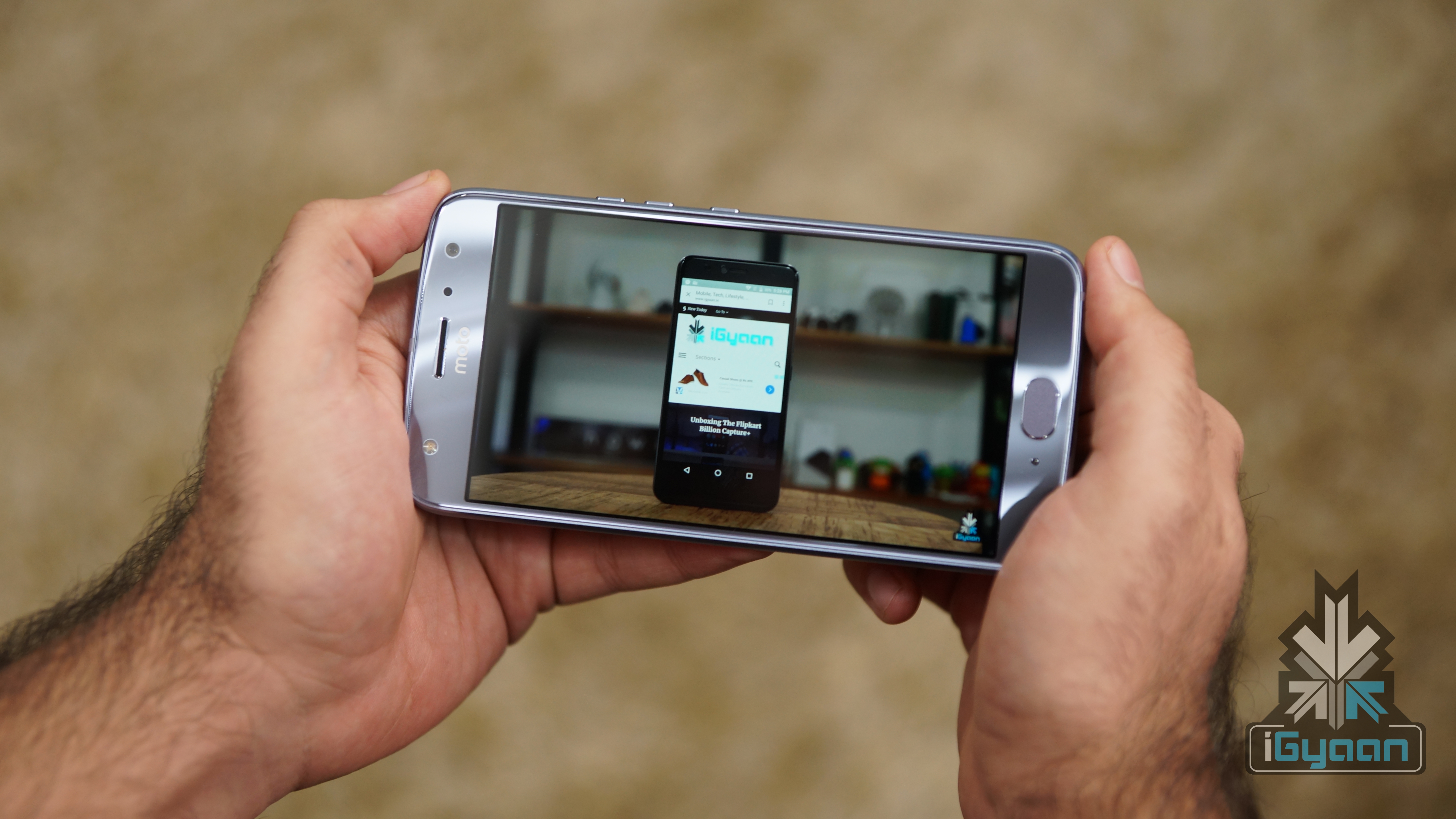
Lenovo-owned Motorola has launched a new version of the Moto X4 in India. The new smartphone has 6GB of RAM and runs Android 8.0 Oreo out of the box at a price of Rs. 24999. It will go on sale via Flipkart and Moto Hub from 11:59 pm, 31st January. The Moto X4 was launched in November in India at a starting price of Rs. 20999 for the 32GB storage variant. The 64GB storage variant is priced at Rs 22999. The Moto X4 remains one of the few phones in this price bracket that offers a dual-camera setup and IP68 rating.
Accompanying the launch are a few offers from Motorola as well:
Get Rs.1500 flat discount with ICICI bank credit cards
Exchange offer – Additional Rs.3000 off on exchange of your old smartphone
Get up to 490GB data free when you recharge with INR 199 on Vodafone
No cost EMIs up to 12 months starting at Rs. 2083
The new Moto X4 has the same specifications as the previous two versions apart from a bigger RAM.
Specifications
The Moto X4 has a 5.2 inch 1920 x 1080 px LTPS IPS LCD display with Corning Gorilla Glass 3 on top for protection.
The Moto X4 has the Qualcomm Snapdragon 630, 2.2 GHz octa-core processor and Adreno 508 GPU, along with 3GB or 4GB of RAM and 32GB or 64GB of onboard storage which can be expanded up to 2TB via microSD card. The phone has an IP68 rating for water and dust resistance. The fingerprint sensor is housed inside the home button which also doubles up as a single navigation button.
The device is powered by a 3000 mAh battery with TurboCharge capabilities.
The device has a dual-camera setup at the back. The main camera is a 12MP sensor with an f/2.0 aperture, and the 8MP secondary camera with an f/2.2 aperture is equipped with a wide-angle lens. The dual-cameras allow users to have depth effect shots, bokeh effect shots, ultra-wide angle shots, and selective focus shots. On the front of the device is a 16MP camera with an f/2.0 aperture and an LED flash. The cameras record 4K videos at 30 FPS.
The Moto X4 has impressive specifications for its price and with 6GB RAM, it gives consumers a new version to look out for.
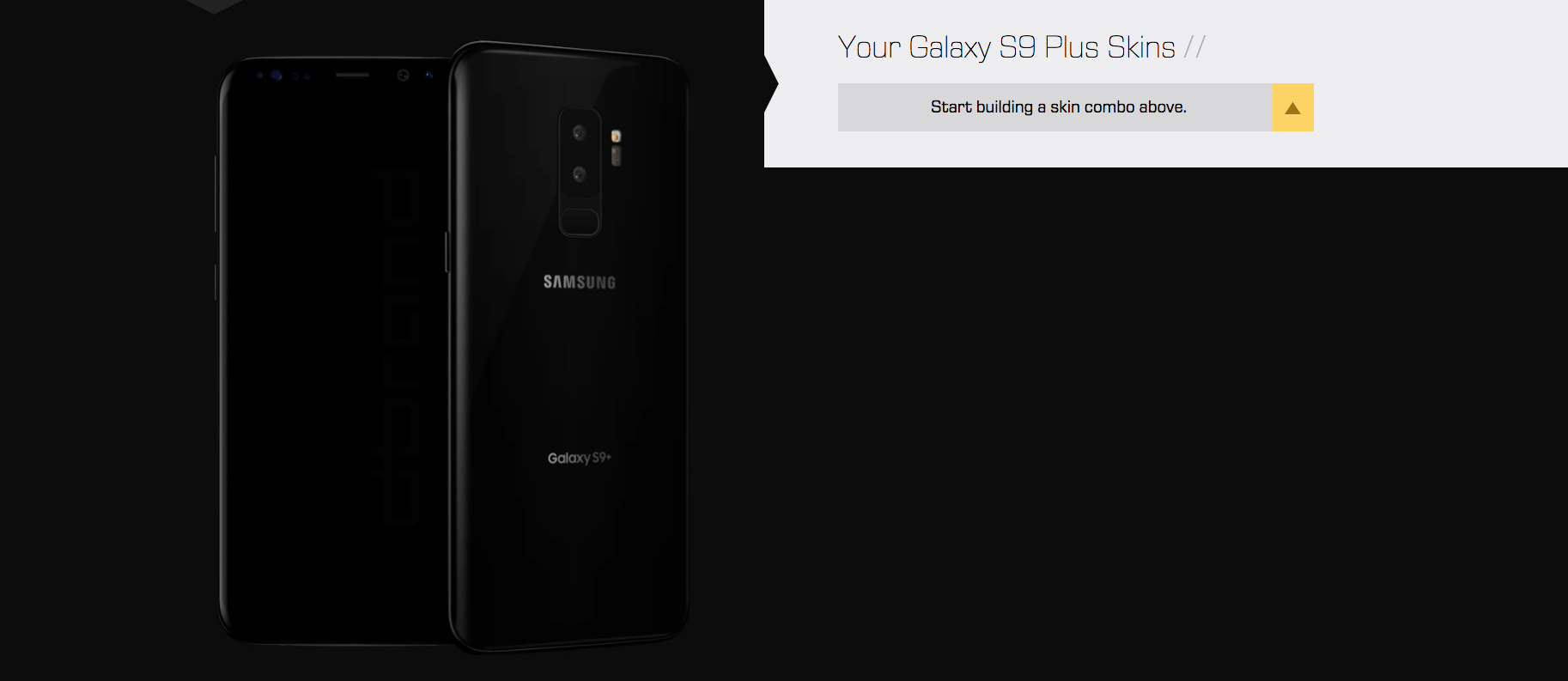
Samsung Galaxy S9 and Galaxy S9+ will be launched on the 25th of February in Barcelona. So far, there have been enough leaks to suggest that the new devices won’t look a whole lot different from their predecessors. The latest images of the upcoming devices come from an unlikely source called dbrand. One of the most famous smartphone skin makers in the world, dbrand has started taking pre-orders for the Galaxy S9 and Galaxy S9+ customised skins.
dbrand listing for Galaxy S9+ skins
Many on social media believe that dbrand has opened itself up to a potential lawsuit. It is worth noting that dbrand did the same before the launch of the Galaxy S8 and S8+. The design visible in the images of dbrand’s official website is very similar to what we have seen so far. The fingerprint sensor is now placed below the camera module on both the phones.
Interestingly, the infamous Bixby button retains its place on the left-hand side of the device, just below the volume rockers. The lock/unlock button is on the right-hand side. As speculated, the top and bottom bezels look thinner ever so slightly. Thankfully, Samsung will continue with its edge-to-edge design, unlike a previous press render.
Rumour Roundup:
The Galaxy S9 will have a 5.8 inch Super AMOLED display while the Galaxy S9+ will have a 6.2 inch display. Both the devices will have a 2960 x 1440 px resolution.
Press Renders
Similar to its predecessor, the Galaxy S9 will have a single 12MP SuperSpeed Dual Pixel camera. This time around, however, the camera will have an f/1.5 aperture and record super slow motion videos, probably at 960fps. The Samsung Galaxy S9+ will become the second phone from Samsung to feature a dual-camera setup on the back after the Galaxy Note8. Similar to the Samsung Galaxy Note8, the Galaxy S9+ will have a wide-angle and a telephoto lens setup.
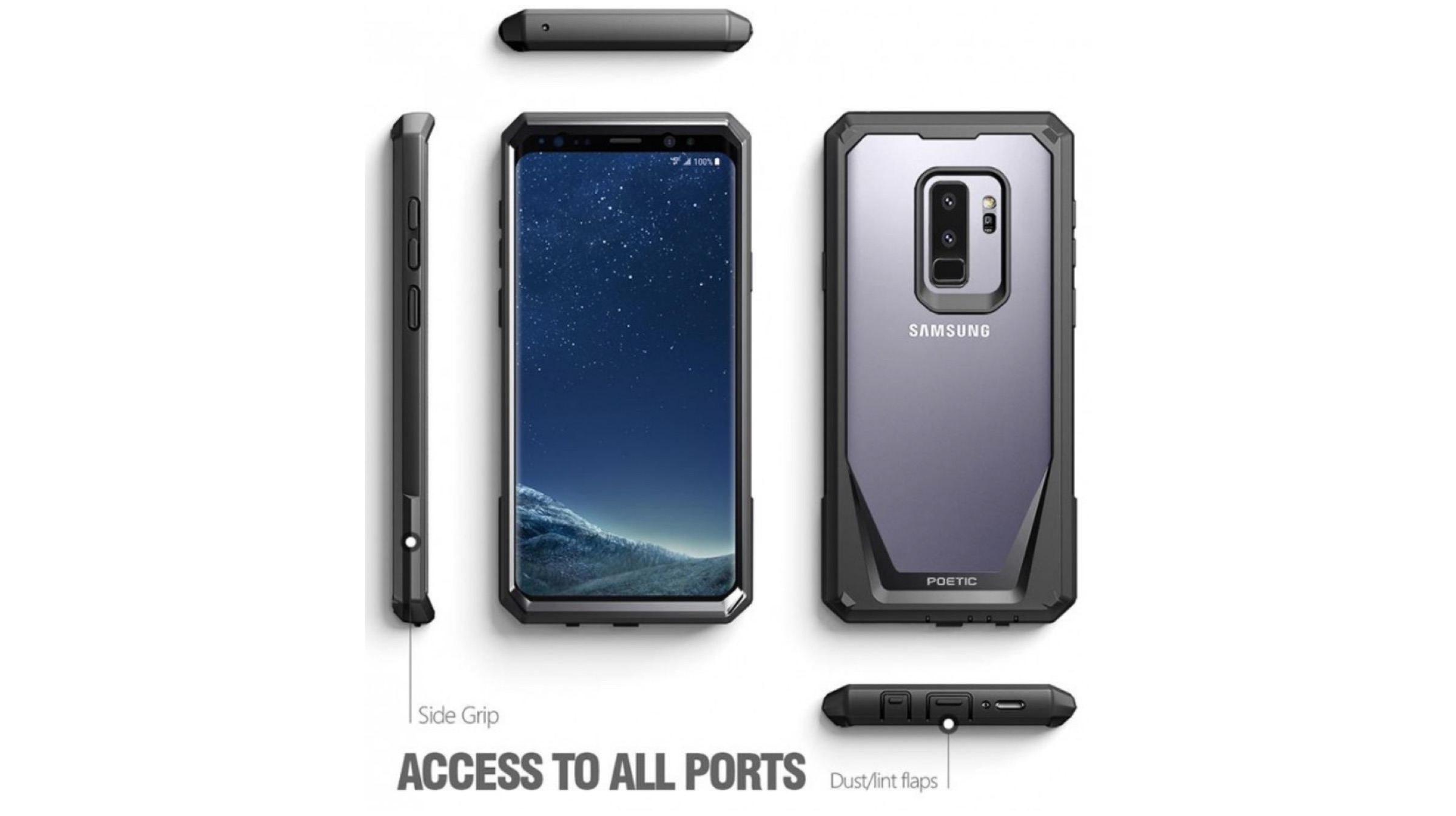
Case Leaks Of Galaxy S9+
Owing to the launch of the Samsung flagship phones, a lot of companies have restrained from making significant announcements. It was recently revealed that Xiaomi could skip the Mi 7 launch at MWC as well, similar to what Huawei and HTC will do. The new devices from Samsung are expected to be priced similarly to the original price of the Galaxy S8 and S8+. More details are expected to follow until the official release of the phones.