Blog

  • Microsoft Expected to Take on Chromebooks with Inexpensive Windows 10 Laptops

    Microsoft Expected to Take on Chromebooks with Inexpensive Windows 10 Laptops

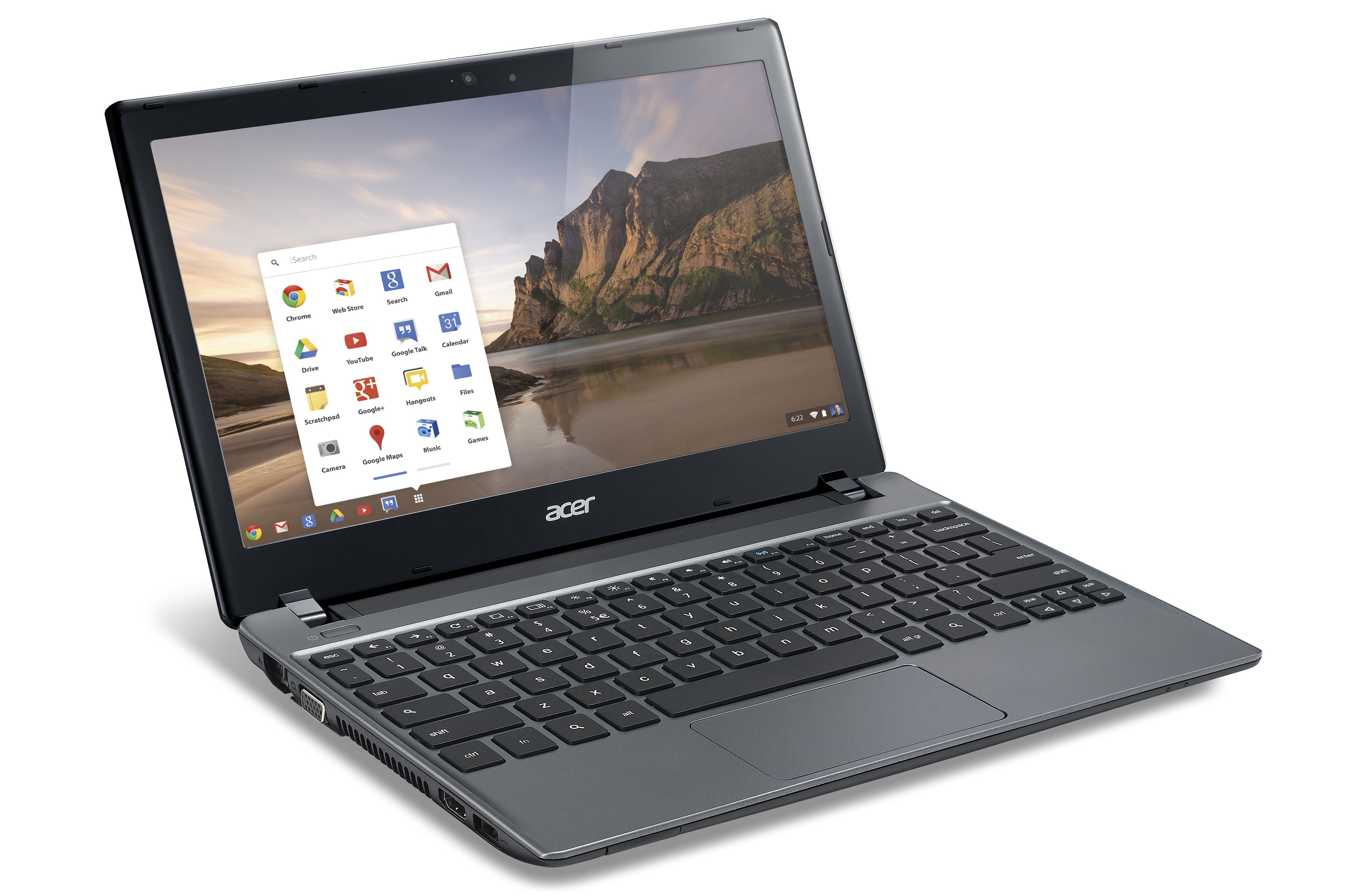
    While Microsoft enjoys a supremacy in the laptop OS domain with Windows, Google is on top of the mobile operating system game with the widely accepted Android by its side. But the search engine giant has also managed a foothold in the hardware arena with its popular Chromebook series. To recoup its audience, the Windows is planning to roll out two new inexpensive products that can counter Google’s Chromebooks.

    According to the online publishing portal Digitimes, the company will release two affordable notebooks in mid-2015. These laptops will be 11.6-inch in size and will run on the latest Windows 10. The price of the notebooks will range from $149 to $179 at the max and will target the education and consumer markets. Unlike bigger laptops with powerful processors and graphics, the forthcoming devices are said to perform basic tasks like internet surfing, social media usage and Microsoft office processes.
    chromebook

    If the source is to be believed then the laptops will house Intel’s Bay Trail-T CR (BTCR) processors. The one for educational purposes will be manufactured by electronics company Elitegroup Computer Systems (ECS) while, for the consumer market, the company will collaborate with China-based 3 Nod to manufacture the laptops.

    It has also been learnt that Microsoft may expand its project and release more models in larger sizes to compete with Google’s 11.6-inch, 13.3- inch, and 15.6-inch notebooks.

    [poll id=”30″]
  • HTC One E9+ Spotted on the Company’s China Website

    HTC One E9+ Spotted on the Company’s China Website

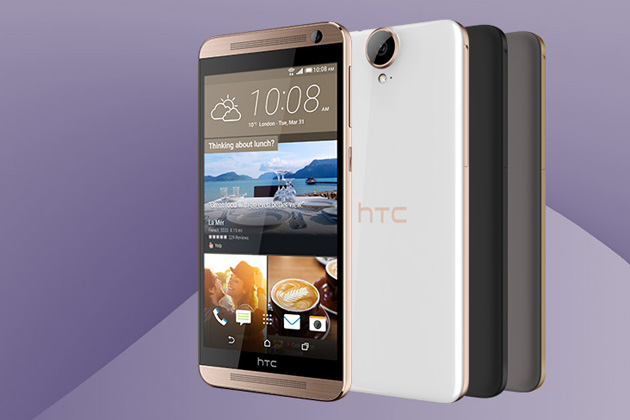
    There was recently rumours about an HTC’s new device known as the A55 which flaunted some amazing specs. The device was to be a part of the company’s Desire line of handsets. Now the company has gone ahead and quietly posted the A55 on its Chinese website but with a new name. It is now called the HTC One E9+.

    htc e9+2

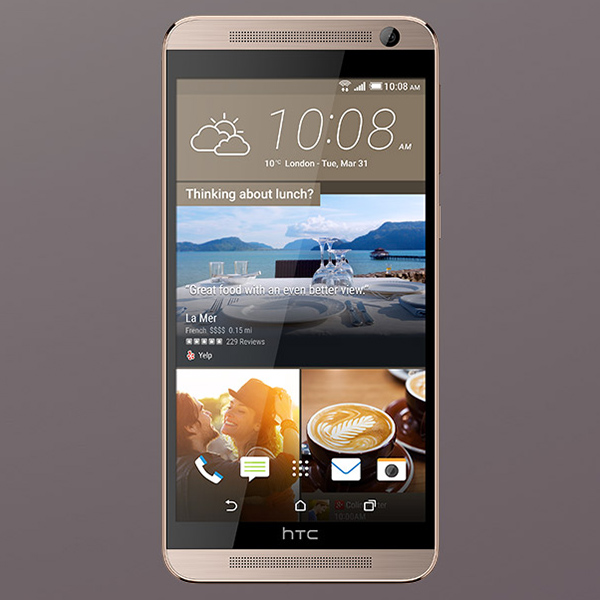
    The specifications for the device is close to what was previously rumored about the A55. It sports 5.5″ Quad HD display and is powered by a 64-bit, octa-core MediaTek MT6795M chipset along with 2GB RAM. It offers 16GB of internal storage which is expandable, but the limit hasn’t been stated yet. The device will be juiced up through a 2800 mAh battery.

    htc e9+

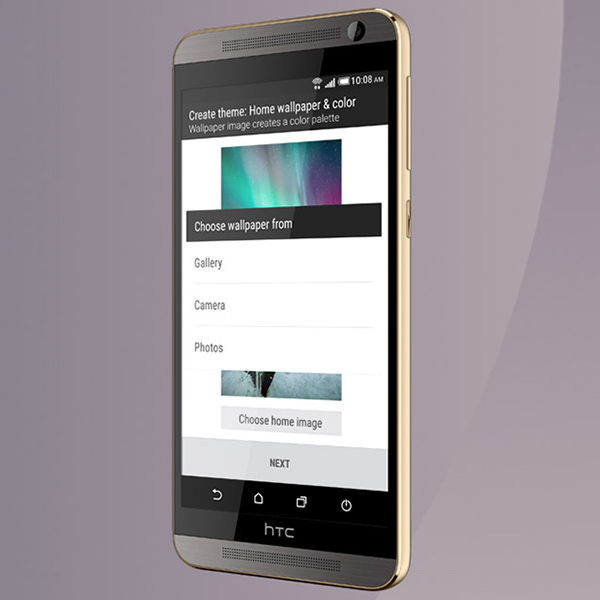
    It offers a 13 MP camera at the back and 4MP UltraPixel camera in the front. It features a metal frame design and would be a refreshing change over last year’s HTC One E8 which had an appealing design but was made of plastic. The device runs HTC Sense 7 UI based on Android Lollipop.

    htc e9+1

    There are a few discrepancies in the websites relating to specs at the moment, so some of these specs may change with updates to the website. But looking at the features, it appears that like last year, HTC plans to bring a slightly stripped down version of its flagship, the HTC One M9. The One E9+ will be available in meteor grey, gold sepia, and two-tone classic rose gold colour options.

  • India Preps its Own Navigation System With the Launch of IRNSS-1D

    India Preps its Own Navigation System With the Launch of IRNSS-1D

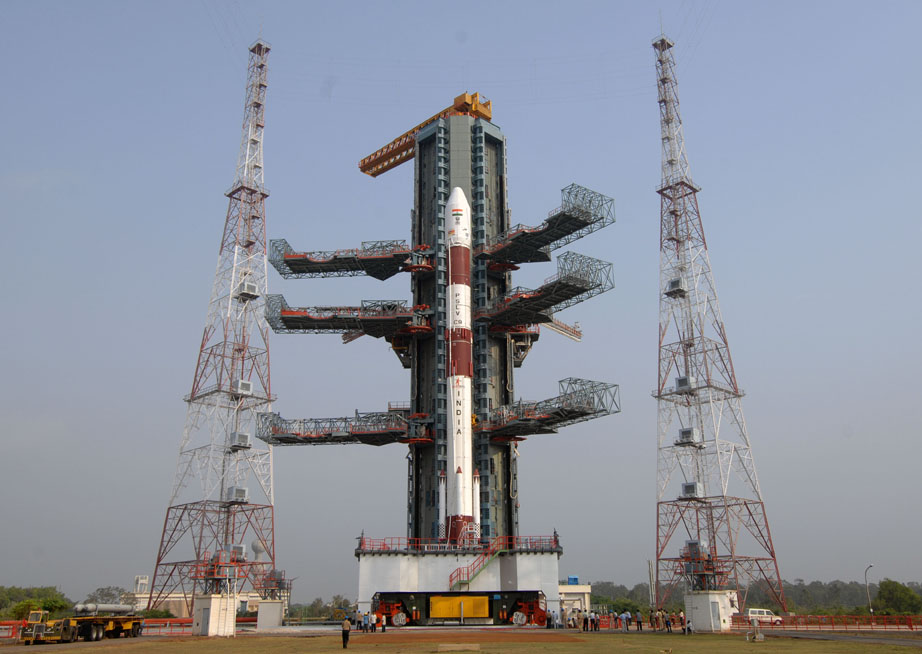
    We have known for a while that India is working on its satellite-based positioning system called Indian Regional Navigation Satellite System (IRNSS.) This will be a competitor to the US-operated GPS system which is the most prominent navigation system around the world. ISRO has launched PSLV-C27, which carries in itself the IRNSS-1D, which is the fourth satellite in the constellation of seven satellites which will make up for India’s own operating system.

    Today’s launch was previously supposed to be held March 9th, but it was postponed due to technical issues in one of the sub-systems. IRNSS-1D has a mission lifespan of 10 years. It will provide navigation, tracking and mapping services. This is the fourth satellite in the constellation of seven satellites. The four satellite will be capable of offering navigational assistance on their own, but the other three satellites will add more accuracy to the system. Once completed, the IRNSS would be on par with US-based GPS system.

    IRNSS will be made of a constellation of seven satellites.
    IRNSS will be made of a constellation of seven satellites.

    IRNSS will be accessible from mobile devices and navigational systems, just like GPS. It will offer terrestrial and marine navigation, assist in disaster management, help track vehicles and will also provide visual and voice navigation for drivers. The system will be established this year and cost the taxpayers a sum of Rs. 1420 crores. IRNSS will focus on South Asia so India’s neighbours can also benefit from it.

    The Kargil War of 1999 had incited a need for an in-country navigation system. The US government back then had refused the request of the Indian government to use the navigation system to keep track of enemy movement. This led to the inception of the IRNSS, and now it has reached the half way mark to completion. India is not the only country which wants to break the dominance of GPS and US influence in the navigational front. Russia with its GLONASS system is already in the market while European Union’s Galileo positioning system and China’s Beidou Navigation Satellite System are in the planning stages.

  • Xiaomi Announces Second Open Sale of Mi Pad in India

    Xiaomi Announces Second Open Sale of Mi Pad in India

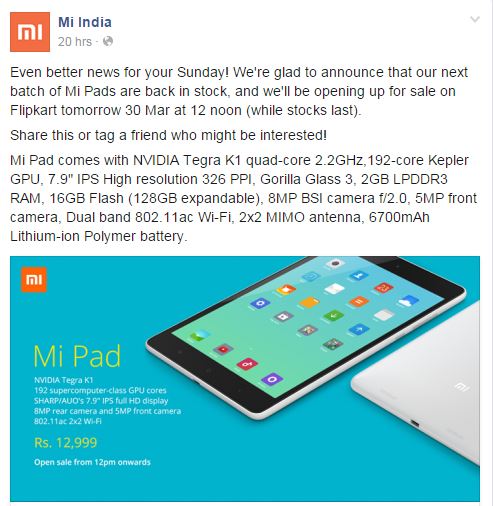
    There is good news by Xiaomi for those who missed the chance to own a Mi Pad in the first open sale held on March 24. The Chinese electronics major is holding a second sale today through its exclusive online partner Flipkart, and just like the previous time, users are not required to register for the device. The tablet is on open sale and it’s available to buy 12 noon onwards today.

    The Beijing-based firm spread the word about the sale via Facebook –

    facebook

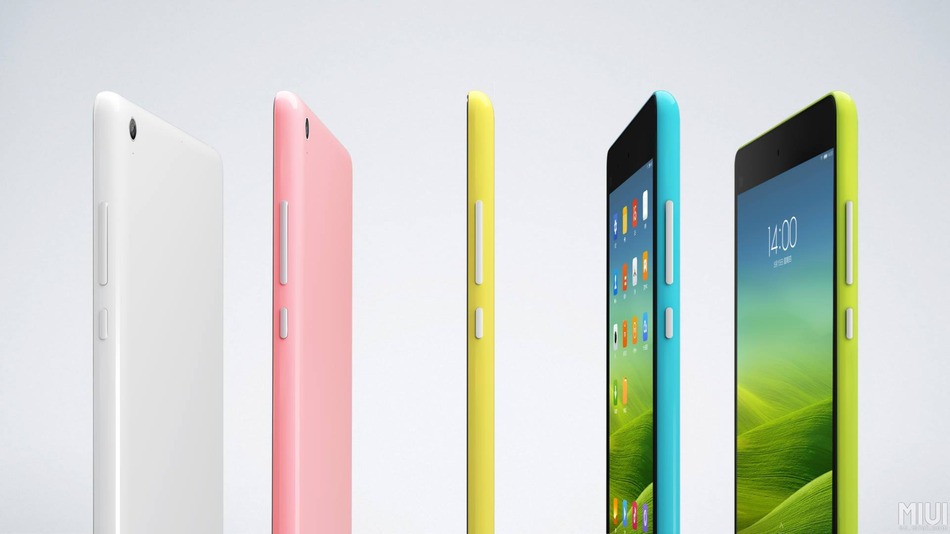
    The Mi Pad is one superior tablet that has the specifications of a high-end device. It is affordably priced at Rs. 12,999. The Mi Pad is thin at 9.4mm and sports a 7.9-inch IPS display with a resolution of 2048×1536. The tablet is powered by a 2.2 GHz Nvidia Tegra K1 SoC ARM Cortex-A15 processor, 2GB RAM and 16GB inbuilt storage space. The Xiaomi tablet runs on Android 4.4 KitKat with MIUI skin on top. The device comes with an 8MP rear camera and a 5MP front camera, and has a powerful battery of 6700mAh.

    Brief details about its specs are provided below:

    SPECS

    Xiaomi Mi Pad

    Display 7.9-inch IPS326 PPI
    Processor 2.2 GHz Nvidia Tegra K1 SoC ARM Cortex-A15
    RAM 2GB
    Internal Memory 16GB
    Expandable up to 128GB
    Camera 8MP rear, 5MP front
    Battery 6700mAh
    Operating System Android 4.4 KitKat
    Price Rs. 12,999
  • YouTube Gets Ready To Bring 4K Videos Running at 60 FPS

    A few months back, YouTube introduced the 60FPS video playback. Now YouTube has taken a step further by introducing 60FPS video on YouTube, at 4K. The video baron has started to experiment with videos that run smoothly and are ultra high-def.

    First spotted by TechCrunch, a low-key secret playlist of only 6 videos has been put out by YouTube which can be played at 60FPS in 4K resolution. For the videos to work in full resolution, the devices playing them must be capable of displaying ultra HD resolution. In addition to sharper video, the movement appears far smoother in comparison to common frame rates of 24fps and 30fps.

    youtube-4k60fps

    At present, there are many 4K displays in the market but there isn’t enough content out there to do justice to these high definition displays. The internet connectivity is also an issue in a country like India which is known for its dismal speeds. But it would still be encouraging for people who has invested heavy sums of money in 4K televisionsto know that the most prominent streaming service now has content that makes full use of the high-def displays’ capabilities.

    Here is the series of 4K videos that are available on YouTube.

  • Google and Johnson & Johnson Come Together to Build Surgery Assistance Robots

    Google and Johnson & Johnson Come Together to Build Surgery Assistance Robots

    Google is leaving no stone unturned to take humankind into the future. From ruling the internet industry to creating self-driving cars, Google has left its imprints everywhere. Now, the search giant wants to use its technological expertise to advance medical science. Pharmaceutical giant Johnson & Johnson announced its partnership with Google and said that both companies would develop advanced robots to assist surgeons with operation.

    For this deal, Google’s Life Science division will be working closely with Ethicon, a medical device making company in Johnson & Johnson family. Google threw light on the collaboration and what can be expected from it with the following comment:

    [quote text_size=”small”]

    It will help explore how the latest innovations in computer science and advanced imaging and sensors could be integrated into tools that help surgeons as they operate.

    [/quote]
    Both companies hinted that Ethicon will be responsible for surgical instruments development and Google will deal with data. They will bring together their capabilities, intellectual property and expertise to make  an innovative robotic-assisted surgical platform possible.

    The advanced technology will help operating room experts to get a better picture of the interior body parts and assist in carrying out a successful operation. A software platform will also be developed that can figure out abnormalities in crucial features like blood vessels, nerves, and other silent diseases that thrive in the body. It will help people in detection of diseases at the primary stage and minimize trauma and scarring and accelerate post-surgical healing.

    Google has been actively participating in biotechnology since past few years, and its Life Science division is dedicated to devising measures to benefit the world. A while back, it invested a contact lens that can measure the glucose level in the wearer’s blood. The Silicon Valley giant is becoming a bigger part of our life with each passing day.

  • Sony’s Augmented Reality Glasses Goes Up for Sale in 10 Countries

    Sony’s Augmented Reality Glasses Goes Up for Sale in 10 Countries

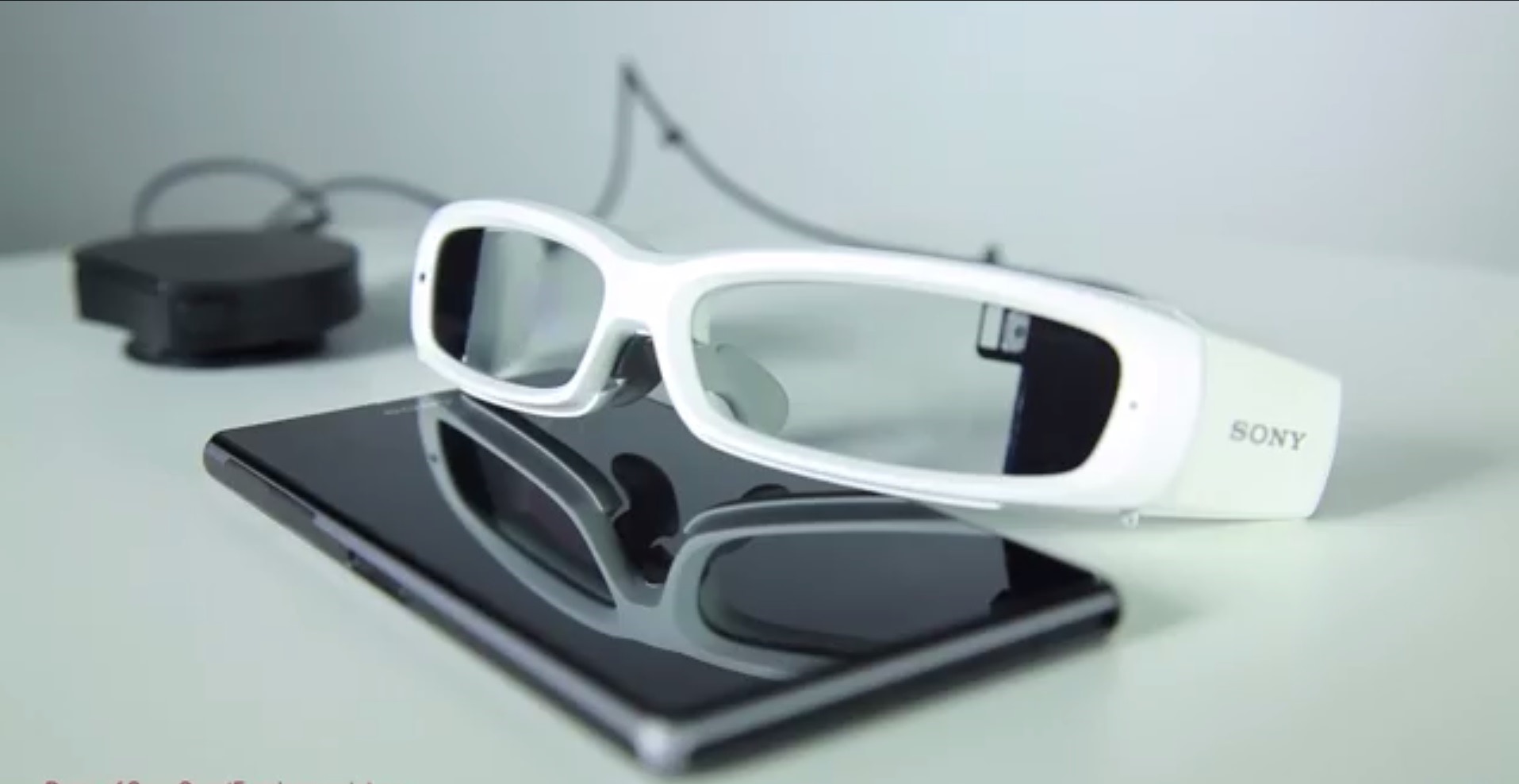
    Sony dipped its toes in the field of augmented reality two months back with the launch of SmartEyeglass. The electronics maker is now putting the transparent lens eyewear on sale in 10 countries across the globe.

    The smart glass going on sale is the Developer Edition of AR eyewear and comes at a price of $840. The 10 countries where it will be accessible are Belgium, France, Germany, Italy, Japan, Netherlands, Spain, Sweden, UK, and the USA. It is a Developer version, the general audience will get their hands on the device in a while. Only the business customers of the following countries would be able to get their holds on the AR tool.

    For a while now, an influx of augmented reality devices has increased in the technology sector. Earlier Google came up with the Google Glas, which was pulled back from the market recently. Microsoft also stepped in the arena with the introduction of the HoloLens and gathered appreciation for bringing alive a cordless, self-contained Windows computer with holographic capabilities.

    The Sony SmartEyeglass is a see-through binocular that superimposes text, symbols and images into the natural field of view. It projects a virtual image through the holographic elements to the user. The wearer can get updates of bus times, directions, and much more in front of their eyes. The device connects to the Android smartphone and mimics the behaviour of the SmartEyeglass.

    For in-depth information on its working, check the video below:

    https://youtu.be/Bx7O_h09HKA

  • It’s Your Time To Speak! TRAI invites Comments on Net Neutrality

    It’s Your Time To Speak! TRAI invites Comments on Net Neutrality

    Net Neutrality has become one of the most important buzzwords in the tech world over the past years. This simple principle states that all content on the internet should get equal speeds, and internet providers cannot discriminate between the content. So users will get the same speed of access to the Facebook as they would for Youtube. The Federal Communications Commission of America, after a intense public debate, sided with Net Neutrality which was seen as a big win for an open and free internet and seen as a rare instant when the public opinion was considered over corporate interests. Now it’s India’s turn to decide the future of the internet.

    The Telecom Regulatory Authority of India(TRAI) has invited views of Indian citizens on the future of the Internet in the country. The regulatory agency is currently also considering the future course of action for the OTT (over-the-top) players such as apps like Whatsapp, Viber, Skype which let users make calls and send messages at reduced rates in comparison to telecom companies. This is why the government is being pressured by the telecom lobby to create a regulatory framework for these apps which are eating into the revenues of the companies.

    Net Neutrality principle states that all traffic on the Internet deserve equal speeds.
    Net Neutrality principle states that all traffic on the Internet deserve equal speeds.

    Airtel recently was on the receiving end massive of massive public outrage for breaking the internet based services and charging exorbitant rates for them. The public backlash led the company to roll back the decision. This instance exhibited an immediate need for clear net neutrality policies in India.

    You can send in your comments by 24th April, 2015 and counter comments by 8th May 2015 on email id [email protected]. You can find more information on the consultation paper on TRAI’s website.

    Net Neutrality has been one of the founding principles of the internet which has been around since its early days. Our lives are getting more and more dependent on the internet with each passing day, and so it’s absolutely essential that the consumer demand it to be open and fair. So right now you have been given an opportunity send in your views and if you miss now you won’t have the right to complain later. So go ahead and tell TRAI and the Indian government to bring strong net neutrality policies and preserve the open and free internet.

    If you are still not convinced to take action yet, we’ll let John Oliver explain why you should send in your comments to TRAI, right now!

  • Xiaomi Ties Up with The Mobile Store to Sell Smartphones in Retail Stores

    Xiaomi Ties Up with The Mobile Store to Sell Smartphones in Retail Stores

    Since the arrival of Xiaomi in India, the Chinese manufacturer has been selling phones through the exclusive online partner Flipkart. Now, the company is giving a boost to its business on the Indian soil. China’s largest smartphone maker has adopted the offline sales policy in the country and will retail its smartphones through the brick-and-mortar outlets of The Mobile Store.

    The company head of India operations Manu Jain notified about the same with his statement –

    This will be the first time we’re getting into offline trade in India. In China, about 20-30% of total sales come from telecom operators’ stores while the rest come from our online store – Mi.com

    Now, one can walk into any of the 55 outlets of The Mobile Store in Delhi-NCR and own a Redmi handset. Meanwhile, the company has drawn out two models, Mi 4 and Redmi Note 4G for sale, and they can be grabbed at the price range of Rs. 19,999 and Rs. 9,999 respectively. The sale begins from Saturday, 28th March, onwards.

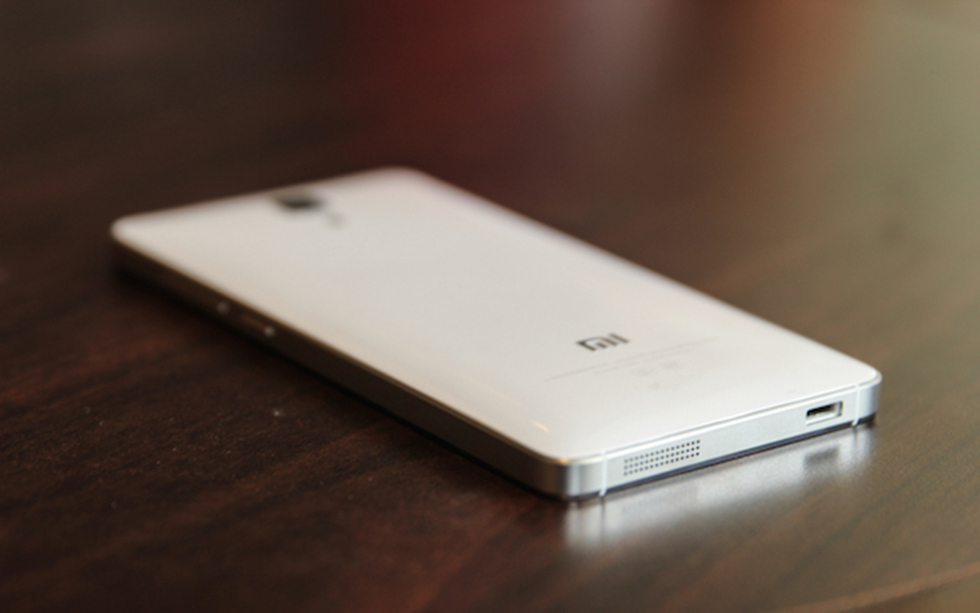
    Xiaomi Mi 4
    Xiaomi Mi 4

    For the moment, only the national capital’s stores offer the devices, but The Mobile Store will soon make them available in its 300 stores across the nation. The stores will not only retail the phones but will also offer repair service, as announced by Himanshu Chakrawarti, Xiaomi Chief Executive.

    Meanwhile, the company’s association with the e-commerce partner still exists, and all the Xiaomi products will be available on Flipkart as always. The Indian online retail channel appreciated Xiaomi’s step and said that the brands sold on Flipkart are always welcome to explore alternative channels.

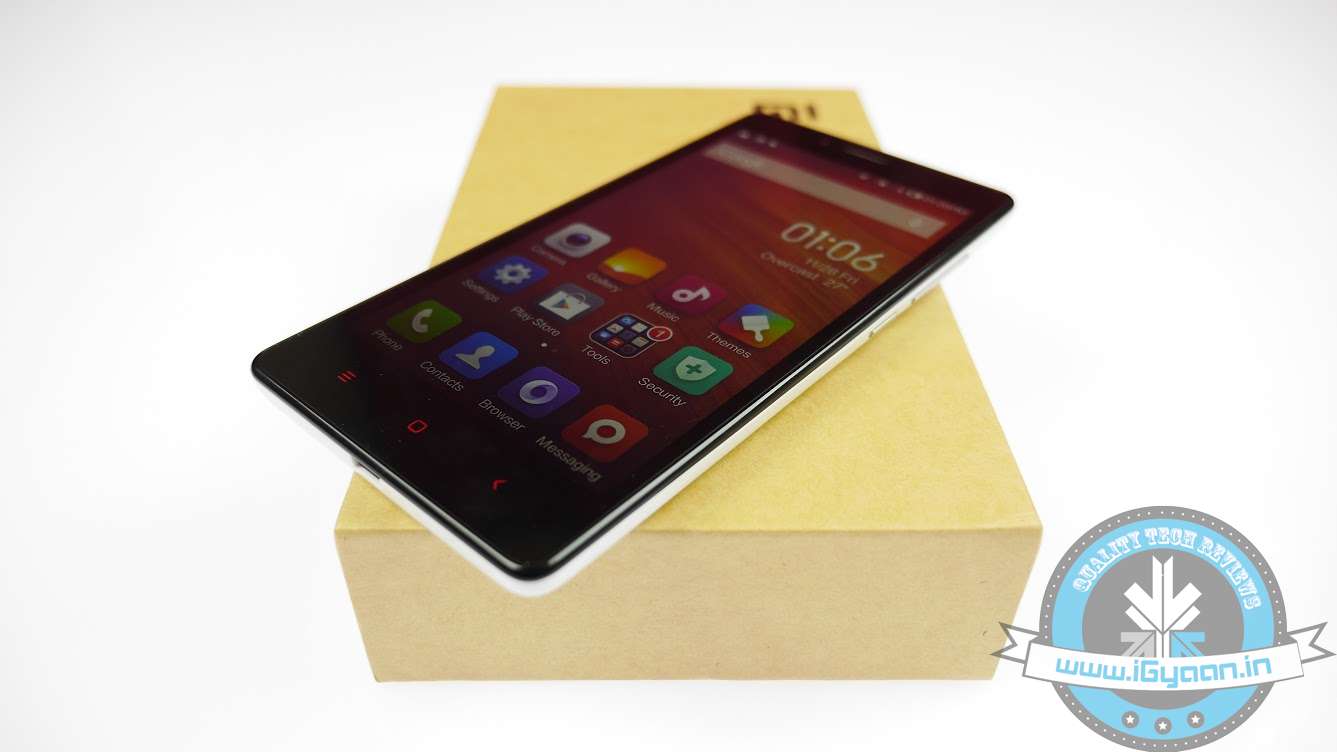
    Redmi Note
    Redmi Note

    Over the past year, Xiaomi has undertaken rigorous efforts to establish itself in the Indian market. It is building up its Research and Development centre in Bangalore and has inaugurated its India-centric online store Mi.com in India. Anyone can order authentic Mi accessories like headphones, power bank and other products from there.

    It is also estimated that the Chinese electronics brand can start its own smartphone store in India if the offline programme goes well. The company has received tremendous response in the country for offering impeccable devices at afforable rates. Lately, it launched its new budget superstar, Redmi Note 2, in India which is available via flash sale on Flipkart. We hope that the trial proposal gets a thumps up and we finally bid farewell to the entire flash sale shenanigans as they have become tiring now.

  • OnePlus’ Upcoming Gaming Gadget Could be a Drone

    OnePlus’ Upcoming Gaming Gadget Could be a Drone

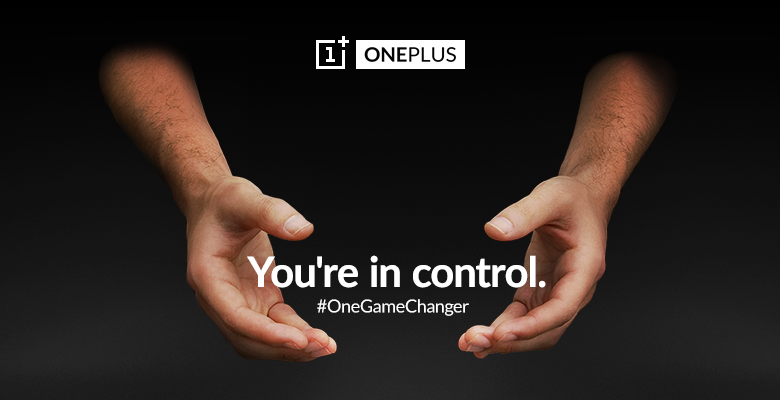
    In spite of being almost a year old, OnePlus has earned a reputation for being a renowned smartphone brand. For now, it has just OnePlus One in its Devices segment, but the Chinese manufacturer announced earlier this month that it would soon launch an entirely new product in April.

    OnePlus turned down all the possibilities of the new device being a smartphone, tablet, or a smartwatch, and declared that it will be a ‘game changing’ product. Now, it seems like we have an idea of what the company was talking about.

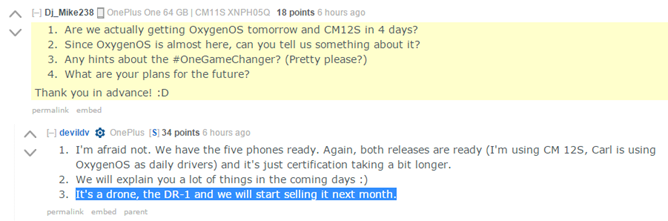
    oneplus droneOnePlus made the announcement during an Ask Me Anything (AMA) session on Reddit, and what came out from the conversation was unpredictable. The forum administrator David S. replied to the queries saying that the upcoming product would be a drone. It’s not certain if he was trolling, but his comment reads, “It’s a drone, the DR-1 and we start selling it next month.”

    It’s surprising to hear that how drone technology, at this point of time, could be a game changer when many companies have already come up with remarkable unmanned aerial vehicles. For now, the OnePlus fans have to wait till April for the company to officially make an announcement.

    [poll id="29"]

  • Lenovo A7000 with Dolby Atmos Technology Expected to Cost Below Rs. 10,000

    Lenovo A7000 with Dolby Atmos Technology Expected to Cost Below Rs. 10,000

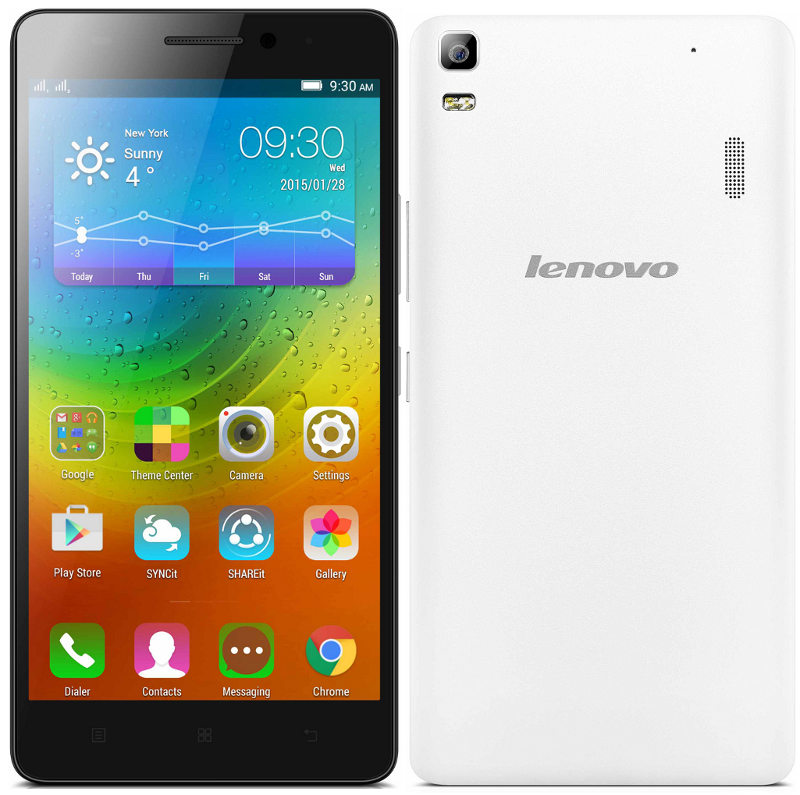
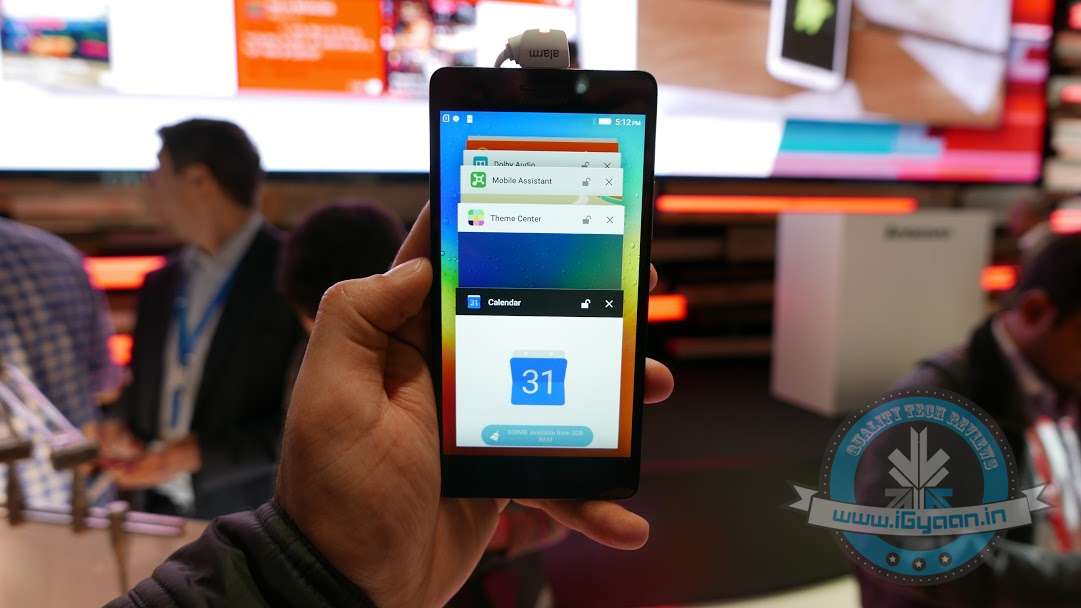
    When Lenovo unveiled its latest offering, the A7000 at MWC this year, it was evident that the smartphone can stand against the likes of Xiaomi Redmi Note 4G and YU Yureka. The smartphone is expected to come to Indian shores on April 7 and the company has sent out invites for the same. Along with its all-round specification, users have one more reason to own a Lenovo A7000.

    According to a source citied by Times of India, the Lenovo A7000 will cost users somewhere around Rs. 8,999 to Rs. 9,999. The price range will put it directly at odds against the Yu Yureka and the Redmi Note. This is the first commercial handset to boast Dolby Atmos technology. Interestingly, the company has chosen a Dolby Atmos sound equipped movie theatre as their event venue.

    Lenovo A7000 2Talking about the specifications, the Lenovo A7000 sports a 5.5 inch HD display. It is powered by a 1.5 GHz MediaTek True8Core processor with 4G LTE. It flaunts 2 GB RAM and 8 GB internal storage which is expandable through MicroSD. The device is 7.9 mm thick and weighs just 140g. The smartphone runs on Android 5.0 Lollipop.

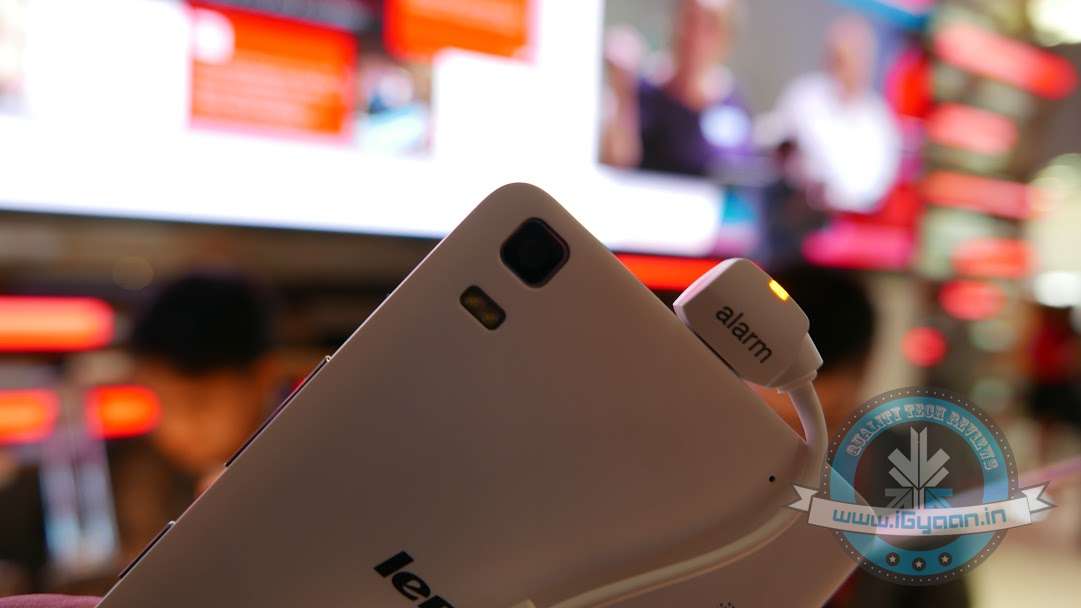
    Lenovo A7000 3On the camera front, this budget device offers an 8 MP shooter on the back and a 5 MP selfie camera on the front. It gets its juice from a 2900 mAh battery that might just cut it for its massive display.

    The USP of the device is the Dolby Atmos sound, the technology make the content sound like it is coming from all directions. You will, of course, require a pair of headphones to get the true Atmos experience.

    Keep checking iGyaan for more updates on the Lenovo A7000.

  • OnePlus Misses Oxygen OS Rollout Deadline, Will Compensate with Giveaways

    OnePlus Misses Oxygen OS Rollout Deadline, Will Compensate with Giveaways

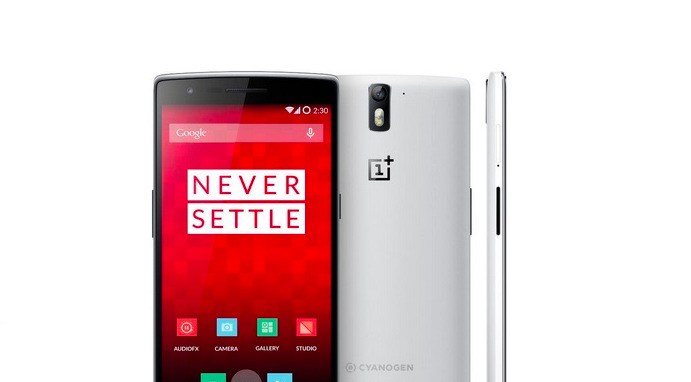
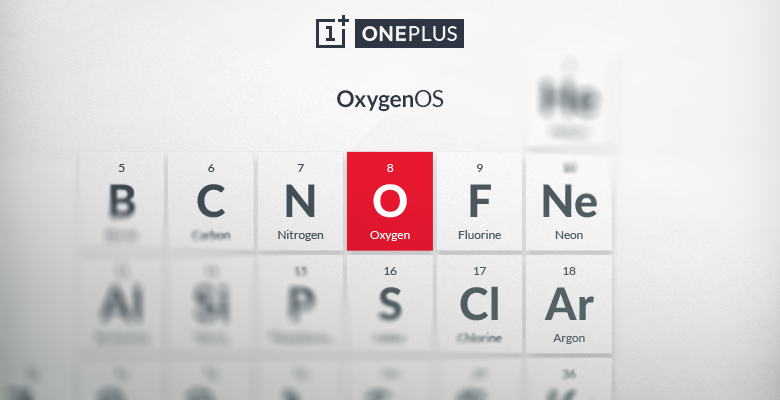
    On March 18, we broke the news that OnePlus will be releasing the upgrades; CM 12S and OxygenOS. The Chinese electronics manufacturer promised the OnePlus One users that OxygenOS, the Lollipop-based ROM, will officially be made public on or before March 27, which is today. But OnePlus has missed the deadline leading to disappointed customers who were really looking forward to their Lollipop updates.

    oxygenos oneplus

    OnePlus notified its users saying that there will be further delay in the release of the update. The company representative David posted on Reddit –

    We are gonna be giving away the 5 devices sometime tomorrow, yes :(

    However the company is ready to give away five 64GB OnePlus One smartphones as promised, It is not the first time OnePlus missed a deadline for the launch of its new OS. It had previously declared that it will release its own new operating system Oxygen on February 12, but didn’t carry out the roll out.

    OnePlus is a young smartphone brand that has released just one smartphone till now. It is planning to expand its line of devices and is expected to launch a second smartphone soon. It’s certain that the delay would be because of the company’s efforts to bring out a stable version, and we appreciate its dedication. We hope that the firm will not keep its users waiting for long this time and will release OxygenOS as soon as possible.

  • Apple CEO Tim Cook To Give Away All His Wealth To Charity

    Apple CEO Tim Cook To Give Away All His Wealth To Charity

    When Bill Gates and Warren Buffet, two of the richest individuals on the planet join their hands to form the Giving Pledge, it was seen as a call to action to the bourgeois population to engage in philanthropic efforts. About 128 billionaires have joined the initiative and agreed to donate most of their wealth to charity. The list includes the likes of Mark Zuckerberg, Richard Branson, and Elon Musk. Now Apple’s current CEO; Tim Cook will now join the ranks of the affluent philanthropists.

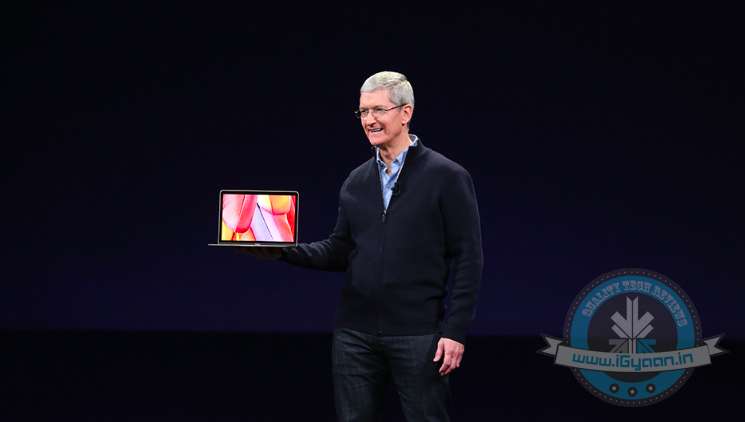
    Tim Cook has announced that he will be giving away most of his wealth to charity. He wants to have enough to pay for his 10-year-old nephew’s college education. Tim Cook, being the CEO of the company that made the biggest profit ever in history recently, has a quite a healthy savings account, as you can imagine. His estimated wealth currently is said to be around $785 million.

    Tim Cook has worked with Apple since 1998 and has led the company since 2011 when Steve Jobs stepped down.
    Tim Cook has worked with Apple since 1998 and has led the company since 2011 when Steve Jobs stepped down.

    The announcement was made in an interaction with Fortune magazine. He said that he has already started donating money to various unspecified causes and is looking forward to developing a more systematic approach for his donations.

    The 54 year old, has commanded the Apple ship since 2011 when its illustrious founder Steve Jobs stepped down. Under his watch, the company has brought several new products including the new Mac Pro, recent iPhones, and the new Apple Watch.

    Tim Cooks wealth may not be at par with the likes of Bill Gates and Mark Zuckerberg, but it does present an encouraging scene where billionaires and millionaires show interest in the public good. We hope this trend catches on, and we get to see more individuals with massive capital interested in investing the people instead of stashing that money in offshore banks.

  • DARPA is Developing a Real-Time Positioning Technology That Will Replace GPS

    DARPA is Developing a Real-Time Positioning Technology That Will Replace GPS

    The Global Positioning System (GPS) technology has been in use from many years now. Different sections of the society like military, civil, and commercial sector make use of GPS to track down accurate location and time information. However, the satellite navigation system has its own limitations and gets obstructed by weak signals. To rise above the vicious circle, DARPA, the agency of U.S. Department of Defense, is working on an alternative of GPS.

    The advanced research wing of US Military is building up a cutting edge location technology that will offer real-time navigation-tracking inspite of blind spots and jammers. This will lend a hand for the U.S. Defense department to get instant information about the location of their soldiers and tanks and also the rivals. The research wing of U.S. Department of Defense said in a statement :

    The need to be able to operate effectively in areas where GPS is inaccessible, unreliable or potentially denied by adversaries has created a demand for alternative precision timing and navigation capabilities.

    This technology won’t just benefit the military; a range of new self-contained instruments are under development that will give real-time details about time, location, and motion to civil and commercial users. The organization is working on self-calibrating gyroscopes, accelerometers, high-precision clocks and navigation instruments that work without wireless signals or other external sources.

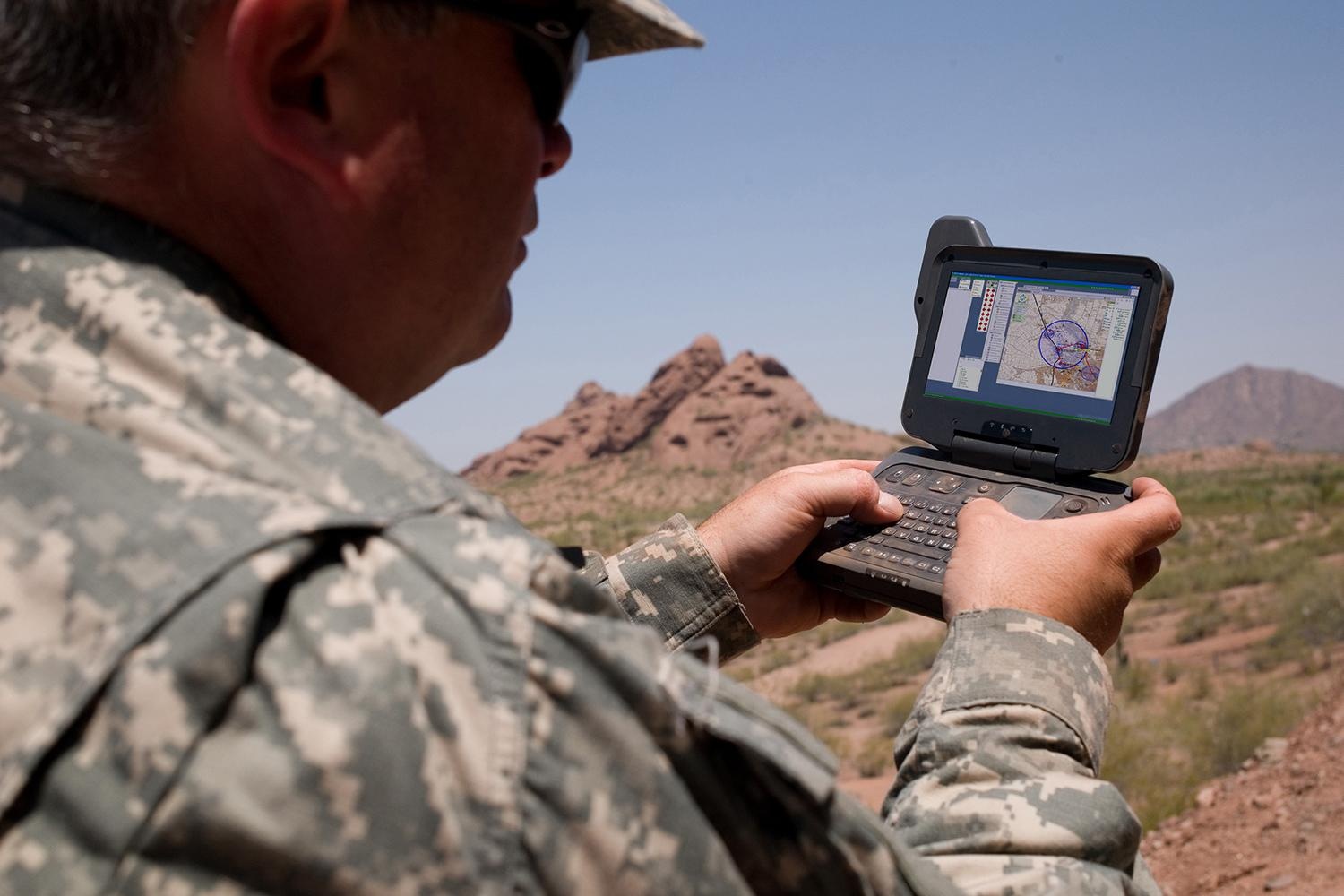
    darpa soldiersThe agency is reportedly eyeing on new technological sensors that could pick up “signals of opportunity” such as television, radio, cell towers, satellites, and even lightning, and assist the receiver in navigation and real-time positioning. Termed as ASPN (All Source Positioning and Navigation), the innovation will help soldiers in harsh conditions such as in dense jungle, underwater or underground, deep foliage, etc. In short, it will reach all the places where GPS access gets obstructed.

    Also it is learnt that the upcoming device will be compact in a way that it can be carried by the soldiers or can be installed on tanks to know about their positioning. The sensors will be cut down in size to reduce power consumption.

    All this sounds good, but don’t expect it to come to your hands anytime soon. This GPS alternative is presently under development and it will take a few years to come to the market.

  • Facebook Showcases Solar-Powered Drones Which Will Beam Internet Down To Earth

    Facebook Showcases Solar-Powered Drones Which Will Beam Internet Down To Earth

    At the two-day F8 Developer Conference at Fort Mason in San Francisco, Facebook shared with the world its plans for year 2015. Yesterday we surfaced the news of Facebook extending Messenger support to third-party apps allowing users to interact with businesses. Now, the social networking giant announced that it will be building drones to help accomplish its Internet.org project.

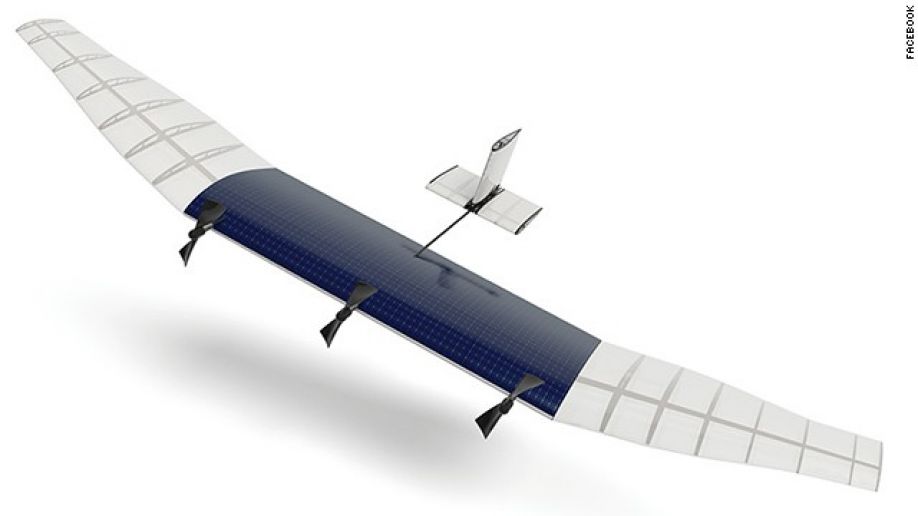
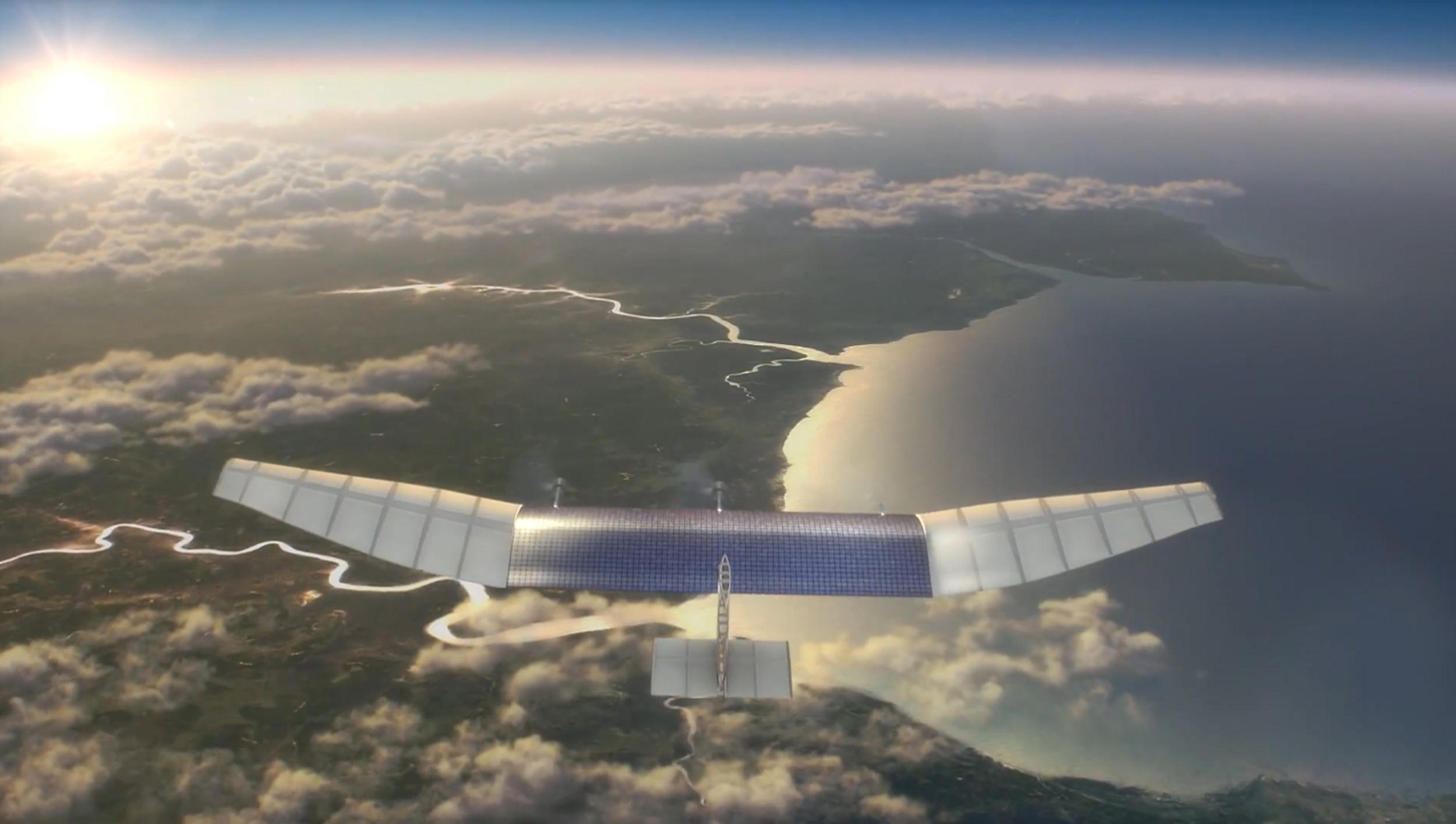
    According to The New York Times, the unmanned aerial vehicle will be V-shaped and are codenamed as Aquila. The drones have got their name from an eagle in Greek mythology. The wingspan of Aquila would be as wide as a Boeing 767 jet airliner, but will weigh as much as a compact car; thanks to the lightweight material to be used for its construction.

    drone

    The unmanned aerial vehicle will reportedly stay in the atmosphere for almost three months and will use solar power for its operations. Staying in the air, the drones will push internet access to 60,000 and 90,000 feet via lasers. During their suspension in the sky, the aerial vehicles will communicate with each other so that they cover the maximum area on the earth. According to the source, the first flights will begin in summer this year, however, the commercial deployment of these drones fleet may take time.

    Facebook’s drone initiatives are powered by its buyout of Ascenta, a drone maker in 2014. But it needs external support to build its fleet of drones. Facebook is seeking partners to fund its Aquila project to take off, and in turn the company will offer the data and technology to the supporters.

    Until now, Facebook was recognised as a social media entity, but looks like it wants to be the leading powers of the technology busines. Facebook inaugurated the limited free internet service across the world in August 2013 and today, it’s shaping itself to give maximum benefits to the people. It recently brought the internet.org initiative to India in a tie-up with Rcom. There are several initiative underway to offer low cost, high speed access to the entire population of the planet. Apart from Facebook’s drone initiative, Google is making headway in the arena with its Project Loon. SpaceX founder Elon Musk, in cooperation with Google also plans to cover the planet under a constellation of internet beaming satellites. The human population will soon become a connected civilization.

iGyaan Network
Privacy Overview

This website uses cookies so that we can provide you with the best user experience possible. Cookie information is stored in your browser and performs functions such as recognising you when you return to our website and helping our team to understand which sections of the website you find most interesting and useful.