Tag: electric

  • BMW i3 Electric Car Made Official Worldwide

    BMW i3 Electric Car Made Official Worldwide

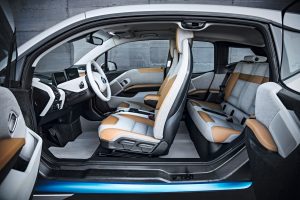
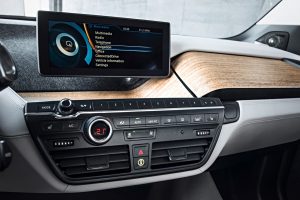
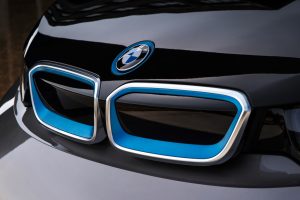
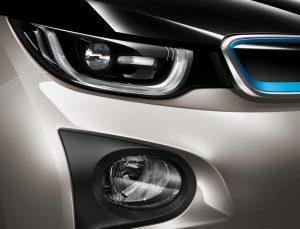
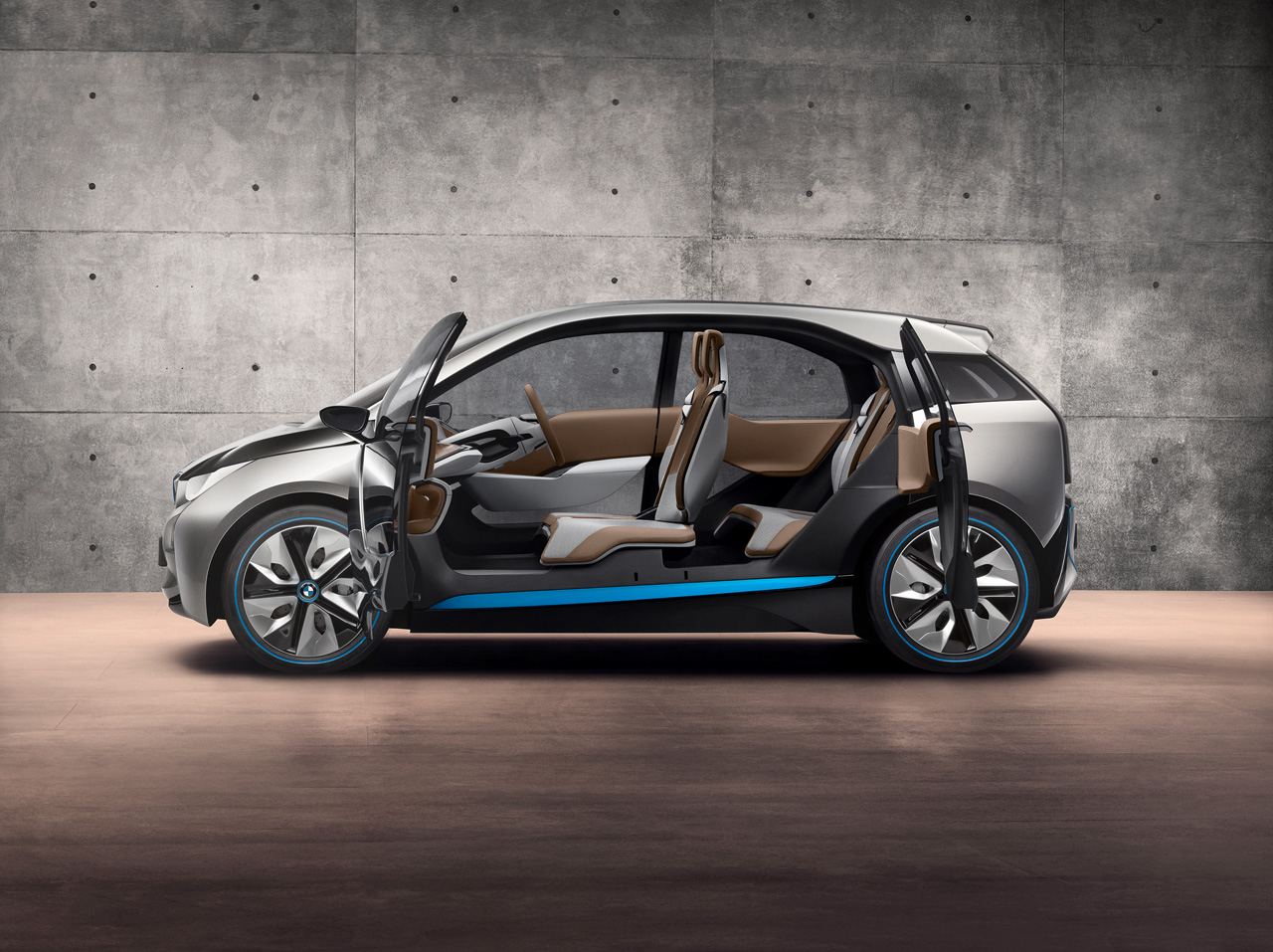
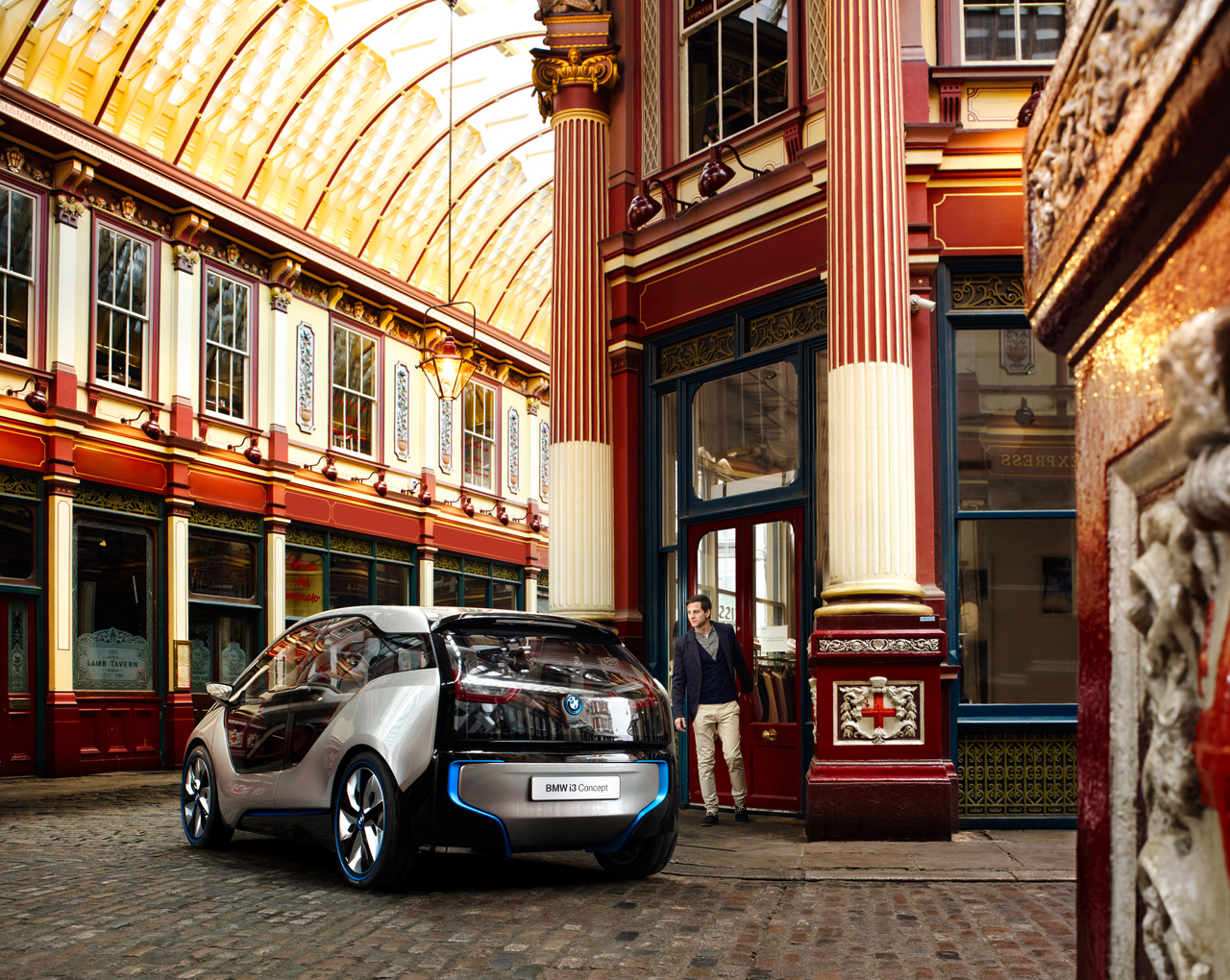
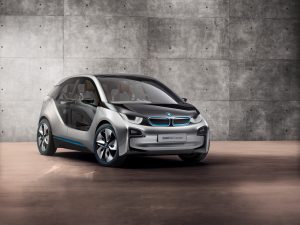
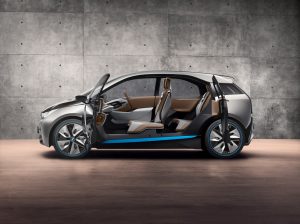
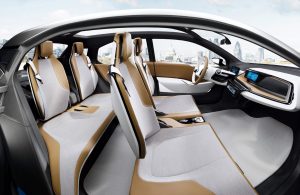
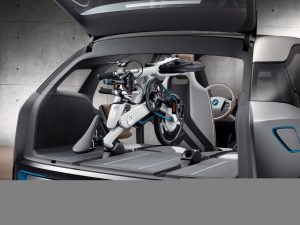
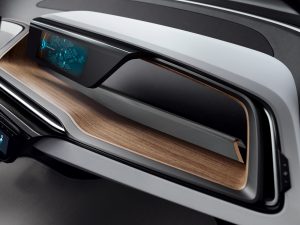
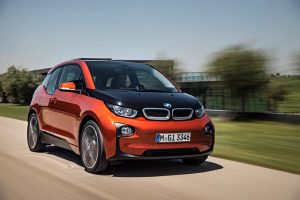
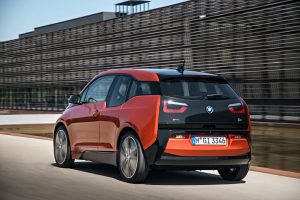
    Today marked what BMW hopes was a momentous day in its history, and especially the era of the electric vehicle. In a high stakes bid for electric vehicle supremacy, BMW unveiled the production version of the electric i3 hatchback – the first of what the German automaker promises will be a complete range of alternative drive models to be sold under its new ‘i’ brand. Simultaneous presentations in London, New York and Beijing were witness to the reveal of the innovative and much anticipated electric car. Unlike most cars today, the production version of the contemporary-styled hatchback managed to stay true to the concept displayed at the 2011 Frankfurt Motor Show. The most prominent change from the concept came in way of a five door bodystyle in place of the original three door arrangement, for obvious added practicality and ease of entry to the rear.
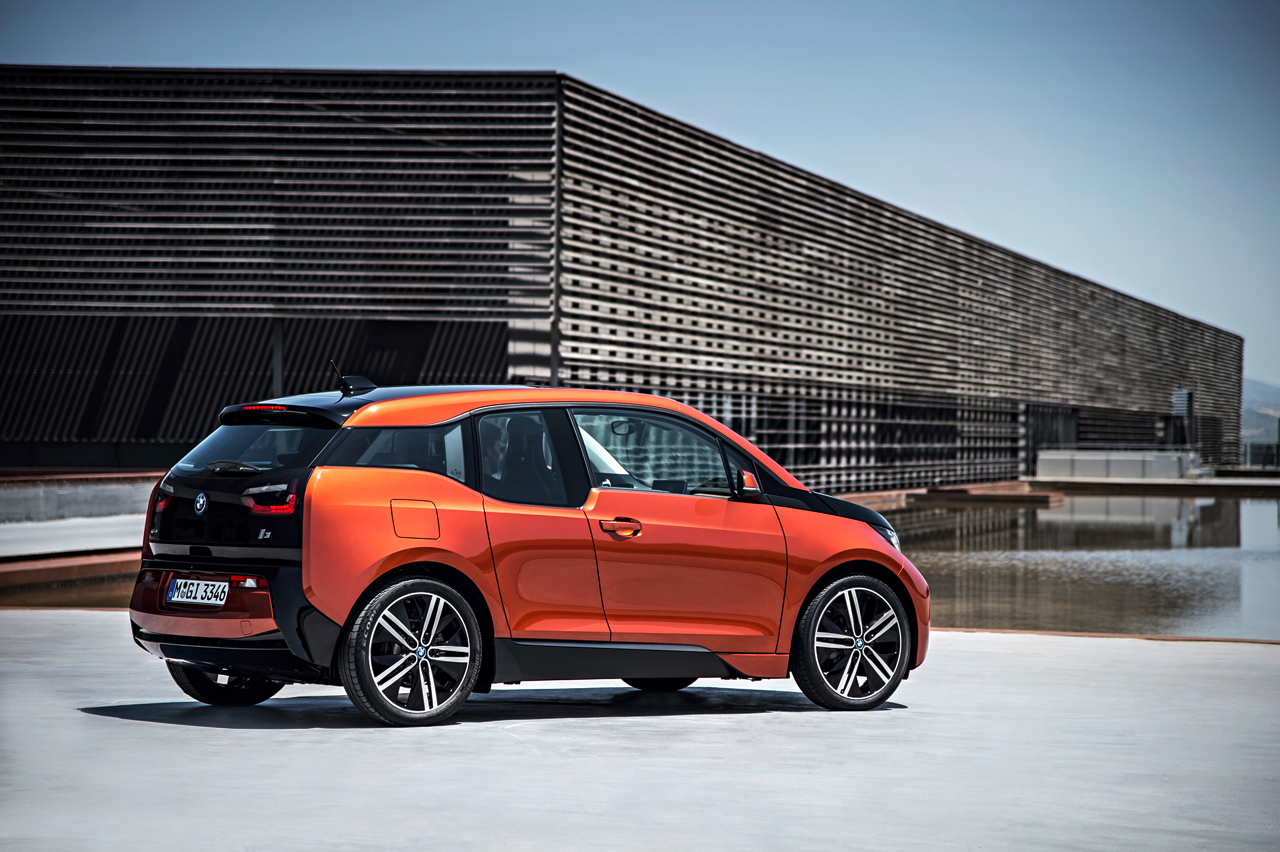
    i3

    The i3 will go on sale in the US for $41,350 in the second quarter of 2014, exclusive of any state or federal incentives that could lower the price or the $925 destination fee. The i3 will be available with three trim levels at launch, which BMW is calling ‘Worlds’: Mega (standard in the US), Giga and Tera.

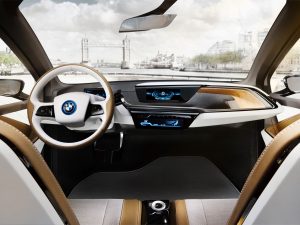
    The BMW i3 is truly revolutionary, with tons of new technology, probably because it was designed as an electric vehicle right from its conception. This has resulted in a vehicle layout unique to the i3, which the Bavarian manufacturer calls ‘LifeDrive‘ architecture. It features components called the ‘Life Module’ and the ‘Drive Module’.
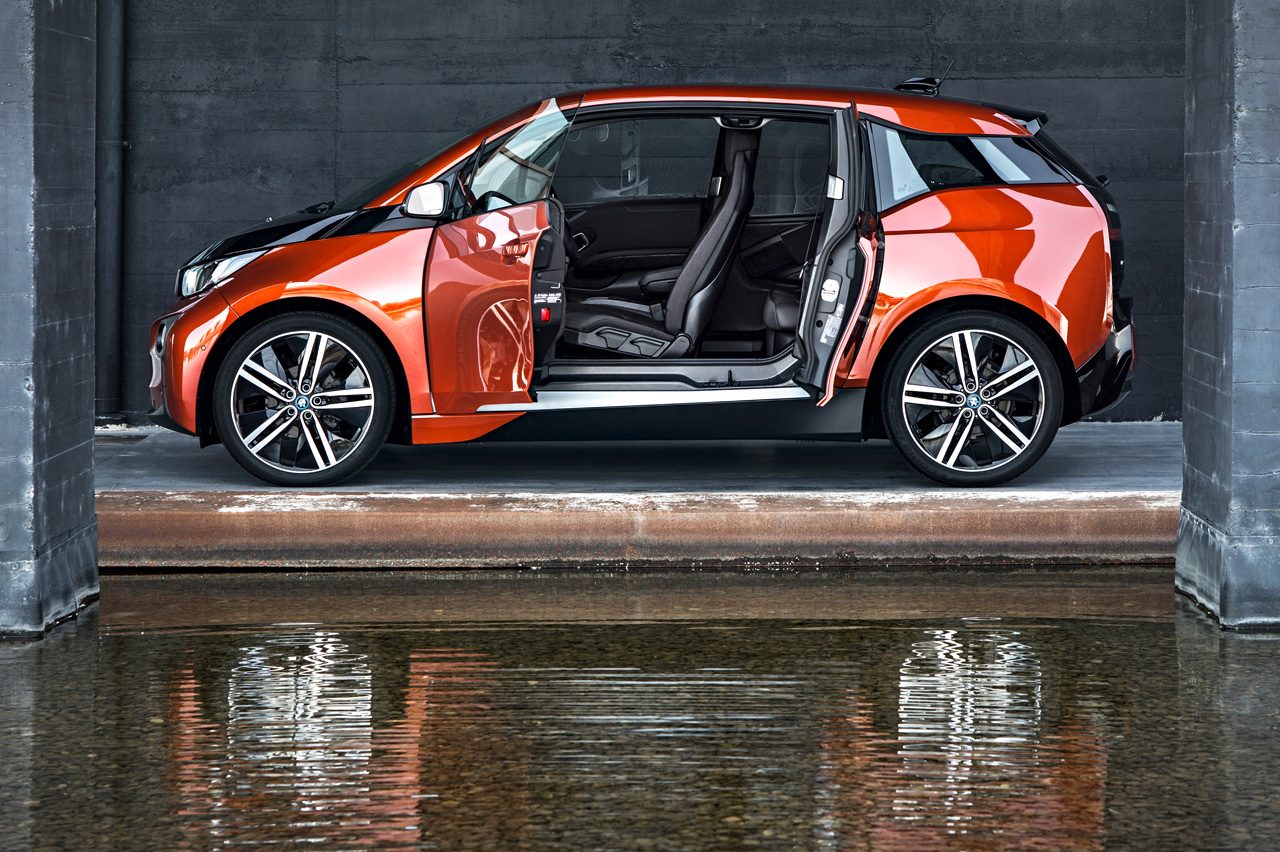
    i3

    The Life Module is the i3’s pillar-less passenger cell, and is all set to become the first mass-produced monocoque made of carbon fiber reinforced plastic (CFRP). The tougher-than-steel material, usually seen only on very expensive supercars, is 30-percent lighter than aluminum, which results in the i3’s relatively light weight of approximately 1,200 kilograms. The Drive Module is basically a 100-percent aluminum chassis which is mounted under the Life Module and houses the hatchback’s powertrain. The 22-kWh, 250-kilogram lithium ion battery is mounted as centrally as possible to optimise vehicle dynamics, and provides power to a rear-mounted synchronous electric motor which drives the rear wheels.
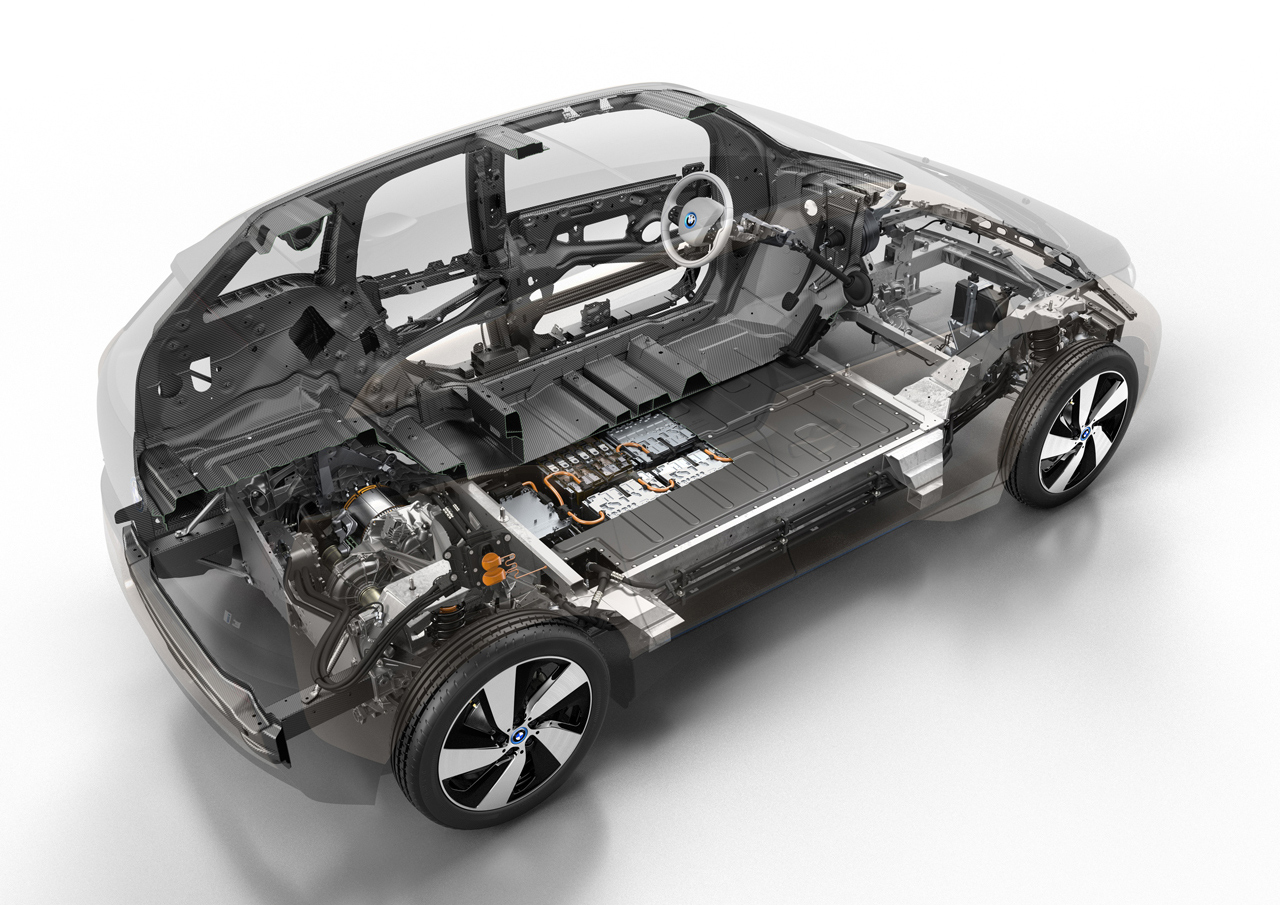
    i3

    The in-house produced unit, known under the BMW eDrive banner, provides 170 horspower and 25.4 kgm of torque. This translates to a 0-100 km/h time of about 7.0 seconds, but a relatively low top speed of only 150 km/h. Drive is sent through a single ratio gearbox mounted to the end of the electric motor, offering the choice of three driving modes: Comfort, Eco Pro and Eco Pro+.

    The lithium ion battery is produced by Samsung and bears a warranty valid for up to six years or 1,60,000 kilometres. It consists of 96 individual cells mounted within the flat floor structure and has been designed to allow the replacement of damaged cells on an individual basis. BMW has mounted the battery as low as possible in the i3’s carbonfibre structure as possible, allowing a claimed centre of gravity lower than that of the BMW X1 compact SUV.
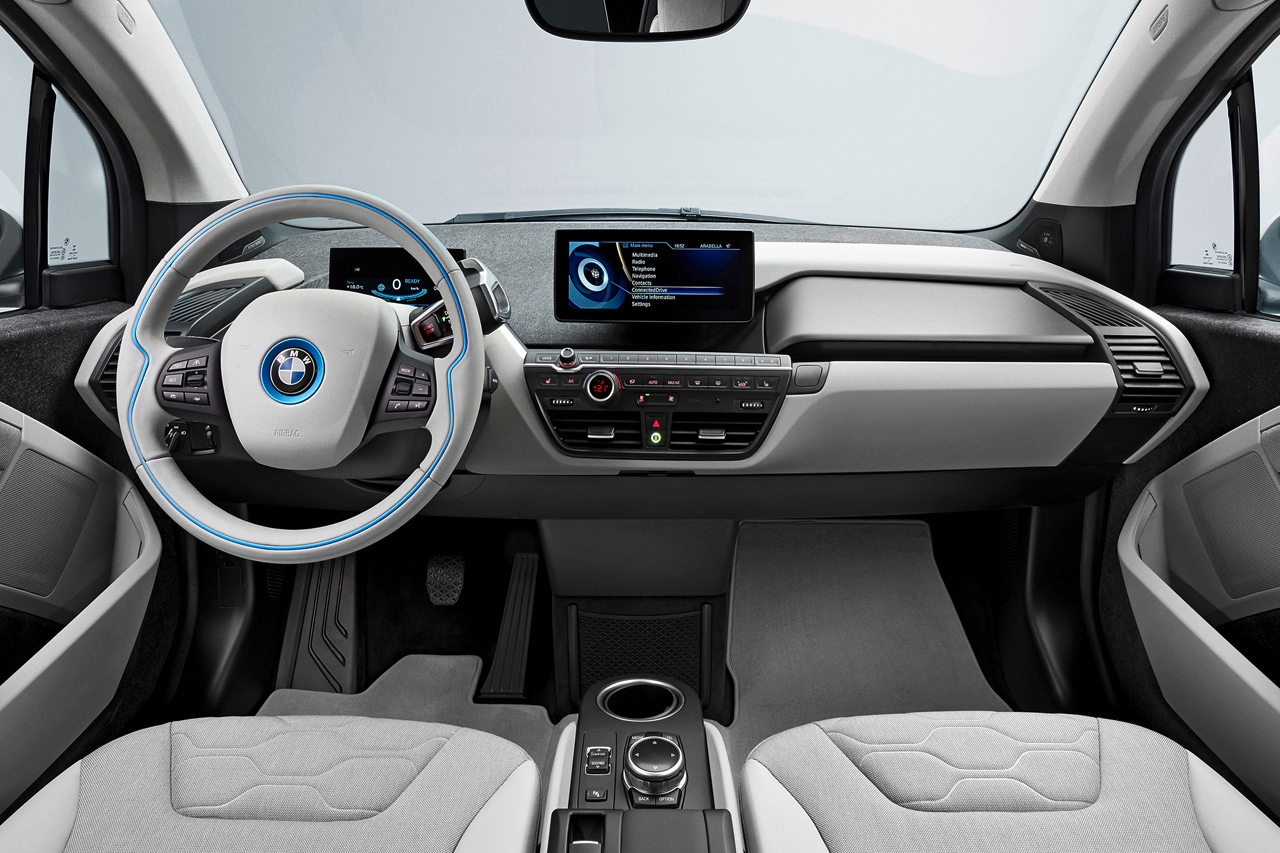
    i3

    According to BMW, the i3 has a real-world range of 130-160 kilometres, and the standard charger can fill the battery in three hours. However, if you go for the optional SAE DC Combo Fast Charger, you get 80% charge in 20 minutes and a fully charged BMW i3 in half an hour. If the range is an issue for you, BMW provides the option of a 34 horsepower, 650cc two-cylinder generator as a range extender for the electric drive system.

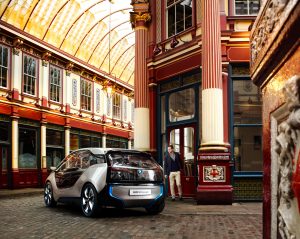
    The attractive little car was conceived under the working title of Mega City Vehicle, in order to focus attention on its suitability for urban driving. Reportedly, BMW has spent up to €2 billion (over Rs 15,000 crore) in research, development, testing and production processes for the new four-seater. At first glance, the BMW i3 seems to be properly revolutionary. Technologically marvellous, and visually very appealing, it may become the first real mainstream electric vehicle, in history.

    Check out some pictures of BMW’s new electric hatchback, and let us know what you think in the comments below!
  • Renault-Nissan Has Sold 1,00,000 Zero-Emission Cars

    Renault-Nissan Has Sold 1,00,000 Zero-Emission Cars

    Allison Howard, American graduate student at Kennesaw State University in Atlanta, Georgia purchased a Nissan Leaf earlier this month. That Nissan Leaf was the 1,00,000th zero-emission car sold by the Renault-Nissan alliance.

    The age of the mainstream zero-emission vehicle is here. We expect demand to keep growing as the charging infrastructure develops – and we remain 100 percent committed to zero-emission technology for the long term.

    – Carlos Ghosn, CEO, Renault-Nissan

    Renault-Nissan has sold more zero-emission cars than all other automotive manufacturers put together. Electric cars sold by the French-Japanese alliance have driven approximately 841 million kilometers, enough to circle the earth more than 20,000 times, and they have produced no-emissions while doing so. Together, they have saved 53 million litres of oil and prevented emissions of 124 million kg of CO2.

    The Nissan Leaf makes up more than half of all global sales of pure electric driven cars. More than 71,000 sales comfortably makes it the world’s best-selling electric vehicle. The Nissan Leaf won the 2011 World Car of the Year, European Car of the Year 2011 and Car of the Year Japan 2011-2012 awards.The top markets for the Leaf are the United States with about 30,000 units, Japan with 28,000 units, and Europe with 12,000 units.

    Comparatively, Renault has sold 30,000 electric vehicles since late 2011, looking after other segments of the EV market with the Kangoo Z.E., Zoe, Twizy and Fluence Z.E.

  • Andretti Autosport Signs Up for All-Electric ‘Formula E’ Series

    Andretti Autosport Signs Up for All-Electric ‘Formula E’ Series

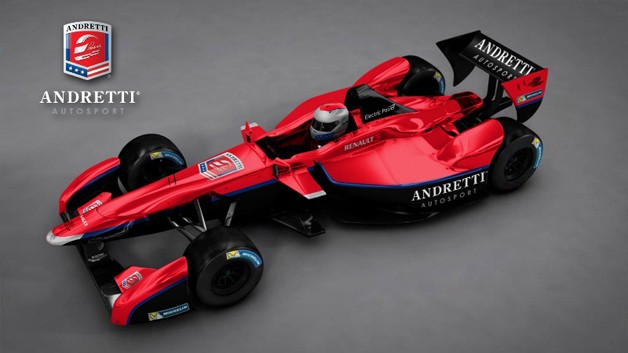
    Four-time IZOD IndyCar Series champions Andretti Autosport has announced that it will field a team in the upcoming FIA Formula E Championship, the all-electric racing series that will debut next season. Andretti Autosport is the first U.S.-based team to sign up for the new racing series.

    The Andretti team plans to create a two-car program for the series, which will compete in 10 cities around the world. The American outfit now the third team to sign on so far for Formula E’s inaugural season, joining China Racing and British-based Drayson Racing.

    Andretti Autosport is run by none other than former racer Michael Andretti. Michael Andretti, who is the son of racing legend Mario Andretti and father of current Andretti Autosport driver Marco Andretti, was the 1991 CART IndyCar champion and raced in Formula One for McLaren in 1993. He has led Andretti Autosport to the status of IndyCar champions on four occassions, with drivers Tony Kanaan, the late Dan Wheldon, Dario Franchitti and last year’s title winner Ryan Hunter-Reay. Andretti Autosport also won the Indianapolis 500 with both Wheldon and Franchitti.

    It’s an honour for Andretti Autosport to have been selected as one of the 10 founding Formula E teams for the inaugural season. I look forward to further exploring the series and helping build the future of open-wheel racing across the world.

    – Michael Andretti

    Interestingly, Andretti Autosport plans to run one of its cars for the Formula E championship but potentially use the second as a “star car” for well-known drivers. This in turn could mean appearances in the new category from their stable of IndyCar pilots – defending series champion Ryan Hunter-Reay, Marco Andretti, James Hinchcliffe and E.J. Viso.

    Formula E

    We are absolutely delighted to welcome Andretti Autosport to the series; a team with an incredible racing pedigree and track record who I have no doubt is going to make a big contribution to the FIA Formula E Championship. It’s fantastic too for such a highly-established outfit to show its commitment to sustainable motoring and with two US races on the inaugural calendar – Los Angeles and Miami – I’m sure American motorsport fans will have a lot to cheer come race day.

    – Alejandro Agag, Chief, Formula E

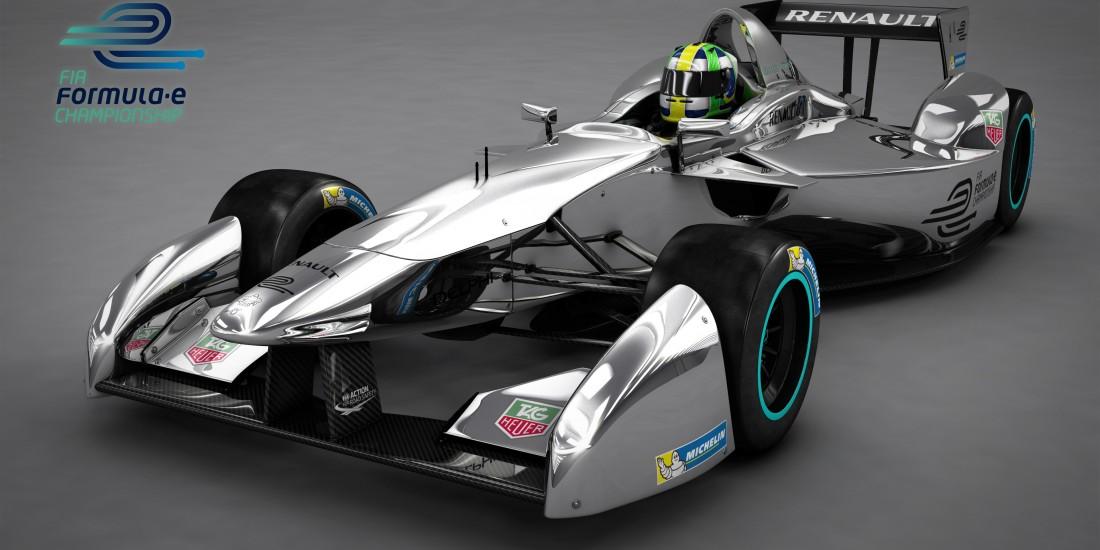
    Formula E’s first season will run from September 2014 to June ’15, running entirely on street circuits, including one in London. Berlin was unveiled as the final venue on the calendar last week.

  • BMW claims it has 1,00,000 reservations for i3 programme

    BMW claims it has 1,00,000 reservations for i3 programme

    BMW’s sales boss, Ian Robertson, has said that there are 1,00,000 people around the world who have made reservations for the BMW i3, and a “significant number” of them have made deposits for the car.

    i3

    Robertson’s interview with Automotive News Europe reports him as also saying that the i3 differs from many of the EVs on the road today because it was developed as an EV from the start, rather than being conventional car with an electric powertrain dropped in.

    We are confident that with the i3 and i8 we will shift the [customer demand] needle because we will shape some of this technology.

    – Ian Robertson, Chief, Sales & Marketing, BMW

    His stance is in contrast with BMW CEO, Norbert Reithofer’s comments from last year, when he said that governments need to pony up more plug-in vehicle support or EVs just won’t be popular.

    i3

    When asked for the car’s starting price, Robertson said that it would be in the same range as the 3 series, which in Germany is priced between 28,800 and 38,800 Euros for base versions. We will finally get to see the production version of the i3 at the Frankfurt Motor Show this September, 30 months after the announcement of the ‘i’ subbrand, also including the i8 plug-in hybrid supercar. The BMW i3 goes on sale in Europe at the end of the year.


    [Automotive News Europe]

  • Mercedes SLS AMG Electric Drive Breaks Nurburgring EV Lap Record

    Mercedes SLS AMG Electric Drive Breaks Nurburgring EV Lap Record

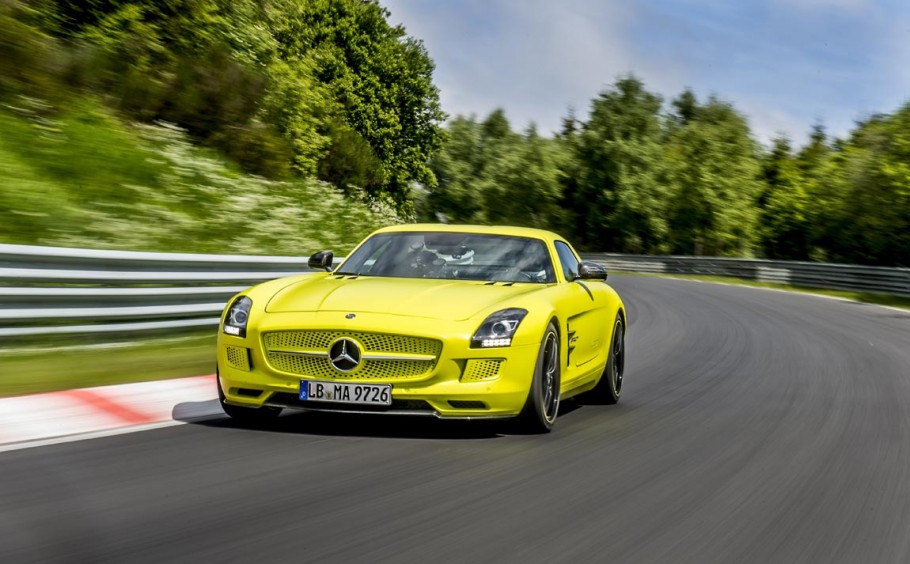
    The Mercedes-Benz SLS AMG Electric Drive set a new speed record for a production electric car at the Nurburgring.

    The electron-drives Mercedes SLS AMG managed to get round the ‘Ring in seven minutes and 56.2 seconds, which also makes it the first EV to break the eight-minute barrier on the infamous German track.

    Last year the R8 e-tron came close with a lap time of 8:09.099 minutes after Audi engineers raised the standard car’s speed limit from 124 mph (200 km/h) to 155 mph (250 km/h).

    Mercedes SLS AMG

    The four motors powering the SLS Electric Drive deliver thrust to all four wheels. That’s a good thing, since the powertrain serves up a mind-blowing 737 lb.-ft. of torque. Mercedes-Benz estimates the SLS Electric Drive needs less than 4.0 seconds to accelerate from 0 to 60 mph. Top speed is electronically-limited to 155 mph.

    In addition to its brute force, the Mercedes SLS AMG Electric Drive also features a unique carbon fiber structure built around its battery system that helps improve overall stiffness and dynamics. Then there are the racing-style pushrod shocks and carbon ceramic brakes to harp on about, but the aspect that draws the most attention is the sophisticated torque vectoring system of the car developed using Formula One technology.

    The Mercedes SLS AMG Coupé Electric Drive celebrates its sales launch in June 2013. The purchase price is approximately $550,737 USD. (Don’t count on us reviewing it.)

    [Motor Authority, NYDailyNews]

  • Mission Motorcycles Launches R and RS Electric Superbikes

    Mission Motorcycles Launches R and RS Electric Superbikes

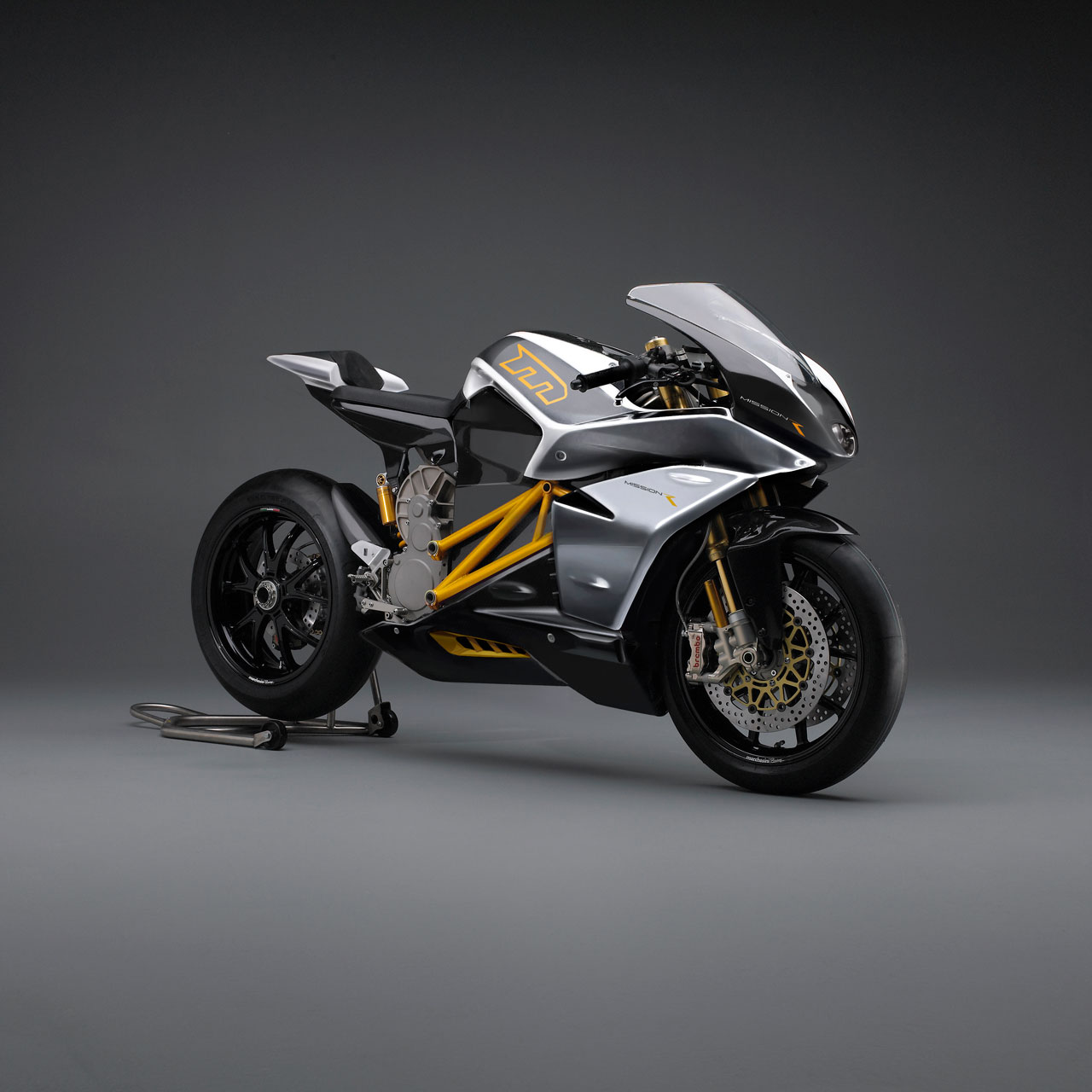
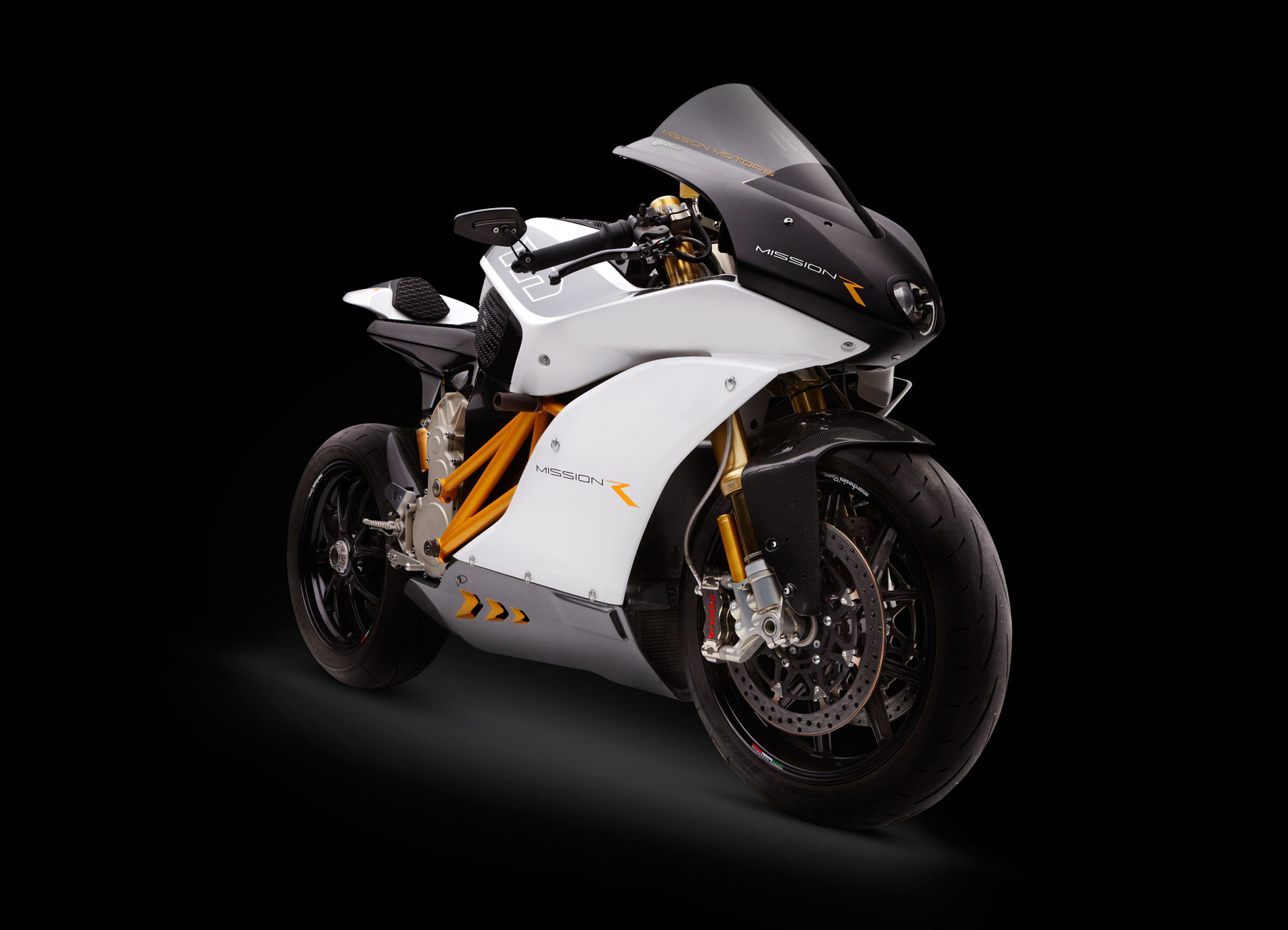
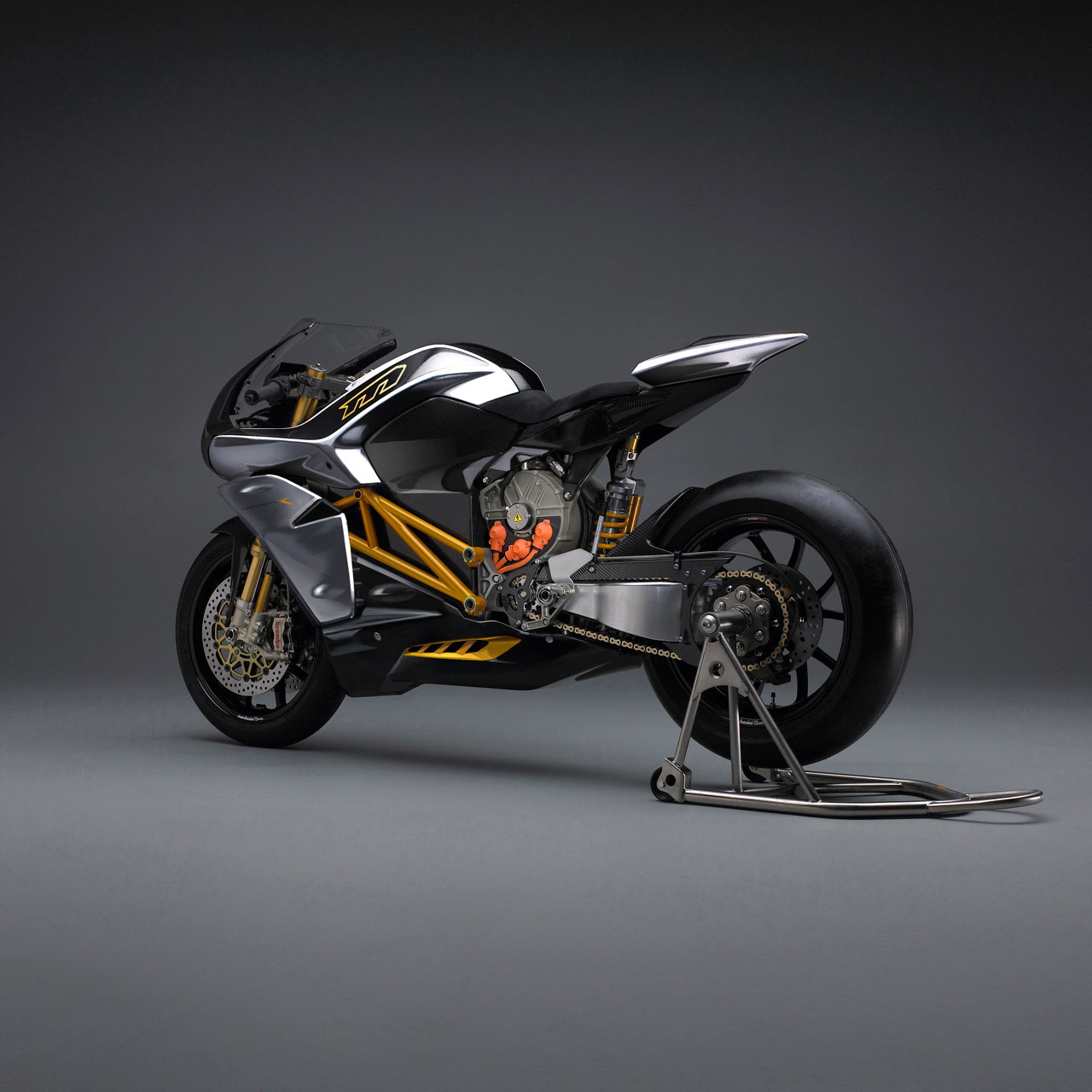
    Little known manufacturer Mission Motorcycles has announced the launch of two electric superbikes, the R and RS. This means that for about Rs. 17 Lakh (before duties) you can now ride at speeds comparable to 600cc racing bikes albeit using the power of electricity only.

    Mission
    Mission R

    Mission Motors was founded in 2007 with the goal of building and selling high performance electric motorcycles. However, when its original design, the Mission One, didn’t achieve enough demand, the company switched to selling electric components and drivetrain development. It was during this time that the idea for the Mission R was conceived, a new entity called Mission Motorcycles was born and now the R and RS have reached the production line.

    Mission
    Mission RS

    The motorcycle industry seems to have stagnated, where the biggest headlines are filled with the smallest of improvements. Only by combining the cleanest expression of raw power, provided by an electric powertrain, with the connectivity we’ve come to expect, can anyone truly evolve the motorcycle into the 21st century. And this is precisely our goal.

    – Mark Seeger, Mission Motorcycles president

    The Mission R comes with an option of 12, 15 & 17 kWh batteries good for 169, 193 and 225 kilometres respectively. It also features fully adjustable Öhlins RT suspension, Brembo monobloc calipers, and Marchesini forged aluminum wheels. The Mission R will set you back a cool $29,999 after federal tax credit (or Rs. 17 Lakh before duties for us here in India). It develops 160bhp, 120lb/ft of torque and can reach over 240 kmph.

    Mission
    Mission R

    The Mission RS is a little heavier on the wallet at $60,000 (or Rs. 34 Lakh before duties) but also promises performance to match. The RS is a replica of the bike that set the electric lap record at Laguna Seca  in July 2011, while winning the only TTXGP event it was ever entered in and will be limited to 40 units globally. It has the same drivetrain as the R model, but features an Öhlins FGRT fork and BST carbon fiber wheels. It will come with a battery capable of a 225 mile range.

    Mission
    Mission R

    The bikes also come with something never seen on a production motorcycle before: an Internet-connected operating system integrating turn-by-turn navigation, an HD video camera with telemetry overlay and integration for wireless HUD. The R will go into production when all 40 of the RS have been delivered.

    [Autoblog]

  • Volta BCN electric motorcycle will go on Sale Q2 2012 (PR)

    Volta BCN electric motorcycle will go on Sale Q2 2012 (PR)

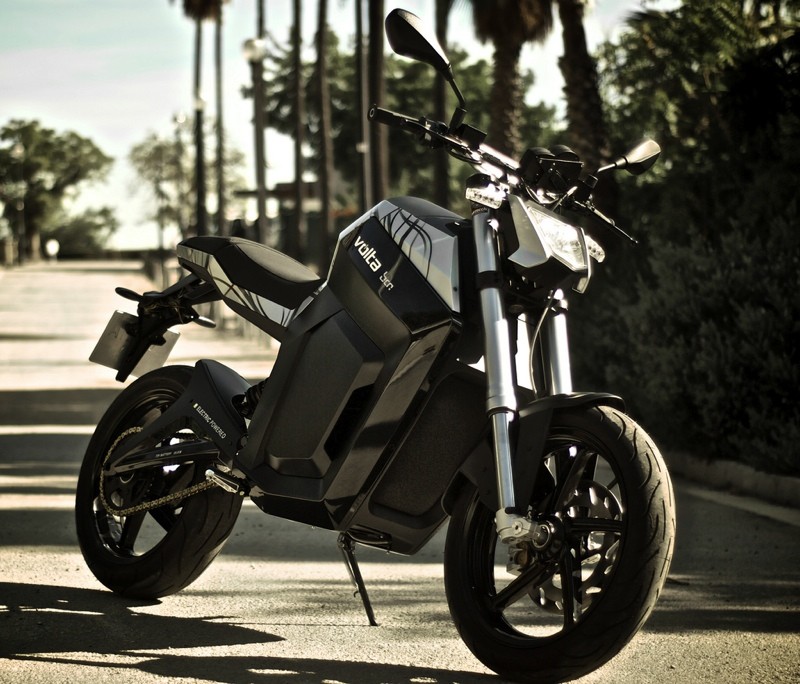
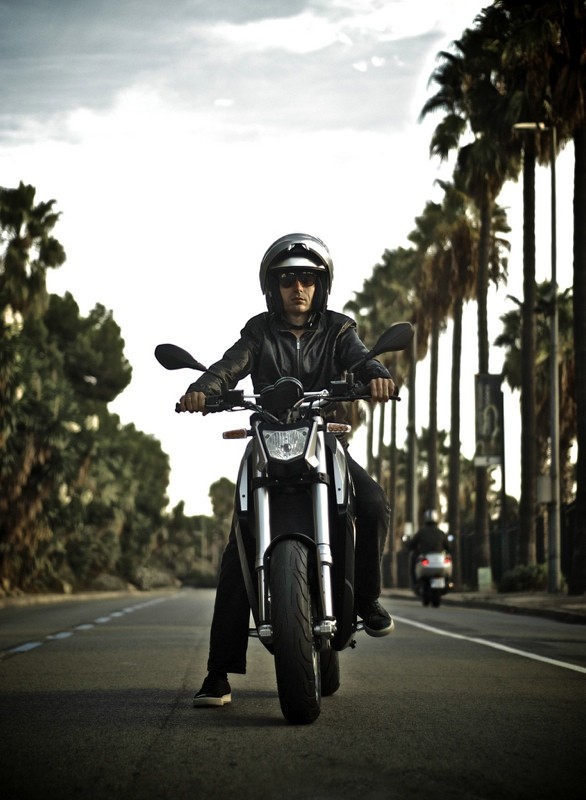
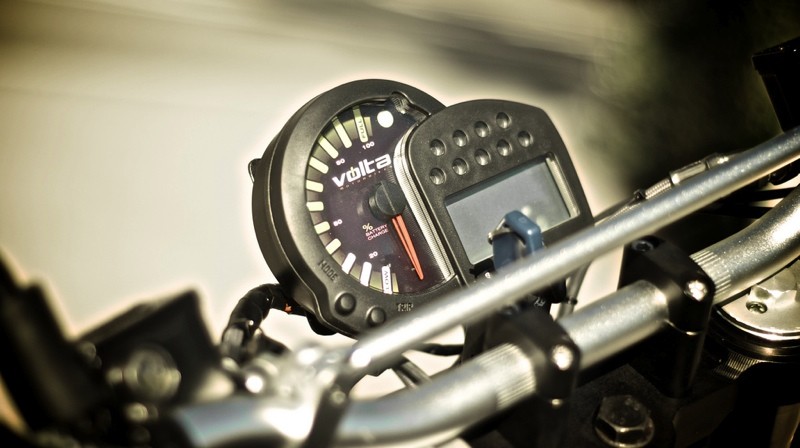
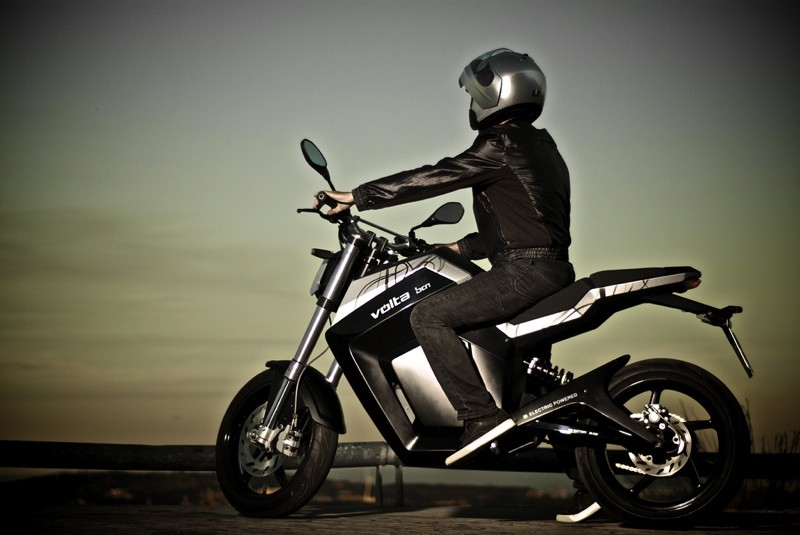
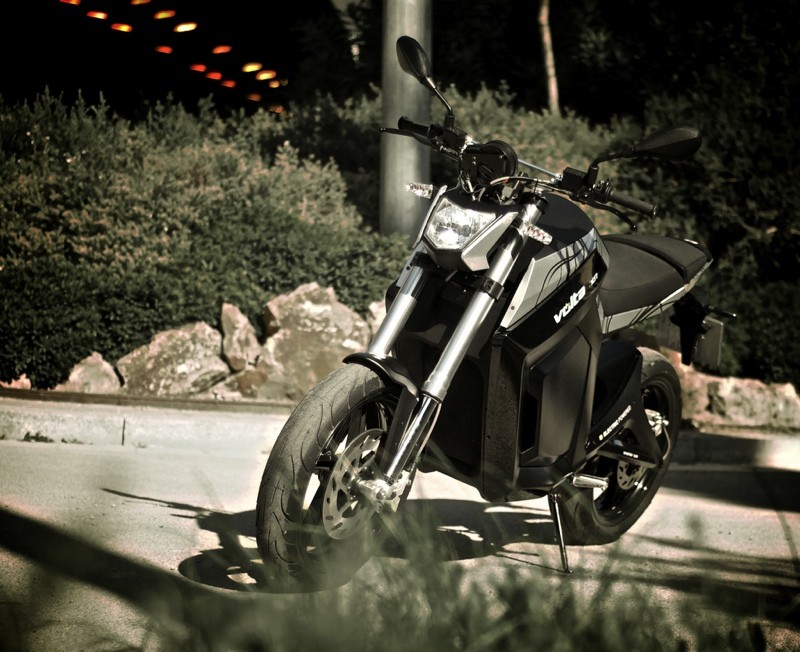
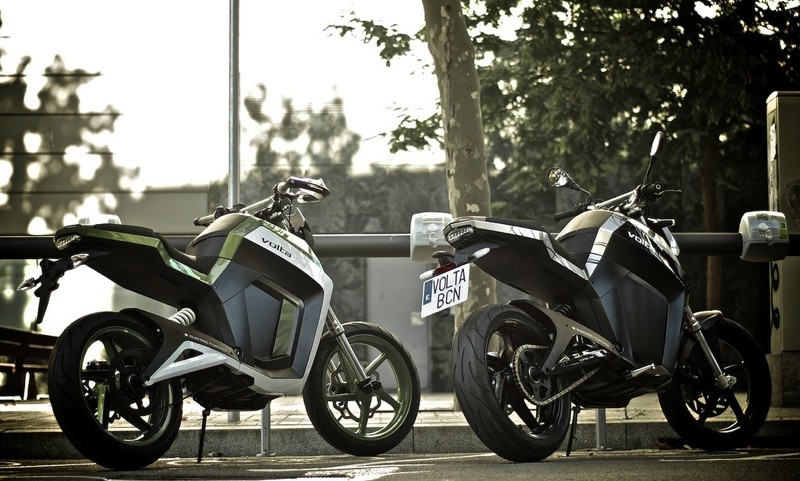
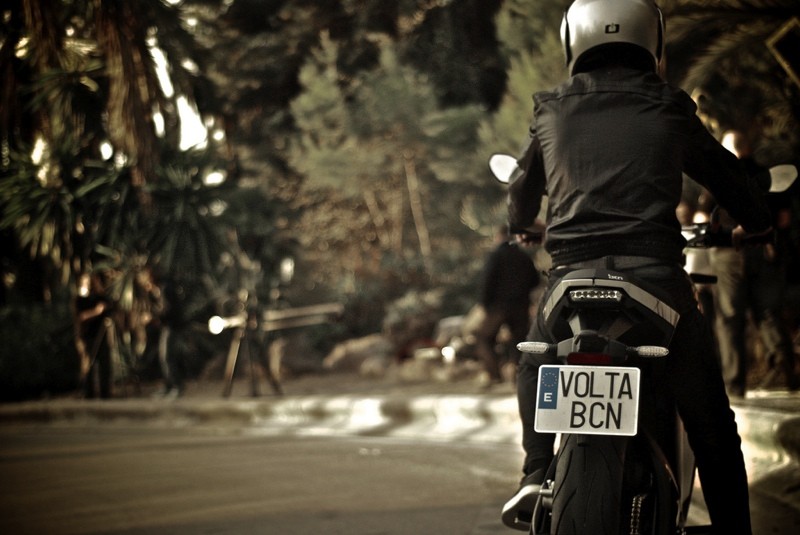
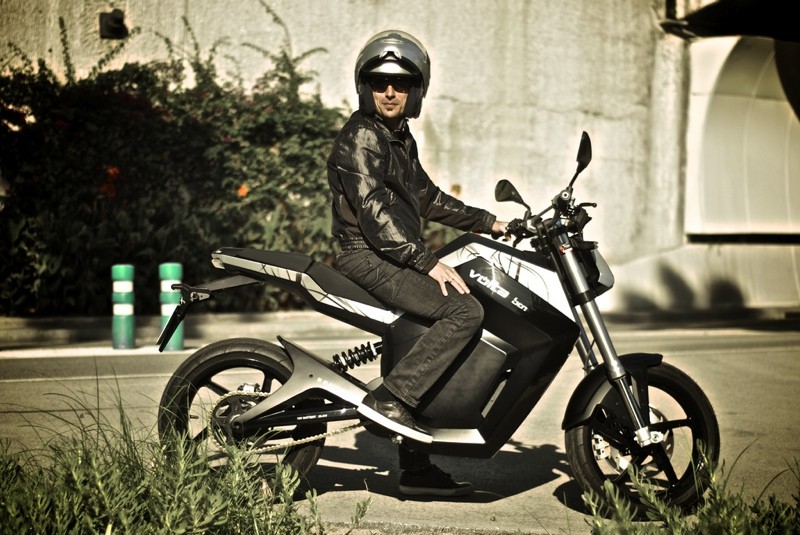
     Volta Motorbikes officially announced its new Volta BCN motorcycle this week, with a complete unveiling set for the EICMA Motorshow in Milan next month. The electric motorcycle is one of many to come in the rage of the new eco sports bike era. With a total of three different variants :

    • BCN Sport
    • BCN City
    • BCN My Volta (customizable at order)

    All the variants have a 35 horsepower and 70 kilometer range

    The price range starts at €7,000 mark (or just around the INR 5 lac mark, before duties and tax),

    The bike will start shipping to pre-orderers first half next year with a reservation list first come first serve basis. 


    [toggle title_open=”Collapse Press Release” title_closed=”Expand Press Release” hide=”yes” border=”yes” style=”default” excerpt_length=”0″ read_more_text=”Read More” read_less_text=”Read Less” include_excerpt_html=”no”]Volta Motorbikes unveils his first electric motorbike, the Volta BCN, in the coming EICMA 2011

    The pre-reservation list will be opening at the start of 2012, and the first units will be sold during the second quarter of the year

    Between 8th and 13th November, amid the backdrop of the Milan Fair (69th International Motorcycle Exhibition), Volta Motorbikes, an electric motorbike manufacturer created with the mission of providing new solutions for the pollution problems in big cities, will be presenting its star project: the Volta BCN. The first electric motorbike designed entirely in Barcelona has received the name of the Catalan capital thanks to an agreement with the City Council, which hopes to display the city’s aspiration to become a European benchmark in sustainable mobility and environmental respect. The Volta BCN combines design, a sporty feel, innovation and sustainability all in one. This goes to show that a practical and sustainable vehicle can also be dynamic, while boasting an urban image and high performance.

    After months of work and perseverance, the Volta Motorbikes project has now come to fruition and is about to begin the production phase. Thus, during the first quarter of the forthcoming year, a pre-reservation list will be opened on the Internet; and in the second quarter, the first units will be released for sale, for an estimated price of €7,000. At the moment, Volta is putting the final touches on the shape of the Volta BCN distribution network and points of sale throughout Europe.

    The fact that Volta bears the name of Barcelona forms part of the intention to help forge the image of a city that is capable of converting urban thoroughfares into a pollution-free public space, yet with no sacrifices regarding the mobility-related needs of the people who live there. And so, Barcelona is pushing to become a benchmark for sustainability in Europe, while at the same time reasserting its ambition to be a hub for design and quality.

    The Volta BCN is different from other urban electric motorbikes, as it combines technology, design and a sporty feel, to afford users the opportunity to experience motor passion while also being respectful of the environment.

    Volta Motorbikes envisages launching its product in Spain first, and will subsequently make the leap over to the international market, with its first appearance at the Milan Fair, the quintessential showcase for any new product in the two-wheel sector. As Volta Motorbikes Manager Marc Barceló says, “the Milan Fair is the ultimate test to assess the entrance of a new brand, and we hope to firm up our first orders with the European market during the days of the show”.

    BCN SPORT, BCN CITY AND BCN MY VOLTA

    The Volta BCN, with 35 hp, will be available in several different models, yet as Barceló cites, all are founded on the same philosophy: “Volta aims to transmit the DNA of a brand with a sporty nature while also being efficient and environmentally friendly”.

    In Milan, the company plans to present three models with the same power yet different aesthetics and finishes. The BCN Sport is an urban motorbike that projects a dynamic image with a personality of its own, without skimping on performance, quality or practical features. The BCN City offers a cosmopolitan design and targets those who wish to combine an elegant look with the spirit of sustainable mobility and practical, comfortable driving. The BCN My Volta is the customisable model, meaning that the motorbike can be adapted to the needs and preferences of the user in terms of the design of its finishes and accessories. The My Volta will offer customised ordering through an online tool that will be implemented with the new Volta website, coinciding with the brand’s presentation at the Milan Fair.

    All of these models require the same A2 driving license and are the ideal choice for those who need a means of daily transport to get about in the city, while serving as a road of entry into the two-wheel world for new users.

    €0.45 PER RECHARGE

    With a full battery recharge cost of €0.45, this bike can recharge completely in just two hours when plugged into a 220-V household socket or at any public charging point. The Volta BCN has a range of approximately 70 kilometres and a lithium-polymer battery. After 1500 charging cycles, which is the equivalent of five years of daily recharges, the battery still has 80 % of its initial capacity.

    One thing that we must point out about the Volta BCN is the quality of its components, as all of its parts are supplied by prestigious brands in the sector.

    The motorbike comes with a trunk with capacity for a full-face helmet, as well as a mobile phone charger.Particularly worthy of note is the relaxed and comfortable position of this bike, which makes for agility and free movement when driving. Moreover, it includes the added feature of connectivity with mobile telephone devices, as well as a wide range of applications such as programming recharges and power setting limits, among others; a package that will be available when the first Volta BCN bikes reach the market.[/toggle]

  • A Solar Panel That Works Without The Sun

    A Solar Panel That Works Without The Sun

    Solar panels have come a long way since the technology was first invented. But the major drawback of using photovoltaics on Earth is that it eventually gets dark. Researchers at MIT have developed a solution to this problem. They’ve come up with a photovoltaic cell which doesn’t need any sunlight and is built into a button sized generator that can run your smart-phone for a week.

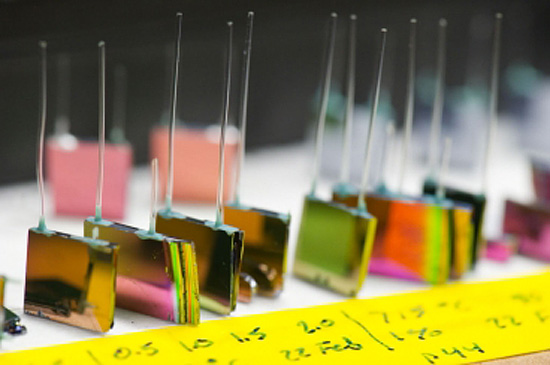
    In the image above, you have many of these generators that require a fuel, like butane, from which they generate heat. The material that the generators are made out of are pockmarked with billions of tiny (we’re taking nanometer scale here) holes. When this pockmarked surface heats up, it emits light in a few very specific wavelengths that are then captured by photovoltaic cells that are tuned to those specific wavelengths, and then you get electricity.

    The basic principle of the new generators is the same as the one that feeds electricity to your house. A fuel is heated and converted into electricity. With a power plant, the heat is used to boil water to steam, and the steam is used to turn a turbine, which generates electricity. The new generators follow the exact same principle, but with no moving parts and a one step process, they are many times more efficient. Their prototype uses butane as a fuel but you can use anything that burns, coal, wood, uranium, you name it.

    So as a consumer, what can you look forward to? Currently, MIT’s generator is about three times more efficient than a lithium ion battery, and since they run on butane, you just need to refill them and they’re good to go. With a little bit of work, MIT researchers say that they can triple their current efficiency, and since all this can be scaled down, you can expect a new smart phone using this technology to run for a solid week without a recharge in the near future.

  • Skypump – The Green Charging Station

    Skypump – The Green Charging Station

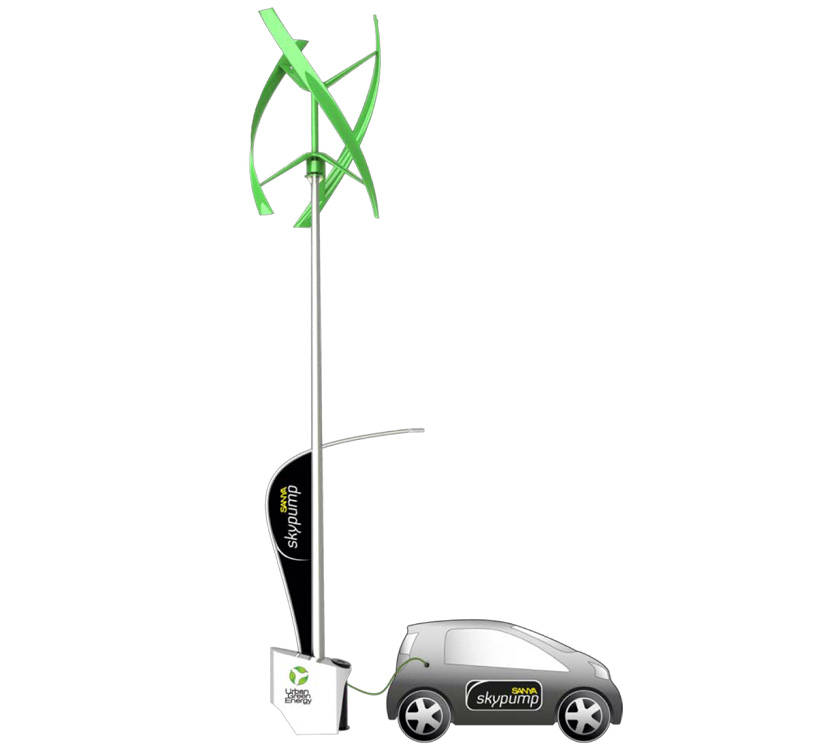
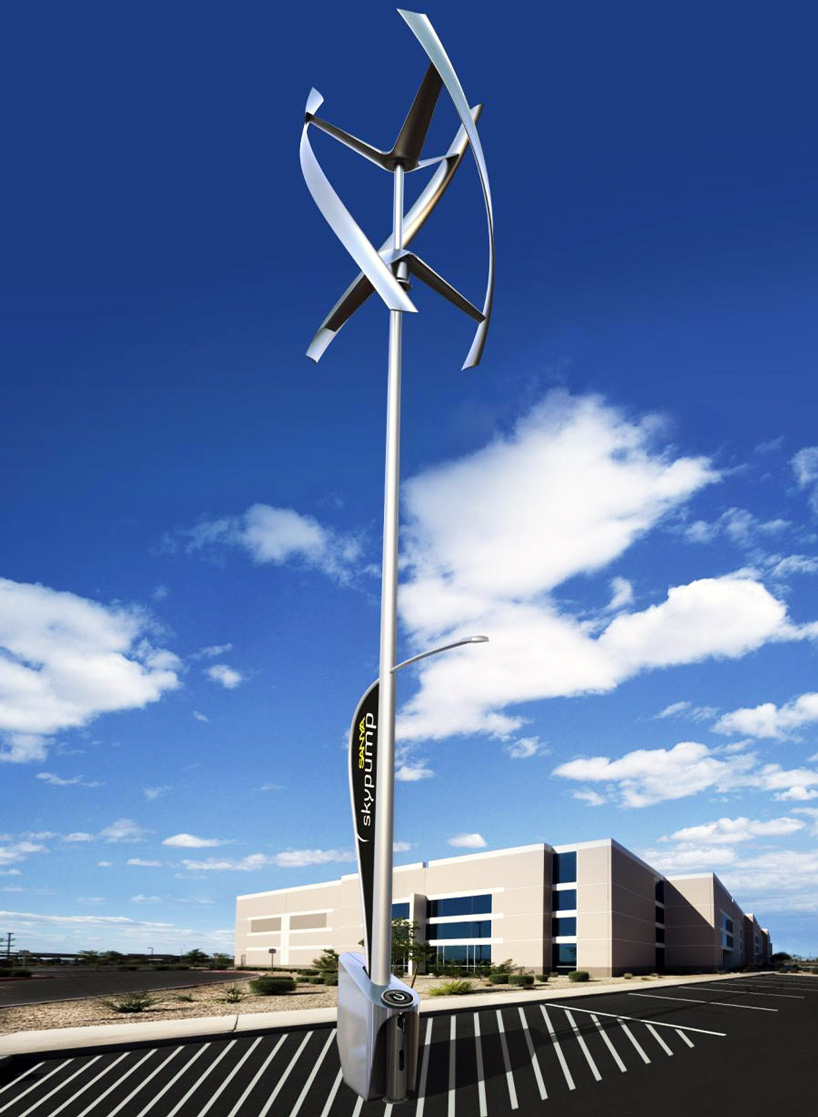
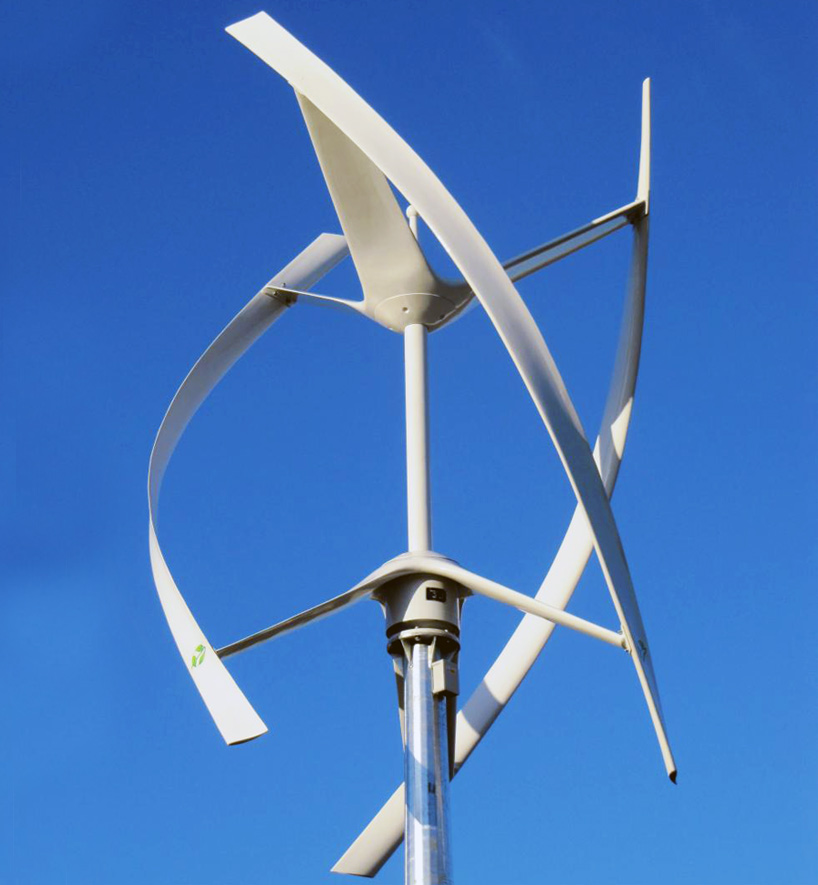
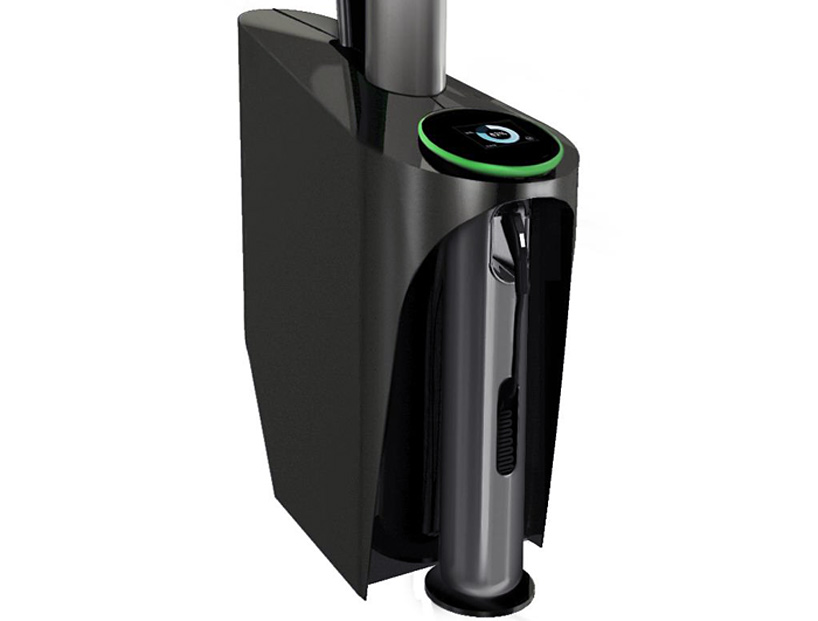
    The Sanya Skypump is a wind powered charging station for electric vehicles and it has been developed by Urban Green Energy in collaboration with General Electric. While still in the conceptual stages, the Skypump combines a GE Wattstation with a urban green wind turbine which can capture up to 4KW of wind energy.

    The turbine is 13m high and can easily be installed in parking lots, rest stops and other areas. As it is attached to the grid, once the station is fully charged and a vehicle is not plugged in, the Skypump will keep pumping electricity back into the grid. The company is also producing a version of the charging station for domestic use. The domestic version will be using a wall mounted GE Wattstation which can charge an electric car in four to eight hours. There is no news on whether the Skypump will offer similar efficiency.


  • Optical Discs Get A Makeover – Enter Holographic Discs

    Optical Discs Get A Makeover – Enter Holographic Discs

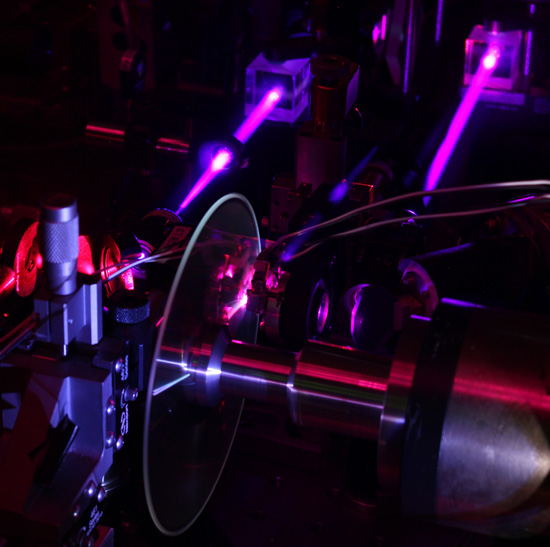
    Optical discs are quite an old technology. They’re big, fragile and easily damaged, and the principle behind them hasn’t changed much in years. GE has developed a commercial micro-holographic storage technology that can store 500 GB on a single optical disk the size of a CD. That’s over 20 times the storage capacity of today’s single side Blu-Rays and over 100 times the storage capacity of a single DVD.

    GE has had this technology for a few years now but the real breakthrough was made when they successfully created a reader/writer system which can read and record data to and from the disc at Blu-Ray speeds, which makes the discs commercially viable.

    Holographic storage is nothing like a CD, DVD or Blu-Ray. The only thing that the technologies have in common is the spinning plastic disc and the laser. Instead of reflecting a laser off the disc to read one’s and zero’s, holographic discs store data in three dimensional patterns, called holograms, within the material of the disc itself. To read a holographic disc, a laser is used to create a snapshot of the data stored on the disc, and multiple snapshots can be layered one on top of the other to increase storage density.

    Since the data on a holographic disc is stored in 3D, GE has the entire volume of a disc to play with, therefore 500 GB is not the storage limit for this technology. Researchers at GE’s labs are already hard at work developing the second generation of these discs which could hold upwards of 1 TB of data. This technology will be backwards compatible with CD’s, DVD’s and Blu-Ray’s, ensuring the continued life of optical discs everywhere.

  • The T.27 – World’s Most Efficient Electric Automobile

    The T.27 – World’s Most Efficient Electric Automobile

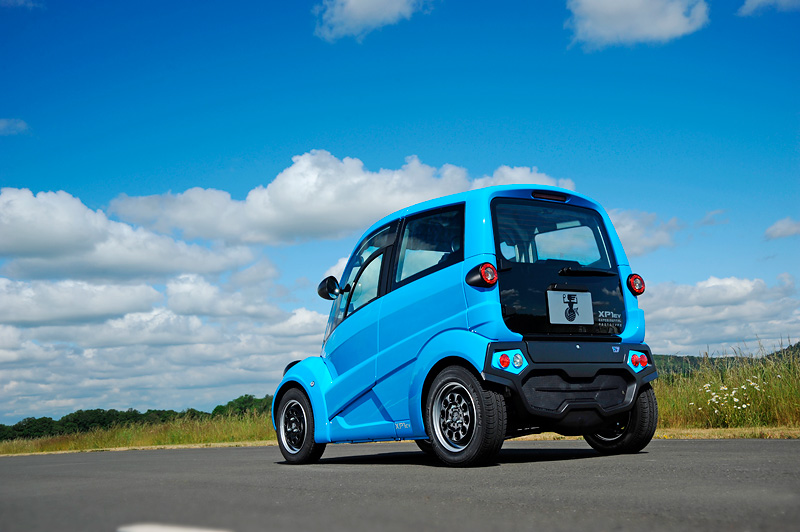
    UK based Gordon Murray Design has unveiled a new car designed for the urban environment which it has dubbed the T.27. The design and development program for the T.27 has cost £9 millionwas made possible through a £4.5 million investment from the government-backed Technology Strategy Board. From design to concept to working prototype, the car has taken just 17 months to come to life, including the design and build of a completely new electric powertrain by Zytek Automotive Ltd.

    T.27 specifically targets the urban city environment via a unique manufacturing process called ‘iStream’ developed Gordon Murray Design. It aims to significantly reduce lifecycle impacts and enable low cost, efficient manufacture within the UK. The electric car sets new standards in weight, footprint, small car dynamics, safety, packaging and efficiency whilst addressing full lifecycle CO2 emissions, congestion, parking and low cost motoring.

    Company CEO, Professor Gordon Murray, said at the unveiling of the car

    [quote]Lightweight is the most powerful tool we have in our armoury in the fight against emissions and fuel consumption.  This is true of all cars and especially so with electric vehicles! A lightweight car means a lightweight battery increasing the levels of safety and reducing the retail price dramatically.”  The T.27 represents a huge step forward in protecting our mobility and our environment.[/quote]

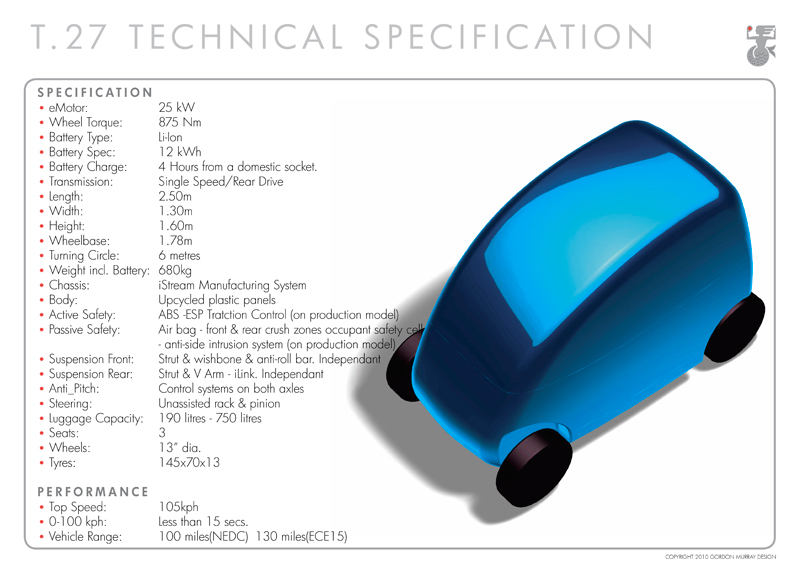
    The tech specs for the T.27 are as follows:

    In comparison to other electric cars the T.27 has much lower energy consumption per mile, the Smart EV uses 29% more energy per km, the Mitsubishi iMiEV uses 36% more energy per km, and the Mini-E uses 86% more energy per km, making the T.27 the most efficient electric car by some margin.

  • BEAT Electric – Coming Soon

    BEAT Electric – Coming Soon


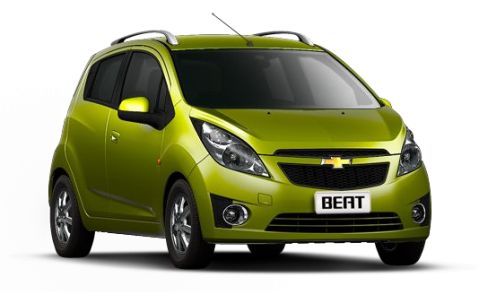
    With the launch of the Chevrolet BEAT Diesel next month, GM plans to unveil an electronic varient of the car. Working alongside Reva for the past year, the auto manufaturer has developed a vehicle with a range of 130Kms on a full charge which taks 8 hours, and a motor that gives 60bhp.

    A GM official said that, “The plan is to just showcase our technology and organise test drives for a few people. The vehicles will be assembled here from parts designed and sourced globally. We are not looking to launch this immediately as we do not have the right charging infrastructure for EVs in this country as yet.”

  • EcoTech : Meguru, the Electric Rickshaw!
    EcoTech : Meguru, the Electric Rickshaw!


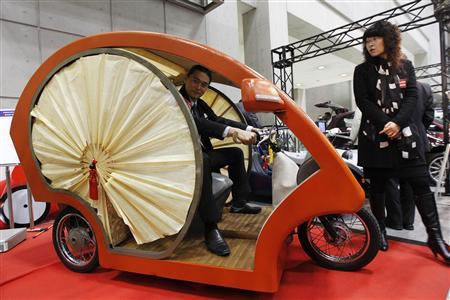
    Japanese made Meguru is the electric solution India already has in the form of the Vodafone eRick. Produced by the Yodogawa Group, the Meguru is just 8’2 long, 3’11 wide and 5’3 tall, and comes with a maximum speed and range of 25 miles per hour. The Meguru electric Rickshaw seats three and uses a single lithium-ion battery. t’s a remarkably simple design, with little in the way of bells and whistles: its heating system consists of blankets, and a pinwheel fan replaces an air conditioning unit. In homage to the rickshaw’s Japanese past, the vehicle’s floor is made of recycled bamboo, and the vehicle’s aesthetic components are all made by craftsmen in Western Japan.

    No details on pricing and availability yet.

  • Volkswagen’s XL1 concept plug-in diesel hybrid has 133 KMPL range

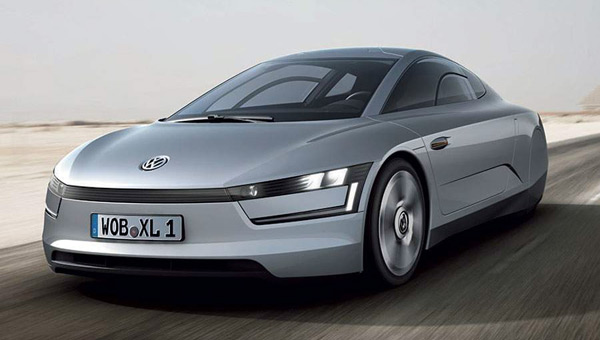
    Volkswagen’s XL1 plug in hybrid diesel (futuristic) concept car, is perfect for the Indian Consumer. If we all remember Maruti’s new advertising campaign “Deti kitna hai?”. This car delivers a whopping 133 KPML range – and that too on Diesel. Brilliant, isn’t it? It also, produces only 24g of CO2 per kilometer traveled.

    Volkswagen has achieved a 795kg curb weight by using carbon fiber, magnesium, ceramics, and aluminum to shave down any excess weight from the XL1, Testing shows only 0.186 drag coefficient.

    Read the PRESS STATEMENT below to get a better feel.

    Volkswagen unveils the XL1 Super Efficient Vehicle in Qatar

    The new Volkswagen XL1 Super Efficient Vehicle (SEV) has been unveiled at the Qatar Motor Show. Pioneering construction techniques, an advanced plug-in hybrid drivetrain and innovative packaging all play a part in allowing the XL1 to return 313 mpg on the combined cycle while emitting 24 g/km of CO2 to set a new benchmark for vehicle efficiency.

    Powering the XL1 is a compact 800 cc TDI two-cylinder common rail diesel engine developing 48 PS. It’s linked to an electric motor producing 27 PS, resulting in a total of 75 PS – a modest output yet more than enough when the low kerb weight (795 kg) of the vehicle is taken into account.

    The TDI engine is linked to an electric motor and a seven-speed DSG gearbox with an automatic clutch mounted between each unit. The electric motor can either work independently of the TDI engine or in tandem when accelerating. In pure electric mode the XL1 can travel up to 35 km before the diesel engine cuts in. Accelerating from rest to 62 mph can be achieved in 11.9 seconds; the electronically limited top speed is 99 mph.

    In both its styling and packaging the XL1 draws on lessons learned from the 1-Litre car (2002) and the L1 concept (2009). The XL1 has evolved to feature staggered seating with the driver and passenger placed next to each other in a body structure made from advanced new materials providing immense strength yet weighing just 230 kg.

    To make such weight savings possible, and yet viable for series production, Volkswagen developed and patented a new system for the manufacture of the Carbon Fibre Reinforced Polymer (CFRP) parts on the car called the Resin Transfer Moulding (RTM) process.

    In total the XL1 weighs 795 kg. In addition to the body structure, the weight is accounted for by the drivetrain (227 kg), the running gear (153 kg), the interior including a pair of bucket seats (80 kg) and the electrical system (105 kg). In total just 23.2 per cent of the car (184 kg) is made out of either steel or iron.

    Further savings are made through the extensive use of lightweight materials including magnesium (wheels), ceramics (brake discs) and aluminium (dampers, steering system, brake calipers).

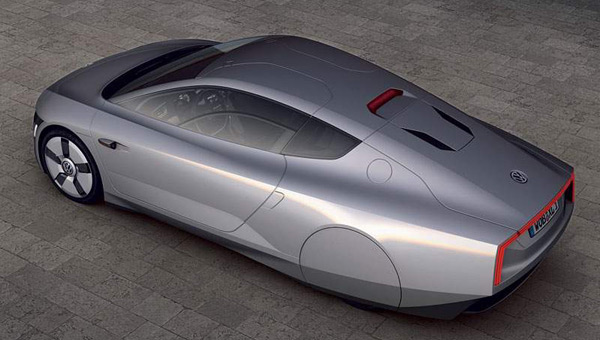
    The styling of the XL1 is borne out of functional requirements – easy access to the interior is granted via a pair of elegant scissor doors that hinge on the A-pillar while the profile of the car has been honed in the wind tunnel, the result being a remarkable coefficient of drag figure of 0.186. The XL1’s overall length (3,970 mm) and width (1,682 mm) are similar to those of a Volkswagen Polo yet its height (1,184 mm) is more akin to that of a Lamborghini Gallardo Spyder.

    Although the XL1 is still very much a concept, its unveiling marks the next step towards the birth of a new class of Super Efficient Vehicles, while the advent of a process such as RTM is a significant milestone.

    Source : Volkswagen

iGyaan Network
Privacy Overview

This website uses cookies so that we can provide you with the best user experience possible. Cookie information is stored in your browser and performs functions such as recognising you when you return to our website and helping our team to understand which sections of the website you find most interesting and useful.