Tag: hackers

  • Microsoft Claims To Have Seized 99 Iranian Websites Used By Hackers

    Microsoft Claims To Have Seized 99 Iranian Websites Used By Hackers

    Microsoft stated that 99 websites which were being misused by Iranian hackers have been seized by the company. Reportedly, the hackers were trying to phish/steal important information and launch cyber-attacks on users. With the increase in the number of malicious websites and webpages, browsing the internet has become significantly more difficult. Sensitive data is being poached from the users, while at the same time, companies seem to be helpless as countless such websites keep popping up every day. 

    Microsoft’s Statement

    Microsoft said that it had eyes on a similar set of websites since 2013, which were being operated by hackers for negative intent. The company has previously tried to snoop on defence industry workers, political activists and journalists in the Middle East. Microsoft tied the attacks to the country of Iran, not to its Government. Furthermore, Iran has fully denied any participation in hacking attacks made by the aforementioned hackers.

    Microsoft also stated that the hackers used malicious links disguised like popular brands, such as Microsoft and its subsidiaries, LinkedIn, Outlook etc. As per the company’s court filings, the hacking operation required patience, skill and deep access to resources to pull off. The software that was used by hackers modified the Microsoft Windows trademark system into “a tool of deception and theft”.

    Noteworthy, the accounts that were being targeted by the users were personal accounts, not work based accounts. The hackers used to send surprisingly legitimate-looking emails with malware-infected attachments to users who would then click on them and have the respective software injected on their devices. The domains used by the hackers closely resembled the ones used by Microsoft and other reputed brands.

    Conclusion

    Also Read: Xiaomi’s Foldable Smartphone Spotted In Official Video Promo

    The US District Court, which handled Microsoft’s case regarding the same, believed the company’s allegations, saying that the hacking activity was indeed affecting the company and its users. Steps being taken by the US Court may ensure that the hacking group receives serious penalties for the attacks performed.

  • Russian Hackers Are Using Wi-Fi Routers To Hack Into Homes And Government Offices

    Russian Hackers Are Using Wi-Fi Routers To Hack Into Homes And Government Offices

    Cyber attacks being carried out by Russian hackers seems like a news that started floating around decades ago. Time and again, we have come across instances where the US government has warned its people about the danger that Russian hackers carry. Now, a new security alert has identified that hackers are now using large numbers of routers, switches, and other network devices that are well past their last security update to compromise US homes, government offices, businesses, and critical infrastructure providers.

    According to the US Department of Homeland Security and FBI and the UK’s National Cyber Security Center, Russian hackers can extract a lot of sensitive information like passwords, intellectual properties by gaining access to network devices around an office or a home. With advancements in technology and the widespread use of smart home products in a lot of places, it is hard to imagine any home or workplace to not have network devices like smart switches or WiFi routers. This is even more severe in a country like the US where the internet is so readily available and smart home products are cheaper and easy to use.

    The technical alert has highlighted the severity of this situation and the timeline of the information the security personnel received.

    Since 2015, the US government received information from multiple sources—including private- and public-sector cybersecurity research organizations and allies—that cyber actors are exploiting large numbers of enterprise-class and SOHO/residential routers and switches worldwide.

    In a detailed account of Russian hackers misusing the poorly secured network devices in government offices and other sensitive places, the alert notice laid down different stages of the hacking process.

    • Reconnaissance is the first stage when hackers identify poorly secured network ports like network management protocol
    • The second stage is the weaponisation and delivery of traffic to the identified devices that cause such devices to send the hackers configuration files that contain cryptographically stored passwords and other sensitive data
    • The third stage is exploitation is when attackers use this data to gain access to the compromised devices
    • The final stage is command and control, wherein the hackers use the newly gained access to pose as previous or trusted users to establish a connection

    Cisco, a multi-million dollar tech conglomerate has already identified that its install client was recently compromised. Cisco is a manufacturer of a lot of network devices that are used by a lot of citizens of the US.

    The access gained by Russian hackers is mainly down to old network devices like routers and switches. These devices run on old firmware and are not updated to the latest security protocols allow hackers to gain remote access to the network without even installing any sort of malware. With this security alert now made available to all government officials, it is yet to be seen what the workplaces will do in order to curb the situation and make them less vulnerable to cyber attacks from Russian hackers. Until then, to protect yourself from such threats, make sure to use adequate security protocols like strong passwords and update your hardware firmware in a timely manner.

  • Anonymous and Technology: A Hoax or Call for Revolution?

    Anonymous and Technology: A Hoax or Call for Revolution?

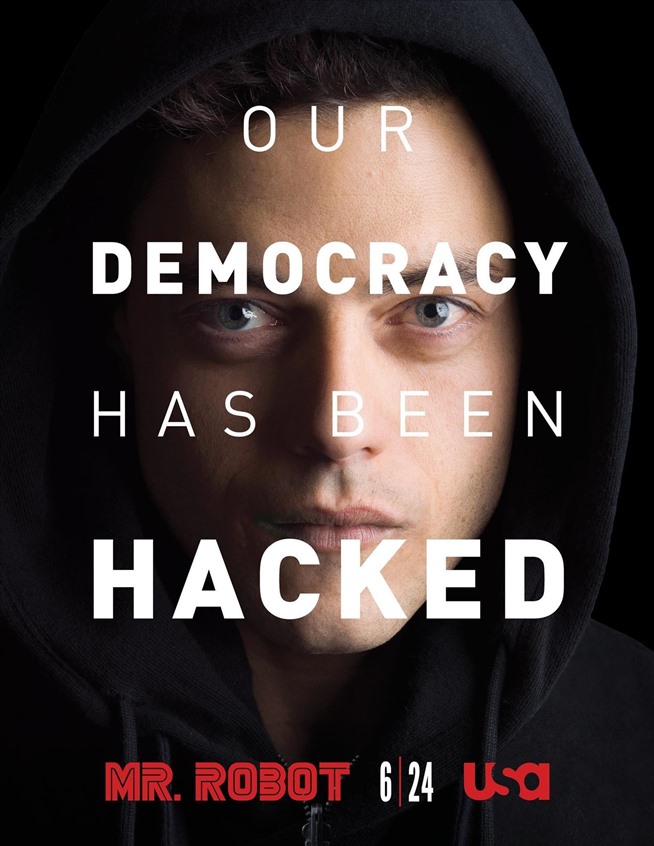
    As Slater’s character says in USA’s Mr. Robot, “It controls you and everyone you care about… Money…It’s become virtual. Software –the operating system of our world”, technology truly has become a force to reckon with. It’s interesting to see how the definition of technology and all that it entails has evolved over time, eventually becoming a magical entity which suddenly made information on the remotest of topics available just a simple click away.

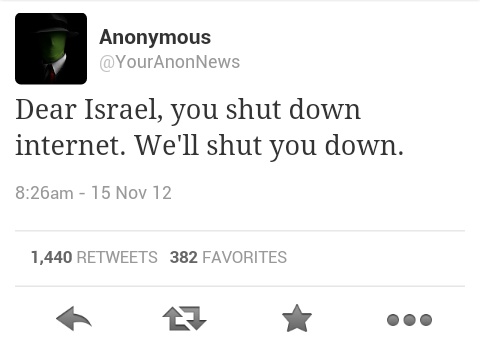
    In an attempt to move away from the fictional world of TV shows to the domain of international politics, one wonders how different Anonymous’ taking down of the Israeli websites in response to their attack on Palestinian cyber space is from Elliot’s attempts to take down E corp.

    IMG_20150907_130637The past decade has revealed the potency of technology in bringing down governments and international institutions. The Arab Springs is a perfect example of a situation where social media became the realm of youth-mobilisation against what was seen as injustice done by the system.  When one talks of technology as the space for revolution and change, it is impossible to not delve into an elaborate discussion on Anonymous.hacks-mr-robot-build-hacking-raspberry-pi.w654

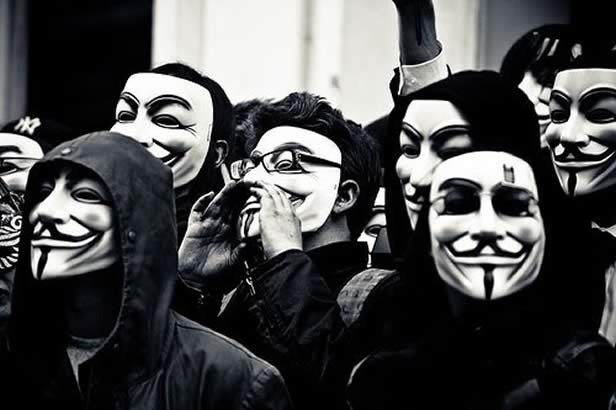
    Describing themselves as “an internet gathering” with “a very loose and decentralized command structure that operates on ideas rather than directives”, the group emerged in 2003 and became self-professed defenders of those facing oppression at the hands of political or religious institutions. Anonymous provided the template for any group of maverick hackers trying to bring down big corporate houses, the State or any power structure threatening the well-being of a community. There is perhaps a reason Anonymous has gained a potent cult following, with TV shows like Mr. Robot being the latest reminders of it.

    Here’s a closer look at top five successful hacking operations carried out by Anonymous that made the world sit up and think:

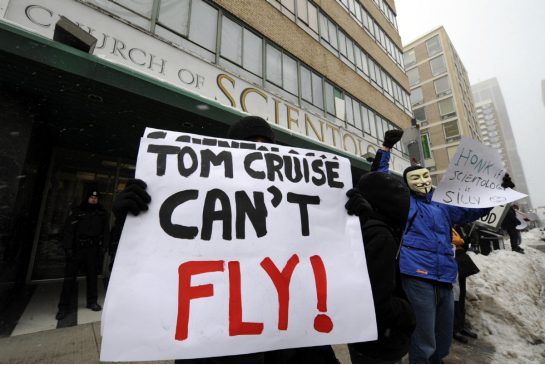
    1. Project Chanology (2008): One of the first prominent hacking activities of the group, this project involved a series of DDoS in 2008 against the Church of Scientiology. As part of this attack, a group of Anons posted a video on YouTube where a robotic voice declared, “For the good of your followers, for the good of mankind—for the laughs—we shall expel you from the Internet.” Needless to say, within a week the video had earned hundreds of thousands of views all over the world.

    cruiseanonymous.jpg.size.xxlarge.letterbox

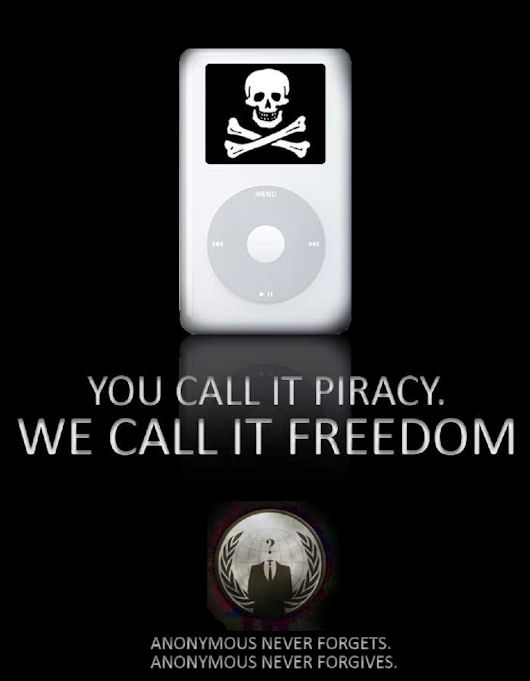
    2. Operation: Payback is a Bitch (2010): In 2010, Anonymous came across an Indian software company called Aiplex Software that carried out DDoS attacks against websites like the Pirate Bay that carried pirated content. On September 17th, within a week of having stumbled upon this company, Anonymous launched a DDoS against the site which shut it down for a day. It soon snowballed into a cyber-war which included Anonymous coming to the aid of various bitTorrent sites. The message was emphatic and well-articulated as Anons went ahead to declare in an official statement, “Anonymous is tired of corporate interests controlling the internet and silencing the people’s rights to spread information, but more importantly, the right to SHARE with one another”. The name of the project was put on a hacked website of copyright alliance.You_call_it_piracy

    3. Operation Avenge Assange (2010): This became an extension of Project Payback as the Anons took charge of hacking into all those websites which had refused to allow donations to WikiLeaks. Beginning with DDoS attacks against PayPal, Anons hacked into MasterCard and Visa websites, among others. This resulted in PayPal announcing the release of its frozen funds to be directed towards WikiLeaks. Also, in December of the same month, The Daily Telegraph reported a threat by Anonymous to hack into the British government websites if Assange were extradited to Sweden.

    hacktivism-101-the-anonymous-guide-to-cracking-sites

    4. Operation Darknet (2011): In October, 2011, Anonymous began a series of DDoS attacks against Lolita City, a child pornography website. Anons stated in an official statement, “We vowed to fight for the defenseless, there is none more defenseless than innocent children being exploited.” Multiple demands and warnings were made and issued respectively to take down the server. This was followed by a manifesto in the form of a YouTube video.

    When the servers still remained untouched, Anonymous revealed a list of 1589 users of Lolita City along with detailed records of their profiles. The FBI and Interpol were asked to look into the matter further. Eventually a total of 40 child pornography websites were taken down by Anonymous in 2011 itself.

    5. Anonymous-ISIS Cyber-War (2015): Earlier in 2015, a group of Anons called GhostSec started a cyber-campaign called #OpISIS against the Islamic State (IS). The campaign is aimed at targeting those members of the extremist IS who are using the internet as a platform to spread propaganda and fundamentalism. In order to “cure the ISIS virus” they are keeping a close track of the activities of the members of IS across various social media platforms. Even as early as April 8, 2015, Anonymous had managed to attack 233 websites, destroy 85 websites and terminate 25,000 Twitter accounts. Though this did result in a significant lull in the intra-group activities of IS, the move was criticised by many for it meant bigger obstacles in keeping track of IS activities.theVThese are just a few examples of what Anonymous has been up to since its inception over a decade ago. Often identified as the archetypal trickster, no one’s really sure of what to make of this secret, super snazzy self-proclaimed group of “hackists”. One is often tempted to wonder if they are operating as vigilantes, saviours of the world from religious and political institutions, or if they are only there for a few laughs, trolling the most powerful organisations of the world simply because they can.

    Could technology truly be the space for bringing about the change the reformers, revolutionaries and anarchists of the world dream of? Or is it simply a hoax, an illusion of power given to people to keep them appeased by hiding from them their absolute powerlessness?

    Anonymous-Awakening

    The realm of technology clearly raises more questions than it answers. Adding to the blur of conflicting opinions are groups like Anonymous which still leave us unsure of their position in this rigmarole of politics, power, society and ideology. Until the day a consensus is reached, if one is reached at all, here’s to the riot of social media, the fan-following of Anonymous, and well, to the threat of a futuristic society where artificial intelligence enslaves humanity to save a race turned upon itself.

  • 5 million Gmail Passwords Leaked, Google Assures it’s “No Big Deal”

    5 million Gmail Passwords Leaked, Google Assures it’s “No Big Deal”

    In times when people are still dealing with the news of the massive iCloud hack, they woke up this morning to the news of another giant leak. This time it was Google Accounts turn. Russian hackers have leaked about 4.93 million Gmail passwords. You can access the entire Google ecosystem using just one password and this was seen as a cause of worry.

    The account details were leaked on a Bitcoin forum called btcsec.com by a user named Tvskit. The leaker claimed 60% of these accounts were active.

    Google immediately slammed the claim. It tried to calm the fears with a blog post that said “We found that less than 2% of the username and password combinations might have worked, and our automated anti-hijacking systems would have blocked many of those login attempts. We’ve protected the affected accounts and have required those users to reset their passwords.”

    Gmail accounts are safe http://t.co/lXMXlixy2S but it’s always good to take a minute & check your security settings ? http://t.co/NaR6c1cibE

    — A Googler (@google) September 11, 2014

    Maybe it’s a way of hackers telling you that it has been a long while since you’ve changed your password, so it’s time that you did. Previously, a Russian Gang had claimed that they had stolen over 1.2 Billion passwords. The solution even then was to change the passwords. It’s a necessary measure that needs to be taken regularly. Google this time asked its users to go for two-step verifications to keep their accounts more secure.

  • Microsoft Pays Out First $100,000 Bounty For Finding Windows 8.1 Bug

    Microsoft Pays Out First $100,000 Bounty For Finding Windows 8.1 Bug

    Today, Microsoft announced one researcher, James Forshaw, has been awarded a whopping $100,000 for finding and reporting a new mitigation bypass exploit in Windows 8.1.

    James Forshaw, who heads vulnerability research at London-based security consulting firm Context Information Security, won Microsoft’s first US$100,000 bounty for identifying a new “exploitation technique” in Windows, which will allow it to develop defenses against an entire class of attacks, the software maker said on Tuesday. 

    Forshaw earned another US$9,400 for identifying security bugs in a preview release of Microsoft’s Internet Explorer 11 browser, Katie Moussouris, senior security strategist with Microsoft Security Response Center, said in a blog. 

    “Coincidentally, one of our brilliant engineers at Microsoft, Thomas Garnier, had also found a variant of this class of attack technique. Microsoft engineers like Thomas are constantly evaluating ways to improve security, but James’ submission was of such high quality and outlined some other variants such that we wanted to award him the full $100,000 bounty,” Microsoft explained.

    Microsoft has now paid out over $128,000 in bug bounties. Six “very smart people” received the prizes, said Moussouris.

    Not all of them kept the cash. Ivan Fratric of the Google security team was awarded $1,100 for finding an Internet Explorer 11 (IE 11) bug, but donated it to the Save the Children Fund. Fermin Serna, also from Google, gave $500 for finding a bug in the IE 11 Preview release to the Seattle Humane Society.


  • Hacking experts find new ways to attack Android phones

    Hacking experts find new ways to attack Android phones

    Hacking experts have demonstrated ways to attack Android smartphones using methods they said work on virtually all such devices in use today, despite recent efforts by search engine giant Google to boost protection.

    Google spokeswoman Gina Scigliano declined to comment on the security concerns or the new research.

    Accuvant researcher Charlie Miller demonstrated a method for delivering malicious code to Android phones using a new Android feature known as near field communications. “I can take over your phone,” Miller said.

    Near field communications allow users to share photos with friends, make payments or exchange other data by bringing Android phones within a few centimeters of similarly equipped devices such as another phone or a payment terminal. 

    Miller said he figured out how to create a device the size of a postage stamp that could be stuck in an inconspicuous place such as near a cash register at a restaurant. When an Android user walks by, the phone would get infected, said Miller. 

    He spent five years as a global network exploit analyst at the U.S. National Security Agency, where his tasks included breaking into foreign computer systems. 

    Miller and another hacking expert, Georg Wicherski of CrowdStrike, have also infected an Android phone with a piece of malicious code that Wicherski unveiled in February.

    That piece of software exploits a security flaw in the Android browser that was publicly disclosed by Google’s Chrome browser development team, according to Wicherski.

    Google has fixed the flaw in Chrome, which is frequently updated, so that most users are now protected, he said.

    But Wicherski said Android users are still vulnerable because carriers and device manufacturers have not pushed those fixes or patches out to users.

  • Microsoft India Store hacked, Passwords were stored in plain text

    Microsoft India Store hacked, Passwords were stored in plain text

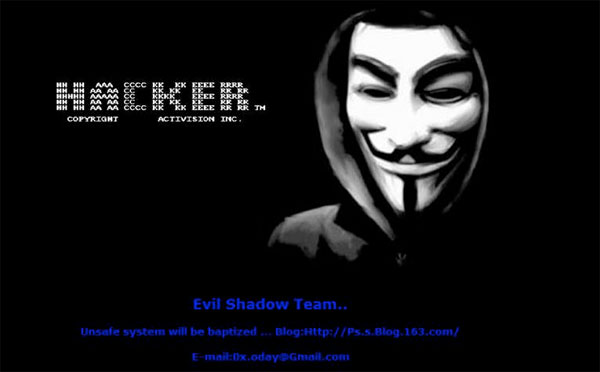
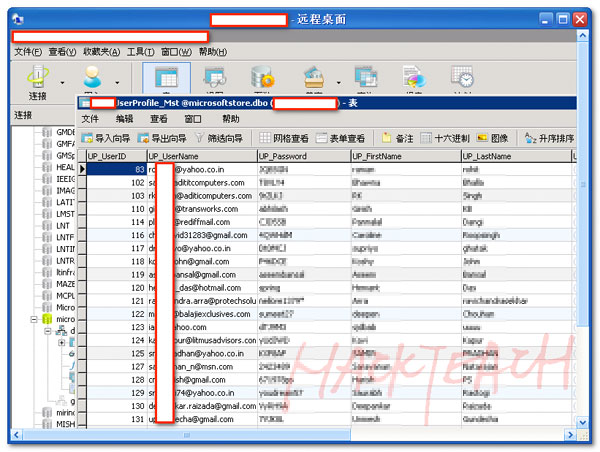
    The Microsoft India Store was hacked in India earlier today and users who visited the site were met with a “Anonymous” like image and the name of the hacker group called Evil Shadow Team, who, in addition to putting a new face on Windows products, revealed that user passwords were saved in plain text.

    The intentions of the group are unknown , but since the attack the site has gone down and is now under tinkering from Microsoft for improved security measures.

  • Apple iOS 4.3.4 will Fix the Jailbreak and Security Flaws.

    Apple iOS 4.3.4 will Fix the Jailbreak and Security Flaws.

    [dropcap]T[/dropcap]he PDF exploit that was used in JailreakMe last year which allowed a one tap Jailbreak and a fast unlock for users. Apple had fixed the flaw in its early stages and now its back. Looks like that is the reason for the quick iPad 2 Jailbreak and the new exploit the Jailbreakers have been enjoying. According to the Wall Street Journal, Apple acknowledged the exploit, and is working on an update. The said update will not only fix the JailbreakMe 3.0 exploit but also another exploit that could allow unwanted eyes to your information.

    [Wall Street Journal]

  • After 50 days of Hacking ; LulzSec Retires

    After 50 days of Hacking ; LulzSec Retires

    On Saturday, the hacking group LulzSec, aka the Lulz Boat, said that it was ceasing operations. In what the group said was its final act, LulzSec also released a fresh set of stolen documents and files.

    [quote]For the past 50 days we’ve been disrupting and exposing corporations, governments, often the general population itself, and quite possibly everything in between, just because we could. We hope, wish, even beg, that the movement manifests itself into a revolution that can continue on without us. said the group in a statement[/quote]

    The group made its name after attacking a number of high visability targets recently, including Sony, the CIA’s website, and the U.S. Senate. It’s unclear if the group’s decision was made after its leader and chat logs were exposed, but the group makes a convincing argument that a 50-day hack-fest was planned the entire time.According to security experts, the group was disbanded due to  increasing pressure from the law. Authorities in Britain last week arrested 19-year-old Ryan Cleary, who had been linked to LulzSec.

    At least some of the group’s six members already appear to be continuing their work elsewhere.


  • Governments vs Hackers – Cyberwar Continues #AntiSec

    Governments vs Hackers – Cyberwar Continues #AntiSec

    The AntiSec Campaign which started a few days ago as a partnership between hacker groups LulzSec and Anonymous, is a cat and mouse game between the hackers and the governments they target. One member of LulzSec, Ryan Cleary, a 19 year old from Wickford, Essex, UK, is suspected by authorities to be a leader of the group as well as being the brains behind the attacks on the FBI, CIA and Sony sites. He was arrested by British Police yesterday in a “pre-planned intelligence raid”. He has allegedly performed these acts from a computer in his mother’s house.

    In another part of the world, the Brazilian wing of LulzSec seems to be accomplishing their mission(s) quite well. In a tweet from Lulzsec, the group congratulated their Brazilian unit.

    [quote]Our Brazilian unit is making progress. Well done @LulzSecBrazil, brothers![/quote]

    Meanwhile, Anonymous has not been sitting idle. In a video released a few hours ago, the group urged anyone from around the world who believed in freedom of speech and anti-censorship of the Internet to stand up for their rights and join them.


    This cyber war seems to be heating up, with the hackers targeting governments around the world. We shall keep you updated on the action as it happens. Stay tuned.

  • Anonymous and LulzSec Announce New Campaign

    Anonymous and LulzSec Announce New Campaign

    The two most famous hacker groups in recent times have united in a campaign which they call AntiSec. The targets include banks, government organizations, and other high profile targets. They are urging hackers from around the world to unite to steal and leak classified documents, e-mails, and other information. [quote]We hear our #Anonymous brothers are making progress with #AntiSec, we also have reports of many rogue hacker groups joining in. :D[/quote]  the group tweeted a few hours ago.

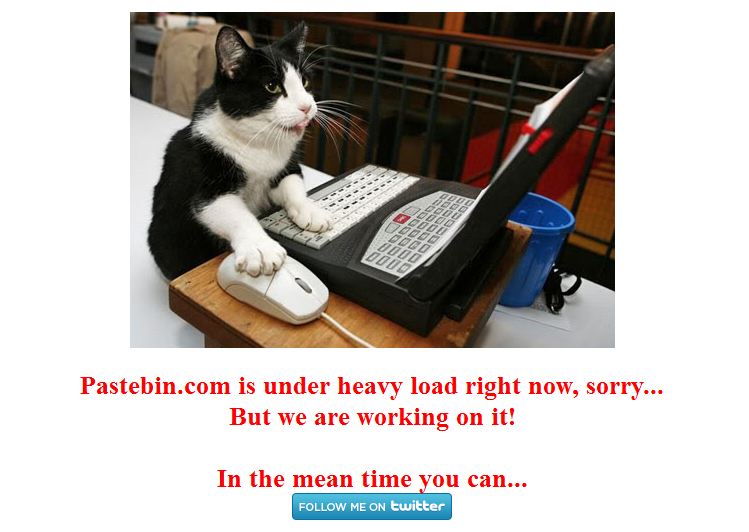
    The campaign seems to have hit its first official target target today. The website of UK based Serious Organised Crime Agency was down today. In another tweet, it appears pastebin, the text sharing site appears to be down. LulzSec suspects the UK Government to have perpetrated an attack against the site as the group uses it to distribute materials. They tweeted:[quote]#DearGovernment did you DDoS @Pastebin b/c of this pastebin.com/9KyA0E5v #AntiSec or is that b/c of us reading it?[/quote] When we visited the website, this is what we found:


    LulzSec is a group that recently targeted the CIA, the FBI, and Sony among others. The group seems to want to embarrass their targets just for kicks and are speculated to be an offshoot of Anonymous.

    Anonymous is a group that targets governments and organizations for political reasons and mostly in the support of freedom of speech. In the past they have targeted the governments of Iran, Turkey and Egypt. They have also targeted Sony for the company’s legal action against PlayStation 3 hacker George Hotz, and Paypal, MasterCard and VISA after they removed their services from the WikiLeaks website which enabled the site to receive donations.

    Stay tuned for more news on the on-going cyber war.

  • SEGA – The Latest Victim of Hackers

    SEGA – The Latest Victim of Hackers

    SEGA Corp, makers of games like Sonic the Hedgehog and Comic Zone, was the victim of a large scale attack on its Sega Pass website. The database of its Europe based website has been hacked and the personal information of all its 1,290,755 registered users has been stolen.

    On Friday, the company sent an e-mail to all the affected users, who are mostly based in Europe and North America, that their member’s e-mail ids, dates of birth and encrypted passwords were obtained, however no payment details were compromised as the company used external payment providers. The company also warned users that if they used the passwords for other online services then they needed to change them immediately.

    No hacker group has come forward to claim responsibility for the attack but LulzSec, the group behind the recent attacks on Sony, the FBI and CIA websites among others, had this to say:

    [quote]@Sega – contact us. We want to help you destroy the hackers that attacked you. We love the Dreamcast, these people are going down.[/quote]

    These attacks leave us wondering about the motives of these hacker groups. Are they trying to improve online security or is this just an in-your-face I can do whatever i want type raid?

  • LulzSec Reveals Motives Behind its Hacks (PR)

    LulzSec Reveals Motives Behind its Hacks (PR)

    LulzSec has been on a hacking rampage for a while now. On reaching a 1000 tweet milestone, they have decided to reveal their motives to friends and foes alike in a Press Release they posted on PasteBin.

    [toggle title_open=”Collapse Press Release” title_closed=”Expand Press Release” hide=”yes” border=”yes” style=”default” excerpt_length=”0″ read_more_text=”Read More” read_less_text=”Read Less” include_excerpt_html=”no”]Dear Internets,

    This is Lulz Security, better known as those evil bastards from twitter. We just hit 1000 tweets, and as such we thought it best to have a little chit-chat with our friends (and foes).

    For the past month and a bit, we’ve been causing mayhem and chaos throughout the Internet, attacking several targets including PBS, Sony, Fox, porn websites, FBI, CIA, the U.S. government, Sony some more, online gaming servers (by request of callers, not by our own choice), Sony again, and of course our good friend Sony.

    While we’ve gained many, many supporters, we do have a mass of enemies, albeit mainly gamers. The main anti-LulzSec argument suggests that we’re going to bring down more Internet laws by continuing our public shenanigans, and that our actions are causing clowns with pens to write new rules for you. But what if we just hadn’t released anything? What if we were silent? That would mean we would be secretly inside FBI affiliates right now, inside PBS, inside Sony… watching… abusing…

    Do you think every hacker announces everything they’ve hacked? We certainly haven’t, and we’re damn sure others are playing the silent game. Do you feel safe with your Facebook accounts, your Google Mail accounts, your Skype accounts? What makes you think a hacker isn’t silently sitting inside all of these right now, sniping out individual people, or perhaps selling them off? You are a peon to these people. A toy. A string of characters with a value.

    This is what you should be fearful of, not us releasing things publicly, but the fact that someone hasn’t released something publicly. We’re sitting on 200,000 Brink users right now that we never gave out. It might make you feel safe knowing we told you, so that Brink users may change their passwords. What if we hadn’t told you? No one would be aware of this theft, and we’d have a fresh 200,000 peons to abuse, completely unaware of a breach.

    Yes, yes, there’s always the argument that releasing everything in full is just as evil, what with accounts being stolen and abused, but welcome to 2011. This is the lulz lizard era, where we do things just because we find it entertaining. Watching someone’s Facebook picture turn into a penis and seeing their sister’s shocked response is priceless. Receiving angry emails from the man you just sent 10 dildos to because he can’t secure his Amazon password is priceless. You find it funny to watch havoc unfold, and we find it funny to cause it. We release personal data so that equally evil people can entertain us with what they do with it.

    Most of you reading this love the idea of wrecking someone else’s online experience anonymously. It’s appealing and unique, there are no two account hijackings that are the same, no two suddenly enraged girlfriends with the same expression when you admit to killing prostitutes from her boyfriend’s recently stolen MSN account, and there’s certainly no limit to the lulz lizardry that we all partake in on some level.

    And that’s all there is to it, that’s what appeals to our Internet generation. We’re attracted to fast-changing scenarios, we can’t stand repetitiveness, and we want our shot of entertainment or we just go and browse something else, like an unimpressed zombie. Nyan-nyan-nyan-nyan-nyan-nyan-nyan-nyan, anyway…

    Nobody is truly causing the Internet to slip one way or the other, it’s an inevitable outcome for us humans. We find, we nom nom nom, we move onto something else that’s yummier. We’ve been entertaining you 1000 times with 140 characters or less, and we’ll continue creating things that are exciting and new until we’re brought to justice, which we might well be. But you know, we just don’t give a living fuck at this point – you’ll forget about us in 3 months’ time when there’s a new scandal to gawk at, or a new shiny thing to click on via your 2D light-filled rectangle. People who can make things work better within this rectangle have power over others; the whitehats who charge $10,000 for something we could teach you how to do over the course of a weekend, providing you aren’t mentally disabled.

    This is the Internet, where we screw each other over for a jolt of satisfaction. There are peons and lulz lizards; trolls and victims. There’s losers that post shit they think matters, and other losers telling them their shit does not matter. In this situation, we are both of these parties, because we’re fully aware that every single person that reached this final sentence just wasted a few moments of their time.

    Thank you, bitches.

    Lulz Security[/toggle]

    The press release states that they have been causing mayhem and chaos throughout the Internet, attacking several targets including PBS, Sony, Fox, porn websites, FBI, CIA, the U.S. government and online gaming servers. In their defence they claim that they have publically announced their hacks (not all of them), and that other hacker groups have not been so forthcoming. It appears that they will continue on their hacking rampage until they are brought to justice.

  • 360,000 Credit Cards Leaked in Recent Hack-Attack to CitiGroup

    360,000 Credit Cards Leaked in Recent Hack-Attack to CitiGroup

    In a recent cyber attack by LulzSec, while earlier Citigroup officials claimed that 200,000 creditcards were compromised. This time around they claim that infact 360,000 credit cards have been compromised and the information has been stolen by LulzSec.


    [quote]Hackers gained access to a total of “360,083 North America Citi-branded credit cards.Hackers gained access to a total of “360,083 North America Citi-branded credit cards.[/quote]

    The bank also claims that more than 70% of the credit cards have already been replaced, and that the maximum Credit Cards were from California.

    LulzSec the infamous hacking group behind many recent cyber attacks, including various at Sony, Has not yet mentioned any involvement in the case.

  • Three Members of Anonymous arrested in Spain

    Three Members of Anonymous arrested in Spain


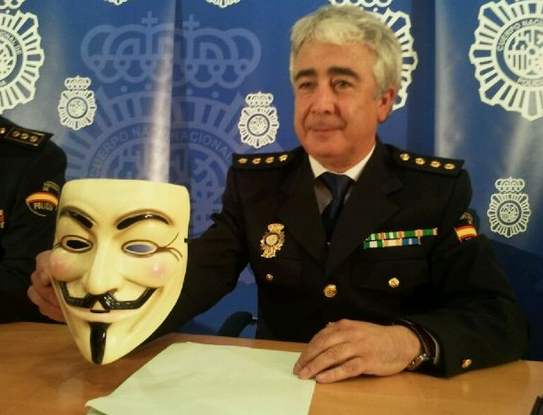
    Anonymous, the name behind various recent cyber attacks including one in our own home, are finally under the scanner in a major way, Authorities in Spain say they have arrested three members of the organization that claims to be an Activist for morals. They also seized at least one computer used in the attacks on Sony. Those arrested are believed to have been important in coordinating the group’s activities in the country and to have distributed the Loic DDoS tool to others.

    The group became infamous for hacking credit card companies, such as MasterCard and Visa, and PayPal in retribution for not allowing donations to be made to Julian Assange’s WikiLeaks. Sony has blamed the attack on its PlayStation Network partially on Anonymous, but the arrest of three of its members is a far cry from retribution for the company which has damages that total more than $172 million.

    The arrests serve more as a message to other hacking groups, such as the headline stealing LulzSec, that given time law enforcement will track them down. However, this particular set of arrests will probably do little to discourage hacktivists across the world.

    Spanish government are on high alert to make sure they are protected against any attacks from the various legions of Anonymous.

iGyaan Network
Privacy Overview

This website uses cookies so that we can provide you with the best user experience possible. Cookie information is stored in your browser and performs functions such as recognising you when you return to our website and helping our team to understand which sections of the website you find most interesting and useful.