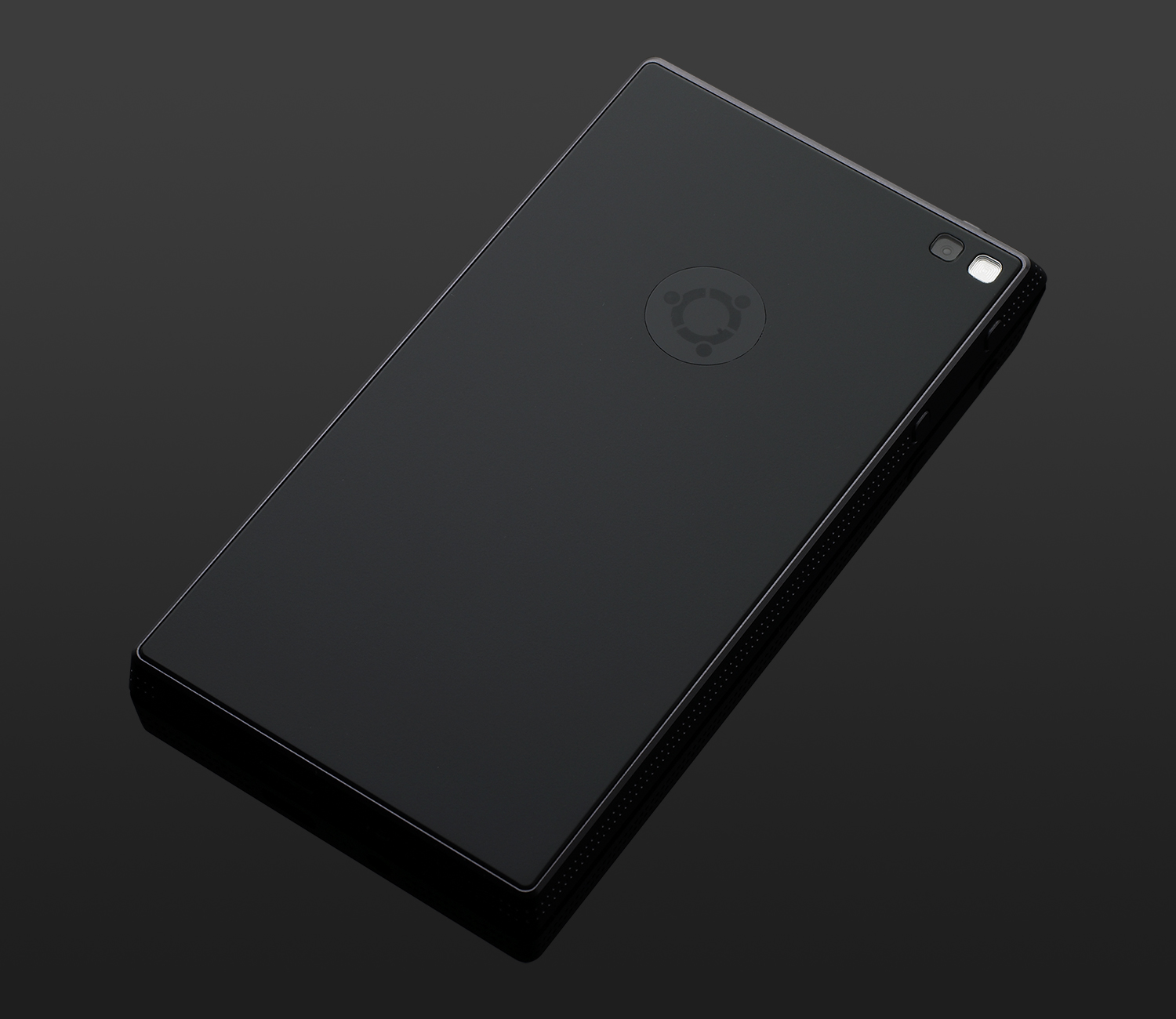
Canonical’s big pans on how the mobile world and the computing world would merge in the future has started to take shape. The new Ubuntu Edge smartphone aims to deliver the benchmark on what future mobile devices could be based on. The Ubuntu Edge will hit the markets in May 2014 for a price of US $ 830, a first day promotion of US $600 has already sold out.
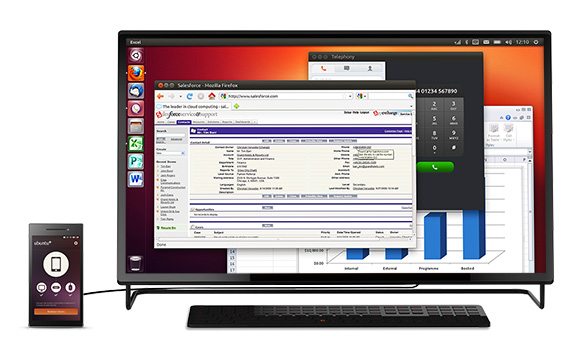
The Ubuntu Edge is a very ambitious smartphone that’ll be capable of running a full-fledged Ubuntu desktop operating system alongside Android. While the specs have not been finalize the company talks of a 4.5 inch 720p display made of sapphire crystal glass on the Edge with a quad-core CPU, 4GB of RAM and 128GB of storage. For optics and sound an 8MP rear with a 2MP front-facing camera and stereo speakers. The Ubuntu Edge will come with globally unlocked LTE, dual-band WiFi, Bluetooth 4.0 and NFC, along with MHL support.
The Ubuntu Edge will only see the light of day if the expected US $ 32 million funding comes through, because the company claims:
none of the phone manufacturers are yet ambitious enough to try to put both things in one package.
The Ubuntu Edge will dual-boot both the Ubuntu phone OS and Android, and convert into a fully integrated Ubuntu desktop PC.
Get the full details on the project at the funding site in the link below.
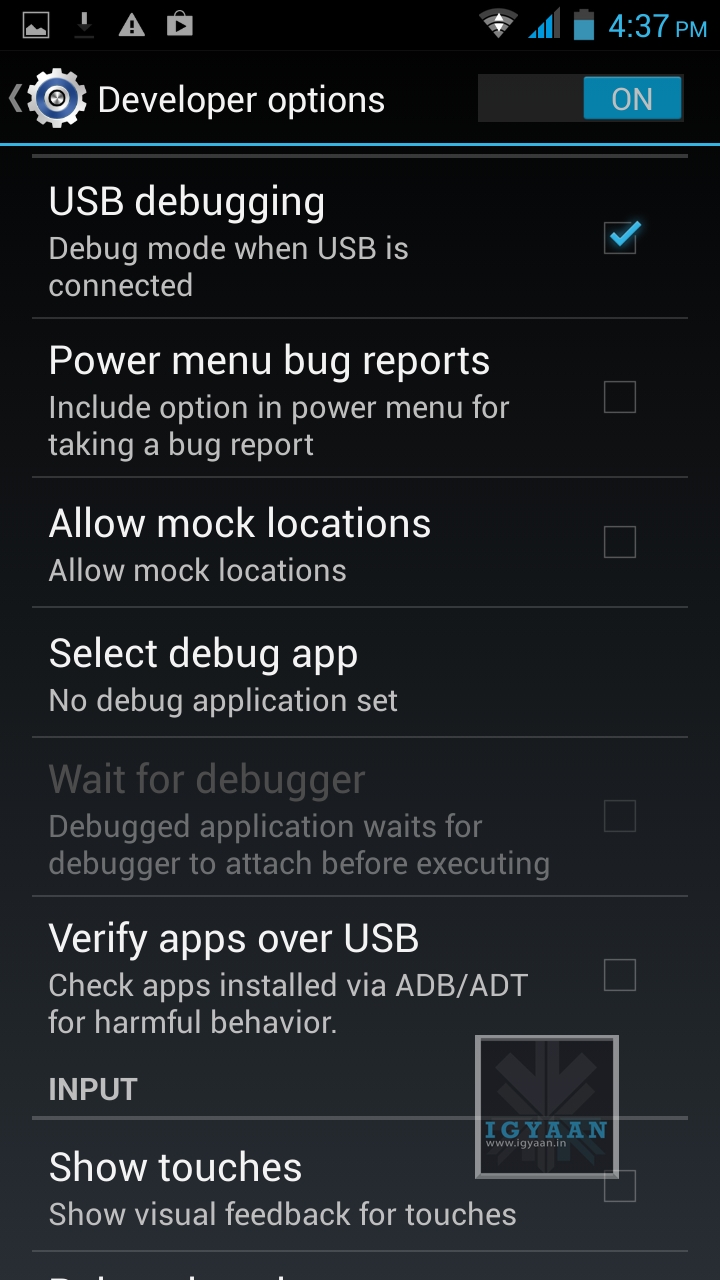
Not: If you don’t see the Development Panel, enable it by tapping several times on the Build Number in the Setting > About screen .
Once enabled connect your Canvas 4 to your PC via the USB cable. (make sure all the drivers for the phone are installed, this will happen automatically)
Step 3:
Download the iGyaan Root Tools zip file above and unzip them into a folder called “root” on the Desktop.
Step 4:
Open this new “root” folder and launch Run.bat and press Enter.
The Process will begin and your device may reboot several times, DO NOT REMOVE THE CABLE until the process is compete.
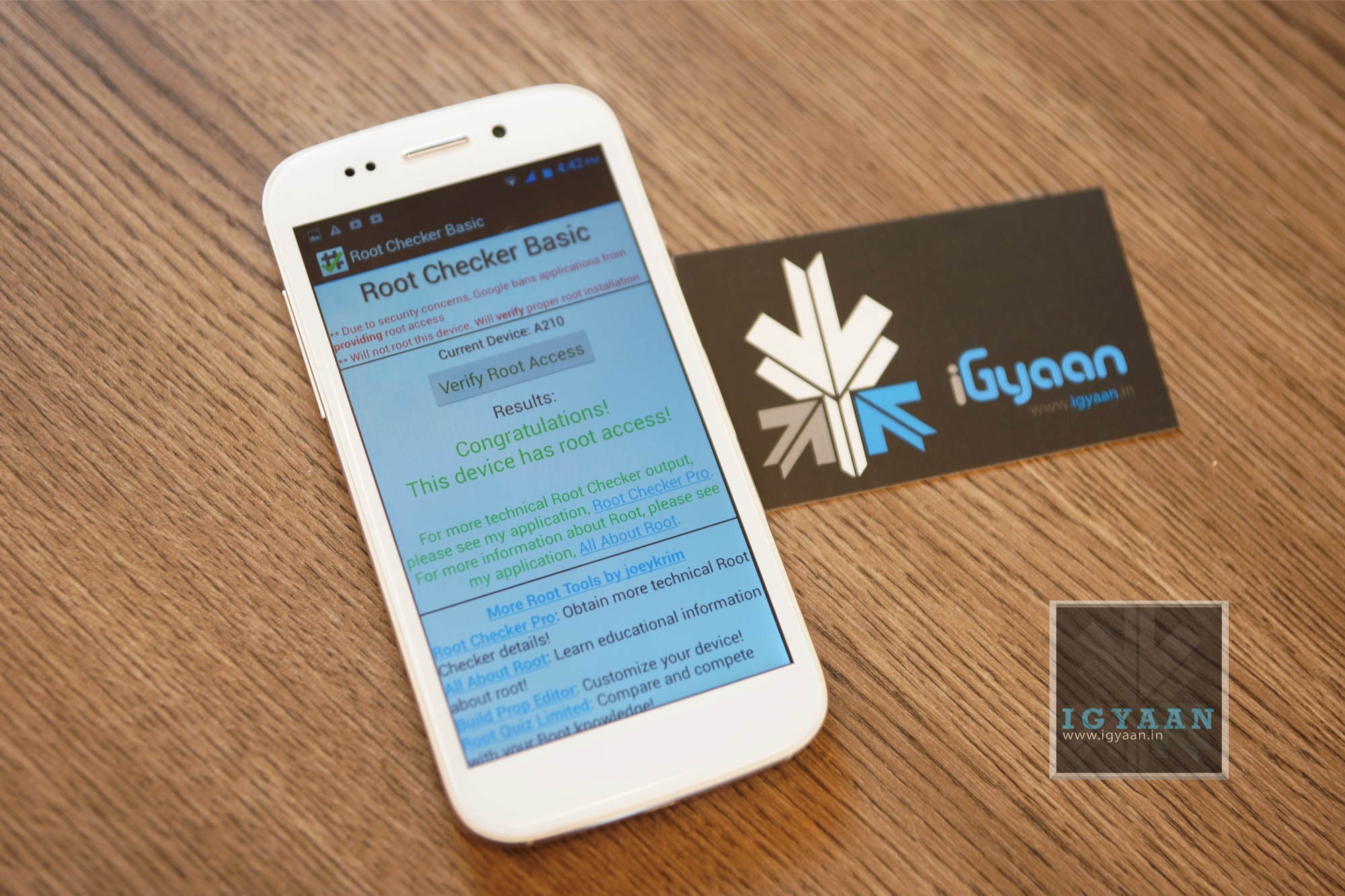
Once completed you will find “SuperSu” in the application list. You now know how to root the Micromax Canvas 4 A210.
UN Root Micromax Canvas 4
Simply Open SuperSU > Settings > Full Unroot
Your Micromax Canvas 4 A210 will reboot and Unroot.
Samsung is all Set to Launch the Galaxy Tab 3.0 7 inch called the Tab 211 and the 8 inch called the tab 311 in India. The Galaxy Tab 3.0 211 comes with a Dual-core 1.2 GHz processor and 600 x 1024 pixels, 7.0 inch display. Whereas the Samsung Galaxy Tab 3.0 311 comes with a 1.5-GHz Exynos 4212 and an 8 inch 1280 x 800px display.
LG has mostly faced challenges in releasing devices in India, they have either been too late (i.e. Nexus 4 ) or too early (Optimus 3D) in some cases awkward ( Optimus VU) and in some cases they have failed to hit the hammer on the nail (Optimus G). With the new LG Optimus G Pro, the company seems to have almost all the things right except the massive price difference in the US $ when the competition launched their phone and when LG launched their phone. The LG Optimus G pro is available for a price of Rs. 38990 , but does it justify that value? Lets Find Out !
Build Quality and Hardware
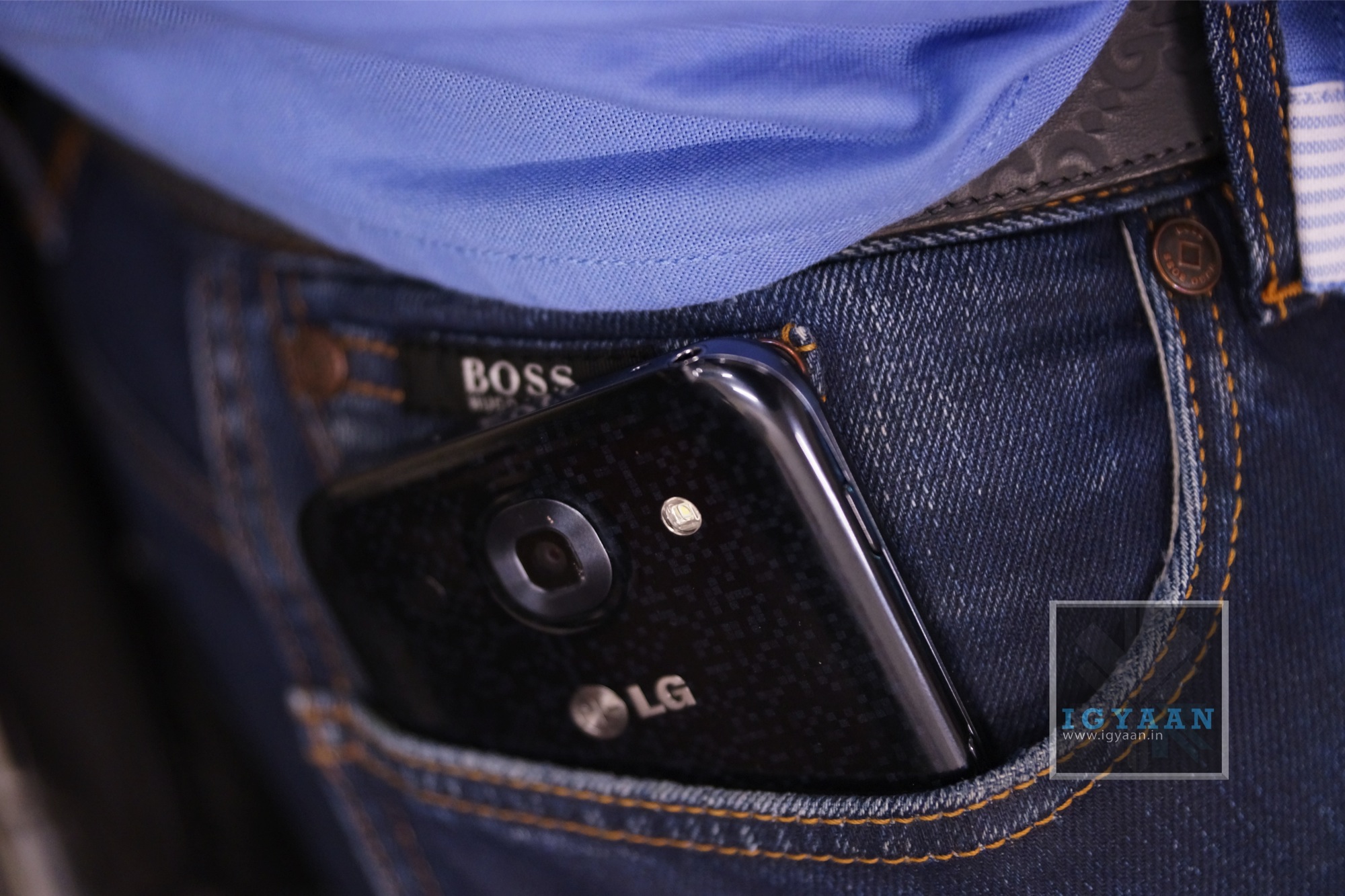
The build quality of the LG Optimus G Pro is nowhere near the HTC One, in fact it appears as if the Korean Manufacturers (read: Samsung and LG) like building their phones with plastic as the major component. The LG Optimus G Pro however is no light weight and can hold its own when it comes to build. The construction is solid and don’t expect any rattle or shake from the device.
The LG Optimus G Pro looks very identical to the Galaxy Note 2, maybe LG is playing on the worlds new weakness for Galaxy devices, as Samsung played for iPhone’s love.
The hardware on this phone is as big as the device itself, Qualcomm’s crazy fast quad-core Snapdragon 600 processor clocked at 1.7GHz, with the Adreno 320 GPU, 2 Gigs of RAM and a total of 32 GB of storage.
The cameras include a set of fantastic full HD capable sensors, with a 13 MP main camera and a 2.1 MP front facing camera which we will talk more about below.
The LCD on the LG Optimus G Pro is not as bright as the Optimus G, where the screen felt just fantastic, here it seems a little dull. The display is big and wonderful no doubt, but it is definitely not the best display out there. LG usually throws in IPS displays and the viewing angles are great, the same is the case with the new LG Optimus G Pro and its IPS Plus LCD display. Add to the great colour reproduction and a 10 point multitouch panel overlay, which works really well.
Not only is the display fantastic, so is the audio. The Speakers are loud so if you are watching movies or videos or even playing games, you will be quite pleased with the capabilities of the LG Optimus G Pro.
The main camera on the LG Optimus G Pro, yields out great compositions, with a impressive hold on color correction and white balance. You can also manually adjust most of these things, but the auto mode is mostly accurate and can really deliver great pictures. The camera also has several shooting modes, including panorama, quick bust etc all of which work really well.
The HD video captured on the LG Optimus G Pro also gets stabilization among other effects. The video comes out nice, has little noise during the day and is well balanced in low light. You can also activate the infamous dual camera mode allowing your video to be captured while you capture the world.
The Phone call capability of LG Optimus G Pro is strong and we found networks to be exceptionally potent. The signal strength is almost always proper and we found little or no noise distortion when on calls.
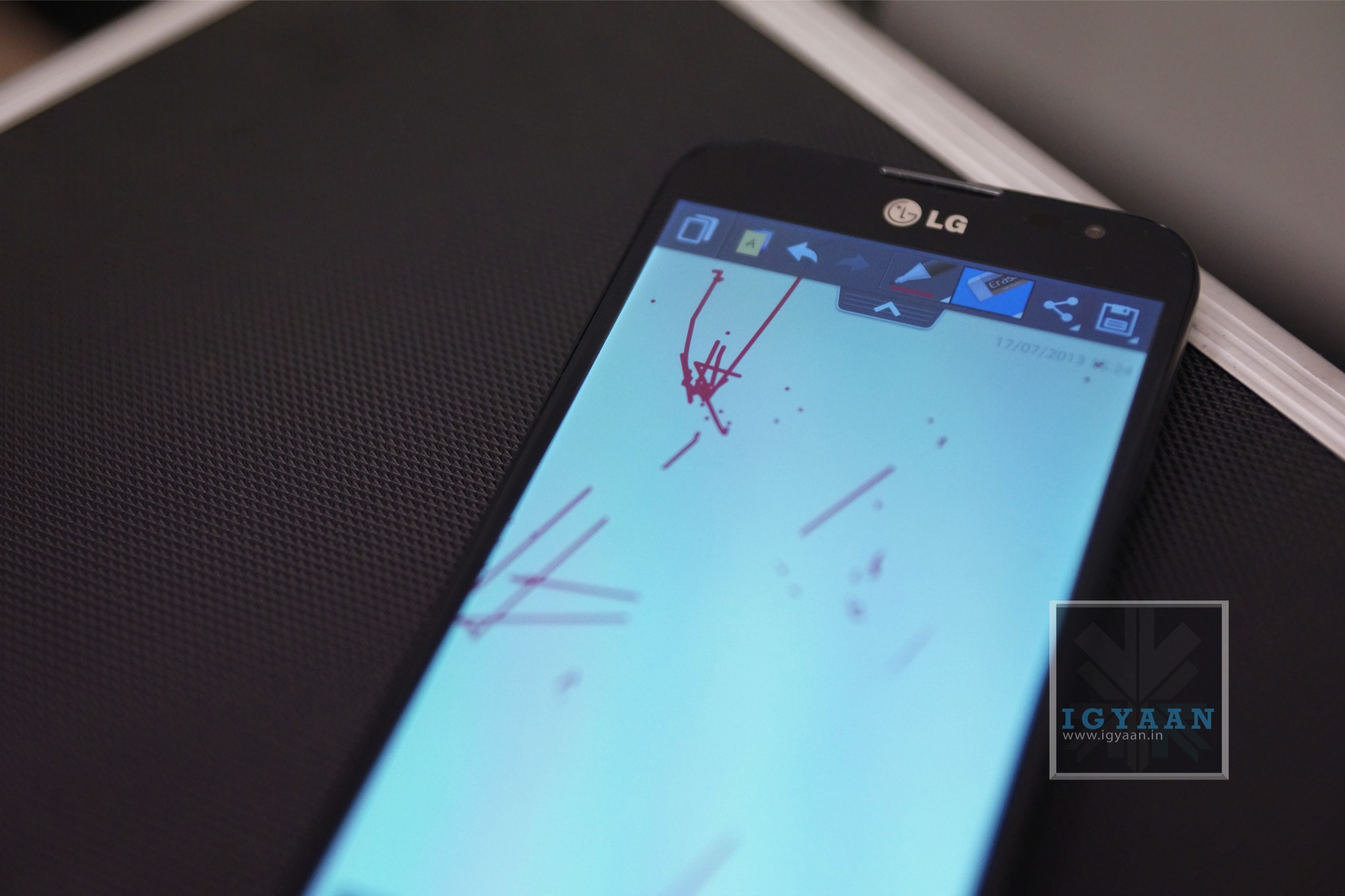
The Optimus UI on the new Android Jelly Bean interface makes for a great experience, including several apps that actually work really well. The quick remote app on the LG Optimus G Pro controls more things than any remote app out there, it even remembers your AC and lets you control it with the flick of a finger. There are many other features like quick apps, Qslide and quick toggles, the quick note also lets you scribble directly on the screen and then later save it as a note.
The UI itself however, is not so pretty looking. It looks kind of clustered and reminds you of a messy lifestyle vs a more refined and organized one on other manufacturer overlays.
Battery is superb on the LG Optimus G Pro and will last you a really long time. We got good 6-7 hours of talk time over dodgy 3G reception, which is actually really fantastic. Below is the complete test result.
If you really want a big phone then this has to be it. The phone is fantastic, it’s fast to boot and responsive throughout, plays games great and has excellent cameras. It is large enough to a point where using it with one hand would simply be foolish, even if you have large hands like mine. The UI is the biggest let down and simply can be written over with a tap of a button.
If big is your thing then the LG Optimus G Pro is the right kind of slab for you.
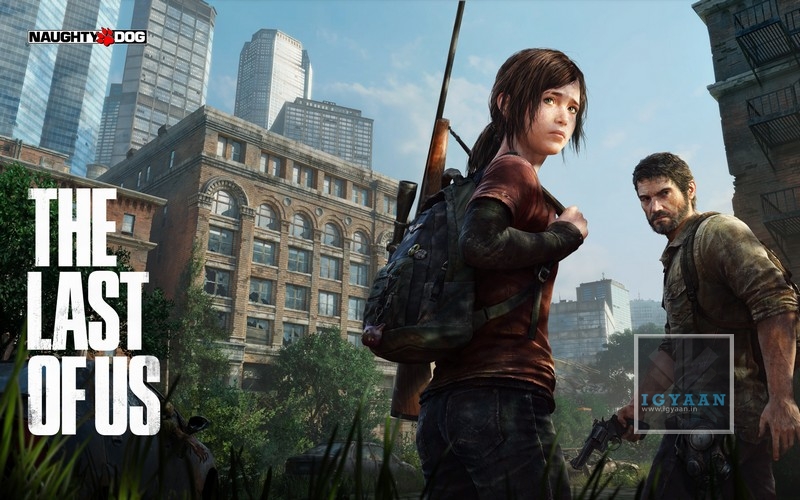
While Sony may be busy announcing its next generation console, their present iteration is still doing strong. The Last of Us is a Sony exclusive title developed by company’s Naughty Dog studios, for the PS3. The game plays on the zombie apocalyptic post world era, that we all have come to love and expect, yet there are some exciting new additions to the overall storyline and gameplay experience.
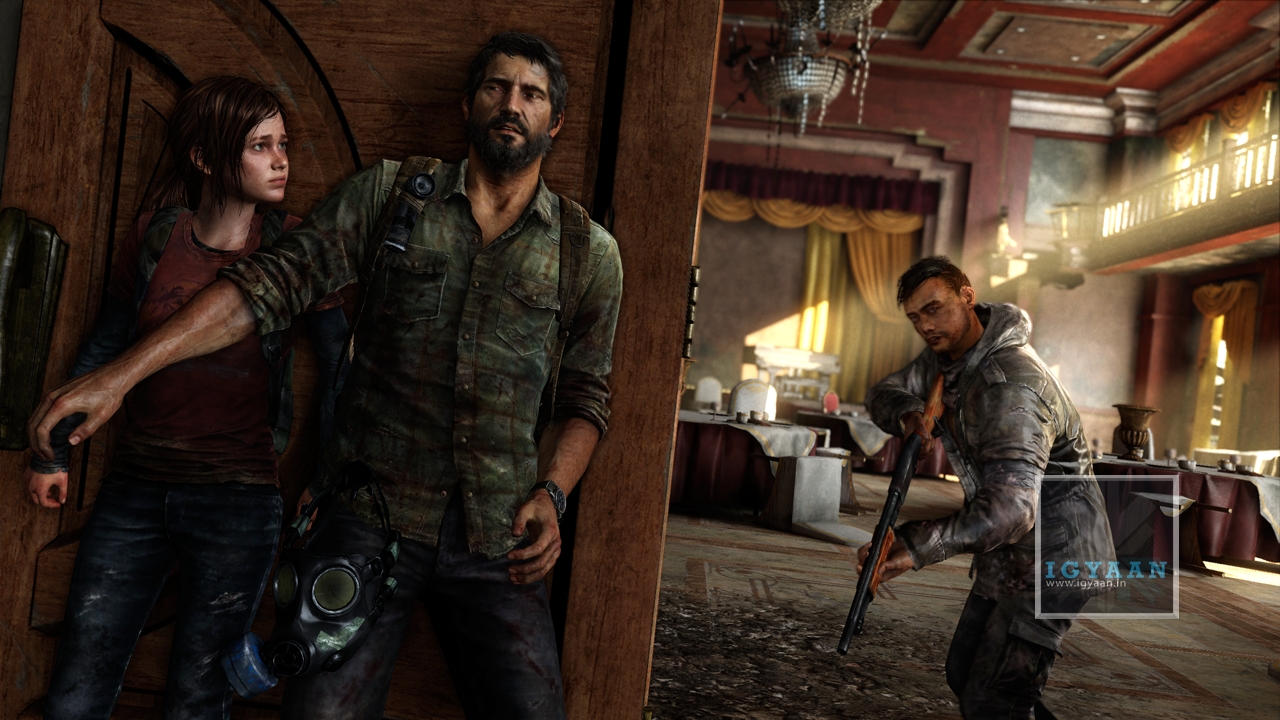
Joel and Ellie
Storyline
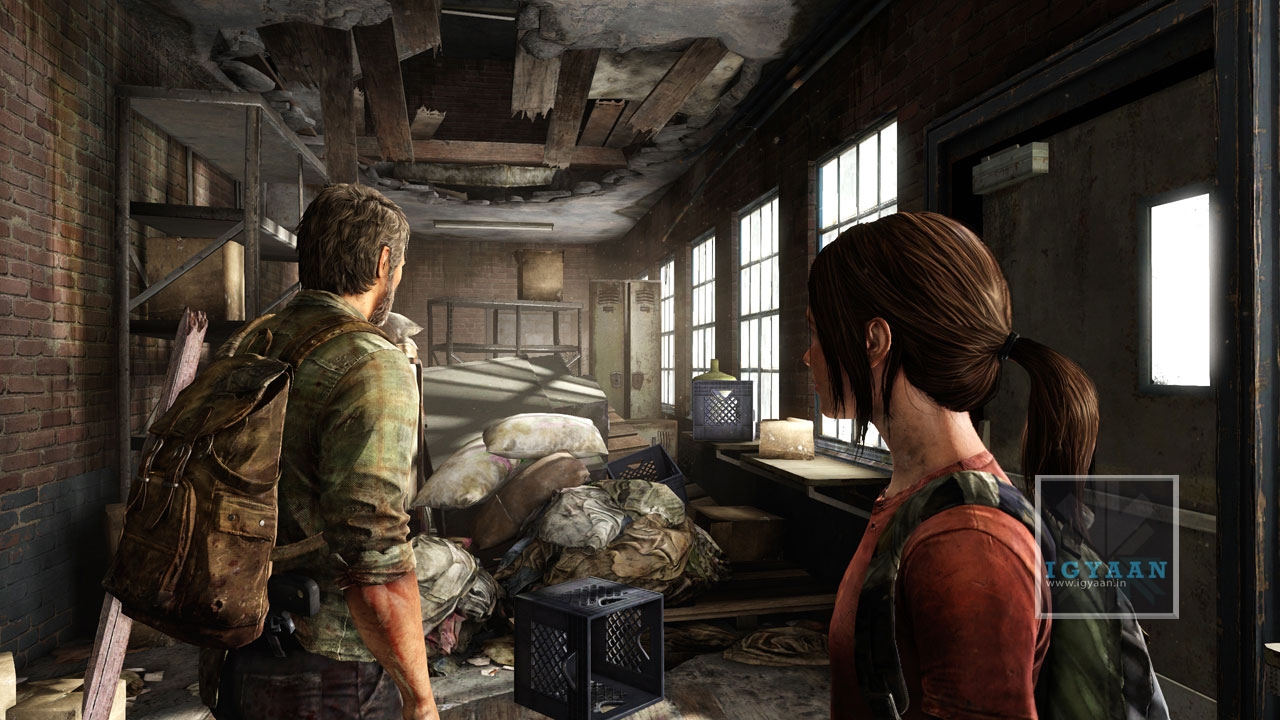
The Game begins with the normal life of main character Joel, and how it suddenly gets affected an outbreak that causes the Zombie Fungus Cordyceps to start spreading like wild bushfire. The gameplay is set in the United states and shows how everywhere, post this outbreak, there is utter pain and chaos. The character, like any hero is destined to help end the problems of the world by delivering a solution, where he needs to travel across the badlands of the United States.
Unlike any other Zombie game the Last of Us is designed in a different manner, and you simply cant expect instant hardcore action from the game. The game storyline is slow and progresses as the character fights various kinds of zombies, human enemies known as hunters and the government which basically controls everything. The story as it progresses reminds you from time to time the hopeless situation of the world and how the Joel fights on despite that. The game essentially takes off from the typical end of humanity scenario, but chooses to tell a story about the two people that travel across the pain stricken world in an attempt to revive humanity.
The gameplay is full of beautiful backdrops, amazing sceneries of the untouched wilderness and the post fungus cities which are destroyed and collapsing. The game developer has ensured that each scenery and backdrop shows the status of the world and each new backdrop tells a brand new story about what has happened.
As the game progresses the secondary character Ellie starts to take limelight as she becomes closer and closer to Joel. Their relationship is strengthened by Ellie’s constant need to oppose the exacting situation and Joel constant efforts to keep things under control. Ellie has been born into this world and has no idea what the real world is like, her constant need and discussions to find out what the world was, make for some of the best ingame scenarios.
The story line is beautifully presented and ensures that you build a relationship with the characters as the game progresses. The game defines what possibly is the best ever story written for the Playstation.
Post World Cities
Gameplay
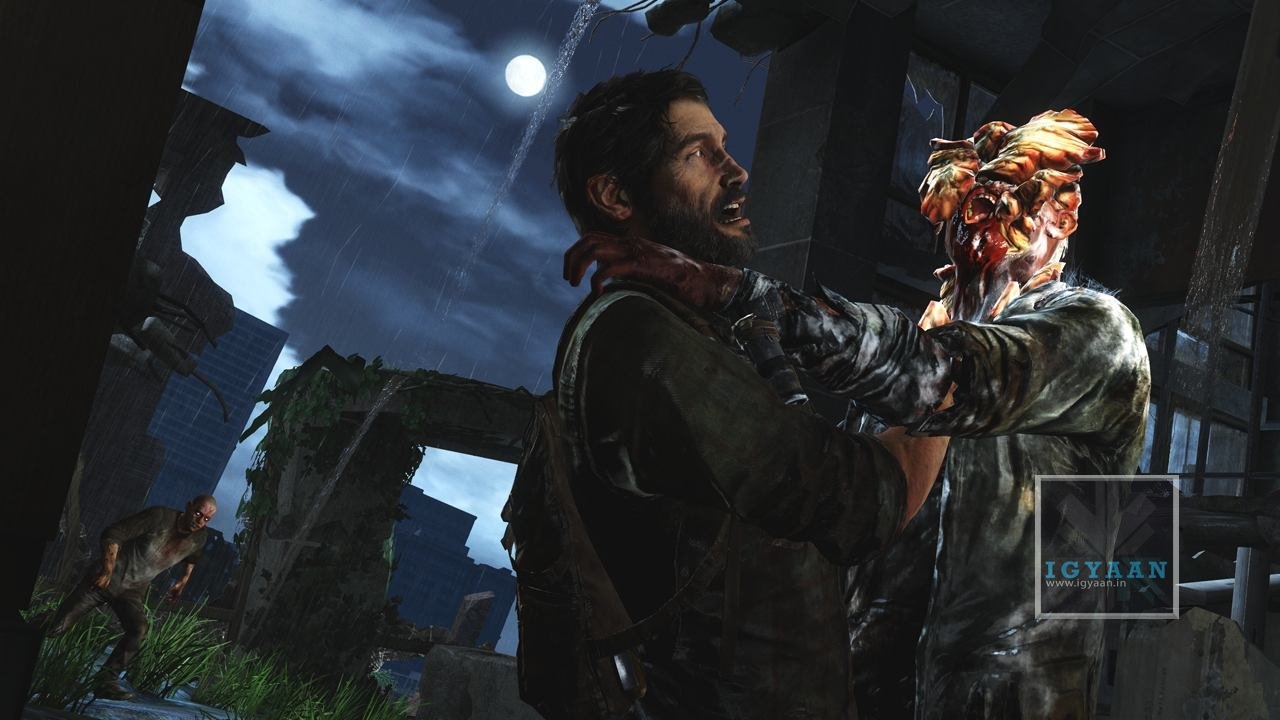
What the storyline builds, the gameplay delivers! With a vast variety of interesting elements that make it a truly exciting and entertaining experience. Despite the fact that the game has many enemies throughout the story, the major focus remains on the infected. Cordyceps infested humans become rage hungry monsters that don’t eat or kill, they simply bite and infest others. The main elements of the infected are the runners that are basically the pawns of the enemies, the clickers are the bishops, blind yet brutal and many other higher ups that define the bosses of the infested chains.
Infected Clicker
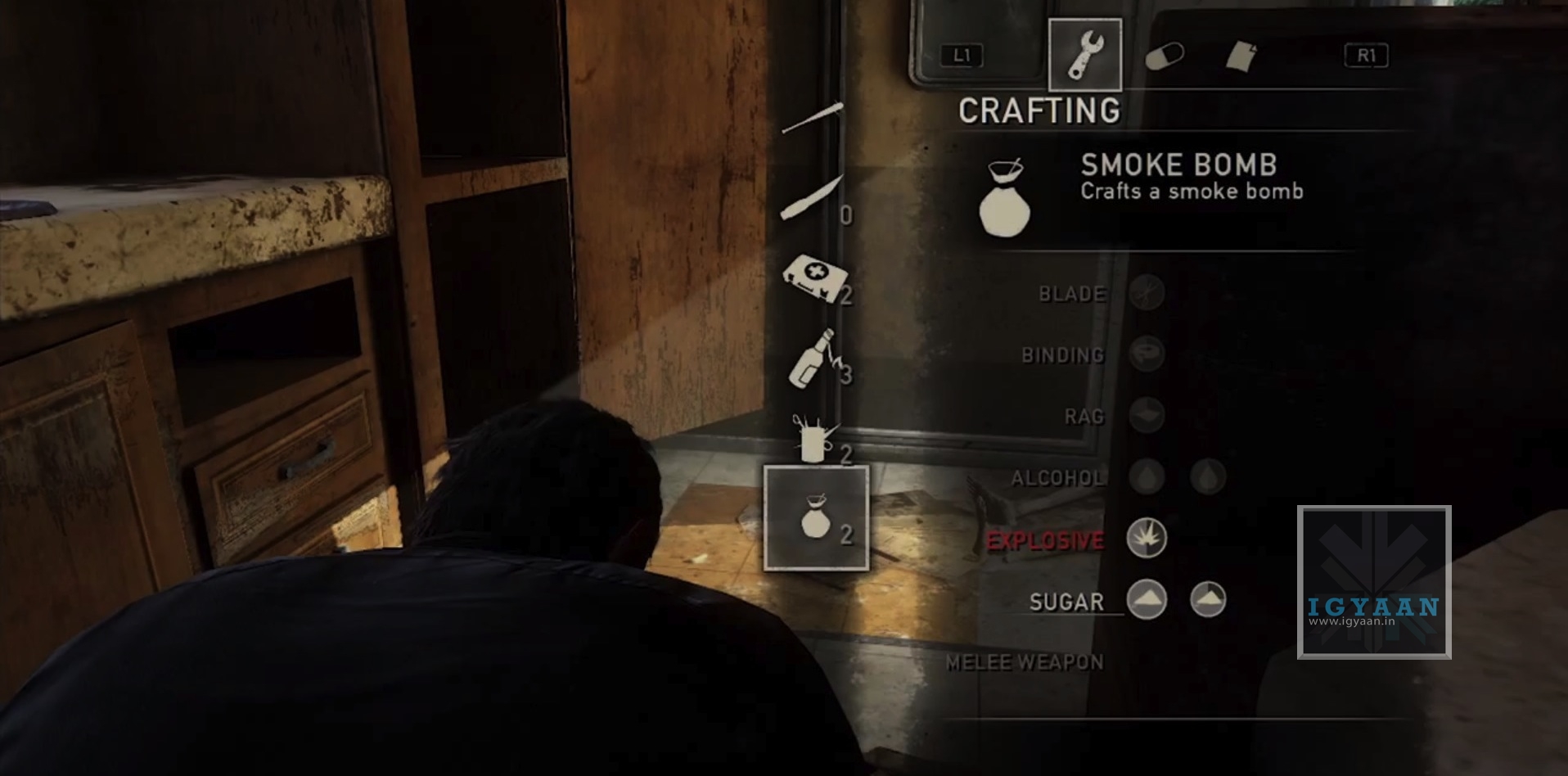
Gameplay becomes intense and inflicts a sense of fear in the gamer as the infected arrive, while Joel has a vast majority of mainstream weapons to his disposal including pistols, automatic guns and even crossbows, the most interesting element of the gameplay is the characters ability to forge destructive weapons from the post world scavenging. While ammo is mostly scarce, hard to find and carried in a limited quantity, the handcrafted grenades, smoke bombs and throat slitting shivs are manufactured from items found on the map, including broken scissors, alcohol and pieces of cloth. All this crafting happens real time and the gamer is in constant stress especially when the threat is nearby.
Nearby Hunter
While the gameplay is close to perfection it may lack the certain finesse and responsiveness that users may expect from a actions scenario game like the Last of Us. The progress is slow and the expansive storyline, mixed in between intense gameplay, tends to take from the mood of the excitement. There are also stages where the characters are simply walking while figuring out their path, which may truly frustrate some.
Multiplayer
Although the Last of Us was not designed to be a multiplayer, the game does a wonderful job of that as well. Making you the leader of a group of survivors, scavenging and fending off enemies, you have to constantly explore the map and ensure that you are on top of the situation and in control of your team that often finds itself surrounded by problems. The multiplayer may not be the main concept but is a well appreciated addition to the overall experience of the Last of Us.
Conclusion
There is no doubt that the Last of Us is possibly the most beautiful game on Playstation 3, and the extensive work behind the tile truly shows from the start to the finish. The story is involving and creates a sense of relation and there comes a point where you actually start to feel bad for the state of the situation. The gameplay adds a lot of action and thrill, and literally keeps your heart pounding, especially when the higher-up infected are around. There is really nothing more you could ask for from a game.
If you own a Playstation 3 and are looking for a game that will keep you busy for hours and days, while making your heart pound and your thumbs smashing the controller, look no further.
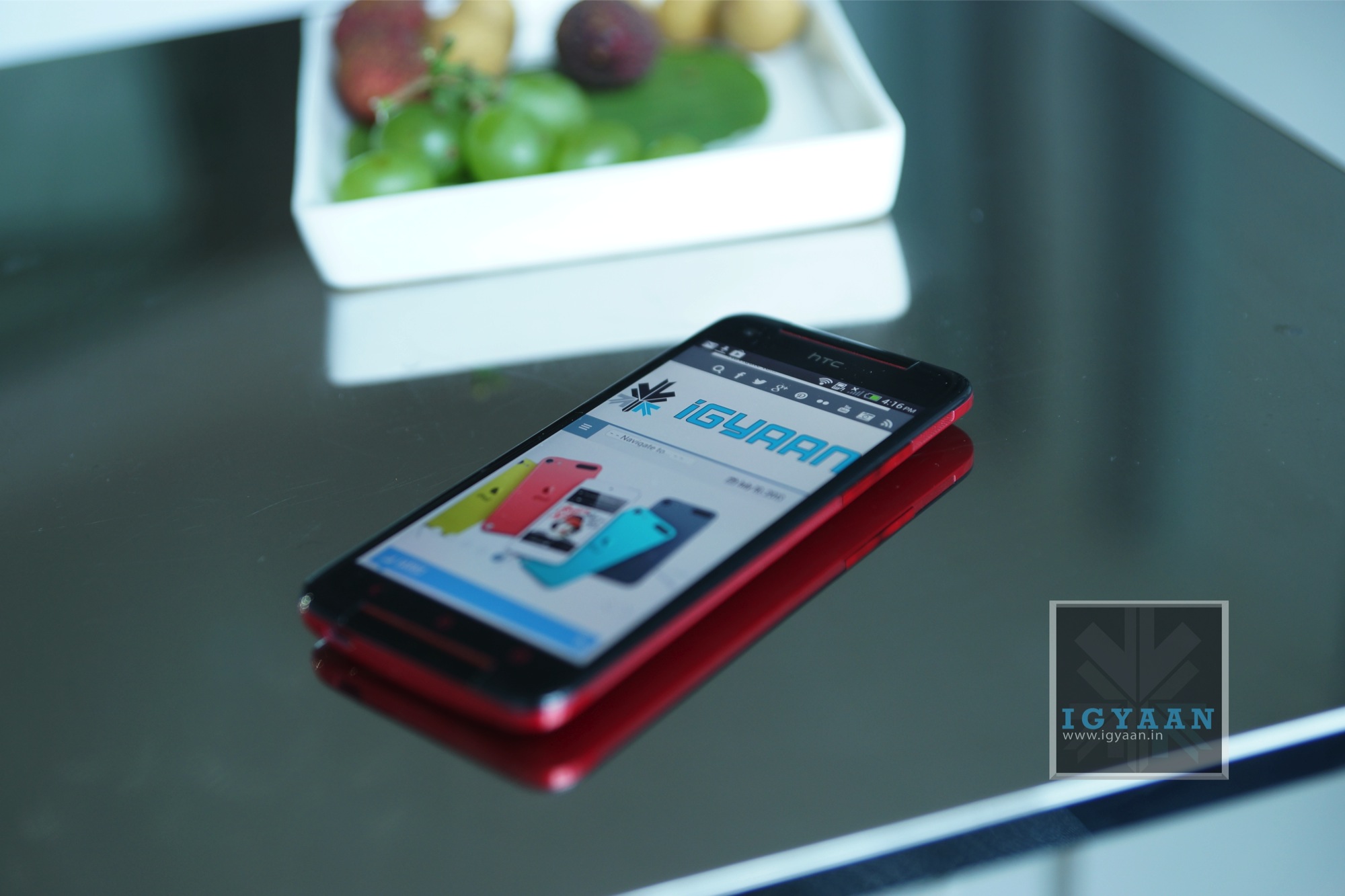
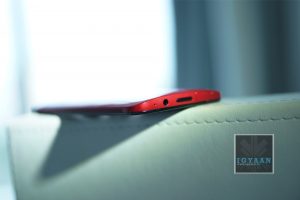
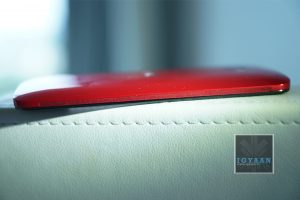
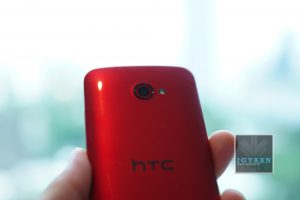
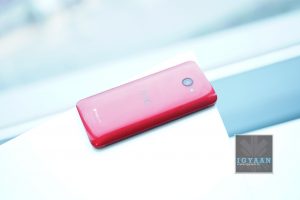
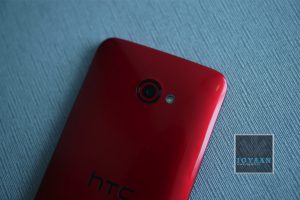
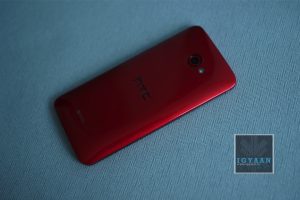
HTC yesterday at a showcase event held in Thailand showed off the new HTC Butterfly S. A revamp of the HTC Butterfly, the new Butterfly S builds along the same design strategy but adding features from HTC’s popular HTC ONE.
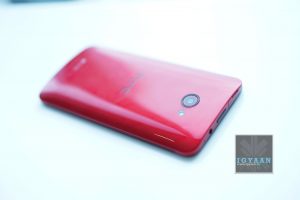
Curved to fit in the hand the new Butterfly S has been splashed with a metallic finish making it resemble a “car paint job”. The color options for the handset are also not limited to two like last year, this year they include a white, a metal grey and a glossy red.
The HTC Butterfly S is packed with a lot of exciting elements including a 3200 mAh battery, a Qualcomm APQ8064T Snapdragon 600 chipset with a Quad-core 1.9 GHz Krait 300 CPU and the Adreno 320 GPU. The front has a beautiful IPS LCD 3 display of a 5 inch size and a full HD 1920 x1080p resolution and a layer of Gorilla Glass 3. The design and the materials used in the construction of the HTC Butterfly S show to a great extent what the thought process of the company is when they are building a handset. The HTC Butterfly S is not only functional but looks really good.
The new HTC Sense 5.0 on top of Android 4.2.2 improves on the Blinkfeed experience as well as the Camera features, including enhanced ZOE file management amang many other improvements.
The HTC Butterfly S caters to a niche, an audience which liked the original Butterfly but wants more. Hopefully it reaches India in all three colors with a price tag in the OH-So-Affordable under 40k price bracket, here is hoping anyway! Check out the images below and stay tuned for Video.
In the 2004-2007 period, if you would’ve asked any teenage boy/girl about that one phone they wished they had, the answer would’ve been simple – the Motorola MotoRazr.
Right from its sleek, futuristic design to that V3i advertisement where a guy dressed like 007 (but travelling in the “metro”), uses his blade (read : MotoRazr) to cut through a woman’s dress and then fight her when she retaliates, everything about Motorola spelled success.
It was a period where when you looked anywhere, you would see someone on a Motorola RAZR. The company sold over 120 million units of that phone, making it the second most popular phone in 2005 and then along came the iPhone. Motorola who?
Last year, the company shut down operations in India altogether, after being bought by Google. So we ask ourselves, can we see Motorola charming us with its devices once more?
How It All Began
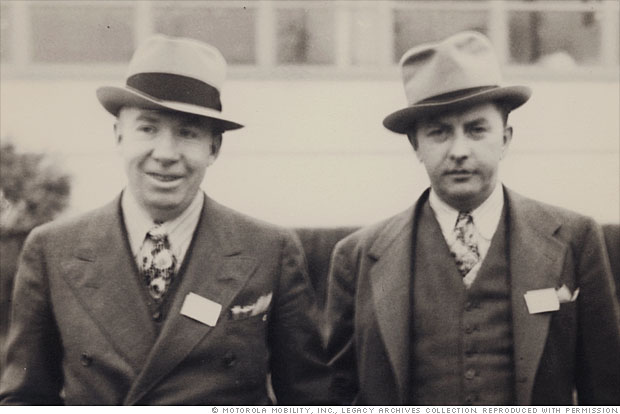
Motorola is an American company with many “firsts” in the field of science and technology. It started in Chicago in 1928. Company founders Paul V. Galvin and Joseph Galvin created the brand name Motorola for the car radio – linking “motor” (for motorcar) with “ola” (which implied sound)
Founders Paul V. Galvin and Joseph Galvin.
The Motorola car radio was released by the Galvin Manufacturing Corporation in 1930, two years after the company’s founding in Chicago, kicking things off with a battery eliminator, aimed at letting battery-powered home radios run off of household electricity. In 1947, the company dropped its name for simply Motorola.
[pullquote_left] Motorola provided the radio technology for APOLLO 11’s moon landing. [/pullquote_left]
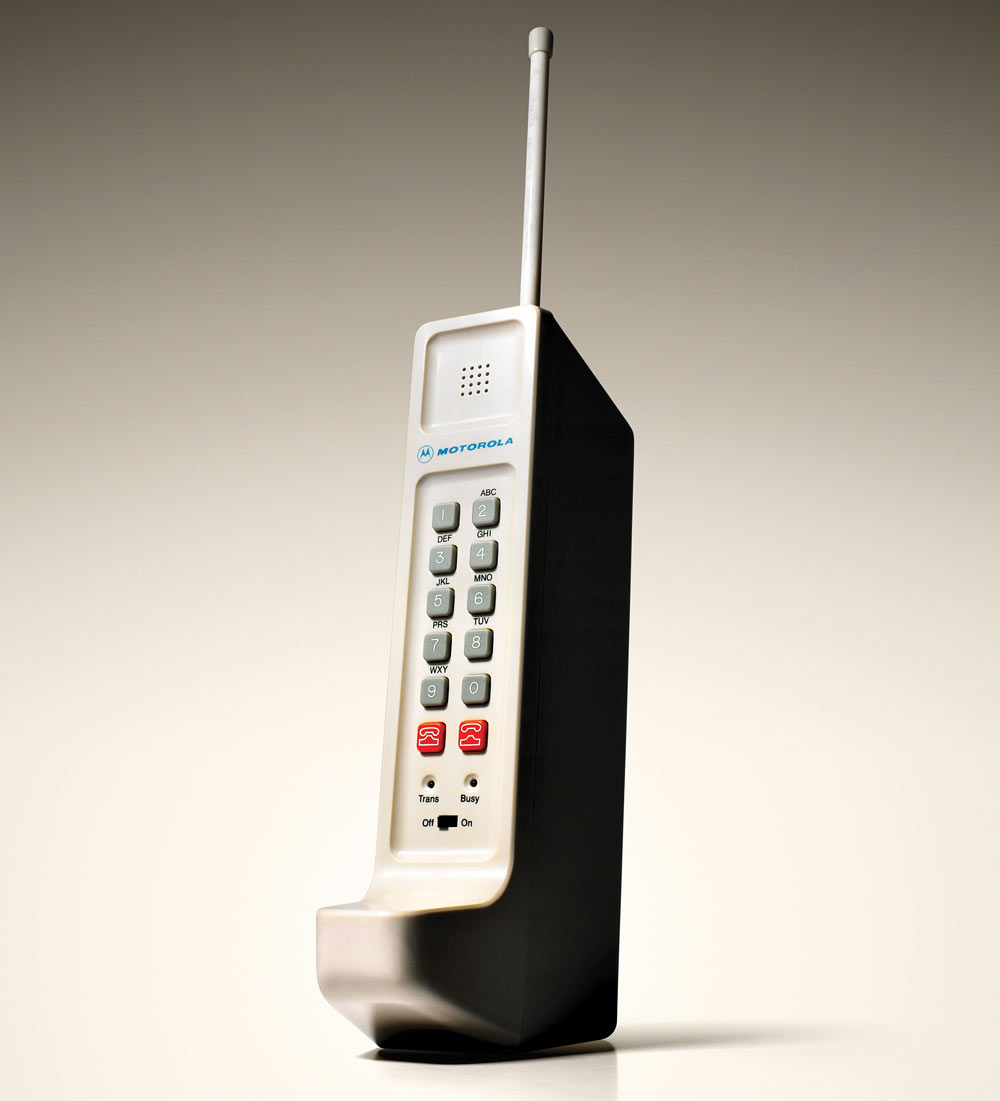
In 1973, Motorola took some major steps toward the technology that would define it in the decades to come, showing off the DynaTAC and demonstrating the phenomenon of cellular telephones to the world. It wasn’t until 1984 that the brick-sized phone would actually start making its way into the hands of consumers.
The Motorola DynaTAC Photo: Dan Forbes
Fast forward to 2004, the MotorRazr became the best selling clamshell ever made.
The Fall
Post 2007, after a certain turtleneck sweater aficionado introduced the iPhone to the world, everyone forgot about their love for Motorola and turned their attention towards Apple.
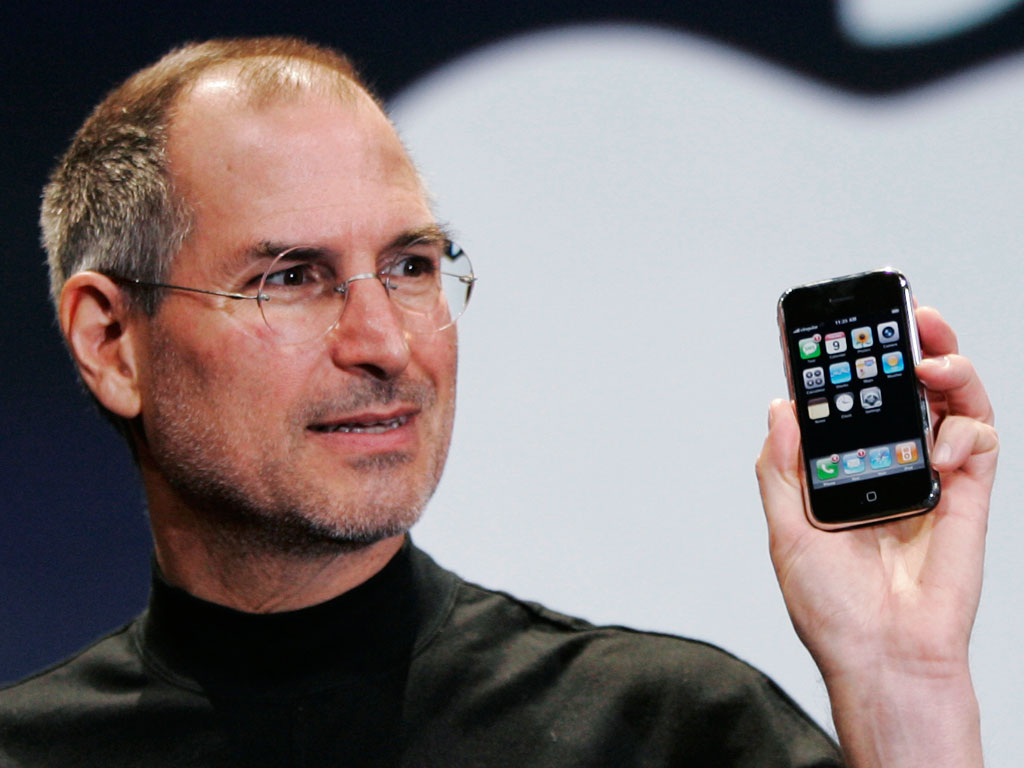
Steve Jobs unveiling the iPhone in 2007.
And could you blame them?
According to the NPD Group, which released the sales numbers, four of the five best-selling handsets at that time were optimized for messaging and other advanced Internet features. The only one that wasn’t? The Razr.
At the high end of the market, Motorola’s designs didn’t keep up with consumer expectations, and the game-changing iPhone set back the company further. Motorola also got squeezed out by competitors at the lower end, where the cell-phone business had the most potential for growth globally.
Motorola failed to use its huge advantage in the early days of higher end handsets to become one of the leaders in the emerging smartphone business, which is now dominated by Apple and Samsung.
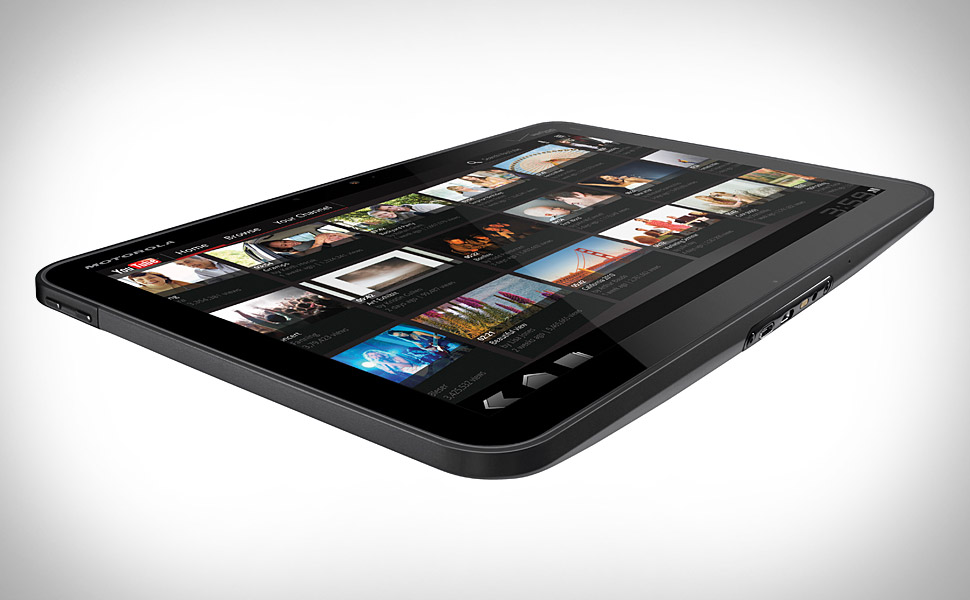
Motorola failed to make an impact in the tablet market with the Motorola XOOM.
After a stint with Android, including it’s XOOM tablet, Motorola gave up altogether and closed down operations in India last year.
The result? In August of last year, Google announced that it would be acquiring Mobility for around $12.5 billion, a deal that would close nearly nine months after it was first made public.
Who’s To Blame?
What Motorola failed to realize was that the cellphone market changed their buying decisions from “hardware”, to a “software decision”. People wanted to run real, native, apps on their phones.
In 2009, Motorola joint-CEO Greg Brown blamed Motorola’s own decisions for the company’s decline. While Brown did make the obligatory hat-tip at the economy – for exacerbating the situation – the executive mainly criticized Motorola’s planning, products and blindness to the changing needs of consumers.
Speaking to the Financial Times, Brown highlighted the absence of a RAZR replacement as a key failure for Motorola. That, together with a misplaced focus on the developing market and over-investment in budget handsets, meant Motorola missed the growing messaging trend.
[pullquote_right] Warren Buffet once said that when a manager with a great turnaround reputation encounters a company with a reputation for dysfunction, it is the company that will keep its reputation. [/pullquote_right]
Warren Buffet once said that when a manager with a great turnaround reputation encounters a company with a reputation for dysfunction, it is the company that will keep its reputation. And that’s how it panned out. Post Geoffrey Frost’s death in November 2005 after putting Motorola on the road to success, Garriques tried to build the next hit with the system.
Then after being unable to conjure up the same magic, Garriques left for Dell and the Motorola machine ran back to the security blanket of processes. Constant “safe pairs of hands” were used to replace him. Casey Keller was brought from Nabisco to do a job and failed too. The succession of replacements for Garriques just made things worse.
What Now?
Everyone loves a good comeback, whether it’s Manchester United stealing a win in the final minute of the Champions Trophy in 1999 or Mickey Rourke snagging an Oscar nomination for The Wrestler.
In Google, Motorola have their own version of Sir Alex Ferguson to take it back to the top.
In Google, Motorola have their own version of Sir Alex Ferguson, the recently-retired Manchester United manager who broke the “Old Firm’s” dominance in Scotland with Aberdeen, and Liverpool’s dominance in England. Google has the expertise and means to take Motorola back to the top.
The rumoured comeback phone, called the Moto X, will be built at a 500,000 square-feet facility in Texas that will employ 2,000 people by August.
Though Motorola boasts of a long, impressive history of mobile innovation, the present CEO, Dennis Woodside, acknowledges how challenging it is for the company to reach the same state of glory it enjoyed some time back. The company aims at hiring a large number of employees to manufacture a new generation of mobile phones.
“We like to be the challenger. So we’re filling the company with people who want to transform the company into a winner,” said Woodside.
There’s still a lot of life left in Motorola, which, bruises and all, remains one of the grand names in world technology.
“Motorola is still a huge business and an iconic company,” Brown says.
If things go according to plan — and Brown says he’s confident they will — the Motorola mobile business could again find itself on the leading edge of wireless, setting the pace of global innovation for the next century and beyond.
The company recently unveiled their new logo, with a clear emphasis on it now being a Google enterprise, and I personally think that the road to its comeback will be long and hard, but Motorola will reach its former glory in the coming years.
What do you think? Will Motorola be able to charm consumers again? Let us know in the comments section below!
LG Recently launched their flagship in India, the LG Optimus G Pro and we are giving away One to one of our lucky readers. Simply enter the LG Optimus G Pro Giveaway below and thats it!
Don’t forget to share so your friends can also play.
Here are the Lucky Winners for the LG Optimus G Pro :
Winner: Vidit Chopra
Entry:
The LG Optimus G Pro will not just be my life companion but my ultimate companion. It’ll follow me from the serenity of Ladhak to the hussels of Mumbai. The G Pro would help me capture the panorama of the cafe while enjoying my cup of coffee at the corner cafe and checking my facebook news feed. I would make my friends jealous of the luscious brownie on Instagram later. Watching Ray William Johnson on the full HD, 5.5″ display to bewitching tunes of Nirvana. It’ll take my Android experience to a whole new level. It’ll be my shadow where ever I go.
Runner UP
1:Amolak Chandel 2:Chandan Babu 3:Rohit Sharma
Congratulations :
We will be contacting you within this week via your email.
For all the others, Please stay tuned for two new exciting giveaways.
Incase you have not already, check out our Unboxing and hands on Review below.
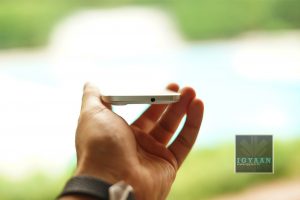
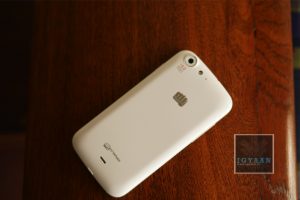
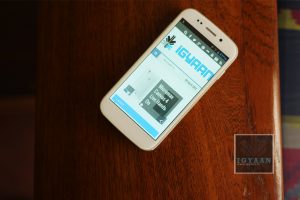
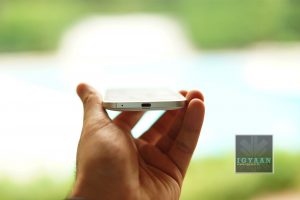
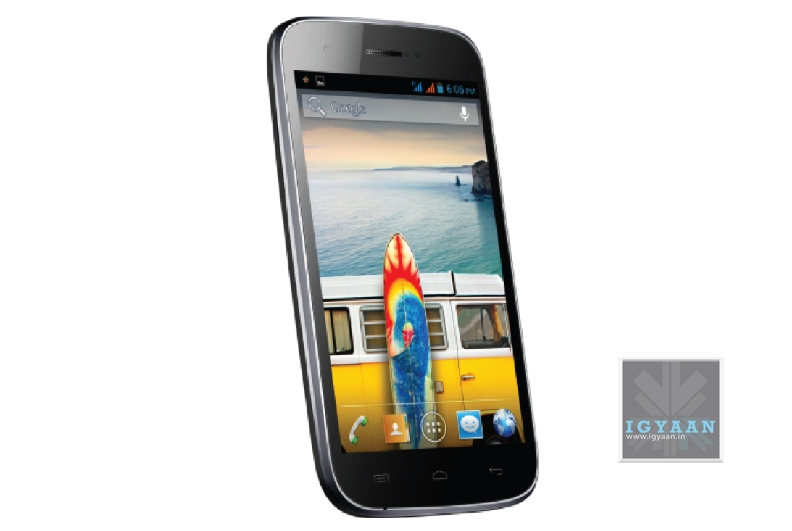
Micromax has let out yet another sensation into the market, or has it? Micromax today announced the new Micromax Canvas 4 A210, a double jump in model number but no real jump in specs. The phone is priced at Rs. 17990 and is available to purchase today.
Initial Impressions
At the first glance the phone will remind you of each and every Canvas phone you have seen till date, plastic design and glass front and the Micromax Canvas 4 A210 is no different. The built quality is much improved over the previous edition Canvases but it is identical to many a smartphone already in the market. The bezel reminds you of a an iPhone with a stainless steel finish where the back panel is very Samsung.
Micromax has kept exactly the same specs of the Canvas HD with the Micromax Canvas 4 A210 and only bumped up the camera on the back and the front. The Blow to unlock feature, comes via an app and is very gimmicky and should cause a lot of problem for people. The interface is stock apart from a lot of Micromax bloatware and the performance seems shabby at first.
The cameras did not boot up on the device we were shown so we were unable to check them out, but the camera app is the standard camera app. The Micromax Canvas 4 A210 is the company’s attempt at making a device which focuses on build quality vs the hardware, and it seems to most this will be a disappointment. The company is also promising good service and easy replacements for the devices, which can only be seen in the time to come.
The camera upgrade and design are not the only changes, Micromax has also reduced the battery to a 2000 mAh battery which may end up resulting in lower battery life. Has Micromax built up this phone too much pre launch to the extent that users got really excited? Is the Micromax Canvas 4 A210 overpriced? While we search for the answers check out the images and stay tuned for a hands on Video.
Are you keeping or canceling your preorder? Let us know below.
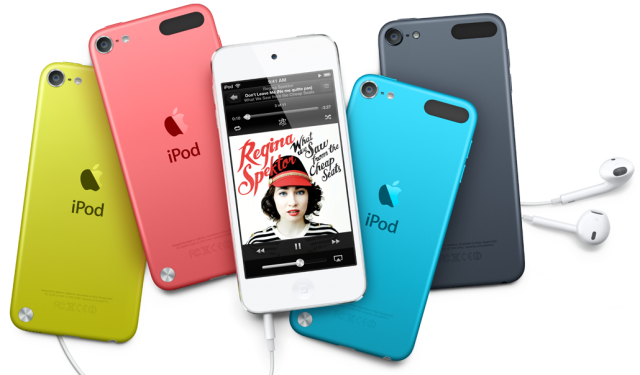
We grew up listening to the classic Beatle ( or Kishore Kumar for most) songs that our parents used to listen to. As we matured, we formed our own taste and style in music, and the technology surrounding us evolved. And as consumers, we adapted to it. We embraced the technology, incorporating it into our lifestyle and thereby becoming routine. Music plays a vital role in our society.
Hence, it was only natural for most of us to own a portable mp3 player that we would listen to every day, everywhere. But dwindling sales have led many to believe that the days of portable media players are numbered. We take a look.
Why MP3?
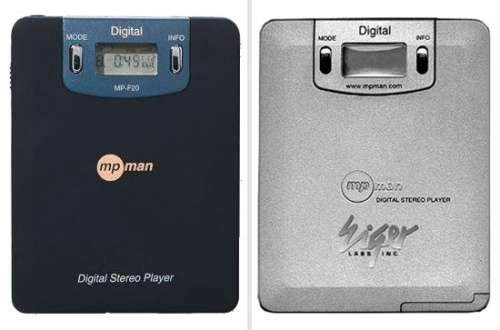
Before there were any MP3 players, there were MP3s: invented in 1987 by a group of German scientists looking for a way to shrink video files so that they would be easier to use on computers. To achieve this they stripped out as much “extraneous” data as possible, supposedly the stuff we wouldn’t miss. This loss of quality is at its least discernable when listening on headphones with the volume cranked up, so by 1998 the first portable digital music player had arrived: the MPMan F10, created by South Korean company SaeHan. (It wasn’t a hit; SaeHan now mostly manufactures textiles.)
The world’s first portable media player.
Mp3 also known as MPEG Audio Layer 3 is used to compress audio files so they take up lesser hard disk space. It can be stored and played on many digital devices such as computers, mobile phones and portable mp3 players. Consumers use mp3 files to listen to and store music.
For example, “A four-minute song on a CD would create a file of 42 MB (megabytes), while the same song encoded to MP3 would be reduced to just 3.84 MB. This reduction means that the file requires one-tenth of the hard disc space, allowing 10 times as much music to be stored in the same space.”
Quick Adoption
These new Portable Media Players would hold 1000 songs, could be recharged within an hour and would cost around 3-4k at that time. They were compact, came in a bunch of colours and were the “in thing” during that era.
[pullquote_left]”The internet and easy-to-share programs like Napster and Limewire played the role of catalysts for Portable Media Players by providing easy and free access to music files.”[/pullquote_left]
By 2004, the digital music market was still wide open, with MP3 players comprising a small portion of all portable audio sales, and the biggest players wanted in. Apple had launched the iTunes Music Store in October of 2003, but wouldn’t sell a billion songs for nearly two years. Companies like Archos, Creative, and iRiver had been building players all along, but the early aughts weren’t for purely digital music yet. With the arrival of faster internet speeds and easy-to-share programs like Napster and Limewire, acquiring music was easier than ever.
This led to people opening up to the idea of carrying a portable, compact device to fulfill their music needs.
Apple – The Biggest Player
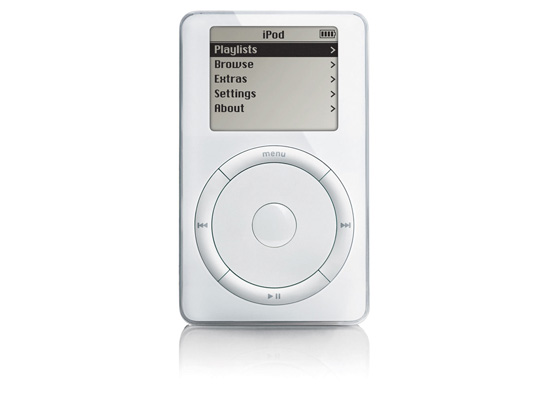
Apple was without doubt the biggest player in this segment. The iPod was a very clever piece of hardware that utilized new 1.8?”hard drives that Toshiba had developed for a market that didn’t exist yet. Encased in a pearl white and metal casing, the iPod utilized a moving scroll wheel (later, a touch-based one) that served a novel scrolling interface on a relatively large 2″ monochromatic display.
The first Apple iPod
The iPod would set the standard for Portable Media Players for years to follow, ignoring the plethora of buttons that plagued devices at the time, going so far as to omit a power button. But while the iPod hardware had many of the markings of a success story, its ecosystem (or rather, lack thereof) and price held it back from significant sales numbers for the first three years of its life.
During that time, numerous other companies realised the hidden potential in this segment of technology. MP3 players were substantially less expensive compared to CD players.
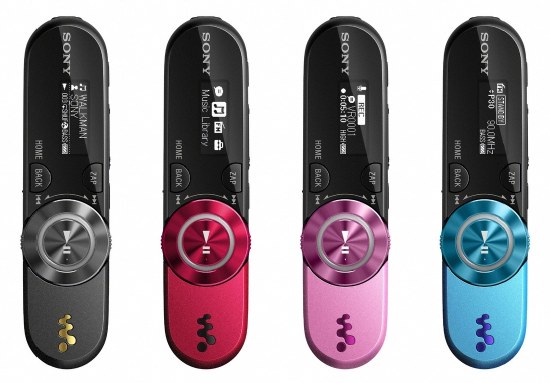
The Sony Walkmans were a hit among teenagers.
Companies like Sony, Philips, Cowon began churning out various different models of Portable Media Players. The Sony Walkman series gained popularity among teenagers.
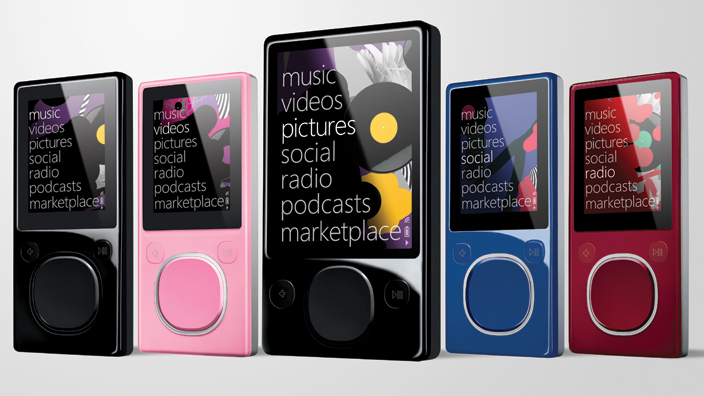
Microsoft unveiled various versions of the Zune to compete with Apple.
Microsoft’s Zune was probably Apple’s closest competitor. The hardware was slightly bigger than iPod’s similar hard drive model at the time, but came equipped with a large 3″ color screen, an FM tuner, a segmented circular directional pad that favored the Media Center-derived Twist interface for navigating menus, and a pair of buttons on its face mirrored by a shallow concavity on the backside. The player’s software was also a direct descendant of the Portable Mobile Center OS.
The casing came in five iridescent color schemes. Connectivity was provided by a proprietary 30-pin connector similar to ones used by the iPod. But their success didn’t last long.
Non-Apple Portable Media Players were put to shame. Bruised. Battered. Beaten to death. All gadgets that attempted to outrank the iPod were ambushed and annihilated. Unless you held a personal grudge against Mr. Steve Jobs, or have had some downers with Apple in the past, you wouldn’t switch to a media player not belonging to the Apple clan.
The Demise
In 2007, Steve Jobs introduced the first iPhone to the world. People were awestruck. But right there, a small iPod logo on the device’s screen spelled the beginning of the end for portable media players.
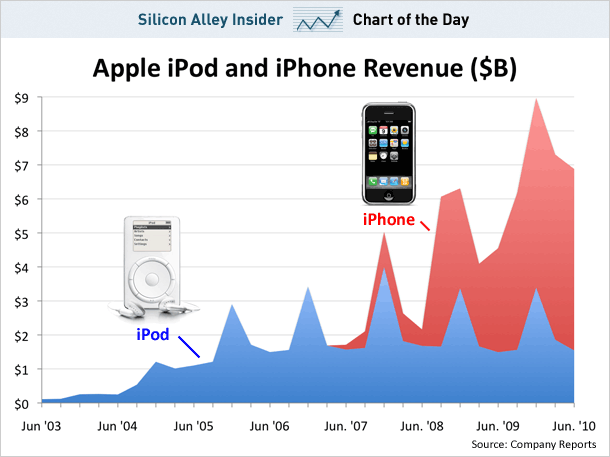
The iPhone killed its own parent product.
The iPhone promised a music experience which matched that of the iPod. Except you could make calls, play games, surf the internet, all at the same time while listening to your favourite tracks. Why have two gadgets when you can have one?
We all love our shiny smartphones, but the latest stats on MP3 players prove that the sleek handset in your pocket is a cold-eyed killer.
Yep, according to Mintel’s research sales of the humble portable media players – and let’s face it that means mainly Apple iPods – have dropped by a massive 22 per cent year on year.
‘Microsoft will no longer be producing Zune players,’ the company recently said in a statement timed very close to Apple’s latest iPhone announcements – a good time for tech companies to bury bad news.
Earlier, mobile phones did not offer music playback and so consumers were forced to carry a separate MP3 player, but when the smartphone market took off in 2007, offering devices with huge storage and comprehensive media players, the MP3 player’s days were numbered.
Sales have been dwindling.
Despite Sony and Samsung each offering alternatives to the iPod with their Walkman and Galaxy ranges respectively, iPods dominates the MP3 player market; but their sales are falling continuously as smartphones continue to thrive, and while the iPod classic is still available, it features in none of Apple’s advertising and hasn’t received an update for more than three years.
I personally like using my 3rd generation iPod Nano and would’t trade it for anything, but smartphone provide me with the convenience of not having to carry two separate devices in the notorious Delhi public transport.
So while you may still use your portable media players while at the gym (though I’ve seen people use tablets to listen to music in the gym! Ridiculous!) or while out for a jog, the fact is that the end of MP3 players is near.
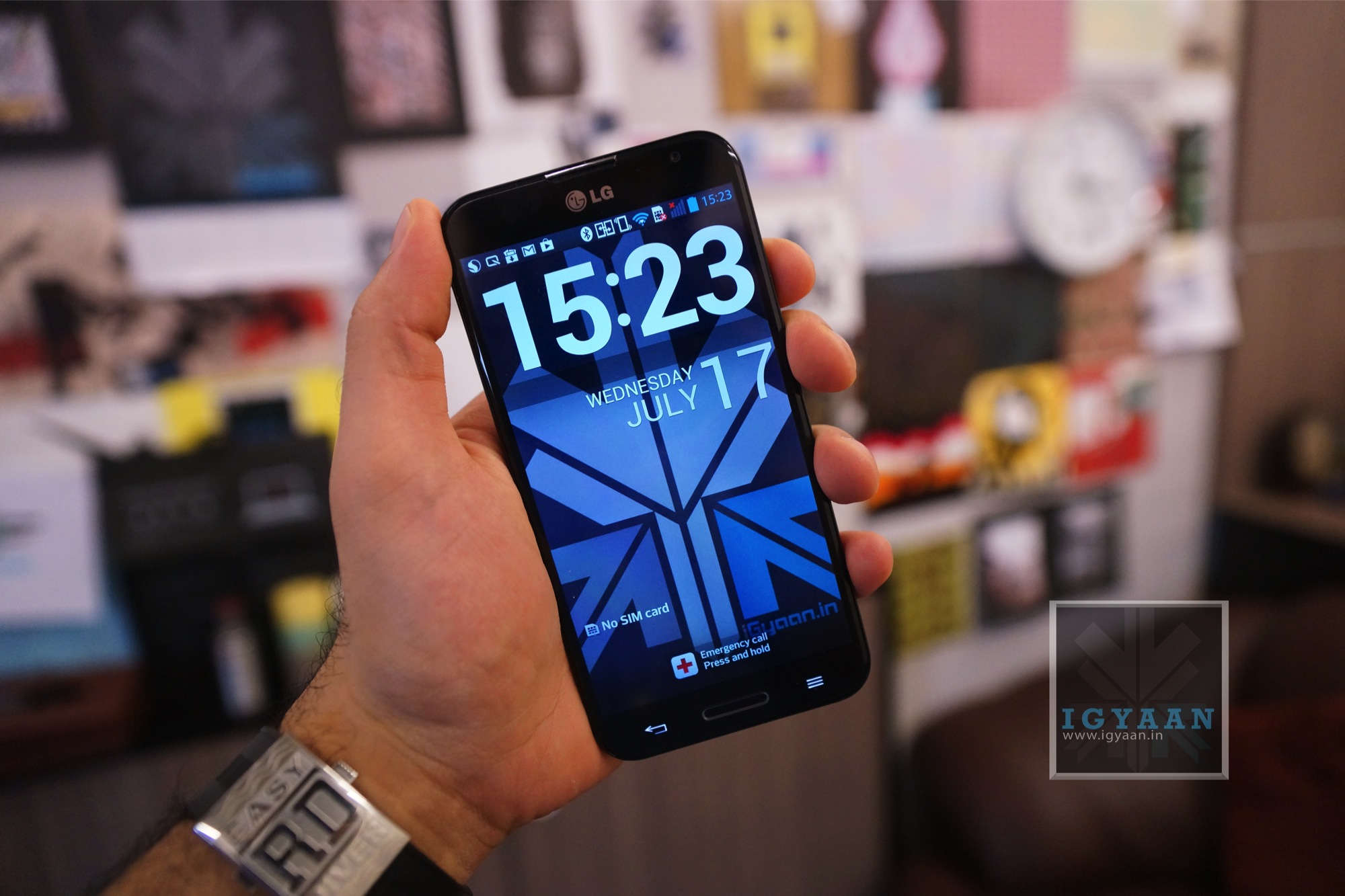
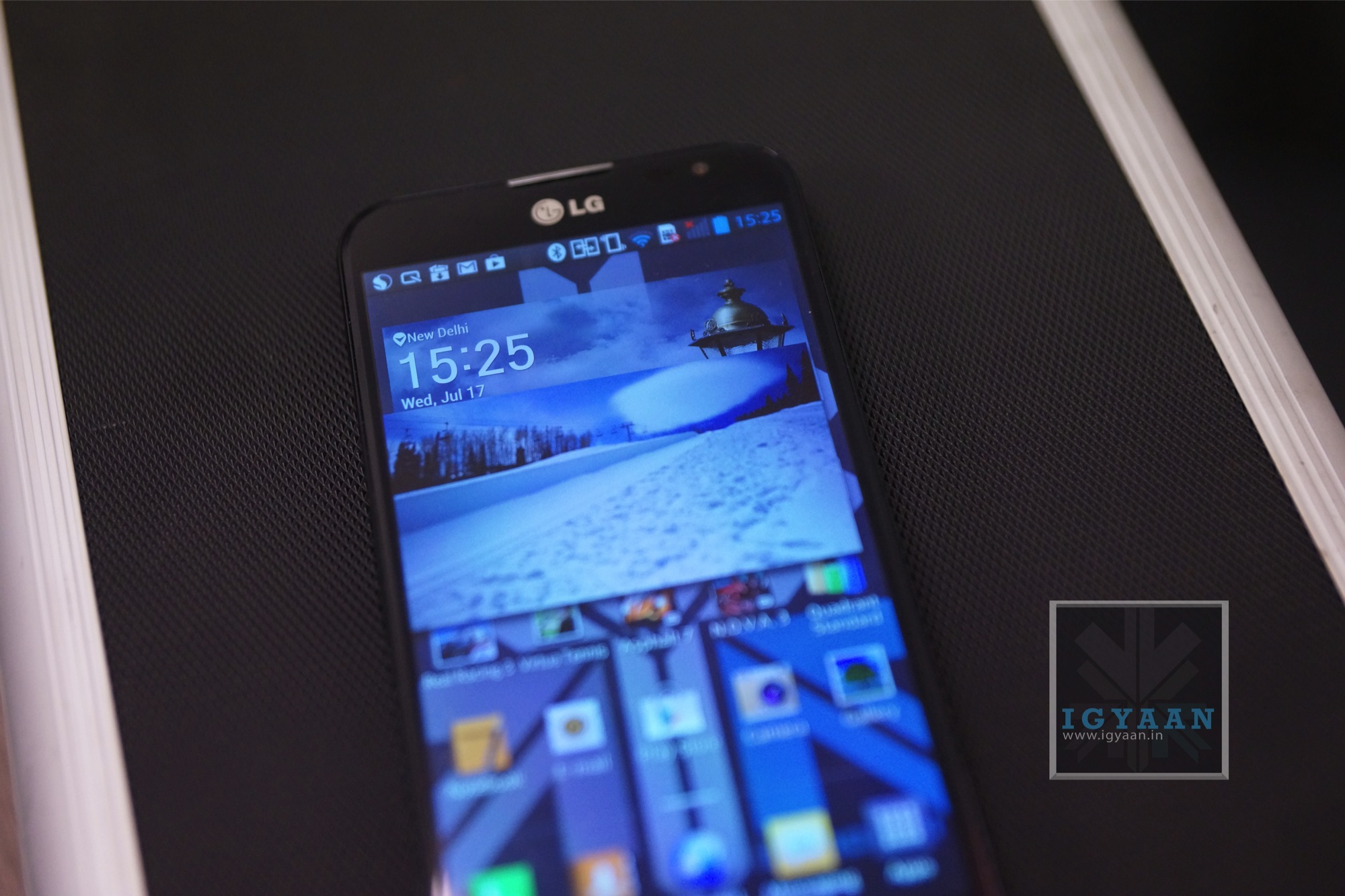
LG might be enjoying the success of the Nexus 4 in India, and in order to retain that streak the company has launched the new LG Optimus G Pro E988 in India. The 5.5 inch smartphone from LG falls into the Galaxy Note 2 category of phone sans the stylus.The LG Optimus G Pro has a True Full HD IPS Plus LCD capacitive touchscreen with a resolution of 1080 x 1920 pixels.
The Optimus G Pro has a Qualcomm Snapdragon 600 processor, which features a 1.7GHz Quad-Core CPU and Adreno 320 GPU, a massive 3140 mAh battery and 2GB of RAM.
The LG Optimus G Pro has 16/32 GB storage options along with 64 GB expandability via microSD card. A 13 MP rear camera and a 2.1 MP front camera enable full HD video recording and LG was also the first to show off dual camera features with the LG Optimus G Pro, right before Samsung launched the S4 into the market.
“LG’s Optimus G Pro sets a new benchmark in the over 5-inch display smartphone category which is catching on with consumers everywhere who aren’t interested in owning both a phone and a tablet,” said Dr. Jong-seok Park, president and CEO of LG Electronics Mobile Communications Company. “Asian customers are leading many of today’s technology trends and we’re confident Optimus G Pro will find a large following in this region.”
The MRP of the Optimus G Pro is set at Rs. 42500, but the phone goes on sale in the country for a price of Rs. 39900. At this price the phone competes head to head with the likes of the Galaxy S4, the HTC One and the Galaxy Note 2, the three predominant Smartphones in this price range. The LG Optimus G Pro brings the Note 2 screen size and the S4 comparable performance in a single package. The LG Optimus G Pro also has a IR blaster and quick remote app to control your electronics.
Watch our old hands on of the LG Optimus Pro E985 below and stay tuned for an Unboxing and Hands on of the LG Optimus Pro E988.
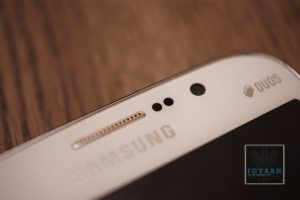
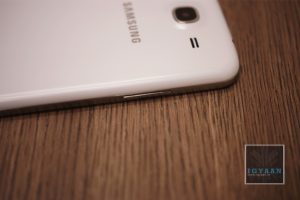
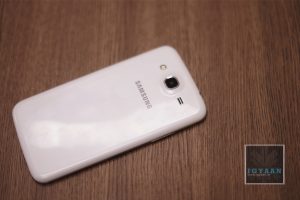
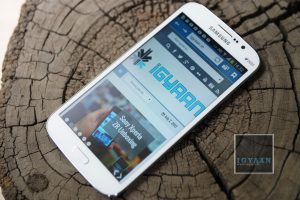
Samsung in the recent times has bombarded the market with phones of all sizes, but mostly of the same shape. The Galaxy Mega 5.8 is a blown up Galaxy Grand and it appears to behave in a similar manner. Lets see if the Galaxy Mega 5.8 is really the value for money smartphone that Samsung claims it to be.
Build Quality and Design
[pullquote_left]It’s the little details that are vital. Little things make big things happen.[/pullquote_left]
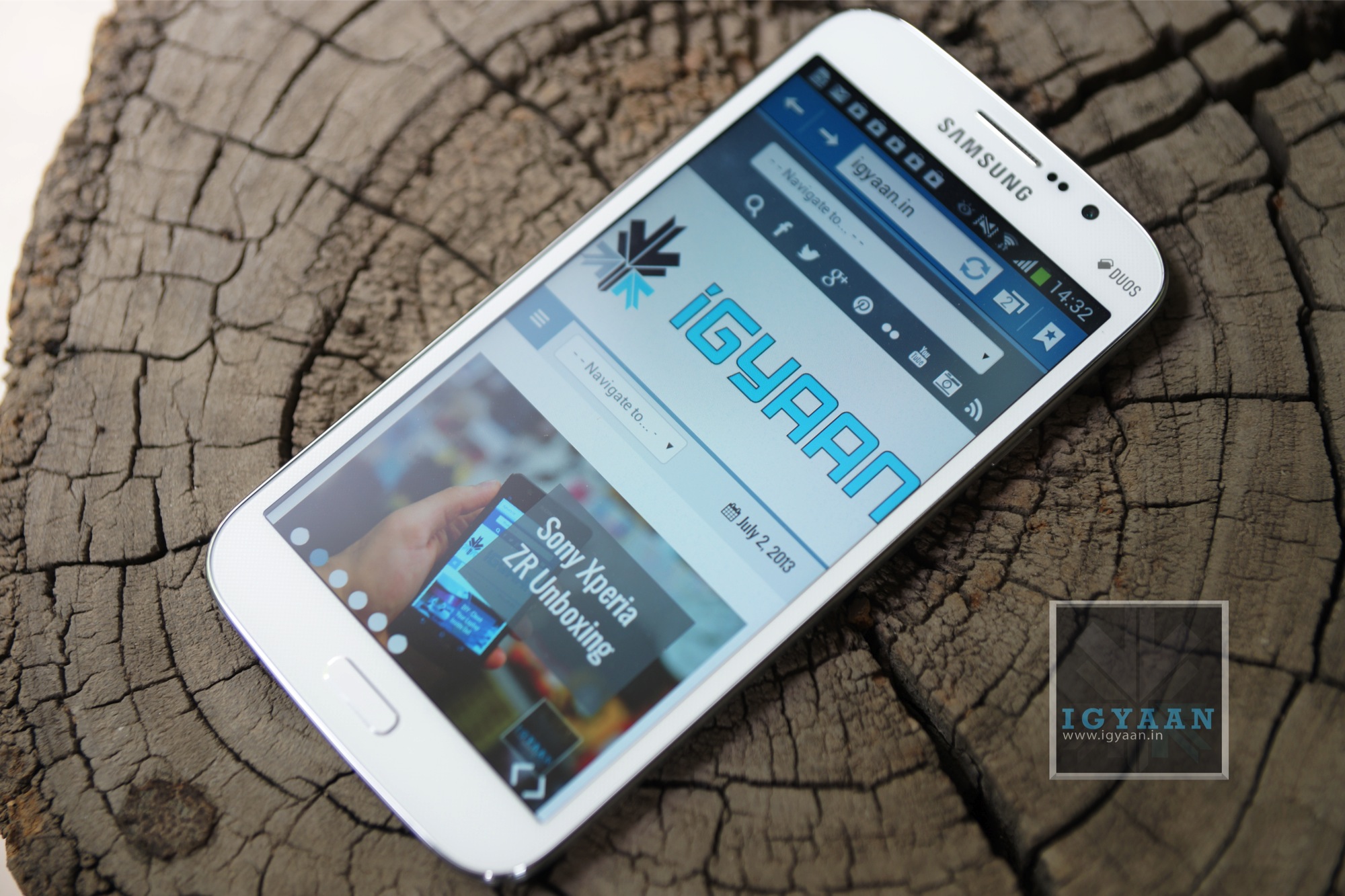
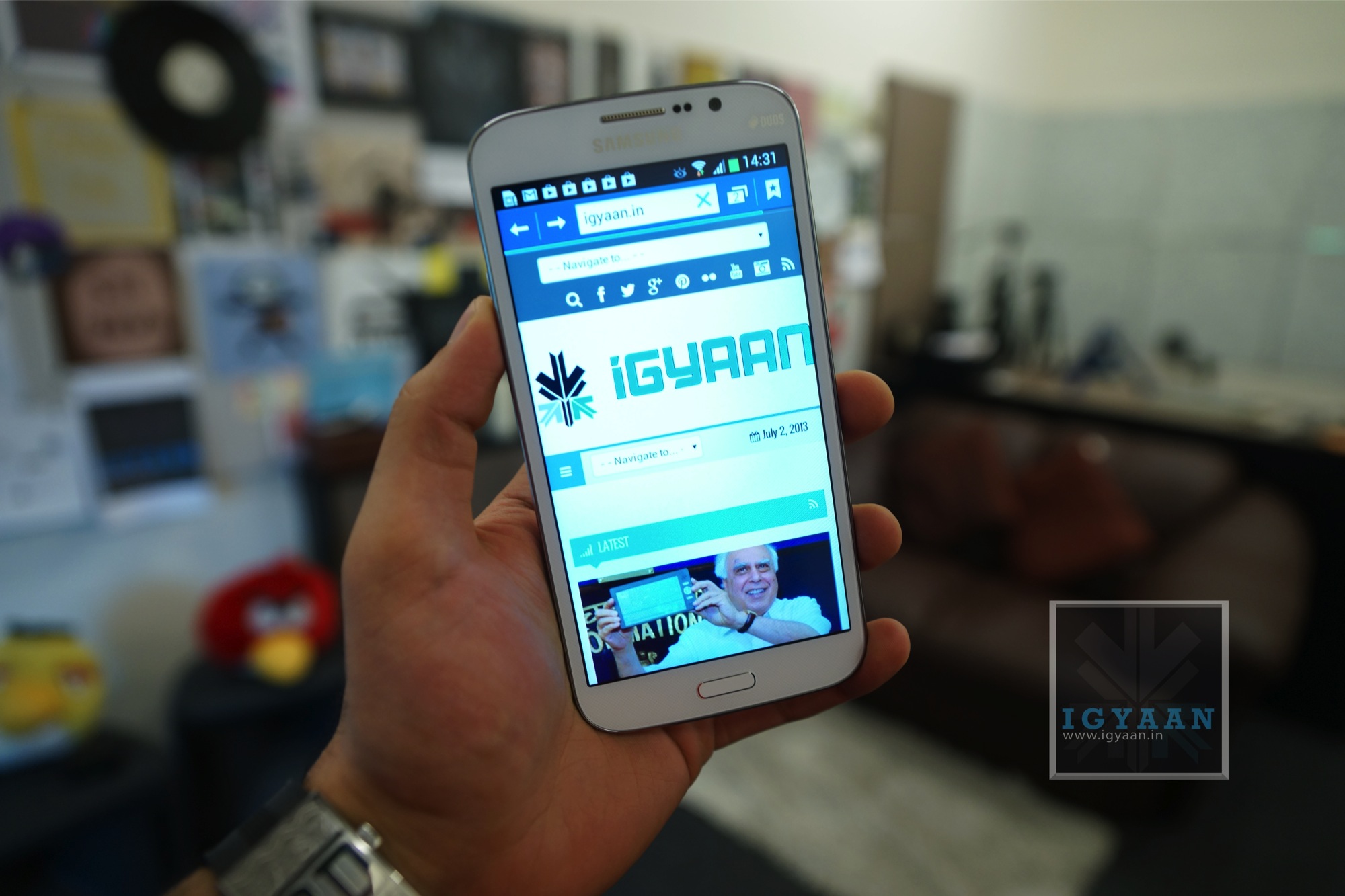
The Galaxy Mega will remind you of every other Samsung phone till date, maybe even many other Samsung phones to come. Built with the same plastic as seen on many-a-Samsung device, the Galaxy Grand fails to impress. First impression of the Galaxy Mega 5.8 will show you either a larger S4, a Galaxy Grand, or a slightly different Note 2, so for innovative new design points; Samsung gets a big zero.
The problem with the design is that despite being old, it still works. People still love the shape and the handleability of the phone, and the first look creates a instant connect with the brand, making this design an identifier, or even a statement for some.
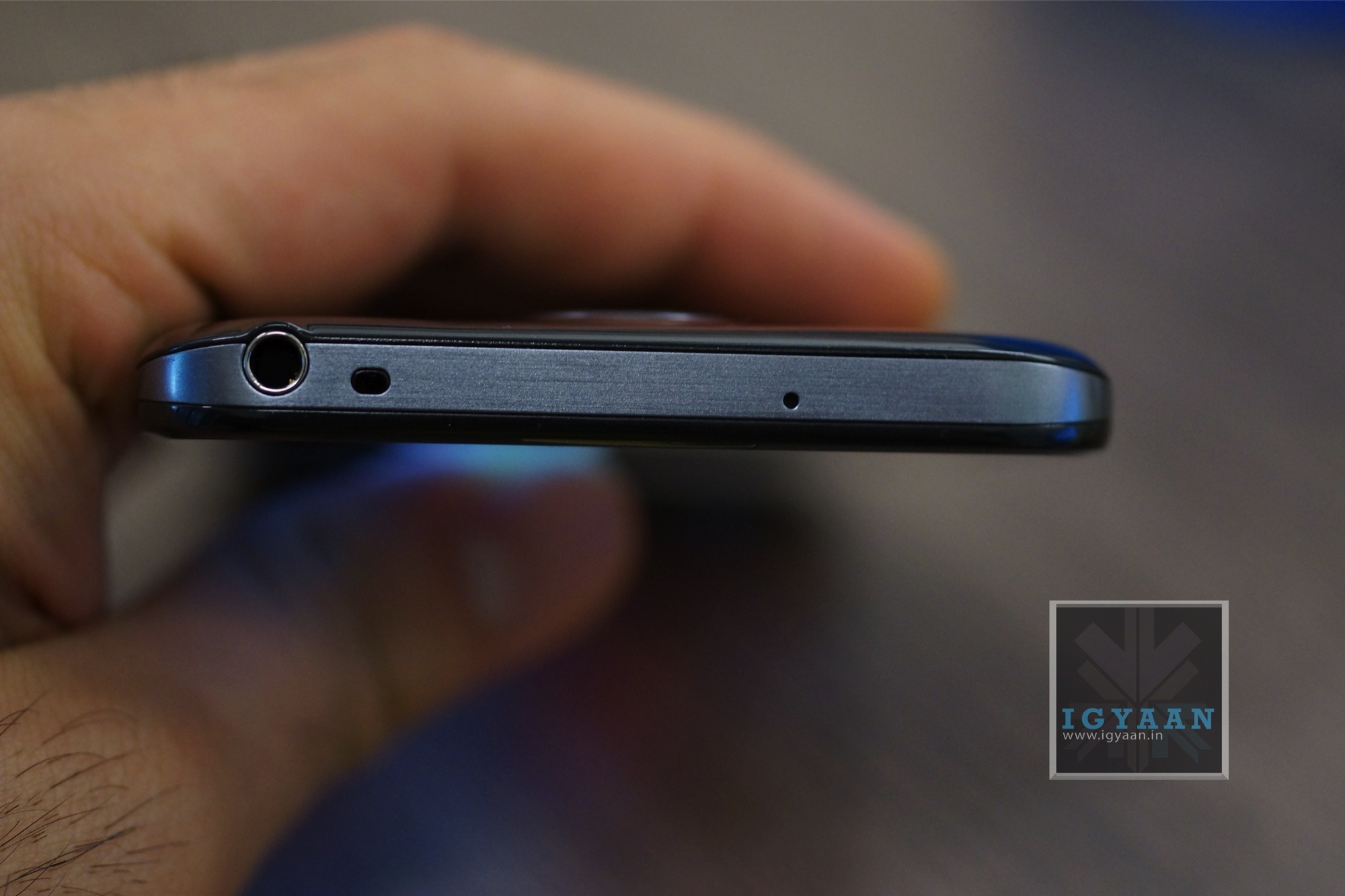
Samsung has truly disappointed us with the hardware on the Galaxy Mega 5.8, not that it is really old, considering that the Galaxy Grand was launched in February 2013. Today a few months is as good as a year, even more if you compare it to 2 years ago. The Broadcom chipset still holds its ground and the benchmark performance is not all that bad, the CPU is Dual-core clocked at 1.4 GHz. The Galaxy Mega adds a bit of RAM to reach the 1.5 GB mark and retains the 8 GB capacity. The cameras are also a stark reminder with the 8 MP main and the 1.9 MP secondary. What is different is the large 5.8 inch capacitive touch screen, with its 540 x 960 px resolution gives a bare 190 ppi, which on parer sounds really low for today. The display however is great and we will explain that in the next segment.
The Battery on the Mega 5.8 is a 2600 mAh cell and for some reason it seems Samsung has managed to manage it quite well, there is a significant improvement in battery life.
The Galaxy Mega 5.8 as the name suggests has a Mega display, a 5.8 inch smartphone is not really a divine though. In the early days the idea was to make phones smaller and more compact. Today as smartphones begin to replace basic forms of computing screens are getting bigger and bigger. The Galaxy Mega’s 5.8 inch display is still smaller than its 6.3 inch sibling, but is quite an interesting display. For one, it does not appear to be much larger than the Note 2 thanks to the design strategy employed by Samsung. The display is also bright and crisp despite its low ppi. This may be because of sheer size of the screen, you tend to hold it further than you would a traditional smartphone, say 3.5-4.5 inch. The screen however uses what Samsung calls a “display enhancement engine” that reduces the noise and pixellation on the display as it does in their televisions, this seems to work well on the Mega 5.8.
The speakerphone on the Mega is fantastic, it is really loud, but not in a painfully distorted way, it sounds good through videos, music and even games. It does not however compete with HTC One’s Boomsound which has a more direct sound delivery approach. The sheer size of the screen makes consuming media enjoyable and almost stress free, and the chipset is more than capable of handling HD video playback and streaming.
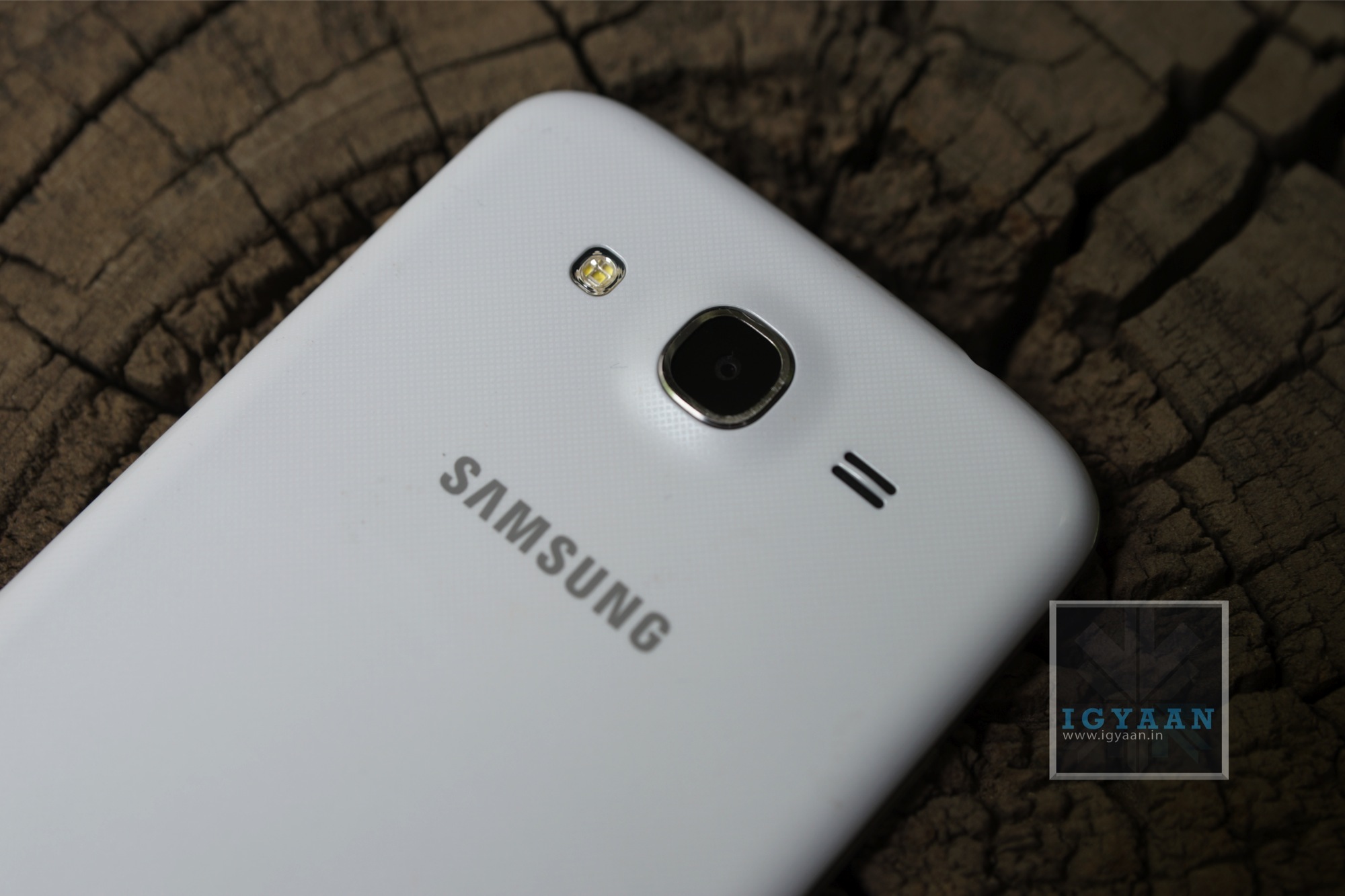
The camera app on the Samsung Galaxy Mega 5.8 has been brought down from the Galaxy S4 which is initially inspired from the Galaxy Camera. With multiple shooting modes the camera app gives a lot of versatility to the user. Interesting shooting modes like “Best Photo”, “Best Face” and “Sound and Shot” worked really well on the S4, and they work just as great on the Galaxy Mega 5.8 .
Video is captured at Full HD and employs anti-shake if you need it from the main UI, the front camera however- captures 720p video. You can also add some effects to your pictures in the Auto Mode.
The Samsung Galaxy Mega 5.8 runs on Android 4.2.2 and slaps on a large lump of their popular Touchwiz UI. The interface brings many elements to make this device larger than life. For starters you have smart features, Smart Stay : Keeps your display on as long as you stare at the device. You do have motion gestures ; Screenshots by a palm swipe and muting the device by simply moving your hand on top of the phone.
[pullquote_left]E.T. fingers are a must[/pullquote_left]
The old elements of the TouchWiz UI are intact too, with features like Direct call (lift the phone from within a message to call), Smart Alert, tilting to zoom into pictures or gallery. Pan device to move the Icons or browse a zoomed in Image and even Flipping the device to Mute or pause.
The One handed use feature borrowed from the Galaxy Note 2, makes it slightly easier to dial on the Galaxy Mega 5.8, and also use the calculator. What we find funnily missing however is this feature in the main keyboard. You simply cannot use the keyboard with the same hand you are holding the phone with, unless you have gigantic E.T. fingers.
The Touchwiz UI adds more to the experience, a nice notification panel with scrollable toggles, a task manger and even “S-Voice” (Samsung’s long ignored voice assistant). Samsung often ignores required features in these phones, for example a phone of this size would do wonderfully well as a remote, but since the hardware is absent there is really no point.
Phone, Networks and Battery
The Samsung Galaxy Mega 5.8 is a dual sim smartphone (micro Sim), while the technology to have two sim cards running in the same device may exist, Samsung chooses to not employ it in their latest iteration of the big phone. Phone call handling is easy and simple, and once you get the hang of it you become a master of the device.
The network is solid and we faced almost zero to none dropped calls. We saw a frequent full signal bar, whether in software or in reality the network performance on the Galaxy Mega 5.8 is excellent. Voice is clear through and through, and while both ends of the phone call get clear and crisp audio streams. The speakerphone also keeps up with its name and is sufficiently loud for hands free voice calls.
Battery life is great on the Galaxy Mega and despite the fact that it has a mere 200 mAh increase from the Galaxy Grand’s 2400 mAh, and taking into consideration the increase in display size, the battery performance is far superior.
Talk time : 5.5+ hours
Internet : 6 hours
Music : 10 Hours +
Video : 4+ Hours
Average battery life : 1 Day +
Conclusion
The Samsung Galaxy Mega 5.8 is no magical innovation and does not really create a wow statement, except probably “Wow its Big!”, which actually may be good enough for a lot of people. The blown up version of the Galaxy Grand actually improves on many things, including a larger yet better display, an improved battery life and a great camera. The price difference however seems a bit much for these.
The Galaxy Mega 5.8 is a phone that might as well be the next big thing, but, the problem here may be that its just too big to be an everyday phone. All size judgements aside Samsung has really managed to increase their portfolio across different price segments, but here a Galaxy S3 for Rs. 27,000 seems a lot more promising and portable. The Galaxy Mega 5.8 also does not have multi-window a feature which now comes out of the box on the Galaxy S3.
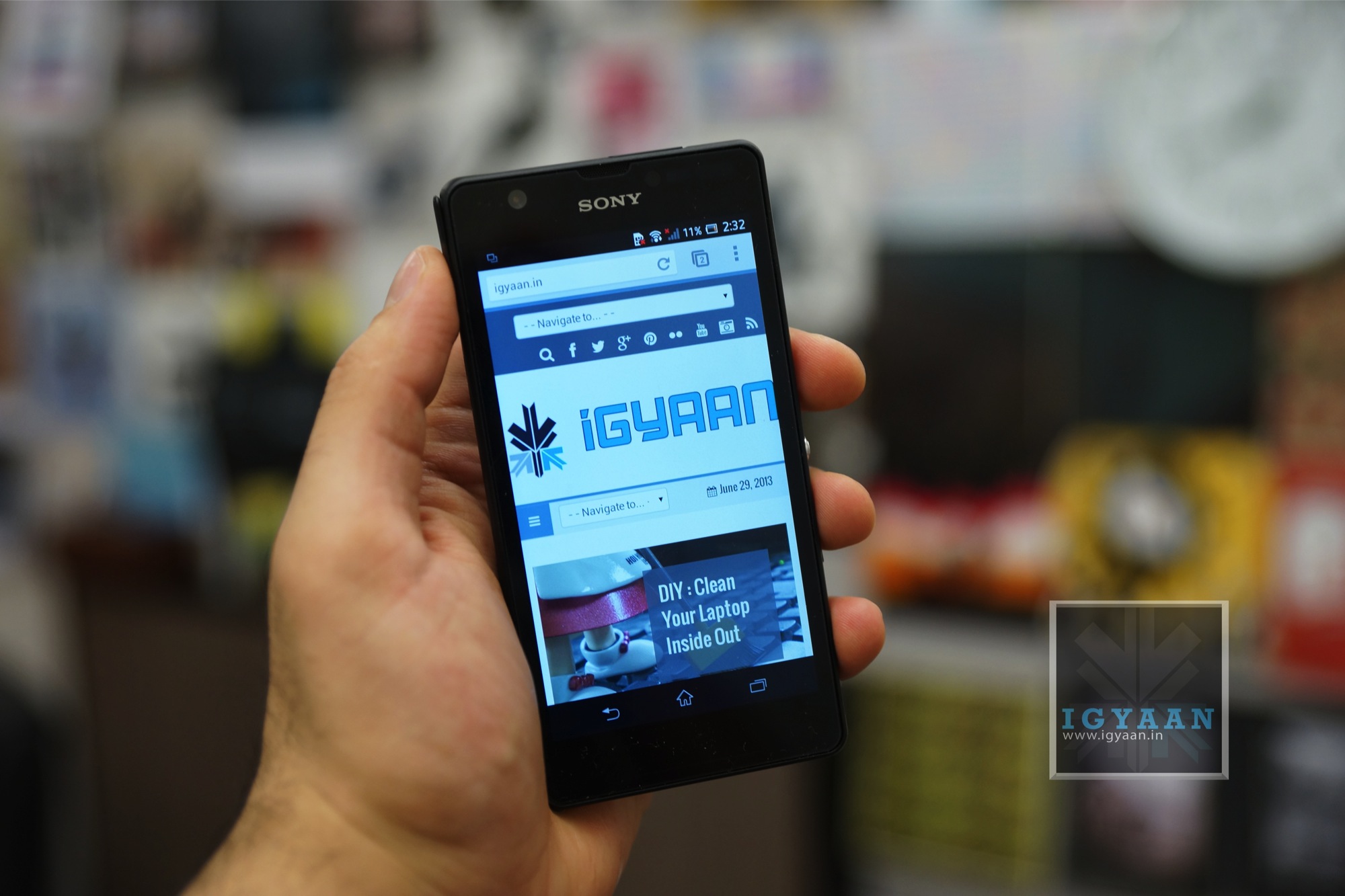
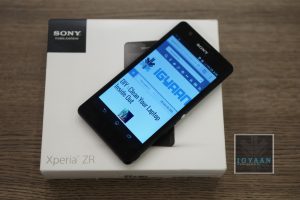
The Sony Xperia ZR is a small brother of the Xperia Z with a major differences in design and hardware. The one thing that remains common is the water resistance and dust proof nature of the phone.
Inside the box of the Xperia ZR you will get the standard set of accessories, including a wall charger, the USB to micro USB cable and in ear headset along with documentation.
Xperia ZR Initial Impressions
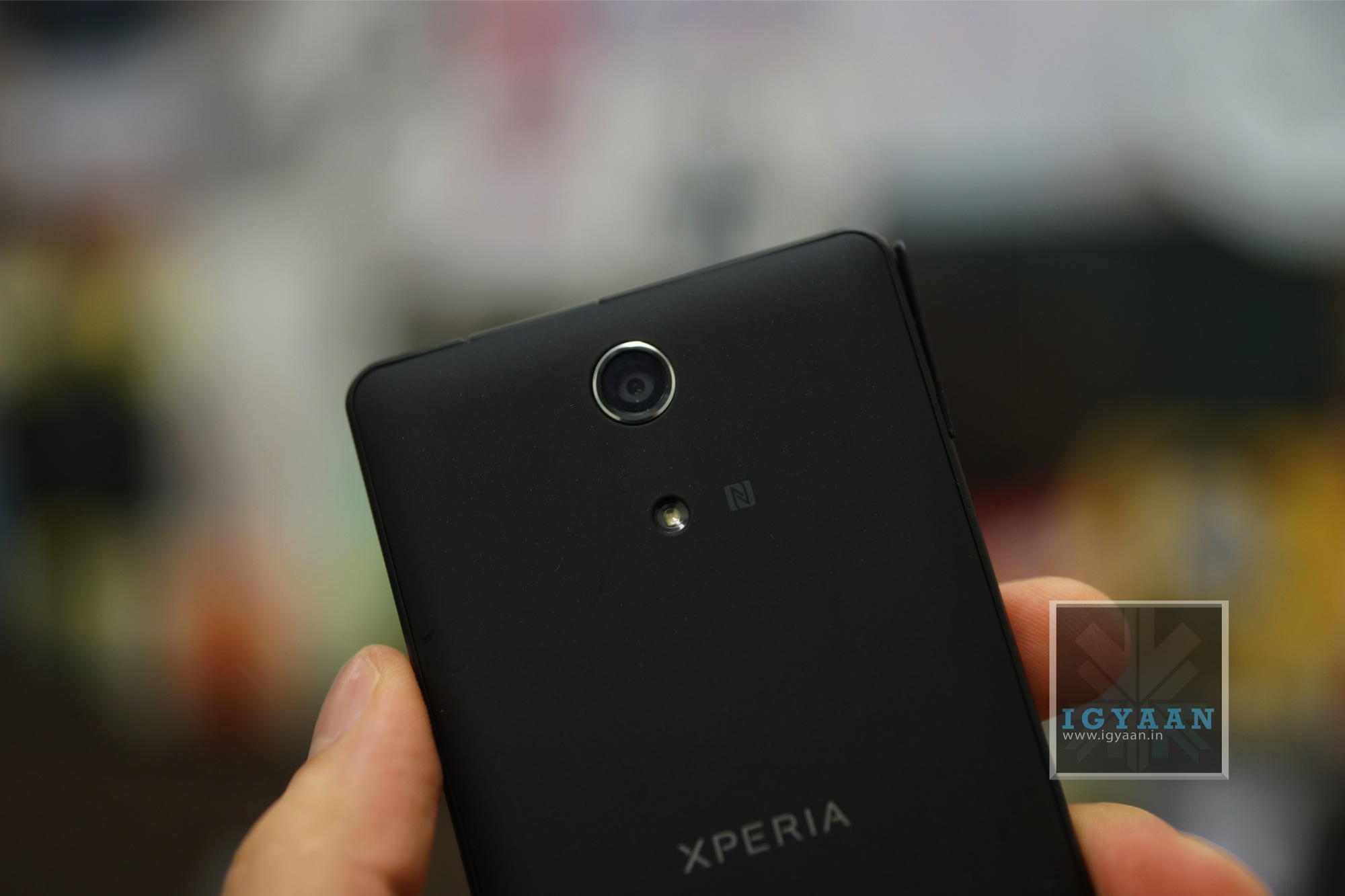
The Xperia ZR is water resistant to the point where you can go swimming with it, but the build is slightly different than the Xperia Z. The back panel is made up of a rubber coating vs a glass back on the Xperia Z. The Xperia ZR has a 4.55 inch 1280 x 720p display which makes it 323 ppi .
The back of the Xperia ZR has a 13 MP camera, but it appears that the company held back with the front camera which is a VGA camera. The phone is also slightly thicker at 10.5 mm and also shorter thanks to the size of the display, which makes the overall device more compact and slightly more portable.
Sony has really gained popularity with its Xperia series thanks to the right mix of Hardware design and build quality and the Xperia ZR is not behind in this trend. Based on a Qualcomm Snapdragon APQ8064 1.5 GHz Quad core Krait chipset the phone also has the might Adreno 320 GPU. The whole mix is powered by a 2300 mAh battery and has 8 GB of storage along with 2GB of RAM.
You do have storage expandability in the Xperia ZR but only to 32GB vs the 64GB offered by many. Sony has also shipped this handset with Android 4.1.2 while many companies are now offering Android 4.2.2 out of the box.
Check out our images and video and stay tuned for the followup, iGyaan style.
Since the beginning of the smartphones, as a matter of fact, since the beginning of mobile phones, we have been finding ways to have our handhelds resist the elements. While technology has come a long way, there are always restrictions when it comes to water resistant and dust proof designs. The Hitcase Pro for the iPhone 5 aims to achieve that with a design that does not stall the daily usability of the iPhone 5.
Build Quality
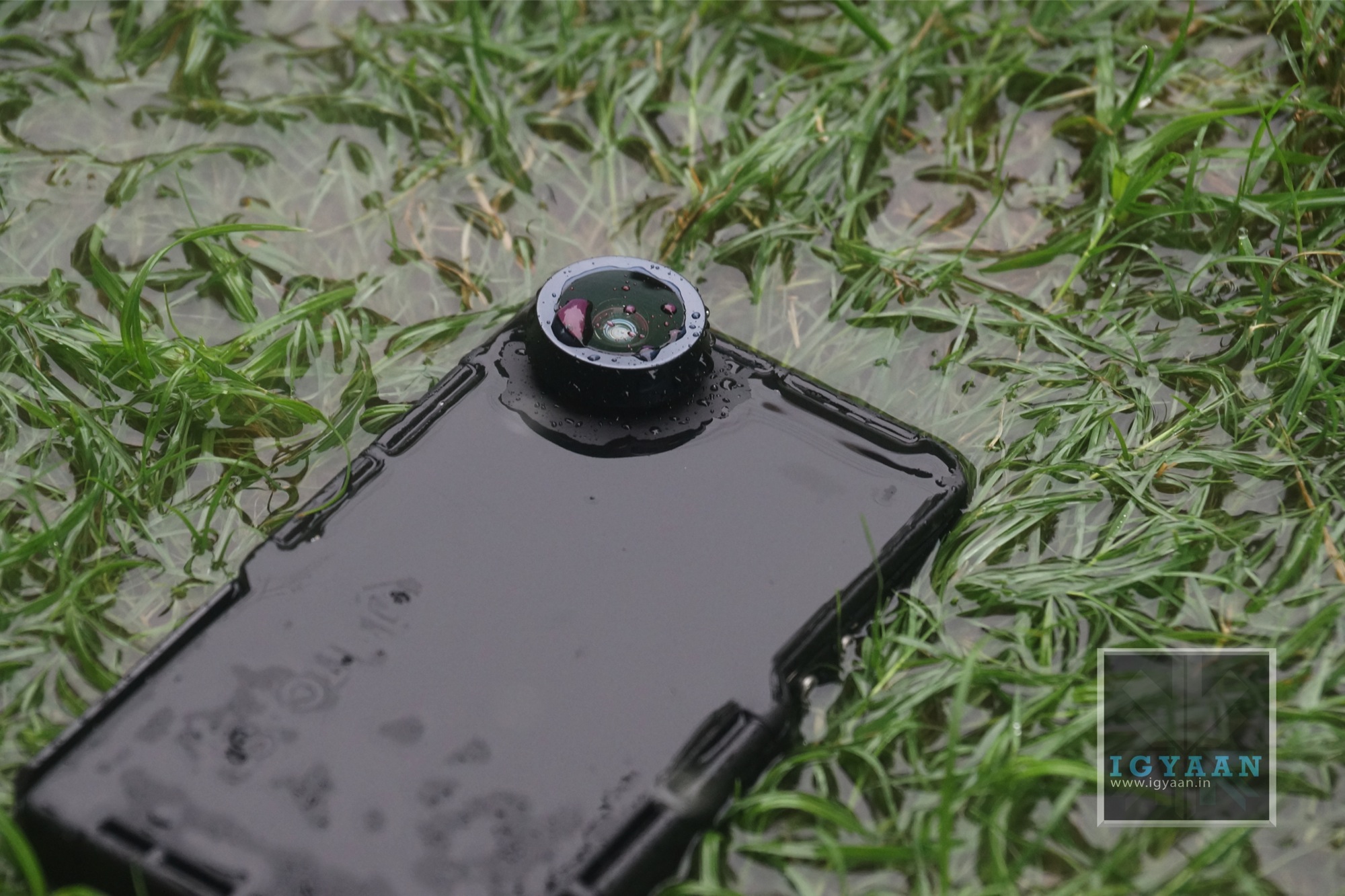
The Hitcase Pro is very well built, to say the least. The moment you go hands on with this case, you don’t feel like you have lost your iPhone in a big pit of protection. Designed keeping the Go Pro in mind, the case has a very strong railside mount, you also have a metal engulfed wide angled lens that unfortunately is very prone to scratching.
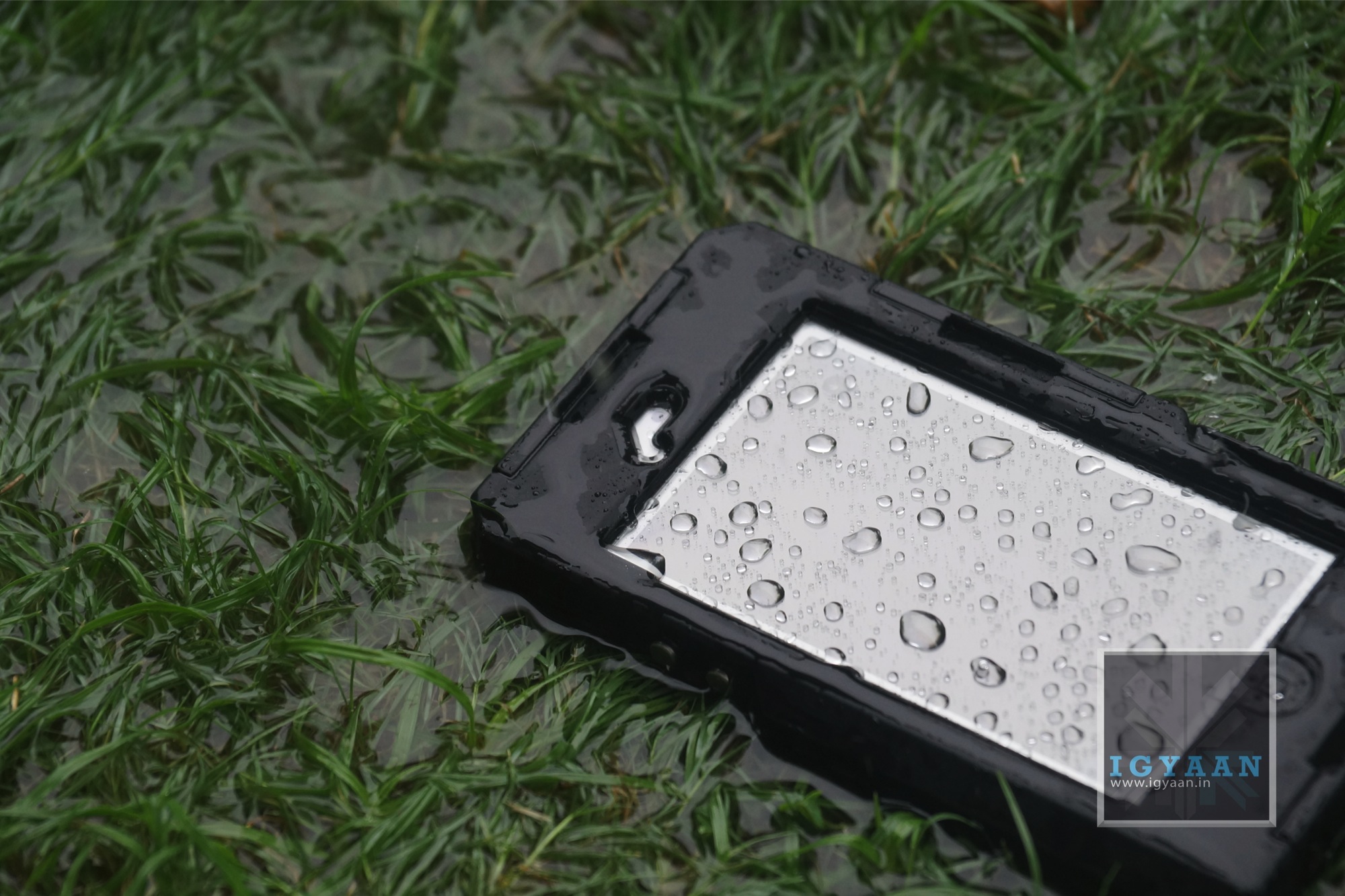
The case is built from a composite of ABS and Polycarbonate and is layered with a rubberized coating all around that not only keeps the case clean but also provides ample grip. The case locks in from three sides, almost like a food box, but seals the phone completely to the point where you don’t feel afraid dunking it in water. The H-Seal on the inside of the case is made out of Poron and should last a really long time.
Features
The Hitcase Pro not only protects the iPhone when you go into water or sand, it also retains the usability of the iPhone 5. The Hitcase Pro also features a great 170 degree 3 X Wide angle lens that is an absolute treat for photographers. The lens also allows close up shots upto 3X and makes focusing on subjects really easy.
The Lens also adds a Go-Pro Style video effect to the video – where you get a wide angle video frame, that captures a lot more in the same 16:9 aspect ratio.
The free app called Vidometer, captures GPS tracking info along with speed, G force, altitude and angle of approach and displays it directly on the video. This can come in handy when you look at your footage later on.
The Hitcase Pro can be used 33 ft/10 Meters underwater thanks to the IP68 rating. The railside mount allows you to use the Hitcase Pro with all sorts of Go Pro mounts and gear. The Included TiltR and StickR mounts also help those who have no Go Pro mounts. A Wrist strap also ensures the safety of your phone and case when you are at great heights and decide to hold onto the case vs mounting it.
The only downside to the case, is that the microphone gets really muffled up taking phone calls becomes slightly difficult as you will find yourself screaming to the person on the other side.
Conclusion
Despite the availability of several cases for the iPhone 5 in the Market, the HitCase Pro for the iPhone 5 is easily the most robust design. It allows the use of the phone while being packaged in a Waterproof and Dustproof cage. Whats more, the 170-degree wide angle lens and Railside mounts make the use of the case in extreme/ adventure sports very easy. Allowing you to use your iPhone as the primary camera, will almost replace the need for a dedicated rugged camera for a lot of folks. If the speaker and Microphone volume levels are something you can deal with, The Hitcase Pro is the best action case for the iPhone 5
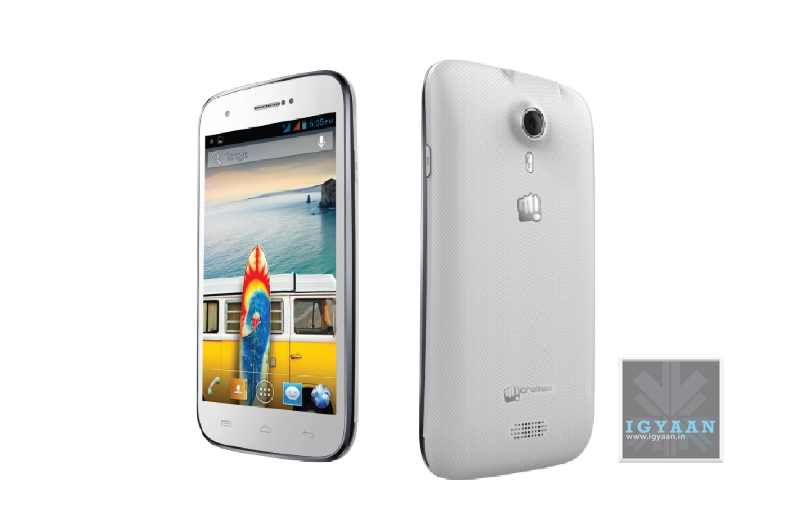
While many are awaiting the new Micromax Canvas 4 A210, the company is not shy of releasing more handsets. Micromax has today launched the new A92 Canvas Lite for a price of Rs. 8499. The specifications of the Micromax Canvas Lite A92 match those of the original Canvas A100 with a 5 inch 480 x 800 px display, A Mediatek 6577 Dual Core 1 Ghz Chipset. The Micromax Canvas Lite A92 will also have 4GB of inbuilt storage, expandable via microSD and 512 MB of RAM.
The Canvas Lite A92 also has the same set of cameras as seen on the Canvas A100, a 5 MP main shooter along with a front facing camera (0.3 MP). While the company has phased out the A100, this is a great way for the company to relaunch older hardware with a new name. For the price the specifications are quite okay, but considering that with a couple thousand more nowadays you can get a Quad Core chipset and a 720p display. Would you be interested in buying a Micromax Canvas Lite A92?