Tag: Moto G

  • Flipkart Offers Big Discounts on 2nd Gen Moto X and Moto G, Moto E Price Slashed

    Flipkart Offers Big Discounts on 2nd Gen Moto X and Moto G, Moto E Price Slashed

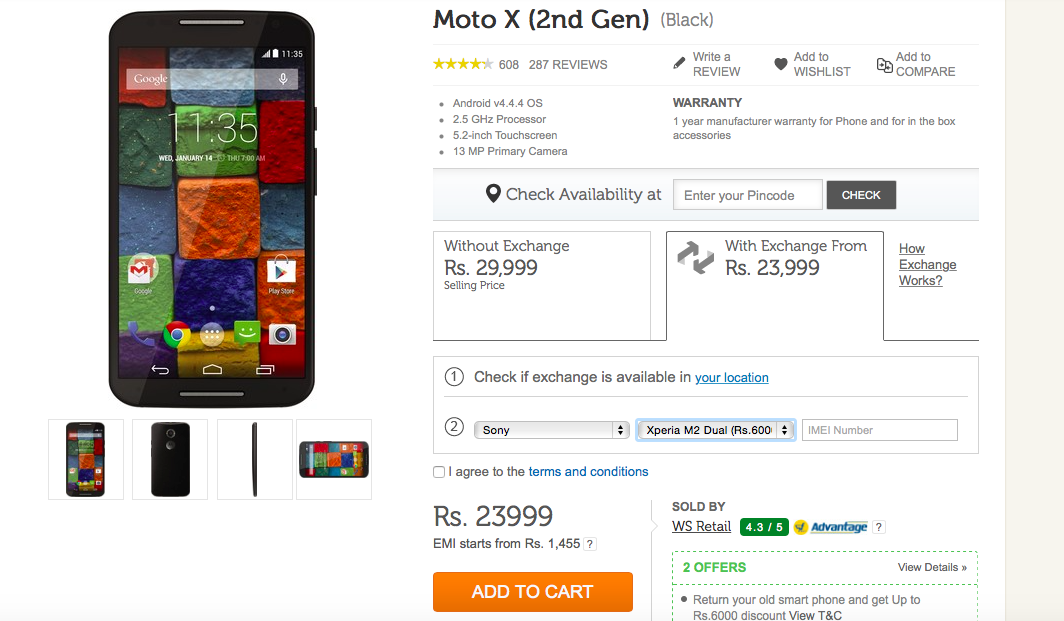
    If you’ve been mulling over the idea of switching up your device to a better model, this might be the good news you needed to brighten up your Monday. To celebrate Motorola’s one-year tie-up with Flipkart, the two have joined hands to bring out offers. You can now exchange your old smartphone for a brand new Motorola handset at a discounted rate.

    Motorola is offering discounted rates up to Rs. 4,000 on Moto G (2nd Gen) phones and Rs. 6,000 on the Moto X (2nd Gen). In short, the discount brings down the price of the Moto X and the Moto G to Rs. 25,999 and Rs. 8,999, respectively. Another exciting offer is that Motorola is giving out free Moto Deck Speakers, if you decide to go for the Moto X (2nd Gen). As always, the discount rate depends on the phone model you are exchanging.

    moto x flipkart

    Other than the Motorola range, the Google Nexus 6 phones are also available discount of up to Rs. 10,000 on exchange, another offer with Rs. 10,000 off if bought along with a Moto 360 Smart Watch – the two offers cannot be combined. These exchange offers are valid only till 15th February, so make sure to spread the word.

    Though there are no exchange offers available on the Moto E handsets, price of the phone has been been slashed by Rs. 1000 and is now priced at a mere Rs. 5,999 on Flipkart.

    Want to get a user feedback on the devices? Click here for our full reviews.

  • Lollipop Out for Moto G (1st and 2nd Gen) Users in India

    Lollipop Out for Moto G (1st and 2nd Gen) Users in India

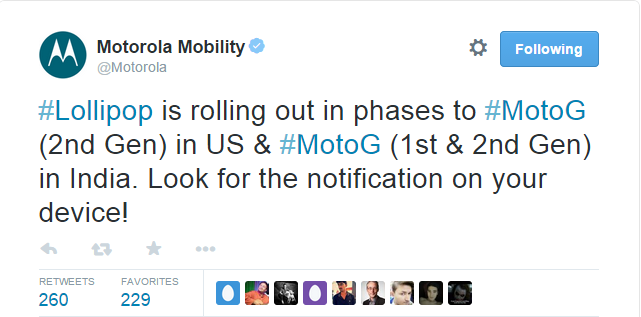
    Earlier today, Motorola announced that it has started rolling out Android 5.0 Lollipop for Moto G and Moto G (Gen 2) devices in India. The update is also out for the Moto G (2nd Gen) users in the US.

    The company stated that the OTA update is releasing in phases and users can look for it on their devices. Meanwhile, some of you may not find it instantly, and it may take a day or two.

    moto lollipop

    With added fluidity through UI of the new Lollipop, users will now experience improved natural touch screen interactions. Besides that, the new Android update lets you have a look at the notifications on the lock screen itself and facilitates dismissing them without unlocking it. In all, it offers users a pure, bloatware-free and seamless Android experience.

    To check for an update on your device, go to Settings > About Phone > System Updates. Download the same, and once it’s done, you’ll feel like you’re holding a completely different device in your hand.

    Motorola is one of the best companies out there in terms of timely updates. The devices launched by the company get proactive support from the enterprise. So, if you are a Motorola owner, the wait for your Lollipop will shortly come to an end.

  • Indian Moto G (Gen 2) Users to Get Lollipop Update Soon

    Indian Moto G (Gen 2) Users to Get Lollipop Update Soon

    Motorola has proved that they are in for a serious business with their amazing service and continuous updates. The company has kept its promise and has informed that it will bring the Android Lollipop update to the handsets in India soon.

    In an email to the members of Motorola feedback subscribers, the company has invited the owners of the Moto G (2nd Gen) to participate in an early preview of ‘a new software release’ in the country.

    The email instructed users to click on the link where they can fill out a form providing their name, serial number and IMEI number. While the company didn’t specify that it is releasing the Android 5.0 update, it is quite obvious that the ‘new software release’ at this time couldn’t be anything else.

    29ff51cb9e796400c126bbfbec5ccb045fb5026e

    Considering that the company has already rolled out the update for Moto X (Gen 2) and Moto G (Gen 2) in other markets, India is likely to get the update soon too. Meanwhile, it is also notable that the update will be coming to first gen Moto X and Moto G shortly followed by Moto E.

    Right now, the Nexus lineup is the only series to get Android update. LG has announced the rolled for LG G3 in Korea. Motorola, while launching the 2nd Gen Moto X and Moto G, promised the update for the non-Nexus devices and looks like the company is not going to disappoint us.

  • Motorola Starts the Android Lollipop Roll Out Process with Moto G

    Motorola Starts the Android Lollipop Roll Out Process with Moto G

    With the smartphone market getting concentrated, the companies are now being judged on the speed of update deliveries. Companies have also recognized this, and they are now working proactively to bring the updates to its consumers. With the Android 5.0 Lollipop out in the world, the race is on to be the first company to bring the update as fast as possible. Seems like Motorola, which had previously been the front runner in the KitKat race is taking the lead in the Lollipop side of things too.

    Motorola has begun the process of officially rolling out the new operating system update for Moto X Pure Edition and second generation Moto G. At present the rollout is meant for unlocked GSM phones sold in the US. But soon enough the update will start showing up for users in other markets.

    Motorola had previously released an update for testers and clearly the process is all done for the final rollout. This is a commendable feat as even the older Google Nexus devices haven’t received the update yet. LG is also expected to bring out the Android 5.0 update for the G3 by sometime this week.

    Android 5.0 Lollipop is the best Android OS, and it’s a really good news that companies are focusing on bringing this update to its users. Lollipop comes with a refreshing new look along with several other features including increased battery life. To know more about what’s in store with the Android 5.0 update, click here.

  • Moto X and Moto G First in Line to Get Android Lollipop Update

    Moto X and Moto G First in Line to Get Android Lollipop Update

    Surprisingly, according to the recent reports, some 2014 Moto X users have already received the Android 5.0 Lollipop update notification. It is said that the company posted and then pulled out documents for the Moto X and Moto G Lollipop update on its website.

    “The very first Moto X variant getting the update is the ‘Pure Edition’ — an unlocked version of the phone, and for right now it’s going out to people who signed up for the ‘soak test’ — a limited rollout in preparation of a wider release,” Ars Technica reports. “Next up for Moto will be making sure none of the soak testers report major problems over the next day or two and getting carriers on board to approve the update.”

    Earlier, Motorola announced that they will be rolling out Android 5.0 update for Moto X and Moto G devices soon, and the company may roll out the official update for these handsets soon after upgrades for Google’s own Nexus devices.

    Meanwhile, Ar Technica pointed out that there hasn’t been any Lollipop update for Google’s Nexus devices, presumably because Google didn’t want to steal the Nexus 6’s thunder, which will be released on November 12.

  • Motorola’s Mystery Smartphone Speculated to Come with 4G Support

    Motorola’s Mystery Smartphone Speculated to Come with 4G Support

    Since the announcement of the Gen 2 Moto X and Moto G, we have been expecting that the Lenovo subsidiary, Motorola Mobility, might launch an updated Moto G with 4G support. Well, the news might come true as a handset codenamed ‘Motorola TBD’ has made an appearance at Geekbench Browser revealing similar specifications.

    According to the Geekbench 3 listing, the unnamed phone packs a quad-core Qualcomm Snapdragon (MSM8916) 410 chipset clocked at 1.19 GHz. Notably, the Snapdragon 410 is both 32-bit and 64-bit capable. It comes with 1 GB of RAM. The device has scored a 434 and 1148 points under single and multi-core benchmarks.

    NEW_MOTO_G_0

    It is a pretty decent score for a budget smartphone, but there are some confusions about what device it refers to. Many tech blogs say it might be the second generation Moto E (aka Moto E2), while others suggest that this may be the advanced version of the recently released Moto G (Gen 2.). The former one is highly unlikely to receive the update, considering the price bracket Moto E belongs to.

    Moreover, if past Motorola device launch history is any indication, we strongly believe the mystery device is the 4G-LTE variant of the second generation Moto G, unless the company is working on whole new other budget handsets. Also, the use of Snapdragon 410 series chipset makes sense over 400 series 3G based Moto G (Gen 2), if Motorola wants to get hold of the developed markets like USA and Europe.

    Motorola earlier launched the Moto G (Gen 1) 4G-LTE in European and American markets, almost three months after the 3G model made its debut. As for now, there is no official word on any such device, hence, the report should be treated as pure speculation.

  • Moto G (2nd Gen) Goes on Sale Today For Rs. 12,999

    Moto G (2nd Gen) Goes on Sale Today For Rs. 12,999

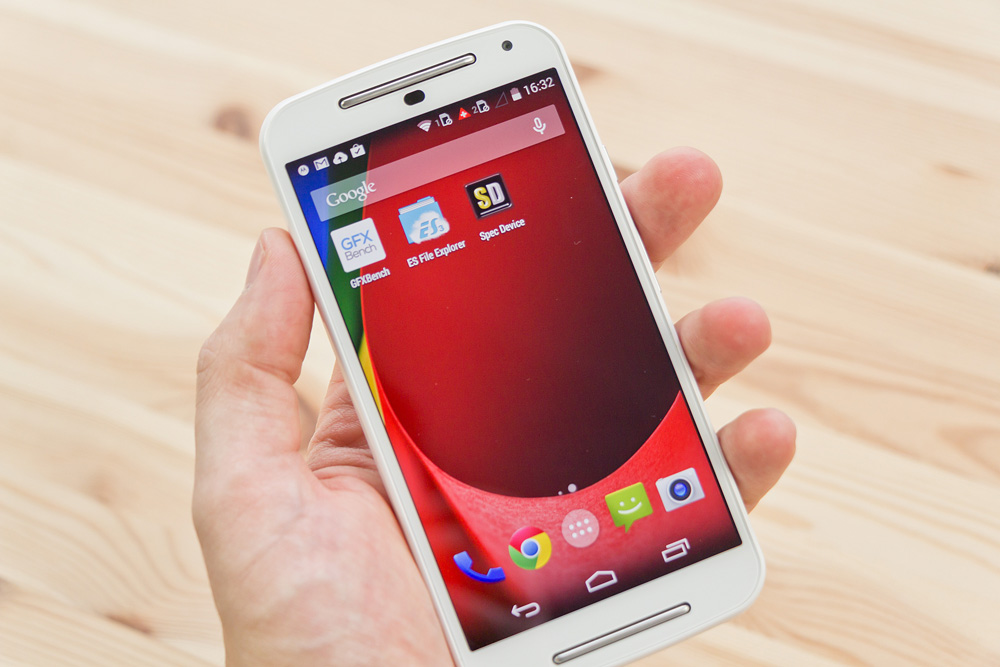
    Motorola has just announced two of its most anticipated smartphones : Moto X and Moto G. The company decided to stick to the previous names, keeping things simple by calling them 2nd Gen devices. The new Moto G has been launched at the price of Rs. 12,999 for 16 GB and is going on sale later today with special offers on Flipkart. The company said that last time around they sold 1.6 million devices through Flipkart for Indian customers, and this time they’ve made sure they have sufficient stock for prospective buyers.

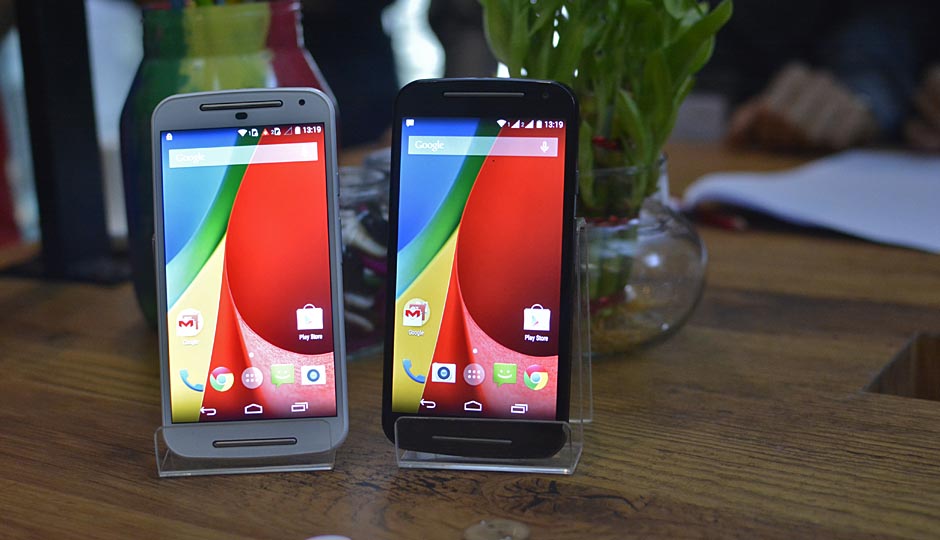
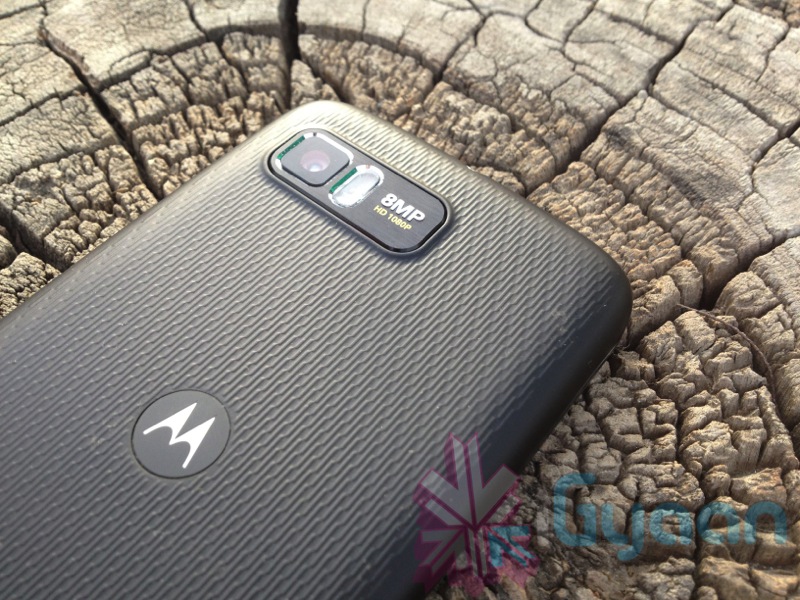
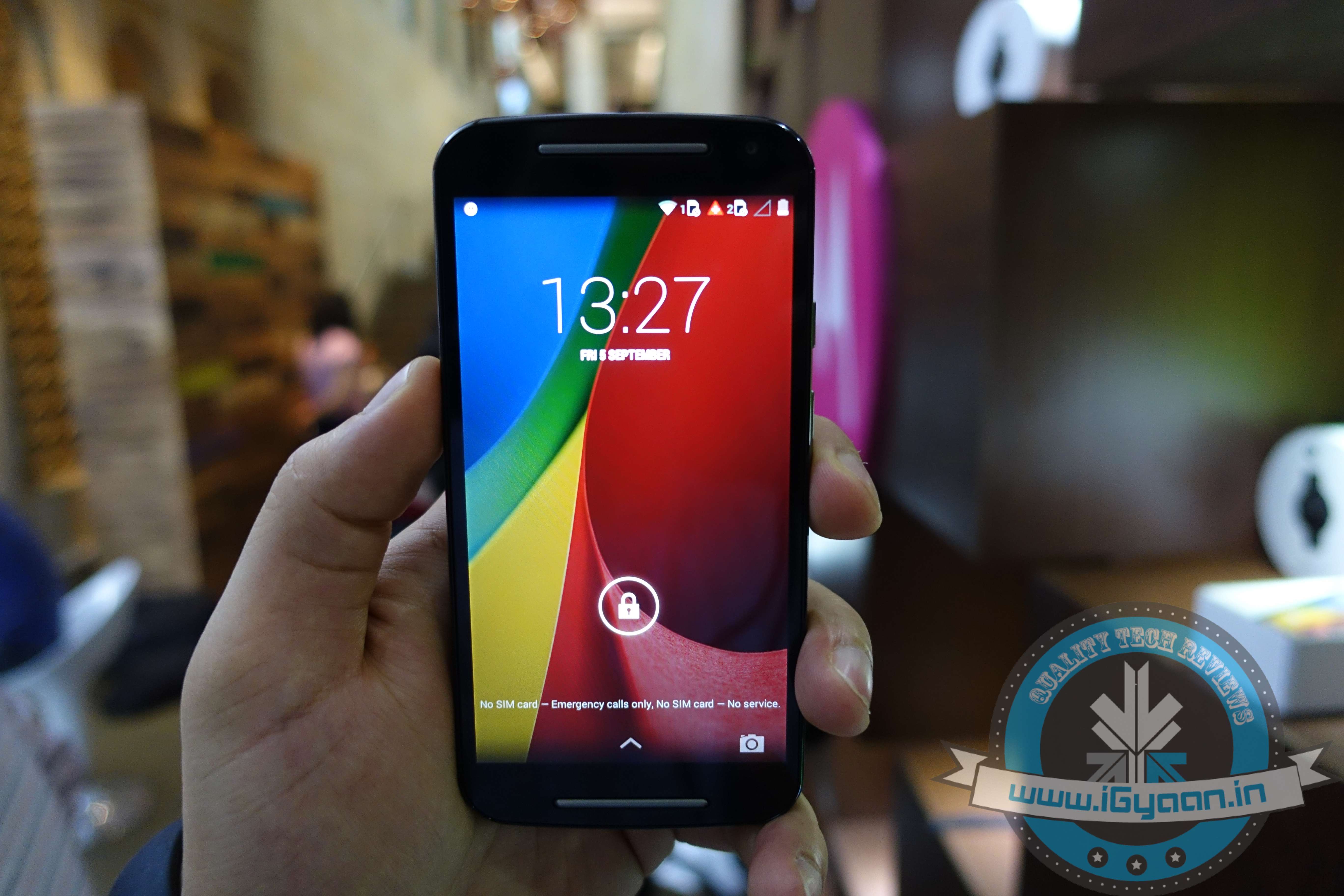
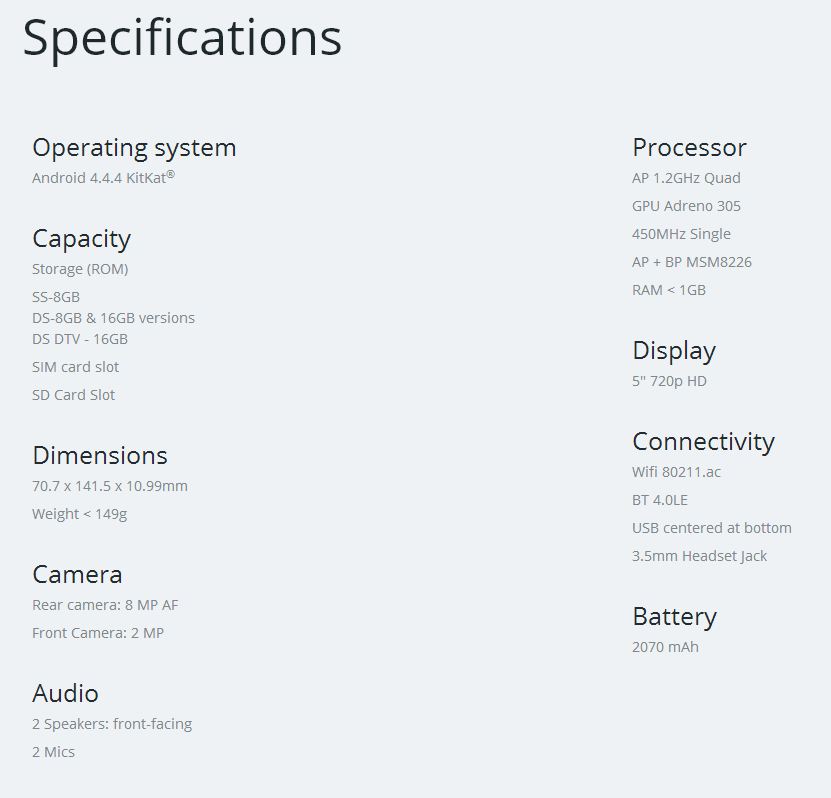
    The 2nd Gen Moto G has a 5.0-inch 720p HD IPS display made out of Corning Gorilla Glass. Other improvements to the G include two front stereo speakers and an 8-megapixel rear camera and a 2-megapixel front-facing one.

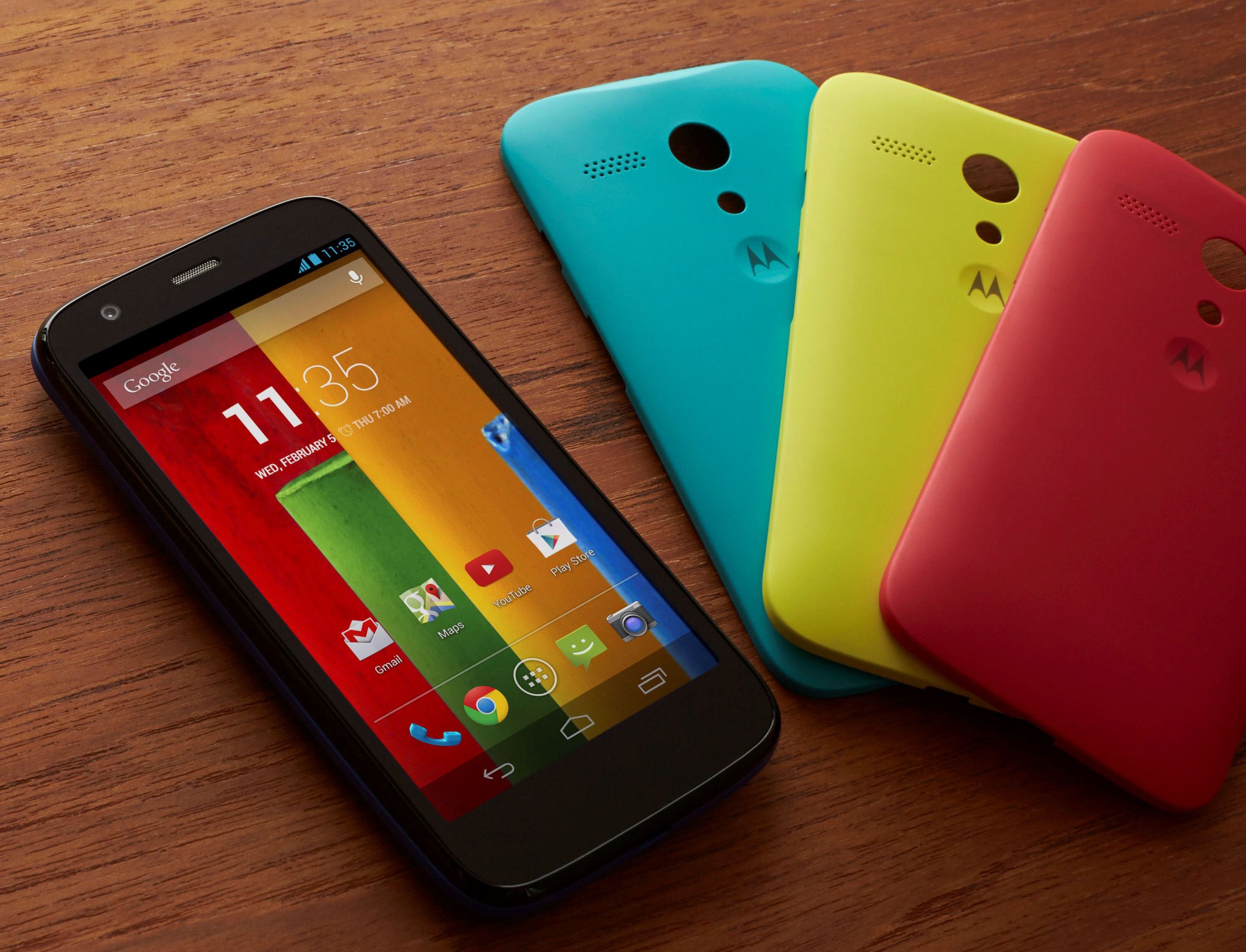
    moto g new

    The new G will also now finally come with a microSD card slot, which is located underneath the back cover. It’ll still come with 16GB  built-in storage, but an expandable memory slot is always nice to have. However, underneath is the same 1.2GHz Snapdragon 400 processor and 2,070 mAh battery. The new Moto G still shoots in 720p. However, they considered going for 1080p video capability, to compete with the Xiaomi Mi3.

    It’ll ship with Android 4.4 KitKat and is upgradeable to Android L as soon as it is released. It does come with a few Motorola apps like Migrate, which helps you transfer old phone contacts to the new one, and Assist, which provides a voice-activated Drive Mode when you’re on the road.

    moto g specs

  • Xiaomi Redmi 1S Vs Moto E Vs Moto G Specs Comparison

    Xiaomi Redmi 1S Vs Moto E Vs Moto G Specs Comparison

    After the achievement of its Mi 3, Xiaomi is rolling out yet another affordable smartphone in India, exclusively through Flipkart. The company is all set to formally uncover the Redmi 1S valued at Rs 5,999. All things considered, as budget-friendly devices to come in this comparative price bracket and expect to contend with the ruling budget Android, the Moto E and Moto G which are sold at the price of 6,999 and Rs. 10,499.
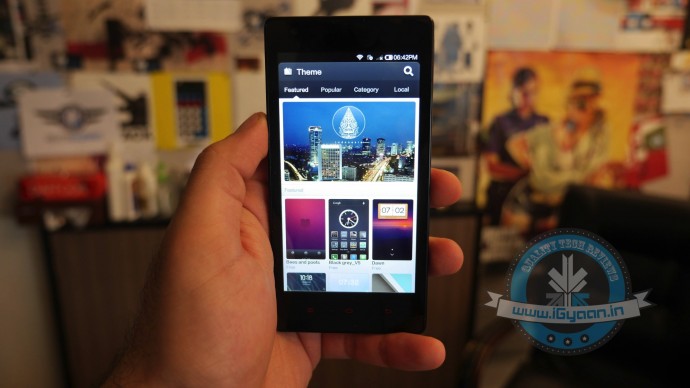
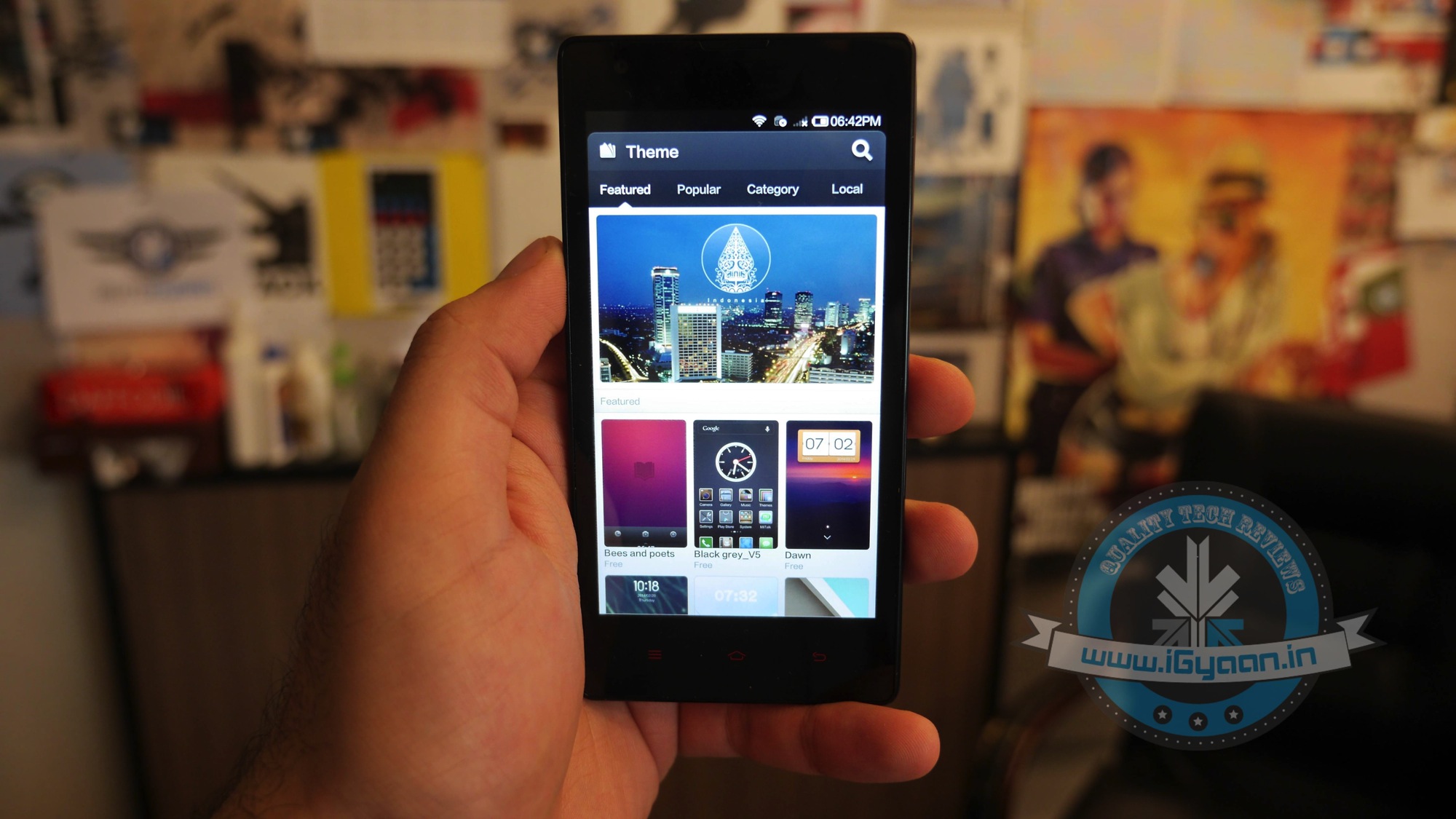
    Xiaomi Redmi 1s Unboxing 0

    In terms of display, the Redmi 1S comes with a 4.7 inch display which has a 720 x 1280 resolution, giving it a total pixel density of 312 PPI. The Motorola Moto E come with a 4.3 inch which is not a IPS display and has a 960 x 540 resolution giving it 256 ppi, which is much lower than the Redmi 1S. On the other hand Moto has a 4.5 IPS display which has a  720 x 1280 resolution, same as the Redmi. However, the Moto G is at power here with 326 PPI.

    Moto G also has a Corning Gorilla glass, so does the Moto E, but Xiaomi Redmi 1S lacks it and has Dragontrail instead. All three devices i.e. Moto E, Moto G and Xiaomi Redmi 1S are Dual Sim GSM devices. So, they will work on 3G and 2G GSM networks.
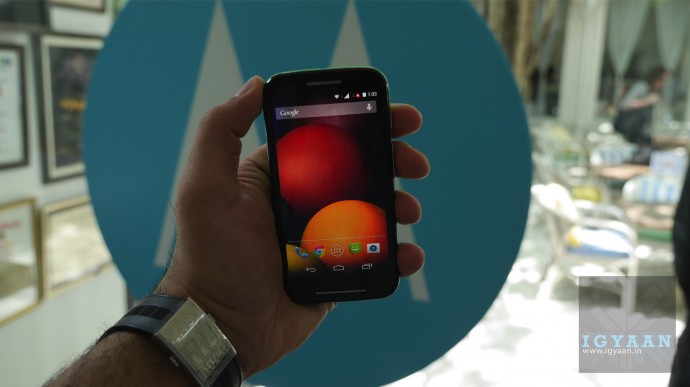
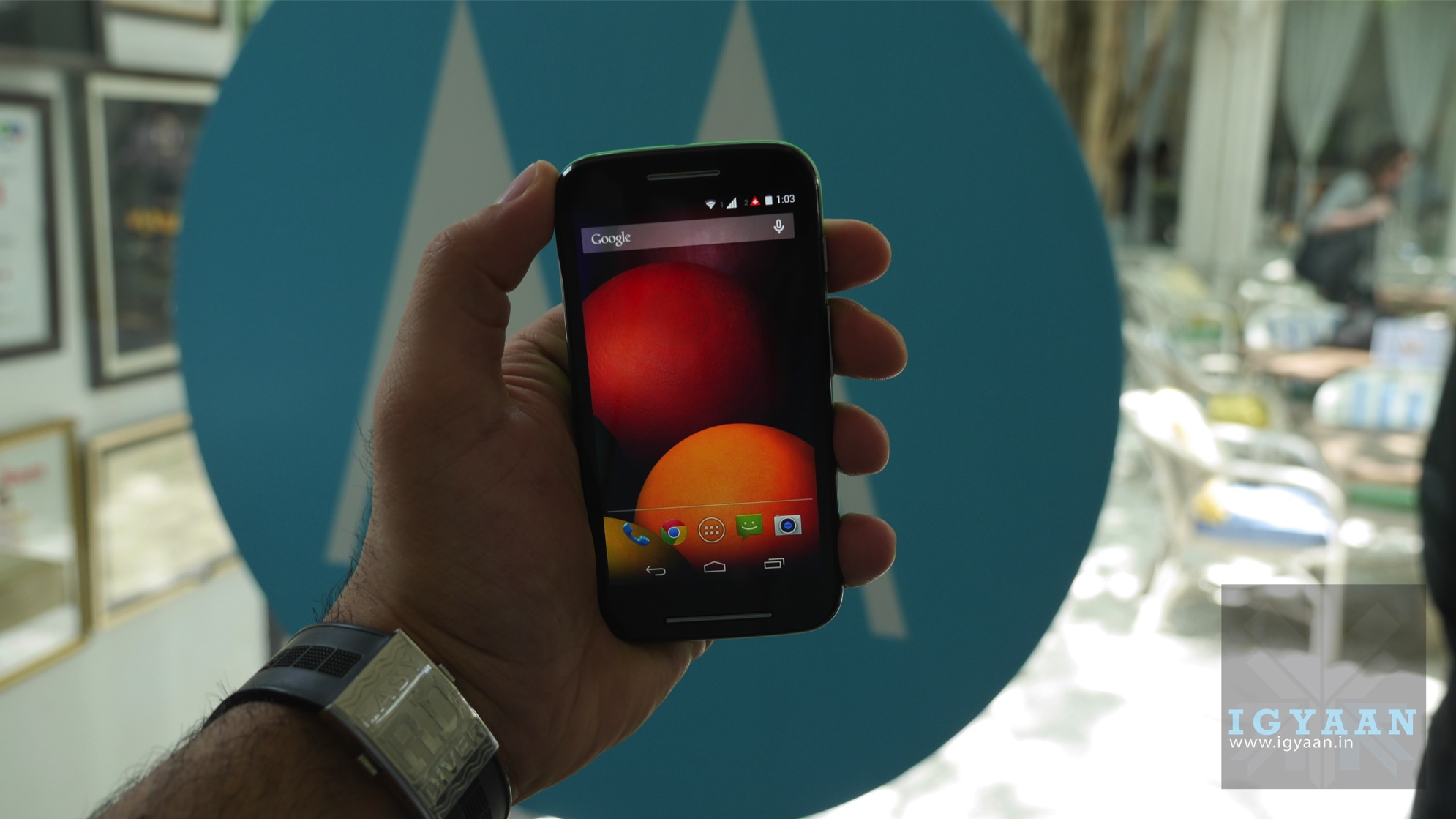
    Moto E 10

    On the hardware side, Redmi 1S comes with Qualcomm Snapdragon 400 on quad-cores at 1.6 GHz. Which is mighty impressive for the price bracket and compared to Moto E’s Snapdragon 200 at dual-core 1.2GHZ processor. Where as, Moto G packs a snapdragon 400 which is quad-code at 1.2 GHz. Having said that, Redmi 1S is undoubtedly leads the two Motorola handsets as far as the processor is concerned.

    All three have 1GB of RAM, and while the Redmi 1S along with Moto G has 8GB of Internal storage, Moto E lacks behind with 4Gb of internal storage. Also, the Redmi 1S does accept a micro-SD cards up to 64GB, while the Moto E accepts upto 32 GB micro-SD cards. The Moto G, despite being the most expensive handset in the lot, does not.

    As far as the battery is concerned, Redmi 1S sports 2050 mAh battery, the Moto E comes with comes with 1980 mAh battery and Moto G comes with 2070 mAh battery. So, there not a considerable difference between the batteries of the three handsets.
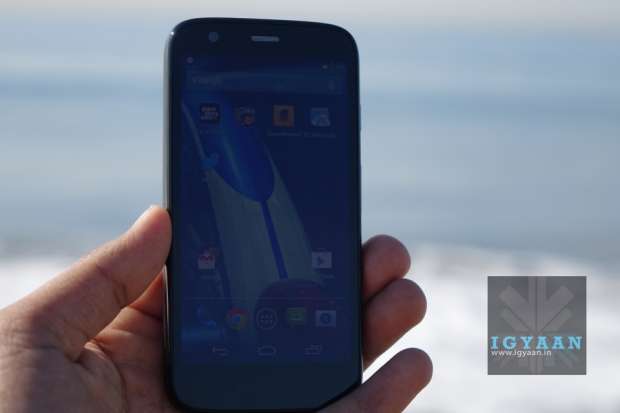
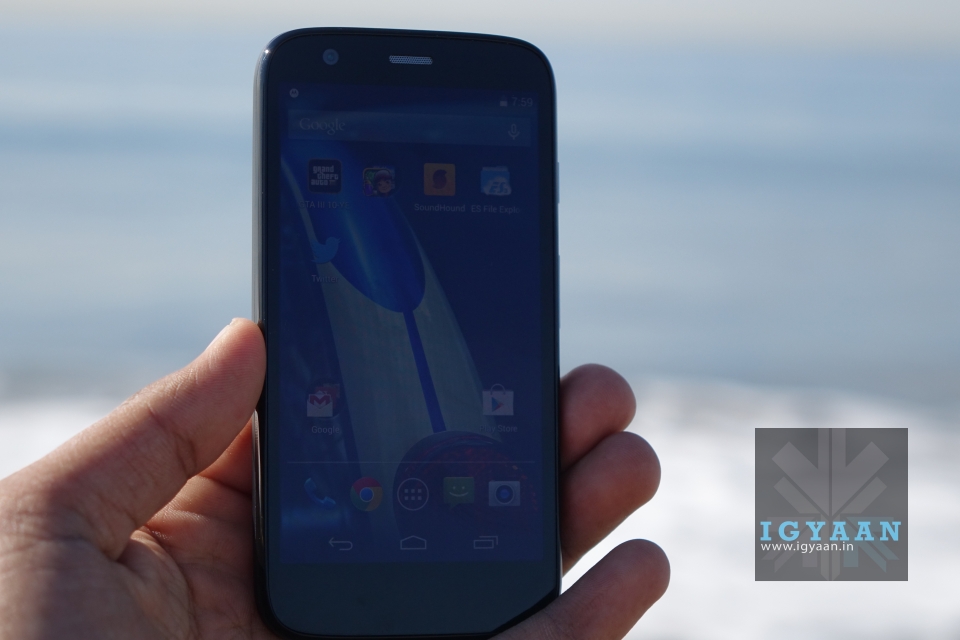
    Motorola Moto G 15

    The cameras of the devices are varied, the Xiaomi Redmi 1S fashions an 8MP primary camera that supports 1080p video shooting and the secondary camera of 1.6MP which supports 720p video shooting. Moto E disappoints us with no secondary camera  and the main camera of 5MP with only 480p video capability. On the other hand Moto G  has a similar 5 Mp camera but only does 720p videos along with a 1.3Mp secondary shooter. Moto E also lacks a flash light unlike other two devices. In terms of the camera and video quality Redmi 1S beats both the Motorola devices.

    Motorola’s devices take lead in one of the most important specs of any smartphone- OS and updates. Motorola devices comes with Android 4.4 out of the box where as redimi 1s comes with Android 4.3 out of the box with a promised upgrade soon. Moto E as well as Moto G are going to be one of the first devices to get Android LMP update after the Nexus devices.

    With respect to the specifications, pricing and overall usability of the device, we feel the Xiaomi Redmi 1S seems to be a value for money package. But with the limited 40,000 units going on sale on 2nd Sept, a lot of buyers and re-sellers are going to be in line to get their hands on the device, so be sure register first and wait for the device.

    One major advantage that Motorola devices bring, is that they are now readily available and also the company has an impressive service network along with good customer service support. This can’t be said for the Xiaomi at the moment because they are struggling with their service support which is kept down to low number of service centre and replacements offered by Flipkart.

    Key Specs-

    Specs/Devices

    Motorola Moto G

    Motorola Moto E

    Xiaomi Redmi 1S

    Dimensions (mm) 129.90 x 65.90 x 11.60 124.80 x 64.80 x 12.30 137.00 x 69.00 x 9.90
    Weight (g) 143.00 142.00 158.00
    Battery capacity (mAh) 2070, Non-removable 1980, Non-removable 2050, removable
    Display 4.5 Inch 720x1280px 329PPI  4.3 inch 540x960px 256PPI 4.7 inch 720x1280px 312PPI
    Processor Qualcomm Snapdragon 400 1.2GHz  quad-core Qualcomm Snapdragon 200 1.2GHz   dual-core Qualcomm Snapdragon 400 1.6GHz quad-core
    RAM 1GB 1GB 1GB
    Internal storage 8GB 4GB  expandable upto 32GB 8GB expandable upto 64 GB
    Rear camera 5-megapixel  5-megapixel  8-megapixel
    Flash Yes No Yes
    Front camera 1.3-megapixel No 1.6-megapixel
    Operating System Android 4.3 Android 4.4 Android 4.3 MIUI version 5
  • How Do They Do It : Chinese Phone Pricing Explained

    How Do They Do It : Chinese Phone Pricing Explained

    Many of you have inquired as to how the Chinese smartphone manufacturers are capable of bringing high speced devices that are priced so low. Here we attempt to explain how the likes of Xiaomi and others go about their business of creating havoc in the mobile markets everywhere.

    Both Motorola and Xiaomi have kept prices low by using the e-tailing route
    Both Motorola and Xiaomi have kept prices low by using the e-tailing route

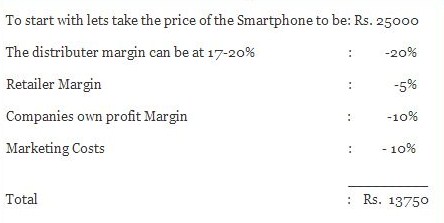
    It is estimated that companies like Xiaomi are selling their phones at a loss of Rs. 1000 so that they can create a market buzz around their products. Xiaomi is bringing in just about a 1,00,000 units of their phones to India and have been selling them out in periodic flash sales. By bringing in a limited number of device the company start a stampede and this causes other competitors to reduce their prices, something we saw Motorola do when they slashed Moto G’s price by Rs. 2000. By using this strategy, Xiaomi, with its limited marketing budget has made its name shine out in the market.

    However there is a downside to this marketing technique. The flash sales are now confusing and sometimes irritating the potential consumers who want the phone but cannot buy them. It has started to create a negative perception amongst such consumers. They are now seeking alternatives to the phone.

    chinese calNow here is where the internet marketing convenience adds in. Basically, by just using an online sales channel, a strategy devised by companies like Motorola, the companies get to save massive amounts in distribution, marketing, dealership and other costs. And hence these high speced products reach the consumers in what can be called shockingly low prices, well its shocking for big brands at least.

    It is also speculated that another Chinese smartphone manufacturer, One Plus, intends to try its luck in the Indian market. Their phone, the One Plus One is a high speced powerhouse which comes at mid segment prices. They too have limited stocks and might take the Xiaomi approach. But if these companies plan to stay in the Indian market for the long run, they need to come with stocks in accordance with the demand in the market. Or else they will just act as an inspiration to companies with already big reach to bring similar products and in turn, take away these companies potential customers.

  • The Next Moto G Might Go Big with a 5-Inch Screen

    The Next Moto G Might Go Big with a 5-Inch Screen

    Motorola has gathered a lot of goodwill this year. The company has been a star in the developing markets where its low-priced-high-speced products have found a massive fan following. Motorola’s upcoming products are their flagship Moto X+1 and their much awaited smartwatch, the Moto 360. Both their products have found takers in the rumor mills and they are generating a good amount of steam. Now it is being reported that one of their super hits, Moto G is apparently going to get a makeover too.

    The specifications of what is touted to be the next Moto G offering is listed under the model no. XT1063 on GFXBench. One spec that catches the eyes is the 1280x720p, 4.5 inch screen of the Moto G has expanded to a 5-inch screen. This maybe an issue with some enthusiast who appreciated the size neutral 4.5 inch screen of the Moto G, but for multimedia enthusiast, this is welcoming news.

    The rest of the features in terms of hardware appear to be constant. The phone’s processing power comes from a Qualcomm Snapdragon 400 SOC with an Adreno 305 GPU. The RAM listed is at 0.8 GB and internal storage is 4 GB, these maybe rudimentary figures to keep sniffers away or maybe Motorola will finally offer expandable storage. The only prominent complaint users had with the phone was the lack of expandable storage.

    The camera department might see some upgrades too. The main camera will supposedly feature a 7 MP which might be bumped to 8MP and the front camera goes from 1.3MP to 2MP.

    We will keep an eye on the happenings in the Moto department and will bring you the latest. Keep checking this spot.

  • Motorola Climbs Over Nokia in Q2 Market Standings

    Motorola Climbs Over Nokia in Q2 Market Standings

    With its mighty good year in the Indian market and a new-found loyal fan following, Motorola has risen again. After a few years of moving around and working with multiple owners such as Google, the brand is currently settling with Lenovo. Analyst group Canalys has brought out a report that shows Motorola taking Nokia’s spot on the market standings.

    The Canalys report states that in the Q2 of 2014, Motorola sent out 955,650 smartphones for the period while Nokia did 633,720. In just the previous quarter, the situation was almost the opposite with Nokia leading with 583,160 smartphones, compared to Motorola’s 379,310.

    With the power of Moto G and E, Motorola took over Nokia
    With the power of Moto G and E, Motorola took over Nokia

    This is a remarkable jump for the Motorola. The credit of course goes out to Motorola’s two stars that changed the way the market viewed its products. First came the Moto G, which created a new power center at the Rs 10,000 – 15,000 range. Then came the younger sibling, Moto E, which challenged the dominance of Indian smartphone companies on their home turf. The phones got the companies to reorganize their strategy and forced them to bring out a number of Moto Killer devices.

    But it seems now that Motorola has some series competition from the Chinese infiltrators in the Indian mobile market. Xiaomi and Asus have caused some major upheaval in the mobile markets. Their high speced – low priced products have taken the market by storm and even caused Motorola to slash its price of the Moto G by Rs. 2000.

    In the current standings, Motorola currently holds on its own behind Samsung, Micromax and Karbonn with their shipments of 4.4 million, 3.1 million and 1.07 million smartphones respectively. The Indian Smartphone market grew by 9% quarter on quarter. The figures might look even better in the coming holiday seasons and with fierce competition in the market. Overall it is turning out to be a good year for the phone makers and the buyers.

  • The Xiaomi Effect : Moto G Prices Slashed by Rs. 2000

    The Xiaomi Effect : Moto G Prices Slashed by Rs. 2000

    It’s only been a week and a few days since the Xiaomi Mi3 went on sale in India for a impressive price of Rs. 13999/-, and it looks like major brands are taking a major beating. Motorola who basically ruled this price segment from Rs. 12,000 to 15,000 has been feeling the major grunt of the Xiaomi fever.

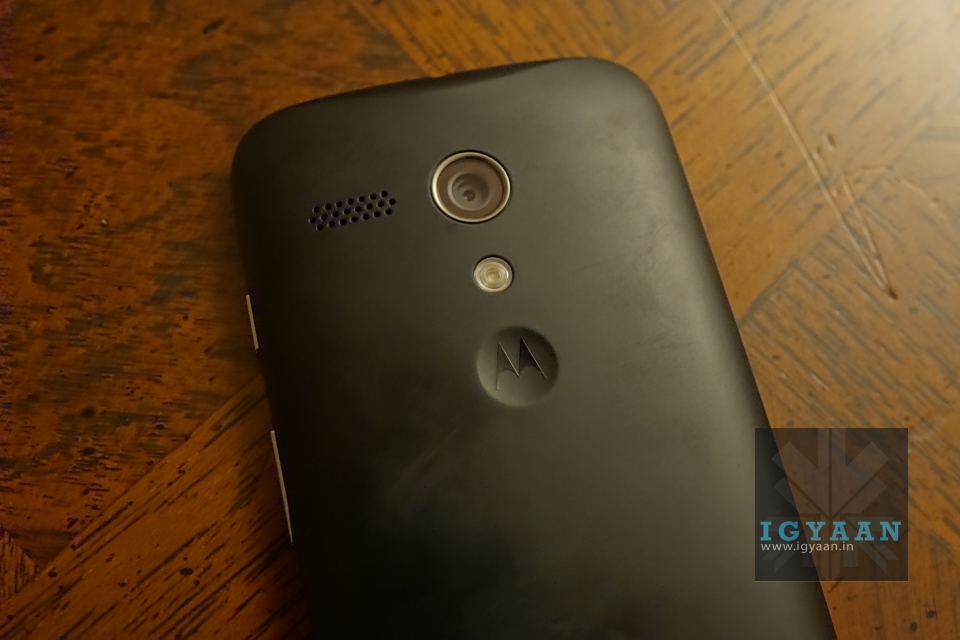
    Motorola hopes to change that by dropping their Moto G prices by a whopping Rs. 2000. If you don’t already know the Moto G sports a 4.5-inch HD display with a 1,280×720-pixel resolution and 329ppi. Powering its insides is a quad-core, 1.2GHz Snapdragon 400 processor, Adreno 305 graphics, and 1GB of RAM.

    There is a 2070 mAH battery inside, but unfortunately there is no expandable storage. At the back of the Moto G there is a 5 MP camera and a 1.3 MP camera at the front.

    Incase you are sick of the Xiaomi selling out before you click the buy button, you can find the new dropped prices of the Moto G below.

    Moto G Review

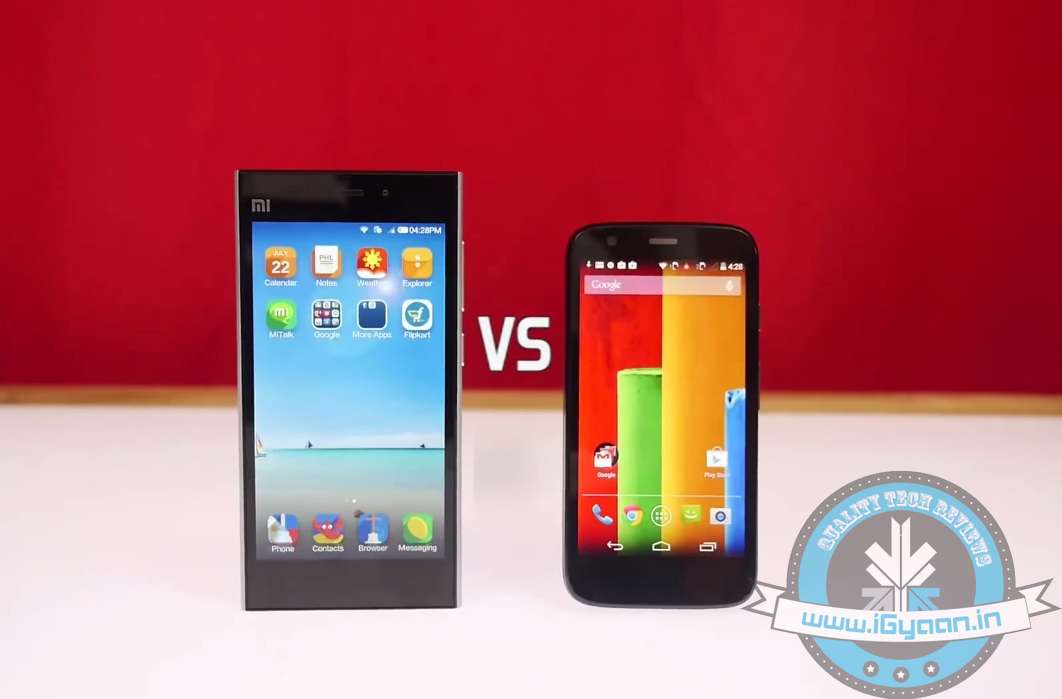
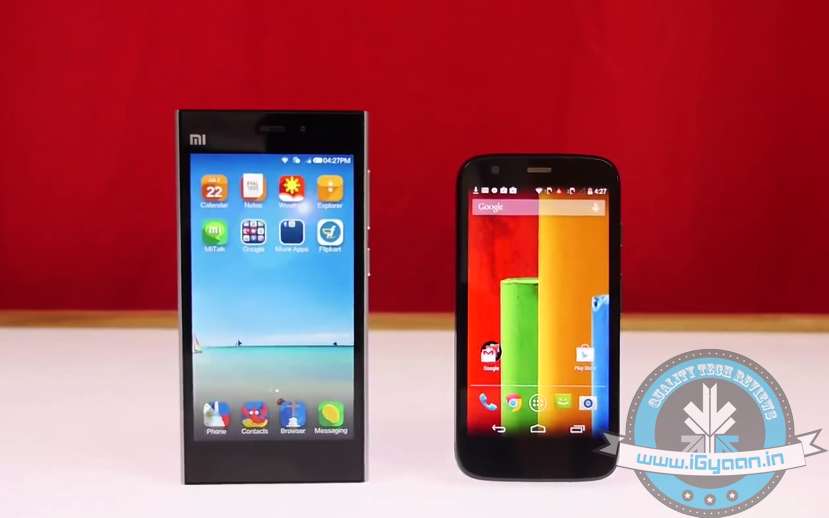
  • Xiaomi Mi3 vs Moto G : Lets Fight!

    Xiaomi Mi3 vs Moto G : Lets Fight!

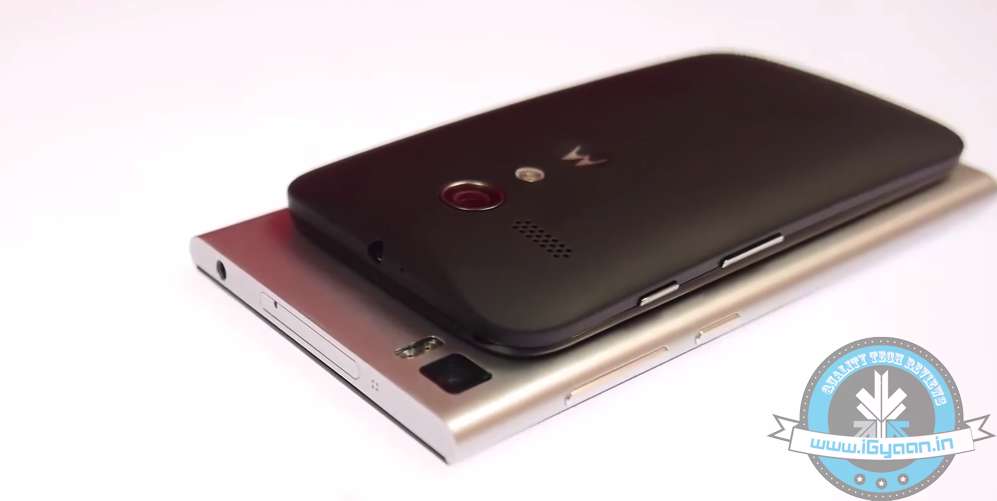
    Both Motorola and Xiaomi aimed big with the launch of these amazing devices. Xiaomi Mi3 is elegant with amazing specs and attractive pricing, while Motorola provided a great deal with the Moto G, which broke all sales records when it launched. We understand that Xiaomi Mi3 offers way betters specs, but since both the devices come within the same price range, we thought it was important for them to battle it out.

    Xiaomi is expected to take on most of the market with the launch of Mi3 because of the simple fact that the newly launched flagship device runs Snapdragon 800 and available at the price Rs. 13,999.

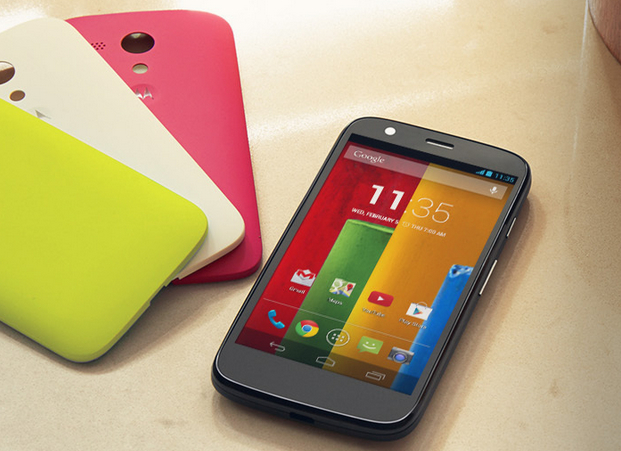
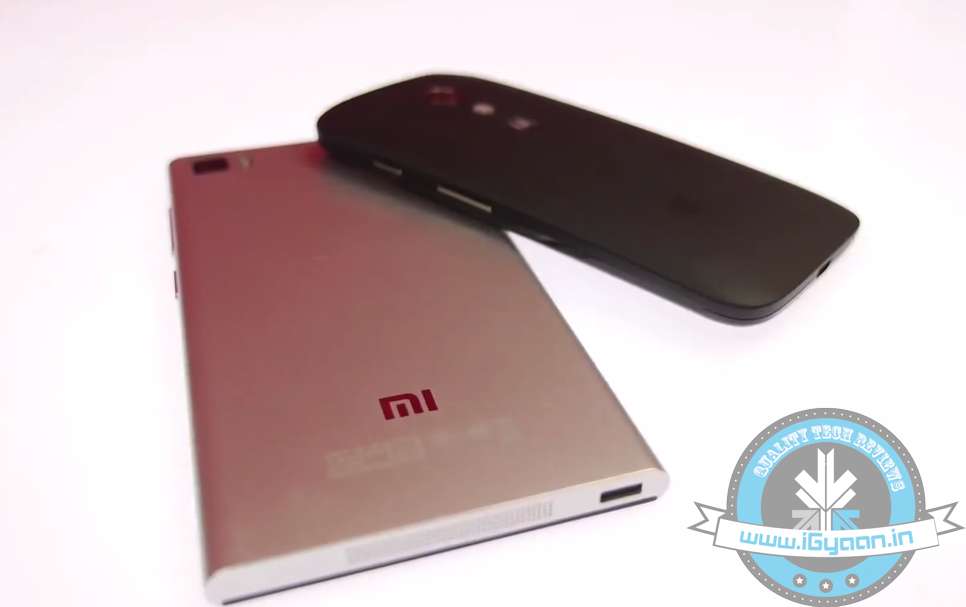
    Xiaomi Mi3, as a solid unibody product looks fantastic and the built quality is admittedly amazing. Overall feeling of the device is great. On the other hand we have the Moto G with its replaceable back panel and an array of color options for back panels.

    Xiaomi Mi3 India3

    Talking about specifications, Mi3 is equipped with a 1920X1080 px 5.0 inch display. While, the Moto G has a 720X1280 px which is at 4.5 inches. On the inside of Xiaomi Mi3 Qualcomm Snapdragon 800 quad-core chipset at 2.3 GHz. It also get Adreno 330 GPU where as with the Moto G, from the same price bracket, you get a quite a different set of specification. You get a Qualcomm Snapdragon 400 at 1.2 GHz with the Adreno 305 GPU, which is comparatively a disappointment.

    In terms of RAM, the device comes with 2 GB, where as the Moto G has a 1 GB. While the internal storage of both the devices is  16 GB. What’s interesting in Mi3 is the powerful 3050 mAh battery while the Moto G sports a 2070 mAh one. We know Moto G has a phenomenal battery life, but we are yet to test out the Mi3 battery life which is expected to be pretty impressive as well.

    Xiaomi Mi3 India1

    In terms of camera, the rear of Xiaomi Mi3 fashions a 13MP camera with a 28mm lens which also a wide-agle lens camera. It has dual LED flash and 1080p recording capability. Whereas Moto G is again dwarfed with its 5MP camera and its 720p video recording capabilities with no fancy camera features.

    The game changer is the OS both of the devices run on. The Mi3 runs on Android 4.4.2 which has been customized with MiUi5 which actually very different from what you see in Moto G. Moto G’s Android version is almost a stock Android interface with a couple of things added by Motorola. Motorola will also be fast enough to give you updates. It comes with Android KitKat out-of-the-box, nowadays. It is a possibility that it will get the Android L update as soon as Google launches it.

    Xiaomi Mi3 India2

    The Mi3 is 8.1mm in thickness, where as Moto G is a little hefty at 11.6mm. Moto G weighs 140 g where as the Mi3 comes at 145 g. The look, the feel, impressive specs and of course the attractive pricing, definitely puts Xiaomi a step above Moto G. If you were planning on  getting the Moto G, you might want to reconsider.

  • Motorola Releases KitKat 4.4.4 Update in India

    Motorola Releases KitKat 4.4.4 Update in India

    Motorola is surely in it to win it. The brand with its fierce product placement is ruthlessly being a thorn in the eye of the competition. After being the first company to bring Kitkat to all price points, the company will become one of the firsts to have the Kitkat 4.4.4 running on all its devices.

    Motorola informed the users through its twitter account. The company claims that this new update will add an extra layer of security for web browsing. The company also stated that the new update will fix several stability, framework and OpenSSL-related issues. The phones will get a new phone dialer.

    Motorola phones presently are the most feature-packed and competitively priced devices. All three phones have successfully become the leaders and have ushered speed in delivering updates in an update starved market. The company had released a 4.4.3 update just last month.

  • LG L70 Review : Can it beat the Moto G?

    LG L70 Review : Can it beat the Moto G?

    Even though the Android 4.4 Kitkat was released in September last year and praised unanimously, companies have been rather slow in incorporating the advanced OS on their phones. There is an even bigger shortage in the budget phones category, where the 4.2.X Jellybean still rules the game. Moto G created a revolution by bringing a feature packed device into the budget market, giving its competition a run for their money.

    LG L70 is LG’s answer to the one of a kind Moto G. The phone is in the same price bracket as the Moto G, but the specs create all the difference between these two machines. So we put the L70 to test to see how it fares against the high standards set by Moto G.

    Design and Display

    The overall design is fairly generic and seems like this aspect of the phone wasn’t given too much importance. The perforated back panel is extremely slippery and it is advisable to get a protective case.

    To open the back panel one needs to press down on the micro USB slot. It has a two layered SIM card slots, which are fairly easy to insert the cards in, but a tad bit hard to pull out. The phone adds an addition to the usual fare of three capacitive buttons in the form of a dedicated SIM swapping button. It can easily cause a bit of confusion initially but you can get used to it.

    The display is a 4.5 inch, 480X800 pixel screen with a 207ppi density. It is a Corning Gorilla glass 2 screen with 5 point multi-touch. The screen is a downer in comparison to stunning 720p screen of the Moto G.

    Hardware

    The phone comes with a Qualcomm MSM8210 Snapdragon 200 chipset and a Dual-core 1.2 GHz Cortex-A7 CPU. The internal memory is 4GB which is expandable to 32GB. The CPU tends to get over burdened by large apps.

    Operating System

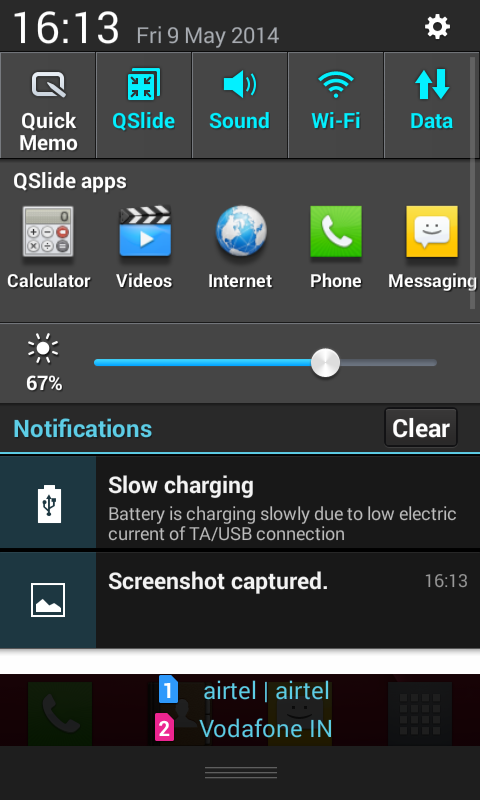
    The device comes with LG’s customized version Kitkat 4.4 right out of the box. It is of course one of the Android OS. The browser on the device was fairly laggy and didn’t give a good browsing experience. In the drop down menu, LG has added an option called Qslide which gives access to all the necessary utilities from the menu itself. Though it lets you customize the apps through Qslide, but you can’t add your own apps onto the menu.

    According to LG, the Knock code is the USP of the device which is basically one of the hundreds of unlock gimmicks being employed by several companies to differentiate themselves in the market. LG has also added some bloatwares which slow the handset down. The dialer of the phone needs to be commended for the most realistic design. For people who enjoy and miss the feel of pressing physical buttons, this is the closest it comes to that experience.

    The Quick Memo option is kind of like the S-note on Samsung devices, but for a fraction of the price it gives good handwriting recognition even when written with the finger. Also, fairly simple to get used to.

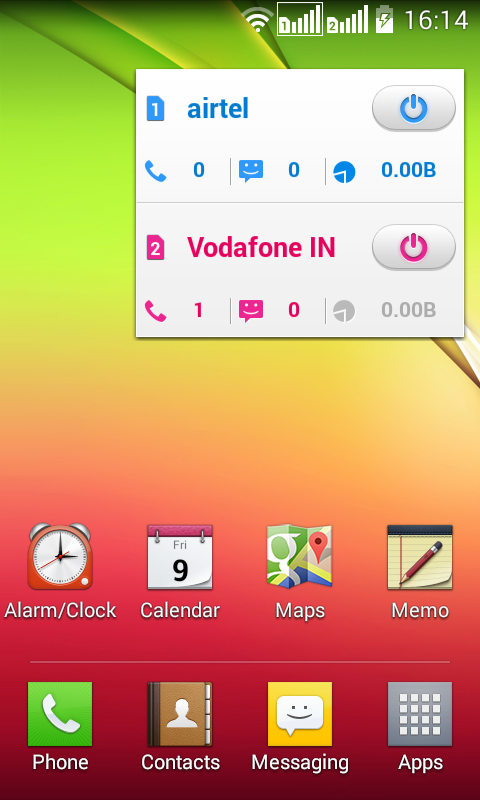
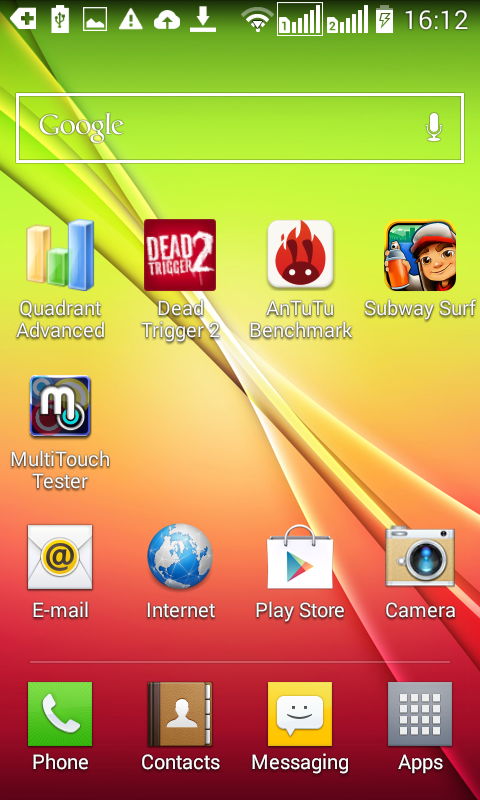
    Screenshot_2014-05-09-16-14-34Screenshot_2014-05-09-16-13-36Screenshot_2014-05-09-16-13-49 Screenshot_2014-05-09-16-12-53

    Camera

    The camera on the L70 is a 5 megapixel autofocus with LED flash. The main camera is capable of good color reproduction, in daylight as well as indoor light. The flash is capable of maintaining details even at close quarters, so it would be great for some Saturday night party shot.

    For a selfie obsessed person, the front VGA cameras would be a bit of a disappointment, but it is still better than other budget phones. The L70 has 9 focus points and gives a good autofocus results. Although, the moving subjects tend to get blurry.

    Conclusion

    The phone is a not at all a competitive effort on the part of LG against the rule of Moto G. The design of the device is dated and doesn’t inspire you to flaunt the device. The UI is capable of great things, but the hardware seems to be a roadblock. Maybe LG will get back on the design board and give the customers a more comprehensive device without the flaws of the present device.

    So to answer the question, Moto G is still the king of Rs10,000 to 15,000 price band.

iGyaan Network
Privacy Overview

This website uses cookies so that we can provide you with the best user experience possible. Cookie information is stored in your browser and performs functions such as recognising you when you return to our website and helping our team to understand which sections of the website you find most interesting and useful.