Tag: patent

  • Samsung Wants to Partner With BlackBerry, Not Acquire it

    Samsung Wants to Partner With BlackBerry, Not Acquire it

    Few days back, rumours about Samsung’s plans to acquire BlackBerry made the rounds. It was said that the South Korean company had offered close to $7.5 billion for the buyout. However, when the companies were approached for comment, both Samsung and BlackBerry denied the story. To reaffirm the same, the Co-Chief Executive of Samsung Electronics, J. K. Shin, made a statement that the company wants to work on an extended partnership but doesn’t aim to acquire BlackBerry at all.

    [quote text_size=”small” author=”J.K. Shin”]

    We want to work with BlackBerry and develop this partnership, not acquire the company.

    [/quote]

    Shin further added that they wish to extend the existing agreement, however, they are carefully keeping the details under wraps.

    Late last year, Samsung closed a deal with BlackBerry which gave access to both the companies to sell mobile security technologies of the other company. Samsung also signed similar agreements with other companies such as Trix Systems Inc., Good Technology Inc., MobileIron Inc. and AirWatch.

    The world’s largest maker of handsets respects its relationship with other companies and clarified that it is not eyeing the patent portfolio of BlackBerry, which carries the highest value in the technology world.

  • Ericsson Starts a New Patent War, This Time With Apple

    Ericsson Starts a New Patent War, This Time With Apple

    Apple and Ericsson are suing each other in the US court after failing to reach an agreement regarding the pricing of wireless-tech patents used by various smartphone manufacturers.

    According to Apple, Ericsson is seeking excessive royalties for its LTE patents, even though, they are not essential to the industry cellular standards anymore. The iPhone maker has asked the Federal Court of California to rule that Ericsson’s patents are not essential for long term evolution.

    Apple’s spokesperson said that the royalties should be based on the value of the processor chip that includes the technology, and not by hierarchy. However, if the court decides to deem the patents essential and charge Apple for its infringement, Apple wants the court to assign a reasonable royalty rate.

    Both the companies currently have a license agreement that covers many of Ericsson’s allegedly standard-essential patents. The agreement was signed in 2008, soon after Apple launched the iPhone.

    Ericsson has a long history of patent war, in 2012, it sued Samsung Electronics Co. for infringement, saying the South Korean phone maker failed to extend a licensing deal after years of negotiations. The two sides reached a settlement a year ago with a new licensing deal over wireless technology in smartphones, TVs, tablets and Blu-ray disk players.

    You might recall, one of the recent patent wars Ericsson was involved in, was the Xiaomi patent infringement in India which led to the Chinese company’s temporary ban in the country. Ericsson sued Xiaomi saying the Chinese phone maker hadn’t licensed its inventions. Ericsson spokesman says that the company holds several essential patents for 2G, 3G and 4G wireless technology, which means any seller of products compliant with those standards must secure licenses.

  • Apple and Samsung Agree to Dismiss their Patent Battle

    Apple and Samsung Agree to Dismiss their Patent Battle

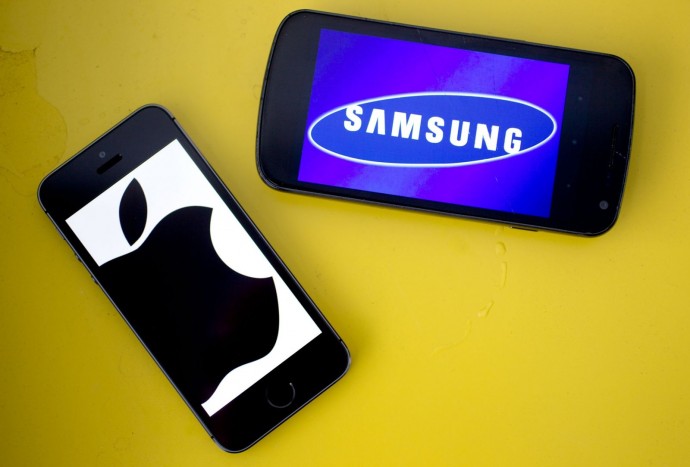
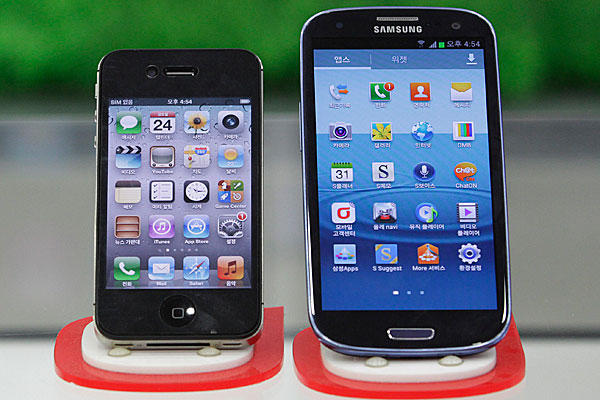
    Apple Inc. and Samsung Electronics Co. are starting to wind down their global patent dispute. Smartphone giants announced in a joint statement that they will drop all patent lawsuits outside the U.S. However, the two companies still haven’t settled their patent disputes within the U.S.

    The two companies have sued each other in Australia, Japan, South Korea, Germany, Netherlands, the UK, France, and Italy, and all these cases are being dropped, without being settled and without any cross-licensing agreements being negotiated. The companies disclosed the change in legal strategy in a joint e-mail. Apple and Samsung said they would push ahead with the most high-profile cases taking place in the U.S.

    apple

    Apple first sued Samsung in the U.S. for copying features of the iPhone in 2011. Samsung then sued Apple for patent infringement in South Korea, Japan, Australia, the Netherlands, Germany, France, Italy and the U.K. Apple filed countersuits in five of those countries.

    “Apple and Samsung have agreed to drop all litigation between the two companies outside the United States,” the companies said in a joint statement. “This agreement does not involve any licensing arrangements, and the companies are continuing to pursue the existing cases in U.S. courts.”

    Earlier, Apple and Samsung agreed in June to drop their appeals of a patent-infringement case at the U.S. International Trade Commission that resulted in an import ban on some older Samsung phones. In the U.S., Apple had two victories against Samsung: $930 million in 2012 and $120 million in May of this year. The case is still unresolved though.

  • Samsung and Google Sign Global Patent License Agreement

    Samsung and Google Sign Global Patent License Agreement

    Samsung Electronics and Google Inc. further extended their partnership with a global patent cross-license agreement covering a broad range of technologies and business areas. 

    “This agreement with Google is highly significant for the technology industry,” said Dr. Seungho Ahn, the Head of Samsung’s Intellectual Property Center. “Samsung and Google are showing the rest of the industry that there is more to gain from cooperating than engaging in unnecessary patent disputes.”

    This new agreement covers Samsung’s and Google’s existing patents as well as the ones that will be filed over the next 10 years. This agreement allows Samsung and Google to get access to each other’s patents portfolios, which might lead to focus more on product innovations than on filing lawsuits. 

    “We’re pleased to enter into a cross-license with our partner Samsung,” said Allen Lo, Deputy General Counsel for Patents at Google. “By working together on agreements like this, companies can reduce the potential for litigation and focus instead on innovation.”

  • Google To Face Hefty Fine For SimpleAir Push Notification Patent Infringement

    Google To Face Hefty Fine For SimpleAir Push Notification Patent Infringement

    SimpleAir is seeking $125M in damages from Google after a jury found that push notification services in Android infringe on a SimpleAir patent, the company said Tuesday.

    The accused services are the Google Cloud Messaging (GCM) and Android Cloud to Device Messaging (C2DM) services. The services are used by Google to process and send instant notifications for Android applications, such as Facebook, Twitter, and Gmail.

    It’s worth noting that Google isn’t the first company to run into trouble with SimpleAir. Microsoft, Apple and even Blackberry all have licensing agreements with the company, after all. 

    Because the jury did not agree on how much to award in damages, a limited second trial will be held to determine the amount. SimpleAir said in a press release that it will seek US$125 million, though it did not specify how it had calculated the amount.

    [modal heading=”Press Release” text=”Press Release” size=”btn-medium”]Federal Jury Finds Google Infringed SimpleAir Patent January 21, 2014 03:45 PM Eastern Standard Time MARSHALL, Texas–(BUSINESS WIRE)–SimpleAir announced today that a federal jury returned a verdict that SimpleAir’s U.S. Patent No. 7,035,914 is infringed by Google. The verdict was reached on Saturday, January 18, 2014, following a week-long trial presided over by the Honorable Rodney Gilstrap, U.S. District Judge for the Eastern District of Texas. “We are grateful for the jury’s hard work in this case and pleased with their verdict” SimpleAir had alleged that Google’s push notification services for the Android smartphones and tablets infringed five claims of the ‘914 patent. The jury agreed unanimously on all counts of infringement and also found unanimously that each claim was valid. The validity of the patent had previously been confirmed by the U.S. Patent and Trademark Office during a Reexamination proceeding that concluded in February 2013. The accused services are the Google Cloud Messaging (GCM) and Android Cloud to Device Messaging (C2DM) services. The services are used by Google to process and send instant notifications for Android applications, such as Facebook, Twitter, and Gmail. The jury was unable to reach a unanimous decision on the amount of damages to award for Google’s infringement. The damages issue will be decided by a separate jury in a limited second trial. SimpleAir will seek damages in excess of $125 million for Google’s infringement in the damages retrial. “We are grateful for the jury’s hard work in this case and pleased with their verdict,” said John Payne, who is the lead inventor and majority owner of SimpleAir. “There was a lot of information presented to the jury and they did an exceptional job figuring out what mattered and what didn’t. We look forward to addressing the issue of damages in the second trial and hope the jury in that trial will be as dedicated as this one was.” SimpleAir is an inventor-owned technology licensing company. The company holds eight issued U.S. Patents and several pending patent applications in the areas of wireless content delivery, mobile applications, and push notifications. SimpleAir has licensed its inventions to many leading technology companies. SimpleAir is represented by Greg Dovel, Jeff Eichmann, and Simon Franzini of Dovel & Luner LLP and by Calvin Capshaw, Elizabeth DeRieux, and Jeff Rambin of Capshaw DeRieux LLP.[/modal]
  • Apple Looking Towards Solar Energy Charging For Its Devices

    Apple Looking Towards Solar Energy Charging For Its Devices

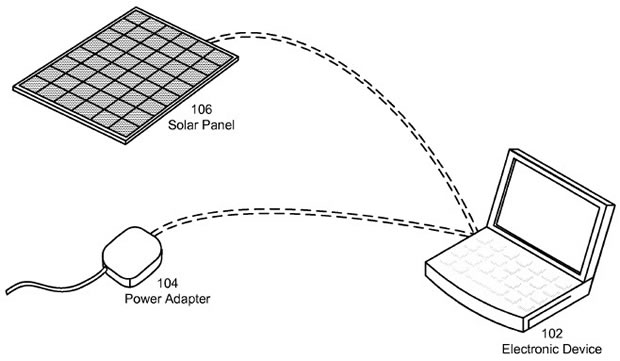
    As PatentlyApple reports, the US Patent & Trademark Office published a patent application from Apple that reveals a new power management system that will work with both a power adapter and seamlessly with a portable solar panel accessory for busy people on the go. Apple’s engineers are thinking big with their on-site solar power now creating the energy equivalent to powering 17,600 homes a year.

    The experience that Apple’s engineers are gaining with working with solar panels is filtering through to creating a power management system for future Macs and iDevices. Apple has already been granted seven solar power patents thus far and you could review most of them in our Green Technology Archives.

    Today’s patent goes one step further than most by introducing us to a solar power panel accessory for mobile devices like a MacBook or iPhone that won’t require a power converter. Apple’s system may be closer to reality than first thought considering that Apple’s senior power design engineer noted as the inventor of this system has been snatched by Samsung within the last year.

    Apple’s USPTO patent filing describes a method for supplying power to components in an electronic device comprised of a power management system which accepts power from a solar panel and supplies it to the components without using a converter circuit between the solar panel and the power management system.

    The power management system includes a system microcontroller (SMC) and a charger. During operation, the power management system accepts power from at least one of a power adapter and a solar panel.

    apple

    The solution negates the need for bulky power converters (see the image above) which are engineered to take the varying voltage generated by a solar panel (which varies with the amount of sunlight) to provide the specific voltage required by a device.

    The patent does offer hope to all the smartphone and notebook owners who always seem to run out of juice before the day is over.

  • Apple Retains Multi-touch Patent

    Apple Retains Multi-touch Patent

    USPTO now once again recognizes patent No. 7,479,949 (for the multi-touch feature) in Apple’s favour after invalidating it in 2012. This happens to be one of the two patents that the ITC has determined was infringed on by Samsung, leading to a current import ban on some older Samsung models.

    Titled “Touch screen device, method, and graphical user interface for determining commands by applying heuristics,” the ‘949 patent is a broad, sweeping property covering functional aspects of multitouch screens like those found in many smart devices, like the iPhone and iPad. 

    Steve Jobs is listed as the first of over two dozen inventors on the patent, and it is considered perhaps the most famous of his over 300 credited patents. 

    As FOSS Patents notes :

    As we speak, the Steve Jobs patent is even stronger than it was before someone (presumably Samsung and Google) challenged it anonymously. On September 4, 2013, the USPTO issued a reexamination certificate confirming the patentability of all 20 claims because the prior art neither anticipated this invention nor renders it obvious.

    A number of Apple’s key patents have been challenged for reexamination as its competitors have sought to derail Apple’s claims against them in various court battles. 

    Apple has also filed an appeal to broaden the US import ban to cover additional Samsung products. The Cupertino company has asked the US International Trade Commission (ITC) to review three more patent cases, following the ITC finding Samsung guilty of two patent infringements already. 

  • Apple Ordered to Pay $3 Million Over Patent Voilation in Japan

    Apple Ordered to Pay $3 Million Over Patent Voilation in Japan

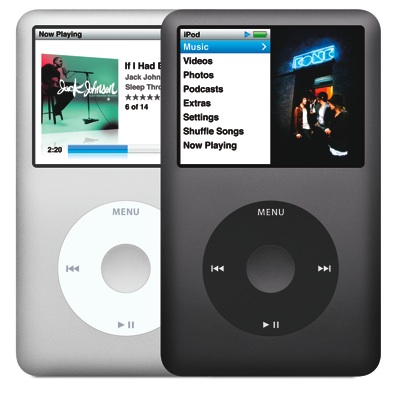
    Apple is again into the news but this time it is not because of the iPhone 5c or the iPhone 5s, it is because of the iPod as Tokyo District Court ordered Apple to pay ¥300 million ($3.3 million).

    Apple is been asked to pay this amount to Japanese inventor Norihiko Saito for infringing on a patent covering the touch-sensitive click wheel used in the iPod Classic and older models of its music player.

    The patent that Norihiko Saito’s company applied for in 1998 covers a technology for the Click Wheel controller that Apple has adopted for the music player in Japan since 2004, Judge Teruhisa Takano said in the ruling.

    ipod_classic_

    Saito’s damages come more than five years after he filed the patent lawsuit, during which time he demanded damages of ¥10 billion ($101 million), based partly on the number of iPods Apple had sold during that period. The final figure($3.3 million) that came up is way less than what was demanded ($101 million) before, Apple might not have any problems paying this amount considering the sales of the new iPhones.  


  • OLED Patent Dispute Comes to an End as ‘Samsung and LG’ Choose to Focus on Cooperation

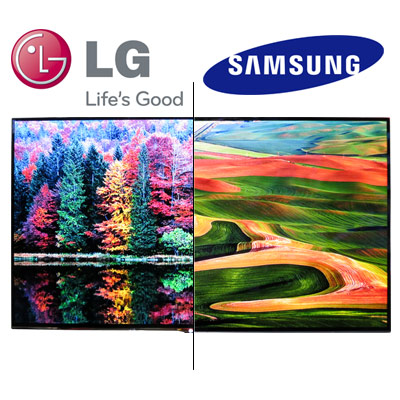
    Samsung Display and LG Display ended the year long dispute in a patent battle over LCD- and OLED-related technology.

    Samsung and LG the world’s top two display panel manufacturers filed lawsuit over a number of patents for next-generation display technologies for TVs and other devices. The two firms had accused each other of stealing liquid-crystal display (LCD) and organic light-emitting diode (OLED) technology and key engineers.

    Samsung and lg

    But now it seems both the companies wants to focus more on the market than on the lawsuits, individual statements from the company say:

    It was agreed that we two should focus more on cementing our leadership in the global market by cooperation, instead of engaging in all-consuming patent disputes,” Samsung Display said in a statement late Monday. 

    While the statement from LG said:

    What’s most important for both of us is upgrading our competitiveness globally,” LG said.


  • Microsoft Awarded $14.5 Million In Patent Case Against Motorola

    Microsoft Awarded $14.5 Million In Patent Case Against Motorola

    A federal jury late Wednesday backed Microsoft Corp. in a dispute over Motorola Mobility’s licensing of so-called standard, essential patents used in Microsoft products.

    In the second of two trials in federal court in Seattle, the jury agreed with Microsoft’s claim that phone maker Motorola, owned by Google Inc,, broke agreements with standard-setting bodies to license certain patents at a fair and reasonable rate, according to Microsoft.

    The case revolves around patents owned by Motorola on the 802.11 wireless technology standard and the H.264 video compression. These technologies are used in numerous devices, including Microsoft’s Xbox game consoles. It is common business practice to pay patent owners a licensing fee in order to use the said patents, but it seems that the two tech giants couldn’t see eye to eye on just how much money is really involved.

    In 2010, Microsoft filed a lawsuit against Motorola, claiming that the now Google-owned company is charging excessive licensing fees that could reach up to $4 billion per year. While Microsoft has no qualms about paying royalty fees, it could not agree to Motorola’s demand to be paid 2.25 percent of profits from Microsoft’s products using the said patents.

    The jury awarded Microsoft about $14 million in damages, Microsoft said, about half what the company had asked for. That consisted of $11 million for the costs of relocating a warehouse in Germany due to an injunction on certain Microsoft products brought by Motorola in that country, and about $3 million in legal fees for fighting that injunction.

    “This is a landmark win for all who want products that are affordable and work well together,” Microsoft said in a statement.

  • Apple Patents New iOS Unlocking Features

    Apple Patents New iOS Unlocking Features

    A patent just awarded to Apple allows for a user of an iOS to lock or unlock a device based on a gesture — perhaps the equivalent of a child-proof cap.

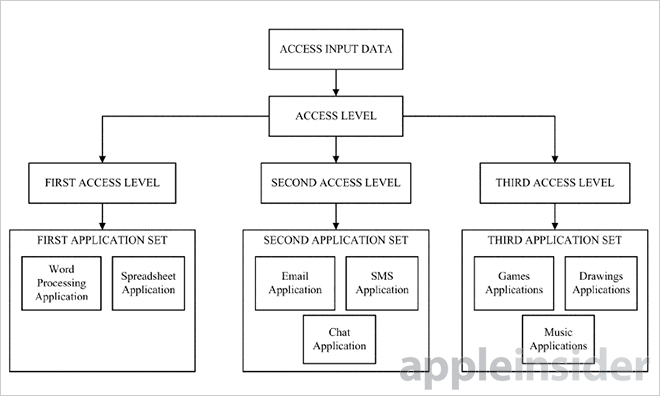
    The patent, as spotted by AppleInsider and reported by TechCrunch, would allow access to one set of apps — let’s say games for instance — with the drawing of a letter with a fingertip, and then another set, say email, with another, separate gesture.

    apple

    Apple’s U.S. Patent No. 8,528,072 for a “Method, apparatus and system for access mode control of a device,” describes a system that creates user access modes guarded by predetermined gesture inputs. 

    Currently, as Apple Insider reports, Apple’s iOS offers passcode unlocking as a means of access control. Under this method, users must input a simple code or password to gain complete access to the device. Apple also provides a certain level of user configuration, allowing access to Siri, Passbook and Reply with Message even when a device is locked. 

    Such unlocking methods are definitely not new and various Android devices in the past along with custom ROMs have allowed similar functions, whereby a user can “draw” a letter or a shape to launch a specific app, such as the drawing of an envelope that would launch the email app.

    This patent by Apple is also accompanied with the effective feature of “Guest Mode”. In this feature Apple will build a lock screen launcher that will easily be accessed by the user through gestures, voice, keyboard, mouse or stylus, already covered in the Apple patent.

  • Google Patents “Pay-per-Gaze” Advertising Model, Exploring Options

    Google Patents “Pay-per-Gaze” Advertising Model, Exploring Options

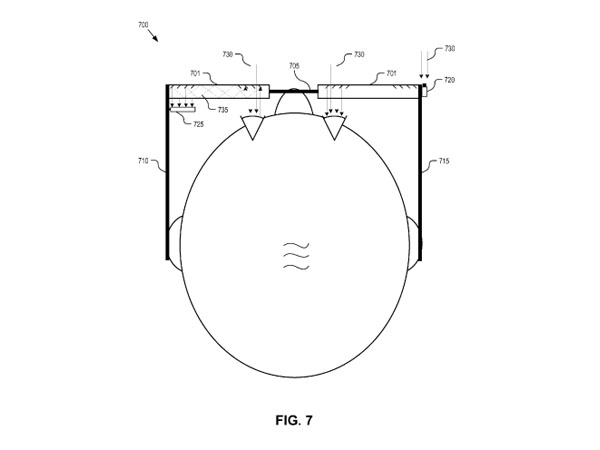
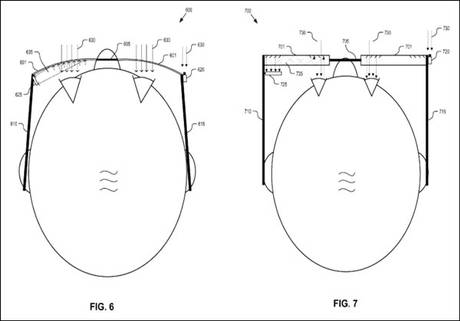
    Google has been granted a patent for eye-tracking technology that could one day allow for a pay-per-gaze model of advertising in the real world and online. The Google Glass-like device registers when individuals look at an advert before charging the relevant company, according to the patent. 

    Google

    The technology (spotted by The Verge via Phys.org) could also detect individuals’ “inferred emotional state information” by measuring pupil dilation. The patent was actually filed back in 2011, but was only granted to the company last week.

    “Under a pay per gaze advertising scheme advertisers are charged based upon whether a user actually viewed their advertisement,” reads the patent. “Pay per gaze advertising need not be limited to on-line advertisements, but rather can be extended to conventional advertisement media including billboards, magazines, newspapers, and other forms of conventional print media.”

    The patent also allows the technology to generate “latent search results” based on “at least a portion of the items views by the user” including items that are in the user’s peripheral vision. Search requests can then be cached for later use automatically without the user’s active permission.

    Google has previously been criticised for its attitude to privacy with regard to Glass, particularly by the Information Commissioner’s Office.

    Google has generously allowed for some degree of privacy here:

    To protect individual privacy, personal identifying data may be removed from the data and provided to the advertisers as anonymous analytics. In one embodiment, users may be given opt-in or opt-out privileges to control the type of data being gathered, when the data is being gathered or how the gathered data may be used or with whom it may be shared.

  • Apple Patents New Multifunction Port Which Combines USB and SD Card

    Apple Patents New Multifunction Port Which Combines USB and SD Card

    Apple is known for slimming down its hardware and removing anything it feels can be avoided. The company was one of the first to begin the push away from optical media. Now, in line with its design ideology of slimming down on buttons and ports and replacing them with a flat, sleek exterior, Apple has filed a patent to combine the standard USB slot with the standard SD card slot into a single new hybrid port. 

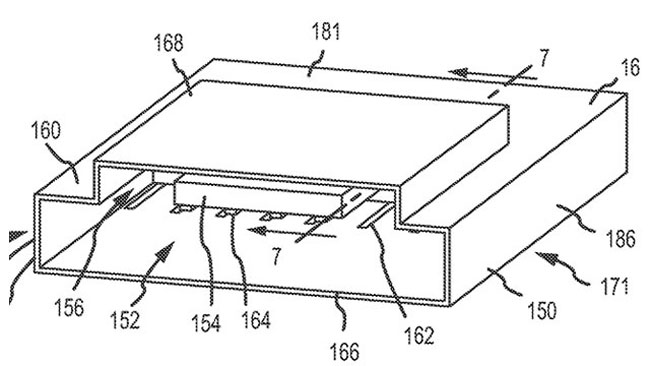
    The patent, which was originally filed in December 2011 and published earlier today, refers to a “combined input port” that would let Apple put SD card slots onto even its smallest 11-inch MacBook Air, which currently comes equipped with just USB and Thunderbolt ports. The new technology could also lead the way to thinner versions of the larger 13-inch MacBook Air and MacBook Pro models. It could also provide a way to add additional ports to the side of a MacBook, since there won’t be a need to separate the card reader from a USB port.

    “A first set of contacts is positioned on the substrate at a first depth into the receiving aperture” Apple’s application explains, “and a second set of contacts is positioned on a first surface of the outer wall at a second depth into the receiving aperture.” In the image below, of the port in cross-section, a USB plug is inserted and makes contact with the first set of contacts.

    apple

    It’s unclear if the patent, which was filed almost two years ago, will be implemented in the next generation of Apple laptops. Patents don’t always lead to a final products, so Apple could have ditched this idea long ago.

    [Via]

  • Tokyo Court Rules In Favour Of Apple Against Samsung On Patent

    Tokyo Court Rules In Favour Of Apple Against Samsung On Patent

    A Tokyo court ruled on Friday that Samsung Electronics had infringed on rival Apple’s patent for a “bounce-back” feature on earlier models of its popular smartphones.

    The rubber-banding patent refers to the bouncing animation that takes place when a user scrolls past the end of a page while on a mobile device.

    Samsung has already changed its interface on recent models to show a blue line at the end of documents, the report noted.

    The Tokyo District Court issued a partial verdict Friday in favor of Apple. Damages were not announced. A final verdict is expected later.

    Apple and Samsung are embroiled in similar battles in the U.S., South Korea, Germany, Italy, the Netherlands, Britain, France and Australia.

    The Japanese court’s decision comes after the US Patent and Trademark office judged in April that Apple’s patent for the bounce-back feature was invalid, allowing older Samsung models that had a similar feature to remain on sale.

    Samsung and Apple, the world’s two biggest smartphone makers, have each scored victories in patent disputes fought over four continents since the maker of the iPhone accused Asia’s biggest electronics maker of “slavishly copying” its devices. The companies, are competing for dominance of a global mobile-device market estimated by researcher Yankee Group at $346 billion in 2012.

    Further details regarding the Tokyo court’s decision will be announced when the final ruling is handed down later today.

    [Via]

  • Report : NVIDIA Set To License Kepler GPU Technology To Other Manufacturers

    Report : NVIDIA Set To License Kepler GPU Technology To Other Manufacturers

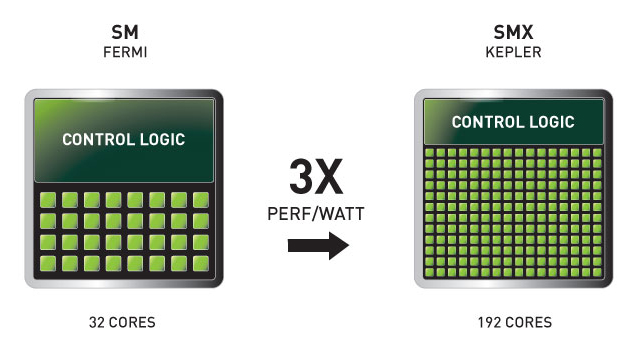
    We knew NVIDIA had some big plans for the mobile market, but the company has announced just how big those plans are to be. NVIDIA will be licensing it’s Kepler GPU architecture and visual computing patents to manufacturers for mobile products.

    This build is found in Nvidia’s GeForce 600-series GPUs and now may end up in graphics cores from other manufacturers, too.

    Kepler

    Nvidia said Kepler’s improved performance and efficiency, as well as its Direct3D 11, OpenGL 4.3, and GPGPU capabilities would endear device makers to its licensees. In turn, licensees will receive designs, collateral, and support from the company.

    Nvidia said the move has precedent: Nvidia licensed GPU core technology to Sony for the PlayStation 3 game console in past, and also receives hundreds of millions of dollars per year from Intel for the license to Nvidia graphics technology.

    Aside from offering smartphone makers the possibility to license its Kepler architecture, NVIDIA has confirmed that it will also offer licensing rights to its visual computing portfolio, thus enabling them the option to design their own GPU functionality.

    There’s more to it, as the company has announced that all licensees will get “all necessary designs, collateral and support to integrate NVIDIA’s powerful graphics cores into their devices.”

iGyaan Network
Privacy Overview

This website uses cookies so that we can provide you with the best user experience possible. Cookie information is stored in your browser and performs functions such as recognising you when you return to our website and helping our team to understand which sections of the website you find most interesting and useful.