Tag: Samsung Galaxy S9

  • New Galaxy S9 Renders Might Be The Closest Thing To Reality So Far

    New Galaxy S9 Renders Might Be The Closest Thing To Reality So Far

    The Samsung Galaxy S9 will be the most talked about smartphone of early-2018. It will be a revision of the Samsung Galaxy S8 and there are conflicting reports as to how the Galaxy S9 might turn out to be. While there are leaks that suggest that it will be an incremental upgrade over the Galaxy S8 and the bigger sibling, the Galaxy S9+ will be the one packing all the new features, some suggest that there will be barely any design differences between the S9 and S9+.
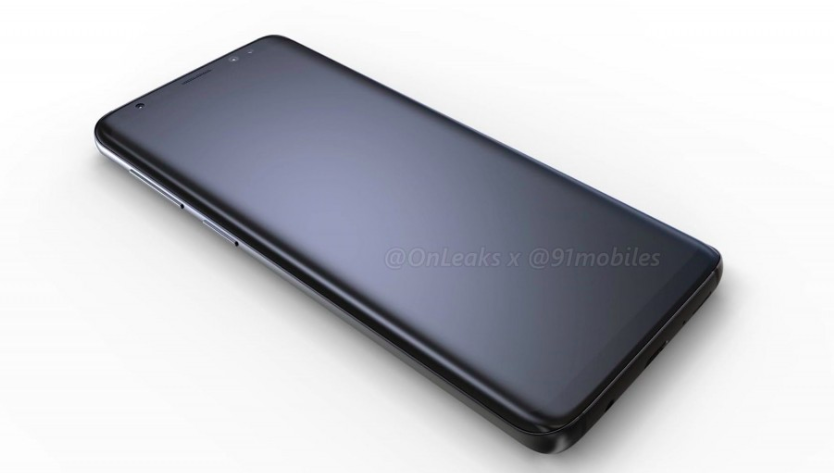
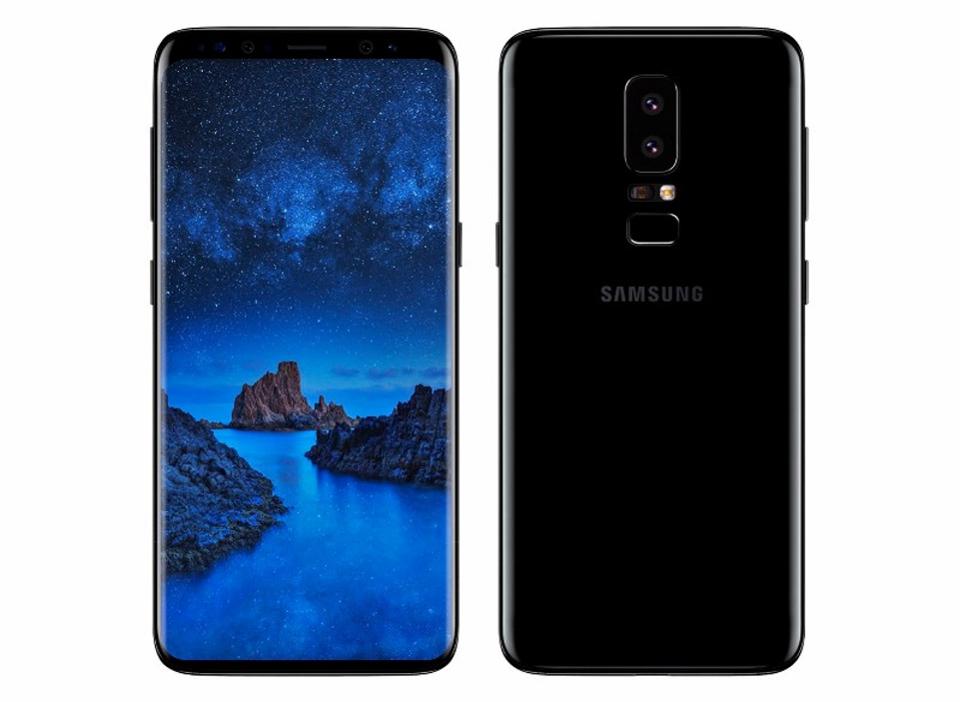
    A new render from a reputed online leaker suggests that the Galaxy S9 at least, won’t be that different from the Galaxy S8. The renders reveal shrunken top and bottom bezels, and a new placement for the fingerprint sensor. This will be a welcome change for all the Galaxy S9 aspirants as the Galaxy S8 and S8+ had an awkwardly placed fingerprint sensor. No matter how advanced the iris scanner will be on the Galaxy S9, a majority of users will choose to unlock their phone using the fingerprint sensor instead. However, Synaptics recently announced that it had started the mass manufacturing of its in-display fingerprint sensor with one of the top 5 OEMs. A lot of people have speculated that it could be Samsung and if this render is true, then the Galaxy S9+ could be the device which comes with this feature.
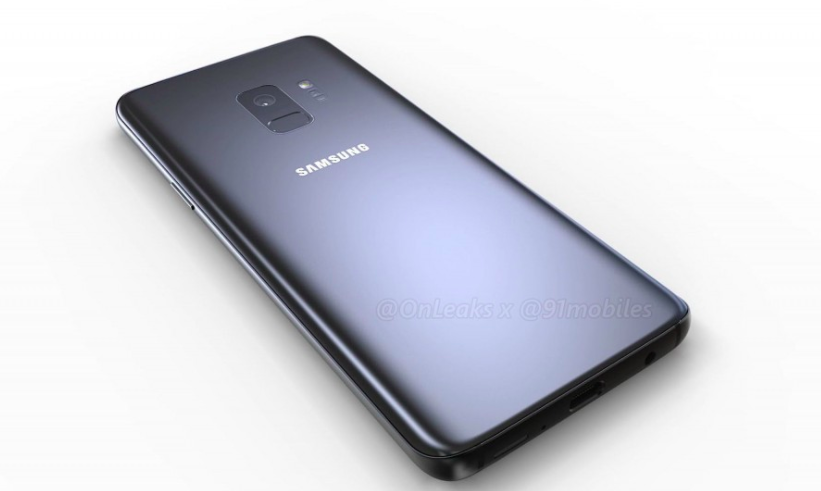
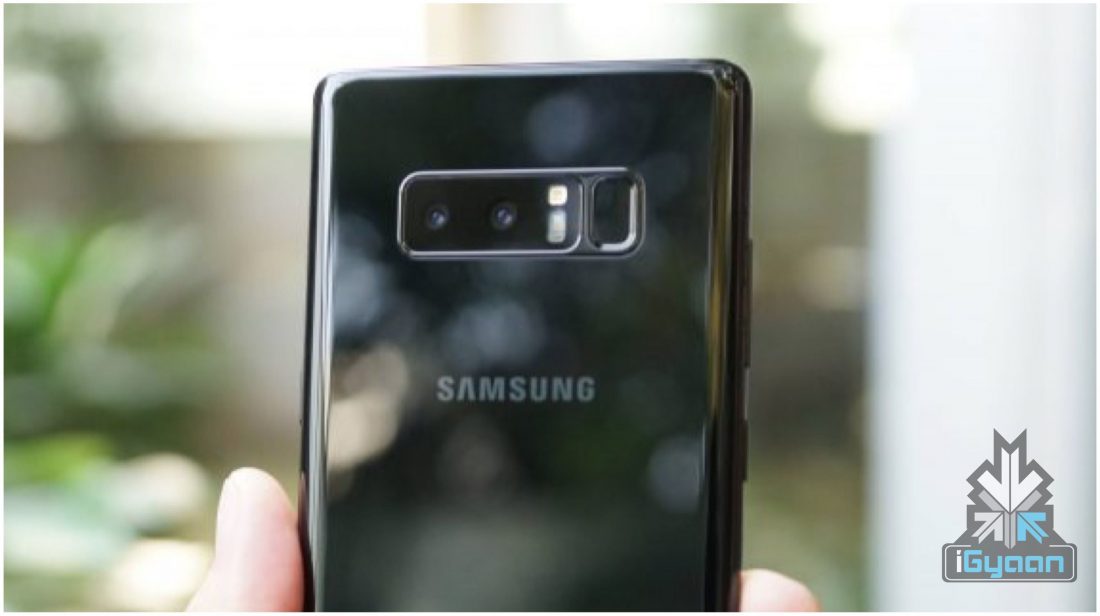
    Apart from that, there is a single camera at the back which, just like the Galaxy S8, might be an incremental upgrade over its predecessor. This detail falls into place with a previous report that suggested that the Galaxy S9 will have a single camera while the Galaxy S9+ will have a dual-camera setup at the back.
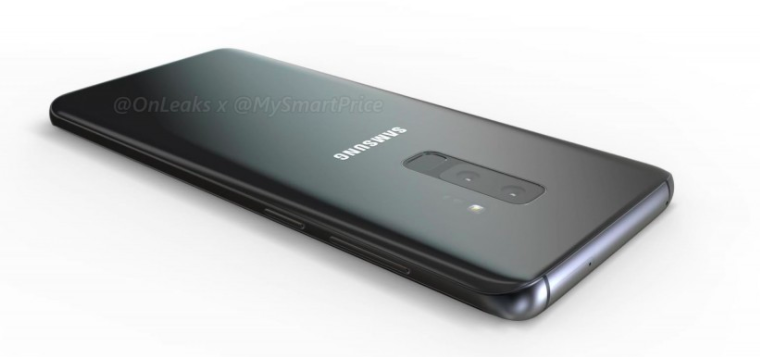
    The Galaxy S9 is expected to have the Qualcomm Snapdragon 845 chipset (for the US and South Korean market) and Exynos 9810 (for the rest of world) under the hood. The Galaxy S9 could be launched at a price similar to the Galaxy S8+ and the Galaxy S9+ could break the thousand dollar barrier and be priced similarly to the iPhone X.
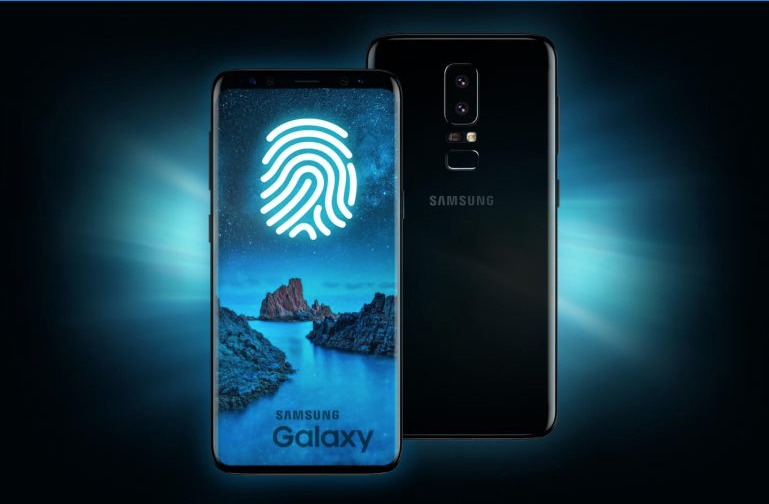
  • Samsung Galaxy S9 Will Be The First Phone Ever To Have An In-Display Fingerprint Sensor

    Samsung Galaxy S9 Will Be The First Phone Ever To Have An In-Display Fingerprint Sensor

    The Samsung Galaxy S9, the next iteration in Samsung’s flagship ‘S’ lineup is expected to be launched in late February at MWC or at a special event in March. While there have been multiple rumours and renders suggesting that the Galaxy S9 will have a rear-mounted fingerprint sensor, this new announcement puts everything else to rest. Fingerprint sensor manufacturer Synaptics just announced that it has begun mass production with a top-five original equipment manufacturer (OEM) to produce its new Clear ID FS9500 in-display fingerprint sensor.

    While the announcement did not specify the specific OEM, it could be Samsung since it is preparing to launch the Galaxy S9 and Galaxy S9+ early next year. Considering that the company mentioned top 5 OEMs, it could be Samsung, Apple and Chinese smartphone makers like Huawei, Xiaomi and OPPO. There are high chances that it isn’t Apple since it is working hard on making Face ID the next big thing and is preparing to make it better on the iPhone X and other upcoming iPhones. Introducing Touch ID under the display will make Face ID almost redundant.

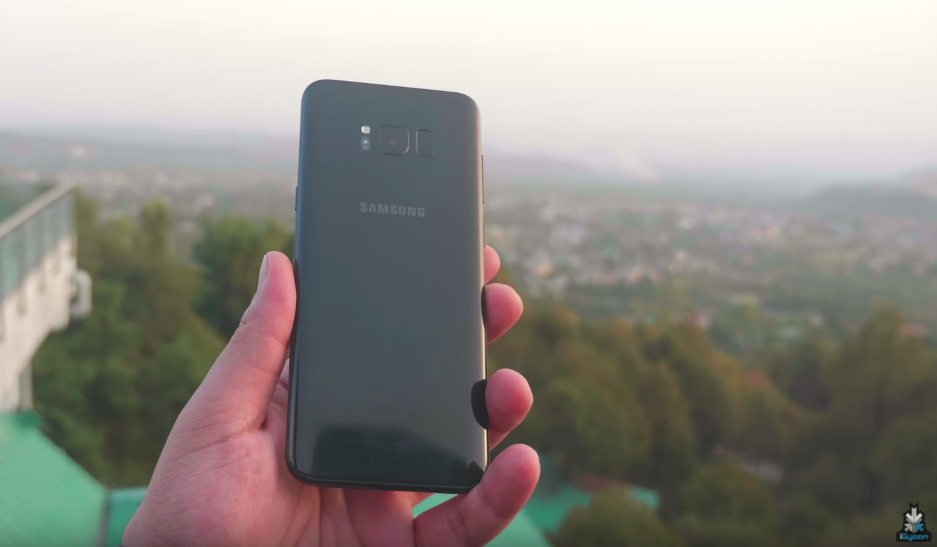
    Rear-mounted fingerprint sensor on the Galaxy S8

    Samsung and Synaptics have a history of working together dating back to 2005 with the Samsung B310. Synaptics is a known Samsung manufacturing partner, and when it announced the FS9100 optical fingerprint sensor, there were rumours that it could come to the Galaxy S8 however, that did not happen.

    Another giveaway is the mention of “infinity display” in the announcement statements. In the Synaptics press release, it mentions that the Clear ID fingerprint scanner was designed for phones with “infinity displays,” mentioning that term three times. Samsung uses the term “infinity display” to describe its bezel-less edge-to-edge display on the Galaxy S8, S8+ and Galaxy Note8.

    Rear-mounted fingerprint sensor on the Galaxy Note8

    After so many rumours, it appears that Samsung will finally be able to embed the fingerprint sensor in the display and beat the existing industry leaders to it.

  • Samsung Galaxy S9 Iris Scanner Will Work In The Dark

    Samsung Galaxy S9 Iris Scanner Will Work In The Dark

    The Samsung Galaxy S9 is expected to be a revision to the Popular Samsung Galaxy S8 which was launched in early 2017. We have seen several leaks so far, including one which mentions a record-breaking screen-to-body ratio. Samsung Galaxy S9 may be an incremental upgrade as far as design is concerned but, there might be a few monumental upgrades as far as hardware and software are concerned. A new report claims that Samsung will upgrade the iris scanner on Galaxy S9 to 3MP from the 2Mp scanner found on the Galaxy S8 and Galaxy Note8.

    An industry source familiar with the matter told the publication that the iris scanner in the Galaxy S9 will have an improved camera lens and functions to help it better recognise users’ eyes. This move, as much as it is an upgrade, can be attributed to the rise in popularity of Apple’s Face ID and Huawei’s unveiling of its own facial recognition technology.

    The source said:

    The iris lens will be improved to 3-megapixels from 2-megapixels of Galaxy S8 and Galaxy Note 8 to capture clearer images. The scanner will better recognize users’ irises even when they wear eyeglasses, move their eyeballs or are in a too dark or too light environment.

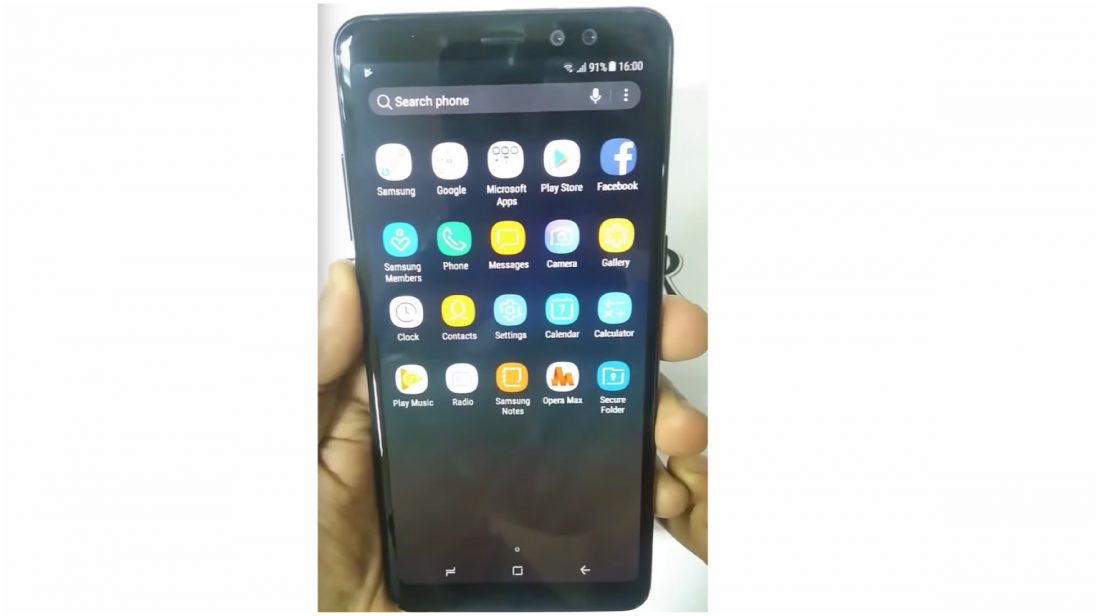
    Samsung is expected to introduce the iris scanning feature in its upcoming mid-range phones as well, such as the Galaxy A8+. A leak revealed that the Galaxy S8+ will have an infinity display, which was exclusive to Samsung’s flagship phones so far. Introduction of iris scanner in the Galaxy A series might not be far-fetched.

    Samsung Galaxy S8+

    “Iris scanner is the safest biometric authentication (among iris, fingerprint and face recognition) and we will continue to improve the system for upcoming smartphones for safer banking transactions,” a Samsung spokesperson told the publication, without making any reference to the Galaxy S9.

    The Samsung Galaxy S9 and Galaxy S9+ are expected to be launched at either MWC in February or at a separate event in March (similar to the Galaxy S8 and S8+).

  • Samsung Galaxy S9 To Launch With The Same Display As The S8 In A Smaller Size Shell

    Samsung Galaxy S9 To Launch With The Same Display As The S8 In A Smaller Size Shell

    The Samsung Galaxy S8 is the most successful smartphone of 2017. Rumours and leaks pertaining to the upcoming Samsung Galaxy S9 and its bigger sibling, the Galaxy S9+ have just started to pick up their pace. A new report from a Dutch outlet has revealed that the Samsung Galaxy S9 phones will have the same screen size as its predecessors but, in a smaller body.

    This report corroborates a previous leak that suggested that the upcoming Galaxy S9 devices will have a whopping 90% screen-to-body ratio. However, there have been rumours that the devices will sport a 21:9 aspect ratio display which, this new report quashes. It claims that the S9 and S9+ will have the same 18.5:9 aspect ratio with a smaller footprint.

    This claim seems legitimate as the two new devices are expected to be an incremental upgrade over its predecessors rather than drastic new phones with a host of new things to offer. The Samsung Galaxy S9 and Galaxy S9+ are expected to have a 5.8-inch and 6.2-inch Super AMOLED displays, respectively.

    It has been reported earlier that the upcoming flagship phones from Samsung might be unveiled at CES 2018. However, Samsung came out and said that it is ‘unlikely‘ to happen, which means that the S9 and S9+ may be unveiled either at MWC in February or at a separate event in March, just like the Samsung Galaxy S8 and S8+.


  • New Leak Reveals The Fingerprint Sensor On Galaxy S9 Will Have A Better Placement

    New Leak Reveals The Fingerprint Sensor On Galaxy S9 Will Have A Better Placement

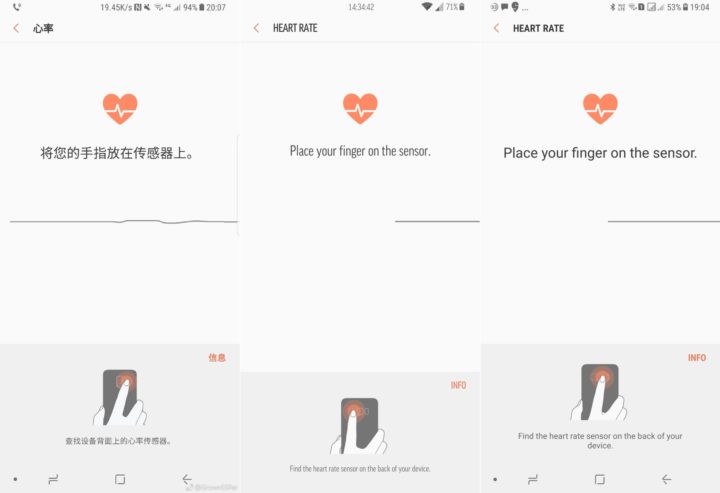
    While Samsung has had a financially successful year thanks to its hugely popular Galaxy S8, S8+ and Note8, the company has had to deal with a very consistent criticism. All the three flagship phones launched by Samsung in 2017 had an awkwardly placed fingerprint sensor which baffled critics and consumers alike. However, a new leak reveals that Samsung will change the position of the fingerprint sensor on the Samsung Galaxy S9, at least.

    The image was leaked on the Chinese social media website, Weibo. It is a screenshot of the demonstration of the heart rate sensor in S Health app. The screenshot also reveals a single camera setup on the supposed Galaxy S9. While a few publications believe it could be the Galaxy S9 Mini, previous reports have suggested that Galaxy S9 will have a single lens camera while the Galaxy S9+ will have a dual-camera setup at the back.

    From L to R – S Health app on Galaxy S9, Galaxy S8 and Galaxy Note8 

    The positive sign here is that Samsung has listened to the multiple consumer complaints and tried to rectify it. While the authenticity of the leak can be questioned, with the launch of the Galaxy S9 just over two months away, it might as well be the Galaxy S9 which means the company will have one less criticism to face, if it nails the placement of the fingerprint sensor.

    This leak also corroborates with a previous report that suggested that the fingerprint sensor will be moved below the camera. Although that leak showed a dual-camera setup, it is sensible to believe that Samsung will change the position of the fingerprint sensor on both its new devices.

    The Samsung Galaxy S9 will be a revision to the popular Galaxy S8, with the new Snapdragon 845 chipset (in the US and South Korea) or the Exynos 9810 (rest of the world). While the screen size is expected to be the same on the Galaxy S9 and its bigger sibling, the Galaxy S9+, the bezels will be smaller which means the footprint of the phone will decrease while maintaining the same screen real estate.

    A report claims that the Galaxy S9 and Galaxy S9+ will have a record-breaking 90% screen-to-body ratio!

  • Samsung Galaxy S9 Will Not Launch At CES 2018

    Samsung Galaxy S9 Will Not Launch At CES 2018

    Samsung Galaxy S9 and S9+ have long been rumoured to be unveiled at CES 2018 in late-January of 2018. All these rumours might amount to nothing as Samsung has said that unveiling the new flagship phones at CES seems ‘unlikely’. This also means that instead of the Galaxy S9 and S9+, the South Korean tech giant might unveil its foldable Galaxy X at CES.

    That leaves two separate occasions for the Galaxy S9 and S9+ might be unveiled. It could either be in February during the Mobile World Congress (like the Galaxy S5, S6, and S7) or at a dedicated event in March, like the Galaxy S8 and S8+.

    There have been multiple reports chronicling the specifications and new features of the Galaxy S9 and Galaxy S9 Plus.

    The display size of both the phones will be identical to their 2017 counterparts with the Galaxy S9 sporting a 5.8-inch Super AMOLED display while the Galaxy S9+ will have a 6.2-inch display. The bezels will be thinner than the previous generation devices with the infamous curved edges and “Infinity Display.” It is also reported that the Galaxy S9 series will have a 90% screen-to-body ratio.

    Unlike 2017, where there were barely any differentiating factors between the Galaxy S8 and Galaxy S8+, Samsung is planning something different for 2018. It appears that the Galaxy S9 will have a single camera at the back while the Galaxy S9+ will have a dual camera setup at the back.

    Samsung is developing a new software to make facial recognition on the Galaxy S9 faster than the Galaxy S8. However, Samsung is planning to introduce a host of software tweaks to reduce the delay in recognising the face and scanning the iris of users. Contrary to popular belief and some reports, the Galaxy S9 and S9+ will not have a screen-embedded fingerprint sensor.

    Recently, the Snapdragon 845 chipset was unveiled and the Galaxy S9 series will be the first of the many smartphones which will be powered by the new flagship chipset.

    As far as pricing is concerned, it won’t be a surprise if the Galaxy S9+ surpasses the Galaxy Note8 price and touch the thousand dollar mark, similar to the iPhone X. The Samsung Galaxy S9 is expected to be priced similarly to the Galaxy S8+.
  • Samsung Galaxy S9 Will Retail With The DeX Pad

    Samsung Galaxy S9 Will Retail With The DeX Pad

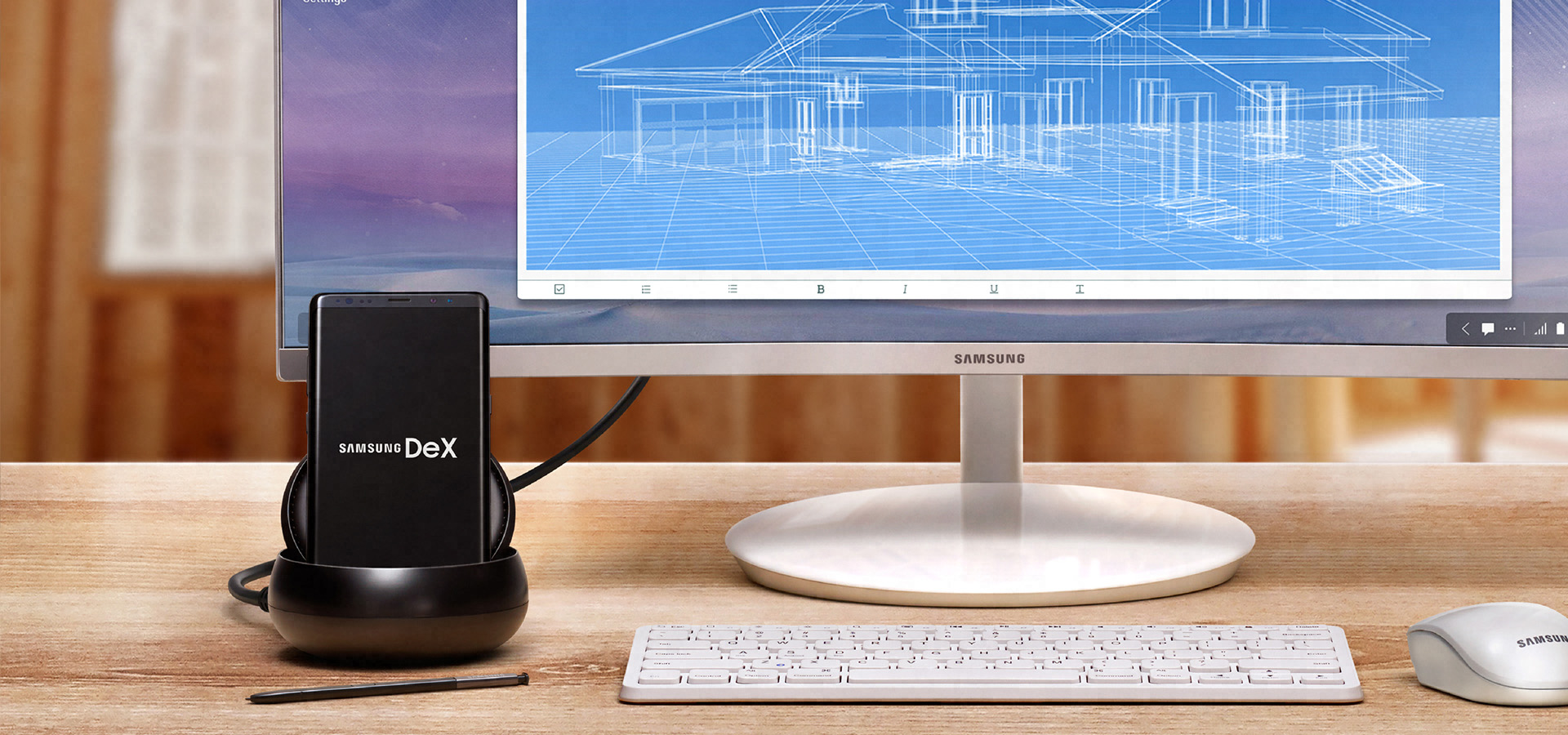
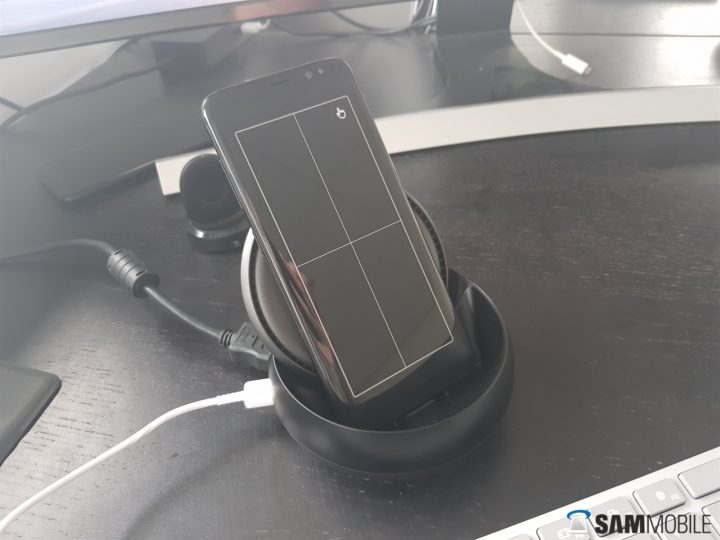
    It appears that along with the Galaxy S9 and S9+, Samsung is also working on a new version of its DeX dock. According to a recent report, it won’t be a dock this time around, and just like the Samsung wireless charger, it will be a pad. Also, it will retail along with the Samsung Galaxy S9 and Galaxy S9+ which might make it a great deal.

    Samsung Galaxy S9 renders

    The report claims that with Android 8.0 Oreo, the display of the connected phone can be used as a mouse, and that it will also get the option of being used as a keyboard. This feature will negate the need of carrying a mouse and keyboard to use the DeX pad, which is currently the case with the DeX dock.

    Image courtesy – Sammobile

    As much as the DeX pad or dock is an interesting accessory, it is, at the end of the day an accessory. Much like the Bixby button, the Dex is something which will never replace a real PC users machine.

    It will also be interesting to see if this deal will be a factor in the price of the Galaxy S9 and S9+. The way smartphones are priced these days and the increasing price of every new generation of smartphones, the Galaxy S9 and S9+ may reach the thousand dollar barrier just like the iPhone X.


  • Samsung Galaxy S9 Might Have A Feature The iPhone X Should Have Had

    Samsung Galaxy S9 Might Have A Feature The iPhone X Should Have Had

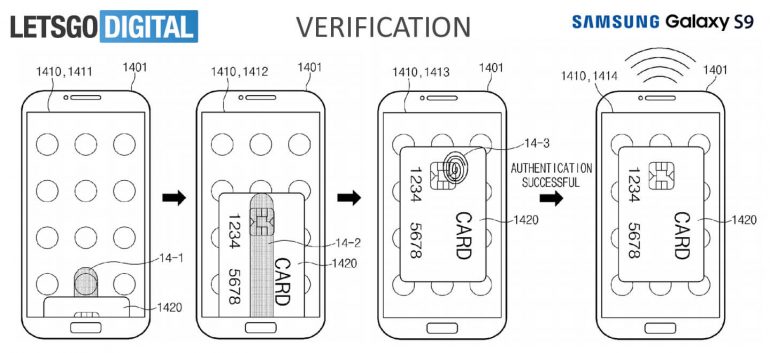
    Samsung Galaxy S9, despite many reports, might have a screen-embedded fingerprint sensor.

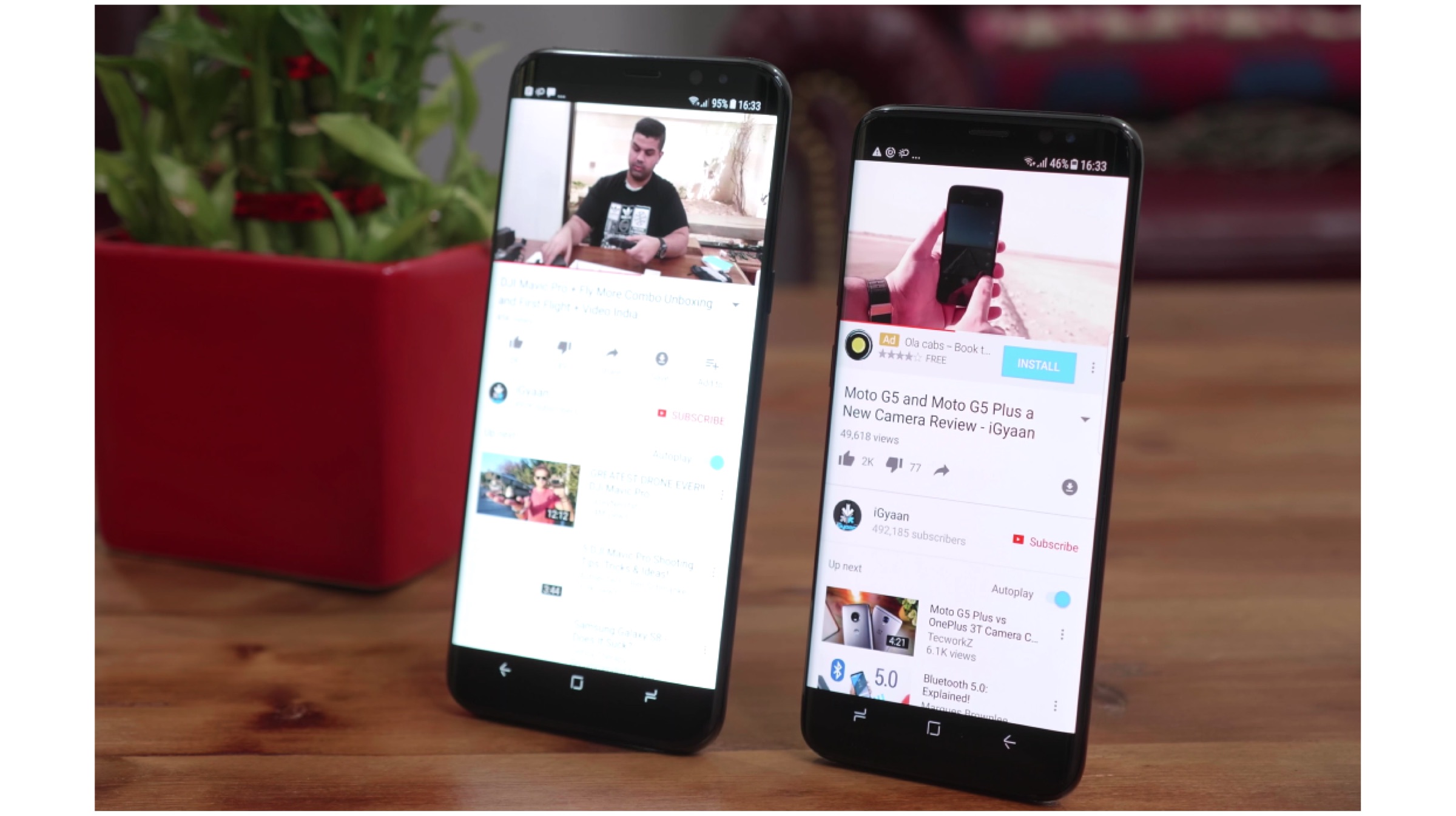
    The Apple iPhone X became available to the public in November, just a few months before the launch of the Galaxy S9. One of the most talked about features of the iPhone X has to be Face ID and the lack of a fingerprint sensor. Similarly, the awkward placement of the fingerprint sensor on the Galaxy S8/S8+ was also a talking point for many and iGyaan pointed it out as well in our full review of the Galaxy S8/S8+.

    It appears that Samsung will fix that by embedding the fingerprint sensor inside the display rather than positioning it in the middle at the back of the phone. The patent was first reported by LetsGoDigital, which notes that the new technology is likely to appear on the Galaxy S9.

    The international patent was submitted in April 2017, while the Korean patent was filed during 2016. This shows that a screen embedded fingerprint sensor has been a long standing aim of the Samsung design team. This looks like the ideal place for the fingerprint sensor instead at the back or completely moving to another way of biometrics like Face ID.

    The Samsung Galaxy S9 is expected to be unveiled at CES 2018. As we have reported, the Galaxy S9 will be the first smartphone to have the Qualcomm Snapdragon 845 chipset, as per a deal with Qualcomm. Other than that, the new smartphone is expected to be an incremental upgrade over the Galaxy S8 although, a screen embedded fingerprint sensor will mean that the Galaxy S9 will grab all the headlines at the time of its launch and might push Galaxy S8 users to upgrade to the Galaxy S9.

  • Another Flagship To Launch Along With The Galaxy S9

    Another Flagship To Launch Along With The Galaxy S9

    As we approach the end of 2017, the focus has already shifted to what we can expect from the 2018 flagship phones. A new report suggests that along with the Samsung Galaxy S9, the LG G7 will also be unveiled at CES 2018.

    2017 has seen the Samsung Galaxy S8, Galaxy Note8 and the iPhone X steal the limelight from the likes of the LG V30. That, however, has been the case for a few years now. The LG flagship phones make the list of every tech critics’ ‘Top’ list but, never seem to capture the consumer’s imagination like its rivals.

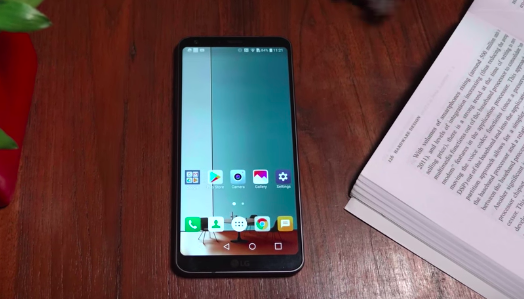
    LG G6

    2018 by the looks of it, won’t be any different. The LG G7 is expected to be launched with the Qualcomm Snapdragon 835 since Samsung will most probably have exclusive access to the Snapdragon 845 chipset for the first few months of 2017. Something similar happened in 2017 when LG G6 launched close to the Samsung Galaxy S8 and had to make do with the Snapdragon 821 chipset.

    Samsung Galaxy S9 Renders

    The LG G7 is also rumoured to feature an OLED display, with the fingerprint sensor to be placed under the screen rather than the back. The Samsung Galaxy S9, meanwhile, will have a regular rear-facing fingerprint sensor but, reports suggest that it will be positioned in a better location.

  • Samsung Galaxy S9 May Have A Record Breaking 90% Screen-To-Body Ratio

    Samsung Galaxy S9 May Have A Record Breaking 90% Screen-To-Body Ratio

    Bezel-less displays are the talk of the town. 2017 has been the year of shrinking bezels and it appears that 2018 will take this trend a step further. A new report suggests that the Samsung Galaxy S9 will have a whopping 90% screen-to-body ratio.

    To assume that the Galaxy S9 will have smaller bezels than the Galaxy S8 is not wrong. As an incremental upgrade, it is bound have even more shrunken down bezels but, hitting the 90% mark will certainly set the record straight and the precedence of the best screen-to-body ratio on a phone. All of this will happen fairly early on in the year as well, since the Samsung Galaxy S9 and Galaxy S9+ are expected to be launched in March.

    According to the information we have received, the bottom chin seen on the Galaxy S8 will be next to non-existent on the Galaxy S9, and the top bezel will be narrower than the S8’s bottom bezel.

    With all the high profile launches for 2017 done and dusted, it makes sense that we start receiving “exclusive” and “concrete” information about the 2018 flagship phones and there are a few other things that we know about the Galaxy S9 and Galaxy S9+ so far.

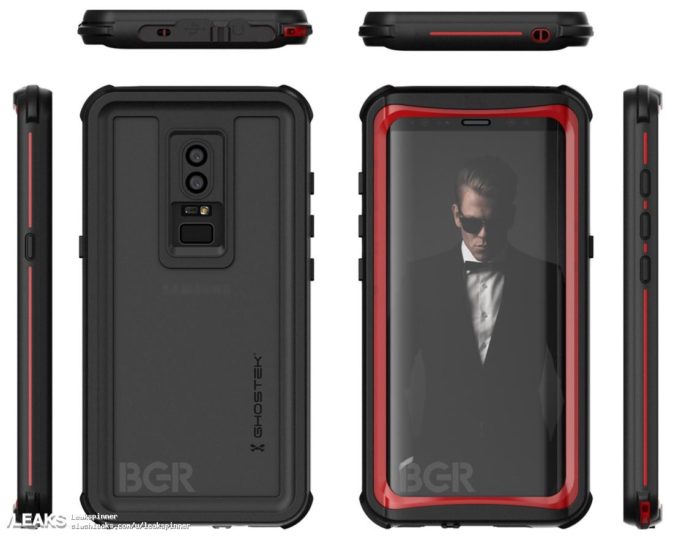
    Galaxy S9 Design Leaked In Case Renders

    The Galaxy S9 series will be nearly identical to their predecessors and will only include some hardware upgrades. The Galaxy S9 is reportedly codenamed Star 1 and will bear the model number SM-G960, while the Galaxy S9+ will be codenamed Star 2 and will have the model number SM-G965.

    The display size of both the phones will be identical to their 2017 counterparts with the Galaxy S9 sporting a 5.8-inch Super AMOLED display while the Galaxy S9+ will have a 6.2-inch display. The bezels will be thinner than the previous generation devices with the infamous curved edges and “Infinity Display.”

    Unlike 2017, where there were barely any differentiating factors between the Galaxy S8 and Galaxy S8+, Samsung is planning something different for 2018. It appears that the Galaxy S9 will have a single camera at the back while the Galaxy S9+ will have a dual camera setup at the back. This will give consumers extra incentive to spend more money on the Galaxy S9+.

    In terms of pricing, it won’t be a surprise if the Galaxy S9+ surpasses the Galaxy Note8 price and touch the thousand dollar mark, similar to the iPhone X.

  • Samsung Galaxy S9 And Galaxy S9+ Could Debut At CES 2018

    Samsung Galaxy S9 And Galaxy S9+ Could Debut At CES 2018

    If you like tech and follow the news consistently, you must have a read a few Galaxy S9 leaks here and there. Most of them point towards a CES launch for the Galaxy S9 and its bigger sibling. A new report has also claimed that the Galaxy S9 and Galaxy S9+ will be unveiled during CES in February 2018 which will be held in Barcelona, Spain.

    It further claims that even though the two flagship phones will make their debut at CES, 2018, there will be a launch event in March where the two phones will be officially launched and all the details of the two phones will be made official. Big tech companies like Samsung, LG and more, use CES to showcase its new products and innovative technologies that companies are currently working on, however, the marquee showcases are usually of the next big flagship phone of the year since CES is held fairly early on in the year.

    The Galaxy S9 and S9+ To Have Similar All-Glass Design

    The Galaxy S9 series will be nearly identical to their predecessors and will only include some hardware upgrades. The Galaxy S9 is reportedly codenamed Star 1 and will bear the model number SM-G960, while the Galaxy S9+ will be codenamed Star 2 and will have the model number SM-G965.

    The display size of both the phones will be identical to their 2017 counterparts with the Galaxy S9 sporting a 5.8-inch Super AMOLED display while the Galaxy S9+ will have a 6.2-inch display. The bezels will be thinner than the previous generation devices with the infamous curved edges and “Infinity Display.”

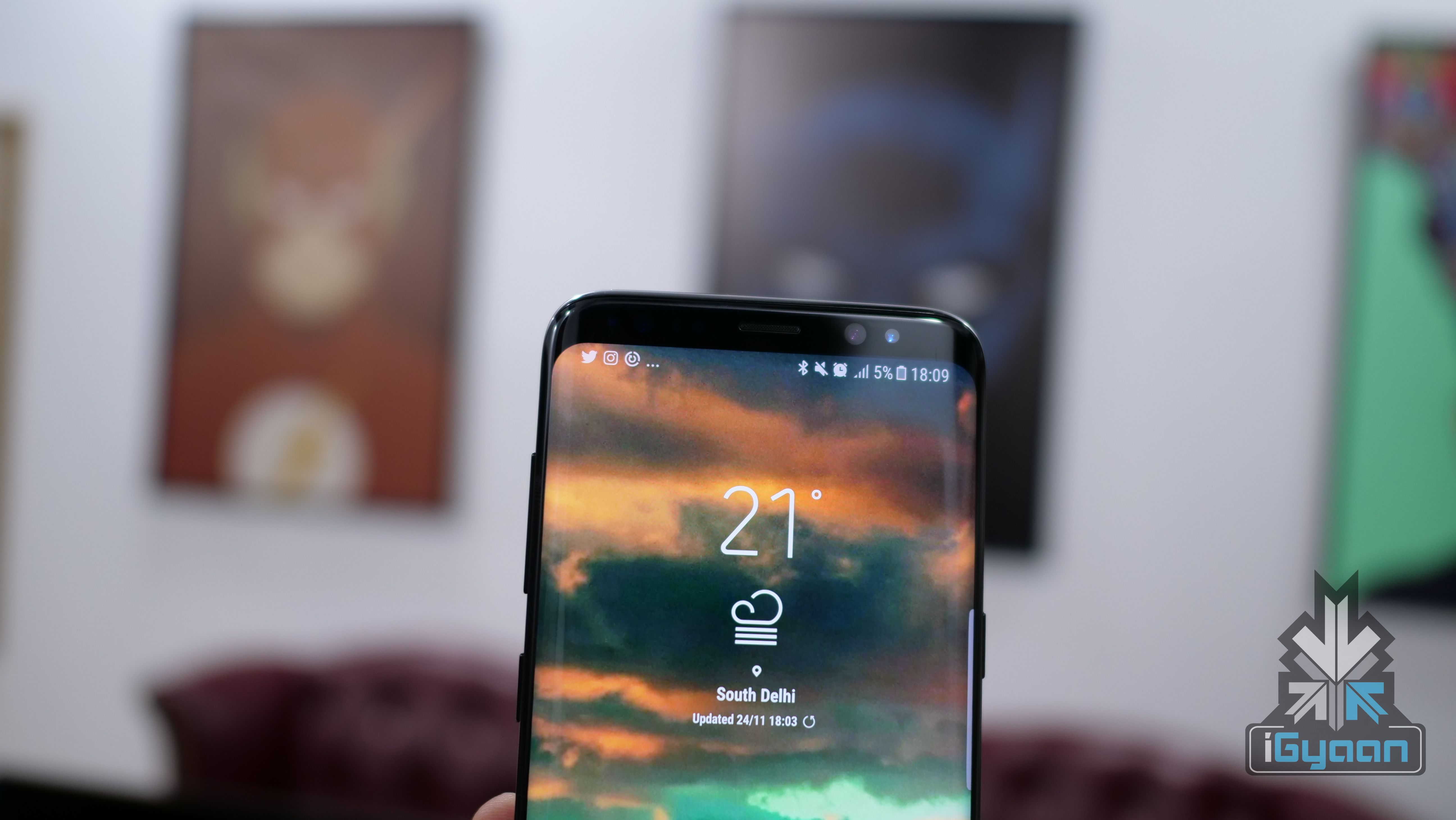
    Galaxy S8’s infinity Display

    Under the hood, both the devices are expected to have the Qualcomm Snapdragon 845 chipset for the US variant and Exynos 9810 for the rest of countries. While the Galaxy S9 will have 4GB of RAM, the bigger variant will have 6GB of RAM. The 2018 flagship phones will also have AKG stereo speakers and will come bundled with AKG earphones as well, similar to the Galaxy S8/S8+.

    You may also like –  Samsung Galaxy S9 To Take On iPhone X’s Face ID

    Unlike 2017, where there were barely any differentiating factors between the Galaxy S8 and Galaxy S8+, Samsung is planning something different for 2018. It appears that the Galaxy S9 will have a single camera at the back while the Galaxy S9+ will have a dual camera setup at the back. This will give consumers extra incentive to spend more money on the Galaxy S9+.

    In terms of pricing, it won’t be a surprise if the Galaxy S9+ surpasses the Galaxy Note8 price and touch the thousand dollar mark, similar to the iPhone X.

  • Samsung Galaxy S9 To Take On iPhone X’s Face ID

    Samsung Galaxy S9 To Take On iPhone X’s Face ID

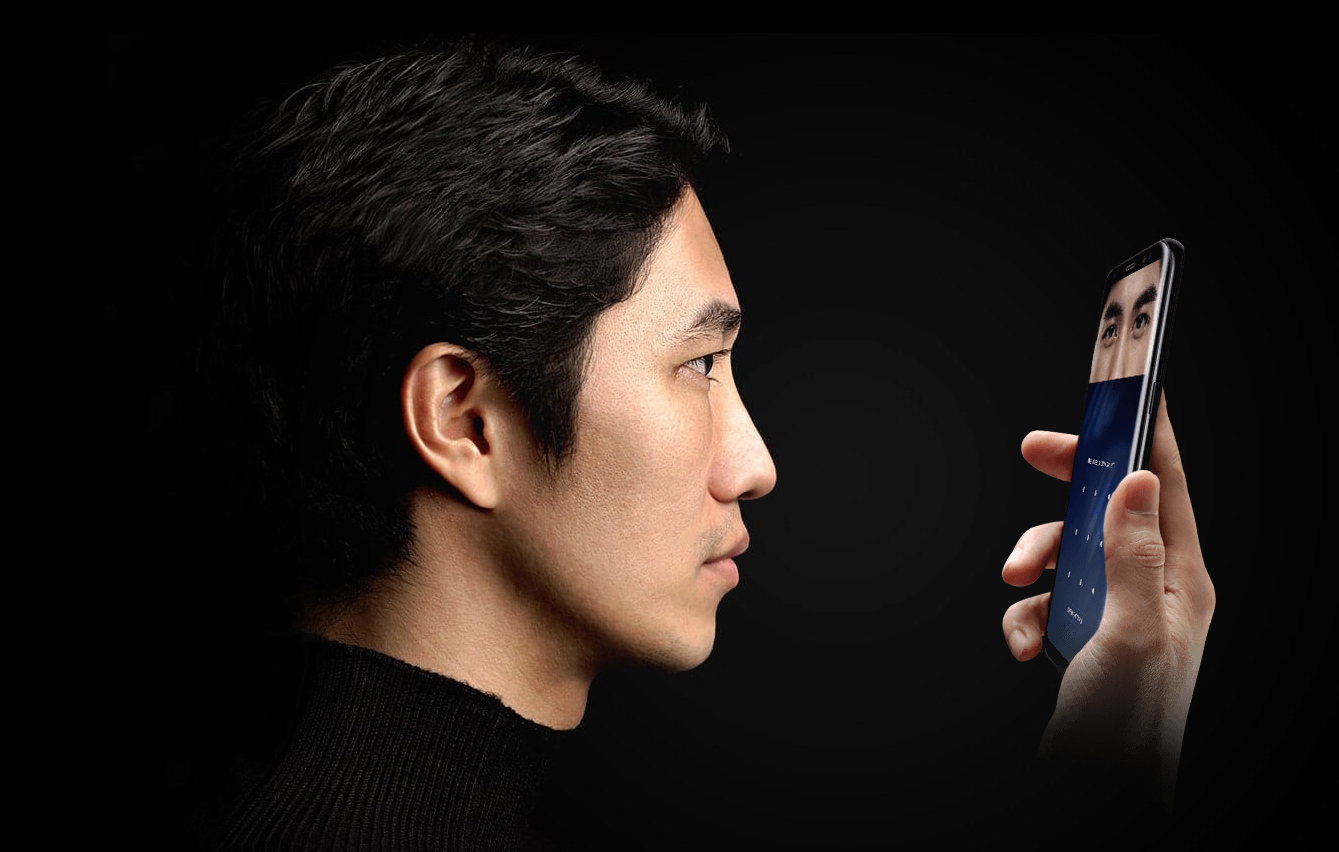
    As 2017 comes to an end barely any exciting smartphone launches left to look forward to, the Galaxy S9 is the next phone everyone wants to talk about. It appears that Samsung has plans of taking on Apple in more than just advertisements. A new report suggests that the Galaxy S9 will have a new and improved iris scanner to compete with the iPhone X’s Face ID feature.

    Samsung is developing a new software to make facial recognition on the Galaxy S9 faster than the Galaxy S8. It appears that Samsung is not favouring any hardware upgrade, and the Galaxy S9 will basically be an incremental upgrade as far as specifications are concerned. However, Samsung is planning to introduce a host of software tweaks to reduce the delay in recognising the face and scanning the iris of users.

    This means that Samsung will avoid going for a “notch” at the top of the phone since it will rely mostly on the software to do its job rather than stuffing a host of sensors along with the front facing camera.

    The rumours of what the Samsung Galaxy S9 will look like and what it will offer have increased ever since the iPhone X was launched. A recent benchmark listing reveals that the upcoming flagship phone will most likely be powered by the new Exynos 9810 chipset, which was announced earlier in November. The phone scores 2680 on the single-core Geekbench 4 test and a 7787 on the multi-core test. While the scores are impressive, the smartphone doesn’t even come close to iPhone X‘s single-core score of 4197 and multi-core score of 10051.

    The Galaxy S9 will have the same screen size as the Galaxy S8 and similarly the Galaxy S9+ will have the same screen size as the Galaxy S8+. What will be different is the size of the bezels. The top and bottom bezels will be thinner than the ones found on the 2017 flagship phones.

    There were rumours that the Galaxy S9 will have a screen-embedded fingerprint sensor but, a recent report claims that Samsung will introduce this technology only in the Galaxy Note9 in late 2018. This means that the fingerprint sensor on the Galaxy S9 will remain at the back of the phone but, might have a new position.


  • Samsung Galaxy S9 Specifications Leaked In Benchmark Listings

    Samsung Galaxy S9 Specifications Leaked In Benchmark Listings

    Samsung Galaxy S9 will be the first high profile smartphone of 2018 with its launch expected to take place in March. While there isn’t much known about the device other than a few obvious aspects, a new benchmark listing has provided some information regarding the device’s performance.

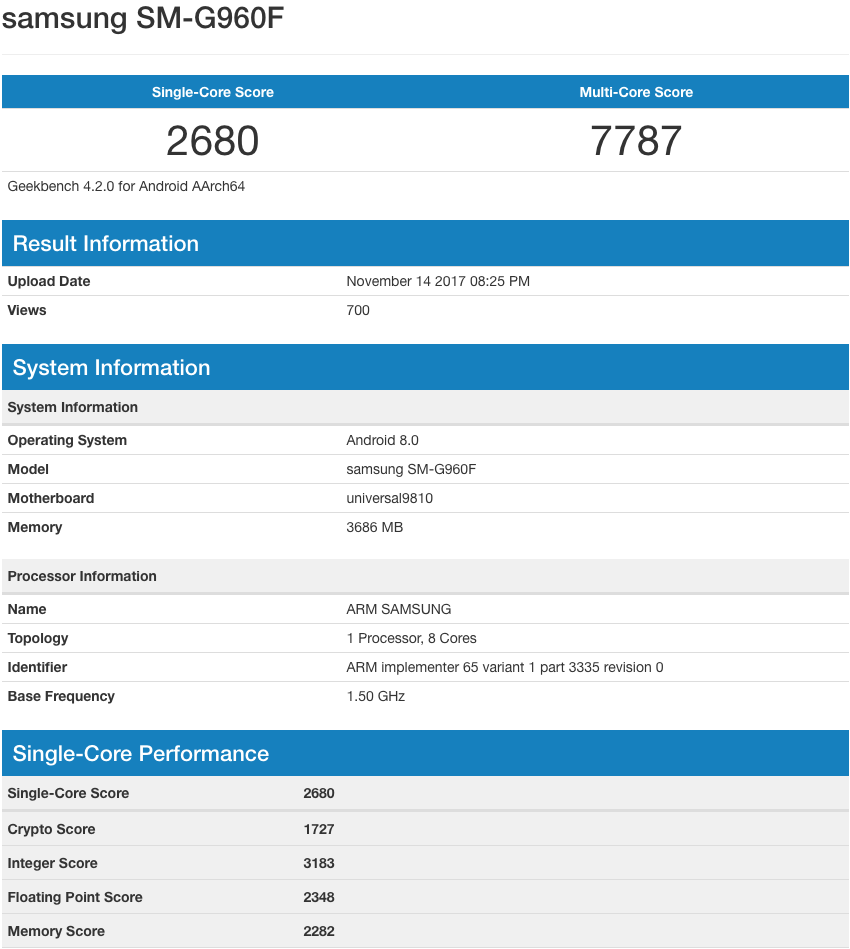
    New benchmark results for a Samsung smartphone with the model number SM-G960F – widely expected to the global version of the Galaxy S9 – have appeared on the Geekbench website. The smartphone will most likely be powered by the new Exynos 9810 chipset, which was announced earlier in November. The phone scores 2680 on the single-core Geekbench 4 test and a 7787 on the multi-core test. While the scores are impressive, the smartphone doesn’t even come close to iPhone X‘s single-core score of 4197 and multi-core score of 10051.

    The Galaxy S9 will have the same screen size as the Galaxy S8 and similarly the Galaxy S9+ will have the same screen size as the Galaxy S8+. What will be different is the size of the bezels. The top and bottom bezels will be thinner than the ones found on the 2017 flagship phones. There were rumours that the Galaxy S9 will have a screen-embedded fingerprint sensor but, a recent report claims that Samsung will introduce this technology only in the Galaxy Note9 in late 2018. This means that the fingerprint sensor on the Galaxy S9 will remain at the back of the phone but, might have a new position.

    Samsung, in all likelihood, will also revive the ‘Mini’ lineup by launching a Samsung Galaxy S9 Mini with a screen size under the 5-inch mark and same specifications.


  • Samsung Galaxy S9 Mini To Launch Alongside The Galaxy S9

    Samsung Galaxy S9 Mini To Launch Alongside The Galaxy S9

    Samsung Galaxy S9 and Galaxy S9+ are expected to be launched in March 2018. New reports suggest that the two new flagship phones will be accompanied by a smaller sibling, the Galaxy S9 Mini.

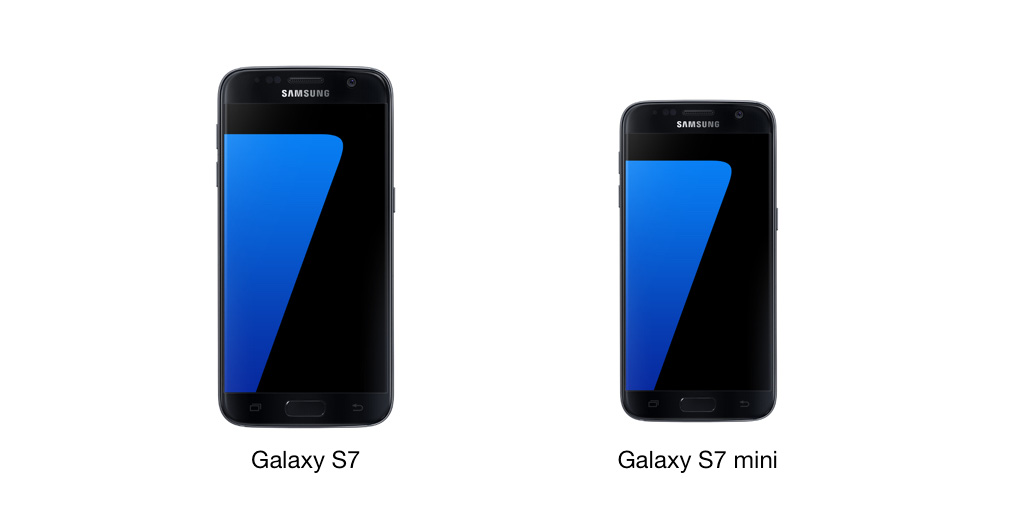
    When the Galaxy S8 and S8+ were launched earlier this year, and ever since their launch there were rumours of the of  the Galaxy S8 Mini. It was expected that Samsung will continue the ‘Mini’ series for its flagship phones, similar to what it did with the Galaxy S7 and Galaxy S7 Mini.

    There are no other details of the Galaxy S9 Mini available right now other than the display size. It is rumoured that the device will have a screen under 5-inch in size, with curved edges.

    If Samsung’s previous decisions for the ‘Mini’ variants is anything to go by, then the Galaxy S9 Mini will basically be the Galaxy S9 but, with a smaller screen size. The Galaxy S9 is expected to be the first smartphone to have the Qualcomm Snapdragon 845 chipset thanks to the company’s deal with Qualcomm. Hence, it is expected that the Galaxy S9 Mini will also have the Qualcomm Snapdragon 845 chipset.

    The bigger siblings, Galaxy S9 and Galaxy S9+ are expected to be launched in March 2018 and Samsung may offer the Galaxy S9 Mini as well for people who prefer phones with a smaller form factor.

  • Samsung Galaxy S9 May Have A 1000fps Camera

    Samsung Galaxy S9 May Have A 1000fps Camera

    The South Korean tech giant, Samsung, has built a camera that clicks a thousand images in a second. Samsung has completed the test phase and may move into mass production in November. With the Samsung Galaxy S9 expected to launch in Q2 of 2018, the next year’s flagship might just feature this camera.

    Samsung is working on a “three-layered image sensor.” In a normal setting, there is a camera sensor and a logic board that is responsible for the process of taking pictures. The logic board takes the image passed through the sensor, does some calculations, and turns what the human eye sees into data to be stored on the phone. Samsung is adding a DRAM chip into that equation to allow the camera to capture video at 1000 fps. If Samsung delivers this, it will join Sony as the slowest slow-motion camera right now.

    Sony was the first company to commercialize the ‘three-layered image sensor’ with the XZ Premium. The Sony XZ Premium features a camera that records 720p videos at 960fps. It is reported that Samsung’s implementation of the same costs way more than Sony’s. Samsung decided to go with a different method in order to avoid paying a royalty fee to Sony for using their method.

    The manufacturing process of a three-layered chip can be tedious and costly. If any of the three layers are bad, the whole chip will have to be tossed, which can be quite costly. Samsung’s process even though costlier, has its positives. The South Korean tech giant is a conglomerate, and therefore, can get its hands on the chip it needs internally. Whether this process yields in better performance than Sony is yet to be seen. Samsung uses Sony’s sensors in a lot of its flagship devices, especially for the US market. If the 1000fps camera makes its way to the Galaxy S9, we may see a high-performing Sony sensor for the American market and an in-house sensor for the South Korean market.

iGyaan Network
Privacy Overview

This website uses cookies so that we can provide you with the best user experience possible. Cookie information is stored in your browser and performs functions such as recognising you when you return to our website and helping our team to understand which sections of the website you find most interesting and useful.