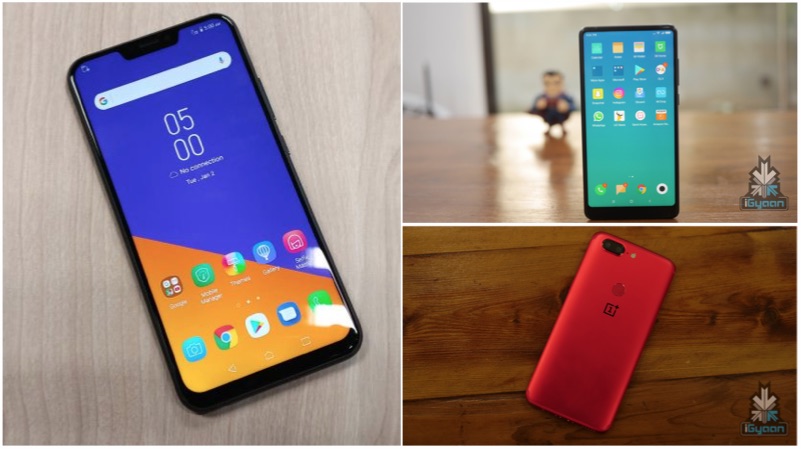
Asus has launched its new flagship smartphone, the Asus Zenfone 5Z at MWC 2018. While at first glance it might look like an iPhone X knockoff, it has a lot more going on for it. In fact, the smartphone was launched along with three other Zenfone devices. The most interesting aspect of the Asus Zenfone 5Z is that it runs on the Snapdragon 845 and is priced at EUR 479 (Rs. 38,000 approx.).
Before MWC 2018 began, many expected Samsung to rule the Snapdragon 845 roost with its Galaxy S9 and S9+. However, smartphone makers like Sony and now Asus, have launched devices powered by the Snapdragon 845 chipset as well. The Asus Zenfone 5Z is the latest one before Xiaomi launches the Mi Mix 2S in late-March.
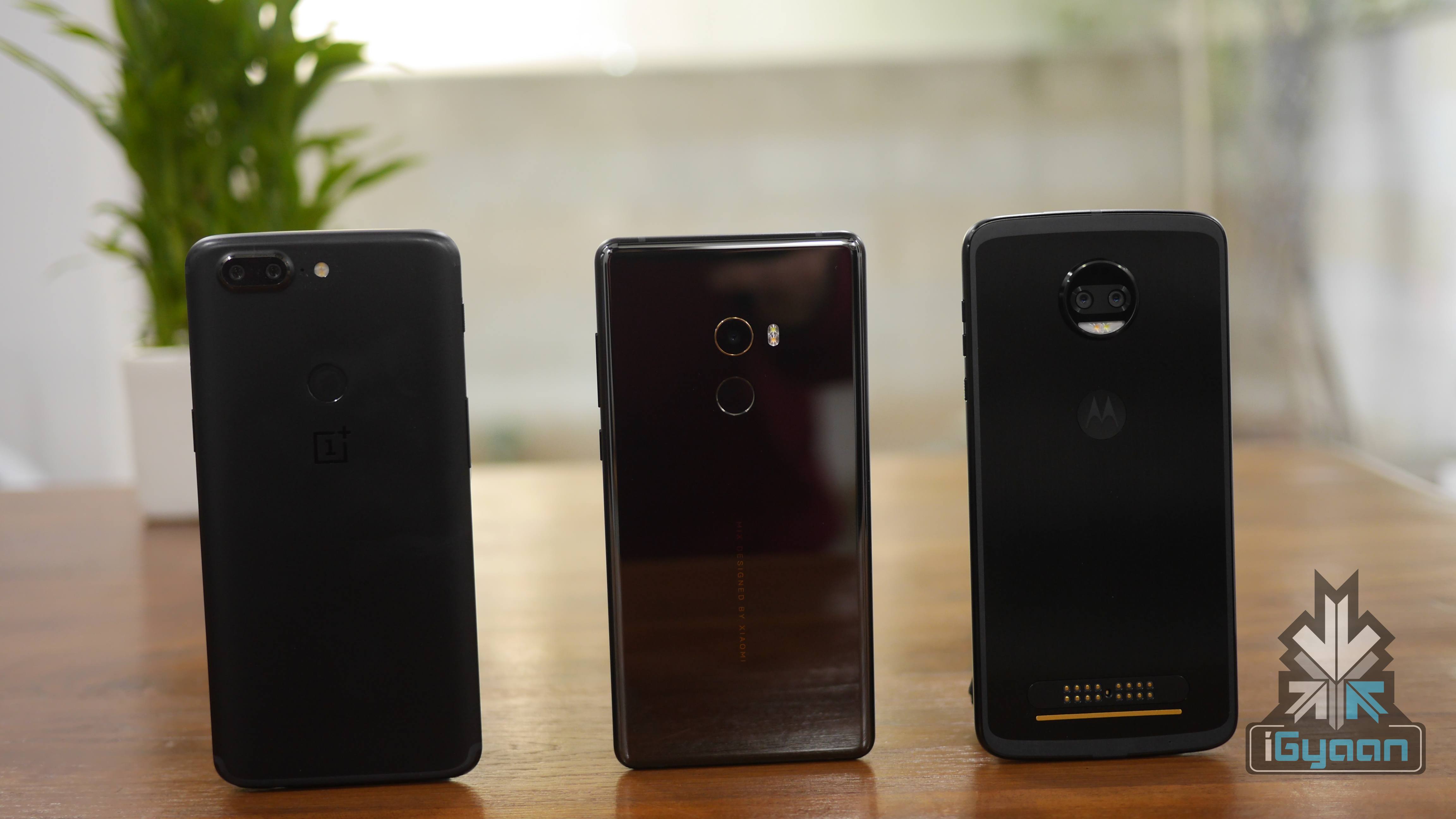
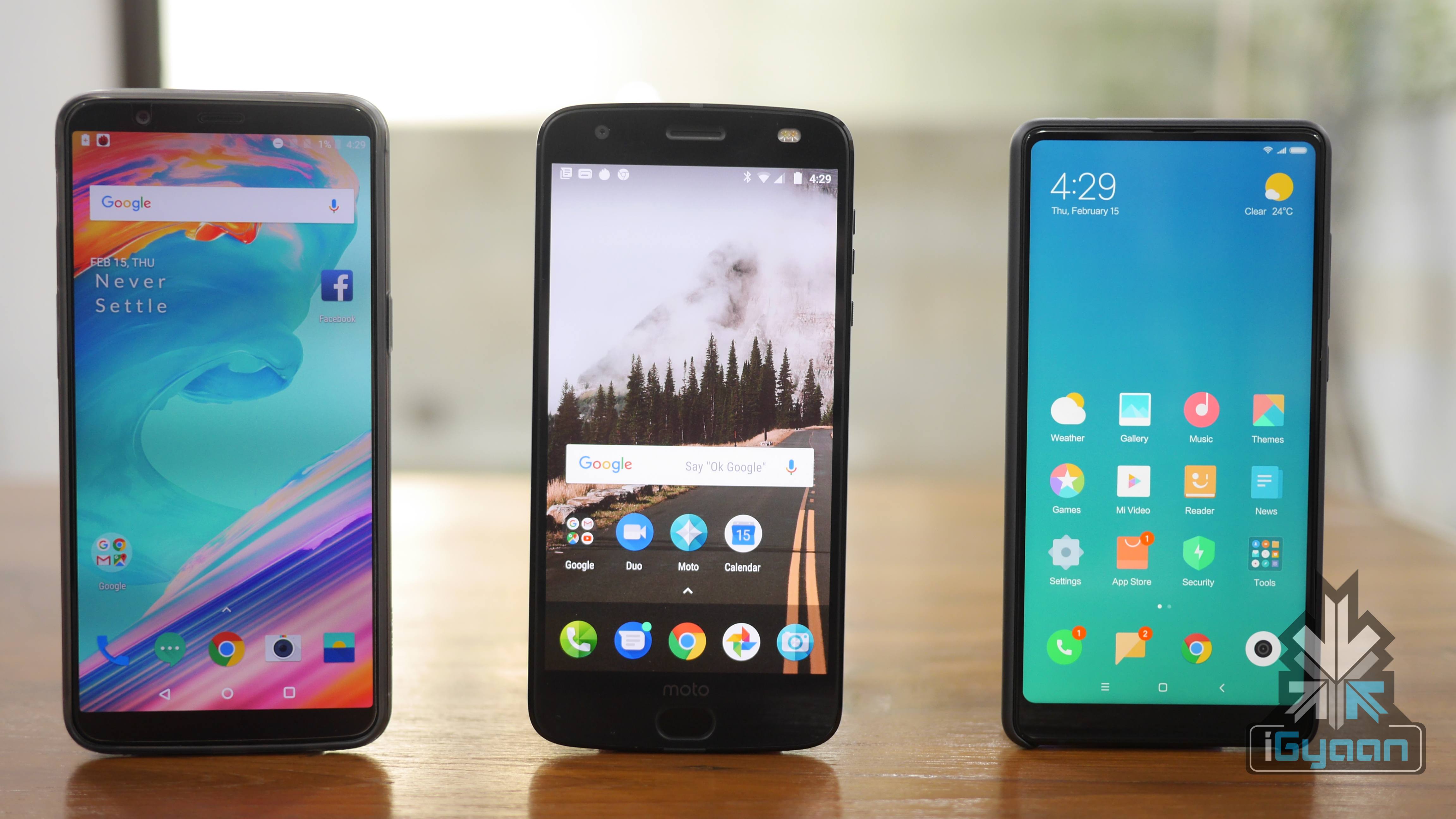
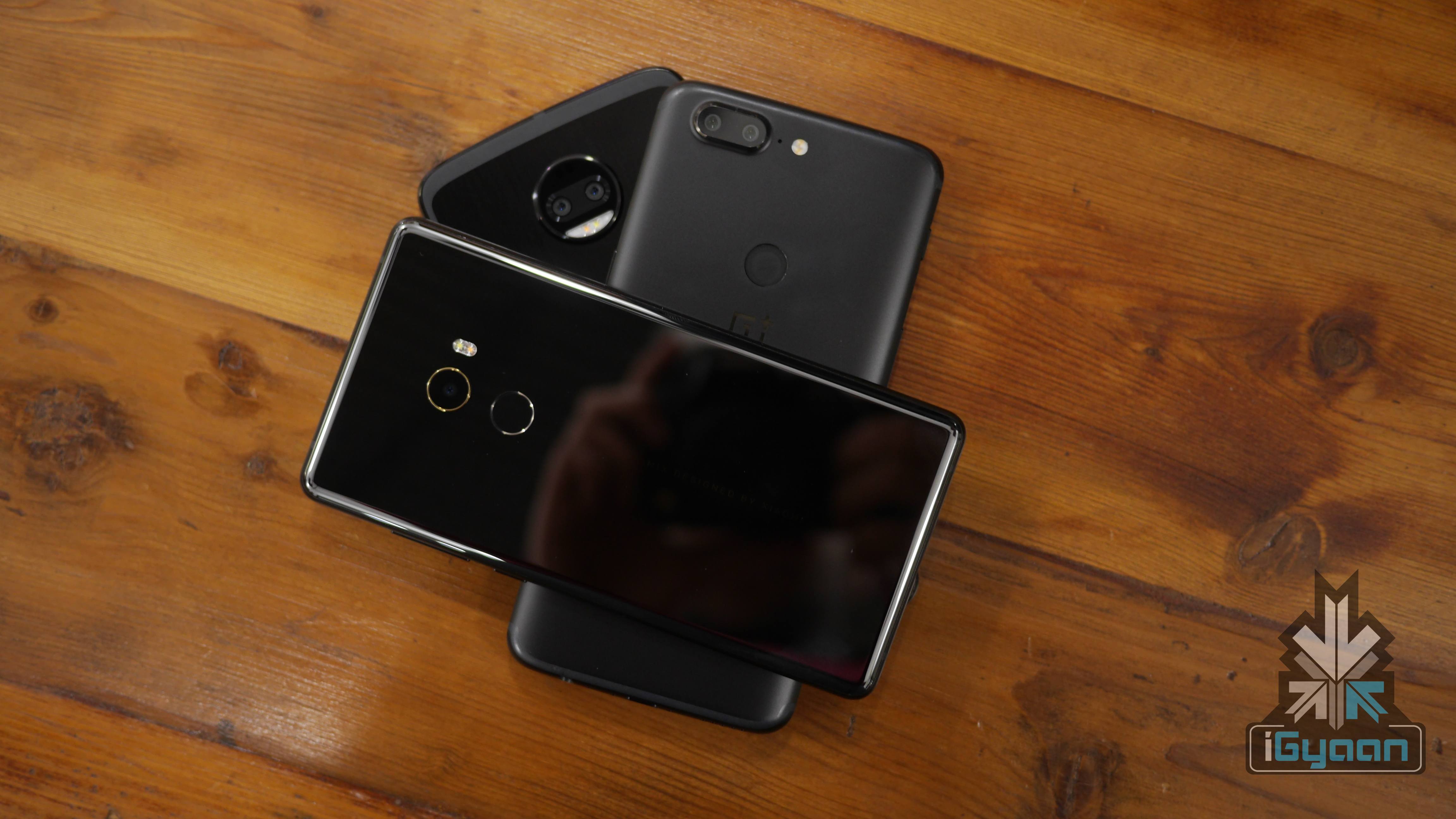
At this price point, the Zenfoone 5Z is much more affordable than the likes of the Galaxy S9 and Xperia XZ2. However, it will be interesting to see if and when Asus decides to launch the device in India, what the pricing will be like. If the company manages to keep the pricing under Rs. 40,000 the Zenfone 5Z will directly compete with the OnePlus 5T and Xiaomi Mi Mix 2. However, both of these smartphones run on the now older Snapdragon 835 chipset.
While the design of the Asus Zenfone 5Z and its UI might not be everyone’s cup of tea, there is no denying the potential of its chipset. The Galaxy S9, however, will be powered by the Exynos 9810 in India, will launch at a price of Rs. 62500. So, how does the Asus Zenfone 5Z hold up against the likes of the OnePlus 5T and Mi Mix 2? Let’s find out.
Comparison
Specifications
Asus Zenfone 5Z
OnePlus 5T
Xiaomi Mi Mix 2
Price
Starting at EUR 479 (Rs. 38,000 approx.)
Starting at Rs. 32999
Rs. 32999
Display
6.2 inch IPS LCD
6 inch Optic AMOLED
5.99 inch IPS LCD
Resolution
2246 x 1080 px
18.5:9
402 ppi
2160 x 1080 px
18:9
401 ppi
2160 x 1080 px
18:9
403 ppi
Chipset
Snapdragon 845
Snapdragon 835
Snapdragon 835
RAM
4GB
6GB
8GB
6GB
8GB
6GB
Storage
64GB
128GB
Expandable up to 400GB
64GB
128GB
Non-Expandable
128GB
Non-Expandable
Battery
3300 mAh
QuickCharge 4.0
3300 mAh
DashCharge
3400 mAh
QuickCharge
Primary Camera
12MP Sony IMX363 sensorf/1.8 aperture
Unspecified MP 120° wide-angle camera with 6p lens
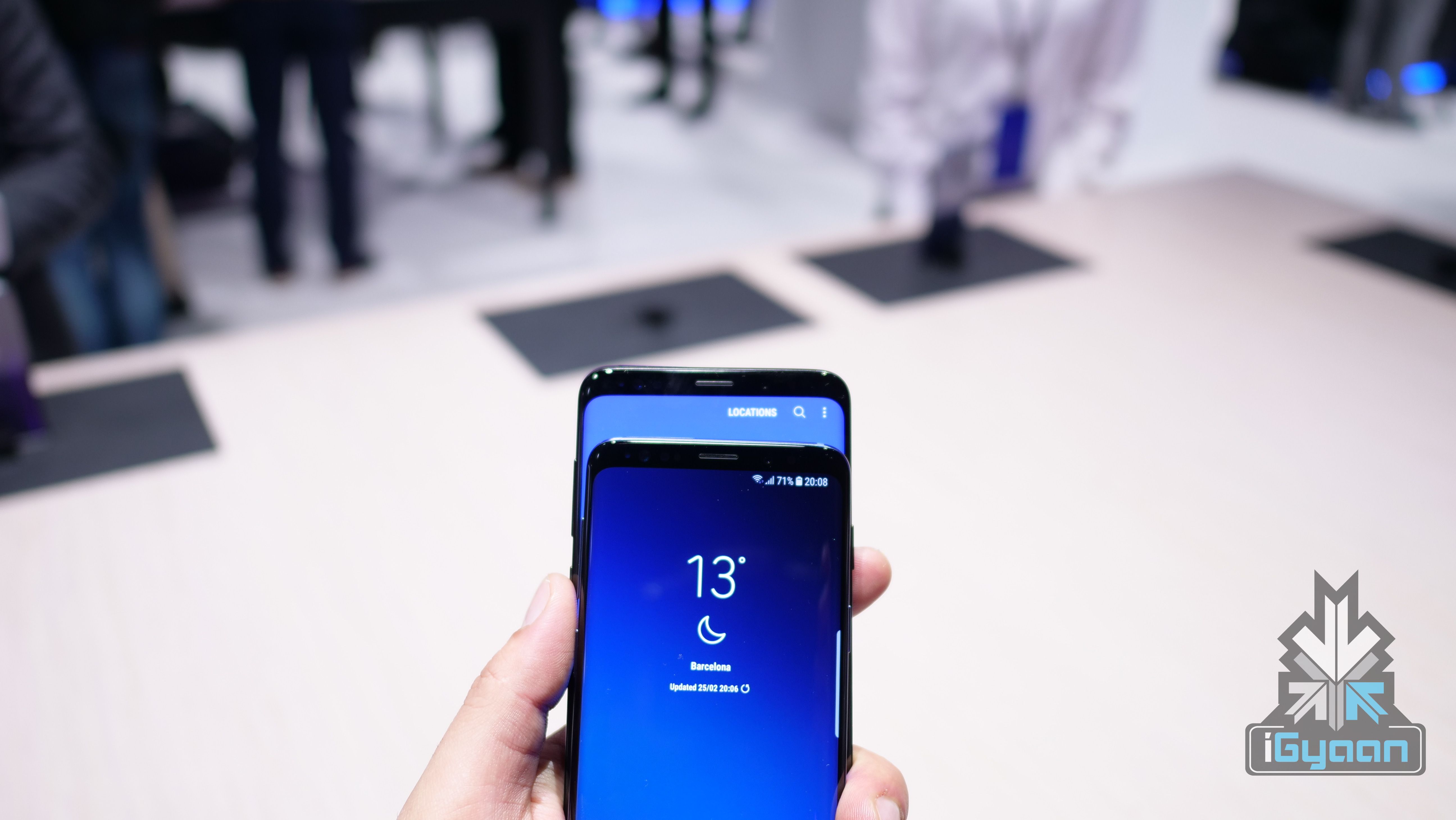
Samsung has launched its new flagship devices, the Galaxy S9 and S9+. Both the smartphones are available for pre-order in India and will go on sale from the 16th of March. However, the price of the smartphones has not been revealed yet. That is expected to happen on the 4th of March. Samsung won’t be selling the 128GB storage variant in India, only the 64GB and 256GB variant will be available.
The Galaxy S9 and S9+ will carry a premium price tag for sure, and go up against the likes of the iPhone X, iPhone 8 Plus and even Galaxy Note8. However, flagship specifications no longer come at a premium price tag. Android smartphones like the OnePlus 5Tand Mi Mix 2 offer top of the line specifications at a much lower cost. So, how does the Samsung Galaxy S9/S9+ stack up against the competition? Let’s find out!
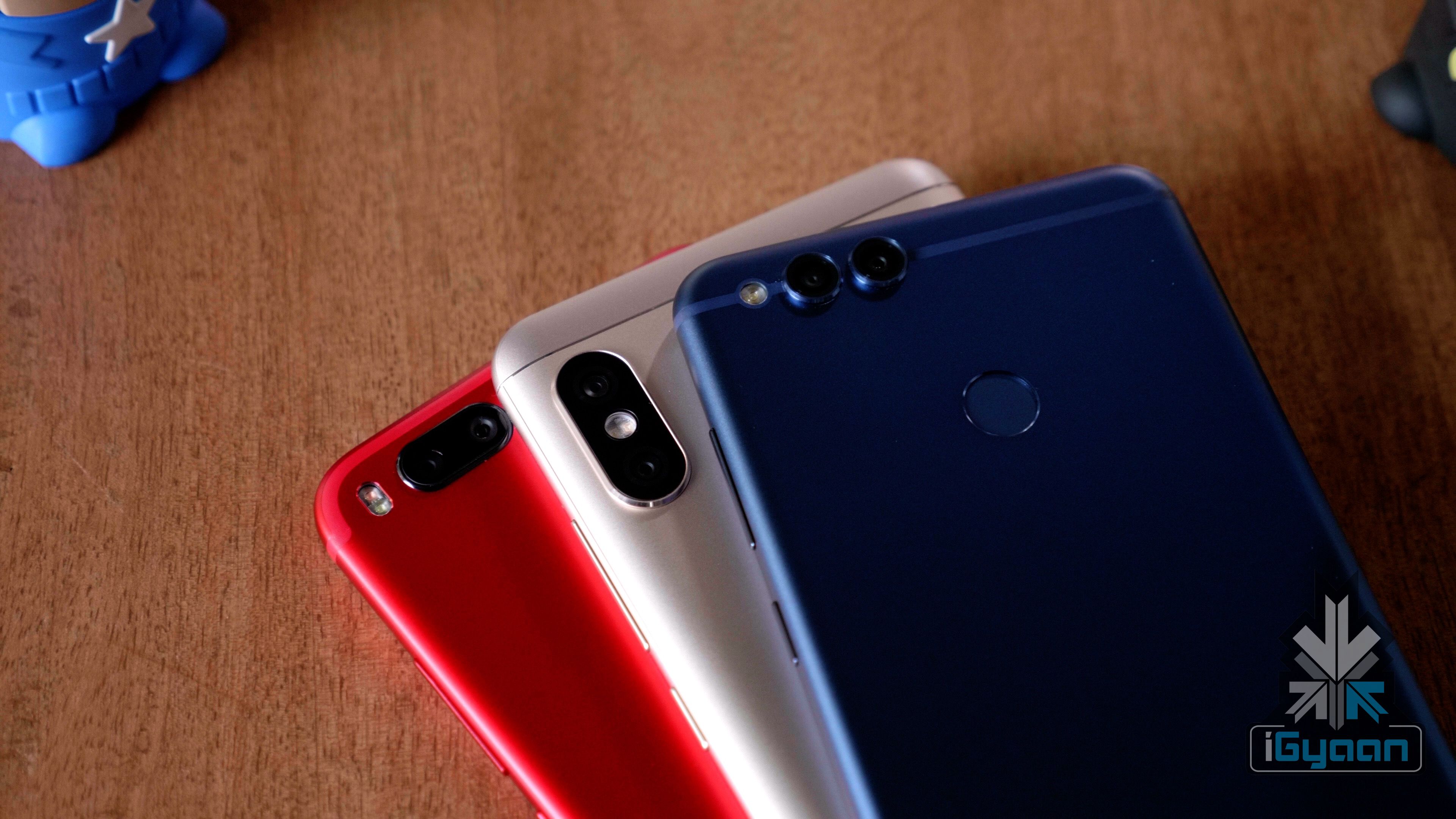
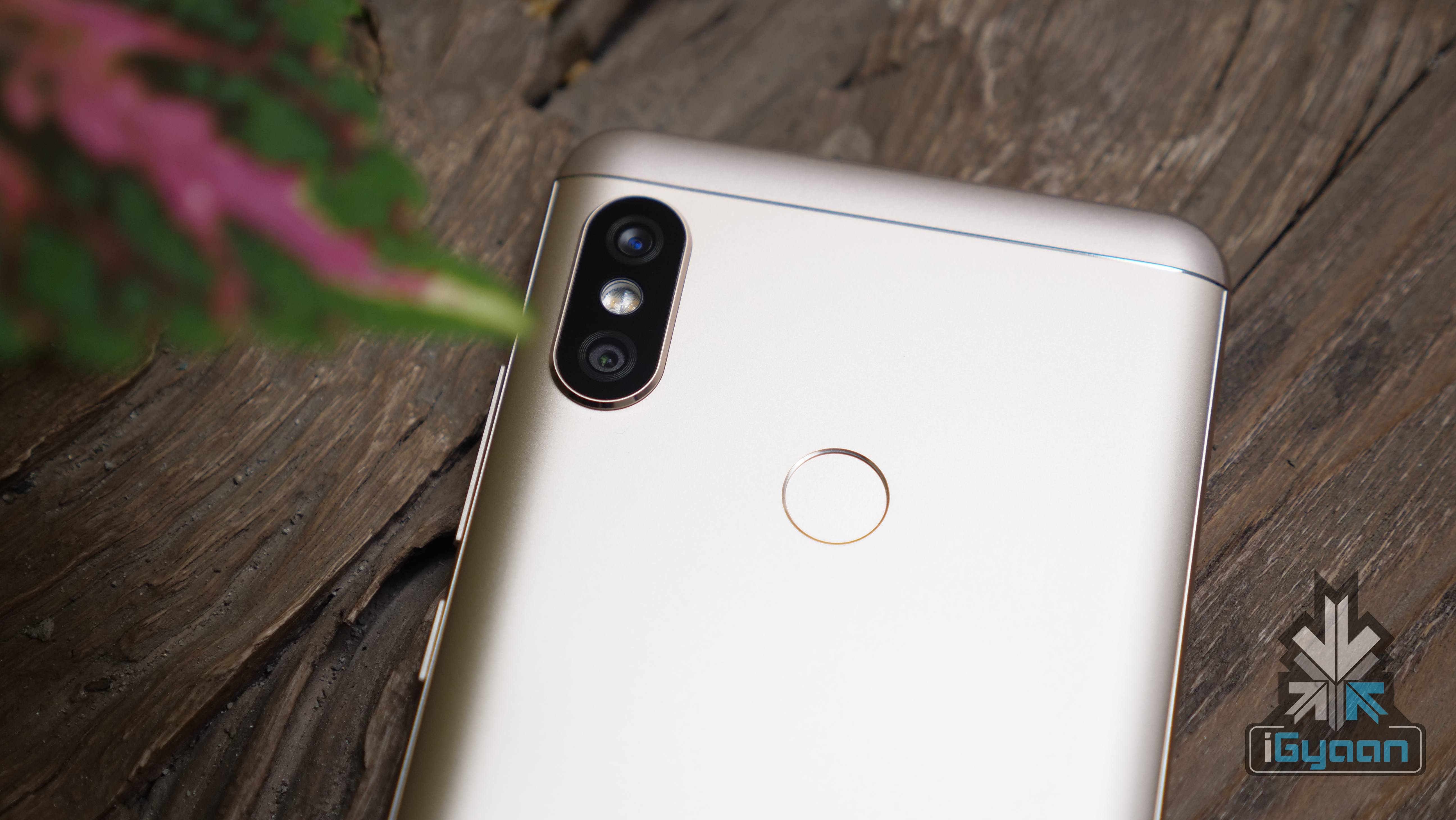
Xiaomi recently launched the Redmi Note 5 Pro in India at a starting price of Rs. 13999. Keeping up with the industry trends, the Redmi Note 5 Pro has an 18:9 aspect ratio and a dual-camera on the back. Unlike a lot of other smartphones with a dual camera setup, the Redmi Note 5 Pro has two RGB sensors.
Dual-Camera Redmi Note 5 Pro
At this price tag, the Note 5 Pro directly competes with the likes of the Honor 7X and Xiaomi’s own Mi A1. The Honor 7X and Mi A1 also have the best cameras in this price segment. Despite the 18:9 aspect ratio, the Redmi Note 5 Pro has thicker bezels than the Honor 7X which are even more prominent in the Gold colour variant. The Mi A1 has a 16:9 aspect ratio and definitely looks archaic when put next to the Note 5 Pro and Honor 7X.
Where the Mi A1 one-ups the other two devices is the software. It runs stock Android OS and is part of the Android One program. Hence, it will get the latest software update for the next two years at least. However, the same cannot be said about the Honor 7X and Redmi Note 5 Pro since they run custom UI on top of Android. In fact, the Honor 7X and Note 5 Pro still run Android 7 Nougat, while the Mi A1 has been updated to Android 8 Oreo.
With the three devices priced similarly, we decided to put them through their paces. Let’s see which one came out on top:
Motorola has finally launched its flagship smartphone, the Moto Z2 Force in India. It is priced at Rs. 34,999 which took everyone by surprise. It was globally launched for US$ 720 (Rs. 47,000 approx.) which means that it is considerably cheaper than its global price. The pricing makes sense for Motorola as the Z2 Force runs on the Snapdragon 835 chipset, which will soon be outdated.
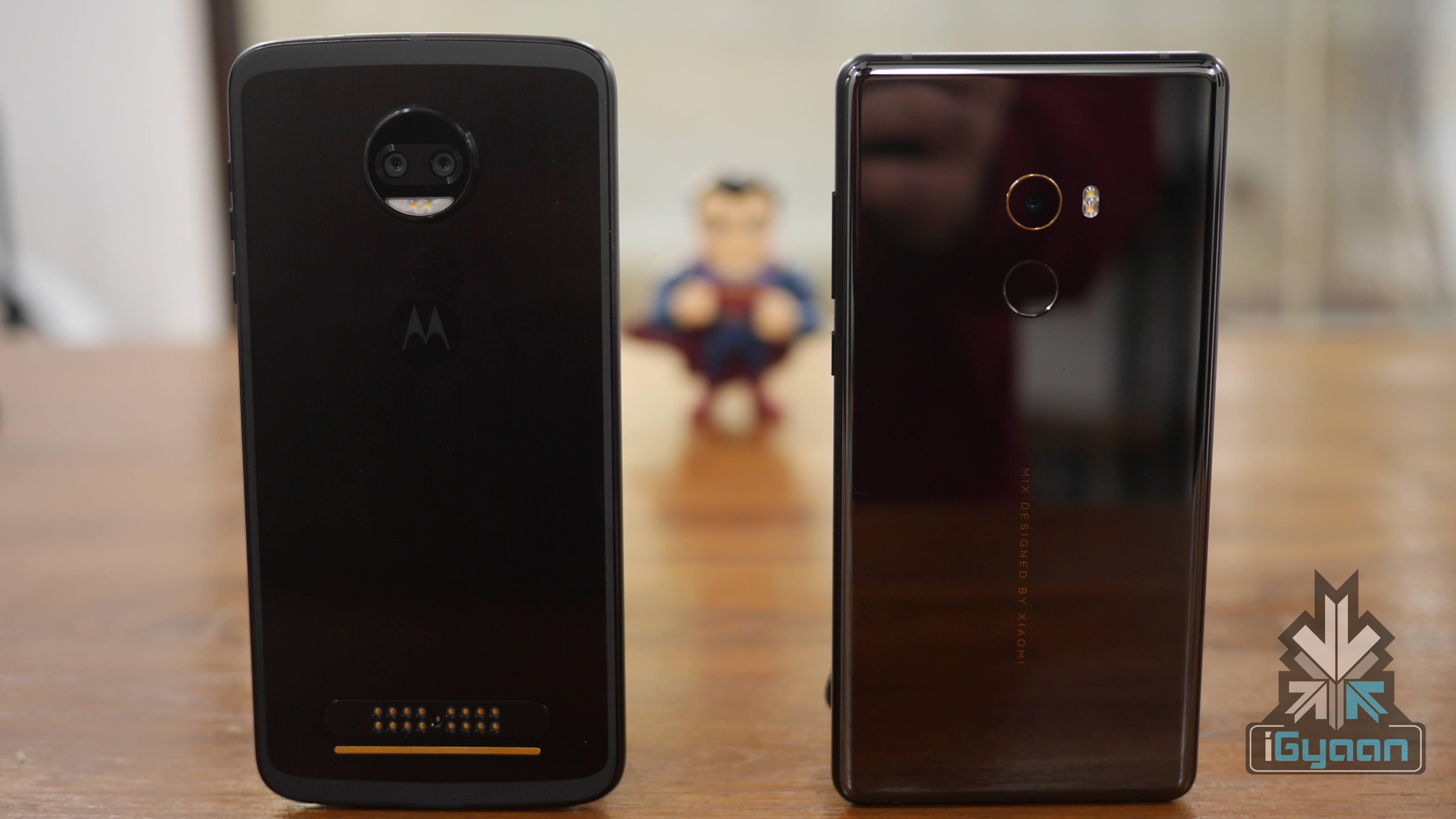
At such a price, the Moto Z2 Force will go head-to-head with the likes of Xiaomi Mi Mix 2 and OnePlus 5T. The OnePlus 5T, in particular, has been very successful in the Indian market. The Moto Z2 Force matches with the OnePlus 5T in almost every aspect and then does a bit more. The Moto Z2 Force, apart from being shatterproof, also has modular capabilities. This is something that is missing in the OnePlus 5T and the Mi Mix 2.
Where the Moto Z2 Force might fall behind the design department, it makes it up in functionality. That being said, the Moto Z2 Force still has a stunning design despite the 16:9 aspect ratio.Being a mid-2017 flagship, the Moto Z2 Force has bigger bezels and a 16:9 aspect ratio while the other two devices sport a modern design. The OnePlus 5T and Mi Mix 2 have thin bezels and an 18:9 aspect ratio.
Under the hood, all the three smartphones run on the same Qualcomm Snapdragon 835 chipset. The base model of the OnePlus 5T, priced at Rs. 32999, has 6GB of RAM and 64GB storage. The Mi Mix 2 is also priced at Rs. 32999 and offers the same RAM with 128GB storage. The Moto Z2 Force also has 6GB RAM and 64GB storage. However, it is the only one to offer expandable storage up to 2TB. That can be a dealmaker for people whose primary media consumption happens through a smartphone. The flexibility of storage matters a great deal for a few.
The Mot Z2 Force also runs Android 8 Oreo out of the box while the Mi Mix 2 is still stuck at Android 7 Nougat. The OnePlus 5T recently received an update to Android 8 Oreo as well. The Moto Z2 Force and OnePlus 5T run close to stock Android OS while the Mi Mix 2 comes with MIUI 9 on top. As we have said it in the past, preference for stock OS or custom skin is very subjective.
The OnePlus 5T retains the 3.5mm headphone jack while the Mi Mix 2 and Z2 Force both don’t have a headphone jack. This, again, can be a huge deal for a few consumers. The Moto Z2 Force is also the most durable smartphone thanks to its shattershield display. Due to the plastic coating on top, the Moto Z2 Force will be able to survive a few drops where the other two might crumble.
Xiaomi has launched the Redmi Note 5 in India at a starting price of Rs. 9,999 with a new design but, the same chipset. At this price, the Redmi Note 5 competes directly with the recently launched Honor 9 Lite. Both the smartphones have an 18:9 aspect ratio and very capable respective chipsets.
Redmi Note 5
The Xiaomi Redmi Note 5 is basically the Redmi 5 Plus which was launched in December in China. The design is much more modern than the previous generation and it comes in four different colour variants. The Honor 9 Lite has much thinner bezels but, also a smaller screen size. The Honor 9 Lite has an all-glass build which gives it a much more premium look when compared to the aluminium unibody design of the Redmi Note 5.
With a very similar pricing and more or less similar design language, which device comes out on top? Let’s find out!
The budget segment of the Indian smartphone market has been congested for a while. So many companies have launched great devices at a very competitive price. Recently, smartphone makers like Honor have also released some great devices in the budget segment. In January, the Honor 9 Lite was launched in India at a starting price of Rs. 10999. Subsequently, Samsung launched the Galaxy On7 Prime in India at a starting price of Rs. 12990.
When you put the smartphones together, the winner is quite evident. The Honor 9 Lite has a modern design with an 18:9 aspect ratio, very thin bezels and a glossy finish on the back. It is also the only smartphone in this price segment that has an all-glass build, giving it an extremely premium look. The Galaxy On7 Prime on the other hand just doesn’t look up to speed with the Honor 9 Lite. It has thick bezels around the display and is reminiscent of all the previous Samsung budget smartphones.
The Honor 9 Lite starts at a price of Rs. 10999 for the 3GB RAM variant while the Galaxy On7 Prime costs Rs. 12990 for the same configurations. Clearly, the Honour 9 Lite is a much better proposition if you’re on a tight budget. The Honor 9 Lite also has the new Kirin 659 chipset while the Galaxy On7 Prime is powered by an older Exynos 7870 chipset.
The budget segment of smartphones in India saw a plethora of releases in 2017. Even the flagship segment and affordable flagship segment saw the release of some great devices by Samsung, Apple, OnePlus and Honor. However, the Rs. 20,000-25,000 price category is right now full of old devices that were great at one point. In November 2017, Lenovo-owned Motorola launched the Moto X4 that entered this price segment.
Recently, Motorola launched the 6GB RAM variant of the Moto X4 in India at a price of Rs. 24999. At this price, the Moto X4 has competition from the bygone flagship devices OnePlus 3T and Honor 8 Pro. It is worth noting that only a certified refurbished OnePlus 3T is available on Amazon anymore.
While how people perceive a phone is subjective, the Moto X4 does exude a premium feel. The OnePlus 3T and Honor 8 Pro offer great build quality as well but, the contoured glass back of the Moto X4 feels more premium. The Sterling Blue colour of the Moto X4, thanks to a different hue of blue stands out between the three phones.
Both the Moto X4 and OnePlus 3T run Android 8 Oreo out of the box. The Honor 8 Pro, launched after the OnePlus 3T runs Android 7 Nougat right now with no confirmation from the company regarding an Android 8 Oreo update. OnePlus has confirmed that Android 8 Oreo will be the last major software upgrade for the OnePlus 3T. Since the new Moto X4 runs Android 8 Oreo out of the box, there is a high possibility that it will receive an update to Android P as well.
Under the hood, the OnePlus 3T has the 2016 flagship chipset, Snapdragon 821. The Honor 8 Pro has the Kirin 960 while the Moto X4 has the Snapdragon 630 under the hood. OnePlus 3T has a very capable chipset under the hood which is almost two years old now. Add no software support to that, and the OnePlus 3T doesn’t look like a future-proof phone.
The Honor 8 Pro is already lagging in the software department but, it does offer a customisable skin which a lot of people prefer over stock OS.
One of the USPs of the Moto X4 is its ruggedness. While 2017 flagship phones like the Pixel 2 and OnePlus 5T skipped an IP rating, the Moto X4 has an IP68 rating for water and dust resistance. The Moto X4 is the only device in this price range that has a dual-camera setup and provides an IP68 rating.
Let’s compare the specifications and see which smartphone provides the most in this price range.
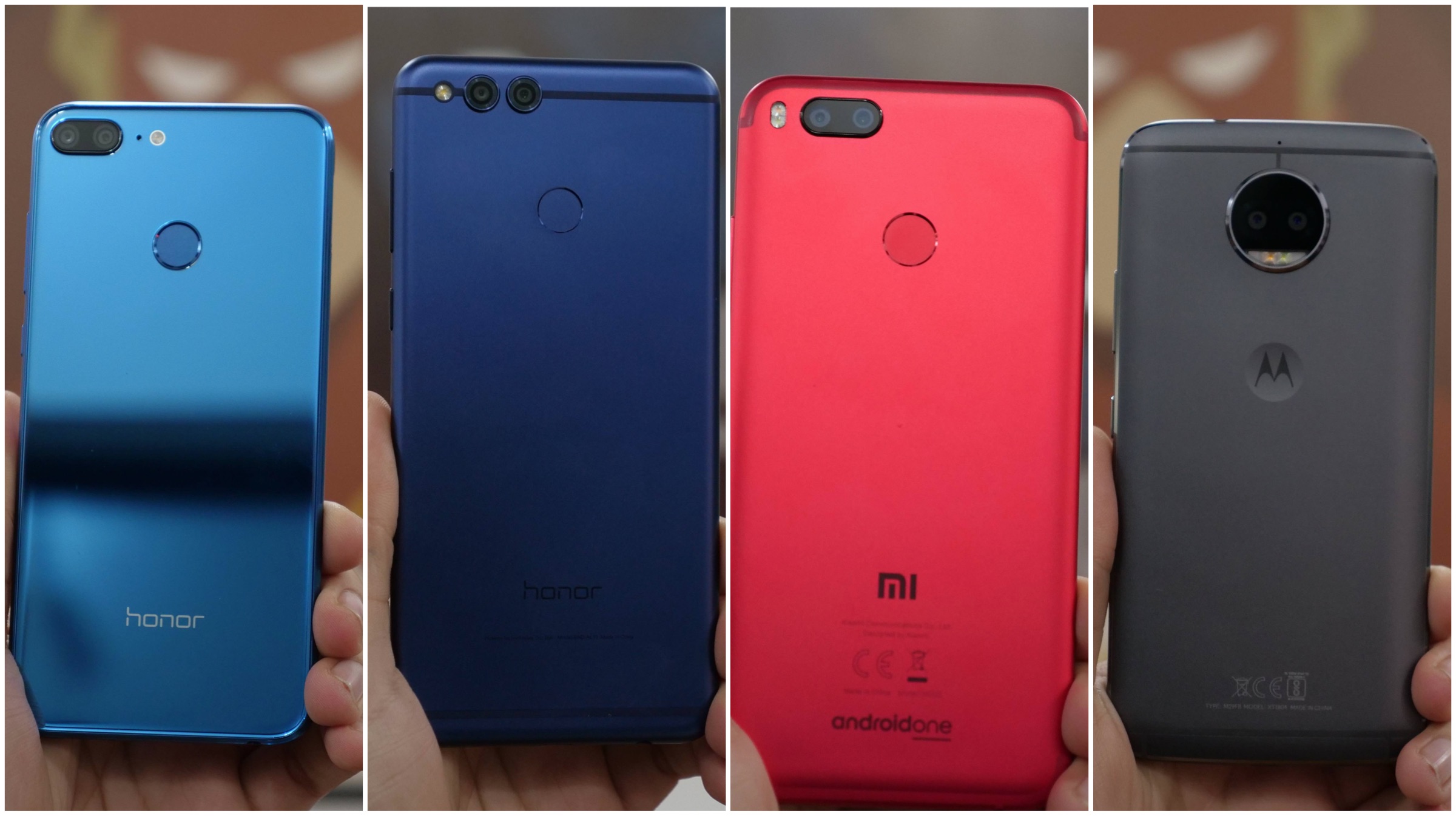
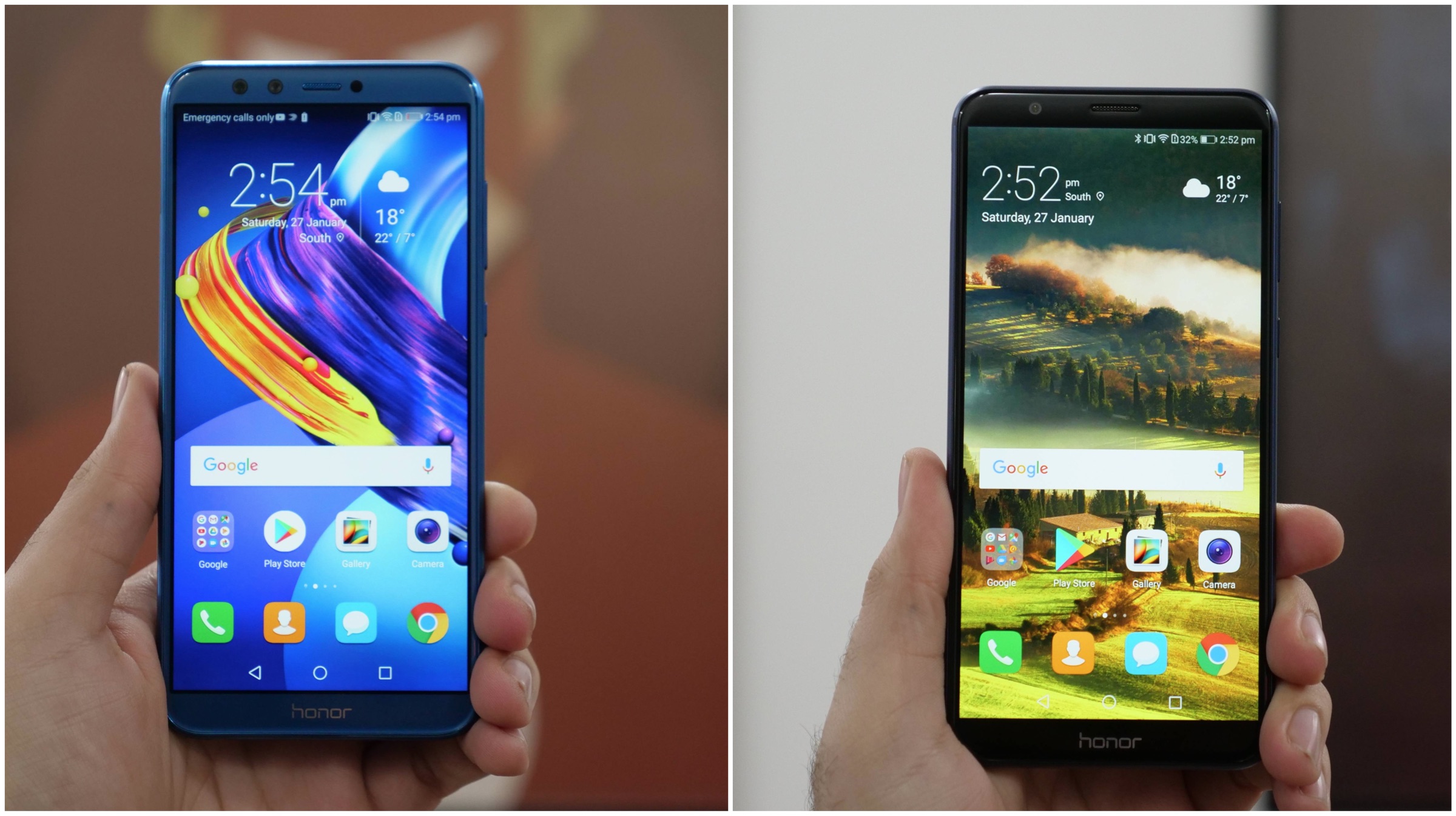
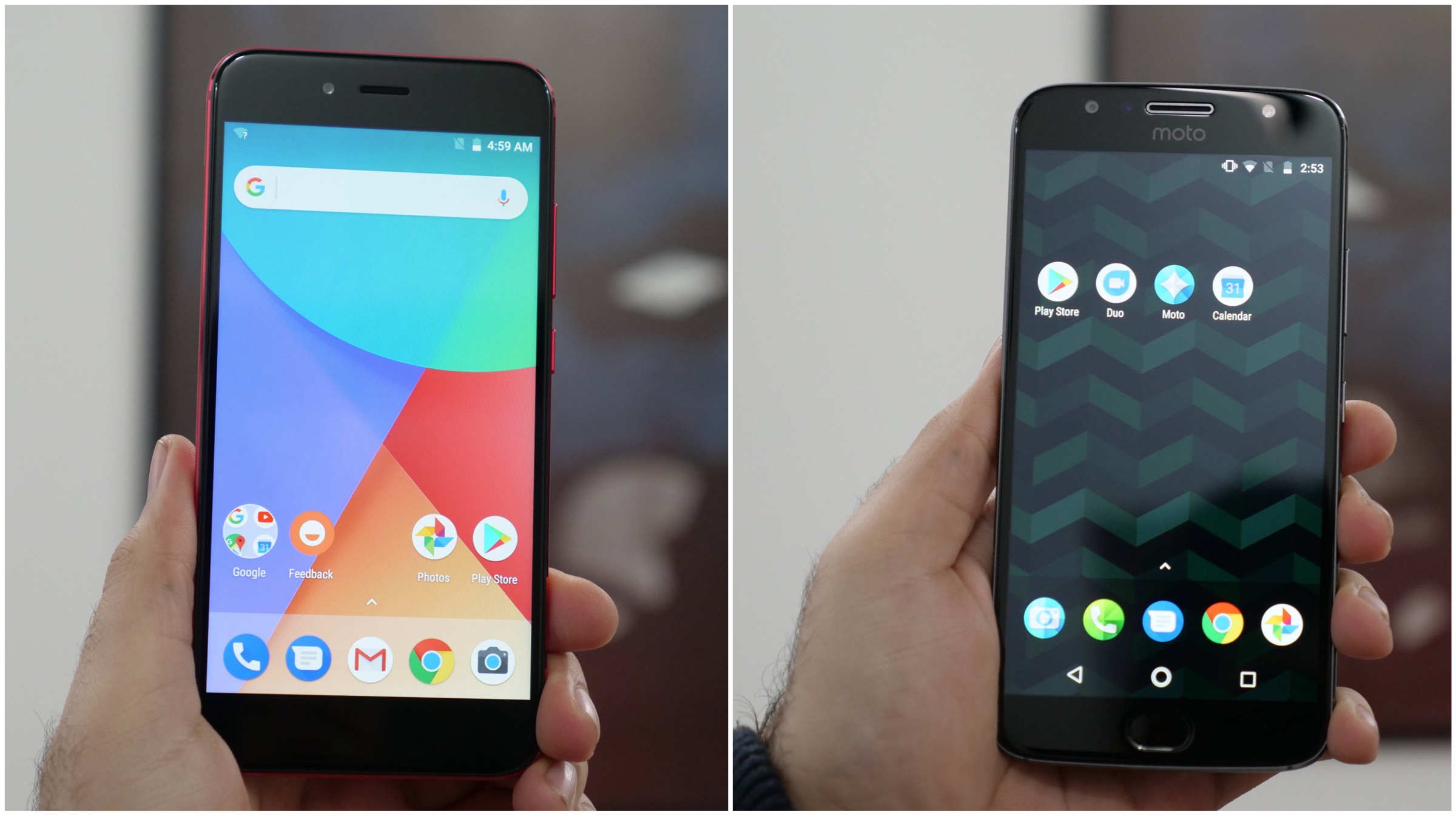
2017 saw the launch of a lot of great mid-range smartphones. Right from the Moto G5 Plus in early 2017 to the Honor 7X, the mid-range segment had some excellent additions. It is fair to rate the Honor 7X, Xiaomi Mi A1 and the Moto G5s Plus as the three top phones in their price segment. And in January 2018, Honor launched the Honor 9 Lite with four cameras and a price of Rs. 10999.
Honor 9 Lite & Honor 7X
At a price of Rs. 10999, the Honor 9 Lite is a great prospect with its bezel-less design and a very capable Kirin 659 chipset. The Xiaomi Mi A1, Honor 7X and the Moto G5s Plus possess good cameras and have been great performers over the past few months of testing.
In terms of design, the Honor 9 Lite is the clear winner. At such a price, to offer a glass build is commendable. The other three phones have a great aluminium unibody design as well but, the Honor 9 Lite wins by a mile here.
Mi A1 & G5s Plus
In our recent comparison of the Xiaomi Mi A1 and Honor 7X, both the smartphones were at par when it came to day-to-day performance. The Honor 9 Lite has the same chipset and RAM configuration as the Honor 7X while the Mi A1 shares the specifications with the Mi A1. Software on all the phones is extremely smooth. At the end of the day, it will boil down to personal preference, whether you like stock Android OS or the customisable EMUI.
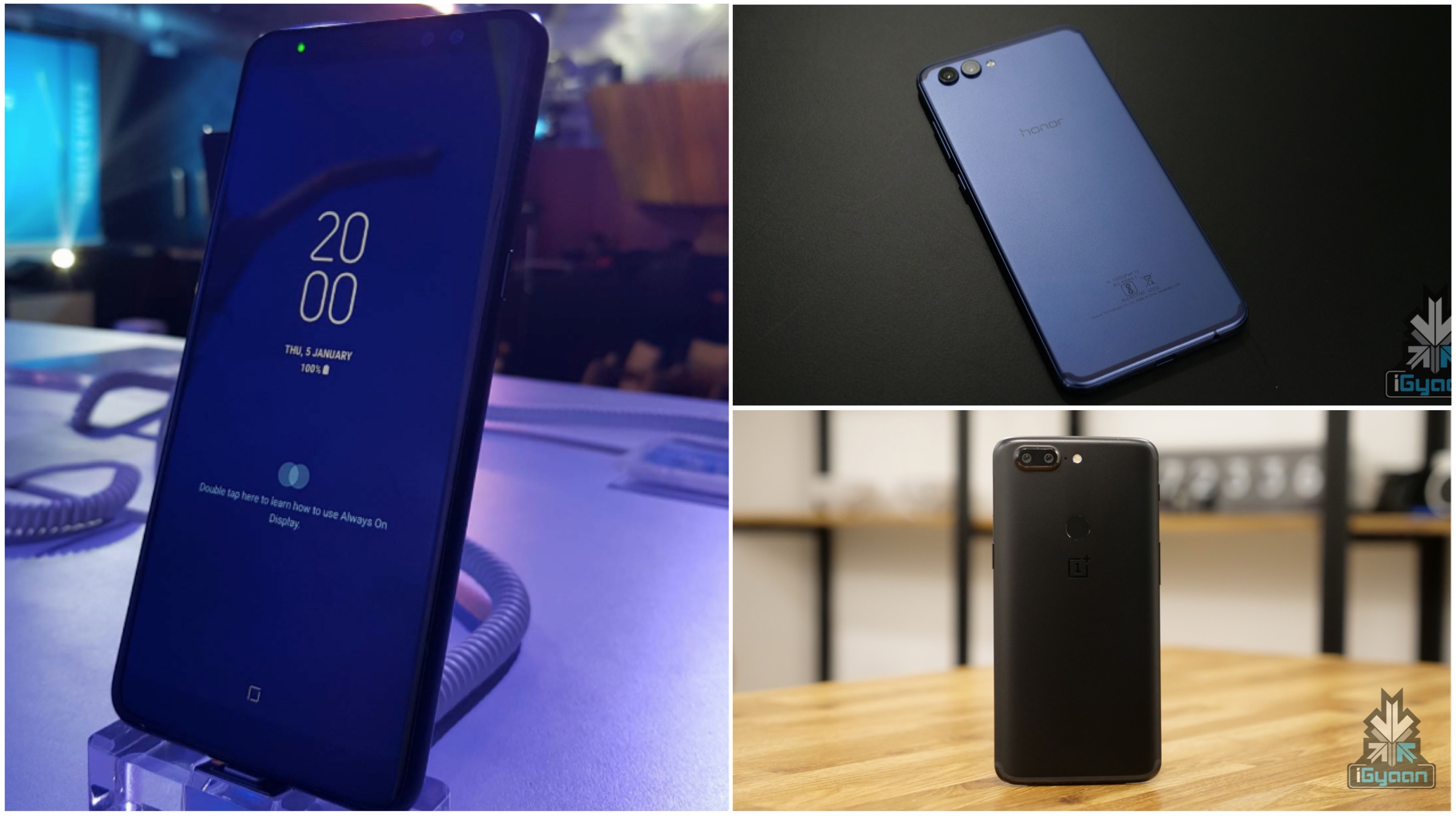
Samsung has launched its new iteration of the Galaxy ‘A’ series, the Samsung Galaxy A8+in India. The smartphone, priced at Rs. 32990 will go on sale from the 20th of January in India via Amazon. Compared to other Asin markets, the price of the Galaxy A8+ comes as a surprise but, still remains pricier than the Honor View10 and on par with the OnePlus 5T (6GB RAM variant).
While the OnePlus 5T and Honor View10 are powered by flagship chipsets and feature a dual-camera setup on the back, the Galaxy A8+ is powered by the Exynos 7885 but, has a front-facing dual-camera setup. The Galaxy A8+ has the advantage of an IP67 rating which is missing from other other two devices. The Galaxy A8+ is also slightly taller than the other phones with an 18.5:9 aspect ratio.
So, what do the specifications tell us about the Galaxy A8+ when compared to its closest competitors? Let’s find out:
Specifications
Samsung Galaxy A8+
OnePlus 5T
Honor View10
Price
Rs. 32,990
Starting at Rs. 32,999
Rs. 29,999
Display
6-inch
Super AMOLED
6-inch
AMOLED
5.99 inch
IPS LCD
Resolution
2220 x 1080 px
411ppi
2160 x 1080 px
401ppi
2160 x 1080 px
403ppi
Weight
191 grams
162 grams
172 grams
Dimensions
159.9 x 75.7 x 8.3 mm
156.1 x 75 x 7.5 mm
157 x 75 x 7 mm
OS
Android 7.1 Nougat
Samsung UX
Android 7.1 Nougat
Android 8.0 Oreo
EMUI 8
Battery
3500 mAh
3300 mAh
3750 mAh
Chipset
Exynos 7885
Qualcomm Snapdragon 835
HiSilicon Kirin 970
RAM
6GB
6GB/8GB
6GB
Storage
64GB (Expandable up to 256GB)
64GB/128GB (Non-expandable)
128GB (Expandable up to 256GB)
Primary camera
16MP
f/1.7 aperture
16MP f/1.7
20MP f/1.7
16 MP (RGB)
20 MP (Monochrome)
f/1.8 aperture
Primary video
1080P
4K @ 30fps
4K @ 30fps
Secondary camera
16MP f/1.9
8MP f/1.9
16MP f/2.2
13MP f/2.0
Add-ons
Fingerprint sensor
IP67 Rating
Fingerprint sensor
Face Unlock
Fingerprint sensor
Facial Recognition
AI
With a similar price tag and very little advantages, a lot will depend on the Samsung Galaxy A8+’s camera performance. A solid front-facing camera and snappy user experience can sometimes be enough to sway buyers and the Galaxy A8+ will have to do just that. Stay tuned for more updates.
Ever since the OnePlus One was launched back in 2014, the Chinese smartphone maker’s devices have been considered to be the flagship killers. Year after year, the company has launched Android phones with high-end specifications at nearly half the price of devices by other tier brands. While 2017 saw a lot of flagship devices being launched under Rs. 40000 bracket, the OnePlus 5 and then the OnePlus 5T priced at Rs. 32999 for the 64GB variant remained a fan favourite.
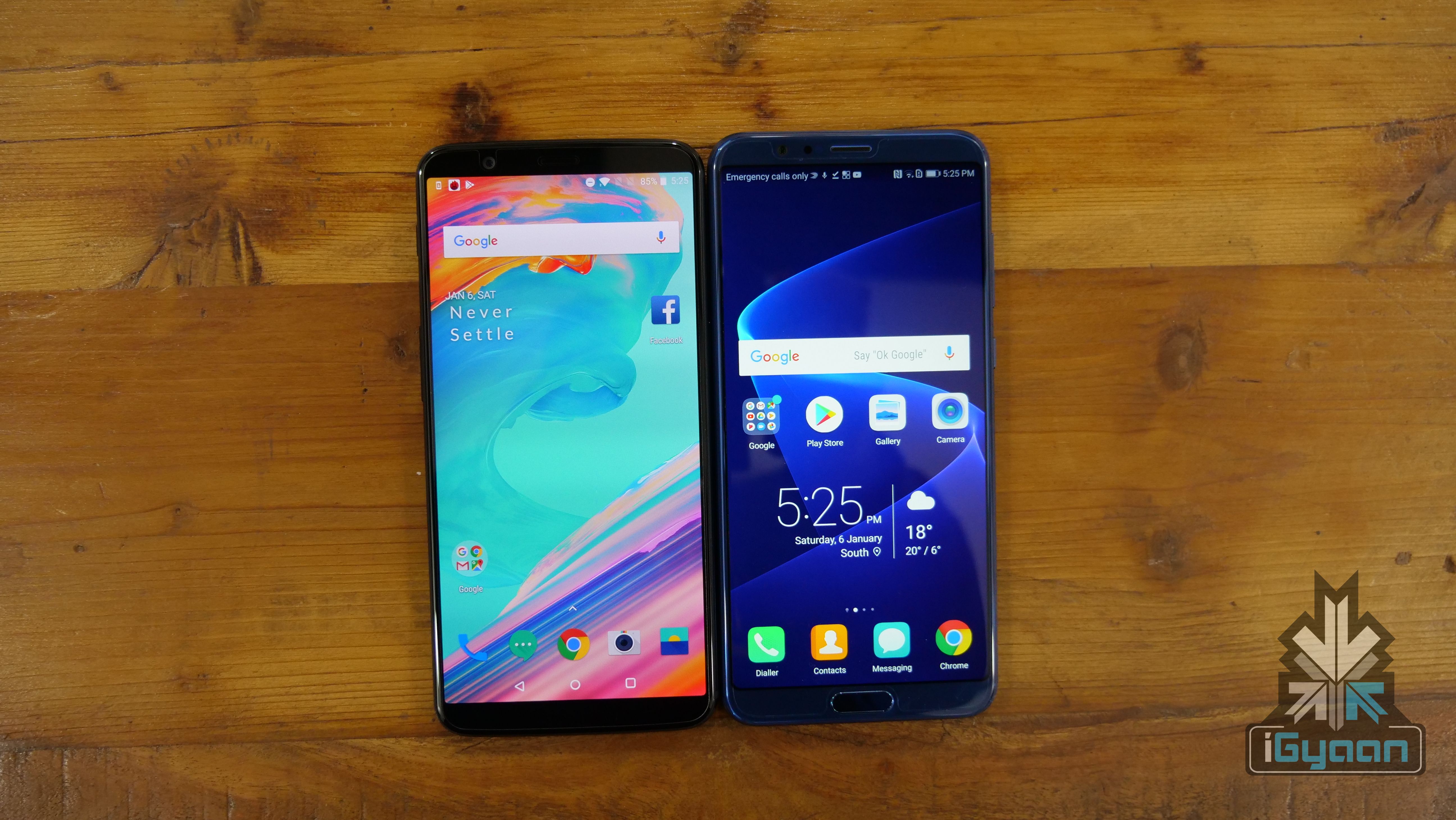
However, Honor has recently announced the price of its Honor View10, the Kirin 970-powered affordable flagship phone. At a price of Rs. 29,999 the Honor View10 has a high-end chipset, dual cameras, nearly bezel-less display and an emphasis on AI. All of that, and it is still cheaper than the OnePlus 5T. So, does the Honor View10 take the crown of the best affordable flagship? Let’s find out:
Design
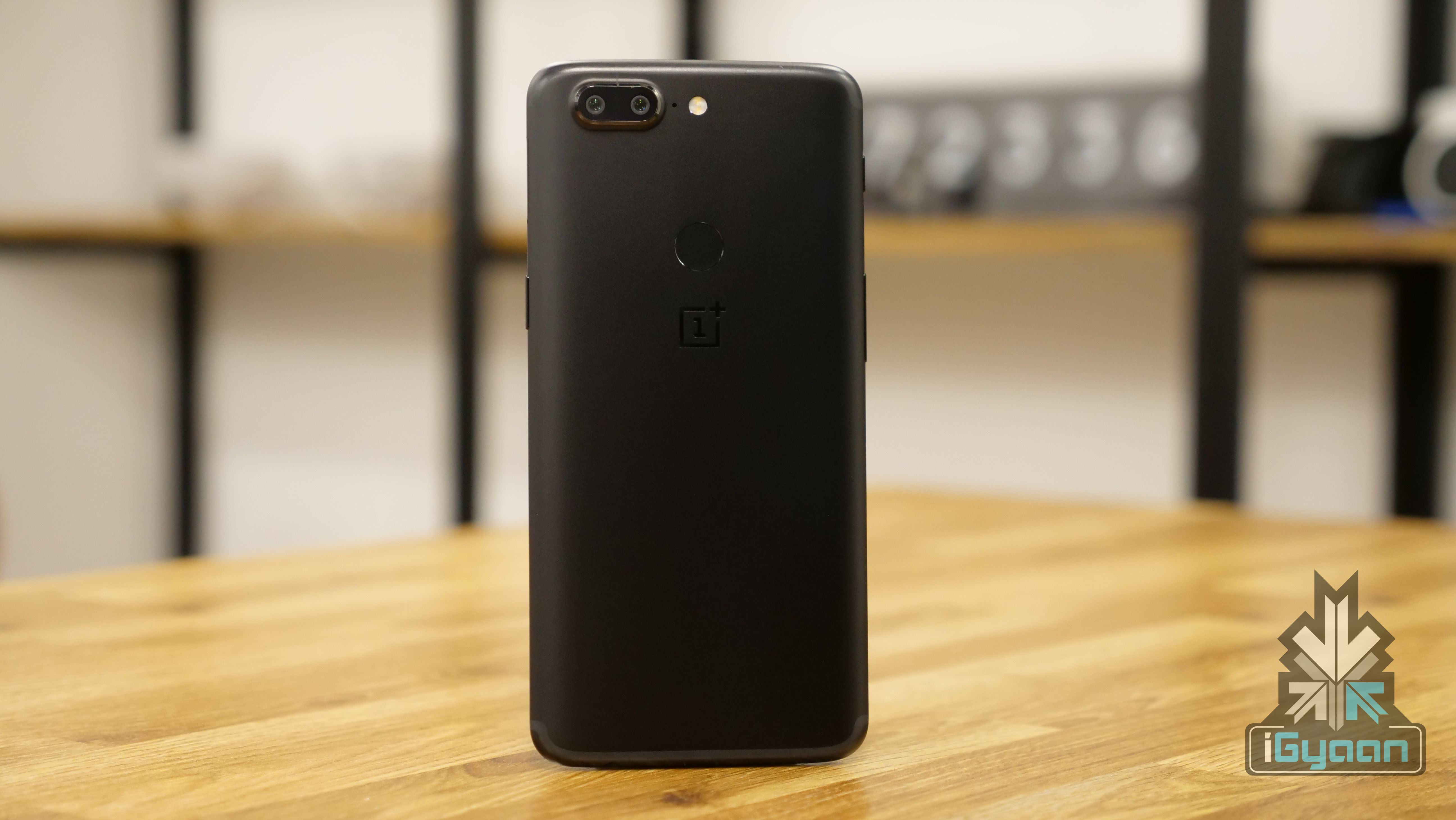
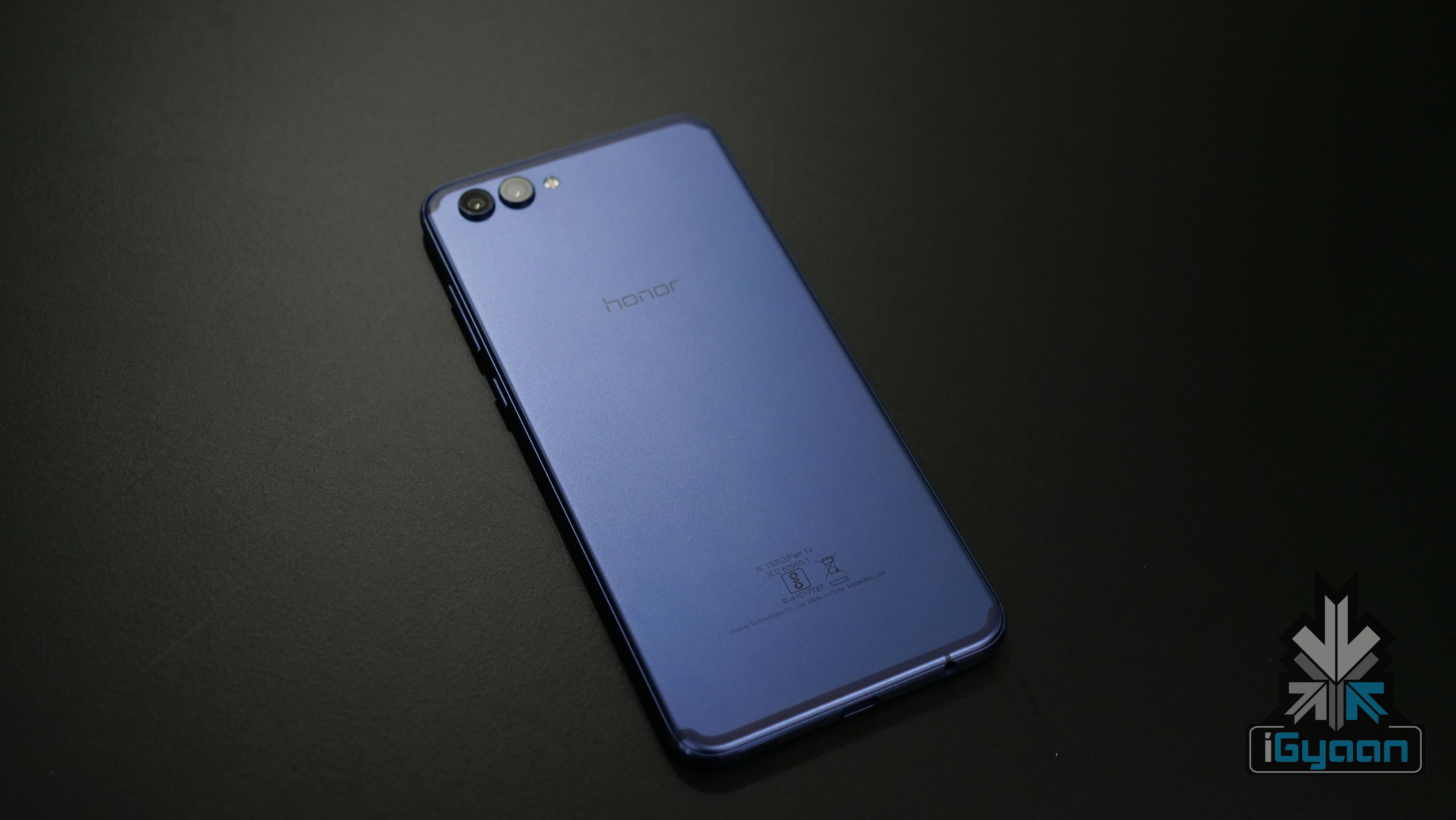
Both the OnePlus 5T and Honor View10 share a similar design language. Both the devices sport a tall display, thin bezels and dual-cameras at the back. The dual-cameras on both the devices protrude a little which means that a case might be necessary to protect the camera glass. The OnePlus 5T and Honor View10 have matte finishes to the back which means the devices can be a bit slippery but, both the companies provide a clear case inside the box.
OnePlus 5T
Display
The OnePlus 5T is a refreshed variant of the OnePlus 5 with a modern 18:9 aspect ratio and thin bezels. The Honor View10 also has thin bezels and a tall display and even manages to retain the front-facing fingerprint sensor, something that the OnePlus 5T had to give up for smaller bezels. Both the devices have a resolution of 2160 x 1080 px, however, while the Honor View10 has an IPS LCD panel, the OnePlus 5T has an Optic AMOLED panel.
Software
After photos and sound, software is the most subjective aspect of a smartphone. Just like some people prefer bass-heavy sound over a flat soundstage, some people prefer the bells and whistles of a custom skin over stock Android OS. There is no denying that the OnePlus 5T will always be ahead when it comes to software updates but, EMUI on the Honor View10 has come a long way since its inception as well. The Honor View10 has a slight advantage thanks to the NPU present in the Kirin 970 chipset. Honor has been able to add some nifty features that take full advantage of AI. For example, thanks to Honor View10’s facial recognition software, the phone only displays a preview of notifications on the lock screen only when it recognises the face, otherwise, the notifications remain hidden.
This is just a small example of what implementation of AI does to the overall user experience. However, if you are a stock Android enthusiast then the OnePlus 5T is ideal for you.
Performance
Honor View10
Both the devices are powered by two flagship chipsets. The OnePlus 5T has the Qualcomm Snapdragon 835 chipset, 6 or 8GB of RAM along with 64GB or 128GB of storage. The Honor View10 has the HiSilicon Kirin 970 chipset, 6GB of RAM and 128GB of onboard storage. The storage on the Honor View10 can be expanded up to 256GB via a microSD card while the OnePlus 5T doesn’t provide an option for expanding the onboard storage.
Both the devices run day-to-day tasks with ease and even high-end gaming is buttery smooth on either device. If you want a device for heaving gaming, then neither of the phones will disappoint your gaming needs. Thanks to the tall displays on both the devices, multitasking is a joy and the snappy processors made sure both the devices held up well in extreme multitasking situations.
Camera
Photographs are extremely subjective, and both the devices have a dual camera setup at the back albeit, different implementations. The OnePlus 5T, unlike its predecessor, has a 16MP and 20MP setup with an f/1.7 aperture which OnePlus claims, will result in better low-light photographs. The Honor View10 has a 16MP RGB sensor and a 20MP Monochrome sensor with both having an f/1.8 aperture. Here are a few camera samples of both the devices:
OnePlus 5T
OnePlus 5T
OnePlus 5T
OnePlus 5T
Honor View10
Honor View10
Honor View10
Honor View10
Specifications
OnePlus 5T
Honor View10
Price
[amazon_link asins=’B0756ZFXVB’ template=’ProductAd’ store=’igyaan-21′ marketplace=’IN’ link_id=’48299d3c-f20e-11e7-b46f-e55f80314c8c’] Starting at Rs. 32,999
At the end of the day, the OnePlus 5T and Honor View10 are two great phones with best in class specifications and an affordable price tag. Honor seems to have struck gold with its pricing and the real question here is whether stock Android is worth the extra money or not. If yes, then the OnePlus 5T should be your choice. But, if you are on a tight budget, the Honor View10 has a lot more to offer in terms of user experience and will cost less than the OnePlus 5T.
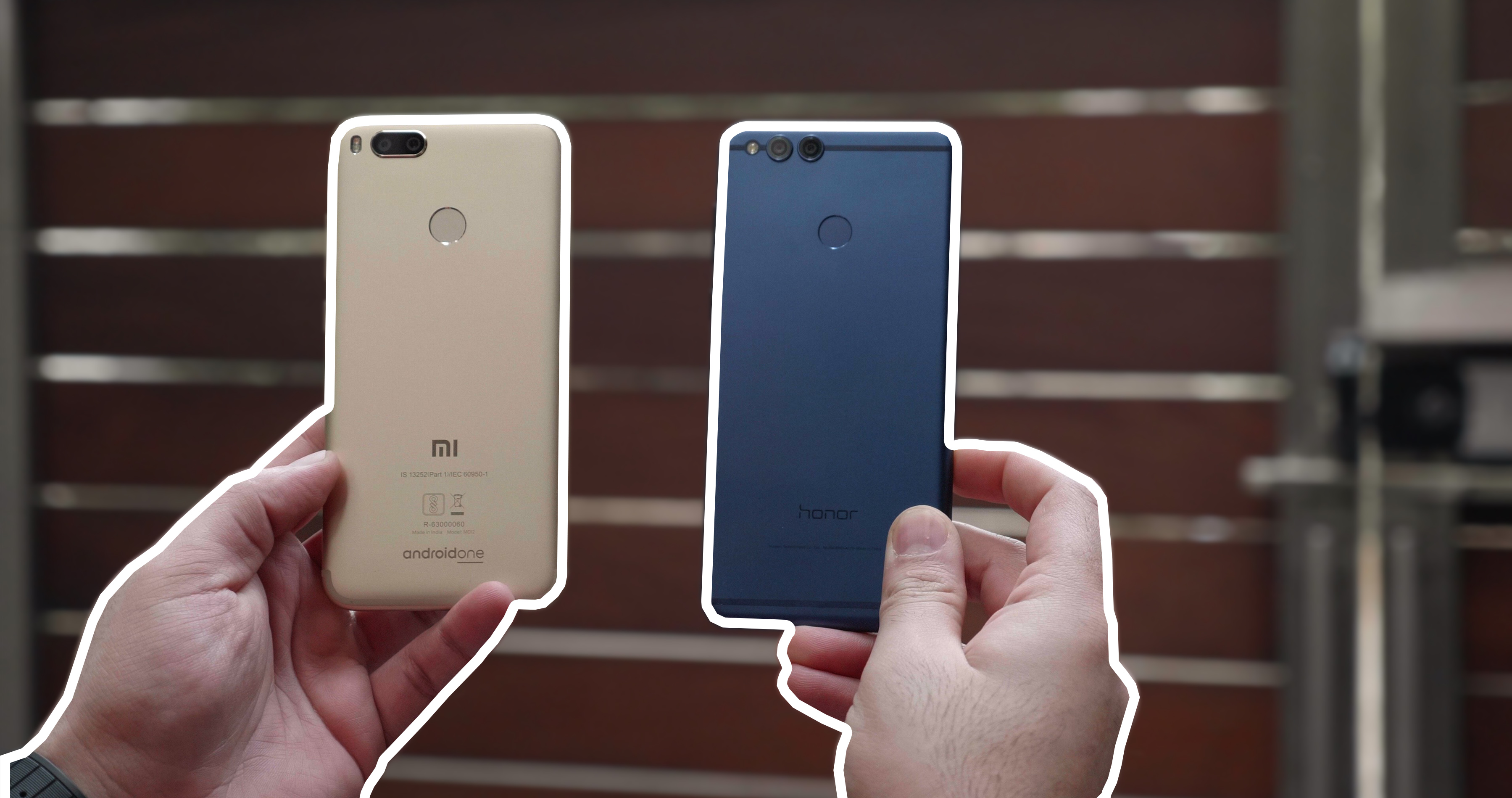
Huawei Honor launched the Honor 7X in India at a starting price of Rs. 12999. Up until then, that price segment was dominated by the likes of the Xiaomi Mi A1 and Moto G5s Plus, both of which offered similar specifications and software experience.
Before the Honor 7X was launched in India, the Xiaomi Mi A1 was soaring high at a price tag of Rs. 14999 which was cheaper than the Moto G5s Plus, however, a few days after the Honor 7X was launched, the price of the Mi A1 decreased. In order to keep a level playing field, Xiaomi reduced the price of the Honor 7X to Rs. 13999 and right now, it is available for Rs. 12999 on Flipkart. With the price tag no longer a factor, let’s see which phone comes out on top.
Design
Hands down, the Honor 7X wins in the design department. The Xiaomi Mi A1 is not a bad looking phone but, when kept next to each other, the Mi A1 looks dated. The Honor 7X has a modern design with thin bezels and even though the company could’ve used the bottom bezel to house a fingerprint sensor instead of its branding, the Honor 7X looks sleek and more pleasing to the eye than the Xiaomi Mi A1.
Display
The Honor 7X has a 5.93-inch LTPS IPS LCD display with a 2160 x 1080 px resolution and 407ppi. The Xiaomi Mi A1, on the other hand, has a 5.5 inch LTPS IPS LCD display with a 1920 x 1080 px resolution and 403ppi. Despite a taller display, the Honor 7X has a slightly high pixel count than the Xiaomi Mi A1. In terms of display, the Honor 7X wins the battle again thanks to its 18:9 aspect ratio which comes in handy while multi-tasking and content consumption in general. The Xiaomi Mi A1 has the 2016 standard 5.5-inch display which cannot seem to hold up against the Honor 7X.
Software
After photos and sound, software is the most subjective aspect of a smartphone. Just like some people prefer bass-heavy sound over a flat soundstage, some people prefer the bells and whistles of a custom skin over stock Android OS. There is no denying that the Xiaomi Mi A1 will always be ahead when it comes to software updates but, EMUI on the Honor 7X has come a long way since its inception as well. Both the phones offer a different software experience for different sets of people.
Performance
The Xiaomi Mi A1 has the Qualcomm Snapdragon 625 chipset, 4GB of RAM and 64GB of onboard storage which can be expanded up to 128GB via microSD card. The Honor 7X is powered by the HiSilicon Kirin 659 chipset, 4GB of RAM and 32GB of storage (for the Rs. 12,999 variant) which can also be expanded up to 256GB via microSD card. Just as you would expect, bot the devices handle day-to-day tasks with ease although the 18:9 display makes normal usage much more fun on the Honor 7X. During gaming again, the display of the Honor 7X comes into play as it enhances the user experience while the Xiaomi Mi A1’s experience is adequate but, nothing to ride home about.
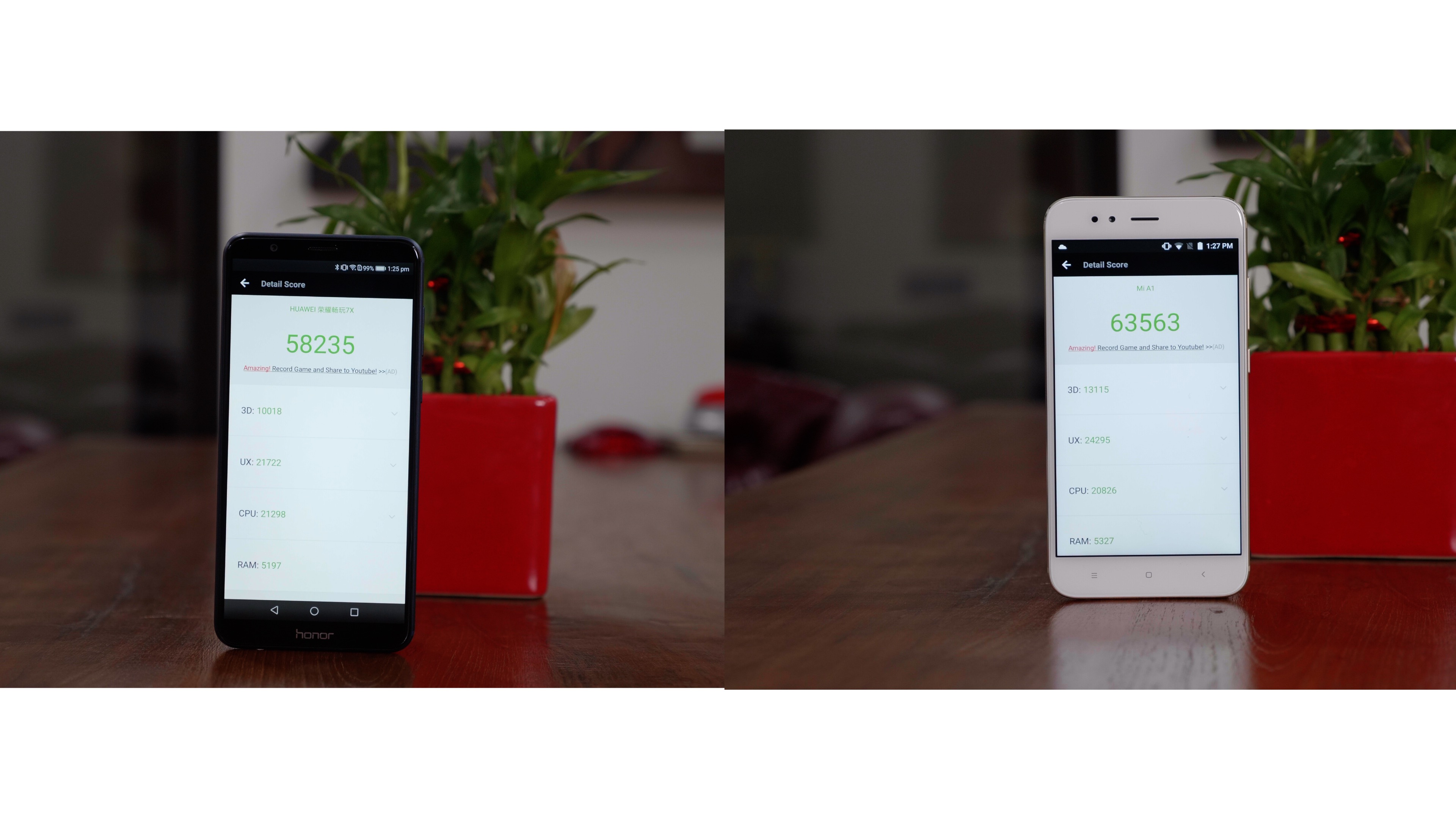
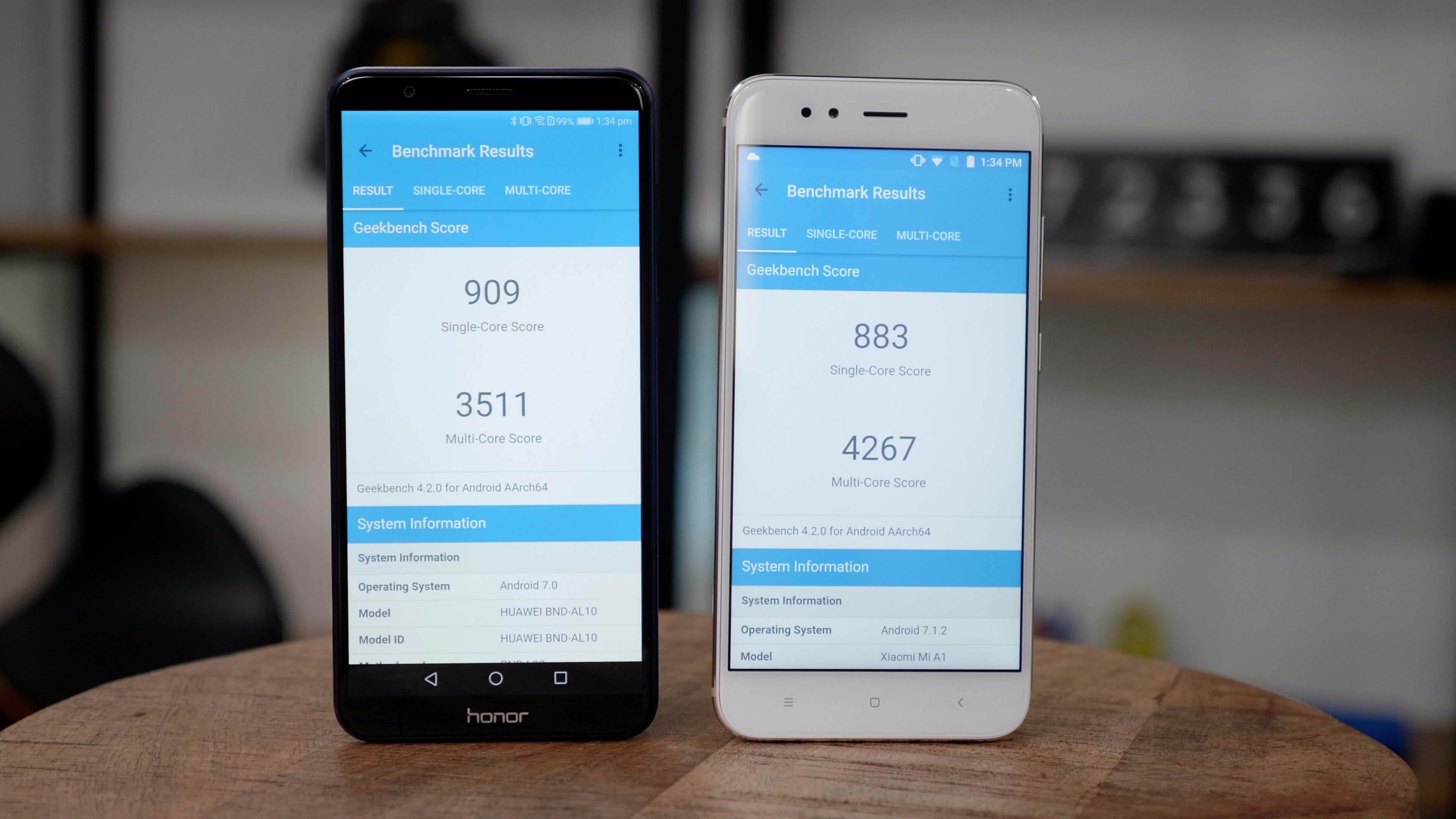
Benchmark scores tell a similar story. In Geekbench, the Xiaomi Mi A1 scores 883 in single-core and 4267 in multi-core set. The Honor 7X on the other hand scores 909 in single-core and 3511 in multi-core tests.
Camera
Photos are extremely subjective and the same case is in this comparison as well. Watch our full comparison for photo samples and decide for yourself. Here are a few sample shots from both, the Xiaomi Mi A1 and Honor 7X.
Honor 7X
Honor 7X
Honor 7X
Honor 7X
Xiaomi Mi A1
Xiaomi Mi A1
Xiaomi Mi A1
Xiaomi Mi A1
While specifications on paper might not tell the whole story, the two phones are a solid option in the price category. The Mi A1 has a dated design but stock Android OS while the Honor 7X has a modern design, thin bezels but a heavily skinned custom OS.
Specifications
Honor 7X
Xiaomi Mi A1
Price
[amazon_link asins=’B0784BZ5VY’ template=’ProductAd’ store=’igyaan-21′ marketplace=’IN’ link_id=’d3211805-ec8b-11e7-b2e3-2fce9ec0930c’] Starting At Rs.12999
Rs. 13999
Display
5.93-inch
LTPS IPS LCD
5.5-inch
LTPS IPS LCD
Resolution
2160 X 1080 px
407ppi
1920 x 1080 px
403ppi
Battery
3340 mAh
3080 mAh
OS
Android 7.1 Nougat
EMUI
Android 8.0 Oreo (Beta)
Stock Android OS
Chipset
HiSilicon Kirin 659
Qualcomm Snapdragon 625
GPU
Mali-T830 MP2
Adreno 506
RAM
4GB
4GB
Storage
32GB/64GB (Expandable up to 256GB)
64GB (Expandable up to 128GB)
Primary Camera
16MP + 2MP depth sensor
12MP (f/2.2) + 12MP (f/2.6) telephoto lens
Primary Video
1080P @ 30fps
4K @ 30fps
Secondary Camera
8MP
5MP
Add-ons
Fingerprint Sensor
Tall display and bezel-less design
Budget smartphones in India have to be the best in class to gain any sort of attention from the consumers. This is thanks to the overcrowding in the segment and some great devices that have been launched over the past year or so. One of them has been the Xioami Redmi Note 4. By the company’s own admission, the Redmi Note 4 is Xiaomi’s most successful smartphone in India.
Xiaomi Redmi 5 Plus
In what might be a shock move, the Chinese smartphone maker might not launch a successor to the Redmi Note 4 and instead market the Redmi 5 Plus as the successor to the Redmi Note 4. According to a Supermoderator on the MIUI forum, the Xiaomi Redmi 5 Plus is going to remain the company’s only large-screened affordable option. This is not an official confirmation but, it as close as it gets to one.
In India, Xiaomi has historically launched phones with different names in India and it won’t be surprising if the Redmi 5 Plus is launched as the Redmi Note 5. The ‘Note’ moniker will matter a lot as the consumers already associate the term ‘Note’ with a big phone, and the Redmi 5 Plus falls into that category with a 6-inch display.
Xiaomi Redmi Note 4
However, does the Redmi 5 Plus pose enough of an upgrade over the Redmi Note 4 which will persuade the Redmi Note 4 owners to upgrade? Let’s find out.
Specifications
Redmi Note 4
Redmi 5 Plus
Display
5.5-inch IPS LCD
5.99-inch IPS LCD
Resolution
1920 x 1080 px
401ppi
2160 x 1080 px
403ppi
Chipset
Qualcomm Snapdragon 625
Qualcomm Snapdragon 625
Battery
4100 mAh
4000 mAh
RAM
2GB/3GB/4GB
3GB/4GB
Storage
32GB/64GB, Expandable up to 128GB
32GB/64GB, Expandable up to 256GB
Primary camera
13 MP f/2.0 aperture
12MP f/2.2 aperture
Secondary camera
5 MP f/2.0
5MP
Add-ons
Fingerprint sensor
Fingerprint sensor
Modern design
Although specs on paper never really tell the whole picture, a comparison on paper is sometimes enough to show a clear picture. That is the case with the Redmi 5 Plus and Redmi Note 4 debate. If Xiaomi launches the Redmi 5 Plus as the Redmi Note 5 in India, it will end up disappointing a lot of consumers which the Chinese smartphone maker will not want.
A refresh of the Redmi Note 4 with a better chipset and the same design as the Redmi 5 Plus might just do the trick. The design of the Redmi 5 Plus is a definite upgrade to the same-old class Redmu design of the Redmi Note 4. But, when you look at what the Redmi 5 Plus has to offer over the Redmi Note 4, it falls short in a lot of aspects.
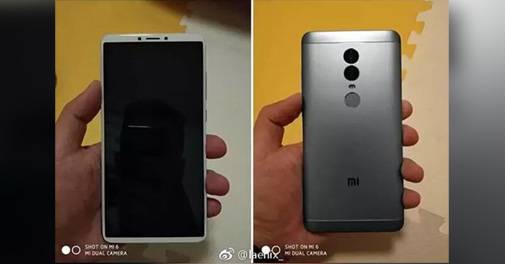
Possible Redmi Note 5 Leak
It has a marginally smaller battery than the Redmi Note 4 despite having a larger screen size. It has the same Qualcomm Snapdragon 625 chipset despite coming out almost a year after the Redmi Note 4.
Even though you shouldn’t expect a lot from a one-generation upgrade, the Redmi Note 4 to Redmi 5 Plus just doesn’t make sense, at least on the paper. Let’s hope Xiaomi scraps the idea of dropping the ‘Note’ lineup and launches a worthy successor to the beloved Redmi Note 4.
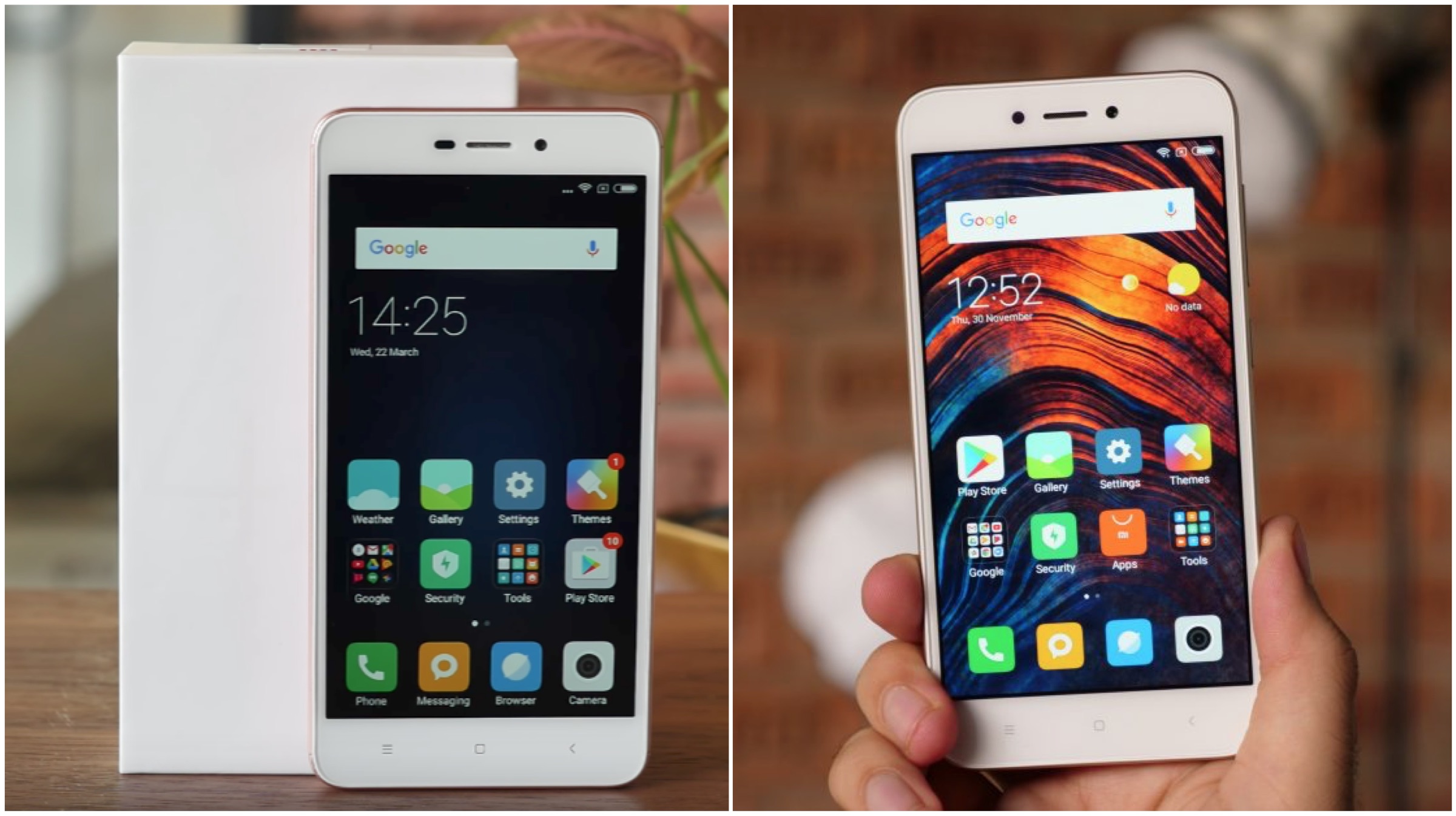
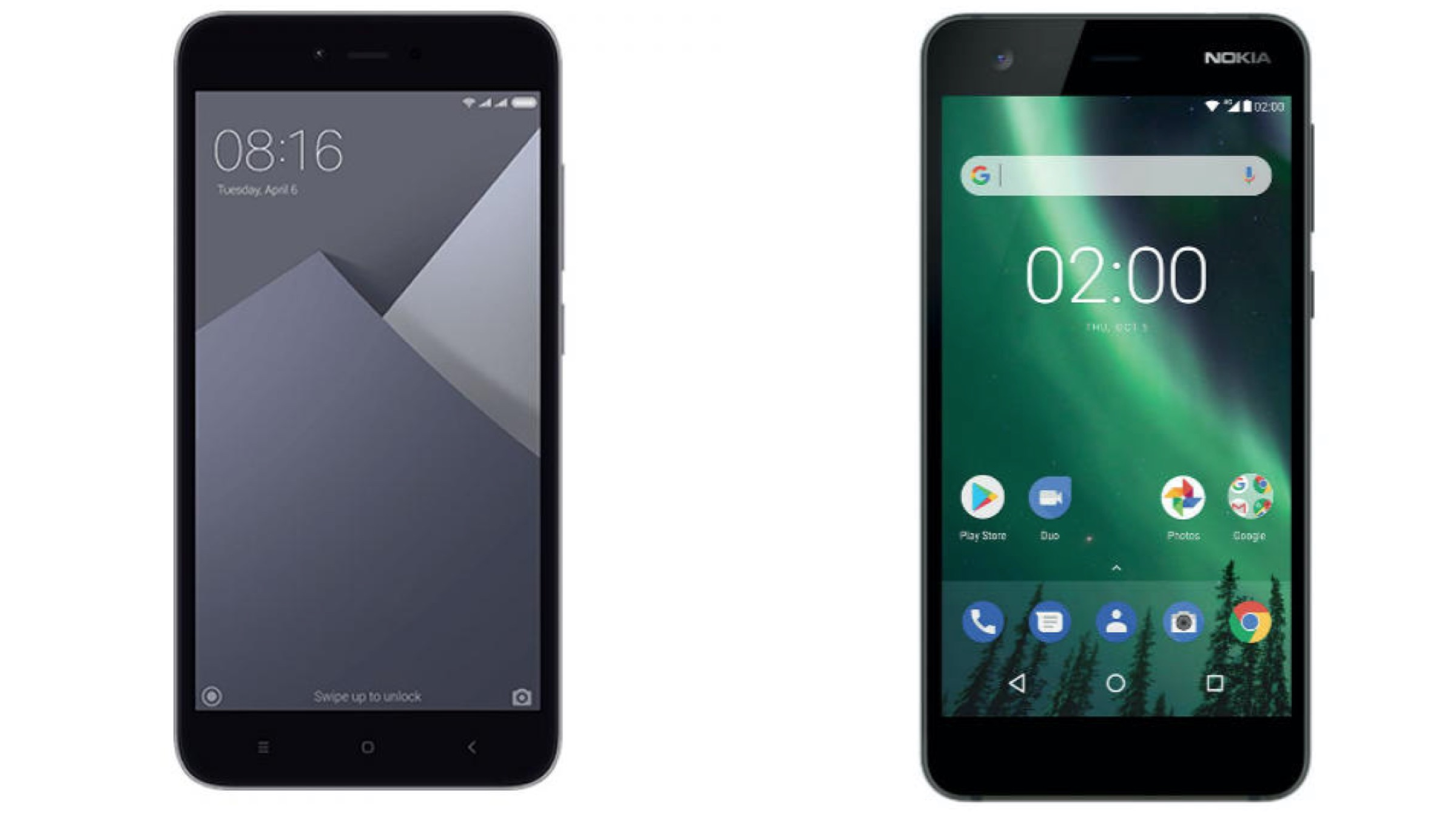
As 2017 draws to a close, the budget smartphone category is more clustered than ever. The sub-10K category has a host of phones which can be your next smartphone, depending on what you prefer as a user. We recently compared the Xiaomi Redmi Y1 Lite and the Nokia 2 and with the launch of the Redmi 5A, it is time to revisit the comparison and see how trumps this time.
<a href=”http://amzn.to/2z7n9HO”>Click here for latest price</a>
Rs 6999
Display
5 inch IPS
5.5 inch IPS LCD
5 inch TFT
Display Resolution
1280 x 720 px
1280 x 720 px
1280 x 720 px
OS
Android 7.1 Nougat
Android 7.1 Nougat
MIUI 8.5 (Update to MIUI 9 guaranteed)
Android 7.1 Nougat
Stock Android OS
Chipset
Qualcomm Snapdragon 425
Qualcomm Snapdragon 425
Qualcomm Snapdragon 212
GPU
Adreno 308
Adreno 308
Adreno 304
RAM
3GB
2GB
1GB
Storage
32GB, Expandable up to 128GB
16GB, Expandable up to 128GB
8GB, Expandable up to 128GB
Battery
3000 mAh
3080 mAh
4100 mAh
Primary Camera
13MP f/2.2
13MP f/2.0
8MP
Secondary Camera
5MP f/2.0
5MP with f/2.4 aperture
5MP
Other Features
Dedicated MicroSD card slot with Dual SIM card slots
Pro selfie mode
None
With the Redmi 5A in picture, it looks to be a better choice than the Redmi Y1 Lite and the Nokia 2. It has more RAM and storage at the same price but, Nokia 2 continues to rule the battery department.
If stock Android is your thing and you can deal with a much slower chipset, then the Nokia 2 makes more sense. But, if you go by performance stand point and nothing else, the Redmi 5A is the clear winner here.
Nobody likes to compromise nowadays, especially when it comes to our smartphones. Even if you’re buying a sub-10K phone, you have certain expectations from your budget device. The Indian smartphone industry if flooded with phones that provide great value for money. Xiaomi’s own Redmi Note 4 has been one of the best-selling budget phones in India.
Xiaomi has established itself as one of the top brands in the Indian market and has consistently delivered great phones at an affordable price. One such phone was the Redmi 4A, and one such phone is the Redmi 5A. Launched on the 30th November, the Redmi 5A succeeds one of the most successful Xiaomi phones in the country. By its own admission, Xiaomi claims that the Redmi 4A sold over 4 million units since its launch. hence, Redmi 5A has a huge ask in front of it.
Let’s compare the two phones and see what has changed between the two generations. And, more importantly, if you are a Redmi 4A user, should you upgrade?
At a glance, or even a closer look, you’ll barely be able to make out the difference between the two phones. But, the most important factor in favour of the Redmi 5A is its price. In this world of every successor becoming more expensive, it is astonishing how Xiaomi has reduced the price for the base model while maintaining all the other features of the Redmi 4A.
The only reason you should upgrade to the Redmi 5A if you own a Redmi 4A is if you miss the dual SIM slot and microSD card slot. Other than that, there is barely anything keeping the two phones apart.
Smartphones nowadays, are no longer a luxury. Smartphones have become an affordable necessity that keeps on moving in two directions. On one hand, we saw the thousand dollar or the “1 lakh” barrier being crossed by the iPhone X this year, and on the other hand we have much more affordable Android phones which do not skim down on quality.
Xiaomi and HMD Global recently launched two Android phones at the same price tag of Rs 6999. While Xiaomi has slowly reached the pinnacle of the Indian smartphone market, HMD Global and Nokia are still trying to find its feet after a lengthy absence from the scene.
Today, lets stack the two budget giants against each other and see which phone trumps the other one!
<a href=”http://amzn.to/2z7n9HO”>Click here for latest price</a>
Rs 6999
Display
5.5 inch IPS LCD
5 inch TFT
Display Resolution
1280 x 720 px
1280 x 720 px
OS
Android 7.1 Nougat
MIUI 8.5 (Update to MIUI 9 guaranteed)
Android 7.1 Nougat
Stock Android OS
Chipset
Qualcomm Snapdragon 425
Qualcomm Snapdragon 212
GPU
Adreno 308
Adreno 304
RAM
2GB
1GB
Storage
16GB, Expandable up to 128GB
8GB, Expandable up to 128GB
Battery
3080 mAh
4100 mAh
Primary Camera
13MP f/2.0
8MP
Secondary Camera
5MP with f/2.4 aperture
5MP
Other Features
Pro selfie mode
None
On pure specifications, the Redmi Y1 Lite is ahead of the Nokia 2 in almost every aspect except the battery. MIUI is an Android skin people love to hate, and it depends on you whether you prefer the customisability but, a certain level of unpredictability of this skin.
However, if you are on the lookout for a secondary device which you need just for calling, then a 4100 mAh battery and stock Android OS could be the way to go.