Everyone is moving towards virtual reality. Indeed VR is the next phase for technology and the biggest names in the tech industry have already begun working towards it. We have already seen Samsung come out with its Gear VR, Google with its Cardboard, HTC with its Vive, Oculus with its Rift, and now Apple wants to join in too.
Over the past few months we have been seeing Apple’s growing interest in VR technology. The Cupertino-based giant has made some big acquisitions to boost its VR development. While a proper VR headset is still far away, Apple has released VR binoculars to fill the gap for now.
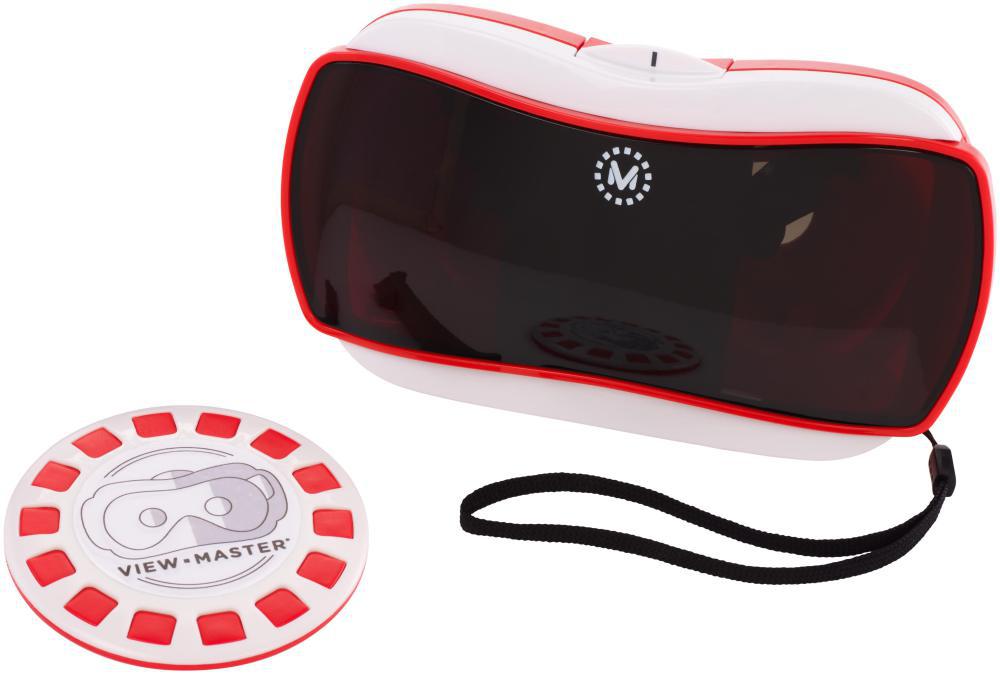
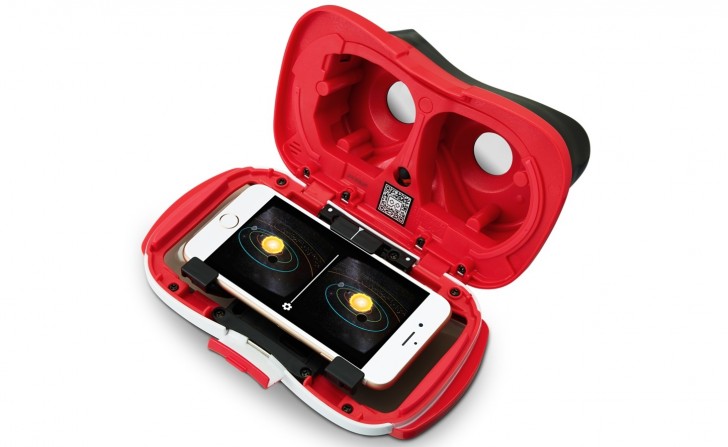
The View-Master VR binoculars from Apple has made a quite appearance in the App Store for a price of $29.95. The binoculars work a lot like the Gear VR and Google Cardboard. It needs a smartphone – in this case the iPhone – in order to create a virtual environment for the wearer.
The View-Master is not a hands-free device. It requires the user to hold the device up to their eyes just like the old school View-Masters. Like the Google Cardboard, the View-Master lets consumers get a taste of the virtual space. A sort of baby step to know whether consumers are ready for the major VR headsets like the Oculus Rift.
This is just an easy, affordable offering from Apple, which is planning in all likeliness to come out with its own Rift-like VR headset in the near future.
Early in January, it was reported that Google is working on its own virtual reality headset. New reports now suggest that the successor to the Google Cardboard will see the light of day sometime this year.
Not much is known at this time as to what and how Google’s VR will look like, but sources close to the development of the device report that the company will attempt to take on Samsung’s Gear VR. This means that the Google VR will need to pair with a smartphone in order to work. However, unlike Samsung which allows only 2015 flagship devices to be compatible with its headset, Google will allow users compatibility with a wider range of devices.
Google will also likely release an Android VR software along with the VR headset that will look to enhance the VR experience by making the software native to the Android operating system.
The details as to when exactly Google plans to launch its headset is still a mystery. There is a possibility that the company will make the announcement or at the least discuss its VR intentions at this year’s Google I/O conference, which begins on May 18.
it looks like Apple is joining the bandwagon of companies that are focusing on virtual reality technology. This is suggested by the fact that the Cupertino giant recently hired a man by the name Doug Bowman, the Director of the Center for Human-Computer Interaction at Virginia Tech.
Bowman joins the list of recently hired virtual and augmented reality experts, following Apple’s acquisition of Faceshift, Metaio, and Emotient. Apple is trying to learn as much as it can about the world of virtual reality, seeing that its major competitors like Samsung and Microsoft have already made their mark in that realm.
It not clear in any way as to Apple’s plans regarding VR. Bowman’s experience with creating 3D interfaces could be deployed in AR car control systems, which could be incorporated in Apple’s autonomous car (which in itself is a mystery right now). The other speculation is towards a Samsung’s Gear VR-like headset only using iPhones instead. We’ll just have to wait and see what Apple has in mind on that front. One thing is clear, virtual reality is here to stay.
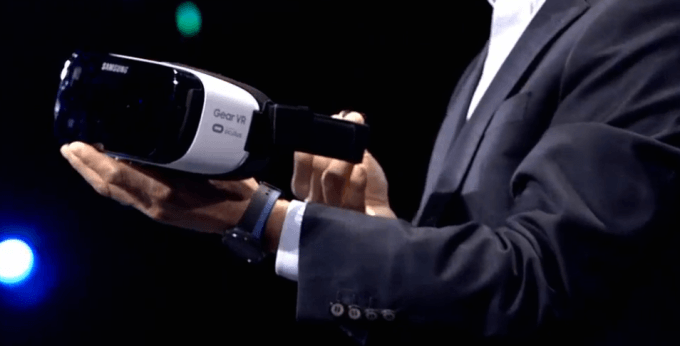
The Samsung Gear VR Headset, alongside the Gear S2, and Gear S2 Classic Smartwatch launches for a price of Rs 8,200 today to eager Indian customers. The product will be available through the company’s retail stores, as well as through Flipkart.
The focus on virtual reality is growing with every passing day. As more and more important names from the tech industry are coming forward with their products, Samsung too has decided to jump into the fray with its new VR offering for its millions of fans around the globe.
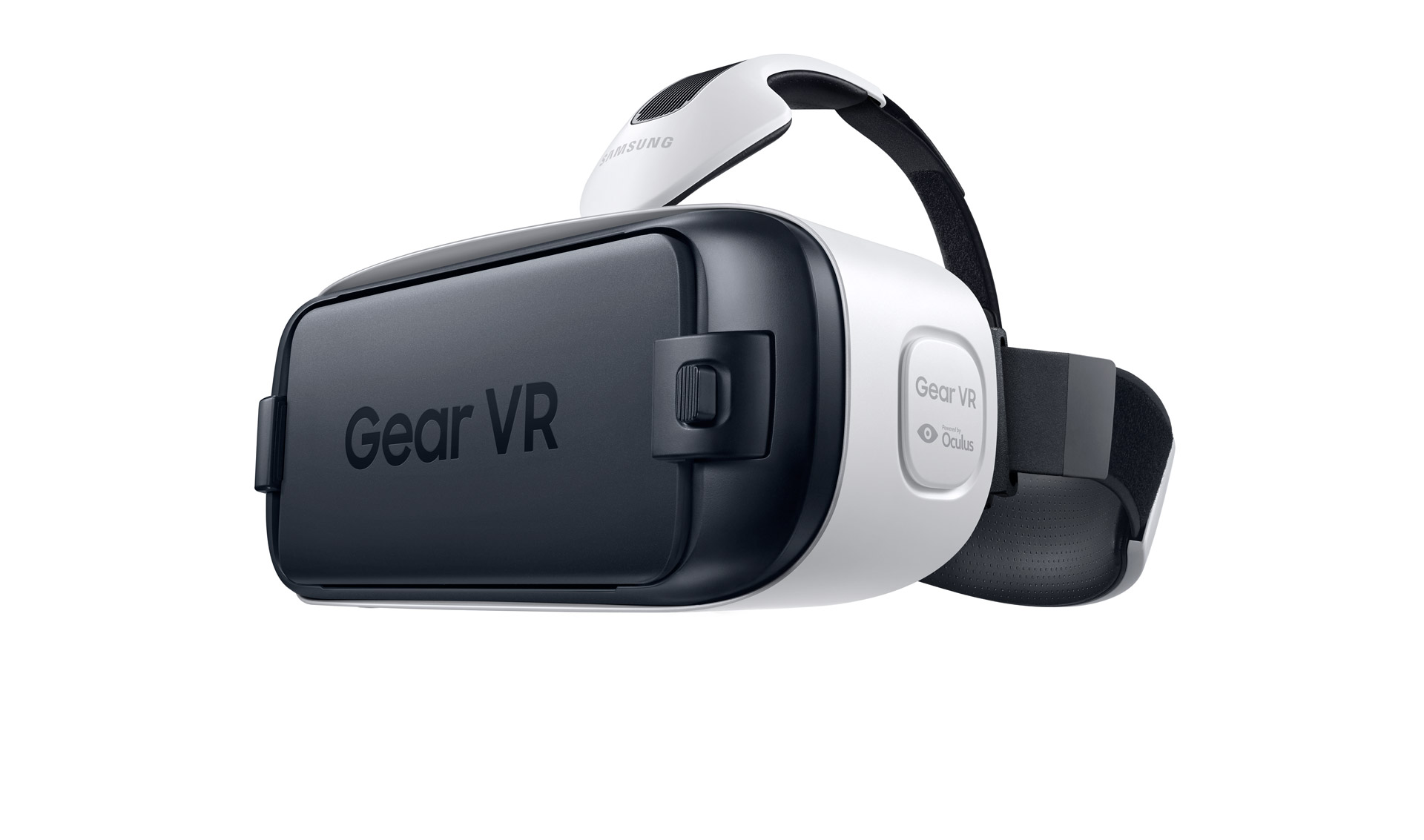
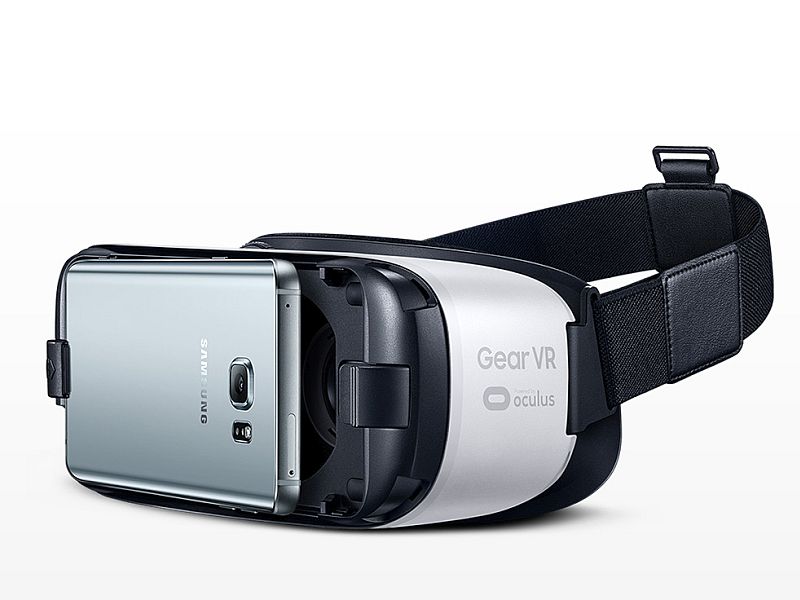
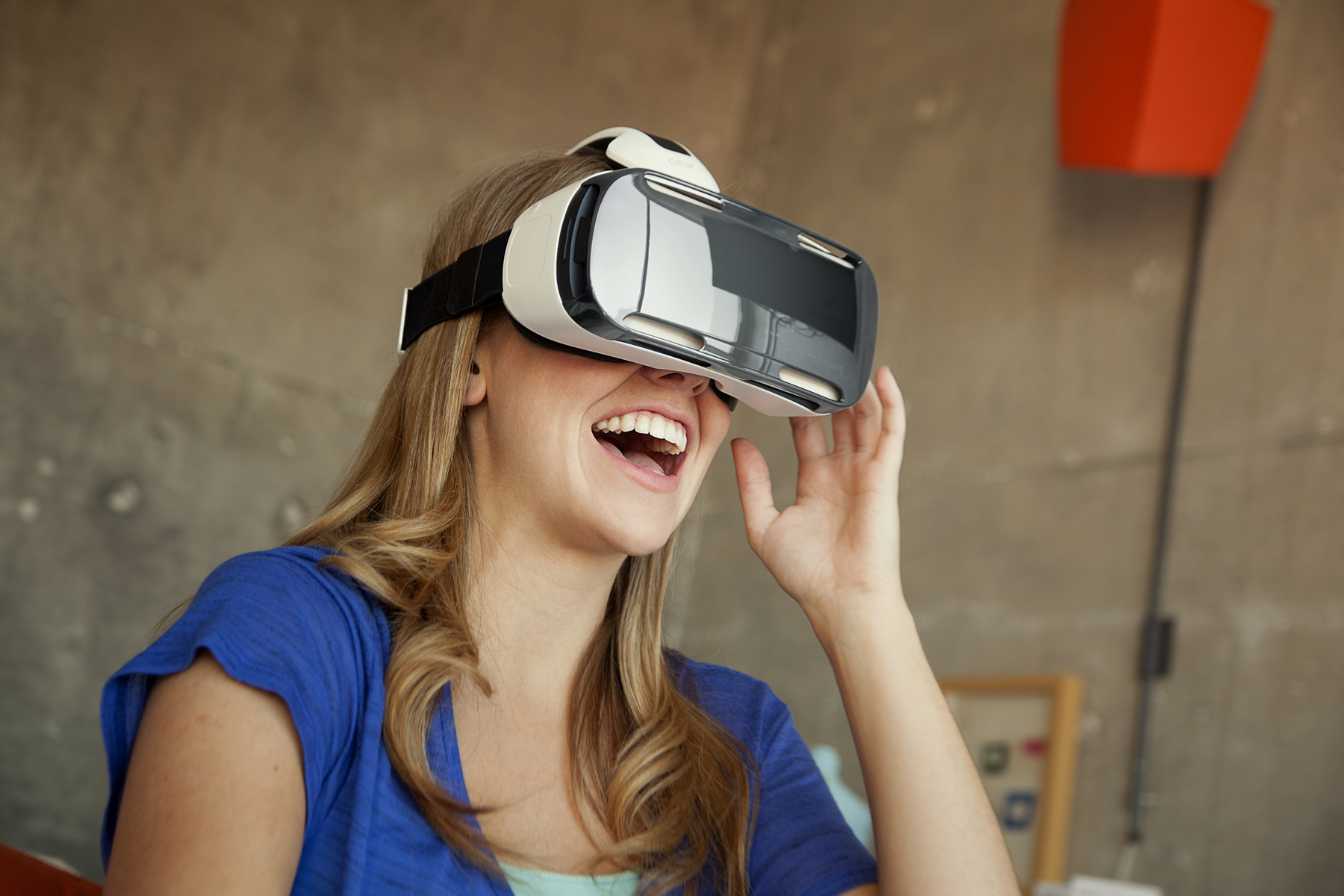
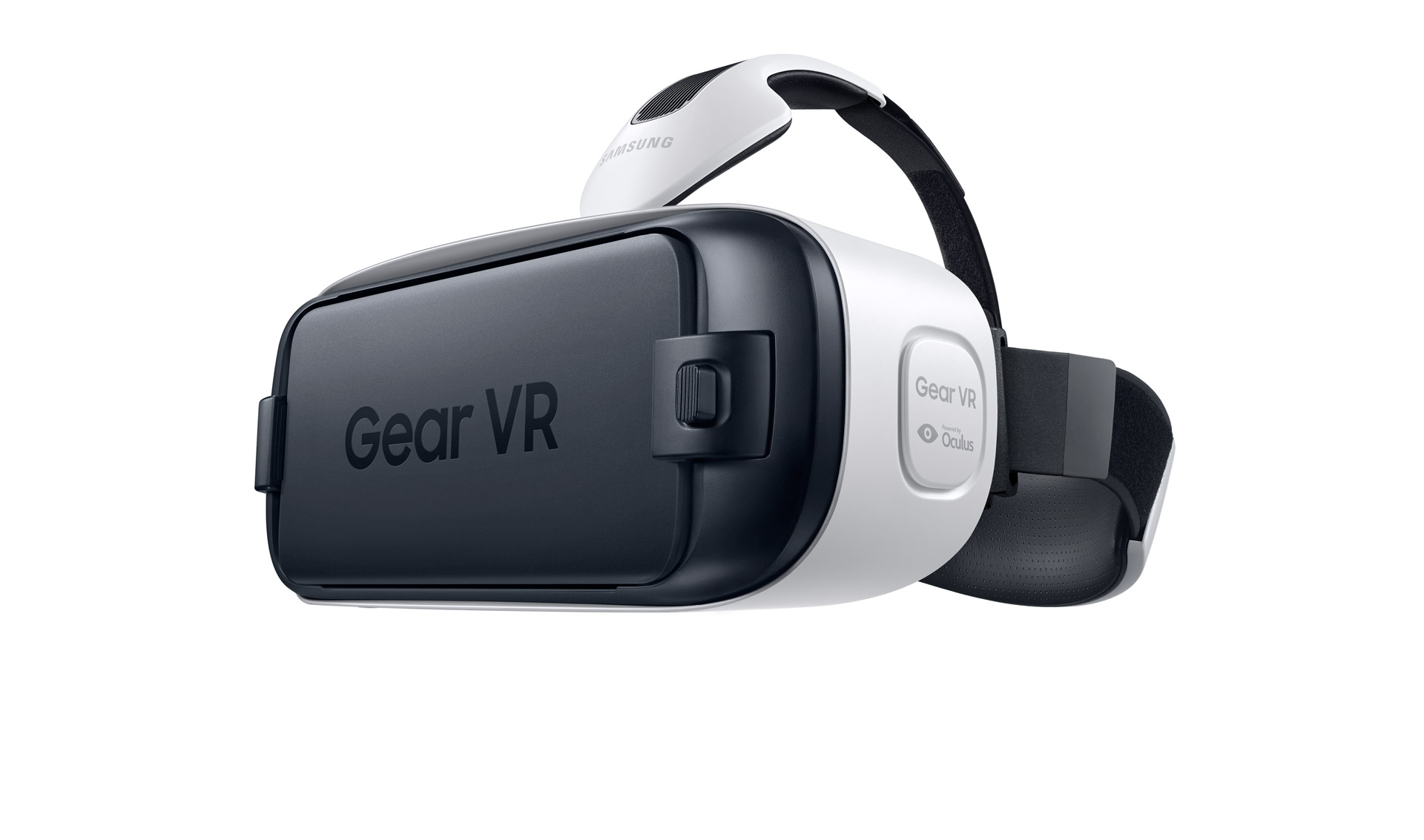
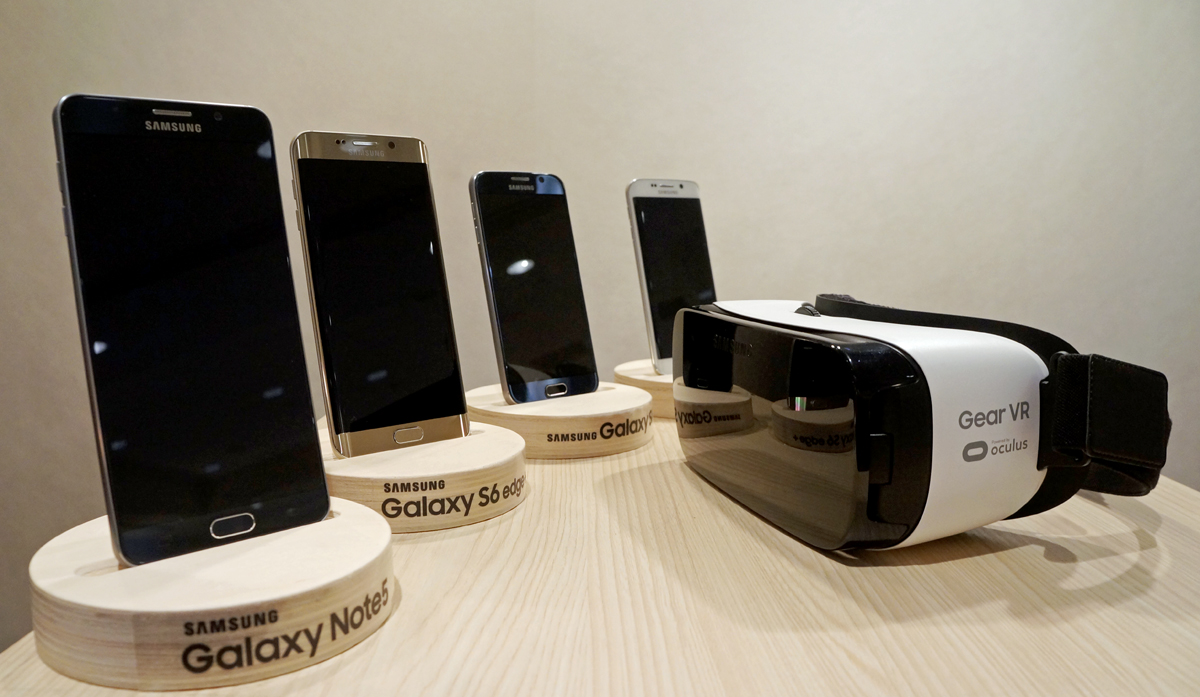
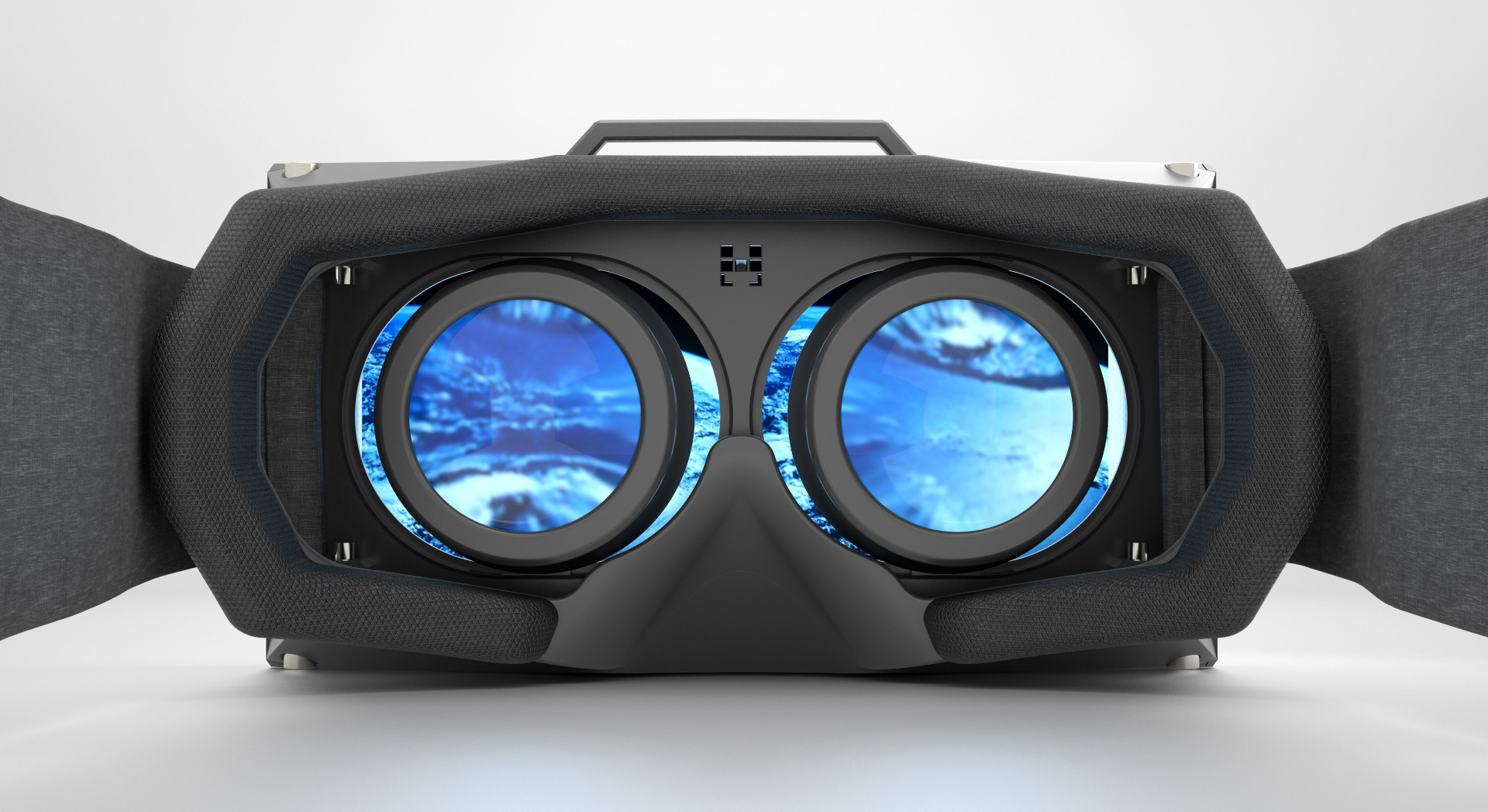
The Gear VR Headset features a wide interface, ergonomic design and a large touchpad. Gear VR promises convenient and accurate control to enjoy games and videos. At the launch the company stressed that Gear VR Headset works seamlessly with Galaxy smartphones. As of now, the Gear VR supports the latest high-end Galaxy smartphones including the Galaxy Note 5, Galaxy S6 Edge+, Galaxy S6, and Galaxy S6 Edge. Samsung also added the recently unveiled Galaxy Note 5 Dual SIM to the compatible devices list.
Samsung stresses that the new Samsung Gear VR Headset is 19 percent lighter compared to the previous model. The new VR Headset features a large touchpad for control. It will weigh 318 grams and measures 201.9×116.4×92.6mm. The Gear VR comes with an impressive field of view of 96 degrees. It also houses back, volume, and focus adjustment wheel button for controls.
Samsung’s new offering packs sensors such as gyro, accelerometer, and proximity, and the device will support Micro-USB charging. The Gear VR comes with soft, flexible cushioning material, and also features adjustable straps for ease use of use.The Gear VR Headset will also support 360-degree videos.
Announcing the product Manu Sharma, Director, Marketing said, “Gear VR presents the unique opportunity for consumers to get an immersive virtual reality experience. Samsung will be at the forefront of this exciting revolution to create further ‘wow’ moments in our consumer lives.”
2016 is going to be the year of the virtual reality. People around the world have been eagerly waiting to get their hands on some VR headgears that were demoed last year. One of them is the popular Oculus Rift VR headset. The headgear will start shipping in the first half of 2016. However, there is some bad news as well.
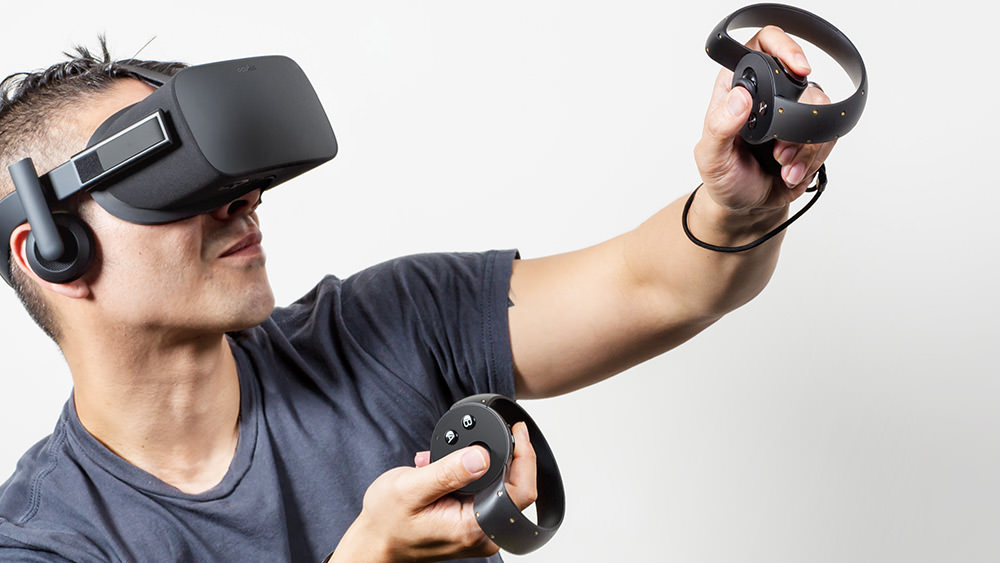
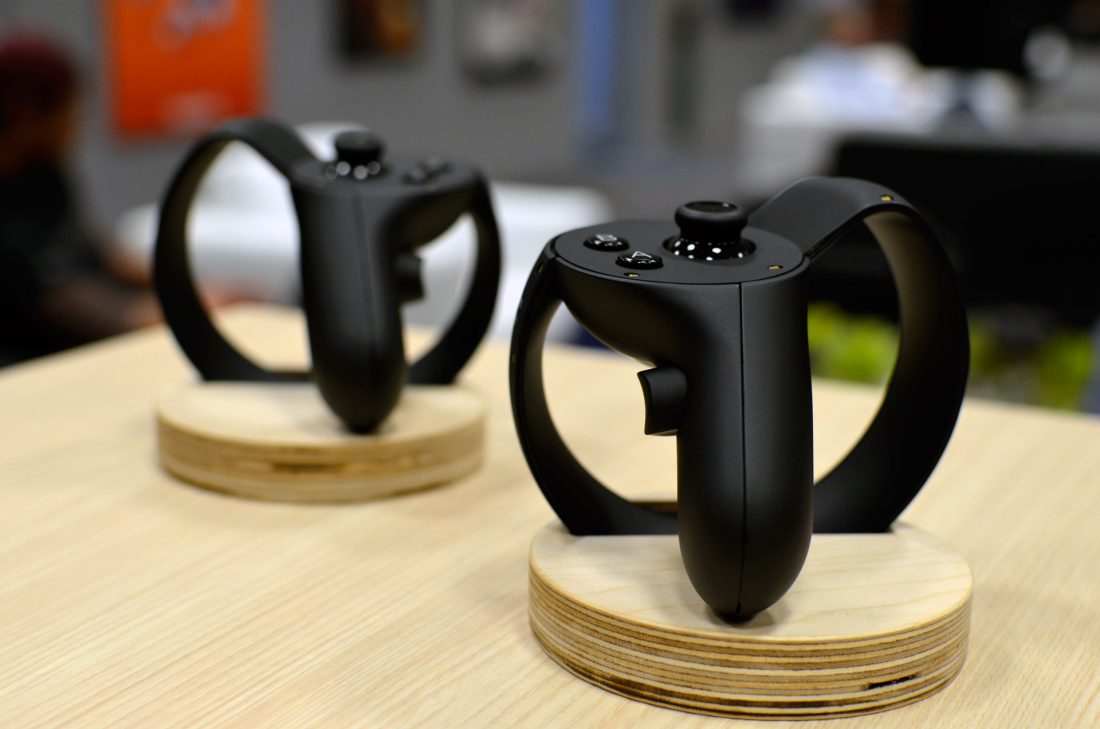
Turns out, you will have to wait a while longer to be able to wave your arms around in the air to control whatever you’re looking at in your giant VR headset. We’re talking about the Oculus Touch – the hand controllers that would allow you to do just that with the Oculus Rift have been delayed and won’t be shipped until the second half of the year.
Oculus VR has stated that pre-order for the Oculus Touch will begin a few months before its official launch (which is still unconfirmed).
“On Touch hardware, we’ve made significant advances in ergonomics, and we’re implementing many changes that make Touch even more comfortable, reliable, and natural. We’re also implementing changes that improve hand pose recognition,” reads Oculus’ blog post.
“The feedback on Touch has been incredibly positive, and we know this new timeline will produce an even better product, one that will set the bar for VR input. We appreciate your patience and promise Touch will be worth the wait.”
Founder and CEO of Oculus Rift, Palmer Luckey recently announced that preorders for the headset would start “soon after new year”. We still don’t now the official pricing of the virtual reality headgear, but Luckey has stated that the price would be low considering all that’s in the device. “Rift will be sold insanely cheap considering complexity – multiple high end OLED monitors+motion tracking+fancy mechanicals in one device,” he tweeted.
So, while you’ll have to wait for the second half of 2016 to fully experience the virtual reality world with the Oculus Touch, you can still embrace the future a little early with the Oculus Rift headset. Follow this space on the official launch and pricing of the Oculus Rift VR.
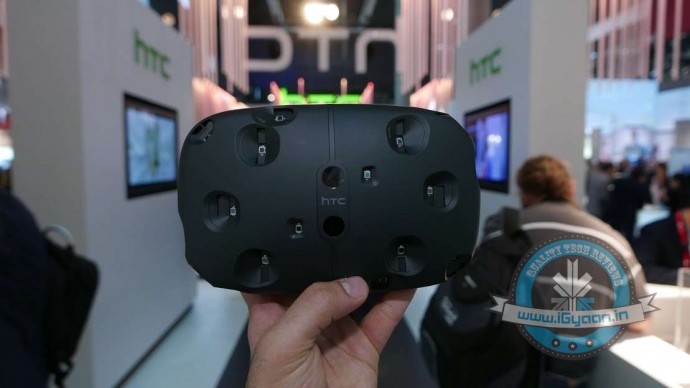
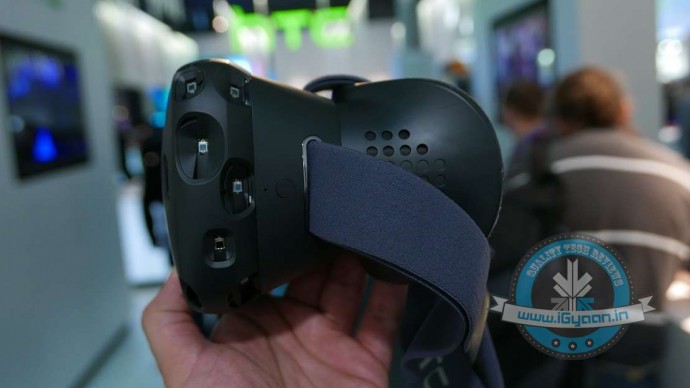
CEO Cher Wang made an exciting announcement about “a very, very big technological breakthrough” at the Vive Unbound developers forum in Beijing yesterday. No other details were divulged except that this upgrade for HTC Vive will be unveiled at CES ’16. This comes as a great comfort after HTC disclosed that buyers won’t get a chance to lay hands on the HTC Vive before April ’16.
Speculations about the retail price of this product have already begun. Once again, the CEO remained tight-lipped and made no mention of even an estimated price. The price will be an important factor with the device already facing competition from many VR-options in the market at competitive prices.
It can be assumed at this point, however, that the kit will cost more than its counterparts because of extra hardware. Wang remains confident this will not be a deterrent for consumers and says, “Why would I buy a handicapped product? You won’t like it.”
Additionally, Vive isn’t only for consumers. Automobile manufacturers like Audi will install it in its flagship stores to create virtual test drives, while other manufacturers are expected to follow suit. It will also be installed in hospitals to get a 3D scan of a patient’s head and therefore prep better for a surgery. We’ll only have to sit back and wait if HTC truly has to offer all that it promises in the realm of VR and 3D tech.
There is a way for art to reach the masses if one knows how to promote it. Digital art has been trying to gain a following in both the digital, and the non-digital, ‘real’ world. The problem, though, is that real-life digital art in a physical form tends to fade away after a few weeks, while soft copies risk losing their aesthetic value.
To fight both these plagues, a team of artists have come up with a museum that provides both a real-life virtual reality exhibit, while at the same time does not lose out on the aesthetics. The dates for the exhibition are November 14th through to December 19th and the location is Brooklyn, New York. However, it can be accessed through Mac and Windows apps that can be run from home.
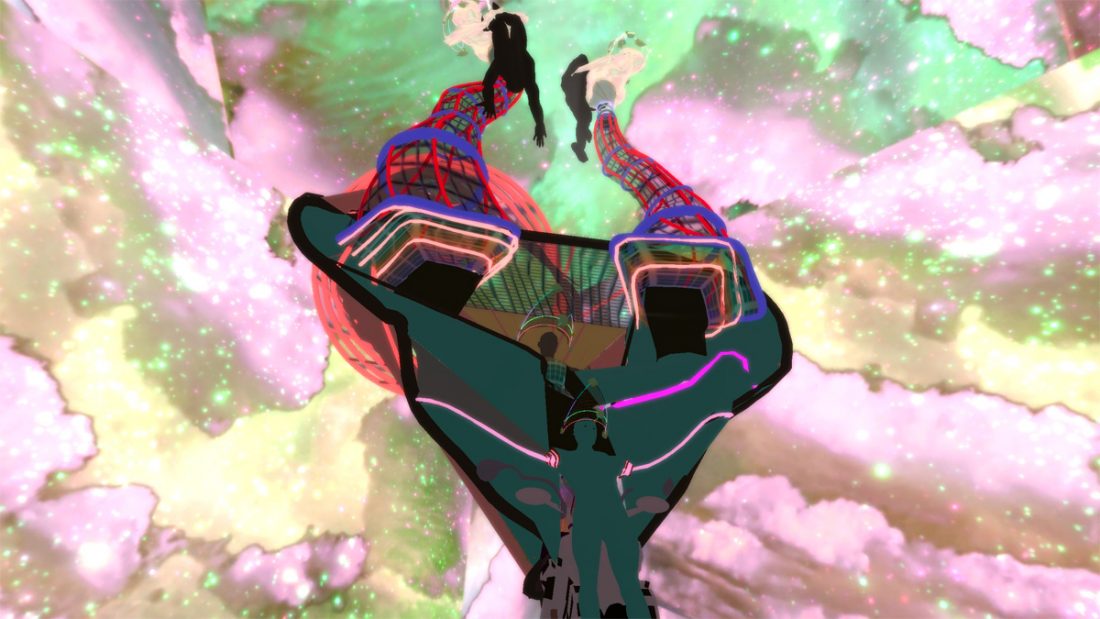
The museum is called the Digital Museum of Digital Art or DiMoDA, and it gives artists the ability to reach a wider audience without diminishing the impact of their work. The artists promise a trippy experience with 3D psychedelia artwork that is possible because of virtual reality. Things here aren’t fixed in place and you’ll be able to experience a 360-degree view of the art.
A generic digital art specimen.
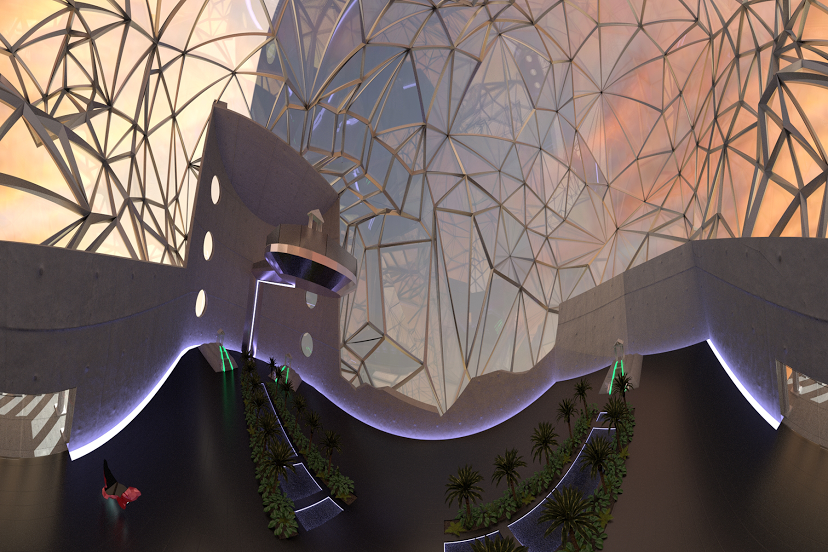
The atrium of the museum is designed and modeled in 3D by Alfredo Salazar-Caro. Viewers wear the Occulus Rift VR headset to enter DiMoDa. Viewers will then immediately approach a number of ‘portals’ which can be used to access the ‘wings’ of the museum. Exhibiting artists have complete control to shape the virtual environment in which their works are installed inside the museum.
DiMoDA will present works by Claudia Hart, Tim Berresheim, Jacolby Satterwhite and a project by Aquanet 2001. The idea was conceived in 2013 by Alfredo Salazar-Caro and William James Richard Robertson, DiMoDA launches in November of 2015 with its first exhibition as a pavilion in The Wrong Biennale and a physical exhibition at TRANSFER in New York from November 14 through December 19th, 2015.
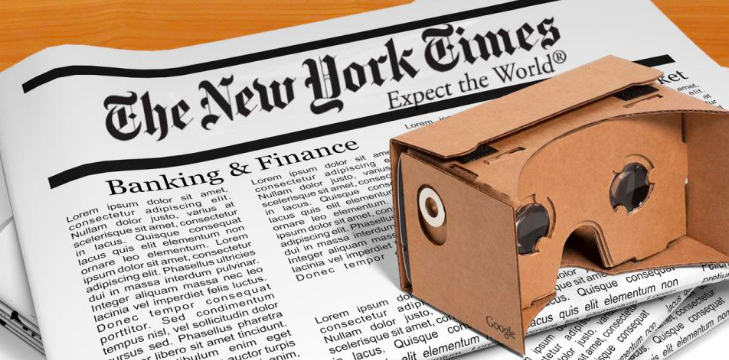
Something happened today. There was a sudden burst of virtual reality news all at once that has people everywhere believing that technology has indeed taken the next step. Today, The New York Times has taken a step towards VR by introducing Google Cardboard with their magazine, YouTube updated their Android app to support virtual reality videos, and finally Samsung plans on launching its Gear VR this month. Take a moment to soak all that in.
So, talking about The New York Times, the American daily newspaper that started in 1851 has now taken a step into the future. It launched the NYT VR app that gives a virtual reality experience of news along with headphones and (optionally) a cardboard viewing device. According to a blog on the NYT website, the goal is “to simulate richly immersive scenes from across the globe.”
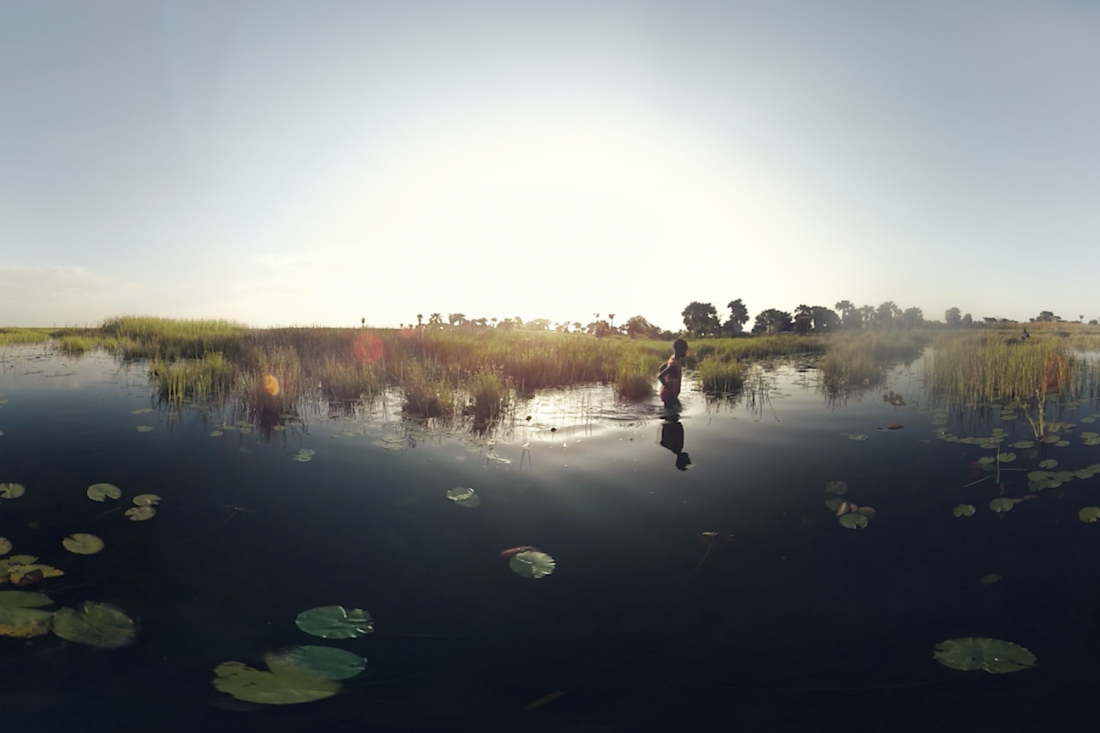
The app started with three portraits of children “driven from their homes from war and persecution.” The first is of an 11-year old boy named Oleg from eastern Ukraine, an 12-year old Syrian girl named Hana and a 9-year old South Sudanese boy named Chuol. To watch the 10-minute short film, you’ll have to download the app and thereafter the film can be downloaded. Though the films are promoted for VR headcount, they can still be viewed normally.
Some 30 million children are displaced. Chuol, 9, escaped into a vast swamp in South Sudan when fighters swept into his village.
“This new filmmaking technology enables an uncanny feeling of connection with people whose lives are far from our own,” writes Jake Silverstein, editor of the magazine.
The New York Times has been at the forefront of journalism for 119 years. The NYT VR app is the future of journalism. The stories will provide you an immersive 360-degree video experience. NYT promises to post new stories told in virtual reality every month. The app is available for download on iOS and Android.
Samsung is all set to release Gear VR, company’s virtual reality headset, before Black Friday that is 27th November. It will be first launched in the US, followed by a UK launch a couple of days later and then other parts of the world. The headset would be shipped with the new Occulus Social app. Vimeo and Twitch videos would also be part of the app which can be watched with other people in anywhere in the world, participating as avatars.
Samsung has also launched Samsung Milk VR, it’s own VR video channel, along with a VR camera Project Beyond which is a 360-degree 3D capture camera built specifically to create videos for virtual reality.
Samsung’s Vice President for VR, Nicholas DiCarlo comments on Gear VR and says, ““Some people think virtual reality (VR) will be isolating but I think it’s clear it’s going to be a social medium… It’s the launch of consumer virtual reality.”
Other than the Occulus Social app and Milk VR, there are also plenty of games, apps such as Facebook 360 videos and Jaunt (a technological initiative that commissions and therefore encourages film-makers to make VR-friendly films) which have been developed for the headset. The headset is priced at $99 (close to Rs. 6,500) and can be plugged into the Galaxy S6, Edge, Edge + and Note 5 and any of the other new Samsung handsets.
Virtual reality seems to be the next big thing in the world of entertainment as well as tech. Would you be willing to give it a try?
Our apologies for focusing on Apple and Samsung for so long when there are people out there making hover boards. The world needs more hover boards and other technologies that Back to the Future expected from 2015.
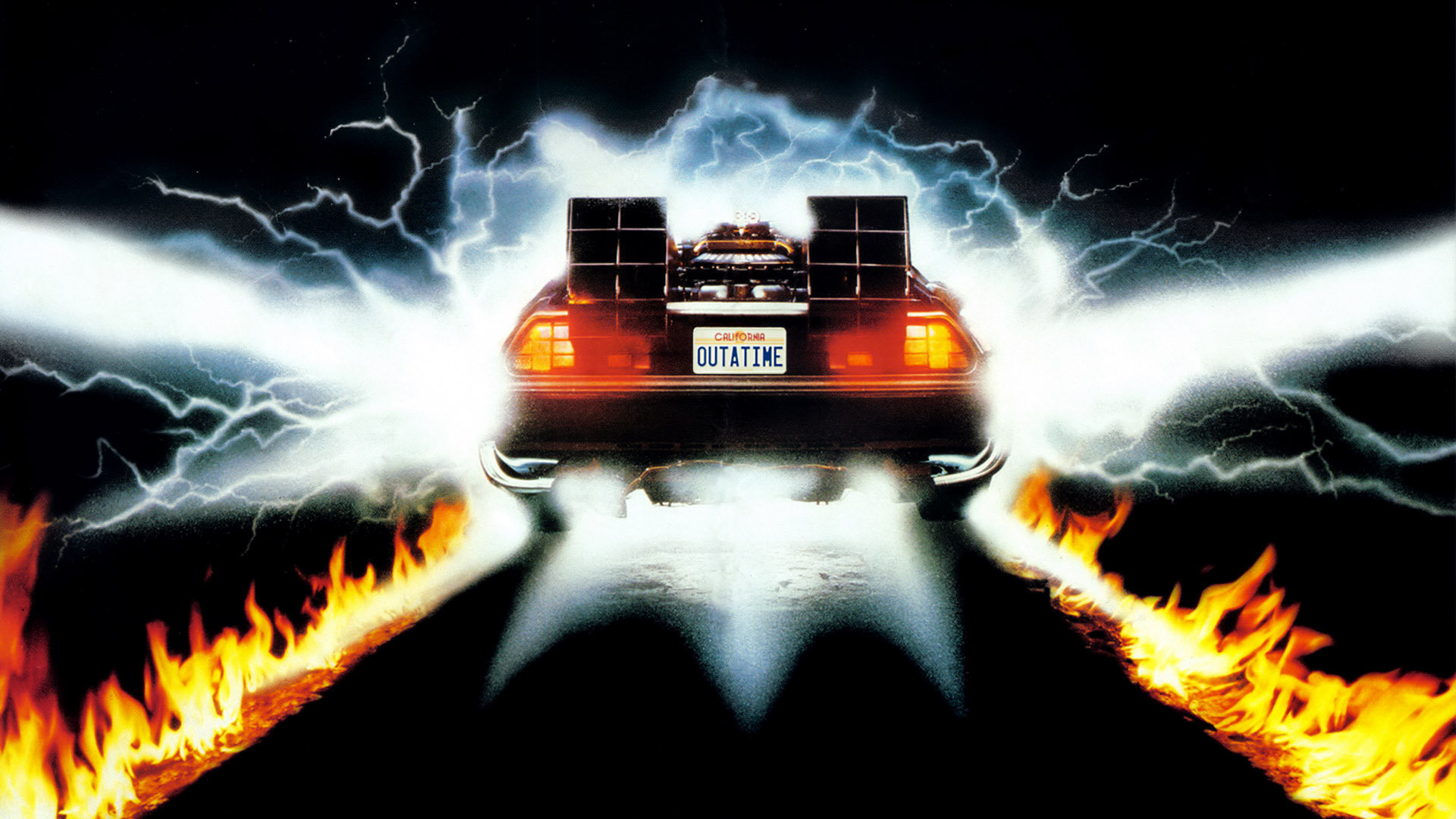
Yes, we are celebrating the 30th anniversary of the cult and cultural phenomenon that is Back to the Future. Released in 1985, the first Back to the Future was all things groundbreaking, had everything a science nerd could ask for including a time-travelling DeLorean, Marty McFly and Doc Brown, ’nuff said. The massive success of the first movie led to a trilogy.
If you watched the equally awesome sequel, Back to the Future Part 2 (1989), you’d remember that Marty traveled 26 years into the future, or more precisely, October 21, 2015. And that’s today. Fans of the movie have been eagerly waiting to see if the 2015 as shown in Back to the Future 2 matches the 2015 of today. The movie promised flying cars, flat TVs, hover boards, Artificial Intelligence and a championship season for the Chicago Cubs. Well, we can’t say much about the Cubs, but how about all that technological stuff?
Flat TVs are already here and have been here for a while, so we can check that off the list. Flying cars are still a way off so we might have to wait a few more years before that can happen. It’s the 21st of October, 2015, so let’s see if our present is what Marty saw 26 years.
Hover Boards
One of the coolest moments in the sequel was when we saw Marty riding a hover board. Back in the ’80s this was a pretty exciting scene on the big screen mostly because people were only aware of a normal skateboard. For fans like myself, this remained something awesome even in the early ’00s.
The hover board needed three specific requirements to work: the ability to hover above ground, the ability to bear your weight, and the ability to last long. While these aspects were seen fulfilled in the movie, it took a long time for reality to get there, but we finally did get there. There are a number of prototypes today that have actually succeeded in making the hoverboard a reality.
Take the Hendo Hoverboard, for example. In 2011, Greg Henderson invented a hover board that used four maglev engines to rise about an inch off the ground and a 135-kilogram payload. However, the battery lasted only about seven minutes. But this was just the start. Unveiled in August 2015, the most recent hover board created by Lexus is undoubtedly awe inspiring. It’s a prototype hoverboard that uses magnetic levitation technology. The board has two reservoirs of superconducting material that’s kept at -197 degrees C through immersion in liquid nitrogen and can be operated when placed above a track that contains permanent magnets.
The video showing the board in action makes you want to scream out “Great Scott!” like Doc Brown. Watch the it below and imagine how Marty would love getting on to one of these babies.
https://www.youtube.com/watch?v=ZwSwZ2Y0Ops
Artificial Intelligence
Mart, Doc Brown, and Biff speak into computerized gadgets and the devices respond intelligently. Sound familiar?
Way before Siri even entered the picture, artificial intelligence already made its appearance on many sci-fi movies, and of course, Back to the Future as well. AI is a process of ‘deep learning’. The ability for a computer to understand human language and respond precisely is something almost every major tech brand today is working on to perfect. AI assistance like Siri and Cortana (first seen in the Halo series) have all drawn inspiration from movies like 2001: A Space Odyssey which featured HAL, the computer in charge of the spaceship.
AI has come a long way and today it’s become extremely intelligent. And yet, AI knows no bounds. Developers are still exploring, looking at how far and wide AI can reach. Today, AI looks to please consumer needs, so much so that physicists like Stephen Hawkins worry about intelligent machines taking over the world.
Fingerprint Biometrics
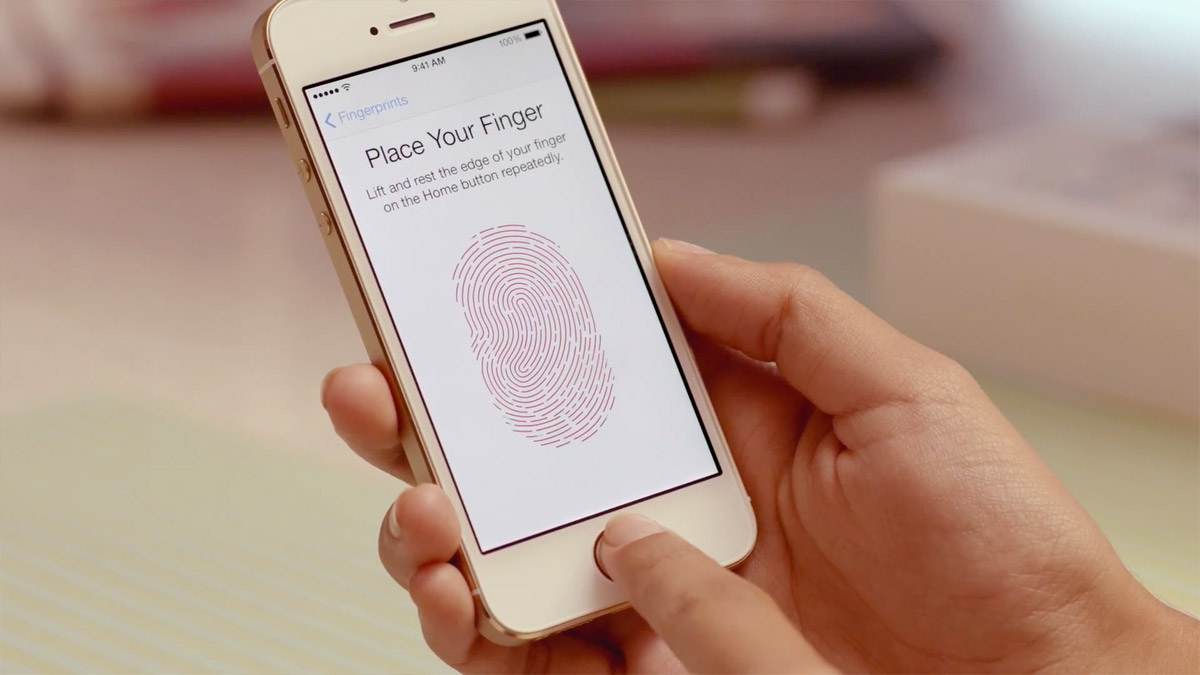
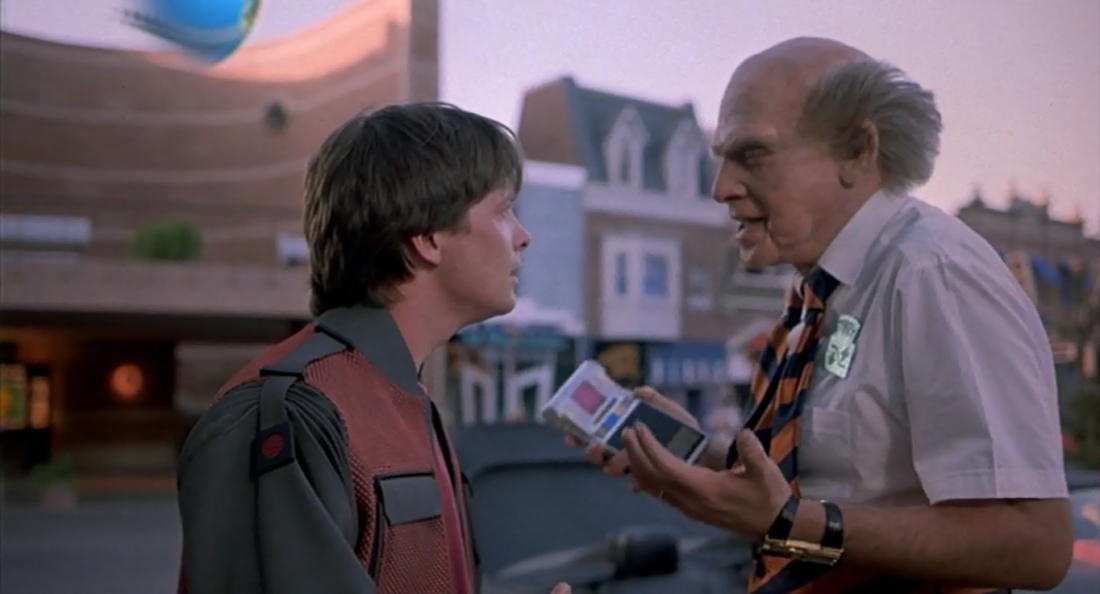
In the movie, when police officers dropped the 1985 Jennifer to her 2015 home, they had to use her thumbprint to enter the house. The door did not have a typical door knob lock. The thumbpad was also seen on currency devices used by taxi drivers in the movie.
Biometric doorknobs are currently present in the market and work just like they do in the movie. Even smartphones and other gadgets use fingerprint scanners these days for a variety of purposes including that added safety that you need to keep your device protected.
Visual Displays
Throughout the movie, you find a number of visual gadgets being used for a number of reasons. You have a flat-screen TV for video conversations, robotic waiters in the shape of flat screen monitors, and you also see a tablet.
Small flat-screens have have been in existence since the 1960’s, but it wasn’t until 2005 that the LCD and Plasma screen TVs took over the traditional Cathode Ray Tube TVs, and could also be mounted on walls like you see in the movie.
Now for tablet computers. In the movie, Terry walks up to Marty and asks him to pay via a thumbprint on a pad. It’s interesting to see that the thumbpad is mounted on what looks like a tablet computer. Many years after this you would see Apple making the very first tablet called the iPad.
Wearable Technology
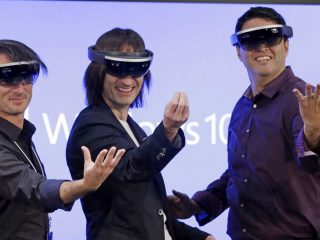
Back to the Future 2 also foresaw visual glasses. In a dinner scene with his future kids, Marty Jr. and Marleen are seen sporting electronic video glasses that can also make and receive phone calls. Interestingly, the scene also shows Marty’s mom hydrating a 2-inch pizza in a Black&Decker machine to a size that could easily feed four. Sadly, this technology has not yet been invented in reality by the company yet.
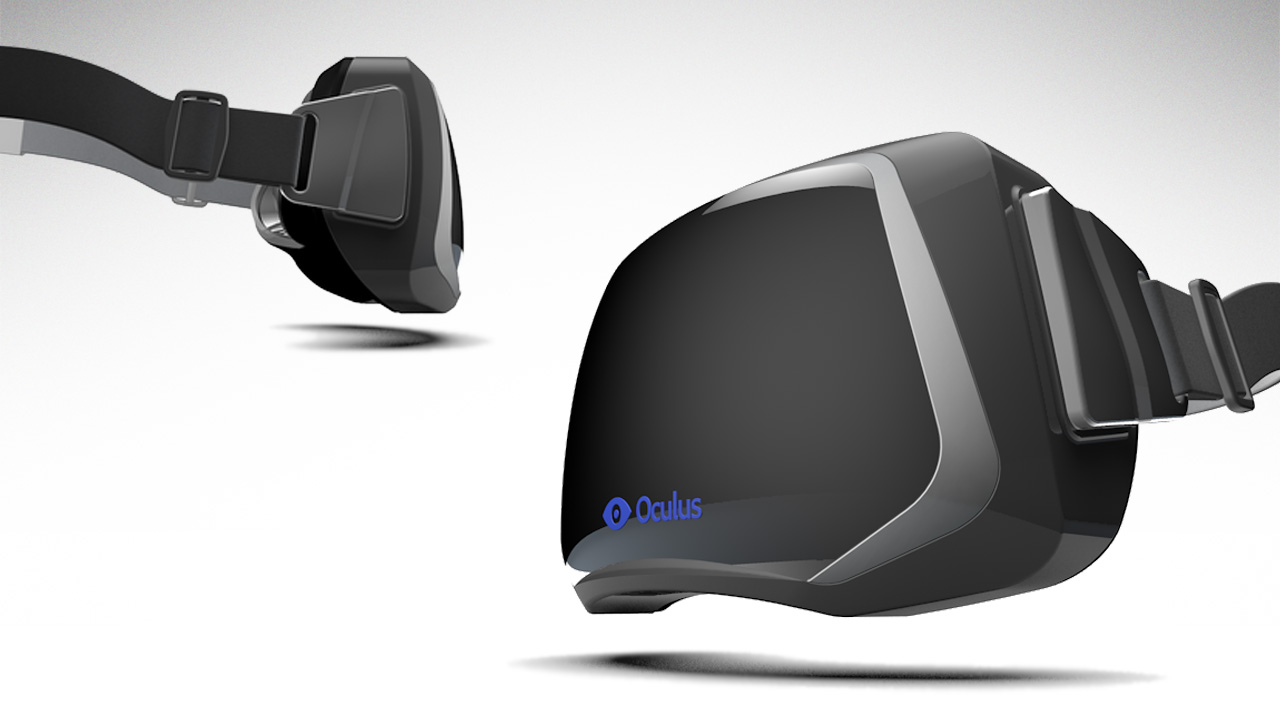
In recent years, we have seen Google trying to create tech goggles with Google Glass. There’s also the more popular Oculus Rift gaming headset. With these devices in the works, virtual reality is not far. Microsoft also recently announced HoloLens which is supposed to bear some resemblance to junior Marty’s glasses.
Microsoft demonstrating HoloLens
Self-tying Shoes
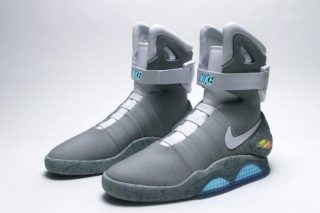
Marty’s self-tying shoes were one of the more bizarre but neat inventions when he visited 2015. As the name suggests, they were shoes that could tie the laces by itself, and they were Nike. As a homage to the movie, Nike designer Tinker Hatfield has confirmed that the team is working on the very same self-tying shoes as seen in the movie and hopes to have them ready for sale by the end of 2015. It’s a beautiful thing when fiction meets reality, isn’t it now?
Finally, we had to add this last one in because it’s too brilliant to leave out. Among the things Marty saw in 2015, there was Jaws 19 being shown at a theater. Let us assure you that there is no Jaws 19 in existence and the series ended with only three sequels being made, none of which were as commercially successful as the original.
Jaws 19 was one of the few false predictions in the movie (no flying cars yet), but that didn’t stop Universal Pictures to release a trailer for a fake Jaws 19 movie in celebration of Back to the Future’s 30th anniversary. The trailer is hilarious and you can’t help wonder at how spot on the naming of the titles are if it were true.
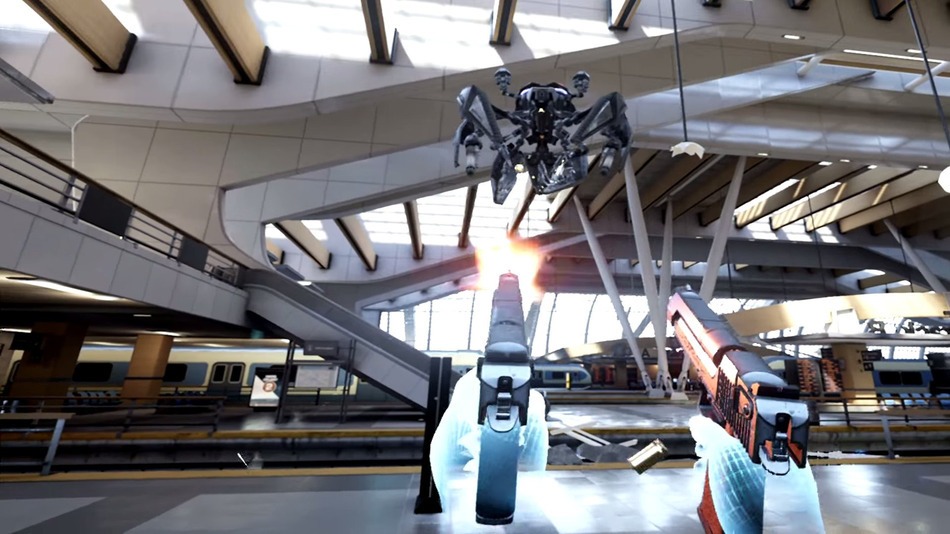
Epic Games, the developer behind Unreal and Gears of War has come out with a Matrix-like virtual reality shooter game called Bullet Train, designed for the Oculus Rift virtual reality headset. The game was demonstrated at the Oculus Connect 2 conference held in Hollywood.
Bullet Train succeeds in not making one feel queasy as is the case with fast paced virtual reality action games. The game is developed using Unreal Engine 4 and uses Oculus Rift’s Touch controller for the gameplay. The Touch controllers give you “Hands” with which you can grab any nearby weapons (and there are many to choose from) and start shooting away.
By Matrix-like we mean that players can slow down time to avoid getting hit by bullets or to catch bullets and missiles in mid-air and fling it back at the enemy. In other words, you pretty much get to play as Neo, which is what Nick Whiting, lead programmer at Epic Games was going for with Bullet Train. Indeed slow-motion is a big part of the game. The game is set at a train station and players get to frantically teleport around the station (in slo-mo), shooting wave after wave of enemies.
Teleportation is used to travel around rather than walking as it seemed like the best way to move without motion sickness. Whiting described the game as everything one could want from a simple shooter game. “You’re badass,” says Whiting of Bullet Train’s appeal. “You’re shooting people, you’re teleporting, you’re slowing down time. It’s a little bit insane. But it’s fun. And that’s what we wanted to make, because we’re a game company.”
One of the biggest selling point of this game is the ability to interact with the environment. The game provides a very life-like experience especially when you cock a gun and feel it click into place with the Touch’s haptic feedback. “We built this very physical world and then you can’t ask people not to play with it,” says Whiting’s partner Nick Donaldson.
It’s always better to see something to get an actual idea of what is being talked about. Here’s a little peek at what Bullet Train looks like.
The Netflix experience is about to get a whole lot better. Samsung announced the newest edition to Gear VR in collaboration with Oculus , along with a slew of new features and apps. The headset will have a redesigned trackpad, a new Xbox-style Gamepad with dual analogue design, and a new, lower price that’ll be available this November in the United States.
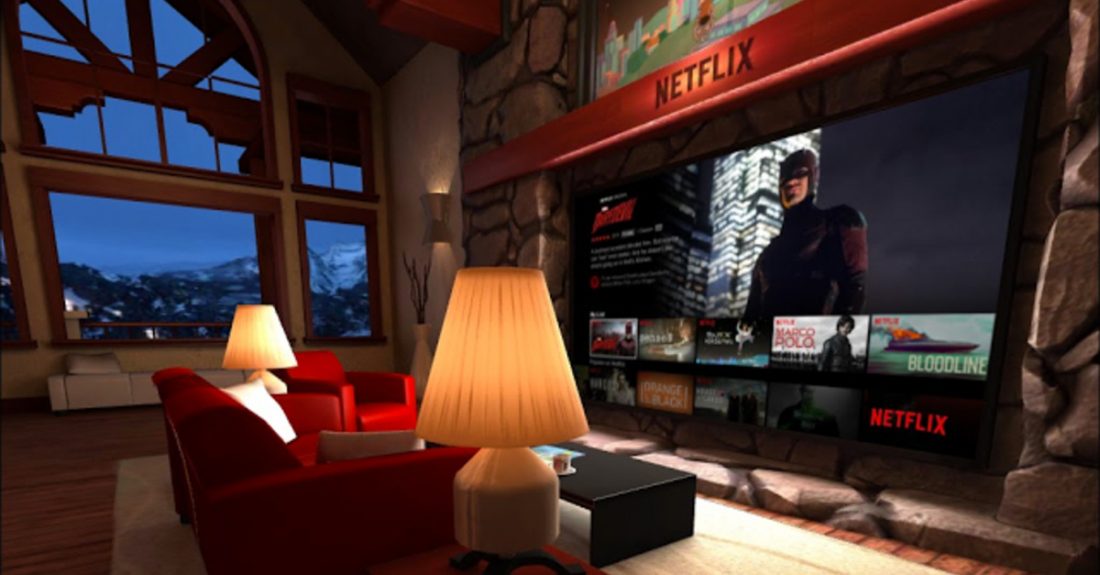
The Gear VR is also getting a major media boost with Netflix, Hulu and Twitch among the few new services that will be available for the headset. The Netflix app, for example, creates a virtual living room for the viewer to watch in. The virtual television in front of you will have the Netflix UI on the screen. You simply look to move the cursor and tap the touchpad on the side of the Gear VR to make your selection. Currently the app allows almost no choice for the user in terms of the environmental changes or the distance of the screen.
The Oculus -made Samsung Gear VR will work with the whole 2015 line of Samsung Smartphones including the Note 5, S6, S6 Edge, and S6 Edge+, and will be priced at $99, a $100 less than the previous Gear VR.
“Virtual reality that’s accessible to consumers is still very young and so it was all about developing the ecosystem,” said Jim Willson, director of immersive products and VR at Samsung. “We had to make sure there was enough content, both in terms of video content … and on the gaming side.”
Wilson hinted at a captive audience that an app like Netflix can provide with more number of hours being spent with these media apps. Apart from Netflix, Oculus also announced 20th Century Fox and Lionsgate, as well as Hulu, Twitch, TiVo and Vimeo for VR apps.
Samsung is looking to expand its consumer base and is looking to make the Gear VR not just a device for niche audience. It may take a while before people take to the virtual reality experience, but with PlayStation also working on its VR gaming technology, the future of media technology looks pretty clear. So, for those who want to experience the next season of Daredevil in virtual reality can get their hands on the Gear VR from November.
We all know that the coolest gaming cult to have begun, is the Oculus Rift, that takes virtual reality to another level. Everybody is talking about another world where one can actually be a part of an alternate reality and be the closest to feeling it. If that wasn’t amazing enough, there is more good news for gamers.
Oculus Rift will add a dynamic new game to it’s kitty called ‘Keep Talking and Nobody Explodes.’ As the name suggests, it is a virtual reality bomb disposal game and it sounds insane. The objective is to communicate with your partner(s) and try and diffuse a bomb using codes, well within time. Only one person wears the Oculus Rift and the other person is guided by description and smooth flowing communication. Naturally then, if you snooze, you lose.
Now, imagine if you could use not just your vision, but also your hands in this game? That’s right. Oculus Rift has acquired Pebbles Interfaces, which is an Israeli based firm that specialises in gesture recognition and control. This means that, if combined, the two companies will create gaming history as one might actually see hand gestures being incorporated by games and eventually, we might even rid ourselves of joysticks and consoles. Check out the video below:
At a time when Virtual Reality has taken centre stage in the tech industry, there is a lot to be done to make this revolutionary innovation reach to every corner of the world. The advanced technology that can recreate sensory experiences, designs an environment and sends users to the virtual world making them feel as if they are physically present there.
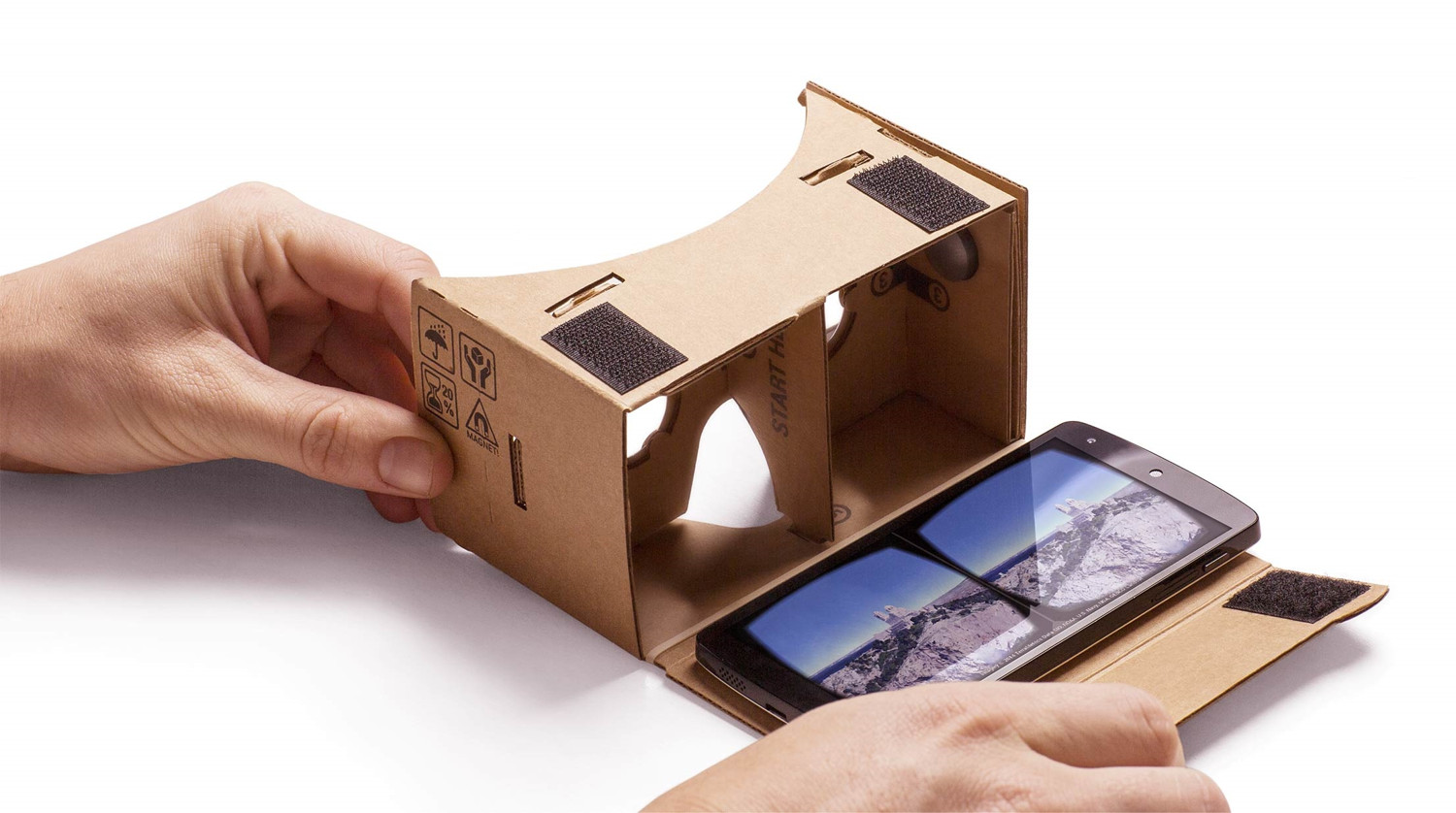
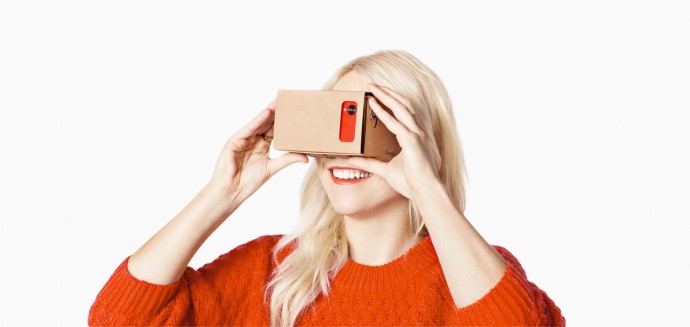
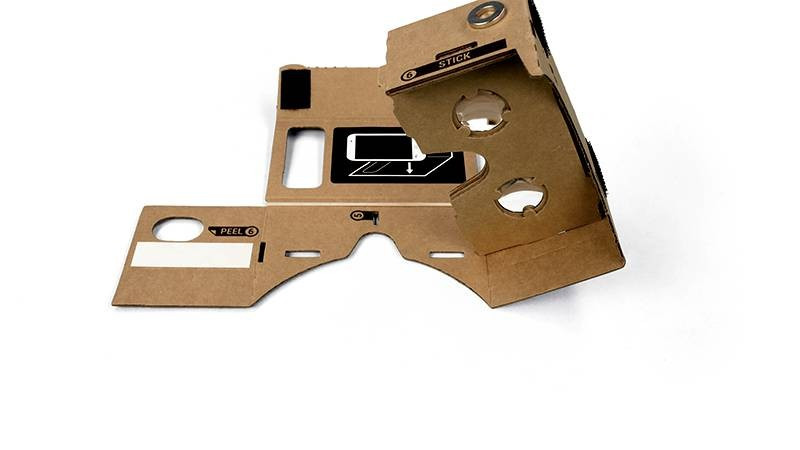
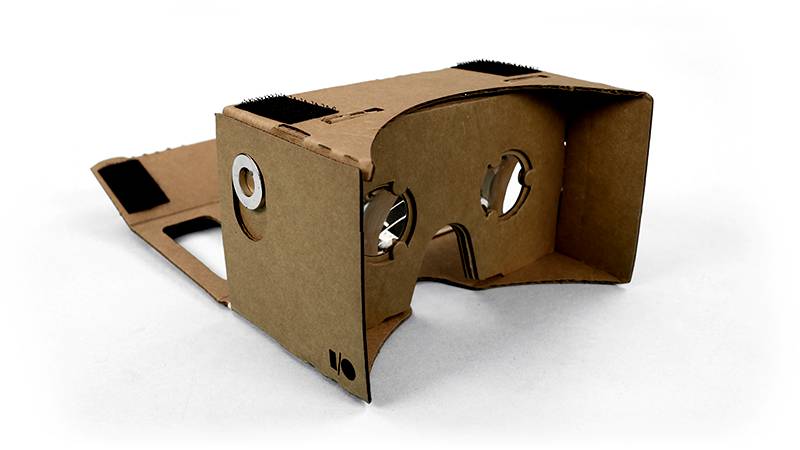
Many smartphone companies are pushing the unexplored division, by offering Virtual Reality (VR) headsets at special prices along with the smartphone. Some of these handsets include Samsung Galaxy Note, Galaxy S6 and Galaxy S6 Edge. More choices in VR headsets include Galaxy Gear VR, HTC Vive, Oculus Rift, Microsoft HoloLens and few more, but their market is limited to developed nations. This is where Google Cardboard comes into action. The low-cost, hand-made Google Cardboard requires only a bunch of things for its construction, and your smartphone is then ready to mount on the fold-out cardboard.
Follow the below-given steps and make one now:
List of Things Required
First of all, collect all the articles necessary for its preparation. You will need:
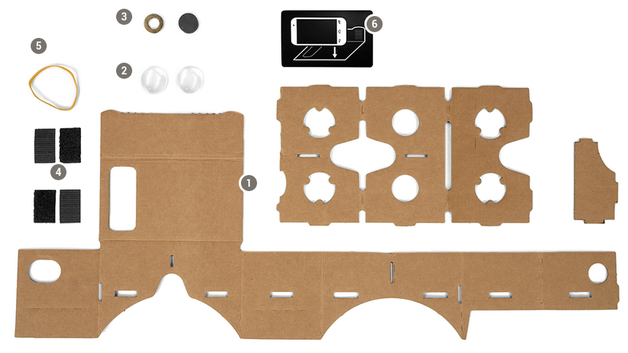
Cardboard: You will need a corrugated cardboard that is 9-inches by 22-inches. A pizza box, shoe box or any thin, rigid sheet would do.
Lens: The second thing is the lens. The lenses to affix the cardboard need to be 25mm in diameter with 40mm focal length. In case you don’t find lenses of these measures, 50mm focal length will do, but then you have to increase the length of your cardboard. You can also go for a plano-convex lens or biconvex lens, Google recommends the latter. So, first find out the lens available and accordingly start the project. [tw-button size=”medium” background=”#07ABE2″ color=”” target=”_blank” link=”http://www.amazon.in/Alian-Biconvex-Lens-Google-Cardboard/dp/B00UYG3G5G/ref=sr_1_10?ie=UTF8&qid=1434185814&sr=8-10&keywords=google+cardboard&tag=igyaan-21″]Buy Now[/tw-button]
Magnet: Two small ring-shaped magnets.
Velcro strips: Two velcro strips with adhesive on the plane surface. [tw-button size=”medium” background=”#07ABE2″ color=”” target=”_self” link=”http://www.ebay.in/itm/10-METRE-Sew-on-type-Polyster-Velcro-Hook-Loop-Tape-1000-CM-BLACK-COLOR-/111678681852?pt=LH_DefaultDomain_203&hash=item1a009172fc”]Buy Now[/tw-button]
Other things are a rubber band, glue, a pair of scissors, and a cutter.
Steps to Make Google Cardboard
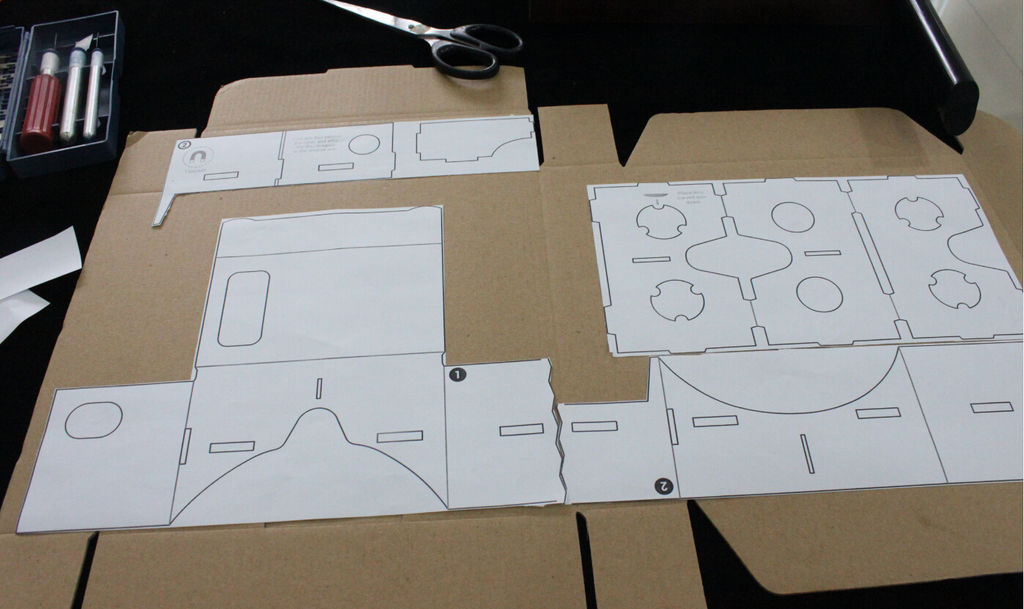
1. Print out the cardboard template by clicking on “Download the Kit” on the provided link. Apply some glue on the back of the template and paste it onto the cardboard with light numbers on top of the darker ones.
2. Now start cutting along the edges and fold the area marked by the red line.
3. Once you are through with cutting the cardboard, place the lens in the curved area and magnet at the other side of the cardboard mentioned on the template. Glue the area that’s done and affix the Velcro strips where you’ll be slipping your phone.
4. If you have followed the steps mentioned above, your cardboard is almost ready.
5. Put your smartphone in the cardboard and tie a rubber band so that your phone doesn’t slip through.
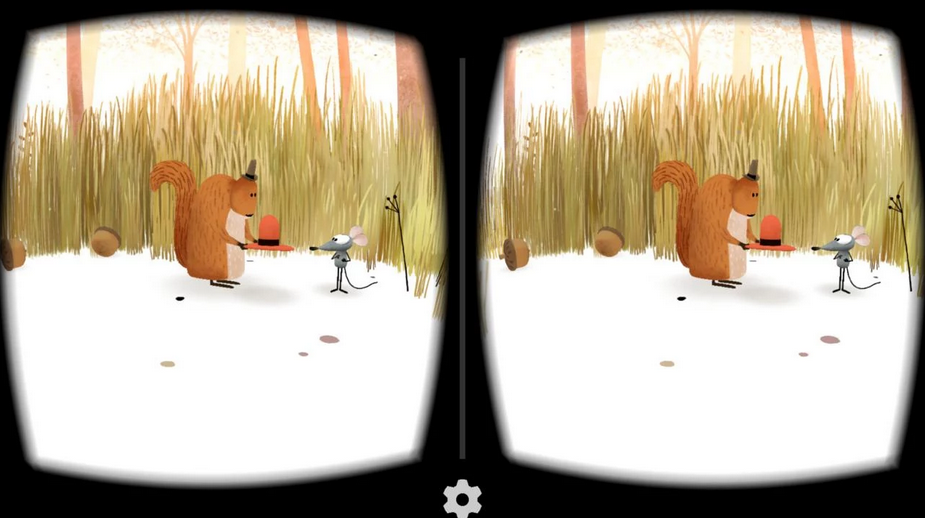
6. One more thing left is the installation of Cardboard app from Google Play Store that provides you content to see through the hand-made Google Cardboard. Launch the app and click the desired category by sliding down the magnet, placed on the side. You can get back to the main menu just by holding your VR headset upright.
In case everything fails, you could order one online:
Well, the Oculus Rift’s consumer model edges closer to release and Sony is preparing ‘Project Morpheus’ for the PS4. We’re almost certain that the next chapter of gaming and entertainment is going to be ruled by Virtual Reality. Acknowledging what’s to come, we thought we’d take a look at the games we think could be the best suited for VR space.
Here are the top 5 games we’d love to play in virtual reality:
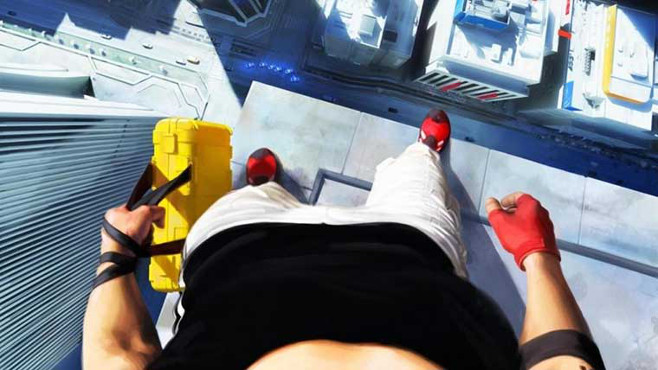
1. Mirror’s Edge 2
Perhaps the most obvious choice of game to feature Oculus Rift/Project Morpheus compatibility, even the idea of wall-running in virtual reality in Mirror’s Edge 2 is enough to empty your pocket and buy Sony already. If you’ve ever wanted to experience flying through the skyline of a freakishly white city, or getting a first-person view of plummeting to your death from the top of a skyscraper, then this is the best option to walk away from the experience alive. Mirror’s Edge‘s tough platforming and great aesthetic is ideal for virtual reality.
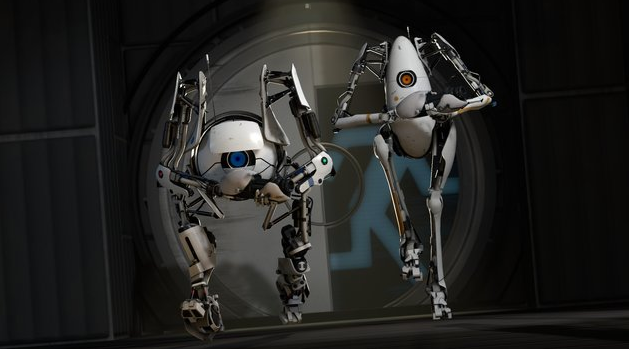
2. Portal 2
If the Oculus Rift and Project Morpheus will tackle with the motion sickness issue, then playing Portal 2 in Virtual Reality would be the only thing you’d be doing on weekends. In this game you would be frequently chastised by sociopathic A.I. that has a penchant for breaking into song at the end of the ride. Puzzle-solving with added adrenaline.
3. Star Wars: Battlefront
There is no news about the upcoming Star Wars: Battlefront game other than that it will be launching soon, but the idea of experiencing the Star Wars universe in virtual reality is an unexceptionally exciting one. While the Battlefront games were typically played in third-person, they’ve always featured a first-person mode, too, and one which will likely be focused in the new game. If this is to be the case, then Battlefront with Oculus Rift/Project Morpheus support would be amazing.
4. Everybody’s Gone to the Rapture
Everybody’s Gone to the Rapture is being developed by The Chinese Room,who previously created ‘Dear Esther’, an atmospheric first-person game that suffered from being a little too pretentious and, frankly, dull. With its apocalyptic setting, Everybody’s Gone to the Rapture has the potential to be much more enjoyable than its earlier version, and if it can bring the atmosphere of Dear Esther to a more interesting game, then this upcoming PS4 title will be a great opportunity for Sony to show off Project Morpheus.
5. Evolve
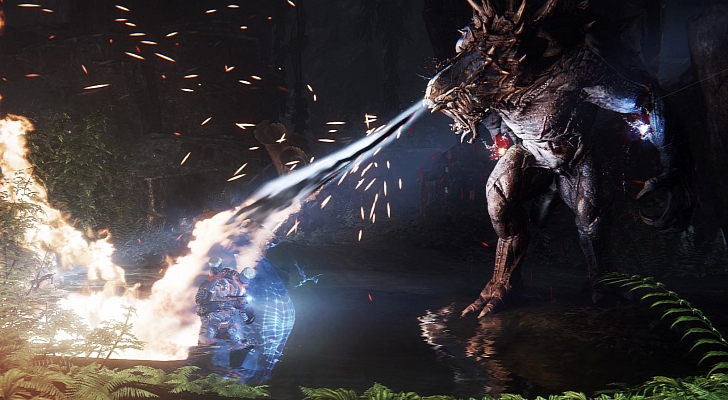
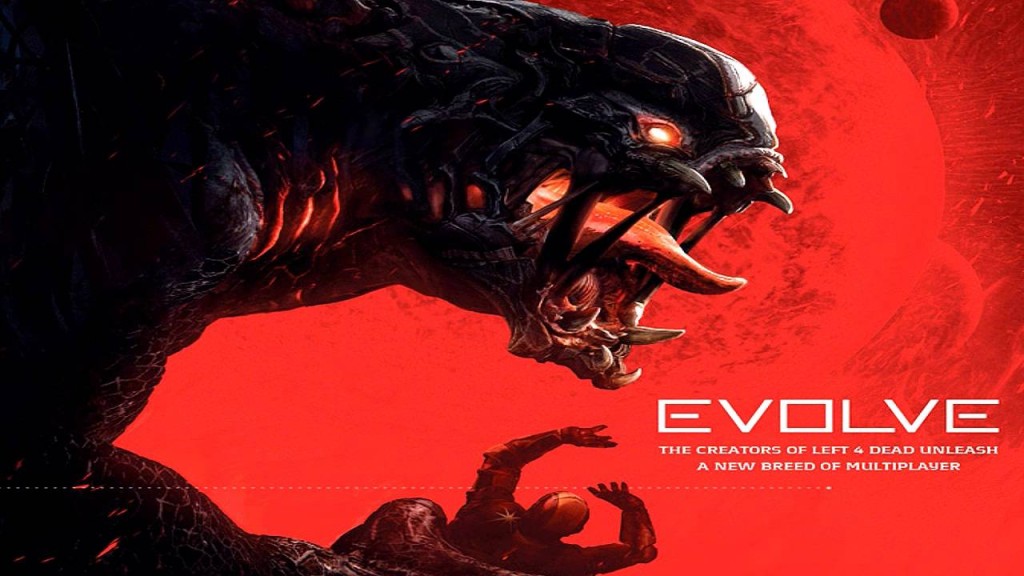
Evolve’s under the development under Turtle Rock, same people behind the Left 4 Dead series, and from early impressions and screenshots it seems to be L4D with gigantic monsters instead of zombies. This would lend itself well to virtual reality, providing equal amounts of horror and hilarity, if the L4D series is anything to go by.