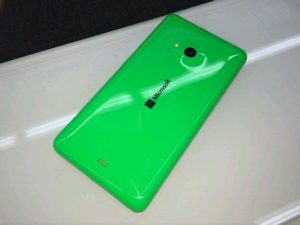
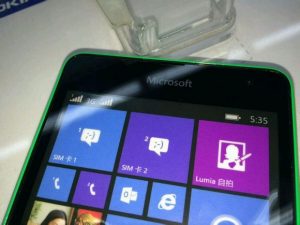
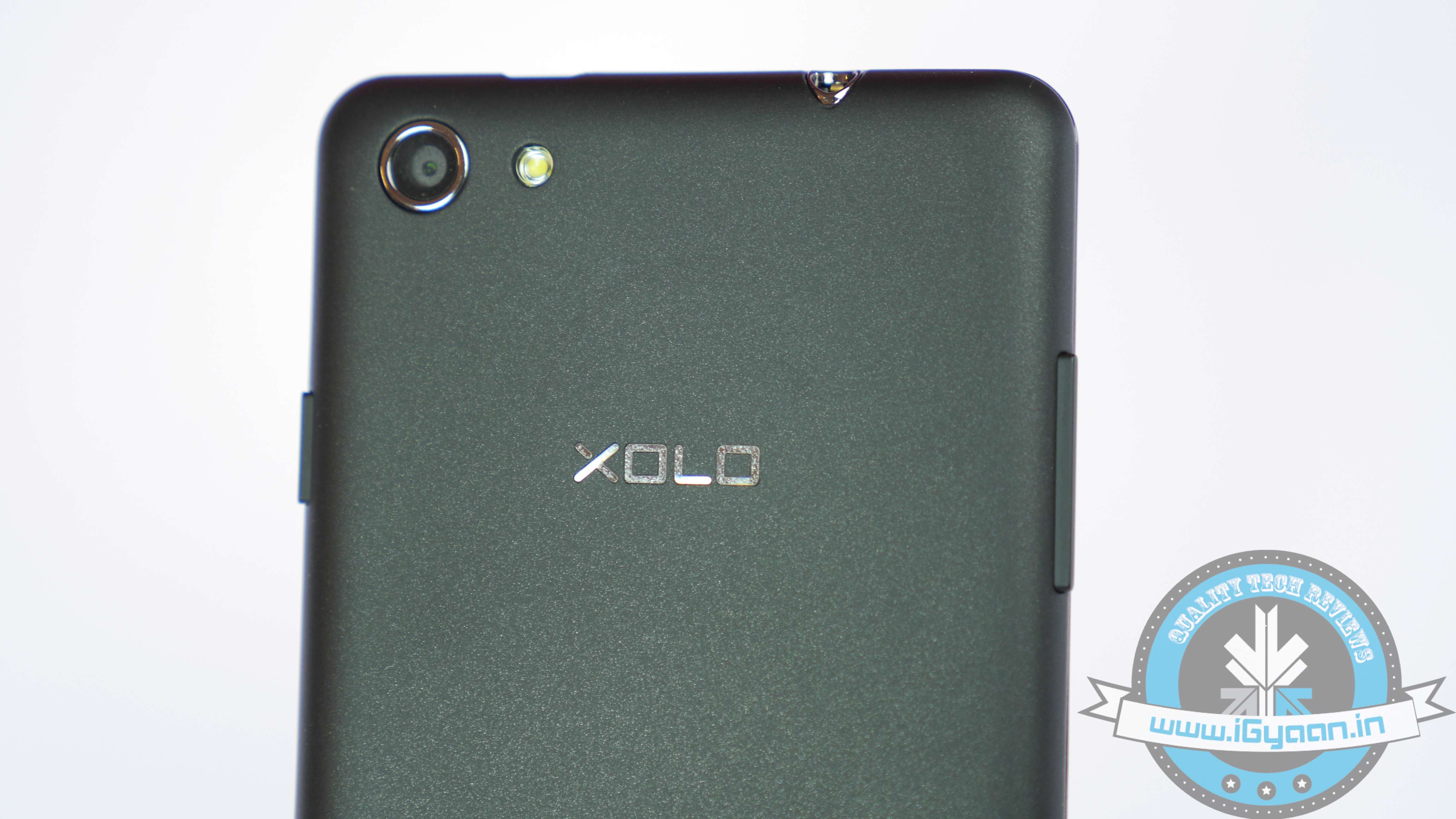
The first-ever Microsoft-branded Lumia is a hot topic these days. The software giant is all geared to announce their first Lumia device without the Nokia branding next week, marking the end of Nokia as a smartphone manufacturer. Now, the new reports have surfaced that showcases leaked images of the Microsoft Lumia RM-1090. Courtesy: China’s Tieba, an online community powered by Baidu.
According to the leak, the expected Microsoft-branded Lumia smartphone will be a low-end device and will feature a 5-inch QHD display with 960×540 pixel resolution. It will be powered by a Snapdragon 200 chipset clocked at 1.2 GHz bundled with 1 GB of RAM, dual-SIM, 8 GB ROM, a 5MP primary camera with LED and a 1900mAh battery.
Microsoft Lumia RM-1090 will be 140.2×72.45×9. 32 mm and weighs 145.7 grams. It will be available in following colour variants – white, black, grey, green and orange. Connectivity features will be limited to 3G with HSPA and GSM. The handset is said to have been cleared for US FCC certification in October after being cleared for TENAA certification.
We can expect it to go head to head against the Android One series.
Airtel India has launched a unique ‘One Touch Internet’ portal in an attempt to persuade first-time Internet users in India. The initiative primarily aims at assisting beginners to learn and get acquainted with the nuances involved as far as the mobile data is concerned. This ploy clearly suggests that Bharti Airtel is tapping into the steadily growing mobile database across the country, eventually increasing its user base in the process.
The One Touch Internet service will bring all the information regarding Airtel’s various popular services concerning Mobile Internet under one roof. The WAP portal eventually will work as a guide that will provide users with free online tutorials and offer them free Internet access for 10 days. The purpose is to make the new users understand how to navigate and work around social networking websites, watch videos or shop online without paying.
As of now, this service is currently available for prepaid mobile customers on Airtel (2G and 3G). What all users have to do is simply dial 111 or visit http://one.airtel.in on their mobile phone’s web browsers to get the tutorials. These informative videos will be available in English and Hindi as of now, though Airtel plans to introduce eight other Indian regional languages in a few weeks.
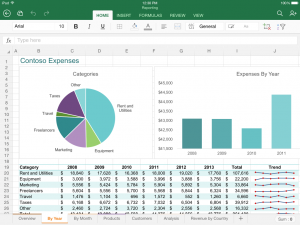
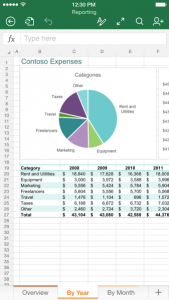
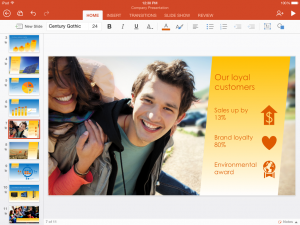
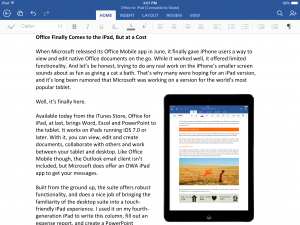
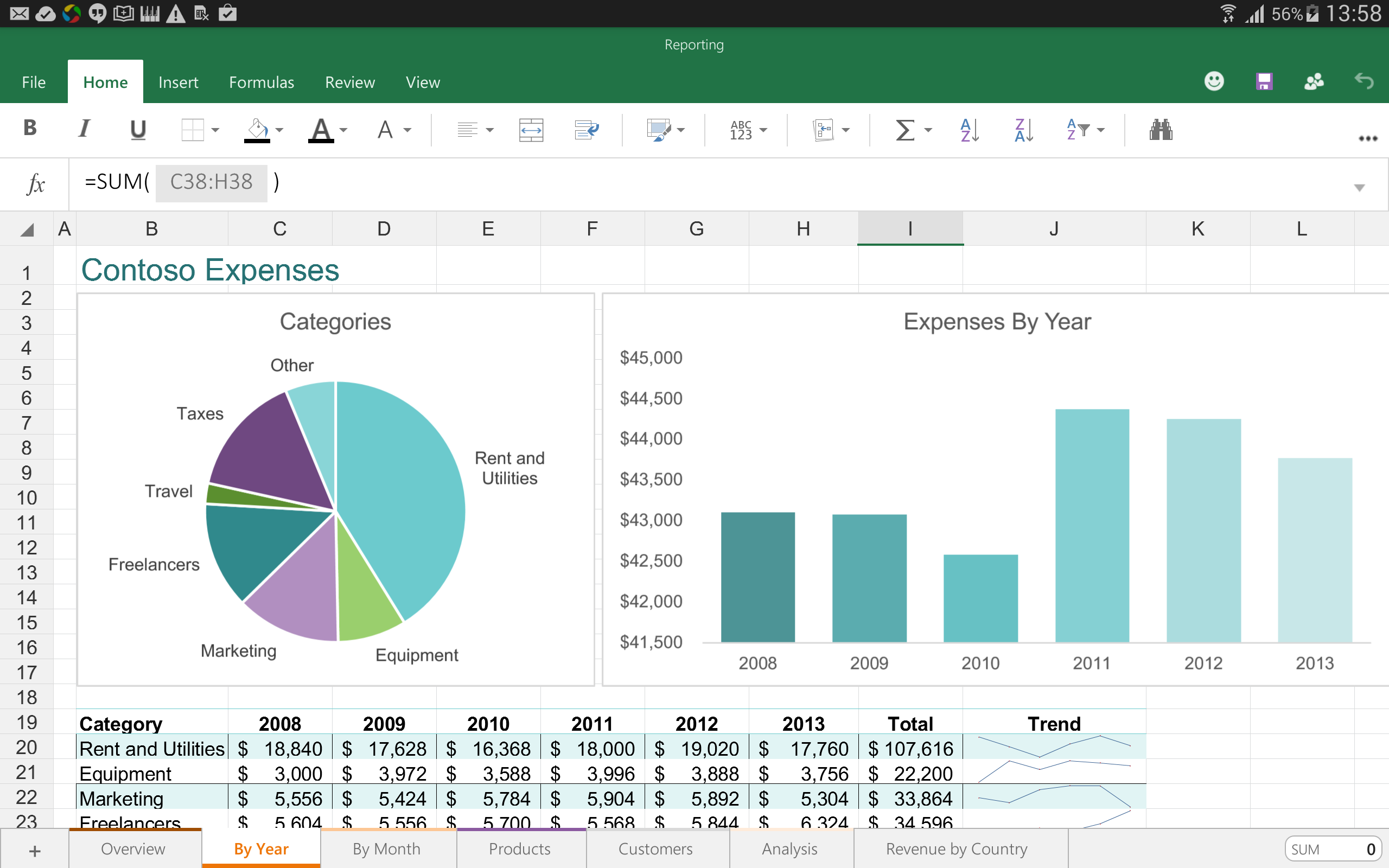
Microsoft has prepped new versions of its popular Office apps for iPhones and iPads, along with a preview of the same app for Android. From now on, you can use an Office apps on Android or iOS without any Office 365 subscription. Microsoft has dubbed this move as ‘More of Office for everyone.’
The company is also doing away with the Office Mobile for iPhone, with a standalone Word, Excel and PowerPoint. The new Office apps for iPhone will now be identical to the iPad version, which offers more functions and capabilities. Microsoft says that these new apps offer “the same beautiful iPad experience, optimised for the iPhone.”
According to a report, Microsoft has worked closely with Apple to make sure the app could take advantage of the iPhone 5, iPhone 6, and iPhone 6 Plus. Word, Excel, and PowerPoint will now feature phone-optimised user interfaces. The iPhone Office apps, from now on, will facilitate a better look at documents, spreadsheets and presentations. There are features like Reflow view; Excel has a new Full-Screen view, while PowerPoit now has a new slideshow. The Office app for iPad has already seen a whopping 40 million downloads.
Meanwhile, the Android version will be coming in a couple of weeks. Android phones will be getting a smaller update compared to the Android tablets. As of now, Office Mobile for Android phones has been updated with support for free editing, though will be identical to the iPhone version some point later, with individual Word, Excel and PowerPoint apps.
As far as Android tablets are concerned, they will have similar features and capabilities as the iPad apps. Microsoft said that apps for Android tablets should be available by early 2015.
Meanwhile, Microsoft also announced a software partnership with Dropbox, with two companies merging their softwares. This would allow the stored documents in DropBox to be easily edited using MS Office tools.
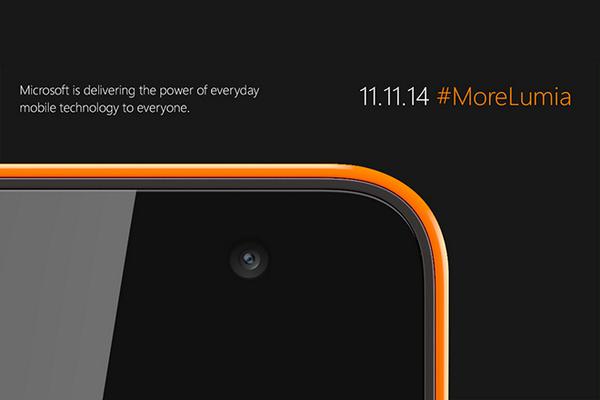
Microsoft confirmed that the first Lumia which is going to launch under the company’s banner will arrive on Tuesday. The software powerhouse has already started sending teasers of an unveiling for the 11th of November, with a tag line that says, “Microsoft is delivering the power of everyday mobile technology to everyone.” The teaser displays an orange curved Lumia device.
Microsoft officially killed the Nokia brand for its upcoming Lumia handsets, and Tuesday’s launch will mark the first time when Lumia device will come without the Nokia branding. While many are speculating it as a flagship device, sources believe that Microsoft will launch this budget device next week.
Microsoft did hint at the possibility of a new Lumia launch soon, with features similar to that of the Lumia 830. It appears to be the latest addition to the low-end Windows Phone from Microsoft. A ploy that the company is using to compete against Android and iOS, as it struggles to stamp its authority in terms of overall OS market share.
It’s still a mystery as to how Microsoft will name its first Lumia; it could even do away with the number scheme we have seen with Lumia devices in the past.
A few days back, Google announced that it had started rolling out the Android 5.0 Lollipop, but as of now, it appears the update has been delayed as there is no news of any new devices receiving the same. The reason, according to reports, seems to be a Wi-Fi bug in the software build. According to a report from Android Police, Google has delayed the release of Android 5.0 after a Wi-Fi bug drained the battery in Nexus 5 devices.
Google’s Trevor Johns acknowledged this bug and said, “Android Engineering is aware of an issue affecting Nexus 5 users running Android 5.0 which causes significant ‘Miscellaneous’ battery usage while Wi-Fi is enabled. This appears to be caused by an abnormally high number of IRQ wakeup events. We are continuing to investigate this issue.”
Sources now expect that Google plans to release the Android 5.0 update for Nexus devices starting November 12. There were rumours earlier that Google has not been able to make a stable version of Android 5.0 update for models like Nexus 4 and 5 along with 3G/4G-enabled Nexus 7 and 10 tablets.
Android 5.0 Lollipop, Google’s most ambitious project yet, brings a slew of new features such as user customisation options, better battery performance, improved security and support for multiple user profiles on the same device.
The likes of Motorola, Sony and HTC have already confirmed the Lollipop update on their popular devices. Meanwhile, other manufacturers such as Samsung and LG have not yet announced their plans as to when their devices will get the updated version. For a complete list of devices scheduled to receive the Android 5.0 Lollipop update, click here.
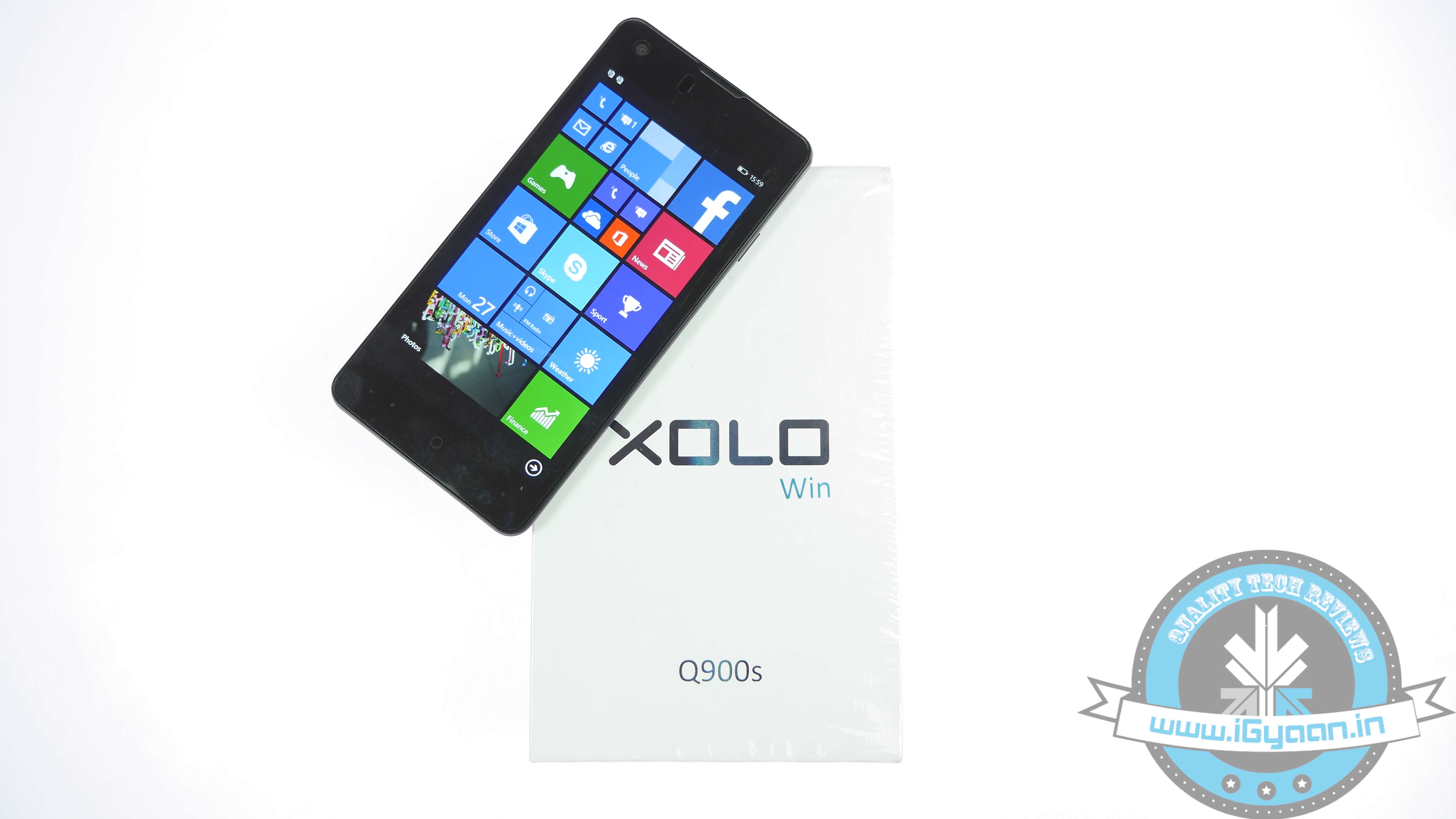
A few domestic manufacturers have launched handsets sporting the Microsoft’s Windows Phone OS, for instance, the likes of XOLO with the launch of their Windows Phone 8.1 OS smartphone, the XOLO Win Q900s. The Redmond-based giant, Microsoft, at its Build Conference in San Francisco announced a few hardware partners for the Windows Phone platform, and you guessed it right, Micromax was one of them.
It’s just been two months since the announcement, and Micromax has already launched the Canvas Win W121 at a relatively economical price of Rs. 9,500.
OVERVIEW
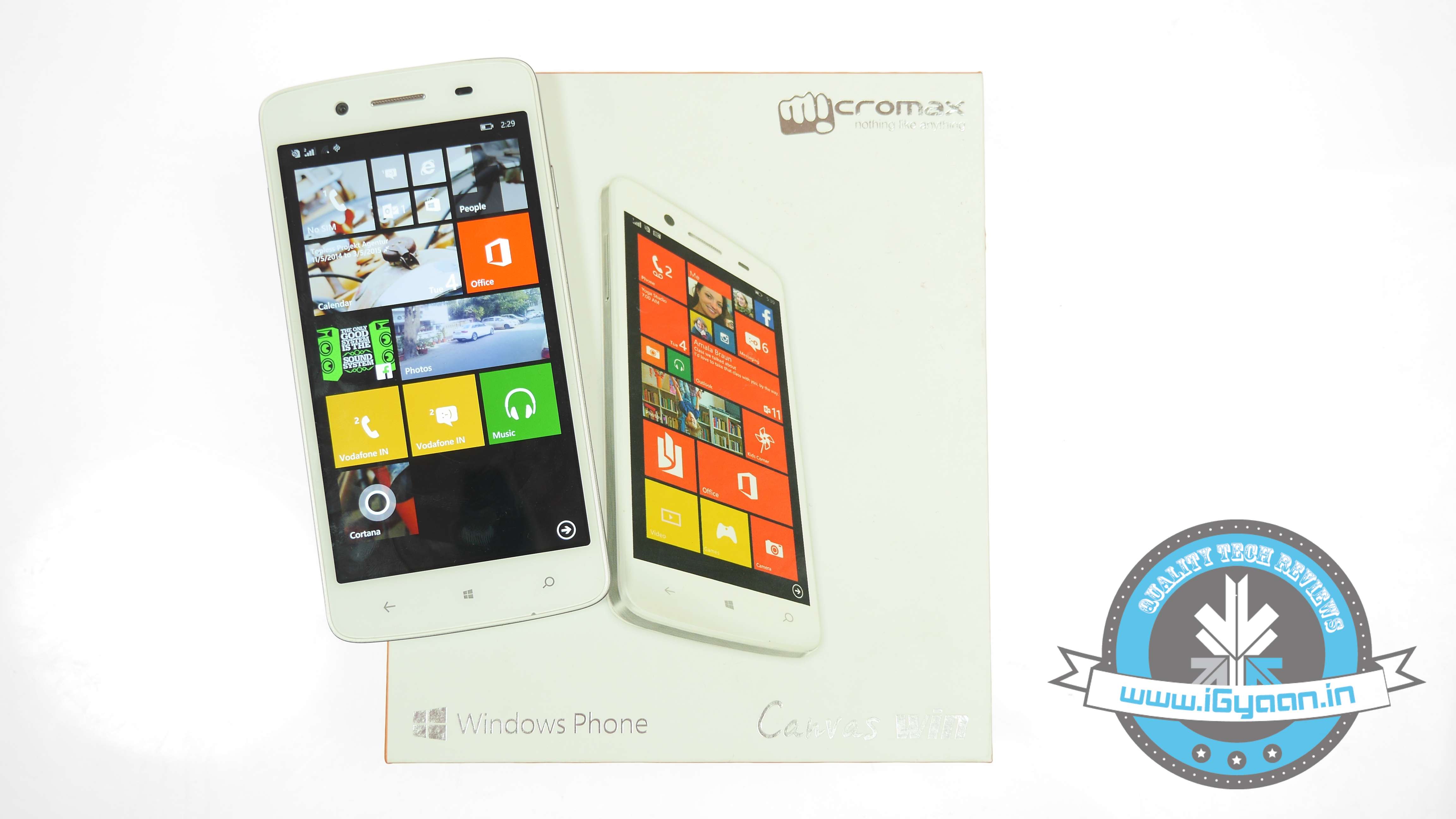
The Micromax Canvas Win W121 runs the latest Windows Phone 8.1 OS and is powered by the Qualcomm Snapdragon 200 quad-core CPU clocked at 1.2 GHz bundled with 1 GB of RAM. Priced at just under Rs. 10,000, it should have a lot of rivals in the over-crowded budget category of smartphones. Boasting a 5-inch HD IPS screen, it can be pitted against the likes of the XOLO Win Q900s, the Lumia 520 and 630 as its closest rivals.
HARDWARE
The Canvas Win W121 is powered by the Qualcomm Snapdragon 200 SoC with four cores clocked at 1.2 GHz, a chipset we are quite used to in this price segment. It has decent enough 1 GB of RAM with a 5-inch 720p HD IPS display, and a 2000mAh battery capacity. It has 8 GB internal memory expandable via microSD up to 32 GB. Connectivity options include GPRS, EDGE, 3G, Bluetooth and USB.
Optics includes a primary 8MP camera with AF, along with a 2MP secondary cam. Specs on the phone do look good but do they translate into real-time performance. Let’s find out.
Specifications
Canvas Win W121
Display
5-inch IPS LCD 1280x720p
Processor
1.2 GHz Qualcomm Snapdragon 200 quad-core
Storage
8 GB + microSD
RAM
1 GB RAM
Camera
8 MP primary camera, 2 MP front camera
Battery
2,000 mAh
Operating System
Windows Phone 8.1
DESIGN AND BUILD
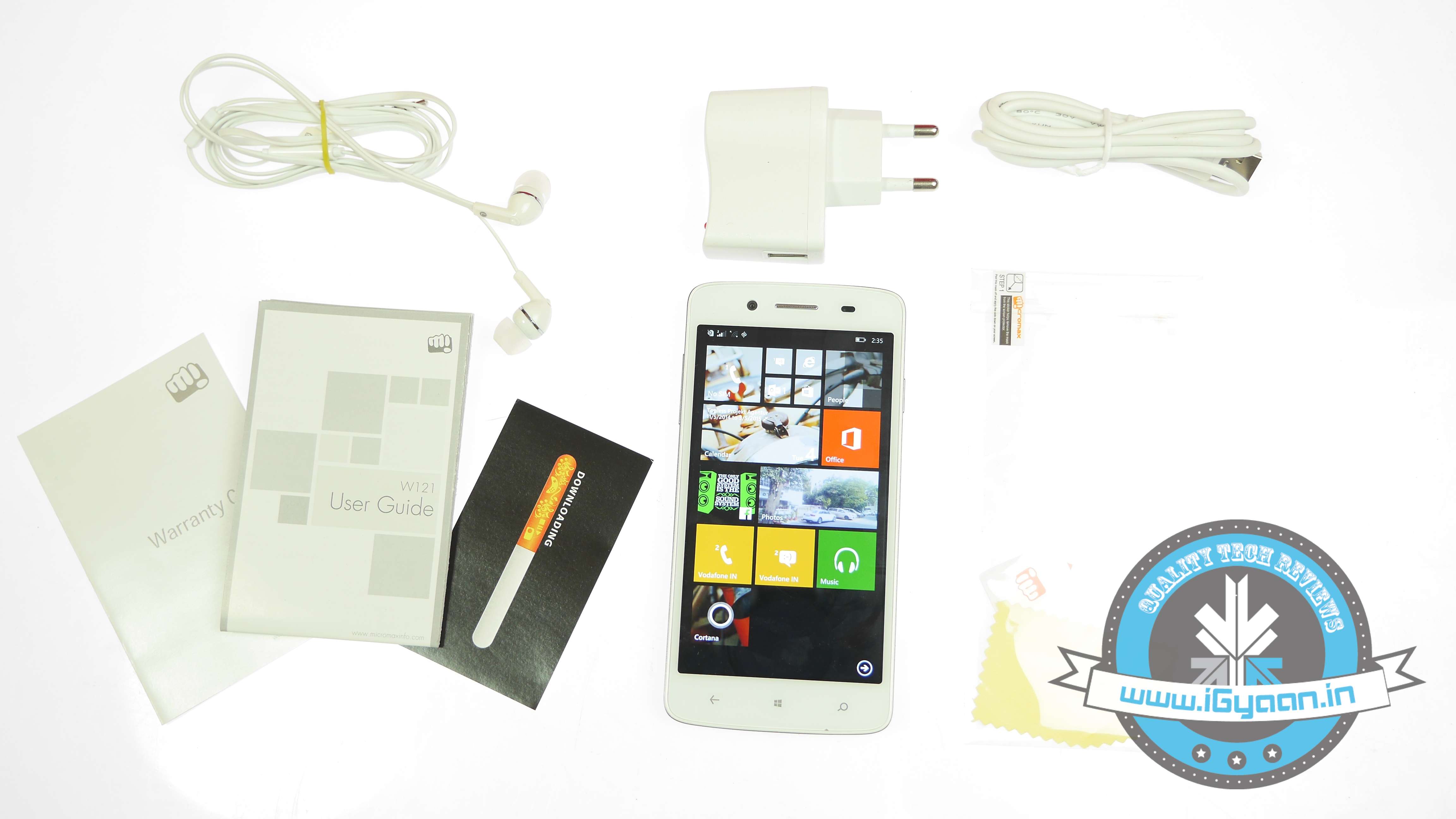
The Canvas Win W121 does have that niche look to it, courtesy of a leather (read: p-leather) back panel, something we saw on the Galaxy Note 3. There’s a lot of plastic on the body, which might be a turn-off for some of us, but the Canvas Win W121 is a bit sleeker and more compact than any of the Canvas’s Android counterparts.
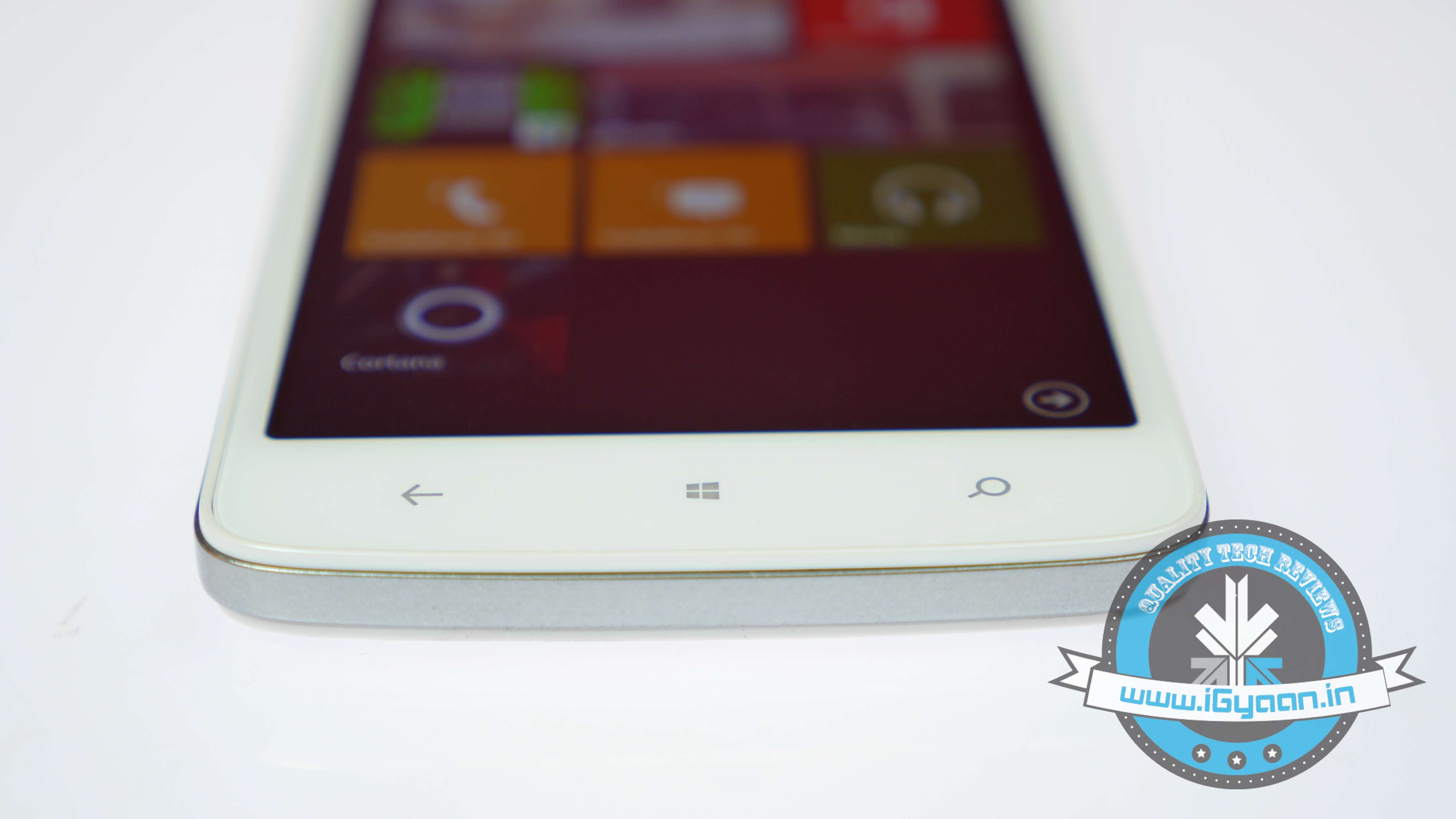
With a 5-inch screen, the device fits in the hand quite well; it is slim and makes for easy one-handed usage. The front houses three capacitive buttons with a Windows logo in the middle, which was absent in the XOLO Win Q900s. However, the capacitive buttons appear to be a tad untidy and seem like a rushed job. They don’t illuminate the way we have seen with other phones, and just lacks the finesse.
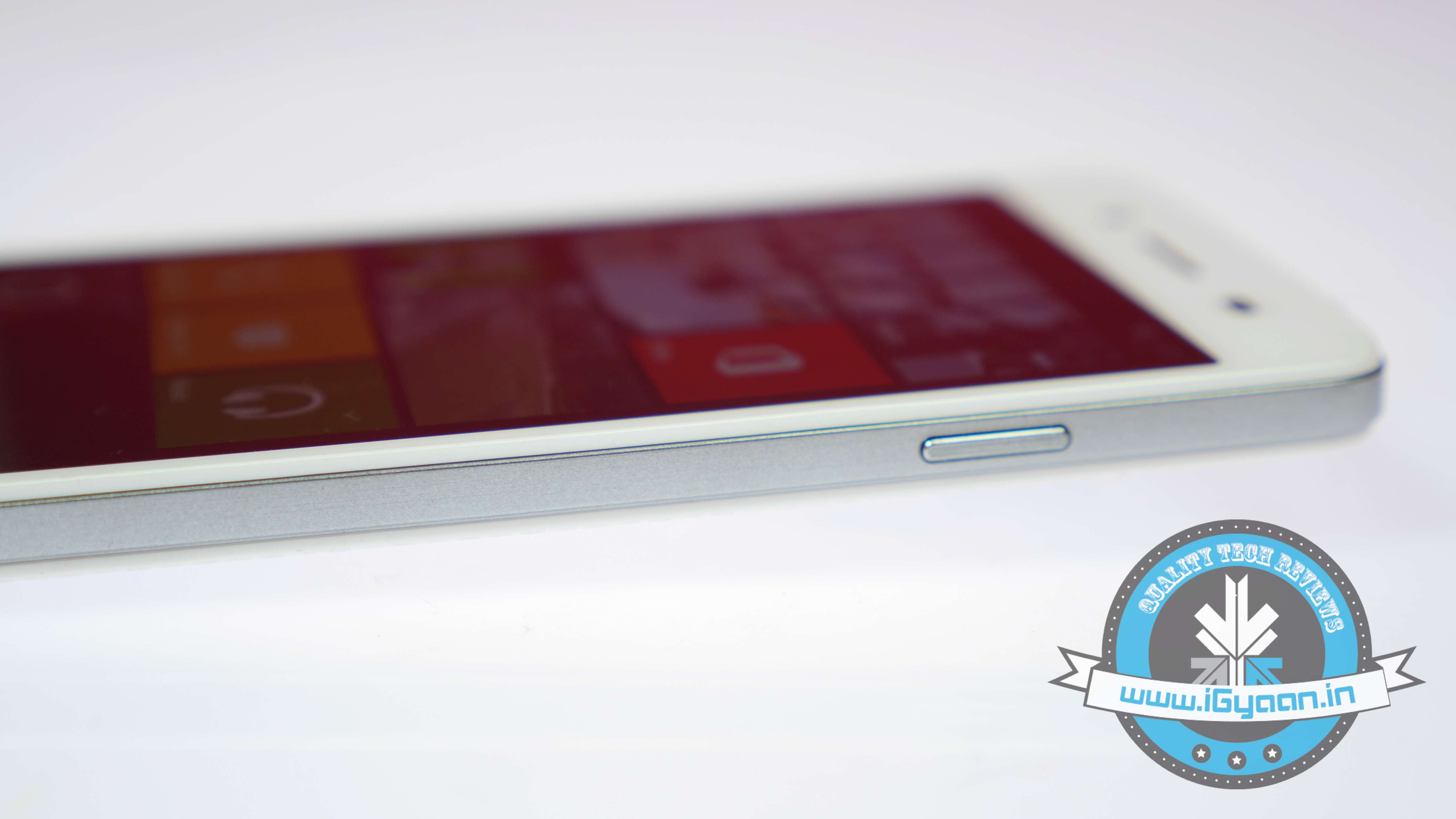
Coming to the sides, it has a metal rig that runs throughout the phone’s entire body, with volume rockers placed on the left and the power button on the right. The keys have a nice touch feel to it. Meanwhile, both the MicroUSB and headphone jacks are located on top.
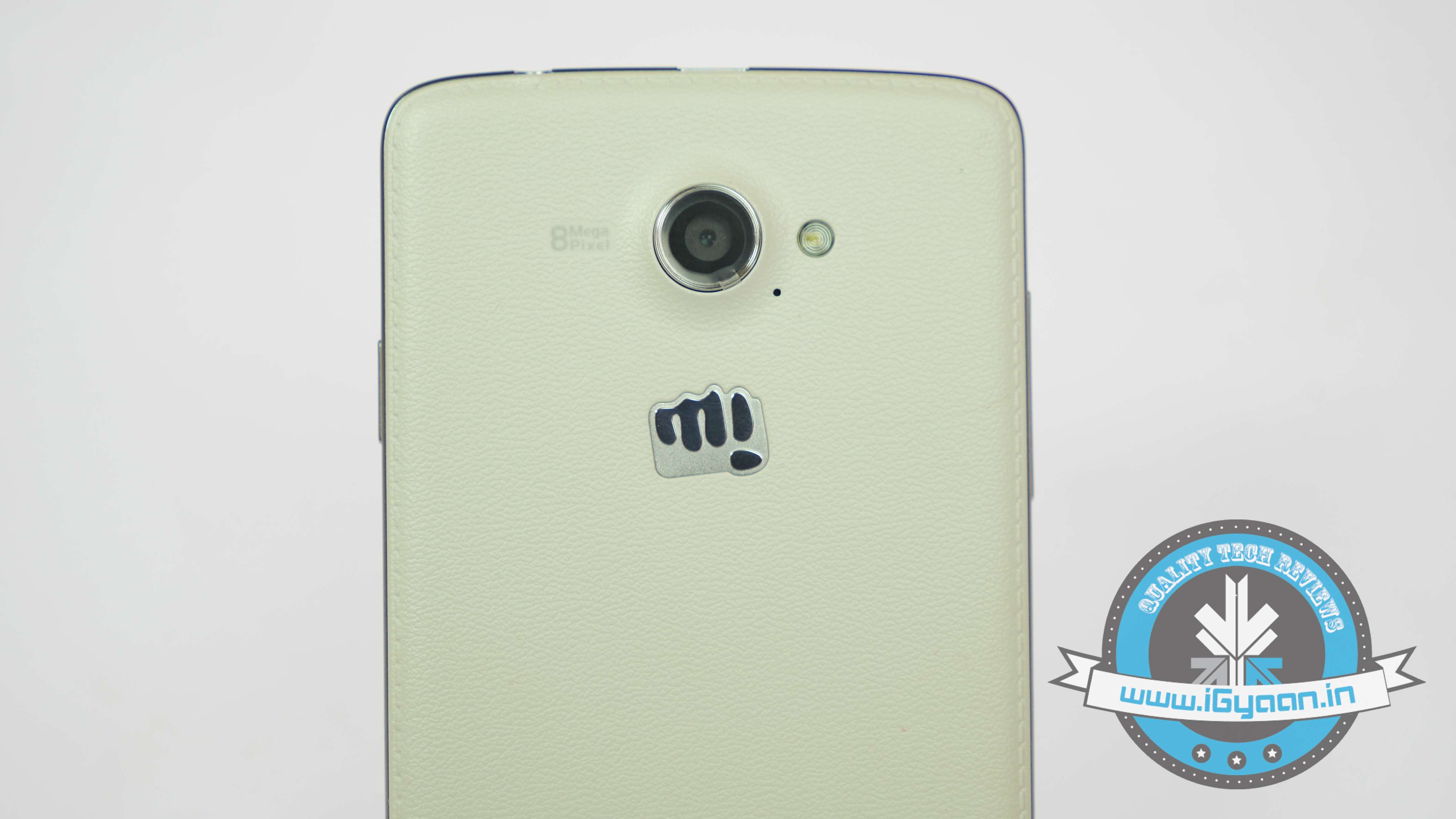
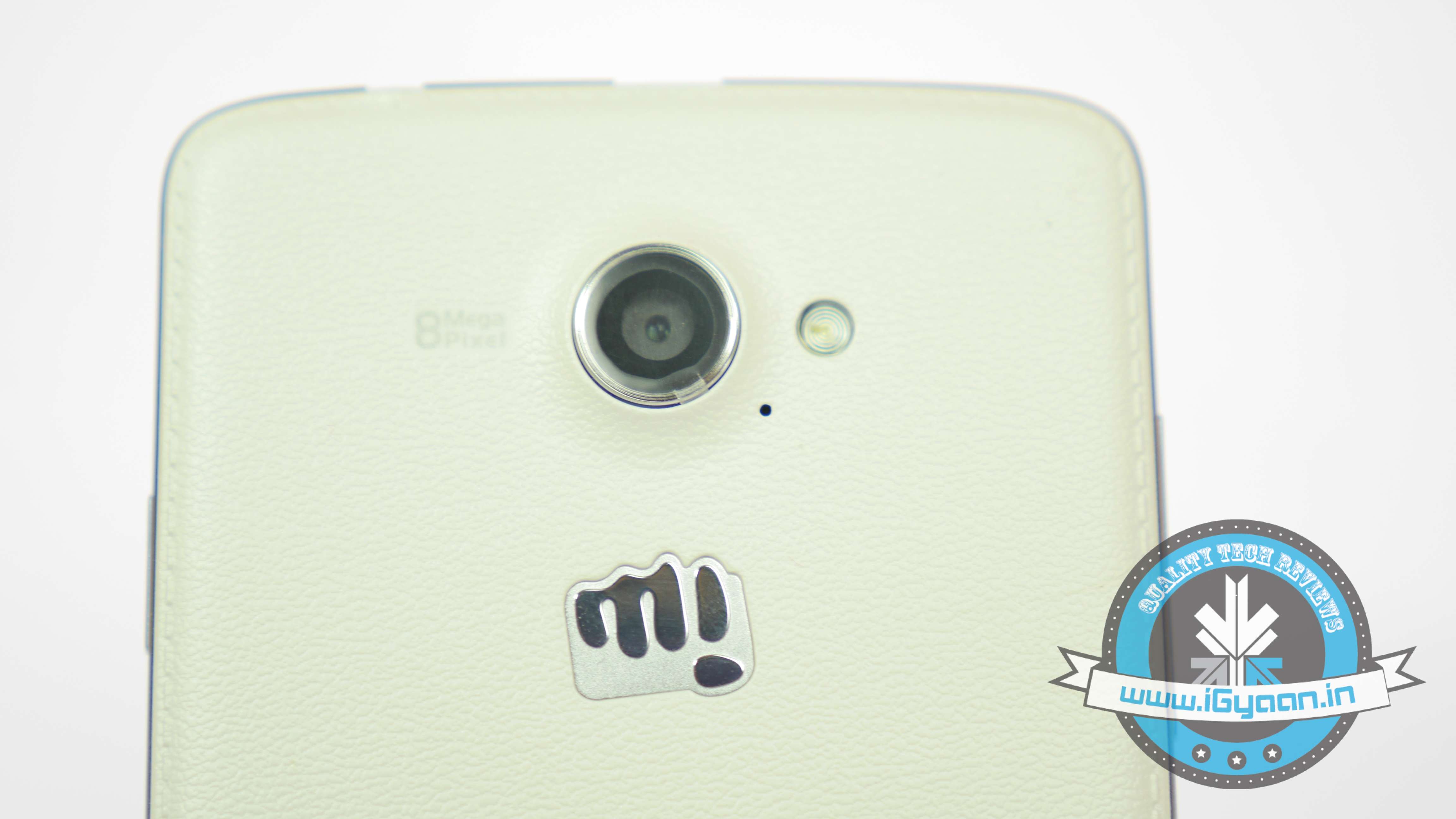
As already mentioned, the rear of the phone has a premium looking leather-esque back panel with stitches around the edges, giving it a more classy appeal. It’s a neat job done on the rear of the phone, with cuts for the camera, flash and external speakers done with absolute precision along with the Micromax logo. The back panel is removable that houses the two SIM card slots, battery and the microSD slot. The phone does impress us when it comes to build quality and design.
PERFORMANCE AND OS
With a Qualcomm Snapdragon 200 chipset clocked at 1.2 GHz bundled with a healthy enough 1GB of RAM, handling everyday usage is like a walk in the park for the Canvas Win W121. It handles multiple apps at ease without any noticeable lags. We did not see any problem using any app, they load up real quick and with Windows Phone 8.1, it allows users to run eight apps in the background. You can navigate and switch between emails, games and other apps like Facebook and WhatsApp in no time.
Moreover, WP 8.1 not being a very power-hungry OS combined with decent hardware results in no issues in launching apps, browsing through the internet or switching apps. In our AnTuTu benchmark test for Windows, the phone managed an impressive 11, 767 points, just edging past the Lumia 630 which managed 11, 760, also surpassing the XOLO Win Q900S which scored 10, 870 in our Antutu Benchmarks.
Model
Antutu Benchmark
XOLO Win Q900s
10,870
Canvas Win W121
11,767
Lumia 630
11,760
High-end games like Real Racing and Asphalt 8 do give the phone a real tough time as the phone starts heating up. That said, the overall performance is quite satisfactory on the Canvas Win W121. Apart from the heating issue, these games run quite well at the highest settings; there aren’t any noticeable hiccups during performance specific stressful instances and loading time is just fine. Considering the price of the phone, this shouldn’t be much of an issue, and arcade/basic games like Subway Surfers and Temple Run look and play quite well on the phone.
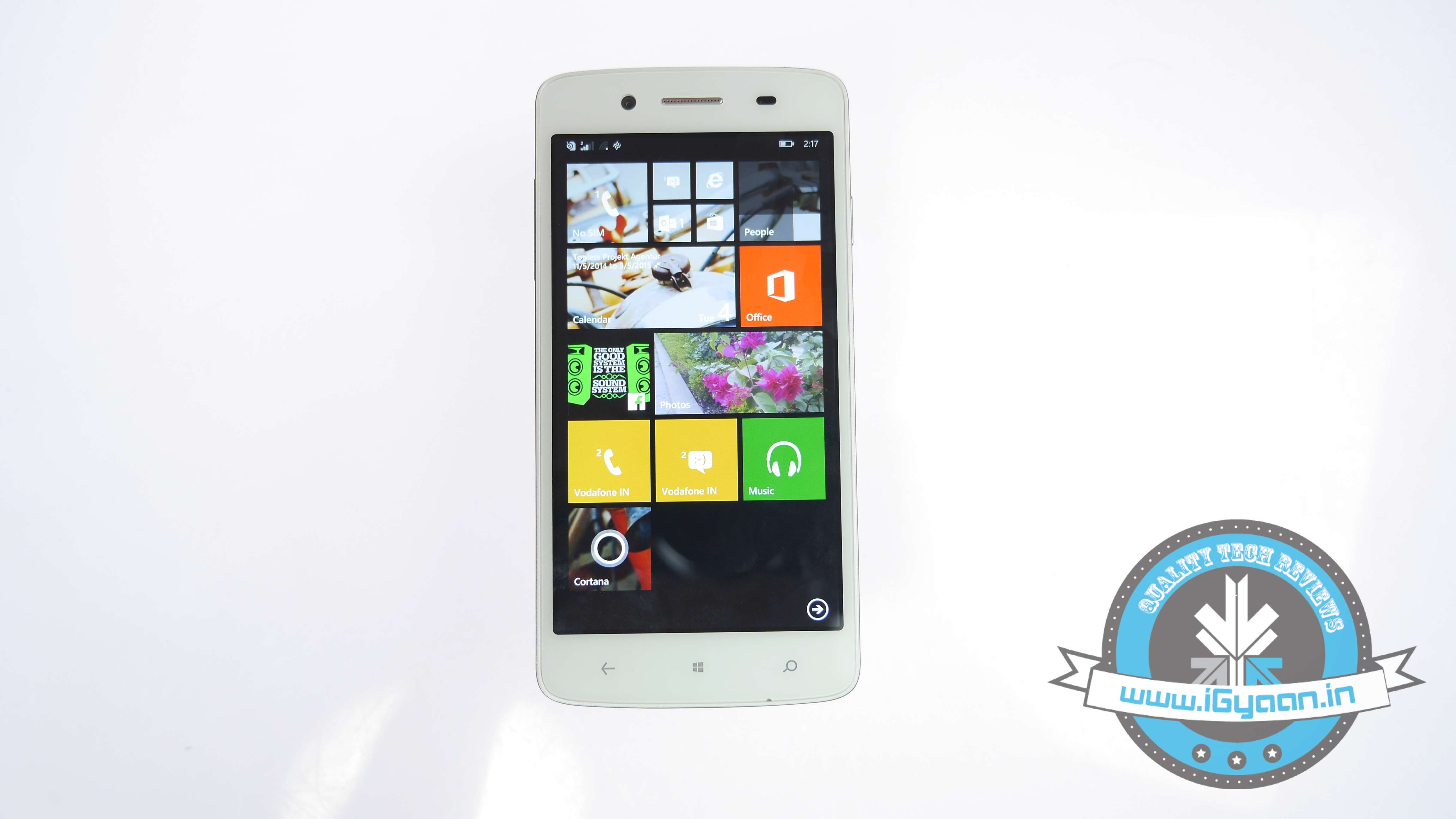
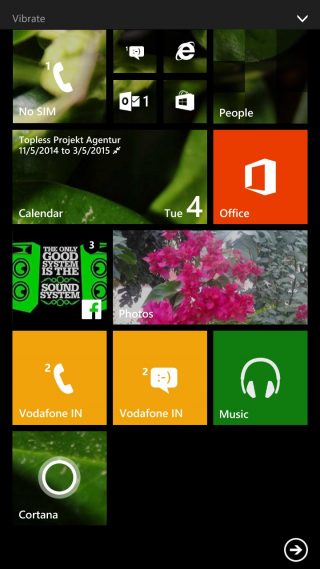
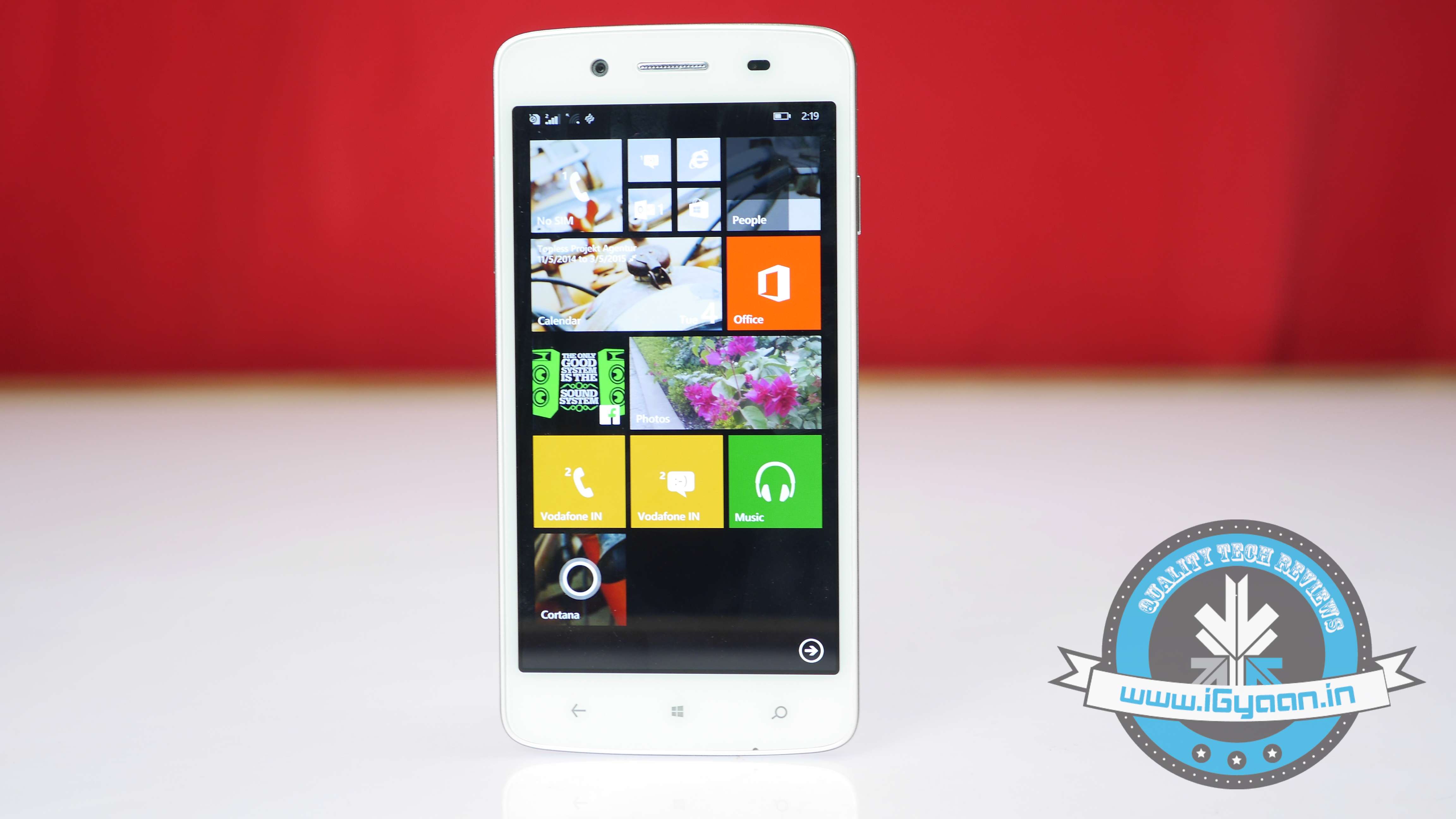
Coming to the OS, the Canvas Win W121 runs on the latest Windows Phone 8.1 OS. The OS has a neat refreshed feel to it, with those signature Live Tiles, and the new action centre that was missing with earlier version of the platform. The OS now looks much more functional and complete.
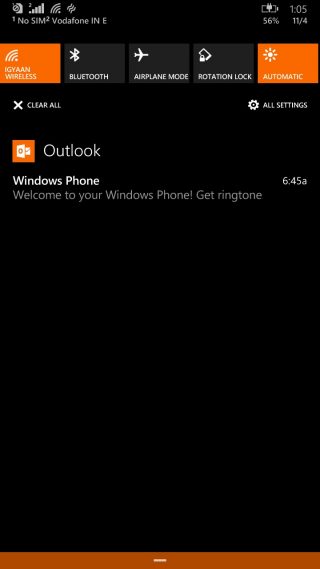
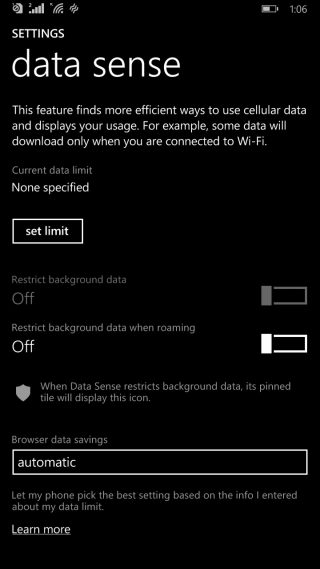
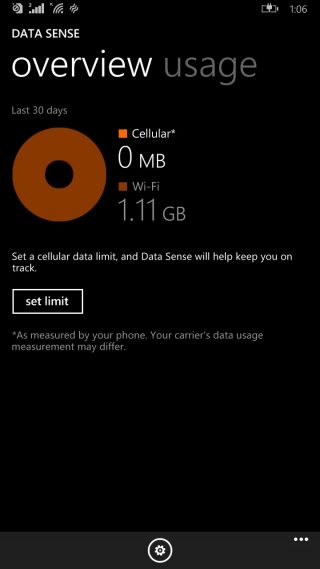
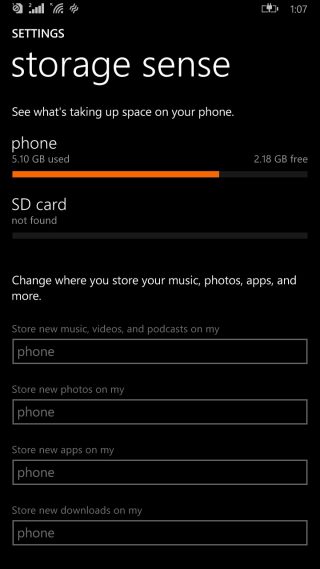
It looks really neat and brings along a slew of nifty features with a lot of customisation options. The new Swipe keyboard feels great, Data sense and Wi-Fi sense keep a tab and look after your data and Internet usage, meanwhile Storage sense offers easy ways to organise your data.
The phone offers dual-SIM support, and the OS offers an exclusive section to manage the SIMs along with setting the default SIM slot for calls and 3G.
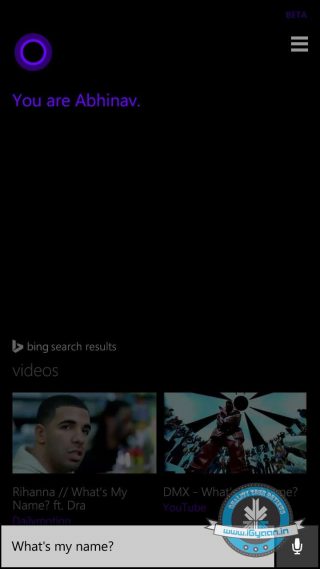
Not to forget Cortana, a real life personal assistant, who has a quirky attitude and makes interaction with the device a lot more fun. She can gather info, manage your appointments, set alarms, dictate your messages and can do a lot more. She definitely adds to the whole OS experience. (NOTE: Cortana is not available in India as of now, though users can change the phone settings to US to make it functional).
As already mentioned, WP 8.1 as an OS does not demand a lot of the phone, so navigating and switching between apps is quite smooth. Compared to its previous iteration, WP 8.1 is a significant improvement with faster loading, a better keyboard, nice touch response and an interactive personal assistant is quite a ride.
However, the device does not have support for apps that we saw in the Lumia range. This smartphone is devoid of popular apps like Here Maps, Nokia Music and all the camera apps.
CAMERA
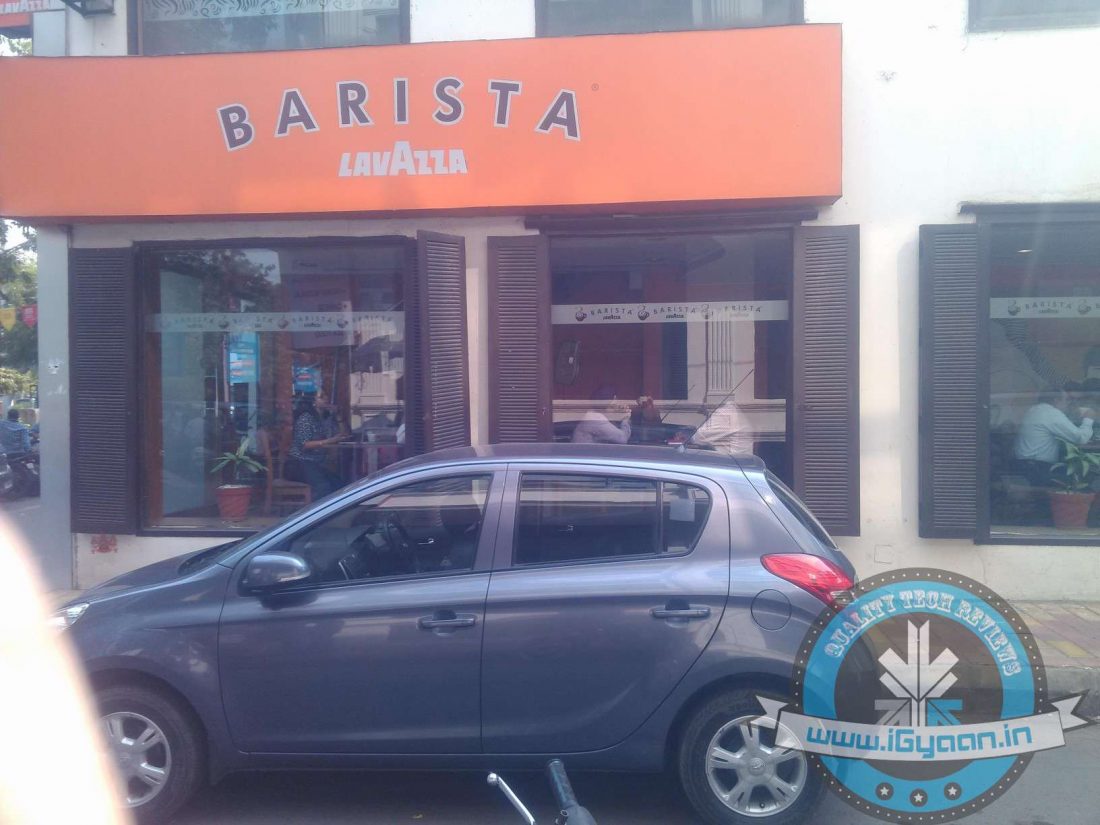
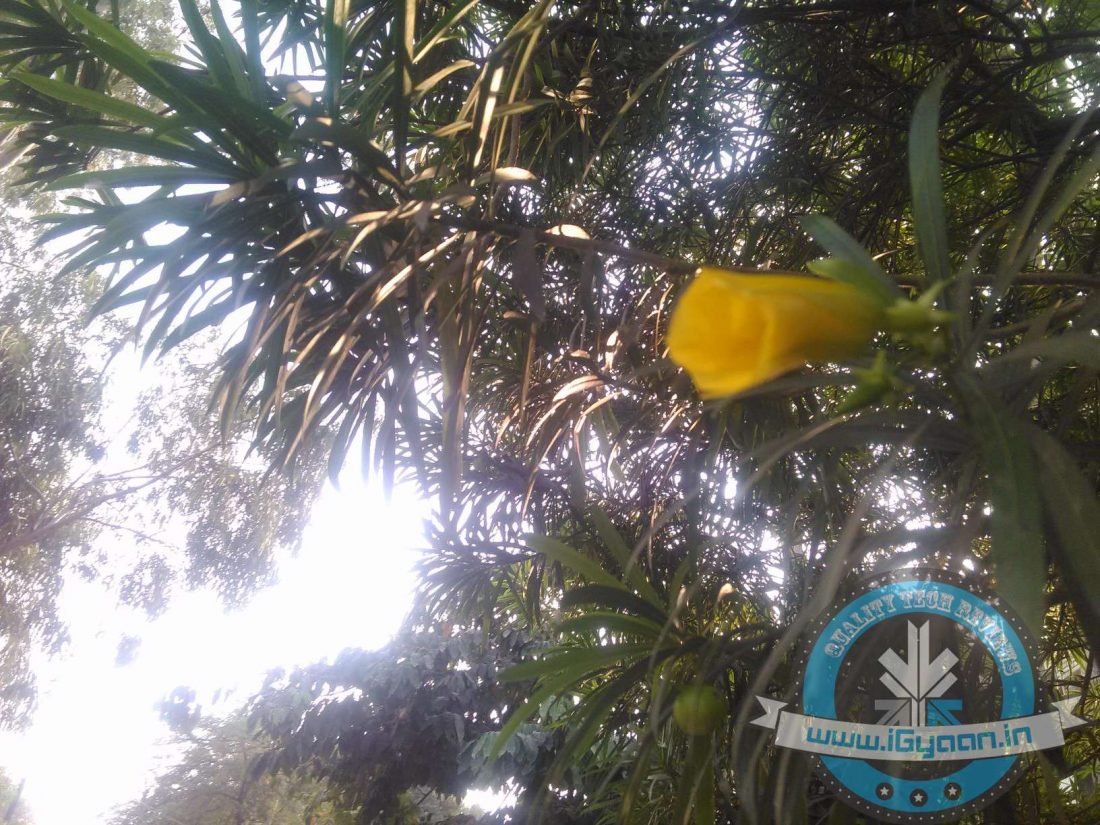
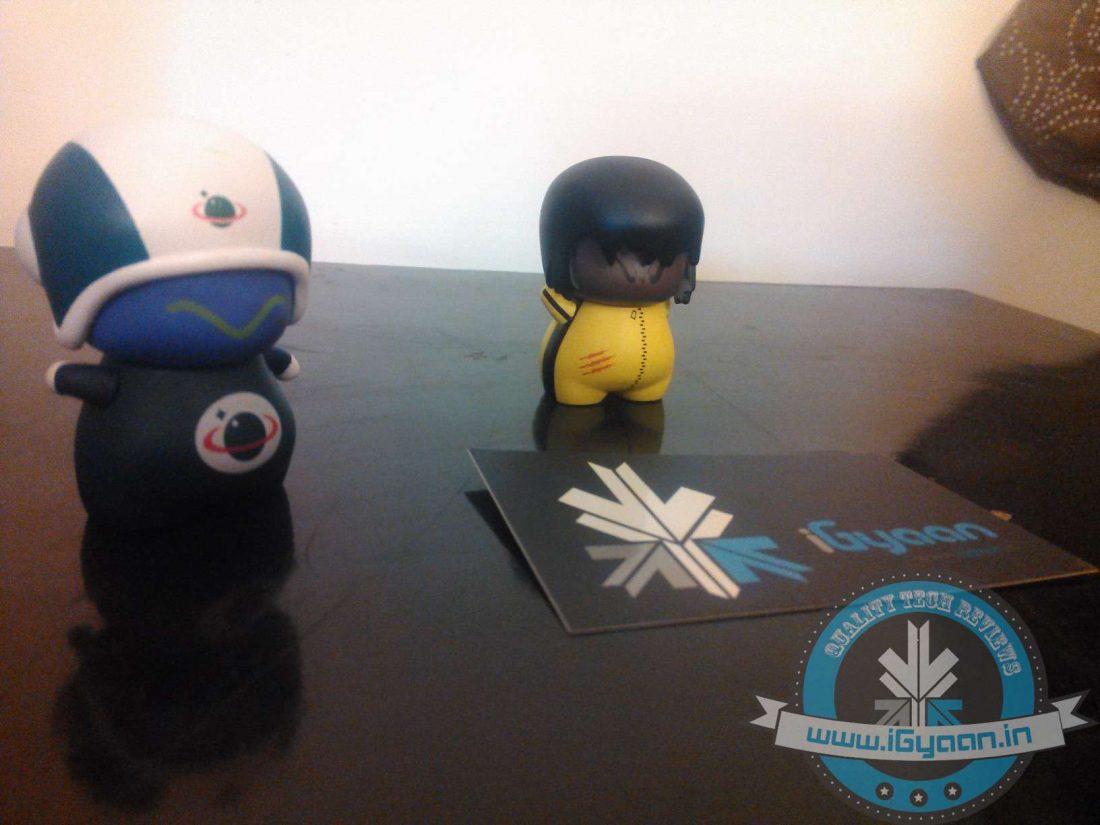
The Canvas Win W121 has an 8MP primary camera with flash, which in our opinion should have done better. The images captured lack texture and the colour reproduction is quite lame. They appear dull and washed out which takes away the overall feel of the photos.
Another issue is absence of the Nokia Camera app, users will have to rely on the default camera app. Meanwhile, the front has a 2MP snapper which just does its job. Its lens is not that wide either, which makes it quite a task to take wider selfies.
Low light isn’t great either as the lack of OIS is apparently clear and images appear a bit shaky. We also noticed that the AF of the camera takes a very long time to focus on a particular object, which can be quite annoying at times.
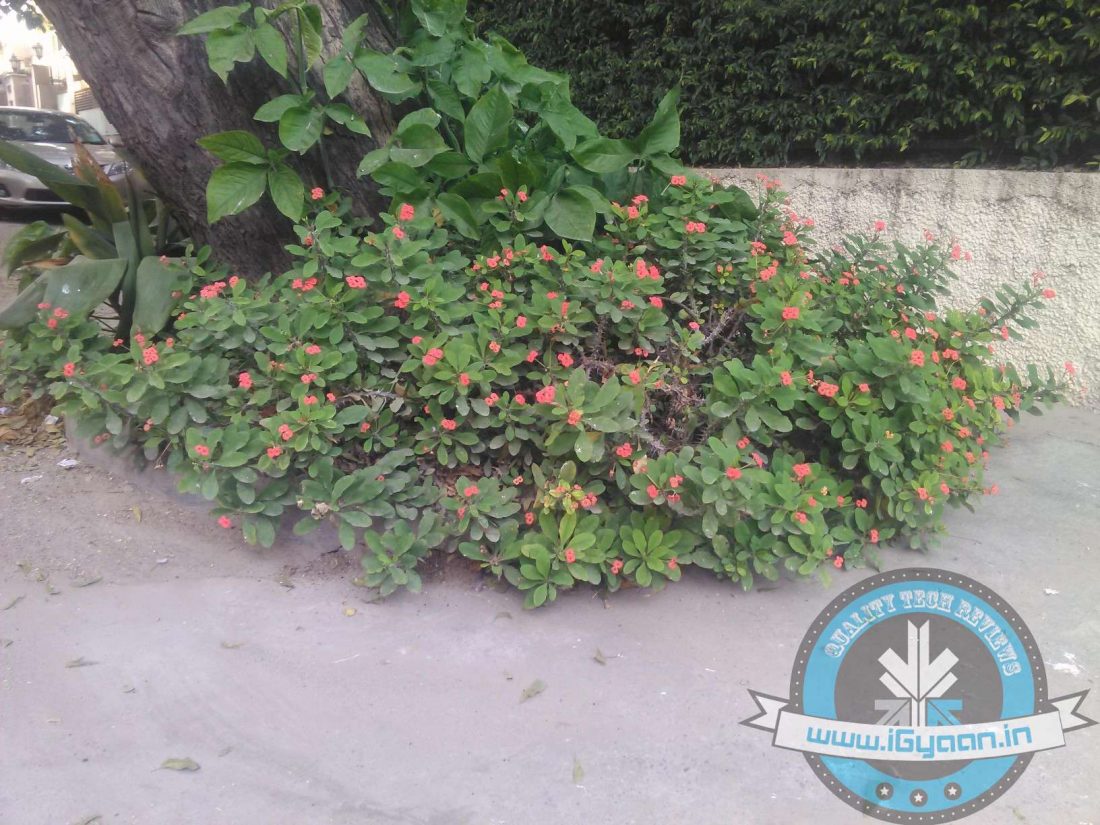
Macro
Daylight Shot
Close up Shot
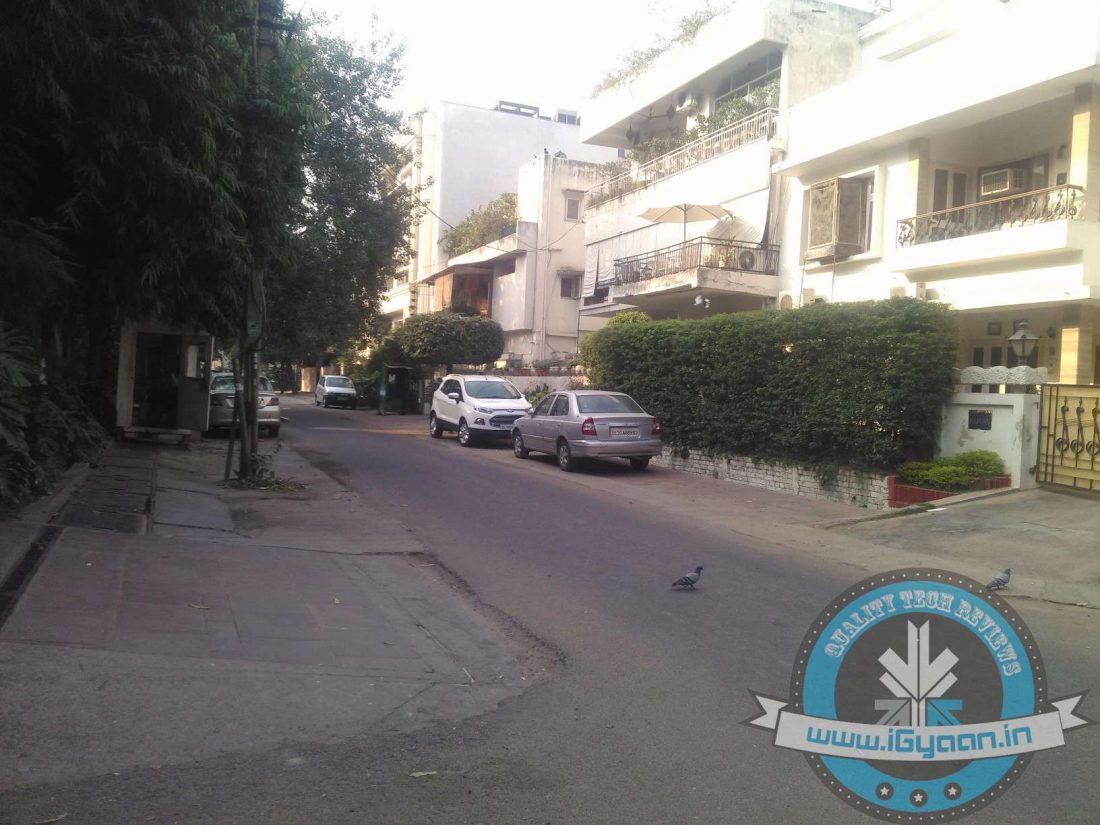
Daylight Shot
Long Shot
Low Light Shot
Also, there’s no support for HD recording, videos are recorded at 480p, which is quite a bummer as the chipset can support 720p recording. Finally, it will be fair to say that the camera is perhaps one of the weaker links of the phone.
DISPLAY AND MULTIMEDIA
The phone features a 5-inch 720p HD IPS display, which is rather brilliant with sharper texts and offers great readability in all lighting conditions. Even in well-lit conditions, the readability is quite good. Moreover, you have options to adjust brightness as per requirements. The display renders sharp colours and great viewing angles. Being a 5-inch screen, it does add to the whole experience of watching a movie or playing a game.
Powered by a dual-core clocked at 1.2 GHz with 1 GB RAM, the multimedia performance of the phone is quite good. We tested Asphalt 8: Airborne and it ran absolutely well; not flawless, but there are no major lags and stutters that would take away the overall experience of the game. The phone can withstand those frame rates; though surprisingly, it could not run a 720p HD movie. The phone just could not withstand those frame rates and transitions while playing a 720p HD movie. Max resolution possible is 480p, which is a major let down.
However, the audio performance of the phone is awesome. The phone’s external speaker is bit loud and renders good sound quality while playing games, watching a movie or listening to music, it does pack a punch. Moreover, the earphone set provided as a part of the standard accessory is also high quality, something which other OEM’s should strive for.
PHONE, NETWORKS AND BATTERY
The call quality of the phone is really good whether incoming or outgoing, and the signal reception is excellent indoor as well as outdoor. Coming to network, the phone latches onto the networks around at ease, thanks to a lot of plastic which has significantly improved Wi-Fi connectivity across most Micromax devices, including this one.
In terms of battery backup, the Canvas Win W121 comes with a 2000mAh battery. We tested the battery on different parameters and overall, the battery performance is quite decent and could easily last a day of normal usage. It appears that the battery performance of Windows Phone is much better when compared to Android.
CONCLUSION
Priced around the Rs. 7,800 , the Canvas Win W121 is a decent choice if you are on a lookout for a smooth overall Windows experience without any compromise on screen size and build quality. It has some great features but completely misses out on other aspects. For instance, lack of support for HD Playback, lack of decent camera apps might make you consider other alternatives. Though, it has a solid 5-inch display and is great for everyday usage. It could have been a top-notch smartphone if some of these aspects were not missing.
The Canvas Win W121 can compete against the likes of the Lumia 630 and the XOLO Win Q900s. Though, there are much better Android options available at the same price point.
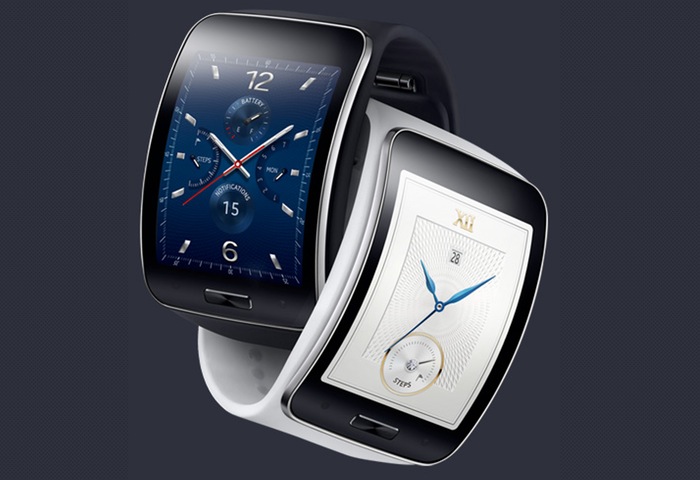
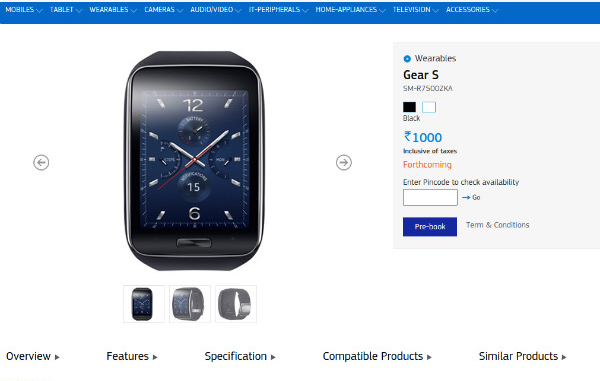
Samsung’s Tizen-based Gear S smartwatch, announced earlier this year, is now available for pre-orders in India. The smartwatch is priced at Rs. 28,900 and is available for pre-order on the company’s online store for just Rs. 1,000.
The Gear S smartwatch sports a 2-inch curved AMOLED display with a resolution of 360×480 pixels. The watch will be powered by a dual-core processor clocked at 1 GHz and a 512MB RAM. It comes with 4 GB of storage and a 300mAh battery support, which Samsung claims can last up to two days.
However, the standout feature of the watch is a SIM card slot, which allows voice calling via 2G or 3G SIM. The watch also supports Bluetooth 4.0 and Wi-Fi connectivity, though it does not sport a camera. Unlike Samsung’s other Tizen-based Gear watches, it has a standalone music player.
That being said, the Gear S smartwatch is not a standalone device and requires one of the compatible Samsung smartphones to activate it and download apps for your watch.
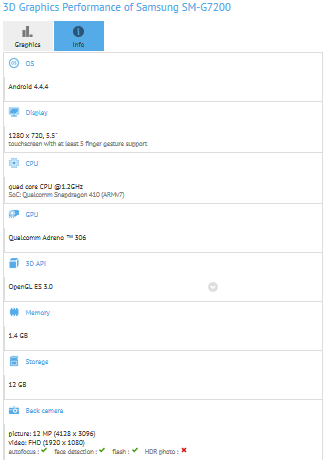
Reports of Samsung’s next flagship, Galaxy S6, did its first round of leaks yesterday. Now, a phablet with model number SM-G7200 has been spotted on GFXBench, clearly indicating to be the next iteration in the Grand series, the Galaxy Grand 3.
If these GFXBench results are to be believed, then the Grand 3 seems to be quite an overhaul over its predecessor. Going by the reports, the upcoming flagship in Grand series is likely to feature a 5.5-inch display, which is slightly larger compared to the Grand 2, though the screen resolution remains the same at 720p.
Under the hood, it will be powered by a 64-bit Qualcomm Snapdragon clocked at 1.2GHz, bundled with a 1.5GB RAM and Adreno 306 graphics. In terms of memory, it is likely to have 16 GB of onboard storage, out of which 12 GB will be available to users.
The camera seems to be the biggest upgrade. The Grand 3 will likely get a 12MP rear camera along with a 5MP front-facing camera, compared to the 8MP rear and 1.9MP front snapper found on the Grand 2.
The Grand 3 is expected to run Android 4.4.4 KitKat. As of now, there is no confirmation regarding the Lollipop update. We can expect the Grand 3 to launch in India anytime before the end of this calendar year.
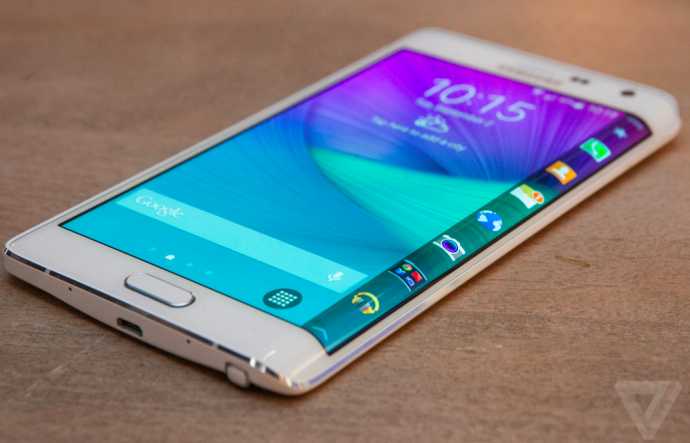
Samsung’s Galaxy Note Edge, the world’s only smartphone with a functional curved touchscreen, finally gets a launch date. The phone will debut on 14th of this month, but in the US only. Samsung Telecommunications America officially announced this yesterday.
The Galaxy Edge is a one of a kind device with a fully functional curved display for hassle-free access to notifications. The edge screen gives access to e-mail, internet, apps, notifications, news and more without the need to navigate from the main screen. The phone did grab some attention at floor shows this fall for its bizarre design.
The Galaxy Note Edge will go on sale via major carriers across the US. AT&T is reportedly offering it at a starting price of $400 on a two-year contract.
Apart from the curved display, the phablet is more or less identical to the Galaxy Note 4 when it comes to features and peripherals. As of now, there is no word regarding its price, but we can expect it to cost a bomb, as the Galaxy Note 4 is priced at a staggering Rs. 58,300. Samsung has also revealed that the Galaxy Note Edge will be a limited-edition phablet and won’t be produced in large stocks.
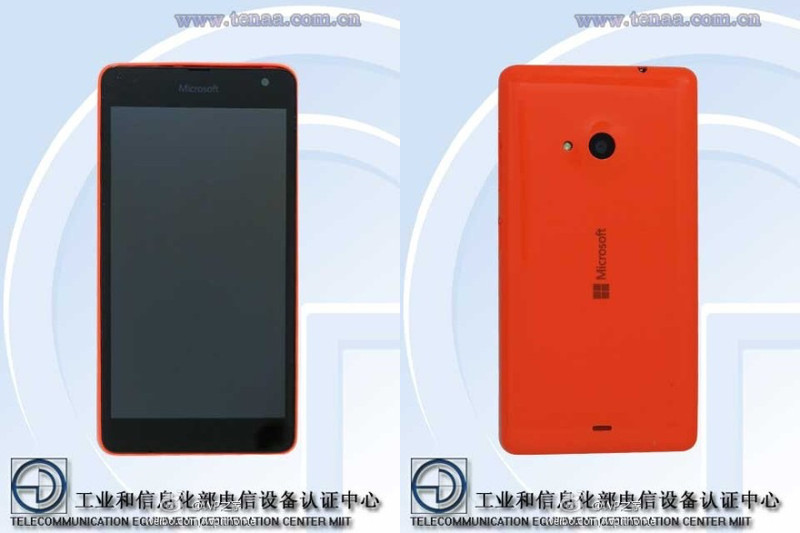
Earlier this month, Microsoft officially killed the Nokia brand for its Lumia smartphones, and now images have surfaced of what appears to be a new device with the Microsoft Lumia branding.
Images from Chinese regulator TENAA reveal a new Lumia handset with the Microsoft branding on the front and rear, and perhaps it is a larger version of the Lumia 530. Dubbed as the RM-1090 as of now, it offers dual-SIM connectivity.
Microsoft did hint at the possibility of a new Lumia launch soon, with features similar to that of the Lumia 830. It appears to be the latest addition to low-end Windows Phone from Microsoft. A ploy that the company is using to compete against Android and iOS, as it struggles to stamp its authority in terms of overall OS market share.
We have a witnessed a slew of launches by Microsoft over the past few months, with price and availability being their primary focus. We are expecting the RM-1090 to be on the same lines and see the possibility of it being unveiled before Christmas.
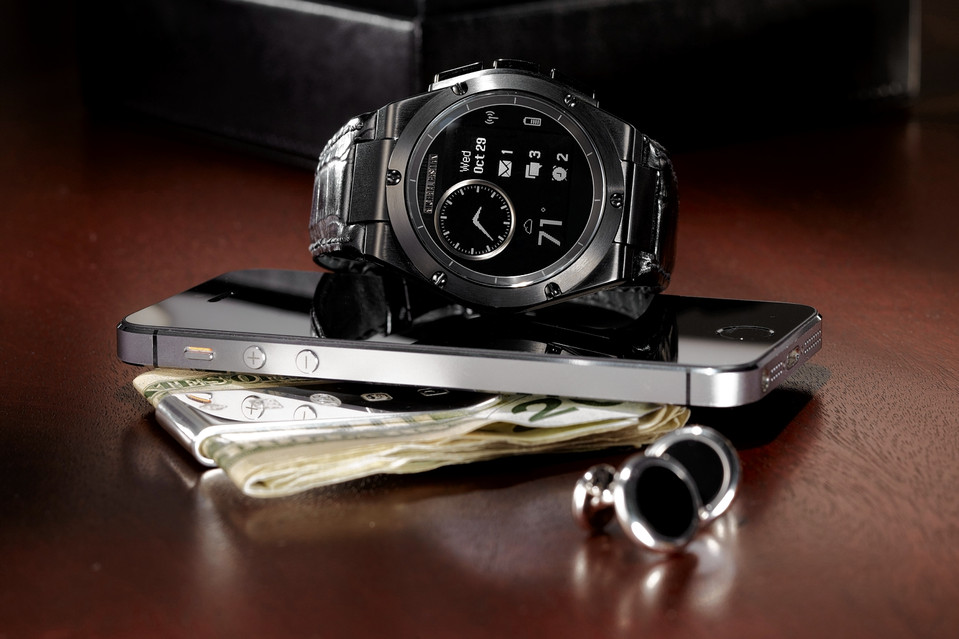
With an onslaught of smart wearables these days, HP has engineered a watch with designer Michael Bastian to create a traditional-looking timepiece called the ‘MB Chronowig’.
This wearable will be compatible with iOS and Android, and comprises all smartwatch features along with a design that emanates traditional watches. The MB Chronowig facilitates users to control music from their wrist, as well as displays email/text notifications. The watch can also sync with your calendar and alarm. This innovative piece does all these nifty little tricks while looking quite elegant – courtesy, the fashion designer.
The smartwatch will be up for sale on the website Gilt.com from 7th November. The range starts from $349 for the base silver-plated model. If you’re willing to shell out $649, there’s also one that comes in black with a sapphire glass and an elegant alligator strap.
Motorola has officially launched the Droid Turbo, a Verizon-exclusive smartphone manufactured by Motorola, and it appears to be their most powerful yet. Verizon and Motorola have always shared close relationship, at a time where AT&T was the exclusive US carrier for the iPhone.
The Droid Turbo’s biggest catch is its battery life, though moreover, it’s a fact that it has much more powerful specs than any of Motorola’s available flagship. The Droid Turbo has a Qualcomm Snapdragon 805 with four Krait 450 cores clocked at 2.7 GHz and 3 GB of LPDDR3 memory. It sports a 2560×1440 AMOLED display, which we see quite often these days on Android flagship smartphones. The device comes with a 2MP front-facing camera capable of recording 1080p video along with three capacitive navigation buttons, which means we won’t see any on-screen buttons that Motorola has been using on their devices.
21 MP (5248×3936) Rear Camera with F/2.0 aperture, 2 MP Front Camera
Battery
3900 mAh
Operating System
Android 4.4.4 KitKat
As already mentioned, the most striking aspect of the phone is its 3900 mAh capacity battery and it claims to last up to 48 hours of usage. The Droid Turbo will also support Motorola’s Turbo Charger, a new accessory from Motorola that is said to provide 8 hours of battery life in a mere 15 minutes of charging. It will have support for 4G LTE with LTE Cat 4, apart from CDMA, EVDO Rev A, GSM/ UMTS/ HSPA+. Meanwhile, the back of the phone houses the 21 MP primary camera, which Motorola claims is capable of recording 4k videos at 24fps, along with support for 1080p recording at 30fps. The back of the phone is quite similar to what we have seen in the Moto X and Moto G, but slightly less curvy. There’s also a lot of branding on the back with a logo for Verizon, the Droid brand, and of course, Motorola. Even with those, it still emanates Motorola’s design language.
The Droid Turbo will have two choices of materials. One is a metallic finish which comes in black or red and is lighter and slimmer of the two. They will all have 32 GB capacity. Meanwhile, the 64 GB version will only get the Nylon Ballistic Black finish, which is slightly thicker and heavier.
The Droid Turbo has been priced at $199.99 (approximately Rs. 12,250) for the 32 GB variant, while the 64 GB version costs $249 (approximately Rs. 15,300), both on a two-year term.
To us, it’s yet another Droid that India won’t get its hands on.
Taiwanese manufacturer Asus has joined the list of manufacturers officially confirming the Lollipop update for its smartphones. The company has officially announced the Android 5.0 update for the Zenfone 4, Zenfone 5 and Zenfone 6 smartphones. Also receiving the update would be the Padfone S and Padfone Infinity (A86) devices. Meanwhile, the LTE version of the Zenfone 5 will also receive the update.
However, the updates will take a long time to arrive. According to Asus, the update will come to Zenfones in April 2015, which makes it highly possible that Asus is working on the next version of the Zen UI for Android.
Asus now joins the likes of Motorola, Sony and HTC with this announcement, who have also confirmed the update for a select few devices. Being the Nexus manufacturer, Motorola was the first to confirm the update, followed by Sony announcing the update for the entire Xperia Z series.
While Samsung also teased the update for the Galaxy Note 4, though it is rumoured to be working on a revamped version of its TouchWiz UI for Android 5.0. For more information, check out our article on a complete list of devices that will get the Android 5.0 Lollipop update.
It has been four years since the Windows Phone platform was launched and Microsoft hasn’t really had the kind of success they were hoping for. Despite the neat looking UI and some nifty tricks, Windows is far from being a direct threat to Android or iOS. Windows Phone and Nokia’s Lumia range is what we are used to. Meanwhile, Samsung and HTC did try a few models nearly two years ago, though they never managed to make it work.
Since Microsoft’s decision of not charging a license fee for the new WP 8.1, manufacturers can now give Windows Phone a shot without taking the risk of spending a huge amount on resources. It’s encouraging to see regional OEMs jumping on the Windows Phone bandwagon. It’s exactly what the platform needs. As a matter of fact, we are seeing the same devices running both Android as well as Windows 8.1, as is the case with this device.
Local manufacturer XOLO has jumped onto the bandwagon. With the launch of the XOLO Win Q900s, the company is looking to place itself as an innovative and a value for money brand, across all spheres.
Overview
The XOLO Win Q900s is a variant of the Android-based XOLO Q900s. The most striking aspect of this phone is its ultra-light weight, at a mere 100 grams. It comes with a 4.7-inch HD display powered by a Qualcomm Snapdragon 200 processor. The smartphone is priced just under Rs. 10,000 and runs on Windows 8.1. It has the likes of Lumia 520, Lumia 630 as direct rivals in the overcrowded budget category of the smartphone world.
Hardware
The XOLO Win Q900s is powered by a relatively sluggish Qualcomm Snapdragon 200 SoC with four cores clocked at 1.2 GHz and Adreno 302 graphics. It has 1 GB of RAM and comes with 8 GB internal storage capacity which is expandable up to 32 GB via microSD slot.
It sports a 4.7-inch screen with a resolution of 1280×720. Optics includes an 8 MP camera on the rear and a 2 MP selfie cam. The phone has a 1800 mAh battery which is just not enough for a heavy user.
Design and Build
As already mentioned, the first thing you’ll notice about the phone is its ultra slim form factor and how deceptively light weight it is. Which means you can slip it in your pocket easily and it also fits perfectly in the hand. Not one of the toughest phones around but with a its weight, it’s certainly lighter than the lightest phones around.
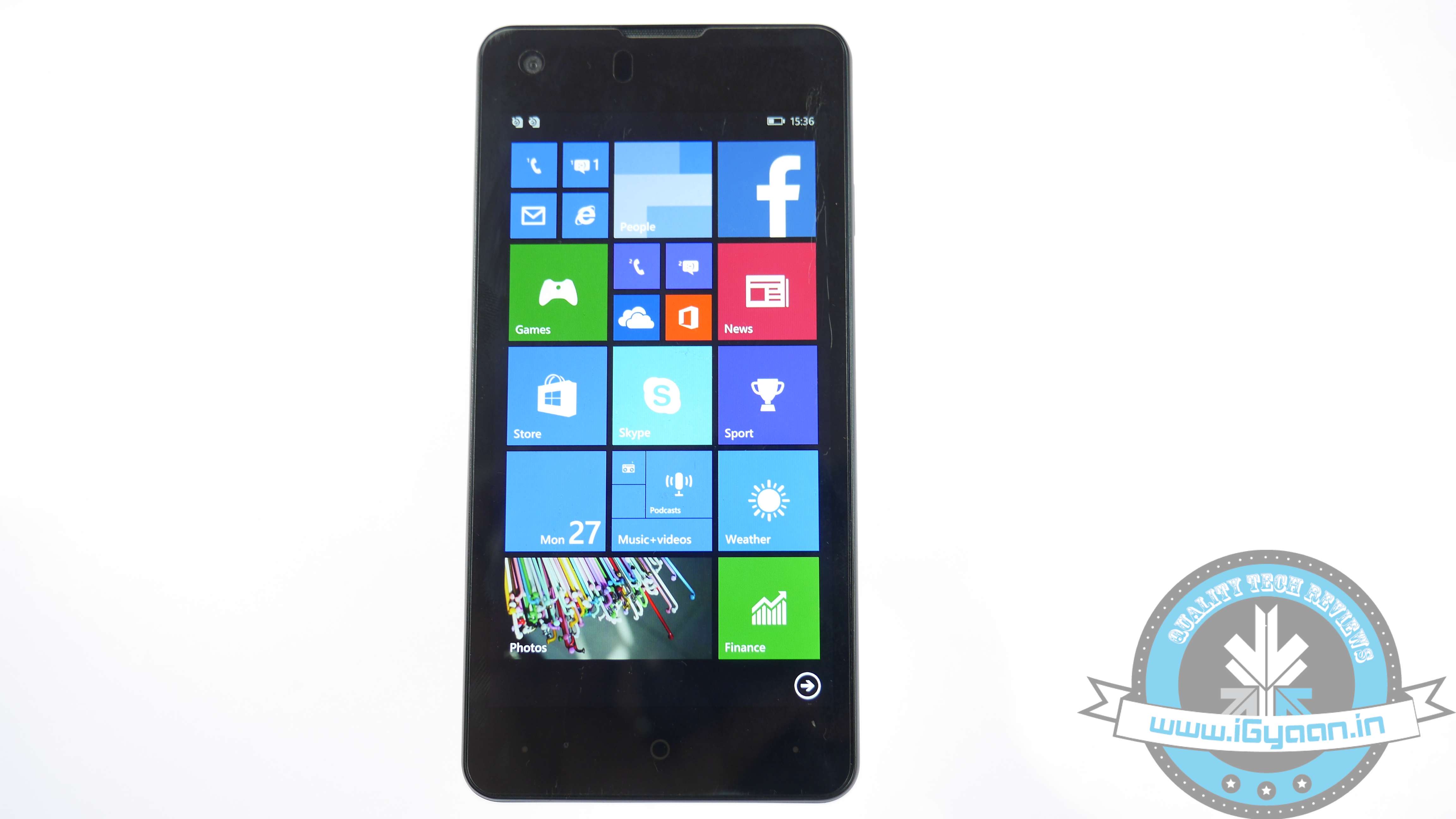
Surprisingly, there is no Windows’ logo anywhere on the phone which is usually found on the Home button beneath the screen, this might be confusing to users. Also, there is no Microsoft or Windows branding seen on the device, apart from the box.
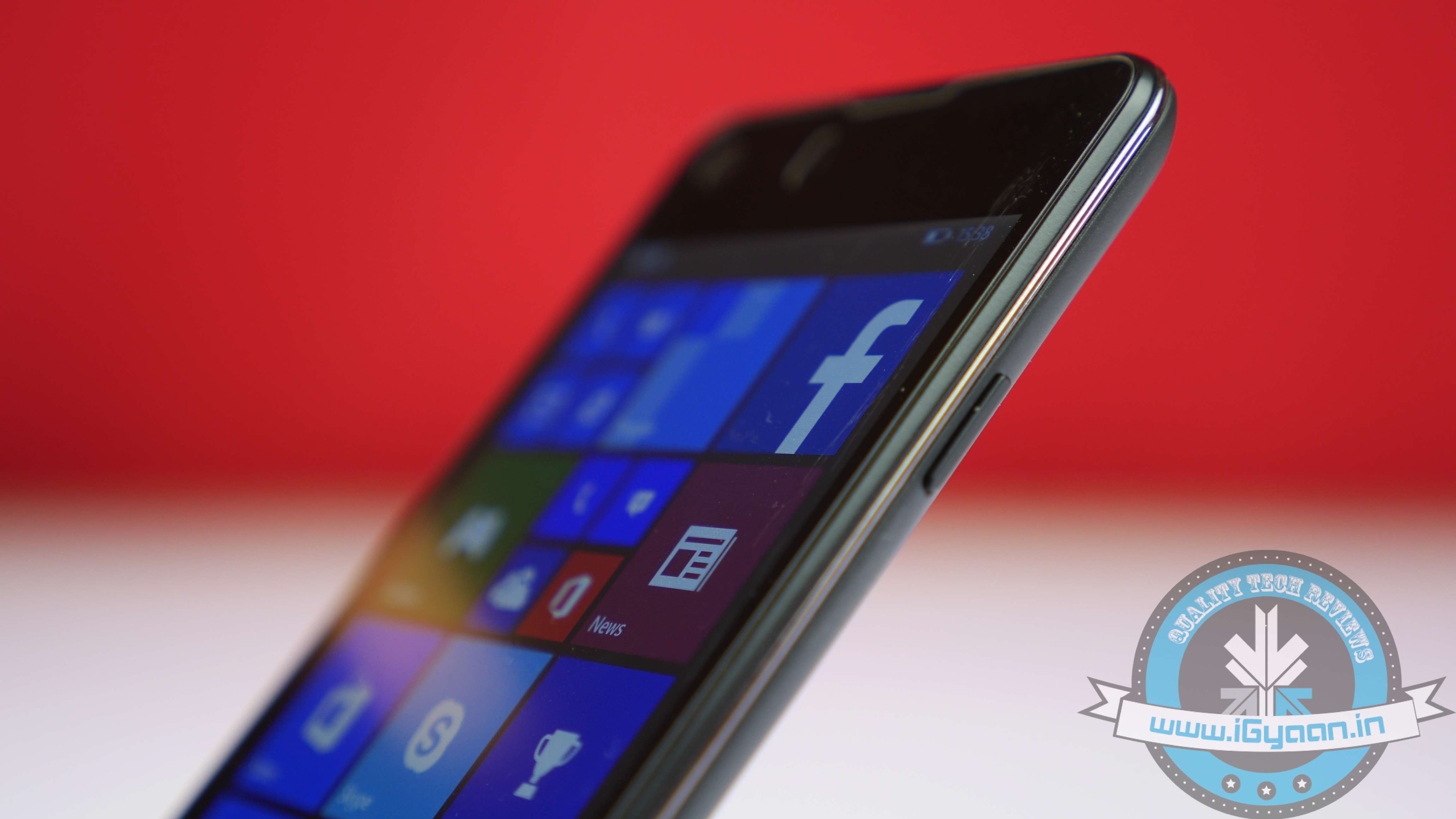
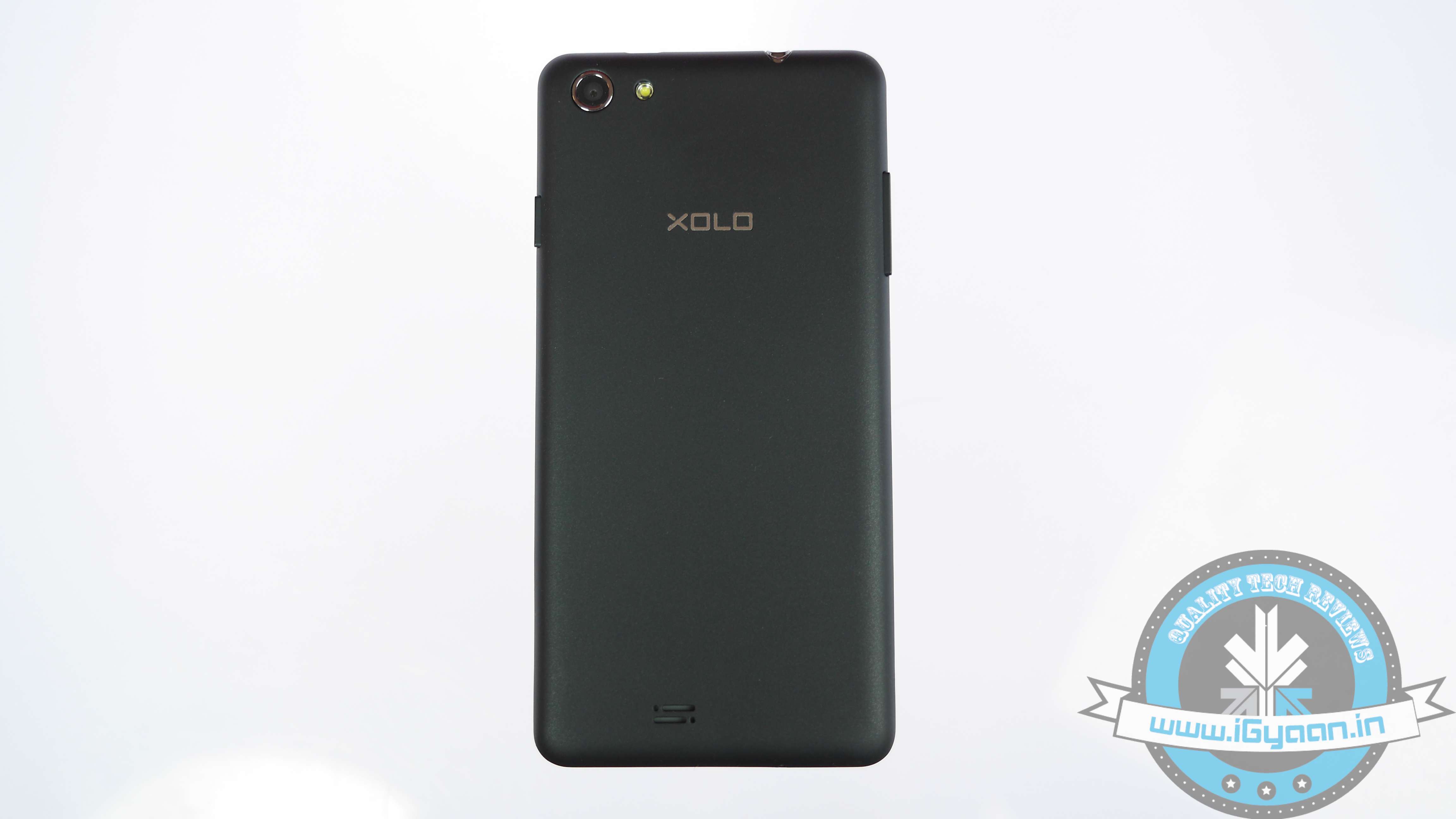
The phone has an amazingly slick design. It has a glossy black front, while the rear has a nice matte finish to it providing a better grip. The sides have a dark metallic rim that run from top to bottom. The capacitive buttons are placed very close to the bottom, with the Back button placed on the front right while the left button brings up Bing search – the exact opposite of the layout we are used to.
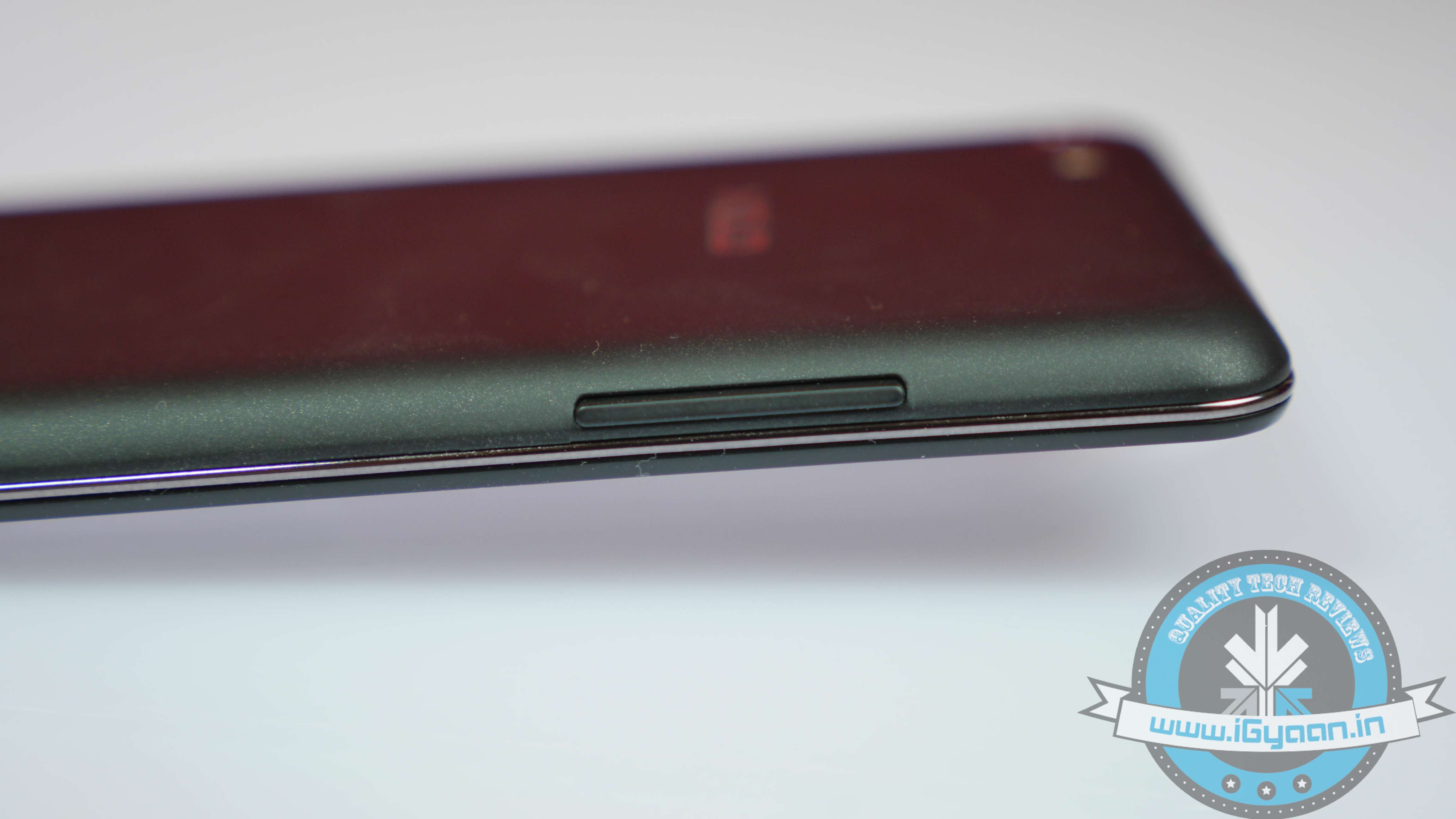
The main power button is placed on the right edge while the volume rockers are on the left. The back houses the primary 8 MP camera and flash, and has a removable back cover that has the two micro-SIM, microSD slots along with the removable battery.
The phone is definitely one of the better looking phones out there and feels good in the hand. This breaks the myth about domestic manufacturers coming out with ugly looking phones compared to their well established branded counterparts. It has a top notch design and will make a few heads turn.
Performance and OS
The performance of the XOLO Win Q900s is quite satisfactory. Powered by the Snapdragon 200 clocked at 1.2 GHz bundled with 1 GB of RAM, the phone does your routine tasks without any hassle. There aren’t any noticeable lags while using apps like WhatsApp, Twitter or Facebook, it can easily handle day-to-day activities with ease and fluidity.
The low weight makes surfing on the phone all the more fun. The phone managed a score of 10,870 in our Antutu Benchmark which is slightly lower than that of the Nokia Lumia 630.
The phone can run most games at ease, though one might experience stutters while playing them on the highest settings. The FPS is kind of low, but otherwise it gives a pretty good display and runs most games quite well without over-heating, considering the fact that it’s a very thin device. Though, it’s not meant for high-end gaming.
Coming to the OS, the XOLO Win Q900s comes with the latest Windows Phone 8.1. The OS has a refreshed neat look with a notification center along with the signature Live Tiles. Its Action Centre is very well laid out, making the OS fully functional. Swiping around the screen is smooth and responsive, and the new Swipe keyboard gives a good feel to it. The updated Windows 8.1 also brings a lot of customization options, almost a complete overhaul from the original Windows 8. The new Data sense and Wi-Fi sense take care of your data usage.
Not to forget Cortana, Microsoft’s answer to Google Now and Siri, is like a real-life personal assistant. The only difference is that being anthropomorphic, you can have a conversation with her and because of this, she is far better than the robotic Google Now responses. Cortana is capable of doing what Google Now does but with a quirky attitude that you would love. She gathers information about you and gives suggestions based on that. From scheduling appointments to dictating messages to opening apps, she does everything for you. Though it’s still early days for Cortana, but she is definitely fun to work with.
In the end, it would be fair to say that the overall experience of Windows 8.1 on XOLO Win Q900s is quite good. Previously frustrating loading delays have been significantly improved. With Windows 8.1, there aren’t any noticeable lags; a great keyboard, an interactive personal assistant makeup for a delightful experience.
Camera
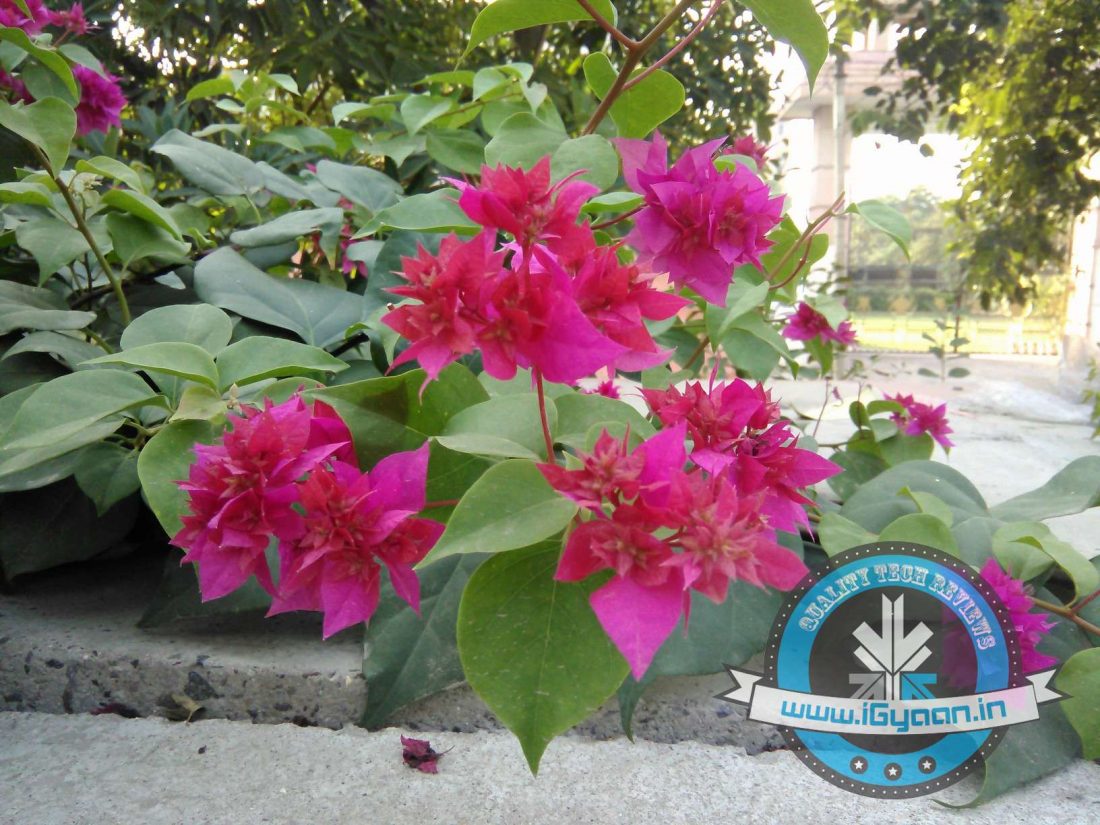
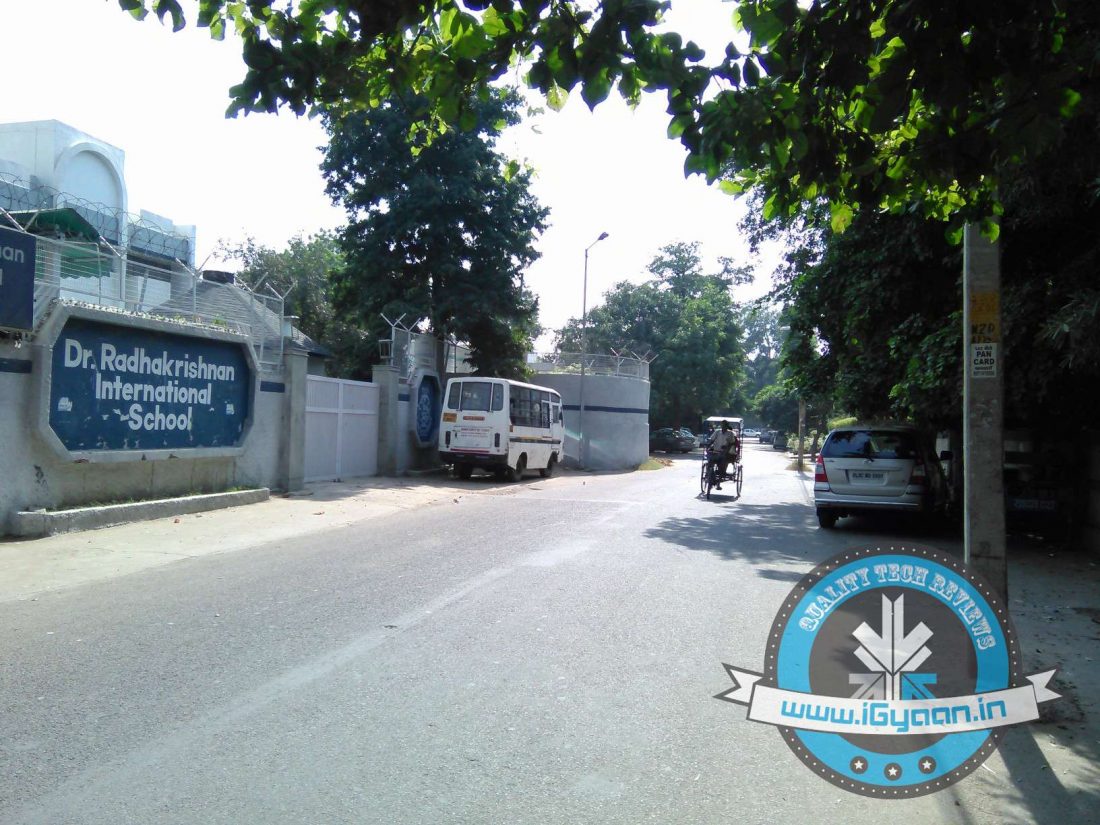
The XOLO Win Q900s has an 8 MP rear snapper along with a 2 MP front camera. Overall, the picture quality in broad daylight is very good, renders the right colours and is quite crisp and sharp as well. Even the selfie camera on the front takes pretty decent pictures. The camera app has several display modes as well, allowing users to adjust colour hues and customise the display as per requirement.
Low light performance is just at par, as one would obviously not be expecting much from a phone at this price level. One other thing that we noticed was that the rear camera is placed on the extreme top left edge, so more often you need to make sure that you keep your fingers off the lens while taking pictures.
Meanwhile, the video quality is just at par and appears a bit grainy even in well-lit lighting conditions. One might experience jitters and lags, making the end result rather unsatisfactory.
Close up Shot (Zoom In)
Long Shot ( With HDR)
Shot in broad daylight
Close-up Shot
Daylight shot
Long Shot ( without HDR)
Display and Multimedia
The phone’s display is quite good with a 4.7-inch 720p HD IPS 332ppi display. Text appears sharp which makes for a good reading experience. The screen is bright even in outdoor conditions, and the viewing angles are pretty good. All in all, the display works just fine indoor as well as outdoor.
With a dual-core processor, the multimedia performance on the phone definitely needs some boost. It can handle daily activities at ease; while playing, videos deliver smooth frame rates and transitions, however audio sounded a bit muffled. The XOLO Win Q900s is not for games that demand a lot out of this phone, as it does not have the ingredients to cope up with those kind of games that run on high graphic settings.
Phones, Networks and Battery
The phone gives good signal strength indoors as well as outdoors, audio quality on the call is quite crisp. In terms of network connectivity, Wi-Fi signal strength is extremely poor and one needs to be very close to the router.
Coming to the battery, the phone is powered by a 1800 mAh Lithium Polymer (Li-Pol) battery, which in my opinion does not provide enough juice for a heavy user, may last only 4 hrs of heavy usage and 8 hrs of average usage. It might even stretch up to 9 hours without the Wi-Fi. It needs to be plugged in quite a bit if you’re a heavy user. In our battery test, we played a 90 minute HD video with Wi-Fi and other notifications on, and by the end of the video, the battery dropped to 67 percent.
Conclusion
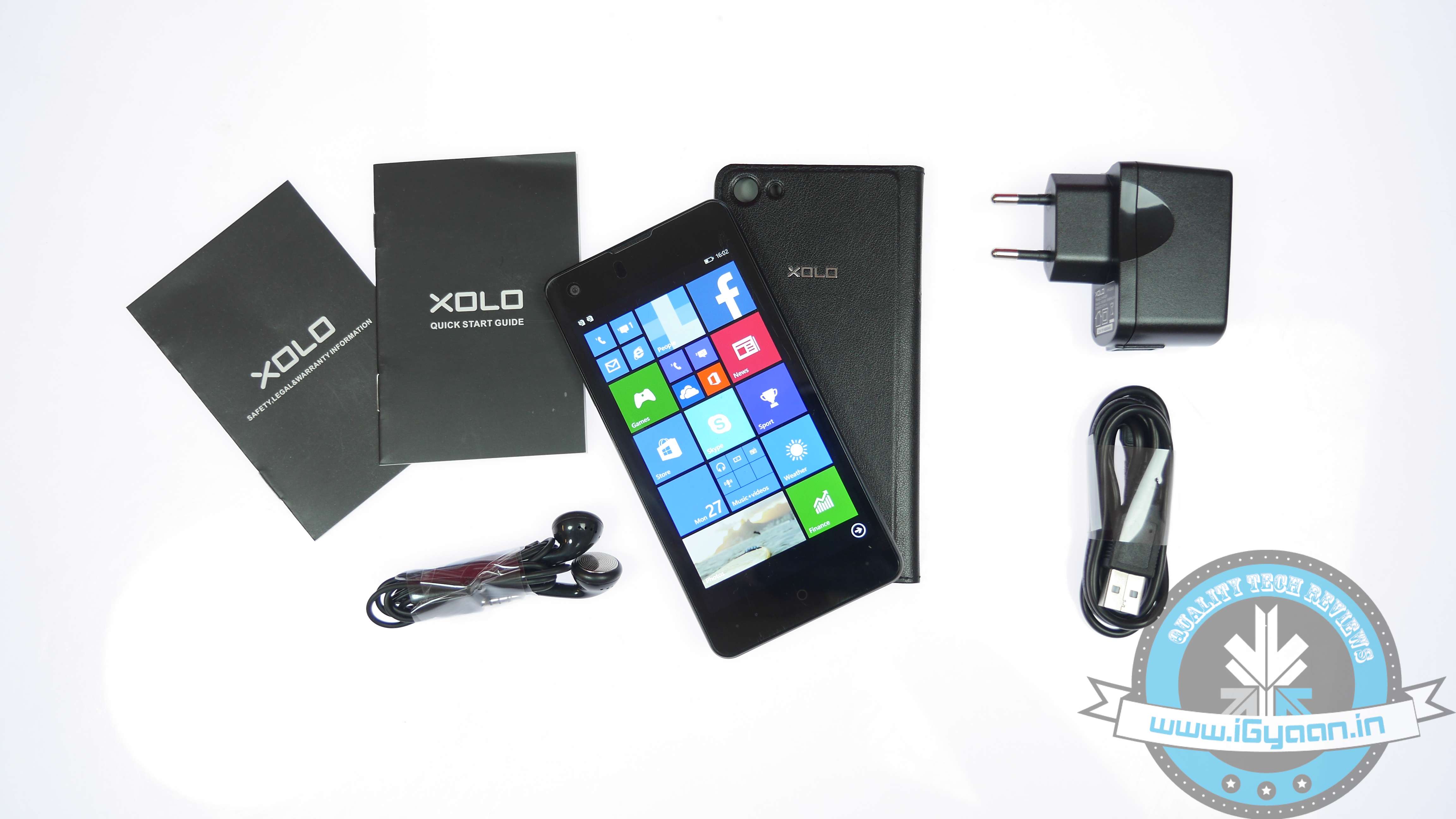
Well, the device isn’t perfect by a long way and has its own minor flaws, but in no way is it a complete bummer. It needs some fine tuning and there’s definitely a of scope for improvement. With a Snapdragon quad-core clocked at 1.2 GHz bundled with 1 GB of RAM and an 8MP camera with auto-focus along with expandable storage, the phone has all the attributes of a decent budget pick. Moreover, you get a screen guard and a flip case as a part of the total package.
The Nokia Lumia 630 is its closest rival, with a better processor and a slightly more powerful battery at 1830 mAh, but lacks in terms of memory at just 512 MB of RAM and a lower resolution at 480×854 pixels. Meanwhile, coming its Android counterparts, you have tons of options available in the given price range.
The XOLO Win Q900s, above all, is a smart choice, with average specs, decent performance, a good display, decent camera though battery backup might not be that great. If you are looking for a Windows Phone, it does all the basics fairly well along with a host of new features of Windows 8.1. A worthy competitor to the Lumia 630 and the Canvas Win W121.
A note sent to app developers which was obtained by Android Police informs developers that the Software Development Kit for Android 5.0 is now available. It further advises developers that they can start working and testing their apps on the Android 5.0 platform. It concludes by revealing that Android 5.0 will be available to consumers starting 3rd November.
This is quite predictable as Google has already said that the refreshed Nexus 6 phone and Nexus 9 tablet will be available early November. Both of them, will come loaded with the latest Android 5.0 Lollipop. It only makes sense for Google to start rolling out the update for existing devices around the same time.
Typically, as we have seen in the past, Google’s own Nexus devices are the first ones to get latest updates, which is followed by other mobile manufacturers. Google has officially confirmed that its entire Nexus range will be updated to Android 5.0 in the coming weeks. HTC has already said that it will start rolling out Android 5.0 on the HTC One M8 and HTC One M7 worldwide, “within 90 days of receiving final software from Google”. Meanwhile, Motorola has revealed that its plans to update the first and second gen Moto X and Moto G and other devices with Android 5.0 later this year.
There’s a whole new look and feel to Android 5.0 Lollipop, courtesy of a concept called Material Design, it paints richer colurs, adds more depth and has more white space. Along with that, it also adds a new notification setup, offers new ways to multitask and has a new battery saving mode. Check out our in-depth article about What to expect from the Android 5.0 Lollipop.
Now the question is, will your device make it to the list where this update will be rolled out? We’ve compiled a handy list, with all the devices that will get the new Android Lollipop update.
Did yours make it?
Google
Nexus 4
Nexus 5
Nexus 7 (2012)
Nexus 7 (2013)
Nexus 10
Google Play Edition
HTC One (M7)
HTC One (M8)
Samsung Galaxy S4
Moto G
Sony Z Ultra
LG G Pad 8.3
Android One
Micromax Canvas A1
Spice Dream UNO
Karbonn Sparkle V
Motorola
Motorola
Moto X
Moto X 2nd Gen.
Moto G
Moto G 4G LTE
Moto G 2nd Gen
Moto E
Droid Ultra
Droid Maxx
Droid Mini
Sony
Xperia Z
Xperia ZL
Xperia ZR
Xperia Z1
Xperia Z1s
Xperia Z Ultra
Xperia Z1 Compact
Xperia Z2
Xperia Z2 Tablet
Xperia Z3
Xperia Z3 Compact
Xperia Z3 Tablet Compact
HTC
One (M7)
One (M8)
One mini
One mini 2
NVIDIA
SHIELD Tablet
Xolo
Xolo One
OnePlus
OnePlus One
For those of you wondering about Samsung devices, we expect the Galaxy S5, S4, Note 3, Note 4, Tab S 8.4 and Tab S 10.5 to receive the update, although it is not official as of yet. We will update this post as soon as new devices are confirmed or begin to receive Lollipop updates.