Category: Microsoft

  • Microsoft has a Good Opportunity in India with Cloud, Says Nadella

    Microsoft has a Good Opportunity in India with Cloud, Says Nadella

    Cloud computing is a brand new platform that Microsoft is looking to evolve further. It has gained a great deal of attention, but hasn’t attained the prominence expected by the company. The top official of Microsoft believes that Microsoft has a real opportunity with cloud-computing in India and it will be a transformative area.

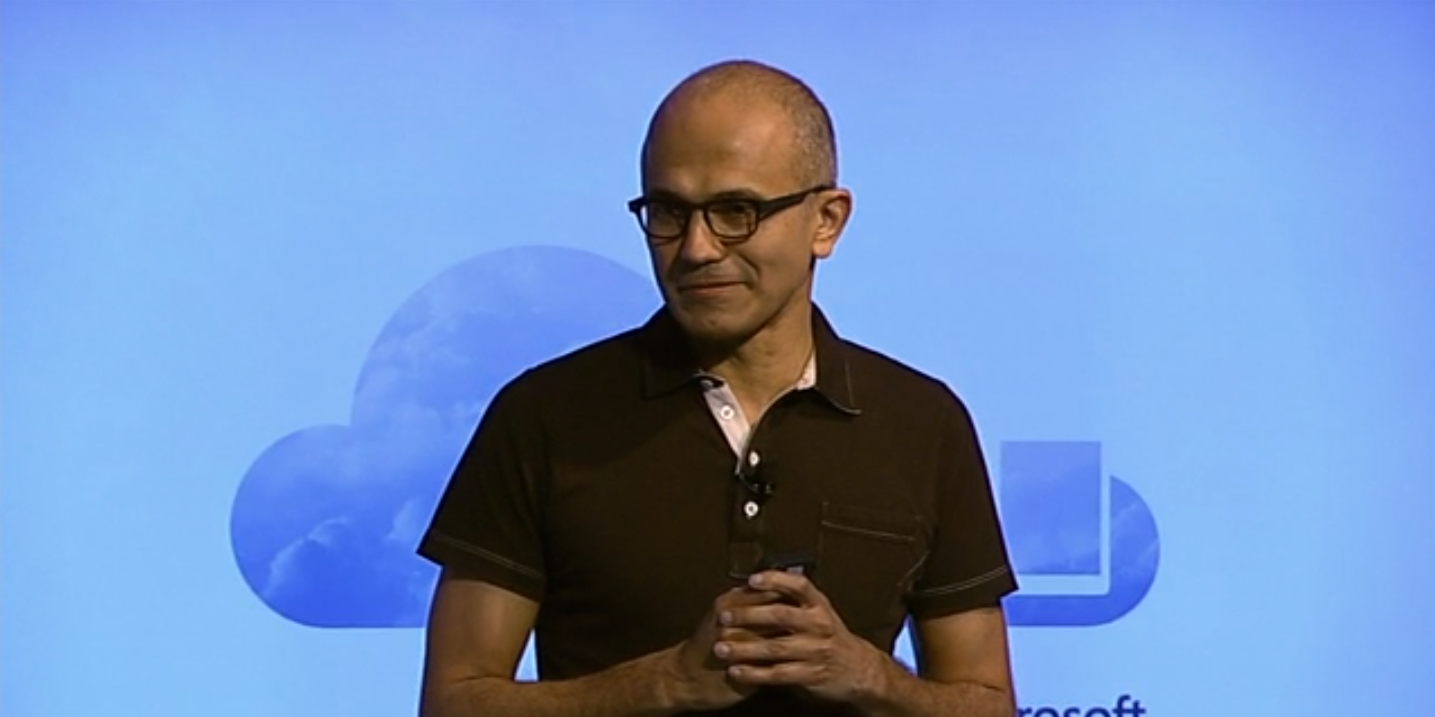
    The CEO of Microsoft Satya Nadella remarked at the conference:

    It was hard selling softwares. But now with cloud, we have real opportunity in India. That definitely is the transformative thing. And of course by design, it has anti-piracy built into it, which also is very helpful.

    Nadella expects Cloud to grow the size of Google in the next five years. He further stated, “Qualitatively, the way I describe the world that we live in and what it will be in the next five years is this mobile-first, cloud-first world.”
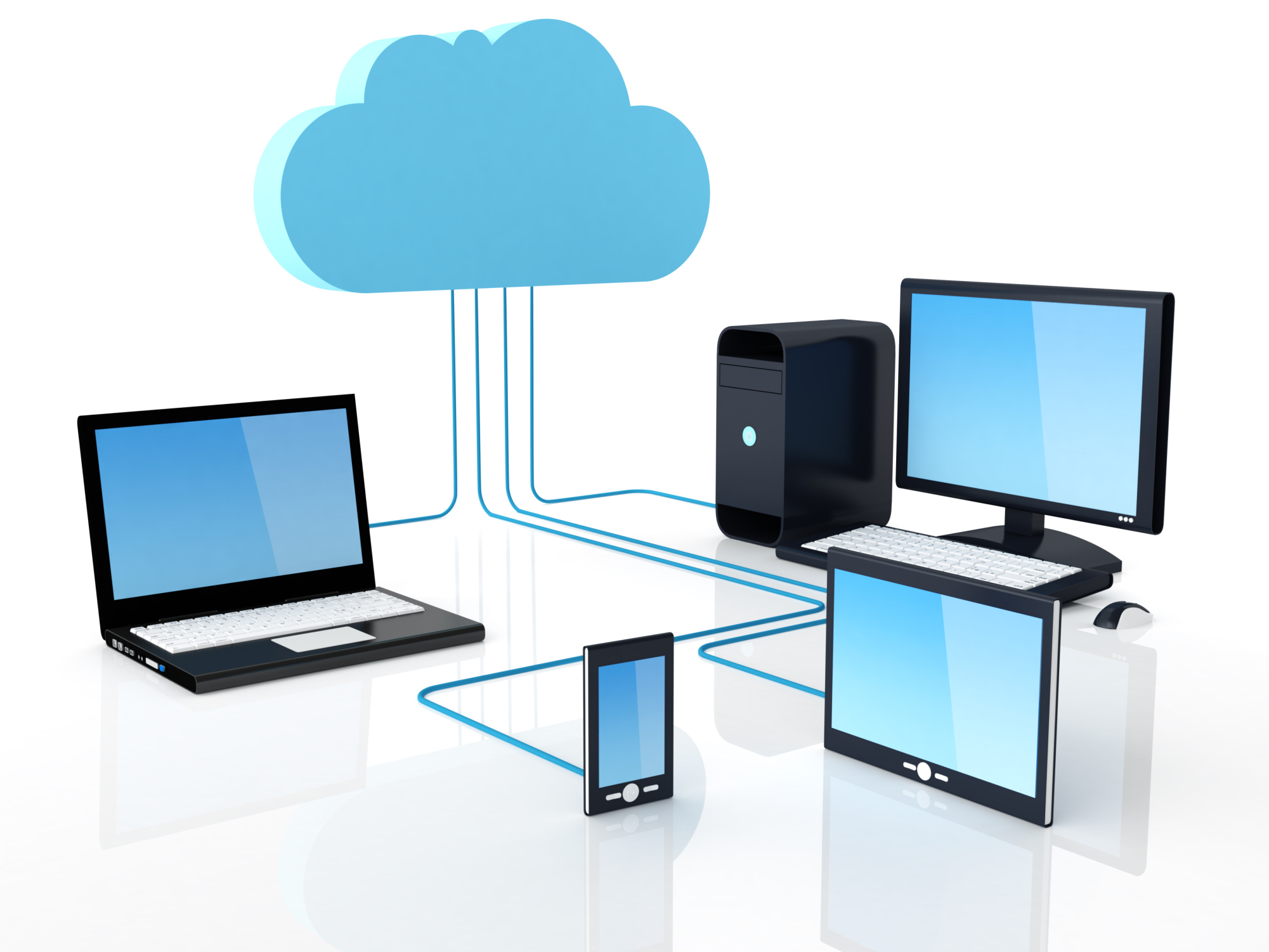
    Cloud Storage

    The hardware and software giant is the leader of the cloud service that provides computing and data storage services. The system works by deploying groups of remote servers and software networks that uploads different data sources for real-time processing without the need to store processed data on the cloud.

    The Microsoft CEO commented on his vision is to empower every person and organisation and make them achieve more.

    Customer success is the top priority of Microsoft and they work on helping their customers re-imagine their businesses. Chief Operating Officer of Microsoft Kevin Turner stated in the 2015 Microsoft Financial Analyst Briefing:

    And the other big mantra we have at Microsoft, particularly for our field and our go-to-market model, is transforming while performing, and working on those things simultaneously is a very important part of our rigour and our discipline, and what we bring to the table relative to focusing on this customer success.

    Alongside this announcement, Microsoft held a three-day build conference where new feature were revealed like Continuum for Phone and Microsft Edge. Check other features here.
  • Microsoft Outs the Budget-Friendly Lumia 430 in India

    Microsoft Outs the Budget-Friendly Lumia 430 in India

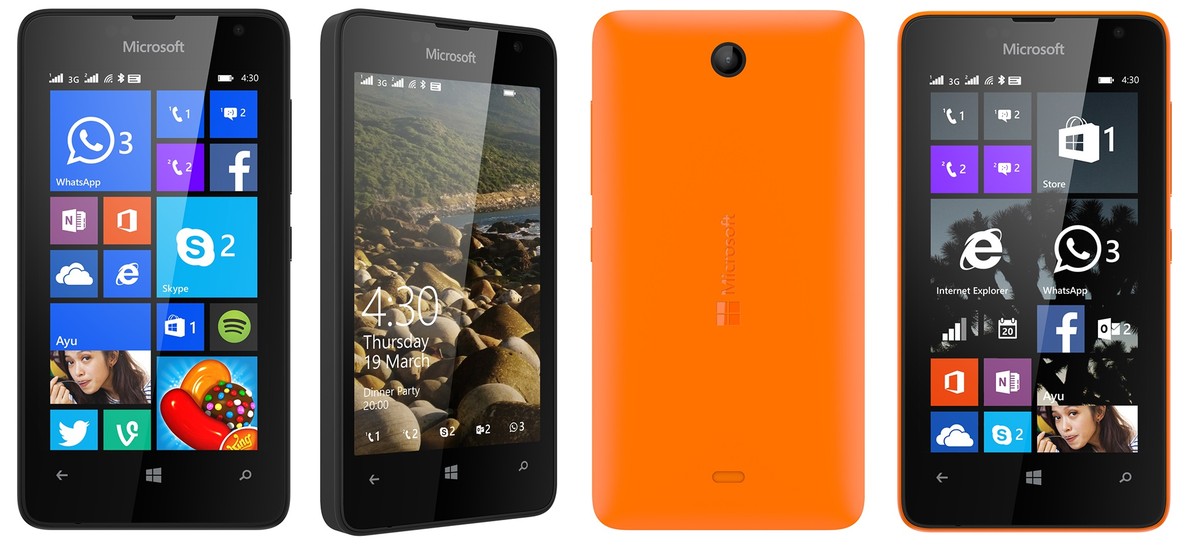
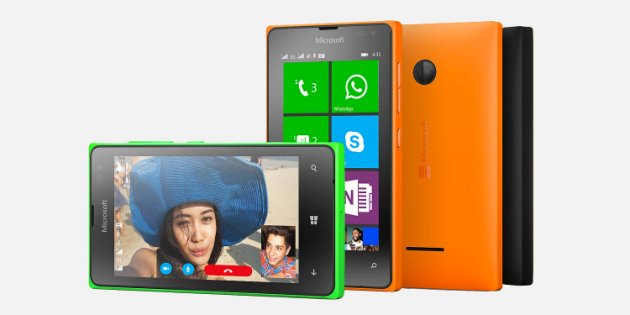
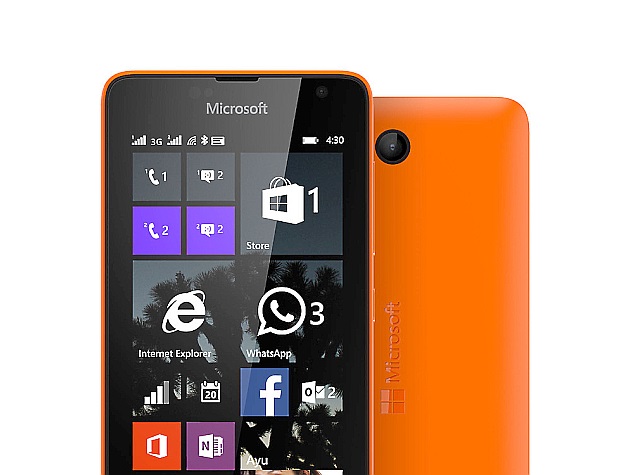
    Keeping its promise, Microsoft today launched its cheapest Lumia handset, Lumia 430 in India. The phone was unveiled back in March at a price tag of $70. The Dual-SIM device is up for grabs in the country starting today at a considerably low price of Rs. 5,299.

    The Redmond-based has secured a space for itself in the budget segment with the release of Lumia 430. It has an edge over entry-level Android devices with an option to Windows 10 upgrade; when it releases later this year. The device comes pre-installed with apps like Microsoft Office suite (Word, Excel, PowerPoint, and OneNote), Outlook, Skype and OneDrive.

    Lumia-430

    Coming on the specifications, then the Lumia 430 sports a 4-inch WVGA (800×480 pixels) LCD display with 235ppi pixel density. A 1.2GHz dual-core Qualcomm Snapdragon 200 processor provides power to the device together with 1GB RAM. The internal storage space is 8GB, but users can expand it up to 128GB via MicroSD card. For now, the Lumia 430 runs on Windows Phone 8.1 with Lumia Denim update, but soon users can access the benefits of Windows 10 on the device.

    On the photography front, a 2MP camera is fitted at its back, while the front is a VGA snapper. A 1500mAh battery fuels the phone, which the company claims can stand 8.4 hours of talktime. Connectivity options include dual-SIM card slots, 3G support, Wi-Fi, and Bluetooth.

    The company has announced some exciting offers to entice customers like Rs. 3,000 cashback on transaction via MobiKwik app. Other deals include Rs. 1,500 discount on ticket booking via Redbus app, and 500MB free data per month for two months.

    Have a look at its spec sheet below:

    Specifications

    Microsoft Lumia 430

    Display 4-inch (800×480 pixels) LCD
    Processor 1.2GHz dual-core Qualcomm Snapdragon 200
    RAM 1GB
    Storage 8GB, expandable up to 128GB
    Operating System Windows Phone 8.1, upgradable to Windows 10
    Camera 2MP rear, front VGA
    Battery 1500mAh
    Price Rs. 5,299
  • Continuum Will Turn a Windows 10 Handset into a Full-Fledged PC

    Continuum Will Turn a Windows 10 Handset into a Full-Fledged PC

    Microsoft’s annual Build Conference brought a slew of significant features. Significant announcements included the disclosure of the new Windows 10 browser ‘Microsoft Edge‘, and the other is the official confirmation of Windows 10 being open for Android and iOS apps.

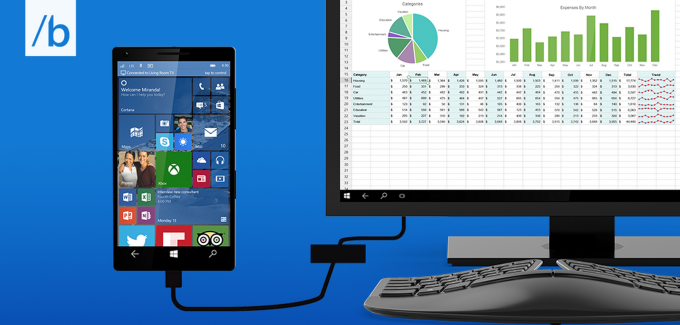
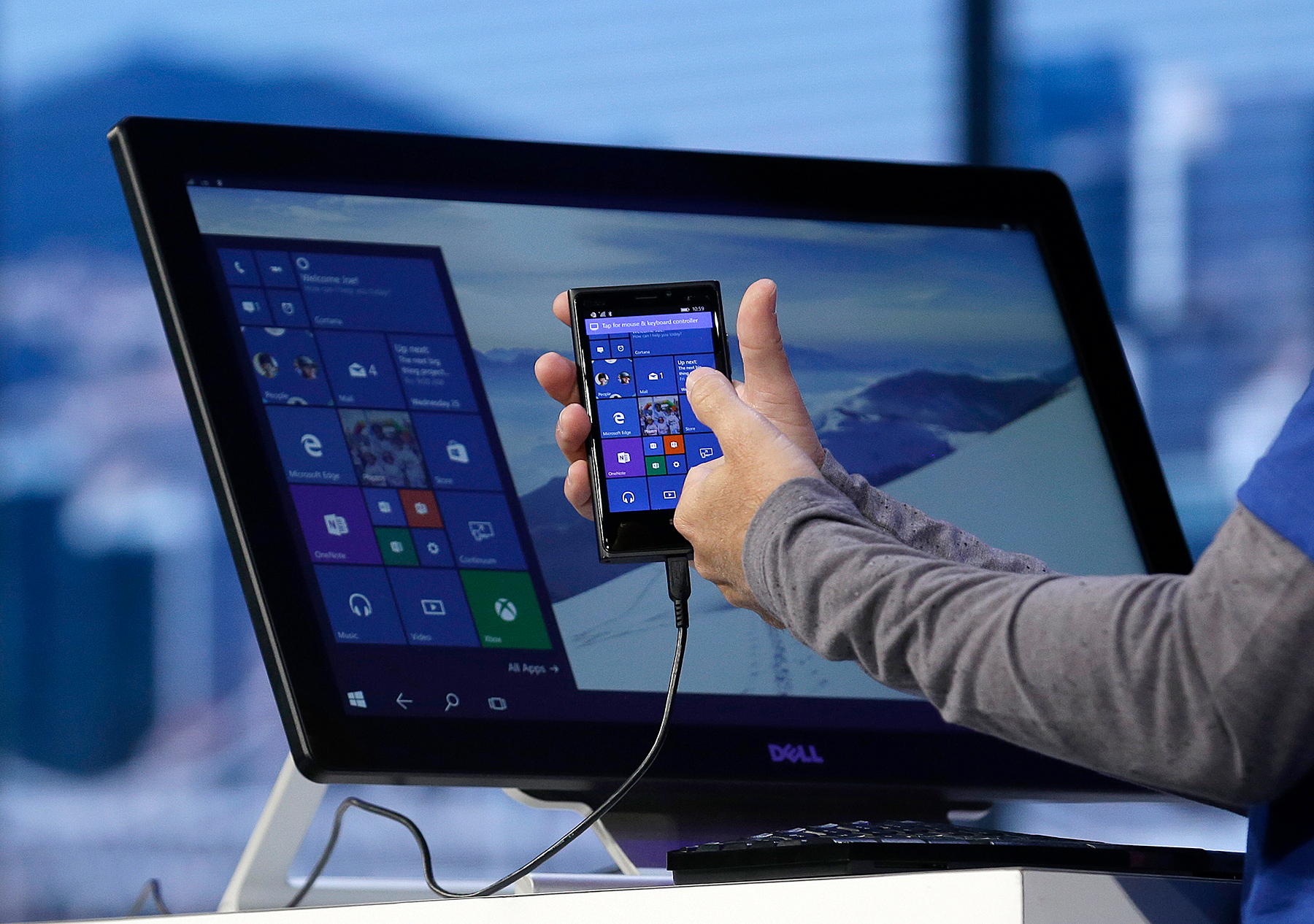
    Among many noteworthy revelations, one that caught hold of our attention is Continuum for phones. The tech firm demonstrated onstage one of the spectacular possibilities for its new Windows 10 and revealed how a small 5-inch handset can turn into a full-blown PC.

    So, how does Continuum work and what does it means to Windows Phone users?

    Continuum sorts the problem of shifting among various devices. As Continuum transforms a phone into a computer, its user interface (UI) moulds itself to work better with a mouse and keyboard. It’s just like Universal apps from Microsoft that scales up to fit the screen they are opened in.

    Joe Belfiore, Microsoft Corporate Vice President of Operating Systems Group, demonstrates Continuum for phones at the Microsoft Build conference in San Francisco, Wednesday, April 29, 2015. While Microsoft has already previewed some aspects of the new Windows 10, a parade of top executives will use the conference to demonstrate more software features and app-building tools, with an emphasis on mobile devices as well as PCs. (AP Photo/Jeff Chiu)

    When a Windows phone is connected to a PC, it acts as the main gadget with power to access everything that you do on a full-sized computer. With Continuum on a smartphone, all the keyboard shortcuts of a PC work will work exactly the same way on your Windows smartphone. This way, users can get their work done using their phone like a PC.

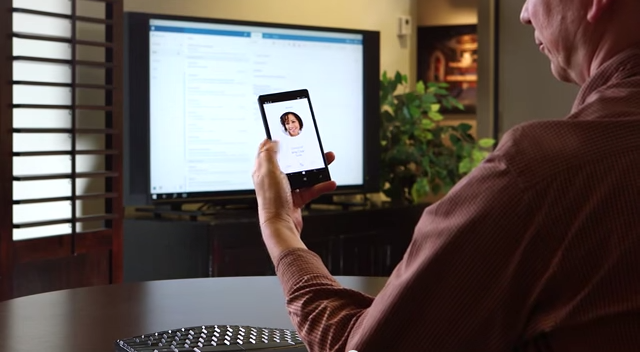
    It also comes with dual-screen capabilities, which means users can continue using their phone while it is plugged into external peripherals like a TV or a desktop. This allows the handset to be used independently, and both the screens can perform different functions at the same time. Joe Belfiore from the Microsoft Team announced that new processors from Qualcomm are being used which can help drive two displays separately.

    continuum

    Continuum has given a boost to Windows Phones and has made it somewhat like an Apple iPhone, which works better in conjunction with other gadgets in its ecosystem. For now, Continuum is built to provide limited access, but the hardware will be modified to deliver full-on desktop features in the future. With this, Microsoft has secured its current customers and may even lure more with its new tool.

    Watch the below clip for more information about Continuum for Phones:

    https://youtu.be/-oi1B9fjVs4

  • It’s Official! Microsoft Extends Android and iOS App Support for Windows 10

    It’s Official! Microsoft Extends Android and iOS App Support for Windows 10

    The day before, the news of Microsoft planning to roll out a fresh feature came to light, which could bring the plethora of Android apps for Windows users. Now at the Annual Build Conference, Microsoft confirmed the authenticity of the reports. Last night, Microsoft revealed its plan to bolster the piddling share of its Windows Phone market and announced that the new Windows 10 can run the reworked Android and iOS apps. The company unveiled Software Development Kits (SDKs) that allows developers of Android and iOS to port their apps on the Windows platform.

    Microsoft wants to offer the 1 billion associated loyal Windows customers the vast apps ecosystem that the company had not been able to develop since long. Two new SDKs will do the porting of apps. For the Android developers, American tech behemoth is allowing to leverage Java and C++ code to make Windows apps, and iOS developers will use the Objective-C code developed by Microsoft.

    Microsoft’s Executive Vice President of Operating Systems Terry Myerson commented at the event –

    Windows 10 is going to enable you to reuse your Web code, your .NET and Win32 code, your Android, Java and C++ code, to build amazing new applications, bringing the code over, extending it, putting it in the Windows Store, and reaching 1 billion Windows 10 customers.

    Today, we’re announcing that you will be able to compile the same Objective-C code that’s being used in iOS applications within Visual Studio on Windows. Enabling you to leverage that code and extend it with the capabilities only found on the Windows platform.

    Developers don’t have to put much effort in making apps from scratch. Just a few tweaks in codes and the apps will be ready to run on all Windows devices, automatically fitting the different screen sizes. Microsoft is also looking towards shifting the existing apps on Windows 7 and Windows 8 to the latest Windows 10. The firm mentioned that 16 million .NET and Win32 apps were still being used every month on Windows 7 and Windows 8, so their importance cannot be overlooked.

    On the first day of the conference, Microsoft previewed the .NET Core for Windows, Linux and Mac OS X. ‘Visual Studio 2015 Release Candidate’ was also released that makes it easier for developers to build universal applications and deploy them to Windows, Linux, iOS and Android platforms.

    The company hasn’t come up with the release date of Windows 10 yet, but it is speculated to release in or before fall.

  • Microsoft Introduces ‘Microsoft Edge’, the New Windows 10 Browser

    Microsoft Introduces ‘Microsoft Edge’, the New Windows 10 Browser

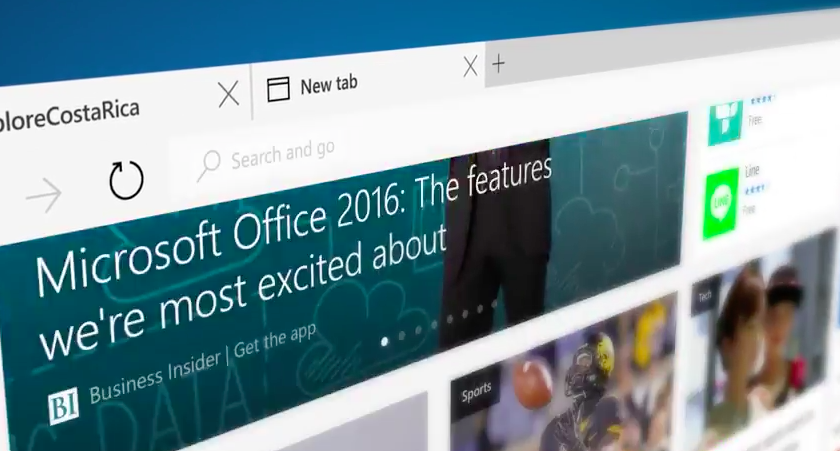
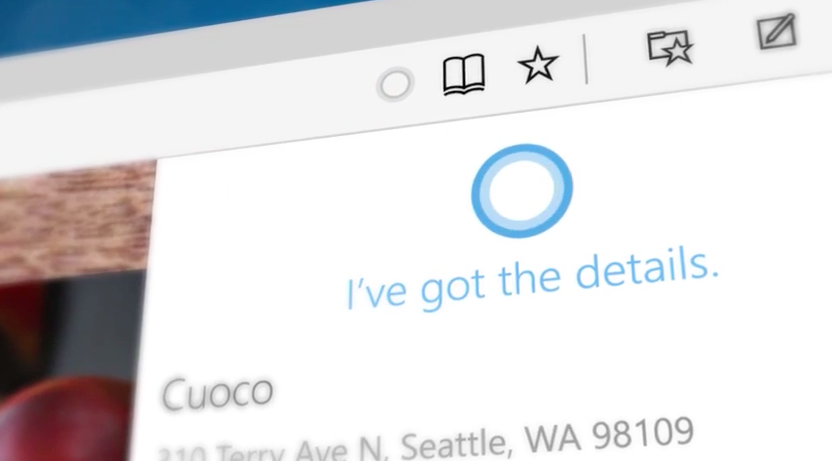
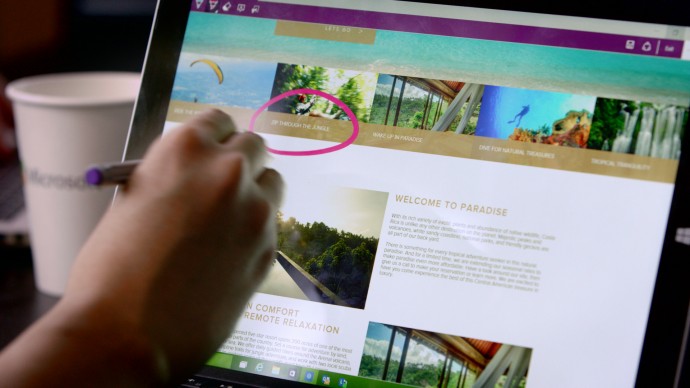
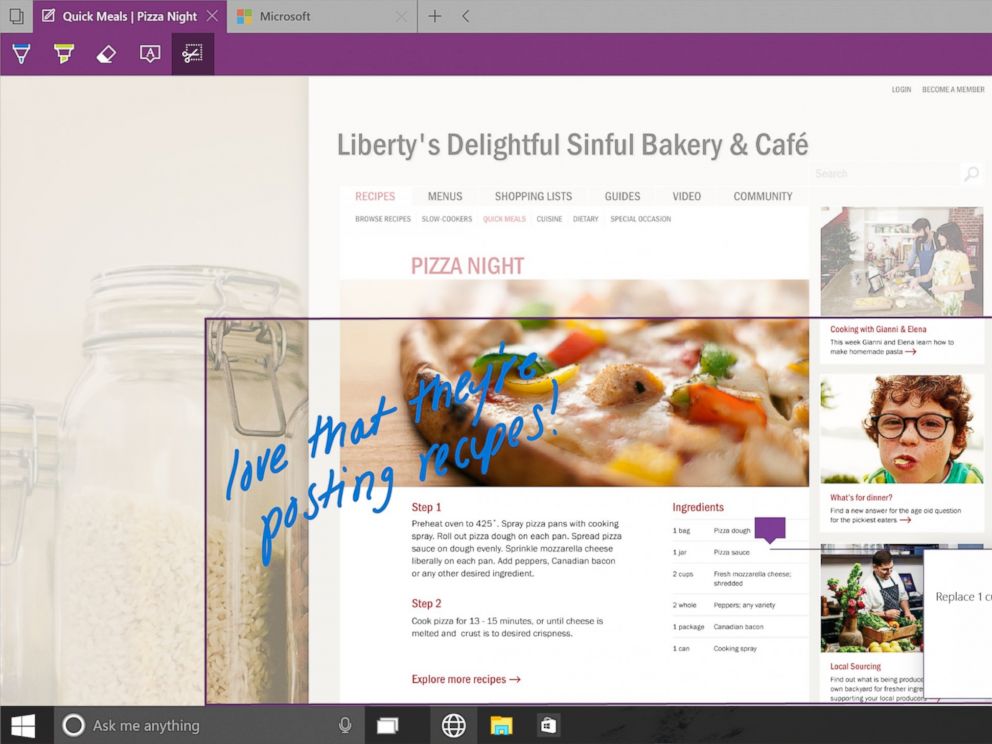
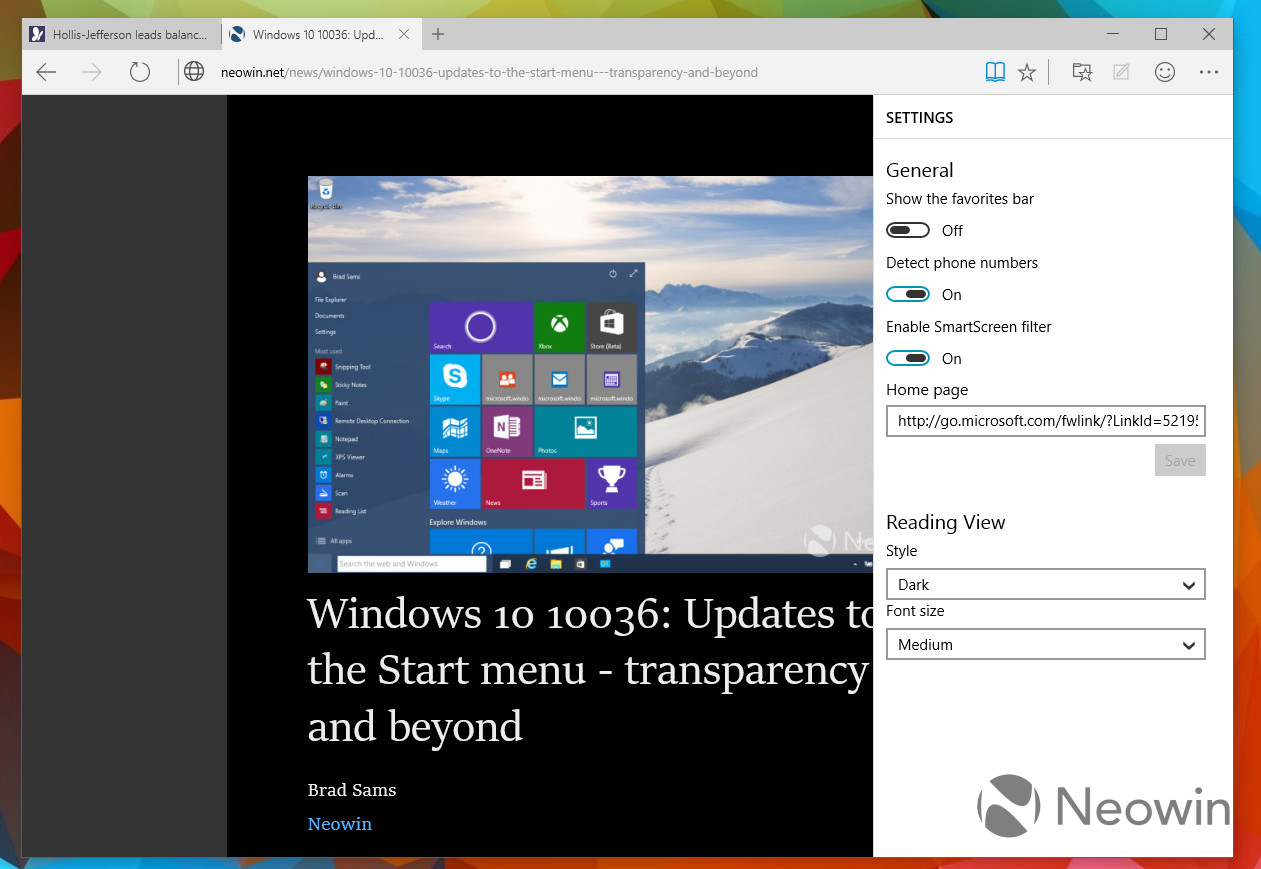
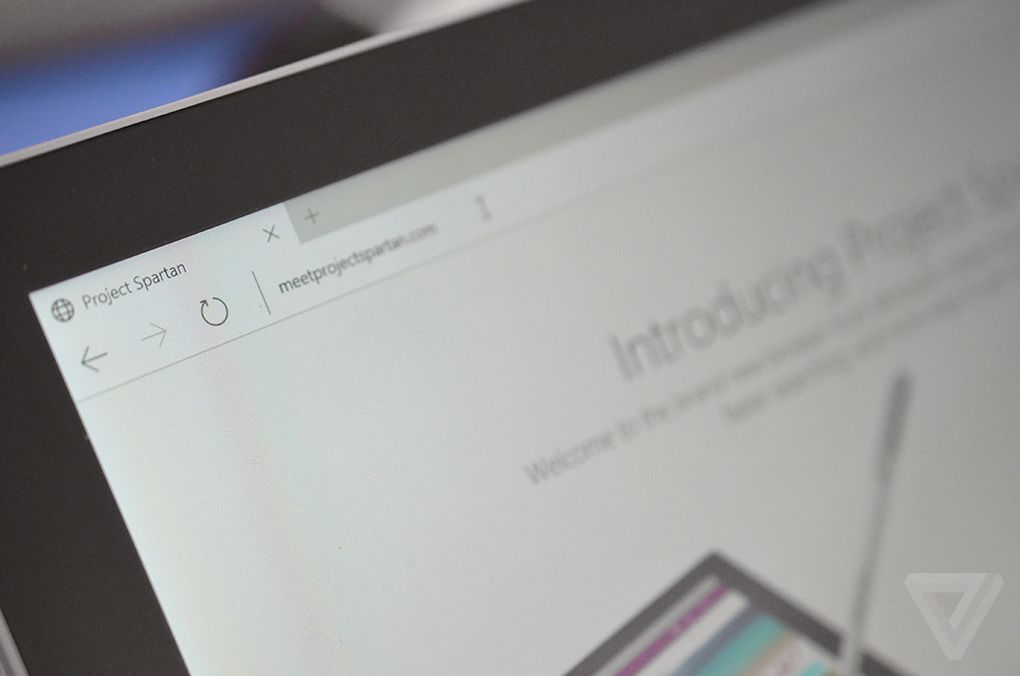
    Work on a new browser for Windows 10 has been underway since January. For months it  had been codenamed as Project Spartan, today Microsoft has finally unveiled this browser with a new name, Microsoft Edge. New features like faster rendering, voice assistant Cortana, note-taking mode, customizable reading note, these gave the Project Spartan an ‘edge’ upon the traditional Internet Explorer.

    Here are the new developments:

    Break-up with Internet Explorer

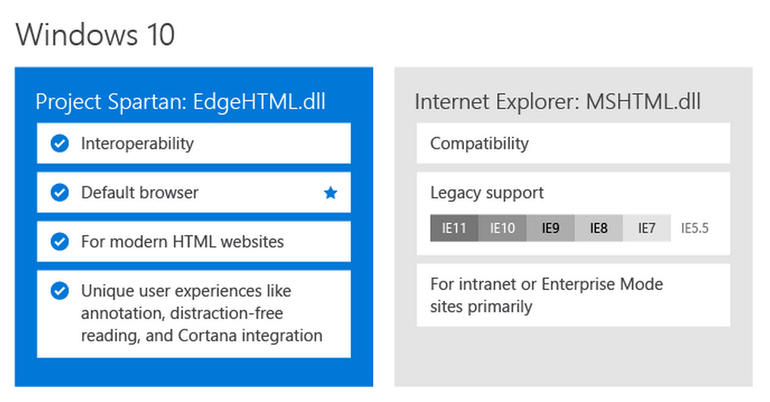
    It is definitely a replacement for the Internet Explorer because it features a new and faster rendering machine called EdgeHTML. With a basic and minimal designing layout, it looks like a browser from the future. It will be set as the default browser for Windows 10 and, as claimed by Microsoft, the only one that will be used by the customers.

    windows 10

    Microsoft Edge’s logo

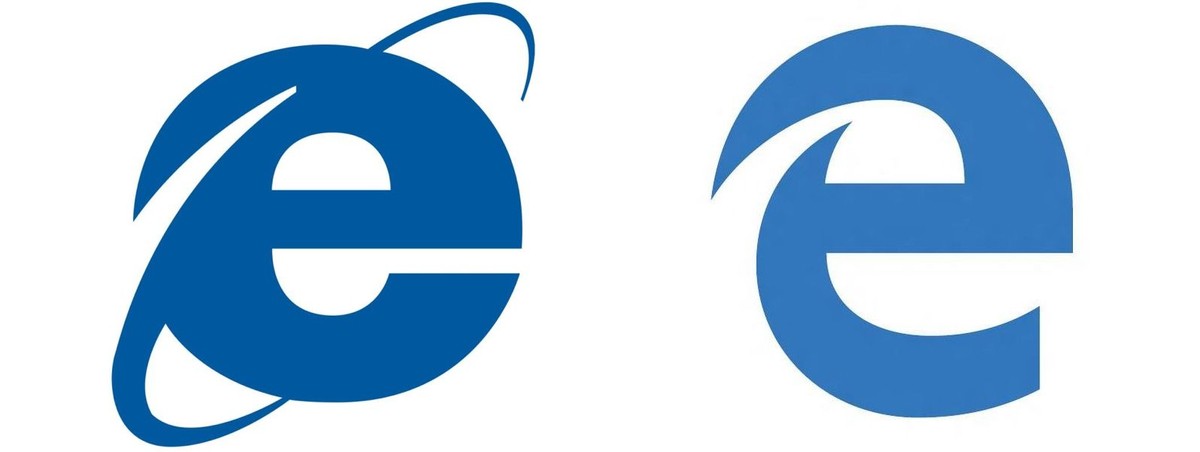
    Logo of the Edge browser does not stray far from its original logo of the Internet Explorer. The lower-case Explorer ‘e’ was not exactly a favourite among users after the entry of Mozilla or Chrome. The Edge’s logo is almost the same, just added a futuristic look to convey a message that it knows where it came from.

    edge logo
    Then and Now

    Edge will not support Extension until after RTM

     Though the browser is loaded with new features like Cortana, customizable reading note, etc., the company says the browser is not yet ready to be integrate RTM support on Microsoft Edge. It has said the Edge will continue to iterate through updates in the Windows Insider Program. Although still far off, Microsoft is now making it easier for developers to port extensions from other browsers.

    Check out the video below by Microsoft introducing Microsoft Edge

    https://www.youtube.com/watch?v=iH1D31YHsgY

  • Report: Android Apps Might Soon Be Available for Windows Users

    Report: Android Apps Might Soon Be Available for Windows Users

    Windows Phones have been in the smartphone race since long, but their App Store is still remains constrained. Microsoft is committed to eliminating the glitch and is ready to offer its users the luxury of the Android app ecosystem. The company is reportedly working on a feature that will open the doors of the Android app store for Windows users.

    A trusted blogger Paul Thurrot has commented on Microsoft’s plans that they might come out with at the BUILD conference scheduled for tonight. He revealed that Microsoft is likely to introduce a feature that will let users run Android apps on Windows 10 devices like smartphones, tablets and PCs.

    Android-Apps-Games

    This means the confined app network will now grow to the maximum by encompassing all the apps that are developed for Android till date. It will give a major push to the Windows Phone market, which was till date lagging because of its limited App Store.

    It is still unclear how Microsoft will integrate the change. It remains to be seen if it will create a new app store for Android apps or allow support for Android stores by third-party developers. The move will help the company in the long run, but it is dubious how it will go with Microsoft’s Universal App strategy.

  • Microsoft Might Set Up a Smartphone Manufacturing Unit in India

    Microsoft Might Set Up a Smartphone Manufacturing Unit in India

    The smartphone landscape in India is rapidly flourishing. Previously Xiaomi expressed its view to build a manufacturing unit in the country and now, Microsoft is mulling over the same thought. The US-based firm Microsoft is pondering over establishing a local manufacturing unit in India after the government’s decree on import. The company says that post the Indian government’s rigorous take on international organizations, it would be expensive to bring phones to the country.

    Corporate Vice-President at Microsoft Mobile Device Sales, Chris Weber reiterated the same, “We’re evaluating local manufacturing in terms of what our local footprint is. There are some new regulations and tax duties, etc., about local manufacturing and certainly we’re looking at them to make sure that we remain competitive.” He further mentioned that the evaluation is underway for all nations including India.

    Lumia 435

    Microsoft got a boost in the smartphone business with the buyout of Nokia’s device business for $7.5 billion last year. The firm has a foothold in the market, but to stay ahead of its competitors like Samsung, Xioami, Micromax and more, Microsoft needs to offer phones at an unbeatable price point.

    As an Indian origin firm, Micromax has added benefits. It can retail its handsets at comparatively lower prices as the Indian government has relieved the home-grown companies from many taxes to give them a push. On the other hand, the current budget puts excessive load on foreign tech companies since it has made import even more pricey. It has led global companies to consider establishing a manufacturing unit in India.

    Weber said that Microsoft will update its 4G devices portfolio in India and make a comeback in the premium smartphone market this year. The hardware and software beast now has several budget and mid-range smartphones in its portfolio. Seeing people’s inclination to high-end devices like Galaxy S6 and iPhone 6 Plus, Microsoft is planning to throw its top-notch devices in the marketplace and enter the premium smartphone battle.

    The American multinational technology firm is presently rebranding the brick-and-motor stores of Nokia all over the world. The rebranding will be held in two categories – Microsoft Priority Resellers and Microsoft Mobile Sellers. The former one will keep all the company products, and the latter will be an experience store.

  • Microsoft Expected to Roll Out Windows 10 by July End

    Microsoft Expected to Roll Out Windows 10 by July End

    Back in March, Microsoft announced the release of the highly-anticipated Windows 10. The company said that the latest OS would come this summer in over 190 countries and 111 languages. Microsoft hasn’t yet disclosed when the latest Windows is going to debut, but we have some details about its arrival.

    As stated by TechCrunch, Windows 10 will release at the end of July. The online tech publisher contacted some officials who disclosed the release date of the next Windows OS.

    continuum windows 10

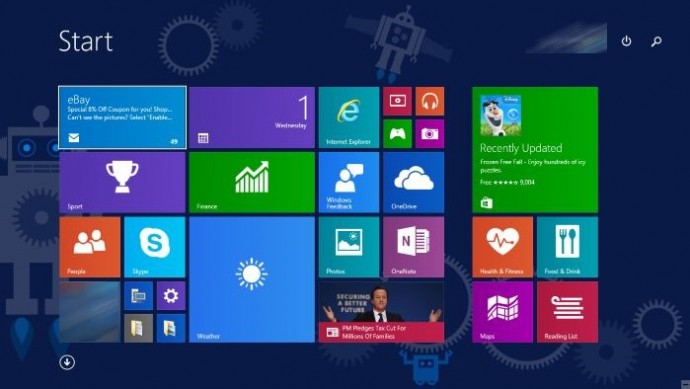
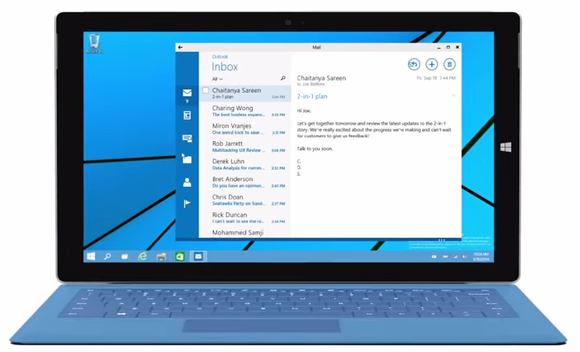
    In October 2014, Microsoft released the Technical Preview of Windows 10 that allowed users to view and test the new OS first hand. The Redmond-based firm has high expectations from its latest operating system and is offering it free for its Windows 7, 8.1 and Windows Phone 8.1 users for one year. The new Windows marks the comeback of the Start Menu, which was absent in the previous Windows 8 version. It has some exceptional features like Project Spartan and Cortana. With Project Spartan, users can have an all-new experience while browsing the web. Further developments include tweaks and enhancements to its menu, screen, and other features like Cortana.

    For more information on the unique features of Windows 10, click here.

  • Nokia May Make a Comeback in the Smartphone Market Next Year

    Microsoft acquired Nokia’s devices and services business for a heavy sum of $7.2 billion last year. The Finnish company can no longer use the Nokia brand name on smartphones till Q4 2016, and on feature phones for ten years. Once the biggest smartphone maker in the world failed to catch up with the fast-growing market trends set by Apple and Google. But, as most of us considered, it was not the demise of the titan.

    Nokia is planning to bounce back to the smartphone business sometime next year. Reports by online publishing daily Recode suggest that Nokia is gearing to make a comeback in the mobile business, and is working on several new ambitious projects including virtual reality. The company has so far released only two products – an Android app called Z Launcher and the Nokia N1, also dubbed as the first Nokia-branded Android tablet.

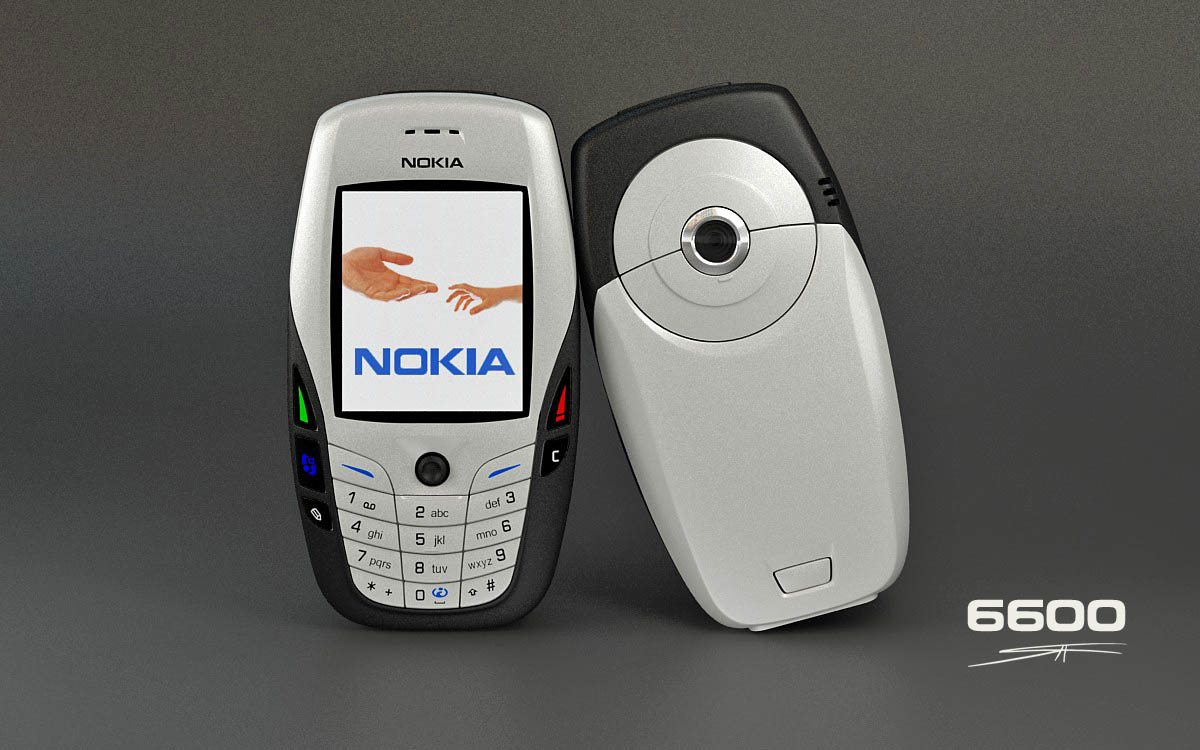
    The 6600 was one of the most popular devices and was almost the star of the movie, Cellular.
    The 6600 was one of the most popular devices by Nokia and was almost the star of the movie, Cellular.

    It is expected that Nokia will employ the same strategy for the new device as it used for the N1 tablet. The device was launched last year along with a brand licensing agreement with Foxconn. The Finnish company hopes to find a similar brand licensing agreement partner for its next release.

    There has been reports that Nokia has “a lot of great stuff in development’, but there is no certainty about the upcoming Nokia product or if the company is making a comeback by 2016. Therefore, the news should be taken with a pinch of salt.

    With its latest acquisition of Alcatel-Lucent for $16.5 billion, together as Nokia Corporation, the company has set its sights on Virtual Reality, Internet of Things and Cloud Computing, and is ready to greet the world with brand new treats.

  • Hackers Bring Microsoft Cortana’s Android Cousin; Meet Portaña

    Hackers Bring Microsoft Cortana’s Android Cousin; Meet Portaña

    Microsoft’s personal voice assistant Cortana to land on Windows Phone platform is far from debuting on Android devices, but a group of hackers based in Italy has made it possible. The group, who call themselves OrangeSec, claims to have ported Microsoft’s Cortana to Android. The new personal assistant is named as Portaña.

    The hackers made some alterations in Cortana’s program and brought out a version compatible with Google’s operating system. The tweaked version is very much similar to Cortana, but has some limitations. The hackers admit that the project isn’t that impressive and requires users to stay online for work. The reason being, even though it is running on Android hardware, it is still communicating with Microsoft’s back-end servers with the ported interface. To cut it short, you cannot use it to integrate with Android devices like Cortana does with Windows. OrangeSec used combinations of hardware proxies, custom SSL certificates and DNS spoofing for making this project work out. For now, Portaña can communicate in Italian only.

    OrangeSec unveiled their mod at the Droidcon 2015 and admitted it to be a concept only. Hence, there are lesser chances of OrangeSec coming up with an official release. It is rumoured that Microsoft is planning to bring the voice assistant for both iOS and Android, but it doesn’t seem to happen anytime soon.

    Cortana is named after an artificial intelligent (AI) character from the famed video game Halo. The personality of the voice assistant is also derived from the AI companion of the game. Cortana also offers usual voice-assistance features like setting reminders and calendar, weather and traffic information, writing notes and messages.

    The generation of voice assistants kicked off with Apple’s Siri, back with the release of iPhone 4S in 2011. Microsoft soon followed by launching its very own Cortana on Windows 10 PC and smartphones. Meanwhile, Cortana is officially limited to Windows Phone.

  • Later This Year Microsoft Apps Will Come Bundled With Cyanogen

    Later This Year Microsoft Apps Will Come Bundled With Cyanogen

    After months of battling rumours, Cyanogen has officially confirmed that they are partnering with Microsoft. They commented that they will be bringing Microsoft’s useful apps integrated on their popular OS soon. The two companies have supposedly been negotiating for quite some time to create a Cyanogen version which features Microsoft applications.

    In an email to The Verge, Cyanogen CEO said:

    People around the world use Cyanogen’s operating system and popular Microsoft services to engage with what matters most to them on their mobile devices. This exciting partnership with Microsoft will enable us to bring new kinds of integrated services to mobile users in markets around the world.

    Cyanogen said that it would be pre-installing Microsoft apps on its modified Android OS, starting later this year. It means users will have access to Microsoft apps such as Bing, OneDrive, Outlook, OneNote and Microsoft Office. In turn, Microsoft will be experimenting with a number of Android apps. This project has been taken up to lure away consumers’ dependance on the Android applications. It seems like the win-win partnership between Microsoft and Cyanogen.

  • Microsoft Brings the Lumia 640 and 640 XL to India

    Microsoft Brings the Lumia 640 and 640 XL to India

    Microsoft has been proactively working to expand its smartphone product portfolio in the Indian market. The company has launched two new devices in the country, the Lumia 640 and 640 XL.

    Lumia 640 sports a 5.0 inch, 720 x 1280 pixel display with a pixel density of 294 ppi. It is powered by a Quad-core 1.2 Ghz, Snapdragon 400 processor along with 1 GB RAM. It offers 8 GB RAM that is expandable up to 128 GB. It runs Windows Phone 8.1 with Lumia Denim and will be updated to Windows 10 when the new OS is launched. The phone is juiced up by a 2500 mAh battery. It offers an 8 MP main camera and a 1 MP selfie shooter on the front.

    The Lumia 640 XL, as the name suggests is the bigger of the two siblings. It sports a 5.7 inch, 720 x 1280 pixel display with a density of 259 PPI and is protected with Corning Gorilla Glass 3. Just like its smaller sibling, it is powered by a Quad-core 1.2 Ghz, Snapdragon 400 processor along with 1 GB RAM. The 640 XL flaunts a 13 MP camera on the back and offers a 5 MP camera on the front for your selfie considerations. The device incorporates a 3000 mAh battery to take care of its XL needs.

    The two devices look better than the recent launches from the company that were targeted at the lower end of the market. These devices will be strengthen the affordable segment of Windows Phone offerings. The Lumia 640 is priced at Rs. 11,999 and the Lumia 640 XL is priced at Rs. 15,799. Microsoft is offering a one-year free subscription to Microsoft Office 365 and 1 TB of OneDrive storage with both the devices. While the Lumia 640 will be available exclusively on Flipkart, the 640 XL will be available for purchase everywhere.

    Specifications

    Lumia 640

    Lumia 640 XL

    Display 5.0 inch,
    720 x 1280 HD
    294 PPI.
    5.7 inch,
    720 x 1280 HD
    259 PPI.
    Processor 1.2 Ghz, Quad-core
    Snapdragon 400
    1.2 Ghz, Quad-core
    Snapdragon 400
    RAM 1 GB 1 GB
    Internal Memory 8 GB 8 GB
    Expandable Memory 128 GB 128 GB
    Main Camera 8 MP 13 MP
    Front Camera 1 MP 5 MP
    Battery  2500 mAh 3000 mAh
    Operating System Windows Phone 8.1 with Lumia Denim Windows Phone 8.1 with Lumia Denim
  • Microsoft to Introduce Mobile-Based Payment System to Take on Samsung and Apple

    Microsoft to Introduce Mobile-Based Payment System to Take on Samsung and Apple

    Smartphones have become an even essential part of our lives. With the addition of payment systems, smartphones will soon take over the role of your wallet. While Samsung and Apple have already introduced their payment systems, other manufacturers are joining in. Microsoft, the makers of Windows Phone devices, have also announced that they will be unveiling their payment system soon.

    Microsoft had showcased a tap to pay feature on its devices at a conference for Windows hardware makers in China. It was said then that this feature would not require support from the network operators. Just like Samsung and Apple Pay, this feature will also be based on NFC.

    Microsoft’s plans were brought to light by Faisal Khan, a banking consultant. He found that Microsoft has already got permission from the American state of Idaho and has applied for licenses in all the states of the country.

    Mobile payment was available on Windows phone through the Softcard app but the service closed down when Google bought Softcard. Bill Gates had predicted, after the launch of Apple Pay, the technology will soon be available on all smartphones. Considering the speed at which things are moving, it might be easy to visualize such a future.

  • Spartan Vs Internet Explorer : 6 Factors That Give Microsoft’s New Browser an Edge

    Spartan Vs Internet Explorer : 6 Factors That Give Microsoft’s New Browser an Edge

    When Microsoft made official its biggest innovation of the year, Windows 10, everybody was excited to hear about all the modifications it brought with it. It was not just another Windows upgrade, but was a whole new effort to push something fresh. Among other revelations that thrilled the audience, a huge amount of attention was gathered by the modern browser Spartan.

    Spartan is an entirely new web browsing platform for Windows 10 that holds a bunch of really cool new features. The browser has been designed to meet the demands of the today’s fast striding world with a pinch of simplicity. Spartan is the way ahead for Internet Explorer (IE) and a dive into the revolutionary world of the future.

    Here are some of the major differences that makes Spartan stand apart from the fast-fading Internet Explorer.

    1. Faster Rendering Engine:

    spartan edge

    The most vital and unnoticeable change that makes Spartan a real spartan is the all-new rendering engine ‘Edge’. It is the core of Spartan and is much faster than the existing renderer, Trident. It loads complex pages many times faster than the IE, making it a strong competitor of Google Chrome.

    Meanwhile, Windows 10 comes with two rendering engines as the latest Windows version comprises of two browsers. The Explorer works on Trident, while Spartan is powered by Edge; the latter is the default rendering engine on Windows 10.

    2. Voice Assistant Cortana:

    cortana-03

    Cortana is another significant development that has made Windows and Chrome users restless to try their hands on it. The web browser assimilates with the company’s digital assistance service, Cortana. Through the smart assistance, Windows 10 users can get information on flights, hotel bookings and other vital data on their browser. One can track a particular flight just by typing its name and all the data like departure time, arrival time and current status will appear.

    3. Note-Taking Mode:

    project spartan

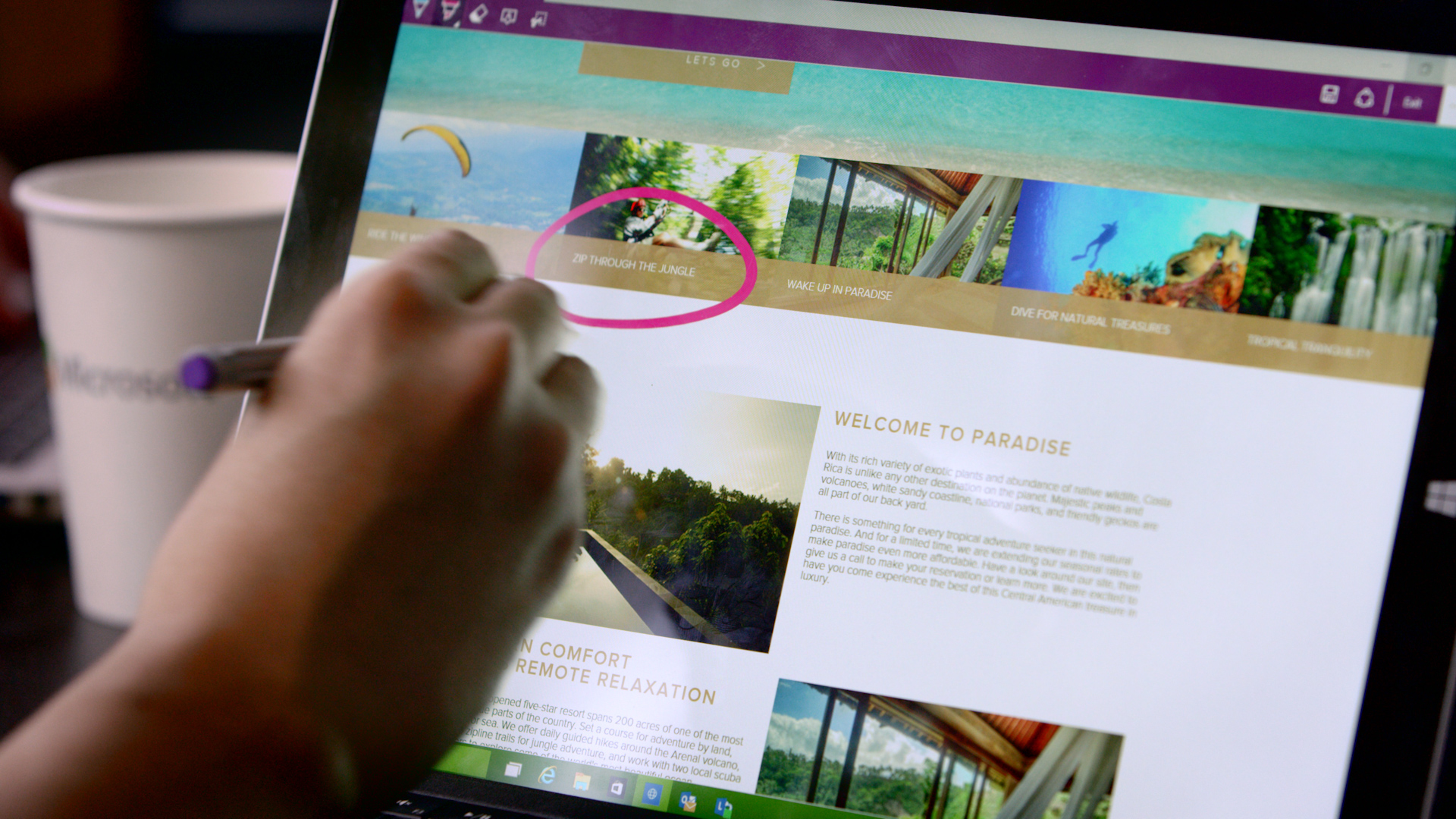
    Spartan has made it easy for users to highlight a specific section on the web page. The note-taking tool facilitates users to add comments and annotations to the web pages with the help of stylus. These pages can also be sent to a friend. As all the browsers support the web note service, the messages can easily be read by any of your friends or colleagues using a different version or OS.

    4. Clutter-free reading mode:

    IE will be replaced with Spartan which will be the browser of the future for Microsoft.
    IE will be replaced with Spartan which will be the browser of the future for Microsoft.

    One of the major modulation that is sure to mesmerise users is the clutter-free reading mode. The feature crops the important details and throws it ahead to focus on the information. The rest unwanted stuff is dumped in the background by default, giving users a de-cluttered view of the web page.

    5. Customizable reading list:

    spartan reading list

    It’s an another new feature in Spartan that offers users a facility of read PDFs and web pages offline. It’s a cross-platform feature that syncs URLs between devices. The feature is almost exactly like what Apple has already offered with its Safari browser.

    6. Simple interface with Group Tab Feature

    spartan interface

    Microsoft has kept its web browser simple because the more simple, the more elegant it looks. The interface is quite light, which makes it all the more appealing, and the icons have been designed for easy and quick understandability. Along with that, there’s a group tab feature that keeps multiple tabs in an organized manner. One can split work tab from personal tab to declutter the messy screen.

    With the launch of Spartan, Internet Explorer – one of the vital means to bring internet to the masses since 1995 – has taken a backseat in Windows 10. It is estimated that Project Spartan will soon be a pivotal part of the golden tech history.

  • WhatsApp To Bring Voice Calling To Windows Phone

    WhatsApp To Bring Voice Calling To Windows Phone

    Android users of WhatsApp are elated to find the voice calling feature of the messaging app has finally come to their devices. At its recent developers conference, it was announced that the voice calling feature might be available for the iOS ecosystem soon. This lead many Windows Phone users to ask whether they’ll be getting the feature soon. Well looks like the Facebook owned messaging giant now has good news for its Windows users.

    WhatsApp has confirmed that the voice calling feature is in its developmental stage. This was revealed when one Windows user inquired about the arrival of the feature on their devices.

    There is no timeframe mentioned as of yet for the arrival of the voice calling feature on Windows phones. WhatsApp’s founder had stated during the developers conference that voice calling would be available on its iOS app in a few weeks. So as of now it isn’t sure which of the two will get the feature first, but considering the massive user base of Apple, our bet is on iOS devices.

iGyaan Network
Privacy Overview

This website uses cookies so that we can provide you with the best user experience possible. Cookie information is stored in your browser and performs functions such as recognising you when you return to our website and helping our team to understand which sections of the website you find most interesting and useful.