Category: Samsung

  • Google Pixel 2 XL Vs The Competition

    Google Pixel 2 XL Vs The Competition

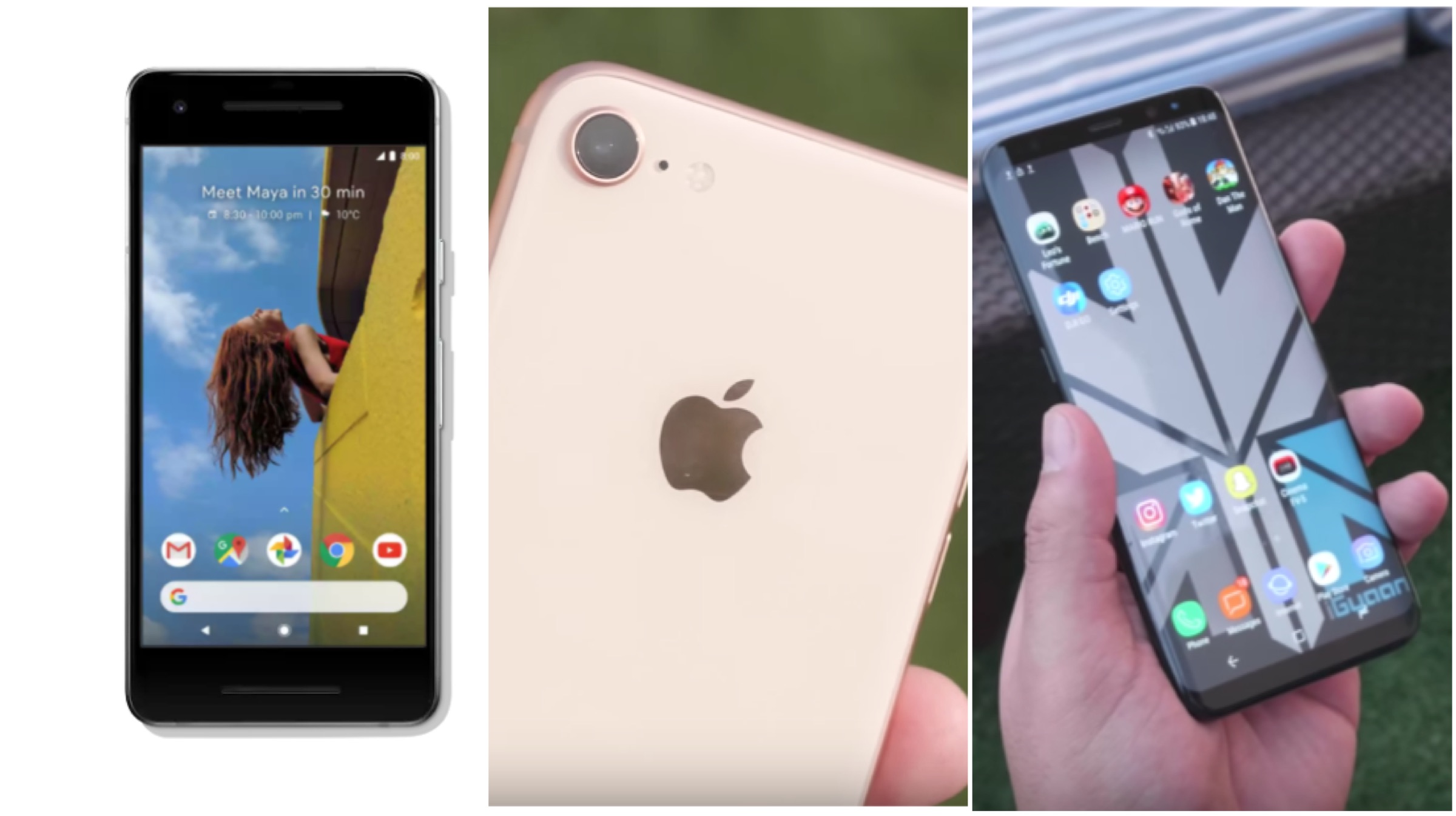
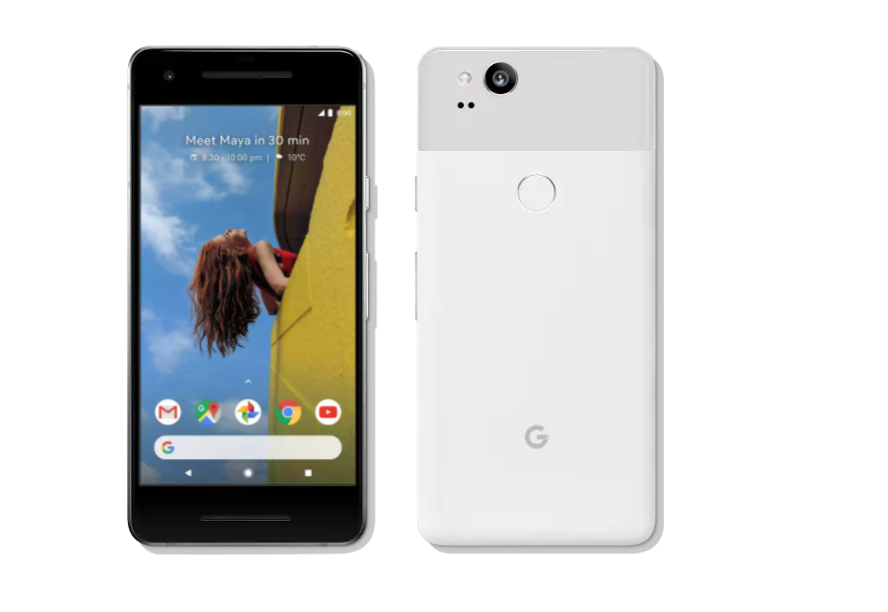
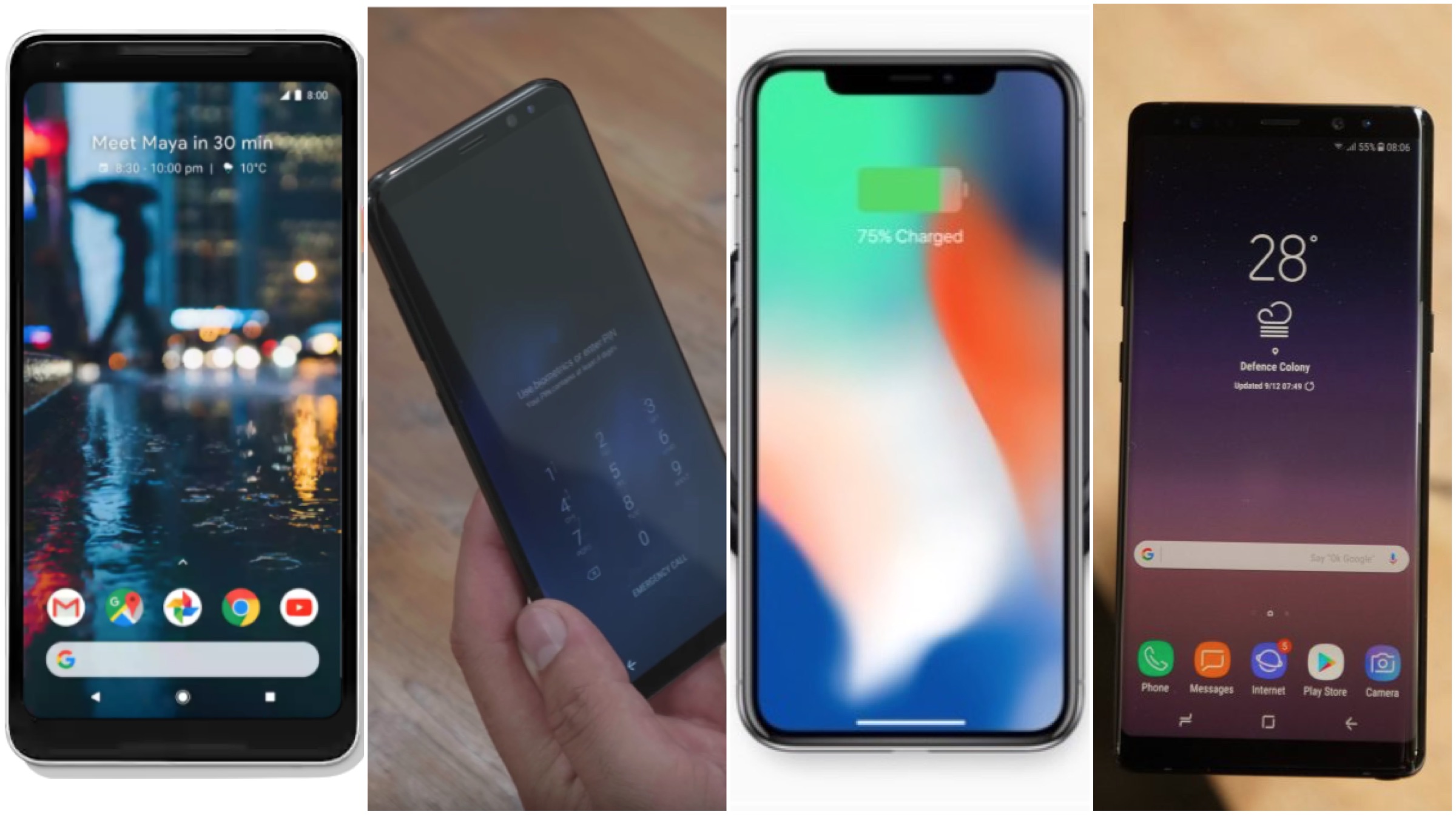
    The Google Pixel 2 was launched on October 4th as the marquee Pixel device for 2017. It strays away a little from the thick bezels that the Pixel 2 has but, still incorporates the front-firing speakers in relatively thinner bezels. Just like the Pixel 2, there is a tight integration with Google Assistant in Google’s attempt to harmonise AI, software and hardware. So, how does the bigger Google flagship stack up against the competition? let’s find out:

    Google Pixel 2 XL
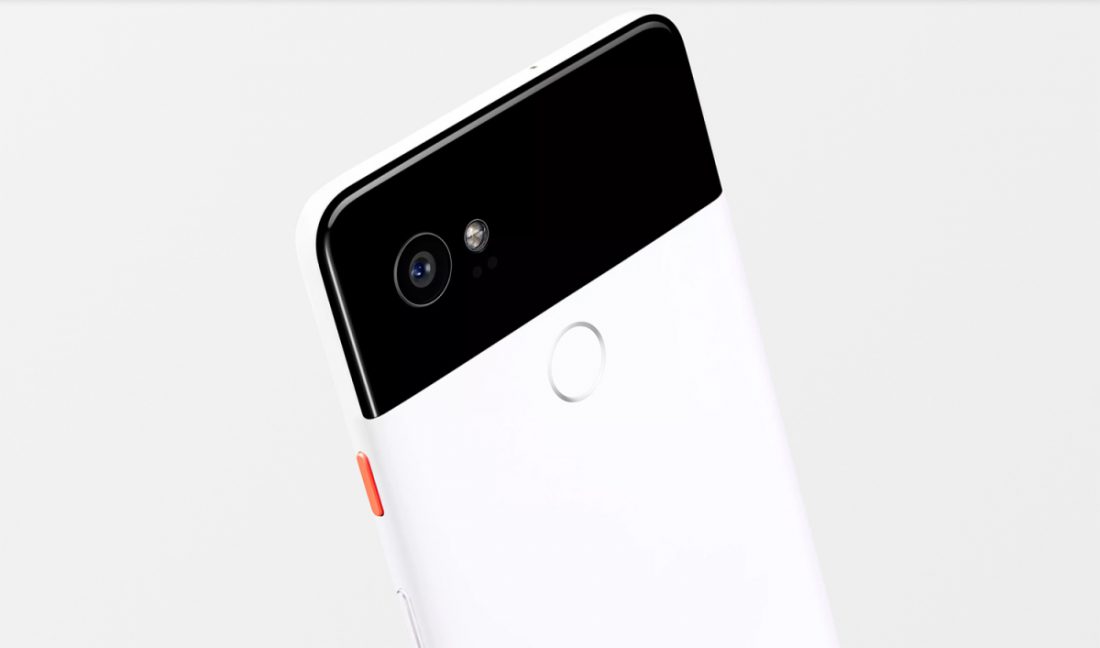
    The smartphone has a 6 inch 2880 x 1440 px POLED display which translates into an 18:9 aspect ratio. Protecting the display is Corning Gorilla Glass 5. Just like the Pixel 2, the device runs Android 8.0 Oreo out of the box and will receive the Android P update in 2018. Powering the device is a 3520 mAh battery which is larger than the one found in the Pixel 2. Under the hood, the Pixel 2 XL has the Qualcomm Snapdragon 835 chipset, 2.4GHz octa core processor, Adreno 540, 4GB RAM and 64GB/128GB onboard storage. The fingerprint sensor sits at the back of the device but, this time around the “glass window” is smaller.

    On the camera front, Google has decided to go for a single camera setup similar to last year’s Pixel phones. The rear-facing camera is a 12.2 MP sensor with an f/1.8 aperture and 1.4 micron pixel size. On the front is an 8MP camera with an f/2.4 aperture. Google has introduced new features in the camera department like the addition of AR. Google says Pixel 2 XL has greater high dynamic range, optical image stabilisation, and a portrait mode that doesn’t use a second camera but dual-sensor image technology. The Pixel 2 XL uses both OIS and EIS simultaneously for better clarity and stable images and videos.

    Samsung Galaxy S8+
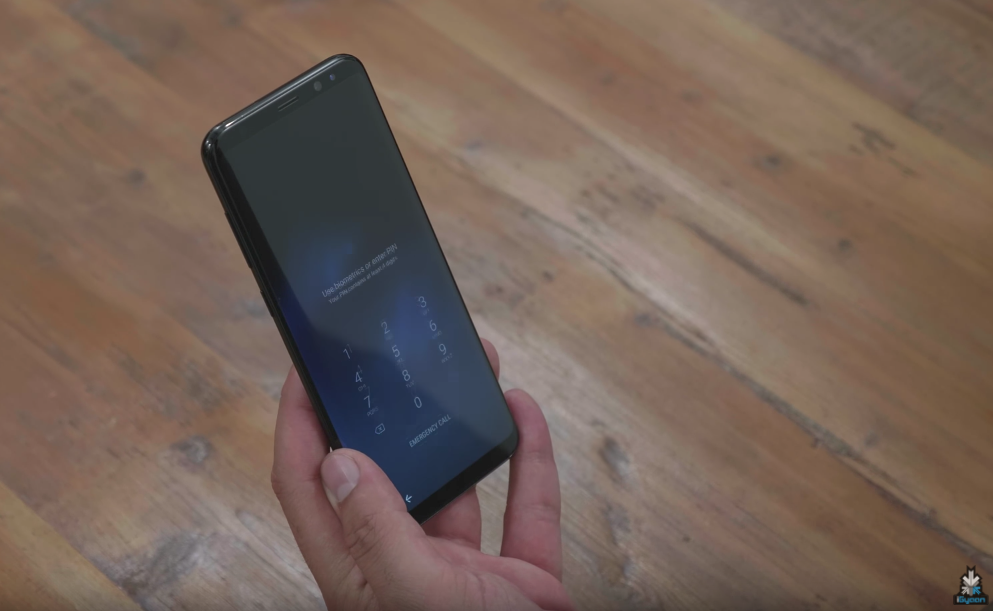
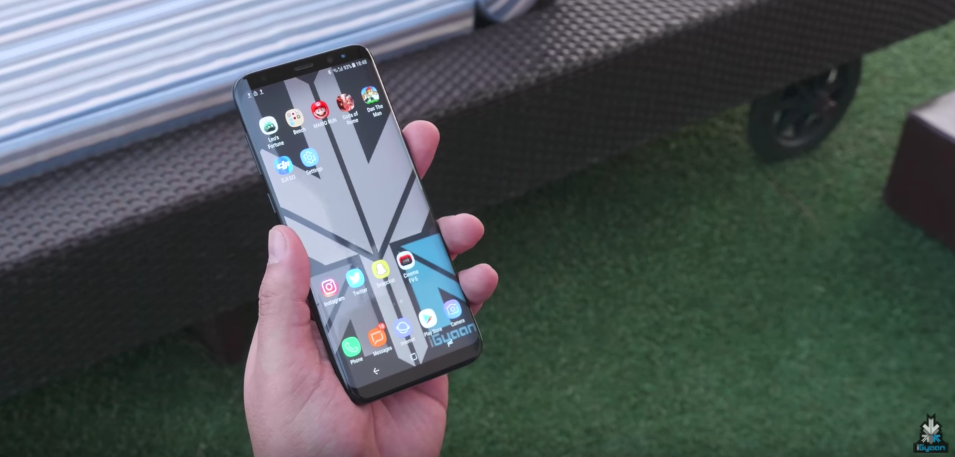
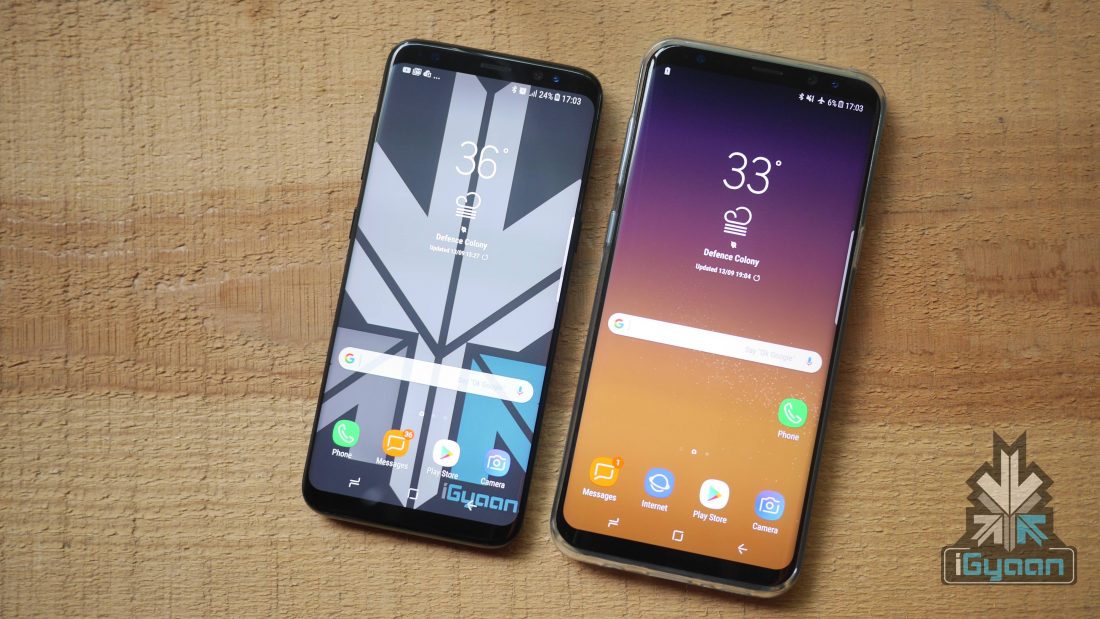
    The Samsung Galaxy S8+ has a 6.2 inch 2960×1440 px Super AMOLED display with a 570ppi. Powering the device is a 3000 mAh battery and it runs Android 7.1 Nougat out of the box. Under the hood, the smartphone has Exynos 8895 chipset, 64GB or 128GB onboard storage options which is expandable up to 256GB via microSD card and 4GB RAM or 6GB RAM variants. The Galaxy S8+ is also water and dust resistant. The Galaxy S8 has a glass  black which means it is wireless charging compatible. The smartphone has an awkwardly placed fingerprint sensor right next to the camera.

    For cameras, both phones get a main Dual Pixel 12MP OIS (F1.7), Front: 8MP AF (F1.7). While the battery on the Galaxy S8 is 3000 man, the S8plus has a 3500 mAh battery. Both support fast charging and wireless charging as well.

    Apple iPhone X
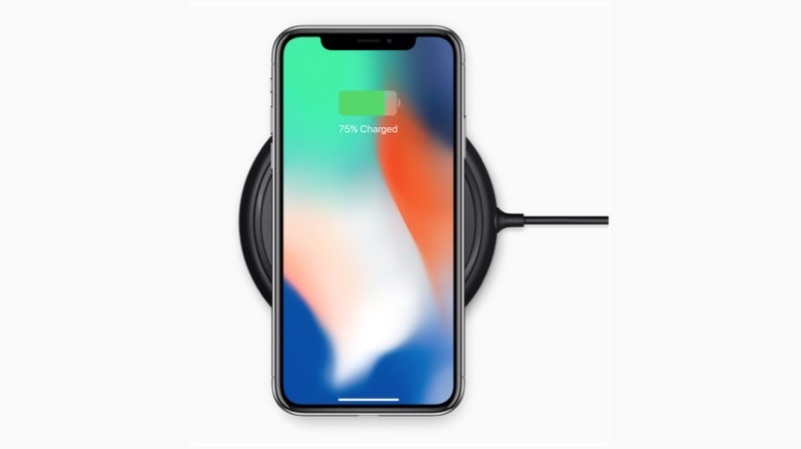
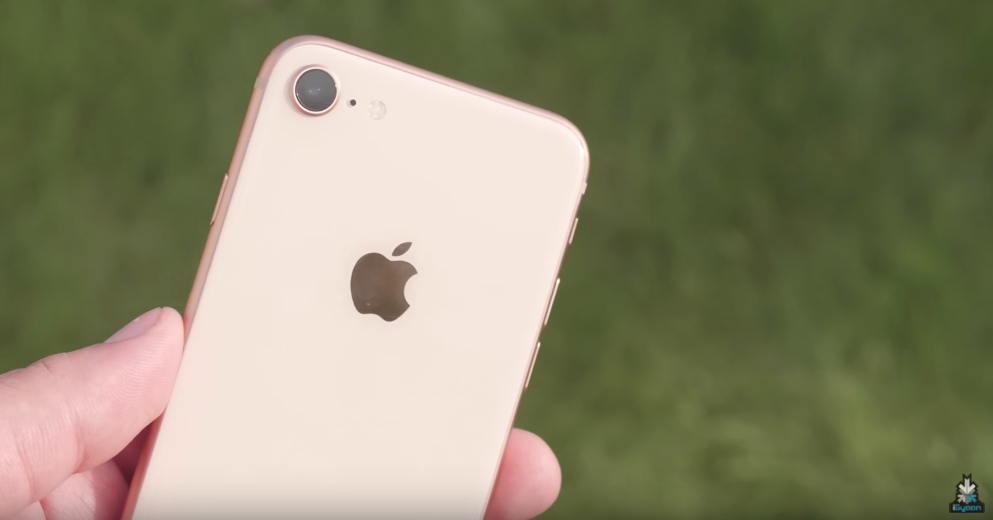
    The iPhone X has a 5.8-inch 2436 x 1125 px OLED True Tone Super Retina display with minimal bezels around it. The phone runs iOS 11 and is powered by a 3,000 mAh battery which charges through the Apple signature lightning port placed at the bottom of the phone. Because of the all-glass design, the iPhone 8 also has wireless charging. Under the hood, the smartphone has the Apple A11 Bionic chipset with a neural engine, a hexacore processor, 3GB of RAM and storage options of 64GB, and 256GB. Apple has also gotten rid of TouchID and replaced it with facial recognition called FaceID which Apple claims has a security breach chances of 1 in a million.

    On the optics front, the iPhone X has dual 12-megapixel rear cameras, and it’s equipped with dual optical image stabilization. The main camera is equipped with a wide angle lens and has an f/1.8 aperture while the secondary telephoto lens has an f/2.4 aperture.

    Samsung Galaxy Note8
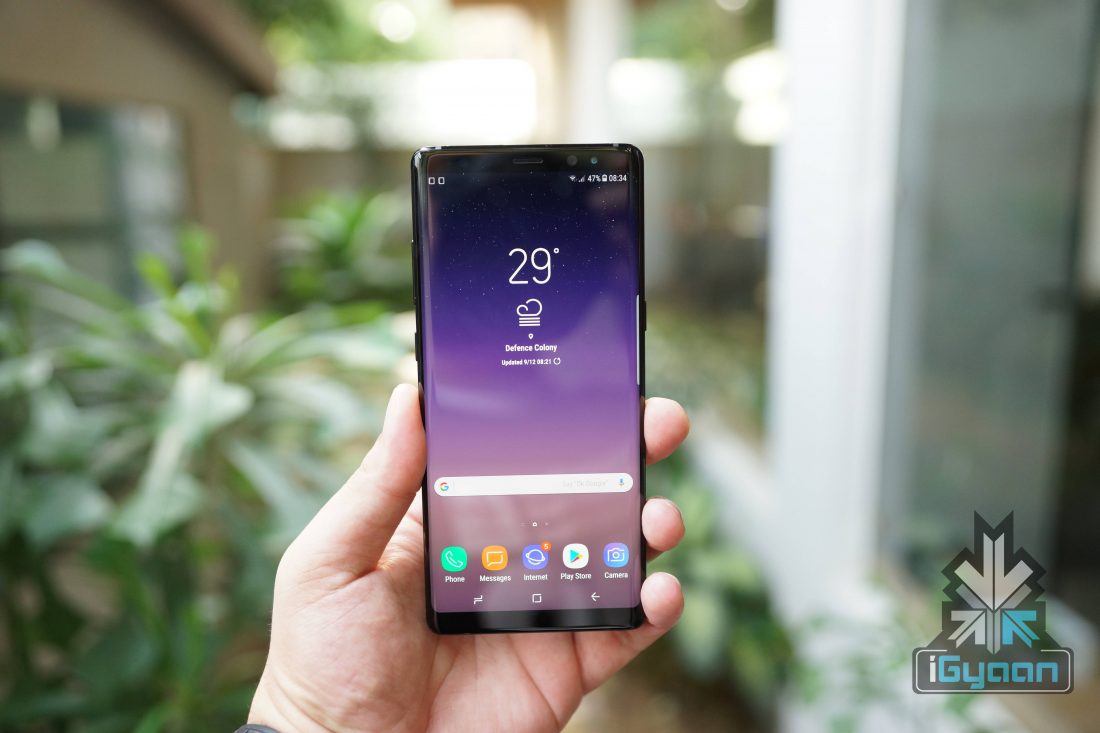
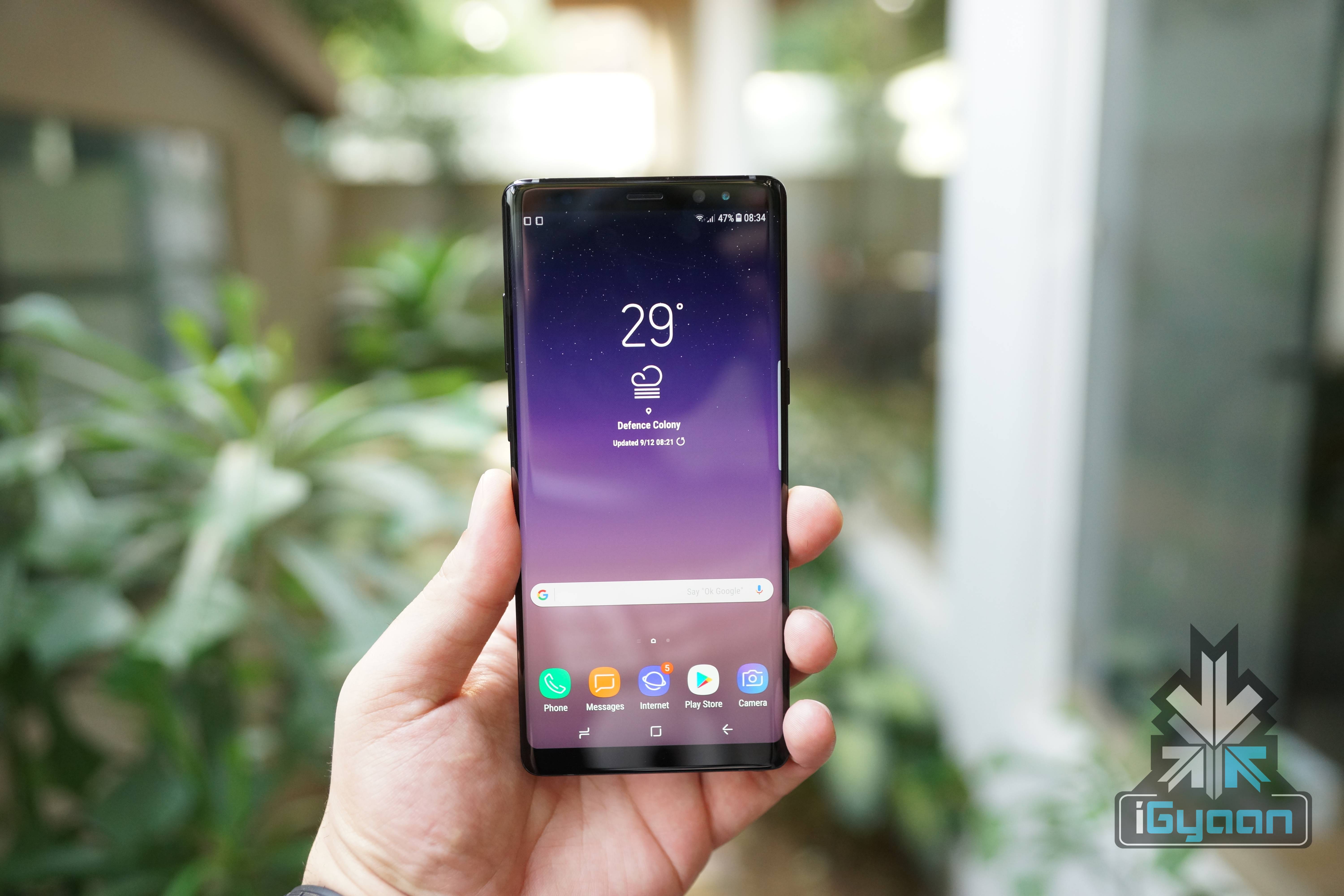
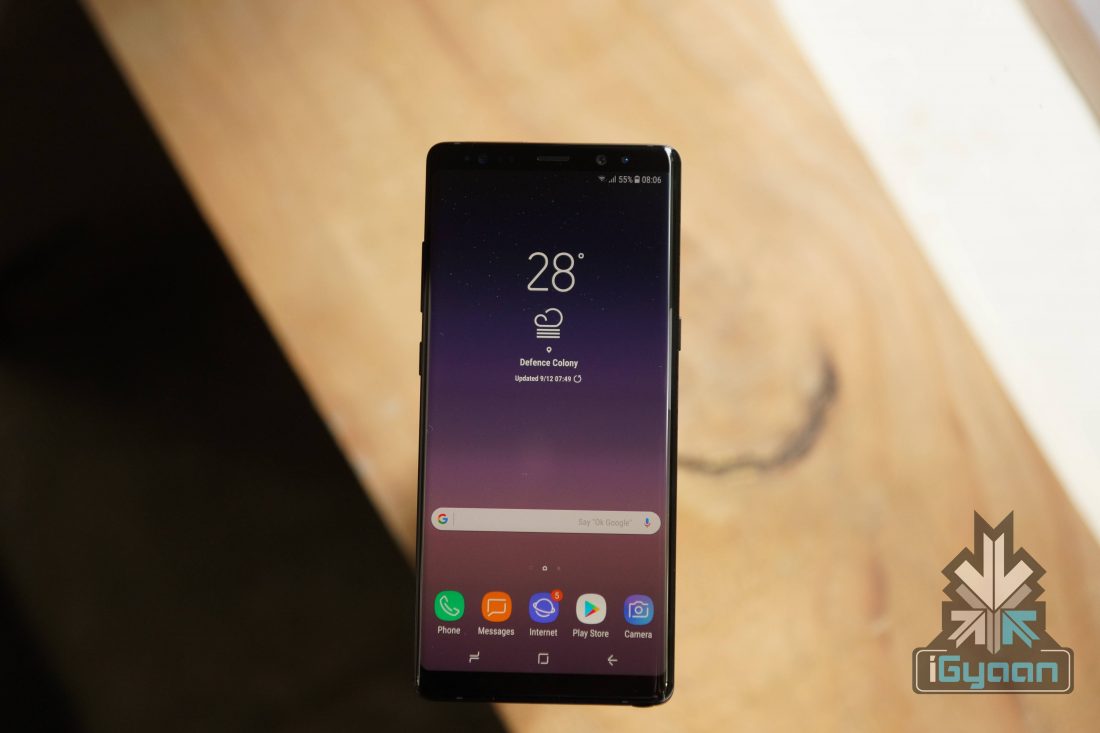
    The Galaxy Note8 has a 6.3 inch 2960 x 1440 px Super AMOLED display with an 18.5:9 aspect ratio, which is the same aspect ratio found on the Galaxy S8 and S8+. Powering the device is a 3300 mAh battery which is smaller than the 3500 mAh battery found on the Galaxy Note7 with wireless charging capabilities, and runs Android Nougat 7.1.1 with Samsung’s custom skin on top. The device has the Exynos 8895 chipset, 2.3GHz Quad-Core (Custom CPU) + 1.7GHz Quad-Core (Cortex-A53) processor, 6GB of RAM and 128GB onboard storage, which is expandable up to 256GB via microSD card. The graphics are handled by the Mali-G71 MP20 GPU.

    The new Note8 has a 12MP dual-camera setup, one of which has a wide lens and the other a telephoto. The telephoto lens allows a user to zoom in losslessly for an up to 2x magnification. The use of dual camera allows for the ability to blur out the background for professional looking bokeh effect shots, something that seems to be common in smartphones in 2017. The Galaxy Note8, Samsung claims, is the first smartphone to feature OIS in both the cameras at the back.

    Specifications Google Pixel 2 XL Samsung Galaxy S8+ Apple iPhone X Samsung Galaxy Note8
    Price Rs 73000 for the 64GB variant Rs 64900 for the 64GB variant

    Rs 89000 for the 64GB variant Rs 67900

    Display Size and Type 6 inch POLED display 6.2 inch Super AMOLED 5.8 inch Super Retina Display 6.3 inch Super AMOLED
    Display Resolution 2880 x 1440 px 2960 x 1440 px 2436 x 1125 px OLED True Tone 2960 x 1440 px
    Dimension 157.9 x 76.7 x 7.9 mm 159.5 x 73.4 x 8.1 mm 143.6 x 70.9 x 7.7 mm 162.5 x 74.8 x 8.6 mm
    Weight 175 grams 173 grams 174 grams 195 grams
    Chipset Qualcomm Snapdragon 835 Exynos 8895 A11 Bionic Chipset Exynos 8895
    Processor 2.4GHz
    8x Qualcomm Kryo 280
    Octa core (2.3GHz Quad + 1.7GHz Quad), 64 bit, 10 nm process Hexacore processor with 2 high performing and 4 low cores Octa core (2.3GHz Quad + 1.7GHz Quad), 64 bit, 10 nm process
    RAM 4GB 4GB or 6GB 3GB 6GB
    Storage 64GB

    128GB

    64GB

    128GB

    64GB

    256GB

    64GB
    Storage Expandability No Yes up to 256GB No Yes up to 256GB
    Primary Camera 12.2MP with an f/1.8 aperture

    Dual pixel technology

    Dual Pixel 12MP with an f/1.7 aperture 12MP wide-angle and telephoto cameras
    Wide-angle: ƒ/1.8 aperture
    Telephoto: ƒ/2.4 aperture
    Dual 12MP camera
    Wide-angle: ƒ/1.7 aperture
    Telephoto: ƒ/2.4 aperture
    Primary Camera Features Simultaneous OIS and EISPortrait mode OIS

    PDAF

    Portrait mode
    Portrait Lighting (beta)
    Dual optical image stabilization
    Six?element lens
    Quad-LED True Tone flash with Slow Sync
    PDAF
    2X lossless optical zoom
    Bokeh Effect
    Dual OIS
    Secondary Camera 8MP with an f/2.4 aperture 8MP AF (F1.7) 7MP camera
    f/2.2 aperture
    8MP with an f/1.7 aperture
    Colours  Black and White, All Black Midnight Black, Maple Gold, Orchid Grey  Space Gray, Silver Midnight Black, Maple Gold


  • Google Pixel 2 Vs The Competition

    Google Pixel 2 Vs The Competition

    On October 4th, Google announced the next iteration of its Android smartphones, the Pixel 2 and Pixel 2 XL. Smaller of the two siblings, the Pixel 2 has a tight integration with Google Assistant. With the Google Pixel 2 arriving in India on November 1st, let’s take a look at how it stacks up against the competition.

    Google Pixel 2

    The Google Pixel 2 has a 5 inch 1920 x 1080 px OLED display with Corning Gorilla Glass 5 on top for protection. Powering the device is a 2700 mAh battery and it runs Android 8.0 Oreo out of the box. As is with with every Google phone, the new Pixel 2 will be first in line to receive Android P update in 2018. Under the hood, the device has typical 2017 flagship specifications. It has the Qualcomm Snapdragon 835 chipset, 2.4GHz octa core processor, Adreno 540, 4GB RAM and 64GB/128GB onboard storage. The fingerprint sensor sits at the back of the device but, this time around the “glass window” is smaller. The two-tone colour of the phone is also reminiscent of the original Pixel from 2016. Google claims that the fingerprint sensor is the fastest on a smartphone. The Pixel 2 is water resistant as well.

    On the camera front, Google has decided to go for a single camera setup similar to last year’s Pixel phones. The rear-facing camera is a 12.2 MP sensor with an f/1.8 aperture and 1.4 micron pixel size. On the front is an 8MP camera with an f/2.4 aperture. Google has introduced new features in the camera department like the addition of AR. The Pixel 2 XL uses both OIS and EIS simultaneously for better clarity and stable images and videos. The portrait mode works on both rear and font facing cameras, just like the new iPhones.

    Samsung Galaxy S8

    The Samsung Galaxy S8 has a 5.8” 2960×1440 px Super AMOLED display with a 570ppi. Powering the device is a 3000 mAh battery and it runs Android 7.1 Nougat out of the box. Under the hood, both the smartphone has Exynos 8895 chipset, 64GB onboard storage options which is expandable up to 256GB via microSD card and 4GB RAM. The Galaxy S8 is also water and dust resistant. The Galaxy S8 has a glass  black which means it is wireless charging compatible. The smartphone has an awkwardly placed fingerprint sensor right next to the camera.

    For cameras, both phones get a main Dual Pixel 12MP OIS (F1.7), Front: 8MP AF (F1.7). While the battery on the Galaxy S8 is 3000 man, the S8plus has a 3500 mAh battery. Both support fast charging and wireless charging as well.

    Apple iPhone 8

    The Apple iPhone 8 has a 4.7 inch 1334 x 750 px IPS LCD True Tone display. Under the hood, the iPhone 8 has the A11 Bionic chipset with a hexacore processor and the new Apple GPU. Because of the glass back, the iPhone 8 is now wireless charging capable. The iPhone 8 runs iOS 11 and the battery of the iPhone 8 is identical to the iPhone 7. The iPhone 8 is available in two storage variants, 64GB and 256GB.

    On the camera front, there’s a 12-megapixel sensor on the iPhone 8 that is larger, faster and has optical image stabilisation. The iPhone 8 Plus also has new 12 MP sensors. The main camera is equipped with a wide angle lens and has an f/1.8 aperture while the secondary telephoto lens has an f/2.8 aperture. The dual cameras on the iPhone 8 Plus also have a new “Portrait Lighting” feature to adjust the lighting for portrait shots.


    Specifications Google Pixel 2 Samsung Galaxy S8 Apple iPhone 8
    Price Rs 61000 for 64GB variant Rs 55900

    Rs 59,999 for 64GB variant

    Display size and type 5 inch OLED 5.8 inch Super AMOLED 4.7 inch IPS LCD True Tone Display
    Display resolution 1920 x 1080 px 2960 x 1440 px 1334 x 750 px
    Dimensions 145.7 x 69.7 x 7.8 mm 148.9 x 68.1 x 8.0 mm 138.4 x 67.3 x 7.3 mm
    Weight 143 grams 155 grams 148 grams
    Chipset Qualcomm Snapdragon 835 Exynos 8895 A11 Bionic Chipset
    Processor 2.4GHz
    8x Qualcomm Kryo 280
    Octa core (2.3GHz Quad + 1.7GHz Quad), 64 bit, 10 nm process Hexacore processor
    RAM 4GB 4GB 3GB
    Storage 64GB

    128GB

    64GB 64GB

    256GB

    Storage Expandability No Yes

    Up to 256GB

    No
    Primary Camera 12.2MP with an f/1.8 aperture

    Dual pixel technology

    Dual Pixel 12MP with an f/1.7 aperture 12MP with an f/1.8 aperture
    Primary Camera Features Simultaneous OIS and EIS

    Portrait mode

    OIS and EIS

    PDAF

    OIS

    Six element lens

    Secondary Camera 8MP with an f/2.4 aperture

    Portrait mode

    8MP AF (F1.7) 7MP camera
    f/2.2 aperture
    Colours White, Blue, Black Midnight Black, Maple Gold, Orchid Grey Gold, Silver, Space Gray
  • Samsung May Not Feel All that Bad If The iPhone X Is A Success

    Samsung May Not Feel All that Bad If The iPhone X Is A Success

    Samsung and Apple may be rivals in the smartphone domain but, Samsung has always manufactures key components of the iPhone including the displays. And it looks like with the iPhone X, Samsung is poised to make a lot of money. Studying the costs of the components Samsung has made for the iPhone X, it reveals that the South Korean tech giant will earn about US$110 for every iPhone X sold.

    A market research study conducted for the Wall Street Journal says that Samsung also makes batteries and capacitors for the flagship iPhone X. The highest-profile Samsung component in the iPhone X is also the most expensive, the new OLED screen. This is a custom-made display built to Apple’s specifications. The analysis reports states:

    Samsung is likely to earn about $4 billion more in revenue making parts for the iPhone X than from the parts it makes for its own flagship Galaxy S8 handset. Counterpoint expects Apple will sell 130 million iPhone X units, earning Samsung $110 on each through the summer of 2019, while Galaxy S8’s global sales are expected to be 50 million, earning Samsung $202 each from components such as displays and chips in its first 20 months of sales.

    You may also like : iPhone X Vs The Competition

    The analysis, even though notes the irony is not a fair comparison. The research notes the profit Samsung’s component division makes for the Galaxy S8 but, not the mobile division makes for Galaxy S8 sold. Samsung obviously makes more money by selling its own smartphone because it makes more components for it but, since the iPhone X is expected to sell in far higher volumes, the total value of component sales will be higher for the iPhone. A report by investment bank CLSA estimated that Apple’s component orders make up more than a third of Samsung’s revenue. Oh, the irony.

  • Samsung’s Foldable Android Device Gets Certified In South Korea, May Launch In 2018

    Samsung’s Foldable Android Device Gets Certified In South Korea, May Launch In 2018

    Innovation in the smartphone industry has seen a dip in the past few years, with near bezel-less displays being one of the few new “big changes” happening. We have seen smartphone manufacturers tinker with displays so far, with Samsung’s flagship devices sporting a curved display, LG’s V series featuring a secondary display and the likes of Vivo sticking a secondary display at the back of the phone. Keeping up with its tradition of innovating in the display department, Samsung showcased a foldable display smartphone back in 2013 and announced its desire to make the phone a commercial product. Now, the smartphone with a foldable display has been certified in Samsung’s home market, South Korea.

    The phone is expected to launch in 2018 as the Galaxy X which now sounds like a rip-off of the iPhone X, which means that Samsung will definitely choose a different name for their marquee device.

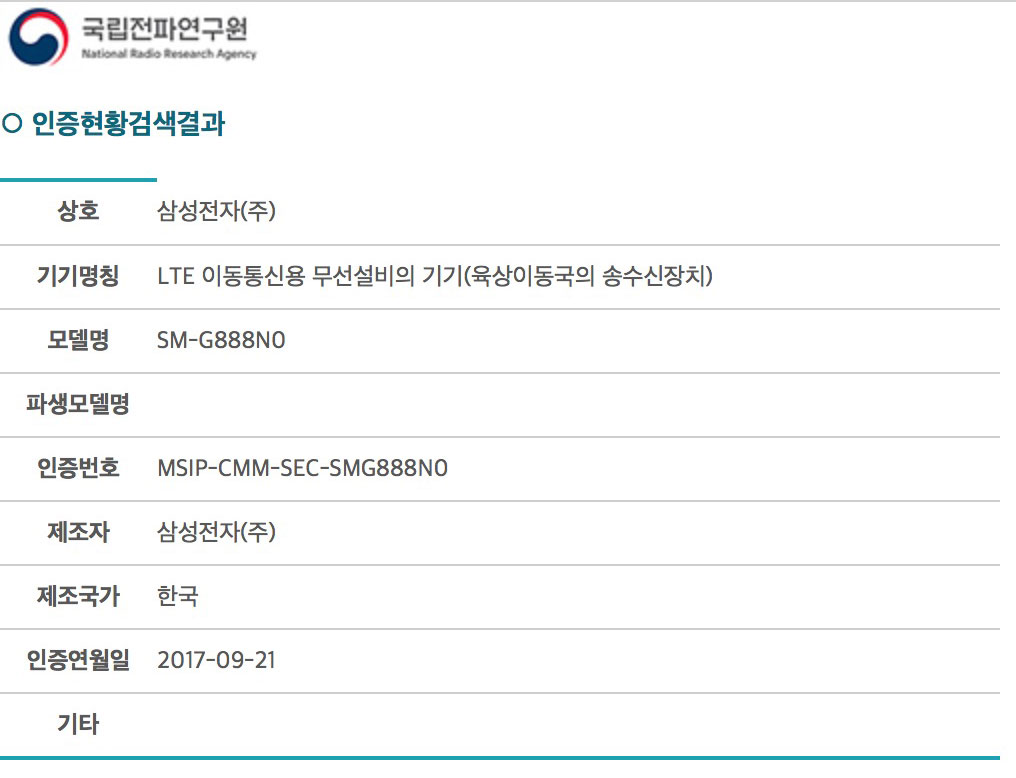
    According to Let’sGoDigital, the phone has appeared in a filing from the Korean National Radio Research Agency (NRRA), with a model number SM-G888N0. Moreover in the filing, the device is listed out as a “radio equipment for global LTE communication,” while it was spotted as a “smartphone” at the Wi-Fi Alliance. The filing however, does not reveal any other details about the smartphone.

    After the big reveal in 2013, the hopes of seeing a foldable Android smartphone on the shelves of mobile stores seemed to have died a slow death. After IFA 2017 in Berlin, Dongjin Koh, President of mobile business at Samsung told some reporters at a news conference in South Korea that a foldable smartphone is in the works and the company is aiming for a 2018 release. The phone will be a part of Samsung’s ‘Note’ lineup, according to Dongjin Koh. He also said that there are still hurdles to overcome and a possible release would be pushed back if the issues are not resolved in time.

    When we can overcome some problems for sure, we will launch the product. We are digging thoroughly into several issues we must overcome, as we don’t want to just make a few, sell a few and be done. We want to hear that Samsung made a very good product. We have a plan to adopt a foldable display in our roadmap.

    A number of patents as well as Samsung’s own concept video from CES 2013 tell us what to expect from the Galaxy X. Samsung is most likely to start small, with a smartphone that folds halfway like a wallet. Another design, in line with Samsung’s prototype unveiling, could see the phone unfold into a full-size tablet.

  • Bixby Voice Now Available In India

    Bixby Voice Now Available In India

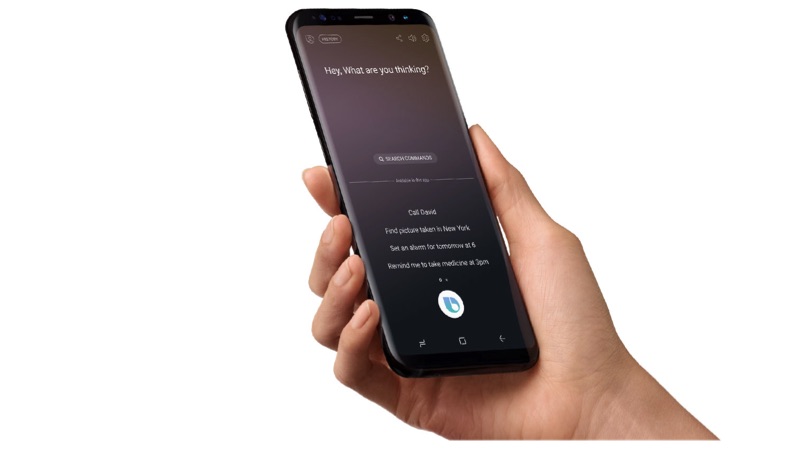
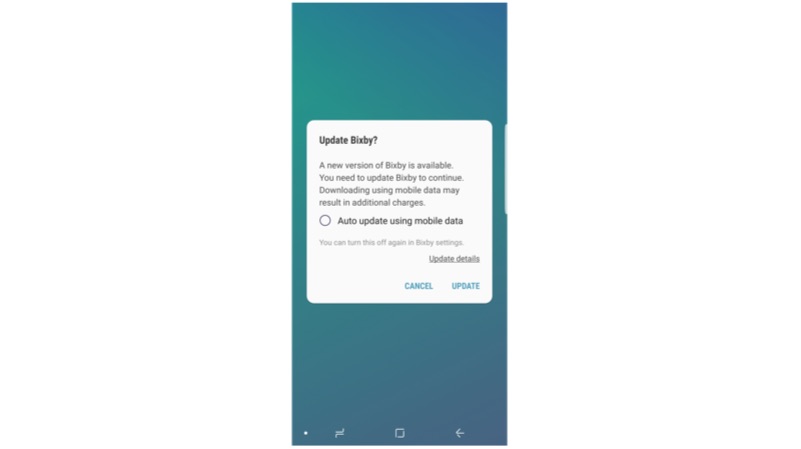
    It is fair to say that Samsung has had a great 2017 when it comes to its flagship smartphones. The Samsung Galaxy S8 and S8+ released earlier in 2017 and the Samsung Galaxy Note8 broke pre-order records in the United States and South Korea. In India, the Galaxy S8, S8+ and the Galaxy Note8 all released with Bixby but, without Bixby Voice. Samsung, however, during the India launch of the Galaxy Note8 announced that Bixby Voice for India will start rolling out from September 22.

    For all the software and hardware prowess that the Galaxy S8 and Galaxy Note8 devices possess, one thing that still annoys consumers is a physical button on the left hand side of the phone, the Bixby button. When Samsung introduced Bixby along with the Galaxy S8 and Galaxy S8+, there was a general consensus of it being exactly like Google Assistant and dedicating a hardware button to the AI assistant was Samsung’s push to replace Google Assistant.

    Samsung has said that it has optimised Bixby for India in away that it will understand different Indian accents. This means that your Galaxy flagship phone will respond to you regardless of which region of the country you are from.

    At Samsung, we listen to our consumers and bring in meaningful innovations that help make their lives better. With Bixby, the phone adapts to you and not the other way around. It’s a smarter way to use your phone and get more done. Keeping in mind the diversity in Indian accents and our commitment to ‘Make for India’, Bixby has been optimised to understand Indian accents.

    Similar to other AI voice assistants like Google Assistant, Siri, and Amazon Alexa, Bixby allows you to verbally communicate with your phone and perform tasks such as googling something, open apps or even make calls or send text messages. You can even point your phone to a certain object and Bixby will be pull up links to buy that product.


  • Top Smartphone Deals At The Flipkart Big Billion Days Sale

    Top Smartphone Deals At The Flipkart Big Billion Days Sale

    Flipkart is offering some great deals on smartphones and tech accessories during its Big Billion Days sale. We look at the top deals for smartphones available right now.

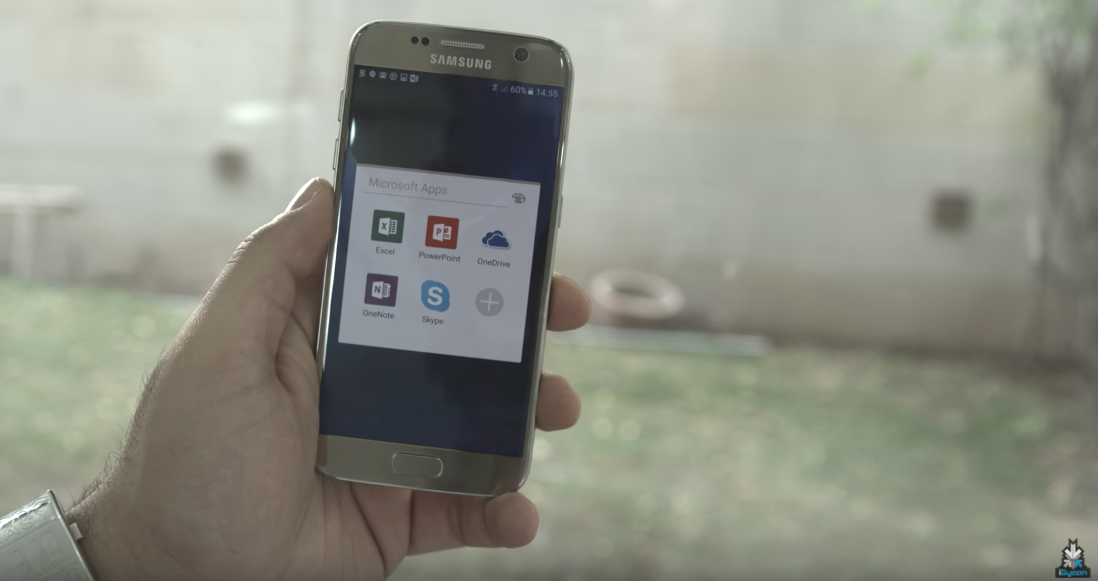
    Samsung Galaxy S7

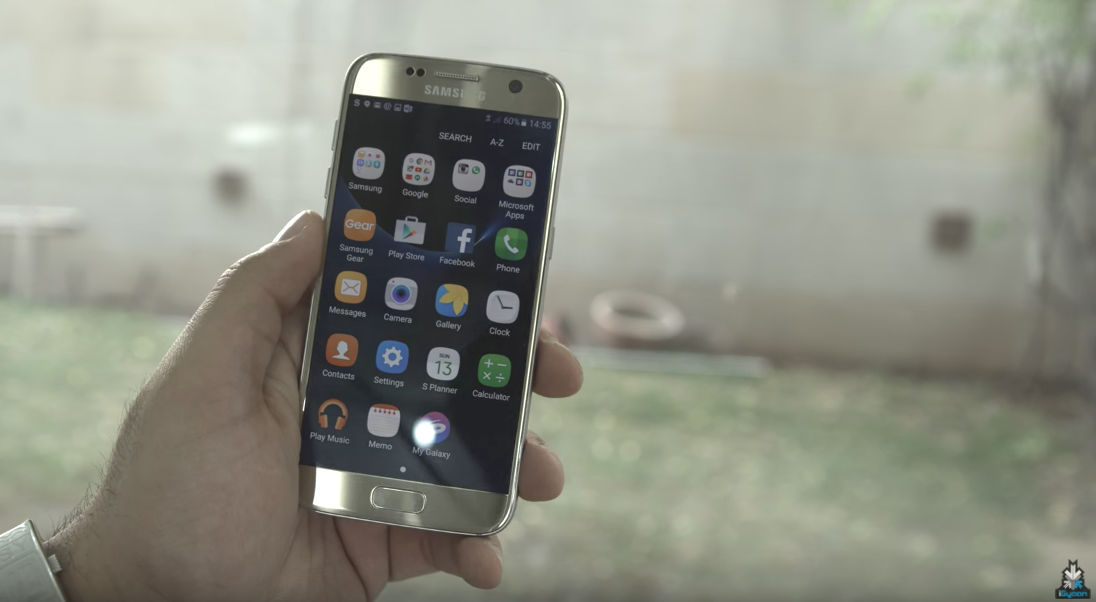
    Samsung’s 2016 flagship smartphone, the Galaxy S7 has a 5.1 inch 2560 x 1440 px display. In the day and age of big phablet-type flagships, the 5.1-inch compact form factor might be ideal for people looking for a smaller phone but with top-end specifications. Under the hood, the Galaxy S7 has the Exynos 8890 chipset, 4GB RAM and 64GB onboard storage which can be expanded up to 256GB via microSD card. The Galaxy S7 has a 12MP dual-pixel camera at the back and a dual pixel 5MP camera at the front.

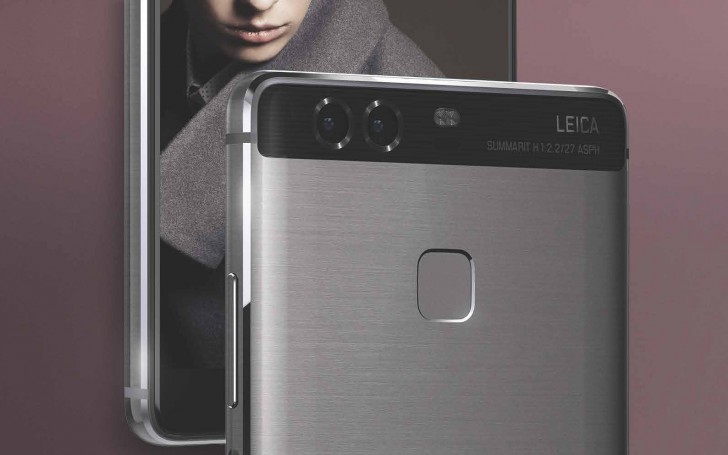
    Huawei P9


    The Huawei P9 has a 5.2-inch display and 1080p resolution. The P9 runs on the Kirin 955 chipset with an octa-core CPU  set at 2.5GHz for the quad-Cortex-A72 cluster and 1.8GHz for the quad-Cortex-A53. The P9 has a 3000 mAh battery and is equipped with a USB type C charging port. The Huawei P9 has dual 12 MP rear-facing cameras with an  f/2.2 aperture, 27 mm, Leica optics, and phase detection autofocus. On the front is an 8MP camera with an f/2.4 aperture.

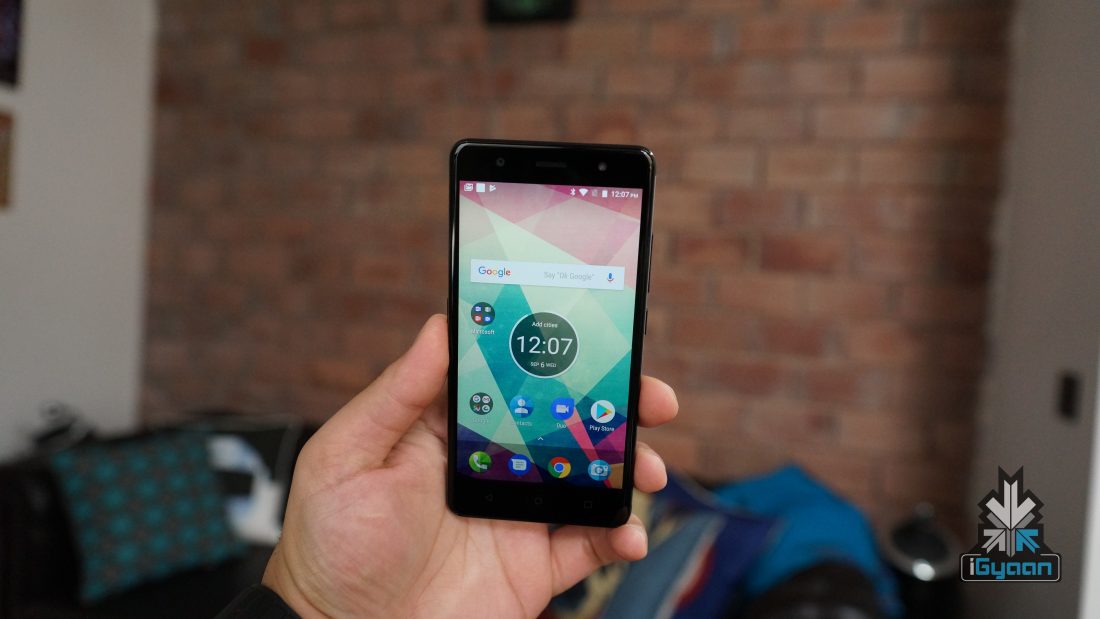
    Lenovo K8 Plus


    The Lenovo K8 Plus has two variants, a 3GB RAM, and a 4GB RAM variant and both of them are on sale right now. The Lenovo K8 Plus has a 5.2 inch 1920 x 1080 px IPS LCD display with three touch capacitive navigation buttons below. Powering the device is a 4,000 mAh battery and it runs stock Android 7.1.1 Nougat. Under the hood, the smartphone has the MediaTek Helio P25 chipset, a 2.6 GHz octa-core processor, Mali T880 GPU, 3GB/4GB RAM with 32GB onboard storage which is expandable up to 128GB via microSD card. It has a primary 13MP Pure cell sensor mated with a 5MP Samsung BSI sensor dual camera with an f/2.0 aperture and dual LED flash. On the front is an 8MP wide angle lens with an f/2.0 and an LED flash.


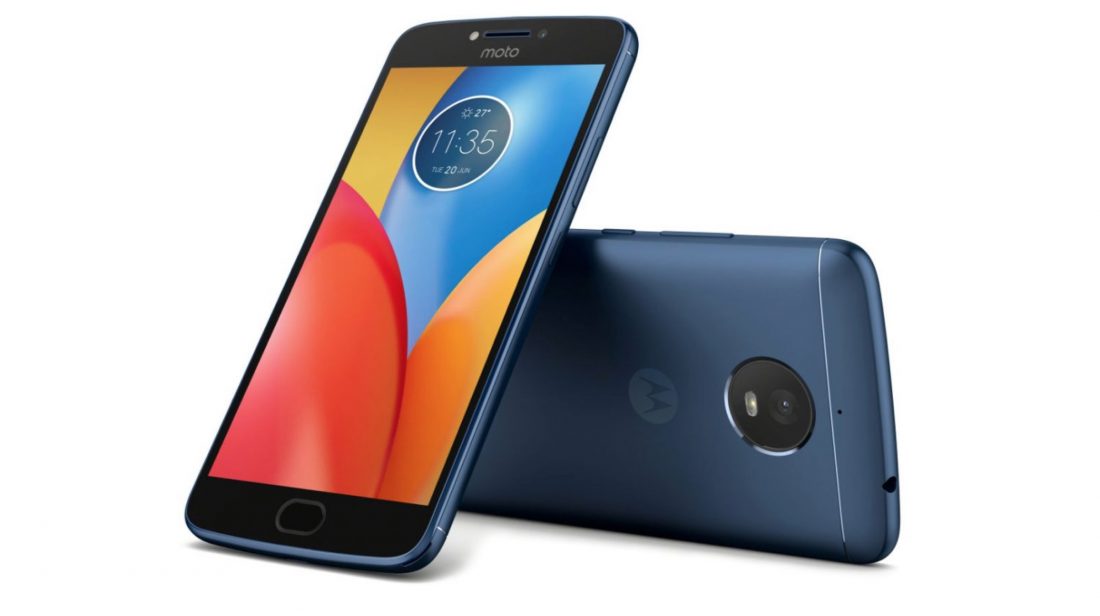
    Moto E4 Plus

    Motorola announced that the new Oxford Blue colour variant of the Moto E4 Plus will be available on Flipkart exclusively during the Big Billion Days sale. The Motorola Moto E4 Plus is powered by 1.4GHz quad-core MediaTek MTK6737M processor and has 3GB of RAM with 32GB of internal storage along with microSD card expansion. The Moto E4 plus has a 5.5 inch 1280 x 720px IPS LCD display along with Corning Gorilla Glass 3 and an oleophobic coating.The phone also runs Android 7.1.1 out of the box and should be updated to the next generation Android by the company, as the UI is mostly stock with some Moto features including the Moto display, some gestures and One-Key Navigation. The front also has a fingerprint sensor along wit a notification LED light.

    For optics, the front has a 5 MP camera with a front flash while the main camera is a 13 MP with an f/2.0 aperture. The battery on the E4 Plus is a massive 5000 mAh battery.

    Xiaomi Redmi 4A

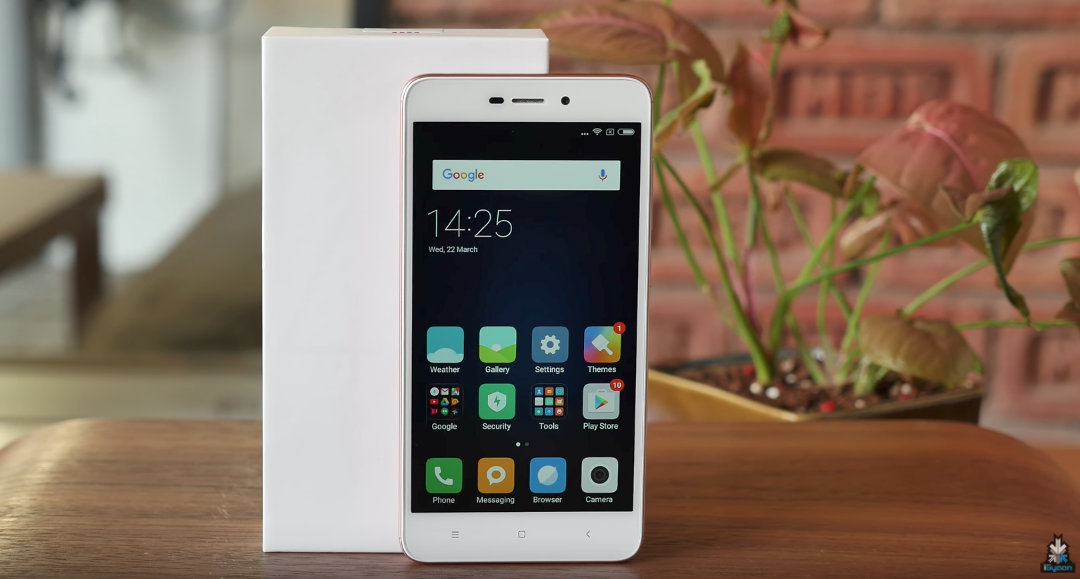
    The Xiaomi Redmi 4A is a budget device ideal for people who want performance and battery life without shelling out too much cash. The device has a 5 inch 1280 x 720 px display. The budget smartphone from Xiaomi runs on the Qualcomm’s 64-bit Snapdragon 425 chipset with a quad-core processor and Adreno 308 GPU. The rear camera on the Redmi 4A has a 13MP sensor with auto-focus and LED flash, the front-facing camera, on the other hand, has a 5MP sensor. The device is powered by a 3120 mAh battery.

    Honor 8 Pro


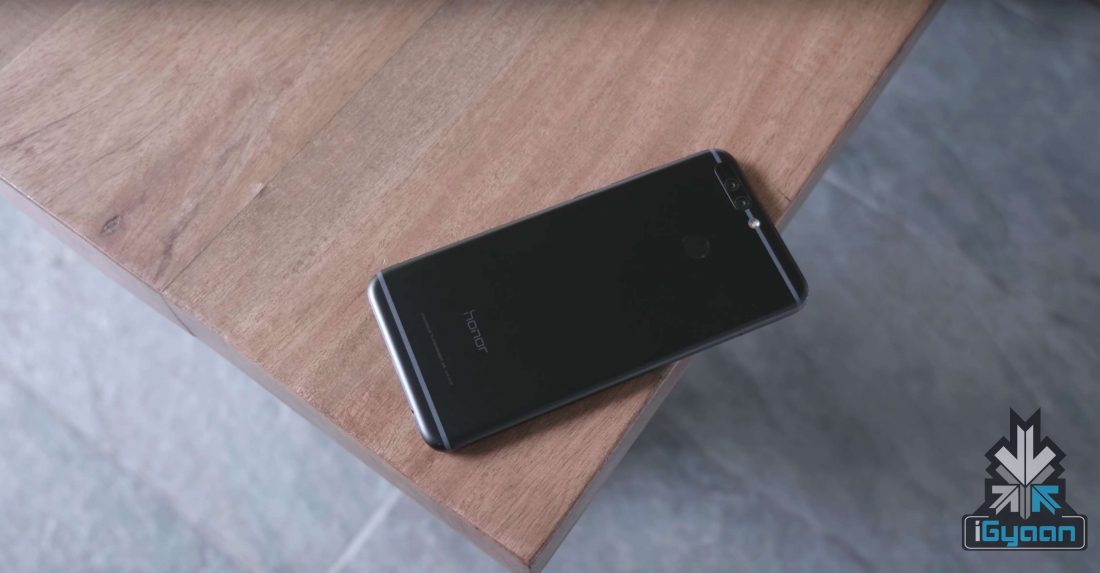
    Competitively priced, great performance, big battery, and a dual-camera setup, the Honor 8 Pro was launched as a competitor of the OnePlus 5. The Honor 8 Pro has 5.7 inch 2560 x 1440 px display which is ideal for media consumption via VR. The Honor 8 Pro has 128 GB of storage along with 6GB of RAM. The Honor 8 Pro runs on the Kirin 960 chipset which is an octa-core chip – four high-performance Cortex A73 cores clocked at 2.4GHz and four low-power Cortex A53 cores clocked at 1.8Ghz. The phone also has a large 4000 mAh battery and fast charge capabilities, with long battery modes built into Honor’s user interface. The camera setup consists of two cameras, 12+12 MP shooters, where one is a monochrome camera while the other is RGB. The front camera is an 8 MP shooter with an f/2.0 aperture.

    Honor 6X


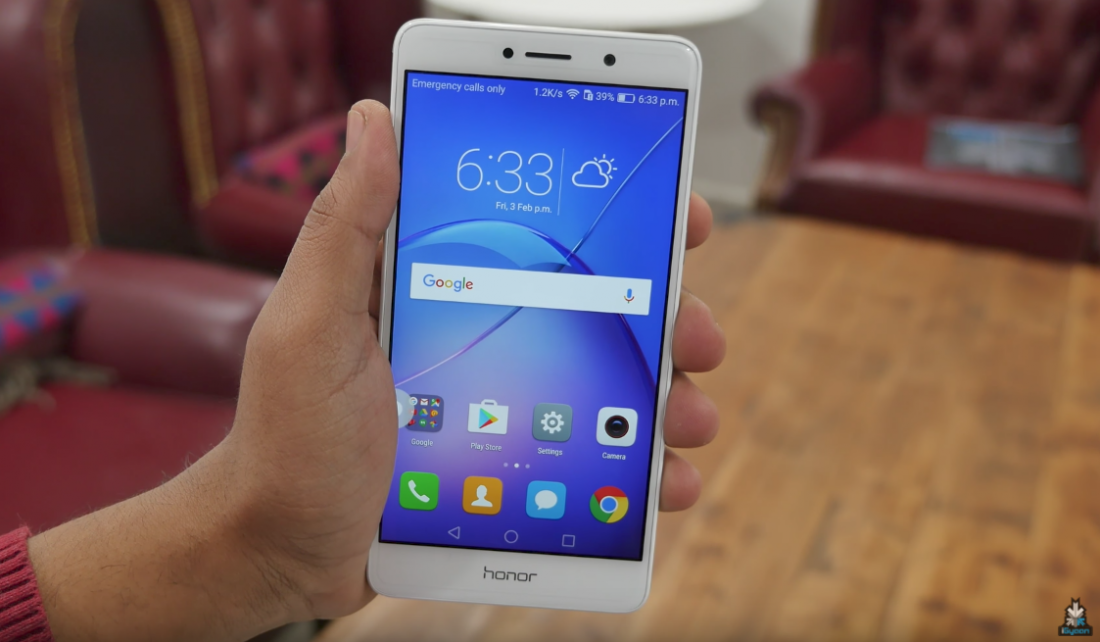
    The Honor 6X is a budget offering by Huwaei’s sub0-brand, Honor. The phone has a 5.5 inch 1920 x 1080 px display. The Honor 6X has a HiSilicon Kirin 655 chipset, octa core processor, 3GB RAM and 32GB onboard storage which can be expanded 256GB via microSD card. On the camera front, the smartphone sports a dual 12MP+2MP camera setup and an 8MP front-facing camera. The device is powered by a 3340 mAh battery.

    Xiaomi Mi A1


    The Mi A1 combines Xiaomi’s hardware and Android One’s stock OS experience at a budget price. The smartphone has a 5.5 inch 1920 x 1080 px LTPS display with Corning Gorilla Glass on top for protection and aluminum unibody build. Powering the device is a 3080 mAh battery and 2A charging through the Type C port. The phone has the Qualcomm Snapdragon 625 chipset, 8x ARM Cortex A53 2.0GHz 64-bit processor, 4GB RAM and 64GB of onboard storage which is expandable via microSD card. In terms of optics, the smartphone features dual sensors – 12MP with an f/2.2 aperture (26mm) and 12MP with an f/2.6 aperture (50mm) setup with 1.25-micron pixel size. Out of the two cameras at the back, the primary one is equipped with a telephoto lens and the secondary camera has a wide-angle lens. On the front is a 5MP camera.

    Click Here To Buy Xiaomi Mi A1


  • Top Tech Deals At The Amazon Great Indian Festival Sale

    Top Tech Deals At The Amazon Great Indian Festival Sale

    The Amazon Great Indian Festival Sale for Amazoon Prime members is now live and we take a look at the top 10 tech deals available during the sale. People without Amazon Prime membership will be able to access these deals from September 21.

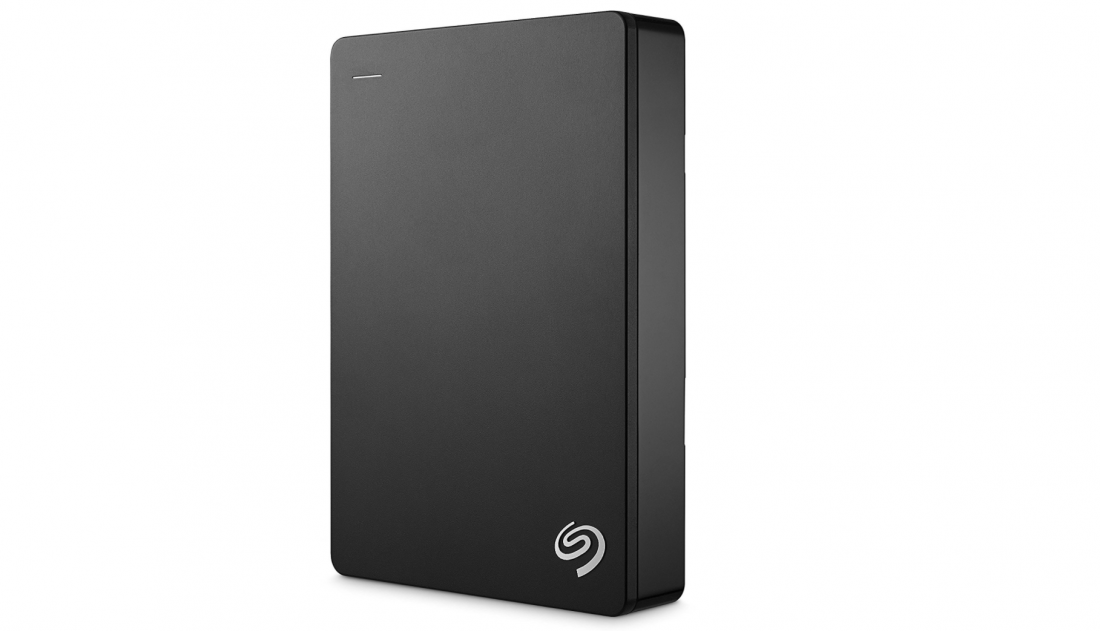
    Seagate Backup 4TB Hard drive

    This Seagate 4TB storage hard drive is ideal for people who hate deleting their old data and like to carry it with them wherever they go. The hard drive has USB 3.0 transfer speeds and is backward compatible with USB 2.0 ports at USB 2.0 transfer speeds. The hard drive comes with 3 years of warranty as well. It retails at a price of Rs 22,199 but, during the sale, it will be available for a price of Rs 9,499. 

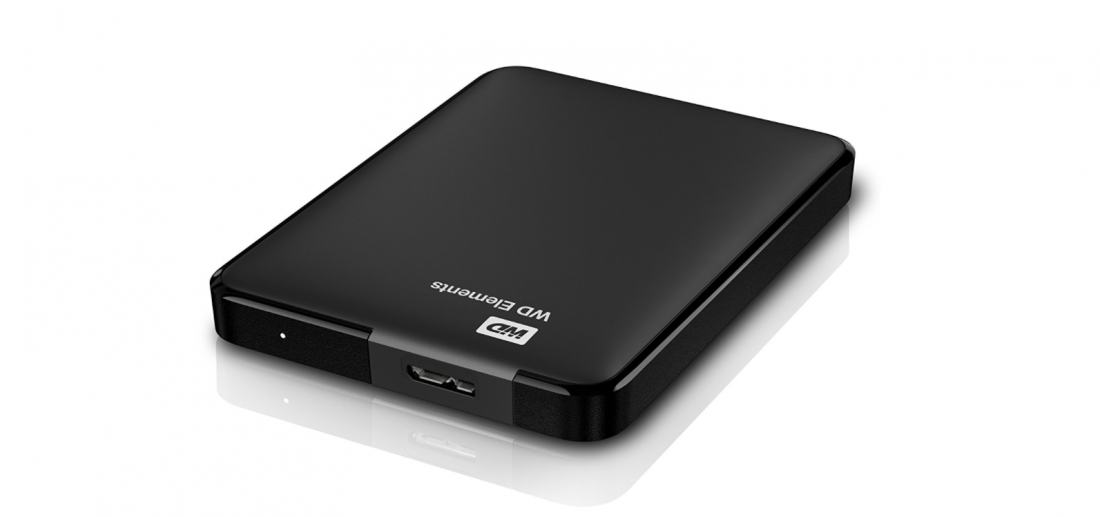
    WD Elements 1TB Hard Drive

    This WD hard drive is light, portable and gives you an extra 1TB of storage in case you run out of the onboard storage on your desktop or laptop. This hard drive also has USB 3.0 transfer speeds and a 2-year warranty.

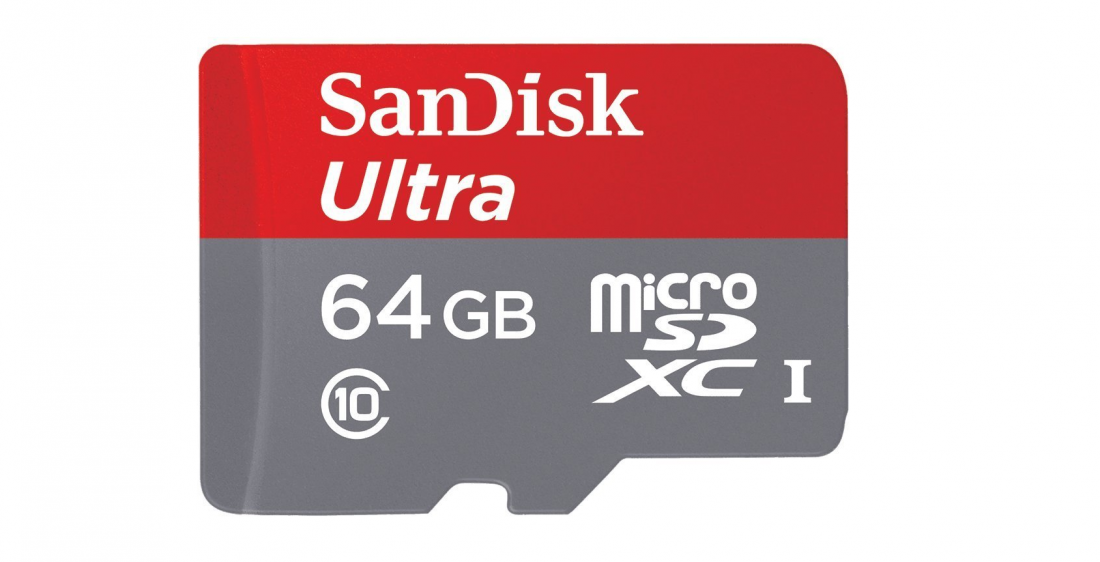
    SanDisk 64GB Class 10 Memory Card

    The SanDisk 64GB Class 10 Memory Card is water, dust and shock proof. If you need more storage in your smartphone and your phone has a microSD card slot, this memory card is ideal. Even if your phone doesn’t support microSD card, yiu can store your media in this card and carry it with you along with a USB OTG card reader and consume media on the go without hampering your phone’s onboard storage.

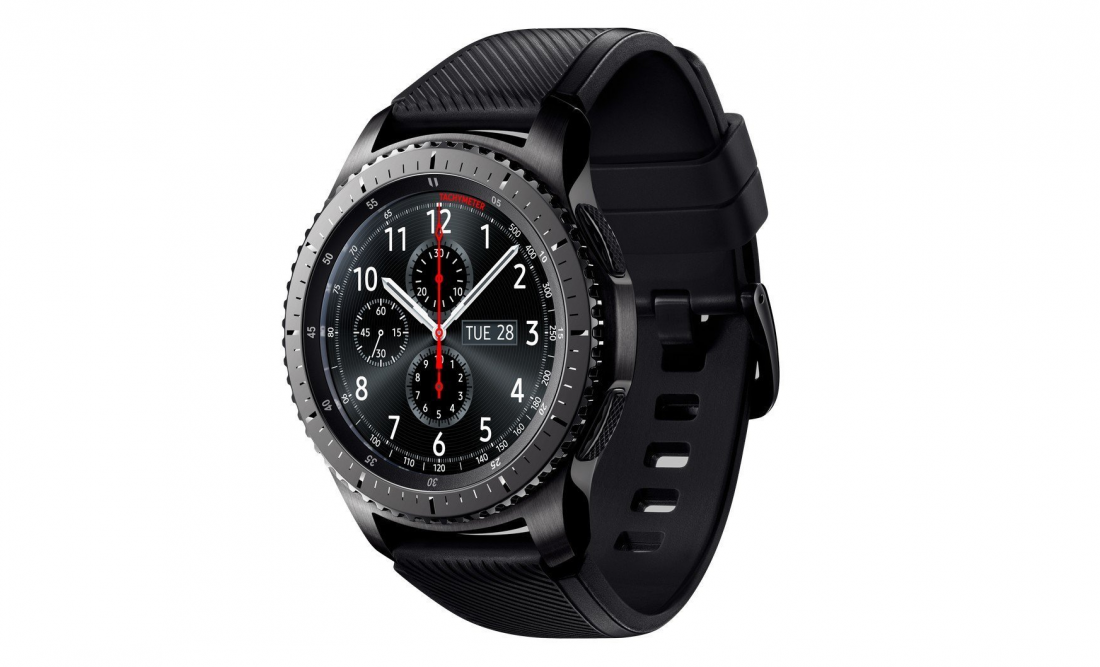
    Samsung Gear S3 Smartwatch

    The Samsung Gear S3 is an ideal smartwatch for you if you have an Android smartphone. The smartwatch has 1.3-inch 360×360 Super AMOLED capacitive touchscreen display, Corning Gorilla Glass SR+ and is IP68 certified water and dust resistant. It has a dual-core 1GHz CPU, 768MB RAM, and 4GB onboard storage.

    Honor Band 3

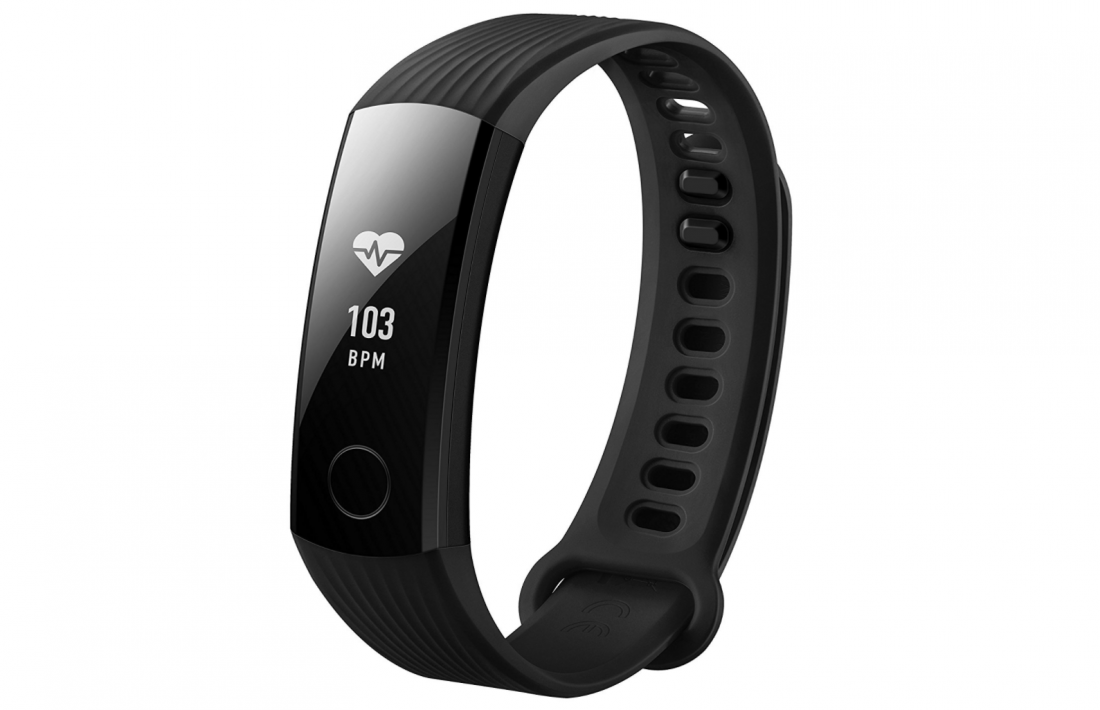
    The fitness tracker is ideal for people who want to keep a track of their activity but do not necessarily need a fancy smartwatch. The Honor Band 3 tracks your steps, sleep and is water resistant up to 50m.It has a heart rate monitor and a battery life of up to 30 days. Moreover, it has smart notifications to reduce your interaction with your smartphone while you’re busy or driving.

    Lenovo Yoga Tab 3

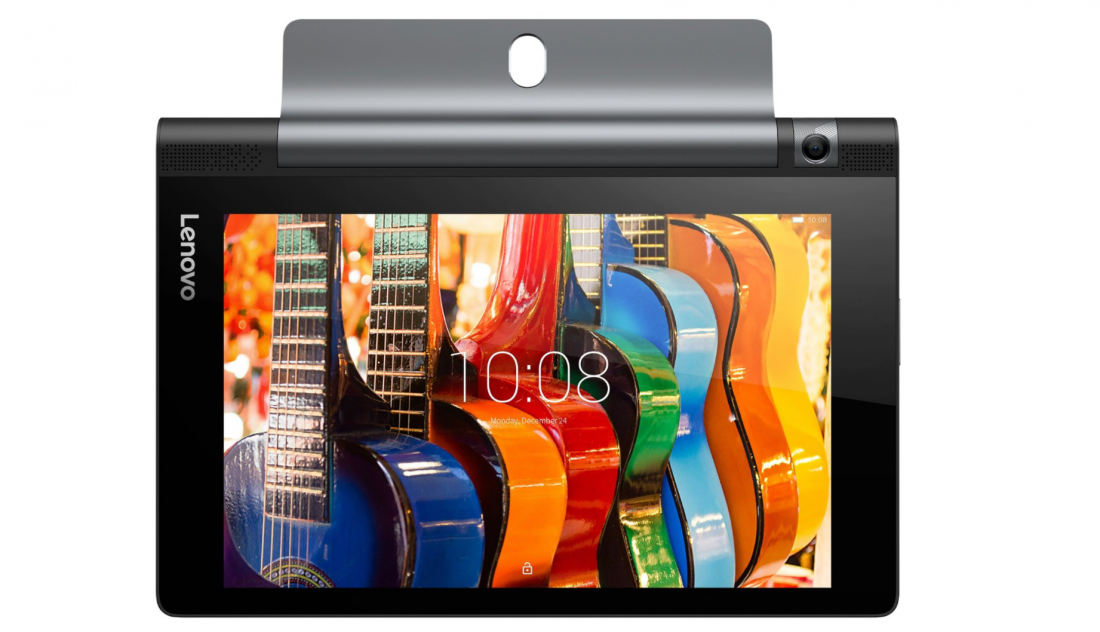
    The Lenovo Yoga Tab 3 has 4G LTE connectivity and an 8-inch 1280 x 800 px display. It has an 8MP primary camera with autofocus and an 8MP front-facing camera, 1.3GHz Qualcomm APQ8009/MSM8909 quad-core processor, 1GB RAM, and 16GB onboard storage. The tablet is powered by a massive 6200 mAh battery and runs Android 6.0 Marshmallow out of the box.

    Samsung Evo Plus 32GB Memory Card

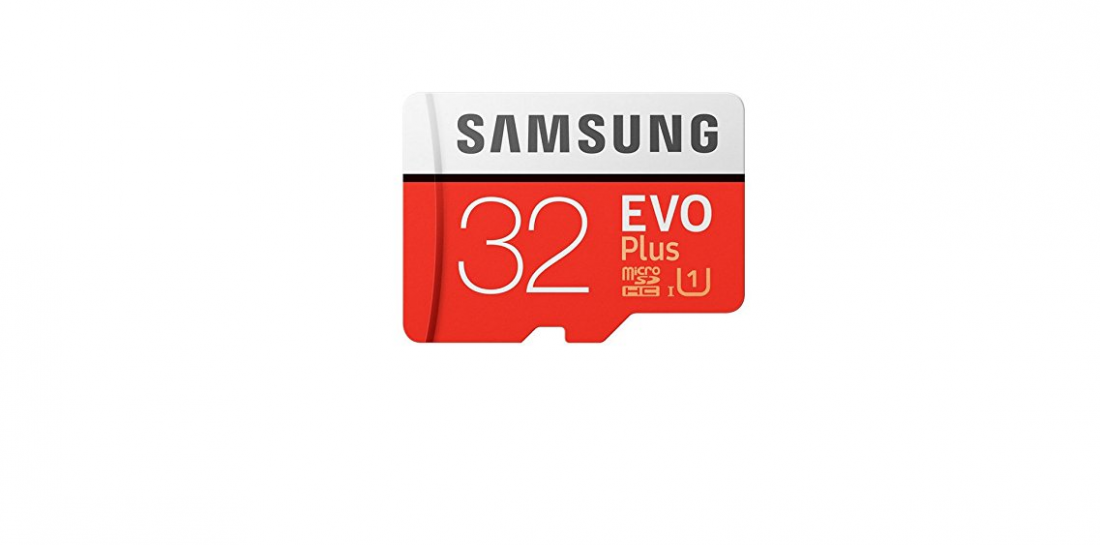
    If you’re looking for a memory card with high transfer speeds and durability, the Samsung Evo Plus memory card is for you. The microSD card has a 32GB storage and fast read and write speeds up to 95mbps and 20mbps respectively. The included SD adapter makes it compatible with even more devices whilst retaining the high transfer speeds. 

    SoundBot Bluetooth Speaker

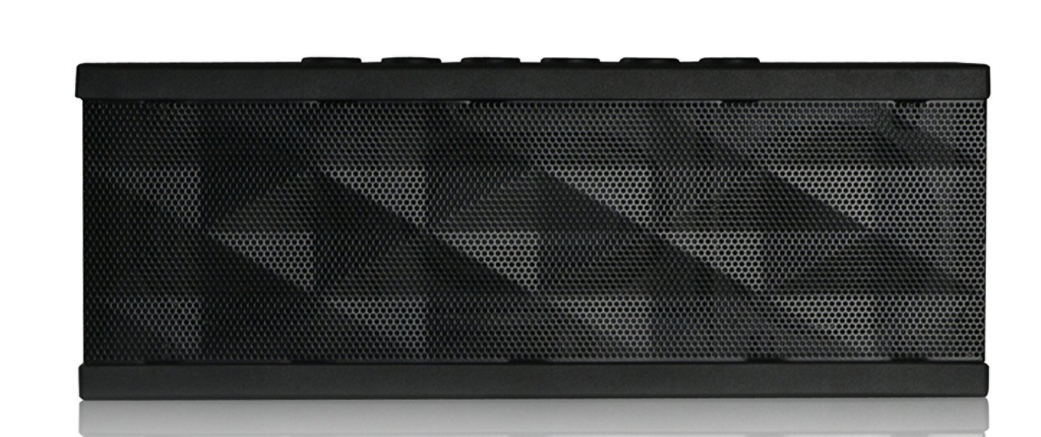
    The Soundbot Bluetooth Speaker has 40mm premium drivers for both active outdoor and indoor use. The speaker comes equipped with Bluetooth 3.0 and has a 3.5mm AUX output as well. The speaker is shipped with 1 year of manufacturer’s warranty as well. The average battery life of the Soundbot Bluetooth Speaker is 10 hours. 

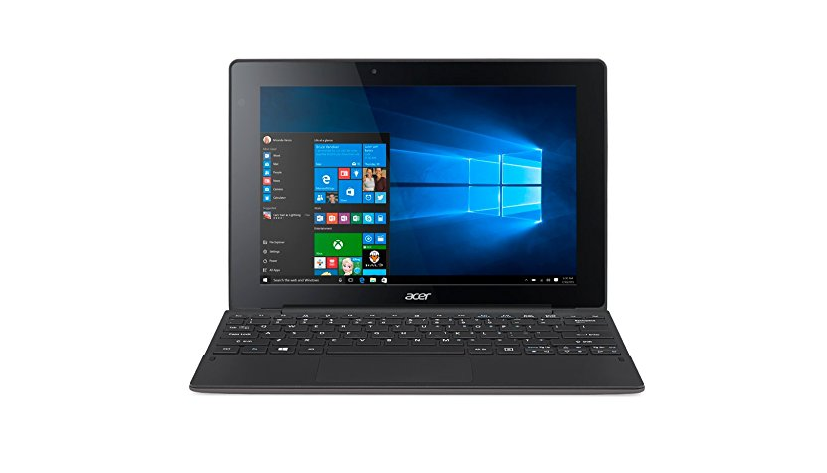
    Acer Switch 10.1 inch Laptop

    This laptop is ideal for people who are not power users and just need a device for general media consumption and document editing. The Acer Switch has a 1.44GHz Intel Atom x5-Z8300 processor, 2GB DDR3L RAM, and 32GB flash storage. The laptop runs Windows 10 Home and has a battery life of 12 hours.

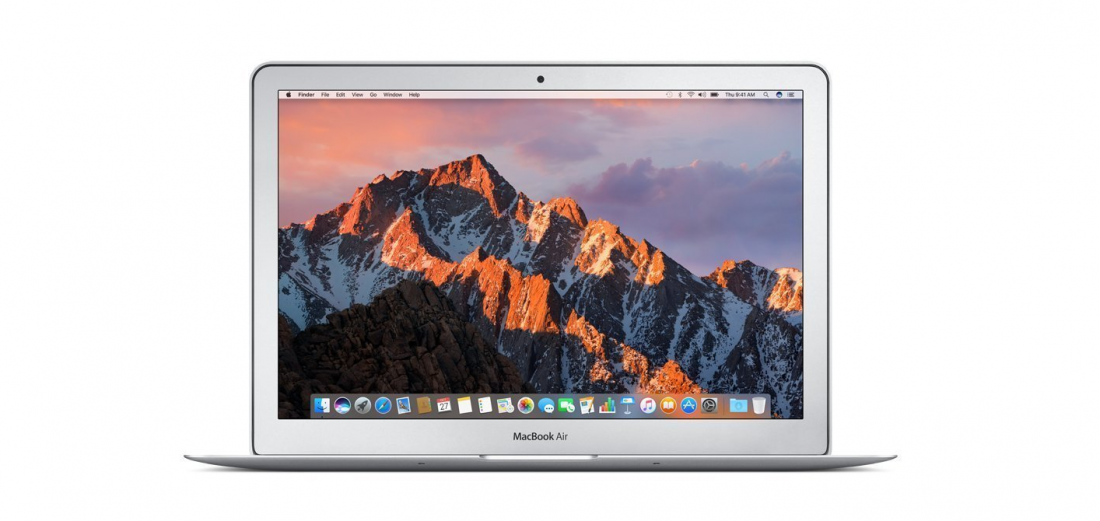
    Apple MacBook Air 13.3 inch

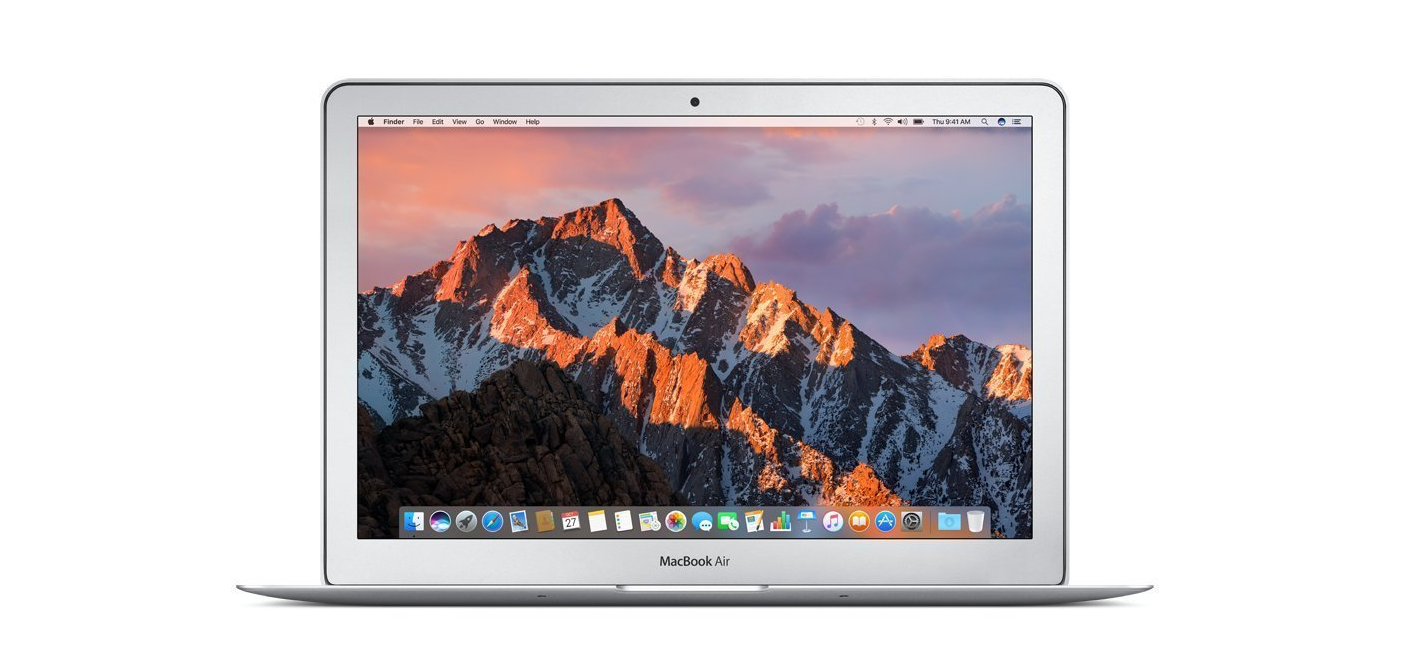
    The Apple MacBook Air for people who want to be a part of the Apple ecosystem but, do not need the power of a MacBook Pro. The MacBook Air has a 1.8GHz Intel Core i5 processor, 8GB LPDDR3 RAM, 128GB Solid State hard drive and, Intel HD Graphics 6000. The MacBook Air is light, portable and efficient. It usually retails for a price of Rs 77,200 but, during the sale it will be available for Rs 55,990.


  • Top Smartphones Deals On Amazon Great Indian Festival Sale

    Top Smartphones Deals On Amazon Great Indian Festival Sale

    Buying a smartphone is a tough decision. A lot of factors need to be weighed in before you choose a phone that will be your companion for the next few months or years, depending on which phone you buy or for which purpose. Price of a smartphone more or less is the deciding factor in many cases. Amazon Great Indian Sale has some great deals on smartphones in all price range and iGyaan brings you the top picks for you to choose from. Amazon Prime members can access these deals from September 20th.

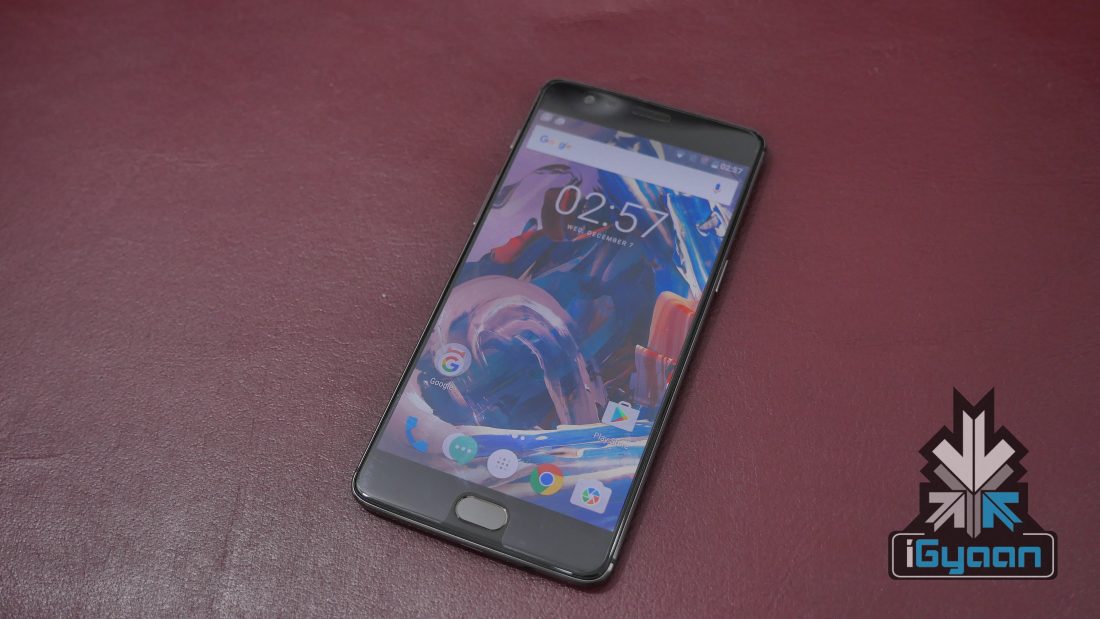
    OnePlus 3T

    The OnePlus 3T, last year’s flagship is still one of the best budget smartphones in the market right now. With an excellent Qualcomm Snapdragon 821 chipset and buttery smooth Android OS experience, the OnePlus 3T ticks almost all the boxes of a great smartphone. It has a 5.5-inch 1920 x 1080 px display and runs Android 7.1.1 Nougat with a promised update to Android 8.0 Oreo. During the sale, the OnePlus 3T will be available at a discount of Rs 5000!

    Xiaomi Redmi 4A

    The Xiaomi Redmi 4A is a budget device ideal for people who want performance and battery life without shelling out too much cash. The device has a 5 inch 1280 x 720 px display. The budget smartphone from Xiaomi runs on the Qualcomm’s 64-bit Snapdragon 425 chipset with a quad-core processor and Adreno 308 GPU. The rear camera on the Redmi 4A has a 13MP sensor with auto-focus and LED flash, the front-facing camera, on the other hand, has a 5MP sensor. The device is powered by a 3120 mAh battery.

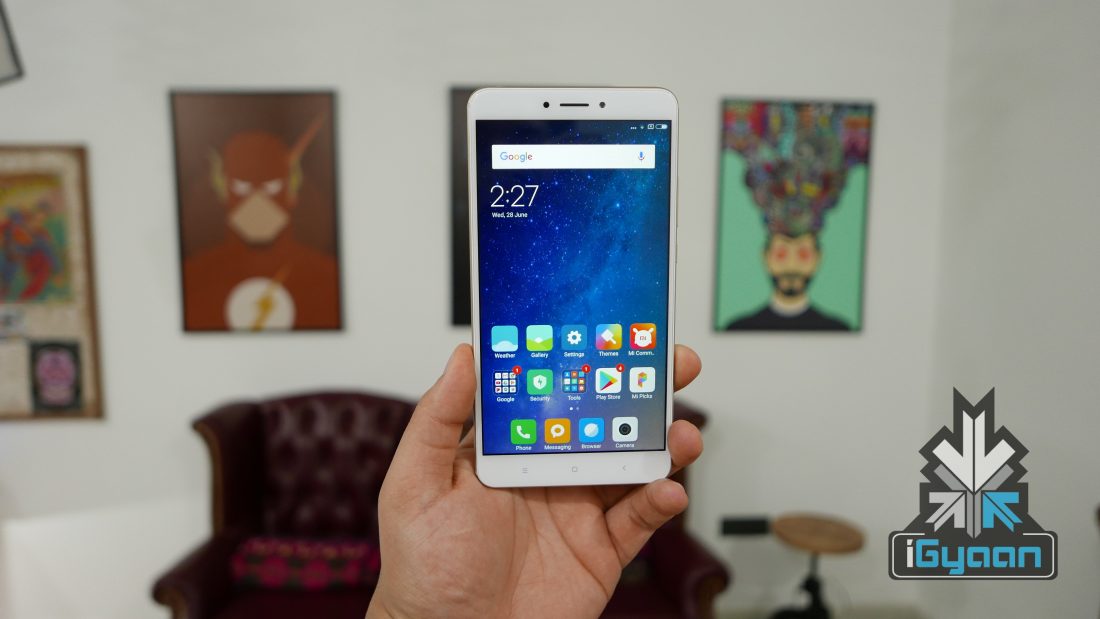
    Xiaomi Mi Max 2

    The Xiaomi Mi Max 2 has a 6.4 inch 1920 x 1080 px display with Corning Gorilla Glass 3 on top for added protection. The smartphone is powered by a massive 5300 mAh with QuickCharge 3.0 and runs Android 6.0 Marshmallow with Xiaomi’s custom skin MIUI 8 on top. The phablet has a one-hand usage mode as well. Under the hood, the phablet has the Qualcomm Snapdragon 625, Cortex-A53 octa-core processor, 4GB of RAM and 32GB/64GB onboard storage options. The fingerprint sensor is placed at the back of the device and sits just below the cameras. The Mi Max 2 switches to dual-audio speakers when in landscape mode. On the optics front, the Mi Max 2 has a 12-megapixel camera with an f/2.2 aperture, equipped with the Sony IMX386 sensor with PDAF and dual-LED flash. On the front, the phablet has a 5MP camera with an f/2.0 aperture.

    Samsung On5

    Samsung On5 is a budget offering from Samsung that has a 5-inch 1280 x 720 px display. It has a 1.3GHz Exynos quad core processor, 2GB RAM, and 16GB onboard storage expandable up to 128GB via microSD card. The device is powered by a 2600 mAh battery and runs Android 6.0 Marshmallow. 

    Samsung Galaxy A9

    The Samsung Galaxy A9 Pro has a 6-inch 1920 x 1080 px display ideal for media consumption. The phone runs Android 6.0 Marshmallow out of the box and is powered by a massive 5000 mAh battery. Under the hood, the Galaxy A9 Pro has the Qualcomm Snapdragon 652 chipset, 4GB RAM and 32GB onboard storage which is expandable via microSD card. On the camera front, the device has a 16MP primary camera with f/1.9 aperture, autofocus, OIS, LED flash and a 1/2.8-inch sensor size. On the front is an 8MP camera. 

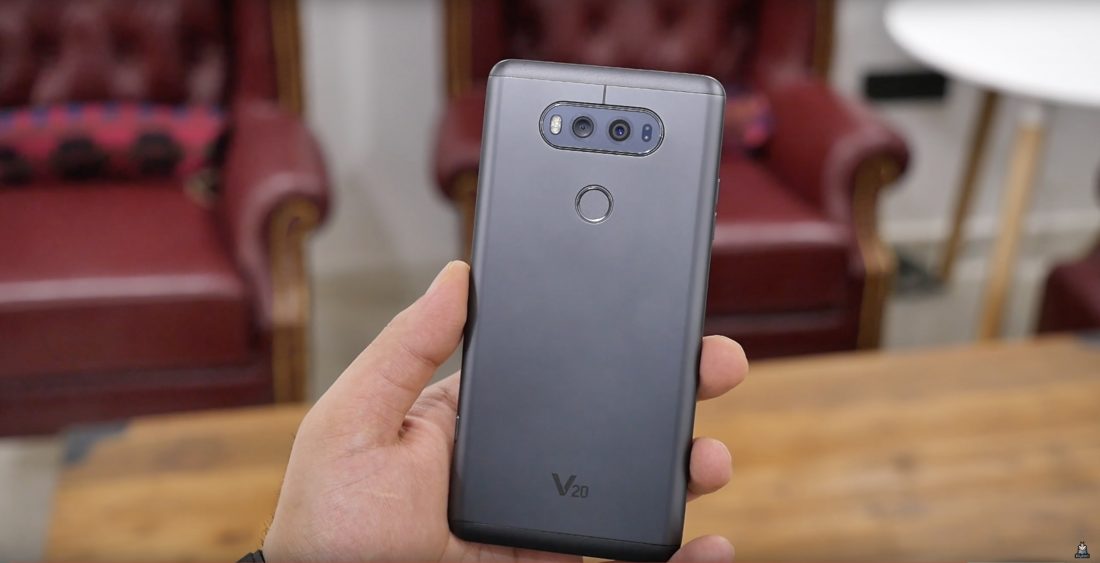
    LG V20

    The LG V20 was launched in 2016 and still holds up pretty great in 2017. The LG V20 has a 5.7 inch 2560 x 1440 px display and a secondary display on top of the primary display that lets you access apps of your choice and also displays incoming notifications. Under the hood, the device has the Qualcomm Snapdragon 820 chipset, 4GB RAM and 64GB onboard storage expandable up to 2TB via microSD card. The LG V20 runs Android 7.1 Nougat and will receive an update to Android 8.0 Oreo in the coming months.

  • Samsung Galaxy S9 May Have A 1000fps Camera

    Samsung Galaxy S9 May Have A 1000fps Camera

    The South Korean tech giant, Samsung, has built a camera that clicks a thousand images in a second. Samsung has completed the test phase and may move into mass production in November. With the Samsung Galaxy S9 expected to launch in Q2 of 2018, the next year’s flagship might just feature this camera.

    Samsung is working on a “three-layered image sensor.” In a normal setting, there is a camera sensor and a logic board that is responsible for the process of taking pictures. The logic board takes the image passed through the sensor, does some calculations, and turns what the human eye sees into data to be stored on the phone. Samsung is adding a DRAM chip into that equation to allow the camera to capture video at 1000 fps. If Samsung delivers this, it will join Sony as the slowest slow-motion camera right now.

    Sony was the first company to commercialize the ‘three-layered image sensor’ with the XZ Premium. The Sony XZ Premium features a camera that records 720p videos at 960fps. It is reported that Samsung’s implementation of the same costs way more than Sony’s. Samsung decided to go with a different method in order to avoid paying a royalty fee to Sony for using their method.

    The manufacturing process of a three-layered chip can be tedious and costly. If any of the three layers are bad, the whole chip will have to be tossed, which can be quite costly. Samsung’s process even though costlier, has its positives. The South Korean tech giant is a conglomerate, and therefore, can get its hands on the chip it needs internally. Whether this process yields in better performance than Sony is yet to be seen. Samsung uses Sony’s sensors in a lot of its flagship devices, especially for the US market. If the 1000fps camera makes its way to the Galaxy S9, we may see a high-performing Sony sensor for the American market and an in-house sensor for the South Korean market.

  • Apple iPhone X Vs The Competition

    Apple iPhone X Vs The Competition

    Samsung has been the number one smartphone maker in the world for a while and Apple has always been a close second. Recently, Huawei overtook Apple as the second largest smartphone maker because of the sales in Q2 of 2017. Apple is expected to take that position back and challenge Samsung once again with the launch of the iPhone 8, iPhone 8 Plus and the iPhone X. Samsung has been riding high on the success of its flagship Galaxy S8 and S8+ and the newly launched Galaxy Note8 has already received record breaking pre-orders in the United States and South Korea.

    With the Samsung Galaxy S8+, iPhone 8+, iPhone X and the Galaxy Note8 competing for the best flagship of 2017, let’s see how each of them stack up against each other.

    Apple iPhone X

    The iPhone X has a 5.8-inch 2436 x 1125 px OLED True Tone Super Retina display with minimal bezels around it. The phone runs iOS 11 and is powered by a 3,000 mAh battery which charges through the Apple signature lightning port placed at the bottom of the phone. Because of the all-glass design, the iPhone 8 also has wireless charging. Under the hood, the smartphone has the Apple A11 Bionic chipset with a neural engine, a hexacore processor, 3GB of RAM and storage options of 64GB, and 256GB. Apple has also gotten rid of TouchID and replaced it with facial recognition called FaceID which Apple claims has a security breach chances of 1 in a million.

    On the optics front, the iPhone X has dual 12-megapixel rear cameras, and it’s equipped with dual optical image stabilization. The main camera is equipped with a wide angle lens and has an f/1.8 aperture while the secondary telephoto lens has an f/2.4 aperture.

    Samsung Galaxy S8 and Galaxy S8+

    The Samsung Galaxy S8 has a 5.8” 2960×1440 px display with a 570ppi while the S8+ has a 6.2” 2960×1440 px display with a 529ppi density. Both have Samsung’s own super-AMOLED display. The Galaxy S8 is powered by a 3000 mAh battery while the Galaxy S8+ has a 3500 mAh battery. Both the smartphones run Android 7.1.1 Nougat out of the box and Samsung has confirmed an update Android 8.0 Oreo soon. Under the hood, both the smartphones have Exynos 8895 chipset, 64GB or 128GB onboard storae options which is expandable up to 256GB via microSD card. The Galaxy S8 has 4GB RAM while the Galaxy S8+ has 4GB or 6GB RAM variants.

    For cameras, both phones get a main Dual Pixel 12MP OIS (F1.7), Front: 8MP AF (F1.7). While the battery on the Galaxy S8 is 3000 man, the S8plus has a 3500 mAh battery. Both support fast charging and wireless charging as well.

    Apple iPhone 8 and iPhone 8 Plus

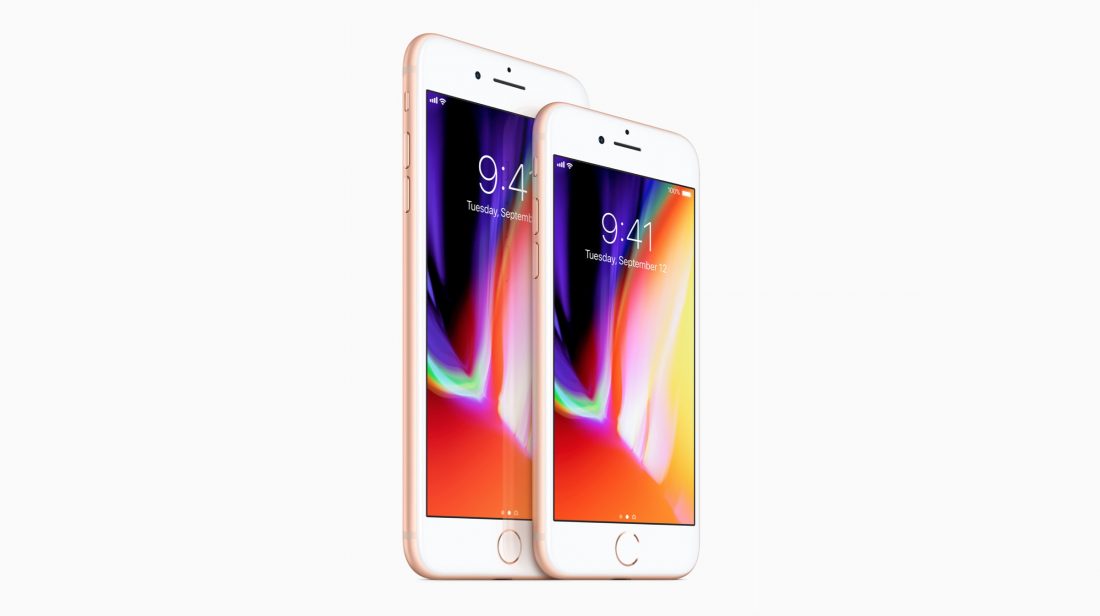
    The Apple iPhone 8 has a 4.7 inch 1334 x 750 px True Tone display and the iPhone 8 Plus has a 5.5 inch 1920 x 1080 px True Tone Display. Under the hood, the iPhone 8 and iPhone 8 Plus have the A11 Bionic chipset with a hexacore processor and the new Apple GPU. Both the phones now have wireless charging capabilities. Both the phones run iOS 11 and the battery of the iPhone 8 and 8 Plus is identical to the iPhone 7 and iPhone 7 Plus respectively.

    On the camera front, there’s a 12-megapixel sensor on the iPhone 8 that is larger, faster and has optical image stabilization. The iPhone 8 Plus also has new 12 MP sensors. The main camera is equipped with a wide angle lens and has an f/1.8 aperture while the secondary telephoto lens has an f/2.8 aperture. The dual cameras on the iPhone 8 Plus also have a new “Portrait Lighting” feature to adjust the lighting for portrait shots.


    Samsung Galaxy Note8

    The Galaxy Note8 has a 6.3 inch 2960 x 1440 px Super AMOLED display with an 18.5:9 aspect ratio, which is the same aspect ratio found on the Galaxy S8 and S8+. Powering the device is a 3300 mAh battery which is smaller than the 3500 mAh battery found on the Galaxy Note7 with wireless charging capabilities, and runs Android Nougat 7.1.1 with Samsung’s custom skin on top. The device has the Exynos 8895 chipset, 2.3GHz Quad-Core (Custom CPU) + 1.7GHz Quad-Core (Cortex-A53) processor, 6GB of RAM and 128GB onboard storage, which is expandable up to 256GB via microSD card. The graphics are handled by the Mali-G71 MP20 GPU.

    The new Note8 has a 12MP dual-camera setup, one of which has a wide lens and the other a telephoto. The telephoto lens allows a user to zoom in losslessly for an up to 2x magnification. The use of dual camera allows for the ability to blur out the background for professional looking bokeh effect shots, something that seems to be common in smartphones in 2017. The Galaxy Note8, Samsung claims, is the first smartphone to feature OIS in both the cameras at the back.

    Specifications Samsung Galaxy S8/S8+ iPhone 8/iPhone 8 Plus iPhone X Samsung Galaxy Note8
    Price S8- Rs 57900 onwards (Click Here To Buy)

    S8+- Rs 64900 onwards (Click Here To Buy)

    iPhone 8 – Rs 64000 onwards Rs 89000 onwards  Rs 67990

    Display size and type 5.8 inch Super AMOLED

    6.2 inch Super AMOLED

    iPhone 8 – 4.7 inch Retina Display
    iPhone 8 Plus – 5.5 inch Retina Display
    5.8 inch Super Retina Display  6.3 inch Super AMOLED
    Display Resolution  2960×1440 px 570ppi

    2960×1440 px 529ppi

    1334 x 750 px True Tone display
    1920 x 1080 px True Tone display
    2436 x 1125 px OLED True Tone  2960 x 1440 px
    Dimensions 148.9 x 68.1 x 8.0 mm
    159.5 x 73.4 x 8.1 mm
    138.4 x 67.3 x 7.3 mm
    158.4 x 78.1 x 7.5 mm
     143.6 x 70.9 x 7.7 mm

    162.5 x 74.8 x 8.6 mm

    Weight 155g
    173g
    148 gm
    202 gm
    174 gm  195 gm
    Chipset Exynos 8895 A11 Bionic with neural transmitter A11 Bionic with neural transmitter Exynos 8895
    Processor Octa core (2.3GHz Quad + 1.7GHz Quad), 64 bit, 10 nm process Hexacore processor with 2 high performing and 4 low cores Hexacore processor with 2 high performing and 4 low cores Octa core (2.3GHz Quad + 1.7GHz Quad), 64 bit, 10 nm process
    RAM 4GB

    4GB/6GB

    3GB  3GB  6GB
    Storage 64GB (expandable up to 256GB)

    64GB/128GB (expandable up to 256GB)

    64GB/256GB (non-expandable) 64GB/256GB (non-expandable) 64GB (expandable up to 256GB)
    Primary Camera Dual Pixel 12MP with an f/1.7 aperture  12MP with an f/1.8 aperture
    12MP wide-angle and telephoto cameras – Wide-angle: ƒ/1.8 aperture | Telephoto: ƒ/2.8 aperture
    12MP wide-angle and telephoto cameras
    Wide-angle: ƒ/1.8 aperture
    Telephoto: ƒ/2.4 aperture
    Dual 12MP camera
    Wide-angle: ƒ/1.7 aperture
    Telephoto: ƒ/2.4 aperture
    Primary Camera Features OIS

    PDAF


    Both Models-
    Optical image stabilization
    Six?element lens
    Quad-LED True Tone flash with Slow Sync

    iPhone 8 Plus
    Portrait mode
    Portrait Lighting (beta)

    PRIMARY VIDEO

    Portrait mode
    Portrait Lighting (beta)
    Dual optical image stabilization
    Six?element lens
    Quad-LED True Tone flash with Slow Sync
    PDAF
    2X lossless optical zoom
    Bokeh Effect
    Dual OIS
    Secondary Camera 8MP AF (F1.7)  7MP with an f/2.2 aperture 7MP camera
    f/2.2 aperture
     8MP with an f/1.7 aperture
    Colours  Midnight Black, Maple Gold, Orchid Grey Space Gray, Silver, Blush Gold Space Gray, Silver  Midnight Black, Maple Gold
    Specifications Samsung Galaxy S8/S8+ iPhone 8/iPhone 8 Plus iPhone X Samsung Galaxy Note8
    Price S8- Rs 57900 onwards (Click Here To Buy)

    S8+- Rs 64900 onwards (Click Here To Buy)

    iPhone 8 – Rs 64000 onwards Rs 89000 onwards  Rs 67990

    Display size and type 5.8 inch Super AMOLED

    6.2 inch Super AMOLED

    iPhone 8 – 4.7 inch Retina Display
    iPhone 8 Plus – 5.5 inch Retina Display
    5.8 inch Super Retina Display  6.3 inch Super AMOLED
    Display Resolution  2960×1440 px 570ppi

    2960×1440 px 529ppi

    1334 x 750 px True Tone display
    1920 x 1080 px True Tone display
    2436 x 1125 px OLED True Tone  2960 x 1440 px
    Dimensions 148.9 x 68.1 x 8.0 mm
    159.5 x 73.4 x 8.1 mm
    138.4 x 67.3 x 7.3 mm
    158.4 x 78.1 x 7.5 mm
     143.6 x 70.9 x 7.7 mm

    162.5 x 74.8 x 8.6 mm

    Weight 155g
    173g
    148 gm
    202 gm
    174 gm  195 gm
    Chipset Exynos 8895 A11 Bionic with neural transmitter A11 Bionic with neural transmitter Exynos 8895
    Processor Octa core (2.3GHz Quad + 1.7GHz Quad), 64 bit, 10 nm process Hexacore processor with 2 high performing and 4 low cores Hexacore processor with 2 high performing and 4 low cores Octa core (2.3GHz Quad + 1.7GHz Quad), 64 bit, 10 nm process
    RAM 4GB

    4GB/6GB

    3GB  3GB  6GB
    Storage 64GB (expandable up to 256GB)

    64GB/128GB (expandable up to 256GB)

    64GB/256GB (non-expandable) 64GB/256GB (non-expandable) 64GB (expandable up to 256GB)
    Primary Camera Dual Pixel 12MP with an f/1.7 aperture  12MP with an f/1.8 aperture
    12MP wide-angle and telephoto cameras – Wide-angle: ƒ/1.8 aperture | Telephoto: ƒ/2.8 aperture
    12MP wide-angle and telephoto cameras
    Wide-angle: ƒ/1.8 aperture
    Telephoto: ƒ/2.4 aperture
    Dual 12MP camera
    Wide-angle: ƒ/1.7 aperture
    Telephoto: ƒ/2.4 aperture
    Primary Camera Features OIS

    PDAF


    Both Models-
    Optical image stabilization
    Six?element lens
    Quad-LED True Tone flash with Slow Sync

    iPhone 8 Plus
    Portrait mode
    Portrait Lighting (beta)

    PRIMARY VIDEO

    Portrait mode
    Portrait Lighting (beta)
    Dual optical image stabilization
    Six?element lens
    Quad-LED True Tone flash with Slow Sync
    PDAF
    2X lossless optical zoom
    Bokeh Effect
    Dual OIS
    Secondary Camera 8MP AF (F1.7)  7MP with an f/2.2 aperture 7MP camera
    f/2.2 aperture
     8MP with an f/1.7 aperture
    Colours  Midnight Black, Maple Gold, Orchid Grey Space Gray, Silver, Blush Gold Space Gray, Silver  Midnight Black, Maple Gold
  • Samsung Galaxy Note8 | Unboxing And Hands On

    Samsung Galaxy Note8 | Unboxing And Hands On

    The Samsung Galaxy Note8 has been launched in India at a price of Rs 67900 for the 6GB of RAM and 64GB onboard storage variant, the price is not a lot more than that of the S8+ 128GB variant. The Note8 which was announced recently for the global market, has made its way to India rather soon. The signature flagship S Pen equipped Note8 replaces the Note7 which never made its way to India officially.

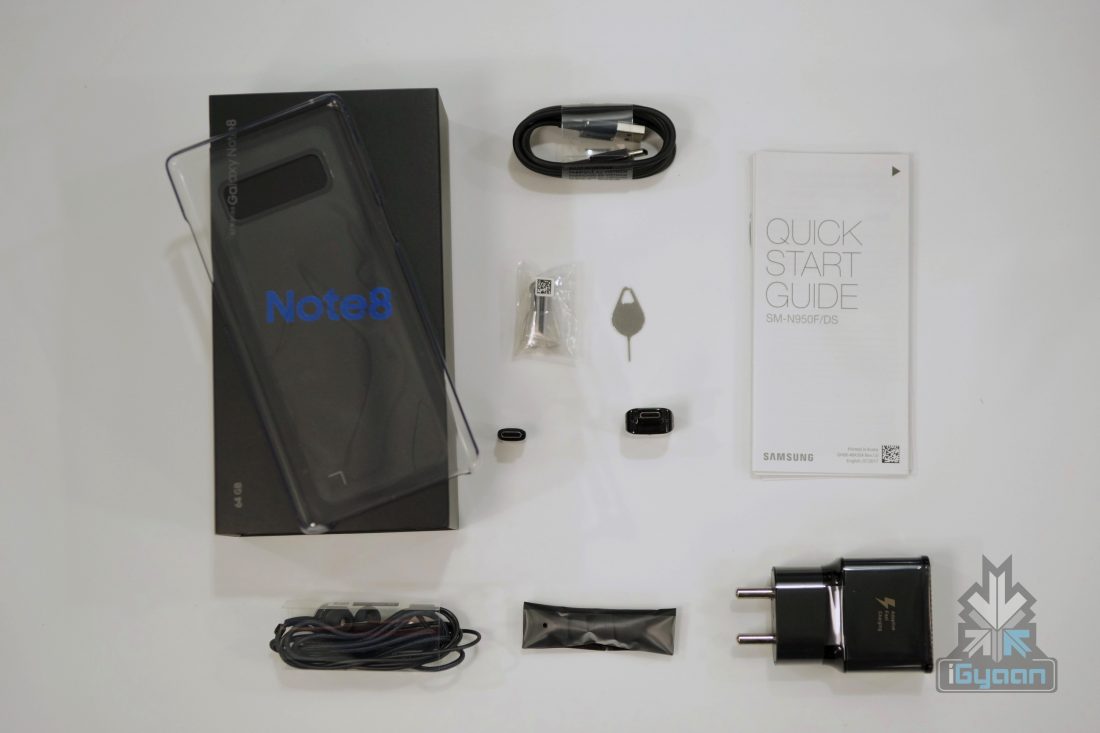
    In a signature Samsung fashion, the box of the Galaxy Note8 has ‘Note8’ embossed on the box in a blue colour, with the storage variant written at the side of it. An over view of the specifications can be found on the back of the box. Inside You get the following:


    • The Samsung Galaxy Note8
    • S Pen
    • Tweezer And Extra Pen Tips
    • USB Power Adaptor
    • USB Type C Cable
    • Micro USB Connector
    • USB Connector (USB Type C)
    • AKG Earphones
    • Sim Ejection Tool
    • Documentation
    • Protective Case (India Only)

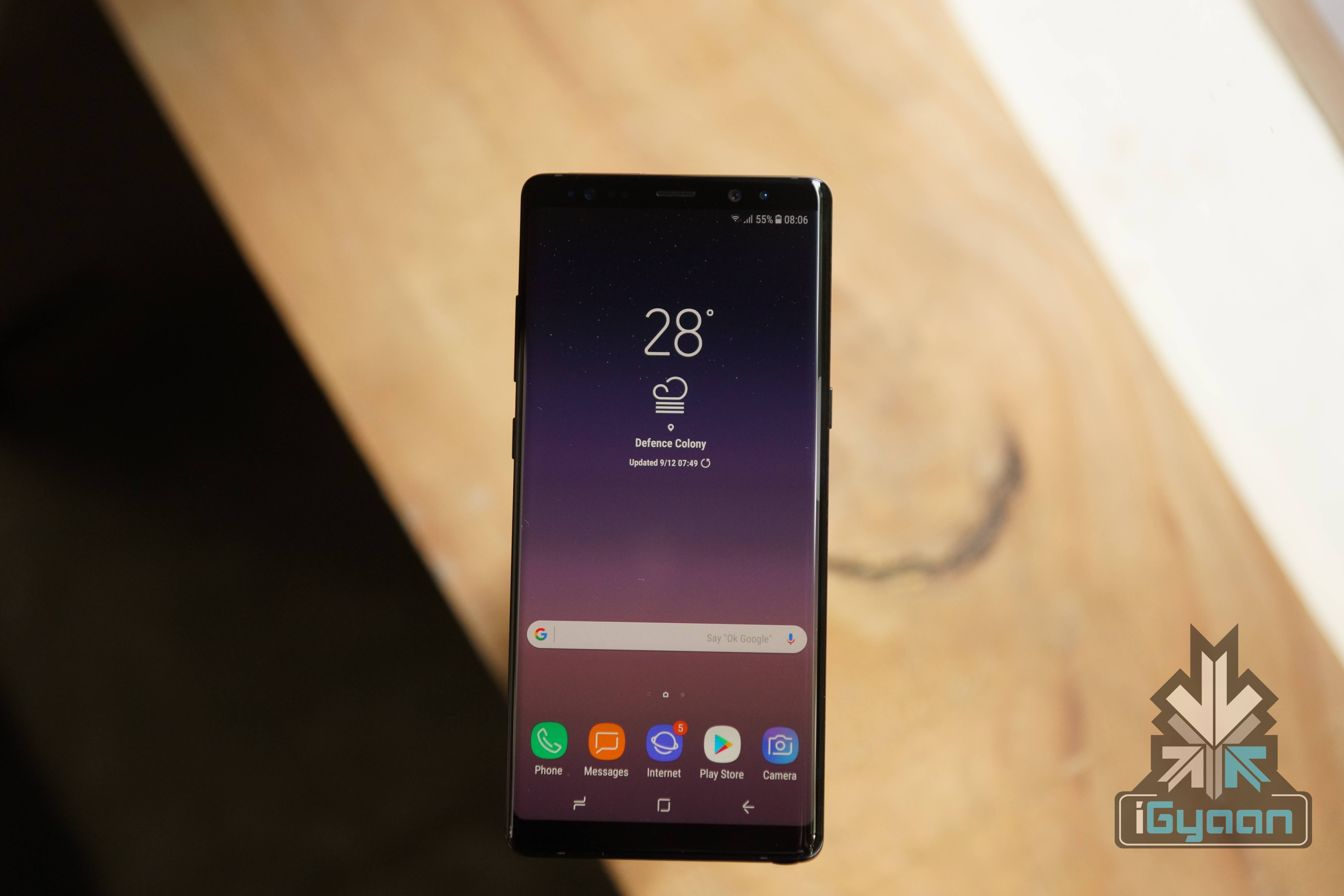
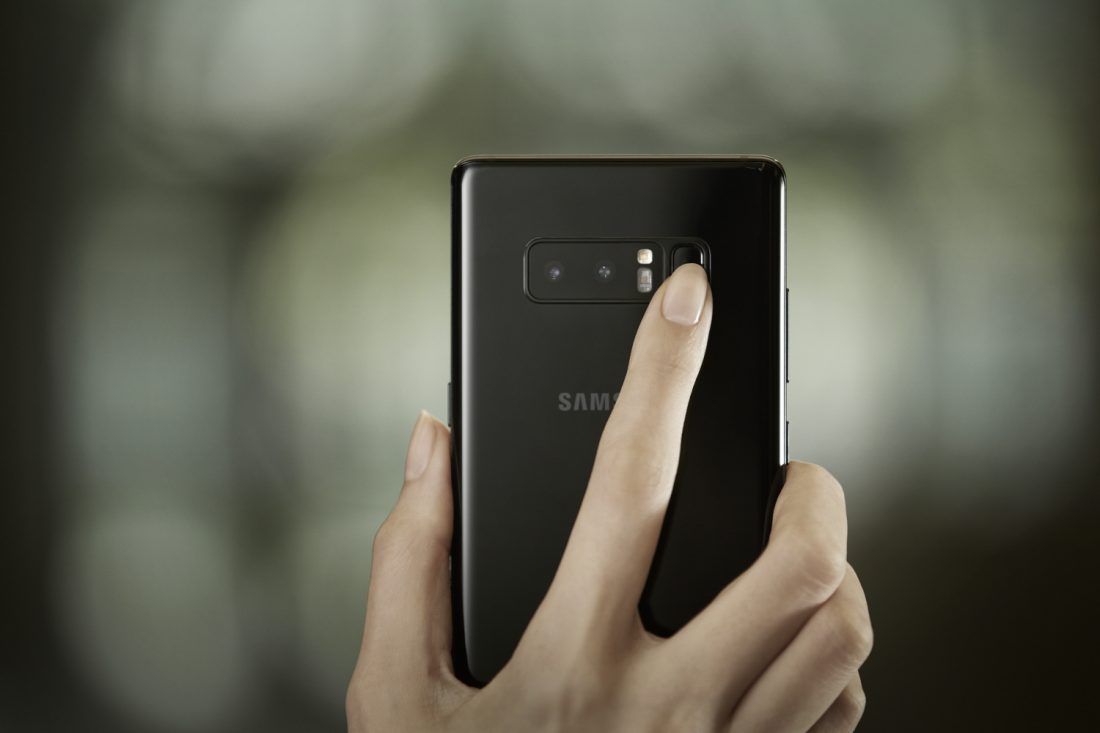
    We have the Midnight Black colour variant and the phone has been lauched in Maple Gold colour as well. The Samsung Galaxy Note8 is the first Note device to launch in India after the Galaxy Note5, but, the design of the Note8 is more reminiscent of the Galaxy S8 and S8+. The device retains most of the design elements of the Galaxy S8 and S8+ with Corning Gorilla Glass 5 on the front and back and a metal frame around the edges. On the front is also a 6.3 inch 2960 x 1440 px Super AMOLED infinity display with minimal bezels on the top and bottom of the phone. The aspect ratio of the phone is 18.5:9, which is the same as the Galaxy S8 and S8+. The fingerprint sensor as well is still placed at the back of the phone right next to the dual-cameras. The edges of the device are more squared off, which is a signature design aspect of the Note series.

    Powering the device is a 3300 mAh battery which is smaller than the 3500 mAh battery found on the Galaxy Note7 with wireless charging capabilities, and runs Android Nougat 7.1.1 with Samsung’s custom skin on top. The device has the Exynos 8895 chipset, 2.3GHz Quad-Core (Custom CPU) + 1.7GHz Quad-Core (Cortex-A53) processor, 6GB of RAM and 128GB onboard storage, which is expandable up to 256GB via microSD card. The graphics are handled by the Mali-G71 MP20 GPU. The Galaxy Note8 and the S Pen are both IP68 certified water and dust resistant.

    The new Note8 has a 12MP dual-camera setup, one of which has a wide lens and the other a telephoto. The telephoto lens allows a user to zoom in losslessly for an up to 2x magnification. The use of dual camera allows for the ability to blur out the background for professional looking bokeh effect shots, something that seems to be common in smartphones in 2017. This is much like effects seen on past dual camera phones like the iPhone 7 Plus to the OnePlus 5 and the Xiaomi Mi A1.


    The Samsung Galaxy Note8 also records 4K videos at 30 FPS along with high-speed video at a lower resolution. The front camera has an 8MP sensor with an f/1.7 aperture and also records 4K UHD videos at 30 FPS.

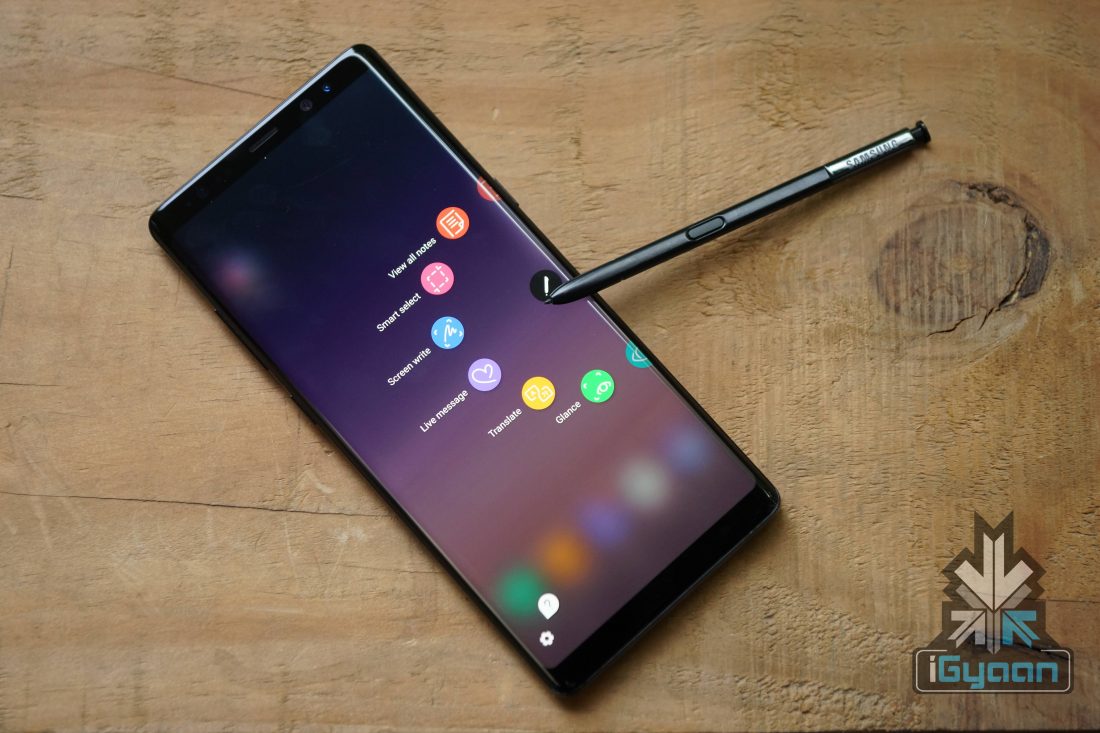
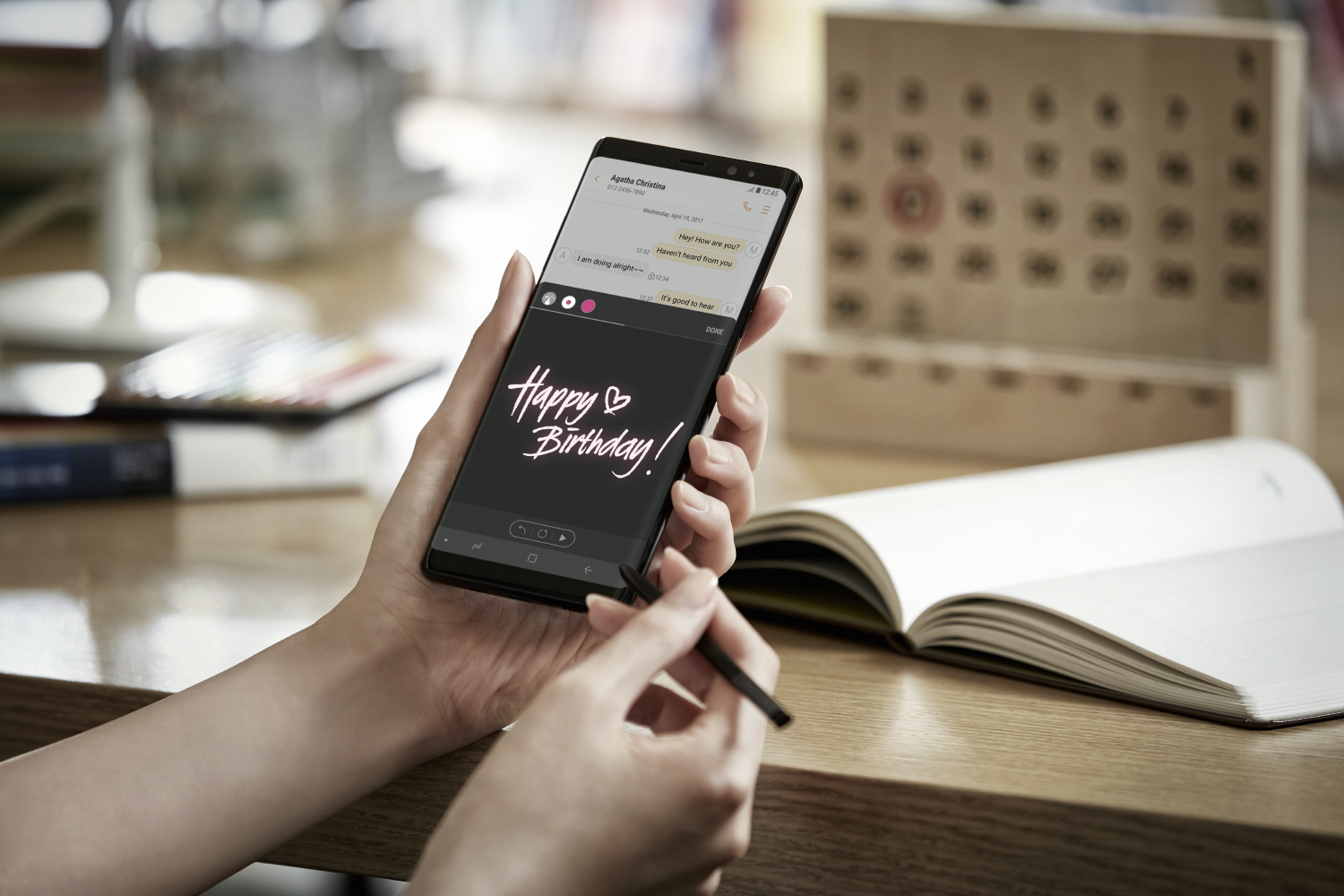
    The new S Pen has a list of new features that make the Note8 exciting, especially for previous Note device owners. The new live message allows you to scribble a message and then save the animation as a Gif file. This can then be shared with anyone using any app that supports Gif files and is not restricted to Samsung devices. The Pen glance feature and snap window are some other interesting things that we have detailed in our unboxing video below.

    For more details on the launch offers, Click Here.

    Watch our unboxing of the Samsung Galaxy Note8 here

  • Samsung Galaxy Note8 Launched In India For Rs 67900

    Samsung Galaxy Note8 Launched In India For Rs 67900

    Samsung has launched the Galaxy Note8 in India at a price of Rs. 67900 for the 64GB onboard storage variant. The Galaxy Note8 is the first note series smartphone to sell in India in always two years, since the launch of the Note5. While Samsung had taken registration for the Note7 last year, the company never launched the phone in India due to its global recall. The Galaxy Note8 is the third Samsung flagship smartphone launched in the country in 2017 after the Galaxy S8 and S8+ were launched earlier in the year. Despite the late launch and the success of the Galaxy S8 and S+, over 250,000 people registered on Samsung India’s official website to buy the phone.

    The Galaxy Note8 has a 6.3 inch 2960 x 1440 px Super AMOLED display with an 18.5:9 aspect ratio, which is the same aspect ratio found on the Galaxy S8 and S8+. The Galaxy Note8 retains the design language of the Galaxy S8 and S8+ with an all glass body and a metal frame and an awkwardly placed fingerprint sensor at the back. The Note8 also retains the dedicated Bixby button and Samsung has announced that Bixby Voice will now be available in India. The differentiating aspect of the design is the cornered edges, which has become a signature of the Note series. Powering the device is a 3300 mAh battery which is smaller than the 3500 mAh battery found on the Galaxy Note7 with wireless charging capabilities, and runs Android Nougat 7.1.1 with Samsung’s custom skin on top. The device has the Exynos 8895 chipset, 2.3GHz Quad-Core (Custom CPU) + 1.7GHz Quad-Core (Cortex-A53) processor, 6GB of RAM and 128GB onboard storage, which is expandable up to 256GB via microSD card. The graphics are handled by the Mali-G71 MP20 GPU. The Galaxy Note8 and the S Pen are both IP68 certified water and dust resistant and will be available in Midnight Black and Maple Gold colour variants.

    The Galaxy Note8 is also the first Samsung smartphone to feature a dual-camera setup. The new Note8 has a 12MP dual-camera setup, one of which has a wide lens and the other a telephoto. The telephoto lens allows a user to zoom in losslessly for an up to 2x magnification. The use of dual camera allows for the ability to blur out the background for professional looking bokeh effect shots, something that seems to be common in smartphones in 2017. The Galaxy Note8, Samsung claims, is the first smartphone to feature OIS in both the cameras at the back. This is much like effects seen on past dual camera phones like the iPhone 7 Plus to the OnePlus 5 and the Xiaomi Mi A1. The Samsung Galaxy Note8 also records 4K videos at 30 FPS along with high-speed video at a lower resolution. The front camera has an 8MP sensor with an f/1.7 aperture and also records 4K UHD videos at 30 FPS.

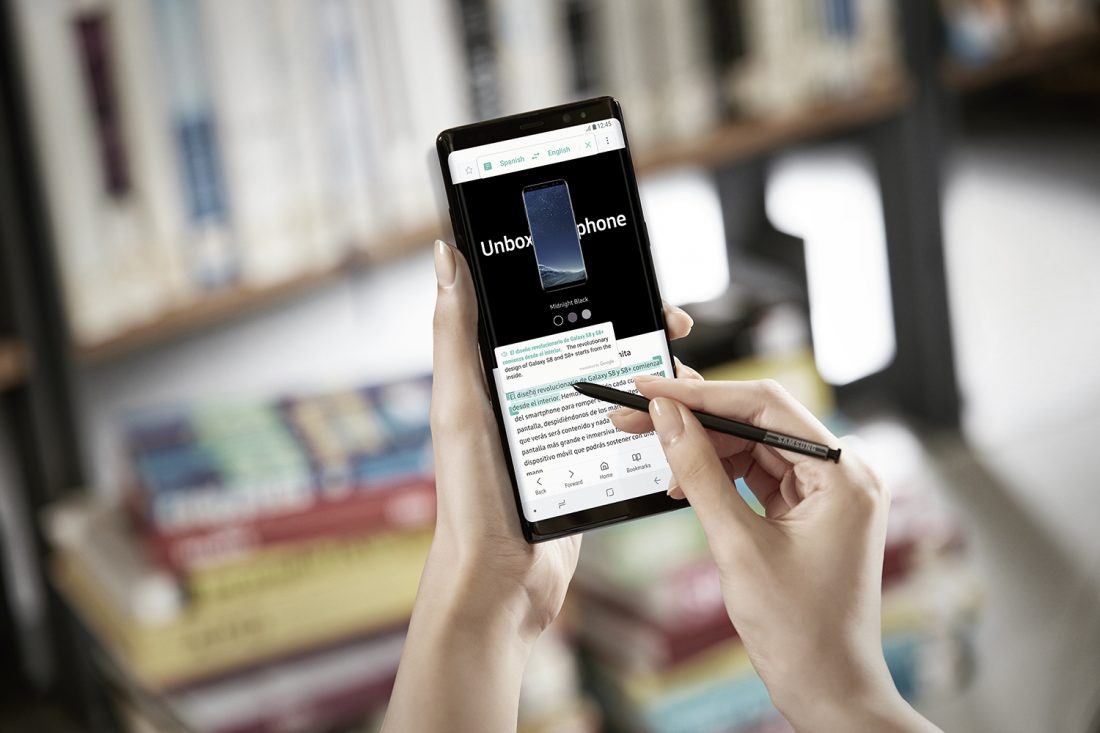
    Over the years, the Note series has grown from a more business buyers-centric lineup into a broader audience targeted lineup. The large screen, premium specifications and build quality have made the Note devices ideal for media consumption. The Galaxy Note8 is also the only smartphone in 2017 that sells with a stylus as a bundle. The S pen is not an ordinary stylus and has a lot of features that make it unique. Smart Select, which allows you to easily select, clip and copy the content that you like. A new addition to the Note8 is the ability to send .gif messages drawn using the S Pen, which will playback to the recipient in the way you draw them, much like those seen on iMessage. The Screen Off Memo, allows users to quickly jot down important notes and details, when the phone is locked with the screen off, this is activated automatically when the pen is removed from the Note8. The S Pen is closely linked to the Note8, so the phone will remind you to pick if your S Pen if you leave it behind. The Note8 also activates a S Pen specific menu each time you pull the Pen from the device.

    The Samsung Galaxy Note8 will be available from 21st September on Amazon India and Samsung India’s official website. The phone will be available offline at select retail outlets later in September. Samsung has also introduced a Note upgrade program wherein current Galaxy Note users can upgrade to the Galaxy Note8 at a discounted price. HDFC credit card users will also get Rs 4000 cashback on pre-orders. Samsung has tamed up with Reliance Jio to offer up to 448GB of extra 4G data over 8 months to Galaxy Note8 users.

    Watch our Unboxing of the Samsung Galaxy Note8

  • Samsung Galaxy Note8 Has Received 250,000 Registrations In India

    Samsung Galaxy Note8 Has Received 250,000 Registrations In India

    The Samsung Galaxy Note8 has already received record-breaking pre-orders in the United States and South Korea. In India, Samsung’s new flagship device, the Galaxy Note8 will launch on September 12th and according to the company over 250,000 people have already registered on Samsung India’s official website.

    Samsung India’s website accepts registration by collecting contact information. This registration does not require any financial transaction and is different from a pre-order. In comparison the Galaxy S8 and S8+ had received 150,000 Pre-orders (not registrations) when they were launched in India earlier this year. How many of the 2.5 lac people, already registered with Samsung,will buy the phone is yet unknown. The Galaxy Note8 is the first note series smartphone to sell in India in always two years, since the launch of the Note5. While Samsung had taken registration for the Note7 last year, the company never launched the phone in India due to its global recall. The high number of Note8 registrations is also said to be due to the large number of Note loyalist waiting to upgrade from their dated Note5 devices.  Samsung will bundle the first few orders of the Galaxy Note8 with its DeX dock and data offers to excite the customer, and also to introduce them to the new DeX dock which is an upgraded version of the DeX dock launched with the Galaxy S8 and S8+. The Note8 also features the Bixby assistant, with a dedicated button like the Galaxy S8 and S8+, however, Bixby voice is not available in India yet.

    Samsung’s Note lineup has always been unique, and is presently the only smartphone which sells with a stylus as a bundle. The Pen was designed and utilised in the Note series by the South Korean manufacturer because the company wanted to make and sell a phone to the business buyer. However, after several launches of the Note series of phones, the consumer audience has accepted and appreciated the Note phones as a flagship, due to the design and materials used in the phone along with some of the features it offers.

    The Note8 just like every Note phone before it includes a S Pen. But, the S pen is not an ordinary stylus and has a lot of features that make it unique. Smart Select, which allows you to easily select, clip and copy the content that you like. A new addition to the Note8 is the ability to send .gif messages drawn using the S Pen, which will playback to the recipient in the way you draw them, much like those seen on iMessage. The Screen Off Memo, allows users to quickly jot down important notes and details, when the phone is locked with the screen off, this is activated automatically when the pen is removed from the Note8. The S Pen is closely linked to the Note8, so the phone will remind you to pick if your S Pen if you leave it behind. The Note8 also activates a S Pen specific menu each time you pull the Pen from the device. These features mixed with the iP68 certification of both the S-pen and Note8 can draw the consumers toward shelling out the extra money Samsung is asking for the Note8.

    Samsung has a lot riding on the Galaxy Note8, especially considering the bad press the company got from the Note7 last year. The new note has a 12MP dual-camera setup, one of which has a wide lens and the other a telephoto. The telephoto lens allows a user to zoom in loss-lessly for an upto 2x magnification. The use of dual camera allows for the ability to blur out the background for professional looking bokeh effect shots, something that seems to be common in smartphones in 2017. This is much like effects seen on past dual camera phones all the way from the iPhone 7 Plus to the new Mi Ai with devices from companies like Huawei and OnePlus offing similar functionality. The Samsung Galaxy Note8 also records 4K videos at 30 FPS along with high speed video at a lower resolution. The front camera has an 8MP sensor with an f/1.7 aperture and also records 4K UHD videos at 30 FPS.

    The Note8 is expected to launch in India in only one of the three storage variants available globally, the phone will subsequently go on sale after the September 12th launch.  With a high expected launch price (Rs. 74999) and not a lot of unique differences in the new Samsung Galaxy Note 8, buyers may opt for the Samsung Galaxy S8+ with identical features (sans S Pen)  and a much lower price of Rs. 65,999.

  • Samsung Galaxy Note8 Breaks Pre-Order Records In USA And South Korea

    Samsung Galaxy Note8 Breaks Pre-Order Records In USA And South Korea

    The August 23 launch of Samsung Galaxy Note8 was one of the most anticipated events of the year and Samsung unveiled a worthy successor to the Galaxy Note7. The South Korean smartphone maker announced that customers have pre-ordered the Galaxy Note8 more than any other Note device ever sold by the company.

    The steep price of USD 930 had cast a shadow of doubt over the success of the phone, but, Samsung tried to justify that price by bundling a DeX dock and Samsung Gear products for the first few pre-orders. Samsung also announced heavy discounts for previous owners of Galaxy Note7 who traded in their current devices. There were reports that the Galaxy Note8 in South Korea has received 395,000 pre-orders, which is already much more than the number for the Galaxy Note7 last year.

    The Samsung Galaxy Note8 has a 6.3 inch 2960 x 1440 px Super AMOLED display with an 18.5:9 aspect ratio, similar to the Galaxy S8 and S8+. The phone runs Android 7.1.1 with Samsung’s custom UI on top and is powered by 3,300 mAh battery with QuckCharge 3.0 capabilities. Under the hood, the Galaxy Note8, for the Indian market has the Exynos 8895 chipset, 2.3GHz Quad-Core (Custom CPU)+1.7GHz Quad-Core (Cortex-A53) processor, Mali-G71 MP20 GPU, 6GB RAM and 64GB/128GB/256GB storage options. The onboard storage can be expanded up to 256GB via microSD card. In a disappointing move, Samsung retained the awkward placement of the fingerprint sensor right next to the dual cameras at the back.

    Talking about cameras, the Galaxy Note 8 is the first phone from Samsung to feature dual-cameras with a 12MP dual-camera setup, the primary camera has a wide-angle 12MP lens with an f/1.7 aperture and the secondary camera has a 12MP telephoto lens with an f/2.4 aperture. The telephoto lens enables a 2X lossless optical zoom and has features such as the Bokeh effect, much like the iPhone 7 Plus. The dual-cameras are capable of capturing 4K videos at 30 FPS On the front is an 8MP camera with an f/1.7 aperture and captures 4K videos at 30 FPS.

    Samsung will launch the Galaxy Note8 in India on September 12 for a reported price of Rs 74,999 and the pre-orders have already started on its official website.

  • Samsung Galaxy Note8 To Be Bundled with DeX Dock and 100GB Data in India

    Samsung Galaxy Note8 To Be Bundled with DeX Dock and 100GB Data in India

    Samsung is trying to get the business buyers excited with the upcoming Note8, since they are going to be a big chunk of the prospective owners with a massive Rs. 74999 price tag (rumored). Samsung will bundle a DeX Dock with the Galaxy Note 8 Early orders, a value of almost Rs. 10,000, plus every Note8 buyer will get 100GB of data with Airtel and/or Jio according to our sources. The Samsung Galaxy Note8 will launch in about a week in India. Which is the Same day as the official announcement of the iPhone 8. Samsung really wants to push its DeX hub to potential Note 8 buyers. The first iteration of the DeX didn’t do well, and with revisions Samsung claims that the DeX is faster and has the potential to replace Desktop computing for most people, although we wouldn’t bet on that.

    Much like the Bixby button, which doesn’t have the voice capabilities in India yet, the Dex is something which will never replace a real PC users machine. And while Samsung may be aware of that, Business capabilities of the Note8 are key selling points, especially in a price conscious market like India.

    These offers may change just before launch and we will keep you posted on developments. Samsung will launch the Note 8 in two colors in India along with most of the accessories and covers for the device at launch.

    While the Note8 is one of Samsung’s best devices, the Samsung Galaxy S8 Plus is 90% similar to the Note 8 with a price which is Rs. 10000 lower than that of the Note8 ( 128GB S8 Plus is now available for Rs. 65900 after Rs. 9000 discount)


iGyaan Network
Privacy Overview

This website uses cookies so that we can provide you with the best user experience possible. Cookie information is stored in your browser and performs functions such as recognising you when you return to our website and helping our team to understand which sections of the website you find most interesting and useful.