Samsung has reportedly rolled out the Android 4.4.2 KitKat for Galaxy Note 3 Neo In India. The smartphone was launched with Android 4.3 Jelly Bean, back in February. The update includes the usual KitKat uplifts like performance enhancements, cloud-print support, UI improvements, updated Hangouts app, improved downloads app and more. 495 MB in size,the update will also come with Samsung-specific customisations like lock-screen improvements, new launcher settings, improved stability and more.
The Android 4.4.2 KitKat update is reported to be carrying build number N750XXUCNG6 and rolled-out over-the-air and via Samsung Kies update. Galaxy Note 3 Neo (SM-N750) users can also check for an update by tapping on the Settings> About Phone> Software Update. The update includes a camera option in the lock screen and shows album art while playing music. The status bar strip which contains icons like battery, is now coloured white, while notifications drawer icons have changed as well.
A document leaked last month has reportedly shown the KitKat 4.2 update schedule for 5 Samsung smartphones. The handsets that are more likely to get the update were the Samsung Galaxy S4 Mini, Galaxy Grand 2 Duos, Galaxy Mega 5.8, Galaxy Mega 6.3, and Galaxy Note 3 Neo. The leaked document had suggested that Samsung has finished testing the Android 4.4.2 KitKat OS for these devices.
The Galaxy Note 3 Neo sports a 5.5-inch Super AMOLED HD display with a resolution of 1280 x 720 pixels. The device is powered by a hexa-core processor dual-core 1.7GHz Cortex A15 + quad-core 1.3GHz Cortex A7. It is packed with a 2 GB of RAM and 16 GB of inbuilt storage that is expandable up to 64 GB. On the imaging front, it is equipped with an 8 MP primary camera with LED flash and BSI sensor, and a 2 MP secondary camera.
The Samsung Galaxy Note 3 Neo has preloaded apps like ChatON, WatchON, Screen Mirroring, S Voice, S Health, Group Play, Smart Scroll, Smart Pause, Air View, Story Album and S Translator and more. The S Pen comes with Air Command and Easy Clip feature, and also supports multi-window and S Note.
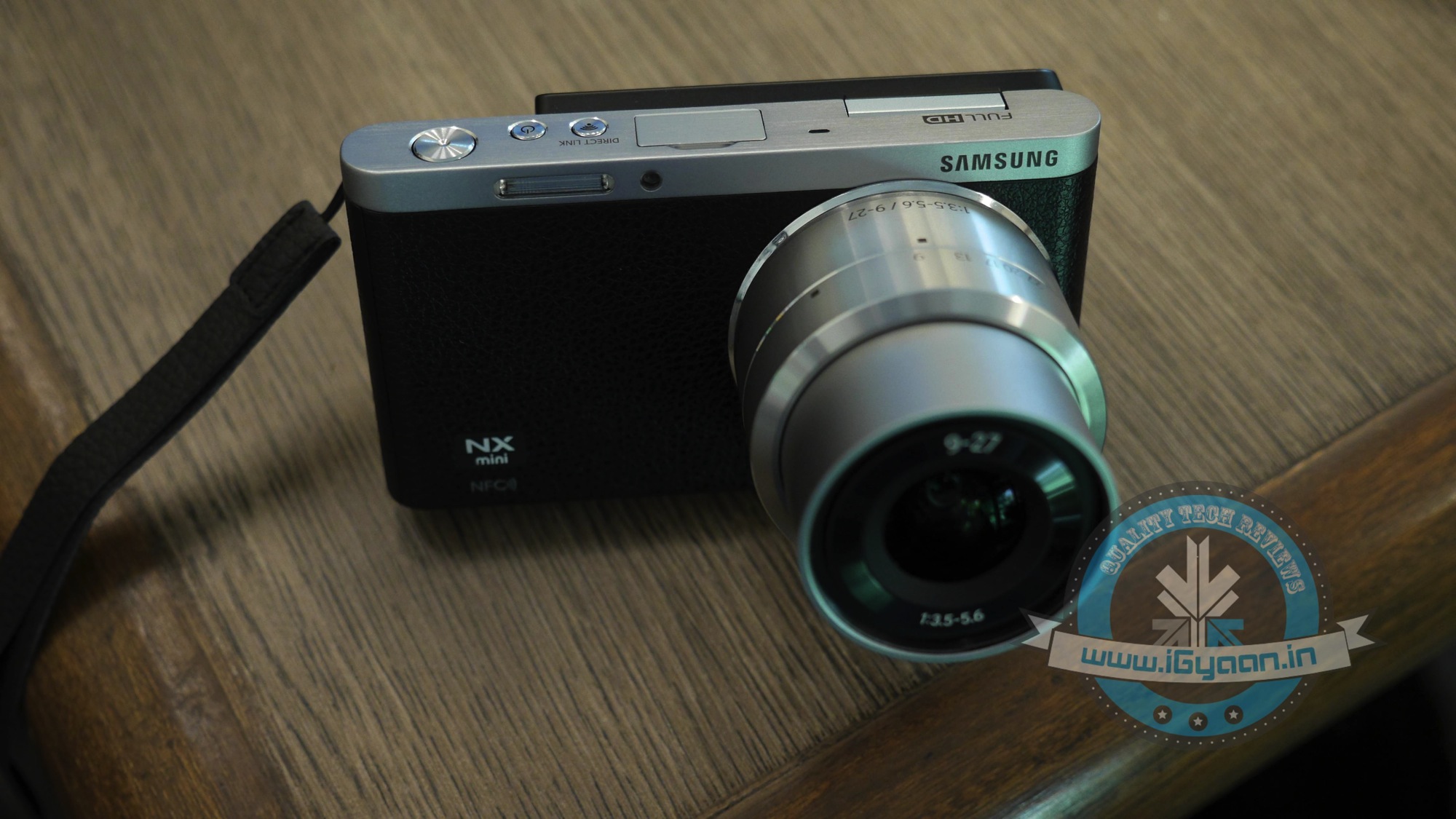
There is always some skepticism when a name of a camera is prefixed with ‘mini’. We have seen in the past that many manufacturers failed to deliver a great camera in a small package. The Samsung NX mini is targeted towards young amateur photographers who focus on style and selfies above all.
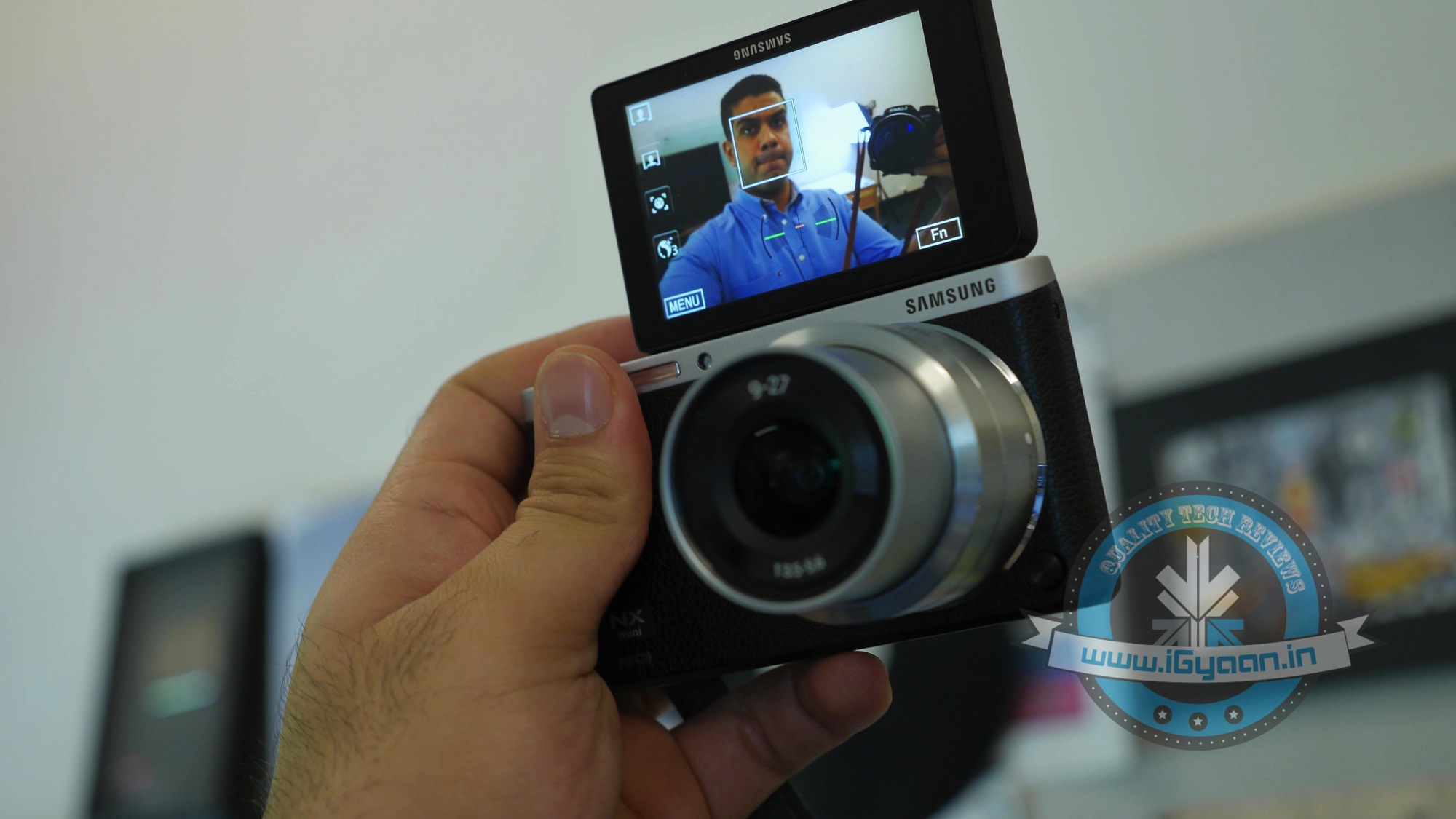
Well, this camera is not yet launched in India, but it is going to be coming soon with an exclusive partnership with Amazon.in priced at less than Rs. 30,000. NX mini is undoubtedly the slimmest interchangeable-lens camera available in the market. It does have a flip-up touchscreen and a cool selfie mode that lets you click a selfie by just blinking. You also get Adobe Photoshop Lightroom for free inside the box; which is a great software for aspiring photographers.
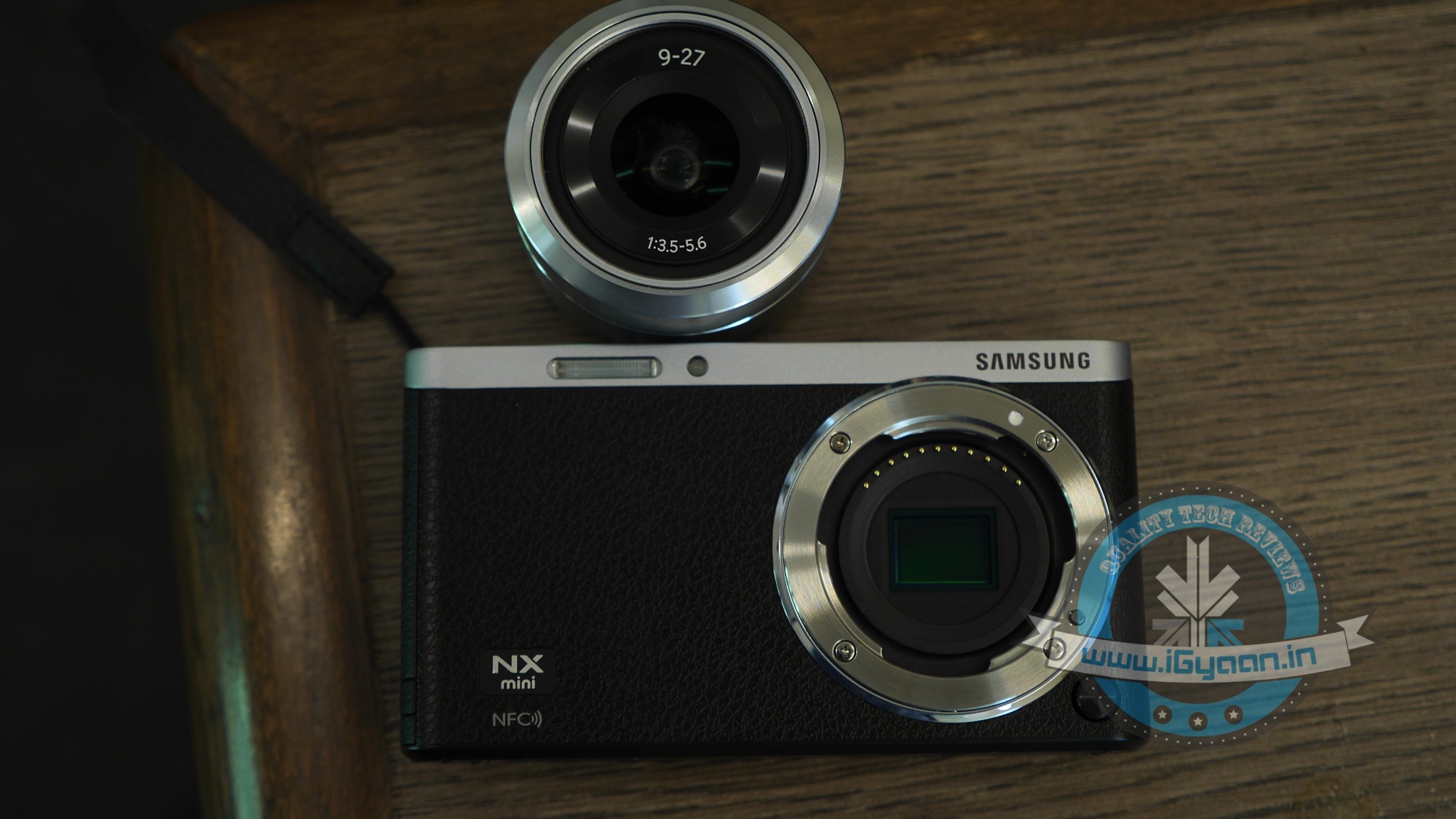
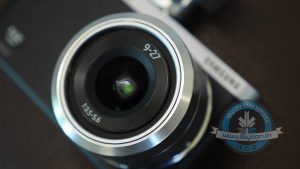
The biggest selling point here is its super-slim, lightweight body that you can slip into a handbag, or even a pocket. Without the lens attached, the NX mini is no larger than many compact point-and-shoots, but when you stick on the 9-27mm (24.3mm, 35mm equivalent) f/3.5 kit lens, it becomes little thick to carry around. There’s a 1-inch, 20.5-megapixel CMOS sensor that is identical in size to what you’ll get with very high-end compacts. However, quite smaller than the APS-C sensor manufacturers included with mirrorless cameras like the Alpha 6000 or the NX30.
The camera comes with a 16 GB micro-SD card and 2330mAh battery, which means that the camera will last for good 300 shots approximately. The camera is NFC-enabled and can be easily connected with NFC-enabled smartphones. The 20.5 MP BSI sensor, the company claims, is made by them. We’re uncertain about the authenticity of that statement, since these kind of sensors are made by Sony only. The lens included in the box is a 9mm (24.3mm, 35mm equivalent) f/3.5 kit lens and is fairly good for this price range.
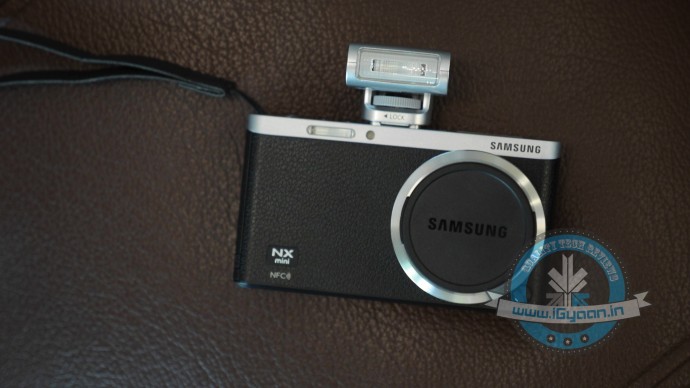
On the top of the camera, you have a microphone pinhole, and hot-shoe sort of mount for Samsung external flash that comes with the package, Wi-Fi button, power on/off button and the shutter button. All of these buttons are seem to be made of metal and brushed aluminium, which makes it a high-quality premium looking device.
The camera supports a set of lenses that are called NX-mini lens and are completely different from regular NX lenses. You can use other lenses from Samsung if you have $150 adapter, which is a third party adapter. However, we heard that Samsung is also working on an in-house adapter.
Once you turn on the camera, you have to further twist the lens to unlock it. The shutter release is nearly full-size, and once you launch the menu, you can adjust many settings simply by tapping the 3-inch, 480 x 320 touchscreen, which also flips up 180 degrees for self-portraits, or at any angle in between for shots below eye-level, or overhead if you flip the camera upside-down.
As for the UI, there’s nothing out of the ordinary here. You can control just about everything using the touchscreen, though you can also use the four-way controller on the side to navigate. The menu interface includes all the general options and isnothing new. You get Auto share, ISO setting, image quality, etc. You also get a picture wizard which changes the setting according to the scene.
Its Wi-Fi mode lets you access a variety of wireless sharing options. MobileLink can be used to send photos from the camera to a smartphone or tablet, or Remote Viewfinder, which miraculously lets you access all of the NX mini’s shooting modes, including manual, from another device.
The Samsung NX mini gives access to Samsung Home Monitor, which requires its smartphone app and lets you use the camera to keep an eye on a child, for example, assuming your camera and phone are connected to the same WiFi network.
The camera fairly fast to focus and click the picture. The capacitative touchscreen allows you zoom in and out extremely easily. Apart from the fact that you don’t have a full manual control during video shooting mode, and its inability to use different lenses, the camera itself is very powerful. The look and the feel is also quite amazing.
The price is expected to be around Rs. 27,000 for 9-27mm lens package and Rs. 24,000 for 9mm lens package when launched exclusively on Amazon.in. This is not an official price but if the pricing remains the same, this device will a perfect starter camera for amateurs or a secondary camera for people who use DSLRs on the daily basis.
Misery strikes at the worst possible time. Samsung executives responsible for Note 4 release are going to have a terrible day. All the prominent specs for the upcoming Samsung Galaxy Note 4 have been leaked online and boy, are they impressive!
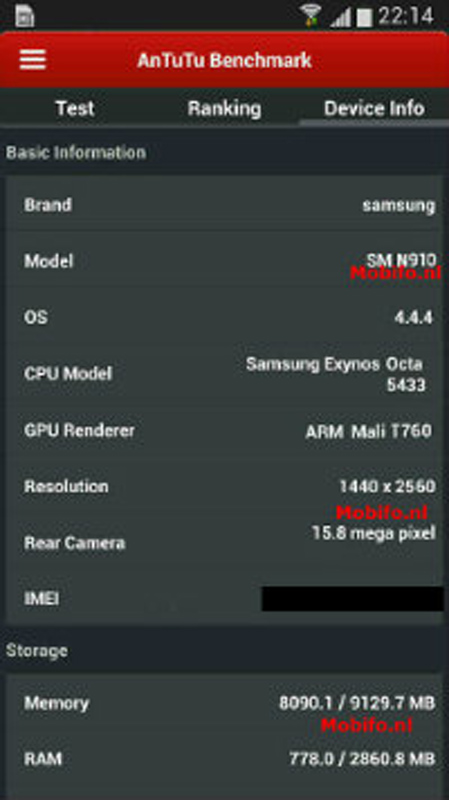
The leak happened on benchmarks app AnTuTu. First of all, the biggest expectation from Samsung was the introduction of a 2K screen on the Note 4 and Samsung didn’t disappoint. The phablet will sport a massive 5.7 inch, 1440 x 2560 QHD Super AMOLED display.
The device is expected to run Android KitKat 4.4.4 right out of the box. The leaked Antutu device has an Exynos 5433 octa core processor which comes with an updated Mali GPU. If Samsung follows its usual plan of action, one can expect a Snapdragon 805 variant to come in select markets.
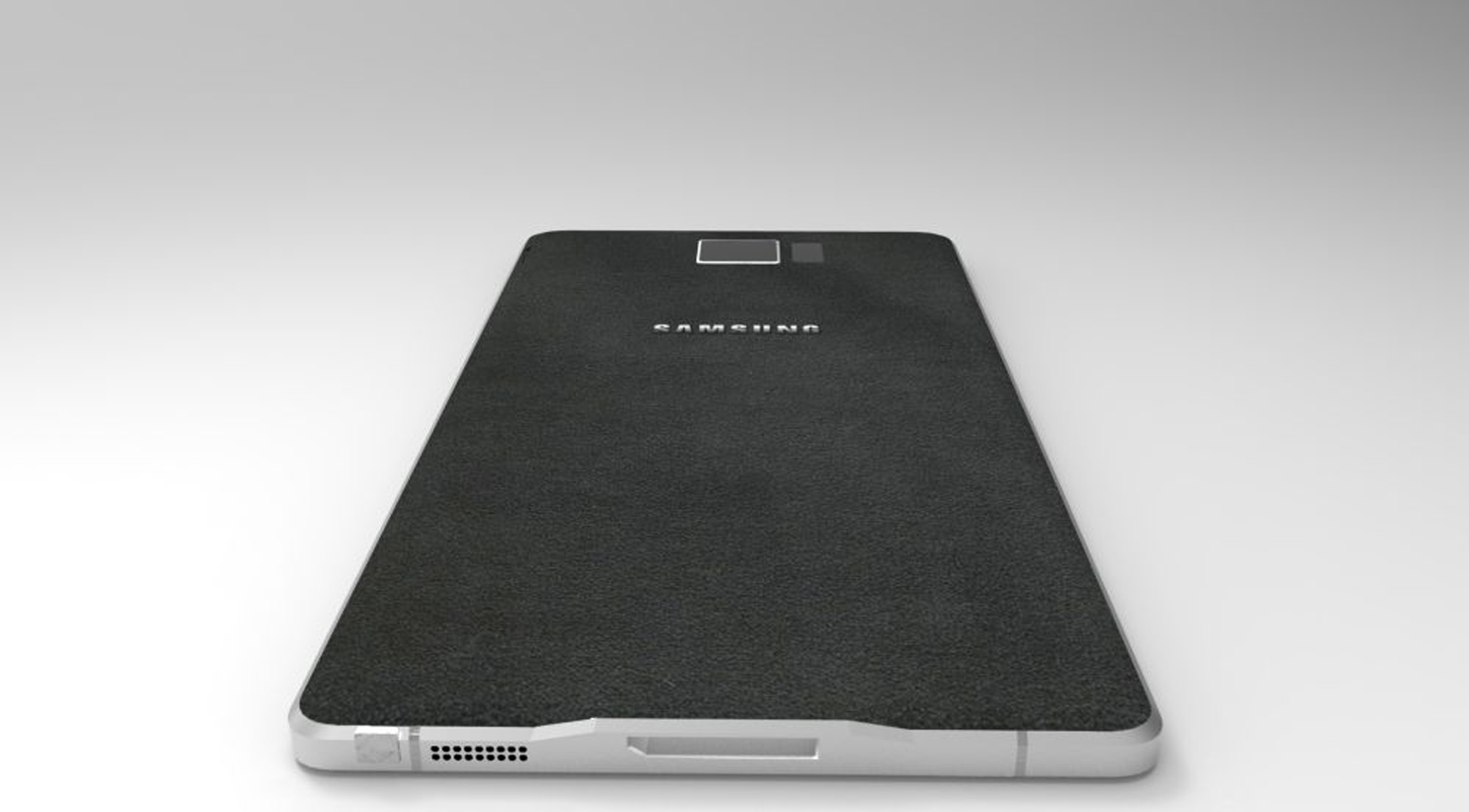
The Device is also expected to take a departure from the faux leather back panel.
The camera on the device is a 16 MP shooter with optical image stabilization. It also has features like dual shot and simultaneous HD video and image recording. The front camera on the device is 2 MP selfie camera capable of shooting 1080p at 30 FPS.
Considering the massive price point of the Note 4, the company can easily provide a 32 GB and 64 GB variants and the icing on the cake will be expandable storage upto 128 GB, as per the specifications from GSMArena, this seems to be true.
The Note 4, officially will be unveiled September 3rd at an event scheduled to take place simultaneously in Berlin, Beijing, and New York.
India being a fast growing smartphone market has become the centre of smartphone wars. Apple and Samsung have been trying hard to keep up with players such as Micromax, Lava, Karbon and the new entrant Xiaomi.
The Indian handset market is currently led by Samsung with Micromax at No. 2, according to an International Data Corporation (IDC) report for India’s mobile market in Q2. The market could experience a shuffle in the rankings amongst the top five vendors in coming quarters, as Chinese and local device makers aggressively tap the entry level segment of smartphones.
The digits in the IDC report showed that in the overall mobile market, Samsung had a 17 per cent share, while Micromax had a 14 per cent share, ahead of Nokia which was the previous number two and which now has a mere 10 percent share. Karbon and Lava are at number four and five respectively and rest is acquired by other phone makers.
In smartphones, Samsung ha held a 29% share, which however was a sharp fall from the 35% it held in the January-March period, as aggressive competitors such as Micromax, Lava and Motorola ate into its share. Micromax remained in second place with 18% share, up from 15% in the previous quarter.
“While Samsung has held on to its leadership position in the market, it is noteworthy that Micromax is growing faster. Samsung needs to continue to address the low-end of the market aggressively, and also needs a blockbuster product at the high end to regain momentum,” said Jaideep Mehta, vice president and general manager, South Asia, IDC.
At the start of the month, another research by Hong Kong-based Counterpoint Technology Market Research showed that, in the April-June period, Micromax’s share of the overall handset market stood at 16.6 per cent, while Samsung’s was 14.4 per cent. The mismatch in numbers may be the result of use different methodology. IDC said it collects data from various sources, including vendors and channels.
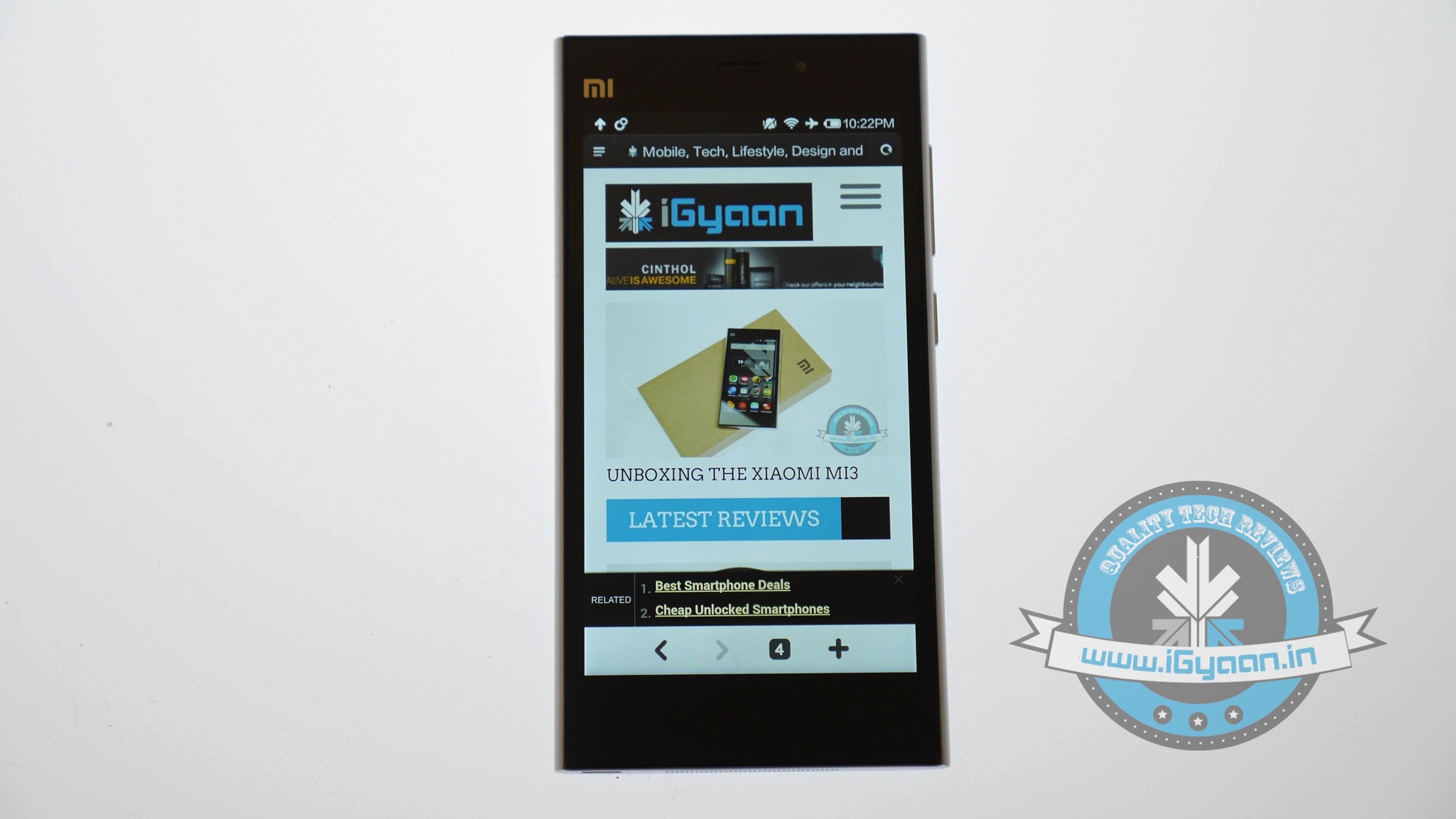
The report also pointed out that with the entrance of Chinese vendors and Mozilla in the smartphone category at $50 level, the low-end segment of the smartphone market will become crucial in the coming quarters. It will be really interesting to see what news Q3 and Q4 will bring out in the Indian mobile and smartphone market with the entry of players like Xiaomi, Oppo. Xiaomi in particular has created a stir in market with the launch of a sole device, the samsung Xiaomi Mi3 .
Samsung has more or less dominated the smartphone market in the past couple of years. After a short, yet fruitful reign of the Cupertino based Apple Inc. and their iPhone, Samsung took the pole position and has not wanted to let go ever since then.
With the power of 100% component control, in-house manufacturing and software R&D, Samsung led the rat race thanks to all its strengths. But, just like every other leader in the past, Samsung took the threat of competition lightly. So sure of their position and their loyalties, the Korean manufacturer failed to realise the need of the modern day man.
2014 may have seen less of it, but up until last year it was impossible to go ten days without an announcement from Samsung and that too just the mobile division. With their consumer electronics and home appliances doing their bit separately. Samsung wanted to be present, and today it is present in each and every price segment.
So here is a big question; why has Samsung started to dwindle, why are the consumers against the company they loved so much and what has really happened?
The answer lies in Samsung’s own flawed approach. Even though the company made sure it could tighten its ends and function like a well-oiled single operational unit, too much goodwill from within the organization led to almost zero critical feedback. Everyone in-house was busy appreciating how wonderful they are, no one telling them where they are wrong.
The Korean giant also failed to answer people’s unanimous need of better-built phones that not only performed well but were also made with the use of premium materials. Samsung failed the consumer’s demand and hope within a brand that people had only just begun to trust. Samsung never changed their design philosophy, making handset after handset to feed the familiarity of the brand.
A premium phone to create excitement in the flagship market; and then a mid-segment with similar looks and software capabilities to excite and create aspiration for those who could not afford the premium segment. Then there was the down segment shift of the same design to the lowest price point.
Not to say that this strategy didn’t work for Samsung, 2012 and 2013 alone saw an estimated 150+ launches for Samsung Mobile division, that is four times their next closest competitor and 75 times that of Apple Smartphone announcements, being the iPhone 5s and 5c.
2014 was also supposed to be a year of Samsung; many launches and many price segments and many new-magical innovations. But, things like multi-window and air gesture were not going to get attention. Hopes were pegged on a metal built handset with a 2k display, which was supposed to woo the crowd and earn the Korean company millions and millions of dollars with the Samsung Galaxy S5. But, ironically the complete opposite started to happen, the Korean giant started to lose market share and how. The company is worried, to the extent that they have reshuffled policies and opened up board rooms for strategy building. Resources are being spent, and ideas are being made within the company to rebuild the position that Samsung seems to be losing fast.
Samsung knows very well that they failed with the Samsung Galaxy S5, especially in markets like India, where they offered a sub standard and sub performance flagship, which not only quickly dropped in price but also in fan fare.
Samsung has never been a humble company; employees seem to be trained always to be arrogant and adamant about their policies, and about the position of the company. The beginning of the company itself is said to be tainted by a tale of controversy. Originally started as a trucking business in 1938, by the name of Samsung Trading Co, the company had corrupt ties with war governments trying to give an industrial strength to the country and survived through the war to become what is now a mega company.
The company’s chairman of 25 years, Lee Kun-hee resigned from Samsung in 2008 after being indicted and found guilty of embezzlement and tax evasion in Samsung’s infamous slush funds scandal. It is estimated that the company had over US $200 million in budgets for bribing prosecutors and politicians in favour of Samsung policies and making them blind towards the company’s misconduct.
But how does that play in today’s scenario? and how does that affect us in any manner?
It is speculated that Samsung has kept a stiff upper lip in India since its inception in the early days. The company is said to have deep ties with the Indian government and deeper pockets for the not so honest few in control. Samsung has often managed to bend rules in favour of their products and managing to change laws to better help the company’s growth.
However, while the Korean company was busy playing its deep rooted tactics, a new enemy was lurking in the shadows. Samsung essentially dethroned by local competition in markets they wouldn’t have imagined possible.
Micromax has always been playing catch up with Samsung, playing on the weaknesses of the company and essentially delivering a value for money prospect for the consumer who was sick of the boring design and hardware mix of Samsung. Micromax even brought unibody aluminium phones to mid and low segment markets while Samsung’s flagships continued to be made out of plastic. (we meant “Polycarbonate painted – er – plastic”)
In China on the other hand, Samsung never considered Xiaomi a threat, assuming that the company would never reach production requirements of the market. Most investment specialists and market reach firms estimated that Xiaomi would fizzle out in less than a year from inception. But just like Nokia back in the day, these people were wrong, very wrong; Xiaomi dethroned Samsung to gain not only the current position but as the leader in the Chinese market. The company has secured millions of pre-orders of their upcoming phones, the Redmi and the Mi4, ensuring them success and a tight position on the top of the chain for a few months if not years.
Xiaomi has also seen success in markets like India where they have managed to gather interest of the consumer, although largely lacking supply. The Indian market may not be that forgiving to the company if their current policy of sale of phones continues. However, this has set rolling the notion for a perfect budget phone, making companies like Samsung with red-rock strategies of selling dated products for newer markets obsolete.
The reign of Samsung is far from over, in-fact the company may as well be in a great place to play its strengths and recover market share with ease. The lack of great phones hasn’t helped the Korean manufacturer, and with their flagship of 2014 fizzling out in the market, Samsung will need new products and cut throat pricing strategy to regain their stronghold in markets like India. With players like Motorola, Xiaomi and Gionee playing catch-up in India, Samsung may have their work cut out for them.
Their previous relationships with their distribution and end retail chain are also in the swamp, and the company is having a real hard time coping with the situation. With all eyes perched on the new Note 4, Samsung may have more on the line than ever before. If the Korean smartphone maker fails to deliver in their monopolised category, they might have a tough time recovering. Samsung India plans to play a lot more in the online space, which initially was being ignored by the Korean company, and if previous examples have taught us anything, we know India is more than ready for e-commerce.
We have moved to the age of convergence to make our existence comfortable. With the evolution and digitalisation of communication, photography, and even education, we are now moving to an era where we want gadgets that not only give us comfort but also the luxuries that we never imagined.
We are listing 5 amazing gadgets that make our lives better and would make for perfect gifts:
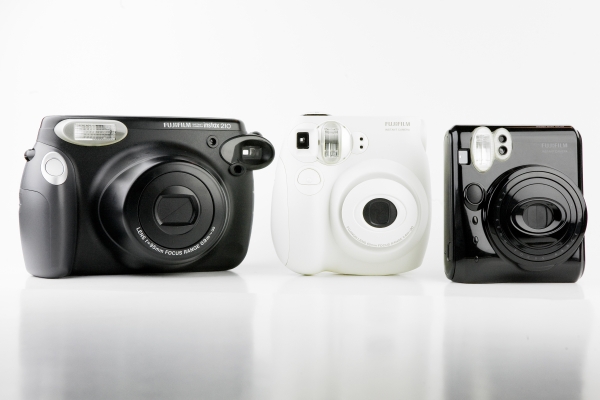
Fujifilm Instax Mini 50S
Polaroid Camera
The Instax Mini 50S combines best-in-class image quality with a small form factor that makes it easy to carry in a bag or hand without considerable discomfort. The film packs it uses are widely available online and inexpensive, costing less than Rs. 2,000 for 20 exposures. Loading the film, which is rated at ISO 800 is a child’s play. While the camera’s metering does well in the most favorable lighting conditions, you can adjust exposure brightness, which can help prevent overly dark portraits and highlight detail.
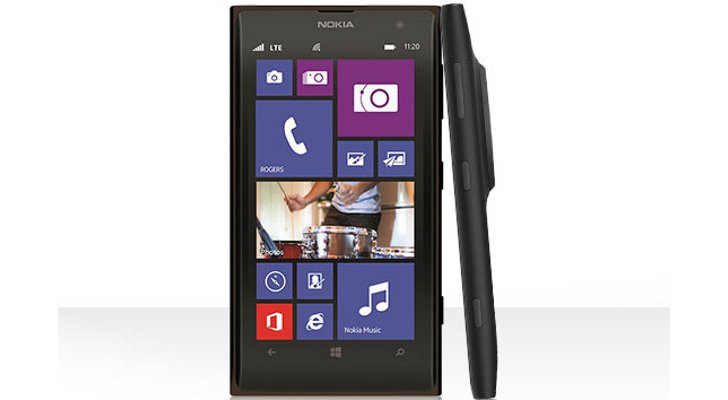
As a phone, it doesn’t bring anything revolutionary to the table, but as an imaging device, it’s quite a stunner. The Nokia Lumia 1020 is the best camera phone in the market today. Thanks to its large, 0.6″ BSI CMOS sensor and 41MP camera. You get excellent details and enough resolution for large poster size prints.
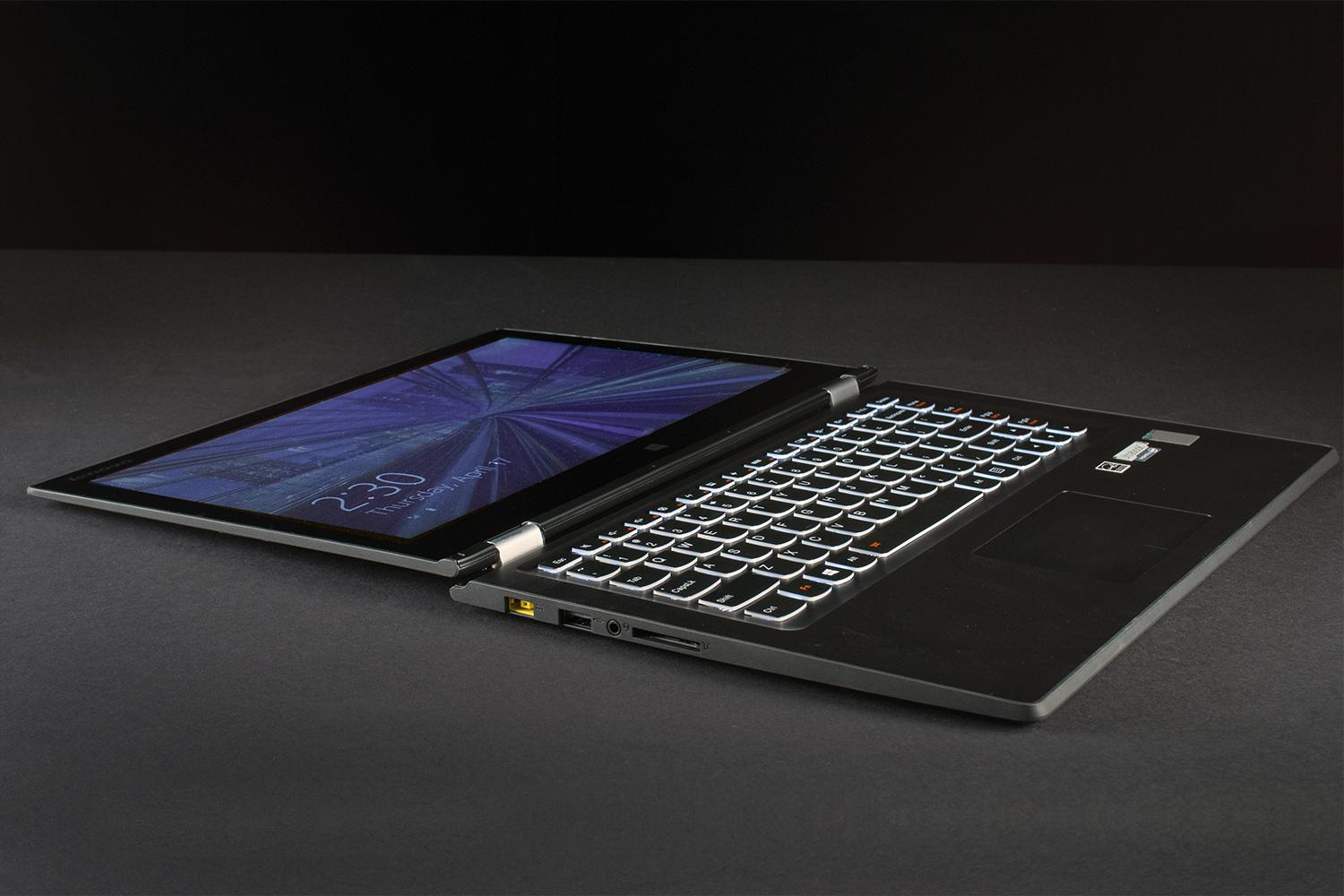
Lenovo’s Yoga 2 13 does everything you would expect of a slim, lightweight ultrabook—plus it converts to a tablet and two modes in between. And the competitive price means you’re getting the convertible abilities essentially for free. It is an excellent ultrabook, even without digging into its hybrid capabilities. This new model adds a backlit keyboard and an impressive 3,200×1, 800-pixel-resolution display.
Samsung UN65HU9000 directly takes to the front row of Television technology. The UNHU9000 curved 4K LED LCD has an excellent picture with deep black levels, accurate color and great bright-room viewing qualities. Its styling is drop-dead gorgeous, and the curve lends a unique, futuristic look. The feature set is well-implemented and comprehensive, with best-in-class connectivity and upgradeability and a superb remote.
With a 1.6-inch touchscreen, this Android-powered smartwatch connects with compatible smartphones over Bluetooth to sync time, date and weather information. It can be customised to add functions such as control the phone’s music player, view messages, email, Facebook, Twitter, as well as accept or reject incoming calls. It also has Walkmate available for fitness enthusiasts.
Looks like everything we own and use is on its way to becoming ‘smart’. From smartphones to smartTVs, need of technological advancement has become a major part of tech business these day; smart tech ecosystem are slowly and steadily approaching our homes now.
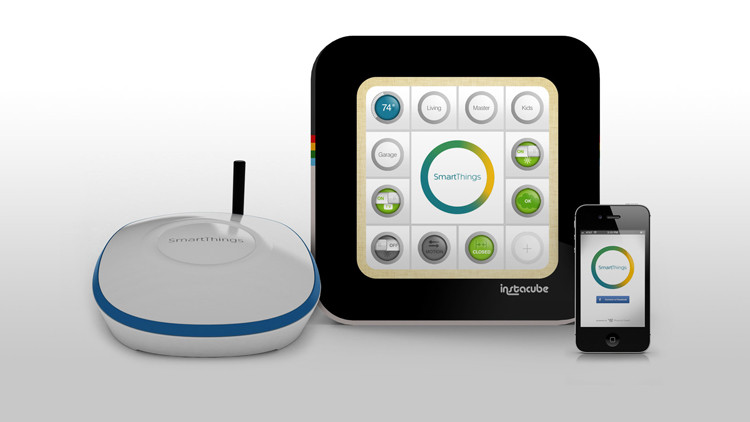
Seems like Samsung is playing it big to become the center of smart home with its acquisition of SmartThings. While the companies did not disclose the price, reports are the South Korean consumer electronics giant paid about $200 million.
The deal is the latest sign that big companies are staking out positions in what industry executives call the Internet of Things. That broad term encompasses just about any product that can be augmented with computing and communications capability, including doorlocks, smoke alarms, wearable devices and new-wave security cameras.
SmartThings will operate as an independent company under CEO Alex Hawkinson, within Samsung’s Open Innovation Center group, says Samsung. The firm will move from Washington DC to OIC’s headquarters in Palo Alto, California.
Joining forces with Samsung will enable us to support all of the leading smartphone vendors, devices, and applications; expand our base of developers and enhance the tools and programs that they rely on
Founded in 2012, SmartThings has created an unusually influential position. It sells a $99 home controller device, but its broader functions include operating an online service and setting specifications to help developers create designs for gadgets that work together and are controlled using smartphone apps.
While the company has been acquired by Samsung, being in the Open Innovation Center, the company will be kept at arms length away from Samsung, We want to people to understand how important it is that they will stay independent. SmartThings will continue to work with its developer community and business partners. In the meantime, we’ll be exploring ways to partner with them.
[/quote]
Like Oculus VR, which recently sold to Facebook for $2 billion, SmartThings started as a Kickstarter project in 2012. It has since raised just over $15 million in funding, with investors being Greylock Partners, Highland Capital and First Round Capital, among others.
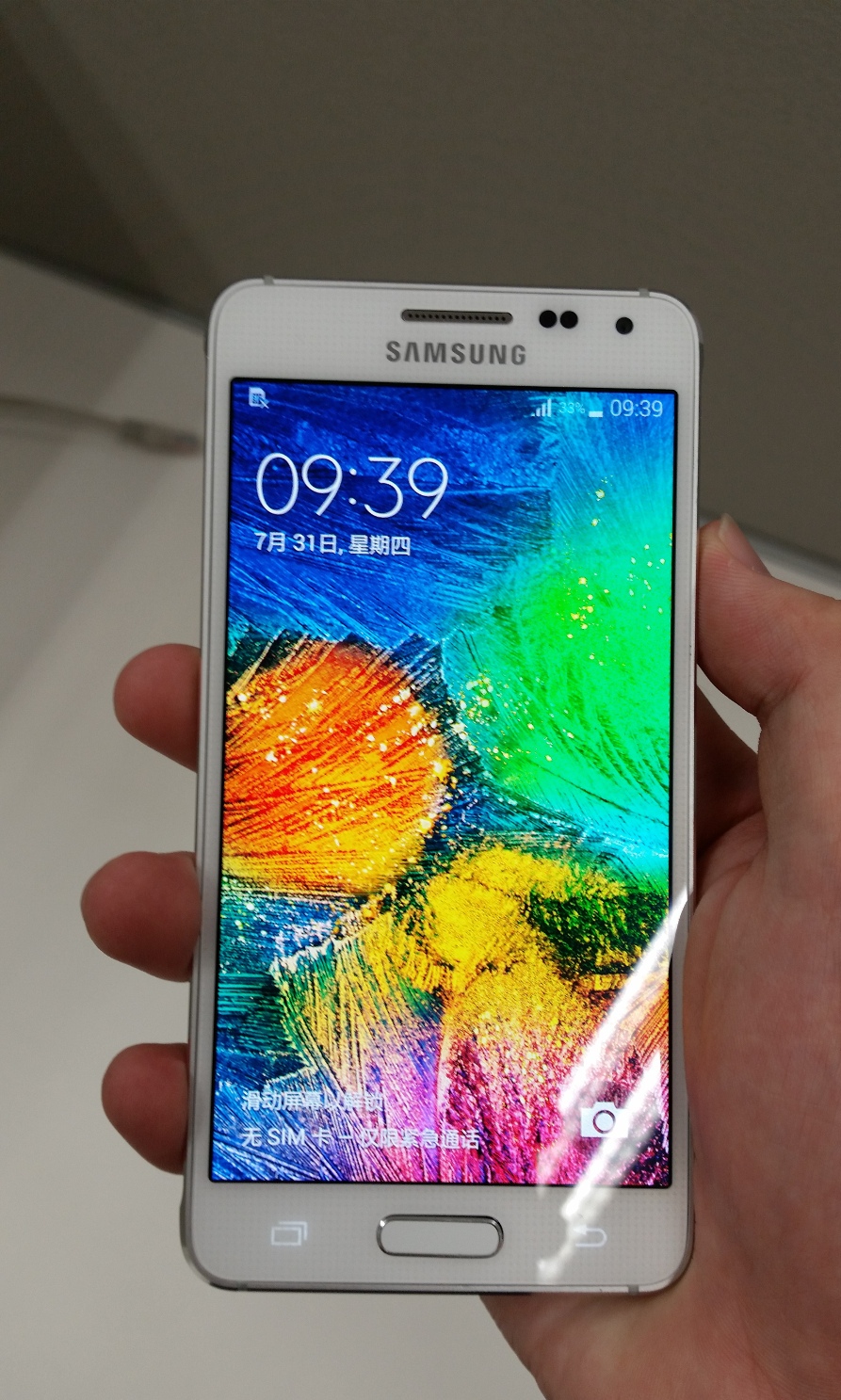
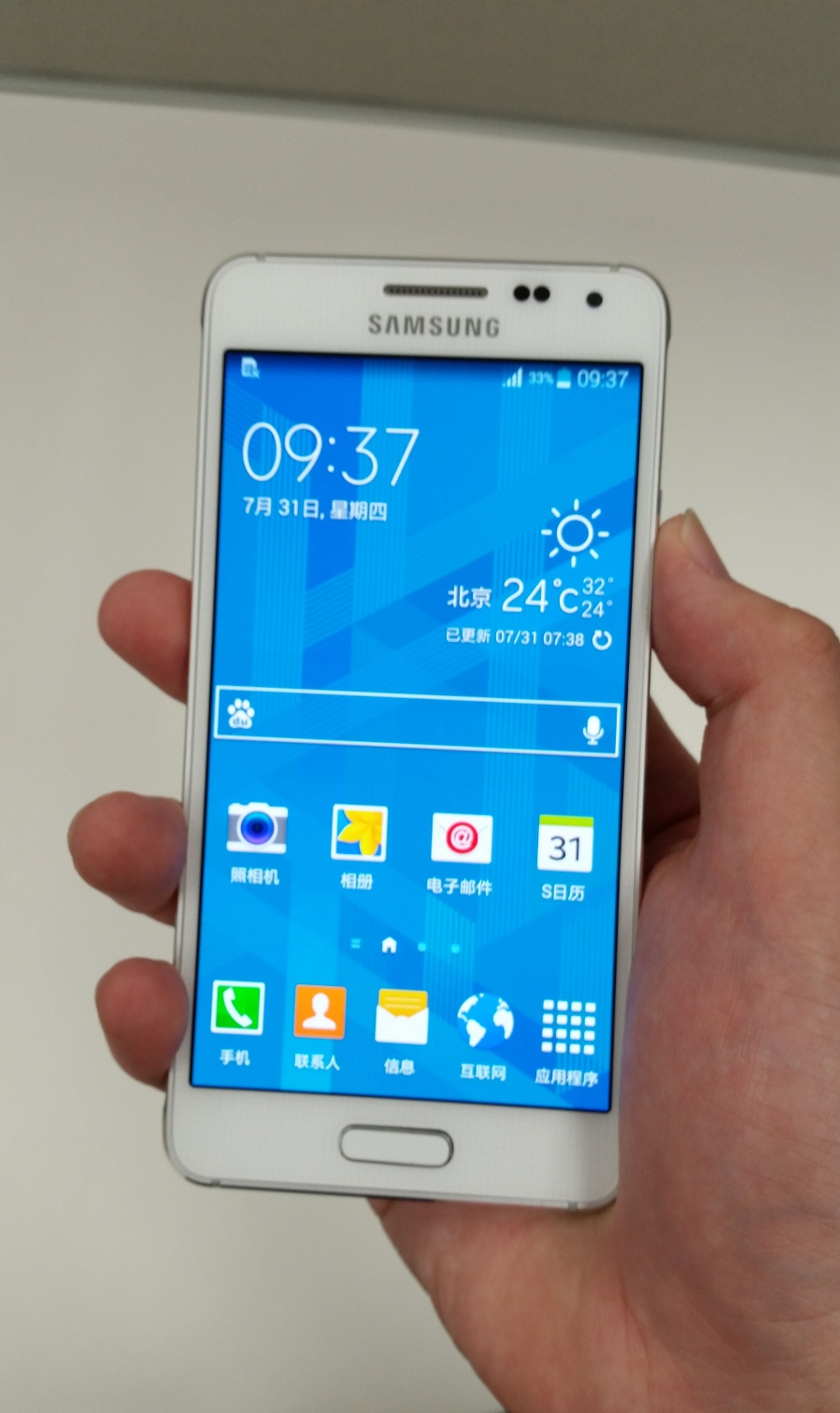
The Galaxy Alpha has been surprisingly prone to leaks, like none other in its range. The phone looks like what an arrange marriage between Apple’s iPhone and Samsung Galaxy S5 might lead to. The phone as expected is made of a metal frame and boasts an Octa-core chipset.
Galaxy Alpha had been hot in leakster circuits ever since it was announced but with its official launch, the leakers now have one less device to worry about. Samsung seems to be learning the lessons that the market has been trying to teach it for quite a while. The company has tried a different design approach for this device. Though it resembles the design of the iPhone, it is still a welcome change from all that plastic Samsung has been throwing at the consumers for the last few years.
The phone had seen a lot many leaks before its official release.
The phone is a lot thinner in comparison to its older siblings. The Alpha is 6.7mm thick and weighs about 115 grams. The display on the phone is a 4.7 inch screen with 1280X720 resolution. The styling does look premium on the device. It is anticipated that Samsung’s new design philosophy would also influence the upcoming Galaxy Note 4 which is expected to be made of new materials.
On the hardware front, the Samsung Galaxy has a few things that won’t impress the technologically minded. The device runs on the latest Android Kitkat 4.4.4 OS. It has an unnamed Octa core processor (Quad 1.8GHz + Quad 1.3GHz), and it is most probably an Exynos 5 based chipset. The RAM on the device is 2 GB and has internal storage of 32 GB. It has no expandable storage though. The Alpha has a dismal 1860 mAh battery which might dissuade a lot of folks from getting the device.
The main camera on the Alpha is a 12 megapixel shooter and is accompanied by a 2.1 MP front camera. It is capable of shooting 4K videos. It will retain the usual Samsung features such as Ultra-Power Saving Mode, S Health, Fingerprint Scanner, and Private Mode, amongst others.
The Galaxy Alpha will be available in September and will be available in black, white, gold, silver and blue colors.
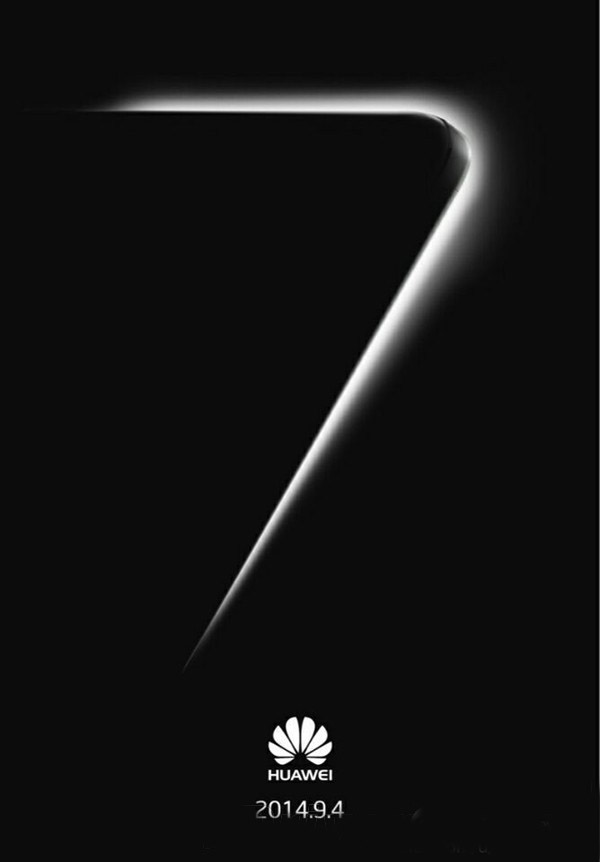
Huawei has sent out press invites for an event to be held on the 4th of September. The invite features a huge number 7, hinting that the device to be released will either be the Ascend Mate 7 or the Ascend D7.
While the model name might not be known, a few specs are believed to feature in this soon-to-be-released device. The star of the show is believed to be a 6” Quad HD (2560×1440) display. The device might be powered by the company’s own Kirin 920 octa-core chipset and a healthy 3GB of RAM.
The minimalistic Invite doesn’t reveal much.
Huawei also believes that this device will be better than both the iPhone 6 and the Galaxy S6. Now, those are some hefty claims. If Samsung doesn’t manage to bring in a Quad HD screen soon, Huawei’s claim may become true.
The rumours don’t stop here, however. If leaksters are to be believed, the company is also going to release a second device with a Full HD 1080p display and 2GB of RAM. This by no way is a mid-ranger, but will only be the lower speced sibling of the Quad HD monster to be released by Huawei.
Seems like September is going to be a busy season for the Smartphone moguls. The battle lines are drawn with Samsung set to release the Note 4, which will be followed by Apple’s iPhone 6 release. With Huawei also staking a claim to gadget greatness, things will surely get interesting for the consumers. Now we really can’t wait for September to come.
Wearables are huge these days – with technology giants like Samsung, Google, Apple and basically everyone else investing huge sums into this relatively new technology. While there are a myriad of wearables available in the international market, only half the number show up on the Indian shore. We are listing top 5 wearables you can buy in India right now.
Pebble Smart
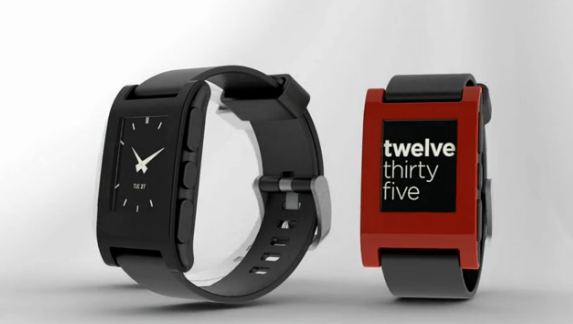
Pebble Smart is a toned down version of more expensive and metal-clad Pebble Steel which is not available in India. This one features a 1.26 inch, 168×144 display along with an ARM Cortex M3 CPU and supports Bluetooth 4.0 LE. The design is also waterproof so you can go for a swim without worrying. Performance and battery life are very good. It may not have the sharpest display, but it would last you several days of heavy usage.
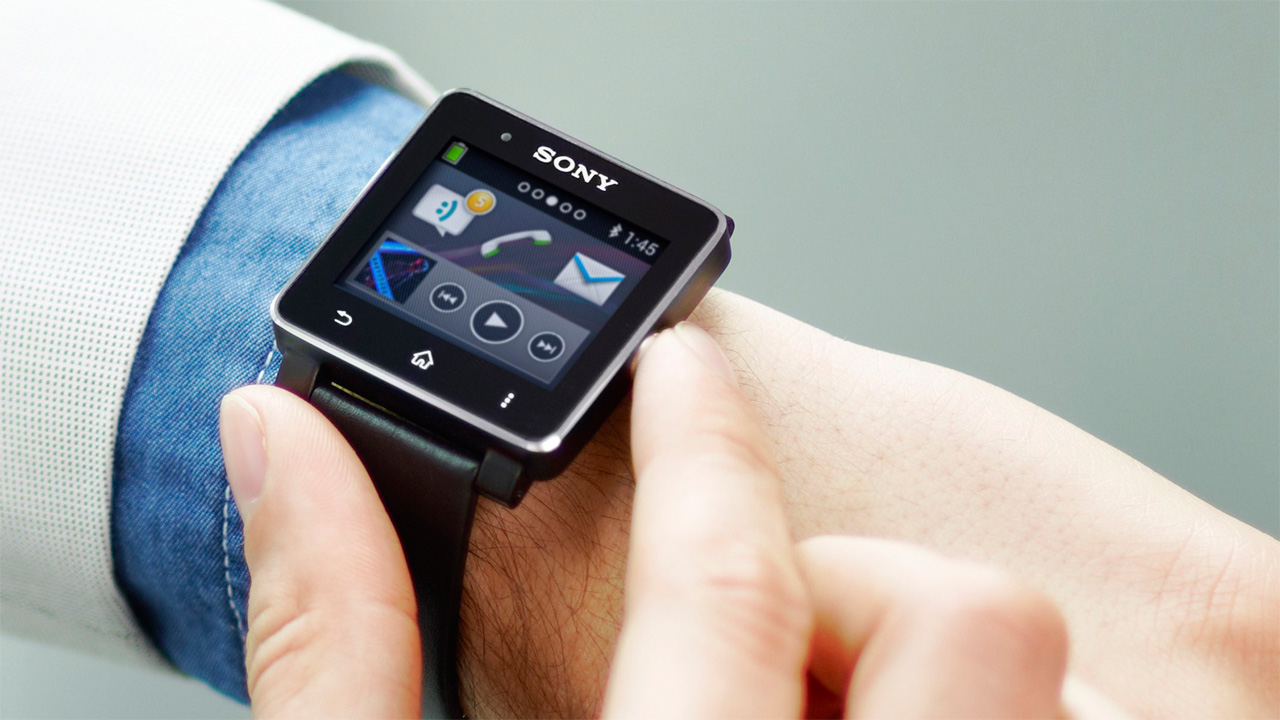
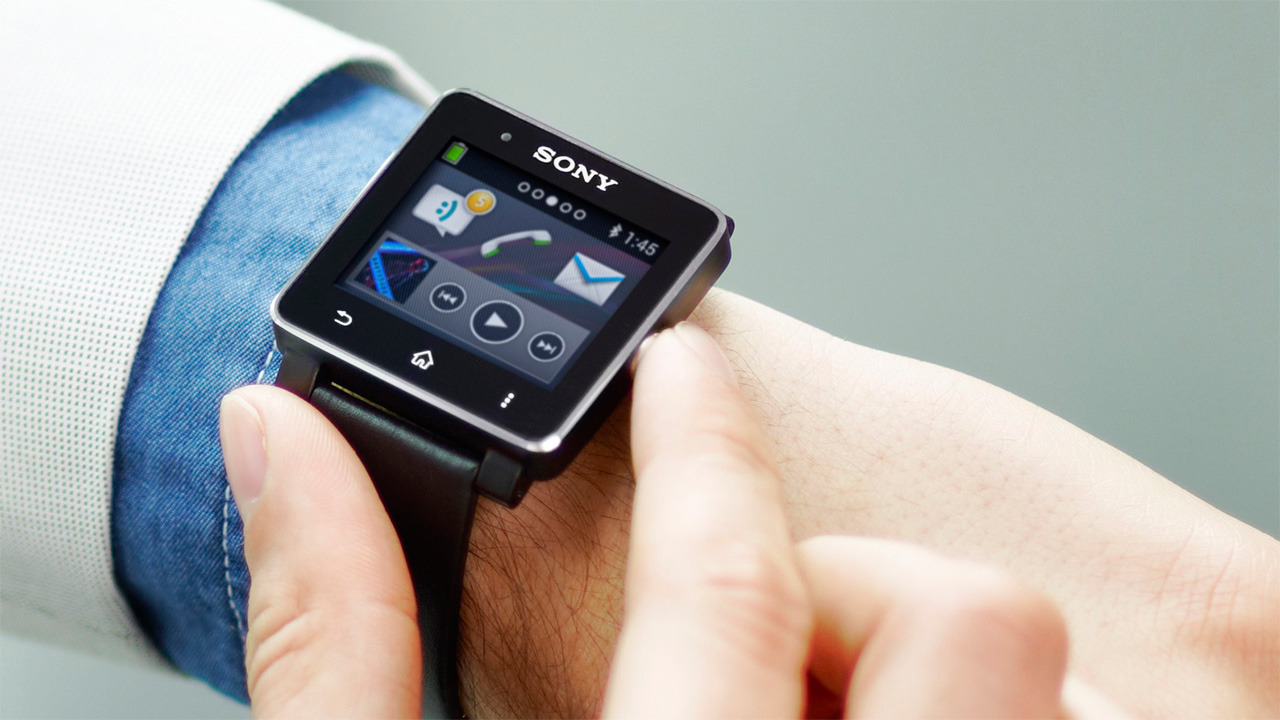
Unlike most smartwatches available in the market which beg you to connect the device with your phone, Sony Smart Watch 2 is more like a stand alone smartwatch. However, it can still be paired up with the Sony Xperia Z2/Z Ultra/Z1 for notifications. It includes three capacitive buttons underneath the display, which measures 1.6 inches and has a 220×176 resolution. There’s an array of app support with more than 300 apps supporting the watch, including Facebook and Twitter. It’s also dust and water resistant plus it has that attractive Xperia-like design.
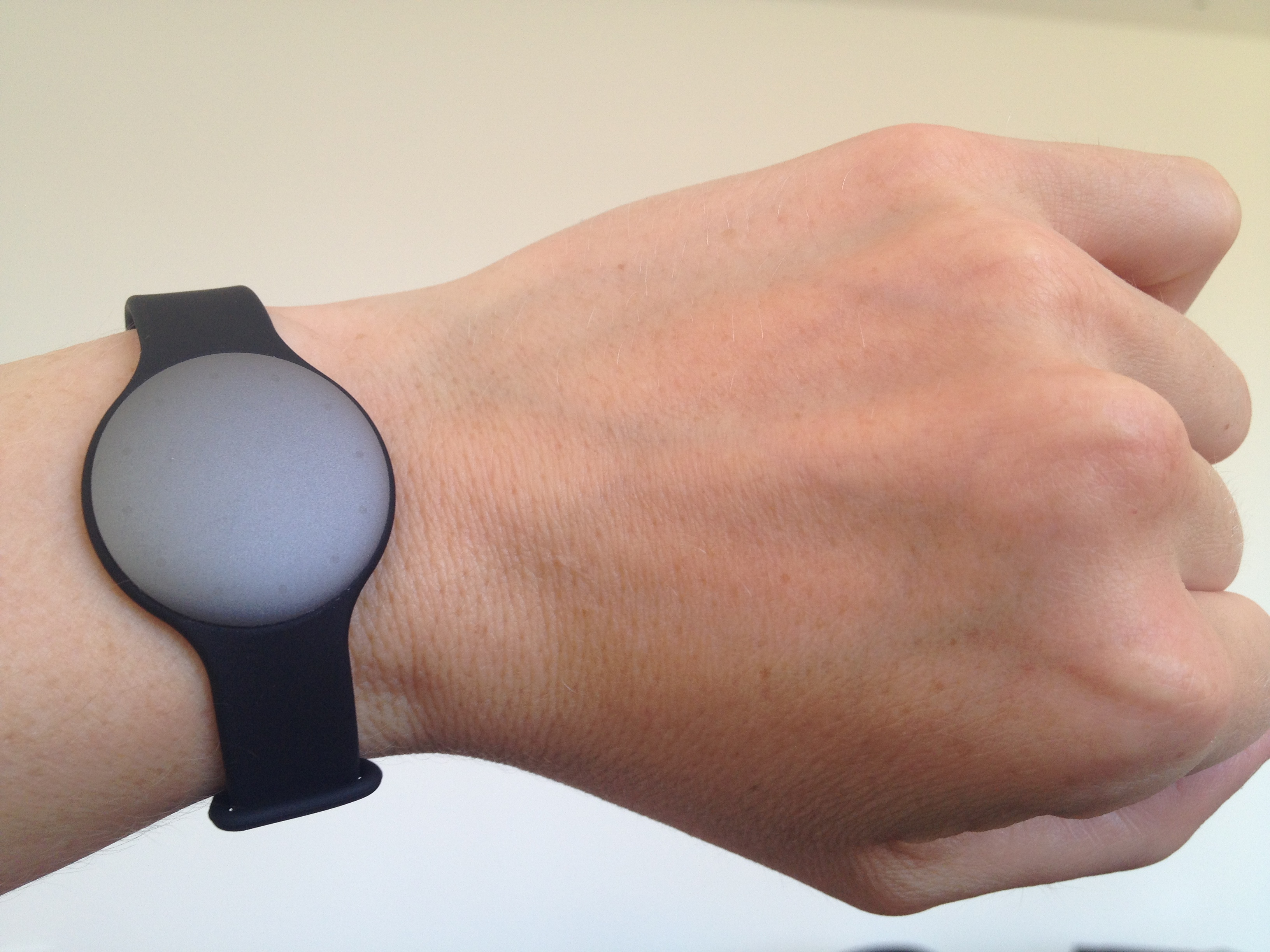
A lot of fitness gadgets that track your progress are bulky and only come in certain wristband styles. Misfit Shine is the size of a quarter, and can be worn anywhere. The design is diamond-cut from a block of aircraft-grade aluminium and runs on a replaceable battery that lasts up to six months. The Shine syncs easily with its app by placing the metal dot on your phone screen to download data in seconds. It tracks walking, jogging, running, cycling, and swimming (the Shine is waterproof too), and weighs less than 10 grams.
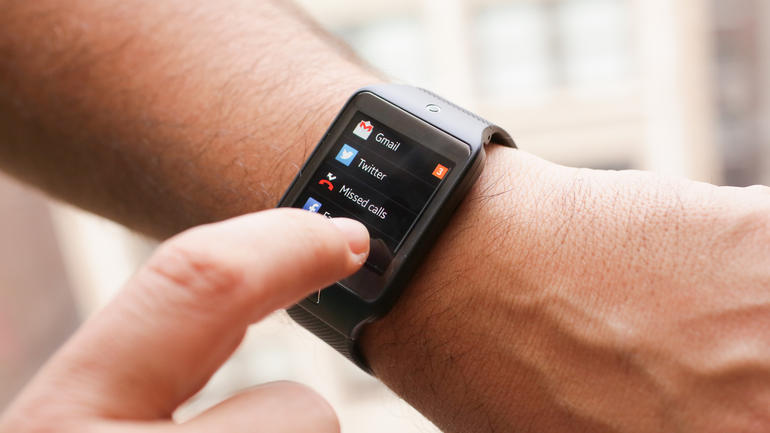
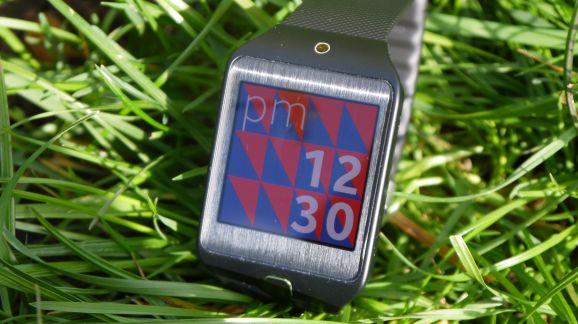
As its predecessor, the Samsung Galaxy Gear 2 Neo features 1.63 inch Super AMOLED display, a dust and water-resistant body and a 2 megapixel camera with auto focus. It is a toned down version of the original’s futuristic metallic body. A neat addition is being able to attach your own straps to the Gear 2 Neo. Tizen OS is in place instead of Android and this helps to extend the battery life while focusing more on fitness. A heart sensor and pedometer are included for the same purpose.
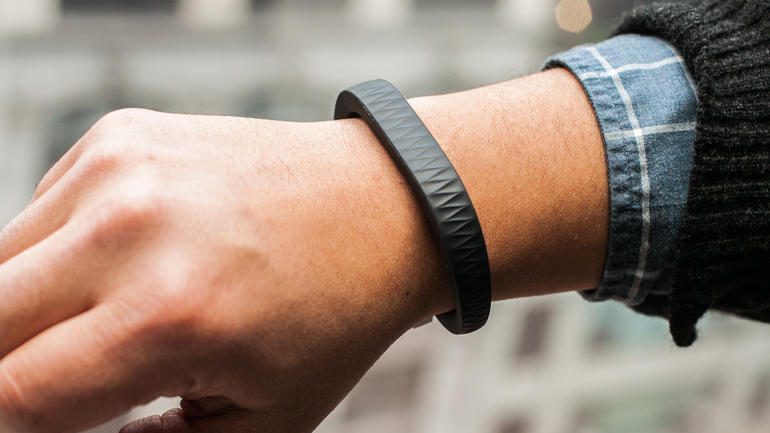
UP is a fitness tracker that provides you feedback on your activity, calories burned, diet, and sleep, and then guides you towards achieving your goals. The design is fantastic, it is extremely comfortable and pleasant to wear as well.
Last week, we heard reports that Micromax had dethroned Samsung to become the Number 1 phone manufacturer for Q2 2014 in terms of units shipped. However, Samsung says this is not the case.
Economic Times talked to Samsung President and Chief Executive for South-West Asia, BD Park. He claims that these reports are false. He admitted that sales had decreased in the past quarter, and that the Galaxy S5 did not sell as well as they had predicted. Nevertheless, the company still met its targets, and according to their internal data, still controls more than 50% of the Indian market with more than double the sales of the alleged market leaders, Micromax.
Park further went on to say that “there was some business motive behind the release of such kind of data”, directly pointing the finger at Micromax for releasing false information as a media stunt to increase sales. These are some very serious allegations, and we will have to wait and see if any of these hold true.
The earlier reports were prepared by Hong-Kong based independent firm called Counterpoint Technology Market Research, allegedly being based on “thorough channel checks in terms of sales.” However, CyberMedia Research (CMR) said that while the Korean company was still the leader, the gap between the two had narrowed sharply.
Last week we saw some raw footage of the metal-clad phone which has been taking rounds on internet since January. Earlier, some pictures of black version of Samsung Galaxy Alpha were also released by Sammobile. The images confirm earlier reports that the Galaxy Alpha will sport a 4.7-inch screen and have a metallic construction.
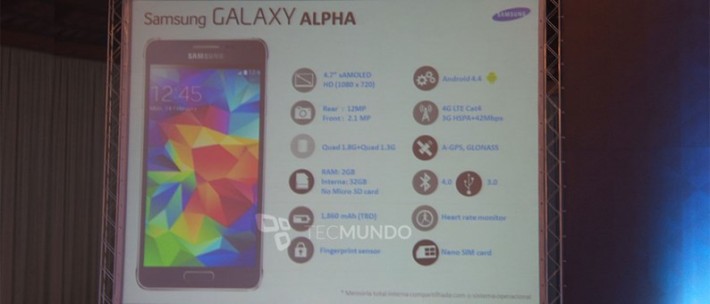
The phone has been criticized of being another look-alike of Apple’s iPhone. Now, a new leak from TecMundo is giving us a glimpse inside this iFacade. The first leak originates from Brazil, where an anonymous reader sent the image below.
Since the picture quality makes it hard to read the specs, read them here:
4.7 Super AMOLED Display
12 mega-pixel rear camera and 2.1-megapixel front camera
2GB of RAM, 32GB of Storage (64GB rumored to be available), No MicroSD
The specs listed on the billboard bring no surprises – the leak confirms the Galaxy Alpha’s screen size and resolution, 1,860 mAh battery, as well as the inclusion of a fingerprint sensor and heart rate monitor. It’s the second time we hear the Alpha would feature an approx 1850 mAh battery; the relatively small capacity is likely a downside of the phone’s very thin profile of just six millimeters. Well, only time will show if Samsung managed to optimize the Alpha well enough to ensure a decent battery life.
We think the idea of stand-alone smartwatches is not yet feasible in the present market scenario, but Samsung thinks otherwise. Reports indicate that Samsung is moving ahead with plans for a smartwatch with its own SIM card and hence, doesn’t need a paired phone. It seems likely that we’ll hear about it as soon as next month.
Korean newspaper The Chosun Ilbo reports that Samsung intends to unveil the Gear Solo watch at the big IFA conference in September. As speculated, the Gear Solo will not require a smartphone for communication functionality, and will be able to place calls, send texts and emails, and perform other tasks with its own SIM card, cellular radio, and service plan.
Samsung Gear 2 Neo
The inclusion of SIM support in a smartwatch would enable users to make phone calls from the device, but it is yet to be revealed how Samsung has tackled the issue of heavy battery drain. Samsung has launched three Tizen-powered versions of its Gear smartwatch to date, and one Android Wear model in the form of the Galaxy Gear Live.
Samsung released the Gear 2 and Gear 2 Neo at this year’s MWC, less than six months after their predecessor. The logic of releasing a smartwatch alongside a smartphone makes sense, but in this case the Gear Solo won’t depend on tethering itself to any other device, hence will get a different sort of treatment in the market.
However, Samsung used last year’s IFA to launch the original Galaxy Gear, so it seems a good time as any to unleash a new smartwatch frenzy. Timex Group also announced a smartwatch with its own cellular connection, letting it transmit data without needing to be connected to a smartphone. The company calls it the Ironman One GPS+, and while it may have features commonly found in a smartwatch, it is made mostly for athletes like its predecessors.
The Samsung Galaxy Tab S was introduced in two colour variants, white and bronze. Recently they’ve added a new black option. It’ll be nice to have a variety to choose from, especially for those who prefer the sleekness of black. You can order the device from the Samsung e-store.
The Tab S 10.5 and Tabs 8.4 both run on the Exynos 5 Octa chipset, have 3 GB of RAM and 16/32 GB storage capacities. Watch our Hands On with the Samsung Galaxy Tab S here.
Apple Inc. and Samsung Electronics Co. are starting to wind down their global patent dispute. Smartphone giants announced in a joint statement that they will drop all patent lawsuits outside the U.S. However, the two companies still haven’t settled their patent disputes within the U.S.
The two companies have sued each other in Australia, Japan, South Korea, Germany, Netherlands, the UK, France, and Italy, and all these cases are being dropped, without being settled and without any cross-licensing agreements being negotiated. The companies disclosed the change in legal strategy in a joint e-mail. Apple and Samsung said they would push ahead with the most high-profile cases taking place in the U.S.
Apple first sued Samsung in the U.S. for copying features of the iPhone in 2011. Samsung then sued Apple for patent infringement in South Korea, Japan, Australia, the Netherlands, Germany, France, Italy and the U.K. Apple filed countersuits in five of those countries.
“Apple and Samsung have agreed to drop all litigation between the two companies outside the United States,” the companies said in a joint statement. “This agreement does not involve any licensing arrangements, and the companies are continuing to pursue the existing cases in U.S. courts.”
Earlier, Apple and Samsung agreed in June to drop their appeals of a patent-infringement case at the U.S. International Trade Commission that resulted in an import ban on some older Samsung phones. In the U.S., Apple had two victories against Samsung: $930 million in 2012 and $120 million in May of this year. The case is still unresolved though.